

Find some of Canada’s finest authors, photographers and artists featured in every issue.

is to promote Canadian culture by bringing world-wide readers some of the best Canadian literature, art and photography.
Devour: Art and Lit Canada
ISSN – 2561-1321
ISBN – 978-1-998324-32-3 Issue 022
5 Greystone Walk Drive, Unit 408 Toronto, Ontario, Canada, M1K 5J5
DevourArtAndLitCanada@gmail.com
Poetry Editor – Bruce Kauffman
Review Editor – Shane Joseph
Prose Curator – Brian Moore
Photography Curator – Mike Gaudaur
Front and Back Cover Photographer – Mike Gaudaur
Editor-in-Chief – Richard M. Grove
Layout and Design – Richard M. Grove
Dear Readers:
Welcome to this 22nd issue of Devour: Art & Lit Canada. As usual we are bringing you some of Canada’s most talented writers, poets and photographers. As always, thank you to our ongoing faithful section editors. In no special order, thanks to Brian Moore, Bruce Kauffman, Shane Joseph and Mike Gaudaur. Thankyou to all of the contributors that make Devour a success.
We hope you will let not only your Canadian but also your international readers, family, and friends know about this all-Canadian magazine. See you between the pages.
Richard M. Grove otherwise known to friends as Tai.
Features:
– Canada Coast to Coast to Coast – front and back cover
Photography Curator – Mike Gaudaur – p. 8 – 15
– Feature Photographer – Lori Gillespie – p. 16 – 24
Photographs on pages – 4, 6, 120
– Canada in Review –
Editor – Shane Joseph – p. 25 – 37
– Poetry Canada –
Editor – Bruce Kauffman – p. 36 – 83
– Photo Collages by Anna Di Nardo – p. 84 – 87
– Canada in Prose –
Prose Curator – Brian Moore – p. 88 – 99
– Indigenous Canada – ᐃᐦᑭ / IHKE / MAKING/ART
Tawennawetah Teyohswathe – The Morning Star: It Is Bright – William Woodworth – p. 100
– CanLit Essays on CanLit Authors –Glen Sorestad – p. 106
Kimberley Grove – p. 114
Photography Curator Mike Gaudaur
After more than four decades of making images that show what something looks like, I am gradually shifting towards making images that show more of what things feel like. I find that the images I capture are more graphic and minimalist. However, I think it is my processing of images that is changing even more. I am less concerned about ensuring that every little detail is clear and sharp, and more concerned about enhancing a mood and


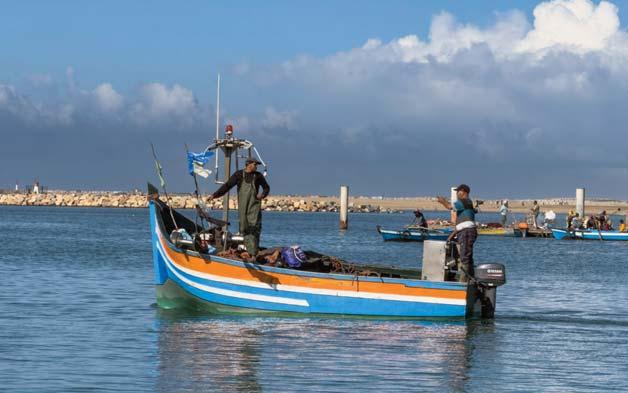
guiding viewers to see just what it was that caught my eye with nothing to distract them. With this collection of images I have been experimenting with colour grading that shifts tones to enhance mood.
Mike has spent the past 12 years teaching photography during school terms and photographing on safari during the term breaks. Online training and countless late nights of experimenting resulted in Mike developing a full complement of digital skills. After returning to Canada he was able to formalize his training and become an Adobe Certified Expert in Photoshop. Mike is a never ending learner, experimenter, explorer. His learning didn't stop with Photoshop. He naturally grew into working with Lightroom, On 1 Perfect Photo Suite, and the Nik Software collection. His advanced skills in the digital technology have allowed him to push his photographic style even further.
You can find Mike at: https://www.mikegaudaurphotography.com/ or contact him by email at, mike.gaudaur@gmail.com





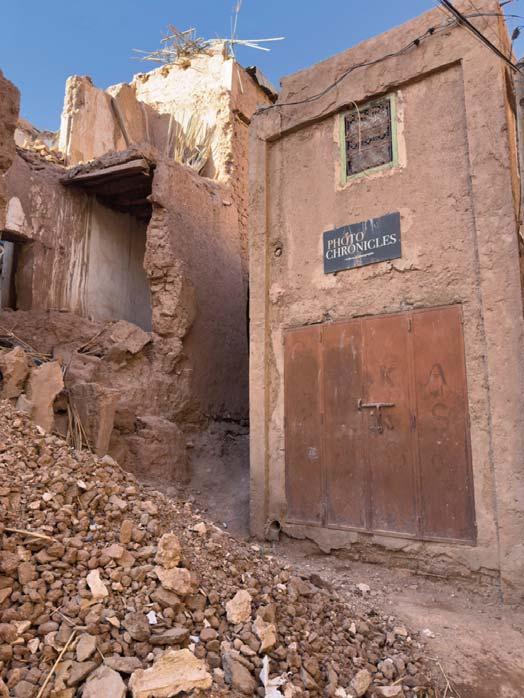
A photograph by Mike Gaudaur Critique written by Richard M. Grove
There is incredible dry irony and pathos pulsing through this stunning photograph by Mike Gaudaur taken in Morocco 2025. The photograph is filled with questions with no answers. Aside from the snapshot simplicity, notice the sign on the door – Photo Chronicles, Gallerie de photographic, a declaration of image making affixed to a steel door that is designed to keep people out yet now the irony of time has it unlocked. The structure that holds the door that holds the sign that holds the story is visibly ravaged by time but for some unknown reason it is resisting the
ravages of time better than the neighbouring building. In his artistic wisdom, Gaudaur stopped time in this image but the irony is that time does not ever stand still. We do not know if the building is still standing or has maybe been restored.
The walls of the surrounding building have stopped resisting, they crumble the slow penalty of time, adobe mud bricks and stone relinquishing their duty of resistance to time. Gaudaur’s picture captures this beautifully while the scene speaks quietly of abandonment. The photograph speaks of the relentless work of time.
The photographer, without knowing what Photo Chronicles truly was or when it lived, or why it faded might hope for the possibility of resurrection. The photograph asks the question; is there something worthy of being saved? The photographer, by clicking the picture, by stopping time, says yes. That quiet question will have to remain only in the viewer’s mind. Gaudaur did not need context to understand the significance of this captured image, he simply responded to the tension between time and place, between aspiration and decay. Gaudaur’s camera paused where others might have simply passed by and only saw rubble.
Let me return to the steel doors that are the photograph’s deepest question and statement. Heavy, rusted, scarred by time, they stand neither fully sealed nor properly secured with any visible lock. They imply access without invitation. It only occurred to me as I was looking at the photo for the twentieth time that maybe the door is unlocked because there is someone inside working on their own photographs of locked time. What once existed beyond these steel does or maybe still does? A gallery? A studio? A room where light was studied and framed, where images were discussed, printed, displayed? Or was the sign simply an unfulfilled ambition, a dream mounted before its time, before the walls could hold it?
The other equally compelling aspect of the story told is the narrow path that leads to the doors. It suggests some level of passage, some comings and goings that are unknown. It seems that feet still know this place, even if purpose has dwindled with time. The building may be failing, but it has not stopped telling its story thanks to Gaudaur and his ability to see beyond degradation and rubble..
In capturing this, Gaudaur completes a quiet loop of meaning. A forgotten place of images, an image that stands as some sort of remember.
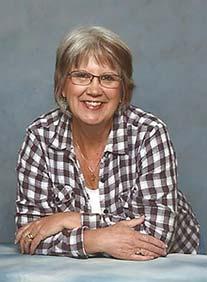
Lori resides in a peaceful rural area of Ontario in Cramahe Township where her family roots run deep and strong.
Being a wife, mother and grandmother, photography has always been very important in documenting the memories and people in her life. After purchasing her first DSLR camera 15 years ago and a few basic photography courses, her interest in photography changed to a more creative artistic passion.
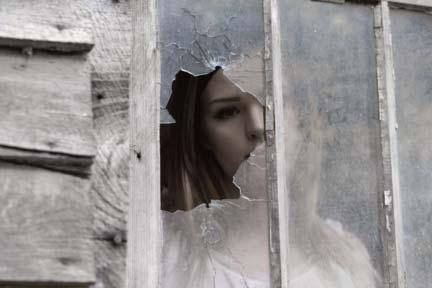
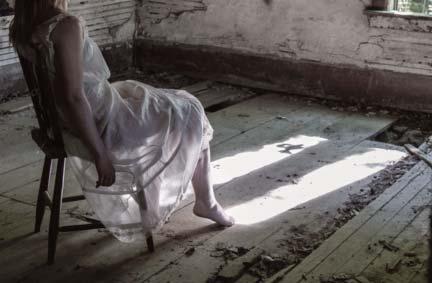
Inspired by old Victorian photographs and her collection of period clothing, makeup and a few props, Lori directs her models in an attempt to tell a story… a story that can be interpreted by the viewer in their own way.
Abandoned buildings and old cemeteries are locations that whisper to Lori’s mysterious side. These forgotten places somehow evoke the distant voices, laughter and tears of lives that once lived and loved.
Lori hopes the echoes of the past may continue to inspire her to tell stories through her photography and looks forward to a day when one of her images may grace the cover of a book and help others to imagine a past not so very distant from our own!
Lori Gillespie
www.lorijanephotography.ca
Critique written by Richard M. Grove
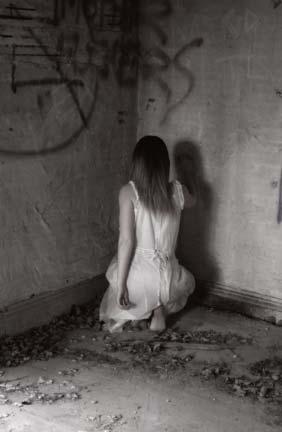
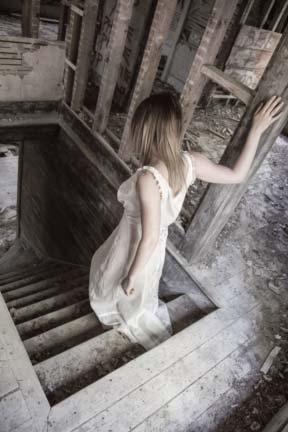
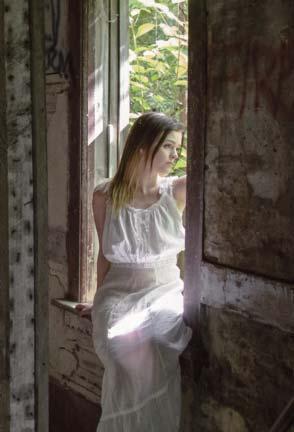
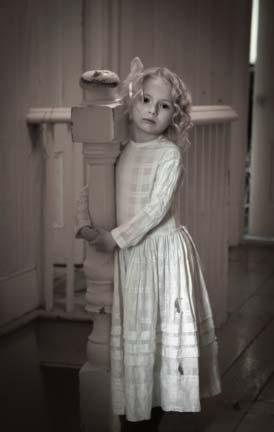
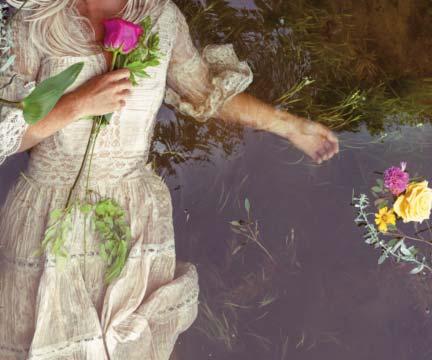
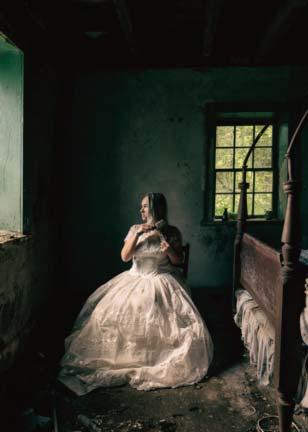
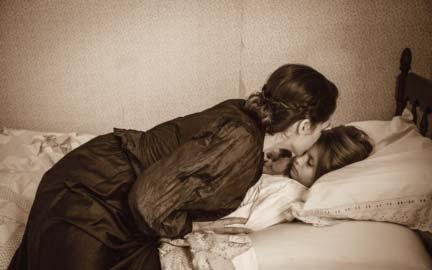
Thank you Mike Gaudaur for introducing us to Canadian photographer, Lori Gillespie’s work. Much of her photography seems to occupy a quiet, deliberate space where time feels suspended. Her images draw on Victorian sensibilities, period dress, and abandoned or forgotten interiors of homes to create scenes that feel both intimate and cold, as though the viewer has arrived just after something important has already occurred. Her work is meticulously staged and performed the way a theatrical set designer might design a scene in a play.
There is often a palpable stillness in her work. Her subjects appear absorbed in a private sense of inner waiting, remembering, or surrender. Their subdued expressions and gestures often seem hypnotic. From image to image light enters sparingly; through a window, across fabric or over water, not as illumination but almost as an ethereal or eerie presence, directing the onlooker. It is interesting how these photographs invite the viewer to fill in the blanks with their own narrative or even personal sense of closure.
Gillespie’s settings of decaying rooms, old stone, shallow water and worn furniture all act as collaboration rather than a narrow narrative. They so often hold traces of former lives and unspoken histories, suggesting that memory itself is the true subject. While the mood is undeniably somber, it is not bleak or depressing. What emerges is a sense of reverence for the stillness captured in the past. This is photography that does not explain itself. It waits for the viewer, and in that waiting, asks the spectator to slow down and listen for the story that the photographer want you to see.
Book Review Editor
Shane Joseph


Book Editor’s Note:
Happy New Year, Dear Readers!
We have quite the selection of books reviewed in this edition, so much so that some had to be deferred for a later issue. These six books were all published in 2025.
Korea features prominently. Novels, All Things Under the Moon and Our Fifth Season, look at The Land of the Rising Calm from two historical perspectives: its brutal occupation by the Japanese during WWII and its contemporary celebrity culture that reaches across to North America (with a whodunit thrown in for flavour).
Coming of Age is the next dominant theme: The Killing Room, a novella, looks at an 11-year-old girl rising above the abattoir where she is destined to kill chickens for the rest of her life; Robin & Marion takes us back to the twelfth century to the making of the famous outlaw, Robin Hood.
The Vietnam War and Canada’s entry into the conflict, with its attendant effects of PTSD and other mental illnesses, is the theme of On Isabella Street.
And rounding off the selection is some fictionalized fun about two of Northumberland County’s most quarrelsome small-town rivals, aptly named Sloburg and Port Promise (I will let you guess their real names), as they face off across the Gomercoocheecoo River (also known as the Ganaraska River, but all names have been fictionalized lest the author be run out of town) in The Golden Handshake Club.
Enjoy these reads as you curl up by the fireplace during this long winter.
Shane Joseph
Book Reviews Editor
Author: Ann Y. K. Choi
Publisher: Simon & Schuster
ISBN: 978-1-982114-56-5
Number of Pages: 306
Published Year: 2025
Reviewed by Josée Sigouin
The Review

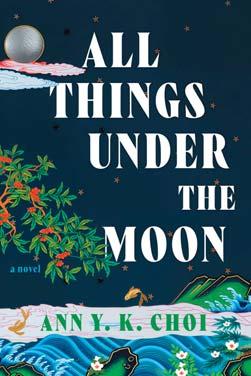
The events leading to Japan’s rise as the leading power in East Asia by the start of the twentieth century deserve several chapters in the history books. Suffice it to say here that Japan was able to force Korea (Chosun)’s last Emperor, Gojong, to abdicate in 1907 and impose its colonial rule over the Korean people in 1910. This ran the gamut of intense discrimination, military over-reach, erasure of language and culture, and exploitation of natural resources. Landowners had to pay half their crops in taxes. Young men aspiring to attend university saw their ambitions thwarted, while girls were denied an education, period.
In Ann Y. K. Choi’s historical novel, All Things Under the Moon, Na-young wishes she could read and write like her friend, Yeon-soo, who was taught by her late husband. Instead, her father announces that she will marry an unknown young man who lives far away from their village. She will be torn from those who matter most to her: her mother, her closest friend, and her older brother.
“What if her husband were like her father? A man she would never get to know? A man who only spoke to express orders or to punish anyone who defied him? Or worse, a man
like her brother—in love with someone else and forced to marry her? Did a woman always need a man, in order to live her life?”
In wisely restrained prose, Choi imbues an intricately nuanced narrative with all the clarity and power it deserves. She grants readers full access to Nayoung’s mind: the dilemmas she navigates, and the worlds she inhabits, from the small village of Daegeori to the budding metropolis of Seoul in the 1920s.
Na-young’s personal struggles mirror those of her country: powerlessness in the face of impossible choices, a secret desire to resist, a desire to resist in secret, even in small ways. She is but a pawn in a chess game where the victor is a foregone conclusion, and yet she tries. All Things Under the Moon sheds light on a dark chapter in Korea’s recent history while inspiring readers to persevere, no matter what challenges arise.
Ann Y. K. Choi’s debut novel, Kay’s Lucky Coin Variety, was shortlisted for the Toronto Book Award. Ann serves on the program advisory committee for gritLIT, Hamilton’s literary festival, mentors emerging writers in a group she founded called Writers in Trees, and teaches creative writing at the University of Toronto.


Josée Sigouin is a French-Canadian who lives in Toronto/Tkaronto with her Chinese-Canadian husband and two sons. Her debut novel, Our Fifth Season…where murder derails love… was published by Blue Denim Press in 2025. Josée also enjoys cycling, gardening, and welcoming birds to her tiny garden.
Author: Genevieve Graham
Publisher: Simon & Schuster
ISBN: 978-1-982197-01-8
Number of Pages: 432
Published Year: 2025
Reviewed by: Gail M Murray


True to form, Canadian author Genevieve Graham has shed light on a unique chapter of Canadian history. With meticulous research (bibliography included) and extensive character development, we experience the effects of the deinstitutionalization of mental patients (a misguided initiative meant to end the horrors and flaws of the system), PTSD, and the Canadian entrance into the Vietnam War. Graham explores the counterculture lifestyle, music, fashion, drugs, politics and protests. Her forte is to immerse the reader in a past time and place, yet make it immediate. This novel will particularly resonate with Baby Boomers.
Set in 1960’s downtown Toronto, her heroines have nothing in common except an address, 105 Isabella Street (Church and Wellesley neighbourhood).
Marion Hart is a medical doctor and psychiatrist working at the Ontario Hospital who sees the implications of closing a major institution in favour of community-based care—a crisis of crime and homelessness. Susan “Sassy” Rankin, ten years her junior, is a twenty-one-year-old hippy with ambitions to sing in Yorkville’s burgeoning coffee house scene. Opposites, they build a strong friendship and learn from each other in the process.
The novel begins in 1967 with Sassy attending a peaceful protest outside the Ontario Legislative Building at Queen’s Park. Buffy Saint-Marie is singing The Universal Soldier. Sassy meets draft dodger Davey, who refuses to fight another country’s war. Sassy’s brother, Joey, has volunteered, one of approximately 40,000 Canadians who enlisted along with American troops. Tunes by Simon and Garfunkel and The Mamas and the Papas further ground the novel in the sixties.
In the hospital, Marion comes across Major Daniel Neuman when he calls out asking to be let out of restraints. She asks to be put on his case to learn more about battle fatigue (PTSD). She worries about how he will cope on the outside.
Sassy, wearing an embroidered peasant blouse, faded denim flares, and a macramé poncho, is a hit performing at Chez Monique’s amateur night in Yorkville. When Sassy and Marion are trapped in their building’s elevator during a heavy rainstorm, Sassy plays her guitar, and Marion suggests playing “Twenty Questions” to keep them calm. Sassy seems so young and spirited beside a reserved Marion, who admits, “My biggest fear is missing out.” Later, Marion lets down her guard, joining Sassy for a glass of wine. As their friendship deepens, Marion becomes braver and more spontaneous; Sassy grows to be thoughtful and organized.
The reader is privy to the developing love interests of both women. On the surface, they seem unlikely, but delve a little, and they are enriching matches. Sassy starts seeing Tom, her father’s real estate partner, who encourages her creative ideas. Marion helps Major Daniel Neuman adjust, and he accompanies her to Vietnam, rediscovering his courage and purpose.
The Vietnam section of the novel is a visual treat, full of action and suspense, keeping us on the edge of our seats.
Feeling lost is a recurring theme as these characters seem lost in terms of purpose and a future. Through challenges, relationships, and personal growth, they realize themselves. The emotional ending left a lump in my throat.
Author Bio
Genevieve Graham is the USA TODAY #1 bestselling author of The Forgotten Home Child, and has been nicknamed “The Queen of Canadian Historical Fiction.” All of her books have been on the Toronto Star’s Top 10 list multiple times, thanks to loyal readers. On Isabella Street is her ninth novel, focused on Canada’s role in world history, and readers say it is perfect for fans of Kristin Hannah’s The Women.


Author Bio
Gail M. Murray is a former English teacher and librarian focused on drama and literature. She is a widely published freelance writer who lives in Toronto and enjoys hosting friends in her perennial garden. Her poems have been published in Written Tenfold, Blank Spaces, Wordscape, Arborealis, The Banister, and on CommuterLit.com.
Author: Josée Sigouin
Publisher: Blue Denim Press
ISBN: 978-1-998494-15-6
Number of Pages: 232
Published Year: 2025
Reviewed by: Mark Sampson

In this slim debut novel, Josée Sigouin has written a rich, wide-ranging exploration of how the term “distance” can take on multiple meanings in a single relationship. Our Fifth Season examines what it means to love another person without a full picture of them, to give ourselves over to intense emotions even from a position of isolation from the source of those feelings.

The story revolves around Joanne, a single mother working at Cornell University’s Academic Writing Center. There, she meets and develops a passionate relationship with an older international student from South Korea. His “English” name is Adam Ahn, and he’s a typical college kid, pulling all-nighters to get his assignments in, trying to find something fun to do on the weekends. But back in Korea, he is Ahn Dae-hyun, an already famous star of the big and small screen. He’s grateful that Cornell offers a break from his celebrity—nobody in America knows he’s famous back home—and Joanne, raising her son Sean on her own, is grateful for a second chance at finding love.
But the distance between these two characters—both literal and figurative—is a lot to carry. There are barriers between them: their two culturally different countries, the hindrance of one person in the relationship having a child to look after, and the gulf between a celebrity’s life and everyone else’s. But the distance between Joanne and Adam becomes literal when Adam returns to South Korea just as he and Joanne grow close. As she puts it: “How much was not knowing how to say goodbye to someone you have just started to love?”
The story’s great turning point comes when, back in Seoul, Adam is accused of murdering a fellow actor. Now, the long-distance relationship that Joanne tries to maintain with him takes on a harrowing complexity as Adam and his legal team fight to prove his innocence. Joanne is determined to stand by his side, even across the multiple chasms that divide them.
Sigouin handles all of these elements deftly, with prose that crackles with accomplishment and a structure that serves the prismatic nature of this tale well. Alternating between Joanne and Adam’s points of view, she puts on a virtuosic performance of empathy as she inhabits both characters’ mindsets. It’s risky business to have one of your main characters be of a totally different cultural background from the author—a gamble I know well, from my own Korea-set novel, 2014’s Sad Peninsula—but Sigouin shows a remarkable skill that belies the fact that she’s a first-time novelist.
The only criticism I have of this book isn’t really a criticism at all: it needed to be longer. The dynamic between Joanne and Adam is compelling enough to warrant an even deeper exploration; the glimpse we get into Korean celebrity culture could have been fleshed out more, as could the court-case scenes that determine Adam’s fate.
But these are small absences in an otherwise generous story. Our Fifth Season is an impressive debut from an author worth watching.
Josée Sigouin is a French-Canadian who lives in Toronto/Tkaronto with her Chinese-Canadian husband and two sons. Watching South Korean films and television series twenty years ago launched her on a quest to understand this fascinating culture in ever greater depth. Josée also enjoys cycling, gardening, and welcoming birds to her tiny garden. Our Fifth Season is Josée’s first novel.

Reviewer Bio
Mark Sampson is the author of eight books, most recently the novel Lowfield (Now or Never Publishing, 2025), the poetry chapbook Big Wilson (Emergency Flash Mob Press, 2023) and the novel All the Animals on Earth (Wolsak & Wynn, 2020). Originally from Prince Edward Island, he now lives and writes in Toronto.
Author: Tom Taylor
Publisher: Hancock and Dean
ISBN: 978-1-738914-56-2
Number of Pages: 333
Published Year: 2025
by


Robin Hood, an enduring legendary rebel of English folklore, remains a symbol against tyranny and social injustice. How did this hero unfold? In this engrossing coming-of-age novel, Taylor looks at Robert of Locksley’s youth. Ironically, the novel begins with fifteen-year-old Robert and his boyhood friend, Guy of Gisborne, being chased by outlaws in Sherwood Forest – the beginning of many encounters. Taylor’s research included reading books and documents at Nottingham Library as well as a trip to Nottingham Castle and a walk through the vast Sherwood Forest, which surely enhanced his vivid descriptions.
This tale embraces many themes: love, parent/child relationships, chivalry, the futility of war/battle, duplicity, jealousy, justice, honour, sacrifice, and the harshness of life in the Middle Ages.
The crux of the story, King Richard has left his people unprotected under the supervision of his brother, Prince John and the conniving Sheriff of Nottingham. The king requires funds to feed his army while on the Third Crusade in the Holy Land and is expecting the tax collection, which his brother—who is poised to usurp the throne—wants for himself.
Young Robert’s secret passion is to be the best archer in England. At odds with his father, Baron Locksley, who refuses him permission to shoot in the St. Martin’s Day tournament, he secretly enters wearing the green hooded cowl to hide his identity, already a wily warrior at sixteen.
The baron sends Robert to school at Fountain Dale Abbey, where he learns from Friar Tuck far more than he imagined, including Latin, swordsmanship, and self-awareness. Friar Tuck is an experienced warrior of the Crusades who, weary of war, tends the sick. Our young hero strikes
Issue 022 Devour: Art and Lit Canada 32
a deal with Tuck to perfect his archery skills, but in the bargain, Robert learns humility, showing empathy to peasants dying of starvation. The gentle scene where he gives food to young Henry foreshadows his later commitment to aid his people. Although King Richard was revered as a great warrior, he spent little time in England. Robert befriends and treats Much, the miller’s son, like a squire. Much saw his father beaten to death while resisting the Sheriff’s men stealing his ale. Robert is shown equally at home with all classes: nobles, clergy, Knights Templar and peasants.
Taylor’s fluid prose and natural dialogue engage the reader as he piles on adventure after adventure. Robert no sooner negotiates with outlaws to ransom Maid Marion and his father, when the next challenge presents itself. He’s thr ust into battle with the Templar Knights to rescue the coveted tax money.
Writing action-packed battle scenes is a talent of Taylor’s if you’ve read his series of novels depicting our own Canadian history in the War of 1812, beginning with Brock’s Agent.
In this historical action-adventure, we witness Robert grow from an unruly teen to a confident, mature young man who realizes his sense of purpose. For him, battle holds “no glory, only death.” He’s akin to King Arthur of Camelot with his idea of “might for right,” and embodies “Love, truth, justice and…sacrifice.”
Marion demonstrates depth and maturity beyond her age. Their scenes are tender, flirtatious, and playful. She serves as a confidant and sounding board for Robert and provides a sense of calm. Marion is won over by his integrity, as are we.
Tom Taylor is a Canadian writer who graduated from York University, majoring in history. Since graduation, he has continued his studies in history and English literature. Most recently, his focus has been on the War of 1812. His forte is historical fiction action-adventure. He once served in the militia with the Toronto 7th Artillery. He resides in the Greater Toronto area.


Gail M. Murray seeks to capture the essence of the moment. Her poems have been published in Reflections and Reveries , Blank Spaces , Wordscape , and more. Her creative non-fiction has appeared in The Globe and Mail, Trellis, Heartbeats, Renaissance, Devour, The Ontario Gardener, NOW Magazine, Ottawa Review of Books, Historical Novels Review as well as others publications.
Author: Ted Amsden
Publisher: Weight of the World Press
ISBN: 978-1-739009-81-6
Number of Pages: 317
Published Year: 2025
Reviewed by: Shane Joseph
A farcical romp based on the history of Ontario small towns Cobourg and Port Hope (aptly named Sloburg and Port Promise) with a vast cast of small-town stereotypes, a tale rich in rural ritual and tradition, which ends in typical Canadian style – no one wins but everyone ends up happy, and no one will know what the fuss was about to begin with.

A group of seniors, named The Golden Handshake Club, drink a special tea brewed by one of their members, Hetty, which makes them go crazy and determined to proceed in convoy (it’s more a parade of old crocks) to neighbouring Port Promise, with whom they have been feuding since Confederation, to take over their town hall, make it a new seniors’ centre, and show them what’s what. Reality has to be suspended after this raucous and insensible opening scene in the old Sloburg seniors’ centre; otherwise, the going will be tough for the reader.
Chronicling this historic event is Layton Plymouth, who also goes as Plymouth Layton, and who is variously described as a journalist, a photojournalist, and a reporter. He works for a community rag that covers both towns and “doesn’t care about deep thoughts.” Given Amsden’s own work in a similar capacity, I thought this was an autobiographical novel and that I would be experiencing this novel through Plymouth’s lenses. But Plymouth is only an alter ego, and soon gives way to a more profound “deep thinker and wordsmith” in the Omniscient Narrator (ON). I realized this was Amsden’s role – someone who could dissect, comment, philosophize, and even chastise the denizens of these towns in which he has spent a great deal of his life and career. ON also dives into everyone’s heads (and there are many heads, some with names, some
with initials, and some only with titles such as Poet, Printer, Cubster and Bird Woman). Managing this cast must have been a challenge, for many remain as cardboard cutouts.
I wondered whether this novel was intended to be a vehicle for Amsden’s ample range of verbal dexterity – the calling of a poet. The prose is brilliant and exhausting in its variety, hindering plot movement. Similes and analogies abound, sometimes in rapid succession. I also wondered whether he was commenting on the “Slippage” of poetry from High Church to Low, when the Bard of Port Promise challenges the folksy witches of Sloburg (Selena, Robyn, and Hetty – she of the magical tea!) and has to lower his game to be popular with the crowd. BTW, “Slippage” occurs a lot in the book and is never explained. But poets are not obliged explain themselves.
This kind of fantastical scenario (even a ghost makes an appearance when the two towns’ denizens face off across the Gomercoocheecoo River) could only be dreamed of in a society with “middle-class self-absorption,” that is, rich, naïve, old people who have always lived in a safe country and only want to party.
When the love-in frenzy abates, ON (Amsden) has the last word: “You can’t have the towns getting along. There will be nothing to bitch about.” Methinks, he is already planning the sequel!
Ted Amsden has been a truck, bus and taxi driver, timber scaler, waiter, balloon salesman, food service manager, fitness instructor, advertising copywriter, clothing manufacturer, and landscape company owner. He worked as a photojournalist for 20 years, covering Eastern Ontario. He was Poet Laureate of Cobourg and, more recently, edited a local online news magazine.

Shane Joseph is a Sri Lankan-born, Canadian novelist, blogger, reviewer, short story writer, and publisher. He is the author of eight novels and three collections of short stories. His latest novel, Victoria Unveiled – in Search of Sentience, was released in September 2024. For details, visit his website at: www.shanejoseph.com
Author: Linda Hutsell-Manning
ISBN: 978-1-998779-59-8
Number of Pages: 42
Published Year: 2025
Reviewed by Peter Taylor
Review
The Killing Room is the visceral story of Kate, an eleven-year-old girl trapped in the blood and gore of a poultry abattoir, suspending and bleeding hundreds of live chicken broilers, in service to her father’s newest family business on a dilapidated farm in Creighton, Northumberland County.

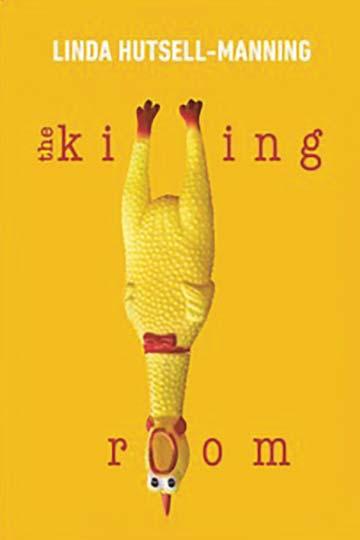
Kate dreams of escaping the nomadic lifestyle that her cynical mother and alcoholic father have imposed on her by moving her through five different schools in two years. She has survived the ordeal of her dislocations by learning to stand up to bullies and by ingratiating herself with others through her singing talents. And now, she has to survive the daily ritual of killing chickens.
After processing the day’s quota of kills, her father packs the broilers in ice-filled baskets and delivers them by five o’clock sharp to the Royal York Hotel. Kate’s new life is a daily ritual that her father boasts will guarantee their fortune:
“We raise’m, kill’m and sell half-friers to the big places. We’ll be rich by Christmas.”
They won’t, though, because her father has already dragged Kate and her mother, Jess, in their aging Chevy through five failed get-rich schemes, and each time Kate’s survival has depended on her ability to break free in her mind
and withdraw from reality. The daily reality of The Killing Room, which takes place in what is euphemistically called “the kitchen,” is graphically described:
The chaotic scene in which live chickens are suspended to stun them, killed to bleed them, and scalded before going into a de-plucking machine becomes even more horrific when the last chicken almost seems to sense its fate: Kate, spattered in blood, flees from the room and her father’s disapproval. Her only companions on the farm are Misty the predatory cat and the flies in the kitchen that constantly buzz your fault, your fault, your fault against the window pane. Before Kate can find her way into the imagined world of her future life, she must show herself the courage to rise above the brittle questions of her mother and the hollow enthusiasm of her father.
The Killing Room combines the engagement of a short story with the economy of a poem. It is a small book with a big message: only courage can overcome cruelty, only dreams can surmount the trauma that life forces upon us, and only hope can shelter the person we choose to be from the one that others would force us to be.
Linda Hutsell Manning’s publications: a novel, a memoir, a two-act comedy, children’s books/plays, plus poetry/short stories in literary magazines. Recent publications: a picture book, Finding Moufette; a novella, Heads I Win, Tails You Lose; and a short novel, The Killing Room. Works-in-progress: a poetry collection, Absence, and a novel, Those Tangled Years

Peter Taylor has published seven books and chapbooks, and his poems have appeared in journals and anthologies in Canada and in more than a dozen countries. His latest collection, Cities Within Us (Guernica Editions), was shortlisted by the Welsh Poetry Book Awards.
Photo Editor: Richard M. Grove


Bruce Kauffman lives in Kingston, Ontario and is a poet, editor, intuitive workshop facilitator, and promoter. His written work has appeared in journals, anthologies, two chapbooks, and six collections of poetry. His latest, ever-crossings, launched in the spring of 2026. He continues to host a monthly open mic reading series called ‘and the journey continues' that began in 2009. And, since 2010, still produces and hosts the weekly radio show called ‘finding a voice’ on CFRC 101.9fm. Bruce, in 2015, began the annual summer outdoor poetry series, Poets @ Artfest, in conjunction with Artfest Kingston, and has organized and hosted it each summer since.
again another year so very slow and equally swift in its going november already opening the door
we here with what we believe will be all we need and all we don’t and we here in this month in these months coming like this with whispers beside us blowing pages of days in their breeze
café dark outside a small café just about to close
there are 15 of us in here just about getting ready to leave
i know i am one but i wonder of those here who else will be among the ghosts appearing and siting here in those hours after the staff closes and locks the door and turns off the lights
an awakening there is an almost whimper almost last gasp for air you hear coming from the room you are in you full now awake aware and startled to realize you are the only one here


A. F. Moritz albert.moritz@utoronto.ca
Toronto, Ontario
How many times have I written the following poem?
O terrible astonishment:
I am here while the sufferer is there— with me and… but… over there.
How many more times will I write it?
This poem will appear this spring in his new collection, The Wren (House of Anansi Press, 2026)
Ana Johnson apj.ajohnson@gmail.com Kingston, Ontario
I get up at 8:20 in Kingston a Wednesday three days after a weekend together with him, yes it is 2021 almost two years of COVID restrictions and I have a meeting at 9:45 because he and I will play squash at the university courts at 11:15
I am hoping he will come to see me first at the house and have a little lunch time action like last week before our second squash game date as it is too cold for tennis now on this third day of November
I played too much last month three hours a day now I have tennis elbow and I should have told him I could not play this week so was his he told me that is why he is going to buy a brace before coming to pick me up. He is still not here at 10:40 then he arrives a few minutes later with two braces whose brands and stores I had not recommended maybe this week I will beat him even though he won last week 4 – 1 but he is beating me already and it is only the first game 10-9 I say yes when he asks go to 15 and after he wins 15-13 he pops a pill into his mouth smiling while he is stretching his calf and quads and after I follow suit I beat him on the next game and just as he is winning the third I hear loud deep breaths as my racquet is poised to receive his serve
his head six foot five high bouncing on the court then the ball the strewn racquet and collapsed half open bloodshot eyes while I am sweating a lot by now thinking I don’t know the first thing about first aid and just as he and I stop breathing, a passerby calls 911








Amanda Albert amandamelanie155@gmail.com Sault Ste Marie, Ontario
An ‘ode to the millennial women’s allegiance to fashion in any temperature.
Bare ankles in a snowbank line, no coat, no plan to freeze; we laughed through weather warnings, and strutted where we pleased.
We were queens of February nights, in heels too thin to save us; crowns of teased hair, glue-on lashes, the frost too drunk to brave us.
Pregames kept the chill at bay, coats abandoned back at home; we made short work of ice and slush like we owned the frozen zone.
We hopped snowbanks, shrieked in puddles, arms windmilling, drinks still tight; winter couldn’t kill our vibe or steal our glitter-light.
Oh, the frost still calls my name sometimes, with its bite and brazen flair; but for the right night, I’ll risk the wear.
Bruce Cudmore cudmorebk@gmail.com
Rockport, ON
Last night the moon was full of mythos and red wine as it passed through the world’s shadow.
Tonight the moon, again full of myth and the white wine of its arc angle, becomes the heart and soul of a passing sea turtle; its medium, for a minute, is a stained-glass lamp that rides wind and ocean currents to mystical shores of rebirth.
David Malone maldc4@hotmail.com
(All things think and are linked together by thinking. – Herakleitos)
I didn’t see the loons but, as I walked the woods near Poole Lake early this morning, walked their shadowy quiet, I could hear them, one calling to the other, and the other calling back, from sharp, sharp mouths; yet without distress, I thought. Yes, without distress.
As I got closer to the lake I could hear them more clearly still, the one calling to the other, and the other, some distance away, calling back, from sharp mouths black.
But at once as I stepped onto the shore, with the sun now a blinding presence on the lake’s small dark surface, their calling stopped. I thought: maybe what they’re saying they don’t want me to hear. I thought: maybe the tone of the dialogue I’ve been replaying in my head they don’t want to hear.
But I’m ready to change all that, I said, searching across the sun-struck calm of the lake. I’m ready to speak in a different way.
Light so blinding, I couldn’t see them, or anything else, for that matter.
Nor did I hear them again, hear their calling, not even as I turned back to the woods, and the ill-lit path I’d been walking on.
Still, the silence held yet, I felt, the eerie vibrations of their calls –the eerie vibrations of their otherworldly calls.
Yes. Otherworldly.
Come from elsewhere (as thinking and speaking seem to do), to pierce the world, and what lives in it, with a meaning that can often shock –
so that some days all one can do is walk.


D. V. E. McBride dayle.mcbride@sympatico.ca
Amherstview, Ontario
The View from my Coffee Cup
Condensation lines the window’s edge like wet lace.
On the other side of the glass a petulant wind rattles the bare limbs
of our Chantecler Pear tree; small fruit too frozen to relinquish their hold.
Above the fence line landscape sees its future in snowy skies.
Juncos chase each other between bursts of feed and flight.
Their white strips of outer tail feathers flash as they soar skyward.
The yard turns quiet as activity wains and sunlight grows, bringing more promise to this winter day and my second cup of coffee.
Dinh Le Doan dledoan67@gmail.com
Beaconsfield, Québec
On the grey tarmac outside the large airport terminal windows
large airplanes crawl like giant insects. And tiny figures in bright
luminescent yellow vests are airport workers eking out a living by servicing and feeding the gleaming metallic giants.
Inside the terminal the urgent calls from the loudspeakers resound time and again urging groups of obedient humans to inch forward and cram themselves into the open side mouths of hungry beasts—our creations.
They may devour us. Or save us. Already in their protective metallic bodies some amongst us have been making the weightless journeys to our new shining havens homes away from home above the clouds.
Yanlan Yu Elaine.yu@lifetech.com
Toronto, Ontario
The sound of the Moon…
The sound of the Moon falls on black tiles of snow-white walls outside of the little window frame
In her arms she holds like her own shadow pearl-rounded, and jade-slender plucking the quiet lake in the ears
The boat on the lake sways the sky gently and in the tea cup it ripples dreamlike Jiang Nan
After a few lingering melodies, the scale rises She lifts the lute behind her back, flying above the roof, the eaves and beyond the moon
With large or small silvery “pipa... pipa...”




Gail Higenell gayleyh@gmail.com Thorold, Ontario.
One morning it appeared –slim, brown, warm to the touch pages blank, it perched on the weeping windowsill.
Running my hand over the smooth surface of the folio my mother’s hurried script appeared surrounded by my father’s sketches. The ink seemed wet but didn’t smudge when I touched it. Their voices in ink and graphite. The afterlife isn’t what we expected.
Their deaths nine days apart. Writing a fresh eulogy when the last one still sloshed around in my head. We didn’t mean to leave so close together— but your father was never good at waiting.
The path to the gravesite was pocked with puddles. The rain knew how to weep when voices cracked, when words failed, it spoke its own language. Covered everyone equally— pastor, family, and flowers, shoes, masks. You didn’t see how the rain bent Amazing Grace.
Urns lowered into the sodden earth a tangled mantle of tossed damp and imperfect flowers. Did you know the petals arrived still warm?
John B. Lee johnb.leejbl@gmail.com
Port Dover, Ontario
where are you going and where have you been my little lizard friends between waking and sleeping in light of day and dark of night from the sheltering of shells to the vanishing away you have left your sandstone tracings of time on time as proof of your skittering claws this mortal event a raindrop that dimples the earth easing heat in the green as it touches a leaf like breath on a word oh such tiny clawed creatures are we with our nails etching on stone like the hurts that are felt by the heart as sorrow’s completion and joy’s relief we are become the lamentations of our passing left on fossils like a fragment of the scriptures
the frangible remains of a solitary word a lonely passage from the tiniest of feet that scurry in three directions from the source of life while four hundred million seasons lived and passed one heartbeat at a time ...



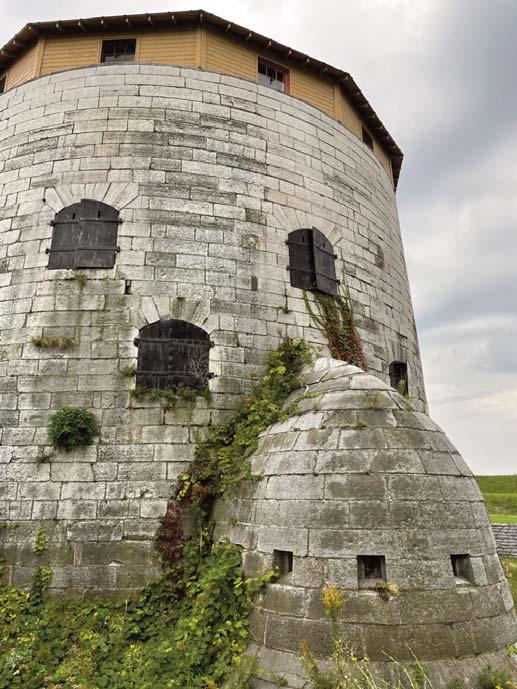
Honey Novick
creativevocalizationstudio@hotmail.com
Toronto, Ontario
It ain’t over till the fat lady sings
But the fat lady singing don’t mean a thing
Because singing lives in the heart of this soprano
Who uses her voice with its dreamy vibrato
Music is never over, can you hear the silence?
Singing is the language of defiance, alliance, parlance
So when she thought it was all over
She entered the portal like an expectant lover
Warmly welcomed with a bit of challenge, they said “Sing a cappella, ex tempore if you can manage
But sing till your heart starts pumping joy
Start off slow and low and then go “sha da day di yoy”
The rhythm was choppy, like a wild ocean ride
She never once compromised her stride
She sang with abandon, then sang for life
She knew that music/singing would end her strife
They all got into the rhythm, swaying to and fro
Abandoning comfort is the way to go
They all got into the spirit, being as one
She closed her eyes till the healing zephyr had come
There was oneness of the tune, the daring sound
The great power of liberating the spirit, unbound
K.V. Skene kv.skene@gmail.com Toronto, Ontario
overflows our strangled streets and we leave as the last of the daylight follows the river up and over the bridge heading northwest reminding us how far we have come and why we are going
home to work to sleep beside still waters beneath an ice moon long infamous for deception never to be sought never to be found never again to be left alone and shivering alongside storm-stripped poplar grief is a naked thing desperately scrambling for foothold jousting shades and shadows
stumbling surface roots of shattered elm and birch what’s left is the haunting the life-line of memory of a still-acknowledged love and a childish delight in the clean scent of pine and cedar
sharp as an obsidian blade
Katerina Vaughan Fretwell kfretwell@cogeco.ca St. Catharines, Ontario
My mate and I honeymooned with my daughter at his neglected rural homestead (his family chasing their fates in Toronto, most of mine had already met their final fate.)
I swept mouse turds from carpets, cobwebs from couches, marvelled at the pump at the porcelain sink; the family pumped their water, lit wicks for light in their two-story clapboard.
Jack and Hilary avoided the hives over kitchen door and two-seat latrine. I sprayed and cried, stung by stunned wasps, pissed off after I blasted their homes.
Frail curtains divided our bed from my child’s. So we coupled atop the long splintery kitchen table (formerly seating ten children, a mother, and briefly a dad.)
(In Toronto I struggled as an only child to keep straight who said what to whom before we headed north to honeymoon.)
A new apiary, in bed we heard an owl’s piercing howl, a great snowy, white with black spots, far distant from her normal range.
Jack died in 2013. Hilary and I, close as bees in a hive, are only seven minutes apart now. Not a wasp in sight.
Kathy Robertson kathyrobertson0234@gmail.com
Kitchener, Ontario
She struggles to weave her way through the grocery store’s labyrinth of shoppers and carts.
She has a toddler in tow with a baby so brand-new its cry isn’t a wail but a whimper.
Overwhelmed tears trickle in rivulets down her cheeks as I put my arm around her shoulders.
I, too, have been there. This, too, will pass. Her embrace of gratitude requires no words.
Would I have reached out if it weren’t for my own journey bonding with hers?
I doubt it.
Keith Inman inman@vaxxine.com Thorold, Ontario
A tree has fallen in prayer to the sky, her gnarled roots like a wall stripped bare as water-downed branches dream in the lake, and others sky themselves toward Scafell where Hereford sheep graze their wooly selves while keeping an eye on us as we climb the bracken’d slope; you pushing your new knees to their doctored best.
And you mention how you were looking down trusting a crosswalk when a car rushed blindly through the sun-streaked day. And over the stars you fell to lay in a pool of road-run-red as clouds kept pace to the place they needed to be, and you thought of poking holes through their cotton fields as they raced past, the voice of god intervening; “Don’t move ma’am. Ambulance is on the way.”

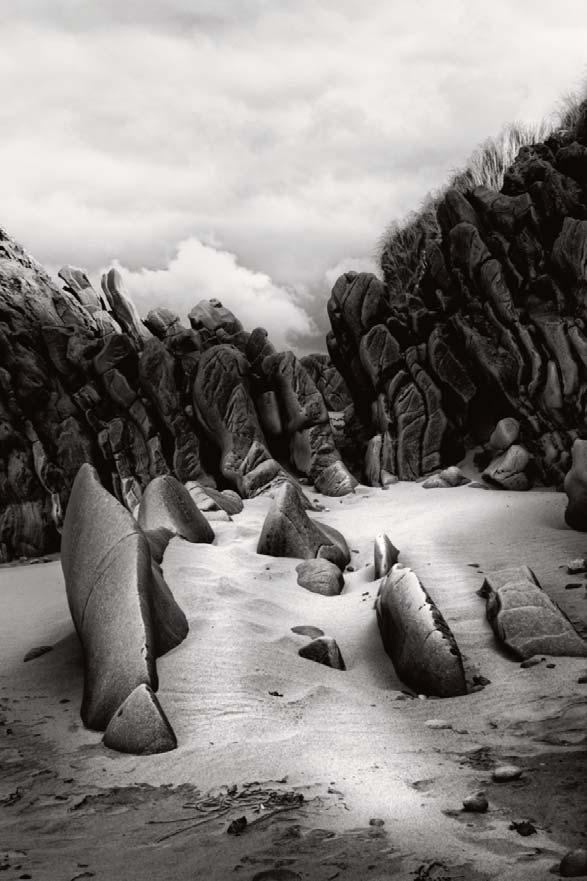

Nicole Bald nicolebald324@gmail.com Waterloo, Ontario
To feel the rhythm Of the Earth’s heart, Is to see the unseen Patterns in a human eye. Faint kiss stains on cheeks, And the flicker of Fireflies at night. To attend to discreet scents Of morning spring dew. The sweet aroma Of a strawberry field. Or books that smell Of vanilla-wood perfume. To know the quirks of sound. Like that of quiet melting snow. Or how bare winter trees creak When rocked by a breeze. It is to notice the Drum of a song, Beating, Against the souls Of our feet.
Rebecca Clifford becca.clifford@gmail.com
Caledonia, Ontario
Thunder Woke Me, Thursday, 6:27am
And yesterday’s laundry still on the line.
A longed-for – unexpected – rain spits against the pane.
Greatly needed, testifies a desiccated patch that outlines the grave of the septic tank.
The sky, a shade of bruised citron, making me doubt myself, wipe my eyes.
The air, grey – no, charcoal – no… just thick.
The lawn is raw sienna, burnt umber, littered with cadmium yellow poplar leaves.
Yet hedgerows and trees are still green, despite the poplars’ leavings
and the barn across the way still red, still standing, still board by board, falling down while thunder growls gravity on an unsuspecting roof
and the gutter water trickles, then gushes into the cold, sighing cistern, a Niagara in a tomb of its own.
Shirish Pundit Chotalia
shirishpundit@gmail.com
Toronto, Ontario cambrian caravans
shadows of my dromedary, mohamed, stretch into the sunset, long and lonely.
whispers of red sand in adobe, camel breath. he searches for the caravans to cross finite fossils of trilobites, extinct in marine seas, into the cambrian canals of past lives –
canvas of sand dunes, date palms.
time stretches across the gulf of aden to the deserts of our ancestors, of the canadian arctic where polar bears defy ice glaciers.
thirst on the tip of my tongue, searching … even a mirage can save me from strangers, of ice and sand, with oranges and grapes on parched lips.
slice the timidity – fear so we can drink ambrosia, join the vedic journey, learn to sing again.
Robert Currie currie.robertdm@gmail.com
Moose
Jaw, Saskatchewan
When Klondike Fever came out, my new book at last, I took the first copy to my mother in Extendicare where she had been living for just a week. “Oh, Robert,” she said, squeezing more emotion into those two words than a priest could fit into a funeral for a friend.
She took my hand and held it while she studied the cover, a slow smile warming her face before she released my hand and flipped the pages, her eyes growing wide above archival photos marking every section of the book.
When two days later a nurse phoned, my father and I rushed to her bed, we each held a hand and tried for reassurances, saying how much we loved her.
Afterwards, we cleared the room, collecting her last possessions, some clothes, an afghan, a few family pictures, and my book, one page stained by coffee as she read at her last supper.
Susan Smith essaysmith69@gmail.com St. Catharines, Ontario
A little girl is led not pulled by her mother’s hand toward the kindergarten on Scott Street, where there’s already an early-morning hubbub.
The other hand pushes a baby carriage.
The child does not complain. She is doing this. She knows the day will have its usual trouble. She knows she has no other choice. She knows she’s no longer so important, and life will always be this way.
Terrible resignation on her face — how many lives has she already lived?
Teresa Hall thallartist@gmail.com
Scarborough, Ontario
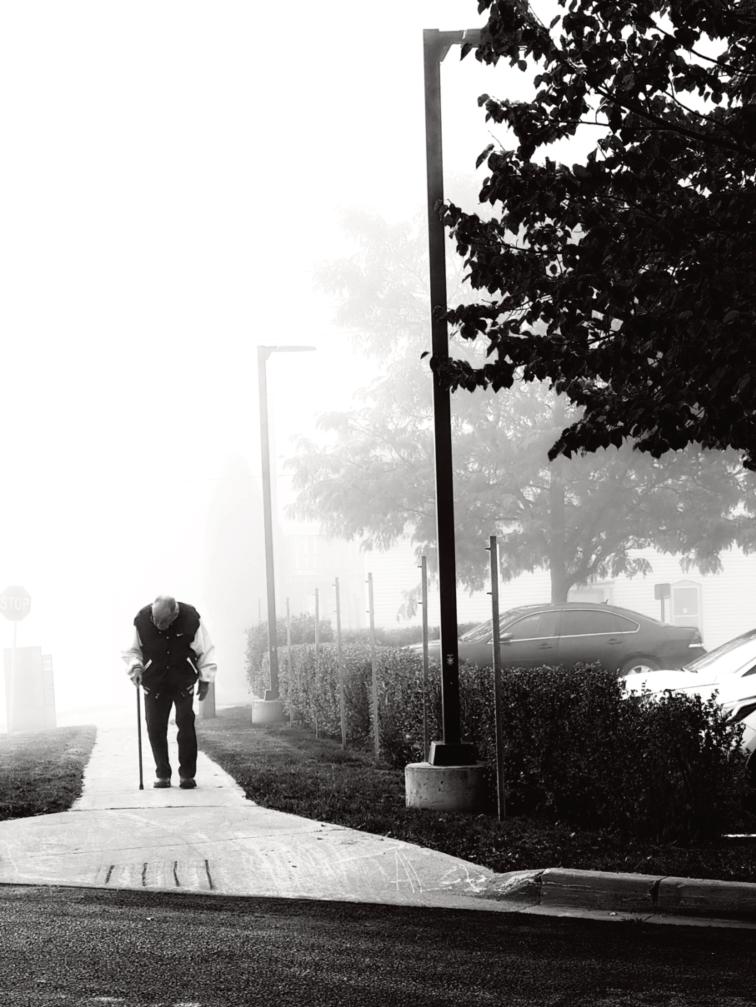
Old man, I caught you in a reverie, sitting on a park bench all alone. Eyes turned inwards, like halfshuttered windows of the soul. What were you dreaming there?
Of days gone past –a young man called to war, cannons booming on that beach so far from home or of a laughing girl with golden hair?
A woman loved, a family raised, each to go their separate ways.
But that is good! Isn’t this how life should be?
Nothing stays the same, now you are on your own again. Was it worth it all?
Ah, a secret smile…
Old man, I caught you in a reverie.



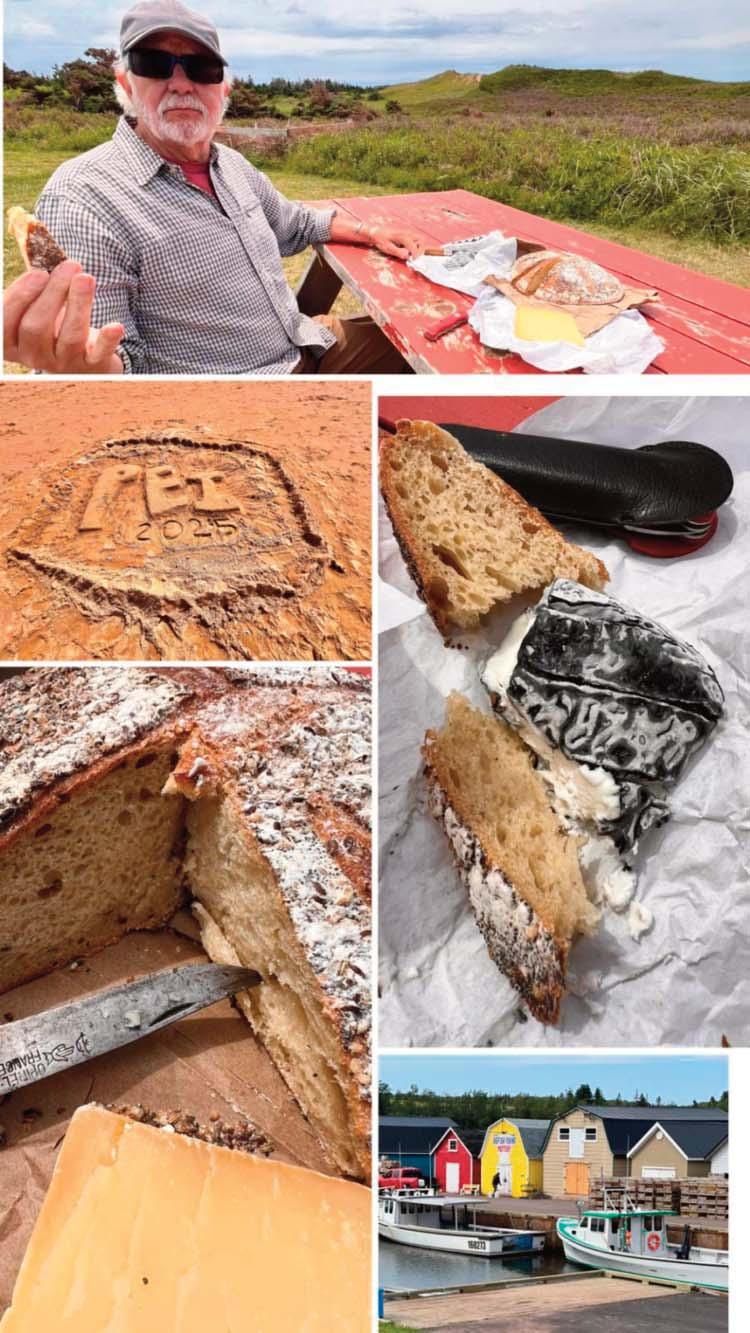



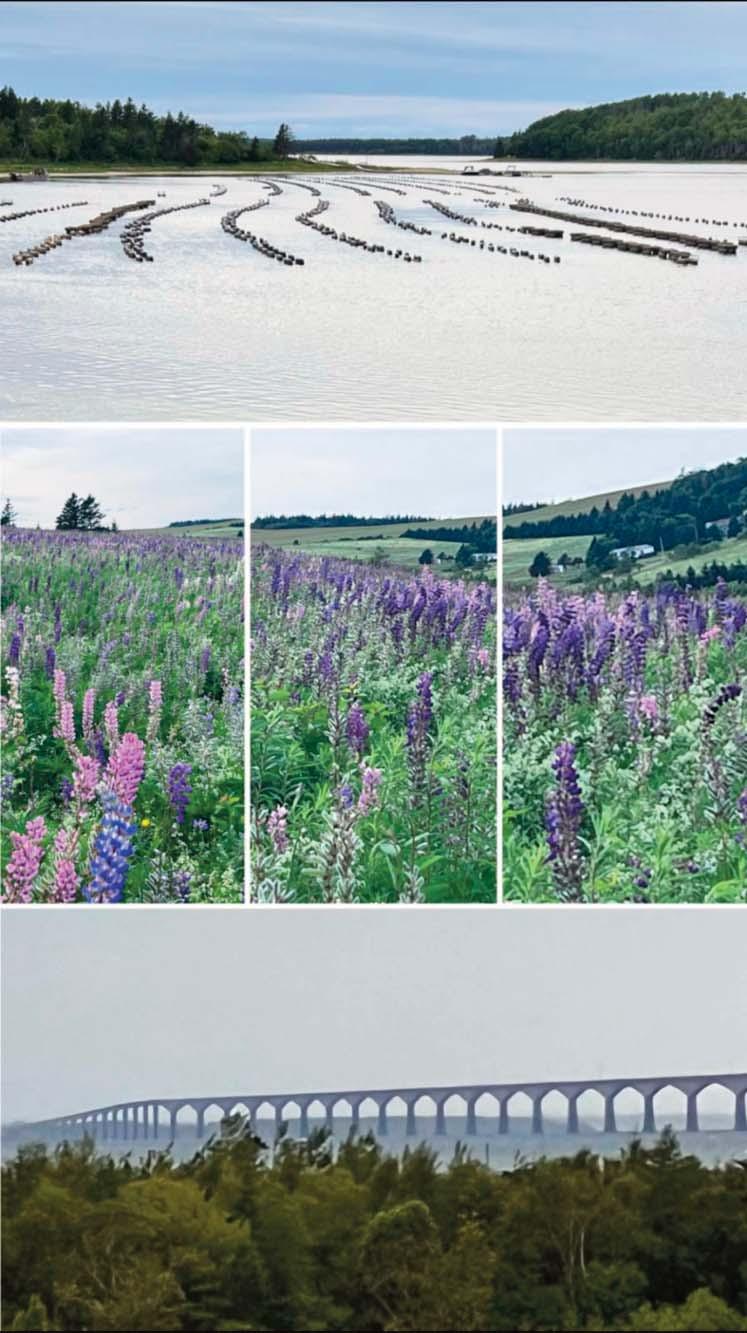
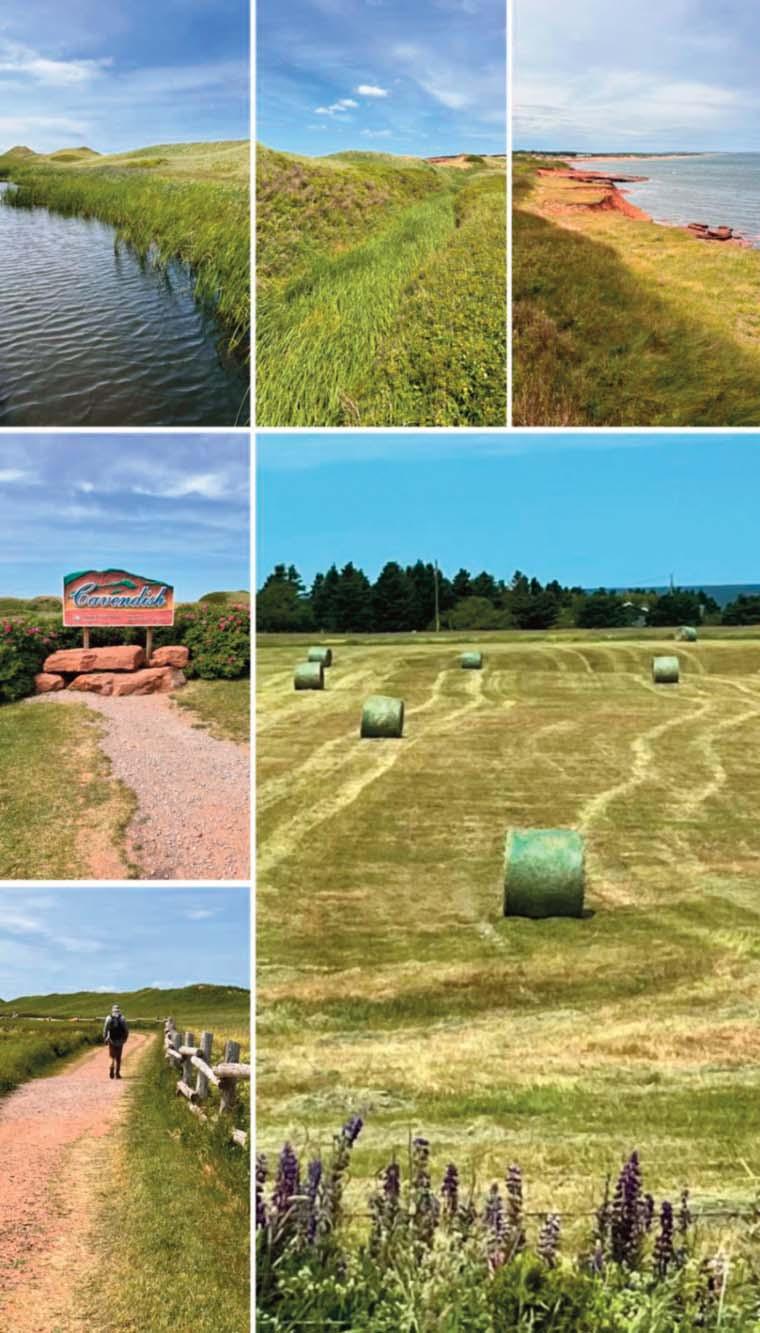
Anna Di Nardo - P.E.I.

Prose Curator – Brian Moore


Brian Moore lives in Toronto where he worked as a project manager in the financial services industry. He has been writing prose for 6 years and has had over a dozen stories published internationally in periodicals such as Blank Spaces, The Barren, October Hill, and Event
Dear Readers:
We're fortunate to have two, very different stories for this issue.
One story imagines privileged tourists confronted with the hardship of refugees, not as an idea, but as a living, breathing person suddenly on their doorstep. What do we do when our family, our friends, argue that common sense and charity are not compatible?
The second story is also about travellers but these people, instead of seeking leisure, are embarked, literally, on a wild car ride in search of salvation. Like the privileged tourists of the first story, these characters also mean well, except that they drive naked, kidnap neighbours, and crash into trucks along the way.
What do the stories have in common? For me, it was the power of that one person in each tale who has the courage to question, why? Why do we believe what we believe?
There's great value, the stories suggest, in stepping back from the noise of life and considering, when everyone else is swept away by popular opinion, is this who we want to be?
Brian Moore Prose Editor
by Laurie Lupton
We had been laying beside the bed for most of the day. I wanted to crawl up on top, and I’d almost talked Mom and Aunt Helen into it and then my idiot sister started screaming, “the ashes, the ashes, I see them coming, Jehovah, Jehovah, Jehovah!”
Mom and Aunt Helen forced me back by the side of the bed, almost under it while they kept up this wild howling, and chanting, “Jehovah, Jehovah, Jehovah.” I never did see any ashes, but there was a dusty smell under the bed I didn’t like.
Uncle Gary came crawling from the bathroom and lay down by the door and joined in too. My stomach hurt – we hadn’t had anything to eat for a day, just some tea and I really wanted a sandwich but they kept yelling when I tried to go to the kitchen or got near a window. I know we were trying to be safe for the rapture but I was really hungry.
And then Aunt Helen started weeping and Mom started crying too and saying,“It will come soon, Helen, don’t worry.”
Mom sat up and said, “But the Rogers down the road, with their new baby, they don’t know and we need to warn them.” They kept crying and chanting and talking about the Rogers’ sweet new baby and then Aunt Helen said, “I see a vision, we are called on to save them.”
Aunt Helen and Mom were ordering us to take off our clothes, to show Jehovah we were ready to embrace the end, to return to him as we entered the world and to get to the car. Now my stomach was really hurting and I was embarrassed. I mean, sure my sister and I
had baths together when we were, like four years old, but I’m fourteen now. But Uncle Gary was thumping the walls and his eyes were really scary so I thought, well, it’s cold out but maybe once we get in the car it will be ok, if we can get the seat warmers going.
And then I realized Aunt Helen and Uncle Gary were naked too. I glanced at Mom and thanked Jehovah she was still dressed. She ran ahead of all of us and got behind the wheel which was good – she’d think to put the heat on for all of us.
She pulled out of the driveway so quickly our SUV sprayed gravel across the lawn. And the next thing I knew Mom had sped over to the Rogers house and driven through the garage gate. It made a horrible metal grinding sound as it pulled off its posts. I don’t think Mom had stopped the car when Uncle Gary hopped out and ran at the side of the house and shouldered open a door.
Mrs. Rogers came running out with her baby in her arms, looking pretty shocked. Which I guess makes sense. You don’t expect to see a naked man running around your front yard, after someone has bashed your gates down. Probably the fact that we were all naked in the car, well except Mom, was pretty surprising too. Aunt Helen kept chanting and was out of the car now and started pushing Mrs. Rogers into the car and then Mr. Rogers ran out and Uncle Gary shoved him in the back of the SUV and hopped in screaming at Mom, “Drive, drive, we have to get ahead. Jehovah, Jehovah, Jehovah!”
Well, Mom lit out of there. We must have been going 80, 90 kilometres an hour on that street. The signs all said 30k max and had signs showing school kids but Mom wasn’t minding them. And Aunt Helen kept yelling, “We must say his name, so he knows we are faithful and we will be spared, Jehovah, Jehovah, Jehovah.”
Mrs. Rogers was holding her baby tight. The baby was really cute, I could see why Mom was thinking about her. She was pretty tiny; I babysit sometimes and I would say she was about three months. But she already had some lovely blonde hair like her mother and her head didn’t have any of that weird squashy shape they sometimes have.
Looking at the baby made me feel a little better, and my stomach stopped aching just a bit.
And then I noticed Mrs. Rogers was crying. Not loud like Aunt Helen does, just quiet, tears running down her face.
My sister had started rocking back and forth, it didn’t even seem like her eyes were focused, “Jehovah, Jehovah, Jehovah.”
So I leaned forward a little, trying to keep my arms over my breasts, and said to Mom, “I think you’re driving a little quickly and, um, maybe scaring Mrs. Rogers.”
Mrs. Rogers nodded at me and smiled, but she didn’t stop crying. But Mom did slow down, and that’s when Mr. Rogers hopped out of the back of our SUV. I turned to see him roll out the back. Mrs. Rogers was shaking now, as well as crying. Uncle Gary was yelling, “we can’t save him, we gotta drive, Jehovah, Jehovah, Jehovah.”
But I think Mom must have been getting tired. She wasn’t driving quite as fast but she was swerving around. She did stop at a light though and that’s when Mrs. Rogers bolted out the door. I was sad to see her go. She seemed kind and I liked looking at the baby. I also didn’t know if they would survive the rapture without our help.
Mom was chanting and kept looking back at us, which was odd. It’s not common to get that much eye contact with the driver when you’re in the back seat. And that’s when we hit the truck and skidded over into the ditch. The SUV was still upright but the back tires weren’t touching the ground anymore and we had to sort of leap out of the back seats.
Uncle Gary and Aunt Helen kept waving at us, telling us to keep up the chant, “Jehovah, Jehovah, JEHOVAH!”
I don’t remember much more of the day because that’s when one of the Mounties tasered me. It was an odd sensation. Like a leg cramp or when it’s that time of the month but all over my body. They said I was still awake but I don’t recall anything after. What I remember next was waking up in a room that might have been a
hospital room but turned out to be the infirmary of the local juvenile detention unit. I resented that, I hadn’t stolen anything or burned down a garage like Ned from my chemistry class did. But my sister and I didn’t have to stay long and we didn’t have to go to a foster home which we were both worried about.
The judge was nice to us, although my Mom and Uncle Gary and Aunt Helen were worried we might all be shunned and not be able to go to worship after but things seem to be normal again.
Now we’re all taking a class in critical thinking. Aunt Helen and Uncle Gary and mom go to a different class, one for adults.
Mom worried when we all first started the course. Then she decided it was a ‘test’ and so now she’s more relaxed. Mom’s also trying to convert the instructor, who is a teacher at the college and used to be a Catholic. The conversion angle has given her a lot of focus.
My sister and I are in the class for teens. At first, I thought we’d be criticized or have to think how to criticize other people but it turns out that isn’t what critical thinking means.
I’m finding some of this confusing but it isn’t scary. Not like trying to see ashes that aren’t appearing.
Based on events reported in the Toronto Star https://www.thestar.com/edmonton/2018/12/20/naked-kidnappers-whothought-the-rapture-hadcome-will-be-sentenced-in-leduc.html
Naked kidnappers who thought the Rapture had come sentenced to house arrest, counselling
Bio
Laurie Lupton resides in Toronto. Originally from British Columbia, she studied at the University of Toronto, earning an Honours Bachelor in English Literature and Religion.
Issue 022
Devour: Art and Lit Canada
by Teresa Hall
The plane taxied to the terminal gate at Toronto Pearson then stood waiting for the arrival of the embarking passengers. All details had been taken care of, including his sister and brother-in-law kindly offering to take care of his cats, as Christopher readied for his muchawaited trip overseas. He worried incessantly about the two felines whenever he went away, at least for the first few days, until he came under the influence of his wife, that is, who didn’t like animals anyway. They were just a nuisance which she, heaven forbid, would have to clean up after.
It was best that they had their own apartments for their different lifestyles, albeit in different countries. His wife preferred the European lifestyle and even with both of their separate lives very busy, still enjoyed their holiday times together. Their relationship was certainly very different from Christopher’s parents’ marriage. They had been married for fifty-two years, never being apart from each other for more than a few weeks at a time. Of course, his parents had met during the challenging time of World War Two, so perhaps that had had a bearing.
“I’m at the airport now,” Christopher’s deep voice resonating throughout the restaurant lounge as he made his usual call to his sister. A seasoned traveler, he still felt excited when loosening ties to his important position in the heart of Toronto’s financial district. He was often away on business trips but this vacation was, for him anyway, a much- needed respite from the hustle and bustle of the downtown core and sometimes stressful duties. “Thanks for taking care of the critters. There’s money on the table. If you need anything just put it
on the tab, and the car keys are there if the Jeep has to be moved in the underground parking.” “Yes, I’ll read your latest poetry on the plane.” “If I have time,” he muttered to himself, under his breath of course. He had no intention of reading the poetry. It really was nothing but naivety, most of it. Having travelled a great deal, he had a slightly different view of the world. It certainly wasn’t as wonderful as his sister believed. Anyway, forget about this silly sentimentality, and let’s get on that plane!
A continent away, his wife Nina packed items in Frankfurt, Germany then bade goodbye to her tall and lovely daughter Ariana. Every so many months she would make the journey to her homeland of Croatia, to visit her own aging mother and usually meet with Christopher near the house that they had all purchased together which overlooked the Adriatic Sea.
She and Christopher had always dreamt of having a villa, cheaply bought of course, because unlike Italy and Greece, the area hadn’t really been discovered yet. It was very much like Italy or Spain in the 1960’s, just ripe for the taking and as a natural citizen she would be able to easily purchase the property. They deserved this as they had all worked hard, herself, Christopher and their much-loved daughter, now employed in an important position for an Asian firm, (they paid well but expected a lot of time and effort from their employees). She was the apple of her mother’s eye, proven by how much Nina had sacrificed everything in her younger years to help give Ariana the university educated life that she herself had missed out on and had always dreamt of their daughter having.
“How are you Darling,” she called as Christopher strode out of the airport into Zagreb. “I’ve rented a car, so it won’t take us long to arrive home. You’ll be able to rest in the coolness of the villa. I’ve just finished having the balcony re-done with Carrara marble which we can now enjoy and later we’ll have a marvelous roast in the country with my family.”
Christopher deeply breathed in the fresh salty air while taking in the calming blue-gray waters of the Adriatic. Memories flooded back
of a past Mediterranean cruise through the beautiful Greek Islands, punctuated with explorations of historical sites, with side trips to Tuscany, Venice and Rome.
The sea wasn’t all wonderful though. Since he had been in this location during different seasons, he had seen how the Adriatic could also be dangerous, even for seasoned boaters, when the cold wind from the North, called the Bora blew in, sometimes exceeding gusts of two hundred kilometers per hour. But for now, the air was warm and breezy.
The two-storied, red roof tiled Villa, which itself wasn’t very far from a town with ancient Roman ruins, overlooked one of the many quaint coastal fishing villages. He and his wife had their favorite little patio to go to for the delicious Croatian fare and fresh fish from the sea; a different kind nearly every day. Locals spent hours sipping coffee over conversations at the cafe. Service was given with broad smiles as tourists were fast becoming the newly made bread and butter of the region; besides, the staff already knew Nina, her family, and Christopher quite well by now.
That next evening, after a long sleep to recover from jet lag, they drove to the much- awaited lamb roast thrown together by his in-laws who lived further into the rugged mountains. They would drink Croatian wine and enjoy tangy cheese and thick bread amid much discussion around the outdoor fire.
This particular evening, the talk became quite heated around the topic of those clamoring migrants coming across Hungary and flooding into Germany. “Most of these people aren’t even from a conflict-ridden country,” the brother-in-law stated. “They are just trying to get the best services and money for nothing, saying that they are refugees when they are not,” the other cousin agreed, emphatically. “No, I think some are in desperate need of help,” Christopher interjected. “They won’t be getting help here,” his wife declared. “Why aren’t the young able-bodied men fighting for their country? It’s all a crock.”
Christopher felt obliged to agree with that point and was soon outnumbered anyway so gave it up for the sake of peace and quiet which he badly needed, he thought, rather self-absorbedly. I’ll phone my sister and see how the cats are and tell her about the roast lamb dinner. Oops, she doesn’t believe in killing lambs. You can’t win...
Three weeks went by and the stories coming out of Greece and Hungary were becoming more horrific. “Well, if you ask me,” his wife intoned. “The United States is the cause of all of this. They should all be loaded on to planes and sent to Washington and let the Americans deal with this after their constant meddling in the Middle East.” Even the heartrending pictures of the little boy on the beach didn’t really change anyone’s opinion for long. “It is terrible what happened, but they shouldn’t have gotten on those boats in the first place,” was the latest consensus.
The news was being closely watched as the Croatian government had decided to allow those ever-growing numbers of migrants into Croatia, now acting as a corridor, as well as aiding them on their way to other parts of Europe, then probably Britain and from there maybe even on to Canada, for God’s sake!
The next morning, Christopher decided to go for a refreshing dip in the Adriatic Sea. The foam-tipped waves were cold but bracing and later he and Nina decided to go for a drive in the Dalmatian mountains to enjoy a lovely restaurant patio overlooking stunning vistas; with their favorite bottle of Italian wine, life couldn’t get much better.
When they arrived back at the Villa, Christopher was more than ready to fall asleep in the lawn chair perched rather precariously on a rocky slope overlooking the garden. He would have to take care of that sharp incline on one of these trips, just another project to think about, he sighed.
Maybe next time... The work reminded him of the afternoon his wife had asked him to paint the small fence by the side of the house. When she had returned from shopping, the job was all done and paid for thanks to an obliging lad who had been fortuitously riding by on
his bicycle! This time, Nina had driven into town to attend an appointment with her ailing mother, and now he could finally have a good rest from them all.
A constant rustling sound slowly roused Christopher from his peaceful sleep. “What the h—-, this must be some wild animal come wandering down from the hillside. I’ll shoo it away quickly,” he muttered to himself, then, “for Chrissake what are you doing on our property?” A determined looking woman stumbled forward dressed in a dark, somewhat muddy, tattered skirt and shawl, holding on for dear life to a very small and ominously silent boy. No-one else could be seen.
The woman now obviously pregnant and with no provisions whatsoever, on a closer inspection of Christopher’s keen eye, he had always been very good at quickly assessing a situation, tried to communicate through cracked lips while wildly gesticulating towards the boy. She was incoherently repeating something over and over again. He realized that the mother was pleading for food and water for the child, and now he would have to decide, should he help this woman out or send her on towards town? What time was it anyway? He wondered, looking over his shoulder towards the house, now cast in late afternoon shadow. His wife could be returning at any moment.
Nina stopped off in the picturesque fishing village along the way picking up perfectly crisp lettuce and juicy tomatoes from the nearby seller’s farm garden and of course, local fresh fish. “Those four,” she said, pointing decisively. She was always good at taking charge of things and was soon in the rental car on the way back to the Villa.
The disheveled stranger reached for Christopher’s arm and held on as if both her and her child’s life depended on it. Oh my god, he thought. I can’t leave this woman and child like this. “Come in and I will give you water and some bread,” motioning towards the now opened door. In that moment she knew that she could relax her vigilant hold upon the boy, then collapsed onto the brand-new sofa which Nina had just had delivered from Zagreb on the Monday before.
His wife hadn’t even wanted renters, feeling that they could turn out to be untrustworthy and horrors, not clean up after themselves what with their newly purchased furniture and sheets and now Christopher thought, panicking, this woman could be expiring on the settee!
It can be said for Christopher that also at this exact moment, something in his upbringing came back to him and he resolved then and there on what he was going to do. Perhaps it was the influence of the story, often told, about his mother’s aunt, a nurse, who had been awarded a medal for valor on the field of battle in France during World War One, or, perhaps the example of how his parents would go out of their way to perform acts of kindness for friends and strangers alike. In any case, the decision was made.
This was one on one, totally different from taking in thousands, he reasoned, already anticipating the ensuing conversation with his wife. Where this woman and her child had come from and how she had gotten here he could only guess, and where on earth was her family? He took the limp boy now loosened from his mother’s grip, and gently gave him sips of water. The woman had only fainted, thank God.
“Christopher, where are you?” Nina called from the front doorway. “I’ve brought a lovely, nutritious dinner for the balcony, and we can take in the sea air while we look at the fishing boats.”
“Uh, in here,” Christopher replied. “Don’t be alarmed,” he quickly warned. “A pregnant woman and her sick child have stumbled on to our doorstep from the hillside, and I don’t want there to be any fuss or argument. This person and child are in need of our help, and I will do what I can from this moment on.” “Well,” his surprised wife protested, “I hope you’re prepared for the flood of people that will soon be coming in through our backyard!”
“We can’t just turf her out into the street; she must have walked for miles. Look at her shoes, what’s left of them, and I think we’d better decide on calling the local doctor,” Christopher remonstrated. He didn’t assert himself often, but when he did, there was no sense arguing.
Nina’s strong maternal instinct kicked in as she watched the small dark-haired boy slowly recovering. “I suppose you’re right,” she hesitantly agreed, as she carefully wiped days old dust from his face. A strong-willed woman herself, she found that she was grudgingly admiring the courage that it had taken for this poor woman to come across the wild hills in search of food and shelter for herself and her child.
The exhausted stranger stirred. For a moment she thought she was back in her war-torn country, tripped and fallen after escaping the bombing of her modest home. Her husband had motioned to her to keep running while he stoically struggled to catch up as he assisted his infirm father-in-law. Somehow, they had lost contact with each other when she and their young son had forged on with a crowd, then clambered into a rickety overloaded boat; later enduring a truck ride and long trek to what they hoped would be a safe haven.
At this point her memory failed and now, looking up with hopefilled eyes, she weakly grasped Christopher’s and then Nina’s hands while trying to speak words in her native tongue. Neither one could understand her language, but they both knew exactly what she was trying to say. “Never mind,” Nina found herself saying, “both of you are safe now. You are going to be alright.”
I’m more well known for my poetry than my stories but have been fortunate to have several published. I enjoy writing fiction, non-fiction, children’s stories and memoirs. Canadian Stories has published a fiction, ‘A Lesson to Remember’ and memoir, ‘The Piano’ in 2016 and 2017. Anubha Mehta has published a memoir ‘A Suitcase for My Family’ in her blog, 2021.
Scarborough Arts has published a non-fiction, ‘Never Give Up Hope’ for which I was awarded 1st Place Award in Written Arts and 500.00 in the 37th Annual Juried Exhibition, ‘Chrysalis’, 2022.
ᐃᐦᑭ is the phonetic spelling of “IHKE” in the Indigenous language. IHKE” is the root word of “Make” in the Indigenous language.
–The
by William Woodworth
210 pages
ISBN: 978-1-988366661
Publisher - Riverside Architectural Press


Tawennawetah Teyohswathe - The Morning Star: It Is Bright is a reflective and spiritually grounded work that documents Elder William Woodworth’s journey of healing, identity recovery, and creative responsibility in the modern world. Rather than presenting a conventional argument or narrative, the book unfolds as a meditation on memory, imagination, and duty, rooted in Indigenous ways of knowing and expressed through architecture, ceremony, and personal reflection.
At its core, the book seeks to connect Woodworth’s personal ordeals and awakenings with a broader collective experience of transformation. He explores how imagination functions not merely as creativity, but as intention, prayer, and ethical action. Central to this exploration is the Indigenous understanding of duty and responsibility as inherently communal. Woodworth suggests that this sense of shared responsibility, though often obscured in contemporary life, remains a recoverable aspect of personal identity.
A significant portion of the work reflects on ancestral migration and memory, tracing how past movements and experiences are carried forward into the present. These reflections inform the conceptualization and design of ceremonial grounds and practices that represent the culmination of his work. Memory, in this context, becomes not nostalgia but a source of vision, guiding creative and spiritual action.
Much of the book traces Woodworth’s personal journeys through time, culture, identity and his perceptions of history as he crossed the barriers of Indigenous and British life. One particularly passage describes on page 129 a pilgrimage that becomes both geographical and spiritual recovery. Reflecting on this journey, he writes:
“To conclude, I want to reflect on the way in which this trip was framed in time, planned in space, and unfolded in my experience as the journey of the multilayered recovery. The timing surrounding the trip began with my mother’s birthday, September 13, coalesced around my dog Penny Lane’s chosen death, September 16, and ended with the Autumnal Equinox, September 23, extending
through waxing Moon towards the full moon of September 25, the time of the climax and on whose morning at dawn I finally buried the body of my dog. So many conjunctions, surrounding such a powerful return have an especially profound effect on every event of such a journey. The trip was modulated in a kind of runner’s duty to “scout” out the landscape of England and Wales for some later deeper connections. This actuality, I quickly became aware of as I tried to explain to my hosts along the way my presence there. As a Mohawk as well as British man I was tracing the steps of my old long house chiefs and recovering the place from which my British Ancestors found the identity from which they had to flee. I myself was psychically forced to flee the very place to which I had tried to visit as their home of origin Wheelton, Lancashire. For most of the trip, I felt a profound kind of comfort in the deep relationship these deeply tribal peoples had found occupation of their lovely land. This connection was made even more poignant by the rather superficial and rapacious way in which the landscape of Turtle Island has been developed by the many visitors who have come from here and other places over the past five hundred years. The trip became the springboard for an urgency in my own cultural transformation for the place out of which I was born. Home, then grief and sadness, healing and reintegration came a step closer to realization of my own experience as I traversed these old migrationary paths of my Ancestors. I am grateful.”
Woodworth writes from the lived position of someone moving between worlds. Ancestrally British and Haudenosaunee, and shaped by many cultural influences, he describes the challenge and necessity of walking respectfully between these

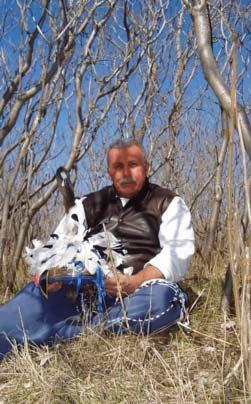
identities. This careful navigation is presented as fundamental to reconciliation, particularly through the renewal of ancient Indigenous greeting ceremonies, which he understands as acts of compassion, balance, and mutual recognition between the first peoples of a land and those who came later.
The book also reflects Woodworth’s professional background in architecture. His design work, including the project Toronto: A Beacon to the Ancestors, is presented as an extension of his spiritual and cultural journey. Architecture here is not simply functional or aesthetic, but ceremonial, relational, and ethical, shaped by teachings received from Elders and peers. Creative imagination, in this sense, becomes a form of prayer, an offering made in the hope of being worthy of the responsibilities inherited.
William Woodworth is a member of the Lower Mohawk Kanien’kehá:ka Nation of the Six Nations of the Grand River, Bear Clan, and was adopted into the Deer Clan of the Cayuga Nation, where he was given the name Raweno:kwas, meaning “he dips the words.” Educated in architecture at the University of Michigan and later completing doctoral work in Traditional Knowledge at the California Institute of Integral Studies, his path reflects a long commitment to Indigenous cultural recovery, ceremonial practice, and education. His apprenticeship under the Cayuga Chief Jacob Ezra Thomas Deyohonwedah further grounded his work in lived Haudenosaunee tradition.
By various reviewers, The Morning Star: It Is Bright has been described as highly academic and, at times, dense. It presents itself as a complex weave of scholarly methodology, traditional Indigenous teachings, personal narrative, cosmological storytelling, and the author’s own philosophical reflections.
For me, a non-academic, poet and novelist, this was not an easy book to read. At times it felt like a demanding slog, recalling my university philosophy classes where I laboured through texts that
yielded only a faint glimmer of understanding. Yet, in retrospect, it is often that very glimmer that proves valuable. Those difficult books, absorbed imperfectly, have a way of seeping into consciousness over time, shaping thought long after the reading is finished. In that sense, I suspect this book may yet continue to work on me.
As I moved deeper into the text, it became clear that many sections read like a doctoral dissertation. I later discovered this is because parts of the book are indeed drawn from Woodworth’s PhD dissertation. As anyone outside academic circles will recognize, dissertations often rely on formal vocabulary, dense syntax, and layered conceptual structures that can be challenging for general readers. The tone throughout the book is reverent and introspective, holding multiple frameworks at once: academic theory, cosmology, personal healing, and cultural meaning. I am ultimately glad I persisted and gathered what understanding I could.
Do not let my description of the academic style dissuade you from reading this book. Even though I struggled through some of the chapters, the chapter entitled “Receiving: Otsihstohkwa, celestial bodies as informers and guides” was less complicated and, in fact, a delight to read.
If you have not read it, you might enjoy it, as the chapter is noticeably more gentle in narrative and more accessible than the highly academic sections surrounding it. Instead of dense theoretical language, Woodworth shifts into a vivid, contemplative exploration of how celestial bodies, including stars, planets, moonlight, and the sky itself, act as teachers and ancestral informers. He opens by describing how modern artificial lighting has severed our relationship with the night sky, contrasting this with traditional Hotinonshón:ni understandings, where stars carry memory, guidance, and cosmological instruction.
I found it especially compelling as the chapter becomes deeply personal. Woodworth recounts a transformative period of grief, a
lucid dream in a great wooden hall, and his consultation with therapist-astrologer Moira Canes, whose advice leads him to a silent retreat. This portion is warmly grounded in sensory detail and emotional honesty. Thank you, William Woodworth, for this personal and accessible insight.
From there, Woodworth expands into reflections on Venus, the Moon, and the “synodic periods” that shape both cosmology and human consciousness. Yet even these metaphysical ideas remain approachable because they are anchored in autobiography: his birth under Taurus, his encounter with a Venus-Moon conjunction, and the sense of “beauty” as part of his life’s duty.
Stylistically, this chapter moves like memoir braided with ceremony. It is lyrical, reflective, and much less technical than other sections of the book. It feels as though Woodworth is inviting the reader into his night-sky awakenings. Here the writing is intimate and even poetic, offering a clear window into how celestial bodies shape his sense of identity, purpose, and cultural responsibility. It serves as a gentle entry point into Woodworth’s cosmology and a beautifully told reminder of how the sky can teach a person to return to themselves.
Tawennawetah Teyohswathe - The Morning Star: It Is Bright, is not a casual read, nor is it intended to be. It asks for patience, reflection, and a willingness to engage with ideas that unfold slowly and ceremonially. I am sure you will find the book a thoughtful and spiritually committed work. Woodworth writes with sincerity, humility, and a clear devotion to cultural responsibility. In the end, this book stands as both a personal testament and an invitation to consider how memory, imagination, and duty continue to shape who we are becoming.
The Light of Delight, a review essay of
First Light, Last Light by Glen Sorestad
Published by Shadow Paw Press
ISBN: 978-1-998273-46-1
Review essay written by Richard M. Grove
First Light, Last Light is Glen Sorestad’s 17th book of poetry. On the surface these poems often appear simple, almost conversational and far from pretentious. His use of language does not announce itself with bravado or ostentatious in any way. Yet just beneath that surface lies a deep poetic truth, patiently earned and quietly delivered. This is a book that trusts the reader. It allows meaning to accumulate through observation, memory, and emotional honesty rather than rhetorical flourish. First Light, Last Light is shaped by restraint, clarity, and a lifetime of attentive looking. These poems do not hurry. They arrive, pause, and remain.

The second poem in the book is a wonderfully descriptive piece that instantly pulled at my heartstrings. “A Straightener of Nails” tells a story of simplicity, but then, pardon the pun, nails the truth home. Straightening nails becomes a metaphor for putting things right in a world that is often unsatisfying and unrewarding. Like Glen, I followed in my father’s footsteps of straightening nails. Over the years, tins and tins of wrongs were made right. What a
wonderful line, Glen, “slow and deliberate care in returning each nail to true.” And the final line of the poem, “against time to set things true, the only way he could,” lingers long after the poem ends. Thanks, Glen.
I will let you find these wonderful lines when you read the book, but typically Glen’s writing is filled with poetically descriptive gems like this. Here are seven examples.
especially when my memory has sprung more holes than a bullet-riddled prairie stop sign; from the poem “January 17”
He ended up on rural roads, watching the world pass by, peddling home brushes or vacuums, eyeballing crops, always ahead of a dust plume.
From the poem “Road Trip”
…The year is not so distant when both of us will become simple memories of others…
From the poem “Gene-Gifts”
So, Martha sails the seas towards her centennial, tiny memories jettisoned each day in her wake. From the poem “Almost One Hundred”
Just at that point, he slowly begins to stretch that evil latex glove up over his right hand. I roll over onto my side. Once again, Glen, you made me chuckle. Maybe only men will fully understand the nuance of these lines from “Annual Medical.”
This captured moment is from our Broadway yard, a place I still walk in memory. I recognize the child who still resides somewhere inside this aging body. From the poem “Photo of Boy and Dog, circa 1941”
I hold onto these memories the bulldozers could not find. Each image will be buried with me. From the poem “Bulldozers”
Immediately following “Bulldozers” comes the poem “Erasing History,” It feels like a companion piece, both elegy and accusation. We all have bulldozed memories. Glen gives true emotional weight to loss here, not by exaggeration, but by naming what is missing. The repeated questions create a quiet insistence that history does not disappear willingly, it is erased. The poem reminds us that land remembers, even when people do not. The final image of canola blooming beneath a cyan sky is unsettling in its beauty. Gain and loss are tallied by the same wind. Well done, Glen, thank you. Here is the full poem:
Is this not where the farm of our youth stood? Nothing here but canola field, right to the road.
Where are the fences, the gateway to the farm, the garden, the rhubarb patch, the caragana hedges?
What happened to the barn Grandfather built of logs? The sheds, the small wood frame house, the aspens
that sheltered us from bitter northwest winds? Where have they gone? How can a ten-foot deep
farm dug-out disappear, as if it never existed, as if it watered no cows, raised no ducks or geese?
A single farm, a thousand stories, grown fainter and fainter until both stories and tellers are lost.
A blooming field of canola, a dazzle of yellow beneath cyan sky, wind to tally gains or losses.
Many of the poems are literally about cameras and photographs, yet even more are about the captured moment itself. These poems understand that photographs are fragile vessels. They preserve and they vanish. One day, a paper shredder may indeed become the final recipient of a life once carefully framed. The closing stanza of “Excavation: Mount Pleasant Public School” captures this truth perfectly:
An old photo that will be discarded someday soon, if not by me, then by those who survive me, who may reflect for a moment, before relegating the past to the shredder.
My mailbox glowed one day when the awaited copy of Glen’s book was stuffed in among the junk mail. As soon as I reached my apartment, I cut open the padded envelope. With eager eyes, I opened the book to the middle and began reading the poem “Disappeared.” Here is the opening stanza:
One early farm morning when I was about ten I realized our farm dog was not around. Most unusual.
Glen and I seem to have shared overlapping experiences. My missing farm dog from boyhood came back speared by thirty or forty porcupine quills. I will let you read Glen’s full poem. What interests me most is that even if you never had a farm dog, this poem will still resonate. So many of these poems find their way into the reader’s own memories. This is not a sales pitch. It is simply true.
Many of Glen’s poems revolve around boyhood farm memories. “Before the Haka” is another such poem, capturing a farm dog’s fierce reaction to an approaching neighbour. Enjoy this stanza:
The strange sound began deep in the back of the animal’s throat, almost a low moan, growing in intensity to a growl, moving from warning to rage, as the aroused animal strutted, stiff-legged as a cenotaph sentry, back and forth around the yard in an exaggerated display of canine ferocity.
You will have to read the prose poem “A Wooden Spoon.” It speaks of friendship and love, but it also mirrors the book itself. Ordinary objects become vessels of memory. What survives is not the object, but what it carried through time in recollection.
For some reason, while still smiling after reading “Always Your Child,” I have to quote this stanza:
that chunky diapered scamp, not yet two, who followed his mom all day, calling her “Honey”, amazed to discover the radio would always play the same songs his mom was singing, wanting to know how the radio knew which song she was going to sing;
I am still smiling, Glen. Thanks.
The book is not all roses and fond reflection. I hope you will read the poem “Blues Concert.” This is a tender, restrained portrayal of love expressed through presence, music, and farewell. The poem honours dignity in the face of loss without sentimentality.
This collection is bulging with memory. As a man now in my early seventies, I appreciated the explored memories of fatherhood. Glen’s remembrances led me down my own memory paths, zigzagging alongside his. Lines such as “the year is not so distant when both of us will become simple memories of others” remind us that memory is both inheritance and responsibility.
In the section “Sunbeams and Shadows,” Glen embraces the Canadian preoccupation with weather. In “False Spring: February,” he reminds us that warmth is not yet welcome. Enjoy this stanza:
The back of a two-week deep freeze siege has been broken. From heated homes, people emerge, tentative as Spring gophers blinking at the sun. But it is not Spring
In “When March Unwinters Us,” thaw becomes music.
Two days later the mercury creeps above zero and the snow begins its wondrous mystery of unmaking itself before your eyes, sighing into itself like cheeks on a denture-less man.
And again, in “The Days of a Mean October,” Glen reminds us that winter never needs much encouragement.
October brought winter winds and minus Celsius that hinted a switch of calendar pages
While I am not a birder, despite my living in Presqu’ile Provincial Park, a migration land mark for thousands of birds, I do appreciate the many birds that flock to my door step and have winged their way into Glen’s poems. This new section “Sunbeams and Shadows” brings us many birds in so many different poems. Glen tells us about: a splendid winged snowy owl, a mealymouthed mob of crows and more crows, cedar waxwings by the dozens, the return of red-winged blackbirds, spring jaunty juncos, a lively chorale of robins, the cries of thousands of snow geese, a handful of hopping and hitching black-capped chickadees, Canada geese with gawky goslings, a pair of Cooper’s hawks, 118 tundra swans, a bohemian waxwing, a prattling blue jay, and finally morning catbirds. With the blue jay in mind I have to share this wonderful stanza from the poem, “One-sided Conversation”:
Frustrated by its companion’s reluctance to disclose a single morsel of useful news, the jay utters a few squawks and flaps off in search of a more receptive audience.
From “Aspens and Robins,” this encounter feels biblical in scale, a sudden abundance that overwhelms the senses.
I have seen robins in migration before, small flocks of fifty or a hundred, stopping to rest or feed. But the scope of this encounter, this feathered choir,
These two stanza in the poem “Feathered Cosa Nostra” will give you a hint about the birds in his many bird poems:
“and yes, even the soccer pitch. It is all theirs – pity the poor fool who seeks to dispute this fact and thus incurs both the instant wrath and the utter fearlessness of the single-minded ganders,”
In appreciation of Glen’s bird poems I hope you will indulge me by presenting this full poem. I love how observant it is and how it patiently turns simple crow behavior into metaphor, ending with a sly, unsettling moment of mutual awareness shared. The poem’s quiet precision and mechanical echoes suggest an ancient intelligence at work, leaving the reader unsettled by the sense of being calmly observed in return. I think this is quite a brilliant poem. Here is the full poem:
Crow perches on the top bowl of the water fountain on the back deck, bends and drinks deeply, tossing its head back, to hasten the flow, then bends to drink once more, head again thrown back to swallow deeply.
I watch through the window, perhaps six feet away, as sun glints iridescence off glistening feathers.
As Crow drinks, oddly enough, I see an ebony pumpjack bending and raising, bending and raising.
Crow now, its thirst slaked, wipes its beak back and forth on the upper rim of the fountain bowl, first, one side of its beak, then the other side, repeating until satisfied. I don’t know whether I should feel amused, or am I astonished?
Crow turns to the window, cocks its head at me and those dark eyes seize mine for a moment. I’m positive Crow would like to say something to me, something I’m not at all sure I want to hear
Now that I have come to the end of reading this fine book, I must thank not only Glen, but also the publisher, Edward Willett of, Shadowpaw Press, in Regina, Saskatchewan. The cover and layout are both handsome and comfortable. Glen mentioned to me that his editor was Dave Margoshes. Dave, the flow of this book is impeccable. The sequencing danced me from one poem into the other. Between the publisher, editor, and Glen Sorestad’s fine poems, you have produced not only a book worth reading, but one worthy of a place in CanLit history. I am proud to have an inscribed copy in my CanLit collection.
Richard M. Grove Poet Laureate of Brighton, Ontario Publisher and Editor www.WetInkBooks.com
4 reviews on The Uninvited Season
Kimberley Elizabeth Sherman Grove
Publisher: Wet Ink Books
ISBN: 978-1-998324-21-7
Editor: Miguel Ángel Olivé Iglesias
Available at: https://volumesdirect.com/collections/wet-ink-books For more information: www.WetInkBooks.com

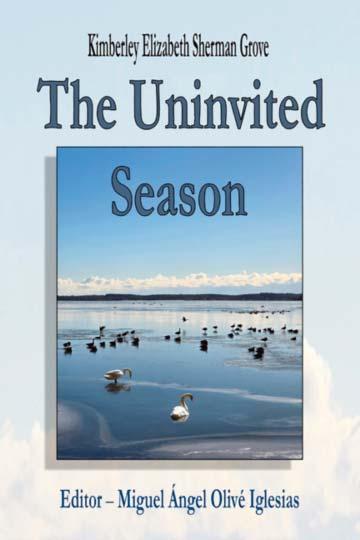
Edited by Miguel Angel Olive Iglesias
Review by Patrick Connors
Kim Grove’s poem “Cuba in a Snapshot” features two interactions. In the first, a barber gives a haircut to a well-groomed man. In the second, a man wearing baggy pants talks to another sitting on a stump. These depictions of a typical day are simple and authentic.
At the launch event for The Uninvited Season, I turned the page to “Endless Reflections”. I was familiar with this poem, which poses an important question: “Does art reflect life/or life reflect art?” Donna Langevin had planned to present this poem. I apologize for my lack of communication. But it occurred to me that our mutual interest in reading these words was no coincidence. Kim had a unique manner of passing along a message, or even food for thought, to anyone with whom she shared her poetry and herself.
“His Creativity” is a celebration of the Author of all we see. The first line ends with the words: “...in a fragile moment.” This became the title of a book by Professor Iglesias, a wonderful overview of Canadian poets. Kim contributed in so many ways to the culture and philosophy of the CCLA.
“Infinity” is a poignant piece. The Uninvited Season is about trying to make sense of what our incomplete human awareness cannot understand. The final stanza reads: “...I think it is the/Openness of the oceans/wide embrace/That draws me to stand/on the cliff’s shoulders/To see Infinity’s face.” By looking into the unknown, we might find the answer.
Patrick Connors is a reviewer and author of The Other Life and The Long Defeat. He contributed 18 poems to Bottom of the Wine Jar, released in the beautiful pearl of Gibara, Cuba.
Uninvited Season
Editor: Manuel Angel Olivé Iglesias
Review by Donna Langevin
The Uninvited Season invites the reader into the engaging world of Kimberley Elizabeth Sherman Grove’s luminous and humorous essays and poetry. It is also a collection of tributes from several authors who knew and loved Kim.
It was my pleasure to participate in the launch of this endearing collection on Saturday, November 1, 2025 at Sharon House, a Christian Science Care Home where Kim spent her last days under the compassionate care of the staff, and her beloved husband, Richard (Tai) Grove. He compiled this volume in honour of his “darling wife” whom he fell in love with, under the umbrella, over thirty years ago, “The umbrella went up,/her arm linked with mine,/we dodged a puddle in unison/and then time stood still/as we fell in love.”
Donna Langevin Reviewer, Poet and Playwright
The author of her recent collection of poems “House of Poems” Wet Ink Books 2025



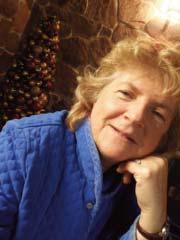
Manuel Angel Olivé
Review by Hans David Muller
The Uninvited Season is a richly layered literary collection that reveals the depth, versatility, and intellectual curiosity of Kimberley Elizabeth Sherman Grove. Moving gracefully between poetry and prose, the volume demonstrates a writer fully attentive to the textures of lived experience while remaining equally committed to clarity of expression and emotional authenticity. It is a book that rewards careful reading, not only for its thematic resonance but for the disciplined craftsmanship evident throughout.
Grove’s poetry often begins in observation but rarely remains there. Whether reflecting on nature, memory, travel, or human connection, she writes with a perceptive stillness that allows the reader to pause and reconsider the ordinary. Her language is neither overwrought nor ornamental; instead, it is purposeful and lucid, trusting the image and the idea to carry meaning. The poems suggest a writer who understood that restraint can be as powerful as declaration.
The prose selections further expand this portrait of literary fluency. Grove demonstrates an ability to shift registers effortlessly-from reflective narrative to journalistic clarity-without losing her distinctive voice. This dual capacity is not accidental. As the biographical note explains, she maintained “a well-rounded writing career” and possessed “a passion for writing from an early age.”
After graduating from University of Toronto she moved on to complete the Creative Writing program at Humber College’s School for Writers. Her professional work appeared in major publications including The Globe and Mail, The Christian Science Monitor, and The Toronto Star, while she also served as a reporter and regular contributor to several magazines.
Such experience is evident in the confident structure of her prose: she respects the reader’s intelligence, avoids excess, and understands how narrative momentum operates. What emerges most clearly is a writer
shaped by both artistic sensitivity and journalistic discipline. Journalism demands attentiveness to fact, precision, and audience; poetry demands openness to nuance and emotional truth. Grove succeeds because she does not treat these as opposing impulses. Instead, they coexist productively. Her prose benefits from a poet’s ear, while her poems are grounded by the observational steadiness of a reporter.
The biographical note also points to her editorial work and contributions to international anthologies, underscoring a career engaged not only in writing but in shaping literary culture. This broader participation reflects a professional seriousness that readers will recognize in the collection itself.
Perhaps most impressive is Grove’s range. She writes comfortably about landscape and travel, about community life, about moments of introspection, and about the quiet revelations embedded in everyday encounters. Nature, which “inspired her writing,” becomes more than backdrop; it functions as a field of reflection through which human experience is interpreted.
The Uninvited Season ultimately presents Kimberley Grove as a writer of balance-thoughtful but accessible, reflective yet grounded. It invites readers to engage with a body of work shaped by curiosity, professional discipline, and an enduring commitment to the written word. Far from being confined to a single genre or mode, Grove stands here as a consummate literary practitioner whose journalism, prose, and poetry together form the signature of a truly well-rounded author.
Hans
David Muller CanLit reviewer, author of the The Ventara Adventures: The Resilience of Hope and United We Stand
This is a book with, about and for Kimberley Elizabeth Sherman Grove — our Kim. Her husband, Richard (Tai) Grove, generously asked me to be the editor of a book that would collect in a single volume much of her literary writings and the wholehearted words of tribute her husband, friends and acquaintances gratefully wrote to our indelible Kim. I was deeply honoured.
Lingering gently and sweetly in her own special aura, Kim wrote poetry and prose capturing with singular insightfulness and sentience what was around her. Particularly keen, in my view, are her poems to nature—that deeply rooted leitmotif virtue Canadian poets carry in their blood—where we perceive her profound connection, which I revealed in my poems and my essays on her work.
* * *
I invite you to approach this book with the same kind of love Kim professed when she privileged us with her presence, her tenderness, her friendship. There is no other way.
Prof. Miguel Ángel Olivé Iglesias. MSc
Author of 4 books on CanLit essays Poet and Reviewer