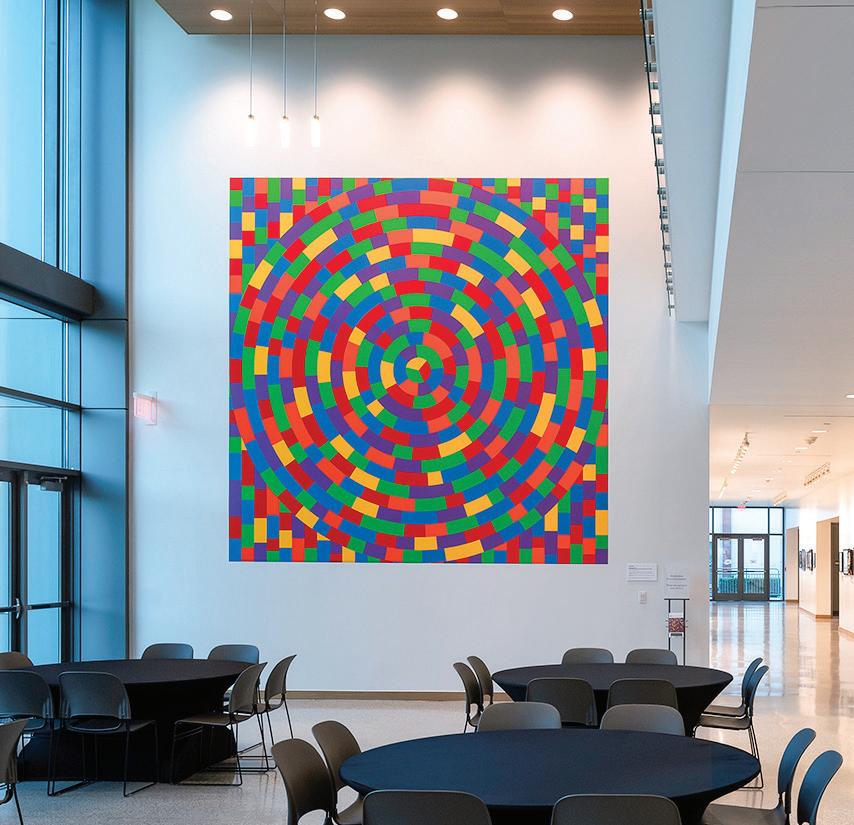
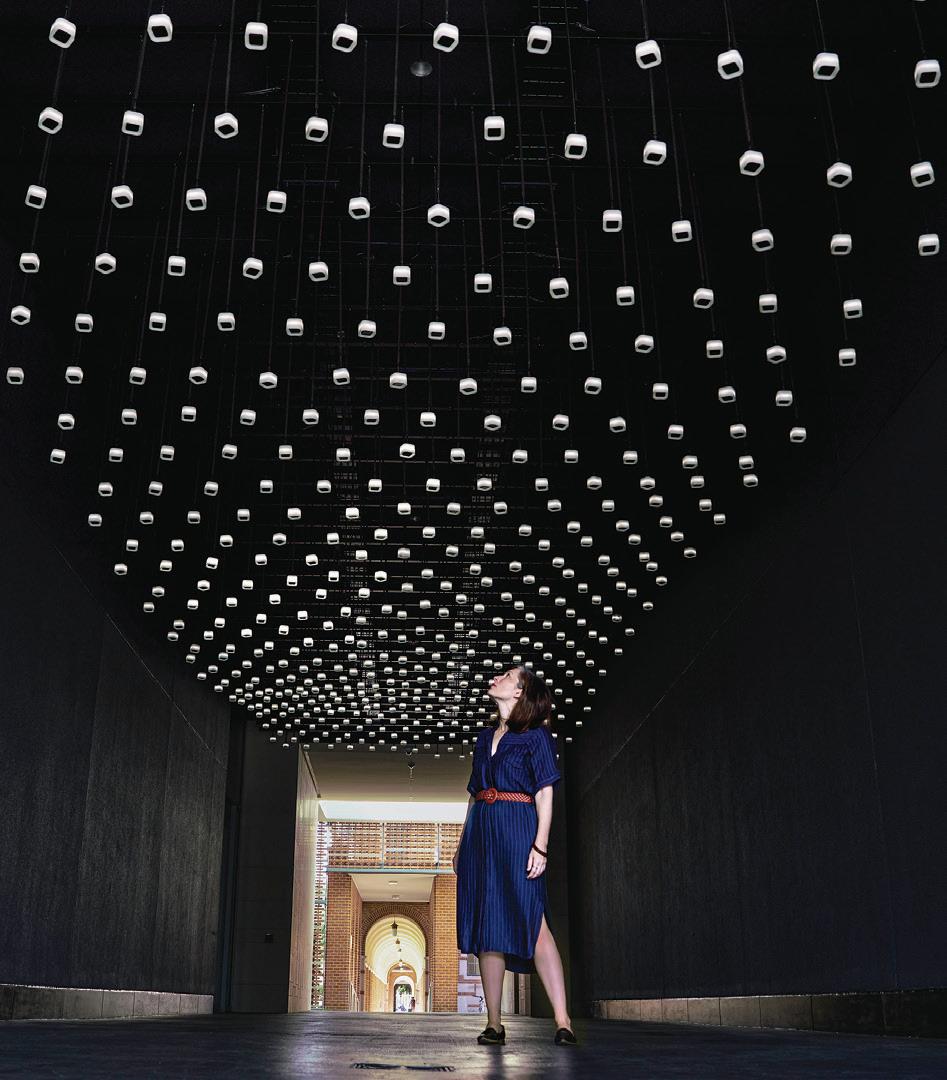
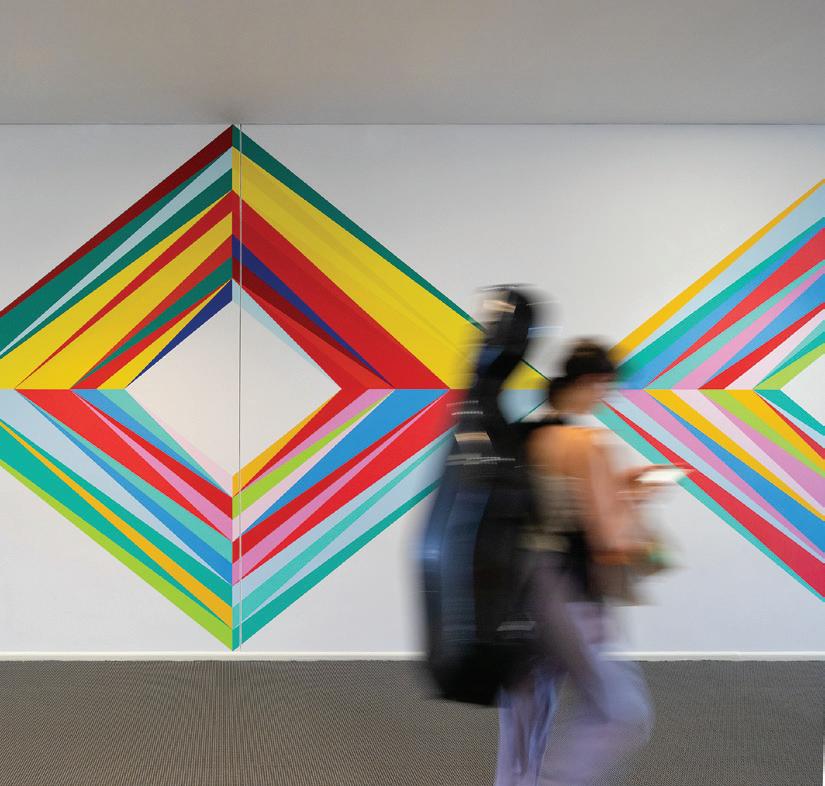
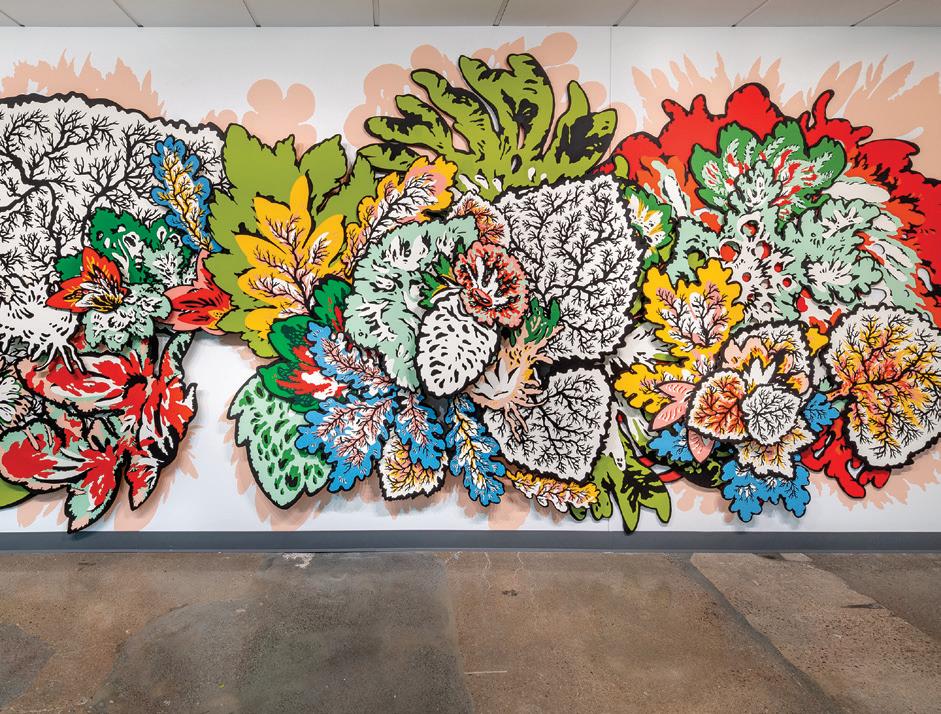
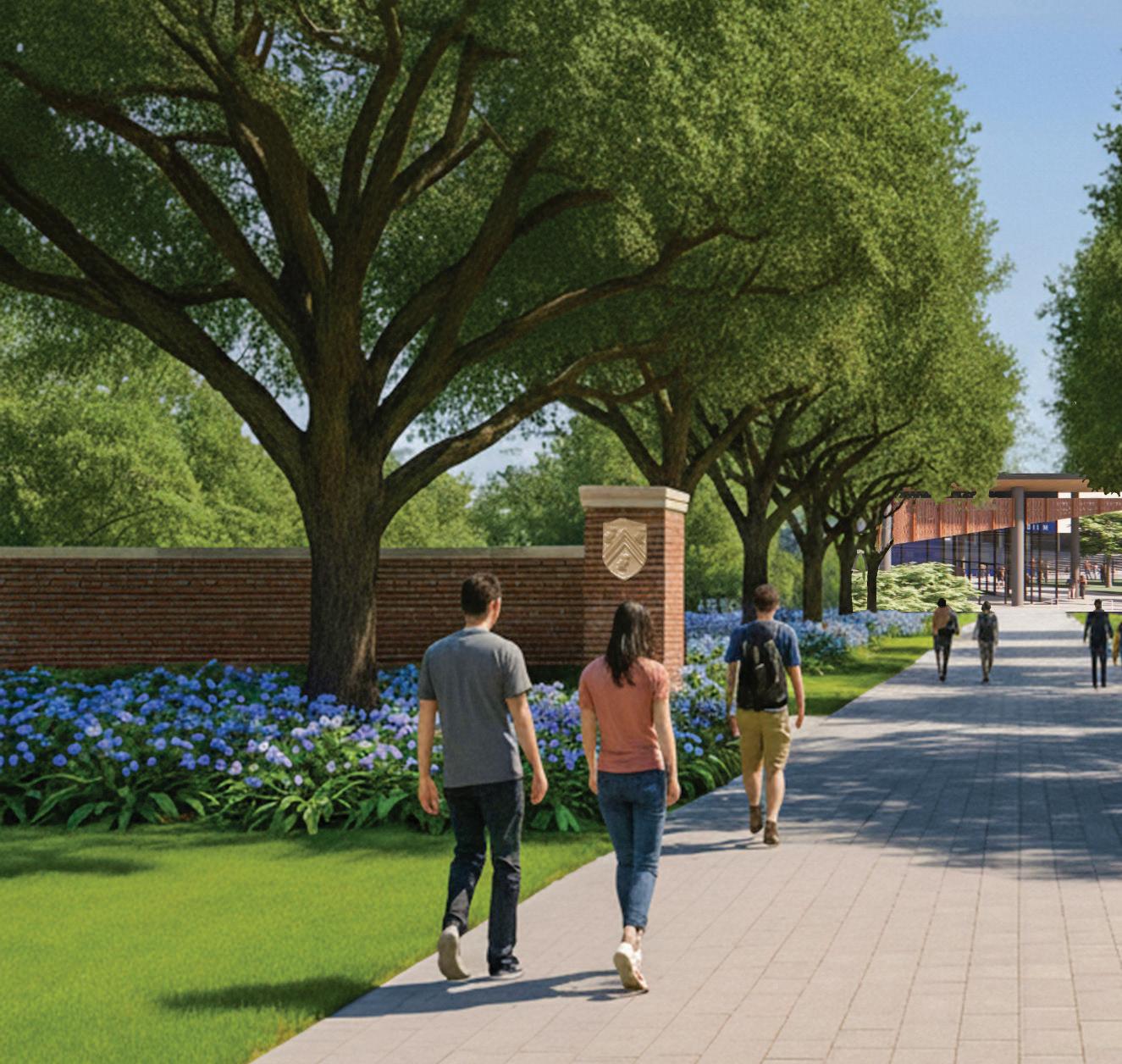
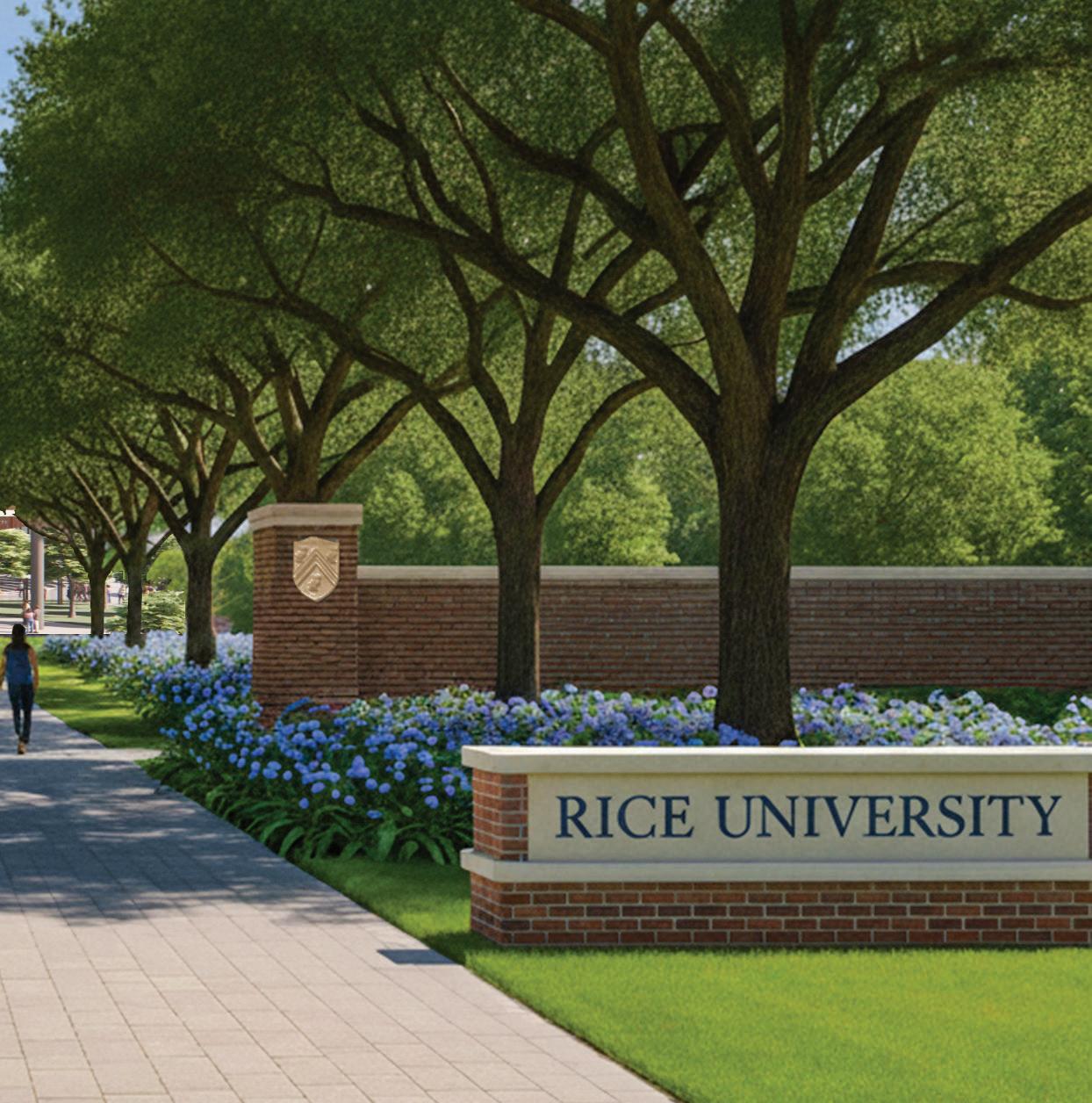
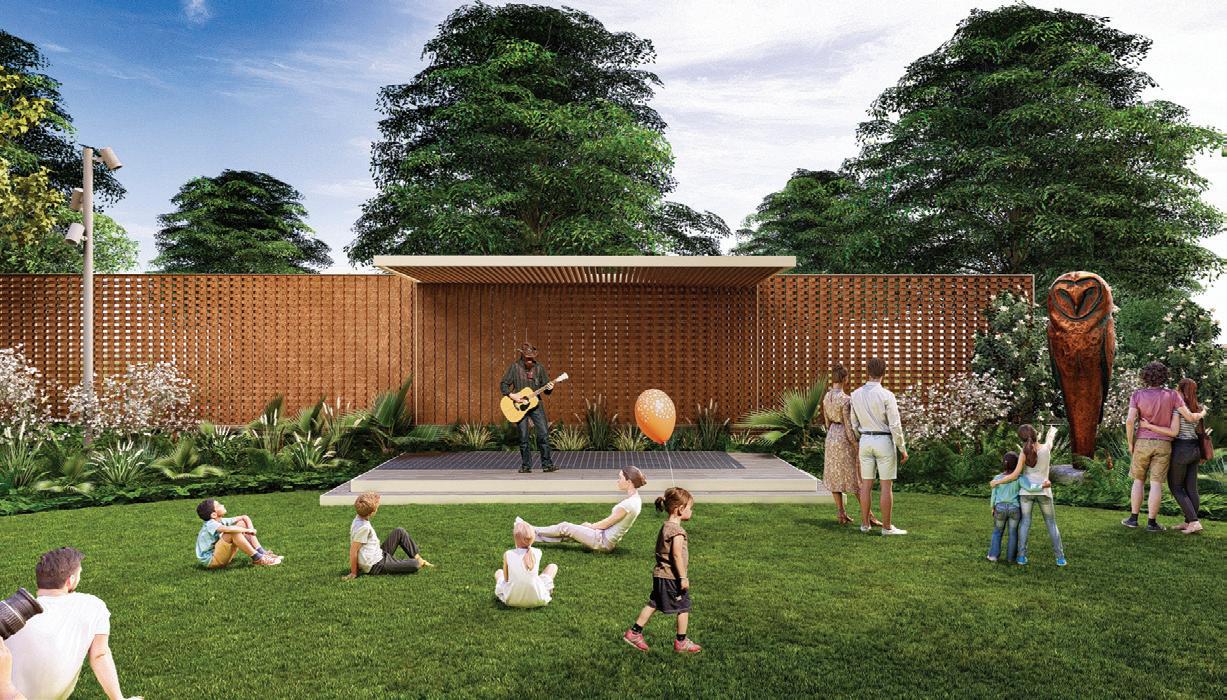
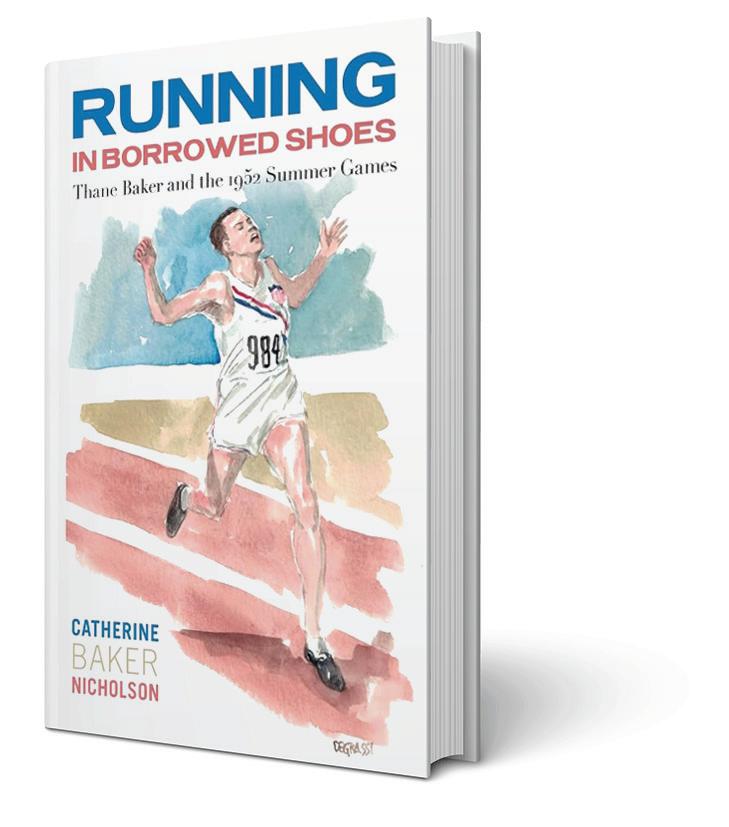
How Rice’s ambitious Gateway Project will reshape the campus. CREATIVE LICENSE Rice students and alumni are building booming creator careers.
A NOVEL PERSPECTIVE
A Rice professor’s award-winning book makes waves in Italy.
RICE UNIVERSITY WINTER 2026
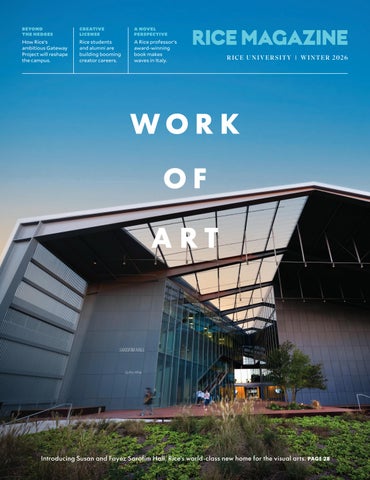
WORK OF ART
Pitch Perfect
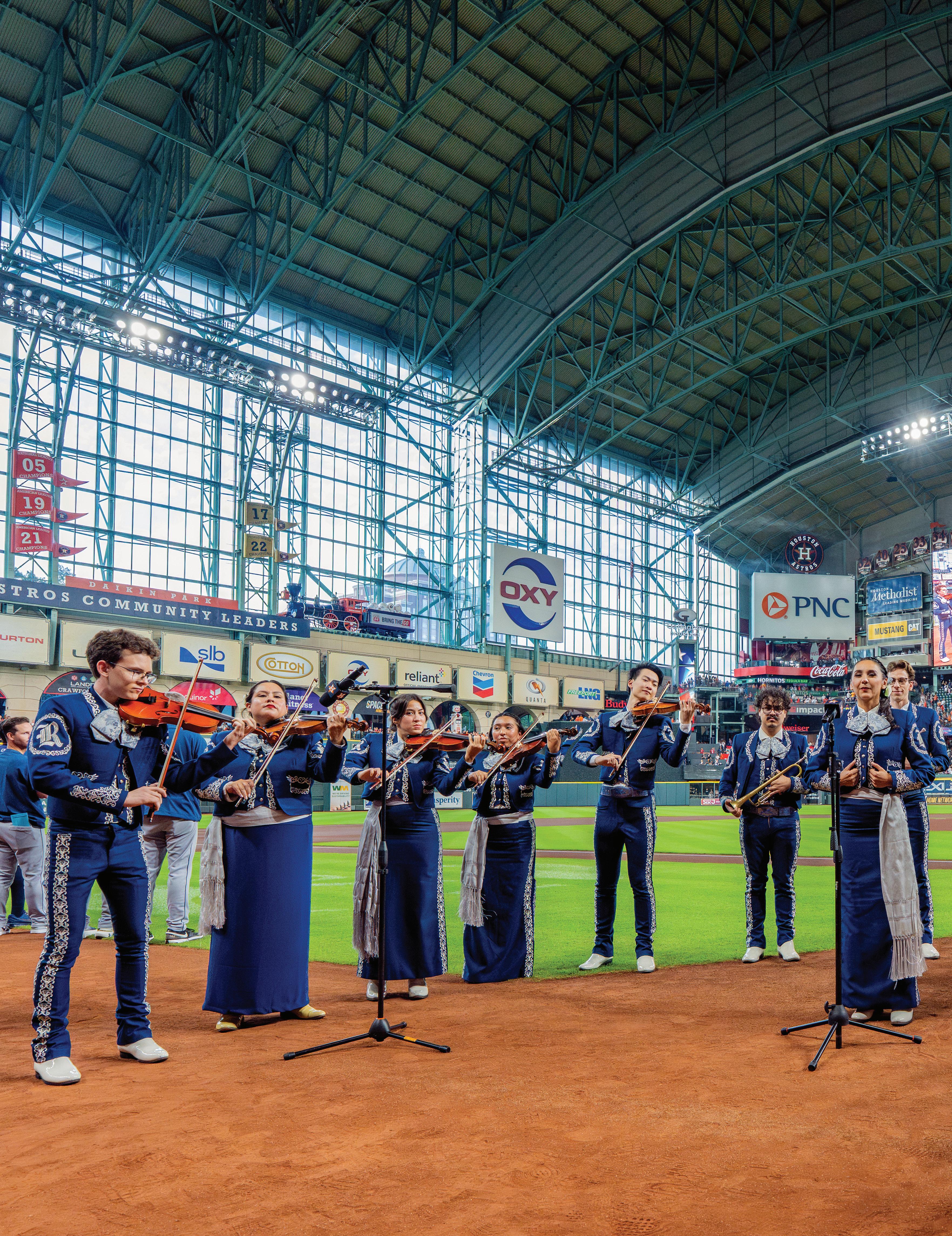
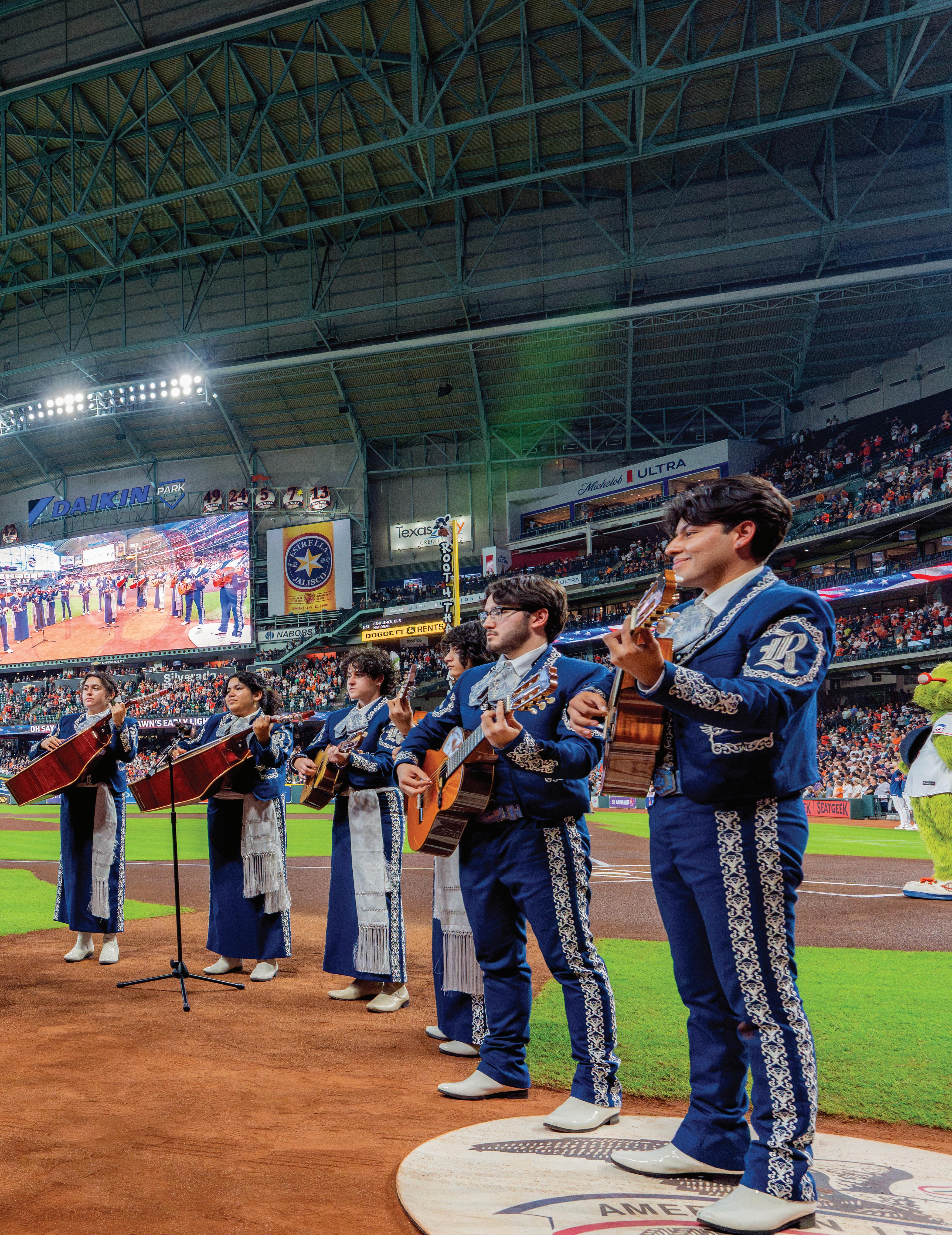
Rice’s Mariachi Luna Llena hit all the right notes on Houston’s biggest stages last fall, delivering an exuberant performance of the national anthem at both an Astros game and a Houston Dynamo match. Founded in 2013, the mostly undergraduate ensemble has become one of Rice’s most visible musical ambassadors, showcasing the vibrant spirit of the mariachi tradition everywhere from Miller Outdoor Theatre to the Texas Capitol rotunda. PHOTO BY
PARTH PATEL
Watch their Daikin Park performance at magazine.rice.edu/mariachi .
FEATURES
28
State of the Arts
Sarofim Hall and a new school name mark a major step forward for the arts at Rice, expanding space, opportunities and academic visibility.
38
A New Gateway
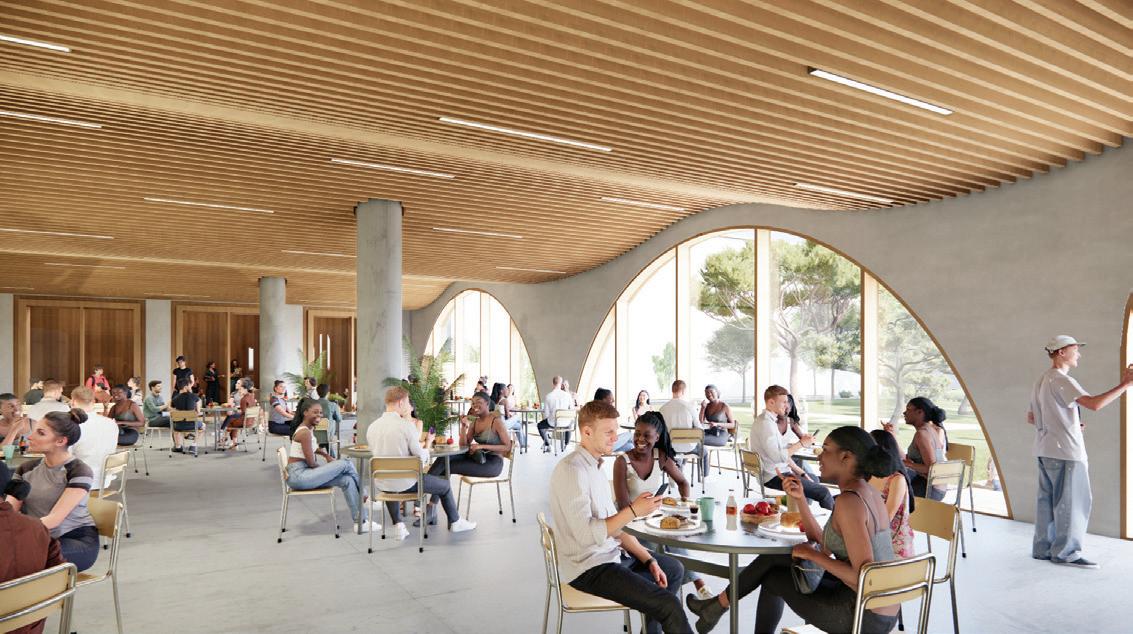
The Gateway Project is set to reshape the campus experience for the next generation of Owls, anchored by a revitalized Rice Stadium and a walkable link to Rice Village.
41
The Creator Class
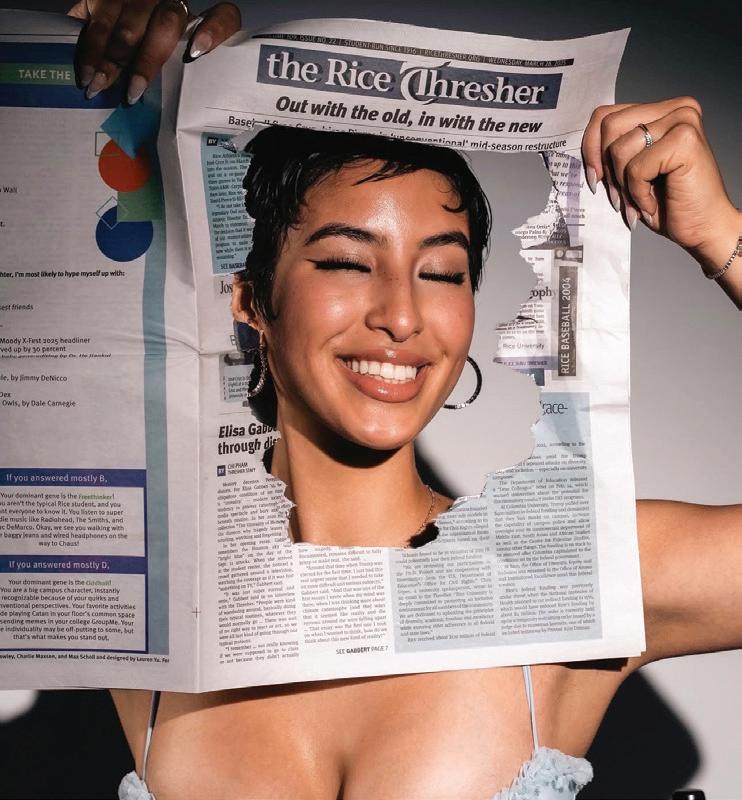
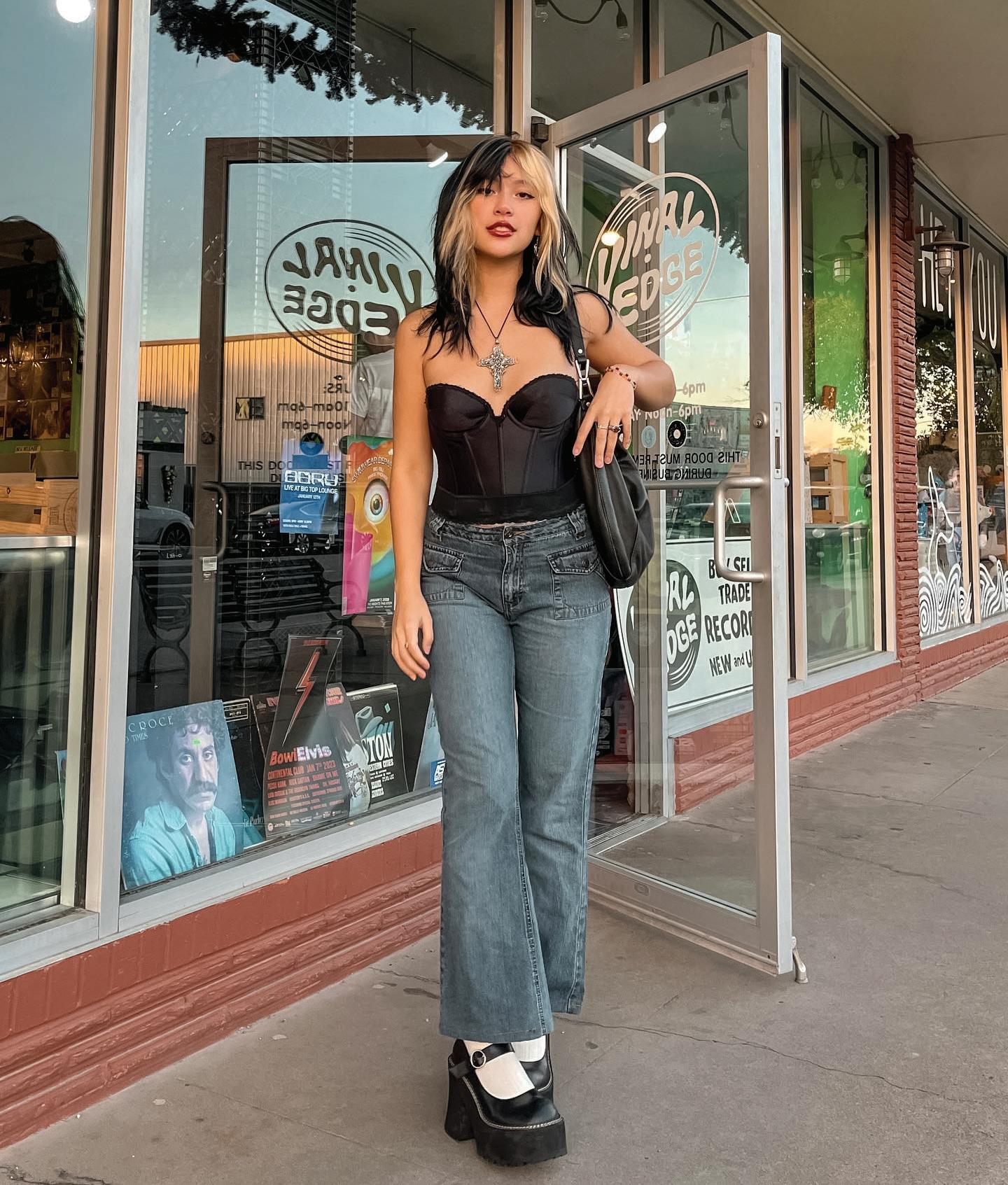
Meet six Rice students and alumni turning their personal interests into thriving social media platforms, building online audiences that extend well beyond the hedges.
COVER PHOTO BY JEFF FITLOW
12
47 7
DEPARTMENTS
Sallyport 7
Bat girl studies bats, new Owls by the numbers, Chao College announced, microbes in space, Brockman Hall’s costume room, Rice Architecture in Paris, recalling Putin’s Rice visit
Wisdom
19
Major literary award for Andrea Bajani, not all roads are equal, origami for engineers, John Baugh launches the Texas Linguistics Consortium, a new take on “The Aeneid”
Owlmanac
47
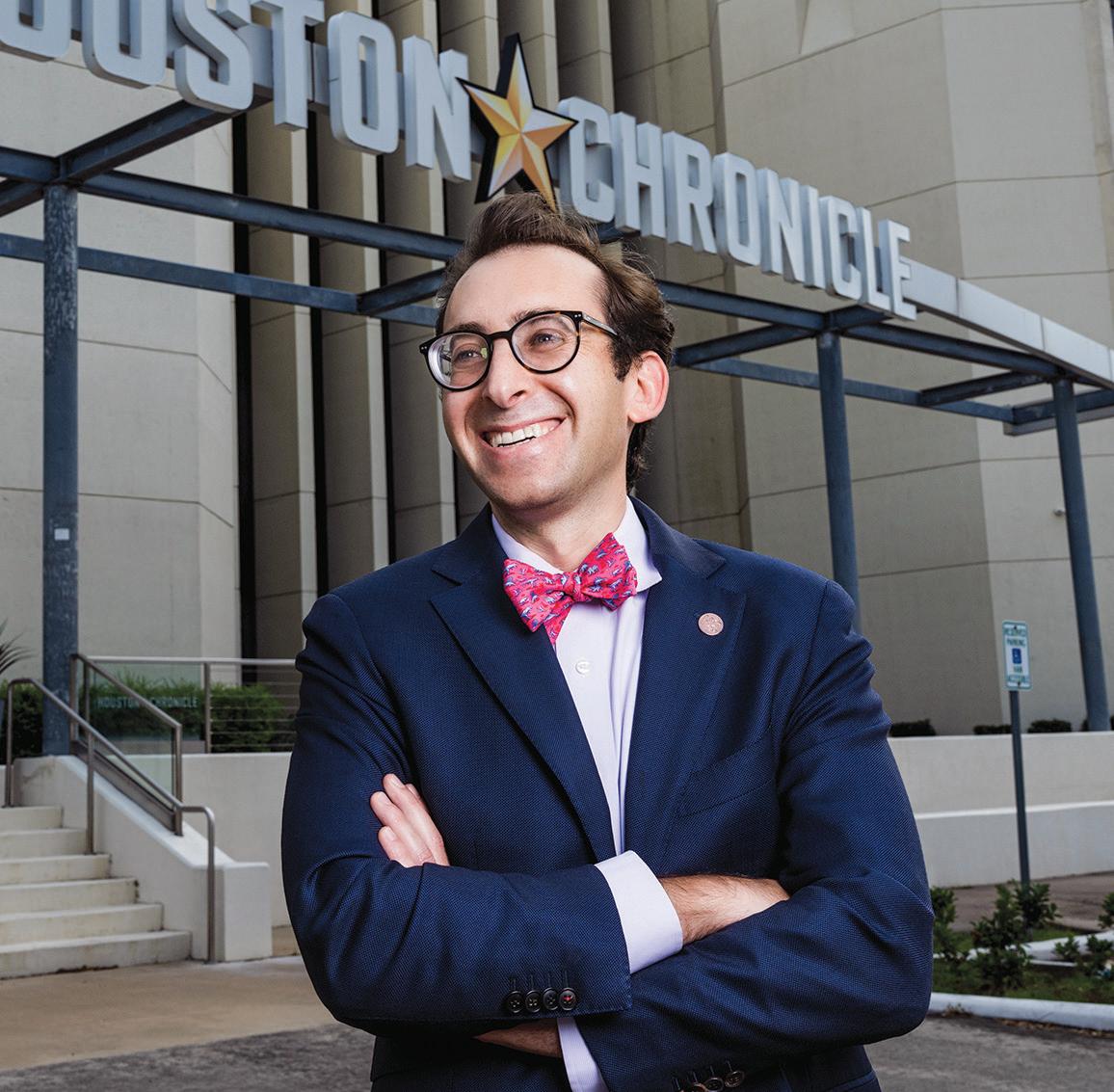
Classnotes, Evan Mintz ’08 debates politics, Rusty Ludwigsen ’23 dives into marine habitat restoration, Rebecca Greene Udden ’73 celebrates 50 years in theater
Last Look 72
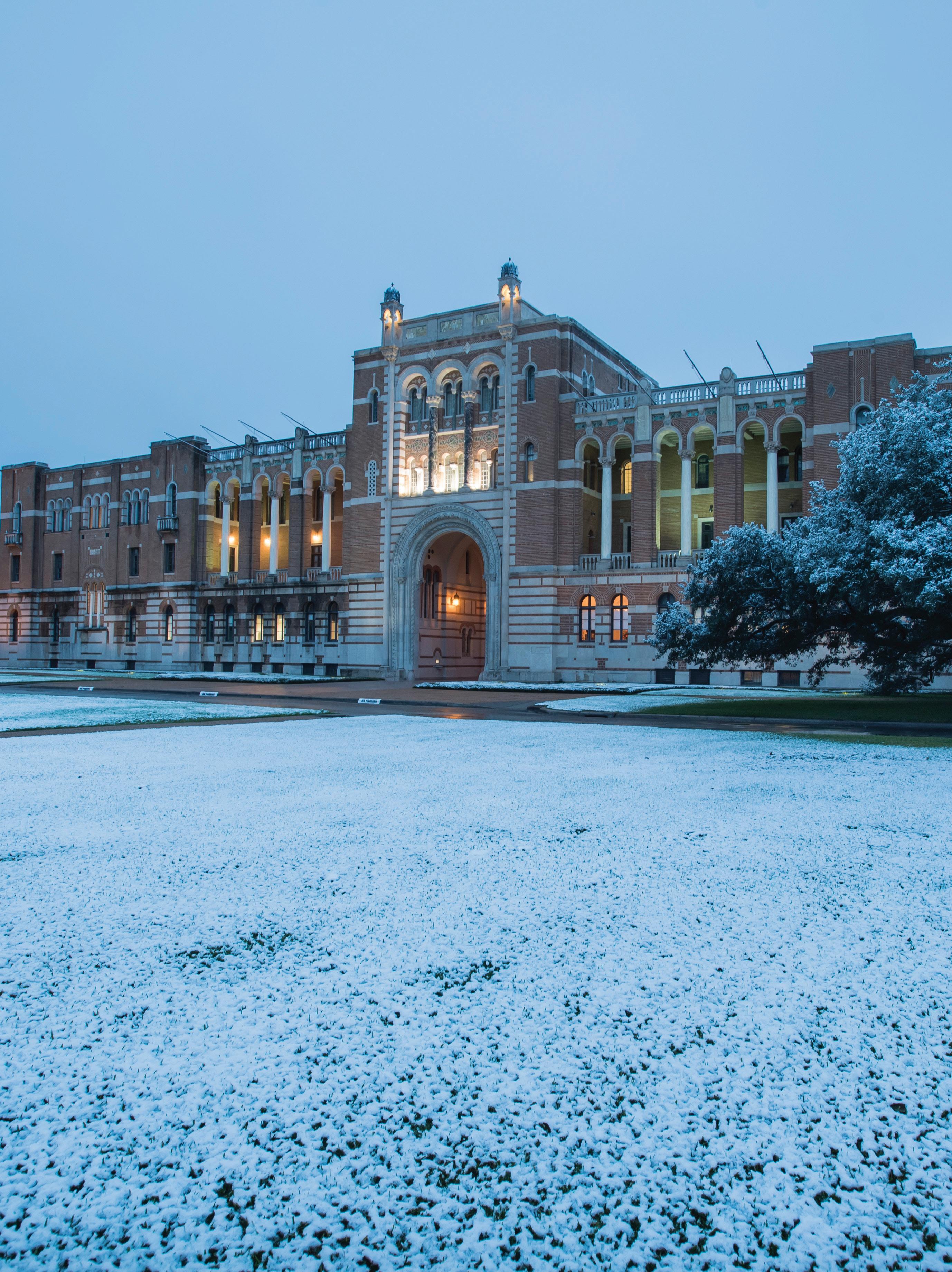
A historic winter storm covered campus with several inches of snow
CONTRIBUTORS
Jeff Fitlow
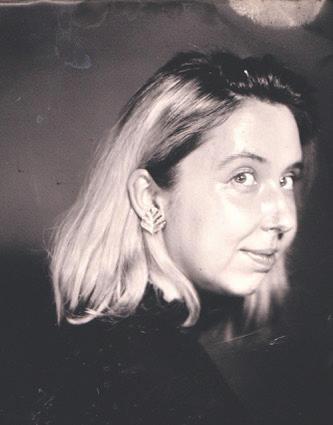
(Cover, “State of the Arts” and “The Creator Class”) has spent 30 years photographing Rice and its people, including Nobel Prize winners, five of the last seven presidents, and incredible faculty and students. His assignments have taken him around the world, and although he retired at the end of 2025, his contributions and legacy have left an indelible mark on the university.
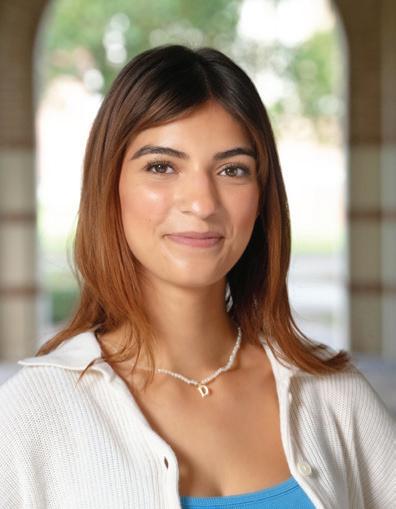
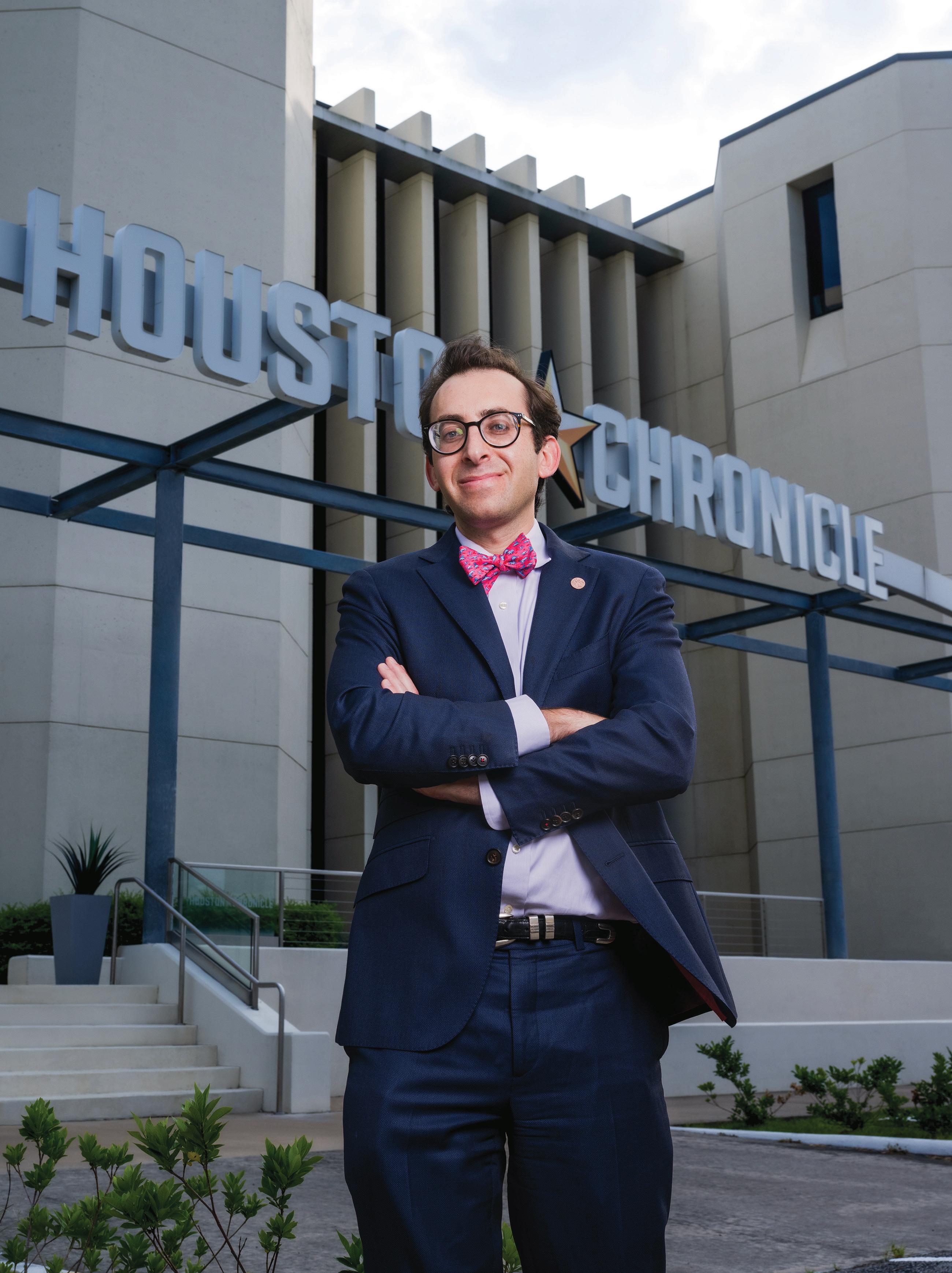
Ben Baker-Katz ’23 (“Not Mincing Words”) majored in political science and history at Rice and is a former editor-in-chief of the Rice Thresher.
Annie Ray
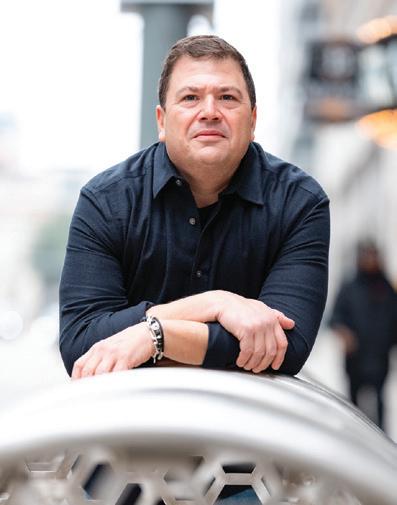
(“The Creator Class”) is an award-winning Austin photographer blending bold color, warmth and authenticity. She’s known for creating a fun, relaxed shooting vibe and delivering images that feel alive, honest and full of personality.
Deverly Pérez
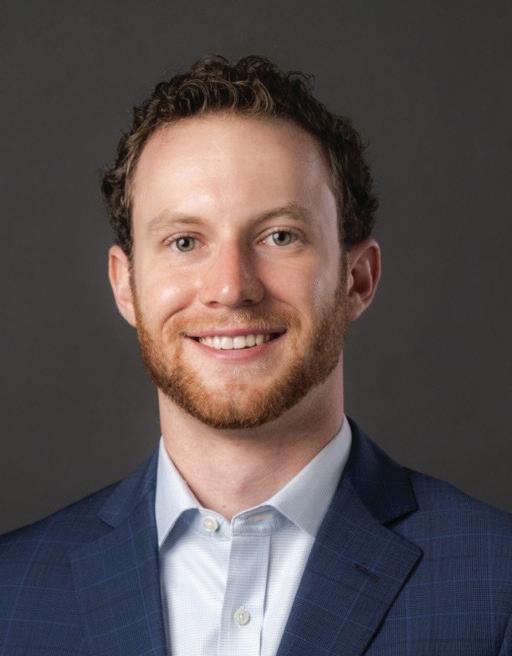
(“The Creator Class”) joined Rice Magazine as a copy editor in 2025. A Houstonian with a background in editing children’s books in both English and Spanish, she is passionate about using her skills to provide clarity and accessibility.
RICE MAGAZINE
Winter 2026
PUBLISHER
Office of Public Affairs
Melinda Spaulding Chevalier, vice president
CREATIVE DIRECTOR
Alese Pickering
INTERIM EDITOR
Sarah Rufca Nielsen ’05
ART DIRECTOR
Amy Kinkead
GRAPHIC DESIGNER
Jackie Limbaugh
EDITORIAL DIRECTOR
Tracey Rhoades
COPY EDITOR
Deverly Pérez
PROOFREADER
Jenny West Rozelle ’00
PHOTO/VIDEO
Jeff Fitlow
Jared Jones
Gustavo Raskosky
Autumn Horne ’22 (“The Return of Rice Cinema”) likes telling the stories she thinks are overlooked or unexpected. She has a Ph.D. in psychological sciences from Rice.
Jared Spencer Jones (“State of the Arts”) is a videographer and photographer with Rice’s Office of Public Affairs. He brings a cinematic eye to campus life, capturing the people, moments and stories that give Rice its character.
CONTRIBUTORS
Ben Baker-Katz ’23, Alex Becker, Andrew Bell, Silvia Cernea Clark, Avery Ruxer Franklin, Autumn Horne ’22, Jennifer Latson, Brandon Martin, Scott Pett ’22, Annie Ray, Jenny West Rozelle ’00, Brandi Smith, Chris Stipes, Kat Cosley Trigg
Rice Magazine is published three times a year and is sent to Rice alumni, faculty, staff, parents of undergraduates and friends of the university.
Robert T. Ladd, chair; Elle Anderson; Bart Broadman; D. Mark Durcan; Josh Earnest; Michol L. Ecklund; George Y. Gonzalez; Jennifer R. Kneale; Patti Lipoma Kraft; Holli Ladhani; Elle Moody; Asuka Nakahara; A. Lanham Napier; William “Bill” V. Neville III; Vinay S. Pai; Byron Pope; Cathryn Rodd Selman; Gloria Meckel Tarpley; Jeremy Thigpen; Claudia Gee Vassar; Charlos C. Ward; James Whitehurst; Lori Rudge Whitten; Randa Duncan Williams; Michael B. Yuen.
ADMINISTRATIVE OFFICERS
Reginald DesRoches, president; Amy Dittmar, provost and executive vice president for Academic Affairs; Stephen Bayer, vice president for Development and Alumni Relations; Melinda Spaulding Chevalier, vice president for Public Affairs; Kelly Fox, executive vice president for Operations, Finance and Support; Terrence M. Gee, interim vice president for Information Technology and chief information officer; Kenneth Jett, vice president for Facilities and Capital Planning; Caroline Levander, vice president for Global Strategy; Tommy McClelland, vice president and director of Athletics; Yvonne M. Romero, vice president for Enrollment; David Sholl, executive vice president for Research; Omar A. Syed, vice president and general counsel; Adrian Trömel, interim vice president for Innovation.
POSTMASTER
Send address changes to: Rice University
Development Services–MS 80
P.O. Box 1892 Houston, TX 77251-1892
EDITORIAL OFFICES
Creative Services–MS 95 P.O. Box 1892
Houston, TX 77251-1892
Phone: 713-348-6768
ricemagazine@rice.edu
IN MY RICE ERA, AGAIN
I WAS A SENIOR in high school, working the hostess stand at a Tex-Mex restaurant, when an older man walked in wearing a Rice T-shirt. I had only recently received the embossed blue folder announcing my acceptance, so, of course, I asked if he’d gone to Rice and told him I’d be there in the fall. In an instant, we were no longer strangers, separated by a generational divide, but kindred spirits who shared something deep and special. He invited me to have a seat with him and his wife, asked what I wanted to study, and told me — very seriously — that there would never be another time in my life when I’d be surrounded by so many great minds doing so many different things — not just the faculty, but among my friends and classmates. Twenty years later, it’s still the most accurate description of Rice I’ve ever heard.
I’ve thought about that statement a lot these past few months, as I’ve been given the opportunity to explore many of the fascinating corners of intellectual life on campus. In working on this issue, I learned that Andy Warhol gifted the university a tree when he visited Rice
Cinema in the 1970s (it’s still standing outside the new Sarofim Hall); that the university will soon have a rooftop pickleball court, which is somehow both extremely 2025 and extremely Rice; and that a Rice undergrad just designed a computer program to help NASA improve astronaut health by identifying stowaway microbes on the International Space Station. I even added a bit of my own Rice lore: that time the president of Russia stopped by campus during my freshman year.
Right now, I’m writing from my new favorite spot on campus — the courtyard between Brochstein Pavilion and Fondren. (With love to my late, lamented favorite hangout, the bench swing hung from a low-hanging oak branch in the tiny corner courtyard of the Humanities Building — you will be missed.) Tucked next to the soft burble of an artful water feature, underneath a canopy of leaves just starting to think about turning gold, it’s the kind of peaceful space Rice seems to produce effortlessly. It didn’t exist during my undergraduate days, but sitting here feels familiar in all the best ways.
Despite all the changes — stunning new buildings, new art dotted across campus, far better access to espresso — the essential Rice atmosphere remains the same. There’s a bright, easy energy of intellectual curiosity that hangs in the air, right alongside the humidity. I hope these pages bring you back to the Rice you remember — and help you connect with the Rice that continues to grow, change and renew itself every year.
Sarah Rufca Nielsen ’05
We love reader feedback. Kindly write to us at ricemagazine@rice.edu
PRESIDENT DESROCHES
THE ARTS AT THE HEART OF RICE
RICE UNIVERSITY was founded on a bold and enduring idea: that the advancement of knowledge depends on the partnership of science, the humanities and the arts. When the Rice Institute opened its doors in 1912, it set out to be a university that would serve as a home for both discovery and creativity, a place where innovation and imagination would grow together. That founding principle still guides us today.
During my inaugural address, I reaffirmed that pledge: Rice will recommit to the importance of the arts and humanities as a foundation for addressing today’s most pressing challenges. These fields deepen our awareness of our place in society, inspire us to create and challenge us to test our beliefs.
At Rice, the arts are not an accessory to education; they are an integral part of it. From the first notes played in Alice Pratt Brown Hall to the stirring performances that fill Brockman Hall for Opera, music has long been a central part of our story. Our Shepherd School of Music faculty — globally recognized performers, composers and collaborators — bring their expertise to the classroom and the stage, elevating
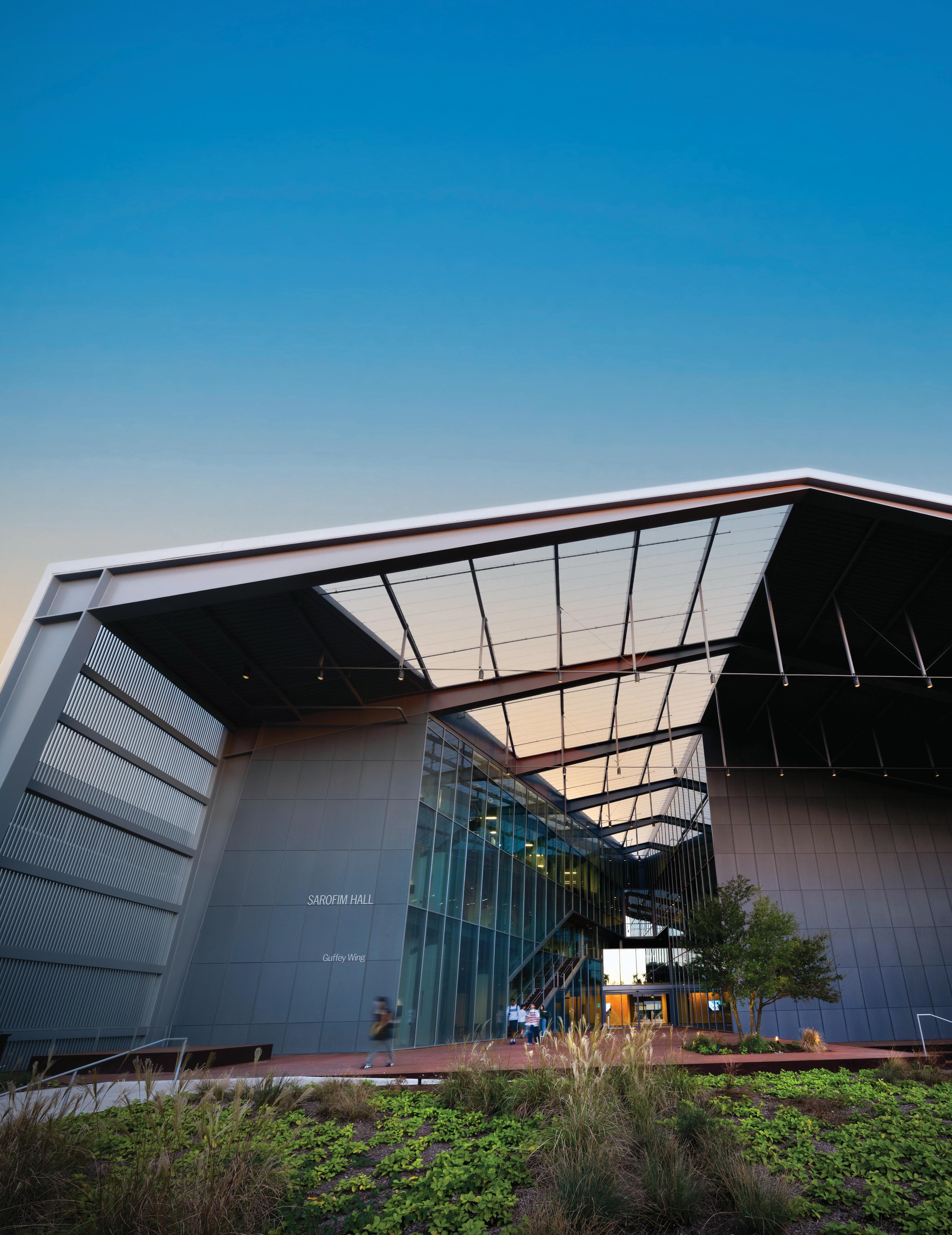
Standing proudly at one of our most visible campus gateways, Sarofim Hall symbolizes Rice’s vision for the future: one where the arts are celebrated, deeply integrated into the life of the university and connected to the city we call home.
Rice’s reputation around the world while enriching Houston’s thriving cultural scene. Across the university, we see creative practice standing alongside research, and that creative energy is visible everywhere.
Nowhere is that commitment more evident than in our investment in world-class facilities for the arts. With the opening of Susan and Fayez Sarofim Hall, our new home for visual arts, we continue to enhance Rice’s on-campus arts district — joining the Moody Center for the Arts, Brockman Hall for Opera and Alice Pratt Brown Hall in a vibrant constellation of creative spaces. Standing proudly at one of our most visible campus gateways, Sarofim Hall symbolizes Rice’s vision for the future: one where the arts are celebrated, deeply integrated into the life of the university and connected to the city we call home. In a metropolis as dynamic and culturally rich as Houston, this new facility strengthens our role as both a contributor to and a catalyst for artistic innovation.
Since its founding in 2017, the Moody Center for the Arts has been vigorously engaged in this important work, with its space for experimentation, interdisciplinary collaboration and public engagement. The Moody mounts three
gallery exhibitions a year, curates numerous temporary and permanent public art installations across campus, and hosts performances, classes and hands-on workshops in partnership with artists, scholars and students from various disciplines.
This new era of investment extends beyond buildings and spaces. Reflecting the growing importance of the creative disciplines, Rice’s School of Humanities has been renamed the School of Humanities and Arts. The name change reflects a broader vision — one that recognizes how deeply intertwined the arts and humanities are in fostering human understanding, expression and progress — crucial to our academic future.
That future also includes the creation of a new Master of Fine Arts in Creative Writing, which will welcome its first cohort in fall 2026. This milestone, years in the making, signals Rice’s growing strength as a destination for emerging writers who want to hone their craft within a rigorous and supportive academic environment.
As we move forward with our 10-year strategic plan, Momentous: Personalized Scale for Global Impact, the arts and humanities are central to our mission. Whether our students pursue degrees in engineering, business, science or the arts, we want them to approach their work with the courage to ask bold questions, challenge assumptions and envision new possibilities.
At Rice, we believe that creativity and intellect are inseparable — that imagination is as essential to invention as it is to artistry. In nurturing both, we prepare our students not only to succeed, but to shape a better, more empathetic and inspired world.
BIOSCIENCES
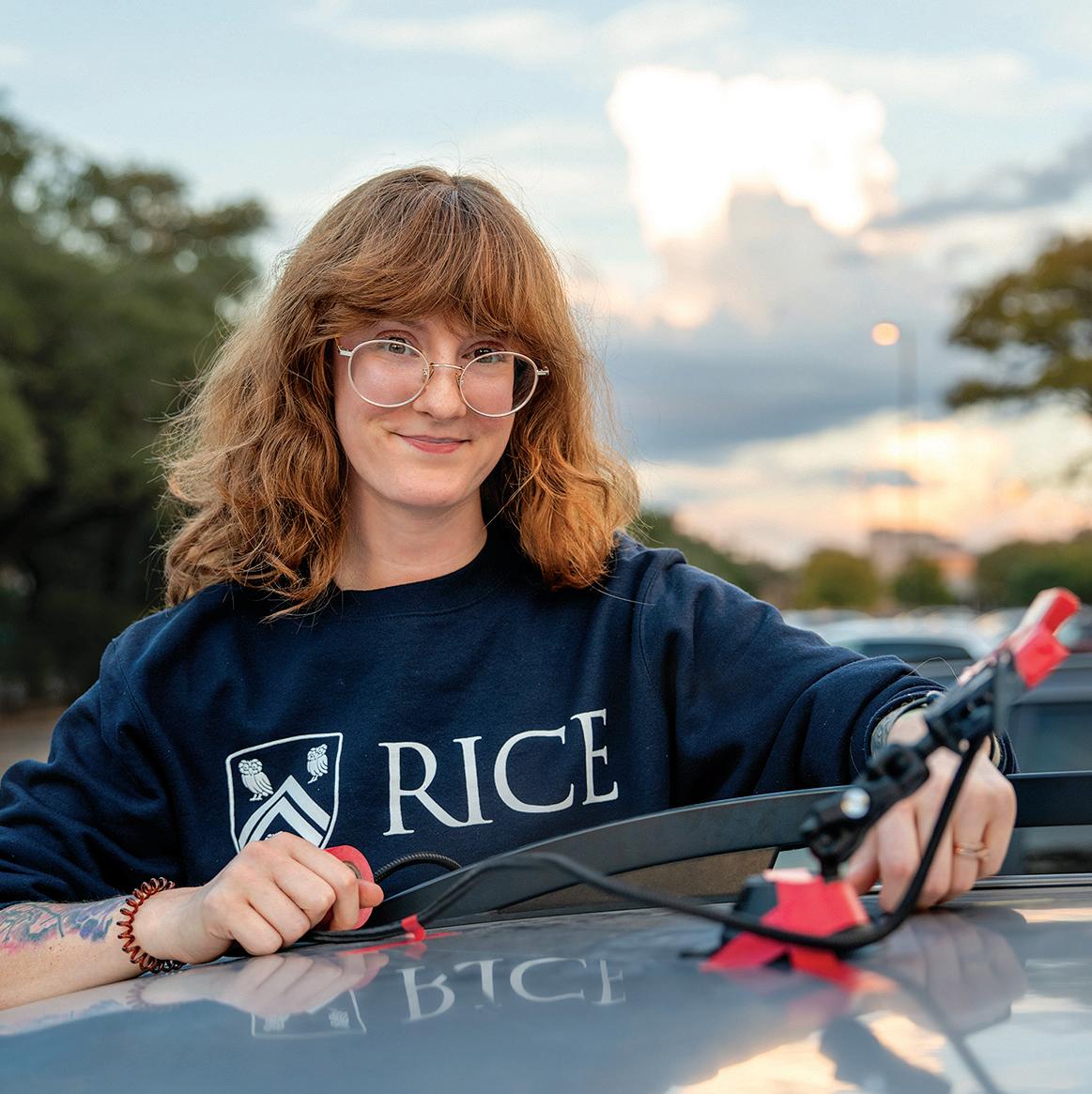
Bat Signals
Using bats as her guide, Alexandria Shockney is mapping the city’s nocturnal landscape, uncovering insights into urban ecology and human health.
BY BRANDON MARTIN
PHOTOS
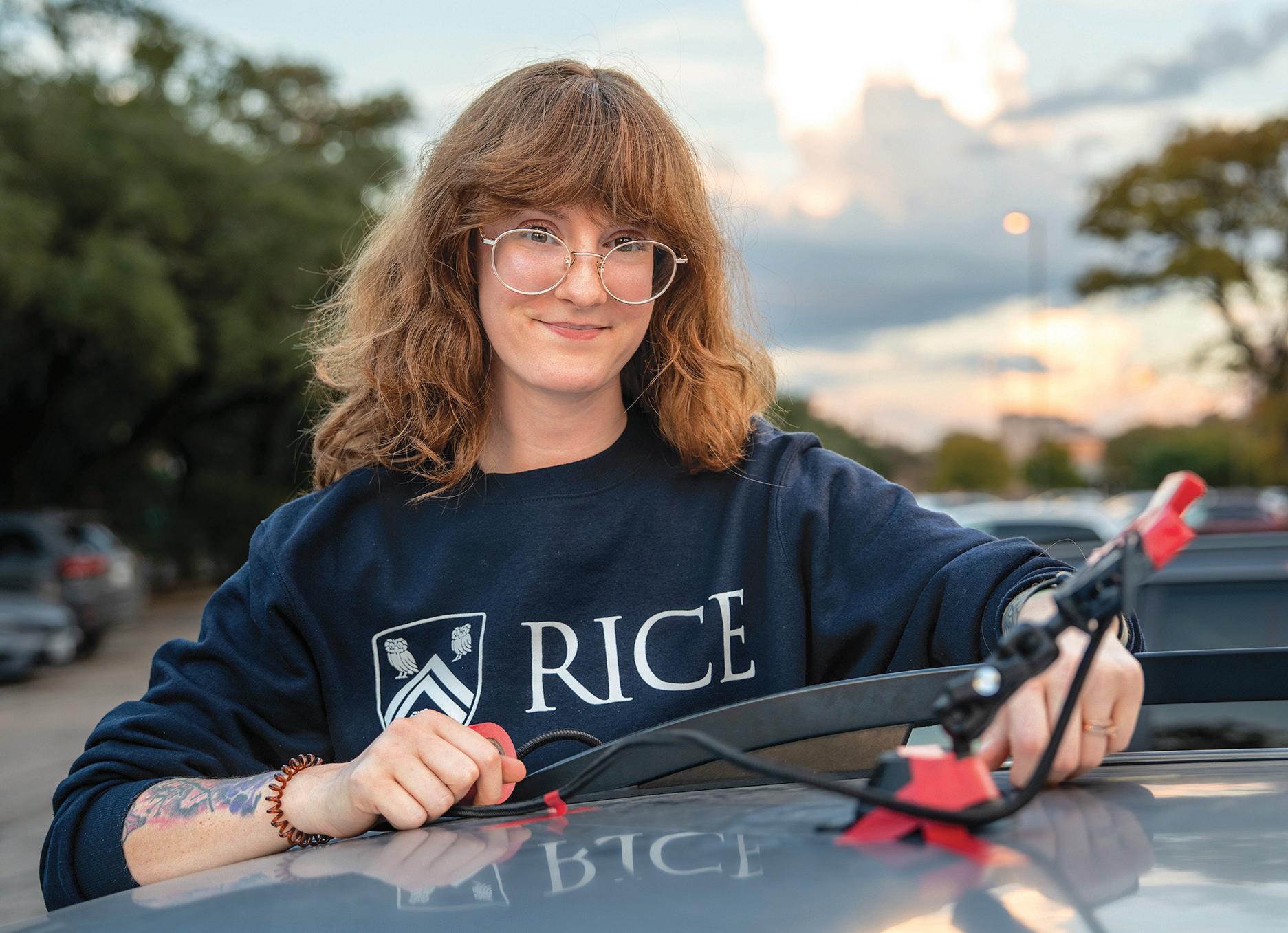
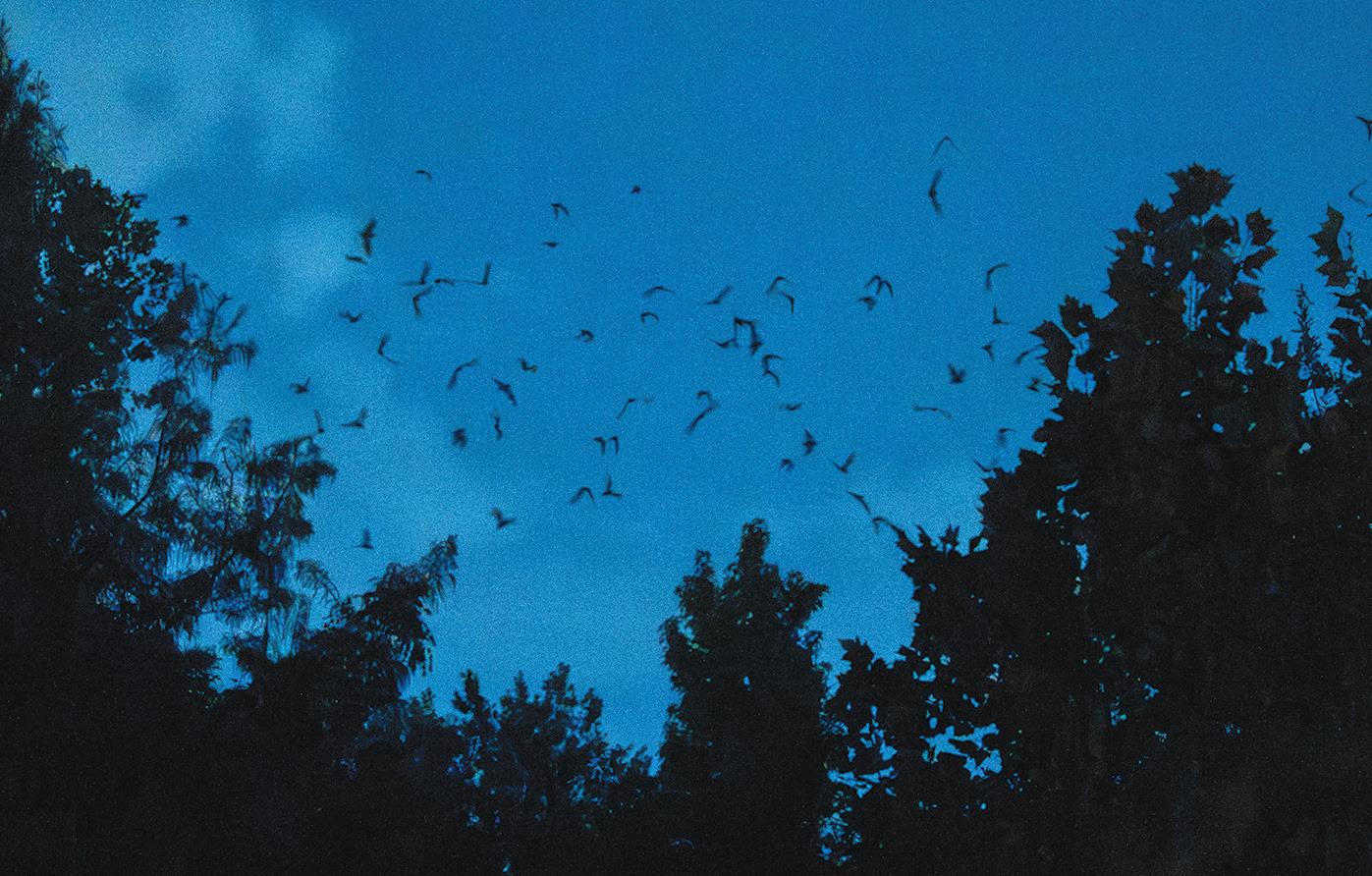
AT DUSK , when the skies over Houston’s bayous fade to violet, Alexandria Shockney’s mobile science lab comes to life.
Shockney drives through the city at night with an ultrasonic microphone taped to the roof of her car. The goal is to capture the invisible chatter of bats, gathering data that could reveal new insights into urban ecology and even human health.
“This is our mobile acoustic monitor,” Shockney explains. “Bats like to speak at a frequency that’s much, much higher than what we can hear. This microphone slows things down and brings it to a level that we can interpret.”
A second-year biosciences doctoral student in the Rummel Lab, Shockney studies the migration physiology of the Mexican free-tailed bat, an iconic species whose nightly flights streak across Houston’s skyline. Her project tracks how bats use different environments — near trees, water or dense urban areas — and how those patterns shift with the seasons.
“There’s a huge roost colony at Waugh Bridge, about 300,000 bats,” she says. “A colony that size eats about 2 tons of insects every night. They save Texas farmers millions of dollars in
pesticide control each year.”
Before arriving at Rice, Shockney worked as a cardiovascular surgical nurse — experience that informs her fascination with how bats endure extreme physical stress.
“These bats have incredibly high energetic demands for migration, and yet they somehow survive these incredible journeys year after year,” she says. “I’m hoping that by researching how they achieve that, we can apply some of that knowledge to human health.”
Shockney also mentors undergradu-
ates and community college students through partnerships with San Jacinto College, the Houston Area Bat Team and local wildlife groups.
“My day-to-day is project management and mentoring,” she says. “You never know what spark will ignite a love for science in someone.”
Her adviser, Andrea Rummel, says Shockney’s path from nursing to bat biology reflects the creativity and initiative that define Rice graduate students.
“Alexandria immediately hit the ground running,” Rummel says. “She basically designed this project from the ground up. She’s doing excellent science, but she’s also communicating that science — reaching out to the public and showing how vital these animals are to our ecosystem.”
For Shockney, that outreach keeps her on Houston’s bayous at dusk.
“They’ve had a bad stigma for years,” she says, “but I think Houstonians are starting to appreciate our neighborhood flyers.”
Andrea Rummel is assistant professor of biosciences in the Wiess School of Natural Sciences.
Watch a video at magazine.rice.edu/ batsignals
By researching how bats endure extreme physical stress, Shockney hopes to gain insights that can be applied to human health.
BY JEFF FITLOW
New Kids in the Flock
In August, Rice welcomed its largest incoming class ever — 1,338 new students (including 63 transfer students) walked through the Sallyport, representing 49 states, plus the District of Columbia, and 58 countries. This colossal cohort was selected from a whopping 36,791 total applicants, an increase of 13% over last year’s aspiring Owls.
By the Numbers
Number
1,160 U.S. students
Top states represented Texas (484)
California (111)
New York (56)
Florida (48)
New Jersey (42)
178 International students
Top countries represented China (56)
Canada (11)
India (8)
Pakistan (5)
South Korea (5)
The number of Fulbright scholars studying at Rice this year, with 31 new graduate students joining 60 returning scholars and three visiting faculty/scholars. This cohort represents 20 nations across six continents, including Argentina, Mexico, Sri Lanka, Hungary, India, Pakistan and the United Kingdom. The Fulbright Program, sponsored by the U.S. Department of State, is one of the world’s most prestigious international exchange programs. From carbon capture research to crosscultural collaboration, these scholars bring both expertise and varied cultural perspectives, helping Fulbright @ Rice become one of the university’s most global and tight-knit communities.
— SARAH RUFCA NIELSEN
PHOTO
Chao College Comes to Life
A transformational gift from the Chao family will shape Rice’s 12th residential college — blending modern design with a legacy of community and generosity.
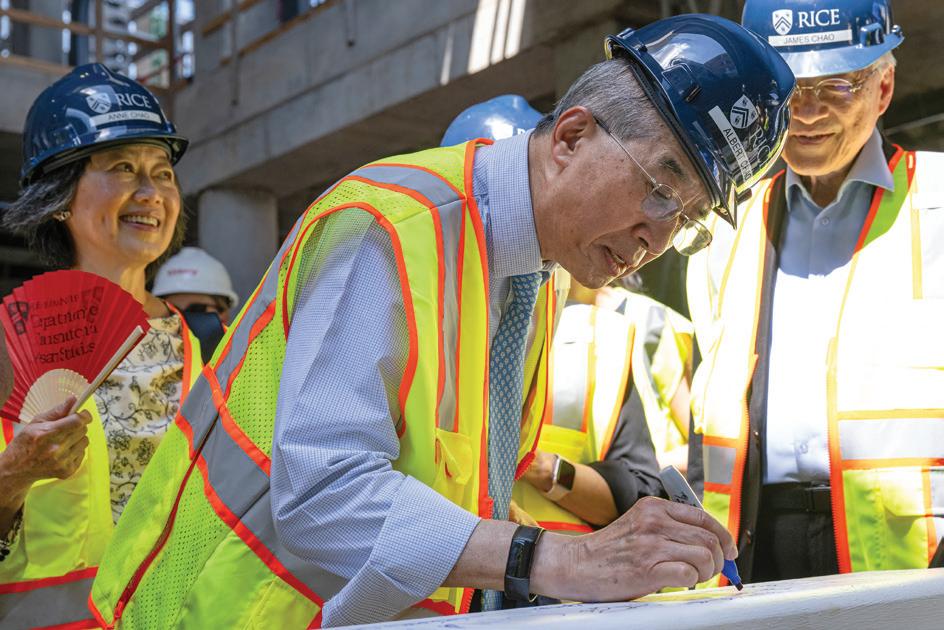
ON A BRIGHT September morning last fall, members of the Chao family gathered with Rice leaders to mark the start of something new — and something deeply familiar. As construction cranes framed the southern edge of campus, they joined Rice students, alumni and friends to celebrate the
topping out of Chao College, the university’s 12th residential college.
Made possible by a landmark gift from the Chao family foundation, the Ting Tsung and Wei Fong Chao College will bring nearly 300 beds to campus when it opens this fall. Together with its off-campus members, the college
will become home to more than 400 Rice students, continuing a family legacy rooted in connection, opportunity and innovation.
“The Chao name embodies the very finest qualities of Rice’s residential college system — leadership, generosity and a profound commitment to building meaningful connections,” said President Reginald DesRoches. “Chao College will stand as a lasting tribute to the entire Chao family, ensuring their legacy continues to inspire and shape generations of Rice students.”
Designed by the internationally renowned Danish architecture firm Henning Larsen, with Houston-based
CAMPUS LIFE
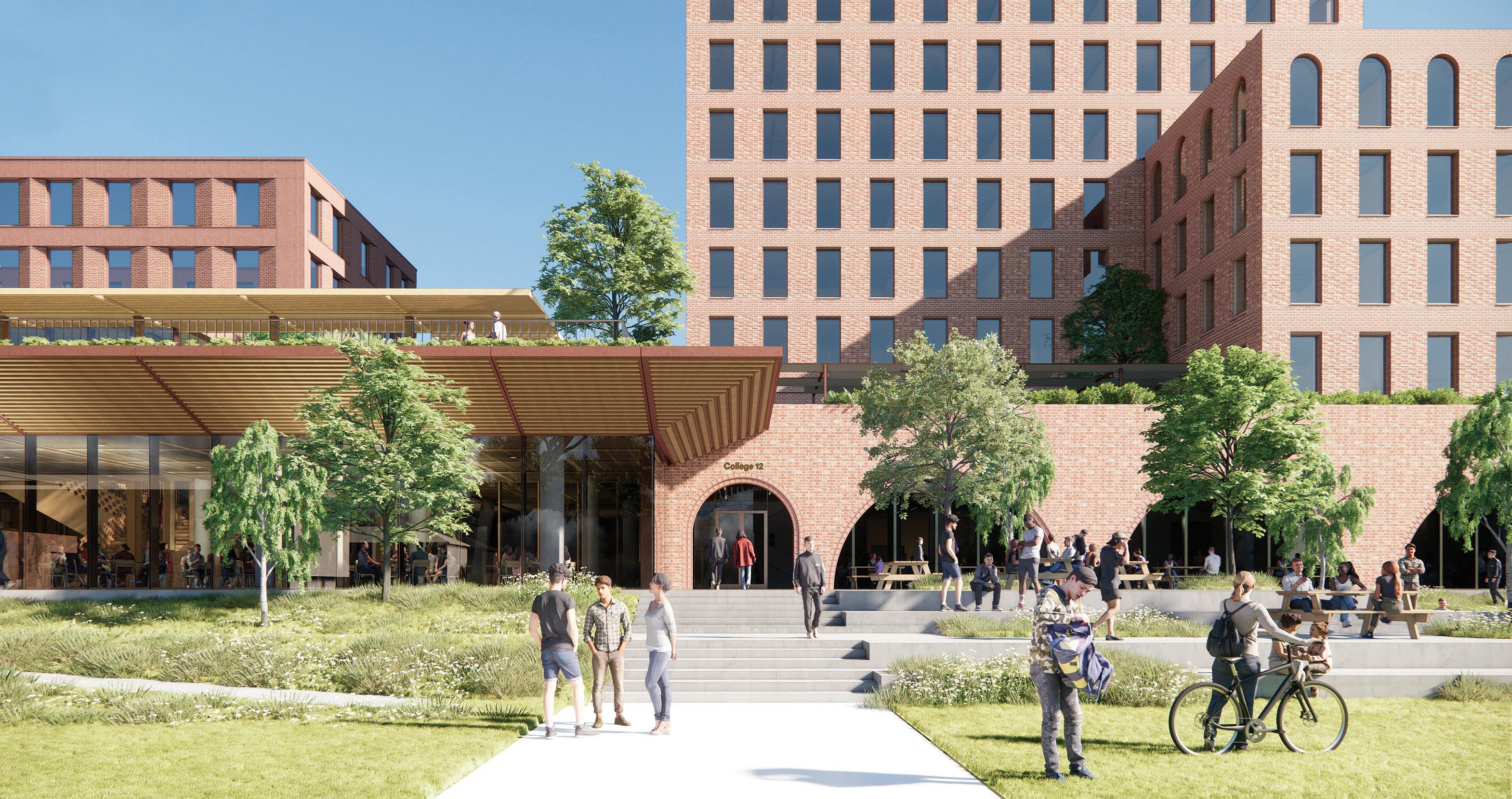
Kirksey as executive architect, the Chao College complex will feature two residential towers — one five stories, the other 10 — linked by green courtyards, social spaces and open-air terraces. Its 3,000-square-foot rooftop terrace will overlook an 11,000-square-foot central quad, creating a vertical village in the heart of the South Colleges where students can live, learn and gather.
As Rice’s first new residential college since McMurtry and Duncan opened in 2009, the addition of Chao College will ensure that every Owl can find not just a place to live, but a community to call home, even as the university increases its enrollment to 5,200 undergraduates by 2028.
At once contemporary and contextual, the design reflects Rice’s growing focus on sustainability and humancentered design. The project targets LEED Gold certification and includes solar panels, rainwater capture systems and bird-friendly materials.
“Rice’s residential colleges are where students find their home, build friendships that last a lifetime, and learn how to lead and serve others,” said Dean of Undergraduates Bridget Gorman.
“The Chao family’s gift ensures that as Rice grows, we continue to provide this transformational experience for every undergraduate student.”
For the Chao family — Houston business leaders and philanthropists Dorothy Chao Jenkins, James Chao and Rice Trustee Emeritus Albert Chao — the project is both personal and forward-looking. The late Ting Tsung “T.T.” and Wei Fong Chao built a global enterprise that found new roots in Houston in the 1980s, where their sons went on to found Westlake Corp., now a Fortune 500 company.
Their family’s impact on Rice already runs deep. The Chao Center for Asian Studies, established through a family foundation grant in 2008, has become a nationally recognized hub for scholarship and community engagement.
Albert’s wife, Anne Chao, ’05, ’09, who earned both her master’s and doctorate degrees in history from Rice, cofounded the Houston Asian American Archive, housed in the Chao Center and Fondren Library.
“The Chao family is immensely honored to be part of Rice students’ college experience with the establishment of the new Chao College,” said Albert Chao. “We hope it will be an enriching and rewarding experience for Rice students for generations to come.”
—SARAH
RUFCA NIELSEN, WITH REPORTING FROM ANDREW BELL AND CHRIS STIPES
LOVETT COLLEGE’S NEW HOME
When Lovett College moves into its new 11-story tower in fall 2026, it will be the end of an era — and the beginning of another. The original Lovett building — affectionately referred to as “the toaster” for the way light glows through its perforated exoskeleton — has been a recognizable example of brutalist architecture on campus since the 1960s. Its successor will bring the college’s traditions and community into a new, sustainable home on the site of the former Sid Richardson College, adjacent to Chao College.
Designed by Henning Larsen and Houston-based Kirksey, the new Lovett will house just under 300 students and share an all-electric, nextgeneration servery with Chao College, complete with a robotic cooking station — a first for Rice. Outdoor gathering spaces, including a rooftop pickleball court, will add new layers of community and recreation to the South Colleges.
“These new colleges won’t just add buildings to our campus — they’ll create new homes for our students, homes that will shape friendships, traditions and memories for future Owls,” said President Reginald DesRoches.
Facing page, clockwise from top: A rendering of Chao College; the servery connecting Chao and Lovett colleges; members of the Chao family sign a beam at the college’s topping-out ceremony. This page, above: Trees are lifted onto the colleges’ shared rooftop terrace.
A rendering of the new Lovett College, located next to Chao College on the site of the former Sid Richardson College tower.
SPACES
The Controlled Chaos of Costuming
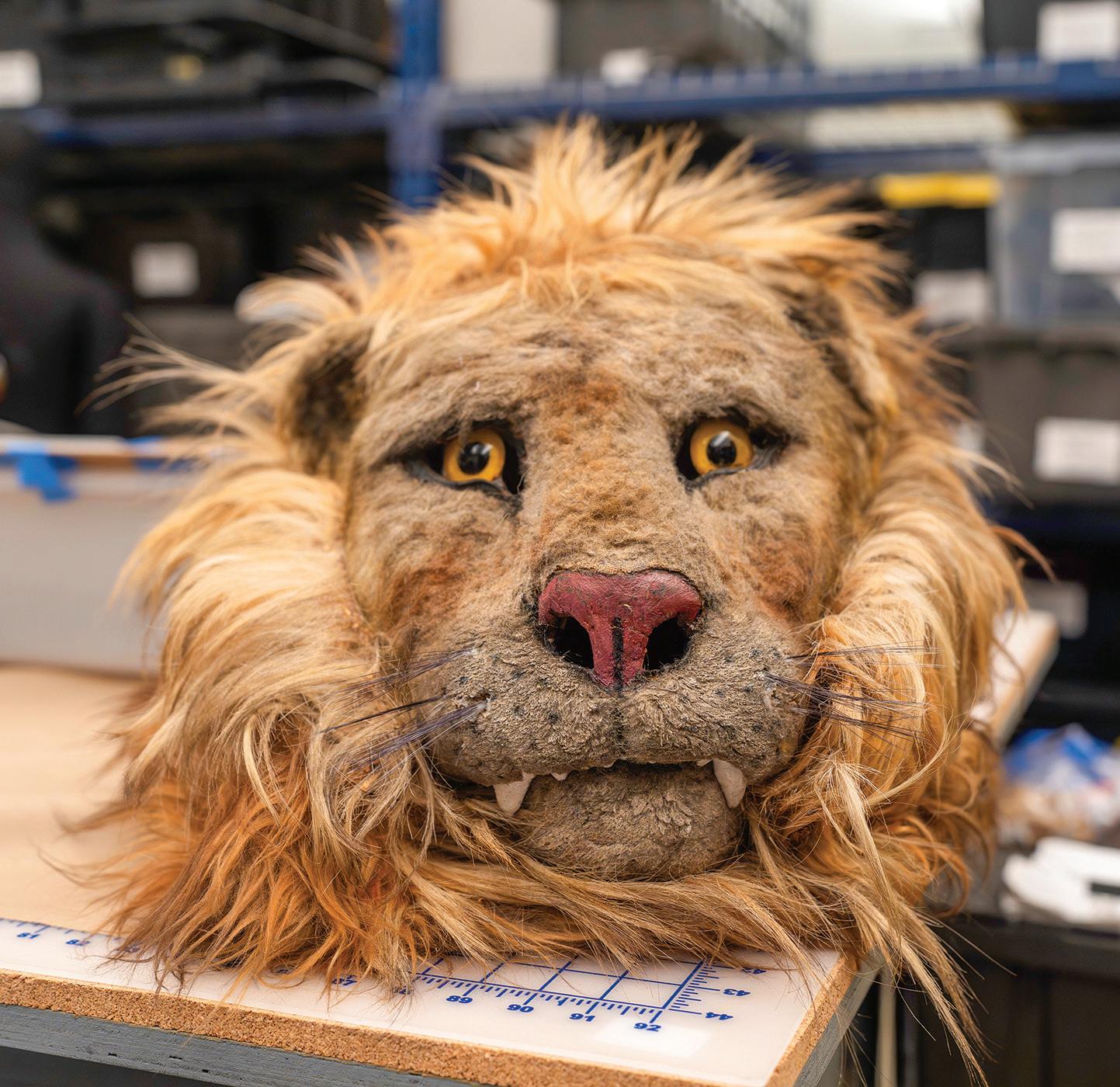
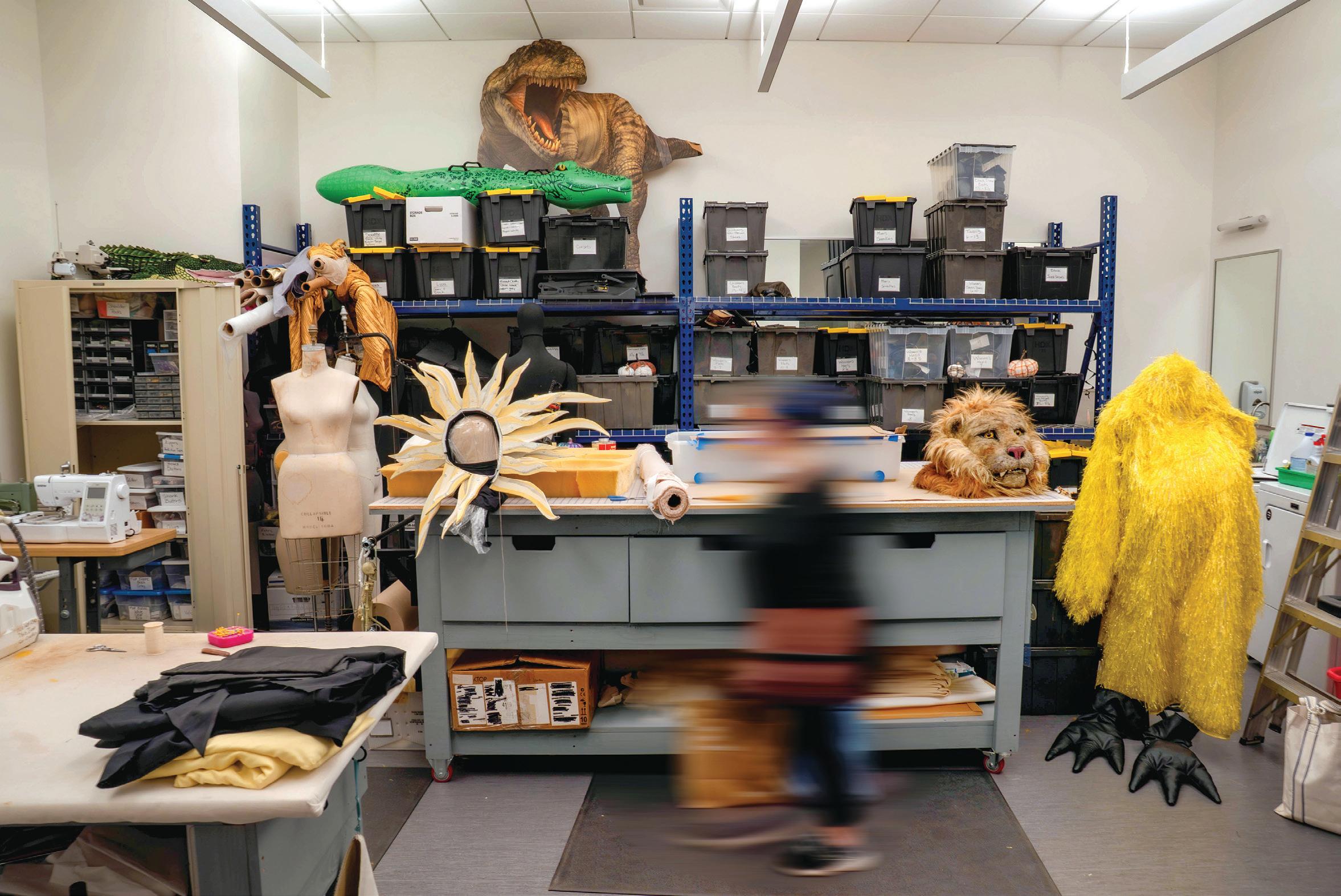
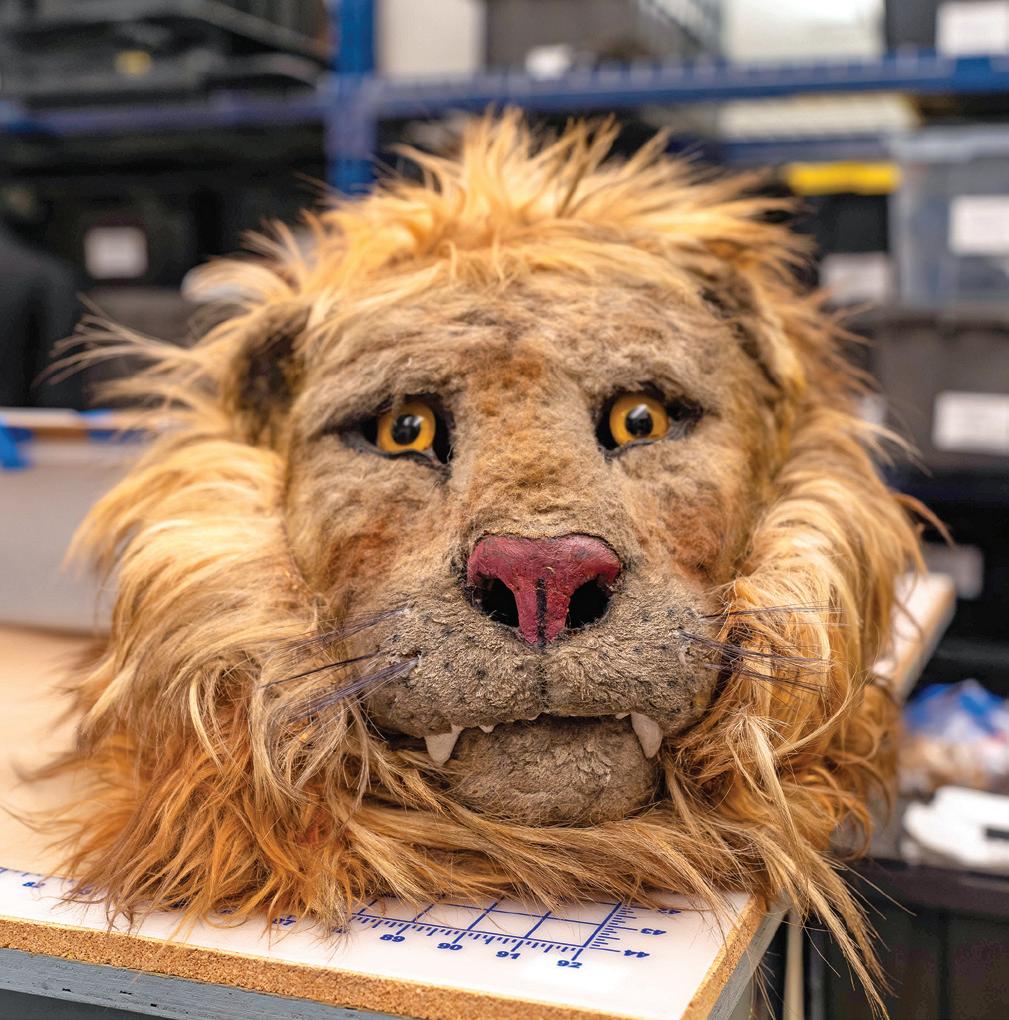
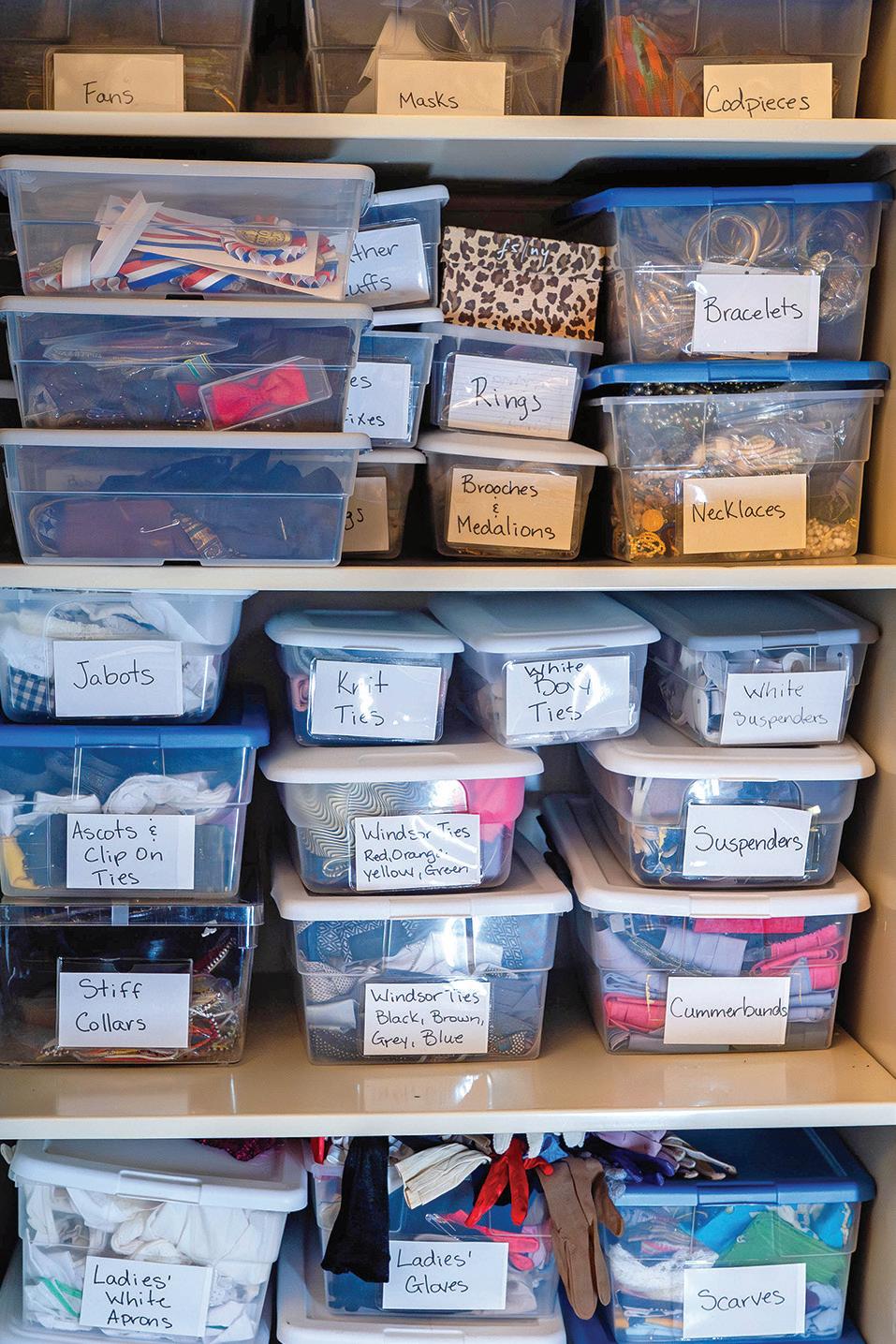
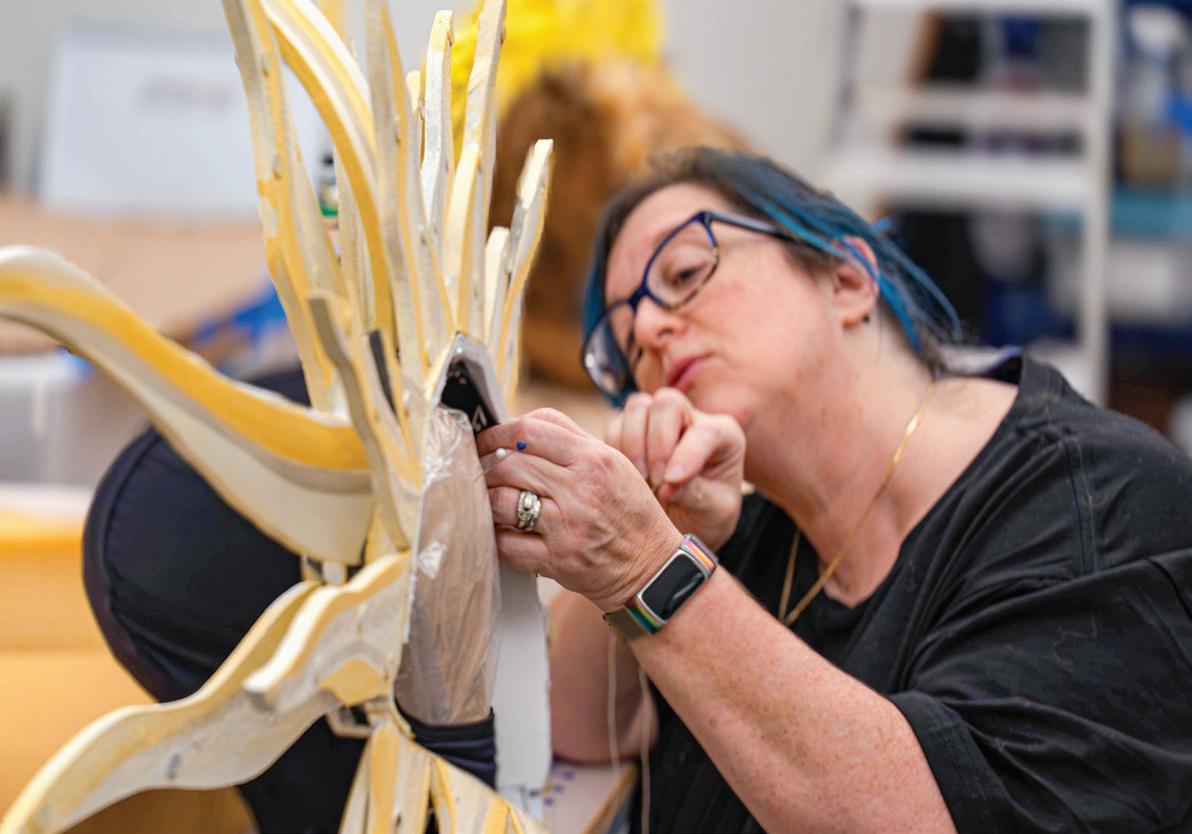
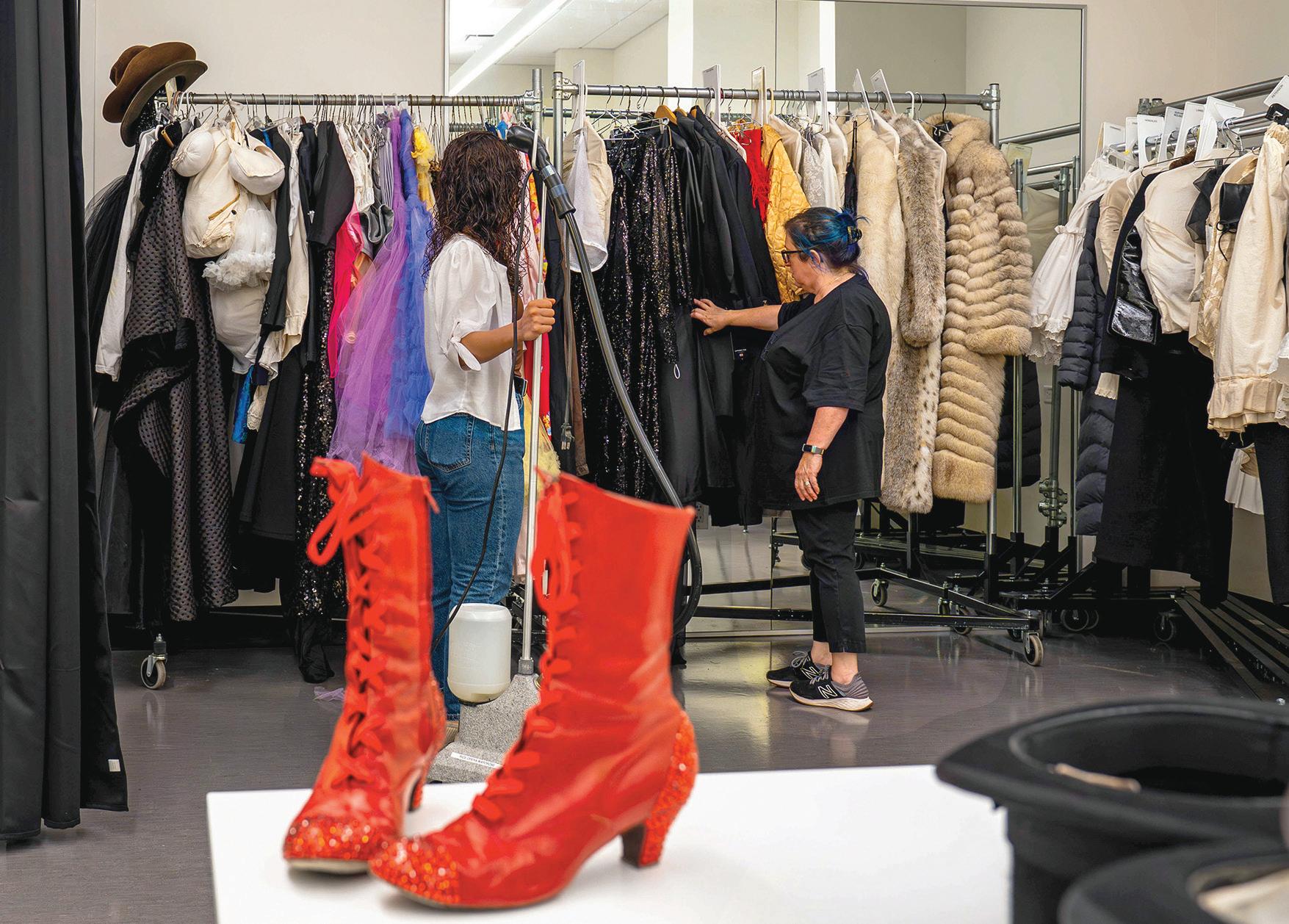
FOR SEVERAL MONTHS of the year, the Brockman Hall for Opera’s costume room sits idle, but once the Shepherd School of Music’s twice-yearly opera productions are announced, the 25-by-24-foot space, jam-packed with racks of hats, shoes, period clothing and essential accessories, hums with activity. Sewing machines, sergers, steamers, irons, mannequins, and even a rare 1950s electric hat stretcher spin into action under theater veterans Jessie Mullins, Rice’s director of opera operations, and Barb Dolney, wardrobe supervisor and president of the local chapter of the IATSE Theatrical Wardrobe Union.
Since the hall’s first opera performance in 2022, the room has supported eight theatrical productions, featuring hundreds of student performers with production-specific costumes. Last fall, 30 students (20 graduate and 10 undergraduate), plus one dancer, took the stage for Mozart’s “The Magic Flute,” requiring Dolney to source and produce nearly 50 individual costumes.
“During preparation for a show, it can be chaotic, but come production time, it’s a controlled chaos,” explains Dolney, who describes herself as a “seamstress, dresser and head herder.”
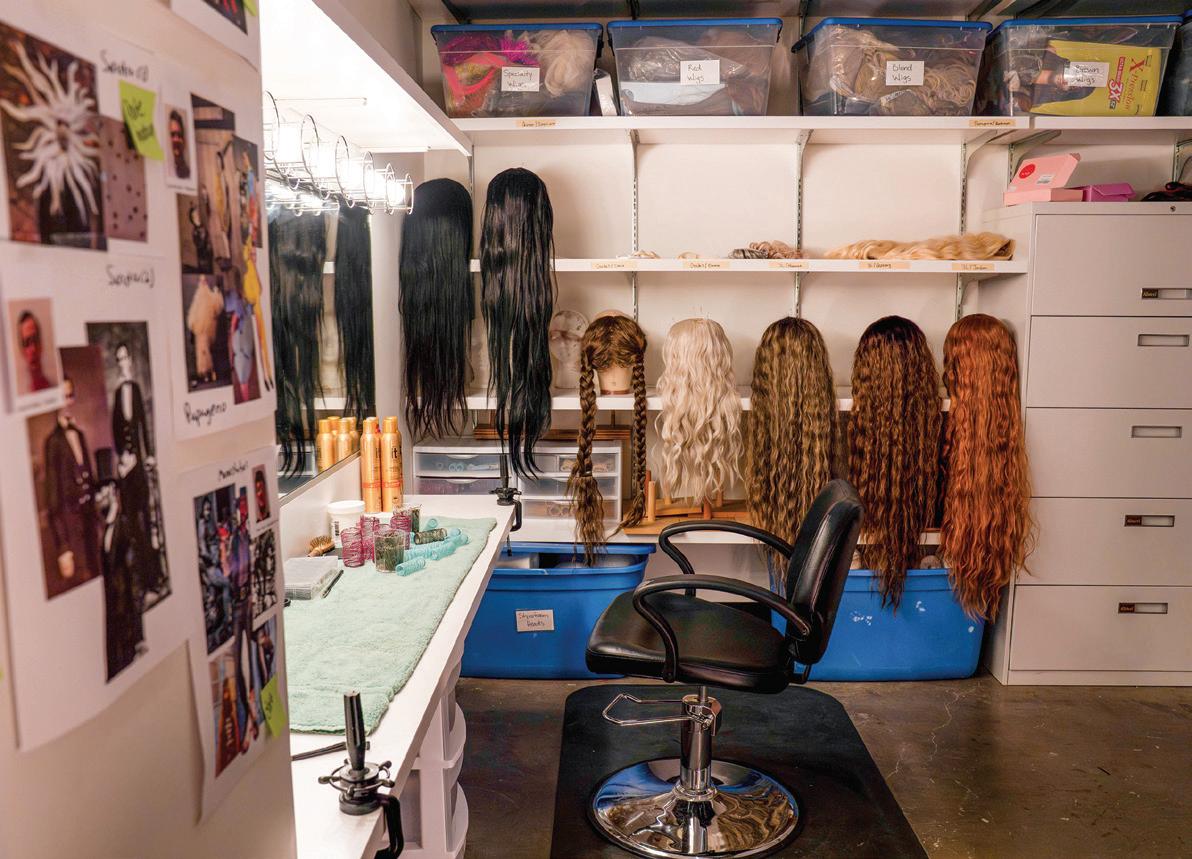
While the costume room serves as the main hub for production preparation, there are also two adjacent dressing rooms and a wig and makeup suite to support the actors during shows. In addition to Mullins and Dolney, who have both had cameos in past productions, a student wardrobe crew and an outside designer all collaborate to ensure the opera singers are dressed to impress, from the opening notes to the final curtain call. — TRACEY RHOADES
COMPUTER SCIENCE
Space Germs!
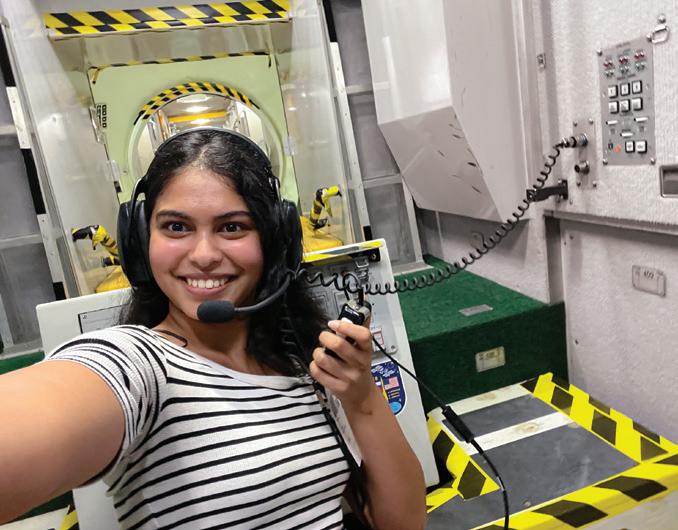
Junior Ankhi Banerjee is helping NASA scientists monitor microbes on the International Space Station.
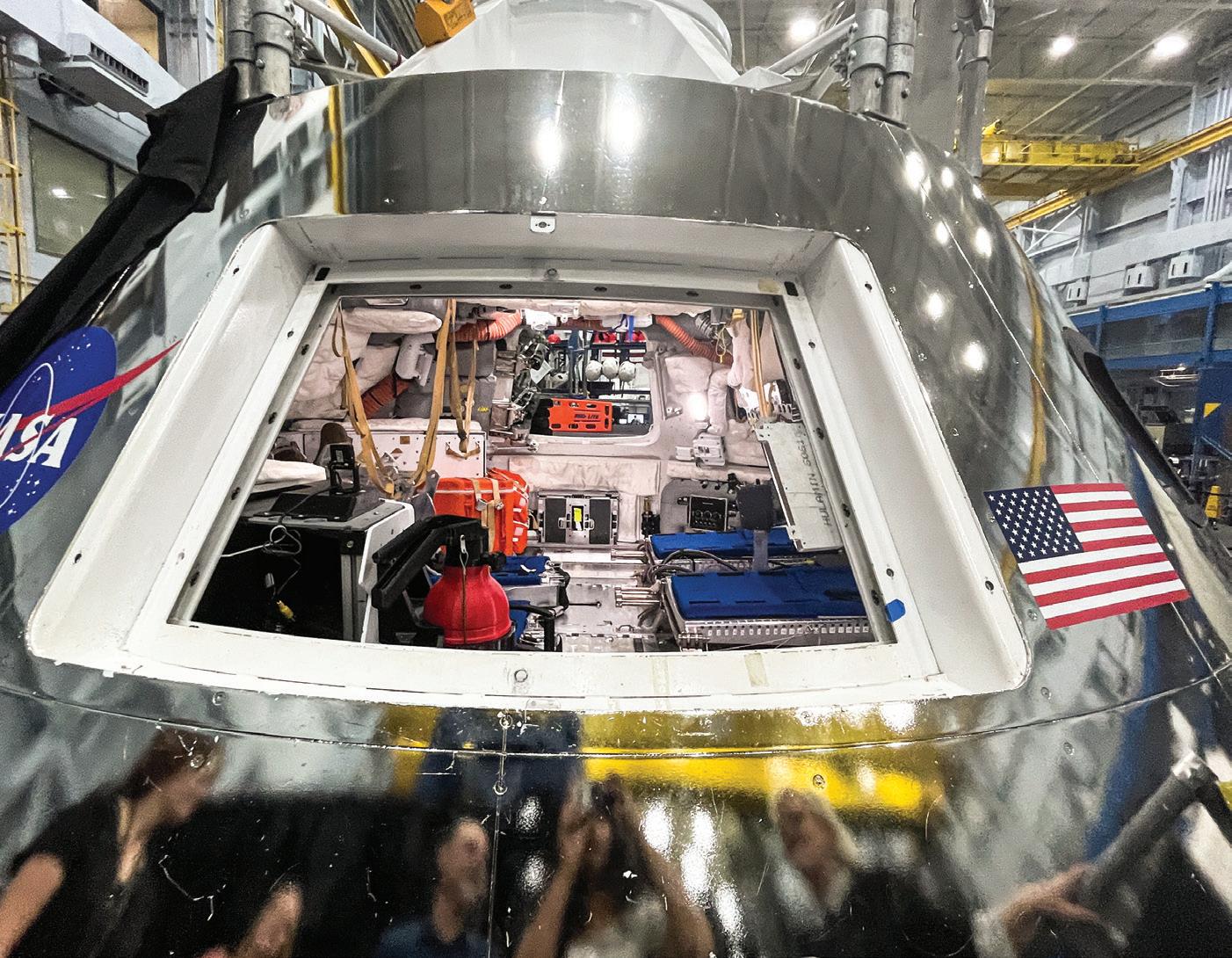
EVERY TIME astronauts blast off into orbit, so do countless microorganisms that quietly colonize spacecraft surfaces and living spaces. As the next era of space exploration takes shape, keeping track of those invisible stowaways is vital for astronaut health and spacecraft safety. This past summer, one Rice undergraduate helped NASA scientists build a new way to do just that.
Ankhi Banerjee, a junior double majoring in computer science and biology, spent 10 weeks at NASA’s Johnson Space Center creating a dataanalysis pipeline to track microbes aboard the International Space Station. Working with NASA microbiologist Sarah Wallace and her team, Banerjee developed visualizations showing how different bacteria are distributed across the ISS and began designing an anomaly-detection tool to flag unusual microbial signatures.
“The patterns told everyday stories about life in orbit,” she says. “Sweatloving bacteria clustered around gym equipment, food-associated microbes turned up near dining areas, and bathroom handrails proved to be microbial hot spots.”
Banerjee’s project grew out of Genome Sleuths, a Rice research program led by computer scientist Todd Treangen that engages undergraduates
The
patterns told everyday stories about life in orbit. Sweat-loving bacteria clustered around gym equipment, foodassociated microbes turned up near dining areas, and bathroom handrails proved to be microbial hot spots.
in developing computational tools for studying microbial genomes and metagenomes. The program is part of Rice’s Vertically Integrated Projects initiative, coordinated through the Office of Undergraduate Research and Inquiry, which embeds students in faculty-led research for multiple semesters to build deeper skills and leadership.
Treangen called Banerjee’s work one of Genome Sleuths’ standout projects. “Ankhi developed software that impressed a full team of NASA scientists, and she’s just getting started,” he says. At the end of the program, Banerjee presented her work at Johnson Space Center. “I thought it would be a small group I already knew,” she recalls. “Then I walked in and there were around 30 people. It was intimidating, but everyone was so kind — they just wanted me to learn.”
For Wallace, the collaboration underscores the value of Rice-NASA partnerships. “I was blown away by [Ankhi’s] enthusiasm, intellect and ability to continually ask the right questions,” she says. “Her tool is something that we have long sought, and I look forward to its use to enhance crew health and safety.”
— SILVIA CERNEA CLARK
Todd Treangen is associate professor of computer science in the George R. Brown School of Engineering and Computing.
Is Your Conscience in the Cloud?
IN A RECENT discussion of the “Black Mirror” episode “White Christmas,” first-year students debated whether a digital “cookie” — a simulated copy of a person’s mind — can truly possess consciousness or moral responsibility. The conversation, led by Daniel Pinto Talero, a doctoral candidate in philosophy, connected the episode’s haunting theme to philosopher John Searle’s “Chinese Room” experiment, which challenges the idea that artificial intelligence can genuinely understand rather than merely imitate.
Can a digital replica of a person authentically mimic a real human mind? What moral obligations do we have toward sentient-seeming systems — and what happens when they suffer? Students tackled questions like these in a lively roundtable, examining the line between simulation and duplication and the ethical implications of exploiting digital consciousness for human ends.
For first-year biosciences major Claire Kevil, the class was an eye-opening entry into philosophy.
“I’ve been a big fan of ‘Black Mirror’ for a long time, and I find it very applicable to today’s
FWIS 126
Black Mirror and Philosophy
DEPARTMENT
First-Year Writing
Intensive Seminars
DESCRIPTION
This course examines key philosophical questions through the lens of “Black Mirror,” the Netflix anthology series that explores the dark intersections of technology and human nature. Pairing episodes with classic philosophical texts, students wrestle with questions of consciousness, morality and what it means to be human in an age of intelligent machines.
society,” Kevil says. “Even though a lot of the concepts are dystopian, all of the episodes have something you can take from them. … I’d never taken a philosophy class before, so I was really interested to see how the show’s moral lessons tie into known philosophical concepts.”
Class discussions are a highlight, Kevil says, as the breadth of student viewpoints produces enlightening conversations.
“Everyone comes in with so many different perspectives, and I find that fascinating because a lot of what people say I never would have thought of,” she says.
Beyond lively debate, the course also strengthens students’ skills in critical reasoning and ethical analysis.
“Our writings are logical analysis papers, so we’ve learned how to formulate an argument — how premises follow conclusions, how to make a valid argument without being circular,” Kevil says. “It’s challenged me to think about how to disprove statements and how to look at things from a more open, unbiased perspective.”
— ANDREW BELL
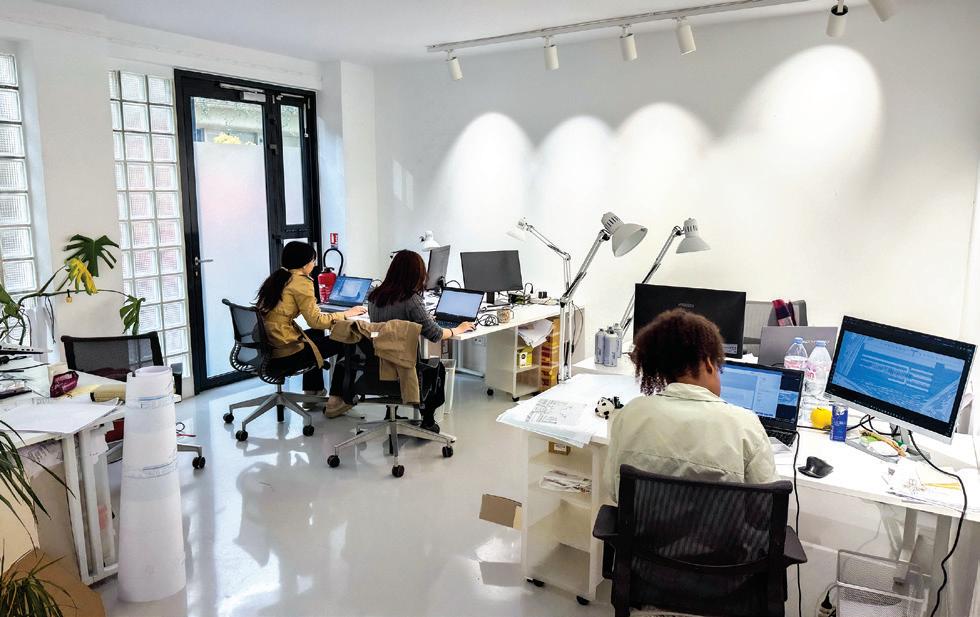
Paris Is for Architects
For over 20 years, Rice School of Architecture
Paris has offered students an immersive learning experience in one of the world’s great design capitals.
WHEN RICE LAUNCHED the Rice
Global Paris Center in 2022, it drew inspiration from another program that had proven the city’s potential as a laboratory for learning — Rice School of Architecture Paris.
Founded in 2002 by current director John J. Casbarian ’69 — the Harry K. and Albert K. Smith Professor of Architecture, director of external programs and a faculty member at Rice since 1973 — the program has given generations of students the chance to study and live in one of the world’s great cities. “Paris itself is the classroom,” Casbarian says.
“It’s a place with incredible layers of history, where you can walk out the door and see everything from medieval
cathedrals to the newest experiments in urbanism. That kind of immersion changes the way students think about architecture and about themselves.”
Each year, around 20 advanced undergraduate and graduate students from the School of Architecture enroll in the semester-long program, comprising courses that integrate studio work, history, theory and cultural study. The streets of Paris and beyond are integral to the curriculum: Students walk Baron Haussmann’s boulevards and spend weekends at celebrated architectural sites, including Le Corbusier’s iconic Villa Savoye and Convent Sainte-Marie de La Tourette.
Faculty have included celebrated Parisbased architects and scholars such as Françoise Fromonot, Nicholas Gilliland, Jim Njoo, Antoine Picon, Didier Rebois and Nasrine Seraji, whose deep knowledge of the city help students see its architecture as a living system.
STUDY ABROAD
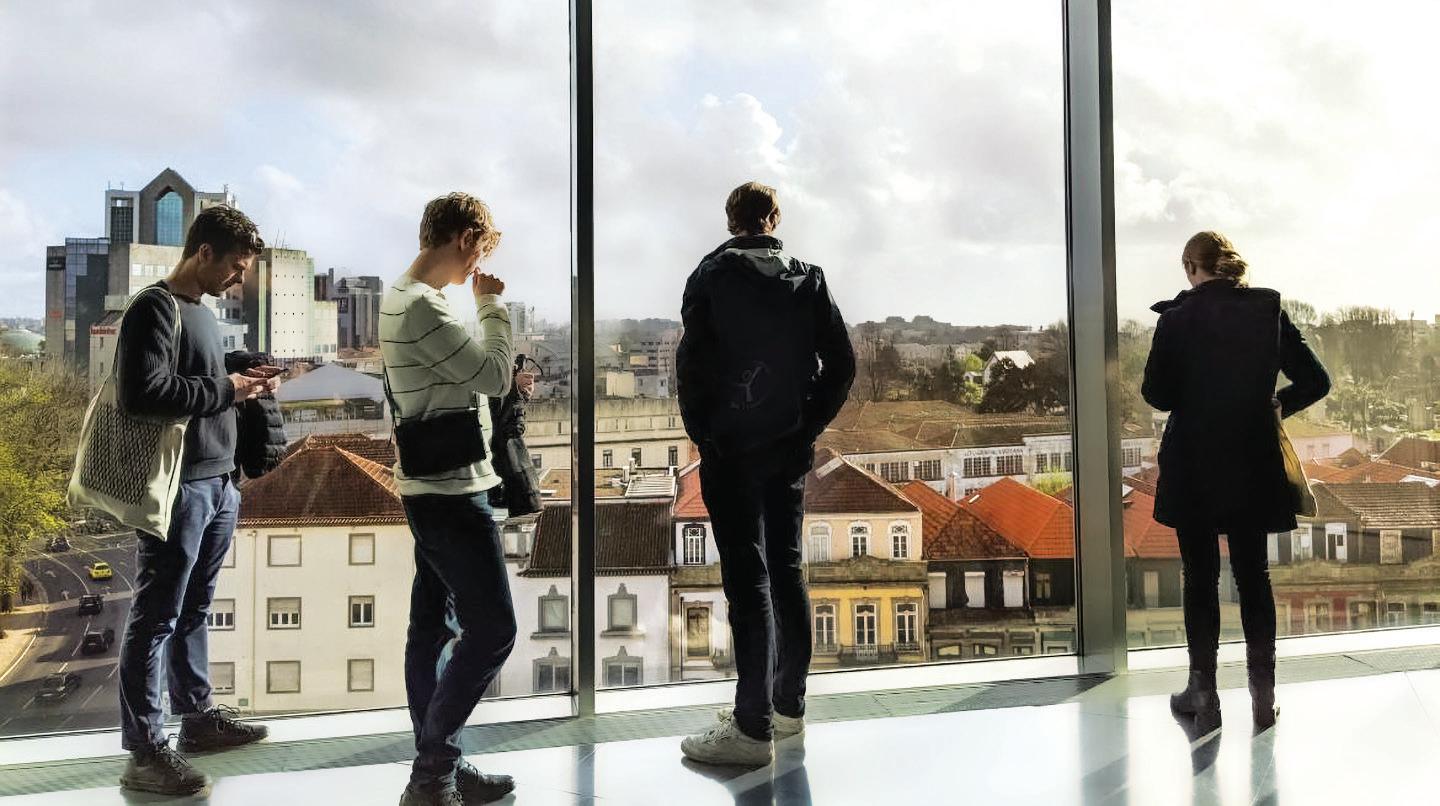
A past study trip included a tour of Casa da Música, pictured above, which was the first building in Portugal dedicated solely to music.
PHOTO
Now in its 23rd year, Rice School of Architecture
Paris continues to offer students what its founder envisioned: not just a study abroad program, but an encounter with architecture, culture and life that reverberates long after graduation.
The program also acts as a larger European platform, bringing in faculty from other cities — such as Brusselsbased Xaveer De Geyter, head of the award-winning firm XDGA — and taking students on field trips as far away as Berlin and Ljubljana and as nearby as London and Bordeaux. In addition, RSAP’s cozy, street-facing base on Rue Crozatier has hosted lectures, symposia and other public events featuring major luminaries in the field, including Peter Cook and Timothy Benton.
“What has always characterized the Rice School of Architecture is the fact that we are a small, close-knit community that is at the same time broad and international in character,” says Igor Marjanović, the William Ward Watkin Dean and professor of architecture. “Our Paris facility offers a beautiful, intimate studio space to make work while challenging the students to embrace other cultures, approaches and communities. We believe this challenge to be an essential lesson for architects and citizens alike and are committed to this vision and to the internationalism of architecture more broadly.”
For Yidong He ’24, who studied in Paris in 2023, the semester was “like a continuous symposium” that reshaped his understanding of urbanism and inspired him to pursue graduate study at Harvard’s Graduate School of Design. “Seeing iconic works in person — not in a book or on a screen — gave me another layer of understanding about architecture and the city,” he says.
That kind of immersion often proves transformative. “Traveling is one thing, but living in Paris connects you in a way being a tourist never can … the city itself becomes part of your education,” says Yao Xiao ’26, a Master of Architecture student. Shree Kale ’22 recalls the initial culture shock of navigating a new language and city before settling into the rhythms of studio work and Paris’ famously balanced lifestyle. “I learned to live my life and let that inform my work,” he says. “That perspective is something I carry into my career today.”
The program’s influence stretches back across generations. Heather Rowell ’09, a principal at Houstonbased architecture studio HR Design
Dept, recalls the walking tours led by Fromonot in particular as defining moments. “She opened our classroom door and took us outside into Paris,” Rowell says. “She showed us how the city’s history unfolded and adapted, layer by layer. It was unlike anything I had experienced.”
Casbarian has watched hundreds of students have similar moments of discovery. Over two decades, he says, the program has evolved — refining its courses, expanding field trips across Europe and connecting with Rice Global Paris — but the spirit has remained the same. “Every semester is still an adventure,” he says. “The city changes, the students change and every group brings a new perspective.” That adaptability and immersion, he adds, are what make RSAP enduring. Alumni who have gone on to graduate studies, launched practices and built careers around the globe often credit their Paris semester as the most formative chapter of their education.
Now in its 23rd year, Rice School of Architecture Paris continues to offer students what its founder envisioned: not just a study abroad program, but an encounter with architecture, culture and life that reverberates long after graduation. “Living and learning in Paris challenges you,” Casbarian says. “But it also gives you the tools to see the world differently. And for architects, that’s essential.” — ANDREW BELL
RSAP’s cozy base on Rue Crozatier hosts lectures and symposia in addition to offering courses that integrate studio work, history, theory and cultural study.
Mr. Putin Comes to Rice
Twenty-five years
ago,
the Russian president arrived on campus to pitch a new era of openness.
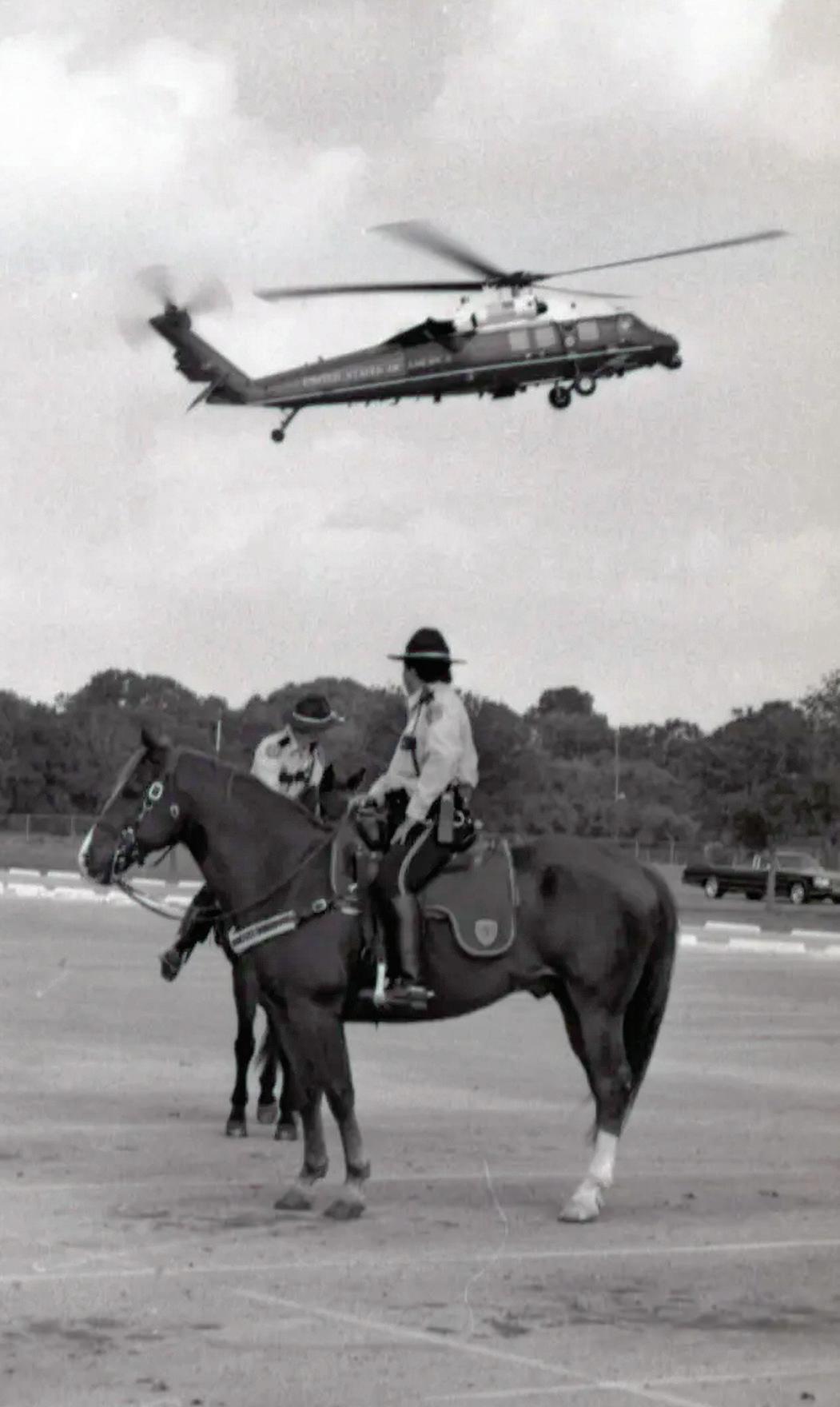
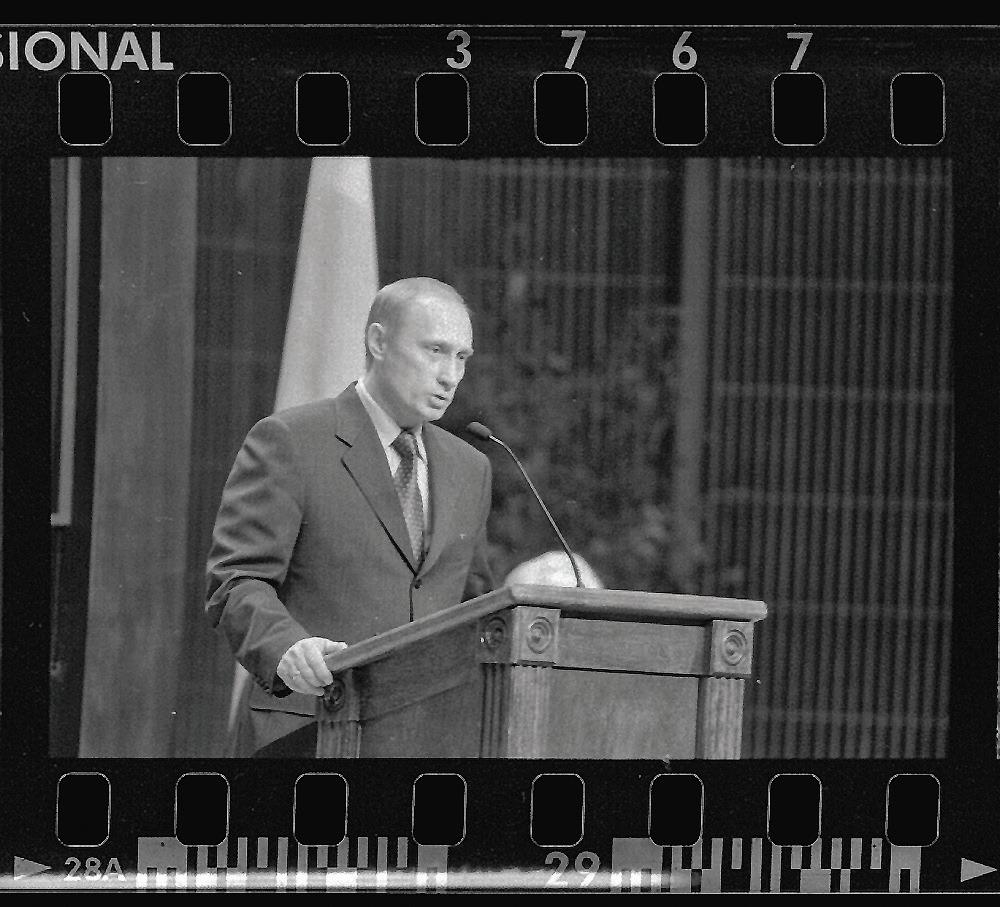
ON A CRISP November afternoon in 2001, a helicopter carrying Russian President Vladimir Putin landed on one of Rice’s intramural fields. En route to a three-day summit to discuss nuclear disarmament at President George W. Bush’s Crawford Ranch, Putin stopped in Houston to deliver a speech hosted by the Baker Institute for Public Policy alongside former Secretary of State James A. Baker III, with an introduction from former President George H.W. Bush.
Less than two years into his first term, Putin was widely perceived as a pragmatic modernizer eager to
engage the West, and his appearance generated such buzz on campus that student tickets had to be distributed via lottery.
Speaking to a capacity crowd of 770 in Stude Concert Hall, Putin spoke of a Russia eager to cooperate with the United States, casting his country as a reliable partner and promising a new era of openness. “People in Russia and America must leave behind double standards,” he said through a translator. “The Cold War must stop clutching at the sleeves.”
Putin touted Russia as being economically sound, with a “low tax burden,” “reformed business climate” and aspirations to join the World Trade Organization. He even suggested that Russia might one day cooperate with NATO.
A quarter century later, the scene reads like an artifact from an alternate timeline. The Putin who once spoke of joining NATO and strengthening democracy now presides over a tightly controlled Russia that’s mired in a war against Ukraine. His relationship with the American president is once again front-page news, their rapport as mysterious as it is mercurial.
And yet the visit endures in Rice geopolitical lore as a moment when the world, however briefly, seemed smaller and the future of Russian-American relations looked full of possibility.
— SARAH RUFCA NIELSEN
THE TICKER
Catch up on Rice’s top campus stories from news.rice.edu.
A
NEW CHAPTER
R ice has announced the creation of a new Master of Fine Arts in Creative Writing, designed to nurture emerging voices in fiction, poetry, nonfiction, translation and hybrid writing forms while connecting students to Houston’s rich literary and cultural landscape. The three-year graduate program will welcome its first cohort in fall 2026.
RICHARDS-KORTUM REC OGNIZE D
Rebecca Richards-Kortum, the Malcolm Gillis University Professor and co-director of Rice360 Institute for Global Health Technologies, has been elected to the National Academy of Medicine, one of the nation’s highest honors in health and medicine. Richards-Kortum was recognized “for major contributions to global health by creating low-cost, lifesaving technologies for underserved communities.”
BRAIN INST ITUTE LAUNCHED
The new Rice Brain Institute will unite faculty from across neuroscience, engineering and social sciences to advance understanding, technology and ethics in brain research. By merging discovery with real-world application, the institute aims to transform the future of brain health for generations to come, developing interventions that prevent and treat neurological and mental health disorders.
A Golden Anniversary
With his award-winning novel, “L’Anniversario,” Andrea Bajani has become an Italian literary sensation — and ignited a national debate.
BY BRANDI SMITH
FICTION
HEN ANDREA BAJANI
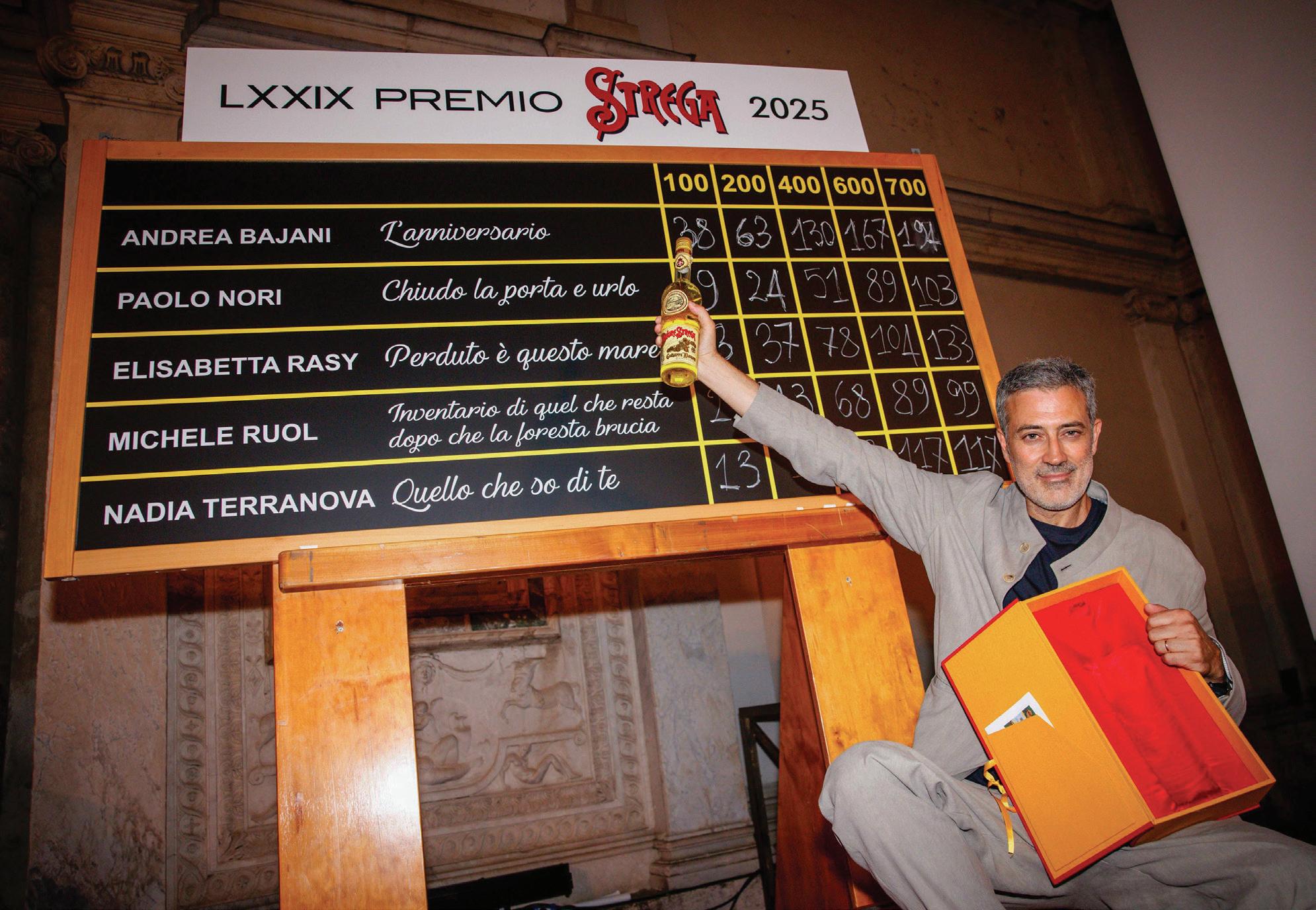
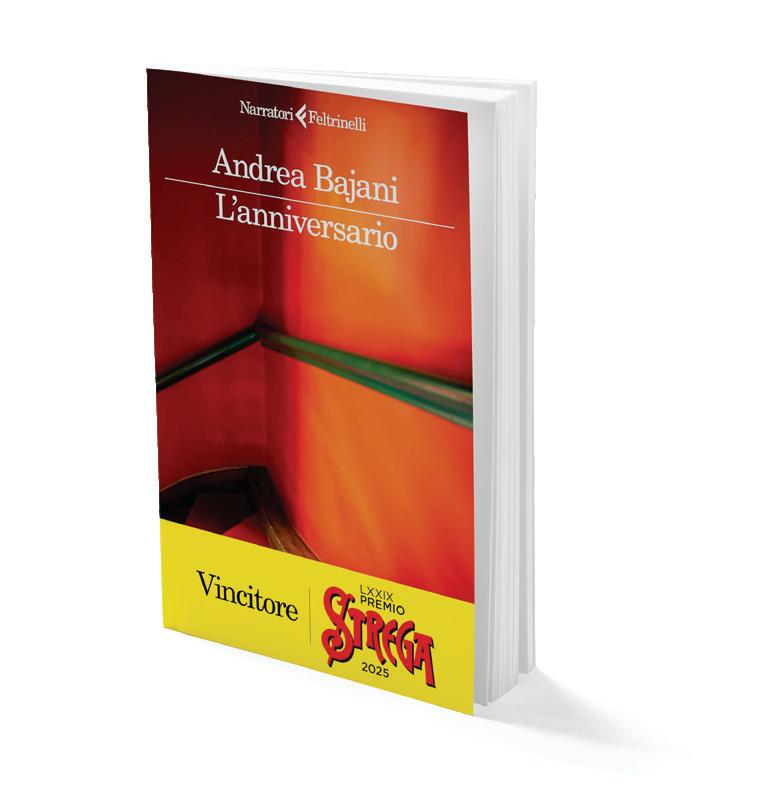
won Italy’s most prestigious literary award last summer, he didn’t just make headlines — he sparked a national conversation. For the Rice professor in the practice and international writer in residence, the honor was both exhilarating and slightly surreal, as when he wandered into a bookshop in Rome, only to find his book, “L’anniversario” (“The Anniversary”), staring back at him from every display.
“I haven’t come down from that high,” Bajani says. “I’m still trying to surf rather than resist this wave.”
Across Italy, Bajani’s novel has become a literary phenomenon. “I knew how important the prize was, but I didn’t really realize what its impact would be,” he says. “It was strange and even unsettling, but then also hearten-
ing to see that literature can still reach a wide audience.”
Selling more than 100,000 copies, “The Anniversary” held the No. 1 spot on Italy’s charts for months as the book has become a cultural lightning rod. “I hit a taboo talking about families and estrangement,” Bajani says. “In a country like Italy, this really struck a nerve, and this
I was telling an Italian story but living in an American context. … The English version, in a way, is the book coming home.
made the book controversial after the victory. Then even more people started reading it.”
The Premio Strega, established in 1947, is Italy’s most renowned literary award. Winners are selected by a jury of more than 600 critics, writers and cultural figures, and the competition receives national attention for months.
“‘The Anniversary’ is, first and foremost, a novel of liberation,” wrote fellow Strega laureate Emanuele Trevi in his nomination. Jhumpa Lahiri described it as “a book that confronts the purity of fact, the tyranny of memory and the totalitarianism of family like no other.”
In the months since his win, Bajani has been on a whirlwind book tour across Europe and South America, with translations planned in nearly 30 countries. An English edition, translated by Geoffrey Brock for Penguin Books UK, arrives this spring.
“I wrote [the book] in Houston,” Bajani says. “I was telling an Italian story but living in an American context. When I finally got the translation by Geoff, I thought, ‘Oh, this is the book I wanted to write.’ The English version, in a way, is the book coming home.”
Following a months-long voting process, Rice professor in the practice Andrea Bajani was awarded the Premio Strega at a ceremony in Rome on July 3.
Making the Cloud Greener
Rice engineers are turning the wasted heat of data centers into renewable energy — using a low-cost solar innovation that could change how the digital world powers itself.
STEP INSIDE a data center — the unseen heart powering our digital lives — and you’ll find racks of humming servers, glowing LEDs and a palpable tide of heat. Every time you stream a movie, back up a photo or ask ChatGPT a question, those machines work hard — and get hot. Cooling them consumes a staggering amount of energy, nearly half of which dissipates as waste heat. A new Rice study offers a compelling method to reclaim this electricity, while also reducing costs.
“There’s an invisible river of warm air flowing out of data centers,” says Laura Schaefer, the Burton J. and Ann M. McMurtry Chair of Mechanical Engineering at Rice and co-author of the study. “Our question was: Can we nudge that heat to a slightly higher temperature with sunlight and convert a lot more of it into electricity? The answer is yes, and it’s economically compelling.”
Published in Solar Energy, the research introduces a solar-thermalboosted organic Rankine cycle — a compact power system that converts heat into electricity. By adding low-cost rooftop solar collectors to warm the coolant stream before it reaches the ORC, Rice engineers found a way to turn low-temperature waste heat into a usable energy source.
“Efficiency gains are being outpaced by demand,” says graduate student Kashif Liaqat. “If we want the digital economy to be sustainable, we have to reclaim some of the energy that is currently just thrown away.”
Because this setup doesn’t require additional power to operate (unlike traditional methods of converting heat to energy, such as electric heat pumps), Schaefer says solar thermal offers “a cleaner, simpler pathway” to reducing data centers’ energy consumption.
The team modeled systems in Ashburn, Virginia, and Los Angeles, two of America’s biggest data center hubs. Their hybrid approach recovered 60%–80% more electricity from the same waste heat and cut electricity costs by 5.5% in Ashburn and 16.5% in Los Angeles. “Los Angeles performed better because of stronger solar resources,” Liaqat says. “But even in Ashburn, the hybrid system meaningfully increases output and cuts costs.”
If we want the digital economy to be sustainable, we have to reclaim some of the energy that is currently just thrown away.
Using off-the-shelf solar collectors connected directly to a data center’s cooling system, the setup functions as a “behind-the-meter” clean energy generator. “It gets stronger when the sun is out — right when cooling loads are highest,” Schaefer explained.
Next steps include testing the system at an operational site and exploring thermal storage for nighttime recovery. “We’re not saying this replaces efficiency work,” Schaefer says. “But we are adding a new tool — one that turns a liability into an asset.” —
ALEX BECKER
Where Streets End, Divides Begin
Rice sociologist Elizabeth Roberto studies how dead ends, fences and highways shape inequality — and how rethinking the built environment could help reconnect communities.
AS A GRADUATE student in New Haven, Connecticut, Elizabeth Roberto couldn’t stop wondering why certain neighborhoods seemed connected while others were quietly walled off.
“There were these places where the roads just stopped,” she recalled. “Like they were meant to go somewhere — but didn’t.”
For most people, it might have been an unnoticed quirk of urban design. For Roberto, it became a question that would shape her career: What happens when barriers separate people — not just symbolically but literally?
Now an assistant professor of
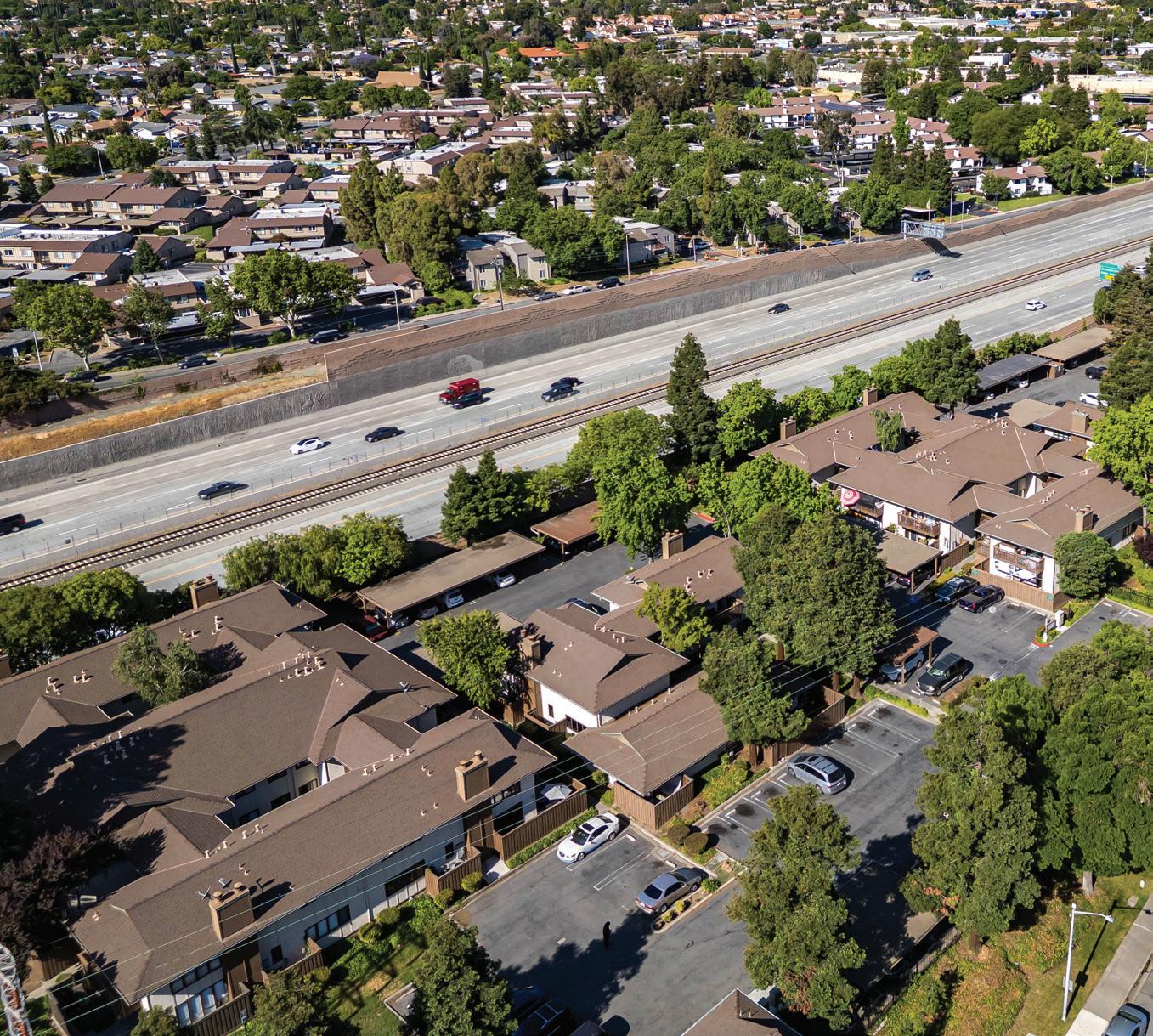
sociology at Rice, Roberto has turned that curiosity into a pioneering line of research. Backed by a $500,000 National Science Foundation CAREER Award, she is studying how elements of the built environment — dead-end streets, highways, fences and railroad tracks — influence neighborhood separation and access to opportunity across U.S. cities.
“It’s something I’ve been thinking about for years,” she says. “This award is incredibly exciting, and honestly, I’m still processing it. It’s the culmination of so many years of work.”
While many scholars focus on
economics, personal preferences or discrimination to explain residential segregation, Roberto’s work adds a physical dimension. Using satellite imagery, historical archives, redlining maps and artificial intelligence, her team is uncovering how infrastructure decisions — even the simple question of where a street goes or doesn’t — can reinforce racial and economic divides.
“You start to see these patterns repeating across the country,” Roberto says. “What I noticed in Connecticut wasn’t unique. Cities everywhere are shaped by the same forces.”
Her multiyear study will span 50 cities and introduce new methods for measuring how physical barriers affect access to schools, transit and public resources — not just mapping what’s there, but what’s missing.
At Rice, Roberto is also designing interdisciplinary courses in spatial analysis, urban inequality and data science, creating hands-on opportunities for students to engage in realworld research. She plans to launch an interactive public web platform to share her findings with policymakers, researchers and community leaders.
For Roberto, the work is about more than maps and measurements. It’s about making the invisible visible, helping cities, scholars and communities understand how decisions about streets, zoning and infrastructure shape the very fabric of opportunity.
“I’m not trying to say we should build more roads,” Roberto says. “But if we want to understand inequality, we need to see the ways physical infrastructure limits or enables access. This research is about creating tools that help us ask better questions about the way our cities are built — and for whom.”
— KAT COSLEY TRIGG
Elizabeth Roberto is assistant professor of sociology in the School of Social Sciences and a founding co-director of the Center for Computational Insight on Inequality and Society at Rice.
SOCIAL SCIENCES
AWARDS
Spotlight on Excellence
A new annual ceremony recognizes Rice recipients of highly prestigious and prestigious awards.
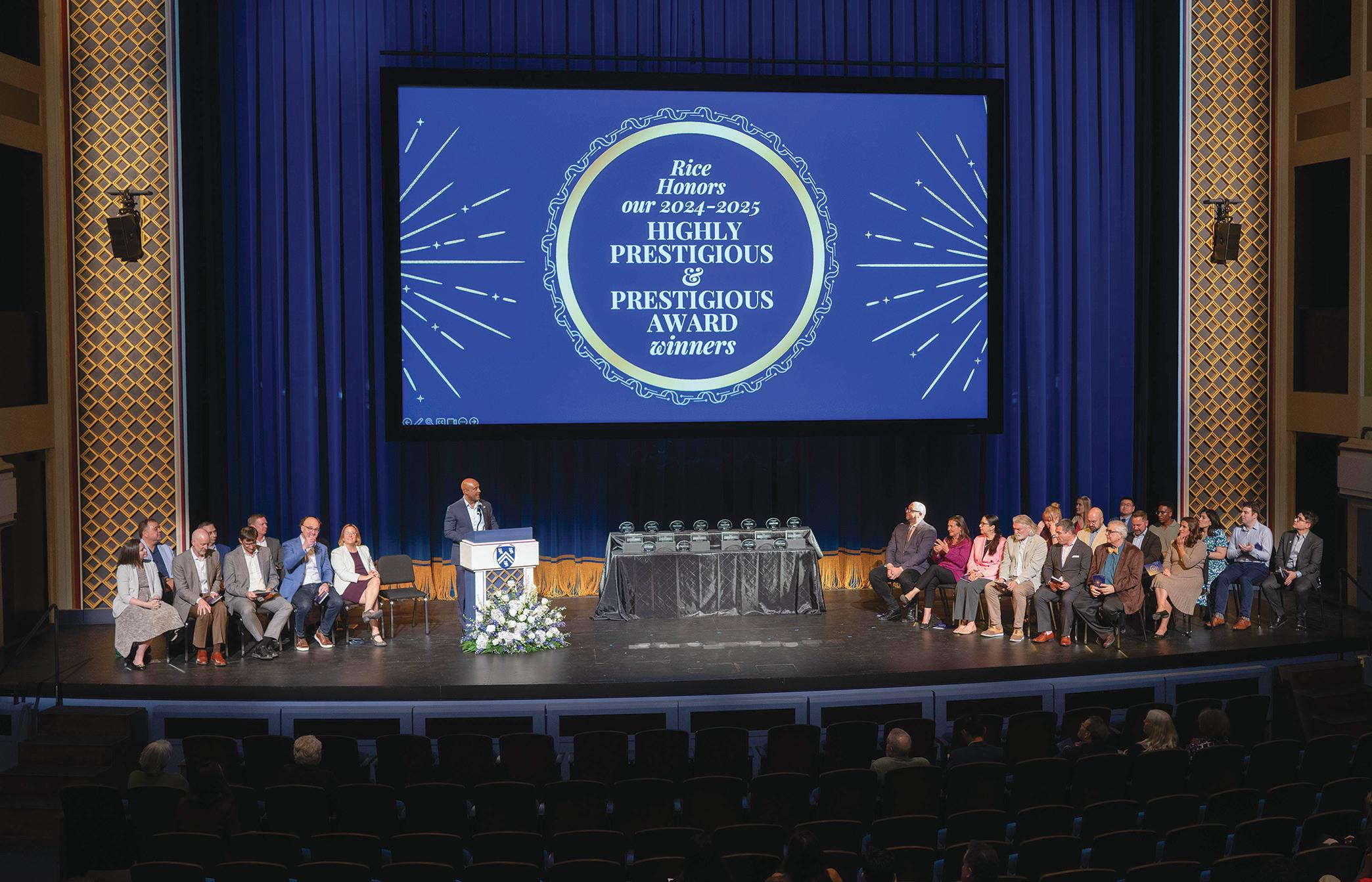
ON OCT. 6, President Reginald DesRoches and Provost Amy Dittmar welcomed faculty to a formal awards ceremony at Brockman Hall for Opera. The occasion? Honoring Rice faculty who earned prestigious and highly prestigious awards during the 2024–2025 academic year, as defined by the Organization of the National Research Council and the Association of American Universities.
“These awards are more than individual recognitions,” DesRoches said. “They represent the extraordinary talent and dedication of our faculty — their brilliance as researchers, their commitment as mentors and their impact as teachers. Each honor strengthens Rice’s reputation as a university defined by excellence, where world-class faculty push the boundaries of knowledge and prepare the next generation of great minds.”
As the inaugural Highly Prestigious and Prestigious Awards ceremony, the event was also a commemoration of all the Rice faculty who have won these categories of awards over the decades. — AVERY RUXER FRANKLIN
For a full list of award recipients, visit magazine.rice. edu/awards
PRESTIGIOUS AWARD WINNERS
National Science Foundation CAREER Awards
Sylvia Dee , associate professor of earth, environmental and planetary sciences
Marcos H. de Moraes , assistant professor of biosciences
Anna-Karin Gustavsson , assistant professor of chemistry
Lei Li , assistant professor of electrical and computer engineering
Matthew McCary, assistant professor of biosciences
Elizabeth Roberto, assistant professor in the Department of Sociology
Matthew Tyler, assistant professor in the Department of Political Science
César A. Uribe , Louis Owen Assistant Professor of Electrical and Computer Engineering
American Association for the Advancement of Science Election
Reginald DesRoches , president of Rice University, professor of civil and environmental engineering
Angel A. Martí , professor of chemistry, bioengineering, materials science and nanoengineering
Luay Nakhleh , William and Stephanie Sick Dean of the George R. Brown School of Engineering and Computing, professor of computer science and biosciences
H. Earle Johnson Bequest for Book Publication Subvention
Danielle Ward-Griffin , assistant professor of musicology
IEEE Jack S. Kilby Signal Processing Medal
Richard G. Baraniuk , C. Sidney Burrus Professor of Electrical and Computer Engineering
Association for Asian Studies NEAC Korean Studies Grant
Sonia Ryang , T.T. and W.F. Chao Professor of Asian Studies
HIGHLY PRESTIGIOUS AWARD WINNERS
Guggenheim Fellowship
Dominic Boyer, professor of anthropology
Benjamin Franklin Medal in Chemistry
Naomi J. Halas , University Professor, Stanley C. Moore Professor of Electrical and Computer Engineering
American Academy of Arts and Sciences Election
Karen Lozano, trustee professor of materials science and nanoengineering
Eduardo Salas , Allyn R. and Gladys M. Cline Chair and Professor of Psychology
National Academy of Inventors Election
Omid Veiseh , professor of bioengineering
National Academy of Sciences Award in Chemical Sciences
Peter G. Wolynes , Bullard-Welch Foundation Professor of Chemistry, professor of biosciences, materials science and nanoengineering, physics and astronomy
National Academy of Sciences Election and National Academy of Engineering Election
Lydia E. Kavraki , University Professor, Kenneth and Audrey Kennedy Professor of Computing, professor of computer science, electrical and computer engineering, mechanical engineering and bioengineering
PHOTO BY JEFF FITLOW
ENGINEERING
Unfolding Innovation
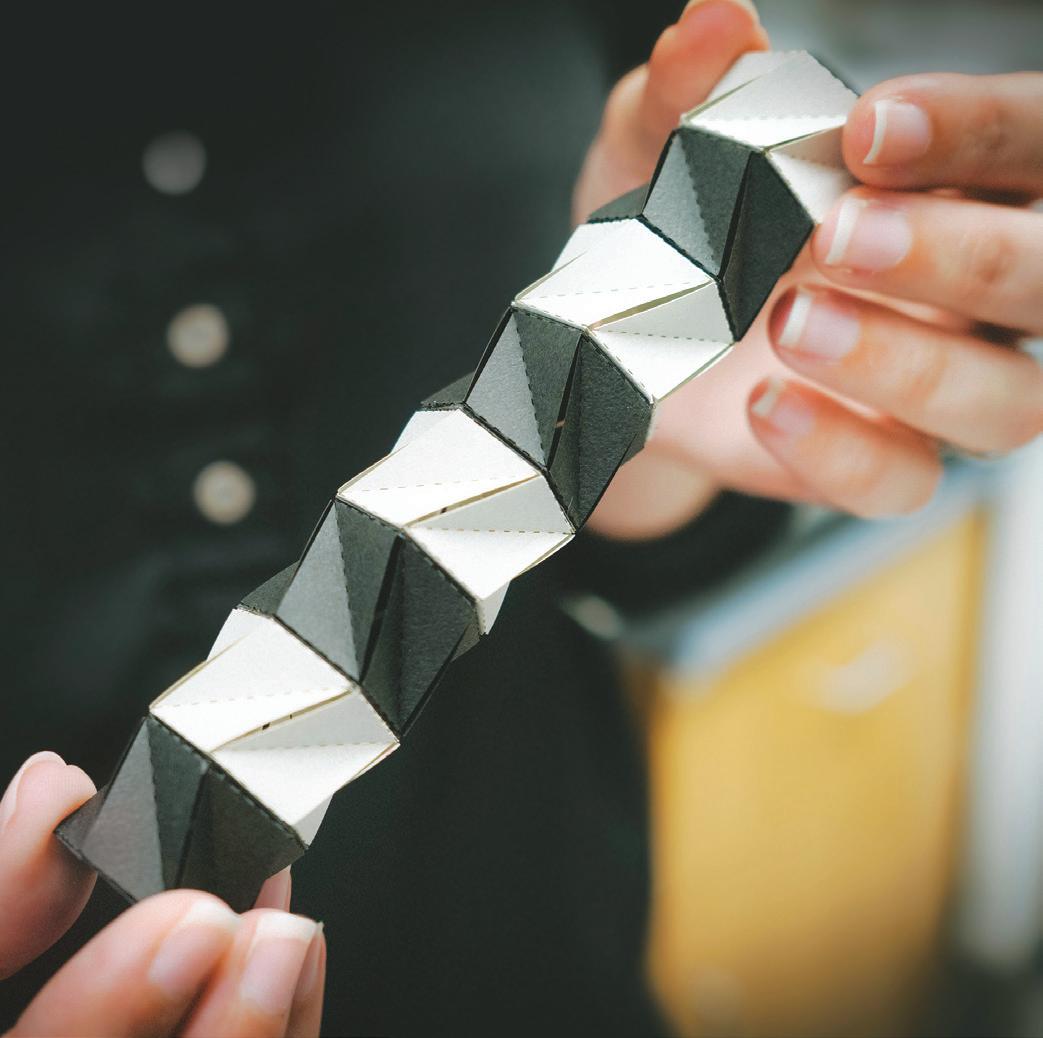
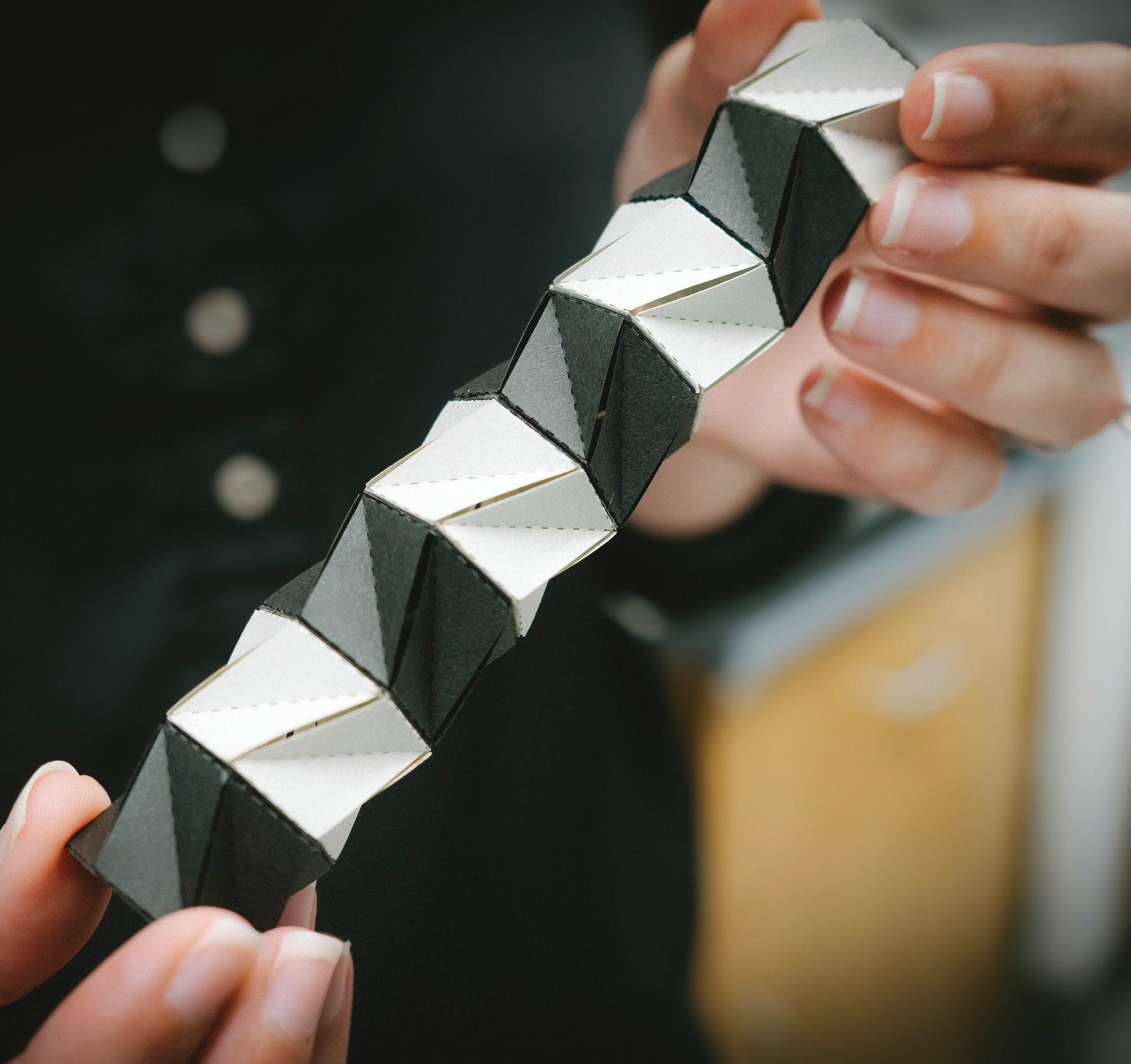
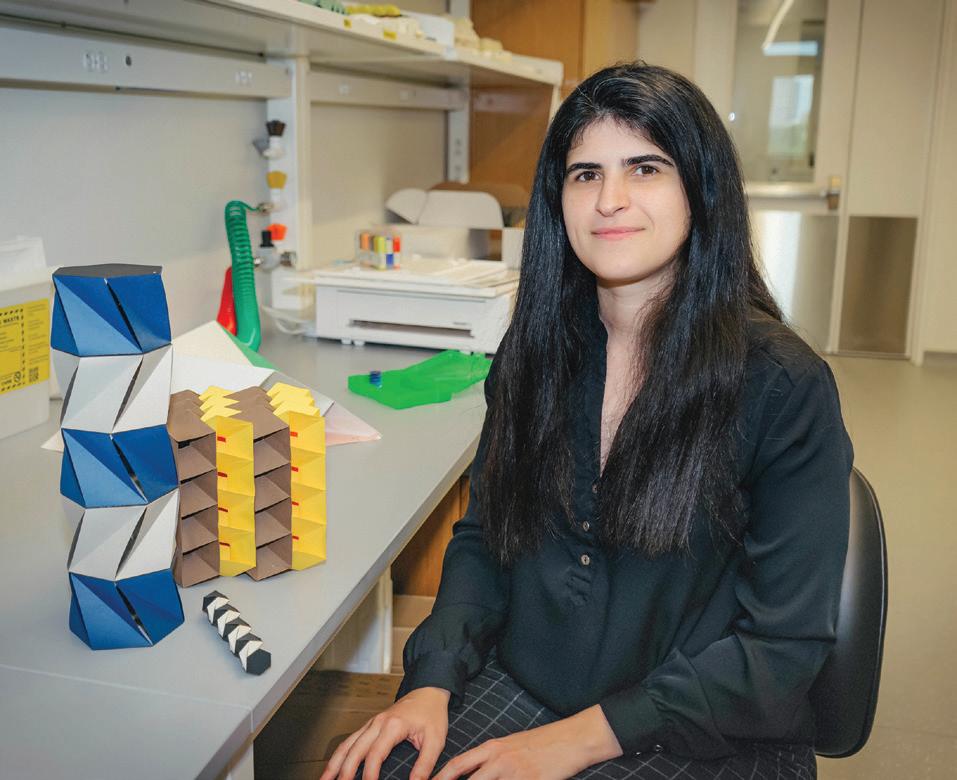
Folding art into engineering, Larissa Novelino uses origami to shape smarter, safer structures.
FOR LARISSA Novelino, innovation often begins with a single crease. An assistant professor of civil and environmental engineering at Rice, Novelino has built her research on a surprising foundation: the centuries-old Japanese art of paper folding. In her lab, origami isn’t about cranes and swans, it’s about transforming how we design buildings, materials and machines.
“I was never the crafty, artistic type,” she says. “My mom still can’t believe I ended up working with origami.”
Origami engineering applies the geometric principles of folding to real-world challenges, creating structures that are compact when
Growing up in Belém, Brazil, Novelino always excelled at math, but her path to origami engineering began almost by accident. While pursuing her master’s in structural engineering, she connected with a professor studying origami-inspired design. “It was nice to take a break from the computer and actually make things,” she recalls. “It’s still math and mechanics, but with this whole new layer of understanding.”
Her ultimate goal is to reimagine construction itself. “If we can design structures that fold flat, transport easily and deploy with minimal human risk, we can make job sites safer,” she says. “That’s not just innovation for the sake of novelty; that’s innovation that protects lives.”
stored but strong and functional when deployed. Novelino’s designs range from portable emergency shelters to lightweight materials with unique mechanical properties.
“Through geometry, you can design how a material behaves — its stiffness, weight, even how it responds in different directions,” she explains. “You can make something deployable in one direction, then stiff and loadbearing in another.”
Novelino’s research extends well beyond construction. She has collaborated on origami-inspired electromagnetic filters that shift operational frequencies simply by changing shape, and on soft robots that “snap” into new positions to perform different tasks. For Novelino, the tactile nature of folding connects imagination and engineering.
“You can prototype with paper, test ideas by hand, then scale them up with advanced materials,” she says. “It’s a tangible way to understand concepts that can feel abstract on a computer screen.”
That hands-on spirit also defines her classroom. At Rice, students in Novelino’s courses don’t just solve equations — they fold them. “They’re always surprised by how much a single sheet of paper can teach them about geometry, mechanics and design,” she says.
— ALEX BECKER
More Than Words
Rice’s new linguistics initiatives are bringing scholars together to deepen how we understand — and use — language.
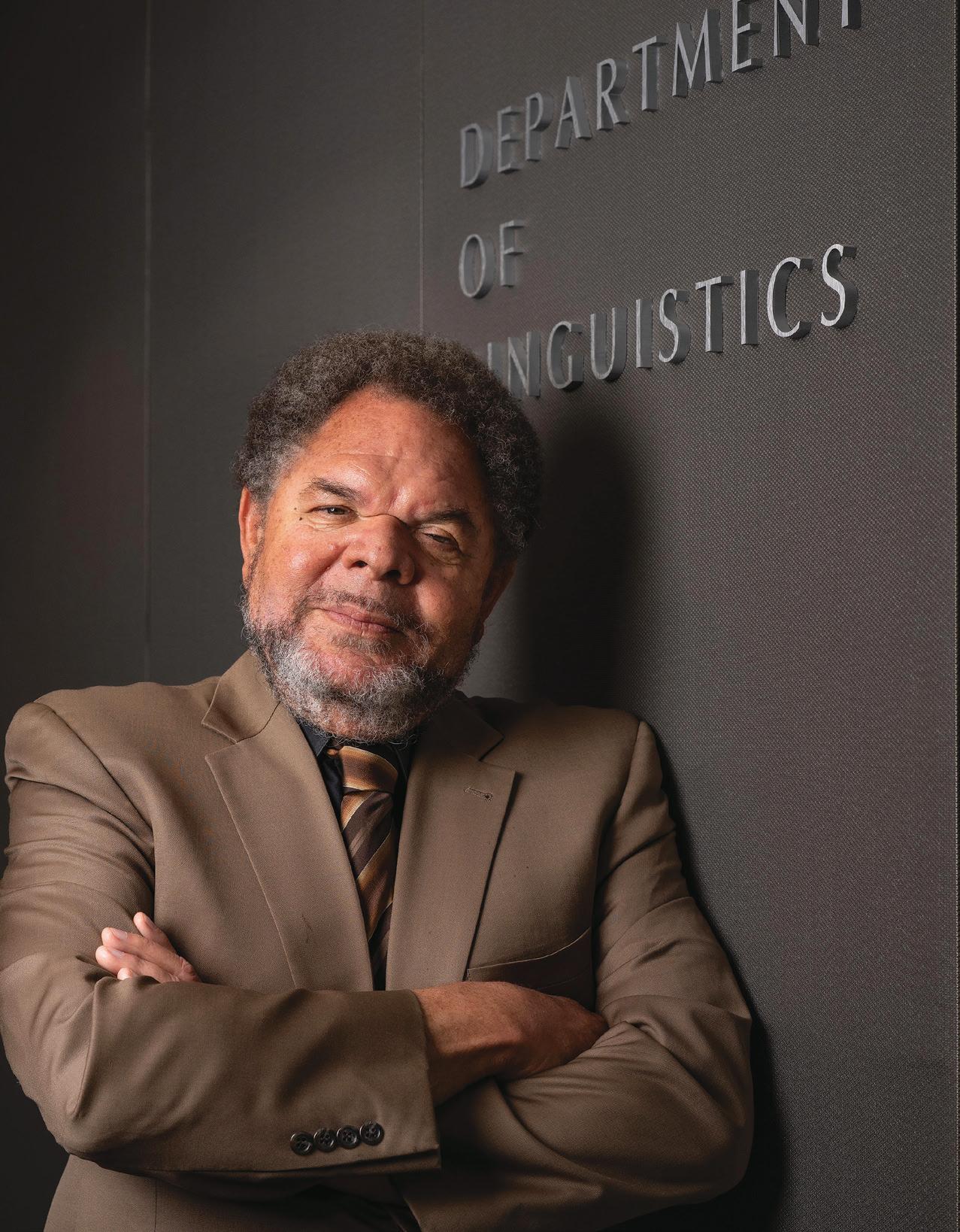
SOCIOLINGUIST John Baugh, the Barbara Jordan Distinguished Professor of Linguistics, is leading a bold, new statewide effort to elevate the study of language in Texas. Through the Texas Linguistics Consortium and Rice’s new Center for Advancing Linguistic Science, Baugh is uniting top scholars to address real-world communication challenges in one of the nation’s most diverse states. Together, they aim to
expand research, strengthen community partnerships and broaden access to linguistics education.
I’ve noticed that linguistics is sometimes grouped into the humanities, but at Rice it’s part of the social sciences. How do you define it? It is a social science, and it is very much a science. Linguistics is the study of what all human languages have in common. Every language has a sound system, a structure and meaning, shaped by context. We study how infants acquire language, how dialects emerge and how factors like region, education or heritage influence speech. That’s where my own specialization, sociolinguistics, comes in.
How did you come to coin the term ‘linguistic profiling’? For many years, I’d been interested in linguistic discrimination — the idea that people can be judged or limited not by their race or gender, but by how they sound. The
concept of racial profiling came into public awareness in the 1990s when police officers were shown to pull over disproportionate numbers of Black drivers. That’s when it dawned on me that my work on linguistic discrimination might benefit from being referred to as linguistic profiling — the aural equivalent of racial profiling.
How is linguistic profiling different? It turns out that linguistic profiling is much more nuanced than racial profiling. And it’s global. For example, there is research on linguistic discrimination against Uyghurs in China speaking Chinese.
I sometimes ask my students to imagine an all-white America, where slavery never happened and everyone is of European descent. Would linguistic discrimination still exist? Almost always, they say yes — based on region, class or education. Once you add race and the unique linguistic history of slave descendants, you see how race and dialect intertwine.
What was the impetus for starting the Texas Linguistics Consortium in 2025? We created the Texas Linguistics Consortium explicitly to build a network of linguists based here in Houston but serving the entire state. The goal is to lay a strong foundation — one that connects Rice’s strengths in research and global collaboration with Texas’ extraordinary linguistic diversity and the everyday challenges of communication, education and inclusion.
What makes Texas interesting from a linguistic standpoint? Texas is an incredibly rich place to study language. Each region — El Paso, the Valley, Dallas, Austin, Midland — has its own distinct linguistic and cultural identity. That diversity makes Texas an ideal setting for studying how language evolves across geography, history and community. It’s uniquely Texan but also profoundly American.
— SARAH RUFCA NIELSEN
SOCIAL SCIENCES
PHOTO BY JEFF FITLOW
FACULTY BOOKS
Now Reading
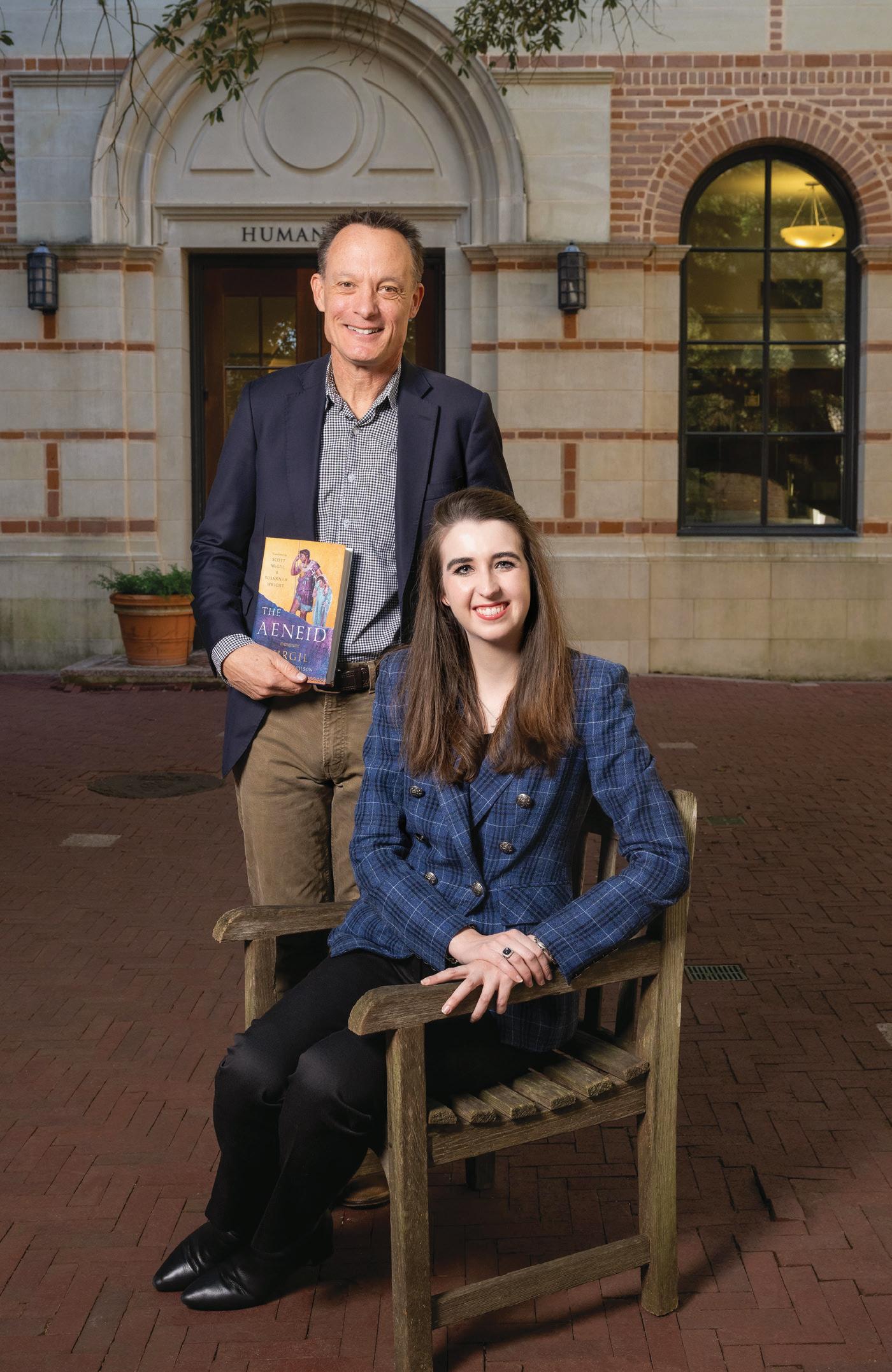
A SEVEN-YEAR LITERARY odyssey has finally come to fruition for Rice professors Scott McGill and Susannah Wright ’18 with the release of their translation of Virgil’s “The Aeneid.” The project originated when Wright was a Rice undergraduate, translating lines as part of her senior thesis with McGill as her adviser. They discovered a shared love for Virgil’s Latin epic and decided to continue working on the translation despite Wright’s departure to Harvard, where she earned a doctorate in classical philology in 2024. Collaborating digitally from across the country, the duo spent countless hours going through the poem’s 10,000 lines to produce its first collaborative English translation.
What was the most inspiring part about the work and completion of the translation?
Though we have read the poem so many times as students and professors, the translation gave us a chance to read its nearly 10,000 lines more closely than we ever have — literally beat by beat, without skipping a single syllable — and thus to see things that we hadn’t before. It was especially inspiring to work through the text in this way, side by side, in constant dialogue both with each other and with Virgil himself.
Conversely, what was the worst part?
Translating a monumental epic work like “The Aeneid” is a formidable task, and there were certainly moments, and even hours, of despair along the way (any author will know what we’re talking about). We chose to translate the poem into unrhymed iambic pentameter, or blank verse, which imposed particular demands. For instance, in a metrical translation, recognizing that even a single word is not quite right sometimes requires revising entire lines and even passages to accommodate the rhythmic pattern of the verse. Figurative language, such as metaphors, can also
The Aeneid
By Virgil Translated by Scott McGill and Susannah Wright Liveright, 2025
be very difficult to translate across languages. But even at the most challenging moments, it was deeply reassuring to be working together and to support one another as we moved ahead on our own epic journey through the poem.
What has the response been thus far?
We feel very fortunate that the book has been received enthusiastically by audiences at a series of events at bookstores and universities this past summer and fall. We were able to hold readings in different parts of Texas and the East Coast shortly after its publication in August, as well as to have events with Emily Wilson [who wrote the introduction] at the Free Library of Philadelphia
PHOTO BY JEFF FITLOW
and the 92nd Street Y in New York. The response from the readers has been thrilling for us, with full-house audiences and engaged, thoughtful questions at every stop. The experience of sharing the translation for audiences has also been a bit surreal, since the project lived for so long just between our two computers!
Do you think translations like this could be a better, more accessible, user-friendly way for school-aged students to study the classics?
One of our major aims with the translation has been to capture the power of Virgil’s poetry in accessible, immediate language that can convey its emotional urgency to modern readers of all ages. Here at Rice, as at many other institutions, several of our Classics courses are taught with readings in English. We wanted our translation to bring the poem to life for students while also meeting the needs of teachers, so we asked ourselves what supporting materials we would want to find in the book when teaching the epic. To make the translation as reader-friendly as possible, we included extensive resources: a comprehensive glossary, notes on the translation, genealogies and maps.
How important is humanities research to undertaking and completing a project like this?
Humanities research was integral to this project from start to finish. Every act of translation is an act of interpretation, and so every beat and every line of the poem required us to engage deeply with the meaning of the poem, and with the many centuries of scholarship on it. Rice is the ideal place for such collaboration: our size facilitates close mentorship ties between students and faculty, and our commitment to supporting undergraduate research gives students the chance to pursue work not just under the guidance of, but even in partnership with their professors.
—INTERVIEW BY
TRACEY RHOADES
Scott McGill is the Deedee McMurtry Professor in Humanities and professor of classical studies in the School of Humanities and Arts. Susannah Wright is assistant professor of modern and classical languages, literatures and cultures in the School of Humanities and Arts.
Read an expanded version of this interview at magazine.rice.edu/aeneid
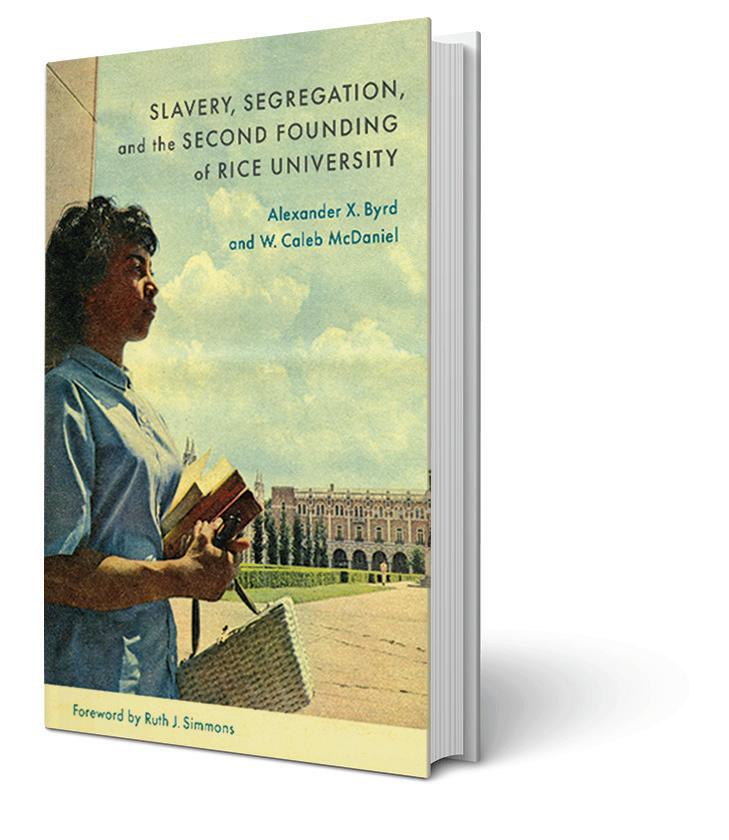
Slavery, Segregation, and the Second Founding of Rice University
Alexander X. Byrd and W. Caleb McDaniel LSU Press, 2025
As co-chairs of Rice’s Task Force on Slavery, Segregation and Racial Injustice from 2019–23, historians Alexander X. Byrd ’90 and Caleb McDaniel traced the university’s history from its foundation through the tumultuous process of desegregation. What resulted was “Slavery, Segregation, and the Second Founding of Rice University,” a publication chronicling their findings and the university’s fundamental and ongoing process of transformation.
Byrd and McDaniel explore the difficulties of integration in the late 1960s and 1970s and the struggles even after desegregation began with the first Black student’s admittance to Rice in 1964. Emphasizing the central role of Black students, Black communities and historically Black colleges as catalysts driving this change, the book contends that Rice’s desegregation constituted a “second founding” of the university, the last major private research university to desegregate.
Citing one of the book’s central themes, co-author McDaniel contends, “You can’t understand the full history of Rice without also understanding the histories of Black Houstonians and Black Texans.”
A foreword, written by Ruth J. Simmons, a President’s Distinguished Fellow at Rice, praises both the significance of the task force’s work and the tome’s detail-rich history, noting that “Alexander X. Bird and Caleb McDaniel masterfully document the elements of the period, bringing to life for today’s readers a fuller understanding of those times.”
Presented as a chronological journey, the book includes a never-before-discussed will written by William Marsh Rice in 1868, providing a candid look at how Rice’s past informs its present and a reminder that the entire Rice community — students, faculty and alumni — play a role in shaping the university’s ongoing pursuit of inclusion, equity and excellence.
—
TRACEY RHOADES
Alexander X. Byrd is the vice provost for Access and Institutional Excellence and associate professor of history in the School of Humanities and Arts. Caleb McDaniel is the Mary Gibbs Jones Professor of Humanities and professor of history in the School of Humanities and Arts.
S TATE
WITH A GLOW MADE FROM SUNLIGHT SLICING THROUGH GLASS AND STEEL BEAMS STRETCHING TOWARD THE SKY,
S ART
EDITED BY Sarah Rufca Nielsen
CONTRIBUTORS
Autumn Horne ’22
Tracey Rhoades
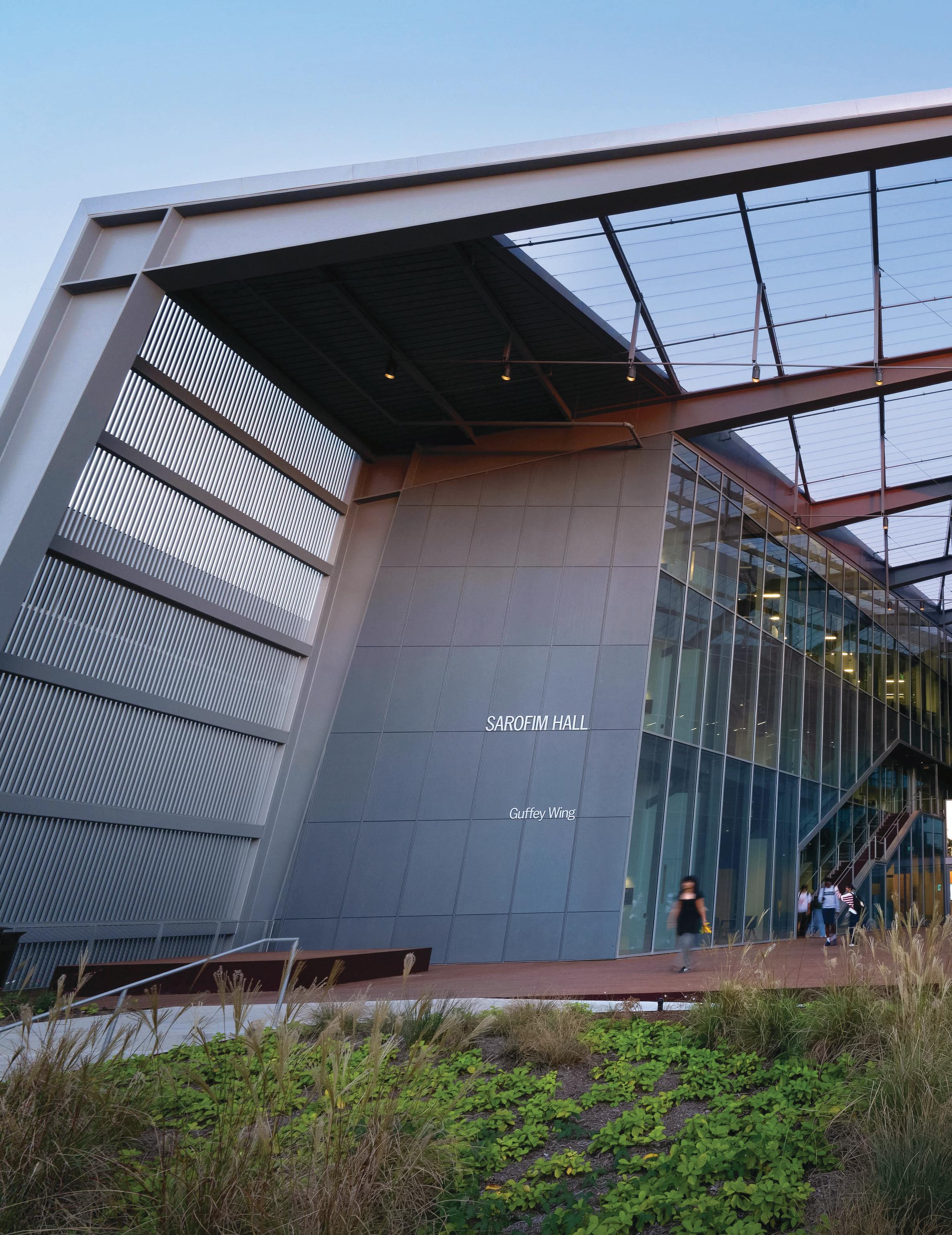
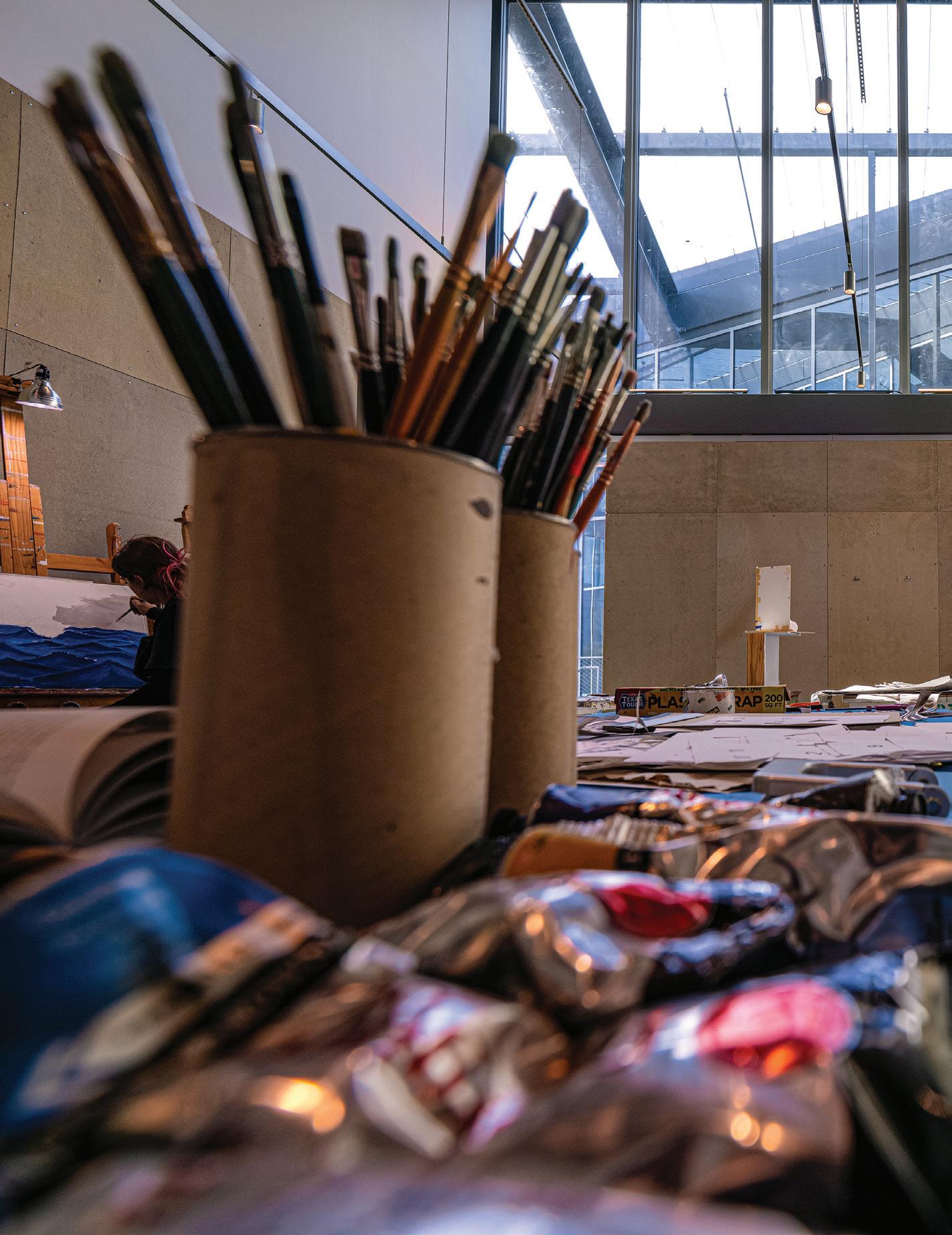
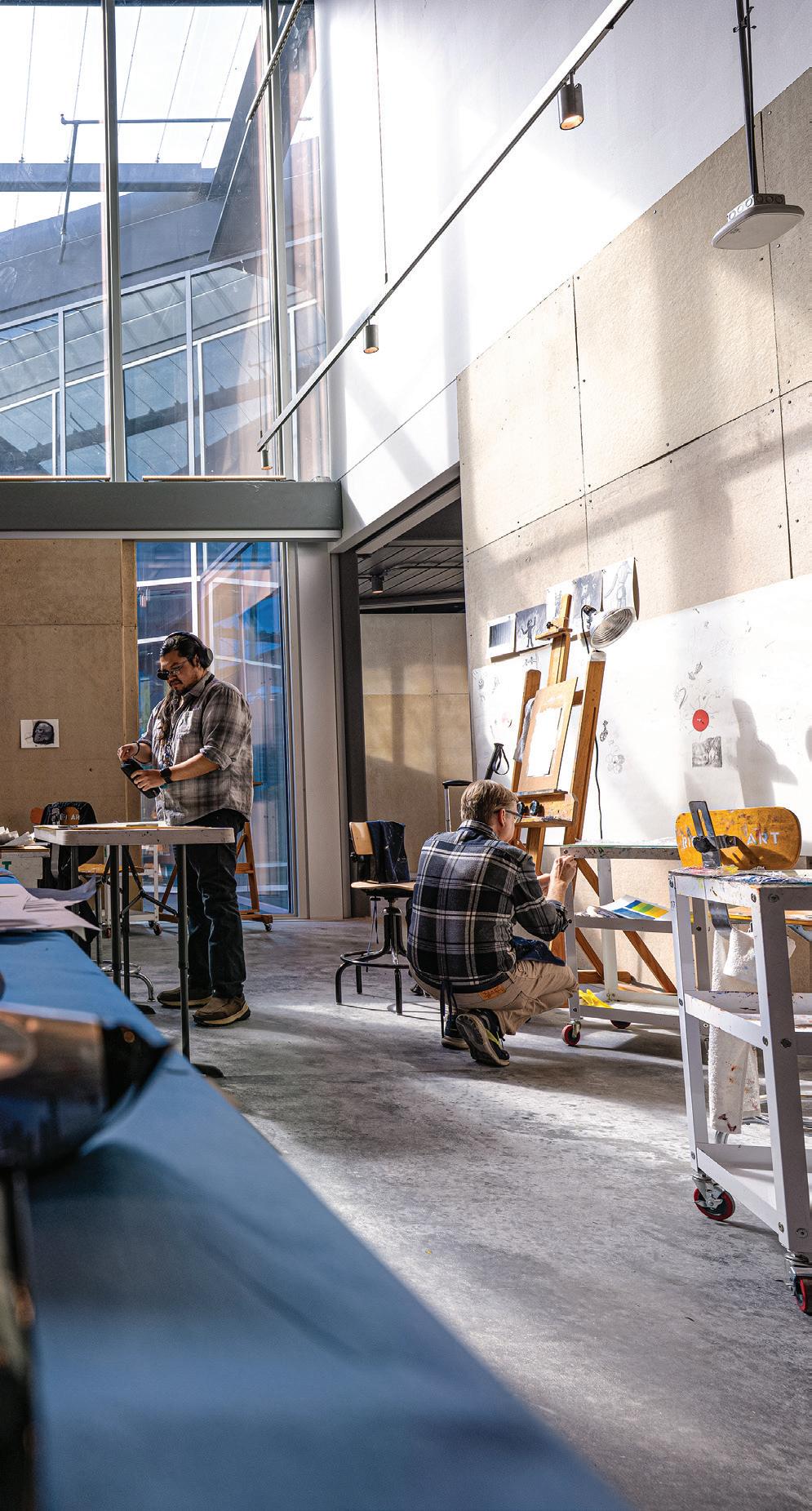
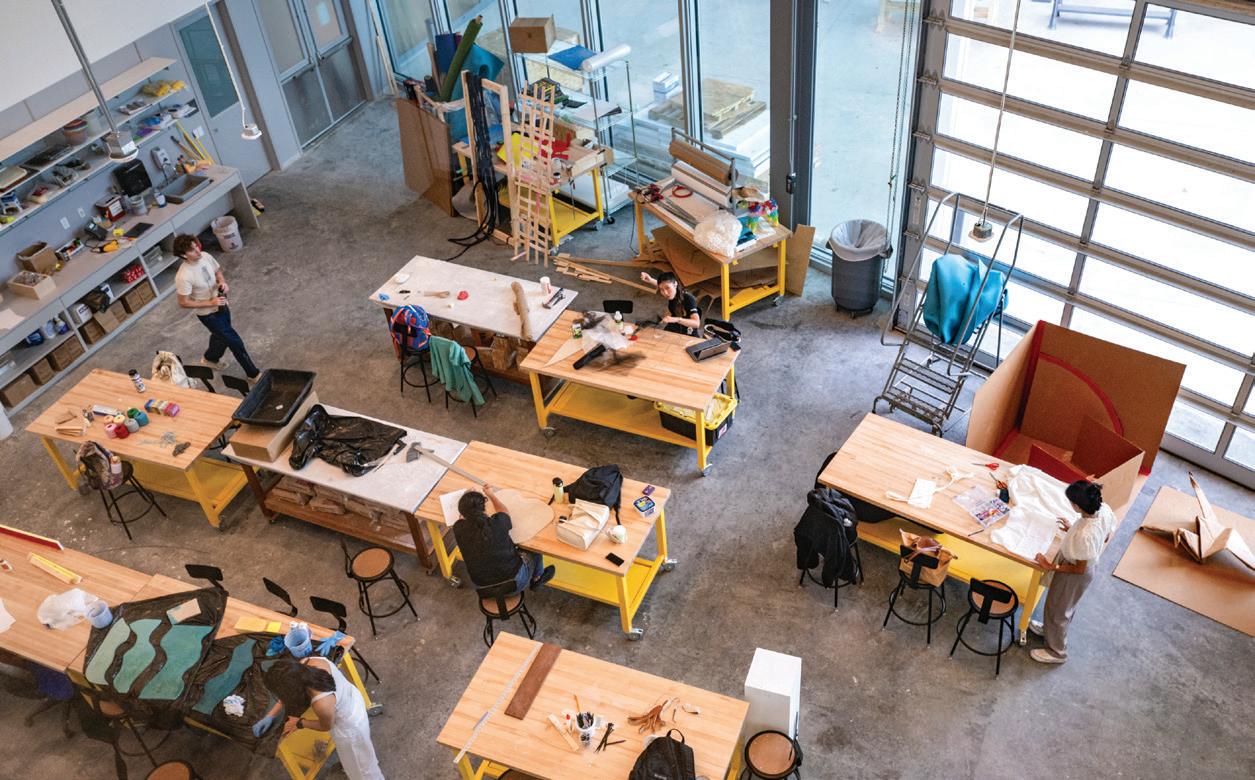
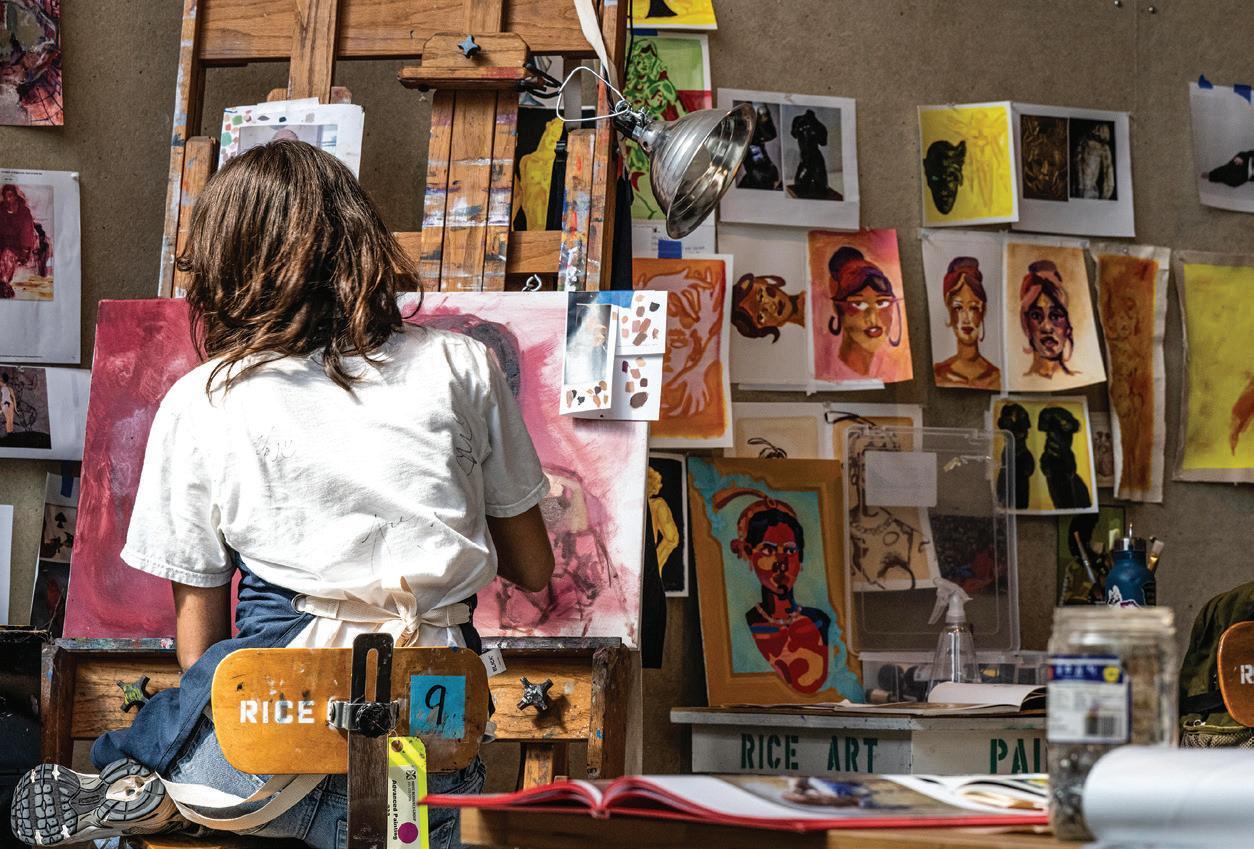
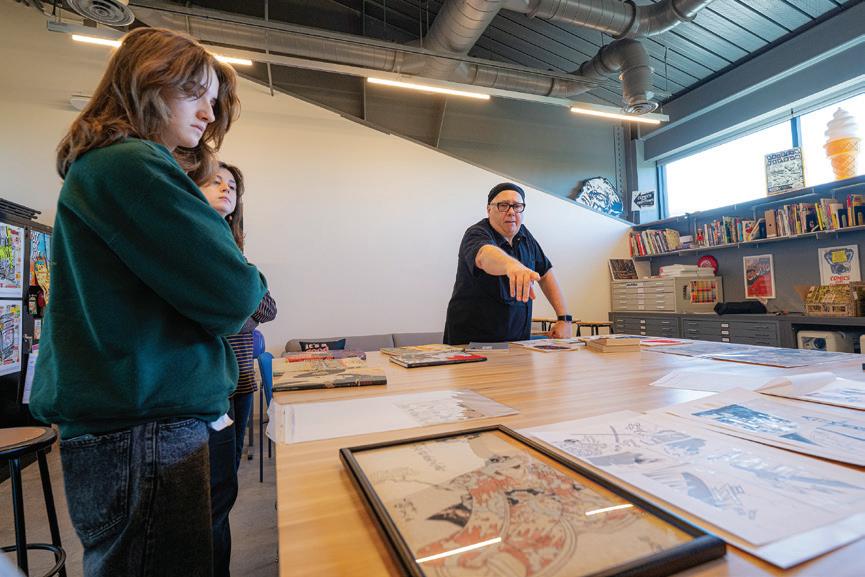
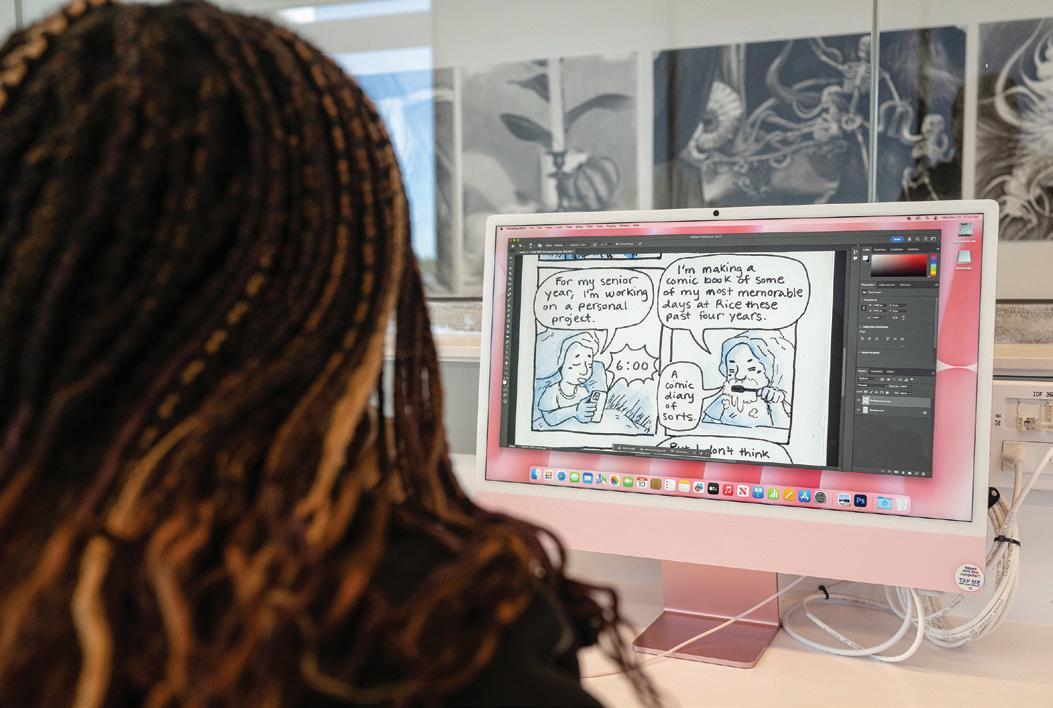
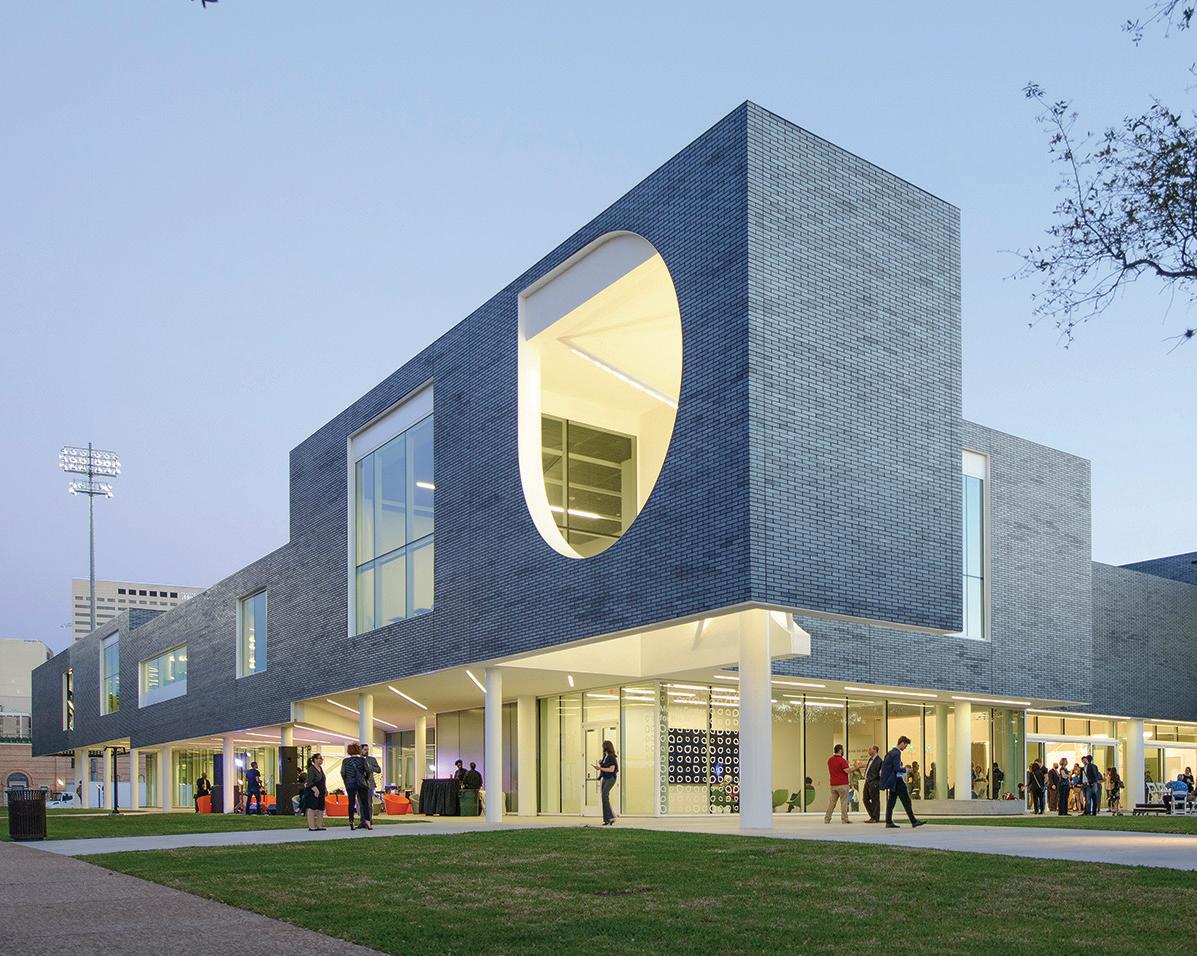
the new Susan and Fayez Sarofim Hall gleams at the edge of campus like an idea made visible. From the very elements of its design — this meeting of openness and structure — the new home for Rice’s Department of Art offers a metaphor for the university’s approach to arts education: prizing experimentation but grounding it in discipline; welcoming collaboration without blurring individuality. →
PHOTOS BY Jeff Fitlow
The opening of Sarofim Hall coincides with the renaming of the School of Humanities and Arts, announced last October.
For Dean Kathleen Canning, Sarofim Hall and the school’s new name are two parts of the same story: Rice embracing the arts as both discipline and engine of discovery. “When I first arrived, I used to say, ‘The a rts are at the heart of the humanities,’ but that felt vague,” she says. “Renaming it the School of Humanities and Arts acknowledges the arts’ power.”
“Symbolically, it’s huge,” agrees John Sparagana, chair of the Department of Art. “It acknowledges how the arts enrich the humanities and vice versa. Contemporary artists draw on philosophy, religious studies, creative writing and beyond. Dean Canning understood that synergy from the start.”
Architecture as Aspiration
Sarofim Hall’s story began not with a single design sketch but with a question: What kind of space does a modern art department need to flourish?
Shortly after arriving in 2018, Canning initiated an external review of the school, its programs and its facilities. With regard to the art department, the panel’s report was blunt in its clarity. “They said, essentially: ‘You have a treasure in a trash can,’” Canning recalls. “Incredible faculty and students, but awful facilities. They made Rice confront the question: Does it truly want the arts?”
For decades, Rice’s art program thrived on imagination and perseverance, though its identity was often in flux. It was just over two decades ago that the discipline split from the study of art history to become the Department of Visual and Dramatic Arts. Then, in 2024, the department morphed again, decoupling from theater to become, simply, the Department of Art. With its identity fully defined, all that the art program lacked was a space that matched its ambition. “Sewall Hall is historic, but the facilities just couldn’t support what we do,” Sparagana says.
SUSAN AND FAYEZ SAROFIM HALL
PHOTO BY JARED JONES
The Future Takes Shape
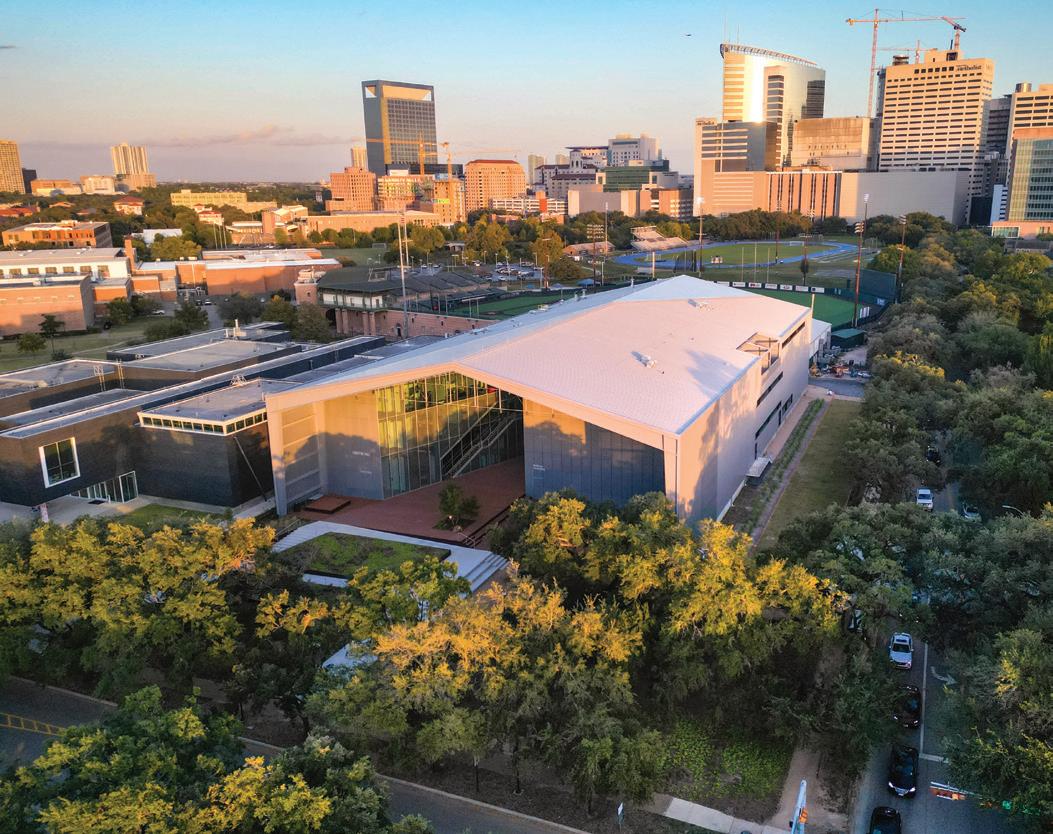
“When I was told in 2019 that there would be a new art building, I could hardly believe it,” Canning says. Sarofim Hall began as a $25 million building proposal, based on initial estimates of a 50,000-square-foot structure. However, as plans developed, the scale of both the building and the cost grew substantially. Committed to the vision of a structure that would be both a marquee building on campus, as well as a space that would meet all the long-term needs of the department, Rice eventually invested $76 million into Sarofim’s 94,000 square feet of glass and concrete precision.
An international design competition ultimately selected alumnus Charles Renfro ’87, ’89, partner at renowned firm Diller Scofidio + Renfro. “Charles Renfro’s design stood out: intimate, interdisciplinary, beautifully functional,” says Canning. “As a Rice alum who studied art and architecture here, he truly understood what was needed.”
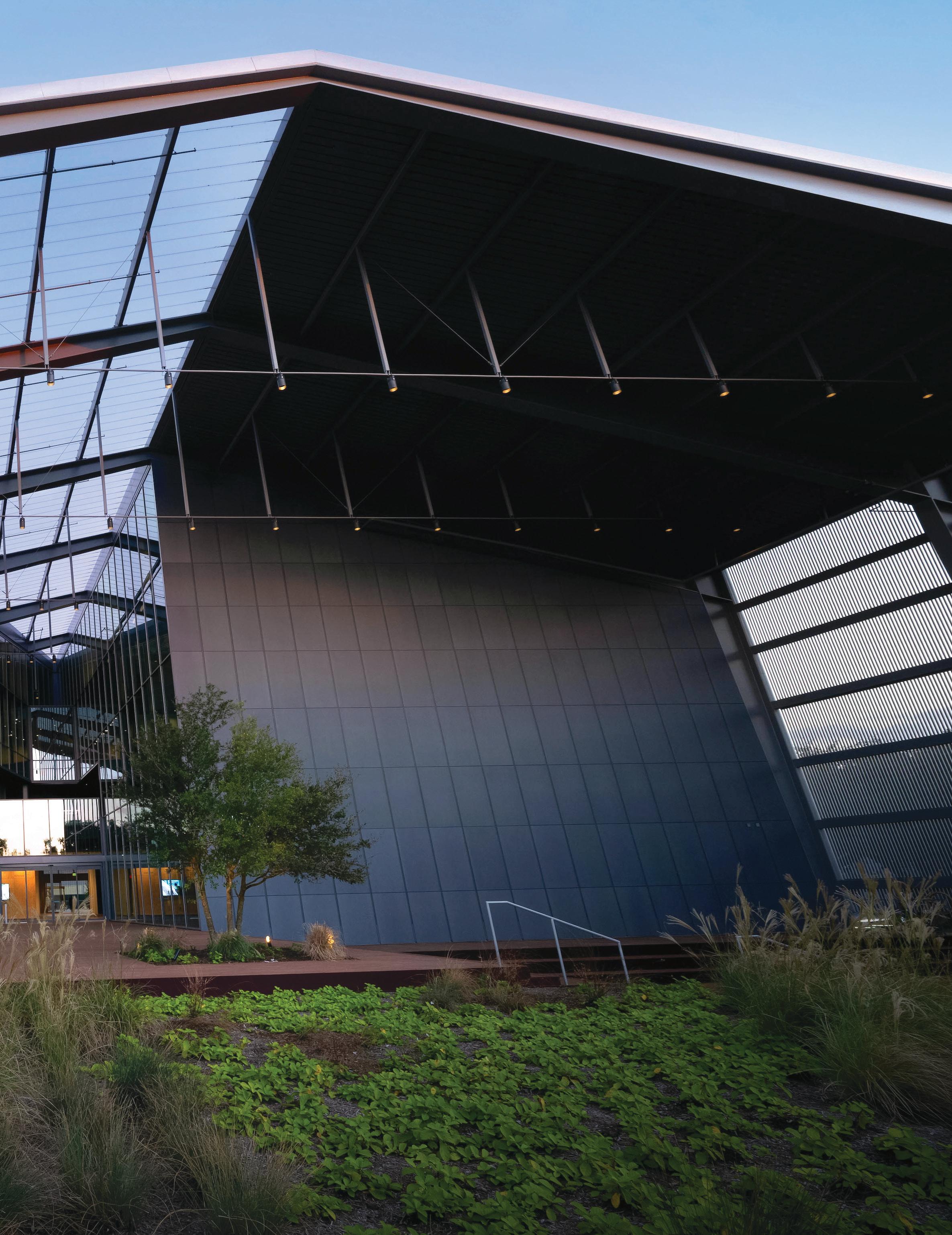
The building’s shed-like form, for example, echoes the Art Barn that previously occupied the same location and function, established by noted Houston art patrons John and Dominique de Menil in the 1960s. “It’s a nod to the Art Barn’s history while dramatically expanding its scale and capability,” notes Sparagana.
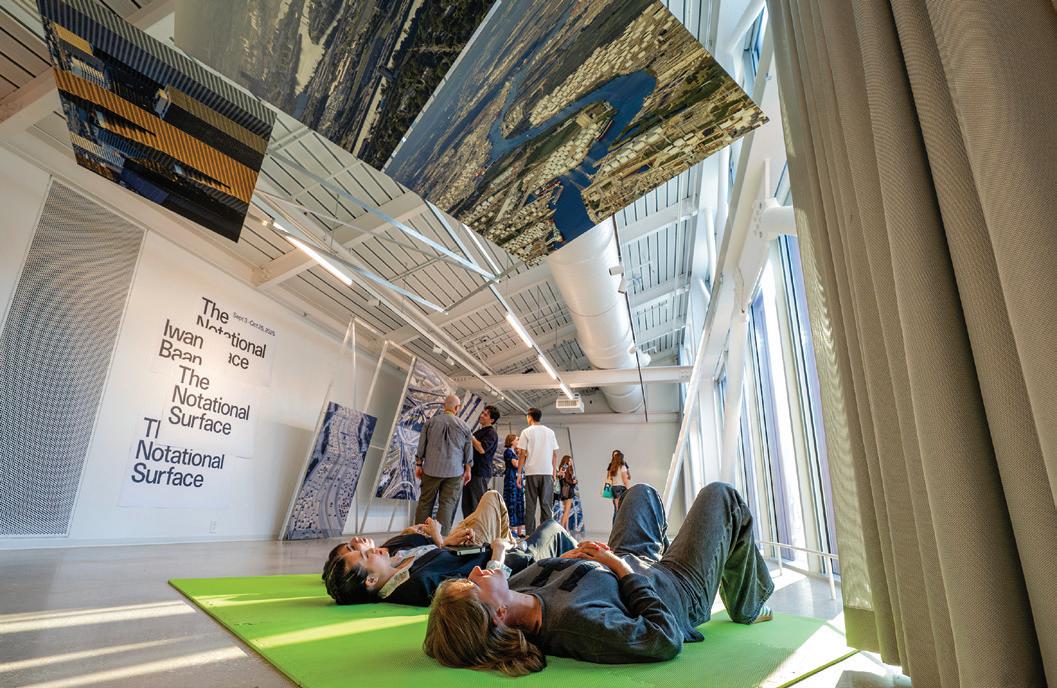
The building’s distinctive V-shape is equally intentional. One arm houses public spaces — a cinema, gallery space and performance areas — while the other consists primarily of studios and other workspaces. Where the two wings meet, there’s a central open space for informal collaboration and critiques that Renfro calls “the kiss.” Both beautiful and practical, the building’s striking form allows light to flow freely into glass-lined studios.
On the third floor, painting and drawing studios are connected via movable, barn-style doors designed to offer the department maximum flexibility — one giant studio or three separate ones. “Contemporary art today thrives on permeability — painting, sculpture, video and performance interacting with one another,” says Sparagana. “Sarofim was intentionally designed to encourage that.”
A Continuum of Creativity
What began as a building project has become something larger — a statement about the place of art in the life of a world-class research university. The light that fills Sarofim Hall is more than an architectural flourish. It’s a reminder that creativity, like sunlight, is a form of energy — one that illuminates everything it touches.
“Half the students in art [courses] are actually science or engineering majors,” Canning notes. “It’s our second-largest major after English. The demand is huge.”
She attributes that appeal to a generation that thinks visually. “Students today are deeply visual. They think in images, design and media in ways previous generations didn’t. Taking an art or photo course helps them understand visual culture, interpretation and representation — skills that matter in any field.”
Now, the program is expanding in scope as well as visibility. The art department has added new faculty and restructured its curriculum to reflect
Contemporary art today thrives on permeability — painting, sculpture, video and performance interacting with one another. Sarofim was intentionally designed to encourage that .
John Sparagana CHAIR OF THE DEPARTMENT OF ART
The Return of Rice Cinema
A NEW HOME, UPGRADED TECH AND THE SAME CINEPHILE SPIRIT POWER RICE CINEMA’S NEXT CHAPTER.
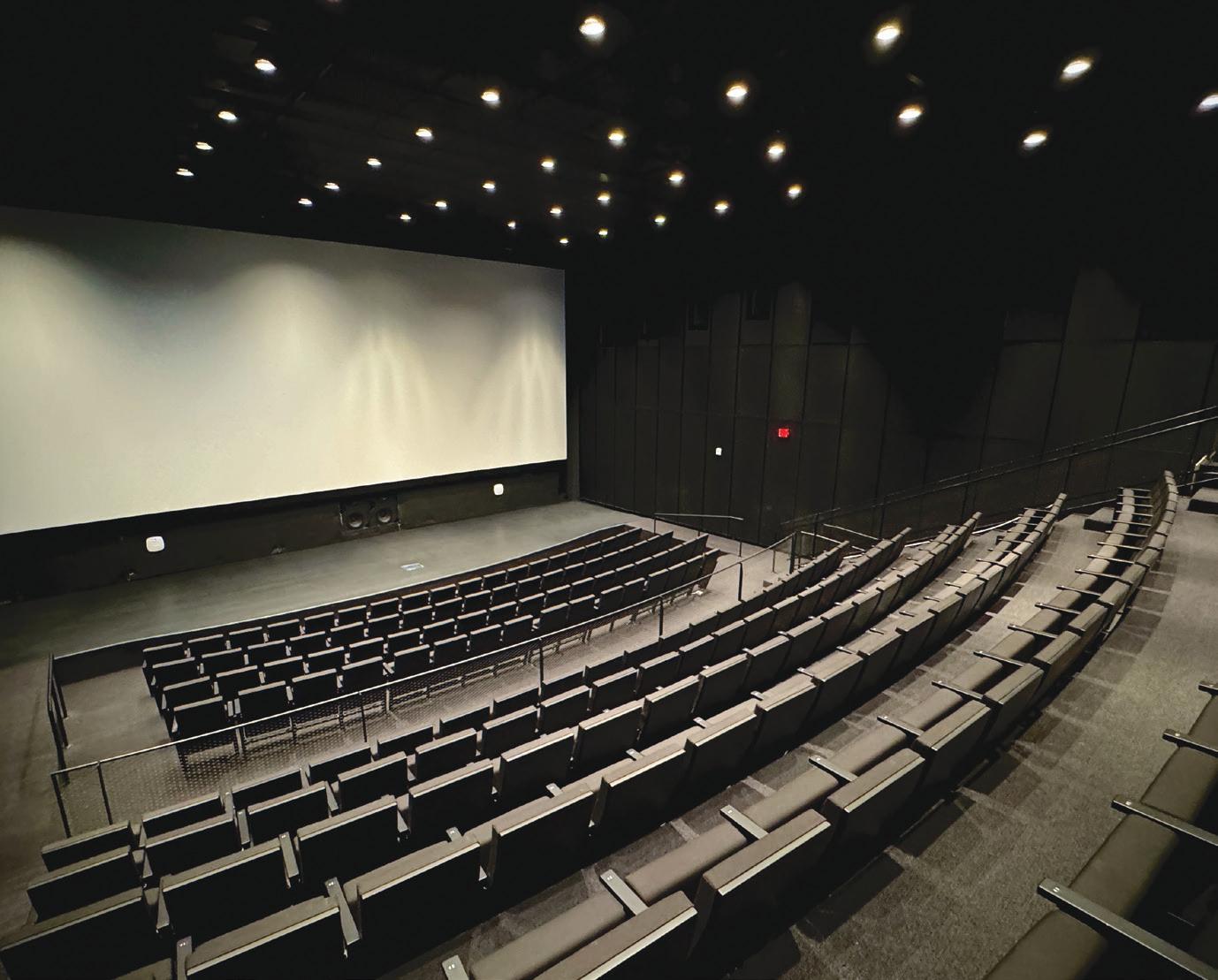
When Rice Cinema started as part of the Rice Media Center in 1970, philanthropist-founders John and Dominique de Menil envisioned the theater as far more than a place to watch films. They imagined a true cinematheque experience: a space where people from all walks of life could learn about, discuss and make films, creating a community among Houston cinephiles. Half a century later, the vision for Rice Cinema is being reimagined, with its new home inside Susan and Fayez Sarofim Hall bringing cutting-edge technology and a renewed sense of excitement.
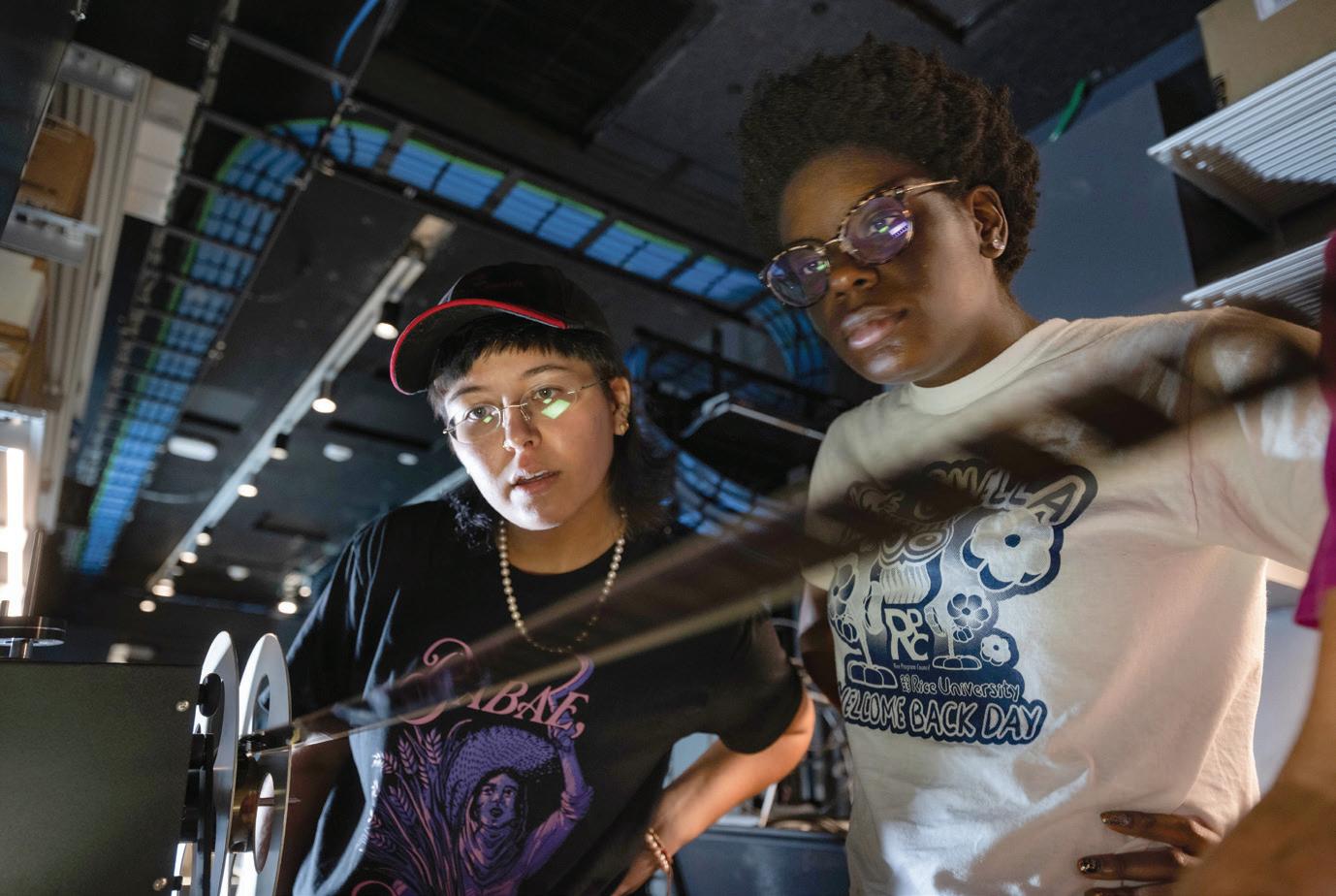
The new 216-seat Pitman Cinema Theatre mirrors the footprint of its predecessor but introduces technical upgrades that expand Rice Cinema’s programming possibilities. The projection booth houses 16 mm and 35 mm projectors alongside a contemporary digital cinema projector that can accommodate both standard and silent speed frame rates, as well as 3D films. A state-of-the-art Dolby Atmos audio system mirrors the visual upgrade, surrounding audiences with precise and layered sound.
SUSAN AND FAYEZ SAROFIM HALL
The projection booth doubles as a working lab, where students learn to operate the equipment. The integration with Rice’s film curriculum is a cornerstone of the program. “What makes the Department of Art at Rice so unique,” says events and program manager Maria Martinez, “is that we can offer these types of learning opportunities for the students while we’re also serving the broader Houston community and filmmakers.”
For upcoming screenings and events, visit art.rice.edu/ rice-cinema
Rice Cinema director Charles Dove says the new space honors a remarkable legacy. Over the decades, Rice Cinema has welcomed some of the most influential figures in film to campus, including Roberto Rossellini, Spike Lee, Jean-Luc Godard and Andy Warhol. Dove recalls that on Godard’s visit, his “La Chinoise” film reel was accidentally set on fire. “I’m sure if he were alive, he’d still be mad at us,” says Dove with a laugh. Warhol’s visit ended on a warmer note — the artist left thank you notes on car windshields and gifted a tree to the de Menils that still stands outside Sarofim Hall today.
While select screenings started in the fall, Rice Cinema’s full program returns this January with films every Friday and Saturday. Visitors can expect a mix of documentaries, international features, art house and experimental work — and, come finals week, perhaps a Hollywood blockbuster for good measure.
Dove describes Rice Cinema’s philosophy as an open invitation to connection and conversation, rather than a statement of ideology. “It’s not that we are on any political side,” he says. “It’s about education, culture, informing the community. … It’s like a bridge. We build bridges.”
—AUTUMN HORNE ’22
There’s a dynamism now that must be nurtured — strategically, thoughtfully. The arts aren’t going anywhere. They’re central to Rice’s identity now.
Kathleen Canning
DEAN OF THE SCHO OL OF HUMANITIES AND ARTS
a broader, more contemporary vision of artistic practice. “We’re retooling our curriculum so that graduates — whether they go into tech, grad school or other fields — leave with a sophisticated understanding of art practice. We’re aiming for impact and relevance, not just within art but in the world beyond it,” Sparagana says.
At a moment when many universities are scaling back their investment in the humanities, Sparagana calls Rice’s investment in the program enlightened. “There’s a part of the arts that’s very much about critical thinking. There’s a part of the arts that’s very much about consciousness — you know, what it is to be human in a very deep, expansive state. When I say it’s an enlightened decision by the university, I mean truly bringing this very necessary light to the world that we’re in.”
When Canning reflects on this moment, she doesn’t describe a revolution but a realization — a recognition that the visual arts are integral to Rice’s intellectual landscape. “The arts at Rice will continue to expand because of student demand, incredible faculty and institutional support,” she says. “There’s a dynamism now that must be nurtured — strategically, thoughtfully. The arts aren’t going anywhere. They’re central to Rice’s identity now.” — SARAH RUFCA NIELSEN
Kathleen Canning is the Andrew W. Mellon Professor of History and dean of the School of Humanities and Arts. John Sparagana is the Grace Christian Vietti Chair in Visual Arts and professor of art in the School of Humanities and Arts.
Charles Dove is professor in the practice of visual arts and film in the School of Humanities and Arts.
Sight and Sound
WITH NEW ART / NEW MUSIC, RICE’S MOODY CENTER AND THE SHEPHERD SCHOOL TURN VISUAL ART INTO A CATALYST FOR MUSICAL EXPERIMENTATION.
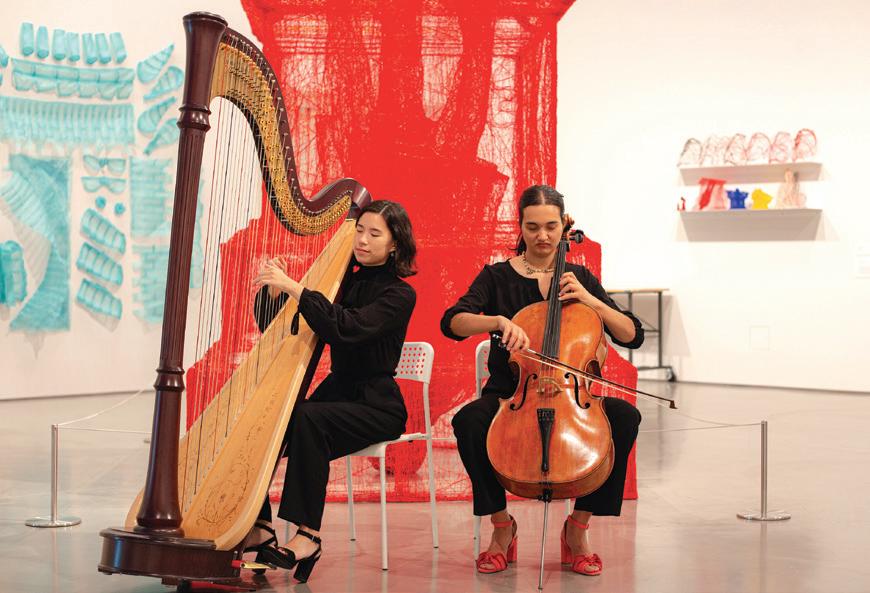
Each semester, a new kind of artistic conversation unfolds inside the Moody Center for the Arts. New Art / New Music, a project supported by the Moody Experience, pairs the center’s current exhibition with a program of original musical compositions by students from the Shepherd School of Music. Each student composer responds directly to the visual works on view, translating color, form and movement into sound.
The interdisciplinary project began 15 years ago as a platform for student composers and musicians to create and perform original works, and it’s been hosted and sponsored by the Moody since 2018. “New Art / New Music encapsulates the collaborative philosophy that defines Rice,” says Jaylin Vinson ’25, who formalized the concert series as a Shepherd School student. “For over a decade, it has invited a dialogue between the visual and sonic arts, inviting composers, performers and audiences to share in an experience that could only happen through this synergy.”
And the synergy doesn’t stop once the performance ends. A cello quartet, “Shimmer!,” written by Vinson for the New Art / New Music exhibition in fall 2021, has entertained audiences well beyond Rice. “It’s been professionally recorded by Rice University and performed over a dozen times at venues across the United States, including in New York, Virginia and
California,” says Vinson. “It remains my most frequently performed work to date, all sparked by the inspiration I found through this program and the Moody Center’s incredible environment.”
This year’s student organizer, Angela Ortiz ’26, affirms that the program offers a chance for meaningful artistic dialogue, as well as the novel experience of performing in a gallery space. “There is no set ‘stage,’ so audiences and performers are on the same plane, creating a much more unique and personal experience compared to a traditional concert setting.”
Each performance is free and open to the public, often drawing upwards of 100 students, faculty, alumni and members of Houston’s arts community. The most recent edition drew inspiration from “Bio Morphe,” an exhibition exploring the intersection of technology, biology and art. Student composers created new works that echoed the exhibition’s living, shape-shifting energy, from a solo work by Ethan Resnik ’26 performed on the mbira (also known as the African thumb piano) to a bassoon quartet composed by William Jae ’27.
The series underscores Rice’s collaborative spirit and its commitment to hands-on, interdisciplinary learning. For both performers and audiences, it’s a reminder that art and music belong to the same creative ecosystem, expanding ideas of how audiences can experience both. —
TRACEY RHOADES
Mixed Media
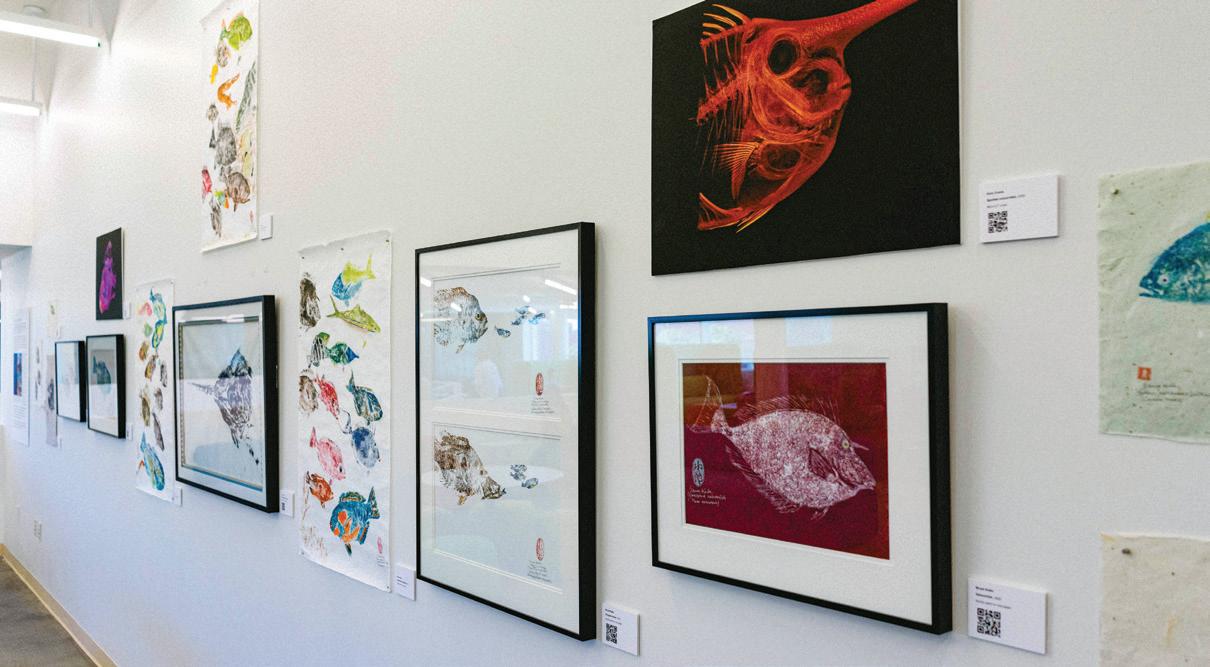
WITH HELP FROM THE MOODY CENTER AND THE ARTS INITIATIVES FUND, RICE FACULTY ARE EXPLORING A NEW CANVAS FOR SCHOLARSHIP AND COLLABORATION.
At first glance, the shimmering blues, golds and purples of “Colors of the Reef: Exploring the Diversity of Coral Reef Fishes” is a purely aesthetic wonder. But behind every print and image lies a story of discovery — one that blurs the boundaries between art and science.
The 2025 exhibition at the Moody Center for the Arts showcased work led by Kory Evans, assistant professor of biosciences, whose research examines how bony fish adapt, diversify and survive amid a rapidly changing climate.
“Coral reefs are among the most biodiverse ecosystems on the planet,” Evans says. “They’ve supported intricate webs of life for millions of years, and yet they’re some of the most vulnerable to warming oceans. Through this exhibit, we wanted to show both their beauty and their fragility.”
Evans’ project paired gyotaku, a traditional Japanese fish-printing technique, with high-tech micro-CT scans that map the skeletons
Architectural Acumen
INSIDE CANNADY HALL, A NEW PAIR OF GALLERIES INVITES VISITORS TO SEE THE WORLD THROUGH THE EYES OF ARCHITECTS — CONNECTING DESIGN, ART AND THE CHALLENGES OF OUR TIME.
Unique among the myriad exhibition spaces sprinkled across Rice’s campus, the Casbarian-Appel Gallery and the Hines Family Gallery inside William T. Cannady Hall provide dedicated spaces for the School of Architecture’s curatorial program, Exhibitions at Rice. Located on the first and second floors of the building, the galleries offer a double-height, naturally lit space to showcase a range of architecturally focused works, from drawings and images to design prototypes.
For upcoming exhibitions and events, visit arch.rice.edu/ events .
“Exhibitions at Rice engages the discipline of architecture as a cultural practice with a civic mandate, creating new discourses for both local and global audiences,” says Igor Marjanović, the William Ward Watkin Dean of the Rice School of Architecture. “Just as Houston is reflective of the major environmental and urban issues worldwide, our aim, too, is to work on a planetary scale, emphasizing the interconnectivity of architectural, urban and cultural issues worldwide.”
The inaugural exhibition, “The Sixth Sphere,” opened in October 2024, providing an in-depth look at how the built environ -
ment operates at a planetary scale and imagining the effects design could have on the environment. “Iwan Baan: The Notational Surface” followed this past fall, presenting photographs by the acclaimed Dutch photographer that capture Houston from both the ground and air, offering a layered view of the city’s infrastructure, environmental precarity and spatial complexity. The images are part of the Houston Archive Project, an ongoing effort to document the city’s rapid transformation and urbanization, launched by the School of Architecture in 2024 to create a wider platform for documenting Houston’s shifting urbanism. On view now through Feb. 6, 2026, “Art in Context: Art, Architecture and the Middle Landscape” brings together drawings and photographs documenting the development of artist Donald Judd’s “100 untitled works in mill aluminum” and the repurposing of former artillery sheds in Marfa, Texas, where he installed them. Alongside these are contemporary drawings and models by associate professor Troy Schaum and a series of 20 woodcut prints by Judd, on loan from the Judd Foundation. — TRACEY RHOADES
of reef fish in 3D. The result is a marriage of 19th-century artistry and 21st-century imaging — and a striking example of what happens when Rice faculty step outside their disciplinary comfort zones.
That kind of creative cross-pollination is exactly what the Arts Initiatives Fund and Moody Center for the Arts were designed to support. Through AIF grants, faculty across Rice are encouraged to weave artistic methods into research and teaching.
Those collaborations have taken some unexpected turns. In the French department, Julie Fette collaborated with a professional cartoonist to help students build visual storytelling skills while exploring French culture through the lens of political cartoons, while April DeConick’s religious studies seminar had students crafting masks inspired by spiritual symbolism.
“We see the Moody as a connector — a space where biologists might meet artists, or philosophers meet materials scientists, and dream up something new,” says Erin Rolf, associate director of the Moody Center. “When faculty outside the arts want to bring that creative element into their classes, we help them make it happen.”
When Evans was working with the Moody team to install the fish prints, it was suggested that he perhaps arrange more of the warm- and cool-colored prints together for a more harmonious display. “Well, these fish all feed at the same depth in the ocean, so they would be together,” he replied. And just like that, the logic of a coral reef trumped the logic of a gallery wall. Because at Rice, creativity isn’t confined to one discipline. It’s what happens when they all swim together. — SARAH
RUFCA NIELSEN
Julie Fette is associate professor of French studies and April DeConick is the Isla Carroll and Percy E. Turner Professor of Biblical Studies in the School of Humanities and Arts.
A Campus, Curated
RICE’S EXPANDING PUBLIC ART COLLECTION IS RESHAPING THE CAMPUS AND ILLUSTRATING THE BEAUTY OF ACADEMIC IDEAS.
At Rice , art doesn’t just beautify the campus — it infuses classrooms and quads alike with a deeper sense of personality and identity. Under the curation of Moody Center executive director Alison Weaver since 2018, a collection that began with Michael Heizer’s iconic “45°, 90°, 180°” has grown to nearly 100 artworks rooted in geometric abstraction, light and space (plus a few owls, of course).
To discover the rest of the collection, check out the Rice Public Art iPhone app at moody.rice.edu .
3
NATASHA BOWDOIN
“Power Flower,” 2021
MD Anderson Biological Laboratories
What distinguishes Rice’s approach is its commitment to site-specific art that reflects the university’s culture of scholarly inquiry. Whether it’s a signature work like James Turrell’s “Twilight Epiphany” Skyspace or a new commission shaped by student voices, these artworks transform everyday pathways into places of observation and ideas. We asked Weaver to highlight a few pieces created specifically to speak to their place on campus. —
1 SOL LEWITT
“Wall Drawing #1115,” 2004
Anderson-Clarke Center
One of the most innovative artists to emerge in the 1960s, Sol LeWitt was a leading practitioner of conceptual art, a movement that prioritizes the idea inherent in a work of art over its physical execution. Each of LeWitt’s wall drawings can be recreated according to a set of instructions provided by the artist — like an architectural drawing or musical score, it is uniquely interpreted each time it is installed. “Sited in the Glasscock School of Continuing Studies, it seems fitting that an artistic celebration of an idea’s enduring power should enliven a space dedicated to lifelong learning,” says Weaver.
SARAH RUFCA NIELSEN
2
ODILI DONALD
ODITA
“Meeting Place / Painting with Changing Parts,” 2022
Alice Pratt Brown Hall
Odita’s vibrant wall painting animates the Shepherd School of Music’s central corridor with rhythmic color and geometric movement. Blending influences from Western abstraction and African visual traditions, the work resonates with the building’s musical purpose.
“The visual conversation this work creates with the neighboring Skyspace is remarkable,” Weaver says.
“You can see the influence of Turrell’s engagement with color and light, while feeling the rhythm of forms inspired by contemporary classical music.”
Bowdoin’s expansive, nature-inspired mural blooms across the biology building, reflecting the study of life in all its complexity. Mixing botanical forms with patterns reminiscent of shells, scales and wings, the work mirrors the building’s investigations into classification, adaptation and the structures that shape living systems. The first piece in the collection created by a Rice faculty artist, the work transforms the space into a vivid ecosystem, reminding students and researchers that the natural world resists easy boundaries — and rewards close observation.
4
TOMÁS SARACENO “Crux Australis 68.00,” 2023 Ralph S. O’Connor Building for Engineering and Science
Suspended above the O’Connor building’s atrium, Saraceno’s intricate, cloudlike structure mirrors the building’s collaborative research culture. Its reflective, geodesic forms echo the interconnected thinking that drives engineering and scientific discovery at Rice. As viewers move beneath the shifting network of fibers, the piece becomes a visual metaphor for shared inquiry. “You can immediately sense the artist’s appreciation for science and engineering as areas of academic study and as a lens through which we can appreciate the structures of the natural world,” notes Weaver.
5
RAFAEL LOZANO-HEMMER
“Climate Parliament,” 2024
Ralph S. O’Connor Building for Engineering and Science
In this immersive installation, 481 hybrid speakerlights suspended from the ceiling of an enclosed exterior passageway respond to any movement below, creating a chorus of voices — including Rice researchers and students — discussing climate science. It’s a striking fit for a building devoted to interdisciplinary research, turning the pathway into a dynamic forum for environmental inquiry. “This is one of our most technologically ambitious public art works,” says Weaver. “When you hear the voices overhead, you’re inspired to stop moving and really listen, which makes this work conceptually powerful while also being visually and sonically dazzling.”
PHOTOS
SAROFIM HALL MOODY CENTER FOR THE ARTS
LA NIER
6
MICHAEL HEIZER
“45°, 90°, 180°,” 1984 Engineering Quadrangle
8
LEO VILLAREAL
“Radiant Pathway,” 2010 BioScience Research Collaborative
Heizer’s granite triptych remains a touchstone of public art at Rice and a natural fit for the Engineering Quad. Each monolith, positioned to mark fundamental geometric angles, embodies the precision, problem-solving and structural thinking at the core of engineering education. Installed with exceptional technical difficulty, the work encourages students to consider scale, balance, and the relationship between form and function. Decades after its arrival, the piece still anchors the campus as both an artistic landmark and a reminder of the discipline’s foundations.
7
PAE WHITE “Triple Virgo,” 2021 McNair Hall
Floating above the main rotunda in the home of Rice Business, White’s constellation of colorful discs responds to shifting light and movement, forming an ever-changing sphere. Its global, forward-looking energy reflects the business school’s international reach and its emphasis on navigating complex, interconnected systems. As visitors walk beneath the suspended forms, the piece suggests the expansive thinking — and openness to possibility — that drives entrepreneurial and strategic learning at Rice.
Villareal’s LED installation radiates from the BRC ceiling like a coded starburst, echoing the building’s focus on discovery driven by data, pattern and experimentation. The work’s custom algorithms and never-repeating light sequences reference mathematical models and biological systems, reminding viewers how research evolves through iteration and curiosity. Inspired by mathematician John Conway’s studies, the piece connects computational logic with artistic expression — an illuminating nod to the interdisciplinary science unfolding just steps away.
MAIN ST
CA MBRIDGE ST
L ABOR ATORY ROAD (LOO P ROAD)
TRAVIS DRYDEN
RICE’S CAMPUS HAS NEVER BEEN STATIC — it has always expanded and evolved alongside the university’s ambitions. Announced in November, the Gateway Project represents the next step in that evolution, reimagining the west side of campus. Designed to connect Rice with Rice Village more seamlessly and to modernize Rice Stadium, the project is a key part of the university’s long-term goals for student life, athletics, research and community engagement.
A NEW GATEWAY TO CAMPUS
A central component of the Gateway Project is a new pedestrianfocused corridor that will extend Amherst Avenue toward campus, creating a clear, welcoming connection between Rice Village and the university. For generations of Owls, the Village has served as an informal extension of campus life — a place for meals after late lab sessions, a scenic study break or a quick errand between classes. The new corridor formalizes that relationship, transforming an underused edge of campus into a shaded, tree-lined path designed for gathering, relaxing and moving easily between the two areas.
The corridor will incorporate green space, seating and space for community programming, making it not just a route but a destination. “By connecting our campus directly to the Village, we are strengthening our ties to Houston while enriching the student experience,” said Rice President Reginald DesRoches. “We are advancing our growth and reinforcing Rice’s commitment to innovation and community.”
Surrounding mixed-use development —
featuring dining, retail and housing — will bring renewed energy to the district, creating a lively and intuitive “front door” to campus that reflects Rice’s distinctive scale and character.
REIMAGINING A RICE ICON
Just steps from the new corridor, Rice Stadium will undergo a transformation that honors its storied past while preparing it for future generations. The 75-yearold venue has long been a touchstone of the Rice experience, from President John F. Kennedy’s “We choose to go to the moon” address to countless game days shared by alumni, students and fans.
The venue will be transformed into a “stadium in a park” — a modern, community-focused complex that enhances the fan experience, prioritizes sustainability, and offers greater flexibility for hosting a wide range of sports and events.
“This signals a new era for Rice Athletics,” said Tommy McClelland, vice president and director of athletics. “The enhanced Rice Stadium will offer a bestin-class experience for our student-athletes, fans and alumni while positioning Rice to compete at the highest levels athletically and academically. It will be a place of pride for the university and for Houston.”
The west side of the stadium will be dramatically overhauled, with a new three-level west concourse building that will house premium club seating, private suites, and new spaces for media and game operations. A shade canopy will extend from the top of the concourse over a portion of the lower bowl and the suite-level outdoor patio, creating a comfortable space for private events, recruiting, alumni gatherings and more. Additionally, a new 360-degree concourse will allow fans to move freely around the stadium, two new restroom and concession facilities will be added, and a new kitchen commissary will enhance the fan experience by providing a greater range of high-quality food options.
RICE STADIUM THROUGH THE YEARS
1950
A Modern Stadium, Built in Record Time
Rice Stadium opens after just nine months of construction, with 70,000 seats and an innovative poured-in-place concrete design, becoming one of the nation’s most modern college football venues.
1962
‘We Choose to Go to the Moon’ President John F. Kennedy delivers his historic Moon Speech at Rice Stadium, cementing the venue’s place in national history and linking Rice to the future of space exploration.
1974
Super Bowl VIII
Rice Stadium hosts Super Bowl VIII, the only Super Bowl ever played at a university facility. The Miami Dolphins beat the Minnesota Vikings 24-7.
1988 Monsters of Rock Tour
Headliners Van Halen, Metallica, Scorpions and Dokken played one of the stadium’s loudest and largest rock shows ever, a defining moment of the heavy metal era.
1994
An Upset for the Ages Rice defeats the University of Texas 19-17, ending a 28-year drought and becoming an enduring moment in Owl Athletics lore.
1999
George Strait Country Music Festival Strait, a Texas music icon, helped launch the modern era of country music in Houston with future megastars Tim McGraw, The Chicks, Kenny Chesney, Jo Dee Messina and Asleep at the Wheel.
202 5 – 28
A New Era
The Gateway Project launches a comprehensive renovation, preparing Rice Stadium for the next generation of Owls.
— SARAH RUFCA NIELSEN
A GREENER, MORE CONNECTED WEST SIDE
Rice Village has always been tightly woven into the fabric of the university. Today, Rice Real Estate Co. — the largest landowner in the Village — continues to shape its vitality. With more than 60 merchants, including national brands, local restaurants and independent boutiques, the Village remains one of Houston’s most beloved destinations. The Gateway Project reinforces this relationship by prioritizing pedestrian activity and outdoor gathering, creating a district that engages students, alumni and Houstonians alike.
“This project gives us a unique opportunity to open the western edge of campus and create a more welcoming gateway between Rice and the city,” said Ken Jett, president of Rice Real Estate Co. and vice president for facilities and capital planning.
The west side of campus — long a quieter, less-traveled edge — will be transformed into a more cohesive district. Older structures will make way for a redesigned greenway featuring native landscaping, permeable surfaces and natural stormwater elements. The new landscape will make it easier to travel from campus to the Village on foot or bike, while also providing quiet areas for reflection and outdoor study.
“The Gateway Project brings together long-range planning, academic mission and sustainability in a way that aligns with Rice’s future,” said Kelly Fox, executive vice president for operations, finance and support. “It is a deliberate effort to remove the boundary between the university and Rice Village in ways that are walkable, livable and welcoming.”
Construction on the stadium and gateway components will continue through 2028, marking a significant next chapter in Rice’s long tradition of purposeful campus development. When complete, the west side of campus will offer a renewed sense of openness and possibility — an environment that supports student life, enhances Rice’s athletics identity and strengthens the university’s connection to the Houston community.
“This is a generational investment in the growth and vitality of Rice University,” said Robert T. Ladd, chairman of the Rice Board of Trustees. “By physically linking our university to one of Houston’s most dynamic neighborhoods and modernizing a cornerstone of our athletics district, we are honoring Rice’s legacy while paving the way for future growth, connectivity and impact.”
Read more at rice.edu/gateway
THE
GROWING THEIR SOCIAL MEDIA AUDIENCE ONE VIRAL VIDEO AT A TIME, THESE RICE STUDENTS AND ALUMNI ARE REDEFINING CONNECTION.
BY DEVERLY PÉREZ
The impulse to connect, share and perform is a human constant, but the tools are ever-changing. Just as students once wrote ’zines or started blogs, a new generation of Owls is building community and forging careers in the global town squares of Instagram, TikTok, YouTube and other social media platforms. In transforming their interests into pages that educate, entertain and empower, they are part of the fast-rising creator economy, valued in the ballpark of $190 billion to $250 billion globally. They are demystifying college admissions, championing sustainable fashion and building Pokémon empires, all while carrying the Rice spirit of intellectual curiosity and community into the digital age.
The Pokémon Pro
“My first three years at Rice, it was like, okay, the degree is my job, and YouTube is my hobby. And then, my senior year, they flipped.”
passion for Pokémon, the wildly popular cartoon and game franchise in which players collect, train, battle and trade fictional creatures.
What was the initial spark that inspired you to start creating content about Pokémon specifically? I actually made my YouTube channel [in June 2009], four years before I started making Pokémon videos. The pivot to Pokémon happened the summer before I came to Rice. I was watching other creators and saw one listing his top 10 favorite Pokémon, and I thought, “I want to be funny while I talk about my top 10 favorite Pokémon.” I made a video, “How Old Is Ash Ketchum?,” in 2013 and it slowly built momentum. In December of my freshman year, it became my first video to pass 1 million views. From that point on, I was like, “This should be my main focus.” I was better at it, and I enjoyed it more.
What was the turning point when you decided to make this a career?
At the age of 14, Michael Groth ’17 (Baker) launched his YouTube channel, MandJTV, to make comedy sketches with his younger brother. The hobby followed him to Rice, where his channel soon went viral.
Today, he has expanded that single channel into a trio of successful YouTube channels — MandJTV, MandJTV Plays and MandJTV Extra — which have a combined 4 million subscribers and are built on a lifelong
My first three years at Rice, it was like, okay, the degree is my job, and YouTube is my hobby. And then, my senior year, they flipped. The summer after my junior year, [the launch of the interactive game] Pokémon Go created a “rising tide lifts all ships” effect — my old “How Old Is Ash Ketchum?” video got triple the views
PHOTO BY ANNIE RAY
MICHAEL GROTH ’17
in one day in 2016 than on its best day in 2013. I [was] working an engineering internship I did not like ... and from YouTube, I was making more money than an engineer’s starting salary. My parents were very scared, [but] I told my mom, the difference between [other people who are chasing their dreams] and me is that I’ve already made it. I decided to finish my degree and then went full time with YouTube immediately.
How did your time at Rice contribute to your path? The best thing Rice gave me was community. The residential college system was the biggest selling point for me because it guarantees you a community. I’m still very good friends with a lot of people who I may not have become friends with if not for how Rice is designed. The community that I forged there has been incredibly valuable, not only for my mental health, but also for being able to keep doing a sometimes isolating job for a very long time.
Do you consider yourself an influencer or a content creator, and why? My girlfriend was telling me a story and said, “Yeah, I told them that my boyfriend does social media.” And I went, “What? Social media? How dare you! I am an artist!” I personally prefer content creator. But even more specifically, I just prefer the term creator. … I got into YouTube because I wanted to be creative. The influencing is a side effect.
If you had to assign a Pokémon type to your residential college, Baker, what would they be and why? This is really easy. Baker is clearly a fire type. It’s red. It’s got the “Hell, yeah.” It’s got the hell car with flames all over it — the devil’s kind of the mascot. Maybe you could argue it’d be a fire/dark type, but it’s fun there, so I think Baker is just pure fire.
The Open Book
PRIYA ARMOUR ’26
priarmour priarmour
Priya Armour ’26 (Sid Rich) began creating content to share her life at Rice and quickly built a community around her journey. Having just wrapped up her final fall semester studying abroad in London, she continues to document her experience as a pre-med student for her 340,000 TikTok followers.
What inspired you to first hit ‘post’ and start sharing your life online? I was thinking about my journey to college. Moving from a small town, I was really scared of what Rice would be like. I turned to social media, but there were very few resources online that were accurate about what the university was like. I thought about what I wish I had known and what things I have come to love about Rice and decided to share with the internet.
How do you navigate setting boundaries between your online persona and your offline life? I take time for myself whenever I need it.
My content is not about numbers; I’m okay with losing followers if it means protecting my mental health. I’m not afraid to tell people that life doesn’t always go your way, and I think that’s allowed me to stay levelheaded online.
How has your time at Rice contributed to your path?
The community at Rice has taught me it’s okay to ask for help, to suffer setbacks and not to be perfect. This is at the core of my content, and I don’t think I would be this open if it had not been for my friends and mentors at Rice.
What’s been the biggest surprise from your growing platform? Every year when freshmen arrive on campus, I meet so many new students who have seen my content. Many of them tell me my videos are the reason they applied or even committed to Rice. Knowing I played that big of a role in their lives and then getting to meet them and connect has definitely been the coolest thing about making content.
The College Guru
MELODY DAO ’26
Melody Dao ’26 (Will Rice) has become a trusted online bestie for her 100,000 followers looking for advice on the college application process. From her own experience earning a full ride to Rice, she offers free, practical advice, building a supportive community that has helped students gain admission to top universities nationwide.
What inspired you to first hit ‘post’ and start sharing your content online? What first inspired me was honestly, curiosity. During quarantine I realized that social media is such a powerful, free way to not only share my own story but also give others a platform. I had learned so much from creators online and wanted to be that kind of resource for someone else.
What was missing in the advice you found when you were going through the college application process? When I was applying to college, I noticed a huge gap in advice that was both trustworthy and simple. A lot of what I saw online was either fear-mongering for clicks or overly complicated, so I wanted
The Cultural Ambassador
SISSI STAHLECKER ’29
Freshman Sissi Stahlecker ’29 (Wiess) from Beijing has carved out a unique niche as a cultural translator. With over 10,000 followers on RedNote, a Chinese social media and e-commerce platform that combines features of Instagram and Pinterest, she provides a reallife look at navigating college in the U.S. to her global audience through her videos.
What inspired you to start sharing your college journey online? I started making content on RedNote in high school to record memories and share my experiences. I noticed there weren’t many vlogs that gave a real sense of student life, so I decided to open a YouTube account to share my college experience with prospective
students, starting with videos like my college acceptance reaction, college move-in and O-Week.
What has been the most rewarding part of guiding other students through your content? I genuinely take pleasure in editing my videos, posting them online and seeing the positive feedback from the internet community. Whether a video gets views or not, it feels good to know that prospective students will have resources
PHOTO BY JEFF FITLOW
to share what I’d learned in a clear, supportive way. My goal became to make that information free and accessible — no gatekeeping.
How has your time at Rice contributed to your path?
As a business major minoring in data science and entrepreneurship, I naturally love systems and structure but also moving at a fast pace. That shows up in my content — spreadsheets, templates and step-by-step guides — because I want to make college application processes feel less overwhelming and more actionable.
Do you consider yourself an influencer or a content creator, and why? I think the term influencer has gotten a bit of a negative connotation recently, even though I still see it as a powerful word. Everyone has influence in some way — it’s about the ability to shift perspectives and inspire action. To me, an influencer is someone whose opinions people genuinely listen to, while a content creator focuses on the content itself, making videos that move people. I am a content creator and I also believe my work is influential. I don’t really care about the labels. What matters is that I’m creating something meaningful that helps students grow.
to get a better sense of life at Rice. Also, an extra bonus will always be the sponsorships and pocket money I earn through the videos.
Do you consider yourself an influencer or a content creator, and why? I consider myself both. To me, the difference between the two labels lies in intention and impact. A content creator focuses on producing and sharing ideas, stories or visuals; an influencer goes a step further by using that content to spark change, whether it’s shifting someone’s mindset or boosting their confidence.
The Trendsetter
VICTORIA ROMAN ’27
A viral sensation by the age of 16, Victoria Roman ’27 (Duncan) transformed a hit video on TikTok into a deep understanding of digital audience engagement, growing her accounts across TikTok and Instagram to almost 200,000 total followers.
What inspired you to first hit ‘post’ and start sharing your life online?
In my sophomore year of high school, I posted a silly 7-second video to a trending audio, and it blew up. I was just starting to discover my love for marketing and I thought, “I can definitely do this again.” By the time I had 100,000 followers on TikTok, I knew it was time to conquer Instagram — perhaps I could tap into my own life to drive longer forms of content? As soon as I did that, not only did my numbers skyrocket, but I enjoyed creating content that much more.
How do you strike a balance between posting about college life and posting about general lifestyle interests? I try to align my
content with the relatability of the college experience, more specifically, the struggles. We can all find comfort in our own blunders. However, lifestyle and fashion content make up most of my rotation because I have more to draw from. I’m extremely passionate about my short hair and creating my style out of vintage clothing.
How has your time at Rice contributed to your path?
[My] classes taught me analytical approaches to creative problem solving, which I use in everything I create. Even classes like improvisation taught me how to be more confident in front of a camera, project my speech, and improve my body language and the gestures I use.
What has been the biggest surprise about being a content creator? Seeing my videos get recognized by celebrities. It boggles my mind that SZA has liked two of my reels. I joke around to my friends that we’re besties.
The Sustainable Stylist
ALLY PURUGGANAN ’23
For Ally Purugganan ’23, being in front of the camera feels natural. She’s been making videos since she was a child, but at Rice, the Brownie-turned-Wiessman transformed her love for fashion into a full-time career on YouTube as a content creator focusing on sustainable fashion with almost 1 million subscribers.
When did your content start gaining real traction? I made a “Thrift with me at 7am” video where I started by getting up at 5 a.m. I mentioned in it that I had an
exam later that day but was still going to thrift before. I think that was a great hook. That first TikTok went viral in December 2022 … but when TikTok was getting banned at public universities, I decided to move to YouTube to protect my audience — and because you can actually make money there. I posted my first “Thrift with me at 7am” on YouTube in February 2023, and that video also went relatively viral.
How did your time at Rice contribute to your path? Mostly, it’s the skills of determination
“I got really deep into sustainability, and the immediate question was, ‘If I love fashion, how can I do it in a way that doesn’t harm the earth?’”
and being hard-working. Having to balance being a Rice student with difficult classes and multiple extracurriculars taught me a lot. I do so many different jobs — filming, strategy, co-editing, working with brands. As a Rice student, I definitely learned how to push through.
Was focusing on sustainable fashion a conscious choice from the beginning? My whole life I’ve loved fashion; I was the girl carrying 20 bags out of the Galleria. But in 2020, I saw infographics about how bad fast fashion is. I got really deep into sustainability, and the immediate question was, “If I love fashion, how can I do it in a way that doesn’t harm the earth?” So I got into thrifting. It’s great for a lot of reasons, but for me, the biggest is the sustainability aspect.
Do you consider yourself an influencer or a content creator, and why? I would never call myself an influencer. I call myself a YouTuber, primarily, since it is my biggest platform. I see a lot of people criticizing influencers as a monolith, and I don’t like people thinking I exist within that. The content I make is very creative; it’s putting out something in the world that not a lot of people are doing, and it’s inspiring young women.
allyduhrey
JOURNALISM
Not Mincing Words
As the Houston Chronicle’s opinion editor, Evan Mintz courts political debate online with keen insights, a sharp wit and plenty of hometown pride.
BY BEN BAKER-KATZ ’23
PHOTOS BY JEFF FITLOW
FOLLOW HOUSTON news on X, Instagram or TikTok and you’ll eventually see Evan Mintz ’08, expounding on everything from immigration to the Astros. Since his Rice days courting controversy on the Backpage of the Thresher, Mintz has become omnipresent in Houston-centric political conversations, with a wonkish knack for policy details, a lawyer’s flair for dramatic framing and a sharp wit he’s unafraid to aim at those in power. Being chronically online is part of his job as the Houston Chronicle’s editor for opinion and community engagement, but he sees his role as much more than hot takes.
“Newspapers are critically important for a functioning democracy,” he says. “Research shows that in communities without newspapers, cities will spend money less rigorously and they will be less circumspect about what they do. … You need that outside check on what’s going on in government, and newspapers provide that.”
Whether he’s penning op-eds, interviewing political candidates or filming videos for social media in the Chronicle’s parking lot, Mintz says the challenge is to keep the conversation focused on the issues instead of getting swept up in political polarization.
“If you try to shove everything into a red versus blue binary, it’s not going to fit with the city,” Mintz says. “You’re also going to betray a lot of what has made Houston successful, and you’re not going to really understand what’s going on.”
Mintz wants the Chronicle’s opinion columnists to embrace their ability to shape the debate as it unfolds, a skill he learned as the director of communications at Arnold Ventures, a Houstonbased, policy-focused nonprofit.
“My time at Arnold Ventures gave me a sense for how policy change happens. I got a real sense for how to identify the people with their hands on the levers of power and how to be successful in moving the policy needle,” he says. “One of the goals of an opinion section is to change things, so we need to weigh in
and shape the debate while it’s actually moving forward.”
For Mintz, that means being an advocate for one of the things that has set Houston apart — embracing growth. “Houston has been successful because we have embraced growth, and we have embraced diversity. I want to use the opinion section to remind people [of that],” he says.
When he’s not working, Mintz enjoys spending time with his wife, Melissa, a psychologist; their two children; and his rooftop garden.
“I love to garden because it gets me off the internet,” he says. “It feels natural to foster stuff and watch it grow and thrive and flourish.”
To Mintz, part of the fun of gardening is finding things that grow well here, from traditional Indian vegetables to Caribbean snake beans, as well as
figuring out how to adjust growing seasons to account for Houston’s subtropical climate. Most gardening guides would have you believe that late summer is the ideal time to harvest tomatoes, for example, but those guides aren’t written for a climate as hot and humid as Houston. (Mintz would want you to know that the ideal time for tomatoes here is May, and maybe again in September or October.)
According to Mintz, gardening in Houston is the perfect metaphor for the city itself.
“Houston doesn’t fit with a lot of the expectations in other parts of the country about how a city is supposed to work and function, but we’re a good place for a whole lot of people from around the world,” he says. “If you can endure the summers, you’re part of us. You belong here.”
Keeping Up With Classmates
Submit news and updates to your class recorder listed below or owlmanac@rice.edu.
BACK
Guess Who?
1953
Class Recorder: Peter Shannon 972-239-3227 newpeterb@gmail.com
Class recorder Pete Shannon (BA) writes:
No news for Class of 1953, so here’s my submission for some more ways to tell you’re getting really, really old:
What do you mean it’s on empty? I just filled it up last month. Anybody seen my teeth?
A magical night at Brown College’s Xanadu, 1990! Do you recognize these four partygoers? Roller skates not shown. Turn to Page 66!
No classnotes for your year?
Become a class recorder and keep classmates informed. To volunteer, email owlmanac@rice.edu.
Quit honking please. My credit card’s in here somewhere.
Yes ma’am. It hurts there, too.
I liked Johnny Carson better anyway.
Ok. Now where’s that elevator button?
They took away my cane and gave me a walker.
1957
Class Recorders: Anne Westerfield Brown brownaw57@gmail.com
LaNelle Ueckert Elston elstonl@att.net
Shirley Dittert Grunert sdgrunert@sbcglobal.net
Class recorder Shirley Dittert Grunert (BA) writes: Rev. John Will (BA; BS, 1958) thanked LaNelle for her words about John “Phil” Shannon (BA), recalling their time at Southland Elementary and San Jacinto High in Houston. He remembered Phil playing piano at their 50th reunion and for patients at MD Anderson. John and his wife, Han, live in Fort Worth’s Stevenson
A Half-Century on the Stage
Becky Greene Udden set the stage for a Houston theater that has grown and evolved for 50 years.
SINCE GRADUATING from Rice, Rebecca “Becky” Greene Udden ’73 has maintained a profilic artistic output. As the co-founder and executive director of Houston’s Main Street Theater, she has directed over 100 plays and acted in countless more over the past 50 years. “I’ve always enjoyed performing,” says Udden. “All of my spare time at Rice was involved with either the Rice Players or the college theaters.”
After graduation, Udden went on to study theater at the University of Tennessee but found herself missing her creative experiences at Rice. During her undergraduate years, there
had been a theater at Autry House, the Episcopal Diocese’s community center on Main Street across the street from campus. In 1975, she and one of her fellow Rice Players decided to return to Houston and start their own theater in the same space. “We said, ‘Okay, we’re on Main Street, so let’s be Main Street Theater,’” she says. A half-century later, that scrappy experiment has become a Houston institution.
In the beginning, Main Street Theater remained a small endeavor. “Everything was temporary. It was just like college theater at Rice — we worked in a room that was a cafeteria
by day.” In 1981, they relocated to Rice Village, which Udden credits as the catalyst that brought the company to a more professional level. The resident Theater for Youth program followed. In 2015, the youth program settled into the buzzy Midtown Arts and Theater Center Houston complex, and the space in Rice Village was renovated and updated into an intimate, 100-seat theater. “The next chapter has been upping the quality of what we’ve been able to do with two state-of-the-art facilities,” says Udden.
The 2025–26 season opened with a staging of Ossie Davis’ “Purlie Victorious,” and seeing the production in a theater that allows such an up-close and personal experience was powerful. Its equity focus was fitting for an organization that has made real efforts to create an inclusive environment, especially in recent years. “For a long time, we looked at diversity only in terms of casting, but in 2020, we realized that’s really not enough,” says Udden. So Main Street started a fellowship for directors, designers and stage managers of color, as well as a JEDI (Justice, Equity, Diversity and Inclusion) Council that brings any concerns to Udden and helps identify solutions.
“The JEDI Council has been helpful in letting the artists know that we’re serious about diversity. It’s not something where we’ve just ticked that box,” says Udden. “We also pick shows that come from different cultural viewpoints, like ‘26 Miles,’ a play from Quiara Alegría Hudes about a Cuban American mother and daughter, and the Korean-Canadian comedy ‘Kim’s Convenience.’”
After 50 years at the helm, Udden takes pride in the organization she helped build. “I feel like Main Street has really contributed to the strength and richness of the theater community in Houston.” —
JENNY WEST ROZELLE ’00
MAIN STREET THEATER
PHOTO BY JEFF FITLOW
Oaks retirement community and have been married 65 years. Retired for 25 years, he remains active in church work. They are fortunate to have their children and four granddaughters’ families in the Dallas/Fort Worth area.
Jolynn Hudson Archer (BA) reports she resides at The Delany at Parkway Lakes at 21700 Bellaire Blvd. #1407, Richmond, TX. She graduated from Rice in 1988 and from Houston Baptist in 1990 with an M.Ed. You can reach her at 512-842-3873, jolynnarcher8@ gmail.com.
Following are more “gone but not forgotten.” May they all rest in peace.
Betty Jane Russell Bernshausen (BA) died March 10, 2025. A Lamar grad from Houston, she studied English at Rice and was active in EBLS. Betty Jane was always proud of her Rice education as she corrected her family’s grammar and won heated Scrabble games. She and Weldon settled in Dallas, where she was very active in ministry and volunteerism at Preston Hollow Presbyterian Church. She was ordained an elder in 1983. Betty Jane was an expert gardener, serving multiple years as president of the PHPC Garden Club. She also ran the bingo program for years and had a closet full of prizes to give. Hers was a life of kindness and service. She is survived by her daughter Teri (Richard), son Kent (Katy), four grandchildren and two great-grandchildren.
Robert S. Harris (BA) died October 3, 2023, in Houston. He earned a bachelor’s in architecture from Rice in 1957 and an MFA from Princeton in 1960. He was a professor of architecture at the University of Oregon and became dean in 1971. He later served as dean of the University of Southern California School of Architecture from 1981 to 1992. He received the USC Faculty Lifetime Achievement Award in 2015.
Linda Phillips Driskill ’61
(Jones: BA; MA, 1968; PhD, 1970) and daughter Lorinda Driskill ’82 (Hanszen: BA; MA, 1986) send the following comments about their husband and father, Frank Driskill (BA; BS, 1958), who passed away recently: “Frank’s mother left him in the care of a woman at a tourist camp outside Ruidoso, NM, during WWII. He explored the woods and caught fish bare-handed. Frank excelled academically, graduating at the top of his Wichita Falls High School class and at the top of his classes at Rice. After graduating, Frank worked for many years at Humble Oil and Refining, which later became Exxon. Eventually, he worked on projects built in the U.S., Brazil, Angola, Canada, South Korea and more, including offshore platforms, refineries and other chemical plants. Later, he worked for 15 years at KBR as a safety engineer.
“After retirement, Frank described an early memory of watching his home burn after his dog Star woke up the sleeping family. We believe Frank’s lifelong concern with engineering excellence, design safety, human survival and environmental protection was rooted in the experience of that little boy clutching his dog facing the fire. Today, Frank would say farewell and urge you to help others across the world recover from harm and stay safe.”
Mollie Edgar Ward Hill died Aug. 22. She entered Rice in 1953 and was very active in the OWLS on campus and later as a member of OWLS alumnae. She later became a house model for local designer Joe Frank and wrote about fashion for the Houston Post, Houston Chronicle and Woman’s Wear Daily. She was featured on several fashion TV shows and became a country music lyricist with 17 songs. Saks Fifth Avenue tapped Mollie as fashion director in Houston and then Dallas. In 1998, Mollie married Dr. Leighton Hill, who survives
her. She is survived by her three children from her marriage to Sam Ward. She had a second marriage to Argentinian ambassador Ivan Villamil Morel, during which she lived in Buenos Aires and was hostess of the embassy in Lagos, Nigeria. His two sons also survive her. Additionally, Mollie is survived by many grandchildren and greatgrandchildren. She loved Leighton’s children and grandchildren as she did her own. Mollie was a member of the Order of St. Luke at St. Martin’s Episcopal Church. Let us hear from you Class of 1957! Go OWLS!!
1958
Class Recorder:
Jim Greenwood 713-898-2293 jmgrnwd@aol.com
Rev. Kenneth Eugene Carter Jr. (BA) died April 6, 2025, in Tyler, TX. He was 90 and married to Mary Alice “Freddie” Frederick Carter ’57 for 70 years. They had two children. After Rice, he served in the Army and worked for Ford before being called to the ministry in 1962. He graduated from Perkins School of Theology at Southern Methodist University and pastored several different congregations. Ken was a dynamic preacher reaching thousands for Christ and was awarded an honorary Doctor of Divinity degree for his work in evangelism. After 16 years as senior pastor at First United Methodist Church in Carrollton, TX, Ken retired from ministry and entered the business of fundraising campaigns for church growth and buildings, retiring in 2000. Ken and Freddie divided their time between Pagosa Springs, CO, and Holly Lake Ranch, TX, playing golf and enjoying their family and friends.
James Andrew Darby Jr. (BA; BS, 1959) passed away June 27, 2025. He studied civil engineering
during his time at Rice. He served in the Army Corp of Engineers 1971–74, then in the Army Reserve. He was a stockbroker at Paine, Webber, Jackson and Curtis from 1968–92. He married Holly Willis Darby and is survived by two sons and one grandson. In Houston, he was a member of First Presbyterian Church and River Oaks Country Club until he moved to Albuquerque, NM, in 1997. There he was a member of Sandia Presbyterian Church, Tanoan Country Club and Kiwanis Club.
1959
Class Recorder: Marilynn Revis Wait mwrice1959@gmail.com
1960
Class Recorders: Barbie Scott McKittrick bmck4827@comcast.net
Trudy Abel Hester TrudyHester@alumni.rice.edu
Class recorder Barbie Scott McKittrick (Jones: BA) writes:
We asked Pat Brown Wade (Jones: BA) to tell us about her current life and to provide information about her former husband Clifford Cantrell (Hanszen: BA; BS, 1961), who died last fall. Pat writes, “My life is unremarkable, except, I suppose that I’m still working. I’ve worked as a technical writer documenting software for about 30 years. As a contractor I set my own hours, so I get to the office around 5:30 a.m. and have a short warm up at my desk before walking for 20 or more minutes in long, air-conditioned hallways. My health is good — original hips, original knees and no medication.” Trudy and I find it remarkable that anyone chooses to be awake at 5:30 in the morning, much less out and about.
Pat said after graduation she
CONTINUED ON PAGE 53
CONSERVATION
Restoring Hope, Reef by Reef
Rusty Ludwigsen spent a year diving into the science and politics of marine habitat restoration.
OVER THE PAST YEAR , Rusty Ludwigsen ’23 swum through seagrass meadows in Greece, built coral nurseries off the coast of Indonesia and dodged sharks in the kelp forests of South Africa. His travels are part of a self-designed research project that asks a deceptively simple question: Can we restore what’s been broken?
Made possible through the Roy and Hazel Zeff Memorial Fellowship — funded by Rice’s Keith Anderson Professor of Accounting Stephen Zeff and run by the Center for Civic Leadership — Ludwigsen traversed five continents to study efforts to restore damaged and diseased marine ecosystems. Modeled after the national Watson Fellowship,
the Zeff supports one graduating Rice student each year in pursuing a yearlong international project. The experience fosters personal growth as much as academic inquiry, and fellows must travel to places they’ve never been.
Ludwigsen’s journey brought him face to face with the world’s most important and vulnerable coastal ecosystems, including Australia’s Great Barrier Reef — and he learned that even well-intentioned restoration has its limits. “Marine restoration efforts are essential,” Ludwigsen says. “But until we fix the systems that are causing damage, it’s like trying to fix a sinking ship without plugging the hole.”
He began in Curacao, learning to scuba dive — an essential skill for what lay ahead. There, he partnered with a nonprofit working to reestablish coral populations devastated by disease. “They’ve managed to regrow entire staghorn and elkhorn corals once nearly wiped out in the region,” he says. The effort has shown promising results: low bleaching, healthy regrowth and even coral spawning. “It was really encouraging to see,” says Ludwigsen, “especially because it’s so community driven.”
From there, Ludwigsen went to Indonesia, spending months with a nonprofit field school on the volcanic island of Lombok, where he spent nearly every day scuba diving to help grow coral, build artificial reefs and perform his own experiment. The biodiversity was staggering — “an alien world under the surface,” he says — but so was the scale of destruction. He saw firsthand the effects of blast fishing, plastic pollution and coastal runoff and learned how economic pressures make sustainable practices difficult.
“It can feel like a very small drop in the bucket,” he says. “People are doing what they can, but what we really need is long-term investment and policy support.” Many nonprofits, he adds, are pressured to focus on quick, visible wins to justify funding — even when those wins aren’t best for the area long term.
Even so, the global experience has been transformative. It exposed him to the complexities of marine restoration, but more importantly, it gave him a rare sense of agency. He designed the project himself, coordinating every detail. For the first time, he says, he’s been an independent researcher — not just observing the work but shaping it.
“Some days are discouraging, seeing how big the challenges are,” he says. “But I’ve learned a lot about myself this year and seen how much people are doing to improve the world — even if it’s just one reef at a time.”
— SCOTT PETT ’22
and Clifford married and moved to Cincinnati, OH. At Rice, he was in ROTC. He worked for Procter & Gamble before being called to active duty because of the Berlin Wall. Pat continued to work in Cincinnati, while he went through Army paratrooper training before being assigned to the 82nd Airborne. Ultimately, he served in the Army Reserve for over 30 years and became a Lt. Colonel. After active duty, he returned to Cincinnati for graduate studies at the University of Cincinnati. Following graduate school, they moved to Tulsa, OK, Clifford’s hometown.
Dr. John E. Touhey (Hanszen: BA) died June 14. Like Clifford, John came to Rice from Tulsa. After graduating from Rice, he received his medical degree from Baylor College of Medicine. Faced with the prospect of being drafted during the Vietnam War, John chose to join the Air Force to serve his country while fulfilling a lifelong dream of flying. His first assignment was in Vietnam during the U.S.’s involvement as peacekeepers. Throughout his 30-year Air Force career, he rose through the ranks to colonel and served as hospital commander at several U.S. bases. He became head of aerospace medicine for the Air Force before moving into hyperbaric medicine and retiring in 1987.
John is survived by his spouse, John L. Lambert, a son and daughter, and several grandchildren. John was an avid and adventurous traveler, a gourmet cook, and a lover of classical music and opera.
Margie Moore Baker (Jones: BA) died July 10. She majored in mathematics at Rice, where she thrived as a debater and cheerleader. Margie met Arthur G. Baker, Jr. while working one summer in Maine, and they married in 1960. Margie and Art lived in Japan from 1966 to 1968 while Art served as an Army surgeon. They then made Swarthmore, PA, their
home for 45 years and were devoted members of the community.
Margie was a groundbreaker who pursued her career with conviction. Early in her marriage, she worked as a programmer for Radio Corporation of America on the Ballistic Missile Early Warning System. In 1980, she returned to the workforce as a systems analyst at Pennwalt and the Delaware Valley Regional Planning Commission, retiring in 1996.
Joy Kenter Holland (Jones: BA) writes: “Margie was one of the smartest people I knew at Rice. In biology lab, she would be finished and gathering her belongings to leave when the rest of us were not even halfway through the assignment. She was a gracious and warm-hearted leader as president of Sarah Lane Literary Society, always friendly.”
Willinda Dee Owsley Oudin (Jones: BA) died May 19. A family trip introduced Dee, an Oklahoma native, to Wyoming, where her family bought a cabin in Crandall as a second home. During her undergraduate years at Rice, Dee spent summers as a wrangler for an outfitter in Crandall, where she met game warden Jim Oudin, later her husband.
After graduating from Rice, she accepted a family friend’s invitation to visit New York City. Dee was so excited by the museums, art galleries and opera that she decided to attend Columbia University, earning a master’s in linguistics. After Dee returned to Columbia, Jim called her and said, “I think you need to come back to Cody and marry me.” They wed in June 1963. One of her first jobs in Wyoming was teaching in a oneroom rural school.
Dee was an advocate for wild spaces, wildlife and the environment and loved exploring Wyoming on horseback. She was a lifelong learner who spent hours researching, writing and reading as well as teaching others.
1961
Class Recorder: Nancy Thornall Burch 713-781-3634
nburch2@juno.com
Class recorder Nancy Thornall Burch (Jones: BA) writes: Jerry Comalander (Hanszen: BS) and his wife, Mary, celebrated their 65th anniversary in June with a trip to Nashville, TN, accompanied by sons Gary (Baylor, 1986), Mark Comalander ’89 (Sid Rich: BA) and their wives. They checked out all the country and western singers on Broadway Street, a few blocks from their hotel. He and Mary partied until about 9 p.m. and then Ubered back to the hotel, leaving the young ones to carry on. Everyone enjoyed the Grand Ole Opry, young and old. Jerry said, “65 years of a wonderful life together, with more travel than we imagined. Best of all is the enjoyment we have with our family. Mary still wears the same dress size as when we married. I am a lucky man.”
Mervin Moore (Baker: BA; BS, 1962) expressed his appreciation for the wonderful memories of our ’61 group that classnotes trigger each time they’re received. He and Linda had a great vacation this past summer with their family: son Michael Moore ’89 (Baker: BA) and husband Kevin, and daughter Lisa and husband Edwin. They spent two weeks in a house outside Sarteano, Italy, the same town where Mervin and Linda vacationed 21 years ago. They enjoyed many day trips, good food and wine, and the beautiful countryside.
Mervin continues drawing and oil painting. Linda, a former potter and jeweler, is mostly retired. He says, “It’s a good life.”
Lila Fitzgerald Laux (Jones: BA; PhD, 1986) reports that she continues to do legal work. She provides expert testimony on per-
sonal injury cases. She says, “You can’t keep us old broads down.”
Sadly, I have two classmate deaths to report but very little information on either. If anyone knows more, please let me know.
According to Jay Holland (Baker: BA), Joe Doyle (Baker: BA) died in Pacifica, CA, July 2023. Also, Dick Woodbury (Hanszen: BA; BS, 1962) died this past May in Dallas, OR.
As I mentioned in my plea for news, my family and I were headed to Lafayette, LA, to watch the Owls take on the Ragin’ Cajuns. It was a great trip — lots of good food, an interesting town and a Rice victory!
That’s all the news I received. I’m hoping for more next time.
1962
Class Recorder: Eleanor Powers Beebe 713-526-5424 ebeebe@yahoo.com
Class recorder Eleanor Powers Beebe (Jones: BA) writes:
Over the years, the Class of 1962 has raised the bar again and again for both class participation and funds received, and Richard Wright (Wiess: BA) was our steadfast and loyal leader for many of those campaigns. The news of Dick’s death May 19, 2025, was quite a shock, as he had been in good health until a bout with pneumonia suddenly ended his life. Friends recalled Dick’s undergraduate accomplishments, including the organization of the Wiess College chorus and his memorable rendition of “Some Enchanted Evening.” Dick was also involved in the Student Senate, the Wiess Cabinet, the PreLaw Society and the Senior Follies while at Rice. Others recalled the fun we had later, as alumni working together during evening fundraising events. We would gather at Rice offices where we
worked the phones and pestered our classmates for pledges, all under Dick’s smiling leadership.
Barry Moore (Wiess: BA) writes: “I was extremely saddened by the death of Dick Wright. We were roommates in the Wiess ‘Tower’ our senior year. It was a time of great companionship, deepening friendship and a growing realization that I hit the roommate lottery! I think his good humor that year was influenced by his developing serious feelings for Martha McKean Wright ’64 (Jones: BA). Dick’s quiet manner could never conceal a wicked dry humor, and it was a fine balance for my tendency to be all over the place. Together with our suitemates Gary Poage (Wiess: BS) and John Stephenson (Wiess: BA), there was never a dull moment.
“It was such a pleasure for us to spend time together when we both retired, me in 2017 and Dick many years before. Dick and Martha were present at many of my family celebrations, most memorably at the memorial service for my wife Marie in 2021, and at the wedding reception for Jo Ann and me the following year. And there was the happily unexpected day when Dick, Martha, son Charles Wright ’91 (Baker: BA) and I met at the Amtrak station in Houston to greet the Union Pacific ‘Big Boy’ locomotive on its national tour!
“Two years ago, during what had become an annual visit to Houston from our home in Santa Fe, NM, Dick picked me up at the hotel and said, ‘Since you’ve not been here in a while, what do you want to see? I’m driving!’ (Typical Dick Wright) And he took me around town to see the important architectural changes I had missed over three years. We ended up at the best Vietnamese place in Houston. It was our last visit.
“At my age I expect to lose most of my close friends and relatives, but the loss of my roommate is the hardest to accept. He is one of the
finest men I have known, who was blessed with a sharp wit and quick mind and was a loyal friend. And best of all, he was the center of a loving and devoted family.”
Thank you, Barry! I also received the sad news of the passing of Mark Emerson Winslow (Baker: BA), husband of Betsy Miller Winslow (Jones: BA), in Portland, OR. Betsy wrote that Mark died June 24, 2025, at home after a long illness, with family and friends by his bedside.
Please take care of yourselves and stay healthy, classmates!
1963
Class Recorder: Kathleen Much much.bookdr@gmail.com
1964
Class Recorder: Lucy Meinhardt 510-220-3459 lmeinhar@pacbell.net
Class recorder Lucy Meinhardt (Jones: BA) writes:
At this time in my life, I am feeling so grateful to be having an old age. Many do not have such a privilege. One of the most enriching things I do these days is meet with a group of other seniors to discuss a set of assigned pages we’ve read. Our first book — it’s the name of the class at our senior center — was “The Inner Work of Age: Shifting from Role to Soul” by Connie Zweig, PhD. We are studying it for the third time in three years. We recently finished “From Age-ing to Sage-ing: A Revolutionary Approach to Growing Older” by Zalman Schachter-Shalomi and Ronald S. Miller. We previously read two books with a younger viewpoint by Mark Manson, which we found to be entertainingly useful, “The Subtle Art of Not Giving a F*ck” and “Everything Is F*cked:
A Book About Hope.” I recommend all the above titles.
Our discussions have been mind expanding to a great degree. Our unified goal is to make the most out of our remaining years, largely in terms of what we are able to contribute to life on this planet. We want to be wise elders. I succeed mostly in being a wise ass.
Much of the rest of my usual week I volunteer at both the above senior center and at the Antioch Historical Society Museum, where I am currently secretary on the board of directors. My favorite thing, though, is writing for the newsletter a serialized version of the 9 ½ years my spouse, children and I lived on an island in the California Delta reachable only by boat — our boat. With procrastination one of my superpowers, I write only when there is a deadline, a skill I honed to precision while at Rice. I’d love to write an entire book but feared my superpower would prevent it. I figured a series of deadlines for shorter pieces would help me get it done. Thus, a serial (and this last-minute Owlmanac contribution). I’ve produced six quarterly chapters so far, alternating between the history of Kimball Island and our years living on it. A small but loyal fan base has developed.
As must we all, I squeeze in all the many things we need to do to maintain the best possible health, especially exercising (daily if possible) and eating healthfully. (I still cook mostly from scratch.)
May this issue find you in good health and enjoying your old age.
1965
Class Recorder: Cordell Haymon cordell.haymon@pscgroup.com
Class recorder Cordell Haymon (Will Rice: BA) writes: Hello classmates! For the first time since I accepted the role as
recorder for our class, I did not receive submissions from any of you. I hope you will take a few minutes to share a bit about yourself and what is happening in your world and send it to me for the next edition.
I did receive notice of the passing of two of our classmates. Mike Evans (Will Rice: BA; BS, 1966) died July 17. I have fond memories of flag football games when Mike was quarterback of our Will Rice team. After graduation from Rice, Mike got a PhD at Stanford, served in the Navy and had a distinguished career in the electric power industry. He served as president of Rice Engineering Alumni and in many roles with the Jones School of Business. He is predeceased by his wife, Jane Marshall Evans ’68 (Jones), and survived by daughter Jen Evans Arntzen ’92 (Jones: BS), son-in-law Chris Arntzen ’92 (Sid Rich: BA), son Jim Evans ’95 (Baker: BA; BArch, 1997) and grandson Maxwell Evans ’29 (Duncan).
Mary West Adams Traylor (Jones) died June 28. She is survived by her husband of 47 years, Richard Clyde Traylor, and by their children Kelley Gilpin and husband John, Lacey Moore and husband Kurt, Lane Traylor and wife Tiffany, and 11 grandchildren. Mary West and Richard were ranchers in Texas and New Mexico. Mary West was a staunch conservative and was involved in several civic, educational and charitable organizations.
1966
Class Recorder: Jim Bearden jbearden@ieee.org
Class recorder Jim Bearden (Will Rice: BA) writes:
Shortly before I started at Rice in 1962, Time magazine dubbed Rice the “Harvard of the South.” However, recent events in the face
of the Trump administration’s attacks on universities, though, call this evaluation into question. After the “Harvard of the North” made headlines by standing up to the administration’s authoritarian demands, in contrast to some other universities like Columbia, several hundred college presidents signed a letter opposing “government intrusion” on higher education. Unfortunately, President DesRoches’ name does not appear on any version of that letter that I have seen. My wife, Sallie Whiteside Bearden ’68 (Brown: BA), wrote him a letter about this, asking why he failed to stand up for our university as so many other college presidents have for theirs, and she has not yet received any answer. Looking more closely at what happened at Harvard, it was the students and faculty who first stood up for their university, and then the administrators followed their lead. So, I think this also needs to happen at Rice: start a movement in defense of our university among the students, faculty and alumni (yes, all of us), and hope that our university administration will finally stand up in defense of Rice. Since I left Rice a l-o-n-g time ago, any faculty or staff members I knew back in 1966 are all probably retired, dead or both, so to build the kind of coalition we need to defend our university, I’m appealing to younger alumni, who have contact with people still working there. Please reach out to anyone currently associated with Rice who cares about its future (and to me, if you’d like to), and let’s see if we can work together to make that future a little better.
Robert “Chip” Travis (Will Rice: BA) continues his life story: “Feb. 22, 1970 — Crash in McDonnell — Douglas A-3D at Whidbey Island NAS: The training mission was to shut down one engine and land on the airfield using the one operating engine. Our initial approach found us with too much
fuel, hence, too much weight, to land. I added power on the good engine and stepped aggressively on the rudder pedal — breaking it in half. We started the climb at 100–200 feet so there was no time to regain balanced flight. My first thought was, ‘Well, Travis, this time you’re dead.’ My second thought was, ‘If I can level the wings, we have a small chance of making it.’ The plane hit the triangular field at 180 mph. Only three pieces were left too large for one man to walk off with — two engine nacelles and the tail assembly.
“I was thrown through the plexiglass canopy in my pilot’s seat, with the radioman sitting behind me facing aft in a back-to-back one-piece seat. The instructor pilot had his own seat next to us. The radioman died immediately. The rescue crew arrived within a minute or so. There were some unlikely happenstances: first, even being full of fuel, there was no fire; second, I was alive!
“We were put in a helicopter to Madigan General Hospital, a U.S. Army facility south of Tacoma, WA. Unfortunately, for me, a tourniquet was placed on my right leg. Tourniquets always have the exact time of placement written on them, and a strict time of amputation due to loss of blood flow, hence gangrene. Off came my right leg, 6 inches below the knee. All ligaments in both knees were totally ruptured, my hip sockets were damaged, my skull fractured, my brain concussed, my neck broken, right shoulder separated and my nose broken. I remember nothing after my thought to level the wings until I awoke that night or the next day, not sure how long I was out. A soft voice came into my awareness, asking if I could hear and understand him. I could not see as my eyes had sustained abrasions with the grass field. I could not move as I was locked down at my head, my arms tied to the bed frame. I replied I could, so he went off to get the doctor. Dr.
Brown told me he had amputated my right leg below the knee and of the various other injuries. I asked him about my inability to see. He said my lids were badly swollen, but my vision would return undamaged.
“My next memory is Georgia’s voice. …” Chip’s bio will continue next issue!
1967
Michael Mahan sends the following obituary for his sister, Sheila Margaret Mahan (Jones: BA; MA, 1969): “Although she was accepted into MIT in 1967, Sheila chose to leave her New England home for Rice University in Houston, TX. Her parents, Russell P. Mahan and Anastasia Wilson Mahan, were no doubt sad to see Sheila choose a college so far from home; however, they may have appreciated the fact that Rice was tuition free. Sheila was the first of four children her parents put through college. She earned degrees in geology and geochemistry at Rice. She then began working toward a PhD at the University of Oregon in Eugene before leaving the program to focus on the then nascent field of computer science and information technology. Oregon was her home for the next 55 years, where she created a new community of family and friends while maintaining close connections with her family and friends on the East Coast. Sheila passed away peacefully at home in Portland, OR, Aug. 18, surrounded by her family.
“Sheila’s sister Catherine remembers their years together in Sudbury, MA. ‘She was so good at science AND writing; it drove me crazy!’ Her father had her on skis at age 6, and years later, in 1991, the National Ski Patrol named her Outstanding Nordic Patroller in the Pacific Northwest Division. A childhood trip to Maine to view a total lunar eclipse began a lifelong
passion for astronomy.
“Sheila embodied that rare combination of an inquisitive scientific mind and a generous compassionate heart. Generous is the word her many friends always used to describe her. And Sheila was generous in her enthusiasms, which were many: cooking fine food; theater; opera; baroque, folk and jazz music; and experiencing the great outdoors, hiking, white water rafting, kayaking or skiing. Her annual (30 years running) New Year’s Day Black-Eyed Peas Open House will be sadly missed.
“Maintaining connections was a priority for Sheila. She traveled north, south, east and west to keep in touch with her parents, siblings, nieces and nephews. In Oregon, Sheila cultivated a network of longtime friends, a loving, diverse group from all walks of life. Jean Kempe-Ware, who first met Sheila at U of O, said: ‘I’ve always thought of Sheila as family … hiking, gathering mushrooms, skinny dipping, cooking, walking, playing music, drinking beer, canoeing, and later, as we earned more money and moved from hippiedom to middle class, going to the theater and concerts, gardening. …’
“Sheila’s professional career began in the geology department at U of O as a technical writer and lab manager, supervising the analysis of lunar rock samples from the first Apollo Moon Mission. That work led to a transition to computer science and IT. She served as information services manager for several government boards. She retired after 30 years of service in local Oregon government.
“In her retirement Sheila was able to further pursue the many things that often took a back seat to work: travel, including driving her parents from Massachusetts to Vero Beach, FL, for the winter at her beachfront condo, more time with family and friends, weaving (on her mother’s Macomber loom), philanthropy and an ongoing commitment to social justice. As CONTINUED ON PAGE 58
Now Reading
BY JENNIFER LATSON
Birds of the Texas Coast
Photographs
Photography by Ron
Grimes;
Text by
B.C. Robison ’88
Texas Tech University Press, 2025
For abundance and variety of birds, the Texas coast is tough to top. More than 480 species have been reported in the region, from warblers to woodpeckers, hummingbirds to herons, along with the hot pink roseate spoonbill, the white-tailed hawk and the endangered Attwater’s prairie chicken. Conveniently located as a pit stop along migratory routes with a diversity of habitats, the Texas coast is uniquely positioned to welcome birds of all stripes.
In “Birds of the Texas Coast,” photographer Ron Grimes and environmental writer B.C. Robison document more than 200 species that call Texas home for at least part of the year. It’s a celebration of the region’s iconic birds that acknowledges the grave danger these birds face from climate change, particularly as rising sea levels threaten the coastal habitats where they thrive. “Will the breathtaking diversity of today’s bird life dwindle to just a few resilient species?” Robison asks in the book’s introduction. “For today, let us enjoy, cherish and preserve our native birds as best we can.”
Artisans and Designers
American Fashion Through Elizabeth and William Phelps
Rebecca Jumper Matheson ’97
Kent State University Press, 2025
William and Elizabeth Phelps didn’t start out with lofty ambitions of revolutionizing women’s fashion. Before they created a line of clothing and accessories, Elizabeth just wanted a wide leather belt — so her husband made her one. Similar belts became a hallmark of their business, Phelps Associates, which was active from the 1940s through the 1960s, as Rebecca Jumper Matheson reports in “Artisans and Designers.” The pair went on to design a range of offerings that happened to be revolutionary.
“In their New York City workshop, the Phelpses created made-to-order belts as well as custom shoulder bags modeled on forms from American military history and adorned with Americana motifs, repurposed horse harness decorations, and other vintage metalwork,” writes Matheson, a fashion historian and an instructor at the Fashion Institute of Technology in New York. Both modern and historical, romantic and practical, the Phelpses’ designs helped define American fashion in the post-World War II era, setting trends and creating classic looks that have stood the test of time.
Net Values
Environmental, Economic, and Social Entanglements in the Gulf of California Nicole D. Peterson ’97 University of Arizona Press, 2025
Anthropologist Nicole D. Peterson has spent the past two decades immersed in the Mexican seaside community of Loreto. A small fishing village and the home of Loreto Bay National Park, Loreto has become a haven for tourists from around the world. But this influx of visitors, coupled with the effects of overfishing and the climate crisis, poses serious risks to the environment as well as to the livelihoods and traditions of the town’s residents.
In “Net Values,” Peterson examines the competing and overlapping agendas of various stakeholders in Loreto — among them commercial fishers, environmentalists, national park staff, government officials and entrepreneurs in the tourist trade. “My naive belief … was that the fishers were unaware of the impact they had on the marine areas where they worked. But the more I talked with Don Javier and the other members of his community, the more I realized that awareness of their impact was not the only barrier to better care of the marine area, and in many cases, the fishers were fully aware of the impact fishing had,” she writes. Untangling various stakeholder perspectives and motivations, Peterson demonstrates how misunderstanding and oversimplifying each other’s values exacerbates these issues.
Running in Borrowed Shoes
Thane Baker and the 1952 Summer Games
Catherine Baker Nicholson ’81 TCU Press, 2024
Thane Baker was already dreaming of the Olympics when, at age 14, he suffered a work injury that left a shard of metal wedged under his kneecap so deeply that a surgeon was unable to remove it — and told him he’d have to give up running forever. Two years later, however, Baker got back into the sport and went on to run track at Kansas State University before earning a spot on the 1952 U.S. Olympic track and field team. Having never owned running shoes, he won a silver medal in the 200-meter dash wearing the preworn leather shoes he had been issued when he joined the Kansas State team.
In “Running in Borrowed Shoes,” Baker’s daughter, Catherine Baker Nicholson, recounts his experience at the 1952 Summer Olympics in Helsinki, Finland. The experience shaped Baker’s life, and he never gave up on running. At the Melbourne Olympics in 1956, he earned gold, silver and bronze medals. In his 40s, he returned to the sport to compete in a “masters” division, earning world records for his age group in the 100 and 200 meters. Now the oldest living U.S. Olympic medalist in track, Baker has inspired countless other runners — including Nicholson, a national champion in the 800 meters.
a close friend said, ‘Sheila shuddered at injustice.’ Be it based on race, religion, income, gender, sexuality or politics, Sheila always stood for justice. The diversity of her network of friends is a testament to that belief.
“Sheila is survived by her siblings Catherine Mahan, Michael Mahan and his wife, Susanna Fichera, and Stephanie Stigliano and her husband, Charles Stigliano; her nephew Wilson Hill, niece Anna Hill, niece Angela Stigliano and her husband, John Griffin, nephew Raphael Stigliano and his wife, Becca Myers. A celebration of Sheila’s life took place this fall.”
Sheila Mahan
1968
Class Recorder: Bruce Morris blmorris46@gmail.com
Class recorder Bruce Morris (Will Rice: BA; MCE, 1969) sends the following:
Karen Hess Rogers (Jones: BA) was a talented artist, an ardent supporter of Rice, exceptionally generous and so approachable that she was often asked for directions. She maintained relationships from all phases and places in her life and made new friends everywhere, including over the past three years of her residence at the Village of Southampton. She had a beautiful smile, loved a bargain, never let a leftover
go to waste and always looked forward to the family tradition of Christmas Eve breakfast at IKEA. She disliked modern Blue Bell ice cream, catfish and those who acted dishonorably, like certain political figures.
Born in 1946 to Leota Meyer Hess ’33 (BA) and Jacob H. Hess ’31 , Karen was a fifth-generation Houstonian. She traced her lineage back to George Baker, one of the city’s earliest residents. Her mother’s family developed the Meyerland subdivision and shopping mall, which Leota managed for decades.
Her parents met at the Rice Institute (now Rice University), where her father was a standout athlete. Following in her parents’ footsteps, she attended Rice, where she majored in fine arts and met her future husband, Arthur Hamilton Rogers III ’67 (Will Rice: BA). They married in 1968 after she graduated, and she joined him in Cambridge, MA, for his final two years of law school. During that time, she worked at the Houghton Library, the rare books and manuscripts collection at Harvard.
She and Arthur returned to Houston in 1970 and had two children: Sarah (born in 1972) and Thomas (born in 1974). Karen was involved in one way or another with Rice from 1970 onward: as an associate of Will Rice College with Arthur; founder of the Rice Historical Society and co-author of the Rice pictorial history for its centennial; member of the board of trustees, the Women’s Athletics Advisory Board, Society of Rice University Women and Friends of Fondren Library; and co-chair of fundraising for the Class of 1968. In 1995, she received the Association of Rice Alumni Meritorious Service Award.
Karen also owned and managed a shop at Meyerland for several years and volunteered with numerous organizations, including serving on the board
of Chinquapin School, where she was board president for one term. She also served on the Altar Guild at St. Martin’s Church and was an enthusiastic attendee and supporter of the Alley Theatre. In more recent decades, she and Arthur loved spending time at their home in Wimberley and visiting their kids and grandkids in San Francisco, CA. Her annual Christmas cards were original artworks: landscapes and abstract pieces that recipients hung onto instead of recycling.
Above all, she was devoted to her husband, children and grandchildren, as well as to her younger sister, Robin, who had Down syndrome. She was a caregiver to elderly relatives from both her family and Arthur’s. Even as her physical capabilities waned, she never stopped looking for ways to be helpful to others; at the time of her death, she was researching activities for her young granddaughter to do on an upcoming visit to Houston.
Karen was preceded in death by her parents and sister. After several years of health problems and pain, she died in her sleep July 3. She is survived by her husband of 57 years, Arthur; her children Sarah Rogers (Robert Hillman) and Thomas Rogers (Caille Millner); and her grandchildren Soren, Sebastian and Clara. The family extends its profound gratitude to Karen’s caregivers Shamika Wilson and Cortney Cooper, who offered her the generous care and comfort that she gave to others.
In lieu of flowers, to honor Karen, the family suggests that you make a new acquaintance feel welcome or chat up a stranger in a checkout line. Memorial donations may be directed to Rice to be designated to the three scholarships that Karen and Arthur endowed, or to the Rice Fund. When making your gift, please indicate that this gift is in memory of Karen Hess Rogers. Gifts may be made online at giving.rice.edu or mailed to
Rice University, Office of Development–MS 81, P.O. Box 1892, Houston, TX, 77251-1892. Alternatively, donations may be made to the Alley Theatre Annual Fund online at give.alleytheatre.org/donate-now. In accordance with her wishes, the family will hold a small graveside service at a later date.
1969
Class Recorder: Linda Wald Gibson lindawgibson@gmail.com
1970
Class Recorders: Ann Olsen ann.olsen@alumni.rice.edu Mike Ross 408-221-3359 mikeross2@prodigy.net
Class recorders Mike Ross (Baker: BA; MS, 1974) and Ann Olsen (Jones: BA) write:
At the classnotes deadline, we learned of the deaths of two classmates, Janis “Diana” McClain Wilson (Brown: BA; BS, 1971) and Dr. Samuel William Law II (Wiess: BA). We’ve edited their obituaries below, including links to the full online memorials.
Diana McClain Wilson passed away in Houston Aug. 22 of complications related to a surgical procedure.
She was born in Waco, TX, and was a longtime Houston resident. She received her BA and BS in accounting from Rice in 1970 and 1971, respectively. Diana held a license as a certified public accountant with the state of Texas for her entire professional life. She was also executive vice president and chief accounting officer for Men’s Wearhouse. Diana retired in 2015.
Diana was laid-back and funloving in her personal life. She loved learning and enjoyed travel -
ing and activities with friends and family and her cats. https://bit. ly/4pRCgyf
Dr. Samuel William Law II died Aug. 30. He was born in Cameron, TX, and graduated from Bellaire High School in 1965 and from Rice in 1970 with a degree in biology.
Sam then served two years in the Army at Fort Bragg, NC, where he met the love of his life, Lydia Hall. They were married March 18, 1973, in Raleigh, NC, moved back to Houston, and Sam attended Baylor College of Medicine. After completing his residency in obstetrics and gynecology, Dr. Law joined a thriving medical practice in the medical center. He served as chief of the medical staff at Methodist in the early 2000s.
Sam and Lydia were longtime members of South Main Baptist Church, where Sam served in
many leadership roles, primarily in missions and ministries. In 1985, he went on his first of many trips to India, where he served the great people of Bangalore Baptist Hospital. Later, he joined the amazing people of Operación San Andrés and attended more than 20 medical trips to Peru.
Sam had a gift for serving and ministering to others. As a physician, proud grandfather, father and husband, he had a true servant’s heart. https://legcy. co/4mKXzP4
1971
Class Recorder:
Ann Patton Greene 713-899-7433
annpgreene@gmail.com
Class recorder Ann Patton Greene (Brown: BA) writes:
When I asked Dan King (Will Rice: BA) to update us, he wrote the following (lightly edited): “Among our diminishing cohort of the Class of 1971, Ann reports that she occasionally sees former student Senate members, Houston-area alums such as me, Ed Emmett (Lovett: BA) and Dr. Tom Blocher (Hanszen: BA; MBA, 2003) at Rice and community events.
“Ed, of course, has deep connections in Houston and Harris County politics. After serving as a state representative in Austin and in a federal administrative position in Washington, D.C., he served as county judge for many years and is now a fellow at Rice’s Baker Institute for Public Policy. (Ann’s note: in a recent column prompted by Gavin Newsom’s Houston bashing, Chronicle opinion and community engagement editor Evan Mintz ’08 [Hanszen: BA] wrote, ‘They don’t make politicians like Emmett anymore. …’)
“Tom tells us that he is semiretired from his long successful practice in psychiatry.
“My spouse, Nina Benedetto, and I followed our daughter, Eden King ’01 (Will Rice: BA; MA, 2004; PhD, 2006), and her family when Eden was appointed to the Rice faculty. Nina had the skill and ambition to help raise grandchildren while pursuing her own serious artwork. Eden and spouse Dr. Winston Liaw ’01 (Wiess: BA) quickly reintegrated with Rice, serving as magisters of Duncan College through the COVID-19 pandemic and recovery (2020–25), even after Winston accepted his own appointment to the senior faculty and administration of the new medical college at the University of Houston. As we enter semi-retirement, Nina and I have been enjoying our grandchildren but have also served several Unitarian Universalist congregations in the Houston area. I was designated as minister emeritus to both the First UU Church in the Museum District and the Thoreau UU Congregation in Richmond.
“Perhaps this year’s alumni gatherings will prompt others to renew acquaintances. Looking back to our years at Rice with a smaller student body, those of us with roles in the Student Association Student Senate remember the limited number of minority and international students who were admitted. We also remember the various protests and marches (some with male students in jackets and ties and women in dresses and heels!) initiated by the controversies we encountered: the board’s appointment of William Masterson ’35 (BA) to succeed President Pitzer, the rising opposition to the draft of students for service in a controversial war, the tragedies of Kent State and other events.”
Lucy Ferguson Galbraith (Jones: BA) added to the note about James Whatley Langham ’s (Lovett) death in the last issue: “Whatley grew up in Houston, graduated from Heights High School and entered Rice. He
decided after a few semesters that he wanted to be an active member of the working class, those essential people who keep everything going. He moved off campus and soon joined the Rice group that lived on Westmoreland. Whatley was quickly seen as an adult who was cherished for his good sense, his skills and his calm. Some of that group migrated to Alaska after a few years and invited Whatley to join them on a 300-mile hike, with the stipulation that each hiker bring only one book. Whatley brought Heidigger’s “Being and Time” and finished it on the hike. He met Sophi Zimmerman, sister to Rice student Max Zimmerman (Will Rice: BA), at a Rice party. They married in 1978 and moved to Alaska, where they built a house in Juneau with Michael Phelan and Bill Ross ’70 (Baker: BA). Rachel, their only child, was born there. Whatley and Sophi returned to Texas, first Killeen and Georgetown and then Houston, where Whatley worked for the post office and Sophi taught in a Montessori school. They rejoined the Rice crowd from Westmoreland and enjoyed the support of all four grandparents.”
Some thoughts about Whatley from the Westmoreland group, which I must condense. His friends thought he brought the sunrise. As he rose for work at 4:30 a.m., the others were asleep. Just as he returned, the sun came up! And many thought he was their best friend, and they were his and were delighted that he felt that way about them and blessed to feel that way about him. He was a calm, centered presence and he strove to be kind, do what’s needed and don’t think about why. That presence enabled him to convince a county sheriff and deputies during a camping trip that the happy campers were simply that despite their countercultural appearance.
Diana McClain Wilson
Dr. Samuel Law
OWLMANAC
1972
Class Recorder: Tim Thurston 614-486-4846 timthurston@hotmail.com
1973
Class Recorder: Mike Alsup malsup2020@outlook.com
Class recorder Mike Alsup (Wiess: BA) writes:
I retired Dec. 31. I had a great run across Arthur Andersen & Co., BSG, Align, Gimmal and Infotechtion, but decided I had worked hard enough for long enough and it was time to do something else. Cynthia and I live on the Champions Golf Course in north Houston, and I have been playing three to four times per week this year when it isn’t too hot. We host house concerts, and we had almost 100 attendees for Gordy Quist of Band of Heathens a couple weeks ago. We just bought three co-op apartments in the Rila mountains in central Bulgaria where it was 58 degrees at night when we visited in August. Certainly, a welcome change from Houston heat and humidity.
Bob Bridge (Hanszen: BA) writes: “Lynn and I live in Dripping Springs, a suburb of Austin. In addition to my being a managing partner of a venture capital firm that funds climate tech startup companies, Lynn and I are now in leadership roles in the Dripping Area Democrats, a political action committee. Lynn is the president, and I am the treasurer, which means I am learning about the reports required of Texas-based PACs.”
Jim Lawler (Baker: BA) writes: “I just released my third espionage novel, ‘The Traitor’s Tale,’ in February with a book launch attended by over 200 people and hosted
by former CIA Deputy Director Michael Morell.”
Charles Herzog (Baker: BA; MChE, 1974) writes: “My paper on heat pump distillation systems was selected for the prestigious Kister Distillation Symposium at the AIChE spring meeting. I rode again this year for Baker College in the Alumni Beer Bike Race. I guess I’ve been in it about a dozen times. Baker had only two riders so we each rode three times! I started playing chess again after a 30-year hiatus, including a couple of tournaments in the past year. Paula and I will be vacationing in Durango this summer.”
Jim Maitland (Lovett: BS; MCE, 1974) writes: “I am still in Corvallis, OR, but make annual trips to Rio (Brazil) — my home. Still married with three daughters and eight grandkids. Retired (ish) in January of this year but still do some consulting for my geotechnical company. Spend a lot of my day walking an Australian kelpy about 5–7 miles every day. Plan to start traveling more since retirement, especially to Brazil.”
Doug Friedenberg (Will Rice: BA) writes: “I am living in Stamford, CT, with access to NYC without the hassle. Among other things, my response will confirm that I still breathe regularly. It’s a habit I loathe to give up. I am aware of three sons, ages 32, 31 and 26: two software engineers
and an orchestra conductor/pianist. Happily divorced on friendly terms. I am active in small/ medium size business finance, including factoring, purchase order finance and letters of credit for importers. I write a monthly newsletter on finance topics to an audience of almost 4,000 around the world. That has led to some travel in the usual places like the U.K., Europe, Africa and Dubai. I also wrote a book that wants to be published about a talking rabbit who persuades an unsuspecting fourth grader into taking him on a mission. Other than that, I’ve been trying to grow a sense of humor.”
Joel Schindler Turvey (Jones: BA) writes: “ Harry Turvey ’72 (Will Rice: BA; MChE, 1973) and I are enjoying time with our first grandchild, Margot Marie, born Oct. 17, 2024. We spent a lovely vacation with her and her parents in Kauai, HI, in April. We hope to share many more experiences and adventures with her. We are also busy with home projects and volunteer activities for our church. Hope to make it to Houston soon.”
David Upp (Lovett: BA) writes: “As Solomon reiterated, we should enjoy our toil and enjoy the fruit of our labor. I found a good way this August: HX’s cruise on the MS Roald Amundsen through the Northwest Passage (which Amundsen first transited from 1903–06). They claim more people
have stood atop Mt. Everest than have made this voyage connecting three oceans! The ‘highpoint’ is about 75º North: Beechey Island. Their ‘Citizen Science’ projects include drilling ice cores as well as sighting Arctic terns, narwhals and more. I’m still holding down two jobs: professor and chaplain.”
Denise Reineke Fischer (Brown: BA) entered a needlepoint piece in the annual national seminar of the American Needlepoint Guild held recently in New Orleans. Her owl mask placed first in the independent nonprofessional division and then won Best of Show, competing against all entries. Denise creates amazing, complex works of art as evidenced by this award.
1974
Class Recorder: Cathy Cashion cathy.cashion@gmail.com
Class recorder Cathy Cashion (Brown: BA) sends the following: Brenda Scheer (Brown: BA; MArch, 1977) writes: “I am deeply saddened to report that our classmate, Todd Thorson (Hanszen: BA), died of cancer in April 2025. He was 73. He is survived by his children, Megan, Mark and Scott; three grandchildren; his mother, Ruth; and longtime companion, Jue Wong. Todd was multilingual and lived in many international settings as an employee of Brown & Root and Delta Airlines. He recently lived in Salt Lake City, Atlanta and New York.”
Linton Stables (Will Rice: BA) writes: “I am excited to share that I won the award for Best Screenplay in the Palm Springs International Screenplay Contest in their 2025 Spring Diversity Competition. Called ‘Homecoming,’ this script was judged in a very competitive field that included entries from more than 30 states and 20 countries.
Bob and Lynn Bridge
“‘Homecoming’ is about Sergeant Larry Matthews as he accompanies the body of his husband, Staff Sergeant Tony Gutierrez, killed in action, to Texas for burial in his hometown. Expecting a hero’s welcome, Larry has to face off with Tony’s family, the church and the culture of South Texas in getting the proper recognition for his husband, and the new family and community that Larry had hoped for.”
The following question is a class quiz accompanied by responses from classmates: What’s a favorite book, movie or TV series you’ve enjoyed recently and would recommend to fellow Owls?
Susan Kessler Rachlin (Baker: BA) recommends the book “James” by Percival Everett.
Lee Silverthorn (Hanszen: BA) recommends the movies “A Complete Unknown,” “The Penguin Lessons” and the Ken Burns documentary on Leonardo da Vinci. Additionally, he suggested the TV series “Day of the Jackal,” “1883/1923” and “Landman.”
Tom Propst (Will Rice: BA; MChE, 1975) recommends the
movie “The Gorge,” the TV series “Department Q” and the book “The Whistler” by John Grisham.
Ann Harmon (Brown: BA) recommends the book “Project Hail Mary” by Andy Weir and the TV series “Ballard” on Prime Video and “Ludwig” on BritBox.
Curtis Lane Stiles (Wiess: BA) recommends the new translation of “The Iliad” by Emily Wilson.
Brenda James (Brown: BA) recommends the movie “The Magnificent Seven” from 1960 with Yul Brynner and Steve McQueen as well as the TV series “The Walking Dead” and all its sequels/spinoffs.
James Wilhoit (Will Rice: BS; MCE, 1975) recommends the original “Magnum P.I.” TV series from the 1980s with Tom Selleck.
Ann Dillard Hilliard Bone (Jones: BA) recommends the Danish political TV series “Borgen” on Netflix.
Larry Benthall (Will Rice: BS; MME, 1975) recommends the movie “Dr. Strangelove.”
Michael Fazio (Wiess: BS; MME, 1975; PhD, 1978) recommends the book “The Ghost at the
Feast: America and the Collapse of World Order, 1900–1941” by Robert Kagan; the movies “The Graduate” and “Star Wars” (the original from 1977); and the TV series “Breaking Bad.”
1975
Class Recorder: Tom Gehring 619-206-8282 tom@tsgehring.net
Retiring class recorder Sharon Readhimer Kimball (Jones: BA) sends the following:
Sarah “Sally” Barnum Allen (Brown: BA; BArch, 1977), Cynthia Cooper O’Connor (Brown: BA) and Betty Wray Venson (Brown: BA) enjoyed a visit at Betty’s home in Castine, ME.
From L–R: Brown College alumni Sally, Cynthia and Betty in Maine
Rice Williams (Sid Rich: BA) writes: “I have been living the dream in Colorado for more than 45 years. Married to Donna with two daughters, Cassie (PhD in math, teaching at University of Wisconsin) and April (nurse/ stay-at-home mom). I joined HP’s test and measurement organization right after an MBA from the University of Texas in 1978. I stayed with the organization for 40 years through two spin outs (Agilent Technologies, then again as Keysight Technologies, both Fortune 500 companies). I held a
wide variety of senior management roles in marketing, manufacturing and business development, retiring as director of corporate quality and customer experience in 2018. I spend my time now with my five grandchildren and art (portraits).
Rice Williams with his family
Michael Ytterberg (Wiess: BA; MArch, 1980) writes: “As an undergraduate at Rice, I could not decide between architecture and theater. I studied film with James Blue. After graduation, I spent a year in Paris studying theater movement with Jacques Lecoq, and 10 years later a year in Rome on a Fulbright scholarship studying the ancient Roman architecture of the emperor Hadrian. In between those, I attended a graduate studio at Rice with Michael Wilford. I worked as an architect for Paul Kennon in Houston and Aldo Giurgola at Mitchell/Giurgola in Philadelphia. I received a midlife PhD in architecture/archaeology, studying with Joseph Rykwert and Lothar Haselberger at the University of Pennsylvania. I have been blessed with exposure to these leading lights in their fields, all with international reputations. But my teachers and mentors at Rice were equally important, including Adrian “Sandy” Havens ’56 (BA), Anderson Todd, Elinor Evans, Bill Cannady, Check Boterf, Walter Widrig and many others.
“I was a partner for nearly 20 years in an established Philadel -
“Homecoming” poster
phia architectural firm, BLT, and then founded my own firm eight years ago (www.myarchitecture. build ). I have designed half a dozen high-rise buildings, among other things, and won a few awards. I have been an adjunct professor in the Department of Architecture at Drexel University for 37 years. Now I am in my 70s and still trying to measure up and pay back the blessings I have been given and continue to receive. I am working on my first book, presenting at conferences and still working on my house(s)! I also have five children and three grandchildren so far.
“I will never figure out what I want to be, but I’m happy now with the love of my life, Natalia Matijasic, a classical pianist and graduate of the Manhattan School of Music.”
Rick Swain (BA; MChE, 1976) writes: “In spite of good intentions, it has taken me 50 years to send a personal note. I find it hard to believe that half a century has passed since I graduated from Rice. Looking back, much has happened since I left the hedges and went out into the world.
Although I have journeyed around the country and around the world, my home was always Houston, and I live there still. Along the way, I seemed to have acquired nine children and 16 grandchildren. I worked for Shell for 38 years and a couple more as a consultant.
After getting reacquainted with my cousins at my grandmother’s 100th birthday in the early 1990s, we began an annual backpacking trip that spanned 30 years and took us to the wilderness areas of Colorado, Montana, Wyoming and South Dakota. I am currently working part time for a family-owned business and am volunteering for several nonprofit organizations (including a second term on the Rice Alumni Engineering board).”
Clark Guest (Will Rice: BS; MEE, 1976) writes: “Just an update
before my 50th year reunion, for which I’m very excited. Many of my buddies will be returning too. I’ve been a professor emeritus at UC San Diego for 11 years now. Also, a widower for 13 years, but I have two wonderful daughters and two grandchildren. I live in Escondido, CA, a suburb of San Diego. My passion since retirement is travel. I visited the Florida Keys, Nova Scotia, Vancouver Island, Cabo San Lucas and points in between during 16 months in my motorhome. I’ve toured 21 countries since retirement and have reservations for six more.”
Class Recorder: Connie Dressner Tuthill connie.tuthill@gmail.com
Kermit Lancaster (Wiess: BS; MEE, 1978) writes: “ Sarah Heaner Lancaster ’78 (Hanszen: BA) retired this summer. Twice, in fact. After turning in the final set of grades for the term she retired as professor of theology at the Methodist Theological School in Ohio where she taught for 28 years. She also retired from active status as a clergywoman in the United Methodist Church. Sarah began this career a few years after Rice, earning her MDiv and PhD degrees from the Perkins School of Theology at Southern Methodist University in Dallas.
“During her professional career, Sarah was busy outside of the classroom. She wrote several books and was co-author,
contributor or editor for a handful more. She also served in leadership for several international ecumenical groups, including the World Council of Churches and the World Methodist Council. She was co-chair of a group of Methodist scholars that gathers every few years in Oxford, England. These meetings took her to about 20 countries on six continents in a few short years. It was a heady experience for a gal from small towns in Texas.
“As for me, I retired a few years ago following a 41-year career as a systems engineer in the defense/ aerospace and telecom industries. Since leaving Rice, we lived in the Los Angeles area and Dallas, and now we reside just outside of Columbus, OH.
“Thanks to our two daughters (and their husbands!) we have four grandchildren to visit, two in Texas and two in California. We try to make it back to the Rice campus every few years for Homecoming and hope to see our classmates at the 50th year reunions. The photo shows Sarah with Beth Jungle Barron ’78 (Hanszen: BA) and Toshiko Ichiye ’78 (Hanszen: BA), who roomed together all four years at Rice.”
Kelly McCord Horton ’91 (Wiess: BS; MEE, 1992) writes:
“ Martin Ray McCord (Wiess) died Aug. 30, 2025, at his home in southern Arizona from a pulmonary embolism. He is survived by his wife, Inga, of 43 years.
“He was my kind and smart older brother who inspired me to go to Rice and pursue electrical engineering. He was always ready for a spirited debate. He loved the outdoors and camping out under the stars.”
His full obituary can be found here: https://bit.ly/martinmccord
Martin McCord in his high school yearbook
From L–R: Beth, Toshiko and Sarah at their 40th reunion in 2018
1978
Class Recorder: Chris Lahart clahart@earthlink.net
1979
Class Recorder: Terrell Benold tbenold@ricealumni.net
Class recorder Dr. Terrell Benold (Hanszen: BA) writes:
It is with sadness that I report the death of Lee Elliot Hochberg (Will Rice: BA) on Aug. 17, 2025. His brother, Scott Hochberg ’75 (Will Rice: BA; MEE, 1976), writes: “I’m sorry to pass along that my brother, Lee Hochberg, passed recently after a battle with cancer.
“Lee adored sailing the waters of the Pacific Northwest, was a loyal Seattle Mariners fan and loved the crack of a softball bat on a summer evening. He found joy behind the lens as an avid photographer and on his bike exploring Seattle.
“He was a celebrated journalist, winning national acclaim for his reporting on PBS ‘NewsHour.’ Later, he brought his expertise to the University of Washington’s Foster School of Business, where he taught business communication with the same passion and dedication he had once brought to the newsroom. Lee believed deeply in the power of words and stories to create understanding and inspire
change, and his students and colleagues remember him for his humor, rigor and generosity.
“Most of all, he loved time spent with family and friends, including the many friendships he maintained from his Rice days.”
Chris Hennessy (Will Rice: BA) has released a book. It’s a true story (memoir) titled “Touched by Hannah” about a man with cancer named Hennessy, his 1-pound, 9-ounce newborn, Hannah, and their fight for life. The book is available on Amazon and many other book retailers.
Link to buy paperback: https:// bit.ly/4pSJGRQ
Link to buy Kindle: www. amazon.com/dp/B0FP9T1SQM
1980
Class Recorder: Kathy Behrens 909-307-1228 310-871-3791 kathybehrens@verizon.net
1981
Class Recorder: Gloria Meckel Tarpley 214-763-0008 gloriameckeltarpley@ricealumni.net
While cruising the Great Lakes of the U.S., Elizabeth Hernandez
Irving (Brown: BS) and her husband, Frank, ran into someone wearing a Rice T-shirt. Ray Yacuzzo ’72 , a Rice grad student, and his wife were cruising on the same ship, and we had missed seeing each other until the last days. We had a great time looking for souvenirs in Thunder Bay, Canada. We had to hike to a bridge over city roads and train tracks to get to the main street near the ship. Rice people are friendly wherever they meet.
1982
Class Recorder: Susan Stone Woodard 270-303-1173 suz.woodard514@gmail.com
1983
Class Recorder: Jennifer S. Sickler 713-665-7469 j.sickler@hotmail.com
1984
Class Recorder: Gretchen Martinez Penny gretchen.penny@gmail.com
1985
Class Recorder: David Phillips 202-374-4787 (cell) 929-432-4453 (office) bigolpoofter@alumni.rice.edu david@agilelama.com
1986
Class Recorder: Greg Marshall 713-666-RICE (home) 713-348-6782 (office) gm@rice.edu
Class recorder Greg Marshall (Baker: BA) sends the following: Larry Lesser (Hanszen: BA) was recognized as an ASA Fellow by ASA President Ji-Hyun Lee at the 2025 Joint Statistical Meetings.
1987
Class Recorder: Syd Polk sydpolk@alumni.rice.edu
1988
Class Recorder: Sonu Thukral Keneally 713-432-7668 sonuk@alumni.rice.edu
Elizabeth and Ray met recently on a cruise
“Touched by Hannah” book cover
Larry Lesser with ASA President Ji-Hyun Lee
Lee Hochberg
OWLMANAC
1989
Class Recorder:
Sten L. Gustafson 281-701-4234 stengustafson@icloud.com
1990
Class Recorder: Gilbert Saldivar 832-341-0694 saldivar@alumni.rice.edu facebook.com/ groups/294713521722
Class recorder Gil Saldivar (Sid Rich: BA) writes: Thanks again for arriving at this space to stroll through your classmates’ lives. Please consider letting us share some part of your journey, having emerged victorious from the crucibles of our undergraduate experiences.
Rob Flippo (Hanszen: BA) writes: “Greetings! I hope everyone is healthy and happy. I moved from Houston to Redondo Beach, CA, in 1995, and I must say it’s everything it’s cracked up to be. It’s super pleasant here, and Redondo Beach is close enough to LA that we feel part of the big city without all the crazy.
“My wife, Annie, and I have three amazing kids (Kelly, Austin and Derek), all of whom are in university now. Kelly graduated but is now working on her master’s degree in computer engineering at UCSB, while Austin (UCSD) and Derek (UCSB) just completed their freshman years. I’ve been working for Oracle as a software developer since ’95, and I’m finally retiring this year (yay!). I started working from home back in 2006, so I feel very fortunate to have been able to enjoy all the kids’ recitals and soccer games with my very chill, zero-commute time.
“My plan for the next 30 years is to just hang with my family, travel and play in some local bands. I’m
also hopeful that I can stay a bit more connected with the general Rice community because I’ve been remiss since I moved away. My sole Rice connection here in Los Angeles is Amy Noble ’92 (Hanszen: BA; BArch, 1994). We get together every once in a while with her family to see a show or just visit.
“If you want to reach me, you can find me on Instagram @rb_robflippo.”
1991
Class Recorder: Phil Miller 612-385-5891 phil_miller_98@yahoo.com
1992
Class Recorder: Alison Cohen 909-213-7789 (cell) ERISAgirl44@yahoo.com
1993
Class Recorder: Jamie Nelson 646-505-9990 jnelson0612@hotmail.com
Erik Nielsen (Brown: BS) writes: “ Mike Minyard (Brown: BS) and I hiked Pike’s Peak in July. We camped halfway up the first night and summited the next morning. It was as spectacular as advertised.”
1994
Class Recorder: Tom Harris 205-721-3713 wthmd@yahoo.com
Class recorder Tom Harris (Brown: BS) sends the following: Laura Bolwerk Richardson (Will Rice: BA) and Jason Richardson (Sid Rich: BA) write: “We are thrilled that our oldest of three kids, Amelia “Lee” Richardson ’29 (Duncan), has matriculated into Rice’s Class of 2029. We live in Santa Monica, CA, with Lee’s two younger brothers, George and Ben. We plan to bring everyone to Houston for Rice family weekend in October.”
The Richardsons with daughter Lee at Rice
1995
Class Recorder: Francisco Morales texasliberal@hotmail.com
1996
Class Recorder: Brooke Johnson Borden 919-455-1057 borden.brooke@gmail.com
1997
Class Recorder: Sara Chiu drsarachiu@gmail.com facebook.com/RiceUniversity1997
1998
Class Recorders: Ria Papageorgiou Stella Hines ricegrad98@gmail.com
Class recorder Ria Papageorgiou (Lovett: BA) sends the following: Dr. Stella Hines (Baker: BA) writes: “The first half of 2025 came with quite a bit of disruption and instability in my work at the National Institute for Occupational Safety and Health in Morgantown, WV. That led to the country roads … taking me home! This summer, I returned to academic medicine at the University
Erik and Mike hiking Pike’s Peak
L–R: Tiffany, Rachel, Stella and Merrit in Southampton, NY
of Maryland School of Medicine and moved back to Baltimore. You know what helps get you through the chaos? Friends! This summer, I got together with Rice friends Tiffany Cochran O’Brien ’99 (Baker: BA), Dr. Rachel Tuuri ’99 (Baker: BA) and Merritt Thomas (Baker: BA) in Southampton, NY, for laughter, memories and coming up with solutions to solve all of the world’s problems.”
Dr. Jane Trinh (Baker: BA) writes: “ Carolyn Sarnecki ’99 (Baker: BA), Sharyn Lie (Baker: BA), Mary Summers Whittle (Baker: BA), Karen Park (Baker: BA) and I had a mini reunion in Wrightsville Beach, NC, in March 2025 — all coming from different locations: Raleigh, NC; Los Angeles; Washington, D.C.; Charlottesville, VA; and New York City!”
1999
Class Recorder: Stephanie L. Taylor 415-350-0467 whereisstephanietaylor@gmail.com
2000
Class Recorder: Felisa Vergara Reynolds felisavr@gmail.com
2001
Class Recorder: Kristin Johnson Aldred kris.layne@gmail.com
2002
Class Recorder: Scott Berger csberger@gmail.com
2003
Class Recorder: Julie Yau-Yee Tam 713-828-4062 julietam@alumni.rice.edu bit.ly/rice-class-2003
2004
Class Recorder: Kate Hallaway katehallaway@gmail.com facebook.com/ groups/1425217191026994
2005
Class Recorder: Alex Sigeda alex.sigeda@gmail.com
2006
Class Recorder: Hugham Chan hugham@gmail.com
2007
Class Recorders: Clint Corcoran clintc@alumni.rice.edu Becky Thilo Tuttle 713-412-4030 becky@alumni.rice.edu
2008
Class Recorder: Laura Stroy laura.stroy@gmail.com
2009
Class Recorder: Gina Cao Yu 713-870-9218 ginacaoyu@gmail.com
2010
Class Recorder: Emily Zhu Haynie emilyahaynie@gmail.com
Class recorder Emily Zhu Haynie (Wiess: BA) sends the following: Andrew Sendejo (Wiess: BA) married Annie Kadota ’12 (Jones: BA) on Feb. 22, 2025, at St. Paul’s United Methodist Church in Houston, TX. The ceremony was followed by a lively reception at The Thompson Hotel. Andrew and Annie met at Rice, where Andrew played varsity football and Annie played varsity soccer. They did not date while at Rice, but reconnected years later when Annie moved to Austin in 2021 ... and the rest is history!
2011
Class Recorder: Alex Wyatt 281-623-8438 awyattlovett@gmail.com
2012
Class Recorder: Daphne Wert Strasert 832-986-3210 daphnestrasert@gmail.com
2013
Class Recorder: Matt Mariani-Seltz 908-328-6632 mmariani16@gmail.com
2014
Class Recorder: Molly Richardson Krueger Mollykrueger03@gmail.com
2015
Class Recorder: Qizhong Wang qizhong.wang2011@gmail.com
L–R: Jane, Carolyn, Sharyn, Karen and Mary
The Sendejos
2016
Class Recorder: Michaela Dimoff 414-629-5270 michaeladimoff@ricealumni.net
2017
Class Recorder: Margaret Lie margaret.lie@ricealumni.net
2018
Class Recorders: Meg Brigman 713-569-7015 megbrigman@alumni.rice.edu Haley Kurisky 713-817-6344 haley.e.kurisky@gmail.com facebook.com/groups/rice2018
2019
Class Recorder: Catherine Soltero cat.soltero19@gmail.com
2020
Class Recorder: Adria Martinez 713-459-4483 adria@texascres.com
Class recorder Adria Martinez (Duncan: BA) sends the following: Jackson Stiles (Duncan: BS) and Janice Jean (Brown: BS) are excited to announce their wedding celebration with family and friends, many from Rice, took place in Atlanta and Bangkok. The happy couple started their relationship together freshman year and are now exploring their new city of Seattle with their dog, Momo.
Mitchell Gregory (Martel: BS) got married to Jordan Graves (Duncan: BS) Aug. 16, with many Rice graduates in attendance! Their wedding was held in Claremont, CA, at the California Botanic Gardens. Mitchell and Jordan are currently living in Sacramento, CA, where Jordan is pursuing her PhD at UC-Davis. They have two pets: a cat, Luna, and a dog, Oso.
Nikhil Chellam (Lovett: BA; BS, 2020) graduated with her PhD in chemical engineering from Northwestern University and started a postdoctoral position at MIT.
2021
Class Recorder: Kevin Guo guokevin1@gmail.com
Justin Bishop (Brown: BS) writes: “On May 22, 2025, Universal’s Epic Universe held its grand opening in Orlando, FL. I had the incredible opportunity to contribute to this theme park as a project engineer at Nassal, a themed entertainment design, fabrication and construction company. I was given the responsibility of leading installation and scenic crews for The Wizarding World of Harry Potter — Ministry of Magic. I just wanted to share this milestone in my career, and I hope everyone gets the chance to experience Epic Universe one day!”
2022
Class Recorder: Ben Li Zaltsman zaltsmanben@gmail.com
2023
Class Recorder: Jonathan Lloyd 914-217-5568 jonathan.sc.lloyd@gmail.com
Class recorder Jonathan Lloyd (Will Rice: BS) sends the following: Cynthia Gonzalez (Sid Rich: BA) and Jacob Duplantis (Duncan: BS) got engaged this summer at the Houston Botanic Garden.
2024
The Class of 2024 needs a class recorder. To learn more about this volunteer position, please email owlmanac@rice.edu.
2025
Class Recorder: Martalisa Tsai martalisa@duck.com
Guess Who?
Brown College classmates from L–R:
Lee Bouchard ’90 (Brown: BA)
Colin Hendricks ’93 (Brown: BS)
Craig Carswell ’93 (Brown: BS)
Mike Minyard ’93 (Brown: BS)
Jordan and Mitchell married summer 2025
Jackson and Janice celebrating their wedding
Justin and partner Jayson at Epic Universe
Graduate School Alums: We Want to Hear From You, Too!
Submit news and updates to grad notes coordinator Jose A. Narbona at janv@rice.edu or owlmanac@rice.edu.
George R. Brown School of Engineering and Computing
Joe Chambliss ’75 (MS, 1972; MS, 1975) writes: “For 20 years, after completing my graduate studies at Rice, I held positions of engineer, supervisor, project manager and program manager with Lockheed, Rockwell and McDonnell Douglas. My efforts focused on simulation and analysis of space shuttle thermal and life support systems leading to flight procedure definition and engineering mission control. I led the development of the Interactive Thermal Design System and formed and led a team supporting Space Station Freedom TCS architecture definition, design and development.
“In 1994, I became a technical manager with the National Aeronautics and Space Administration, where I was a part of two very successful NASA space programs — the Shuttle and the International Space Station. I was the leader of ISS’ Thermal Control System for six years; then I was the deputy branch chief in the Crew and Thermal Systems Division of the Johnson Space Center for four more years. I also was the deputy for the Advanced Life Support systems technology development and a leader in the Constellation program, developing habitation systems for a lunar base and exploration studies focused on missions to Mars.
“I was also the NASA focal
point for development of the TCS of the U.S. Operational Segment of the ISS, including definition, negotiation and monitoring of the contracts and changes leading to development of the equipment of the USOS TCS. My responsibilities included leading NASA TCS integration efforts with the space agencies of Russia, Italy, Japan, Canada and Brazil, leading to international agreements on the integrated ISS TCS architecture and function.
“For more than 40 years, I was the NASA agency coordinator for NASA’s participation at the annual International Conference on Environmental Systems. This conference has allowed tens of thousands of engineers to gather for the dissemination of technical and scientific information on topics related to humans in space and working in extreme environments. I was actively involved in the ICES and authored over 120 technical papers and chaired many technical sessions.
“I am currently enjoying retirement, while contributing to the continued success of the ISS program and associated projects as a consultant.”
Glasscock School of Continuing Studies
Gautam Nayer ’19 (MLS) graduated from Rice in 2019. He is a tenured professor at Texas Southern University and was recently pro -
moted from associate professor to the rank of full professor in 2024.
Jones Graduate School of Business
Wesley Sinor
Wesley Sinor ’97, a 22-year volunteer for the Houston Livestock Show and Rodeo, has been named chairman-elect of the organization. Sinor, who earned his MBA from the Jones School of Business, will take the reins of the world’s largest livestock show and rodeo in 2026 and will serve a three-year term through 2029. Elected to the board of directors in 2009, Sinor has served on several committees during his time with the organization, including Houston General Go Texan, Gatekeepers, Grand Entry and Armed Forces Appreciation, among others. A native of Pasadena, Texas, Sinor acknowledges his graduate degree as a catalyst for his professional achievements.
“Earning my MBA at Rice influenced the trajectory of my future in immeasurable ways,” says Sinor. “It provided an esteemed business education, which I use daily in my personal, professional and philanthropic roles and offered mentorship that has guided me as an evolving leader. …”
Since 1932, HLSR has awarded more than 22,000 scholarships to Texas youth and education, totaling more than $630 million. An annual three-week event, attendance consistently exceeds 2 million visitors and features the world’s richest regular season rodeo, stage-of-the-art concerts
and competitive livestock exhibits all supported by a volunteer base of more than 36,000.
Shepherd School of Music
After 47 years as a professional double bassist, Robert Beck ’92 (MMus) has announced his retirement. For the past 20 years he was principal bassist of the Symphony of Southeast Texas. Robert retired as a Texas music educator in 2017 after 31 years of service. He resides in Spring, TX, with his wife, Rosa.
Wiess School of Natural Sciences
Don Lane ’61 (PhD) writes: “Most members of the Class of 1961 don’t have the foggiest idea who I am, since I was a graduate student. I know more from the Class of 1960, since that was Joanne Eaker Lane’s (Jones: BA) class. Hard to believe she’s been gone over eight years.
“My son, Chris, and I went to San Antonio in mid-May, our third or fourth trip there since 2019. We took a boat ride on the river around the riverwalk.
“Later that month my daughter, Marj Lane Vetter ’84 (Hanszen: BA), came down from Gold Creek, MT, to help celebrate my 91st birthday. Her sister, Jenn Hamlin, joined us from Austin.
“In a few days, Chris and I are moving into The Forum at Memo -
Robert Beck
rial Woods (I-10 & I-610).
“Chris and I have taken two classes this year from Barry Greenlaw. He is a former curator at Bayou Bend who went on his own years ago, who now offers classes on all kinds of topics, now offered at St. Martin’s Episcopal Church. We are also signed up for a class this fall. I have taken 45 of his classes so far. He also leads trips. We went to Ireland with him in 2018, and it was great.
“Finally, we might be spending Thanksgiving in Austin.”
Stephen M. Cohen ’89 (MA; PhD, 1992) will be the 2026 winner of the American Chemical Society’s James T. Grady-James H. Stack Award for Interpreting Chemistry for the Public. The awards ceremony will be in March 2026 at the semiannual American Chemical Society meeting in Atlanta.
From the Nest
We love baby Owls! Send your birth announcement and baby photo to your class recorder or owlmanac@rice.edu.
Madeline Currie Cunningham ’07 (Jones: BA) and her husband, Tyler, are delighted to announce the birth of their son, Alistair Carlton Cunningham, in July. His older brothers, Ethan, Conner and Ryan, are excited to welcome another boy into the family.
John Sanders ’10 (Lovett: BA) writes: “On July 12, my wife, Shannon Wu, and I welcomed our first child, Oliver ‘Ollie’ Wu Sanders. Here is a picture of Ollie at home in Chevy Chase, MD. Of course, we made sure that Oliver had a Rice University onesie. Excited to bring Ollie to the Rice campus one day!”
Barbara Thorne-Thomsen ’11 (Lovett: BS) and her husband, Lexi, welcomed their first child, Ricardo Thanasis Nastos. He was born July 2, weighing 7 pounds, 8 ounces, and measuring 20 inches.
Larson
Lissa Benson Larson ’15 (Jones: BS) writes: “My husband, Stephen Wallin Larson ’15 (McMurtry: BS), and I welcomed our second child, Amelia, on Aug. 6. Go Owls!”
Alistair Carlton Cunningham
Oliver Wu Sanders
Ricardo Thanasis Nastos
Amelia
IN MEMORIAM
Owl Passings
Submit remembrances to owlmanac@rice.edu.
ALUMNI
1942
Lloyd J. Money (MS; PhD), Aug. 5, 2025
1943
William S. Sterns , April 4, 2006
Lucy Cavenagh Wright , May 25, 2020
1944
Eunice Tucker Geibel (MEd), July 17, 2025
Donald W. Hawkins , March 3, 2004
Kenneth T. Lindow, Aug. 26, 2024
Ann Bridges Walker, Sept. 30, 2013
1945
James Monroe Marshall , Aug. 16, 2011
1946
Keith Clark Carter (JD), Sept. 16, 2025
William H. Tisinger, June 16, 2011
Joseph C. Van Meter, Dec. 26, 2004
1947
Joseph K. Brown , May 26, 2007
R. W. “Bill” Johnston Jr. , April 16, 2025
Alexander S. Kraut , July 2018
Quentin Howard Wood (LLM; JD), Feb. 14, 2025
Donald L. Anderson , July 28, 2025
Elizabeth Neal Dargan Roach , Nov. 11, 2015 1950
Carroll C. Baird, July 3, 2025
Paul A. Kessler, Jan. 3, 2025 1951
Edwin P. Griffin , Oct. 26, 2011
David M. Paul , Jan. 17, 2025 1952
Harrison G. Fortune , June 9, 2010
Billie H. Howton , Aug. 4, 2025
Vivienne Schwarting Le Pere , Sept. 11, 2025
Charles E. Thompson , April 9, 2025
Bruce Vernor, June 19, 2024
1953
Barbara Howe Eubanks , Nov. 28, 2024
Geralynn Locke Gray, June 24, 2004
Homer A. Smith (PhD), Feb. 22, 2025
1954
Donald Colin Dingwall , Aug. 24, 2024
John J. Holton , Feb. 20, 2010
Ann Everts Porter (MSW), Sept. 22, 2025
John Morris Simpson (MS; DDS), June 8, 2009
1955
Jeanne Ogden Schultz Balikos (MS), Sept. 13, 2023
John Dudley Burns , Oct. 20, 2025
Dorothy E. Farrington Caram (MA; PhD), Aug. 8, 2025
John D. Derome , Nov. 15, 2009
Jack Carl Swank , Sept. 4, 2025
1956
Ronald C. Bracken (PhD), Oct. 7, 2025
Phillip N. Dean (MA), Nov. 20, 2024
1957
Carolyn Alexander Caldwell , Oct. 8, 2025
Robert S. Harris (MFA), Oct. 3, 2023
Mollie Edgar Ward Hill , Aug. 22, 2025
Robert R. Pasemann , July 24, 2025
Jane Washburn Robinson , Aug. 30, 2025
William C. Tatom , June 27, 2024
Thomas E. Young (MA; PhD), Dec. 25, 2004
1958
Sadie Marie Fuller Choate (MLS), Dec. 19, 2012
James Andrew Darby, June 27, 2025
James Clarence Guthrie , March 5, 2025
Margaret A. Ford Kennedy, Oct. 1, 2025
Shirley Jean Hitchcock Robertson , Jan. 13, 2025
Fleming W. Smith (MFA), Oct. 15, 2025
1959
Jeff D. Bronson (MA; PhD), Oct. 8, 2025
Gerald V. Brown (MS; PhD), Sept. 21, 2025
Mary Louise Still Donegan , March 8, 2025
Alvin A. Druckhammer, Sept. 10, 2004
Elmer Ray Lewis , Oct. 21, 2024
Dr. Hugh J. Murrell , Sept. 6, 2025
Edward D. Shipe , Nov. 24, 2024
1960
Margie Moore Baker (Jones), July 10, 2025
Edwin S. Beckenbach (MA; PhD) (Will Rice), Nov. 17, 2024
Cliff Jacob Cantrell (MS) (Hanszen)
Frank S. Frick (PhD) (Baker), June 19, 2011
Albert Charles “Mac” McNamara Jr. (MBA), July 11, 2025
Carolyn Midkiff Strange (Jones), Sept. 30, 2024
Dr. John Edward Touhey (MPH), June 14, 2025
1961
Everet H. Beckner (MA; PhD), Nov. 22, 2024
William Sherman Bell Jr. (Hanszen), Aug. 2, 2025
Leon “Lonnie” Jones Caddell (Hanszen), Jan. 27, 2025
Joseph Cecil Doyle (Baker), July 18, 2023
Reuben Henry Grinstein (PhD), Aug. 5, 2025
Dr. Darcey G. Kobs (Will Rice), Sept. 25, 2025
Margaret Richardson Miller (Jones), June 23, 2025
Judith Ann Cole Talkington (Jones), Nov. 15, 2024
OWLMANAC
Rebecca Anne Muchmore Vandegrift (Jones), April 2, 2024
Richard Stowell Woodbury Jr. (MS) (Hanszen), May 27, 2025
1962
James Durwood Allen (PhD), Dec. 28, 2024
James David Johnston (MS) (Hanszen), Nov. 8, 2024
Ronald F. Scheuerman (PhD), Feb. 9, 2025
Mark Emerson Winslow (Baker), June 24, 2025
1963
Yu T. Chen (MS), Sept. 29, 2025
Wiley E. Custer (MA) (Wiess), Feb. 2, 2024
Hsiang Y. Lu (MS), Nov. 19, 2010
Charles E. Meador (MBA) (Hanszen), Oct. 7, 2023
Peder O. Monsen (Baker), Aug. 25, 2025
Todd I. Smith (MA; PhD), Sept. 24, 2025
Mildred K. Gartz Unfried (Jones), Aug. 19, 2025
1964
Edward Brent Eardley (Wiess), July 30, 2025
Lee S. Files (Hanszen), Nov. 22, 2024
Douglas E. Kleinmann (MS; PhD) (Wiess), July 13, 2025
Don M. Pearson (Hanszen), Sept. 20, 2025
Milton Henry Steffen (JD) (Hanszen), July 15, 2025
1965
Dr. Arvle S. Elliott (Wiess), June 17, 2025
Robert Michael Evans (MS; PhD) (Will Rice), July 17, 2025
Joe Frank Scates (MS) (Hanszen), Nov. 16, 2011
Mary West Adams Traylor (Jones), June 28, 2025
1966
Dr. John D. Brian (MS) (Will Rice), April 28, 2023
Jong J. Chen (MS; PhD), May 11, 2025
Dennis M. Conlon (MS; PhD) (Baker), June 7, 2024
John L. Futch (PhD) (Will Rice), June 11, 2025
1967
William J. Doty (Baker), Oct. 6. 2025
Gena L. Hughey (Jones), Feb. 8, 2025
Paul M. Johnson (MA; PhD) (Wiess), Oct. 1, 2025
Dr. Peter G. Kotcher (MA) (Will Rice), Dec. 26, 2024
Jimmy L. Lambeth (MArch), March 11, 2003
Sheila M. Mahan (MA) (Jones), Aug. 18, 2025
Michele Stojan Roberts (MBA) (Brown), July 12, 2025
Warren W. Rouse (Hanszen), Feb. 18, 2025
Edward Dean Schroeder (MS; PhD), Feb. 27, 2025
1968
Danny E. Dossett (Hanszen), Oct. 18, 2025
Jack J. Morava (PhD), Aug. 1, 2025
Edgar F. Raines (PhD), Oct. 26, 2023
Karen Hess Rogers (Jones), July 3, 2025
Mao J. Tsai (PhD), Oct. 30, 2023
Carlos S. Warren (MS; PhD), Oct. 25, 2024
Suzanne L. Peissel White (MA), Feb. 17, 2025
Don C. Yarborough (Hanszen), Dec. 7, 2010
1969
James P. Champion (Hanszen), June 22, 2025
Philip A. Gibbs (MBA; PhD) (Baker), Jan. 16, 2025
Ruth E. Kelly (Brown), Aug. 19, 2010
Howard P. Smith (Will Rice), June 27, 2025
Constantin A. Toloudis (PhD), Oct. 17, 2025
1970
Mary “Sandee” Semon Carberry (MS; PhD), June 26, 2025
Dr. Samuel W. Law (Wiess), Aug. 30, 2025
Robert B. Matthews (MAcc; JD) (Wiess), Sept. 28, 2025
Jyotirmoy Niyogi (MArch), Aug. 21, 2025
Noel Risener (Will Rice), Feb. 1, 2025
Jaysankar L. Shaw (PhD), Aug. 29, 2025
Chini L. Streitwieser (MAcc) (Jones), Oct. 11, 2025
Janis “Diana” McClain Wilson (Brown), Aug. 22, 2025
Lee Elliot Hochberg (MA) (Will Rice), Aug. 17, 2025
1980
Elizabeth Jayne Pfaff (Jones), July 14, 2025
Elisabeth K. Scheidker-Scull (PhD), March 9, 2025
1981
Dr. Peter H. Domer (JD) (Baker), March 28, 2024
Dr. Anthony D. George (Will Rice), Aug. 31, 2024
Donald B. Halcom (PhD), July 20, 2025
1982
Ming M. Yang (PhD), Feb. 27, 2022
1983
Creed Taylor Huddleston III (Lovett), July 20, 2025
1984
William E. Brigham (MArch), Feb. 15, 2004
Deborah Ann Kashy (MA; MS; PhD) (Hanszen), Sept. 8, 2023
Randall W. Locke (Wiess), Feb. 6, 2024
David A. Peterson (JD; MBA), Dec. 28, 2024
Donald G. Pritchett (PhD) (Sid Rich), March 5, 2013
Jeff S. Zweig (Wiess), Aug. 28, 2025
1985
Susanna L. Goodin (MA; PhD), July 18, 2025
1987
Dr. Faith K. Chang (Brown), Feb. 9, 2024
Sabine Cramer (MA; PhD), Sept. 20, 2024
Mary B. Patton (Brown), July 7, 2019
Thomas B. Power (MMus), Oct. 2, 2025
1988
Patricia Ann Gallagher Caddell (Lovett), Oct. 23, 2025
Matthew B. Defty (MArch), Aug. 24, 2024
1989
Gerald R. Bacus (MESE), Feb. 3, 2024
Kirsten E. Stammer Fury (MTS; PhD) (Lovett), Sept. 22, 2025
Raymond A. Knutz (MBA), July 25, 2023
Paul J. Krause (MS), March 14, 2011
1990
Elizabeth UrrutibeheityGross (MBA) (Hanszen), July 2, 2024
1991
Elisa Ann Garza-Leal (MFA) (Lovett), Oct. 17, 2025
William R. Gervasio (MA), Jan. 20, 2024
Jill E. Manning Peterson (PhD), Aug. 5, 2025
1993
William Henninger McBeath (MArch), Sept. 15, 2025
1994
Annie Yvonne McGee (Baker), Aug. 21, 2006
Arthur R. Piejko (MEE), Oct. 22, 2024
Kandi L. Wiley Poole (MMus) (Jones), June 7, 2025
1995
Keith D. Parrot (Sid Rich), Sept. 1, 2025
1999
Shakti Lara Murthy (MAT), Oct. 12, 2025
2000
Alison Laura Fletcher (MA), June 21, 2024
2001
Dorothy Ann Blair Fontaine (MA; PhD), July 21, 2024
Onezieme R. Mouton (MArch), July 7, 2025
2005
Carol Ann Ellis , March 10, 2024
Jason G. MacFarlane (Brown), Aug. 29, 2025
2008
Kirsten Marie Stahlberg (Brown), March 3, 2012
2009
Richard Hoffman (MST), Feb. 7, 2025
Tobin S. O’Donnell (MBA), July 2, 2025
2014
Laura Newman , Oct. 27, 2024
2016
Victoria Marie Ibanez , Feb. 28, 2024
2019
Stephen Wayne Preston (MGA), April 19, 2024
2022
Olivia Bridget Trotto (Lovett), July 25, 2025
BOARD OF TRUSTEES
Karen Hess Rogers ’68 (Jones), July 3, 2025
FACULTY
Edward M. Anderson (PhD), assistant professor, Jan. 15, 2013
Ira D. Gruber (MA; PhD), Harris Masterson Jr. Professor Emeritus of History, Sept. 24, 2025
J. Robert Jump (PhD), professor emeritus of electrical and computer engineering, professor of computer science, honorary magister of Lovett College, July 12, 2025
Gary Wihl (MA; PhD), dean of the School of Humanities and Arts, the Francis Moody Newman Professor in Humanities and professor of English, July 17, 2025
James F. Young (MS; PhD), professor emeritus of electrical and computer engineering, May 18, 2025
STAFF
Willie J. Anderson Jr. , Rice University Police Department, June 18, 2025
Stephanie K. Fuller, Human Resources, June 30, 2025
James M. Heath (MA; PhD), School of Humanities and Arts, June 2, 2025
Liz W. Hickman, George R. Brown School of Engineering and Computing, Sept. 29, 2025
Jeremy Paul Reichert , Office of Information Technology, Aug. 14, 2025
Carolina A. Tisby, Housing and Dining, June 25, 2025
Joan C. Whitney, Office of the Dean of Undergraduates, Aug. 5, 2025
A NOTE OF APOLOGY
In the fall 2025 issue, we published an incorrect date of death for Richard P. Wright ’62. The correct date, as provided by his family, is May 19, 2025. We apologize to the family and extend our sincere apologies for this mistake.
PHOTO BY TOMMY LAVERGNE
A Global Perspective: Increasing Access to Study Abroad
Global citizenship means “expanding your perspective through genuine exposure to other languages, cultures and ways of life,” explains Hélade Scutti Santos, teaching professor of Spanish and Portuguese and director of Rice’s Center for Languages and Intercultural Communication (CLIC). “It’s about seeing your identity reflected in others — and rethinking what you thought you knew.” This philosophy is central to Rice in Country, a program that sends students abroad to live with host families, study at local institutions and engage with communities firsthand — reshaping worldviews and futures in the process.
Rice in Country is one of several programs that seek to immerse students in diverse cultural contexts, all part of Rice’s strategic plan to broaden student experiences and prepare them to live in an interconnected world. These programs cultivate empathy, adaptability and global awareness — empowering students to become thoughtful, engaged leaders.
Phoebe Yoon ’27, an aspiring physician, spent summer 2024 in Spain, practicing Spanish in a clinical setting. “In Spain, there’s this sense that everyone looks out for each other, like one big family,” she says. “That really affected me. I started thinking more about how community shapes care and how we can bring that spirit into the U.S. health system.”
Phoebe’s immersive experience was made possible by financial aid fueled by the generosity of the Rice community. “Not only did that support make it possible for me to go to Spain,” she says, “but it also relieved so much pressure and allowed me to really focus on learning.” Read more about her trip and learn how you can support study abroad experiences at giving.rice.edu/studyabroad
ACCELERATING IMPACT
Scan the QR code to read the latest issue of Accelerate, Rice’s philanthropic magazine, and see how the Rice community is advancing research, academics and the student experience.
Rice University, Creative Services–MS 95
P.O. Box 1892 , Houston, TX 77251-1892
Owltimate Fan
For four seasons, there’s been one constant in Rice Stadium — Hong Lin Tsai. Since matriculating in 2022, Tsai has been the Owls’ No. 1 fan. A front-row fixture, he shows up for every home game waving a blue rally flag, carrying a handmade stuffed Sammy the Owl and bringing a symbolic “nest” to the student section. His devotion to Rice and the football team garnered him a special invitation to celebrate with the players after Rice’s win over the University of Alabama at Birmingham. In keeping with tradition, Tsai happily accepted and burst into the locker room waving his Rice flag. “It was on my senior bucket list to go inside the team’s locker room,” says Tsai, “so I am really glad I got to check that off.”