A quarterly review of current architectural, urbanist and environmental issues in the Cambridge area produced by the Cambridge Association of Architects The views in this gazette are those of the individual contributors and not of the Association
PUBLIC CHOICE
The winners of Cambridge City Council's David Urwin Heritage Awards 1995 were announced at the opening of the exhibition at the RIBA Eastern Region Architecture Gallery on 20th October. The awards, set up in memory of the former City Planning Officer David Urwin, aim to honour the buildings which have made the greatest contribution to the character of Cambridge. Schemes are nominated by the people who live and work in the City. 28 schemes were nominated, and 19 of these were subsequently entered by their architects. Three awards were given for:1. Best New Building, 2. Best Restoration, Extension or Alteration of an Existing Building, and 3. work which has made the Greatest Improvement to the Street Scene.
In the first category the assessors were unanimous that the winner should be the University Athlet i cs Centre The buildings , facilities and landscaping of the centre were felt to fit comfortably in their semi-rural surroundings , whilst providing a high quality facility for the University and Community as a whole In the category of Best Restoration, Extension or Alteration of an Existing Building , St John's College Library was unanimously supported by the assessors who felt that it respected the character of the original college buildings whilst making its own unique contribution This was felt to be wholly in accordance with the ethos of the David Urwin Heritage Awards. In the Greatest Improvement to the Streetscene category the only winner could be the cleaning of the Zion Baptist Church , East Road , by Hirst Conservation Ltd This relatively small project was felt to have transformed the appearance of the building itself , and East Road generally Speaking about the Awards , Jon
Univers ity Athlet ics Centre
Burgess , the City Council ' s Principal Conservation Officer said 'I am delighted by the high standard of entries this year. These awards give public recognition to building projects , and I am keen to hear people ' s ideas on whether we should run the scheme annually , and if the categories should be changed'
In addition to commemorating the memory of an outstanding City Planning Officer , an important reason for setting up the awards is to raise the public's awareness and appreciation of the built-environment. In order to encourage public participation , the process for making the awards is set in motion by inviting members of the puelic to nominate their favourite building in any or all the categories Likewise members of the panel are chosen for the ir contribution to many walks of life , not ne cessarily architecture. The phraseology for the awards with its emphasis on "contribution to the character of Cambridge ", not only distinguishes it from a normal architectural award but also raises the question of whether the contribution is to be seen as enhancing the character of Cambridge or simply the most striking or eye-catching building Besides , the character of a town or city is always changing and in any case a building of any reasonable size is an instrument of ch a nge in itself
One other difficulty arising from the phraseology of the award relates to the question of size and location of a scheme ; the restoration of a Baillie Scott house in an out-of-the -way location , however meticulously and sensitively carried out , cannot be said to have made a great contribution to the character of Cambridge
Being the only architect amongst the assessors, I was very struck by the different perspectives brought to the selection process by my fellow jurors. This was well illustrated by the Judge Institute which not only received the largest number of nominations from the public , but also generated the most polarised views within the panel. The current diversity in architectural styles would appear to confuse the situation further; as an illustration , the Law Faculty library designed by an internationally renowned architect and much admired with in the prates -
sion did not receive a single nomination from the public
The current pluralism within society in general and the arts in particular , has created a situation which has generated a great deal of interest in our surroundings This can o nly be for the good ; whether our educational system is geared to taking advantage of it in order to raise standards of v isual awareness remains to be seen
Viren Sahai.
Nominated Schemes
1 Church Rate Corner Architect ; William Fawcett and Diane Haigh 40 Clarendon Street. Architect ; Nichol as Helliwell 15 Coronation Street Architect ; Property Management Service. Darwin College Study Centre. Architect ; Jeremy Dixon / Edward Jones Emmanuel College , Queens Building. Architect ; Michael Hopkin s and Partners. Fitzwilliam College, Wilson Court. Architect ; Van Heyningen and Haward Fitzwilliam Court. Architect ; Cound Page Architects 1 Fitzwilliam Road Architect ; Morris and Partners The Judge Institute of Management Studies Architect ; John Outram Associates Kettles Yard Architect ; Bland , Brown and Cole Lucy Cavendish College. Architect; Van Heyningen and Haward. The McDonald Institute for Archaeological Research. Architect ; Casson Conder Partnership New Hall. Architect ; Austin - Smith : Lord Queen's College , The War Memorial Library. Architect ; Bland, Brown and Cole St. John's College Library Architect ; Edward Cullinan Architect s Ltd Scott House, Millington Road Architect ; Maxwell Scott Architects. The University Athletics Centre Architect ; S and P 9 - 10 Wordsworth Grove Architect ; Jer e my Dixon I Edward Jones Zion Baptist Church, East Road. Contractor; Hirst Conservation
ATHLETES'FEAT
I was under the impression that the new University Athletic Centre on Wilberforce Road was the result of a Design and Build contract. This made me anxious because reports were that the building was quite good I need not have worried it turns out that the building was procured by traditional methods ; perhaps the fact that the architects S&P are connected with the Parkside Pool package led to the mix-up
S&P are special ists in leisure and sports facilities and had been working for the University for some time developing proposals for a vast sports complex on the site , about twenty times the size of the final building , which would have housed indoor tennis courts and rowing tanks This was turned down by the planners who have jealously guarded this piece of rural Cambridgeshire which nuzzles the western flanks of the city and may explain why the building is so overtly rural in character. The neighbouring Rothschild barn, ironically now demolished , provided an obvious visual clue and the white clapboard shingle roof aesthetic took shape
Although undoubtedly rural the building avoids being rustic Certainly there is more than a hint of the manorial farmhouse about the place , particularly around th e storage wing, but out of a kitsch top hat pops , to sighs of relief, a perfectly respectable bottle green and white rabbit. Instead of a strictly local vernacular we have something which would also be at home in Vermont , or by the river at Henley ; cosy , romantic but individual and flamboyant enough not to be merely cute - just.
Internally the building works in an easy no-nonsense fashion The ground floor is taken up with well-fitted changing rooms and a lofty store for vehicles and equipment. The reception area organises the circulation in a clear , legible way and a glazed coir matted lobby propels the athletes onto the track with a flourish , Chariots of Fire theme playing soundlessly in their ears. A pity
the way up to the first floor could not be as joyful , but the rather institutional dog-leg staircase does at least make the spacious l ight-f i lled restaurant at the top appear as more of a surprise On a gloomy January day it was still possible to imagine the jocks knocking back the isotonic and cheering from the balcony. Some will not like this building , like those who prefer their architecture with a more serious intellectual pedigree. The Tesc o roofscape and chunky timber balustrades may keep it from the glossy pages of the national press But it did beat off strong opposition from Hopk i ns (Queens Building) and Dixon (Darwin Study Centre) to take the David Urwin Award Perhaps the fact that it is regarded with affection by everyone who uses it had something to do with it. In a world where awards are often heaped on buildings which are hated by their occupants this can be no bad th ing Jeremy Lander
Views of a Competit
6-~ there have now been four rounds of awards since the David Urwin Award was set up, it may be timely to reflect on the ways this scheme has worked out in practice We all welcome this sti mulus to public awareness of the built environment in Cambridge. That it engages public debate about recent building schemes is in itself justification for the Award process. Many c itizens of this city care passionately about the quality of the environment in its widest sense The Urwin Awards offer the whole community an opportunity that should be promoted in all the local media.
One major issue relates to the categories for ent ry
Although the three categories try to cover a range they exclude quite dissimilar schemes in the same group I speak from the heart as , in the last round , our minimal conservation work on a Baillie Scott house was categorised with the major refurb ishment of St John ' s Library The disparity in scale and intention between these two projects is so great that one can hardly imagine points of comparison Is the message for us that we should have raised the roof and added a wing or two? Perhaps within existing groupings there needs to be a distinction between conservation work to existing buildings and extension or rebuild jobs We need a rethink on what the categories are meant to highlight?
Reviewing the award winners from the four years one is immediately struck by the number of University and College buildings, half of the awards to date and all those in the category for new buildings Most also
win national architectural recognition reflecting the age old reliance of the city on the University to provide its architectural highlights and to define the nature of its environment. But many of these projects are neither visible nor available to the public What about encouraging les autres with this exclusively local Award? Where are the shop designs , the commercial centres? Why are private houses , generally excluded from consideration on the grounds of inaccessibility when they constitute by far the greatest number of the city's buildings Should domestic design not be part of the debate? Perhaps a more radical move would be to introduce a categorisation by project type so that say in one year , nominations for excellent house extensions , for pleasant car parks , for outstanding office environments could be invited?
Do we need to stay so exclusively focused on the historic centre, the location of almost all recipients to date? Whilst we keep our eyes trained on the pinnacles of King's , we miss the rapid peripheral developments which are doing more to establish the new character of the city for most people that any adjustments to College Libraries What proportion of employment is now in the outer ring rather than in the city centre? How many shopping trips stop at the satellite supermarkets ( and more in future) rather than waiting in the e for Lion Yard? Should we not be equally con, , ..._,-,,ed about the quality of city spaces on the edges , which define the new urban order of business parks, industrial areas and shopping centres experienced by so many of us? They must also be well designed , debated , and even rewarded , if Cambridge is to remain a pleasant place in which to live and work
We need to encourage design excellence beyond the traditional confines of the city , not least to keep pace with the innovative work that drives its expansion
Diane Haigh
MUSEUM OF WOMEN'S ART
At the invitation of the Museum of Women 's Art, Lorna McNeur , course tutor at the Cambridge University Department of Architecture organised a project which subsequently led to a display at the Architecture Gallery from late November until January
Surrounded by the exhibition, Lorna McNeur explained to the Women Architects Group the backW"und , course structure, and work of the second and year vertical studio which explored the requirement for a permanent museum of women's art as envisaged by the Trustees of the Museum for Women's Art (MWA)
Posterity has treated women artists no better than women architects Either they didn't exist or they were incapable of achieving great art. Hardly difficult to imagine given most women 's roles as wife and mother , their lack of independent means , personal space, and experience of the world But it is not true Women artists there have been , and women artists there are, creating art as important as any of their male colleagues We just do not know about them The reason the MWA believe is because "women throughout history have been denied access to the institutions and societies which promote and perpetuate art and artists" and works by women artists are " held in storage or attributed to their more famous colleagues " For example the National Gallery , London, has a collection of 2,214 works of which 11 are by women. Only 3 are on permanent display
The idea of unrecognised works mouldering in underground vaults , and six pursuasive presentations by women artists during the course of the year , perceptibly influenced students thinking It was also evident from the exhibition that the choice of site and the course requirement to spend the first term designing outdoor places around unformed buildings , using models , were all equal influences. Students could choose between the Cattlemarket site in Cambridge, haunted by the ghosts of animals past , and a London bomb site
at the back of Marlybone High Street. As a result the buildings cut into the earth , visitors were led in underground , or taken through _ narrow mews - like streets before arriving in the museum Design discussion may have refused to recognise gender as an issue , but the schemes illustrated set their own agendas There were no "object buildings " to be seen, no Guggenheims or Staatsgalleries
Fourteen students chose to take the studio , divided almost equally between men and women. (The Cambridge School has an almost 50:50 female:male student intake) Each term was introduced as a new project. After tackling the landscape the students had an eight week term to design the building itself. An accommodation brief which required gallery space , offices and a creche , developed during the year into buildings with workshops and living accommodation for artists in residence - artists with children and partners. Students were pre-occupied with the working artist rather than providing conventional gallery space for past "masters"!
In the third term students designed in detail a chosen space within their building. Again models were used as working tools to the detriment of more conventional representation methods such as plans and elevations , the lack of which made the exhibition rather inaccessible to the uninitiated and certainly diverted students away from concerns about the external appearance , scale and detail of their designs
The exhibition has been dismantled but the MWA are actively exploring a building in London for conversion into a permanent Museum for Women's Art. The Trustees visited the Cambridge exhibition opening and , by all accounts , were intrigued , inspired , and slightly puzzled by the students response to their brief. It is intended that the project will go out to open competition Gender will not be an issue but maybe George Elliot had a point!
- -Anne Cooper.
MWA
~~ofspea,are
Left. Building Model A Araven aCadiz Belo w. Building Mod e l. S Cau se r
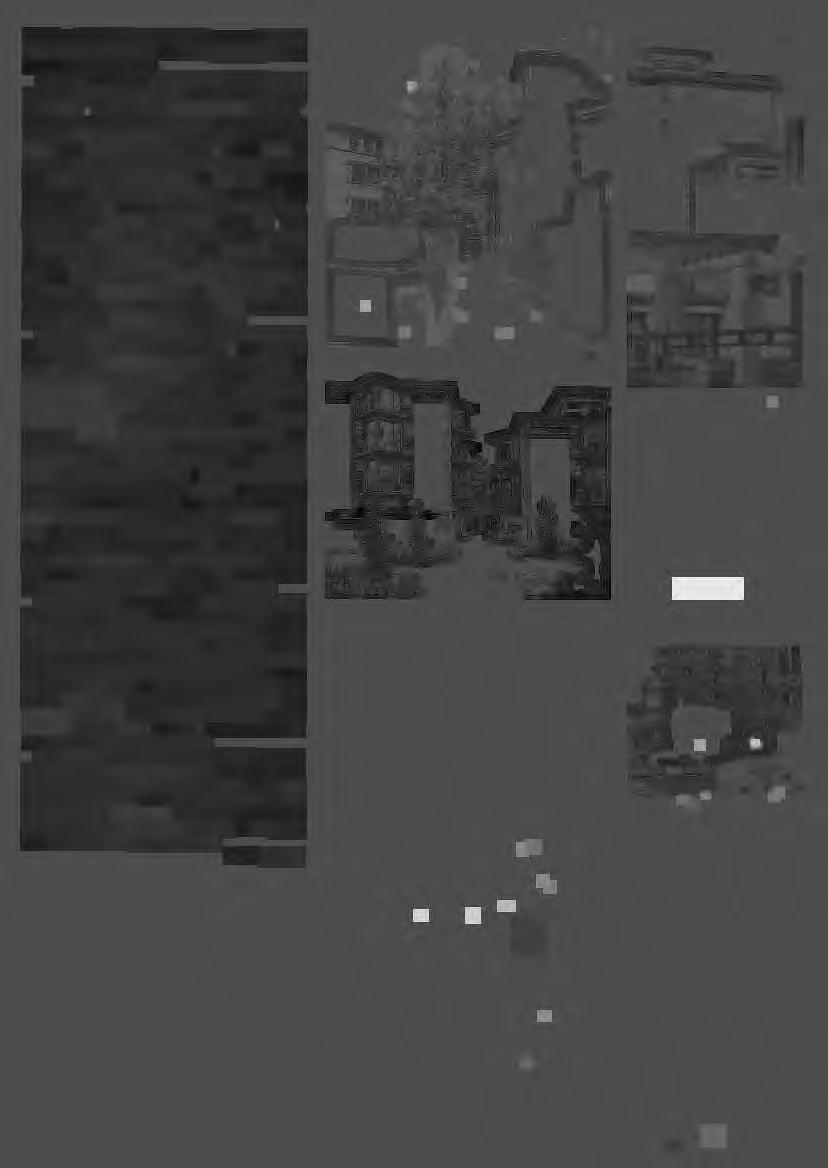
IEvolving architectonic expression Ensembles of precast components, brickwork and fenestration at Fitzwilliam. At Blue Boar Court a mannerist configuration of bay and attic strip windows, whose formal difference belies their common purpose , that of lighting a similar study bedroom.
With so many Oxbridge developments under his belt Richard MaCormac , in the groves of academe , is fast becoming the Pavarotti of architecture, and with the strategic planning of West Cambridge now under his considerat i on , interest in the output of his practice takes a new complexion. The completion of the Trinity project on Burrell ' s Field marks the third large scale college project in Cambridge. The first , for Fitzwilliam, and the Blue Boar Court development for Trinity , and Burrell 's Field , are all similar in satisfying a programme for student accommodation. Fitzwilliam is an extension to Dennis Lasdun's College plan, and forms part of the College building complex. Blue Boar court is a component of an interesting city block redevelopment , which preserves the street, the city block and its mixture of site uses Burrell ' s Field provides 80 study bedrooms and Fellow ' s set, seminar and common rooms , which are knitted into a complex of existing college housing in the triangle of land between Bin Brook and Grange Road in the north-east corner of Burrell 's Field. Three contextual variations around the same theme. Whilst the first two projects are , within the self-contained specifics of each site, exemplary contextual solutions, the latest opens up the whole question of the nature of student accommodation , the university and the city ; and this is particularly because of its location at the boundary of West Cambridge and of its separation from the main body of the College It raises questions about the form of continuing expansion
which are wider than the immediate concerns of Trinity College itself , and which are worth examining for the reason earlier ment ioned
It touches on a range of issues from building typology , urban form and composition, as well as architectural imagery , to matters of socio -pol itical economy Issues that will need to be severally addressed in any strategy for development of the western flank of the city In that company , Burrell 's Field is a case study of corporate isolationism and misdirection The greater the footprint of the University in the City (and we are now talking about two universities) the more need for individual sites to engage with a citywide urban design framework for growth and shaping of the city. The development in the corner of Burrell ' s Field is arbitrarily configured in its totality and the new additions , whilst adding density and incident , are largely irrelevant to the real socio-archite ctural quest ion of placement of the academic community within the city Further down Grange Road , Ralph Erskine ' s Clare Hall , a model of twenty six years standing, has more to say A fall-out from modernism has been the deprecation of functional criteria and social purpose in the architectural scheme of things In its place there has been a pre-occupat ion with aesthetics ; which could be said to be the think ing architect ' s response to the popularist oachment with ornament and decoration The ;---......,cular imagery and formalism of the new development for Tr i nity , with its emphasised verticals, its belvederes and pergolas, its axial linkages and formal garden i ng , and its angular geometrics and compositions , evokes hybrid sensations It is a paradoxical collocation of classical/romantic images , a retread of Lutyens and Baillie Scott from the turn of the last century , interweaving formal and informal imagery ; and just as passe. The aestheticising gloss of interior and exterior building scapes may be just the thing for the young dips of Trinity At a cost approaching £80,000 per room it certainly ought to deliver the environment and surrounding symbols of entrenched privilege
Considerations of resource and conceptual imagery aside, the level of design care and high quality of work typical of architects MaCormac , Jamieson, Prichard and Wright is manifest throughout. Of particular note is the restra ined colouration of the buildings, in sympathy with the local colours of Cambridge, using the same Stamford stone brick as the ill -fated house for Lord Adrian (too readily demolished to make way for the r~ build i ngs) It , and the matching creamy stone ,,red concrete work , are set in tonal contrast with lead coloured windows and roof trim
The straight edge of building rising above the flood plain presents a disconcertingly rigid contrast between buildings and its garden terraces, and the more freely landscaped meadow Much more agreeable in its handling within this form alising framework are the axial connections made with existing buildings on the opposite flank of the main pedestrian spine
Colen Lumley
* The parallel but smaller settlement proposal at Westmere on the A 10 south of Ely for 1500 dwellings is excluded on the draft 1995 Structure Plan It is now thought likely that any expansion will be accommodated in Ely itself
Sources : booklet accompanying RIBA exhibition 'Reviving CitiesUrban Design in Action ' June 1993 Arup Associates in-house journal Autumn 1991 Cambourne Master Plan Report and Design Guide May 1995 prepared by Terry Farrell & Company for Alfred McAlpine
Master Plan Great Common Farm
CAM BOURNE
Stillborn or a place for life?
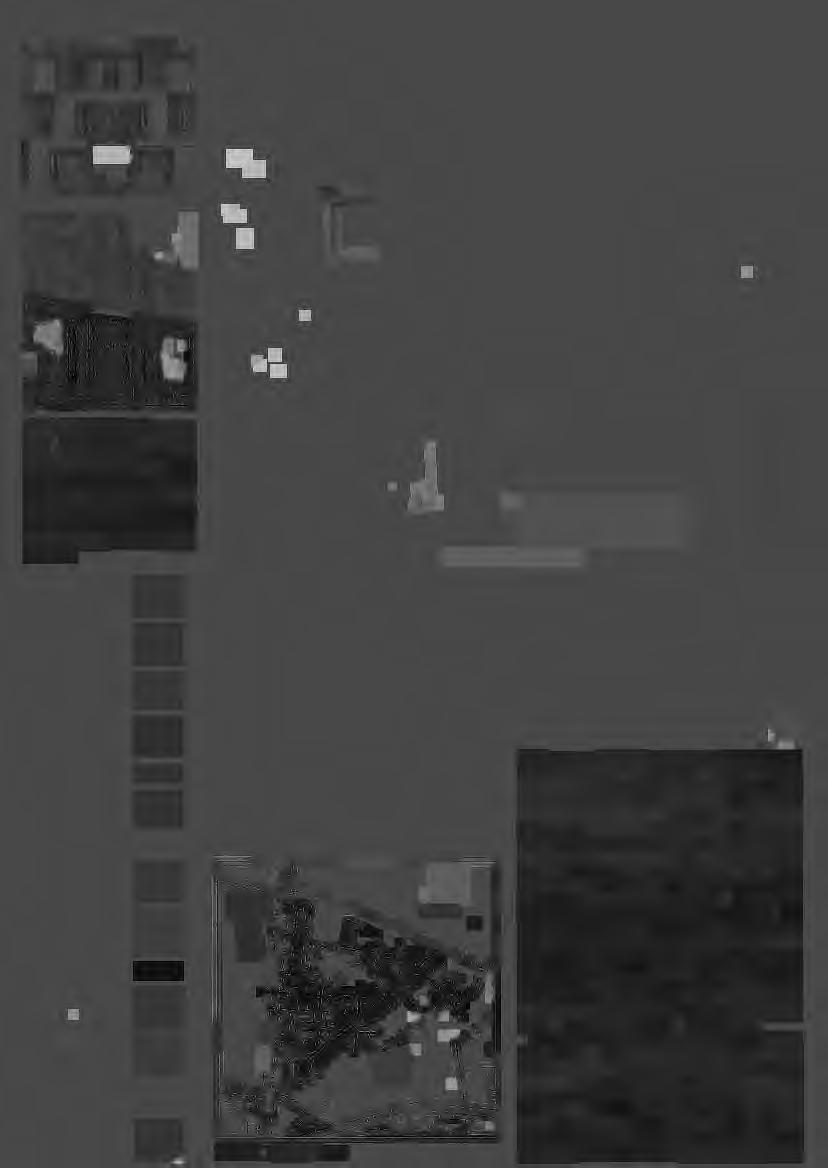
The 1989 Structure Plan (policy P20/ 2) proposed a new settlement 10km to the west of Cambridge at the junction of the old A45 and A 14 trunk roads (now A428 and A 1198) just beyond Bourn airfield The settlement is seen as a means of relieving some development pressure on Cambridge and the surrounding villages* The 400 acre site exposed to prevailing winds from the SW and NE is 2km to the north of Bourn ; Highfields village is to the east and Caxton to the west. The topography is of undulating open fields crossed by three streams with an area of woodland at the SE corner.
Eight consortia were invited by South Cambridgeshire District Council to prepare a Master Plan for a new settlement of 3000 dwellings No brief was provided beyond some locational criteria set out in the Structure Plan Seven separate proposals were considered at a public inquiry in 1990 The inspector recommended approval , with some reservations , to a scheme by Stanhope Properties with Arup Associates but the Secretary of State in the end refused all schemes. Two outline planning applications were then submitted in 1993 , one by Arup As sociates , with some revisions , and a second also considered at the public inquiry, by Alfred McAlpine with Terry Farrell & Company. In view of the public enquiry conclusions the DoE were expected to call in the schemes but, perhaps surprisingly , left the matter to the local planning authority to determine The merits of the two proposals were considered to be finely balanced The officers recommended approval to the Arup scheme but at a planning committee meeting at the end of 1993 it was decided to approve the Terry Farrell scheme with reserved matters. Decision notices were issued in April 1994. The planning committee felt that the Terry Farrell plan made more interesting use of the topography and landscape and preferred a second point of access via a Caxton bypass instead of a link to Bourn village which Arups had envisaged There was also conce rn at the loss of some uses on Bourn airfield including the flying club in Arups proposal.
Terry Farrell & Company with consultants and specialists , have since prepared a Master Plan Report and Design Guide to be formally considered by SCDC in March
The proposal for Great Common Farm (the name at its core) , by the Arup Urban Design Group with some outside consultants , was d istinguished by its rigorous approach A built environment is created by a continuous decision making process The urban designer is the prime agent who orchestrates the many players involved in this , with a strong vision of and philosophy about what ought to happen The · designer should write the rules within an institutional framework that can be modified as times and needs change Their aim was to design a place of this age and forward looking taking valuable lessons from the past as a reaction to many recent settlements where attempts have been made to design pastiche villages. Th ey identified the need for environmental quality and sensitivity , coherence a nd utility , adaptability , variety and choice , ecological awareness, the use of advanced technology , the need for a strong landscape and architectural framework , integrated social hous ing , safety and security and ease and choice of movement.
Comparisons were made between organic , radial , linear and grid forms leading to the selection of the grid on the basis of its coherence , access ibili ty , efficiency and flexibility and its 'democratic and rational nature .' Vehicular circulation is based on a series of extendible loops softened by topography and lan dscape features and with a degree of hierarchy " give principal means of access , with links to - ._.::, ad jo ining settlements of Bourn and Highfield and others discourage all but local movement. A 300m wide landscape buffer establ ishes a frontage between the (dualled) A428 and the new settlement. The settlement centre is si tu at ed at the point of arriva l with a 'town park' immediately to the south This follows natural water courses and extends as a ' green corridor' to the agricultural land beyond A Business Park is proposed immediately to the east fronting the park and part of Bourn airfield, with its associated light industry The housing is located on the more undulating terrain of Great Common Farm to the west with higher density near the centre and lower density further out all linked to a network of footpaths , bridleways and cycleways A shelter belt system of woodland , street trees and hedges provides protection from the prevailing winds and he lps to give coherence to the plan. An ecological zone contains the settlement to the south incorporating storm attenuation ponds , woodland , playing field s and open space
Three arc hitects (Aldington , Craig & Collinge ; & Morrison ; MacCormac Ja m ieson Pri chard) ) asked to des ig n prototypical areas to meet a series-of s.tated objectives at different densities , to test their appl icat ion to the Ma ster Plan Th e plan advocates central monitor ing of design decisions at all levels by a combination of briefing and coord i nating meetings , design guidelines and other controls and the formation of a management company to implement and control the project and provide ongoing management and maintenance of the common parts
The Master Plan by Terry Farrell & Company , followi ng a s imilar study of generic plans , adopts w ha t it argues to be the kind of organic plan typical of a tradition al Engli sh village The central community facilities are dispersed along the high street and housing is in three zones each focusing on a village green with pub , shop, etc This they say reflects the co mmon evo lution of villages in two or three distinct parts each having its own character but shari ng the collective ident ity and facilities of a larger grouping : Lower, Upper and Great Cambourne Lower Cambourne to the west provides a vehicular link to Caxton and the second point of access via a new bypass from the A1198 Upper Cambourne has a bus link only to Highfield vill age to the east allowing the Whippet coac hes to be diverted through the new settlement. Greater Cambourne is linked directly to the settlement centre The business and industrial areas with their regional uses are sited directly off the A428 at the principal entrance to the village
Densities have a more urban scale at the centre of the settlement , the buildings being predominant in
Cambourne Settlement Centre
defining space , with a progression towards landscape defining space at the edges. A network of footpaths , cyclepaths and bridleways, building on what exists , links the three village areas and nearby settlements. Structural landscaping provides settlement screening and integration, separation from busy roads , shelter and protection , recreation, nature conservation and habitat creation Surface water attenuation lakes are within the recreation areas between the village groupings and there are other lakes , ponds, reed beds , marshy areas and open ditches performing a variety of functions. The landscape strategy is considered vital to the eventual quality of the settlement and is develin considerable depth and detail in the Design , ___}e although little is said on how it is to be implemented, paid for and managed
As with Arups scheme a number of architects were involved to test the Master Plan and Design Guide (CZWG , Munkenbeck & Marshall, Nicholas Ray , Panter Hudspith, Robert Adam , Robert Hutson and Weston Williamson). Their schemes are not specifically illustrated although some selected drawings of individual buildings are incorporated 'to illustrate the principles and provide indicative solutions'. Sections of the main settlement centre are taken in turn such as 'Broad Street', 'Market Square', ' High Street' 'Monkfield Ground ' etc. Each contains photographic fragments of town & village streets and picturesque drawings of varying building forms and materials. These are in a way too specific suggesting that a village centre can be built up from a pastiche of selected buildings from different periods and styles, which have of course invariably evolved at different times and under specific sets of circumstances What is lacking is a set of clear and plausible principles for the devel~ent of a new village centre which are intelligible • \;ealisable in today's context.
, ne three village areas are required to achieve "a natural patina of architectural character and variety " such as evolved in traditional villages, each having its own particular identity Upper Cambourne is thought of as more self contained and rural in character. Lower Cambourne , on the through route to Caxton, is expected to have a higher street density with high walls and hard edges to the road Guidance is attempted on the varying character of buildings expected fronting the spine road , village greens, squares, lanes etc but again there is little hard principle beyond the wish for the kind of picturesque qualities appreciated in older settlements The illustrative housing plans with their apparently random layouts , winding roads and crescents look like the typical 'anywhere ' housing estate, albeit at a lower density and with high levels of landscaping. What is actually going to make it better than the average spec builders estate is a coherent structure and rationale. This is evident in the landscape design but sadly lacking in the approach to building design
The proposals for the Business Park establish a formal layout of buildings around a lake and fairly strict rules about the building forms and the connecting infrastructure plus a bas ic low energy strategy All of this should hopefully encourage a group of well-considered buildings and avoid the visual chaos and rather empty architectural expression characteristic of the Cambridge Science Park & others
Guidance on materials to be used for buildings in
Market
Square
Cambourne is too specific in an arbitrary way. Why should a cricket pavilion for example have to have a copper roof and rendered walls? Some very general guidance is also given on regional materials appropriate to Cambridgeshire and on how they should be used and detailed But the way the Design "Guide is written and illustrated may encourage pastiche rather than considered design Nothing is said about the way in which architectural form, technology etc might evolve to meet today's changing life -styles , family structures and patterns of work and leisure and it is written as though the import of new materials ended with the advent of the railways There is also surely a big difference between infilling within an established village and building from new in the late twentieth century There is no doubt a feeling that only buildings of a traditional character will fit into the open landscape but the issue of building form is not adequately addressed At Cambourne there is surely the opportunity for genuine innovation to establish a new settlement which meets today's needs The question of an appropriate regional identity and vernacular must also be tackled involving much broader matters than just materials Negotiations on the reserved matters in connection with the landscape plan are now in progress and SCDC have appointed their own landscape consultant to advise them They also plan to appoint an architectural consultant to advise them on the forthcoming planning applications for each part of the settlement. This task will be difficult without a more considered guide which can be interpreted constructively by planning officers and applicants alike.
David Raven
La revolution ~a continue vivent les opprimes
Discounting the lemming factor , the Labour Party i-s girding its el f to assume the mantle of power. New Labour in Cambr idge , in this postThatcherite damage limitation era , is la u nching a Community Plan for Cambridge( 1) It has a fine , liberal , parish -pump ring about it , focussed on local participation So taken-in by its title A Fair City I was some way through the tract before realising it was not talking abou t Stourbridge Common , nor for that matter Swedish au pairs , but was indeed prioritising the Party ' s ideas for "r ebuilding the community" Spelt out in a no-nonsense , watch my lips style , citizens and business interests are invited to join th e local authority in the renew al of democracy in this city
Referring to the background of centralisation of power and depletion of local authority autonomy over local decisions , a new administration promises greater freedoms for local action in tackling r e lative poverty , unemployment and social just ic e The general question of limitation of resources emerges as a benefit , permitting the privileging of priorit ies , rais ing pub lic services to the disadvantaged as the central task of local government.
The plan proposes a new Neighbourhood Fund linked with an index of disadvantage , built around a concept of Wards ; fourteen are proposed To the average person , wards a re those things you used to see in hospitals with bed s in them The te rm is a give away , illustrating the politician ' s view of the environment , defined by votes rather than t he physical character a nd life of an area It ca rries unfortunate undertones of ghetto mentality , which is strangely at odds with the concerns of equality.
The Plan exploits a welcome notion of wider participation by including a variety of novel and non-confrontational techn iques , information workshops , review panels , user group reports , each involving council staff in enabling roles and exchanges with voluntary groups and local busine sses But at the end of the day the lexographical abuse of the term ' community' has to be recognis ed. The word has a wide and multi-layered historicity of meaning, where what is intended here is a selective section of the spectrum This might be overcome in later drafts by a more explicit title , say - A Plan for th e Community of the Disadvantaged Not quite the same ring , mais mains mensonger Which way the lemmings?
( 1)_ A Fair City: Labours Community Plan for Cambridge - consultation document.
Cambourne Master Plan
PLANNING PROBLEMS?
The Colin Smith Consu ltancy can help you with independent town planning and development advice
• Local plan objections
• Planning applications
• Appeals and Public Inqui ries
• Assessments of development potential
COLIN SMITH
Chartered Surveyor and Town Planner
Oast House , Malting Lan e, Cambridge CB39HF
T el (0 I 223) 46464 1. Fax (0 1223) 464649
CONSULTANTS
St ab le Barn, Park End Swaffham Bulbed<, Camb ridge, CBS ONA. Tel : 01223 811572 Fax: 0 1223 8 127 19
3 I Queen Street, Whittle sey, Peterboroug h, PE7 IAY Tel : 0 1733 205633 Fax: 01733 208961
MARRIOTT BUILDERS OF DISTINCTION
BUS TOUR. The CAA are o rganis in g a bus tour in the s umme r for SC DC Co un c ill ors of modern arc hitecture in South Cambridgeshire. Suggestions of bu ildi ngs to visit to Viren Sa hai. T el/Fax 01223 263599.
EREG SEMINARS
14 March ENERG Y EFFICIENT DESIGN TECHNIQUES & RULE S OF THUMB. Cranfield insti tute of T echnology. 22 May PHOTOV O LTAICS IN BUILDINGS. TBA. Details from Anne Cooper or Rob Holmwood.
~Ibo CAA/RIBA DIARY
CAA Committee meetin gs first Monday of th e month 6 30pm Architecture Centre All welcome
CAMBRIDGE URBAN FORUM Next meeting March 5 7pm Architecture Centre with Giles Oliver on act ivit ie s of IDBE and Cambridge issues
ARCHITECTURE GALLERY
10 January - 29 February
VICTOR HORTA
T ouring ex hi bition of the work of th e principal Belgian Architect of the Art Nouveau movement in conju •· n with the pub li cation of a new graph , INTERDISCIPLINARY DESIGN t'OR THE BUilT ENVIRONMENT
First public display of projects illu strating the scope of the innovatory Camb r i dg e University graduate course , funded by the Ove Arup Foundation.
1 March - 6 April
COMMON GROUND
Continu ing th e exploration of cu rr ent staff/student preoccupations in the Regions architecture schools Thi s project places its concern within th e sh ifting occ upati on and transformation of the landscape situate d arou nd the Rainham marshes in Essex. 12 April -11 May
OPEN CAMBRIDGE
E xhibit ion of ideas for a n ' Op en Cambridge' by 12 local arc hit ects
OTHER CURRENT CONTRACTS IN CAMBRIDGE INCLUDE THE DEPARIMENT OF BIOCHEMISTRY PHI FOR THE UNIVERSITY OF CAMBRIDGE, UNIT 332 OFFICES, CAMBRIDGE SCIENCE PARK FOR TRINITY COLLEGE AND RETAIL, HISTON ROAD FOR CHAINLONE LIMITED