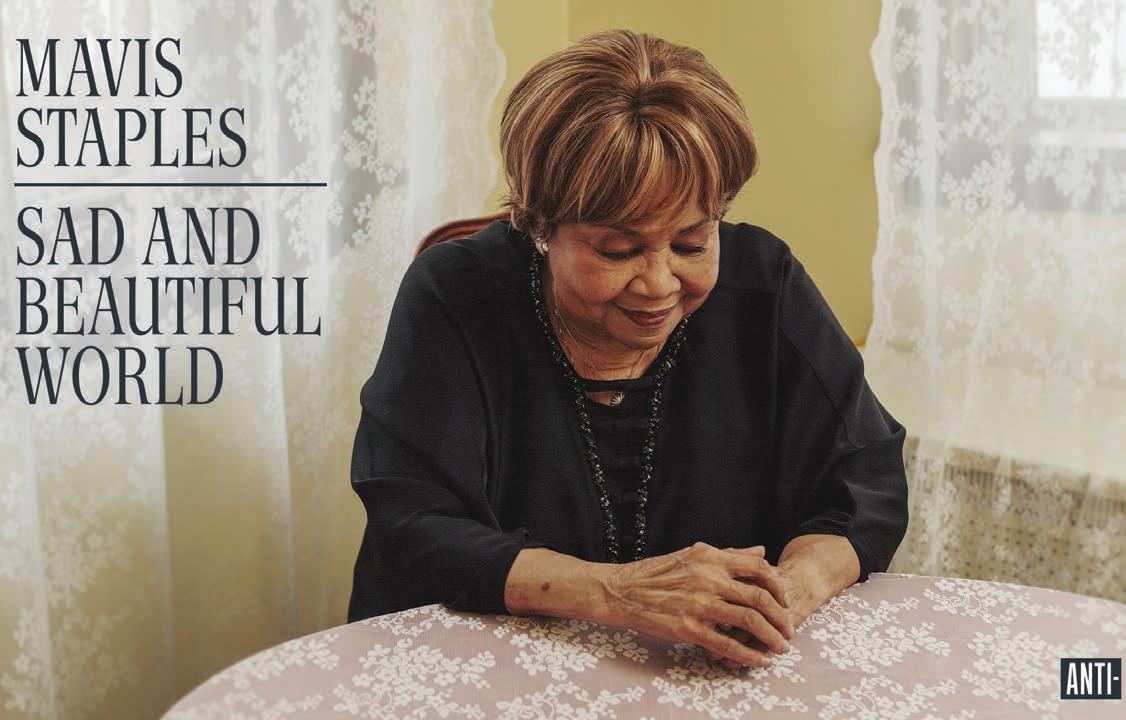
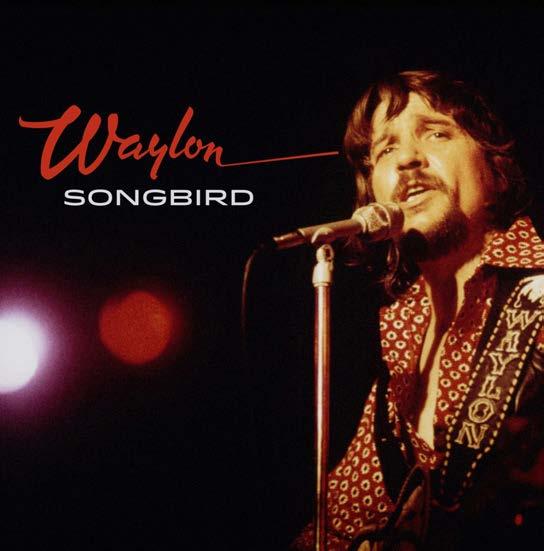
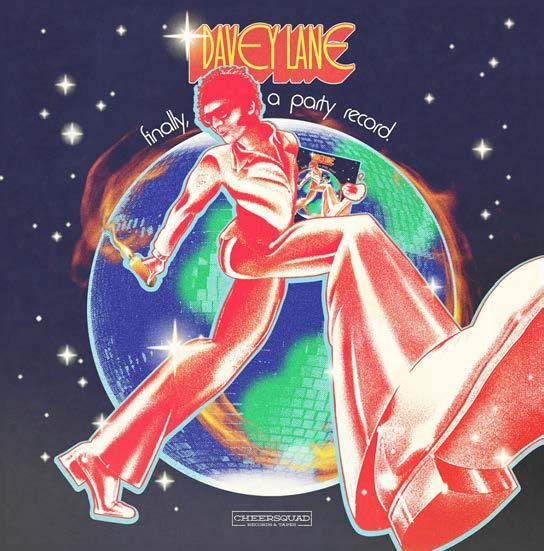
08 The Rhythms List. See our latest picks of the past two months for our Spotify playlist.
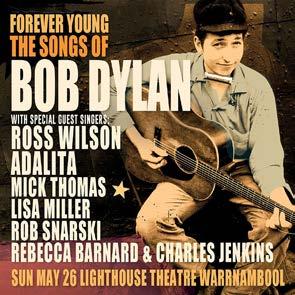
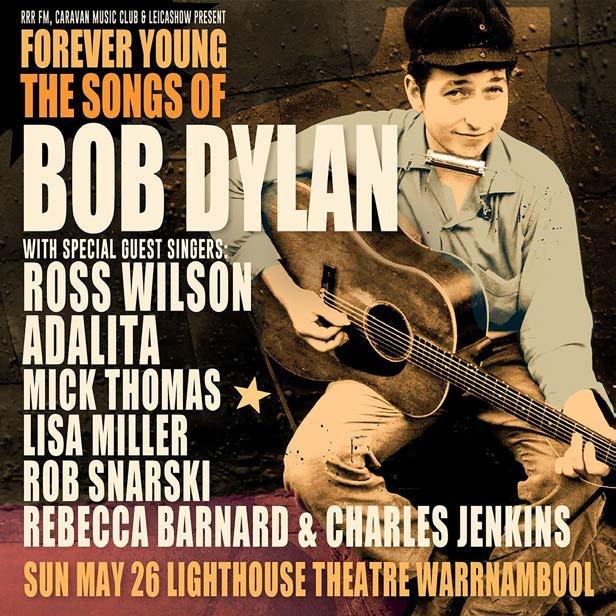
09 Subscribe to Rhythms and get the Bob Dylan tribute CD. This could be your final chance.
10 Music News: Vale Harold Frith. By Ian McFarlane.
COVER STORY
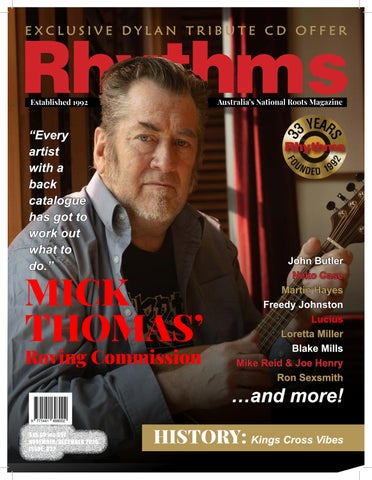
12 THERE AND BACK AGAIN
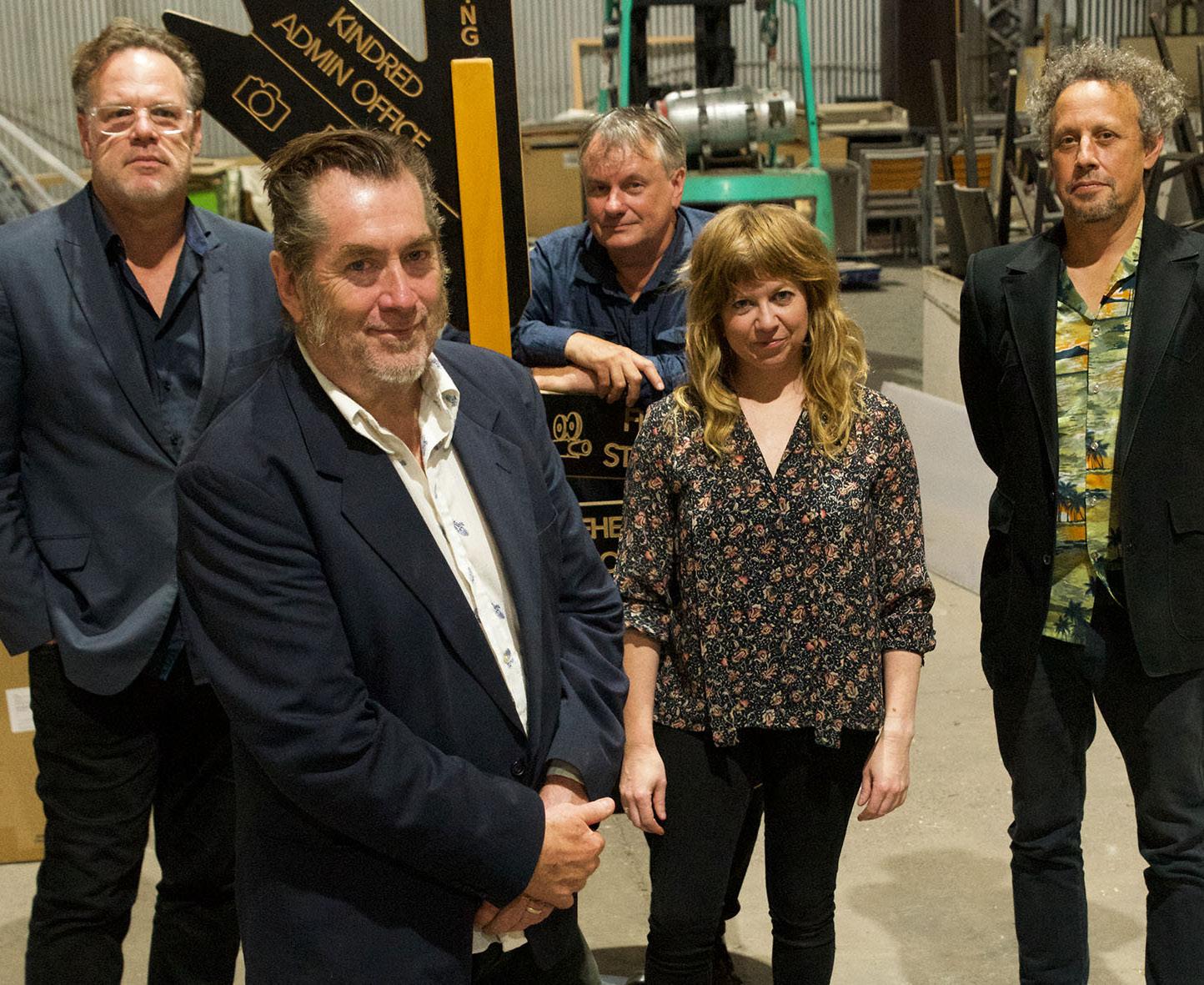
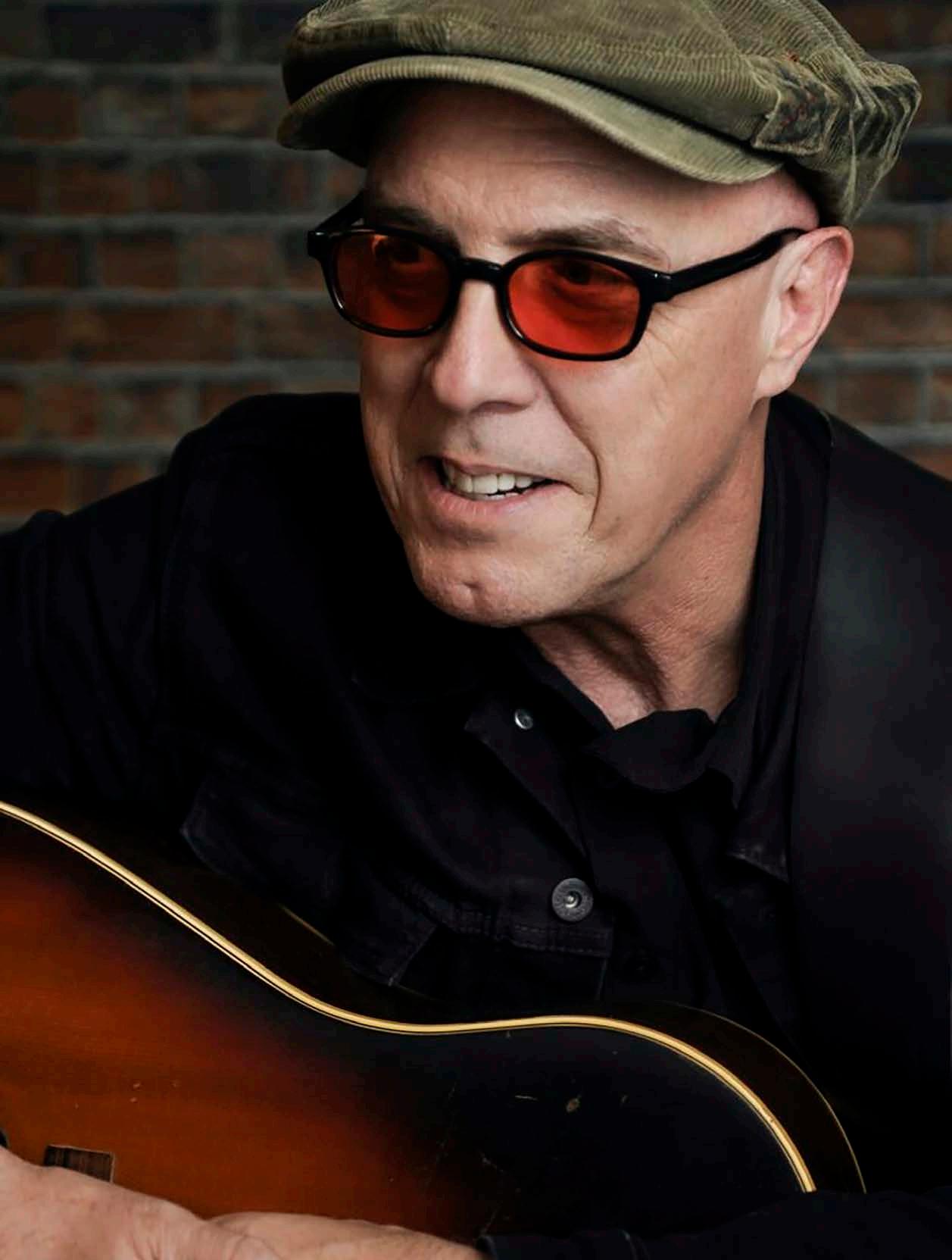
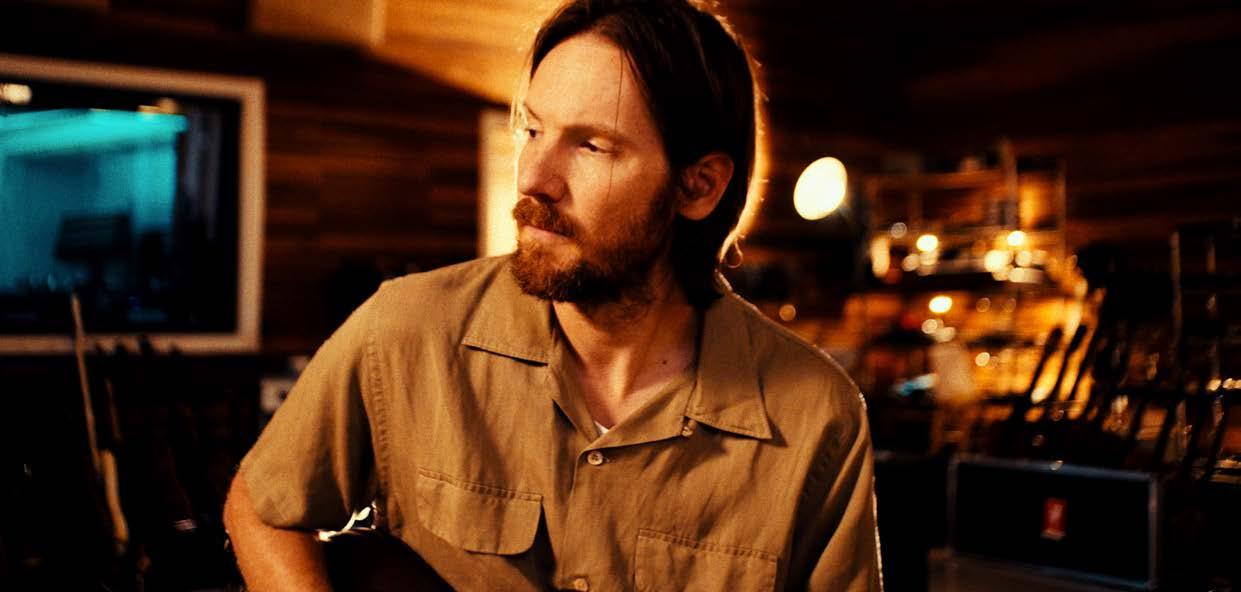
Mick Thomas and his Roving Commission’s new album achieves a balance between energy and reflection, restlessness and resolution. By Nick
Corr.
FEATURES
16 IN THE DRIVER’S SEAT
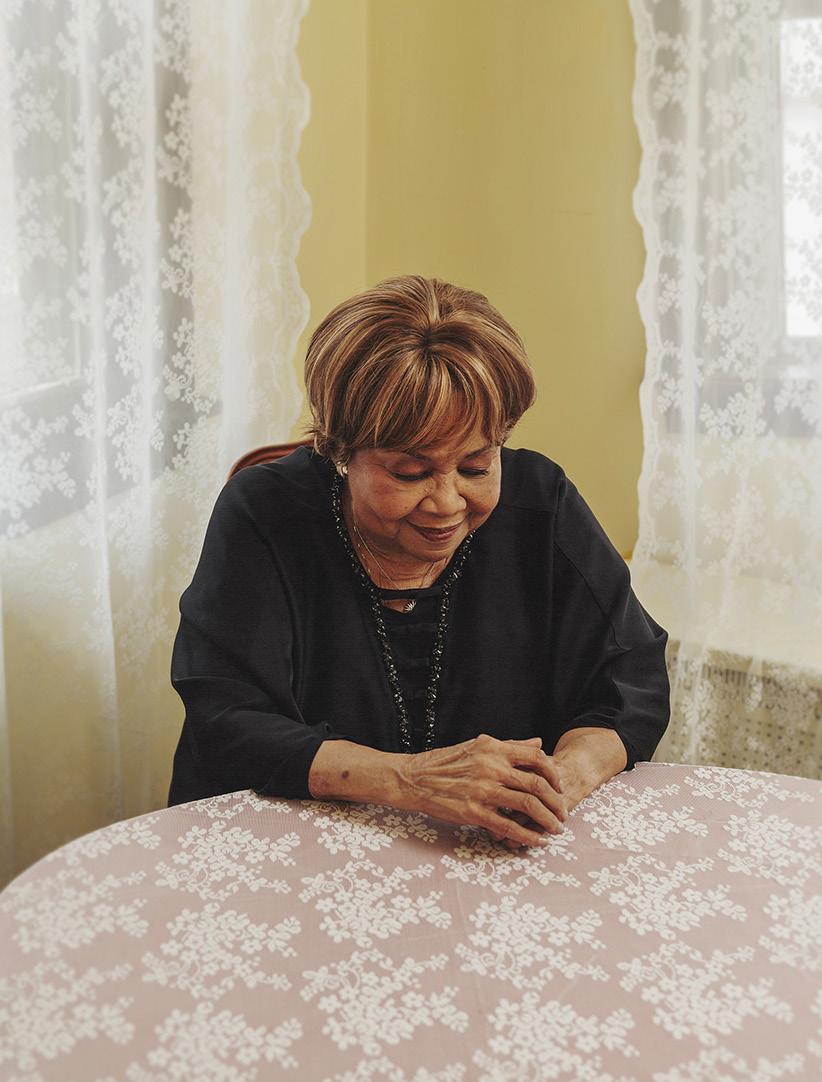
Loretta Miller finally releases her debut solo album – and it has been worth the wait. By Bernard Zuel. 18 THROUGH THE PRISM
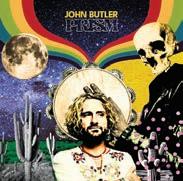
John Butler celebrates some major milestones and releases a powerful new album. By Jeff Jenkins. 20 HANGOVER CURE
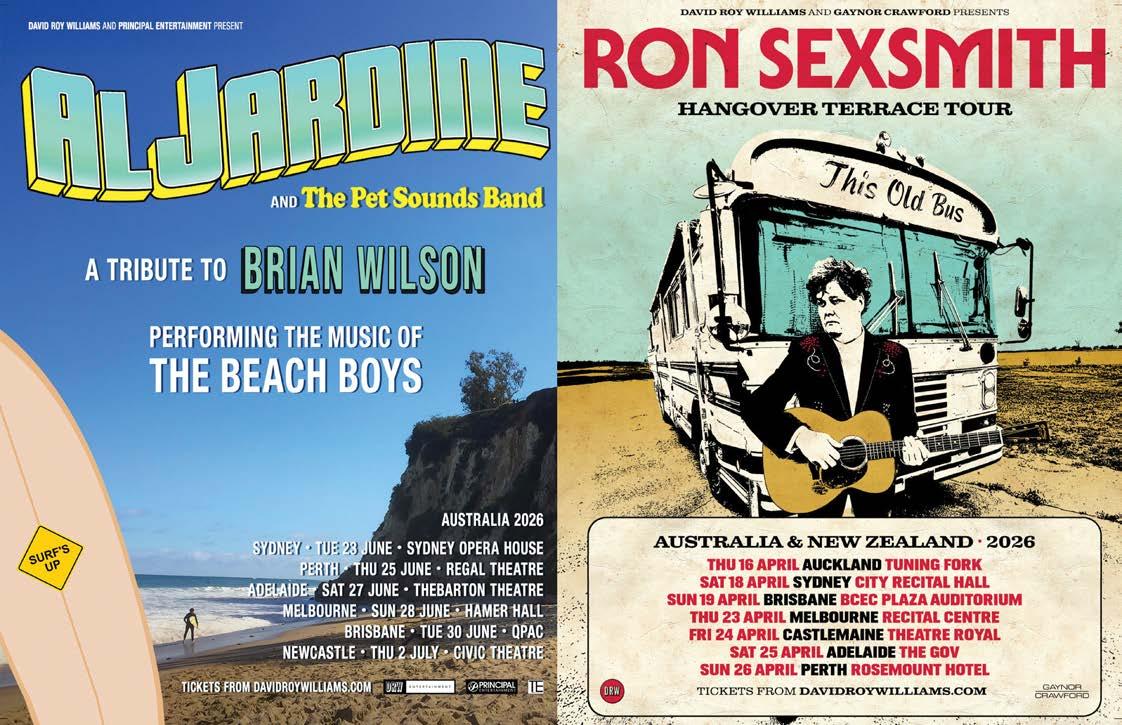
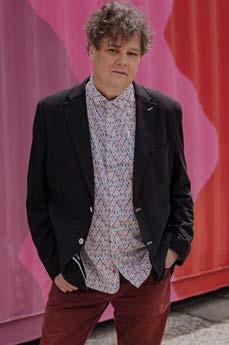
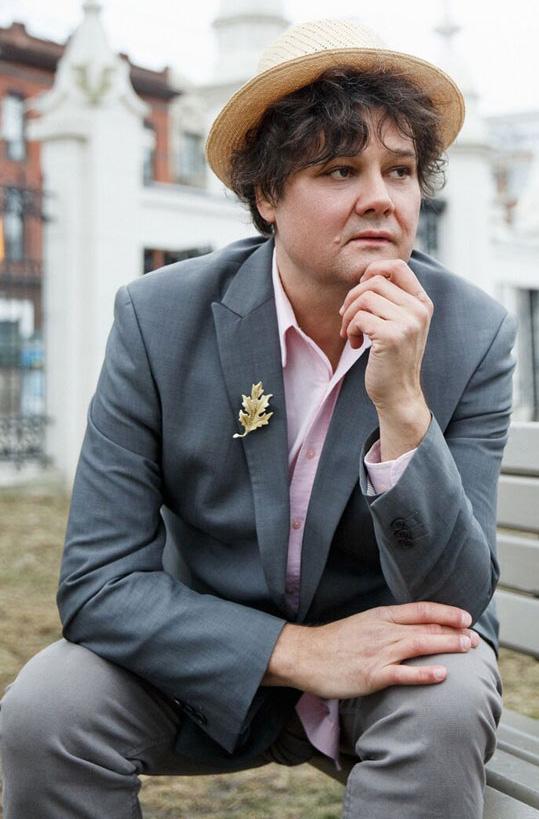
After nearly a decade away, Ron Sexsmith is finally heading back to Australia tour with a great new album. By Brian Wise. 24 MARTIN HAYES. FIDDLE PLAYER.
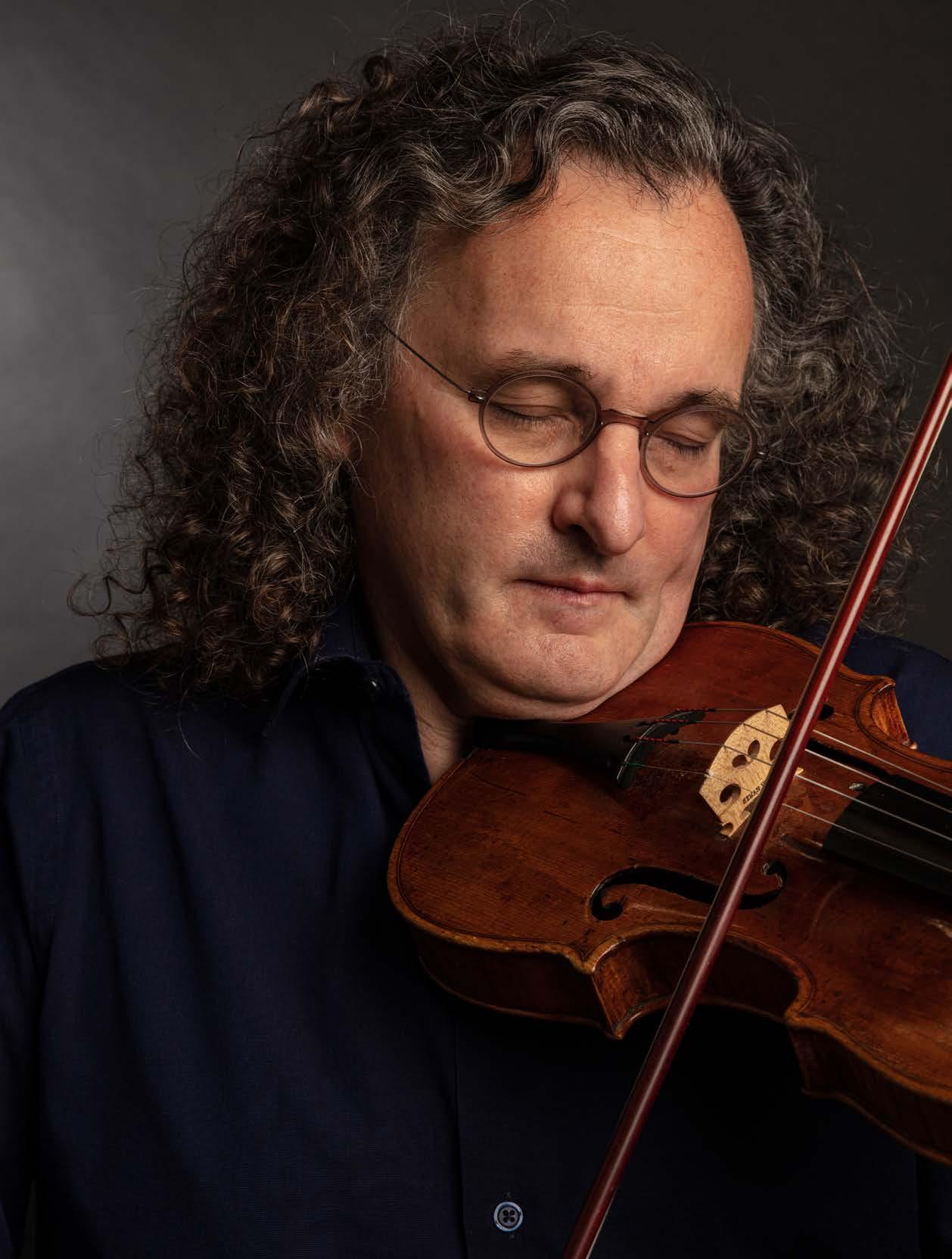
It’s how his management describes his role, but this legendary player is far more complex. By Bernard Zuel.
26 A CASE STUDY
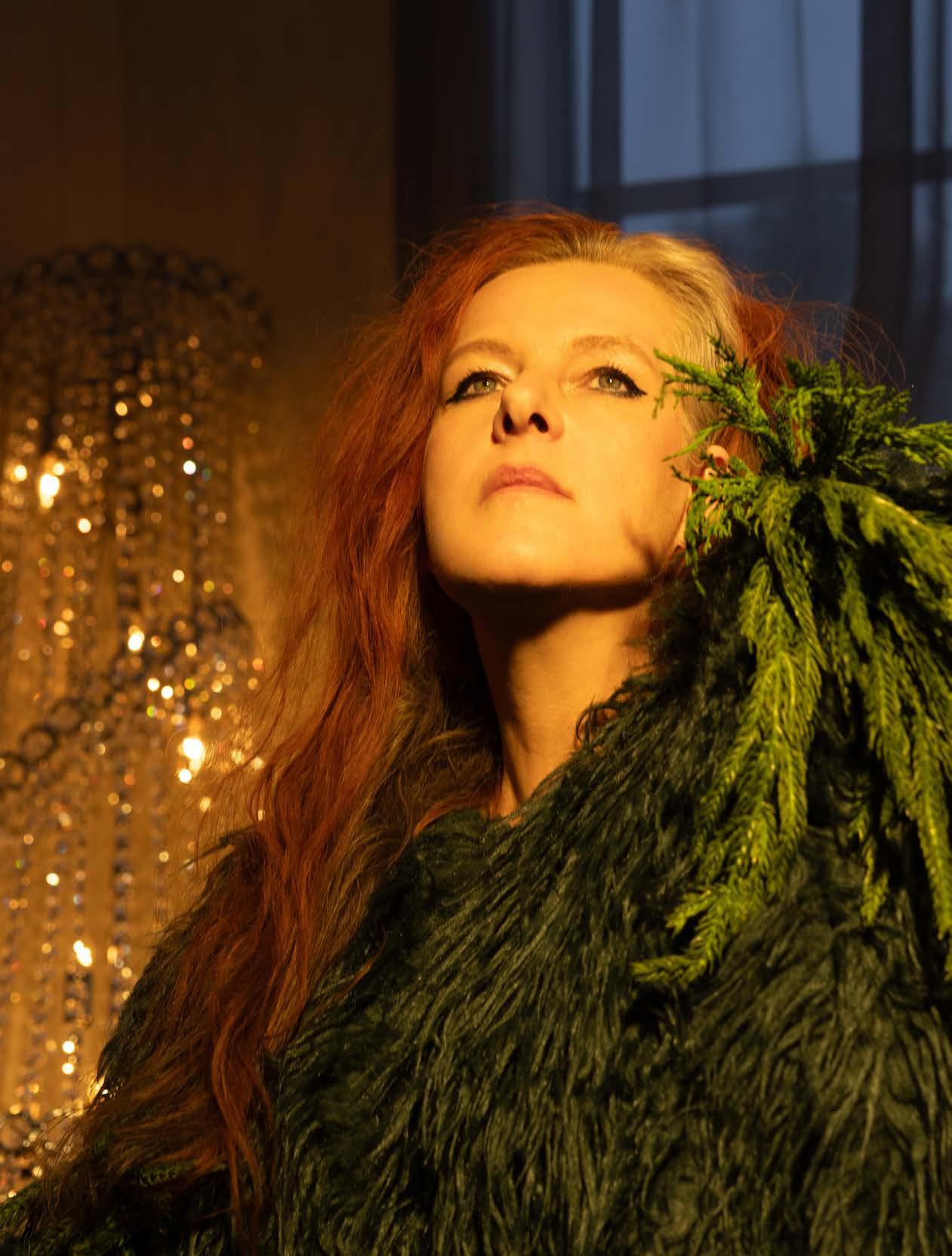
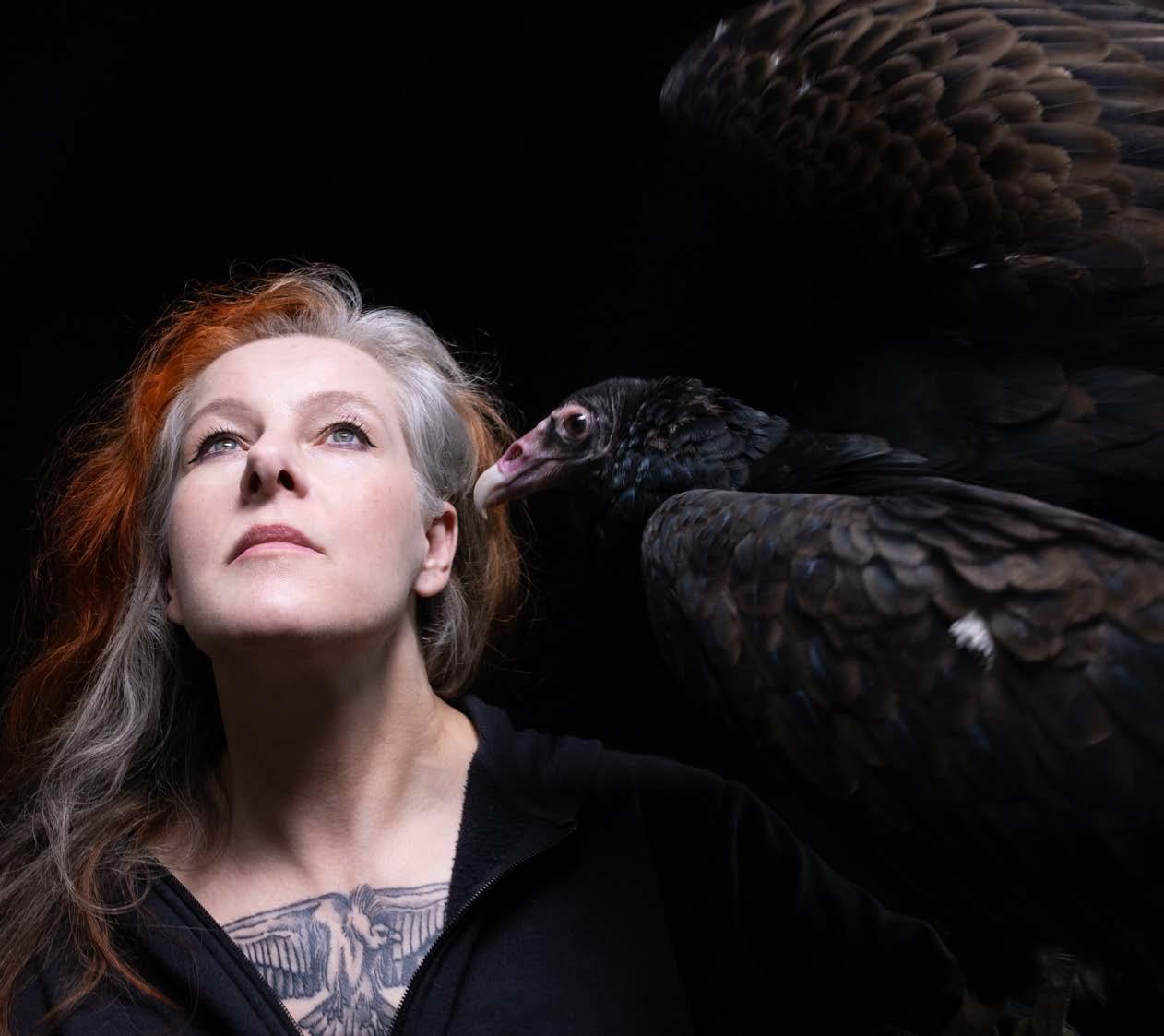
After nearly three decades Neko Case remains restless, curious, and still refusing to repeat herself. By Nick Corr.
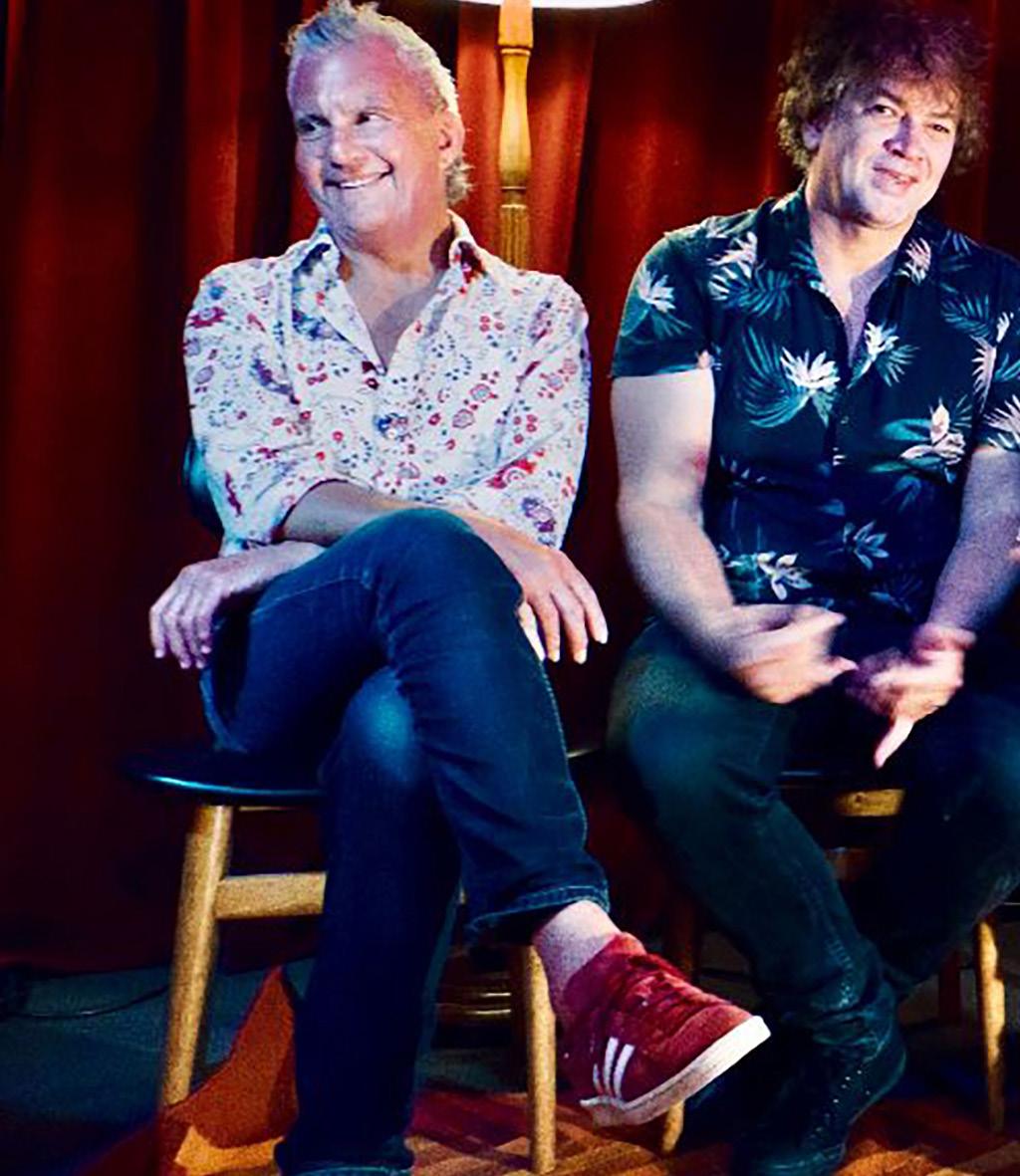
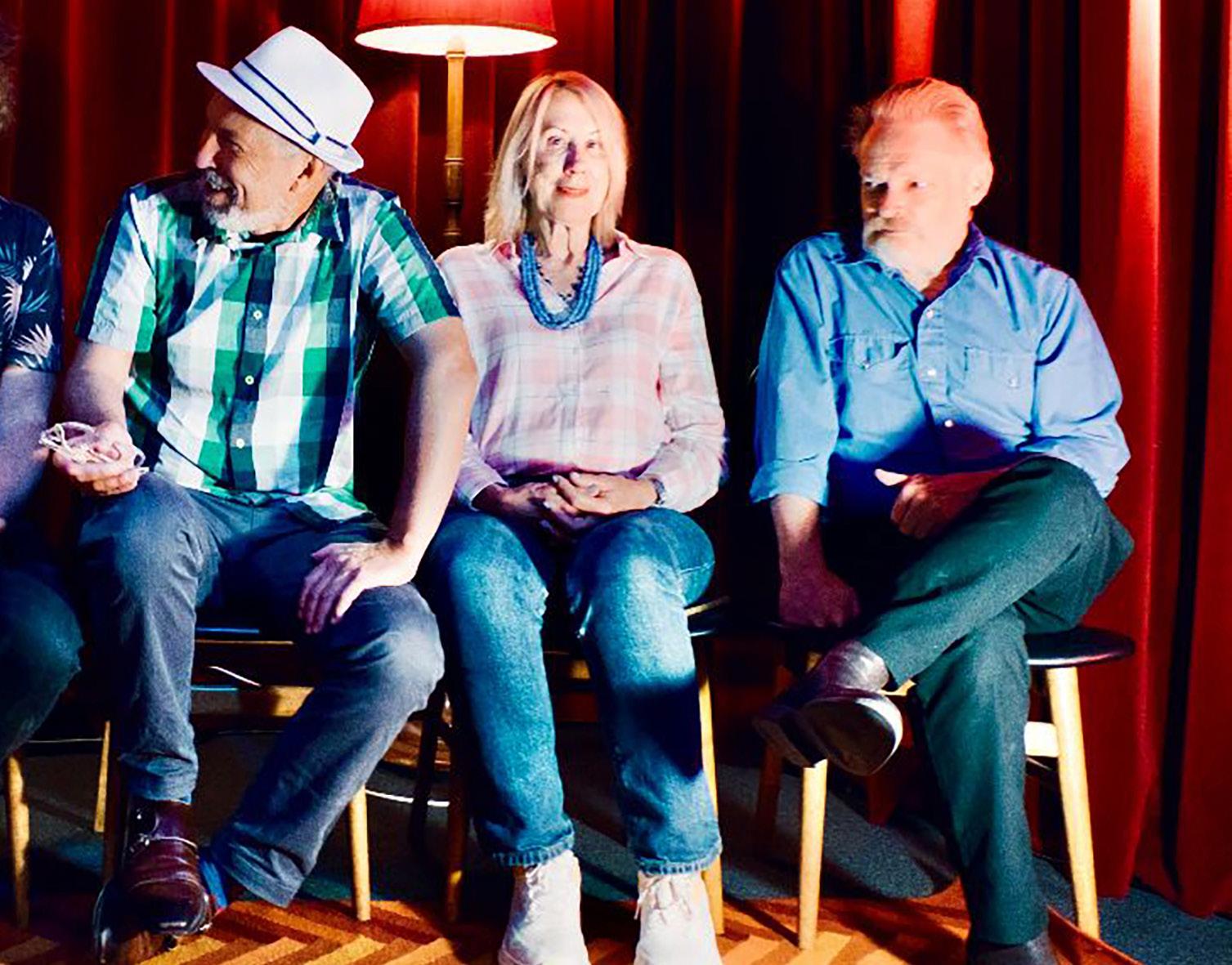
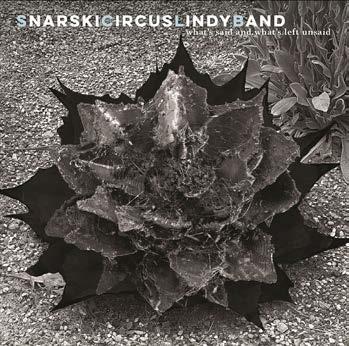
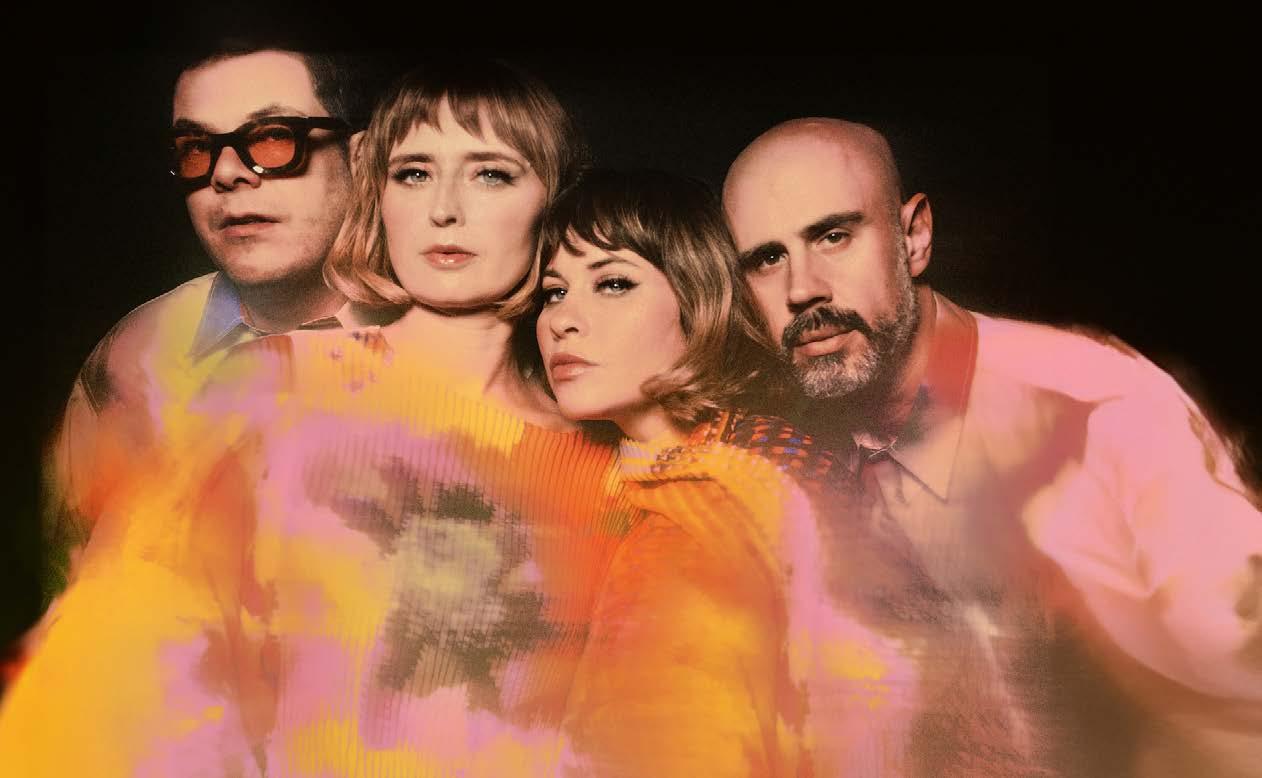
The SnarskiCircusLindyBand is an exciting songwriting collaboration.
Steve Bell.
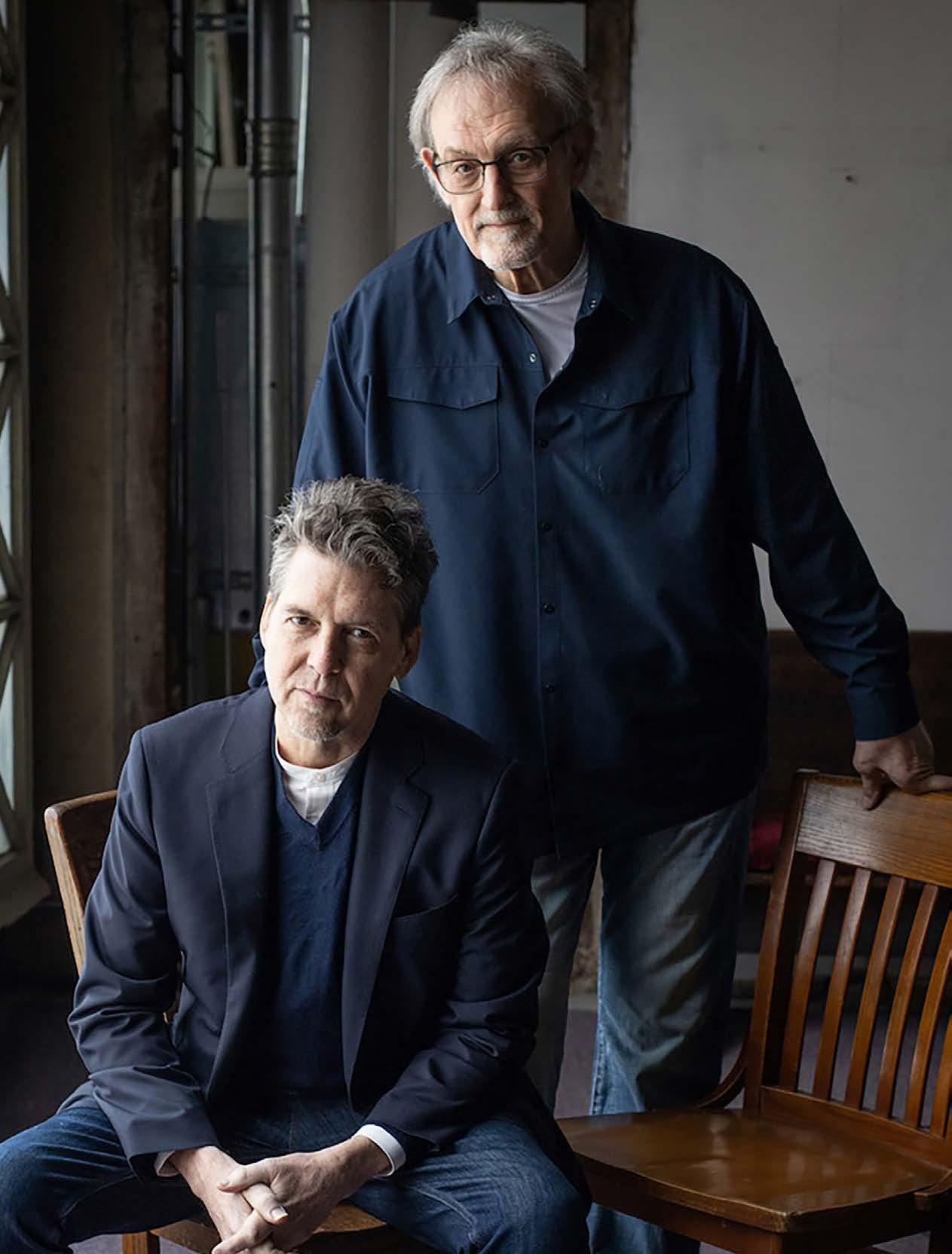
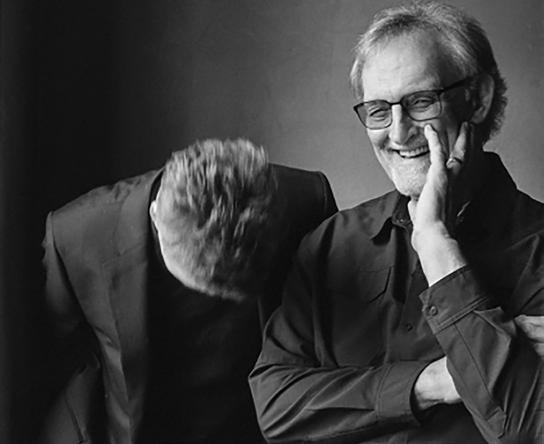
Mike Reid was a noted NFL star and then forged a career in music. Now he is teamed up with songwriter/producer Joe Henry on one of the most beautiful albums of the year. By Brian Wise. 36 STILL FLYING
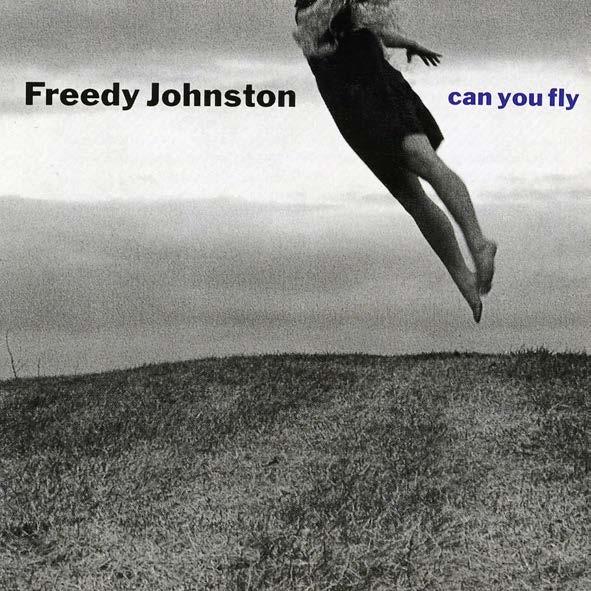
Acclaimed songwriter Freedy Johnston revisits his seminal 1992 album Can You Fly with Nick Corr.
39 DREAM MACHINE
Acclaimed guitarist Blake Mills teams up with bass legend Pino Palladino. By Brian Wise.
42 ON THE CUSP
Winner of the MBAS Blues Challenge, Nardia is on the cusp of an international career. By Con Pagonis.
HISTORY
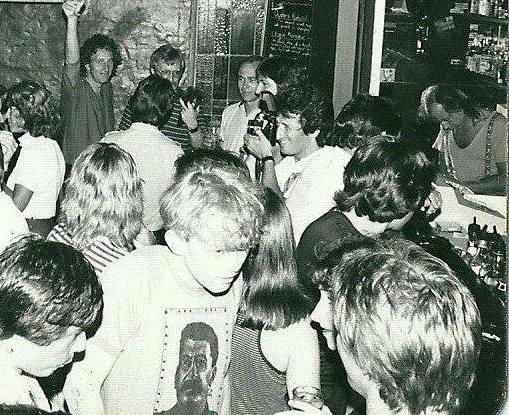
42 KINGS CROSS VIBE
From the book Saffron Incorporated, a story of how organized crime infiltrated the music industry. By Stuart Coupe.
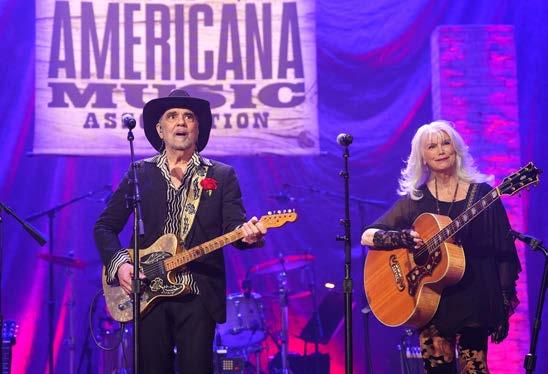
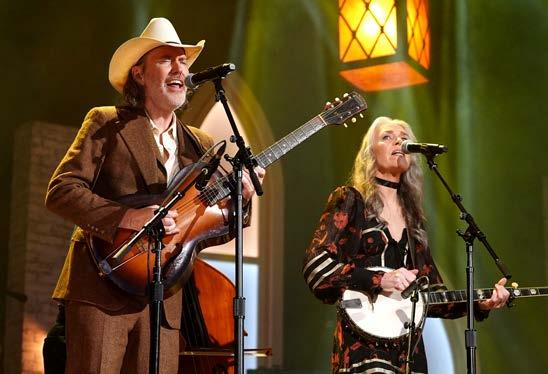
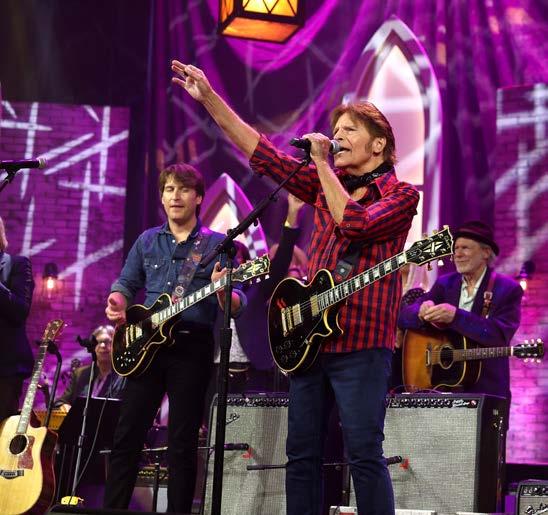
46 LIVE - AMERICANA 2025.
The highlights of the Nashville shebang. By Brian Wise.
COLUMNS
48 Nashville Skyline: By Anne McCue.
50 The Round Up: Nick Corr sums up the latest in Americana.
53 33 1/3: Martin Jones reviews Double Infinity by Big Thief.
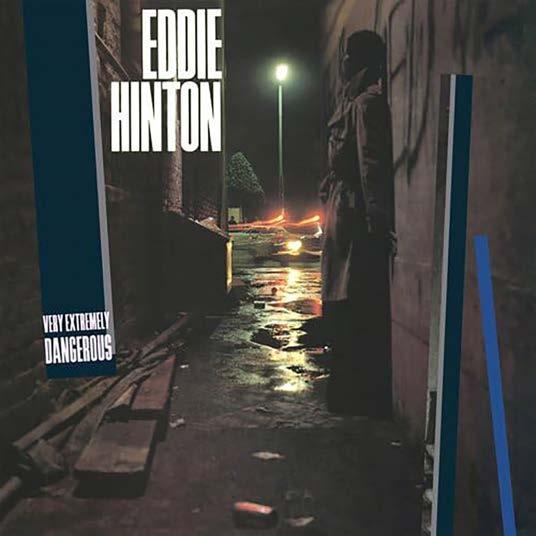
54 Lost In The Shuffle: Keith Glass uncovers Very Extremely Dangerous. By Eddie Hinton.
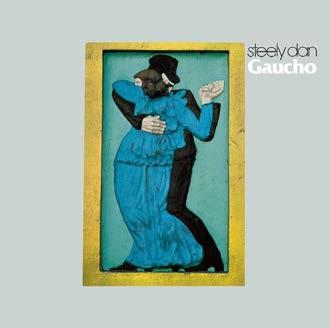
56 Classic Album: Steely Dan’s Gaucho. By Billy Pinnell.
57 You Won’t Hear This On Radio: By Trevor J. Leeden.
REVIEWS
58
FEATURE ALBUM REVIEWS: Lucius, Davey Lane, Melody Pool, Helen Ryder,
69 World Music & Folk: By Tony Hillier.
70 Planet Jazz: By Tony Hillier.
71 Blues: By Al Hensley.
72 Jazz: By Des Cowley.
75 Vinyl: By Steve Bell.
76
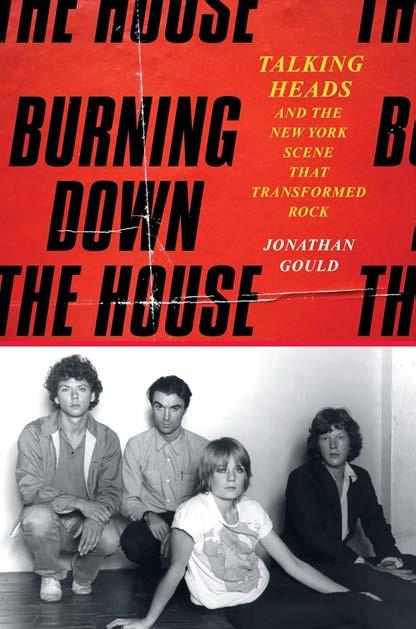
Books: Des Cowley reviews Burning Down the House: Talking Heads and the New York Scene.
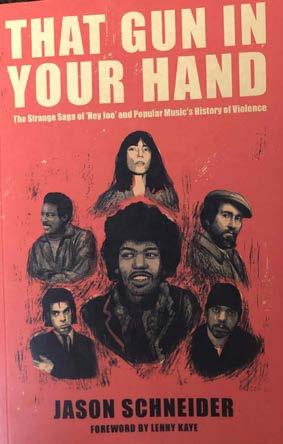
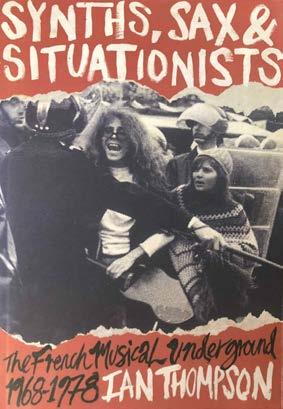
78 Books 2. By Stuart Coupe reviews books about ‘Hey Joe’, the French musical underground and more.
81
Festival Guide: Get out your dancing gear.
82 Hello & Goodbye: By Sue Barrett.
CREDITS
Managing Editor: Brian Wise
Senior Contributor: Martin Jones
Senior Contributors: Michael Goldberg / Stuart Coupe
Design & Layout: Sally Syle - Sally’s Studio
Website/Music News: Nick Corr
Proofreading: Gerald McNamara / Des Cowley
CONTRIBUTORS
Sue Barrett
Steve Bell
Nick Corr
Des Cowley
Barry Divola
Brett Leigh Dicks
Samuel J. Fell
Joe Fulco (Musician)
Keith Glass
Al Hensley
CONTACTS
Tony Hillier
Jeff Jenkins
Chris Lambie
Trevor J. Leeden
Anne McCue (Nashville)
Ian McFarlane (Sounds of The City)
Zena O’Connor (Muscle Shoals)
Billy Pinnell
Bernard Zuel
Advertising: admin@rhythms.com.au
Festival Coverage Contact: admin@rhythms.com.au
Rates/Specs/Deadlines: bookings@rhythms.com.au
Subscription Enquiries: subscriber@rhythms.com.au
General Enquiries: admin@rhythms.com.au
SOCIALS
Facebook: facebook.com/rhythms.magazine
Twitter: twitter.com/rhythmsmag
Instagram: instagram.com/rhythmsmagazine
PUBLISHER
RHYTHMS MAGAZINE PTY LTD
PO BOX 5060 HUGHESDALE VIC 3166
”Surely one of the best magazines on the planet!”
- Ben Harper
THE END OF THE YEAR
Once again, I travelled to Nashville in September for the Americana Festival and Conference. It is an affirming experience in many ways, not the least of which is the fact that it offers the chance to witness first-hand the growing profile of the ‘roots’ music that we cover in Rhythms. It seems that there are not many music magazines left in print, even in the USA, so it was beneficial to observe how the music is being covered in all forms of media.
It is easy to lose sight of the big picture in the music industry, especially when the mainstream media is becoming more concentrated and the music that we love seems to be marginalised in a way that we haven’t seen since the ‘90s when this magazine started.
While we could no doubt debate the value and efficacy of the term ‘Americana,’ it is a shorthand way of describing much of the music that we write about. In this magazine we expand upon that to include folk, blues, jazz and world music. But there is no doubt that an increasing amount of this magazine’s coverage over the past decade falls under the ‘Americana’ banner. Of course, we used to have alt.country and, at some stage around the same time, we had ‘cowpunk’. But it was all music that was covered in the magazine regardless of what people called it. Sometimes, you can get hung up on the terminology; no one questions the expression ‘world music’ any more as it long ago transitioned from a marketing label into part of the musical lexicon.
I like to think of Americana these days as a much more inclusive term than it might have been in the past. The Americana Music Association has made significant moves in broadening the category. They are fighting a battle against mainstream country music and its sub-genre Bro Country, both of which are huge over there. It seems that there are just not enough formulaic songs about drinking and pick-up trucks. I am fairly sure that this is only going to get even bigger in the next three years.
Americana remains a haven for a range of our favourite artists who nowadays get
little or no airplay on commercial radio despite the fact that they are still making vital and inspiring music. Then again, seeing Steve Earle inducted into the Grand Ole Opry by Emmylou Harris with Vince Gill on hand suggested that there is still a crossover.
Recently, I spoke to Rodney Crowell about his latest album Airline Highway and seeing him perform the songs during Americana confirmed the fact that he is still at the top of his game. It was also interesting to talk to Mike Reid and Joe Henry about their new album together, Life And Time, and see them take the songs to the stage. There was also the chance to catch up with Ron Sexsmith, who will be in Australia next year and who has a great new album out and performed many of the songs in his gig which ended our recent brief trip very nicely. Contrast this with the fact that Dwight Yoakam had to almost apologise for playing a new song from his latest album despite the fact that it was one of the more interesting parts of the show. (You can read all about it in my review later in this issue). Apart from those ‘veteran’ musicians there was the opportunity to discover a whole range of musicians who were new to me and who will hopefully feature in this magazine in coming months.
Once again, thanks to all our subscribers for their continued support which keeps this magazine going. Over the past financial year, we have been able to increase our subscriber base which has made a huge difference to the ongoing operations. I would also like to thank our small but loyal group of advertisers for their ongoing support. You should support them in return. As well, as that I would like to thank all of those who donated to the magazine through the Australian Cultural Fund, a fund raiser which made a huge difference to the continuation of the magazine.
Until next issue…. Enjoy the music.
Brian Wise Editor
Thank you to all our donors via The Australian Cultural Fund
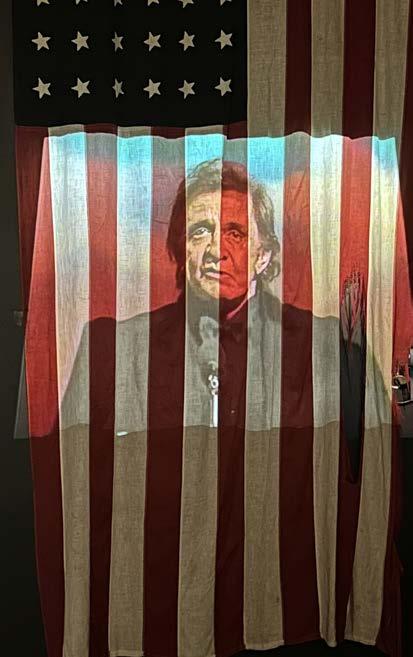
At the Johnny Cash Museum, Nashville.
Welcome to the fantastic Rhythms selection of some of the best songs of the past two months, curated into a handy Spotify list to give you hours of great listening. Simply scan the QR code below to access the playlist on your phone or device of your choice.
This year Rhythms is celebrating its 33rd anniversary maintaining its reputation as one of the longest running Australian music magazines in history! The lifeblood of the magazine is comprised of loyal subscribers, some of whom have been with us from the beginning. Then there are the loyal advertisers who have helped to keep the magazine going for all these years. So, if you would like to keep the magazine alive then all you do is simply subscribe and become part of the Rhythms family. Listen to all the artists we write about in Rhythms and many more!
SO, DO YOURSELF A FAVOUR!
*(You can simply download the Spotify app to your phone or device or if you are using Spotify on a web browser search for Rhythms Playlist – November/December 2025).
Jukebox at Church Studio, Tulsa, Oklahoma.
“Every
NOVEMBER/DECEMBER 2025
Subscribe to Rhythms Print or Print & Digital today and you will receive our exclusive subscriber CD of the Bob Dylan: Forever Young tribute show.
(Available Only to Print And Print + Digital Subscribers).
CELEBRATE 33 1/3 YEARS OF RHYTHMS IN 2025, SAVE NEARLY 30% ON
NEWSAGENT PRICE AND HELP KEEP AUSTRALIA’S ROOTS MUSIC BIBLE ALIVE!
MAKE SURE YOU GET IN BEFORE THE PRICE RISE!
PLEASE FILL IN ALL THE DETAILS
Yes! I would like to subscribe to Rhythms for: me a gift
LET’S GET THIS ROCKIN’ WITH A:
PRINT SUBSCRIPTION
$65.00
Please fill in the form below with your details, or purchase online.
DIGITAL SUBSCRIPTION $40.00 - 1 year of the Rhythms Magazine
Digital Subscription.
PRIGITAL SUBSCRIPTION
Fill in the below form, or purchase online. PLUS 1 year of the Rhythms Magazine Digital Subscription.
(Please supply email and phone number in case there is a problem)
GIFT RECIPIENT DETAILS
Mr/Mrs/Ms/Miss
Name
Address
Suburb/Town Postcode
Email
Please have card read “from “
THE FINER DETAILS: PLEASE MAKE A CHEQUE OR MONEY ORDER PAYABLE TO ‘RHYTHMS MAGAZINE’. PRICING INCLUDES SHIPPING WITHIN AUSTRALIA ONLY. FOR INTERNATIONAL ORDERS AND FULL TERMS AND CONDITIONS PLEASE SEE OUR WEBSITE OR CONTACT US FOR MORE INFO AT: SUBSCRIBER@RHYTHMS.COM.AU
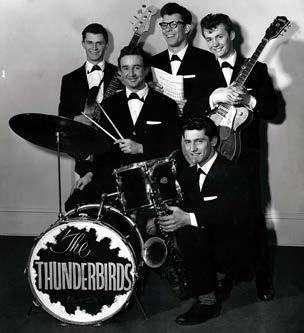
The Thunderbirds. Harold Frith (seated).
VALE HAROLD FRITH
1936-2025
Legendary Australian rock’n’roll drummer Harold Frith died on the 15th of October 2025.
Harold Frith was a mainstay of the local rock’n’roll scene from the outset. He was among the most experienced of drummers, having paved the way with his band The Thunderbirds, which he formed in September 1957. He certainly sustained an extraordinary career.
Alongside The Phantoms, The Strangers, The Chessmen, The Breakaways, The Saxons and The Playboys, The Thunderbirds were one of the bastions of Melbourne’s early 1960s rock scene. They backed many solo singers on the Melbourne dance circuit and became resident band for Ron Tudor’s W&G label during the early 1960s. They achieved an enormous level of popularity.
The original six-piece line-up was short-lived, but in early 1958 Frith and guitarist Laurie Bell reformed The Thunderbirds with Murray Robertson (piano) and Peter Robinson (bass). Robinson posted on Facebook that he owed Harold his musical career.
“I was on the Heidelberg train with my double bass returning from my weekly lesson,” he wrote, “where I was destined for the Preston Junior Symphony Orchestra. Harold came up to me and said, in his casual disarming way, ‘Oh you’re a bass player? How would you like to join a rock’n’roll band?’. I said, ‘what’s that?’. He said, ‘come and see us play at the Ormond Community Hall next Thursday’. During the break I said to him, ‘I don’t know how to play that kind of music’. He said, ‘don’t worry, Laurie Bell will show you what do’. Laurie strapped an electric bass over my neck and did just that. So, I was in!”
By the end of 1958, The Thunderbirds had also incorporated three featured vocalists into the line-up, Billy Owens, Billy O’Rourke and Judy Cannon. They became resident group at Earl’s Court in St Kilda. In late 1959 the band signed to Festival’s Rex label which resulted in the release of two EPs (Rex 4 Star and The Thunderbirds) and two singles, ‘Running Bear’ and ‘Ma, He’s Making Eyes at Me’ (sung by Cannon). By the end of 1960 the line-up comprised Frith and Robertson, plus new members Henri Bource (tenor sax, flute), Gordon Onley (bass) and 17-year-old Charlie Gould (guitar).
With help from top Melbourne DJ Stan Rofe, The Thunderbirds signed a new deal with the W&G label. They recorded for W&G as an instrumental outfit and three of their singles, ‘Wild Weekend’, ‘New Orleans Beat’ and ‘Machine Gun’, were Top 20 hits in Melbourne. All six sides of those three singles appeared as the EP The Thunderbirds Play their Big Six in late 1961. ‘Wild Weekend’ was issued in the UK and the USA and stands alongside
The Atlantics’ 1963 hit ‘Bombora’ as one of the most successful Australian instrumental singles of all-time.
At the end of 1961 The Thunderbirds supported Roy Orbison, Ray Peterson and Dion on their package tour of Australia. They followed that with a support slot to Cliff Richard and the Shadows.
By 1962 The Thunderbirds had backed a number of solo artists, both on record and on tour. They included Johnny Chester, Colin Buckley, Betty McQuade (playing on her classic single ‘Midnight Bus’), Bobby Cookson, Malcolm Arthur and The Thin Men. Normie Rowe and Marcie Jones also began their singing careers fronting The Thunderbirds at the Preston Town Hall and Canterbury Rock dances. The band went on to appear with Helen Shapiro, Fabian, Lonnie Lee, Johnny O’Keefe, Lucky Starr and the Bee Gees. Further line-up changes ensued and by the end of 1965, the band had called it a day. Gould and Frith formed The Charlie Gould Trio. In the 1970s, Frith played with Nite Train and The Promised Band which morphed into country rock band Saltbush. The band issued two albums, At Twin Rivers (1976) and Saltbush (1978), and four singles.
They supported American singer Ray Stevens on his 1976 Australian tour. They won the Best New Talent Award at the 1977 Tamworth Country Music Awards, and also played at the Tulsa Festival in Oklahoma, US in the same year. Saltbush gained further accolades by successfully touring for a year with the Slim Dusty Show.
In 1983 The Thunderbirds reformed briefly for a 1960s revival concert. The line-up comprised Gould, Bource, Robertson, Onley and Frith. In the mid1990s Frith, Peter Robinson, singer Danny Robinson and another Melbourne mainstay, guitarist Les Stacpool, formed Alright on the Night. In 1997 Frith and Robinson reformed The Thunderbirds to record new material.
In the late 1990s he played on two albums by Black Smith Hopkins (Nicholas Hopkins-Smith, son of singer Gulliver Smith) – Black Smith Hopkins (1997) and Conviction (1999). The albums featured gritty blues rock and Frith’s emphatic crack on the drums held down the bottom end to perfection. Frith was so versatile that he played on jazz swing band Steve Purcell’s Pearly Shells’ album Small Bands (2002). In 2003 he joined the Brunswick Blues Shooters. The Thunderbirds issued an album in 2007, The Thunderbirds in the 21st Century. One of Harold’s last sessions was on Andy Baylor’s CD Blues is Poetry (2008).
We extend sincere condolences to the Frith family and friends.
By Ian McFarlane
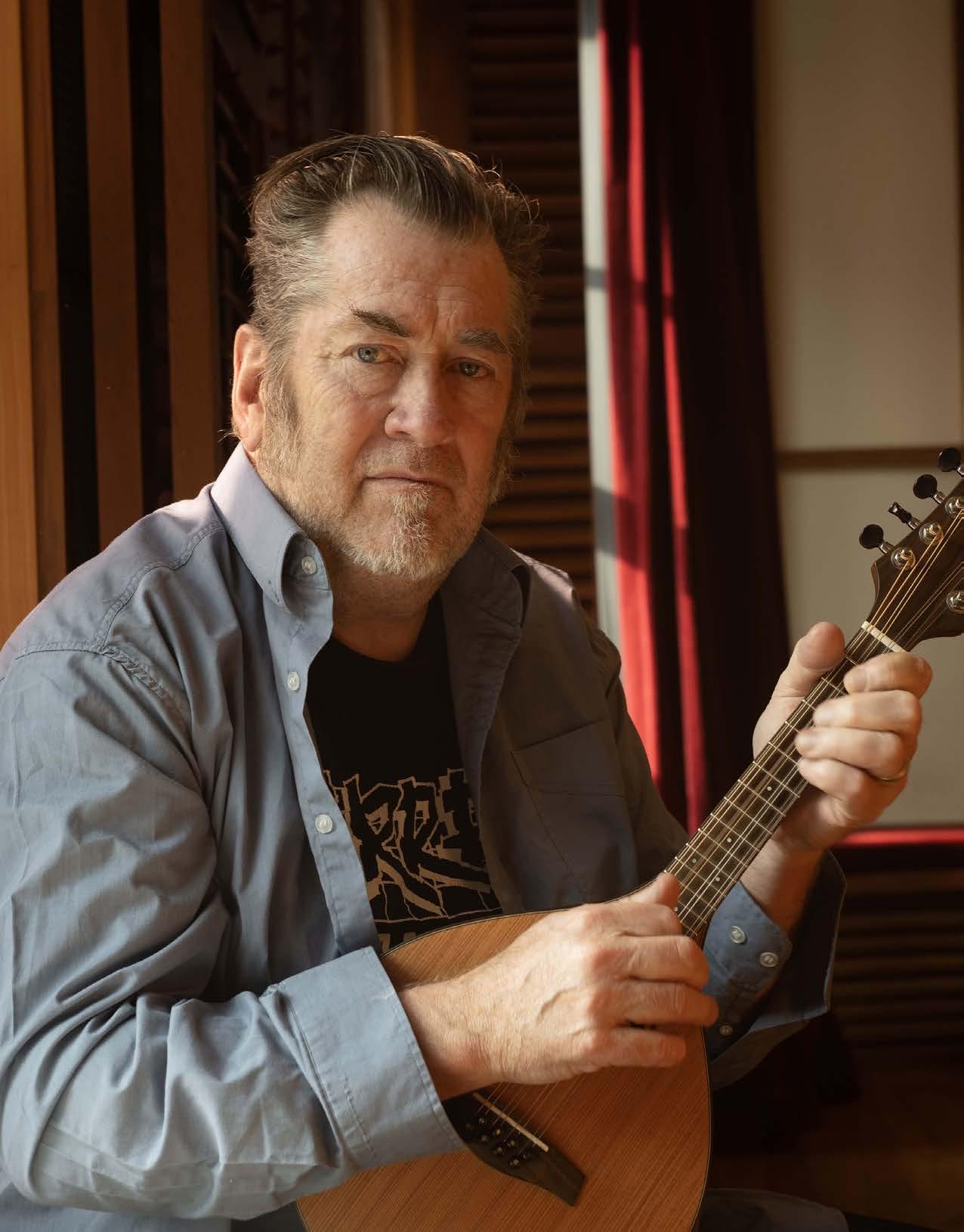
There’s a moment early in the conversation where Mick Thomas laughs about the working title of the new Roving Commission album.
“When I first sent it to the band,” he says, “I called it There and Back Again, which is the alternate title of The Hobbit. A pretty stupid title really but that’s what it was. One side was going away; one side was coming back.” The album, now properly titled GoComeBack, holds to that simple idea - a collection of songs about departure, distance, and return, in both emotional and geographic forms.
For Thomas, that theme came naturally. “I had a lot of songs. I guess COVID gave me a backlog of songs, because the records we did in Lockdown didn’t really cut into the backlog. One was a covers record, and one was referential to what was happening at the time. So, I had a lot of songs, and I said to the band: What do you want to do? Do you want me to pick an album”.
Instead, his bandmates - Brooke Taylor, Ben Franz, Dave Folley and longtime compatriots Mark ‘Squeezebox’ Wallace, and Jen Anderson - wanted to hear everything. A long list of 32 songs. “Something like that. It was a good number” Brooke Taylor chuckles. From there, they whittled and shaped it into a 12-song record split between those two poles: the ‘go’ and the ‘come back.’
The songs that made the final cut reflect that sense of balance — between energy and reflection, restlessness and resolution. Some tracks, like the long gestating ‘Sparrows of Tullamarine’ date back six or seven years. Others, like ‘For The Dirt Under Your Nails’ are newly written, a true band collaboration.
“I had a lyric for that song when Brooke first joined the band…….but then we got interested in this Indonesian folk song called ‘Fenderbender’ which seemed to tie in, because that’s about poor people and what they do and how they make their living. And that’s what the lyric was more or less about. A few days before we left for Auckland, I said, well, that song was not really cutting it, but the idea is really good and there’s enough of the lyric there. And Brooke had listened to this other song, and basically it was like the ingredients to make a cake, really.”
“All the pieces were there. It’s like just do that and then this will fit in. It came together really quickly. All the pieces were there and I just kind of went, conk there you go, there’s your song. And it fits in, I think, tonally and chord wise it clicked a lot more,” Brooke adds.
Thomas admits the track became his personal favourite. “I just think there was a real need for that song on the album. It is a bit like picking a sporting team. You’ve got a spot in that side that needs to be filled. And there might be better players, but the person that can fill that spot is going to get the gig, you know? And so that’s really what it was. But I would say it’s my favourite track.”
GoComeBack was recorded at Roundhead Studios in Auckland, the facility founded by Neil Finn of Crowded House. “The studio is amazing, and you just don’t get to be in those sorts of studios that much anymore. And it’s not just the gear, it’s more that the place has a real ambience. There are people there to make everything work, and not just that someone’s going to make you a coffee, which is great, but that person is also there in case we need such and such a microphone, and they’re going to go find it in the cupboard,” Thomas says.
Brooke agrees: “The ambiance, just the timber and the lighting, it was a space you just wanted to be in, and you felt really relaxed. There was such energy in the room and incredible gear, and yeah, just incredible people. It was phenomenal.”
Producer Steven Schram — whose credits include Paul Kelly, San Cisco, and Jen Cloher —asked the band to keep demos minimal and trust the process. Thomas recalls, “I remember saying to Steven Schram, do you want me to send you some demos? And he said, No, I don’t want them. He said, I trust you guys. You know what you want to do. He said demo them as little as possible. And right at the very end, there’s only one song that actually became a problem. With ‘Weatherboard Shrine’ people were going, Oh no, when we recorded it was like this. And Steven was going, just forget that. Forget what it was like. You’ve just got to make this the best recording.”
Brooke agrees. “It needs to be its own thing. You could potentially do a disservice to the song. If it does organically want to go somewhere else, you’ve just got to trust it.”
Mick Thomas & The 6-piece Roving Commision
Mick Thomas’ Roving Commission
By Nick Corr
Roundhead’s famous collection of instruments also made its way onto the album, including some with serious history. “He brought out the Strat that Neil had when he joined Split Enz. And I remember seeing that guitar,” Thomas recalls, “He told me this story that when Ash Naylor played it, he started crying”.
Brooke recalls how surreal it was: “Steven would say we’ll go upstairs and we’ll get this Martin from 1940 and, oh yeah the last person to play that was Ed Sheeran. And he’s like, it should be played like a shaker, have a go at it. But this thing’s so precious.”
Despite all that vintage magic, one of the standout guitars on the record turned out to be a brand-new Auden acoustic flown in from the UK for the recording. “It was like Goldilocks,” Thomas laughs, “Four or five different guitars, and she ended up with the brand new one.”
“It is a beautiful guitar to play.” Brooke enthuses, “it’s the one on ‘Weatherboard Shrine’. It was a joy to play. I didn’t want to put it down.”
The Auden sounded so good that it stayed behind in Auckland. “Apparently Neil’s playing that one now. I think Auden are pretty happy about it”, Thomas confides.
Taylor explains the recording sessions came together quickly “The scheduling at Roundhead was pretty ambitious, getting through two songs a day with all the extra sort of bells and whistles, sometimes literally. We ended up actually smashing it. We still had half a day to go back and do bits. It’s a testament to the cohesion of the band and in the songs. >>>
>>> Like doing pre-production but not overdoing pre-production so you just rely on demos. Having said that, Jen did write an entire string arrangement one morning, which made the cut. It all came together really well. It was the exact right amount of time, right amount of songs.”
Recording largely happened live, but with discipline. Thomas says, “He had this funny little kind of way of working… he pretty much wanted to finish each track before he went to the next track… it affects the singer and the drummer, because if you do it the old way, the drummer is pretty much finished by the end of the third day, and then the singer doesn’t really get to work till right at the end.”
Brooke reflects on the challenge: “It’s the first time ever I’ve been asked to sing and play guitar at the same time… which I’m totally okay with. I think it’s better to be honest about a performance than having to tweak everything. I think you actually lose something. If it’s perfect, it’s like, no, no.”
The album is now coming to life on stage as Mick Thomas’ Roving Commission gear up for their annual national Christmas tour. The setlists, as always, will mix the old and the new with hits, deep cuts, covers and some of the new album. “There’s no point us going well
we’re just going to play our new album start to finish,” Thomas explains, “But at same time. It’s a record that we’ve worked on, and we’ve sat on it for the best part of a year, and we kind of want to give it some life, you know.”
“It’s a trust thing. People get sort of restless, and I always make those jokes about, we’ve just played two songs that were off the early albums, and one of them was a bona fide hit. So that gives us currency. It is kind of how it works. Every artist that’s got a back catalogue has got to work out what to do,” Thomas continues.
Brooke sums up the connection with fans: “I remember when I first started playing (with Mick) and seeing the crowd erupt. It’s a gift being a part of something like that. I’m like, Don’t fuck it up This song means a lot to a lot of people. Particularly things like ‘For A Short Time’, there is such weight and importance in these songs. And it’s a real privilege being able to do that. But then it is also fun playing songs that you’re a part of. Like bits of different songs. And it’s like, I remember the inception of that. So that’s nice to do as well”.
Mick Thomas’ Roving Commission’s new album GoComeBack is out now on Coolin’ by Sound.
It’s always best to warn interview subjects when things are about to go very right, just as much as you might warn them about things going very wrong. And there is every chance – Lord knows the best chance – for things to go so very right, right now, or very soon, but certainly today. For me at the very least.
This call with singer/songwriter Loretta Miller, whose new album was released on October 1 – a date that will become particularly relevant in just a minute – is being conducted on the day that all the portents and prognostications, all the scattered bones and tea leaves, all the ancient runes and modern readings tell us with holy certainty is when the righteous will be called to what we of the righteous few know as Home, an event you may know as The Rapture.
So, yeah, Loretta if I suddenly disappear midinterview, please know it’s not personal; it’s holy. (And if you are reading this story a week later, it doesn’t mean I didn’t get taken up: I can be a fast writer.)
She takes this news well, possibly buoyed by the realisation that as she has taken my call in Bali, two hours behind me on the east coast of Australia, she has some advantage in that my disappearance may give her a two-hour warning to prepare for her own ascension, or disappointment.
Or maybe, she is hoping this may put her out of her misery a week out from release.
“I lost my phone here, in Bali. Honestly, I think apart from something happening to my family or me getting sick or whatever, it is the worst thing that could possibly happen in the lead up to album release,” Miller says. “It’s been a nightmare in my small brain space.
“I can’t get into my social media accounts and all that because you need the two-factor stuff, and I’m one of those people who doesn’t know the passwords to anything. So, yeah, a nightmare.”
If you’re wondering, no she has not been writing long letters to her management or label. There is no management or label. Miller’s Loretta, is a wholly independent package by someone who offstage has two jobs, on-stage has made a couple of albums with her large Melbourne group Jazz Party (which does exactly what it says on the tin, and is a “behemoth” for her to wrangle), was part of the world-touring Clairy Browne And The Bangin’ Rackettes (who brought old school soul pizzazz and towering hairstyles back, and were no small operation either), and now is sending out into the world a country-leaning solo album. So, everything is on her.
“The universe is either giving me [she flashes a middle finger] or some kind of magical lesson,” she laughs ruefully. “But I like doing a lot of things. I like all music; I don’t want to just do one kind of music. When I was
younger, people would introduce me as, this is my friend Loretta she is a country singer, and I hated that. Now, people say this is my friend Loretta, she is a jazz singer, and I’m like, what??? I’m just a singer.”
That said, Miller will concede that even setting aside a voice seemingly built for
country (think somewhere near Margo Price, another traveller across genres who still is rooted in country) and a name that suggests she was born to the mantle, Loretta is nearer the country end of the spectrum. Though even a casual listener to a song like Gonna Be Lonely would recognise there
Acclaimed singer Loretta Miller finally releases her debut solo album, and it lives up to everything that her career so far has promised.
By Bernard Zuel
is a fair contribution from soul and rock. Call it Americana if you will. Call it a bit of everything, if only to soothe Miller. But it’s okay. She’s okay.
“This was something I had always wanted to do. Growing up with my mum and Lisa [that would be Tracey Miller, a Melbourne alt.
country stalwart, and Lisa Miller, a wonderful singer/songwriter who has worked across country, pop, soul and rockabilly], I grew up singing with the musicians they introduced me to, and listening to Hank Williams and Patsy Cline in a big way: as a three year old kid Patsy was everything to me.
“But there was also bluegrass and old school banjo picking, and jazz, and rock ‘n’ roll, Nina Simone across the board. Good music is good music.”
Amen to that.
I tell Miller that my favourite line on the album is the plain and blunt “It’s not my job to hold back for you”, only to find out I had misheard what was “it’s not my job to hold that for you”, as in hold your shit. Still, I did get the intent right.
“It’s about knowing what you need to do and talking yourself into getting better. You are taking the steps and may not be quite there yet, but you’re working on it. It’s talking to yourself essentially,” she says. “A lot of the songs are about those kinds of things and pushing. Pushing.
“I think everything in this record is me pushing the fact that I made a record, is me pushing myself an inch. I’m a slow mover [she laughs], in all aspects. Taking a leap, making the album, I needed to be pushed and needed to push myself. In all ways. That’s why have two jobs, that’s why I’m doing all these things that are scary for me and that I find quite difficult.”
The record does feel like this series of messages to herself or to others, to go a little further, to push a little more, to be
“At the beginning of the project, it was a matter of I had to do it, I had to do something that was just me, basically. The question I had was can I make a thing that’s mine? And can I write the songs? And direct it more?” Miller says. “It’s come out not how I pictured it but it’s very much myself.”
Maybe one question she might have asked herself was ‘was it not obvious from her mother and her aunt that this career she has chosen was a stupid one? Making music is a nuts choice. She really should have done something safer for her sanity and more useful to the world like, say, quantity surveying.
“Yes, the answer is yes, it was obvious, and it was ill-advised. I was thinking of that Etta James song where she goes [and Miller breaks into some soul power] ‘baby don’t do it, don’t do it’. I always think of that line and I’m like ‘why?’. The answer is, because I had to. I didn’t do well in school, I hated school, I didn’t fit anywhere. I was quite arrogant, and I was like, I’m going to do music.
“There have been times when I’ve thought why did I do this to myself? But I know, I am sure, that that’s it for me. It’s an unfortunate state of affairs that I didn’t have passions elsewhere, so it’s very joyful and very heartbreaking at the same time.”
Like the best soul and country. Like waiting for The Rapture.
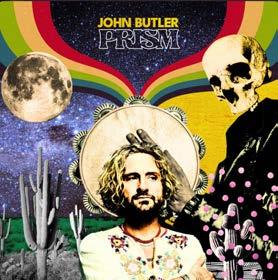
Loretta is available at Bandcamp. The album will be launched on October 24 at the Northcote Social Club.
TJohn Butler celebrates some major milestones and releases a powerful new album.
By Jeff Jenkins
hirty years ago, John Butler was busking in the fruit and veg section at the Fremantle Markets. But he had bigger dreams. He aimed to make it to the front of the main entrance, where the most popular buskers played.
After that dream came true, Butler moved onto his next dream: releasing his own music. To his own surprise, he became one of the most successful independent Australian artists of all time, with four chart-topping albums, starting with 2004’s Sunrise Over Sea, which went five-times platinum.
But come 2025, it was time for a reset. Butler’s new album, PRISM, opens with the line:
“I need a break, I need to lay low.”
Butler has parked the John Butler Trio, and the first track is aptly titled: ‘Going Solo’. The artist says the song “is a battle cry to the whole album in that it’s addressing my need for a hiatus from the Trio.
“I needed to pull out of the intensity of the job: I need a break, I need to lay low, out of the fast lane and into the slow mo. That’s me going, I need to hop into my ute and go out to the desert and not see anybody for a month.”
In the song, Butler addresses the haters, but it also sounds euphoric and dynamic.
“It encapsulates everything I love,” he explains. “Indian music and the stuff that I learnt from Debashish Bhattacharya in Kolkata, and all the hip hop stuff I love from Missy Elliott and Timbaland and Pharrell. And how dense the music is is how dense the thoughts and the emotions were.”
As well as wanting to return to the “first season”, recapturing the joy of making music, Butler says there’s another obvious reason he wanted to go solo. “The last three bands I’ve had there’s been like four or five people in them, so it was just starting to look like the John Butler Can’t Count Band rather than the John Butler Trio.”
After decades of music-making, had Butler lost his mojo? “Good question. I would say I had a shit-ton of mojo, but I thought I’d lost the ability to know how to get it out and make it a reality.
“I think maybe a lot of artists experience this. They see these beautiful creatures, which are songs, these brumbies out in the bush, but do I have the talent as a song-wrangler to bring this guy in? Am I good enough for the song? Can I be as good as this art needs me to be?
“That’s a constant question.”
Another line leaps out of the record: “Sometimes it feels like it’s dragging me down and around the bend.”
“That’s the nature of the scroll culture,” Butler explains. “I don’t know what you have on your feed, but my algorithm is full of genocide and ecologic destruction and that’s like a heavy thing to scroll through.
“It’s easy to be informed nowadays, just as much as it’s easy to be inundated. It does feel as if it’s driving me down and around the bend.”
Butler turned 50 this year. “I’m traditionally not really into my birthday,” he says. “I love other people’s birthdays; I’d rather not go to my own birthday party. But, yeah, 50 is cool. I dig it. It feels like the second half of the game, and I know what I’m doing.
“I like being a 50-year-old who can do a 360 flip on a skateboard with his son at a skate park, climb a tree and jump into a river – 10 metres higher than all the teenagers will.”
It’s 21 years since the artist’s first number one album. Butler, the uncool kid who always felt like an outcast, derived perverse pleasure from topping the charts. “The ferals have entered the room and you can’t kick me out!
“That was a pretty magical time. It felt really good to infiltrate a system with DIY, independent grit.”
He’s come a long way from the Freo Markets, but in some ways John Butler is still there. And his busking guitar, a Maton 12-string he calls “Oldie”, is still his most trusted companion.
“I played Oldie just last night,” Butler smiles. “I was practising all the new album on Oldie. But Oldie has not made it to the new album –Oldie is … pretty old.”
She might be a little battered and bruised, just like her owner. But you sense there’s plenty more music within.
PRISM is out now through MGM.
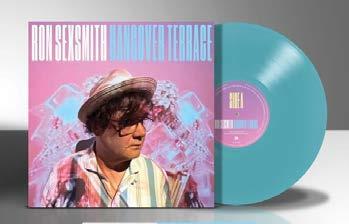
Revered Canadian singer songwriter Ron Sexsmith is heading our way with a great new album under his belt.
By Brian Wise
Call it serendipity but when I had to change my return flight out of Nashville recently it also meant that I was able to not only see Steve Earle inducted into the Grand Ole Opry by Emmylou Harris but I also caught up with Ron Sexsmith to talk about his superb new album, Hangover Terrace, and see him perform a showcase solo set at the City Winery. It turned out to be an unexpectedly brilliant move on my part.
After a ten-hour drive from Virginia, Ron met me at the Hotel Russell - which has a podcast recording studio - on his way to soundcheck. A few hours later he was on stage for an early gig, delivering a riveting 28-song set in 100 minutes with many selections from the new album. The next morning he was on his way to Georgia via Lebanon, Tennessee (the subject of one of his songs) and off for more dates on the USA tour which runs through November. Then, after a few more US dates in December, it is off to Europe on his way to Australia in April. What a trooper!
It’s a decade since Sexsmith was last in Australia, so he has another four albums to add to the repertoire and a whole lot more stories. When he arrives at The Russell he looks no older than he did last time we met, which must have been on his last tour here, and it is hard to believe that he is now 61. Though the passage of time has done almost nothing to alter Sexsmith’s boyish appearance it does seem to have blurred our memories.
“Well, I’m scratching my head,” says Ron when I ask him when we last met up. “I remember meeting you for coffee in Toronto once.” In fact, that was in 2012 when we actually met by chance at a Starbucks when we were both out searching for the release of the Bob Dylan Gaslight Tapes that was then only available at one of the coffee retailer’s stores. Our individual searches through numerous Starbucks stores inevitably had us rendezvousing accidentally at the only one that had any stock left.
But regardless of the hazy details we have been talking about Ron’s music since at least 1995 and his major label eponymous debut, produced by Mitchell Froom (a current member of Crowded House). It’s a contact inspired by the fact that I have also thought of Sexsmith as an exceptional songwriter who has also managed to carve out a sustainable career that has more people discovering his music with every release.
“I feel like what happened with my career is a different trajectory, “I guess you’d say I have a cult following. I can go anywhere in the world and fill a room and people seem to know my songs. But people walking down the street wouldn’t recognise me or would never have heard of me unless they’re music nerds like me or something like that. So, I’ve been very lucky to have that. In certain countries I do better than others. I do better than the UK than I do in my own country. For example, there’s people I know in Canada who are huge in Canada but can’t get arrested anywhere else. So, I just feel really lucky that I have an international career and I’ve been able to build it and the audience seems to be quite devoted and interested in hearing whatever new thing I come out with.”
Since he was last here, Ron has also penned his first novel ‘Deer Life, A Fairy Tale’ and written a ‘yet to be released’ complete musical score for a stage version of the story. This year he also made his theatrical composer debut with the internationally renowned Stratford Festival production of As You Like It in Stratford, Ontario.
Sexsmith’s latest album, Hangover Terrace, is his 18th or 20th studio album - depending on whether you count his first two independently released recordings. Sexsmith has collaborated with the likes of Daniel Lanois, Mitchell Froom, Tchad Blake and Bob Rock but he is reunited with producer Martin Terefe for the new project. Recorded in London’s Eastcote Studio its guests include Ed Harcourt and legendary producer Chris Kimsey who dropped in on a session. (“Apparently he was a fan of mine,” says Ron of Kimsey’s appearance, “but I didn’t know this but I happened to run into him and we were chatting, and next thing you know he is singing on one song.”)
Sexsmith’s songs have been recorded by artists such as Rod Stewart, k.d. lang, Nick Lowe, Emmylou Harris and Feist, and Hangover Terrace contains all the familiar elements that have endeared him to us for decades. There are the gorgeous and occasionally Beatle-esque ballads (‘Outside Looking In’, ‘Angel On My Shoulder’, ‘Must Be Something Wrong With Her’) plus the Ray Davies-inflected ‘Cigarette and Cocktail’. There are the lilting folk-pop songs such as ‘Don’t Lose Sight’ (which might be the best song Paul McCartney didn’t write and record this year), ‘Rose Town’ and ‘Burgoyne Woods’. Then there is the ever-yearning voice that always seems to be underpinned by melancholy while the snapshots of Ron’s life sometimes make you want to give him a hug and say, ‘It’s going to be okay’.
While the lyrics on this album are as personal as ever, they are perhaps now tinged with a slight political bent (‘Camelot Towers’) as well as a definite touch of uncharacteristic anger and defiance on the song ‘Damn Well Please’.
When we meet to talk about the latest album, I wanted to ask Ron about his songwriting influences and who he listens to these days. Who are the people that Ron Sexsmith listens to?
Well, I’m old, right? So, I’m pretty set in my ways. There’s certain people that I always go to. I’m a big fan of Warren Zevon and especially during the pandemic. He was the only one I wanted to listen to: his sense of humor and whatever is his point of view. It made me feel heroic listening to him. I started listening to The Who again a lot during the pandemic because that brought back that they were my favourite band when I was a teenager, with The Kinks. So, those are the people I like to listen to.
What about new artists?
I’m really bad that way. I’m sure after this interview I’ll think of a whole bunch that I like to listen to but I don’t really keep up. I have a friend who brings his computer over sometimes and he plays me some new things and it always sounds interesting to me. But I mostly listen to older things, older songwriters. I still love listening to Randy Newman and Gordon Lightfoot. I don’t go looking for things. Sometimes I’ll hear something that’ll stop me in my tracks and I’ll go, ‘Oh, that’s really good’. But after this interview I’m sure I’ll think of about 10 or 12 people, current artists.
If I asked you about your top five albums of all time would there be a couple that would spring to mind immediately?
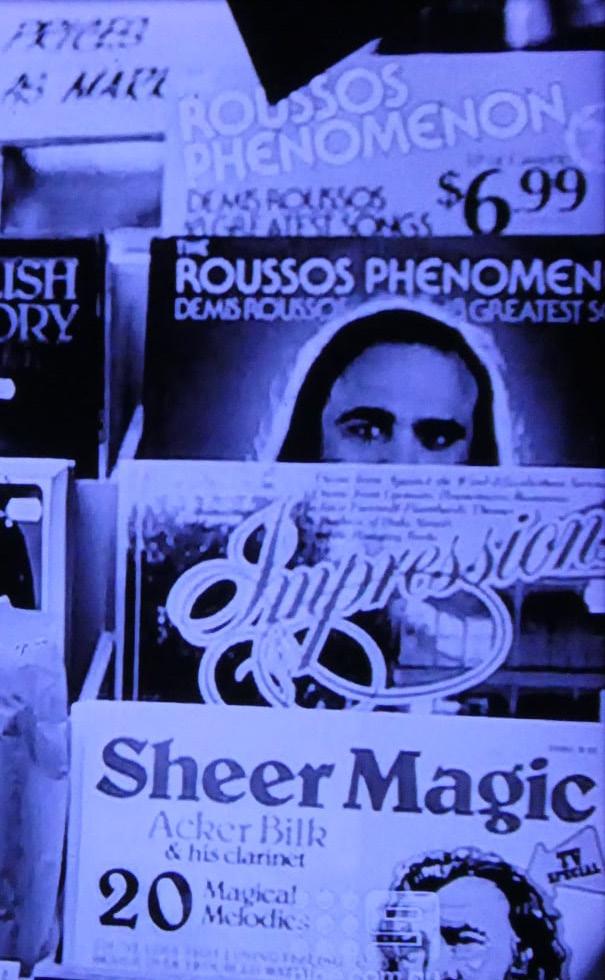
There’s certain albums that were really pivotal for me. Hearing Bob Dylan’s New Morning album, for example, that was the first one I bought. I didn’t know which one to buy. I remember looking through his little section at the record store …..and that one just had his face on the front and I just took a chance on it.
>>> So, that one’s always kind of remained still in my Top Five Dylan records, favourite Dylan albums. There’s a record by Warren Zevon, who I love. It was a self-titled album. It was actually a second record but it was self-titled. I think that’s probably my favourite album of all time. I love that album!
Just the production of it, the song cycle, all about the delusion of LA and all that stuff. I just find it fascinating. There’s an album that Ry Cooder did called I Flathead that’s risen in my estimation as one of my favourite albums of all time and that’s really sweet. It’s a concept album. I’m not quite sure what the story is exactly but it seems to be about a country songwriter who also was a race car driver but it seems to be singing about an America that doesn’t really exist anymore. That’s very romantic and nostalgic. So, I love that album.
Off the top of my head, Good Old Boys by Randy Newman is one that changed my life. When I heard it, I was like, ‘Wow, I didn’t realise you were allowed to say that in song or have just come at you from those different angles’.
But nobody would pick from those that they would influence your lyrics. Is there a danger in songwriters listening to other songwriters and being influenced?
Well, I think, yes, you’re right. I don’t really come at it in the same way that Warren does or Ry Cooder. I think in terms of my song writing that the DNA in my music is very much, I think, Ray Davies. I think I hear him the most in terms of an influence on me melodically and the kind of things I sing about. Although, I think I go way more personal than Ray Davies. Ray is always observing from a distance. He doesn’t really give you too much of himself; whereas, let’s say John Lennon, everything was about himself. I kind of saw myself as a cross between those two - nowhere as good or anything but those people were the ones that made me want to be a songwriter.
It’s interesting to hear an acclaimed songwriter such as yourself talking about other songwriters. We can hear the sort of things you’re talking about - the personal lyrics - on the new album, which is Hangover Terrace. It’s your 18th studio album since 1986 or 20th, if you count the first two cassettes. If you count the cassettes, which I don’t think anybody does but the cassettes were important for me to do. Definitely. In fact, the one cassette I did called Away in 1986 was the first time I ever got any notice from the record industry. I remember there was a guy at Island Records that was interested at the time. He was the one that said, ‘Hey, I can’t work with you if you don’t move to Toronto’. That got me and my family out of St. Catherine’s. But I can’t believe it. I always wanted a body of work and now I have a body of work.
It’s almost 40 years, isn’t it?
Yes, it’s crazy. I don’t think people really start counting until ‘95 when my debut album came out. Nobody really had heard of me before that. But I was already 30 when I got signed, so I really came in under the wire and was so grateful for that. I don’t know where I’d be now if I hadn’t had that break. If Jimmy Iovine hadn’t signed me, maybe I’d still be a courier or something.
The new album is titled Hangover Terrace. At first, I thought it was Hanover Terrace. Tell us about the title.
Well, it was inspired by Hanover Terrace. My band and I were playing the London Palladium last year, which was kind of a pinch yourself moment. So, we’re all in this one of those big hackney cabs when we passed this building called Hanover Terrace. When you’re in a band everyone’s saying something stupid all the time, joking about this and that. My drummer just said as we passed that, ‘Hangover Terrace’. I had a title already. I was going to call my album Corduroy Phase based on this new corduroy jacket I bought that I was wearing everywhere. But when he said, ‘Hangover Terrace’, I thought that’s a much better title because I feel like this album lyrically has a feeling of this sort of hangover that everyone’s been experiencing since COVID and even in the Trump years and all that.
The new album is produced by Martin Terefe, again.
Although we haven’t worked together in a long time. The last time we worked together was 2007. But I had a big show in February of 2024 for my 60th birthday and so all these people from my past showed up. It was really nice. I didn’t know Martin was there but after the show he came up to me and it was like we were really excited to see each other again. That’s what happens when you run into an old producer. I just happened to have these songs. I was in talks with Bob Ezrin, actually, about doing this record. He’s Canadian, but we just had a different vision of how we thought it could go.
But as soon as I saw Martin, I thought, ‘Okay, I think it’s time we got in the studio again’. Because he did three of my previous ones and they’re among my favorite ones, like Retriever and Cobblestone Runway and Exit Strategy of the Soul which I was really proud of, even though it was not successful at all. I just feel Martin knows what to do with me. He knows how to update my sound and give it a contemporary kind of vibe. It’s just very free and spontaneous.
Martin has this thing - he’s got this stable of musicians just roaming around and he knows how to put it together. We are all in the studio looking at each other and we’re all bringing in our ideas. Some producers are more rigid. Martin likes to let things happen.
Robbie McIntosh was someone that I’ve always wanted to work with, who he was in the Pretenders and played with McCartney. I was reading an interview with him and he happened to mention me in the interview and I just thought, ‘I wonder if he would be into coming down and playing on my record’. So, I just took a chance, sent him an email and he drove up one day and he played on four songs. It’s a beautiful sound.
I have to credit Martin for that. Sometimes you make a record and you’re not always sure about what you’re hearing coming back through the speakers. You’re like, ‘I hope it’s okay’. You worry a lot making a record but not with this album. Everything I heard coming through the headphones and the speakers just sounded like a record to me. Everyone was playing so good. I was really happy with this particular batch of songs, and I think I was singing pretty good. So, I didn’t have any of that self-doubt that I normally get with records where I wish I would’ve sang that one better or this and that. Pretty surprisingly, I thought I was satisfied.
I saw Rodney Crowell perform at Third and Lindsley here on a great show. He’s got a new album too [Airline Highway] and it struck me when I was listening to the songs that there’s no reason why a songwriter shouldn’t get better as they aged. People think they drop off or whatever but really it’s a skill that you’d be constantly developing, isn’t it?
feel as presentable anymore. I mean, I’m 61 now. It’s harder to walk out on stage and feel like before.
I think Tom Waits……he’s always writing great songs. Most of my heroes, like Randy Newman, never stopped writing great songs. Warren Zevon on all his albums I love.
There are some that you think maybe, ‘What happened? Did they get lazy? Why was this person so great at this point and the rest of their career they ended up co-writing everything.’ It used to mean a lot to me to look on the back of an album and read ‘All songs written by Gordon Lightfoot.’ That’s what I do. I want people to know when they put that on an album. Those are my thoughts and that’s my music. Not that there’s anything wrong with co-writing or anything but it’s this thing that’s always meant a lot to me.
Well, Van Morrison’s new album is terrific. He sounds great. The two songs I’ve heard sound great and he’s looking good too. I saw a picture of him recently with Jimmy Page of all people. I guess they’re old friends. There’s enough people out there who I love who inspired me, who are still out there doing it, and they’re still great. Maybe their voice has changed a bit, or maybe they look different, which is only natural. But I’ve always found it fascinating how artists age and how their voice changes, how their perspective changes. It’s perfectly valid. Like Gordon Lightfoot in his last bunch of albums, he didn’t sound like he did in ‘76, but I was interested in what he had to say and where he was at in his life, his point of view. So, I do try to get better at all these little things.
“I think I’m singing better than I used to, so I like to think I’m getting better.”
It always bothers me. Every artist has that sort of golden period, their first 3, 4, 5 albums, or whatever, and then they’re forever sort of attached to that. Nick Lowe said that sometimes when you play a show, the thing that frightens the audience the most is when you say, ‘I’m going to play some new songs’ and it shouldn’t be that way. The Stones will make a new album and then they’ll maybe play one song from it live. I get it because people paid big money. They may not have even heard the new album but I’ve never been that type of artist. I’ve never been that big. So, the people generally who are into me, they want to hear the newest things. And because every album for me is a chance to make a first impression, I put everything into every album as if it was my first.
I believe I’ve gotten better at it. I learned so much from Mitchell Froom and other people about structure. I think I’m singing better than I used to, so I like to think I’m getting better. I don’t
When you get to a certain age, maybe 60 in your case, do you reassess things?
I look back and since ‘94, all I’ve done really is tour, album, tour, album tour, and it was crazy. As a musician and especially in the ‘90s I had a family but that all fell apart because I was traveling around all the time and doing all the stupid things musicians are famous for. It felt like a decadence to it, just this lifestyle. I jumped right into it because as a kid reading Creem magazine, hearing all the stories and the debauchery and all that, and that appealed to me, that lifestyle. I wanted to have that, wanted to get on the road. But then I was sidetracked by having kids at a very early age and I was dad for a long time.
So, looking back over my career - I think most people’s life when they look back over their life - I hope they’ll have some regrets because you’ve never read a book or an autobiography where this person was nice to everyone and then they died. It’s a roller coaster of events, heartbreak and whatever it is. It may be not acting so chivalrous at times, but then realising, ‘Oh, that wasn’t cool. I got to make up for that’. I think this album is addressing a lot of that feeling.
There were just times where I think my life was off the rails and I was never that famous, so nobody was really paying attention, but it’s true. So, I’m really grateful that I find myself now. We have this great life in Stratford, Ontario with some good friends. But it’s just acknowledging that this is where we are and looking around and finding strength in whatever remains.
Hangover Terrace is available now. Ron Sexsmith will be touring Australia in April 2026.
MARTIN HAYES. FIDDLE PLAYER.
It’s a simple moniker given by his management company, but it hides the complexity and beauty behind his interpretations of traditional Irish music.
By Bernard Zuel
This may be down to remembering The Life Of Brian better than other reported versions of the sermon on the mount – fact check aisle three! – but there’s always been a soft spot in my heart not just for cheesemakers but the manufacturers of all dairy products. Yes, even more than for the meek, who admittedly have had a hell of a time.
So there’s reason to warmly greet the great Irish fiddler Martin Hayes who grew up on a dairy farm in Maghera, east County Clare through the 1960s and ‘70s, though that was only part of his story given that by his teens he was a regular music maker well beyond his town, often enough with his father, PJ Hayes, a noted fiddler himself.
Hayes has talked about coming home late at Saturday night/very early Sunday morning from a gig somewhere and being sent off to milk the cows and then mass. It’s a story that echoes ones my mother told of leaving all-night dances in Mauritius and going straight to mass (and then, thank god! breakfast).
As the Mauritians and Irish could tell you, dances and mass, indulgence and prayers, music and repentance, Saturday night and Sunday morning, were not two separate things. Hell no, it was just one rolling weekend event for the Catholics (not just the “good Catholics” as at that time there were two types of people: Catholics and the damned) because this was life.
“Going to mass in those years in Ireland, you couldn’t really have the discussion about whether that was optional or not,” Hayes says wryly “Not even from a religious point of view, but ‘the Hayes weren’t at mass, what happened?’. In fact, in Ireland there was a period where Irish nationalism, language, music, religion, agriculture, culture was all one thing. You couldn’t take the elements apart and have them individually.”
All these were aspects of the Irish identity and theoretically you couldn’t be Irish without understanding and respecting all of them. Which might make things a bit insular. Quite some decades on, has Hayes – a six-time winner of the All-Ireland Fiddle Competition, holder of an honorary doctorate from the National University of Ireland, and artistic director of the Masters Of Tradition Festival – been able to separate the music he makes from that identity?
“Well, in a way, yes, and in another way, no,” he says. “It’s always traditional Irish music: it comes from there, it comes from those people, it comes from the lives of generations of people before me. However, I did leave Ireland in my early 20s and lived in America for like 26, 27 years almost. In that period, I thought a lot about the culture and the music because sometimes you need a bit of distance to be able to think about that. It became quite important to me that the music could just stand on its own two feet, as music. That it didn’t need the support of ‘well if you’re not familiar with Irish culture this music won’t make sense and if you’re not from there you won’t be able to play it’
“One of the things I think about this music, traditional Irish music, is the first thing it is music; the second thing it is traditional; the third thing it is is Irish. So, the first thing is music, and that has been an important distinction for me.”
Folk and blues are ostensibly music of the working class, farmers or labourers or those who have to earn a living, and music is for community and pleasure, and there are few more basic working-class people than musicians who mostly will never make much money and probably envy dairy farmers. But one aspect of Hayes’ work is crossing formal and informal borders, playing cailies or concert halls, with pickup musicians or the classically trained, people who see the traditional methods as the real route and those who think formal training elevates.
Renowned for bringing as much emotion as technique to the music, he’s played in grand concert halls such as Muziekgebouw in Amsterdam and next year has booked in Carnegie Hall, he’s recorded with the cellist Yo-Yo Ma and the bass player Sting, shared stages with numerous orchestras, and will tour Australia in February with guitarist/ composer, Kyle Sanna. Is there always respect across these lines?
“When I was younger, I didn’t feel there was that respect,” says Hayes. “But I think over the years there has been a growing respect. I’ve done things with the National Symphony Orchestra in Ireland in recent times and when I meet the players they’ll say ‘oh my kid is learning the pipes’ or ‘I play a bit of bluegrass and some Irish music myself on the weekends’. Fifty years ago, that was not the case, absolutely not the case: there was a class structure in the worlds of music. I love that that is breaking down and I love that there is communication across the divides.”
Even if they’re not Irish!
“One of the things that has enriched Irish music over the years is actually that dialogue,” he bats back genially. “If you go back to the ‘20s and ‘30s in America, the early recorded traditional music there was a relationship in Ireland with the popular music of the day You can hear a ragtime influence almost in the way Irish music was recorded and played. Then in the 60s and 70s the whole folk music revival – guitars, bouzouki’s, folksongs – gradually wove its way into traditional Irish music. And those were all radically different sounds from what had come before but now we accept them as the normal sounds of traditional Irish music. I like the idea that traditional music is a constantly evolving process and that it is continually in dialogue with other forms, and learning from that, and that other forms are learning something from us.”
That said, tonight, after this interview, our man has a concert of two: him and a concertina player “where we will just play tunes”. Which does raise one question: if one night he is playing with Yo-Yo Ma and the next night he plays with a traditional group, does he say that on the first night he was playing violin and the second night a fiddle?
“No, I’m pretty much always a fiddler,” says Hayes. “My management company are a big classical music agency, and they have this long list of musicians: conductor, conductor, violinist, violinist, violinist, and right in the middle of all that there is one, Martin Hayes fiddle player.”
Why would he differentiate?
“To begin with I didn’t have any formal training so I didn’t come through any of the routes a normal violinist would do. Secondly, violinists are typically classical musicians and are associated with the genre, so if I say violinist the assumption is I play classical music straight off,” he says, before offering a wry smile as he explains that “the only time I use the word violinist or violin is when I’m getting on an aeroplane because if I say a fiddle, they will actually assume it’s not that valuable; if I say violin they won’t even touch it.”
In late-stage capitalism, a long way from the Mount of Beatitudes, that really is the final word.
Martin Hayes is touring Australia in February.
Neko Case. Photo by Ebru Yildiz.
After nearly three decades Neko Case remains restless, curious, and still refusing to repeat herself.
By Nick Corr
For nearly three decades, Neko Case has carved out a space in American music that’s entirely her own. Equal parts folk poet, country storyteller, and avant-garde experimenter, Case has long defied simple genre tags. Her latest album, Neon Grey Midnight Green, arrives as both a deeply personal document and an expansive celebration of music itself. Playful and fiercely independent, the record shows Case still restless, still curious, and still refusing to repeat herself.
“It’s not really any different,” Case says of producing the album herself, from her Carnassial Sound studio. “I’ve produced most of my records. It’s always collaborative. I just decided I’m going to credit myself like a white man, not that anybody I’ve ever co-produced with wasn’t deserving. I don’t mean it like that. I just mean this one I did in my own studio. It was a lot of work, and it took a long time. And, you know, I’m the one with the veto power.”
That veto power gave her license to lean into a looser, more live feel. “There’s less overdubbing than I usually do. I used a lot of scratch vocals as the lead vocals, because I wanted the cohesion of us all playing at the same time.”
Though Neon Grey Midnight Green features Case’s unmistakable voice and songwriting at its center, the spirit of collaboration runs through it. Songs were cut with a focus on capturing moments in real time, rather than layering countless studio takes. “This record is very much about musicians,” Case emphasizes. “I wanted as much of us being together as possible.”
The result is an album that hums with immediacy. There are moments of intimacy - hushed piano lines, scratch vocals left raw - and passages of unexpected grandeur, where the full band swells around her voice like a tide.
“Winchester Mansion of Sound,” in particular carries emotional weight. Written as a tribute to her friend and collaborator Dexter Romweber of Flat Duo Jets, it began long before his death in 2024. “I just worried about him a lot,” Case says softly. “It started out as something completely different. I had written a song that was much more contemplative, and I played guitar on it, and I was playing much faster than I was singing, just 16th notes or whatever, and it just didn’t fit the song. I took the band out and asked Steve Moore to just play the piano on it and that’s what it needed. But then the ending, the way it comes back in and it picks up, I love that. It becomes like a little parade at the end.”
Although the album is being presented in much of the press material as a “tribute to musicians,” Case says the theme wasn’t deliberate. “I never know what the theme is until I’m pretty much done with the recording process. The songs - I can tell what’s related, but some things aren’t. And then even sequencing a record, a song will suddenly be related to the other songs by virtue of that. There are so many factors that make a song part of a group.”
The album’s first single, “Wreck,” showcases Case’s knack for bending familiar song forms into surprising shapes. “Yeah, it’s kind of a multipurpose love song,” she explains. “It’s about what love does to you, whether it’s about a person or your favorite band or how you feel
seeing a person singing on stage your favorite song. How that love will push you outside your comfort zone into a kind of a place where you express yourself a lot more freely than you normally would, and you watch yourself doing it like you’re outside your body and you just say, ‘Well fuck it, I have no control over that.’”
Case has been busy. Earlier this year she published her memoir, The Harder I Fight the More I Love You, an intimate look back at her life and career. While you might assume that writing such a book would bleed directly into her songwriting, Case is quick to correct the record.
“I’ve been working on the record for a lot longer than I’ve been working on the memoir,” she says. “And writing the memoir wasn’t something I set out to do. It was something I did because it was the pandemic, and I was asked to write a book. I thought I was going to write fiction, and then they said, ‘No, we want you to write a memoir’. And I was like, ‘All right’. It was difficult in the fact when you already know your own stories about yourself, you just keep wondering if they’re really boring. It’s like, how bored is everyone going to be having to read? And so I had lots of kind help with people going, ‘No, it’s not boring. Just keep going. Just keep going’. I’m like, ‘okay, sure’.”
That mix of doubt and persistence echoes her approach to making music. “I’ve never been a person who can make a record in two weeks,” she says. “I’ve always had to go back to the drawing board, and I’m also not good at focusing for super extended periods of time. I can’t finish things unless I can step away. I always need perspective.”
Part of what makes Neon Grey Midnight Green so striking is its musical diversity. One track might lean into twangy Americana, while another evokes jazz textures or even Bulgarian harmonies. “I’ve never felt like just one thing,” Case admits. “I’m too close to them. Nothing is ever so on purpose for me. Something like ‘Neon Grey Midnight Green’ is a song that I wrote because I really wanted to play baritone guitar and I really wanted to try to make some Bulgarian harmonies. So sometimes things are super on purpose, but I’m more of an eyeballer than I am a measurer.”
That “eyeballer’s” instinct keeps her catalog fresh, unpredictable, and delightfully resistant to pigeonholes.
Case has also been at work on the music for a Broadway adaptation of the 1991 film Thelma & Louise. It’s a project that’s stretched over a decade, but one she’s deeply invested in. “I never would have done it except that Callie Khouri, who originally wrote Thelma & Louise, was the person who was doing it,” Case explains. “I’ve known Callie for a long time and I trust her deeply. I don’t think there’s any other story necessarily that would have made me go, ‘Oh yeah I could do that’ But Thelma & Louise, I felt very attached to and I just feel like I would kill for those women.”
For Case, the Broadway world has been a refreshing change of pace. “There’s so many factors, and it’s such a huge world. I’ve been working on this thing for 10 years but I still know nothing about Broadway. I just know the tip of the iceberg. It is very different from working on my own records where I have the veto power and I’m still the person who makes the decisions. This is something where I don’t make all the decisions, and it makes me feel so much more capable somehow. >>>
>>> I love being used like a tool or part of a machine. It makes me feel very useful, and I really enjoy it. It’s fun and it’s super collaborative. With the rest of the creative team, it’s a lot easier to make decisions if you are able to not take things personally. It’s very juried and it sounds like it would be something that would be hard to do, to just kill your darlings every second of the day, but really it just takes so much weight off of your shoulders to not have to make every single decision. It’s actually quite liberating. I like it a lot.” The show is aiming to premiere in next year, “Don’t hold me to this but they’re trying for 2026,” she says. “I don’t know where it’s gonna happen, we’re working on it in London right now so the likelihood that it’s London is pretty high, but things change on a dime so who knows.”
For Case, the variety of projects keeps her creative spark alive. “Yeah, that’s pretty fun. I quite like it,” she says. “Just when one thing will get a little too much, you go to the other thing or the New Pornographers
will go on tour. And it’s like, ‘okay I don’t have to think about that thing. I can do this other thing’ and feel capable and useful over here. It’s the same as like having to leave the studio for a while and take breaks during recording to just maintain the perspective.” Fans of long-running indie supergroup The New Pornographers can rest assured more is coming. “I know that there’s another record in the can. It’s awesome and brilliant. I don’t know exactly when it’s coming out yet.”
Case’s playful streak is also evident in the album cover, as she explains “I made a costume of my favorite tree, and that’s me wearing the costume, just without the hat part. There’s a tree in my front yard. It’s a Weeping Norwegian Spruce and I’m badly in love with that tree. And I just thought it would be funny to dress as my favorite tree on the cover”.
Compiling five songs from those first two releases with five brand new compositions, together the two respected artists have established a freeflowing aesthetic that’s equally earnest and lighthearted, with Morrison providing the thought-provoking lyrics for most songs and Snarski responsible for the stately music.
The real outlier in this scenario is the fact that - despite a celebrated career stretching back to her earliest forays in the Brisbane punk scene of the late-‘70s - the collaboration marks the first time that Morrison has ever recorded songs that she’s had a hand in writing.
“Lindy will downplay this because she’s excited by her drumming on the record, but I think it’s been great for everyone to see what an incredible songwriter Lindy Morrison has turned into over the course of time,” Snarski offers. “Now, you may or may not know that Lindy’s been sort of running songwriting
workshops for a number of years and has done it for ages, but never really felt the need to do it herself because she didn’t think it would be released or, as she says, published. But here we have it.”
From Morrison’s perspective she seems to be relishing the opportunity provided by SnarksiCircusLindyBand to fully express herself in songs which are then launched into the public domain.
“It’s really, really wonderful,” she smiles. “It’s so good to be supported, to be able to write, and so good to be supported to be published, which makes all the difference really, because if you want to put the work in, you want it to be published.
“I’m really happy with the way the songs worked out. I’m very fortunate that Rob’s such a great melodic writer and also can contribute so much to just changing the direction of a song with the addition of some
of his own lyrics. I’m really grateful for the opportunity to express myself lyrically and musically.”
While Snarski’s trademark velvet vocals feature on many tracks, a number are sung by other band members (Shane O’Mara, ‘Evil’ Graham Lee and Dan Kelly all contribute at junctures) or guest vocalists invited to contribute during the sessions - including Lili Alaska, Amanda Brown (The Go-Betweens) and Romy Vager (RVG) - and Morrison admits revelling in hearing her words brought to life by these disparate voices.
“It is quite special,” she continues. “I mean, it’s strange because you kind of detach yourself a bit when I hear it sung and think about it as a whole piece rather than as something you’ve written yourself - you’re listening to all the instruments and thinking about the whole work rather than just the lyrics or just the music. But overall, I really, really like it.”
“And the demos with Lindy singing were great, too,” Snarski interjects. “Look, Lindy again will downplay this, but she can sing her own song, she just has a great fear of the vocal mic in the recording studio. Now, I think it’s quite compelling. Lindy would argue otherwise. It depends what you’re listening for.
“Recently, Jim White’s released a record. I wouldn’t consider him to be a singer’s singer, but what he’s created is something that’s really quite compelling - you know, you just can’t stop, it’s just, ‘What the hell?’ - and you get drawn into the song.
“And that’s something that maybe is missed a little bit from music today. We’re all trying to maybe polish things up a little bit too much, where I think a lot of the character is created within writing the song and comes from the songwriter.”
From Snarski’s perspective he’s also relishing the rare opportunity to participate in a
project where his own voice isn’t the main focal point and is enjoying taking a relative backseat for once.
“Absolutely, it’s been wonderful,” he admits. “And it’s been something that I’ve been doing progressively as I’ve made records, asked other people in to sing - whether it be sort of Romy Veger or Gareth Liddiard who’ve guested on my recent solo albums, or Peter Milton Walsh from The Apartments who has sung on my records as well. There’s something I enjoy more about being able to listen to those songs when my voice is taken out - I feel a little bit more removed.
“When you’re a singer or when you’re a musician - I don’t know if it’s the case with Lindy - but quite often when I listen to something, all I’m left with is how it can be improved or what I didn’t get quite right so it’s ultimately unsatisfying. Whereas when I listen to someone else do it, I can still hear those things, but it doesn’t matter as much.
“I don’t know, maybe I’m too a harsh critic of myself, but yeah, I really enjoy hearing other people sing the songs.”
Mike Reid & Joe Henry. By Michael Wilson.
It was a chance encounter during the Americana Festival in Nashville last year when Joe Henry told me that his latest project had him working with a former NFL footballer turned country singer songwriter. It was an interesting surprise. I had arrived very early at The Analog on Broadway to make sure I got a seat to see T Bone Burnett, a longtime friend and mentor to Henry, and his ensemble play his new album in its entirety. The gig turned out to be one of the highlights of the entire Americana Festival.
Mike Reid. Courtesy of Mike Reid.
Henry and I had the chance to have a brief chat, an update on his health (he’s fine) and news of his forthcoming album with Mike Reid, former college football Hall of Famer and a defensive tackle for five seasons with the Cincinnati Bengals. Injury ended Reid’s career prematurely and, perhaps unusually, he went on to pursue the possibly safer and far less lucrative career as a musician. Reid’s songs have been recorded by Ronnie Milsap, Willie Nelson and more. ‘I Can’t Make You Love Me’, his co-write with Allen Shamblin, recorded by Bonnie Raitt and one of the great ballads of all time, might have been achievement enough for other writers!
Joe Henry’s reputation as a singer songwriter has been established over the past four decades since his debut, Talk of Heaven, in 1986. A few years later he teamed up with producer T Bone Burnett for the beautiful Shuffletown (still mysteriously not re-released anywhere), a teaming that must have also inspired Henry to also get into production. His credits behind the panel, including at least three Grammys, are almost as awe-inspiring as his mentor: Mavis Staples, Mose Allison, Solomon Burke, Bettye Lavette, Elvis Costello & Allen Toussaint, Loudon Wainwright III, Ramblin’ Jack Elliott, Bonnie Raitt, Rhiannon Giddens and even Australia’s own Guy Pearce. And that’s a short list!
Now with 17 solo albums under his own belt, Henry has ventured into his second collaborative album in a decade, following Shine A Light: Field Recordings From The Great American Railroad, recorded with Billy Bragg.
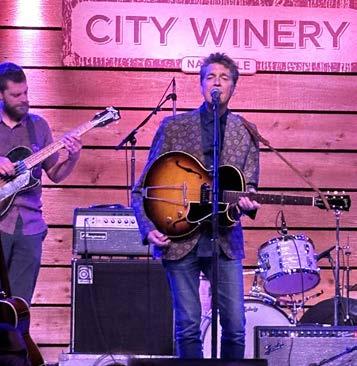
Life & Time was released by Thirty Tigers Records to coincide with Americanafest and, exactly a year after Henry first told me about the project, I am sitting at the City Winery watching him on stage with his guitar and Mike Reid sitting at the piano bringing the album to life. With them is Henry’s son Levon playing saxophone. They are about to embark on a tour to promote the album with Joe taking a backseat in the vocals department, although he does sing some songs during the gig. It’s as gorgeous as the album with songs that invite the listeners to immerse themselves in the atmosphere that they create. Reid’s voice immediately reminds one of Leonard Cohen: weathered, with a gravitas that is nothing like his own early solo recordings. That makes sense when you consider that he is now 78 years old and his last major label album was 33 years ago. But at the same age, Cohen still probably considered himself ‘just a kid with a crazy dream’! Maybe this time around it is a crazy dream for Reid but with Joe Henry he has certainly managed to create something special.
I managed to catch up with Reid and Henry at the Thirty Tigers office in Nashville, the afternoon after Henry received a Lifetime Achievement Award presented by Rodney Crowell and Rosanne Cash at the Americana Honors & Awards ceremony.
“Being given something called a Lifetime Achievement Award when you’re still trying to achieve something, I was just like, Don’t put me on a shelf,” he laughs when I mention his accolade. “I hope you’re not trying to put me in the vault or in the museum already because I still think of myself as in evolution creatively and it’s wonderful to be acknowledged. I didn’t feel like I was being put in a box. I felt that they were putting a light on me and I appreciated it. It was great being introduced by, not one, but two people that I hold in incredibly high regard professionally and who are enormously important to me personally.”
So, how does a Grammy-winning producer and Lifetime Achievement Award musician team up with a former footballer turned country music songwriter? As it turns out, Rodney Crowell had a lot to do with it.
Joe Henry @ City Winery. Photo by Brian Wise.
“We met at Rodney Crowell’s songwriting camp here in Nashville in August of 2022,” explains Henry, who adds that he and Reid sat down together for dinner one night and “instantly fell into a conversation about the poets that we loved in common. And we just kind of haven’t stopped talking.”
“Background is a better word. Career is a word I try to avoid for some reason,” says Reid when I ask him how he got into songwriting. What did Churchill define history as, ‘one damn thing after another’.” My background has been pretty much one damn thing after another.”
How does a successful NFL player, who is in the college football Hall of Fame make the transition into a successful country music songwriter and find himself in the Country Songwriting Hall of Fame?
“I’ll tell you, it’s not an intentional transition,” explains Reid. “I am extraordinarily lucky that I have been able to make a life out of two things that I love. I certainly fell out of love with the athletic life.”
After half a dozen knee surgeries Reid decided to retire. “I wonder if I should have played longer,” he says, “but if I rehearse reality as a dear friend of mine says, I don’t think I had another game in me. So, it was not, ‘I’m now going to pursue music.’ I started piano lessons when I was six years old but no one would’ve heard me and said, ‘Oh, that kid really has a special talent’.
I was not necessarily given the skill and the talent but nature did provide me with a relentless insistent love and curiosity about what this thing is and whether it was a Beethoven Symphony, whether it was Stravinsky, or whether it was Paul Simon or Joe Henry. Always curious.
“I had a marvelous conversation with Steven Sondheim, the great theatre writer who believed that great lyric writing was an acquired talent that if you worked hard enough at it. The thing that put him above, not only was it talent, but that I think he outworked everybody. So, I always tell young writers talent and commitment are not enough. You have to be brutally honest with yourself and say, are you sufficiently compelled to show up. Eighty per cent of the deal is showing up. You got to show up - even when the odds are telling you, ‘Hey, come to your senses, you’ll never achieve anything.’ Common sense has to be overcome!
I lived in Cincinnati. Nashville was a only four hour drive but it was like Mars to me because I never listened to country music. Nashville was really a song publishing town as much as it was country music. So, I had to move there. I’d just gotten married and [got a publishing deal] for a hundred dollars a week on the condition I moved to Nashville. While I was pondering that, my wife packed up the car and said, ‘I’m going to Nashville. Are you coming with me?’ So, we ended up in Nashville, and at that point, it’s one step, one foot in front of the other.”
Reid became a very successful songwriter, released several successful solo albums. Then, after his second album in 1992 there was a twodecade hiatus before a follow up.
“That’s very kind,” laughs Reid when I mention the ‘hiatus.’ “I was having a wonderful time being a songwriter. Joe’s an artist. I’m a worker bee. I’m curious and I love this thing but I would never ever consider myself an artist. So, I love going to work at this thing. I had a perfectly wonderful life. A couple of little kids.”
Willie Nelson had cut a song of Reid’s and the head of CBS offered him a recording deal. “I wasn’t on fire to do that. I got out there after a couple of records and saw what was required of that life. I had that one big hit [‘Stranger In My House’]. In two years of touring I had written two songs and when I would go out on the road when my daughter was little she would break out into a fever. So, I just thought, No. I was a little long in the tooth even then to start to be an artist!”
While Reid might not consider himself an artist I would argue that the album that he and Henry have made is itself a work of art because it sounds so beautiful. What did Henry think when he first heard Mike singing?
“Well, the best example I can give you to my response to hearing him was that I would send him, and still do, complete lyrics,” responds Henry. “He sends back not only a finished song but a beautiful recording of it. I was so moved by how soulful his singing and playing are.”
Henry adds that their first recording session produced twelve songs in one day and that at first Henry thought he, not Reid, would be singing. Turns out that it was Joe’s brother Dave, a renowned screenwriter and author, who convinced him otherwise.
“I had versions of myself singing these songs and I had versions of Mike singing these songs there in front of my brother,” explains Henry. “I realised that when I wanted Dave to hear what was really going on, I didn’t play myself singing these songs. I heard myself say, well, if you really want to hear what this is, I’m going to play you Mike Reid singing them. Then I understood in a moment that I was going to pivot and I was going to ask Mike if he would allow me to finish a record around the demos that he had sent me.
“Even though I love to sing and I love to play I am not performing on a record I’m producing because I don’t want to lose my aerial view The lifeguard has got to stay above the water to see what’s going on. If I’m chin deep in the same water that everybody else is in, I’m thinking about my own performance. It takes me out of just being a proxy for whatever audience this music may ever have. So, I protect that perspective by not putting myself into the frame. I could be like Hitchcock and just walk through at some point and add something. I do play acoustic guitar on one song, which is called ‘History’, which is a song that’s particularly a favourite of mine. But otherwise, I like to just stay a free agent as a listener. I think the music needs me to.”
The closest comparison I can come up with to explain the sound and the themes of Life & Time is perhaps a latter-day Leonard Cohen record, an analogy that I put to the duo.
“I’m flattered indeed,” replies Reid. “All of the songs that are on Life & Time had been written before there was any idea that there may be an album here. So, that I know when I took Joe’s words and I was working with him in my little garage workspace I wasn’t thinking of in terms of a record at all. I was just saying, this man has sent me these brilliant words that I find very difficult for me to talk about and what they mean to me. I’m extremely protective of Joe’s words.
“I would take them out into the woods on a walk, get away from a keyboard, get ‘em out into nature. See if you can hear the atmosphere of the sound of these words. Then I might come back into the garage and very gingerly get to the piano - but not right away. We were trying to find what seemed….. something maybe the genuine. Maybe that’s the best word. Something that feels genuine. Not the truth, not authentic. Those are judgments.
Then the idea of an album came around and if I’d have known what he was going to get me into I would say, are you out of your mind at this stage of my life? But it started; the snowball started down the hill and he kept pushing it. So here we are.”
Interestingly, the title of the album is Life and Time. It’s Not Life and Times. There’s a Difference.
“There is a difference,” agrees Henry, “and thanks for noticing. Just the phrase, life and time, it’s like time as a concept. It’s not time as in how many days, weeks, or months is the journey of this particular narrative. Partly what we’re observing in these songs, I think is an awareness, our characters who are aware of the way that time is both
fleeting and frightening and mind and heart expanding. Time is an element. Time is a concept.”
I suggest to Henry, who has in recent year overcome some significant health challenges, that when you’ve been through certain things in life or when you reach a certain age time becomes much more important. That you don’t think of the passage of time when you are young because you think you’ve got all the time in the world, but you reach a point in your life where things happen to you, and you realise that’s not the case at all.
“Yes, few things happened to us,” he responds. “I know that becoming a parent, which I first did 34 years ago, made me really aware of the precious nature of time in my life passing and what it meant to be committed to another human being. No secret to you that I dealt with an illness. Of course, that is a sobering reminder of time but to which I might say to the universe I read and watch movies, ‘God damn it. I already know what happens.’ I don’t really need to be visited upon in this particular way to learn this lesson. I know how this goes already But yes, it makes it vivid.
The album’s opening song ‘Sleeper Car’ has the line, ‘Is this is how real life begins. How does it begin? Is this our real life?
“I think that’s an absolutely wonderful question,” enthuses Reid. “I’ve dipped my nose into a little bit of Jung lately, and he would say - I hope that I’m interpreting this right - as you get older, the desire, if you’re engaged, you desire to wake up to certain aspects of oneself.
So, the question you ask is this, my life, is this my life? I think it is because I get out of bed, I go across to the garage and make coffee and text Joe. We text over coffee. But one never knows. One never knows. I do know this. Was it Emerson, who was it that said nothing so focuses a man’s mind like knowing he’s going to hang in the morning. When you get up to where I am it becomes very clear that life is a finite proposition. And the fact that it will not go on forever is where the depth of its meaning is.”
There is a lot about time on the album, as its title suggests. On ‘Leaning House’ the lyric reads, ‘the voice of time that breaks….”
“The voice of time that breaks in mine and will not let you go,” adds Henry, finishing the line. “Hearing within someone’s expression the passage of time, the fears that we all carry, the catch in one’s throat in moments both frightening and deeply profoundly emotional. I think
we can hear time in all those ways that life catches us flatfooted in moments.”
‘The Bridge’ features Bonnie Raitt on backing vocals. Raitt volunteered to appear as soon as she heard about the project. The lyrics are based on the emotional story of one of Henry’s friends.
“It’s based on a true story of a dear friend of mine in Dublin who lost his young wife to an aggressive cancer in early 2020,” he explains. “He shared a story with my wife, Melanie and I when we were staying with him in Ireland.”
There was a rare snowstorm in Dublin and authorities warned that it going to be dangerous and for people not to leave their houses and everybody to shelter indoors.
“They didn’t and went out on a walk together in this magical snowfall and stood on a bridge, a literal bridge together over a canal in Dublin,” continues Henry, “and had their first kiss there understanding that something was happening between ‘em.
“Then I just sort of took what I observed that he was a man trying to reconcile himself with this enormous loss and this memory that he carried around of them out that night in a clandestine fashion, walking the empty streets of Dublin in a snowstorm.” The last thing he told me, which is not in the song, is that they passed by an old pub and one of them made the comment, ‘Wouldn’t it be amazing if we could just sit and have a whiskey together by a fire.’ Then they opened the door of this pub that they assumed was locked tight to a completely packed pub of people, kind of euphoric out against orders in this magical snowfall, talking, singing, drinking, whiskey, fire burning. Then they just got enveloped in this incredible scene after this emotional moment between the two of them alone on the streets.”
There is also the song ‘History’ with the beautiful opening lines, ‘My room at the St. John Hotel looks out over the sea, the ruined railway station, the dry ice factory.” As soon as I heard that it evoked memories of ‘Chelsea Hotel’ by Leonard Colen.
“Oh wow!” exclaims Reid.
“Did not think of that,” says Henry. “But I love that you did because I love that song. I happened to be in Denver, Colorado, to produce a record. I had arrived in the late night. I had a flight delay and got let into a hotel room and pitched darkness. I couldn’t see where I was.
The next morning I woke up and opened the curtain and there was a snowstorm in process. The hotel didn’t have as nice as a musical name as the St. John Hotel. I can’t remember what it was called but I was in a hotel room, and I literally was looking out on the ruins of an old factory with a train track running through it that had two brick chimneys and painted on these chimneys faded white letters it literally said Dry Ice Factory I probably laughed out loud. I just thought, it’s irresistible. I can’t just leave that laying there. I just quickly, before I had to go to work that day, the first day of a record project, I just scribbled something down and sent it off to Mike. I think about 36 hours later, I had the recording back from him that it’s the recording on the record.
It’s part of it, just the piano vocal.
The same song also contains the line, “This country lives it’s life enflamed.’
“Maybe it’s the fact that my country is on fire right now and deserves to be for who we are and how we’re behaving,” says Henry. “I’m not always so literal, but Goddamnit, this country lives its life completely inflamed…..
I do tend to be a bit of an optimist, and I do believe in the basic goodness in most people,” adds Henry. “That doesn’t mean I think every person is going to become the best version of themselves, but I do think that there’s a lot more good people than not.”
Life & Time by Mike Reid & Joe Henry is available now via Thirty Tigers Records.
Mike Reid & Joe Henry. Photo by Michael Wilson.
STILL FLYING
Freedy Johnston’s seminal 1992 album Can You Fly has been reissued, and the acclaimed songwriter revisits it with Nick Corr.
Freedy Johnston has long held a reputation as one of America’s quietly brilliant songwriters, crafting literate and melodic songs that blur the lines between folk, pop, and rock. This year Johnston’s seminal 1992 album Can You Fly made its long-awaited return, remastered and reissued for the first time in 25 years on vinyl.
Rhythms spoke to Freedy from his home in New Jersey about his career and in particular revisiting his landmark album, which brings both pride and perspective. “I don’t listen to my records, but I’ve had to listen to a little bit of it because it’s been reissued. And I’m completely behind that kid from 33 years ago. I can see why people like it. I worked hard on the lyrics. I’m really proud of it. I’m glad it’s out there on vinyl.”
Originally released on Bar/None Records, Can You Fly was Johnston’s breakthrough. Co-produced by Graham Maby - best known as Joe Jackson’s bassist - the record features a roster of talented musicians, including drummer Brian Doherty (Ben Folds, They Might Be Giants), Syd Straw who duets on ‘Down In Love’, and Marshall Crenshaw, who lends his guitar work to the track ‘Remember Me.’
The album includes the singles ‘In the New Sunshine’ and ‘The Lucky One,’ the latter later covered by Mary Lou Lord. While ‘California Thing’ appeared on the soundtrack of Heavy, the 1995 film starring Liv Tyler and Deborah Harry. The new remastering was handled by Scott Hull (Steely Dan, John Mayer).
From its first track, ‘Trying to Tell You I Don’t Know,’ the album carried a personal weight as Johnston famously sold his family farm in Kansas to fund the recording. A story immortalized in that opening song. Reflecting now, he admits, “It was necessary to find more money if I wanted to continue the album but I didn’t have to do it that way I am grateful that that story ended the way it did with my relative justification for selling because I’ve made a career out of it. If I had failed it would have really affected my life. Because selling inherited farmland in Kansas just wasn’t done. It was dumb. I should have just borrowed money against it, but I didn’t.”
Three decades later, Johnston returned to the site. “The summer of 2024 I painted a mural in my hometown of Kinsley with the help of the state of Kansas. We went out to the farm about 15 miles away. I did not realize the old house is just flattened. And I drove by the spot where I knew it was, there’s no trees, there’s no house, there’s just a metal pipe sticking out of the ground. So I picked up a pound of the dirt and brought it home.”
By Johnston’s own account, Can You Fly marked a turning point in his songwriting. “I started writing songs when I bought a four track in 1982. I wrote a whole bunch of songs, and they were all bad. A lot of them are available on The Way I Were. All those songs are just trying to get to a good song. They’re experiments toward that. The reason that it seems like it all happened at once is it was a tipping point. I’d been writing a lot of songs, and finally I figured out how to write a good one.”
Freedy Johnston. Photo by Dina Regine.
The record’s eclectic cast of players gave it added texture. “Mark Zoltak was very key in casting the record. He brought Kenny Margolis (accordion) in, he brought Graham (Maby) in, he brought everybody in. That’s how the Syd Straw connection came in. I had this half-finished song that I wrote it to do a duet with. She came in the studio and sang it. The same with Marshall (Crenshaw, lead guitar). He came in, played a guitar solo and left. There’s a lot of folks on there, but then the band, you know it was two separate bands. Can You Fly was recorded in two separate periods. So, there’s two separate bands so it makes the record have a little more breadth.”
Despite conflicts during its making, Johnston ultimately reclaimed the album as his own. “For a while I had trouble listening to the record, because I had a lot of personal disagreement with people who made the record. Then I realised I wrote every one of those goddamn songs, and I sang every one of those songs, and so it’s my record. I know that it sounds great because of the great players.”
Johnston’s musical rise wasn’t typical. “I was a typist in New York when I got my record deal. I liked my job as a word processor at an architect’s office. I had benefits, I had friends, I had a girlfriend. It was great. I wasn’t a professional musician. I was 30 years old. I had hardly ever been on stage. I certainly didn’t know how to tune myself. Most of my friends had been in bands for 15 years already. I came to it really late.”
That late start didn’t prevent him from signing with Elektra Records, where he released four albums, including his most commercially successful, This Perfect World (1994), produced by Butch Vig. The label experience was intense. “I know that I owe Elektra a lot of recoupable that I’ll never pay because they tried really hard. They spent a lot of money. If it hadn’t been for Elektra, I’d still just be playing and nobody would know me. They really pushed it, and I didn’t use it well. I’m not gonna regret it… Hindsight is 20-20. I’m just the luckiest guy in the world. I got a record deal in the 90s, and that was enough for me when that happened.”
Butch Vig also shaped Johnston’s vocal style. “My voice changed with the Butch Vig record. Butch Vig changed the way I sang and approached recording.” Vig even played drums on Johnston’s signature song ‘Bad Reputation.’ As Johnston recalls, “He plays
Reputation. I didn’t like it at all. I was like ‘you’re gonna make this the single?’ And I’m glad they did.”
If Johnston’s career has been defined by anything, it’s his dedication to craft. Yet he describes songwriting as a struggle. “The actual making of the music is what I do, and it’s, for me at least, completely frustrating. I’m still actually trying to figure it out now. The writing it’s never been fully rendered, or clear to me how it gets done, I don’t know the path. I don’t know if I’m going to make a good record or not.”
Each new song feels like an uncharted frontier. “Every time I start to write a song, it seems like a whole new thing. I feel like ‘wow nobody’s ever done this before’, it seems like whole new territory. I don’t know why but it doesn’t ever get regular or normal. It’s always very mysterious and difficult and really annoying. It takes so long to figure the lyrics out, and I’ll be mad at a song like, ‘what do you want?’.”
That perfectionism often means songs simmer for years before completion. “All my songs are years and years old. Like the ones on the new record, they’re all at least 10 years old or five years old, and they’re waiting for lyrics. And I’m mad as hell at them.”
Despite his frustrations, Johnston continues to create. His last album, Back on the Road to You (2022), came after a seven-year gap, and he is currently preparing to record again. “I’m recording this this November, with Kevin Salem and I don’t know what it›s going to be like at all. I just don’t know. I think it›s going to be fine just guitar, bass, drums… I know a lot of fans are afraid of a new record… They’ll never listen to me again because they’ve got their one favourite. I know that that’s the case, so I›m not making the new record for them. More for posterity.”
In the meantime, Johnston has found a steady rhythm performing weekly livestream concerts. “I started doing it in the winter…I’ve been doing them every Tuesday, and I can’t stop now. Even when I was on the road, I did a couple from motels… My goal with it honestly is just to have something in my life that’s consistent. It’s successful if I keep doing it. I don’t make one dime from it, but I do it anyway. And the advantage is that I get to reach people. There’s an Australian fan who writes in sometimes. There’s a guy from Tokyo that writes in.”
For many, Can You Fly remains Johnston’s masterpiece, a record
Freedy Johnston
“I’ve broken off from the glacier a little bit as a guitarist.”
– Blake Mills
Acclaimed guitarist Blake Mills teams up with legendary bassist Pino Palladino for another album of eclectic delights.
By Brian Wise
“I’ve broken off from the glacier a little bit as a guitarist, just spending more time in the studio, tweaking with various things,” says Blake Mills when I mention our first interview back in 2013 at Madison Square Garden in New York. It was only a couple of years after the release of his debut album, Break Mirrors. As one of the hottest young guitarists around he was appearing at Eric Clapton’s Crossroads Guitar Festival. By some miracle I managed to score an interview backstage. It is still vivid because I don’t think I have ever interviewed anyone else who seemed under such pressure.
Of course, there was the pressure of having to go out and perform in front of 20,000 people over two nights with a star-studded line-up and an audience of guitar devotees and associated obsessives.
“I think there are probably some people that may have gotten turned on to my guitar playing at that festival who I have since disappointed in my endeavours,” laughs Mills. As it was, he acquitted himself brilliantly and also got to perform with Booker T Jones and Steve Cropper on five tunes including the classic ‘Green Onions’. The next night in his own spot he was joined by Derek Trucks for the Doc Pomus/Mort Shuman classic ‘Save The Last Dance For Me.’
“That circumstance was so charmed,” recalls Mills. “So blessed to be asked to be out with some of those heavy hitters and meet some of my guitar heroes. I think since then I’ve probably shifted away. Full disclosure, I kind of relish it anyway. But, yes, that was a really special event. That was a fun time. I’m glad I got to do that.”
There was also the pressure of having to produce a follow up to an acclaimed album, which then took another year to emerge. This was pressure on a musician who had been hanging out at jams in California with the members of Dawes and recorded his debut album really as a calling card just to get session work.
In the intervening years Mills has won two Grammys as Producer of The Year, released another four solo albums and played live with
artists such as John Mayer and the late D’Angelo. At the same time he has also built up a formidable reputation as a producer working with people such as Fiona Apple, Brittany Howard, Perfume Genius, John Legend, Jim James (My Morning Jacket), Marcus Mumford, Feist and many more. Mills’ reputation as a guitarist even led Bob Dylan to invite him to perform on the epic ‘Murder Most Foul’ track from 2020’s Rough & Rowdy Ways! He has also just released a second collaboration with bassist Pino Palladino.
These days Mills has certainly broken off from the glacier as he put it and sounds relaxed and happy, working at his own pace, enjoying the recent arrival of a baby daughter.
“Of course, I’m getting in the hang of keeping a new schedule, but everything’s been great,” he says when we catch up by Zoom.
“Seems like my wife is able to handle the really early morning stuff that we musicians have just never been able to do very well,” he adds, “but I can handle the later nights and so we just triage between the two of us.
“My relationship with work has always been that I love what I do so much that it’s so easy to become overworked and not realise it. I can tell that the same thing is starting to happen already with parenting where it’s like people were preparing us for the lack of sleep and the frustration - the responsibility and stuff. But I feel like a lot of people didn’t talk about how much fun it is. But it’s great.”
The 39-year-old Mills has also been fitting in some selected tour dates to promote That Wasn’t A Dream, his latest recording with legendary veteran bassist 68-year-old, Pino Palladino. There is also an ensemble that includes musician/producer Sam Gendel on saxophone and noted drummer Chris Dave, both of whom appear on the new album.
No doubt you have at least a few albums in your collection with Pino Palladino’s contributions. The Grammy-winning bassist and producer has been one of the key players in modern soul, funk, and rock for the past four decades. It would almost be easier to list the musicians he hasn’t played with! The PR mentions that you can hear his fretless bass work on Voodoo and Black Messiah by the recently deceased D’Angelo but the list of other recordings is mind-boggling. Here are just a few: Elton John, Jeff Beck, The Who, Eric Clapton, Robbie Robertson, Keith Richards, Paul Simon, Rod Stewart, Tina Turner…..you get the picture. That’s not to mention the multimillion selling contemporary artists with whom he has recorded and toured. >>>
>>> (I have seen him at least twice in the past few years with John Mayer adding some heavyweight rhythm to the music. So far, he has also been on five of Mayer’s albums).
That Wasn’t A Dream, recorded over a two-month period in the legendary Studio A at Sound City Studios, follows up the 2021 collaboration Notes With Attachments - again with both musicians sharing the billing. I hesitate to label the album as jazz, if only because it might restrict the boundaries. It is truly a mesmeric album in which you can immerse yourself. At a mere 37 minutes it sometimes passes by in a flash. I have listened to it dozens of times and I keep discovering new things: sounds that I might not have noticed; voices and effects that pop up unexpectedly. At times, as on ‘Tarka’, an obvious African influence seems to be permeating Palladino’s playing and I find out later that he has played with Ali Farka Touré. Elsewhere, as on ‘Heat Sink’, the music seems to be channelling Jon Hassell; though there is no trumpet as such, just Mills fretless baritone guitar creating amazing atmospherics. It is complex, multi-layered and thought provoking.
“The way that we first linked up was through another record that I was producing actually for John Legend,” recalls Mills when I ask him how he came to work with Palladino. “One of the tenets of that album was that we wanted to have a live rhythm section playing on every songthe same rhythm section as much as we could so that it would give the album a sense of continuity.
“It was just the perfect opportunity for me to reach out to two musicians that I had never gotten a chance to cross paths with, but had been a big admirer of, and that was Chris, Dave, the drummer, and Pino. When we started to work on that record that seemed to click musically between us. At some point, I don’t know why he did, he mentioned that he had some music that he was working on finishing up and would I be interested in coming down to play on it.
“As is sometimes the case when I go in to play guitar on a session, I can’t help myself. I wait until nobody’s looking. I go over to the engineer and I say, ‘Hey, what happens if you just muted this one thing and copy and pasted this over? Or double that section up and see what that sounds like’. I just started messing with it and that turned into us getting together back in L.A. and opening up some other ideas of his and doing the same thing.
“It was before I had gotten into having a space at Sound City. So, we were doing this all in a home studio. It was mostly a creative endeavor of editing sessions, editing audio digitally. Then when we got into the studio we opened up a song called ‘Just Wrong’ [on Notes With Attachments], and it was like an experiment in discovering the studio and discovering our sensibilities in a studio where we could actually record ourselves playing instead of it just being editing audio that was already recorded elsewhere. So, the record really became something else at that point.
“The difference between that and this album, I would say, has been that where the first record was largely his composition, some of which were already two decades old at that point, this record is mostly stuff that we wrote together. So, we’ve just been building on this relationship of getting to discover what we can get away with as a duo. It’s just been one of the most fulfilling things in my musical life, getting to work with him, not just on sessions and hearing him play, but as a writer. He’s just one of the most singular writers that I think I’ve ever sat down with and encountered. So, this is sort of a record a testament to that.”
“The people who you end up being able to get together with and not talk about anything, those are like your soulmates,” says Mills when I suggest that a special musical relationship doesn’t always happen in the studio. “It’s amazing to me that Pino and I seem to have the kind of connection that we do because I just hold him in such high esteem, in such high regard as a musician, that I am pretty chuffed that he seems to enjoy it half as much as I do.
“I think there are pinch yourself aspects to it but despite all of his accomplishments and all the people he’s worked with and all the types of music that he’s been involved in, the legendary recordings and stuff like that, that has so little to do with what he does in the studio. He’s so present and the things that he’s doing musically you couldn’t do if you weren’t that present. At that point, in some ways, you’re equals and that whole hierarchy disappears and its actually kind of wonderful.”
“There’s probably a lot of layers to it,” replies Mills when I ask what makes Palladino’s playing so special. “He can get a sound out of a bass
guitar that a lot of people just don’t get. I’ll hand him the bass and all of a sudden there’s just so much more bottom end definition, clarity. I mean, his hands have such a unique sound, so immediately, it just makes the rest of the record make sense. Everything that he touches has this way of already sounding like a finished take. But his ideas of how bass should function are kind of limitless. He can make something that should not be able to work feel so natural. He could put a bass fill in something that does not need a bass fill and then once you hear it there, you just go, I don’t ever want that to not happen.
“He’s just a brilliant sympathetic musician and I’ve used him in so many different contexts as a producer working on records. I mean, it shouldn’t be a surprise if you look at his CV. There’s nothing about him that makes him only appropriate for a certain kind of thing. You’d only call Pino if the bass needs to be this kind of thing? No, you call Pino if it’s important that the bottom end of your record is as imaginative and appropriate as it should be.”
Let’s not forget Mills’ playing on That Wasn’t A Dream which features his use of the fretless baritone ‘sustainer’ guitar which produces some amazing sounds to complement Palladino’s playing.
“It’s cool. It’s really fun,” replies Mills when I ask him about the instrument. “A few years ago, I think this was also around the time of the pandemic, I had been playing a fretless baritone guitar with an Ebow a lot in the studio to kind of get a sort of almost like an electric violin crossed with a flute sound. It was just more of a product of experimentation, but the sound was so evocative of so many things.”
On the search for something similar that wasn’t restricted to being used only on steel strings Mills discovered the musician Duncan Price who was “building guitars with pickups in them that were sustainers across all the strings at the same time, and they were fretless.” Working with Price he created his own version which he also played at Newport in the Joni Jam. “It is “a bit of a frontier of an instrument, which I love. I love not having a reference, a sound in my head of somebody else playing that I have to try to shut out to find something unique. It’s just everything on it is unique. So, I used it a lot on this record. It became a melodic voice.”
If you listen carefully you can also hear it on the track ‘Heat Sink’, the beginning of which sounds like something Jon Hassell might have recorded. But it’s not a trumpet but Mills’ fretless baritone.
“We’ve just been building on this relationship of getting to discover what we can get away with as a duo. It’s just been one of the most fulfilling things in my musical life.”
“We’ve just been building on this relationship of getting to discover what we can get away with as a duo. It’s just been one of the most fulfilling things in my musical life.”
– Blake Mills
– Blake Mills
“I was playing slide guitar for many years, and I feel like where I used to hear a way of making slide guitar work or that would just be the voice in my head for something I think it’s been replaced by the fretless baritone. It’s just the language that I’ve been dreaming in. It made a lot of sense for Joni’s stuff because my role would switch depending on what song we were playing and how many people were playing with us and stuff. Sometimes it would be important to occupy more of the role that Jaco Pastorius was playing in some of her music, or we would change the key of a song to better suit her voice. So, it was actually kind of a natural fit for a lot of those shows.”
“It’s been incredible,” replies Mills when I ask him how it felt being asked to play with Joni Mitchell. “I mean, it’s been beautiful to see - besides what a hero she is - somebody’s recovery has so much to do with music and their love of music. It’s been musical therapy for people who are totally jaded on the idea that it thought that it was so ‘woo-woo’ to just surround somebody with music and watch what it does to them. But my God, just in the time that I’ve known her, the leaps and bounds that she’s made in her recovery as a musician, as a singer, is remarkable.
Would Mills love to get the chance to produce Mitchell?
“Don’t know,” he muses. “What I love is being useful, being included in these things because I can be helpful. That’s kind of the only consistent aspect of record producing that I’ve found: you just have to be useful to the project at hand. Everything else about what your role is can change dramatically from record to record. So, if we ever ended up in the studio somewhere, I would hope it was because she was like that. She wanted me there for that reason. But there’s something about the idea of producing Joni Mitchell, especially because she’s had such an interesting relationship with producers in the past. It’s been tumultuous and so much of her thing is about just giving her all of the space that she demands. It’s getting out of her way really. That’s been one of the big takeaways even at her age now.
“With the limitations that she has, it’s still one of the most incredible things that have happened in my experience working with her. But, man, it would be incredible if she got into the studio and now it’d be insane.”
That Wasn’t A Dream is available now via Impulse Records.
ON THE CUSP
Nadia Live!
Winner of the MBAS Blues Challenge, Nardia is on the brink of an international career.
By Con Pagonis
Winning the Melbourne Blues Appreciation Society (MBAS) Blues Challenge left Nardia Brancatisano feeling deeply validated — a powerful recognition of years of hard work and artistry. In January this year, she went on to compete in the International Blues Challenge (IBC), the world’s premier blues competition in the States. Nardia, who proudly owns her Italian and Filipino heritage, has established herself as a Melbourne-based Australian performer on the cusp of an international career.
The 2024 MBAS Blues Challenge, band division, involved two preliminary heats with eleven bands in total. Two bands from each heat proceeded to the Final, and Nardia’s Band won the MBAS Final. From there, they advanced to the IBC in Memphis, facing a rigorous elimination process matched by Blues societies worldwide. The competition was intense, but Nardia and her band broke through barriers and earned a place in the global spotlight.
Founded by the Memphis-based Blues Foundation, the IBC exists to showcase emerging Blues artists and expand global recognition of the genre. Affiliated Blues clubs and societies across the U.S., Canada, and throughout the world run local challenges under the Foundation’s strict guidelines. Their winners are then sent to Memphis each January to compete in either the Band or Solo/Duo categories. For one week, the city becomes a vibrant hub where hundreds of acts perform; Blues lovers gather, and leading musicians lend their support.
MBAS started their affiliation in 1994, sending Melbourne musician Ian Collard to compete in the solo/duo category. The following year, internationally renowned Guitarist, Geoff Achison achieved the MBAS’s first winner with the Albert King Gibson Guitar Award. 2001 saw Collard Greens & Gravy take out Runner-up in the Band Category, followed by Andy Cowan as solo/duo Runner-up in 2002. Fiona Boyes won the 2003 Solo/Duo category, making her not only the first woman, but also the first non-American to do so.
Jimi Hocking won the Solo/Duo Category in 2005, while Collard Greens & Gravy won in the Best Album Category. The high standard of MBAS entrants continued with 2025’s Nick Charles making it through to the finals & winning Best Guitarist Award.
Following this tradition, Nardia and her band with Justin Yap as the lead guitarist, secured a Top Five finish in the Band category, making history as the first Australian band to reach the IBC finals. Among more than 400 acts, she was the only female artist in the band category to make it that far, standing out with her distinctive blend of Blues, R&B and Soul vocals.
The MBAS has cemented its enviable record of achieving success amongst top artists from worldwide Blues societies - with more wins than any other Club - a proud achievement!
Today, Nardia stands as an award-winning, internationally acclaimed singer-songwriter, rapidly solidifying her place as a global star. Her success is already translating into major opportunities in 2025— fresh from a triumphant U.S. tour, now backed by new American management, and continuing to draw worldwide attention. Most notably, she is under consideration for a Grammy Award, marking an extraordinary new chapter in her career.
“Winning the MBAS Blues Challenge and then making it to the finals in Memphis gave me a sense of validation I had been working toward for years,” Nardia reflects. “Touring the U.S. last year was a dream come true—I met so many incredible artists, musicians and audiences who embraced me as one of their own. To now have U.S. management and even be considered for a Grammy … it feels surreal, but also like the beginning of something much bigger.”
Nardia continues to attract audiences worldwide with her powerful vocals - rooted in Jazz, Soul, Blues, R&B, and contemporary music -
conveying a raw intensity and authenticity. She has performed across Australia, the U.S., and Europe; supported legends such as Russell Morris and Tex Perkins; and was invited to perform in the VIP lounges for Beyoncé and Adele’s Australian tours.
A dynamic and versatile performer, Nardia also starred in the sold-out ‘Eulogy for a Genius’, Ray Charles Musical, and leads her own Etta James & BB King show with Jimi Hocking (The Screaming Jets). She also fronts Rambal, whose debut album soared to #1 on the Australian Blues & Roots charts and earned a Chain Award.
Nardia is a regular performer around Melbourne at venues like the Paris Cat jazz club. She will be touring soon as part of the Bluesbash with the likes of Fiona Boyes, Frank Sultana, Karen Lee Andrews, Jeff Lang and Ray Beadle.
Nardia has certainly come a long way from early days singing in church and hearing her father Bruno’s blues music around the house along with his guitar playing. Back then she was drawn to singers like Mariah Carey, Brandy and Alicia Keys. Today she sees Etta James as a core vocal influence and Carole King for her songwriting. She is also a great admirer of Eva Cassidy’s ability to make a song her own. She recently did her own Eva Cassidy tribute show in front of a full Kew Court House.
As an artist, Nardia’s mission extends beyond music. She seeks to empower people to embrace their imperfections, overcome adversity, and find strength in their own stories. She isn’t just making music—she’s building a movement, uniting people through shared experiences, powerful narratives, and a timeless sound.
Nardia’s forthcoming album Own Every Scar - recorded in part at Memphis’s legendary Royal Studios with Grammy-winning producer Boo Mitchell, will mark her boldest chapter yet. With U.S. management now in place, and her latest single ‘Is It You’ (produced by Choi Records and Mat Robb) gaining worldwide distribution, Nardia is stepping fully into her role as a global force in contemporary soulful R&B.
Raw. Soulful. Transformative. Nardia Brancatisano is no longer just one of Melbourne’s most exciting artists—she is on the cusp of making her name on the international scene.
Con Pagonis OAM is a volunteer with the Australian Jazz Museum, and The Boîte.
Nardia with Jimi Hocking.
Abe Saffron was a notorious figure in the Sydney crime underbelly and his influence extended to the music industry.
Stuart
Coupe’s latest book Saffron Incorporated (Hachette) uncovers the story.
During the Abe Saffron era, Kings Cross was the epicentre of entertainment, glitz, glamour and seediness, but it wasn’t the only game in town. There were a lot of other powerful and successful operators all over Sydney – and, like Abe, the majority were not exactly squeaky clean.
Abe dominated the Cross, but there were venues and people beyond him where musicians, entertainers and less salubrious figures often mixed. One of the longest running, best known and most successful was Chequers, situated in downtown Sydney. Like Saffron’s Roosevelt club, Chequers epitomised class and glamour. Its entertainment was firstclass and its clientele were treated to a memorable night out they would remember for the rest of their lives. And like the Roosevelt it was also a hub, a meeting place for people with connections – powerful men with connections they didn’t want everyone knowing about. For a long time in the world of Sydney nightlife, Chequers was the place, the epicentre of style, entertainment – and organised crime.
Brothers Denis and Keith Wong founded the business in 1959 on Pitt Street and then moved to Goulburn Street where they developed it into one of Australia’s premier cabaret venues, one that had a reputation
Abe Saffron
that travelled around the world. It was the sort of joint where people travelling to Australia would be told ‘make totally sure you go to Chequers whilst you’re in Sydney – we had THE best night there last year.’ American publication Variety awarded Chequers a gong for being one of the Top 10 nightclubs in the world. If money and influence had anything to do with that award we’ll never know – but it was an accolade that no other Australian nightclub could claim.
The club attracted the likes of Sammy Davis Jnr., Dionne Warwick, Peter Allen, Liza Minelli, Matt Monro, Shirley Bassey, Ginger Rogers, Nelson Eddy and many, many others. It was that kind of place. It was classy and sophisticated – both in terms of the entertainment it provided and the types of customers who were drawn to its door. You felt urbane and transported from the everyday mundanity of existence just by walking down the stairs and being shown to your table. ’Would sir and madam like to start the night with a little glass of bubbly – or should I bring a bottle?’
There are claims that Chequers was one of the first restaurants in Australia to offer yum cha and Denis Wong made a big deal, as did patrons about his bombe alaska desert.
Over the years, as the interest in cabaret and crooners waned, Chequers moved with the times and embraced the new-fangled world of rock’n’roll. AC/DC played the club in their early days, and Cold Chisel played there long before anyone bar a few hardcore fans really cared who Cold Chisel were.
I first started going to see gigs at Chequers in the late 1970s. I remember it as being downstairs and a little claustrophobic with no windows and it was an essential part of the inner-city circuit for bands and fans. I spent many nights there. The Ramones played there, and I was in the audience one night for visiting English post-punk band Magazine.
The Wongs didn’t just focus on the one place. They also established the Mandarin Club in the CBD. It was open very late – most probably flouting any and all licensing laws – and it became a mecca for ‘colourful’ characters to drink, gossip and discuss affairs of the world. It opened and closed a few times over the years and moved from the corner of Pitt and Goulburn streets to Dixon Street in Chinatown before it closed for good in 2009, the year Denis Wong died, aged 80.
Over the years there have been many terrific yarns around the traps about Denis Wong and Chequers. Tommy Spencer, who played drums in the Chequers house band, told Michael Gormley from the City Hub newspaper that Wong was once offered the Beatles for a run of shows for $4000 per week. The story goes that Wong asked how many musicians were in the Beatles and when told four he offered to hire two of them. Apocryphal as it may be, it’s a funny story.
There’s also the gossip around the night then Prime Minister John Gorton disappeared backstage with Liza Minelli. They were gone for a while and tongues started wagging.
Chequers was also the location for a legendary gathering put on to welcome Chicago organised crime figure Joseph Dan Testa back to the Emerald City in 1969, four years after he first stepped foot on Australian soil. Attending that bash were Lennie McPherson, George Freeman and Milan ‘Iron Bar Miller’ Petricevic. I don’t think Abe was there, nor do I know if he was invited.
Chequers and the Mandarin Club were locations where these sorts of individuals clearly felt comfortable and able to go about their business without being threatened, photographed – or shot at. But it wasn’t the only place where dodgy people mixed with regular folk.
* * *
Stuart Coupe
Manzil Room
The now iconic and much mythologised Manzil Room in the Cross was a shadowy, shady, often edgy place that really didn’t get going till midnight. It was where lots of well- known music industry people, hangers-on and figures who, well, you knew better than to ask who they were and what exactly they were doing there. Best just keep your distance.
Who owned the Manzil Room? Did Abe Saffron have an interest in this most rock’n’roll of Sydney and Kings Cross nightspots? As someone who spent more nights and early mornings inside this institution, I never really gave much thought to who was financially involved. Even if he did have a stake or ownership in the club, it’s unlikely that he’d be wandering around the musicians, roadies, dealers, hangers- on and party hounds that made up the late-night clientele of the place.
When I started researching this book, I asked online if anyone had a copy of David Hickie’s legendary The Prince and the Premier book, because my original copy had gone walkabout.
Someone – let’s call him Arthur – contacted me and offered to not only give me his copy but also home deliver it. When Arthur arrived, I sensed immediately by his manner that he’d been around. We got talking about various eras in Sydney nightlife and when I mentioned a particular decade he said he wasn’t around at that time. I asked where he’d been and he said, ‘I had to leave the country – go overseas – make myself invisible …. if you know what I mean.’ I didn’t, but I could guess. He seemed like he knew people. He dressed well. Had an air of confidence. It was the middle of the day. He didn’t look like the sort of person who was taking a lunch break.
In fact, he came across as the sort of person who was doing okay just by knowing people. In case I wasn’t getting the message, he told me that after leaving my place he was heading to Marrickville to have coffee with – let’s say it was an identity whose name was connected with the Sydney underworld that even I recognised.
We moved on to discussing the 1980s and the heyday of the Manzil Room. Arthur had worked there in the very early part of the decade, tending the bar and doing other bits and pieces. He’d risen to the point where he was trusted to take the night’s takings across the road to the ANZ bank on Macleay Street in the early hours of the morning and deposit them in the night safe.
One night he had his eye on a woman who was at the Manzil Room and at 4 am he wasn’t all that keen to leave the club in case she left, or someone else caught her attention.
There was a comparatively new guy working at the club, but Arthur liked him and figured he was okay. He trusted him enough to give him roughly $13,000 in cash and tell him to deposit it on his way home from his shift.
In the early hours of the morning Arthur went home. I forgot to ask if he went alone or with company. He went to sleep before the next night’s shift, then mid-afternoon his phone rang. It was Joe Gersh, the manager of the Manzil Room. He was inquiring why no money had been deposited the night before.
Arthur went cold. His stomach started churning. The manager said he had better come to the Manzil right now. Not later. NOW. Thirteen grand was a lot of money.
On the way, Arthur stopped by the backpacker accommodation, where he knew the guy he’d entrusted with the cash had been staying. He was told that his mate had left, moved on, no forwarding address, no idea where he’d gone. The only thing for pretty much certain was that wherever he’d gone he had $13,000 of Manzil Room money with him. Money Arthur was entrusted to put in a safe.
When Arthur arrived at the Manzil Room he was told to go into the manager’s office, and from there he claims he was taken to an office behind the office, where sitting at a table was a figure he recognised all too well. The King of the Cross, Abe Saffron.
‘Hello Mr Saffron,’ Arthur stuttered.
‘Don’t call me Mr fucking Saffron,’ the man who was Abe Saffron said. Arthur had no idea how to address this clearly unhappy individual, so he said nothing more. Saffron explained that this was his venue, he owned it and that the missing money was in fact his.
‘What the fuck happened to my money?’ Saffron demanded.
Arthur bumbled his way through his explanation of why it was not him
Manzil Room
but another employee who had taken the money out of the club to the bank.
There was an uneasy silence before Saffron said, ‘I believe you – and you can thank Christ I do as otherwise this meeting would have had a very different ending. Now, come back tonight, do your job and if that involves you taking the money to the deposit box then fucking do it, and don’t think about getting anyone else to do it. Now get out.’
Arthur insists this was a true recollection of what happened, and that Saffron was the owner of the Manzil Room premises and more. Over the two years I’ve worked on this book no one has come forward to contradict him, and the key players from that era are either dead or not talking.
The Manzil Room operated at 15 Springwood Avenue in Kings Cross until 1990 when it changed its name to Springfields. Its heyday was definitely the late 1970s and early 1980s; as by the mid-’80s much of the action had moved down the road to Challis Avenue in Kings Cross and a new club named Benny’s.
Unlike the Manzil Room, where music was an institution and the majority of bands played three sets a night, Benny’s didn’t feature live music. To give an indication of the hours that the Manzil operated, a band’s first set would start about 11.30 pm, the next at 1.30 am and the last around 3 am.
The action didn’t really kick off atmosphere-wise until at least midnight, because the Manzil Room was where you went after you’d been somewhere else. It was never your first port of call.
And while it’s fair to say that 90 per cent of the clientele of the Manzil Room on any given night had consumed something other than booze, the drug use there was not nearly as brazen as it would be at Benny’s, and the clientele not nearly as flashy. The Manzil Room exuded a grungy, sweaty rock’n’roll vibe and if there was a drug of choice it was amphetamines, whereas Benny’s took care of the cocaine crowd. No doubt wandering around the Manzil Room or sitting in corners playing backgammon until dawn were some shady and colourful Sydney identities, but they were well behaved and discreet. I never saw any hint of violence at the Manzil and I never saw drug deals going down. I certainly took drugs there – everyone did – but I did them carefully and quietly in one of the bathrooms.
There was an air of good times but also the feeling that trouble wasn’t far away if you stepped out of line. The bouncers on the front door
acted friendly and you knew things would stay that way as long as you behaved.
No one I knew ever expressed any knowledge that we were in one of the houses of Abe. We never even thought about it.
Everyone in the entertainment caper went to Benny’s. It was just what you did – if you could get in. It was a warm, comfortable club where the movers and shakers felt at ease hanging out and talking shite all night. First you had to get past the door person, who had the ultimate decision about whether you had the Benny’s vibe – or not.
Deals were done, celebrations held, confidences shared – and a lot of drugs, usually of the white powdered variety, were consumed in the bathrooms and, as the night moved on, openly on tables. Benny’s was a clubhouse for the fast- moving figures in the industry.
Pretty much every visiting international artist found their way there. It was, after all, only a hop and two skips from the Sebel Townhouse, so easy to get to and within staggering distance of home base. Australian music industry figures such as Richard Clapton, Michael Hutchence, promoter Michael Chugg and many others seemed to spend more time at Benny’s than any other location during its golden era. I wouldn’t have been surprised if some figures used it as their mailing address.
Like so many of my music industry cohort, I spent far too many nights at Benny’s after the Manzil Room. Arriving late, you’d approach the door where there was a small peephole. You knew you were being checked out. If you passed inspection, the door opened and in you went. No cover charge, just straight to the bar or the bathroom depending on whether your priority was a drink or a line of coke.
As the night wore on it wasn’t even necessary to retire to the bathrooms to consume your drugs – and really, it was just cocaine, cocaine and more cocaine. By 2 or 3 am people were just chopping out lines at the table. It was no big deal. Everyone was doing it.
Once I threw a party there and have a vague memory of a doorman driving my partner and me back to our Bondi home at about 5 am. He was driving a white Mercedes. I knew what state I was in, but I didn’t stop to think about his condition at that time where night meets new morning.
I remember INXS coming in one night in 1987 after they’d finished recording an album. They were standing on tables, grabbing the ceiling fan blades and spinning around the room. There was behaviour that occurred in that club that would not be tolerated in this day and age.
But Benny’s was the centre of much more than random drug-taking, drinking and good times. While the bulk of the crowd at Benny’s was fast, flashy and out for fun, there were always other figures around who didn’t look like they exactly fitted into that world. And they didn’t. Sitting in booths at the club from time to time were people like Ronald Jeffrey Montgomery, who lived in Peru and spent time in a Bolivian jail for cocaine trafficking. An American citizen, Montgomery used false passports and identification to enter Australia, having previously been declared by the Department of Immigration a ‘prohibited non-citizen’ – that is, someone with no legal right to enter Australia. There were other criminals and drug deals that were instigated inside that club and Ian Saxon, whom I talk more about later, was surely an acquaintance of Montgomery’s. I could list more names but I don’t want to risk lawsuits!
Needless to say, when one nightclub door closes in the Cross, another one opens to carry on the traditions. When the Manzil Room closed it became Springfields, a new Kings Cross nightspot.
Here, the spirit of Kings Cross nightlife and its intricate links to rock’n’roll lived on.
This is an edited extract from Saffron Incorporated by Stuart Coupe, Hachette Australia, on sale now.
BY BRIAN WISE
AMERICANAFEST
NASHVILLE, TENNESSEE
SEPTEMBER 9-13, 2025
Running for just five days, Nashville’s Americanafest is a powerpacked summation of the genre that combines club gigs with concerts in halls, arenas and an amphitheatre plus a conference that delves into many aspects of the genre. It brings fans, practitioners and musicians together. A US$125 wristband gets you into up to 14 clubs a night for the five official days and if you are more committed you can pay more and attend the associated conference.
The centrepiece of Americanafest is the spectacular Americana Honors and Awards ceremony at the Ryman Auditorium, the mother church of country music. This is a showcase for what the Americana Music Association aspires the ‘genre’ to be: a representation of the finest artists currently making genuine roots music outside of the mainstream.
When I first attended the ceremony more than a decade ago it appeared to be celebrating country artists who couldn’t get played on commercial country radio. It has broadened significantly since then and still has a long way to go but is making a real effort to be inclusive. Regardless of how you define the term ‘Americana’, the ceremony itself has been a model for other awards ceremonies. But care needs to be taken. Yet the induction speeches are becoming longer and more flowery where they used to be pithy and enlightening. This year one relatively obscure winner was given an introduction befitting a Bruce Springsteen!
The main feature of the Honors & Awards evening is the sheer class of the performers, presenters and nominees. The house band is led by Buddy Miller and features Don Was on bass and the cream of Nashville musicians, including the McCrary Sisters on backing vocals. Many of the nominees and award winners performed, often to stunning effect. Emmylou Harris and Daniel Lanois paid tribute on the 30th anniversary of Wrecking Ball with ‘May This Be Love.’ Gillian Welch and David Rawlings performed ‘Howdy Howdy’.
Actor and awards presenter John C. Reilly was joined by Margo Price on Willie Nelson’s ‘Blue Eyes Crying In The Rain’. Dawes did ‘Time Spent In Los Angeles’ while SG Goodman tackled Neil Young’s ‘Don’t Cry no Tears’. I’m With Her performed their Song of The Year in ‘Ancient Light’. The McCrary Sisters gave a splendid reading of Dylan’s ‘What Good Am I.’ John Fogerty, who has his Legacy album out, closed the show with three Creedence hits. All this for as little as US$100 a seat. (The fact that they were selling US$50 walk up tickets at the box office on the night confirmed that numbers were down this year. Most notably Canadians and Europeans seemed to be thin on the ground!).
The undoubted star of the Ryman show for me was Jesse Welles, winner of the Spirit of Americana Free Speech in Music award, who performed the song ‘War Isn’t Murder’, which brought the audience to a complete hush. His acceptance speech had a touch of Bob Dylan about it. Here is a singer with plenty to say and he says it eloquently; and, if he is not quite as poetic as Dylan he certainly has the charisma. He is going to be huge and he will be touring Australia this coming January/February. If you want to see him then you better get tickets now!
Emmylou Harris & Daniel Lanois. Photo by Getty Images, courtesy of the Americana Music Association.
Gillian Welch and David Rawlings. Photo by Getty Images, courtesy of the Americana Music Association.
John Fogerty. Photo by Getty Images, courtesy of the Americana Music Association.
Jesse Welles. Photo by Getty Images, courtesy of the Americana Music Association.
How can I capture the essence of the rest of Americanafest? It is best summed up by recounting the final day, Saturday, which started for us at 11.00am with the Gospel Brunch for Thirty Tigers Records at the City Winery. In previous years, this event has been MCed by Henry Wagons and I really missed his anarchic sense of humour and interplay with the audience. They should get him back next year. First on the agenda was the actual brunch of fried chicken and waffles with maple syrup. I was assured last year that this has no calories but, of course, this was said in jest because nothing that tastes this good could possibly be healthy The music which was a mixed bag and rolled through an impressive roster of seven Thirty Tigers artists, easily the best of whom were the fabulous McCrary Sisters (Americana Honors winner on Wednesday) and Courtney Marie Andrews, who gave us an all too brief but lovely couple of songs.
From City Winery it was off to the Aussie BBQ at the Five Spot in East Nashville. This long-running Sounds Australia sponsored event seems to be a fixture on the Americana calendar now. This consists of music in the main bar and a BBQ outside in the beer garden. Jordie Lane’s set, assisted by Clare Reynolds, was easily the highlight during our brief stay.
By mid-afternoon we Ubered over to the American Legion Hall on Gallatin Pike for the Easy Eye Sound Fish Fry. This was an invitation only gig and certainly more our speed. BT (Brian Taranto of Love Police) was the MC, so the chilled-out vibe was a cross between Out On The Weekend and Boogie. Someone told me that BT’s nickname here is ‘The Mayor of Nashville’. The music was provided by Jimbo Mathus and Kenny Brown, then a set from Robert Finley who then joined Jimbo and Kenny as guests with The Black Keys who powered through a 40-minute set of Mississippi Hill Country Blues.
But wait, there was more! My friend Carl and I headed back into town to 3rd & Lindsley to see a brilliant hour and 15-minute set from Rodney Crowell and Friends, including Carlene Carter and Sarah Jarosz. (In another indication that Americana numbers might have been down we managed to get seats where in previous years you had to line up for at least an hour prior to doors opening). The first part of the set featured the guests and later Crowell concentrated on songs from his just released album Airline Highway with many of the musicians who were on the album. At 75 years of age, Crowell is still at the top of his game, singing, playing and writing as brilliantly as ever.
This was a truly great way to end an unforgettable day. Yet that is just one example of the sort of day you could have at the Americana Festival and Conference. All this for the $125 cost of a festival wristband. I could provide you with an even longer list of great shows that I missed because they clashed with another gig I was attending. With between 7 and 10 venues per day offering up to seven acts each there is an absolute plethora of choices.
Other highlights? Thursday night at 3rd & Lindsley featured Hayes Carll, Southern Avenue Tift Merritt (with Robert Ellis on guitar) and Dee White (new image and great new album). Friday night at City Winery (my favourite venue) we saw a magnificent hour from Joe Henry and Mike Reid playing songs from their new album together, Life and Time. Later, we saw Bernie Leadon with his band playing songs from his new album Too Old To Be Cool, plus songs from his Eagles and Flying Burrito Brothers days. Apart from the club gigs and concerts, there are also all the record company, publishing house and tourist authority showcase gigs, which entail an array of musicians along with beverages and food. (We never had to go out for dinner for the entire time!).
ART & ACTIVISM SESSION. Photo by Brian Wise.
Then there are all the sessions at the Conference which are too numerous to list but which provided more highlights. The session on Barry Mazor’s new book on the Everly Brothers, ‘Blood Harmony’, also featured Rebecca and Megan of Larkin Poe. The panel on the new Doc Pomus box set (You Can’t Hip a Square) had songwriter Toni Wine, who wrote songs for The Mindbenders (‘Groovy Kind of Love’) and Sonny Charles & The Checkmates (‘Black Pearl’, a co-write with Phil Spector). Tom Piazza spoke about his new book on John Prine. Steve Jennings from the Bob Dylan Center in Tulsa introduced some rare films they are highlighting. Finally, there was a fantastic session with Allision Russell and Margo Price on Art & Activism. There were dozens of other sessions of interest to professionals and fans who could afford the US$399 cost for the conference pass.
Apart from the whole Americana experience there are all the events that are happening in Nashville anyway. Eric Clapton put on a masterful show at the Bridgestone Arena on the Monday night prior to Americanafest. Support act was The Wallflowers led by Jakob Dylan with Chris Masterson, former member of Steve Earle’s Dukes, on guitar. They closed their set with Tom Petty’s ‘The Waiting’, reminding everyone of just how much we miss Tom. The following night we saw Dwight Yoakam supported by Shooter Jennings and Ben Haggard at the Ascend Amphitheatre. Then, after a few days in Mississippi, we returned to Nashville to see Steve Earle inducted into the Grand Ole Opry by Emmylou Harris and Vince Gill. The trip ended, after a mere two weeks, with a fabulous 100 minutes with Ron Sexsmith at the City Winery.
So, there you have it. That was my Americanafest 2025. Others saw a completely different set of acts and had an equally good time. It is an easy festival to navigate and provides a huge choice for fans of real music. It is really a must for any fan of music in the ever-expanding Americana genre.
Emmylou Harris. Photo by Kate Villacorta.
AMERICANA NEWS
By Nick Corr
Emmylou Harris’ legendary live album Spyboy is re-released by New West on November 7. Originally released in 1998, the record captures Harris’ groundbreaking late-90s band with Buddy Miller, Brady Blade, and Daryl Johnson, pushing her catalogue into bold new territory. The new edition includes five previously unreleased recordingsincluding covers of Tom Petty & the Heartbreakers’ ‘Thing About You’, Bob Dylan’s ‘Every Grain Of Sand’ and Lucinda Williams’ ‘Sweet Old World’. Reflecting on the project, Harris says: “Spyboy is one of the most special records of my career. That band reinvigorated me as a singer and inspired me night after night with their energy and unique musicianship. For those who never experienced it live, this album is the next best thing.”
Drive-By Truckers’ landmark 2003 album Decoration Day returns in a definitive remastered edition, handled by acclaimed engineer Greg Calbi. Widely hailed as one of the band’s finest works, the album includes DBT standards like “Sink Hole,” “Marry Me,” and “My Sweet Annette,” alongside Jason Isbell’s first contributions to the group with the title track and fan favourite “Outfit.” This deluxe reissue also features a bonus double live album, Heathens Live at Flicker Bar, Athens GA - June 20, 2002.
Captured in the band’s hometown a year before Decoration Day’s release, the intimate acoustic set showcases fresh, stripped-down takes on much of the record, many performed for the very first time, along with gems from their earlier catalogue. Pressed across two LPs, the set is both raw and historic. As Patterson Hood notes, this ultimate edition delivers “the ultimate version of Decoration Day, sounding better than ever.” This Definitive Decoration Day is available on CD and vinyl, released by New West Records on 14 November.
The Paper Kites have announced the release of their seventh studio album, If You Go There, I Hope You Find It, due out January 23, 2026 via Nettwerk Music Group. The record includes the band’s current single “Every Town” and the recently released “When The Lavender Blooms,” both recorded at Melbourne’s renowned Sing Sing Studios and mixed by multi-Grammy Award-winning engineer Jon Low (Taylor Swift, Ed Sheeran, Gracie Abrams). With more than two billion streams worldwide and a dedicated audience that includes fans such as Zach Bryan and Lizzy McAlpine, The Paper Kites continue to establish themselves as a vital voice in contemporary folk-rock and Americana.
Best known as a guitarist in Kasey Chambers’ band and as one half of roots duo Grizzlee Train, Dingo (aka Brandon Dodd) has unveiled ‘Nightwire’ the first single from his forthcoming second album due in 2026. The single captures the restless freedom of life on the road and sets the tone for a record made for long drives and open skies. “This song is so close to my heart and represents all the freedoms I love about living the life of a travelling musician,” Dingo says. Written between tours ‘Nightwire’ was recorded with acclaimed producer Jordan Power (Powderfinger, The Living End, Lady Gaga, Bruce Springsteen).
Legendary Texas singer-songwriter Joe Ely has shared that he is living with Lewy body dementia and Parkinson’s disease. Together with his wife Sharon, Ely has chosen to speak openly about their journey. “Our story is about how music continues to lift us up,” Sharon explains. While revisiting Joe’s archives, Sharon discovered intimate recordings of Ely’s voice, guitar, and harmonica - captured during late-night sessions in his studio. With the help of Radar Initiative, founded by Grammy Award-winning producer Lee Miles Buchanan, those recordings have been re-envisioned using AI technology to restore the original tapes and generate orchestral arrangements around them. The first release from the project is a cover of fellow Lubbock native and musical inspiration Buddy Holly’s ‘Raining in My Heart’. This will be followed by additional archival recordings, offering fans what Sharon calls “gifts of healing, resilience, and beauty”.
In one of the more surprising collaborations, Scott and Seth Avett of The Avett Brothers have joined forces with Mike Patton, iconic frontman of Faith No More and Mr. Bungle, to form AVTT/PTTN Their self-titled debut album, produced by Patton, Scott Avett, and Grammy-winner Dana Nielsen. What began as a casual admiration soon evolved into a full creative partnership, with songs passed between coasts and reshaped by each artist. The result is a record that marries the Avetts’ rootsy storytelling with Patton’s boundary-pushing intensity. From the delicate harmonies of ‘Dark Night of My Soul’ to the fuzz-driven ‘Heaven’s Breath’, the trio explore new sonic ground while honoring their shared influences. The self-titled debut album for AVTT/PTTN is available November 14 via Thirty Tigers
By Martin Jones
BIG THIEF DOUBLE INFINITY 4AD
When she was seven, Adrianne Lenker ran her own newspaper, It’s a Story Right Now.
It’s a Story Right Now would have made a great title for Big Thief’s decade-marking sixth album. Because this is the sound of a songwriter and a band living in the moment – like a seven-year-old. Or an Eastern philosopher. There feels to be nothing contrived on Double Infinity; no agenda, no posture. Both the music and lyrics seem to come from observing and responding to the moment; as Lenker described It’s a Story Right Now:
“There’s something so magical about putting something down, not from the past or from the future, but right now.”
So, where are Big Thief at the moment of recording Double Infinity? Ten years into the tumultuous but prolific existence of a rockband, having survived an intra-band divorce and the recent and raw departure of a founding member, bassist Max Oleartchik. And holed up in a midwinter New York studio with fifty songs and two handfuls of guest contributors.
As part of the being-in-the-present approach, the “outsiders” were brought in, according to Lenker, to help shake the close-knit trio out of their established musical relationships. Suprisingly, this has resulted in the band’s most coherent recording yet. While past Big Thief records have occasionally left this listener questioning the true gist of the band (not necessarily a bad thing), Double Infinity is unquestionable from beginning to end.
The album opens with Lenker travelling in a car with boxes of her childhood trinkets gathered from the basement of her father’s house on ‘Incomprehensible’; “broken gadgets that mean nothing now, the only thing I’ll keep are the letters and the photographs.” What does she keep, what does she let go as she drives towards recording a new album?
The music is immediately compelling; driving, swirling, but understated and composed. While Lenker’s voice is never less than enthralling throughout, James Krivchenia’s drumming is the backbone
of this record. It’s lithe, groovebased and embellished with acoustic percussion like shakers and tambourines.
‘No Fear’ is the prime showcase of this, swaying to life with a simmering swing and bassline that Khruangbin would be proud to own. Spooky splashes of treated sounds flit about Buck Meek’s chorused guitars and Lenker sings an hypnotic mantra that could be the central philosophy behind the album: “There is no fear, mind so clear, mind so free.”
While that understated instrumental landscape is consistent throughout, it’s Lenker’s vocal approach that solidifies the record for me. You always feel that she’s responding to the music perfectly at any moment – which means abandoning as many rules and preconceptions as possible. No need to be narrative, or structural or profound or even coherent. A propulsive two-chord backdrop sends Lenker into a vocal road trip on ‘Los Angeles’, the new scenery looming then passing quickly. This crests in the tumbling ‘Happy With You’ in which the title is simply repeated over and over alongside the phrase “poison shame”. In lesser hands the repetition would be unbearable. Here it’s ecstatic. Or is it tragic? It’s both. It’s disarmingly simple and it’s perfect.
On ‘Grandmother’, the band enlists multi-instrumentalist/vocalist Laraaji to converse with Lenker. It’s an unconventional experiment, the background whoops and yips at first distracting. But somehow the whole thing joyously coalesces under the Neil Young-like mantra “Gonna turn it all into rock’n’roll.” It’s another example of Lenker reporting the moment whilst being in the moment, for what else is she doing if not turning the memories and observations therein into rock’n’roll?
“What we do best is music,” Lenker surmised in her Pitchfork interview. “This album won’t fix any problems, but hopefully it gives people enough juice to feel like there is magic in the world, and still so much to live for and be here for; to energize us for what we are facing as a collective.”
BY KEITH GLASS
In the 60’s/70’s/80’s major record labels worldwide maintained a massive album release schedule. Only a comparatively few artists scored a hit, others became ‘cult’ classics. Beyond that exists an underbelly of almost totally ignored work, (much never reissued) that time has been kind to. This is a page for the crate diggers.
EDDIE HINTON
VERY EXTREMLEY DANGEROUS
Capricorn CPN 0204 (1978)
Here it is, the album that made Atlantic Records honcho Jerry Wexler declare Hinton as the finest ‘Blue Eyed’ Soul singer of all time. His one Capricorn album at a time the label was on the downslide. The Muscle Shoals gang is all here, keyboard wiz Barry Beckett produces, all songs written by Hinton except Otis Redding’s ‘Shout Alabama’ and on this work alone Hinton deserves the praise….. just as well as the Capricorn label was in rapid decline and there was virtually no promo work done on it…noting that would hardly save it. Eddie had no gigs, limited session work because his was a lonely path. ‘Cut-outs’ are the rule to find and they are still out there. The cover of a Black man in a trench coat hiding in an alley way while presumably police cars gather out front might have seemed like an idea…but it obviously wasn’t.
Lead off track ‘You Got Me Singing’ is bright and breezy before we get to the nitty gritty of side one ‘Concept World’ and ‘I Got The Feeling’ cementing the statement made by Wexler and followed by a lone non original Otis Redding comp ‘Shout Bamalama’ to both give credit to the master where it is due and keep the home-fires burning. Eddie’s guitar playing should also be noted for the scrambled excellence in perfect pitch with Shoals main man Jimmy Johnson not to mention (but now we will) the perfect rhythm section of bassist David Hood and Roger Hawkins on drums…it don’t get any better.
So, what happened? Sorta nothing except the dreaded cult following which at least paid dividends in firstly Eddie scoring a festival gig in Italy and a lifelong (and beyond) super fan named Peter Thompson in England (where Eddie never performed) who made sure future albums from the artist were forthcoming. That took a few years, and it wasn’t till the CD era Thompson managed to put out a few more complete
works, notably ‘Hard Luck Guy’ and ‘Dear Y’all’ but with no major distribution or any noteworthy interest. These were joined by ‘Letters From Mississippi’ and ‘Cry And Moan’ coming in from sources close to the Rounder collective to at least give Eddie an imprint of some collective power – not just a one-off no-hit artist but one with a body of work. He is not exactly ‘lost’ but he could certainly use some further discovery. His longtime cohort Johnny Wyker put out a few hilarious VHS/DVD’s of the two looning around, Wyker being a somewhat fanciful North Alabama quasi legend himself.
Also always waiting in the wings was Decatur A studio owner, producer, bass and drum man Johnny Sandlin who always worked for the artist, not the financial gain. At least half of the material that came out to make a up a significant body of work was handled by Sandlin – truly one of the nicest people you could ever hope to meet.
Jerry Wexler remembers a meeting in the Shoals of Eddie and Bob Dylan – trading licks on the back porch of the studio he said on the liner notes for ‘Hard Luck Guy’ “they were two Soul brothers, two poets, one world-renowned, the other only known to a few friends – both riveting artists, both brilliant.”
Eddie’s death in 1995 came at a time it would be no surprise to anyone, but I still believe he did enough during his term to be regarded as a very special artist. Once you are hooked on his brand of Soul there is no escaping it. ‘Blue Eyed’ is almost an insult…it is the real deal no colour identification required.
STEELY DAN
GAUCHO
Geffen/Interscope/A&M (November 1980)
AClassic Album
By Billy Pinnell
a rhythm track, they were happy with was causing huge problems, so they ended up stripping it down to just Marotta’s drum track and overdubbing everything else. The song is to do with an attempted generation gap liaison in which the girl doesn’t even know who ‘Retha Franklin’ is!
fter the success of their 1977 album Aja, Donald Fagen and Walter Becker took most of the following year off before reconvening to write songs for the next Steely Dan album.
The three years between releases would become plagued by personal, legal, and technical problems that would ultimately cost them their partnership for many years. In fact, after Gaucho Steely Dan didn’t release another album for two decades.
In common with all previous Steely Dan releases, Fagen and Becker’s obsession with perfection in the recording studio this time reached a new high when they used at least forty-two different musicians and eleven engineers for an album that included only seven songs. They would book a group of musicians for a couple of nights, not get any acceptable takes, call in another for a further two nights, etc, etc.
Even though the session players hired for Gaucho were among the best from the East and West Coast studio pools Fagen and Becker’s desire for the perfect drum track resulted in executive engineer Roger Nichols’ decision to build a drum machine christened ‘Wendel’ that could emulate all the inflections of a real drummer.
Although the computer was used extensively on the album the live drummers, Rick Marotta, Bernard Purdie, Jeff Porcaro, received full credit for each track they appeared on while Wendel was relegated to sequencing and special effects on the list of credits.
The first track completed for the album was ‘The Second Arrangement’ a favourite of Nichols and producer and ‘third member’ of Steely Dan Gary Katz. In late December 1979 after weeks of meticulous recording the track was inadvertently erased. Attempts to re-record the track proved to be too discouraging and the song was eventually abandoned.
On top of that Fagen and Becker had to deal with a lawsuit over the album’s title. Jazz composer Keith Jarrett claimed they had plagiarised the opening part of one of his compositions ‘Long As You Know You’re Living Yours’. Fagen later admitted he’d loved the song and was strongly influenced by it. Sued for copyright infringement, they eventually settled for a sum of approximately one million dollars, the deal stipulating that Fagen and Becker share the song writing credit with him and include him in future royalty payments. Fagen would tell the press that maintaining their reputations as songwriters was an important enough issue for them to settle for such a substantial sum.
When it was finally released in November 1980 Gaucho was the most expensive non-soundtrack album in American recording history.
‘Hey Nineteen’ got the album off to a flying start peaking at Number 10 on the US singles chart despite the problems associated with its recording. Getting
Like many of their songs whose lyrics offered sarcastic, cryptic views on such themes as drugs, sex and crime. ‘Babylon Sisters’ tells the story of a man in urgent need of Viagra who hires a couple of exotic prostitutes for a threesome. Fagen and Becker played no instruments on the song which features an infectious rhythm track, Purdie on drums, Chuck Rainey on bass along with Don Grolnick’s atmospheric Rhodes piano.
Drug references were prominent on ‘Time Out Of Mind’ which includes a brief Mark Knopfler guitar solo. The Dire Straits’ front man (discovered by Fagen when he heard the bands’ hit ‘Sultans Of Swing’ on the radio) found the going difficult having to do take after take. Not able to read music, Knopfler had to play a tape of the track in his hotel room to work on it at greater length.
At seven and a half minutes ‘Glamour Profession’, the longest song on the album was, according to Fagen influenced by disco music and portions of Kurt Weill’s ‘Speak Low’. The song’s mellow, sweet sounding arrangement disguises the story of a basketball star Hoops McCann, his addiction to cocaine and his wealthy supplier who believes he’s as big a star as his client.
On ‘My Rival’ guitarist Rick Derringer worked for hours on the brief intro only to be replaced by Steve Khan for the solo. Fagen’s instructions to Khan were to play like Howling Wolf’s guitarist Hubert Sumlin would if he could play the chord changes.
The aforementioned title track was another difficult song to complete but was eventually put to bed by Khan, Porcaro and percussionist Victor Feldman who worked throughout the night to achieve what they thought would be an acceptable rhythm take. Even then, Fagen, Becker and Katz did over forty edits only keeping Porcaro’s drum track before building it up from the bottom again.
‘Third World Man’, originally recorded for Aja became the album’s final track. Needing just the right song to finish the album they retrieved it from the vaults keeping Larry Carlton’s glorious guitar solo before writing new lyrics and building a whole new song. The lyrics tell the story of a disturbed young boy and what the future may hold for him.
Running at just thirty-seven minutes, Gaucho made the top ten in the US and Australia winning a Grammy for Best Engineered Album. It would be the last album to feature Michael McDonald’s backing vocals; however, he would continue to sing and play keyboards on tour in the following years.
Other prominent musicians who contributed to Gaucho included guitarists Hiram Bullock and Hugh McCracken, horn players David Sanborn, Michael and Randy Brecker, percussionists Steve Gadd and Ralph MacDonald. Backing singers Patti Austin, Valerie Simpson and Lani Groves were among a long list who also made valuable contributions.
Steely Dan’s passion for sonic perfection paid off big time when during the 80’s and the advent of CD’s their highly crafted catalogue sold in the millions.
By Trevor J. Leeden
VARIOUS ARTISTS
HEARTACHE IN YOUR HAND
Sundazed/Redeye/Planet
The tiny Dallas based Startime Records imprint only lasted a short time from the mid-60’s to early 70’s, but its roster of home-grown artists charted the development of country music in the Lone Star State. Although the seven artists featured in this excellent compendium never reached the heights of stardom, the performances are uniformly excellent. Fusing Western swing, traditional honky-tonk and the nascent grittiness of outlaw country, these recordings showcase the raw authenticity of Texas country music as it veered away from the traditional Nashville sound of Classic Country. One listen to Judy Beaver’s heartbreaking title track and you will be hooked. This is the breeding ground of Townes and Guy; superb stuff.
CHRISTONE ‘KINGFISH’ INGRAM
HARD ROAD
Redzer/Redeye/Planet
It’s only right that a young red-hot guitarist from Clarksdale, Mississippi should be seen as a torchbearer for the blues. Ingram’s fourth album has again been produced by Tom Hambridge, providing a direct link to the pyrotechnics of Buddy Guy. Between blistering blues-rock tour de forces like ‘Truth’ and ‘Bad Like Me’, Ingram throws in a soulful curveball courtesy of the introspective ballad ‘Nothin’ But Your Love’. Normal transmission resumes with the thunderous riff of ‘Crosses’, and he is in fine voice on ‘Voodoo Charm’; indeed, Ingram’s excellent vocals are, on occasions, unfairly overshadowed by his gritty fretwork. The blues can safely rest on the broad shoulders of the Delta bluesman.
KATE & ANNA McGARRIGLE
KATE & ANNA McGARRIGLE/ DANCER WITH BRUISED KNEES
Cherry Red/Planet
The first time the flawless harmonies of the revered Canadian siblings came to prominence was courtesy of their eponymously titled 1976 debut album, as perfect a statement of quintessential contemporary folk as has ever been recorded; quite simply, a masterpiece. Their 1977 follow-up expanded their palette to include several French-Canadian traditional tunes amongst their own finely crafted songs. Imbued with a wry sense of humour, these are songs of love, heartache, and exultation, evoking a spirit of joie de vivre. Both albums were produced by Joe Boyd featuring the likes of Lowell George, John Cale, and Bobby Keys; truly sublime.
KOKO TAYLOR
CROWN JEWELS
Alligator/Redeye/Planet
In a genre dominated by males, Taylor was a genuine force of nature. Holding the torches of Bessie Smith, Big Mama Thornton and Ma Rainey, Koko was the last of the great blues shouters, rightly dubbed the Queen Of Chicago Blues. It’s impossible to summarise her stellar career on one album, however Crown Jewels provides an excellent snapshot of the sheer power of her performances. Kicking off with her signature song, ‘Wang Dang Doodle’, the dozen tracks are all Taylor staples, including the throbbing ‘I’m A Woman’, and a steaming ‘Born Under A Bad Sign’ featuring the distinctive tones of Buddy Guy’s electric guitar and voice. How blues can you get.
THE PENTANGLE
SOLOMON’S SEAL
Cherry Red/Planet
With a new record deal in place, little did the five virtuoso members of Pentangle know that their sixth album was destined to be their last; even worse, as they fell apart, Solomon’s Seal disappeared without trace. Unlike its predecessors, the jazz leanings of Danny Thompson and Terry Cox are less abundant in favour of more folk oriented songs, both traditional and originals. Bert Jansch and John Renbourn’s guitar artistry is, as usual, sublime, and the vocal interplay between Jacqui McShee and Jansch as compelling as ever. This superb restoration is enhanced by a second disc of rare BBC live performances, many previously unreleased.
MARSHALL CRENSHAW
FROM “THE HELLHOLE”
Yep Roc/Redeye/Planet
Between 2012-2016 Crenshaw released a series of EP’s, and it is these recordings that have been rediscovered, remixed, and remastered to make this stand-alone release. Crenshaw has long been one of America’s most erudite songwriters, and the six originals included are testament to his skill. However, it’s the covers that are most enlightening, shining a spotlight on his, at times surprising, musical influences. The Easybeats’ ‘Made My Bed, Gonna Lie In It’ is faithfully rendered, indeed all the covers adhere to their original templates, whether it be the Carpenters’ ‘(They Long To Be) Close To You’, The Move’s glorious ‘No Time’, or Rare Earth’s magnificent ‘I Just Want To Celebrate’.
LOS STRAITJACKETS
SOMOS LOS STRAITJACKETS
Yep Roc/Redeye/Planet
Putting aside their relationship with Nick Lowe, the masked marvels’ bread and butter is throwback guitar-driven instrumentals. It’s all about the twang, harking back to the halcyon days when surf guitar instrumentals ruled the soundwaves. Part of the fun, and this is a fun listen, is picking the references in tunes like “Genesee River Rock”, “Spinout”, “Virgon”, and…”Cry For A Beatle”. It’s not all retro hangin’-five; “April Showers” is a delicately romantic interlude, and “Bad Apple” slinks out of the Louisiana swamps. With these fifteen short, incisive toe-tappers, Los Straitjackets make words redundant.
L’ EXOTIGHOST
HAWÁI ESTÁ EN TU MENTE
Mello Exotica/Redeye/Planet
When it comes to rhythm, nothing gets the hips swinging quite like the sounds of the South Pacific and Exotica, that curious 1950’s American creation that evoked swaying palms and beachside bars. Featuring a mellifluous mixture of bass ukuleles, marimba, theremin, tremolo-soaked surf guitar, lap steel, shamisen, pulsating drums and percussion, the Spanish quartet don’t just revive Exotica, they reinvent tiki culture for the 21st century, with subtle flecks of electronica woven into the mix. As the album title announces, Hawaii is front of mind; mix a cocktail and be transported to tropicana – olé.
By Brian Wise
AN ALBUM FOR THE TIMES
Mavis Staples’ new album Sad and Beautiful World arrives at just the right moment in history.
Photo by Elizabeth DeLaPiedra
SAD AND BEAUTIFUL
WORLD
ANTI-
The fact that Mavis Staples turned 86 this year and is still out on tour is amazing, but what is even better is that her new recording ranks amongst her best to date. With the 14th album of her solo career since 1969, Staples’ voice is still as rich and clear as it has ever been. The only sign at all of age over the past decade might be that the tone has assumed even more character. A couple of years older than her long-time admirer Bob Dylan, Staples’ voice has probably aged a lot better than his - and that of many of their contemporaries. It is a wonderful and soothing thing. The same with this new album, though the title might be a little ominous. The other aspect of Staples’ career that has also not aged is her political commitment that started in the Civil Rights era with her father and sisters. Mavis was last in Australia just a couple of years ago, touring with Bonnie Raitt (who guests on the new album), and the songs on the new album reinforce the messages that she was preaching then. However, back on home soil Mavis has been far more forthright. During the last reign of the current President she refused to even mention his name on stage, referring to him as ‘the orange one’ and comparing him in one interview to Satan. It’s safe to say that Mavis won’t be on the White House greeting card list this festive season - as if she cares. Good on her.
Staples was prepared to speak out a long time before many other musicians and you can guarantee she will not cower! If you look at what is happening in America you can find numerous parallels to events during the height of the Civil Rights movement. Just the fact that there is an attempt to disenfranchise millions of voters is a warning in itself. The new album is the voice of resistance as well as tolerance and hope.
Sad And Beautiful World was produced by Brad Cook - known for his work with Bon Iver, Waxahatchee, and Nathaniel Rateliff - and he includes them here along with many other guests, some from Chicago, including Buddy Guy, Jeff Tweedy, Bonnie Raitt, Derek Trucks, Katie Crutchfield, MJ Lenderman and Justin Vernon. Over the past two decades Staples has also worked with a variety of different producers and Cook joins a list that includes Ben Harper, M. Ward, Jeff Tweedy (three times) and Ry Cooder. Maybe Staples’ decision to vary producers has enabled her to have a fresh approach to each project. Whatever the reason, it works again brilliantly in this case as the album remains interesting throughout. Cook tells stories about growing up listening to the Staples Singers and recalls his first time seeing Mavis perform live, “I remember being utterly floored by the conviction and power she had in her voice.” Like his predecessors, he is not intrusive, and the recording is always centred around that remarkable voice, which was apparently recorded first.
Another feature of Cook’s production here is the way in which he adds the instrumentation and effects to the recording. Wisely, on most of the tracks, he has retained Staples’ long-time guitarist Rick Holmstrom, who has been with Mavis since 2007. But there is a lot more going on with the addition at various stages of synth bass and drum programming (with Cook playing), slide guitar, sax, trumpet, vibraphone, piano, pedal steel, Wurlitzer, organ, mandolin. It’s complex, but Cook distils it into something that sounds simple. Perhaps the most important part of the project was the choice of songs because if you don’t have the right vehicle for the vocals, it doesn’t matter how good the production is! One suspects that Cook has had a lot to do with the selection of the songs and perhaps he took his cue from some of the earlier albums helmed by Jeff Tweedy and Ry Cooder. But Cook casts the net even wider and emerges with a wonderful batch of songs, many of which are transformed by the reworking. A lot of work seems to have gone into the search which hasn’t just relied on asking a guest list for new songs. There is a mix that goes back more than half a century.
The album opens with ‘Chicago’, a song about Staples’ home city. Written by Tom Waits and Kathleen Brennan, originally appearing on Waits’ album Bad As Me back in 2011, the song is timely given the recent threat to send in the National Guard. ‘Not alone, not afraid,’ sings Staples defiantly. ‘Maybe things will be better in Chicago,’ she continues in a theme that is echoed in other songs. Appropriately, Buddy Guy, another Chicago legend, plays guitar while Derek Trucks adds slide. While this version dispenses with a few of the
rough edges of the original it still retains the percussive energy and rawness. It is slightly longer than the original at 2:37 but I could have happily heard another five minutes or so! (This might have others scrambling through the Waits back catalogue for more undiscovered gems).
On Kevin Morby’s ‘Beautiful Strangers,’ the lyrics resonate. “If you ever hear that gunshot… you may think about what you do but you don’t got / Say a prayer / think of mother / I am a rock.” Rick Holmstrom is joined by MJ Lenderman on guitar. “It isn’t easy to put into words what it feels like having one of the best, most important vocalists and cultural figures of both the 20th and 21st century sing one of my songs,” says Kevin Morby. “But hearing Mavis sing ‘Beautiful Strangers’ is hands down the greatest moment and highest honour of my career. Mavis also wields that extremely rare power to take a song somebody else wrote and make it entirely her own.”
Current events in America must be infuriating for someone of Staples’ strong principles but rather than rage about it Staples approaches the new album preaching love and tolerance. Written by the late Mark Linkous (Sparklehorse) ‘Sad and Beautiful World’, could almost be an admission of resignation, as it originally sounded. But it is not. “Sometimes days go speeding past / Sometimes this one seems like the last,” sings Staples with Amy Ray and MJ Lenderman lending harmony vocals and MJ also adding guitar.
‘Human Mind,’ written for and about Mavis by Hozier and Allison Russell is a more reflective ballad in which Mavis sings, “God bless the human mind / Even in these days, I find / This far down the line / I find good in it sometimes” and later adds, “Find a reason Lord to keep on trying / With every tear you cry / You find good in it sometimes.” Later, Mavis sings, “I am the last daddy, last of us / I miss my family” and she admitted that the lines brought her to tears. “There is no higher honour than one of my biggest heroes being moved by words I wrote,” says Russell who is carrying on the same battle as Staples.
Gillian Welch and David Rawlings’ ‘Hard Times’ plays a similar role to Ry Cooder’s version of Blind Alfred Reed’s ‘How Can A Poor Man Stand Such Times and Live’ on his debut album 55 years ago. It is a reminder that there are many people but that ‘hard times aren’t going to rule my mind.’ There is some beautiful slide guitar added by Derek Trucks with Kara Jackson and Katie Crutchfield on backing vocals.
The version of Frank Ocean’s ‘Godspeed’ is another contemporary choice that offers hope. “There will be mountains you won’t move. / I’ll always be there for you.” The song ends with a poem read by Kara Jackson.
Curtis Mayfield’s ‘We Got To Have Peace’, is almost a meditation and a plea. “The little ones just don’t understand / Give them a chance to live their lives / And purify the land.” Synths are augmented with mandolin, keyboards and percussion.
The interpretation of Leonard Cohen’s ‘Anthem’ is another superlative choice as Mavis sings ‘There is a crack in everything / That’s how the light gets in.” MJ Lenderman adds electric guitar and drums and the horn section colours the song exquisitely.
The album closes on two reflective notes. Mavis sings the Jack Rhodes and Red Hayes song ‘Satisfied Mind’, which Porter Wagoner took to No.1 exactly 50 years ago. (Jeff Buckley also did one of the many other versions). There is some gorgeous pedal steel added by Colin Croom and backing vocals by Justin Vernon. It is understated but majestic.
One of the most pleasing song choices comes with the closer, Eddie Hinton’s ‘Everybody Needs Love.’ (It is also the title of a recent Hinton biography). Hinton was not only a fantastic singer, as you can read elsewhere in this edition, but a great songwriter. There is some lovely slide guitar from Bonnie Raitt who adds backing vocals along with Paterson Hood, Katie Crutchfield and Nathaniel Rateliff. Staples’ glorious version even exceeds the original 1986 recording which Hinton recorded at Muscle Shoals - and that is the ultimate compliment. It is a mighty reminder of one of the great underrecognised talents. What a treat!
‘Everybody Needs Love’ also finishes off the album with the optimism that permeates most of the other songs and reflects Mavis Staples’ approach to life. Just when we were thinking the worst and that the world is going to hell in a handbasket along comes Mavis Staples with Sad And Beautiful World to remind us that there is still hope. You should play this album every day!
By Brian Wise
LIGHTING THE WAY
One of the best albums of the year comes from a group still waiting for their breakthrough.
LUCIUS LUCIUS Fantasy Records
Listening to the latest album from this Boston-born, Los Angeles-based group, led by charismatic singers Jess Wolfe and Holly Laessig, you could be forgiven for thinking that they might be riding high in the charts. In fact, as soon as I saw the group a few years ago at the Moon River Festival in Chattanooga I was determined to interview them. Surely, finely crafted songs with great ballads, up tempo rockers with lots of hooks, creative and interesting instrumentation, meaningful lyrics and fantastic harmonies are enough to guarantee success? Apparently not.
Seeing them live, where the sound is even more dynamic, confirms the impression that these are musicians destined for much bigger things. You don’t have to be a genius to work that out. But you would have thought that their 2022 record, Second Nature, produced by Brandi Carlile and Dave Cobb, two of the hottest artists in their respective fields, would have set the group up for a decade. Amazingly, for a group that makes superior ‘pop’ music, that is not the reality. Yet.
The genesis of Lucius goes back nearly 18 years to Boston where singers Jess Wolfe and Holly Laessig met at the Berklee School of Music. They self-released the album Songs from the Bromley House and were soon joined by multi-instrumentalist Dan Molad (who produces the latest album) and later Pete Lalish. Since that debut album in 2010 they have released another four studio albums, plus a reworking of their 2013 album Wildewomen, now Wildewoman (The New Recordings) - an expanded version that features new versions of the 12 original tracks, including collaborations with friends Carlile, Marcus Mumford and Devon Gilfillian. Over the past decade, the group has also performed or recorded with artists such as Joni Mitchell (at the Joni Jam), Brandi Carlile, Jeff Tweedy, John Legend, Mavis Staples, Jackson Browne, Harry Styles, Sheryl
Crow and many more. You probably saw Jess and Holly here a few years back, singing in Roger Waters’ touring band.
Luckily, the group’s latest (and first selftitled) album, has a longevity which should be bringing in more fans for a few years to come. The album opens with the stunning ‘Final Days’ and is bookended by the gentle ‘At The End of The Day’. The former song is a personal note about dealing with past relationships, the latter about dealing with daily life. (‘Off into the sunset is a long road’).
The propulsive ‘Old Tape’, surely a Number #1 hit single in any other era, is driven by War on Drugs’ Adam Granduciel’s guitar. (He is returning the favour from Jess and Holly appearing on ‘I Don’t Live Here Anymore’). The lyrics also perfectly capture the notion of the tricks our memory plays on us. It is one of my Top 5 songs of the year so far and is as good as anything you will hear on commercial radio this year. Then again, the gorgeous ‘Mad Love’ is just waiting for someone of note to cover it and turn it into a huge hit. ‘Stranger Danger’, featuring Dawes’ Taylor Goldsmith, opens with an ominous synth but is really about the day-to-day life of a songwriter and losing touch with reality.
Wolfe and Laessig seem to have found the perfect musical partners in Molad and Lalish who create constantly interesting sonic backgrounds. Strings are used but sparingly, other effects float in and out in a dreamlike state. At one point I had the crazy thought that the production here might just be too good, too sophisticated. But it is the sound of the two voices that are the immediate attraction because there is something so special in the sound they create. On this recording the voices are right at the front. Seeing them onstage you might think that they are sisters but that is a reflection of the close harmonic bond between them.
The back story of Lucius follows a familiar route. “We had connected over similar musical backgrounds and liking old school, rock and roll and soul music and girl groups,” explains Holly, “and we decided that we were going to do a covers show. We were going to do a girl group version of the White Album We did a version of ‘Happiness is a Warm
Gun’. That’s the only thing we did. We never did this show.”
They did make a recording of the songwhich Holly says, ‘you’ll never hear’ - and in the process were able to work out how they should sing together and just how good it sounded when they did.
“Should we trade parts? We both wanted to sing lead,” she adds. “So, I guess we’re both singing lead at the same time and when you listen in your headphones in the recording, it’s like, Oh, this is double track vocals but we’re doing it live, and we could do this live. That’s a really cool thought and it sort of transpired from there.”
“We just started exploring our own music,” adds Jess. “It wasn’t something that we really planned out. It just happened that way and then we realised there was something special in it and we just kept working on it. We worked on it for a long time before we really played shows or put ourselves out there. We wanted it to be meaningful and polished, and we wanted to not lose money going on the road. We were pretty wise about it, I would say. Also, we were young and we could take our time, and we did.”
The new album is claimed to return the group to its roots, writing and recording without any outside input. The cover of the album features the snarling teeth of a dog which could be taken as symbolic, except that Jess explains that the band name was actually taken from the name of her own dog - though they also liked the fact that the root of the name comes from the Latin for light.
“We liked the photo and found it super striking,” explains Holly, “and then it became symbolic as we went along with it. The dog is in fact a small terrier and we liked the idea that he looks so ferocious close up but actually he’s not. That sort of juxtaposition was nice, and whether he was smiling or growling. All of that has come about after the initial strike of the image.”
“It just felt like it was coming home to ourselves,” adds Jess about the new album.
“We had done a lot of exploring. We’re not the type of people who will make the same album over and over again. We were constantly inspired by what’s going on in our lives and we’ve always been very drawn to other artists who explored different aesthetics. It was just the four of us in a room writing and recording and exploring. Maybe that’s why we named it Lucius, self-titled, because it felt like coming home.”
The songs explore many personal issues which reflects the changes in their lives, such has Jess and Holly becoming mothers. How has that changed their approach to life and music?
“I think you prioritise your time and your energy differently,” says Holly, “and you see things differently too from an artistic perspective. You’re able to see things through the eyes of a child sometimes that makes how you view the world and maybe what you create in that moment deeper. The naivety of it is so much deeper in a weird way. But definitely, time management is a big part of it.”
“But it’s also great. It keeps us on our toes,” says Jess. “It keeps the babies seeing the world in a way that they wouldn’t. It’s a very unique experience. Sometimes I feel guilty, and I know Holly does too, about moving and moving and not stopping but also, they get
to see us follow our dreams and work really hard. I think there’s something in that.”
“We love collaborating, but there is something about just being in a room with the people that you know for the longest time and have been making music together for a long time,” says Jess when I ask about the recording of the new album which was done at Dan’s home studio and also Altamira Sound. “We have a lot of ideas just between the band members. So, it was nice to just be there and make our own schedules and go back home at the end of the day and come back the following morning. I don’t know, there was just something about it that felt very easy and very natural.”
As for recording the vocals Jess says, “Sometimes we record at the same time. Sometimes, if we had just written the song we will each take a stab at it and the other person will then come and double or do harmonies. A lot of times we’ll start individually and then re-record it together. Sometimes, we’re in the same room, sometimes we’re isolated, but still singing at the same time. We are open to all approaches.”
“I think it really depends,” agrees Holly. “Some songs we’ll sing all the way through from top to bottom together, and then
maybe we’ll redo part of it individually or add a double or a harmony individually. Or sometimes we’ll do a song separately. We’re definitely not the artists that have the one specific microphone in the one kind of iso booth. We try a lot of different things.”
As I mentioned earlier, perhaps the standout song on Lucius is ‘Old Tape’ with Adam from War On Drugs. The song emerged from some voice memos that Holly and Jess had made prior to recording and it was eventually transformed from what Holly says was an ‘emo ballad’ into something completely different.
“We were like, this should be driving,” continues Holly. “We love War on Drugs. We were about to go on tour with them. Anyways, we had done that track with Adam, ‘I Don’t Live Here Anymore’, and we just love the band and love Adam. We thought, Well, maybe we should just ask Adam - go straight to the source and ask if he’d be willing to sing on this too and play on it. But we did put the song together before he came in and then he came in after the fact and did some of his finishing touches. But it was really fun and he’s always super fun to work with and a really good vibe. So, we had a great time putting that together.
Lucius is available through Fantasy Records.
“We’re not the type of people who will make the same album over and over again. We are constantly inspired by what’s going on in our lives.”
By Brian Wise
TWO VOICES YOU MUST HEAR: AUSTRALIAN ROOTS
MUSIC AT ITS FINEST
LORETTA MILLER LORETTA
SUZANNAH ESPIE SEA OF LIGHTS
Cheersquad Record & Tapes
On her long-awaited debut album, Loretta Miller proves that some artists arrive fully formed. Of course, music is in her genes being the niece of ARIA Nominated Lisa Miller and daughter of singer-songwriter Tracey Miller. Though technically a first solo record, the album exhibits the confidence of a veteran— unsurprising from someone who’s commanded stages for years as frontwoman of Melbourne’s Jazz Party and has appeared on recordings with The Teskey Brothers, Harry James Angus and Kutcha Edwards as well as sharing stages with Moju, Julia Stone, and Emma Donovan.
Miller might still be young but she writes songs that talk to common experiences. On ‘Reason’ she addresses an unhappy partner. “Sometimes love is shitty”, she sings, “We better work it out.” ‘Bad Decisions’ could be a country classic as she sings, “Bad decisions keep looking for me”, while the similarly country inflected ‘Spooky Action’ references Laurel Canyon and California, replete with some well-placed pedal steel licks. ‘Passenger Side,’ perhaps the album’s standout, is ominous as she states, “My old man’s got a problem, he’s got a hole in his heart / I’ve got no words that can help him” as the song launches into a memorable chorus. ‘Gonna Be Lonely’ is one of the most soulful songs and builds slowly to a crescendo. On the other hand, ‘Dog’ paints a different picture of a more submissive relationship.
The possibly autobiographical ‘Long Haired Girl’ asks, “Did I just hear her voice?” Yes, we heard it. Stepping fully into her own, Miller has delivered an album that not only shows huge potential but is also distinctly her own.
The best aspect of the release of Suzannah Espie’s acclaimed album Sea of Lights on vinyl for the first time is that many more people will deservedly get to hear what is a fine album that should have been far more successful in the first place. In fact, when Espie travelled to the Americana Music Festival & Conference in Nashville a couple of years after the album’s release, I was certain that she could get a publishing deal there. That wasn’t to be but the fact that I had that opinion was indicative of the quality of the songwriting. The album also won the Rhythms Readers Poll Australian Album of the Year which indicated the esteem in which it was held by readers on its original release.
Miller’s voice will be familiar to many and those who have followed her career over the years will be delighted that she has finally released this long-overdue debut. The surprising aspect here is that Miller has had to do this independently. You would think that some perceptive record company would hear the potential of this project. Most of the songs are penned by Miller with just a couple of co-writes. Here is one of the Australian albums of the year that just needs a bit of PR behind it to get to an even bigger audience.
Having had extensive experience in the Melbourne soul scene, which has to be one of the healthiest in the world, has obviously been a benefit. Three years ago Miller and Ruby Jones released the great single ‘Eighteen’ which hinted at what might be to come but this album even exceeds expectations set by that release.
Loretta was recorded in a variety of locations from Main Arm in the Northern Rivers with the Cat Empire’s Harry Angus, who engineers, to lounge rooms and studios in Melbourne. Musicians include lead guitarist Louis King, Freya Hooper on drums and Joel Loukes on bass. It’s a small ensemble that produces a big sound that is warm and inviting.
Sea of Lights was recorded mainly live to four-track tape by Jeff Lang. In different circumstances and with a much larger budget there would be a temptation to go back into a larger studio and re-record this album in its entirety, adding strings and a horn section to some songs. But what we have here is the basic unadorned album which still sounds excellent.
Liz Stringer plays guitar banjo and contributes backing vocals, while Grant Cummerford adds double bass. Chris Altmann contributes even more instruments - guitar, mandolin, banjo, fiddle, drums - as well as his song ‘Other Side of The Mountain’ which turns out to be one of the highlights with its irresistible refrain. Espie is the main songwriter while there are contributions from Charles Jenkins and Van Walker. Add to those ‘Raining In Armidale’ from Newcastle musician Acey Monaro.
Espie happened to be seven months pregnant at the time of recording and a few years later that was to inspire an album of entirely different type and theme with Mother’s Not Feeling Well
Apart from ‘Other Side of The Mountain,’ highlights include Jenkins’ song ‘Bluebird Boots’, Walker’s ‘Into The Light’ and Espie’s absolutely beautiful ‘Fly Away.’
In many ways, Sea of Lights was way ahead of its time. The roots music scene is now even more diverse so this is a welcome reissue and deserves a wider audience.
By Jeff Jenkins
ETERNAL BEAUTY
The
magical Melody Pool returns with her first album in nine years.
MELODY POOL OUR ETERNAL GARDEN
Independent
Some artists aren’t made for the music industry. But they make great music.
After two acclaimed albums – 2013’s The Hurting Scene and 2016’s Deep Dark Savage Heart – Melody Pool retreated. She quit her record deal, withdrew from the music scene and took time out to focus on her own wellbeing.
The months stretched into years, but the singer-songwriter from Kurri Kurri in NSW discovered that the music continued to stir deep within her soul.
“For many years, I did music because people thought I was good at it and it would be a waste if I didn’t do it,” she says.
“Now I do music because I need to, and I love it.”
The result is the similarly striking third album, Our Eternal Garden Rhythms’ Bernard Zuel eloquently expressed his thoughts on the record:
“In its pain and its attractiveness – because whatever else you take from it, this is such a deeply pleasing record to listen to – here is an album that holds two things to be equally true, or that two contradictory thoughts can co-exist, must co-exist: going on is impossible; going on is worth trying.”
Late one night, the words came rushing to Melody: “We are planting an eternal garden, nothing less.”
“I was writing about healing things within yourself, working out what you’re going to shift and plant within yourself to allow growth,” she explains. “At the time, I didn’t know if I’d ever make another album, but I knew that if I did, this would be the concept.”
“And the rain replenishes,” she sings.
Produced by her partner Christopher Dale, most of the album was recorded live to tape at Sydney’s Golden Retriever Studios. It’s the artist’s most musically adventurous offering – witness the extended psychedelic jam in ‘Will Not Let You Down’ and the jazzy delight of ‘Of Loving’.
The centrepiece of the record is the heartbreaking ‘My Tender Memory’, which Melody wrote for her dad, the much-loved country artist Alby Pool, with whom she first shared a stage when she was just eight.
Alby acquired a brain injury after a bout of encephalitis in 2022 and now struggles to communicate. “I miss talking to my dad,” Melody sings. “I miss him talking to me, talking like he used to, in my tender memory.”
“The song came out really easily, but it was emotionally taxing to write,” Melody admits. “I needed to write this song because I hadn’t really processed what had happened. It’s not like my dad died, but there was this lingering grief because I couldn’t call him or talk to him the way I used to.
“When I sing it, I feel vulnerable like a child. I’m seeing my dad when I was little, when he was this huge, stable, cool figure.”
Our Eternal Garden is a journey of self-discovery. There are no happy endings – “the rough tides won’t ever float away,” Melody sings. But as she notes, “We don’t escape the thickets after all, we just become at home in them.”
In ‘Of Loving’, Melody ponders: “Will you leave, or will you learn?”
“I went to New Zealand on a soul journey, expecting an Eat Pray Love experience,” she smiles. “But I ended up just alone and lonely. After three weeks, I was like, ‘I need a hug.’ Loneliness was worse than being depressed or heartbroken. At least when I was depressed or heartbroken, I felt something; when I was lonely, I just felt this endless void.”
Like its predecessor, Our Eternal Garden is deep and dark, but Melody has also embraced her fun side – check out the chuckles that introduce ‘Myriad’.
“That song is about accepting all the parts of me, no matter what they are. The really intense, dark, sorrowful moments have their place, and then there’s my giggly, silly self. A huge part of bringing me out of my depression was being really open and gentle with myself about the parts of myself that I didn’t like, being able to give them their place and not be so hard on them.
“Accepting all echoes of me within me.”
Snatches of Our Eternal Garden will have you thinking of Joni Mitchell and Leonard Cohen. Like Joni and Leonard, Melody Pool is an original. Apart from that, she’s like no one else.
A therapist once told the artist she had to become more comfortable with feeling ordinary. “I was like, fuck off,” she laughs.
Yep, Our Eternal Garden confirms that Melody Pool will never be ordinary.
Our Eternal Garden is out now.
By Jeff Jenkins
EASY RYDER
Helen Ryder slips into the slow lane to deliver a classy collection of sophisticated pop.
HELEN RYDER LOVE OVER HATE
Independent
Love is all you need, a many-splendored thing, in the air, all around, a battlefield, an open door, a four-letter word, the drug, a beautiful thing.
And love is the driving force behind Helen Ryder’s new album.
In a world gone crazy, it’s a title that’s both defiant and hopeful: Love Over Hate
“During the writing stage I absorbed nature, the daily news, people’s lives and my own memories, and felt I had much to say about love and hate; opposite emotions always so intricately entwined,” the Melbourne-based artist explains.
“Eventually I found that all the songs were about the dual nature of love and hate, and how we as individuals, and as a collective, have the power to choose love, not hate, for a better world.
“For me the album’s hopeful title is a personal and political statement about how all decisions, whether big or small, could be resolved by coming from a place of love first.”
The album is bookended by the two singles, opening with ‘Magnetic Field’, a song celebrating new love, and closing with ‘Josephine (Love Is Everything)’, a song about Ryder’s mother, her journey from the UK to Australia, and the love she inspired.
The ‘Magnetic Field’ lyric provides a neat summation of the record:
“You are like a magnetic field and I surrender to the thrill you radiate a glow.”
“I wanted to introduce the album with this uplifting feeling,” Ryder says.
Then there’s ‘Josephine’, “about my mother’s adventurous personality and how she instilled a love of life and freedom in me”.
Like many women of her generation, Ryder’s mother gave up her own dreams to dedicate her life to her family. So, what’s her verdict on the song?
“She is very proud that a song has been written about her journey and the life lessons she passed on to her daughter. She particularly likes the lines ‘with a suitcase of possibilities’ and ‘find the colours in between, live a life less ordinary, make it your very own story’.
“The references to finding the ‘colours in between’ are two-fold,” Ryder continues. “My mother always wanted to pursue fine arts, but her family became the focus, so I think she lived that dream by encouraging her children to be creative.”
Ryder has had a long and varied career, singing with Tina Harrod and the late-great Jackie Orszaczky. She performed with The Whitlams
at the 1998 ARIA Awards (a rocking cover of Skyhooks’ ‘Women In Uniform’; check it out on YouTube) and she also does the Ode To Bobbie Gentry show.
Love Over Hate is exquisitely played. Ryder made the album – which comes a decade after her debut, Someday Love – with co-producer Bruce Haymes (who also contributes piano, Wurlitzer and organ), Shane Reilly (Lost Ragas) on guitar, Stephen “Never Play Badly” Hadley on bass, and engineer Roger Bergodaz on drums, with Katie Bates and Stephen Grady providing backing vocals.
The record is languid but joyous, though deliciously dark at times. These guys know how to serve the song. Check out ‘In The Slow Lane’. “It’s the best place to be,” Ryder notes.
In the end, love triumphs, but it’s a battle. “I can’t help feeling the weight of the world,” Ryder sings in ‘Weight Of The World’, a vocal tour de force that serves as the centrepiece of the record.
In a song about stolen innocence in a shellshocked world, Ryder concludes: “It’s going to take a lot of love to keep them safe from harm.”
The press release helpfully lists some artists you might think of while listening: “For fans of Neko Case, Sharon Van Etten, Norah Jones, Grace Cummings, Meg Washington.”
You could add a few more names to that list: Renée Geyer, Joni Mitchell, Diana Krall, Madeleine Peyroux, Melody Gardot, Rebecca Barnard and Rickie Lee Jones.
“When I was writing for this album, I was listening to Nick Cave’s Ghosteen for its glorious soundscapes, Marianne Faithfull’s Negative Capability for her raw low vocals, Laura Marling’s Songs For Our Daughter for her wonderful lyrics and clever song structures, and Chrissie Hynde’s Valve Bone Woe.”
But enough of the comparisons. Ryder has got her own thing going on. Her breathy vocal is a thing of beauty.
This is an album to fall in love to.
Love is
“Love is everything,” Ryder concludes, quoting a lyric from ‘Josephine’. “Love is everywhere, love is everything, and that’s all you ever need to know.”
Love Over Hate is released November 7.
By Tony Hillier
TONE OF VOICE ORCHESTRA RUNNING FROM THE DEVIL
Word For Word Records
Unique is a vastly overused and abused adjective in the vocabulary of album reviewers, but in the case of the award-winning 10-piece Danish band known as Tone of Voice Orchestra it’s genuinely applicable.
Founded in Copenhagen seven years ago by singer-songwriter Trinelise Væring and her partner, jazz-informed saxophonist and flautist Fredrik Lundin, TOVO brings together refreshingly original compositions and a cornucopia of styles from across the roots music spectrum, in a style that’s incontrovertibly their own.
Utilising unconventional instrumentation that includes hurdy-gurdy, bagpipes and cittern, along with violin, double bass and various drums, as well as Lundin’s aforementioned instruments, double bass and a range of drums, gives the band significant scope. A 4-piece female vocal section singing original songs written by the band’s founders in harmony and unison (and in nigh perfect English) is the icing on this cake.
Running From The Devil is a stunning follow-up to this refreshingly unorthodox collective’s extraordinary 2022 eponymous debut album. On this follow-up, they again blend Scandinavian roots with folk, jazz and global influences and smart witty lyrics delivered by a female perspective that explore existential questions, modern challenges, and universal woes.
One of the set’s standout tracks, ‘Belly Up’ — the only piece not penned by Lundin and/or Væring — is a high-energy revision of a traditional Danish folk song from the west coast isle of Fanø. Elsewhere, ‘Dans om efteråret’ — a catchy instrumental penned by Lundin — has a medieval flavour. ‘Hymn’, a ballad written by Væring about living and learning, is impressively punctuated by a Mezzo soprano sax break by her partner-in-rhyme.
TOVO’s sophomore album has a humdinger of an opening track, ‘Tourist at God’s Mercy’, that kicks off with marching drum beat and closes with blasts of bagpipe. Pipes also play a pivotal role in the equally punchy ‘Coming Up For Air’. The more introspective ‘imperfections’ has a suitably circumspect tenor sax outro.
Lyrics relating to the vicissitudes of life recur throughout Running From The Devil, including the title track, and yet in the hands of such consummate producers, none are heavy handed. Indeed, if anything, they have an admirable lightness of being.
Even when TOVO tackles the vexatious subject of global climate change with ‘We Owe It to the Planet’, urging: “We’ve got to turn this ship around”, the vibe is relatively upbeat.
With thoughtful and contrasting arrangements, the co-founders explore each band member’s skills, combining the unorthodox instrumentation at their disposal in fresh and often unexpected ways. For example, the album’s lead single, ‘Tourist at God’s Mercy’ — as TOVO’s PR blurb colourfully points out – ‘unites Rio’s carnival spirit with a piper’s summit in coastal Brittany and a clearing in the Scandinavian woods’.
In summation, Running Fom The Devil is an admirably bold musical tapestry that sashays between the contemporary and the past as the Tone of Voice Orchestra seamlessly blends Scandinavian and global influences via irresistible grooves and hooklines, lush instrumental textures, improvised solos, and moments of stillness and intimacy
Tone of Voice Orchestra. Photo by Karin Roerbech.
By Tony Hillier
FERGUS McCREADIE THE SHIELING
Edition Records
At 28, Fergus McCreadie already has a handful of awards under his belt, received rave reviews from a host of critics and been cited as the finest Scottish jazz musician since saxophonist Tommy Smith, with whom he studied as a teenager at the Royal Conservatoire of Scotland and as a member of Smith’s Youth Jazz Orchestra.
In his previous four trio albums, McCreadie’s unique approach, informed by his love for Scottish folk and bagpipe music, and jazz — especially his regard for the likes of past piano greats such as Keith Jarrett, Oscar Peterson and McCoy Tyner — melded with the inspiration and beauty offered by the rugged nature of Caledonian landscapes.
The last-named element resonates with perhaps even more strength in the pianist’s latest waxing — a fabulous follow-up to four previous albums with his trusted collaborators and fellow Conservatoire students, bassist David Bowden and drummer Stephen Henderson, in 2018’s Turas, 2021’s Cairn, 2022’s Forest Floor and 2024’s Stream. Recording The Sheiling (the Scottish name for a hut found in sparsely populated places) in a remote cottage studio on North Uist in the Scottish Outer Hebrides no doubt helped McCreadie and his bandmates radiate an even deeper sense of space and stillness.
The rich tonal colour of McCreadie’s virtuosic chops and his capacity to change tempos from lightning quick to chilled-out observation at the drop of a hat no doubt helped produce memorable images. In The Sheiling, his bold brushstrokes work symbiotically, in harmony with his companions, especially in the array of imaginative feels and fills generated by Henderson’s drumming versatility.
HANNAH ACFIELD GOLDEN LIGHT
Toby Dog Records
Firstly, there’s the voice. Joan Armatrading called it “a beautiful voice”. A 2024’s Falls Festival audience showed their view with a standing ovation. Add lyrics resounding with warmth; poetic yet unfussy. Where a simple expression says it all, without contrived metaphor or hyperbole. No wasted words, no notes superfluous to the delivery. Hannah Acfield’s Golden Light follows 2021 studio album No Light Without Shade, showcasing an intuitive songwriting maturity. Each song drapes a warm, gossamer hug around the listener while celebrating the power, comfort and joy that music offers. The Melbourne artist conveys pleasure and pain felt from the big wide world and our own little stories. Three tracks have already been well-received on radio across Australia, the UK, the USA and Canada. Soulful folk/roots dip into gospel and RnB influences. Acfield’s guitar and vocals are sensitively accompanied by piano (James Bowers), strings (Jonathon Dreyfus), beats and bass (Joshua Barber, Ben Franz), Dan Acfield (guitar) and glorious backing vocals. The album was, for the most part, recorded live in The Aviary studio. Of the 11 original tracks, three were co-written. ‘Truth’ (with Ainslie Wills) affirms self-belief and to ‘trust your gut’. ‘Dust In The Wind’ (with Dan Acfield) reminds us how tiny and transient our place in the universe is, so don’t sweat the small stuff. ‘The Harmony They Taught Us’ (with Emily Barker) describes
The Sheiling opens with a stirring standout and melodious track, ‘Wayfinder’, that undergoes different feels musically and rhythmically. Other highlights include ‘Climb Through Pinewood’ — a track driven by Scottish jig and Ceilidh feel. Ascending piano lines from the leader, underpinned by a recurring two-note pattern, work beautifully in ‘The Path Forks’.
Back-to-back tracks inspired by avian life impress at the tail-end of a riveting 10-piece set. Driven by relatively boisterous drumbeats and rolls allows ‘Eagle Hunt’ to build to a fittingly dramatic climax. ‘Ptarmigan’ has more of a jaunty Scottish folk lilt.
An atmospheric journey that begins with an intro generated by a stripped back piano motif accompanied by shruti box (in ‘Wayfinder’) steadily gathers momentum, accompanied by rumbling double bass and busy drums. It finishes fittingly with an end-of-day feel in the dying embers of ‘Orange Skyline’.
With subtle intelligence, unique style of composition and arrangements that fuse Scottish folk melodies and contemporary jazz improvisation, Fergus McCreadie shows exactly why he’s one of British jazz’s most compelling and eclectic young jazz voices.
the communion of voices, singing along on family car trips. The blessing of rhythm and melody - “If you’re ever on a low road/ and need to climb a little higher/ there’s a song for every moment/ a melody to take us home.” Longing to travel when borders were closed is heard on ‘Grey Haze’. The sunny shuffling cadence signals optimism for a return to far flung adventures. On the sweetly sparse ‘Something About Music’, Acfield shares moments where she witnessed the emotional balm of her craft on listeners in need. ‘The River’ recalls her family’s experience of the Lismore floods. Ode to her aging pooch Toby, ‘I’ll Always Be There’ was recorded on her grandfather’s acoustic guitar. She supports a friend, approaching their end, with love on ‘I Got You’. ‘Dark Before Dawn’ lends an ear and hope to those feeling burnt-out, powerless or invisible. Quiet strength, resilience and courage emanate between the gentle lines. Acfield’s is a voice bound to be celebrated and savoured long into the future.
Chris Lambie
By Brian Wise
WAYLON JENNINGS SONGBIRD
Son of Jessi/Thirty Tigers
Waylon Jennings, one of the key figures in the outlaw country music movement, had 16 number one hits on the country charts, released more than 60 albums in his career, won multiple Grammys and Country Music Association Awards and left us with songs such as ‘Mammas Don’t Let Your Babies Grow Up To Be Cowboys’ along with the theme songs for The Dukes of Hazzard. While he departed more than 23 years ago, Jennings’ legacy lives on, not just by reputation.
Songbird, the first of three completely new albums worth of previously unheard material by Waylon Jennings, has appropriately been compiled and mixed by his Grammy-award-winning son, Shooter Jennings, who discovered the material while sorting through his father’s archives.
The album collects recordings produced between 1973 and 1984 by Waylon Jennings and his longtime drummer and co-producer Richie Albright, featuring members of his indelible backing band, The Waylors, including Albright and renowned pedal steel guitarist Ralph Mooney, along with such special guests as Tony Joe White, Jessi Colter, and more. The recordings had been digitized and archived after Waylon’s death but had yet to be sorted.
“There was just lots of reels of tape in different areas,” explained Shooter when we spoke by Zoom about the recordings. “He, at one point had fought a battle with RCA in 1974 and won the ability to cut records at his own studios instead of using the RCA studios with the RCA engineers and producers. So, then at that point he started cataloguing this music. He was recording through all those years and a lot of it ended up on albums but a lot of it didn’t. At one point in time in the 80s after Richie [Albright] left the band for a while, my dad started working with different labels and different producers and the sound changed. So, they stopped going back to this well of material they had been working on all this time, but he left this whole body of recording work during that time.”
“I realised what I had and that this should be released and it should be released over a period of time like a gift to all these fans,” continues Shooter. “So, it’s like there’s all this beautiful stuff in there that I really am excited to share with people.”
The album was first unveiled earlier this year with the first single and title track, Jennings’ version of Fleetwood Mac’s ‘Songbird’ (which features newly recorded backing vocals from contemporary country stars Elizabeth Cook and Ashley Monroe). Other songs on the album include “The Cowboy (Small Texas Town)’, written by outlaw country legend Johnny Rodriguez and originally recorded during sessions for Jennings’ chart-topping 1978 album, I’ve Always Been Crazy
“He loved Fleetwood Mac so much,” explains Shooter about Waylon’s decision to record ‘Songbird’. “He had done two of their songs already, and this was one of the first ones I found. It just hit me when I figured out what it was. We just lost Christine McVie a couple months before, which was also like, ‘God, I wish she had been able to hear that’. There are so many things like that. If Richie Albright hadn’t have passed away in 2021, I would’ve known so much more about these sessions. He knew everything. So, it’s like there was a lot of bittersweet dead ends with things.”
Though the majority of the archived recordings were fully finished, Shooter added a few final touches by bringing in a number of surviving members of The Waylors, including guitarist Gordon Payne, bassist
Robertson.
“So, there was one song where Barny was playing with his 40-year younger self,” explains Shooter. “He’s playing organ while his 40-year younger self was playing the piano. It was a pretty cool moment, but we didn’t do a bunch of stuff. It was very just throwing something on there to make it match the other stuff that was done back then and make it feel just like it was cohesive.”
What was Shooter’s reaction as a producer when he listened back to the tapes of his father’s work recorded more than 40 years ago?
“Oh, man. It was amazing,” he says. “I mean, not only are the sounds great but to see how they were recorded, how many mics were used on the drums - there was an acoustic [guitar] that my dad was playing but there was another person playing a 12-string very lightly that I didn’t know was there - and how they kind of built these sessions. That was really educational because you can hear every single instrument playing and just to be able to study that was really cool.”
Shooter launched the album at a party at LA’s Viper Room on June 15 which was Waylon’s birthday and also happened to be Father’s Day in the USA. Charlie Crockett, a close friend of Shooter and credited with being ‘like a co-executive producer’, played and the whole project was announced.
“I wanted to give back to the Waylon fans in any way that I can,” says Shooter. “The ones who have been there from the beginning, a lot of the older ones, people that have been part of fan clubs over the years and find things to give back to them but also reach the older fans…. who would love to hear more music.”
Songbird is available now through Son of Jessi/Thirty Tigers.
Jerry Bridges, keyboardist Barny Robertson, and backing vocalist Carter
By Ian McFarlane
DAVEY LANE
FINALLY, A PARTY RECORD.
Cheersquad Records
I’ve been following the career of Melbourne-based guitarist-singersongwriter Davey Lane since his early days in The Pictures (circa early 2000s), through his long-time tenure with You Am I, with psychedelic revivalists Thee Marshmallow Overcoat, with Jim Keays and the latterday Master’s Apprentices (where I reckon he was Ronnie Wood to Jim’s Rod Stewart, if that makes sense), his MD work with Todd Rundgren etcetera.
He’s also sporadically pursued a solo career and Finally, A Party Record is his fourth official release under his own name. Right off the bat it’s an audacious release, what with a title that drips irony.
The man himself explains, “There is a healthy splash of irony in that title. It sets the tone for the record, and I think musically it does what it says on the box. I guess thematically it kind of tracks a bit of a low point in my life. I wish I could write joyous songs, like Ben Lee, but I just can’t, you know.”
And of course there’s that cover art by Cody McElroy. It’s not merely a nod to Rockin’ Rod Stewart’s 1975 album Atlantic Crossing, but is it parody or tribute?
“Yeah, well that’s the thing. Cody’s a good friend; he’s a tattoo artist. I said, ‘can you do me stridently walking, moving forward, something along the lines of Atlantic Crossing?’. He came back a week later and said, ‘here ya go’. It was exactly the same! But with my head. I was initially, ‘yeah, I don’t know’ but then I just said, ‘oh, fuck it, who cares?’. The funny thing is, I’m more of a Faces fan than Rod solo. Those classic early Rod albums are Faces albums anyway.”
I have no issue with the cover art, although some might see it as a step too far. Fortunately, the music never gets bogged down in a sea of ‘70s soft rock cliches and Lane concentrates on his love for indie power pop and up tempo sidesteps. He wears his influences on his sleeve while always respecting the melody and catchy hooks.
The funky instrumental, ‘Mach IV’, is a brilliant opening gambit, with squidgy synth, fuzz guitar tone and Luke Hodgson’s lead bass snapping and popping like firecrackers on Guy Fawkes’ Night. It sounds cinematic, like a theme for a particularly gripping ‘60s spy thriller. And you can almost eat that bass sound, it’s so tastily flexible. In fact, the production quality across the record – courtesy of Melbourne producer/ engineer Rob Muinos (formerly of Sasquatch) at his Collingwood studio, The Rat Shack – is top level.
“For ‘Mach IV’ I had the bass riff and I came up with this weird song. I couldn’t find anything vocally to fit so I left it like that. And we just double tracked Luke’s old Mustang bass. I was really proud of what he did, it’s a really good bass sound. It was kind of a mission statement for this record. It does have its moments of straight up pop and rock, but it also has these little oddball diversions as well. The main inspiration for that was the African artist William Onyeabor.”
‘Not Expecting to Fly’ finds Lane in ‘70s blue-eyed soul mode, classic Todd Rundgren by way of Hall & Oates. It’s not a rejoinder to Neil Young’s Buffalo Springfield track ‘Expecting to Fly’, by the way.
“That’s right, I do know that song,” Lane confirms. “I love Buffalo Springfield, but no, it wasn’t a direct reference to that. I like leaving little Easter eggs in there for fellow music fans.”
In ‘Over, Over & Out’ he sings, “The waves come slow / the pains they grow / and I can’t float in muddier waters” before shifting gears in the chorus, “I just wanted it to be right / I can’t help it if it opened up a landslide / I can’t shy from letting it be known that I ain’t done yet” He’s maudlin but there’s a glimmer of hope for a better future.
In ‘God, I’m Fucked Up Over You’ and ‘An Absent Lover’ he continues to lay his soul bare and vulnerable. ‘He’s a DJ’ is a prime power pop rocker, calling to mind the Who meets the Faces.
“Lyrically ‘He’s a DJ’ is pretty angry. If there’s one song on the record along the lines of what people know me for as the guitar player in You Am I, that’s exactly what people might expect. When I demoed that song, I sent it to Tim Rogers and I just put in the subject caption, ‘Tim Rogers and Paul Westerberg want their song back’.
‘Flippant Words’ is a haunting acoustic ballad. The raucous ‘Saint Me’ spotlights Lane’s chunky riffing before coming to a grinding halt. In the spooky synth rocker ‘Remedies’ he screams, “I am not okay!” and we’re left wondering will he ever come out of his malaise?
“I wrote that one at the height of the dark ages of COVID-19, when Melbourneites were locked in our houses. It’s about claustrophobia and addiction. In my own kind of way I guess I do hide behind metaphors sometimes, but if I want to make a point, I’ll just lay it out on the page.”
For me, the peak of the record comes with the final track, ‘If It Can Rain, It’ll Rain’, with its dazzling horn arrangement (by sax player Kasinda Faase from Melbourne band Heavy Amber), swooping Mellotron and singalong outro. Here he opens his mind to the inevitable powers of the universe and, at last, you know he’s back on the right track. And musically it’s a perfect reflection of his love for pure Todd Rundgren meets John Lennon.
“I’m glad that comes through. I do so unabashedly wear those influences on my sleeve, and a few years ago I was making a concerted effort to go in the other direction. But at the end of the day, I’m making music for my own happiness. So, I thought why am I trying to deny what’s in my musical DNA? Just let it happen.”
Folk World
BY TONY HILLIER
FCHEIKH LÔ MAAME
World Circuit
With his first album in a decade, Cheikh Lô not only breaks a lengthy recording hiatus, but also plants himself on the pantheon of West African heavyweights, alongside the likes of Salif Keita, Youssou N’Dour and Baaba Maal. On Maame, the ultra soulful Senegalese singer/songwriter blends his native mbalax with pan-African influences. It’s a spiritually charged set that embraces themes of faith, social justice and human emotion while offering admirable stylistic contrasts — from the moving title ballad honouring a late mentor to the reggae vibe and urgency of political statements represented by ‘African Development’ and ‘Carte D’Identite’. Traditional West African instrumentation (balafon, kora, sabar and talking drums) combines symbiotically with guitars, trumpet and saxophone and impeccable arrangements to create a rich and diverse sound topped off by Lô’s impressive vocals in Wolof, Dioula, Malinké and French.
MANDÉ
SILA LIVE @ LEVON HELM
Contre-Jour
A bold and auspicious debut album from the latest West African supergroup, Mandé Sila brings together majestic Malian singer and guitarist Habib Koité and equally luminary partners in Côte d’Ivoire’s master of the balafon (wooden xylophone) Aly Keïta and Senegal’s 21-string kora harp maestro and back-up vocalist Lamine Cissokho. Joining the lead guns on this richly atmospheric live set — expertly recorded at Woodstock in the USA during the band’s first tour — was Koité s long-time percussionist Mama Koné, providing simpatico backing on clicking calabash drum. From the funky opening numbers to the closing extended pieces, alternating songs and instrumentals, Mandé Sila underline the diversity and quality of music rooted in the richness of West Africa’s historical Mandingo Empire.
MIFANKATIAVA AudioMaze
As with its unique diversity of fauna and flora, the music of the South West Indian Ocean’s largest island, Madagascar, has lived in splendid isolation off the east coast of Africa since time immemorial. Settled by peoples of mixed Indo-Melanesian, African and Portuguese descent has created unique styles that have rarely attracted much offshore attention.
Loko Gasy, one of the most vibrant young bands from the Malagasy capital Antananarivo, might change that. Formed just two years ago, the quartet, while deeply rooted in their country’s cultural heritage, is pioneering a captivating and upbeat new pop hybrid based on a fusion of ‘Antsa’ rhythms from northern Madagascar and ‘Beko’ traditions from the South. With sufficient exposure, they might well surpass the 1990s’ achievements of Tarika, one of their best-known predecessors.
LUC MOINDRANZÉ KARIOUDJA MON BALO La Compagnie 4000
Further out in the Indian Ocean, the much smaller island of La Réunion also tends to fly under the radar of world music — even though it has never been short of excellent acts. Singer, percussionist and composer Luc Moindranzé Karioudja, at 28, is among one of this former French colony’s emerging musicians. His catchy songs are rooted in the creole style known as maloya — the island’s spiritual and poetic traditional resistance music. On Mon Balo, his auspicious debut album, Karioudja is backed by the island’s distinctive percussion instrument, kayamb, (a shaker made of a flat wooden box) along with triangle, musical bow and saxophone, plus an excellent choral harmony group. Tempos and feels range from relatively mournful (‘Gramoun’) to the frenetic (‘Nasyon Gasy’).
RADIO TARIFA LA NOCHE
Buda Musique
The band named after a fictitious radio station has been off-air as far as recording goes since the passing of its respected co-founder and singer Benjamin Escoriza in 2012. Fans will rejoice in Radio Tarifa’s return, especially so since the comeback album offers an ambitious fusion of Middle Ages and modern Spanish, Arabic and Mediterranean music. An expansive guest list of nine singers on La Noche facilitates a veritable smorgasbord of styles via ten traditional songs and four originals — from folk and flamenco to pop and rock. The Andalusian influence is most evident in a standout track based on the tarantos rhythm that’s punctuated by bursts of northeast Spanish gaita (bagpipe). Other mixes blend Ancient Egyptian, classical Greek and Roman-esque tones with saxophones and electric bass.
AFRICA EXPRESS
BAHIDORÁ
World Circuit
The collective that connected Brit-pop luminary Damon Albarn with musicians from West Africa’s Mali two decades ago now unites artists from four continents in an ambitious 21-track double album. Recorded in Mexico last year at the Bahidorá Festival, the outcome is a veritable smorgasbord of genres, including cumbia, soul, salsa, pop, hip-hop and reggae, as well as African styles. Among the 30-plus artists/acts recorded were Damon Albarn, Joan As Police Woman, Django Django, Bonobo, La Bruja de Texcoco and the West African stars Baba Sissoko and Fatoumata Diawara. While the genre hopping is discombobulating overall, there’s lucidity in parts — most notably in the outstanding duet between Albarn on piano and Algerian singer Imarhan in ‘Dorhan Oullhin’, and in the curtain-closing ‘Adios Amigos’, featuring the extraordinary voices of Mexican Luisa Almaguer and Mali’s Sissoko.
CERYS HAFANA ANGEL Glitterbeat
The triple-harp may have originated in 16th-century Italy, but these days it’s an instrument more closely aligned to Welsh folk artists such as Cerys Hafana. Also an angelic singer and accomplished pianist, this talented young woman, like compatriots such as 9Bach’s Lisa Jen, is taking the tradition and language (Cymraeg) of her native land into fresh territory with her own innovative style. Alternating between songs and instrumentals and backed by a simpatico drummer, bassist and alto saxophonist, her music on this third album is spellbindingly atmospheric, with the muted sound of Hafana’s triple-harp matching her beautiful voice. While the title track — a folk tale of an old man lulled into sleep by an angel — takes pride of place, Hafana and her accompanists’ appreciation of dynamics is also evident elsewhere on this haunting set.
TERRY
CALLIER THE NEW FOLK SOUND Concord
Since the album was recorded back in 1964, the title is a misnomer. Chicagoan singer-songwriter Terry Callier died a dozen years ago as a relatively unknown artist, although he did enjoy surprise patronage on the UK club circuit towards the end of his career while collaborating with the likes of Beth Orton, Paul Weller and Massive Attack. The New Folk Sound was, and indeed still is, a significant album. Callier’s talents as a masterful interpreter shines through the set’s eight traditional folk songs, which include ‘900 Miles’, ‘What Can The Matter Be’ and ‘Cotton Eyed Joe’. To say that he breathed fresh life into these old chestnuts would be an understatement. Accompanied only by his own acoustic guitar and bass, Callier’s rich and soulful delivery is truly spellbinding.
LOKO GASY
ALBUMS: Planet Jazz
BY TONY HILLIER HAROLD LÓPEZNUSSA NUEVA TIMBA Blue Note
As the title of his latest masterpiece might suggest, Nueva Timba — a live/ studio hybrid — maintains Francebased pianist and band leader Harold López-Nussa’s mission to update and re-model the jazz of his native Cuba. Aided and abetted by harmonica player extraordinaire Grégoire Maret and a dynamic rhythm section, the maestro’s keyboard virtuosity mesmerises. Utilising psychedelic effects, he impressively adapts Benny Moré’s ‘Bonito y Sabroso’ from big band to small group setting. An equally audacious arrangement of Ernesto Lecuona’s ‘Gitanerias’ offers rapid-fire classical chops and contemporary rhythmic thrust. A febrile vocal rap combined with dynamic drumming and piercing piano gives a fresh perspective on Cuba’s folk heritage in ‘Guajira’. Piano and harmonica duets in the ballads ‘Why’ and ‘Bajista Guerrero’ provide stark contrast.
JOAQUIN NÚÑEZ & HABANA SAFARI RUTA DE LA CLAVE Lulaworld
Ruta de la Clave is the long awaited debut release from Juno-winning Cuban-Canadian percussionist, composer, producer and bandleader Joaquín Núñez, created in collaboration with the New York-based Cuban pianist and jazz innovator Dayramir González. Five years in the making, it traces the rhythmic and cultural journey of the fundamental Afro-Cuban rhythm. Spanning centuries, the set draws a vibrant line from the 19th-century contradanza through danzón, changüí, son and rumba, to their contemporary counterparts. While rooted in tradition, this outstanding album is infused with modern pizzazz as it blends folkloric rhythms and authentic instrumentation with the harmonic and improvisational complexity of be-bop kings Charlie Parker and Dizzy Gillespie. All nine tracks offer different perspectives, with a well-balanced 12-piece band radiating vocal and instrumental ingenuity and expertise as it charts the trajectory and heartbeat of Afro-Cuban music.
TROMBONE SHORTY & THE NEW BREED BRASS BAND
SECOND LINE
SUNDAY
Treme Records
Released to coincide with the 20th Anniversary of Hurricane Katrina, Second Line Sunday pays homage to the Crescent City and its citizens. While a reflection on the indomitable spirit and resilience of New Orleanians in the face of adversity, the album has an upbeat and funky focus, with the emphasis on family and community. You wouldn’t expect anything less from the effervescent Trombone Shorty/Troy Andrews and his cohorts, who include Shorty’s nephew, snare drummer extraordinaire Jenard Andrews. The latter makes his presence felt from the first downbeat of the opening ‘Line Em Up’. Named after the neighbourhood where Shorty grew up, ‘6th Ward’ is driven by equally ear-catching bass drum. Another highlight, ‘Rock the Boat’, features rollicking singing and rapping over a second line beat.
CHRISTIAN McBRIDE BIG BAND WITHOUT FURTHER
ADO, VOL. 1 Mack Avenue Records
Only a bandleader of the stature of bass ace Christian McBride could garner such a galaxy of star vocalists with which to launch a new album series. Opening the set-list is Sting, re-united with Andy Summers (his guitarist in late-1970s’ faves The Police), for a killer reading of ‘Murder By Numbers’. Veteran soul singer Jeffrey Osborne follows with an impressive revival of his 1977 hit ‘Back In Love Again’. Of the ensuing female guests, Samara Joy shows why she’s a multi-Grammy winner at 25 with a mature take of ‘Old Folks’. From the older generation, Dianne Reeves injects pop classic ‘Will You Still Love Me Tomorrow’ with sultry feel, while the contemporary diva Cécile McLorin Salvant transforms Cole Porter’s ‘All Through the Night’ from dreamy ballad to up-tempo burner.
NADAV REMEZ SUMMIT
HaRamaz Music
Raised in Israel, guitarist Nadav Remez has, over the past couple of decades, established himself as one of the emerging voices in the highly competitive New York jazz scene. Exposure to contrasting musical traditions, both western and eastern, has helped him formulate a unique musical vision that constitutes an intriguing mix of modern jazz, rock and Jewish folk. Remez’s steady rise peaks with Summit, the album and its outstanding title track, which ascends from an exquisite opening melody laid down by Remez and his quintet’s saxophonist, Gregory Tardy, to a sublime zenith. En-route, ‘King Tut’ builds to a regal crescendo on the back of Tardy’s clarinet. Remez’s guitar leads in ‘Hephaestus’, later joined by Tardy’s clarinet in Greek Rebétika rhythm. Based on a Jewish prayer, ‘Adon Olam’ is similarly imaginative.
LIV ANDREA HAUGE TRIO DØGNVILLE Hubro
With her third and arguably finest trio album, Liv Andrea Hauge explores the feeling of being out of sync with time and reality. The Norwegian pianist/composer asserts that 50% of her latest works occupy a liminal space between structure and freedom, consciousness and dream. That’s no doubt partly due to half of her new creations having been conceived while she was confined to bed in a dreamlike state battling a high fever. The rest emerged post-recovery, prior to a European tour. The upshot is a fusion of fresh inspiration rooted in both spontaneity and maturation and works shaped and seasoned through live performance. Hauge’s rapport with her bass player and drummer, forged on the trio’s two previous albums, peaks in the uptempo ‘Strir’ and the sublime ballad ‘Mange Av Oss’.
ROBERT GLASPER CODE DERIVATION
Concord
With Code Derivation, five-times Grammy Award-winning pianist, producer and composer Robert Glasper, who has worked with Christian McBride and other US luminaries, demonstrates again his fascination with hip-hop, R&B, Neo Soul as well as jazz. The set proper begins with an impressive be-bop workout from Glasper and his hot band, followed by a ‘flipped’ version of the same piece produced by Glasper’s son, Riley, and featuring rapper Jamari. The set’s longest tracks — the 10-minutes+ ‘Madiba’ and 9-minute ‘Rm 112’ — provides Glasper senior and his allstar group, which features some seriously good piano playing from the leader and Dizzy Gillespie-like trumpet from Keyon Harrold, are twinned with alternative shortened versions with rap insertions from hip-hop star Oswin Benjamin and keyboardist Taylor McFerrin (son of the popular singer Bobby McFerrin). Exhibiting a variety of tempos, the set testifies to Glasper’s impressively eclectic approach to jazz as well as his technical prowess.
ANTON DE BRUIN
SOUNDS OF THE ECLIPSE Sundown Recordings
Like other operators that are part of the underground music scene in the bustling Netherlands port city of Rotterdam, keyboard player, producer and composer Anton de Bruin’s music blurs the lines between club floor and concert hall. His creations merge mainstream jazz with dub, afrobeat, electronica and improvisation. Sounds of the Eclipse was recorded with a mix of fellow Rotterdam heavyweights and international collaborators, such as the Hungarian flautist Fanni Zahár, who shines in the set’s Afro/Brazilian tinted high-energy standout ‘Running on Slippers’. Another of the set’s highoctane tracks, ‘B3sin’, features UK/ Ghanaian singer/rapper Kweku Sackey (aka K.O.G.). Trumpeter Peter Somuah, another Ghana-raised player, and Dutch tenor saxophonist Jesse Schilderink keep the funkier Afro-rooted numbers pumping.
ALBUMS: Blues
BY AL HENSLEY
BUDDY GUY
AIN’T DONE WITH THE BLUES RCA/Silvertone
When it comes to the blues, it’s not just what you play, it’s how you play it. Whether it’s fast, slow, loud, soft, joyous or sad, the blues must have deep emotion and soul. What we have here is a band of middle-aged white studio musicians with expertise across a diverse range of styles coming together to back the last of the great Chicago blues icons in the twilight of his years. Throw in appearances by veteran guitar rockers Peter Frampton, Joe Walsh and others as 89-year-old Buddy Guy delivers a dozen songs written for him by drummer/ producer Tom Hambridge, and the result is a pile-driving set of turbo-charged performances. While Guy likes to crank up his guitar volume he always plays with feeling, but it’s barely discernible amid the amped-up overkill. More remarkable for a man of Guy’s vintage is the energy and passion in his vocals. Songs featuring guests Christone ‘Kingfish’ Ingram and the Blind Boys Of Alabama respectively are reverential standouts, the album’s best moments coming when Guy gets back to his Louisiana roots covering songs by Earl King, Guitar Slim and Little Richard.
GARRY BURNSIDE
IT’S MY TIME NOW Strolling Bones Records
Youngest son of north Mississippi hill country blues legend R.L. Burnside, guitarist Garry Burnside earned his stripes playing with his father and older siblings while growing up. During his teens and twenties, Burnside played bass and occasional guitar on all of the Fat Possum label records by his mentor hill country blues icon Junior Kimbrough. Following Kimbrough’s death in 1998, the young musician collaborated musically with his brother Duwayne, his nephew Cedric, and the North Mississippi Allstars among other established artists. Having performed regularly at venues throughout the South fronting his own band as singer/ songwriter/lead guitarist Burnside has now released his debut album as bandleader. Recorded at renowned Royal Studios in Memphis, Tennessee with awardwinning producer Boo Mitchell, it attests the apple hasn’t fallen far from the tree. It’s an outstanding work boasting nine of Burnside’s original compositions mastering the identifiable hill country sound of his forebears. Burnside’s guitar playing on the instrumental opener ‘High’ is stunning. His songs are well-crafted, his vocals are dipped in soul, and his fretwork is scorching throughout. On ‘Bad Luck City’ Burnside pays tribute to his father, an incendiary revival of his co-written ‘Ramblin’’ honouring Kimbrough.
Detroit, Michigan soul blues artist Larry McCray made the first of his so far 11 albums in 1991. This release marks the Arkansasborn singer/guitarist’s second outing since he was signed by Joe Bonamassa’s KTBA label in 2022. McCray’s big macho voice and agile guitar flex more muscle than a weightlifting gold medallist as he serves up 11 original songs of which he cowrote seven, the rest co-penned by Bonamassa’s co-producer Josh Smith and others. The core band of keyboardist Reese Wynans, bass player Calvin Turner and drummer Lemar Carter provides a platform for the added guitar onslaught of Bonamassa, Smith, and, on three cuts, rising star Kirk Fletcher. In the course of this smoothly polished production snappy background vocals and beefy horn charts also reinforce McCray’s emotive singing and incisive fretwork. Smith’s cowritten ‘Bright Side’, originally penned for the late, great Bobby ‘Blue’ Bland, remained unreleased in the vaults until resurrected here for McCray whose heartfelt reading renders him a potential successor to the likes of Bland and Little Milton. From syncopated grooves and soulful R&B to sizzling slow blues and the high-octane shuffle ‘Keep On Loving Me Baby’, McCray is on top of his game.
YATES MCKENDREE NEED TO KNOW Qualified Records
Although born and raised in the country music capital of Nashville, Tennessee, multiinstrumentalist/singer Yates McKendree was drawn to the blues from an early age. His father Kevin McKendree, also a talented keyboardist/guitarist, is a producer and session musician with his own recording studio. A blues lover, he has worked with celebrated acts like Anson Funderburgh, Tinsley Ellis and George Thorogood. In 2023 aged 21 the younger McKendree made his recording debut with Buchanan Lane playing originals and a set of blues songs his father would have grown up with. His sophomore release continues down the same path. Performing on lead guitar and vocals McKendree’s first three songs are co-writes with noted songwriter Gary Nicholson. A direct line from his soul to the blues and R&B of his father’s generation is palpable as McKendree renders dedicated readings of songs by James Brown, Earl King, Chris Kenner, Willie Dixon, Magic Sam and others. On four of the 13 cuts McKendree also plays bass, drums and organ; while, in a relaxed mode with his dad on piano and Sean McDonald on drums, he plays upright bass for a charming rendition of Charles Brown’s ‘I Wanna Go Home’.
LARRY MCCRAY HEARTBREAK CITY KTBA Records
ALBUMS: Jazz
BY DES COWLEY
SPIROGRAPH STUDIES
MELODY DRIVER
Independent, CD & digital release
Spirograph Studies feels aptly named, certainly for anyone who has played with the drawing toy invented by British engineer Denys Fisher in 1965, marvelling at its capacity to produce umpteen geometrical designs and permutations. And while ‘geometry’ feels too rigid a term to describe Spirograph Studies, it is not hard to detect ample melodic contours, patterns, and mutable shapes in their music. Led by bassist and composer Tamara Murphy, the quartet comprises an all-star cast: pianist Luke Howard, guitarist Fran Swinn, and drummer James McLean. Melody Driver features eight Murphy originals, rooted in an egalitarian approach that calls for the musicians to collectively investigate the kernel of each composition, rather than trade in extended solos or improvisations. The results are striking: a coursing, flowing stream of sustained melodicism that conjures landscapes and vistas, dappled sunlight, gentle breezes. From its opening moments, ushered in by Howard’s repetitive piano, and Murphy’s resonant bass, the quartet proceeds to wrestle sheer beauty from a relatively restricted palette. Foregrounded in slow-moving grooves and hooks, Spirograph’s music revels in finely-grained textures, vibrant colours, its luminosity attained via synergism and close-knit interplay. Swinn is a wonder, her eloquently jagged guitar generating scads of space, allowing the music to breathe; while Howard’s minimalist piano is steeped in warmth and grace. It is pointless to single out individual tracks, this richly sonic music unfolds like a reverie, a continuous, seamless, cascading flow of ideas, fashioned from melodic wisps and threads. Perfectly mirroring Murphy’s visionary outlook, Melody Driver shimmers and sings from end to end.
BELIEVE
SPIRITS OF THE DEAD ARE WATCHING
Ramble Records / Relative Pitch Records, LP, CD & digital release
Believe are a Sydney quartet, bent on mining the enduring legacy of free jazz. Sure, you can hear this stuff played live – if you look hard enough – but it remains the exception for local bands to capture the incendiary excitement of this music in the studio. Believe’s membership boasts impeccable pedigree, none more so than drummer Laurence Pike, whose outings with Triosk and Szun Waves flaunt a fearless, take-no-prisoners, ethos. The rest – saxophonist Peter Farrar, bassist Clayton Thomas, pianist Novak Manojlovic – have a track record playing in experimental contexts, suggesting that Believe is the real deal, a sort of free jazz supergroup (if such a thing existed). Spirits of the Dead are Watching comprises just three extended pieces, fully improvised. It opens with a gust of squalling, propulsive sax, interleaved with shimmering piano. Over the course of ten minutes, the quartet ratchets up the intensity, building to a furious freefor-all that recalls Cecil Taylor’s classic sixties recordings. The title track, up next, shifts tack, led by Farrar’s fierce overblowing – the sonic equivalent of speaking-in-tongues – before it cedes to a tranquil second act, sculpted from scampering percussion, intricate bass figures, sparse piano, shadowy devices. The lengthy 24-minute ‘Already Not Yet’ is ushered in by spluttering sax and propulsive piano, ultimately transitioning to a hypnotic – near ambient – journey, fashioned from Pike’s rhythmic percussion, meshed with Thomas’s dancing bass. Angling into Necks’ territory, it makes for a spellbinding tour de force, revealing the delicate weave that sits behind Believe’s unswerving faith in the power of free improvisation.
TESSIE OVERMYER TIDELINES
Earshift Music, CD & digital release I first saw saxophonist Tessie Overmyer in a thirty-minute ‘new talent’ slot, with her band Jiem, at the Wangaratta Jazz Festival in 2022. To say I took notice is an understatement, instantly recognising her, despite obvious youth, as a player to watch. In the few years since, the Sydney altoist has emerged as a serious force. Now, with Tidelines, she’s unveiled her debut album, coinciding with a recent shift to New York. It says much about her stature that she was able to cherry-pick some of Sydney finest musicians for the recording, including legendary saxophonist Sandy Evans, trumpeter Tom Avgenicos, pianist Kevin Hunt, and bassist Jonathan Zwartz. Across nine tracks, all but one composed by Overmyer, she flaunts her rapid-fire know-how, crafting intricate and knotty solos, her tone displaying razor-sharp clarity, with technique to burn. ‘The Imposter’ sets things off, a decidedly swinging affair that finds Overmyer emitting flurries of snaking notes. But it’s on the measured numbers that Overmyer’s compositional chops really shine. The ten-minute ‘The Messiah’s Shoe’ is rooted in a bobbing melody, galvanized by Harley Coleman’s guitar and Hunt’s rippling piano; while the extended, slow-looming ‘Why Does the Water Sparkle So?’ –the album’s standout track – bristles with emotion, as Overmyer plumbs the upper register, her tone fervent and searing. Likewise, the album’s magisterial, hymn-like closer ‘Sunset Walk’ – woven from Coleman‘s guitar, and Sandy Evans’s ravishing tenor –that exquisitely renders the flickering light of day’s end. With Tidelines, Overmyer – as player and composer –has more than delivered on her early promise.
I HOLD THE LION’S PAW POTENTIALLY INTERESTING JAZZ MUSIC
Earshift Music, CD & digital release
Melbourne-based improvising ensemble IHTLP cast a wide net with their third album. Now operating as a tight-knit quartet – trumpeter Rueben Lewis, voice artist Emily Bennett, bassist Adam Halliwell, and drummer Ronny Ferella – they continue to push boundaries, nudging jazz into new territories. The band makes no secret of its influences –Jon Hassell’s Fourth World music, Sun Ra, electric Miles, Don Cherry – but choose to feed these strands into a psychedelic blender, concocting synth-heavy, trippy grooves that are unmistakenly futuristic. The album opens with ‘Level Check//Voodoo’ featuring poet Tariro Mavondo, whose end-of-days, stream-ofconsciousness recitation hurtles across a burgeoning electronic pulse. ‘Prime Time’ kicks off with the sound of kids screaming I Hold the Lion’s Paw, before morphing into a seven-minute spaced-out groove, with Lewis’s trumpet drifting and floating across a wash of synths and percussive beats. Emily Bennett’s repetitious chant on ‘Thank You’ adds to the general weirdness; while ‘Mechanical Ghosts’ eerily channels spectral vibes, anchored by drum n’ bass. Throughout, Halliwell’s busy, tangled bass lines never let-up, ensuring IHTLP’s music is perennially off-kilter, embracing refined chaos. His pirouetting figures on the title track motivate Lewis to uncoil his inner-dark magus, brooding and speculative. ‘Leave’ manages a volte-face, shifting gear toward hummable – almost danceable – neo-soul territory; while ‘Progressive Opposition’ features Halliwell’s folktinged flute, swirling and swishing around a core of electronics. The album closes with Emily Bennett’s uplifting choir-arrangement on ‘When the Earth and Sky Conspired’, a track that positively soars, courtesy of guest Michelle Nicolle’s big-hearted, soul-drenched vocals. Potentially interesting? Hell yeah!
DARREN HEINRICH RIDDLE DIDDLE: THE PRAGUE SESSIONS
dazzjazz, CD & digital release
The Hammond B3 organ, pioneered by Laurens Hammond nearly a century ago, has long been a jazz staple, popularised by Jimmy Smith in the 1950s and 1960s via hard-swinging albums like The Sermon and Back at the Chicken Shack. Smith’s funky grooves spawned a bona fide genre, exemplified by the likes of Jimmy McGriff, Dr Lonnie Smith, and Larry Young. Sydney keys player Darren Heinrich – a former student of Dr Lonnie Smith – digs deep into this tradition on Riddle Diddle, putting a new spin on an old tale. Leveraging the classic organ combo – organ/guitar/ drums – Heinrich captures the spirit of classic pairings: think Jimmy Smith/ Wes Montgomery, Baby Face Willette/ Grant Green, or Jack McDuff/George Benson. For the recording, Heinrich journeyed to the Czech Republic, recording at SONO Studio there, joined by guitarist Libor Šmoldas and ex-pat American drummer Jesse Simpson. What materialized is sixtyminutes of solid groove spread across eleven Heinrich-penned originals. Opener ‘Wherever You Go’ pivots on a catchy motif, giving Heinrich’s B3 licence to stretch out as it crimps and curls, buoyed by Simpson’s rhythmic patter and Šmoldas’s clean, fluid lines. Next up is the title track which hums along like a well-tuned engine, dispensing little hooks, and shuffling runs. The infectious ‘Barrenjoey Boogaloo’ simmers and boils. Throughout, Heinrich’s B3 boasts a fat, juicy sound, even as he displays fleetfooted twists and turns, all-the-while buttressed by Šmoldas, who comps elegantly, his soloing crisp and warm, recalling players like Kenny Burrell. With Riddle Diddle – a pulsing, harddriving soul-jazz workout – Darren Heinrich has come up trumps.
ROBBIE MELVILLE / ZOE KNIGHTON
MUSIC FROM THE VILLAGE SQUARE: VOLUME 1
Independent, CD & digital release
With Music from the Village Square, guitarist Robbie Melville has embarked on an ambitious undertaking: part music, part theatre, part publication. The project began life as a book of fables, written by Melville and illustrated by wood-engraver David Frazer, and since morphed into a work of theatrical performance, with accompanying soundtrack. The album comprises twelve instrumentals, all but one composed by Melville, musically recounting the adventures of an oddball group of characters who inhabit a small village. Given its fictitious backdrop, it is fitting that this music exudes a timeless property, as if hatched from the elemental roots of folk, jazz, country. Melville is no stranger to this approach: his previous solo album Tangled Trails presented an imaginary soundtrack to a 1921 Canadian silent film. The Village Square goes one further. With its stark minimalism, it delivers that rare thing: a work of fragile beauty spun from Melville’s slow-moving, reflective guitar, and Zoe Knighton’s bucolic, resonant cello. From the outset, there is a seamless quality to this music, its tracks segueing dreamily one to another, fabricated from light, feathery notes. ‘Spider’ lopes along, its cantering rhythms hinting at magic and mystery. ‘The Dogs of the Village’ channels hijinks and capering mischief; while ‘The Fog’ floats like a vision, as delicate as breath. Final track ‘Country Dance’ is radiant and heart-rending. It’s hard to summon analogies for these instrumentals, perhaps Bill Frisell’s haunting work with cellist Hank Roberts comes closest. You’ll find no pyrotechnics here, no extraneous notes. Just Melville’s exquisite, unadorned compositions, painting word-pictures in music.
ELYSIAN FIELDS SWIRLING FLAME
Earshift Music, CD & digital release Elysian Fields – billed as the world’s only electric viola de gamba band – was founded by gambist Jenny Eriksson, along with saxophonist Matt Keegan, and pianist Matt McMahon. First things first: the viola de gamba is a string instrument, a distant relative of the violin family, except that it is played “da gamba” (literally, on the leg, like a cello). Dating back to the Renaissance, it is rarely, if ever, heard in jazz circles. But that doesn’t reckon with Eriksson, who is as comfortable playing baroque music as she is contemporary improvisation. For Swirling Flame, Elysian’s third album, Ericksson, Keegan and McMahon are joined by double bassists Jacques Emery and Brett Hirst, vocalist and violinist Susie Bishop, and bass guitarist Siebe Pogson. The resulting music is august, dreamy, atmospheric, unquestionably the product of intense focus. Over the course of nineteen tracks, Eriksson proves the dominant voice, her electrified instrument sounding plaintive, piercing, and intense; while Keegan’s ululating sax and McMahon’s sparse notes serve to add colour and depth. On opener ‘The Acceptance’, Susie Bishop’s voice floats over minimalist piano, earthed by Eriksson’s keening viol. Emery’s composition ‘The Tides’ hinges on repetitive piano, overlaid with mournful strings, and Keegan’s haunting sax. ‘Tetris’ harbours shades of Ryuichi Sakamoto’s spectral soundtracks, unsurprising given the filmic nature of this music, which summons windswept moors, remote seascapes. Should we call it jazz? Not on your life. Instead, it reflects the eclectic and all-encompassing stance of an ensemble intent on bridging manifold musical forms, whether jazz, classical, baroque, chamber, or folk.
ALISTER SPENCE WITHIN WITHOUT Room40, CD & digital release
Some mellow with age. Others, like pianist Alister Spence, embrace the opposite. For confirmation, check out his recent albums, embodying a clutch of left-field collaborations with Necks’ drummer Tony Buck (Mythographer); Japanese pianist Satoko Fujii (Kira Kira Live); and guitarist Ed Kuepper (Asteroid Ekosystem Live). Now, with twentyfirst album Within Without, Spence may just have delivered his most forbidding and experimental record yet. He’s no stranger to the Fender Rhodes electric piano, an instrument he’s dabbled with, on and off, since first owning one in the late 1970s. But it’s only now he’s seen fit to devote an entire solo album to investigating its sonic possibilities. Don’t imagine for a second, though, that he’s going to serve up a slice of Herbie Hancock-style retro-funk; no, this is music that demands much of the listener: unswerving concentration, open ears, and a preparedness to engage with sound at a micro-level. The album comprises eighteen tracks (many under two minutes; the longest nudging the seven-minute mark), encompassing preternatural sounds, a hotchpotch of radio static, isolated plinks, subliminal noises. ‘Meaning and Mechanics’ registers a strange allure, its gamelan-like aura unspooling like a dream. ‘Sounding for Sound’ expands time with its chimes and peals, distant airwaves, and knocking effects; while ‘Middle Distance’ is crafted from pianistic echoes, reverb, and silence. Over the course of an hour, this music variably invokes the slow drip of water, the in-and-out of breathing, the scraping of metal on stone. Difficult and challenging? Unquestionably, but repeat listening reveals an unexpected, rich seam of beauty.
ALBUMS: Vinyl
BY STEVE BELL
BLEAK SQUAD
STRANGE LOVE
POISON CITY RECORDS
Refined new Australian outfit Bleak Squad owes its existence to the intuition of Art Of Fighting founder Marty Brown, who - battling an existential dilemma about not getting to currently drum enough - put out an impromptu clarion call to three fellow Melbourne musicians who he’d worked with separately and thought may together possess an untapped chemistry: Adalita (Magic Dirt), Mick Turner (Dirty Three, Mess Esque) and Mick Harvey (The Bad Seeds, The Birthday Party). Each member bought into the fledgling project and brought with them a handful of song ideas, which immediately began merging together into a stately noir sound touched upon previously at junctures by the likes of The Blackeyed Susans, Ed Kuepper and the various Nick Cave outfits. It’s a brand new band playing brand new songs, but ones which somehow feel already ingrained in your psyche like you’ve been listening to them for years, as immediately familiar as they are new and intriguing. The four Oz rock veterans lock in with a gentle swagger that permeates the whole album, entirely confident in the both the validity of their vision and their collective ability to elegantly pull it off. Adalita has made some amazing music over the last 30 years but these seem the songs she was destined to sing, whether intertwining with Harvey on evocative duets like World Go To Hell, Everything Music Change and Let Go Of Love or taking full control on Lost My Head and the soaring Strange Love The guitars of Turner and Adalita perfectly complement the brooding rhythms of Harvey and Brown, and it all comes together on driving closer Melanie which brings things home in an epic surge of this natural and uncontrived new aesthetic. Well played, Marty Brown.
WEDNESDAY BLEEDS DEAD OCEANS
Asheville indie-country outfit Wednesday have been flying contentedly under the radar for years, but in recent times - due to both the critical love afforded their fifth album Rat Saw God (2023) and the much-hyped emergence of their guitarist MJ Lenderman as a solo phenomenon (he’s now a ‘studio only’ member of Wednesday) - they’ve been placed firmly in the spotlight for their anticipated follow-up Bleeds. Fortunately frontwoman and chief songwriter Karly Hartzman has absorbed the pressure and risen to the challenge with a collection of songs faithful to the Wednesday canon whilst dragging it into some new and fascinating places. In the past they’ve openly worshipped at the altar of the Drive-By Truckers (who still echo through the dual guitars on tracks like Wound Up Here (By Holding On)) but on songs like opener Reality TV Argument Bleeds, Bitter Everyday and Candy Breath Hartzman seems to be channelling the alt-rock angst of early Liz Phair. Elsewhere gorgeous lead single Elderberry Wine and the reflective The Way Love Goes retain some old school country inflection, while Townies has a beautiful cruisy pop lilt but is just off-kilter enough to almost enter Pavement territory and Pick Up That Knife alternates between playful vocals and squalls of angry, discordant guitars. Towards the back end Wasp is a 90-second howl of frustration, the quiet rumination of Carolina Murder Suicide possesses a certain quiet disconcerting beauty and the resigned world-weariness of closer Gary’s II blossoms into a welcome canter that ends up back in the country realms. It’s quite the aural journey, one that takes in a number of stylistic detours without ever veering too far from what makes them special, and at its conclusion leaves you with a pleasing compulsion to take the plunge again.
BIG THIEF DOUBLE INFINITY 4AD
The beautifully fluid sixth album from beloved Brooklyn indie-folk outfit Big Thief is the followup to their highly-acclaimed Dragon New Warm Mountain I Believe In You (2023) and their first since founding bassist Max Oleartchik left the band in the interim (leaving them officially a three-piece, though solo artist Joshua Crumbly stood in as bassist on Double Infinity). They were joined by an extensive array of guests for the sessions, helmed by long-time producer Dom Monks, and the result is a hazy and dreamlike opus with tinges of ‘60s rock and psychedelia augmenting their traditional sound. The tone is largely quiet and contemplative, with gravitas flowing from the slightly surreal worldview and gently cryptic lyrics of vocalist (and chief songwriter) Adrienne Lenker, who as always ponders the complexities of life and those bigger picture questions in her uniquely relatable way. Incomprehensible opens with Big Thief’s trademark bounce carrying a stream-of-consciousness jumble which coalesces into a pragmatic and affirming reflection on the passing of time, while Words is a folk-pop tract about communication in a relationship context and emotional centrepoint Los Angeles - about reconciling with an estranged friend - hits like a gentle breeze on a warm day, enveloping and relaxing. The overtly sexual charge of All Night All Day is somewhat masked by its cheerful country vibe, Double Infinity is a slowcore ballad and the ambient seven-minute No Fear a gorgeous mess of feedback and guitar loops which melt together into something impossibly serene. The emotive Grandmother features wordless incantations from NYC sound artist Laraaji, while Happy With You survives on acoustic jangle and lyrical repetition and How Could I Have Known concludes on a note of quiet positivity, the band singing in harmony about a love that will “live forever”. An enthralling and subtly buoyant listen.
1
By Des Cowley
Burning Down the House: Talking Heads and the
New York Scene that Transformed Rock
By Jonathan Gould (Harper Collins, P/B)
Before I sat down to read Jonathan Gould’s five-hundred-page history of Talking Heads, I went in search of the band’s CDs I knew I owned (I know, I know, I should have them alphabetized). I eventually assembled a full set of albums (after all, there’s only ten, recorded between 1977-1988); but what threw me was the sheer abundance of David Byrne solo albums I appear to have collected over the years – including relative obscurities like The Forest and The Knee Plays. There can be no doubt: I must have really loved the guy. In anticipation, I inserted Talking Heads 77 into the player and settled in. But a hundred pages into Gould’s book, my heart started to sink. After reams of background information, the fledgling three-piece Talking Heads (keyboardist and guitarist Jerry Harrison wouldn’t come on board till first album) were yet to play their first gig; and Gould’s frequent diversions, whether on precursors like the Velvet Underground, or Philippe Petit’s 1974 high-wire walk between the twin towers, or the economic woes of New York, felt like unnecessary padding. More significantly, it was clear that Gould had spoken to neither Byrne, Tina Weymouth, Chris Frantz, or Jerry Harrison; meaning he was predominantly wading through a slew of secondary material for his account (more on that later).
But the good news is that things pick up markedly after that. Given there’s intrinsically little drama when it comes to Talking Heads – no bad behaviour, no trashed motel rooms, no throngs of groupies –
Gould, a former musician and music writer, shrewdly sets his sights squarely on the music, documenting gigs and tours, and methodically picking his way through the albums, unveiling choice titbits that help us hear this music with fresh ears.
In hindsight, Talking Heads were the odd men (and woman) out at CBGBs, the infamous nightclub in lower Manhattan where they got their start in 1975, though few recognized it at the time. Neither shambolic, nor particularly punk (like early Patti Smith, Television, or the Ramones), their enigmatic lyrics, anti-fashion deportment, and art school sensibility soon made them the darlings of music journalists (even Warhol liked them), as well as Sire Records founder Seymour Stein, though it would be another two years before the band felt ready to record.
Few bands manage as groundbreaking a debut as Talking Heads 77, an album that reveals how tight the band had become via two years of live performance, added to which were Byrne’s spiky, angular compositions – like ‘Psycho Killer’ or ‘New Feeling’ – that wedded baffling lyrics with Byrne’s anxious vocal delivery. It was new, novel, and supremely catchy. Rolling Stone magazine acclaimed first album “an absolute triumph… one of the definitive records of the decade”; though that didn’t necessarily translate into sales.
It was at Rock Garden in London’s West End later that year that the band met Eno, fresh from working with Bowie in Berlin. Several days of hanging out in London cemented a relationship – especially with Byrne - that would eventually transform Talking Heads and its music, taking it into new territory. Eno stepped into the producer role for second album More Songs About Buildings and Food. Despite being largely filled with songs left off their debut album (constant touring had left Byrne little time to write new material), Eno was unconcerned, his modus operandi being to focus on overall sound, rather than lyrical content. The results were a step up, delivering
crisp, urgent songs like ‘Warning Sign’ and ‘I’m Not in Love’, plus a consummate cover of Al Green’s ‘Take Me to the River’. Eno’s real achievement, however, was to seamlessly capture Talking Heads as a collective identity, a cohesive band.
Eno’s influence on next album Fear of Music was even more pronounced. In line with his compositional techniques, many of the songs were birthed from studio jams, with selected riffs being isolated to form the basis of songs. Nowhere was this more apparent than with opener ‘I Zimbra’, which divulged Eno and Byrne’s growing interest in Afrobeat, its pumping riff grafted on to Dada poet Hugo Ball’s nonsense poem ‘Gadji Beri Bimba’. The track was further enhanced by two unnamed conga drummers – initially encountered by Eno and Byrne while walking through Washington Square Park – and by guitar-wizard Robert Fripp. The upshot was exhilarating: three-minutes of driving guitar and organ, mixed in with dense percussive beats and chants. Beyond a shadow, this was an entirely new version of Talking Heads, boasting a greatly expanded musical palette.
It set the scene for what is arguably Talking Heads’ greatest achievement, Remain In Light. But in between, Eno and Byrne took time out to indulge their newfound enthusiasm for polyrhythms, the music of Jon Hassell, worldbeat, sampling, and tape editing. Heading into Hollywood’s El Dorado Studios with two percussionists, Eno and Byrne embarked on a series of experimental, improvised sessions that eventually delivered up My Life in the Bush of Ghosts. (While it preceded Remain in Light, its delayed release prevented it being recognized as the radical blueprint it was).
Eno’s presence was crucial to the success of Remain in Light. Nowhere else did Talking Heads execute the sort of one-two sucker punch that side A managed to pull off, twenty-minutes of percussion-fueled funk, mashed with choppy, jangly guitars and electronics that owed as much to African rhythms as it did to western. The music was dense, looped and layered, stitched together in post-production; and the list of guest musicians – Adrian Belew, Busta Jones, Nona Hendryx,
Jon Hassell – laid bare a whole new way of working. As Gould states, the sessions started “out with nothing in the studio – no tune, no title, no lyrics, no chord changes, no predetermined idea”, the intent being to see what happened when the tape began to roll. If this was playing without a net, the band showed they could rise to the occasion. Talking Heads pre-Eno and post-Eno was best paraded on doublelive-album The Name of the Band is Talking Heads (1982), with first record representing the original quartet, and the second featuring the enhanced and expanded ten-piece line-up. By this time, however, there was trouble in paradise. Byrne’s close-knit friendship with Eno, their coded way of working together, had a negative impact on the others, with Harrison, Weymouth and Frantz feeling locked out of the process.
This tetchiness revealed itself in band interviews, particularly Weymouth’s growing antipathy to Byrne. Little wonder, then, that they began embarking on solo projects. Byrne’s stunning collaboration with choreographer Twyla Tharp, The Catherine Wheel, was hands down the pick of the bunch; while husband-and-wife team Weymouth and Frantz indulged their love of dance-beats in side-project Tom Tom Club, having a surprise hit with ‘Wordy Rappinghood’ (the phrase ‘onehit-wonder’ springs to mind). Harrison came off worst, lambasted by critics for his solo effort The Red and the Black (anyone remember?), with one critic simply noting that “Jerry Harrison can’t sing for shit.”
The mediocre critical responses to these ventures convinced the band to push on, and they returned to the studio to reprise Eno’s production techniques (minus Eno) one last time with Speaking in Tongues, which produced the mega-hit ‘Burning Down the House’. This sudden success was consolidated by Jonathan Demme’s film of the subsequent tour Stop Making Sense – its abiding image being that of Byrne dancing jerkily in an enormous cream suit – which opened to rhapsodic reviews. Byrne’s writing was in overdrive, evidenced by the 18 demos of new songs he delivered to the band, which would make up the bulk of Little Creatures – their biggest selling album to date – and True Stories, the soundtrack to Byrne’s eccentric film project set in the fictional Texan town of Virgil. These albums saw the band turn its back on Eno’s experimentalism, restoring Byrne to his love of pop music and song structures.
While these albums produced their share of hits, it was increasingly a case of diminishing returns. By the time their final record landed, 1988’s Naked, you sense their heart is no longer in it. They had stopped being a touring band in 1984, following a concert fiasco in – of all places – New Zealand; and fractiousness, combined with Byrne’s musical restlessness, put paid to the rest; though it wasn’t till 1991 that the final nail was driven into the coffin, with Byrne casually announcing the band’s demise in an interview with a Minneapolis Star reporter – the first Frantz, Weymouth and Harrison knew of it. So, what went wrong?
Gould’s book zeros in on so many unresolved issues, it’s more a wonder the band lasted as long as it did.
Chief amongst these was Byrne’s controlling manner. Then there was the growing disparity between how the media talked up his significance in relation to the rest of the band. As Gould notes: ‘’By 1985, it was apparent to everyone but the most slavishly Talking Heads fans that Byrne was operating on an entirely different level of talent, ambition, and imagination than Chris Frantz, Tina Weymouth, and Jerry Harrison.” In other words, Byrne’s growth assigned him a place alongside artists like Steve Reich, Philip Glass, Laurie Anderson, Robert Wilson. The raw truth is that the others couldn’t hold a candle to his talents.
Gould is upfront in discussing Byrne’s neurodiversity (something Byrne has alluded to in recent interviews). When Talking Heads first began playing at CBGBs, there was little public discussion of such things, and it’s likely some of the band’s difficulties with their frontman stemmed from misunderstanding. Gould is especially harsh on Weymouth, whose constant jibes about Byrne in interviews displayed a refusal to engage with his complex personality. As Gould notes: “people tended to project whatever motivations they wanted onto David’s detached behaviour, ranging from arrogance to insecurity, affectation to inhibition, or the catchall of ‘eccentricity’, whatever that may mean.”
Gould provides a brief coda, outlining later musical adventures –predictably weighted toward Byrne’s solo career – including the 2002 reunion for the band’s induction into Rock & Roll Hall of Fame. On balance, his book elevates Byrne, at the expense of the others, though he willingly admits that “nothing [Byrne] would produce in the long second half of his career would compare with the body of work he created between 1977 and 1988 with Talking Heads.” That’s no real indictment, of course, we’d say the same for Lennon and McCartney in relation to the Beatles.
It is a shame that Gould was unable to supplement his history with first-hand interviews, though he spells it out in his afterword: Byrne was tied up with American Utopia, Frantz claimed to be penning his own account – since published as Remain in Love in 2020 – and Weymouth’s well-known animosity toward to Byrne unquestionably dashed her input. Harrison initially agreed, but on finding out the rest demurred, promptly followed suit. Who could blame him?
Despite operating with one hand tied behind his back (in fairness, he did talk to many other people) Gould has done a fine job of combing available sources and kneading them into a readable story – though his deep dive into the albums may well be a slog for anyone possessing only cursory interest. In the final analysis, I doubt Gould’s will be the final word. Byrne’s career, for all intents and purposes, seems far from over. Gould goes so far as to claim that, in the fifteen years since the band’s 2002 one-off reunion, he has “continued to amass a body of artistic work whose scope and diversity are all but unparalleled in the annals of post-rock ‘n’ roll careers.” It’s a bold assertion. But, on the face of it, David Byrne – to paraphrase Walt Whitman – contains multitudes; and there’s a fair chance biographers and music critics will be busy raking over his musical coals for as long as music subsists.
By Stuart Coupe
If only you could consume books like we do music – have it blaring as we do the dishes, tidy up, drive, walk and eat. Books require time – lots of time. Uninterrupted, concentrated time. OK, there’s audio books and they can kinda work for some things, particularly musician memoirs where the subject narrates the text.
Otherwise, it’s turning page after page and trying to get through a book every few days or week – and even that is a reading commitment for most people. And in case you’ve not noticed there is an absolute deluge of music related books. Heaven help you if you read more broadly and want to take in other things. Even trying to remotely keep up with new music books is a daunting – but often pleasurable –endeavour.
And then of course there’s the rabbit holes that good writing about music sends you down. The music you need to hear NOW, the obscure 45 that needs to be sought out and so forth. Rabbit holes to the left, rabbit holes to the right.
SCHNEIDER
If you’re prone to being caught up in such pursuits you’re best to avoid That Gun In Your Hand: The Strange Saga Of ‘Hey Joe’ And Popular Music’s History Of Violence by Jason Schneider with a Foreword from Lenny Kaye.
This is one of those incredible books that manage to take one song (think Dave Marsh’s book on ‘Louie Louie’ and more
recently Dylan Jones’ examination of ‘Wichita Lineman’) and go off in so many tangents. Hell, I read this and ended by listening to Soft Cell’s medley of Jimi Hendrix songs. I’m guessing you probably don’t even know that exists.
But Schneider takes the not-writtenby-Jimi-Hendrix classic and explores its history and influence, particularly a whole swag of fascinating stuff about Billy Roberts who is the most likely claimant to having written it and who passed away virtually unheralded in 2017.
THOMPSON
Similarly, I’m almost frightened to read more of Synths, Sax & Situationists: The French Musical Underground 1968-1978 by Brisbane-based Ian Thompson as I fear it’s going to cost me a fortune buying obscure albums on Discogs and eBay.
In essence this is a highly detailed – and very readable – account of what was happening in France whilst the much more documented and celebrated so-called ‘Krautrock’ scene was happening across the border in Germany.
So, inside this book you’ll find the stories of well-known artists (to some!) like Magma, Etron Fou Leloublan and Gong (you have all these albums, right) along with people who are filed as almost forgotten such as Cheval Fou, Fille Qui Mousse, and Barricade. You get what I mean – I’ve only ever heard of Gong here but Thompson’s book makes me want to hear dozens (and dozens) of others. You need to hide your credit card whilst reading books like this.
KEENAN
The same warning comes with Volcanic Tongue by David Keenan. Subtitled A Time Travelling Evangelist’s Guide To Late 20th Century Underground Music which collects essays from 2005 – 2015 from the writer best known for both his novels and journalism for the Wire
Prepare to dive into the music of Faust, Shirley Collins, Sonic Youth, Captain Beefheart, the Sun Ra Arkestra, Bill Orcutt, John Fahey, Pere Ubu, Nick Cave and many, many others – some you’ve probably heard of, others discoveries waiting to happen.
And then these books can turn you on your head even when they’re discussing artists and music you know well. Case in point is Keenan’s short essay on John Martyn. OK, I saw Martyn a few times, interviewed him at least twice in the 1980s and know his music pretty well – but I hadn’t shelled out for the 17 CD/DVD set called the Island Years. Then I’m reading away and the author says “the best of the unreleased live recordings is a 1977 set from Sydney.”
A WHAT? John Martyn. Live in Sydney in 1977. I need to hear this NOW. I post on social media about it and some kind soul sends me the audio. It is – as suggested –incredible. But I still haven’t shelled out for the box set. I mean, someone is offering the two Paramount Records box sets at semi-reasonable prices and one only has so much money, right?
All three books are rabbit hole descenders hell. I’ve always said that one of the ways I assess the quality of music books is how much they’ve cost me in the quest to get music I previously didn’t know about or know that I needed! If a writer can make me desperate to hear something they’ve been enthusing about then they’re doing well.
All three of these books are expensive reads. The books themselves don’t cost that much.
By Brian Wise
THE TORTURED ARTIST EFFECT SPRINGSTEEN: DELIVER ME FROM NOWHERE
Directed by Scott Cooper, 119 minutes.
Scott Cooper’s Springsteen: Deliver Me From Nowhere arrives in the wake of A Complete Unknown, the acclaimed Dylan biopic that set a high bar for musical storytelling earlier this year. While it doesn’t quite reach those dizzying heights, Cooper’s film is a compelling portrait of artistic isolation and self-discovery.
Both films share the same approach in examining a crucial time in the lives and careers of the musicians during which they deal with similar dilemmas. Both have lead actors who immerse themselves in their roles to the point of actually performing rather than miming, a major challenge in itself. Whether one film resonates more than the other likely depends on your personal investment in Dylan or Springsteen. In the case of Dylan, there is not much we didn’t know about his history prior to the film which revolves around the pivotal events of the 1965 Newport Folk Festival. There was nothing new revealed, but the strength of the film was in the performances, especially by Timothée Chalamet, the settings and the music.
Deliver Me From Nowhere, based on Warren Zanes’ excellent book of the same name and centring on the recording of the Nebraska album, might offer a few more revelations about Springsteen, especially for those who haven’t read his autobiography and didn’t know that he suffered from depression.
The common factor between Dylan and Springsteen was the battle of the artist versus the machine of the music industry. In Dylan’s case, his 1967 motorcycle accident offered him a few years relief before he began touring again. In Springsteen’s case, he enjoyed a brief respite of about 20 months before he released Born In The USA and truly became a global superstar, if he wasn’t already.
Deliver Me From Nowhere examines the period after the release of The River which was released in October 1980 and became Springsteen’s first No.1 album, following Born To Run and Darkness On The Edge of Town
Coming off the road almost a year later after 138 shows Springsteen is seen exhausted in the dressing room after the final gig of the tour. His manager Jon Landau enters briefly to tell him to take his time before meeting the press and fans. Bruce soon retreats to a rental house in New Jersey and, after being inspired by the writing of Flannery O’Connor and Terrence Malick’s 1973 film Badlands, he also discovers the new technology of the 4-track cassette deck and starts to record acoustic versions of songs that are strikingly different from anything he has done previously.
Jeremy Allen White, who plays Springsteen and looks close enough to him and is convincing as the tortured musician and there are plenty of scenes where we get to see him looking longingly out a window or standing by himself ruminating. There are numerous flashback scenes dealing with the relationship with his father, which perhaps seeks to explain his state of mind.
Enter again Jon Landau, the manager who as a music journalist declared in 1974 for The Real Paper, “I saw rock and roll’s future, and its name is Bruce Springsteen.” Great call. His job here is to negotiate
the release of Springsteen’s next album with Columbia Records, which initially does not go well. The tracks recorded in the studio were deemed by Springsteen to be unsuitable and he was insisting that the lo-fi cassette recordings be mastered to disc.
Some time is spent on the technical aspects of the recording, and the nerd in me found this to be one of the more interesting aspects of the film. Springsteen is not impressed with Jimmy Iovine’s production and tells him so, eventually inspiring Dennis King and Bob Ludwig to find a way to transfer the master tapes to disc.
Landau’s brief was to tell the record company that Springsteen’s follow-up to The River would be an acoustic album and that there would be no singles, no press, and no tour. I am fairly certain that if I had been Al Teller, the record executive at Columbia Records dealing with Landau, my reaction to Landau would have been something like, ‘Are you crazy?’ Had he been dealing with John Hammond Sr, who originally signed Springsteen, he might have got a different response. Landau and Springsteen eventually get their way and this is really what made Springsteen ‘The Boss.’ While Nebraska only reached No.3 on the album charts, which most people would be ecstatic at, we all know what happened with the follow-up, Born In The USA. It is difficult to imagine that, after Nebraska, the record company ever tried again to tell Springsteen what to do. One suspects that this was the point of the whole battle in the first place: if he didn’t assert himself then he would be forever working for a different boss.
Where Dylan, who was signed to the same label also by John Hammond, is shown in A Complete Unknown to forge on regardless with the music he wants to make, Springsteen has to battle his internal demons as well. The thing that they share is a singular vision about what their music should be and a knowledge of where they are heading.
Of course, there is a romantic element introduced in the shape of a composite friend named Faye, but this soon falls apart. It seems inserted to illustrate just how focused Springsteen was on his work. Unlike Dylan who casts aside people with some ease, Bruce agonises. (There’s a great scene where Bruce is walking across the road with Faye and someone yells out from a car, ‘Hey Bruce you suck!’).
Springsteen’s closest relationship at the time seems to be with Landau and this one aspect of the film that is problematic. At times the dialogue between them is cliched to the point of being slightly embarrassing with Landau coming off as a cross between St Paul and some kind of New Age guru. Scenes of him talking to his wife about Bruce are gratuitous and a little too didactic. Landau was no doubt the right manager for Springsteen, but I bet he was more of a hard-nosed killer than a Mahatma Gandhi figure.
After the release of Nebraska, Springsteen moved to Los Angeles for a while and sought professional help for his depression. In the decades since he has gone on to become a much-loved and revered icon of American popular music, almost on a level with Elvis Presley. This would have no doubt happened regardless of Nebraska, but surely that album helped him along the way.
A musical homage to The Bard featuring some of Australia’s favourite singers and a band that Bob would immediately hire on the spot if he heard them.
The recording features Dylan songs by Rob Snarski, Rebecca Barnard, Ross Wilson, Adalita, Mick Thomas, Lisa Miller and Charles Jenkins. Recorded with the backing of Musical Director Shane O’Mara and the house band The Luminaries: Shane Reilly, Ben Weisner, Rick Plant, Adrian Whitehead.
In what has become a beloved tradition in Melbourne since its inception at the Caravan Club’s original location in Oakleigh back in 2011 audiences in Melbourne, Upwey, Bendigo and Warrnambool had the opportunity to revel in Dylan’s timeless tunes, performed by some of Australia’s finest artists.
Bob Dylan’s vast catalogue of songs remarkably still remain as wondrous, relevant and life affirming as ever.
Presented by Caravan Music & Leicashow the celebration on this disc took place at Warrnambool’s Lighthouse Theatre on Sunday May 26, the weekend of Bob’s 83rd birthday! Current Rhythms subscribers will receive the CD with their re-subscription.
NOVEMBER
November 28 - 30
Queenscliff Music Festival Queenscliff, VIC qmf.com.au
November 29
Good Day Sunshine Margaret River, WA gdsfest.com
DECEMBER
December 27, 2025 - January 1, 2026 Woodford Folk Festival Woodford, QLD woodfordfolkfestival.com
JANUARY
January 8-25 Sydney Festival sydneyfestival.org.au
January 10
Ocean Sounds Phillip Island, VIC oceansoundsfestival.com.au
January 9-11
Cygnet Folk Festival, Cygnet, TAS cygnetfolkfestival.org
January 15-18
Illawarra Folk Festival Illawarra, NSW illawarrafolkfestival.com.au
January 16-18
Thredbo Blues Festival Thredbo, NSW thredboblues.com.au
January 16-18
Tamar Valley Folk Festival George Town, TAS tamarvalleyfolkfestival.com.au
January 16-25
Tamworth Country Music Festival Tamworth, NSW tcmf.com.au
January 23-26
Newstead Live, Newstead, VIC newsteadlive.com
February 14-25
St.Kilda Festival stkildafestival.com.au
February 13-15
Riverboats Music Festival Echuca/Moama, VIC riverboatsmusic.com.au
MARCH
March 1
Brunswick Music Festival
Brunswick VIC brunswickmusicfestival.com.au
March 6-9
Port Fairy Folk Festival pfff.com.au
March 6-9
Womadelaide
Adelaide, SA womadelaide.com.au
March 20-22
CMC Rocks QLD, Willowbank, QLD cmcrocks.com
March 20-22
Moruya Blues & Roots Festival Moruya, NSW moruyabluesandroots.com
APRIL
April 2-5
Bluesfest Tyagarah, NSW bluesfest.com.au
May 14-17
Blues On Broadbeach Broadbeach, QLD bluesonbroadbeach.com
COMPILED
BY SUE
BARRETT
<< HELLO >>
The Irish Film Festival continues – in cinemas (Canberra, Perth) and online. Music-related films include: The Spin; Fidil Ghorm (The Blue Fiddle); Froggie; In Time (Dónal Lunny); Words on Canvas (David Keenan). www.irishfilmfestival.com.au
German-born British singer/songwriter Tanita Tikaram‘s new album, LIAR, is a sequel to her 1988 debut album, Ancient Heart www.tanita-tikaram.com
The Australian Songwriters Association’s National Songwriting Awards take place in Sydney on Thurs 4 December 2025. Founded in 1979, the Association is dedicated to the support of songwriters and their art. Check the ASA website for tickets. www.asai.org.au
Among the new Christmas/holiday albums are: Pentatonix, Christmas in the City; Trisha Yearwood, Christmastime; Darius de Haas, Let Me Carry You This Christmas; Lady A, On This Winter’s Night Vol. 2; Matthew West, Come Home for Christmas; CeCe Winans, Joyful, Joyful; Straight No Chaser, Holiday Road; Natalie Grant, Christmas; Stryper, Still the Night; JJ Heller, Christmas; Mark & Maggie O’Connor, A Christmas Duo
Jeannie Seely (85), Grammy-winning American singer and songwriter, died Tennessee, USA (Aug)
American keyboardist, singer and songwriter
Bobby Whitlock (77), of the Delaney & Bonnie band and Derek and the Dominos, died Texas, USA (Aug)
Eddie Palmieri (88), Grammy-winning pianist, bandleader and salsa/Latin jazz composer, died New York, USA (Aug)
Grammy-nominated American jazz singer Nancy King (85), died Oregon, USA (Aug)
Jim Kimball (59), American drummer with Laughing Hyenas and The Jesus Lizard, died in August
English musician Terry Reid (75), died California, USA (Aug)
Judy Bailey (89), New Zealand-born jazz pianist and composer, died NSW, Australia (Aug)
Australian singer, record label owner (Rainbird Records) and music manager John Blanchfield (79), died in August
Sheila Jordan (96), American jazz singer, died New York, USA (Aug)
The Just Holler Choir is partway into a five week Melbourne Masked Choir season. These days, P2, N95 and KN95 masks come in many colours.
Upcoming free concerts include: Lord Mayor’s City Hall Concerts, Brisbane (lunchtime, Tuesdays); Choirs in the City, Martin Place, Sydney (nightly, 1 Dec-24 Dec); Live Music at Origins Market, Busselton (various nights); Live Music on The Terrace, The Bowl, Port Macquarie (various nights).
Creative Australia, whose origins are in the Australia Council for the Arts, has funding opportunities across the arts, including Space to Create: First Nations Music Residency. www.creative.gov.au
New releases: John Gorka, Unentitled; Brandi Carlile, Returning to Myself; Kevin Connolly, No Where; Imogen Clark, Choking on Fuel; Roo Arcus, The Man I Am; Cécile McLorin Salvant, Oh Snap; Mitch Cantor, Last Dream Standing; Roving Crows, Unite; Cosy Sheridan, The Breathing Room; The Onlies, You Climb the
<< AND GOODBYE >>
American songwriter Bobby Hart (86), who co-wrote such songs as ‘Alice Long’, ‘Last Train to Clarksville’, ‘Pretty Flower’, ‘I Wonder What She’s Doing Tonight’ and ‘Keep on Singing’, died California, USA (Sept)
Geoff Ayling (85), Australian songwriter who wrote for television (e.g. Mr Squiggle, Play School) and advertising (e.g. P&O, Tip Top, Berocca, Bing Lee), died NSW, Australia (Sept)
English bass and double bass player Danny Thompson (86), who was a member of Pentangle and worked with John Martyn, Richard Thompson, Nick Drake, Christine Collister, Rod Stewart, Tom Paxton, Kate Bush, Loudon Wainwright III, Eliza Carthy, Norma Waterson, Billy Bragg and Michael Chapman, died England (Sept)
Rick Davies (81), English songwriter and keyboardist with Supertramp, died New York, USA (Sept)
Australian musician and songwriter Chris Doheny (64), died South Australia (Sept)
Michael Sutherland, Australian drummer with Skunkhour, died in September
Mountain; Judy Kass, New Skin; Ben Gage, Roads I’ve Missed; Mary Halvorson, About Ghosts; Jez Lowe, Oubliette; Ali McGuirk, Watertop; Peter Campbell, Burden of Hope; Susan Johnson, Forget Me Not; The Mean Times, Feel More Dumb; Elexa Dawson, Stay Put; The Accidentals, Time Out 3; Alison Tucker, Where You Used to Be; Doug Mishkin, Tip of the Spear; Sherie Davis, The Raven and The Moon
More new releases: Gabriel Kahane, Heirloom; Zara Larsson, Midnight Sun; Darryl Purpose, Connected; Neko Case, Neon Grey Midnight Green; Michael Carpenter, The Start of Being; Patty & Craig, Look to the Moon; Brooke Schubert, After Midnight; Unfaithful Servants, Fallen Angel; Meredith Moon, From Here to the Sea; Friction Farm, Stone by Stone; Anne Hills, Every Town [Michael Smith songs]; Ghosts of Sunset, California Girl; Janet Feld, Kerrville Covers; The Vendettas, Who’s Who in the Zoo; Christine Lavin, Drum School Dropout; Winterpills, This is How We Dance; Ann Ramsey, Gallowglass; Steve Kunzman, Under the Moon; Susan Anders, Now I’m a Kite; Brian Conway, Wallace Avenue
Grammy-winning Irish music producer and sound engineer Nicky Ryan (79), died Ireland (Sept)
Brett James (57), American songwriter, died North Carolina, USA (Sept)
American pedal steel guitarist Robby Turner (63), whose parents played in Hank Williams’ Drifting Cowboys band, died in September
Sonny Curtis (88), American songwriter, died Tennessee, USA (Sept)
Grammy-winning American music producer and sound engineer Joel Moss (79), who is especially known for his film-related work, died New York, USA (Sept)
Mark Volman (78), American musician with The Turtles, Frank Zappa’s Mothers of Invention and Flo & Eddie, died Tennessee, USA (Sept)
American music video director Diane Martel (63), died New York, USA (Sept)
Mike Wofford (87), American jazz pianist and composer, died California, USA (Sept)
English musician and photographer Chris Dreja (79), of The Yardbirds, died in October