12 crossings shape Rio Grande Valley’s economic flow.
UTRGV GRADUATES
Four years in, UTRGV continues to establish itself.
CARE FOR ALL
their families.
RGV
FRONT
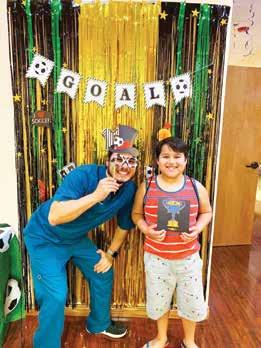
Vannie Cook Clinic serves
kids,
HISTORY’S
LINES Edinburg lawyer recalls Rio Grande Valley’s past.
EXCEPTIONAL PROFESSIONALS
WHEN WE SERVE TOGETHER IN OUR COMMUNITIES, EVERYONE SOARS.
Southwest Airlines® proudly partners with those who are helping to shape our communities all across America. One good deed—when coupled with another and another and another—can truly make a positive difference in our daily lives.
Healing takes more than medicine.
A COMMUNITY BUILT ON CARE
At Valley Baptist Health System, we never forget that it takes more than medicine to heal. From Maternity care to Orthopedics, and Stroke care to Trauma services, all of us are here to treat you well. See us at valleybaptist.net.
GABE PUENTE PUBLISHER/CEO
Despite weather in excess of 100 degrees, there are many reasons the Valley is attracting more and more people each year: our food, the culture, the beach, economic growth, business potential, education, cost of living, and the people. This is an exciting time for the Rio Grande Valley, and we are proud to share with our readers the positive growth and strides the region has made in this issue. It has been our passion over the past decade to promote the Valley for its unique economic landscape and profile businesses, educational leaders, organizations, entities, and people. I would like to thank you for reading this issue and making RGVision the Valley’s magazine. We hope you stay educated, informed, and inspired every time you pick up a copy!
A special thank you to our RGVision staff for producing another great issue and our newly formed board of advisors who will help shape the conversations we print in the upcoming issues. Your dedication and service is much appreciated. With your help, we will continue to grow as a publication for the people and by the people of the Rio Grande Valley.
“Each of you should use whatever gift you have received to serve others, as faithful stewards of God’s grace in its various forms.” 1 Peter 4:10
PUBLISHER'S NOTE
Copyright by RGVision Publications Inc. All rights reserved. Reproduction without expressed written permission of the publisher is prohibited. The opinions and views expressed in the magazine don’t necessarily reflect those of our advertisers or collaborators. RGVision magazine is published bi-monthly and circulates 12,000 copies across the Rio Grande Valley in 450 locations with a direct mail distribution to major hospitals and Superintendents within Region 1. The RGVision office is located at 801 N. Bryan Road, Mission, TX 78572.
To receive an annual subscription of RGVision publications for $29.99, email info@RGVisionMagazine.com.
RGVISION
STAFF
DOMINIQUE Y. ZMUDA
GRAPHIC DESIGNER/ILLUSTRATOR
AMY CASEBIER
CONTENT MANAGER /WRITER
DANTE TUEXI
DIGITAL MANAGER
OMAR DÍAZ
PRODUCTION MANAGER/PHOTOGRAPHER
MICHAEL ORTEGA
GRAPHIC DESIGNER
ANGELICA DINH
EVENT COORDINATOR
ERIK WEBSTER
PHOTOGRAPHER
Cristina M. Garcia
PSJA ISD
Joey Gomez
ERI
Bill Martin
Leonardo F. Chang
Tijerina Legal Group
Danielle Goslin
Dr. Alfonso Mercado
Roxanne Pacheco
Quinta Mazatlán
James Hord
Barbara Delgado
Jason Garza
Joey Gomez
Amy Casebier
Dominique Zmuda
For editorial comments and suggestions, please send emails to info@rgvisionmagazine.com.
Danya Perez
Karina Vargas
Berenice Garcia
George Cox
Rocio Villalobos
Marissa Soler
For advertising information, please call us at 956.379.6017 or email us at info@rgvisionmagazine.com.
A special thank you to all the advertisers who support this publication: You are the power behind the flywheel igniting positive change that keeps the conversation going.
PRINTED IN MEXICO
Gwyn D. Zubia
2019 VOLUME 11 ISSUE 5
RGVISION MAGAZINE
THE BRIDGES THAT CONNECT US
12 crossings shape Rio Grande Valley’s economic flow.
UTRGV GRADUATES
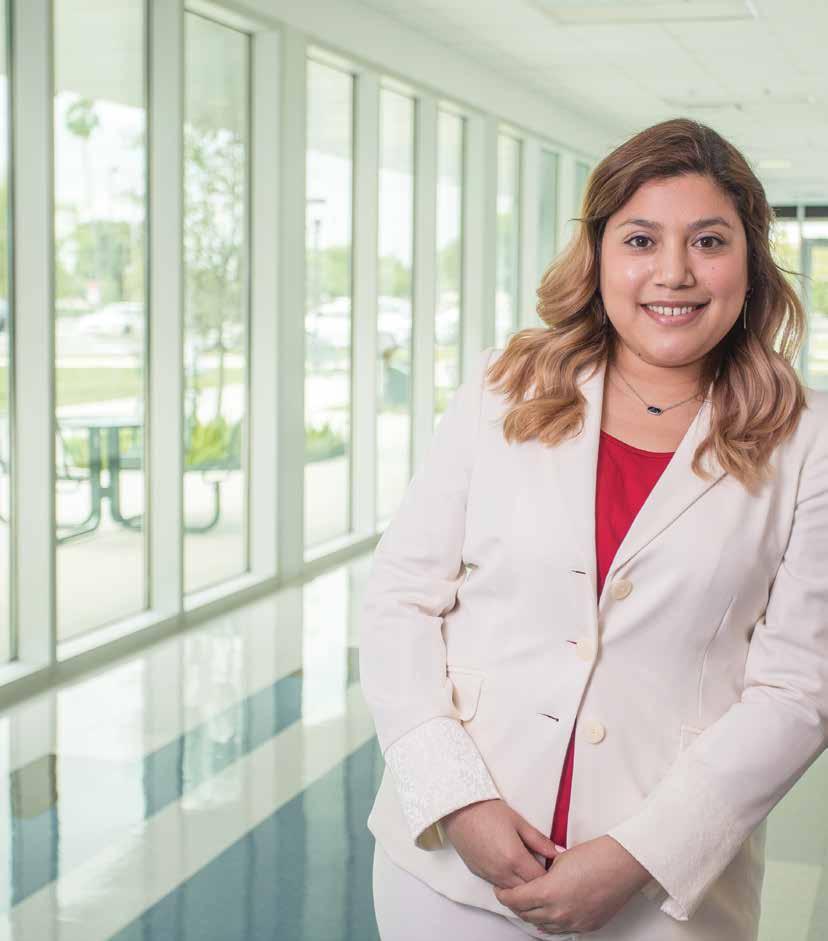
Four years in, UTRGV continues to establish itself.
EDUCATION
Best of the Boards
pg 10
Court in Session
pg 12
Guiding Educational Pathways
pg 14
Helping Hands
pg 16
Tools for Training
pg 18
Taking Flight
pg 24
Life Preserver
pg 26
Financial Focus
pg 28
‘A Place of Possibilities’
pg 30
Balancing Act
pg 32
To CAP it All
pg 40
Mission Calling
pg 42
12 Lessons on Life and Money
pg 44
CARE FOR ALL
Vannie Cook Clinic serves RGV kids, their families.
ON THE FRONT LINES OF HISTORY
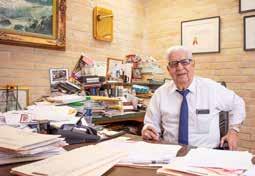
Edinburg lawyer recalls Rio Grande Valley’s past.
Experience & Expediency
pg 46
Suicide Prevention
pg 48
‘Get Your Life Back’
pg 50
Challenging the Inner Critic
pg 52
Raw Diet
pg 58
Not Alone
pg 60
Going with the Flow
pg 62
The Healthy Fast Food
pg 64
Something to Smile About
pg 64
QUALITY
Return of the Natives
pg 68
Cyber Secured
pg 70
Crash Course
pg 72
Local Flavor
pg 74
On the Road to Recycling
pg 76
Faces in The Valley: Chef Eugene
pg 78
Hands-On Training
pg 80
The Great Outdoors
pg 82
Haunted RGV
pg 86
New Space City
pg 88
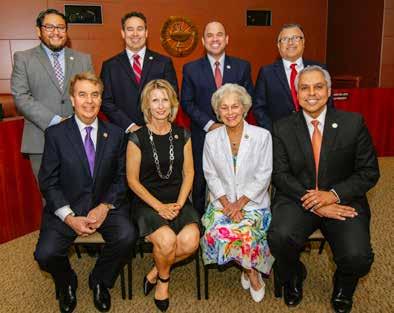
As RGVision reflects on a decade in the Rio Grande Valley, we look forward to the next 10 years and beyond as both a magazine and an account-based marketing firm. To help expand our vision, services, and scope, RGVision recently organized an advisory board helmed by leaders in education, health care, business, and other facets of life here. With our board comes new ideas and drivers of creative talent, fresh input and initiatives to give back to the community, and diverse experience to help steer our course. We are excited with what this new chapter brings — and excited to introduce our board members to our readers.
JAVIER DE LEON
Javier De Leon is a product of Harlingen CISD. He earned his associate degree in communication, bachelor’s degree in speech and hearing, and master’s degree in public administration. He has served on the HCISD Board of Trustees since 2005. In addition to his service on the school board, he is also executive vice president of government affairs at Texas State Technical College, where he has been employed for over 30 years. De Leon’s responsibilities include legislative and agency outreach as well as serving as liaison to elected officials and community leaders throughout South Texas. De Leon also serves as chairman commissioner for the Cameron County Civil Service. Other boards that he serves include the Lower Rio Grande Valley Development Council, Texas Association of Regional Council (state level), Rio Grande Valley Partnership, and Rio Grande Valley Lead. He and his wife, Rose Marie, a Harlingen CISD educator, have two children, Stephanie and Monica, who are Harlingen CISD alumnae.
ROBERT DUNKIN
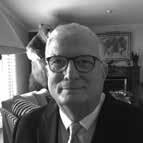
Robert Dunkin comes from a banking family. He started working in banking at the age of 10 and has worked as a banker ever since — except for two-andhalf years when he served as an officer in the U.S. Air Force. He graduated with a focus in finance at the University of Texas Business Honors Program, then attended the Southwest Graduate School of Banking at SMU and the National School of Banking Investments. Dunkin has served in leadership capacities in everything from local rotary clubs to chambers of commerce — and much more. Throughout his banking career, Dunkin has taught leadership skills and worked on developing teams and accountability systems. Many of these skills were learned and practiced during his tour of duty in the U.S. Air Force. He was given command and leadership positions throughout his tour often in grades above a lieutenant’s responsibility. During this time, he developed self-discipline, confidence, and dedication to the job — qualities that continue to serve him well in his banking and consulting career.
MARITZA ESQUEDA
A graduate of Mission High School in 1998, Maritza Esqueda went on to study international business at the University of Texas San Antonio. Esqueda has enjoyed being an entrepreneur and business owner since 2003, starting Forum Records Management in Mission. Through acquisition of Forum Records, she now serves as COO and managing partner/shareholder of Lone Star Shredding & Document Storage with locations in Mercedes, Corpus Christi, and Rio Grande City. Esqueda is also the owner and partner at the McAllen Beauty Salon Mane on Main. A proud community servant, Esqueda is co-chair for the Mission Baccalaureate committee that she has served on since 2011. She is also co-founder and president of the Faith Family Friends Foundation, a nonprofit organization that raises funds to assist families of children battling cancer in the Rio Grande Valley. Esqueda also enjoys photography and is a member of All Heart Church in Mission.
RENE A. FLORES
Rene A. Flores is a criminal defense trial attorney with a focus on DWIs, domestic violence, drug crimes, and personal injury. Flores is the sole practitioner and owner of the Law Office of Rene A. Flores, PLLC. Born and raised in South Texas, Flores is proud of the community he grew up in. He is the son of Rene Flores Sr. and retired District Judge Aida Salinas Flores. Flores received his Bachelor of Art in political science from the University of Texas-Pan American and continued his legal education at Thurgood Marshall School of Law, where he received his Jurist Doctor in 2008. Since opening his practice, Flores has been successfully representing his clients through his exhaustive legal research, compassion, and his expert knowledge in criminal defense. In 2017, Flores completed rigorous coursework with the American Chemical Society-Chemistry and Law Forensic Lawyer-Scientist and passed the certification exam for the much coveted ACSCHAL designation. Flores currently resides in Mission with his wife, Claudia Cantu Flores, and his two sons.
BYRON JAY LEWIS
Raised in Houston and educated at The University of Texas at Austin and The University of Houston Law School, Byron Jay Lewis chose Edinburg as his permanent home in 1986. He and Keely, his wife of 30 years, have two children. He started with Edwards in 1999 and took over the reins in 2001. Lewis is board certified by the Texas Board of Legal Specialization in Commercial and Residential Real Estate Law and is one of the few title insurance company owners recognized as a Certified Title Insurance Associate. A glance around Edinburg tells the tale of Lewis’ civic involvement. As president of the Edinburg Chamber of Commerce, he oversaw the renovation of the Edinburg Depot. He was a founder of the Leadership Edinburg program. He was instrumental in securing funding for the new state-of-the-art Edinburg Boys & Girls Clubs of the RGV facility. Lewis also heads up the Edinburg Foundation, which secures land and money for worthwhile organizations.
EDDIE LUCIO III
State Rep. Eddie Lucio III has served seven terms representing Texas House District 38, covering the southwestern portion of Cameron County in the Texas Legislature. Before coming to the Texas House, he worked for the Texas Comptroller of Public Accounts. He serves as Chair of the Insurance Committee, and is a member of the Public Health Committee in the Texas House of Representatives. Previously, he served as Chair of the Rules & Resolutions Committee and served on numerous committees. Lucio attended Texas Tech University on an athletic scholarship before receiving his BBA and law degree from the University of Texas. In addition to his law practice, Lucio is a small business owner who has worked to bring his passion for fitness to the Rio Grande Valley. He became a franchise owner for Orangetheory Fitness in 2017. When the Texas Legislature is not in session, he lives in Brownsville with his wife, Jaime Barrera Lucio, and children, Olivia Rose and Eduardo Andres “Luc” Lucio IV.
SHAVI MAHTANI
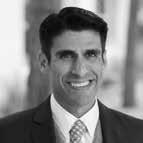
Shavi Mahtani moved to McAllen from India at a young age. With a knack for hard work and dedication, he went on to graduate from McAllen High School in 1991 and immediately became an entrepreneur at the age of 19. In his early 20s, he ran various successful businesses, which laid the foundation for his ultimate decision to purchase his first commercial shopping center at the age of 27. As of now, Mahtani is the founder and president of Domain Development Corporation, through which he has amassed a portfolio of 15 commercial shopping centers, 13 residential subdivisions, and over 500 acres developed all primarily in Hidalgo County.
BILL MARTIN
Bill has worked as a financial advisor in South Texas for more than 21 years, earning designation as a Certified Financial Planner in 2007. He spent the first decade of his career with AG Edwards and founded offices for Morgan Stanley in 2009 and Raymond James in 2016 with his business partner, Mark Southwell. Their team represents business owners, professionals, and retirees in wealth management as well as estate, insurance, retirement, and financial planning. As a proud graduate of Texas A&M University’s Mays Business School, Martin believes in the transformative power of education to the individual, their family, and our communities. Since 2006, he has served on IDEA Public School’s Board of Directors to support the fastest growing, high-performing charter school in America. With his wife, Margie, they enjoy serving God through Fellowship of Christian Athletes and First United Methodist Church in McAllen alongside their six kids. Martin and Margie deeply value time with friends and family, counting each day as a blessing.
ALBERTO PEÑA
Alberto Peña was born and raised in Edinburg and graduated from Edinburg High School. His studies took him to University of Oklahoma, where he graduated with distinction as a Phi Beta Kappa with a Bachelor of Science in microbiology. He went on to receive his doctorate in medicine from the University of Texas Health Science Center San Antonio. His next stop was Dallas, where he completed a general surgery internship and general surgery residency at Methodist Health System. He completed his last leg of training as a fellow in colon and rectal surgery at the University of Southern California in Los Angeles. He now lives with his wife and children in Edinburg and has been in practice for over 11 years. He is a fellow for the American College of Surgeons and a fellow for the American Society of Colon and Rectal Surgeons. He serves on several local, state, and national committees.
MARK PETERSON
Mark Peterson recently retired from P&G after nearly 40 years. His most recent P&G role was as director, Global Business Development, responsible for leading business-to-business negotiations where business model innovation was required, including licensing trademarks, technologies and know-how, as well as minority equity investments and joint ventures. Peterson spent the first 26 years of his career in sales roles, including leading the formation and execution of P&G’s customer team approach with teams including K-Mart and Super Valu. He also led the Canadian Sales Organization with responsibility for 800 employees and $2.5 billion in sales responsibilities. He served as the Expert in Residence at the CEED building for the Mission EDC from February 2019 through September 2019. Peterson lives in Cincinnati with Ellen, his wife of 40 years. They are blessed with four children and three grandchildren.
ANDREA RODRIGUEZ
Andrea Rodriguez is a native of Des Plaines, Illinois. She moved to Texas in 1993 and attended the University of Texas-Pan American. While in college, Rodriguez began her career in hospitality at the Tower Club, a private dining club. She was quickly promoted, making her the youngest catering manager within the Club Corporation of America at 19. She continued to expand her knowledge of hospitality while working for McAllen Country Club as the membership and marketing director for five years. Throughout Rodriguez’s 26 years within the industry, she has continued to be one of the area’s most recognized hospitality leaders and has played a key role for DoubleTree Suites by Hilton (formally Embassy Suites) as the sales & marketing director for 16 years. Rodriguez has made certain to give back and share her knowledge and leadership in the community and has held a number of lead committee and board positions. She is currently on the IDEA Public Schools RGV Board. When Rodriguez is not working and volunteering her time, she enjoys taking time to read and spending time with her husband and their two daughters.
FRED SANDOVAL
Fred Sandoval is the owner of Sylvan Learning RGV, an educational services company based in McAllen with additional retail centers in Mission, Harlingen, and Brownsville. He is proud to have inspired and motivated children and families for over 17 years, serving over 85,000 students and helping to secure over $30 million dollars in academic funding as a proud partner of local school districts. Sandoval began his career in municipal government in 1992, when he took the position of city chemist with the City of Edinburg Utilities Department. After five years, he accepted a position with the City of Pharr as utilities director and later moved into administration as assistant city manager and then city manager. His career in Pharr spanned 18 years, during which he was the lead on all economic development projects that transformed the city. Sandoval is an active member of the community and supports many local charities and nonprofits, including St. Jude’s Children’s Hospital, Pharr Boys & Girls Club, and the Rio Grande Valley Literacy Center. He enjoys spending time with his family and is an avid outdoorsman.
TOM TORKELSON
Upon graduating from Georgetown University with a degree in economics in 1997, Tom Torkelson joined Teach for America and taught fourth grade in Donna for three years, after which he successfully launched the IDEA Academy in 2000, serving as the first board president and founding principal. At 24 years old, Torkelson was then Texas’ youngest-ever charter school founder. By 2009, the U.S. News and World Report ranked IDEA Donna College Preparatory as the 13th best high school and second best charter high school in the nation. IDEA completed the 2018-19 school year serving nearly 45,000 students in 79 schools across the Rio Grande Valley, Austin, San Antonio, El Paso, and Baton Rouge, Louisiana. In 2018, Torkelson was inducted into the National Charter School Hall of Fame. An avid runner and frequent Ironman triathlon competitor, Torkelson and his wife, Dr. Nina Lee Torkelson, live in the Rio Grande Valley with their three children, Lincoln, Liam, and Gwendolyn.
VERONICA VELA WHITACRE
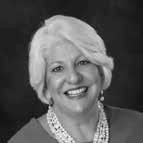
Veronica Vela Whitacre is a McAllen native, graduating from McAllen High School. Her family roots in civic involvement stem over 50 years. She continues this tradition of community and civic involvement. After graduation from Incarnate Word College (University of the Incarnate Word), she began her career as a social worker and later returned to school to acquire certification as an educator and began teaching public school. She later married Dr. Michael Whitacre, a university professor, and together they have two sons, Joseph Avery and Julian Anthony. After many years in the classroom, Veronica chose to move into a career in business and management and worked in the health care. She has been in the business management field now for over 20 years. She is currently the executive director of Court Appointed Special Advocates of Hidalgo County Inc. Vela Whitacre was elected in 2013 to serve her city as a commissioner. In that capacity, she works for the needs of her district, and in the best interests of the city, while trying to meet citizens’ needs and being fiscally responsible.
SABRINA
WALKER HERNANDEZ
With over 25 years of experience in nonprofit management, fundraising, and leadership, Sabrina Walker Hernandez, president/CEO of Supporting World Hope (SWH), provides consulting services and project-based leadership in helping organizations in the areas of building and managing development programs, capital campaigns, major gift fundraising, board development, marketing, annual fundraising efforts, and public relations. Prior to starting SWH, Walker Hernandez served as the CEO for Boys & Girls Clubs of Edinburg RGV. In addition to her CEO experience, Walker Hernandez also held the position of vice president of operations. She also serves as a master national trainer for Boys & Girls Clubs of America, which allows her to facilitate workshops and training at clubs across the country. She has served on the Board of Directors for Edinburg Rotary and the Texas Partnership for Out of School Time. She recently earned her Certification of Nonprofit Management from Harvard Business School. Walker Hernandez earned her bachelor’s degree from the University of Texas-Pan American and holds a master’s degree in public administration.
Harlingen CISD Board of Trustees
BEST OF THE BOARDS
by Cristina M. Garcia HCISD Board of Trustees Named Board of the Year State Finalist
The Harlingen CISD Board of Trustees was selected as an Honor School Board, one of the five finalists for the state’s Board of the Year Award, the Texas Association of School Administrators announced July 31.
The Harlingen CISD Board of Trustees was recently selected as the regional Board of the Year. The regional award recognizes 13 school boards across Texas for their dedication to the students they serve. The board then moved on to the next round in the process and was selected as one of the five finalists in the state, which also includes Frenship ISD, Pasadena ISD, Rockwall ISD, and Tyler ISD.
“Our board members are passionate about improving the lives of students. I want to congratulate my fellow board members; we are incredibly grateful for the hard work of our faculty, staff, and students.”
Dr. Nolan Perez, HCISD Board of Trustees president
“It is truly an honor to have been selected as an honor board and state finalist for board of the year,” said current HCISD Board of Trustees President Dr. Nolan Perez. “Our board members are passionate about improving the lives of students. I want to congratulate my fellow board members; we are incredibly grateful for the hard work of our faculty, staff, and students.”
A committee composed of Texas school superintendents chaired by Grapevine-Colleyville ISD Superintendent Robin Ryan selected the five honor boards.
The committee selects the boards based on a set of judging criteria, including support for educational performance, commitment to a code of ethics, placement of the welfare of children served by the school system above personal or political motives, public relations efforts including community awareness, and support for educational improvement projects and school transformation initiatives.
“I am super proud to work alongside the distinguished Harlingen CISD Board of Trustees, whose foresight and united vision has resulted in this momentous award,” said Harlingen CISD Superintendent Dr. Art Cavazos. “Each time they meet and make vital and impactful decisions for our students, they utilize an insurmountable amount of creative acumen, intellectual power, and compassion.”
The 2018-19 Harlingen CISD Board of Trustees included board President Greg Powers, Vice-President Dr. Nolan Perez, Secretary Eladio Jaimez, as well as members Gerry Fleuriet, Dr. Bobby Muniz, Javier De Leon, and Dr. Belinda Reininger. All of the aforementioned trustees serve on the current board and will now move onto the next level in the recognition process.
“This is such a tremendous honor, and I want to congratulate and thank the board for their continued commitment to our students,” Cavazos said.
The Texas Association of School Administrators along with the Texas Association of School Boards will then announce the state’s Outstanding School Board of the Year at the associations’ convention in September.
COURT IN SESSION
PSJA ISD Joins Efforts with Local Attorneys to Offer Opportunities to Students Interested in Legal Careers
As part of their efforts to provide career-advancing opportunities for students, Pharr-San Juan-Alamo ISD students enrolled in the district's Pre-Law Institute had the opportunity to intern with various local attorneys and judges in the Rio Grande Valley this summer.
First started in the fall of 2018, the PSJA Pre-Law Institute is an enrichment program for students in 10th to 12th grade interested in pursuing a law degree or a career in the legal field. PSJA School Board President Jesse Zambrano, an attorney himself, felt this program would be beneficial for students to learn early on what a degree in law entails and the expectations of being a law student.
"I believe that it is important to get students started early in terms of their educational goals, and certainly, a career in law takes a lot of planning," Zambrano said. "This is a great way for the attorneys and the judges to work with our students right now so they can get better guidance. Our students will also be better prepared if they decide to pursue a career in law."
According to University of Texas Rio Grande Valley professor and attorney Jaime Peña at the Peña Aleczander Law Firm, the experience high school students gained from these internships was invaluable.
"Students are getting to learn the skills, build up their resumes, grow their connections, and network," Peña said. "Some of our interns have worked on defense cases in federal court, so they've worked behind the scenes with experts and witnesses."
For Laylani Garza, an incoming senior at PSJA Memorial Early College High School, her internship at Peña Aleczander taught her how to network, build relationships, and how a law firm functioned.
"Shadowing an attorney and judge has been exciting,” Garza said. “I thought it was going to be simple, but looking into it, it’s a lot more. I have experienced more than I actually thought. I am glad to have had this opportunity.”
In addition to interning at Peña Aleczander this summer, PSJA ISD students worked at the Office of O’Hanlon, Demerath & Castillo and with Hidalgo County Probate Court Judge JoAnne Garcia.
According to Peña, providing career-advancing opportunities in the legal field for students at the high school level has now inspired local universities to step up.
“Having students work side by side with people in the
“Students are getting to learn the skills, build up their resumes, grow their connections, and network.”
Jaime Peña, UTRGV professor and attorney at Peña Aleczander Law Firm
profession that they are interested in is something the universities don’t necessarily do,” Peña said. “Some of our interns worked on defense cases in federal court, so they've worked behind the scenes with experts and witnesses."
As a result of the opportunities offered through the PSJA Pre-Law Institute, Peña shared that the Peña Aleczander Law Firm applied to offer credits to UTRGV students who also complete internships — an idea inspired by PSJA ISD’s program.
“I didn’t expect the experience to be so vivid,” said PSJA T. Jefferson T-STEM ECHS senior Rena Ross. “The experience I have gained is wonderful and I would say is the best I have had so far in my life.”
GUIDING EDUCATIONAL PATHWAYS
For IDEA-U Advisors, It’s All About Meeting Students Where They Are
by Danya Perez
In a region where many students are the first in their family to attend college, there is one form of guidance they may learn to appreciate the most: the one they can get from advisors.
At IDEA-U, these college completion advisors aim to play a different role than at traditional universities. They focus on meeting students where they are at in both their personal and professional lives.
“We feel like our role is just to help them be the best version of themselves and fulfill their fullest potential,” said Patti Montemayor, director of IDEA-U Weslaco and college completion advisor. “We do help them with the academics side, but we are not professors, we are not reviewers. Our role is to guide them through the entire process.”
Through a partnership with Southern New Hampshire University, IDEA-U offers associate and bachelor’s degrees. The courses are offered online only and can be completed at the student’s own pace. But students are required to meet with their advisors weekly to make sure they stay on track.
Through the partnership, the degree plans are offered on a flat-rate tuition of $5,500 per year, and students can take as many credits as they can handle.
“So the process itself can be very different for every student," Montemayor said. "Some might be more prepared for the demands of college than others. Some are coming from a traditional college setting, while others never attended college before.
“Our method is working, our coaching is working,” she added. “What sets us apart is that we have that one-onone coaching. I make sure that if I haven’t heard from them, I do a pulse check. Maybe a text, a call — I’m still here and I’m still checking up on you and I’m sending you emails.”
The nature of online classes can be daunting to many who are not sure if they can do it completely on their own. That is part of why these students are expected to meet in person with advisors regularly and attend one of three campuses each week, which are located in Weslaco, Brownsville, and San Antonio.
IDEA-U offers a tuition-free onboarding course in which students can learn what the demands will be and see if the program fits their needs. This is where the advisors also get to see where the students are at, and what type of help they might need to get started and stay onboard.
“We feel like our role is just to help them be the best version of themselves and fulfill their fullest potential.”
Patti Montemayor, director of IDEA-U Weslaco and college completion advisor
“We don’t just bring students in and assume that they know how to use the computer, the technology,” said Monica Revuelta, a college completion advisor at IDEA-U in Brownsville. “We meet them where they are at and we provide everything they need to meet the requirements of online learning.”
Both Montemayor and Revuelta come from working at a traditional university setting. They said the biggest difference they were seeking in their new position was to have more of a one-to-one interaction with students to guide them along the way.
Each advisor has, on average, 40 to 50 students under their care. They set time aside each week to meet in person with each student and also follow up via phone, text, or email for those who have busy work and life schedules.
So far, the cohorts of the young program have been mixed, the advisors said. They have gotten IDEA alumni for whom the traditional college setting didn’t work, IDEA staff who didn’t complete a degree and are seeking one to move up in their positions, and also older professionals who are seeking a change of career.
Each student has a different responsibility load, a different schedule, and different coaching needs. But what these advisors look for is to work with what drives them to keep them on track and focused on those goals.
“A lot of the work that we do here is trying to identify your reason behind it all,” said Krystal Garza, college completion advisor in Weslaco. “We try to tie in the students’ work with the reason why. They are forced to dig a little bit deeper … it is all about tying their short-term goals to their long-term goals.”
HELPING HANDS
STC Interpreting Studies Promotes Service to Others
story and photos by Joey Gomez
As a Child of Deaf Adults, Ivette Cedillo says her experiences as a CODA throughout her childhood immersed her into deaf culture, and would solidify her career choice as she got older.
Deciding on her own at the age of 6 to be the bridge between her deaf parents and the hearing world, Cedillo, 24, said she was asked to grow up quickly. If they were at a restaurant, she would order on her parents’ behalf, she said. She helped her father with small repairs around the house all the while building the way the family would eventually communicate with one another.
She would eventually help create their personal family language through “home signs” until she began formal American Sign Language (ASL) classes in high school.
“Both of my parents are from Mexico, so they really didn't have a good support system in learning the language,” Cedillo said. “They used home signs or they learned signs from their friends, and that's how they were able to communicate.”
Cedillo said she is fulfilling one personal mission she feels she was born to do; South Texas College just gave her the tools to get there. When she joined the ASL and Interpreting Studies program in the fall, she joined
“ASL”
a segment of the college specially designed to provide students with the opportunity to develop and enhance their practical communication skills for careers in languages and cultural studies.
The program is also a linchpin for the community. Students are required to do 96 hours of volunteer service per semester to complete the course. They gain a bit of real world experience and use their skills to assist deaf people in a variety of settings, according to program faculty.
“I educate students on the different routes they may take as certified interpreters,” said Jovonne Delgado, coordinator for the Interpreter Training Program and Deaf Support Specialist Program. “However, it has been my experience that most of the interpreters are working for agencies.”
Upon graduation, students from the program are qualified to provide services through different agencies, colleges and universities, public school sectors, or become independent contractors.
There are currently more than 12,000 deaf people that reside in the Rio Grande Valley, according to Valley Association for Independent Living (VAIL), a nonprofit
organization that services residents with disabilities.
Sign language interpreters are very much in demand and are sought out in order to assist in a variety of venues, including public schools, hospitals, and courtrooms, to name a few. Sign language interpreters are needed anywhere communication takes place.
Delgado says it’s all about instilling a “deaf heart” within the students themselves in two distinct degree plans at STC. The program offers a Sign Language Interpreter Associate of Applied Science as well as certificates for Deaf Support Specialists and Trilingual Interpreters.
While sign language interpreters are professional communicators needed for various agencies and venues, deaf support specialists advocate for the deaf themselves.
“While many of the courses can be taken within both the Interpreter Training and Deaf Support Specialist
Program, the two pathways are quite different,” Delgado said. “We cannot have students in both roles, and it’s very important they understand each role and how it affects the community. We want to see our deaf consumers rights met, and it affects us, because we have what we call a deaf heart. Our heart is with them, and when we see them being taken advantage of or when we see their rights being violated, it hurts us as professionals.
“The South Texas College Deaf Support Specialist Program is fortunate to have Mr. (Jorge) Solis heading that program because he has done a phenomenal job training our DSS graduates on effective advocating for our deaf community.”
For more information about South Texas College Sign Language Interpreter or Deaf Support Specialist Programs, please contact Jovonne Delgado at (956) 872-2015 or jovonned@southtexascollege.edu.
“FRIEND” “NO” “YES”
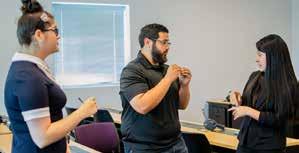
A student with STC’s ASL and Interpreting Studies Program signs the word “interpret” recently at the college’s Pecan Campus. The ASL Program enables student interns to enter the business community to gain work experience. Students require 96 hours of volunteer service to complete the course, and use their skills to assist deaf people in a variety of settings.
TOOLS FOR TRAINING
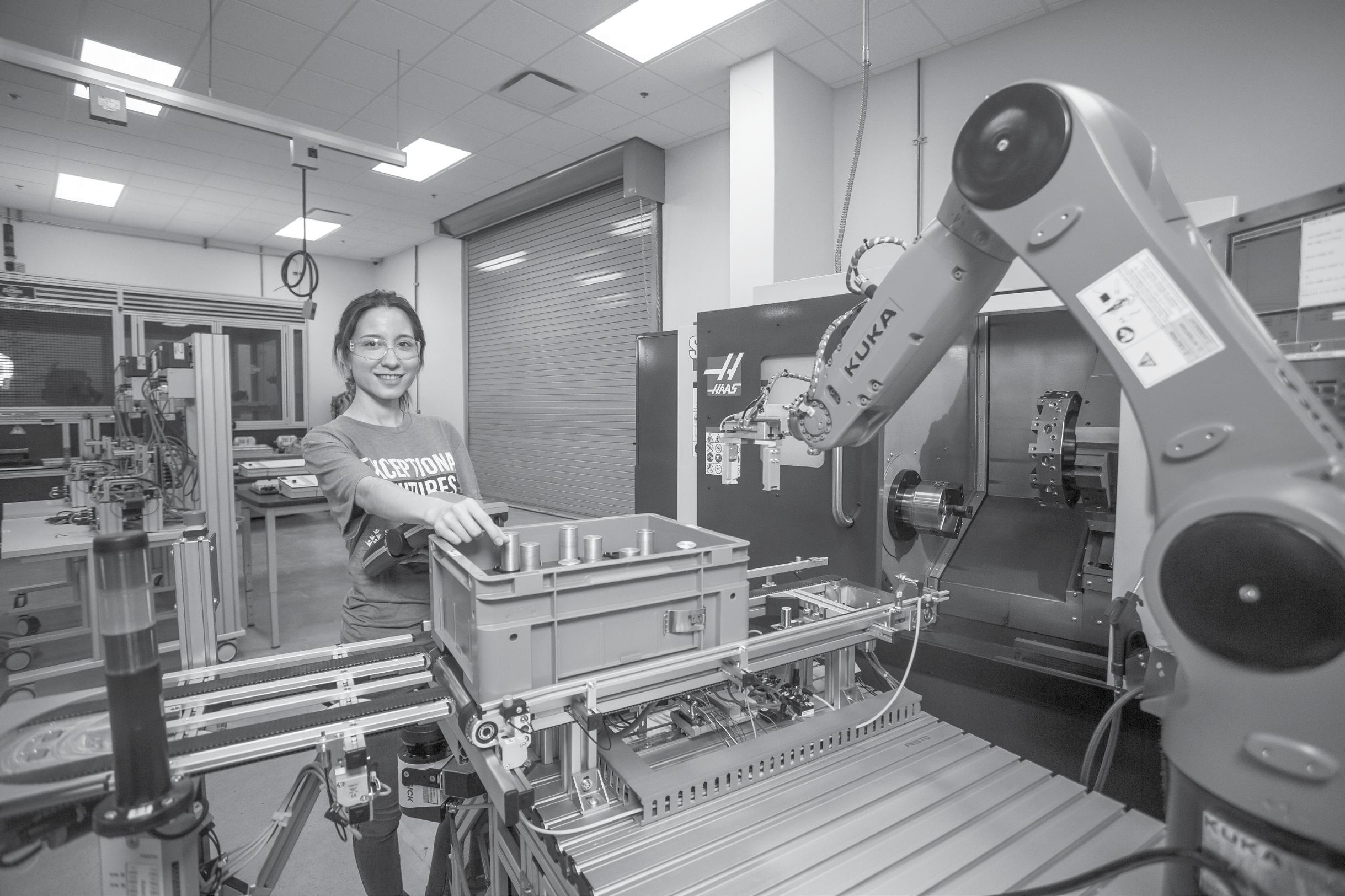
ERI Helping School Districts Secure CTE Funding
From 2016 to 2018, ERI was able to secure 23 JET and Dual Credit grants for a combined total of over $4.6 million for the following clients’ CTE programs:
Educational Research Institute, a successful grant writing company located in Harlingen, is elated to announce its achievement in providing numerous school districts throughout the State of Texas with funding to cover startup costs for Career and Technical Education programs (CTE). Because many districts lack the equipment required to allow for the creation or expansion of CTE programs, ERI has provided the opportunity to secure funding through the Texas Workforce Commission’s Jobs and Education for Texans Grant (JET) and the Dual Credit Career and Technical Education Grant.
Through these programs, the awarded districts have been able to purchase or replace equipment for their high-demand programs in order to help students earn industry-recognized licenses, credentials, and/or certifications.
If your district has never applied for this type of funding or if your previous application was simply not strong enough to secure an award from TWC, please take full advantage of our services by contacting our office today at (956) 365-4100.
Raymondville ISD check signing
Monte Alto ISD
UTRGV GRADUATES
It’s not every day that a university graduates its very first four-year class, but that is exactly what the region’s own University of Texas Rio Grande Valley is celebrating this year.
UTRGV was born in 2015 out of legislation that called for the dissolution of the University of Texas-Pan American in Edinburg and the University of Texas in Brownsville.
The students who transitioned along with the universities completed mixed graduation plans under both their legacy institution and UTRGV. But the 2019 four-year graduates are the first to have completed a full UTRGV graduation plan.
UTB and UTPA transformed into the only regionwide university within the UT System. The move would in turn allow the institution to tap into additional funding formerly
Four Years In, UTRGV Continues to Establish Itself
by Danya Perez
not available for the legacy universities. The bill also called for the creation of the Valley’s first medical school, which welcomed its first class in 2016.
Many changes followed the never-before-seen transition, including the selection of a founding president, Guy Bailey, and a new leadership team. Last fall, UTRGV reported the largest student cohort yet at 28,644 students.
“I'm very pleased with where we are. We’ve made very significant progress,” Bailey said. “We’ve had lots of challenges, but I think we’ve achieved everything we needed to achieve in the first four years.”
Integrating two separate institutions that are more than 60 miles apart, he said, involved reclassifying people who
The UTRGV Spring Commencement for the College of Fine Arts and the College of Liberal Arts took place May 11 at the McAllen Convention Center in McAllen. photo by Paul Chouy
were doing the same jobs but were classified and paid differently. The first four years were focused on the technical organizational issues of the transition, Bailey said.
“Integrating two workforces like that is a tremendous challenge,” he said. “We tried to make sure that we had equivalent pay for the same work. … There were different teaching loads between Brownsville and (Edinburg), so we reduced the Brownsville teaching loads to provide equity there.”
Part of this equity also involved compensation. One of the goals for the transitional years was to provide meritand equity-based pay raises, he added, and over the four years, the university allocated a total of $16 million into pay adjustments.
Another priority was also uniting the student body, not only with a new name and mascot — which also proved controversial — but in class and degree offerings, and the overall perception of the institution as one.
This called for investments in transportation to start bus routes to allow Brownsville students to travel to Edinburg and vice versa if they needed to take a class in that campus. But this investment wouldn’t be worth it without an increase and update of the course offerings at the new institution.
“We had a number of new programs approved or in the approval process,” Bailey said. “We’ve done a nice job at enhancing the number of programs in our program mix. And the mix of programs in an institution is crucial to its future.”
Some of the programs recently added or in the approval pipeline include hospitality and tourism, pharmacy, physical therapy, master’s programs in bioethics and business analytics, and a doctorate program in human genetics, among others.
“What attracts students are the individual programs, and you need to have the programs that will prepare students for the future,” Bailey said. “Not the program that you’ve had in the past, but the ones for the future.”
UTRGV SCHOOL OF MEDICINE
An obvious new attraction that the university brought along with it is the School of Medicine, which will celebrate its first graduating class in 2020. A big achievement for the school this year, however, is having welcomed its fourth class, which completes its first full class with a total of 210 students.
“I think overall the school is continuing to do really, really well,” said Dr. John Krouse, dean of the School of Medicine. “We’ve had positive growth in the clinical, educational, and research fronts.”
Having all four years of students is an important milestone for the school. This allows them to receive full formula funding from the university system accounting for all four classes — unlike in the initial years.
But these inaugural classes are not the only students here. Residents are also a big part of the education component. So far, the School of Medicine has about 210 residents and fellows placed in 13 programs throughout the Valley, Krouse said.
These are students who have completed their first four years of medical education and are moving on to practice and select specialties. In 2020, the first cohort of UTRGV School of Medicine graduates will join those residents.
As far as how they measure the overall health of the School of Medicine at this point of its existence, Krouse said there are three important areas of focus: education, clinical work, and research.
“We want to — and we need to — significantly expand our clinical footprint,” he said. “We need to continue to expand the number of physicians that are actually involved in patient care. And expand that footprint across the entire Valley.”
Part of why this is so important for the overall state of the School of Medicine, Krouse explained, is that mature medical schools get at least 60 percent or more of their operating funds from clinical revenue.
We’ve done a nice job at enhancing the number of programs in our program mix. And the mix of programs in an institution is crucial to its future.”
Guy Bailey, founding president of UTRGV
While UTRGV is still receiving startup funds for the School of Medicine, these special funds are expected to run out in a few years, at which point the school would need to have established a reliable source of funding.
So far, the university has 24 clinical sites throughout the Valley and has plans to open even more. There, students and professors — who are physicians — are able to see patients and offer services that might have otherwise not been available.
MOVING FORWARD
Some of the metrics used to measure student success by the university include graduation rates, retention rates, and course completion. The university set goals to increase the rates in these and other areas.
The current goal is to increase four- and six-year graduation rates to at least 50 percent. And while all these metrics have been nearing their goals throughout the last four years, the aim is to keep pushing that finish line further.
“Even though they are trending upward, they are not where we want these at, yet,” Bailey said. “We want our graduation rates to be up there with the University of Houston, Texas Tech, and schools like those.”
The overall goal is to increase student success — including graduation rates, retention, and course completion — and the current focus is to invest in academic advising and support services for students.
“We want to get our ratio of students-to-advisors to about
Student success is key, and we have some special challenges, like having mostly commuter students … but that doesn’t diminish our responsibility for helping students graduate at the highest rate possible.”
Guy Bailey, UTRGV founding president
place on
300 or 350 to one, which is the gold standard nationally,” Bailey said. “To do that, we need to add 32 new advisors, and the plan is to add 16 this year and 16 next year.”
In salaries alone, this translates to about $1.25 million. Plus benefits, it would be about $2 million, Bailey said.
While most universities usually raise tuition in order to pay for student services, UTRGV’s student demographic might not allow for steep increases. So while the university has to think outside the box and pace some of these changes over time, the effort is expected to yield results.
“For students at UTRGV who see an advisor, the retention rate is 80 percent,” Bailey said. “For students who do not see an advisor, the retention rate is 39 percent … once I saw those figures I thought, ‘I know where our money needs to go.’”
The university began a guaranteed tuition plan at its inception, which encourages students to take as many courses as they can under a set rate and graduate faster.
This has impacted graduation rates, Bailey said, but they know more has to be done to guide and retain students who might be the first in their family to go to college by helping them navigate the new environment.
“The single biggest challenge ahead of us is really enhancing the retention and graduation of our students,” Bailey said. “Student success is key, and we have some special challenges, like having mostly commuter students … but that doesn’t diminish our responsibility for helping students graduate at the highest rate possible.”
Commencement took
May 10 for the UTRGV College of Liberal Arts at the TSC Jacob Brown Auditorium in Brownsville. photo by David Pike
At Harlingen’s Texas State Technical College, two programs allow students to spread their wings while becoming aerospace industry experts.
TSTC offers airframe and powerplant programs that are designed by the Federal Aviation Administration. In four semesters, students in either of the programs will earn their associate degree while learning a diverse set of skills that TSTC aerospace educator Leo Guajardo has taught for six years.
“The airframe program focuses on structure, electronics, composite material, wood fabric, structural components, landing gear and inspection of the airframe,” Guajardo said. “The power plant side is more engine focused and is what actually propels the airframe through the sky. So it would be the engine, propeller, the turbine engines, the inspection maintenance, and the power plant side of the aircraft.”
In these two programs, students are tasked with learning how to perform a multitude of skills. Graduates can access numerous opportunities across the Rio Grande Valley. Aerospace mechanics from the airframe and powerplant programs can start their careers at local airports in McAllen, Brownsville, and Harlingen — and beyond, even in other industries.
Parked in a hangar at TSTC Harlingen, a Cessna 152 waits patiently for students to practice their newly acquired skills on it. Introduced in 1977, the Cessna 152 was, and still is, one of the most popular pilot training aircraft to date.
“Some students go on to work outside of aviation here in the Valley. I’ve had students that have worked on powerlines, windmills, on different power plants, and more. Aviation mechanics has become so well rounded that they often times can get adopted into other fields,” said Guajardo, who teaches an assortment of courses, such as welding.
Although there are various careers available locally, Guajardo has seen a higher percentage of program alumni branch out into a larger pool of opportunity outside of the region.
“For the most part, those that get licensed and certificated leave the Valley,” he said. “The Valley is a great place, but the job opportunities can be a bit limited with not as many large, industrious airports.
“Some contract for the military in bases around the U.S.,” Guajardo added. “Some go into the commercial side and can work for airlines like Southwest and United. Other students go to work in places like Washington, D.C., San Francisco, or even Afghanistan for the military while working on military aircrafts and cutting edge
technology, such as drones.”
Airframe and powerplant technicians are in high demand. Many program graduates have become highly distinguished technicians who secure influential careers, including those at SpaceX, a private U.S. space transit service and aerospace manufacturer.
“One of the coolest things that’s happening now is that I have students that have been hired at the McGregor SpaceX location, where they’re working on testing engines,” Guajardo said. “Currently, students are also applying to get in SpaceX Brownsville and I really think it will happen because on the SpaceX application — they specifically ask for airframe and powerplant mechanics.”
TSTC Harlingen’s aerospace programs offer a bright future for their graduates. Students receive hands-on training to enter a market brimming with opportunities both in and out of their field. The programs are something that Guajardo describes as an experience that you wouldn’t want to trade.
If you would like to have the full encounter of TSTC Harlingen’s aerospace programs and view aerospace components such as spaceships, helicopters, torn-down engines, and different types of aircrafts, contact aerospace instructor Leo Guajardo at (956) 364-4858. For more information on admissions, financial aid, and how to apply to the programs, visit tstc.edu.
UPCOMING EVENTS
SATURDAY SEPTEMBER 7
+ Redimi2 En Concierto
SUNDAY SEPTEMBER 8
+ AR Sociales Wedding & Quinceanera Expo
THURSDAY SEPTEMBER 12
+ McAllen Business Expo
SAT-SUN SEPTEMBER 21-22
+ Fiesta De Palmas
SATURDAY SEPTEMBER 28-29
+ Emergency Medicine Conference
SAT-SUN OCTOBER 12-13
+ Anime Fiesta
SUNDAY OCTOBER 2O
+ RGV Fall Wedding Fair 2019
SATURDAY NOVEMBER 2
+ Tecate Catrina Music Fest 2019
SATURDAY DECEMBER 7
+ 2019 McAllen Holiday Parade presented by H-E-B
TUESDAY JANURARY 14
+ Lawless & Mae Winter Texan Expo
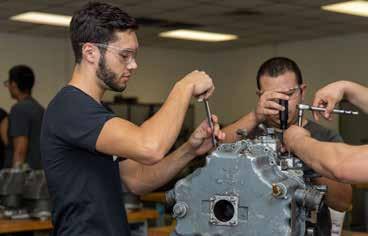
A technical manual, detailing an exploded view of a starter and drive adaptor assembly, lies open on a table as students disassemble reciprocating aircraft engines during class.
Aircraft powerplant technology student Isaac Gonzalez works with fellow classmates to reassemble an aviation internal combustion engine. Throughout their training, students will learn a variety of aircraft maintenance techniques, including how to remove and overhaul an aircraft powerplant.
LIFE PRESERVER
Harlingen EDC Helps Businesses with Resources to Keep Their Heads Above Water After Disasters
by RGVision
When it does rain in the Rio Grande Valley, sometimes, it pours.
Take the two historic rain events that occurred nearly a year to the day apart this past June and in June 2018.
"The amount of rain we got was incredible,” Alamo-based State Farm agent Monica De La Cruz remembered. “Never seen before.”
Helping her clients during these events inspired De La Cruz to take on the Instagram handle of @thefloodgirl.
“What I found was my own clients didn’t have an understanding of flood insurance and FEMA — what the difference was,” she said. “I thought to myself, ‘the best way I’m going to help those in my communities is by educating.’ I created The Flood Girl on Instagram to be a resource for education and understanding of flood insurance, FEMA, and how all of the intricacies work with those programs.”
For example, most agents are licensed to sell flood insurance through the federal government, De La Cruz said. Coverages include rain, rising water, sewage backup, and other causes of flooding. FEMA, on the other hand — the Federal Emergency Management Agency — is a response to a catastrophe specifically for flood victims who weren’t covered through flood insurance.
Harlingen is another community hit hard by this year’s flooding. Based on records from the National Weather Service, the city received 6.29 inches of rain in a 24-hour period. Frontage roads north of Interstate 2 — and the neighborhoods and businesses on them — were inundated, the drainage systems overwhelmed.
“One of the things that Harlingen Economic Development Corporation tries to do in a small business environment is to be a resource for small businesses here in Harlingen,” said Raudel Garza, manager and CEO the Harlingen EDC. “Many
times, when people are looking for answers to questions related to what happens now after a significant flood event or a significant natural disaster, they may not know who to turn to.”
They can turn to Harlingen EDC, he said.
“We will tap into resources such as FEMA, SBA, even state agencies and some other local agencies that can help try to get people back on their feet and try to get businesses open again,” Garza said. “That’s our role when it comes to economic development and helping small businesses in a disaster area.”
The U.S. Small Business Administration — SBA — is a federal organization that helps businesses start, grow, expand, and recover.
“One of the things that folks don’t know about the SBA or may not know is we provide disaster assistance — therefore, the ‘recover’ at the end of the motto,” said Angela Burton, district director for the SBA’s Lower Rio Grande Valley district.
No one can control the weather, but there are steps to take to be better prepared in the event of a flood or other natural disaster.
“Make sure you have a list or you know all of your employees’ phone numbers and addresses,” Burton said. “Your human capital is probably your most important aspect of your business, so we want to make sure your employees and their families are safe.”
Ensuring you have the appropriate insurance coverages is also essential. If you rent your business space, it is still important to get flood insurance to cover your office equipment, inventory, and other items. There are also protections that help your
company in the case of an interruption of business.
“In most cases, people are not coming in to your office, going out to eat, or going to buy products, or going to buy services,” De La Cruz said, citing street and home flooding. “What that means is a loss of income for the business, so that is another devastating relation to the flood happening within the community.”
Burton recommends that businesses examine their suppliers and logistics, identifying alternatives to turn to in case of an emergency. Businesses should also practice a continuation plan with employees well ahead of the storm.
Elizabeth Vargas, public information officer with the SBA’s Office of Disaster Assistance, emphasized that the SBA is available to assist business owners after a catastrophe.
“We’re going to be here in the area wherever the disaster strikes, helping them recover in not only short term, but long term,” she said. “SBA offers low interest loans for physical damage to repair or replace their inventories, real estate, supplies, and any damage that the disaster causes. Also, businesses may apply for a loan up to $2 million for economic injury. These loans are working capital loans to help businesses stay in business through a disaster.”
After a flood, help is there. Before, preparation and prevention are key — including understanding that nearly one-third of all claims are not in a flood zone, De La Cruz said.
“You can imagine how devastating it is for someone who thought, ‘well, I’m not in a flood zone. I never needed flood insurance,’ and here they are sitting with thousands of dollars of damage,” she said.
Learn more about the Harlingen EDC by visiting harlingenedc. com. Read more about the mission of the U.S. Small Business Administration at sba.gov. For more on FEMA, the National Flood Insurance Program, and other flooding resources, visit floodsmart.gov.
Edward Jones
4500 N. 10th St., Suite 40 | McAllen 956-630-0241
FINANCIAL FOCUS
Life Events Can Lead You to See a Financial Advisor
Over the years, you’ll experience many personal and professional milestones. Each of these can be satisfying, but they may also bring challenges — especially financial ones. That’s why you may want to seek the guidance of a financial professional. Here are some of the key life events you may encounter, along with the help a financial advisor can provide:
NEW JOB
When you start a new job, especially if it’s your first “careertype” one, you may find that you have several questions about planning for your financial future, including your retirement. You may have questions about how much you should contribute to your employer-sponsored retirement plan. What investments should you choose? When should you increase your contributions or adjust your investment mix? A financial advisor can recommend an investment strategy that’s appropriate for your goals, risk tolerance, and time horizon.
MARRIAGE
Newlyweds often discover they bring different financial habits to a marriage. For example, one spouse may be more of a saver, while the other is more prone to spending. And this holds true for investment styles — one spouse might be more risk-averse, while the other is more aggressive. A financial advisor can help recommend ways for you and your spouse to find some common ground in your saving and investment strategies, enabling you to move forward toward your mutual goals.
NEW CHILD
When you have a child, you will need to consider a variety of financial issues. Will you be able to help the child someday go to college? And what might happen to your child, or children, if you were no longer around? A financial advisor
can present you with some college-savings options, such as an education savings plan, as well as ways to protect your family, such as life insurance.
CAREER CHANGE
You may change jobs several times, and each time you do, you’ll need to make some choices about your employersponsored retirement plan. Should you move it to your new employer’s plan, if transfers are allowed? Or, if permitted, should you keep the assets in your old employer’s plan? Or perhaps you should roll over the money into an IRA? A financial advisor can help you explore these options to determine which one is most appropriate for your needs.
DEATH OF A SPOUSE
Obviously, the death of a spouse is a huge emotional blow, but it does not have to be a financial one — especially if you’ve prepared by having the correct beneficiary named on retirement accounts and life insurance policies. Your financial advisor can help ensure you have taken these steps.
RETIREMENT
Even after you retire, you’ll have some important investment decisions to make. For one thing, you’ll need to establish a suitable withdrawal strategy so you don’t deplete your retirement accounts too soon. Also, you still need to balance your investment mix in a way that provides at least enough growth potential to keep you ahead of inflation. Again, a financial advisor can help you in these areas.
No matter where you are on your journey through life, you will need to address important financial and investment questions, but you don’t have to go it alone — a financial professional can help you find the answers you need.
This article was written by Edward Jones for use by your local Edward Jones Financial Advisor.
“Set
‘A PLACE OF POSSIBILITIES’
Latest CEED Building Mural a Tribute to History of Computer Science
by RGVision | photo by Erik Webster
Invention isn’t always a direct path, and innovation often originates from multiple peaks — a mountain range rather than a single summit.
Such is the case of computer science — and the Center for Education and Economic Development’s latest mural dedicated to the founders of technology that shapes and reshapes our lives.
For Cristina Garza, director of social impact for the Mission Economic Development Corporation — Mission EDC manages the CEED building — and artist Manuel Zamudio, the planning and execution of the mural was an opportunity to learn about the oftensurprising founders of and contributors to
computer science.
“Seeing all these characters throughout history, just learning about that, was pretty cool and kind of mind blowing,” Zamudio said. “And then just leading that to the current leaders like (Microsoft’s Bill) Gates and everyone else, it’s very interesting following that road and knowing that the people that are at the head of it now really didn’t do it alone — it’s a lineage of people.”
That lineage included surprises like Hollywood actress Hedy Lamarr, who was an inventor in her spare time offscreen. Her contributions helped pave the way for wireless communications.
The mural depicts nine cornerstones
THE FACES OF COMPUTER SCIENCE
Gottfried Wilhelm Leibniz (1646-1716)
Inventor of binary system
Ada Lovelace (1815-1854) First computer programmer
Grace Hopper (1906-1992)
Inventor of first computer language compiler
Alan Turing (1912-1954)
Breaker of the German Enigma code, laid groundwork of modern computing
Hedy Lamarr (1914-2000)
Inventor who paved the way for wireless communications
Margaret Hamilton (1936-)
Inventor of software engineering, led team that created NASA’s Apollo onboard flight software
Sir Tim Berners-Lee (1955-)
Inventor of the World Wide Web
Bill Gates (1955-)
Cofounder of Microsoft, world’s largest personal computer software company
Steve Jobs (1955-2011)
Cofounder of Apple, industry leader of computers, operating systems, and smartphones
“Visually, the mural is very different than anything I’ve done.”
Manuel Zamudio, artist
of computer science: Gottfried Wilhelm Leibniz, Ada Lovelace, Grace Hopper, Alan Turing, Lamarr, Margaret Hamilton, Sir Tim Berners-Lee, Gates, and Steve Jobs. Their portraits climb a turquoise mountain range peppered with turquoise, red and yellow mathematical equations.
“There were some key players that I definitely wanted and the rest we had to just be very decisive as to having a chronology that made sense starting from the beginning,” said Garza, who curated the mural. “When people think of computer science, they only think of the last 20 or 30 years, but the reality is that a lot of the theory and thinking and logic behind computer science started centuries ago. Binary code is not something new.”
In fact, Leibniz perfected binary code in 1679. The German philosopher and mathematician represents the oldest point of history in the mural.
“When thinking of a timeline, this is incredibly original,” Garza said. “We looked at a lot of examples of timelines and this is the only one that I have seen so far that is not linear. It’s a little bit more vertical in terms of its depth and that allowed us to really emphasize the size of this building, as well. We really took advantage of just how tall the walls are here.”
Zamudio agreed.
“Usually, timeline work can be very boring, so we tried to make it something completely original and completely different,” he said. “Visually, the mural is very different than anything I’ve done.”
This isn’t Zamudio’s first mural in the CEED building. Another depicts the history of Mission and the facility, in particular. Before the 55,000-square-foot space hosted
small businesses and freelancers in a collaborative coworking atmosphere, it had been a K-Mart and Converse shoe factory, among other uses — which are reflected in Zamudio’s mural alongside La Lomita Chapel and legendary Cowboys coach and Mission native Tom Landry.
“For the EDC, the CEED building has been our headquarters for all of our educational initiatives,” Garza said. “A large part of them are computer science programs. The EDC has been investing in increasing access to computer science education in the city of Mission, and the CEED building facilitates that education.”
A computer science-themed mural at the CEED is a natural addition to the art in the building, she added. “It should be average for a child to see a mural like this.”
Zamudio said he also hopes his art inspires curiosity in young people visiting the CEED.
“I think for the mural specifically what I really wanted to say or help is all the young kids that want to follow in these people’s footsteps,” he said. “They can see them in different places and learn their story and their unique story can help them move forward.”
From start to finish, the mural took about six months to complete. And this won’t be the last mural at the CEED, Garza said.
“We’re excited to continue to be playful with this building,” she said. “This is a place of exploration and a place of possibilities and so I’m sure there will be more art coming your way. We want people to walk into this building and know that anything is possible.”
Learn more about the CEED building by visiting missionceed.org. See more of artist Manuel Zamudio’s work at manuelzamudio-studio.com.
At Edward Jones, we stop to ask you the question: “What’s important to you?” Without that insight and a real understanding of your goals, investing holds little meaning.
one-on-one appointment to discuss what’s really important: your goals.
Danielle M Goslin
Partner South Texas General Office
956-412-4949
dmgoslin@ft.newyorklife.com
BALANCING ACT
Six Ways to Develop Healthy Work-Life Habits and Make More Time for Family
by New York Life
Managing the demands of your career while being fully present at home requires a delicate balancing act. In a 2017 employee happiness survey, 48 percent of employees who felt unhappy on the job cited a lack of work-life balance as the culprit.
Maybe you want to inject more productivity into the hours you spend at the office, so you have more time for your family during off-hours. Or perhaps you would like to work from home more often. Developing habits that encourage the kind of work-life balance you seek can help you create a schedule
A work calendar that's cluttered with to-dos can leave you feeling stretched thin. If your family's schedule is equally packed with sports, music lessons or other activities, it can become even more difficult to find time for one another. Look at how you spend your days and when possible cut out — or reduce — the number of activities that are sapping your time and energy. ARTICLE
that suits you, your career, and your family.
Here are some tips:
STREAMLINE YOUR ROUTINE
Family Calling
Developing habits that encourage the kind of work-life balance you seek can help you create a schedule that suits you, your career, and your family.
DITCH MULTITASKING
Tackling multiple work-related tasks at the same time can make you feel like you're getting more done but can actually backfire. Trying to multitask can eat up 40 percent more of your productive time, while switching to single-task mode could help you recover 16 hours each week, research has shown. Being able to spend that time with family is a great motivator to adopt a laser-focused approach so you work more efficiently.
BUILD DOWNTIME INTO YOUR SCHEDULE
If trying to do it all keeps you from getting enough rest, your work performance could suffer. Six in 10 workers say that lack of sleep affects things like motivation and productivity on the job. A lack of rest can also leave you with less energy for your family. Consider turning in earlier a couple of nights a week if you're waking up tired. If that's not doable, aim to block out time over the weekend to rest and recharge.
GET A REPRIEVE FROM THE OFFICE
More than half of employees say home is their preferred place to work, an employee happiness survey has found. If working from home full-time isn't an option, talk to your employer about the possibility of telecommuting part of the week. Even one day a week spent working at home could make you feel less stressed when you head back to your regular work space.
SET BOUNDARIES
One in four Americans say they regularly bring work
home and that it interrupts time with family and friends. If you leave work at 5 p.m. but you're still answering emails at 9 or 10 that night, you may need to reset your worklife balance. Establishing a firm cut-off time for answering emails or taking work-related calls can take the pressure off so you can focus on what matters most at the end of the day — being there for your family.
CREATE A BUDGET
More than half of Americans have less than $1,000 in savings. When you don't have any cash tucked away, you may feel more pressure to step up your work hustle, sacrificing family time in the process. Creating a budget can put you back in control of your finances and your time. Your budget should reflect what you earn each month and what you spend. The goal is to have money left over that you can add to an emergency savings cushion so you can worry less about your finances and focus more on enjoying family time and doing the things you love.
Learn more about approaches for better work-life balance to benefit you and your family by contacting New York Life Partner Danielle Goslin at (956) 412-4949 or dmgoslin@ ft.newyorklife.com.
This article is provided for general informational purpose only and should not be construed as advice or solicitation of any specific products or services. Please consult qualified tax, legal, and financial professionals before taking any action.
New York Life is an Equal Opportunity Employer - M/F/Veteran/Disability/ Sexual Orientation/Gender Identity.
Concerned About Your Child’s Behavior?
Dr. Guadarrama works with your child or teenager to properly diagnose and medically manage his/her symptoms.
She can help school-aged children and teens cope with:
• Anxiety
• Attention-deficit/hyperactivity disorder (ADHD)
• Bipolar disorder
• Depression
• Disruptive mood dysregulation disorder
• Oppositional defiant disorder
Special populations and issues addressed:
• College students with ADHD
• Gay, lesbian and bisexual adolescents
• Military families
• Sleep disorders
• Stress management in teens
The Facts of Life isn’t just a 1980s sitcom, it’s the way some grandmothers referred to sexual reproduction. Dr. Vera is not your grandmother’s OB/GYN.
No matter what phase of life you are in, Dr. Vera is your go-to doctor, providing:
• Adolescent and adult gynecology
• Annual physicals and wellness screenings
• Birthing services, including high risk pregnancy
• Colposcopy
• Family planning
• Gynecologic surgery
• Hysteroscopy
• Infertility
• Laparoscopic surgery
• Menopause/hormone replacement therapy
• Postpartum intrauterine device placement
• Prenatal care
• Ultrasounds
Verushka Vera, MD
12
by George Cox
Crossings Shape Rio Grande Valley’s Economic Flow
From a hand-operated cable ferry to the nation’s busiest port of entry for Mexican produce, the 12 international crossing points along the Rio Grande from Brownsville to Roma fuel the economic engine that is at the heart of the South Texas economy.
“We are moving billions of dollars of goods back and forth across the river,” said Keith Patridge, president and CEO of the McAllen Economic Development Corporation. “It really is the lifeblood of the whole border region. We have the ability to move products and people across the river in a quick, efficient, and timely manner.”
The smallest and most antiquated crossing, Los Ebanos Ferry spans some 70 yards of the Rio Grande to connect with the small town of Gustavo Díaz Ordaz in Mexico. Since 1950, workers, families, and tourists have ridden the three-car ferry that many see more as a novelty and a throwback to simpler times.
The complexities of modern global trade, however, demand evergreater efficiency and capacity at international crossings to sustain the explosive growth enjoyed in the Rio Grande Valley over the last quarter-century.
“Our ports of entry were ignited to spur economic development when NAFTA was signed into law in the 1990s,” said Sergio Contreras, president and CEO
of the RGV Partnership in Weslaco. “When that happened, our unemployment rate was close to 23 percent. Now some of our cities have between 4 and 8 percent unemployment.”
More than 15.4 million trucks, buses, automobiles and pedestrians crossed the Rio Grande via the Valley’s ports of entry in 2018, according to numbers compiled by the RGV Partnership. The five crossing points in Hidalgo County led the pack with 58 percent of the traffic, Cameron County’s four bridges tallied 37 percent, and the two in Starr County accounted for 5 percent.
At the only full-service commercial bridge in the Valley, more than 60 percent of all produce imported from Mexico into the United States crosses the Pharr International Bridge. First in the nation for produce imports, Pharr also ranks fourth in trade with Mexico, and is the seventh largest port of entry in terms of the value of imported and exported commodities.
“We are moving billions of dollars of goods back and forth across the river.”
Keith Partridge, McAllen Economic Development Corporation president and CEO
With trade valued at more than $34 billion, Pharr is also representative of the types of commercial products that flow back and forth across the river at all the crossings. The number one export traversing the Pharr bridge is petroleum gases and other gaseous hydrocarbons, followed by gasoline and auto parts, according to Pharr
5 4 2
CROSSING POINTS
in Hidalgo County, accounting for 58% of the RGV’s border crossing traffic.
CROSSING
POINTS
in Cameron County, accounting for 37% of the RGV’s border crossing traffic.
Bridge Director Luis Bazan in an article published on the Inbound Logistics magazine website. The top imports consist of TVs and computer monitors, fruits and vegetables, and auto parts. Auto parts and electronics going both north and south are indicative of the robust border trade attributed to the maquiladora program, where companies have complementary operations both north and south of the river.
At the other end of the Valley, the Port of Brownsville depends on international bridges to move cargo — primarily fuel and steel offloaded at the port and headed for Mexico. The four Cameron County bridges also move products and components related to maquila operations.
“You have an array of things,” Cameron County Bridge Director Josue Garcia Jr. said. “It’s mostly finished products like automobile parts. And you have electronics, everything from capacitors to radio parts and things like that.”
CROSSING POINTS
in Starr County, accounting for 5% of the RGV’s border crossing traffic.
and the expansion of cold storage facilities and dry goods warehouses in the United States.
Since NAFTA, the RGV’s unemployment rate decreased from
The retail sector also benefits from that growth, making the Valley even more attractive to Mexican shoppers, long a staple of border trade. While it is difficult to nail down specific values of the retail sales associated with border-crossing shoppers due to the high volume of cash sales, no one questions its significance. “The retail is extremely important because of the numbers of shoppers that come from Mexico,” Patridge said. “If we did not have the ability to move our customers across in a timely manner, that would hurt the retail sector.”
23%
4-8% in the 1990s to today.
As commodities cross the border in South Texas headed for far-flung destinations, the spin-off economic impact is substantial. Local jobs are created, for example, by maquiladoras on both sides of the border,
While NAFTA sparked a boom in business, the trade agreement’s probable successor, the United StatesMexico-Canada trade pact, holds the potential to add even greater economic value and increased traffic at the international bridges. USMC still must be ratified by the three countries, but progress is being made.
“What I am hearing has been encouraging news,” Contreras said. “There is a committee reviewing the enforcement components of the agreement and bringing to light the investment in our region. We are encouraged
that we will see ratification of an agreement.”
To keep up with the demand, Valley international bridges have expanded and modernized with additional commercial vehicle lanes, either already constructed or planned. Sophisticated technology such as stateof-the-art X-ray machines to screen truck cargo, facial recognition systems, and high-tech toll collection systems are other contributors to the efficient transit of people and commodities, as are highway improvements in Mexico and the United States, such as I-69.
At the Pharr bridge alone, the city of Pharr will have invested more than $30 million in infrastructure by 2020, according to Bazan. Cameron County has invested more than $17 million for additional commercial lanes that will include X-ray machines and a revamped command center for U.S. Customs and Border Protection.
“We have a couple of X-ray machines that are the latest technology,” Garcia said about the Veterans International Bridge at Los Tomates in Brownsville. “You will have the driver stay in the truck as it goes through and that is going to greatly reduce the time needed to screen loaded trailers.”
However, more infrastructure investment will still be needed to keep goods moving. The largest of these projects could include building more bridges.
“We are in a position where we need to have more bridge capacity, and that means more bridges,” Patridge said. “From a commercial standpoint, because we have only one full-service commercial bridge in Pharr, it impacts our ability to attract industry because if
“Our ports of entry are critical to our region because of the opportunities for economic development through tourism and international trade.”
5%
Sergio Contreras, RGV Partnership president and CEO
something happened at that bridge, you could shut down a great deal of the commercial traffic. We need to have at least two full-service commercial bridges.”
On the immigration front, the Trump administration’s talk of closing the border earlier this year to stem the influx of Central American asylum-seekers spurred worry up and down the Rio Grande. And as CBP agents were reassigned from the bridges to assist the Border Patrol, less manpower was available to check commercial cargo, autos, and pedestrians, resulting in longer crossing wait times.
“Migration coming into the area is definitely having an impact on our recruitment efforts and the timely movement of goods,” Patridge said. “It creates a lot more inefficiency.”
While shifts in global marketplaces and changes in political leadership will inevitably influence future international trade, the ability to move people and commodities across borders will always be in demand.
“Our ports of entry are critical to our region because of the opportunities for economic development through tourism and international trade,” Contreras said.
TO CAP IT ALL
McAllen Composite Company Makes Advanced Manhole Covers, Frames
story and photos by Amy Casebier
The average person doesn’t give manhole covers much thought, but W. Chad Nunnery and the rest of the team at Composite Access Products — CAP — in McAllen are the considerable exceptions. CAP is the only company in the United States making composite manhole covers and frames using high-speed, high-pressure compression molding.
The results are manhole covers and frames that are lighter than their iron counterparts and that last longer, among other benefits.
“Why would people go to composite? This is one of the biggest things you see happening in the world,” Nunnery said, scrolling through photos of corroded covers and frames. “The iron will actually corrode not just from saltwater and water on top but more from hydrogen sulfide from sewage. Sulfuric acid eats iron and the concrete around it. It fuses the cover to the ring and they can’t open them up.”
The Rio Grande Valley is particularly hard on iron covers and frames, likely due to the high temperatures, proximity of the pipes to the surface, flow, length of flow, and number of lift stations, Nunnery says. Covers can fall through completely corroded frames, posing a danger for pedestrians and motorists. And if the corrosion completely freezes the cover, it makes it difficult to inspect.
CAP’s composite covers and frames are more of an investment upfront. But when factoring in costs and risks of replacing iron covers and frames more often, CAP is often the better option, Nunnery said. Additional dangers come when workers attempt to lift heavy covers.
“Lifting safety — this is a big deal,” Nunnery said. “Our cover is about half the weight. This is really breaking backs.”
Calculating the cost of back injuries and frequency they occur each year, “that’s almost a million dollar problem.”
There’s another problem uniquely associated with iron.
“The Chinese lost 240,000 covers in one summer to theft in Beijing,” Nunnery said.
The heavy iron makes a tempting target for individuals looking to sell it to metal recycling facilities. But CAP’s composite covers and frames don’t carry that same temptation since they aren’t made from iron.
“Another big issue nationwide right now is the flooding,” Nunnery said. “The stormwater goes into the sanitary sewer water. If it goes in too much, because there’s a limited capacity that can process that, it goes backwards, which means it goes into the street. If you have a big flood, they’ll say there’s fecal matter in there, pathogens get into the environment. Pollution issue, chemicals from whatever, your cleansers, and all that.”
It’s a health hazard that CAP is also addressing with watertight covers, running tests to show cities that might be at risk for fines from the Environmental Protection Agency for contamination that there is a solution to the issue.
“There’s nothing flowing through,” Nunnery said, playing a video of one such test. “That’s something that is attractive to a lot of cities.”
Nunnery established CAP in 2015 with composites experience already under his belt. After investing time and money into the project, he turned to the Rio Grande Valley Angel Network, a local organization dedicated to sparking growth and offering resources and funding for entrepreneurs.
“John Martin introduced me about two years ago to the group,” Nunnery said. “They asked me to give a pitch, so I went. I think I was one of the first Rio Grande Valley companies.”
“You were the only — so far — Rio Grande Valley company to do a presentation,” Martin said. After several rounds of pitches from Nunnery, the network has invested
just under $1 million in CAP. “You’re the single largest recipient of the angel network’s money because they really do want to support a local business.”
The support has helped, and CAP continues to expand. The Texas Department of Transportation approved the frames and covers for within the roadway use — the first and only such approval. Other departments of transportation around the country — including Oregon and Oklahoma — are also using CAP products.
CAP also offers high tech covers with sensors and transmitters to alert workers in the case of sewage backups, among other issues. Cities can also customize the color and design of their covers. All covers in San Juan, for example, are molded with images of the Basilica of Our Lady of San Juan del Valle.
The composite itself is not unlike a bread dough, consisting of honey-like resin mixed with chopped fiber glass, pigments, peroxides, and other additives. CAP team members add the composite to the press, which applies 600 tons of pressure at 300 degrees Fahrenheit. After only about 16 minutes, the finished cover — or frame — is complete. “It’s almost kind of magical,” Nunnery said.
The quick turnaround means that CAP can complete orders from scratch in a matter of a couple of days.
“We got an order for 85 for Harlingen,” Nunnery said. “We didn’t have them in stock. We made them in two days and shipped them out.” Nunnery’s closest competition, another
composite company in the United States, would’ve taken eight to 12 weeks to complete the order because of the longer process time.
“Getting the word out is half the battle. People don’t know about composite manhole covers,” Nunnery said. “We can pop these out quickly. We have materials made here in the U.S. and local materials. I know the formula. I know the chemistry of the formula.”
One might say that the other half of the battle comes from Chinese competitors and the challenges they present with cheaper, lowquality, copy-cat products. There isn’t a way to quality control these products, Nunnery said.
In spite of the headaches this presents, Nunnery still foresees growth in his company’s future, including adding more employees and another shift as demand increases. There are additional applications for the composite, including a custom ring that fits on the frame to bring the manhole cover flush with the surface of the pavement in cases of overlay.
For now, there’s still a sense of novelty when Nunnery or people who know about the work CAP is doing come across one of CAP’s manhole covers.
“It’s really neat to see when you’re surprised by it,” Nunnery said. “Every time, it’s, ‘oh, let’s take a photo of it.’ Everybody gets excited seeing our covers. I have people telling me that wherever they go, they’re looking for manhole covers.”
For more information about CAP, visit justcapthat.com/. To learn more about the Rio Grande Valley Angel Network, go to rgvan.org/.
CAP employees remove a composite frame from the press.
MISSION CALLING
Chamber VP CJ Sanchez Encouraging City’s Growth Through Leadership
With new projects, businesses, and opportunities — and the recent distinction of being named an All-America City — Mission is booming. Greater Mission Chamber of Commerce Vice President CJ Sanchez counts himself lucky to both witness and help support it.
“It’s an exciting time for our businesses to prosper and grow,” he said. “The new leadership in the city of Mission is very innovative and progressive, and as a chamber, we’re wanting to provide the resources and empowerment for those businesses to continue to grow and prosper in our city. I think that it’s important for us as a community to grow together.”
Sanchez — the “C” and “J” stand for “Carlos Javier” — grew up in Edinburg and graduated from Edinburg North High School. He pursued his undergraduate degree at Texas State University in San Marcos, majoring in communication studies and minoring in business Spanish and mass communications. A post-college internship with a congressman led the way to Sanchez serving as the executive director for the Hidalgo County Bar Association for seven-and-a-half years prior to transferring to Austin to work for the State Bar of Texas.
Sanchez was in Austin for eight months before he got the call to return to the Rio Grande Valley as the vice president of the Greater Mission Chamber of Commerce.
“I immediately thought that that would be an excellent opportunity for me to come back to the Valley and continue my growth as an individual leader as well as contribute to the growth of the Valley,” he said. “As a native from the Rio Grande Valley, it’s really important to me to see the area thrive and to continue to grow and build relationships.”
Sanchez applies lessons he has learned throughout his life in his approach for success with the chamber.
“As a young leader I’ve been encouraged and empowered by previous mentors that I’ve worked with in the past,” Sanchez said. “What I’ve learned as a
leader, it is important to empower and encourage those around you.”
His core values of communication, integrity, and empowerment help not only Sanchez grow and develop his leadership skills, but the skills of everyone around him.
“I feel that those things create a strong work team and really encourage the growth of not just an organization but a community as a whole,” he said. “I think as a leader you’re only as good as your team and if you’re not encouraging and empowering others, then we’re not growing. There’s always room for growth and I’m constantly motivated and empowered by those around me.”
The chamber functions as the voice of the Mission business community, advocating for entrepreneurs and owners to help foster economic growth.
“In my short time here with the Mission Chamber of Commerce, I’ve quickly realized and noticed the immense potential that the city of Mission has,” Sanchez said. “Our small businesses and our large businesses have an immense potential for growth and it is our job as a chamber to encourage to build those relationships and empower them and encourage them to grow and offer the resources for them to prosper in their business.”
It all goes back to the power of teamwork — everyone working together toward a common goal.
“Working with Brenda [Enriquez], our current CEO, our board of directors — they all bring an immense amount of talent and professionalism to the Greater Mission Chamber of Commerce,” Sanchez said. “I’m just blessed to have the opportunity to be able to work alongside them and grow together and hopefully grow not just our small businesses and our chamber, but the city and the community as a whole.”
Learn more about the Greater Mission Chamber of Commerce by visiting missionchamber.com.
“The new leadership in the city of Mission is very innovative and progressive, and as a chamber, we’re wanting to provide the resources and empowerment for those businesses to continue to grow and prosper in our city. I think that it’s important for us as a community to grow together.”
CJ Sanchez, Greater Mission Chamber of Commerce vice president
Bill Martin, CFP®
Vice
President, Investments
1845 Capital of Raymond James, 1400 N. McColl Road, Suite 101 | McAllen 956-331-2777
PART 1 OF 4: MONEY ISN’T EVERYTHING — AND OTHER FINANCIAL LESSONS TO LEARN EARLY
12 LESSONS ON LIFE AND MONEY
From the Smartest People I Know … My Parents
By the time I was 5 years old, both of my parents had divorced and remarried. I was blessed to grow up in two financially stable homes with four parents who loved and cared for me. They cared so much that they taught me principles about life and money that I carry with me today and share with my children anytime they will listen — sometimes even when they do not want to hear it again. While growing up, I split time in San Antonio with my Air Force parents and McAllen with my financial planning parents. Both have had a tremendous influence on my life. As you can imagine, many of the money conversations occurred around the dinner table with my financial planning parents.
Courtesy photo Bill, Audrey, and John Martin
I have observed that money is not THE source of happiness, but also that a lack of money can often be a source of unhappiness. That is why understanding the role of money in our lives is so important.
I have observed that money is not THE source of happiness, but also that a lack of money can often be a source of unhappiness. That is why understanding the role of money in our lives is so important. In our wealth management and financial planning practice at Raymond James, we work with business owners, executives, professionals, and their families. Clients very often want us to work with the next generation to continue what they’ve started. Over my career, I found myself sharing the time-tested lessons my parents imparted on me for our clients’ benefit. Over the next four issues, I will publish my 12 lessons. I hope you enjoy and will share these lessons with your family.
IF MONEY CAN FIX IT, IT IS NOT A PROBLEM
When a child calls to say there’s been an accident, the initial response is telling. A loving parent’s first question is not “How bad is the damage?” or “Did the other guy have insurance?” It should be “Are you safe?” and followed quickly by “Is anyone else hurt?” Cost should be secondary to health and relationships. Keep money in proper perspective. Things can be replaced, people cannot.
UNDERSTAND THE DIFFERENCE BETWEEN NEEDS AND WANTS
Young children will often say “I need this,” while holding a toy or candy in their hand. Psychologist Abraham Maslow is best known for his creation of a motivational model that described human needs. The hierarchy of basic needs starts with the physiological essentials: food, water, warmth, and rest. Only when those primary needs are satisfied will a person seek to satisfy the next level: personal security, employment, resources, health, and property. Maslow’s model continues up the scale, but at no point does he list the newest iPhone, luxury goods, fine dining, or fishing boats. Sorry if that hits close to home for our readers.
Understanding needs versus wants is a key to both financial security and happiness. There is always a neighbor, co-worker, or family member who is returning from the vacation you dreamed of, driving a slick new car, or adding to their jewelry collection. You cannot keep up with all those Joneses. Stop trying, and you will find peace and better financial stability.
NOTHING IS FREE
My first formal economics lesson was written on a chalkboard in high school … TINSTAAFL! “There Is No Such Thing As A Free Lunch.” While sitting around the dinner table, my parents taught me this long before Mr. Turner scratched those letters in chalk back in 10th grade.
My parents passed on lessons from my grandparents, the greatest generation, who survived a world at war. They understood our freedom was not free, it came at a tremendous cost in the form of millions of lives lost. My grandparents also shared the trauma of the Great Depression, which taught great lessons about risk and reward. The two are tied hand in hand — higher return means higher risk. My parents imparted that political promises of free goods and services come at a cost, paid by someone … invariably the American taxpayer.
In the next issue of RGVision, working smarter — not harder — to save the money you make.
LESSONS FROM MY PARENTS
Don’t miss Bill, John, and Audrey Martin talking about the biggest financial lessons they’ve encountered during a Facebook Live event via @rgvisionmagazine at 10 a.m. Tuesday, Sept. 24.
EXPERIENCE & EXPEDIENCY
Valley Care Clinics General Surgeon Offers Specialized Care to RGV Patients
by RGVision | photo by Erik Webster
Dr. Bob Saggi, a general surgeon with Valley Care Clinics, recognizes just how difficult it can be for a patient to be told they have a problem that must be addressed surgically — only to have to wait.
That’s why it’s important to him to offer a rapid turnaround time — efficient, effective care that helps set patients at ease.
“I hear of patients waiting weeks experiencing extensive delays to see a surgeon,” he said. “The expectation in our practice is to get patients in to our clinic within two weeks of the referral. We then have a goal of getting them to surgery — if surgery is indicated — within two weeks of a clinic visit. I think the expediency of care is important.”
That patient-centric philosophy is a cornerstone of Saggi’s practice, and that same focus of expediency extends to how he handles common surgeries. Patients want to be back on their feet with as little fuss as possible.
“Most of what we do as general surgeons is gallbladder disease, hernia disease,” he said. “The majority of that can be done with very small incisions. In the case of gallbladder surgery, a single incision, and this is possible because of the robotic technology we have in our hospital system.”
Thirty years ago, this wasn’t the case. The technology didn’t exist.
“The traditional way of doing surgery was big, open
incisions,” Saggi remembered. “Then came along laparoscopy. Now, robotics is the next level of minimally invasive surgery. It allows me to do things inside a patient through small incisions that I just can’t do as easy with traditional laparoscopy.”
He compared laparoscopic instruments to chopsticks. With robotic instruments, however, Saggi can still articulate his wrists, hands, and fingers — just in a much smaller incision.
“I think it leads to much faster patient recovery,” he said. “The patient experience is so much better. They return to work quicker, their pain is minimal, and I think that’s what patients really want.”
Saggi’s interest in general surgery began at a young age.
"I grew up in a small town and the general surgeon there was a family friend, so I kind of shadowed him,” he said.
Saggi graduated from the University of Kentucky College of Medicine in 1994. He completed specialty training and general surgery training at the Medical College of Virginia and the University of California at Los Angeles. For about 12 years, he practiced in Houston and New Orleans as a transplant and general surgeon with an emphasis on liver, pancreas and bile duct disorders. When an opportunity arose in 2015 for a change of pace in the Rio Grande Valley, though, Saggi seized it.
Dr. Jose Farias, whom Saggi knew from Houston, and a recruiter encouraged Saggi to consider a position with South Texas Health System-affiliated Valley Care Clinics.
“When I came here, I fell in love with the place,” Saggi said. “The place had tremendous potential for growth both in general surgery, where there is a relative shortage of us here, and in specialty areas. I saw that as a growth opportunity for me.”
Saggi now shares an office with Farias and two other surgeons. “We’ve worked closely together for four years,” he said. “We trust each other wholeheartedly.”
The people in the Rio Grande Valley also welcomed Saggi to the region.
“They’re warm, they’re kind, they’re friendly,” he said. “The relationship with patients in the Valley is very much one of mutual respect — which, in some parts of the country, has kind of eroded away, so I really enjoy that part of the Valley.”
Saggi’s background in liver and kidney transplantations gave him the experience he needed to focus on other problems related to those organs, including dialysis access surgery for patients to help maintain access sites for the duration of their time on dialysis, and cancer surgery.
“One of the areas I focus on is cancer surgery — breast, colon and other GI cancers, but I have a specific interest in pancreas cancer, liver cancer, bile duct cancer,” Saggi said. “The latter are cancers that tend to have poorer prognoses, require advanced surgical skills, and these are things I’ve been blessed to be able to develop with my training and previous experience.”
That experience means that patients don’t have to travel outside of the region for a high level of care.
“I have a tremendous amount of experience in that area so I feel that’s something unique I bring to the Valley,” Saggi said. “I think with the surgical skills we have and the specialists we have that help me with that, we can take care of all those patients here.”
Dr. Bob Saggi, MD, FACS, is a general surgeon who practices at Valley Care Clinics Lindberg Avenue office, 416 Lindberg Ave., Suite A, in McAllen. Learn more about his practice by calling (956) 630-4161 or by visiting valleycareclinics.com/ find-a-doctor/bob-saggi.
“Now,
robotics is the next level of minimally invasive surgery. It allows me to do things inside a patient through small incisions that I just can’t do as easy with traditional laparoscopy.”
Dr. Bob Saggi, general surgeon with Valley Care Clinics
SUICIDE PREVENTION AWARENESS:
Addressing Suicidality Among Minorities
Help. The message that help exists is essential not only this September for Suicide Prevention Awareness Week, but always and forever. The National Lifeline at 1-800273-8255 or the Crisis Text Line through texting HOME to 741741 are available 24/7 to offer support during times of crisis. While always a difficult conversation to begin and maintain, resources are available for anyone experiencing thoughts of suicide or engaging in selfharm. Many individuals experiencing suicidal thoughts are contemplating about a permanent solution to a temporary problem. It is important to understand that protective factors exists that lessen the probability of suicide, such as family members, faith/religion, peers, support systems, pets, and many other factors. Someone undergoing a crisis is unable to realize this due to a tunnel vision state, thus it is critical to understand the
facts and be aware of how we can help.
Let’s Help. Learning to identify behavior red-flags and redirecting to mental health emergency authorities and/ or psychological services can effectively allow us to help someone in urgent need.
ADDRESSING THE NEED FOR SUICIDE AWARENESS AMONG MINORITIES
Death by suicide was the 10th leading cause of death in the United States in 2018, according to the Centers for Disease Control, and takes the lives of 44,965 Americans every year — 123 every day, and one person every 12 minutes. Many risk factors exist, such as biological, personal, and environmental. One biological risk factor is culture and ethnicity. Certain cultural groups and immigrants can be at a higher risk of suicide compared
to general populations, according to a 2018 study. Among Hispanics, the CDC reported that suicide was 12th leading cause of death but the third among male Hispanics. In the latest report of the Suicide Prevention Resource Center (SPRC) using 2017 data, the statistic reveal the following rates of suicide per every 100,000 among minority groups:
• American Indians/Alaskan citizens: 22.15
• Non-Hispanic whites: 17.83
• Pacific Islanders: 6.75
• Blacks: 6.85
• Hispanics: 6.89
Although the suicide rates among minorities appear to be lower (with the exception of American Indians and Alaskan Natives), certain subgroups among minorities can be at higher rates of suicide compared the general population. For instance, when comparing among general minority and U.S. population, the following subgroups demonstrate higher risk of suicidality:
• Native American/Alaskan Native young adults between ages 15 and 34 (CDC, 2018)
• Black children under the age of 12 (Sean, 2018)
• Black men between ages 15 and 19 (Sean, 2018)
• Black men and adolescents with a mental illness (Sean, 2018)
• Hispanic students (Attempted suicide: 10.2% Hispanics, 7.8% total U.S.) (SPRC, 2013)
• Puerto Rican adults (Baca-Garcia et al., 2011)
MANAGING A SUICIDAL SITUATION: A PROACTIVE RECOMMENDATION
A part of raising suicide awareness involves learning how to act in suicidality-related situations. While encountering or knowing that someone that has suicidal behavior/thoughts can be a complex situation, you are not alone. 9-1-1 is always an option to resource to in emergencies. Additionally, and as per the Mayo Clinic, some general guidelines to follow include:
1. Ask and Listen. Addressing the difficult but paramount question is vital to address the situation and redirect someone in a time of crisis. Asking direct questions such as “Are you thinking about dying?” and “Do you have access to weapons?” is the first step in managing the situation.
2. Warning Signs. Behaviors can often tell us what
words may hide. Some behavioral warning signs include:
• Mood swings
• Increased drug/alcohol usage or pill stocking
• Severe personality changes
• Avoiding social contact and/or saying goodbye to loved ones
• Giving personal belongings away
3. Assist. Redirect. If someone has expressed suicidal thoughts or behaviors, stay close and offer companionship. As always, refer the person to a mental health professional. Emergency rooms will be able to further assist. 9-1-1 and the Suicide Prevention Lifeline (800-273-8255) are always available.
A MESSAGE TO THE PUBLIC
If you or a loved one is struggling with suicidal thoughts, reach out to the help and resources available below. Local and national sources are available to assist during difficult times. As always, do not be afraid to make the tough but necessary question of “Are you thinking of killing yourself?” Redirecting someone in need to the RGV’s mental health authority, Tropical Texas Behavioral Center, or the closest emergency room can save a life. A mind in crisis may first confide or reveal suicidal behaviors to a relative, friend, or a colleague before a mental health professional.
RESOURCES
• The National Suicide Prevention Program is available 24/7 (800-273-8255).
• United Way of South Texas Helpline (956-686-6331)
• Women Together Foundation (956-630-4878)
• TTBH Crisis Hotline (956-278-7000)
• UTRGV Vaqueros Crisis Hotline - for students (956665-5555)
American Foundation for Suicide Prevention Crisis Text Line (Text TALK to 741741)
(Co-authors include Dr. Mercado’s Mental Health Lab at UTRGV: Andy Torres, Ana Maria Moreno Ortiz, Maria Garcia, and Dr. Gabriel Davalos-Picazo)
ARTICLE PROVIDED BY Alfonso
Mercado
PH.D., Licensed Psychologist
Valley Psychological Services - Assistant Professor
Department of Psychology at the University of Texas Rio Grande Valley | www.utpa.edu/psychology
‘GET YOUR LIFE BACK’
Edinburg Nova Vita Wellness Centers Using Ketamine Infusions to Help Patients
by
When Georgina Escobar was a patient of Dr. Jorge Zamora-Quezada, a local doctor accused of misdiagnosing patients for financial gain, she experienced tremendous pain and suffering, in the throes of opioid addiction. At Nova Vita Wellness Center, a facility that gives ketamine IV infusion therapy, she was feeling like herself again.
“The team here has completely changed my life,” she said. “From Jorge Zamora almost taking my life to Jorge Alvarez giving me my life back.”
Nova Vita — new life — opened its doors in June under Alvarez and a team of clinicians to offer the kind of lifechanging treatment that Escobar experienced. Now, Alvarez hopes to expand the clinic’s support for patients to other locations.
“It has been nothing but amazing since day one,” said Escobar, 36, of her experience. “They’ve treated me with nothing but the utmost respect. They didn’t judge me. They embraced everything about me and said, ‘you’re a difficult case, but we’re going to get you back to where you were and
we’re even going to get you better,’ and that’s exactly what they’ve done.”
Nova Vita offers about 19 different vitamin IV infusions for everything from hangovers to stress. The clinic’s ketamine infusion therapy entails six treatments within two weeks to address major depressive disorders, post-traumatic stress disorder, bipolar depression, obsessive compulsive disorder, chronic migraines, severe anxiety, fibromyalgia, and chronic pain syndrome.
“For me, because I had endured quite a lot of pain and pills and doctors and rejections, coming in here was kind of scary,” Escobar said. “But the moment you walk in, they embrace you and they tell you this is what we’re here for — we’re here to help you.”
Nova Vita strives for a spa-like atmosphere with calming and uplifting wall colors, soothing music, and treatment rooms with dimmed lighting. When patients are treated, they sit in a recliner with the options of headphones and a 25-pound weighted blanket.
RGVision | photos by Erik Webster
Jorge Alvarez, CRNA, founder and CEO of Nova Vita Wellness Centers
“It has been nothing but amazing since day one. They’ve treated me with nothing but the utmost respect.”
Georgina Escobar, Nova Vita patient, right
“We just want to make them feel at peace as much as we can so they can embrace the infusion,” Alvarez said.
Dr. John Krystal, chief psychiatrist at Yale Medicine and one of the pioneers of ketamine research in the United States, called ketamine “a game changer” in combating major depression. But there are still misconceptions and stigmas attached to the drug, which has also been used in the anesthetic world — and as a club drug.
“Here, at the doses that we use, they’re extremely low, very safe,” Alvarez said. “In this type of setting and this type of infusion, the drug is helping the brain repair itself.”
Alvarez says his clinic has experienced an 80 percent success rate with its patients so far, and that 70 percent of patients see an ease of symptoms following the first ketamine infusion.
“I am feeling amazing,” Escobar said. It had been two weeks since her final infusion, and both she and Alvarez remarked on how far she had come since the first. “My story’s finally going to be told and it’s going to be told by me — not by anybody else. I’m stronger than ever. I’m standing on my own two feet.”
Alvarez, a certified registered nurse anesthetist, has over 12 years of experience in clinical settings.
“My profession already enables me to help with patient outcomes and their wellbeing,” he said. “This is just another pathway of doing so on a more personal level with patients and it’s just so much more rewarding, as well.”
He witnessed Escobar’s transformation firsthand, as well as positive changes for other patients.
“When they come in, they’re so apprehensive, shy, just socially dysfunctional,” Alvarez said. “When they’re done with their infusions, it’s a totally different person. They’re engaging, they express feeling more energy, being motivated.”
During ketamine infusions, many patients report feeling a floating sensation, grogginess, heightened senses, minimal hallucinations, or an out-of-body experience, he says. But some have breakthrough moments, represented by a sense
of a door opening or a switch flipping on in their mind.
But even with the success stories at Nova Vita, Alvarez hasn’t received much support from other RGV medical professionals.
“A lot of our challenges have been in the medical community,” he said. “We have numerous physicians that don’t want to hear about it, don’t want to talk about it, haven’t given us the time of day. They don’t believe in the drug.”
However, patients don’t need referrals to be seen at Nova Vita.
“Anyone can come and receive treatment,” Alvarez said, adding that his clinic’s approach is also faith based.
He invited anyone who is interested to call or stop by the clinic, located at 4428 S. McColl Road in Edinburg. Workers compensation now covers ketamine infusion therapy, though insurance does not. Nova Vita provides payment options for patients, and Alvarez offers a 50 percent discount to veterans.
“Don’t try to deal with any of these mental conditions on your own — they accumulate,” he said. “We’re here waiting with open arms and we want to take care of you. We want to help you get your life back, help your family members get you back, and just change your life.”
Learn more about Nova Vita Wellness Centers by visiting novavitacare.com.
CHALLENGING THE INNER CRITIC
Boosting Self-Esteem Is Essential First Step to Healthy Relationships
Greetings from your community friendly psychotherapist. I hear this so frequently: “The scariest part is making the phone call.” Let me be the first to congratulate you if you have taken this courageous step of scheduling an appointment to pursue help and personal growth and healing through therapy.
The quality of our relationships is directly proportional to the relationship we have with ourselves. As a therapist, a tool I use in the initial intake session is called a genogram. A genogram is a map of the family system and it allows me to see what patterns have been learned and passed from one generation to another. Patterns can be observed as destructive and toxic, such as depression, anxiety, panic attacks, blame and shame, guilt, alcoholism or substance use, suicide, and poor self-image, among many others. Patterns can also be observed to be healthy and productive in nature, such as strong work ethic, resiliency, altruism, faith and spirituality, values and morals, integrity and self-respect, and more.
Self-esteem has a special impact on the quality of the relationships that we engage in. The level of confidence in ourselves is the positive or negative consequence that arises due to our life experiences. It is the way we learn to see ourselves, and the label we place on ourselves. It is the “I’m dumb,” “I’m ugly,” “I’m fat,” “I’m not good enough,” or “I’m stupid,” that we often internalize after hearing it for so long. This leaves an imprint and becomes what we refer to as the “inner critic,” which makes its appearance every time that these negative thoughts show up. The inner critic is that part of you that has been hurt by other people’s words or actions and who learns to speak those hurtful words even when those people are no longer present. Every human being is born with three needs in order to survive: to be heard, seen, and loved. Unfortunately, at a very early age we are programmed to trust that these needs will be met or to doubt
that we are worthy of our needs being met. Trust and doubt are two components that are crucial for developing healthy or unhealthy relationships. If we trust, we allow ourselves to be vulnerable and to engage in a secure relationship. However, if we constantly doubt that we are worthy of being treated with respect and love, then we learn to accept maltreatment and even abuse.
As a therapist, when I begin to see patterns of unhealthy attachment in childhood, I introduce a tool that helps the client to identify which attachment style they protect themselves with. Unhealthy attachment takes place as a means of protection from what we have processed as possible threats. There are three different types of unhealthy attachment: avoidant, ambivalent, and disorganized.
An attachment style that is not secure will typically result in a person developing signs of low self-esteem and repeating patterns of unhealthy relationships. Signs of low self-esteem include people-pleasing behavior, inability to say no, making decisions based on others’ approval, sensitivity to rejection, and believing you are not good enough, among others. Acquiring low self-esteem is a direct result of not processing and internalizing hurtful experiences. Therapy helps you by allowing you to challenge that inner critic and take back what belongs to you. I have the privilege of helping you to develop a sense of compassion for the part of you that has been hurt and rewiring your brain to transform into a healthy view of yourself.
It is my hope that these words resonate and that you are convicted to do something about your current situation. I look forward to collaborating with you in the therapeutic process. Roxanne Pacheco is a licensed clinical social worker, certified clinical trauma specialist, and certified mental health integrative medicine provider. Contact her at The Counseling Center, 1009 S. Utah Ave., Suite A, Weslaco, TX 78596, call (956) 520-8700, or email rpachecolcsw@gmail.com.
CARE
FOR ALL
Vannie Cook Clinic Serves RGV Kids, Their Families
Jaime Torres remembers feeling nauseous, tired, dizzy. It was hard to think. “Everything,” he said. His mother, Celeste Hinojosa, remembers just going blank when they learned why.
“You just focus on those words,” she said. “You know what? He has leukemia. And then my brain is like, OK, how am I going to start with the treatments, and how is he going to get better?”
In October, they will have been coming to the Vannie Cook Children’s Cancer and Hematology Clinic in McAllen for a year for Jaime’s treatment.
Jaime missed his sixth-grade year of school since he had to be homebound during the experience, a substitute teacher visiting him to help him keep up with his studies. He planned to return to campus for his seventh grade year.
“It seems like a dream come true to like miss school, but no — you miss it,” he said. “You miss your friends, you miss your classes. I missed a lot and I want to go back to it.”
However, both Jaime and his mother found a sense of community during the time they spent at the clinic.
“There’s some people you can relate to,” Jaime said. “Kids share their thoughts and struggles, and you relate to that.”
Hinojosa has found a community of like-minded parents at the clinic — along with the added convenience of its McAllen location.
by Amy Casebier
“I like it because you get to socialize with parents and understand what you’re going through,” she said. “It’s made it a little easier for us because you get to communicate. We’re thankful we have the clinic because right now, we’re just 10 minutes away.”
“I’m so glad we didn’t have to go to Houston,” Jaime added. “Travel all the way over there just for some chemo? That would be tiring.”
And that’s just one of the many facets of the clinic for the Rio Grande Valley as a whole.
“I’m passionate about being able to helping here locally without having them have to relocate or separate families because part of the family has to go to Houston or San Antonio,” said Dr. Juan Carlos Bernini, Jaime’s primary doctor as well as a hematology oncologist and medical director of the clinic. “The treatment that they will receive here is exactly the same they would receive anywhere in the nation because we follow protocol. We follow specific treatment plans where the patients get exactly the same treatment, the most advanced chemotherapy.”
Bernini has been with the clinic since it opened in 2001 to fulfill a need that the Valley lacked.
“As the medical community grew in the Rio Grande Valley, there were lots of services for adults, but there weren’t those services for children,” said Victoria Guerra, director of development at the clinic. She recalled Bernini having to give children chemotherapy at their pediatricians’ offices. “The Vannie Cook Cancer
Foundation and then Baylor College of Medicine and Texas Children’s Hospital together formed the Vannie Cook Clinic. Since then, we’ve seen almost 10,000 patients.”
The clinic operates as an outpatient facility.
“We can do pretty much anything here,” Guerra said. “They will come for their blood draws, they come for chemotherapy, their doctors visits. We can do minor procedures in the clinic that don’t require full sedation of the patient.” The clinic is also accredited with the Children’s Oncology Group, so it also stays involved in research — both treating children and actively trying to find a cure.
If overnight stays are required, the clinic’s doctors have privileges at the local hospitals to continue to treat their patients. “Which is really important because you want the same doctor that’s seeing them here almost every day to be the one that, when they’re in a really scary situation, to be seeing them in the hospital, as well,” Guerra said.
And if travel is required for a complicated procedure, patients can seamlessly be admitted to the Texas Children’s Cancer Center — the facility already has their electronic medical records.
September is Childhood Cancer Awareness Month — 30 days the clinic staff dedicates to going gold and making an extra push to be visible in the community.
“That is our month we get to celebrate and remember all the children who have gone through this journey,”
Guerra said. “We have a carnival to kick off the month for all of our kiddos called a Celebration of Life Carnival. We have a fundraising event, we do walks, we try to get on as much media coverage as we can just to really show the community that cancer is happening all over the Rio Grande Valley to these kids.”
The clinic is a nonprofit organization, and relies on community donations to operate and treat its patients.
“We do have to raise over $2 million a year to stay in operation, so we can’t do it without the community’s help,” Guerra said. “We’ve been so blessed to be able to stay true to our mission because of our generous community.”
That’s why it’s so important for the clinic to continue to build support in the community — and raise funds.
“It’s extremely expensive to treat these kids. We absorb the costs,” Bernini said. “All the money they donate to us stays in the clinic. It doesn’t go anywhere else.”
Those costs are never transferred to the patients.
“We’ll never turn a patient away whether they can pay or not,” Bernini said.
In the end, awareness is key.
“I don’t want to scare anybody, but this can definitely happen to anyone,” Guerra said. “What we want people to know about Vannie Cook is that we’re here for you. We’re here in your community. You don’t have to leave.”
Learn more about the clinic at texaschildrens.org/ VannieCook.
Dr. Lorimar Ramirez, Dr. Juan Carlos Bernini, and Dr. Megan Lyle, board certified pediatric hematologist/oncologists, stand in the chemotherapy room of the Vannie E. Cook Jr. Children’s Cancer & Hematology Clinic in McAllen. photo by Jason Garza
Jaime Torres has been a patient at the clinic since October 2018. photo by Amy Casebier
Dr.
celebrates with his patient, Axel, who overcame leukemia. courtesy photo
Educational Research Institute’s (ERI) grant professionals have written, secured, and managed over 375 million dollars in public and private funds. With over 25 years of combined experience in grant writing, reading, management, and training, the grant professionals at ERI have assisted school districts, collages, universities, non-pro t organizations, municipalities, and healthcare organizations gain access to funds to assist in growth and development. ERI is located at 1710 North Ed Carey, Harlingen, TX. They can be reached at (956) 365-4100. Visit their website at www. erigrants.com. ERI- we Grant your success!
P r a c t i t i
RAW DIET
onersToutHealthBenefits
by Domin iq u e Z m u d a
b y Rocio Villalobos|photos
On a raw diet, your day may consist of drinking 70 ounces of juice throughout the day, snacking on nuts, then having a big salad for dinner.
The belief for following a raw diet is that raw foods contain enzymes that improve health and aid in digestion, and, when cooked, the enzymes are lost.
Foods eaten on a raw diet include fruits, vegetables, and nuts, but can also include some meats and unpasteurized dairy products.
While some foods can be cooked while on a raw diet, the temperature is not to exceed 118 degrees Fahrenheit. This ensures all the nutrients remain intact.
According to Medical News today, a diet consisting of at least 66 percent uncooked foods as part of one’s total consumption is considered raw.
Rocio Hernandez, a food systems educator at IDEA Public Schools, started eating 75 percent raw while working as a labor union organizer in Los Angeles and continued this way of eating throughout her pregnancy.
Hernandez says she decided to try eating mostly raw because she found herself having low levels of energy.
“At that point in my life I was doing a lot of kickboxing and running. Plus I was working over 50 hours a week,” she said. “So I just needed something else.”
what’s responsible for his love of produce.
“As a consumer and community member in our region I think it’s important to consume more fruits and vegetables to show an example to our future so we can just be more healthy as a community,” Hernandez said.
Registered dietician Matt Ruscigno writes in his blog truelovehealth.com that a raw diet can be done in a healthy manner so long as one is eating enough to get the nutrients they need — and taking a B-12 supplement.
The foods eaten on a raw diet, he writes, contain a rich supply of phytochemicals and antioxidants that fight chronic disease.
Lor Dykes says going raw did help lessen the effects of her rheumatoid arthritis and eliminated her chronic migraines.
According to Medical News today, a diet consisting of at least 66 percent uncooked foods as part of one’s total consumption is considered raw.
Upon turning to a raw diet, Hernandez says she began to feel amazing. The one downside was the amount of time it took, she says.
Waking up at 4 a.m. to prepare 70 ounces of juice for the day was a constant for Hernandez. The juices typically consisted of cucumber, a green apple, carrot, leafy greens, lemon, and beets.
“There was a sense of clarity I felt,” she said. “And if for whatever reason I couldn’t go get groceries at the farmers market for my juice, it took a toll. I could feel it.”
It was when she became pregnant that Hernandez decided to start incorporating more cooked foods. She opted to continue eating raw for breakfast and lunch, but ate cooked foods, like vegan proteins, for dinner.
Her son also follows a vegan diet and Hernandez says they eat around 50 percent raw these days. His favorite foods to eat are raw fruits and vegetables, and she says she believes the way she ate during her pregnancy is
Dykes, a nurse, says she continued taking the supplements she was already taking from being on a vegan diet, but in eliminating cooked foods for a year-anda-half, experienced an uptick in energy.
“Eating vegan is good, but the energy and metabolism you get from being raw is a lot better,” she says. “Right away you have a lot more energy. You feel better. Everything has a better and clearer taste. You taste the actual flavor of food a lot better.”
The biggest challenges for her were existing as the only raw vegan in her household and keeping a varied diet to prevent herself from growing bored with what she ate.
“At the beginning of the week on Sundays, I’d look up stuff to make sure I had a good plan for the rest of the week,” she says. “Otherwise, it’s really easy to fall out of it.”
She says she bought most of her produce from flea markets because purchasing all her food from grocery stores would have been too expensive.
As for eating out at restaurants, she didn’t have difficulty and stuck to salads.
Dykes now eats some cooked foods but says that when she regains the willpower, she would like to return to the raw lifestyle.
If you are interested in following a raw diet, it is recommended to consult a dietician to create a plan that fits with your life.
‘Not Alone’
Caregivers Look to One Another for Self-Care, Support
by
|
Berenice Garcia
photo by Jason Garza
Ramiro Guerra looks out to his front lawn while getting his heart checked by a home healthcare nurse.
The toll hit hard for Julieta Corpus’s father following his diabetes diagnosis in 2008.
The disease led to an infection in his right leg, which then had to be amputated to keep the infection from spreading.
As the only sibling with a part-time job, Corpus settled into the role of caregiver for her father, but that responsibility, she found, came with its own psychological burden.
Her father does have a provider, who is with him from 8 a.m. to 1 p.m. Corpus assists in his care, which mainly consists of being there for him in case he needs something, such as getting him water, preparing meals, staying on top of any changes to his medications, and being on the phone with his doctors or nurses, as needed.
After his leg was amputated in February, her father spent time in rehab until the end of March. Since then, he’s had to readjust to life without his right leg.
“And since he's very stubborn. Many times, he has tried to go to the bathroom by himself, for example, and so he falls," Corpus said. In those instances, she’d solicited the help of her brother to help lift their father back up.
But the burden of looking after her father is hardly physical, she said. More than anything, the stress is psychological.
“My dad was always a strong man,” Corpus said. “He worked in construction all his life and to see the deterioration of his body … is very difficult to witness.”
Knowing that she was hardly the only person experiencing this situation, Corpus launched a support group about three months ago.
The group, Sons and Daughters with Aging Parents Support Group, meets every second Sunday of the month at a McAllen coffee shop.
"We just talked," she said. "They just started talking because they needed somebody to talk to and, at the time, I needed that as well and I continue to need that. For me, it's always better to speak to someone outside of the family.”
Soon after, an acquaintance who worked at the Dustin Michael Sekula Memorial Library in Edinburg approached her about possibly hosting a presentation ever so often at the library for the support group.
"And of course I said yes,” Corpus said.
Their first presenter provided those in attendance with information on Medicare and Medicaid and resources available to them.
Resources available to the caregivers vary widely, but include tips on how to care for their loved one to information about their legal rights.
Under the Family and Medical Leave Act (FMLA), a
caregiver is allowed up to 12 weeks of unpaid time off in a one-year period to care for a parent, child, or spouse who has a serious illness.
As for paying for expensive mental health treatment, people who suffer from such an illness may be eligible for disability benefits. The loved one could also be eligible for Social Security Disability or Social Security Income. Eligibility is based on financial need.
There are also prescription assistance programs that can help pay for medication, such as the Partnership for Prescription Assistance and Together Rx Access.
For those caring for a family member who developed a severe disability before the age of 26, they could be eligible for an non-taxable savings account and still receive disability benefits under the Achieving a Better Life Experience (ABLE) Act.
The Department of Veterans Affairs also offers its own set of resources for those caring for a veteran. More information on those services is available through the VA’s Caregiver Support Line: (855) 260-3274.
Information is available through the local caregiver support coordinator at the VA Health Care Center at Harlingen.
But the group is a resource in and of itself for Corpus, who reiterated how helpful it is to know that there are people she can reach out to when she needs to talk.
“I feel a little better,” she said. “Again, I knew that there were a lot of other people in the same situation, or worse situations.”
She noted that some people have parents who are completely dependent on others or parents who are in late stages of dementia.
"For them, knowing that they're not alone and they have somebody to talk to is also a huge relief,” Corpus said, “and that's exactly the way I feel."
Photo provided by Julieta Corpus
Going with the Flow
Diverse Styles of Yoga Available Across the RGV
by Rocio Villalobos
Yoga can serve as a form of exercise or meditation, and there is an endless amount of ways to practice it.
Having originated in India around 3000 BC, yoga has since grown popular in Western society and taken on new styles.
Matthew Morales, owner and founder of Quiet Mind Yoga in McAllen, started his yoga practice 11 years ago as part of a journey toward awareness.
“Yoga was a good tool to use for me to see the patterns that I hold and to be able to shift those as I wanted, so I dove in,” he said. “It was just a natural progression for me to teach it.”
He leads classes of hatha, vinyasa, and power yoga in different locations across the Rio Grande Valley.
Vinyasa is his favorite, he says, because of the ease of flow from one pose to the next.
With vinyasa yoga, the poses are typically held for a shorter amount of time than in hatha — the basis of all yoga styles. The practice is known to improve flexibility and mental focus.
In his classes, Morales says he likes to tie in power yoga with the vinyasa to add a component of strength training.
At the start of his classes, he asks each person to set an intention with the hope of helping people get out of their mind.
“It’s a release from whatever you need,” he said. “I’ve had people come up to me after class that cry and tell me that the class helped them release what they were holding onto.”
An alternative, and relatively new, style of yoga incorporates laughter.
Laughter yoga, or hasyayoga, was created by an Indian physician in the mid-1990s as a complete wellbeing workout meant to beat stress and help create a positive mental state.
Mayra Leticia Avila brought laughter yoga to the RGV in 2012 and has since certified more than 60 other laughter yoga instructors.
Avila works full time as the coordinator of counseling at South Texas College and instructs yoga classes on a request basis.
With a background in clinical social work, Avila was drawn to laughter yoga due its mental health benefits.
“It teaches you to laugh, even if you’re facing challenges,” she said.
She begins her classes by briefly explaining the background of the practice and the benefits of laughter, followed by chanting and the laughter exercises, then finishes with meditation and techniques for stress management.
Although the laughter is initially forced, Avila says by the end, the laughter becomes real and contagious.
By getting people to participate in her laughter yoga class, Avila says she’s been able to encourage people to go to counseling and seek additional help for their mental health.
“We were able to see that it provided a really good connection for people who were maybe embarrassed to seek help when it comes to mental health and were okay with going to a group, but not so much to counseling,” she said. “But once they were in there, we’re able to help them see, ‘oh my gosh, you are dealing with depression’ and these are symptoms you need to look into.”
At her previous job with Hope of South Texas, Avila says she encountered a client who, after trying laughter yoga, took the step to see a psychiatrist and was diagnosed with bipolar disorder.
After consistently practicing laughter yoga and attending counseling sessions, the client’s psychiatrist was able to take her off of medication.
In addition to its mental health benefits, Avila says laughter yoga is good for socializing and may be a more appealing choice for people who are not comfortable with silence and would prefer to make noise during the exercise.
“If you do laughter yoga, you’re able to laugh more and breathe better,” she said. “It’s a great combo because you’re going to feel a lot better physically and mentally.”
Classes in laughter yoga can be found at local community centers across the RGV.
If you want to sweat — really sweat — look for a hot yoga session at a studio near you.
Practiced at a temperature between 95 and 100 degrees Fahrenheit, hot yoga provides all the benefits of a standard practice.
Additionally, it promotes better circulation — as it is considered a cardiovascular workout — strengthens the immune system, and supports weight loss.
According to WebMD, people are less likely to suffer an injury during hot yoga because heat allows muscles to become more pliable.
Alexandra Salazar takes hot yoga classes twice a week at a local studio and says she initially feared it would be too physically demanding. But after finally trying it out, she said she found that it was easier than she imagined and now hates to miss a class.
“Hot yoga is my favorite workout because not only do I leave feeling stronger, but also more at peace and less worried about small things I tend to focus on,” Salazar said. “It’s really helped me become a more mindful person.”
To find a yoga practice you’ll enjoy, both Avila and Morales recommend signing up for a local class.
THE HEALTHY
Fast Food
Exploring the Meal Prep Way of Life
by Karina Vargas
By now, you’ve most likely heard of “meal prepping” whether you’ve rolled up your sleeves and done it in your own kitchen or taken advantage of the convenience of a local meal prep business and ordered a pre-packaged meal that’s ready to go. You’ve also most likely seen advertising for meal kit delivery services, where individual meal ingredients are shipped directly to your doorstep to make cooking meals hassle-free.
These food options are primarily advertised to make healthy eating convenient and attainable for those with busy lifestyles or limited time to grocery shop and cook meals. Meal prep consumers choose this way of eating for a variety of reasons.
In 2007, the very first meal-kit delivery service, Middagsfrid, hit the market in Sweden. Since then, such services popularity has steadily increased, seeing the highest numbers in recent years, according to reviewchatter.com, a statistics website. As of 2016, there
were more than 150 meal kit delivery services in the United States.
Last year, grocery chains like Shoprite and Walmart began offering their own meal kits at lower price points than Hellofresh and Home Chef, which are among the most popular choices. According to reviewchatter.com, meal kits sold in grocery stores now account for 60 percent of all meal kit user growth. About 14.3 million households purchased meal kits the last half of 2018, up 3.8 million households from 2017.
Generally, meal kit delivery options can range from $18 to $80 per week, depending on the type of service and number of meals, with single one-time deliveries being the least costly. While some consumers prefer a subscription service, those who would rather try meal kit delivery once or use it only once in a while will appreciate the noncommittal aspect of grocery store-offered meal kits, which can be picked up directly in-store. Locally,
the RGV’s meal prep options can be found in various businesses, from grocery giant H-E-B to privately owned businesses like Beauty & Beast Cuisine or Fork to Fit, which specialize in fast healthy food options from meals and beverages to snacks and treats.
Carlos Hernandez, founder of Beauty and Beast Cuisine, along with his chef nutritionist wife and co-founder, Francesca, opened his first food prep business in Donna in 2015 after first testing the idea out of his home.
“At that time, I was a full-time fitness trainer,” Hernandez said. “I was training about 12 to 15 clients a day and I was really busy. And it just made perfect sense. I felt that Francesca’s way of eating was realistic and doable. I thought the Valley could totally take advantage of that. That was really the beginning.”
Since then, Beauty & Beast Cuisine has grown, spanning across seven locations throughout the Valley.
Hernandez said rather than focusing on just gym-goers, his goal was to have a menu expansive enough to attract customers of all backgrounds.
“We have over 60 options to choose from. We’re the only company that has a chef nutritionist and that’s 100 percent glutenfree, low sodium, and diabetic friendly,” Hernandez said.
For diabetic or sugar-conscious customers, Hernandez is proud to offer not only suitable meals for them, but desserts that won’t spike their blood sugar.
“One of our main attractions other than our meals is our Bunz Protein Donuts,” Hernandez said. “It took my wife almost a whole year to perfect that recipe. They’re even diabetic friendly. And we have over 30 flavors.”
Yolanda Garza Hake, a longtime customer, said she first heard Francesca Hernandez talking on the radio about her food being gluten free.
“I had just learned that my youngest daughter was highly sensitive to gluten,” Hake said. “So when they moved to Edinburg, I went and signed her up to get three meals
a day. And I would deliver the meals to her in Kingsville throughout her entire college career, and we still get her food every week.”
Alex Velasco, co-owner and president of Fork to Fit, opened the meal prep business in McAllen in 2017 along with co-owner and business partner Jose M. Guerra. Their business now has two locations in McAllen.
As a personal trainer, Velasco saw a need for the business from his clients.
“My clients would complain about not having a convenient healthy food place to go to and they didn’t have time to cook, nor did they even want to think about what they could and couldn’t eat,” he said. “I would always talk to them about portion control and calorie intake. So when I was coming up with the idea, it was something I already did on the daily.”
At the time, Velasco was participating in fitness competitions and was used to eating protein-rich, health-conscious meals.
After the business was up and running, Velasco and Guerra noticed that their main consumer market was the busy professional.
“We see teachers, police officers, doctors, college students, you name it,” Velasco said. “We’re just super convenient for everyone. I think everybody chooses us because we put out food that doesn’t look like diet food. We want to give people real food, familiar meals that they like. So we’re giving them that, but keeping them clean.”
In addition to their array of meal options for different dietary needs, Fork to Fit also offers beverage options such as protein shakes, juice blends, protein coffee, and sweet treats like protein brownies, cookies, low-carb donuts, and chocolate peanut butter balls.
To learn more about Beauty & Beast cuisine, visit the website at rgv.fit or check out their Instagram page: @bbcuisine. To find out more about Fork to Fit, visit the website at forktofitkitchen.com to view their menu or place an order, visit owningforktofit.com to learn about franchising opportunities, or check out their Instagram: @forktofitkitchen.
SOMETHING
TO
Smile About
Rodeo Dental Focuses on Positive Patient Experiences
by RGVision | photos provided by Rodeo Dental
There’s nothing quite like the dread that can build ahead of a dental appointment. That feeling, though, is something every team member at Rodeo Dental & Orthodontics is striving to change — one smile at a time.
“We believe every person is either naturally positive and optimistic on life and has the natural ability to make people
smile and laugh — or they aren’t,” CEO Ben Rouse said. “We only hire people who have ‘Smile DNA’ because everything we do, how we interact is always incredibly positive and we’re committed to the business value of fun.”
Brightly colored and engaging lobbies packed with activities in each Rodeo Dental office reflect that value.
“I used to go to other dentists and it was just really boring,” said Noemi Sanchez-Torres, the orthodontics lead at the Forest Hill office. “Versus Rodeo, we welcome you. The lobby itself has a movie theater, an arcade, a playground, a work station where the kids can color and draw.”
Pop Spirit Celebrations — monthly themed festivities complete with decorations and activities — also embody that idea of fun. The experience can be transformative for both patients’ health and their perception of a visit to the dentist’s office.
“It’s all about transformation — creating an experience that transforms us from fear and anxiety to positive reflection of dentistry,” said Dr. Saam Zarrabi, cofounder of Rodeo Dental.
Dr. William Dunklin, another cofounder and a boardcertified pediatric dentist, agrees.
“In my opinion, Rodeo Dental has improved the industry just because it’s a fun place to go,” he said. “I think that helps the kids a lot be comfortable with coming to the dentist.”
Painful memories and scary appointments can color a patient’s attitude toward dentist offices for life. In fact, it was
a bad experience at a dental office that inspired Zarrabi to work with his colleagues to create Rodeo Dental.
“My first job wasn’t quite what I expected it to be,” he said. “The practice was not run well. The service was bad, the culture was bad, and everybody was unhappy — the patients, the staff, everybody. So I left after three weeks. I quit and just said, ‘hey, I know the community can offer something better.’”
Rodeo Dental takes its role in the community seriously — from giving back after Hurricane Harvey struck Houston, to sponsoring immersive student leadership opportunities through LEAP Week in Los Angeles, to partnering with Dentists Who Care, a nonprofit dedicated to providing pro bono oral health care. In 2018 alone, Rodeo Dental team members volunteered their time and services to offer $250,000 worth of free dental care to patients in need.
It all goes back to having compassion for patients and what they’re going through.
“We have a huge understanding of what the patient goes through,” said Sierra Woods, ortho way maker at Rodeo Dental’s Fort Worth headquarters. “If there is a patient that has had a traumatic experience in their previous dental office, we all get together and we do a round table on how we can make patients’ experience a lot better.”
Positive patient care and experience are paramount — something every member of the Rodeo Dental team is passionate about.
“We’re changing the perception of dentistry,” said Maribel Noriega, vice president of human resources. “We make it a fun experience from the moment you walk in to the moment you sit in the chair with the dentist. We provide them with empathy and caring and respect.”
With 21 Texas locations — more than half of which are in the Rio Grande Valley — Rodeo Dental’s team members are dedicated to offering convenient and comprehensive services and availability all under the same roof. With experts in family dentistry, orthodontics, pediatric dentistry, cosmetic dentistry, and endodontics — root canals — all housed in the same office, there’s no need for referrals or traveling to different practices.
“We totally love and respect the traditional dental, just like our dads’ practice,” Zarrabi said. “But also we wanted to bring a new dynamic in the multi-specialty practice, so focusing on the patient, being convenient for them. Very patient-centric environment.”
Dr. Yahya Mansour, another cofounder, emphasized the importance of involving patients with the care they receive.
“We truly care — you are a partner in your care here,” he said. “The old school way was doctor-centric: ‘I’m the doctor, you’re the patient, you do this, don’t question me.’ We want to empower you and give you every option and for you to help come to a decision.”
Learn more about Rodeo Dental & Orthodontics by visiting rodeodentaltexas.com.
We make it a fun experience from the moment you walk in to the moment you sit in the chair with the dentist.”
Maribel Noriega, vice president of human resources of Rodeo Dental
RETURN OF THE NATIVES
Landscaping with RGV Plants Can Boost Neighborhood Wildlife
story and photos by Quinta Mazatlán
Plants are revolutionary. They help the planet breathe, providing roughly half of the Earth’s oxygen. They regulate climates through shading, water, and soil retention. They provide food and materials for our homes and clothes. They are important sources of medicine; between 25 and 50 percent of medicines in the U.S. today come from plants. Indeed, it just takes a little thought to realize how important plants are for people. Yet we do not always think of their importance to our neighborhood wildlife.
Currently, non-native species occupy the vast majority of space in our yards, gardens, and public landscapes. Look no further than the expansive (and expensive) lawns that cover more than 63,000 square miles in the U.S., a number that would make it the 24th largest state and largest irrigated crop in the country.
What science tells us is that those landscapes are not providing the food and shelter wildlife need to thrive. Over 95 percent of birds feed their young insects, and non-native plants provide just a fraction of the food that natives do. The conclusion is simple; our current landscapes could be doing so much more.
Enter native plant landscaping. This new focus on using plants naturally found in an area has many advantages over using ornamental, non-native plants. Native landscaping provides more and higher quality food for birds, butterflies, and other wildlife. It also reduces the water, pesticides, and maintenance needed to keep it beautiful.
Christine Ten Eyck, the founder and principal of Ten Eyck Landscape Architects Inc., is a strong proponent of native landscaping. Her Austin firm focuses on using native plants to help save water and wildlife. Their work has won numerous awards, including the 2019 Texas ASLA Honor Award for their work in the San Antonio Botanical Garden and the 2017 ASLA Award of Excellence for the transformative work at UT El Paso.
Ten Eyck will share her revolutionary ideas on native landscaping as the Keynote Speaker at Quinta Mazatlán’s 2019 Planta Nativa night in the park with food, spirits, art, and music. The 5th Annual Planta Nativa takes place at 6:30 p.m. Oct. 17, at Quinta Mazatlán in McAllen. Join in the celebration of native plants, their beauty, and their incredible value to us and wildlife.
CYBER SECURED
Options Available to Businesses Concerned About Data Breaches
by RGVision
When someone thinks of cybersecurity, images popularized by Hollywood might come to mind — cyberpunk hackers, the sinister dark web, and government-level extortion, among others. But because these scenes seem so farfetched, it can be easy — and costly — to dismiss data breach risks.
“Small businesses need to take data security more seriously,” said Martiza Esqueda, COO and managing shareholder of Lone Star Shredding and Document Storage. “I have been warning our clients for years. Data
breaches happen to everyone. Larger companies have been focused on protecting themselves for quite some time. Smaller entities need to follow their lead. A data breach is more devastating to them because they don’t have the resources to recover.”
If data breaches affect businesses like Google and Yahoo, organizations like MD Anderson Cancer Center, and local government entities, they can happen to anyone — including small businesses that handle personally identifiable information for their clients.
You might be tempted to throw out your old, outdated smartphone the moment you purchase the latest model, for example, but even resetting your phone doesn’t completely wipe out all of your personal data.
“All it takes is one mistake,” Esqueda said.
Mistakes can come from a number of unexpected sources, she added. You might be tempted to throw out your old, outdated smartphone the moment you purchase the latest model, for example, but even resetting your phone doesn’t completely wipe out all of your personal data.
“You’re walking around with all of your personal information on your phone,” Esqueda said — usernames, passwords, financial records, medical information, and much more.
The same goes for hard drives on computers. It’s essential to destroy them properly to ensure that the information they contain is safe.
“Copy machines have a hard drive on them,” Esqueda said. “Every single piece of paper that was copied on that machine is now stored on that hard drive.”
Lone Star Shredding and Document Storage includes hard drive destruction among the services it offers. Esqueda urges everyone from business owners to school districts to medical providers to the average RGV resident to take advantage of those services — everything you need to protect your and your clients’ information.
“Much like anything else, as time moves forward, as laws change, technology changes,” she said. “Services that would have traditionally been considered a luxury service have now become necessities — and vital in protecting your company’s future.”
Investing into a document storage plan with Lone Star Shredding and Document Storage instead of a selfstorage unit has added benefits — security, compliance assurance, quick turnaround, and climate control.
“It’s changing the mentality about your risk versus your return when it comes to managing not only your information, but your responsibility for managing other
people’s information,” she said.
There are many regulations governing data privacy, and those laws are always changing both on the national level and state by state. So if your company does business with organizations in other states, any data breach could be subject to a bevy of different regulations.
“It’s forever evolving. The legislation is often confusing and stringent, and the public is expected to understand and follow these regulations. Unfortunately, people don’t,” Esqueda said. “As people and businesses continue to fail at safeguarding data, the penalties get larger.”
That’s why Lone Star Shredding and Document Storage clients have access to DataLock Breach Reporting Service, powered by CSR Privacy Solutions Inc. CSR is an organization that focuses on privacy and data protection compliance for businesses.
“It’s basically like a tool kit for data breaches,” Esqueda said. “They hold your hand through a very tedious process to ensure you have taken the breach seriously and are staying compliant with federal and state regulations.”
Esqueda’s biggest piece of advice?
“Take it seriously. That’s the biggest cautionary tale. Take it seriously. It’s a real threat, real laws, real people, and it’s real loss,” Esqueda said. “The ability to lose everything is not as uncommon as many think. One set of fines can bankrupt your business.”
Lone Star Shredding and Document Storage offers two free shred days each year. Even the McAllen Recycling Center offers complimentary shredding services.
“There’s no excuse,” Esqueda said. “There’s resources for everybody now and no second chances when it comes to data breaches.”
Learn more about Lone Star Shredding and Document Storage at lonestarshredding.com.
LEGAL CORNER
CRASH COURSE
Tijerina Legal Group Advises RGV Drivers on What Steps to Take After a Car Wreck
The first few minutes just after a car crash are critical, and it can be difficult to remember what to do in the heat of the moment. You could be dazed by the impact, in shock that it happened at all, or even injured without realizing it. Then, before you know it, you could be struggling to get compensated for your injuries, car repairs, and other issues because of something you didn’t remember to do.
That’s why it’s important to understand exactly what key steps need to happen after you’re involved in a wreck well before you’re ever in one — and why Tijerina Legal Group is working to educate Rio Grande Valley drivers on those essential steps to take. “It all depends on how serious it is and how injured you are,” attorney Humberto Tijerina said. “Assuming that you’re injured but don’t have anything broken and you can actually get out of your car and do things, I’d like to see for somebody first to check to see how the other person’s doing. That’s what a human being would do, right? Make sure everybody’s OK.”
Once you determine how you and the other driver — and any passengers — are doing, it’s time to get your phone out.
MAKE CALLS
If there are injuries, get medical help right away.
“9-1-1 should take care of most immediate concerns,” Tijerina said. “It’s the police, it’s the emergency system responders — everyone is taken care of by calling that number.”
EMS will treat injuries at the scene, or, if necessary, transport people to the hospital. Once those needs are addressed, it’s time to make some other calls.
“Ideally, you would call a lawyer right away, also,” Tijerina said. “Say, ‘hey, I just crashed. I need some help. This is where I’m at.’ Police number one, call your lawyer, number two.”
Attorneys like the team at Tijerina Legal Group know exactly what needs to happen after a car crash, and can help right at the scene of the wreck. This includes talking to the police, dealing with the insurance, and documenting everything.
TAKE PHOTOS
If you’re unable to call a lawyer right away, don’t forget to take some photos of the crash with your smartphone.
“Sometimes after a crash things are happening very fast, and evidence is critical,” Tijerina said. “What does that mean?
People should take pictures of their own car from different angles, take pictures of the scene, if possible.”
It’s also crucial to document damage done to the other vehicle. If you’re able to get a photo of the other driver’s license plate, it helps accelerate the process.
“We love it when clients take a picture of the insurance policy of the person that crashed into them,” Tijerina said. “That’s very helpful, because instead of waiting for the police to get us their report in five to seven days, we can open up the claim right away.”
GET
WITNESS STATEMENTS
It’s also important to get contact information from any witnesses to the crash — people other than your passengers or the passengers of the other vehicle involved in the wreck.
“Get their phone number, get their name, and just have it ready, because sometimes — it’s unfortunate — but people will lie about the facts,” Tijerina said. “‘I’ve seen some people try to turn things around on our clients. So if you can and you have a witness available, find them and get their information.”
MOVE FORWARD
A lawyer will help handle all the details after a wreck, including looking at insurance policies to inform the client about what can happen next.
And if the driver at fault didn’t have the proper insurance coverages to cover your medical expenses?
“That’s when those three coverages from our own policy come into play to protect you and why they’re so important,” Tijerina said — uninsured motorists (UM), underinsured motorists (UIM), and personal injury protection (PIP).
Learn more about the services Tijerina Legal Group provides by visiting tlegalgroup.com or by liking or following Humberto Tijerina on Facebook, @TijerinaLegalGroupPC and Instagram, @TijerinaLegalGroup.
COMING UP
In the next issue of RGVision, Humberto Tijerina will cover how to recognize scams that could occur after a wreck.
Beef-Focused BBQuest Web Series Films Rio Grande Valley Episode
story and photos by Amy
Abraham Avila wanted to serve Central Texas-style barbecue while telling the story of Brownsville. So he opened up 1848 BBQ — named for the founding year of the city — in the heart of historic Brownsville. With Avila as pitmaster, 1848 serves up classic brisket, baby back ribs, pulled pork, turkey, sausage, plus fixings with a border twist — charro beans, macaroni and cheese, and Avila’s grandmother’s corn pudding recipe, among others.
“It’s about as close as you can get to a homemade, homecooked meal,” Avila said, emphasizing how he and one of his cooks are the only people making the food that brings people in from far and wide — or just out back, where a popular bicycle path winds just past the massive pit. “Everybody comes for the brisket.”
The brisket was why the film crew for BBQuest was there on a scorching afternoon in late June, sunburned and windblown from a day of bay fishing and sightseeing in Port Isabel and South Padre Island. It was day one of a three-day shoot that would explore barbecue and culture throughout the Rio Grande Valley via the Beef Loving Texans-hosted web series. The first season is currently streaming on Hulu.
“For every location, we work with a local guide — whether that’s an executive chef or a local culinary expert who can kind of lead us around,” said Rachel Chou, executive producer of
Casebier
BBQuest and senior manager of consumer communications for the Texas Beef Council.
For this episode, that guide was McAllen chef and restaurateur Larry Delgado of house. wine. & bistro., SALT — New American Table, and Salomé on Main.
“I gave them a broad choice of restaurants across the Valley that were doing a lot of different things — really, a spectrum from old-school barbecue that’s been around for 30-plus years to newer barbecue that’s been making an impression in the last few years,” Delgado said, tying his dress shoes after changing out of his beach gear. “I felt it was important to let them really see the variety of barbecue that’s being done here and the variety of talent that we have when it comes to barbecue.”
The final decision of what places to feature — 1848, Smokin’ Moon BBQ & Beer Garden in Pharr, and Vera’s Backyard Bar-B-Que in Brownsville — was left up to BBQuest. BBQuest also highlights landmarks and points of interest in the cities the show features. The first season included Austin, Dallas, Houston, and San Antonio.
“For the second season, we’re getting out of those major cities and really showing the breadth of Texas and how diverse the state is — diversity of landscape, diversity of things to do there, but really the cultural differences and
1848 BBQ in Brownsville was one of three Rio Grande Valley barbecue restaurants to be featured on BBQuest, a web series that filmed one of its second season episodes in the area.
influence that it has in barbecue,” Chou said.
The Rio Grande Valley’s episode, which will also include trips to Quinta Mazatlán in McAllen and Santa Ana National Wildlife Refuge in Alamo, will air toward the end of October, Chou said.
“It’s a chance to showcase more of what the Valley is, who we are, and what our resources are here that most people don’t know about about — our native jewels,” Delgado said of the sightseeing portion of BBQuest. “You just hear a lot of negative things about being this close to the border. It’s time we show some more about what’s great about living down here.”
Most of the crew of BBQuest were from Austin, and the show enabled them to experience parts of Texas they were less familiar with.
“Through BBQuest, we’ve been able to eat some of the best brisket in the world, and that story is incredible because there is a specific way that Texans cook smoked meat,” Chou said. “And then each area of the state has their own influence and their own flavors that are infused in that to make it their own.”
Chou said that she and the crew enjoyed being in the Valley for the shoot — learning about the landmarks, culture, and variations on barbecue unique to the region.
“It’s really great to come to the Valley and see this culture and the passion that people have for the RGV,” she said. “That’s really been the best thing about BBQuest — it’s learning about the food, but learning about the people who are creating the food because there are a lot of stories to be told through food.”
Beef Loving Texans, the consumer-facing brand for Texas Beef Council, also includes BBQuest-inspired recipes on its website, beeflovingtexans.com.
“We want to make sure that if someone watches BBQuest and maybe they can’t get out to the Valley, they can also make those recipes at home and experience this community
that food tends to bring people around the table,” Chou said.
From barbacoa Sundays to mesquite and live oak smoke, the RGV episode will imbue BBQuest’s second season with a flavor all its own.
“We’re just so glad to be here. Everybody’s been so welcoming,” Chou said. “Folks here are just so kind and proud of their traditions and of the place that they live, and I can really respect that.”
Learn more about Beef Loving Texans, browse recipes, and watch episodes of BBQuest by visiting beeflovingtexans.com.
A TASTE OF THE EPISODE
The Rio Grande Valley episode of BBQuest will feature three RGV barbecue restaurants.
McAllen chef and restaurateur Larry Delgado, center, walks outside of 1848 BBQ with BBQuest host Kelsey Pribilski during filming for an episode.
McAllen chef and restaurateur Larry Delgado, right, talks with pitmaster Abraham Avila during a break in shooting at 1848 BBQ in Brownsville.
ON THE ROAD TO RECYCLING
RGV Organizations Push for More Environmentally Friendly Practices, Awareness
by Marissa Soler
In a world where pollution and global warming is increasing at alarming rates, recycling has become a crucial tool to ensure a safer environment. In the Rio Grande Valley, recycling policies vary from city to city and, unfortunately, have oftentimes had high failure rates. Due to this, the region has attempted to solve the issues with multiple approaches that unify the Valley.
Various steps have been taken by elected officials, council members, and city managers to improve the recycling situation in the region. Although efforts differ across the Valley, Ron Garza, executive director for the Lower Rio Grande Valley Development Council, explained that there has been progress achieved through cities’ attempts to provide the means necessary to recycle.
“I know there’s efforts among cities. A lot of them have dropoff stations and that is a good gateway to recycling,” Garza said. “For example, Weslaco also allows their parking lot in one of the buildings for Weslaco city recycling and it is always full and sometimes even overflowing. So I can see the interest is there.”
Cities around the RGV have made an effort to provide these public stations, which allow residents to partake in the regional effort to dispose of solid waste and recyclable materials properly. In addition to this unified approach, the LRGVDC has provided the region with another integrated way to restore the environment by addressing issues with dumped tires.
“They pose dangers in so many areas. They are fire threats because we have had issues in the past where some catch fire. They are also a prime collector for rodents and insects that can cause and carry disease,” Garza said. “But I think the one that really hits home and is the most immediate is the dangers it causes in terms of flooding our drainage waste. You can have a $5 million flood project but all it takes is a few dumped tires in the wrong place to clog up the capacity of the drainage. It’s horrible and we have a big issue.”
In an annual event known as Road to Recycling, cities across the RGV have been able to progressively combat the multiple problems that illegally dumped tires cause.
Along with school districts pushing the environmentally friendly agenda, local businesses are joining the fight by promoting recycling with reusable materials and designated waste containers.
With more than 2 million illegally dumped tires spread across the region, Garza explained that the main goal of the project is public recognition of the issue. With this awareness, residents and public officials have been able to bind together at the annual collection events that have been occurring since 2017.
The project has not only been able to educate the public about the detriments associated with improper disposal of waste, it has also collected over 100,000 tires in its span throughout collection areas. With the help of over 50 different participating sites and developing partnerships, proper disposal has been achieved and recycling the tires is something that is believed to be attainable within the next few years. Although this event handles only one issue, Garza believes it is a large step in the right direction.
“Obviously we know there is a lot of other things that need to be addressed, but we feel that if we can get in front of this issue of illegally dumped tires, then that will be a large success in our Valley,” said Garza, who has been LRGVDC’s executive director for three years.
Though there have been great steps toward reform through the program, a crucial need for public education about environmental issues is still seen throughout the
RGV. For this reason, public officials along with LRGVDC members continue to promote recycling through efforts with local school districts.
“Elected officials and council governments are constantly pushing the subject. But we are really moving the needle with school districts getting involved,” Garza said. “That’s where we’ve seen a substantial change with patterns of behavior because children carry a very strong message back home.”
For example, he said, the City of Alton hosted a school district competition that saw strong participation and increased awareness of recycling.
“The more school districts that are involved, the faster we are going to truly get to where we demand this of our area and we come up with better solutions,” Garza said.
Along with school districts pushing the environmentally friendly agenda, local businesses are joining the fight by promoting recycling with reusable materials and designated waste containers. Because of these various initiatives across the region, recycling is taking a turn for the better and is quickly being recognized as a simple task that is critical in protecting the RGV’s rapidly growing population and fragile ecology.
If you would like more information on how to participate in ensuring a safer, cleaner environment, you may visit lrgvdc. org or email executive director Ron Garza at rongarza@ lrgvdc.org.
FACES IN THE VALLEY:
CHEF EUGENE
Valley Chef Spices Up the RGV Culinary Scene
by Karina Vargas | photos by Barbara Delgado
In the last 10 years, many new kinds of restaurants and unfamiliar flavors have popped up on the RGV map. Some have fizzled out, but others are in it for the long haul. Since it opened in 2010, El Divino, a prominent fine dining restaurant with an unorthodox head chef, has left many of its customers hungry for more.
Surprisingly, chef Eugenio Uribe didn’t start out on a culinary career path.
“I went to college for my basics. I wasn’t enjoying it. That’s when my idea of being a chef was always in the back,” Uribe said. “My parents were supportive, but they were skeptical. Ten, 12 years ago, it wasn’t how it is now with everybody wanting to cook and having it be a popular career choice.”
After finishing his basics, Uribe decided to move to Austin and began reading cooking books, learning independently. He began his professional journey with formal training at Le Cordon Bleu College of Culinary Arts in Austin. After graduating, Uribe took his first chef job at a private golf club in Florida.
“It was a really, really, really good experience. It wasn’t a big, massive production situation; it was more of a fine dining establishment where you had to produce smaller amounts of prepared items,” he said. “I finished my internship and then ended up staying there for another year.”
Once that chapter closed, Uribe moved back to the Valley and began working as a chef at Pepper’s At Uptown restaurant. Then, through professional networking, he met William Smith, the owner of El Divino.
“I was thinking of moving out of town,” Uribe said. “I was gonna start applying to New York, Chicago and all these other restaurants.”
Right around that time in 2012, El Divino moved from its original smaller downtown location to north McAllen in a roomier space. When asked to join their team as a chef, Uribe was ready to make the change.
He explained that he and Smith worked extremely well as a team and were able to make steady progress on the restaurant’s new location.
“We started building before I joined and we went through training servers and hiring; it’s just like opening another restaurant,” Uribe said. “And that was a really, really nice experience because I’d never done it before. Finding the silverware, plates, house sourcing everything and building connections again with new providers and finding new products.”
One of chef Eugene’s long-time customers is Ruben G. Cavazos, manager of Ruben’s Grocery store in McAllen, which has been in business since 1971.
Cavazos explained how he first met Uribe in his store. “I saw him coming in with a chef coat. I introduced myself and asked if I could help him find anything and he asked me for a few products he didn’t think I had. Sure enough, I brought them out,” Cavazos recalled. “Ever since then, we’re always sourcing new things for him because he’s a very creative guy, so he’s always looking for something different.”
That creativity is what sets Uribe apart from everyone else, according to Cavazos.
In his early days at the restaurant, Uribe said it was sometimes challenging getting customers to venture out from their comfort zones and try unfamiliar foods, but over time, he’s seen that change.
The first time he went in to El Divino in the restaurant’s early days, Cavazos said he told his server he didn’t care to look at the menu. “I said, ‘I’m here because chef Eugenio told me I needed to come. Tell him Ruben’s here and I said to serve me whatever the hell he wants.’ And boy, did he wow me.” Cavazos said of all of Uribe’s dishes he’s enjoyed, his most memorable meal was pig face carnitas, which was a half pig’s head that was first brined for 12 hours with salt and chili peppers, sous vide for 12 hours (partially cooked, vacuum sealed and chilled), air dried for four to eight hours, then fried until crispy, smothered in melted Oaxaca cheese, and garnished with micro cilantro and thinly sliced radishes. The dish was served with four different salsas and warm, freshly made tortillas.
In his early days at the restaurant, Uribe said it was sometimes challenging getting customers to venture out from their comfort zones and try unfamiliar foods, but over time, he’s seen that change.
“I remember I was bringing tricolor carrots to the menu and people didn’t like the way they looked and were sending them back,” he said. “Now, years later, you see them everywhere. It just tells you how much growth has happened.”
In August of 2013, about a year after its new location opened, El Divino was named the number one RGV restaurant in Texas Monthly magazine. That same year, Uribe won the March of Dimes Top Chef RGV cooking competition.
Uribe attributes his successes to not being afraid of failure.
“I like to fail so many times so we can get it right,” he said. “And that’s what I tell my team, that’s the mindset we have. It helps that we have a really good team.”
“You were encouraged to take the tortilla and just pinch the meat off the pig’s head. And it was the most delicious, unique thing I’ve ever seen. It was a lot of fun. Everybody just forgot we were in a restaurant,” Cavazos said. “Here we all were having a blast eating with our hands! I mean, the formalities went out the window and the whole family just enjoyed that meal so much.”
Besides the chef’s adventurous menu creations, his seasonally changing menu ensures that fans of his food won’t get bored with monotony.
“Most of the time they’ll get excited,” Uribe said. “They’ll ask, what’s coming next, what are you planning?”
Uribe said his goal as a chef is quite simple.
“To me, at the end of the day I just want to make delicious food and have people enjoy themselves,” he said. “That’s what keeps me going. That’s why I cook.”
To find out more about chef Eugenio Uribe’s food, visit El Divino’s website at eldivinorgv.com to view the menu or make reservations. Follow the chef’s personal Instagram page, where he posts his latest culinary creations: @eugeniouribe.
HANDS-ON TRAINING
Jiujitsu Emphasizes Defense in Distinguishing Itself in Martial Arts Community
by Berenice Garcia | photo by James Hord
Eight years after opening the Gracie Barra gym in McAllen, owner Joshua Sharpless said the facility is going strong thanks to the growing interest in learning Brazilian jiujitsu in the Rio Grande Valley.
The art of jiujitsu is different than other, more mainstream martial arts such as karate or taekwondo, Sharpless said.
"I'm not trying to knock other martial arts — taekwondo, karate, kung fu — those are great martial arts, but you can only go so far in them,” Sharpless said. “You can get your black belt in less than a year or two years in some of those arts." That measurement of time, he added, wouldn’t be enough to become an expert at anything.
There’s a different grading scale in jiujitsu, but Sharpless also noted that there’s no punching or striking in jiujitsu. Instead, the technique is more hands-on and can be applied to see where students are in their training. That hands-on daily training allows a student to gain confidence in themselves, Sharpless added. Plus, the
technique works in a live situation if the student ever finds themselves in one outside of the academy.
“Jiujitsu is a ground fighting martial art, a grappling martial art that applies leverage and technique to overcome strength and size," he explained. "It's the art of defending yourself."
This type of art, in which there’s more grappling and wrestling, is also going to have a different price point than karate or taekwondo, he said. Despite the possible financial barrier, Sharpless said jiujitsu has grown over the years.
"That was the only thing that we had when we were growing up," he said of more mainstream martial arts. "But this has grown and this has grown in leaps and bounds just from the little bit I've been in it.”
Gracie Barra is a Brazilian jiujitsu association with over 800 schools across the world. The McAllen and Brownsville locations are the only Gracie Barra schools in the Rio Grande Valley but are hardly the only jiujitsu
schools in the area. There are at least eight other gyms in the RGV offering those courses.
Sharpless touted the courses as a great self-defense tool for women in particular.
Learning techniques to defend themselves from attacks can serve as a preventive measure for women, he said, because it can give them the confidence to say no to unwanted advances from men.
Though rooted in self-defense, jiujitsu has grown into a sport, as well.
Sharpless said they host in-house tournaments twice a year with the Gracie Barra schools in Brownsville and Corpus Christi in which approximately 86 kids between the ages of 8 and 12 compete.
There are also events outside of the organization available to competitors, such as the Rio Grande Valley Jiu Jitsu Open hosted by the TSTC Wellness and Sports Center in Harlingen.
However, some of the biggest tournaments are held by the International Brazilian Jiu-Jitsu Federation, which hosts various competitions around the world. The closest one is held in San Antonio, Houston, and other large cities in Texas.
Those larger competitions are better for fighters who are at the highest levels, but Sharpless said the number of black belts and brown belts here in the Valley is growing, too.
"Those lower productions are now getting the black belts and brown belts because there's a lot more of us here in the Valley," he said. "Eight years ago we were all competing against the same guy.”
For anyone considering signing up for a jiujitsu course, Sharpless encourages them to try it out first to see if a particular class is right for them.
He noted that just because an instructor is a great competitor doesn’t mean the class is right for them.
"It doesn't mean that you can learn in that capacity,” he said.
Sharpless added that though the fighting techniques that are being taught might be the same, the way they’re taught can vary widely.
"I think the great thing about jiujitsu is people have different ideas about what needs to be taught, how it needs to be taught, and the culture of their gym,” he said. “It has to be true to you and that's what's going to make it successful."
THE GREAT OUTDOORS NEXT DOOR
by RGVision
It just might not feel like it yet, but autumn is coming. And even if Sept. 23 falls with no break in the heat, nicer days are just a front away — a cool breeze delivering a delicious shiver. As we approach more bearable temperatures, it’s time to seize the moment and enjoy the outdoors. Take advantage of the wonderful parks sprinkled in the cities throughout the Rio Grande Valley. A retreat into nature to enjoy the better weather can be just a few blocks away from home.
Basilio Villarreal Municipal Park
San Benito Street
Anzalduas Park
Anzalduas Dam Road
Palmas Park Trail
Park
Rio Grande City
•
• Architectural and Engineering Design Technology
• Automotive and Diesel Technology
• Computer and Advanced Technologies
• Construction Supervision
•Electrician Technology
• Fire Science and Law Enforcement
• Heating, Ventilation, A/C & Refrigeration
There is nothing wrong with women going after a “maledominated” career. In fact, all jobs can be performed by any gender. Women should follow their passion and look for professional opportunity and personal growth while breaking traditional gender stereotypes in the workplace.
Dr. Adame is a first-generation college student. She’s a mother and has English as a second language, just like many of our students. She persists in her field and is a proud South Texas College Graduate.
“Set your goals and work hard to achieve them. Set your priorities straight and you will get where you want to go. Being a mother and working full time while trying to obtain Master’s and doctorate degrees isn’t easy. It takes hard work, dedication, and ganas! Being a Hispanic female in a non-traditional world may bring obstacles but, by being prepared and with the right attitude, anyone can overcome them.”
• Information Technology and More! Dr. Esmeralda Adame, Assistant Dean Business, Public Safety and Technology
Danielle M Goslin
Website Created by Local Paranormal Enthusiasts Recounts Scary Stories of Texas
by Amy Casebier
There’s a legend about Whalen Road in Pharr — and plenty of stories about things that are said to happen on Whalen Road. The legend goes that a family died in a nearby house fire in the ’60s. The stories go that two little ghost children now stop cars on Whalen Road, and that their still-smoldering parents hitch a ride in the backseat of those cars — among other things.
This is one of many scary stories included on TrueHorrorStoriesofTexas.com, a website created by RGV natives Jonathan Gonzalez and Rene Villarreal.
“I first became interested in the world of the supernatural, the unexplained, and the paranormal at a young age through my mother,” Gonzalez wrote in an email. “She would always tell us scary stories growing up involving her family and I found them creepy, yet intriguing.”
Gonzalez and Villarreal decided to create a website for people in both the Rio Grande Valley and from the entire state of Texas to share their tales of terror. There are hundreds of stories — everything from the entire 1970s-era McAllen Bulldogs football team witnessing a howling, levitating woman on the side of the road on their way back from playing in Roma, to a woman driving home in Brownsville who was terrified to witness a creature cross between a man and a giant bat spreading his wings and flying away. The website also includes videos and podcast posts.
“The paranormal community has been supportive and has welcomed us with open arms,” Gonzalez wrote. “We’re honored that people really seem to enjoy visiting the website.”
Gonzalez himself has had several encounters with the paranormal.
“I was traveling eastbound on Jasmine Street in McAllen with my wife when I happened to notice something incredibly creepy in the backyard of a home located on the north side of the street,” he remembered. It was a “shadow person” — a common enough occurrence to garner its own lexicon in the paranormal world — and it was leaning against the side of the garage. “This thing looked like it was trying not to be seen with its arms hanging straight down, almost as if it knew I was looking at it. It looked dark and dense, darker than the night. It appeared to be at least 6 feet tall.” When Gonzalez circled back around for another look, though, it was gone.
I went to Whalen Road, the one from the stories. I brought along my partner, David, and his daughter, Lauren. I didn’t tell them the story, using them as a kind of control. Lauren
was, understandably, outraged when I told her, at the end of our cruising, that something was supposed to crawl into the backseat with her.
Whalen Road’s more developed now than it probably used to be. It’s not very long, either. And at 9:36 p.m. on a Saturday, it was surprisingly busy. There was plenty of traffic, and what looked to be a well-attended party going on at one of the properties that line it.
I was happy for all the company. I spent a night at Rio Grande City’s famously haunted La Borde House — on Halloween, no less — and declined an interaction with footsteps walking around my bed by just deciding to keep my eyes shut and staying very still. Sorry, scientific and paranormal communities.
For investigation’s sake, I turned on an audio recorder as we turned on to Whalen Road. I didn’t listen to what I recorded until I wrote this article, about a week-and-a-half later. At precisely 4:31 on my recording, amid a short spate of silence, a male voice sings, monk-style, “hola, amigo de la buena suerte.”
OK. That’s creepy. But I can’t guarantee that there’s anything paranormal about it. I’ve learned — mostly from this very recording — that David and I tend to chatter mindlessly, and that it’s full of non sequiturs and randomized recitations of pieces of pop culture. It’s like scanning the stations of a car radio.
So could David have simply been chanting in Spanish, apropos of nothing? One hundred percent yes. In fact, anything paranormal about that segment of the recording is debunked — when confronted, David realized he’d been mimicking an advertisement he used to hear in the ’90s in Washington state. Lauren and I just didn’t call him out.
The recording ends at 13:39. But at 13:30, there’s a breathy, whispering voice I can’t reason away. It sounds like the lips are pressed right against the mic. The recording goes like this:
David: I think if we came, like, later …
Lauren: Like at three in the morning.
David: Yeah, or something. It might be a little different vibe.
One, two, three seconds of silence.
Voice: Boo.
David: Now we know where it is.
Read more scary stories from Texas — or submit your own — at truehorrorstoriesoftexas.com.
On the Front Lines of History
Edinburg Lawyer Recalls Rio Grande Valley’s Past
by Amy Casebier | photo by James Hord
Lionel Aron Peña Sr. knows exactly where he was the night of the Pharr Riots in 1971.
“I remember so vividly because I had a Boy Scout troop of about 80,” he said. “Boy Scouts were camping here, at night barbecuing and camping. We hear the fire trucks and police.”
At that moment, Peña didn’t know just how involved he would become in the event. As a lawyer, he would represent a group of youths arrested during the demonstration, which included hundreds of mostly Hispanic protesters marching on the Pharr Police Department. The demonstration grew heated, and the nearby fire department sprayed protesters with hoses. Protesters began throwing rocks. When police fired their guns over the protesters’ heads in an effort to disperse them, a bystander was killed.
Peña was also later hired to represent the police officer who pulled the trigger.
“They were not listening to the people,” he said, remembering the event and the period of history it belonged to. “The Pharr riot was only a symptom of the times.”
Born in a segregated Elsa on Oct. 16, 1935, Peña grew up and bore witness to many important moments of Rio Grande Valley history. He grew up in poverty, one of six children to parents who worked in agriculture. As children, he and his siblings would help out with the farm work.
“But as soon as we could get a newspaper route, we’d have a newspaper route,” he said. He recalled shining shoes as a 4or 5-year-old for farmworkers, catching them at payday, when
they were feeling extra generous. Additional income came from Peña’s eldest sister, who worked at a pharmacy, and his eldest brother, who was drafted. Peña and another brother joined the reserves, which brought in more money. Plus, he worked about every position there was at the Piggly Wiggly.
“We didn’t know we were poor,” he said, laughing as his wife, Sylvia Alamia Peña, reminded him of a childhood of selling bottles and going to school barefoot. “We had a TV set. We’d go to the movies on weekends.”
Just as it wasn’t immediately apparent to him that he and his family were living in poverty, segregation was simply something Peña and his peers lived with.
“In school, we had no problem mixing,” he said. “Dating was limited. I could date an Anglo girl, but I couldn’t do it very publicly. We were segregated, but we didn’t feel it.”
Peña graduated high school as valedictorian. He attended Pan American University, finishing a four-year degree in three years — all while working full time at the Piggly Wiggly.
“It was good because it kept us out of trouble,” he said.
Peña continues to emphasize the importance of education today.
“It brings you up to a level of understanding and being able to speak,” he said. “You never stop learning. And now, education can be self-education — you don’t have to go to class for that anymore.”
It’s that dedication to education that caused Peña to later be on the board of the South Texas Higher Education Authority — a position he’s held for 45 years, since the nonprofit organization’s inception in 1975. The organization has provided educational opportunities for more than 450,000 students throughout Texas and helped raise over $1 billion, says Patricia Beard, its president and CEO.
Once he graduated college himself, Peña decided to attend law school at the University of Texas in Austin.
“I could see, growing up, some of the needs for everybody to have equal protection,” he said, remembering a drunken driver who caused a fatal wreck getting off with minor charges.
Living in Austin and going to law school, Peña’s strong work ethic continued to drive him forward. He worked in a grocery store, as a committee clerk in the Texas Legislature, driving a taxi, and selling insurance.
“When I married my wife, the moment we were in church, I remember that so vividly,” he said. “That was it. I had it all in front of me — my wife was there with me. Second year of law school. Good job. And good grades. That moment was the greatest moment of my life.”
He and Sylvia had their first child June 8, 1959 — Lionel Aron Peña Jr., who would go on to serve as the Texas state representative for House District 40. As Peña tells it, though, he almost didn’t get his wife and newborn out of the hospital.
“The sister said, ‘you can’t take your wife and baby home
“The participation of all people in our government. In the old days, it was very hard. But I was school and city attorney at the same time with predominantly Anglo boards. It’s because we got along.”
Lionel Aron Peña Sr., on the bigest changes he’s seen in his life and career
until you pay the rest of the bill,’” Peña said. “And I said, ‘well, Sister, you keep them — I can’t pay the bill.’ It was a joke, but she didn’t laugh. She let us go. I paid off the bill.”
“Isn’t that awful?” Sylvia asked, laughing.
Peña and his family returned to Edinburg as soon as he passed the bar — there was a job waiting for him. He’s been in law ever since — for nearly 60 years — and practices to this day.
“Judges will run me out one of these days,” he joked. Peña continues to travel all over the country for cases. “It’s really a joy to do that.”
“There are days he can be in court in the Valley, in court in Florida, in court in Illinois, and make it back by dinner,” said his son, Peña Jr. “I don’t know how he does it. I’m a lawyer and I get stressed out by one hearing in the Valley.”
One of the biggest changes that Peña has witnessed over the course of his long career?
“The participation of all people in our government,” he said. “In the old days, it was very hard. But I was school and city attorney at the same time with predominantly Anglo boards. It’s because we got along.”
That period came after, of course, Peña participated in history himself, running alongside Alfonso “Al” Ramirez,
Edinburg’s first Hispanic mayor. Peña served as the mayor pro tem.
“Al won — that was big because the first time ever, a Hispanic would get elected mayor of a sizable city in the Valley,” Peña said.
Peña Jr. also remembers that as a special time for the people of Edinburg.
“I got to ride in the parade with him as a little kid,” he said. “Edinburg was semi-segregated and when we crossed the railroad tracks, people went nuts. They went nuts for him as they did probably for Al Ramirez because back then, it was a novelty to have Hispanics in public office. That had a big impression on me and probably led to my involvement in government and politics.”
Even now, at 84, Peña shows no signs of slowing down. When he’s not traveling the country for cases, participating in the Lions Club, serving as a deacon at his church, or attending weekly breakfasts with friends that Sylvia dubs “The Liars’ Club,” he’s spending time with his large family, estimating that his grandchildren and great-grandchildren number in the 30s.
“Time with the family is important,” he said. “As busy as we’ve been, we still spend a lot of time together.”
NEW SPACE CITY
Experts: Brownsville Poised for Big Bang in New Space Industry
If Brownsville and the Rio Grande Valley want to take one giant leap into a trillion-dollar new space industry, the opportunity is there. All that needs to happen is the innovation.
With so many possible applications for NASA technology in the business world, it’s only a matter of figuring out how local entrepreneurs can become a part of the new space ecosystem — or attract such businesses to boost the Rio Grande Valley’s economy.
“What are some of the unique problems of the Brownsville area of the people you know that could be solved by space technologies?” asked Sean Casey,
founder and director of the Silicon Valley Space Center.
“There’s a whole wealth of opportunities and it’s incumbent upon individuals within the community to say how could I use space to solve problems?”
Casey was a panelist during the Vibrant Lecture Series: NewSpace Brownsville event, held July 11 at Texas Southmost College. The event included a number of NASA and new space innovators and addressed questions ranging from why Mars to the 50th anniversary of the moon landing to where Brownsville fell between the two — and beyond — as more commercial companies enter into the new space industry. The evening lecture
story and photo by Amy Casebier
followed a morning news conference for a ribbon-cutting ceremony for Expanding Frontiers, a nonprofit organization dedicated to developing the commercial space ecosystem and educational programs that will help foster local employment programs.
Tim Taliaferro, chief innovation officer for Texas Monthly, moderated the event. “Why are we talking about new space here?” he asked the panel — “here” meaning Brownsville.
“I have one answer that has to do with physics. It’s because of the latitude,” said Anita Gale, a retired Boeing engineer and founder of the Space Settlement Design Competition. “It’s a really good reason to look at Brownsville as a launch site.”
Another good reason for new space potential in Brownsville is the opportunity to have a fresh start, said David Cheuvront, a retired NASA engineer and founder of Space Settlement Entrepreneur.
“When we talk about new space, it’s really talking about new ways of doing something that we’ve been doing for a long time but with a completely different paradigm of commercial doing it instead of government doing it,” he said. “In Houston, we’ve had government doing this for decades. I see the people I work with in commercial space feeling like they have run into a little bit of resistance there.”
Sidney Nakahodo, cofounder and CEO of New York Space Alliance, agreed.
“You guys have the opportunity to start from scratch, do something new, something different. To experiment,” he said.
The jobs that are created by a viable spaceport aren’t all limited to engineers and astronauts. Support staff like janitors,
cafeteria workers, and other positions are critical — especially if those individuals can get security clearance.
“You look at a spaceport and you look at an airport everything that happens at an airport has to happen at a spaceport and more,” she said. “So having a viable workforce to support all that economic activity is really important.”
NASA offers a license with no up-front costs for three years for the commercial use of patented technologies. Anyone can browse these — and apply to use them — at technology.nasa.gov. There are technologies for 15 industries, including manufacturing, IT and software, environment, and health, medicine, and biotechnology, among others.
“We were hoping someone would step up to take NASA technology and to create companies,” said Steven Gonzalez, NASA Johnson Space Center Office of Technology Transfer. “There is a spirit here in Brownsville that is willing and ready to take advantage of this trillion dollar economy. I think you’re at a cusp here with so much capability and so much enthusiasm and so much support from the community.”
For entrepreneurs who think they might be interested in taking part in the new space ecosystem, it’s important to seize the moment, Casey said. The future in this industry is now — not years from now.
“There may be so much other competition that you’re kind of crowded out of that space,” he said. “I believe today is the time to be asking that question.”
Read about the launch of the Expanding Frontiers project at rgvisionmagazine.com/ galactic-growth/.
UPCOMING EVENTS
THURSDAY SEPTEMBER 5
+ Café Tacuba
SATURDAY SEPTEMBER 7
+ Ana Barbara
SUNDAY SEPTEMBER 8
+ Alan Saldana
SAT-SUN SEPTEMBER 21-22
+ Paulina Rubio- Deseo Tour + Fiesta De Palmas
FRIDAY SEPTEMBER 27
+ Back to School: A concert of academic celebration
SATURDAY SEPTEMBER 28
+ Cleopatra Metio La Pata
THURSDAY OCTOBER 3
+ John Crist
FRIDAY OCTOBER 4
+ Christian Nodal
SATURDAY OCTOBER 5 + Mijares
FRI-SAT OCTOBER 18-19 + CATS
FRIDAY OCTOBER 25
+ Bond Meets Brahms: Two men of intrigue, one incredible concert
SATURDAY OCTOBER 26
+ We Will Rock You
956.681.3800 www.mcallenpac.net
Panelists participate in a lecture series about new space innovations July 11 in Brownsville.