Condoliaison


Depuis 1957

Chez Desjardins
Sécurité du Bâtiment, notre mission est d’assurer votre protection!

pour vous assurer une protection optimale en tout




Depuis 1957
Sécurité du Bâtiment, notre mission est d’assurer votre protection!
pour vous assurer une protection optimale en tout
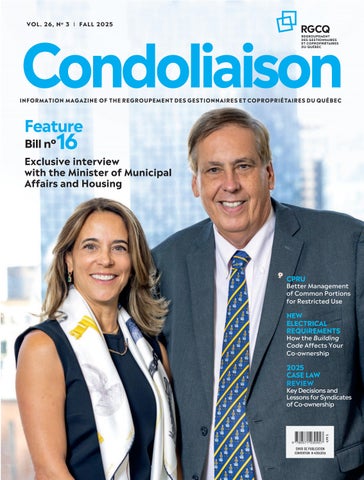
byYvesJoli-Coeur,Ad.E., president of the RGCQ – Provincial
The long-awaited government regulation is now in force. It completes the reform initiated with the adoption of Bill No. 16 in 2019, which sought to modernize the legal framework governing divided co-ownership in Québec. This reform pursued three fundamental objectives:
Strengthenbuyerprotectionbypromotingfuller disclosureofinformationabouttheaffairsofthe syndicateofco-ownershipandaboutthe immovableinwhichtheunitforsaleislocated;
Ensurethepreservationofthebuiltheritage throughthemandatorycreationofa maintenancelogbook;
Increasethefinancialpredictabilityofco-owned properties,notablythroughtighteroversightof thecontingencyfundandthemandatory completionofastudythatallowsforproper long-termplanningofneeds.
The Regroupement des gestionnaires et copropriétaires du Québec (RGCQ) was at the heart of the discussions leading to the adoption of this new framework. By actively engaging with public authorities, it helped bring forward the concerns of the sector and influencethedirectionsultimatelychosen.
This issue of Condoliaison offers an analysis of the main provisions of the regulation, which marks an important milestone in the evolution of co-ownership law. It also includes an exclusive interview with the Minister Responsible for Housing, France-Élaine Duranceau, who comments on the recently implemented measures and signals the possibility of futureadjustments.
In this regard, the Minister raises the question of the certificate issued by the syndicate of co-ownership, the delivery of which to the selling co-owner has generated various interpretations depending on the timing of the transaction.Sheindicatesthatmorepreciseguidance

could be considered if circumstances require it. She also expresses support for harmonizing the process with the OACIQ’s DRCOP form, which would simplify procedures for sellers and real estate professionals.
The Minister also signals her openness to reinstating certain recommendations made in 2012 by the Advisory Committee on CoOwnership, which had been set aside during the adoption of Bill No. 16. Among these is the possibility of creating a virtual specialized tribunal for co-ownership matters, inspired by the Ontario model. Such a body would promote faster and more specialized dispute resolution while easing the burden on the ordinary courts.
A reflection is also underway regarding the professionalization of co-ownership management. The idea of requiring these professionals to hold a licence issued by a regulatory body—either existing or newly created—is under study. Likewise, the possibility of imposing mandatory training for directors of syndicates of co-ownership, similar to what exists in Ontario, is being considered, subject to the financial feasibility of the initiative.
These avenues invite cautious optimism regarding the evolution of the legal framework for divided co-ownership in Québec. While the new obligations related to the maintenance logbook and the contingency fund study will produce their effects in the medium or long term, they already represent a significant structural step forward.
We wish you an excellent reading of this issue of Condoliaison, which also offers a variety of articles on other current topics likely to inform your thinking and support your practices.

Regroupement des gestionnaires et copropriétaires du Québec Provincial — RGCQ Provincial
1200, avenue McGill College, bureau 1500 Montréal (Québec) H3B 4G7 T : 514 916-7427 www.rgcq.org
Direction Gabrielle Tournier
Coordination
Jade Serbah
Editoriale Board
Me Michel Paradis
Gabrielle Tournier
Jade Serbah
Hélène Joli-Coeur
Richard LeCouffe, révision juridique
Caroline Martel
Véronique Martel
Editorial Team
Caroline Martel Véronique Martel
Jade Serbah
Richard LeCouffe
Linguistic Editing and Layout Proofreading Frédérique LeBlanc
Advertising
Diane Ménard –d.menard@rgcq.org
Graphic Production
Bernard Lamy –blamylamy@gmail.com
Sophie Bellemare
Printing and Distribution
Imprimerie Solisco inc. Scott (Québec)
Deposit :
Bibliothèque nationale du Québec
Envoi de publication convention # 42063014
AU SERVICE DE MONTRÉAL DEPUIS PLUS DE 40 ANS
Un sinistre va souvent au-delà des dommages matériels
il peut affecter les assureurs, les copropriétaires, les administrateurs, et peut nécessiter l'intervention d'un syndic d'assurance en cas de pertes importantes. Conscient de ces implications, Newsam Construction assure un contrôle de qualité irréprochable à chaque étape du processus.
Newsam Construction excelle dans la gestion des rénovations techniques et des sinistres complexes dans les copropriétés divisées, qu'ils soient causés par l'eau ou par le feu.
Newsam combine l'expertise juridique, les compétences techniques en matière de construction et la maîtrise de la dynamique de groupe pour apporter des solutions sur mesure.
Faites confiance à une équipe réputée pour son professionnalisme, son souci du détail et son respect des délais et des budgets. Newsam Construction transforme chaque défi en opportunité et redonne sérénité et éclat à votre copropriété.

Contactez Paul Schapira paul@newsam.ca ou au 514 969-8757




Newsam Construction 316, Avenue Victoria Westmount (Québec)
514 484-5020
www.newsam.ca
RBQ : 8279-2896-42
This is how Yves Nadon began his mandate, taking the time to meet most members of the boards of directors across all regions, as well as many professionals active in the co-ownership field. This notable step reflects a genuine commitment: to gain a clear understanding of the challenges, on-the-ground realities, and growth opportunities specific to each community.
Mr. Nadon demonstrates a deep understanding of the specific characteristics of the sector, recognizing that syndicates of co-ownership vary greatly in size and have very different needs. He also highlights the crucial importance of the issues stemming from Bill No. 16 (2019), which directly affect governance, transparency, and the long-term durability of collective buildings.
Mindful that, for most co-owners, their unit represents a lifetime investment, he emphasizes the need to strengthen both the legislative framework and practices to better protect the built heritage.
Driven by a genuine passion for real estate, Yves Nadon embodies a leadership style rooted in rigour, collaboration, and continuous improvement. “Continuous improvement is a mindset. Every challenge is an opportunity to learn and do better,” he says. A philosophy that aligns perfectly with the RGCQ’s mission and the expectations of its members.

His ability to rally teams around shared objectives, to foster a culture of dialogue, and to encourage the sharing of best practices will be invaluable assets in a context of transformation. “Co-ownership is undergoing major changes in Québec. It is essential to support co-owners, directors, managers, and professionals through this transition by providing them with tools, training, and a strong voice before decision-making bodies,” he adds.

Nouveau programme disponible pour les syndicats de copropriété de 25 unités et moins
En tant que chef de 昀le en courtage d’assurance condo, BFL CANADA propose un programme d’assurance spécialement conçu pour répondre aux besoins des syndicats de copropriétés, o昀rant des couvertures d’assurance uniques et exclusives.
Adhérez à ce programme et pro昀tez gratuitement de nombreux services exclusifs :
— Prix avantageux;
— Courtiers spécialisés en assurance de la copropriété;
— Remboursement des frais du gestionnaire lors des sinistres couverts;
— Service d’accompagnement par un expert en sinistre pour vos réclamations et sinistres sous franchise, incluant un suivi personnalisé de vos droits et obligations, une assistance dans vos démarches auprès des assureurs, et un suivi de l’évolution du règlement a昀n de réduire les délais;
— Optimisation des chances pour le syndicat de recouvrer la franchise auprès de la partie fautive;
— Participation aux rencontres virtuelles avec les copropriétaires.
On vous assiste au-dessus et en-dessous de votre franchise dans les règlements des sinistres.
Pour plus d’information, communiquez avec :
Patrick Beauvais
Courtier en assurance de dommages
Vice-président, directeur d’unité – Immobilier Québec
T. (514) 904-4434 pbeauvais@b昀canada.ca
BillNo.16
“AMajorStepForward,” saysMinisterFrance-ÉlaineDuranceau
Longawaitedformorethanfiveyears, theimplementingregulationforthe provisionsofBillNo.16(whichbecame Chapter28ofthe2020Statutes) regardingthecontingencyfund,the maintenancelogbook,andthe CertificateAttestingtotheCondition oftheImmovableHeldinCo-Ownership finallycameintoforceonAugust14.
Toshedmorelightonthese developments,Condoliaisonwelcomed toitsofficestheMinisterResponsible forHousing,France-ÉlaineDuranceau, foranexclusiveinterviewtodiscuss theseissues—andmanyothers—in depth.
Interview by Véronique Martel
Condoliaison: After the adoption of Bill No. 16 in 2020, it took more than four years before the government released the first version of the regulation, in September 2024. Why did it take so long?
France-Élaine Duranceau: It was necessary to prepare the groundwork. As soon as the law was adopted in January 2020, the community expressed the need to adapt the requirements of the maintenance logbook to the specific characteristics of each immovable. This required legislative adjustments, which were implemented through Bill No. 31 in February 2024, after I took office.
We also consulted a working group made up of experts, including Me Yves Joli-Cœur and Julien Gobeil-Simard, head of an engineering and technology firm. The discussions were not always unanimous, but everyone agreed that a clear and workable framework was urgently needed.
On September 11, 2024, a first version of the regulation was published. A rigorous review was essential to strike the right balance between the new requirements and the capacities of co-owned properties, thereby ensuring better protection, increased predictability, and improved governance. It was this pursuit of balance that guided the adjustments leading to the final version.

Condoliaison: What are the main changes made in the final version of the regulation?
France-Élaine Duranceau: The main change is the ten-year revision of the maintenance logbook for immovables with eight units or fewer, or with a maximum of three storeys. The same applies to co-ownerships whose common portions are exclusively exterior elements, such as parking areas or land. These are horizontal co-ownerships, where the building itself is entirely private. We consider the risks to be limited in such cases.
CERTIFICATE ATTESTING TO THE CONDITION OF THE IMMOVABLE HELD IN CO-OWNERSHIP
Condoliaison: Article 1068.1 of the Civil Code of Québec provides for a certificate from the syndicate of co-ownership attesting to the condition of the immovable. A restrictive interpretation considered by the Société de l’habitation du Québec (SHQ) would limit its issuance to after the promise to purchase. However, the RGCQ advocates delivering the certificate as soon as a fraction is put on the market, in order to ensure better information for all parties.
What is your view on this?
France-Élaine Duranceau: We have, of course, taken note of the RGCQ’s position. However, this distinction should not hinder the smooth completion of transactions. It seemed preferable to us to adopt the current version of the regulation rather than delay its implementation any further for a new round of drafting.
If clarifications prove necessary, they could be introduced through another legislative initiative in the coming months. Moreover, nothing prevents stakeholders in the sector from making the certificate available whenever they see fit. Market practices and pressure may well outpace the legislation.
Condoliaison: Will there be support to help with the implementation of the new requirements?
France-Élaine Duranceau: JI believe there are two components. First, we are providing clear guidelines and tools to co-owners, syndicates of co-ownership, and even coownership managers, to support more rigorous and consistent management and to guide financial decisionmaking. This creates a common baseline to frame everyone’s practices, including the volunteers who serve within syndicates of co-ownership, in order to better preserve the value of the immovable.
And second, within the government, our role is to disseminate information and make it as clear and accessible as possible. We have already begun working on explanatory guides and brochures. We will continue to remain attentive to any new feedback that may be expressed.
Condoliaison: What role do associations like the RGCQ have to play?
France-Élaine Duranceau: The RGCQ is on the front lines! It is in direct contact with stakeholders, it understands these rules well, and it can support both syndicates of co-ownership and co-ownership managers. We should not forget that the RGCQ also helped develop these rules, and that is invaluable. If needed, we may consider offering training through the SHQ. I will remain in contact with the RGCQ to stay informed about what is happening on the ground.
Three long-standing demands of the RGCQ have now been achieved: the obligation to conduct a contingency fund study, planned contributions to that fund, and the maintenance of a maintenance logbook.
Like many other recommendations, these were formulated, documented, and supported in 2012 by the Advisory Committee on Co-Ownership, which had been established by the government and on which the RGCQ served.
Inspired by best practices observed in Canada and abroad, and grounded in the needs identified on the ground, several of these legislative recommendations have nevertheless remained unaddressed since at least 2012. The RGCQ observes daily the impact of legislative inaction on syndicates of coownership. Although the Minister Responsible for Housing has expressed awareness and shown understanding, there is still a long road ahead. The sector hopes that this regulatory restart will not be just a temporary surge, but the beginning of a true political catch-up that has been awaited for several decades.
Condoliaison: Will you revisit the idea of regulating the profession of co-ownership managers, as proposed in Bill No. 401 in 2018 establishing a licence, a registry, or an oversight body similar to the role played by the Organisme d’autoréglementation du courtage immobilier du Québec (OACIQ)?
France-Élaine Duranceau: This is part of the discussions I’ve had with Me Joli-Cœur. It is under consideration. Perhaps an existing organization could play that role, rather than creating
a new association. We need to assess what the impacts would be. For now, let’s allow the new regulation to take effect, as it should help structure the sector.
Condoliaison: At a less demanding and less binding level, the RGCQ has long been calling for mandatory training for coownership directors and for professional managers. Is this an option you would be prepared to support, particularly to promote ethical, compliant, and predictable management within syndicates of co-ownership?
France-Élaine Duranceau: Any obligation requires resources. Having worked in the commercial real estate sector and having taken part in co-ownership sale transactions, I know that co-ownership is a complex field. Continuing education is important, but we are assessing what is most relevant before imposing anything, and we are maintaining close oversight. I also find it very healthy that stakeholders like the RGCQ speak out to raise awareness about the issues of management and financial predictability in co-owned properties. It’s a collective effort.
Condoliaison: Several recommendations from the 2012 Advisory Committee are still pending, such as conflict resolution, the merger of syndicates, co-ownerships in difficulty, and the pooling of funds. What are your next steps regarding coownership?
France-Élaine Duranceau: In the current context of the housing crisis, co-ownership was not “on the front burner.” Access to housing, stalled projects, and the reform of the Administrative Housing Tribunal were the priorities that required our attention. That work has been done. In co-ownership, we have also made progress, and I agree that there is still much to do. We are assessing what is needed to move forward. We will see whether there are elements that should and could be included in a bill this fall.
Condoliaison: The co-ownership sector nonetheless hopes that this legislative timeline for the fall will not be merely wishful thinking, but a real opportunity to address the blind spots in the current framework. How can the government bring co-ownership “to the front burner,” as you put it?
France-Élaine Duranceau: As I mentioned, the current context of the housing crisis has placed much of the focus on the urgent needs of the rental market. So I think it’s important to be present. In the housing sector, every group defends its interests
and viewpoints with conviction and energy. The coownership sector serves the needs of many people in our society — many people who deserve to be heard just as much as those in other sectors. And we are here to listen and to act.
Condoliaison: In today’s socioeconomic, environmental, and political contexts, co-ownership stands at a crossroads. The housing crisis, barriers to home ownership, the decline in new coownership construction starts, urban sprawl, the climate crisis, and the aging of the co-ownership housing stock are only a few of the pressures at play. How do you see the future of co-ownership in Québec?
France-Élaine Duranceau: Current conditions hinder the performance of the model, but co-ownership remains a good entry point to property ownership, especially in urban settings. To successfully achieve urban densification, multiple models must coexist, and the form of tenure is not the only factor to consider. Co-ownership is part of the solution, just like the construction of multi-unit rental housing and mixed-use or mixed-tenure approaches. The real issue is supply. I don’t view it strictly through the lens of co-ownership, but rather from the perspective of creating winning conditions in the market. That means that cities that have been granted special powers must show political courage to counter the “not in my backyard” mentality and use those powers to enable the development of major, structuring projects.
Condoliaison: To conclude, what message would you like to share today with the thousands of Québec co-owners who turn to Condoliaison for information and who want to know whether the government recognizes their contribution and the challenges they face on a daily basis?
France-Élaine Duranceau: In every field, volunteer contributions help move our society forward. As a co-owner myself, I am fully aware of the major positive impact of those who invest their time in their syndicate to ensure sound management. Their dedication and expertise are remarkable and deserve recognition and encouragement.
I also believe we must ensure that their concerns are heard, and I reiterate that the RGCQ must take its place in the media landscape. As for the government, we are listening and committed to continuing to modernize co-ownership in the interest of citizens.






Wewaitedalongtimeforthis governmentregulation, which completes the reform introduced by Bill No. 16 in 2019.
This regulation, which came into force on August 14, 2025, has effectively “woken up” articles 1068.1, 1070.2, 1071 (the recent portion), and 1791.1 (the portion
concerning trust deposits) of the Civil Code of Québec, which had been “dormant” since the adoption of that law in January 2020. The regulation therefore triggers:
The obligation for syndicates of coownership to prepare a Certificate Attesting to the Condition of the Immovable Held in Co-Ownership (article 1068.1 C.c.Q.);
The obligation for syndicates of coownership to adopt a maintenance logbook (article 1070.2 C.c.Q.);
The obligation for syndicates of coownership to carry out contingency fund studies (article 1071 C.c.Q.);
The addition of clarifications regarding the payment of trust deposits during the purchase of a co-owned unit (article 1791.1 C.c.Q.).

POINT JURIDIQUE
Par
Me Martin Côté, avocat associé chez Dunton Rainville
La déclaration de copropriété, ce n’est pas qu’un simple document notarié. C’est le contrat constitutif de toute copropriété divise. Elle encadre les droits et obligations des copropriétaires, des locataires et de toute personne occupant l’immeuble. Son respect est donc fondamental à la vie collective en copropriété. Pourtant, trop souvent, son application est négligée ou ignorée : bruits excessifs, travaux non autorisés, appropriation de parties communes, manque d’entretien des parties privatives, stationnement illégal.
Ces manquements, lorsqu’ils s’accumulent, nuisent gravement à la qualité de vie dans l’immeuble et risque de diminuer la valeur des unités.
Chez Dunton Rainville, nous accompagnons régulièrement des syndicats dans la mise en œuvre de leur déclaration de copropriété. Voici un aperçu des démarches disponibles :
LA MISE EN DEMEURE : formelle, rédigée par un avocat, elle ouvre la voie à des sanctions si le comportement fautif persiste.
LA MÉDIATION : en cas de conflit persistant, ce mode de règlement est encouragé par la loi.
LE RECOURS EN INJONCTION OU EN RÉSILIATION DE BAIL : lorsque tous les autres moyens échouent.
POURQUOI NE RIEN FAIRE PEUT COÛTER CHER ?
En vertu de l’article 1039 du Code civil du Québec, le syndicat est le gardien de la déclaration de copropriété. Son inaction face à une infraction peut engager sa responsabilité civile, ainsi que celle de ses administrateurs. De plus, un copropriétaire lésé peut lui réclamer le remboursement des frais juridiques engagés pour faire valoir ses droits.
Plusieurs déclarations de copropriété permettent aux syndicats de récupérer les honoraires professionnels engagés pour faire respecter la déclaration de copropriété. N’hésitez pas à nous contacter pour vérifier si votre déclaration contient cette disposition ou pour savoir comme l’y intégrer.

Vous avez des questions ?
Vous faites face à un copropriétaire délinquant ?
Communiquez avec Me Martin Côté mcote@duntonrainville.com 450 686.8683
Nous vous guiderons dans les meilleures stratégies à adopter, en conformité avec votre déclaration de copropriété et le Code civil du Québec.
Plus que jamais, Dunton Rainville est LE cabinet de confiance pour tout service juridique en matière de copropriété.
Since August 14, 2025, all syndicates of co-ownership must have a Certificate Attesting to the Condition of the Immovable Held in CoOwnership, which must be delivered within 15 days to any coowner who requests it when putting their private unit up for sale.
Article 10 of the regulation provides that this certificate, dated and signed by a person authorized to issue it, must contain at minimum:
The total amount of the contingency fund as of the date of the certificate, and the recommendation from the contingency fund study regarding the amount that should be available in that fund at the beginning of the current year;
The total amount of common expense contributions required and paid over the previous three years;
The total amount of liquid assets available to the syndicate to pay its current operating expenses;
The amount of the annual surplus or deficit shown in the co-ownership’s last three financial statements;
A statement indicating that the syndicate holds the insurance policies it is required to obtain;
The total amount of the self-insurance fund as of the date of the certificate, and the amount of the highest deductible provided for in the insurance policies held by the syndicate;
A brief description of the inspections and expert assessments carried out at the initiative of the syndicate over the past five years, as well as any losses that affected the private portion concerned, if applicable, during the past five years; the major repairs and replacements of common portions carried out over the past five years and those planned for the next ten years (including the estimated cost of this work); the list of ongoing legal proceedings to which the syndicate is a party; and, finally, the amendments made to the declaration of co-ownership over the past three years.
It goes without saying that implementing this measure will require certain adjustments over the coming years. For example, not all syndicates of co-ownership currently have a contingency fund study, and they have a three-year period to obtain one.

In addition, uncertainty exists regarding the moment at which this certificate must be delivered to the co-owner. Indeed, the first paragraph of article 1068.1 of the Civil Code of Québec provides as follows:
“Anyone who sells a fraction must, in due time, provide the prospective buyer with a certificate from the syndicate attesting to the condition of the immovable held in co-ownership, the form and content of which are determined by government regulation.”
Some therefore argue that the expression “prospective buyer” (promettant acheteur) means that a promise to purchase must first be signed before requesting the certificate from the syndicate. However, if that were the case, the transaction process and the transparency objectives of Bill No. 16 would certainly be undermined. Me Christine Gagnon, notary emeritus and a leading authority in Québec co-ownership law, maintains that no prerequisite — including the signing of an offer to purchase — can be imposed on the co-owner requesting the certificate from their syndicate. It is an unconditional obligation.
It should also be recalled that, during the exclusive interview granted to Condoliaison, Minister France-Élaine Duranceau mentioned the possibility that clarifications could be added to the law on this matter, should it prove necessary.
A maintenance logbook is a management tool intended to record a list and description of the common portions of the immovable, as well as the history of maintenance actions undertaken or planned for each listed element.


Article 1070.2 C.c.Q., which requires syndicates of co-ownership to have such a maintenance logbook prepared for the immovable, came into force on August 14, 2025. However, the transitional measures of Bill No. 16 grant syndicates a three-year period to comply. The deadline for establishing a maintenance logbook is therefore August 14, 2028. That said, nothing prevents syndicates from taking action now — quite the opposite.
The minimum requirements of the maintenance logbook are set out in sections 1 to 6 of the regulation. They are as follows:
5075, boul. Wilfrid-Hamel bureau 230 Québec, QC G2E 5G3

The maintenance logbook must be prepared by a member of one of the following professional orders: the Ordre des ingénieurs du Québec, the Ordre des évaluateurs agréés du Québec, the Ordre des architectes du Québec, or the Ordre des technologues professionnels du Québec. The principal professional activities of this member must relate primarily to real estate management, construction, renovation, valuation, or inspection. In addition, this person must not be a member of the board of directors, nor a manager, co-owner, or occupant of the immovable, nor the spouse of such a person. They also cannot be a shareholder, officer, director, or employee of a legal person, partnership, or trust that is a co-owner of the immovable, occupies it, or manages it.
It contains a list and description of the common portions and the materials, devices, and equipment that comprise them, as well as those installed in the private portions for which the syndicate is responsible for maintenance;
For each material, device, and item of equipment listed in the maintenance logbook, it must indicate the installation date, if known; the routine repairs already carried out and the maintenance work required; the contracts entered into for the performance of that work and any warranty contracts, inspection reports, expert assessments, and manufacturer maintenance manuals related to it, where applicable;
A section of the logbook must contain an assessment of the condition and remaining useful life of the listed materials, devices, and equipment, as well as a description of the major repairs to be carried out on them and the replacements required over the next 25 years, specifying the estimated year of completion for each. When these works are completed, the date and costs must be recorded, and the plans, specifications, and contracts must be added to the maintenance logbook;
The maintenance logbook is updated by the syndicate’s board of directors at least once a year. If certain planned work has not been carried out, the reasons for this omission must be specified.
The maintenance logbook is reviewed every five years by a member of one of the professional orders listed in (a). However, for immovables consisting of no more than eight private portions (excluding storage spaces and parking spaces) or of three storeys entirely above ground, the review may be carried out at minimum every ten years. The same exception applies if “no common portion of the immovable is located in a building,” which refers to horizontal co-ownerships (section 5, paragraph 2 of the regulation).
The professional who reviews a maintenance logbook must comply with certain specific requirements (section 6 of the regulation).

Gestion de projets avec échéanciers Respect des budgets établis
Présentation des services aux administrateurs et gestionnaires
Inventaire complet des travaux à efectuer sur la bâtisse Plus de 20 ans d’expérience
REMPLACEMENT D’UNITÉS SCELLÉES
COUPE-FROID ET MÉCANISMES
CALFEUTRAGE
INSERTION DE PORTES ET VITRAUX
FABRICATION ET INSTALLATION DE MOUSTIQUAIRES
INSTALLATION ET REMPLACEMENT DE MIROIRS
INSTALLATION ET RÉPARATION DE RAMPES DE VERRE

DOUCHE
RÉPARATION DE SOLARIUM CLOISON VITRÉE
INSTALLATION ET RÉPARATION DE MURS-RIDEAUX


Danielle Macpherson présidente
70, de la Barre Bureau 114, Longueuil QC J4K 5J3
Tél.: 450 444-2868
Fax : 450 674-5826
dmac@gestior.com www.gestior.com




As with the rules concerning the maintenance logbook, those applicable to contingency fund studies have been in force since August 14, 2025, with a three-year compliance period granted to syndicates, running until August 14, 2028.
The regulation provides that a contingency fund study must be carried out by a professional who meets the same independence criteria as those applicable to preparing the maintenance logbook. The only difference is that, in addition to the four professional orders already mentioned, the government adds members of the Ordre des comptables professionnels agréés du Québec (section 7 of the regulation).
Furthermore, a contingency fund study must be obtained by the board of directors of all syndicates, without exception, at least every five years. There is no exception for small co-ownerships in this case.
The contingency fund study must be carried out based on the information contained in the maintenance logbook, particularly regarding major repairs and replacements to be carried out over the next 25 years. It must contain at minimum:
The balance of the contingency fund used for the purpose of the study;
An estimate of the cost of each major repair and each replacement for the year of completion indicated in the maintenance logbook;
A recommendation on the amount that should be available in the contingency fund at the beginning of each year, and on the sums to be contributed annually, specifying, where applicable, the portion reserved for financing major repairs to common portions for restricted use (CPRU) and for the replacement of those portions;
An explanation of the calculations used to determine these various amounts.



Maintenance Logbook: Each co-ownership must establish a maintenance logbook, which must be prepared by an independent professional. This document centralizes information on the condition of the immovable, past interventions, and planned work.
Contingency Fund Study: A study must be carried out by an independent professional every five years.
Syndicate Certificate: When a unit is sold, a certificate must be provided, ensuring transparency regarding the condition of the co-ownership and its financial health.
It should be noted that section 14 of the regulation provides that if maintenance logbooks or contingency fund studies were already completed within the two years preceding August 14, 2025, these documents are considered valid for a period of five years, provided they meet all the criteria set out in the regulation. The validity period of a compliant maintenance logbook is ten years for small co-ownerships and horizontal co-ownerships, as provided in section 5 of the regulation.
Finally, section 11 of the regulation provides that only members of the Barreau du Québec, the Chambre des notaires du Québec, the Ordre des administrateurs agréés du Québec, or the Ordre des comptables professionnels agréés du Québec may hold, in a trust account, a deposit referred to in article 1791.1 C.c.Q.
Section 12 of the regulation adds that the builder or developer must appoint a member of one of these professional orders, to whom the buyer must pay the deposit directly. The builder or developer may under no circumstances make this payment on behalf of the buyer.
Finally, the agreed-upon delivery date of the fraction may be modified with the consent of the parties to the preliminary contract. To be valid, the new delivery date must be entered in the contract, and the parties must sign the amended contract (section 13 of the regulation).
Réservez votre consultation gratuite aujourd’hui !

By Caroline Martel
Thenotionofa“commonportionfor restricteduse”(CPRU)containsmanygrey areasandraisesseveralquestions.Who paysforwhat?Whomaintainswhat?An incompleteunderstandingcanleadto costlymistakesandunnecessarytensions. Forsyndicatesofco-ownership, preventionisbetterthanrepair.Planning andclarityareessential.
Balconies, windows, air-conditioning units, terraces — all elements attached to a single unit, yet legally classified as common portions. As soon as they are for restricted use, their maintenance and replacement can become an accounting, legal, and technical puzzle.
“It’s not that it creates confusion — it’s that it is often ignored. It isn’t discussed or factored into contingency fund calculations,” notes Réjean Touchette, professional technologist and specialist in contingency fund studies.
The result? Responsibilities are unclear, budgets are incomplete, and co-owners are left poorly informed.

CPRU – Better Understanding, Better Planning:
Debunking Common Misconceptions and Clarifying Responsibilities
Common portions for restricted use (CPRUs) are common portions whose use is reserved for one or a few co-owners only. Their hybrid status often creates ambiguity, because the right of use does not necessarily mean exclusive responsibility.
Typical CPRUs:
Balconies and terraces adjoining private units;
Doors and windows built into load-bearing walls;
Individual entrance doors;
Indoor or outdoor parking spaces;
Air-conditioning units (such as split systems), often installed on the roof or on a balcony.
The sharing of costs among co-owners depends not only on the nature of the element but also — and above all — on the wording of the declaration of co-ownership. A sentence such as “the windows shall be replaced according to rights of use” may seem innocuous,
but it creates confusion and can lead to significant financial obligations.
According to the Civil Code of Québec, major replacements must be financed by the contingency fund, based on each co-owner’s share. However, the declaration of co-ownership may provide for a different apportionment of co-owners’ contributions to this fund with respect to CPRUs. The decision in Al-Adas v. Syndicat des copropriétaires Zuni (2025 QCCQ 1308) confirmed this obligation to fund major replacements and repairs through this fund, even for elements designated for restricted use.
However, when the declaration introduces clauses based on rights of use (RU), syndicates must implement evolving accounting protocols to allocate and track individual contributions over time.
Parce que la copropriété, c'est aussi une question de chiffre!
-Certification d'états financiers (mission d'audit et d'examen)
-Mission de compilation (avis au lecteur)
-Déclarations fiscales
-Préparation de budget (incluant l'analyse de la déclaration de copropriété afin d'établir les clés de répartition
-Tenue de livre et gestion financière
-Consultations diverses
514 437-8800
info@dpcpa.ca www.dpcpa.ca
En copropriété, un dégât dans une unité peut vite devenir un problème collectif.
Notre équipe intervient 24/7 pour contenir, réparer et restaurer — tout en respectant vos exigences, vos règlements, et la vie en communauté.

Restauration après un événement catastrophique
Recouvrement des pertes importantes et complexes
Récupération des dommages causés par le feu et la fumée
Récupération des dommages causés par l’eau et les inondations
CPRU – Better Understanding, Better Planning: Debunking Common Misconceptions and Clarifying Responsibilities
Réjean Touchette, Professional technologist

“A single sentence in the declaration can imply 30 or 40 years of individualized accounting management, including returns on the amounts contributed,” explains Réjean Touchette. This type of allocation requires rigour, consistency, and specialized tools — which often goes beyond the expertise of a syndicate’s internal resources.
Taking CPRUs into account in a contingency fund study requires:
• A careful reading of the articles of the declaration dealing with the definition and allocation of CPRUs (often in articles 2, 3, and 4);
• A technical analysis of the nature of each element;
• A complex financial structure when individualized funding is required;
• The creation of secondary tables to allocate expenses among the groups of co-owners concerned.
• Not including balconies, terraces, or windows in the study
• Assuming that one-time billing to the co-owner is sufficient
• Confusing the obligation to perform routine maintenance with the financial responsibility for major replacements

Each profession must play its role: legal professionals to interpret the clauses, technologists to estimate the useful life of components, accountants to structure the financial allocation, and managers to coordinate it all.
In practice, many co-owners mistakenly assume that a CPRU belongs entirely to them. Yet the wall that supports a window, for example, remains a common portion. The syndicate must therefore plan its maintenance, even if only one unit benefits from it. This frequent confusion can lead to costly errors and tensions among co-owners.
To better equip stakeholders in the field, Réjean Touchette, professional technologist, Me Yves Papineau, and Aline Desormeaux, CPA, are currently leading a collaborative project aimed at clearly documenting the financial responsibilities associated with CPRUs. Their goal: to propose a clear, accessible, and practical framework that could take the form of a guide, practical sheets, or even training for syndicates, managers, and professionals.
“We started from dozens of real-life cases to identify a hundred very concrete questions about the financial management of CPRUs. Our goal is to establish clear practices, not to create yet another theory,” explains Réjean Touchette.


Martin Lirette
Chargé de Projet et copropriétaire

Téléphone : 418-847-5556 p104
Cellulaire : 418-953-0612
martin@ventilation-ncv.com
Sans frais : 1 800 567-5557


Financial Management and Building Maintenance
CPRU – Better Understanding, Better Planning: Debunking Common Misconceptions and Clarifying Responsibilities
Among the questions raised as part of the project:
When a declaration of co-ownership provides for replacement “according to rights of use,” must a separate accounting protocol be implemented to track the amounts contributed by each coowner?
Must this protocol include the interest generated over time?
In the event of a sale, what happens to the amounts accumulated for a unit?
What should be done if a co-owner has contributed too much… or not enough?
If no protocol was established in an older coownership, how can the funding be corrected?
Can a co-owner oppose the work if they are in a situation of underfunding?


Mr. Touchette summarizes the issue well: “Funding based on rights of use should not be the norm. It should remain an exception, because it considerably complicates long-term management.”
The goal of the project is therefore to propose, by 2026, a structured reference document based on real cases and rigorous analysis. The idea is not to render legal decisions, but to spark discussion, equip stakeholders, and lay the groundwork for a practice standard grounded in on-the-ground experience. This document could also become a useful resource in cases of litigation or differing interpretations.
The maintenance and replacement of CPRUs, often minimized, have major consequences for governance, finances, and the cohesion of co-ownerships. A better shared understanding of declarations, especially as part of contingency fund studies, would help prevent errors, tensions, and unpleasant surprises. The key: ask the right questions today to avoid suffering tomorrow from the consequences of poor decisions.
“The sooner we ask the right questions, the better we can fund the work at the right time… and with the right contributors,” concludes Réjean Touchette.
Ultimately, better understanding CPRUs also means building co-ownerships that are more equitable, more futureoriented, and more harmonious.
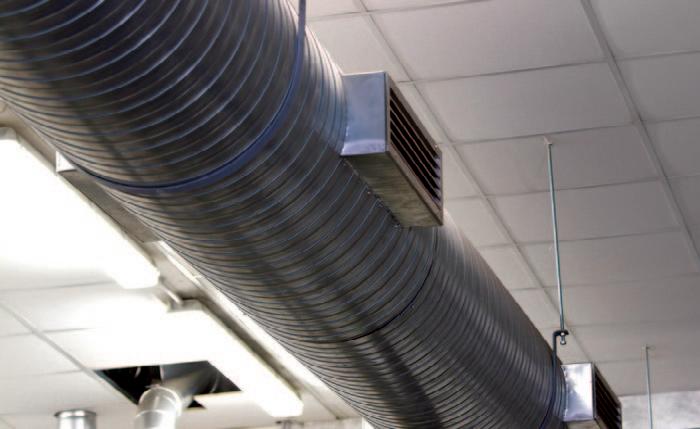
Conduits et système de ventilation
Chauffage et air climatisé
Échangeur d’air
Tout type de systèmes d’évacuation
Conduits de sécheuses et plus !
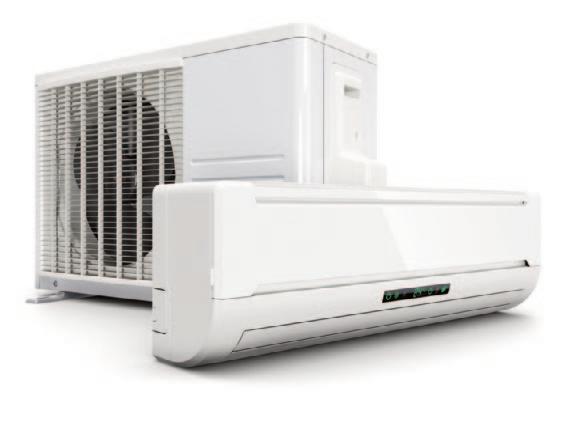
Service complet sur unité de climatisation mural

Service complet sur système de ventilation
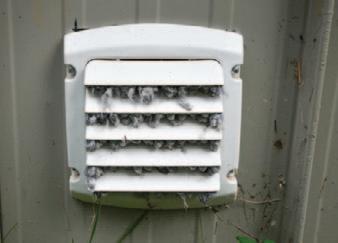



Nettoyage de conduits de sécheuses
Bill No. 16, adopted in December 2019, included a discreet but important reform of article 1064 of the Civil Code of Québec to clarify the rules governing the financial management of common portions for restricted use (CPRUs).
by Julien Gobeil Simard
Co-owners who have the use of CPRUs are responsible for the costs of routine maintenance and minor repairs to these portions. As for major repairs and replacement of these portions, these interventions are generally paid for by all co-owners through the contingency fund.
However, the amended article 1064 tells us that the declaration of co-ownership (DDC) may provide for a different apportionment of coowners’ contributions to the expenses related to major repairs to common portions for restricted use and to the replacement of those portions.
This notion of apportionment may seem simple in principle, but in practice it is quite the opposite. Let’s explore the pieces of this puzzle.
The Grand dictionnaire terminologique of the Office québécois de la langue française, in a management context, gives the following definition: “The act of dividing a quantity or a whole in order to allocate its parts.”
It is essential to distinguish the apportionment of costs from the responsibility to carry out the major replacements and repairs required to preserve CPRUs. CPRUs are common portions, and it is the syndicate’s duty to plan and carry out this work. We very often see syndicates incorrectly delegating such work to co-owners, especially in smaller co-ownerships.
The syndicate should never disengage from major replacements and repairs of common portions. Coowners’ contributions to the contingency fund may be apportioned differently from those for other common portions with respect to CPRUs, if the declaration of coownership explicitly provides for it, but apportionment clauses do not transform CPRUs into private portions.

Agents de sécurité et services de conciergerie



Patrouille de prévention

ECS Canada compte sur plus de 450 agents de sécurité aux quatre coins du Québec.
L’agent de sécurité qui sera déployé sur votre contrat aura été soumis à un processus de recrutement et de formation rigoureux.
Grâce à sa centrale disponible 24h/24h et ce 7 jours.
ECS Canada pourra dépêcher l’un de ses patrouilleurs sur les lieux dans un délai de quelques minutes. Notre organisation pourra répondre à vos alarmes, vérifier l’état des lieux, évaluer les signes d’intrusion et effectuer le verrouillage et le déverrouillage de vos établissements. www.ecscanada.com
Pour une soumission ou rencontre de présentation, il est possible d'écrire au alex.cordeau@ecscanada.com Québec: 4000 rue Jean-Marchand, Suite 108, Québec, Québec, G2C 1Y6 Montréal: 8101 Elmslie, LaSalle, Québec, H8N 2W6
Saguenay:
At Depatie Beauchemin Consultants and Hoodi, our teams read hundreds of declarations of co-ownership every year as part of our contingency fund study mandates. Too often, we encounter ambiguous apportionmentclausesregardingCPRUs.
One example: a co-ownership with six balconies whose declaration states that the cost of replacing the balconies is apportioned “based on use.” Does this mean each unit with a balcony has a right of use, and the replacement cost must be divided by six? Should we measure the square footage of each balcony and apportion the cost according to dimensions? Must a co-owner who does not use their balcony contribute to the replacement cost?
Unfortunately, we see many apportionment clauses that lack clarity and precision, to varying degrees.
Some declarations of co-ownership contain apportionment rules that could be considered questionable. This is particularly true for windows, which are CPRUs in vertical coownerships. Windows far too often appear in a clause providing that the cost of their replacementistobeapportionedsothateach
Thesyndicateshouldnever disengagefrommajor replacementsandrepairsof commonportions.
co-owner is responsible for replacing the windows of their unit. In a context where all units have windows and where the syndicate is responsible for planning and managing this work, how is such an apportionment clause relevant?
Certainly, not all units have the same number of windows. However, the relative values of the fractions are normally established by taking into account, among other factors, the surface area of the units — which is almost always correlated with the number and/or size of the windows. Is a different apportionment really useful?
Moreover, to apportion the cost of replacing all windows by unit, one would first need to be able to break down all replacement costs by unit: contractor mobilization on site, transportation and handling, lifting equipment, etc. We wish good luck to anyone who asks a contractor to provide such a cost breakdown.
One may wonder why, in so many declarations of co-ownership, there is an attempt to individualize the costs of major repairs and replacements for CPRUs that all
co-owners have, such as windows and balconies. Is the goal to reduce common expenses? Yet the amounts required for major repairs and replacements of CPRUs — even if subject to a different apportionment must still be collected from co-owners and accumulated in the contingency fund. It would be preferable for declarations of co-ownership not to include different apportionments for the replacement and major repairs of CPRUs, unless some co-owners have the use of CPRUs that others do not (e.g., only certain co-owners have rooftop terraces or parking spaces, or they do not have access to the same number of parking spaces).
In recent years, the notion of an “allocation key” has begun to gain popularity in new declarations of co-ownership. The idea is simple: every declaration includes a table indicating the relative value of the fractions (in %), which makes it easy to allocate
Rapports explicatifs envoyés aux administrateurs lors des déplacements de nos gestionnaires
Communications constantes avec les copropriétaires et les administrateurs
Rédaction d’études de fonds de prévoyance et de carnets d'entretien avant-gardiste
Culture d'entreprise de perfectionnement continu Nous remettons en question le statu quo

common expenses. So why not use the same principle for CPRUs when a different apportionment of major repair and replacement costs is desired? All that would be needed is to include a table with percentages that would allow the syndicate to easily allocate these expenses. This should be automatic for any new declaration of coownership or for updating an existing declaration that lacks clarity.
For older declarations of co-ownership that contain imprecise or unnecessary apportionment clauses, or in cases where it would be justified to add an allocation key, syndicates of co-ownership can work with a notary to amend them. Of course, there is a full process to follow to amend the constituting act of the declaration and associated costs, but the administration of the co-ownership will be simplified for decades to come.
When our professionals carry out contingency fund studies, it goes without saying that they must take into account the apportionment clauses or allocation keys and prepare projections and financial recommendations thatreflecttheserules.Generally,theprinciple is to create groups of contributors. There will always be a group composed of all co-owners for all common portions and for CPRUs that are not subject to a different apportionment. There will also be distinct contributor groups for CPRUs that are subject to specific apportionment clauses (e.g., the “Rooftop Terrace Users” group, the “Window, Door, and Balcony Users” group, the “Commercial CoOwners” group, etc.). Projections and recommendations are then prepared for each group. All professionals who prepare contingency fund studies should analyze the declaration of co-ownership and take into account the different apportionments for CPRUs in order to properly segment their
recommendations. However, they must be cautious not to exceed their scope of expertise. It is not the role of the professional conducting the study to provide a legal opinion on how to interpret an apportionment clause. The syndicate must instead consult a legal professional if needed.
That said, obtaining a contingency fund study should not be the starting point for applying apportionment clauses. The board of directors has the obligation to comply with the provisions of the declaration of coownership, and if the syndicate works with a property manager, the latter should support the board in the syndicate’s financial management. If your declaration states that only the top-floor co-owners must contribute to the contingency fund for the eventual replacement of rooftop terraces, and this provision has not been followed for ten years, the administration is in default. A properly conducted contingency fund study must then assume that these co-owners have never contributed to the replacement of their terraces and may recommend that a catch-up contribution be made.
With the legal framework for divided coownership becoming increasingly complex, we should aim for simpler management of the costs related to major repairs and replacements of CPRUs. This begins with rules in declarations of co-ownership that are clear and straightforward — ideally in the form of allocation keys introduced only when their use is justified and when the calculations are feasible.All of this will make it easier for administrators and managers responsible for the syndicate’s finances, as well as for the professionals conducting contingency fund studies, to properly apply these apportionments.
• Couverture sans limites incluse en cas de refoulement des égouts
• Un prix compétitif
• Aucune règle proportionnelle en cas de réclamation
• Assurance protection juridique des entreprises disponible à peu de frais
• Possibilité de toujours faire affaire avec le même agent spécialisé en assurance syndicats de copropriété
• Conseils personnalisés et accompagnement pour la sélection des couvertures d’assurance de votre immeuble en copropriété
Appelez-moi !
Yvan Montplaisir
Agent en assurance de dommages
Assurance France Sauvé inc.* Agence en assurance de dommages
514 916-3148 | 1 888 916-3148 assurancefrancesauve.com
Les assurances de dommages sont souscrites par Société d’assurance Beneva inc. et distribuées par Beneva inc., agence en assurances de dommages et ses partenaires autorisés. En tout temps, seul le contrat d’assurance précise les clauses et modalités relatives à nos protections. Certaines conditions et exclusions s’appliquent.
* Partenaire autorisé de Beneva inc., agence en assurance de dommages | © 2023 Beneva. Tous droits réservés MD Le nom et le logo Beneva sont des marques de commerce de Groupe Beneva inc. utilisées sous licence.



Nous desservons toutes les régions du Québec
Garantie du meilleur service à la clientèle (7 jours sur 7)
Aucun frais d’intégration (transfert de vos dossiers)
1er mois de gestion sans frais (gratuit)
Garantie du gel de prix des honoraires de gestion
(pas de hausse annuelle tant que vous êtes client)
Appelez-nous dès maintenant pour obtenir une soumission
Sylvain Clermont, Vice-président 514 819-0227
5890, Avenue Monkland, bureau 16, Montréal Qc H4A 1G2
www.a1condo.ca / (514) 666-0222 / info@a1condo.ca
by Yves Joli-Coeur
OnJune6,2025,inLyon,Ihadthe privilegeofattendingaconference markingthe60thanniversaryofthe FrenchLawofJuly10,1965,anevent organizedbythelegalpublisherÉdilaix.
Among the noteworthy contributions, one by a prominent jurist specializing in co-ownership law caught my attention. He asserted that co-ownership is ounded on principles of democracy.
This assertion, although accepted without debate in the French context, led me to reflect on the foundations of our own Québec co-ownership regime. For while there is a conceptual kinship between the two systems, Québec has moved away from the idea of an egalitarian democratic model and instead adopted governance that is essentially patrimonial and technical, resembling the structure of commercial corporations.The Québec syndicate of co-ownership is thus composed of two decisionmaking bodies: a board of directors endowed with broad powers and responsible for day-to-day management (with or without the support of a manager), and an assembly of co-owners that does exercise a degree of oversight of the conduct of affairs, certainly, but whose powers remain limited.
Contrary to the democratic ideal of equal suffrage, the Civil Code of Québecestablishes,inmattersofdividedco-ownership,asystemof weighted voting. Article 1090 C.c.Q. provides that co-owners exercise their voting rights according to the relative value of their fraction, which is determined based on the nature, destination, dimensions, and location of their private portion regardless of its use.
This model creates a structural imbalance: the higher the relative value of a fraction, the greater the decision-making weight of its owner. Thus, the co-owner of a large apartment can exert considerably more influence than the owner of a smaller dwelling during a vote of the assembly.
It is therefore not a democracybasedontheprinciple of “one person, one vote,” but a legal regime grounded in property rights. Here, voting rights reflect the share held in the common portions, proportional to the importance of each fraction within the immovable as a whole. This mechanism expresses the division of undivided co-ownership of the common portions among the co-owners, rather than an intent to establish arithmetic equality between them.
This logic extends even to the most significant decisions, although the legislator has established certain safeguards. Article 1097 C.c.Q. requires, for certain major decisions (e.g., work involving transformation, expansion, or improvement of the common portions), an enhanced majority of three quarters of the votes of coowners present or represented. The calculation still relies on the relative value of the fractions, meaning a co-owner with a large relative value carries substantial weight in the vote, even if the other co-owners are more numerous.
As for article 1098 C.c.Q., it further strengthens the requirement for consensus in the case of major modifications, such as those involving a change in the destination of the immovable. In such cases, not only must three quarters of the co-owners approve, but they must also represent 90% of all the votes of the co-ownership, not just those present. This double-majority mechanism by number of co-owners and by voting value — introduces a form of balance. However, it remains based on each co-owner’s share of the common portions. It does not transform coownershipintoanegalitariandemocracy,sinceaco-ownerholdingasmall fraction exercises only limited power, even on the most consequential decisions.
Where Québec law departs even more sharply from the democratic notion is in excluding voting rights for co-owners who are in default of paying their common expenses, as set out in article 1094 C.c.Q.
In other words, the right to vote at an assembly is not an inalienable right arising solely from membership, but a privilege conditional upon meeting one’s financial obligations. This principle reflects a logic focused on preserving the collective interest, far removed from the democratic ideal that recognizes the participation of all, including co-owners in default.
This provision has no equivalent in the French Law of July 10, 1965, which grants all co-owners — regardless of their financial situation — the right to vote at the assembly. The French legislator has chosen an inclusive model based on universal participation, while the Québec legislator has prioritized exclusion in the name of financial discipline.
The Québec regime of divided co-ownership does not correspond to a democracy in the classical sense of the term, but it nevertheless relies on governance rules intended to structure collective life within the immovable. Although co-owner participation in decisions is governed
by weighting and majority rules that favour a patrimonial logic, certain mechanisms help correct excesses or abuses.
EIn this sense, article 1103 C.c.Q. provides that a co-owner may apply to the court to have a decision of the assembly annulled — or, in exceptional cases, modified — when that decision is biased, adopted with the intent to cause harm, made in disregard of the rights of the co-owners, or where an error occurred in the calculation of the votes. This remedy constitutes a fundamental safeguard against abuses of majority power.
Moreover, it is important to recall that the board of directors is the syndicate’s principal executive body. It is responsible for making day-to-day decisions, ordering necessary work, and imposing common expenses, after consulting the assembly. This authority is exercised within the framework of the syndicate’s fundamental mission, set out in article 1039 C.c.Q.: ensuring the conservation of the immovable and seeing to it that the work required for its maintenance and longevity is carried out.
Admittedly, article 1086.2 C.c.Q. allows a co-owner or a director to apply to the court to annul or, exceptionally, modify a decision of the board of directors when that decision is biased, adopted with the intent to harm the co-owners, or made in disregard of their rights. Still, this is essentially a safeguard against abuses.
Thus, the democratic exercise of collective rights cannot serve to hinder the board of directors’ mission. The preservation of the immovable is a paramount objective that transcends individual interests. Co-ownership is therefore not a regime founded on majority will at all costs, but a hybrid legal model that reconciles property rights, the collective interest, and protection against decision-making abuses.
Unlike the approach adopted in French law — where the Law of July 10, 1965 is rooted in a republican and participatory tradition — Québec law does not seek to construct a democratic model of co-ownership. It is based instead on a vision of collective management of the shared patrimony, in which rights are proportional to contributions and voting is a tool of private governance, not a foundation of political equality.
This distinction is worth emphasizing, especially when attempting to apply, in Québec and without nuance, democratic principles articulated elsewhere. While Québec co-ownership includes mechanisms for deliberation and participation, it cannot be described as a democracy in the strict sense of the term.

Thegovernmentof Québecispreparingto modernizeregulatory requirementsrelatingto electricityinbuildings, includingco-ownerships.
by Caroline Martel
Te draft regulations published by the Régie du bâtiment du Québec (RBQ) aim to update the “Electricity” chapters of the Québec Construction Code (Chapter V) and the Québec Safety Code (Chapter II), notably by incorporating the 2021 edition of the Canadian Electrical Code (CEC). This reform will have concrete impacts for coownerships, both in terms of compliance and in the management of existing infrastructure, as well as in the planning of projects such as the installation of electric vehiclechargingstations.
The publication of these two draft regulations in the Gazette officielle du Québec on March 5, 2025, marks a major milestone. These amendments aim to:
Incorporate recent technological advancements in the electrical field.
Harmonize standards with the 2021 Canadian Electrical Code, published by the CSA Group.
Strengthen the safety of residential and commercial installations.
Support Québec’s energy transition.
The public consultation, open until April 18, 2025, made it possible to gather feedback ahead of the official coming into force scheduled for later this year.
These changes will require co-ownerships to adapt their electrical installations to meet current realities:
Ensuring technical compliance during renovations, upgrades or equipment additions.
Managing infrastructure that is often old and poorly adapted to modern electrical loads.
Rigorously planning projects related to electric vehicle charging, now governed by their own set of rules.
Co-ownerships will be required to comply with stricter requirements, including:
Enhanced grounding to improve protection against electrical hazards.
Increased protection against arc-faults and overloads, which are major causes of fires.
Stricter standards for electrical panels, ensuring safe management of energy distribution.
Buildings constructed before 2000 are particularly affected, as their installations were not designed for growing energy demands, especially those related to charging stations.
The reform provides more detailed rules governing the installation of charging stations in co-ownerships:
Requirement for an energy-capacity assessment before any installation, to verify the compatibility of the network.
Possibility of requiring a complete upgrade of the internal electrical network to ensure safe load management.
Introduction of a mandatory minimum infrastructure for buildings with five units or more, to facilitate future installations.
These requirements will often necessitate the addition of load controllers and the integration of electric vehicle energy management systems (EVEMS), especially in older buildings.
Verify the available electrical capacity of the building.
Assess the accessibility of meters and the positioning of the charging stations.
Analyze the impact on both common and private portions.
Clarify the terms of financing and maintenance.
Anticipate any necessary amendments to the declaration of co-ownership.
Explore government subsidies, particularly through the Roulez vert program.
en réfection de maçonnerie et autres travaux de réparation de l’enveloppe de bâtiment.

Installing charging stations generally requires amending the declaration of co-ownership by notarial act, which must be approved by 75% of the votes of co-owners present or represented at a special general meeting.
Key legal issues to anticipate include:
The legal classification of the infrastructure (common portions, private portions, or common portions for restricted use).
The creation of servitudes if the installation encroaches on private areas.
Updating the building’s by-laws to regulate requests, responsibilities, costs, and technical requirements.
A clear legal framework is essential to avoid deadlocks and disputes. Consulting a lawyer specializing in co-ownership from the outset of the project is strongly recommended.
Rapport d’état d’immeuble Plan de gestion de l’actif Fons de prévoyance Carnet d’entretien
www.cossettetouchette.com

Financing remains a major issue, particularly in older buildings where significant work may be required..
Key points to remember:
The contingency fund cannot be used to finance these projects, as it is reserved for major repairs and not improvements.
Financing must come from special assessments, the operating budget, or external loans.
Costs also include professional fees (lawyers, engineers, notaries).
The Roulez vert government program can cover up to $5,000 per charging station, or 50% of eligible costs in multi-unit buildings. A phased installation approach is recommended to manage expenses and maximize available subsidies.
Entrust a certified professional with a comprehensive electrical assessment.
Prepare a well-structured file for the co-owners’ general assembly.
Ensure transparent and regular communication with coowners.
Involve legal and technical experts from the outset.
Plan installation in phases to spread out costs.
Take advantage of government subsidy programs.
The updates to the Construction Code and Safety Code will represent a major milestone for Québec co-ownerships. They will impose new obligations, but above all, they will offer an opportunity to modernize infrastructure, enhance safety, and support the energy transition.
With careful planning, the support of qualified experts, and prudent use of available assistance programs, syndicates of coownership will be able to turn this reform into a lasting lever for the benefit of their buildings and residents.
Protégez votre immeuble, sans même y penser!
Ne laissez pas un dégât d’eau mettre en péril votre investissement!
Offrez-vous une protection 24/7, même en cas de panne de courant*, avec Sedna Mesh.
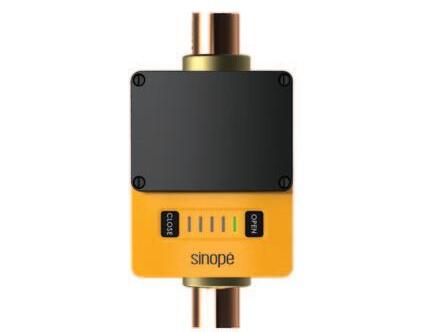



Adieu les dégâts d’eau!
Sécurité totale
Protège l’ensemble des unités et les espaces communs, sans intervention manuelle
Gestion simplifiée
Contrôle et suivi en temps réel avec la plateforme Sinopé Smart Systems
Tranquillité assurée
Un système fiable et certifié, qui vous aide à préserver votre couverture d’assurance
Theannualgeneral meeting(AGM)ofcoownersisakey momentinthelifeofa co-ownership.
by Caroline Martel
It is the opportunity for co-owners to weigh in on the finances, upcoming projects and the governance of their building. When well organized, the AGM is a lever for transparency, engagement and sound management.
WHAT THE LAW REQUIRES
The Civil Code of Québec governs the holding of AGMs, primarily in articles 1087 and following. It notably requires:
Sending a notice of meeting and an agenda within the prescribed deadlines;
Providing documents along with the notice, such as the financial statements, the proposed budget, the board of directors’ report, or draft resolutions or amendments to the declaration of co-ownership;
Meeting quorum requirements to validate the meeting (articles 1089 and 349 C.c.Q.);
Holding secret-ballot votes upon request (article 351 C.c.Q.);
Preparing accurate and complete minutes of the decisions made.
It now allows meetings to be held virtually and votes to be cast remotely, provided certain criteria are met (article 1089.1 C.c.Q.).

THE ESSENTIAL STANDARD ITEMS TO INCLUDE ON THE AGENDA:
✔ Presentation of the financial statements
✔ Presentationoftheproposedbudgetandanyspecialassessments
✔ Election of directors
✔ Question period

Une 4e édition par Me Christine Gagnon notaire émérite, de l’étude Gagnon Bujold notaires et Me Yves Papineau, avocat émérite assistés de l’Équipe de copropriété LJT avocats.
Les dispositions de la loi et des déclarations de copropriété sont relativement sommaires et demeurent assez vagues sur le fonctionnement et la procédure des assemblées des copropriétaires. C’est pourtant un sujet qui retient l’attention de tous les syndicats et des juristes pratiquant en droit de la copropriété.
Cette 4e édition du Guide de procédure et de fonctionnement des assemblées des copropriétaires a été préparée en tenant compte des nouvelles dispositions législatives applicables, de la jurisprudence récente et des pratiques dans les assemblées de copropriétaires.
Le Guide présente aux administrateurs de syndicats, aux copropriétaires, aux juristes et aux gestionnaires d’immeubles, de façon très accessible, un cadre juridique pour la préparation et la tenue des assemblées des copropriétaires qu’elles soient tenues en présentiel, à distance ou de manière hybride. La première partie comporte un texte portant sur l’ensemble des sujets qui entourent l’assemblée des copropriétaires, de manière détaillée. La consultation du texte est facilitée par une division de chaque chapitre en plusieurs sections traitant de points particuliers. Il est donc un ouvrage de doctrine significatif en droit, tout en restant accessible au grand public. Le Guide se veut également très pratique, comportant après la section doctrine, deux autres parties : un modèle de règlement de procédure d’assemblée et des modèles pour la documentation d’assemblées de copropriétaires.
4e édition










LJT avocats Lawyers
News
AGMs IN CO-OWNERSHIP : THE RULES, THE TOOLS AND THE RIGHT REFLEXES
AneffectiveAGMreliesonstructuredfacilitationandasmoothsequence -of steps. Here are the main stages: Verify attendance and proxies; Confirm quorum, meaning more than 50% of the votes are present represented (articles 1089 and 349 C.c.Q.);
3. Appoint a chair and a secretary for the meeting; Present the agenda; Conduct votes according to the prescribed methods (show of hands, paper ballot, electronic voting, etc.); Prepare the minutes.

Documents sent in advance
Clear agenda
Voting materials ready (or platform activated)
Structured check-in process
Neutral and respectful facilitation
Follow-up after the meeting, when required
It is still possible to participate in an AGM even if you cannot be present.
Proxies: A proxy allows you to designate, in writing, an adult to represent you at the meeting. This representative may be another co-owner, a director, a relative, or any other trusted person.
It is important to note that an excessive concentration of proxies in the hands of a single representative especially if that person is a director — can undermine, or appear to undermine, the fairness and representativeness of the decisions made.
The proxy must be in writing (art. 350 C.c.Q.):
The full name of the co-owner (the principal) and the person appointed (the proxy holder)
The signature of the principal, along with the date, the date of the meeting concerned or the duration of the mandate, as well as the scope of the mandate given It is:
Valid for the designated meeting or, if specified, for more than one meeting or for a defined period
Revocable if the co-owner attends the meeting in person or by issuing a more recent proxy
A good practice is to provide co-owners with a proxy form at the same time as the notice of meeting and the rest of the preparatory documents for the AGM.
The COVID-19 pandemic transformed governance practices. Virtual, in-person and remote meetings — now permitted by law — have increased participation and simplified many processes.
For small co-ownerships (fewer than 25 units), the Votre assemblée générale platform, developed by the RGCQ in partnership with Immo Square (agconnect), offers a turnkey solution.
This platform notably allows:
Automated delivery of notices and required documents;
Recording of attendance and proxies;
Real-time calculation of quorum and votes;
Secret-ballot voting in accordance with the law;
Automatic generation of the minutes;
Recording of the meeting (audio and video);
Chat features and participation by phone and/or videoconference when needed.
No application is required. It can be accessed simply through a web browser on a computer, tablet or smartphone. Additional resources are also available (resolution templates, voting logs, etc.). It is important to verify before the general meeting that your equipment and your internet connection are functioning properly.
Syndicates responsible for buildings with 25 units or more can turn to more robust platforms, such as agconnect. These offer equivalent services, but adapted to greater complexity:
Management of a large number of participants;
Enhanced technical support (including onsite support);
Advanced security systems;
Decision-making analysis tools.
To learn more about the obligations related to holding an AGM, obtain document templates or explore recommended digital platforms, visit:
Book — Guide des assemblées, 4th edition https://rgcq.org/livres/details?slug=guide-deprocedure-et-de-fonctionnement-des-assembleesdes-coproprietaires-3e-edition
Frequently Asked Questions — General Meetings https://rgcq.org/en/frequently-asked-questions
“Votre assemblée générale” Platform (small coownerships) rgcq.org/votre-assemblee-generale
Training Sessions on AGMs and Governance (as per the current schedule)
https://rgcq.org/en/activities-and-training
Discover the RGCQ Document Centre to consult guides, reference documents, quick-reference sheets and practical tools:
https://rgcq.org/en/document-center
The best AGM is one that fosters engagement and understanding. To improve participation:
Simplify the notice of meeting by using clear language without legal jargon;
Offer flexible participation options (in-person, virtual, proxy);
Present documents in an accessible, plain-language format;
Keep discussions well moderated to maintain a respectful atmosphere.
The better informed and engaged co-owners are, the more they participate — and the more effectively the co-ownership operates.
• An AGM must be carefully prepared in advance.
• Reliable technological tools exist to simplify the process.
• Active participation from co-owners is essential.
• Respecting the rules strengthens the legitimacy of decisions.


by
More and more syndicates of co-ownership are adopting digital tools to modernize their management. A guarantee of efficiency, transparency and rigour, these solutions have become essential allies in an increasingly demanding context.
The landscape of co-ownership management has been profoundly transformed by the emergence of digital tools — a shift accelerated by the restrictions imposed during the COVID-19 pandemic. Today, administrators and managers rely on integrated platforms to centralize information, automate repetitive tasks, and reduce the risk of errors and fraud. In short, these tools allow them to better meet coowners’ expectations.
“What we’ve seen over the years is that managers, like administrators, are becoming increasingly demanding. And they’re right to be. It has to be easy, userfriendly and efficient. No one has time anymore for redundancy or duplication,” says Julien Gobeil Simard, President and CEO of Hoodi — the digital maintenance logbook.

Le système de prévention des dégâts d’eau conçu spécialement pour les copropriétés


Un système Akisens pour votre condo à partir de 24 $ par mois
*


Nos débitmètres sont capables de détecter les fuites d’eau dans la tuyauterie à l’intérieur des murs. De plus, nos détecteurs de mouvement répondent à la norme exigée par les assureurs en cas d’absence prolongée. La seule technologie qui assure que la sonde reste à l’endroit approprié, qui vous avise lors d’un déplacement et replacement sur l’emplacement initial.
La plateforme de gestion Akicentral, la plus évoluée dans le domaine de la gestion des risques de votre bâtiment.
Demandez à nos experts certifiés en copropriété de vous informer sur nos promotions et de vous accompagner dans votre projet clés en main, que ce soit pour de l'assurance ou du financement !

* Certaines conditions s’appliquent

JULIENGOBEILSIMARD, President and Chief Executive Officer of Hoodi – the digital maintenance logbook

CATHERINEPÉPIN, Partner, Director of the Property Management Department at, HPDG associés inc.
No more misplaced contracts, overflowing email inboxes, scattered Excel files, repeated phone calls or hours spent searching for answers. For Catherine Pépin, an experienced manager and partner at HPDG Associés, there is no future without an integrated solution.“The pandemic really helped change mindsets. Just the shift to virtual meetings was a revolution. I, myself, changed the way I work and so did my team. I delegate more, and I rely on tools instead of doing everything myself. It has changed my life as a manager by allowing me to play my role as conductor more effectively. With my team, we are more available when it really matters, to bring our expertise and experience to decision-making.”
Groupe Vigilance – Systèmes de sécurité is a family business spanning three generations that has been supporting syndicates of co-ownership across Québec for more than 20 years. According to Martin Brousseau, President, and his daughter Sandrine, Director of Sales and Installation, the increasing complexity of responsibilities makes the adoption of digital tools unavoidable. “Today, you have to manage compliance, insurance issues, maintenance follow-ups, communications, emergencies, cybersecurity… and all of that is often done by volunteers. Without proper tools, burnout is inevitable,” they explain. These security entrepreneurs even completed a university program in co-ownership management to better understand the realities faced by their clients.
Indeed, as legal obligations multiply and pressure for sound governance increases, digital tools make it possible to structure the work, accelerate follow-ups and avoid oversights. Guillaume Leblond, Vice-President of Finance and Administration at Gestion immobilière Lafrance & Mathieu, sees them as an indispensable safety net. “It’s a question of efficiency, but also of transparency, rigour and professionalism. Tasks are automated, deadlines are scheduled, everything is clearer and nothing falls through the cracks.
BROUSSEAU, President, and his daughter Sandrine, Director of Sales and Installation at Groupe Vigilance
During transitions within boards of directors, that is extremely valuable.”Co-owners’ expectations are evolving as well. They want quick answers, transparency and responsiveness. “In the past, a manager could say, ‘I’ll get back to you in two or three days.’ Today, that doesn’t fly anymore. You need immediate access to data, the ability to respond and to transmit information in real time. Digital management tools allow the right people to access it securely and in a controlled way. Everyone benefits,” adds Mr Leblond.
The ability to automate management tasks frees up valuable time for managers and directors while increasing operational safety. This is particularly true for accounting and bookkeeping.
For Jérôme Robert, President and CEO of Otonom Solution, technology provides peace of mind in handling transactions. “Gone are the days of chasing after a cheque or a signer! Vendor payment approvals are carried out digitally. Each approval is documented. You can track who approved what, when, and for how much. Everything is compliant, transparent, secure and easy to audit.” Thanks to this built-in traceability, all financial operations remain clear and verifiable. This represents real progress, strengthening both the trust and the legitimacy of financial decisions within the syndicate, as well as the relationship with suppliers.
A growing issue for co-ownerships, the electrification of parking areas involves significant technical, financial and logistical challenges that lead some syndicates to make piecemeal decisions rather than adopting a long-term, structured vision

Un seul contrat, zéro casse-tête
Systèmes, plomberie et électricité : nous nous occupons de tout !


Protégez vos investissements et évitez les sinistres coûteux.
Noti昀cations en temps réel
Application gratuite perme琀ant de contrôler facilement votre système et de recevoir des alertes en temps réel sur votre cellulaire
Condo sécurisé, esprit en paix
Protection de votre investissement immobilier grâce au système installé par AquaDétect
Présence 昀able
Soutien technique par téléphone 24/7
Neuf années de spécialisation
Exclusivement consacrée aux immeubles à condos depuis 2016
Appelez-nous !
• Soumission détaillée sans frais
• Possibilité de 昀nancement

Saviez-vous que vous pourriez pro昀ter de RABAIS sur certaines polices d’assurance ?
securiteaquadetect.com info@securiteaquadetect.com
514 375-5678, poste 4

JÉRÔME
ROBERT, President and Chief Executive Officer of Otonom Solution

B.A.A.,ADM.A., Vice-President, Finance and Administration at Gestion immobilière Lafrance & Mathieu
–
Real Estate Agency
For Jean-Thomas Savoie of AXSO, digital tools can eliminate most of the pain points.
“Thanks to Eddie, our solution for multi-unit buildings, the building’s electrical capacity is modulated in real time to optimize EV charging based on the number of stations in use. Pricing, billing and charging tracking are managed by the platform and linked to each co-owner’s account, which significantly reduces the workload for managers, especially when it comes to collections,” he explains.
Beyond energy management, the company focuses on support. “We attend syndicate meetings and present our open software solution, which adapts to nearly all charging equipment brands. We help co-owners make choices that meet their needs, and we support them throughout the EV charging installation project. Installation costs can be amortized, subsidies better targeted, and users better informed,” he adds.
Access to accurate, high-quality information has a direct impact on trust and governance within a co-ownership. Digital tools also help professionalize volunteer-based management. By placing information at the centre of decision-making, they enhance transparency and simplify accountability. “There are no decisions made in the dark when all co-owners have access to the same documents, the same account statements, the same timelines, the same financial reports,” says Guillaume Leblond.
Contrary to common belief, these tools are not reserved for large co-ownerships or professional managers. On the contrary, small co-ownerships often benefit the most from adopting them.

JEAN-THOMAS SAVOIE, Business Development and Sales Manager at AXSO for the Eddie electric vehicle charging management platform
“In many small co-ownerships, co-owners have a limited understanding of their responsibilities. Digital tools give them the structure and organization they need to operate effectively. At Hoodi, we’ve made this our mission out of conviction, with the goal of supporting these volunteers in protecting their property,” explains one of the company’s founders, Julien Gobeil Simard.
Digital platforms provide structure, continuity, and an essential institutional memory. They also help prevent information loss during changes in board members.
Today’s solutions are user-friendly, affordable, flexible, and— above all constantly evolving. Platforms adapt. New features are added on an ongoing basis (e.g., Certificates Attesting to the Condition of the Immovable held in Co-ownership, document vaults, claims management tools, and compliance reminders), based on real-world needs and the obligations of syndicates of co-ownership.
At a time when managing co-ownerships is becoming increasinglydemanding,digitaltoolsarenolongeraluxury—theyare a necessity. Whether to ensure rigorous operational follow-up, facilitate collaboration, secure transactions, or better meet coowners’ expectations, these solutions are powerful levers for more transparent,harmonious,andsustainablemanagement.
Costs and long-standing habits remain the most common obstacles among co-owners and syndicates. “When it comes to prevention, magical thinking is alive and well. ‘We haven’t had any water damage—let’s wait before installing detection systems.’ We still hear this even in new buildings! But in both safety and management, prevention always costs less in the long run— financially, emotionally, and in terms of time and quality of life,” concludes Sandrine Brousseau of Groupe Vigilance.

POURQUOI FAIRE AFFAIRE AVEC INSTALTECH
POUR VOTRE IMMEUBLE?
-produits de qualité supérieur
-durabilité à long terme
-entente d'escompte de volume pré-négocié avec les fabricants -garantie sans tracas de 10 ans pièces et mains-d’œuvres
-équipe d'installation expérimentées en règle avec la CCQ
-scellement extérieur avec les produits adfast garantie 50 ans -planification des cédules d'installation faites directement avec les locataires et co-propriétaires .
-chantier laissé propre tout les jours
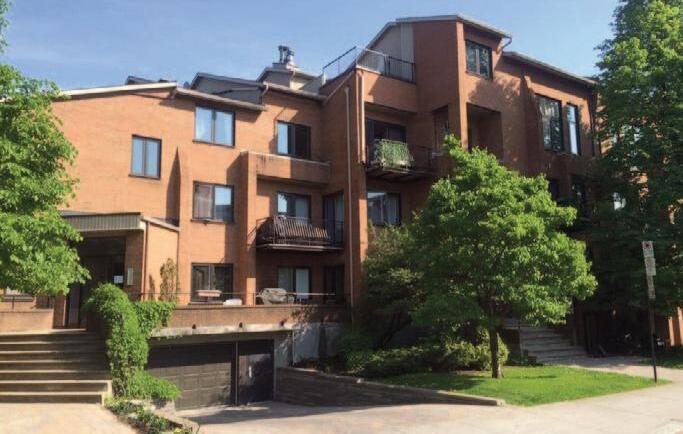



by Richard LeCouffe
CommonPortionsforRestrictedUse–Martinc.SDC JardinsdeChevernyPhaseIII,2025QCCQ50
In this case, the co-owner sued the syndicate before the Small Claims Division of the Court of Québec, claiming he had been deprived of a storage space, a common portion for restricted use. He therefore sought the return of that storage unit or, failing that, reimbursement of its value, along with incurred costs and damages. However, the jurisdiction of this division of the Court of Québec is limited to the recovery of a “claim” (article 536 of the Code of Civil Procedure), a term that refers only to an amount of money a plaintiff seeks from a defendant. It cannot concern a right in property that
Eachyear,arichbodyof caselawisproducedin mattersofdividedcoownership,andwefeltit wouldbeusefultopresent fivedecisionsissuedsofar in2025,prioritizing variety.Alistofwebsites providingfreeaccessto thefulltextofthese judgmentsappearsatthe endofthearticle.
one wishes to have recognized or, alternatively, to claim its monetary value. In this case, the plaintiff’s principal conclusion required the court to first determine the extent of his rights in the storage space. Consequently, since the dispute concerned the ownership of the property and/or a right of use, the Small Claims Division lacked jurisdiction. The Court therefore declined competence to hear the co-owner’s claim.
This decision serves as a reminder that divided co-ownership in Québec does not benefit from a tribunal specifically designated to hear disputes related to this form of housing, unlike Ontario, for
Nous transigeons autant avec les gestionnaires que les Syndicats de copropriétés
Une protection pensée pour l’administrateur et le copropriétaire
Tous les produits reconnus par les assureurs sous le même toit
Système ultraperformant
Un suivi personnalisé dans le processus d’installation et de mise en service

TOTAL OU PARTIEL DISPONIBLE SOUS FORME DE CRÉDIT BAIL
Meilleurs taux sur le marché permettant une protection immédiate et ses avantages sans vider les coffres de l’organisation



A BRIEF JURISPRUDENTIAL REVIEW OF THE YEAR 2025 example. Québec co-owners and syndicates must therefore rely on the ordinary courts or arbitration to resolve their disputes, along with all the delays, costs, and constraints that such avenues entail.
mlevesque@levesquenotaires.com
STÉPHANE KIROUAC ET ASSOCIÉS
EXPERTISE • FIABILITÉ RÉSULTATS 514 779.2554
• Études de fonds de prévoyance et carnets d’entretien par un ingénieur
• Expertises technico-légales spécialisées en problèmes de distribution d’eau, d’égouts ou de drainage
• Enjeux de plomberie ou robinetterie
• Refoulements, inondations
• Ocre ferreuse, drain français
• Non-conformités aux plans
• Témoignages à titre d’expert

PenaltyClause–SDCduBelvédère,Tour3c. Ionescu,2025QCCQ1344
The syndicate sought to claim penalties totaling $4,500 from a couple of newly arrived co-owners (90 days × $50) for violating the building by-law prohibiting dogs weighing more than 15 pounds. The syndicate also reproached them for other infractions, which are not addressed here (those claims were dismissed by the court).
A court has wide discretionary power and may reduce the amount of a penalty stipulated in a penalty clause when it is deemed abusive. The judge will assess the relationship between the imposed penalty and the actual prejudice suffered. In this case, the co-owners were aware of the prohibition before signing their offer to purchase but believed they would obtain an exemption from the syndicate because of the co-owner’s health issue. After the exemption was refused, and after an unsuccessful attempt to place the dog with their daughter, the co-owners sold the unit after three months. The judge allowed the syndicate’s claim, but only in part, awarding $500.
This decision reminds us that penalty clauses can be useful tools to enforce the declaration of co-ownership because of their deterrent and compensatory nature, especially when dealing with recalcitrant or repeat-offender co-owners. However, the judge retains discretionary power to soften their impact depending on the circumstances. It is worth noting that penalty clauses now form part of the constituting act of co-ownership (the second part of the declaration), and not the building by-law.
The co-owner claimed $15,000 from the syndicate for its negligence in resolving a problem of cigarette odors infiltrating her unit and for its repeated refusal to adopt a non-smoking by-law for the building.
The evidence instead showed that, as soon as it was informed of the issue, the board of directors mandated an expert firm to identify the source of the problem and recommend a series of corrective measures Most of these were in fact carried out by the syndicate. In addition, the administrators established that they had presented, on four separate occasions, a draft by-law prohibiting smoking in the private portions, without succeeding in having such a by-law adopted by the assembly of co-owners.
The Court therefore found that the syndicate had not committed a fault, in the circumstances, and dismissed the claim. It nonetheless reminded the plaintiff that she is not without recourse against the co-owners responsible for the smoke and odor infiltration, referring to articles 976 and 1063 C.c.Q., as well as articles 1, 6 and 46.1 of the Charter of Human Rights and Freedoms.
This decision underscores that a syndicate of coownership is bound by an obligation of means, not an obligation of result, in similar situations. It is worth recalling that section 2, paragraph 7 of the Tobacco Control Act (CQLR, c. L-6.2)—which is not mentioned in the decision—applies only to “the common areas of residential buildings containing two or more dwellings, whether or not such buildings are held in divided coownership.” It does not apply to private portions.
Article 1103 C.c.Q. allows a co-owner to ask the court to annul or, in exceptional cases, to modify a decision of the assembly of co-owners if the decision is partial, was adopted with the intent to harm the co-owners or in disregard of their rights, or if an error occurred in the calculation of the votes.
The co-owner sought the annulment of amendments to the building’s by-laws regarding leasing, adopted at meetings held on June 11, 2024 and July 8, 2024. He alleged that the second meeting was merely the continuation of the first, allowing him to bring his claim within the 90-day period applicable to the July 8 meeting. The syndicate, for its part, requested the immediate dismissal of the claim, as it was filed after the deadline.
The action was in fact brought on October 7, 2024, the 91st day after the July 8 meeting, the 90th day falling on a Sunday.
The judge first held that the action was filed within the time limit with respect to the decision adopted at the July 8 meeting, since article 2879 C.c.Q. makes no distinction between how a prescriptive period and a forfeiture period are calculated. He also determined that the fact the co-owner was not directly affected by the decision at this time did not deprive him of the legal interest required to seek its annulment. However, regarding the decisions adopted on June 11, the action was clearly out of time. Article 1103 C.c.Q. provides that “the action must (…) be brought within 90 days of the meeting,” and this is a public order time limit that cannot be suspended or extended.
This judgment reiterates the public-order nature of the forfeiture period set out in article 1103 C.c.Q. The judge who hears the remainder of the case, if it proceeds, will therefore only be able to rule on the decisions adopted at the July 8 meeting.


•Apprenez à identi昀er les sources potentielles de dégâts d’eau
•Voyez comment un système de détection peut les prévenir
•Découvrez quelles caractéristiques rechercher

•Durée de 3 heures (en ligne et en différé)
•En anglais ou en français
•Formation reconnue par la CHAD, la RBQ, la CMMTQ et la CMEQ
•Prix : 120 $
Information : 514 375-4004 ou info@prevcan.org

Courriel info@tapama.ca GESTIONNAIRE DE COPROPRIÉTÉS
Bureau 450.635.9082
Télécopieur 450.396.9082
3472 Des Fadets
Longueuil (St-Hubert) (Qc) J3Y 0H3

Alain Boucher directeur technique 24 de Taillebourg, Québec (Québec) G1C 2R6 batiment@gicainc.com www.gicainc.com
Tél. : 418 570-2803 Téléc. : 418 661-6803
Harassment–Filionc.SDC63-73Rue Montpellier, 2025QCCQ809
This judgment is representative of situations where coowners harass members of a syndicate’s board of directors —an unfortunately frequent reality in divided co-ownership. It involves a series of claims and counterclaims from two files that were joined for hearing.
The co-owner claimed $15,000 from the syndicate and the administrators personally, alleging that they had neglected or delayed providing her with copies of meeting minutes and the syndicate’s insurance certificates. She also reproached the defendants for failing to carry out snow removal properly and diligently, for not paying her the usual $200 for flowerbed maintenance, and for omitting or delaying various other work. She further complained continuously about noise coming from other units and about the administrators’ failure to intervene.
In the counterclaim, it was shown that the co-owner had engaged in highly harassing behaviour toward the administrators. In order to obtain satisfaction for her demands, she repeatedly multiplied communications, raising the same requests and arguments over and over, demanding immediate action, and expressing irritation with the responses she received. She also did not hesitate to go to the administrators’ homes to force discussions, or to accost them during chance encounters near the property to again push conversations about topics she had raised countless times. This behaviour caused several administrators to resign over the years.
Citing several earlier decisions, the judge stated that a co-owner is entirely entitled to disagree with the decisions of the board of directors. However, he added that this dissatisfaction cannot be expressed by harassing the administrators or by intervening directly with the contractors performing work for the syndicate. Thus, a co-owner may not, among other things:
Blame the administrators for “scheming” and lacking integrity;
Denigrate the administrators and accuse them of incompetence and bad faith;
Falsely claim that the administrators put their personal interests first and obtain benefits by retaining a given supplier;
Assert that the administrators abuse their powers and make illegal decisions;
Threaten the administrators with reprisals and “consequences,” potentially up to death.
Harassment is defined as a deliberately malicious, vexatious, or contemptuous behaviour intended to harm another person or violate their dignity. It often consists of a series of gestures, words, or actions, though sometimes a single serious act meets the criteria of the definition.
The action brought by the co-owner was dismissed, and on the syndicate’s counterclaim, she was ordered to pay $3,000, as well as the legal costs of each defendant, both in defence and on the counterclaim. In the second file, she was ordered to pay $8,000 to one of the administrators for her numerous abusive behaviours.
TO CONSULT THE FULL TEXT OF THESE DECISIONS:
SOQUIJ Decisions (search by the parties’ names and the court of jurisdiction)
CanLII Québec (search by the parties’ names or the decision number)
Annotated Civil Code – Lexum (search by the relevant C.c.Q. article number)












The Superior Court of Québec issued an important decision on June 17, 2025, ordering the dismantling of telecommunication equipment installed on the common portions of one of the buildings in a phased coownership.
The application for a permanent injunction was brought by the initial syndicate of this realestate complex, created under the method of concurrent declarations of coownership.
The Jardins Windsor complex, located in Montréal’s Griffintown neighbourhood, is a co-ownership comprising more than 600 residential units spread across five buildings, or “phases.” In October 2023, the assembly of co-owners of the syndicate of Phase III voted in favour of authorizing the leasing of common portions of that building to the companies Telus and Vidéotron, and of entering into commercial leases allowing the installation of telecommunication equipment on the roof, exterior walls, and certain technical areas of the building. When installation began in May 2024, the initial syndicate of the co-ownership—after sending a demand letter that went unanswered— initiated court proceedings seeking to halt the work and to have the equipment dismantled. Nine antennas had already been installed, and holes had been drilled in the common portions in preparation for metal conduits meant to house fibre-optic cabling.
A provisional injunction was obtained in June 2024, followed by a safeguard order in August 2024, and the hearing on the applicationforapermanentinjunctionwasheld inMay2025.
The applicant syndicate argued that the initial declaration of co-ownership conferred upon it the management and administration of the entire initial coownership, including the residential building of Phase III. Relying on the provisions of that initial declaration as well as the concomitant declaration of co-ownership of Phase III, it principally argued that:

Leasing the common portions to Telus and Vidéotron, for the purpose of allowing them to carry out telecommunications serviceprovider activities for their respective clients, contravenes both declarations of coownership, which do not permit the leasing of common spaces and prohibit any commercial use, the destination of the immovablebeingexclusivelyresidential;
The antennas and the rest of the equipment installedontheroofandrooftopstructureof
the Phase III building (as well as the equipment Vidéotron intended to install on the exterior walls) disrupt the architectural harmony of the whole, which is an integral component of the immovable’s destination.
The Court ruled in favour of the initial syndicate on both issues. It first held that the applicant syndicate had sufficient legal interest to bring the proceeding. Indeed, in addition to article 1039 of the Civil Code of Québec, article 1.2 of the initial declaration of co-ownership defines the “immovable” as the entirety of the lots forming the coownership and on which the buildings of the concomitant phases are constructed, including that of Phase III.
Furthermore, the injunction proceeding was found to be appropriate, as the applicant syndicate is entitled to seek from the Court an order requiring a co-owner to comply with the declaration of co-ownership (article 1080 of the Civil Code of Québec). The existence of “serious and irreparable harm” mentioned in that article applies only at the interlocutory stage or when the application seeks the sale of the fraction, not when it seeks compliance with the declaration of co-ownership.
The Court emphasized that the Phase III syndicate is a non-profit organization and that the provisions of both declarations of co-ownership—both the initial and the concomitant—do not allow it to pursue profit. Yet, the telecommunications equipment in question is not intended to serve the coowners of Phase III, but to provide services to an external clientele. This constitutes an unlawful commercial use within a residential co-ownership.
Enfin, le tribunal a rappelé que la destination de l’immeuble se constitue de plusieurs facteurs, dont sa vocation générale, la qualité de la construction et des matériaux utilisés, les amé nagements intérieurs et extérieurs, l’envi-
ronnement particulier ou la situation de l’im meuble et l’harmonie architecturale d’un en semble immobilie
The court therefore ordered the syndicate of Phase III and Telus to remove the antennas and the remaining restore all the prohibited the syndicate Vidéotron from forunderthetwoleasesenteredinto.
sinistres et techniques avec une approche humaine et un accompagnement complet pour repondre
Divided co-ownership is a particular form housing in which individual rights collective rights intertwine, complement another, and sometimes collide. One cannot simply do whatever one wishes in this type of building. The destination of the immovable set out in the declaration of co-ownership must be respected, as must the building’s bylaws. This becomes even more complex when dealing with a phased co-ownership created using the method of concomitant declarations of co-ownership, since there are then two types of declarations at play that overlap and apply concurrently: an initial declaration of co-ownership and a concomitant declaration of co-ownership.
Simplifiez votre conformité avec Laucandrique.



Laucandrique Essentiel moins de 25 unités
Laucandrique Classique 25 unités et plus Laucandrique Maintenance tous types d’immeubles
Laucandrique Technique tous types d’immeubles

DIAGNOSTIC SUR LA LOI 16 GRATUIT
Profitez d’un accompagnement personnalisé pour évaluer votre conformité à la Loi 16.
The decision also reiterates that the destination of the immovable is one of the pillars of the divided co-ownership regime. The judgment emphasizes the structuring role of the servitude of harmony, which aims to preserve visual and architectural uniformity between the phases of a single immovable complex.
Lastly, it should be noted that the initial syndicate was represented by a team of lawyers from the firm Dunton Rainville composed of Me Alain Chevrier, Me Alexandre Fournier, Me Alex Laplante, and Me Yves Joli-Cœur.
Reference : Syndicat Jardins Windsor Phase Horizontale c. Syndicat Jardins Windsor Phase III et al., 2025 QCCS XXXX

Nos experts vous aideront à identifier les étapes essentielles pour sécuriser, planifier et valoriser votre immeuble dès aujourd’hui.
OFFRE LIMITÉE À 25 IMMEUBLES
CONTACTEZ-NOUS POUR EN SAVOIR PLUS Marketing@laucandrique.ca
Formation accessibles en ligne et en présentiel

Webinaires gratuit sur la Loi 16 et les bonnes pratiques de gestion Contenus pédagogiques pensés pour le terrain
Shock, negligence, shared responsibilities: the recent collapses of co-ownership buildings, both in France and in the United States, highlight the consequences of inadequate maintenance.
Although Québec has not yet been struck by such a tragedy, it is not immune to one. The time has come to rethink governance and prevention in our coownerships.

On November 5, 2018, in Marseille, two buildings located on rue d’Aubagne collapsed, causing the death of several people. The most well-known of them, 65 rue d’Aubagne, was an aging co-ownership in a severe state of disrepair that had been a source of concern for many years. This tragedy, emblematic of the issues related to inadequate housing and co-ownership governance in France, recently led to the conviction of several parties, including coowners, the property manager, experts, and representatives of the City.
One of the co-owners, who was also the lawyer for the property manager, was in fact found guilty of having deliberately blocked the completion of urgent work, exerting a decisive – and harmful – influence during the meetings. Yet the building housed vulnerable tenants who were exposed to serious risks:
water infiltration, unstable floors, defective electrical installations, and the presence of mould.
Other similar collapses have also made headlines, notably in Surfside, Florida, in 2021, where the partial collapse of a coownership tower claimed the lives of 98 people, and in Lille, France, in 2022, where two old buildings collapsed following a report made the day before by a concerned tenant.
Although no comparable tragedy has yet occurred in Québec, several signs of deterioration within the co-ownership building stock are causing concern among experts. Some buildings constructed between 1980 and 2000 are now showing troubling signs of aging. In many cases, maintenance or repair work is delayed or cancelled due to a lack of consensus or insufficient funds.
For several years, stakeholders in the field, such as the RGCQ and Condolegal.com, have been sounding the alarm. Despite studies, reports, and professional opinions, the necessary interventions are still too often postponed. The contingency fund, when it exists, is frequently inadequate to cover the actual medium- and long-term needs.
Refusing to carry out work recommended by professionals represents a significant legal risk. Article 1039 of the Civil Code of Québec imposes on the syndicate the duty to undertake the required work. In the event of a failure to do so, the liability of the syndicate anditsdirectorsmaybeengaged.
In light of these realities, the Québec government released a draft regulation in September 2024 aimed at further regulating the maintenance of co-ownerships. This regulation, stemming from Bills 16 and 31, introduces three key obligations:
the creation and revision of a maintenance logbook every five years (ten years for small co-ownerships)
the completion of contingency fund studies with a 25year horizon
the issuance of a mandatory certificate attesting to the condition of the immovable held in co-ownership upon the sale of a unit
These measures aim to establish a culture of prevention and to limit the impact of one-off decisions made at meetings on the longterm safety of buildings. They also seek to correct a form of collective denial, sometimes fuelled by the lack of knowledge or willingness of certain co-owners.
This draft regulation came into force on August 14, 2025, following a public consultation and subsequent amendments. It is the subject of a detailed article in this issue of the Condoliaison.
The tragedies that occurred in Marseille, Surfside, and Lille remind us that inaction in real estate governance can have irreversible consequences. “Neglecting the maintenance of a co-ownership is not just postponing an expense, it is taking the risk of a human tragedy,” notes Me Yves JoliCoeur, distinguished lawyer and president of the RGCQ.
Québec has the opportunity to learn from these events in order to strengthen prevention mechanisms and protect itself against this type of avoidable tragedy. “The collapses in Marseille and Surfside should serve as a warning to us: here as well, inaction could cost lives,” warns Me Joli-Coeur.
Adopting a culture of preventive maintenance and shared responsibility is no longer a choice, but a necessity.

Experts en thermographie et Maitres Inspecteurs
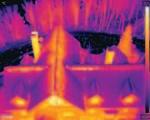
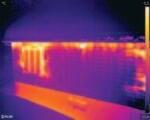
When it comes to co-ownership in Québec, it is best to rely on real experts. The RGCQ has brought together 13 experienced advisors whose mission is to answer members’ questions at no cost.
Here are some of the most frequently asked questions and our team’s answers.

Hubert Miron Info-management advisor since 2020
Experience: Administrator and manager of syndicates of co-owners for 12 years. Labour relations advisor for 35 years in the Québec public service.
Education: Bachelor’s degree in Industrial Relations (B.Sc.) from the Université de Montréal. Certificate in co-ownership management from ESG UQAM.
Involvement: Speaker and panelist for the RGCQ.
Jobposting:ADMINISTRATOR orADMINISTRATRIX
Requirements:masteryofallfields
Salary: volunteer
Availability:24hoursa day
Pleasesubmityourrésuméatthenext AGM
This is what one can expect when stepping into the world of administeringasyndicateofco-owners.Commitmentand involvement are essential qualities for fulfilling this elected role. But what a reward it is when one succeeds in administering the property of others co-owners in our community) and, of course, one’s own property (the economic value of our private unit).
The collaboration of everyone is essential, including our fellow members of the board of directors, the other co-owners, the tenants, and all residents of the building. Our main management tool is, of course, the declaration of co-ownership, which we must be familiar with. Law, accounting, building engineering, and community life are also integral parts of the elements we will need to juggle. We will therefore occasionally need to consult lawyers, accountants, engineers, and “specialists” in various fields to help us see things more clearly. Administrators are mandatary representatives of the syndicate and must act with diligence and prudence.
Indeed, the community of co-owners (the syndicate) is responsible for the preservation of the immovable, the maintenance and administration of the common portions, the safeguarding of the rights related to the immovable or the co-ownership, as well as all operations of common interest. The syndicate must, in particular, ensure that the work required for the preservation and maintenance of the immovable is carried out. This is a summary of article 1039 of the law (C.C.Q.) and very likely of the provisions of your declaration of co-ownership in the constituting act. Therefore, one must “ensure that the work required for the preservation and maintenance of the immovable is carried out.” This is one of the most important responsibilities and tasks of the administrators, namely the safeguarding of the community’s patrimony. In addition to consulting specialists, the other indispensable tools to achieve this are the maintenance logbook, the contingency fund, and sound financial management. For everything else, meaning daily life in co-ownership (community life), the administrators and all residents of the building simply need to show goodwill, and the rest will follow. That is the gratifying part!
In the end, a good administrator is someone who knows their declaration of co-ownership well, can handle numbers, and has a solid understanding of maintenance, preservation, and repair of their building. They surround themselves with co-ownership specialists when needed. Naturally, the RGCQ is their best ally: legal guidance, info-management advice, training sessions, webinars, and a wide range of documents on co-ownership.
Do not hesitate to contact the info-management service whenever you need. The advisors are not specialists, but they are experts in the field. Wishing you all a successful mandate.
IIn a context where the responsibilities of boards of directors continue to grow, the role of the coownership manager has never been more crucial. Far more than a simple executor, this professional is a strategic pillar in the effective, transparent, and sustainable management of a co-ownership building.
Administering a syndicate of co-owners requires time, organization, and solid legal, financial, and technical knowledge, along with unwavering rigour. Yet most members of the board of directors are volunteers who are often not very available and rarely trained in these specialized fields. This is where the co-ownership manager comes in.
Acting as the board’s right hand, the manager takes charge of day-to-day operations such as coordinating suppliers, monitoring contracts, preparing budgets, organizing meetings, managing emergencies, and communicating with co-owners. The board of directors determines the scope and extent of this mandate. The manager therefore relieves the board of an operational burden, allowing it to focus on major strategic directions.
Co-ownership is governed by a set of precise rules, whether under the Civil Code of Québec or the new regulatory requirements stemming from Bill 16. The manager ensures that the syndicate’s management is compliant and proposes appropriate tools to support transparency, long-term planning, and accountability.

byCatherinePépin, administrator of the RGCQ Montréal Chapter
Whether it involves interpreting a contingency fund study, planning major work, or optimizing insurance coverage, the manager’s expertise helps the board avoid many mistakes and many disputes.
Living in co-ownership also means sharing a living environment. Conflicts may arise and tensions may appear. The manager acts as a mediator, ensures compliance with the by-laws, and fosters a climate of trust between co-owners and the board. Their neutrality and availability help defuse many potentially conflictual situations.
Finally, the manager does not have only an administrative role; they guide the syndicate with a long-term strategic vision. They propose sustainable solutions, help steer decisions toward sound governance, and contribute to preserving — and even enhancing — the value of the building.
In short, co-ownership management cannot rely solely on the goodwill of volunteers. The involvement of a qualified manager is the key to healthy, proactive, and professional management. For coowners, it is the assurance of a well-maintained building. For administrators, it is the guarantee of competent, rigorous, and reassuring support.

More and more Quebecers are living in co-ownership. There are now more than 300,000 units, and this number continues to grow. Yet despite this undeniable reality of Québec’s urban landscape, syndicates of co-owners still struggle to obtain the attention and support they deserve.
In the face of constantly rising insurance premiums, new legal obligations that have been announced but whose implementation keeps being postponed, the increasing deterioration of some buildings, and the lack of real oversight for managers, one question arises: who, within the government, truly cares about co-owners?
For years, the RGCQ and experts have been issuing repeated calls for help. They have denounced a regulatory vacuum, a lack of overarching vision, and a withdrawal of the State. The government continues to turn a deaf ear. In Québec City, it seems preferable to wait until the roofs of buildings blow off before taking action.
This inaction has concrete consequences, such as conflicts between co-owners, devastating financial surprises for new buyers, and insurance claims that remain unresolved. All of this occurs while government bodies hesitate, stall, backtrack, and seem unable to recognize the urgency of the situation.

GhislaineThériault Présidente

by Me MichelParadis, partner at Therrien Couture Joli-Cœur S.E.N.C.R.L., president of the RGCQ — Québec Chapter

The reputation of co-ownerships is suffering to the point where most developers have given up on constructing new divided buildings and have instead turned to simply renting out the units in their new projects. Given the scarcity of buildable land in the heart of our major cities, this is a major loss for those hoping to make an affordable first real estate purchase outside distant suburbs.
Co-owners in Québec deserve more than an indifferent government. They deserve a clear framework, appropriate resources, and competent interlocutors.
A condo is not just an investment; it is a home. It is long past time for the Québec government to recognize this. Gestion de
Editorial | RGCQ – Outaouais Chapter
"Adrastic remedy[!].” These were the words used by a trial judge in a decision issued a few years ago against a co-owner who, for more than a ecade, stubbornly refused to comply with the provisions of her declaration. The judge’s unexpected remark referred to the sanction provided for in article 1080 of the Civil Code of Québec which, in the event that a co-owner refuses to comply with a court order, grants the judge an exceptional discretionary power, namely to order the sale of the delinquent co-owner’s fraction. Unfortunately, this is the tragic fate that befell this woman: disregarding an injunction resulted in her eviction and the sale of her condo. According to one author, this Superior Court decision marked the first time in Québec that a judge exercised this power since the reform of the Civil Code of Québec in 1994. When one understands the context in which the events unfolded, it becomes clear that this was an exceptional decision for exceptional circumstances. The impact of this decision for the future, in terms of case law, will likely be limited, as each case involves unique and specific circumstances.
To address situations less extreme than the one described above, such as the omission of a payment, the syndicate has another well-known means of recovering its claim, although its consequences can also lead to a disastrous loss for the coowner who fails to meet their obligation: the legal hypothec.
Let us first recall that under article 2729 C.C.Q., the syndicate of co-owners’ legal hypothec encumbers the fraction of any co-owner who has been in default for more than 30 days of paying their share of the common expenses. When the debtor is in default and the claim is liquid and exigible — meaning that the amount and the due date are known — the creditor may exercise one of the four hypothecary remedies, namely to have the fraction sold under judicial control.

by MichelMancini, administrator of the RGCQ Outaouais Chapter
Finally, there is one last possibility by which a negligent owner may lose their property. Indeed, the Cities and Towns Act, under articles 511 and following, authorizes a municipality to sell at public auction an immovable on which taxes have not been paid, in whole or in part.
On the Justice Québec website, you will find among the legal registries the “Register of Sales.” It lists, by category, the notices of sales under judicial control. For each type of sale, the notices contain a detailed description of the lots, as well as the terms of the sale. This is a public registry and access to it is free.
To avoid your unit ending up in any of the situations described above, make sure to:
• read and comply with your declaration(s), especially the second part (the By-laws)
• pay your common expenses (“condo fees”) by the due date; this is a legal obligation
• pay your property tax bill, which is typically payable in several instalments
The sale under judicial control is a serious sanction with significant consequences, and it must not be taken lightly!


Committed to offering services that meet your needs, the RGCQ designs, produces, and delivers more than 50 training sessions each year on technical, legal, administrative, and other topics. These training sessions are intended for co-owners who wish to deepen their knowledge and equip themselves for the sound management of their assets — whether they are members of the RGCQ or not.
To start the new year off right, discover the programming for the coming months here. Find all the details about the RGCQ’s training and networking activities and register online! https://rgcq.org/en/activities-and-training
Date Chapitre Activité Sujet Participation
12 sept. Montréal Colloque Colloque spécial – Attestation, carnet d’entretien et fonds de prévoyance : quelles sont vos nouvelles obligations! En personne
14 sept. Québec Conférence Conférence spéciale – Attestation, carnet d’entretien et fonds de prévoyance : tout savoir! En personne
16 sept. Provincial Webinaire Aire commune – Annual general meeting (AGM) En ligne
18 sept. Provincial Webinaire Copropriété et location : Mode d’emploi complet En ligne
19 sept. Provincial Webinaire Politique de confidentialité : Votre plan d’action Loi 25 en 90 minutes En ligne
23 sept. Montréal Webinaire AGA : les clés pour présider efficacement une assemblée de copropriété En ligne
27 sept. Outaouais Conférence Conférence spéciale – Attestation, carnet d’entretien et fonds de prévoyance : tout savoir! En personne
30 sept. Provincial Webinaire Maîtriser les bases : La comptabilité en toute clarté En ligne
7 oct. Québec Webinaire Efficacité énergétique des bâtiments : à quoi s’attendre? – Appui du modèle français En ligne
16 oct. Provincial Webinaire Vitrine sur la copropriété – Travaux et copropriété : Investir intelligemment dans l’entretien de votre bâtiment En personne
21 oct. Provincial Webinaire Dégâts d’eau : Soyez prêts avant le prochain sinistre En ligne
28 oct. Provincial Webinaire Tout savoir sur les cotisations spéciales : raisons, planification et approbation En ligne
4 nov. Provincial Webinaire Assurance de copropriété : les essentiels pour une négociation réussie En ligne
11 nov. Provincial Webinaire Vitrine sur la copropriété – Espaces communs extérieurs : bonnes pratiques pour une gestion sans faille (balcon, terrasse, stationnement, piscine) En ligne
18 nov. Provincial Webinaire SOS petites copropriétés – Nos experts répondent à vos questions En ligne
25 nov. Provincial Webinaire Copropriété et bornes de recharge : lois, coûts et gestion (Philippe Gagnon-Marin – Murbly) En ligne
27 nov. Québec Conférence Apéro-condo Québec En personne
2 déc. Provincial Webinaire Transfert de copropriété : Tout ce que le promoteur aurait dû vous remettre En ligne
9 déc. Provincial Webinaire Acheter un condo : les 10 questions à se poser avant d’acquérir votre bien En ligne
Ce calendrier est établi sous réserve de modifications et d’ajouts pouvant survenir en cours d’année.





Carnets d’entretien et étude de fonds de prévoyance obligatoires pour tous les syndicats de copropriétés.
Soyez prêts dès maintenant ! Contactez-nous !
Fonds de prévoyance
Carnet d’entretien
Loi 16


Réception des parties communes

Inspection des façades
Loi 122
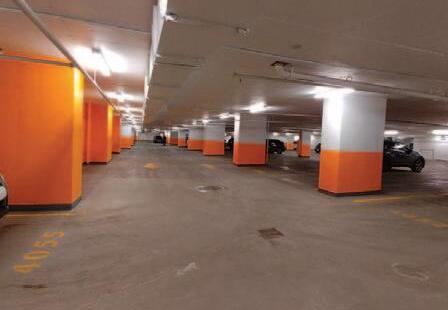


Inspection des stationnements
Loi 122

Surveillance des travaux




Expertises


Plans et devis
Pour en conna tre davantage sur notre firme et ses services, n’hésitez pas à communiquer avec moi :

Remise à neuf et réparation de tous types de portes et fenêtres
Remplacement de thermos et rampe de verre
Amélioration performance par insertion de thermos à la place de verre simple
Recherche et correction de problème complexe de l’enveloppe du bâtiment
Ser vice spécialisé, solution et exper tise unique (usinage pièce, impression 3D)