AFTER more than 30 years at the helm of Retail News, Ireland’s longest established grocery B2B magazine, the time has come for me to retire.
Supporting and reporting on the grocery goings-on in Ireland for more than three decades has been a pleasure and a privilege. Over that time, there’s been a world of change. Who would have thought back in the 1990s that a massive global recession would challenge us all? Who could have predicted the advent of the internet and the continued rise of social media as a legitimate (and sometimes not-solegitimate) news source? And who could have foreseen the impact of a virus from rural China on how the entire world works and lives?
Through it all, Retail News has been and continues to be an independent voice for the Irish grocery industry. To do that, we rely on the support of the industry, and I thank the many advertisers and supporters of Retail News, who have helped us to keep the lights on through bad times and good, and the many friends I have made in this wonderful industry. Thank you all, from the bottom of my heart.
I’m moving on, but leaving you in the very capable hands of my editor of almost 30 years, John Walshe, and Sales Manager Brian Clarke, who will continue to fight the good fight for retailers.
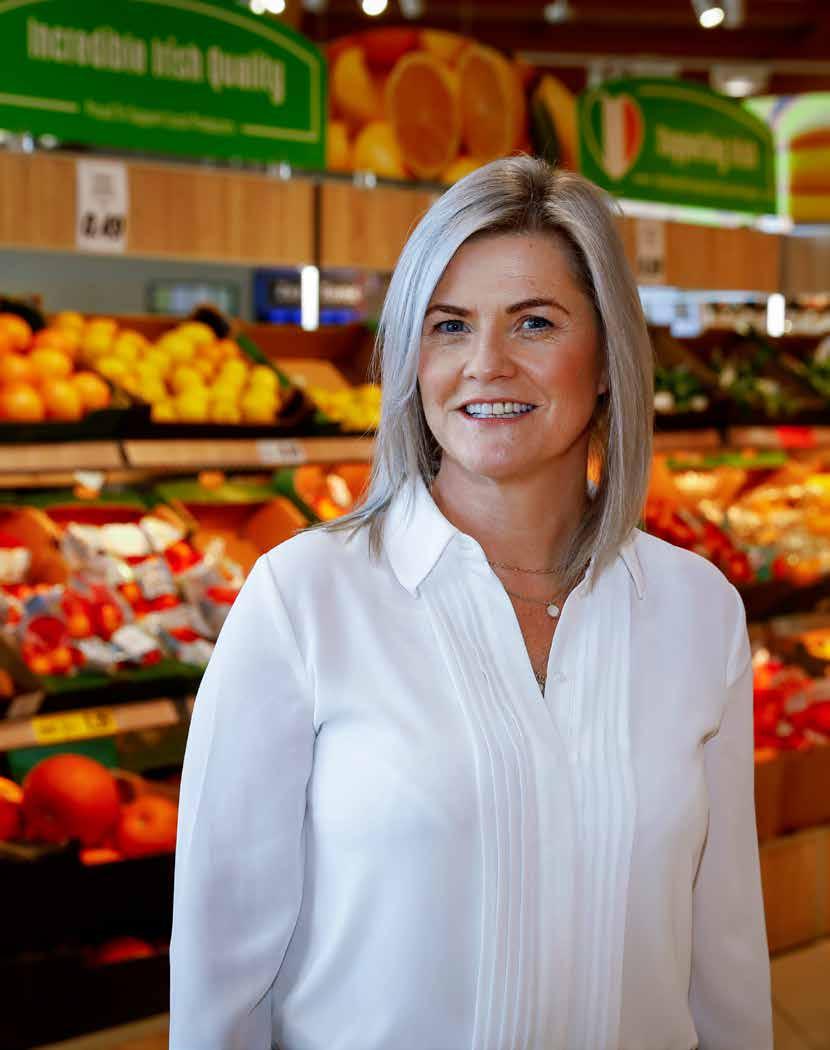
Kathleen Belton Editorial & Marketing Director
2 Retailers reveal their wish-list for Budget 2025.
4 Aldi to invest €400 million in new stores and jobs over next five years; Minimum age for tobacco purchase rising to 21.
6 Repak’s Plastic Pledge signatories work towards circular economy; Musgrave celebrate graduate excellence at Early Careers Summit
7 Tesco Ireland open new Citywest store; Bord Bia empowering Irish businesses to enhance biodiversity action.
Pakman Awards
12 Entries are now open for Repak’s Pakman Awards.
Retail News Interview
14 Maeve McCleane, Chief People Officer at Lidl Ireland, reflects on a changing retail environment and asks if retailers could share resources when it comes to adapting to new labour legislation.
Shop Profile
Cheez-It
23 Iconic USA snack brand, Cheez-It is set to hit Irish shelves this summer.
Panini
24 Panini are launching the new Premier League Adrenalyn XL Official Trading Cards.
Bar-Coding
26 22 industry champions are calling for the global adoption of QR Codes with GS1 standards.
Vaping & E-cigarettes: VaporLinQ
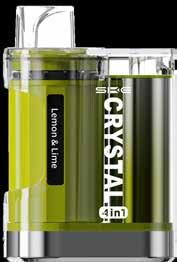
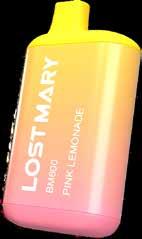
28 All-Ireland vape company, VaporLinQ, advises retailers to ensure that the products they sell comply with safety and legal requirements.
Top 20 Wine Brands
32 Jean Smullen reports on the country’s best-selling wine brands.
Back to School
42 The annual Irish League of Credit Unions Back to School survey shows the impact of Government policy on costs and we examine two leading stationery companies.
Tayto
46 Tayto is marking its 70th birthday with a host of celebrations.
Kantar Brand Footprint
20 Chris Curtin’s Costcutter in Dunmanway, Co. Cork, is one of the first in the country to sport the brand new Costcutter livery, inside and out.
IGBF
22 The IGBF's Tour de Grocer raised €52,000 for the charity.
52 Catherine Hayes and Linda Hynes of Lewis Silkin examine the issue of mental wellbeing in the workplace.
The end of an era
Retailers reveal their wish-
RISING costs, crime and recognition of the importance of SME’s to the state are at the fore of retail wish-lists for the upcoming Budget.
Retailers and their representatives are calling on government to recognise the burden of increasing labour costs when allocating spend. Taoiseach Simon Harris has called for cost-of-living measures to become a focus of Budget 2025, but retailers insist this should not be at the expense of business.
John Moane, the current Chief Retail and Commercial Officer at BWG Foods who is expected to become the new CEO upon the retirement of Leo Crawford at the end of this year, told Retail News that “labour remains the single biggest cost of business for our retail partners and with costs projected to increase over the coming years, urgent and meaningful intervention from Government is required to balance the needs of
employees and their employers”.
A spokesperson for Musgrave added: “Independent retailers are facing a barrage of rising business costs from governmentled initiatives. These family-run businesses, deeply rooted in local communities, face daily competition from global retail giants.”
“Top of the list on our budget concerns are labour costs,” agreed Vincent Jennings,
CEO of CSNA. “Labour cost increases are happening during difficult trading times in which suppliers are reducing the amount or increasing the wholesale price of products.” Government do appear to be aware of the challenges facing retailers. In March 2024, the Department of Enterprise released a report addressing the Cumulative Impact of Proposed Measures to Improve Working Conditions, and in May it introduced a series of measures to support SME’s, such as introducing a second payment of the Increased Cost of Business (ICOB) Scheme.
Many retail sectors, such as offlicences, claim the support has not gone far enough. “While we appreciate some of the measures taken by the Government
to protect SME’s, the drinks industry faces a difficult market climate due to high inflation, rising interest rates, high input costs, personnel shortages and high utility prices,” said Cathal McHugh, NOffLA Chair. “These challenges have continued to threaten commercial viability and the local employment which many of these businesses provide in their communities.”
In its Summer Economic Statement, Government revealed plans to make an additional €8.3 billion available for use in Budget 2025. Retailers are concerned that Government will address the cost
John Moane, Chief Retail and Commercial Officer, BWG Foods.
Vincent Jennings, CEO, CSNA.
Neil McDonnell, CEO, ISME.
list for Budget 2025
of accommodation and living crisis by forcing up the National Minimum Wage. “Instead, they should increase the supply of accommodation and tackle consumer costs,” Neil McDonnell, ISME CEO told Retail News. “Future increases in the NMW should not exceed CPI [inflation rate].”
Musgrave called for “a substantial financial package of support from the Government to support independent retailers. This package is essential to safeguard local independent businesses, and to protect the jobs they support in communities across the country.”
A PRSI rebate is top of most retailer wish-lists. Heather Humphreys TD, Minister for Social Protection, indicated she will increase the employer PRSI threshold from €441 to €496 from October 1, 2024. RGDATA, in their pre-budget submission, called for a reduction in the Employers PRSI related to employment costs and a reduced rate for students who work parttime in SME’s.
“While the Government made notable progress in addressing certain contributory factors to increasing employment costs across the retail sector, including adjusting the PRSI threshold, we believe a comprehensive suite of further supports are required to preserve the viability and competitiveness of our sector,” said BWG’s John Moane.
RGDATA and other retail groups would like to see Accelerated Capital Allowances used to alleviate costs associated with reverse vending machines and the Deposit Return Scheme, as well as a restoration of the 9% VAT rate for retailers who have food-to-go and in-store café offerings. Retail Ireland want to see improvements to the Small Benefit Exemption scheme, in which employers can give staff tax free benefits, and amendments to enhanced reporting requirements.
“New obligations around enhanced reporting tax affairs, like having to report in real time, have created a major burden for business without any real significant benefit in terms of the Exchequer,” Arnold Dillon, Retail Ireland Director, told Retail News. “That process can be amended to make reporting more straightforward.”
Some traders have specific requests for the upcoming budget. NOffLA, for example, called for alcohol excise to be reduced by 7.5%, “which would begin to bring Ireland's high excise levels in line with our EU
counterparts, benefit local companies, and align with the Government's commitment to supporting SME’s,” Cathal McHugh said. “This measure, followed by a similar reduction in Budget 2026, would ensure the long-term sustainability and competitiveness of small local enterprises.” CSNA are concerned about probable additional costs in relation to the licensing for the sale of tobacco and vaping products. “It should be commensurate with the work undertaken to process the licence and ensure compliance, rather than a punitive tax,” said Vincent Jennings.
Lobby group Retailers Against Smuggling (RAS) called on the Government to rethink its policy approach towards smuggling and illicit trade in order to tackle Ireland’s "smuggling tsunami". RAS argues that the scale and surmounting magnitude of the problem is clearly illustrated by the numbers, with the value of illegal cigarette smuggling on course to double in 2024. The RAS pre-budget submission calls on the Government to reduce or freeze consumer taxes, including tobacco excise, to increase funding for detection and enforcement of smuggling, and to amend the Finance Act to prosecute all suspected smugglers at Circuit Court level or higher.
Every corner of the sector wants the Exchequer to address the increase in retail crime. BWG’s John Moane explained: “Our retail partners are continuing to experience an increasing incidence of crime and antisocial behaviour at store level and the seriousness of certain incidents is deeply concerning. While we continue to work closely and collaboratively with An Garda Síochána, we believe that greater resources should be made available to combat crime and nurture a deeper culture of good citizenship. Retailers and their staff operate on the front line, engaging with the public more than any other segment of the Irish economy, and it’s critical they are afforded the safety and respect that they deserve.”
Musgrave called for “more visible Garda presence on streets in cities and towns, investment in more prison spaces, and a re-imbursement scheme for shops where goods are robbed or damage is incurred due to criminal activity.”
In tandem to investment in police resources, Retail Ireland wants to see an upgrade to town and city centres and investment in public spaces and public transport.
Other items on retailer budget wish-lists are changes to inheritance tax - measures that reward new generations who pick up family businesses - and enhanced access to the National Training Fund in order to provide training and development for business. ISME called on Government to reconfigure the Labour Employer Economic Forum [LEEF] in order to “ensure an adequate and proportionate representation for SME’s.”
Budget 2025 will be delivered on Tuesday, October 1.
Cathal McHugh, NOffLA Chair.
Arnold Dillon, Director, Retail Ireland.
Aldi to invest €400 million in new stores and jobs over next five years
ALDI are to invest €400 million in 30 new stores over the next five years, with the creation of 1,000 new local jobs. The stores will be located across the country in 13 counties, including Dublin, Cork, Sligo, Wicklow, Kildare, Galway, Monaghan, Longford, Limerick, Kilkenny, Meath, Mayo and Donegal, while Aldi will be recruiting for roles right across their store network, warehouse operations and office facilities.
This investment comes as Aldi revealed the company’s economic contribution to Ireland in 2023 was €757 million, while the retailer spent €1.1 billion with Irish suppliers. The data is included in Aldi’s latest economic impact report, ‘Aldi in Ireland, 1999-2024', which was published as the retailer marks 25 years in the Irish market.
Aldi reported a 58% increase in purchases from Irish suppliers since 2019, and Irish suppliers now account for almost half of all sales at Aldi. The retailer has paid more than €1.3 billion in wages over the past 25 years and their capital investment in Ireland since 1999 is €2 billion. Directly and indirectly, Aldi support more than 12,500 jobs in Ireland, and are responsible for a regional spread of employment far above the national average.
“Delivering value for Ireland – for shoppers, suppliers and staff – has been our guiding principle throughout our time in Ireland,” noted Niall O’Connor, Group Managing Director, Aldi Ireland. “The Economic Impact Report highlights the continuing positive impact our presence is having, not only in Ireland as a whole, but across each community that we operate in.
“Since first entering the Irish market 25 years ago, Aldi has had a significant positive impact on the Irish grocery market. We introduced the discount retailer model to Ireland which has succeeded in delivering low prices, value, choice and competition to the Irish retail market.”
The MD emphasised the pride Aldi take in working with local suppliers: “We have supported hundreds of Irish suppliers to grow their businesses, including through our Grow with Aldi programme.
We know that our Irish supplier network is the lifeblood of our success – their success is our success, and we’re proud to have been their champion for the last quarter of a century.”
at a special lunch event to mark Aldi’s 25 years in Ireland are (l-r): Charlie McConalogue TD, Minister for Agriculture, Food & the Marine, and Colin Breslin, Managing Director of Buying and Services, Aldi Ireland.
He also pointed to Aldi’s reputation as an employer, noting now “more than half of those who worked with us during our early years in Ireland, are still employed by Aldi today”.
“As we mark our 25-year milestone and look back on our achievements, we’re just as ambitious for the future,” O’Connor stressed. “Based upon projected customer growth, we expect to serve our one billionth customer in 2025. We’re committed to playing a leading role in meeting the growing demand for new retail offerings, and by 2029 we will spend another €400 million in capital expenditure on 30 new stores, adding 1,000 new colleagues. Times may change, but our unwavering commitment to value never will, and we’re looking to the next 25 years with as much focus and excitement as ever.”
Minimum age for tobacco purchase rising to 21
IRELAND is a step closer to increasing the minimum age of sale of tobacco products to 21 as the Public Health (Tobacco) Amendment Bill 2024 has commenced it passage through the Oireachtas.
Subject to its successful passage through all stages of the Oireachtas in the autumn, the Act will come into operation on February 1, 2028. This provides a lead-in time so that those already entitled to be sold tobacco products, i.e. persons over 18 but under 21, will not be affected.
The Bill provides that current penalties for anyone convicted of selling tobacco products to people under the age of 18 will be extended to cover convictions relating to sales to people under the age of 21, including fines of up to €4,000 or six months’ imprisonment, or both, for a first offence.
Minister for Health, Stephen Donnelly TD, said the new legislation “clearly signals that we are moving to endgame in our war on combustible tobacco”.
“Ireland has long been a world leader in tackling smoking,
Stephen Donnelly TD, Minister for Health.
beginning with the workplace smoking ban in 2004 and continuing with a range of measures including restrictions around the sale, advertising and packaging of smoking products to make them less attractive and less available to young people,” the Minister said. The proposed legislation will not impact the minimum legal age of sale of nicotine inhaling products or vapes. Since December, the sale of vapes to under 18s has been banned. There is currently no proposal to extend this ban to the age of 21.
Pictured
Grocery sales grow despite unseasonable weather
TAKE-home grocery sales in Ireland increased by 3.4% in the four weeks to June 9, 2024. Although the weather impacted barbecue category sales, it increased sales of other categories like winter warmers, according to the latest data from Kantar. In June there was a boost in trips to stores, up 1.5%, along with an increase in average prices of 1.3%. However, volume per trip fell, down 1.2% compared to the same period last year – and a change from last month’s modest rise of 0.2%.
“With less than typical sunny weather this June, it meant shoppers were not cracking open the barbeques or dining outdoors,” explained Emer Healy, Business Development Director at Kantar. “As a result, they spent a combined €1.6 million less on chilled salads, burgers, grills and sausages than this time last year. We did see some bank holiday weekend indulgence, with sales of savoury snacks, confectionery and beer and lager up 16%,11.9% and 13.1% respectively. However, there was an increase in soup sales and home baking, which added €1 million and €500k to the tills, respectively.”
Grocery inflation stands at 2.5% in the 12 weeks to June 9, 2024, down a staggering 13 percentage points versus June 2023, and the lowest inflation level since March 2022.
Like previous months, inflation continues to fall, offering shoppers something of a lifeline in terms of lower prices. Despite this, consumers in Ireland remain on the hunt for value in the market, with over 25% of value sales on promotion.
Sales of own label performed strongly, growing ahead of the total market at 4.9% year-on-year and holding value share just over 48%, with shoppers spending an additional €73.5 million year-onyear. Premium own label ranges continued to perform well, with shoppers spending an additional €16.8 million on these lines, up 11.4% compared to this time last year. However, sales of brands were also up by 3.9% over the 12 weeks, with shoppers spending an additional €57.9 million on branded lines.
“The great news is that Irish consumers value home-grown brands. Our latest Brand Footprint report shows that four out of the top five most chosen brands in Ireland are Irish brands, with the average Irish household buying a portfolio of 77 FMCG brands in a year – well above the global average of 66. This shows clearly how brands are still an important choice for Irish consumers,” comments Emer Healy [See our report on the Kantar Brand
Footprint on Page 48].
Online sales were up 16.3% year-on-year, with shoppers spending an additional €26.6 million on the platform. Larger trips contributed an additional €8.9 million, with more frequent trips contributing €12.4 million to the platform’s growth.
Dunnes Stores hold 23.4% market share, with growth of 6.2% year-on-year. Dunnes’ growth stems mainly from more frequent trips but also larger trips, which contributed a combined €20.8 million to their overall performance.
Tesco claim 23.1% of the market, up 6.2% year-on-year. Tesco saw a strong increase in trips to stores, up 7.2% year-on-year, which contributed an additional €51.1 million to their overall performance.
SuperValu hold 20.5% of the market, with 2.8% growth. SuperValu shoppers make the most trips in store when compared to all retailers, an average of 21.6 trips, and the retailer also saw the strongest growth in volume per trip amongst all retailers, up 8.3%. SuperValu were the only retailer to attract new shoppers into their stores in the latest 12-week period, contributing a combined €66.3 million extra to their overall performance.
Lidl hold 13.9% share of the market with growth of 5.6% year-onyear. Lidl saw the most frequent trips amongst all retailers, and this contributed an additional €38.5 million to overall performance. Aldi hold 11.8% market share, with more frequent trips contributing an additional €12.2 million to their overall performance.
ASAI CEO appointed to European Advertising Standards Alliance
ORLA Twomey, Chief Executive of the Advertising Standards Authority for Ireland, the independent advertising self-regulatory body responsible for promoting, regulating and enforcing the highest standards of marketing communications in Ireland, has been appointed Chairwoman of the European Advertising Standards Alliance (EASA), of which the Advertising Standards Authority is a founding member.
EASA, a non-profit organisation based in Brussels, brings together 28 advertising selfregulatory organisations from Europe and 14 European organisations representing the advertising ecosystem - advertisers, agencies and the media - along with one pure-play company.
“Having worked with EASA for a number of
years in many different roles, I am delighted to have been appointed Chairwoman of the organisation,” said Orla. “From engaging with EASA’s members and vast network of organisations, I have gained strong knowledge of the advancements and challenges in the European self-regulatory field. I look forward to continuing to work with EASA, supporting not only the EASA network and my fellow officers, but also consumers, ensuring they are protected from advertising that is harmful, offensive and misleading. It’s a very exciting time for the advertising industry and I look forward to continuing the work of EASA to promote the benefits of self regulation for consumers, the industry and regulators.”
Orla Twomey, Chief Executive of the ASAI, and Chair of the EASA.
Repak’s Plastic Pledge signatories work towards circular economy
REPAK have announced that their Plastic Pledge Signatories have successfully been working towards supporting a circular economy for plastic packaging in Ireland. This announcement was made during the launch of Repak’s sixth annual Plastic Pledge Report, which showcases the accomplishments of those signatories who have contributed to the 2023 Plastic Pledge report, successfully reducing and eliminating plastic packaging from their operations.
In 2023, Plastic Pledge signatories reported an average recycling rate of 72% for plastic packaging at their premises, well above the EU Circular Economy Package recycling targets of 50% by 2025 and 55% by 2030. The submissions also showed that signatories achieved an average recycled content of 43% across various projects, with some products attaining 100% recycled plastic content.
“The plastic pledge reports shows that we are committed to achieving meaningful change in the realm of plastic packaging,” said Ossian Smyth TD, Minister of State at the Department of Public Expenditure, National Development Plan Delivery and Reform, and the Department of Environment, Climate and Communications, speaking at the launch. “The signatures have provided us with the confidence that the challenges presented by plastic packaging can be overcome through our collective efforts.”
Zoë Kavanagh, CEO of Repak, added: “In 2023, Repak’s Plastic Pledge signatories made remarkable strides toward fulfilling the ambitious goals of our Plastic Packaging Recycling Strategy 20182030. While these advancements are commendable, the road to meeting the future recycling targets for plastic packaging remains challenging. We call on all organisations across Ireland to embrace the exemplary practices outlined in the Plastic Pledge. The commitment of the signatories to recycling innovation and plastic reduction stands as a beacon of what is possible and should be used as a model for others to follow. If all organisations in Ireland adopted Repak’s Plastic Pledge, we would achieve our EU Circular Economy targets.”
Pictured at the launch of Repak’s sixth annual Plastic Pledge Report are Zoë Kavanagh, CEO of Repak, with Ossian Smyth TD, Minister of State at the Department of Public Expenditure, National Development Plan Delivery and Reform, and the Department of Environment, Climate and Communications.
The report saw Repak spotlighting four key ‘Change Makers’ who are leading the way in reducing and removing plastic packaging from their supply chains. These success stories, which tie in with the Repak Plastic Pledge objectives, include:
• To prevent: Lidl moved from a hinged, rigid plastic lid to a lighter film on their pasta pots, reducing weight by 50% and saving 16.5 tonnes.
To support: The Culinary Food Group diverted six tonnes of plastic box liners from general waste.
• To simplify: Aldi became the first major retailer to introduce a fully recyclable handwash pump, saving 30 tonnes of packaging per year.
• To increase: Nestlé redesigned its two-finger KitKat wrapper to include 80% recycled plastic.
For more information, visit repak.ie/plastic-pledge.
Musgrave celebrate graduate excellence at Early Careers Summit
MUSGRAVE recently celebrated outstanding talent and innovation at their annual Early Careers Summit, highlighting the achievements of their young professionals through a series of prestigious awards.
The event provided a platform for early careers professionals from the Musgrave Graduate Programme, Intern programme and other roles across the business to connect with senior leaders, share their insights on their careers to date, in addition to showcasing a range of research projects undertaken as part of the Graduate Programme.
The summit culminated in an awards ceremony that honoured the exceptional contributions of early careers colleagues across five categories. The winners included:
• Graduate of the Year: Mary Nealon – Retail Operations Graduate;
• Best Business Impact: Seán Cassidy – Supply Chain Team Leader;
• Best Team Impact: Sam Kane – Data Scientist;
• Rising Star: Kate McCarthy – Product Manager;
• Early Careers Manager of the Year: Jamie Caffrey – Store Manager, SuperValu Blanchardstown.
“The objective of the Early Careers Summit is to create a moment that matters for early careers colleagues, supporting them in learning about various careers within Musgrave, networking with peers and senior leaders, and highlighting the wealth of development opportunities in our business,” noted Siobháin Scanlon, Early Careers Manager, Musgrave. “We’re proud of all the nominees and winners of our first-ever Early Careers Awards. Their dedication, innovation, and commitment to our values exemplify the high standards we strive for at Musgrave.”
Pictured are the award winners at the Musgrave Early Careers Summit, (l-r): Sam Kane, Jamie Caffrey, Mary Nealon, Kate McCarthy, and Sean Cassidy.
Tesco Ireland open new Citywest store
TESCO Ireland have opened the doors on a new store in Citywest, Dublin. The new store, located at the new residential development, The Quarter, will offer customers a modern retail experience and a wide selection of quality fresh local and Irish produce.
The Express store, based in Dublin 24, brings the total number of Tesco stores across Ireland to 176.
“We are delighted to open the doors on this new store in Citywest, in southwest Dublin,” stated Geoff Byrne, Chief Operating Officer, Tesco Ireland. “This store is part of our ongoing investment in stores in urban centres across Dublin and the rest of the country. We always receive such a warm welcome from the communities in which we are now based, and we are committed to ensuring that our new stores play a big part in these local communities in the future.”
At the opening, Stephen McGrane, Store Manager, Citywest, said: “This is a big moment for our small but mighty team
the
of 10 colleagues. We are looking forward to welcoming our new customers, and we cannot wait to actively engage with the community. We are especially proud to meet our neighbours in St Thomas’ Senior and Junior schools in Tallaght, who
are participating in our Stronger Starts Schools programme when they return in September. Through the Community Fund, we are always keen to be able to support local groups and projects over the coming months.”
Bord Bia empowering Irish businesses to enhance biodiversity action
BORD Bia has launched a critical Biodiversity Target Guidance Report, which aims to empower Irish food and drink businesses to develop and improve individual biodiversity strategies, plans and reports. The timely report provides key insights into prospective reporting requirements that businesses may need to comply with in the coming years.
“Biodiversity underpins the ecosystems that sustain communities and food production not just in Ireland, but across the world,” said Martin Hofler, Senior Sustainability Manager, Bord Bia. “Food and drink businesses now have a responsibility and an opportunity to pave the way in safeguarding biodiversity and reducing harm to the environment. Our new report aims to support businesses in doing just that, by providing key insights to support Origin Green members in the development of their own biodiversity strategies and empowering them to play their part in protecting our environment and its ecosystems.”
This new guide also aims to equip Irish food and drink businesses with the knowledge, tools and understanding needed to develop and achieve biodiversity targets. With a step-by-step guide on developing and implementing
biodiversity strategies, the report brings businesses on a full journey of integrating a biodiversity-conscious approach to their operations.
“Origin Green members have a window to adopt a proactive stance and align their strategies with evolving regulatory standards, as well as with the level of ambition required to protect and regenerate biodiversity,” Hofler noted.
“Bord Bia will support members in doing just that through key insights and advice and we look forward to continuing to work with businesses in their efforts to become more aware of biodiversity and in tandem, more sustainable.”
The frameworks that the report focuses on include the Corporate Sustainability Reporting Directive (CSRD), the Taskforce for Nature-Related Financial Disclosures (TNFD), the Science-Based Targets for Nature (SBNT), and the upcoming International Sustainability Standards Board (ISSB).
Bord Bia remains committed to driving sustainability actions and biodiversity commitments across its Origin Green members through numerous workshops and educational programmes each year, including the newly launched Pathways to Biodiversity Planning in partnership
Pictured at Skillnet Climate Ready Academy's Sustainability Practitioners Conference at the University of Limerick are Ken Stockil, CEO, 20Fifty Partners; Liz Horgan, Programme Manager, Sustainable Enterprise Skillnet; Niamh Byrne, Sustainability Specialist, Bord Bia; and Martin Hofler, Senior Sustainability Manager, Bord Bia.
with Sustainable Enterprise Skillnet and 20Fifty Partners. The programme aims to deepen business knowledge on the impact that their company is having on biodiversity and in tandem, how biodiversity impacts the business operations. The programme also aims to support businesses in the development of a biodiversity strategy to tackle impending reporting requirements through key speaker discussions, peer-topeer engagement, educational workshops and mentoring.
Pictured at
opening of the new Tesco store in the Quarter, Citywest, are Tesco staff Mary Louise Kelly, Sandeep Kumra Mishra, with store manager Stephen McGrane, Edel McMullan and Kizzy Salu.
Fermoy dairy company secures M&S contract
DAIRY Concepts, headquartered at the world-renowned Moorepark dairy research and development campus in Fermoy, County Cork, have clinched a significant international contract with leading retailer Marks & Spencer. The Dairy Concepts deal includes the launch of a new high-protein, gluten-free, dairy snack range, developed in collaboration with Marks & Spencer, under the brand name M&S Cheese Clouds, which will be
Kerry school wins GIY & SuperValu’s ‘Let’s Grow’ initiative
THE green-fingered pupils at Nagle Rice National School in Killorglin, Co. Kerry, have been crowned the 2024 winners of the GIY & SuperValu ‘Let’s Grow’ initiative. To secure the much-coveted win, the national school created a sensory garden, titled ‘Tadgh’s Garden’ in memory of a past pupil. The garden is a feast for the senses featuring flowers, water features, a beautiful colourful mural, and grown produce including cucumbers, radishes, garlic, tomatoes and peppers. School pupils are pictured with Mary Bishop, Education Coordinator, GIY; Nicola Kerins; Peter Keane, SuperValu; Tim O’Sullivan; Debbie O’Sullivan, SNA; school principal Aileen O’Dowd; and Jan Kerins, who leads the school’s gardening groups.
sold in 580 M&S stores throughout the UK and Ireland.
M&S Cheese Clouds are a high protein snack - 8g protein per 20g pack - developed as a healthy crunchy alternative to traditional snacks like crisps and nuts. Pictutred are Eddie Murphy, M&S Country Director, Ireland and Northern Ireland, and Tom Brennan, Dairy Concepts Chief Executive.
Tesco Ireland open Newmarket Yards store
TESCO Ireland have opened their 177th store at Newmarket Yards, Dublin 8, just off Cork Street near the Liberties. “We are delighted to open the doors on this new store in Newmarket Yards. This store is part of our ongoing investment in stores in urban centres across Dublin and the rest of the country,” noted Geoff Byrne, Chief Operating Officer, Tesco Ireland. “We always receive such a warm welcome from the communities in which we are based, and we are committed to ensuring that our new stores play a big part in these communities in the future.”
Pictured at the opening of the store are (l-r): Cllr Jen Cummins; Lisa Kelleher from
A long way to play
A TEAM representing Australasia journeyed 15,000km to join almost 200 club sides, comprising nearly 4,000 players, to compete in the John West Féile Peile na nÓg (Gaelic football and ladies’ football) National Finals 2024 at the end of June. The boys U15 side competed alongside 28 teams at the Connacht GAA Centre of Excellence at Bekan, County Mayo, for the Division One and Division Five finals. “I still fondly recall my own Féile in 1990. I am so excited about our boys making similar life-long memories,” said Brian Briscoe, originally from Dublin, who manages the Australasia side. Meanwhile, over 170 teams, involving 3,400 players, took part in
Lidl Ireland give LGFA Clubs €100,000 boost
LIDL Ireland have announced the winners of the Lidl One Good Club Mental Health Programme, with the retailer investing more than €100,000 in supporting over 75 LGFA clubs across the country to date. Slieverue GAA Club in Co. Kilkenny claimed top spot as overall programme winners with the ‘Best Overall Programme Engagement’ award, receiving €5,000 in funding. Tipperary’s Fethard GAA Club received the ‘Most Innovative Initiative’ award, while Shamrocks GAA Club in Co. Wexford were recognised with the ‘Strongest Community Involvement’
award, each receiving €2,500. The programme, developed and delivered in association with the Ladies Gaelic Football Association and Jigsaw, the National Centre for Youth Mental Health, aims to raise awareness and improve understanding of mental health amongst LGFA clubs across Ireland, while empowering young people to engage in activities that promote positive mental health amongst their members and local communities. Pictured are Lidl ambassadors (l-r): Carla Rowe of Dublin, Aishling Moloney of Tipperary and Nicola Ward of Galway.
Shannon’s Hopeline;
John West Féile Peile na nÓg finals at 21 venues across Ireland for teams outside Division One and Division Five on the same day. John West Féile Ambassador Mayo footballer Danielle Caldwell is pictured with Ruby Walsh (Lucan Sarsfields) and Teagan O’Sullivan (Whitehall Colmcille).
Kyle Counihan, Store Manager; Sandra Kelleher from Shannon’s Hopeline; Rachel Darley, Deputy Store Manager, and (in the centre) David Shanahan from The Liberties Running Club.
TESCO Ireland have taken delivery of 50 state-of-the-art biomethane fuelled trucks which will operate across their country-wide distribution network. The new biomethane trucks are coming on stream as part of Tesco's comprehensive strategy to reduce their carbon footprint and enhance the environmental sustainability of their operations. The trucks will immediately replace 50 diesel units, cutting down tailpipe carbon emissions by up to 90%. The biomethane fleet will be operated by Tesco’s transport partner DHL and the trucks will be used to transport produce to stores from their distribution centres in Dublin. “We have worked hard with DHL to prepare for the switch from diesel to biomethane trucks, and this move to cleaner energy will reduce the carbon emissions created by this fleet considerably,” said Ger Counihan, Tesco Ireland Retail & Distribution Director, pictured (centre) with Andy McGregor (left), Head of Sustainability, Tesco Ireland, and Alan Reville (right), Head of Transport, Tesco Ireland, at Tesco’s Distribution Centre in Donabate, Co. Dublin.
New Re-turn campaign to raise money for children’s charities
RE-TURN, operators of Ireland’s Deposit Return Scheme, have announced Return for Children, a new charity fundraising initiative in partnership with six of Ireland’s national children’s charities - Barnardos Ireland, Barretstown, Childline by ISPCC, Jack & Jill, LauraLynn Children’s Hospice, and Make-A-Wish Ireland. Working with large-scale events such as festivals, concerts and sporting matches, Return for Children will provide attendees at participating events with the option to donate their bottle and can
deposits at designated Re-turn bins for charity. The monies raised from the initiative collections will be equally divided between all six charities, allowing them to continue their vital work supporting vulnerable and seriously ill children in communities across Ireland. Pictured are (l-r): Susan McQuaid-O’Dwyer, Make a Wish Ireland; Deirdre Walsh, Jack and Jill; Mary Gamble, Barnardos; Tim O’Dea, Barretstown; Kerry McLaverty, LauraLynn Children’s Hospice; and John Church, Childline by ISPCC.
Aldi appointed as SDG Champions
THE Minister of the Environment, Climate, and Communications, Eamon Ryan TD, has appointed Aldi Ireland as one of Ireland’s Sustainable Development Goals Champions (SDG) for 2024-2025. One of Ireland’s leading retailers, Aldi Ireland’s appointment is a reflection of the company’s ‘Better Everyday’ sustainability strategy, which aims to make sustainability affordable to all. Aldi are pleased to be recognised as a leader in the retail sector, driving positive sustainable change, and they are looking forward to working alongside the Department of Environment, Climate, and Communications to achieve the UN Sustainable Development Goals
in alignment with the 2030 Agenda in Ireland. Aldi Ireland Communications Director, Padraig Barry, is pictured with Minister Ryan at the announcement.
customer range
SUPERVALU have become the latest Irish stockiest of Favourit, Ireland’s oldest producer of herbs and spices.
MUSGRAVE MarketPlace have enhanced their customer range with over 5,000 new products, through what’s called Extended Range. From new coffee suppliers to pet treats, office equipment to deluxe chocolate, the new range offers more choice for customers, with a renewed focus on artisan Irish products, sustainable products and
“We’re delighted that Favourit herbs and spices are now available at selected SuperValu stores,” noted Vince Murray, Country Manager, Favourit.
“That means even more people, from Dublin to Cork, will get the opportunity to enhance their home cooking with our tasty ranges. The Favourit selection
really packs a punch so it’s great for BBQ lovers as they enhance the natural flavours of beef, lamb, fish, chicken, not to mention vegetables and sweet treats.” Favourit has over 40 herbs, spices and seasonings available in retail jars. The range was accessible to professional cooks for over a century and in 2023 the award-winning herbs and spices were made available to people at home too.
suppliers, as well as bringing new international suppliers to the marketplace such as Coffee House Lane, Soopa Pets, Green Office, Dublin Herbalist, Skelligs Chocolate, Nutty Delights and Cocoa Atelier. “We have listened to our more than 50,000 B2B customers; we know that they are operating in busy and challenging environments, and we want to make things as seamless as possible for them,” noted Deirdre Moriarty Head of Extended Range at Musgrave MarketPlace. “Our newly developed Extended Range allows us the opportunity to deliver more choice by providing over 5,000 additional products available 24/7 on our online platform.”
Industry News
Guaranteed Irish celebrate Irish food and drink with digital campaign Appointment at Nestlé Ireland
NESTLÉ Ireland have appointed Niamh Twyford as Country Manager for Confectionery, where she assumes responsibility for leading the Nestlé Confectionery business in Ireland with a portfolio of products that includes iconic brands and fan favourites such as KitKat, Aero, Smarties and Quality Street. With over 20 years’ experience within the food and nutrition industry, together with a background of working with global brand and marketing communications agencies, Niamh brings a proven track record of success to the role, with a deep knowledge of insights around consumer behaviour patterns and preferences.
“Niamh brings a wealth of experience to the team, acquired from working in a variety of roles and business functions across the food and beverage industry, nationally and globally,” noted Kieran Conroy, Country Manager, Nestlé Ireland.
Tesco remind customers to use Clubcard vouchers
TESCO are reminding customers to check their Clubcard points balance and if they have vouchers online or via the Tesco Ireland app. There is currently €10.5 million in unredeemed Clubcard vouchers, with €710,000 worth due to expire in August 2024. Customers can spend vouchers to bring down the cost of their weekly shop or get up to three times the value with Clubcard Reward Partners. This reminder comes as Tesco Ireland launch their new Power to More campaign, showing how everyday purchases can become currency thanks to Clubcard. “Clubcard helps every euro go further,” noted Amanda Farrell, Head of Customer Strategy and Growth, Tesco Ireland. “The more points you collect, the more vouchers you have to spend to bring down the cost of your weekly shop, or get up to three times the value with our Clubcard Reward Partners.”
JUNE was Food & Drink month at Guaranteed Irish, which was launched with a digital campaign, ISpyGI, sponsored by Centra and SuperValu. ISpyGI highlighted food and drink content from members, reinforcing the importance of supporting local Irish food and drink businesses, via posts and competitions on Guaranteed Irish social platforms. Over the four weeks, it captivated an audience of 30,046 individuals, with 800 interactions, and 16,000 impressions, demonstrating the campaign's effectiveness in connecting with the audience and fostering a sense of community around Guaranteed Irish products. “We are delighted with the success of the ISpyGI campaign. It is a testament to the power of collaboration and the strong sense of community among Irish consumers,” said Bríd O’Connell, CEO of Guaranteed Irish. “We are grateful for the support from Centra and SuperValu, which has been instrumental in driving this campaign and promoting our mission of supporting local businesses.”
Too Good To Go named SDG Champion
TOO Good To Go, the world’s largest marketplace for surplus food, has been selected as a United Nations Sustainable Development Goals (SDG) Champion for the 2024-25 Programme. The event, which took place at the Camden Court Hotel in Dublin, was hosted by Minister Eamon Ryan and was attended by representatives of the 20 appointed Champion organisations (pictured). The SDG Champions Programme, spearheaded by the Irish government, is a testament to the early and proactive steps being taken to create a more sustainable country at national level. “We're so
honoured to be an SDG Champion this year. Our mission is to reduce food waste, and we do this via our marketplace app, which connects people with local businesses that have unsold food,” noted Machaela O’Leary, Sales Manager for Too Good To Go.
BOBBY Stakelam, Store Manager, and Micheal Campbell, Textile Store Manager, Dunnes Stores Charleville, Co. Cork, are pictured celebrating the news that one of their customers scooped the life-changing amount of €1 million in the special Lotto Plus raffle on Saturday, July 6. The Cork player purchased their winning ticket at Dunnes Stores in Charleville to become the 19th National Lottery millionaire of 2024. “As soon as we got word that we sold the winning ticket, the excitement took over the entire team,” noted Bobby Stakelum. “All of the staff were over the moon and eager to
encourage our customers to check their tickets as soon as possible. It’s not every day that someone becomes a millionaire and with this being the biggest ticket that we’ve ever sold, it feels even more special.”
Training and Development Programs
Together, We Achieve More
Our experienced team is always on-site to support you in growing sales and providing great customer service. Benefit from bespoke plans, training programs, open communication, and effective problem-solving.
Join a trusted, established brand that supports your success and rewards your hard work. Choose Costcutter.
Find out more about becoming a Costcutter Retailer Contact Hugh O’Donnell, New Business Recruitment Manager on 086 199 2822.
Dedicated Coffee and Ice Cream Project Teams
Pakman Awards open for 10th year
Entries are now open for Repak’s Pakman Awards, which are returning for their milestone 10 th year.
ENTRIES are now open for the 2024 Pakman Awards, Ireland’s National Environment Awards. Celebrating a decade of excellence, these awards honour the best practices and achievements in recycling and waste management from businesses, organisations, community groups and individuals across Ireland.
Renowned as one of the most prestigious accolades in the environmental sector, the Pakman Awards honour the exceptional efforts of those dedicated to sustainability and environmental excellence.
New categories
This year sees the addition of two new categories, including Best Deposit Return Initiative and Best Single Use Plastic Initiative.
The Best Deposit Return Initiative category celebrates the achievements of the deposit return initiatives implemented across the country, while the Best Single Use Plastic (SUP) Initiative, which supports the SUP Directive, recognises best in class business-to-consumer re-use systems.
Last year saw the introduction of the first individual Pakman Award, ESG Leader, which was won by Sian Young from Britvic for her individual contributions to recycling and waste management. The Overall Pakman Award was won by grassroots community project, The Killarney Park & The Ross, which saw Killarney becoming the first town in Ireland to phase out singleuse coffee cups.
Applicants are invited to submit examples of their environmental achievements from the past 12 months to https://pakmanawards.repak.ie/, with
details of all categories available here. Winners will be announced at this year’s award ceremony, which takes place on October 24 at The Shelbourne Hotel in Dublin.
Contributing to a circular economy
Speaking on the launch of the 2024 Pakman Awards, Minister of State with responsibility for Public Procurement, eGovernment, Communications and the Circular Economy, Ossian Smyth TD, said: “The Pakman Awards celebrate achievements from individuals, businesses and communities across Ireland in raising awareness of how we can contribute to a circular economy in Ireland. The Awards are pivotal in recognising and celebrating how those achievements are benefiting wider society with their hard work to transform how we manage our resources, and showcase the best practice recycling methods, paving the way for others to follow.”
Zoë Kavanagh, CEO of Repak, said: “This year marks a significant milestone for Repak as we launch the 10th annual Pakman Awards, introducing two new
categories: Best Deposit Return Initiative Award and Best Single Use Plastic Initiative Award. The Best Single Use Plastic Initiative Award highlights efforts to reduce the impact of single-use plastics, while the Best Deposit Return Initiative Award celebrates the achievements from the initiatives implemented across the country since the launch of the scheme earlier this year.
“We invite all businesses, organisations, individuals and community groups to enter this year’s awards and share their progress in creating a more sustainable Ireland. Over the past decade, we have received thousands of applications from organisations dedicated to promoting best practices in recycling. Their achievements and innovative approaches have continually impressed us. We eagerly anticipate this year’s entries and look forward to showcasing the remarkable efforts of businesses, community groups and individuals across the country.”
Entries are open at https:// pakmanawards.repak.ie/ and close on August 31, 2024.
Zoë Kavanagh, CEO of Repak, with Ossian Smyth TD, Minister of State with responsibility for Public Procurement, eGovernment, Communications and the Circular Economy.
A McCleane sweep!
Maeve McCleane, Chief People Officer at Lidl Ireland, has worked right across the retailer’s operations in a range of roles, both at home and in Germany, where she has seen the company’s offering to employees grow in line with its customer offering.
Having spent the last 19 years working in Lidl’s Irish and European operations, Maeve McCleane has seen and overseen massive changes in the way Lidl operates, both at home in Ireland and across the continent.
While the retailer’s on-shelf offering has changed considerably since they opened their first store on the island of Ireland in 1999 (in Northern Ireland), Maeve believes that the offering to staff has changed and grown to at least the same extent.
“It’s not just about the money we pay our staff, in the same way the products aren’t just about the price; it has to be about the quality as well,” she explains. “People want more from their employer, so we have a bigger responsibility.”
It’s fair to say that the HR department within Lidl has grown considerably since Maeve joined Lidl in 2005 as a Trainee District Manager.
“I loved that job,” she recalls with a smile. “It was absolutely brilliant, managing a number of different stores, different teams and managers working with you. It’s retail, so it’s non-stop; you’re always on the go and you never know what is around the next corner.”
At that time, like many businesses, Lidl didn’t have a huge HR team, and Maeve quickly progressed within the business to the Head of Payroll and Personnel Administration. “It was really a case of making sure that everybody had a contract, that everyone got paid, with a little bit of employment law as well,” she remembers. “It was a very steep learning curve but I loved it, loved running a payroll department, loved the employment law side of things. It was a real education.”
Growing the HR function
As Maeve’s experience grew, so did the HR function within Lidl Ireland: “We
Maeve McCleane, speaking at the TWIG Networking Lunch in May 2024.
were looking more at being more professional in recruitment approaches, in attracting talent, and also looking at how, with the right training and development, people could build careers with us, really building up the L&D (Learning & Development) side of the business, our talent management. That really grew our HR function.”
In 2013, Maeve was offered the opportunity to work in Lidl’s head office in Germany in the HR department, where she stayed for three years: “I was working on things we had done well here, like employer branding, employee engagement, and I had the chance to see how you can implement policies and practices across different countries, different markets. Every Lidl country may have the same model, but the differences in people and cultures make each one a little different. That was really interesting, working with the heads of HR in 30 countries, and bringing a global approach to Lidl as an employer, internally and externally.”
Maeve’s experience both in Ireland and abroad saw her on the ground as Lidl developed its HR policy across Europe. When she returned to Ireland in 2016 for personal reasons, it coincided with the appointment of J.P. Scally as Lidl Ireland’s Chief Executive Officer. Newly returned from France, the incoming CEO was keen to move the HR side of the business from admin and make it a business function in its own right.
“Up to then, HR was seen as an admin function, but in 2016 it was given a seat at the boardroom table, with its own board executive. We were one of the first countries to do that, which was hugely exciting,” Maeve recalls.
Two years later, Lidl’s HR model changed again, fundamentally. “Up to that point, it was very decentralised, very admin heavy, and there wasn’t huge transparency. So we looked at a centralised HR model and brought it together under one umbrella. There was a bit of restructuring needed, but I realised during that period that all my operational experience, everything I had learned along the way in business, was brilliant, but I needed more.”
Maeve went back to University, studying part-time for a Post Grad. in Strategic HR Management with UCC and the Irish Management Institute: “I had a lot of experience but I needed the qualification, not for the letters after my name, but for the real understanding of best practise.”
Innovative people strategy
Today, Maeve is responsible for leading Lidl’s people strategy that supports more than 7,000 employees across the island of Ireland. Maeve’s Human Resources business area includes HR Operations, Employee Relations, Talent Management and Talent Acquisition, which have delivered industry-leading, people-focused policies in recent years such as compassionate leave for miscarriage and early pregnancy loss, menopause supports, support for employees undergoing fertility treatment, the removal of mandatory retirement age and becoming the first retailer to commit to paying the Living Wage in 2015. It’s a far cry from the business she joined in 2005, as she witnessed massive changes in both the Lidl Ireland business and the wider grocery sector.
“We are 25 years on the island this year, having opened our first store in Northern Ireland in 1999, and anyone can see that Lidl has grown from a very basic model of grocery retailing to a much different offering for the customer, with a much greater focus on quality and value,” Maeve notes. “Price is still really, really important and we still have to be the cheapest in the market but that focus on quality is really important. I think when it comes to the people side of the business, it’s quite similar. This doesn’t just apply to us but to other organisations as well; it’s not just about ‘I have a job and it pays me X’ anymore; there has to be a greater offering from the employer.
“Our benefits now are so different to the benefits back then. When I started, fully paid maternity leave for everybody, regardless of where they work, was standard, and that was different to other retailers. But now we have policies around fertility and around surrogacy, for example. We have more policies with more benefits because we have to offer more to get the right people and to keep the right people. It’s about more than just a job and pay. Job satisfaction is a huge part of it and everything that entails, from learning and development opportunities to career progression.”
A change in perception
There has been a step-change in the perception of grocery retailing in recent years. Where it was once seen as a job rather than a career, the forward-thinking of companies like Lidl Ireland has helped to change that. The company has been very progressive in terms of employment benefits, like signing up to the Living Wage in 2015, pension entitlements and allowing staff to remain working past the state retirement age. Is this simply a necessity to attract and retain loyal staff or is it something more than that, something fundamental to the company’s ethos?
“It is two-fold but one feeds the other,” she replies immediately. “We have strong core values that we believe in, which we ask our leaders to demonstrate, to inspire others and to motivate others with. But the reason for that is because if you have strong shared values, you're going to have a better performing organisation.
And by the same token, if we do the right thing by our people, they will want to stay with us. I've seen it over and over again; I talk to people who they feel like they've been really treated like an individual at a particular time in their lives when the company was there for them and supported them. These people will want to go the extra mile.”
She points to the Leadership Academy, introduced in recent years, whereby every staff member, from customer assistants to warehouse operatives, can see a clear career path, identify how to get to the next step and what supports are there to help them on that journey.
Another example is Lidl’s menopause policy: “Why is that there? Because I firmly believe we have to support women at all stages in their working life. We need more women in the workforce for longer so that there's the opportunity to get into more senior positions and to ensure that we have best representation of women. That's the right thing to do but it also makes business sense. Why would any employer want to lose me, for example, and my 30 years’ experience? They’d be mad. So it is the right thing to do, but it makes it absolute business sense.
“I don't think anyone can put a value on knowledge loss when someone leaves. You can sit down and do the maths on the cost to hire someone or the cost to train them, but can you put a number on the cost of loss of experience, of knowledge, of relationships?”
Attracting and retaining staff
As a country, Ireland is lucky enough to be pretty much at full employment in recent years. Lidl Ireland has not been immune to this fact, which makes it more challenging to attract and retain staff, and yet Maeve points out that applications to work with the retailer are “higher than they have ever been”.
“I think staff retention is probably a bigger challenge,” she admits. “The idea that you would do a job for life, like my parents, has changed. I think that people are more likely to change jobs more often and build up experience in different companies and different areas. For us, the advantage we have is that we're a big enough organisation with so many different departments, whether it's finance, marketing, IT, HR, advertising, operations, logistics or supply chain, so we can offer people other jobs within our organisation. We give people chances to move horizontally into different areas. We advertise all of our jobs internally first, in the hope that we get our own people moving. That is definitely a focus for us, because I do think people are more open to moving more quickly.”
The impact of labour legislation
A raft of new labour legislation has come into force in the last year, from increases in the National Minimum Wage to mandatory sick pay, with more due down the line (auto-enrolment in pension schemes), which the Government’s own report found has a disproportionate effect on retailers, given their dependence on staff. Is it a case of ‘too much, too soon’ for all of this legislative change or as a large employer, do Lidl in fact have something of a cushion against the effects of these changes.
Lidl, Maeve contends, have been “ahead of the game” on many of these issues. “For example, we’ve had a contributory pension scheme for everyone for years, from store assistants to management, so the idea of auto-enrolment isn’t a huge change for us. Similarly, we've always had a generous sick pay scheme, so the statutory sick pay legislation didn’t mean massive change for us; it had some effect in terms of how we managed our sick pay, but that is a cost that we invested in previously.
“Because we have invested in policies like this for longer, the costs are not all coming at us in one go,” she continues. “I can
When
you look at things that are going to be introduced across the board, like statutory sick pay, there is no competitive advantage for anyone, but sharing how to do that effectively, even down to the timely information given to payroll software providers, could be a huge help. Maybe the Government could facilitate that through some of their different bodies, so that learnings can be shared across the industry.
understand that in much smaller retailers, if those things haven’t been in place and these changes and costs are coming at you one after another, that could be very challenging, but that hasn’t been the case for us.”
She stresses, however, that Lidl do not have an infinite money pool from which to draw funds: “Margins are tight and everybody in grocery knows that, so it does take real thought to figure out where we are going to save money so we can invest it in our employees in the best way – whether that’s through our policies and benefits, or through pay rises like the one we announced in February, whereby every employee benefitted from an increase of approximately 6%.
That is why a big organisation like ours is all about efficiencies, how can we shave a minute off here, make something automatic, so that we can pass that cost saving onto our people.”
Sharing knowledge with other retailers?
Maeve feels that organisations like Lidl could perhaps share their learnings with other retailers around employment policies like sick pay, pensions, staff supports, and that perhaps the State could organise a consortium whereby retailers can share certain information on best practice: “I would like to think there could be a way of leveraging the learning from what some organisations are doing and sharing that information with others. Maybe the Government could facilitate that through some of their different bodies, so that learnings can be shared across the industry.”
It’s certainly an interesting concept, given the level of competition between players in what is a low-margin business, where it is only perhaps at charity events, such as those organised by the Irish Grocers Benevolent Fund, where those involved in the industry get to sit down with their rivals and have a conversation.
“When you look at things that are going to be introduced across the board, like statutory sick pay, there is no competitive advantage
Retail News Interview
for anyone, but sharing how to do that effectively, even down to the timely information given to payroll software providers, could be a huge help,” Maeve argues.
She points to the example of the Deposit Return Scheme in February: “The DRS was a Government initiative, which was a ‘must do’ for everybody, and the body in charge, Re-turn, engaged with all of the industry, sharing information on best practice, getting the rules right, making sure we understood it properly and that the implementation was clear. So the Government support was there right across industry but that wasn’t the case for statutory sick pay. It could work for something like auto-enrolment, for example, without anyone having a competitive advantage. That would be a huge support for small grocery retailers, I think.”
Maeve points out, however, that the finer details of the autoenrolment scheme haven’t been shared with retailers yet: “The original idea was that the onus would be on the employer but that it wouldn’t be a huge burden, but there are lots of things to be ironed out still and the devil will be in the detail.”
What the future holds
In the immediate future, Lidl have more store openings planned, as they aim to continue to grow market share, including a brand new
store in Newcastle, Co. Dublin, and the re-opening of their Longford store, which had been closed for a re-build. Going forward, Maeve believes that the labour market will continue to prove “challenging” for Lidl Ireland and the wider grocery industry.
“The cost of living is the biggest challenge for our employees, so that's something that we have to consider,” she stresses. “Inflation is dropping but that hasn't changed the cost of living for people yet. The challenge for us is to stay efficient and lean, so we are not driving up operational costs, so we can continue to support our employees.”
She also believes that as time passes, more and more potential employees will be swayed by a company’s values as much as by its remuneration package: “I think the next generation are going to be looking more and more at their employer and their values. When we are interviewing potential employees for a job, I think we will be quizzed more as an employer as to what we're offering employees but also on what we are doing around sustainability within our supply chain, our purchasing, our retail offering. That is a huge topic within the HR world, and I think the next generation are going to question us as an employer as to who we are, what our values are and do their values align with our values and purpose. I think that's becoming more and more important.”
Maeve McCleane with Lidl Ireland’s Top Employer award for 2023, the fourth year in a row that the retailer has been recognised by the Top Employers Institute.
Costcutter’s new design shines in Cork
Chris Curtin’s Costcutter in Dunmanway, Co. Cork, is one of the first in the country to sport the brand new Costcutter livery, inside and out.
CHRIS Curtin’s shop has been attracting plenty of visitors in recent weeks, not all of them customers. As one of the first stores in the country to sport the brand new Costcutter store design, Chris’ store has become a flagship for Barry Group, who own the Costcutter brand in Ireland, and other retailers are keen to see the new livery for themselves.
Chris has been running his Costcutter shop in Dunmanway, Co. Cork, for just over two years, and has huge experience of retailing, from both sides of the counter. Originally working as a butcher, he has worked in a “variety of support roles” in the grocery sector, across a variety of groups, most recently spending five years on the road as an area rep for another symbol brand.
“I learned a tremendous amount about grocery retail from all those years working around the trade and I eventually came across this shop as part of my work,” he recalls. “The owner of the shop, which was trading with another group at the time, was interested in moving on and I was very interested in the idea of taking over. While I had never run my own shop or business, I had become very familiar with the trade over the years and I was hungry to tackle the challenge of taking over the shop and running my own business.”
Partnering with Costcutter
With more than 4,000 square feet of retail space, the shop was large and had a great deal of potential. It also had a lot of
competition, with a rival supermarket situated nearby. Chris had a clear vision for what he wanted to achieve with the shop and he immediately began to reach out to a variety of symbol groups to look for a suitable partner for his new business and one stood out.
“For this project, I felt it was Costcutter that was going to make the best possible partner to allow me to grow the business in the way I envisaged,” Chris explains. “The Costcutter brand and Barry Group are extremely well known and popular local brands in Cork and people are rightly proud of the group. It made sense to partner with them on this project and I am absolutely delighted that I chose to do so.”
He officially joined Costcutter at the beginning of 2024 and immediately began planning how to redevelop the store, with the brand new Costcutter livery a vital part of the revamp. “As someone with a lot of experience in the sector, I knew what I wanted to achieve with this project and Costcutter had fantastic advice on how to actually do that,” he says. “The shop designers, fresh food advisors, merchandisers and the entire Costcutter team were just fantastic. They have huge amounts of knowledge and expertise that their retail partners can take advantage of.”
A top-to-bottom revamp
Work on the project started during February of this year and while it did not involve altering the footprint of the building, every aspect of the shop was changed, from retiling the floor up to
redesigning lighting in the ceiling. From top to bottom, the shop was fully refitted and introduced the latest Costcutter design inside and out, as well as the group’s latest in-store elements, such as the extremely impressive 55th Street Off Licence and the Market Street Deli, while retaining the local Post Office in-store. The entire process ran so smoothly that Chris and his staff were able to keep the shop trading throughout the project.
“I was actually surprised at how stress-free the revamp of the shop was,” says a delighted Chris. “The teams from Costcutter worked so well that the entire project ran like clockwork and we were able to keep the doors open throughout the development. I did not want customers to be inconvenienced when we updated the shop. Indeed, the fact that customers were coming in and out of the shop during the project generated even more excitement about what was happening.”
Massive sales growth
The store owner is delighted with the end result: “The shop looks absolutely fantastic now and all the elements function really well together. With the Post Office and off licence, we can offer customers a huge variety of services on top of food-to-go and grocery shopping. We are able to target basket and trolley shoppers extremely effectively with Costcutter and given the scale at which I can order products, we are able to compete directly on price with our competition and in some cases offer even better value.”
new look Costcutter image.
FACT FILE:
Owner: Chris Curtin
Pictured at the official opening of Curtin’s Costcutter in Dunmanway are (l-r): Edwina Lucey, Sales Director, Barry Group; Paul Roche, Head of Costcutter; Holly Barry, Brand Strategist, Barry Group; store owner Chris Curtin with his family; Jim Barry, Managing Director, Barry Group; and John Murphy, Account Manager.
Given the cost-of-living crisis, today’s customers are really focused on value for money, which is where Chris’ Costcutter excels: “You have to be able to offer the right combination of quality and value or you won’t get customers coming back. When you get the balance right, you can really grow your business. We are up 100% on some key areas such as confectionery, coffee and deli, which are all also high margin products.”
In closing, Chris pays tribute to the team at Barry Group for their support in delivering his incredible shop with the new Costcutter design: “Working with Costcutter has been fantastic. They provide amazing support to retailers across the board, for example, in terms of staff training and development. I have a great team here and staff are absolutely critical in making sure every customer has the best possible experience. Costcutter allow us to access a training and
development programme to make sure we have the best possible staff, providing the best possible experience. The entire team in Costcutter is brilliant; every part of my business benefits from our partnership with them and I could not be happier with the way this partnership is working out.”
The addition of the new 55th Street Off Licence has proved hugely popular.
The new look Costcutter store boasts an array of baked goods.
The store has enjoyed a strong uplift in sales since re-opening with the
Wheely good turnout for IGBF
The Irish Grocers Benevolent Fund’s 2024 cycling challenge, Tour de Grocer, raised an impressive €52,000 for the charity.
THE Irish Grocers Benevolent Fund’s 2024 charity cycle, the Tour de Grocer, was a resounding success, as the cyclists completed a two-day, 330km route that helped to raise considerable funds for the charity.
Organised by Kevin Keating, joint Managing Director of Tennant & Ruttle, with the support of his committee members, Barry Redmond, Enda Keegan and Fergal McNulty, the event raised over €52,000 for the IGBF Charity this year. This was the third year of the event, which has raised over €150,000 for the charity, and is now a permanent fixture in the IGBF fundraising calendar. These much-needed funds help the IGBF to continue to offer assistance to some of our industry colleagues who have fallen on hard times.
The two-day event, which took place on June 19 and 20, saw cyclists clock up an impressive 330km on a route which took them from Athlone to Spanish Point, with the return journey via a different route on day two.
Huge thanks to sponsors
The IGBF are extremely grateful to Kevin and to main sponsor, Barilla, whose generosity is greatly appreciated. The Fund also thanks Heineken and Comans, who sponsored the drinks reception at the BBQ, which took place at the Hodson Bay Hotel, and to Catch Bars who very kindly sponsored the 2024 Tour De Grocer cycle jerseys.
Of course, the event would be nothing without the cyclists, whose commitment and participation was incredible, and the IGBF also paid special tribute to Ray C Sports for providing all the back support required over the two days and to AG Barr soft drinks for providing
the lead car, driven by Adrian Veroneau.
The IGBF would also like to acknowledge the many companies who gave very significant sponsorship to the event and to all who so kindly donated funds which were given to this event in the usual discreet fashion, as many companies continue to support the very important work of the IGBF.
Planning for the next edition of the Tour De Grocer has already begun, with the 2025 event taking place on June 18 and 19 next year.
The Tour de Grocer saw cyclists clock up 330km over two days.
Cheez-It to launch in Ireland
Iconic USA snack brand, Cheez-It is set to hit Irish shelves this summer.
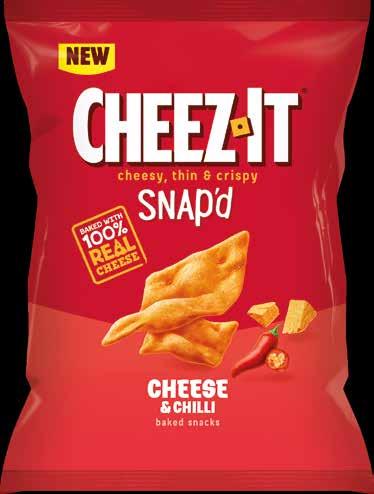
AMERICAN brand Cheez-It, the delicious new snack from food giant Kellanova, is set to make its Irish debut this summer. Expected to replicate its success in the United States, Cheez-It will be available across Ireland from August 2024.
A one-of-a-kind snack experience baked with 100% real cheese and a unique combination of wheat, corn and potatoes, driving an irresistible and distinct crispiness, this recipe has been perfected and tweaked for European tastebuds. Its proprietary baking method bakes them extra thin and crispy with their distinct curvy and crispy edges to deliver the right balance of crispy texture and authentic cheesy taste in every bite.
The range available in Ireland will include two flavours, Cheese & Chilli and Double Cheese, in a large size (120g), as well as a small individual pack (40g).
Packing a punch
Kellanova have identified an opportunity to re-engage a younger audience looking for a real cheese snack that packs a punch. Current products on the market lack a true cheese flavour, which is proving a barrier to purchase for this age group (Source: Illumination research on Cheese Flavoured Snacks, 2020).
A $1 billion brand in the US (Source: Cheez-It $ Sales, 52 w/e 28/10/2023, Total US xAOC + Conv, Nielsen), Cheez-It is expected to satisfy this need and be a key growth driver for the overall category.
A snacking powerhouse
“When we became Kellanova back in October last year, we said we wanted to become a snacking powerhouse, and bringing our hero US Cheez-It brand to Ireland is demonstrative of this ambition,” explained Sarah Ferguson, General Manger, Kellanova Ireland.
“Great taste is the number one category driver, and we believe by launching a largescale NPD that delivers on taste, we can provide more choice to shoppers, helping increase their repertoire, and drive overall category growth. That’s why we believe Cheez-It offers retailers of all shapes and sizes a compelling, differentiated
product which will be backed by a heavyweight marketing plan. While this is a new product and brand here in Ireland, the trade this side of the ‘pond’ can have confidence in Cheez-It; after all, it’s a billion-dollar brand in America!”
The launch of Cheez-It will add to the range of snacks brands sold by Kellanova in Ireland, including Pringles, Rice Krispies Squares, Nutrigrain, Winders and Pop-Tarts.
Cheez-Its will launch in Ireland in two flavours, Cheese & Chilli and Double Cheese.
Panini on the ball with Premier League trading cards
Panini are launching the new Premier League Adrenalyn XL Official Trading Cards, with an Ireland exclusive limited edition card.
THE new football season is almost upon as and Panini are gearing up for what will no doubt be an awesome season in the top flight! Store owners can kick things off in style with the hotly anticipated new Premier League Adrenalyn XL Official Trading Cards from Panini!
The collection is stacked with eight all-new Golden Ballers, over 20 supercharged special card categories and new look ultra-rare Limited Edition and Parallel cards to chase and collect. It’s bursting with the very best the Premier League has to offer!
Driving incremental sales
Launching on August 8, 2024, Panini’s Premier League Adrenalyn Trading Card collection offers independent retailers across Ireland a fantastic opportunity to drive incremental sales.
Each Starter Pack of Premier League Adrenalyn XL Official Trading Cards from Panini includes a guaranteed Golden Baller.
Key to success is the retailer that stocks as wide a range as possible, with each line offering a reason for customers to purchase, whether it’s chasing the guaranteed Golden Baller in the starter pack and classic tin to the extra Limited Edition cards in the multisets and multi-packs. The wider lines offer great value, and the collectors will chase the opportunity to find either a printed signature or real autograph card in each of
these ancillary lines. Menzies Dublin can provide you with full RSV data on all lines.
Ireland exclusive card
New for this season is the inclusion of an ‘Ireland exclusive’ limited edition Evan Ferguson card, which can be found in select starter packs in the day 1 allocation of stock across Ireland. Only a limited print run exists, so please order stock with Menzies today!
The classic Premier League Adrenalyn Trading Card Classic Tins are available in multiple colours for the 2024-25 season.
Panini will send out ‘point of sale’ packs to all independent retailers with their day 1 allocation, featuring a window poster, shelftalker and a full brief on the marketing campaign timings, including two national newspaper campaigns (including the Irish Daily Mail), product sampling, Premier League social media take-over timings, and much more! Panini has promotional packets to allocate to top selling independents to give away to customers on the weekend of the newspaper retail pick-up campaign. To be involved, please contact rsmith@panini.co.uk for more information, to be included in the campaign and to receive POS support.
Bar-Coding
Leading FMCG companies support bar-code transition
22 leaders from some of the world’s biggest companies have signed a global joint statement calling for the transition to QR Codes with GS1 standards to revolutionise the consumer experience.
ON the 50th anniversary of the barcode being scanned for the first time, 22 industry champions - including retailers like Carrefour and Lidl, manufacturers like Procter & Gamble, Nestlé and Mondelēz, and marketplaces such as Alibaba - are calling for the global adoption of QR Codes with GS1 standards. Powered by GS1, the leading standards organisation behind the barcode, these QR Codes can give access to a wealth of product information, easily accessible via smartphones, which is expected to completely revolutionise the consumer experience.
Since the first scan in 1974, the collaboration between retailers and manufacturers through GS1 has led to the widespread adoption of the original barcode. Today, this technology is the trusted universal method for product identification, with over one billion items carrying barcodes that are scanned more than 10 billion times daily, enhancing supply chain efficiencies worldwide. Today, global industry leaders are again uniting in the transition to QR Codes with GS1 standards, a 2D barcode also known as QR Codes powered by GS1.
“The first barcode scan forever changed how we buy and sell products,” said Renaud de Barbuat, President and CEO of GS1. “50 years on, industry champions have come together calling for the transition to QR Codes powered by GS1. This collaborative effort is set to transform in new ways how we shop, eat and live. We
believe this marks the start of a second barcode revolution – making products more traceable and transforming the consumer experience, thereby unlocking the future of retail.”
Revolutionising the consumer experience
Unlike traditional barcodes, QR Codes powered by GS1 can connect consumers to extensive amounts of product information to elevate their experience, including usage and recycling instructions, safety, nutritional information and industry certifications.
With information easily accessible via smartphones, this opens a range of new possibilities for consumers, manufacturers and retailers alike, giving access to all the information consumers need and desire, improving traceability, and driving efficiencies through the supply chain, while still enabling scanning at checkout.
• Smarter choices: with information no longer limited by packaging space, QR Codes powered by GS1 can enhance the consumer experience by allowing brands to share additional information, including video tutorials, style advice, suggested recipes or other information relevant to their purchase.
• Sustainable insights: with increasing consumer demand to understand the environmental impacts of products, QR Codes powered by GS1 can connect consumers to information such as where
a product was sourced, its components, carbon footprint, and guidance on recycling or reusing packaging.
• Safer food: alongside health and nutrition, QR Codes powered by GS1 can facilitate access to regulatory information, detailed allergy advice, and 'Best Before' or 'Sell By’ dates, allowing expired foods to be rejected at checkout, and those close to expiry to be sold at reduced rates, leading to a reduction in food waste.
Companies will need to evaluate their internal technology and processes to make the most of QR Codes with GS1 standards. Adding more detailed product information into QR Codes can be done gradually, allowing businesses to plan changes at their own pace.
“Consumers demand more information about the products they’re purchasing, regulators require the disclosure of more information and there’s an ongoing need to more effectively track and trace products through the supply chain. We can resolve this with 2D barcodes with GS1 standards inside, a single barcode that has the power to provide all the information consumers need and desire, improve traceability through the supply chain, and scans at checkout.”
Jon R. Moeller, Chairman of the Board, President and CEO, The Procter & Gamble Company
“The transition to the next generation 2D barcodes will be an epoch-making moment, just as the introduction of the barcode was. Our industry must do this together and together achieve the goal of exchanging relevant and trusted data with partners, authorities and above all consumers, who are increasingly interested in knowing everything about the products they buy. I believe that a data culture is crucial to increase the value of our company's relationship with consumers and the reputation of the entire industry.”
Silvia Bagliani, VP & Managing Director - Italy, Mondelēz International
Widespread adoption by the end of 2027
This industry initiative is a groundbreaking, collaborative effort to advance global standards for efficiency, safety and sustainability across the retail and consumer goods industries. The companies who have joined forces with GS1 are a combination of leading brand owners, retailers and marketplaces that have a combined market value of over $1.5 trillion USD. These companies operate in over 160 countries and reach billions of consumers worldwide –paving the way for the project’s success.
The goal of this collaboration is that by the end of 2027, QR Codes with GS1 standards should be widely adopted. To achieve this, a coordinated effort is necessary between manufacturers and retailers: manufacturers should start implementing QR Codes with GS1 standards on product packages, while retailers should ensure their point of sale (POS) scanners are equipped to read the new barcodes.
“We expect that the transition to QR Codes with GS1 standards will happen gradually around the world, but one thing is certain: those that accelerate through this transformation the fastest will be best positioned to unlock valuable new capabilities and provide more benefits to their customers, shoppers and consumers,” said Mark Batenic, Chairman of the Independent Grocers Alliance (IGA) and Chairman of the GS1 Management Board.
The shift has already begun, with the new technology being tested in 48 countries across the world, representing 88% of the world’s GDP.
There are several types of next generation 2D barcodes. The QR Code is the most widely used in retail, while the GS1 DataMatrix is commonly used in healthcare. To learn more about QR Codes powered by GS1’s, please visit www.gs1.org/industries/ retail/2D-barcodes.
THE complete list of companies that have signed the global joint statement includes: Alibaba (Taobao & Tmall Group), AS Watson, Barilla Group, Carrefour, 7-Eleven (CP All Thailand), Dr. Oetker, IGA, JD.com Group (Jingdong), Lidl International, L’Oréal, Master Kong
(Tingyi Holding Corp.), Mengniu Group, Metro, Migros Ticaret A.S., Mondelēz International, Nestlé, The Procter & Gamble Company, Savencia Fromage & Dairy, The J.M. Smucker Co., Tsingtao Beer Group, WH Group (Henan Shuanghui Development Co.), and Yili Group.
Industry leaders believe that the transition to the next generation QR Codes powered by GS1 will be as seismic a change as the introduction of the original barcode 50 years ago.
All-Ireland vape company, VaporLinQ, advises retailers to ensure that the products they sell comply with safety and legal requirements.
THE vaping industry has seen rapid growth as it continues to support adult smokers on their journeys to quit. Consumer demand has led to a saturation in product options as manufacturers continue to improve on products and adapt to meet ongoing legislations. As a retailer, it can be difficult to navigate the ever-evolving industry.
It’s important for retailers to get the facts. All-Ireland vape company, VaporLinQ, believes transparency between suppliers and retailers is crucial to ensure all parties are confident in product quality, compliance with safety regulations and current government legislation.
A common misconception is overlabelled products are not TPD-compliant. The Health Service Executive (HSE) has clear guidelines under TPD compliance that allow authentic and genuine products to be over-labelled with specific documented information. See the following page for a HSE Checklist that confirms full compliance.
Highest safety standards
All of VaporLinQ’s manufactured products have achieved AA grading from the British Retail Consortium (BRC), which is the highest accreditation available to products in the industry. This means that, as a company, VaporLinQ is upholding the highest standards of safety while meeting all necessary legal requirements in the manufacturing of its products. This also provides confidence for both the company’s supply chain and its customers that the brand and products are trustworthy.
VaporLinQ’s TPD-compliant products are available across Ireland, the UK and mainland Europe, and trusted by major retailers such as WH Smith, Spar, Poundland, EuroGiant, Applegreen, B&M Bargains and many more.
Dedication to quality
VaporLinQ’s dedication to quality assurance means that they only source products that meet TPD compliance standards.
The HSE has clear guidelines under TPD compliance that allows authentic and genuine products to be over-labelled with specific documented information.
“Transparency has been crucial in developing our major retail partnerships, but it’s important all of our customers receive the same treatment and that they can trust the stock they purchase from us is reputable,” said Stephen Ryan, VaporLinQ’s Managing Director.
The company recently made further strides in the retail space with the launch of its innovative retail app, redefining efficiency and service for retailers across the island of Ireland. This ambitious and successful platform was recently awarded ‘Licensed Supplier of the Year’ by AF Blakemore & Sons Ltd.
The game-changing app enables retailers to streamline the ordering process, saving precious time and cutting down on operational costs. Furthermore, all orders placed before 1pm receive what retailers have described as ‘shockingly fast’ next day delivery. The app also has a consignment policy in place to ensure all stock purchased is guaranteed to arrive in the same order.
In addition, new sign-ups receive €10 credit into their ‘wallet’ – and every product has a wallet indicator which states how much credit a user will be awarded for every unit of that product purchased. VaporLinQ also benefits from duty savings and zero VAT rates to Ireland, which allows the company to offer products at more competitive prices.
VaporLinQ currently has sales representatives across Ireland, delivering informative demos of the app.
This app caters to retailers of all sizes in all corners of the island, with access to TPD-compliant products at their fingertips, ensuring safe and responsible retail trading.
VaporLinQ’s new app enables retailers to streamline the ordering process, saving precious time and cutting down on operational costs.
HOW TO CHECK IF A PRODUCT IS TPD-COMPLIANT
REQUIREMENTS
HSE regulations transposing the Tobacco Products Directive 2014/40/EU (TPD) into Irish law.
Tanks of electronic cigarettes and cartomisers must not contain nor have the capacity to contain, nicotine containing liquid in volumes greater than 2mls.
The nicotine content is indicated on the outside packaging (box).
The nicotine concentration of the liquid is not greater than 20mg/ml.
The Health Warning is in both the Irish & English Language as prescribed below.
Cuimsionn an tairge seo nicitin, ar substaint an-anduile e This product contains nicotine which is a highly addictive substance
The Health Warning appears on the 2 largest surfaces of the outside packaging ie. the box, covering 32% of the surface on both sides.
The outside packaging (box) or the unit packet does not include any labels or elements or features which resemble a food or a cosmetic product. For example:
There should be no pictures of; food/cosmetic products including pictures of sweets/vegetables/fruits/ice-cream/baked foods etc or any cosmetic product i.e. pictures of lipstick
There are no statements or symbols on the outside packaging (box) or the unit packet which promotes the product in any way or would suggest or give the impression that the product has health or lifestyle benefits, is less harmful than other products, contains natural or organic properties, has vitalising or energetic or healing properties.
Instructions for refilling, including:
• Diagrams
• Specifies the width of the opening of the tank
• Specifies the type of docking system with which the electronic cigarette and refill containers are compatible
THE
VAP ING
FULLY COMPLIANT WITH NEW GOVERNMENT LEGISLATION FULLY TPD COMPLIANT HOLDS 4x 2ml PREFILLED PODS + 2,400 PUFFS!
HOLDS 4x 2ml PREFILLED PODS + 2,400 PUFFS!
Top 20 Wine Brands
Best cellars
Jean Smullen looks at Ireland’s top selling wine brands.
THE Top 20 Wine Brands, the annual Retail News wine feature, is based on verified sales figures in the off trade. Every year we compare the overall volume sales in the off trade of Ireland’s top wine brands. Once again, this year, there is no change in the top five, Santa Rita, Casillero del Diabolo and McGuigan remain in the top three positions, as they have since 2018. Dadá moved into the top five in 2022 and the Barefoot brand got there in 2023.
There was one new re-entrant this year, the Australian brand Hardy’s returns to the top 20 after an absence of a few years, with a significant increase in volume sales of +69.9%. The Graham Norton range also grew strongly last year with sales of the GN wine range increasing by +45.8%. Other brands showing strong growth included Viña Carmen from Chile +28.5%. New Zealand also performed well, with volume sales of both Brancott Estate +25.1% and Villa Maria +24.4% showing significant growth. The Top 5 Wine Brands on the Irish Market for 2023-2024 are:
1. Viña Santa Rita
2. Casillero de Diabolo
3. McGuigan
4. Barefoot (E&J Gallo)
5. Dadá (Fincas las Moras)
1. Viña Santa Rita - Chile (Bibendum Ireland)
Santa Rita’s 120 brand has remained the top-selling wine brand in the off-trade in Ireland for the last 10 years. Santa Rita 120 is also now the first wine brand to secure a position in Ireland's prestigious Top 100 brands in the grocery sector, as identified by the Kantar Group. This recognition is particularly significant and coincides with the Santa Rita summer advertising campaign. “We extend our heartfelt gratitude and congratulations to the entire Santa Rita family,” noted Terry Pennington, Commercial Export Director, Santa Rita Estates, EMEA. “The relentless efforts, dedication and teamwork have made this extraordinary accomplishment possible.” This recognition is perfectly timed with the launch of the new 120 campaign,
which features Paula Jaraquemada, a key figure in Chilean independence who inspired the creation of the 120 range. ‘Traditionally Untraditional’ is the new positioning of the best-selling wine brand in Ireland and Chile, which for the first time in the wine industry, used AI to bring this iconic character to the present. In 1818, Jaraquemada defied the norms of her time by opening her home to shelter 120 soldiers of the patriot army. Using technology and available historical
Santa Rita 120: the top-selling wine brand in the Irish off-trade for the last decade.
Paula OUR TRADITION OF DEFIANCE BEGAN WITH
in 1818, Paula Jaraquemada sheltered 120 heroes of Chilean Independence in Santa Rita.
DEFYING TRADITION SINCE 1818
Top 20 Wine Brands
evidence, her face was digitally reconstructed. Deepfake technology was then applied to the campaign’s protagonist to achieve the highest possible accuracy to reality.
To coincide with the ad campaign, since June 2024, Santa Rita 120 is rolling out fully branded gondola ends in 25 top Tesco stores across Ireland. The eye-catching displays highlight a consumer competition accessible via a QR code. The competition offers participants the chance to win an unforgettable trip to Chile for two under the ‘120 Hours’ concept. Similar point-ofsale (POS) materials are being introduced in 50 SuperValu stores in July and the roll-out will continue in SuperValu until mid-September. A random winner will be selected in the first week of October.
This summer, Santa Rita will also collaborate with two prominent influencers to further promote the campaign and competition. Limerick athlete Sarah Lavin, who is competing in this year’s Paris Olympics, will feature Santa Rita 120 De-Alcoholised in her reels, while influencer Cassie Stokes will showcase the 120 Reserva Especial range. Both influencers will upload content to drive awareness and participation in the campaign, with additional content slated for September to highlight the brand's new packaging.
2. Casillero del DiabloChile (Viña Concha y Toro)
Casillero del Diablo is Concha y Toro’s flagship brand and remains Ireland’s second most popular wine brand. In the last year, Casillero del Diablo has put in a fantastic brand performance on the Irish market, with value sales also increasing by +22.2%. This was one of the strongest value growths in terms of the Top 10 wine brands this year.
approach to winemaking, continue to woo Irish shoppers. Look out for their latest advertising campaign featuring the song ‘Got My Mind Set On You’, made famous by former Beatle George Harrison. The advertisement continues the tradition of exciting creatives on screen to promote the wine range, thereby keeping it front of mind with wine shoppers. This summer, look out for offers on the white and rosé wines from the range, which play to the real customer popularity of the Casillero del Diablo range across their many different grape varieties.
3. McGuigan - Australia (Barry & Fitzwilliam) McGuigan remains the number one Australian wine brand in the Irish off trade. The McGuigan Black Label varietal range includes Cabernet Sauvignon, Shiraz,
Barefoot: the top selling Californian wine in Ireland.
4. Barefoot (E & J Gallo) – California, USA (Comans Beverages)
Barefoot is the number one selling Californian brand on this market, and has been actively involved in a range of community activities. Barefoot has been a proud ally of the LGBTQ+ community since 1988 and is committed to accepting everyone exactly as they are, spreading inclusivity and positivity to wine lovers across the globe. Today, the brand continues to support LGBTQ+ communities by taking part in Pride parades and supporting LGBTQ+ charities all over the world.
Barefoot resonates with Irish consumers who love how approachable the wines are.
“The wide range of fun flavours contributes to this, including our Buttery Chardonnay, Jammy Red and Moscato, as well as everyone’s favourite Pinot Grigio, Merlot and White Zinfandel,” revealed Philip Lynch, Country Manager, Gallo Wines.
drinkers.
Casillero del Diablo’s memorable marketing campaigns, combined with their quality-focused
Merlot, Chardonnay, Sauvignon Blanc, Pinot Grigio, Rosé, Malbec and McGuigan Frizzante. McGuigan also sell a range of de-alcoholised wine called Delight with a 0.5% ABV; the range also has a Rosé and a white made from the Moscato grape. Barry & Fitzwilliam, who distribute the McGuigan range in Ireland, have the McGuigan Black Label range on a save €3 promotion in August 2024 (including the Bank Holiday weekend) and in September 2024.
Once again, this summer, set against the stunning backdrop of Bundoran's beaches, the Barefoot Sea Sessions offered an electrifying fusion of music, adventure and unforgettable experiences. Sea Sessions, the only festival to feature Beach Sports, is sponsored by Barefoot Wine and features Volleyball, Soccer, Rugby, Frisbee, and Yoga. Barefoot beach sports fanatics joined Sea Sessions headliners blk., Cian Ducrot and Johnny Marr at Ireland’s biggest beach party in Bundoran in June this year. Having Barefoot as the main sponsors has helped the event to grow significantly during the last 14 years. All proceeds from Barefoot Beach Sports go to their charity partners and event hosts, Liquid Therapy, a multiaward-winning charity based in South
Casillero del Diablo continues to resonate with Irish wine
The hugely popular McGuigan Black Label range is available on promotion in August 2024.
Top 20 Wine Brands
Donegal. Liquid Therapy provides a supported environment that enables young people to experience the physical and therapeutic benefits of the surf and ocean. Barefoot Wine has proudly supported Liquid Therapy since its inception a decade ago.
5. Dadá Art Wine – Argentina (Comans Beverages)
The very popular and aptly named Dadá Art Wine #1 is produced in Argentina by Fincas Las Moras, who are part of the Grupo Peñaflor, the leading wine company in Argentina and currently among the
top 10 wine producers worldwide.
There are three wines in the range, the most popular of which, the Dadá Art Wine #1, is made from a blend of two red grapes, Bonarda and Malbec, and is the wine that put this brand firmly in view of the Irish consumer when it was first launched a decade ago. Since then, the brand has achieved considerable success thanks to it being an easy drinking red wine style with lots of ripe sweet blackberry fruit and lovely chocolate/mocha flavours. The Dadá Art Wine #2 is made from Merlot aged in toasted French and American oak to give it a strong coffee and chocolate flavour. Dadá Art Wine #3, made from a blend of Cabernet Sauvignon and Syrah, is aged in French oak, which adds to the wine’s significant spicy flavour. The other popular wines in the Dadá range are the Dadá Art Malbec, Dadá Art Cabernet Sauvignon and the Dadá Art White Malbec which was released here two years ago and has since gained a significant following among Irish white wine drinkers.
strengthened their presence and grown their consumer base across Ireland, by emphasising their commitment to simplicity and consumer-centric values. The brand’s YOY growth figure is a testament to its increasing popularity, solidifying its position as a brand favourite among consumers seeking both quality and value.
Staying true to the ethos of keeping things simple with the consumer, this year, I Heart launched a fresh new look. Their vibrant rebranding initiative was designed to help I Heart consumers navigate more easily the complex decision-making process when choosing a wine. The I Heart range continues to offer their very popular varietal range, which includes the I Heart Pinot Grigio, their flagship SKU, as well as I Heart Sauvignon Blanc and I Heart Cabernet Sauvignon, which are both very popular. Never standing still, the brand is also engaging with the novice wine drinkers by launching their I Heart Bubbly this year.
7. Wolf Blass - Australia (Findlater &
Co)
Originally from Germany, Wolfgang (Wolf) Blass moved to the Barossa Valley in South Australia in 1961. Five years later, the Wolf Blass business was born, beginning a long and proud history of making award-winning wines using age-old methods. Wolf Blass is based in Nuriootpa, South Australia, in the heart of the Barossa Valley. Wolf Blass winemakers set the highest standards, meticulously selecting fruit, fermenting in state-of-the-art open vessels, and working with small-batch and experimental winemaking. Deeply woven into the fabric of Australian culture and history, the spirit of Wolf Blass himself is what makes the brand unique. Known for challenging the status quo and rejecting mediocrity, Wolf Blass famously said, “They criticised me because I changed the wine style, I had different techniques, I had different labels. I did everything upside down. The only difference now is that the critics have all gone and I'm still standing!”
numerous international awards over the years.
No 6 – I Heart Wine (Freixenet/Copestick)
Last year, the I Heart range was the second biggest mover in our chart, rising six places from 13th to No 7. This year, I Heart, created by Freixenet in 2010 and launched here in 2016, has moved up one place to 6th position, thereby continuing its strong performance by demonstrating a remarkable YOY growth. I Heart wines have
I Heart wines have strengthened their presence and grown their consumer base across Ireland.
The Wolf Blass Yellow Label range is a key part of the portfolio and has won numerous awards over the years. From 2008 to 2016, Wolf Blass was awarded IWC International Red Winemaker of the Year (in 2008, 2013, 2016), the IWSC International Winemaker of the Year (2013), Intervin Winery of the Year (2013), CWSA Australian Wine Producer of the Year (2013), and the Australian Export Hero Award (2008).
8. [yellow tail] – Australia (Bibendum Ireland)
Moving up a place this year is the John Casella-created [yellow tail]. The brand, named after Australia’s yellow-footed rock wallaby, has created a huge niche for itself since it was founded 22 years ago. In 2005, [yellow tail] became the first varietal wine to sell one
The hugely popular Dadá range has really struck a chord with Irish wine drinkers since its launch a decade ago.
Wolf Blass Yellow Label has won
Top 20 Wine Brands
million cases in a single year. [yellow tail] was first launched on the Irish market in 2007 and the top [yellow tail] SKU on this market is the [yellow tail] Sauvignon Blanc. Other wines in the range include the [yellow tail] Pinot Grigio, Shiraz, Chardonnay and Merlot, as well as the [yellow tail] Jammy Red Roo, a red wine blend made from Shiraz and Cabernet Sauvignon.
9. Oyster Bay - New Zealand (Delegat’s
Wine Estate)
Also moving up a place this year is Delegat’s global phenomenon Oyster Bay, one of the world's most successful super-premium wine brands. Oyster Bay continues its success story in Ireland and having enjoyed another year of strong growth, moved up a place to 9th and remains the number-one selling New Zealand wine brand on the Irish market. Briony Fellowes, Business Manager for Oyster Bay in Ireland, told Retail News that this year, Drinks International featured Oyster Bay in their Top 50 of the World’s Most Admired Wine Brands in 2024. The list is voted for by a carefully selected academy of sommeliers, buyers, wholesalers, Masters of Wine and wine writers. Being awarded a place on the annual list is a significant achievement and Oyster Bay is one of only four brands from New Zealand to feature in this year’s list.
10.
Campo Viejo - Spain (Irish Distillers Pernod Ricard)
Another strong performance from Spain’s Campo Viejo, owned by Group Pernod Ricard, who have moved up two positions from 12th to 10th place. Sales of wine from the Rioja region in the last year continued to be strong. Reserva is the most popular aged style; in 2022, sales of Reserva wines accounted for 41.5% of all Rioja wine sold here, followed by Genérico (formerly known as Vina Joven) 35.5%, Crianza 18.4%, and Gran Reserva 4.4%. The top three export markets for Rioja are the UK (33%), Germany (15.2%) and the USA (9.5%) and Ireland, in 11th place, accounts for 2.54% of all Rioja wine sales globally (Source: Grupo Rioja).
11. Cono Sur - Chile (Findlater & Co)
Cono Sur is present in seven of the most important wine valleys of Chile. Since its beginning, Cono Sur has been deeply committed to taking care of the environment; the sustainable path has led them to meet the highest standards in terms of social performance, environmental care, transparency, and corporate responsibility, granting them B-Corp certification. These good practices are reflected in their wine label, whose bicycle icon is a tribute to the vineyard workers who daily attend their workplace on this vehicle. To highlight the importance of sustainable winemaking, Cono Sur Bicicleta range is launching its new label this year, featuring a larger and more central bicycle icon, visually presenting the brand’s sustainable philosophy. Findlater & Co will launch this new label in the Irish market later this year with a 360-degree campaign, The Sustainable Way, taking over shelves in all three major retailers, as well as highlighting on billboards and purchase points on the street.
12. Villa Maria - New Zealand (Barry & Fitzwilliam)
Cono Sur Bicicleta range is launching its new label this year, featuring a larger and more central bicycle icon, highlighting the brand’s sustainable philosophy.
Villa Maria showed a significant increase in volume sales in the last year, rising three places from 15th to 12th position. With volume sales growing by +25%, the Villa Maria range continues to be hugely popular with the Irish wine consumer.
Kevin O’Mahony of Barry & Fitzwilliam told Retail News that the Villa Maria Private Bin Range will be on offer this summer with an RRP of €13, down from €16.99, from the August Bank Holiday weekend right through until September.
Villa Maria Blush Sauvignon will be SuperValu’s wine of the month from August 15 until September 4, and will be on offer for €10.
13. 19 Crimes (Findlater &
19 Crimes have created a new look for their bottles this year, ensuring the wine brand continues to captivate and expand its family of enthusiasts, especially younger adults seeking a deeper connection with their choice of wine.
The fast-growing 19 Crimes brand has a new look this year.
The re-design delicately enhances the brand’s iconic convict imagery, introducing a lighter, fresher background that immediately signals a move towards modernity. This evolution respects the brand’s roots, while addressing the visual and informational needs of today’s wine drinkers. A newly integrated QR code on the back label bridges the gap between history and technology, offering an
Delegat’s global phenomenon, Oyster Bay continues its success story in Ireland.
Villa Maria is enjoying significant volume sales growth in Ireland.
immersive Augmented Reality experience that breathes life into the stories of each convict.
The front label now features tasting notes and a wine style scale from light to bold, demystifying wine selection for newcomers. This innovative addition, along with a striking colour accent that hints at the flavour profile and partially conceals the convicts’ offenses, invites curiosity and engagement.
14. E&J Gallo – California, USA (Comans Beverages)
No change this year for the range of wines from the E&J Gallo portfolio, which last year move up two places from 16th place to 14th position in our brand chart and maintains that position this year. The range of wines produced by Gallo Family Vineyards includes the very popular Apothic Red, the number one premium wine brand in the USA.
Apothic Red has a very loyal consumer base here in Ireland and continues to perform strongly. A Gold Medal winner in 2022 at Mundus Vini, the name is derived from Apothecia, the ancient Greek word for a wine store. Apothic Red is made from a blend of red grapes, including Zinfandel, Syrah, Cabernet Sauvignon and Merlot, and has one of the highest repeat purchase rates on this market.
E&J Gallo’s Dark Horse range is another strong performer here. They offer a selection of varietal wines, including Dark Horse Sauvignon Blanc, Pinot Grigio, Chardonnay and Dark Horse Rosé. The red varietals in the Dark Horse range include Cabernet Sauvignon, Merlot, Malbec and Zinfandel. One of the most popular wines is the Dark Horse Chardonnay, a Gold Medal winner at the 2021 edition of Mundus Vini and awarded a credible 89 points by Wine Enthusiast. The Dark Horse Cabernet Sauvignon also performs well and is made from fruit
grown in Lodi, a warmer part of California.
15. Torres - Spain (Findlater & Co)
For over three decades, Torres has been a trailblazer in the realm of sustainability and climate action, long before it became a popular or fashionable topic.
Spearheaded by Miguel Torres Senior, the Torres family have consistently led the way in groundbreaking initiatives, making them pioneers in the field.
One of the most popular wines in the Torres range is the iconic Sangre de Toro, a wine with an excellent quality/ price ratio that can transfer its overwhelming personality into the glass. Since it was first launched in 1954, Sangre de Toro has become wine ambassador to the world, and has created great recognition for Spanish wine. Since 2018, most of the Sangre de Toro wines do not use animal in their production processes and are certified vegan. Sangre de Toro is one of the top five selling Spanish wines on most international markets.
Top 20 Wine
This year, Sangre De Toro is proud to emphasise the Irish love of Spanish gastronomy. The Spanish DNA, with its strong emphasis on food, has now been embraced as a way of life here in Ireland. Tapas and small bites are enjoyed with increasing regularity by the Irish and as we embrace Spanish food styles such as mixed olives, garlicky shrimp, fried squid, meatballs and chorizo; Torres are aware that these iconic dishes will be made even more enjoyable when matched with a glass of Sangre de Toro.
16. Brancott Estate - New Zealand (Irish Distillers Pernod Ricard)
Brancott Estate (previously known as Montana) planted the first Sauvignon Blanc in Marlborough, New Zealand, and opening the first winery in a place that ended up becoming a globally renowned wine region. The Brancott Estate range also showed strong growth in the last
Apothic Red is the number one premium wine brand in the USA.
Sangre de Toro, one of the most popular wines in the Torres range.
Top 20 Wine Brands
12 months of +25%, moving it up one position from 17th to 16th in the Top 20 Wine Brands, showing the very strong popularity of New Zealand wine, especially Sauvignon Blanc, on the Irish market.
Two years ago, they introduced a new blue and gold label with an upside down Kiwiana sheep, which gives the wine a distinct identity on our shelves.
The range also includes their lower alcohol Brancott Flight, which is 20% lighter in calories and but still retains all the distinctive lovely lemon/citrus flavours the consumer associates with Marlborough Sauvignon Blanc.
17.
Graham Norton (Barry & Fitzwilliam)
The Graham Norton (GN) wine range arrived on the wine brand chart in 2022 in 19th position. This year, it moves up two places to 17th as the range showed significant growth in the last year, with sales increasing by a whopping +45.8%, making it the second highest climber.
The GN wine range is the brainchild of two New Zealand school friends, Tim Lightbourne and Rob Cameron, who created a wine company Invivo in 2008. Today, the Graham Norton range includes 11 products. Graham is a shareholder in Invivo and is hands-on with tasting and blending each new wine or spirit, which are made to his specification. Graham Norton now sells his wines in 16 countries and his Sauvignon Blanc is one of the top three Sauvignon Blanc brands on the Irish market.
Kevin O’Mahony of Barry & Fitzwilliam, who distribute the GN range in Ireland, told me that this summer the Graham Norton (GN) New Zealand Sauvignon Blanc
will be on offer for €12, alongside the GN Shiraz and GN Rosé for the same price. The GN Frizzante Bianco & Rosé will also be on offer for €11.50. These offers will run for the month of August, including the Bank Holiday Weekend.
No 18 - Faustino DOCa Rioja - Spain (Richmond Marketing)
Bodegas Faustino, a winery of Familia Martínez Zabala, has been a leading exporter of Rioja Gran Reserva for over 30 years. Faustino is recognised as one of the World's Most Admired Wine Brands, appearing in 2023 for the sixth year on the Drinks International TOP 50 list. The Faustino brands performed well in the last year, showing growth of over +4% in volume sales on the Irish market.
Shelly O’Neill who looks after the wine portfolio at Richmond Marketing, told Retail News that the entire Faustino VII range will be on offer this summer in SuperValu for €8 until July 24. The same offer will apply in Centra stores for the month of August, where the range will be available for €8. The Faustino VII range includes Faustino VII Sauvignon Blanc, Faustino VII Cabernet Sauvignon, Faustino VII Rosado, Faustino VII White and Faustino VII Red.
19. Hardy’s - Australia (Bibendum Ireland)
thanks to expanding availability in the retail sector, sales of Hardy’s increased by a significant +69.9%, propelling the brand back into the Top 20 after a three-year absence. Hardy’s Stamp of Australia is their entry level wine, while Hardy’s also have a good range in the mid-price sector, mostly single varietal and blends sold as the Private Bin.
Thomas Hardy was just 20 when he sailed out from Devon for the new colony of South Australia in 1850. He was 23 when he established a winery on the banks of the River Torrens in South Australia’s equally young capital, Adelaide. Today, Thomas Hardy is recognised as one of the founding fathers of the South Australian wine industry. From its humble beginnings in 1853, Hardys has become one of Australia’s best known and most popular wines. Now available in over 80 countries, there is no doubt that five generations later, Hardy’s is one of the most powerful Australian wine brands in the world. This year,
20. Viña Carmen - Chile (United Wines) The distribution in both the north and south of Ireland of the premium Chilean brand Viña Carmen has been handled by United Wines since 2019. The flagship premium wine from the Santa Rita stable has a very loyal following on this market, especially with the customer who enjoys midpriced quality wines from Chile. This year, sales of the Carmen range increased by +28.5%, the third highest climber in the chart. The grown is driven by the very popular Carmen Insigne range which includes a selection of varietal wines made from Sauvignon Blanc, Chardonnay, Merlot, and Cabernet Sauvignon, that are currently available in Tesco. The Carmen Insigne Sauvignon Blanc and Carmen Insigne Cabernet Sauvignon are also available in SuperValu.
Carmen’s growth in Ireland has been driven by the success of the popular Carmen Insigne range.
Carmen Insigne wines are youthful and made in a soft and approachable, easy drinking style, at great value prices. Each wine shows the typical varietal characteristics, with concentrated fruit flavours and a well-balanced acidity. Sustainability is top of the agenda in every part of the wine making process, from the vineyards to the final distribution and Viña Carmen have a fully integrated environmental and commercial sustainability programme in place.
The Graham Norton (GN) wine range continues to enjoy huge sales growth in Ireland.
Kellogg’s unveils new Corn Flakes twist on Rice Krispies Squares
A NEW Kellogg’s Rice Krispies Square variant is now available as two iconic cereal brands, Rice Krispies and Corn Flakes, collide.
Since bursting onto the Irish market, Kellogg's Rice Krispies Squares have proved to be a best seller. Kellogg’s Rice Krispies Squares are the number one cereal bar brand in Ireland and growing +28% in the last year (Source: Unit Sales L52Ws, Nielsen ScanTrack, 52 weeks to June 26, 2024).
Delivering on taste and enjoyment
Now, Corn Flakes are making their debut collaboration with the popular snack to produce an unrivalled bar that delivers on taste and enjoyment.
Kellogg’s Rice Krispies and Corn Flakes Squares began arriving in stores across Ireland in early July, with the delicious new offering combining the light and chewy marshmallow Rice Krispies Squares with the classic crunch of Corn Flakes.
A new and iconic offering
“Corn Flakes have always been a much loved and celebrated part of Kellogg’s history,” notes Ann Rose Eng, Brand Activation Manager, Kellogg’s Ireland. “To be able to combine such a classic cereal product with Ireland’s leading treat segment snack brand is extremely exciting. We can’t wait to see what Squares’ fans make of this new and iconic offering!”
Kellogg’s Rice Krispies and Corn Flakes Squares will have an RRP of €2.99 (four pack) or €1.25 (Single). The product is available to launch in all retailers from July 2024 to enable stores to offer customers exciting
Back to School
Mixed results in Back to School survey
The annual Irish League of Credit Unions Back to School survey shows the impact of Government policy on costs and reveals the pressure on families at this time.
THE primary schools have barely closed their doors, when retailers’ thoughts turn to Back to School. While this may annoy the younger members of our households, it makes perfect sense for shop owners to be prepared and it also suits sensible parents and caregivers of school children, who want to be ready for when the term starts.
Indeed, 62% of parents say that covering the cost of back to school is a financial burden, according to the Irish League of Credit Unions annual Back to School survey. While high, this figure actually shows a decline of 10% on the 2023 figure of 72%.
Conducted by i-Reach in June 2024, the ILCU survey tracks the costs and impacts of children returning to school as well as broader cost of living factors. The total Back to School spend in 2024 stands at €1,086 per child for primary school parents and €1,401 per child for secondary school parents. The findings show €113 of an increase for Secondary school parents compared to 2023, but a €66 drop in spend for Primary School parents. With the welcome introduction of the Free School Books scheme commencing for the 2023/24 academic year for primary schools and an increase in those offering the hot meals
scheme, it’s unsurprising that parents with primary school children have felt less of a financial burden.
Onerous cost burden on parents
David Malone, CEO, Irish League of Credit Unions, described the latest figures as “very insightful”, proving that Government initiatives such as the Free School Books scheme do seem to have eased the financial burden for some families. However, he warned that there is a still an onerous cost burden on parents with increasing levels of associated debt linked to schooling and the cost of living.
“The 2024 research shows that 28%, more than one in four, of parents are taking on debt to cover back to school costs, with the average debt amount at €368, which is an increase of €62 on the same figure last year,” said Malone. “The issue of debt is significant, and it should be noted that 32% of parents in debt have debts of over €500 to cover these costs.”
Cost of living crisis
The 2024 research also shows that 46% of parents of schoolchildren who’ve been affected by the cost of living since the start of 2024 say they’ve cancelled or reduced
non-essential services or activities to cover rising costs, and 23% are trying to earn additional income. “Added to this, our research found that 86% of parents with schoolchildren say their income or household costs have been affected by rising costs of living, with 91% of those affected experiencing additional grocery costs and 89% seeing additional costs to utility bills,” Malone said.
The 2024 research also yielded the following insights:
• More than half (53%) of parents feel pressured to buy branded clothing, footwear, and other items for their children, up 11% from 2021.
• Increasing costs of food for children for school lunches (56%) is the biggest effect of rising Back to School costs, followed by increasing costs of new school uniforms (54%) and school trips or activities (52%,)
• 67% of parents believe that schools don’t do enough to help keep the costs of going Back to School down.
• Family holidays (31%) are still the biggest sacrifice to cover Back to School costs and 13% say they have to sacrifice spending on food to cover Back to School costs.
Tom Martin & Company, an Irish owned family company, is proud to be the sole Irish distributor for your favourite Back to School Brands:
Faber-Castell is one of Ireland’s most recognised and trusted brands. It is one of the world’s leading manufacturers of high-quality products for writing, colouring and creative design. It has been run by the Faber-Castell family since 1761. Faber-Castell is the world’s largest pencil manufacturer, producing 2 billion annually and has been Ireland’s favourite pencil brand since the 1950s. The Iconic Columbus pencil, exclusive to Ireland, is nearly 70 years old! Their children’s products have an excellent price quality ratio and are trusted by both parents and teachers.All Faber-Castell’s children’s products are developed in co-operation with experts in child development.Sustainability is a core value of the company which has its own sustainably managed forest in Brazil.
Eberhard Faber is part of the FaberCastell group, specialising in quality products for craft and creativity.
Posca pens are the must-have art and craft product. They are versatile, with a huge range of colours and sizes.
Uni-ball pens are renowned for smooth writing, elegant design and high-quality ink. The uni-ball eye has been the world’s favourite roller ball since 1994.
West Design’s brand portfolio includes Do Crafts Papermania, Anitas, Craft Planet and House of Crafts.
Tom Martin and Company have been helping their retail partners maximise sales in the Back to School season for over thirty years. Quality products, excellent POS materials, keen pricing, expert product knowledge, holding stock in Ireland and of course the experienced sales team are the USPs of this company.
Stationery: Stabilo
Stabilo Arty range launches in Ireland
STABILO International GMBH are delighted to be working with Hills Fine Art and Craft to introduce the Stabilo Arty range to the Irish market. Already well established in the UK and mainland Europe, the Stabilo Arty premium range of high quality pens and pencils can be used to achieve an interesting variety of creative techniques on paper, card and canvas. The extensive range of colours and nib styles will excite and inspire artists of all levels of ability, from professional artists to students and craft enthusiasts of all ages. As well as launching the Stabilo Arty range in time for Back to College, Hills are already stocking a number of Stabilo highlighting, writing and kids colouring pens and pencils. Thanks to the Stabilo Boss Original Highlighter, Stabilo has been recognised all over Europe as the brand leader in highlighting for over 40 years. Other iconic designs such as the orange and white striped Stabilo point 88 fineliner and the Stabilo swing cool pocket highlighter have been firm favourites in the classroom for decades and with this latest extension to the
range, Stabilo are guaranteed to be a popular choice for Back to School and College.
Hills will be introducing lots of new Stabilo highlighting, writing and colouring lines throughout the coming months in various packaging options, from hanging packs and blisters to counter-top displays and creative gift sets.
Hills are a family run business which has evolved and grown over the past 40-plus years to become Ireland’s leading wholesale distributor of fine art and craft materials. They stock over 14,000 SKUs and have a dedicated showroom and training room where all their brands are extensively merchandised and displayed.
For more information on the Stabilo Range and all the other art and craft brands available, visit hillsart.ie or email info@hillsart.ie.
STABILO Creative tips
Whether you want to create an intricate piece of artwork using different line widths or a hand lettering piece with a variety of strokes, STABILO Creative Tips are the perfect pens to use. Each set includes 5 tip variations in matching colours, in packs of 5 and 10 or tins of 30 and 60. Let your creativity flow with an extra fine 0.2mm fineliner, two spring loaded fineliners with 0.4mm and 0.7mm tips, a sturdy 1mm fibre tip and a flexible brush tip.
Available from Hills along with much more from the STABILO Range
The Stabilo Arty range can be used to achieve an interesting variety of creative techniques on paper, card and canvas.
The Stabilo Arty premium range of high quality pens and pencils is now available from Hills Fine Art and Craft.
Retail Ireland: Monthly Update
Ibec launches toolkit to support businesses with staff aggression
Last month Ibec launched its ‘Combatting Aggression and Harassment in the Workplace’ Toolkit. The guide examines employer responsibilities from both an equality and health and safety legislative position. Designed for employers, it provides practical information and resources on combatting and managing aggression and harassment in the workplace. It features case studies, including a number from retail businesses, sample policies and a useful checklist, with actions that businesses can take to support their staff in harmful situations.
The launch event featured expert speakers, including sectoral professionals, civil society leaders, and Ibec in-house specialists, speaking about how to best protect employees and ensure a safer workplace for staff.
The publication of the toolkit was heavily driven by input from Retail Ireland members. The issue has been central to the retail sector over the last year, with retailers reporting higher numbers of incidents where customers have been abusive, both
verbally and physically. Research from Circle K forecourt and convenience stores revealed that 75% of their retail employees have encountered verbal, racial, gender-based or physical abuse from customers.
Employers have been looking at ways to create safer environments for their staff and the toolkit includes key insights from the business community on what has worked for them, which may be useful for others. The toolkit is available at www.retailireland.ie
Retail Ireland continues to advocate on behalf of retailers to stress the importance of supporting businesses and their staff with this growing issue. Engagement is ongoing with both the Garda National Community Engagement Bureau and the Department of Justice. While retailers are investing enormously in supporting their staff and improving security systems, it is also crucial that there is a more visible Garda presence in town and city centres and a rapid response when incidents arise.
EU Deforestation Regulation to impact on grocery products
NEW EU rules expected to go live on December 30, 2024, will require retailers who sell products containing commodities such as coffee, cocoa, cattle, palm oil, soy, wood and rubber to declare that they have been sourced from an area not affected by deforestation. Under the EU Deforestation Regulation, businesses will be required to submit due diligence statements through a centralised information system platform made available by the European Commission.
There are a number of outstanding difficulties for retailers who will have to adopt these changes within their business. The main concern is that businesses are not ready and that many are waiting for guidance and clarity on key aspects of the regulation, which is leaving things very late considering the reporting is expected to commence on December 30 of this year.
Comprehensive guidance is expected from the European Commission and dedicated training will be available from them in the autumn. However, this still leaves businesses with very tight timelines to bring in considerable operational changes.
Another major issue is the lack of clarity around the information system that businesses will have to use to report their data.
A version of the IT system has been trialled by the European Commission, with a number of companies taking part in the trial, but the final version won’t be open to business for registration until November 2024, only a month before reporting is expected to commence.
Retail Ireland is working with the Department of Agriculture on this and communicating outstanding problems from retailers as they work towards bringing in the requirements from the regulation.
Tel: 01-6051558 | www.retailireland.ie
Tayto celebrates 70 th birthday
Tayto is marking its 70 th celebrations with a national roadshow, commemorative packaging, a memories giveaway and an exciting An Post collaboration.
TAYTO is celebrating 70 years of the original Irish crisp, with an interactive roadshow, commemorative packaging and a heartwarming collaboration with An Post combining to create an unforgettable year for Tayto enthusiasts.
Tayto is an iconic brand that is synonymous with crisps in Ireland. The brand’s foundation dates back to 1954, when Joe ‘Spud’ Murphy spotted a niche in the Irish market for flavoured crisps and the rest is history.
70th Birthday Roadshow
This year, this very history will be showcased by Tayto through the brand’s 70th Birthday Roadshow. The ‘Tay70’ birthday exhibition will showcase Tayto in an engaging and interactive series of experiences rocking up all around the country. There will be a reeling in the years style showcase of the brand, memorabilia, games and fun activities for all ages.
The Roadshow began on June 22 at Galway Shopping Centre, visited the Kaleidoscope festival on June 28-30, took in Bray Beach BBQ on July 20 and 21, and Bray Braeve Maeve on July 27 and 28. In August, the Roadshow is once again in Bray for the air-show on August 4 and 5, before taking to the road for the Rose of Tralee Festival on August 17 and 18.
Joe ‘Spud’ Murphy, the founder of Tayto in Ireland.
with Tayto’s brand new, limited edition 70th packaging. The new 70th packs will feature the Tay70 logo on the Cheese & Onion six-pack and impulse pack.
An Post collaboration
The party doesn’t stop there, Tayto is also teaming up with An Post this year to Send Love with Tay70 celebrations even further afield. Throughout June and July, An Post envelopes featured a Tayto 70th celebrations postmark, and the two companies are joining forces to give 10 lucky winners the chance to send Tayto to their loved ones across the world.
Last but not least, Tayto also have some exciting digital elements to their celebrations as they have a new Tayto memories feature on www.taytocrisps.ie, where fans can share their pictures and memories of Tayto for a chance to win a box of Tayto. Since mid-June, the brand is running 70 days of giveaways, with prizes to won every day for 70 days across a special Tayto microsite.
Crisp fans can enjoy a taste of the birthday magic
Tayto’s foundation dates back to 1954.
The Tayto 70 th celebrations postmark from An Post.
Kantar Brand Footprint
Innovation driving change in consumer shopping
Kantar’s 2024 Ireland Brand Footprint reveals the country’s most-chosen brands, as innovation continues to drive brand growth.
IRISH consumers’ five most-bought brands remain the same as last year, according to Kantar’s 2024 Brand Footprint report, which reveals the ranking of the most chosen FMCG brands by Irish shoppers. The top five most chosen brands have remained unchanged, with Brennans leading in the first position, followed by Avonmore, Tayto, Cadbury’s Dairy Milk and Jacob’s. Local brands are the majority in the ranking this year, showing that trusted products still have space in Irish households.
Irish households are purchasing an average of 77 brands over the course of the year. Interestingly, the brands that gained or maintained their positions in the ranking are those that invested in new product development and innovative ways to promote their products.
Brand innovations and rage extensions
Biscuits and crackers brand Jacob’s, which sits at number five in the rankings, doubled down on new innovations to meet the needs of their loyal buyers. Jacob’s released two unique flavour combinations in 2023: a new cheese and pickle flavour for their classic cheddars range, and a new rosemary flavour for their Mediterranean range. These innovations opened up new opportunities for savoury treats to be consumed during the day and helped them to remain present in many Irish households.
Within the wider top brands ranking in Ireland, bottled water brand Ballygowan has broken into the top 100 brands for the first time, reaching number 81, soaring 32 positions in Kantar’s ranking due to the increase of its range of flavoured sugar free
water and the awareness generated by a partnership with the Irish Rugby Football Union (IRFU). Indeed, Ballygowan’s presence in Irish households increased by 17.2% after it become the official water partner of the IRFU.
Guinness, which launched its non-alcoholic 0.0 beer alongside its biggest ever responsible drinking campaign in Ireland, encouraging people to ‘Make it a St Patrick’s Day to Remember’, also soared in the rankings. It climbed 21 positions to number 87 in the total FMCG ranking.
Focusing on shopper needs
Innovation focusing on different shoppers’ needs was also key this year for Irish oat company, Flahavan’s, who launched their gluten-free jumbo oats, appealing to coeliac or glutenintolerant shoppers. This new product was well received by consumers and helped to increase their presence in Irish households by 38.5%, climbing two positions in the ranking to number 34.
Also appealing to shoppers’ changing dietary needs, Philadelphia expanded its cream cheese line by launching three new plant-based flavours for vegan
Emer Healy, Business Development Director at Kantar.
Brennans retained its leading position in the Kantar 2024 Ireland Brand Footprint.
and lactose-intolerant Irish shoppers. These products were responsible for increasing Philadelphia’s presence in Irish consumers' baskets by 30.2%, climbing an impressive 17 positions to achieve number 87 in the ranking.
Other big winners include: Glenisk, who rose a massive 58 places to number 39; Haribo, at number 43, up 16 places from last year; and Walkers, up 32 places to number 44. McCain rose by 15 places to number 45, with Lyons Tea at number 46, up 12 places from last year.
“Even in a cost-of-living crisis, Irish shoppers are still prioritising the brands they know and love, especially those that are innovating or providing small luxuries within their budgets,” revealed Emer Healy, Business Development Director at Kantar. “When we look beyond the top five ranking, we can see that brands focused on meeting changing consumer needs are making it into the basket more often.”
About Kantar’s Brand Footprint Kantar’s Brand Footprint ranking reveals how consumers around the world are buying FMCG brands today, highlighting the opportunities that remain for brands to improve their position. The metric used in the study, known as Consumer Reach Points (CRP), takes into account a brand's penetration and frequency, as well as the number of households in the country. CRPs provide the most comprehensive measurement available of how often a brand is selected from retailers' shelves. The data in this report covers the 52-week period ending in October 2023.
TOP 50:
Drinks News
Jim McCabe RIP – An Appreciation
JIM McCabe, whose death took place on July 1, 2024 was one of the pioneers of the Irish wine trade. One of Ireland’s top independent retailers, Jim ran one of the country’s best known wine shops on Mount Merrion Avenue in Blackrock for nearly 30 years and the store won the National Off Licence of the Year Award multiple times.
Jim was a larger-than-life character; he had energy and drive and he was very clever. A founding member of the National Off License Association (NOffLA), he served as Chairman and was pivotal in leading the direction of the association as a lobby group, helping to set up the Off Licence of the Year Competition, the Gold Star Awards, and the Irish Wine Show.
Jim was the first independent retailer to organise a consumer wine fair for his customers, in Stradbrook Rugby Club, which became a fixture every Christmas and inspired other off licences to do the same. 25 years ago, Jim asked me to run a wine school for him, converting the upstairs office into a tasting room, where we ran a very popular series of wine appreciation classes and consumer wine tours to wine regions for eight years. All these innovative ideas helped to grow the McCabe’s Wine Club to over 400 members, an administrative nightmare for the back-office team, but one of the most successful and popular wine clubs in Ireland at the time, thanks to Jim and his dynamic personality.
The business grew and he branched out and opened
The Gables in Foxrock, an upmarket wine bar/ restaurant/wine shop, that once again, was way ahead of its time.
Over the last 30 years, the wine trade in Ireland grew and evolved and Jim McCabe was at the heart of that evolution. Many of the individuals working in the trade today owe much to him thanks to his innovative ideas and retailing nous. A force of nature, he will be very much missed by everyone in the trade who knew and worked with him. Speaking yesterday with Reggie Walsh of NOffLA she summed him up succinctly “Jim was a legend.”
We offer our sincere condolences to his wife Patricia, his children, and grandchildren and to his brother John and sister Dara, as well as his NOffLA family.
Ar dheis Dé go Raibh a Anam.
Boost Sport to hydrate Antrim Coast athletes
AS part of its ‘There’s a Boost for That’ campaign, Boost Sport has joined forces with the Antrim Coast Half Marathon to become the official hydration partner for the 2024 race, which takes place on August 25. “Boost’s isotonic sports drinks help to quickly replace key electrolytes and fluid lost through sweat when we run. So, by becoming the official hydration partner of the Antrim Coast Half Marathon, we hope to keep the thousands of runners, from beginner to experienced, hydrated so that they can focus on performing at their best,” said Lucy Manby, Brand Manager, Boost Drinks. Pictured are James McIlroy, Antrim Coast Half Marathon Elite Race Director, and Gareth Hardy, Hardy Distribution, the sole distributor of Boost in Northern Ireland.
Rock Angel: for Rosé lovers
Zero alcohol beer continues to grow
ROCK Angel, from Edward Dillons, is a powerhouse wine that will rival any rosé producer from Provence and beyond. One step up from the iconic Whispering Angel, Rock Angel is a must for serious rosé lovers; “It all started with a Whisper… now it’s time to Rock!” Rock Angel originates from the renowned Château d’Esclans, and the 2023 vintage is crafted with grapes grown from the most choice land in the surrounding region of La Motte en Provence, consisting primarily of grenache, cinsault and rolle (vermentino).
BEER continues to be Ireland’s favourite alcohol drink, with a market share of 42.9% in 2023, according to a new report from Drinks Ireland - Beer, the Ibec group that represents the sector. According to the Irish Beer Market Report 2023, domestic beer production saw a slight increase of 1.6% in 2023, continuing its recovery from a significant 110% surge in 2022 after pandemic restrictions. Lager remains the dominant beer category in Ireland, despite a 2% decline to 57.6% market share. Stout increased its market share by 2.6% to 35.6%, and ale's share grew marginally to 4.9%. Notably, sales of no-alcohol beer grew last year by 18% and production surged by 50% in response to rising consumer demand.
“This growth is driven by increased availability and awareness of nonalcohol beers, as well as consumer demand for moderation and balance,” noted Cormac Healy, Director of Drinks Ireland. “This continues to be a positive trend within the industry that needs ongoing support to grow.”
Jean Smullen
Celebrating a decade of premium Irish gin
LEADING figures in the Irish gin sector gathered in Dublin recently to celebrate a decade of exceptional growth and to envision the future of premium Irish gin. Over the past 10 years, Irish gin has evolved from a niche product into a vital segment of the national drinks industry, increasing its share of the spirits market in Ireland from 5% to an impressive 13%. Despite a general slowdown in spirits sales in 2023, premium Irish gin achieved a notable growth of 1.3%, highlighting its enduring appeal and resilience. From a modest beginning with only a handful of distilleries, Ireland now boasts nearly 50 world-class gin distilleries spread across its 32 counties. “Celebrating 10 years of premium Irish gin was a great opportunity to share ideas among industry experts for the next 10 years of Irish gin,” noted David Boyd Armstrong of Rademon Estate Distillery and Chair of Drinks Ireland - Spirits. “Through a growth in tourism of our distillery visitor centres, support for export sales, and protection of premium Irish gin, the next 10 years will be the best yet for the industry.” Pictured are: David Cummins, Dingle Distillery; Conor O’Brien, The Shed Distillery; David Boyd Armstrong, Rademon Estate Distillery, Chairperson of Drinks Ireland - Spirits; Terry McCarthy, Hinch Distillery; Michael Clancy, Lough Ree Distillery; Hannah Perez, Skellig Six 18 Distillery; and Siobhan Magennis, Sliabh Liag Distillery.
Graham Norton’s latest winemaking adventure
GRAHAM Norton has revealed behind-the-scenes footage of his anticipated 2024 vintage of New Zealand Sauvignon Blanc, made in partnership with leading Kiwi winery, Invivo. The partners-in-wine met in New York for their annual tasting and blending session of their bestselling drop, which Graham famously regards as one of his highlights every year. The ‘GN’ Sauvignon Blanc continues to cement its position as one of the nation’s favourite tipples. "Our annual blending session is a special time for us as it’s a celebration of another year of hard work by the Invivo winery team, and we always have great fun together. Tim and Rob brought some outstanding Sauvignon Blanc samples from their vineyards in New Zealand to taste. I’m particular about my wines, so their quality and origin are very important to me,” said Graham, pictured with Invivo co-founders Tim Lighthouse and Rob Cameron.
Boann Distillery release trio of Single Pot Still Irish Whiskeys
BOANN Distillery from Co. Meath have unveiled their first Single Pot Still Irish Whiskey release for the worldwide market, with a trio of new whiskeys. Almost five years in the making, the three expressions - Marsala, Madeira and Pedro Ximinéz - join a stable of celebrated drinks launched by the familyowned operation, including Silks Irish Dry Gin and The Whistler whiskey brand. “This is the beginning of a journey to bring Irish whiskey back to where it once was, to a time when Ireland dominated the world whiskey market,” said Boann MD and founder, Pat Cooney. “It is amazing to bring this project to fruition, Single Pot Still Irish Whiskey is the quintessential Irish whiskey style and exclusive and sacred to Ireland.”
120 launches new global campaign using AI
120, the strategic brand of Viña Santa Rita, has launched a new global campaign, positioning itself as the best-selling brand in Ireland and Chile. The campaign features Paula Jaraquemada, a key figure in Chilean independence who inspired the creation of the 120 line. For the first time in the wine industry, AI has been used to bring this iconic character, who in 1818 defied the norms of her time by opening her home to shelter 120 soldiers of the patriot army, to the present. Through the use of technology and available historical evidence, Paula Jaraquemada's face was digitally reconstructed and deepfake technology applied to the campaign’s protagonist to be as accurate to reality as possible.
Obituary: Bob Gallo
ROBERT J. ‘Bob’ Gallo, a second-generation leader at the E&J Gallo family winery, passed away on June 22 at the age of 89. The son of Julio Gallo, who founded the business in 1933 with brother Ernest, Bob spent most of his life at the family business and was at the forefront of the company’s commitment to sustainable agriculture. Our condolences to all the Gallo family.
Promoting positivity in the workplace
Catherine Hayes and Linda Hynes of Lewis Silkin examine the issue of mental wellbeing in the workplace and identify steps retailers can take to promote a positive work environment.
WITH summer holiday season in full swing, many employees have taken, or are planning, a break from work. For most, it’s an opportunity to relax and unwind from the stresses that work can bring. Employers have a positive obligation to limit stress in the workplace and to support employees’ mental health where possible. But aside from the importance of measures like ensuring employees take a proper break and use their annual leave, how far does this obligation actually go? In this article, we look at why retailers need to think about the mental health of their employees and what they can do to promote a progressive and positive workplace.
Why does it matter?
The fact of the matter is stress and mental health has a real impact on both employees and the business - it can affect productivity, team morale, retention rates and sickness absences days. Employees who don’t feel supported are more likely to bring grievances, bullying complaints, go on stress related sick leave, resign and/
or bring claims against their employer. Employee “burnout” is an all-too-common phenomenon. It is recognised by the World Health Organisation as being the result of “chronic workplace stress that has not been successfully managed”, and can result in employees feeling exhausted, stressed and debilitated from a constant state of overwhelm.
Changes in recent years to the ways in which we work have added another dimension to this. While the trend of remote or hybrid working has many benefits when it comes to improving work-life balance, conversely, it can also often result in employees feeling disconnected from their work colleagues or unsupported by their organisation. The employer’s ability to identify or recognise signs of stress amongst employees early can also be more challenging where employees are working remotely, and where it may be harder to get that in-person engagement with them.
With employees in Ireland now having a statutory right to request remote or flexible working arrangements, and where greater flexibility in terms of remote working
options continues to be a key component in attracting and retaining talent, retailers need to consider whether their existing approach to ensuring good mental health in the workplace is still effective, and what they can do to ensure their employees who are working remotely are properly supported.
The potential costs associated with poor employee mental health and well-being can be substantial, yet it is often possible to avoid these outcomes, or at least limit their impact, with early interventions and by putting systems in place that do not necessarily involve a significant financial outlay for employers.
What steps can retailers take?
Instead of reacting to a situation that has already arisen, employers are increasingly looking at ways of proactively avoiding the situation arising in the first place. Some steps they can take include:
Removing the stigma around mental health: The issue of mental health and well-being should not be taboo. Employers need to
normalise conversations about employees’ mental health in the workplace. Openness and regular discussions about these issues are essential. Managers should check in with employees as part of the day-to-day management and allow for opportunities to discuss any mental health concerns or work pressures.
The more employers raise awareness of the issues, the more likely it is that employees will seek support before their health is impacted and it becomes a problem. If an employee recognises the signs that their mental health is negatively affecting them, identifying the impact of work and life pressures and seeking help at an early stage will go some way to preventing longer term implications.
Recognising the need for different approaches:
We are seeing a trend in younger workers feeling more comfortable raising mental health and stress concerns earlier before they get to the stage of burnout. Generally, people are becoming more comfortable speaking about stress, mental health and wellbeing in the workplace, but there is still some reluctance in older generations to disclose these issues, in case it is seen as a
weakness or a lack of resilience. Reaching this section of the workforce may require a different approach in encouraging them to talk about their experiences and the support they may require.
Considering remote or flexible working arrangements:
There is now a statutory basis for employees to request remote or flexible working arrangements. However, this does not mean there is a statutory right for employees to work from home or work flexibly. What the legislation does is set out a mechanism for requesting such an arrangement and obliges the employer to consider it in a fair, objective and reasonable manner. Given the benefits of prioritising employees’ work-life balance and the positive impact flexibility has been shown to have on employees’ wellbeing generally, employers should explore all possible ways of facilitating a better worklife balance for their employees.
Retailers should be mindful that this does not necessarily always mean remote working, it can include other flexible options such as different start or finish times/ flexitime/ compressed hours/ termtime working.
Offering wellbeing support:
Wellbeing is increasingly seen as an important strand of an organisation’s diversity, equality and inclusion (DE&I) initiatives, with more employers looking at what they can offer in this area. It could include employee assistance programmes (EAP), access to counselling, mindfulness and meditation apps, wellbeing rooms or “mental health” days. Even simple initiatives such as lunch-time walks, on-site yoga classes or providing healthy office snacks can all make a difference and have a positive impact. However, while having well-being initiatives is important, it’s even more important that employees are properly signposted to the supports that are available to them.
Identifying risks within the business:
Employers have a legal duty to provide a healthy and safe work environment, and this extends to an employee’s mental health. Risk assessments should be carried out to assess employee workloads, ways of working, manager styles and where the risks, if any, for employees and the business might lie. Employers have obligations under the working time legislation to record working hours to ensure that employees
Employment Law
are not working in excess of 48 hours per week, but this data can also be used to identify if some employees have too busy a workload which could lead to stress and impact their mental health. It could also lead to initiatives such as ‘no-meeting days’ or introducing online meeting etiquette (to limit “virtual burnout”).
Training managers:
Training and supporting managers is also key to creating a culture where employees feel supported and allows concerns to be identified early. Not all managers will be equipped with the skills to deal with mental health issues and so training them in how to identify problems, how to talk about mental health and how to support a colleague in their team, is a crucial step in meeting an employer’s overall duty of care towards staff. If managers are not trained in how to manage these issues, then this lack of support can lead to an escalation of the issue and grievances by the employee.
Ensuring employees take annual leave: Taking time out for a holiday, or other leave arrangements, so that employees are entirely removed from the source of stress, is a key factor in limiting the risk of burnout in employees. With summer season upon us, employers should be mindful of their duty to ensure employees are using their annual leave entitlement and should be actively encouraging them to do so.
They should also ensure that there is a proper plan in place to cover the employee so that they can switch off properly while on leave and they should ensure they are messaging to employees how important it is to take their leave.
Leading by example:
It’s all well and good to have policies and initiatives in place to promote mental health, but leading by example is essential. If managers are not taking their breaks, not taking annual leave and are sending emails / contacting employees outside of normal working hours, then employees may feel this is what is expected of them also.
When things go wrong, what are the legal risks?
Employers have a wide range of obligations to employees arising from statutory and common law duties which, if not addressed, can give rise to some the following types of claims:
Health and safety claims:
The Safety, Health and Welfare at Work Act 2005 imposes an obligation on employers to
The potential costs associated with poor employee mental health and well-being can be substantial.
Identifying the impact of work and life pressures and seeking help at an early stage will go some way to preventing longer term implications and improving mental health.
ensure the health, safety and welfare of employees while at work, and to provide a safe place of work. These duties extend to both physical and psychological or mental health risks. Put simply, employers have an obligation to carry out a risk assessment to identify any issues or practices that could result in health and safety hazards, including mental health hazards, to provide a safe space at work and, where necessary, to put preventative measures in place.
Personal injury claims:
Employers can be held liable for work related stress illnesses in some circumstances. Several conditions must be met before a work-related stress claim can give rise to a claim for personal injury. The employee must be diagnosed with a recognised psychiatric illness, must prove that the personal injury arising from the stress in the workplace was reasonably foreseeable by the employer, and the personal injury arising from the stress in the workplace must have been caused in the workplace.
Discrimination claims:
Under the Employment Equality Acts 1998-2015, employers must protect the health, safety and welfare of their employees. This includes physical, mental and emotional health. In some cases, employees who suffer from anxiety or depression may have a disability, which means that employers may have an obligation to make reasonable accommodations to support them at work. Employers cannot simply disregard their condition, or they could be held liable for disability discrimination.
Bullying and harassment claims:
Bullying and harassment in the workplace can have a significant impact on employees’ mental health. Where it results in a personal injury of a psychological nature, employers can potentially be held liable if they did not take appropriate action to prevent or rectify the situation.
Constructive dismissal claims:
If an employee resigns because they feel they weren’t appropriately supported in the workplace in connection with mental health related issues, they could bring a constructive dismissal claim.
Retailers need to take their obligations seriously, not only to minimise the potential risk of claims, but also to create and promote a progressive workplace culture which has employees’ mental health and wellbeing at its core. There are lots of steps retailers can take to help and support their employees in the workplace, and the benefits, not only to the employees, but more broadly to the retailer’s business, are potentially significant.
About the authors
FOR further information on this topic please contact Catherine Hayes (Catherine.Hayes@lewissilkin.com), or Linda Hynes (Linda. Hynes@lewissilkin.com), Partner, from Lewis Silkin. This article is for general guidance and does not constitute legal advice. Legal advice should be sought in any given set of circumstances.
What’s New
MÜLLER TARGETS CATEGORY GROWTH WITH MÜLLER LIGHT RELAUNCH
A TROPICAL TASTE OF FRESHNESS
MÜLLER Yogurt & Desserts are revitalising their classic Müller Light yogurt with an optimised product and supporting marketing campaign, repositioning the brand and adapting to consumer desires for more positive and uplifting options within the segment. Available now nationwide, the new Müller Light yogurt range includes added Vitamin B6, which contributes to the reduction of tiredness and fatigue, and Vitamin D, which helps support the normal function of the immune system. The reformulated recipe is also thicker, ensuring consumers can still have the delicious Müller Light taste they know and love in an even more enjoyable way. The dairy company are introducing a brand new uplifting design for Müller Light, including the Greek style and dessert ranges, continuing the rebrand which has been rolled out across all Müller Yogurt & Desserts sub-brands in the last year.
NUTSHED INTRODUCE NEW OAT & MAPLE CRUNCH PEANUT BUTTER
IRISH peanut butter pioneers Nutshed have launched their latest innovation: Oat & Maple Crunch Peanut Butter. A true celebration of the timeless oats and peanut butter pairing, the new flavour is elevated with the distinct addition of five different crunchy ingredients for an unparalleled taste and textural experience. Oat & Maple Crunch is the ultimate combination of Nutshed’s award-winning, single-origin golden peanut butter, toasted oats, sunflower seeds, pumpkin seeds and chia seeds. Still roasting, blending and packing their peanut butters from their kitchen in Nenagh, Co. Tipperary, Nutshed co-founders and sisters Evie and Eliza Ward spent over a year developing the perfect recipe.
NORDIC Spirit are introducing a new, limited edition flavour this summer. Tropical Mix is the latest addition to the Intense+ range, offering consumers a ripe, sweet and succulent mix of pineapple and mango flavours that brings exotic freshness to the everyday. As with all of Nordic Spirit’s new Intense+ flavours, Tropical Mix offers a faster nicotine release and all-improved flavour to provide the best user experience possible. Tropical Mix joins the other flavours, including icy-fresh Frosty Mint, juicy and cool Frosty Berry, sharp yet balanced Sweet Mint and fruity, tangy Raspberry flavours, which are sure to invigorate your consumers’ tastebuds. Tropical Mix is only available as a limited edition flavour, so make sure you’re equipped to be able to offer your consumers the flavour of summer this year. Discover more at www.nordicspirit.ie
THINK VALUE, THINK MAYFAIR
WHEN existing adult smokers seek both value and quality, they know they can rely on Mayfair, Ireland’s number one value cigarette brand, to deliver (Source: NielsenIQ ROI extended Scantrack, Value RMC SOS, YTD 24 May 2024). Mayfair's ever-growing portfolio offers variety and value for all types of existing adult smokers. Available in King Size and Superkings, Big Box, and Giga-Box formats, as well as Sky Blue and Sea Green variants, Mayfair truly has all bases covered. The latest addition to the Mayfair portfolio, the Giga-Box format contains 40 sticks of Mayfair Original King Size cigarettes. This innovative Giga-Box offering means that existing adult smokers now have a format that provides even better value without compromise (versus 2 x 20 Mayfair Original King Size 20 Packs).
MIGHTY CRISP FROM MR. TAYTO
MR. Tayto is known and loved for his iconic crispy creations and his latest release may be the mightiest combination of his career. In this milestone year, as Tayto celebrates 70 years, Tayto are delighted to introduce the brand new, limited edition that celebrates the Tayto crisps and snacks range, Tayto Mighty Munch flavoured crisps. This limited edition crisp combines the unmistakable hot and spicy flavour of the Mighty Munch snack with the famous texture of Tayto’s original Irish crisp. The sizzling Mighty Munch flavour packs a punch and is guaranteed to delight the mighty crisp connoisseurs of Ireland. The Mighty Munch flavoured crisp is available in on-the-go packs in shops nationwide for a limited time only.
Maxol Lubricants upgrade fleet to support AdBlue demand
MAXOL Lubricants, the dedicated lubricants division of The Maxol Group, have upgraded their fleet of trucks and tankers as part of a strategic rebrand project. Aimed to support growing demand for nationwide deliveries of products, including AdBlue, the fleet expansion is also part of the Group’s wider investment plans.
As part of their greener vehicle mobility strategy, Maxol have also recently announced the introduction of HVO (Hydrotreated Vegetable Oil), a second-generation biofuel, to selected forecourts nationwide. As part of the roll-out, Maxol are already fuelling 30% of their own lubricants fleet vehicles with Maxol hvoPro, as they advance their mission to reduce the company’s carbon footprint at multiple touchpoints across the business.
Maxol Lubricants deliver an extensive range of products and services to a network of over 1,500 customers across the world. Over the last six years, the division has reported a year-on-year increase in the volume of AdBlue, with General Manager Owen O’Neill citing a 106% growth in volumes since 2017.
AdBlue is is an aqueous urea-based solution stored in a dedicated tank and injected into the exhaust stream of a diesel engine to lower harmful emissions. Demand for AdBlue is increasing due to its growing use to meet emission regulatory standards, diesel engine exhaust treatment fluid in end-use sectors including marine, automotive, and aerospace, and severe limits on greenhouse gas (GHG) emissions.
“We’ve invested substantially in upgrading our fleet, including adding five new vehicles to support the demand for nationwide deliveries,” noted Owen O’Neill. “We currently supply and manage
250 storage tanks throughout the island of Ireland. We work closely with many important government and semi state bodies and businesses such as Translink, with whom we’ve been a supplier for the last 10 years, providing AdBlue and Antifreeze to the Translink Group. We look forward to building on these important partnerships and being in a position to offer more options to meet growing demand for these types of products, catering to a broad range of industries from haulage to marine, agriculture to industrial, and everything in between.”
Circle K sign solar energy deal with EDF Renewables
CIRCLE K and renewable energy company, EDF Renewables Ireland, have announced details of a new corporate Power Purchase Agreement (cPPA), which will see three EDF Renewables Ireland solar farms in Wexford and Kilkenny powering all 168 sites within Circle K’s company-owned network from October 2024, with the agreement to last until 2036.
A cPPA involves a company committing to buy its electricity
Managing Director, Circle K Ireland; Ryanne Burges, Director for Offshore and Ireland at EDF Renewables UK and Ireland; and Graham McNaught, Head of Network Development, Circle K.
from a renewable energy project or projects at a pre-agreed price over a fixed term, reducing its carbon footprint and securing a long-term, stable price for renewable energy.
Circle K will also use the energy from the three solar farms to power its electric vehicle charging network. Circle K already has some of the most advanced EV charging capabilities in Ireland through its strategic partnerships with Ionity, ESB and Tesla, with charging points located at 44 service stations nationwide. This is in addition to the ongoing rollout of Circle K’s own branded EV chargers following a €7 million investment announced last year, which will see Circle K branded EV chargers installed at 30 locations by 2025.
“As a business, we are committed to implementing environmentally sustainable practices across our operations and this agreement enables us to make real progress against this commitment,” noted Ciara Foxton, Managing Director, Circle K Ireland. “Using SEAI figures, we have estimated that this switch to solar energy will equate to 7,570 tonnes of CO2 saved annually.”
Ryanne Burges, Director for Offshore and Ireland at EDF Renewables UK and Ireland, believes that as Ireland moves towards net-zero, cPPAs will “play an increasingly significant role in driving the clean energy transition and providing an important route to market for renewable energy projects”.
30% of Maxol’s truck fleet are now fuelled by Maxol hvoPro.
Pictured at EDF Renewables’ Curraghmartin solar farm in Co. Kilkenny are (l-r): JP Wallace, Senior Business Development Manager, EDF Renewables Ireland; Ciara Foxton,
Circle K acquire nine sites from Pelco
CIRCLE K have reached an agreement to acquire a total of nine forecourt and convenience locations from convenience retail group, Pelco. Of the nine locations which Circle K are acquiring, seven are situated in Dublin, with one in Co. Meath and one in Co. Westmeath. The acquisition is subject to approval from the CCPC.
A total of 142 staff are currently employed at the locations in question, all of whom will become employees of Circle K and will continue working at the nine locations. This will bring Circle K’s total number of employees in Ireland to 2,574. The acquisition will increase the number of Circle K companyowned and operated stores from 168 to 177. Alongside its dealer partner network of 242 locations, the total number of Circle K locations in Ireland will stand at 419.
The rebrand and integration of the nine stores will take place over the coming months, with existing offerings at these locations such as deli, car wash and other facilities now set to be integrated into the overall Circle K product and service offering.
“We are delighted to make this announcement as we add nine strategically located and highly valuable forecourt locations to the Circle K network in Ireland,” said Ciara Foxton, Managing Director, Circle K Ireland. “This acquisition is a key part of Circle
K’s growth strategy and will significantly enhance our established and extensive convenience store and forecourt network.”
The MD went on to “formally welcome our new retail colleagues from Pelco to the Circle K family. Pelco are renowned for excellent customer service and extremely high standards in forecourt and convenience retailing. We believe the skills and experience of our new colleagues will greatly complement our own amazing staff across our network of locations.”
Maxol turning scents into cents with charity campaign
MAXOL have launched a fundraising campaign inviting the public to turn scents into cents to raise funds for the Irish Guide Dogs for the Blind. With each guide and assistance dog costing €53,000 during its training and working lifetime, Maxol’s Paw-some Fresheners will raise funds through the sale of puppy-shaped car air fresheners. Maxol Group CEO, Brian Donaldson said that his appreciation for the life-changing impact of guide dogs deepened after meeting with a guide dog user and he saw firsthand how these highly trained and intuitive dogs provide not only confidence but also independence to individuals.
“We wanted to create something unique to catch our customers’ attention and also educate them on the journey a puppy takes to become a guide dog,” Brian noted. “With this new initiative, we’re encouraging customers to purchase either a golden or a black Labrador car air freshener, or both, with all proceeds going directly to Irish Guide Dogs for the Blind.” Pawsome car air freshers are priced at €3.
Tim O’Mahony, CEO of Irish Guide Dogs for the Blind, said: “Proceeds from sales of Paw-some Fresheners will significantly enhance our ability to provide more guide and assistance dogs. This initiative not only helps us to offer greater independence and mobility for our clients and their families but also creates more supportive and inclusive communities.”
Maxol Group CEO, Brian Donaldson, with presenter and social media star Eric Roberts and trainee guide dog,
Ciara Foxton, Managing Director, Circle K Ireland.
Aries.
Shelf Life
TEELING Whiskey Distillery recently celebrated nine years of Dublin Distilling since the opening of their distillery in Newmarket square in 2015. To mark the occasion, they released a highly limited special bottling, in the form of the newest Teeling Birthday Batch! This is the fourth release of the esteemed Birthday Batch annual series. Consisting of Dublin Distilled Crystal Single Malt Whiskey, matured in a hand selected rare Virgin Cherry Wood barrel, this has been bottled at 49.9% ABV, with no chill filtration. The Teeling Distillery 9th Birthday Batch Whiskey is limited to just 300 individually numbered bottles, with all profits generated being donated to local charities.
NESCAFÉ have revealed their latest innovation, new flavoured soluble coffee: Nescafé Gold Blend Rich Caramel and Smooth Vanilla. For the first time ever, Nescafé Gold Blend brings together the richness of high-quality soluble coffee with natural flavours that come alive as you add milk. The new Rich Caramel and Smooth Vanilla are carefully crafted, echoing the sweet flavours we love, expertly paired with the classic Nescafé Gold Blend taste. “We are thrilled to introduce the new Nescafé Gold Blend flavours, Rich Caramel and Smooth Vanilla, to coffee lovers in Ireland,” said Carol Anne Deasy, Nescafé Marketing Manager at Nestlé Ireland.
IRELAND’S iced coffee era has arrived, with sales of the beverage up 150% at Centra compared to last year. The trend is being driven by millennial and Gen Z consumers who are seeking a refreshing caffeine boost, with a wide variety of flavours and styles to choose from. This category of consumers are also more likely to purchase other varieties of non-traditional coffee products, such as frappés and cold brew. “We expect continued strong growth in the category, and the customer demographics indicate iced coffee will be a significant part of the Irish coffee market from now on,” said Jim Corcoran, Commercial Manager at Frank and Honest.
EXCITING things are coming to Centra’s bakery. TikTok’s latest viral foodie trend, the ‘crookie’, has recently hit Centra stores. A genius invention that combines the flaky pastry of a croissant with the chewy chocolaty goodness of a cookie, the ‘crookie’ is adored by influencers and foodies alike, and is now available in selected Centra stores across the country. Made with all-butter croissant and rich Belgian chocolate, it joins a whole host of new delicious sweet treats to Centra’s bakery, including the pistachio croissant as well as the ‘brookie’, a combo of a cookie and a brownie.
NESTLÉ’S KitKat, Quality Street, Aero, After Eight, Yorkie, Rolo and Munchies are now using cocoa ingredients guaranteed to have been sourced from cocoa farming families that are part of Nestlé’s Income Accelerator Programme. Building on the work of Nestlé’s Cocoa Plan, the Income Accelerator programme was created in January 2022 to help close the living income gap of cocoa-farming families and reduce child labour risk. By 2030, the programme aims to reach an estimated 160,000 cocoa-farming families in Nestlé’s cocoa supply chain to create impact at scale. In Ireland, KitKat will feature on-pack information where consumers can scan the QR code to learn more about how the programme works to benefit the livelihoods of cocoa farming families and their communities.
ALDI Ireland have announced a new €125 million contract with supplier Dawn Meats, worth €25 million annually over the next five years. Following this contract, Dawn Meats will recruit 15 new staff members and add six new lines to the Aldi range and will increase their supply to Aldi by 35%. The increased investment and new contract has provided Dawn Meats with the confidence to accelerate a €5 million expansion plan for their facility in Waterford.
“We are delighted to continue our partnership with Aldi for this significant contract. For over 10 years now, we have been proud to be involved with Aldi Ireland’s success story, providing an increasing range of consistent quality and sustainably sourced meat products,” noted Niall Browne, Dawn Meats CEO (right), pictured with Colin Breslin, Managing Director of Buying and Services, Aldi Ireland.
NESCAFÉ Dolce Gusto are bringing their latest innovation: KitKat Hot Cocoa Beverage pods. Inspired by the iconic KitKat, these new hot cocoa beverage pods allow consumers to indulge in the KitKat signature notes of wafer and cocoa, all in a smooth and creamy cup of hot cocoa. “We are really excited to have partnered with KitKat to launch our new Nescafé Dolce Gusto Hot Cocoa Beverage pods,” said Carol Anne Deasy, Nescafé Marketing Manager at Nestlé Ireland. “Inspired by the world's favourite break, these pods allow you to recreate your coffee shop experience and enjoy the iconic KitKat from the comfort of your sofa.”
McCORMACK Family Farms, a leading producer of leafy salads and herbs, is shaking up the category with two new product launches, Snack Lettuce and Watercress. Watercress, a leafy green powerhouse, is packed with essential vitamins and minerals like Vitamin K, A, and C, while Snack Lettuce is sweet, juicy and crunchy, with an excellent shelf life. But its design is where the real innovation is found; the lettuce head will naturally split into distinct, boat-shaped leaves after the bottom is removed, described as “a gamechanger for healthy snacking” by Stephen McCormack, Managing Director at McCormack Family Farms. See www.mccormackfarms.ie for more information.
At the IGBF we assist the families of over 300 of your colleagues every month. These f amilies are more unfortuna te than ourselv es and without y our support such assistanc e would not be possible... But we still need your help to
To Donate: ww.igbf. l For Assistance: ww.igbf.ie/help/our_help.html For Queries: info@igbf.ie continue making the difference.