THE RESEARCH CATALYST
DearDePaulUniversityCommunity, WelcometotheNewYear!
Aswestepinto2026,wereflectonthechallengesand triumphsofthepastyear.Together,wenavigatedcomplex researchlandscapes,adaptedtoevolvingpriorities,and continuedtoadvancescholarshipdespiteuncertainty.These experienceshavestrengthenedourresolveandreaffirmedthe importanceofcollaborationandinnovationineverythingwe do
Early 2026 Federal Research Policy Updates
Research Security
Open Access Mandates
Featured Researcher
DePaul-Sinai Research Collaboration
Illinois Innovation Voucher Program
Upcoming Trainings Contact Us
The new year offers a fresh start a chance to reimagine possibilities, deepen engagement, and amplify the social impact of our work. Whether through groundbreaking research, interdisciplinary partnerships, or mentoring the next generation of scholars, each of us plays a vital role in shaping a future that matters.
Let’s embrace this opportunity to build on our successes, tackle new challenges, and make meaningful contributions that extend beyond the university walls. Thank you for your commitment to research excellence and for being part of a community that strives to create knowledge for the greater good
Here’s to a year of discovery, impact, and shared achievement!
Best,
Lauren Miller Chief of Staff and Director of Research & Innovation Strategies
MeetourNewDirectorofResearchCompliance, AnnaBernadska
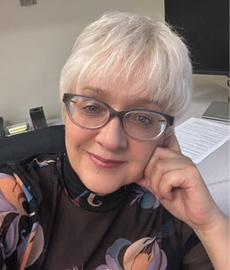
In November of 2025, ORS welcomed Anna Bernadska as the new Director of Research Compliance With more than a decade of experience overseeing research compliance programs, Anna brings a wealth of expertise in ensuring research integrity, regulatory adherence, and ethical standards in diverse research contexts. Anna’s knowledge and deep understanding of federal and state regulations enable her to guide our community in navigating complex compliance requirements while supporting innovative research.
Anna believes building a culture of research compliance at a university requires more than enforcing rules it involves fostering shared responsibility across the institution Clear policies, education, open communication, and supportive compliance services are key to encouraging trust and accountability. By integrating compliance into everyday research activities and recognizing those who exemplify best practices, universities can create an environment where ethical standards are embraced as integral to scholarly pursuits.
Passionate about collaboration, Anna looks forward to educating faculty, staff, and students about ethical research standards, research compliance, and the ways to mitigate research risks. Check our calendar for the upcoming sessions on research compliance and navigating DePaul’s eProtocol.
As a researcher, Anna draws on her experience in the arts and cultural sector of her native Ukraine She is interested in exploring how arts participation benefits student achievement, engagement, and well-being.
If you have questions about research compliance policies, training opportunities, or need guidance on research protocols, feel free to reach out at any time to abernads@depauledu
ResearchandInnovationFellow,EricC.Landahl

Eric C Landahl is a professor in the Department of Physics and Astrophysics at DePaul University. His work links advanced instrumentation, hands-on teaching, and real-world application. His career spans ultrafast lasers, x-ray science, and accelerator-based technologies
He began his research career in fiber-optics at DePaul, then completed his PhD at Lawrence Livermore National Laboratory on ultrafast lasers and accelerator physics. That work led to NIH-funded research at Stanford Linear Accelerator Center (SLAC) on laser- and accelerator-based x-ray sources. He later became an xray and laser scientist at Argonne National Laboratory, working across physics, chemistry, and biology on ultrafast measurements of materials and molecules
Today, he builds real-time measurement systems using optics, electronics, and computing, with applications in sensing, materials, and energy At DePaul, he teaches electronics, optics, and quantum mechanics He works not only with physics majors, but also with students in music, theater, and design, and through community-based service learning that ties coursework to real needs.
This fellowship strengthens DePaul’s capacity for applied, hardware-centered research by coordinating people, spaces, and practices that already exist across the university. The project emphasizes “hard-tech”: hands-on work with physical systems such as sensors, instruments, assistive technologies, and sustainabilityfocused devices that link science, design, the arts, and community partners.
The work creates practical pathways that move ideas from making to research, partnerships, and impact Internally, it aligns makerspaces, electronics labs, and applied research programs through shared resource mapping, pilot projects, and research-readiness activities. Externally, it establishes repeatable models for collaboration with national laboratories and regional research, manufacturing, and community innovation partners.
BigEastResearchSymposium
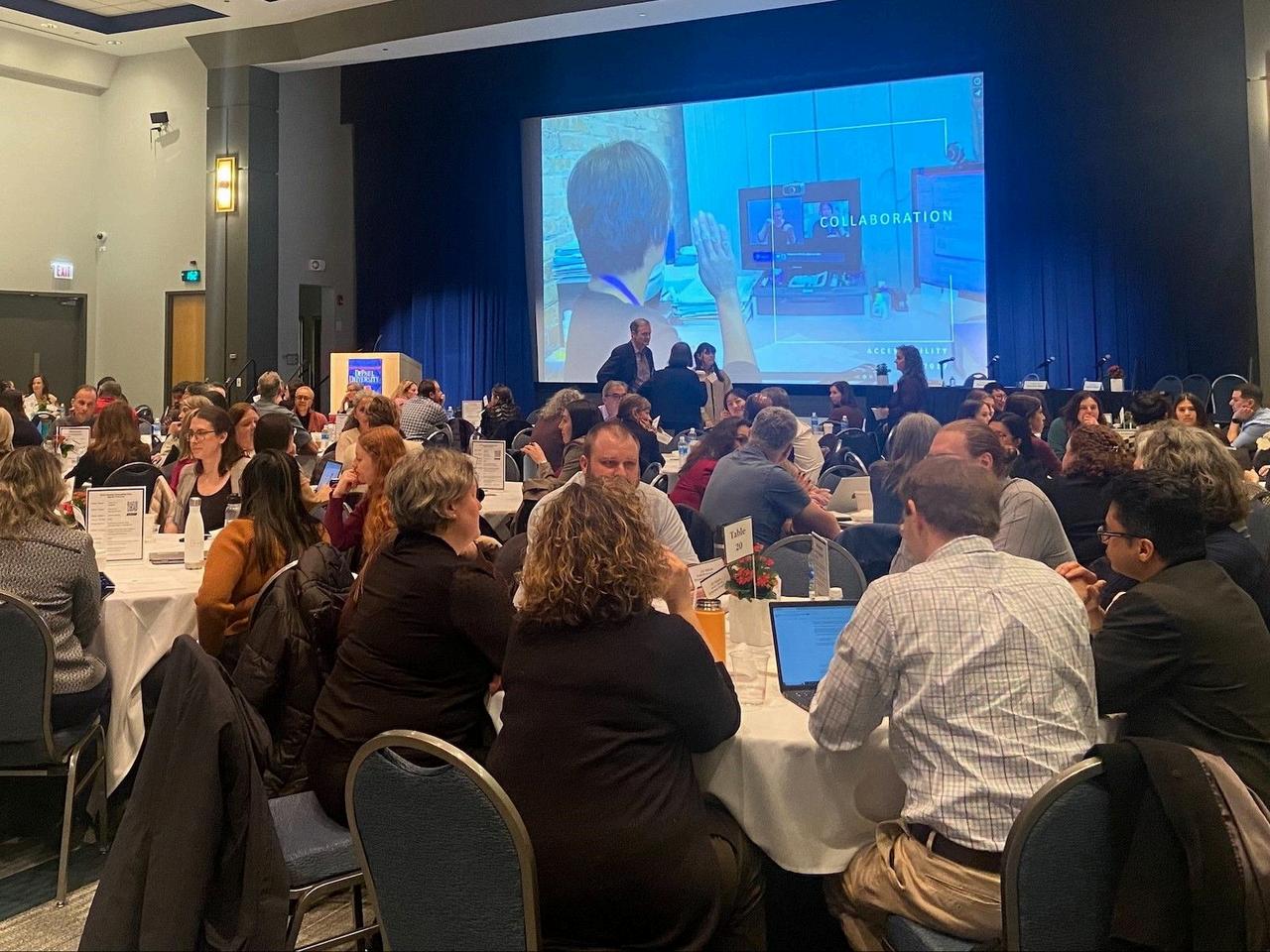
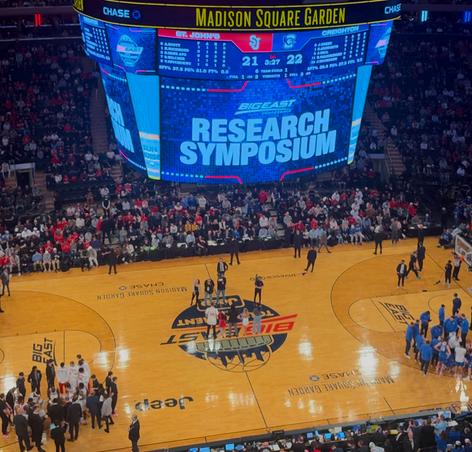
DePaul is excited to participate in the 5th annual Big East Student Research Poster Symposium on March 14, 2026 at Madison Square Garden in New York city. The event highlights the outstanding work of undergraduate students in facultymentored research projects from each of the 11 universities in the Big East conference. Through a rigorous application process, DePaul selected 5 students to represent DePaul and present their research at this event. The event will culminate with the presentation of the winners at the Big East Championship game.
Drs. Lauren Miller (ORS) and Grace Wang (CMN) will be travelling with the students and will serve as judges at the competition. It will be an incredible experience for the students as they will be able to present on their research, network with students from other universities, and experience the sites of a great city, all while showcasing the intersections of academics and athletics.
Participants:
Ash Duffee
College of Science and Health
Synaptic plasticity
Faculty Advisor: Okunola Jeyifous
Joseph Gomez
College of Science and Health
Astyanax mexicanus
Faculty Advisor: Windsor Aguirre
Greta Kezakimana
College of Liberal Arts and Social Sciences
Violence Prevention Through a CommunityOriented Approach
Faculty Advisor: Xavier Perez
Khizer Khan
Jarvis College of Computing and Digital Media
Spiculated margins in pulmonary nodules
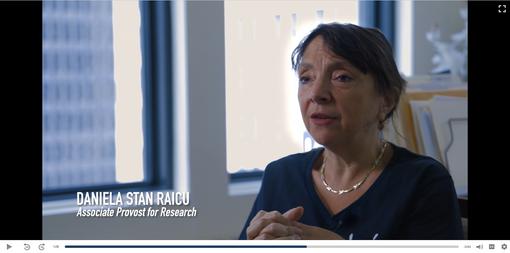
Faculty Advisor: Daniela Raicu
Kaylin Victor
College of Communication
A Retrospective Analysis of National Advertising Division Case Reports on Dietary
Supplement Advertising
Faculty Advisor: Grace Wang
Early2026FederalResearchPolicyWatchlist: WhatFacultyandResearchTeamsShouldbePreparingforNow
As federal research agencies move from policy announcement to implementation, early 2026 marks a transition period for several important requirements affecting proposal preparation, compliance, and publishing Building on the Winter 2026 Federal Research Policy Updates (October–December 2025), this watchlist highlights what faculty and research teams should anticipate in the months ahead.
1) Research Security Training: From Policy to Practice
Both NSF and NIH research security training requirements are now shifting into active enforcement and certification workflows While the policies were finalized in late 2025, early 2026 will see increased scrutiny of training completion dates, foreign appointment disclosures, and institutional certifications Faculty should ensure required research security training is completed well in advance of proposal deadlines and remains current within the 12-month window. Expect closer review of disclosures at both proposal and award stages
2) NIH Common Forms (SciENcv): Operational Readiness
The January 25, 2026 implementation of NIH Common Forms for Biosketch and Current & Pending (Other) Support is already changing submission timelines Early 2026 submissions are experiencing delays due to profile connection issues (ORCID, eRA Commons) and incomplete support records Faculty are strongly encouraged to validate SciENcv profiles early and work with ORS on accuracy checks especially for those with multiple appointments, international collaborations, or complex funding portfolios
3) Increased Emphasis on “Complete a Submission”
NIH’s reminder that applications must be fully complete and compliant at the time of submission signals a broader trend across agencies Early 2026 is likely to bring continued enforcement of this standard, with less tolerance for post-submission corrections Submitting early and avoiding placeholder attachments will be increasingly critical to preventing administrative withdrawal.
4) Open Access and Public Access Compliance
While no new federal open access mandates were issued this winter, compliance expectations remain high Funders continue to emphasize timely deposit of manuscripts and appropriate licensing Faculty should plan for open access requirements early in the publication process and consult DePaul Libraries for guidance on funder-specific mandates and publishing options
LookingAhead
Taken together, these developments reflect a broader federal shift toward standardization, transparency, and enforcement Early planning and coordination with ORS will help ensure smooth submissions and continued compliance in 2026
For questions about how these changes apply to your research, contact ORS at ORS@depauledu
ResearchSecurity
Research Security refers to the set of policies, practices, and safeguards designed to protect the integrity, confidentiality, and reliability of research activities from risks such as foreign interference, data breaches, intellectual property theft, and misuse of sensitive information. Federal agencies have introduced new requirements, mandated by the CHIPS and Science Act of 2022 and National Security Presidential Memorandum 33 (NSPM-33), to protect the integrity of U.S.-funded research while ensuring scientific openness These requirements include:
Mandatory disclosure of all foreign activities and provision of supporting documentation, including contracts and agreements related to foreign appointments, employment, or recruitment programs, for all senior/key personnel, in applications submitted for federal funding
Mandatory research security training for all senior/key personnel prior to proposal submission
Annual certification and documentation of foreign appointments, current/pending support, and talent program participation
Development of robust procedures for swift reporting and remediation of security incidents
To help meet these new requirements, DePaul University’s CITI Program offers the Research Security Training (Combined) course. The course includes the current SECURE Center Consolidated Training Module (CTM), designed to meet all Research Security Training requirements under the CHIPS and Science Act and recognized by federal agencies as compliant with their respective Research Security Training requirements All investigators applying for federal funding must take this course
NavigatingOpenAccessMandatesfrom Funders:WhatYouNeedtoKnow
As more research funders around the world adopt open access (OA) requirements, it’s essential for DePaul scholars to understand what these mandates mean for your publishing choices, grant compliance, and long-term impact
At its core, an open access mandate requires that results from funded research, including peer-reviewed articles and sometimes data, be made freely and publicly available. This shift reflects a broader move toward transparent, equitable access to knowledge, but it also comes with specific expectations about timelines, licensing, and repositories. Funders such as the National Institutes of Health (NIH), the National Science Foundation (NSF), and many industry and corporate agencies now require that final manuscripts be deposited in an open repository, often immediately upon publication
So what does this mean for you as an author? First, knowing your funder’s policy before submitting a manuscript can save headaches later. Some policies allow you to publish in the journal of your choice as long as the accepted manuscript goes into a compliant repository; others require publication in a fully OA journal or payment of Article Processing Charges (APCs), which may be allowable in your grant budget. Resources like Open Journal Finder or DOAJ can help you determine APC costs during budget preparation
Second, understanding copyright and licensing options, for example, choosing the required Creative Commons license (usually CC-BY), ensures your work remains reusable while satisfying mandates. Third, planning ahead with your ORS and library partners can streamline deposit workflows and ensure compliance without disrupting your research schedule.
DePaul University Library offers guidance tailored to funder requirements and publisher agreements so you can focus on your research with confidence
FeaturedResearcher
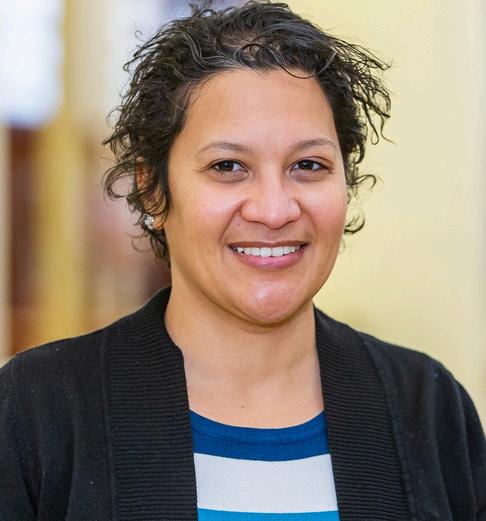
Roselyne Tchoua is an Associate Professor in the School of Computing whose research centers on making complex technologies and large-scale data more accessible and meaningful to end users. Her work has evolved from scientific data management for high-performance computing to HumanCentered Machine Learning (HCML), with a growing emphasis on healthcare applications Grounded in concerns of interpretability, bias, fairness, and societal impact, her research aligns closely with DePaul’s mission of human-centered education, community engagement, and real-world impact, particularly within the diverse context of Chicago. At DePaul, she integrates cutting-edge machine learning methods with applied, interdisciplinary collaborations to address complex, high-impact problems in healthcare and beyond
Dr Tchoua deeply integrates her research into teaching and service by educating students in data science and machine learning, mentoring students in interdisciplinary projects, and translating real research challenges into classroom learning Her leadership roles including Associate Director of Research in the School of Computing and co-chair positions on key research and PhD committees reflect her commitment to fostering a strong research environment. Her recent NSF-funded projects, including the SCHOLAR initiative and an AI-enabled support platform for transplanted populations, exemplify her human- and community-centered approach to AI. These projects focus on empowering community health workers, improving healthcare outcomes, and ensuring socially responsible AI through fairness, transparency, and human-in-the-loop decision-making. Together, her achievements reflect a sustained, collaborative research trajectory and a strong sense of belonging and support within DePaul University
Nominate yourself or another faculty for the University's Spirit of Inquiry Award, which honors research, scholarly, and creative achievements that exhibit commitment to the spirit of creative inquiry. Check your College’s application process for due dates! The URC accepts applications until May 1.
DePaul-SinaiResearchCollaboration: NewWorkgroupsLaunchinginFebruary
The DePaul–Sinai Research Collaboration is pleased to announce the launch of four interdisciplinary research workgroups beginning in February. These groups are designed to foster new collaborative relationships, advance shared research priorities, and support the development of joint grant proposals and publications
The initial workgroups will focus on the following areas:
Data-Driven Health Equity & Predictive Analytics
Behavioral Health, Trauma & Community Resilience
Healthy Aging, Geriatrics & Chronic Disease Management
Workforce Development & Health Education Innovation
Workgroups will meet monthly from February through April to establish momentum, with plans to transition to a quarterly structure thereafter Between meetings, participants will be supported through targeted proposal development and collaborative scholarship activities
We look forward to the innovative partnerships and research directions that will emerge from these conversations If you are interested in participating in these workgroups, email ors@depauledu
The Illinois Innovation Voucher Program provides funding and resources to small and medium-sized businesses (SMEs) across Illinois for research and development projects, supporting partnership collaborations between universities and industry
They are hosting a series of info sessions to share key information that businesses need to know about this program From funding opportunities to R&D partnerships with Illinois' leading universities and institutions, these sessions will empower businesses to make the most of this unique opportunity
Projects under these grants are supported by DePaul’s Technology Transfer Office (TTO) managed by Tony Volini, the TTO Director. The TTO provides support to stakeholders to navigate IP protection strategies and IP ownership and revenue sharing arrangements among faculty, industry, and DePaul. In the fall of 2025, two such licensing contracts were signed involving Illinois Voucher grants, and ORS anticipates similar agreements for future Illinois Voucher grants.
If you’re interested in applying for an Illinois Voucher grant, reach out to our Pre-award team today!
Feb. 20, 2026
11:00 – 12:00
Zoom Link
UPCOMING TRAININGS

Demystifying the IRB Process: Introduction to the IRB and eProtocol
The Institutional Review Board (IRB) exists to protect the rights and welfare of human research participants while enabling ethical and compliant research. Many researchers view the IRB process as complex or intimidating, but understanding IRB requirements for human subjects protocols can simplify compliance. This session aims to clarify the steps in the IRB submission and review processes and provide practical tips for preparing IRB applications.
Hiring on Grants
Mar. 5, 2026
2:00 – 3:00
Zoom Link
Mar. 13, 2026
11:00 – 12:00
Zoom Link
Hiring on grants at involves specific processes for different roles often starting with creating a new position in BlueSky for staff/faculty or using the Office of Student Employment for students. Learn more detailed steps for hiring faculty, staff, students, and postdocs on grants.
Common Mistakes in IRB Applications
This session is designed to help researchers submit accurate and complete IRB applications by addressing common errors that delay IRB approval Participants will learn how to improve clarity and consistency throughout the application to meet ethical and regulatory standards. By the end of the training, attendees will better understand IRB requirements for ethical research design and protocol development.
Cayuse Fund Manager 101
Apr. 2, 2026
2:00 – 3:00
Zoom Link
Cayuse Fund Manager allows principal investigators visibility into their entire sponsored project funding portfolio reports on spend-down, encumbered, or accrued expenses. Learn the basics.