REDUCE REUSE RECYClE
TABLE OF CONTENTS
S4 WaStE to WoRth
Feeding our communities.
S7 a nEw chaptER
Libraries that lend more than books.
S9 SECond chanCEs in StylE
Consignment for fashion and the environment.
S10 What do I do with?
An A to Z disposal guide.
S22 solar
Is this home the solution to America's growing energy crisis?
Dear Western Mass Residents and Business Community,
The Springfield Materials Recycling Facility (MRF) Advisory Board is pleased to share this issue of the Reduce, Reuse, Recycle (RRR) guide as we celebrate the 56th anniversary of Earth Day. This guide is full of useful information. I encourage you to keep a copy handy so you can refer to it all year long.
In this 2026 Guide, join us as we RETHINK material management, shifting the buy-use-toss paradigm to a more thoughtful approach as the first step in the process. That’s right, Rethink before we get to Reduce, Reuse and Recycle. To help with this process, we have chosen to spotlight three programs that are growing within the materials management universe. The topics include food recovery and distribution (both canned and fresh food), consignment opportunities (more than textiles) and libraries.
We do not often read about grocery stores partnering with regional organizations such as RecycleworksMA to capture canned and fresh food and delivering that produce directly to food shelters or food banks. We do not often read about the vital role that consignment and reuse shops play these days in providing clothing, small furniture, and many useful household items at reduced rates- saving money and providing new life for these items. Take a look inside this edition to read those stories.
Our rethinking process has also led us to dive deep into libraries. How are libraries leading the way in making reuse easy? Rethinking borrowing, libraries have expanded that concept to including programs such as “the library of things” (think borrowing sewing machines, bocci balls, a small telescope etc). and programs such as “Fix it /repair shops”. Most of these expanded services are free and serve to reduce and repurpose materials.
Of course this publication would not be complete without the section “What do I do with..?.” Everything from A-Z is covered to help discover ways to reduce, reuse or properly dispose of used and unwanted materials.
The Springfield MRF continues to be the cornerstone of dual stream recycling in western MA. As Chair of the MRF Advisory Board, I am very proud of the Springfield MRF operations and our partnership with WM, providing clean, recyclable and marketable material. YES, it is true, over 90 % of the material delivered by our member towns is recycled. I am particularly proud of the many education tools (including this publication and the MRF website) created by our Board, available to all residents in the region.
We are pleased to celebrate this 18th edition of the Reduce, Reuse, Recycle Guide in partnership with The Republican, and send special thanks to the Western Massachusetts business community that makes production of this useful resource possible through their advertising support.
Sincerely,
Arlene C. Miller
Arlene C. Miller Chair, MRF Advisory Board

S26 housEhoLd hazardous WastE
Chemicals and mercury containing items and proper disposal.
S27 Community RECYCLing Info
Waste collection programs by town.
WESTERN MASSACHUSETTS REGIONAL RECYCLING PROGRAM
Acknowledgements
This guide marks the 18th year of a collaborative effort between The Republican and the Springfield Materials Recycling Facility (MRF) Advisory Board, with support from local advertisers. The guide is produced annually in honor of Earth Day (April 22) and will be available until April 2027 at springfieldmrf.org.
MRF Advisory Board members, Jan Ameen (Franklin County Solid Waste Management District), Liz Bone, (Hampden County Rep.), Ruby Chang, (Berkshire County Rep.), Susan Cooper, (Berkshire County Rep.,)Tracy DeMaio (Hampden County Rep.), Amy Donovan (Franklin County Solid Waste Management District), Abbey Massaro (Hampshire County Rep.), Arlene Miller (Hampden County Rep.), and Laurie Simmons (Hampshire County Rep.), and the RecycleSmart Team at MassDEP wrote or contributed to this publication.
Arlene Miller, Chair of the Advisory Board says, “It is our hope that both residents and businesses continue to find the Reduce, Reuse, Recycle Guide a valuable tool to help manage unwanted materials. We appreciate the advertisers who make this publication possible. Please support our advertisers and tell them you saw their ad in this Reduce, Reuse, Recycle Guide!”
RECYCLE MORE.
At USA, we are committed to staying at the forefront of recycling innovation, continuously finding better ways to repurpose the everyday items we throw away.
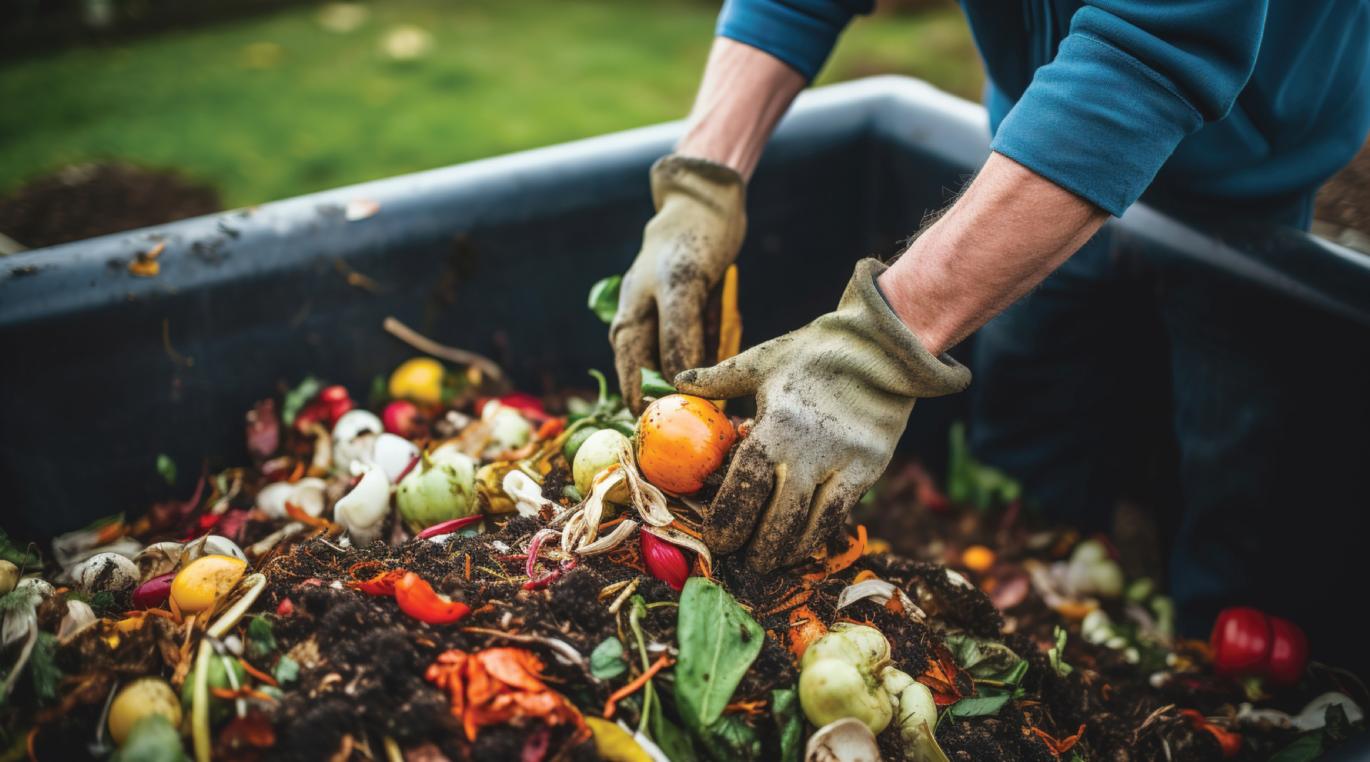
Like our Food Scraps Recycling Program, which allows us to take discarded organic material and turn it into renewable energy and nutrient-rich soil amendments.
Current and new USA customers can sign up now for Curbside Food Scrap pickup services. Please call USA Customer Service at 800-998-0983 or visit our website usarecycle.com for more information.
Keeping waste out of our landfills, reducing greenhouse gas emissions, and contributing to a cleaner planet – it’s all part of our mission to transform the way we recycle and create sustainable communities for generations to come.
Some See Waste, We See Possibilities.
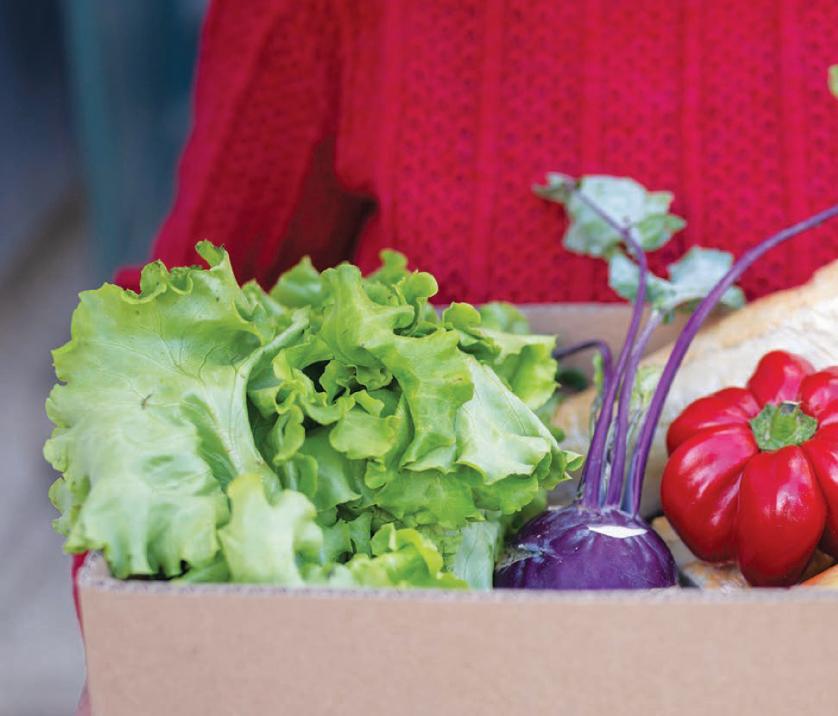
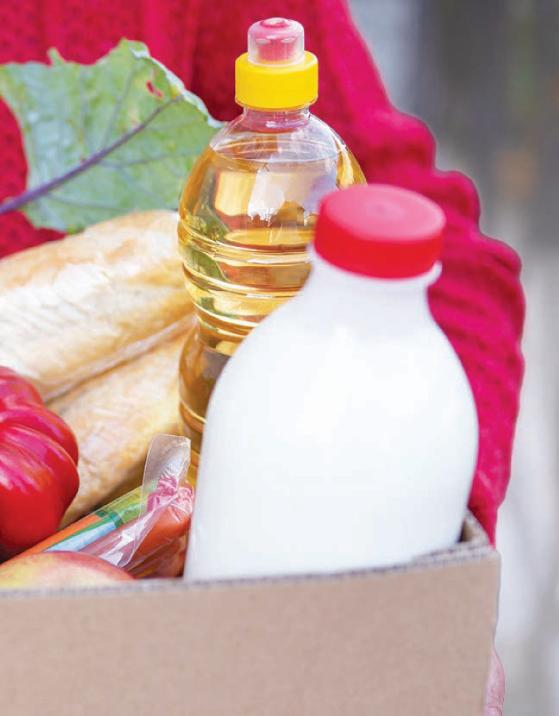
Waste to Worth: Feeding Our Communities
Anne-Gerard Flynn
SPECIAL TO THE REPUBLICAN
In recent years, the Massachusetts Department of Environmental Protection (MassDEP) introduced and expanded a solid waste disposal ban to divert excess food away from landfills and the weekly trash. This commercial organics disposal ban applies to businesses and institutions generating onehalf ton or more food waste per week.
to households who need it.
Recent data puts three Western Massachusetts counties, Hampden, Hampshire and Franklin, among the counties in the state having the highest rate of food insecurity with 1 in 2 households food insecure.
that now numbers 500.
The clarity and enforcement of the ban, coupled with the number of wasted food processing facilities in the Commonwealth, have made it a model for other states with efforts in Massachusetts now focused in part on reducing wasted food by redirecting it
Rachel’s Table of Western Massachusetts (RTWM) is among organizations trying to redirect wasted food to where it can help feed those not able to access healthy, nutritious food for reasons that include cost and availability.
“We have four programs,” said Jodi Falk, executive director of RTWM. “Rescue is one of them, purchase is another, gleaning or harvesting from local farms and gardening, the others. They go from im-
mediate need to longer-term sustainable food security.”
Falk said RTWM’s handling of perishable food from such businesses as restaurants to users like soup kitchens is “considered the last mile” as “we don’t warehouse.”
“In our rescue program six-days-a-week we have anywhere between 5-to-10 drivers who go out on the road and pick up from what could be restaurants, supermarkets, bakeries, after-events or big warehouses of food,” she said.
“Sometimes we move food for the Food Bank of Western Massachusetts because we can move food more easily and quickly in their enabled agency program. We bring food to over 65 partner agencies and some affiliate agencies.”
RTWM collects non-perishable items as well and its partners range from pantries to meal programs to community distribution sites. It also purchases food requested for cultural traditions by agencies it works with and that are funded by donations.
Falk joined the Jewish Federation of Western Massachusetts as director of Rachel’s Table (RT) in 2019 and led the long-established program dating back to 1992 to its transition in 2023 to the nonprofit RTWM.
RTWM has an expanded service area of food rescue beyond the Greater Springfield Area, new programs that include Growing Gardens and a team of active volunteers

“Our volunteer drivers pick up perishable items usually in our refrigerated van or truck or we have food freezer blankets,” said Falk of how the food is transported.
“The goal is to deliver it within a half-hour of pick up so it stays safe and fresh and this is why we have drivers in Franklin, Hampden and Hampshire counties so they pick up food in their county and deliver it in their county. We try to keep it local and within the time frame.”
Falk said pickups and deliveries are done Sunday through Friday with RTWM’s refrigerated van, acquired in 2022, and refrigerated truck in 2025, able to transport a total of 5,000 pounds of food.
WESTERN
WESTERN MASSACHUSETTS
MASSACHUSETTS 62
RECYCLES
WESTERN MASSACHUSETTS
RECYCLES
RECYCLES
The regional materials recycling facility (MRF) in Springfield sorts, bales, and sells recyclable paper and containers from over 73 Western Massachusetts communities. Owned by the State of Massachusetts and operated with guidance from the Department of Environmental Protection and a local advisory board, the Springfield MRF has processed over one million tons of Pioneer Valley recyclables since it opened in1989.
The regional materials recycling facility (MRF) in Springfield sorts, bales, and sells recyclable paper and containers from over 73 Western Massachusetts communities. Owned by the State of Massachusetts and operated with guidance from the Department of Environmental Protection and a local advisory board, the Springfield MRF has processed over one million tons of Pioneer Valley recyclables since it opened in1989.
The regional materials recycling facility (MRF) in Springfield sorts, bales, and sells recyclable paper and containers from over 73 Western Massachusetts communities. Owned by the State of Massachusetts and operated with guidance from the Department of Environmental Protection and a local advisory board, the Springfield MRF has processed over one million tons of Pioneer Valley recyclables since it opened in1989.
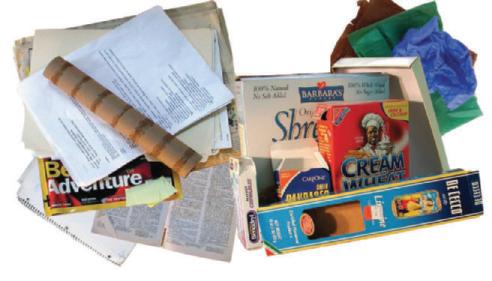
Please recycle these items:
Please recycle these items:
Please recycle these items:
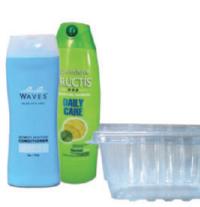
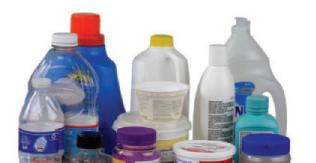
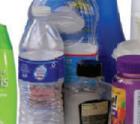



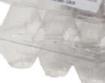



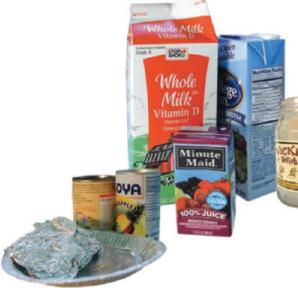
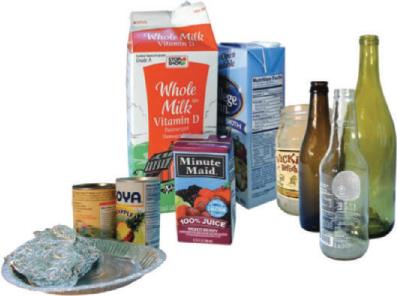
Empty and clean metal cans, foil, plastic bottles/jars/tubs/jugs, clear plastic hinged containers (clamshells), clear plastic egg cartons, clear plastic cups, milk and juice cartons, glass bottles and jars. (Labels are fine. Put lids and caps back on containers.) Clean papers, magazines/catalogs, gift wrap/bags/tissue paper and greeting cards (no metallic inks, foil, glitter, batteries), calendars, paperback books, cardboard, paperboard, empty pizza boxes. (Paper clips and staples are ok.)
tissue paper (no foils or metallics), paperbacks & phonebooks (covers okay), cardboard, paperboard, clean pizza boxes. Paper clips, staples and metal spirals are okay.
*PLEASE KEEP THESE ITEMS OUT OF THE HOUSEHOLD RECYCLING.
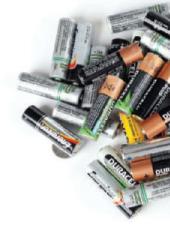
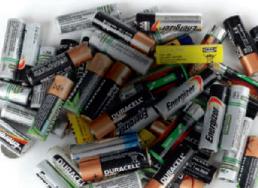
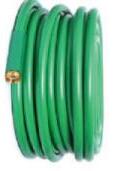
At the recycling facility, plastic bags, hoses and holiday lights cause safety hazards and shutdowns when they wrap around conveyor belts and equipment. Plastic bags and holiday lights can be recycled and/or donated in other locations. Rechargeable batteries should never go in any trash or recycling bin. It only takes one damaged, defective or recalled battery to combust without warning, placing residents, workers and fire crews at risk.
the recycling facility, plastic bags, hoses and holiday lights cause safety hazards and shutdowns when they wrap around conveyor belts and equipment. Plastic bags, holiday lights and textiles can be recycled and/or donated in other locations. This NO list is not all-inclusive.
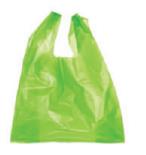





BATTERIES NO ITEMS THAT WRAP AND TANGLE! NO PLASTIC BAGS! OR BAGGED MATERIALS YES! Please recycle these items:
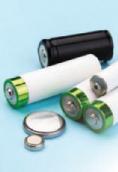
RECHARGEABLE, BUTTON AND LITHIUM BATTERIES SHOULD NEVER BE PUT IN HOUSEHOLD RECYCLING OR TRASH


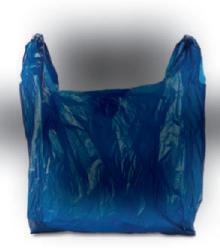

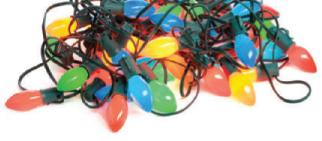
DO NOT INCLUDE THESE THEY CAUSE PROBLEMS PLASTIC BAGS CAN BE TAKEN TO A GROCERY STORE GARDEN HOSES ARE NOT RECYCLABLE PLEASE PLACE IN TRASH
Volunteer cars transport additional food when needed using the food freezer blankets.
“We mostly do these runs in the morning although the truck or the van could have two or three routes so they might be all-day long,” Falk said. “However, the majority are done first thing in the morning as the majority of our agencies might need to serve lunch so they need to know what their food is going to be.”
During Western Massachusetts growing season, July to November, RTWM facilitates volunteers to glean, that is, harvest produce at the request
of farmers.
“The gleaning is our fastest-growing program,” Falk said. “We have gone from eight gleans to last year when we had 100 gleans throughout the season.”
She added, “People can glean for themselves as well as our agencies as well as their network.”
“This means there is kind of a network mutual aid community evolving or being reinforced with healthy food and this is really, really great in serving more people,” Falk said. “This is when we sometimes get out to Berkshire County or lower Vermont or Northern Connecticut. All ages come out to the farms.”
Falk said RTWM’s garden
program involves “11 gardens we have co-created with those who are food insecure themselves.”
“People will grow things they have grown up with in a different country,” Falk said. “People will create recipes of their childhood or young kids in some of our agencies where we helped create gardens are making smoothies.”
She said that “people from those agencies who move on are creating gardens elsewhere.”
“It is our small but mighty way to say let’s figure out a way to have people have direct access to choice in what they eat because access is one of the key problems with food insecurity,” Falk said. “If you can’t get to
fresh food and you only have fast food around you it is going to affect your health and your life. Here we are helping to establish choice and possibilities that people are gravitating toward.”
Falk said it “feels good” to be able to create such possibilities for the food insecure as well as distribute perishable food to agencies that serve them but “sad to know that the need is growing.”
Last year, Falk said the food rescue, purchase and glean programs distributed over 980,000 pounds of food.
“We always need more volunteers, need more food donors and to have our work supported so we can keep doing this,” said Falk whose organization is holding its annual community walk-run fundraiser, Outrun Hunger, May 17 in Forest Park.
RecyclingWorks in Massachusetts, a recycling and food waste reduction program funded by the MassDEP and delivered under contract by the Center for EcoTechnology (CET), meets with businesses and institutions at no cost to help them determine what waste management solutions work best for them.
Lorenzo Macaluso, Chief Growth Officer for CET, said that since the state ban restricting the amount of commercial organic wasted food going into landfills over the last decade, figures from MassDEP show that some 4,150 businesses now contract with a hauler for food scrap pick up and delivery to sites for such processing as composting, anaerobic digestion that can be used to produce biogas, a renewable source of energy, as well as soil products, or animal feed.
Some food businesses, he said, are also using technology that tracks their use of food to show how excess is created so steps can be taken to prevent it. He also said some businesses now use apps to alert customers to food items discounted late in the
day that might have ended up as wasted food over expiration concerns.
He had high praise for “smaller food rescue organizations that are also capturing the more perishable food that is often hard to run through the food bank systems.”
“Rachel’s Table is one that fills this niche and Spoonfuls is another,” Macaluso said. “Their same-day model moves food from donation site to distribution site for distribution or the next meal. It is a very effective model that is really growing.”
He noted that the United States Environmental Protection Agency (EPA) has a wasted food scale where prevention is the most preferred solution, drain, landfill or incineration, the least preferred, and donation, animal feed, compost and anaerobic digestion the in-between steps.
“There is an environmental and economic hierarchy to these solutions,” Macaluso said. “Composting is often one of the first things businesses do but once they start separating their food scraps in a dedicated container and see perfectly good food, it opens their eyes to donation possibilities for which there are all kinds of protections against any liabilities.”
The EPA under the Trump administration is also placing greater emphasis on creating partnerships to divert excess food to communities in need through its voluntary program, “Feed It Onward.”
RecyclingWorks program manager Steven Bandarra said the program’s success in helping businesses and institutions of all sizes implement waste reduction programs are highlighted in its 2025 annual report and notes its hotline answered some 2,028 inquiries last year. For more information, visit https://recyclingworksma. com/.





a new chapter:

Libraries That Lend More Than Books
Anne-Gerard Flynn
SPECIAL TO THE REPUBLICAN
Borrow a hammer from your local library? Sure!
A number of area libraries in recent years have added additional educational, entertainment and practical materials to their collection under the heading “Library of Things.”
These resources, ranging from an induction burner to jumper cables to an array of musical instruments, have proven popular with patrons and honor both the mission of libraries and the modern call to reuse.
“The foundational idea of libraries is to share resources and to make them accessible to everyone in the community, and I think the Library of Things is a natural extension of that,” said Laura Bovee, director of the Chicopee Public Library. “I see a lot of our loans as a great way to cut down on overconsumption and overspending.”
A similar perspective is offered by Jean M. Canosa Albano, assistant director for Public Services at Springfield City Library.
“Among the benefits of borrowing from the Library of Things is the impact on the waste stream,” she said. “If you only need a level, a soil tester or a bulb planter for one or two projects, why purchase it and have to dispose of all the packaging that comes with it? Borrow it instead then return it for the next person to use.”
She added, “You might say that the public library was the original reduce-reuse-recycler, helping build up a community through many people sharing the treasures found in the library’s collections.”
“The Library of Things promotes a more sustainable and efficient model than having everybody purchase items
that may end up gathering rust in the corner of a garage or get thrown out when there is nowhere to store it after only a handful of uses,” Canosa Albano said.
She said an expansion is underway at her library “through a partnership with Springfield’s Department of Public Works which received a grant to make tools more easily accessible to Springfield residents.”
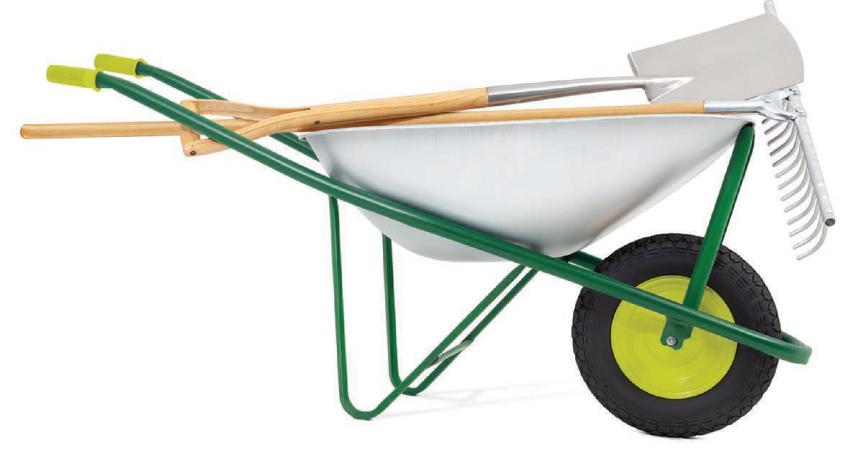
“Just in time for gardening and planting season, we will be making tools like a garden hoe, a shovel and a rake available to library cardholders with more to come,” Canosa Albano said.
“We expect a good deal of demand on the gardening tools because this year’s Summer Reading Challenge theme is “Plant a Seed, Read!” and there will be plenty of programs encouraging people to get their hands - and shovels - into the dirt.”

She said the DPW grant “has also helped us add jumper cables, extension cords, hammers and screwdrivers to the list of items people can borrow from Springfield City Library.”
Gregory J. Tessier, cataloger at the Westfield Athenaeum, said the most popular items in the athenaeum’s Library of Things “are our karaoke machine and our Brother sewing and quilting machine.”
It also includes camping and outdoor equipment as well sports and fitness equipment.
“With over a dozen collections within the Library of Things, and currently 375 unique items across these collections, we serve a broad range of interests, offering everything from jigsaw puzzles to board games to gardening tools,” Tessier said. “Our collection currently includes such diverse items as a car diagnostic scanner, an air fryer, soil testers, looms, bike locks,
a tool kit, a portable record player, an air quality monitor, a combination badminton-volleyball set, a camping table and a birdwatching kit.”
The athenaeum Library of Things has an annual budget, but Tessier said will “gladly accept donations, if they are in good working condition and we believe they’ll be a good fit for the athenaeum.”
He added that Library of Things collections “truly have the potential to bring in underserved and first-time patrons, by offering exciting, interesting and novel materials that pique their curiosity.”
“In addition to lending more traditional items, many libraries now have Library of Things collections of some sort, and standalone tool libraries, toy libraries, and other types of nontraditional lending libraries are becoming more and more common,” Tessier said. “Lending libraries go a long way towards
promoting sustainability by freely sharing resources among their patrons and reducing waste.”
Among the most popular and early items in Chicopee’s Library of Things, which was started just prior to the coronavirus pandemic, are devices called hotspots that serve as portable wireless access points for connecting to the internet.
“Our hotspots are wildly popular,” Bovee said. “We currently have over 50 that circulate constantly and there is almost always a waiting list. Last year we had almost 900 circulations of our hotspots.”
She said these small devices, comparable to a “deck of playing cards,” connect to a cellular signal and then transmit the signal to whatever device, like a phone or tablet, that is being used.
“Our hotspots have unlimited data and can be used anywhere in the continental U.S.,” Bovee said. “Patrons need to be over 18 to borrow
them. They go out for two weeks in a carrying case that contains a charging cord and a brief set of instructions that include the password to that device.”
Bovee said Chicopee began expanding its Library of Things in 2022 and has added a Kids Room Library of Things.
“We have more than 35 different items, some for adults, some for teens and some for kids,” Bovee said. “Categories run the gamut from technology items to musical instruments to yard games to educational items.”

by searching “Chicopee Library of Things” to see what we offer.”
She said adult items range from Pickleball paddles to an induction burner to a web camera that can be mounted on a computer monitor.
“On the kid’s side, flashcard sets for math, phonics or vocabulary are in demand and we’ve just added Yoto Kits which have been a hit,” Bovee said. “Yotos are small,
player and can listen to audiobooks or music.”
She said the library has one kit with “cards featuring popular picture books for younger kids and another that has cards loaded with “Magic Tree House” titles for kids aged 5 to 9.”
Bovee said the library requires that “patrons hold a valid CW MARS library card in good standing.”
“You don’t need to be a res-
“Catego - screen-free audio players for kids. You pop a credit-card sized card into the ident of Chicopee to check out items,
but you do need to check them out and return them here in our building,” Bovee said. “You must be 18 years or older for the adult Library of Things items and sign a Lending Agreement the first time you check items out.”
She said that “for kids, if your parent signs the Kid’s Lending Agreement, you can check out items from the Kid’s Room Library of Things.”

Bovee said items in the Library of Things, which does not accepts donations for space reasons, are “stored away but patrons can look through a binder of the items in the library, check out the display in the children’s room or look in the online catalog



elimi
“Items check out for two weeks - 14 days - with no renewals,” Bovee said. “There is a $2 overdue charge per day for late items. We have eliminated overdue fines for all of our other items, but retained fees for the Library of Things since they are unique and specialized items.”


A nne-Gerard Flynn SPECIAL TO THE REPUBLICAN
Second Chances in style
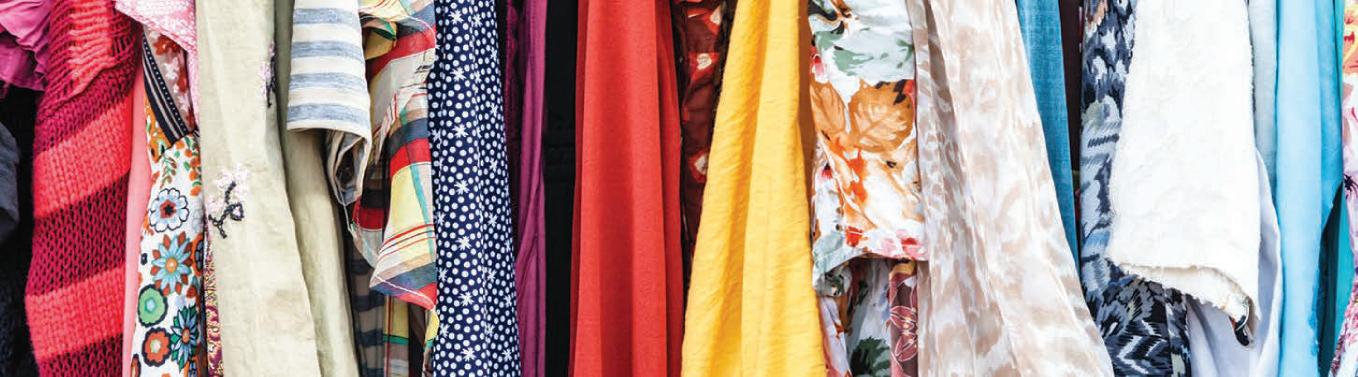
Shopping for second-hand clothes is a global, billion-dollar industry today with young adults in particular buying from on-line thrift and consignment sites.
Their budget-conscious choices have helped erase stereotypes around second-hand clothing and are guided not only by fashion but by environmental concerns.
Some 85% of discarded textiles are said to end up in landfills where their decomposition contributes to global warming. Massachusetts made it illegal to throw textiles in the trash in 2022.
The Pioneer Valley has a number of thrift and consignment shops that are locally
owned and by their very nature support reuse as well as stores run by national nonprofits.
Some of these are associated with a charitable mission. Proceeds from the Hospice Shop of Northampton, which sells gently used clothing, accessories and household items, benefit Cooley Dickinson VNA & Hospice. The Thrift Shop of the Community Survival Center in Ludlow supports the center’s food pantry.
St. Jude’s Clothing Center in Holyoke, part of Providence Ministries, is one long-established second-hand shop with a social mission.
“The shop plays an important role in community building by creating a space where individuals from all backgrounds can access what they need,” said
Pedro Rodriguez, executive director of Providence Ministries. “It brings together donors, volunteers and shoppers in a shared effort to care for one another.”
He added St. Jude’s gets “anywhere from approximately 5-to-10 bags of clothing donations per week,” depending on the season and community drives, and this reuse gives “clothing a second life.”
What Rodriguez calls “intentional” pricing helps support the shop as well and there are “vouchers and no-cost options available for individuals and families in immediate need.”
A key priority for St. Jude’s has been to move away “from the traditional stereotype of a second-hand store.”
“The space is clean, organized, and set up to feel more
like a small retail shop rather than a donation center,” said Rodriguez, adding what is sold is organized into designated sections.
“What began as a basic clothing resource has evolved into a more comprehensive selection that includes clothing for all ages, seasonal items and essentials that meet the changing needs of our community,” Rodriguez said.
“While there can be stereotypes about second-hand clothing, many of the items we receive are in excellent condition and reflect today’s styles. Our goal is to ensure that individuals not only have access to clothing, but feel confident and comfortable in what they wear.”
He said that the shop has “seen a noticeable increase in demand, especially over the past year, as the cost of living continues to rise and resources become more limited.”
“More working individuals and families are turning to St. Jude’s—not just those in crisis, but those who are doing their best to make ends meet,” Rodriguez said. “We are often in need of men’s clothing, larger sizes, seasonal items and work-appropriate attire.”
Providence Ministries was founded by Sister of Providence Margaret McCleary during the 1980s and includes Holyoke’s first soup kitchen, sober living communities for men in recovery and a food pantry that serves the region.
It operates today as a nonprofit affiliated with and sponsored by the Sisters of Providence whose women established a number of Catholic hospitals that once served the area and include Mercy Hospital, now part of Michigan-based Trinity Health.
Rodriguez described running the shop as “labor intensive” and praised its small team of volunteers for their “passion to serve others and create a dignified, welcoming shopping experience.”
Its location in the basement of Broderick House and hours are linked to Providence Ministries other services to help ensure “people can meet multiple needs in one place.”
“I make it a point to stop in regularly to check on operations, support the team and ensure the space remains wellstocked, organized and aligned with our mission,” Rodriguez said. “That hands-on approach helps us stay responsive to the needs of those we serve and maintain the quality of the experience.”
He said what makes the “work truly worthwhile is the impact it has on the individuals and families we serve.”
“We consistently receive feedback from shoppers expressing gratitude not just for the clothing, but for the dignity and respect they experience while accessing it,” Rodriguez said.
He said this impact shows the Sisters of Providence mission of community service “remains at the heart of everything we strive to carry forward.”
“St. Jude’s was created not only as a resource for those in need,” Rodriguez said, “but also as a way to engage the broader community in giving back, reduce waste, and support one another through shared responsibility.”
St. Jude’s Clothing Center is located at 56 Cabot St. in Holyoke. For shopping and donation hours visit the center’s website: https://www.provministries. org/portfolio/st-judes-clothing-center/
Use this A-Z disposal guide to find recycling, reuse, hazardous waste, or special disposal options for hundreds of items. Also see “Recycle in Western Mass” in this guide.
= Items that are hazardous or require special handling.
AEROSOL CANS
Empty aerosol cans belong in the trash, unless they contain hazardous material (e.g. paint, insecticide), in which case they are classified as household hazardous waste (see the Household Hazardous Waste Event page in this guide). A handful of transfer stations/ recycling centers accept completely empty, non-hazardous aerosol cans in scrap metal dumpsters (empty cans are completely silent when the button is pushed). See the Community Recycling Information table in this guide for local disposal information. More info: mass.gov/info-details/safely-manage-hazardous-household-products.
ALUMINUM FOIL, CANS & “DISPOSABLE” PANS
Rinse clean and recycle with bottles & cans. Acceptable items include aluminum pie pans and take-out containers, aluminum party cups, disposable roasting pans, and clean aluminum foil (form it into a loose ball no smaller than 3”). The “foil” lids from yogurt containers should not be recycled, as they contain a layer of plastic that causes issues when the aluminum is melted down.
ALUMINUM SIDING
(see “Scrap Metal”)
AMMUNITION, EXPLOSIVES
Call your Police Department for proper disposal instructions.
ANTIFREEZE
(see “Automotive Products”)
APPLIANCES
(see “Scrap Metal”)
WHAT DO I DO WITH...?
ARTS, CRAFTS & HOBBY ITEMS
Some paints, solvents and related materials are considered hazardous and should be brought to a hazardous waste collection. Always check the label before tossing in the trash. See the “Household Hazardous Waste” entry and the Household Hazardous Waste Event page in this guide for information on local hazardous waste collections. Call your local community art centers to see if they can accept your unwanted nontoxic art supplies. Crazycrayons. com offers a crayon recycling program. Staples stores now accept the following items for free recycling: crayons & colored pencils, glue sticks & bottles (empty), pencils & pencil pouches, pens, markers & highlighters (staples.com/ stores/recycling).
ASBESTOS
There are strict removal and disposal requirements for asbestos. Contact the Western Region of the Mass Department of Environmental Protection: John Moriarty: john. moriarty@mass.gov, 413-7841100. To find licensed asbestos contractors, go to mass. gov and search for “Asbestos Contractors.”
AUTOMOBILES
(see “Vehicles”)
AUTOMOTIVE PRODUCTS
Automotive products contain hazardous materials and must be handled with care. Do not dispose of hazardous products in the trash, on the ground, or down the drain. Plastic automotive product jugs that are empty and well-drained belong in the trash (replace caps first). Do not recycle them. Many towns accept automotive products at transfer stations or hazardous waste collections. See the Community Recycling Information table and Household Hazardous Waste Event pages in this guide.
• Motor oil
Even a small amount of improperly disposed motor
oil will contaminate water and soil. In Massachusetts, retailers that sell motor oil are required by law to accept up to two gallons of used oil at no charge with an original sales receipt. Many auto supply stores, auto repair shops and quick oil change chains will accept used oil even if you didn't buy it from them. Some towns accept motor oil at transfer stations or hazardous waste collections. Valley Recycling in Northampton (413-587-4279; valley-recycling.us) accepts clean used motor oil, 1 gallon or less. For assistance, call the MassDEP Used Oil Hotline at 617-5561022.
• Motor oil filters
Some auto supply stores and auto repair shops accept oil filters for free recycling. Some municipal transfer stations accept motor oil filters. Oil filters may be put in the trash or recycled in scrap metal collections only when the oil has been completely drained (while filter is still warm, puncture the dome top and drain into a collection container. Collect oil drips and dispose of them properly as used motor oil; see above entry).
• Antifreeze
Antifreeze is not only hazardous; its deceiving color and sweet taste may attract children, pets and wild animals. Consider having your vehicle’s radiator flushed at a service station to avoid the responsibility associated with proper storage and disposal. Some auto supply stores accept antifreeze for free recycling. Antifreeze is accepted at some transfer stations and can be brought to a household hazardous waste collection; see the Household Hazardous Waste Event page in this guide.
• Brake fluid
Brake fluid is hazardous and must be brought to a household hazardous waste collection.
BABY FOOD POUCHES
(see “Plastic Pouches”)
BAGS
(see “Plastics”)
BALLASTS
(see “Mercury & Mercury-containing Products”)
BATTERIES
! NEVER Put Batteries in Regular Recycling Bins! Batteries cause severe fire risks in trucks and facilities if they are compacted in waste trucks or run over by heavy equipment.
• The only batteries that can go in the trash are Single-Use Alkaline, carbon zinc, and zinc chloride (AA, AAA, C, D, 9V, Lantern) batteries that were manufactured after 1996. (Tip: Tape terminals on 9-volt and lantern batteries). Staples accepts alkaline batteries (and all others) for free recycling.
• ALL Other Batteries (Rechargeable, Lithium, Button): Contain hazardous materials. Never put in trash or recycling, even if batteries are “dead.”
• Free Drop-Off Locations: Staples (accepts ALL types of batteries), Home Depot (tool batteries only), Lowe’s, or municipal transfer stations.
• Find Local Drop-Offs: recyclesmartma.org/beyond-the-bin-search (Search by type, such as "rechargeable", "e-bike", or "button")
• Rechargeable Battery Info: batterynetwork.org/locator
More options and information for specific batteries:
• Button batteries (found in watches, hearing aids, electronics, and some toys) are often accepted free of charge at watch/jewelry shops or audiologist offices.
• Lithium batteries (single-use batteries often used for cameras) can resemble alkaline batteries, but these should be recycled properly: some municipalities accept them in battery recycling programs. Check all batteries carefully before disposal;
look for “Lithium" on the label.
• Lithium (single use) and Lithium-Ion batteries (rechargeable) pose a particular fire risk: if a lithium battery becomes swollen or damaged, handle carefully and bag separately, then place the battery in a metal canister or glass jar surrounded by clay kitty litter or Speedy Dry. Bring to your town’s transfer station or hazardous waste site.
• Rechargeable batteries contain heavy metals and can start fires; they should never be put in trash or recycling bins. These are found in rechargeable electronics such as cell phones, power banks, cordless phones, power tools, laptops, tablets, e-bikes, hover boards, GoPro and other digital cameras, drones, rechargeable toys, baby monitors, solar lights, robotic vacuum cleaners, emergency medical equipment, UPS battery back-ups, camcorders, rechargeable devices such as toothbrushes, razors, cordless drills, flashlights and hand-held vacuum cleaners, plus batteries that can be recharged with a battery charger. Most transfer stations have special pails or boxes for rechargeable batteries, as do Staples, Home Depot, and Lowes stores. Rechargeable battery chemistries include Nickel Cadmium (Ni-Cd), Nickel Metal Hydride (NiMH), Lithium Ion (Li-ion), Nickel-Zinc (Ni-Zn), and small Sealed Lead Acid (Pb) batteries (up to 11 pounds). Rechargeable batteries are sometimes labeled “mAh” or “RECYCLE - RBRC” inside a circular logo.
• Lead-acid batteries (used in vehicles, boats, motorcycles, kids’ ride-on toys, some lawn mowers, exit lights, and UPS power backups) are accepted by the retailer from whom you buy a new one (they are required to take one back at no charge).
Recycle More.

For over 50 years, we’ve been working to make sure your recyclable materials are just that – recycled.
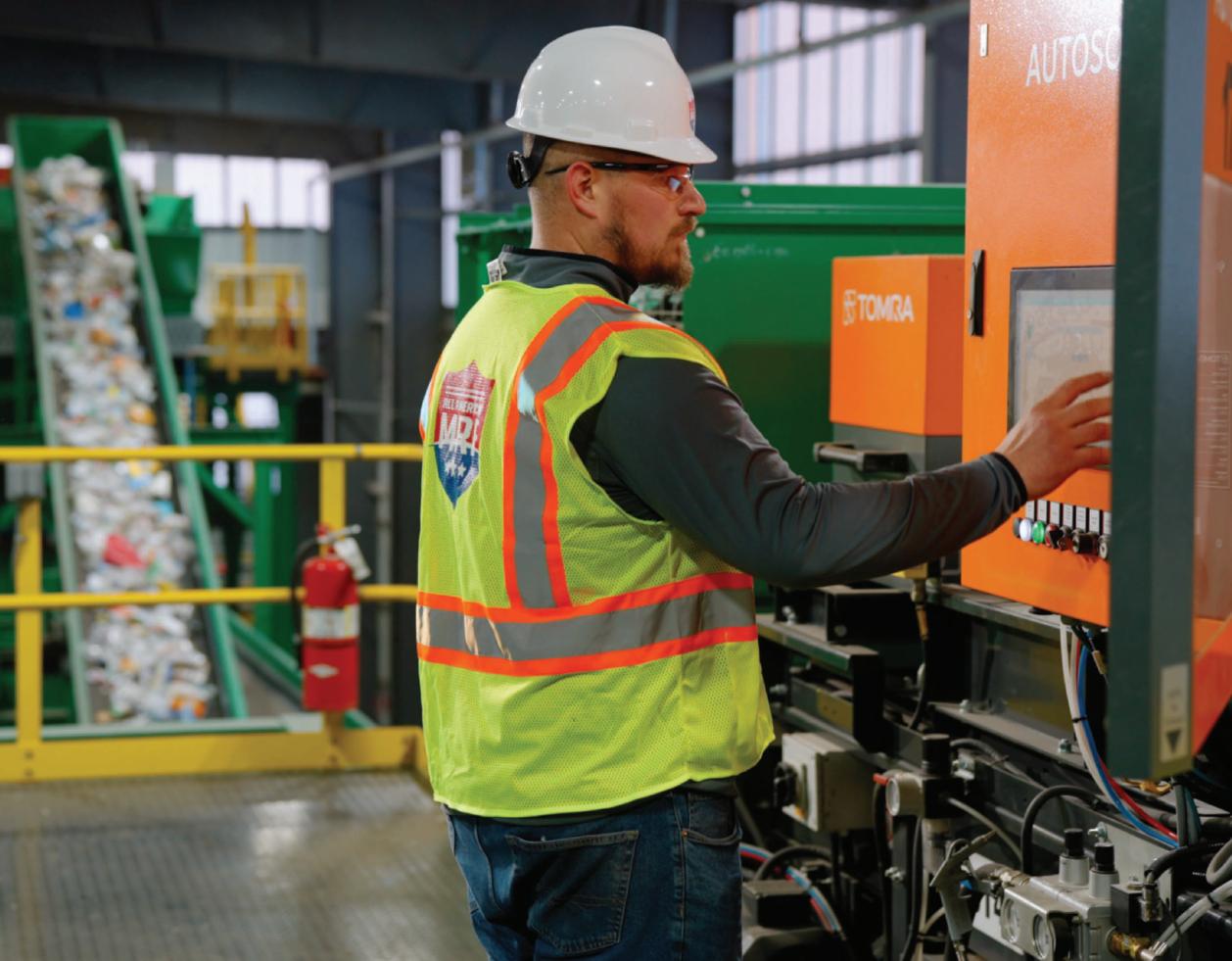
At USA, our commitment to innovation has driven us to develop one of the largest and most advanced material recovery facilities in the country. Powered by artificial intelligence and state-of-the-art scanning technology, this award-winning system has been designed to recycle more quickly, cleanly and efficiently than ever before.
This means our customers can now recycle items such as “black plastics,” cold cups and lids, yogurt containers, and all #5 packaging, which are considered non-recyclable, or trash, at most recycling facilities in the country. usarecycle.com
Many transfer stations accept them, and scrap metal recyclers typically pay for lead-acid batteries. Some auto parts stores provide a gift card to customers who bring in a vehicle battery, whether the battery was purchased there or not.
BEER AND SODA PACKAGING
They may look recyclable, but beer and soda cartons or cases contain plastic or bonding chemicals so that they stay strong when wet. Please place all “paper” beer and soda packaging in the trash.
Plastic six-pack rings and four-pack “snap top” can carriers are not accepted in household recycling. Flexible plastic six-pack rings get wrapped around sorting equipment at recycling facilities and pose a danger to wildlife. Cut up rings and put in the trash or collect and mail six-pack rings to the RingRecycleMe program (ringrecycleme.com).
“Snap top” six or four-pack can carriers are often made with 100% recycled plastic, which provides a market for recycled plastic. However, snap tops are not acceptable in recycling because their size and shape make them challenging to sort. Mass Brew Bros has established a can carrier reuse program; save your snap tops and find a drop off location near you at: massbrewbros.com/can-carrier-recycling and paktech-opi. com.
BICYCLES
Working bicycles in good condition may be gifted to individuals via an online sharing group (e.g. a “Buy Nothing” Facebook group or Freecycle. org), or offered to charities (search online via “bicycle donation”) and other organizations that can reuse them. For recycling options, see “scrap metal.”
BOATS
Before disposal or recycling, all engine-type fluids, batteries, and propane tanks must first be drained or removed and properly disposed of. Metal boats are often accepted at scrap metal dealers. Small boats are sometimes
accepted as bulky waste at municipal transfer stations (call to inquire, see local contact info in the Community Recycling Information table in this guide). Valley Recycling in Northampton (413-587-4279; valley-recycling.us) accepts boats and campers by weight. See more disposal suggestions under “Vehicles.”
BOOKS
Books in good condition may be sold (used bookstores, tag sales), donated (public libraries, fund-raising sales, thrift stores, drop boxes at transfer stations), or shared at book exchanges or swap shops. Little Free Library book-sharing boxes allow anyone to leave or take books for free; see a map of locations at: littlefreelibrary.org/map. Roundabout Books, a Greenfield-based bookstore accepts dry books in any condition and has a special arrangement to recycle unsalable books of any type (roundaboutbookstore.com). If not suitable for reuse, paperback books and phonebooks are accepted in household recycling programs, in small quantities. Hardcover books are not accepted in household recycling programs; rip out the pages and recycle those. Covers and spines from hardcover books must be placed in the trash.
BOTTLE CAPS & LIDS
Plastic caps & lids are recyclable only when attached to a plastic bottle, jar, jug, or tub. Loose plastic caps should be placed in the trash, as items less than 3” in diameter can create safety hazards and shutdowns at recycling facilities. Metal screw-top lids from glass jars (e.g. pasta sauce, pickle jar) should be attached to the container even though it is a different material. Loose metal can lids are acceptable, but it is best to push them inside the can before recycling.
BOXES
Clean cardboard, boxboard, and paperboard boxes are recyclable (e.g., boxes from cereal, crackers, tissues, shoes, gifts, etc.) Attached plastic windows may stay, but discard all plastic liners and packaging. Flatten.
Pizza Boxes are recyclable, as long as they are empty. A 2020 study found that greasy pizza boxes do NOT cause
problems for recycled paper manufacturers. It is now OK to put the entire empty pizza box into recycling (remove all crusts, food, foil, plastic, or waxed paper). Link to the study: tinyurl.com/pizzaboxes2020
Frozen food boxes, ice cream cartons, case boxes from soda or beer, and kitty litter boxes should be placed in the trash. These boxes are made with “wet strength paper,” which contains plastic or bonding chemicals that help the boxes to stay strong when wet. The plastic and chemicals contaminate recyclable paper. These materials also cannot be composted.
BUBBLE WRAP & INFLATED PLASTIC PACKAGING
(Air pillows) (see “Plastics”)
BUILDING & REMODELING MATERIALS
Construction & demolition (“C&D”) waste includes asphalt, asphalt shingles, bricks, cement, cinder blocks, clapboard, concrete, doors, flooring, insulation, lumber, mortar, plaster, plywood, roofing, sheetrock, tiles, windows and wood. Fee-based disposal options are available at many recycling/transfer stations; for more information, call the phone number listed for your town in the Community Recycling Information table in this guide. Vehicles with a capacity greater than 5 cubic yards are subject to strict disposal requirements for C&D wastes in MA. For more information: mass.gov/lists/ managing-construction-demolition-cd-wastes.
Building materials that are in good condition can be offered via an online free sharing group (e.g., Freecycle.org or a “Buy Nothing” Facebook group).
Wooden pallets can be reused, repurposed, or recycled as “clean wood waste.” Disposal options for large quantities include (but are not limited to) 360 Recycling (Westfield: 360recyclingllc.com, 413-5620193), Martin’s Farm (Greenfield: martinsfarmcompost. com, 413-774-5631).
Note: pressure-treated wood should only be disposed of in a landfill. Do not put it in a backyard compost pile, a brush or chipping pile; and do not burn it. For bulky waste disposal at local transfer
stations, see the Community Recycling Information table in this guide.
CAMERAS
Staples stores, Best Buy stores, and many electronic waste (e-waste) recycling programs accept digital cameras for free recycling. Rechargeable digital cameras and devices such as GoPros contain rechargeable batteries that must be properly disposed of. See “Batteries” in this guide.
CAR SEATS
Car seats are not accepted in household recycling programs. Used car seats should not be accepted (or purchased) for reuse at swap shops at municipal transfer stations, as it’s challenging to know if they have been recalled or were previously damaged in an accident.
Target hosts a semi-annual car seat trade-in event (tinyurl. com/TargetCarSeatRecycle).
Target accepts all types of car seats for recycling, including infant car seats, convertible car seats, car seat bases, harness or booster car seats, as well as car seats that are expired or damaged. Materials from the old car seats are recycled by Ecotech to create new Target products by Brightroom, Room Essentials, and Pillowfort. Participants receive a 20% off Target coupon for a new car seat, travel system or similar item.
CARPET
Flor® offers a free mail-back recycling program for Flor® brand carpet squares (flor. com/recycle). Some thrift stores accept small throw rugs, bathmats, and hall runners that are clean and in good condition. Carpets and rugs are not accepted in textile recycling programs. Or offer unwanted carpets, rugs and pads that are in good condition via an online sharing group (e.g. Freecycle.org, “Buy Nothing” Facebook group). For local disposal information, see the Community Recycling Information table in this guide.
CARTONS & DRINK BOXES
This category includes “gable top” refrigerated cartons used to package milk and orange juice, plus shelf-stable “aseptic packaging” for almond milk, soup, and juice boxes. In dual stream recycling programs,
cartons should be recycled with bottles, cans, and containers (not with paper). Cartons are acceptable in single stream recycling programs in western Mass. Rinse cartons, discard straws; plastic caps and spouts may remain on carton. Do not flatten.
“Paper” ice cream cartons are not accepted in recycling. Don’t include foil drink pouches (e.g., Capri Sun, Honest Kids) in municipal recycling. See “Plastic Pouches” in this guide for recycling options.
CARTRIDGES
(see “Ink, Printer & Toner Cartridges”)
CELL PHONES
Cell phones and their batteries should never be put in the trash or recycling due to their reuse value and hazardous/ recyclable components. See “Batteries” for safe disposal options. Numerous charitable and for-profit organizations accept cell phone donations. Search online using “cell phone donation.” Stores that sell cell phones also accept them for free recycling, and many cell phone manufacturers offer buy-back programs through the mail. Many municipal transfer stations accept cell phones for special recycling programs. See Beyond the Bin for local drop-off recycling locations: recyclesmartma.org/beyondthe-bin-search
CHRISTMAS TREES
(see “Yard Waste”)
CIGARETTE BUTTS
TerraCycle’s Free Cigarette Waste Recycling Program accepts extinguished cigarettes, filters, loose tobacco pouches, outer plastic and inner foil packaging for recycling into plastic lumber and other products. Go to terracycle. com and type “cigarette” in the search bar.
CLAMSHELLS & CLEAR MOLDED PLASTICS
(see “Plastics”)
CLEANERS
(see “Household Hazardous Waste”)
CLOTHING & TEXTILES
As of November 2022, textiles are banned from trash in Massachusetts. There are many local reuse and donation
opportunities for all textiles and shoes. Deliver CLEAN & DRY textiles and clothing to drop-off boxes serviced by organizations such as the Salvation Army (easternusa.salvationarmy.org), Hartsprings (hartsprings.org), Bay State Textiles (baystatetextiles. com), and to donation centers such as Goodwill Industries (goodwill.org). Most municipal transfer stations host textile drop boxes (see Community Recycling Info table in this guide). DO include items that are clean but torn, stained, with missing buttons or broken zippers, as these organizations sell damaged textiles to recyclers to be made into wiping cloths and insulation. Acceptable items include these CLEAN and DRY items: mismatched socks, shoes, and gloves; all clothing and accessories, including belts, ties, underwear, and purses; and linens such as curtains, throw pillows, light comforters, sheets, towels, and stuffed animals in any condition. Some animal shelters also accept old sheets, blankets, pillowcases, bedspreads, throw rugs, and towels for reuse (call first).
To find local thrift and consignment stores to donate or shop for used clothing, go to thethriftshopper.com. See also thredup.com, poshmark. com, ebay.com, and wornwear. patagonia.com.
Bras can be donated to Salvation Army or Goodwill; any items that are not in good condition will be sorted, baled, and sold for textile recycling. New or gently used bras can be mailed to The Bra Recyclers for distribution to women in transition around the world: thebrarecyclers.com.
Some local non-profit organizations target specific types of clothing to benefit those in need, such as professional clothing (westernmass. dressforsuccess.org).
COAT HANGERS
Do not put hangers of any type in recycling bins: hangers get caught in machinery at recycling facilities. Metal hangers are accepted for reuse by some dry cleaners and are also accepted in scrap metal recycling dumpsters at most recycling/transfer stations. Unfortunately, plastic hangers are not recyclable and should be put in the trash when they are no longer usable. Hang-
ers are reusable; offer via an online sharing group (e.g., Freecycle.org, “Buy Nothing” Facebook group). Some charitable organizations accept hangers for reuse or resale.
COMPACT FLUORESCENT LAMPS (CFLS)
(see "Mercury & Mercury-containing Products”)
COMPUTERS & TV’S (see “Electronics”)
CONSTRUCTION & DEMOLITION WASTE
(see “Building & Remodeling Materials”)
COOKING OIL
Never pour cooking oil down the drain. Special recycling barrels for used cooking oil are available at a few municipal transfer stations in the region. Otherwise, put the oil in its original container, replace the cap, and place it in the trash. Western Mass Rendering offers dumpsters for large collections: 413-569-6265, westernmassrendering.com.
CORKS
Corks should never be put in recycling bins. Remove corks from bottles before recycling. Natural corks can be chopped up and added to a backyard compost bin. Local drop-off options for corks include Table & Vine in West Springfield and Ryan & Casey Liquors in Greenfield (accepts natural wine & champagne corks only; no plastic corks or screw caps). There are no local recycling options for plastic corks. TerraCycle.com offers a fee-based recycling program for plastic beverage corks only; natural corks are not accepted. Corks can be reused in many creative ways (search online for “cork art”), or offered to others on a free online sharing site such as Freecycle.org, or a “Buy Nothing” Facebook group.
COSMETICS CONTAINERS
Cosmetic containers are not recyclable in household recycling programs. (Exceptions: empty containers from cosmetics that are packaged in plastic or glass bottles, jars, or tubs can be recycled.) Clean cosmetics containers (e.g. any brand of compact, lipstick, mascara, tubes, droppers) are accepted at Pact Collective’s cosmetic recycling bins at
Sephora in the Holyoke Mall and the Ulta Beauty store in Hadley (pactcollective.org). Mail-in recycling programs for empty cosmetics containers can be found at terracycle.com and maccosmetics.com/backto-mac.
CUPS
Clear plastic cups and their attached lids are accepted in recycling. Empty and rinse any food residue. Straws go in the trash. These other types of common plastic cups are NOT acceptable for recycling: “Styrofoam”/polystyrene (#6 plastic), colored keg cups, and opaque plastic cups. Mail-in recycling programs for #6 cups can be found at terracycle.com under “Zero Waste Box.”
If a clear plastic cup is labeled “compostable,” it should NOT go in recycling. Clear cups made of compostable polylactic acid (PLA) with the BPI certified logo are accepted in most municipal or commercial compost programs. “Compostable plastic” products are not designed to compost in home compost bins or piles.
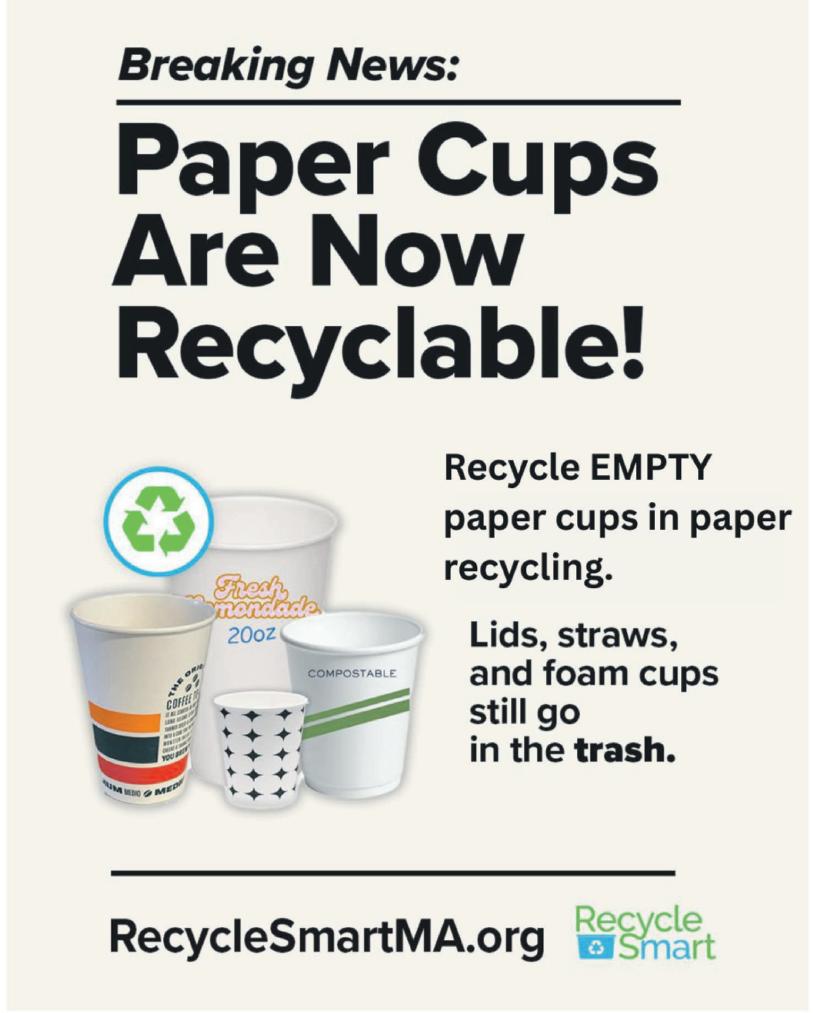
NEW: Empty paper cups, such as coffee cups (no lids), may now be included in household recycling! This includes all paper cups: coffee cups, fountain drink cups, bathroom cups, and compostable cups. Paper hot drink sleeves are also recyclable. Please rinse residual food from cups. Related lids and straws belong in the trash. In communities that collect recyclable paper separately from bottles and cans (dual stream recycling), empty paper cups can now join your pizza boxes in the paper bin.
Some paper coffee cups (and some lids) are designed to be compostable in municipal/commercial compost programs (not home composting); check for text that says “BPI certified” or “compostable.” Aluminum party cups are recyclable and should be recycled.
EGG CARTONS
Clear plastic egg cartons are recyclable. Paper and Styrofoam™ egg cartons are not accepted in recycling but are often reused by backyard chicken farmers. Paper cartons may be composted in municipal compost collections or in home compost bins, if ripped into pieces.
ELECTRONICS (“E-WASTE”)
State regulations prohibit screen-based electronics such as laptops, tablets, iPads, TVs, and monitors of any type from going in the trash. Most municipal transfer stations offer electronics recycling (e-waste) programs. Disposal fees may apply; see your town’s website or call town hall for pricing. Staples stores offer free recycling for a wide range of computer-related electronic waste and more; see staples.com/stores/recycling. Staples charges $19.99 to recycle computer monitors and does not accept TVs. Best Buy accepts TVs for a fee and also accepts a wide range of electronic waste for free recycling. For more information, call your local store or visit their website and search for “recycling.” Computer manufacturers sometimes offer electronics recycling or trade-in programs; visit their websites for details. Various charities and non-profits accept donations of working electronics, including local Salvation Army and Goodwill stores. Always call ahead to ask if they can accept your item.
Electronics that are mostly metal, such as computer towers, DVD players, and stereo components, can also go in scrap metal recycling at transfer stations and recycle centers.
ELECTRONIC MEDIA
(CDs, DVDs, VHS, Cassette Tapes) Do not put unwanted electronic media or cases in your household recycling; put them in the trash. CD cases easily shatter, and the glasslike shards create hazards at the recycling facility. Some communities accept DVDs and CDs via book boxes or Swap Sheds; check with your town. Roundabout Books in Greenfield accepts CDs, DVDs, and vinyl records (roundaboutbookstore.com).
If selling or donating your used media is not an option, greendisk.com and terracycle. com (enter “media” into search bar) offer fee-based, mail-in recycling options.
EYEGLASSES
Contact your local Lion’s Club (lionsclubs.org) for the nearest collection box or mail eyeglass frames and prescription lenses to: New Jersey Lions Eyeglass
Recycling Center, PO Box 7263, West Trenton, NJ 08628. In addition, eyeglasses may be dropped in collection boxes located at Walmart Vision Center, LensCrafters, Pearle Vision, and Target Optical. If eyeglasses can’t be reused, put in the household trash, as they are not recyclable.
FIRE EXTINGUISHERS
Fire extinguishers are considered hazardous because their contents are under pressure, and units manufactured before 1984 may contain dangerous chemicals such as carbon tetrachloride. For disposal and recycling:
• Businesses & property managers can contact their fire control service provider.
• Some municipal transfer stations accept newer fire extinguishers for special recycling along with propane tanks; see the Community Recycling Information table in this guide for local contact information.
• Some municipal hazardous waste collections may accept older fire extinguishers: ask before bringing them to a collection.
• MA Fire Technologies (West Springfield, MA) accepts fire extinguishers for a fee (massfire.com, 800-2446769).
• New England Disposal Technologies (Westfield, MA) accepts fire extinguishers for a fee (nedt.org; 866769-1621).
FIREWORKS
Live fireworks are extremely dangerous and must be disposed of with great caution; call your local Fire Department. Do not throw unused fireworks in the trash or household recycling.
FLAGS
To properly dispose of U.S. flags that are no longer in usable condition, contact the American Legion, the Veterans of Foreign Wars (VFW), your town hall, or local scout troops. Other types of flags may be recycled in textile recycling programs.
FLUORESCENT BULBS & LAMPS
(see “Mercury & Mercury-containing Products”)
FROM PAGE S13
FOOD SCRAPS/FOOD WASTE
(also see “Cooking Oil”)
Food scraps and leftovers make up 22% of residential trash in Massachusetts. Food waste is heavy to transport and contributes to climate change when it decomposes in landfills; composting food waste locally makes better environmental and economic sense. Local composting options include home composting, curbside pick-up by a private waste hauler, and municipal transfer station compost programs. These programs are available free (residential access permit may be required) in the following municipalities: Amherst, Bernardston, Charlemont, Colrain, Conway, Cummington, Deerfield, Gill, Greenfield, Hadley, Leverett, Montague, New Salem, Northampton, Northfield, Orange, Plainfield, Shelburne, Warwick, Wendell, Whately, Williamsburg & Worthington. Find a private hauler near you
at: recyclingworksma.com.
Many local municipalities offer discounted purchase programs for home compost bins and countertop collection pails; see the Community Recycling Information table in this guide for local contact information. For home composting instructions, visit mass. gov/composting-organics.
As of November 2022, any Massachusetts businesses, organizations, or institutions that create ½ ton of food waste per week are required to keep it out of the trash and instead reduce it, donate it, or send it for animal feed, composting, or anaerobic digestion. RecyclingWorks in Massachusetts provides free assistance, food waste estimation tools, hauler lists, and more at: recyclingworksma.com
FRUIT SNACK POUCHES (see “Plastic Pouches”)
FURNITURE
Furniture in good condition can be sold, donated for reuse, or offered via an online free sharing group (e.g. Freecycle. org or a “Buy Nothing” Facebook group). If not reusable,
see the Community Recycling Information table in this guide for disposal information (“bulky waste”). As of November 2022, mattresses and box springs may no longer go in the trash. See “Mattresses” for recycling information.
GLASS
Acceptable items include glass bottles and jars from food and beverages, household cleaning, or personal care products. Rinse and recycle with containers. Lids can be placed back on jars. (Loose lids fall through the sorting machinery.) Do not include corks or bottle pumps. Labels do not need to be removed. The following glass items are NOT accepted in recycling: drinking glasses, mugs, plates, vases, candle jars, light bulbs, window glass, mirrors, or Pyrex. Broken glass is also not accepted; wrap it up and place in trash.
GOLF BALLS AND CLUBS
Golf balls can’t be recycled, but they may be reused. Contact local golf courses or driving ranges to see if they will accept them, or donate golf
balls, along with clubs, to First Tee-Massachusetts programs that empower kids and teens through golf (firstteemass.org; click on “donate”). Some thrift stores will accept clubs for resale.
GREETING CARDS
Cards and envelopes are recyclable with paper if they do not contain metallic inks, glitter, foil, embellishments, or batteries. Do not put photo cards made with traditional glossy photo paper in recycling. Remove electronics from singing greeting cards and recycle button batteries in battery recycling programs (see “Batteries”). St. Jude’s card reuse programs have stopped, but there are many creative reuse options. Greeting cards can be cut up to make gift tags, gift card holders, place cards, or bookmarks.
HANGERS
(see “Coat Hangers”)
HEARING AIDS
Check with your hearing aid specialist for reuse options. The National Hearing Aid Project accepts used hearing
aids for refurbishment and distribution to those that need them; mail to 720 Main Street, FL 1, Kansas City, MO 64105 (hearingaiddonations.org/ give-an-aid); 816-895-2410). If your hearing aid is not worth salvaging, remove the button battery and recycle it in a battery recycling program (see “Batteries”), then place the hearing aid in the trash.
HERBICIDES & PESTICIDES
(see “Household Hazardous Waste”)
HOUSEHOLD HAZARDOUS WASTE
First, consider using up the product according to the package directions, or giving it away to someone who will use it. Products with label warnings and words like caustic, toxic, corrosive, poison, flammable, danger & “keep out of reach of children” all require special handling. See the Household Hazardous Waste Event page in this guide for information about local household hazardous waste collections in western MA. New England Disposal
RECYCLE in WESTERN MASS
please recycle these papers & containers:
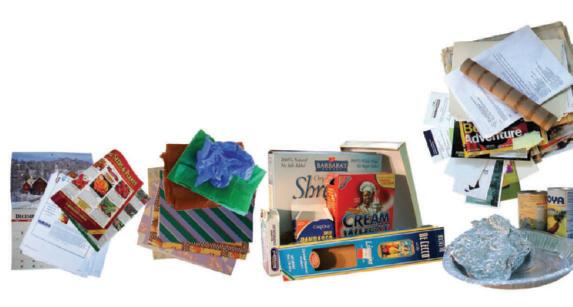
Paper: envelopes with windows, magazines, newspapers, inserts, junk mail, post-it notes, business cards, catalogs, white and colored paper, corrugated cardboard, paperboard (for example, cereal boxes), empty pizza boxes (no food or liners), paperback books, construction paper, gift wrap/bags/ tissue paper and greeting cards (no metallic inks, foil, wire, glitter, batteries)
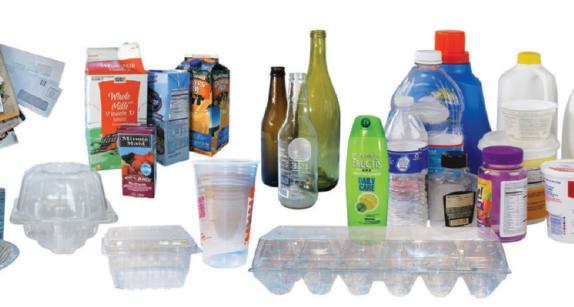
Empty and clean all containers. Replace lids and caps.
Aluminum: cans, foil, pie pans
Steel: (tin) cans, beverage and pet food cans
Cartons: milk, juice, soup, soymilk and drink boxes
Glass: food, beverage bottles and jars
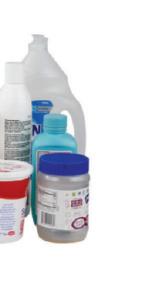
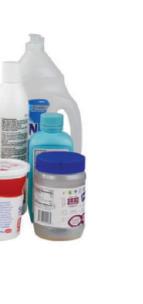
Plastics: (2.5 gallons or less) food containers–margarine, yogurt, cooking oil, condiments, peanut butter; beverage bottles and jugs–soda, water, juice, milk; clear plastic clamshells, clear plastic egg cartons, clear plastic cups; personal care bottles–shampoo, soap, conditioner; detergent bottles
No
Plastic bags, color or opaque plastic cups, automotive fluid bottles, black plastic, plastics over 2.5 gallons, paper frozen food packaging, Styrofoam™, textiles, batteries*
*For a complete YES & NO list of what can be recycled, visit www.springfieldmrf.org.
Technologies (Westfield, MA) accepts many household hazardous wastes year-round for modest fees (nedt.org; 866769-1621). Empty containers that once contained hazardous wastes are NOT accepted in recycling; replace cap and put empty containers in trash. For more info: mass.gov/info-details/safely-manage-hazardous-household-products. For safer alternatives to hazardous household products visit: lesstoxicguide.ca, or turi.org/ Our_Work/Community.
INK, PRINTER & TONER CARTRIDGES
Staples and Best Buy stores accept used cartridges for reuse or recycling (inquire about earning store rewards for recycling). Other options may be found via a search on earth911. com or find mail-in donation programs online by searching “cartridge donations.” Many manufacturers have their own take-back programs with free mailing labels. Search online for “(name of manufacturer) ink cartridge recycling program.”
JUNK MAIL & CATALOGS
Unwanted mail & catalogs are recyclable, but it makes more sense to reduce them at the source. Here are some free services to do so:
• Remove your name from commercial mailing lists: directmail.com/mail_preference
• Stop delivery of unwanted catalogs, enter catalog name at catalogchoice.org
• End pre-approved credit card and insurance offers: optoutprescreen.com
KEYS
Unwanted metal keys can be recycled via a scrap metal dumpster at a municipal transfer station (see the Community Recycling Information table in this guide) or brought to a local scrap metal dealer. Remove batteries from key fobs before disposing. For battery disposal and recycling, see “Batteries” in this guide.
LATEX PAINT
(see “Paint & Paint-related Products”)
LIGHT BULBS
(see also “Mercury & Mercury-containing Products”) Light bulbs of all types should be kept out of recycling bins. Fluorescent bulbs, including “CFLs” (compact fluorescent light bulbs) should be kept out of trash.
• Fluorescent bulbs, including compact fluorescent bulbs (“CFLs”) and the greentipped “low mercury” type, contain mercury vapor and require special handling and disposal. See “Mercury & Mercury-containing Products” in this guide for safe disposal options. Handle carefully to avoid breakage.
• LED light bulbs can go in the trash but contain valuable materials and may be recycled with CFLs, if a collection site accepts them (see “Mercury & Mercury-containing Products”).
• Incandescent light bulbs and halogen light bulbs are not recyclable and can go in the trash because they do not contain hazardous materials. Wrap incandescent light bulbs in used paper or
plastic before placing them in the trash.
• Other bulbs that contain mercury vapor and require special disposal include neon/argon bulbs, high-intensity discharge (HID) bulbs, metal halide and high-pressure sodium bulbs (used for streetlights, floodlights, and industrial lighting). See “Mercury & Mercury-containing Products” in this guide for safe disposal options.
LIGHT STRINGS
Holiday light strings are NOT accepted in household recycling programs or bins because they get wrapped around sorting equipment at recycling facilities, causing hazards for workers. Light strings are usually accepted at scrap metal dealers and in scrap metal recycling dumpsters at transfer stations. Some transfer stations offer special seasonal recycling programs for light strings. Light strings can be mailed to Holiday LEDs for recycling; receive a coupon for a discount on a
future order (holidayleds.com/ free-light-recycling).
MARDI GRAS BEADS
Mail unwanted Mardi Gras beads and trinkets to the Arc of Greater New Orleans’ reuse program: ArcGNO, 925 Labarre Road, Metairie, LA 70001 (arcgno.org; 504-8375105). Or consider donating to local nursing homes for activities; call first to make sure they can accept.
MATTRESSES & BOX SPRINGS
As of November 2022, mattresses and box springs may no longer be disposed of in trash or Bulky Waste. Mattress recycling is now mandatory in MA, except for mattresses that are contaminated. When you purchase a new mattress, ask the retailer to take back and recycle the old one. Some charities will accept mattresses and box springs in very good condition; call first. Use the MassDEP Beyond the Bin Recycling Directory to find local charities and transfer
SEE WHAT, PAGE S16
RECICLAJE en Western Mass
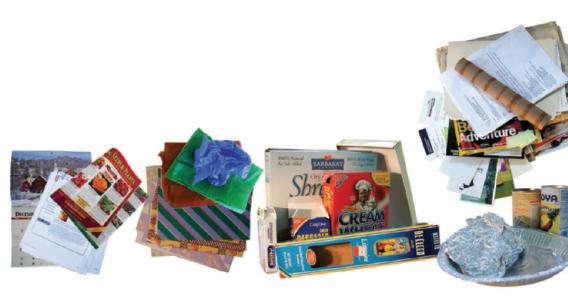
SFavor de reciclar los siguientes papeles y envases:
Papel: sobres con ventanas, revistas, periódicos, folletos publicitarios, notas autoadhesivas, tarjetas de presentación, catálogos, papel blanco y coloreado, cartón ondulado, cajas de cartón (ej. cajas de cereal), cajas de pizza vacías, libros de pasta blanda, cartulina, papel para envolver regalos, bolsas de regalos, y papel de seda (no tinta metálica, láminas, alambres, ni pilas)
For additional languages and literature, scan here:

Favor de vaciar y limpiar todos los envases y volver a poner las tapas en los recipientes.
Aluminio: Latas, papel de aluminio, moldes de aluminio
Acero: Latas de alimentos y bebidas
Cartones: de leche, jugo, sopa, leche de soya y otras bebidas
Vidrio: frascos y botellas de alimentos y bebidas
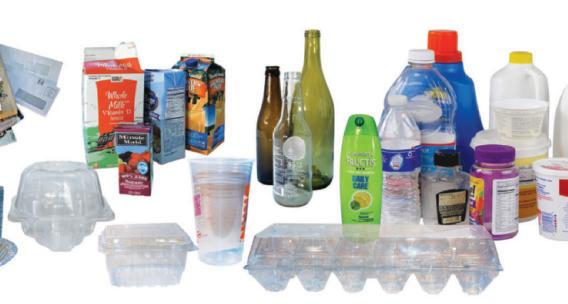
Plástico: (envases de 2.5 galones o menos) contenedores de alimentos: mantequilla, yogur, aceite de cocina, condimentos, mantequilla de maní; botellas y jarras de bebidas: refresco, agua, jugo, leche; botellas de detergente; vasos y contenedores de plástico transparentes, cartones de huevos transparentes; envases de jabón, champú, y acondicionador
Nobolsas de plástico, vasos de plásticos opacos o de colores, botellas de anticongelantes o aceite de motor, envases de plástico negro, envasados de papel de alimentos congelados, unicel, ropa, pilas*
*Para saber más sobre reciclar visite nuestra página www.springfieldmrf.org.
stations that accept mattresses and box springs for reuse or recycling: recyclesmartma. org/beyond-the-bin-search.
90% of the municipalities in western Mass offer a mattress recycling program, collection event, or regional recycling arrangement; fees may apply. For local drop-off sites, call your town’s contact number listed in the Community Recycling Information table in this guide. More information on mattress recycling, including a list of municipalities with recycling programs: mass. gov/guides/mattress-recycling#-consumer-mattress-recycling-. If your municipality does not have a collection program, call a private hauler to pick up your mattress.
MEDICATIONS & PHARMACEUTICALS
Disposal of unwanted medication must be done carefully for several important reasons. Medications should NOT be poured down the drain or flushed down the toilet. Wastewater treatment plants and septic systems are not designed to remove pharmaceuticals from wastewater. Medications should not be thrown in the trash; see below for disposal options.
Help protect the environment and stop prescription drug misuse and abuse. Bring your unwanted, expired, or unused medications to one of the sites below for safe disposal.
Many area police departments offer permanent drop-off boxes for free disposal of prescription and nonprescription drugs, vitamins, and veterinary medications, pill form only: Agawam, Amherst, Ashfield, Athol, Belchertown, Bernardston, Chicopee, Cummington, Deerfield, Easthampton, East Longmeadow, Erving, Goshen, Granby, Hadley, Hampden, Hatfield, Holyoke, Leverett, Longmeadow, Ludlow, Monson, Northampton, Orange, Palmer, Pelham, Shelburne, South Hadley, Southampton, Southwick, Sunderland, Ware, West Springfield, Westfield, Whately, Wilbraham, and Williamsburg. You do not need to be a resident to use the drop boxes in any of these towns. Accepted items in police
station boxes: prescription and non-prescription drugs, vitamins and veterinary meds. NO liquids, syringes (see ”Needles & Sharps”), IV equipment or chemotherapy drugs. For more information visit northwesternda.org/1254/Drug-DropOff-Boxes.
National chain pharmacies and some hospital lobbies host free drop boxes for prescription medications. Search a DEA listing of disposal sites at tinyurl.com/deadisp, or this Massachusetts-specific listing: mass.gov/info-details/ find-a-waste-medication-kiosk. These boxes may accept liquids or inhalers; see signage on the drop boxes. Some stores that do not have drop boxes offer the DisposeRX program: disposerx.com.
National Prescription Drug Take-Back Days are held every April and October. DEA's next National Prescription Drug Take Back Day is April 25, 2026, from 10 am - 2 pm. Find dates and locations for upcoming collections by visiting dea.gov/takebackday. TakeBack Days accept prescription and non-prescription drugs, vitamins, veterinary medications, and vape cartridges in a plastic bag (batteries not accepted; see “Batteries” in this guide for disposal options). Unacceptable items include liquids, syringes, IV equipment or chemotherapy drugs.
Due to their small size and other factors, empty pill bottles are not accepted in household recycling. Be creative with reuse! For example, some animal shelters collect washed, empty pill bottles to send medicines home with adoptees. The Ridwell paid mail-in program accepts pill bottles for recycling: ridwell. com/what-we-take/pill-bottles
MERCURY & MERCURY-CONTAINING PRODUCTS
(also see “Light Bulbs”) Mercury is highly toxic and requires special disposal. It is not hazardous when contained in a sealed device. Reduce exposure by placing items in sealed plastic bags and handling them carefully to avoid breakage. Never put mercury (or items containing mercury) in the trash or recycling bins, on the ground, or down a drain. Don’t vacuum even the
smallest spill. Instructions for handling mercury exposure can be found at: mass. gov; enter “mercury” in the search bar or search the web for “broken CFL” or “mercury spill.” If a mercury spill does occur, follow the MassDEP’s guide on safely cleaning it up: mass.gov/guides/massdep-mercury-information. Call the Mass DEP Mercury Hotline if you have questions about managing mercury safely: 866-9MERCURY (866-9637287).
For local disposal information for the following mercury items, see the Community Recycling Information table and the Western Mass Household Hazardous Waste Event pages in this guide.
• Fluorescent light bulbs
All fluorescent light bulbs (even the low-mercury bulbs with green tips) contain mercury vapor; never put fluorescent light bulbs in trash or recycling. For local recycling and disposal information see the Community Recycling Information table in this guide. In addition:
• Businesses can see a list of vendors who can pick up larger quantities at recyclingworksma.com.
• For assistance with disposal outlets, call the MassDEP Mercury Hotline at: (866) 9-MERCURY
Recycling options vary based on the type of bulb:
• Compact fluorescent lamps (CFLs) fit in standard screw-type light sockets and are made of a glass tube, often in a spiral shape. They come in a variety of shapes and sizes and can be encased by an outer glass bulb. CFLs are accepted at most municipal transfer stations (handle carefully and hand to the attendant) and some Hazardous Waste Collections. For local disposal information, see the Community Recycling Information table and the Household Hazardous Waste Event pages in this guide. Free recycling for CFL bulbs is offered at Home Depot and Lowe’s Stores. New England Disposal Technologies (Westfield, MA) accepts fluorescent bulbs year-round for various fees (nedt.org; 866-769-1621).
• Larger fluorescent tubes are the types of bulbs that do not fit in standard screwtype sockets. These include long straight tubes, circular or U-shaped tubes, tanning bed lamps, high-intensity discharge lamps (HIDs), and neon light tubing. Accepted at most municipal transfer stations and some Hazardous Waste Collections; see the Community Recycling Information table in this guide for local disposal information. Straight lamps and all others are accepted free of charge at Lowe’s Stores. Handle carefully to avoid breakage; do not tape bulbs together. New England Disposal Technologies (Westfield, MA) accepts fluorescent bulbs year-round for various fees (nedt.org; 866-769-1621).
• Thermometers
Many older household thermometers (fever, candy, meat, deep fry, oven, temperature) contain liquid mercury. A mercury thermometer can be identified by the presence of a silver bulb at the end of a glass tube. If the thermometer liquid and bulb is red, blue, purple or green, it is not a mercury thermometer and it can go in the trash. Mercury thermometers are accepted in special programs at many municipal transfer stations and some Hazardous Waste Collections; see the Community Recycling Information table in this guide for local disposal information. Handle carefully and seal in a plastic bag and/or plastic bucket.
• Thermostats
Updating to a programmable thermostat? Don’t throw away your old wall-mounted thermostats: they contain a significant amount of liquid mercury! Leave thermostats in one piece, handle carefully to avoid breakage, and place in a sealed plastic bag. In addition to special municipal collection programs (see the Community Recycling Information table in this guide), mercury thermostats are accepted for free recycling by many plumbers and plumbing retail stores. For local dropoff locations, go to thermostat-recycle.org.
• Ballasts
Most fluorescent light fixtures produced before 1979 contained ballasts with PCBs (polychlorinated biphenyls), a highly toxic substance. PCB-free ballasts are marked “No PCBs.” PCB ballasts are typically collected in special programs at transfer stations or other sites that collect larger fluorescent tube-type bulbs. Electronic and other non-PCB ballasts are safe to go into trash or bulky waste but are often not accepted in scrap metal recycling bins. See the Community Recycling Information table in this guide for local disposal information.
MICROWAVES
(see “Scrap Metal”)
MOTHBALLS
(see “Household Hazardous Waste”)
MOTOR OIL & FILTERS
(see “Automotive Products”)
MUSICAL INSTRUMENTS
Hungry for Music (hungryformusic.org) accepts used musical instruments and distributes them to underserved children in the US and abroad. Buy reused instruments locally by searching online.
NEEDLES & SHARPS
MA Sanitary Code states that it is illegal to dispose of sharps (hypodermic needles, syringes, injection pens, EpiPens, lancets, & all other medical “sharps”) as trash. Never put a container of sharps in your recycling bin. Free collection programs are available in many towns; call your town’s Health Department. Or, for a listing of all the sharps programs in the state, go to mass. gov and type “needle disposal” in the search bar. Some hospital lobbies now host free drop boxes for sharps boxes. Sharps are not accepted in drug drop boxes at police stations or pharmacies. Sharps containers are available for purchase at pharmacies, and they often include disposal options. Several mailin disposal programs are available; search online for “sharps mail-in programs.” Stericycle is an example of a company that picks up sharps for safe disposal from businesses that generate sharps: stericycle. com or 866-783-7422.
NKeep These Plastics Out of Your Recycling Bin!
Some plastic items cause mechanical problems at recycling facilities, cost too much to recycle, are unwanted by manufacturers, or are recyclable only through separate recycling programs. Please do not add these to your household or municipal recycling mix:
• Plastic bags, plastic wraps, and other “soft plastics”
• Black plastic (e.g., prepared food, to-go containers, microwave trays) (Some facilities are starting to accept black plastics.)
• Forks, spoons, knives & serving utensils
• Plastic items that are smaller than a credit card (e.g., loose caps, straws, condiment cups, Rx bottles)
• Plastic containers larger than 2.5 gallons in size
• Plastic plates
• Colored/opaque plastic cups (clear cups are OKsee the “Cups” entry)
• “Compostable plastic” containers and cups (PLA)
• Foam (aka Styrofoamtm) items (e.g., cups, egg cartons, food containers/ trays, & packing material)
• Tubes (e.g., toothpaste, cosmetics, hair products)
• Plastic containers that once held toxic substances (e.g., motor oil)
• Molded plastic packaging (the rigid type that requires a sharp object to open)
• Binders, plastic folders, similar office supplies
• CDs, DVDs, and cases, video & audio tapes
• Plant pots & garden trays
• Six-pack rings (see “Beer & Soda Packaging”)
• Hoses, light strings, cords, pet leashes
• Plexiglass
• PVC products (pipes, siding, etc.)
• Manufactured plastic wood (decking material)
PACKING MATERIALS
(also see “Plastics”)
Online purchasing has increased the amount of packaging in the residential waste stream. Most of these materials are reusable; some are also recyclable:
• Cardboard boxes can be reused. Cardboard boxes should be recycled in municipal recycling programs; flatten if possible.
• Packing paper is reusable as well as recyclable.
• Amazon’s paper mailer that says "Recycle this mailer just like a box" is recyclable in municipal recycling programs.
• Amazon’s plastic mailer and other plastic envelope mailers (single layer or bubble wrap) are recyclable with plastic bags in grocery/ retail store recycling programs only (see “Plastic Bag Recycling at Retail Stores” in this guide). Do not put any plastic mailers, bags, films, or other “soft plastics” in household recycling.
• Paper envelopes with bubble wrap on the inside are NOT accepted in any recycling programs. Reuse or put in the trash.
• Plastic “sealed air” packaging and bubble wrap are reusable and are accepted for reuse by some pack & ship stores (such as UPS Stores). Deflated air pillows and bubble wrap can be recycled with plastic bags in grocery store recycling programs (see “Plastic Bag Recycling at Retail Stores” in this guide). Do not put in household recycling programs.
• Meal delivery kits use thermal box liners (e.g. “Renewliner,” “QLiner,” “Climacell”) to keep food fresh. This packaging might claim recyclability, but it is not accepted in household recycling programs. Reuse, refuse (send back to the company), or put in the trash.
• Styrofoam™ blocks & shapes: not accepted in household recycling; see “Plastics” for special recycling collections.
• Foam peanuts: not accepted in recycling; see “Plastics.” Accepted at some pack & ship stores.
• Cornstarch peanuts may be
composted in a backyard bin, reused, or placed in the trash. However, these are not accepted by commercial composting facilities or at packing shipping stores.
PAINT & PAINT-RELATED PRODUCTS
If your unwanted paint was purchased recently and it's in good condition, consider donating it for reuse. Many school or community theatre groups will accept quality paint products. You may also offer usable paint via an online sharing group (e.g. Freecycle. org or a “Buy Nothing” Facebook group).
• Petroleum (oil-based) paints, stains, thinners, and varnishes are considered hazardous materials, requiring proper disposal. See the Community Recycling Information table and Household Hazardous Waste Event pages in this guide.
• New England Disposal Technologies (Westfield, MA) accepts all types of paint year-round for modest fees (nedt.org; 866-769-1621).
• Latex paint and water-based stains can be put in the trash when completely hardened. Speed up the process by adding latex paint hardener (available in hardware stores) or by stirring in clean kitty litter to the consistency of thick oatmeal and allowing the mix to harden. When the contents are no longer liquid, you can put the open paint can (without the lid) in your household trash.
PALLETS
(see wood under “Building & Remodeling Materials”)
PANTYHOSE
Recycled Crafts recycles pantyhose, nylon knee-highs, and tights into pet toys, rugs, placemats, and table runners. They accept clean hosiery in any condition, even those with rips and snags. Email recycledcrafts@live.com for donation information, or visit: savemyhosiery.yolasite.com. Hosiery is also accepted in textile recycling programs, see “Clothing & Textiles.”
PAPER & CARDBOARD
Place clean and dry cardboard boxes, newspaper, office paper, school papers, magazines &
junk mail, cereal boxes, and empty pizza boxes in your recycling bin. Avoid items with material that is not woodbased, such as greeting cards with glitter, embellishments, metallic ink, or batteries, or items mixed/coated with plastic or glued to plastic (e.g. paper shipping envelopes lined with bubble wrap).
Details about paper items that cannot be recycled are provided as individual entries in this guide, including shredded paper, hardcover books (see “Books”) and items coated/mixed with plastic. Examples of items that can’t be recycled include beer/soda packaging and frozen/refrigerated food boxes (see “Boxes”). In dual stream recycling, milk cartons and soup/almond milk boxes should be recycled with containers, not with paper (see “Cartons” in this guide for more information).
NEW: Empty paper cups, such as coffee cups (no lids), may now be included in household recycling! This includes all paper cups: coffee cups, fountain drink cups, bathroom cups, and compostable cups. Paper hot drink sleeves are also recyclable. Please rinse residual food from cups. Related lids and straws belong in the trash. In communities that collect recyclable paper separately from bottles and cans (dual stream recycling), empty paper cups can now join your pizza boxes in the paper bin.
PELLET STOVE FUEL BAGS
Plastic bags should never be placed in household recycling programs. Some retail and grocery stores accept EMPTY pellet bags in their plastic bag recycling programs (call first). Pellet bags must be dry and completely EMPTY. Shake out pellets and residue, flatten and stack empty bags, roll up the stack, and place the roll in an empty pellet bag. Do not include rubber bands, string, or tape. Ask your pellet supplier about bulk delivery (avoids bags), recycling programs, or bag take-back programs. For more on plastic bag recycling programs, see the “Plastic Bag Recycling” chart under “Plastics” and/or nextrex.com/view/ educate#materials1.
PET FOOD BAGS, BIRD SEED BAGS, ANIMAL FEED BAGS
Plastic bags that contained pet food, animal feed, or bird seed are not recyclable in municipal recycling or in plastic bag recycling programs at retail stores. Unfortunately, neither are paper feed bags because they are lined with plastic to keep moisture out of the feed. TerraCycle offers a few pet food bag recycling programs, some of which have local drop-off sites; go to terracycle.com and type “pet food” in the search bar. Local groups such as The Bag Share Project and Greening Greenfield may accept certain types of feed bags for reuse and provide instructions on how to make bags (facebook. com/theBagShare; greeninggreenfieldma.org).
PHOTOGRAPHS
Traditional, glossy photographs are not acceptable in recycling because of the photographic chemical coatings in the paper. Old photographs are safe to put in the trash. More modern photographs may or may not be recyclable depending on the printing process and the type of paper used. Home-printed photographs that are printed on regular paper are acceptable in recycling.
PIZZA BOXES
A 2020 study by West Rock (a major US corrugated cardboard manufacturer) found that grease on pizza boxes does NOT cause problems for recycled paper manufacturers, as previously thought. It is now OK to put the ENTIRE pizza box into recycling…but it MUST be empty (no crusts, food, foil, plastic, or waxed paper). Link to the study: tinyurl. com/pizzaboxes2020
PLASTICS
Many people assume that all plastic items are accepted in recycling, but recycling is demand-based; only those plastics that can be made cost-effectively into new products are on the “yes” list. Please note that plastic containers from food, beverage, soap and personal care products are the ONLY type of plastic suitable for your household recycling bin. All other forms of plastic must go in the trash or, when available, to a separate special recycling program. See the box
PESTICIDES & HERBICIDES
(see “Household Hazardous Waste”)
“Keep These Plastics out of the Recycling Bin” for additional details.
Plastic containers from food, beverages, soap and personal products
The following items belong in your household recycling bin: empty plastic containers from food, beverage, soap or personal care products in the form of bottles, jars, jugs, and tubs. Plastic bottle caps & plastic tub lids are recyclable, if attached to the container (not loose). Plastic items that are smaller than a credit card or larger than 2.5 gallons are not acceptable because they cannot be sorted effectively. Bottle pumps should go in the trash. Please note that black plastics are not currently accepted at most recycling facilities because they can’t be sorted with the optical sorting technology. Some recycling facilities now accept black plastics.
Other items on the recycling “yes” list are clear plastic cups and their lids, clear plastic clamshells, and clear plastic egg cartons. Cups should ideally be rinsed before recycling; put lids back on and put straws in the trash. If a clear cup is labeled compostable, do not put it in a recycling bin. Visit springfieldmrf.org for details and printable graphics about household container recycling.
Bulky, rigid plastic objects (Do NOT place in household recycling bin)
Many rigid plastic items are reusable until broken or damaged; offer unwanted items for free on an online sharing group (e.g. Freecycle.org or a “Buy Nothing” Facebook group). Some communities offer specialized bulky rigid plastic (BRP) collection programs. Ask your community representative (see the Community Recycling Information table in this guide) about opportunities near you. BRP collections are highly selective and only accept clean, molded, rigid plastic pails, bins, crates, baskets, totes, plastic lawn furniture, trash barrels and wheeled trash toters (metal and wheels removed).
Foam (Do NOT place in household recycling bin)
The recycling market for rigid foam material (aka Styrofoam™ or expanded polystyrene/EPS) is growing, but only certain blocky foams are accepted through special recycling programs.
Foam products can be divided into three general categories 1.) Blocky packing material 2.) Shipping peanuts, and 3.)
Food-related serve ware (cups, plates, trays):
• Large, rigid foam blocks, sheets, and coolers: Clean and dry foam packing materials and coolers are only recyclable through a separate collection. Some communities collect white, blocky foam at municipal transfer stations or at special collection events and transport it to a foam recycling facility. Gold Circuit E-Cycling in Agawam (413) 328-3187, www.goldcircuit.io) accepts various types of foam from the public for a fee.
• Foam shipping peanuts: Foam peanuts are not recyclable, but they are highly reusable. Some local retail
shipping outlets accept clean and dry peanuts (call first; search for a store near you at theupsstore.com). Or offer packing peanuts for local reuse via an online sharing group such as Freecycle.org or a “Buy Nothing” Facebook group.
• Foam cups, plates, and trays: Place these in the trash. Even if they have a recycling symbol, food-related Styrofoam™ materials are not currently accepted at any recycling facilities or special collections.
PLASTIC POUCHES
Flexible plastic pouches that contained fruit purees (i.e. applesauce), baby food, kids' drinks, yogurt, and health/ beauty products, are NOT recyclable in municipal recycling programs. TerraCycle offers several different mail-in recycling programs for pouches and caps; go to: terracycle. com and type “pouches” in the search bar. Please remove all residual food and liquid.
PRESSURE-TREATED LUMBER
(see “Building & Remodeling Materials”)
PROPANE TANKS
Most propane tanks can be refilled; many businesses that sell propane will accept tanks for reuse under specific conditions. Do not put tanks in household recycling, trash, or scrap metal dumpsters. Propane and helium tanks are recyclable in special, separate programs at transfer stations or recycling centers. Do not puncture propane tanks. Close the valves on barbecue grillsized tanks. Some sites also accept small camping-style tanks and torch tanks. Local municipal recycling info is found in the Community Recycling Information table in this guide. See Beyond the Bin for more local drop-off recycling locations: recyclesmartma. org/beyond-the-bin-search
PYREX™, CERAMIC, AND PORCELAIN PRODUCTS
Offer these items for reuse. They are not accepted in recycling; dispose of them in the trash (wrap up any broken pieces). Colorful ceramic/ porcelain items (even broken ones) are sometimes used by local arts centers or craftspeo-
ple, so a phone call or a post to an online sharing group (e.g., Freecycle.org or a local “Buy Nothing” Facebook group) may help extend their usefulness.
SCRAP METAL
Many metal items (like bicycles or BBQ grills) can be repaired, sold, or donated to extend their useful life. Because of the usefulness and value of metal, state regulations prohibit throwing aluminum, steel, iron, lead, stainless steel, copper, brass, or bronze scrap in the trash. Some metal items require special handling due to toxic or pressurized materials and should not be put directly in scrap metal dumpsters; this includes lead acid batteries, propane tanks, helium tanks, spray foam tanks, fluorescent light ballasts, air conditioners, refrigerators, freezers, dehumidifiers, and some automotive parts. Many municipal transfer stations have scrap metal recycling dumpsters and collect appliances with refrigerant gases separately; see the Community Recycling Information table in this guide. Some scrap metal dealers will
PLAstIC BAG RECYCLING IN GRoCERY/RETAIL stOREs onLY:
Do not put plastic bags, film, or “soft plastics” in household recycling bins!
Clip and hang this sign over your plastic bag recycling collection at home, in the workplace, at school, or other locations.
YES - DO RECYCLE in storEs:
• Bags MUST be empty, clean and dry without receipts, coins, or trash.
• Clean, dry plastic bags labeled #2 or #4: “HDPE,” “PE-HD” OR , “LDPE,” “LLDPE”

Including:
• Grocery & produce bags
• Newspaper bags

• Dry cleaning bags (no receipts/staples)
• Plastic cereal bags (if it tears like paper do not include)
• Sandwich/Ziploc bags and bread bags: no crumbs, oils, food (remove large zippers)
• Retail bags (#2 or #4) with string/hard plastic handles removed
• Plastic outer wrap from packages of toilet paper, paper napkins, paper towels, diapers, sanitary products
• Bubble wrap, air pillows, plastic shipping envelopes (deflate air pillows/cut out labels)
• Case wrap from cases of water, canned pet food, soda, etc.
• Pellet stove fuel bags (must be dry and EMPTY: shake out pellets and residue, flatten and stack bags, roll up and place in a bag)
• Salt bags, ice bags (empty, dried out)
• Stretch wrap from furniture or electronics
NO - DO Not rECYCLE:
• NO bags with food or moisture
• NO bags with receipts, coins, trash
• NO bag with a recycling resin code other than #2 (HDPE) or #4 (LDPE)
• NO crinkly grape bags, Lego bags, apple bags (often marked #5)
• NO food or cling wrap (e.g. Saran)
• NO chip bags, granola bar wrappers, candy wrappers
• NO prepackaged food bags (frozen food or prewashed salad)
• NO pet food, animal feed, bird seed bags
• NO coffee bags
• NO bags with paint or glue
• NO compostable plastic bags
• NO Tyvek™ envelopes
Pictures of acceptable items and a list of drop off locations: nextrex.com/view/educate#materials1
Trex is the major buyer of plastic film; more resources at: nextrex.com
pay for metal items. Search online under “metal recycling” for the scrap yard nearest you and its requirements. Suitable scrap items should be mostly metal by weight; when possible, plastic parts should be removed.
SHARPS
(See “Needles & Sharps”)
SHOES
As of November 2022, shoes, along with other textiles, are banned from trash in Massachusetts. Bring CLEAN & DRY footwear and textiles to clothing/textile drop-off boxes serviced by private organizations. Bring footwear and textiles to donation centers such as Goodwill Industries (goodwill.org) and Salvation Army (easternusa.salvationarmy.org). Many municipal transfer stations host textile drop boxes, which also accept clean & dry shoes, even those that are well-worn. Shoes that are contaminated with mold, bodily fluids, insects, oil, or hazardous substances are exempt from the waste ban and may go in the trash. In addition, several organizations, such as One World Running (oneworldrunning. com), specialize in shoe reuse. Rerun Shoes accepts used running shoes and can coordinate shoe drive fundraisers; visit rerunshoes.com or call (508) 944-2518. Soles4Souls collects and repurposes shoes. Visit soles4souls.org to find a drop-off location. Got Sneakers (gotsneakers.com) offers a free sneaker recycling program for individuals and organizations.
SHREDDED PAPER
Shredded paper is NOT accepted in household/municipal recycling programs. To have confidential documents shredded and recycled, residents can pay a small fee to have them shredded at local businesses such as copy shops, office supply stores, and pack & ship stores. Local banks often sponsor free shredding events in the spring and fall. The material that is shredded in these programs is delivered directly to paper mills, which avoids the scattering and contamination that ensues at a household recycling facility. Otherwise, dispose of shredded paper as
trash. Paper shreds that are free of plastic and receipts can go in municipal compost programs, where allowed.
SHOWER CURTAINS
Shower curtains are not accepted in household recycling programs. Before you throw out and replace that old dingy plastic shower curtain, consider refreshing thick plastic shower curtains in your washing machine; wash with a couple big bath towels on a gentle setting and hang back up to dry. Shower curtains can be reused in a myriad of ways (e.g. drop cloth, tarp, etc.) Paid mail-in recycling programs for shower curtains and other bathroom items can be found at terracycle.com (search for the bath and shower accessories box).
SMOKE & CARBON MONOXIDE DETECTORS
Some smoke detectors and carbon monoxide detectors contain a built-in lithium battery. The lithium battery is embedded in the device but should be removed before it is placed in the trash. Contact your town about managing detectors with embedded lithium batteries. See “Batteries” for more information. Remove batteries and dispose of them appropriately (see “Batteries”). Traditional household smoke detectors contain a small amount of a radioactive element, Americium-241. The quantity in each unit is considered harmless, but its presence is worrisome enough that retailer and manufacturer take-back programs exist. Google the manufacturer’s name with “smoke detector recycling” for program and shipping details. Curie Environmental Services offers a fee-based, mail-in smoke alarm recycling program, see curieservices.com/mail-backprogram/. Some communities allow smoke detectors to be thrown away at a recycling/ transfer station; see the Community Recycling Information table in this guide. Carbon monoxide detectors are not considered hazardous and can be safely disposed of in the trash after removing any batteries and disposing of them properly (see “Batteries”). Contact your town about managing detectors with
embedded lithium batteries.
SPORTS EQUIPMENT
Sporting equipment exchange/donation options are found locally via charitable organizations such as schools, Scout troops, or the Lion’s Club. Consider sharing via online free groups (e.g. Freecycle.org or a “Buy Nothing” Facebook group). TerraCycle offers a fee-based Sporting Goods - Zero Waste Box™ (terracycle.com)
STEEL/TIN CANS
Rinse and recycle with containers. Acceptable items include cans from food & beverage (e.g. soup, beans, pet food, etc.), household, and personal products. Detached lids can be placed inside rinsed can. Labels do not need to be removed. Empty tin containers (e.g. popcorn, cookies, tea, mints, etc.) are also accepted in recycling; replace the lid.
STYROFOAM™
(see “Plastics: Foam”)
TELEVISIONS
(see “Electronics”)
TENNIS BALLS
Check with your local animal shelter or elementary school to see if they accept tennis ball donations (schools use them to reduce the noise and impact of chairs/desks on floors). A mail-in recycling program is available at tennisballrecycling.com.
TEXTILES
(see “Clothing & Textiles”)
THERMOMETERS & THERMOSTATS
(see “Mercury & Mercury-containing Products”)
TOOTHPASTE TUBES, TOOTHBRUSHES
These items are not accepted in household recycling. TerraCycle runs mail-in recycling programs for oral care items (terracycle.com). Preserve® brand toothbrushes can be mailed for recycling (preserve. eco/pages/toothbrush-takeback).
TROPHIES
Contact your local trophy shop to see if they can reuse your old trophies. Lamb Awards (lambawards.com) reuses or recycles trophies for parts. A Wisconsin-based trophy or-
ganization offers a fee-based, mail-in reuse program; go to awardsmall.com and search for “trophy recycling service.”
A Massachusetts company accepts metal sports or academic medals/medallions (only) for recycling; see sportsmedalrecycling.com.
TYVEK™ ENVELOPES
Tyvek™ envelopes (large, white envelopes that won’t rip, often from express shipments) are not accepted in municipal/ household recycling. They are not accepted in the plastic bag recycling programs at grocery and retail stores. They can be reused or go in the trash.
VAPE DEVICES
Cannabis and nicotine vape devices (“vapes”) contain batteries that cannot be put in the trash. Some of these batteries can cause fires. When possible, remove the battery and bring it to your local battery collection program (see “Batteries”). If the battery can’t be removed, contact your town about a collection program for them. Vape devices with liquid, but no battery, can be placed in a sealed plastic bag and brought to the Drug Take-Back Day held twice a year in local communities (see ”Medications”).
VASES
Glass vases are not recyclable. Post unwanted vases on Freecycle.org, a Facebook “Buy Nothing” group, or donate to a local garden club, swap shop, or local florist(s) for reuse (call first).
VEGETABLE OIL
(see “Cooking Oil”)
VEHICLES
Old vehicles, even inoperable ones, are valued for spare parts and metal. Consider donating them to a charitable organization (might be tax-deductible). Contact your favorite charity or search online for “auto (or vehicle/ truck/motorcycle/boat) donation.” Alternatively, search the internet under “Auto Wreckers and Salvage.”
WOOD (see “Building & Remodeling Materials”)
X-RAY FILM
There are no special disposal requirements, but X-rays do contain a small amount of silver. Some hospital radiology departments will accept them for recycling. B.W. Recycling, Inc. accepts mailed X-rays for recycling: xrayfilmsrecycling. com.
YARD WASTE
(Leaves, grass, brush, Christmas trees)
Throwing away leaf and yard waste as trash is prohibited by state waste bans. Some communities collect yard waste seasonally for wood chip production or composting; for local contact information, see the Community Recycling Information table in this guide. Goat farmers often accept bare Christmas trees as food. Visit mass.gov/ composting-organics to learn about composting yard waste in your backyard.
YOGA MATS
Yoga mats are not recyclable locally, but can be repurposed. Some animal shelters can reuse them. Search online for “yoga mat reuse,” or offer via an online sharing group (e.g. Freecycle.org or a “Buy Nothing” Facebook group). TerraCycle offers a fee-based Sporting Goods - Zero Waste Box™ that accepts yoga mats.
Looking for something that is not on this list? Here are local resources with more information: Springfield MRF’s “What’s Recyclable” page: springfieldmrf.org/whatsrecyclable-at-the-mrf MassDEP’s Recycle Smart Recyclopedia: recyclesmartma.org
PLEASE HELP US TO IMPROVE THIS GUIDE FOR THE NEXT EDITION! IF YOU ENCOUNTER ERRORS OR HAVE SUGGESTIONS FOR CHANGES OR ADDITIONS, CONTACT US AT PIONEERVALLEYRRR@ GMAIL.COM
THANK YOU!

protect the world's oceans

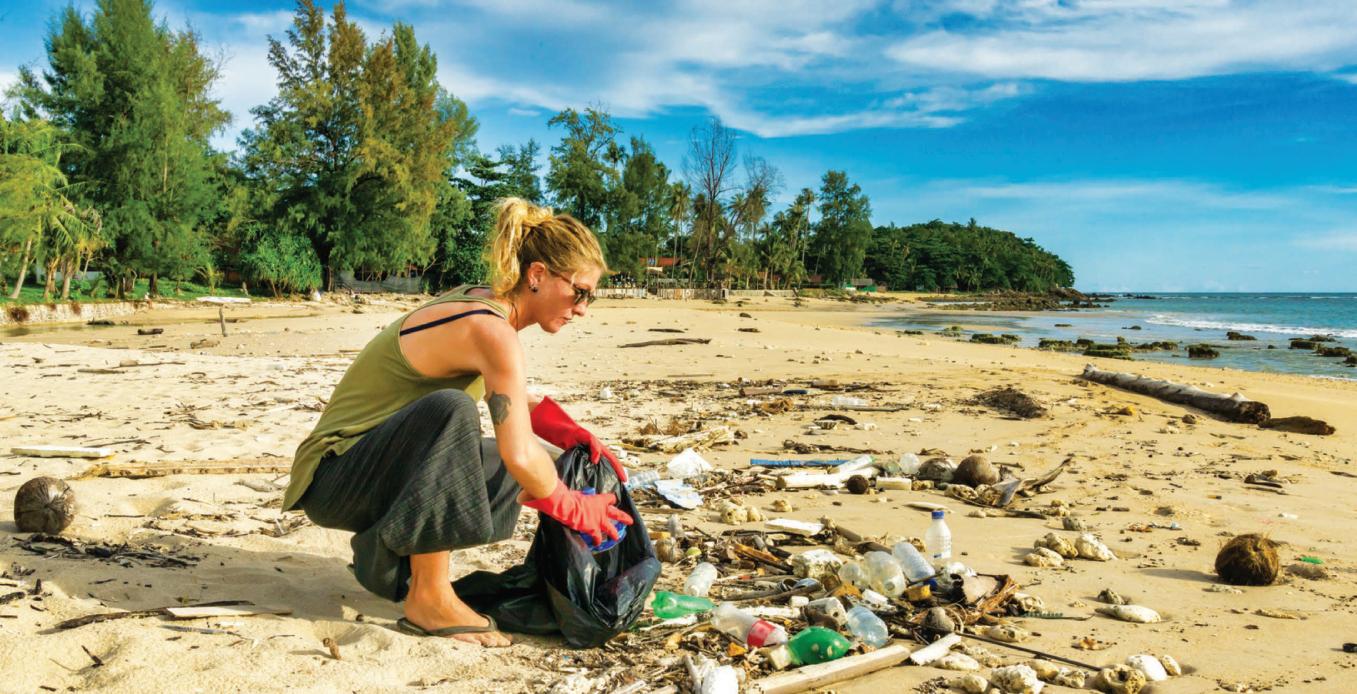
Oceans play an essential role across the planet. Covering around 70 percent of the Earth's surface, oceans are integral to regulating the weather, manufacturing oxygen and creating food sources. But oceans are under a constant onslaught linked to various conditions like habitat
destruction and marine pollution.
Although one person cannot protect and save the oceans alone, collectively people have the ability to affect great change. The following are six tips for ocean conservation.
1. WatCh watER uSagE. Conserving water around homes and businesses means excess runoff and wastewater will not flow into the ocean where it can adversely affect the animals living there.
2. avOid pLastic OnE-uSE itEmS.
According to the Oceans Research Institute, plastic pollution is a huge threat to marine animals. Each year approximately eight million tons of plastic enters the oceans, which harms animals in various ways. Cutting back on usage of disposable plastic items can contribute to healthier marine ecosystems.
3. REDuCE usE of pOllutantS.
Everything from fertilizers to weed killers to soaps can end up in ocean waters through runoff. Choosing products that contain nontoxic chemicals is much safer for the environment, and particularly the oceans.
4. shOp foR SuStainablE sEafooD. Overfishing can decimate entire species of fish and other marine animals. It also destroys marine habitats. Choosing sustainable seafood is a more eco-friendly way to enjoy foods without compromising marine regions. Apps
like Seafood Watch can help people find places to shop for sustainable options.
5. pRacticE safE boating. Recreational boaters should treat the oceans and surrounding ecosystems with respect. Anchoring in sandy areas far away from coral and sea grasses is a start. Boaters should be mindful of any trash on ships and never dump items overboard. Adherence to "no wake" zones also helps protect delicate coastal ecosystems.
6. VOlUntEEr and SuppOrt ConSERVation ORganizatiOns. Getting involved is one way to impart change. Participating in beach cleanups, donating money for marine research efforts and spreading awareness about the plight of the oceans and what can be done to protect them are steps anyone can take.
The oceans need all the help they can get to remain clean, safe and prosperous. Learn more about oceans from the NOAA's National Ocean Service at https://oceanservice. noaa.gov/ocean/.