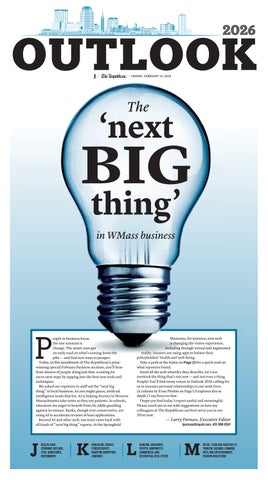
People in business know the one constant is change. The smart ones get an early read on what’s coming down the pike — and find new ways to prosper.
Today, in this installment of The Republican’s prizewinning special February business sections, you’ll hear from dozens of people doing just that: scouting for savvy next steps by tapping into the best new tools and techniques.
We asked our reporters to sniff out the “next big thing” in local business. As you might guess, artificial intelligence leads that list. AI is helping doctors in Western Massachusetts take notes as they see patients. In schools, educators are eager to benefit from AI, while guarding against its misuse. Banks, though ever conservative, are using AI to accelerate reviews of loan applications.
Beyond AI and other tech, our team came back with all kinds of “next big thing” reports. At the Springfield
Museums, for instance, new tech is changing the visitor experience, including through virtual and augmented reality. Insurers are using apps to bolster their policyholders’ health and well-being.
Take a peek at the Index on Page J2 for a quick read on what reporters found.
Amid all the tech wizardry they describe, let’s not overlook the thing that’s not new — and not even a thing. People! You’ll find many voices in Outlook 2026 calling for us to treasure personal relationships in our work lives.
(A column by Evan Plotkin on Page L5 explores this in depth.) I say bravo to that.
I hope you find today’s report useful and meaningful. Please reach out to me with suggestions on how my colleagues at The Republican can best serve you in our 201st year.
— Larry Parnass, Executive Editor lparnass@repub.com, 413-588-8341
SECTION J: Health care, economic outlook, workforce, government
• WEATHERING WASHINGTON’S BLOWS: As the Trump administration rolls back health care access, Baystate Health, the region’s largest employer, braces for a $147 million impact. J4
• CODE NEW: The basics of K-12 computer science education vary across Mass. Why Westfield High School is making it a priority. J6
• LISTENING DEVICES: The next big thing in your doctor’s office is AI notetaking. It’s called “ambient listening.” J8
• WORKING OUR WAY: Namu Sampath, a reporter for The Republican and member of Gen Z, reflects on what she sees as qualities of the ideal work culture. J8
• INNOVATION AS PRESERVATION: Peter Banko, the president and CEO of Baystate Health, describes how the institution is innovating, in the face of “the single largest rollback of health care in our lifetimes.” J8
• LOWDOWN FROM HOSPITAL
INSIDERS: Leaders of three Western Massachusetts hospitals
— Robert Roose of Mercy Medical, Spiros Hatira of Holyoke Medical and Chika Anueyiagu of Cooley Dickinson — describe this moment in health care. J10
• FIT TO BE FIT: Jessica Vieira, coowner of Grit24 in Ludlow, believes the next big thing in fitness is “total integration.” J12
SECTION K: Education, energy, cybersecurity, public safety, digital equity, cannabis
• ARTIFICIAL INTELLIGENCE IN EDUCATION: The next big thing in classrooms, educators say, is a duty to balance use of AI — using it for your benefit without letting it do the work for you. K1
Here is a guide to some of the stories you will find inside this year’s edition of
A new market for paper company
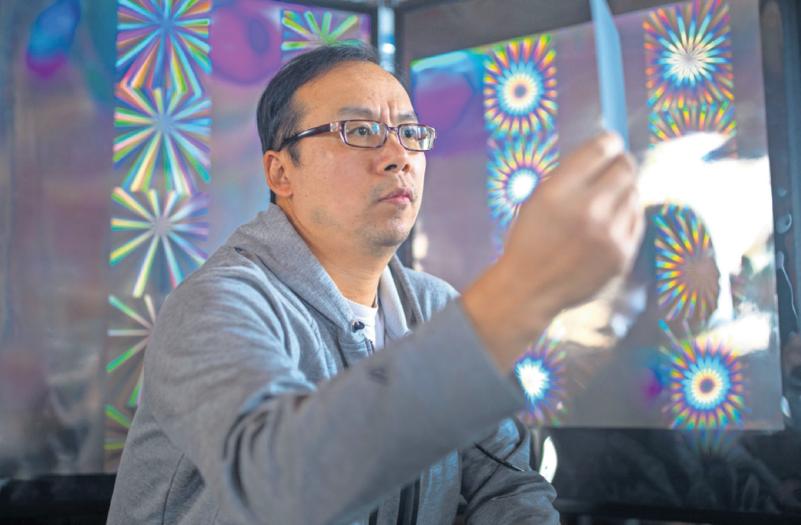
“You may know Hazen for our mainstream holography — things like golf ball cartons and lottery tickets,” said Don Havourd, chief operating officer of Hazen Paper Co. “But Hazen's really invested in the next wave of technology via holography for security, I.D. and authentication. What that means is we really have increased the DPI (dots per inch) of our holography to actually hold and produce covert images for things that you would see on your passports and global documents. That's a huge new market for us, and it will certainly be prominent in 2026.”
PHOTO)
(MICHAEL J. FIEDLER
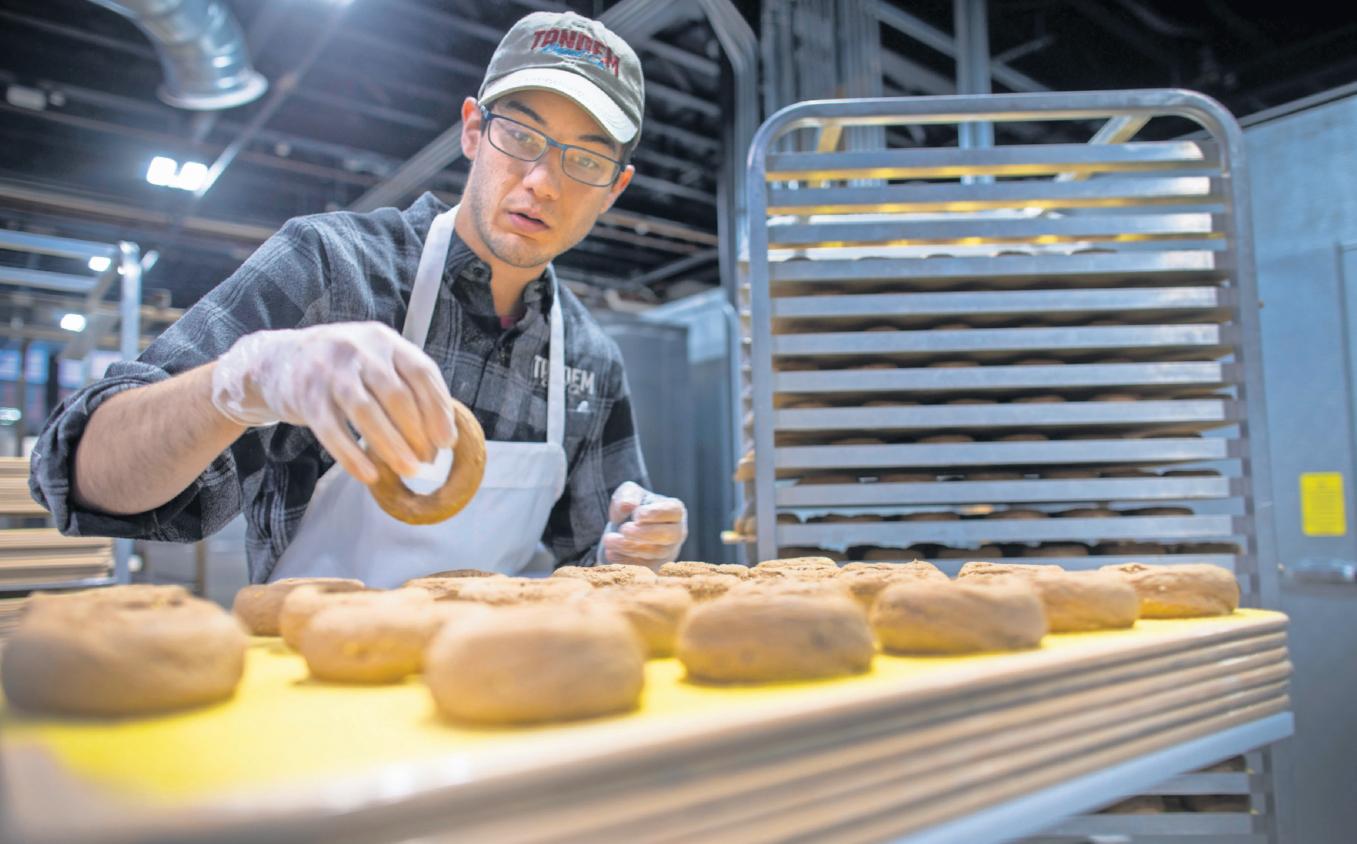
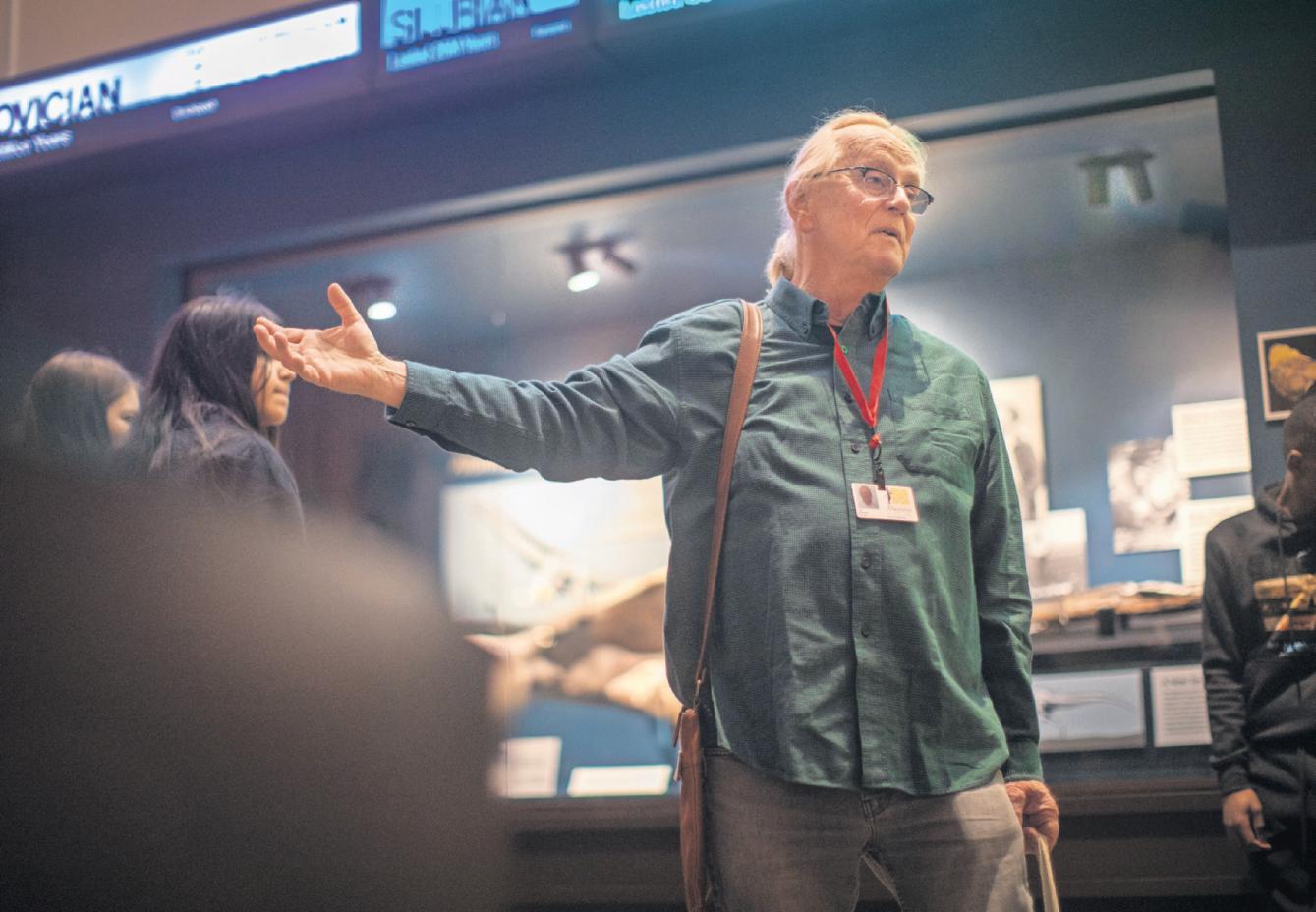
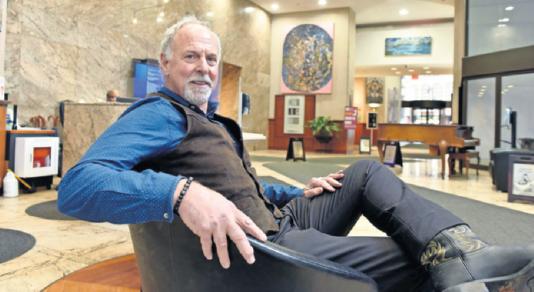
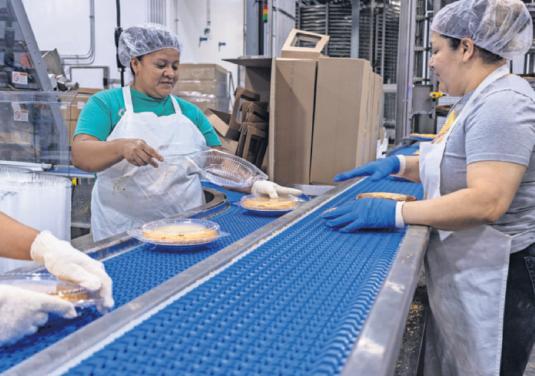
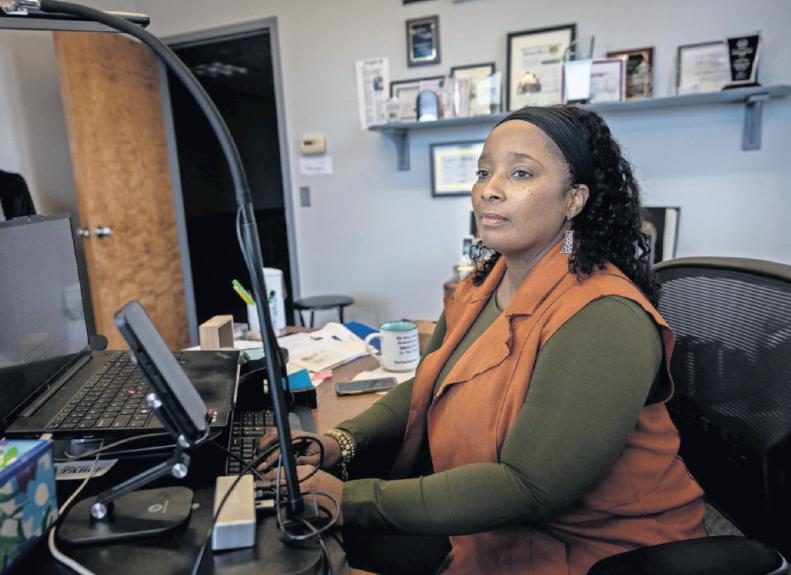
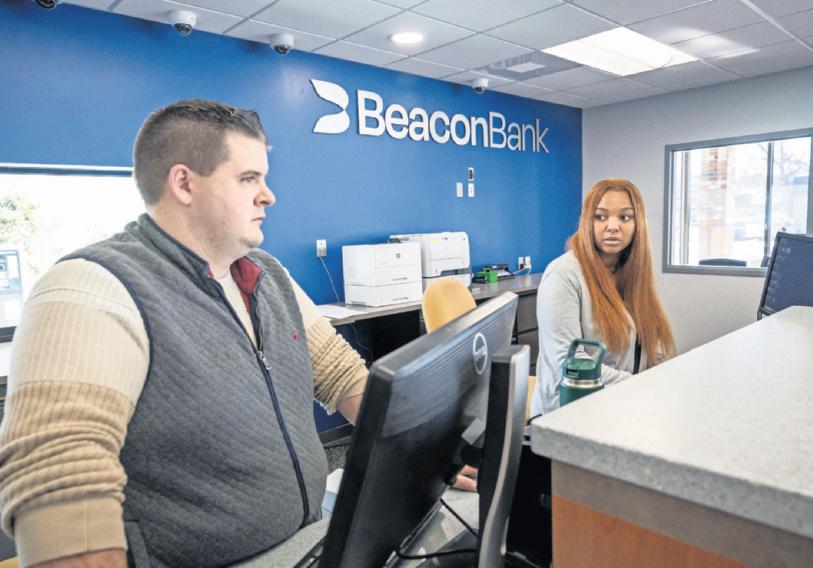
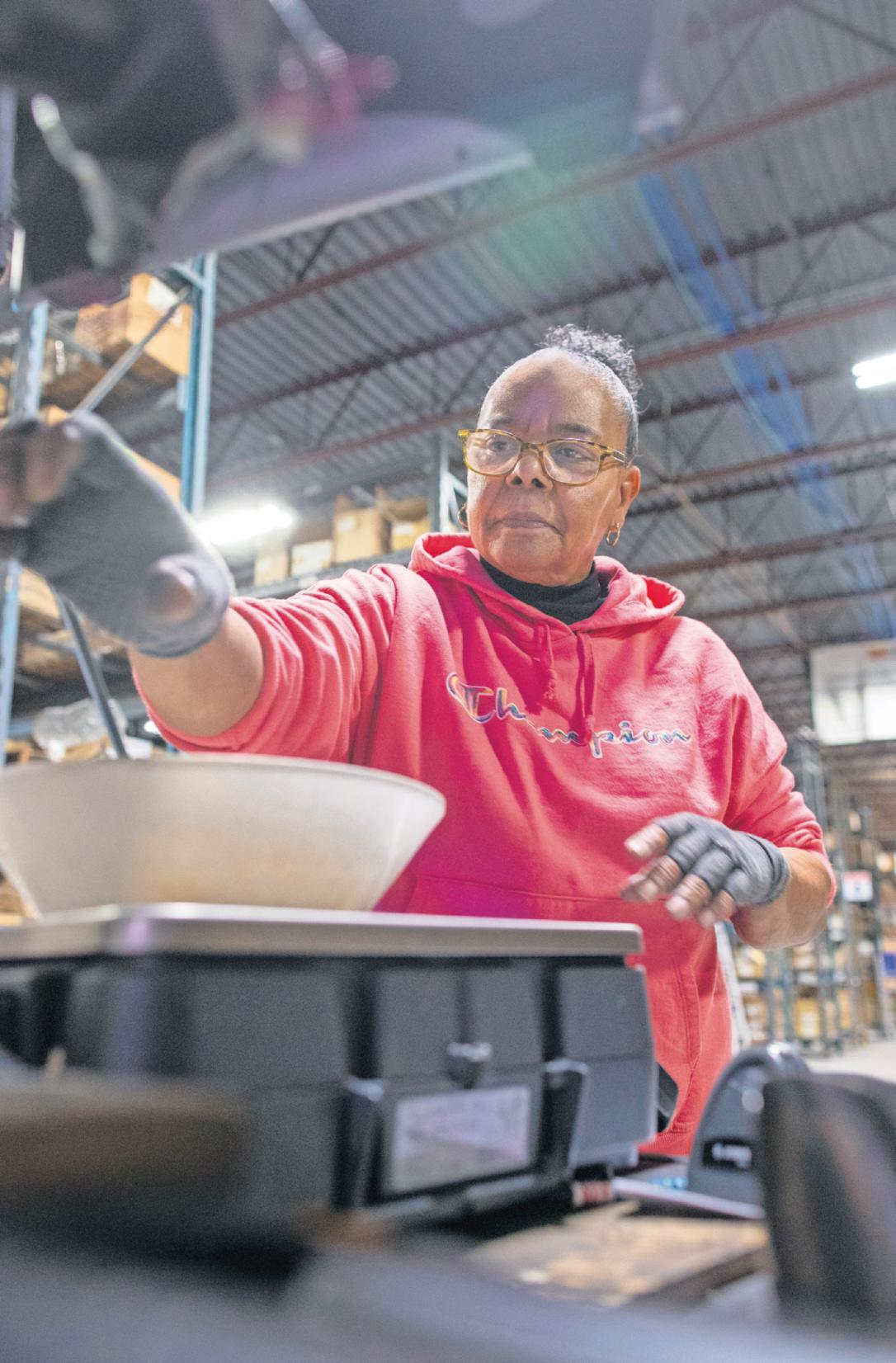
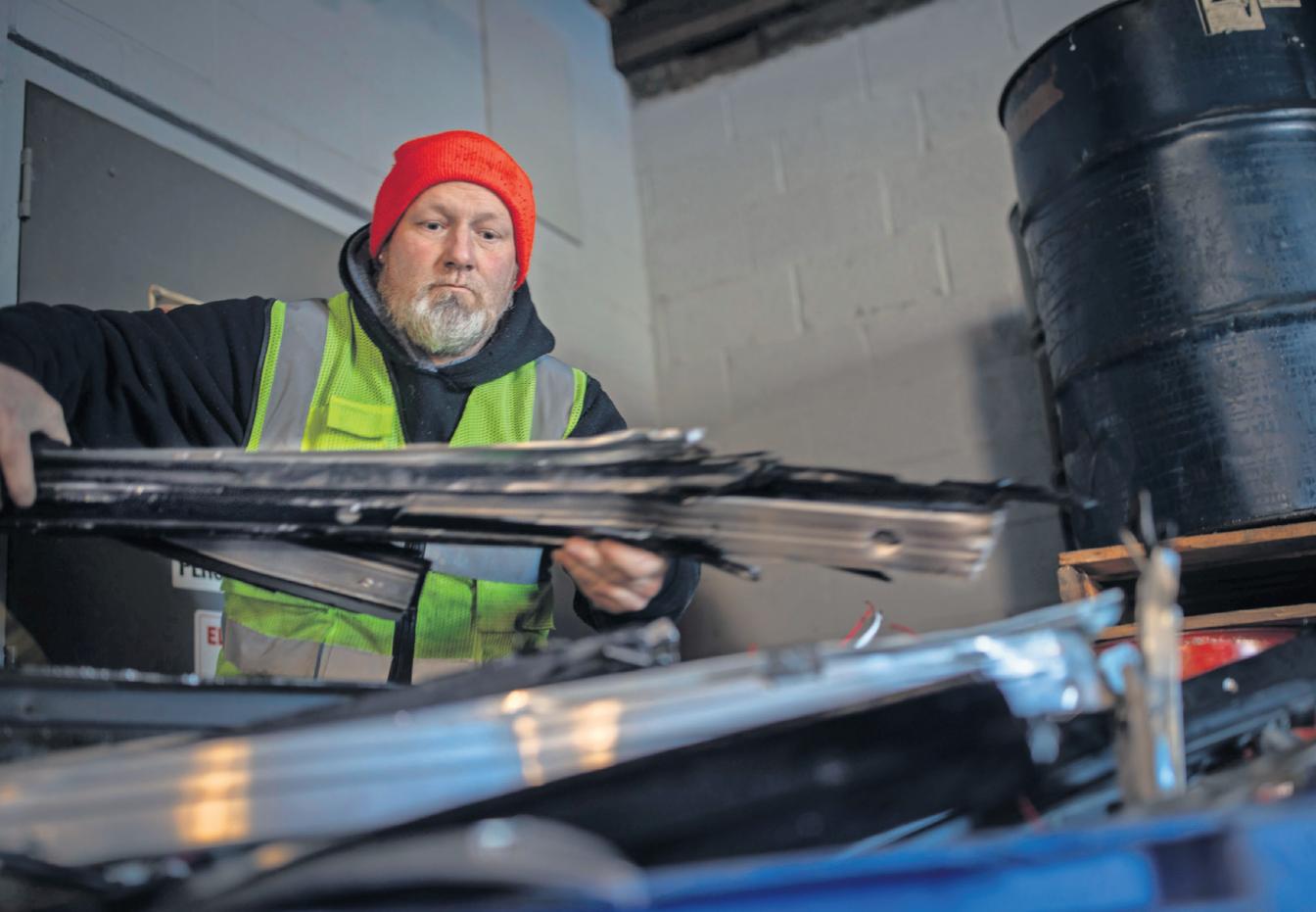
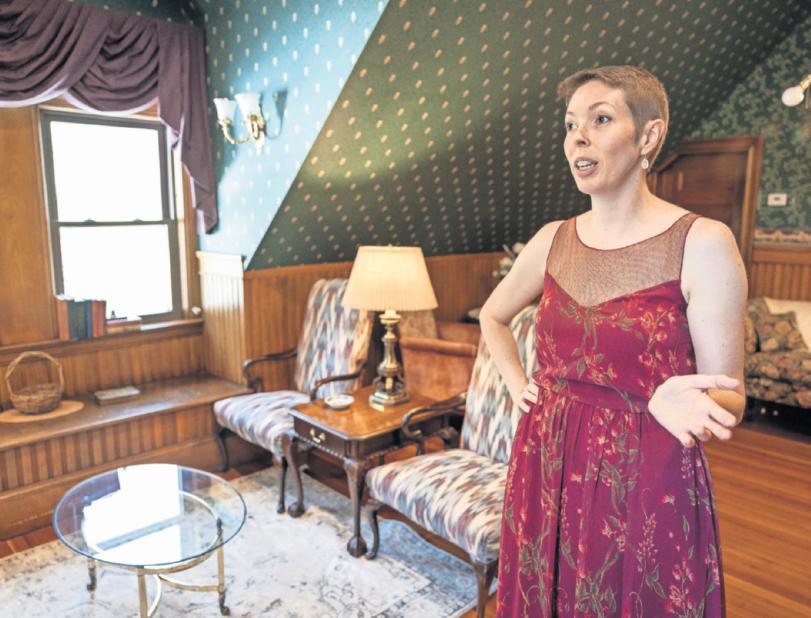
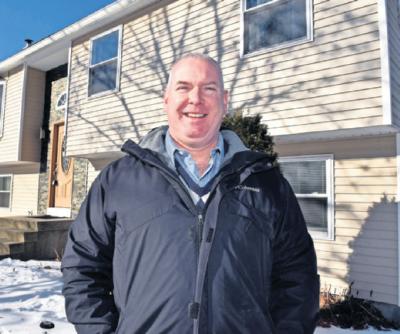
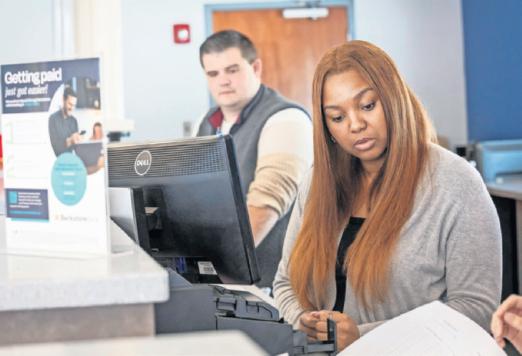
Portraits of people at work by freelance photographer Michael J. Fiedler, including the one on this page, appear throughout Outlook 2026.
• PEOPLE STORIES: Veteran marketing hand Darby O’Brien says no advertising message truly connects if it leaves this one thing out. K2
It is using AI and TikTok to help launch media campaigns for law firms across the country. L1
• HEALTHY POLICYHOLDERS: Life insurance companies have good reason to care about a policyholder’s health. New devices and apps give them an edge. L1
• CRYPTO PRIMER: Cryptocurrency — money that exists only online — has its place in the pantheon of currency, but does it have the footing to become the prime choice for consumers? L4
• THE RICE STUFF: Roger Crandall, president and CEO of MassMutual, recalls the “next big thing” created 175 years ago by company founders George and Caleb Rice. L4
• THE RELATIONSHIP
ECONOMY: Evan Plotkin, the president and CEO of NAI Plotkin, says he’s heard decades of talk about the “big new thing” in commercial real estate. He says an older principle still applies. L5
• STRENGTH IN NUMBERS: In the face of reduced federal funding, nonprofit groups in the region are beginning to collaborate more to be efficient. L6
• BROKERING SUCCESS: In a tight market with scant inventory, how do real estate agents try to level up and beat the competition? L8
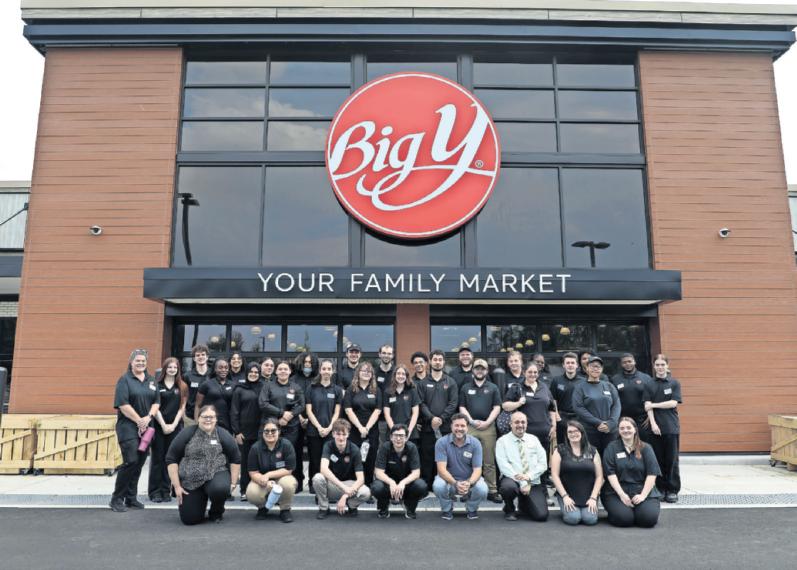
• STEWARDING THE FUTURE: Rick Bossie, executive vice president and chief operating officer of Big Y Foods Inc., believes the times call for conscientious business “stewardship.” M1
• THE ARTS ENGINE: David T. Slatery, leader of the Massachusetts Cultural Council, believes arts and culture deserve “a seat at the table” in policy discussions across the state. M1
• HOW TRAVEL’S VALUE HOLDS UP: Mary Kay Wydra, president of Explore Western Mass, writes that even with the advent of AI, leaders in the hospitality sector “understand the importance of providing a more human touch wherever possible.” M2
• TWEAKING THE CASINO EXPERIENCE: Since online gaming is the next new thing for the industry, how is MGM working to keep the casino experience alive? M2
• PRESSING FARM QUESTIONS: Claire Morenon, communications manager for Community Involved in Sustaining Agriculture, writes that the next big thing is a list of big questions. They include: How can we stay afloat as costs rise faster than incomes? M4
• EVOLUTION OF TOWN-GOWN RELATIONS IN AMHERST: An appraisal of long-standing efforts by UMass and Amherst to win each other over. What’s working best? K4
• SMALL COLLEGES ADJUST: A look at how higher education institutions like Elms College in Chicopee and American International College and Western New England University in Springfield are contending with demographic and policy changes. K5
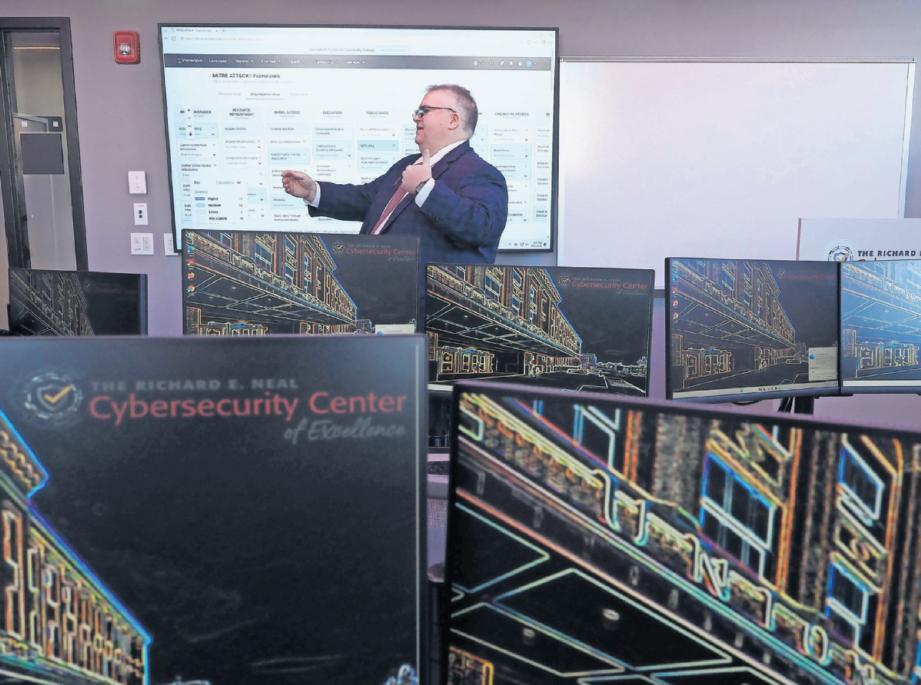
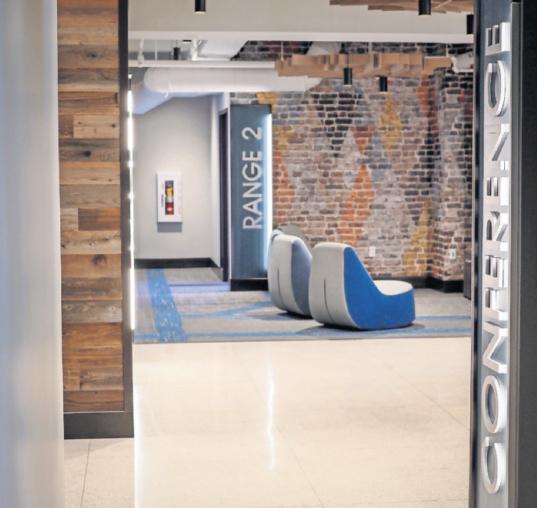
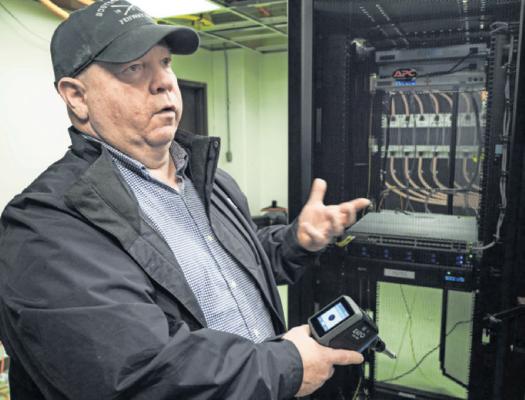
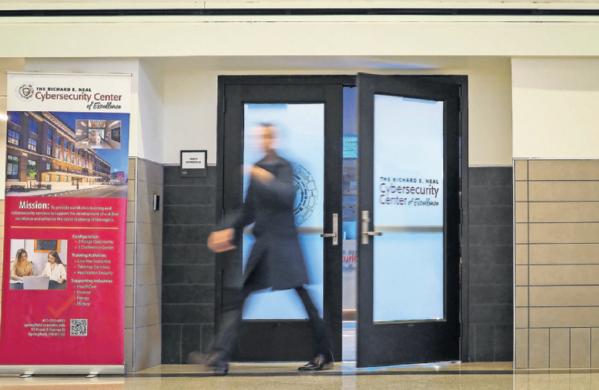
• CYBERSECURITY’S WMASS HOME: The Cybersecurity Center at Union Station in Springfield is ground zero in training people to handle this 21st century threat. Also, a look at quantum computing in the Pioneer Valley. K2
• PAYING THE PIPER ON DATA CENTERS: The next big thing for the energy sector is how to power AI. How are local providers preparing? K6
• A REBIRTH FOR NUCLEAR POWER?: The next big thing in power generation could be a return to nuclear energy, some say. K6
• MANY STAKEHOLDERS: Westfield State University looks to join goals of meeting its educational mission with “advancing the health and well-being of our region,” writes the school’s president, Linda Thompson. K6
• CAMPUS PRIORITIES IN 2026:
Holyoke Community College
President George Timmons and Joseph Hartman, the incoming president of Western New England University, each reflect how they
The future of our republic is written in the past
IN JULY OF 1774, IN THE wake of the British Parliament’s response to the Boston Tea Party with the enactment of the Intolerable Acts, the citizens of Western and Central Massachusetts turned to local self-government as an act of defiance. They gathered at the courthouse in Springfield, where the MassMutual Center now stands, for a town meeting that would mark our region’s place in the growing movement toward independence. During the meeting, the townspeople adopted a resolution that read in part, “We assert that we are (entitled) to and ought to forever enjoy all the liberties and immunities of any of his majesty’s subjects … some of the most essential of which are that they shall not be taxed, but with their own consent …” These ideals would ultimately form the foundation of a nation whose experiment in self-government would change the course of history. As that experiment continues 250 years later, we celebrate not only the 351 communities across the commonwealth, including the 83 cities and towns in the First Congressional District, and the role they each played in the founding of our republic, but also what that republic represents: the enduring promise of liberty and self-governance, fundamental ideals such as free speech and the right to due process, and a government, comprised of three co-equal branches, that exists to serve the public good.
As I look to the year ahead and the question of what the “next big thing” will be in government, I’m reminded that the next big thing is not something new. Quite the contrary. For the future of our Republic is written in the past. When I was first elected to
the U.S. House of Representatives, there was a great sense of shared purpose among my fellow members. Regardless of party, we were there to serve as a check on the executive and represent those who had elected us to public office. We wanted to faithfully
the Butch Lewis Act, which saved the pensions of more than one million workers, retirees and beneficiaries; the Bipartisan Infrastructure Law, which delivered the most significant investment in our nation’s infrastructure since President Kennedy was in the Oval Office; the Inflation Reduction Act, which marked our nation’s largest investment to combat climate change; the CHIPS and Science Act, which delivered $53 billion to reinvigorate our supply chain for semiconductors; the No Surprises Act, which established critical safeguards against surprise medical billing, enhancing consumer protections and promoting transparency; SECURE and SECURE
uphold the principles of our representative democracy, just as those who walked the halls of Congress before us had done.
These are the principles that guided my Democratic colleagues and me when we enacted a slate of legislative achievements that complement those of Lyndon Johnson’s Great Society. The American Rescue Plan, which invested billions of dollars in our local communities;
2.0, which strengthened and expanded retirement savings opportunities for millions of Americans; the PACT Act, which marked the largest expansion of veterans benefits in a generation; and the repeal of the Windfall Elimination Provision and Government Pension Offset, which ensured that more than two million public servants, including 130,000 Bay Staters,
see higher ed’s mission today. K8
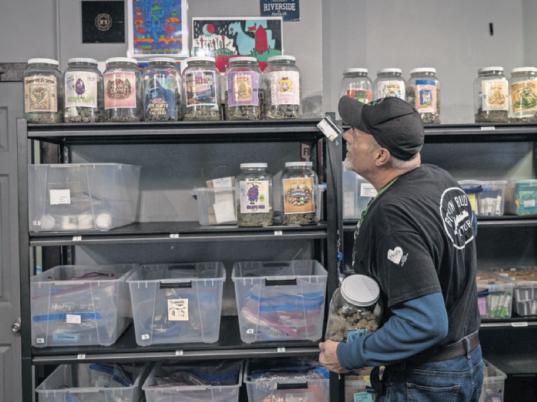
• A NEW CANNABIS MARKET: How will “social use” policies recently approved by the Cannabis Control Commission affect the industry in Massachusetts? K9
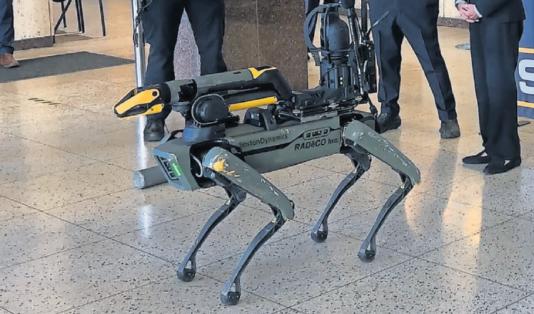
• A LEASH ON ROBOT POLICE
DOGS?: Police departments in the Pioneer Valley are mixed on how to use new technology in crimefighting. K10
SECTION L: Banking, insurance, nonprofits, real estate, entrepreneurship
• ALL-IN ON TECH TOOLS: AI “spokespeople” proliferate in spots created by a Pioneer Valley company, Big Voodoo Interactive.
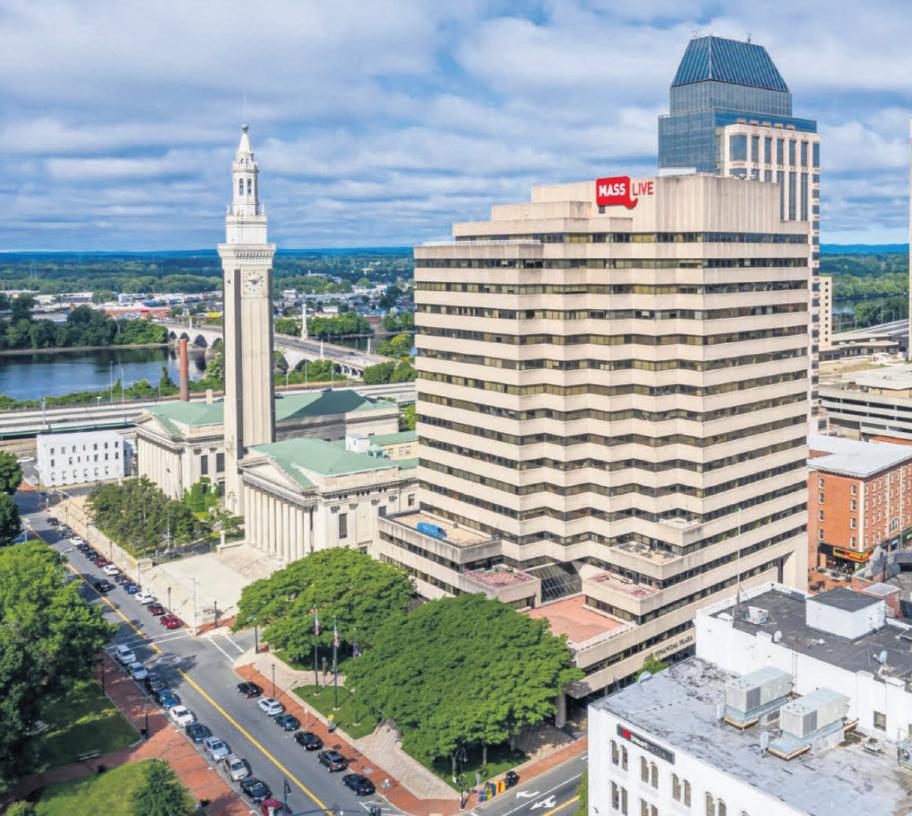
• VERSATILE VENUES: Sean Dolan, general manager at the MassMutual Center, writes that “the next big thing in the venues and events sector is not a single technology or trend. It is the intentional use of flexible, shared spaces that bring business activity, community life, and economic impact together in visible and accessible ways.” L9
SECTION M: Retail, food and hospitality, tourism arts and entertainment, fashion and design, casinos, farming
• SEEDING SUCCESS, DESPITE CLIMATE: What’s the next big thing for Western Massachusetts farmers facing a changing climate? M1
• MODERNIZING MUSEUMS: Kay Simpson, president and CEO of the Springfield Museums, says institutions like hers are rapidly integrating emerging technologies, including augmented reality, virtual reality, extended reality, spatial audio, holograms and artificial intelligence. M6
• WIDER CULTURAL NET: Entertainment venues are pursuing more partnerships and collaborations, even with non-arts organizations. M6
• DOING MORE TOGETHER: Diana Szynal, president and CEO of the Springfield Regional Chamber, sees synergy in institutional connection. She writes that “when the region’s schools and business community work in alignment, the benefits reach far beyond individual organizations.” M11
As I reflect on this past year, I remain committed to standing up for programs that matter most to our communities throughout the First District of Massachusetts. Whether it be safeguarding access to affordable health care, defending SNAP benefits, or strengthening Medicare, Medicaid, and Social Security, we must remain vigilant in the face of renewed threats to these
Thank you for your continued support. It is an honor to represent the people of western and central Massachusetts in
the United States Congress.
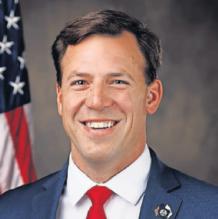
Richard E. Neal
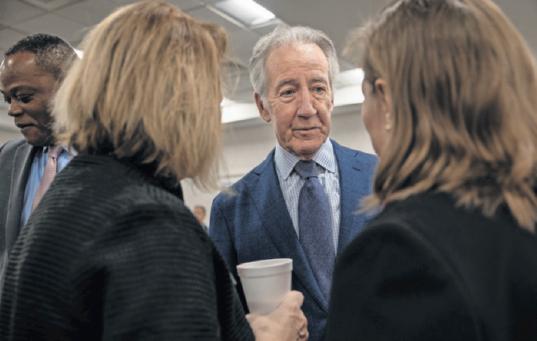
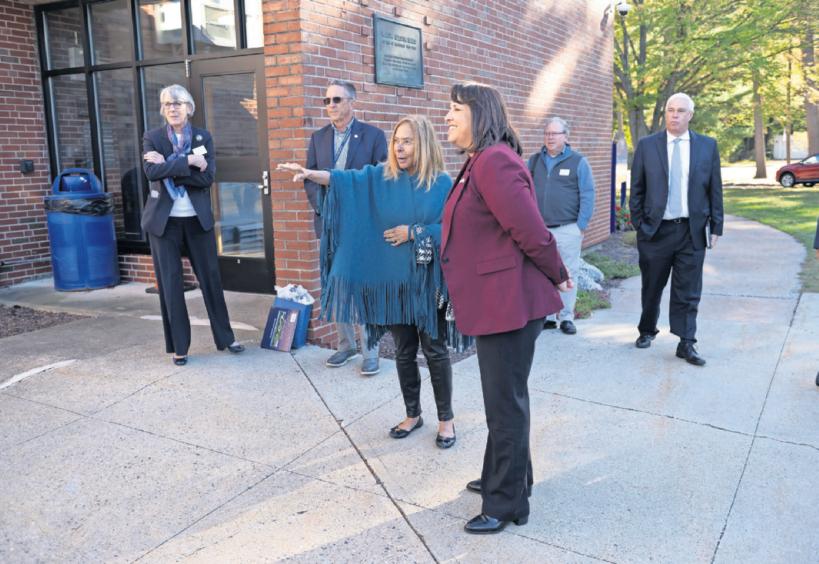
U.S. Rep. Richard E. Neal arrives at the TD Bank building on Main Street in Springfield to discuss the state
For 175 years , MassMutual has stood beside families and businesses in the greater Springfield community, guided by the principle of mutuality — where we all grow stronger together. Our roots run deep here, and our purpose remains unchanged: helping people secure their future and protect the ones they love.
As we mark our 175-year anniversary, we look forward to being a steady source of strength you can count on for generations to come. Because trust and integrity aren’t trends — they’re timeless.
Baystate braces for loss of $147M
By Jim Kinney jkinney@repub.com
SPRINGFIELD — Baystate
Health President and CEO
Peter D. Banko was making progress in 2025, closing a $225 million hole in the health care giant’s finances.
Expenses too high, revenue too low. He cut jobs, and searched for efficiencies and ways to grow revenue.
Then came President Donald Trump’s domestic policy bill. Now passed into law, it threatens to cost Baystate Health $146.7 million, once the bill fully takes force after the November elections.
“It’s the single largest rollback in our lifetimes of health care programs,” Banko said in a recent interview. “The work we did last year and the work we’re doing this year, that gets totally wiped out.”
“So we’re almost starting from scratch,” Banko said. “You know, I’ve worked my whole career to try to expand access and coverage, and now it just got undone.”
Access to care means insurance. And Baystate estimates an increase in the uninsured population, as people lose Medicaid, will cost the hospital system $53 million.
Then another increase in the uninsured population will come as people lose insurance subsidies under the Affordable Care Act, which will cost Baystate about $10.4 million.
U.S. Rep. Richard E. Neal, D-Springfield, has predicted that the ACA subsidies will be back.
That’s a help, said Banko, who added that he’s lobbying state politicians in Boston. He’s hoping that Democratic wins in Congress in November will change health care policy in Washington. He first disclosed the eye-popping $147 million figure back in December in a forum with Neal.
The $146.7 million in lost federal money will represent 4.8% of Baystate’s bottom line. Last year, the profit margin Baystate relies on to fund capital projects and as a cushion against future misfortune
was 3.5%.
Additional financial fallout includes the 340B reduced cost drug program, at $45 million; decreases in funding for Medicaid, $298.6 million; and increased cost sharing for Medicaid, $98.2 million.
Baystate’s problem is that Springfield, Holyoke and Western Massachusetts in general have a high percentage of people on these government-provided or government-subsidized health care plans.
“What are we going to tell people when 25% of our community is no longer covered?” he said. “We say, ‘Good luck. You don’t have that coverage or access.’?”
People without coverage delay care. So, conditions get worse. Cancer, heart disease, each gets worse and more expensive to treat.
“If you lose coverage in the middle of your pregnancy, are you (going to) continue to get prenatal care if you can’t pay for it?” he said. “Let’s say you’re in the middle of
chemotherapy. Are you going to show up if you can’t pay for it?”
But eventually, people arrive at the emergency room. And Baystate can’t turn them away.
“So the reality for us is those people will not have reimbursement,” he said.
For Banko, bracing for impact is his full-time job in 2026.
That’ll take more maximizing of revenue, like making operating rooms more efficient to increase the number of procedures in a day. Banko
Springfield, moving forward
THERE IS SO MUCH that I consider to be big things for Springfield as I look ahead. The city continues to respond to the local need for housing by increasing housing opportunities at all income levels across the city.
We are aggressively strengthening our educational infrastructure by preparing for a new elementary school, to be located in the North End. The city has helped bring a significant new retail development to the Boston Road corridor with the opening of Springfield Crossing, an approximately 400,000 square foot, $80 million development, by creatively employing District Improvement Financing and thus creating hundreds of jobs for Springfield residents. The forthcoming selection of the site for the new Regional Justice Center in downtown Springfield will bring significant positive change to downtown. The city continues to monitor and respond to the ongoing uncertainty that currently defines the federal government and its potential impacts upon state and local government.
These are all big things that will impact Springfield’s future.
Looking more expansively, I would be remiss not to raise the impacts related to Practical Quantum Computing and Artificial Intelligence (AI) and its potential global impact. I am the first to say that I am not computer savvy. But I do sense that we are coming upon a precipice of technological transformation.
AI is already a part of our everyday lives. It has the ability to break down language
barriers via a cell phone, diagnose diseases and create images from imagination. AI however remains constrained by existing computer processing methodologies. Quantum computing explodes those constraints and replaces them with exponential processing speed that seems almost limitless.
Unlocking the potential of quantum computing will allow us all to learn, problem solve and analyze faster and deeper than ever. Quantum computers process information differently and can quickly analyze huge amounts of data simultaneously, reducing months of computation and modeling down to hours. So why is this important to Springfield?
Western Massachusetts has been designated by Gov. Maura Healey as a Quantum Technology Tech Hub, through the Massachusetts Technology Collaborative. Further, Springfield Technical Community College was recently awarded a $1 million grant to advance a feasibility and design study of a Quantum Computing Supply Chain Accelerator. The accelerator will be located in the Springfield Technology Park and will be the first regional facility to drive quantum computer commer-
cialization, support start-ups and strengthen the advanced manufacturing supply chain in Western Mass., which to me means the creation of jobs.
Adding to this, in June 2025 the Pioneer Valley Planning Commission (PVPC) announced the graduation of the first class of students from its Quantum Training Academy. Further leveraging Springfield as a high-tech city is the Richard E. Neal Cyber Center at Union Station, the foundational training offered by The Tech Foundry, and the current installation of fiber service across Springfield by GoNetSpeed. All of this investment in technology creates current and future opportunities for new economic development and job creation.
These efforts do not happen overnight. They represent years of work with our state and regional partners including the Western Mass Economic Development Council (EDC), STCC, PVPC, the Massachusetts Technology Collaborative, the Pioneer Valley Innovation Hub, the entire Western Mass legislative delegation, and the City Council.
Challenges remain to achieving practical quantum AI. But progress is rapid as international companies race toward the quantum advantage.
Our collective history with technology suggests that these types of transformative technologies often come sooner than later once thresholds are crossed. Think how quickly the internet went from being an academic curiosity to directly impacting the world’s population. This suggests an urgency to
“So
we have to have a single voice with the federal government and with the state government. So
I think it’s an opportunity for competitors to cooperate a little bit more.”
years that could result in an acquisition or merger.
Banko can’t discuss a Mercy deal, citing nondisclosure agreements. And Dr. Robert Roose, president of community hospitals for Trinity Health of New England, canceled a interview with The Republican on related health care topics.
In an essay for The Republican, Roose spoke about the need for transformation and change in the industry.
But Mercy’s decisions already are affecting Baystate, after Mercy closed its maternity and newborn services in December, citing a lack of staff.
Effects from White House health care rollback loom
ter-based insurer Fallon Health.
If not combining outright, Massachusetts hospitals are combining their efforts.
“So we have to have a single voice with the federal government and with the state government,” he said. “So I think it’s an opportunity for competitors to cooperate a little bit more.”
Baystate works with the public, so Medicare and Medicaid recipients are up to date on new paperwork and work requirements.
“You have to fill out paperwork every year to show you qualify,” Banko said. “They’ve made that every six months.”
The problem is, recipients don’t do it now, even though it’s only once a year.
“Every six months is going to be a burden,” he said.
Baystate’s trying other things to build more business. Its flagship — Baystate Medical Center in Springfield with 780 beds — is nearly always full. But Baystate Noble Hospital in Westfield is not. So in 2025, Baystate piloted a program. It started paying for transportation, encouraging patients in the Springfield hospital who live close to Westfield to transfer and be treated there.
It opens up beds in Springfield and cuts wait times in the emergency room.
needs to keep patients, and money, here. It will take efficiencies, like AI customer service. Expect to schedule with a chatbot. It’ll also take growing insurer Health New England, which Baystate nearly sold last year. It’s about a third of the size it needs to be, Banko said.
Health care providers will cope with mergers and acquisitions. And the best way to survive is to get bigger. Baystate and Mercy Medical Center, Springfield’s other hospital, have been in talks for
put in place the infrastructure to support the impending growth. Springfield continues to support and assist those efforts that bring the Western Mass. region closer to the intersection of practical quantum AI and the tangible economic development benefits it can have for the city, its residents and businesses.
Quantum computing AI ... a very big, next big thing, indeed!
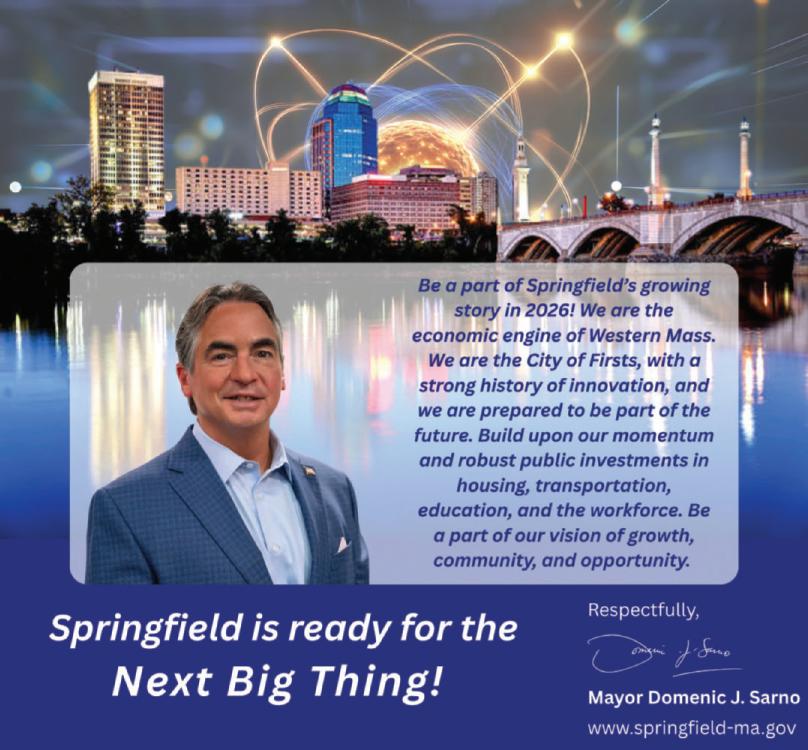
Mayor Domenic J. Sarno, a native son of Springfield, is the longest serving mayor in the city’s history.
Patient volume a few blocks away at Baystate’s childbirth center went up 16%, Banko said.
Beyond Mercy, Banko said economics of scale will be even more important. And managers in all of health care know it.
“We see ourselves as a safety net for some of the organizations that are struggling,” he said. “Everybody’s talking to everybody right now.
Mass General Bingham, which includes Cooley Dickinson Hospital in Northampton, announced in January that it’s acquiring Worces-
Banko also announced plans this month to expand back into Ware, building a primary care and convenient care practice there, taking the place of the closed Baystate Mary Lane Hospital.
Banko said Baystate also hopes to tap the federal Rural Health Transformation Fund and expand a family medicine residency program from Greenfield to Ware. The program trains 12 new medical residents — taking in four new doctors a year — at Baystate Franklin in Greenfield. The plan would be for faculty and residents to staff a clinic in Ware.
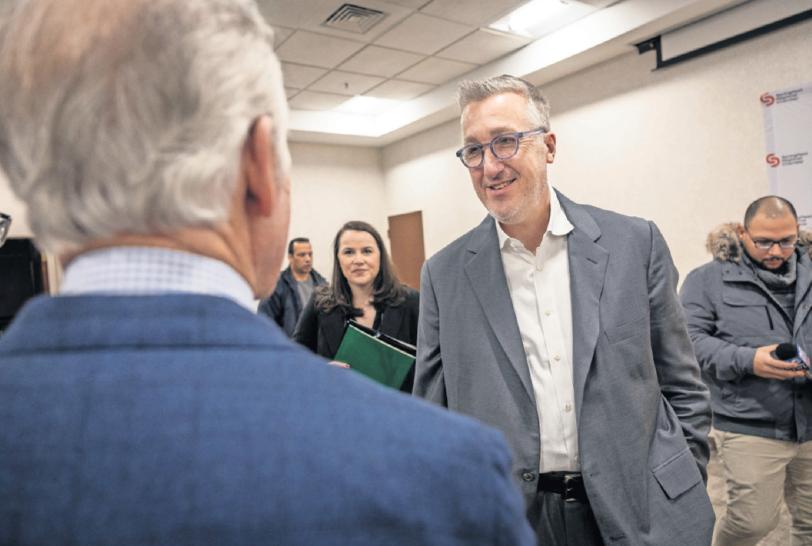
Baystate Health President and CEO Peter D. Banko, right, meets with U.S. Rep. Richard E. Neal on Dec. 15 to discuss health care in Western Massachusetts. (DOUGLAS HOOK / THE REPUBLICAN)
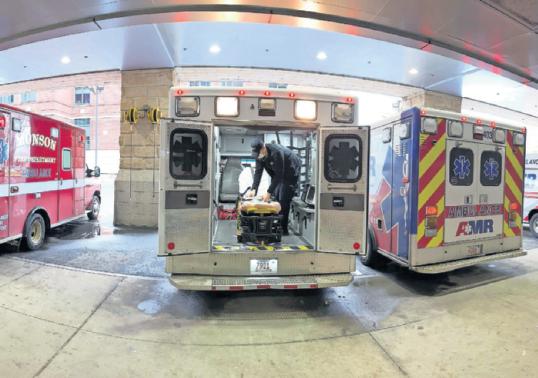
Ambulances fill all the bays at the Baystate Medical Center emergency room in 2024. (DON TREEGER / THE REPUBLICAN, FILE)
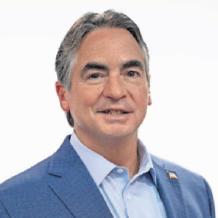
Peter D. Banko, Baystate Health president and CEO
Domenic J. Sarno Springfield mayor
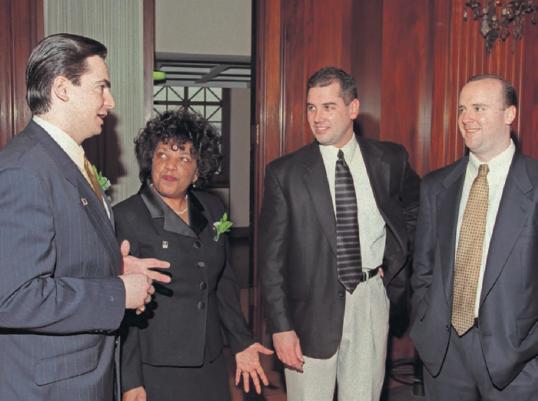
Domenic J. Sarno, left, in 2001, and others await their inauguration as members of the City Council and School Committee. From left are Sarno and Carol Lewis-Caulton, School Committee member Thomas M. Ashe and Councilor Daniel K. Kelly. (THE REPUBLICAN, FILE)
Holyoke is ready for liftoff in 2026
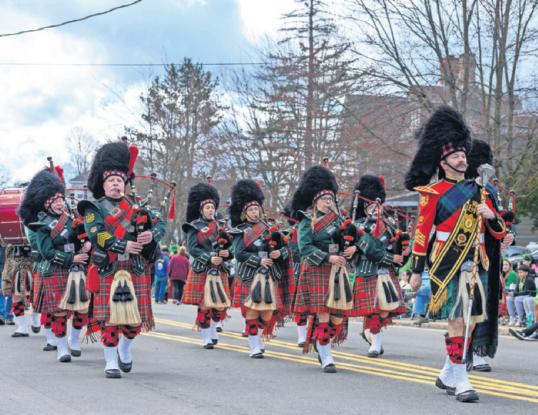
Parade in March. Above is a scene from a past year’s St. Patrick’s Parade. (THE REPUBLICAN, FILE)
Positioned to win the tech game?
Bay State’s K-12 computer science ed varies widely; some groups are trying to change that
By Greta Jochem gjochem@repub.com
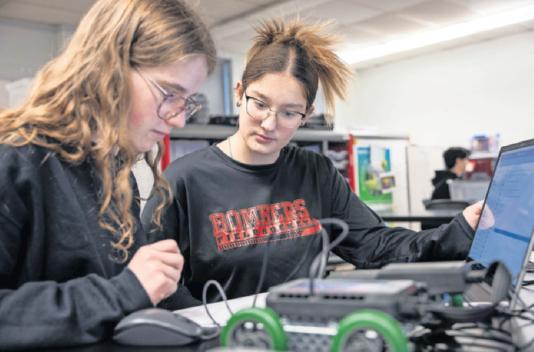
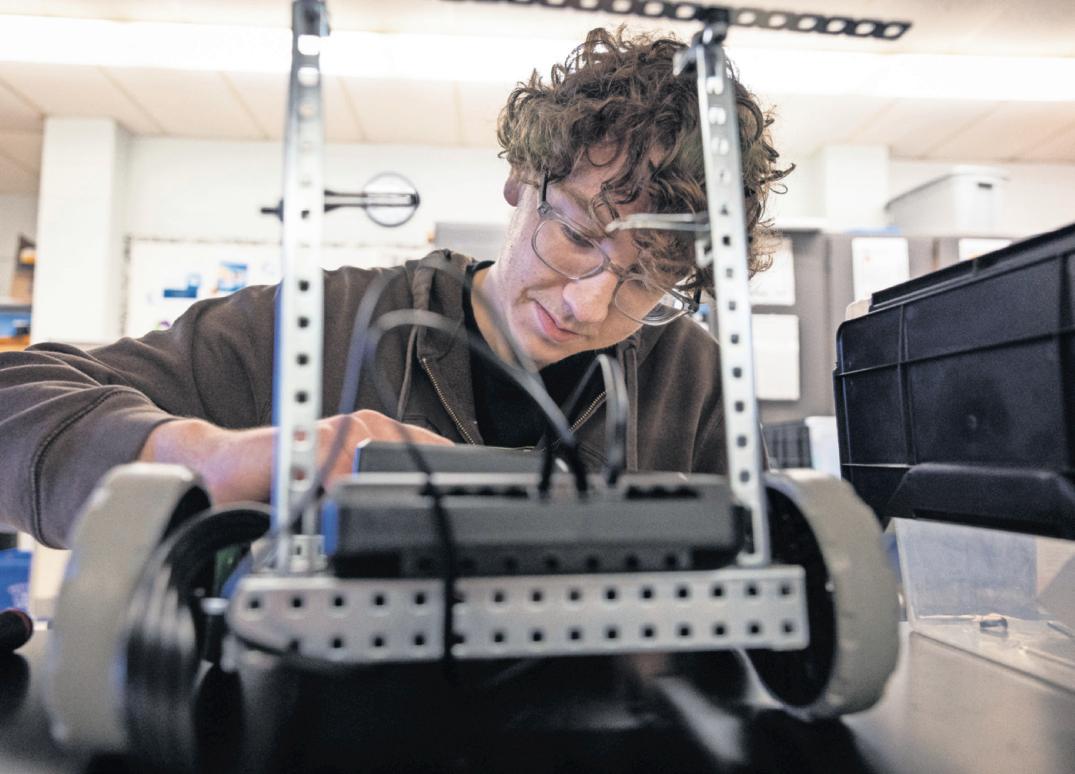
WESTFIELD — On a recent morning, students in Renee Sweeney’s engineering class at Westfield High School tinkered with their robots. They worked on writing code to tell the robots how to move.
THE NEW YEAR IN Holyoke got off to a brilliant start thanks, in large part, to the results of the most recent city elections. The newly elected and re-elected city councilors have indicated a willingness to move forward on an array of initiatives to address community concerns.
Front and center is the Municipal Finance Modernization Act. After well over a year of council resistance, delays, and postponements, we are finally positioned to implement a suite of changes to city ordinances and the city
charter to modernize the way our financial resources are managed. The changes will be systematic and will align with our vision to strengthen internal controls, reduce liability, and maximize our resources to better support services for constituents and reduce harm.
When passed by the full City Council, the changes will result in departments realigned to meet today’s needs, key positions renamed and duties reassigned, and — at long last — addressing concerns raised in decades of independent audits.
The overhaul will be budget neutral in fiscal year 2026 and will bring about $100,000
in cost savings in FY27, while reducing reliance on contractors to perform basic functions and ensuring timely year-end closing and filing of all state and federal documents.
We are looking forward to zoning and special permitting reforms to facilitate sensible and responsible development by eliminating inefficiencies that have contributed to Holyoke being maligned as “business unfriendly.”
Also high up on the agenda is the continuation of our work to resolve blight and housing needs and strengthen code enforcement to protect tenants. Thanks to the leadership in our police and fire departments as well as our building department, Board of Health, and the DPW, we continue to maintain our commitment to aggressively respond to code infractions that contribute toward community concerns about public safety and quality of life.
I am proud of the
of CSforMA, a nonprofit agency that works on educator professional development and aims to help schools increase their computer science class offerings.
Soon, more students in the high school will be learning to code.
Starting with next year’s freshman high school class, taking a year of computer science will be required, said Christina Smith, the district’s supervisor of science technology and engineering for grades five through 12.
“We are preparing our kids for their real lives after school,” she said.
Not all districts in the state require a course to graduate.
While the commonwealth does have framework for computer science and digital literacy education, there’s no state requirement to teach computer science in K-through-12 schools, according to the Massachusetts Department of Elementary and Secondary Education.
The percentage of K-through-12 students in each district who have taken a computer science course ranges from about 80% to zero, according to DESE data.
Some groups are trying to change that.
Schools offerings are “all over the place,” said Shaileen Crawford, executive director
In fact, Crawford’s agency would like to see computer science be a statewide high school graduation requirement.
Massachusetts is above the national average for percentage of high school students who have taken a computer science course, but not in the top 10, according to a report from the Code.org Advocacy Coalition.
With a top-notch education system and as a hub for the tech industry, the commonwealth should have better computer science education, Crawford said.
Even with artificial intelligence increasingly being able to write code, Crawford still sees it as a useful area of study.
“People still need and deserve a basic understanding of how it works underneath. Just like we still teach calculus and basic arithmetic, even though we have calculators,” she said. “We will always need people who know how to open it up and build new models.”
A state-commissioned report from SageFox Consulting Group, of Amherst, and CSforMA, of Marshfield, looked at the possibility of making a computer science course a high school graduation requirement. The 2024
TECH, PAGE J14
Holyoke has plenty planned for 2026, including its annual St. Patrick’s
Joshua A. Garcia Holyoke mayor
SEE GARCIA, PAGE J12
Above, Lucy Alger, 16, and Natalie Dansereau, 15, work on coding for their robot in Renee Sweeney’s Principles of Engineering class at Westfield High School. At right, Ethan Houle, 17, works to install a sensor on the robot in Renee Sweeney’s Principles of Engineering class at Westfield High School in mid-January. (DOUGLAS HOOK / THE REPUBLICAN)
Stronger together: Building a healthier future for WMass
BAYSTATE HEALTH is committed to delivering compassionate, quality and accessible care — advancing our communities’ health for all. We have been an economic and health pillar of our community for more than 140 years. Over the past year, we have made meaningful progress to achieve financial stability and long-term financial resilience. This has required difficult decisions by our governance and leadership. We have asked our 13,000 incredible team members to challenge the status quo, embrace new ways of thinking and act decisively to improve our system. Our transformation has been impactful on the organization, the communities that we serve and our neighbors this past year. Yet, one thing remains consistent — safety first, every person, every moment.
As we look ahead this year and beyond, familiar challenges like workforce, inflation for supplies and pharmaceuticals and a large, growing government (Medicare and Medicaid) payor population remain in our markets. Then, the One Big Beautiful Bill Act passed in July 2025 and became the single largest rollback of health care in our lifetimes.
After decades of working to expand coverage, access and affordability, the new law threatens the most poor and vulnerable in our community, raises cost shifting to those with commercial insurance and devastates safety net health care providers. As I think about innovation, the words and writings of the late Clayton Christensen, a renowned Harvard Business School professor, come to mind. He was an academic and business consultant who developed the theory of disruptive innovation. Dr. Christensen said, “The breakthrough innovations come when the tension is the greatest and the resources are the most limited. That’s when people are actually a lot more open to rethinking the fundamental way they do business.”
In 2026, our breakthrough innovations will come in four areas where we are fundamentally rethinking the way we do our core business –access, quality and safety, “payvider” and technology. First, access is defined by you — our customers. When, how and where you want care. Access is the ease with which you can get the care you want and need at Baystate — timely, available, affordable and culturally appropriate. This year, we will make improvement in hospital access (emergency and surgery) and physician access. Second, we will deliver highly reliable care — Leapfrog A and CMS 4 or 5 Star care. In January, we started the design process for what’s known as a High Reliability Organization (HRO). All team members will be trained in 2026 on universal HRO skills. This journey involves a zero-harm goal, a proactive safety and just culture, rigorous process, systems
Dr.
A different kind of physician’s assistant
For doctors, AI ‘ambient listening’ takes notes, so they can focus on the patient
By Jim Kinney jkinney@repub.com
HOLYOKE — What brings you in today?
Dr. Sundeep M. Shukla can now ask that question with his head up, not buried in a screen taking notes.
“I make eye contact,” he said. “I look at the patient.”
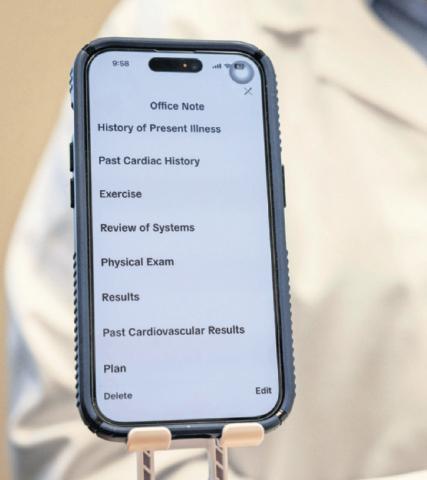
Shukla, an emergency room physician at Cooley Dickinson Hospital in Northampton, uses the hospital’s new AI listening technology not just to record conversations with patients but to help organize all of the notes that must be charted at the end of a busy shift.
“It has to be proofread,” Shukla said. “Nothing is 100%.”
The technology doesn’t work perfectly with young patients or those who don’t normally use English as their first language. Someone who is in a lot of pain or is just not speaking clearly might have trouble making a coherent recording.
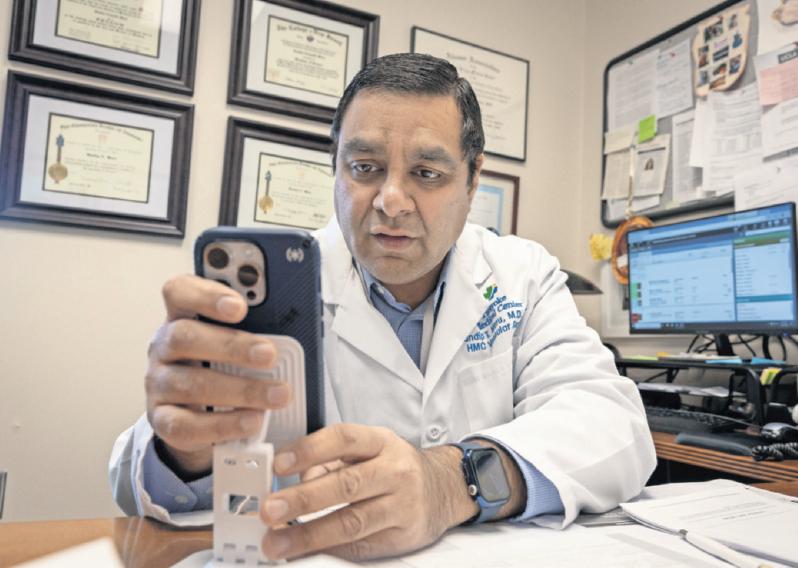
“It kind of works like an artificial intelligence medical scribe,” said Dr. Sandip Maru, a vascular surgeon at Holyoke Medical Center who might see as many as 25 patients on a busy day in the office.
That can make it hard at the end of the day to remember who said what and when.
“And a lot of it is from memory,” he said. “The new technology takes away some of that administrative work.”
Relatively recent use
Doctors across the Pioneer Valley, including those at Holyoke Medical Center and Cooley Dickinson in Northampton, started using AI ambient listening technology in 2025.
Maru said he needs to edit the text. The program is not perfect. But it saves him hours of work after the clinic day. In the old days, doctors would take notes on paper or record notes on tape recorders then either listen to themselves or send them out to a transcriptionist. It was hard to reconstruct what was said.
“And a lot of it is from memory,” Maru said. “The new technology takes away some of that administrative work.”
He always tells patients he’s using a recording device. The recording and the AI software used to transcribe and organize it are compliant with
Insurance Portability
Maru uses AI software to help with his patients' check-ins. “It kind of works like an artificial intelligence medical scribe,” he said.
(DOUGLAS HOOK / THE REPUBLICAN)
“I think it can only enhance patient safety. It doesn’t make treatment decisions. We’re not there yet.”
Health Systems
and Accountability Act of 1996.
Spiros Hatiras, president and chief executive officer of Holyoke Medical Center and Valley Health Systems, said Holyoke piloted the programs in 2025 and will roll them out more fully in 2026.
“It eliminates the busywork,” Hatiras said.
He added that the technology is even good at ignoring the opening, getting-toknow-you portions of the conversation, such as when a doctor asks about the Patriots or the weather.
Holyoke Medical Center uses another piece of AI technology to double-check medical records. It scans for missed steps or abnormalities, or tests that would normally be ordered that haven’t been.
“I think it can only enhance patient safety,” Hatiras said. “It doesn’t make treatment decisions. We’re not there yet,” he said.
Baystate Health is making AI part of its cost-savings push, said CEO Peter D. Banko.
The largest healthcare provider is inserting AI into all of its information systems, making more operations self-service.
“So being able to schedule, being able to fill out your paperwork, being able to refill your prescriptions, being able to interact with your physician more real time through some AI agents,” Banko said.
Nearly three-quarters — or 71% — of doctors and nurse practitioners report some use of AI for patient visits, according to an August MGMA Stat poll.
But opinions were divided on its impact on staff workload: About 44% said it has not reduced workload,
MY NAME IS Namu, and I am a part of Generation Z. We Gen Zers have heard all the stereotypes. We’re lazy and entitled, we’re on our phones too much, and we don’t want to work.
I’m here to tell you that that’s far from the truth. We’re go-getters, we’re digitally savvy, we care about the world, and we just want to find our place in it. Unfortunately, that goal is getting harder and harder.
The national unemployment rate is 4%, but among those 18 to 25, that rate is 8%, says Adaora Ubaka, assistant professor at the University of Massachusetts Amherst Isenberg School of Management, whom I spoke with recently.
Part of the reason the rate is so high, she said, is because companies are outsourcing entry-level jobs that have historically gone to recent college graduates to artificial intelligence. It’s a major source of anxiety for her students, most of whom are in their final year of college and beginning to apply to jobs.
Ubaka describes herself as an “elder millennial,” but her work revolves around Gen Z. She is fascinated by this generation, one she says is by no means lazy.
“They are actually part
of what’s called the hustle gen(eration),” she said. That’s the ability to have a job and also a “side hustle,” or a secondary job that makes money. Gen Z is more entrepreneurial than previous generations, in her view. In her work, she looks at what research has to say about Gen Z entering the workforce, and how this generation — my generation — is shaping workforce culture. The oldest of us are nearing the end of our 20s; the youngest are just entering high school.
By 2030, Gen Z will make up about a third of the workforce across the U.S., according to the National Association of Colleges and Employers.
Of my fellow reporters in the newsroom here at The Republican, I’m the youngest at 26. We’re evenly split between millennial (also known as Gen Y) employees born between 1981 and 1996, and Gen X employees, born 1965 to 1980. And there’s one baby boomer, born between 1946 to 1964. It’s no secret that the “traditional workforce” is changing. The COVID-19 pandemic had a role to play in that. For example, companies that previously expected employees to be in-person five days of the week can now take on a hybrid approach. But the pandemic also eroded Gen Z’s trust in institutions,
39% said it has, and 17% were unsure.
Sandip Maru, chief of vascular surgery at Holyoke Medical Center, has started using AI software to aid him with his patients’ notes. Maru said it is useful at catching things the patient says that he might have otherwise missed. (DOUGLAS HOOK / THE REPUBLICAN)
Spiros Hatiras, president and chief executive officer of Holyoke Medical Center and Valley
Peter Banko
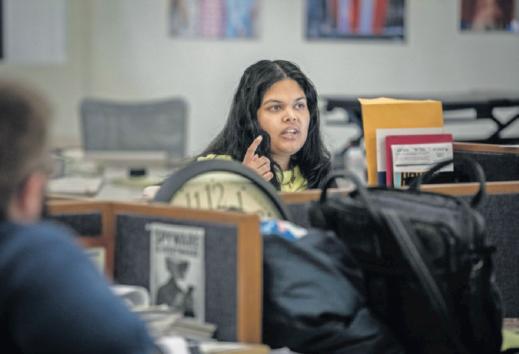
Namu Sampath, a reporter at The Republican, discusses a story with Enterprise Editor Dan Jackson in the paper's Springfield newsroom on the morning of Jan. 8. (DOUGLAS HOOK / THE REPUBLICAN)
Our chrysalis moment in health care
ICOULD TALK ABOUT the many changes reshaping health care in 2026 — inadequate reimbursement, workforce redesign and new delivery models. These are all real, and they matter. But the real inflection point for our health care system isn’t about individual hospitals or structure; it’s about purpose and alignment.
To truly create health for generations to come, health care must integrate cutting-edge technology, including artificial intelligence, with human connection and lifestyle medicine, so we can emerge from the “caterpillar” fee-for-service models of treating illness into the “butterfly” value-based future built for long-lasting well-being. This is our chrysalis moment where transformation is paramount — to be both high-tech and high-touch, grounded in innovation and trust, driven by strategic collaborations in ways we have not seen before.
Health care has long been focused on optimizing care and experience inside the walls of hospitals and office buildings. We’ve gotten better at treating illness and have more tools at our disposal to prolong life than ever before. Yet we know that hospital visits or prescription medications alone don’t result in quality of life or true health, and neither will nostalgia for “the way things were” — especially in the context of ever-rising costs and increasingly inadequate reimbursement.
Health care needs a new
approach with both immediate results and a long-term view: to adopt innovations that free up time and reduce fragmentation, and a focus on foundational lifestyle principles that make healthy choices and social connection the default. And we need to do it in partnership with others.
Why now? Because the stakes could not be higher.
Nearly half of U.S. physicians report symptoms of burnout — which is a risk to access and quality. There are workforce shortages in many key disciplines, like primary care providers, registered nurses, and radiology techs, that threaten to limit access. The gap between lifespan (duration) and healthspan (quality) is widening, and loneliness has been declared a public health epidemic, with health impacts comparable to smoking 15 cigarettes a day. These aren’t side issues; they are upstream drivers of chronic disease and cost. If we want healthier communities, we must treat purpose like a clinical vital sign and wellness as a core business strategy.
SEE ROOSE, PAGE J14
Machine and medicine, working together
WHAT IS THE next big thing in health care? My generation knew a world without internet or iPhones, where the fax machine was a new and novel idea. In fact, when I was a young adult, telephones without wires that you could carry in your hand and see the person you were talking to were the stuff of science fiction legends. When I see self-driving cars, spacebased internet coverage anywhere in the world, a push for Mars, robotics and aggressive AI development, I wonder, “How does that apply to health care and what does it mean for the health care industry?”
I believe that we are on the verge of a new era in health care, given that we already have seen real world applications of “machine” intelligence (I prefer to call it that rather than “artificial”). And while I don’t think humans or human intervention is going
Building on a proud legacy at Cooley Dickinson: Investing in structure, workforce and the future of care
AS A NEW LEADER at Cooley Dickinson Hospital, my first priority has been listening to staff, physicians and community partners. What I have heard consistently is a deep pride in the care delivered here and a shared desire to strengthen our foundation for the future.
Our focus is to build on this proud legacy by supporting the people who deliver care, aligning leadership to the work at hand, and strengthening systems that enable excellent outcomes. These efforts are made possible through strong executive partnership. Under the leadership of our hospital president and chief operating officer, Kevin Whitney, Cooley Dickinson remains committed to empowering our nursing and clinical teams and sustaining the structures that allow high-quality, patient-centered care to thrive.
Strengthening nursing leadership structure
To support the increasing complexity of health care, Cooley Dickinson has revised its inpatient nursing leadership structure to better align leadership oversight with the scope and intensity of care delivered across the hospital. This structure enables leaders to focus intentionally on quality improvement, staff development, patient safety, and workforce engagement, supporting proactive work that strengthens outcomes and sustains excellence at the bedside.
Investing in the workforce and safe staffing
Our people are our greatest strength, and Cooley Dickinson has made mean-
ingful investments to support safe staffing and workforce sustainability. These include competitive wages, an expanded nursing resource pool, and a weekend enhanced-pay program. This approach rewards staff who prefer weekend work, while offering greater flexibility and fewer weekend commitments for others.
We are strengthening the nursing and staff workforce pipeline through academic partnerships. Earlier this year, the hospital partnered with Greenfield Community College to launch a central sterile processing technician training program taught by Cooley Dickinson’s central sterile supervisor Marlene Gonzalez. All three graduates were hired into full-time roles upon completion.
Additional partnerships include collaboration with Bay Path University to train patient care assistants, with students paid during training and hired upon completion. This fall, Cooley Dickinson will partner with the MGH Institute of Health Professions to bring an accelerated nursing degree program to our campus.
Supported by Mass General Brigham tuition reimbursement and hospital grant support, the first cohort will begin in September. To further support safe staffing, the hospital is using predictive workforce planning tools to anticipate future needs and proactively align resources.
Advancing research, leadership development
Aligned with Mass General Brigham’s commitment to research, Cooley Dickinson is exploring academic partnerships that expand nursing research and evidence-based practices. This ensures that care is guided by the best available evidence while generating new knowledge that benefits our community.
SEE ANUEYIAGU, PAGE J14
to become obsolete anytime soon, I can see a synergy between human and machine that will make health care safer, more efficient and more effective.
As an example, at Holyoke Medical Center we are already using machine learning to help our clinicians be more efficient with the ever-increasing burden of documentation. We employ a technology that relies on ambient listening during an office visit to create an appropriate note for the chart that captures everything necessary, thus leaving more time for face-to-face clinician-patient communication. We also are piloting technologies that, while not directly diagnosing a patient or suggesting care, perform a kind of surveillance to flag areas of concern and early warning signs that would otherwise be
much harder to identify. A machine can look at an endless stream of data, like lab results, vital signs, symptoms and past history in mere seconds and do that for many patients at a time; a task that would take a human hours or days. It also can search vast databases to find matches for particular patterns or disease manifestations to inform decisions. Very importantly, it can do this 24 hours a day, seven days a week and 365 days a year without tiring.
I think the next big step will be robots with machine-learning capabilities, like the “Optimus” announced by Tesla. You might have heard for years about “robotic surgery” and “robots,” but the reality is that it describes machine-assisted surgery; a mechanical “puppet” operated by a human surgeon. However, before we get to an actual robotic surgeon, there is potentially a place for auton-
omous robots at hospitals like Holyoke Medical Center, and that is for difficult or repetitive jobs. One such application is to watch over patients who are confused or restless and are at risk of getting up from their beds and falling. Despite all the efforts of using technology, like bed alarms and cameras, as well as human “chaperones,” many patients in every hospital across the country suffer falls, sometimes with significant injury. The technology is helping, but often the warning that someone is getting out of bed comes too late. The job of the human observer is one of the most tedious at our hospital. Imagine having to sit for hours watching a patient without being able to do anything that would distract you, not even reading a book ... for hours. It is no wonder it is very difficult to recruit and retain staff to do this job. Now imagine the Optimus Patient Observer that will not only watch out for your safety 24 hours a day without getting bored or distracted, but also can entertain you with music, trivia and even board games, be your personal encyclopedia, make calls for you and so much more. And, all it will ever need is to be plugged in and charged, and have an occasional software update. It might sound futuristic, but I predict we will deploy this technology at Holyoke Medical Center in less than three years’ time. The future will certainly be exciting, and who knows what’s next after robots? Beam me up, Scotty?
Spiros Hatiras is president and CEO of Valley Health Systems/Holyoke Medical Center.
Spiros Hatiras
Chika Anueyiagu
Dr. Robert Roose
Waltham-based Boston Dynamics said that its Atlas robot will be deployed in Hyundai car factories starting in 2028. The CEO of Holyoke Medical Center envisions machine helpers at the hospital within three years. (BOSTON DYNAMICS PHOTO)
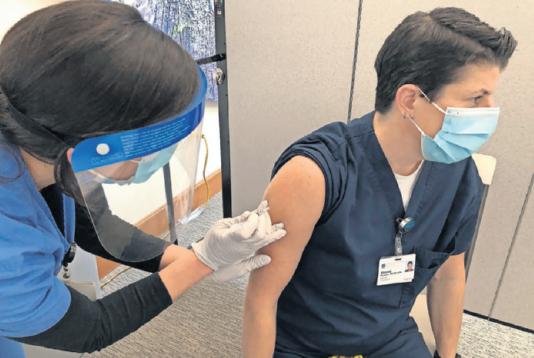
Registered dietitian Stacey Madden receives the COVID-19 vaccine at Cooley Dickinson Hospital in Northampton on Dec. 17, 2020. (COOLEY DICKINSON HOSPITAL PHOTO)
How West Springfield is building a future-ready local economy
HEN BUSINESS
Wleaders talk about “the next big thing,” they often point to technology, workforce shifts or market disruption. For local government, the next big thing is more practical and, in many ways, more consequential. It is building the systems that allow businesses and residents to operate with confidence in an increasingly unpredictable environment.
In West Springfield, we see our next chapter defined by a clear goal: making municipal government a reliable economic partner by modernizing operations, strengthening infrastructure and planning for growth without sacrificing affordability.
One of the most immediate ways we are doing that is through next-generation government. Over the coming years, West Springfield will continue to expand digital services, improve online access, and streamline permitting and licensing. For developers, contractors, and small-business owners, clear communication, predictable timelines and faster turnaround times make a real difference. Reducing friction in government is one of the most
practical ways a municipality can support economic activity. Infrastructure is another area where the next big thing is already underway. Over the past several years, West Springfield has invested heavily in rebuilding roads, improving intersections, expanding sidewalks and modernizing water and sewer systems that had not been updated in decades. Looking ahead, we are turning our attention to stormwater infrastructure, the third and long-overlooked system that protects our neighborhoods, businesses and transportation corridors. Establishing a dedicated stormwater utility will allow us to maintain and upgrade this system responsibly, while
development, and how the community plans to balance opportunity with sustainability.
according to Edelman, a global public relations company.
The pandemic also made room for Gen Zers to lead the charge on the boom of the “gig economy,” formerly seen as the “alternative” career path, which includes jobs like driving for Uber or Lyft, doing food delivery for companies like DoorDash or making and/or selling unique crafted items on Etsy.
According to Fortune, the gig economy is growing three times faster than the traditional workforce.
I reached out to my peers on social media to learn what the “ideal workforce” looks like to them. Some work in media, like me. Others have STEM careers — engineers, for example — or they work in food services. Many have passions on the side that they are developing into secondary careers. Do they work somewhere where their voices are heard and their needs are met? Where is there room for improvement?
Here is the bottom line: We want to work for people and companies that care about us. But that means the workforce has to adapt. I’ll close with a 10-point list of workplace qualities my generation seeks.
• Equitable pay: Gen Z wants to be paid more, and equitably, for their work. We demand salary transparency from potential employers, and we turn away from companies that don’t offer insight into the pay ladder. There is also a significant concern about the worsening economy: out-of-reach rent costs, student debt and high gas and grocery prices. Companies must be willing to understand the value we bring and pay us what we’re worth.
• Work-life blending: Our work-life balance — and, especially our lives outside of work — are incredibly important to us. Working 9 a.m. to 5 p.m. means 9 a.m. to 5 p.m. We have hobbies and side hustles outside of our (typically) 40-hour work weeks. Companies should offer more than 10 or 14 days for vacation time. Research shows that Gen Z employees are “burning out” much faster than older generations. Having time to recuperate allows for higher productivity at work and promotes increased happiness outside of work;
• Mental health: Employers must be more open about having conversations about this and providing support. Ubaka, the UMass professor, says she built mental health days into her
curriculum a few semesters ago — which her students appreciate. This generation, unlike any other, is much more likely to disclose mental health diagnoses, according to the Society for Human Resource Management, she said. My peers also say they want their employers to offer a clear distinction between “sick days” and “mental health days.”
• Professional development: Companies must support younger employees’ goals. Overwhelmingly, the people who replied to my informal survey said there is a widening gap between senior level employees and younger employees. Having an opportunity to develop soft and hard skills — and for companies to support that growth — is imperative to the shifting workplace;
• DEI: With the Trump administration’s attacks on diversity, equity and inclusion, more of my peers say they refuse to work at companies that have scaled back their support of DEI programs. On this note, companies also must promote gender equity in the workplace;
• Collaborative work environment: It’s true COVID-19 stunted some of Gen Z’s socialization skills. Employees want to work with their colleagues on projects and want to learn from all of our team members. Plus points if our team members also want to learn from us;
• Differing perspectives: We also want a workplace where our opinions, concerns and suggestions are taken seriously. We are a generation of people who advocate for ourselves and others;
• Flexibility: Whether employers like it or not, the pandemic opened the door to hybrid work environments and alternative career paths. Companies must be adaptable to employees’ needs for a flexible work environment;
• Purpose: We are vocal about systemic injustices. We want to work for companies that, frankly, give a damn about the world we live in. We want to feel like the work we do genuinely makes a difference; and we hope our employers care about the greater good;
• More casual, more fun: And finally, work is work, but I feel it should also be fun. We want companies that encourage interpersonal friendships at work, we want less formal dress codes, and lenient policies on tattoos and piercings. Opportunities for teams to bond — or to find common ground — are OK in doses, too.
better preparing our community for more frequent and intense storms. For employers and property owners, this is about protecting investments and managin g long-term risk. Transportation and mobility also are evolving, and our infrastructure must keep pace. In the years ahead, we will continue expanding sidewalk connections, improving road safety and advancing projects like the Piper-Amostown roundabout to reduce crashes and congestion. As more people walk, bike and use e-bikes, safer and more connected
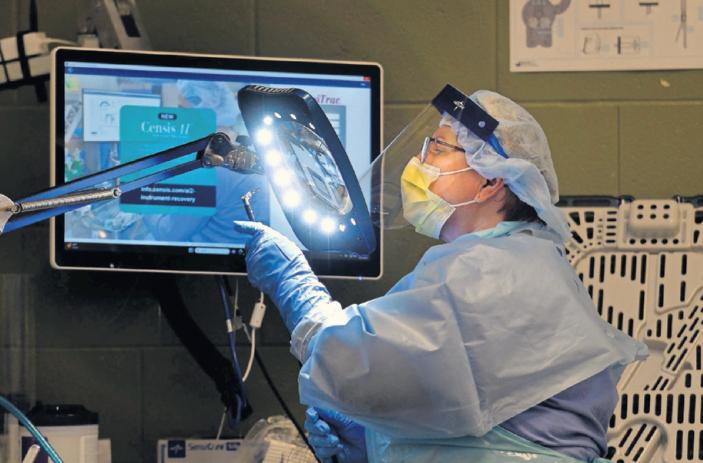
CONTINUES FROM PAGE J8 Sterile processing technician Theresa Pilat cleans surgical tools in the sterile processing area of Baystate Medical Center in 2024.
streets help support a workforce-friendly and accessible community.
Long-range planning is another critical tool we are using to support economic growth. In 2026, West Springfield will begin a comprehensive master plan for 2050. This plan will guide decisions on housing, land use, transportation, open space, economic development and climate resilience over the next 25 years. For businesses and investors, that kind of clarity matters. It signals where growth is encouraged, how infrastructure will align with
Affordability remains central to all of this work. Rising construction costs, inflation, and deferred maintenance can quickly translate into higher taxes and fees, affecting both households and employers. Our focus has been on investing strategically, planning ahead, and avoiding crisis-driven decisions. That discipline has helped West Springfield remain one of the most affordable communities in the region, while still delivering strong public services. Affordability is not a limitation on growth. It is a competitive advantage.
Strong public schools are another essential piece of the equation. Communities that offer a high-quality education at a reasonable cost are better positioned to attract families and retain talent. West Springfield has worked to deliver that value, and we are now in the early stages of planning for the consolidation and rebuilding of the John Ashley and Fausey schools. This process will be thoughtful and data-driven, with the goal of strengthening
and tools, and a growth and continuous improvement mindset.
Third, you may remember headlines from a year ago at this time when we made the courageous and agile decision to retain ownership of our health plan, Health New England. Baystate and Health New England together are evolving into a more value-based approach to health care, often called a “payvider” model.
We didn’t invent this model, but we are innovating here in Western Massachusetts for our members and patients. Our focus will be acutely on patient-centered approaches, clinician-driven and physician-led systems, clinical excellence, seamlessly accessible and coordinated care, prevention, chronic disease management, and your health (not just care).
We want to reduce friction and better connect care teams. Information will flow more smoothly and transitions of care will be easier. When care and coverage work together, people spend less time trying to access the system and more time focusing on their family and their health.
This shift isn’t just strategic, it’s necessary for Western Massachusetts. Our region faces an aging population and growing reliance on Medicare and Medicaid for insurance coverage. A more integrated, value-based approach allows us to meet these realities head-on, maintain access to care close to home and invest back into Baystate to benefit you and our caregivers.
Finally, we are going to innovate in our core technologies electronic medical record (EMR) and enterprise resource
our school system and ensuring fiscal responsibility for taxpayers. At the same time, continued investment in public safety, including planning for a modern police station, helps ensure the safe and stable environment that residents and businesses depend on. Taken together, these efforts reflect how we think about the next big thing in municipal leadership. It is not about chasing trends or headlines. It is about building capacity, reducing risk, and creating stable conditions where commerce can grow. As we move ahead, West Springfield looks forward to working with regional employers, developers and institutions who share this long-term view. The next phase of growth will be strongest when the public and private sectors work together to align infrastructure, workforce needs, and investment. We invite the business community across the Pioneer Valley to engage with us, collaborate with us, and help shape a future that is affordable, resilient, and full of opportunity for the entire region.
William Reichelt is the mayor of West Springfield.
planning (ERP) systems. By bringing together our clinical systems and our core business processes into a single, unified system, we will enhance your self-service of our system, digital health, telemedicine, artificial intelligence (AI), machine learning and health at home. In many ways, this path forward reflects who we have always been since 1883. We are rooted in this community and committed to building a healthier future together. Your health is our mission!
Peter D. Banko is the president and CEO of Baystate Health.
We’re Growing
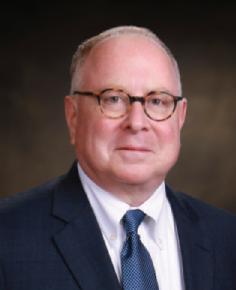
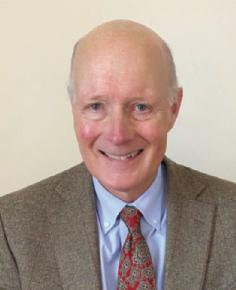
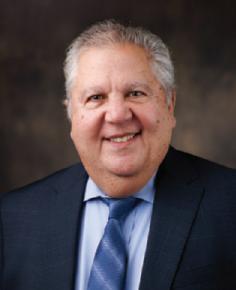
Egan, Flanagan & Cohen is a century-old law firm deeply rooted in Springfield, and is growing in 2026 with the merging of two local law firms—Goldsmith, Katz and Argenio, P.C., and the law practice of Henry Cropsey.
William Reichelt
West Springfield Mayor William Reichelt says the next phase of growth in town will be strongest when the public and private sectors work together to align infrastructure, workforce needs and investment. Above is West Springfield Town Hall. (PROVIDED PHOTO)
Jonathan R. Goldsmith, Esq. Henry C. Cropsey, Esq.
Thomas E. Argenio, Esq.
The next big thing for fitness is total integration
FOR DECADES, THE fitness industry has moved in waves, each promising the “next answer” to better health and higher performance. What’s different now is that we’re finally realizing the answer was never singular. The next big thing isn’t another supplement, device, or program. It’s total immersion: fitness, nutrition, supplementation, and mental well-being working as one system. If we look back, fitness begins as something deeply holistic. In the early 1960s, when President John F. Kennedy brought the Presidential Fitness Test into schools, performance was simple and functional: bodyweight movements, endurance, and resilience. It wasn’t about aesthetics or hacks. It was about capability. As fitness became commercialized, it shifted. Big machines, specialized equipment, and gym memberships dominated the conversation. Then came the 1990s, when the industry swung the other way. At-home VHS workouts replaced gyms altogether, favoring intimacy and accessibility over scale.
The early 2000s marked another turning point: the explosion of supplementation and diet science. Consumers were selling the idea that better results could come from less movement and more chemistry powders, pills, and protocols. Exercise remained important, but it became sec-
ondary to macros, formulas, and shortcuts. Then came reality. Partly through science and partly through the shock of COVID, we were forced to confront something fitness had long overlooked: the brain. Mental clarity, emotional regulation, and stress management weren’t side effects of health — they were prerequisites. Burnout, anxiety, and cognitive fatigue directly limit physical performance, productivity, and resilience. Athletes have understood this for years. The best performers in the world openly credit sports psychologists and mental performance coaches as being just as essential as their strength coaches or nutritionists. Output isn’t determined by strength alone. It’s determined by how well the system functions as a whole. That realization is now crossing into the workplace. Business today is overwhelmingly cognitive. We sit, think, present, analyze,
meaningful progress at the Holyoke Police Department under Chief Brian Keenan’s leadership. In just his first year, after looming reports brought forward in the audit of the Holyoke Police Department, the department achieved remarkable results: a 30% reduction in overtime costs (saving approximately $500,000) while seizing twice as many firearms and issuing over 2,300 traffic citations, a 143% increase from the prior year. Arrests rose significantly in key areas, demonstrating a renewed focus on enforcement, efficiency, and community safety, all while maintaining high standards of professionalism.
These accomplishments reflect a commitment to smarter, more accountable policing that benefits every resident. We will continue to invest in officer training, modern equipment, and community-oriented initiatives to build trust and strengthen neighborhoods. We continue to leverage our economic development strengths: inexpensive, clean energy; spacious buildings ripe for repurpose, and helpful, knowledgeable staff in our Office of Planning and Economic Development who work every day to promote the assets that make our city competitive.
Big hopes for new building
“The next big thing that I'm most excited for is a brand new building that is going to be home to our workforce development program," said Nyi’eashia Smith, workforce development coordinator for Square One, a Springfield nonprofit. "Here we have two programs, our learning program and our youth works program. So we're very excited for our new building that's going to be joining us here on William Street. … (The new building, due to open in about a year, will have a center devoted to technology, giving students access to more tech tools and equipment.) … With workforce development in particular, we are integrating more of the new technological advances here that we're seeing with social media and some of the things coming up. Especially to engage in outreach to youth.”
One of the joys of living, working, and governing here is the stubborn love our citizens have for Holyoke. That love unites this city of immigrants and migrants.
And I am looking forward to continuing to do this work together with our new Planning and Economic Development Director Eric Nakajima. Our school district has come a long way. Now under local control coupled with our investments in our school buildings — including building a new middle school — together with noticeable gains on student outcomes and attendance in our schools, we will support our educators and other public service providers through ongoing contract
negotiations to make sure our workforce remains competitive while ensuring quality services for the public.
And last but not least, we will continue to invest in the infrastructure that will transform neighborhoods in a way that improves mobility, safety, and enhances community pride. I would like to close on the subject of community pride.
One of the joys of living, working, and governing here is the stubborn love our citizens have for Holyoke. That love unites this city of immigrants and migrants. You see it our endurance through challenges, in the proud celebrations of the many cultures and ethnicities that contribute to the Holyoke brand, from the St. Patrick’s Parade to the Fiestas Patronales, from our celebrations of Kwanzaa, Hanukkah, and Polish Independence to our Pride festival, citywide cleanups and back-to-school festivities. 2026 is shaping up to be our best year yet. Joshua A. Garcia is mayor of the city of Holyoke.
would be able to retire with dignity after a lifetime of hard work. All of these initiatives were guided by the founding principle that our government exists to serve the public good. However, this past year has been marked by chaos and uncertainty, leading to the steady erosion of trust in our institutions. Whether it be cuts to health care, nutritional assistance programs, or medical research, attacks on bedrock programs like Social Security,
Medicare, and Medicaid, or the disregard for long-standing democratic norms, like checks and balances and due process, we have witnessed a stark departure from the principles instilled by our Founding Fathers.
However, I firmly believe that if we remind ourselves of the ideals that guided the people of Western and Central Massachusetts in 1774 and
shaped our nation’s founding, we can meet the challenges of this moment and renew faith in this unfinished democratic experiment.
We can further advance the cause for universal access to health care, building on the progress we’ve seen since the enactment of the Affordable Care Act and the delivery of health care to an additional 24 million Americans.
We can invest in long-term care, ensuring that as medical research continues to extend life expectancy, our elderly can live out their golden years with dignity and security.
We can continue our efforts to modernize America’s transportation systems by investing in initiatives like west-east rail, which will connect communities and stimulate economic growth in every corner of the commonwealth.
We can protect and strengthen food assistance, delivering America’s bounty from the world’s best farmers to those who need it most.
We can improve and expand care for our veterans, honoring their service and the commitment we made to them: You protect us, and we’ll take care of you. And so much more. At times of great uncertainty, our history offers both guidance and resolve. It tells us that if we recommit to the principles that have sustained our democracy for two and a half centuries, we can meet the challenges of the moment and fulfill our obligations as great stewards of this democratic experiment. We just have to turn to our history for the next big thing.
U.S. Rep. Richard E. Neal, of the 1st Congressional District of Massachusetts, is the ranking member of the House Committee on Ways and Means.
(MICHAEL J. FIEDLER PHOTO)
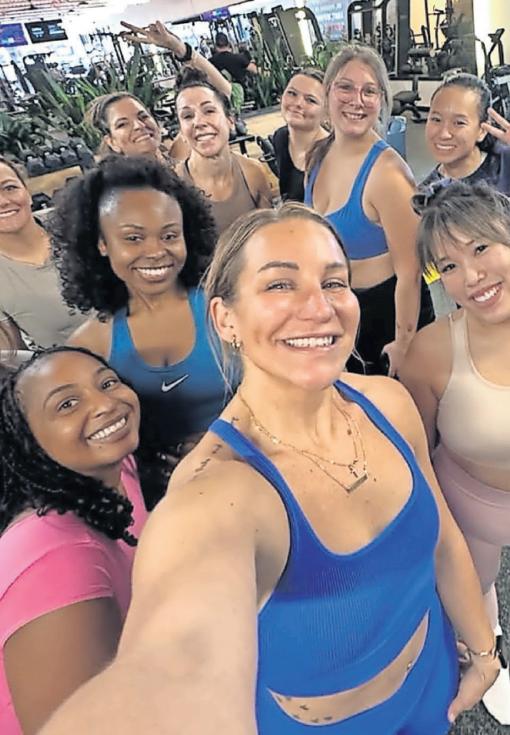
Grit24 members in Ludlow are all smiles after putting in the hard work. (PROVIDED PHOTO)
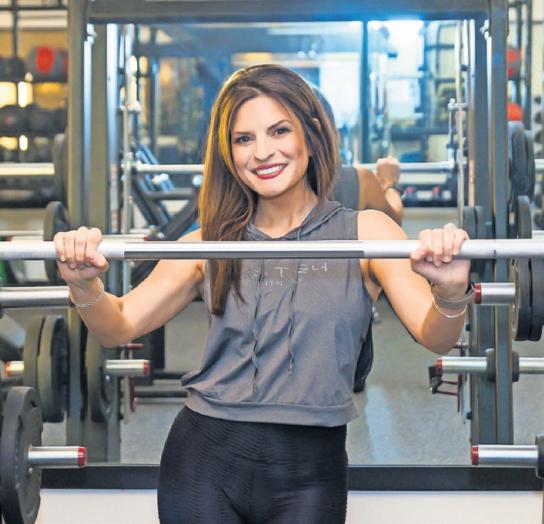
Jessica Vieira
STEM teacher Kevin Burke works with students in the new William R. Peck Middle School building in Holyoke on Sept. 1. (DOUGLAS HOOK / THE REPUBLICAN, FILE)
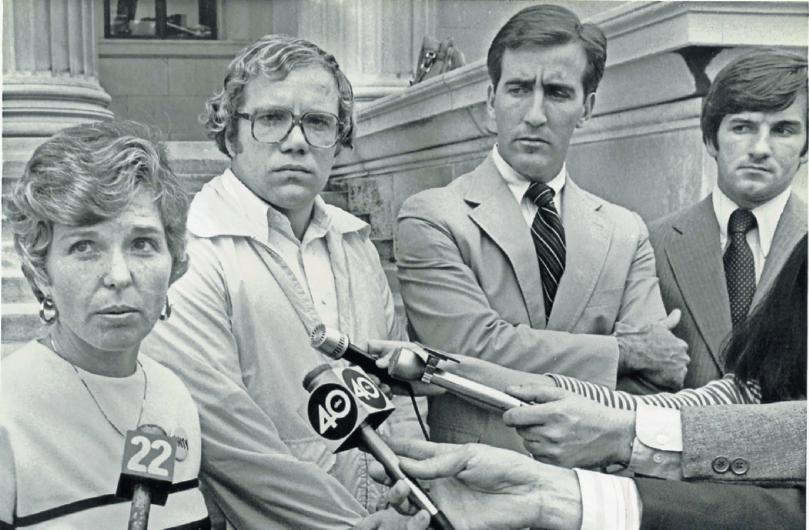
Pat Dunn of the Springfield Education Association, left, speaks with the local media on the steps of City Hall, explaining the SEA stand on the current contract talks. With her, from left, are are City Councilors Peter Jurzynski, Richard E. Neal and Philip Contant. (THE REPUBLICAN / FILE PHOTO)
MAKE YOUR DAY
BASKETBALL HALL
Looking for an unforgettable way to spend the day or a one of a kind place to host your next event?
The Basketball Hall of Fame is where the game’s greatest moments come to life and where unforgettable experiences begin.
Explore interactive exhibits, test your skills on the court, and walk among the legends who shaped basketball history. With hands on fun for all ages, it is the perfect destination for families, fans, and visitors of all kinds.
Beyond the exhibits, the Hall offers flexible event spaces ranging from intimate gatherings to full Hall takeovers. From weddings and corporate events to proms and celebrations, every event is elevated by an iconic setting, premium service, and an atmosphere that cannot be replicated.
the alliance. And those who do take courses in the state tend to skew white and male, state data shows.
report recommended that the Legislature fund an initiative to make it so, as well as train educators in the subject. Across the state, urban high schools, which often serve more low-income and students of color, were less likely to teach a class in computer science than their rural and suburban counterparts, according to a 2021 analysis done for the Massachusetts Business Alliance for Education.
“There’s an equity issue here, as well,” said Ed Lambert, the executive director of
Anueyiagu
CONTINUES FROM PAGE J10
Expanding access to computer science education could help address wealth gaps in the state, Lambert said.
More courses needed for teachers Lambert hopes to see more teacher training for the courses in the state. “We’re denying kids based on the high school they go to if we don’t do more to accelerate that,” he said.
AI has disrupted the field, too, but like Crawford, Lambert still sees value in
Leadership development aligns with one of Mass General Brigham’s systemwide priorities for 2026. Cooley Dickinson is investing in educational opportunities for front-line and senior leaders. In partnership with the Massachusetts Hospital
The future of fitness and performance is a universal package that measures physical training, internal health, and mental clarity
technical education.
“Things are changing pretty rapidly, but nonetheless we still see an incredible need to ramp up the number of students in STEM fields in computer science, in tech and AI. ... There simply isn’t enough of that happening for students.”
In Westfield, 66% of students have taken either a digital literacy or computer science course as of last school year, according to state data. Springfield Public Schools’ figure was close to 50%, and Holyoke was at 52%.
At Holyoke Public Schools, courses tend to be blended computer science and digital literacy. Holyoke High
Association, interdisciplinary teams will participate in the American Association of Critical-Care Nurses Healthy Work Environment Clinical Scene Investigator Academy.
A clear vision for quality and the future of nursing These investments in leadership, workforce and systems are translating into measurable results. Cooley
School North offers pre-engineering classes, for example, and the Dr. Marcella R. Kelly School teaches coding to its elementary grades, according to HPS Executive Director of Academics Rebecca Thompson.
At Westfield schools, educators are seeing a lot of interest in coding from students, said Lindsey Ayers, an elementary school STEM coach in the district.
They are drawn to platforms like Scratch, an educational coding tool for elementary school students, she said.
“Kids want to do it,” she said. “They are coding at home.”
Dickinson is a top-quartile performer on several quality outcome measures, as measured by Vizient. These achievements reflect strong interdisciplinary collaboration and physician partnership, including the leadership of Associate Chief Medical Officer Dr. Sundeep Shukla. The hospital has also achieved Joint Commission certification as a primary stroke center. Looking ahead, our goal at Cooley
Vieira
High-tech matters — but only if it serves time, trust and equity. We have access to an infinite amount of data. Artificial intelligence is already reducing administrative burden, giving clinicians back the time that matters. Every minute reclaimed from paperwork is a minute reinvested in listening, teaching and healing. And that is the promise of technology — not replacing human care but amplifying it.
High-touch matters — as health is built long before and between visits. Lifestyle medicine offers an evidence-based framework: nutrition, movement, sleep, stress management, social connection and avoidance of risky substances. These pillars reverse chronic disease and extend life. They echo the lessons of the world’s “Blue Zones,” where longevity thrives on purpose, belonging and healthy environments. And we can engineer those conditions locally — if we choose to. This is not a soft idea. It is a hard strategy for health system repositioning. Pay-
Dickinson is to leverage technology and emerging applications of artificial intelligence to support clinical decision-making and promote timely escalation of care. Nursing teams also will engage in strategic planning to shape a three-year roadmap aligned with hospital and system priorities using the Magnet framework. While the professional practice model is still in development, this work will be done
CONTINUES FROM PAGE J12
and decide. Employers have made progress by acknowledging mental health and offering wellness stipends or gym reimbursements. But most programs still treat fitness, nutrition, and mental health as separate silos. The result is fragmented care — and fragmented performance.
The next evolution will be different.
The future of fitness and performance is a universal package that measures physical training, internal health, and mental clarity together. Not separately. Not in isolation. Strength will matter, but so will gut health, blood markers, recovery, sleep, stress
ment models are shifting toward value. Employers and communities are demanding better outcomes at lower cost. Consumer trends continue to highlight the importance of convenience, experience and a focus on quality of life. Health care systems are aligning to support excellence and access in times of great financial challenge — and the opportunity is now to invest in both innovation and intimacy to truly enhance well-being, for colleagues, patients, and communities.
The next big thing is not a gadget or a policy. It is a mindset. When we can adopt innovation to enhance outcomes and liberate people’s time for connection, reserve our clinical spaces for only what is critical, design our environments for wellness, and align incentives with prevention and quality of life, we won’t just treat disease — we will create health. This is our chrysalis moment. Health care should leap into it and emerge with wings.
Dr. Robert Roose is the president of community hospitals for Trinity Health of New England.
collaboratively with front-line nurses and leaders to guide practice, growth and shared accountability.
The future at Cooley Dickinson Hospital is purposeful, people-centered, and grounded in excellence, and we are building it together with our exceptional staff and community Chika Anueyiagu is the chief nursing officer at Cooley Dickinson Hospital in Northampton.
tolerance, and emotional regulation. Performance will no longer be defined by a single metric — it will be defined by a balance across all three domains.
Fitness looks different to everyone. Some people train for performance, others for stress relief, and others simply feel better as they move through their day. As an owner, the goal isn’t to impose a single definition — it’s to create a blank canvas where individuals can build their own experience. That’s why narrowly focused fitness models struggle in the long term. They serve one outcome, one personality, one reason. Real health doesn’t work that way.
The same is true in business.
If an employee isn’t feeling well physically, they won’t
perform well. If they’re mentally foggy, emotionally overwhelmed, or chronically stressed, output suffers — whether they’re sitting at a desk, delivering a presentation, or leading a team. Performance has a ceiling, and that ceiling is defined by health. The next big thing isn’t doing less exercise with more science. It’s doing smarter integration with better awareness. Fitness, nutrition, and mental well-being are no longer independent variables. They are one system — and the organizations that understand that first will build the most resilient, productive, and high-performing people in the decade ahead.
Jessica Vieira is the co-owner of Grit24 Fitness in Ludlow.
A CT-scan machine at Mercy Medical Center. (DON TREEGER / THE REPUBLICAN, FILE)
FOOD IS STILL THE WORK
For the Food Bank has worked par tnering Massachusetts.
For more than 40 years, the Food Bank has worked to build lasting food security by providing nutritious food and partnering with communities to end hunger in Western Massachusetts. Let’s ensure everyone in our region has access to nutritious food without barriers or stigma. .
Four decades of windows
“My role is just to seal the windows after the installers put them
the way here, where there are apartments. And then I
since I was 15. I'm 56 now, so that's a little over 40 years, so
good trade. It's been good to me.
with the plywood, and I think that's next. Do all
‘They
By Greta Jochem gjochem@repub.com
In the coding courses he teaches, Brian Candido was concerned about the use of artificial intelligence on assignments and making sure student work was authentic. Candido, a professor and chair of the Computer Technologies Department at Springfield Technical Community College, came up with a plan.
(CANVA ILLUSTRATION) How Mass. educators are using — and putting limits on — artificial intelligence
He planted prompts buried in the assignment instructions that would tell the AI to stop and tell the student to do their own work. For awhile, it worked.
“I saw students scrambling,”
he said. Then, AI got better, and when Candido recently fed the instructions into ChatGPT, it warned a student but still completed the ask.
“I was a little disappointed,” he said. “I put hours into this.” Educators like Candido are all grappling with questions about AI, like how to limit the use of it, so it doesn’t do all the work for
students, and how educate students about it. Both professors at the college level and educators in the K-through-12 system are taking on those problems.
John Vieau
HICOPEE continues to move forward with a wide range of projects that strengthen public safety, modernize infrastructure, revitalize neighborhoods and position the city for long-term economic growth. Through a thoughtful means of city investment, state and federal funding, and private partnerships, these efforts address immediate community needs, while advancing a clear vision for the future of the city and for those who live here. Public safety remains a top priority. One of the newest advancements is the Chicopee
inside the WMass cyber center
The future of threat detection is now
By Namu Sampath nsampath@repub.com
Inside the Security Operations Center, the mission is clear: Monitor local cyber threats, thwart attacks and secure firewalls. If it sounds like we’ve entered the realm of a James Bond movie, you’re not far off. Cybersecurity is a rapidly growing field, according to the U.S. Bureau of Labor Statistics. The bureau projects that the field will see a 29% increase in employment by 2034, nearly three times the average growth rate for all occupations.
Gene Kingsley, cyber range manager at the Richard E. Neal Cybersecurity Center of Excellence, inside Springfield’s Union Station, said recently that thousands of people have come through the center to better their data
security skills. The center, which is run by Springfield Technical Community College, acts as a “teaching hospital” for cyber technology. It is the only cybersecurity center in Western Massachusetts. The center is partnered with CyberTrust Massachusetts, a quasi-public organization working to protect governments, businesses and schools from surging cyber threats. On a recent Friday afternoon, a reporter visited the Security Operations Center, known as the SOC, where Kingsley showed millions of live threats that were popping up across the globe. The room, which has a large display at its front, is filled with
(DAVE ROBACK / SPECIAL TO THE REPUBLICAN) SEE THREAT, PAGE K14
Human stories vital ingredient in best marketing
MAYBE IT’S ALL the yabba-dabba-doing about AI or all the robocalls and junk emails clogging up our lives these days, but in the advertising business, the most effective stuff comes from real people with real stories — now more than ever. Especially on social media. It’s proven that posts with people in them get more response, and we’ve had some success recently getting clients to put their faces out there more. People can be uncomfortable at first. Nobody likes being on camera. Everybody says, “I’m not good at this.” Then they see the engagement, and they get it.
email for six years now. Nothing fancy. No algorithm strategies. Just me telling stories. Stuff from my life, old Holyoke memories, family, screwups, jokes, whatever pops into my head that week. A few weeks ago, I wrote about my old grammar school Blessed Sacrament closing. Just an old family photo and some memories. Me as a kid with a bad haircut and Pat Boone white bucks. Nuns. Old classmates. Real life. It got more likes, shares, and replies than anything I’ve ever sent. Not because it was optimized. Because it was real. It sounded like a person, not a brochure. That’s the difference. Don’t get me wrong. I’m not pushing cheap phone photography or sloppy production or schlocky local TV spots with a grinning spokesman. Creative still has to be done professionally with good ideas and an eye toward production values.
But the heart has to be human. It has to be authentic. Give ’em the straight story. That’s what people remember.
‘We’re building for what’s coming’
A look at quantum computing in the Valley
By Jim Kinney jkinney@repub.com
SPRINGFIELD — If you’re in the Pioneer Valley and watch YouTube, post to Facebook or read this story online, all that information traveled through a basement at the Springfield Technology Park. And with an estimated $1 million to $5 million invested over the last 18 months, all that internet traffic is going faster and more efficiently. That goes for data from Amazon on your phone to the supercomputers at the Massachusetts Green High Speed Computing Center in Holyoke.
“The capacity needs to be bigger,” said Martin Hannigan, CEO of Lightboard, the company that is doing the upgrades to the fiberoptic equipment and computer connections built over decades in
the basement of a 90-yearold industrial building at One Federal Street. “The capacity has been adequate,” he said. “But for what’s coming, we’re getting ahead of it.” He said the exact amount invested is a trade secret.
Not so secret is the business opportunity and the state’s desire to see the upgrades to its investment utilized to attract investment and jobs.
In November, the state designated the Quantum Technologies, led by the Western Massachusetts Economic Development Council, as a TechHub for the region.
The state designation came alongside $1 million awarded to the hub through a state economic development bill which
will be used to do a feasibility study on creating a quantum computing supply chain accelerator, according to Springfield Technical Community College. The college is involved in the planning for the hub and tailoring training to meet the workforce needs.
“The accelerator will help develop the next generation of quantum computing components, house a quantum-focused startup studio and prepare local talent for jobs in the quantum industry,” Gov. Maura Healey’s office said in a statement.
That would involve physical spaces, like the Technology Park and the Massachusetts Green High Performance Computing Center Holyoke.
“Beyond quantum, everything these days is about the transfer of data, quickly and efficiently,” said Brendan Greeley, president of R.J. Greeley Co., the leasing agent for the Tech Park.
Controlled by lasers, quantum computing operates by “puffing up” atoms to thousands of times their normal size and completing calculations at speeds far exceeding conventional computer processors.
For example, our client Hot Table can post a perfectly food-styled, well-lit shot of a delicious looking panini, but it won’t get a sliver of the response that the owners and crew and customers get when they’re talking about the product themselves. Same with Donut Dip, whether it’s owner Paul Shields talking about how he eats three doughnuts a day, his daughter, Katie, explaining how a doughnut shop owner gets married to a cop, or my grandson, Flynn, reviewing the Belly Buster: It’s the genuine stuff that gets people talking. Gone are the days of the dry corporate video with canned music, stock footage and boring talking heads. With clients like Greenfield Co-op Bank or Surety Bond Professionals, it’s short, human, conversational videos that connect with clients and prospects. Because it feels like your neighbor. Like someone you actually know. Our client Excel Dryer recently got a great response from a video we did about them being a family-owned company with a made-in-America product. You watch that and get a real sense of who that company is and what they stand for.
On the personal side, I’ve been doing this little “Keep Your Dukes Up” Friday
For more than 40 years, Darby O’Brien has led his tight-knit band of writers and designers through the creation and execution of some of the region’s most challenging and innovative ad campaigns. He has long used his advertising and PR skills in service of underdog causes and has been profiled on the “Today” show, Dr. Phil and Anderson Cooper and cited in numerous publications, including The New York Times and The Boston Globe.
the video at youtube. com/ watch?v= DlipD1Iy 6aE. (SCREENSHOT FROM YOUTUBE)
Darby O’Brien
Gene Kingsley, cyber range manager at the Richard E. Neal Cybersecurity Center of Excellence at Union Station in Springfield, speaks in front of the Range 2
A look inside of the Richard E. Neal Cybersecurity Center of Excellence at Union Station in Springfield. Here is a lounge area between the Range 2 classroom and conference area.
In December, the state and the Holyoke computing center announced plans
Martin Hannigan, CEO of Lightboard, shows off new technology during a tour at the R.J. Greeley Company at Springfield Technical Park. (DAVE ROBACK / SPECIAL TO THE REPUBLICAN)
Brendan Greeley, president of R.J. Greeley Co. at Springfield Technology Park, uses a piece of testing equipment used to examine and maintain fibrotic equipment. (DAVE ROBACK / SPECIAL TO THE REPUBLICAN)
SEE QUANTUM, PAGE K11
Listening. Learning. Leading.
They own town-gown relations
Road to a sound relationship for Amherst, UMass took a turn for better 15 years ago
By Namu Sampath nsampath@repub.com
When Nancy Buffone first visited the University of Massachusetts Amherst, she fell in love with the town.
Over the next few years, she went to the local parks, sipped coffee at cafes and spent time becoming immersed in Amherst.
“It just felt like I belonged here,” she said.
The flagship UMass campus is the largest public university in New England, home to more than 20,000 students.
The greater town of Amherst, which has a population of nearly double that number, according to the U.S. Census, boasts a bustling college-town feel, with boatloads of small businesses, including restaurants, coffee shops, retailers and a movie theater.
“I know that I would not have stayed here if it wasn’t for the town,” said Buffone, who now serves as the associate vice chancellor for university relations at UMass Amherst, her alma mater. “It’s the town that helps us so much with recruiting our faculty and staff, and our students. It’s an experience when they come on to campus and ... go check out the town. ... That’s part of the experience of being at UMass.”
Town officials and university heads agree that the road to the sound relationship between the two has not been without its ruts, but both are stronger because of the other.
There is a mutual respect and understanding between the town and university, said David Ziomek, assistant town manager of Amherst, in a recent interview.
“The town of Amherst isn’t going anywhere, and UMass isn’t either,” he said. “We’re mutually dependent on each other to provide all the things we need to provide for students, faculty, staff and also for the permanent residents of Amherst.”
Ziomek, who has been with the town for about two decades, said town-gown relations started to solidify over the last 12 to 15 years. But the pandemic catalyzed the need for collaboration on both ends.
It was around that time, Ziomek said, when town officials and UMass executives, including Buffone, started meeting weekly to discuss their relationship and where they could improve.
“It’s an opportunity for us to … outline all of the things we do, collaboratively in partnership with these colleges and, in this case, the university,” Ziomek said. “It’s also to outline some shared initiatives.”
In 2023, the university and town entered into their sixth strategic partnership agreement, which is essentially a contract between the town and the “gown,” or a higher education institution, highlighting shared interests
and responsibilities. The new contract will last until next year, and negotiations for a renewed contract will begin later this year, said Ziomek. The town of Amherst hosts three area higher ed institutions — UMass Amherst,
“It’s
an experience when they come on to
campus and ... go check out the town. ... That’s part of the experience of being at UMass.”
BUFFONE
NANCY
Amherst College and Hampshire College. It has or soon will have agreements with all three institutions.
Amherst is in the early stages of developing an economic development plan that will shape how the town brings business to the area and how it retains business, said Jeff Bagg, director of planning and economic development for the town.
“Harnessing the university and the colleges, I think, is part of what we want to do, but we, at the same time, want to support the businesses that we do have, and continue to draw new businesses,” said Bagg.
Open to business
The town is open to businesses that will complement what already exists. But it wants help from the residents on what they’d like to see in Amherst, particularly in the arts and culture, and clean technology spaces.
Last year, as part of an economic development initiative spurred by Chancellor Javier Reyes, a career economist who joined the university in 2024, UMass Amherst worked with the town to open UMass Downtown, a retail space offering college swag and a gathering area for students, faculty and staff, for lectures, events and engagement. The area also has been used by members of the public.
“It has really drawn lots of different people into the town, and to come and hear all of these different, fascinating talks,” said Buffone. “It’s been fun watching the space come to life, and it has tremendously strengthened the town-gown partnership.”
One main sticking point — which is a concern across the state, not just between Amherst and the university — is housing. The town and university are in constant communication about housing, Buffone and Bagg said separately.
Last year, Amherst completed its housing production plan.
The challenges are “driven largely by high demand from its student population, particularly from the University of Massachusetts Amherst,” the plan says. “With limited on-campus housing, thousands of students seek rentals
UNIVERSITIES ARE more than a collection of classrooms and labs where students and faculty generate knowledge and exchange ideas. They are durable civic assets that have deep connections to the local economy.
The UMass Amherst campus, for example, generates $2.9 billion in direct economic activity for the commonwealth, much of which, according to a 2023 economic impact report by the UMass Donahue Institute, is felt right here in Western Massachusetts. Along with our Amherst campus, our Springfield, East Wareham, Gloucester and Newton locations offer the state a sevento-one return on investment. That economic activity happens in a myriad of ways. Universities attract faculty, staff, and students who generate economic benefits for local businesses and services. Providing community hubs that offer cultural enrichment and entertainment through the arts, sports,
A view of the University of Massachusetts Amherst campus in February 2024. (BRIDGET PEERY / THE REPUBLICAN, FILE)
Downtown Amherst touts a mix of shops and eateries. (HOANG
'LEON' NGUYEN / THE REPUBLICAN, FILE)
Jummy Ogundare, a junior endocrinologist working in the IVF clinic lab at the UMass Memorial Medical Center. (DOUGLAS HOOK / MASSLIVE.COM, FILE)
Javier Reyes
Free community college reshapes sustainability for smaller schools
Schools like Elms College in Chicopee and American International College in Springfield see the shift not as a threat, but an opportunity
By Aprell May Munford
amunford@repub.com
As free community college expands across Massachu setts, smaller private colleges are rethinking how they attract and support students — particularly those planning to transfer for a bachelor’s degree.
Schools like Elms College in Chicopee and American International College in Springfield say the shift is not a threat, but an opportunity.
Looking ahead to 2026, both institutions are focusing on affordability, flexibility for students and helping gradu ates land jobs. The goal: stay relevant in a changing higher education landscape.
A changing college pathway
Free community college has lowered the cost of higher education for thousands of students, making two ‑year schools a more common starting point. Many students now earn a two ‑year associ‑ ate’s degree before transfer ring to a four‑year institution.
Free community college has led to a sharp rise in enroll ment across Massachusetts, with community college at tendance up more than 38% since 2022, according to the Massachusetts Department of Higher Education. That surge is changing who fills classrooms — and how
“Our focus is on providing clear pathways that support students’ next steps.”
Sara Vincent, AIC
four‑year schools compete.
Community colleges now enroll about half of all under‑ graduates in the state’s public higher education system, shifting how many students pursue a bachelor’s degree, the agency reports.
Much of the growth is driv‑ en by adult learners return‑ ing to school, especially in high‑demand fields such as health care, social work and business.
Enrollment among Massa‑ chusetts community college
students 25 and older in‑ creased nearly 40% between fall 2023 and fall 2024, following the expansion of the state’s free community college programs, according to state data.
As a result, four‑year colleges such as Elms and American International are adjusting transfer pathways, affordability programs and academic offerings.
At AIC, leaders say that trend has reshaped the school’s enrollment strategy.
“Free community college has created new entry points into higher education for both
traditional and nontraditional learners,” said Sara Vincent, associate vice president for strategic enrollment and re‑ tention management at AIC.
“Our focus is on providing clear pathways that support students’ next steps.”
Vincent said AIC prioritizes credit transfer and experien‑ tial learning, helping students move efficiently toward grad‑ uation and employment.
“In a changing higher edu‑ cation landscape, our focus remains on strong outcomes and continued access,” she said.
How 2 WMass colleges are leaning into AI
By Aprell May Munford AMunford@repub.com
As anxiety grows nation‑ wide over artificial intelli‑ gence in education, some Western Massachusetts colleges say they are choosing not to run from the technol‑ ogy — but to shape how it is used in classrooms, advising offices and career prepara‑ tion.
Bay Path University in Longmeadow and the College of Our Lady of the Elms in Chicopee say artificial intelligence, when used eth‑
enrollment management.
“They engage in their classes in the evenings, on weekends and sometimes early in the morning.”
AI tools, Rojas said, help students review material, ask questions and access tutor‑ ing when faculty or advisors aren’t immediately available.
“People are at the heart of what we do, and AI augments and amplifies our effort,” Rojas said.
The goal is to guide stu‑ dents to ethical use of the technology.
“This is much bigger than copy and paste,” Rojas said. “It’s about how you use it for
“This is much bigger than copy and paste. It’s about how you use it for research, how you find your own voice and how you use these tools to create high‑impact presentations.”
ically, can expand access for working and first‑generation students, improve academic and administrative support and better prepare graduates for a workforce already being reshaped by AI.
Rather than banning the technology, college leaders say they are teaching respon‑ sible use while integrating AI into student services and degree programs tied directly to labor market demand.
Bay Path: Using AI to expand access and support
Many Bay Path students balance classes with work, caregiving and nontraditional schedules.
“They don’t go to school Monday through Friday, 9 a.m. to 3 p.m.,” said Frank Rojas, vice president of
research, how you find your own voice and how you use these tools to create high‑im‑ pact presentations.”
“AI is a powerful tool, but it is still a tool,” he said.
AI is also helping stream‑ line administrative work, including transfer credit evaluations. “In less than two minutes, you can see how many credits transfer,” Rojas said.
That faster turnaround can help students avoid unnec‑ essary classes, shorten time to earning a degree and save money, while freeing staff to focus on advising.
“It’s not going away,” Rojas said of AI. “If you don’t en‑ gage, it will happen to you. If you lean into it with purpose, transformation is possible.” At Elms College, leaders are
Sara Vincent is associate vice president for strategic enrollment and retention management at American International College in Springfield. (AIC PHOTO)
Elms College students take part in a class session. (ELMS COLLEGE PHOTO)
Frank Rojas, vice president of enrollment management at Bay Path University
Innovative funding, strategic planning drive future of higher ed
ESTFIELD
WState University is a state-supported public institution dedicated to serving the people of the Commonwealth of Massachusetts. Guided by the founding principles of Horace Mann, since 1839 our university has provided an affordable, equitable and inclusive learning environment where diversity is embraced and every individual is valued, respected and supported.
Part of the university’s mission is to strengthen the region by contributing economic and educational resources that foster resilient communities, innovative enterprises and a stable economy. Central to this mission is the preparation of leaders equipped with strong reasoning and communication skills, integrity, empathy, vision, accountability, confidence, resilience and the ability to adapt in an evolving world.
Over the past several years, we have developed our five-year Strategic Plan, Infinite Opportunities, which serves as a blueprint for future success. The plan is grounded in four interconnected goals: fostering innovative learning by aligning institutional resources with relevant academic programs that prepare students for emerging careers and a rapidly changing world; advancing student success by ensuring all students have access to the support, resources and community needed to complete their programs and secure meaningful employment; optimizing stewardship of campus resources through the strategic alignment of human, financial and facilities investments with institutional priorities; and amplifying institutional impact by cultivating an engaged community of scholars who advance innovation, applied research, creativity and transformative partnerships.
As we review and strengthen our academic programs, we remain deeply committed to advancing the health and well-being of our region in ways that align with these strategic priorities.
While uncertainties and challenges persist as the federal government revises its funding priorities, the Healey–Driscoll administration and members of the Legislature have worked diligently to provide critical support for public higher education across the Commonwealth.
Testifying to the facts
Over the past several months, I had the privilege of testifying before two key state legislative committees to advocate for essential investments designed to strengthen our institutional capacity and create lasting value for both our campus and surrounding communities. In October, I testified before the Joint Committee on Economic Development and Emerging Technologies in support of the Discovery, Research, and Innovation
Experts: AI data centers will put stress on local power grid
Data center proposed for Westfield would use more energy than entire city
By Jeanette DeForge jdeforge@repub.com
When an artificial intelligence data center was proposed for Westfield, it got the attention of Thomas Flaherty, not just for the $2.75 billion investment or the long-term tax breaks it was seeking.
What turned the head of Flaherty, the general manager of Westfield Gas & Electric, was the massive amount of power the center would use daily.
“To put it into perspective, a 10-acre parcel would need the power equivalent (of) the entire load (of) the city of Westfield,” Flaherty said.
Westfield peaks out on the warmest summer day with an electric use of 85 megawatts. There have been several proposals for different data centers, with the smallest consuming 87 megawatts of power a day and the largest needing some 400 megawatts of power daily, he said.
With Massachusetts power companies already facing pressure to comply with clean energy goals while struggling to meet existing power needs and dealing with transmission limitations, the idea of having something that hogs that much power gives chills to providers.
“The potential demand these facilities require is staggering,” said Thomas Barry, chief executive officer of Massachusetts Municipal Wholesale Electric Co. “They require an output of a largescale nuclear plant, needing 1,100 to 1,200 megawatts delivered.”
While partners in most larger artificial intelligence facilities are mostly exploring locations in the South, where land and power are less expensive, the smaller facilities, such as the one proposed for Westfield, are likely to be in play in New England in upcoming years, Barry said.
“We need have a serious conversation about better power generation,” he said, adding that included expanding natural gas lines, since the existing ones do not provide the region with enough gas for power plants and homes.
Developers who want to move to New England are expected first to be looking toward communities with municipally owned electric companies, since rates are lower, said Barry, who oversees the business that joins together some 30 different power companies across the state.
That is a concern for Jason Viadero, director of engineering and generation for the Municipal Wholesale Co., because it could affect the affordability for customers. Currently, there’s not a lot of “native generation” of power in Massachusetts. Using one example, solar panels could cover all the unused farmland in the state, and that wouldn’t be enough for a data center.
“How do we layer on AI centers while getting people off internal combustion engines and putting more carbon-free
Next big thing could be a return to nuclear energy
Experts: Nuclear power does not create any carbon emissions
By Jeanette DeForge jdeforge@repub.com
(power) generation on the grid?” he asked. Most municipal electric companies already have met the state’s 2030 goals of purchasing at least 50% of their power from sources that do not require burning fossil fuels, but this winter’s freezing temperatures show the fragility of the grid.
For example, the Massachusetts Municipal Wholesale Electric Co. purchases a lot of hydropower generated in Canada, but that country has been in a deep freeze as well, so power has not been as readily available. Instead, the company has been relying on the Stony Brook Energy Center in Ludlow, which can burn natural gas or oil, which is fired up at peak times when there is more demand than power available, Barry said.
While New England has had data centers for decades, they are much smaller, needing one megawatt or less of power daily. But now studies and proposals are calling for those that will need 100 to 200 megawatts, and one that is some 500 megawatts of power, which is equivalent to the entire electric load of the Cape, said Jacob Lucas, vice president of transmission planning for Eversource.
The problem is federal regulations don’t allow power companies to say no when a business shows up with a plan for a new enterprise, even if it is way beyond their capacity. They just have to make it work, Lucas said.
Lucas said he has major concerns about the ripple effects from data systems. Probably the biggest is about affordability, since costs to upgrade infrastructure to meet its needs is not just borne by data centers in other states and is often passed onto all customers.
“Energy affordability is a crisis in New England,” he said.
The capacity of electric generation is also an issue, and the grid is having difficulty keeping up with needs, especially with new commercial and industrial buildings coming on board. Data centers will exacerbate that problem, he said.
“We have a generation capacity issue that is looming. Generation (plant) retirements have significantly outpaced generation additions. We have a 2-3% growth in needs,” he said.
While places such as Texas are adding new fossil fuel generation plants, that is not happening in New England. Most of the new generation added is in batteries, plus one small solar plant in New Hampshire, he said.
While the largest data centers are being constructed in places where power is less expensive, Lucas said the centers have to be built all across the country, because the information is traveling by fiber, so the shorter the distance, the faster and less expensive it is.
In Holyoke, 87% of its energy comes from carbon neutral sources, with much of that coming from the dam that the utility owns on the Connecticut River, said Kate Sullivan Craven, marketing
and communications director for Holyoke Gas & Electric.
It is also home to the Massachusetts Green High Performance Computing Center, which opened in 2012 with a 15-megawatt capacity. The center, which has proposed an expansion, is owned and operated by a college partnership, which selected the city because of its low energy rates and green energy generation.
“If an AI center came, they would have to pay for additional infrastructure needed,” she said.
One of the biggest concerns about a data center is the effect it would have on Holyoke Gas & Electric’s clean energy targets, since it might have to purchase power from additional sources that are not as green, she said.
Back in Westfield, if the proposal goes through, the company would have to develop a direct connection to the transmission system, rather than infrastructure that the Gas & Electric company already owns, Flaherty said.
“It would be our customer, but it would have its own rate class,” Flaherty said.
When the wind doesn’t blow and solar panels are covered in snow, there is another source of carbon-neutral energy to be considered, even if it has a long history of being controversial.
Experts are now taking a second and serious look at expanding nuclear power as part of the push to find more reliable, climate-friendly sources of electrical power.
“It will take many hurdles, but the conversation needs to start today,” said Thomas Barry, chief executive officer of Massachusetts Municipal Wholesale Electric Co. “I don’t think this region can have a serious conversation about power generation without discussing nuclear power.”
Two decades ago, Barry said people would laugh if he even brought up the subject of nuclear power, but that has been changing, especially with concerns about climate change, since nuclear power has no emissions.
The Municipal Electric Co., which is made up of some 30 city and town-owned power companies, owns a small part of the Millstone and Seabrook nuclear power plants, which provide about 14% of power to municipal electric companies statewide, said Jason Viadero,
“You have to have reliability and resiliency, and the grid has to have the capacity that meets peak demand.”
Sukesh Aghara, professor of nuclear engineering and associate dean for research and graduate studies for the College of Engineering at UMass Lowell
director of engineering and generation for the company. When people think of nuclear energy, they think of past accidents, but years of technological advances make the power source even safer than it has ever been, said Sukesh Aghara, a professor of nuclear engineering and associate dean for research and graduate studies for the College of Engineering at the University of Massachusetts Lowell.
“You have to have reliability and resiliency, and the grid has to have the capacity that meets peak demand,” said Aghara, who is also the lead author for the state’s Roadmap for Advance Nuclear and Fusion Energy.
The federal Nuclear Regulatory Commission is considered the gold standard of setting high expectations and following safety parameters. In addition, new technologies automated a lot of the plant operations
The EDC’s Mission.........
The mission of the EDC is to stimulate and facilitate a vigorous regional economy, encourage and sustaining capital investment and quality job growth. The EDC is committed to growing the Western Massachusetts economy for all its residents. Our members are some of the largest regional employers, schools of higher education, nonprofit organizations and smaller companies, the employers who drive our regional economy. The EDC affiliates and partners are organizations committed to regional economic growth.
A rendering of a proposed data center in Westfield. (WESTMASS AREA DEVELOPMENT CORP. IMAGE)
Linda Thompson
Building Strong Communities for Over 200 Years
As we welcome the New Year, Liberty Bank is proud to continue building strong partnerships that strengthen our communities!
Established in 1825, Liberty Bank has stood as one of the oldest and largest mutual banks in the country. With over $8 billion in assets and a legacy spanning two centuries, Liberty Bank remains deeply committed to helping improve the lives of our customers, teammates and communities for generations to come.
Our Massachusetts team consists of experienced bankers dedicated to working closely with customers to meet their banking and lending needs. From consumer and business banking to treasury management, home mortgages and business lending, Liberty Bank delivers the advantage of local decisionmaking and personalized service from experienced bankers.
As we step into the future, Liberty Bank continues to be committed to building strong partnerships that strengthen our communities. Come visit our branch at 94 Shaker Road, East Longmeadow.
What’s shaping the future at HCC? CI — ‘collaborative intelligence’
HE NEXT BIG
Tthing in community college education isn’t a single innovation or technology — it’s a fundamental reimagining of how we work.
At Holyoke Community College, we’re discovering that the most transformative force shaping our future isn’t necessarily AI, but CI — “collaborative intelligence,” the deliberate, sustained integration of voices across sectors to solve our region’s most pressing challenges.
Throughout its history, HCC has responded to workforce needs and adapted to demographic shifts. But this moment demands something different.
As HCC develops its next strategic plan — “S.P. 3.0” — we’ve spent months engaging
faculty, staff, students and regional business and nonprofit leaders in shaping our institutional direction. That’s collaborative intelligence. Why does this matter now?
Because the challenges facing Western Massachusetts cannot be solved by any single institution working in isolation. Free community college in Massachusetts has driven enrollment growth, bringing us an increasingly diverse student
Ensuring safer travel at Union Station
“Every day is just about helping people to take the buses, helping people to take the trains even helping people just to have a coffee, you know, and have a good conversation with us,” said Carlos Rodriguez-Lugo, a Springfield police officer. “That’s what we do here most of the time. … Since we implemented a new task force, we’ve been able to go down, make numerous arrests and help people to travel more safely in this station. They’re going to implement new rail service and that’s gonna bring a lot of people to travel through Union Station. … Since I was a kid, doing this work as an officer was a dream. I’ve always been a community service person. I like to speak with people, I like to talk to people, I like to help them out in any way that I can. Just being a police officer provides me with all those tools that I need to just keep them safe, give them direction, give them advice. They can truly see what a police officer is a person who’s gonna serve the community, who is gonna love the community and who’s gonna be there for them as well.” (MICHAEL J. FIEDLER PHOTO)
MASSACHUSETTS
business future is frequently defined by its emerging technologies — artificial intelli-gence, advanced manufacturing, quantum systems, and the next biotech breakthrough.
But the real next big thing isn’t a single technology.
It’s the people prepared to power all of them.
Massachusetts has long been defined by the strength of its universities and the industries that grow around them. From life sciences to engineering to health care innovation, our economy depends on people who can translate discovery into practical impact. While economic cycles shift — as we are seeing today in parts of the biotechnology and information technology sectors — the long-term demand for highly skilled technical talent has not diminished. If anything, it has become more urgent.
The challenge is not simply producing more graduates. It is preparing a workforce that is adaptable, industry-ready and capable of leading in rapidly evolving sectors.
That requires a broader view of the talent pipeline — one that connects technical expertise with the human skills that allow innovation to translate into real-world impact.
It is not enough to spark student interest in science or engineering. We need a coordinated system that supports access, hands-on readiness and leadership development at every stage of a career.
Community colleges play a vital role in expanding entry points and widening opportunity. Universities extend that pathway by providing advanced facilities, upper-division specialization and graduate education and research tied directly to
population. Thirty-five percent of our students identify as Hispanic/Latine. Nearly one-third have documented disabilities. The average age is 25. These students arrive with extraordinary potential — and significant barriers: transportation challenges, childcare needs, housing and food insecurity and demands for programs that align with regional workforce requirements.
Our community conversations have revealed opportunities that only emerge through genuine partnership: employer-driven program development that allows us to stand up industry-aligned
credentials quickly; transportation systems coordinated across institutions to reliably get students to evening and weekend classes; public-pri-
vate partnerships that create seamless education-to-work pipelines with paid apprenticeships and internships; and wraparound support models
that address housing, childcare, and basic needs holistically. At HCC’s recent “Shaping the Future” summit, business leaders identified real constraints: small businesses stretched too thin to create robust internship programs, confusion about educational pathways and credentials, and the need for culturally relevant support systems. But they also identified tremendous assets: our region’s commitment to collaboration, our growing recognition that workforce development requires honest conversations about living wages and our willingness to ask hard questions about equity and access. Here’s what makes this the next big thing: Collaborative intelligence acknowledges
emerging industries. When these institutions function as a connected ecosystem, students move more efficiently from opportunity to impact. Massachusetts benefits from exactly this kind of ecosystem. The question is how we continue strengthening it.
At Western New England University, our role is shaped by being a comprehensive institution with particular strengths in areas where the commonwealth needs talent most: technology and health care. That responsibility begins with ensuring that talented students can enter and remain in the pipeline.
A new $2 million National Science Foundation scholarship initiative supports academically strong engineering students who might otherwise be priced out of the field. Pairing financial access with mentorship and structured career engagement is not simply student aid — it is workforce strategy. Every capable student we keep in technical fields expands the commonwealth’s long-term capacity to innovate.
We are also investing in frontier technologies. Our work in quantum systems places students in a field that is redefining computing, security, and engineering worldwide. Preparing graduates for technologies that are still emerging ensures Massachusetts remains competitive not just in today’s economy, but in tomorrow’s.
At the same time, financial
technology, or FinTech, is reshaping how businesses operate, manage risk and serve customers. Through our growing FinTech initiatives, students gain exposure to data analytics, cybersecurity, digital finance and the regulatory landscape that supports modern financial systems. These skills are increasingly essential across industries, not just in banking, and reflect how technology is transforming every sector of the economy.
Equally important is infrastructure. Our new advanced manufacturing center creates a hub where students, faculty and industry partners collaborate on real production challenges. Facilities like this connect education directly to economic development and demonstrate how universities can serve as engines of regional growth.
At the leadership level, our doctor of engineering in engineering management prepares experienced professionals to scale innovation inside their organizations. These leaders sit at the intersection of technology, operations and strategy — the space where promising ideas become productive enterprises.
Taken together, these efforts reflect a shift in how universities must view their missions. We are not only educating students; we are helping build the human infrastructure that sustains economic resilience.
None of this innovation happens in isolation from the human skills that make it meaningful.
The arts and humanities remain foundational to the workforce we are building. Creativity, communication, ethical reasoning and design thinking are not separate from technical progress — they shape it.
George Timmons
Joseph C. Hartman
Nursing student Gabriela Artin, of Westfield, performs a wellness check on a “patient” in one of the simulation rooms at Holyoke Community College’s Center for Health Education and Simulation. (PROVIDED PHOTO)
Cannabis’ next big thing — growth, gaps and a moment of truth
ET’S START WITH
Lthe obvious: Cannabis is no longer the “new kid” on the block in Massachusetts. We’re eight years into adult-use legalization, the industry has generated over $6 billion in cumulative sales, and cannabis is now a permanent fixture in our economic landscape — employing tens of thousands of residents and contributing over a billion dollars in tax revenue. Cannabis has graduated from being a curiosity to a major financial contributor on both the state and local levels.
And yet, as we look toward 2026, the next big thing for cannabis isn’t just growth. It’s a reckoning.
The legislative moment: Growth isn’t a group project … yet
On Beacon Hill, there is active legislation aimed at fixing some of the structural pain points holding the industry back — license caps that limit exit
opportunities or opportunities to create economies of scale, purchase-limit restrictions that make it harder for our adult consumers to buy what they want, and outdated regulations that don’t reflect how mature this market has become. But here’s the part people don’t always say out loud: The industry itself is divided. Some operators want reform. Others fear it. Some benefit
from scarcity; others are suffocating under it. Unlike beer or wine — industries that evolved with consistent rules and national standards — cannabis is still governed by a patchwork of state and local policies, and opinions, often pitting business owners against one another instead of aligning us around long-term sustainability.
Adding to the uncertainty is a ballot initiative currently underway that could dismantle the adult-use market entirely. For an industry that already operates under tighter restrictions than alcohol — despite voters passing the “Campaign to Regulate Marijuana like Alcohol” in 2016 — this creates instability that would be unthinkable in any other regulated consumer market. Imagine trying to run a brewery or winery, while wondering if the entire system might be undone at the ballot box. That’s not innovation. That’s whiplash.
Social equity: The promise vs. the proof
Let’s talk about the heart of legalization: Social equity. Cannabis was legalized, in part, to repair harm done to communities disproportionately affected by prohibition. Yet today, most cannabis licenses in Massachusetts are still held by well-capitalized, non-diverse operators. Nationally, estimates suggest that fewer than 5% of cannabis businesses are Blackowned, and Massachusetts has not meaningfully outperformed that benchmark.
Yes, the Cannabis Social Equity Trust Fund exists. That matters. But this funding came too late into the industry’s maturation, and funding alone doesn’t fix barriers such as access to real estate, municipal approvals, legal costs, or the simple reality that cannabis businesses still cannot access traditional banking the way breweries or wineries can. If equity is the “why” behind legalization, then access, ac-
Social consumption poised to bring change to Mass. cannabis industry
By Staasi Heropoulos Special to The Republican
Frank Dailey is poring through new rules that could allow his cannabis dispensary in Holyoke to open an on-site lounge where customers could eat, drink and smoke the products he sells.
The commonwealth’s Cannabis Control Commission is now allowing a range of licensed Marijuana Establishments (MEs), to set aside areas where people may consume cannabis.
Dailey owns and operates Boston Bud Factory, where he manufactures and sells cannabis products. He wants to attract new business, including tourists from other states, by establishing an area where patrons can indulge in his edibles, tinctures and vapes.
“We have an opportunity to expand our client base, and that’s going to be huge for us,” he told The Republican. “That will help make us a destination, so we have a chance to survive in this industry.”
The CCC unanimously approved regulations in December that allow social consumption of cannabis. While the rules went into effect in January, it could be a year or more before the first lounges come online. State and local officials are trying to figure out how to translate policy into practice.
“The regulations have been promulgated, they’re formalized, they’ve been published. They’re good to go,” said CCC commissioner Bruce Stebbins.
A head start for some
According to the CCC, as of early February, there were 686 licensed cannabis operations in Massachusetts — but only 139 of them are eligible to apply for and potentially receive a social consumption license. Candidates must fall into these categories: economic empowerment or microbusinesses; operations that only deliver products; and entrepreneurs who are part of the social equity program, which boosts entrepreneurs “disproportionately harmed by the war on drugs,” Stebbins said.
The commission is trying to give those entrepreneurs a head start by opening lounges three years before their bigger competitors.
“There were communities and populations that were disproportionately impacted either by over-enforcement of the drug laws or might have been arrested for something that is no longer a crime in Massachusetts,” Stebbins said.
Dailey’s business is in the equity program because he is from Springfield, where the arrest rates for cannabis crimes was high. He was also discharged from the U.S. Navy in 1987 for having THC in his system.
THC is the principal psychoactive component of cannabis.
“The inequity in this business makes it hard because the big guys control a lot of the market, and it’s hard for us to get a percentage of the market. It’s an opportunity for us to be more competitive. It gives a break to the smaller guys,” Dailey said.
The CCC has spent several years developing regulations that will govern social consumption. No one under 21 may buy and consume cannabis. The establishments are banned from selling alcohol or tobacco products and consumers must be allowed to take home unused products.
While the commission has legalized and laid out a social consumption framework, cities and towns must approve licenses for businesses to operate in their locality.
“We have done a lot of municipal outreach and they have a lot of questions about what’s required. There are some communities we’ve heard from that want to hear more and are interested in taking the necessary steps to move forward,” Stebbins said.
Sidelined for now
For now, Zori Alfonso is watching from the sidelines. She manages Zaza Green Cannabis dispensary in Springfield. She told The Republican her business is not among the protected class of operators opening first.
“It’s not in the near future for us, but it’s something we’ve talked about and would like to participate in as soon as we can,” she said.
While she waits, Alfonso is watching how lounges and off-site events are being run in other states and at industry events.
“It’s always such a good vibe. We’ve seen how well they’re run in other states and it’s something we knew would happen inevitably in the industry. It’s the next step for cannabis,” she said.
The new Massachusetts regulations will not only allow dispensaries to open lounges. They also permit cannabis consumption at sanctioned events and allow non-cannabis businesses to partner with licensees.
Stebbins says he hopes
entrepreneurs get creative by offering cannabis at places like yoga studios, bed and breakfast operations and even movie theaters, as long as they have local approval to do so.
But while the CCC has thrown open the door to public consumption, there are measures to make sure it is done safely.
Marijuana establishments and their employees are required to go through vendor safety training to keep patrons from becoming physically or mentally impaired by over-consumption. Businesses must have a plan that helps patrons who overindulge get home safely. And packaging must tell customers approximately how long it will take them to get high.
“We worked closely with the public health and safety com-
countability and outcomes must be the “how.” Otherwise, we risk turning a moral promise into a marketing slogan.
Social consumption:
The next big thing — if we fix the old problems
Social consumption lounges are often positioned as the next frontier and, in theory, they should be. These spaces could mirror tasting rooms in wine country or beer halls in New England — safe, social, regulated environments for adults.
But here’s the hard truth: You can’t continue to build the future of our industry on a shaky foundation.
Operators are already grappling with nonpayment of invoices, unreliable vendors, thin margins and inconsistent regulatory enforcement. Without clearer oversight, stronger accountability and consistent standards, social consumption risks becoming another license type with big expectations and
little support. Hope is not a business plan. Where we go from here
Cannabis isn’t asking for special treatment — it’s asking for fair treatment. The same clarity afforded to beer. The same consistency granted to wine. The same expectation that a legal industry should be allowed to operate with stability, integrity and accountability. The next big thing for cannabis in Massachusetts isn’t just expansion. It’s alignment. It’s honesty. It’s growing up without losing sight of why we started. If 2026 delivers that, this industry can finally become what it was always meant to be: Not just profitable — but principled, durable and worthy of the communities it serves.
Payton Shubrick is founder and CEO of 6 Bricks dispensary in Springfield.
munity and got a lot of their feedback,” Stebbins said. “Our operators want to make sure their patrons get home safely. We’ve instituted a lot of these safeguards because, while other states are doing this, we want to be on the forefront of doing it well and safely.”
Next natural step
The CCC says cannabis businesses in Massachusetts grossed more than $1.65 billion in sales in 2025, “setting a new annual record ahead of potential changes coming in 2026 including new social consumption licenses,” according to the commission.
Based in Norwood, MariMed cultivates, produces and sells cannabis products at the wholesale and retail levels. Tim Shaw, the company’s chief operating officer, expects business to blossom as lounges begin opening.
“It’s the next, natural step to normalization,” he says. “There is now an opportunity to not feel like a criminal or have to stay in your home. This promotes the ability for people to normalize
cannabis use. It’s the same as having a beer with your buddies at a social event.”
Shaw isn’t projecting how much business may increase, and he’s realistic about the cost of expanding into lounges. MariMed will likely have to start producing smaller packages of its products, the same way bars sell bottles and cans of beer — not six packs.
“There might be some additional cost if the products have to leave the manufacturing facility in smaller packages for those locations,” he said.
Dailey, of the Boston Bud Factory in Holyoke, is also concerned the cost of opening a lounge in his dispensary could be prohibitive. CCC regulations mandate HVAC systems to filter and clear smoke from the air.
“I’ve heard reports we might be required to have a million-dollar system to ensure air quality,” he said.
While Stebbins agrees startup costs could be high, he reminds entrepreneurs that state grants may help them find ways to save money.
Payton Shubrick
Zaza Green in Springfield, above, hopes to open a cannabis lounge after the commonwealth’s Cannabis Control Commission change of rules. At left, Frank Dailey of Holyoke’s Boston Bud Factory is concerned that the new rules over cannabis lounges are unclear. (DOUGLAS HOOK / THE REPUBLICAN)
Dan Moriarty, President & CEO, reads to children at Martin Luther King Jr.
Is tech the answer to a WMass modernized police force?
Modern tools, old fashioned sleuthing go hand in hand
By Nicole Williams Special to The Republican GREENFIELD
— In 2019, the Massachusetts State Police became the first law enforcement department to start using robotic dogs. Equipped with sensors and thermal cameras by the Boston Dynamics team, “Roscoe” has been credited with taking three bullets in a 2024 standoff on Cape Cod.
Some say that the use of modern technology has assisted in advancing departments’ capabilities when it comes to solving crimes and ensuring safety for local communities. Other departments in the Pioneer Valley, though, are hesitant to fully embrace modern technology as a strategy. As technology continues to advance, each department weighs out the advantages and disadvantages for its own community.
Todd Dodge, the chief of police with the Greenfield department, said that his community is apprehensive, but he also sees the benefits of using modern technology.
The city currently has two automated license plate-readers that scan plates all day, send the information to the town, and then rewrite themselves every 30 days, Dodge said. He said that his department uses the license plate-reader technology to search for cases where there are warrants out for arrests, missing persons or stolen vehicles. The technology assisted in solving a homicide in Greenfield, and even helped track down a suspect
“We are confident that these state investments, aligned with our updated strategic plan, will modernize our campus and position us to advance academic programs that meet the evolving needs of our students, communities, employers, and economy.”
Westfield State University
in the case of $150,000 stolen from the Greenfield Savings “Money Tree” ATM, as the truck involved was identified at Boston Logan Airport.
Dodge said the department still has a “high success rate of solving crimes the traditional way,” but technology has made the timeline faster.
He said the City Council has its concerns, though, as national reports circulate about plate-reading companies selling data to the U.S. Department of Homeland Security. The issues raised look at how the Fourth Amendment is being held up regarding access to personal data. In response, Flock — the maker of the devices — denies sharing personal information with federal agencies.
Dodge said that he has heard public concerns about data
being used to find out those seeking abortions or gender reassignment surgeries.
Other technology that the Greenfield department is using includes interior drones to ensure a building is free of people before sending in a special response team, outside drones to assist in cases involving missing people and pets, as well as heat gauges. The department also is using
body cameras for officers, which Dodge said has saved money and time in tracking down interviews. He said there is a continued concern with residents regarding cameras being used at stoplights. In actuality, those are sensors that have been placed above the lights. He assured residents that there is no locally known facial recognition technology being
used by the Greenfield Police Department.
Dodge said he recognizes how the use of modern technology gives off a “George Orwellian” surveillance feel, but that for the city of Greenfield, it’s not the reality.
“We don’t have the money for that,” said Dodge.
In Springfield In Springfield, modern technology is being used strategically, according to Ryan Walsh, the spokesperson for the Springfield Police Department. Walsh said in the last two years, the department has acquired two drones that require certified operators who are trained for tactical missing persons cases, crash reconstruction and meteorology.
He said the entire department has been wearing body cameras as of June 2021 and said that, while it was a “tough sell” in the beginning, now the department and the community are both in favor of it.
“It’s been highly beneficial in transparency,” said Walsh.
In 2018, the department launched a Real Time Analysis Center, where Walsh said the department is tied into a few hundred city cameras, Union Station and some businesses with exterior cameras that opted to join the program. He said that in a separate protocol, the department also can access inside Springfield schools, where the school can choose to go live in the case of a serious threat, like the 2024 shooting at the High School of Science and Technology.
“The main purpose in R-TAC is when you get a 911 call of something going on, they’re able to get to a camera basically instantaneously and advise officers over the radios of what they see based on what the 911 call is saying, to provide safety for the officers who are arriving and the civilians that are in that area, as well,” said Walsh. Walsh said that for the city of Springfield, technology is not being used for data purposes, but rather for the “real-time function” it can provide officers responding to calls. He said that the city does not use any facial recognition software. The department does not automatically tie into personal doorbell cameras, Walsh said. If residents want to grant permission for the department to view any footage, they would need to fill out a form that would give access to detectives if an incident arose where their footage could be helpful.
The department also uses ShotSpotter, an audio-based cloud technology that uses sensors to pick up gunfire in real-time and alerts local departments.
Walsh said one study done by the department showed that in 70% of the cases where gunfire or ballistic evidence was found, the department did not receive a 911 call.
for a Vibrant Economy (DRIVE) initiative. DRIVE is Gov. Maura Healey’s $400 million proposal to invest in Massachusetts’ research and innovation ecosystem by supporting research at universities and hospitals while leveraging private-sector investment.
The initiative is designed to secure jobs and talent amid federal funding reductions, drive scientific advancement and maintain the Commonwealth’s global leadership in innovation and the life sciences.
In my testimony, I emphasized that sustained funding for health research — including biomedical discovery, nursing science and public health — is not discretionary; it is a national imperative and a direct investment in the well-being and security of our communities.
Publicly funded research has produced monumental medical advances, from breakthroughs in cardiovascular disease and cancer treatment to the eradication of diseases such as polio and measles and the development of mRNA technol-
ogy. In November, I returned to the State House to testify before the Joint Committee on Bonding, Capital Expenditures, and State Assets in support of the BRIGHT Act. In January 2025, Gov. Healey introduced a bond bill originally totaling $2.5 billion to modernize and repair public colleges and universities across the Commonwealth. Subsequent additions expanded the proposal to $3.65 billion. Funded through Fair Share Act surtax revenues, the BRIGHT Act is designed to address critical deferred maintenance, build state-of-the-art classrooms and laboratories, enhance energy efficiency and create an estimated 20,000 construction jobs statewide. I stressed to the committee that advancing the BRIGHT Act would represent a critical step toward addressing our substantial deferred maintenance backlog and pressing infrastructure needs.
In Western Massachusetts, where the shortage of health care workers is particularly acute, BRIGHT Act investments would enable Westfield State University to develop a Human Health Hub to address this urgent workforce demand.
The proposal focuses on the removal of Bates Hall, which no longer meets the needs of contemporary science education, and would replace it with state-ofthe-art laboratories and instructional spaces.
The BRIGHT Act has already passed the House of Representatives with an amendment appropriating $100 million to Westfield State toward the Human Health Hub which is Phase I of our Campus Master Plan. We are pleased to have received support from state Rep. Brian M. Ashe, who has sponsored this amendment within the bill. The bill now advances to the Senate, and I remain optimistic that it will be pass and be signed into law by the governor.
We are confident that these state investments, aligned with our updated strategic plan, will modernize our campus and position us to advance academic programs that meet the evolving needs of our students, communities, employers, and economy. Linda Thompson is president of Westfield State University and chair of the Massachusetts State Universities Council of Presidents. To learn more about Westfield State University, visit westfield.ma.edu.
and prevent core meltdowns without needing an operator to step in. When people bring up the Chernobyl nuclear disaster in Russia that took place in 1986, Aghara explains a different technology was used.
There is always the issue of storing spent fuel rods, which remain radioactive for thousands of years, but he said the solution of sealing them in casks has worked.
Building a nuclear plant costs at least $10 billion, but that capital investment can be recovered in 10 years. Now, plants are continuing to operate for decades and will be guaranteed to make money for another 20 or 30 years or even longer, Aghara said.
Currently, there are three operating power plants in New England, two in Connecticut and a third in New Hampshire. Aghara said once a plant is decommissioned, it cannot be restarted, but building a new plant at the location of one that has been closed is a workable solution.
“What we do have is several sites that have the infrastructure with the grid connection. That is a significant cost to put transmission lines in,” he said.
Adding nuclear power plants is also vital to the New England economy, experts said. If power companies cannot provide electricity needed or cannot provide it at a reasonable cost, that will drive businesses out of state or dissuade them from investing here in the first place, Aghara said. Thomas Flaherty, exec-
The plants could help reduce the shortage of power that New England faces, especially in peak periods when the weather is very cold or hot.
utive director of Westfield Gas & Electric, said he feels it is time to consider investing in nuclear power, especially with the advent of mini-plants — those that would cost $1 billion to $2 billion instead of $17 billion — that are in the testing phase. The plants could help reduce the shortage of power that New England faces, especially in peak periods when the weather is very cold or hot, and save companies from having to fire up older oil-fueled plants needed to fill the gap in production. They also will provide additional electricity needs for business growth, especially for things like AI data centers, which are huge power hogs. Wind is available 30% to 40% of the time, and solar is available 13% to 15% of the time. Renewable energy overall provides about 9% of the overall mix of the energy used by Westfield Gas & Electric, Flaherty said. Adding to the difficulty is natural gas pipeline expansion has been blocked, so that resource, which is cleaner burning than oil, is limited, especially during a prolonged cold snap like this one.
“You have to start taking the politics out of power generation to ensure we have safe, reliable power,” Flaherty said.
Crime analyst Kyle Roy works at the Springfield Police Department’s Real Time Analysis Center in 2023. (DON TREEGER / THE REPUBLICAN, FILE)
Chief Todd Dodge
Ryan Walsh
A 2-foot-tall, 72-pound robotic dog is among the members of the Syracuse Police Department. (VINCE GASPARINI / SYRACUSE.COM, FILE)
President Linda Thompson In October, Lt. Gov. Kim Driscoll, foreground, visited Westfield State University, with President Linda Thompson, to look at Bates Hall and its need for upgrade. (PROVIDED PHOTO)
Elms emphasizes full college experience
Elms College is also leaning into new ways to accommodate transfer students, but its leaders say the school’s residential campus and student life can give it an advantage.
“One thing that really sets Elms apart is the experience,” said Molly Miner, vice president for enrollment management at Elms. “It’s not just earning a degree in the classroom. It’s the full college experience.”
That includes on-campus housing, athletics, clubs and academic support — options that some community college students say they still want after starting locally.
Miner said Elms works closely with Holyoke Community College and Springfield Technical Community College, where many students complete their associate’s degrees before transferring.
“We know that even if students choose the community college pathway — whether it’s for free tuition or another reason — many still want that traditional college experience,” she said.
“One thing that really sets Elms apart is the experience. It’s not just earning a degree in the classroom. It’s the full college experience.”
Molly Miner, vice president for enrollment management at Elms College
Making transfer easier — and cheaper
To support those students, Elms has expanded transfer scholarships and advising. Students who belong to Phi Theta Kappa, a community college honor society, can qualify for additional financial aid. The college also offers both traditional and continuing education options, including online and hybrid programs for working adults.
A key piece of Elms’ affordability strategy is the Elms Promise, which covers full tuition for eligible students.
“About a quarter of the students who enrolled in fall 2025 took advantage of the Elms Promise,” Miner said. “Students from all 50 states are eligible.”
Elms also places advisers directly on community college campuses to help students plan ahead and avoid losing credits when they transfer.
“We really understand the value of maximizing every
credit,” Miner said. “That helps students finish their bachelor’s degree on time and avoid extra costs.”
Both Elms and AIC say their academic programs are tied to regional workforce needs, a focus that’s expected to grow through 2026.
Health care remains the largest employment sector in Massachusetts, with more than 13,600 hospital job vacancies statewide in 2024, according to a report by the Massachusetts Health & Hospital Association.
At Elms, the strongest enrollment trends are in health care, social work, education and business.
The college recently launched a bachelor’s degree in finance and continues to expand nursing and RN-toBSN paths.
“There will always be a strong demand for health care and human services,” Miner said.
Elms leaders say 98% of graduates are employed or enrolled in graduate school
within six to 12 months of graduation, a statistic they highlight when recruiting transfer students.
AIC is also emphasizing career-oriented programs, particularly for students returning to school with prior college credit.
“Our goal is to help students move efficiently toward graduation and employment,” Vincent said.
Looking ahead in 2026
As free community college becomes a permanent part of the higher education system,
both institutions say partnerships — not competition — will define the future.
“Elms is very confident in its mission,” Miner said.
“Affordability and access to a high-quality education are at the core of who we are.”
Elms and AIC expect even more students to begin at community colleges and transfer later — and both schools say they are ready.
“We’re focused on meeting students where they are,” Vincent said, “and helping them take the next step.”
tying AI directly to workforce demand. The college will launch a new online master’s degree in data analytics and artificial intelligence this coming fall.
The program is designed for working professionals and offered in an accelerated, eight-week format.
The degree aims to prepare students for careers in data science, business analytics and AI across industries including health care, technology and business.
“Our new master’s degree in data analytics and AI reflects Elms College’s commitment to helping working professionals succeed in fields that are changing the economy and society,” said Joyce Hampton, the school’s vice president of academic affairs.
locations like the Tech Park.
with collaborators including Cambridge Computer and Dell Technologies to create the artificial intelligence computer resources environment. It will be the backbone of the Massachusetts AI Hub by supporting startups, businesses, researchers and educators with access to sustainable, high-performance computer resources required for AI innovation, according to the Holyoke computing center.
“The true measure is how much work do you get out of it?” he said. “How many scientific results do you get? That’s the most important measurement.”
The computing center’s six university members — Boston University, Harvard University, Massachusetts Institute of Technology, Northeastern University, University of Massachusetts and Yale University — will match the state’s $31 million investment. By 2030,
In May, the Healey-Driscoll administration announced a $31 million grant to the center. The upgrades will make it a large-scale resource for researchers, said John Goodhue, the center’s executive director.
the total funding is expected to exceed $120 million, according to a news release.
Goodhue said the technical upgrades in Holyoke are extensive, making this one of the largest systems to be deployed through a state-level AI initiative in the country.
The equipment is being prepared at a plant in Franklin, Goodhue said. Eighteen wheelers will later arrive in Holyoke with pallets of equipment and then begins weeks of assembly work.
“We plug them in, turn them on and make the software work,” Goodhue said.
The capacity will make research and data analysis
quicker and easier, he said.
“It’s large enough to do significant work. And for our community it will be more accessible than commercial resources,” he said.
And the computing center’s data connections, including those for internet service providers like Westfield Gas & Electric or Crown Castle, all go through the Tech Park at One Federal Street.
Hannigan said the park is well suited as a data hub for reasons that go back to when the Army built up the Springfield Armory in the 1930s with World War II looming.
Buildings, he said, were designed to take heavy floor
loads and equipped with lots of electrical capacity.
After the armory closed in the 1960s, the phone company took advantage of the cheap, available and well-suited space.
Hannigan said it all goes back to the Reagan-era breakup of the telephone monopoly and modernization of telecommunications.
“The government negotiated a settlement with the telecom companies to open their networks for voice traffic,” Hannigan said. “And part of that settlement was that the AT&Ts of the world didn’t want everyone in their buildings to exchange the traffic.”
That meant setting up third
Soon fiber optic cable ran down the MassPike.
“What better place to bring all your fiber optics than the place that already has all the power and infrastructure,” Hannigan said. Now, the park is an internet exchange, Hannigan said. The exchange is a way to facilitate that local connection and share it.
“Instead of going to Boston to pick up your content, you come to the internet exchange and pick it up,” he said. “Instead of going 200 miles round trip, you go a meter back and forth and then out to where the users are.”
Better Banking Means Business.
You’re building something important. That’s why Westfield Bank takes the time to understand your business, your challenges, and your goals—so we can help you move forward with confidence. Let’s grow your business, together.
Commercial Checking & Money Market Accounts –Flexible accounts to support businesses of every size
Commercial and Small Business Lending – Local insight and service with the lending strength to help your business expand, acquire, or build Cash Management Solutions – more convenience and control with ACH and Wire Transfer Manager, Remote Deposit Capture, and more
Pay – Advanced fraud
for greater peace of mind
Elms College students and an unidentified guest at a Shark Tank event. (ELMS COLLEGE PHOTO)
Candido’s new approach to AI in his classroom is to pivot and embrace it, like by allowing students to use AI to give them feedback on their code. He put a clear AI policy at the top of the assignments, too.
Students will have to write written explanations about their code to explain it and list what they learned, and that portion is worth about a quarter of the grade, he said.
Christian Rojas, professor and chair of the Department of Resource Economics at the University of Massachusetts Amherst, decided to experiment with AI in his classroom last year.
In the spring semester, he taught two sections of an antitrust economics course. The classes were identical, except for one difference: In one class, Rojas allowed students to use generative AI if they disclosed their use of it, and in the other, it was banned.
Students took their midterm and final exams in class, and used paper and pencil. Rojas found no difference between the two classes on their exam scores. But, he found through surveys that students in the class allowing AI spent less time on the class and reported enjoying it more. They also participated more, he said. He and his colleagues Rong Rong and Luke Bloomfield published a paper about the experiment.
“I don’t think we have all the answers from this course obviously,” Rojas said. “It’s a very specific course.”
AI has changed how Rojas assesses students. Take home assignments, which are more vulnerable to using generative AI, are worth less toward a student’s grade.
In the fall semester, Rojas taught a course on AI literacy and tackled topics like how to use AI tools for economics data analysis.
“They are all using it,” he said of students and AI.
Christian Rojas, professor and chair in the Department of Resource Economics at the University of Massachusetts Amherst, experimented with student use of AI in economics courses. (UNIVERSITY OF MASSACHUSETTS AMHERST PHOTO)
“The question of academic integrity is a big one for teachers, particularly once you get beyond the elementary years. That’s a big question for which there are no great answers.”
Rebecca Mazur, senior evaluation research specialist at the Collaborative for Educational Services in Northampton
“There’s no question about it.” But, he found students aren’t always using it effectively.
“I try to teach them how the technology works and how they can make it work better for them,” he said. Students did report concerns about ethics, sustainability and the privacy of their personal information, Rojas said. “That’s another reason why the more we talk about it, the better we will be prepared to handle those risks.”
K-12 educators and AI
Rebecca Mazur, senior evaluation research specialist at the Collaborative for Educational Services in Northampton, led the creation of an online course on AI literacy for educators for the state’s Department of Elementary and Secondary Education. She does professional development workshops for educators and helped create a toolkit for ethical AI use for educators. In workshops with teachers, she talks about how it’s “autocomplete on steroids,”
she said. “It does not have a human type of understanding or human sensibilities. ... It is a very, very sophisticated type of word-association machine. That is not to minimize its power — it’s incredibly powerful.”
One issue she hears about a lot: “The question of academic integrity is a big one for teachers, particularly once you get beyond the elementary years,” Mazur said. “That’s a big question for which there are no great answers.”
Many schools are working on policies, she said, and what might work in one course might not in another.
In Springfield, school leaders are working to come up with a districtwide approach to AI use and could not comment, spokeswoman Azell Cavaan said.
This fall, Westfield Public Schools formed a committee to talk about teacher and student use of AI. The group includes teachers, principals and students, said Brian Dutko, coordinator of instruction-
al technology for the district.
“Part of our district goals this year was to incorporate AI into the curriculum,” Dutko said. “We’re working on how to figure out how to educate our staff on what AI is, and how to use it.”
He hopes to show staff that AI is not always correct, but “can be used as a thought partner,” he said.
Recently, the district put out a survey to teachers to understand how comfortable they are with AI, and the results will be used to create professional
development, Dutko said.
On the school network, generative AI tools are not universally accessible. Staff have access to Gemini, Google’s generative AI model, and only some students in the high school and technical academy have access, Dutko said.
The school has a data privacy agreement with Google, so the company can’t use their data and inputs to train AI, he said.
One class will explicitly incorporate the technology.
Westfield Technical Academy is planning to offer a course
called “Principles of AI.”
At an overall district level, though, there isn’t currently an AI use policy, Dutko said, and the committee is working on it. There are not plans to use an AI detection tool, he said. “Those AI checkers are not accurate,” Dutko said. “They are biased, as well.”
The district is using guidance from the Massachusetts Department of Elementary and Secondary Education that was created to help schools draw up AI-related policies.
Hartman
Engineers must explain complex systems. Scientists must collaborate across disciplines. Technologists must understand the human impact of the tools they design. A comprehensive education strengthens the very capabilities that allow technical expertise to translate into real-world solutions.
The next big thing for Massachusetts is not a single device, discovery or platform. It is a generation of well-rounded critical thinkers; engineers, scientists, health care innovators and technical leaders ready to move our economy forward.
As I prepare to join the Western New England University community this June, I am energized by the opportunity to help strengthen that workforce and deepen the partnerships that make it possible.
That work is already underway in WNE’s classrooms, labs and collaborations across the commonwealth — and its impact will define the next chapter of our economy.
Joseph C. Hartman is the incoming president of Western New England University.
Expansion on tap for bagel company
“We’ve been in this facility for nine months and looking forward to expanding and opening more cafes that we’re going to supply out of here,” said John Wilda, lead baker at Tandem Bagel Co. in Ludlow. “We’ll increase our production and hire more fellow bakers. We’ve got the big machines that do the mixing and the dividing for us, but otherwise most of our work’s pretty manual. What’s the personality of a baker? Well, dedication and focus are two of the big things. If you can’t pay attention to the details, then you’re never going to have a consistent product.”
that community colleges don’t just serve their communities — they belong to them.
HCC’s future must be written with our region, not for it. This means convening employer roundtables where health care systems, manufacturers and technology companies help inform educational offerings. It means creating employment pipelines based on market needs
and projects. It is partnering with K-12 districts to build career pipelines starting in elementary school and collaborating with regional nonprofits to provide students with access to resources that support their success outside the classroom. The traditional community college value proposition — access and affordability — remains essential.
But the next evolution is about integration. Students don’t experience their lives in silos: They need education that connects
seamlessly to employment, support services that address real barriers and credentials that translate directly to living-wage careers.
Creating that experience requires institutions that can move with agility, driven by data and community insight rather than outdated academic constraints. Our conversations have also revealed urgent questions we must answer together: How do we design partnerships that leverage individual strengths while building sustainable
networks to create competitive advantages for Western Massachusetts? How do we ensure that targeted jobs pay living wages? How do we increase opportunities for marginalized communities beyond just enrollment to include comprehensive supports and equitable outcomes?
These questions don’t have easy answers. But collaborative intelligence means we’re asking them together and building solutions that draw on the expertise of employers who know what skills they need, community
organizations that understand barriers facing students and families, policymakers who can remove systemic obstacles and educational institutions that can respond with unprecedented speed and relevance.
The disruption isn’t artificial intelligence replacing human connection — it’s the recognition that complex challenges require collective wisdom.
As HCC moves forward, we pledge to be more than just a participant in regional development — we’ll be a catalyst, preparing
students not just for their first job but for lifelong success; modeling best practices that position us as a national leader among community colleges, creating programs so tightly aligned with workforce needs that learning and earning happen simultaneously. This future is within reach. But only if we continue building it together.
George Timmons, Ph.D., is president of Holyoke Community College.
(MICHAEL J. FIEDLER PHOTO)
themselves.
computers, so that student employees and professionals who work at the center can fight cyber attacks together.
“They are using the SOC to protect real municipalities, organizations and nonprofits,” said Kingsley. “They can see an attack, thwart it, and prevent future attacks.”
Kingsley declined to give specific examples of municipalities or organizations the center works to secure.
Peter Sherlock, CEO of CyberTrust Massachusetts, said 90% of the customers who the interns and employees help are at the local government level, that is, K-through-12 schools and municipalities.
“The bulk of the work the interns do is monitor and provide a 24/7 response to malicious activity,” said Sherlock. But the staff also assesses municipalities’ information technology departments.
“(For) all the municipalities, we work with the administration of their (IT) environments,” he explained. “That means, understanding what systems are on their network; making sure they are up to date (with technology); managing identities and passwords; and (knowing) where sensitive data is.”
What’s lacking in these communities, he said, is the capacity and procedures to run a secure environment
On Feb. 26, the center is offering a public event for small-business owners to better understand cybersecurity. This is for the mom-and-pop restaurants, people running their businesses from home, and for anyone trying to protect from cyber threats.
“Small-business owners will learn how to deploy skills that will secure them from the financial fallout of a breach, which are really hard to recuperate from,” said Kingsley.
The center also frequently offers classes to the public and to CyberTrust member schools, like Elms College in Chicopee and Bay Path University in Springfield.
John B. Cook, outgoing president of Springfield Technical Community College, said a long-term goal for the Cybersecurity Center is to remain “sustainable,” he said on a recent tour of the center.
“What I’m excited about is ... the rising tide of community college enrollment (that is) also helping with the sustainability,” said Cook. “There is that pathway, that pipeline, of the talent in our program ... where we always knew there was a basis.”
The field, while fast-evolving, has faced challenges in the last year, with major layoffs and new skill sets needed, according to a study conducted by International Information System Security Certification Consortium, also known as ISC2.
Cook said STCC is committed to bridging the skills gap by partnering with the Springfield Public Schools and Springfield Empowerment Zone, to provide early college pathways to young learners hoping to have a career in cybersecurity.
U.S. Rep. Richard E. Neal, D-Mass., for whom the center is named, said cybersecurity is an “everyday conversation, every-hour conversation in Washington.”
Many agencies, businesses and industries have been a target of ransomware, a form of cyber attack that can lead to financial extortion, including the U.S. Department of Defense, and phishing, which are attempts to steal secure data, according to Neal.
Hackers are getting innovative, said Kingsley, the range manager.
To stay ahead, Kingsley, who has a master’s degree in information management and communication, said he stays connected with a network of organizations and people who can bring their expertise to conferences and meetups held at the center.
“All ships rise with the tide, so organizing events like that, at a facility like this, really helps Western Mass. stay front and center,” said Kingsley.
To register for the Feb. 26 event at the center, Kingsley said to follow the center’s LinkedIn page for details at tinyurl.com/fz85jkt2.
Vieau
Police Department’s Real-Time Information Center, a next-generation Neighborhood Crime Watch that uses advanced camera technology and artificial intelligence to deter crime, enhance situational awareness, and support faster, more effective responses. This investment reflects the city’s commitment to using modern tools to keep residents and neighborhoods safe.
The city also is making major strides in traffic and pedestrian safety. Chicopee is completing its Safe Streets for All initiative, funded through a Federal Highway Administration grant with City Council support. This effort identifies high-crash locations, incorporates community input and prepares the city to pursue future implementation funding.
Guided Federal Highway Safe System approach, the program supports Chicopee’s Vision Zero goal of eliminating serious traffic injuries and fatalities. In parallel, the Department of Public Works, city engineer, and Police Department are collaborating on street-level improvements, such as flashing crosswalks, enhanced signs, refreshed pavement markings, targeted enforcement, street diets (reducing widths or lanes), and detailed streetby-street safety reviews.
Resilience planning is another critical focus. Chicopee is undertaking its required seven-year update to the Hazard Mitigation Plan to remain eligible for federal and state emergency mitigation funding. This plan will guide future investments to address risks, such as flooding, severe weather, and climate-related impacts, helping protect residents, infrastructure, and public assets.
Downtown revitalization continues to gain momentum in Chicopee Center. The Hub
at Market Square is being transformed into an active community and economic gathering place. Through ongoing programming and events, The Hub is drawing visitors, supporting local businesses, and increasing foot traffic. This project demonstrates how American Rescue Plan Act funds have successfully revitalized a once-dormant space, creating a vibrant hub for current and future generations to enjoy, learn, and prosper. Modernizing city facilities is also underway. Phase II of the Chicopee City Hall renovation project includes interior upgrades, office reorganizations, energy-efficiency improvements, updated furnishings, and full accessibility enhancements to meet ADA and Massachusetts Architectural Access Board standards. Funded through municipal bonds and city appropriations, this multiyear effort will improve service delivery while creating safer, more functional workspaces for employees and residents.
Looking ahead, Chicopee has launched a comprehensive update of its zoning ordinances, site plan review regulations, subdivision rules, and local wetlands protection bylaws. The regulations that have not seen major revisions since 1974. Over the next three years, the city will engage in an iterative public process to align development regulations with the goals of Envision Our Chicopee 2040. This initiative will support sustainable growth, responsible development and economic opportunity. Infrastructure and connectivity remain strengths for Chicopee. The Chicopee Electric Light Department continues to provide some of the lowest electric rates in the region, helping keep the city affordable for residents and businesses alike. CrossRoads Fiber, the city’s municipal broadband network, offers some of the fastest
and most reliable high-speed internet in the state. With demand-based expansion continuing through 2025, the network has surpassed 6,150 customers and plans to add another 1,200 customers in 2026, strengthening access, innovation, and opportunity. Significant investment is also taking shape at Frank J. Szot Park. The city is completing the Szot Park Master Plan, funded through ARPA, and finishing design plans for Phase I improvements, while preparing for future phases. A Land and Water Conservation Fund grant application was submitted in January, reflecting the city’s commitment to high-quality recreational spaces that promote health, safety, and quality of life.
Private redevelopment is further fueling economic growth. Construction is underway on a 105-unit workforce housing development at the former Baskin property, with additional phases planned for a brewery, food hall and an indoor sports complex. Early planning also is underway for the redevelopment of the Uniroyal parcel, where four historic mill buildings are proposed for mixed-use reuse, supported by a MassWorks Infrastructure Grant and an estimated $200 million private investment.
Chicopee’s progress is grounded in affordability, safety and opportunity. The city was recently recognized by a national publication as one of the most affordable places to live, reinforcing Chicopee’s reputation as a safe, accessible and family-friendly community. To grow, we need economic development, good jobs and great people. Our goal is to retain talent, attract opportunity and showcase Chicopee’s value as a pillar of Western Massachusetts as we look ahead to 2026.
John Vieau is the mayor of Chicopee.
Relations
in town, placing intense pressure on the local housing market.”
But the plan offers solutions, which were implemented by the town in December, including more subsidized housing; increasing types of housing offered (student housing, workforce housing, housing for older adults, to name a few); and building more housing, which is required in the entirety of Western Massachusetts.
The demand for on-campus housing at UMass Amherst has grown since the pandemic, up 8.5% since 2018, according to Emily Gest, a university spokesperson.
The university is also among the top five largest residential programs in the country, building up its portfolio for two decades by thousands of beds, including 150 student-family apartments, creating dorms for the Commonwealth Honors College and opening Fieldstone — the
first public-private partnership housing project for the university — which added 623 undergraduate beds and 201 graduate student beds, Gest said.
Bagg said the town’s housing plan and future economic development plan will help start initiatives that will benefit Amherst, the university and the other colleges in the area.
He also said the town is open to work with residents and business owners — current and potential future retailers — on how to develop the downtown and other shopping areas of the town to make Amherst unique.
“(What) we want to accomplish with the economic development plan is (to) get community engagement. What do residents want to see? What do businesses think is viable, and what would, ultimately, be complementary to the other things that are surrounding?” he said.
Buffone said both Amherst and UMass Amherst are a part of the International
Town Gown Association, an organization that helps municipalities and their higher education institutions across the United States develop and maintain partnerships that support community engagement and mutual interests.
“We’ve worked really hard on this (relationship),” she said.
Reyes, the university’s chancellor, Buffone said, is passionate about taking UMass Amherst beyond the town, emphasizing an interest in creating opportunities for the workforce in the broader Western Massachusetts region and the state.
“He said, ‘I want to see more of UMass in the community, and more of the community at UMass,’” Buffone said. “That has, in many ways, been this guiding light for us. It allows us to not worry about any boundaries. We’re just going to work together.”
Tax-Free Growth, Confident Retirement
There’s so much more that a university can contribute that is directly tied to our mission. We can bring attention to critical issues and work with communities to solve public problems. We can be a positive force for change.
conferences and other events. They attract visitors and they help shape local markets through construction projects, investment and procurement.
But there’s so much more that a university can contribute that is directly tied to our mission. We can bring attention to critical issues and work with communities to solve public problems. We can be a positive force for change.
This fall, UMass Amherst launched an Economic Development Initiative to more formally leverage the university’s core missions — teaching, research and service — to advance sustainable growth through talent cultivation, innovation and tech transfer, and community development in Western Massachusetts.
We’ve gotten a head start by expanding degree completion pathways for workforce participation with Tech Foundry in Springfield and strengthened youth and STEAM pipelines with programs like TEACH 180 Days in Springfield, which combines graduate course work with fulltime teaching.
There’s also the Energy Transition Institute (ETI), which connects experts from over 50 university departments with partner communities and organizations to create actionable climate solutions, and the Institute for Applied Life Sciences (IALS), which translates fundamental research into real-world, commercial products and therapies that improve human health and well-being.
IALS has already led to the development of vibrant startups like florrent, which makes next-gen high energy ultracapacitor modules, and Myrias Optics, a pioneering manufacturer of flat optics.
These major interdisciplinary, campus-wide research hubs are focused on translating academic research into real-world solutions, thereby creating new industries and jobs with a long-term economic benefit to the region that are not accounted for in the Donahue estimate.
We also are activating the Henry M. Thomas III Center in Springfield as a coworking/startup hub where like-minded individuals and businesses can converge, collaborate and thrive. And we are exchanging ideas about economic development with regional public and private organization leaders, who are members of our Amherst Campus Council.
But there are challenges.
We are working with regional partners to develop collective responses — whether it’s
devising ways to make it easier for students to travel to Springfield for internships, co-op experiences and project-based learning opportunities, or determining how to align curriculums with workforce needs.
We also need to assess how the university can support the commonwealth’s economic priorities that include investing in infrastructure and housing; retaining and attracting the world’s top talent; and supporting sectors that power the state’s economy — from health care to advanced manufacturing and robotics, climate technology — and envision the future of food and agriculture in Western Massachusetts and beyond.
Thinking of a university as an economic engine might surprise some. But a dynamic education landscape, including rapid advancements in technology coupled with changing attitudes about the value of a college degree, requires new approaches.
As a land grant institution, we have a responsibility to our surrounding communities, and the commonwealth, especially as it relates to economic vitality. By engaging faculty and their research, leveraging the creativity and energy of our students, and working with the community, we can create a vision for the social and economic future of the region and our state. Fortunately, we have a great foundation on which to build for the future for Western Massachusetts and the commonwealth.
Javier Reyes is the chancellor of the University of Massachusetts Amherst.
A robotic hip exoskeleton device is shown on Banu Abdikadirova, who is working on an engineering project at the UMass Amherst Engineering Lab on July 19, 2024.
Many students personalized their mortarboards for the 2025 graduation ceremony on May 16 at the University of Massachusetts Amherst. At right, UMass Amherst Chancellor Javier Reyes attends a ceremony on Sept. 10. (DOUGLAS HOOK / THE REPUBLICAN)
RECYCLE MORE.
At USA, we are committed to staying at the forefront of recycling innovation, continuously finding better ways to repurpose the everyday items we throw away.
Like our Food Scraps Rec ycling Program, which allows us to take discarded organic material and turn it into renewable energy and nutrient-rich soil amendments.
Current and new USA customers can sign up now for Curbside Food Scrap pickup services. Please call USA Customer Service at 800-998-0983 or visit our website usarec ycle.com for more information.
Keeping waste out of our landfills, reducing greenhouse gas emissions, and contributing to a cleaner planet – it’s all part of our mission to transform the way we recycle and create sustainable communities for generations to come.
Some See Waste, We See Possibilities.
Life insurance goes high-tech
From AI-backed tests to mobile apps, insurers describe new offerings as a win-win for companies, customers
An app helps policyholders with Berkshire Life Insurance Co. work to improve their health and wellness. (PROVIDED PHOTO)
By Daniel Jackson djackson@repub.com
A blood test that can screen for cancers. An app driven by artificial intelligence aimed at helping people with their mental health. A test of someone’s saliva that can identify possible health issues in the future.
What do they have in common?
Insurance companies see these services as ways that can help policyholders live longer, healthier lives and, in turn, help their bottom lines.
Massachusetts companies like John Hancock, Berkshire Life and MassMutual in the last few years have been looking for programs to help boost the health of their policyholders.
“Because the market is so competitive, many good companies are trying to distinguish themselves as very good places for people to put
their trust,” said Ed Donahue, president and CEO of the Life Insurance Association of Massachusetts.
Insurance is an old industry in Massachusetts, as the state is the second oldest regulator of the industry in the nation, Donahue said. Today, the industry is a big economic player in the state. It also is a major purchaser of state and municipal bonds.
“This is a very complicated business because it’s been around so long,” Donahue said. “People have
Enhanced star-gazing at Planetarium
“We have some really cool new planetarium shows coming up, as well as the ones that we have now," said Daniel Moraski, a docent at the Springfield Museums. "We're going to introduce a home-generated one, too, which is really amazing. I'm waiting to see that one. We did one last year about Van Gogh and the stars that was amazing. So I'm expecting something similar for this one. And of course we always have the traveling exhibits that come through here. ... The planetarium is quite amazing. We have a new device that goes along with the star projector that we've had since the ‘30s. We also have sophisticated Zeiss Velvet LED projectors. When the two of them work together, it's just amazing. … An interesting thing is that the original star globe, which is the oldest one in operation now anywhere, was made in the ’30s by a gentleman, Frank Korkosz, who was self taught and a machinist. He made little metal patterns for star clusters and constellations by hand and put them in a machine that projected them on the wall in such great detail. Recently, when we got machines like the Zeiss projectors that are very expensive and highly technical, when they turned the two on, they were pretty much in sequence. So some guy in the ’30s figured out what the universe looks like to the point where we are now, though we're a little more technically advanced today than we were in the ‘30s. … To be a good docent, you have to really love people. I do.”
(MICHAEL J. FIEDLER PHOTO)
Big Voodoo big believers in AI
Big Voodoo Interactive, an Easthampton marketing firm, is using AI-generated spokespeople to help market its clients. (SCREENSHOT)
Company jumps feet first into 21st-century marketing with AI ‘spokespeople’
By Staasi Heropoulos Special to The Republican
When the creative team at Big Voodoo Interactive wants an advertising spokesperson to speak a different language, change its accent, darken its complexion or swap genders, it’s as simple as a few clicks on a computer.
The Easthampton marketing firm — which touts itself as a leading digital agency for law firms — has struck a partnership with TikTok and is using “spokespeople” made with artificial intelligence now more than ever. The firm experimented with AI influencers more than a year ago, but they didn’t look human, credible or convincing enough to star in the agency’s digital ad campaigns.
“The technology wasn’t where it needed to be. We weren’t going to put out something that was glitchy or didn’t sound natural,” said Megan Sheldon, managing director of operational services at Big Voodoo.
“It’s come a long way,
and when you’re scrolling through a platform like TikTok, it’s not blatantly obvious this is an AI influencer. It looks and sounds human, and we’re confident in how it performs,” she told The Republican.
Big Voodoo also is using real celebrities like William Shatner, Matt Walton and Eric Pierpoint along with actual clients in its advertising campaigns.
While anyone can create content and post it for free on TikTok, Big Voodoo has struck a formal partnership that gives the firm broader and deeper access to the platform, its audience and experts. The revenue-sharing
Scams abound, from AI-powered deepfakes to lowtech check fraud
By Ben LeBlanc Special to The Republican
The bad actors behind financial fraud are getting smarter. But so are banks. Banks across Western Massachusetts are finding new ways to root out attempted fraud amid a nationwide surge in scams, from AI-powered deepfakes to low-tech check fraud.
“AI has changed the game for fraudsters,” said Heather Arbour, vice president and fraud compliance manager at Monson Savings Bank, a community bank founded in 1872. “They can now create highly convincing emails, texts and even voice calls that mimic legitimate businesses or individuals.”
“AI has changed the game for fraudsters.”
Heather
In an interview, Ben Wagoner, head of corporate security at Westfield Bank, ran through a list of types of fraud.
Phishing occurs when a consumer receives an email from someone masquerading as a bank, utility company or some other official entity. The email might include a link to a webpage, where users are asked to divulge sensitive information — like a Social Security number or a password — that can then be used by a thief to access bank funds.
Smishing is a variation of phishing done over text.
“In Mass., there was one going around for turnpike tolls, ‘Click on the link here ... you’re overdue for (toll payments),’” he said.
They wanted you to buy. Years ago.
This year’s Outlook theme (the “next big thing”) got me wanting to hop in the Wayback Machine and see how Western Massachusetts companies used to promote their new products. For this page, I culled a sampling of advertisements from the former Springfield Union, which was later incorporated into The Republican, that reveal how companies pitched products in the 1900s.
In an interesting essay on Page K2, ad guy Darby O’Brien writes that amid today’s allure of tech, the best way to reach potential buyers is to relate to them. (He says it better, albeit longer.) In that sense, a “big thing” today connects to a timeworn goal of getting customers to see themselves in your advertising. I sense that was the motive in Hampden Beer’s testimonial ad, in Yale Clothing’s fanciful (and oh-so dated) appeal to a woman shopper and in Bayer Aspirin’s sofa chat.
Often, humor loosened wallets, as in Friendly Ice Cream’s promo for its “Awful Awful” beverage and in Dreikorn’s playful wartime street encounter.
Meantime, Hollywood had new movies to sell and a very staid Steiger’s department store had goods to move. Enjoy this trip down memory lane.
— Larry executiveParnass,
editor
Above, from left, a movie ad that appeared in the Springfield Union on Aug. 31, 1936; in the last full year of World War II, in 1944, the Yale Clothing Co. promoted Christmas gift ideas for men in this ad in the Springfield Union; and a Nov. 30, 1944, ad in the Springfield Union featured a professorial dog.
Above is an ad for a doubly awful beverage offered last century by Friendly Ice Cream. At left is an advertisement for “The Checkered Game of Life,” one of Milton Bradley’s earliest board games.
left,
Above, from left, with this unadorned ad, which appeared in the Springfield Union, the Albert Steiger Co. was all business, thinking that value alone can drive sales; and a 1944 ad from the Springfield Union advertised a “big new thing” — bread from Dreikorn’s.
“They
call up, they (instill) this sense of urgency to the victim, get them in fear that it has to be fixed now. Maybe they panic, maybe they don’t want to get in trouble themselves.”
SPRINGFIELD DETECTIVE
There are two sides to cryptocurrency
It has exploded over the last few years, but still comes with challenges
By Liam McLoughlin Special to The Republican
The penny has seen its final days of production, and fewer people than ever are walking around town with wads of cash tightly folded into the crease of their wallets. It’s not far-fetched to think that sometime soon, physical money as we know it will take its final bow.
Cryptocurrency — an almost two-decade-old form of money that exists only online — has its place in the pantheon of currency, but does it have the footing to become the prime choice for consumers?
Taking the form of online tokens or coins that people can buy and sell in open marketplaces, cryptocurrency is similar to more traditional stock market indices.
Crypto isn’t tied to the U.S. dollar. It’s stored using blockchain technology — a digital ledger — which tracks every transaction made in real time.
When Bitcoin was launched in 2009 as a decentralized alternative to the stock market, it cost mere cents to purchase. Now, if people wanted to purchase a single Bitcoin, they’d need to fork over close to $67,000.
Other coins include Ethereum, Tether, Solana and Dogecoin, costing considerably less than Bitcoin.
“Crypto has undeniably moved into the mainstream,” said Daken Vanderburg, certified financial analyst, head of MassMutual Private Wealth and chief investment officer of MassMutual Wealth Management.
Vanderburg said that its explosion has propelled crypto investors to number into the hundreds of millions across the world, offering them various advantages as an in-
vestment position, including speed, global accessibility and diversification.
“Transactions settle quickly, markets operate around the clock, and investors gain exposure to entirely new ecosystems,” he added.
Crypto can be bought using centralized exchanges like Crypto.com, Binance or Coinbase, through brokerages, and more recently, at ATMs designed to purchase crypto with cash.
The former — investing through established platforms — is a big component to being safe and successful, Vanderburg believes. The latter, unfortunately, has led to more trouble than many would have hoped for.
Crypto kiosks have popped up in convenience stores and gas stations as of late, and are the focal point for many scams across the country.
The FBI’s Internet Crime Complaint Center reported 149,686 complaints of crypto scamming in 2024, according to their 2024 annual report, which was released last April. This equated to $9.3 billion in total lost money, $246.7 million of which stemmed from scams involving ATMs and kiosks.
In Springfield alone, police estimate that 29 people have fallen victim to cryptocurrency scams since January 2024, which generated losses of $624,000, most of which went unrecovered.
Springfield Police Detective Adam Provost thinks the problem is actually bigger, more than what filed complaints indicate.
“Let’s just say that’s what was reported,” said Provost, suggesting that many people
might be too embarrassed or afraid to report a crime.
Provost is one of three Springfield detectives who have these crypto ATM scams atop their traditional case loads of larceny, breaking and entering, check scams and other crimes. They’ve tracked stolen crypto currencies as far away as Turkey.
Detectives Chad Joseph and Christian Cicero work alongside Provost to investigate these scams throughout the city.
The scams have more to do with fear than they do a lack of investment knowledge, police said.
Victims of this form of crypto scam commonly receive phone calls or emails from people they don’t know, sometimes falsely claiming to be law enforcement or government officials, saying there’s a warrant for their arrest, or an unpaid traffic fine they need to take care of.
“They call up, they (instill) this sense of urgency to the victim, get them in fear that it has to be fixed now,” Joseph said. “Maybe they panic, maybe they don’t want to get in trouble themselves.”
Scammers often will remain on the phone for extended periods of time, officials say, walking their victims through a step-by-step process of
A hometown model of courageous leadership for the greater good
IN MARCH 2005, WADE Rathke, founder of ACORN, blogged about the passing of Barbara Rivera. He recounted a moment from October 1969, when Rivera led a group of welfare rights members onto a picket line during what could only be described as a riot. The members chanted for winter coats and to “Free Wade” after he was arrested during a sit-in at the welfare office. Rathke wrote, “Barbara imposed herself, if ever so briefly, through the chaos of thousands of people, creating calm with her courage in that moment,” adding, “She had to have been scared to death, but she rose like a mountain to the moment.”
This story reminds me that leadership is not defined by who you are, but by what you
do, your body of work. As historian Doris Kearns Goodwin has described, inherent in courageous leadership is ambition for the greater good, an aspiration that enables leaders to take risks others may not. Rivera went on to serve residents of Springfield’s North End for more than 30 years. Along with others, she helped establish the New North Citizens’ Council Inc. to meet the needs of what would later
transforming cash into digital currency. It starts with withdrawing a sum of money from their own bank, before visiting a nearby crypto kiosk to make a deposit.
Provost said some banks are beginning to implement failsafes, but generally there’s not much that can be done.
“If someone goes into my bank, and takes money out of my account, fraudulently, I’ll probably get that back because it can be proven,” Provost said. “If I walk in and take out that money, that’s on me.”
In the scams, the scammer directs the victim to a crypto kiosk, which then provides them with a QR code granting access to an online wallet and, once given to the scammer, the money is gone.
If police are unable to begin investigating within 24 to 48 hours — using a process called a “blockchain analysis” — the chances of tracking the money drops close to zero. It’s said that tracking the information is like trying to follow the lines in a cracked windshield.
“Scammers want you scared enough to act fast, and once they have your money in cryptocurrency, it’s nearly impossible to get it back,” said Hampden County Sheriff Nicholas Cocchi.
IN 1851, A YOUNG INsurance agent from Springfield named George W. Rice saw what he viewed as the next big thing.
At the time, Springfield was a small, growing town of about 12,000 with industrial breakthroughs — from precision tools to rail connections — which brought prosperity to local families. Rice saw the need for a way for people to protect their loved ones from the hardship that came with the loss of a family provider.
With that bold, audacious idea, Rice and his cousin, Caleb, raised $100,000 from 31 local investors, and MassMutual was born.
As we celebrate our 175th anniversary this year, the Rice cousins could hardly fathom the MassMutual of today. That initial $100,000 in capital has grown to approximately $34 billion. We manage more than $570 billion in assets, with more than $1 trillion of life insurance in force. And we have more than 4 million policyowners and customers relying on us each day.
But while the numbers have grown, we’ve never lost sight of the meaning behind them.
Every dollar we invest or benefit we pay connects to a life MassMutual has touched, whether it’s helping people create a legacy for their family, turn their idea into a successful business, or enjoy the retirement they’ve dreamed about.
That kind of perspective is important, as being in business for 175 years is more than a marker of time. It’s a testament to a simple but powerful idea that’s guided us from our very first day: When friends and neighbors look out for each other, we all come out stronger on the other side.
For MassMutual, that idea has always been the next big thing. And while we celebrate our milestone this year, we do so with an eye toward growing and evolving to ensure we can best serve generations of people to come, as well as continuing to make a meaningful impact on the community we’ve long called
Roger Crandall
home. To do that, we call upon our foundation as a mutual company, which means we operate for the benefit of our policyowners. While public companies answer to shareholders and analysts, MassMutual’s interests are aligned with the long-term needs of those who rely on us. And our purpose — to help people secure their future and protect the ones they love — has guided us from the start.
This has enabled MassMutual to take a disciplined, decades-long approach to navigating challenges and uncertainties — from world wars, to economic booms and busts, to global pandemics — ensuring we can deliver on our commitments and serve as a source of strength and stability when people need it most. What’s more, our longterm mindset has given us the foresight and freedom to see where the world was going so we can get better at what we do. This has enabled us to build a company that remains relevant in people’s lives as the world continues to shift — from providing digital capabilities that foster better conversations, to offering a broader set of solutions to help people protect their loved ones and grow their wealth, to using data analytics and artificial intelligence to provide a better experience and insights to help our customers lead longer, happier lives. At the same time, as we’ve grown and evolved throughout our history, Springfield hasn’t just served as MassMutual’s headquarters, but our heart.
become a largely Puerto Rican community. Today, Latinos are the largest cultural group in Springfield, yet census data consistently shows poverty rates significantly higher than those of other groups and the citywide average. The organization’s role, therefore, remains indispensable. Late last year, I was approached to help lead NNCC as interim executive director during a period when the organization needed stabilization. I consulted several mentors, each of whom advised me not to take the position. In making my decision, I considered the people who depend on NNCC’s services, the organization’s potential, and its history. In my first weeks, the organization’s immediate needs have become clear, including the need for a framework that continues what Rivera and many others began long ago: the preservation of human dignity.
OTERO, PAGE L10
Vanessa Otero
MassMutual’s headquarters on State Street in Springfield in November 2010. (GREG SAULMON / THE REPUBLICAN, FILE)
From left, Springfield Police Sgt. Donald Denault, Detective Chad Joseph and Detective Adam Provost have been working on combating cryptocurrency scams for the last two years. They urge the public to be vigilant when it comes to giving up sensitive information over the phone.
The late Barbara Rivera, a community activist who served as the New North Citizens’ Council’s executive director for many years, in her office in 1991. Rivera died in 2005. (THE REPUBLICAN / FILE PHOTO)
SEE
SEE CRANDALL, PAGE L10
SEE CRYPTO, PAGE L10
Reckoning with ‘The Next Big Thing’ — after 45 of them
IHAVE SPENT 45 YEARS working in the commercial real estate business in Springfield. And over that time, I’ve been told at least 45 times that everything was about to change — forever.
The fax machine would eliminate the need for in-person meetings to sign documents. The internet would make local expertise obsolete. Mobile technology would render office space unnecessary.
Each “next big thing” arrived with breathless predictions and genuine disruption — and each, ultimately, reshaped our industry without replacing its core. Now comes artificial intelligence: I’m not a technology skeptic. At NAI Plotkin, we’ve invested in AI-powered market analysis, predictive maintenance tools and data platforms that would have seemed like science fiction when I started in this business in 1981. These tools are genuinely transformative. They compress weeks of research into hours. They identify patterns in property performance that human analysis might miss. They allow a Springfield-based firm to serve clients all over the country with sophistication that once required big-city resources.
decade ago. Experiential space, fulfillment hubs, service-oriented tenants. The fundamentals of retail real estate have been genuinely overhauled.
Last month, we walked a property with a client who had done extensive AI-assisted research before our meeting. Impressive analysis. Detailed projections. Within 10 minutes on site, we identified a loading dock that couldn’t accommodate their equipment and an adjacent property — which I knew from local relationships was likely coming to market — that could solve their long-term expansion needs. No algorithm surfaced that.
My father, Sam Plotkin, built some of Springfield’s first medical office buildings. He understood something that
Each “next big thing” arrived with breathless predictions and genuine disruption — and each, ultimately, reshaped our industry without replacing its core.
But here’s what 45 years in business teaches you: The question isn’t whether new technology is powerful. It always is. The question is what can it do, and perhaps, more importantly, what it cannot do.
AI can analyze every commercial lease signed in Hampden County last year. It cannot tell you that the landlord at that State Street property is difficult to work with, or that the owner of the industrial building you’re considering is likely to sell within 18 months, or that the health care system expanding in the region has specific requirements that aren’t captured in any database. That knowledge comes from relationships built over decades. From showing up. From being part of a community.
‘Fundamentals’ under pressure
The Outlook 2026 editors have asked contributors to examine which longstanding business fundamentals are “coming up for an overhaul.” In commercial real estate, the list is significant. The traditional office lease — five to 10 years, fixed footprint, predictable terms — is being fundamentally reconsidered. Tenants want flexibility. They want space that can expand and contract with their needs. They want locations that justify the commute in a world where remote work remains an option.
Property management is being transformed by sensor technology and predictive analytics. We can now anticipate HVAC failures, water leaks and system degradation before they become emergencies. Clients expect this capability. It’s no longer a competitive advantage.
The retail apocalypse narrative has given way to something more nuanced — a recognition that physical retail serves different purposes than it did a
remains true: Commercial real estate is a physical business conducted through human relationships. The buildings are real. The problems are real. The solutions require judgment, local knowledge and trust built over time.
At NAI Plotkin, we’ve made a deliberate choice. We use every technological tool that makes us more effective. But we don’t use technology to avoid the fundamentals — we use it to do more of them. The time AI saves on data analysis is time we spend in face-to-face meetings with clients. The efficiency we gain is reinvested in relationships, not headcount reduction. The Springfield market faces genuine challenges. Downtown office and retail vacancies begs the question of what more can be done in smaller cities to overcome the challenges in a remote-work world. The MassLive building has recently attracted a STEM school to 1350 Main St.
Absorbing class A&B office space in Springfield for other educational programs, that can fulfill student needs is one way. We have to be creating “out of the box” thinking on adaptive reuse in this city. The “next big thing” in commercial real estate isn’t artificial intelligence. It’s the integration of powerful new tools with timeless practices — local expertise, personal service, long-term relationships and the irreplaceable value of knowing a community deeply. After 45 years and 45 supposed revolutions, I’m confident in this: Technology will continue to transform how we work. It will never transform why the work matters.
Understanding what people are passionate about is how we help them plan for what’s most important. Backed by sophisticated resources, a Raymond James financial advisor gets to know you and everything that makes your life uniquely complex. That’s Life Well Planned.
Evan C. Plotkin is the president and CEO of NAI Plotkin, a commercial real estate company based in Springfield.
Evan Plotkin
Evan Plotkin, president and owner of NAI Plotkin, a Springfield-based real estate brokerage and management company. He is in the lobby of 1350 Main St. that he manages. (DON TREEGER / THE REPUBLICAN, FILE)
AS WE BEGIN THE
celebration of our nation’s 250th anniversary, we are reminded that the first manifestations of the American Revolution began right here in Massachusetts. Recall the words of Capt. John Parker as he and his ragtag militia faced down the British Army at the battle of Lexington and Concord: “If they mean to have a war, let it begin here!”
Let it begin here.
That phrase became a guiding principle for our commonwealth throughout the birth of the United States and has continued to this day. It has defined the leadership imperative that has characterized Massachusetts in everything from the social contract to government to the economy.
It also defines what is next for the Massachusetts economy.
“Let it begin here” is the principle that has made Massachusetts a global center of wealth, innovation, education, research, re-invention and prosperity for the past 200 years. It has defined a unique system that has made Massachusetts an economy of firsts — from the World Wide Web developed at MIT to anesthesia for surgeries to the integrated circuit to liquid-fueled rockets to the first gas-powered automobile to the computer spreadsheet.
To paraphrase Ralph Waldo Emerson, “I do not speak with any fondness but the language of coolest history, when I say that (Massachusetts) commands attention as the place which was appointed in the destiny of nations to lead the civilization of North America.”
That destiny will not change in 2026, despite the fact that the Massachusetts economy has become a punching bag in the national political debate. The headwinds facing the Massachusetts enterprise are unmistakable as the Trump administration and Congress have eliminated some $2.6 billion in federal research grants from hundreds of institutions and hollowed out another $3.7 billion from the state budget.
We acknowledge the structural challenges we face toward sustaining economic growth — the high cost of living and doing business continue to drive companies and workers to lower-cost states. The prohibitive price of housing, energy, health care, transportation and business regulation threaten to drain the lifeblood of talent that makes Massachusetts the most productive state in the nation.
But despite these external and internal challenges, Massachusetts will prosper because this commonwealth owns the Economy of Tomorrow.
• Our world class colleges and universities mean people come here to learn.
• Our renowned scientific research institutions and cutting-edge companies mean
Real togetherness
In a time of uncertain funding, nonprofit groups share more, including key staff
By Daniel Jackson djackson@repub.com
Thanks to a somewhat unusual move by Parent Villages last year, its building on Hampden Street has become a nonprofit center home to a handful of culturally specific organizations, groups seeking to serve people of color.
people come here to innovate.
• Our top-ranked K-12 public-education system means companies come here to hire people.
• And our vibrant manufacturing sector means people come here to make everything from jet-engine components to revolutionary pharmaceuticals. All of these assets will outlast the political expediencies of the moment. They will provide opportunities for us and for our children and grandchildren even as we navigate a new era of economic growth. The evidence of the Economy of Tomorrow is found everywhere in Massachusetts. In Sunderland, a 6-year-old startup company called florrent is designing and building high-performance supercapacitors using biomass waste that is sourced in the U.S., diverted from landfills, and put through a patented process to create a material that unlocks better performance at a lower cost when applied into these supercapacitor systems. florrent supercapacitor solutions are used for applications like grid modernization, energy storage systems and uninterruptible power supplies to improve power quality, reliability, and efficiency. Founded by Jose LaSalle, Joe Hastry and Alex Nichols and started at their alma mater of UMass Amherst, florrent is seeking to capture its share of a multibilliondollar global market for supercapacitors.
Meeting the surging global demand for electricity with local and sustainable sources of supply seems like a winning path forward for Massachusetts.
Brooke Thomson is the CEO of Associated Industries of Massachusetts. Let
As we look ahead, it’s clear that Massachusetts stands on a strong foundation of world-class talent, our culture of innovation and our shared commitment to progress. From the labs of UMass Amherst to the factory floors of Greater Springfield, from the clean energy startups on the South Coast to the thriving small businesses in every community, our economy is evolving, adapting and growing stronger. So, let’s move forward with confidence. Let’s invest in our people, in our communities, and in the industries of tomorrow. Because if there’s one thing history has shown us, it’s that when Massachusetts leads, the world follows — and our brightest days are still to come.
But despite these external and internal challenges, Massachusetts will prosper because this commonwealth owns the Economy
“Our leases are really low … because we want nonprofits to be able to focus on … the mission of the organization, not trying to figure out how to pay a lease every month,” said LaTonia Monroe Naylor, president and CEO of Parent Villages.
Families Against Violence, which offers support to families who have lost loved ones suddenly because of violence, operates from the fourth floor. Academic Leadership Association, which provides mentoring and tutoring to students, works from the first.
A church pastored by Monroe Naylor’s husband meets in the back of the building. A second-floor space is being renovated into a space for youth.
It’s an arrangement that some are pointing to as an example of a strengthening trend among nonprofit agencies: At a time of increased demand for services and when funding is increasingly uncertain, area nonprofit groups are collaborating to reduce operating costs and to streamline services.
It’s not just sharing space. Some share key staff. Others are simply meeting to
It’s not just sharing space. Some share key staff. Others are simply meeting to brainstorm about common problems.
brainstorm about common problems.
Having the other agencies in the same building — and others, such as housing nonprofit Way Finders, a few blocks away — helps each other’s missions, Monroe Naylor said.
“It’s this idea of it takes a
village in real action,” Monroe Naylor said. “Like, we are not trying to be a silo. We’re not trying to do all the things. We’re doing what we do well. And then we want to be able to bring other folks in to do what they do.”
Funding uncertainty helps drive recent changes
More and more nonprofit groups are discussing how to support each other, and some are even going after grants together, according to Jeff Markham Jr., senior program officer at the Community Foundation of Western Massachusetts.
“This idea of mutual aid in supporting community is not new, but this idea of mutual aid and nonprofits is something that’s emerging and that we’re hearing a lot more of,” Markham said.
Of the 40 nonprofit agencies Markham works with during the grantmaking process, about half of them have discussed collaborating with other businesses. About a quarter have taken steps to do so, he said.
A few trends are driving the change. Over the last year or so, part of the increased collaboration has been driven
by the cuts in spending by the federal government. It’s a move that has sent ripples through the nonprofit space as some scramble for new funding, with more competition for state and private dollars.
It also has left some agencies worried about the future of the funding they do receive, Markham said. The sentiment, he said, is that philanthropy alone cannot bridge the gap left by disruptions in funding.
There are obstacles to collaboration. Local nonprofit leaders described how years of competing for funding left them distrustful of other organizations. If they collaborate, would their ideas be taken by another organization? Would collaboration lead to a merger?
“But at the same time, our main function is to make sure that our organizations and the services that are provided continue to be available to the community,” said Fred Warren, CEO at United Arc. Megan L. Moynihan, president and CEO of United Way of Pioneer Valley, said she has seen nonprofit leaders turning to each other to learn best practices and to ensure they
don’t duplicate their services. For decades, United Way has worked as a resource hub for nonprofit groups, offering trainings or opportunities to network. (For instance, it operates a job board for volunteers.)
Sometimes, nonprofit groups will outsource financial services. While many such businesses lack capacity to hire their own chief financial officer, they might share a CFO. “Fiscal sponsorship has been a very big topic amongst the nonprofit world,” Moynihan said. “Many emerging nonprofits and smaller nonprofits just don’t have the funding to be able to operate as their own 501(c)(3).” Such fiscal sponsorship, in which the group’s finances are administered by a third party, is a service offered by United Way for more than a decade, Moynihan said, but the program has grown because of recent changes. Sharing an employee between them
Significant funding cuts were coming down at the state Department of Public Health last year, said Amanda
Above, LaTonia Monroe Naylor, co-founder of Parent Villages Inc., works at her desk in the Whitcomb Building on Hampden Street in Springfield on Jan. 8. At top, the Whitcomb Building is home to various nonprofit agencies, groups seeking to serve people of color. (DOUGLAS HOOK
/ THE REPUBLICAN)
Brooke Thomson
AI is reinvigorating personalized service in community banks
It’s shaking up day-to-day responsibilities of bankers, too
By Liam McLoughlin Special to The Republican
Artificial intelligence is reimagining what it means to be a banker.
In this modern era, community banks, focused on delivering good customer experiences, are no longer worrying themselves with as many of the mundane tasks of the past. These jobs are being erased thanks to a single question:
“Can we build agents to understand that?”
When Marco Bernasconi Jr., chief operating and innovation officer at Country Bank, was in school, the role of a banker was different.
“When I grew up through the industry, we had a seat in every chair and we were looking in the bowels of everything, at all the individual data,” he said.
Now with technology on their side, bankers have the ability to automate time-consuming and repetitive tasks by creating AI bots and agents to take care of the crunching numbers, and tasks otherwise referred to as “grunt work.”
Monson Savings Bank President Dan Moriarty praises this reshuffling of the office, and believes more time will be spent with customers because of it.
“The heart of community banking hasn’t changed: trust, advice and local commitment,” Moriarty said. “What’s evolving is the toolkit. Bankers use AI to prepare better, spot needs earlier, and personalize service.”
Only as good as your data
Artificial intelligence needs one thing to play the role of the banker — data.
“A strong data strategy is certainly fundamental to any AI use and future AI use,” Bernasconi said.
At Country Bank, Bernasconi and his team aren’t yet using AI in their day-to-day life, but are in the process of building their data warehouse, which he calls a “data lake.” In this lake lives all the company’s core data, as well as data collected from third-party vendors used for analytics.
“That’s our single point so that we can bring all our data together and then leverage longer term, as appropriate and within our policies, to drive outcomes — to drive actionable tangible value for the organization,” Bernasconi said.
Down the road, artificial intelligence will dip into this lake, using the collected data to make independent decisions and work to fulfill tasks.
At Beacon Bank, recently formed by the merger between Berkshire Hills Bancorp and Brookline Bancorp, Ryan Melle is excited to study employee and user trends using AI-powered behavior analytics when the bank launch an AI program in the future, for example, which can be especially helpful for cybersecurity purposes.
Melle, the bank’s chief security officer, said AI can learn “an employee’s behavior, or a user’s behavior. What does this person do all day? It learns the patterns. If [a user] deviates from [their] normal behavior, it can flag it and prompt us to investigate.”
Monson Savings Bank uses AI-powered PositivePay to automatically detect check fraud, which has replaced an employee’s need to complete a review themselves.
“AI is taking over the repetitive tasks that might be voluminous,” Moriarty said. “The example we are most proud of is PositivePay, an AI-powered tool that helps prevent check fraud for our business cus-
tomers. Tools like this allow our team to spend less time on manual review and more time on judgment, coaching and customer conversations, the human components that really matter.”
‘Watching, looking, listening’
Preparation remains the name of the game for many banks, as they get their data storage set up and begin to put the policies and guardrails in place to make sure customer information, and their money, is safe.
“Institutions are cautious and are doing it like Country Bank — watching, looking, listening, putting all the appropriate protocols in place to use it at the right time,” said Bernasconi.
Even the banks that have implemented AI admit to needing to be careful not to jump into the shiny, new tech too quickly.
“If AI doesn’t make banking easier, safer, or more personal for our customers, and more helpful for our employees, we don’t use it.”
Dan Moriarty, Monson Savings Bank president
“We’ve added AI into our workflow slowly and thoughtfully,” Moriarty, of Monson Savings, said. “We didn’t jump in just because it’s new or exciting. Instead, we’ve used it in places where it can genuinely help our team .…”
Country Bank has had an AI policy and controls in place for AI for the last three or so years, Bernasconi said. But the bank is still taking time to understand its full capabilities and where it will be most beneficial.
They’ve created an internal user guide and formed an AI Technology Group to decide how AI will benefit the company and how employees can remain “ethical, compliant, and trustworthy,” while using the tools.
“We’re trying to understand real world use cases that deliver results for the organization,” he said. “Certainly, we’re working to define requirements for success as we begin to dig into AI. We define who owns it, the roles, the responsibilities, and ensuring the effectiveness of AI, but also the controls and the risk factors and the security of that.”
But banks have to remember that AI isn’t a one-sizefits-all solution.
“At the end of the day, our rule is easy to understand,” Moriarty said. “If AI doesn’t make banking easier, safer, or more personal for our customers, and more helpful for our
AI is helping to speed and simplify work for bankers at institutions like Country Bank, which has yet to launch its program.
“When I went up, grew up through the industry, we had a seat in every chair, and we were looking in the bowels of everything, at all the individual data,” said Marco
and innovation
employees, we don’t use it.”
Hours, not days
With AI implemented, banks are looking forward to higher efficiencies and more time to spend on work that adds value.
Soon, it’s likely that AI will fully automate the process of clients securing a mortgage or loan, while also being able to monitor transactions in real time to minimize risk of fraud.
“Instead of a credit analyst … spending weeks culling through the financials, writing the credit memos and the like, let’s automate that,” Bernasconi said. “AI can both bring that data in and do the spreads automatically, but it can also produce credit memos, and the like, from reading our past. Instead of spending weeks doing that, let’s spend hours.”
Robot Process Automation – a software that mimics human actions to complete repetitive, rules-based tasks – already helps banking organizations optimize their efficiency on a day-to-day basis through the automation of routine work.
This process will be able to integrate with AI in the future to increase its intelligence to handle more complex tasks, Melle said.
“That’s where it does those tasks, those mundane tasks like filing reports or clicking a button all day or copy and pasting, data entry,” he said. “RPA plus AI helps improve those efficiencies and eliminate some of those risks out there.”
AI, he said, shifts the role of the bankers, with “responsibilities now [placing] more emphasis on interpretation, coaching, and complex problem-solving, and less on data entry.”
Jim Hickson, the Springfield and Hartford regional president at Beacon Bank, believes AI will drastically improve his employees’ workdays, primarily through research and client face time.
“A few years ago, if I (was) looking at doing some business with a particular prospect and they’re in a certain industry, there were various industry tools that we were members of that we would use to do research,” Hickson said. “Now, with AI, it looks
By Lori Stabile Special
to The Republican
SPRINGFIELD
— Local real estate agents say 2026 will be another seller’s market, with home prices continuing to increase, but not on the same level as years past.
The median price for single family homes in the Pioneer Valley, which includes Franklin, Hampden and Hampshire counties, increased 7.7% to $374,950 in December, compared with $348,000 in December 2024, according to the Realtor Association of Pioneer Valley.
Nevarez said the additional days that homes are spending on the market are giving buyers “a little more breathing room” along with “more negotiating ability and decision time, while still keeping the market competitive.”
like you can get up to speed pretty quickly on a particular industry, if you’re going to go out and try to win some business — you just get more informed.”
“I do see it helping folks, and at least lenders and bankers (will) be better prepared,” he added. This preparation results in more meaningful face time with prospective clients to foster better and more customized financial outcomes.
But, he said, it’s still up to the individuals using AI to check the work to ensure accuracy.
“The risk is making sure the information is accurate ... it’s pulling from everything on the internet and you have to make sure it’s relevant and truthful,” Hickson added.
Overall, single-family home sales fell 4.8% yearover-year for that time period, to 394 from 414. In addition, houses spent an average number of 42 days on the market versus 39 days the year before. The inventory of available property also decreased in December to 565 homes for sale, compared with 657 for the prior year period, a 14% drop.
While the Realtor Association did not have exact estimates of how much home prices are expected to increase locally, home prices nationally are estimated to rise between 2% and 3%, according to the Chicago-based National Association of Realtors.
Judy Nevarez, president of the Realtor Association of Pioneer Valley and sales associate with Berkshire Hathaway HomeServices in East Longmeadow, expects a “more grounded market” for 2026.
There are still bidding wars, but mostly on homes that are “turnkey,” or movein ready, according to Erica Swallow, managing broker of Swallow Real Estate in Springfield and president of the Springfield Preservation Trust.
Nevarez said bidding wars also are still happening in popular areas, such as Amherst, Longmeadow, Northampton and parts of Springfield. Nevarez, Swallow and Peter Ruffini, broker/owner at RE/MAX Connections in Wilbraham, emphasized the importance of accurate pricing, as the selling frenzy of years past — where homes sold for considerably over their asking price — has subsided. Some sellers might want to inflate their home’s price, but that just results in longer days on the market, they said. Ruffini said the real estate “feeding frenzy” of 2021 and 2022 has ended (for example, in June 2021, the median price increased 20.4% and sales increased 20.7% year over year). However, he said it’s still a seller’s market and expected to remain one. An accurate price will help the property sell more quickly, Ruffini said.
Nevaeh Price, right, is branch manager at Beacon Bank in Springfield. When the bank launches its AI program, it might study things like employee and user trends using AI-powered behavioral analytics, in part to improve cybersecurity. (DOUGLAS HOOK / THE REPUBLICAN)
Bernasconi Jr., chief operating
officer at Country Bank.
Judy Nevarez
The Landing expands what’s possible for downtown Springfield
T THE MASSMUTU-
Aal Center, our work has always focused on bringing people downtown. Each year, concerts, sporting events, conventions and community gatherings draw hundreds of thousands of visitors to Springfield, supporting local businesses, hotels and jobs across the region.
As our industry continues to evolve, so does our approach. For us, the next big thing in the venues and events sector is not a single technology or trend. It is the intentional use of flexible, shared spaces that bring business activity, community life, and economic impact together in visible and accessible ways.
The Landing is a direct expression of that belief.
This year marks the first full season of programming at The Landing, Springfield’s newest outdoor event space.
Located next to the MassMutual Center and the Convention Center Carpark, the 12,900-square-foot open air plaza is available from midApril through October and was designed to make downtown gatherings easier, more flexible and more connected to the surrounding city. With built-in lighting, seating, electrical access, staff support and infrastructure for tents, risers and activations,
Fraud victims might also get a call from a doctored caller ID in a scam known as vishing or spoofing. With AI, spoofing scams can now include highly realistic voice impersonations.
In 2024, reported losses nationally from phishing and spoofing scams topped $70 million, a nearly threefold increase from the 2023 total of $18.7 million, according to the latest report from the FBI’s Internet Crime Complaint Center.
Though local banks were hesitant to elaborate on losses they’ve suffered, they said beefing up security has been top of mind.
PeoplesBank, a large community bank with branches in Massachusetts and northern Connecticut, is shifting away from manual fraud detection toward more automated, machine-driven tactics, said Executive Vice President Aleda De Maria.
“We’ve been (discussing) internally that we need to fight AI with AI,” she said.
The bank has been using ZYNLO, its national digital bank app, as a proving ground since the fall, testing its security systems that will be introduced at PeoplesBank once refined, she said. Among the features: a system that leverages AI and machine learning to identify if a transaction is likely to be fraudulent, or if the action does not match the customer’s typical online banking behaviors. Once deployed, deviations from the model could trigger the transaction to be reviewed by a human being or, if the action meets certain criteria, the technology will “hard block” the transactions from originating.
The system can even tell if a fraudster is at work by how much time they spend on the transaction history screen or which phone they’re using, De Maria noted.
“Just in the fourth quarter alone, we saw a very significant reduction in account-to-account transfer fraud within ZYNLO using the new technology,” she said.
Westfield Bank has a similar system in place to detect anomalies, with a human being interpreting results and making a final decision, Wagoner said. Ditto with Monson Savings.
Alongside the spread of AI-powered fraud, check fraud continued to hassle local banks in 2025, reflect-
“We’ve been (discussing) internally that we need to fight AI with AI.”
Aleda De Maria, executive vice president of PeoplesBank
ing national trends.
Fraudsters typically steal checks from mailboxes and use household chemicals to remove the recipient’s name and the amount, adding in their own, according to a joint report by the FBI and U.S. Postal Inspection Service.
In a more sophisticated scheme, fraudsters doctor photos of stolen checks with photo-editing software and attempt to cash the doctored checks.
Arbour said Monson Savings uses image-analysis technology to spot duplicate or altered checks. The bank also uses Positive Pay, an optional service that compares checks presented for payment against a database of checks obtained from the issuing parties.
Westfield Bank offers Positive Pay to business customers, said Senior Vice President Dan Marini.
In a similar strategy, PeoplesBank uses technology that ensures checks don’t have a routing number that was previously flagged as suspicious.
Local bankers stress that customer awareness is a critical component in any effective response to fraud.
Monson Savings runs a detailed safety and security blog. At PeoplesBank, customers fill out a checklist designed to spot any red flags before committing to a wire transfer.
Wagoner said that if a customer is ever unsure of whether they’re talking to a bank representative, they should hang up the phone and call the number on the back of their bank card — or visit a local branch.
Though Monson Savings has seen a reduction in successful fraud attempts, Arbour said the battle is far from over.
“We’re proud of the progress,” she said, “but we know this is an ongoing battle that requires constant vigilance.”
The Landing allows events to extend beyond traditional walls. It can function as an extension of an arena or convention center event or stand on its own as a destination for concerts, festivals, fan experiences and community celebrations, with event layouts and access determined by the needs of each individual event.
The Landing is also available for private bookings, offering businesses and organizations
Insurance
been innovating, and government has been responding — or government has been responding and people have been innovating … for a very long time.”
Enter artificial intelligence. Enter, too, recent advancements in medical technology.
For an example, look no further than the Massachusetts Mutual Life Insurance Company, which in 2021 began exploring a couple of pilot programs to help their policyholders interested in personal health.
More and more, people were interested in personal wellness — wearing fitness trackers, for instance.
“Against the backdrop of those trends, we began to take a closer look at wellness interventions that we could offer our policyholders at no charge,” said Michael Gallary, head of digital health and fintech at MassMutual.
MassMutual created its Health and Wellness Program in 2023. This year, it is looking to offer the program as a rider to all its eligible life insurance policyowners.
Gallary said the company is trying to find programs that have a “really meaningful impact” for health. That means partnering with a company that provides an at-home saliva test to determine, based on genetics, whether someone is at risk for certain diseases.
MassMutual also offers an app, powered by AI, that nudges people to a set of positive mental health practices, such as journaling and meditation.
MassMutual says about 20% of the policyholders that took genetic testing learned that they were predisposed to certain medical conditions, such as heart disease.
Life insurance companies around the nation are interested in offering wellness programs to policyholders because it’s a win-win.
“We’re in the mortality business,” Gallary said. “And if we can provide policyholders with additional value that can help them with their health, which is a big driver of mortality, that has a financial benefit to a life insurance company, but also a personal benefit to the policyholder.”
There are limits to how insurance companies can use this information. For instance, MassMutual only receives general, anonymized data on its wellness program from the providers of the testing.
The Massachusetts Department of Insurance
a unique outdoor setting in the heart of downtown Springfield. Events are supported by the MassMutual Center’s experienced event services team and exclusive on-site catering, allowing planners to host outdoor events with the same level of coordination and quality expected indoors. The impact of this approach was evident last summer following The Landing’s grand opening. Early events included
The Landing in Springfield, opposite the MassMutual Center. Located next to the MassMutual Center and the Convention Center Carpark, the 12,900-squarefoot open air plaza is available from midApril through October and was designed to make downtown gatherings easier, more flexible and more connected to the surrounding city.
(DOUGLAS HOOK / THE REPUBLICAN)
WWE’s Slam Jam pre-party, the Springfield BID’s Harvest Festival and Boomer’s Block Parties before Springfield Thunderbirds games. These gatherings brought energy to downtown, supported nearby businesses and demonstrated how outdoor programming can complement major venue events while creating new points of connection for the community.
In 2026, we are building on
reviews and approves policies and riders that contain these types of wellness programs before insurance companies can offer them to the public.
A department spokesperson said it tends to support insurance companies offering wellness services or access to health technology — as long as they are intended to help policyholders. For instance, the state prohibits insurance companies from requiring residents to take a genetic test before they are issued a policy, the spokesperson said.
Berkshire Life Insurance Co., a subsidiary of Guardian Life Insurance Co., focuses on several disability insurance offerings. While Guardian employs more than 7,500 people, about 188 work out of its office in Pittsfield.
Guardian offers a digital platform called GuardianWell that offers wellness resources, such as discounts and, for instance, a half-year access to Peloton App One. The company was one of the first to offer cancer care support that included
that momentum.
The Landing creates space for live music, cultural events, networking receptions and seasonal activations that can be ticketed, open, or a combination of both depending on the event. This flexibility allows the space to serve public programming, private bookings and business objectives while remaining adaptable throughout the season.
For downtowns across the region, adaptable outdoor spaces like The Landing represent a shift in how venues support both commerce and community. They allow events to move fluidly between structured and open formats, inviting participation while supporting local economic activity.
As the MassMutual Center looks ahead, we believe this blend of flexibility, visibility and community connection is the next big thing for our sector. The Landing is how that idea comes to life in Springfield.
For more information on The Landing, visit MassMutualCenter.com.
Sean Dolan is the general manager of the MassMutual Center in Springfield.
Besides early cancer screening and an app for meditation and sleep, the program offers full-body MRIs and discounts on fruits and vegetables at certain grocery stories. The company discounts the cost of life insurance premiums for customers who practice everyday health — similar to how car insurance companies have safe driver programs, a spokesperson wrote in an email.
The company offered its vitality program after observing that leading causes of death
“If we can provide policyholders with additional value that can help them with their health, which is a big driver of mortality, that has a financial benefit to a life insurance company, but also a personal benefit to the policyholder.”
Michael Gallary, head of digital health and fintech at MassMutual
access to a health coach for some of its long-term disability coverage, Guardian spokesperson Katelyn Lichorat wrote in an email.
“Guardian’s purpose is to inspire well-being, and technology enables us to redefine the role insurance plays in customers’ lives,” Lichorat wrote.
Meanwhile, when it comes to artificial intelligence, the technology can help personalize and streamline the customer experience, Lichorat said.
Boston-based insurance company John Hancock has been offering policyholders wellness incentives through its John Hancock Vitality program for over a decade.
in the U.S. were diseases often influenced by lifestyle, such as diabetes, stroke and heart disease.
The results? About 80% of John Hancock policyholders participating in its Vitality program said their health was about the same or better than what it was 10 years ago. Brooks Tingle, president and CEO of John Hancock, said in a statement in May that the company will continue to explore how to integrate developments in personal technology and health with its insurance products.
“This has forever changed the trajectory of our business,” he said.
Sean Dolan
This work is not solely about service delivery; it is about organizing for systems change and building pathways to shared prosperity that were unimaginable in 1969. NNCC must strengthen its institutional capacity and move through this transition because the work is not finished. Springfield residents deserve a bridge to a quality of life that includes living wages, health and shared prosperity.
That is the framework I will return to when difficult decisions must be made, specific to accountability.
It is the expectation I hold for myself and for the staff entrusted to serve this community. Our success will not be measured by an individual or organizational brand. The NNCC board of directors and I are far more invested in an organizational culture that understands our interdependence with the community and the measurable impact of our work on people’s lives. Time is fleeting, and our responsibility is to seize every opportunity to help those in need.
One might argue that what is new in nonprofit leadership is the deliberate recalling of the past to propel us toward an inclusive future.
Where residents are provided with opportunities to build the skillsets that right now seem out of reach. To do so, what is required is ambition for the greater good and a willingness to take the risks necessary to get us there.
Vanessa Otero is the interim director of the New North Citizens’ Council in Springfield.
L4
“People deserve to understand not just the method, but how quickly these crooks can turn a moment of panic into a life-altering loss.”
When the scams were at their height, the detectives were receiving between six to eight complaints a day.
“It’s probably one of the most frustrating things I’ve ever seen in law enforcement,” said Sgt. Donald “Denny” Denault, who retired after 28 years of service at the end of January. “We took this job because we like to take charge of a scene and help the personnel or charge somebody that’s suspected of a crime, help a victim — but there’s only so much we can do.”
Denault said the department has been teaching its officers about the intricacies of crypto scams as they come across them, but it largely remains unbroken ground with many unknowns.
Despite being legal, cryptocurrency and its accompanying ATMs lack strict licensing or regulating, allowing victims to deposit thousands, sometimes tens or hundreds of thousands, of dollars into gas station kiosks at a time.
Because of the inherent danger, some gas stations have even taken it into their own hands to make visitors think twice, with posters hung on nearby walls. Others have gotten rid of them altogether, preferring a ring of
Sanderson, executive director at the Resilience Center of Franklin County.
While the governor eventually reversed those cuts, the announcement brought with it a lot of contingency planning among places like the Resilience Center, which relies on the state funding.
The only unfunded position was the Resilience Center’s administrative manager, Gabi Sanchez, who “does an incredible job,” Sanderson said.
“We’re human services. We’re mission-driven. Just because the budget spreadsheet says this isn’t going to work doesn’t mean that that’s going to be our final answer,” Sanderson said.
Even though the position might not directly interact with victims of domestic violence, the administrative manager plays an important role.
A nonprofit agency’s books
have to be kept “audit ready” every year, Sanderson said. And different grants will impose different reporting requirements.
“There can’t be any question on where your money is going, why it’s going there, who it’s going to,” Sanderson said.
Sanderson reached out to Warren at United Arc, which is an organization that ensures support for people with intellectual disabilities.
Warren said United Arc was looking for an administrative specialist who could work part time in their office. Because the organization needed someone highly skilled, hiring for the position would have been difficult, Warren said.
The solution? A memorandum of understanding governs the relationship between the two agencies.
United ARC pays for part of Sanchez’s salary, and the first half of the week is spent in their offices. The second half of the week, from Wednesday onward, is at the Resil-
ren said.
The arrangement between the two organizations wouldn’t have worked without the relationships that developed in the years prior, Sanderson said.
According to Sanderson, the nonprofit collaboration in Franklin County has appeared in different ways. One business shared furniture it no longer wanted with another. HR professionals from one organization held an hourlong consultation with another group.
As such, we remain committed to our community and have risen to the occasion in times of need throughout our history — whether it was turning our home office gym into a shelter for families during the Great Flood of 1936, supporting rebuilding
dust where they once stood.
The Massachusetts State House currently has a number of bills, including S.804 and H.1247, being discussed in the Legislature’s 2025-2026 session to enact stricter guidelines over use of crypto. No laws have been enacted as of yet.
This lack of regulations has led law enforcement to struggle with jurisdictional disputes, as many victims travel across state borders to use city kiosks, some as far as Wisconsin, the Springfield detectives noted.
There’s also the question of who has authority online, to hold or seize transactions.
While police have said companies like Bitcoin are cooperative, a lack of standard protocols can lead to piled-up paperwork and lost time during investigations, where timing means everything.
“The courts don’t really know who has jurisdiction because it’s in cyberspace,” Denault said. “They’re leery of signing a seizure, when they don’t know where the money is.”
Even if the money is tracked along its digital splintering into various electronic wallets across the world, there’s sometimes nothing the police can do to return it to the victim.
Joseph said that it’s one of the gray areas that the law hasn’t caught up with. “It’s not government regulated; it’s not government protected,” he said.
Despite its age and popularity, crypto still seems to have a long way to go until it’s as unanimously accepted as the dollar.
efforts after the 2011 tornado, or offering free term life insurance to front-line health care workers during COVID-19 with MassMutual paying the premiums. What’s more, we bring that same forward-thinking approach in our work to build a thriving, financially resilient community for the long term from our support of Baystate Health to help residents
For now, financial advisers and police both say the same thing — take it slow.
Cryptocurrency markets change by the day based on public sentiment, supply and demand, among other factors, and offer much more risk than the average investor might be comfortable with.
The benefits of these types of investments “coexist with the fact that major crypto assets have repeatedly fallen 70 to 90 percent in downturns, a level of volatility not typical in traditional markets,” Vanderburg said. “The risks are significant and require caution with a clear understanding of what you’re buying.”
At the time of this writing, the price of bitcoin continued its monthslong slide, falling another 11% to $67,000, and is now worth less than it was when President Donald Trump was elected into his second term of office.
After the election of Trump in November 2024, Bitcoin prices chugged higher for the better part of a year, in part due to investors’ expectations of a more crypto-friendly administration in Washington.
But those gains have now been erased.
Vanderburg said that even the most knowledgeable, risk-tolerant investors only hold about a 2% position in their portfolio, with the understanding that it could vanish at any moment.
“Crypto may have a future in the financial system, but direct exposure is not for everyone,”
ience Center.
It’s been an adjustment.
For instance, the two organizations observe slightly different holidays.
Warren said the collaboration among Franklin County nonprofit groups began even before the funding uncertainty seen in 2025. In the aftermath of the pandemic,
lead healthier, more vibrant lives, to FutureSmart, our financial literacy program which has taught money and life skills to more than 6 million students, to our ongoing support of efforts to redevelop properties and make them available to first-time homebuyers.
Ever since George Rice brought his next big thing to life, MassMutual has stood
Vanderburg said.
Meanwhile, Joseph noted that it’s common for scam victims who to walk into a Cumberland Farms with thousands in cash on hand.
“Who goes to a gas station to invest $50,000?” Joseph said.
Police advised would-be scam victims to second-guess themselves about what they’re being asked to do, and to use their common sense.
staffing and operating costs rose. Warren said he told a summit of nonprofit leaders that collaboration was key to addressing the rising expenses.
“If we didn’t find ways to be able to mediate some of our administrative costs, then some of us were going to be out of business,” War-
behind people as they’ve faced challenges and pursued possibilities. We’ve helped them protect what matters, plan for what’s next, and pass on what endures. And we’re just getting started. Wherever the world takes us, one thing is certain for MassMutual: a strong, enduring foundation and bold, ambitious approach will continue to be a vital part of
Local law enforcement urges residents not to answer unsolicited calls or emails, and to verify any suspicious activity with local law enforcement.
“The human sense is a powerful thing,” Denault said. “When the hair (stands up), when it doesn’t sound right, and you question it, just call the police. Call us.”
The Associated Press contributed to this story.
As for Sanchez, who is splitting her time between United Arc and the Resilience Center, everyone has been supportive of the arrangement.
“I think it’s a creative solution to a problem that a lot of nonprofits all over the country are facing right now,” Sanchez said. “I just hope that maybe someone will read about this and think, ‘Oh, this might be a solution to a problem that we’re having as well.’”
who we are and how we show up in the world one person, family, and community at a time.
Roger Crandall is chairman, president and CEO at MassMutual in Springfield.
Families Against Violence Executive Director Francena Brown, right, and Program Manager Rhonda Gilbert operate out of the Whitcomb Building on Hampden Street. (DOUGLAS HOOK / THE REPUBLICAN)
University doing its part to keep the Earth green
UMass researchers are working to help the state reach its climate, energy goals
By Namu Sampath nsampath@repub.com
AMHERST — Thousands of households in Massachusetts are burdened by soaring utility bills. Some households limit use of heat in winter to avoid exorbitant costs, according to data from the state.
The Energy Transition Institute at the University of Massachusetts Amherst is one group working to change that.
“We like to look for progressive ways that we can actually help the lower-income people, (and) renters, be a part of the energy transition, where they can actually make money, or, save money,” said Erin Baker, faculty director of the institute.
In December, the institute was awarded close to $1.2 million from the state. The goal is to shape equitable and sustainable energy systems in Western Massachusetts and beyond.
Students and faculty with backgrounds in the physical and social sciences are working in Holyoke to design an energy system that better serves the needs of low- and moderate-income households. More than a quarter of Holyoke residents live in poverty, according to census data.
The Holyoke project could be used as a model by other low- or moderate-income communities across the state, Baker said.
A secondary project through the grant looks at how to “elevate equity” in the energy transition. That means moving away from fossil fuels to solar, onshore and offshore wind and battery storage.
Baker said she finds
40,000 has a municipal utility, Holyoke Gas & Electric, that sells electricity for about half of what their neighboring investor-owned utilities do.
“In some ways … the community can interact with their utility in a more active way than you do if you’re under an investor-owned (utility),” said Baker, an engineering professor at UMass Amherst. “But they’re also very focused on supporting the people of Holyoke.”
This project was a long time coming. The institute has been working in the community for about seven years, building trust with residents.
The institute is fostering the next generation of people ready to tackle projects like
generation of change-makers,” she said.
What has Gov. Healey said about energy in Mass.?
the state’s
now relief is on the way,” Healey said in a statement last month. “We also know that long-term help is needed. That’s why we’re going to keep working every day to bring more energy into our state, oppose rate hikes and get charges off of bills.”
With a median monthly bill of $481, the Bay State is one of the most expensive states in the nation for utility costs, Newsweek reported, citing data compiled by third-party bill payment service doxo.
That’s well above the national median of $347 a month, according to that analysis.
Mike Kennealy, a GOP gubernatorial candidate running against Healey this year, has been critical
With a median monthly bill of $481, the Bay State is one of the most expensive states in the nation for utility costs, Newsweek reported, citing data compiled by thirdparty bill payment service doxo.
der her policies.
“Massachusetts must end its 2050 green energy mandate and focus on reality-based solutions, and that must include next-generation nuclear energy and natural gas,” Kennealy said. Over the last year, Healey has established several climate and energy goals. In May 2025, she signed the Energy Affordability, Independence and Innovation Act, which she said will “save customers money, bring more energy into Massachusetts, increase accountability and drive innovation.”
The law, coupled with the state’s nearly $3 billion, five-year investment into the environment, could help ratepayers save more than $10 billion over the next 10 years, she said.
Healey has also worked on initiatives like a solar incentive program and a partnership with Canada on the New England Clean Energy Connect line — a billion dollar project which delivers hydroelectricity from Canada to New England — that could help reduce prices. Other steps include siting and permitting reforms for energy infrastructure. Several proposed bills support a vision of Massachusetts that is cleaner and greener. For example,
Commonwealth address, Gov. Maura Healey promised to reduce electricity bills by 25% and gas bills by 10% for every customer of
Erin Baker is the faculty director of the Energy Transition Institute at the University of Massachusetts Amherst. (DOUGLAS HOOK / THE REPUBLICAN)
The Holyoke Dam is a granite dam built in tandem with the Holyoke Canal System at Hadley Falls on the Connecticut River, between Holyoke and South Hadley. It is operated by Holyoke Gas & Electric. (DOUGLAS HOOK / THE REPUBLICAN)
Join us for a premier legislative and economic forecasting event that explores what lies ahead from local, state, and federal perspectives. This year’s program features an exceptional keynote speaker, Susan M. Collins, President and CEO of the Federal Reserve Bank of Boston and a participant on the Federal Open Market Committee. Don’t miss the opportunity to celebrate, connect, and gain timely economic insights from one of the nation’s most respected leaders in monetary policy and economic research.
The
next big thing for insurance isn’t what you’d expect
BE IT PERSONAL OR commercial insurance
lines, everybody has their eye on the AI ball in 2026. The publicly owned providers are already aggressively pushing premium increases to create shareholder value, but artificial intelligence’s true potential is to reduce costs across the board, and that will be one of the primary uses in the coming year. For consumers and business owners, that means no real cost relief in the foreseeable future, but also that the digitalization of claims processing, including “straight through processing,” promises greater speed as manual intervention is eliminated. That also means call centers will be reduced, and working with AI agents or automated attendants will be normalized for many insurance transactions at the carrier level. For many, the 24/7 availability of AI agents, such as chatbots, means added convenience for routine tasks like billing and getting basic questions answered.
AI will hyper-personalize insurance for both commercial and personal lines. Telematics pricing will track how personal lines’ customers actually behave, and businesses that invest in cybersecurity monitoring might see lower premiums.
Other tools, such as smarthome technologies, will help consumers avoid problems associated with leaks or frozen pipes. Drivers already are reducing their costs with safe-driving monitors, and our business customers are frequently using AI tools to manage the risks that drive premium increases. The real change is when it comes to a claim. Younger users are generally more open to AI tools, but for the rest of us, close to 75% of consumers, they would prefer a human over AI to help them with their claim. User behavior for self-managing claims just isn’t there yet, and insurers risk losing business by pushing AI tools too hard in this area. During the stress of a claim, consumers, whether in business or personal lines, prefer an empathetic human to a convenient AI agent. That’s not to say that the AI customer service experience will not improve. It will and rapidly. In a short time, many of our daily financial transactions will be processed through an AI agent, and the benefits of speed and convenience will overcome the
worries of unfamiliarity. What matters in the end is that your claim gets processed quickly and to your satisfaction, and there is no question that AI tools and partners are facilitating both. It just takes some getting used to. We expect that. What won’t be expected is an elevation of the human touch. Indeed, we see that as a competitive advantage at the agency level. As things get more digital, we intend to be more hands-on. That is not to say we are not investing heavily in back-office systems and processes to run more efficiently. We are, and it is painful at times, as we have to learn new software and abandon old procedures. Innovation is not only a fact of doing business, but it’s also a competitive advantage. Conversely, while insurance carriers are scaling back on employees because of AI, at the agency level, there are careers to be made. Agency jobs pay well, new employees receive training and mentoring, and there is a rewarding aspect to the work — you are helping people. We are starting to actively develop the next generation of the insurance agency workforce by developing collaborations with community colleges and even starting pitching careers with high school students. What we are not going to do, however, is lose the personal touch. As gatekeepers to sophisticated insurance markets, we realize we have to navigate the new realities of AI-driven applications, risk assessment and claims management. We just don’t expect our clients to do it alone.
Sam Hanmer is a seasoned insurance professional and the current president of Rush Insurance Group. He is known for his leadership in the regional insurance market, and his efforts to grow and sustain locally focused independent agencies.
further.
portion of the deal is confidential, but the agreement gives the Easthampton firm direct access to TikTok experts, who help with strategy and expanding Big Voodoo’s audience beyond what non-partners can achieve.
The platform also shares analytical information that helps inform and improve its future campaigns.
“TikTok is new territory for us, but it’s appealing because of its younger crowd,” said Joseph Morelli, a partner in the Law Offices of Mark E. Salomone and Morelli, which is a Voodoo client.
“Young adults in their 20s and 30s seem to be using that as a primary way to get their information. We’re getting good results from Facebook and Instagram. This is just a natural extension of that,” said Morelli. Not so long ago, Google gathered and dropped consumers at the doorsteps of corporate, government and nonprofit websites. But AI is overriding what Google had been providing and is actually now an obstacle between consumers and websites.
When web users put search terms into Google, artificial intelligence is now presenting answers that include summaries and bullet-point information, without immediately sending readers any
Smart changes in Agawam warehouse
“This year, they’ve lowered the racks to make it easier for a selector to pick, instead of going up and down on the ladders,” said Ine Jiles, a parts selector with Specialty Bolt & Screw Inc. in Agawam. “And they made certain areas — where we pick (parts) only for one company — all in one area. So that way, we don’t have to be walking all around the warehouse. … Yes, they’ve streamlined the warehouse and that helps us do our job faster. If we don’t know the parts, there’s a second screen that you can look at, with pictures. You can scan your item and look at it.”
PHOTO)
(MICHAEL J. FIEDLER
“No one even gets to the websites anymore. AI just answers questions right there, instead of Google sending traffic to websites. All of a sudden, website exposure has decreased by as much as 30%,” said Jake Del Hagen, founder and CEO of Big Voodoo Interactive. In many cases, consumers are avoiding Google altogether, dropping search terms directly into TikTok, Instagram and others.
The ad firm offers what it calls a turnkey solution to its clients, identifying both human and digital spokespeople, writing scripts, producing content and placing it all on digital platforms.
Influencers have long been seen by marketers as having more credibility than advertising, even as it is nearly impossible to tell whether a spokesperson is real or fake — which gives new meaning to the phrase, “send in makeup.”
Big Voodoo says that made-up spokespeople are just as credible and no less legitimate than human pitchmen and women.
“It’s almost the equivalent of an actor standing in there and telling a story or reading a testimonial, because that’s essentially how we are viewing influencers. They’re telling a story for our clients,” said Sheldon.
According to Big Voodoo, AI is allowing the company
to slice up demographic areas and drop spokespeople into a Spanish-speaking section of one city or another market where Arabic, French or Italian is the predominant language.
This type of advertising can target people right down to their ZIP codes and neighborhoods. It is tracking peo-
ple down and finding them where they live and work.
Many Big Voodoo clients specialize in personal injury, workers’ compensation, family law and civil litigation. AI allows its messaging to be clear and on point. It also reduces costs by moving production away from expensive on-location shoots to
“There’s not one method that reaches everybody. At that moment when they’re looking for a personal injury attorney, if we somehow have made an impression on them, whether it be TikTok, Facebook, TV or newspaper, hopefully at that moment they think back and remember us.”
Joseph Morelli, a partner in the Law Offices of Mark E. Salomone and Morelli, a Big Voodoo client
the inside of a studio or even a computer. “We’ve hit a point in our own technology, as well as the industry, where (AI spokespeople) look super believable. You can build a brand around it, and more importantly, they can speak multiple languages. When you’re a law firm, you still want to work with those clients, they deserve represen-
tation,” said Del Hagen. The shift to digital might be seismic, but it’s not absolute. While AI spokespeople are the hot new stars, clients continue appearing in their own commercials along with noted actors. Law firms are still running ads on television, radio and in newspapers.
“There’s not one method that reaches everybody,” said Morelli. “At that moment when they’re looking for a personal injury attorney, if we somehow have made an impression on them, whether it be TikTok, Facebook, TV or newspaper, hopefully at that moment they think back and remember us.”
The competition for clients is hotter than ever, said Del Hagen. The need to be efficient, nimble, focused with precisely targeted messages is crucial, he added.
Sheldon said the TikTok partnership is helping Big Voodoo move away from an approach where advertisers are throwing everything against the wall and seeing what sticks, to a surgical strategy that finds and markets directly to potential clients.
“We are seeing real results,” said Sheldon. “You’re always going to get impressions and views, but we’re also seeing them convert for our clients, who are getting people who actually need their services or are interested in learning more.”
Sam Hanmer
Big Voodoo Interactive is using AI-generated spokespeople to help market its clients. (SCREENSHOT)
Realtor
“It’s definitely a different market than it was,” Ruffini said.
Still, Ruffini said, his company had its best year ever in 2025.
The Pioneer Valley real estate market remains at an all-time high price-wise, Swallow said. Statistics from the Realtor Association show that last year, July had the highest median sales price for single-family homes at $400,000.
Nevarez, Swallow and Ruffini said they use a variety of marketing techniques to make properties stand out to potential buyers. Videos and professional photographs showcasing properties are key marketing tools. Three-dimensional virtual tours also are popular, Nevarez said.
More agents are getting better at video marketing, too, Swallow said.
“The market is adjusting, not declining. We’re very resilient in the
“That’s one thing agents are upping their game on,” Swallow said. “Drone photography and videography have blown up in the last few years. We used to see it in the higher-end markets out east and in Boston, but it’s become a bigger part of marketing in the Pioneer Valley.”
Swallow said the quality of photography also has improved. One of Swallow’s specialties is historic homes, and she tells her photographers to make sure they capture the beauty of the homes, specifically unique touches, such as brass hardware and ornate woodwork, that make a property memorable.
A 30-year veteran of the real estate industry, Ruffini said he’s seen marketing advance from print advertising to technology-based methods. Today, social media also is used to advertise properties. There’s “an art form to marketing,” Ruffini said.
“I want to show you enough that you come look at it,” Ruffini said.
Artificial intelligence also has infiltrated the industry, and Realtors are still struggling in how to appropriately fit it into the business, and make sure it presents a “true and accurate picture of our marketing,” he said. For example, Ruffini said some agents and companies are using it to promote themselves in creative ways, such as creating a spy movie scene to accentuate home features. But those videos will not be found on MLS — the multiple listing service of available homes — because photos of people cannot be used, Ruffini said. Those are relegated to social media, he said. Ruffini said sellers need to put their best foot forward when selling their homes. They need to declutter, and fix things, like broken doorknobs and locks, or buyers will question what else the homeowner might have neglected.
Swallow puts together an upgrade and improvement list, which helps reduce risks for buyers, who want to know if properties have been maintained, and can help move listings faster in a slowing market.
Swallow also has videos on YouTube of her “Best in the Nest” series about what makes Western Massachusetts special, from food and entertainment to outdoor activities. She directs prospective buyers to the videos to find out more about the area.
Overall, the Realtors are optimistic for 2026. “The market is adjusting, not declining,” Nevarez said. “We’re very resilient in the Pioneer Valley … the market is not as volatile.”
Seeking higher value
Bernasconi hopes the addition of AI will allow bankers to find their “higher purpose, higher value,” which he believes will lead to a greater career growth and better pay.
“We have to grow effectively by bringing in talent for this new age, but also training up the talent we have and reducing the mundane work they have,” Bernasconi said. “We’ll give them a higher purpose, pay them more, and enhance their skills as we move forward.”
For Hickson and Melle at Beacon Bank, technical AI training will be added to their employees’ onboarding workload when their program launches.
Training, however, shouldn’t just deal with the technical aspects of using AI, Bernasconi said. It’s up to the banks to equip employees with skills they need to elevate their role as bankers, which in turn will optimize what banks are capable of accomplishing.
Hickson agrees. He thinks the integration of AI will not only streamline a customer’s experience with the bank, but
Embracing tech in metal recycling
“This year, 2026, is a big year for ACME Metals & Recycling,” said Jake Albert, the company’s owner. “As of this past October, this almost 100-year-old company is under new management. The volumes of metals recycled since October have exceeded expectations — and we’re excited to continue to grow our brand and reputation in the community. “We are not using AI technology as of now,” Albert said. “However, we use handheld devices to identify the types of metals we are purchasing. We also have highly efficient operation equipment such as a baler, a Bobcat, a crane, a forklift. As much as we will continue to embrace technology, we will always lean on our roots of treating our customers like royalty and ensuring we have a personal and thoughtful touch in everything we do.”
It’s up to the banks to equip employees with skills they need to elevate their role as bankers, which in turn will optimize what banks are capable of accomplishing.
will help employees achieve their goals.
AI “will help the average banker augment their job, help them become more efficient
in their day-to-day job, which can hopefully unlock their potential in terms of their specific job or career path they want to pursue,” Hickson said. At the heart of what it means to be a banker, however, is the customer. “Personal service is what sets community banks apart, and it’s the most important part,” said Moriarty, the Monson Savings president. “AI helps with the easy, routine tasks, but when a customer faces with a real life financial situation or decision, a real person should always take the lead.”
(MICHAEL J. FIEDLER PHOTO)
Nevaeh Price is branch manager at Beacon Bank on Allen Street in Springfield. Banks like Beacon are looking forward to higher efficiencies with the introduction of AI. (DOUGLAS HOOK / THE REPUBLICAN)
Erica Swallow is managing broker of Swallow Real Estate in Springfield and also the president of the Springfield Preservation Trust. She’s seen here at the Carriage House at the Barney Estate in Forest Park before opening the building to tours in August. (DOUGLAS HOOK / THE REPUBLICAN, FILE)
Realtor Peter Ruffini stands in front of one of his company’s listings in Agawam in 2024. (DON TREEGER / THE REPUBLICAN, FILE)
Pioneer Valley … the market is not as volatile.”
Judy Nevarez, president of the Realtor Association of Pioneer Valley
Valley farmers resilient in face of climate change
Growers are taking a variety of approaches to adjust
By Daniel Jackson djackson@repub.com
When it comes to how farms in the region are respond‑ ing to the impacts of climate change, each one does it a little bit differently. It could mean installing giant fans to move air
By Aprell May Munford amunford@repub.com
around an orchard to shoo away an unseasonable frost. It could mean switching to farming techniques that sequester more carbon in the soil. It could mean solar panels to guard against power outages. And the greenhouse has become a critical tool. “Across the agricultural world, pretty much every crop or production method that I can think of has some area where the climate change im‑ pacts are affecting them,” said Claire Morenon, communications manager for Community Involved in Sustaining Agriculture. Morenon said the topic of climate change
Rick Bossie
Kat Chang of Reed Farm in a massive chicken coop at the Sunderland farm, which she co-owns. (DOUGLAS HOOK / THE REPUBLICAN)
In an uncertain economy, tourism focuses on delivering value
OUR NATIONAL economy faces job losses, ongoing inflation, slower retail activity, less visitation from Canada and overseas, political uncertainty and more. December 2025 marked the fourth consecutive month of declining consumer confidence. Consumer sentiment and spending for non-essentials will likely remain volatile, impacting leisure travel trends in 2026.
However, even in tighter economies, history shows that Americans remain determined to enjoy vacation time. They’ll take shorter and/or fewer trips, but the vast majority will still travel. And those travelers will be
Mary Kay Wydra
seeking maximum value for their dollar.
Western Massachusetts is — in many ways — perfectly built to fare well in harder economic environments. Our easy-access location is a major key; almost 6 million people live within a 90-minute drive,
with a whopping 35 million more under four hours away.
One-of-a-kind attractions and events are another perennial Western Mass. strength. Our Basketball Hall of Fame, Yankee Candle Village, Springfield Museums, Big E, MGM Springfield, Six Flags New England, Bright Nights at Forest Park and others attract many millions annually. Our diversified accommodations, dining and retail sectors benefit from that profound drawing power. With so much to see and do in one compact region, consumers perceive big value.
As savvy travelers find innovative ways to stretch their vacation dollars, Western
Western Massachusetts is — in many ways — perfectly built to fare well in harder economic environments.
Some live for in-person thrill; others
As sports gambling scores, what happens to brick-and-mortar MGM?
By Jim Kinney jkinney@repub.com
SPRINGFIELD — Gamblers wagered a total of $1.17 million at MGM Springfield’s in-person sportsbook in December.
BetMGM’s online and mobile sports handle — gambling lingo for the total amount bet — for December was $50.4 million.
It’s a snapshot. But the snapshot shows how the mobile part of sports betting — bet from anywhere you can use your phone — is overshadowing the in-person experience. There is another number, this one national, compiled by the American Gaming Association. As of November, gross gambling revenue at casinos was tracking up 2.8% nationwide from calendar year 2025 compared with January through November of 2024. For that same time period, sports betting was up 17.4%.
In July, researchers at the University of Massachusetts issued a report on sports betting and its impact on problem gambling, quoting economists’ findings that sports betting reallocated $333 million a year across the country in betting away from casinos and into sports books, costing jobs at the resorts.
“The only growth is sports gambling. It’s skyrocketing,” said the Rev. Richard McGowan, a Boston College professor and nationally recognized expert on casino gambling, who is also a Jesuit. Upwardly mobile
And sports betting is mobile — as close to you as your cellphone is.
“If you thought sports gambling could be translated to visits to casinos, that’s nonsense,” McGowan, nicknamed the “Odds Father,” said in a recent telephone interview. “By far, it’s online.” And online is the world of the young.
“Let’s face it, casinos are basically for an older age group,”
Gross gambling revenue at MGM Springfield from slots and table games totaled more than $282.35 million in 2025. That was up from $272,000 in 2024.
McGowan said.
It’s not just Springfield. Visitorship to Las Vegas is down 5.2% compared with a year ago, according to Nevada tourism officials. MGM, however, can point to good numbers in the state Gaming Commission’s year-ending revenue numbers.
Gross gambling revenue at MGM Springfield from slots and table games totaled more than $282.35 million in 2025. That was up from $272,000 in 2024.
But McGowan said it’s a bigger problem for a regional casino like MGM Springfield. Vegas-style resorts have a 50-50 split. Half their revenue comes from gaming and half from everything else, including entertainment, restaurants, retail and hotels. At MGM Springfield, the mix is tilted toward gambling.
“They have to get much more first-rate entertainment,” McGowan said.
That’s tough news for Springfield, where city officials welcomed MGM because it would bring people and money to a part of the South End that still bore the scars of a June 2011 tornado where the casino was built.
City Hall still hopes for more ripples of economic activity.
More buzz will bolster developers like McCaffery Interests Inc., which is rehabbing four buildings across State Street, including the historic Clock
Tower Building at Main and State streets, and 1163-1167 Main St.
That’s a $68 million planned investment.
Legalized it
The U.S. Supreme Court legalized sports gambling nationwide in 2018. That was the same year MGM Springfield opened its $970 million casino in Springfield.
There is relief that MGM appears to be keeping its stake in Springfield. Reports surfaced in 2024 that parent company MGM Resorts International was marketing two casinos — in Springfield and Ohio.
In October, MGM sold its Ohio property, and its CEO told Wall Street that management is happy with its current roster of regional properties, including MGM Springfield.
And, in general, the city seems happy with MGM.
“They are performing strong and better than they were in prior years,” said City Councilor Michael Fenton, who has headed the council’s committee on the casino over the years. “I think that MGM has a pretty good marketing portfolio. They have honored their commitments in terms of entertainment.”
Complementary businesses
Louis “Louie” Theros, president and CEO of MGM Springfield, said sports betting and casino businesses are complementary, not competitive.
“We share customers between the bricks and mortar and the online sports betting customer,” Theros said in an interview.
The BetMGM customers get enrolled in the MGM Rewards loyalty program. That means they get discounts to visit the property, as well
The Loomis Communities opens doors to worlds of positive aging.
For over a century, we have defined excellence in Western Massachusetts senior living. With locations in South Hadley, Amherst, and Springfield, our welcoming communities combine the best of both worlds: peaceful, natural settings with easy access to cultural, educational, and recreational activities.
And as one of the only full continuum-of-care communities in the region – offering Independent Living, Assisted Living, and Skilled Nursing – you can take comfort knowing you’ll always have access to the care, services, and resources you need to grow, explore, and be inspired every day.
Contact us today at 413-588-5178 to learn more about The Loomis Communities. We’d love to help you find the perfect fit for your lifestyle.
A view across the top of the Naismith National Basketball Hall of Fame north toward MGM Springfield and downtown Springfield. (THE REPUBLICAN, FILE)
MGM Springfield dealer Julio Mejia-Perez works the blackjack table, at left, and above, a Springfield customer plays a slots game on the casino floor.
(DOUGLAS HOOK / THE REPUBLICAN)
Newly renovated and nestled at the base of Mount Tom in Holyoke, Wyckoff Country Club has been a distinguished fixture in the community since its founding in 1898.
BECOME A MEMBER!
Enjoy unlimited golf with the freedom to play any day and any time. Members receive preferred tee times, access to men’s and ladies leagues, weekly member shop games, and exclusive member tournaments.
Golf members enjoy dining discounts, 1/2 off facility fees for room rentals, and access to member social events. No initiation fees, no monthly food minimums. Most importantly, our golf membership offers a strong sense of camaraderie— enhancing time spent both on and off the course. New in 2026- Exclusive Member Only Golf Menu!
DIVINE DINING - OPEN TO THE PUBLIC!
We cordially welcome you to The Heritage Greens, our newly imagined restaurant offering a fresh and elevated dining experience in a beautiful setting. Led by Chef Andrew Brow, owner of HighBrow Wood Fired Kitchen & Bar in Northampton and The Kitchen by HighBrow at White Lion Brewing Company – The Heritage Greens brings Chef Brow’s creative culinary vision to life right here in Holyoke.
Chef Brow has prepared for you a casual, creative American breakfast and lunch menu, perfect for a quick bite or a leisurely mid-day meal. In the evening, you can enjoy a delicious, approachable refined American-style dinner that’s perfect for any occasion.
HOST YOUR NEXT EVENT AT WYCKOFF!
Make your next event unforgettable with picturesque views, delicious culinary options, and impeccable service. We’ll be your partner in planning here at Wyckoff. Our expert team focuses on every detail from beginning to end. We assist you through the planning process from managing the timeline to helping you select the perfect menu to complement your event. Connect with our Sales and Events Director, Michele Holl (micheleholl@wyckoffcountryclub.com) to see the exquisite space and meet our dynamic team.
Why we stand with WMass farmers
S MASSACHUSETTS FARMERS
Alook ahead to the 2026 growing season, worry is creasing a lot of foreheads. For this industry, the next big thing is a series of big questions: how can we stay afloat as costs rise faster than income?
How can we adapt as climate change brings more erratic, extreme weather? How will trusted, valued coworkers be affected by the federal government’s terror campaign against immigrants?
And of course, as they grapple with these big questions, farmers are doing what they’ve always done: growing food for their communities, innovating in their businesses and responding to challenges. Massachusetts farmers make immense contributions to the Commonwealth.
They put food on our tables, generate millions of dollars in economic activity and steward thousands of acres of agricultural land, wildlife habitat, and waterways. Fresh local food, open views and vibrant community centers like farmers’ markets are some of the true joys of life in western Massachusetts. We all have a shared incentive to help farmers keep doing what they do best: growing food and feeding their communities.
The agricultural industry faces a core challenge: costs are high and rising while consumer spending power remains stagnant, and extreme competitive pressure on food prices is squeezing local farm businesses. Massachusetts farmers have some tools to manage this, including access to a broad web of support (including nonprofits like CISA, Community Involved in Sustaining Agriculture) that provides direct expert assistance on topics like financial planning, enterprise analysis and marketing. With these skills, often paired with grants and tax credits, many local farmers have found niches that work.
Programs like HIP, the state’s Healthy Incentives Program, which provides an instant rebate when shoppers use SNAP to purchase produce from participating local farms, serve a dual purpose of providing nourishing food to low-income families and a meaningful income stream to local farms. These types of support are smart investments for our tax dollars and philanthropic giving.
Climate change is here, and local farmers are feeling the effects of wild temperature fluctuations, increased precipitation and more extreme storms. In response, we’re seeing a wide variety of adaptive strategies.
Some farmers are investing in infrastructure, like new greenhouses to protect crops or massive fans to keep unseasonable frost from settling on delicate fruit tree buds. Others are making major changes to how they grow: remapping crop plans to account for sections of their land that are especially vulnerable to floods, droughts, or freezes; experimenting with no- or low-till methods for soil health and water management; or developing agroforestry parcels where livestock graze among fruit trees for soil fertility and shade.
These adaptations are creative, optimistic and costly. Farmers need financial support and expert guidance as they invest in extensive planning and implementation, purchase new equipment or structures, or absorb the costs of additional labor or lost efficiencies.
Agriculture is one of several industries in the United States that would not function without immigrant labor — which means that every one of us relies on immigrant workers for our food. According to the USDA, around 70% of crop workers in the U.S. are foreign-born and 42% do not have work authorization.
Recent federal immigration actions have left many farm and food workers, regardless of immigration status, terrified of being harassed or detained by ICE, perhaps without warrants or due process. In addition to its obvious human costs, this is undermining food production and farm and food businesses. At CISA, we’ve been working with farm owners to make sure they understand their rights and responsibilities as business and landowners.
Still, many farmers and workers are looking towards the next growing season with a sense of instability and anxiety.
These challenges are immense. So is the capacity of our local farmers for hard work, adaptation, and grit. As consumers and community members, we have many opportunities to support them: with our dollars, with our voices in advocating for funding and other resources, and with resolve in standing with our immigrant neighbors.
Claire Morenon is the communications manager for Community Involved in Sustaining Agriculture, of South Deerfield.
Fashion’s future, from NE to global runway, is sustainable by design
As environmental pressure mounts, designers are rethinking how clothing is made
By Aprell May Munford amunford@repub.com
As the fashion industry grapples with waste, overproduction and credibility, designers across New England are quietly redefining what comes next — trading fast trends for reclaimed materials, smaller runs and sustainability stitched into the design process.
Since 2022, a Massachusetts ban on textile disposal, along with renewed interest in reclaimed fabrics and handcrafting, has pushed fashion toward durability, accountability and innovation.
Instead of fast trends
The shift is changing how local designers source and use materials.
Joseph Charles, owner of Paper City Fabric in Holyoke, said the amount of textile waste in the fashion design industry is “huge.”
Fast fashion materials burden landfills because much of it is made from vinyl and polyester, which do not break down naturally.
“It’s the stuff you throw in the washing machine and after wearing it twice, it starts falling apart,” he said.
Charles said many small designers are turning to “slow fashion,” which focuses on use of sustainable fabrics.
However, not everyone has access to sustainable fabrics. Before Jo-Ann Fabrics closed last year, that chain outlet was the only fabric store in many small communities, he said.
Rise of slow and circular fashion
India Anderson, founder of Level-Up Designs and owner of the Fashion for Everyone show, said that although there is a distinction between “fabric” and “textiles,” the state law has become increasingly important.
Textiles are heavier, furniture-grade materials, whereas fabric is made with elements like cotton, wool and silk, Anderson said.
When designing, Anderson frequently deconstructs denim and other larger garments, rebuilding them into entirely new pieces.
The approach, she said, turns waste into raw material and embeds sustainability into the design process.
For instance, instead of simply adding trim to an old pair of jeans, she said she takes them apart at the seams, then uses the fabric to cut something new, such as a halter top.
“The finished piece is not just upcycled pants but something completely different,” she said.
Extra-large and bigger garments can be used to create smaller items, such as a size-8 skirt or dress.
With large fabric retailers like Jo-Ann’s closing in many communities, designers have increasingly turned to donation-based suppliers and exchanges.
Anderson participates in informal fabric swaps with other “friendly” designers, bringing unused yardage to trade, rather than letting it sit idle. “We will get together for coffee and switch off, so that we are not leaving fabric sitting there,” she said.
Paper City Fabric has emerged as a hub for reclaimed textiles in Western Massachusetts, selling donated, unused fabric — some from Broadway productions and film sets — for as little as $5 a yard.
... There is something beautiful about taking fabric that is (more than) 100 years old and making a pair of shoes out of it,” Charles said.
Global influence on local fashion
The shift is changing how local designers source and use materials.
Fashion producer and modeling agent Travis Bivans said sustainability and innovation are not new concepts globally, pointing to Nigeria and Denmark as leaders.
“Nigeria is a hotbed of trends,” Bivans said. “Sustainability has always been part of the culture.”
is still developing, but local talent is starting to match global values like reuse.
UniqueVenues
He pointed to an “Afro-couture” brand out of Hartford, ROOTSWEAR, that uses sustainable and biodegradable materials like mud and Kente across its collection.
New York designers like Cameron Hughes also bring fashion to life with technology, creating pieces such as a purple feather dress that rises and falls like breathing.
Bivans said much of New England’s fashion community works independently or in small groups. He hopes to help build a more sustainable fashion industry in which creators can connect and share their work through a new Editorial Fashion Week event. The events will run year-round and extend beyond New York City, Bivans said.
LOOKING FOR SOMEWHERE OUT OF THE ORDINARY FOR YOUR NEXT EVENT OR MEETING?
Designers in those regions have long worked with biodegradable materials derived from tree bark, fruit fibers and natural dyes. These practices are gaining attention as Western fashion grapples with environmental consequences.
“Designers there (in Nigeria) are literally peeling fruit, taking the fibers, turning it into thread to sew in clothing,” Bivans said.
Bivans said New England’s fashion industry
Springfield Parks is proud to share these unique venues right in the heart of Springfield.
Charles said the store saves even the smallest scraps, hosting periodic sales that allow customers to fill a bag with fabric for a flat fee.
“People line up around the block,” he said.
Sustainability does not have to be expensive or exclusive. He builds many of his own outfits from thrifted and vintage pieces, often spending less than $20.
“It’s about personal style,” he said.
Technology and hand work
While sustainability is reshaping materials, technology continues to influence how fashion is made — though not without skepticism.
Charles previously worked for designer Zac Posen during the development of a fiber-optic gown worn by actress Claire Danes to the 2016 Met Gala. While he acknowledges the innovation, Charles said technology should enhance, not replace, human labor.
“I still cut and sew by hand,” he said.
He compared automation in fashion to self-checkout lanes in grocery stores — efficient, but impersonal.
Still, designers continue to experiment with emerging tools, from mechanical garments to wearable tech.
He pointed to the movie “Back to the Future,” noting that Nike eventually created the self-lacing shoes worn by the character Marty McFly. With the push of a button, the shoes actually lace themselves, he said.
It may take another 10 years before that kind of fashion is widely available or affordable, he said.
Technology can support creativity in fashion, he said, but should not replace human work or fuel overproduction.
Despite advances, Charles believes fashion’s future lies in revisiting older practices — durable materials, handwork and intentional design.
Smaller runway shows will pop up in places like Hartford’s Union Station, alleyways and city streets, with some free to attend and announced by text hours before they begin. Spring and fall seasons will each last two weeks, alongside events held throughout the year.
UniqueVenues
To move forward, you have to look back, he said. “Christian Dior couture just sent shoes down the runway made of 18th century silk.
offer 3 unique venues.
Immerse your guests in old world elegance brought to life by the Carriage House at the Barney Estate, surrounded by the natural beauty of Forest Park.
Whether you’re looking for an inspiring location to host a private special event
Stay focused on the moment amidst the rustic, historic charm of Emma’s Place on Wilder Pond, a homey atmosphere with breathtaking treetop and aquatic views. Or, breathe in the natural splendor of King Philip’s Stockade Pavilions, an we look forward to helping you discover the natural
Joseph Charles at Paper City Fabrics in Holyoke goes through materials that have been donated to the store. In 2022, Massachusetts passed a law that prohibits the disposal of textiles in the trash, making it the first state to ban these items from landfills and incinerators. (DOUGLAS HOOK / THE REPUBLICAN)
Claire Morenon CISA
THE CARRIAGE HOUSE AT THE BARNEY ESTATE
CISA helping valley farmers with planning for future
By Angelica J. Core Special to The Republican
In Agawam, Rooted Flowers is more than a flower farm: It is an expression of creativity and sustainability.
Founded in 2020 by first-generation farmer Rebecca Sadlowski, the farm specializes in seasonal, specialty-cut blooms grown without synthetic chemicals, offering bouquet subscriptions, wedding florals and on-farm workshops.
Sadlowski’s path into farming began in 2018, when she started growing and selling vegetables at a small farm stand in Hadley. Looking for ways to differentiate her stand, she began experimenting with flowers, an experiment that eventually reshaped her business.
“When I started, local flowers weren’t really a thing,” Sadlowski said. “People didn’t realize that most flowers in New England aren’t grown locally. If you go into a florist shop, they’re likely imported.”
Starting without inherited land or a family history in agriculture, Sadlowski faced many of the same barriers confronting new farmers today: high land costs, market uncertainty, and limited access to financial and technical resources. Support from Community Involved in Sustaining Agriculture helped her navigate those early challenges and grow Rooted Flowers into a viable business.
Through CISA, Sadlowski gained marketing support and increased visibility, including being featured as a Local Hero farm.
“The searchable online directory organized by product and location has helped connect me with customers
actively seeking to buy local,” she said. Just as important, she added, was access to a network of fellow farmers willing to share advice and support.
When unpredictable weather wiped out her entire dahlia crop three years ago, CISA stepped in with a zero-interest loan, helping her cover the cost of restarting the lost crop at a time when financial assistance was limited.
“It’s going to take a lot of ingenuity and pivoting,” Sadlowski said when asked what advice she would give to someone considering farming. “Farming is always changing, so you have to be relentless in your motivation. There has to be a strong ‘why.’”
In Hampden and Monson, Clark Kadis, a first-generation
farmer and owner of Farmer Clark’s, has been building his business for years. Kadis established his seasonal farm stand independently, eventually expanding to two locations before joining CISA.
Rebecca Sadlowski, the owner of Rooted Flowers in Agawam, with greenhouses behind her where she grows flowers year-round.
(DON TREEGER / THE REPUBLICAN, FILE)
Through CISA, Kadis gained access to its online directory, Local Hero signs and radio opportunities, allowing him to share his story with a broader audience.
“Getting a chance to get on the radio and talk about myself and what I’m doing, that really helps,” he said.
on a five- or six-year business plan. It helps you see what’s working, what’s not, and where your time is actually going.”
For Kadis, programs like APR paired with organizations like CISA represent real pathways for young farmers to stay in agriculture. While many organizations offer resources, he said CISA stands out for its practical, consistent support.
The agency has been active in the Connecticut River Valley for over 30 years, providing technical assistance to farmers, including marketing and branding, business planning, workforce management, and climate resilience, said Claire Morenon, CISA’s communications manager.
“Farming has very narrow margins and a lot of uncertainty,” she said. “Whether someone is taking over a family farm or starting fresh, they need guidance and resources to make their business viable.”
CISA also serves as a hub for the broader local food system, connecting farmers to complementary programs, such as the University of Massachusetts Extension for crop research, Land for Good for land access, and various specialty associations, including dairy and organic groups. Partnerships are essential, Morenon said, because no single organization can meet the diverse needs of a growing local food system.
Sadlowski noted that CISA helps farmers stay up to date on industry changes.
Kadis connected with CISA in 2025, when his business was established but ready for its next phase. The organization amplifies its reach through marketing, visibility and outreach support.
“It’s easy to grow it; it’s hard to sell it,” Kadis reflected, describing the early demands of managing crops, sourcing local products and staffing the stand day after day.
Kadis purchased his farmland through Massachusetts’ Agricultural Preservation Restriction program, which ensures land remains in agricultural use while making ownership more attainable for new farmers. As part of the process, he submitted a fiveyear business plan to the state, an exercise he said helped him think more strategically about the future.
“You have to wear so many hats,” Kadis said. “I do my own accounting, I’m working
Buckle up for the best winter yet.
“In the last year, they had workshops on marketing and technology, the things that can get lost when you’re focusing on growing your crops,” she said.
For more information about programs and resources for local farmers, visit CISA online at buylocalfood.org
Mary Sadlowski, left, helps her mom, Rebecca pick tulips that are growing hydroponically at their Rooted Flowers farm in Agawam in 2024. (DON TREEGER / THE REPUBLICAN, FILE)
Focusing on partnerships to sustain WMass arts
By Aprell May Munford
amunford@repub.com
For a pair of arts leaders in Western Massachusetts, the question heading into 2026 isn’t what’s next — it’s what’s sustainable.
The Bombyx Center for Arts and Equity in Florence and the Northampton Jazz Festival are two groups in the region that are rethinking how they support artists and engage communities amid rising touring costs, housing challenges and post-pandemic realities.
Leaders say those pressures are driving a shift toward longer artist stays, deeper partnerships and expanded access to live music, all aimed at keeping the region’s creative ecosystem viable.
At Bombyx, Executive Director Cassandra Holden said bringing internationally touring artists to the stage now requires rethinking how — and how often — those tours happen as costs continue to rise. The center is changing how it handles touring to make it easier on artists, especially those with families.
“Streamed music puts greater pressure on artists to tour, which does not often leave time to rest and create,” she said. That concern has led Bombyx to experiment with longer artist stays rather than quick, one-night performances. Some visiting artists now stay several days or up to a week, giving them time to rest, develop new work and connect with the community before ending their residency with a performance.
“Artists need time to make new work and make mistakes without an audience watching,” said Holden. “They also need time with family, friends, faith and personal health — just like anyone else.”
Grants and equity funding help support artists during that downtime, which leaders say develops stronger work and more sustainable careers.
Bombyx and other organizations are also working to reduce travel stress by booking performances closer together and partnering with nearby schools and local groups, allowing artists to spend more time in one place instead of rushing from town to town.
Beyond touring, arts organizations across Western Massachusetts are collaborating increasingly on larger challenges, including affordable housing and access to studio space.
Housing remains one of the biggest obstacles facing artists, Holden said, noting that affordable housing is often misunderstood and unfairly associated only with Section 8 or certain groups of people.
“The stigma is real,” said Holden, who has worked in housing for years. “People don’t always understand who lives in these homes or how important stable housing is to a healthy community.”
Rising rents are forcing many artists to take on extra jobs, leaving less time for creative work, and some already have left the region in search of more affordable places to live.
In response, arts organiza-
Springfield Museums and emerging trends in tech
ONE OF THE MOST compelling trends shaping museums today is the rapid integration of emerging technologies, including augmented reality, virtual reality, extended reality, spatial audio, holograms, and artificial intelligence.
Kay Simpson Springfield Museums
tions are working with groups such as MASSCreative and local lawmakers to push for change. Last year, artists, teachers and housing advocates traveled together to meet with state leaders and share their experiences, she said.
“Art is a pillar of the community,” Holden said. “It’s as important as schools, food access and stable homes. Without it, the future looks bleak.”
Holden said transportation and regional identity also matter. Easier travel between towns and a stronger sense of Western Massachusetts as a connected arts destination could help attract both residents and visitors, much like people travel across New York City to see performances.
That same focus on collaboration and access is shaping how live music is presented in Northampton, where the Northampton Jazz Festival has grown far beyond a single weekend event.
Now in its 15th year, the Jazz Festival presents live jazz throughout the year in addition to its two-day fall festival, with many performances free and open to the public.
Unlike a single venue, the festival functions as a network. Festival President Ruth Griggs said partnerships with a wide range of venues have allowed live jazz to reach new audiences.
Performances now take place not only in traditional music spaces, but also in museums, restaurants and other locations throughout the city.
Griggs said live music has seen a strong comeback across the region since the COVID-19 pandemic, and she expects that growth to continue, though funding remains a concern.
“One threat would be state and federal funding cuts or too many organizations competing for the same fundraising dollars,” Griggs said. “At the same time, cities are seeing how the arts bring visitors, support local businesses and add life to downtowns.”
The festival works closely with the city of Northampton to draw visitors downtown and create a welcoming atmosphere.
The festival showcases performers ranging from world-class, Grammy-winning musicians to high school students from Pioneer Valley Performing Arts Charter School.
Griggs said that range gives students, local musicians and regional performers a chance to share the stage while introducing audiences to a wide spectrum of talent.
She said the festival also supports Northampton’s economy and spirit by bringing visitors, energy and live jazz downtown.
“Live music lifts people’s spirits in a way that’s hard to measure but easy to feel,” she said.
The festival’s core remains its two-day event, scheduled this year for Sept. 25 and 26, but it has expanded through partnerships with venues including The Iron Horse in Northampton, and The Drake and The Eric
Amherst.
digital displays and intriguing atmospheric effects that captivate visitors.
As competition for people’s time and attention intensifies, museums are increasingly adopting these tools to create immersive, interactive experiences that engage visitors more deeply. The Springfield Museums, with their diverse collections spanning art, science, and history, are particularly well positioned to benefit from this shift toward experience-based interpretation.
• Outside to inside: Traditional museum displays are increasingly perceived as static and outdated for contemporary audiences. Visitors today often want more than to walk through galleries filled with objects in glass cases or paintings on walls. Instead, they seek opportunities to step inside a historical moment through virtual reality, explore three-dimensional reconstructions of ancient environments, or encounter dynamic, life-like representations of the past. For a multi-museum complex like the Springfield Museums, which already offers a wide range of narratives and disciplines, immersive technologies provide new ways to connect collections across buildings and to tell stories that resonate emotionally as well as intellectually.
• Talking to displays: One of the most innovative developments in this area is the use of holographic installations that enable simulated dialogues with historical figures. These experiences invite visitors to ask questions and en-
gage directly with narratives from the past, transforming passive observation into active participation. The Milken Center in Washington, D.C., for example, features AI-powered holographic displays in its “American Dream Experience.” Life-like holograms of figures, including Serena Williams and Sara Blakely, share their stories and respond to visitor questions using prerecorded material combined with sophisticated projection systems.
Similarly, the “Wonderful Things … The Return of King Tut” exhibition at the Elliott Museum in Florida includes an avatar of archaeologist Howard Carter situated within a recreated tomb environment. Visitors have described interacting with this avatar as emotional and inspiring, even likening the experience to meeting history in person. These examples suggest compelling possibilities for institutions like the Springfield Museums, where historical figures, artists, or scientists connected to the collections could be reintroduced through immersive interpretation.
• Soaring into space: The growing impact of virtual reality and augmented reality on curatorial practice is vividly demonstrated in the traveling exhibition “Space Explorers: The Infinite.” The exhibition demonstrates the power of immersive storytelling by placing visitors inside a three-dimensional recreation of the International Space Station using real NASA footage, 360-degree video, and spatial audio. Visitors can float alongside astronauts, explore daily life in orbit, and
view Earth from space. The exhibition has attracted more than 500,000 visitors worldwide and has frequently been extended due to its popularity. Many visitors describe the experience as deeply moving or even life-changing, underscoring the strong connection between emotional engagement and learning retention.
Our ISS exhibition at the Science Museum could be updated to include more technologically advanced features, and similar approaches across our campus could enhance historical narratives, artistic interpretation and cross-disciplinary learning by allowing visitors to experience complex subjects in visceral, memorable ways.
For example, our historic but little understood George Walter Vincent Smith Art Museum could feature
• Understanding visitors: Another significant development is the increasing use of motion sensors and mobile-device analytics to study visitor behavior. These technologies allow museums to understand how people move through galleries, which exhibits attract the most attention, and where there is a lack of engagement. This data can help curators and educators design more effective and inclusive experiences. On a campus as expansive as the Springfield Museums, such tools could be especially valuable in improving wayfinding, balancing visitor flow, and ensuring that all collections are accessible and compelling.
• Ethics and transparency: At the same time, the adoption of these technologies raises important ethical considerations. Tracking visitor movement, even for research purposes, can feel intrusive if not handled transparently. Similarly, artificial intelligence, while offering enormous potential for personalized interpretation, poses risks related to accuracy, bias, and trust. Museums have long been regarded as reliable and authoritative institutions and maintaining that trust depends on ensuring that AI-generated content is historically accurate and responsibly curated.
immersive
The reach of virtual and augmented reality on curatorial practice is demonstrated in the traveling exhibition “Space Explorers: The Infinite” at the Springfield Museums. (PROVIDED PHOTO)
Carle Museum of Picture Book Art in
Ablaye Cissoko, from Senegal, does a sound check with his kora before performing to a full house at the Bombyx Center for Arts and Equity in Florence. (DOUGLAS HOOK / THE REPUBLICAN)
To be worthy, ‘next big thing’ should elevate society
ARTIFICIAL INTELLI-
gence. That is the big thing, and the next big thing.
The sooner you get on board, the sooner you can prosper from it. Think Intel in 1970, Apple in 1980. In either case, $1,000 invested in those days would have made a million or more by now. Outlook 2026 has challenged us to contemplate “the next big thing.”
That is a subject we spend a fair amount of time considering and it should be, because as a society, we want to be prepared for what is next.
In commerce, integrity builds enduring relationships.
Customers return to brands they trust not to deceive them, and employees commit to organizations that value ethical leadership.
The clincher is that while we focus on what is ahead, we can lose sight of what is as important and unchanging: Honesty and integrity. Together they form the foundation that allows society to function with common trust upon which all growth — commercial, physical and intellectual — can occur. We are quite a distance from being able to trust artificial intelligence, but we should never be far away from being able to trust one another. What does this erosion reveal? It signals a profound crisis of principles, where honesty and integrity, once assumed as societal defaults, are in retreat. Honesty is the commitment to truthfulness, even when inconvenient. Integrity is the alignment of actions with ethical values, resisting compromise for gain. These principles are practical societal necessities. They create the common trust essential for cooperation where individuals and businesses can thrive based on mutual honor in a place without endless litigation, where innovations spread and ideas are shared without
Above, fairgoers stayed after the rain had subsided to enjoy rides in Midway at The Big E on Sept. 24 in West Springfield. At right, Gov. Maura Healey, center, tours The Big E with Eugene Cassidy during her visit to the fair on Massachusetts Day in 2024. From the left are state Rep. Michael Finn, Cassidy, Healey and Lt. Gov. Kim Driscoll. (SEBASTIAN RESTREPO / MASSLIVE; THE REPUBLICAN FILE PHOTO)
fear of theft, where communities can prosper as participants and neighbors rely on one another’s word. In commerce, integrity builds enduring relationships. Customers return to brands they trust not to deceive them, and employees commit to organizations that value ethical leadership. Historical examples abound: We at Eastern States Exposition have used the same electrical contractor (Collins Electric) since we were founded in 1916. The same law firm (Bulkley Richardson & Gelinas) since 1923. Companies rooted in integrity become enduring institutions built on transparent, fair dealings and they prosper across generations. Short-term profits when valued over honorable practices create a sugar high, and lead organizations, businesses and people down a path of continuous compromise that leads to failure. Physical growth, from infrastructure to public health, depends on trust, shared facts and expert consensus. Intellectual progress requires open discourse where ideas are debated on merit and are not distorted by biased agendas and falsehoods.
We have become divided and the fragmentation breeds cynicism where facts become flexible and negotiable, honest debate is quashed, thereby creating a space where misinformation flourishes. This amplifies the risk of AI perpetuating untrustworthy data. Similarly, broader institutional trust has withered. Confidence in govern-
Eugene Cassidy
ment, academia and science have also suffered. When principles erode, society fragments, discourse turns adversarial, collaboration stalls and progress slows. We fixate on “next things” and neglect the foundations that foster the greater good for the sake of all. The very foundations that make society sustainable.
At this juncture I am partly compelled to invoke lessons I learned in my youth at St. Thomas the Apostle School. Those lessons taught by religious sisters whose lives were dedicated to Christ by inspiring youth to pursue faith and reason. That education helps me see society’s push toward the legislation of morality versus the installation of moral values and the means by which the individual should pursue personal intellectual and moral development.
I’ll expound no further on that observation and simply suggest that rebuilding requires deliberate recommitment to honesty and integrity at every level.
In public discourse, this means prioritizing accuracy and fostering accountability. In academia and research, it calls for personal responsibility, the verification of information, the admission of errors and having the moral grace to be charitable in every circumstance.
The next big thing should be the restoration of that which we all value most; principled human judgment based on honesty and integrity. I call on all to reclaim these values to ensure that the “next big thing” elevates society rather than undermines it.
Eugene Cassidy is the CEO of the Eastern States Exposition and The Big E fair, the fourth largest state fair in the country.
How chambers can stay relevant in an on-demand world
AS BUSINESS BUDgets grow tighter and digital marketing opportunities multiply, association memberships are often among the first line items to be scrutinized — or cut altogether.
For Chambers of Commerce and other business associations, this reality forces an essential question: Why should someone spend their time and money on your membership?
The next big thing for Chambers isn’t a flashy new program or a trend-chasing pivot. It’s simply about staying relevant. And relevance today is defined by providing meaningful value and a clear return on investment, especially for business leaders who are younger, more diverse and far less patient with “wait and see” benefits.
At the Chicopee Chamber, we believe that value starts with building community. When I was first introduced to the Chamber world in 2013, I didn’t fully understand what it was all about.
It didn’t take long for me to learn that at its core, Chamber work is about convening — bringing people together, creating space for connection and helping businesses feel less alone.
Chambers provide resources, information, advocacy and opportunity, but what it all adds up to is community building.
I’ve always identified as a connector. I’ve never owned a business myself, but I deeply understand how critical it is to build a network and stay connected to the people and places around you. In a world where pressure seems to come from every direction — economic uncertainty, workforce challenges, rising costs — I stay grounded by
staying close to my community, because that’s where real change happens. Running a business is vulnerable work, especially in challenging times. The last thing business owners need is another environment that feels intimidating, transactional or exclusive. One of the pieces of feedback we’re most proud of at the Chicopee Chamber is that we are consistently described as warm, welcoming and friendly.
That doesn’t happen by chance. It comes from being genuine, accessible and thoughtful about the kind of space we want to create. Yes, businesses join Chambers to grow and to see results, but growth doesn’t happen in isolation.
It starts with relationships It starts with relationships, and relationships require trust and comfort.
Today’s entrepreneurs and professionals expect transparency, accessibility and relevance. They are looking for immediate value — connections that lead somewhere, information they can act on now and opportunities that feel authentic rather than obligatory. They are less interested in tradition for tradition’s sake and more interested in impact.
That doesn’t mean Chambers must abandon their foundational roles. It means we
Running a business is vulnerable work, especially in challenging times. The last thing business owners need is another environment that feels intimidating, transactional, or exclusive. One of the pieces of feedback we’re most proud of at the Chicopee Chamber is that we are consistently described as warm, welcoming and friendly.
must communicate and deliver them differently. Advocacy must be tangible. Networking must be purposeful. Programming must respect people’s time. And community must be more than a buzzword — it must be something members feel the moment they walk into a room. For Chambers and associations, staying relevant means continually asking hard questions: Are we meeting businesses where they are? Are we creating spaces that are inclusive, approachable, and useful? Are we providing
value that can’t be replicated with a few clicks or an algorithm?
The next big thing isn’t reinventing who we are — it’s recommitting to why we exist. Chambers have always been about connection, collaboration and collective strength. In today’s landscape, those things matter more than ever. When we focus on building genuine community and delivering real value, relevance follows — and so does return on investment. In Chicopee, our future depends on small businesses,
entrepreneurs, nonprofits and institutions feeling supported, seen and connected — not just within our city, but across our region.
That belief is why the Chicopee Chamber continues to work closely with our peers, including collaborative efforts like the coming Hampden County Chambers Unite to Fill the Food Bank of Western Massachusetts on March 31. It’s a reminder that the next big thing isn’t competition, it’s collaboration.
If we want our communities to grow, attract new energy
and retain the next generation of business leaders, we must continue building relationships that prioritize people, purpose and progress. That is how we stay relevant. That is how we deliver real value. And that is the future the Chicopee Chamber is committed to building together. Melissa Breor has been the executive director of the Chicopee Chamber of Commerce since August 2022. To learn more about the Chicopee chamber and its work, go online to chicopeechamber.org.
Professional Basketball Club
Melissa Breor Chicopee Chamber of Commerce
Jim Wachala sits at his booth selling raw honey, herbs and perennials at the Chicopee Farmers’ Market in July 2022. His business is called “Yarb Patch.” (DON TREEGER / THE REPUBLICAN, FILE)
Initiatives aim to bolster Mass. creative sector in 2026
By Aprell May Munford amunford@repub.com
A state advi‑ sory council’s recommendation to strengthen Massachusetts’ creative economy is shaping both long‑term policy discussions and current legislative efforts, including proposals to expand creative space, workforce support and sustainable funding.
What’s ahead includes a statewide Arts and Culture Summit planned for 2026, continued advocacy at the State House during Creative Sector Advocacy Week,
and efforts to advance legislation, such as the Creative Space Act. Springfield’s Tiffany Allecia served on Gov. Maura Healey’s Cultural Economy Advisory Council, a state‑appointed body created in 2024 to develop policy recommendations for strengthening the creative economy.
The Healey administration released the council’s report and recommen‑ dations in April. It was informed by statewide listening sessions with artists, educators, cultural workers and creative entrepreneurs.
“We know the creative economy is
a multibillion‑dollar sector — about 133,000 jobs generating roughly $27 billion in revenue — and it’s doing that without extensive organization,” Allecia said.
She said creative workers are often spread across multiple systems, making it difficult to access resources and sus‑ tained funding.
“The creative sector often gets dis‑ sected into education, mental health or tourism, instead of being recognized as its own economic engine,” she said.
Allecia said the work is about more
SEE SECTOR, PAGE M14
“The creative sector often gets dissected into education, mental health or tourism, instead of being recognized as its own economic engine.”
TIFFANY ALLECIA
and cultural organizations, he added, rely on housing, trans portation and energy, and the sector should be part of those policy conversations.
Culture as economic driver
Data shows the arts and cul‑ tural sector plays a major role in Massachusetts’ economy.
According to the U.S. Bureau of Economic Analysis and the National Endowment for the Arts, arts and cultural production contributed about $29 billion to the state’s economy in the most recent reporting year and supported more than 130,000 jobs.
MassCreative, using federal economic data, found arts and culture account for more than 4% of the state’s econo my — a share comparable to or larger than several major industries.
Slatery said an assessment found roughly 1,500 arts and cultural organizations operating across Massachu setts, employing more than 100,000 people in some capacity, not including teach
ers. While states such as New York and California have more organizations overall, Slatery said Massachusetts ranks among the highest on a per‑capita basis.
“It’s much bigger than we thought,” Slatery said. In his view, arts and culture deserve “a seat at the table” in policy discussions across the state.
The economic impact is felt at the local level. An Amer‑ icans for the Arts analysis found nonprofit arts and cultural activity in Springfield generated more than $82 million in economic activity and supported nearly 1,500 jobs in a year.
Statewide, MassDevelop‑ ment reports that cultural facility projects have sup‑ ported tens of thousands of construction and design jobs and more than $100 million in wages. Arts organizations are planning more than $1 billion in capital projects across the state.
A 2025 report from the Healey‑Driscoll administra‑ tion found the creative econ‑ omy supports about 133,000 jobs and contributes roughly $27 billion annually. The report recommended better
“If people want to talk about art and culture and offer their opinions, we want to hear from them.”
David T. Slatery, acting executive director of the Massachusetts Cultural Council
integration of arts and cul‑ ture into statewide economic planning.
Leadership transition and short‑term focus
Slatery, a lawyer by train‑ ing, said he has long been interested in the arts as an economic engine.
“I’m a lawyer by trade, but I’ve been very interested in sup‑ porting the arts and culture as an economic engine,” he said.
With the fiscal year 2026 spending plan already ap‑ proved, Slatery said his focus is continuing existing priorities while expanding the council’s role in broader policy discus‑ sions.
“I’ve been in this role for about two weeks,” he said in a recent interview. “The plan is to keep doing what we were doing before the previous executive director left.”
Those priorities include
equitable, data‑driven funding and strong local decision‑mak‑ ing in every city and town.
An equity funding model
Slatery said diversity, equity and inclusion will remain central to the council’s grant programs. He said all fund‑ ing decisions include equity points based on factors such as income level, disability status, past access to funding and historical discrimination.
“We are not afraid to say those words,” he said.
The council also uses a data‑driven model to distrib‑ ute grants based on where applications come from.
Slatery pointed to the local cultural council system, which provides funding to every city and town in Massachusetts — a structure he said is unique nationwide.
In Hampden County, which submits about 9.3% of grant
applications, communities receive a similar share of fund‑ ing, he said.
Cultural districts, future priorities
One focus for 2026 will be strengthening the state’s cultural district program.
The program includes more than 55 designated districts, including Holyoke’s newly rec‑ ognized Puerto Rican Cultural District in the downtown area.
Slatery said the council is also paying attention to emerging technology, includ‑ ing artificial intelligence, and how it may affect artists and cultural organizations.
“We have to figure out how to use this new tool,” he said, “and make sure it helps artists and cultural organizations without replacing existing art and culture.”
While arts and culture may not receive the same atten‑ tion as industries such as life sciences or transportation, Slatery said their reach is just as broad.
“I’d like to see our political leaders talking about arts and culture policy the same way they talk about other import‑ ant priorities,” he said.
The Massachusetts Cultural Council partners with orga‑ nizations across the state, including the Springfield Museums, MassCreative and community groups in Holy‑ oke. One of its largest funding partners is Mass Humanities, based in Holyoke.
Slatery said the council is in negotiations to sign a new lease with its current landlord and continues to work closely with state legislators, includ‑ ing state Sen. Paul Mark of the Berkshires, chair of the Legislature’s Joint Committee on Tourism, Arts and Cultural Development.
As he reflected on his time at the agency, Slatery said he remains proud of the council’s work.
“I’ve been here 13 years, and I’m extremely proud to work with this group of people,” he said. “We are committed to following through on the stra‑ tegic spending plan approved for fiscal year 2026.” He also encouraged resi‑ dents to share their views.
“If people want to talk about art and culture and offer their opinions,” Slatery said, “we want to hear from them.”
Tiffany Allecia speaks at press conference in 2020. (DON TREEGER / THE REPUBLICAN, FILE)
Turning college innovation into regional opportunity
A student at Springfield Technical Community College works with a patient at the school’s dental hygiene clinic on campus.
WHEN WE TALK about “the next big thing,” it’s easy to imagine something distant or entirely new. But here in the Pioneer Valley, the next big thing is already taking shape.
It’s happening in classrooms, labs, kitchens and innovation spaces across our region, where higher education and the business community are working more intentionally together to strengthen our workforce and drive economic growth.
At the Springfield Regional Chamber, we see firsthand how closely education and economic vitality are connected. Our colleges and universities are not only places of learning. They are essential partners in preparing talent, advancing innovation and responding to the evolving needs of employers. When these institutions and the business community work in alignment, the benefits reach far beyond individual organizations and help strengthen the region as a whole.
UMass Amherst plays a central role in this work.
As a leading research university, UMass produces graduates across engineering, business, computer science and the life sciences who go on to power local companies, startups and institutions. Through applied research, entrepreneurship and industry collaboration, UMass helps move ideas from the classroom and lab into real-world use, ensuring innovation remains connected to the communities and employers that need it most.
As part of the recently formed Amherst Campus Council, the Springfield Regional Chamber will work directly with other business support organizations, local municipalities and business leaders to build those connections.
We see that same commitment reflected at Western New England University, where the College of Business has made strategic investments in artificial intelligence and financial technology. Through initiatives like the FinTech Incubator and the NextGen Enterprise Academy, WNE is bringing students, entrepreneurs and established businesses together around emerging technologies. Supported by significant state investment, this work positions Western Massachusetts as a growing hub for innovation while preparing both students and working professionals with skills needed for the next decade of change.
That focus on real-world leadership and applied learning also extends to WNE’s long-standing partnership with the Springfield Regional Chamber on the Leadership Institute, which helps develop confident, capable leaders ready to guide organizations through an evolving business landscape.
At Springfield Technical Community College, the region’s strong foundation in precision manufacturing is being reimagined for the future. With new state funding supporting a proposed Quantum Supply Chain Accelerator, STCC is helping lay the groundwork for commercialization, startup growth and advanced manufacturing
tied to the emerging quantum computing sector. This effort builds on our region’s history while opening doors to entirely new opportunities. And sometimes, the most powerful innovation is practical and immediate.
When MGM Springfield came to the region, Holyoke Community College responded by expanding its Culinary Arts Institute to help meet workforce needs in hospitality and tourism. That program continues to provide students with hands-on training and clear pathways into stable careers, while supporting an industry that remains vital to our local economy.
What connects all of these efforts is intention. Our higher education partners are listening to employers, adapting programs and creating pathways that align education with opportunity. At the Springfield Regional Chamber, we are proud to count our colleges and universities among our members and partners. Their leadership, creativity, and willingness to collaborate play a critical role in our region’s economic health.
The next big thing for the Pioneer Valley is not a single breakthrough or industry.
It is a more connected ecosystem, where higher education and the business community move forward together, investing in people, skills and innovation. By strengthening these relationships, we are not just preparing for what’s next. We are helping shape it.
Diana Szynal is the Springfield Regional Chamber’s president and CEO.
as marketing materials for Springfield.
It’s about offering experiences.
“You can’t eat a steak through your phone,” Theros said.
On property, the sportsbook is an attraction.
“It creates a great social area for our guests to enjoy watching,” he said.
Crowds gathered at MGM recently for the Patriots playoff run, and the casino placed “stadium”-style table games and slots nearby to woo passersby.
There are also Bet MGM ki-
osks elsewhere on the gaming floor.
“It is a boost for the business,” he said.
Those same state Gaming Commission statistics show MGM had a good 2025.
“I couldn’t be prouder of this team. A really strong year,” Theros said.
MGM also is supplying the entertainment McGowan calls for, Theros said. He pointed to the Free Music Fridays concert series and to Christmastime with Trisha Yearwood at Symphony Hall in December.
Upcoming shows include comedian Chelsea Handler in March.
Theros said MGM also has expanded hours at Chandler’s Steakhouse, adding Tuesday to
single day.
Technology, automation and data-driven tools will shape our future, but none of it matters without the people who care for customers, keep stores running smoothly and support our communities. As we introduce new tools, we’re committed to acting ethically and responsibly, with strong governance, clear guardrails and a people first purpose.
Our goal is simple: give teams the confidence and support they need to thrive, not replace them.
Our employees provide the helpful service and friendly atmosphere customers expect. When they feel comfortable in their roles, well-trained, supported and confident that the tools strengthen their work, they can focus on what truly matters. We want them to believe in our direction and understand how technology enhances, not overshadows, their contributions.
Trust is something we work hard to earn every day, and
we know how quickly it can fade if it is taken for granted. Our customers count on us for quality products, fair value and honest communication. That responsibility guides every part of our operation.
As we adopt new technologies and AI-driven tools, we hold ourselves accountable for using them responsibly and
its schedule. He said there are a few other improvements to come.
Under construction?
He wouldn’t comment on MGM’s building at State and Main. The city’s first skyscraper at 101 State St. is an office building owned by MGM Springfield, but it’s been left untouched in the seven years the $980 million casino property’s been open. It’s got scaffolding and concrete jersey barriers.
Mayor Domenic J. Sarno called out MGM on the eyesore back in November, when the Gaming Commission met in the city. It’s near buildings, including the McCaffrey project, that the city has plans to rehab.
Fenton said he won’t let the matter rest either.
“I agree with (Sarno). We’ve got to get that cleaned up,” Fenton said. “I have yet to see compelling evidence that demonstrates that those barriers are structurally necessary. “That is a long time to leave scaffolding and jersey barriers up like that.”
Also sticking in the craw of city officials is the state’s claw back of casino mitigation fund money. It’s a portion of casino tax that the state used to divide up among cities and towns near the casinos. But lawmakers now direct that money to statewide needs and transportation, costing Springfield alone about $3 million a year.
while preserving the warmth, reliability and local identity that make serving our community so important.
In the Pioneer Valley and across our region, communities thrive when businesses are actively engaged, visible and connected. From supporting local farmers to being pres-
At Big Y, we are fortunate to have a 90year history, a dedicated workforce, deep community roots and a noble mission. These foundations not only define who we are today, they shape how we move forward.
transparently, ensuring they enhance the customer experience. Our business is built on relationships. It is built on showing up consistently, whether it is a storm, a holiday rush, or an ordinary Tuesday. As technology evolves, our challenge is to use these tools to support better service, not replace the human connection that defines who we are.
Customers are asking for more personalized experiences, but they also want sincerity. We embrace innovation
ent at neighborhood events, our commitment is woven into the daily life of the people and places we call home.
Our giving is not separate from our business. It is part of who we are. Hunger relief, education, health and wellness and supporting local partners will always be cornerstones of our work. We approach community support as a longterm way of caring for the well-being and resilience of our valued neighbors.
At Big Y, we are fortunate to have a 90-year history, a
dedicated workforce, deep community roots and a noble mission. These foundations not only define who we are today, they shape how we move forward. Our continued growth comes from upholding the values that built this company and staying focused on what matters most: serving our customers and supporting our people.
Stewardship is not about looking back. It is about looking ahead with intention and making choices today that leave our company stronger for the next generation, the next team member, and the next family. Growth for us is not just measured in numbers, but in the quality of the experiences we deliver and the trust we continue to earn. By honoring that responsibility, we ensure the future does not simply unfold around us. We help influence it, guided by steady steps, thoughtful decisions and the support of our customers, employees and communities.
Rick Bossie is executive vice president and chief operating officer of Big Y Foods Inc.
Diana Szynal
Above, Gerald E., left, and Paul H. D’Amour, co-founders of Big Y Foods, show off the merchandise in 1952 in the Big Y Supermarket in Chicopee Falls and at right, the Y Cash Market in Willimansett. (PROVIDED PHOTOS)
comes up often in her visits with farmers. There’s a lot to talk about, including how funding used to help farmers make climate-related changes to their operations has changed.
Last year, CISA was about to help 35 farmers with a federal program that would have given them $45,000 each to invest in climate resiliency in the first year of funding. But before any of them got the money, the federal government cut the program, Morenon said.
In December, a report commissioned by the Legislature found that the state’s farmers, who are considered small operations compared to agricultural operations across the nation, often are unable to receive federal assistance following a disaster. It noted that while the state established a disaster relief fund, it does not have a permanent way of funding it.
But it’s not all gloom and doom, Morenon said.
“People are working really, really hard and doing a ton and growing a lot of food. And that means there’s a lot of hope in there,” Morenon said. Here’s a look at how several Pioneer Valley farmers are responding to climate change, as they seek ways to be resilient.
In the pursuit of chickens’ happiness
Chickens are sensitive to fluctuations in the weather, said Kat Chang of Reed Farm in Sunderland. While extreme weather might not kill the birds, it could make them more vulnerable to disease.
“They’re kind of like fragile little glass sculptures,” Chang said. “We really have to keep a close eye on them.” Chang co-owns Reed Farm with her husband. Together they manage a business that processes about 19,000 birds a year for meat. The birds
spend some time outdoors.
The farm is planning to expand the number of chickens it brings to market. In planning new buildings, the farm’s owners seek energy efficiency, but also want spaces with back-up generators, should the electrical grid go down.
“We have a lot of refrigeration and it’s poultry,” Chang said. “So it needs to stay cold in order to remain food safe.”
While Reed Farm would like to install solar panels for on-site energy production, it would prefer to fund them through grants, and the grant landscape is uncertain, Chang said.
Reed Farm is building out a U.S. Department of Agriculture-licensed facility that would allow it to process meat from around the region and sell it out of state. The processing center will help the region’s livestock farmers prepare to sell a wider variety of products — from sausages to broth — to a larger consumer base. It is also expected to benefit the regional farming economy.
“The more farmers we have
“The more farmers we have with eyes on their land, I think the better care it will be taken care of.”
with eyes on their land, I think the better care it will be taken care of,” Chang said.
Lessening the ‘carbon hoof-print’
Denise Barstow Manz, a seventh-generation dairy farmer in Hadley, said her family’s farm has been adapting for generations. In the ’70s and ’80s, Barstow’s Longview Farm would rely on hay for animal feed, as New England’s climate was dryer than it is today, she said. Not only has the farm switched to silage for its 600 head of cattle (half of which are dairy cows), it has begun no-till farming methods for the 500 acres it uses to grow
bugs can really thrive. And we know carbon is in things that are alive. So if we can keep the soil more alive, we’ll sequester more carbon in the ground. It reduces erosion. So the amount of soil that’s coming off in the wind and the rain.”
The farm began the shift around 2014. The USDA helped pay for the specialized equipment for the farm to switch to no-till agriculture, and it also studied the crop yields for five years. Now, the fields can produce even more than what was grown with traditional farming techniques.
The farm switched fully to no-till production methods in 2019. These days, the farm leases the equipment to neighboring farms that also adopted no-till production.
This isn’t the only way Barstow Longview Farm is aiming to reduce its “carbon hoofprint,” Barstow Manz said.
its animals’ feed.
Traditionally, tilling is a first step for farmers before sowing seed. But the farm is replacing that with a method with a multitude of benefits, according to Barstow Manz. “We know that by having a lower impact on that soil, you’re going to keep that soil ecosystem more intact,” Barstow Manz said of the no-till techniques. “So all that good fungi and those good
Cows, too, are sensitive to temperature. Barstow Manz said the cows on their farm are happiest on a 45-degree day. Happy cows mean better milk, and so the farm seeks ways to boost bovine comfort, such as sprinklers and fans.
And when it comes to the cow waste, the farm years ago installed an anaerobic digester, converting methane into enough power for 1,600 homes, Barstow Manz said.
The modern grower’s essential tool Anthony Reiber, a professor of soil science and horticulture at Greenfield Community College, said a greenhouse is an essential tool for the modern vegetable grower.
In October, the Massachusetts Department of Agricultural Resources awarded the college a $300,000 grant for a greenhouse. The funds came from a program intended to boost food security across the region. It was the first time a college received money from that program.
The greenhouse is expected to be operational by June. Greenhouses can be energy intensive, Reiber said, but this one is designed to reduce energy demands. Rather than using fans found in a typical greenhouse, the structure will employ a passive ventilation system that uses convection to move air. The greenhouse will come with curtains that descend during the evening to slow the release of warm air during the night.
Produce grown in the greenhouse will be available at the college’s food pantry. Even an unheated hoop house, Reiber said, can help farmers cultivate crops like tomatoes, because the environment can be controlled a bit more, as well as guarding against diseases.
Another factor in climate resilience, Reiber said, is using plants that are disease-resistant.
“Growing in these controlled environments can really take the edge off temperature-wise, with controlling humidity levels, controlling moisture levels in the soil. And that can all provide a healthier growing environment,” Reiber said.
Water, water everywhere
Meghan Hastings, farm manager of Dave’s Natural Gardens in Granby, agrees that greenhouses are vital for a modern small farm’s operation.
“If you had to ask me what
Reed Farm co-owner Kat Chang shows packaged chicken in the farm's USDA-approved processing facility in Sunderland. (DOUGLAS HOOK
Reed Farm co-owner Kat Chang
A sign captures the philosophy at Barstow’s Longview Farm in Hadley. (THE REPUBLICAN / FILE PHOTO)
At MGM, wanting guests to leave happy
“When it comes to what’s ahead for 2026, it’s a fresh set of different types of entertainment options," said Connor McDowell, executive casino host at MGM Springfield. "We'll be having Joe Bonamassa here in March — a great show that a lot of people look forward to. He comes around and does a casino tour almost once a year. … We'll also have our Free Music Friday concert series starting up around Memorial Day. It runs through Labor Day every Friday in the summertime, bringing in tons of different tribute bands all from around the New England area. … And in very exciting news, coming back from pre-2020, we have our spa opening up soon, which will be a very exciting new amenity to bring people into the casino. … When it comes to technology, we have plenty of marketing tools that we use. However, when it comes to how I handle my business, it’s about a personal touch with my guests and doing the best I can to build that player development, that relationship with my guests to ensure that they visit MGM Springfield versus a competitor. … That's always the goal. To bring the best experience to them possible and do whatever I can to have them leave happy.”
(MICHAEL
Farmers
the most important tool (or) thing on the farm would be, most people would probably think, ‘Oh, it’s the tractor.’ But to be honest with you, it’s probably not. It’s probably a greenhouse, or a zip tie,” she said.
Mass. is tailor-made for what they’re looking for. Emerging trends include:
• Stay-cations: Your home becomes your “hotel,” while you set forth on excursions. Travelers visit local and regional favorites or search out something new. Without the cost of accommodations, there’s more budget for activities, dining and shopping. Combined with a trend toward lower gas prices, that equals value.
• BizCations or “Bleisure” travel: Vacationers create personal hybrid itineraries mixing work-related travel
visitors access to exclusive discounts and offers at area attractions and restaurants. There are many new ways visitors are structuring their leisure time, but because hospitality is a highly people-focused industry, details matter. No matter how well-planned an itinerary is, travelers typically won’t feel they’ve gotten true value from a visit unless they feel acknowledged, welcomed and appreciated.
That’s why at Explore Western Mass, we drive that importance via the Howdy Awards for Hospitality Excellence, launched in 1996. The Howdy program is still emphasizing the vital necessity of providing consistently memorable guest service to encourage positive
No matter how well-planned an itinerary is, travelers typically won’t feel they’ve gotten true value from a visit unless they feel acknowledged, welcomed and appreciated.
with leisure activities. It’s conference by day, with nights and weekends exploring close-by attractions. Some segments may even be a legitimate tax write-off; that adds potential value in yet another way.
word-of-mouth and return trips to our region.
Artificial intelligence has been seemingly everywhere of late. However, some Explore Western Mass members report they are de-emphasizing AI and doing away with digital chat and other impersonal tech in favor of more human contact.
As part of its operation, the farm purchased large caterpillar-style hoop houses with the help of a USDA grant years ago. In mid-January, the farm began sowing its first batch of tomato seeds, using a greenhouse to control the temperature and water — weeks before many a backyard gardener has even thought about the start of the growing season. The tomatoes will be ready by the end of April, Hastings said. Almost all of the farm’s produce is sold through its farmers market booth or its community-supported agriculture program. The biggest effect climate change has wrought on this 32-acre farm concerns water.
Sector
than economic output — it’s about ensuring artists and cultural workers can live, work and create in their own communities.
Key challenges include limited access to affordable studios and crea tive spaces, short -term training programs that pull creatives away from paid work, and grants that fail to provide long -term support.
The farm’s main growing area — about five acres, where a tractor can enter — has poorly draining soil combined with a high water table. Bouts of heavy rain the last
“If you want to use a commercial kitchen, do pottery or glassblowing, you often have to leave Springfield — those spaces simply don’t exist here,” she said.
Recommendations and goals
The council recommended defining and mapping the state’s cultural economy, and elevating arts and culture within state government through stronger cross-sector partnerships.
few years left pooling water, which leads to plants rotting in the field.
“When there’s water issues, that’s where things go to die,” Hastings said. The farm hasn’t abandoned the fields. Instead, it might use the space to graze chickens.
The farm moved its growing operations to smaller fields. The other fields require more manual labor, and the farm has transitioned to rapidly transplanting one crop after the other. The farm has also switched to an essentially notill operation, Hastings said. The farm has focused on cutting down the amount of waste. Rather than planting,
It also called for capital investments to support downtown revitalization and preserve creative space, expanded business and workforce development for creative workers, and exploration of a permanent, sustainable revenue stream for the arts. Advocacy organizations, including MASSCreative, are advancing a 2025–2026 legislative agenda that includes the Creative Space Act, which will address these long-standing issues.
say, 3,000 lettuce plants all at once, it will plant 100 a week, calculating the amount it needs, Hastings said.
“Cutting down on the space that we’re using is actually beneficial in a lot of ways. It takes a little more planning, versus just planting a ton of stuff and harvesting until it’s gone,” Hastings said.
In the end, changes like this mean Western Massachusetts has a more resilient local food system.
“It’s important for us to have — for food safety and food security — a local food source, you know,” Hastings said. “The pandemic really showed that.”
• Skill-cations: Travelers with a hands-on talent or ability build a trip around enhancing those skills. Foodies take multi-day culinary classes, while anglers book fly-casting lessons, golfers hone their games with pros. Side trips to eateries, attractions and events round out the overall adventure and wider sense of value attained.
• Gig-tripping: Visitors driven largely by nostalgia and experience return to a previous job site or home, or a reunion with former colleagues. Add in fun side activities, and the sense of value is heightened. Explore Western Mass and our members are acutely aware of these existing and emerging trends, and across our region, we’re taking tangible steps to appeal to value-seeking consumers. Coming early this year, is the “Western Mass Pass,” a free digital “pass” that gives
One business owner told us they’re replacing phone queues with live operators. Clearly, leaders in our hospitality sector understand the importance of providing a more human touch wherever possible.
Leaders in our regional hospitality industry are also determined to up their value proposition and service level to all who choose to come. So, while some economic headwinds may blow in 2026, our welcome mat will still be on full display, and every visitor — new or returning — will go home with cherished memories of their time spent in beautiful, unforgettable Western Mass.
Mary Kay Wydra is the president of Explore Western Mass.
J. FIEDLER PHOTO)
Partners
CONTINUES FROM PAGE M6
It also has partnered with the Downtown Northampton Association to bring live jazz into restaurants during the city’s monthly Arts Night Out.
Some of those venues do not usually host jazz, Griggs said, which helps introduce the music to new audiences.
She pointed to a performance last year at The Drake by pianist Sean Mason, who was playing in Western Massachusetts for the first time.
“People came up to him afterward and said they wanted to hear more,” Griggs said. “That kind of response showed us the value of bringing musicians here when we have the chance.”
As the organization marks its 15th year, Northampton Jazz Festival President Ruth Griggs said it is rethinking its approach with help from a new board member who works professionally in fundraising.
Griggs said Northampton’s location makes it an easy stop for musicians already touring in Boston, including an upcoming April 12 performance by the band Civil Disobedience at The Iron Horse, added after the group was invited to Amherst College for workshops and classes.
While the festival has grown, challenges remain. Smaller restaurant spaces — especially in winter — can limit bookings, and fundraising requires constant reinvention.
As the organization marks its 15th year, Griggs said it is rethinking its approach with help from a new board member who works professionally in fundraising.
Griggs said continued collaboration will be critical as communities look for ways to bring people together.
“Music brings people out of their homes and reminds them there is still joy,” she said. “Musicians reflect the times we’re living in, and being in the presence of live music is incredibly healing.”
Museums
As the Springfield Museums explore new technological possibilities, clear communication with visitors and strong ethical standards will be essential.
While immersive and emerging technologies have the potential to transform museum experiences, they must be implemented thoughtfully. For the Springfield Museums, the challenge and opportunity lie in balancing innovation with integrity and by using technology not as a passing trend, but as a tool to deepen understanding, spark curiosity, and strengthen the Museums’ educational mission. By doing so, technology can enhance rather than compromise the role of our museums as trusted spaces for learning, reflection, and connection.
Kay Simpson is the president and CEO of the Springfield Museums.
The next big thing in Agawam is tech-savvy, streamlined
THE NEXT BIG thing in Agawam and in local government in general is to try to reimagine how we do what we do given the storm clouds on the horizon. The federal government is pulling back on its support of state and local government, which is resulting in a loss of key revenue at the state level.
In addition, there is likely going to be a statewide ballot question seeking to reduce the state income tax, which will result in an estimated loss of between $5 billion and $7 billion in revenue to the state.
Local governments rely on local aid revenue from the state to deliver the services we provide to our residents. Despite the best efforts of state leaders, cities and towns will likely bear the brunt of these actual and potential state revenue losses.
In addition to these storm clouds, every city and town is facing the challenge of maintaining and replacing aging facilities and infrastructure such as municipal and school buildings, roads, stormwater structures and water and sewer facilities. Much of this
Christopher Johnson Agawam mayor
aging infrastructure and facilities is between 50 and 100 years old.
Given the constraints of Proposition 2½, it will be impossible for local governments to continue to provide the services residents now enjoy without reimagining local government.
Whether that includes the utilization of AI to improve efficiency or a complete overhaul of what services local government is expected to provide, there seems little doubt that change is on the horizon.
Agawam enjoys a strong fis-
cal outlook based on its years of conservative management. We believe these challenges present a unique opportunity for innovation.
Rather than merely surviving, Agawam is moving to position itself to lead by transforming these challenges into a more streamlined,
technologically advanced and sustainable model of municipal governance. By embracing efficiency-driving tools like artificial intelligence and proactive, data-driven infrastructure management, we can redefine local service delivery to be more cost-effective.
Agawam’s history of sound fiscal management provides the solid foundation needed to not only weather these storms, but to emerge as a more adaptable, efficient and forward-thinking community for future generations.
Christopher Johnson is the mayor of Agawam.
The Vanisha Gould Quartet performs during the Northampton Jazz Festival.
(JULIAN PARKER‑BURNS PHOTO)
This watercolor rendering shows what the community wing of the new Agawam High School will look like when it is completed in late 2026. (PROVIDED IMAGE)