














By Jolie K err
The Washington Post
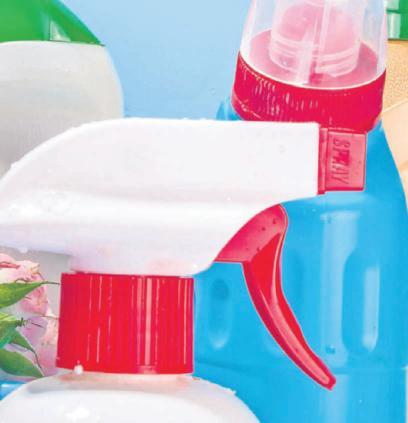
IT’S ALMOST TIME for spring cleaning. But before you throw open and wash the windows, try picking off some easier cleaning tasks. We’re talking about stuff you can tackle when you’re stuck inside on a snowy or rainy day, or when you just need an easy win after a crummy week. Here are 11 chores that you can take care of without breaking a sweat.
1. Launder the laundry bags
Wet towels, dirty workout gear and other bacteria-riddled clothes can leave laundry bags and hamper liners smelly and gross. Toss them in the wash, defaulting to cold water unless the instructions on the care tag indicate they can handle warm or hot water, which will provide a deeper clean.
2. Wash the shower curtain and liner
Fabric and plastic shower curtains can typically be machine-washed in cold water (check the care tag for instructions). Fabric curtains can go in the dryer on a low heat setting; plastic liners should be hung to drip-dry.
Beware, though: If you have a top-loader with a center agitator, the agitator’s fins can shred your curtain. In that case, pad the drum with towels to provide a buffer. Or skip the machine. You can wash a fabric curtain by hand, or place it in a mesh bag to protect it from fin damage. For a plastic liner, leave it hanging and spray it with all-purpose cleaner, then wipe it with a damp microfiber cloth.
3. Organize your laundry supplies
All those detergents and stain removers, fabric softeners, and scent beads — not to mention the mesh washing bags, the dryer balls and the wad preventers you can use for sheets in the dryer — can quickly turn into a disorganized mess. Reestablishing order won’t take much time or effort, and you’ll be glad you did it when, on your next laundry day, you’re not hunting for the detergent behind a stash of scent beads you rarely use.
4. Dust and polish framed items
The framed items in our home collect a lot of dust and are often overlooked
during routine or seasonal cleaning. Bang out this focused task while listening to a favorite podcast or playlist. Get a bottle of glass cleaner and two microfiber cloths or paper towels. Use one cloth to dry-dust the frames, and pair the other with glass cleaner to polish glass encasements.
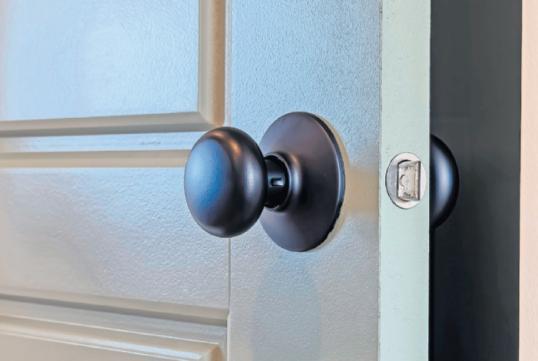
With cold and flu season still in full swing, it’s a good idea to disinfect the hightouch surfaces in your home. Doorknobs and handles, including faucet and refrigerator handles; light switches; electronics, including remote and gaming controls; and railings and banisters are just a few areas to target. Choose a disinfectant that’s safe for the materials you’re
cleaning, and always follow the usage guidelines, paying particular attention to the required dwell time to ensure the product has enough time to work properly.
6. Clean out a utensil drawer
This one is easier and quicker than you think. Take everything out of your utensil drawer or drawers (if you have more than one, decide how big you want to go with this project, then proceed accordingly), and plop it all on the counter. Then wipe the drawer with all-purpose cleaner and put everything back, organizing as you go. If you feel ambitious, review your collection and weed out broken items, duplicates, or things that you never use.
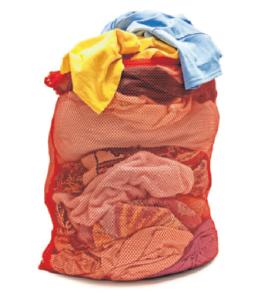
Above, laundry bags need to be laundered from time to time. Below, fabric curtains can go in the dryer on a low heat setting. For a plastic liner, leave it hanging and spray it with all-purpose cleaner, then wipe it with a damp microfiber cloth. (ADOBE STOCK PHOTOS)







PLANTS OCCASIONALLY need fertilizer and when they do, you can choose between using either an organic fertilizer or a synthetic (aka chemical) fertilizer. Organic fertilizers are derived from natural sources such as ground rocks, animal byproducts and manures, and plants or parts of plants. Synthetic fertilizers, in
7. Cull the food storage containers
If your collection of food storage containers is raggedy and unruly, make today the day you address the problem. Take out everything, match lids to their containers, then assess the collection. Recycle or repurpose anything that is stained, warped or cracked, missing a lid, or that you don’t use. You can repurpose the old containers to hold things (think nails, cords, coins or crafting supplies) in a workshop, craft room, office, basement or garage.
8. Wash your makeup brushes and tools
Clean brushes and tools are crucial to keeping makeup free of bacteria, extending the life of products and preventing skin irritation or infection. Washing makeup brushes and tools doesn’t take much time or effort but bear in mind that they need to dry and will be out of commission for several hours during that time.
9. Review your socks and underwear
Breaking up the big job of sorting through and discarding old clothes makes that daunting task easier to face. When you need to feel productive but don’t have a lot of energy to expend on decision-making, try weeding through old socks and underwear to remove anything that is torn, stained,
contrast, are factory made. Most of the nutrition plants get from the ground is from nutrient ions (an atom or a group of atoms with an electric charge). For instance, calcium enters the root as Ca++; the two pluses are the result of the once neutral calcium atom losing two electrons.
Whether a fertilizer is organic or

or
food
are
or
doesn’t fit or is uncomfortable, has shot elastic, or that you simply would not want another person to see you wearing.
10. Tidy your bedside table
Bedside tables are workhorses in the bedroom, holding a nighttime glass of water, books, remote controls, eyeglasses, balms and unguents, and … well, you get the idea. They can also be a place where things go to die, so if yours has become hopelessly cluttered, take time to address the mess. Don’t forget to dust under, behind and around the table.
11. Vacuum and dust around, under and behind the bed
Speaking of dust! Your bed is covered and filled with dust (and dust mites), but that’s easy enough to fix with a vacuum and a sticky roller. When dusting, always start at the top and work your way down. First dust the headboard and bed frame (a sticky roller is perfect for upholstered headboards), then vacuum the mattress. Finally, pull the bed away from the wall and vacuum or dust behind and underneath it.
synthetic, the form the plant eventually sees as food is an ion. People sometimes use this as a argument that it doesn’t matter to the plant whether its food source is organic or synthetic. But ....
Because organic fertilizers are derived from natural sources, nutrients in them typically are locked up in a witches’ brew of organic molecules,

unavailable to plants. This is an advantage often overlooked when considering organic versus synthetic fertilizers. Nutrients locked up in organic fertilizers spring into action when warmth and moisture stimulate microbial activity. Warmth and moisture are the same conditions that make plants grow. Bingo!






Plants are then offered food according to their needs and excess fertilizer doesn’t sit around in the soil where it can be leached away by rainfall. What’s more, a single application of organic fertilizer, doling out a steady diet in sync with plant needs, can provide sufficient nourishment to last the whole growing season. By contrast, a single application of a synthetic fertilizer in a large enough dose to last the whole season would likely burn plant roots. (Being “salts,” in the general sense of an ionic compound, they can draw water out of cells in the same way salty potato chips can dry out your lips.)
Because they are generally soluble, synthetic fertilizers also are more likely to wash away through the ground before plants get to use them. I have in front of me a recommendation for fertilizing blueberries. Various synthetic fertilizers are suggested. To avoid burning roots, the recommendation is to split the total amount of fertilizer required into four or even six applications. My blueberries look very healthy and yield very well, thank you, and when I have fertilized them, using an organic fertilizer, it was once per season.
Other differences between organic and synthetic fertilizers might also warrant using one over the other. Organic fertilizers are rife with impurities. Synthetic fertilizers are relatively pure materials; “Oh goody,” you might say. Wait: these “impurities” are another plus for organics because they include some nutrients needed by plants in only small quantities, so-called trace
elements.
You might choose to use organic fertilizers for reasons that are philosophical rather than for their effects on soil and plants. All sorts of “garbage,” from feedlot manure to sewage sludge to brewery wastes to kitchen waste can be recycled into compost, a nutritious, organic plant food. Organic materials make up a significant portion of land-
Agawam Garden Club’s first meeting for the 2026 season will be March 10 at the Agawam Public Library at 6:30 p.m. The library is located at 750 Cooper St., Agawam. After a short business meeting John Milos, co-owner of Red Branch Landscaping, will present a talk on “Walls that Work: Form, Function, and Flowers.” Members are reminded to bring their annual dues. All club meetings are open to the public and not restricted to Agawam residents.
Applications are now available for the Agawam Garden Club 2026 scholarship. To qualify for the scholarship
students must be a graduating senior of Agawam High School or a college student who graduated from Agawam High School and is planning to attend an institution of higher learning in the fall.
Applicants must be majoring in or planning on majoring in one of the following: botany, environmental engineering, environmental science, earths systems, forest management, natural resources, plant soil and insect science, sustainable agriculture, sustainable horticulture or food and farming, turf grass science and management, landscape design and management technology, clean energy, technology studies: waste water or other environmental related studies.
The recipient will be awarded a $1,000 scholarship at the clubs annual May meeting. Completed applications along with transcripts and references must be submitted to Denise Carmody, 40 Primrose Lane, Agawam MA 01001 by April 1.
Applications are available through Agawam High School or can be found on the website at agawamgardenclub.com.
The West Springfield Garden Club will meet on Thursday, March 19, at 6 p.m., in the J. Edward Christian Municipal Office Building, 26 Central St. Parking is available in the municipal lot across the street. The meeting will be in the Justin Morgan Auditorium on the second floor.
The evening’s speaker is, Ahrayah Julian, owner and designer at Willow and Moss Flowers, who will share her knowledge about “ikebana.”
The art of ikebana has been cultivated in Japan since the 14th century. Ikebana characteristically uses branches in its arrangements to draw lines that define the flow of
fills, in which these materials putrefy to release methane, the largest human-made contributor to atmospheric methane and itself a far more potent greenhouse gas than carbon dioxide. Many commercially available organic fertilizers are made from blends of one or more organic materials rich in the “big three,” nitrogen, phosphorus, and potassium, the three nutrients needed in greatest amounts by plants. Particular blends vary in their concentrations of nutrients and in how quickly the nutrients become available to plants.
However, much of the benefit in feeding plants organically comes not from the nutrients these fertilizers contain, but from the bulk associated with those nutrients.
Among other benefits, this bulk helps soils hold water and air, renders nutrients already in the soil more available, and helps prevent diseases.
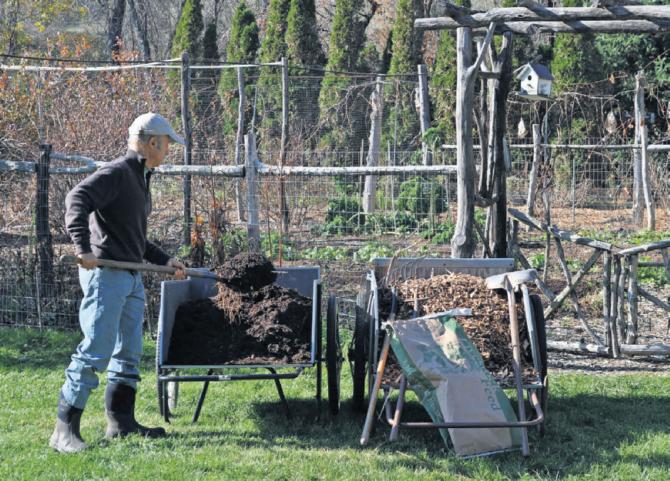
Vegetable plants are very hungry of plants. The annual feeding regime in my vegetable garden used to be soybean meal as well as, for its relatively rich nutrient content among bulky, organic materials, compost. A few years since I similarly did away with the soybean meal and now rely on compost alone for fertility, laid annually on each bed an inch deep.
There’s no substitute for a pitchfork in good gardening.
space. Arrangements are lean, minimalist, eliminate excess and highlight individual flowers and features. The public is welcome to attend. Please contact BeckyJean at beckyjean@beckyjeanthompson. com to RSVP.
The Springfield Garden Club is hosting a series of programs for anyone interested gardens
and gardening or just escaping the winter for an hour.
The programs will be held at The Monkey House in Forest Park at 10 a.m. Admission is free to all with paid park admission. More information can be found on the club’s website www.springfieldgarden clubma.org or on Facebook. Saturday, March 28, 10 a.m., “Vegetable Gardening 101” presented by Gretel Anspach Saturday, April 11, 10 a.m., “Planning and Growing a Bountiful Flower Garden” presented by Becky Sadlowski.



























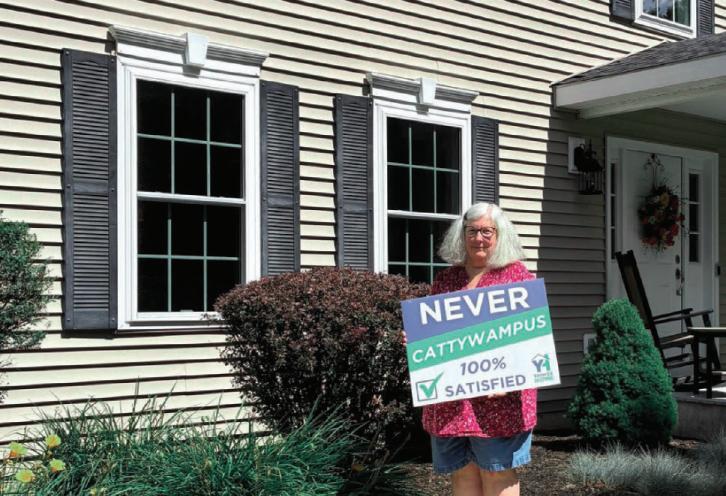



















































I grew up in Ireland watching my father work hard and take pride in doing things the right way. He showed me early on that your word matters, that shortcuts aren’t worth it, and that good work speaks for itself. I came to America in the 1980s with $80 and my father’s work ethic. I’m thankful for the opportunities this country gave me, and proud to now call myself a "Yank."



By Jane Sykes
The Washington Post
MY CAT LOVES TO GRAZE on houseplants and cut flowers and sometimes vomits within an hour or two afterward. Is it OK to let her do this? Are there other household poisons I should be worried about?
As Easter approaches, the potential that your cat or dog will be exposed to toxins from cut flowers, chocolate and potted plants like sago palms increases. But the danger household items pose to pets goes well beyond the spring holiday season.
Other things that can make your pet sick include raisins, ibuprofen and pennies.
For some poisons, delaying a visit to the vet by just hours can be the difference between life and death. The list of potential poisons for pets is long, but here’s what you need to know about some of the most common — and deadly — indoor household toxins.
Although the range of poisons for cats tends to be narrower than for dogs — in part because most cats are fussier about what they eat — cats tend to have worse outcomes because they are much more sensitive to poisons than are dogs and people.
Lilies. Lily plants, including daylilies, stargazer lilies, Asiatic lilies, tiger lilies, Easter lilies and Oriental lilies, are extremely poisonous for cats. Just a nibble on a leaf or petal can lead to rapid kidney damage with loss of appetite, vomiting, hypersalivation, lethargy and sometimes neurological signs such as stumbling, tremors and seizures.
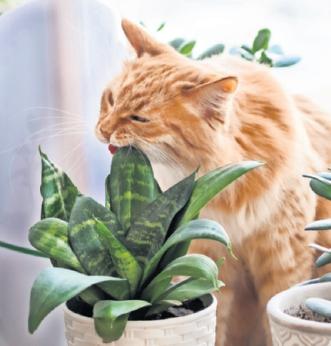
Although cats usually recover if treated within 24 to 48 hours of exposure, once kidney failure develops, many affected cats will die.
According to Larry Cowgill, a professor of veterinary nephrology at the University of California at Davis, even pollen, stamens and petals that drop from shelves can be toxic. “If a cat just walks through pollen and licks its paws, kidney failure and death can follow,” he said.
Over-the-counter pain medications. Nonsteroidal anti-inflammatory drugs (NSAIDs), especially ibuprofen (Advil), are also toxic to cats. Just sucking on an ibuprofen caplet can lead to rapid kidney failure and death. “Because of the trend to produce flavored medications for pets, we’ve been treating more and more cats that get into NSAIDs for dogs, like carprofen,” Cowgill said.
Cats are also very susceptible to acetaminophen (Tylenol) poisoning, which causes liver damage and impairs the ability of blood to carry oxygen (methemoglobinemia). Affected cats have brown, yellow or muddy-colored gums, and develop weakness, respiratory distress, and sometimes swelling of the face and paws. There is no safe dose of acetaminophen for cats; just 50 mg can be enough to cause death.
Flea and tick medications for dogs. Pyrethroids such as permethrin, which are present in some flea and tick medications labeled for use only in dogs, are toxic for cats. Even having contact with a dog in the household that has been treated with a spot-on topical product can cause a cat to have neurologicalal signs (usually tremors, shaking and salivation).
Because dogs will eat pretty much anything, they are more likely to be poisoned than cats; around 90% of cases reported to the Pet Poison Helpline are dogs.
Grapes and raisins. Ingestion of grapes and raisins can cause kidney injury in dogs, although according to Steven Epstein, a professor of emergency and critical care at the University of California at Davis, most treated dogs have a good prognosis. Some dogs eat large numbers of grapes or raisins with no problems; others can die after eating less than a handful of raisins. As with lilies and cats, though, once kidney injury develops, only about half of dogs will survive.
For decades, how grapes and raisins cause kidney failure in dogs has been a mystery. Investigations for mycotoxins, heavy metals, pesticides and tannins
have been — well — fruitless. Recently, the Pet Poison Helpline identified an identical illness in dogs that ingested large amounts of cream of tartar (one dog ate homemade Play-Dough), or tamarind pods or paste (used in Southeast Asian dishes). The common thread is tartaric acid, which is in cream of tartar, tamarind pods, and grapes and raisins; in fact, cream of tartar is a by-product of winemaking. Variations in how individual dogs react to tartrates might explain why some dogs can safely ingest grapes and raisins, while others die.
Xylitol. This sweetener found in baked goods, chewing gum, mints, peanut butter, diet bars, drink powders and some human dental products (such as toothpaste and mouthwash) can cause low blood sugar levels and liver failure, with lethargy, vomiting and weakness typically developing within 24 hours. Other foods. Chocolate (especially dark chocolate), onions and garlic also can cause severe illness. Onions and garlic are most likely to create problems in small dogs. (I once treated a Chihuahua with onion toxicity after it ate a large quantity of Chinese takeout.)
Human medications. As with cats, ibuprofen or acetaminophen can be toxic for dogs, although higher doses are typically needed to cause illness. Other problematic human medications include vitamin D supplements, estrogen creams, antidepressants and other prescription drugs, and recreational drugs including cannabis and amphetamines.
Potted sago palms. Although the seeds of these popular houseplants are the most toxic, dogs can be poisoned when they ingest any part of the plant; just mouthing on a frond can lead to death. Signs can develop within hours and include lethargy, decreased appetite, vomiting and diarrhea (which can be severe and bloody), indications of liver failure (yellowing of the skin, eyes and gums), and in severe cases, neurological signs such as stumbling or seizures.
Rat bait. Most rat baits contain compounds that stop the blood from clotting (anticoagulant rodenticides such as bromethalin), but some contain vitamin D3 (cholecalciferol). Baits that contain vitamin D3 cause calcium levels to rise in the blood, which in turn causes mineralization of tissues and death, effectively turning animals into stone. Pets can die after ingesting the bait itself or poisoned rodents.
Zinc. Ingestion of zinc-containing objects leads to red-blood-cell damage and anemia. Pennies minted after

Some dogs eat large numbers of grapes or raisins with no problems; others can die after eating less than a handful of raisins.
1982 are the most common household source of zinc, but it’s found in other objects, as well. (We recently saw a dog with zinc poisoning after eating a metal Monopoly piece.)
How are poisoned pets treated?
Veterinarians usually treat dogs and cats that have ingested household poisons with intravenous fluid therapy and gastrointestinal decontamination (inducing vomiting with medications and giving a slurry of activated charcoal). For animals with severe toxicities, dialysis can be used to treat kidney failure as well as to extract poisonous substances from the blood, preventing further damage. Depending on the poison, other treatments and supportive care measures (such as oxygen and blood product transfusions) might also be needed.
How can I reduce the chance that my pet is poisoned?
Familiarize yourself with the top 20 poisons for dogs and cats in your state, and keep them out of reach of pets. If you prefer fresh flowers and live indoor plants to artificial ones, look for florists with pet-friendly offerings (which can be found online). Choose these if you want to send gifts to friends, family or colleagues who might own pets, too.
Always keep pet and human medications locked in a cabinet. Dispense them over a sink. If they do happen to drop on the floor, pick them up immediately. Give pets human medications only if they’ve been prescribed by your vet.
If you have both dogs and cats, use products on dogs only if they are also safe for cats. Check the label if you bought it from a pet store or online. Should your pet get sick and there’s a chance of toxicity, call your vet or a pet poison helpline immediately and follow their advice. If you can’t get help over the phone, take your pet to a 24hour emergency clinic.
By Jessica Damiano Associated Press
straightforward and, frankly, it should be: Buy a seed, plant it, add water and watch it grow. But one look at the back of a jargon-filled seed packet can have you spewing expletive-filled rants to no one in particular.
Fear not. With this handy glossary at your side, you’ll not only understand exactly what you’re buying and what it will expect from you, but you’ll also avoid attracting sideways glances at the nursery.
Most packets advise starting seeds indoors a set number of weeks (“4-6,” “6-8,” etc.) before the average last frost date in your region. To find your date, enter your ZIP code into this tool from The Old Farmer’s Almanac.
Find that date on your calendar and count back the number of weeks recommended on your seed packet. Starting seeds indoors at the right time ensures they are ready to transplant outdoors on the target date. If, however, the instructions read, “When the danger of frost has passed,” that’s a different story. The “average last frost date” isn’t a guarantee — it’s an average. “When the danger has passed” can be about a month later, depending on your region.
Learning the lingo
Some other terms to understand before you go shopping:
Annual: A plant that completes its life cycle in one year.
Biennial: A plant that completes its life cycle in two years, typically producing seeds only in its second year.
Perennial: Plants with a life cycle longer than two years. Perennials may die back to the ground over winter and return year after year, or remain active throughout their life span, depending on where they’re growing. In warmer places, perennials continue to grow year-round.
Broadcast: Spreading seeds over a large area instead of planting in rows. Usually recommended for small seeds, which must later be “thinned” to create a recommended distance between seedlings.
Thinning: Removing extra or overcrowded seedlings to allow the strongest to access the nutrients, water, sunlight and air circulation they need. Thinning a group of seedlings to, say, 2 or 3 inches apart is usually required after broadcasting seeds.
Direct sowing: Planting seeds directly in the garden rather than starting them indoors in containers.
Germination rate: A number, usually expressed as a percentage, that correlates to the number of seeds that should be expected to sprout from the seed packet’s contents.
Days to maturity: How long it will take for a plant to produce a harvest. For seeds sown directly outdoors, days are

A collection of seed packets are displayed on a table on Long Island, N.Y., on Jan. 14, 2025. (JESSICA
counted from germination; for those started indoors, the clock starts when they are transplanted into the garden. Sunlight requirements: ”Full sun” means the plant should be in a spot that receives a minimum of 6-8 hours of direct sunlight daily. “Part sun” indicates a sunlight requirement of 4-6 hours daily; “part shade,” 3-6 hours; “full shade,” less than 3 hours; and “deep shade” means sunlight seldom, if ever, gets through trees or past buildings to reach the site. Sunlight filtered through overhead tree branches, resulting in light, spotty shade, is referred to as “dappled.”
Resistance: The plant was bred to resist a specific disease or insect infestation, indicated by an abbreviation, such as A: Anthracnose; LB: Late blight; N: nematodes; PM: powdery mildew; VF: Verticillium and Fusarium wilts, etc.
Open-pollinated: A plant that has been naturally pollinated. Open-pollinated seeds can be saved from year to year and planted to produce offspring that “grow true,” or hold the same characteristics as the plants from which they were collected.
Heirloom: An open-pollinated plant that has been saved and passed down for at least 50 years, often holding historical, cultural or sentimental value.
Hybrid: A plant variety that has been cultivated in a controlled setting, usually by cross-pollinating with at least one other variety, to acquire new characteristics such as bloom color, disease resistance, fragrance, size, hardiness, taste or shelf life. Planting its seeds will not produce plants identical to the parent.
F1: Short for “first filial,” which means “first child,” an F1 seed is the first generation that results from the cross of two parents. In other words, it’s a hybrid.
Non-GMO: Short for “nongenetically modified,” this designation indicates that the seeds’ DNA has not been altered in a laboratory, with or without DNA from another species.
Scarify: Scratching, soaking, nicking or otherwise compromising the hard surface of a tough seed to facilitate germination.
Stratify: Exposing seeds or bulbs to cold temperatures, typically in a refrigerator or freezer, for an extended period of time to mimic outdoor winter conditions necessary for spring germination.
Springfield Garden Club offers $2,000 scholarship
The Springfield Garden Club is accepting applications for its annual $2,000 scholarship awarded to a graduating high school senior, undergraduate or graduate college student majoring in a fulltime plant science or environmental studies program, such as horticulture, floriculture, landscape design, conservation, forestry, botany, agronomy, plant pathology, environmental control, land management or other allied fields.
The candidate must be a resident of Hampden County,
demonstrate financial need and have adequate academic standing. High school seniors, undergraduate and graduate college students are eligible for consideration.
For additional information and to request a copy of the application contact Daniel Sheehy at SGCscholarship@ gmail.com.
Scholarship applications are to be complete and meet the submission deadline of April 1, to be eligible for consideration.
The SGC has awarded over $90,000 to more than 60 students during the past 30 plus years. Funds for the scholarship are raised at the annual plant sale held each year in the spring. The Annual Plant Sale this year will be held at Forest Park on Sumner Avenue in Springfield on Saturday, May 30,
from 9 a.m. to noon.
For more information on the Springfield Garden Club events go to www.spring fieldgardenclubma.org or visit them on Facebook at https://www.facebook. com/SpringfieldMA GardenClub/ WILBRAHAM Garden Club scholarships applications
The Wilbraham Garden Club has announced that applications are now being accepted for two $1,000 scholarships. It is accepting applications from graduating high school seniors, undergraduates, and graduate college students majoring in or who plan to major in, one of the programs listed below.
Eligible students must be residents of Wilbraham or Hampden.
All applicants must be enrolled in one of these fields of study: botany, horticulture, conservation, environmental science, earth systems, forest management, natural resources, plant, soil and insect science, sustainable agricultures, sustainable horticulture, food and farming, turf grass science and management, landscape design and management technology, landscape architecture, oceanography, clean energy technology, floral design or land management.
Applicants must include a personal essay of 100-200 words, official high school or college transcript(s), two letters of recommendation, college acceptance letters(s) if available, along with the
completed Wilbraham Garden Club Scholarship application.
All required documentation must be received on or before April 30. Notifications will be made by mid-May, and the recipients will be awarded their scholarships at the annual meeting of the Wilbraham Garden Club on June 5. Scholarship applicants will be available at the Wilbraham and Hampden public libraries, Minnechaug Regional High School and Wilbraham Monson Academy. They can also be found on the Wilbraham Garden Club Facebook page. Please contact howella413@gmail. com with questions or to receive an application.
Send items for Garden Notes to pmastriano@repub.com two weeks prior to publication.
Pottery Co. was at the forefront of the art pottery movement in the United States. It was founded in 1880 in Cincinnati, Ohio, by Maria Longworth Nichols, making it one of the earliest companies in America owned by a woman. Many of its most notable artists were women, too. Laura Anne Fry joined the company as a decorator in 1881. In addition to her skill as a ceramicist, she was an accomplished woodcarver, having trained with her father and grandfather, who carved decorative furniture and taught the art in Cincinnati. Fry turned out to be one of the company’s most influential artists, developing an innovative technique to apply glaze using an atomizer that allowed for color gradients and blending. This was crucial to the Rookwood Standard Glaze. She was awarded a patent for her invention in 1889, the year Rookwood won a gold medal at the Paris Exposition Universelle. In 1890, she left Rookwood for a job teaching art at Purdue University. She also worked for the Lonhuda Pottery Company about this time. She became the head of the art department at Purdue in 1893, a position she held until her retirement in 1922.
A Rookwood chocolate pot signed by Fry and dated 1885 sold at Fontaine’s Auction Gallery for $625.
Q. We have a 1935 horsehair velvet sofa and chair in near-pristine condition. We want them to go to a museum or similar place where it will be taken care of. We have verification from the original maker of the age and who made the pieces.
We are planning to donate, not sell them. Do you have ideas where to look to find a home for them?
A. Look up museums in your area. Museum websites

Q. I have a 12-piece setting of Noritake china in pattern 5609, including vegetable serving bowls, a gravy bowl, sugar and creamer, and two sizes of oval platters. I would like to know its value.
A. Noritake, which started as Nippon Toki Kaisha Ltd., was exporting porcelain dinnerware sets to the United States by 1914. Its dinnerware sets are high quality, but were mass-produced in large quantities. Pattern 5609, also called Belmont, was made from about 1955 to 1956. The pattern has platinum trim around the edge.
Sets of Noritake china the size yours sell for about $200 to $300 if they are in good condition.
Serving pieces are worth about $20 to $40 individually, with the higher values going to the larger pieces, and a sugar and creamer set is worth about $20 to $30.
TIP: Don’t put pottery or porcelain with crazed glaze in the dishwasher. It will crack even more.
Current prices are recorded from antiques shows, flea markets, sales and auctions throughout the United States. Prices vary in different locations because of local economic conditions.
Buster Brown, handkerchief, Buster Brown at the Zoo, Buster and animals around border, multicolor, speech balloons, Tige in center, red trim, 12 x 12 inches, $10.
Pepsi-Cola, carrier, wood, painted base, red script logo, Bigger, Better, blue trim, yellow ground, metal top handle, 11 1/2 x 8 1/2 x 6 inches, $50.
Lalique, figure, Anemone, flower, frosted glass, textured petals, raised and painted black dots around center, clear stem, signed, Lalique France, 3 1/2 x 4 1/4 inches, $75.
Star Wars, toy, Prune Face, cloak and eyepatch, Return of the Jedi, on card, Kenner, 1983, $150.
Bottle, demijohn, olive green, blown glass, mounted as lamp, wood base, electrified, 32 inches, $195.
often have a page for donations with information about whether they are currently accepting, what types of items, including time periods, they look for, sometimes items that they do not accept, and often a contact form to fill out if you have something you would like to donate.
Art museums and history museums, especially house museums, may be interested in furniture. If there is an appropriate museum in your area that does not have a website, contact them and ask about donations.
Authenticity and conservation are important factors in whether a museum accepts a donation, so be sure to let the museum know you have documentation of the age and maker. That will be an advantage. If a museum you contact is not accepting donations,
they may be able to direct you to an institution that does. The Official Museum Directory, which is available online, may be a helpful resource. A library in your area may have a print copy. If transportation is not an issue, a museum or university in the area where the furniture was originally made may be interested. Remember that if a museum accepts your donation, that will not necessarily mean you will see it displayed. A large portion of museum collections is kept for study and remains in storage. If a museum accepts your donation, get a written agreement first. Some museums may sell items in their collections. If you do not want this to happen to your furniture, you can include a requirement that they be returned to you instead.
Kovels answers readers’ questions sent to the column. Send a letter with one question describing the size, material (glass, pottery) and what you know about the item. Include only two pictures: the object and a close-up of any marks or damage. Be sure your name and return address are included. By sending a question, you give full permission for use in any Kovel product. Names, addresses or email addresses will not be published. We do not guarantee the return of photographs, but if a stamped envelope is included, we will try. Questions that are answered will appear in Kovels Publications. Write to Kovels, The Republican, King Features Syndicate, 300 W. 57th Street, 41st Floor, New York, NY 10019, or email us at collectorsgallery@ kovels.com.
Bronze, censer, cylinder, melon lobed, patinated, short foot, stamped character mark, Chinese, c. 1900, 12 inches, $255.
Furniture, cupboard, hanging, tiger maple, shaped crest, panel door, interior shelf, 23 x 16 inches, $435.
Pottery-contemporary, olla, painted, allover geometric grid, red, black, white, hand coiled, signed, Loretta Garcia, Acoma Pueblo, 6 1/2 x 8 1/2 inches, $450.
Silver-sterling, coffeepot, dome lid, scalloped gooseneck, lighthouse shape, round foot, wood handle, reproduction of Priest & Shaw, 10 inches, $800. Celadon, brush washer, round, turned in rim, blue and white interior, landscape, buildings, figures, trees, mountains in background, Chinese, 8 inches, $1,535.
By A lex Veiga Associated Press
The average long-term U.S. mortgage rate came off its lowest level in three-anda-half years this week, as bond yields marched higher following a spike in oil prices due to the war with Iran.
The benchmark 30-year fixed rate mortgage rate ticked up to 6% from 5.98% last week, mortgage buyer
Freddie Mac said Thursday. One year ago, the rate averaged 6.63%.
The modest increase ends a three-week slide in the average rate, which has been hovering around 6% this year.
Last week’s average rate marked the first time it dropped below 6% going back to September 2022.
Mortgage rates are influenced by several factors, from the Federal Reserve’s interest rate policy decisions to bond market investors’ ex-
Derek D. Panaia to Clifford Baulkman, 7G Castle Hills Road, $330,000.
Joshua M. Dufrane to Peter Anthony Rodriguez, 52 Peros Drive, $395,000.
Paul R. Gauthier, Paul Gauthier, Shavone L. Gauthier and Shavone Gauthier to Joseph Judd and Julie Judd, 27 Marlene Drive, $495,000.
Richard D. Veighey Jr., and Jo Ann WellsVeighey to Timothy P. Veighey, 47 Norris St., $193,000.
Robert E. Carter and Nancy Marie Carter to Edward John Brewer Sr., and Roseanne Patricia Brewer, 60 Elizabeth St., $397,000.
David C. Tenbroek and Trampas M. Tenbroek to Son N. Nguyen and Ly Nguyen, 170 East Hadley Road and 170 E. Hadley Road, $245,000.
Amhad Development Corp., to Shohren Shafie, trustee, Reza Shafie-Ardestani, trustee, and Shafie Family Trust, 28 Greenleaves Drive, $325,000.
Gerald A. Itzkoff and Julia Itzkoff Ruby, individually and as trustees of the Itzkoff Realty Trust, to Christopher W. Farley and Juliet A. Jacobson, John Ford Road, $90,000.
Barbara A. Lagoy and Edward G. Lagoy, trustees of the Lagoy Investment Trust, to Stephanie M. Soos and Todd S. Soos, 374 Watson Spruce Corner Road, $625,000.
Rathanavuth Yin and Christine Bentsen to Drew Delorey and Zandra R. Davis, 137 Old Amherst Road, $360,000.
Carol E. Fisher, Lori P. Fisher, Alan Fisher, Carolyn M. Fisher and Alan Fisher, attorney-in-fact, to Daniel J. Fusari, 16 Martin Circle, $440,000.
pectations for the economy and inflation. They generally follow the trajectory of the 10-year Treasury yield, which lenders use as a guide to pricing home loans.
The 10-year Treasury yield was at 4.14% at midday Thursday, up from around 4% a week ago.
Treasury yields have climbed recently as rising oil prices put more upward pressure on inflation, which could keep the Federal Reserve from cutting interest rates.
Judith A. Columbo to Mary Columbo, trustee, and Judith Ann Columbo Irrevocable Trust, 132 North Liberty St., $100.
Christine M. Wallin to William Wallin and Meghan Wallin, 20 Brandywine Drive, $400,000.
Peder Andrew Gilbert and Jordan Chesley Litter to Peder Andrew Gilbert, Jordan Chelsey Litter and Thomas R. Mitchell, Alden Avenue, $100.
Daniel S. Reider and Jordana N. Bloom to Robin Quinn, 500 East River Road, $450,000.
J. Sperry Realty LLC, to Georges E. Nasr and Marlene Nasr, 11 Campbell Road, $365,000.
Amy M. Ordynowicz, Amy M. Janulewicz and Daniel P. Pisa to Joselito Lozada, 135 Newbury St., $255,900.
Chenevert Proprties LLC, and Chenevert Properties LLC, to Cassandra Ortiz Colon, 88 Prospect St., $340,000.
Daniel J. Leclair to Ryan F. Neal and Kayla M. O’Donnell, 134 Lukasik St., $361,000.
Donna Marie Weber to Veteran Stan LLC, 79 Kaveney St., $155,000.
Edward J. Brewer and Roseanne P. Brewer to Kyle Gemme and Kari Scytkowski, 71 Florence St., $320,000.
Gloria Gonzalez to Cynthia Gonzalez and Rogelio Rosario, 16 Edmund St., $140,000.
Joseph T. Judd and Julie Judd to James V. Arone and Paige E. Melbourne, 141 Simonich Circle, $362,000.
Scott Family Properties LLC, to Anna Murphy and Kyle Murphy, 103 Catherine St., $300,000.
Fern Hearth LLC, to Jordan C. Sherman and Cindy L. Sherman, 64 Cole St., $175,000.
The central bank doesn’t set mortgage rates, but its decisions to raise or lower its short-term rate are watched closely by bond investors and can ultimately affect the yield on 10-year Treasurys that influence mortgage rates.
Home loan rates have been trending lower for months, helping drive a pickup in home sales the last four months of 2025, though not enough to lift the housing market out of its slump dating back to 2022, when mortgage rates began to climb
Road, $660,000.
Hugh Manheim to Rebekah Keasbey and Matthew J. Manheim, 4 Boron Ave., $164,000.
Best Home Builders LLC, to Tianzhixi Yin and Chenling Wu, 1 Jeffrey Lane, $788,000.
Diem Q. Balboni, representative, and Sueyen Damthi, estate, to Campagnari Construction LLC, 145 Gates Ave., $230,000.
East Coast Contracting LLC, to Rosanny Amaro, trustee, and Rosanny Amaro Revocable Indenture of Trust of, trustee of, 20 Halon Terrace, $1,100,000.
Geary Gravel, representative, and Dixie C. Price, estate, to Filipe J. Americano, 78 Meadow St., $330,000.
Marilyn S. Pooler, trustee, and Pooler Family Trust, trustee of, to Carol A. Dube, 13 Park Place, $515,500.
Herbert F. Montena to Ernest Beckman, 300 Main St., $100.
John P. Yagmin Sr., to Pancho Diaz LLC, 19 Parsons St., $340,881.
Pineview Development LLC, and West Co Investments LLC, to Peter Smith and Christine Smith, 6 Nicols Way, $649,900.
Jack M. Poudrier to Jack M. Poudrier and Shannon Poudrier, 14 Richardson Circle and 14 David Richardson Circle, $100.
Alpi Properties Inc., to Christopher J. Belsito and Chelsea A. Belsito, 26 South St., $440,000.
Kristen L. Hinchey to Kevin T. McGrath, 41 South St., $275,000.
Glenn A. Zygmont, Paul A. Goehlert, Paul A. Goelhert, personal representative, and Lee Ann Zygmont, estate, to Ivaan LLC, 64 Ferry St., $700,000.
Mary S. Webb, Mary S. Davini and Robert Webb to Cassidy Frances Kosior, 55 Pleasant St., $250,000.
from pandemic-era lows.
Sales of previously occupied U.S. homes remained stuck last year at 30-year lows. And more buyerfriendly mortgage rates this year weren’t enough to lift home sales last month.
Still, with the average rate on a 30-year mortgage running below where it was last year, it represents a favorable backdrop for prospective home shoppers who can afford to buy at current rates just as the spring homebuying season ramps up.
Jon F. Miller and Martha K. Miller to Robert Scibelli and Madeline Scibelli, 41 Morgan St., $430,000.
David K. Toplon to Robert Morin and Alexa Morin, 73 Amherst St., $371,000.
Michael J. Breault and Karissa L. Breault to Karissa L. Breault, 78 Chicopee St., $100. Zhi Tan to Alpi Properties Inc., 42 East St., $680,000.
Alan H. Blanker, trustee of the Ann H. Blanker Revocable Trust, to Leah Morton, 72 Meadow Wood Drive, $596,000.
John Mills, “aka” John W. Mills, and Judith Mills to Robert Bergeron, 25 Arnold Lane, $151,500.
Michael P. Damon and Diana L. Damon to Diana L. Damon, trustee, and Revocable Indenture of Trust of Diana L. Damon, 41 Aqua Vitae Road, $100.
Hawley Preserve LLC, to Currier Realty LLC, East Hawley Road, $129,500.
Hawley Preserve LLC, to Angela Celli and Zachary Hutchinson, 292 East Hawley Road, $109,000.
Crissy M. Theroux, Linda B. Theroux, Carol A. McIntire, Skylar Marie Theroux, Michael Skylar Theroux and Sarah D. Theroux to Cheskel Landau, 12 School St., $92,500.
Heather Cahillane to Michael LaValley, Melissa LaValley and Virginia Zygmont, 1114 Hampden St., $280,000.
Juan M. Moscoso and Jennifer T. Moscoso to Erin Ruggiano, 34 Maple Crest Circle, Unit B, $220,000.
Kathryn M. Zweir to Martin Amaya-Barraza and Maritza P. Amaya-Branche, 30 Lindor Heights, $387,500.
Naples Home Buyers Inc., to Nakari Jimenez, 12 Tempel St., $345,000.
Pah Properties LLC, to Michael Reardon and Emily Qvistgaard, 49 Linden St., $266,000.
Anna Murphy, Anna Footit, Kyle Murphy and Kyle P. Murphy to Joseph B. Raco and Victoria E. Hosmer, 46 Worthington Road, $265,000.
Carol S. Dougherty to Steven Colon and Megan Flannery, 319 Greenfield Road, $540,000.
James P. Wlodyka to Paul H. Kecki and Susan M. Kecki, Poole Street, Lot A1, $50,000.
Kurt L. Lessenger and Anne R. Lessenger to Karen Amato, 308 Miller St., Unit 32, $435,000.
Marilyn T. Bourbeau, Marilyn T. Teixeira, John Teixeira and Charles Teixeira to JoeJoe Properties LLC, 464 Poole St., $75,000.
Pauline C. Perham, Pauline Fillion and Roseann R. Antaya to Catarina Marafuga and Michael Young, 50 Warsaw Ave., $285,000.
Despina Proios and Vasilios Kakoulidis to Brian McGurk and Abigail McGurk, Beebe Road, Lot 169-22, $275,000.
Lori-Ann Dyer and Heather Hammon to Jullian Coleman and Delight McColl, 179 Bumstead Road, $459,000.
Taylor Pronowicz and Mollie Pronowicz to Michael Burgos, 42 Bethany Road, $311,000.
Dylan M. Field to Celina Stratford and William Stratford, Dry Hill Road, $65,000.
Brenda L. Denison to Great Falls Enterprises Inc., 150 Millers Falls Road, $425,000.

Robert Gaggin and Karen Gaggin to Liza Graybill, 66 Laurel Park, $335,000.
Michael Damon and Diana Damon to Michael P. Damon, trustee, and Revocable Indenture of Trust of Michael P. Damon, 1203 Burts Pit Road, $100.
Manmeet Singh Saini, Bhupendra Singh Saini and Harjinderkaur Saini to David L. Faytell and Dani Pers Faytell, 723 Florence Road, $395,000.
Michael S. Shields and Alexander M. Shields to 9B Walnut LLC, 9 Walnut St., $300,000.
Dufrayne LLC, to Christin Martin, 67 Park St., $775,000.
Berkley Enterprises LLC, to Allah Abou-Harb and Saira Yomara Roman Hernandez, 20 Marjorie St., $395,000.
Paul Moriarty to Jennifer N. Stone and Joshua T. Stone, Warwick Road, $5,000.
Jordan Rabb, trustee of the 37 Cottage Street Realty Trust, to Frida Vasquez Gomez, 37 Cottage St., $260,000.
Reginald C. Haughton Jr., to William Ellis, 75 Sandrah Drive, $310,000.
Maria McGovern and Nicholas McGovern to Bryan Alec Valeri, 395 South Main St., $349,000.
Berkshire Land Co. LLC, trustee, and 161 General Knox Road Land Trust, trustee of, to Cassandra Lee Roche and Rolando Orlando Nunez, 161 General Knox Road, $357,310.
Elizabeth Millay to Perry Boudreau, 1172 Huntington Road, $375,000.
Shawn Stone to Chad Merrigan, 11 Wyola Drive, $70,000.
Trevor A. Baptiste and Whitney L. Battle-Baptiste to Zihao Qu and Kai Sun, 31 College View Heights, $597,500.
Adelino Valencia to All In One Realty Development LLC, 66-70 Leyfred Terrace, $195,000.
Andrew Joseph Bennett and Timothy James Fitzgerald to DNE Properties LLC, 72 Larkspur St., $235,000.
Ann C. McCarthy to Ryan Dean, 56 Pennsylvania Ave., $293,000.
Cadle Co., and Louis Silver to Steve Rutter, 624 Worthington St.., $1,500.
Carmela A Fraziero, representative, Yu Van Suen, estate, Yu-van Suen, estate, Yu Man Suen, estate, Yu-man Suen, estate, and Yuman Suen, estate, to Lan-Oak Realty LLC, SS Maple St., $80,000.
Darrick Dwyer, Lauren Ashley-Bucciarelli Dwyer and Lauren Ashely-Bucciarelli Dwyer to Rafael J. Perez and Nikita J. Perez, 138 Abbott St., $391,000.
Dino J. Zamboni, representative, Jacqueline Theresa Zamboni, estate, and Jacqueline Zamboni, estate, to Dino J. Zamboni, Susan A. Zamboni and Dino A. Zamboni, 2 Signal Hill Circle, $345,000. Dominic Kirchner II, trustee, and Kokoleka Realty Trust, trustee of, to Rolando A. Vasquez, 61-63 Wilcox St., $249,987.
Edison Santana and Judith Figueroa-Santana to Juan Crespo, 62-64 Whittier St., $415,000.
Equity Trust Co., custodian, Robert Lareau IRA, and Robert Lareau to Majestic Partners LLC, 57-59 Martha St., $299,000.
Evan Pope and Lita Pope to Tonya Shippy, 1606 Wilbraham Road, $339,000.
Gary C. Kennett to Kenneth A. Keppler and Aja C. Keppler, 95-97 Forest Park Ave., $181,000.
Jason M. Gryszowka, representative, Lucy A. Gryszowka, estate, and Lucy Antoinette Gryszowka, estate, to Yeslin Gonzalez Perez and Elcia Chaj, 39-41 Malden St., $286,000.
JJS Capital Investment LLC, to Mayda Fraticelli, 58 Roy St., $100,000.
Jorge Ferreira, Palmira M. Ferreira and Irene Oliveira to Sophyrady Sar and Longhay Mao, 16-18 Blanding St., $379,000.
Master Investment Group LLC, and

Master Investment Groupt LLC, to Fred Batchelder, 100 Nagle St., $420,000.
Norman L. Strader, Gloria L. Strader and Michelle M. Mayou to NRES LLC, 1657 Carew St., $90,000.
Osagie Efosa Omo to Angelina Marte Pena, 127 Dickinson St., $459,000.
Raddy O. Nunez to Andre Ferdinand and Dieula Cherival, 59-61 Pinevale St., $420,000.
Raymond J. Larose Jr., to Donald R. Napolitan, 68 Hamilton St., $305,000.
Richard A. Gibbons and Alexandria Gibbons to Jacqueline Heredia, 7981 Windemere St., $390,000.
Stoughton L. Smead, trustee, and Stoughton L. Smead Revocable Indenture of Trust of, trustee of, to First Group LLC, 616 Boston Road, $485,000.
Suzan M. Dumas and Angela Rodriguez to Mamba Capital LLC, WS Parker St., $65,000.
Tonya L. Shippy to Barbara Starks and Remy Wilson, 321 Rosewell Ave., $300,000.
Ysabel Santana and Andres Almanzar to Luis E. Lorenzo Quezada, 55 Malden St., $280,000.
Lev Skuratovsky to Robert P. Langevin Jr., 1154 Colebrook River Road, $65,000.
SRV Properties LLC, to Norman William Brown III, 14 Laurel Drive, $305,000.
William Edward Wallin and Meghan Christine Wallin to Taylor Pronowicz and Mollie Alicia Pronowicz, 209 Osborne Road and 20 Osborne Road, $388,500.
Javier Lugo Jr., to Naples Home Buyers Inc., 22 Warebrook Village, $115,000.
Yellowbrick Property LLC, to Jay Mooney and Nicole Mooney, 7 Dugan Road, $237,500.
PC Monastery LLC, to Monastery Realty LLC, 110 Monastery Ave., $4,864,500.
Tara LLC, to Thomas M. Daley and

Claire M. Damour-Daley, Wolcott Avenue, Lot 1, $160,000.
Thomas A. Eglin, representative, and Mary Jane D. Eglin, estate, to Kathleen Hart, 545 Rogers Ave., $444,000.
Barbara A. Sullivan, Patricia L. Amos, Elaine M. Brouillette, Dawn K. Tuttle and Elaine M. Sullivan to Luke Ottarson Gaida, 47 Jaeger Drive, $329,900.
Carlie M. Bosini, representative, Christina A. Bodendorf, estate, Christina Anne Bodendorf, estate, and Christina Ann Bodendorf, estate, to Daniel Blair and Lisa Blair, 315 Holyoke Road, $414,900.
Donald V. Fioroni, representative, Teresa Fioroni, estate, and Rosa Theresa Fioroni, estate, to Natalya Deven, 0 East Mountain Road, $18,000.
Joseph P. Nangle to Abdulghafoor Almafraji and Humam Almafraji, 25 White St., $395,000.
Mary A. Thatcher, estate, and Heather Thatcher, representative, to Zachary Brown and Joshua Brown, 35 Jefferson St., $215,000. Mohammad Saleem and Robina Saleem to Scott Goodwin and Sara Goodwin, 61 Ridgecrest Drive, $480,000.
Matthew T. Whipple and Caralyn L. Whipple to Milyoung Cho, 376 Northwest Road, $460,000. Gary P. Talbot, Alaina K. Struthers and Alaina K. Talbot to Gary P. Talbot, 95 Easthampton Road, $126,952.
Caroline C. Pam and Timothy N. Wilcox to Jake Andrew Russell, Christian Lane, $75,000.
Daniel Fenton, Erika Fenton and Erika Calcasola to Shane Foley and Sere Foley, 2 Vista Road, $480,000.
Mark-Andrew T. Theocles, Michelle M. Bouchard and Michelle M. Theocles to Gary A. Daula, 70 Manchonis Road, $325,000. Stony Hill LLC, to Sedanur Bilir, 8991 Stony Hill Road, $435,000.




















2:00


TERMSOFSALES:DEPOSITSINTHEAMOUNTS SPECIFIEDABOVEARETO BEPAIDBYTHEPURCHASER(S)ATTHETIME ANDPLACEOFEACH SALEBYCERTIFIEDOR BANKCHECK.ALLBALANCESDUEARETOBE PAIDWITHIN30DAYSOF EACHINDIVIDUALSALE. OTHERTERMS,IFANY,