
Home & Garden Make
ANTIQUES: China has long history of jade animal carvings, F7
GARDENING: Advantages of keeping your garden dark at night, F5

WINTER: Should fireplace ashes be used in your garden? F6

Weird & Real Estate


“The most compelling homes right now are the ones that couldn’t belong to anyone else. People are gravitating towards showing off their personality in spaces. They’ve moved away from choosing this kind of basic, bland formula that will sell, but now it feels empty, generic or emotionally uninspiring.”
and
Your home is too boring. Let’s get a little weird.
By R achel Kurzius
The Washington Post
INTERIOR
DESIGNER LILY WAL-
ters has a word for anyone looking to have a more interesting, expressive home. Words like “collected” or “silly” feel too tame for her vision. “I want it to be aggressive, in a way, to be bold,” she says. “I want it to be weird.”
In her popular Instagram series, “Your home isn’t weird enough,” Walters highlights a “completely unnecessary and completely iconic” tiger-print pool table, a seashell fireplace, door hinges with snails on them, theatrical faucets, stained glass lamps shaped like traffic cones, secret doors and, for the more weird-cautious, maybe some fishshaped hardware in the bathroom. “I’m begging you to stop playing it safe,” she says in one video. “Not every detail needs to be serious. … This is the level of nonsense that gives home soul.”
There are descriptors with less fraught connotations that express similar ideas — eclectic, for one, or authentic. But the choice of “weird,” baggage and all, is purposeful. At its core, the push toward “weird design” is about filling your space with items that speak to you, trends and resale value be damned. It’s not a trend so much as an ethos to protect against trends and the related waste when the algorithm inevitably lurches elsewhere.
“The most compelling homes right now are the ones that couldn’t belong to anyone else,” says Shima Toyserkani, principal designer and owner of House of Shima in Montgomery County, Maryland. “People are gravitating towards showing off their personality in spaces. They’ve moved away from choosing this kind of basic, bland formula that will sell, but now it feels empty, generic or emotionally uninspiring.”
Indeed, weird sounds downright divine when contrasted with the now-derided “sad beige” aesthetic that took hold over the past two decades, a shift attributed to the rise in home renovation shows, house flipping and the all-powerful algorithm that guides what we see on our social media feeds. One academic study concluded that home renovation media led homeowners to avoid bolder choices when renovating and decorating to preserve their resale value, even if
and not just to fill a space or fill a gap on the wall, your house will reflect your style just automatically.”
This perspective takes time, which is part of the point, too. “It’s a revolt against fast everything: fast fashion, fast social media,” fast furniture. Loveless says. She learned this lesson the hard way: “I brought a lot of junk into my home, just because I was like, ‘It needs to be perfect, and I’ve got to fill the space.’”
If you’re nervous about including something quirky, Walters suggests starting small, “something like sculpture, pottery, trinkets,” she says. One idea? “Hiding a trinket in your medicine cabinet or in a place that people don’t often go but as a way to find out if your friends are snooping.”
they had no immediate plans to sell.
“If you are truly that person who just needs a clean, clutter-free, color-free space, you do you. But the fact that it became such a trendy thing, that’s weird,” says Lu Loveless, an interior designer and artist in Dallas. “To me, it’s weird that we lost our personalities along the way.”
So how do we reclaim our weird? Well, as you might expect, there isn’t one definitive answer — that would defeat the whole point.
For Noel Benitez, owner and lead designer at Unparalleled Eye Designs in D.C., she sees the desire playing out in “the unique ways that [clients] make a certain room functional that I just don’t think was happening several years ago,” she says. For instance, dining rooms are often “this big empty space that gets utilized maybe two to four times a year,” she says. But it doesn’t have to be that way. The room can take on a dual purpose: making it into a library/reading space or “even put a little speakeasy vibe on it.”
When it comes to finding items with character, designers say your best bet is shopping secondhand or while traveling. “You just want a house to have something that doesn’t look like you bought it all in the same place,” says
Anne Hulcher Tollett, principal designer and creative director at Hanover Avenue in Richmond and a big proponent of weird. Hanover Avenue has trademarked the term “wonderfully weird,” she says.
One Hanover Avenue-designed room includes an ornate cerulean chair popping in a sea of more sedate blues. Another has jibing — though not matchy-matchy — botanical patterns on the ceiling, rug, chair and wall prints. “I want a room to beckon people in and not have it feel like ho-hum, paint by number,” Tollett says. “That also makes the house more gracious and inviting — it makes you want to hang out.”
Often, Tollett finds that she can go shopping in her clients’ closets. “I’m like, ‘Let me get in your cupboards. What do you have in here?’ You can use an old antique teacup as a bud vase,” she says. That way, she can spend more of the budget on well-made furniture or standout art. “We don’t need to spend all this money on accessories, because look how much cool stuff you have.”
Loveless recommends that people take a “collector’s point of view” when it comes to decorating their spaces. “This is a lifelong pursuit of collecting things you love along the way,” she says. “And if you’re truly buying things you love
And a love of neutrals doesn’t preclude your home from being weird, either. “You can still have a room that’s wonderfully weird even if it’s very distilled,” Tollett says. She’s worked on many projects that boast “a very quiet space — it’s super modern and very monochromatic, but we’ll always throw in something that makes people stop.” For instance, a red floral patterned side table draws the eye and prevents neutrals from overwhelming one bathroom she designed.
Benitez is relieved that people have realized that sure, colorful homes can feel playful, but they can also feel tranquil. “We have to weave in that sort of unseriousness with our own lives to make it manageable and not too stressful,” she says.
There’s a difference between the kind of weird that designers are encouraging and pure chaos. “If you want it to be aesthetically pleasing and not give you a jumble headache, there are still ways to find relationships amongst colors,” Benitez says. It’s all about “finding the relationships within the weird.”
Ultimately, the drive toward weird is about ensuring that your home reflects you, not whatever trend was au current when you decided to decorate. “Your home is not a showroom. Your home should be a mixture of old and new. It should feel collected, and it should feel layered,” Toyserkani says. “And it should tell a story. It should tell your story.”
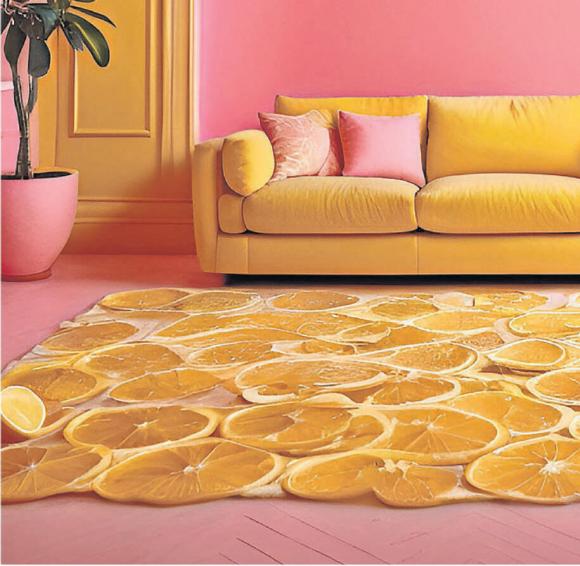
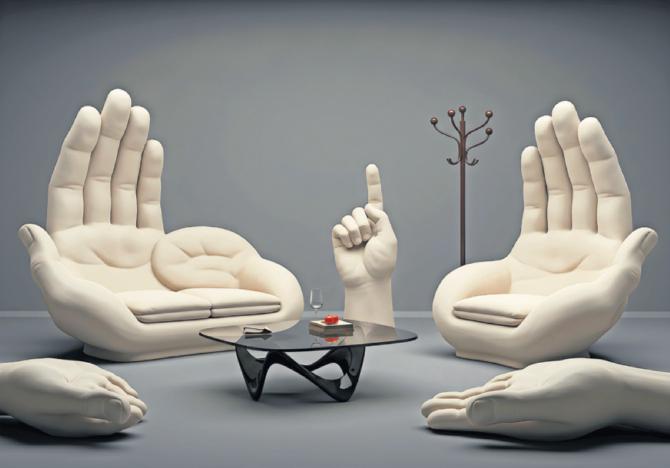
Above, a humanoid hand chair lounge. Cover photo: a bold pink living room showcases a striking yellow sofa. (ADOBE STOCK IMAGES)
Shima Toyserkani, principal designer
owner of House of Shima in Montgomery County, Maryland


















































































































The whys, whens and hows of
WHAT’S HAPPENing in the potting soil that’s home to your potted plants? Over time, roots fill up the pot so there’s little more room left for them to grow. And nutrients get sucked out of the soil or washed out by water.
I keep my potted plants hale and hardy with periodic repotting. This also gives me a look at the roots, which I always find interesting. (It was one area of my research when I worked for Cornell University.) If I see roots are
GARDEN NOTES
SPRINGFIELD
pressed around the outside of the rootball, especially if traveling around and around it, they’re telling me they want out. A plant might also indicate its roots need more elbow room by looking like it’s ready to topple over. More subtle signs are potting soil that dries out very quickly, a plant hardly growing, or roots attempting escape out a pot’s drainage holes.
Rapidly growing plants need repotting yearly, especially when they are young; older plants and slow growers can get by with
being repotting every two or three years. Some plants hardly ever need repotting, such as — looking around my collection — my amaryllis (Hippeastrum), bay laurel, hardy cyclamen, jade plant, aloe, and cactus.
I wait to repot my ponytail palm until its bulbous base breaks open the pot it’s growing in; this happens about every 15 years. Same goes for my clivia.
Now, when plants are dormant or semi-dormant yet soon to jump into action, is a good time for repotting,
plant repotting
especially for any plant that’s going right back into the same pot that it now calls home.
And that’s the first decision I make, whether to move a plant to a larger pot, in which it will grow commensurately larger, or, if the plant has reached its allotted (by me) size, to keep it in the same pot. I repotted my jade plant into successively larger pots for perhaps a half-dozen years, but after that it always went back into the same pot. Otherwise, the jade “tree” would not have fit through
doorways on its way outdoors each summer and indoors each autumn.
Before dealing with a plant needing repotting, have ready a pot, moistened potting soil, a sharp stick, and a blunt stick. New clay pots need to be soaked overnight before use. Cover any drainage hole(s) with a little gravel, a broken piece of a clay pot, or screening, just enough to keep potting soil from washing out the bottom. Then put a layer of potting soil into the pot.
Springfield Garden Club upcoming programs
The Springfield Garden Club is hosting a series of programs for anyone interested gardens and gardening or just escaping the winter for an hour.
The programs will be held at The Monkey House in Forest Park at 10 a.m. Admission is free to all with paid park admission. More information can be found on the club’s website at www.springfieldgardenclubma. org or on Facebook.
The programs will include:
• Saturday, Feb. 28, 10 a.m., “The Most Beneficial Late Winter Garden Chores” presented by Melissa Pace.
• Saturday, March 28, 10 a.m., “Vegetable Gardening 101” present-
ed by Gretel Anspach
• Saturday, April 11, 10 a.m., “Planning and Growing a Bountiful Flower Garden” presented by Becky Sadlowski.
WILBRAHAM Wilbraham Garden Club scholarship applications
The Wilbraham Garden Club has announced that applications are now being accepted for two $1,000 scholarships. The club is accepting applications from graduating high school seniors, undergraduates, and graduate college students majoring in or who plan to major in, one of the programs listed below. Eligible student must be residents of Wilbraham or Hampden.
All applicants must be enrolled in one of these fields of study: Botany,
Horticulture, Conservation, Environmental Science, Earth Systems, Forest Management, Natural Resources, Plant, soil and Insect Science, Sustainable Agricultures, Sustainable Horticulture, Food and Farming, Turf Grass Science & Management, Landscape Design & Management Technology, Landscape Architecture, Oceanography, Clean Energy Technology, Floral Design or Land Management.
Applicants must include a personal essay of 100-200 words, official high school or college transcript(s), two letters of recommendation, college acceptance letters(s) if available, along with the completed Wilbraham Garden Club Scholarship application. All required documentation must be received on or before April 30. Notifications will be made by midMay and the recipients will be awarded their scholarships at the annual meeting of the Wilbraham Garden
Club on June 5. Scholarship applicants will be available at the Wilbraham and Hampden public libraries, Minnechaug Regional High School and Wilbraham Monson Academy. They can also be found on the Wilbraham Garden Club Facebook page. Email howella413@gmail.com with questions or to receive an application.
AGAWAM
Agawam Garden Club scholarship
Applications are now available for the Agawam Garden Club 2026 scholarship. To qualify for the scholarship students must be a graduating senior of Agawam High School or a college student who graduated from Agawam High School and is planning to attend an institution of higher learning in the fall.
Lee Reich | In the Garden
Some potted plants, such as the kumquat shown here, need to be occasionally repotted so their roots have new soil to explore. (LEE REICH PHOTOS)
The case for keeping your garden dark at night
By K ate Morgan|
The Washington Post
WHEN YOU PIC-
ture nighttime in a perfectly landscaped garden, chances are good that you imagine it lit. According to National Association of Homebuyers survey data, close to 90 percent of people find exterior lighting desirable. Close to half consider it essential.
But wildlife experts and ecologists say outdoor lighting has become excessive, and it’s having an outsize impact on the species that share our habitats. Artificial outdoor lighting negatively affects insects, birds, bats and other small mammals, and it can even make the plants in your garden less productive.
The good news is there’s an easy fix: more darkness. And turning out the lights doesn’t have to mean your garden is off-limits. There are ways to enjoy it just as much after the sun goes down.
Disrupting the dark
“If you’ve ever had a neighbor with a light that shines in your window when you’re trying to sleep, you know it’s really disrupting to your cycle,” says Mary Phillips, head of the native plant habitat impact team at the National Wildlife Federation. “It’s the same for wildlife in general but particularly our nocturnal species.”
It may seem like your garden “goes to sleep,” says Travis Longcore, senior associate director of the UCLA Institute of Environment and Sustainability, and — like humans — many species do use the night as a period of rest and recovery. “But then there’s all these things that come to life at night,” Longcore says. “Scavengers, spiders, all the things that are vulnerable to desiccation and predators during the day. Wood lice, centipedes, millipedes, snails, slugs and earthworms all take
“[N]octurnal garden inhabitants perform ecosystem services, including scavenging and composting, but light can disrupt those jobs.”
Travis Longcore, senior associate director of the UCLA Institute of Environment and Sustainability
advantage of the fact that nights are more humid and that it’s a little harder for the predators to see them.”
All those nocturnal garden inhabitants perform ecosystem services, including scavenging and composting, but light can disrupt those jobs.
“Some insects are very attracted to light; you’ve probably seen them circling,” Phillips says. “They’re basically draining their energy, and then they’re not out there doing their regular cycle of feeding and mating. They’re vulnerable because they’re very visible to predators. Over time, this leads to lower populations and shorter lifespans for these important species.”
One thing that makes some nocturnal species so important, especially in the garden, is their role as pollinators.
“We have a tendency to think of pollinators as simply being daytime species, when in fact moths and bats and other things that move around at night are doing a lot of it,”
Longcore says. “All sorts of plants take advantage. There are moth-pollinated flowers that only open at night.”
But it’s not just those plants that don’t thrive as well without darkness. Eventually, what happens in the garden at night will also begin to affect how it produces during the day. Longcore points to a study by Swiss researchers that “showed that places that have lights at night have reduced flower seed set, and then reduced flowers the next year, and then reduced daytime pollinators,” he says. “Lights at night have a cascading impact.”
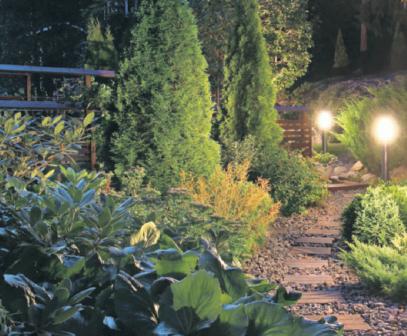
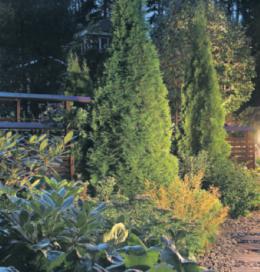
Artificial outdoor lighting negatively affects insects, birds, bats and other small mammals, and it can even make the plants in your garden less productive. (ADOBE





Record cold has fireplaces working overtime. Should those ashes be put to use in the garden?
By Jessica Damiano
Associated Press
WITH RECORD
cold gripping much of North America this winter, many who find themselves with an abundance of fireplace ashes are wondering whether they can use them in the garden.
Wood ashes from burned untreated wood can be beneficial for your plants — but with a few caveats.
Ashes contain nutrients like potassium, which supports the overall health of plants, phosphorus, which promotes strong root systems, and calcium, which facilitates plants’ absorption of other soil nutrients.
They also raise soil pH, making it more alkaline. That could be beneficial for folks with naturally acidic soil wanting to grow plants like tomatoes, peppers and eggplants, but it could spell disaster for gardeners who want to grow acid-loving plants like rhododendrons, azaleas or blueberries.
And if your soil is already alkaline — with a pH of 7 or
higher — raising it further with ashes would risk interfering with many plants’ ability to thrive.
Despite the alkalinizing properties of wood ashes, they should not be relied on as the sole pH-raising amendment for very acidic soils. Although they can be helpful for borderline soils, it would take a tremendous amount of ash to change soil pH from too low to neutral. The only way to know your soil’s pH level is to test it either with an at-home kit, which you can buy at garden centers or online, or by bringing a soil sample to your county’s cooperative extension office or master gardener clinic for testing and amendment recommendations.
Armed with this information, you can make an educated decision about whether ashes will benefit your soil and plants. Here are a few more tips to get you on your way.
Know your wood
Whatever the wood contains will be absorbed by your soil and, in turn, your plants. Avoid
using ashes from treated wood or from trees grown in polluted areas, which may contain chemicals and contaminants, such as heavy metals.
Coal ash and charcoal briquette ash should never be incorporated into garden soil because they contain toxins. Make necessary preparations Before spreading, ensure ashes have cooled completely. This can take a week or more.
Sift the ashes through a compost sifter to remove pieces of burned wood and debris. If you don’t have a sifter, you can use an old window screen or make your own by affixing 1/2- or 1/4-inch (1.3- or 0.6-centimeter) hardware cloth to a large art frame (or make a wood frame yourself).
Don’t overdo it
If you obtained dosing recommendations with your soil test, follow them precisely. Otherwise, apply no more than one 5-gallon (3.8-liter) bucket of ash, roughly 20 pounds (9 kilograms), to a 1,000-squarefoot (93-square-meter) area
Embracing the evening
CONTINUES FROM PAGE F5
And that impact has grown in recent years as the night has become increasingly well-lit. “As a thing gets cheaper, people use more of it,” Longcore says. “We see that with lights and LEDs. When I grew up, you didn’t leave lights on all the time if you didn’t need them. You turned the porch light on when somebody was coming to visit. You didn’t just leave it on all night for ‘safety.’ It’s incredibly wasteful, and it affects all these other things.”
But the solution is simple and can be implemented quickly, Longcore adds.
“If we think about sustainability and meeting conservation and climate goals,” he says, “doing lighting better is the easiest, simplest, lowest-lift thing that we could possibly do.”
The first step to creating healthier darkness, Longcore says, is to take stock of your current outdoor lighting and see what you can do without.
“Even little solar lights can affect the distribution of species,” he says.
In the places where you absolutely need to have light, choose something a bit more bug-friendly.
“Longer-wavelength lights are going to be better than shorter-wavelength lights,” he says, “so yellow and red — like the ’bug lights’ that you can buy — are better.”
Longcore understands that outdoor lighting can offer a sense of security (although some research finds it doesn’t actually reduce crime), but he suggests using a light that goes on when you need it and stays off when you don’t.
“Put it on a motion detector so that you’re not bathing everything with light all the time,” he says. “And
of garden per year. This limit should allow plants to reap the nutritive benefits of ash without adversely raising the soil’s pH. Retest annually before reapplying.
You can also sprinkle similar proportions of ash over the lawn or add it to compost. Leave time between application and planting
In winter, apply ashes to bare soil (without snow cover) on a windless day. Moisten well with a gentle shower stream to facilitate absorption and prevent ashes from blowing around. Springtime applications to prepared beds should be made no less than two weeks before planting time. Work ashes 4-6 inches (10-15 centimeters) deep with a stiff-tined metal garden rake.
Dispose of the excess cautiously
Avoid disposing of an abun-
put it on the shortest duration that you can.”
Once you’ve reduced the light, don’t let the darkness chase you inside. In fact, the evening can offer a whole new way to enjoy your garden.
“Especially in the heat of the summer when it’s just too hot with the sun beating down during the day, weeding at night can be preferable, not to mention peaceful from a mental health perspective,” Phillips says. Go out at dusk “and let it get dark as you work, so your eyes can adjust,” she suggests. “The other cool thing is you become really aware of your surroundings as the light fades.”
If you find you really enjoy that extended garden time, you can even begin to choose plants specifically for enjoyment after dark. “Some people call it a moon garden,” Phillips says. “There are night-blooming plants that have pale or fragrant flowers.”
dance of ashes by dumping them in a corner of the yard. Large amounts can severely damage your soil, pollute groundwater, and lower the pH of nearby water sources, harming fish and other wildlife. Instead, allow ashes to cool in the fireplace or stove for several days before collecting them into a metal bucket.
Buried embers may still be burning, so take care and wear gloves. Cover the bucket and place it outdoors, away from the house, porch, deck and other structures, for about a week. When you are certain they are completely cooled, bag the ashes and place them in the trash.
Jessica Damiano writes weekly gardening columns for the Associated Press and publishes the award-winning Weekly Dirt Newsletter.
The ultra-fragrant blooms of varieties such as jasmine, flowering tobacco and moonflower open after the sun sets.
Plants with white or silver foliage and flowers can reflect moonlight. “Evening primrose opens at dusk and then almost glows,” Phillips says. “Oak leaf hydrangeas have really big white blooms, and they look stunning.”
There are a lot of ways darkness can transform your garden, most notably by increasing biodiversity. “Even within a season, you’re going to see significant new activity,” Phillips says. You may notice more moths, beetles, bats and other small mammals. More crickets and cicadas might mean more nighttime noise.
“When you’re out there gardening or just sitting on your patio observing all this, it’s really amazing to see all the activity that’s going on,” Phillips says. “And if you turn on the big, bright porch light, you’ll miss it all.”
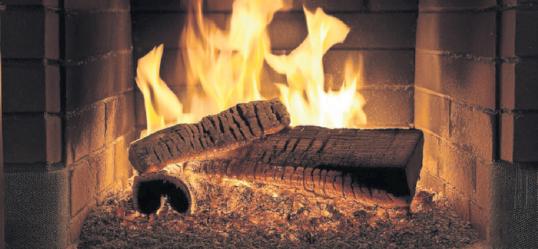
Ashes in a burning fireplace.
Terry & Kim Kovel | Antiques & Collecting
Celebrating the Year of the Horse
IN 2026, THE LUNAR New Year, or Chinese New Year, begins on Feb. 17. According to the Chinese zodiac, it is the Year of the Horse. Horses are important animals in Chinese culture and mythology, and they have appeared in decorative arts since prehistoric times.
As in many cultures, there were stories of mythological horses, often with magical properties or features like wings; and horses belonging to or ridden by historical and legendary figures; but ordinary horses are worthy subjects, too. They are frequently depicted with riders, as in scenes that show battles, journeys, or everyday life, but they also appear in natural states.
This 12-inch-long carved jade horse figure, which sold at LEOnard Auction for $244, is lying down, with no saddle or bridle. China has a long history of jade animal carvings, dating back at least to the Shang dynasty, which began about 1600 B.C. These early carvings would have been made from the pale, calcium-rich variety of jade called nephrite, sometimes called “mutton fat” jade. Dark green jadeite (not to be confused with the mid-20th century opaque glass with the same name), like the carving shown here, was introduced to China in the 18th century. Jade horse figures are believed to be symbols of peace and prosperity, always welcome wishes for a new year.
Q. I would like to know about a piece of pottery I have that my father called an “Ugly Jug.” It is about 11 inches tall and has a lumpy surface and large, three-dimensional apples on branches. The apples are shaded red and yellow, the branches and leaves are shaded brown and green, and the rest of the jug is a dull brown. The markings on the base are very hard to see, but they seem to be a “17,” “W 95,” and “32.” Family legend has said the jug was from the Knaus Sa-
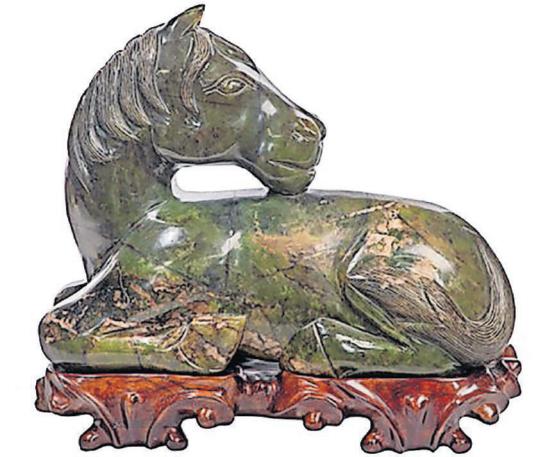
According to the Chinese zodiac, the Year of the Horse begins on Feb. 17. Horses often appear in Chinese decorative arts, including jade carvings. (PHOTO COURTESY LEONARD AUCTION)
loon in New Brunswick, New Jersey, which was closed by Prohibition. Can you tell me anything about it?
A. Your “Ugly Jug” sounds like a style that was very popular in the art nouveau period of the late 19th to early 20th-century, so it could definitely have been displayed in a pre-Prohibition saloon. Art nouveau pottery with large three-dimensional fruits, flowers, animals, or other natural elements were popularized by companies in the Teplitz-Turn region of Bohemia (now the Czech Republic). Kovels lists pottery by these companies as “Teplitz,” but collectors often call it “Amphora” after one of the most famous factories. Previously, similar styles had appeared in Victorian majolica pottery, but they usually have a distinctive, heavy, shiny glaze and were decorated in bright colors. The dull finish and naturalistic colors of your jug are more likely to be from the 20th century.
One Teplitz-Turn potter, Josef Strnact, was known for pieces with realistic-looking applied fruits like yours, but he usually used a distinctive raised mark in the shape of a shield with the initials “JS” inside. The marks you describe on your jug are
probably mold numbers or production numbers. Teplitz-Turn pottery had many imitators, including some American companies, and their works were not always marked. Today, unmarked pottery in this style, and the size of your jug, can be worth anywhere from about $50 to $150. If you can identify a maker, it could be worth $250 or more.
Q. I have a rocking chair that belonged to my grandmother. It has a cane seat and back, a curved top, and scrolled arms. I would like to know if it is antique or not, and if it is worth anything. How can I find that out?
A. A general rule for estimating the age of furniture from your family’s history is to take your age and add 25 years for each previous generation. So, if the chair is your grandmother’s, a good guess for its age is your age plus 50 years (25 years for your parents’ generation, 25 years for your grandmother’s). However, it’s important to remember that this gives you an approximation, not an exact date, and it is usually the earliest likely date for the item. You’re right that not everything that belonged to your grand-
mother is necessarily antique. Family history often makes household items, especially furniture, seem older than they are, and the legal definition of an “antique” includes an age of at least 100 years old. Your grandmother’s chair is probably from the 20th century.
Cane chairs, which had been made in Europe since the late 1600s and became popular, especially in America, in the Victorian era, experienced another surge in popularity in the early to mid-20th century. Designers (and consumers) appreciated the material’s lightness and considered cane seats more comfortable than solid wood and more hygienic than upholstery. Unfortunately, their popularity also means that many companies made them over many years, making it difficult to definitively identify and date them. Similar rocking chairs to your grandmother’s can be found at auctions and shops for under $100.
TIP: To test a piece of jade to see if it is real, use a small penknife. Rub the tip of the knife across the bottom of the piece until there is a mark. A white line means the knife scratched the stone, and it is not jade. A black line means the stone scratched the blade, and it is probably jade.
Kovels answers readers’ questions sent to the column. Send a letter with one question describing the size, material (glass, pottery) and what you know about the item. Include only two pictures: the object and a close-up of any marks or damage. Be sure your name and return address are included. By sending a question, you give full permission for use in any Kovel product. Names, addresses or email addresses will not be published. We do not guarantee the return of photographs, but if a stamped envelope is included, we will try. Questions that are answered will appear in Kovels Publications. Write to Kovels, The Republican, King Features Syndicate, 300 W. 57th Street, 41st Floor, New York, NY 10019, or email us at collectorsgallery@ kovels.com.
CURRENT PRICES
Current prices are recorded from antiques shows, flea markets, sales and auctions throughout the United States. Prices vary in different locations because of local economic conditions. Advertising, poster, Po Sing Fireworks Fty., stylized center fireworks display, Peacock logo, yellow ground, multicolor firecrackers around border, American Importers Inc., cardboard, 30 x 20 inches, $35.
Baccarat, vase, cut glass, urn shape, flared lip, short pedestal foot, square base, 9 inches, $65.
Toy, carriage, movable canopy, silver, red body, painted, cast iron, 6 x 5 inches, $110. Jewelry, pin, pierced leafy scrolls, large blue faceted stone, two small pearls, five chain pendants, blue stones, pearls, heart shape drops, Pegasus mark, Coro, 3 3/4 x 6 1/2 inches, $125.
Rug, Tibetan, two dragons, multicolor clouds, golden yellow field, fringe, wool, 20th century, 36 x 72 inches, $195. Furniture, chair, Milo Baughman, Chippendale style, chrome, open fretwork back, black leather seat, open arms, Design Institute of America, mid-20th century, 39 inches, pair, $375.
Moorcroft Pottery, vase, peacock feathers, flared base, decorator’s cipher, mark, Moorcroft, Made in England, c. 1930, 9 inches, $535.
Pottery-contemporary, bowl, black and white, pictorial, all-over stylized animals, turned in rim, tapered base, hand coiled, signed, John F. Aragon, Acoma Pueblo, 6 x 7 1/2 inches, $965.
Porcelain-Chinese, brush washer, dome shape, flared lip, longevity pattern, three rows of iron red characters, gilt rim, hand-painted, six-character mark, 3 3/4 x 3 1/2 inches, $1,920.
Scientific instrument, astrolabe, round, rotating rule, suspension ring, calendar months, zodiac, calculation grid, engraved, brass, France, c. 1900, 6 x 4 inches, $2,570.
Average long-term US mortgage rate dips to where it was 3 weeks ago
Rate is now sitting just above 6%
By A lex Veiga Associated Press
The average long-term U.S. mortgage rate is holding at just above 6% after reversing a modest uptick in recent weeks just as the housing market closes in on the spring homebuying season.
The benchmark 30-year fixed rate mortgage rate slipped to 6.09% from 6.11% last week, mortgage buyer Freddie Mac said Thursday. One year ago, the rate averaged 6.87%.
The modest pullback brings the average rate back to where it was three weeks ago.
Borrowing costs on 15-year fixed-rate mortgages, popular with homeowners refinancing their home loans, also edged lower this week. That average rate fell to 5.44% from 5.5% last week. A year ago, it was at 6.09%, Freddie Mac said.
Mortgage rates are influenced by several factors, from the Federal Reserve’s interest rate policy decisions to bond market investors’ expectations for the economy and inflation. They generally follow the trajectory of the 10-year Treasury yield, which lenders use as a guide to pricing home loans.
The 10-year Treasury yield was at 4.13% at midday Thursday, down from 4.21% a week ago.
Mortgage rates have been trending lower for months, helping drive a pickup in home sales the last four months of 2025, but not enough to lift the housing market out of a deep sales rut dating back to 2022, when mortgage rates began to climb from pandemic-era lows.
The combination of higher mortgage rates, years of skyrocketing home prices and a chronic shortage of homes
nationally following more than a decade of below-average home construction have left many aspiring homeowners priced out of the market. Sales of previously occupied U.S. homes remained stuck last year at 30-year lows.
Lower mortgage rates failed to revive home sales last month. They posted the biggest monthly drop in nearly four years and the slowest annualized sales pace in more than two years.
This week’s drop in mortgage rates comes two weeks after the Federal Reserve decided to pause cuts to its main interest rate after lowering rates three times in a row to close out 2025 in an attempt to shore up the job market.
The central bank doesn’t set mortgage rates, but its decisions to raise or lower its short-term rate are watched closely by bond investors and can ultimately affect the yield on 10-year Treasurys that influence mortgage rates.
Economists generally expect mortgage rates to stay relatively stable in the coming months, with forecasts calling for the average rate on a 30-year mortgage to continue to hover around 6%.
However, that may not be enough to unlock affordability for many prospective home shoppers, nor encourage homeowners who bought their home or refinanced when rates were sharply lower to sell now and buy at current rates.
Nearly 79% of homeowners with a mortgage have a rate below 6%, according to Realtor.com. That’s leading to fewer homes on the market, which helps keep propping up prices.
“In short, while the market remains stable, a larger drop in rates will be needed to attract new buyers and sellers and truly reignite the housing market,” said Jiayi Xu, an economist at Realtor.com.
Deeds
AGAWAM
Aldo P. Grossi and Jacquelyn F. Grossi to Fritz W. Von Hollander and Maria A. Von Hollander, 198 Brookfield Lane, Unit 198, $280,500.
Brianna K. Gallucci, representative, Brenda J. Gallucci, estate, and Brenda Gallucci, estate, to George Bass, 124 Regency Park Drive, $175,000.
James K. Bodurtha, David R. Bodurtha, Susan M. Bodurtha and Michael J. Bodurtha to Joshua Sutton and Emma Sutton, 83 Harvey Johnson Drive, $328,000.
Lynsey Newsome and Shawn Newsome to Bailey Scott Gorgas, 72 Plantation Drive, $245,000.
Corey Colonial Condominium Association Inc., to Wladimyr Duarte, 53 Corey Colonial, Unit 53, $135,000.
Raymond J. Sbalbi to Sean Raymond Ruddy, 89 Plantation Drive, $215,000.
Richard L. Raymond and Ella Foote to Lockhouse Development LLC, 234 Regency Park Drive, $141,000.
Richard Witek to Kara Guimond, 28 Meadow Ave., $310,000.
Sandra K. Sullivan to Nuran Cerkezkus, 172 Beekman Drive, Unit 172, $268,000.
AMHERST
Deborah Fisher to Timothy Woolf and Deborah Savage, 110 Grantwood Drive, $430,000.
BELCHERTOWN
Theresa M. Fleurent and Richard P. Fleurent to Raj Kumari Adhikari and Sandesh Adhikari, 16 Rita Lane, $470,000.
Wendie Levitan and Gabriella Levitan to Joseph Muse, 633 Federal St., $435,000.
CHARLEMONT
Gabriela F. Rowehl and Gregory C. Rowehl to Berkshire Equity LLC, 72 Main St., $330,000.
Karen A. Kagan, personal representative of the Estate of Carl Frederick Elliott, to Christina Bell, 2167 Mohawk Trail Route 2, $275,000.
CHICOPEE
Ann E. Kos to Berkant Bayram, 231 Wheatland Ave., $284,000.
Clotilde Ortiz and Ismael Negron to Linda Charbonneau, 212 Poplar St., $340,000.
David E. Billeter, Sandra A. Barnes and Patricia A. Leecock to Bruce Camire and Cheryl Ann Camire, 1133 Burnett Road, $345,000.
David Hueber to Letrial K. Tillman and Carl Joyner Miller Jr., 62 Pendleton Ave, $328,000.
Dolores Rose Rainey and Timothy E. Rainey to Plata O Plomo Inc., 27 Bostwick Lane, $125,000.
Gerald Gramer to Yesenia Roman Martinez and Jose Cintron, 39 Jean Circle, $525,000.
Lori J. Wallace to Frances Bernier, 54 Dayton St., $275,000.
Luke T. Gelinas, trustee, and Gelinas Family Trust, trustee of, to Chenevert Properties LLC, 107 Beauregard Terrace, $200,000.
Michael J. Harris, Betty Horton Ackerley and Betty N. Horton to Thomas R. Harris and John J. Harris, 85
Clairmont Ave., $200,000.
Naples Home Buyers Inc., to Joseph Skutnik and Kaitlyn Randall, 566 Broadway St., $275,000.
New Wave Realty LLC, to Adam M. Brophy, 26 Olivine St., $299,999.
RGA Properties LLC, to Inna Lytvynenko, 538 McKinstry Ave., $295,000.
Roger G. Castonguay to DJO Realty LLC, 26 Old James St., $250,000.
Virginia L. Weller, trustee, and Trust Roy F Christensen Jr Revocable Trust, trustee of, to Zachary Raymond, 269 Chicopee St., Unit 11, $150,000.
CONWAY
Garrett Loomis, personal representative of the Estate of Cynthia A. Racicot, “aka” Cynthia Racicot, to Benjamin Hoysradt, 14 River St., $305,000.
Benjamin Hoysradt to Benjamin Hoysradt and Lily F. Detels, 14 River St., $100.
DEERFIELD
Grandview Estates LLC, to Joseph Patrick O’Connor, Grand View Drive, $125,000.
Henry Whitlock to Christopher Scott Colby and Ashley Rilla Drake, 4 Captain Lathrop Drive, $375,000.
Nancy M. Griswold to Richard F. Thayer, 54 Graves St., $325,000.
EAST LONGMEADOW
William B. Sorel Jr., and Deborah J. Sorel to Bret Sorel, 49 Chestnut St., $207,000.
William McMahon, Brenda McMahon and Dale Varney to Wesley W. Brown, 208 Westwood Ave., $362,100.
William R. Arment to Ronald Doe Jr., and Justine D. Doe, 5 Albano St., $600,000.
GILL
Francis G. Sobieski, personal representative of the Estate of Francis C. Sobieski Jr., “aka” Fran Sobieski, to Christopher Miller, 2 Pisgah Mountain Road, $100,000.
GRANBY
Justin W. Dufault and Molly A. Bragiel to Molly A. Bragiel and Martin Bottari, 72 Chicopee St., $100.
Kimberly Duval, personal representative, Michele Clarice Maheu, estate, Michelle Maheu, estate, and Michele Maheu, estate, to Wesley Johnson and Shannondore Louise Johnson, 304 East State St., $100,000.
GREENFIELD
Dennis Putnam, individually and as personal representative of the Estate of Joan A. Pratt and David Putnam, to Wenzhen Lin, 360 Davis St., $139,900.
Paul E. Duprey, personal representative of the Estate of John E. Duprey, to Dominic Kirchner II, Trustee of Amenadiel Realty Trust, 77 Summer St., $194,000.
HADLEY
Mildred L. Jackson, James R. Jackson and James R. Jackson, attorney-in-fact, to James R. Jackson Sr., 25 Huntington Road, $100.
James R. Jackson Sr., to Theresa Fleurent, 25 Huntington Road, $342,328.
Deeds
HATFIELD
Fannie Mae, Federal National Mortgage Association and Essent Title Insurance Inc., attorney-in-fact, to John S. Henderson-Adams and Mariel E. Lima, 320 West St., $70,000.
Deborah L. O’Neill and Lauren K. Guilbault to Thomas E. Dadmun, Samuel J. Dadmun and Kristy A. Dadmun, 21 Dwight St., $340,000.
HEATH
Kevin J. Haas to Storm S. DeFrancesco Plains, 32 Navaho Lane, $59,000.
HOLLAND
Tess Mazzone to Allegra Mira, 13 Morse Road, $325,500.
HOLYOKE
Christel A. Hendricks to Deborah Gavito, 1421 Dwight St., $275,000.
Daniel E. Walker and Jocelyn M. Walker to Brendan Walker and Emily Walker, 1701-1703 Northampton St., $292,000. Edward McHugh and Michael McHugh to Jason Latshaw, 75 Reservation Road, $270,000.
JLL Real Estate LLC, to Stack-Holyoke & Main LLC, 0 Beaulieu Street, $1,200,000.
JLL Real Estate LLC, to Stack-Holyoke & Main LLC, 689 Main St., $300,000.
Louise L. Dechert to Jack Berger and Athena Berger, 68 Sycamore St., $245,000.
Mark A. Pijar, trustee, Deborah M. Dostal-Pijar, trustee, Mark A. Pijar & Deborah M. Dostal-Pijar Joint Revocable Trust, and Mark A. Pijar & Deborah M. Dostal-Pijar Revocable Trust, trustee of, to Jackeline A. Torres, 1793 Northampton St., $450,000.
Peter W. Symasko to Constitution Properties LLC, 41 Dartmouth St., $225,000.
Raymond H. Dulude, trustee, and Lena E. Dulude Revocable Trust, trustee of, to Alex M. Antuna, 7072 Westfield Road, $293,500.
S & P Property Group LLC, to JRP Properties LLC, 443-445 Beech St., $380,000.
William C. H. Pitt and Cheryl Pitt to Samuel Ellison and Emily Ellison, 179 Central Park Drive, $450,000.
LONGMEADOW
Brandy Magdalino to Hedge Hog Industries Corp., 34 Homestead Boulevard, $400,000.
Mark D. Soycher and Beth A. Soycher to Patrick J. Leahy, Joan C. Leahy and Michael P. Leahy, 361 Frank Smith Road, $525,000.
Samuel B. Bath and Kimberly K. Porrazzo to Katherine E. Hone, 217 Inverness Lane, $515,000.
LUDLOW
David Martin and Crystal Martin to Akin Turkmen, 23 Daisy Lane, $575,000.
Keem LLC, to Hong Zhang, Wen Cai and Jinfeng Deng, 61 Massachusetts Ave., $330,000.
Suzanne P. Hangasky to Ramon Bejaran Valentin and Rosa Hernandez, 20 Bondsville Road, $550,000.
Tm Properties Inc., to Jonovan A. Sierra and Alicia Sierra, 436 Holyoke St., $435,000.
MIDDLEFIELD
Anya Messina and Anya Stagakis to Steven J. Osborne Jr., trustee, and Osborne Family Trust, 155 River Road, $150,000.
MONSON
Jesse L. Farquhar to Wayne D. Farquhar, 10 Homer St., $140,000.
JHP Builders LLC, to Stephen J. Sikes and Jazmine Sikes, Moulton Hill Road, Lot 3, $680,000.
Justin S. Pascale to Benjamin Chalue, 101 Cote Road, $325,000.
MONTAGUE
Parody Builders LLC, to Dry Hill Builders LLC, Gunn Road, $180,000.
Douglas Honeycutt and Susan Honeycutt to Marisa Amber Sullivan and Jared Vielmetti-Perusse, 26 Montague Street, $415,000.
Sandra Fortier, “fka” Sandra A. Sicard, and Raymond C. Jarvis, trustees of the Jarvis Funding Trust, to Susanne Lacosse and Michael J. Leamy, 5 Millers Falls Road, $150,000.
NORTHAMPTON
Anne S. Awad, personal representative, and Warren R. Hubley, estate, to H.A. Rasool Construction LLC, 61 Woodmont Road and 61 Woodmont Ave., $170,500.
Kathy C. Couch and Joanna Kent Katz to Barbara May Diewald and Connor Stedman, 693 Bridge Road, $510,000. Bermor Taunton LP., and Bermor
Taunton Inc., general partner, to 14-16 Briggs LLC, 180-182 Main St., $450,000.
ORANGE
Mary L. Walker, “aka” Mary L. Guerin, individually and as executor of the Estate of Kenneth Mack Whitmore Sr., Shirley M. Allen, “fka” Shirley M. Haskell, Jean Whitmore, devisee of the Estate of Charles Whitmore, and Kenneth Mark Whitmore, personal representative of the Estate of Kenneth M. Whitmore Jr., to Kenneth Mark Whitmore and Kristina F. Moineau, 457 East River St., $112,500.
Troy H. Mackey to Homrest Property Solutions Inc., 50 West Myrtle St., $131,500.
Jeanne M. Leblanc and Heidi L. Warren, personal representatives of the Estate of James Leon Mosher, “aka” James L. Mosher, to Jennifer Mailloux-Rochon, 120 Horton Road, $107,000.
PALMER
Crystal R. Macken to Joseph Landry, 10 Whalen St., $51,000. Elizabeth Girouard to Denise Tanguay, 3146 Main St., Unit 24, $174,500.
Enrico J. Paone, trustee, Dante Paone, trustee, and Second Chance Realty Trust, trustee of, to Brickhouse Homes LLC, 4048 High St., $171,000.
Orion Pro Friend ML LLC, to Panther Dev Palmer LLC, 1519 N Main St., $300,000.
Panther Dev Palmer LLC, to BL Partners Inc., 1519 N Main St., $575,000.
Thomas R. Roberts Jr., trustee, and Palmer Road Realty Trust, trustee of, to Andrew G. Samuelson, 3090 Palmer St., $365,000.
PLAINFIELD
Thomas S. Fil, personal representative, and Thomas B. Kusek, estate, to Rachel I. Ban and Melissa S. Rudder, 29 Union St., $517,000.
SOUTH HADLEY
Naples Home Buyers Inc., to Ortega LLC, 17 Carew St., $160,000.
Katherine D. McGregor, Katherine D. McGregor, personal representative, Terrence J. McGregor, Scott A. McGregor, estate, and Scott Alan McGregor, estate, to Timmy Barnes, 133 Granby Road, $200,000.
Vantage Home Buyers LLC, to Diane Uwacu and Regis Ndagijimana, 70 Lathrop St., $644,900. Ann T. Miles, Michael E. Moriarty and Thomas J. Moriarty to Mela-
nie Rachko and Zelda Wanstok, 85 Fairview St., $380,000.
Ciolek Family LLC, to Round Two LLC, 248-254 Old Lyman Road, $1,750,000.
SOUTHAMPTON
Michael C. Cooper and Jennifer T. Johnson-Cooper to Kimberley Lee Judd, 369 College Highway, $639,000.
Raymond P. Sanuita and Janet A. Sanuita to Brian A. Plante and Michelle A. Plante, 24 Freyer Road and 25 Freyer Road, $100.
SOUTHWICK
Dwayne H. Cushing and Audrey J. Cushing to Paula Pascoe, 16 Evergreen St., $435,000.
Ventry Holdings LLC, to Owen Foley and Cara Onyski, 21 Feeding Hills Road, $540,000.
SPRINGFIELD
A&M Investments LLC, to Crystal L. Norwood, 121-123 Putnam Circle, Unit 121, $270,000.
A&M Investments LLC, to Crystal L. Norwood, 121-123 Putnam Circle, Unit 123, $270,000.
Boris Altman to Ronald Bridgers, Carver Street, Lot 30, $43,000.
Christian I. Perez and Ferdinand Torres to Maria Ramos and Nelson Rivera, 18 Kingsley St., $330,000.
Dat Dang to Dat & Hkuit Realty LLC, 72 Wayne St., $195,000.
R & R Home Improvement & Remodeling LLC, to Janelle James, 211 Glenoak Drive, $320,000.
Evelyn Sanders to Wilfredo Nunes Quiles, 11 Calvin St., $385,000.
Island Farm Realty LLC, to Om V & R Holdings LLC, 343-349 Allen St, $600,000.
Jacqueline C. Moody to Richard J. Biernacki Jr., 169 Nassau Drive, $180,000.
Jeremiah Raines, representative, and Kevin D. Raines, estate, to New Beginning Home Solutions LLC, 68 Ashley St., $130,000.
Katerina Valentine to 37 Revere Partners LLC, 37 Revere St., $249,000.
Lekeisha Walker, James C. Lee and Lekeisha Lee to Alin M. Ferrer, 3 Ashley St., $305,000.
London Realty LLC, to JSBM Homes LLC, 106 Malden St., $700,000.
McKenzie Brothers Realty LLC to Carolina Reyes, 89 Cherokee Drive, $300,000.
Miguel Maria to Amoneki Anglin and Teshena Jones-Swaby, 49 Worthy St., $335,000.
Nuno Joao Barroso Afonso to Karl W. Rehbein and Jason Michael Rehbein, 1200 Worcester St., Unit 5, $165,000.
NZ Property LLC, to R&R Home Improvement & Remodeling LLC, 211 Glenoak Drive, $245,000.
Oakland Street Properties LLC, to Leonel Lopez and Hilda M. Perez Lopez, 298 Oakland St., $510,000.
Orlando R. Hernandez to Mirialys E. Hernandez, 21-23 Carver St., $250,000.
Paul H. Schmelz and Samantha L. Hoffman to James Patterson and Jennifer Patterson, 15 Bronson Terrace, $329,900.
Phantom Holdings LLC, to Joseph Barna, 50 Newland St., $249,000.
Philip J. Beaulieu and Kevin M. Beaulieu to Kristin Miller and Steven Miller, 286 Nassau Drive, $195,000.
Quynhanh T. Tran and Quynh Anh T. Tran to Thao Thanh Pham, 17 Spencer St., $200,000.
Raymond L. Berry and Raymond L. Berry Jr., to Allison Hanna and Tara Brady, 36 Garland St., $308,000.
Rene J. Young and Concetta A. Young to Zahoor Riaz, 54 Winter St., $155,000.
Ronald Doe Jr., and Justine M. Doe to Carly J. Atkinson, 21 Brentwood St., $365,000.
Springfield City to Bar Belmont LLC, South Side Lyman Street, $544,000.
Tay Hung Nguyen to Timothy Nguyen Lieu, 200 Slater Ave., $255,000.
Veteran Stan LLC, to Randall Huston, 99 Massreco St., $325,000.
Wilfredo Nunez Quiles and Elizannite Marie Davila Roman to Jenner O. Diaz and Stephanie Alicea Martinez, 26 Cuff Ave., $270,000.
Zuleika Febres, Jose A. Febres and Maria Del Carmen Acevedo Marquez to Berel Rene and Roqueline Joseph, 53 Fremont St., $300,000.
WALES
Boris Labkovsky and Diane G. Magada to Tess Mazzone and Zachary M. Mattioli, 115 Union Road, $699,900.
Cynthia L. Maurer, estate, and Colin Hanley, representative, to Shannon Roddy, 60 Lake George Road, $290,000.
Dawn Cartier, Dennis Cartier and Christa E. Cartier, estate, to Massachusetts Comm. Conservation & Recreation, 60r Haynes Hill Road, $27,000.
Deeds
WARE
Alpine Income Property OP LP., Alpine Income Property GP LLC, and Alpine Income Property Trust Inc., to Nob Hill Equities LLC, 355 Palmer Road and West Street, $1,550,000.
Wendy Borey and Peter Borey to Dominic Fioravanti, 10 Pearl St., $285,000.
Jay Mooney and Nicole Mooney to Erica Krenis, 4 Old Stagecoach Road, $534,460.
Karen J. Jacques to IB Fieldstone LLC, 28 Gould St., $85,000.
WEST SPRINGFIELD
Abrahamson Properties LLC, to Hassle Free LLC, 1386 Piper Road, $182,500.
Dimas LLC, and Dimas Properties to Koala Properties LLC, 52 Baldwin St., $800,000.
Enhui Zhao to Larkspur LLC, 15 High St., $240,000.
Maa Property LLC, to Derrick Kuloba, 86 Birnie Ave., $400,000.
Nicholas P. Boccio, trustee, and 508 Cold Spring Avenue Realty Trust, trustee of, to Priscilla Youngyi Choi and Noah Seungbong Choi, 508 Cold Spring Ave., Unit 1-A, $159,900.
WESTFIELD
Alison M. Bartlett-O’Donald, representative, Fontaine A. Velis, estate, and Fontaine Velis, estate, to Manar Jalil, 10 McKinley Terrace, $277,000.
Carol A. Howard to Joseph J. Frantiska Jr., 6 South Maple St., $148,000.
Gabrielle M. Scheufler to Danielle Batchelder, 545 Loomis St., $397,000.
J. Sperry Realty LLC, to Melissa A. McCollaum and Roy V. Diagneault, 229 Union St., $300,000.
John M. Weatherwax, Ellen L. Racine-Weatherwax and Ellen L. Racine to Shawn A. Newsome and Lynsey E. Newsome, 158 Franklin St., $377,500.
Kurt Taylor, Jennifer Taylor and Jenniefer Taylor to Seth Philipp and Sarah L. Philipp, 50 Russellville Road, $650,000. Marky Marc LLC, to Viktorian Es-
tate LLC, 480 Southampton Road, $1,125,988.
Mary D. Jez, Mary D. Herzog and Wolf Herzog to J. Sperry Realty LLC, 229 Union St., $240,000.
Robert K. Walker to ENWC LLC, 883 Southampton Road, $230,000.
WHATELY
Sanderson Brothers Realty LLC, to Thomas D. Sadoski, North Street, $18,000.
WILBRAHAM
Lotus & Hawk Properties LL,C to Migdalia Matta, 2205 Boston Road, Unit I 82, $316,625.
Steven J. Pellegrino and Kathleen M. Pellegrino to Steven J. Pellegrino, trustee, Kathleen M. Pellegrino, trustee, and Pellegrino Family Trust, trustee of, Sandalwood Drive, Unit 12, $100.
WILLIAMSBURG
Kirk S. Enko and Kim A. Enko to Timothy Kane and Sabrina Kane, 45 North Farms Road, $642,500.
Applicants must be majoring in or planning on majoring in one of the following: botany, environmental engineering, environmental science, earths systems, forest management, natural resources, plant soil and insect science, sustainable agriculture, sustainable horticulture or food and farming, turf grass science and management, landscape design and management technology, clean energy, technology studies: waste water or other environmental related studies.
The recipient will be awarded a $1,000 scholarship at the club’s annual May meeting. Completed applications along with transcripts and references must be submitted to Denise Carmody, 40 Primrose Lane, Agawam MA, 01001 by April 1. Applications are available through Agawam High School or can be found on the website at agawamgardenclub.com. Send items for Garden Notes to pmastria no@repub.com two weeks prior to publication.
only 3 by 4 inches long and wide, and an inch deep.
Next, slide the plant out of its pot. With a small plant, invert the pot, holding the root ball, and give the pot’s rim a rap on the edge of a table. Lay a large plant on its side, hold the stem, then rap the pot’s rim with a mallet.
If no amount of tugging and rapping extricates a plant from its pot, smash the pot with a hammer or cut it away. Before repotting a plant into a larger pot, use the sharp stick to tease the outer layer of roots free from the root ball.
Sometimes I make vertical slices around the root ball and spread apart the opening at each cut. Either way, I then put enough soil in the bottom of the new pot so the old soil line of the root ball is a half-inch lower than the pot rim.

After scooping soil into the space between the pot and the root ball, I pack it down with the blunt stick, occasionally thumping the pot on the ground or a tabletop to further settle the soil.
For a plant that’s going to get new soil but not a new home, room needs to be made for the new soil.
With a sharp knife or, if the roots are tough, a reciprocating saw fitted with a metal blade, I slice off some soil and roots from all around and the bottom of the root ball (a half to one inch for a six-inch pot, one to two inches for a twelve-inch pot, etc.).
This may seem brutal, but most plants tolerate it fine.
This root-pruning and repotting is
mandatory treatment for my largest fig plants. They fruit mostly on new shoots.
The more vigorous the new shoots, the more figs I get to eat (to a point). New root growth and good nutrition fuel that vigorous growth.
Root-pruning and repotting is also mandatory for my smallest fig plant. Twice each year.
This fig is a strictly ornamental species, weeping fig (Ficus benjamina), which, unrestricted in the tropics, would grow as large as our maple trees.
Mine is a bonsai. At eleven years old, I’ve kept the tree to only a few inches tall and its roots in a bonsai “tray”
I don’t want lots of growth from this bonsai; a half inch of stem growth would be fine.
But enough roots are needed to get water and some nutrients into the little plant.
With little space for potting soil and roots, twice a year I cut back some roots and remove some soil to make room for new soil and root growth.
To help the plant survive this ordeal, I also remove all the leaves and cut back some stems so that the plant’s needs are put on hold until new roots begin to explore the fresh soil.
As soon as any plant is in its new home or back in its old home, I water it thoroughly.
Even indoor plants can sense that spring is around the corner. Roots will begin growing into the new soil before new stems or flower buds show any signs of life.




Live Onsite &Webcast
PUBLIC AUCTION
PUBLIC AUCTION

PUBLIC AUCTION


ANTIQUE ESTATE AUCTION
FRI, FEB. 20 AT 6 PM
Fine art including paintings & prints, 70+ lots jewelry, handbags, gold boxes, 30+ miniature portraits, 20+ needlework samplers, early books from Clarke School library, silver, furniture, Sohmer grand piano, and more.
PREVIEW: THURS. 8 AM - 4 PM & FRI 8 AM - 6 PM View Numbered Catalog Online www.DouglasAuctioneers.com





DouglasAuctioneers.com ESTATES-ANTIQUES 413-665-2877
MORTGAGEES’ REAL ESTATE AUCTIONS TO BE SOLD ON THEIR RESPECTIVE PREMISE
FRIDAY
FEBRUARY 20, 2026
11:00 AM - MONSON, MA 114 PECK BROTHERS ROAD DEPOSIT $10,000
TUESDAY
FEBRUARY 24, 2026
4:00 PM - WARE, MA 76 ASPEN STREETDEPOSIT $10,000
WEDNESDAY
FEBRUARY 25, 2026
11:00 AM - OTIS, MA 122 KIBBE ROADDEPOSIT $20,000
MONDAY MARCH 2, 2026
11:00AM-SPRINGFIELD, MA 27 MIDDLEBROOK DRIVEDEPOSIT $10,000
TERMSOFSALES:DEPOSITSINTHEAMOUNTS SPECIFIEDABOVEARETO BEPAIDBYTHEPURCHASER(S)ATTHETIME ANDPLACEOFEACH SALEBYCERTIFIEDOR BANKCHECK.ALLBALANCESDUEARETOBE PAIDWITHIN30DAYSOF EACHINDIVIDUALSALE. OTHERTERMS,IFANY, TOBEANNOUNCEDAT EACH SALE. CALL OUR AUCTION SCHEDULE LINE AT (617) 964-1282 FOR A LIST OF THE CURRENT DAY’S AUCTIONS AND VISIT OUR WEBSITE www.commonwealth auction.com FOR CONTINUOUSLY UPDATED SCHEDULING INFORMATION AND ADDITIONAL SCHEDULING INFORMATION
AUCTION ASSOCIATES,