ANTIQUES: Foot warmers were very welcome in the winter, F8
IN THE GARDEN: Preparing for the upcoming growing season, F4
HOME: A routine to quickly clean the kitchen, F6
“The general reason so many of these varieties have kind of been forgotten is that our food system transitioned towards industrialized agriculture, so a lot of these perennials can’t be grown industrially. But they’re great for backyard gardeners.”
Michalina Hunter, owner of Cicada Seeds
Why you should plant perennial veggies — even this medieval one
By K ate Morgan
Special to The Washington Post
FOR MANY GROWERS, VEGEtable gardens are ephemeral. Tomatoes, peppers, cucumbers, zucchini and many other common garden plants are annuals: seeded in spring and finished by the fall.
But the all-annual garden is a modern invention, says Michalina Hunter, the owner of Cicada Seeds in Vancouver Island, Canada. Historically, she says, gardens across cultures were loaded with perennials — plants that come back year after year.
“The general reason so many of these varieties have kind of been forgotten is that our food system transitioned towards industrialized agriculture,” Hunter says. Most edible perennials are
harvested a little at a time, leaving roots or parts of the plant behind to continue growing. That’s difficult or impossible to do with machines, “so a lot of these perennials can’t be grown industrially,” she says. “But they’re great for backyard gardeners.”
Hunter started her seed company in 2021 after struggling to source perennial vegetable seeds for her own garden. She’s seen a surge in sales, she says, as interest grows in heirloom varieties and lower-maintenance backyard crops.
One reason to embrace perennials: They are eco-friendly.
Plants that grow over many years increase soil health and biodiversity and sequester carbon. “Just not basically nuking your garden every year is a way to get a little closer to a natural ecosys-
tem,” says Ashley Adamant, founder of the gardening and DIY site Practical Self Reliance.
And if that’s not enough motivation, consider the fact that a perennial vegetable garden, once it’s established, requires a whole lot less work. “They take care of themselves, and they grow without replanting, and they dominate the beds, winning out over weeds,” Adamant says.
Most gardeners, Hunter included, can appreciate a garden that doesn’t necessarily need a ton of tending. “It really takes the pressure off,” she says. “If, you know, life comes up, you can leave your garden alone for months — probably a year or even longer — and when you come back it’ll still be there.”
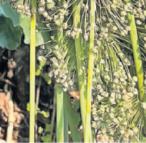
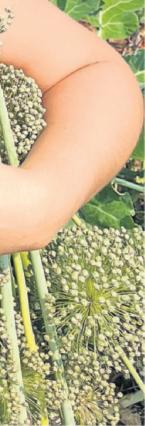
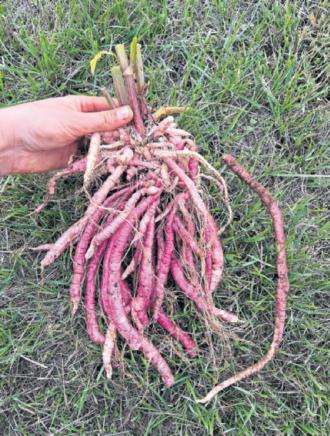
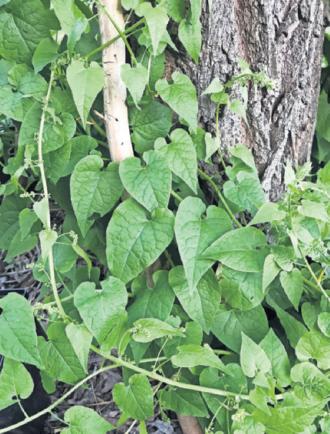
Above, a pink skirret mix. Skirret was popular in medieval Europe before potatoes came over from the Americas. Below, spinach vine is a climbing plant that can grow well even in total shade.
(PHOTOS CICADA SEEDS)
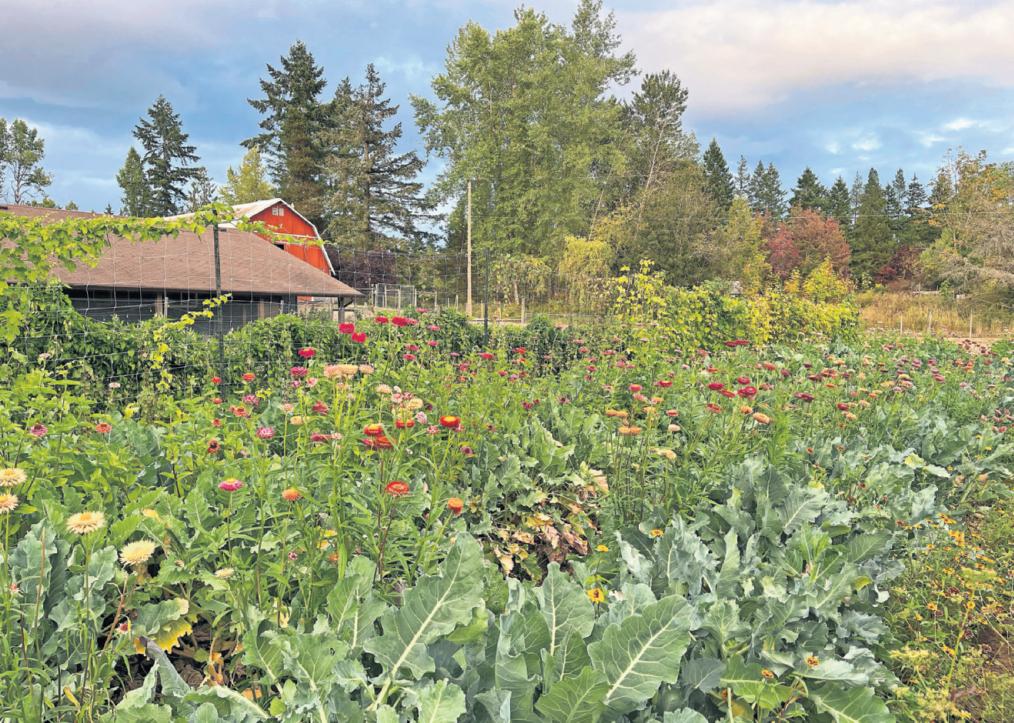
Michalina Hunter’s farm. Hunter is the owner of Cicada Seeds in Vancouver Island, Canada. (PHOTO/COVER PHOTO COURTESY CICADA SEEDS)
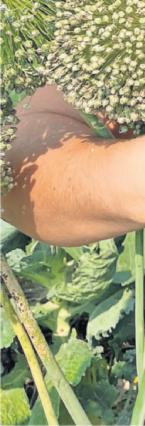
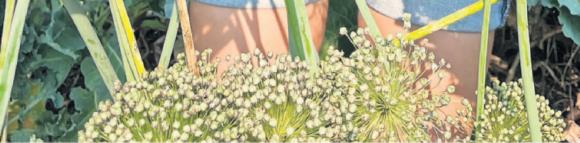
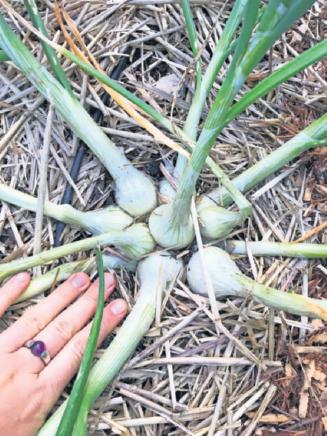
Potato onions get their name from the onion’s long period of freshness once it’s harvested.
Lee Reich | In the Garden
Preparing for this year’s growing season
YOU’D THINK THAT after living in the same place for over 35 years and every year planting new trees and shrubs, that there would be nothing new for me to plant this year. Or, at least, nowhere to plant them. Well, t’ain’t so!
I’m now trying to wrap up getting anything I need in terms of plants or seeds for this growing season. Let’s see: Did I succumb to any of the enticements for new and wondrous plants mentioned online and in the slew of gardening magazines and nursery catalogues that appear almost daily in my mailbox?
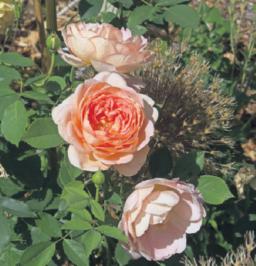
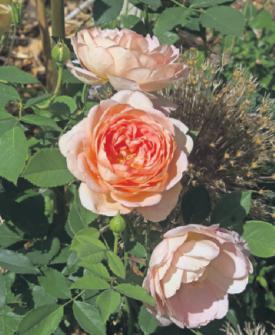
David Austin roses, which have the pastel blooms and blowsy form of yesteryear’s roses, and the pest-resistance of present-year roses, are always a draw. But I have quite a few of them; do I have room for or need more of them? It’s cold here (or used to be), so I choose for beauty and hardiness, and, for an added attraction, fragrance. Among my favorites are Dame Judy Dench, Lady of Shallot, and
GARDEN NOTES
STOCKBRIDGE
Upcoming events at Berkshire Botanical Garden
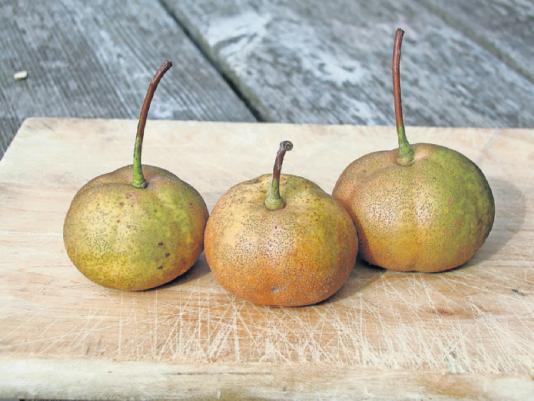
Shjpova is a very uncommon fruit with a flavor reminiscent of, but different from, pear.
Golden Celebration. I’ve always wanted to plant a magnolia, of which there are many newer and older varieties, but where could I plant it? My number one choice would be southern magnolia (Magnolia grandiflora), with its large, leathery leaves and also large white, fragrant flowers. Hardier varieties, such as Clara Bogue, could possibly survive here. But mere survival would not let the best of this plant
shine. A ragged Southern Magnolia wouldn’t cut it for me.
Years ago I planted a sweetbay magnolia (Magnolia virginiana), a subdued stand in for southern magnolia that I purchased on an impulse at a nursery. The draw for this plant was its semi-evergreen leaves, admittedly, along with its flowers, not as spectacular as southern magnolia. But it was hardy. Allegedly. It succumbed to its
of young trees, fertilization, pest identification, and when to call in the certified arborist. Cost $240 members, $280 nonmembers. For more information, visit www. berkshirebotanical.org. Berkshire Botanical Garden is located at 5 West Stockbridge Road.
Berkshire Botanical Garden presents the following upcoming program: Friday, Feb. 13, through March 6, “Tree Care for Gardeners.” This course, offered on Fridays, from 1 to 5 p.m., and taught by Tom Ingersoll, is designed for those who might not necessarily be first to climb 100 feet up a northern red oak or wrangle the chainsaw to fell a 36-inch dead American elm. The goal of this class is to empower horticulturalists to better understand the largest plants in the landscape. Participants will learn the basics of tree biology and identification, the tree’s role in the ecosystem, proper selection, siting, planting considerations, pruning
SPRINGFIELD
Springfield Garden Club upcoming programs
The Springfield Garden Club will host a series of three programs for anyone interested gardens and gardening or just escaping the winter for an hour.
The programs will be held at The Monkey House in Forest Park at 10 a.m. Admission is free to all with paid park admission. More information can be found on the club’s website www.springfieldgarden-
first cold winter.
Insects and diseases have decimated my efforts at growing plums. Typically, I throw my hands up and abandon plums for awhile, then realize how good a truly ripe plum can taste, and try again. Obilinya plum is reputedly pest resistant, perhaps warranting a try here. Hmmmm.
And then yesterday I saw mention of a truly spectacular species of mountainash, Sorbus splendens. It’s so new, it doesn’t even have a common name — yet. Also so new that I can’t find any source for seeds or plants. All this perhaps just doubles my lust for it.
It’s hard to keep my wits about me as spring approaches, especially on sunny, less frigid days. “I will not buy another magnolia, I will not buy another magnolia, I will not buy another magnolia, . . .”
Another reason I need to be restrained is because I have some trees and shrubs in pots, waiting in the wings for places to be planted. An Edelweiss grape vine, for example, as well as a fantail willow
clubma.org or on Facebook.
• Saturday, Feb. 28, 10 a.m., “The Most Beneficial Late Winter Garden Chores” presented by Melissa Pace.
• Saturday, March 28, 10 a.m., “Vegetable Gardening 101” presented by Gretel Anspach.
• Saturday, April 11, 10 a.m., “Planning and Growing a Bountiful Flower Garden” presented by Becky Sadlowski.
WILBRAHAM
Wilbraham Garden Club scholarships applications
The Wilbraham Garden Club is pleased to announce that applications are now being accepted for two, $1,000 scholarships. We are accepting applications from graduating high school seniors, undergraduates, and graduate college students majoring in or who plan to major in,
and an Anwen wisteria plant. Also shipova, a very rare fruit that I grew many years ago but had to cut down because it was too big for its space. Shipova is one of those rare hybrids that occur between two different genera. One parent is the common, or European, pear, Pyrus communis, and the other parent is probably Sorbus aria, the common whitebeam. The whitebeam parent lends the offspring leaves covered with a downy felt that gives them a snowy appearance, especially on their undersides and early in the season.
Poor flavor cannot be blamed for shipova’s obscurity. A close flavor comparison would be with pear, although the flesh is just slightly more meaty than a pear, a sweet and fragrant, ambrosia. I need to find a space, a large enough space, for the shipova, or else put off any decision and shift the plant to a larger pot.
Potted filberts, also known as hazelnuts, also lie in waiting.
SEE REICH, PAGE F6
one of the programs listed below. Eligible student must be residents of Wilbraham or Hampden, MA.
All applicants must be enrolled in one of these fields of study: Botany, Horticulture, Conservation, Environmental Science, Earth Systems, Forest Management, Natural Resources, Plant, soil and Insect Science, Sustainable Agricultures, Sustainable Horticulture, Food and Farming, Turf Grass Science & Management, Landscape Design & Management Technology, Landscape Architecture, Oceanography, Clean Energy Technology, Floral Design or Land Management. Applicants must include a personal essay of 100-200 words, official high school or college transcript(s), two letters of recommendation, college acceptance letters(s) if available, along with the completed Wilbraham Garden Club Scholarship application.
SEE NOTES, PAGE F6
(LEE REICH PHOTO)
Many perennials, including vegetables, won’t sprout without cold stratification — exposure to frost, damp weather and fluctuating temperatures — which makes late winter the ideal time to plant.
“I seed them outside in a protected area, like an unheated greenhouse, in February or March,” Hunter says. “Then when it warms up, they’ll sprout when they’re ready.”
The first step is determining what will survive through the year in your hardiness zone. The U.S. Agriculture Department maintains a map that assigns the zones based on average temperatures and frost dates.
Once you know what should thrive in your location, Adamant suggests beginning with one or two varieties.
“Start with one raised bed somewhere,” she says. “Because if you plant 30 things you’ve never heard of in the first year, it’s a good way to get burned out.”
Here are some options to get you started.
Skirret. One of Hunter’s best-selling seeds is this root vegetable that was popular in medieval Europe “before potatoes came over from the Americas,” she says. “I tell people it’s like a stand-in for carrots or parsnips, but it could also be a substitute for potatoes because it’s a starchy root vegetable.” Once the seeds are established, “they’re really easy to grow,” she adds. “They make masses of white roots that are long and skinnier than a carrot. You can eat them raw or cooked. My favorite way to eat them is just to roast them in the oven with olive oil and salt. The leaves can be eaten, too. They kind of taste a little bit like celery leaf or parsley leaf.”
Potato onion. “Regular onions are biennial; the plants live for two years,” Hunter says. Potato onion varieties, on the other hand, reproduce indefinitely if some of the crop is left in the ground to seed the next year’s growth.
The name comes from the onion’s long period of freshness once it’s harvested. “They have amazing storage,” she says. “They’ll keep in the fridge for, like, a year.”
Sunchokes. Adamant recommends these, which grow aboveground as a tall, sunflower-like yellow bloom and produce many palm-sized tubers at the root. “Those things cannot be killed,” Adamant says. “You have to be careful about where you plant them because they spread underground and can take over. But they also produce something like a slightly sweet potato and make nice flowers for pollinators.”
Caucasian spinach. This climbing plant, also called spinach vine, can grow well even in total shade. “The leaves are really mild and good raw or cooked,” Hunter says. “And it’s a plant you can start harvesting super early in the season. You can dig under the snow and find little shoots coming up in the midor late winter and eat them like mini asparagus.”
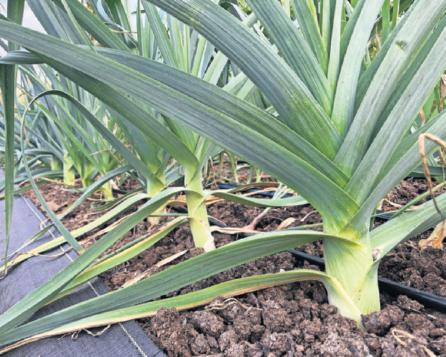
Delft Perpetual leek. This is one of Hunter’s best-selling seeds. “Instead of pulling out the leek to harvest it and taking all the roots with it, you cut it just below the soil line,” she says. “In a few weeks, baby leeks pop out from the root to replace the one you harvested. I’ve been growing them for years, and they’re still going strong.”
Garlic, scallions and potatoes. Depending on your hardiness zone, Adamant says, these common vegetables can be grown as perennials. The key is to leave part of the plants in the ground when harvesting. “I’ve got potato beds that are six years old, and they come back every year,” she says.
Fiddlehead ferns. The easiest perennials to cultivate are native varieties that can sometimes be overlooked. “You can grow really exotic things, but there’s a lot that is already growing in your yard, and you can just encourage it,” Adamant says. Fiddlehead ferns, for instance, are widespread across North America. “They’re delicious,” she adds, “and hard
to kill once you get them established.”
Dandelions. “People pay a lot of money for dandelion greens in the grocery store,” Adamant says. “They grow these huge, carrot-like tap roots that get even bigger if they’re in a garden bed rather than a lawn.”
Kate Morgan is a freelance writer in Richland, Pennsylvania.
A 10-step routine that will get your kitchen clean quickly
By Jolie K err The Washington Post
WHEN IT ARRIVED ON AMERICAN shores, the Korean 10-step skin care routine revolutionized a process that, for many people, had previously been kind of a “wash face, slap on moisturizer” drag. It elevated skin care from a sloggy chore into a ritual that people found they looked forward to. So, what if we turned the 10-step concept on other forms of daily or weekly self-care rituals, like our household chores?
Most people already know the basic tasks involved with keeping the kitchen clean — do the dishes, wipe the counters, sweep up crumbs — but what makes this routine such a paradigm shift is the order of operations. Think of it like a Vinyasa for your kitchen — the 10 individual chores will flow together into one chore set and, over time, it will become so routine that you will be able to do it as if on autopilot. The timings provided are estimates — everyone moves and works at a different pace, and our spaces vary from quite tiny to very large — meant to provide a sense of the effort involved in each individual task.
The flow is also totally customizable to your needs and the way you work, so if you find that incorporating step 6 into step 3 works best for you, then do that! Like skin care routines, our household chores typically look similar from afar but can and should be massaged into a personalized routine.
1. Bus the dishes (2-5 minutes)
The kitchen cleaning routine actually starts outside the kitchen: The first step is to do a sweep of the living room, dining room and other spaces in the home where people bring — and leave — dishes, utensils and glassware. (Water glasses in bedrooms seem
CONTINUES FROM PAGE F4
All required documentation must be received on or before April 30. Notifications will be made by mid-May and the recipients will be awarded their scholarships at the annual meeting of the Wilbraham Garden Club on June 5. Scholarship applicants will be available at the Wilbraham and Hampden public libraries, Minnechaug Regional High School and Wilbraham Monson Academy.
They can also be found on the Wilbraham Garden Club Facebook page. Please contact howella413@gmail. com with questions or to receive an application.
HARTFORD
Connecticut Flower & Garden Show
A full schedule of expert speakers and topics is set for the 44th Connecticut Flower & Garden Show, starting Thursday, Feb. 19, through Sunday, Feb. 22, at the Connecticut Convention Center, 100 Columbus Blvd. in Hartford, Conn. Days/hours: Thursday, Feb. 19, from 10 a.m. to 7 p.m., Friday, Feb. 20, from 10 a.m. to 8 p.m., Saturday, Feb. 21, from 10 a.m. to 8 p.m., and Sunday, Feb. 22, from 10 a.m. to 5 p.m. Discounted admission tickets can be purchased now at www.CTFlowerShow.com, $17 for adults and seniors (same prices as last year).
The major pest problem of these hybrids of native and European species is eastern filbert blight, which seriously weakens or kills the plants. I’ve planted and dug up and out a number of varieties. Filbert blight fungus is a capricious creature, so over the years I’ve had to rip out of the ground and discard many allegedly disease resistant varieties I had planted, to make room for new varieties.
The plants are very attractive and can be grown as large bushes or small trees. Even now, they’re pretty as their long catkins (male flowers) dangle from the stems waiting to pollinate the female flowers. The female flowers go on to become hazelnuts, delicious and usually abundant.
The varieties presently planted seem good as far as disease resistance. Now it’s which ones are best as far as yield, nut size, and flavor. Why not just stick with what I got? Because the potted plants I have will likely
Lady of Shallot is a rose that recalls, with its soft color and informally arranged petals, roses of yesteryear. (LEE
prove better.
They are Somerset, Monmouth, Raritan, and Hunterdon, all recently named selections from the Rutger’s breeding program.
All this is a reflection, I admit, of some planting sickness. I probably have twice as many filbert trees/bushes as I need. Colorful nursery catalogues and websites notwithstanding, I’m confident , at least, that some “new and wondrous plants” could never entice me,
no matter what their hype.
One such plant is a blue rose, which received a lot of press some years ago. A blue rose, in case you didn’t know, is a very big event in gardening. Think about it: Did you ever see a blue rose? No, you didn’t.
This new rose now exists thanks to the wonders of genetic engineering. According to the developer, Suntory of Japan, Applause rose, one of a few blue rose varieties, has a “bluish tinge reminiscent of the sky just after dawn and an elegant, alluring, fresh fragrance.”
Scientists were able to bestow the blue color by inserting into a rose the delphinidin gene, which is also responsible for the blue of delphiniums. The red pigment in roses still causes a problem in not letting the blue fully express itself, but now that the blue gene has been inserted, high hopes exist for even bluer roses in the future. Call me provincial if you want, but I like red, pink, yellow, or white roses, especially when those colors are pastel rather than harsh. A blue rose seems cold to me. I imagine it exuding a poisonous aroma.
New England’s only 2026 major flower exhibition and show will feature 150,000 square feet of expansive live landscapes and floral gardens, nonstop seminars and demonstrations, the Federated Garden Clubs of Connecticut’s annual Standard Flower Show, and hundreds of exhibitors displaying and selling all types of items and gifts.
The show’s theme this year is “A Storybook Garden.” This annual event offers ideas for house, apartment, and condo-dwellers alike and is for gardening beginners to experts, and everything in between.
Over 80 hours of different seminars and demonstrations will be presented by more than 20 expert horticulturalists, landscapers, and industry professionals,” explains Kristie Gonsalves, president of North East Expos, Inc., the show’s producer who is a boardmember of the Home & Garden Show Executives International, and a past president of the National Association of Consumer Show Producers. “This year’s experts include renowned entomologist and conservationist Doug Tallamy, co-founder of Homegrown National Park and author of the book, “How Can I Help?,” and Nancy DuBrule-Clemente, organic gardener and founder of NatureWorks.
Attendance at these programs is included in the general admission and questions are welcomed by the speakers, many of whom will sell their own books after their seminars.”
All sessions are free with admission, and the full schedule is online now at www.CTFlowerShow. com.
Send items for Garden Notes to pmastriano@repub.com two weeks prior to publication.
REICH PHOTO)
Doug Tallamy
Nancy DuBruleClemente.
Wiping a kitchen counter. (ABOBE STOCK IMAGE)
SEE ROUTINE, PAGE F7
Snow protects your garden beds. Trees might need some help
By Jessica Damiano Associated Press
SHOVELING IN SIN-
gle-digit temperatures after the colossal winter storm this weekend, I dumped mounds of snow onto my garden beds, knowing it would protect my trees, shrubs and dormant perennials.
When the ground repeatedly freezes and thaws, as it does over winter in cold climates, that can squeeze roots, seeds, bulbs, tubers and rhizomes right out of the earth. Once exposed, they can be killed off by cold, drying winds.
But snow cover provides a heavy blanket of winter mulch that insulates the soil, prevents heat from escaping and keeps soil temperatures from seesawing. And as it melts, snow will not only water your garden but fertilize it with plant-boosting nitrogen absorbed from the air on its way to earth.
It’s a perfect display of nature taking care of itself.
Branches might not fare as well
On the downside, the same heavy blanket that keeps plants warmly tucked in can spell disaster for evergreen trees like arborvitae and Leyland cypress. When wet snow accumulates on trees, its weight can bend, buckle or snap branches. And if you don’t remove it, it can permanently disfigure them.
We can help by gently knocking snow off branches with a long-handled broom. Under normal circumstances, I do this after the storm ends. But during extended snowfalls, I go out during the storm, as well, to keep on top of the accumulation. Trees are expensive, so I’d rather brave the elements than have to replace them. When water or accumulated snow freezes into ice, however, it’s best to leave
the branches be. Attempts to crack or knock ice off plants risk further damaging bark and other delicate plant parts. All we can do is allow it to melt naturally and hope for the best.
Use garden-friendly salt
After removing snow from walkways and driveways, it’s good practice to apply rock salt to prevent ice from forming. But choosing a product can be confusing. Magnesium chloride is the best choice, as it dissolves quickly to coat and melt ice, works in temperatures as cold as 10 degrees below zero Fahrenheit and is less likely to burn pets’ paws. It’s also the safest for your plants, which become exposed to the product via wind, soil runoff, melting snow and splashing slush, as well as deliberate snow dumping.
One drawback, however, is that magnesium chloride is also the most expensive of the commonly available ice-melt products. If your coverage area is so large that using it exclusively becomes too expensive, consider using it in areas adjacent to plants and where pets will be exposed. Then, opt for my second choice, calcium chloride, in less-trafficked areas and those away from lawns and gardens.
You’ll often see calcium
Routine
to proliferate in the night!) Do a quick pass through the house to “bus” any dirty dishes that have strayed into rooms where they do not belong, and bring them into the kitchen. A bussing tub or something similar can make the job a cinch, especially for those who live in a large home or a household with many people. Place all dishes in the sink.
2. Put away food (2-5 minutes)
chloride marketed as petand plant-safe, but it still can damage plants and irritate pets’ (and your own) paws. Wear gloves when handling it. If you must use it near plants, apply sparingly. And rinse pets’ paws after exposure.
As a gardener, you might recognize the chemical name of another type of rock salt, potassium chloride. Although it’s also a component of balanced fertilizers (the K in N-P-K ratios), the amounts needed to melt ice can actually harm or kill plants, so avoid using it as a deicer.
Sodium chloride is the cheapest of the bunch, but the worst choice for plants, pets and the environment. It can corrode cars, crack concrete, and poison wildlife, plants and trees. When applying any icemelt product, always use the least amount necessary, as they all have some potential to damage masonry. Applying a waterproofing sealant to driveways and walkways during warmer weather will help protect against ice-related cracks for several years.
Jessica Damiano writes weekly gardening columns for the AP and publishes the award-winning Weekly Dirt Newsletter. You can sign up here for weekly gardening tips and advice.
and turning into a stubborn, sticky mess and will help keep high-touch surfaces and those used for food preparation free of germs and bacteria that can lead to foodborne illness.
7. Wipe stovetop, backsplash and vent hood (1 minute)
Wrap leftovers or transfer them to food storage containers, then put snacks, pantry supplies, spices, etc. back in their places. Add any resulting dirty dishes to your dish pile.
3. Do a cursory fridge and pantry check (1 minute)
As you put food away, turn an eye toward any trouble spots that may be brewing in the refrigerator; wipe up spills, and check for old food that needs to be thrown out. This is also the time to note anything you’re out of, in both the fridge and the pantry, and add it to your running grocery list, if you keep one.
4. Load the dishwasher (2-5 minutes)
Make a triumphant return to the sink and load the dishwasher if you have one.
5. Hand wash dishes (2-5 minutes)
Hand wash items — like knives and wooden cutting boards — that cannot go in the dishwasher and/or wash the dishes if you live a dishwasher-free existence. Dry and put the dishes away; this is an optional but small extra step that will make a big difference in how the kitchen looks come morning.
6. Wipe counters, cabinets and fridge handle (1 minute)
Use an all-purpose cleaner suited to the materials in your kitchen — nothing fancy, just apply a small amount of cleaner to a microfiber cloth or paper towel and give those surfaces a quick pass. Doing so will keep buildup from forming
If you cooked a meal using the stove today, or you are performing this routine as part of weekly cleaning, perform the same wipe down on the stovetop, backsplash and vent hood. Even a cursory wipe will lift the layer of oil that settles on kitchen surfaces during cooking, as well as any spills and splatters, so they don’t become baked-on over time.
8. Quick clean the floor (optional, 5 minutes)
Kitchen floors are considered a “high-traffic” area in the home, requiring routine cleaning. This may look like sweeping up crumbs at night or running the robot vacuum at the end of the day. A flat microfiber mop (I use this little friend for everything) that can be used for dry or damp mopping, as needed, is another excellent tool for keeping kitchen floors clean.
9. Run disposal and dishwasher (1 minute)
Turn on the hot water and wipe out the sink using a small amount of dish soap or all-purpose cleaner, if needed. Then, turn the water to cold and run the garbage disposal. This small act of preventative maintenance will go a long way in forestalling a plumbing disaster. Finally, turn the water back to hot before starting the dishwasher; dishwashers rely on hot water and steam to work efficiently, so running the hot water gives the machine a head start.
10. Put out fresh dish cloths (<1 minute)
The last step ends where the flow began — outside the kitchen. Round up any dirty dish towels, aprons, oven mitts and/or cleaning cloths that need to be laundered. Put out a fresh dish towel for tomorrow. Then bring the dirties to your laundry hamper or bag, and toss ‘em in.
A mound of snow insulates dormant sedums in a garden bed in Long Island, N.Y., after a winter storm. (JESSICA DAMIANO VIA AP)
Terry & Kim Kovel | Antiques & Collecting
Foot warmers were very popular in winter months
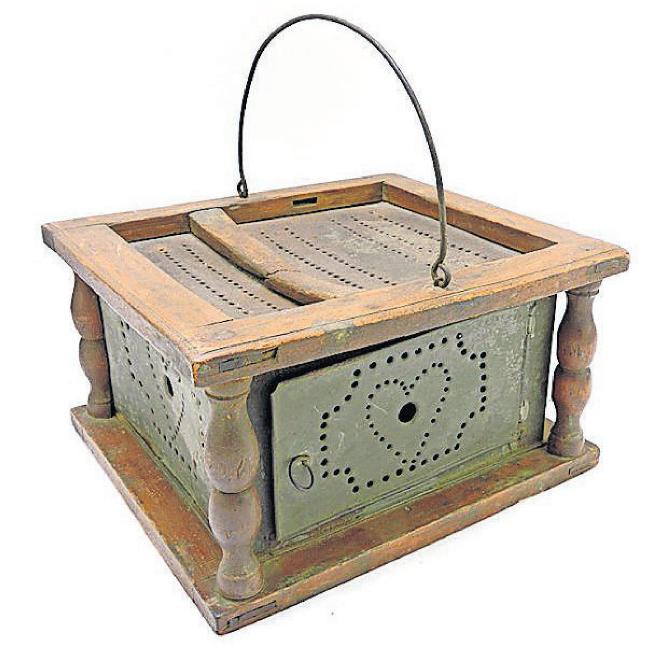
EVER SINCE HUMANITY moved into temperate climates, we have faced the problem of how to keep warm in the winter. Our extremities are especially challenging. Throughout history, people have come up with various types of foot warmers, and many of the old types are collectible today. One of the most popular types among collectors has a small wooden frame and punched tin panels.
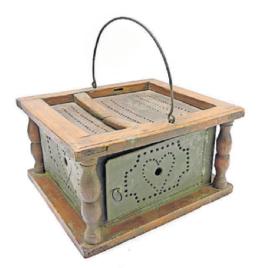
The example shown here, measuring 6 by 10 1/2 inches, sold for $53 at Strawser Auction Group. One panel is hinged on one side, so it opens like a door, and an open metal container inside the box is filled with hot coals. The box would rest on the floor, and a sitter would place their feet on or near it and cover their legs with a blanket to trap the heat. Women may not have needed blankets; their long skirts would have served a similar purpose.
While the use of a heater covered with a cloth to trap the heat has appeared all around the world, including the brasero in Spain, korsi in Iran and nearby Central Asian countries, and kotatsu in Japan, this type of foot warmer is particular to the Netherlands and northern Germany. Immigrants from these regions brought them to the United States in the 18th and 19th centuries.
A portable version with a wire handle on top, like the one pictured here, was often used for traveling in sleighs or carriages. Punched tin was especially popular in American decorative arts from about 1830 to 1860, which may help date an antique foot warmer. Punching tiny holes in the tin panels allows heat to escape. The perforations were often made in patterns or simple shapes. Heart shapes were apparently a favorite design.
Q. I was hoping you might be able to help me find out the value of two Nantucket friendship baskets that I am looking to sell. If you are not the right organization to ask about this, perhaps you know someone I can contact.
A. Nantucket friendship baskets are popular collectibles, appealing to collectors of nautical art and fashion handbags alike. Generally, vintage Nantucket friendship baskets are worth at least $300. Baskets by an identifiable artist can sell for thousands of dollars, especially if they are
at least 20 years old.
The easiest way to identify the artist is if the basket is signed, usually on the base, but some baskets were instead marked with paper labels that wear off over time. You may want to contact an auction house that has sold them before. They may be able to provide you with more information and an appraisal. Auction houses that deal in nautical collectibles, especially if they are located in New England, are the most likely to be able to help.
Nantucket friendship baskets are distinguished from earlier Nantucket lightship baskets by their covers, which usually include a wood center panel and ornamental scrimshaw-style carving. Both types of baskets, lightship and friendship, are woven on a mold with vertical staves, cane weavers, and a solid wooden base.
The first friendship baskets are attributed to Jose Formoso Reyes, who moved to Nantucket after World War II and learned basket weaving there. This style of basket is still made in Nantucket today.
Q.I have a small collection of wildlife prints by various artists.
CURRENT PRICES
Current prices are recorded from antiques shows, flea markets, sales and auctions throughout the United States. Prices vary in different locations because of local economic conditions.
Postcard, Valentine, woman’s face over large red heart, playing cards, shaded green ground, silver lettering, To My Valentine, Queen of my Heart, Fortune Valentine Series, divided back, cancelled, 1912, $10. Limoges, trinket box, heart shape, hinged lid, allover gilt, painted swirls, blue ribbon bow, painted chocolates on interior, With Love, 2 inches, $65.
Typewriter, L.C. Smith, Corona Sterling, black, carrying case, lock and keys, c. 1940, 13 x 13 x 6 inches, $250.
Can you tell me how I can find out if they are worth anything?
A.The first step to evaluating a print is determining if it is an original or a reprint. The easiest way to do this is to look for copyright information, particularly the date and the name of the printing company. If this is on the print, you can usually look it up online. If not, a local art museum or art gallery may be able to help you. Unless they are very early or a limited edition, reprints are usually worth little.
If you have an original artist-signed print, it may be very valuable. There are several online databases like Artnet and Artbnk that have price guides to famous artists. Again, a library or art museum in your area may subscribe to them or may have printed copies of similar directories. If you know the artist is American, the Smithsonian American Art Museum online inventory may have helpful information.
TIP: Wooden boxes, toys, or decoys should not be kept on the fireplace mantel or nearby floor areas when the fire is burning. The heat dries the wood and the paint. Unprotected wooden items on warm TV sets and stereos may also be damaged.
Toy, car, racing, driver in seat, silver, red trim, moving pistons, cast iron, replaced tires, Hubley, 11 inches, $300.
Furniture, chair, LCW Lounge, Eames, plywood, label, Herman Miller, 26 inches, $665. Paper, book, Out of My Later Years, Albert Einstein, hardcover, dust jacket, first edition, signed, Philosophical LIBRAry, New York, 1950, 8 1/4 x 5 3/4 inches, $1,000.
Furniture, sofa, LC3, Le Corbusier, leather, black, three seats, chrome plated steel frame, arms, Italy, 70 1/2 inches, $2,125.
Kovels answers readers’ questions sent to the column. Send a letter with one question describing the size, material (glass, pottery) and what you know about the item. Include only two pictures: the object and a close-up of any marks or damage. Be sure your name and return address are included. By sending a question, you give full permission for use in any Kovel product. Names, addresses or email addresses will not be published. We do not guarantee the return of photographs, but if a stamped envelope is included, we will try. Questions that are answered will appear in Kovels Publications. Write to Kovels, The Republican, King Features Syndicate, 300 W. 57th Street, 41st Floor, New York, NY 10019, or email us at collectorsgallery@kovels.com.
Pierced shapes on the tin panels add a sentimental touch to a utilitarian foot warmer. One like this must have warmed its user’s heart as much as their toes.
(STRAWSER AUCTION GROUP)
Average US longterm mortgage rate barely budges
Rate holds near 6 percent
By A lex Veiga Associated Press
The average long-term U.S. mortgage rate barely budged this week, staying close to 6% as the spring home-buying season nears.
The benchmark 30-year fixed rate mortgage rate edged up to 6.11%, essentially flat compared to last week when it was 6.1%, mortgage buyer Freddie Mac said Thursday. One year ago, the rate averaged 6.89%.
This is the latest increase since the average rate eased three weeks ago to 6.06%, its lowest level in more than three years.
Borrowing costs on 15-year fixed-rate mortgages, popular with homeowners refinancing their home loans, also ticked up this week. That average rate inched up to 5.5% from 5.49% last week. A year ago, it was at 6.05%, Freddie Mac said.
Mortgage rates are influenced by several factors, from the Federal Reserve’s interest rate policy decisions to bond market investors’ expectations for the economy and inflation. They generally follow the trajectory of the 10-year Treasury yield, which lenders use as a guide to pricing home loans.
The 10-year Treasury yield was at 4.21% at midday Thursday, down from 4.23% a week ago.
The latest increase in mortgage rates comes after the Fed decided last week to pause cuts to its main interest rate after lowering rates three times in a row to close out 2025 in an attempt to shore up the job market.
The central bank doesn’t set mortgage rates, but its decisions to raise or lower its short-term rate are watched closely by bond investors and can ultimately affect the yield on 10-year Treasurys that influence mortgage rates.
The U.S. housing market has been in a sales slump dating back to 2022, when mortgage rates began to climb from pandemic-era lows.
The combination of higher mortgage rates, years of skyrocketing home prices and a chronic shortage of homes nationally following more than a decade of below-average home construction have left many aspiring homeowners priced out of the market. Sales of previously occupied U.S. homes remained stuck last year at 30-year lows.
Still, the pullback in mortgage rates that began late last summer helped give sales of existing U.S. homes a boost toward the end of last year. In December, sales jumped 5.1% from the previous month.
Home shoppers who can afford to buy at current mortgage rates are benefiting from less competition and a wider selection of properties on the market, trends that are giving buyers more leverage at the negotiating table.
Nearly two-thirds of all homebuyers last year paid less than the original list price — the highest share since 2019, according to a recent analysis by Redfin.
Economists generally expect mortgage rates to stay relatively stable in the coming months, with forecasts calling for the average rate on a 30-year mortgage to hover around 6%.
Deeds
AGAWAM
Anthony Fazio and Jane Fazio to Amjad Real Estate LLC, 554 Franklin St. Extn, $470,000.
Diane E. Vinesett to Amy B. Royal, 29 Plantation Drive, Unit 29, $230,000.
Dominic Santaniello, trustee, Lucas Giusto, trustee, and Naples Home Buyers Trust, trustee of, to Bulldog Realty Group LLC, 98 N Alhambra Circle, $615,000.
Elizabeth J. Petrucci to Christopher C. Petrucci, Mark Steve Petrucci, and Elizabeth J. Petrucci, life estate, 91 Channell Drive, $100.
John T. O’Donnell to Mark J. Rolland and Corinne E. Rolland, 174 Beekman Drive, $299,000.
Kyle C. Devlin to Michael G. Robie Jr., 198 Beekman Drive, $235,000.
Mark E. O’Malley to Silver Walnut LLC, 667-669 South West St., $300,000.
Mark E. O’Malley to Silver Walnut LLC, 675-677 South West St., $300,000.
Phyllis Birch to Evgheni Emciuc, 94 Witheridge St., $210,000.
Virginia A. Donnelly and Virginia A. Donnelly Sill to Jonathan J. Fontaine and Kianna Z. Fontaine, 60 South Alhambra Circle, $340,000.
Waystar 800 Silver LLC, to OM Real Estate Holdings LLC, 800 Silver St., $850,000.
AMHERST
Lea Abiodun, trustee, Lea Abiodun Declaration of Trust and Lea Abiodun Trust to Catherine A. Riihimaki and Kira T. Lawrence, 481 Old Farm Road, $752,000.
Chih-Wen W. Su to Minsoo Kim and Jeena Jeonghee Kim, 14 Pebble Ridge Road, $600,000.
Amhad Development Corp., to Richard F. Pekala and Susan T. Pekala, 28 Greenleaves Drive, $230,000.
Ronald L. Snell and Ronald Snell to Ronald L. Snell, trustee, Revocable Indenture of Trust of Ronald L. Snell, 116 Shutesbury Road, $100.
Michael Pill to Michael Pill and Carol S. Holzberg, 170 East Hadley Road, $100.
Joseph Tran and Hong T. Pham to Eugene Mattie, 96 Logtown Road, $575,000.
BELCHERTOWN
Joanne H. Kudlay to Jillian Wilkins and Celeste Margaret De Filipi, 190 Michael Sears Road, $340,000.
Keith J. Wegiel, John M. Wegiel Jr., Lisa A. Wegiel and Kathleen Wegiel to John M. Wegiel Jr., 8 Metacomet Circle, $100.
John M. Wegiel Jr., and Kathleen Wegiel to Haiying Fay Conover, 8 Metacomet Circle, $328,000.
Christopher W. Irving and Julia C. Irving to Kaileigh McKenzie Keizer and Ciara Michelle Lawrence, 10 Chestnut Drive, $570,000.
George M. Ribeiro to George M. Ribeiro and Susana Lemieux, 159 West St., $100.
BERNARDSTON
Christine D. Pettine, personal representative of the Estate of Arthur J. Brochu, Jr., to Kenneth Draleaus and Vicki Draleaus, 42 Huckle Hill Road, $75,000.
PFC Investments LLC, to Chicopee Chestnut Street Properties LLC, 14-16 Chestnut St., $242,500.
PFC Investments LLC, to Chicopee Chestnut Street Properties LLC, 18-22 Chestnut St., $287,500.
Round Two LLC, to Haskell Holdings LLC, 22 Franklin St., $755,000.
WMass Land Acquisitions LLC, to DCL General Construction LLC, James Steet, Lot 1, $220,000.
COLRAIN
Patience Lowe, trustee of the Lowe Investment Trust, to Daniel W. Bartell and Sarah Couture, 3&5 Church St.,
$280,000.
DEERFIELD
Sarah Churchill, personal representative of the Estate of Elizabeth Adkins, to Plumtree Real Estate LLC, 710 River Road, $162,000.
EAST LONGMEADOW
Honeyrock Home Buyers LLC, to Jads LLC, 45 Parker St., $300,000. Michelle Gonzalez, Michelle Garcia and Gabriel Sevillano to Zhaoshun Yang, 66 Smith Ave., $421,000.
Stephen F. Percy and Lorraine A. Percy to Zachary Jenkins and Ellen Serra, 226 Allen St., $470,000.
EASTHAMPTON
Jessica George Miquelle Romero and Jessica G. Miquelle to Jessica George Miquelle Romero, trustee, Eduardo Jose Romero, trustee, Jessica George Miquelle Romero Living Trust and Eduardo Jose Romero Living Trust, 9 St. James Ave., $100.
Hans Werner Dalhaus and Sarah James Dalhaus to Joyce C. Vande Kieft and Peter A. Joppe, 52-54 Everett St., $520,000.
GOSHEN
Douglas F. Fraser to Daniel K. Jones and Tina M. Moreau Jones, Antin Road Off, $20,000.
GRANBY
Lyndsay Gauthier to Jason Dufresne and Jason M. Dufresne, 6 Grandview Ave., $75,000.
Brian Kennedy and Catherine L. Kennedy to Robert L. Peltier and Samantha A. Peltier, 159 School St., $435,000.
John H. Trompke to John H. Trompke, trustee, and Trompke Residential Trust, 22 Trompke Ave., $100.
Michael F. Major and Michael E. Major to Brian D. Major and Cheryl A. Major, Porter Street Off, $82,000.
GRANVILLE
John S. Demyon Sr., and Elizabeth A. Demyon to Erin Cohen and Nicholas Brackett, 640 Main Road, $420,000.
GREENFIELD
Eleanor Witt Gillers and Lucy Jennings Gillers, personal representatives of the Estate of Caroline P. Jennings, “aka” Caroline Jennings, to Madden Aleia, 24 Pine St., $301,000.
Denise M. Chartier, personal representative of the Estate of Leea Pronovost, “aka” Leo S. Pronovost, “aka” Leea S. Pronovost, to Chad W. Fraker and Sara L. Fraker, 23-25 Alden St., $380,000.
SEE DEEDS, PAGE F10
Deeds
HADLEY
Timothy L. Neyhart and Teresa Wong Neyhart to Christina Neyhart, Kenneth Neyhart and Denise Wilhelm, 16 Kosior Drive, $100.
Deborah Clark to Michael S. Wade, 79 Aqua Vitae Road, $212,000.
HAMPDEN
Olivia Carolyn Clement to Paul Picknelly Jr., 70 Rock-A-Dundee Road, $820,000.
William D. Bartels and Merle M. Bartels to Scott M, Driscoll, 157 Stony Hill Road, $250,000.
HOLLAND
Ellen E. Dymon to Debra Sibley, 4 Lake Shore Lane, $235,000.
Johnny East LLC, to Haley Remodeling LLC, 8 Julia Ann Drive, $330,000.
HOLYOKE
Alfred Shattelroe, receiver, Holyoke City and Frances L. Blanchard, estate, to Alfred Shattelroe, 41 Lynwood Ave., $286,000.
Alfred Shattelroe to Diamond Matos, 41 Lynwood Ave., $286,000.
Brian M. Foy and Karen J. Wright to Matthew Pape and Gabriela Pape, 91 Knollwood Circle, $350,000.
HUNTINGTON
Henry P. Igel to Henry P. Igel and Patricia M. Igel, Russell Street, $100.
LEYDEN
Sierra Streeter, “fka” Sierra Rain, and William Douglas Streeter to Michelle Goodrich and Marya Mtshali-Runt, 218 Greenfield Road, $535,000.
LONGMEADOW
Kimberly Nicole Hickson-torres to Liam Patrick Smyth and Caitlyn Sroczenski, 118 Field Road, $365,000.
LUDLOW
Jose A. Coelho to Agostinho Varandas and Natalia Varandas, 6 Quincy St., $319,000.
Joshua Morgan Block and Alice Fischbein Berenson to Frances T. Duda and Mark A. Duda, 45 Hunter Road, $531,000.
Melissa Greene, representative, William Hatch, estate, and William Briggs Hatch Sr., estate, to Craig Riel, 138 Ridgeview Circle,
$290,000.
MONSON
Roy E. Miller and Lyle R. Miller to Mark W. Sagendorph, Wood Hill Road, Lot 16, $70,000.
Vicki M. Hunter to Mark A. Noga and Diane M. Noga, 18 Palmer Road, Unit 6, $265,000.
NORTHAMPTON
Donna W. Hoener to Rachel Koh and Sarah Nichols, 96 Rick Drive, $455,000.
Brock Dykeman to Josue Xavier Colon, 39 Matthew Drive, $460,000.
Gino Michael Caranelli, personal representative, and Eric Johnson, estate, to Brian Wert and Mary Anne Morris, 31 Kingsley Ave., $465,000.
NORTHFIELD
Darrell R. Clough, personal representative of the Estate of Diane Clough, “aka” Diane M. Clough, to Jason Bassett, 294 Captain Beers Plain Road, $199,900.
ORANGE
Jacobo Delacruz and Sonia Marte to Julia Powers, Robert Powers and Theresa Roy, 27 Chase St., $525,000.
Sarah M. Dixon, personal representative of the Estate of Eric J. Cormier, to Kristen M. Bisceglia, 115 Town Farm Road, $265,000.
Wayne Whitmore to JASONRHOMES LLC., 150 E. Main St., $110,000.
Freeborn LLC, to JGCAMC LLC, 450 West River St., $850,000.
Sean Coffin to Quezia Rebeca Santos Bernardo Cordeiro and Marclesio Teixeira Da Silva, 245 Brookside Road, $385,000.
PALMER
M. G. Investments LLC, to Derek Beaulieu and Vladislav Rotar, Fuller St., Lot 7, $72,000.
PELHAM
Philippe Galaski, trustee, Philippe G. Galaski, trustee, Aviva Galaski, trustee, Philippe Galaski 2008 Trust and Joyce M. Olum-Galaski 2008 Trust to Sonia Fortin and Shelly Fraser, 60 Buffam Road, $68,000.
ROWE
Susan E. Pollock, Frederick N. Williams, Nancy N. Williams and Robert O. Williams to Sarah B. Bernhardt and William J. Bernhardt, 20 Brown Road, $385,000.
SHELBURNE
Ambrose I. Mwea to Julian Edwards Post, 105-107 Bridge St., $525,000.
SOUTH HADLEY
Donald H. Bradley, trustee, Gayle M. Bradley, trustee, and Bradley Revocable Trust to Robert Christopher Pace and Michael Joseph Stoehr, 88 Alvord St., $499,900.
Laura Gamache, trustee, Laura Wright Doucette, trustee, John Wright, trustee, and Ann L. Stevens Family Trust to Anthony Langevin, 126 Stonybrook Way, $584,900.
Elizabeth Ann Sheridan, Mary Kate Cavanaugh, Michael P. Sheridan, Daniel J. Sheridan and James S. Sheridan to Nicholas Kelleher and Isabelle Antonious, 12 Doane Terrace, $448,000.
Paul A. Cataldo and Dustin P. Cataldo, power-of-attorney, to JT Realty Associates Inc., 55 Westbrook Road, $270,000.
Lucas Giusto, trustee, Dominic Santaniello, trustee, and Naples Homes Buyers Trust to Naples Home Buyers Inc., 17 Carew St., $100.
John E. Hauschild and Susan M. Hauschild to Paul Dove, Noreen M. Dove and Raymond Paul Dove, 22-24 Maple St., $450,000.
SOUTHAMPTON
Brittany Jean Taylor, Christine B. Taylor, Francis P. Taylor and Brittany Jean Taylor, attorney-in-fact, to Shaun Connor and Sarah Harrison, 31 Lead Mine Road, $410,000.
Andrea L. Looney to Ryan W. Hall and Integra Hall, 117 Russellville Road, $356,000.
SOUTHWICK
109 North Lake Avenue LLC, to Diana Gentile, 109 North Lake Ave., $530,000.
Siarhei Ryhal to Mike Krasnov, 67 Tannery Road, $135,000.
Thomas J. McLaughlin, trustee, Barbara M. Wynns, trustee, and Revocable Indenture of Trust of Bernard J. Mclaughlin, trustee of, to Thomas J. McLaughlin, Klaus Anderson Road, $770,000.
SPRINGFIELD
2180 Main Street LLC, to Razzak Building LLC, 2180-2184 Main St., $530,000.
Alizaya Daysha Clark to Post Investment LLC, 47 Brookline Ave., $235,000.
Ana L. Morrissey to John Mendenhall Jr.,108 Brunswick St., $320,000.
Desmond Wayne Henry Jr., to Joseph Pasay and Selena L. Pasay, 43 Thorndyke St., $330,000.
Gemini Town Homes LLC, to Leon A. Valderrama Rico and Alix V. Perez Rubio, 54 Central St., Unit 506, $227,000.
Grahams Construction Inc., to Carlos A. Otero and Catherine Robles, 99 Crystal Brook Drive, $670,000.
Heidi A. Kitchen to Stephen E. Marinetto, 32 Lindsay Road, $336,700.
John J. Ferriter, administrator, and Frederick Blair, estate, to Tok Chang, 67 Carlisle St., $106,000.
Kenneth J. Dube to Morgan Sibley, 138 Warrenton St., $235,000.
KMak LLC, and Healthy Neighborhoods Group LLC, to Luis A. Rodriguez Figueroa, 35-37 Spruce St., $550,000.
Luz Guerrero to Xuan Tuong Bui, Quoc Bao Bui and Thi Hanh Vo, 41 Queensbury Drive, $318,000.
Mark Richard Pashko and Laura Lynn Pashko Paquette to Nelvis Noel Garcia, 115 Thompson St., $265,000.
Njre Property Group LLC, to Barbara K. Padilla Colon and Juan M. Padilla Colon, 665 Parker St., $300,000.
Pah Properties LLC, to Lee Ann Beauchamp, 72 Sunapee St., $315,000.
Patrick R. McNamara to Norquelis Veras and Jose Antonio Tejada Burgos, 83-85 Madison St., $440,000.
Phoenix Development Inc., to Yahaira Pena De Los Santos and Marilyn De Los Santos, 78-80 Shamrock St., $355,000.
Thang T. Luong, representative, Tranh Trac Luong, representative, and Binh Ta Luong, estate, to Hibiscus Property Management LLC, 0 WS Hancock St., $900,000.
US Bank Trust, trustee, and Determination Mortgage Trust, trustee of, to Carmen Rodriguez, 156-158 Norfolk St., $280,000.
Virginia O. Pearson to Brent Thomas, 23 Mary St., $295,000.
Yegor Stefantsev to Amjad Real Estate LLC, 52 Price St., $303,800.
Yegor Stefantsev to Amjad Real Estate LLC, 54 Price St., $303,800.
SUNDERLAND
Deac E. Tiley and Elaine W. Tiley to Eduardo Quinteros, 676 Amherst Road, $150,000.
WARE
Dustin R. Pennington to Thomas Jeffrey Reardon and Maria Reardon, 13 Juniper Hill Road, $540,000.
WEST SPRINGFIELD
Brendan Robert Cawley to Kristen Victoria Muszynski and Warren W. Hayden, 148 Craiwell Ave., $375,000. Mazin Al Nuaimi, Rasha Al Mahdawi and Masin Al Nuaimi to Mazin Al Nuaimi, 64-66 Elmdale St., $100.
Michael P. Sullivan to Tiffany Melendez-Campos, 74-76 Maple Terrace, $370,000.
Steven J. Duga and Michelle Duga to Michael A, Grillo and Mia M. Grillo, 416 Hillcrest Ave., $515,000.
Thomas J. Kennedy III, Johanna Brackney, Mary E. Kennedy, Anne Labrie and Amy Chamberlain to Anthony Maloni, 141 Havenhurst Road, $288,800.
Vaycheslav Foksha to Leyla Mamedova, 22-24 Allen St., $380,000.
WESTFIELD
Allison Marie Birkner, representative, Joseph Louis Birkner, estate, and Joseph Birkner, estate, to Zachary Wacksman and Maria Dropps, 846 East Mountain Road, $365,000.
Danielle M. Batchelder to Mckenzie Patterson and Kiana Patterson, 505 Loomis St., $440,000.
Oday Westfield LLC, to Acre Hill LLC, 182-184 Southampton Road, $920,000.
Pah Properties LLC, to Alexander N. Deming, 48 Pleasant St., $350,000.
Paul J. Bailey and Deborah J. Stober to Alexsandr Bloom and Yoeimilis Roman, 0 Feeding Hills Road, $200,000.
Paul T, Liptak III, to Jacs Properties LLC, O Fairfield Ave., $95,000.
Round Two LLC, to Viktorian Estate LLC, 88 Woodmont St., $252,000.
Viktoria A. Brennan and Viktoria A. Dubovoy to Ivan Balan, 7 Shepard St., $399,000.
WORTHINGTON
Maria P. Bebee and James F. Bebee to David Roemer and Celeste F. Roemer, 98 Ridge Road, $465,000.
Holly T. Chamberlin to Liam Coleman Lydon and Nicole Leigh Wietak, 19 Buffington Hill Road, $420,000.
PUBLIC AUCTION
PUBLIC AUCTION
PUBLIC AUCTION
Auctions
Best local auctions in print and online atmasslive.com
MORTGAGEE’S SALE OF REAL ESTATE AT PUBLIC AUCTION
Tuesday, February 10, 2026
10:00 AM -SPRINGFIELD
63 Hope Street
sgl fam, 1,470 sf liv area, 0.12 ac lot, 5 rm, 3 bdrm, 1.5 bth, Hampden: Bk 21569, Pg 19 11:00 AM - WEST SPRINGFIELD
3 Wilfred Street
sgl fam, 1,512 sf liv area, 4.66 ac lot, 2 bdrm, 1 bth, Hampden: Bk 23024, Pg 68 12:00 PM - WEST SPRINGFIELD
27 Hazel Street
sgl fam, 1,712 sf liv area, 0.33 ac lot, 3 bdrm, 2.5 bth, fpl, Hampden: Bk 17148, Pg 474
Friday, February 13, 2026
12:00 PM - SPRINGFIELD
115 Hood Street
sgl fam, 840 sf liv area, 0.17 ac lot, 5 rm,
3 bdrm, 1 bth, Hampden: Bk 16652, Pg 131
1:00 PM - HOLYOKE
87 Pine Street
3 fam, 2,958 sf liv area, 0.13 ac lot, 13 rm, 5 bdrm, 3 bth, fpl, Hampden: Bk 17583, Pg 218
2:00 PM - HOLYOKE
133 Allyn Street
sgl fam, 1,620 sf liv area, 0.06 ac lot, 8 rm,
4 bdrm, 2 bth, Hampden: Bk 20852, Pg 157
TERMS: Cashier’s or certified check in the sum of $5,000.00 as a deposit must be shown at the time and place of the sale in order to qualify as a bidder. NO CASH
No personal checks will be accepted. Cashier/certified checks should be made out to whomever is going to bid at the auction. The balance to be paid within thirty (30) days at the law offices of Korde & Associates, P.C. 900 Chelmsford Street, Suite 3102, Lowell, MA 01851, Attorney for the Mortgagee. Auctioneer makes no representation as to the accuracy of the information contained herein.
NORTH CHELMSFORD (978) 251-1150 www.baystateauction.com