


What is a hysteroscopy?
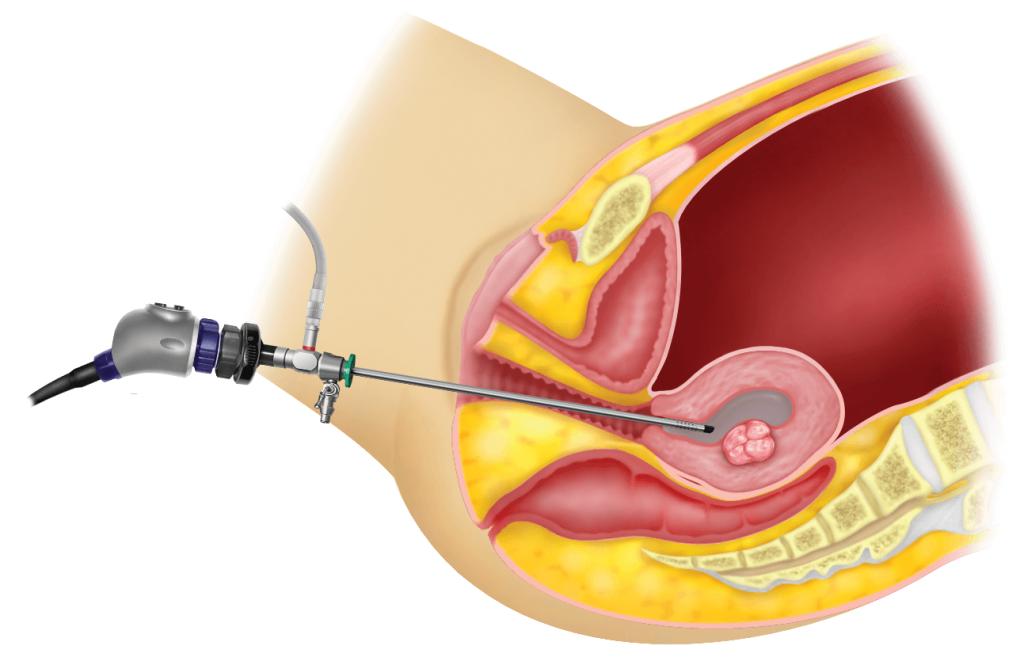
A hysteroscopy is a procedure that allows the doctor to look inside your womb with a camera, in order to diagnose and treat causes of infertility and abnormal uterine bleeding.
A thin, lighted tube called a hysteroscope is inserted into a vagina to examine the cervix and the inside of the womb.
In cases of diagnostic hysteroscopies, you will be allowed to resume normal activities after the procedure. You will be recommended to take 50mg of Tramadol one hour before the procedure. It is advisable that you don’t drive or perform any activity of risk as you will be under the effects of Tramadol.
Most diagnostic hysteroscopies are easily done with the patient feeling only mild menstrual pain during the procedure. Most of the time this is very tolerable and requires no sedation. The personal nature of how pain manifests in different people is why, on rare occasions, there is the need for sedation for the procedure.
Due to the invasive nature of the hysteroscopy we recommend to abstain from unprotected sex during your menstrual cycle in which the procedure will be performed in. You can resume unprotected sex after the procedure.
Benefits
A Hysteroscopy is considered the gold standard diagnostic method for intrauterine pathology. The other benefit this procedure gives is the possibility of treating certain conditions like small endometrial polyps, endometrial adherences (scar tissue) and small uterine septa (uterine malformation).
How long does it last?
A diagnostic hysteroscopy can last anywhere from 15-45 minutes depending on the difficulty of the procedure and if there is anything else that needs to be treated.
Risks
The risks with a diagnostic hysteroscopy are very low.
1. Uterine perforation can occur in 0.1% of cases.
2. Infection in the uterus can occur in 0.1% of cases.
3. Inability to enter the uterus during the procedure can occur in 4% of cases.
4. Fainting episode (vasovagal) can occur in 4% of cases.
What can I expect after the procedure?
After a hysteroscopy there will be some spotting and depending on whether there was a correction of any abnormality (polyp, scar tissue), there could be bleeding similar to a period but this will only last a few days. More rarely there can be associated pain, similar to period pain, that will go away on its own after a few hours. If this happens please take any form of pain relief that you normally take for period pain.
What to do in case of complications?
Complications after a diagnostic hysteroscopy are uncommon. In the case you experience heavy bleeding, heavier than a period, for a prolonged time, or if you develop chills and fever associated with lower abdominal pain, please contact us during opening hours 8 am to 4 pm or if outside of hours please go to A&E (Accident and Emergency).
Expected Costs
If you are a Vhi member, you may be eligible for reduction of costs depending on your plan, a member of the support team will be able to advise you of your benefits.
We are partnered with:


ReproMed as an Education Facility
ReproMed is a recognised training facility for medical and clinical students. If you have any issues or
concerns with the education of students during your treatment cycle, please inform one of our staff.
ReproMed Dublin
5th Floor Rockfield Medical Campus Northblock, Dundrum, Dublin 16, D16 W7W3
ReproMed Galway
Brooklawn House Galway
West Business Park, Rahoon, Galway, H91 CRN2
ReproMed Kilkenny
Ayrfield Medical Park, Granges Rd, Kilkenny, R95 FE0H
ReproMed Cork
Unit 6, Classes Lake Retail Centre, Ovens, Co Cork, P31 HY36
ReproMed Drogheda
Unit 2, 1st Floor, Dublin Road, Drogheda, Co. Louth, A92 EHOX
404