
IVF/ICSI (In Vitro Fertilisation / Intra-Cytoplasmic Sperm Injection)
www.repromed.ie

IVF is undoubtedly the best-known fertility treatment and tends to be the “blanket” term, used particularly in mainstream media, to describe all fertility interventions.
There is a good reason for this. IVF was absolutely ground- breaking when it first resulted in the birth of a healthy baby girl in Manchester in 1978.
What is IVF?
40 years and more than 5 million babies later we are making huge advancements in the field of fertility medicine, and IVF remains at the heart of successfully treating subfertility.
IVF stands for In-Vitro Fertilisation and what it means is fertilisation of the eggs inside the laboratory by putting eggs and sperm in direct contact in a petri dish.


What is ICSI?
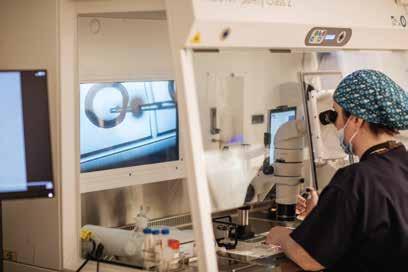
ICSI is the direct injection of a single sperm cell into an egg. This sperm cell is selected based on its appearance for normality by our embryologist. It will normally be recommended for you at the time of review consultation based, either on your previous fertility history, or on the results of the male fertility tests. It may also be recommended on the day of egg retrieval, after the laboratory has assessed the sperm
sample. This will be discussed with you, and you will be consented prior to this going ahead.
Not everyone who attends our clinic will need to have ICSI. We carry out diagnostic tests before we perform any kind of treatment to ensure that we are selecting the option that gives you the best chance of success, while always keeping your individual case in mind.
What to Expect Initial Testing
There is no one diagnostic that can test your level of fertility but the two best indicators commonly used are the Anti Mullerian Hormone (AMH) blood test for a female and a semen analysis for a male. If you have not had these tests
Consultation
At your first consultation you will meet with one of our doctors who will describe in detail the IVF and ICSI procedures; what to expect throughout the process; success rates for your own particular case and the expected
completed we will ask you to attend the clinic a few days before your consultation to have these completed. Your doctor will then discuss the results directly with you on the day of the consultation.
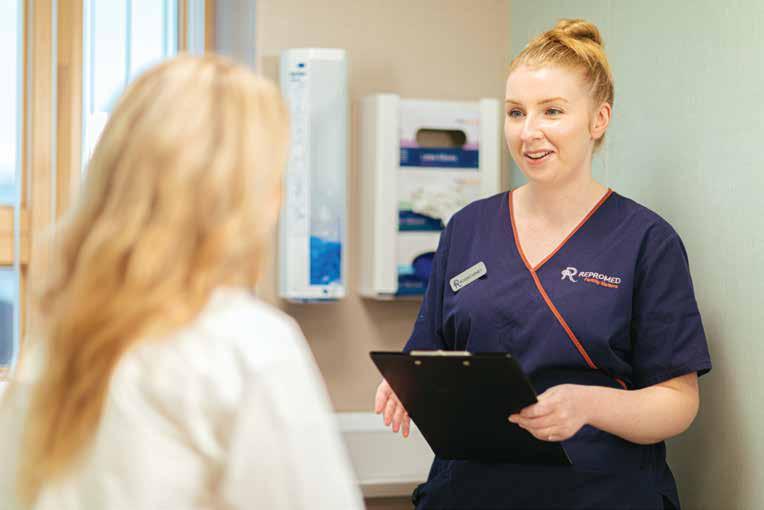
outcome. The consultation generally lasts approximately one hour and is a good opportunity to ask questions and voice any concerns or worries you may have.


Diagnostics & Counselling
During your consultation, the doctor may suggest some additional diagnos tic tests for you and/or your partner. After your consultation you will be contacted by a member of our team who can schedule these tests for you and answer any questions you may have. You can then attend a session with a Specialist Fertility Counsellor who will discuss the implications of
undergoing this treatment and offer emotional support. This is recommended to our patients undergoing fertility treatment, should they wish. Our team can provide contact details for our recommended counsellors. If you are using donated gametes (eggs or sperm) a counselling session is mandatory before proceeding with your treatment.

Treatment Plan Treatment Cycle Baseline Appointment
When all your diagnostics are complete, your doctor will dictate and confirm your treatment plan. You will receive educational modules relating to your treatment, along with consent forms via our online platform, Engaged MD. Upon completion of your modules and consent forms the coordination/ nursing team will arrange your starting date for treatment and next steps.
The first appointment of your treatment cycle is referred to as your baseline appointment and usually takes place just before or in the early stages of your cycle.
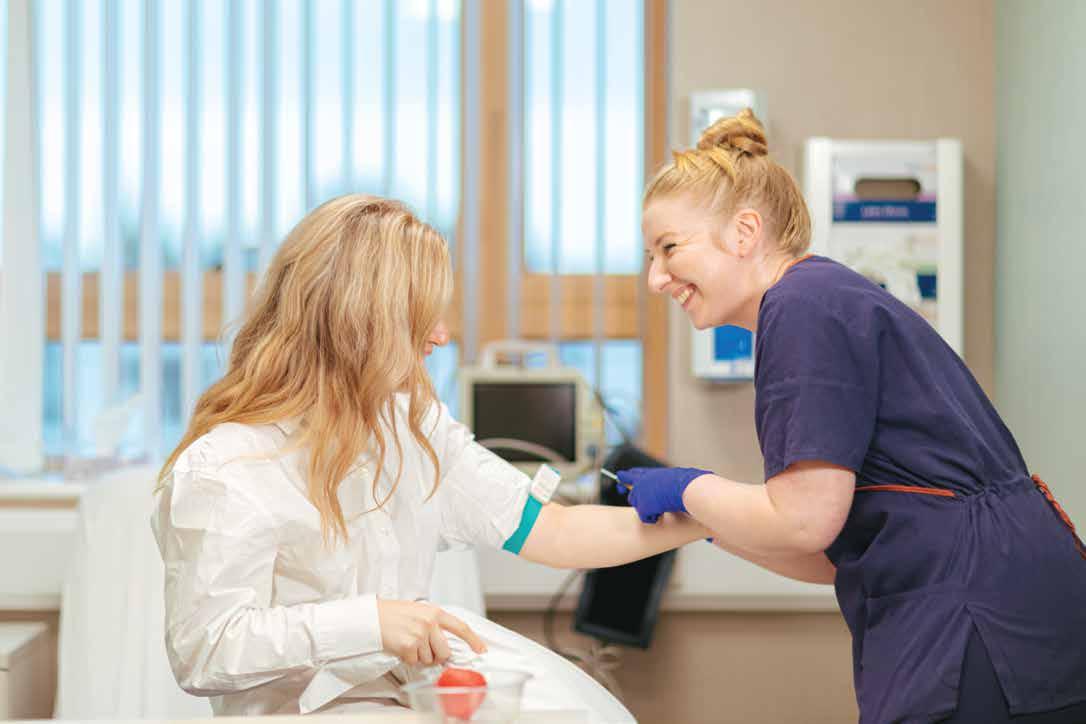
We will carry out viral screen blood tests for HIV, Hepatitis B and Hepatitis C, for both partners (if applicable) in advance of this appointment. You will have an assessment scan and hormone bloods taken at this appointment.

Your final payment for treatment will also be due at this appointment. Payment is taken in advance and there are refund policies in place in case your treatment is stopped at any stage.
Step 1
Ovarian Stimulation
Each month a woman’s ovary activates a cohort of eggs (cells that must be fertilised by a sperm cell to produce an embryo). Without medication to stimulate this process only one egg will mature which means the probability of becoming pregnant is lower. That is why patients who are undergoing an ICSI or IVF cycle receive a combination of medications to increase
the number of follicles growing and this is how it is possible to obtain a higher number of mature eggs.
You will likely undergo two to four scans over the course of your treatment prior to the actual egg collection procedure. The scan appointments take around 15 minutes and you will be able to go about your day, as normal, afterwards.
You will be advised of the next steps, which may be to attend for another scan, or to attend for your egg collection. This period of ovarian stimulation typically lasts between 8 and 12 days although in some cases it may take longer.
Freeze all cycle
There are certain eventualities where it is recommended against a fresh embryo transfer and we will recommend doing a freeze all cycle. This means that we will perform the egg collection, form the embryos and then freeze them. You will have your embryo transfer in the very next cycle with a frozen embryo.
When this decision is made, it is only based on the premise that it is the best practice in terms of success, and safety, for you and your embryos. These situations are:
High progesterone levels: this is an uncontrollable situation that can arise during the stimulation of the ovaries and studies
show that if we transfer a fresh embryo in these conditions, we are lowering the chances of implantation by up to 20%.
High number of follicles/High oestrogen level: the one thing we can do to increase your chances of pregnancy is by increasing the number of eggs we obtain. This could come at the cost of having to freeze all the embryos for safety reasons such as avoiding ovarian hyper-stimulation syndrome OHSS. This is not a medical mistake; it is best practice.
Appearance of polyps, fibroids or tubal inflammation (hydrosalpinx):
These three scenarios have been proven to reduce implantation and it is recommended to address them before the transfer.
Step 2
Egg Collection
Through the monitoring of follicular growth, we look to find the optimal moment for triggering ovulation and scheduling the egg collection. This is a simple procedure, carried out under conscious sedation, as an outpatient and is relatively quick. It does not require surgery, hospital admission, stitches or general anaesthetic.
When you are asked to attend for egg
collection you will be given instructions via the portal by our nursing team, followed by a telephone call. We ask that you read these instructions carefully and talk to us if you are unsure of anything. In advance of egg collection, you will be instructed to fast from midnight of the night before the procedure. You should come to the clinic at the pre-arranged time making sure you are not wearing any make-up, perfume, lotions, jewellery or nail varnish.
During the procedure an ultrasound probe is used to visualise the ovaries and a

complete you will be transferred to the recovery area. You are usually fit for discharge approximately one hour afterwards, and we ask that you make sure someone is available to accompany you. In most cases you will be fit to return to work the following day, however, if you feel unwell, please contact the clinic.
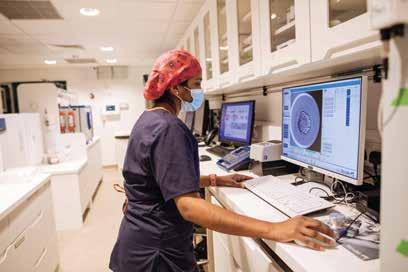
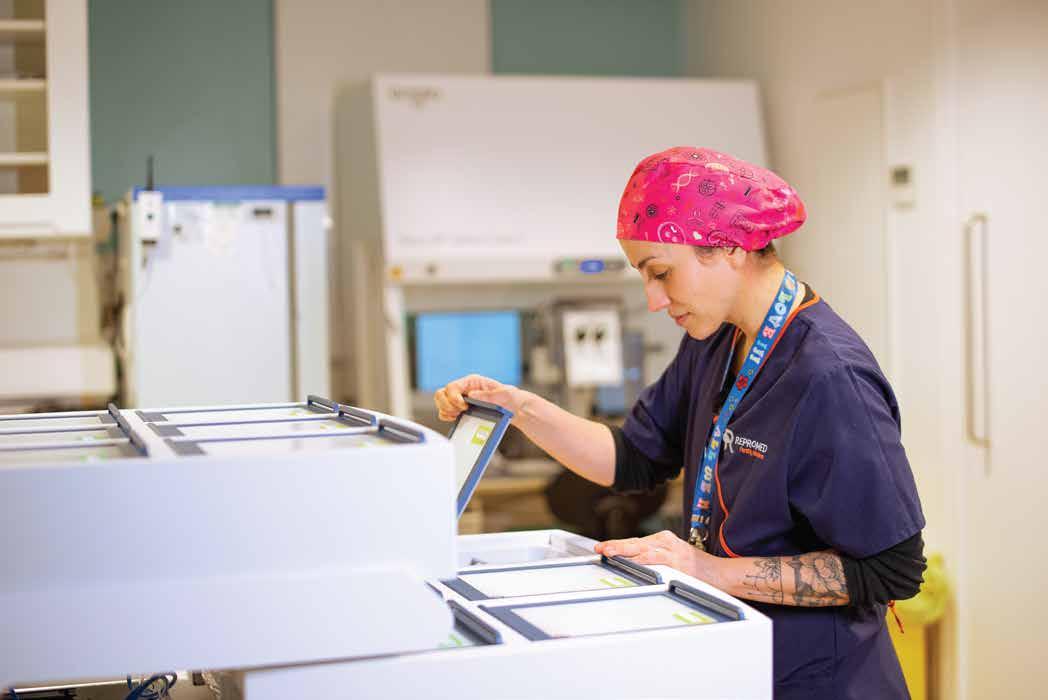
The dishes are checked initially the day after egg collection, so that our embryologists can inform you of the number of eggs that were successfully fertilised by a sperm cell. They will be left undisturbed until three days after egg retrieval to assess the development and quality of the resulting embryos.
Our embryologist and your doctor, will make a judgement based on his or her expertise and experience, about whether they would advise you to have your embryo transfer on “Day 3”, or to continue to allow the embryos develop until “Day 5”. They will, of course, take your wishes into account but will give you their professional opinion.
During the period of development, human embryos follow a process of natural selection where some of them will stop developing and some will achieve later stages of development. Therefore, it is important to bear in mind that the eggs that fertilise, may not all develop into embryos and equally, not all embryos will survive until the day of transfer.
Step 3
Embryo Transfer
Embryo transfer is a simple procedure lasting only a few minutes. It does not require sedation, and is comparable to a smear test, in terms of invasiveness. During this procedure the embryo is placed directly into the uterus, by means of a catheter, by the doctor. We recommend that you have a comfortably full bladder for this procedure since the catheter will be guided through the cervix, and into the uterus, assisted by an abdominal ultrasound.
Following your transfer, it is important to support the endometrial lining with additional progesterone therapy. This is normally provided using vaginal gel +/injections.
After this scan, the nurse will provide you with a report. This report can be given to your GP, who will refer you to an appropriate healthcare provider to look after you, beyond the stages of early pregnancy.
In the unfortunate case that you are not pregnant, you will have the full support of the ReproMed team who will review your case with you, and make recommendations of what the next required steps could be.
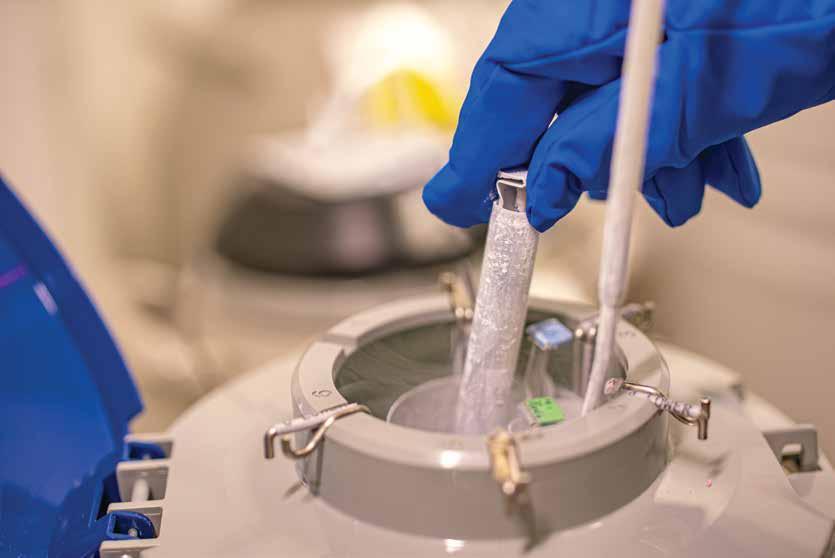
In some cases, supernumerary embryos will have been frozen for use in the future in a Frozen Embryo Transfer cycle. Your embryos will remain in storage in our laboratory until you choose to use them. Annual storages fees do apply after the initial year of storage.
Step 4 Post Treatment Cycle
A pregnancy test is then performed two weeks after transfer to assess if implantation has occurred. The level of hCG (blood test) will provide information regarding the viability of the pregnancy and can be repeated after 48 hours if
required. An ultrasound is then scheduled to coincide with seven weeks of gestation, in order to assess for the presence of a heartbeat and determine the number of embryos present.

Additional Treatment Options
EmbryoGlue
EmbryoGlue is a different type of culture media designed to mimic the environment where embryos would implant naturally. It is used with the intention of improving the adherence of the embryo to the uterus.
Even though the scientific evidence is still not completely in agreement that EmbryoGlue will improve pregnancy rates, studies do favour its use over the normal culture media.


Additional Treatment Options
Time-lapse Incubator
Time lapse incubators are equipped with tiny high-definition cameras that can take images of your embry os every 5 minutes. The benefits of using time-lapse technology is the amount of information obtained on

TESE
Testicular Sperm Extraction is a minor surgical procedure which involves the removal of a small portion of testicular tissue. This tissue is then examined in our laboratory and the viable sperm cells are extracted and used for ICSI. TESE can be offered to men who are azoospermic
(either obstructive on non-obstructive) and our clinical team will advise if they believe this option will increase your chances of a successful outcome. ICSI is recommended in cases where sperm cells are retrieved by TESE because the number of sperm that are extracted is usually quite low.
Expected Costs
Initial Consultation - €200
Female Diagnostics
Male Diagnostics
Assessment Scan - €160
Assessment Blood Tests - €30 to €190
Viral Screens - €175
EXACT (COMET) with semen analysis - €500
EXACT Only - €350
Semen Analysis - €150
Viral Screens - €175
Fertility Implications Counselling - €120
Medication - €80 per month with DPS (paid direct to pharmacy)
IVF Treatment Cycle - €5,300
ICSI Treatment Cycle - €5,700
Includes treatment cycle scans, hormone monitoring; egg retrieval, theatre fees; Day- 5 blastocyst culture, initial fresh embryo transfer, Beta HCG pregnancy blood test.
Expected Costs
Post Cycle
HCG (pregnancy) blood test - No Additional Charge
Early Pregnancy Scan - €160
Storage per year (after year 1) - €450
Post Cycle Review Consult - No Additional Charge
Discounts are available if you are a Vhi member, any member of our support team will be able to advise on your own policy benefits.
These are typical costs but may not be entirely reflective of what you may need. Each patient is individually assessed, and appropriate tests ordered at consultation stage. Cryopreservation
We are partnered with:
Rediaivf

-
(Optional)
(Freezing) of Embryos
€750 Time Lapse Monitoring - €560
EmbryoGlue - €170 (Optional)
account.
In some cases, we have to carry out an “elective freeze” which to your account.
Possible Treatment Cancellation !
In some instances, we might have to cancel the treatment cycle if you have not responded how we would have expected, and no changes to the medication will alter this. If your cycle is cancelled, you will receive a call by our nursing team or treating doctor, to inform you that your treatment cycle is unfortunately cancelled. They will also follow up with medication instructions. Then our administration team will be in touch to book a return consultation with your doctor to review your previous cycle (if relevant), and to discuss your next steps. Our administration team will also follow up with an account update and to discuss our refund policy.


Reception area in ReproMed Dundrum, Dublin ReproMed Dublin ReproMed Galway ReproMed Cork ReproMed Drogheda ReproMed Kilkenny (0818) 222 404 info@repromed.ie www.repromed.ie Contact us 5th Floor Rockfield Medical Campus Northblock, Dundrum, D16 W7W3 Unit 6, Classes Lake Retail Centre, Ovens, Co Cork, P31 HY36 Unit 2, 1st Floor, Dublin Road, Drogheda, Co Louth, Drogheda, A92 EHOX Brooklawn House Galway West Business Park, Rahoon, Galway, H91 CRN2 Ayrfield Medical Park, Granges Rd, Kilkenny, R95 FE0H concerns with the education of students during your treatment cycle, please inform one of our staff. ReproMed is a recognised training facility for medical and clinical students. If you have any issues or ReproMed as an Education Facility PI-031 Rev 5