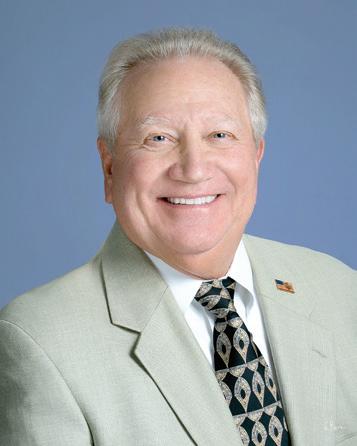
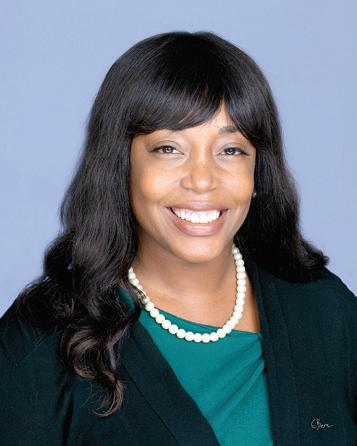
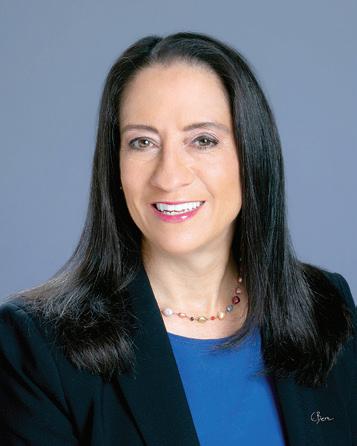
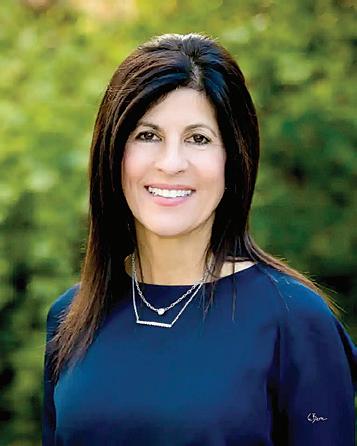
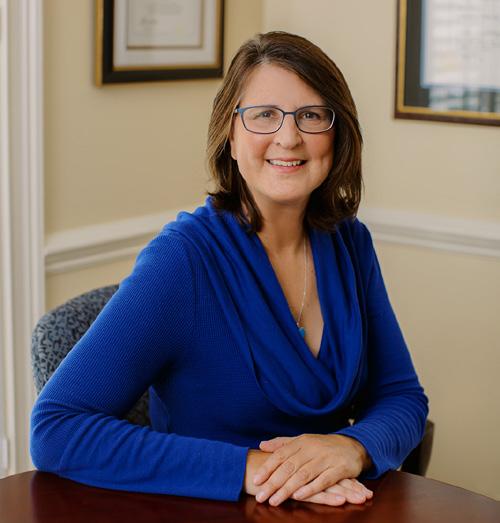
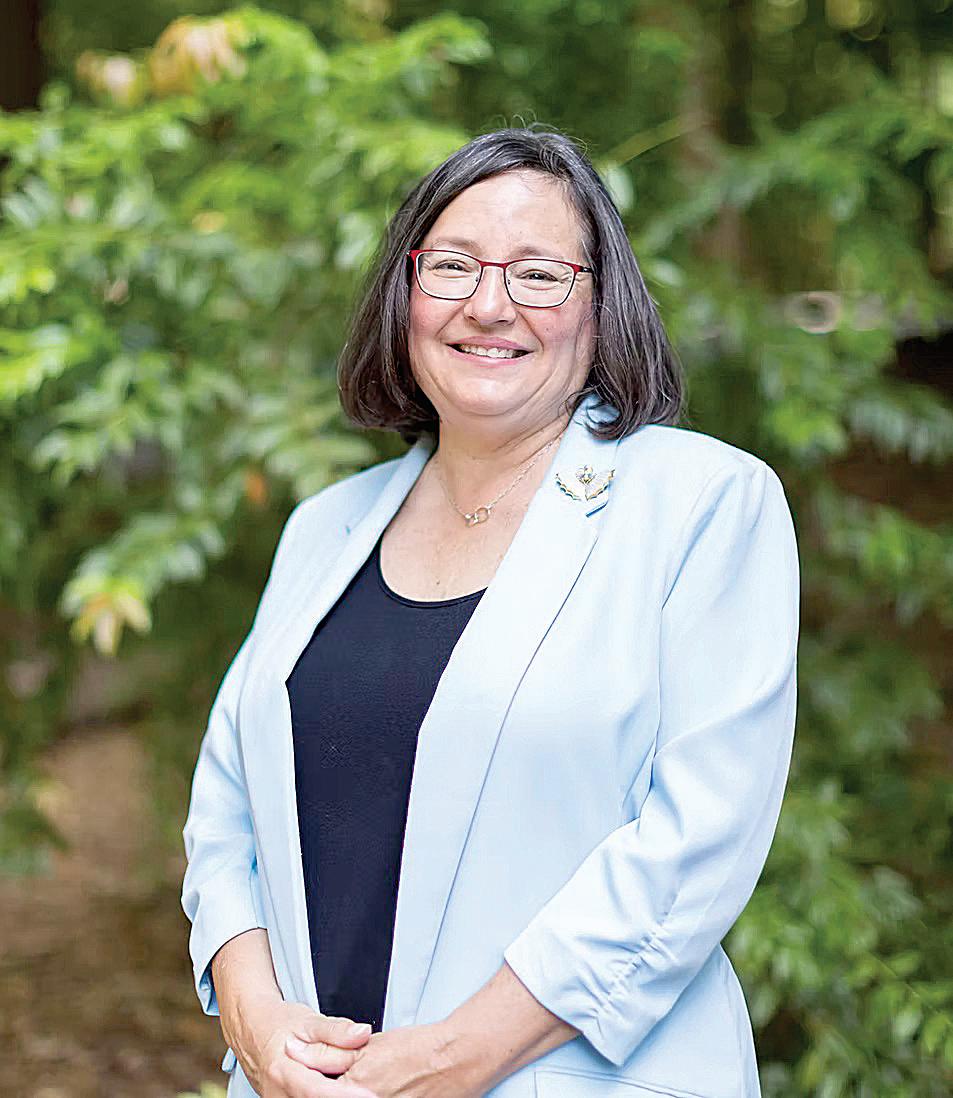
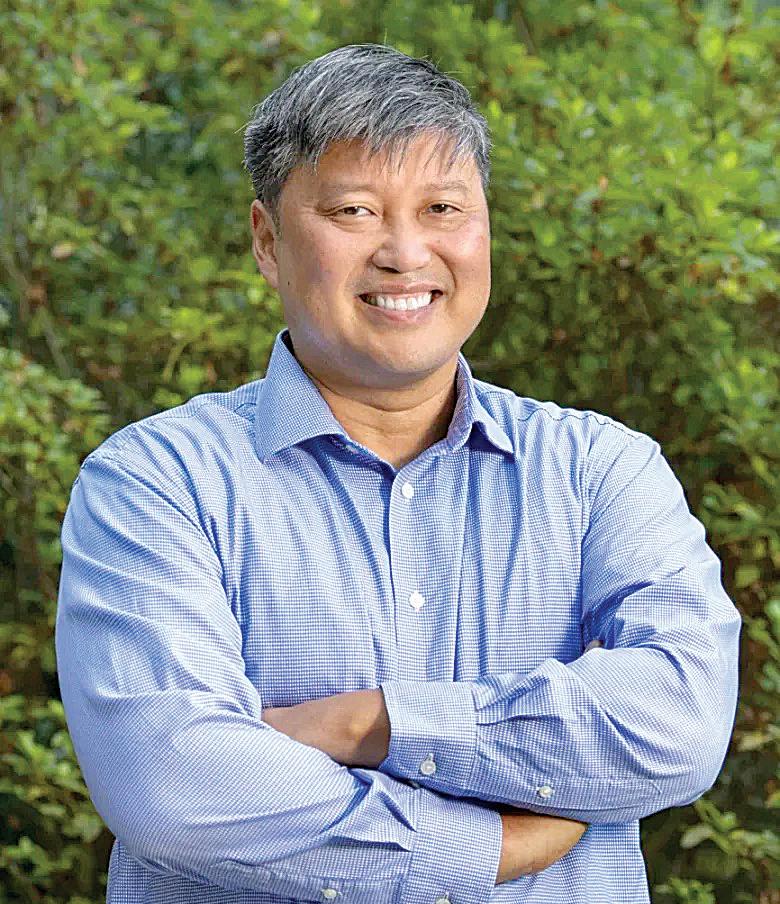
Katie Burkholder, Bob Pepalis, Logan C. Ritchie, Sarra Sedghi, Stephanie Toone
Contributor
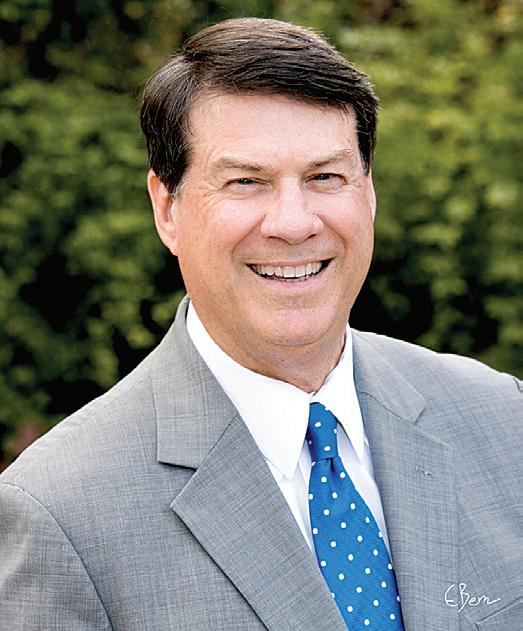
Steve Levene, Lauren Menis, Rusty Paul
30338, 30342 and 30350 and to businesses/retail locations. To subscribe to home delivery, ($125 / year) email delivery@roughdraftatlanta.com
Buckhead/Brookhaven
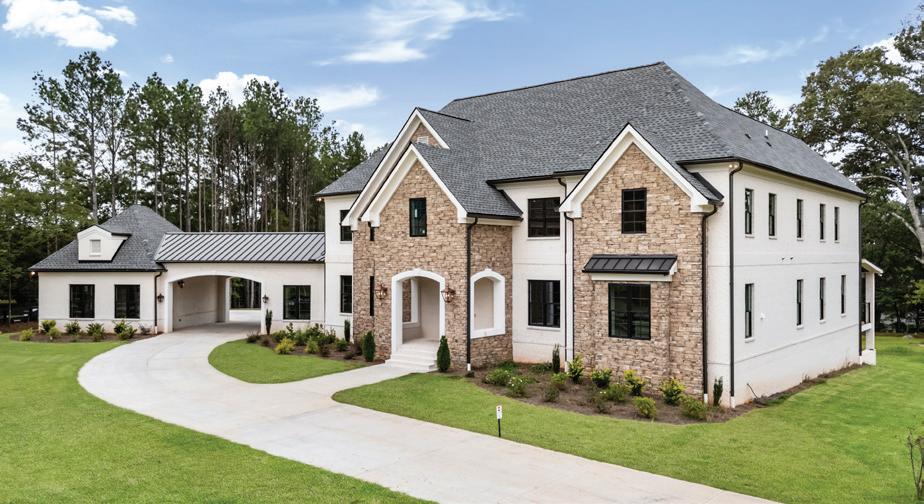
Virginia Highland’s annual Tour of Homes and Winterfest are teaming up for a weekend of holiday fun on Dec. 13-14. Check out our guide starting on page 18. (Photo by Craig Bromley)
Sandy Springs/Dunwoody
Cover illustration by Rico Figliolini with images supplied by the City of Sandy Springs
Tucker
Aerial shot of the city’s Tucker Town Green (Photo by City of
Tucker)
2 0 2 5
H O L I D A Y S
I N T H E ‘ H A V E N
I C E - S K A T I N G R I N K ( O P E N S D E C . 2 0 )
A R T S & C R A F T S P I C T U R E S W I T H S A N T A
PUBLISHER’S NOTE
20 years later, home again
This issue of Reporter Newspapers marks two significant milestones.
As you’ll read on most of the pages ahead, the City of Sandy Springs is celebrating its 20th birthday. While many of the city’s intrepid founders, including newly reelected Mayor Rusty Paul, like to say that the push for independence from Fulton County began decades earlier, there is no question that Sandy Springs set the stage for the cityhood movement that has reshaped Metro Atlanta.
I wasn’t much older than 20 when I left Sandy Springs, a decade before Eva Cohn Galambos and crew would achieve their goal. Truth be told, I couldn’t wait to spread my wings and experience other places. I needed independence, too, and getting away from my childhood home was how I felt I would achieve it.
That’s what makes the second milestone so poignant, if not slightly ironic.
A crazy, lucky idea
Five years ago this month, I bought Reporter Newspapers and its portfolio of trailblazing local newspapers whose (declining) revenue came almost exclusively from print advertising. While the endeavor thrilled me, it was, admittedly, an odd time to do so. Media was being upended by technology, and some people were still spraying their mail with Lysol, let alone picking up printed newspapers.
The gamble has worked out beyond my expectations. In addition to creating the perfect job for myself, we are closing 2025 with record revenue, and readership approaching one million people each month across print, web, newsletters, and social media.
I don’t take any of this growth or success for granted. As you have read here before, industry headwinds remain fierce, and macroeconomic uncertainty is a constant threat to advertising investment.
I know we are reaching more and more people every week. In fact, a young journalist recently told me that “Even my friends who don’t follow the news read Rough Draft,” and I blushed and beamed simultaneously, pride fighting its way through my imposter syndrome.
People are reading Rough Draft in print, online, and via email because the work our team puts out day after day is some of the best in town. Not only do I hear it from other local journalists, but I
"Even my friends who don’t follow the news read Rough Draft."
see it in our readership numbers and in the feedback from neighbors who tell me that they rely on our publications to stay informed.
Our goal is to give you a mix of the news you need (local government, public safety) and the stories you crave (food, arts, real estate), and five years into this local media adventure, I’m really proud that we are hitting that mark.
Please keep your feedback coming via email (keith@roughdraft.news) or via our year-end survey (it will take you less than two minutes) by scanning the QR code below.
Coming home again
At a recent dinner to talk about the state of Black-Jewish relations in the wake of October 7 and George Floyd, I sat at a table that included four people who had grown up in Sandy Springs and fled as young adults, only to make their way “home” in the last five or six years. We shared similar stories, but all agreed that we were happy to be where we were.
Real talk, as the kids say: I never thought I’d be engaged again in the community, let alone own the newspaper that has given me a front-row seat from which I can proudly say, “Yeah, I grew up in Sandy Springs – it’s pretty nice, isn’t it?”
Happy Holidays! Here’s to another 20 years of prosperity for the city and for local journalism.
KEITH PEPPER
EDITOR'S NOTE
Where it began and where it ended
EDITOR'S NOTE
Welcome to the Reporter Newspapers’ December issue, our last of 2025 (words that are hard to comprehend). This issue marks one year since I took over our print publication duties, and it’s been both a wild ride and a steep learning curve. From my first issue in January featuring our annual 20 Under 20 winners, I came to the rude realization that there is a difference between “busy covering two city beats” and “busy spinning five or six plates that absolutely must never crash to the ground.”
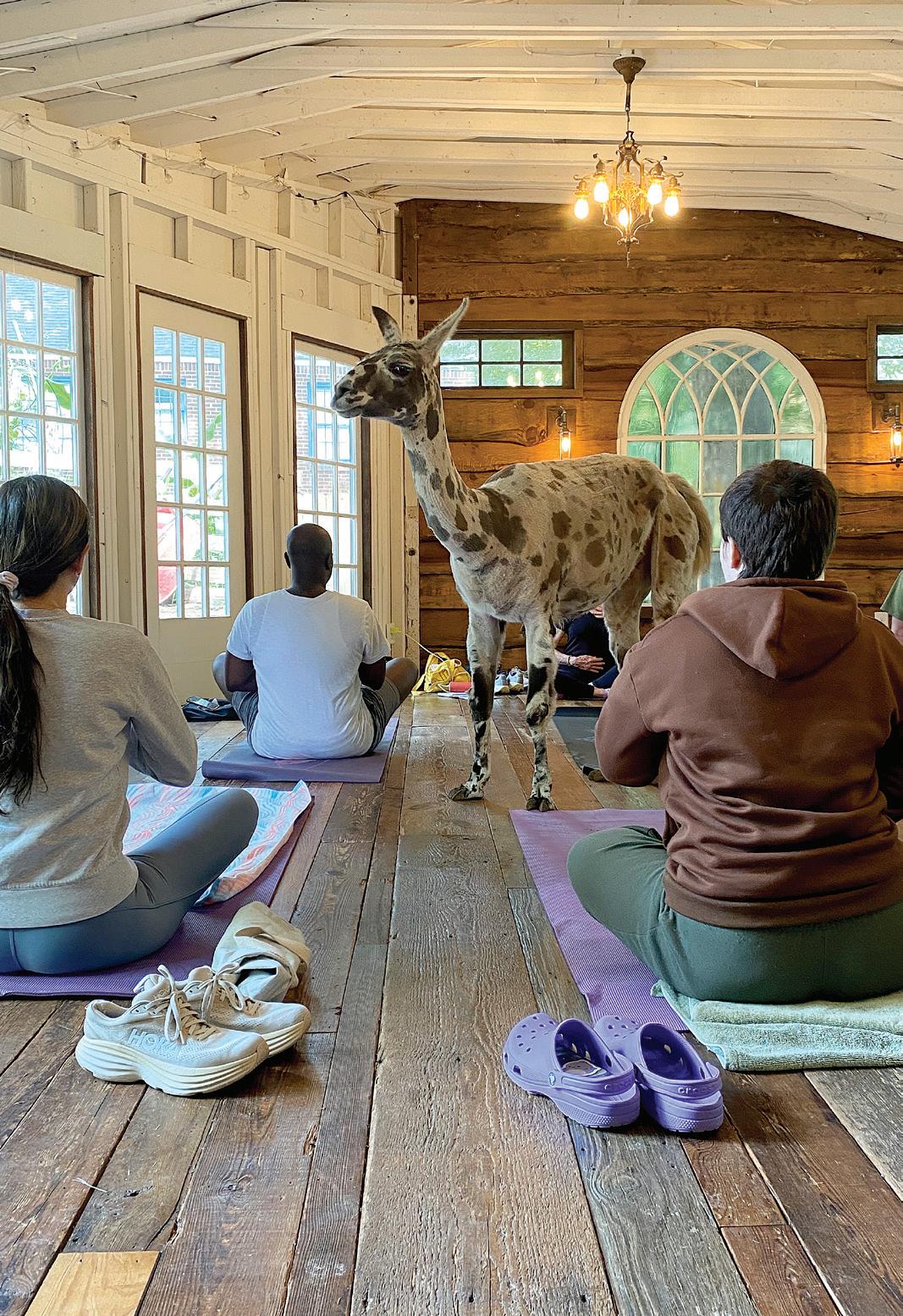
While the schedule for many of our monthly issues is set in stone, I have had the opportunity many times to flex my creative muscles. While pursuing stories, I practiced yoga with an emotional support
amazing writing produced by our stellar staff – something one doesn’t always witness when buried in a city beat. I was fortunate to have the support of our editor-in-chief/dining reporter Beth McKibben and executive editor Collin Kelley who guided (or dissuaded) me regarding some of my “ambitious-butnot-that-smart” ideas and lent more than a helping hand when the plates started slowly slipping off the poles. And finally, big thanks to our publisher, Keith Pepper, who said “yes” more than “no” as I tried to put my personal stamp on the print publication, and reminded me (in vain) that it doesn’t have to be that hard. I’ll go to the grave disagreeing with him on that point.
The hard work by our staff is so very evident in this final 2025 edition. We have a special section celebrating Sandy Springs’ 20 years as a city, one that involved the work of many of our reporters and support staff, cooperation from city leaders and organizations, and lots of late nights dreaming about and executing a narrative to honor the hardworking heroes who fought like hell to make incorporation happen.
llama, interviewed best-selling author John Grisham, delighted in pictures of pets and their people, almost met Timothée Chalamet (your loss, buddy), and wrote many other stories that took me from Dunwoody to Downtown Atlanta to Dalonegha.
I was given a front-row seat to the
But that’s not all –our dining team spent the entire year eating its way through metro Atlanta to compile a list of the best new restaurants around metro Atlanta – with the deserving winners highlighted in this issue. Hot off the press, as the old timers say, are the results of the December runoff elections that held a few surprises, and some not-so-surprising (the Sandy Springs mayoral election). We also have our usual round-up of city news, holiday happenings, and other stories you might have missed while your plates were spinning.
Along with my friends, family, life-saving yoga classes, and life-shortening addiction to Fritos and Peppermint Patties, I am grateful for the readers and the advertisers who continue to support Rough Draft, its print publications, and daily newsletters. Have a great holiday and see you in 2026.
CATHY COBBS
(Photo by Cathy Cobbs)
Artists raise money after fire destroys South River Art Studios
By Katie Burkholder
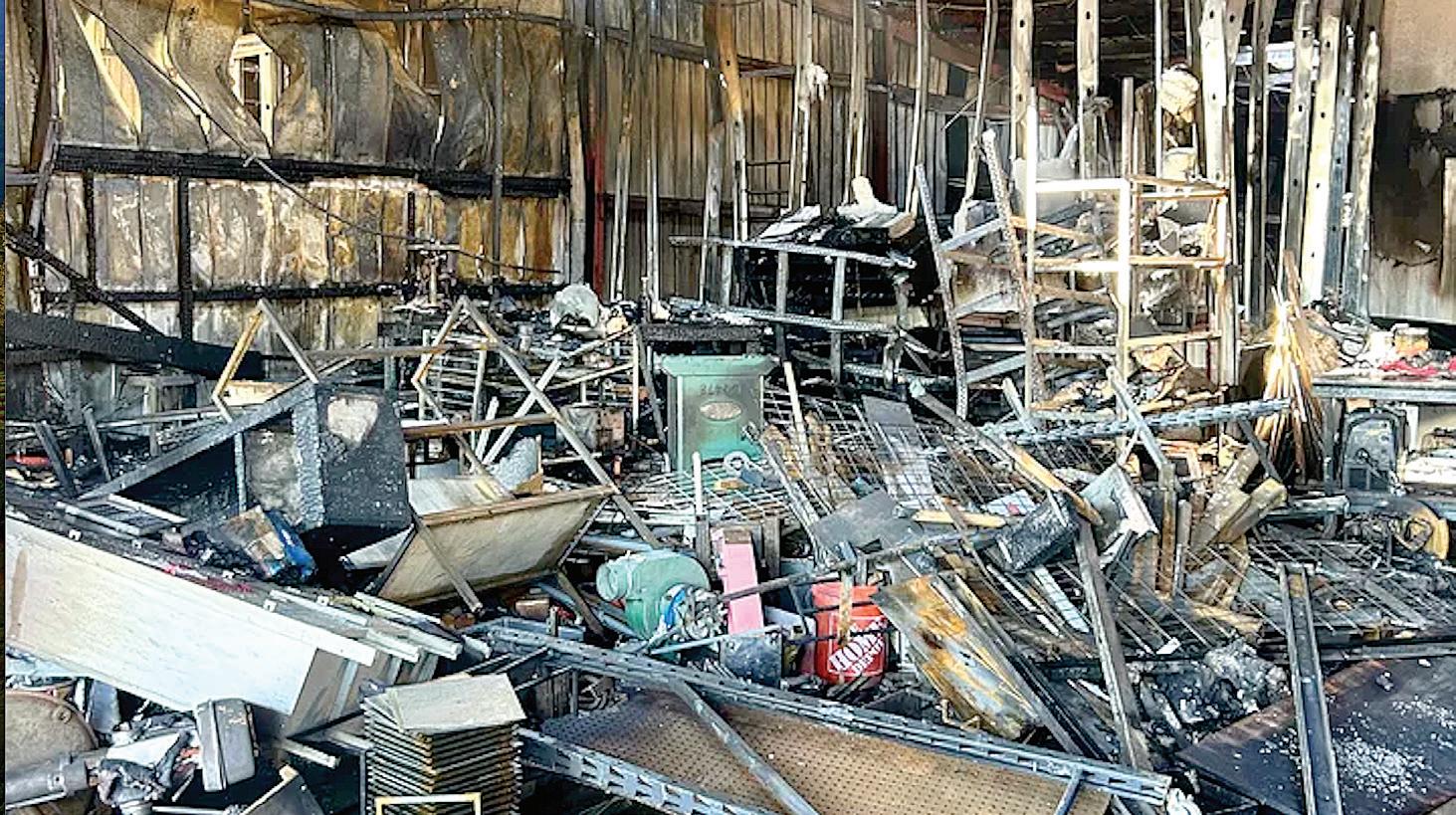
South Atlanta artists are raising money after a fire destroyed the main building at South River Art Studios on Nov. 12.
DeKalb County firefighters arrived at South River Art Studios – four acres of unused land and warehouses turned into 45 artist studios, gallery, and event spaces in South Atlanta – shortly after 4 a.m. to find the main warehouse engulfed in flames.
Owner and sculptor Phil Proctor told ArtsATL that there was smoke and water damage to 100 percent of the building, and he doesn’t yet know if the building is salvageable.
“Even the parts that didn’t burn are not habitable at the moment,” he said.
Proctor estimated that around 25 to 30 studios were completely destroyed, including welder Ryan Durrett’s, who is fundraising to cover the decade of work.
“I lost at least $50,000 worth of tools, equipment, and materials,” Durrett said. “In addition to tools, I lost years’ worth of work. From sculptures, to wooden boxes,
to my office that I recently built for my girlfriend to work alongside me. These are all sentimental things that cannot be replaced.”
Durrett says his insurance will not cover the losses, so he launched a GoFundMe, which has raised nearly $66,000 at press time. Various fundraisers by other affected artists had raised a collective $151,000 at press time. Visit southriverartstudios.com to donate to all the individual artist fundraisers.
Mayor Andre Dickens’ office shared a letter on Nov. 17 with Rough Draft standing in “full support” of the artists affected by the fire.
“This loss is significant,” Dickens wrote. “We know that many Atlantans lost studios, art, and livelihoods in this tragic event… To the artists at South River Art Studios: we stand with you, and our city’s cultural identity is stronger because of your work.”
No one was inside the building when the fire started, and no injuries were reported. Investigators are still working to determine the cause of the fire.
Atlanta City Council, Board of
Education runoff results
By Collin Kelley
Five undetermined races for the Atlanta City Council and the Atlanta Board of Education were decided during the Dec. 2 runoff election.
The positions include two Atlanta City Council races and three Atlanta Board of Education seats that weren’t decided on Nov. 4.
“There was light turnout for in-person voting on Dec. 2 after a week of early voting.
Artists like welder Ryan Durrett were left with destroyed tools, work, and studios after a fire broke out at South River Arts Studio on Nov. 12. (Photo courtesy of Ryan Durrett)
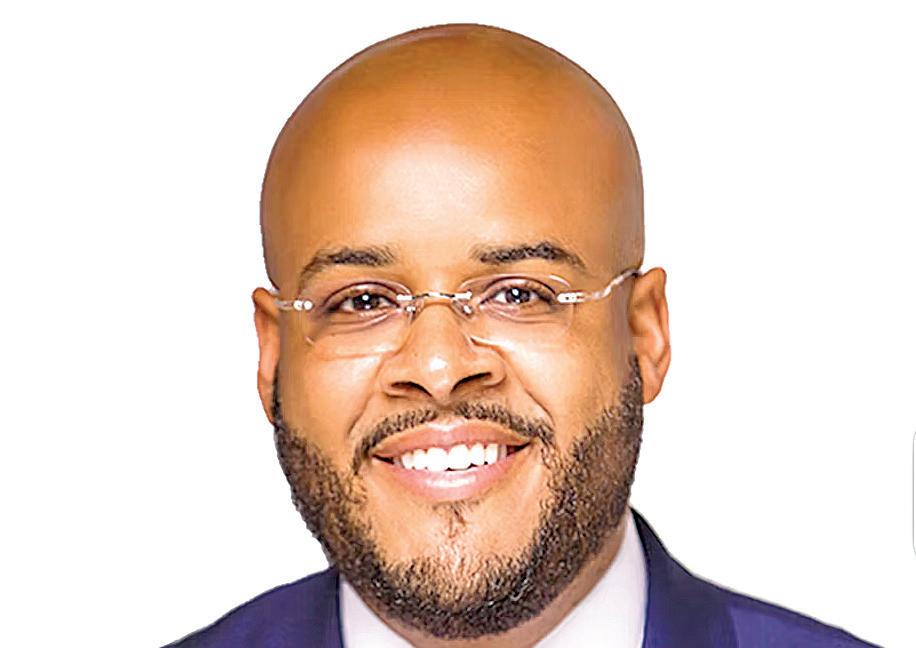
Wayne Martin (top) and Thomas Worthy
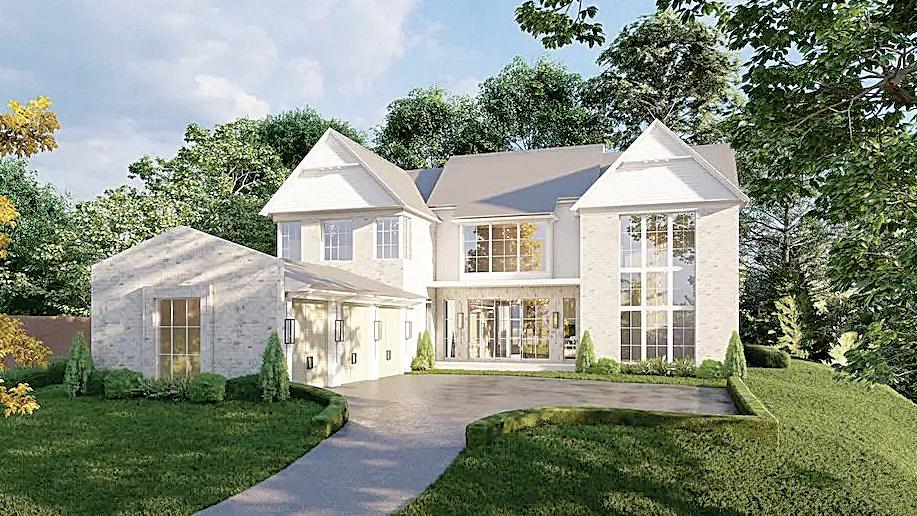
Brookhaven home chosen as designer showhouse
By Cathy Cobbs
The Home for the Holidays Designer Showhouse will return for its 17th year this holiday season with a picturesque 7,500-square-foot residence in Brookhaven.
Hosted by Atlanta Homes & Lifestyles and presented by Livingston Fine Homes, the showcase benefits the Atlanta History Center, according to a release from the magazine.
The Atlanta Historical Society was founded in 1926 to preserve and study Atlanta history, according to its website.
In 1990, after decades of collecting, researching, and publishing information about Atlanta and the surrounding area, the organization officially became Atlanta History Center.
What began as a small, archivalfocused historical society grew over the decades to include 33 acres of curated Goizueta Gardens, four historic houses, programming, and signature and temporary exhibitions housed in the Atlanta History Museum.
The Brookhaven home tour will display rooms designed by Atlanta’s interior designers inside a contemporary home designed by architect Linda MacArthur in partnership with builder Livingston Fine Homes, Valerie Garrett Interiors, landscape architect LandPlus Associates, and cabinetry by Morgan Creek Cabinetry, Dove Studio, and R. Raffine Studio through MRitalia.
Perched atop a hill in Historic Brookhaven, the newly constructed residence features five bedrooms and 6.5 bathrooms. The 15 interior designers transformed the spaces, complete with holiday decor.
Open to the public for 15 days, tours will be accompanied by festive events and interactive demonstrations, the release said.
Highlights include the home’s manicured gardens, pool, outdoor fireplace, and terrace-level amenities, including a private wellness retreat, theater, and wine bar.
The showhouse is located at 4238 W. Club Lane NE in Brookhaven and will be open for tours Nov. 20 through Dec. 14. The showhouse’s hours are Thursday, Friday, Saturday from 10 a.m. to 4 p.m. and Sundays from 1 to 4 p.m.
It will be closed every Monday, Tuesday, Wednesday, and Thanksgiving Day. General admission and special event tickets went on sale September 26, starting at $45.
Complimentary shuttle service is available from Phipps Plaza in Buckhead, offering convenient door-to-door transportation, according to the release. No parking is allowed on-site at the showhouse. Violators will be ticketed.
Featured Designers:
■ Living room & foyer – Patricia McLean, Patricia McLean Interiors, Inc.
The Brookhaven City Council on Nov. 17 passed an ordinance to remove a cap on the city’s millage rate, despite pleas from residents to allow a decision to be made by referendum.
Opponents to the measure, including its former mayor J. Max Davis, said they will challenge the council’s decision in court.
“I will spend my own money fighting this,” said a visibly angry Davis, who led the city from 2012 to 2015. “This council stripped the public of the right to decide by using smoke, mirrors, and threats about cutting services.”
During a public hearing that stretched more than an hour, Davis and dozens of speakers decried the council’s consideration of an ordinance that would raise the millage rate from 2.74 to 3.54, and remove the language from the city’s charter that dictates the rate cannot be higher than 3.35. A mill is equal to a $1 tax for every $1,000 of assessed value.
According to staff documents for the meeting, the charter language states that “the millage rate imposed for ad valorem
taxes on real property to fund General Operations and Maintenance of the City shall not exceed 3.35 unless a higher limit is recommended by resolution of the city council and approved by a majority of the qualified electors of the City of Brookhaven voting on the issue.”
However, City Attorney Jeremy Berry and Mayor John Park insisted that the city can remove the parameters, stemming from a 1983 “unofficial opinion” by thenAttorney General Michael Bowers that states it “could be done by home rule.”
Each of the council members, before the vote was taken, staunchly supported the removal of the millage rate cap.
Council Member Michael Diaz equated the impact of the tax to 25 cents a day for senior residents with home values under $600,000. John Funny said the monthly increase would be comparable to “a cup and a half of Starbucks.”
City Manager Christian Sigman said increases in the costs for 911 services, police personnel, parks improvements, and the rising cost of health benefits, combined with the city’s homestead tax freeze, mean that services cannot be maintained with the current millage rate cap.
“There is a way to do it with cuts, but that’s not what I am hearing that the council wants,” Sigman said. “What we are doing now is unsustainable.”
Council members Funny and Jennifer Owens agreed.
“I personally think this isn’t what the people want,” Funny said. “We need to deliver the same level of service or better without going backwards.”
“I’m not going to be the one kicking this can down the road,” Owens said shortly before the vote.
However, every speaker at the meeting disagreed with the city and staff recommendation to ditch the millage rate cap without public input.
“I’m here to ask you for the citizens to have a right to vote on this,” Lauren Kiefer, a former mayoral candidate, said. “Consider the cost of a lawsuit, and the money that will be spent on that.”
Other speakers said the lifting of the millage rate cap will confirm an alreadygrowing lack of confidence in the council, in light of the alleged cost overruns for City Centre, which has reportedly topped $84 million, $6 million more than the stated $78 million price tag at its 2023
groundbreaking.
“Right now, we are standing in the Taj Mahal of lost trust,” said David Cohen. “I live near Dunwoody, and I see wellkept roads and parks. How are they doing more with less?”
Other speakers, including longtime Brookhaven resident Ronnie Mayer, said the council could cut staff positions and halt “frivolous” projects that would make a tax increase unnecessary.
“I love you all, but who’s running this city?” Mayer asked. “Don’t threaten me and my neighbors with cutting police or other services.”
Park, before the vote that unanimously supported the millage rate cap removal, said the decision was painful but necessary.
“This is a home-rule item and the state constitution is clear that we have this power,” Park said. “I put this on the agenda, and I take full responsibility for that.”
After approving the ordinance, the council passed its $42.7 million 2026 budget by a 4-0 vote.
DHS Finance Academy founder to retire in December
By Cathy Cobbs
Steve Fortenberry, who left the business world in 1999 to begin a finance academy at Dunwoody High School that has changed thousands of lives, is retiring in December.
“I’m turning 60 and it just seemed like it was time,” Fortenberry told Rough Draft. “It seems like I’ve lived my whole life at Dunwoody – I graduated from here, I taught here, and my kids went here.”
Dunwoody’s Finance Academy began in 1999 with just 15 students, with the goal of evolving into a miniMBA program that taught real-life
lessons in entrepreneurship, marketing, international business, finance, and AP macroeconomics.
Fortenberry estimates that 2,000 students have gone through the two-year program.
The highlight of the program is the academy’s annual trip to New York City, where students meet with executives from Goldman Sachs, the National Football League, Amazon, and Google. The group also visits the New York Stock Exchange, goes to Broadway plays, and museums –while navigating the city’s subway system.
The trip’s highlight for him, Fortenberry said, is a group dinner in Little Italy, which “is very much a bonding experience.”
Jennifer Boettcher, who was on the academy’s trip with her son, told Rough Draft on Nov. 18 that she is witnessing Fortenberry “in his element.”
“Watching him guide more than 130 students and dozens of parents through the city – on subways, in boardrooms, and everywhere in between — is nothing short of remarkable. He makes it all look effortless,” Boettcher said.
She said Fortenberry “challenges his students in the best possible ways, preparing them for the real world by encouraging confident public speaking, sound financial habits, and a willingness to push beyond their comfort zones.”
DHS Principal Tom Bass said Fortenberry found his calling – to be “a beacon of positivity and love for each student and adult with whom he comes in contact. He has been a determining factor in what makes Dunwoody so special and how students grasp the essence of Wildcat Pride.”
Former students and parents chimed in with high praises for Fortenberry and the impact he has had on their lives.
Emily Craddock Thomas, an academy student who graduated in 2007, said his passion for teaching was evident at all times.
“He cared about us as people, not just as students, and it showed in everything he did,” Thomas said. “Our Academy of Finance trip to NYC is one of my favorite memories because he made it an experience that opened our eyes to future possibilities.”
Audra Anders, whose two sons went through the academy, said she recently found a handwritten note from Fortenberry to her son when he was in his first year of college.
“Boys don’t save things – mine saved
this letter because it obviously meant so much,” she said. “The love and energy he poured into all his students is so clear.”
Anders has also participated in the DHS Finance Academy as a coach and judge.
“Being a part of the energy in Steve’s classroom has been a joy and a gift,” she said. “Learning of his retirement brought a pang of sadness for the students who won’t experience his teaching at Dunwoody High School.”
Fortenberry’s interest in the students he taught goes far past their high school years, said parent Cindy Gebhardt, whose son, Steve, and daughter, Katherine, were finance academy program students.
When her son, known by many as Stevie D., was hospitalized in 2022 after ingesting a fatal dose of Xanax laced with Fentanyl, Fortenberry was the first person to show up at the facility to sit vigil.
“To this day, he calls/texts Kat to see how she is doing, and takes her to lunch,” Gebhardt said. “He cares so deeply for his students, and I know for a fact, he has helped change the course of so many Dunwoody kids.”
Andrew Keith, who graduated in 2014, said Fortenberry has touched the lives of generations of students, “giving them a lasting foundation in personal financial literacy and the confidence to succeed in college and beyond.”
“If you’ve ever sat in one of Steve’s finance classes, you’d know there’s one thing he won’t let you forget,” Keith said. “While it’s easy to make a buck, it’s a lot tougher to make a difference.”
Former student Ryan Gaines, class of 2013, said Fortenberry’s “investment in the people at DHS with his contagious spirit has inspired generations of students to lead impactful lives in their communities.”
Johnathan Langley, another 2014
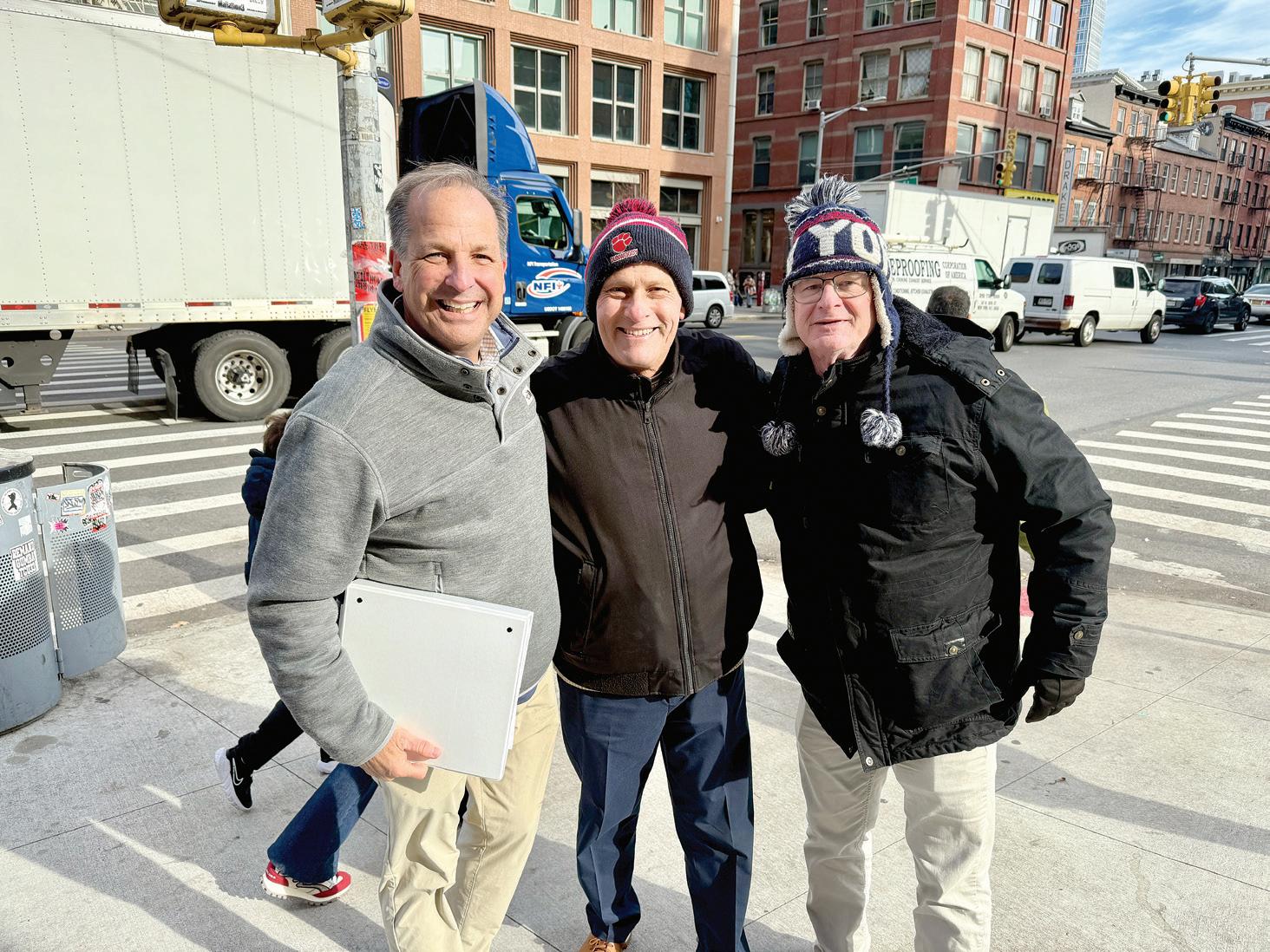
Finance Academy teacher Steve Fortenberry, DHS Principal Tom Bass, and longtime teacher Roger Gay, taken Nov. 18 during Fortenberry’s final trip to New York. (Photo by Jennifer Boettcher)
It was January 2006, a month after the formal launch of the City of Sandy Springs and six months since local voters had overwhelmingly approved the formation of the city from a northern slice of unincorporated Fulton County. I overheard some neighbors talking about zoning proposals being considered by the new city council. “How can I get more information about that?” I asked. My question was met with shrugs.
My first instinct was to look in the daily metro newspaper but I found only limited coverage of what, at the time, was important news for my neighborhood. That doesn’t seem right, I thought; with so many issues confronting Georgia’s newest city, there should be a local newspaper for residents to read and rely on for up-to-date information.
I had moved to the unincorporated area 10 years earlier and, busy with work and family, watched from a distance as the Sandy Springs cityhood movement finally succeeded. Now, it seemed that we needed a paper of our own, focusing on everything that was happening in our community.
So, I put my publishing experience to work and, with the help of some family and friends, started Springs Publishing. A year later, in January 2007, the first issue of the Sandy Springs Reporter rolled off
Congratulations Sandy Springs on 20 Years
SANDY S P R I N G S SAFE
With Your State Tax Dollars
the press. (Eventually, Springs Publishing would include five more community publications.)
From the beginning, the intent was to offer readers a credible and colorful source of local news with a singular mission—to provide timely and useful information about our new city. We were focused on the people who shaped the community and made it a lively place to live. They were friends and neighbors, reflecting the diversity and energy of this new hometown.
From that first issue, reader feedback in the form of letters, comments and story ideas grew noticeably — along with the number of ads from a wide variety of businesses that could now market their goods and services in a cost-effective manner to nearby readers.
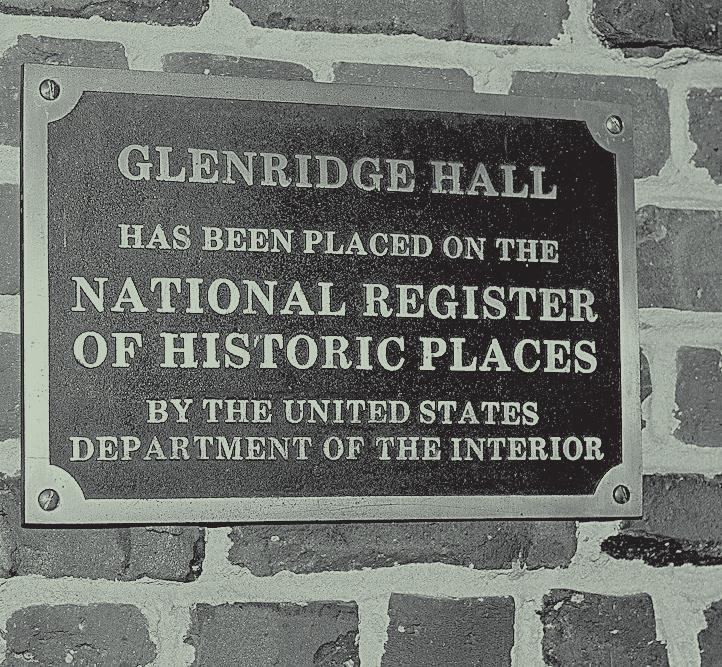
In the first year, the Sandy Springs Reporter provided extensive coverage of the city’s efforts to establish its own police force, pass a tree ordinance and adopt a comprehensive development plan, among other key initiatives. The paper also shined a light on some overlooked local historic sites such as Glenridge Hall and Morgan Falls Dam.
Some of our best stories over the years came from local people and places: Friends chatting at the Saturday farmer’s market, a homeowner’s group addressing a city council meeting, a school fundraiser, a neighborhood business owner. Usually, the local matters we covered didn’t make the headlines of a big city daily newspaper or fit the sound bites of radio and television news. Nor do they pop up in a Google search. Yet, they were – and still are – the cornerstone of our mission.
It’s hard to believe it’s been 20 years since Sandy Springs became a city and nearly as long since the Sandy Springs Reporter was created to inform and illuminate its residents. Five years ago, I was delighted to welcome a new owner, Keith Pepper, who expanded the print and digital reach of the papers while adhering to the same editorial mission and values.
I’m retired now but continue to call Sandy Springs home, with grown kids and grandchildren nearby. And I still get my local news from the Sandy Springs Reporter.
Steve Levene is publisher emeritus.
Significant milestones in city’s
2005
June 21
Ninety-four percent of voters approve creation of the city of Sandy Springs.
out of business. Tibby DeJulio and Rusty Paul turn over the last $14,000 in the organization’s treasury to the city.
July 8
City Council agrees to buy an abandoned Target store at 235 Johnson Ferry Road for use as a future city hall.
December 1
Sandy Springs, the first new city in Georgia in nearly 50 years, formally incorporates. Eva Galambos is elected the city’s first mayor. Tibby DeJulio, Dianne Fries, Karen Meizen McEnerny, and Rusty Paul are elected to the inaugural city council. David Greenspan and Ashley Jenkins later win runoff elections to take additional seats on the council.
2006
February 15
John McDonough starts tenure as Sandy Springs’ first city manager.
July 1
Sandy Springs Police Department begins operations.
July 6
The city buys parks from Fulton County.
December 29
Sandy Springs Fire Department begins operations.
2007
February 20
Friends of Sandy Springs officially goes
2008
May 6
Fulton County School Board approves site for new elementary school on Ison Road.
2009
September 1
Chattahoochee River 911 Authority, aka Chatcomm, opens.
September 21
Catastrophic floods of 2009 hit Sandy Springs. Residents of 98 homes report flooding.
November 3
Eva Galambos is re-elected as mayor.
2010
April 6
Ground breaks for Abernathy Linear Park.
July 28
Morgan Falls Overlook Park, the first park
completely developed by the city, opens to the public.
2011
April 16
Sandy Springs Farmers Market opens at the Target site on Johnson Ferry Road.
May 17
Sandy Springs uses a single contractor, CH2M HILL, to provide city services. City council divides city business and contracts with five different companies to reduce costs by $7 million.
June
Supreme Court sides with sign companies against four cities, eliminating billboard restrictions put in place before the areas were incorporated.
2012
Sandy Springs adopts the first master plan for the City Springs district.
July 31
Metro voters reject T-SPLOST, a regional tax that would have raised $6 billion for transportation improvements.
September 18
City settles dispute with billboard companies. City officials agree to allow 10 new signs limited to along Roswell Road.
November 13
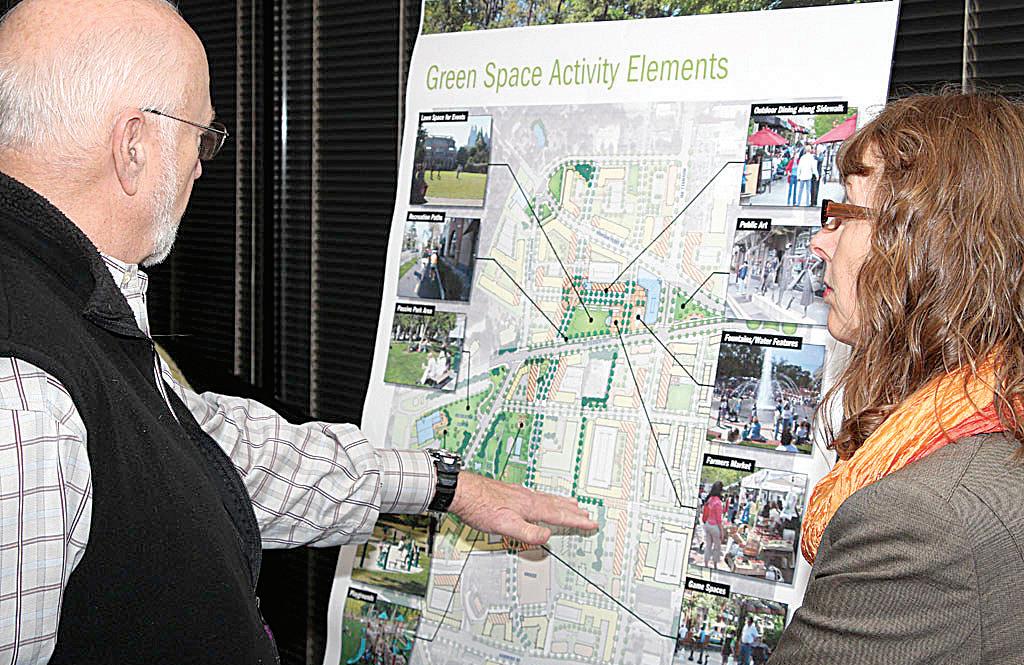
Consultant Goody Clancy proposes downtown redevelopment anchored at the Target site that includes a street grid and network of green spaces.
2013
April 22
Mayor Eva Galambos announces her retirement at the end of her second term.
November 5
Rusty Paul is elected as Sandy Springs’ second-ever mayor.
December 5
Eva Galambos turns the mayor’s gavel over to Rusty Paul. She says farewell with
a poem that concludes: “It’s been a great eight years/we’ve tackled big and small/we set a tone for those to follow/I have no fears about tomorrow.”
Elavon Merchant Services opens a 10,000-square-foot mobile innovation center called The Grove in their headquarters.
2014
January 6
Demolition of old Target space begins.
July 17
Abernathy Greenway Park opens.
2015
January 6
Mercedes-Benz USA announces plans to move its headquarters from New Jersey to Sandy Springs.
March 9
The city issues demolition permits for Glenridge Hall.
April 19
Former mayor Eva Galambos dies at age 87.
Construction on the Byers Theater breaks ground.
September 20
City officials announce the new city center will be called “City Springs.”
history
2016
December 6
Marsh Green Rain Garden Park on Johnson Ferry Road opens to the public.
2017
WestRock relocates its headquarters to Sandy Springs.
The Atlanta Journal-Constitution relocates its headquarters to Sandy Springs.
Rusty Paul is re-elected as mayor.
2018
German automaker Mercedes-Benz moves its North American headquarters from New Jersey to Sandy Springs.
April 4
Elavon announces a plan to expand its headquarters and hire 180 new employees.
May
City Springs and the City Green park are formally opened.
August
Edible Arrangements announces plans to relocate its headquarters from Connecticut to Sandy Springs.
August 18
Windsor Meadows Park opens to the public.
September 12
Sandy Springs Performing Arts Center opens for its inaugural season.
2019
February 5
Elavon expands headquarters and hires 200 more employees.
November 5
Sandy Springs adopts the intelligent transport system (ITS) master plan.
2020
Sandy Springs reaches a total population of 108,080, making it the 7th most densely populated city in Georgia. This marks a 130 percent increase from the area’s initial census report of 46,877 in 1980, and a 15 percent increase from 93,853 in 2010.
December
The City of Sandy Springs opens its Request for Proposals (RPF) for nonprofit organizations that support residents negatively impacted by the COVID-19 pandemic.
Sandy Springs experienced several notable crimes, including a child’s murder by a
babysitter and a violent crime spree involving a shooting and carjackings. A significant event was also the death of a suspect during a police standoff in October 2020.
The City of Sandy Springs acquires a 7.42-acre property at 620 Morgan Falls Rd., to redevelop into a permanent police headquarters and municipal court complex.
2021
July
Plans announced for the construction of a New North Springs High School.
Rusty Paul is re-elected as mayor.
November 2
Sandy Springs voters approve a five-year SPLOST extension to fund transportation projects including sidewalks, multi-use paths, and road maintenance.
2022
The Sandy Springs City Master Plan is updated to incorporate a walkable grid of streets, a network of green spaces, and a mix of retail, dining, and housing downtown.
2023
February 7
Sandy Springs approves a $50.7 million budget for new police station headquarters and municipal court building at 620 Morgan Falls Road.
Smurfit Kappa and WestRock finalize merger to become Smurfit Westrock.
Veritiv transitions from a public company to a private company.
November 10
Veterans’ Park on Roswell Road holds its grand opening.
2024
June 24
Newell Brands signs a lease at Concourse Office Park’s Queen Tower for its new global headquarters.
Veritiv acquires Vivabox Studios and AmeriPac.
November 6
Ashbury Automotive Group announces plans to relocate headquarters from Duluth to Sandy Springs.
2025
April
Mercedes-Benz announces an expansion that will create 500 new jobs at its Sandy Springs headquarters.
Veritiv sells Rigid Containers Business and acquires S. Walter Packaging Corp.
October 21
Sandy Springs City Council approves a contract to build two new fire stations and renovate a third.
Timeline compiled by Sarra Sedghi.
Current council members reminisce on 20 years of cityhood
We asked sitting Sandy Springs council members for their thoughts about the past, present, and future of the city.
Sandy Springs: Past, present and the future |
John Paulson - District 1
Here is a fun fact: If you turn 21 this year you were only one year old when we became a city.
How we have changed in these 20 years. The first years of Sandy Springs existence were spent “taking care of business.” This included setting up a city of 88,000, fixing and repairing basic utilities that had been neglected for years, standing up a topnotch police and fire departments, and deciding who and what we wanted to be when we grew up.
For the past 10 years, or so we have created a city center and put community amenities into place for the citizens including city hall, the PAC and the green just outside. Fun events like parades and festivals have also defined these recent years.
Now, as we turn 20 years of age comes
the future. How do we:
■ best manage but encourage smart growth and development;
■ expand the City Springs district;
■ maintain our excellent credit rating;
■ bring businesses and restaurants and citizens to our city, while continuing to make Sandy Springs a wonderful place to live.
In January, the new year starts with the addition of three new council members, each bringing valuable ideas that will be considered over the months and years ahead.
Next year we will also begin our 10year review of the comprehensive plan adopted in 2017. I pledge to listen to all as we continue to make Sandy Springs a wonderful place to live, work and raise a family.
Pickup order leads to desire to serve |
Melody Kelley
- District 2
In 2016, I accepted my dream job, packed my daughter and our guinea pig into a U-Haul, and headed toward a new beginning. That
journey brought us to a modest twobedroom apartment in the North End, just within my budget, but with a pool that made it feel like home.
Sometime after settling in, I stopped at a small Chinese restaurant off Roswell Road. While waiting on an order of egg foo young, I picked up a magazine from a stack near the register: the Sandy Springs Perimeter Chamber 2017 Guidebook. As I flipped through what felt like a civic manual for my new city, something shifted. For at least a year, I understood intellectually that I resided in Sandy Springs. But at that moment, I wanted to live in Sandy Springs.
By the time I reached the page describing Leadership Sandy Springs, I knew I wanted to be involved. A few years later, I was featured as part of the Class of 2020, an experience that launched me into deeper service with organizations such as Sandy Springs Together, the Sandy Springs Education Force, and the Charter Review Commission. Today, I have the honor of serving as a city council representative, a role I hold with immense gratitude and pride.
I share this story because I know many residents have their own version of this journey. As we celebrate the 20th anniversary of our city, we honor the shared experiences and collective commitment that built Sandy Springsincluding a single mom who walked in for egg foo young and walked out inspired to help shape its future.
Twenty Years of Progress — and a Clear Path Forward | Melissa Mular - District 3
When I moved to what is now Sandy Springs in 1999, I couldn’t believe that a community of 85,000 residents didn’t have its own local government.
City Springs complex with the City Green and Performing Arts Center, the Police Headquarters and Municipal Court, two new fire stations, and the Fleet Maintenance Facility, our total infrastructure investment now exceeds $700 million—projects that simply would not have happened without incorporation.
With the foundation built, our next chapter is about elevating quality of life: more recreation and parks, reimagining aging commercial areas, expanding housing choices, and completing City Springs Phase II.
Public safety will always remain a top priority. When people feel safe, connected, and proud of where they live, a city thrives.
Sandy Springs is a wonderful place to call home—and we will keep it that way. The city’s future is with the people | Jody Reichel - District 4
Coming from Pennsylvania, where cities and townships are locally governed, the idea that decisions for our neighborhoods were being made miles away made no sense. I made sure I wasn’t traveling for work that week so I could be home to vote for incorporation.
That vote was transformative.
Instead of debating politics, every council since has stayed focused on what matters: solving problems, improving quality of life, and investing in our future. We inherited aging roads, neglected stormwater systems, and outdated zoning. In two decades, we have reversed that trajectory.
We have invested over $365 million in capital projects, $34 million in stormwater improvements, and $92 million through TSPLOST projects. Including the
For 20 years, Sandy Springs has been a story of a community determined to improve itself, often through sheer will, volunteerism, and a relentless belief in what is possible. When our city incorporated, it was because residents wanted more control over their future. That spirit is still here, and it is what has driven so many of the accomplishments we now take pride in: stronger public safety, improved parks, major infrastructure investments, and the creation of a vibrant civic center at City Springs.
Over the years, I have had the privilege of working closely with families, neighborhoods, schools, nonprofits, and countless residents who bring passion to every corner of our city. They are the heartbeat of Sandy Springs. Whether advocating for a new North Springs High School, improving recreational opportunities for our young people, or finding thoughtful ways to revitalize aging areas of our community, I have always believed that our greatest strength comes from engagement, from people rolling up their sleeves and working for something better.
Today, Sandy Springs stands at a crossroads. Our challenges are real, and so are the opportunities ahead. My hope is that we continue focusing on what makes a city thrive: safe streets, strong schools, transparent leadership, housing that supports families, and development that lifts our entire community.
No matter how the political winds shift, I remain grateful for the residents who make Sandy Springs what it is. This city’s future will always belong to the people who care enough to shape it.
Choose North Springs High School
Fulton County Schools’ only STEAM Magnet. Enjoy hands-on, cross-disciplinary learning in the sciences & arts. 26 AP classes.
Our Accelerated Career Diploma is unique in North Fulton. Earn multiple certifications to prepare for high-skill, high-wage careers.
Explore, compete, excel! 17 varsity sports teams, 60+ clubs & extracurriculars, a Freshman Academy built for 9th-grade success.
Tibby DeJulioDistrict 5
As I prepare for Thanksgiving with the family, I have to look back at my life in Sandy Springs. It started 38 years ago when I first met Eva Galambos and began working with her to form the city. The first 18 years was a time of lobbying, planning, and preparation. Forming a city was a new venture for both of us.
On day one, it’s like turning on a light switch, everything must be ready to provide for the residents. Fortunately we had those years to get ideas ready and plans made. And, after that successful vote in July 2005, we were off and running.
These last 20 years that I’ve served on the council have been so rewarding since we all know how the city has blossomed. I tell people that Sandy Springs didn’t turn out as we expected – it turned out better than we could have hoped.
I feel blessed that I could have had a part in the success of Sandy Springs and witness its growth. As I retire and yield my seat to a younger generation of leadership, I am confident that the citizen-first direction of our city will continue. Everything we
have planned and done has been to make the lives and futures of our residents better, and we should always continue that path.
Filled with opportunities for the next generation | Andy Bauman - District 6
When Sandy Springs was created 20 years ago, we began less as a naturally cohesive and logically defined city and more as a political and geographic boundary: 35 square miles of unincorporated Fulton County pressed between Atlanta and Roswell. Our outer neighborhoods identified in very different ways: the south oriented toward Chastain and Buckhead; parts of the northeast/ panhandle gravitated toward Dunwoody; and the north end felt distant and often ignored. We were a collection of communities with shared concerns but lacking a shared identity.
Incorporation gave us the ability to address many governance-related concerns: local zoning decisions, consistent and firstrate public safety, thoughtful infrastructure planning and investment, and a more responsive and accountable municipal government that understood our day-today realities.
We also built something transformative: a true city center – City Hall, City Green, and the Performing Arts Center – places that didn’t exist before and now serve as the cultural, civic, and symbolic heart of Sandy Springs. And we established highly regarded police and fire departments that remain a deep source of pride and unity across every section of our city.
Two decades in, the challenges before us are more complex than those at our founding. Redevelopment, housing options for every stage of life, a declining schoolage population, the need to attract young families, and a rapidly changing regional landscape that will shape our future far more than the issues we confronted in 2005. And the recent election underscored something important: residents hold widely different views of where we are as a city and what work lies ahead.
The next 10 to 20 years will not be defined by what we built in our first 20, but by how we adapt. That requires widening the circle of engagement and involvement, bringing in younger and more diverse voices, elevating emerging community leaders, and creating more avenues for residents to help define what comes next.
If our first two decades proved anything, it’s that Sandy Springs can take control of its destiny. The task ahead is to grow into an even more connected community, filled with opportunity for every generation and welcoming to all who want to make Sandy Springs their home.
•
Remembering Eva Galambos: the mother of Sandy Springs
By Logan C. Ritchie
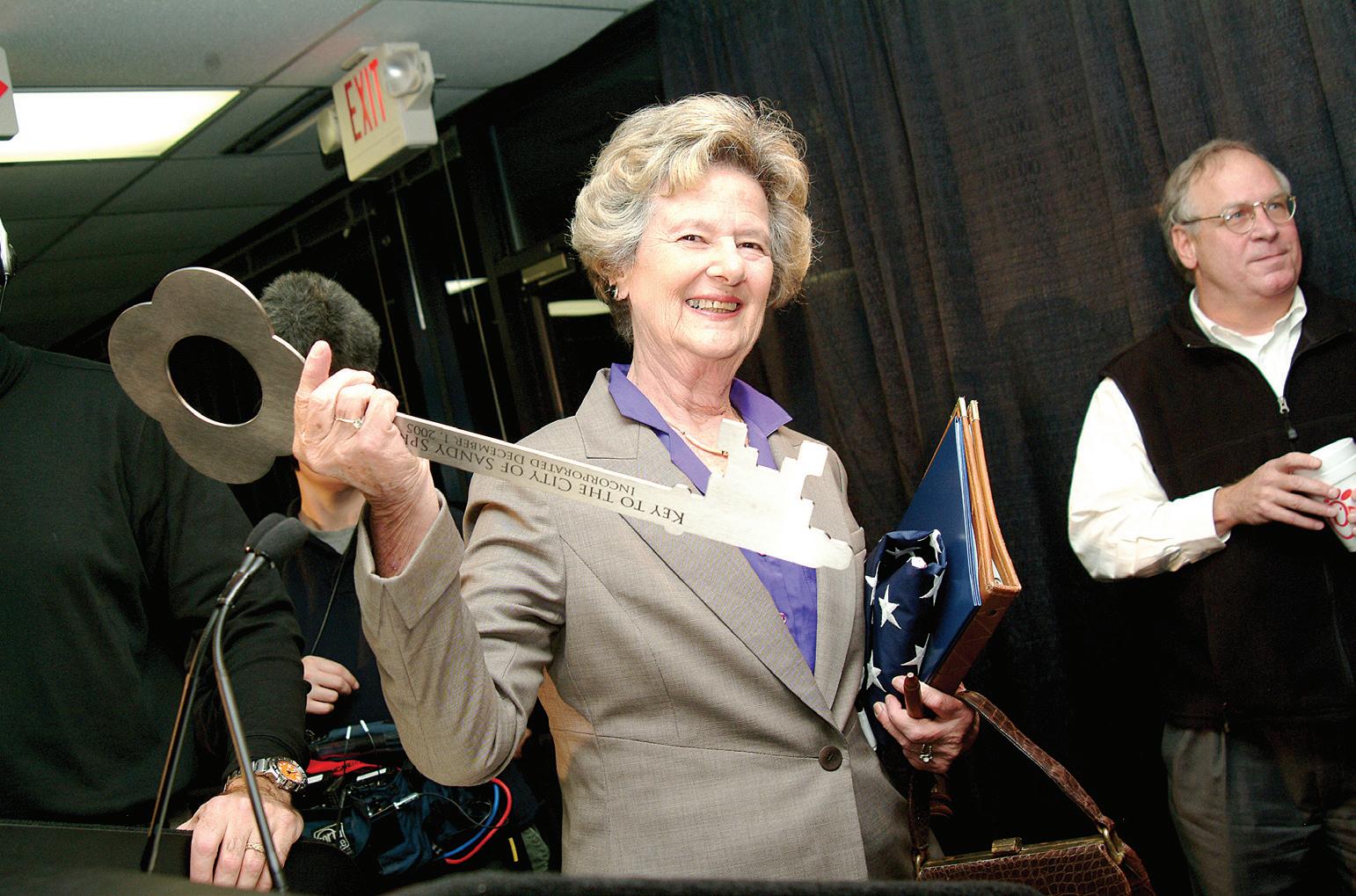
It’s been 10 years since the passing of Mayor Eva Galambos, who was known locally as the mother of Sandy Springs. Flags flew at half mast when she lost a battle with cancer at age 87 in April 2015.
As Sandy Springs celebrates 20 years of cityhood, Rough Draft is taking a look back in time at the city’s first mayor, who has been called tenacious, engaging, and enduring.
Galambos spent endless hours
volunteering with Sandy Springs Revitalization, Sandy Springs Clean and Beautiful, Sandy Springs Council of Neighborhoods, and the Fulton County Public Housing Authority.
From 1975 to 2005, Galambos was the president of the Committee for Sandy Springs – the group that fought to incorporate Sandy Springs.
“She had that gift of bringing people onto her side, of coming to the table with you, explaining an idea to you and when she left you thought it was your
idea because now she put you in charge of implementing it,” Sandy Springs City Council Member Tibby DeJulio said.
Galambos then served as mayor from November 2005 to November 2013. She told Rough Draft Atlanta in a closing interview that the creation of Sandy Springs was worth the fight.
“Not only have the citizens of Sandy Springs gained a more attractive city, with better infrastructure and new parks, but they are also enjoying the pleasures of civic involvement. The enthusiasm of our residents in participating in our public life is palpable. The next milestone will be a public downtown area where our folks can live, shop and enjoy each other, deriving all the benefits of urban life at its best,” Galambos said.
Longtime Mayor Rusty Paul remembered Galambos for her unflagging dedication before and after the city incorporated.
Sandy Springs’ strength “is due greatly to her unwavering love and devotion to creating something better for us all,” Paul said.
Galambos, many said, was one of a kind.
In a 2011 memoir, she wrote about her family’s escape from the Nazis in 1930s Germany for Genoa, Italy and later moving to Athens, GA. Her husband of 65 years, Dr. John Galambos, survived Bergen-Belsen Concentration Camp, but the pair did not meet until the late 1940s
at the University of Georgia. The couple had three children and six grandchildren. Galambos earned a bachelor’s degree in business administration from the University of Georgia, a master’s in labor and industrial relations from the University of Illinois, and a doctorate in economics from Georgia State University.
Revered for her labor economics expertise, Galambos was frequently recognized with awards and kudos.
She spoke regularly at The Epstein School about Holocaust education.
Attorney General Sam Olens, a Republican and the state’s highest-ranking Jewish elected official, called her “a tireless advocate of good government.”
Galambos was awarded the 2015 Humanitarian Award by the Georgia Commission on the Holocaust, a commemoration of the victims of the Holocaust as well as survivors and liberators.
Gabriel Sterling, a longtime Republican politician, said he was proud to work with Eva Galambos, Tibby DeJulio, and Mayor Rusty Paul.
“Hard to believe it’s been 20 years since that smashing referendum win of 94% YES for the City of @SandySpringsGA,” Sterling posted on X. “Eva’s vision for our city took years, decades to come to fruition. We now have one of the best cities in America to live, work, run a business, and raise a family.”
Springs!
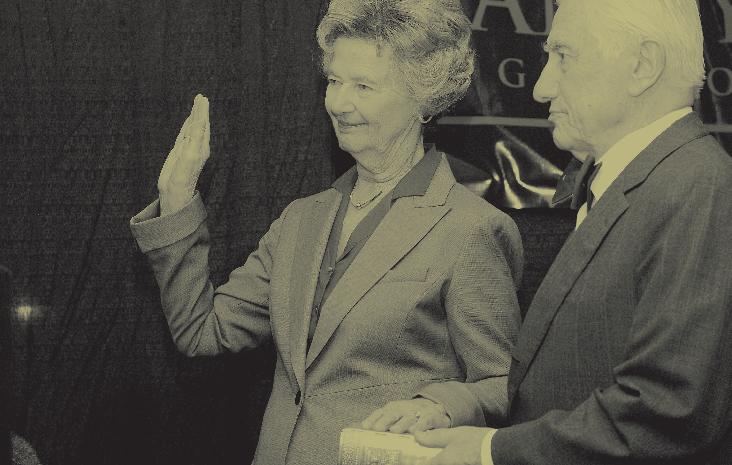
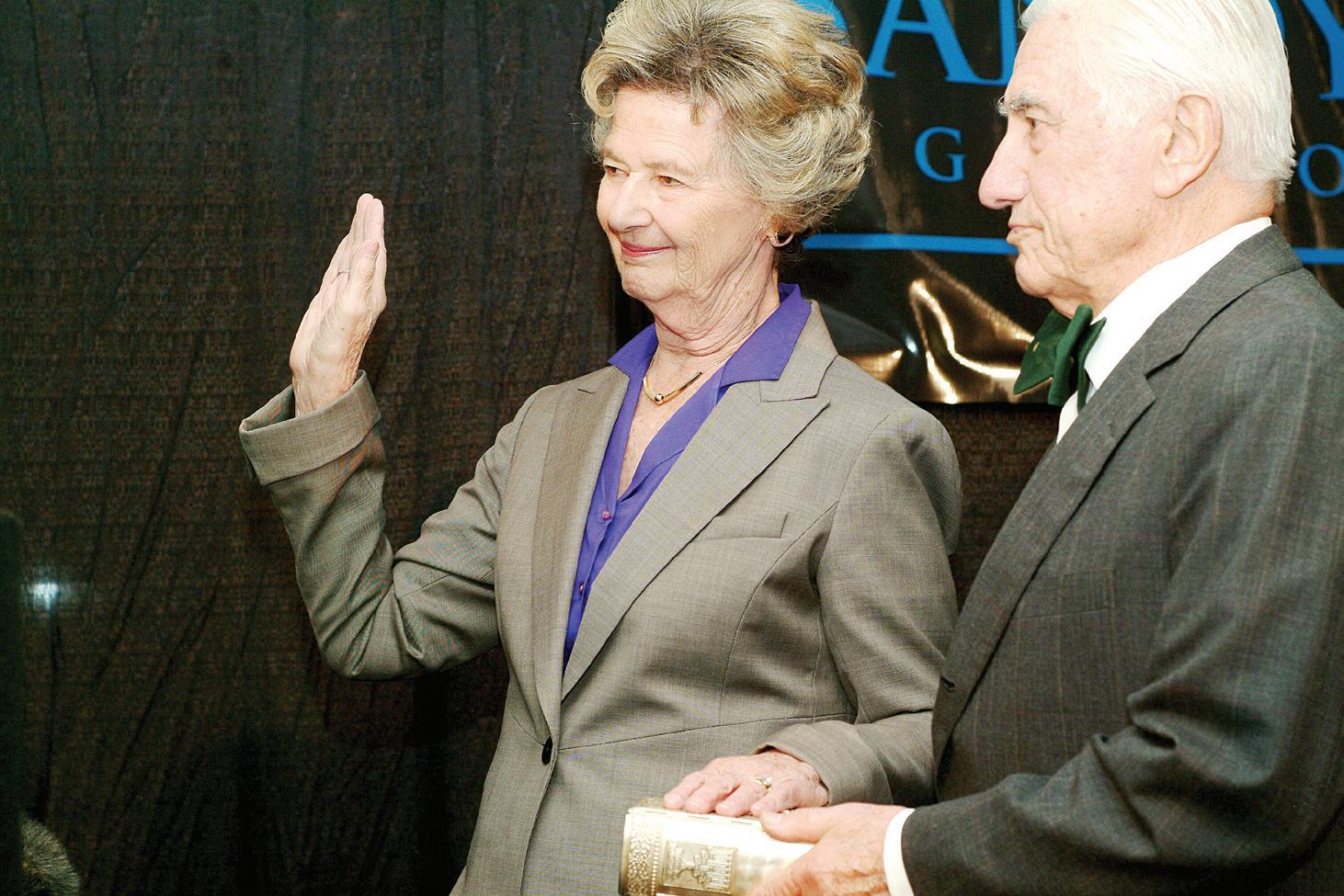
Eva Galambos takes the oath of office (Photo courtesy of City of Sandy Springs)
Global impact starts
here at home.
127 years in business. 50,000+ employees. There are plenty of numbers to be proud of here at Cox Enterprises, and one of them is the zip code for our headquarters: 30328.
We’re honored to be based in Sandy Springs: a community that — like ours — is rich in history and tenacity. The people of Cox are proud to be reinventing vital industries like automotive, agriculture, broadband, journalism and cleantech — building a better future for this generation and the next across metro Atlanta, throughout North America and around the globe.
Learn more at coxenterprises.com.
Sandy Springs paved the way for incorporation efforts in Metro Atlanta
By Lauren Menis
When Sandy Springs became a city in 2005, it provided the impetus for nearby areas to do the same, changing the landscape of the North Atlanta metro area. Now, on the 20th anniversary of its incorporation, mayors from nearby cities reflect on the influence Sandy Springs had on their journeys to cityhood.
Dunwoody
Dunwoody officially became a city in 2008, three years after Sandy Springs incorporated. Dunwoody Mayor Lynn Deutsch: Dunwoody incorporated in 2008, following the model and momentum that Sandy Springs set. Their success gave us the confidence to pursue local control. We saw firsthand how a city could be managed with a focus on service, transparency, and fiscal responsibility. Nearly two decades later, both cities have thrived.
Together, we have transformed the northern arc of DeKalb and Fulton Counties into a region known for its innovation, collaboration, and quality of life. We are grateful to Sandy Springs for proving that local voices matter and for inspiring so many others, including Dunwoody, to build strong, responsive, and visionary cities of their own.
Brookhaven
Brookhaven incorporated in December 2012.
Brookhaven Mayor John Park: When Sandy Springs became the first new city in metro Atlanta, it became a blueprint for other suburban areas dissatisfied with county-level management. Sandy Springs’ successful transition to cityhood, and its focus on a high level of quality of local service delivery, inspired the residents of what is now Brookhaven.
It got everyone thinking, If they can do it, we can too! Sandy Springs’ success gave
Brookhaven advocates both a roadmap and political momentum. In essence, Sandy Springs opened the door to a wave of new cities across the Atlanta region, demonstrating how determined civic leadership could reshape local governance.
Milton
Milton became a city in December 2006, just one year after Sandy Springs incorporated.
Milton Mayor Peyton Jamison: Twenty years ago, Sandy Springs ignited a wave of municipal change across metro Atlanta, a wave that would eventually reach the northern suburbs and pave the way for Milton. What made Sandy Springs transformative was not only the decision to become a city, but the way it chose to operate.
By contracting for most services and forming strong public and private partnerships, it demonstrated a bold, efficient alternative to traditional government. Neighboring communities took notice, seeing a model that offered greater control over services, taxation, and accountability. The impact was immediate.
Continued on page 38
Laura K. Schilling, J.D., CPA, CFP®
on 20 years, Sandy Springs.
The Perimeter Community Improvement Districts appreciates our partnership with the City of Sandy Springs and their leadership on helping to make our district the most vibrant, accessible community in metro Atlanta. We look forward to another 20 years of collaboration and growth! Catalyzed by
Sandy Springs became both template and catalyst. Its success helped communities like ours turn the goal of self-governance into a lasting reality.
Tucker
Tucker officially became a city in March 2016.
Tucker Mayor Frank Auman: Tucker is grateful to the people of Sandy Springs for their more than 40-year effort to form the first new city in Georgia in nearly 50 years. Their success reminded many around the state of the foundational, indispensable value of local government.
As Tucker celebrates the 10th anniversary of our successful cityhood referendum, and we reflect on the many benefits cityhood has provided, we are more convinced than ever that our community has seen a significant increase in our quality of life that simply wouldn’t have been possible without local decision-making and hands-on government by neighbors on behalf of neighbors.
Sandy Springs created its downtown with City Springs
By Bob Pepalis
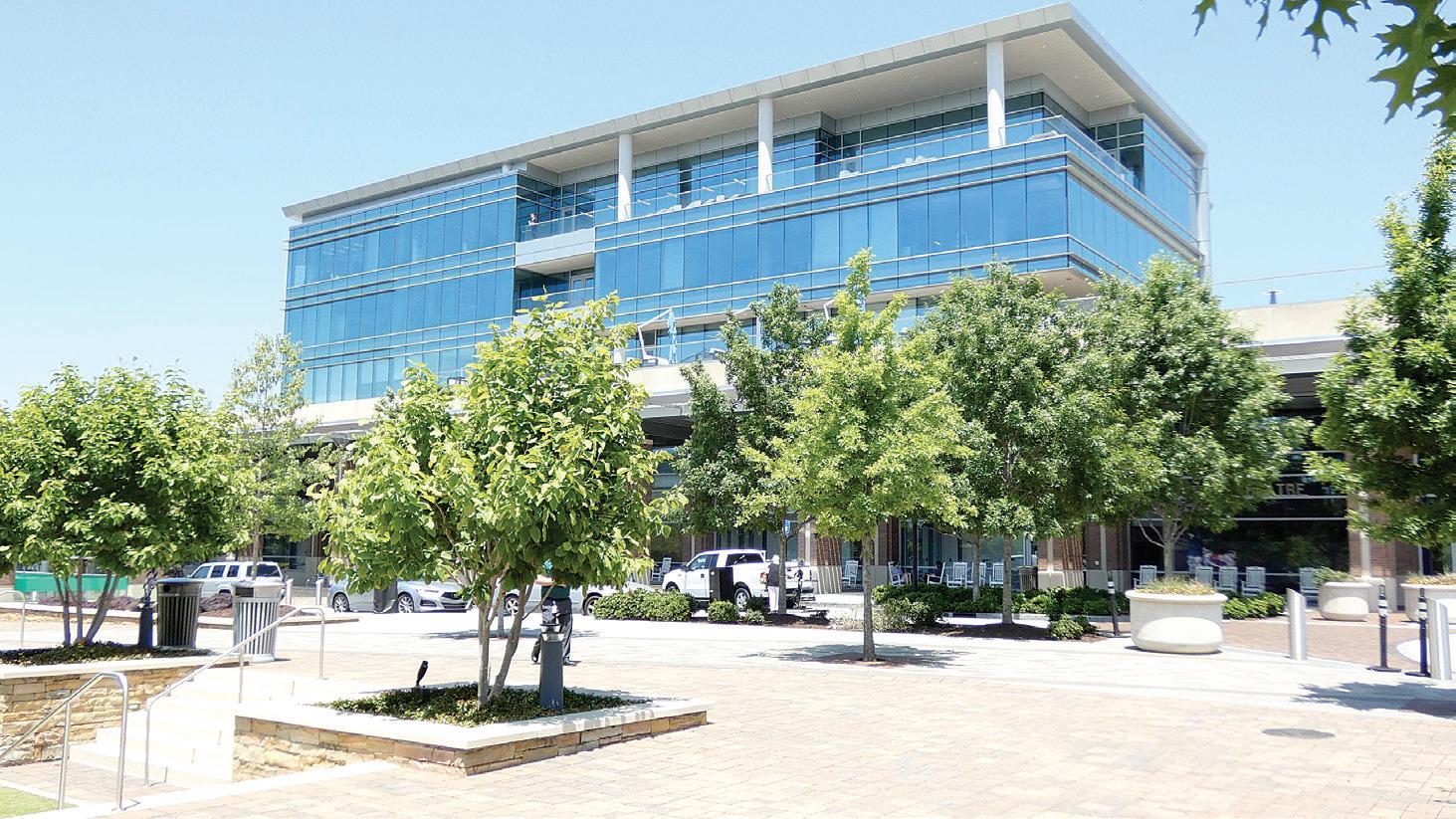
The Sandy Springs City Council created a downtown using an empty parking lot beside Roswell Road with the adoption of a master plan in 2012.
It would be six more years before the first phase of City Springs was completed with the opening of the new city hall and Performing Arts Center in May 2018. The retail and restaurant spaces took longer to open, and City Springs was considered fully opened in September 2018.
The vision set by the council was to promote community interaction by creating a safe and welcoming area for all residents.
Mayor Rusty Paul said the city had no place where the residents could come together and build the connective tissue of the city.
“This was just one big asphalt parking lot, but we identified this as the place we wanted to put city hall, because it’s one of the highest points in the city, and you could
see it,” Paul said.
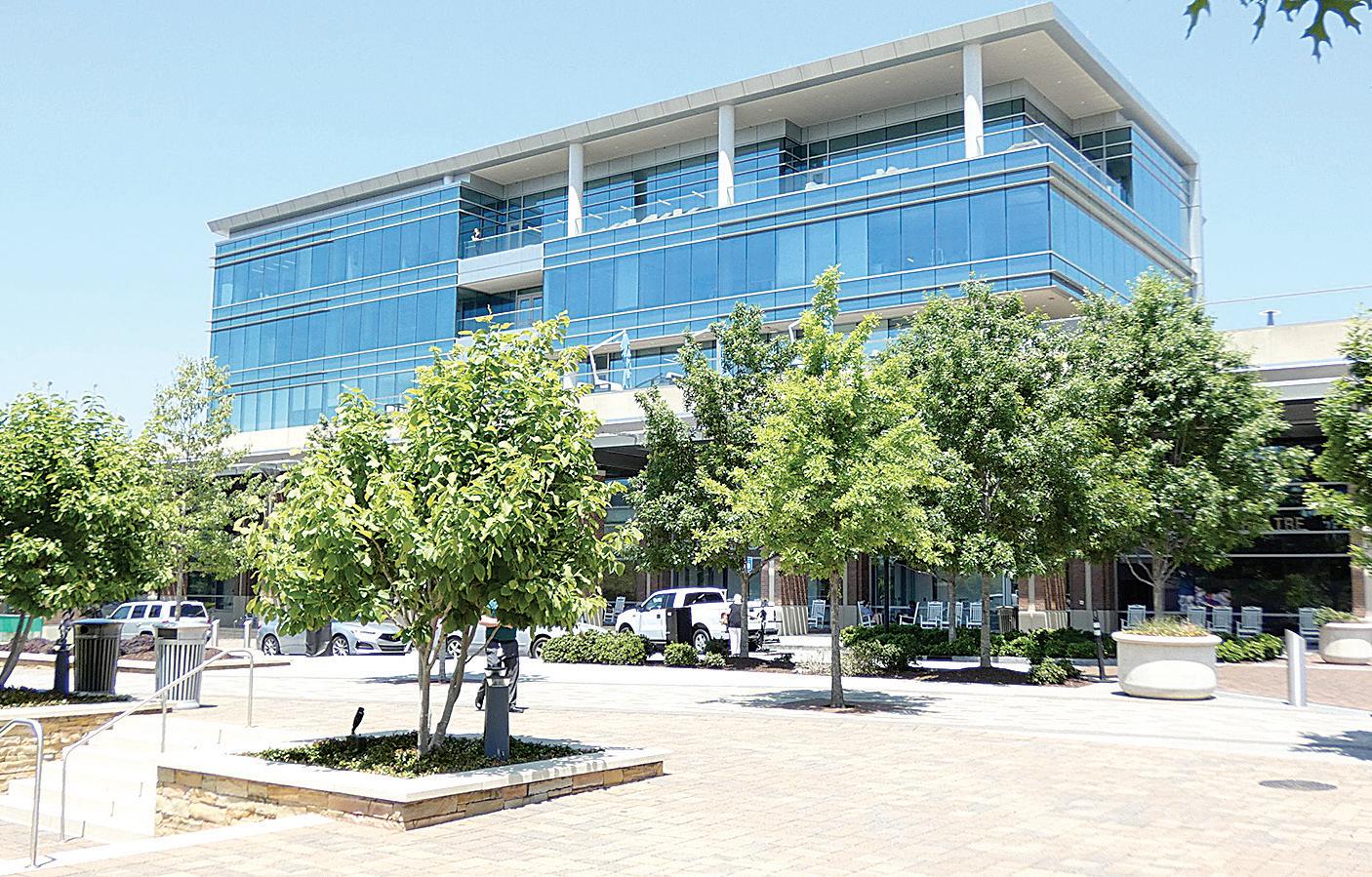
In addition to the public government buildings and a four-acre City Green, the 14-acre City Springs mixed-use development has restaurants, exercise boutiques, and apartments.
Paul said the City Green is where the spirit of Sandy Springs can be found. A community skating rink opened for the season in November. Concerts are held using the stage. The Sparkle Sandy Springs parade draws 5,000 to 6,000 people. And for the Fourth of July celebration, 8,000 to 12,000 people attend. He said none of this could have been done before City Springs was developed.
“When I talk about it being transformative, I don’t think anybody in Sandy Springs can imagine Sandy Springs without this complex because of the versatility, the ability to do so many different things, to come together as a community,” Paul said.
The community can visit and put a
(Photos courtesy of The City of Sandy Springs)
blanket out, or a table, they can set up a table for their organization or just come out to have a great time with friends, Paul said. When the original plans for a City Hall at the site expanded to include a Performing Arts Center and a conference center, it opened up opportunities. Paul said soon after he was elected, he was at a concert at the Heritage Green when he looked up at the hill to the future City Hall site. Looking at the concertgoers enjoying themselves around him, he realized the space on the hill offered more opportunities for the community to gather and connect.
The City Council supported the idea, and then-city manager, John McDonough, was charged with starting the process on something that had no plans or concepts.
Paul wasn’t the only person who saw opportunities at the City Springs site.
Andy Bauman had founded the Sandy Springs Farmers Market in 2010 with Jeff Langfelder in a bank parking lot on the corner of Sandy Springs Circle and Johnson Ferry Road, drawing attention to the site’s possibilities. When Bauman was elected to the City Council two years later, he began working with other council members on the City Springs master plan.
Council set the budget for the public part of City Springs at $220 million, selecting Holder Construction to construct the buildings. Agreements were signed with private partners Carter & Associates and Selig Enterprises for the residential and
retail development.
Demolition crews began work to take down the former Target building at 235 Johnson Ferry Road in January 2014, a big step in the city’s revitalization efforts. Public input was taken through 2015, with the name “City Springs” revealed at a groundbreaking event in September of that year. Four years later City Springs opened with the ribbon cutting on City Hall and the Performing Arts Center.
Bauman envisions more for City Springs even for its first phase. Extensive power connections were installed next to the City Green along Mount Vernon Highway, offering an opportunity for small retail or food spaces. He said the location for the standalone restroom facilities on that side of the City Green could be repurposed and still retain those facilities.
Attempts to develop Phase Two of City Springs have stalled due to market constraints and financing difficulties. When the council awarded a contract to a development team in June 2023, construction had been expected to begin in late 2024.
The idea is to develop the parcels the city owns just south of Mount Vernon Road, across from City Green. The concepts call for more restaurants, experiential retail, an upscale boutique hotel, office spaces, limited residential options, additional green spaces, and shared parking facilities.
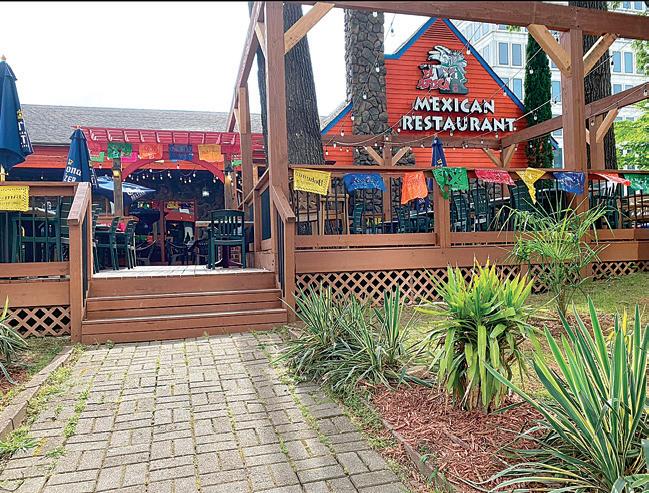
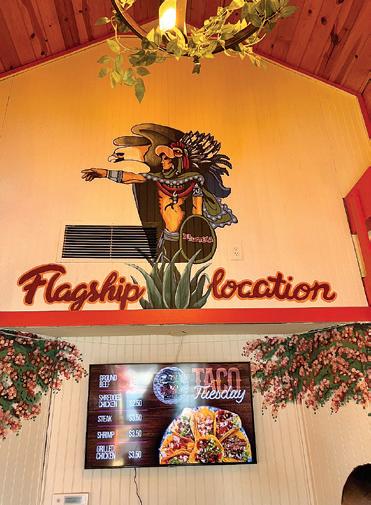
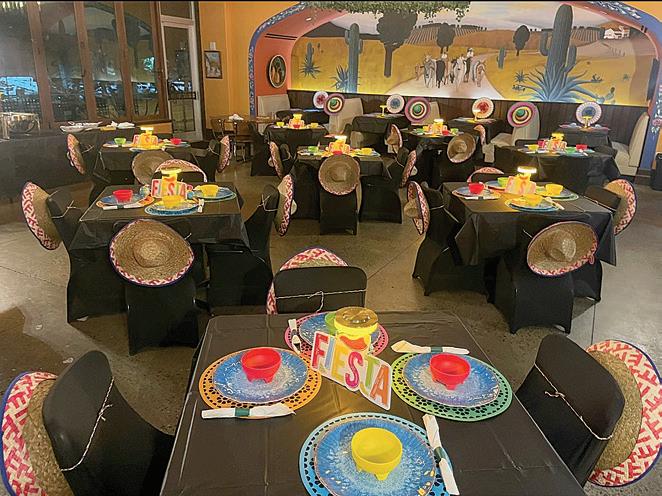
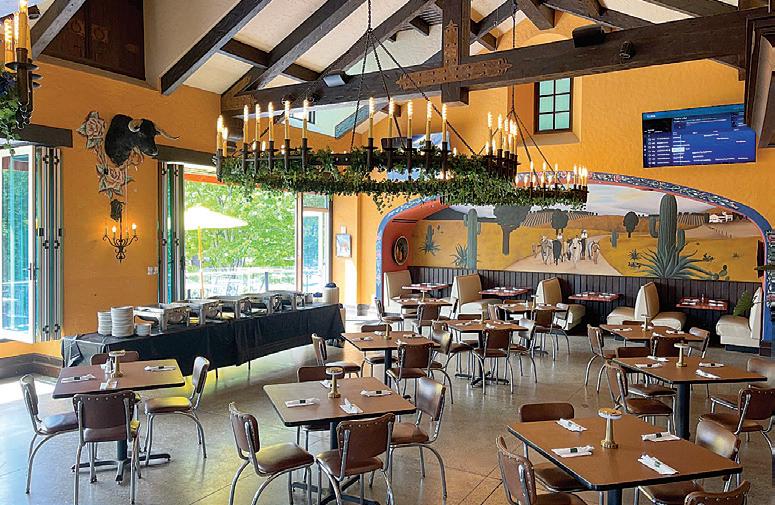
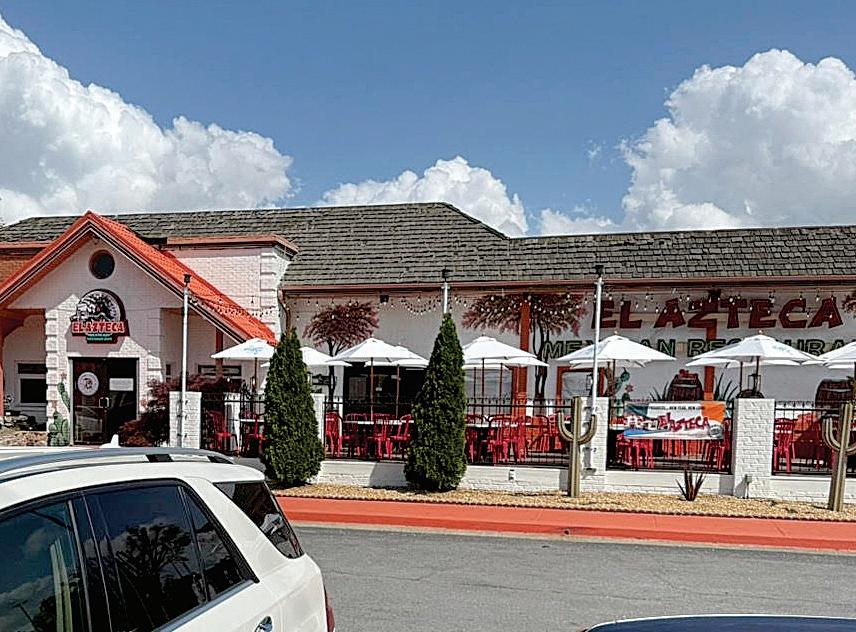
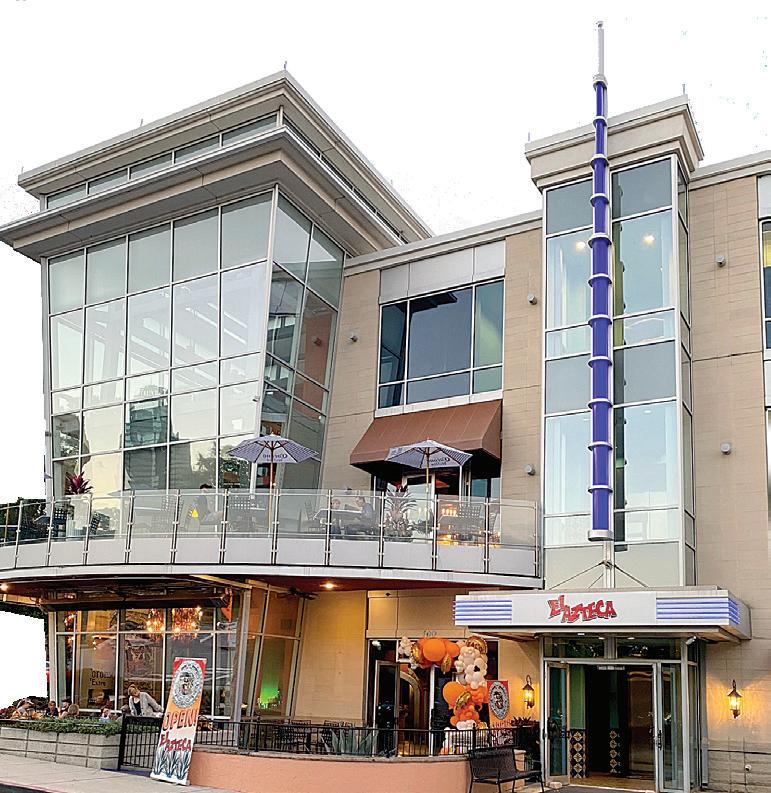
After 45 years on Roswell Road, El Azteca is all in on Sandy Springs
By Beth McKibben
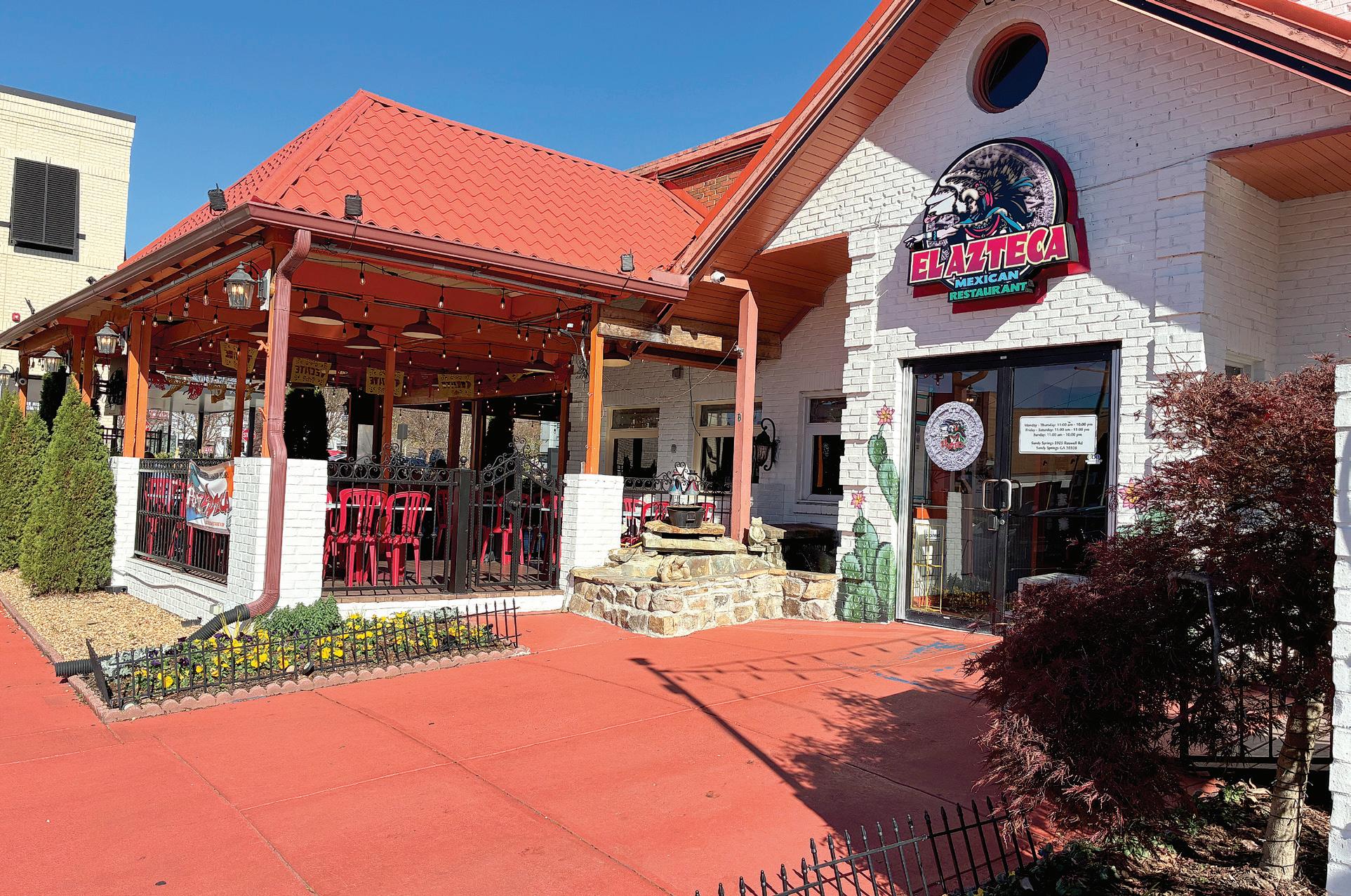
El Azteca has been a staple in Sandy Springs for more than four decades. Victor Macias’s parents tethered themselves to the community more
restaurant chain with three locations.
It’s become a great source of family pride that the Roswell Road restaurant still exists, as Sandy Springs and its burgeoning dining scene grew up around it. Now the seventh largest city in Georgia, Sandy Springs and Atlanta combined account for twothirds of the more than 20,000 restaurants in the state.
Macias attended Spalding Drive Elementary and spent most of his childhood in Sandy Springs. His formative years unwittingly paralleled the then-fledgling city, which incorporated when Macias was in middle school.
He remembers his parents talking
about the incorporation of Sandy Springs and what it might mean for El Azteca. By 2005, when Sandy Springs became a city, El Azteca had been in business for nearly 25 years.
“I’ve seen Sandy Springs and the restaurant scene change so much. My parents chose Sandy Springs because there were hardly any restaurants when it opened in 1981. The community needed restaurants,” Macias said. “Back then, there weren’t as many Mexican restaurants as there are today, so El Azteca was a lot of people’s introduction to Mexican and Tex-Mex food in Sandy Springs.”
Macias’s father, Javier, moved to Atlanta from Chicago in the late 1970s to work at his uncle’s restaurant, El Toro, on Roswell Road. But in 1981, Javier and his wife decided to strike out on their own, opening El Azteca near presentday Rumi’s Kitchen, before taking over the property now home to Mellow Mushroom. In 2000, El Azteca moved again to its present location at the Lowe’s complex, a half mile south on Roswell Road.
The Macias family lived and worked in Sandy Springs for years, eventually
Continued on page 42
Happy Anniversary, Sandy Springs!
than 45 years ago, raising their children in Sandy Springs and opening the first El Azteca there long before the Atlanta bedroom community became a city.
Sandy Springs is where it all began for El Azteca, today a local Mexican
(Photo by Cathy Cobbs)
2026-27 Applications due Feb 1.
404.252.3910 • www.springmont.com
Springmont’s authentic Montessori experience balances academic learning with social/emotional well-being. Highly experienced and caring teachers guide individualized learning that inspires students to become creative, independent and globally-minded.
Continued from page 40
moving to Johns Creek in the early 2000s. But El Azteca on Roswell Road served as the family’s anchor to Sandy Springs, even after the business expanded to multiple metro Atlanta locations.
“[Roswell Road] is where we see generations of families returning to dine. I’ve seen people’s kids and grandchildren grow up and bring their own families,” Macias, who serves as El Azteca’s Director of Operations and owns the Perimeter Center location on Peachtree-Dunwoody Road, said. “We like to call El Azteca the Mexican ‘Cheers’ because we know our regulars’ names and their orders. We’re part of their lives.”
keep being a part of them.”
As a second-generation owner overseeing the daily operations of all three of his family’s restaurants, Macias knows that for El Azteca to endure, it needs to evolve. He recently added new dishes like tortas and chiles rellenos to the menu. The bar features new nonalcoholic drinks and cocktails like a lychee margarita and Mexican Old Fashioned. Margaritas incorporate topshelf tequilas, fresh juices, and agave syrup.
Building a strong educational foundation for dyslexic students in grades K-6.
Visit www.schenck.org to learn more.
Family drives everything behind El Azteca. It continues to be a family-owned and operated business and where Macias and his sister learned about the industry, working as food runners, servers, and hosts during high school. He watched his parents grow the family’s lone restaurant into 10 locations. They’ve since scaled back to just three locations in Buckhead, Perimeter Center, and the original Roswell Road restaurant.
Macias’s sister holds a degree in hospitality management. The plan had always been for her to take over the business. When she decided to prioritize raising a family, Macias stepped up to help his parents run the restaurants.
With a degree in business administration and marketing, Macias became a manager and shadowed El Azteca’s director of operations, a title he earned in 2016. His parents turned over the opening and ownership of the Perimeter Center El Azteca to Macias three years ago, where he built the restaurant from the ground up.
“Family-owned businesses don’t have as much support once founders get older or retire. Maybe their children don’t want to carry on the business, or they never had any children. So these businesses close after years in communities because there’s no one to keep them going,” Macias said. “My parents were lucky we grew up in the restaurants and wanted to
Macias also pared down the combination meal options from 30 to 10. That doesn’t mean, however, someone can’t come in and order the number 25.
“We have cooks who’ve been there for decades and can still make a number 25. I may not know what a 25 is, but someone in that restaurant does and will make it,” said Macias.
Despite stepping back from the dayto-day running of El Azteca, his father continues to keep a sharp eye on things. Macias is glad for his wise counsel, but finds his father open to new ideas for keeping El Azteca fresh and current.
“El Azteca still has the majority of the day-one recipes on the menu, and certain entrees have never changed. As I’ve taken over more, I’m focusing on keeping the original concept, but adding to it, making it more now,” he said.
In 2026, The El Azteca on Roswell Road will turn 45. Macias wants to make sure it survives in Sandy Springs for another 45 years. The family just resigned the lease, locking El Azteca in on Roswell Road for another decade.
With the Perimeter Center restaurant humming along, Macias can concentrate on shoring up the family’s flagship restaurant, which includes some muchneeded updating and a facelift.
“If we needed to leave that space, we would always find a way to be on Roswell Road in Sandy Springs,” said Macias of the future. “It’s our home base and reminds us of how far we’ve come. El Azteca would not be what it is today if it wasn’t for the people of Sandy Springs.”
(From El Azteca Instagram)
A New Home in Sandy Springs and a Continued Commitment to All of Jewish Atlanta
Jewish Federation of Greater Atlanta is excited to announce the opening of our new headquarters in Sandy Springs a space that will help us grow, innovate, and serve our community for years to come
Most importantly: Our commitment to all of Jewish Atlanta, including Intown, remains stronger than ever. While our offices may be moving, our mission hasn’t changed: Jewish life Intown matters just as much as ever Our programs, grants, and partnerships continue to support the full breadth of Jewish Atlanta north, south, east, and west
As the City of Sandy Springs celebrates its 20th Anniversary, we are proud to be part of this community and its next chapter while continuing to strengthen Jewish life across our entire region.
Thank you for being part of our exciting next chapter.
Visit us, get involved, and see what’s next for Jewish ATL
Scan the QR code to learn more:
Discover the nonprofits making a difference in Sandy Springs
By Bob Pepalis
Sandy Springs is home to many nonprofit organizations serving various segments of the community.
What follows is a list of those nonprofits compiled in the Springboard Sandy Springs project of the Sandy Springs Civic Roundtable. The roundtable created Springboard with the help of the city and a cohort of Georgia Tech students. The purpose was to connect residents and companies with the
permanently protected old-growth forest offering passive recreation seven days a week.
Chattahoochee National Park Conservancy provides support to the Chattahoochee River National Recreation Area through environmental education, community outreach, trail maintenance and restoration, facility improvements, water trail enhancements and more.
City Springs Theatre Company produces Broadway-quality, musical
nonprofits that serve the community. Arts Sandy Springs (ArtsSS) enhances the presence and enjoyment of art through the acquisition and placement of public art in the city’s parks, public art gallery curation, and art educational
theatre productions at the Byers Theatre in the Sandy Springs Performing Arts Center, and professional training for young performers via the City Springs Theatre Conservatory.
Community Assistance Center
Join us to educate, inspire & prepare students for success. Learn more, donate & volunteer:
education, career counseling, tax return aid, and seasonal youth programs.
Creating Connected Communities has a mission to provide life-enhancing programs for children experiencing hardship by empowering teens to become engaged community leaders and volunteers.
Environment Sandy Springs’ mission is to preserve the environment for generations to come by restoring ecosystems today.
Friends of Benson advocates, raises funds, and supports programs and services at the Benson Center for older residents of Fulton County, enabling them to live more active and independent lives.
Friends of Lost Corner’s mission is to maintain Lost Corner Preserve for the appreciation of native plants and animals while enhancing its beautiful and historic environment for Sandy Springs residents.
Friends of the Sandy Springs Library provides financial assistance to the Sandy Springs Library for expanded programs and materials.
Georgia Ensemble Theatre at Act3 offers professional live theatre performances and training in theatre performance and production for all ages, using its home stage and on tour to schools, libraries, senior facilities, and community centers.
Great Prospects Inc. provides meaningful connections for individuals with disabilities through continued social interaction, community outreach and challenging recreational programs.
Horizons Atlanta @ Holy Innocents helps K-8 students in Sandy Springs who qualify for free and reduced-price lunch to thrive by instilling in them the joy of learning with a six-week tuition-free summer learning and monthly enrichment programs during the school year.
Keep North Fulton Beautiful is an environmental nonprofit that provides education and conservation programs to Sandy Springs and the surrounding communities. Its volunteers help recycle more than 2.5 million pounds of materials each year.
LaAmistad offers afterschool, early childhood education, summer academies, adult education, English courses, and digital and financial literacy workshops to support Latino families.
Leadership Perimeter develops adult leaders from diverse sectors and backgrounds in the Perimeter region, and youth leaders from Sandy Springs high school students who demonstrate a level of leadership.
Los Niños Primero empowers Latino students and their families by offering early childhood education, literacy, arts,
sports, mentorship, and college readiness programs, including the Summer Educational Program, Youth Service, and Fostering Family Leaders.
Mary Hall Freedom Village empowers women, children, veterans, and families to end the cycle of homelessness, addiction, and poverty by providing substance abuse treatment and numerous wraparound services.
Revved Up Kids is on a mission to protect children and teens from sexual abuse, exploitation and trafficking by providing exceptional prevention training programs for children, teens, parents and youth-serving organizations.
Rotary Club of Sandy Springs provides service to the community, promotes integrity, advances goodwill, and peace. Its service projects improve childhood education and literacy, support first responders, seniors, veterans, and others in need.
Sandy Springs Arts Foundation supports arts programming in public schools and in grassroots arts nonprofits. It supports arts initiatives in Sandy Springs and its own programming, such as ArtBeat and student-to-student music mentoring.
Sandy Springs Citizens’ Leadership Academy empowers residents to engage with local government, fostering informed citizens. It uses a comprehensive curriculum to provide insights into city functions and encourages civic responsibility and leadership.
Sandy Springs Citizens Police Academy empowers residents to enhance community safety and foster positive relationships with the police. Advanced training and active participation equips volunteers to support police efforts.
Sandy Springs Conservancy strives to create and enhance parks, trails, and greenspace for the community. It brings together private and public partners, provides leadership, and jump-start funding to create, conserve, and connect valuable outdoor greenspace amenities.
Sandy Springs Council of Neighborhoods serves the homeowner, neighborhood, and condo associations. It engages decision-makers and development interests to ensure community concerns are heard by active participation in policy and land use decisions.
Sandy Springs Eco-Stewardship Program inspires residents to connect with and protect the local environment. Twelve annual sessions focus on native biodiversity, wildlife observation, and ecological restoration, culminating in an Eco-Steward certificate.
(Photo courtesy of City of Sandy Springs)
Sandy Springs is not an ‘either-or’ city. It is a ‘both-and’ community.
Where urban energy meets suburban calm, where Fortune 500s grow alongside family-owned favorites, and where MARTA stops just minutes from rivers, forests, and trails.
At the Greater Perimeter Chamber, we’re proud to partner with a city that proves you don’t have to choose between growth and quality of life. You can have both.
In business, as in life, we know that location matters. It determines not only where people choose to live, but where businesses choose to invest, grow, and plant roots. But there is an even better word to describe a community’s intentional efforts to create and sustain a better location: placemaking. Over the past twenty years as a city, Sandy Springs has embraced placemaking with purpose and vision, using its abundant and sometimes contrasting assets to create something rare and deeply valuable for its residents, businesses, and visitors.
While every community can rightly claim its own uniqueness, Sandy Springs stands out for its exceptional and sometimes surprising combinations. The city thrives not by choosing one path over another, but by embracing the full spectrum of what it can be. In Sandy Springs, the story is never “either/or.” It is proudly and consistently “both/and.”
Sandy Springs is both:
• Urban and Suburban
A place where high-rise offices and vibrant mixed-use centers are only minutes away from quiet, tree-lined neighborhoods. Here, you can enjoy the energy of a bustling commercial district and still return home to a peaceful suburban sanctuary. Few cities manage to blend these environments so seamlessly.
• Fortune 500s and Family-Owned Businesses
Global corporations select Sandy Springs for its strategic advantages, talent pool, and accessibility. Yet, around the corner, long-established small businesses anchor neighborhoods, add character, and offer personalized service. This mix of economic strength and entrepreneurial spirit creates a dynamic and resilient local economy.
• ITP and OTP
Straddling the Perimeter gives Sandy Springs an identity that draws from both worlds. It benefits from the connectivity, visibility, and business ecosystem of an ITP address, while offering the space, natural beauty, and lifestyle often found OTP. This duality appeals to a wide range of residents and companies.
• State Route 400 and Chattahoochee River Fords
Major transportation corridors fuel economic growth and support business mobility. At the same time, the city cherishes its natural crossings, quiet streambeds, and protected forest areas. This balance between built environments and preserved green space helps maintain the character residents and employees value.
• MARTA Stops and Hiking Trails
Sandy Springs offers genuine mobility choice. Whether commuting by public transit, biking along dedicated lanes, or exploring miles of hidden trails, residents enjoy the convenience of a modern city without sacrificing access to nature.
Maintaining balance among these seemingly conflicting concepts is not easy. It requires thoughtful leadership, ongoing engagement, and a willingness to look beyond traditional definitions of what a city should be. Sandy Springs leaders continue to channel the vision, determination, and collaborative spirit that fueled the fight for cityhood into the work of shaping what comes next.
As we look toward the future, Sandy Springs can and should remain the ultimate both/and city, offering a blueprint for how communities can navigate uncertainty without losing sight of their identity. The world is becoming more complex, more interconnected, and more demanding of flexibility. Sandy Springs shows that embracing complexity, rather than resisting it, leads to stronger outcomes. It reminds us that a city does not have to choose between growth and preservation, innovation and tradition, or urban energy and suburban comfort.
It can pursue all of them at once.
The Greater Perimeter Chamber is honored to be both a partner and collaborator with the City of Sandy Springs. Together, we are committed to ensuring future economic prosperity for residents and businesses alike. We recognize that fostering a thriving economy means supporting both corporate headquarters and small businesses. It means supporting established industries and emerging sectors, both legacy employers and start-up entrepreneurs.
We are grateful for the opportunity to advance the economic well-being of all who call Sandy Springs home, neighbors and corporate citizens alike. As the city begins its next chapter, we look forward to contributing to another twenty years of intentional placemaking, strategic vision, and celebration of the diverse qualities that make Sandy Springs not just a place to live or work, but a place to belong and thrive.
RIVERWOOD
I NTERNA TI O NA L C HARTE R SCH O OL
Twenty Years. One Community. Infinite Memories.
Hats off to 20 years, Sandy Springs!
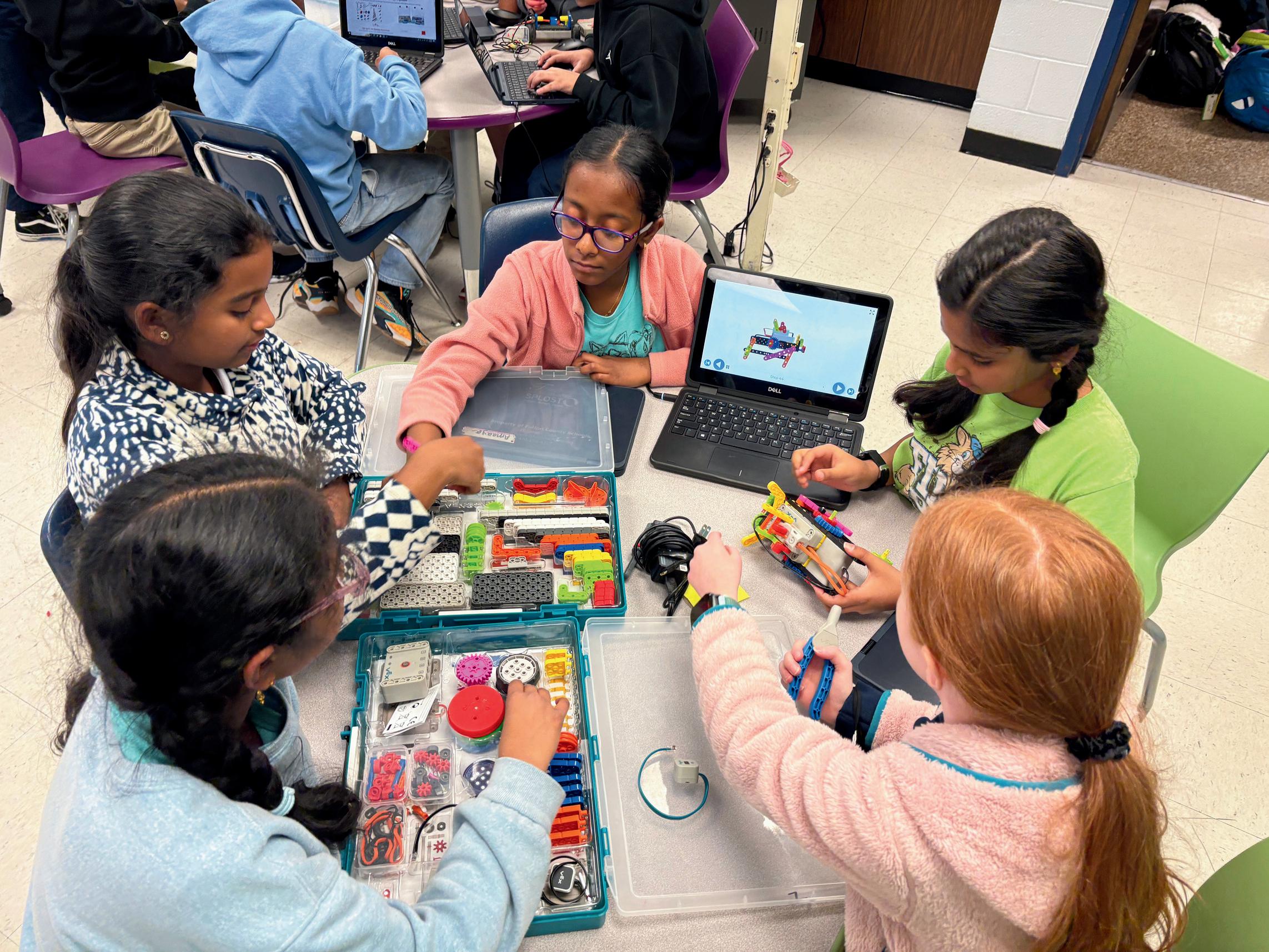
Sandy Springs Education Force collaborates with school leaders to provide targeted supplemental STEAM, literacy, after-school, and mentoring programs. These initiatives enhance educational outcomes and address the unique needs of 11 public schools.
Sandy Springs Fire Corps offers vital support in emergencies, rehabilitation for firefighters, basic life support, community education, and assistance at local events. An eight-week Citizens Fire Academy offers live exercises and emergency training.
Sandy Springs Masonic Lodge #124 is an individual journey towards becoming a better father, husband, friend, citizen, and man, supported by other men at different points on the same journey. It hosts youth programs and a Breakfast with Santa event.
Sandy Springs Mission works with first through 12th grade Latino students and their families, providing free after-school, summer, language and cultural programs, college guidance and dual-enrollment classes, and global citizenship instruction.
Sandy Springs Society is a charitable membership organization of women supporting nonprofit groups in the community. It raises monies through “The Elegant Elf Marketplace” in November, and the upscale resale “Tossed Out Treasures” in March, corporate sponsorships, and donations.
Sandy Springs Tennis Association offers youth tennis and nutritional education to the public school children in the community.
Sandy Springs Together actively educates and engages the community, leaders, businesses, young and old on the need for attainable housing while advocating for solutions to create a more inclusive and sustainable housing future.
Sandy Springs Woman’s Club is a notfor-profit organization of women who strive to be of service to others through volunteering, fundraising, caring, sharing, and understanding the needs of others.
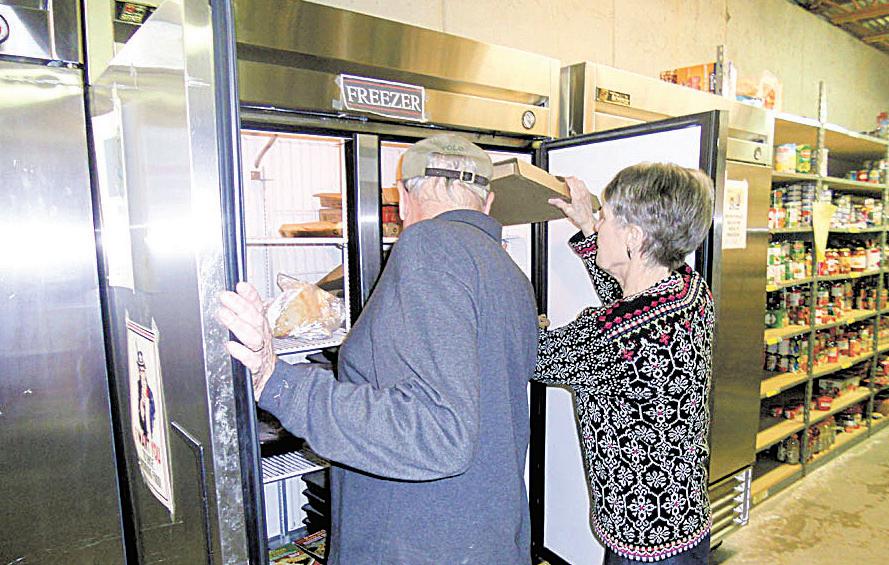
Second Helpings Atlanta operates a food rescue program that collects surplus food from local businesses and delivers it, through a network of volunteers, to partner agencies serving those experiencing food insecurity.
Senior Services North Fulton at Benson Center provides services and support for seniors to enhance their quality of life and independence in the community. Its free programs include Meals on Wheels, and transportation to/from medical appointments.
Solidarity Sandy Springs offers a neighborhood food pantry operating as a market that serves as a safety net for workforce neighbors during tough economic times. Volunteers help with programs such as Backpack, Mother’s Day, Easter Hunt, Secret Santa, and others.
Police/fire departments have expanded since incorporation
By Cathy Cobbs
Police
Department
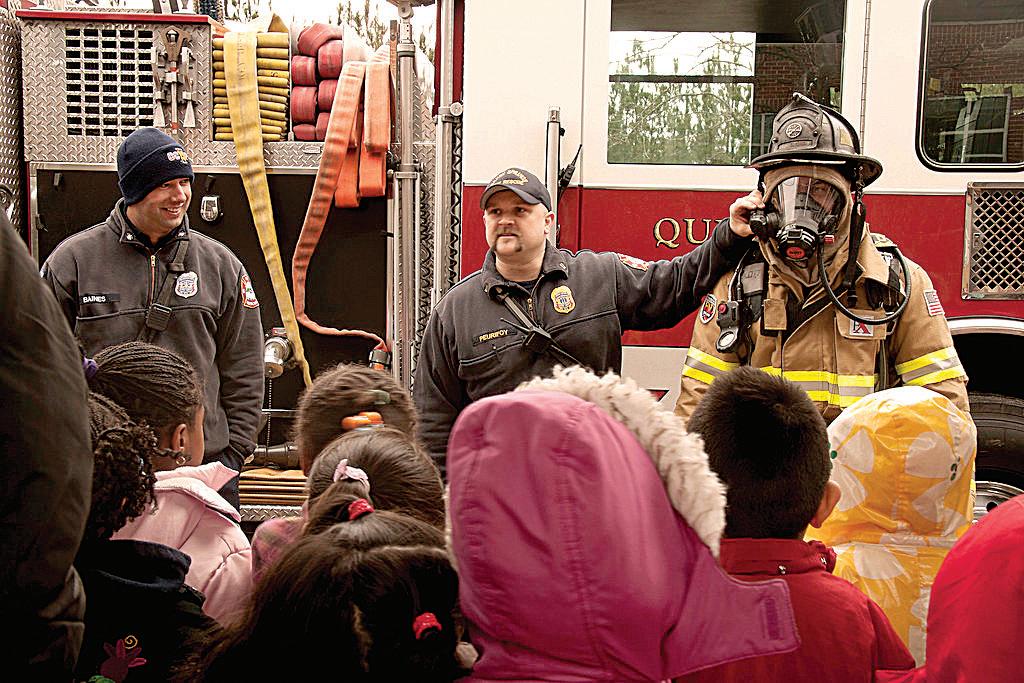
Since the Sandy Springs Police and Fire Department began operations in 2006, each entity has grown significantly in personnel and services rendered.
The Sandy Springs Police Department was created in 2005 and took over police operations from the Fulton County Police on July 1, 2006 at one minute after midnight, according to the city’s history of the department.
The department covered the 38.5 square miles that was incorporated just months earlier.
Only experienced officers were hired to carry out the department’s mission to “prevent crime and enforce law through problem-solving partnerships.”
Its first police chief Gene Wilson took control in January 2006 with a roster of 86 officers, with 49 employees being former Fulton County officers.
Today, the department consists of 154 sworn officers, with additional part-time and reserve officers, totalling 195 fulltime and part-time positions.
Its operations are coordinated from two districts- north and south. Each district is commanded by district captains and has four patrol beats.
Today, the patrol division is complemented by specialty units, including Street Crimes Unit (SCU), Criminal Intelligence Unit(CIU), Traffic Unit, Special Investigations Unit (SIU), and the Criminal Investigations Division (CID).
Sandy Springs celebrated the completion of its police headquarters and municipal court complex on Morgan Falls Road on April 12, 2025 with a ribboncutting ceremony and an open house.
“It is truly an honor to stand before you today as we officially open this amazing new facility, our new police headquarters and municipal court complex, a $56 million investment in the safety, security and future of our city,” Sandy Springs City Manager Eden Freeman said at the ribbon cutting.
Law enforcement officers from across Fulton County and members of the Georgia State Patrol joined the celebration, filling the visitor’s parking lot with patrol vehicles.
Fire Department
The fire department began operations on December 29, 2006, and today has a total staff of 121 full-time and four parttime personnel.
According to information about the department on the city’s website, only two percent of all calls for service of the Sandy Springs Fire Department involve active fires.
“In 2019, the department unveiled a new fleet of fire trucks including one tower ladder, two ladder trucks, two engines, and one squad vehicle,” the website said.
Each of the four active service engines hold 500 gallons of water and can pump at a rate of 2,000 gallons per minute.
SSFD also has a shallow water access rescue boat with a 250-horsepower jetdrive motor and a fire special operations command unit that provide hydration and rehab facilities for firefights.
“All SSFD emergency response vehicles are licensed as first responder units with the state of Georgia,” the website said. “A SSFD fire unit may respond to your medical calls in addition to an ambulance to assist with medical care.”
All SSFD units carry the same medical equipment that an ambulance does, have personnel with the same levels of training, and can provide the same level of interventions of a traditional ambulance.
As the city’s fire stations have aged, action has been taken to renovate or replace them. A $2.1 million contract was approved by the Sandy Springs City Council during its Oct. 2, 2025 meeting for architectural design and engineering services for two new fire stations and renovations to a third.
Hussey, Gay, Bell, and DeYoung International was awarded the contract. The firm will design a new Fire Station No. 4 within the city limits on Roswell Road. A replacement Fire Station No. 1 will be constructed at the current station’s location at 1425 Spalding Drive. Renovations will be made to Fire Station No. 3. Sandy Springs Fire Stations No. 2 was built in 2022 and No. 5 in 2024.
Sandy Springs United Methodist Church Now worshipping at the Abernathy Arts Center
Every Sunday
11 a.m.
Creative Worship
Christmas Eve
4:30 p.m.
Family Pageant Service
6:30 p.m.
Candlelight & Communion Service
ssumc.org/worship
Sandy Springs rollout on its first day (Photos courtesy of The City of Sandy Springs)
(Photos courtesy of The City of Sandy Springs)
Navigate Senior Care with Confidence.
The decades-long journey to cityhood
By Logan Ritchie
Businessman, author, and entrepreneur Oliver Porter played an instrumental role in the lobbying, cityhood, and structure of Sandy Springs’ city government more than two decades ago.
On Dec. 1, Sandy Springs will celebrate 20 years of cityhood. Located just north of the perimeter, Sandy Springs has roots dating back to the 1800s when Native Americans frequented the area’s bubbling springs. Known as one of the first cities to follow a public-private partnership model, today the city boasts a population of 106,000, 950 acres of parks and green space, and a bustling arts-anddining scene.
cityhood efforts.
Porter was front and center when Eva Galambos, known as the mother of Sandy Springs, Tibby DeJulio (later a city council member), Leadership Perimeter’s Carolyn Axt, and others led a drive to the Georgia State Capitol with the idea that they could be better served as their own entity.
“Lobbying went on for decades,” Porter, 89, recalled. “Eva and I worked hand-inglove for several years. She was just the most determined and capable person for the 25year [effort].”
The road to cityhood began with a movement to oppose annexation by the city of Atlanta in 1975. Residents of Sandy Springs were unhappy with Fulton County services, namely police protection, and felt their tax dollars were being used to bolster the less financially stable southern part of the county. Zoning battles between Sandy Springs and the county, which advocated building multi-family residential developments, were common.
Surveys and polls were conducted. Meetings were held to discuss the pros and cons of becoming a city.
“When we had debates … we were hard pressed to find someone from the other side. We often had to get someone from Atlanta or from Fulton County to represent the opposition,” DeJulio said.
Porter said survey results showed zoning as a top priority, followed by traffic and public safety.
“People were really concerned that the character of the neighborhood was being overturned by the development of too many rental properties. The county had set a limit on rental properties of 52 percent, and they had already far exceeded that – and it was getting worse. People were concerned that the character of the community was going to be ruined,” Porter said.
DeJulio told Rough Draft that Sandy Springs residents were simply tired of being tied to a non-responsive Fulton County government. One county study showed Sandy Springs residents sent $91 million more to Fulton County than they received in services annually.
But Democrats accused the Sandy Springs cityhood movement of being nothing more than “white flight” and used their power in the General Assembly to block
For nearly 25 years, elected officials tried to get the legislature to pass a bill that would authorize a referendum. Finally, in 2005, with Republican Gov. Sonny Perdue in office and a Republican majority in the House and Senate, Sandy Springs finally got its wish: the legislature authorized a referendum. The people would decide.
For the first time in 50 years, residents would get to vote to create a new city in Georgia. On June 21, 2005, the referendum results revealed 94 percent of Sandy Springs’ voters chose to incorporate.
Galambos was elected Sandy Springs’ first mayor in November 2005. Porter was a retired vice president of sales, having spent his entire career working at AT&T. He jumped to work, putting in 60 to 70 hours as the volunteer interim city manager.
“We were inventing things as we went. The biggest problem was that the legislation which was passed gave no one any authority to do anything. We couldn’t hire anybody. We couldn’t buy anything or lease equipment until the moment the city was started, and at that moment we needed to be fully operational. That’s where I became involved,” Porter said.
Porter – who has since written books and spoken around the world about the cityhood process – came up with a concept of using public-private partnerships to jumpstart city services.
“It worked beautifully. And all of the subsequent cities, 13 new cities I believe, in Georgia, are based on the Sandy Springs model,” he said.
Within the first year, Sandy Springs hired 135 police officers, tripling their public safety staff, repaired dozens of traffic lights, and paved a path for starting their own fire department.
Looking back, Porter is proud of the way Sandy Springs has grown.
“After 10 years, Sandy Springs had zero tax rate increases. We had improved services across the board. Every internal and external survey showed that people were very pleased with the direction of services. We had accumulated a $40 billion surplus. And most importantly, we had zero long-term debt,” Porter said.
These days, Porter is busy consulting other municipalities, enjoying retirement with his wife Pat, of 66 years, and traveling. He is the author of “Creating the New City of Sandy Springs.”
Oliver Porter (Photo courtesy of City of Sandy Springs)
WOO PEACHTREE BATTLE (SINCE 2008) 2339-A PEACHTREE ROAD ATLANTA GA 30305 404-477-5000
WOO WEST PACES (SINCE 2015) 3509 NORTHSIDE PARKWAY ATLANTA GA 30327 404-869-0300
WOO SANDY SPRINGS (SINCE 2025)
6269 ROSWELL ROAD SANDY SPRINGS GA 30328 770-610-1350