President Greg Strehle, Cuming County Public Power District
Vice President/Secretary Vance McCoy Midwest Electric Cooperative Corporation
Treasurer Dan Scheer
Howard Greeley Rural Public Power District
Published monthly by the Nebraska Rural Electric Association, 1244 K Street, Box 82048, Lincoln, Nebraska 68501, (402) 475-4988.
Advertising in the Nebraska Magazine does not imply endorsement for products by the Nebraska Rural Electric Association. Correspondence should be sent to Wayne Price, Editor, Nebraska Magazine, Box 82048, Lincoln, NE 68501.
The Nebraska Magazine is printed by the Aradius Group, 4700 F Street, Omaha, NE 68117. Form 3579 should be sent to Nebraska Magazine, Box 82048, Lincoln, NE 68501.
Periodicals postage paid at Lincoln, Neb.
POSTMASTER: send address changes to Nebraska Magazine, 1244 K Street, Box 82048, Lincoln, NE 68501.
Publication numbers are USPS 071-630 and ISSN 01934937.
Subscriber Services: Cost of subscription for consumers of participating member-systems is $2.14 per year (17.8 cents per month), plus periodicals postage paid from equity accruing to the consumer. For nonmembers, a subscription is $10 per year or $20 for three years, plus local and state tax. Single copy, $2.50.
Contents
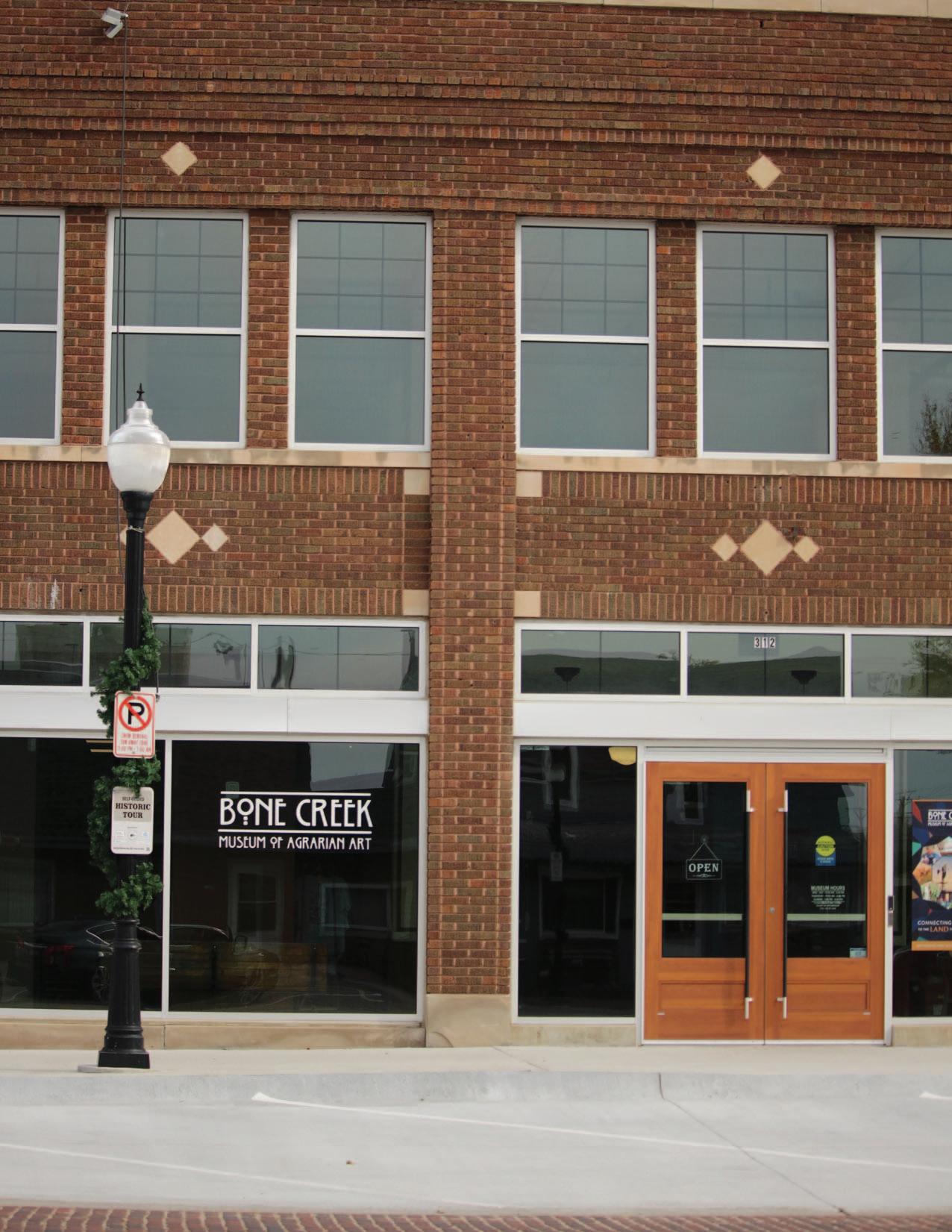
Bone Creek Museum Unveils Bold New Era
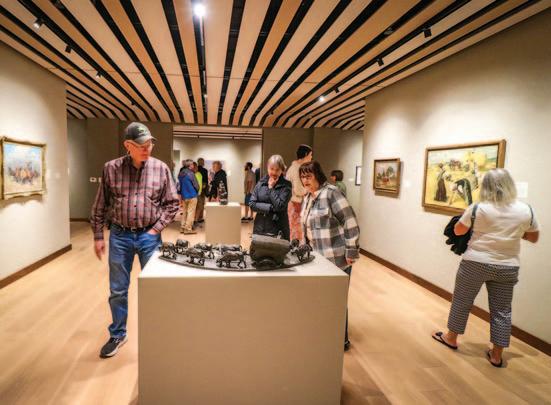
The Bone Creek Museum of Agrarian Art in David City, Neb., celebrates a bold new era with its renovated historic facility and Lark Gilmer’s La Bergère–Shepherdess exhibition, showcasing world-class agrarian art, preserving local heritage, and elevating Nebraska’s cultural landscape to national prominence.
14 Your Guide to Smarter Electronics
Smart home technology is transforming everyday living by combining comfort, convenience, and energy efficiency. From thermostats to voice assistants, today’s smart devices help homeowners save time, electricity, and money.
ON THE COVER
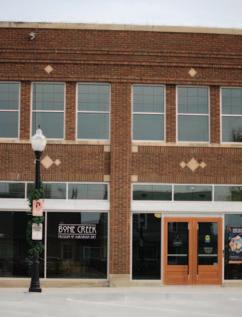
Bone Creek Museum of Agrarian Art in David City, Neb., opened in 2008 with a specialized focus on art of the land. It is the only Agrarian Art museum in the nation. See the related article on Page 6. Photograph by Wayne Price
Wayne Price
Editor’s Page
New Legislation Fuels Safer Rural Growth
Wildfire may seem like a distant threat to Nebraska farmers, but the truth is that what happens in the nation’s forests has a direct impact on the Great Plains. When forest lands are mismanaged, the results ripple through the economy and the environment. The Fix Our Forests Act (FOFA), now advancing through Congress, is designed to make forest management more effective and more responsive to today’s wildfire challenges. Nebraska’s rural electric utilities and agricultural community have a real stake in its success.
The Nebraska Rural Electric Association supports the Fix Our Forests Act because it strengthens vegetation management on federal lands. That work is not limited to mountain regions. Healthy forests protect watersheds, reduce flooding and sediment buildup, and help maintain the reliability of the electrical grid. When wildfires grow unchecked in neighboring states, their smoke drifts hundreds of miles east, hurting air quality and even damaging crops. The Fix Our Forests Act aims to curb those risks by improving how the U.S. Forest Service manages and restores forested lands.
The legislation would speed up the review and approval of forest management projects that reduce wildfire hazards. It would create interagency “strike teams” to move projects through environmental reviews more quickly while maintaining scientific oversight. It would also limit unnecessary litigation that has slowed previous restoration efforts. The bill directs the Forest Service and U.S. Geological Survey to establish a Fireshed Center, a central hub for wildfire prediction and data. By identifying the areas most at risk, the center can help target forest thinning, prescribed burns, and watershed restoration work where they are needed most.
Visit our website at nebraskamagazine.org
Just as importantly, FOFA acknowledges that no single agency or state can manage wildfire alone. It brings together federal, state, and local partners across ownership boundaries to restore forests and reduce the risk of catastrophic fire. That cooperative approach mirrors the public power model Nebraskans have relied on for decades—local control, public accountability, and shared responsibility for essential resources.
The Fix Our Forests Act is a step toward a safer, more sustainable future for the nation’s forests and the communities they protect. For Nebraska’s farmers and rural electric systems, it represents an investment in resilience, from the mountains that feed our rivers to the fields that feed the world.
Jared Routh
Jared Routh is the General Manager of High West Energy, Inc., headquartered in Pine Bluffs, Wyoming.
Guest Editorial
The Power of Managing Peak Demand
Electricity is often taken for granted, as we flip a switch, plug in a device, or adjust the thermostat, and expect instant results. Yet, behind the scenes, your local cooperative or public power district (PPD) is constantly working to balance supply and demand. One challenge that electric utilities face is what we call “peak demand.”
Peak demand refers to those times when the use of electricity across electric systems is at its absolute highest. When the air conditioning is running in the heat of the summer or on a bitter winter morning, when heaters and lights all come on at once, there is a spike in demand. While these moments sometimes only last a few hours, they can require a significant amount of electricity.
Now, why does this matter? Unlike investor-owned utilities, cooperatives and PPDs don’t exist to make profits for shareholders; rather, we exist to serve you, our memberowners. To achieve this, we must plan and invest in sufficient power supply and infrastructure to handle the highest loads. This is a significant challenge because building and maintaining the infrastructure to cover those few hours each year can be costly. Power plants, transmission lines, and substations must be sized to handle the maximum load, even if they sit underused most of the time. When demand exceeds our supply, these additional costs can ultimately be passed on to the members we serve.
When discussing peak demand, we also must factor in the matter of reliability. When too many people draw too much electricity at once, this can put stress on the grid. When the grid is overloaded, this can increase the risk of outages or force utilities to rely on backup generation, which is often more expensive.
However, we can manage peak demand together. The choices we make at home or in our business truly matter, like waiting to run the dishwasher until after 9 p.m., turning up the thermostat a few degrees on a warm afternoon, or charging an electric vehicle overnight. When thousands of members take small steps, the impact can be significant.
While it’s important for members to understand peak demand and how their actions can help manage it, public power districts and cooperatives also take steps to lessen the impact of high demand on the grid. These steps could include installing smart meters, offering load management programs, and investing in battery storage.
High West Energy helps manage peak demand through our Generation and Transmission Association, Tri-State. Limits have been set in place, specifically for members with large loads, such as data centers. When demand is high within the transmission grid, Tri-State communicates with these members and requests a load curtailment. This doesn’t shut off their power, but it reduces usage to a minimum, helping keep the grid stable for everyone.
While electricity is vital to our lives, managing peak demand is one of the smartest ways we can protect its affordability, reliability, and sustainability. As a rural cooperative, we’re committed to providing the power you need, when you need it.
Bone Creek Museum Unveils Bold New Era
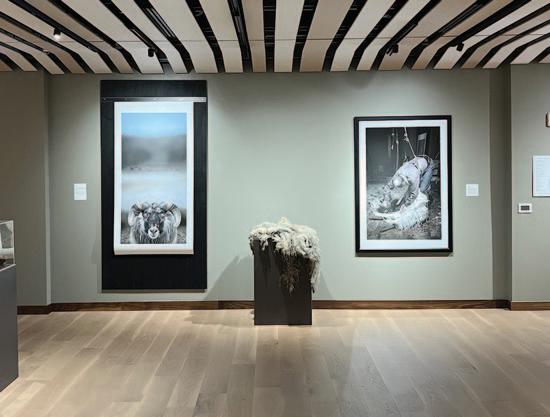
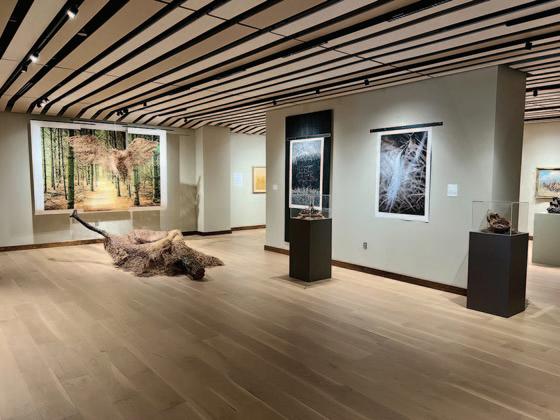
The Bone Creek Museum of Agrarian Art unveils a powerful new chapter in its history with the opening of its newly renovated facility and the premiere of La Bergère–Shepherdess, a major exhibition by acclaimed multimedia artist and photographer Lark Gilmer. On view now through March 15, 2026, the exhibition marks a bold step forward in the museum’s vision to become the nation’s leading center for agrarian art.
The expanded space—enthusiastically received by summer visitors—represents a transformative leap from the original gallery that has served the community since 2008. With this renovation, Bone Creek is now able to present exhibitions of national caliber, deepening its mission to connect people to the land through art. Supported in part by the Nebraska Arts Council and the Nebraska Cultural Endowment, La Bergère–Shepherdess is the museum’s inaugural major exhibition
in the new space and sets a high benchmark for future programming.
Through a moving blend of photography, painting, and installation, Lark Gilmer explores the solitary, elemental life of a shepherd. Her immersive work captures the raw beauty and quiet resilience of agrarian life: the relentless wind, the devoted dogs, the rugged terrain, and moments of deep communion with the land and animals.
“In many ways, Lark embodies the meaning of La Bergère—not only as a protector of her flock, but also as a guardian of art and the land,” said curator Amanda Guenther.
Gilmer’s unique practice includes placing works directly into the landscape, allowing weather and time to shape them—a poetic act that reflects her deep connection to nature. This spirit of generosity and spontaneity infuses the exhibition with wonder and meaning.
“I have often felt the pull to connect, and reconnect with the land, torn between duty and calling,” Gilmer writes. “My authentic life is born from the land, working with it in my every day and I am refreshed every time I return. My work attempts to capture a land-based practice, life-sized so that the viewer can experience a moment as I do. When I am able, I use the camera and when I cannot, I use a brush. They are all lived experiences on the land.”
The exhibition’s scale, emotional power, and artistic excellence rival those found in major museums nationwide. La Bergère–Shepherdess is a striking affirmation of Bone Creek’s evolving role on the national stage—bringing thought-provoking, deeply human exhibitions to audiences in Nebraska and beyond.
Bone Creek Museum of Agrarian Art was closed for only four short months to move from its original location
to a newly renovated historic building at 312 North 5th Street. The grand reopening on Saturday, April 12, boasted a standing-room-only crowd in attendance gathered in the front multi-purpose room, which originally served as the vehicle showroom of the Ford Motor Co. assembly plant. There were 450 people present throughout the day’s festivities, which included a ribbon cutting by the Nebraska Department of Economic Development director, remarks by state senators, gallery tours, and hands-on crafts.
Bone Creek Museum of Agrarian Art opened in 2008 with a specialized focus on art of the land. It is the only Agrarian Art museum in the nation. Remarks by guest speakers boasted the local pride of having the attraction as an asset to increase tourism. The museum serves as the
Continued on Page 8
From Page 7
cornerstone of Destination David, a creative district designated by the Nebraska Arts Council.
Expansion of the museum was a concept for 10 years, an active fundraising campaign for four years, and a construction project for less than 24 months. The project’s contractors received top awards from the Associated Builders and Contractors of Nebraska/South Dakota just this month in the Historical Renovation/Restoration category for projects under $25 million. Cheever’s renovation of the 1917 historic Ford Building was well under the competition’s category limit, at approximately $5 million. The team received two other awards for the execution and coordination of the HVAC system and the advanced lighting system.
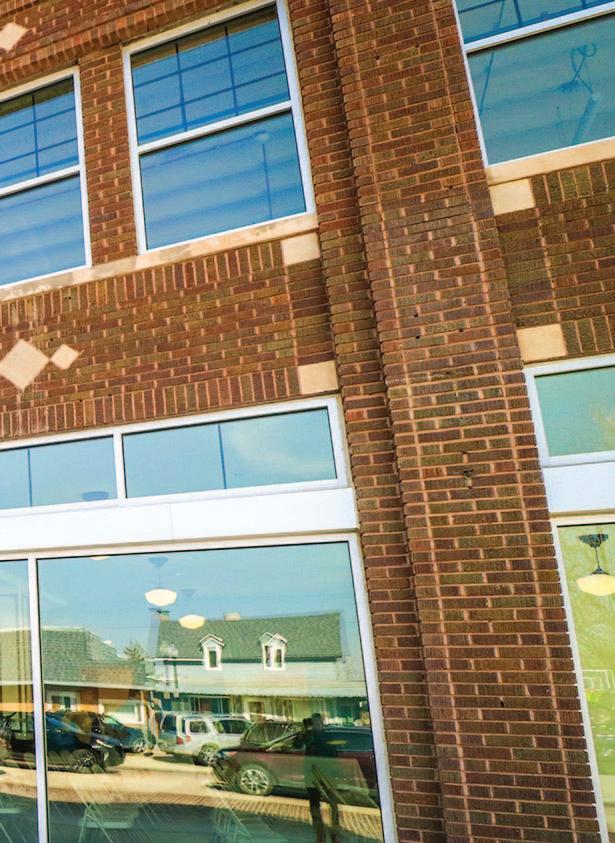
The museum’s board of directors intentionally preserved some of this building’s interesting history. Grandfather of Joyce C. Hall (founder of Hallmark cards) owned the David City lots as a livery stable before selling to build the Ford dealership. The large brick building was an assembly plant and showroom for Model- T Ford automobiles. But like so many buildings in small towns, it had become vacant in recent decades and fallen into disrepair. Preserving a history of place is in keeping with the mission of the organization’s local founders. CMBA architects retained the historic design of the front lobby with the original tile floors, solid woodwork and period light fixtures. There is also a Ford automobile on permanent display in tribute to the building’s history. This particular 1923 Model-T was
believed to have been the very first four-door model T sedan to have been assembled onsite and sold from the showroom.
Now the 1917 structure has been remodeled as a world-class art museum, preserving the character and charm that has grounded this corner of town, just off the city square, for more than 100 years. Some of the features of the new building include five galleries, two classrooms, and a small theatre. “There is no underestimating the impact of this building on the activities of the museum. We now have dedicated spaces for artist talks and receptions, proper spaces for receiving and storing the growing collection, and room to host in-house art workshops,” said collections manager Gabrielle Comte.
Bone Creek Museum of Agrarian Art’s mission is to connect people to the land through art. With each exhibition, Bone Creek Museum consistently captures a theme that is very challenging and compelling to the contemporary arts conversation. They have joined the conversation about farming, past, present and future, with creative expression that culminates in an emotional response from the viewer. The art becomes a tool for discussion and simultaneously a means to its own end. They are paving their own way forward to tell the timeless but unique stories of agriculture and Agrarian Art in America and across the world.
The museum is now open at 312 North 5th Street, David City, Wed. – Sat. 10:00am -4:00pm and Sunday 1:00-4:00pm. Learn more at bonecreek.org.
Written by Amanda Mobly Guenther, Curator and Sarah Juranek, Operations Manager. Photographs provided by Bone Creek Museum.
READY TO POWER WHAT’S NEXT
Tri-State, together with your local electric cooperatives and public power districts, is proud to power homes, farms, and businesses—and we’re ready to power new opportunities too.
We welcome responsible growth that supports our communities. We’re not just keeping up with change—we’re planning for it, with a commitment to reliability and affordability.
We are fortifying the infrastructure, systems, and programs necessary to keep electricity affordable and preserve the rural way of life. So that the grid we’re building today is strong enough for tomorrow’s ideas.
WHATEVER THE FUTURE HOLDS, WE’LL POWER IT.® Scan to learn more or visit tristate.coop/powering-the-future
It was not my first rodeo.
I have forever been into goat tying and chute dogging, bull riding, barrel racing and all kinds of roping: ribbon roping, breakaway roping, tie-down roping and team roping. I love the rodeo: three-fourths dust and guts, and one part equal shares of blood, mud and wild-eyed calf snot.
I love rodeos, but to be honest, I have always been the cowgirl wanna-be perched on the arena fence. I’ve lived my life afoot. Never grew up on a ranch, never had a horse on pasture; never even owned a horse. Begged for them? Plenty.
As a kid, I should have gazed into my crystal ball to see bronc busting in my future because I was the crash test dummy for every horse in the neighborhood. Never figuring out how to hang on tighter or give up my horsebegging ways, I was the cowgirl imposter in my genuine red plastic Dale Evans hat. All I’ve ever known for certain about the equine family is that I love to sit a horse as long
as it promises not to move any faster than a three-legged sand turtle can crawl. Plus, I know that nothing, but nothing, is softer than the nose of a colt, newly foaled.
But this was a junior high rodeo I’m writing about, its tenderfoot cowboys glued tight to their mounts like a burr in a horse’s tail. Where girl-type cowboys abandoned their sandals for pointy-toed boots, designed to fit a spur, and traded their sequined t-shirts for plaid ones with pearl snap buttons. The event itself was lined with proud parents, grandpas and grandmas who used to ride, rope and race from the backs of American quarter horses, Paints and Appaloosas themselves.
The pole bending attracted me first off, its female competitors weaving through a straight line of poles in a figure-eight fashion before stampeding it for home, hell bent for leather to get the drop on the rest, a hefty “Haw” and a riding crop spurring on their faithful filly.
One of the cowgirls, however, was especially young and tender, like newly planted prairie grass, encouraging her horse into more of a peaceful trot than a horse afire. She brought a beauty to the sport, reminiscent of the kinship than can exist between humans and animals. I’ll bet her horse felt it in every step.
This young girl reminded me of a cowgirl at an earlier rodeo, at a place where highway exits led, three of them, to Sparks, Nebraska, equal to the number of residents. Where yellow dog lazed on the wooden porch of the general store, sounding a thump of his tail as locals retrieved their mail and other essentials, occasionally holding fast in a slow game of checkers. It may be much the same today.
On the morning of the Sparks rodeo, locals unloaded their cutting horses, barrel-racing ponies and fast galloping mustangs descended from ancestors once running wild in the western bluffs. In one corner of the arena stood a ladybroke dobbin so gentle you’d have placed your crippled, 99-year-old grandma in its saddle. On this morning, the girl on its back appeared to be younger than milkweed down, not more than three. No doubt she could ride before she could walk. Unattended, she held court there. Once in a while she’d pull back the reins a bit and steer her pony to the right; after a time, she’d pull the horse back to the left to face the morning sun.
She brought beauty into that rodeo arena, reminiscent of the trust that can exist between animals, human and otherwise. She was surely never destined to be a cowgirl wanna-be, but the real deal.
This is LaRayne Topp, just roaming the countryside.
May Your Holidays Be Merry and Bright
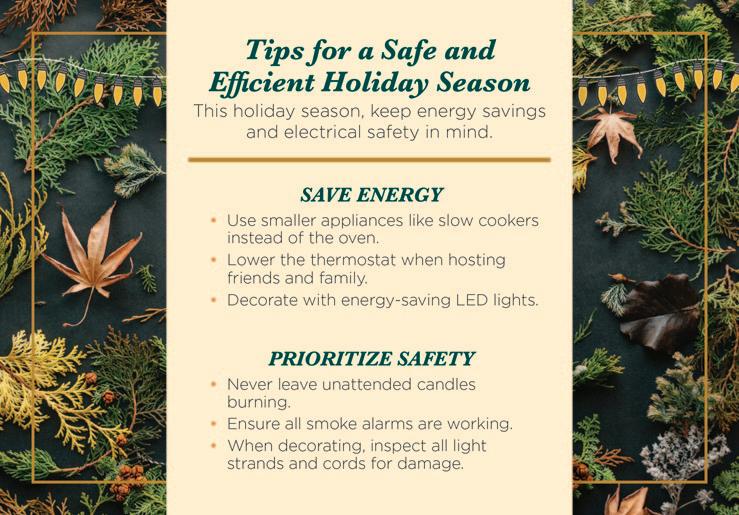
Celebrate safely and save energy this holiday season by checking lights, testing smoke alarms, using LEDs, and cooking efficiently with small appliances.
Many of us will soon be gathering with family and friends to celebrate the holiday season. This festive time of year brings joy and warmth, but as the weather gets cooler and we spend more time indoors, the holidays can also bring increased energy use and a higher risk of electrical and fire hazards.
This month, I’d like to share a few practical tips to help you stay safe and efficient during the holiday season.
Safety first
My family truly enjoys decorating our home for the holidays. Before we deck the halls, I always check electrical cords and light strands to make sure they aren’t frayed or damaged. This gives us peace of mind, knowing our holiday lights are ready to safely brighten our home. I also double check the lights we use outside to make sure they’re rated for outdoor use.
Like many households, we also enjoy holiday-scented candles. While festive, candles can create fire hazards and should never be left unattended. One of the best and easiest ways to safeguard your home is to test smoke alarms often. I test mine on the first of each month, so it’s easy to remember. Testing smoke
alarms only takes a few seconds and could save lives, so make it a habit.
‘Tis the season for savings
Spending more time indoors with a few more guests in the home can really impact home energy use. By taking a few small steps to save energy during the holiday season, you can lower your bills.
I like to remind my family members to mind the thermostat. Since heating and cooling makes up the majority of home energy consumption, the thermostat is one of the best places for savings. Lower
it a few degrees, especially when you have family or friends stopping by. Good company brings additional warmth to your home.
Your family can also save energy by decorating with LED holiday lights. LEDs are the most energy efficient lighting options available, and they last much longer than traditional bulbs.
There’s no denying one of the best parts of the holiday season is the food––not just the meals but the time we spend together in the kitchen. There are many ways to save in the heart of your home, but one of the best approaches is to cook with smaller countertop appliances, such as air fryers, slow cookers and toaster ovens. These handy appliances consume a fraction of the energy used to heat the oven, creating the perfect recipe for mealtime and energy savings.
Happy holidays and remember to implement some of these energysaving and safety tips into your holiday plans.
Your Guide to Smarter Electronics
Wouldn’t it be great to wake up on a sunny morning, say “Good morning, house!,” and stand back as the right light fixtures flash on, the coffeemaker starts, the outdoor security lighting switches off and the toaster oven starts preheating for your frozen toaster pastry? That may sound like something from science fiction, but today’s smart home electronics make it possible.
Smart devices use digital technology and wi-fi to take your home to a new level of convenience and comfort. They can also help you make better use of your electricity so you can reduce waste and lower your energy bills.
By Scott Flood
Even if you’ve already put the many advantages of smart electronics to work for your home and family, you might be surprised by some of the newer devices with the potential to change your daily life.
Smart Appliances
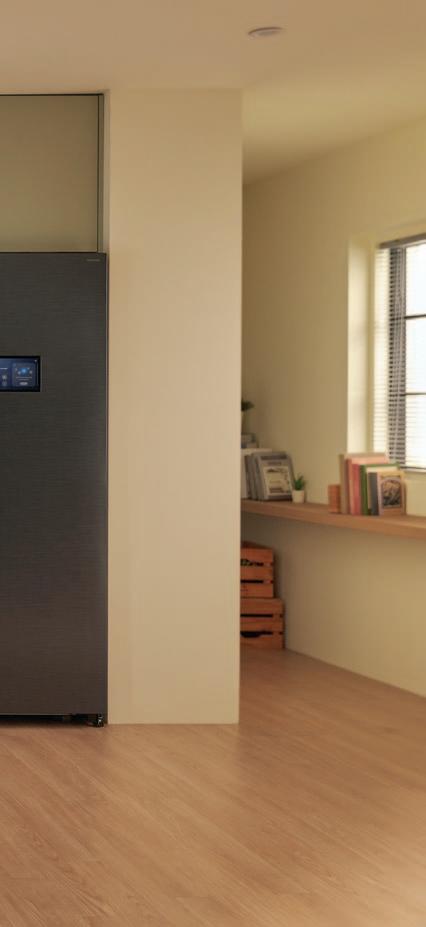
Smart appliances use wi-fi and high-tech sensors to operate more efficiently. Photograph by Samsung
Smart Thermostats
Heating and cooling use more energy than anything else in your home. Replacing your home’s standard thermostat with a smart model can lower your monthly electric bills while keeping you even more comfortable. Smart thermostats learn your daily habits and take over for you. You won’t have to lower your thermostat every evening, because it will happen automatically. Because smart thermostats know exactly when you need electricity and when you don’t, they waste a lot less.
The second-biggest share of your home’s electricity powers appliances, from your refrigerator to your water heater. Smart appliances use wi-fi and high-tech sensors to operate more efficiently. A smart washer can sense the size of your load and adjust the water and cycle times accordingly. Smart refrigerators can warn you when the kids leave the door open. And smart water heaters don’t waste energy by heating water while you’re asleep.
Smart Plugs and Power Strips
An easy and affordable way to explore smart technology is with smart plugs, which plug into your wall outlets. You can then plug lighting, appliances and other devices directly into them. You’ll be able to control all those devices through a single app, so you can tell the coffeemaker when to start brewing, turn your exterior accent lighting off at dawn or have your favorite music already streaming as you walk in the door.
Smart power strips look like their ordinary cousins but use smart plugs. They’re particularly helpful at eliminating waste caused by what’s known as “phantom load” – like leaving your phone charger plugged in when it’s not charging.
Smart Shades
You wish your family room didn’t face south, because it’s always warm during the day. Smart shades and blinds can help. You can set them to automatically open or close depending on the time of day (and year) or based on your home’s indoor temperature. They can help your air conditioner keep you cooler for less.
Smart Assistants
When you combine the capabilities of individual smart home electronics with voice assistants like Amazon Alexa or whole-home smart energy management systems, they become even more powerful. You can teach voice assistants to carry out multiple tasks that make up your daily routines, like the “good morning, house” message. Energy management systems simplify control of all aspects of your home’s energy use, and some offer specific tips to help you save even more.
Be Smart (with Your Smart Devices)
While all those smart devices may be able to make your home more energy efficient and your life more comfortable, they’re not perfect. Most require an internet connection, so if your service is down, your smart devices won’t work, either.
Smart devices typically don’t receive frequent system updates like your smart phone or laptop, so be aware of potential security issues. Before you choose any smart home devices, make sure it’s completely secure and compatible with what you have. Then prepare to be amazed by what smart home electronics will do for you!
Stay Safe While Staying Warm Safety Briefs
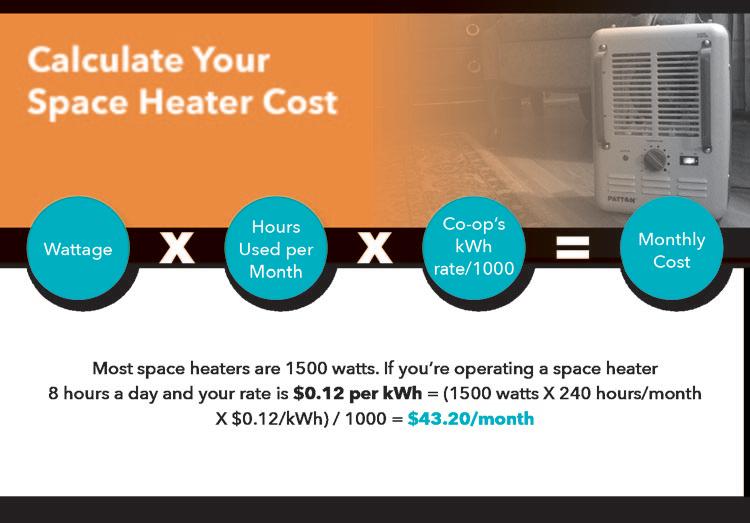
Once your home is sealed and insulated, a space heater can be used to increase comfort and warm specific rooms, like a home office or bedroom, without turning up the heat for the whole house.
A space heater is like a ceiling fan; it can improve comfort in a small area, but it’s not a whole-house solution.
Use space heaters efficiently:
• Heat only the room you’re currently in.
• Close doors to keep heat contained.
• Choose the right size — too small and it won’t warm you; too big and it wastes energy. Check manufacturer sizing guides.
• Use a heater with a thermostat and timer to avoid overheating the room or wasting electricity.
Stay safe while staying warm:
• Place the heater on a solid, flat, nonflammable surface — never on carpets or rugs.
• Plug the heater directly into the
wall outlet. Never use extension cords or power strips.
• Keep children, pets and anything flammable, such as curtains or bedding, at least 3 feet away from the heater.
• Choose a heater with built-in safety features including: Overheat
sensor and tip-over shutoff switch.
• Never leave a space heater unattended, especially around children or pets.
• Turn off the heater when you leave the room or go to sleep.
• Unplug it when not in use to prevent electrical hazards.
Energy Sense
by Miranda Boutelle
Avoiding Water Heater Woes
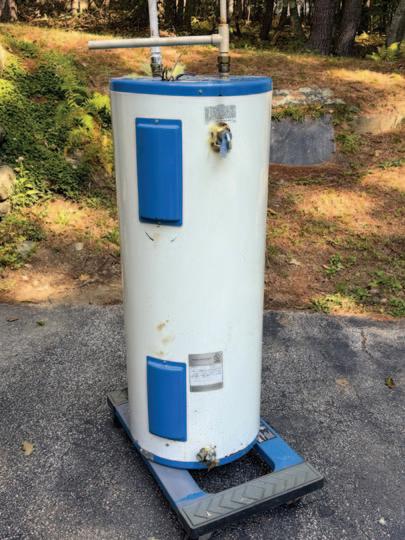
We’ve all gotten used to having reliable hot water in our homes. Nobody wants to get caught off guard with an unexpected cold shower or failed water heater. I tend to live in the “if it isn’t broken, don’t fix it” school of thought, but a failed water heater can cause damage to your home and property. Emergency replacement of a water heater can add unnecessary cost, not to mention inconvenience. Evening or weekend replacement or repair can lead to higher costs charged by a plumbing company.
Here are some signs that your storage water heater might be approaching the end of its life.
The typical lifespan of a storage water heater is 10 to 15 years, according to the U.S. Department of Energy. If your water heater is older than that, plan to replace it soon. Don’t have records of when it was installed? No problem. Find the serial number on the water heater’s sticker or metal plate. Look up the serial number online or call the manufacturer to find its age.
Sediment or water on the floor or at the bottom of the water heater could mean its days are numbered. Sediment can be a sign of corrosion, which leads to a leak or failure.
A professional plumber may be able to replace failing components. If you are having issues with the tank itself, it’s likely time for a new unit.
If you’re in the market for a new water heater, a heat pump water heater might be a good fit for your home. These systems are two to three times more energy efficient than conventional electric-powered tank water heaters, according to the DOE. A federal tax credit is available until Dec. 31. You can claim 30% of the project cost, up to a maximum of $2,000, for the installation of an Energy Star heat pump water heater. If your water heater is past its useful life or showing any signs of failure, consider investing in a new one before the end of the year. You might also be eligible for rebates from your state or rural electric utility.
Be aware of your water heater’s age and performance to avoid emergency replacement and damage to your home.
Photo Credit: Miranda Boutelle, Pioneer Utility Resources
Seeing rusty or discolored water when you turn on your faucets can be a sign the tank is rusting inside. If water is not getting as hot as it used to, it could be a sign of a failing electric element or a gas burner not functioning properly.
Odd noises could indicate an issue with the components. If you’re hearing unusual noises from your water heater, schedule a checkup with a plumber. Wellfunctioning water heaters typically don’t make much noise.
Even if your water heater is in great shape, you can save at home by lowering your hot water use. Some easy ways to do this are washing laundry in cold water and installing high-performance aerators on faucets and showerheads to reduce the amount of hot water you use. If you have time-of-use rates, you can save by installing a timer on your water heater to prevent it from operating during peak energy use hours, typically in the mornings and evenings. It also helps lower the strain on your electric utility.
Knowing the signs of water heater failure can save you from home damage and offer opportunities to explore options for more efficient equipment to lower your electric use.
Stop the Scurry: Keep Mice Out for Good
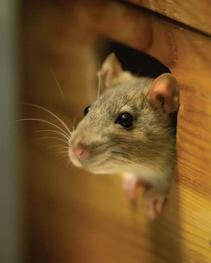
Mice are clever, quick, and much harder to catch than most homeowners realize. They can squeeze through tiny cracks, gnaw open gaps, and climb electrical cords with ease. Once they find warmth, shelter, and food inside your house, they settle in quickly. The first step to controlling them is sealing your home. Walk the exterior carefully and close up even the smallest holes with caulk, steel wool, or new weather stripping under doors. A quarter-inch gap is all a young mouse needs to get in.
Once indoors, traps are the most effective way to deal with them. The key is quantity and placement. Don’t expect a couple of traps to solve the problem. Set many, and put them where mice are most active. Look for droppings, especially along walls, under cabinets, behind appliances, and near feeding areas. The kitchen is often the worst room, so bait and set at least six traps there each night.
Peanut butter is the best bait. Unlike cheese, which mice often ignore, a small dab of peanut butter is irresistible. Use a separate jar just for trapping, apply it with disposable knives, and keep it out of the kitchen to avoid contamination.
Pet food also attracts mice. They’ll haul dog or cat kibble long distances to stash it away, so placing traps near food dishes can be highly effective. If you’re concerned about pets getting caught in snap traps, try live traps instead. They allow you to catch mice humanely and release them far away from your home.
Whether you choose snap or live traps, always place them near walls and other vertical surfaces—mice prefer to travel close to cover. With persistence, plenty of traps, and a sharp eye for pathways, you can rid your home of mice and prevent them from returning.
JUST RELEASED!
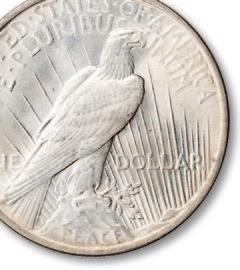
Rarcoa®, America’s Oldest Coin Company, is announcing the public release of 789 of the 1922 Peace Silver Dollar, struck in 90% pure silver at the iconic “Mother Mint” in Philadelphia, the birthplace of American coinage. Each coin comes in Brilliant Uncirculated condition, pristine as the day they were struck!
Hold 103 Years of American History
Struck in 1922, each coin carries 103 years of American history. Could Al Capone have paid for a load of illegal whiskey with your coin? Or maybe your great-grandfather carried it while storming the beaches of Normandy during World War II before ending up in a small coin shop in Little Rock, Arkansas. Each coin has its own unique history and you can hold American history in your hand when you buy yours today!
Sold Nationally for as much as $159
This same 1922 Peace Silver Dollar sells elsewhere for as much as $159. But thanks to Rarcoa’s buying power and numismatic expertise, you can own one for as little as $69, in quantity while supplies last. That’s $90 LESS!
Sold Nationally for as much as $159
Because the precious metals market is always active and dynamic, prices may adjust to reflect the latest market opportunities.
5-9 coins - $74 each, Save up to $45 + FREE SHIPPING
10+ coins - $69 each, Save $100 or more + FREE SHIPPING
Please mention this code when you
Photograph by
Stepan Rotter
HOMETOWN HOMETOWN
EATS
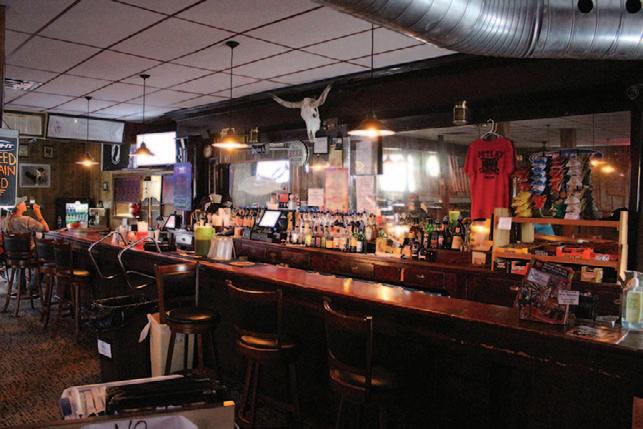
In the tiny town of Garland, Nebraska, the Outlaw Steakhouse has been a gathering place for more than a century. Locals say it may be one of the oldest continuously open taverns and restaurants in eastern Nebraska. The bar fixture itself dates back to the 1880s, and through the years, countless stories have been told across it.
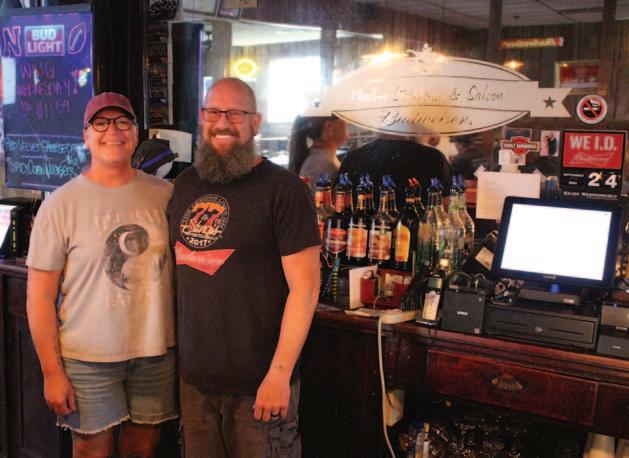
Lisa and Mark Lintt, who own the restaurant today, bought it in 2008. Mark grew up in the area and has been part of the place for most of his life. His and Lisa’s fathers both played in local bands when they were kids, and now the two run the very bar where music and memories have filled the air for generations. “It’s crazy how it all comes around,” Mark said.
Before owning the Outlaw Steakhouse, Mark worked in construction. “I told myself that it can’t be that hard to own a bar,” he said with a laugh. “Well, I was wrong.” When they started, the Lintts hosted live bands often, but as times changed, so did their focus. “People don’t go for booze cruises anymore,” Mark said. “So we shifted our focus to the food. That’s what we do now.”
Food is what keeps people coming back. Prime rib is the main attraction, fresh and never frozen. On Fridays, they serve regular prime rib, and on Saturdays, they add a smoked version. During Lent, they hold a traditional Friday fish fry that draws a crowd. The restaurant also serves several sandwiches made with sliced prime rib.
Lisa and Mark both work full time at the restaurant, wearing just about every hat there is. Mark runs the grill, and Lisa waits tables, washes dishes, and manages everything from scheduling to hiring. “Thank the Lord that we had so many loyal customers that came and got to-go orders and kept us open,” Mark said, remembering the struggles of COVID.
OUTLAW STEAKHOUSE GARLAND, NEB.
The Outlaw Steakhouse has about ten employees and is open Wednesday through Saturday. Even with Garland’s population of around 200, the place fills up fast. “We double the population every Friday and Saturday,” Lisa said with a smile. Visitors come from all over, including Alaska, Europe, and even Zimbabwe. The Lintts could have moved their business, but they chose to stay in Garland. “This is where it’s at,” Mark said. “This is the reason we do as good as we do, because of where we’re at.”
Fried Chicken Tenders
Oil of choice, for frying
1/2 stick butter
2 eggs
2 cups milk
3 pounds chicken breast, cut into strips
2 cups flour
1/4 cup barbecue seasoning of choice
1/4 cup mesquite seasoning salt, to taste pepper, to taste dipping sauce of choice (optional)
Fill Dutch oven or large frying pan halfway with oil and butter; heat over medium heat.
In large bowl, mix eggs and milk then place chicken strips in mixture. In separate bowl, mix flour, barbecue seasoning and mesquite seasoning. Add salt and pepper, to taste.
Remove 4-6 chicken strips from milk mixture and cover completely in flour mixture.
Drop pinch of flour in hot oil; if it crackles, it’s hot enough. Once hot, fry battered chicken 4 minutes then, using tongs or fork, turn over and fry 4 minutes. When done, chicken will be golden and almost float. Remove from frying pan and repeat with remaining chicken.
Serve with dipping sauce of choice, if desired.
Pistachio Cranberry Icebox Cookies
1 1/2 cups all-purpose flour
1/2 teaspoon cinnamon
1/4 teaspoon salt
1 1/2 sticks (3/4 cup) unsalted butter, softened
1/2 cup plus 2 tablespoons granulated sugar
1/2 teaspoon finely grated fresh orange zest
1/2 cup shelled pistachios (2 1/4 oz: not dyed red)
1/4 cup dried cranberries (1 1/4 oz)
Stir together flour, cinnamon and salt in a bowl. Cream together butter, granulated sugar and orange zest in a large bowl with an electric mixer at medium-high speed until pale and fluffy, about 3 minutes. Reduce speed to low and add flour mixture in 3 batches, mixing until dough just comes together in clumps, then mix in pistachios and cranberries. Gather and press dough together, then divide into 2 equal pieces. Using a sheet of plastic wrap or wax paper as an aid, form each piece of dough into a log about 1 ½ inches in diameter. Square off long sides of each log to form a bar, then chill, wrapped in plastic wrap until very firm, at least 2 hours. Preheat oven to 350 degrees and put oven racks on the upper and lower thirds of the oven. Line 2 large baking sheets with parchment paper. Cut each bar crosswise into ¼ inch thick slices, rotating bar after cutting each slice to help keep square shape. (If dough gets too soft to slice, freeze bars briefly until firm.) Arrange cookies about a 1/2 inch apart on lined baking sheets. Bake cookies, switching position of sheet halfway through baking, until edges are pale golden, 15 to 18 minutes total. Transfer cookies from parchment to racks and cool completely. (Dough bars can be chilled up to 3 days or frozen, wrapped in plastic wrap and foil for one month. Thaw frozen dough in refrigerator just until dough can be sliced.)
Vickie Hammon, Spencer, Nebraska
Potato Chip Cookies
1 cup (2 sticks) butter 1 cup sugar
egg yolk 1 1/2 cups flour
teaspoon vanilla
cup crushed potato chips
cup chopped pecans
Cream butter and sugar until light and fluffy. Add egg yolk, flour and vanilla. Mix and fold in potato chips and nuts. Drop by tablespoons on ungreased baking sheet. Flatten a little. Bake at 350 degrees for about 12 minutes.
Jenny Bergt, Amherst, Nebraska
TWELVE HOLIDAY SAFETY TIPS
Keep decorations at least three feet away from heat sources – especially those with an open flame, like fireplaces and candles.
5 6 1 2 3 4 7 8 9 10 11 12
The best decorations are safe decorations, so when you’re decorating, make sure not to run cords under rugs or furniture.
If you have a natural Christmas tree water it to keep it fresh and safe.
Always turn off your decorations when you leave your home and when you’re sleeping.
If you’re using extension cords or adapters that add receptacles, consider having a qualified electrician add more outlets to your home.
Only use electronics in dry areas. As tempting as it is, you just can’t decorate your aquarium with icicle lights.
Remember that phones and tablets should stay on your nightstand.
Every home needs a working smoke alarm in each bedroom, outside sleeping areas and on every level, including the basement.
If you’re using a space heater, switch it off before leaving the room.
Inspect your decorations and discard any that are damaged or worn out.
Keep batteries stored safely in their packaging and out of reach from small children and pets.
The best gift for your family is an Arc-Fault Circuit Interrupter breakers or outlets. Many electrical fires that occur every year could be prevented by AFCIs.