victorian / planning / environmental / law / association / volume
Reflections on being a Regional Planner
Rory’s Ramble: Planners v Developers. Why are we teaching division, instead of collaboration?


VPELA
victorian / planning / environmental / law / association / volume
Reflections on being a Regional Planner
Rory’s Ramble: Planners v Developers. Why are we teaching division, instead of collaboration?
VPELA
2nd December 6.00pm
Federation Square
Proudly sponsored by

VPELA would like to congratulate sitting Committee members Lucy Eastoe, Arnold Bloch Leibler, Damian Iles, Hansen Partnership, Grant Logan, DTP and Tim McBride-Burgess, Contour Consultants who were all successfully returned. Warm congratulations to William Bromhead, Ratio, Steve Myers, MPAA Studio and Sarah Thomas, Urban Planning Collective – UPco who will join the Committee next month. A full profile of our new members will be included in the Autumn 2026 Revue.
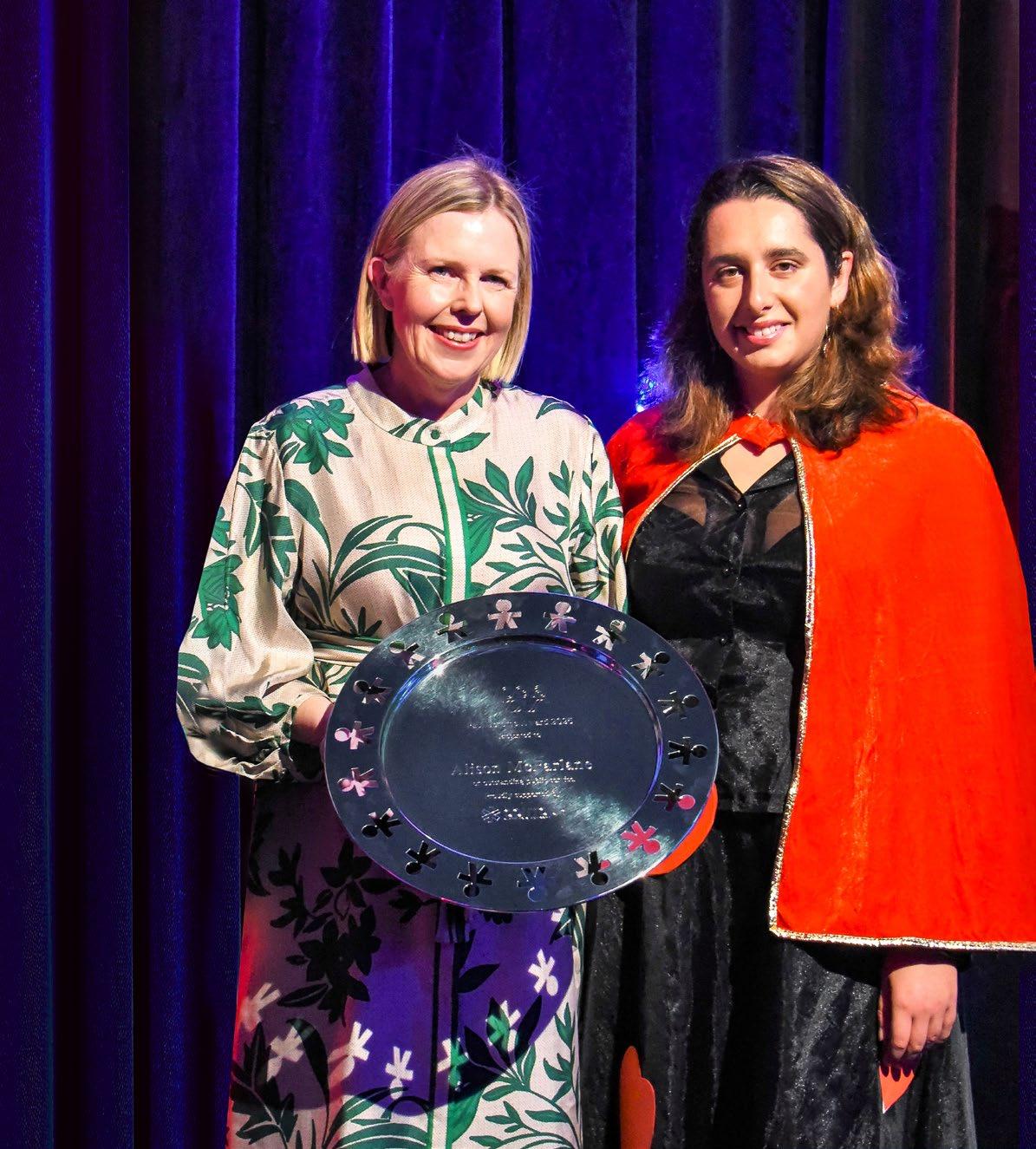
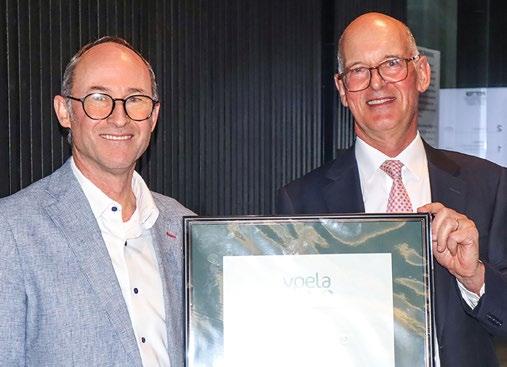
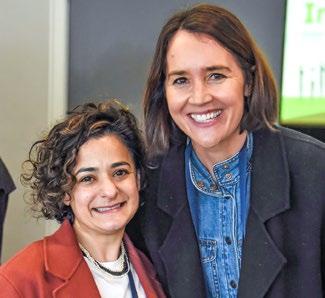
Cover: Alison McFarlane, Paul Jerome Award recipient, at the Conference Gala Dinner in August with Felicity Karakiklas, Contour Consultants – Award sponsor.
Amanda Ring M: 0419 332 473
E: aring@upco.com.au T: 8648 3500

McFall
Copy deadline date for the Autumn issue is Friday 13 February, 26. A one page article is 800 words approx. including an image.
PO Box 1291 Camberwell 3124 www.vpela.org.au E: admin@vpela.org.au
VPELA acknowledges the Traditional Custodians of Country throughout Australia, their Elders and ancestors, recognising their rich heritage and enduring connection to Country and the ongoing sovereignty of all Aboriginal and Torres Strait Islander Nations.
In the Winter edition of Revue, we spoke of the frenetic pace of the Government’s work to deliver on the aspirations set out in its Housing Statement of 2023. Well, the pace of the Government’s Planning Reform agenda continues:
• In the last three months alone there have been no less than 10 VC amendments gazetted; almost all aimed, in some way, at encouraging and speeding up the supply of more housing.
• Standing Advisory Committee hearings considering planning frameworks for various SRL East Precincts are proceeding through to the end of 2025; occupying many at the Victorian Bar and consultants of all sorts for months at a time. The pressures on all involved in these hearing are seemingly relentless.
• The Department of Planning’s Development Facilitation Program is understood to be very well utilised and likely explains the lengthening approvals process timeframes. Councils, especially those managing Melbourne’s inner and middle rings, must surely be starting to feel the cost (political and financial) of losing consideration of applications to the still relatively new Clauses 53.23 and 53.24 of the Victorian Planning Provisions.
• Recently released proposed mapping of Train and Transport Zones and Housing Choice and Transport Zones (allegedly released for public comment – but maybe not?) has ruffled many a middle ring feather. Watch this space.
• And, yes, it was always going to come wasn’t it – yet another new clause added to the VPP – this time, aimed at managing the removal of canopy trees. At last count, many planning schemes are in excess of 1000 pages and some are having a good tilt at making 1500!
Yes, it is certainly a time of great change, and it necessarily takes some serious commitment and effort to stay abreast of change when it happens so quickly – perhaps even too quickly?
In this edition, we are very pleased to have a reform update from the Minister. Association President, Mark Sheppard and Dr Joseph Monaghan provide their own thoughts variously on the nature and pace of the reform agenda and the extent and value of what Mark describes as the ‘labyrinthine maze’ of regulation that inevitably comes with it.
Of course, the Government is not the only organisation working at pace. VPELA has also had a busy year with many successful events completed and initiatives underway – and it’s not finished yet. While we didn’t attend this year, word on the wire was that the Association’s annual conference was very successful under the watchful eye and exceptional organisation of Anna Borthwick and her conference team. For those that missed this year’s conference – under the theme, Courage to create impact – we’re fortunate to be publishing contributions from some of the conference speakers and reflections from others who attended. From all accounts, some speakers were speaking to matters many considered confronting and sobering. We also have other articles aimed at providing something of interest for everyone.
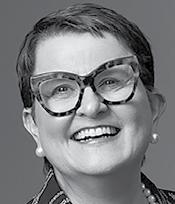

Finally, in August, I (Amanda) was fortunate, as one of the editors of Revue, to have been invited to this year’s Fellows Dinner held at the Ian Potter Museum of Art, at the University of Melbourne. I’ve not attended the event before, but I enjoyed it immensely. It was a rather intimate affair where Fellows of the Association shared a meal, refreshments and conversation, and listened to the dulcet tones of Jeremy Gobbo KC responding to his 2025 Richard J Evans Award. His response, reproduced in this edition of Revue, was sprinkled with words of gratitude, humility, nostalgia and good humour. Fellows were also treated to Charlie Wurm’s ‘wrap up’ of his quite considerable review and analysis of native vegetation protection measures Australia wide; a research project assisted by his 2025 Young Professional Award. I had reason to reflect on what a wonderful event the annual dinner is and the opportunity it provides for Fellows of the Association to ‘catchup’ and maintain connections which, for many, were forged quite some time ago.
We hope you enjoy reading this Spring edition of Revue. As always, it has been wonderful to receive articles from writers who have not contributed before while, at the same time, accepting the always interesting (and often amusing) contributions from our regulars like Rory Costelloe and Hew Gerrard. Of course, there are always more pages available to publish, so if you have thought about contributing, but haven’t yet, the deadline for the Autumn edition of 2026 (believe it or not the new year is coming) will be on us before we know it. Go on, why not give it go?
While it seems a little early to be speaking of Christmas, we are approaching the end of 2025. We hope to catch up with many of our VPELA colleagues and friends at what surely will be another buoyant Christmas Party at Zinc on 2 December. We’re very hopeful, too, that our mystery Christmas Party correspondent will be in attendance to record the evening’s festivities.
Amanda & Holly
Amanda Ring and Holly McFall are part of the team at Upco – the Urban Planning Collective.
Our heritage services balance evolving values whilst protecting significant places.
Architects and Heritage Consultants hello@wexhaus.studio (03) 9328 4220 wexhaus.studio
I have just returned from our annual State Planning Conference with countless notes from the inspiring and occasionally confronting presentations. Enormous thanks must go to our conference committee, ably led by Anna Borthwick, on another hugely successful event.
I had the pleasure of moderating the ‘Dangerous Ideas’ session, which showcased speakers with the ‘Courage to Create Impact’, the conference theme. Our courageous panellists put forward a range of audacious propositions including eliminating a level of government, privatising the planning system, and removing car parking requirements.
The bold ideas contained in ‘Abundance’, by Ezra Klein and Derek Thompson, are all the rage with politicians at present. What does Abundance mean for planning? In essence, its message is to get out of the way of projects that will deliver on our most important goals, rather than making them more expensive and slowing them down with burdensome regulations and approval processes. Housing (particularly the affordable variety), public transport and renewable energy are in its sights.
Prompted by some unambiguously ‘bad’ projects in the second half of the last century, and increasingly numerous public policy objectives, we have accumulated a labyrinthine maze of regulations across multiple levels of government intended to protect us from poor outcomes and achieve various, often unrelated public benefits. But these same provisions are now impeding ‘good’ projects which would help to address both the climate and housing crises.
Of course, we need to balance timely delivery with environmental protection and safety considerations. But, as Klein and Thompson note, “a balance that does not allow us to meet our climate [or housing] goals has to be the wrong one.”
The Victorian Government has taken up this challenge, and is seeking to speed up the delivery of housing and renewal energy projects by fast-tracking planning approval processes variously through the Development Facilitation Program, Great Design Fast Track and codification. And the recent overhaul of ResCode has lessened the load of protecting neighbourhood character, which many would see as secondary to the more important goal of delivering housing in wellserviced areas.

Mark Sheppard, Director, Urbis
What other layers of the planning system are offering too little benefit compared with the cost of weighing down good projects? The VPPs require us to balance conflicting objectives in favour of net community benefit (except in bushfire areas). Are some considerations (safe escape paths from flooded buildings and the broad extent of third party rights come to mind) being given too much weight in that balancing act? Should there be exemptions for projects that will make a substantial contribution to tackling our most critical challenges?
The other key message from Abundance is how important it is to stimulate innovation, through funding and the regulatory environment. Are we doing enough to identify and remove bottlenecks to innovation in relation to housing and renewal energy, to better enable the private sector to invent and deliver?
Another book about abundance referenced at the conference is ‘Braiding Sweetgrass’ by Robin Wall Kimmerer. Rather than the abundance that can be created by human ingenuity, this is about the abundance of nature. It urges us to live in a more symbiotic relationship with the ecosystem around us. While seemingly very different, the nexus between the two books is that the sooner we capitalise on our inventiveness to decarbonise, the sooner we will get back into balance with nature.
Congratulations to the winner of our Paul Jerome Award for outstanding contribution to public service: Alison McFarlane. Alison truly exemplifies the spirit of the Paul Jerome Award.
A warm welcome to newly elected board members William Bromhead, Steve Myers and Sarah Thomas. Carlo Morello is stepping down after three terms in accordance with our board tenure policy, including four years as Secretary and Treasurer. On behalf of the Association, I’d like to express my deep gratitude to Carlo for his selfless service over more than a decade on the board and YPG. My thanks also to Emily Porter SC who did not re-nominate and Eliza Minney who decided to step off the Board for now after the birth of her second child. I wish them all the best and thank them for their time on the board.
I look forward to seeing you at the Christmas party!
Mark Sheppard is President of VPELA and a Director at Urbis.

It was a real pleasure to join VPELA at your Gala Dinner earlier this year. The creative costumes were a highlight – with many of us leaning into the ‘London Calling’ theme – and from what I have heard, your State Planning Conference in August was also a resounding success. Events like these are so important for our profession. They give industry and practitioners the opportunity to come together, share ideas, and celebrate those who have excelled in their field.
By way of update, I wanted to provide some insight into one of the Victorian Government’s key initiatives in planning and housing: the Train and Tram Zones Activity Centre Program. The program has now reached another important milestone. By 2051, it will support the delivery of more than 300,000 new homes across 50 activity centres located along train and tram corridors throughout metropolitan Melbourne.
Consultation is currently open on draft maps for the first 25 train and tram zone centres. These maps were prepared following an initial round of consultation earlier this year, and they also draw on input from local councils. Feedback on the draft maps will help refine the final versions, ensuring they reflect the values and aspirations of local communities as well as deliver on Government’s commitment for more homes.
Community consultation is central to this program. We want to make sure that communities are both well informed and genuinely able to shape the outcomes in their local areas. The first round of consultation, undertaken in May, reached more than 3,200 Victorians through online and face-to-face engagement. In addition, 240 members of community reference groups participated in three indepth workshops. Their insights were invaluable.
We heard about what people value most in their neighbourhoods: quality public parks, reliable access to public transport, walkable

Hon Sonya Kilkenny
Minister for Planning
and tree-lined streets, and the unique characteristics that make each centre a distinctive and desirable place to live. We have taken this feedback on board, and it has directly influenced the development of the draft maps. In particular, each map has been informed by detailed local analysis, council contributions, and prior strategic work. Draft building heights reflect a considered balance: higher forms in the core areas of each centre, transitioning to lower heights within the surrounding walkable catchments.
The program is not just about numbers. It is about unlocking housing opportunities in some of Melbourne’s most connected suburbs –places where people, especially younger Victorians, want to live. The Train and Tram Zones will help ensure that homes are located near jobs, services, and transport, while also respecting the qualities that communities most value.
This initiative is a central action under our Plan for Victoria, which aims to deliver more homes in and around train stations and along tram routes. When developing the plan, the message was clear: Victorians want more housing options, but they also want to live in great locations – close to family, friends, and the communities where they have grown up.
The work underway through the Train and Tram Zones Activity Centre Program will help define what Melbourne looks like over the next 25 years. It is about ensuring that our city can accommodate the homes we need, in the right places, and helping Victorians, particularly young Victorians, have the same opportunities their parents had.
For further details and to view the draft maps, visit: engage.vic.gov. au/activity-centres-program
The Hon. Sonya Kilkenny MP is the Attorney General and the Minister for Planning.

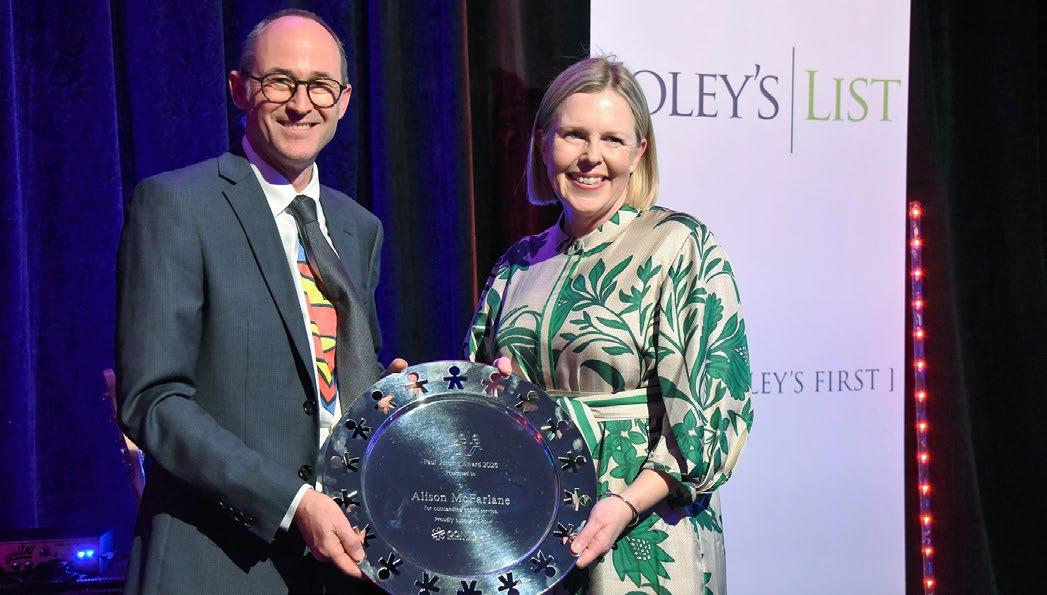
Alison has over 25 years of service in the public sector, spanning local government roles at Greater Bendigo, Greater Geelong, various leadership roles in state departments, Planning Panels Victoria, and most recently joining the Department of Transport and Planning at the beginning of this year as Director of Metropolitan Planning Services.
Alison holds a Graduate Diploma in Town Planning (Victoria University, 1998) and a Bachelor of Applied Science in Planning (Royal Melbourne Institute of Technology, 1996).
Earlier this year, Alison successfully transitioned from the role of Senior Panel Member at PPV to Director in Metropolitan Planning Services, State Planning, and is already having a profound impact on the delivery of planning reform in Victoria. Alison’s approach to planning and leadership is measured and thoughtful; traits that permeate her team and those she works with. Given the pace of planning reform in Victoria, Alison’s calm and considered approach has been essential to the delivery of a significant number of planning scheme amendments, including the Activity Centre Program.
She has a wealth of knowledge in nearly every area of planning yet still demonstrates a willingness to learn and challenge herself daily. These are attributes that are highly prized as a public servant as Alison is able to role model, not only to the hundreds of planners within DTP but also to the numerous local government planners and consultants
that she deals with, the importance of continuous improvement and collaboration.
Alison’s contribution to planning has been immense and far reaching. I would be surprised if there’s a municipality in Victoria not in some way indebted to Alison’s work.
She led a team of 70 staff as Regional Director, Grampians at the Department of Environment, Land, Water and Planning, where her role included responsibilities covering environment and natural resource management, public land administration, local government and infrastructure, planning, climate change, water, environmental compliance and renewable energy.
While there she oversaw the development of the Grampians Region Roadmap to Zero 2050 and the Grampians Regional Climate Change Adaptation Strategy, both of which demonstrate the value of government partnering with the community to address significant environmental, social and economic challenges facing Victorians. She also undertook short-term emergency management appointments in the State Emergency Control Centre in response to the 2021 storm event and COVID-19 pandemic.
At Planning Panels Victoria, Alison was Senior Panel Chair and involved in over 25 regional and state-significant matters. She was Deputy Chair of the Advisory Committee appointed to advise on the
Bass Coast Distinctive Area and Landscape. She also chaired hearings for various government land, priority project, heritage, flooding, renewable energy and activity centre matters, drawing on her diverse expertise and experience gained through working across Victoria. Her Panel work demonstrates her practical and outcomes focused approach, always underpinned by sound drafting and effective administration.
Alison was seconded from Planning Panels Victoria to help lead the preparation of Plan for Victoria in 2024. Plan for Victoria – the first ever community-led, whole-of-state plan – addresses the housing and land use needs for Victoria over the next 30 years. Alison’s contribution was essential in making the plan both visionary and practical. There are few planners in the state with the capability to bring together longrange strategy with workable actions the government can implement. The initial success of the Plan for Victoria is due to Alison’s capability to express community preferences and government intentions into a clear land use and development plan.
Now at the Department of Transport and Planning, she is guiding important strategic work as part of the government’s extensive reform agenda. She has an unwavering commitment to improving the
I feel honoured to join a group of previous recipients, many of whom I have worked with over my 30 year career in public service.
Every role I have held has been an opport-unity to work with new people, learn new things, solve a new problem.
I am grateful for the opportunities I have been afforded, including from Paul Jerome, in whose memory this award is made. In 2003, Paul invited me to sit with him on an advisory committee established for a VCAT call-in. It was an incredible and rare opportunity to work directly with Paul, and a privilege to receive his encouragement and
Victorian Planning Provisions and her passion for planning reform led her to accepting her current role. Alison’s dedication and selflessness is testament to her character and her exceptional worth as a public servant.
Over Alison’s career, both as a Senior Panel Member and Director of Metropolitan Planning Services, Alison’s ability to deftly identify key issues and instinctively map a sound and logical path forward has always been evident. In the six months since she joined State Planning, Alison has been instrumental in developing new planning scheme provisions for the Activity Centre Program, leading the planning for new activity centres in Melbourne and Yarra and clearing the backlog of a substantial number of planning scheme amendments led by Councils.
Her leadership and guidance in this area during this time of significant planning reform, which has substantial impacts on internal resourcing as well as the need for a quick thinking, solution focussed approach, is exemplary.
Alison truly exemplifies the attributes and criteria of the Paul Jerome Award.

counsel at such an early stage of my career and before Paul passed away in 2004.
I feel fortunate to have had such accomplished public servants trust me to take on positions and projects that went beyond what I sometimes imagined I was capable of. I hope I have repaid their faith in me with good work, pragmatic advice, and a chuckle along the way.
My advice to any practitioner at the early stage of their career is say ‘yes’ to opportunity and step out of your comfort zone. You are more capable than you think


Name Company
Lulu Anderson Ethos Urban
Zijad Bajrektarevic APA Group
Hannah Belbasis City of Greater Geelong
Tim Berenyi Radicle Advisory
Rosie Brown
Matilda Burston Mills Oakley
Rahda Butler Moyne Shire Council
Patrick Carpenter EMM Consulting
Monica Ceckiewicz Insight Planning Consultants
Tracy Cui
Chantal d’Argaville Russell Kennedy
Simon Davies PJA
Thomas Dickinson Planning & Property Partners
Sudipta Das Dip
Emma Donnelly O’Brien Traffic
Joel Elbourne Boroondara City Council
Max Evans
Ben Ewens Planning & Property Partners
Jodene Garstone White & Case
Lily Green Traffix Group
Julian Grimm White & Case
Apurva Hankare SH Consulting
Cassie Hannam Department of Transport & Planning
Rachel Harris Russell Kennedy
Auryn Holmes
Nazem Kacmazer Planning & Property Partners
Eliza Kane Cogency Australia

Name Company
Rachel Matulis Victorian Bar
Jane Maynard Stonnington City Council
Ken McAlpine Spring Street Advisory
Neale McCracken MCG Consult
Hamish McIntosh
Cameron McNeill MPAA Studio
Roya Mehrpoor Arcadis Australia
Claire Miller NBRS
Michelle Nguyen Urbis
Daniel Paez Ineca
Mansi Parsana
Julia Petousis
Ricardo Ramos City of Whittlesea
Billy Rebakis Urbis
Isa Ronald
Thomas Russell Planning & Property Partners
Oliver Ryan Contour Consultants
Cameron See Ratio Consultants
Tracey Simmons PAR Planning
Colin Stapleton Senversa
Anthony Tchakerian Gadens
Jennifer Tsui Department of Transport & Planning
Monty Wright Radicle Advisory
Allie Wu
Tiffany Yeo
Planning & Property Partners
Kate Young Crowther & Sadler


































At Urbis, our urban consultants work with you throughout the entire planning process to deliver outstanding results in the public and private sectors – including due diligence, strategy, strategic planning and development facilitation.
No matter what size your project is, we take the time to understand your vision and
G et in touch with our team



Anna Mitchell
Engagement lead annamitchell@urbis .com .au
Carolynne Baker
Cultural heritage lead carolynne. baker@urbis .com .au
Sam Richards
Archaeology lead
sam richards@urbis com au
position it for success Our planners are the most experienced and awarded in the country, guiding projects from vision to approval and beyond



In addition to our core ser vices, we of fer exper t advice in key grow th areas such as T ra n s p o r t A d v i s o r y and C o mmu ni c a t i o n s & E ng a ge me nt u rbi s c om a u
M anesha Ravji
Transpor t advisor y lead mravji@urbis .com .au
Phil G leeson
Planning co-lead pgleeson@urbis .com .au
Sarah M acklin
Planning co-lead smacklin@urbis com au
Thanks to those on the VPELA board who voted for me. Hopefully it wasn’t too contentious – like the Liberal Party room voting on paying Mr Pescutto’s legal costs, or perhaps Portsea Golf Club considering an ex-premier’s application for membership!
I have previously credited Chris Canavan with giving me a running start in the planning jurisdiction. He asked me to be his junior in just about all his cases in the year before he took silk, apparently to raise his profile.
The strategy worked and he got silk. Richard Evans did the same with me and others the following year.
Richard read with my father so working with him was a great thrill.
I was his junior in his last case, acting for the Metropolitan Transport Authority as it then was, seeking permission for new rail yards at Nunawading. When receiving her award a few years back, Michelle Quigley claimed to have briefed him in his last case, one involving the Sunshine District Centre.
Seeing you won’t be able to whip me in your court anymore, I can courageously say that Your Honour is mistaken on this occasion.
The Nunawading case ran over some weeks in December 1987. When it finished, we bid each other a merry Christmas and headed off for a well-earned break. As you know, Richard drowned in a diving accident on January 8th, 1988. It was a terrible shock, and an extremely sad time for all Richard’s colleagues.
I will greatly treasure the award struck in his honour and memory. Footballers sometimes say they’d rather win a premiership than a Brownlow. These individual accolades are fantastic but I will never lose sight of the fact that great teams win the big fights.
Occasionally a silk will come up with a killer point, or do something that turns a case. But, more often than not, it’s the collective effort and skill of the team that carries the day.
In this room I see dozens of you that have been part of teams I’ve been in. I never forget a face but, with some of you, I’m prepared to make an exception!
You’re all Fellows of the Association for good reason – you have been, and maybe still are, leaders in your professions.
On other occasions I have expressed my gratitude to many of my colleagues who have given time, patience, guidance and plenty of constructive criticism to me over the journey. I take this opportunity to re-iterate those thanks
I miss the regular professional interactions and catch-ups, in and out of hearings. It’s a shame that everyone’s lives are so busy that arranging a coffee or a quick bite and aligning diaries seems to require divine intervention.
Of course, it is critically important to keep the synapses firing.
Maybe I’ve been watching too much Netflix lately.
I told my wife that I was having memory problems. She said: When did that start? I said: When did what start?
You may wonder what I’ve been doing since leaving the bar. This morning in my role as Chair of the St Vincent’s Institute of Medical Research Foundation, I had the pleasure of handing out awards to rising stars at the Institute. These awards support the research scientists in their cutting-edge work. The awards are funded by the generosity of donors.
As I look around the room, I see a well-dressed, well-fed group who could certainly manage a little, or a little more, philanthropy. If I reach out to you, can you give me an hour or so of your time to take a tour of the Institute? You’ll be inspired. Thanks for indulging me that digression!
Tempting though this occasion is to recount a few stories of my great victories against the odds, of which there are many, I’ll resist. Instead, I’ll nominate some awards of my own, recognising the great characters I have come across.
So in no particular order, and apologies to those who missed out:
Smoothest expert: Mark Sheppard
Most punchy expert: Roz Hansen, who rang me after a crossexamination and gave me a big spray for getting stuck into her. She explained that she was just expressing her honestly held views and didn’t deserve the treatment I gave her. We had a good chat about independent experts not going too hard for their client. She certainly respected my position and I did hers. We were mates from then on.
Best planning witness: Stuart Morris (self-appointed) with an honourable mention for my old mate Michael Barlow.
Hardest witness to get to stop talking: Charmaine Dunstan
Fastest talker: Steve Hunt
Witness whose evidence bore least resemblance to his written report: Rob McGauran
Most pleasant person to appear before: Jane Monk
Most timetable conscious member: Kathy “The Guillotine” Mitchell
Most sensible: Tony Liston, but he could be a smiling assassin. Most solution focused: Ian Marsden
Most embarrassed: Max Barr in an adult sex bookshop case when Stuart Morris opposed my client’s application and, much to Max’s horror, tendered a bundle of atrocious exhibits.
Fattest fountain pen and best trolley for carting folders into hearings: Helen Gibson
Best supporters of the bar: Norton Rose, Sally Macindoe and Tamara Brezzi
My best supporters: Planning and Property Partners, long may that continue!
Best creators of work for the bar: Maddocks. Speaking of which, Most mellowed with age: Terrible Terry Montebello
Best dressed: Michelle Quigley
Best hair: Tim Biles
Most publicity-shy barrister: Peter O’Farrell
Barrister whose submissions read most like he was handing down judgment: Simon Molesworth
Most charming barrister: The young Chris Canavan – he still moves pretty well in that regard!
Most polite barrister: Paul Connor
Most confident barrister (and best voice): Mark Dreyfus
Most cheeky barrister: The classic scheming imp – Chris Townshend Angriest barrister: Garth Buckner. His most regular junior was Greg Garde. None of Garth’s aggro rubbed off on Gardy. He gets the award for the smiliest barrister.
Best barrister on transcript: Michael Wright – meticulous with his submissions, never a stumble or a word out of place.
Worst delegator: Adrian Finanzio. Maybe he was just practising for his judicial role.
Barrister with the worst cough: Tony Hooper
Most friendly authority officer: EPA solicitor Mark Peyton
Most reasonable council advocate: John Rantino
Most thoughtful silences and pregnant pauses: Robert Osborn
Most screen sharing in Zoom hearing and my successor as least patient: Nick Tweedie
Finally – most “F” words caught on Zoom transcript: You can probably guess that one.
Can I finish on a serious note?
I have observed the planning controls become more and more complex and burdensome, growing from a pamphlet to a phone book. The justification of better outcomes has been irresistible.
I have observed the planning dispute resolution process become slower and more cumbersome, timeliness sacrificed on the altar of due process.
Which prompts the question:
“How many town planners does it take to change a light bulb?”
Fluorescent, halogen or LED? Warm or blue light? A dimmer? A baffle? Is it needed at all? What about a daylighting assessment? Where is Jan Talacko?
The answer: I lost count after the community consultation, compulsory conference and third panel hearing.
In buoyant times, these two trends did little to slow the development industry. However, we now find ourselves in more difficult times. Rising wages and construction costs, higher taxes and charges, and the general rising cost of living have all created serious headwinds. We have a major housing crisis. Even with two salaries, young people take an average of ten years to save a deposit and cover purchase costs. Many will never own homes, and so will not have an asset to support their retirements.
Governments seem incapable of meaningful action.
So what is to be done? We can’t do much about the macro factors, but we can improve the planning system. Let’s start stripping dot points out of planning schemes. The repetition is ridiculous. Ban new dot points. Let’s be more robust in overlooking procedural and technical non-compliances. Let’s put time limits on referral responses, and on CHMP assessments. Introduce deemed compliance on standard conditions after 60 days. Let’s consciously accept “acceptable planning outcomes” rather than demanding near-perfect outcomes. Let’s keep the standard of design excellence for things like major public


This article is written in the context of Maddocks’ recent keynote sponsorship of the VPELA Lorne conference, themed “Courage to Create Impact” – a call to action for those who dare to lead, innovate, and disrupt with purpose.
Victoria is home to a rich tapestry of communities, each with its own unique character, shaped by decades of planning and local input. As the State faces a growing housing challenge, the Victorian Government has taken significant steps to address it, including a commitment to deliver 800,000 new homes over the next decade.
This is a bold and necessary goal. The housing crisis is a problem of intergenerational inequality. The Government’s planning reforms aim to unlock housing supply, streamline approvals, and make it easier to build in areas close to jobs, transport, and services. These reforms reflect a willingness to embrace change and challenge the status quo. But courage in planning must be matched by care. As with any major reform, it’s important to ensure that changes are balanced, inclusive, and responsive to the diverse needs of Victorian communities.


TThe theme of the VPELA conference reminds us that leadership in planning is not just about bold moves—it’s about thoughtful innovation and collaboration.
The Victorian Government’s Planning Reform agenda has been substantial. Maddocks has provided detailed commentary on the reforms elsewhere, which you may want to take a look at: Maddocks | The new planning controls: What are they and what do they…; Maddocks | Amendment VC257: What does it actually mean?; Maddocks | Victoria’s Housing Statement brings bold reforms and an…; Maddocks | Further reform to Victoria’s planning system proposed
These reforms are principally anchored in Victoria’s Housing Statement: The Decade Ahead 2024–2034. By way of brief overview of some of the key reforms over the last 12 months alone:
The replacement of Plan Melbourne with Plan for Victoria, effective February 2025.
Activity Centre Program Expansion: 50 new higher-density zones near train and tram stations have been identified, enabling up to


300,000 additional homes by 2051. At the time of writing, the Victorian Government has just released draft activity centre mapping for 25 activity centres.
Related new planning controls: Precinct Zone; Housing Choice and Transport Zone and Built Form Overlay. Currently, the only centres to use the BFO are those being planned by the SRLA. The PRZ is also proposed to be applied to the SRLA precincts, as well as other ‘priority precincts’.
Stamp Duty Reform: Stamp duty on off-the-plan apartments and townhouses has been reduced under a 12-month stimulus plan.
Development Contributions Review: A new model is being developed to standardise developer contributions, with implementation starting in 2027.
Ministerial Direction No. 11 – Strategic Assessment of Amendments, which from 11 September 2025 requires that new Amendments must, amongst other things, address Housing targets in the Planning Policy Framework. (Amendment VC283 to the Victoria Planning Provisions updated the PPF to include housing targets for every Local Government area (2.24 million new homes by 2051, with a strong emphasis on building 70% of these homes in established areas rather than greenfield sites)).
Presently proposed to take effect from 25 November 2025, the Planning and Environment Act 1987 (Vic) will be amended to provide processes for:
• Planning Scheme Amendments, with a new pathway for ‘LowImpact Amendments’ so as to allow Councils to adopt minor amendments without Ministerial authorisation or panel review; and ‘Proponent-Led Amendments’ whereby proponents can request Councils to prepare amendments, with timelines and transparency requirements introduced. The Minister can now also continue amendments abandoned by Councils.
• The Act amendments also reform permit and VCAT processes. Default expiry periods for permits have been extended, VCAT can group objectors, conduct hearings on documents alone, and summarily dismiss cases lacking merit.
Planning schemes have been amended through Amendment VC267 to give effect to new deemed to comply standards for townhouses and apartments (up to 3 storeys), under the Townhouse and LowRise Code (Clause 55); and in addition, clause 57 of the planning scheme now provides new standards for residential developments of up to four storeys.
Note that we have excluded from the above the substantial reforms that occurred more than 12 months ago. In addition, expect much
more to come. The Victorian Government has foreshadowed a full repeal and replacement of the Planning and Environment Act 1987 (Vic). Industry reports further reforms expected in affordable housing mandates, mid-rise apartment codes (4-6 storeys) and digital planning platforms and data transparency. At the time of writing, the Victorian Government has just announced fast track (i.e. 2 week) approvals for certain subdivisions and second dwelling proposals
The analysis above demonstrates a massive reform agenda, and a clear shift toward action. But as Councils and community groups have noted, the pace of change and the level of consultation matter. Courage must be paired with listening, and innovation with inclusion.
Victoria’s planning system has long been a partnership between State and Local Governments. Strengthening that partnership – through dialogue, shared goals, and mutual respect – will be key to delivering housing that meets both immediate needs and long-term aspirations. And whilst planning reform is part of the solution, it’s not the whole picture. Many of the barriers to housing affordability lie in construction costs, labour shortages, and broader economic pressures.
Here at Maddocks, we’re here to help navigate a path through this complexity. We understand the complexities and challenges that come with planning reform. Our team — Victoria’s largest and most experienced group of planning and environment lawyers, with over 20 dedicated lawyers — stands ready to support you at every step.
Dr Joseph Monaghan is a Partner at Maddocks.

VPELA is pleased to invite applications for this award which recognises excellence in a young or new professional working in the Victorian Public Sector. It is awarded to a young person, or mid/late career person following a career change, who goes above and beyond and demonstrates exceptional initiative and endeavour. The aim of the award is to reward outstanding contributions, foster a culture of excellence in the public sector, and contribute to public sector staff retention.
The winner will be awarded unlimited attendance at VPELA seminars and events for a whole year, and the opportunity to prepare an article in the Revue.
The Award will be presented at our Summer Soiree on 4 February 2026.
You can download the criteria and application forms here
The ongoing evolution and progression of communities, continues to highlight the need to manage change thoughtfully and cultivate opportunities for lasting, positive impact. This year’s 2025 VPELA Conference, themed “Courage to Create Impact,” brought together industry professionals, leaders, and members to explore how courageous decisions and practical strategies can drive meaningful progress.
Through a series of engaging and thought-provoking sessions, we shared ideas, discussed challenges, and explored ways to initiate change and create opportunities for positive transformation.
The inspirational personal and professional journeys of Olympian Steve Hooker, former Chief Panel Member Kathy Mitchell AM, and Daniel Flynn of Thankyou Group, offered a powerful message to us all; the importance of creating opportunities to act with purpose and plan for the future. Whether it’s training for Olympic gold, Planning Panel and industry excellence, or building a globally recognised social enterprise, their insights encouraged us to work collaboratively, remain persistent, and set clear, achievable goals that spark change.
A common thread throughout their narratives was the value of creating opportunities, acting with intention, and planning for the long term.
Further emphasising the importance of driving transformation growth within communities, we were invited to reflect on the ongoing challenges and hardships for women facing domestic violence, and their journey to reclaim their voice, power, and freedom. Roberta Buchanan, Chief Executive Officer for Women’s Property Initiatives (WPI) shared powerful stories of resilience and purpose, serving as a reminder of what can be achieved through determination, vision, and a strong commitment to overcoming challenges.
Her insights underlined the importance of driving uplifting change, as Roberta invited the room to reflect on the need to approach solutions through a gender lens, recognising the critical role of context and environment, not only for societal issues and challenges but for strategic planning in all forms and industries. This message was a compelling demonstration of courage and a call to action to create meaningful, lasting impact, reminding us of the responsibility we have to provide solutions. The inspirational and motivational discussions guided by this session served as another true demonstration of courage to create impact.
What followed was another powerful session, exploring how we can improve our approach to incorporating indigenous design into everyday planning. Driven by the act of unlearning and relearning, our panellists challenged us to reframe our thinking and redesign our approach. We were encouraged to ask ourselves how we can respond to ensure respect for Country and appreciate the deep cultural knowledge and history embedded in the land. The discussion went beyond design, highlighting the key importance of listening, learning, and creating to ensure meaning in our planning practices.
Challenging the status quo and traditional perspectives, the dangerous ideas session captured our attention and was a thought

Abbey Leys, Traffic Engineer, onemilegrid
provoking session for all. Featuring a dynamic panel (and monitored by a surprisingly accurate “applause-a-metre”), the session unpacked complex issues such as hyper-political planning environments, housing strategies, and the ongoing pursuit of social equity.
By encouraging bold thinking and addressing confronting controversial topics head-on, the session pushed boundaries and invited us to question how we approach ideas not just in planning processes, but in broader societal challenges. Through healthy debate and friendly fire, we were inspired to question norms and rethink how to plan for people, not just policies.
Adding a dose of humour and light-hearted laughter to the day, the Young Professionals Group (YPG) delivered an entertaining rendition of Would I Lie to You? We saw some well-known faces take the hot seat, sharing suspiciously convincing, and often hilarious stories (or tall tales), from cameo TV appearances to bacon and egg rolls, it was a session that captivated and kept the audience guessing until the very end.
Outside of these inspiring and fundamental sessions, the Get Active running, cycling, paddling and yoga, the thought provoking In-Focus Sessions and mentoring meet and greets, the conference presented meaningful opportunities to learn and grow both personally and professionally.
Through the conversations and panels, we were reminded of the importance of positive transformation, and explore how bold ideas and brave decisions can shape the future of our cities and regions. The conference was full of rich discussions on navigating progress, fostering opportunity, and driving meaningful transformation within society.
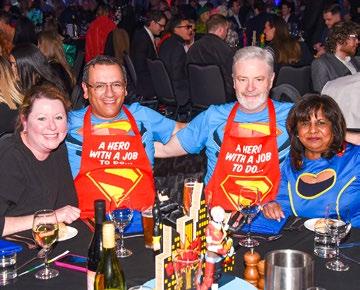
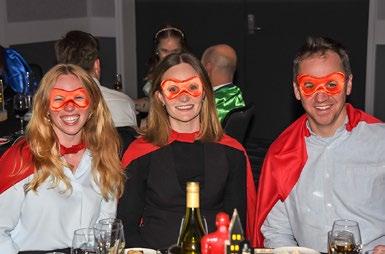
Bringing the conference to a close in true heroic style, we gathered for a night of fun and celebration at the “Superhero” Gala Dinner. Reflecting on the powerful conversations and unforgettable achievements, we honoured our own courage, bravery and power in true superhero style. We congratulated the 2025 Paul Jerome Award recipient, Alison McFarlane, Director, Metropolitan Planning Service, State Planning Policy, Department of Transport and Planning, as well as the success of the industry and VPELA members as a whole. The gala was a night full of connection and shared sense of purpose, and the perfect finale to a conference that proved we all have the power to drive change, and have the courage to create impact.
Abbey Leys is a Traffic Engineer at onemilegrid.
Beyond her professional work, Abbey mentors through the Monash Women in Engineering Mentorship Program and is a mentee in the VPELA mentorship program. She is a strong advocate for women in STEM and continues to support initiatives that encourage and promote women in engineering and beyond.

6.
7.


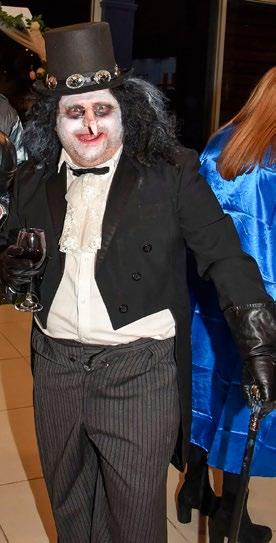
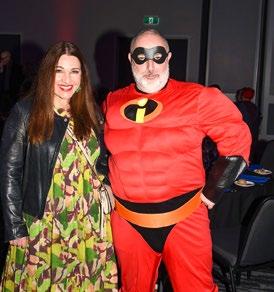
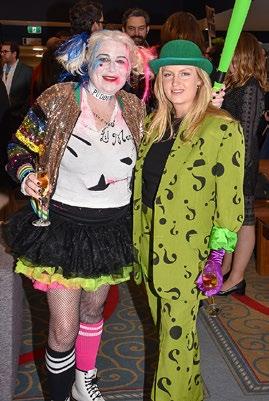
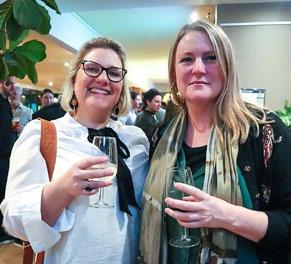
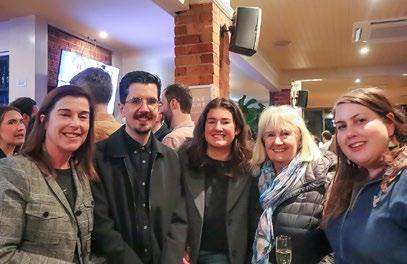
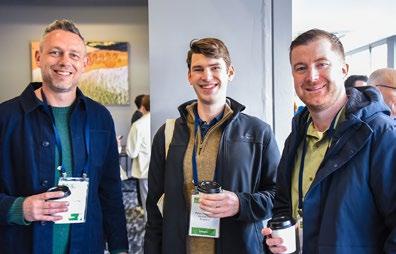
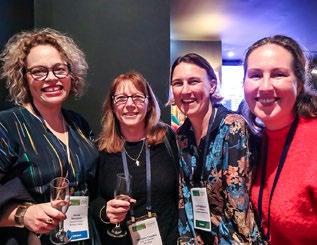
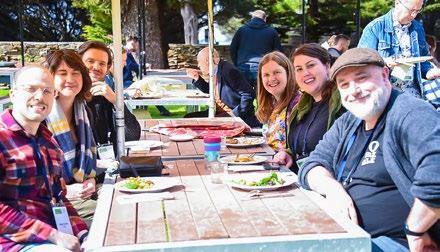
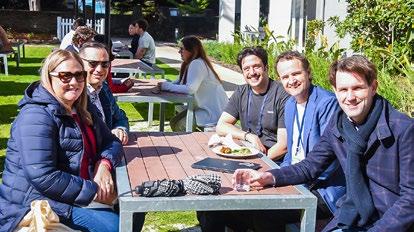
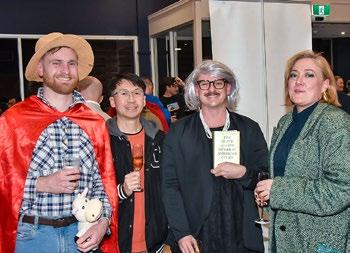
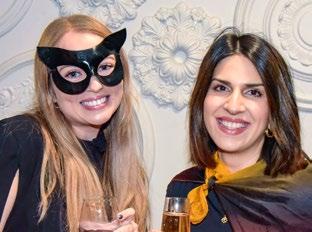
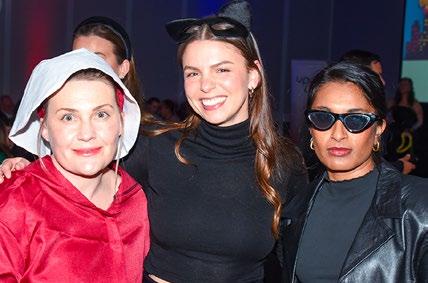
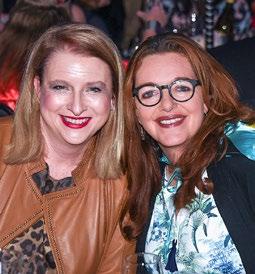
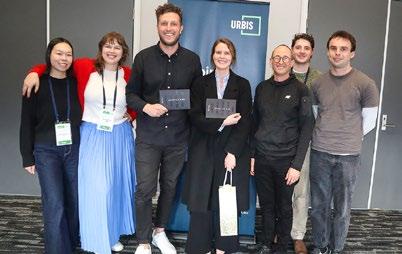
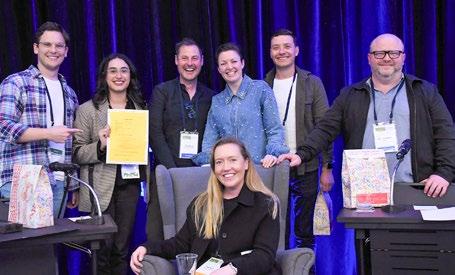
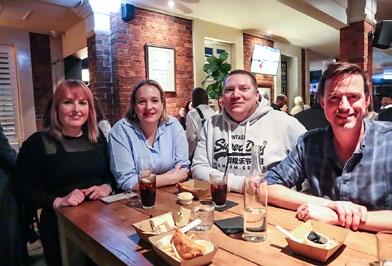
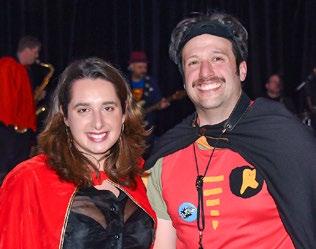
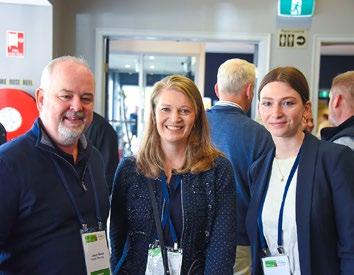
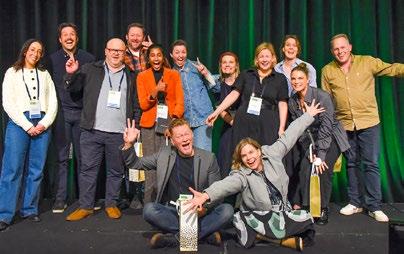
This year’s Conference truly inspired us to embrace the “Courage to Create Impact.” The event challenged us to think boldly, act with purpose, and envision a better future. Our speakers shared their stories with honesty and courage, shedding light on where systems and processes are failing, but also highlighting areas of progress and improvement. Their insights reminded us that by speaking up, making tough decisions, and daring to think differently, we can drive meaningful change. Steve Hooker made the powerful statement: “Now is a bloody great time to be a planner!” which encapsulates the optimism and opportunity in our profession to shape a better tomorrow. Thank you to all our speakers, participants, sponsors and attendees. Congratulations to Anna Borthwick our Conference Convenor and the dedicated committee that put this outstanding event together. The Conference concluded with our “Super Hero” themed Gala Dinner and here are some of the heroes and villains that caught our eye on the night!



























“He thew me against the wall in front of my children and had his hands around my throat. It’s not the first time. I fled that night with my children. I fled to find safety; I found homelessness instead.”
“I go to work throughout the day and at night, I find a place to park my car and I sleep there. I wake up in the morning and I go to work again. My colleagues don’t know”.
“I worked right up to my accident, I’ve always worked. Now I can’t and I have nowhere to live”.
“I’m 72, and I have lost my husband. I can’t afford the rent anymore. I’m on my own. What happens to me now?”
“I am 6 months pregnant and have a 1 year old daughter. I couch surf when I can and when I can’t, we sleep in a tent in the park.”
These are the stories of women, women who are our fellow Victorians. These are the real stories of the housing crisis. A crisis that is deeply gendered.
The statistics are confronting:
60% of people who accessed homelessness services last year were women.
- 15,000 single women
- 25,000 women with their children and - 3,000 older women.
• Of the 12,000 wage earners across Victoria who sought homeless-ness services, 70% of them were women.
• Four out of 5 retired single women who rent their home are living in poverty.
• Every night across Australia there are 54,000 women who are homeless.
The number of women experiencing homelessness in Australia is growing at a faster rate than men because women:
• Are more likely to be paid less
• Take time out of the workforce for caring responsibilities
• Perform roles that are less valued in our society and
• Are more likely to experience violence.
All of these issues are issues of gender inequality and when you intersect that with a lack of supply of affordable housing, it means women are disproportionally experiencing housing insecurity and homelessness.
In Victoria, just 2.9% of all dwelling is social housing. The national average used to be 4.5%, it’s now only 3.9%. To give you some context
Roberta Buchanan, CEO, Women’s Property Initiatives
for these percentages, social housing as a proportion of all housing is 35% in the Netherlands, 25% in Austria and 15% in the UK.
Our housing system is broken for many people, but particularly for women. And with housing affordability impacting more and more people, the most vulnerable women are at ever increasing risk.
Our service system to support women is overburdened and overwhelmed. Women are jostled between family violence services and homelessness services with women variously experiencing responses to requests for assistance such as
• You are not at high enough risk of lethality to access our services
• You are not roofless enough to access homelessness services.
With a broken housing system and constraints on our service systems, women who have tried to seek help tell us that when at their most vulnerable, the system that is there to help those in need, inflicts more trauma on the already traumatised.
There are over 55,000 people waiting for social housing in Victoria. Three thousand of these are women are considered ‘priority need’ because they are homeless due to family violence. In Victoria these women wait for accommodation for approximately 2 years; 2 years without a safe place to call home. While waiting, they have no safe place to lie down at the end of the day. They raise children in hotel rooms for months on end. They sleep in a car at night. For older women, those women who deserve to enjoy their later stages of life, facing the reality of homelessness is stark.
These women deserve the right to have a safe and affordable longterm home. They matter; she matters.
Women’s Property Initiatives seeks to create new beginnings for women and children through the provision of long term, permanent, affordable homes. We are fondly known as WPI. We are a registered charity and we are 28 years old.
We are a women led organisation. We create impact for women across our sphere of influence. We have an all-female board, we provide economic security to women with a female workforce and where we can we procure from women led organisations.
Two women 28 years ago had the courage to act. They were concerned then about gender inequality and the impact on housing security for women. Through their sheer determination, they raised funds to procure their first property and change the future for the women and children who called that property home. From our humble but courageous beginnings, I describe our organisation as small and mighty.
Today, we have a portfolio of 125 owned homes and deliver tenancy management services across a further 165 homes for owners who wish to provide those homes for low to moderate income women and children.
Affordable long term housing is the foundation for happy and healthy lives. A home enables a women to live with dignity, to care and be cared for, to participate in society in a meaningful way; it is a space to heal from the trauma of housing insecurity and violence.
Our business model has and continues to be fuelled by support from the private sector and community. Whilst we work with governments at all levels, our impact is driven by the private sector, philanthropic and community support that gets behind a small team of 12 women to create the foundations to enable women and children to create new beginnings through a safe place to call home.
We know our impact. With every $1 invested in WPI we create $11.44 of social and economic value. So how do we do that?
WPI provides quality long term affordable housing in Victoria, in well located areas for women headed households.
Our rent is never more than 30% of income and our homes are well designed with access to services, are energy efficient and most importantly a greater distance from violence.
With the stable foundation of a home, women speak about the impact it has made on their lives across 7 key areas.
Safety and security
Our homes are designed with a gender lens, and women feel safe and secure – away from the trauma of violence.
“My son was 1 year old when we moved in, so he had a normal functioning family and he is not affected by my past and my experience of violence.”
Health
Women reported better health, reduced stress and less hospital presentations.
Parenting capability
Parenting capability improved. Can you imagine being a mum without a home to raise your kids?
Connection and participation
Our women feel connected to their local communities, feeling a sense of belonging and participating in civil society.
Financial well being
An affordable home, no more than 30% of their income, improves women’s financial wellbeing. One women spoke about how she was able to recover from cancer and get back into the workforce following her successful treatment.
There were also impact areas identified for children. For those little ones, women told us:
• Children are re-engaged in school and early childhood education, supporting the cycles of disadvantage to be broken. It is hard to go to school if you don’t have a home. If you don’t learn to read by year 3 you can’t read to learn in the future.
• Children also felt safer. Their physical health improved, they formed connections with others and they were away from the trauma of violence.
I want to pause on children. Their stories are often untold, unheard, unanswered. So, I want to tell you a story about homelessness through a child’s eyes, by sharing a child’s story with you.
A 4 year old girl is crying in her mother’s arms at 2am in the morning as her estranged and intoxicated father is smashing the front door down threatening to kill her mum. In front of that little girl and her mum are her siblings, aged 5, 9 and 12, armed with a wooden spoon, a knife and a metal bar. They are screaming at their father telling him to go away, and threatening that if he comes through the door again, they will hurt him.

Our planning and environment team has market-leading expertise across a broad range of industry areas, including property development, transport, construction, energy, waste and recycling and social infrastructure. We act for State government, local Councils, statutory authorities and the private sector. Our full service firm enables you, your projects and your communities to thrive.


Meg Lee – Partner M +61 404 070 549 meg.lee@hallandwilcox.com.au
Natalie Bannister – Partner M +61 409 418 259 natalie.bannister@hallandwilcox.com.au
Stan Kondilios – Partner
M +61 416 121 961 stan.kondilios@hallandwilcox.com.au


Rory O’Connor – Partner M +61 400 436 175 rory.oconnor@hallandwilcox.com.au
Brendan Tobin – Partner M +61 404 095 563 brendan.tobin@hallandwilcox.com.au


That little girl doesn’t remember everything, but she remembers the chaos and the fear. She remembers the arrival of the kind policeman putting his hat on her head and telling her that she was going to make the best policewoman when she grew up.
With the help needed from an organisation like WPI, that mum found a safe and affordable home and she was able to raise her children safely and with the dignity that she (and they) deserved. Long term, safe and affordable housing like WPI provides, transforms the lives of women and children. I know, because that story is my story, I was that little girl.
And of course, there is also value for governments at the state and federal level, from reduced costs associated with family violence, reduced hospital presentations and less dependency on statutory income. Affordable housing must be seen as critical infrastructure in any civil society.
Finally, there is value for family and friends. Relationships can thrive again and women, when safely housed, have commenced their caring responsibilities for others.
On our 25th birthday, WPI set a target to deliver 25 homes by June 2025. I am pleased to let you know that we achieved 30. Thirty lives changed – and many more. We achieved that through sheer determination, deep connections with the private sector and wonderful community giving. And we are not stopping.
We are on target by next year to grow our impact and in the years beyond. Our next campaign will be launched shortly, so if you care about vulnerable women and children and want to get involved, follow and connect with us on LinkedIn or social media and see how you can join to make a difference to women and children.
I like to think about the work and the impact of WPI as otters. Why otters, I hear you ask?
When a female otter is injured, gives birth and needs to recover, other female otters link their little otter arms around her and create a raft so she can catch her breath, recover and heal. It’s called ‘a raft of otters’. I like to think of WPI as a raft of otters around the women we serve and that the private sector and community link their little otter arms around us.
You don’t need to be female to join our raft. There are lots of organisations and individuals who have joined our raft and too many to thank
individually. But I will call out one otter who joined our raft and has never let go. That’s your platinum conference sponsor here today, Maddocks. Maddocks has been part of our raft for over 25 years offering pro bono legal support for anything we need. Thank you, Maddocks.
Finally, I hope I have left you with some important information that you can take away about the challenge of the gendered nature of this housing crisis and that you can think about the role you can play in both your professional and personal lives.
Strong women have always been at the forefront of progress and change – challenging norms, breaking barriers, and paving the way for future generations. Their resilience, courage and determination serve as beacons of inspiration for people of all genders.
WPI is facing that challenge of homelessness for women head on. And like every strong woman we are looking that challenge dead in the eye and giving it a wink.
Homelessness for women and children is a choice. Not for the women and children who experience it, but a choice for a society that continues to let it happen.
Thank you for giving us the opportunity to share our story and thank you for listening.
Roberta Buchanan is the CEO of Women’s Property Initiatives, a non-profit company, limited by guarantee, managed by a voluntary board of women from private, government, community and academic sectors.
Roberta also shared a short video of several women that WPI serves. Those women courageously told their stories and shared the impact of how affordable housing changed their lives. We are reliably informed it had quite the impact at the conference; a big eye-opener, if you like, for all fortunate enough to have a safe place to live. Eds
VPELA donates a percentage of sponsorship to three charities chosen by our conference keynote speakers and the amount each charity receives is voted on by attendees – this year we were pleased to be able to donate over $3000 to WPI.
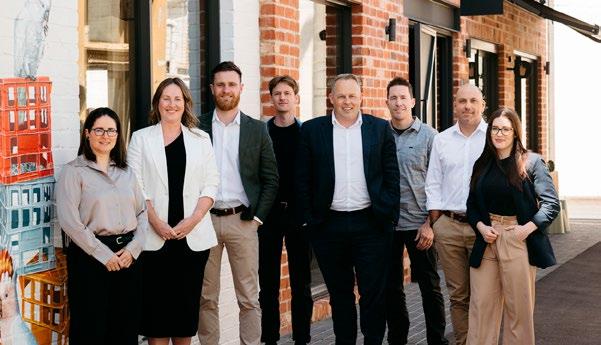

Clare McCutcheon and I recently shared a significant milestone: 15 years at Biosis and as part of the Victorian planning and builtenvironment industry. In 2009 we were just a pair of super keen 20 somethings, a zoologist and an archaeologist growing up together and surviving midnight fieldwork, parties, endless reporting and the GFC. We entered consulting as fledgling adults and were shaped by dozens of formal and informal mentors. Suddenly it seems we have become experts; middle-aged and part of a dynamic industry network. VPELA has helped support our growth.
In 2016 my VPELA board buddy was Christine Wyatt, who gave me clear, direct advice: formulate a network of women in this industry who will support you through your career and personal life. It’s not just about making friends, it’s about actively collecting a group to be your advisors, support and comic relief. Thanks to the opportunities we’ve had at Biosis and through VPELA (not just the parties but also as a YPG co-convenor) Clare and I can boast a cherished network of true friends with whom we have travelled, celebrated weddings, children, divorces, and promotions.

Amy Wood, Senior Business Development Lead, Biosis

Clare McCutcheon, Senior Associate Zoologist, Biosis
I grew up in Brisbane and started at the University of Queensland studying French, Japanese and Political Science. I had dreamed of working for the Department of Foreign Affairs, but student politics quickly turned me off the idea. I pivoted sharply, concluding that even if archaeology didn’t lead to a job, at least it was interesting. After completing Honours, and having heard advice about a non-academic career being rather slim, but I posted in an online archaeology forum and instantly received three job offers as a ‘subbie’ hole digger. I found myself north of Albury on the Hume Highway Duplication project, pushing a wheelbarrow full of spoil from trench to sieve. I was filthy, exhausted and earning pretty good money. I was thrilled.
Two years later I joined Biosis at our tiny Ballarat office, which was the company’s regional presence for western Victoria. I was lucky. Field days weren’t in Broadmeadows or Altona, but instead I was travelling the Sunraysia, Murray Valley, Hamilton and Western Highways and through to the Great Ocean Road. I drank port at bluestone Airbnb’s from Echuca to Portland, learned how to avoid heat stroke (eventually) from Lindsey Island to Mt Hope and learnt that I was severely allergic to Rye Grass in Terang. I’ve had some of the best steak of my life in Charlton and collected wine and honey from every small town possible.
The real privilege, though, is working alongside so many different Indigenous Nations. Doing archaeology well is a significant responsibility. It isn’t just digging holes and finding things. We observe the entire context of the place we’re in. We trace its geological formation and environmental history and record stories about Country (if permitted) ultimately presenting both the cultural and scientific. Where I’m most proud of this work is collaborating with Eastern Maar people on Mt Fyans Wind Farm, which recently received its State Planning Permit approval.

Someone very wise once told me to choose a university course based on passion, not job prospects. So, I picked ecology, with no idea what jobs existed (if any). My first exposure to ecological consulting arrived when I volunteered on a Rakali (Australian Water Rat) survey in suburban Melbourne. This was where I met zoologists from Biosis. They were heading to Gippsland next, and I demanded to know what magical job allowed them to be trapping urban water rats one week and looking for forest owls the next! Naturally, I applied for a job at Biosis as soon as I finished university, and I’ve been here ever since.
I started spending weeks on end in the field right across southeastern Australia, from the Mallee to the high alps, the coast and everywhere in between. I was lucky to learn from many incredible ecologists who mentored me and became valued friends. As my career progressed I, in turn, began mentoring others. Now, I lead the training and development needs of our Zoology team in Victoria, which basically means organising opportunities for us to nerd-out in nature. I’m proud to be part of an exceptional team using passion, expertise and pragmatism to deliver excellent ecological outcomes. I’m currently working on modernising the Biosis Collision Risk Model, which has been used for over 15 years to assess collision risk to birds in the Australian wind energy industry.
Beyond Biosis, a standout moment for me was being part of the small crew that came together to set up the Ecological Consultants Association of Victoria. What started as an idea and a handful of people meeting in pubs after work is now a well-established industry organisation, breaking down barriers and working to raise standards.
If you have a query about Biosis’ ecology or heritage services, please find us at the next VPELA open bar.
Amy Wood is the Senior Business Development Lead at Biosis and Clare McCutcheon is a Senior Associate Zoology at Biosis.
Director: Civil, Hugh McCormick and his team bring over 30 years of experience in municipal, commercial and infrastructure engineering.
From civil design to streetscapes, cost estimates to stormwater infrastructure, we provide innovative engineering solutions.
Ratio is an expert in
Over the past 18 months, VPELA has quite literally taken to the road, delivering a dynamic calendar of regional events that brought professional development, meaningful discussion, and a touch of fun to members across Victoria. From lively panel discussions to informative sessions and casual networking opportunities, these events have helped bridge the metro-regional divide and created space for local perspectives to be shared.
Why go regional? Because VPELA proudly represents members from all corners of the state shaping communities at every level. Hosting events beyond Melbourne not only improves access to professional development but also helps strengthen local networks and ensures regional voices are heard in key industry conversations.
We’re also pleased to welcome Steve Myers to the VPELA Board. Based in Warrnambool, Steve brings strong regional insight and deep experience to the table. His appointment is an exciting step toward ensuring the Board reflects the geographic diversity of our membership and the breadth of perspectives within our industry.
Looking ahead, there is plenty more on the horizon. We’re particularly excited about the Bendigo Moot Court event scheduled for March 2026, along with a range of social and learning opportunities already in the works for early in the new year. So keep an eye out VPELA is coming your way!

Working as a regional planner is one of the most rewarding yet complex roles I’ve encountered in my career. I found it demanded a deep understanding of local contexts, patience, and a flexible mindset to navigate the many layers of community values, environmental considerations, and economic realities that shape each place. What makes this especially meaningful – and sometimes challenging – is that the people you work with are often your neighbours, the parents of your kids’ friends, or the president of the local footy club. These connections add a personal dimension to planning decisions and highlight the importance of respect, trust, and genuine engagement.
What I’ve come to appreciate most is the incredible diversity of landscapes and communities within regional areas. From expansive agricultural lands to small townships surrounded by natural bushland, every locality carries its own identity and priorities. What may seem like a straightforward zoning decision often becomes a nuanced negotiation when you consider the livelihoods connected to farming, the significance of conserving natural ecosystems, and the aspirations and concerns of local residents.
One of the biggest challenges I have faced is managing competing land uses. Protecting prime agricultural land is critical – not only for economic reasons but as part of the community’s heritage and way of life. At the same time, creating opportunities for agricultural enhancement, housing and business growth is essential to ensure these places remain vibrant and sustainable. Finding that balance can be challenging, and those decisions have real impacts on people’s lives and the future character of towns.
One example that stays with me is the introduction of medium-density developments in regional communities. While a proposal for a handful of townhouses or a small apartment complex may appear modest on paper, it can bring significant and sometimes disruptive change to a small community. Often, planning for such developments relies heavily on formulaic demographic projections, which can overlook the nuanced realities of how these changes ripple through communities – especially where supporting services and infrastructure are limited or absent. Concerns about demographic shifts, increased traffic, and preserving the local character frequently arise. Successfully guiding communities through these changes requires genuine engagement, attentive listening, and sometimes adapting plans to better reflect the values and concerns of those who live there. It’s a powerful reminder that planning is ultimately about people, relationships, and shared futures – not just policies.
Resource limitations are a common challenge. Many regional Council planning teams have a small staff contingent and limited resources, requiring planners to wear multiple hats – handling everything from policy development and application assessments to community engagement and technical reporting. While this variety makes the work engaging, it also demands flexibility, strong decision-making skills, and ongoing learning, often without the extensive support systems available in other settings. Planners must be adaptable, proactive, and willing to learn on the job; actively addressing any knowledge gaps as they arise.
Infrastructure gaps also present ongoing challenges. Many regional areas face limitations in transport, water, sewerage, and digital connectivity, which directly affect the feasibility and success of new developments. Planning often involves close collaboration with various agencies and government bodies to coordinate infrastructure upgrades aligned with growth needs. Advocating for these improvements is a crucial part of the role.
Environmental stewardship is always in front of mind. The natural beauty and biodiversity of regional landscapes are profound, but they bring responsibilities too. Planning decisions must consider bushfire risk, flood zones, and protection of sensitive habitats, with resilience becoming an increasingly important focus considering more frequent and severe natural disasters.
Community engagement in regional settings offers both challenges and rewards. Building strong, trusting relationships over time is essential. Unlike other contexts where online engagement might be the norm, regional planning often relies on face-to-face dialogue and a real presence in the community. While this can slow processes, it provides rich, invaluable insights that shape better outcomes.
Despite these challenges, regional planning offers unique opportunities for innovation and positive change. I’ve been inspired by projects that promote rural renewal through agritourism, renewable energy, and small-scale enterprise. Advances in technology – such as GIS, satellite data, and digital consultation tools – are helping bridge distance and resource gaps, allowing planners to make more informed and inclusive decisions.
Reflecting on my experience, being a regional planner means navigating complexity with empathy and creativity. It means being part of shaping communities that respect their heritage while embracing sustainable futures. Though the role requires perseverance and adaptability, the chance to contribute to vibrant and resilient regional places makes the work deeply fulfilling.
This is why SD Planning sponsored the “How to Present a Compelling Case at VCAT/Panels as a Local Government Planner” workshop in Wangaratta – to help ensure that education and professional development opportunities are accessible in regional areas. Offering in-person support like this aims to strengthen local planning teams and enhance their skills, directly benefiting regional communities.
Shannon Davies is Director of SD Planning.

Solutions that go beyond technical; a focus on meaningful, long-term value.

















Last April, I presented my annual lecture to planning students at RMIT. I think this is the 10th year I have done this and the lecture basically explains a day in the life of a developer, supported by some economic truths.
A few weeks after the lecture, I randomly met one of the students and asked them what the students thought about the lecture in the following tutorial The response was to the effect that what I said was all ‘capitalist crap’ and ‘students should not believe it’. I was quite dismayed, especially as the economics were all factual and taken directly from a Standing Advisory Committee submission presented in Geelong that same week.
I invited the student to put some thoughts on paper about the attitudes lecturers instil in their students and was very pleased to get a well-written and constructive narrative. Students are entitled to be free spirited and socially conscious. It alarms me planning students are being educated that all developers are evil and planners might be forever destined to be combative with developers. I question this approach and ask how can planning be a satisfying career when there is this level of combat?
With their permission, I am sharing some of the student’s thoughts:
“Coming from a family in property development, I enrolled in RMIT Urban Planning out of genuine curiosity. I thought the course had a compelling premise: putting future planners in the shoes of smallscale developers to understand the costs, timelines and red tape involved in getting a project built. It’s the kind of empathy-building exercise that could bridge the often-unproductive divide between planners and developers.
While the idea was good, the atmosphere was less encouraging. Casual jabs at developers were standard, from all parts of the room. Development was more often than not treated as an inherently suspicious activity, motivated only by greed, incompatible with sustainability and always at odds with community needs and desires. Developers were synonymous with capitalism and I have

Rory Costelloe, Director, Villawood Property
a strong sense that these opinions weren’t self-actualised. These are third-year students who typically have no industry experience. Indoctrination is a strong word but the attitudes in the room made it clear many had already formed their conclusions and were mostly closed off to learning the other side.
And that attitude matters because Victoria’s planning system is already under immense strain. Access is low, timelines are long and outcomes often depend more on how much a developer can afford to spend on consultants, appeals and VCAT hearings rather than the quality of a project. It’s now typical for a development to be delayed by years in planning, only to then go through one or two trips to VCAT and ultimately be approved with only minor changes. So typically, most developers plan 10-plus years in advance. That delay drives up costs and slows the delivery of housing in a state facing a well-documented supply crisis.
We desperately need a more equitable, efficient and accessible planning system. One where early collaboration is incentivised and delays aren’t the standard. We also need to prepare planners who are ready to work in this system as it exists, not just in the socialist utopia they hope it might become. A planner’s job is to balance idealism with pragmatism, to guide growth in ways that are sustainable and practical. It’s an important job, however, the reality is that without private sector developers, there is no job. Therefore, collaboration and mutual respect are not just beneficial, they’re absolutely non-negotiable.
That’s why my experience felt frustrating. The class was meant to help future planners understand development but, unfortunately, many were already closed off to the idea. If this is how we’re educating the next generation of decision-makers, it’s no wonder collaboration between planners and developers is so fraught. Planning shouldn’t be a battlefield. It should be a shared space where difficult decisions are made transparently, and where both sides are respected for what they bring to the table.
Until we shift both the system and the way we train people to engage with it, the gridlock will continue and our cities and population will suffer for it.
So where does that leave us? The fact is that in all areas, no matter where one lives, somebody developed the land. Is it good for prospective planners to be subject to biased and unwarranted opinions in this way? Is it fair to discourage or stifle development so that opportunities already provided to those who have a place to live, can’t be continued?”
It is disappointing that a student was made to feel the way they did, but I fully commend them for taking positive action to learn more about how planning interacts with development in a positive way. I am sure this person will be one of our leaders in planning and development going forward and I wish them all the very best.
Rory Costelloe is Founder and Director of Villawood Property.
Planning better cities begins with inviting more perspectives into practice. Without contemplating the lived experience of the LGBTQIA+ community, the cities we shape risk reinforcing barriers that have long limited visibility, safety and inclusion.
Since 2019, Queers in Property (QIP) has grown from a grassroots network into a national community of over 1,000 professionals driving LGBTQIA+ inclusion across Australia’s built environment and the broader industries that shape our cities. Through event programming and networking, advocacy, and fundraising, QIP is shifting the sector from tokenism to meaningful representation.
Most recently, QIP led a city-shaping conversation titled Queering Urbanism: Cities and Public Spaces, hosted by Clarke Hopkins Clarke Architects (CHC) in Melbourne. It marked the final installment of QIP’s three-part panel series, following earlier events hosted by planning firms Tract and Urbis, exploring how planning and design can better serve LGBTQIA+ communities while preserving queer culture.
The night offered insights from queer practitioners in the field and wove together lived experience, design practice and community perspectives, providing vital food for thought for today’s practitioners working to cultivate more inclusive cities.

Sophie Weiner (she/her), Senior Sustainability Engineer at Arup, opened the discussion by sharing Arup’s global research on queering public space. She reminded the audience that design choices, even seemingly small ones, can profoundly shape who feels welcome. “There’s not really a one-size-fits-all solution but we need to do our best to contemplate everyone’s experience” she explained. One example is the paradox of surveillance: while some community members feel safer under active monitoring, others find it alienating.
For Sophie, embedding queer history in the public realm is just as important as considering present needs. She cited London’s Royal Vauxhall Tavern, the city’s oldest gay bar, which narrowly avoided demolition through heritage protection and community activism. A full digital scan of the venue now exists as a safeguard for its cultural legacy. “Having memorials to queer history and resistance is important in helping the broader public understand how long the LGBTQIA+ community’s been here” she noted.
Practical interventions also matter for inclusive urban spaces. Sophie pointed to Arup’s findings that simple choices, like benches facing each other or lighting that prioritises safety without surveillance, can





create welcoming environments. These “micro interventions” shift the experience of public space, supporting those who need it and revealing barriers others may never have noticed.
For Marti Fooks (she/they), Director of FOOKS Landscape Architecture, the politics of place are deeply personal. Establishing their practice above a gay bar on Smith Street was a deliberate act of alignment. “I located my business in a gaybourhood to deliberately make my business queer. That was a real focus because I felt like it was the next step of my journey in thinking about the potentials for queer theory in public space design” Marti explained.
They also emphasised that queering public space cannot be reduced to token gestures. True inclusion means embedding queer voices and experiences from start to finish. As Marti put it: “To do a queer project without queer representation, from the moment you float the idea to the start of construction on site, it is not a queer project.”
CHCs Senior Architect Adrian Coleiro (he/him) offered insight into the consultation and design behind the Victorian Pride Centre in St Kilda with his previous studio. A thriving hub of culture and connection, the project was born from grassroots lobbying and government recognition of historical injustices towards the LGBTQIA+ community. “What the City of Port Phillip was offering was, in perpetuity, a home for us” Adrian explained, contrasting it with short-term leases that could see queer organisations lose their place once agreements lapsed. With this kind of permanency and legacy, he added, “We wanted to do right by the community.”
Community engagement was at the heart of the process. From First Nations and disability groups to LGBTQIA+ youth organisations like Minus18, consultation through the design process was ongoing and meaningful. Even small details were shaped by care, such as designing a secondary entrance for people who are closeted and not yet ready to walk through the main doors.
The Pride Centre’s flagpole design offered a tangible way of embedding meaning into the built form. Rather than a generic pole, it was conceived as an abstraction of the pride flag, with each element representing a part of the community coming together as one.
What resonated from the discussion was not a neat answer but a set of provocations. How do we protect queer histories from erasure while ensuring today’s communities are not displaced? How can grassroots consultation evolve into structural authorship, where queer practitioners lead rather than advise? And how do we embed care, safety, and equality into the very bones of our public spaces, not just symbolically or at a surface-level?
As a fitting note to close on, Marti reflected: “The community exists –we’re just accessorising it.” The challenge now is for all practitioners to ensure that our cities, at every scale and in every form, reflect that truth.
Fraser McNally is a Creative Producer with Assemble and Queers in Property Committee Member, Melbourne.
If you’re part of the LGBTQIA+ community, an ally in planning, or curious about where you fit, come along to a future QIP event. Visit queersinproperty.com.au to learn more, support as a corporate sponsor, get involved in an upcoming event, or join a growing industry network that is reshaping our cities and the industries behind them.


Late on a Friday afternoon, I received a call from a planning law firm: the 3D visualisation company assigned to produce visual impact photomontages for an upcoming VCAT case had just pulled out—two and a half weeks before the evidence circulation deadline. The project, typically requiring 5–6 weeks, now needed to be delivered under high pressure.
Unfortunately, this type of last-minute emergency is not uncommon in the lead-up to VCAT or panel hearings. The hearing date is locked in, and the requirement to circulate all expert evidence in advance of the hearing does not shift. For the legal team and its clients, the risk is high. For us, it means activating an extremely condensed workflow with no room for error.
This article outlines how developers, planners, and legal teams can avoid such crises by understanding the critical steps and timeframes involved in producing visual amenity evidence.
PNVCAT2 practice note is clear: expert evidence must be circulated to all parties no later than ten business days before the hearing Planning Panels Victoria directions are similar, but can and do vary.
Visual impact evidence includes photomontages which are often considered crucial for understanding how a proposed development will sit in its existing context. Missing the advance circulation deadline may result in the evidence being excluded entirely. That can easily derail a case, especially when visual impact is critical to justifying an accpetable planning outcome.
Photomontages are typically the final component of the evidence package. Planning advice, architectural changes, and landscape updates often evolve by this stage, compressing the available time to produce accurate visuals.

Stan Zaslavsky, Principal, Eagle Vision
For legal teams, it’s essential to treat the visualisation team as part of the expert evidence process – not just as graphic support. Visual amenity photomontages can, and often do, provide valuable support for expert opinions expressed by planning and design evidence.
Establishing the correct camera locations is a key milestone, usually guided by the planning or urban design witness and sometimes, both. Noting that photomontages need to be prepared to VCAT’s expectations, Tribunal members rely on these views to understand visual dominance, scale, and overshadowing in the context of surrounding streetscapes and sensitive interfaces.
Coordinating site visits between the planning and or urban design witness and the photographer is a common challenge. If either is unavailable or instructions are unclear, delays mount quickly. Weather, lighting, or tree cover can complicate things further. If reshoots are needed, the time pressure multiplies.
Surveyors must also be engaged early to capture a 3D point cloud of the scene, tying the tripod locations to a feature survey from the architect’s documentation. This data enables accurate photo-matching in 3D software and is a critical input.
As the chart below shows, a typical visual amenity evidence workflow program generally takes five to six weeks.
Photomontages submitted to VCAT typically include three versions: 1. With Proposed Vegetation – showing the completed development with landscaping at around 75% maturity (or as required to establish a logical outcome).
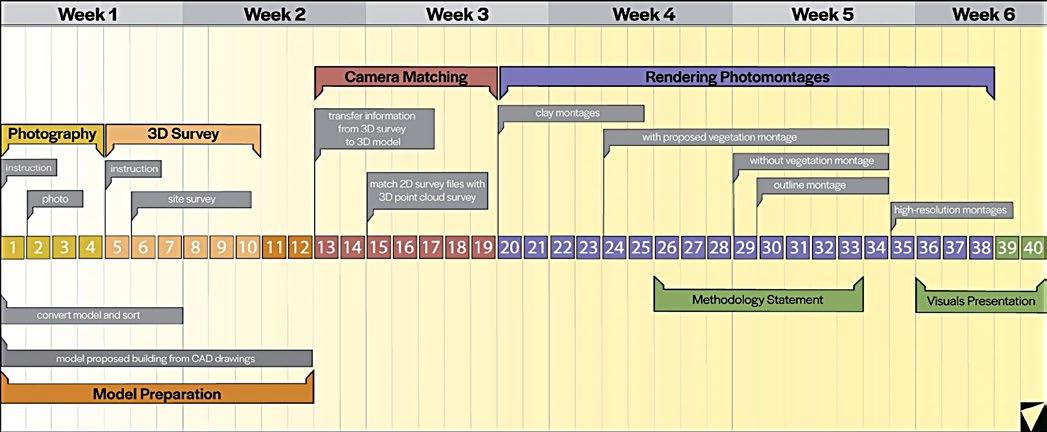
2. Without vegetation – showing the built form without further screening.
3. Transparent Outline Overlay – an image showing the proposed building in transparent wireframe form to highlight scale and positioning.
These versions follow the PNVCAT2 practice note and help the Tribunal assess how the development will appear in context now and in the future.
In the case of the emergency described at the beginning of this article, success hinged on rapid mobilisation. A usable 3D Revit model from the architect helped accelerate setup. Our team converted it to 3ds Max and cleaned up non-essential elements to streamline rendering. The photographer and, in that case, the planning witness, coordinated quickly, and the surveyor obtained a 3D point cloud survey the next day.
In parallel, we began preparing material specifications and reviewing landscape plans. The landscape architect updated species and heights mid-process, and we revised the scenes accordingly. The legal team reviewed the methodology statement to ensure it would stand up to scrutiny.
By mid-second week, the photomontages were ready for final review. By the end of the week, they were circulated on time, but not without the challenges that come with working through a very condensed timetable.

From our experience across hundreds of projects, the most successful outcomes follow these principles:
• Engage early. Don’t wait for the final architectural plans. Photography and surveying can occur in parallel with late-stage design work.
• Coordinate tightly. Identify a central point of contact – a planner, lawyer, or project lead – who can keep all consultants aligned and be the central point of communication across all stakeholders.
• Plan for review time. Allow expert witnesses and legal teams to check image accuracy and documentation.
• Work with checklists. Clear photo location instructions, building documentation, and vegetation checklists reduce the risk of missing key inputs.
In the high-stakes world of VCAT and Planning Panels, visual amenity is more than an aesthetic concern – it’s part of the factual matrix the decision-makers use. It is essential to treat it with the same procedural rigour as any other expert evidence.
Where tight timeframes are unavoidable, a clear brief, early consultant engagement, and decisive communication are your best tools to avoid a scramble.
Stan Zaslavsky is Principal of Eagle Vision. Production of photomontages for use at VCAT and Panels Victoria is just one aspect of Eagle Vision’s work.


The introduction of Amendment VC267 naturally marked a shift in applications subject to Clause 55 assessment with transitional provisions provided for applications already in the system. These transitional provisions have been the subject of debate with:
• Salehi v Maroondah CC [2025] VCAT 502 finding that for permit applications lodged before Amendment VC267:
If the permit application is amended by the Tribunal pursuant to clause 64 of Schedule 1 or section 127 of the Victorian Civil and Administrative Tribunal Act 1998 (Vic) (‘VCAT Act’), clause 55 of the planning scheme in force immediately before 6 March 2025 (being the approval date of Amendment VC267) continues to apply to the permit application before the Tribunal.
• Oakley Six Pty Ltd v Monash CC {2025} VCAT 648 finding in respect of former zone schedule variations that:
QUESTION OF LAW – Which version of Schedule 3 to the General Residential Zone in the Monash Planning Scheme (either pre or post Amendment VC276) and its Clause 55 variations apply to this application, which benefits from the transitional provisions at Clause 32.08-7, due to it being an application for a planning permit lodged before the date of Amendment VC267?
ANSWER – Schedule 3 to the General Residential Zone as it existed in the Monash Planning Scheme immediately prior to the approval of Amendment VC267 to the Monash Planning Scheme applies to the application for permit, the subject of the decision under review.
There have been several decisions recently which have resulted in permits being granted for matters Councils had argued were residential underdevelopments including:
• In Fabcot Pty Ltd v Maribyrnong CC [2025] VCAT 378 an entirely commercial development was proposed on 6,300 metres in the West Footscray Neighbourhood Activity Centre. The Tribunal found:


Hew Gerrard, Senior Associate, Glossop Town Planning
52. We are not persuaded the lack of residential use is unacceptable. Amongst other things, the purposes of the MUZ and relevant policy set out in the Planning Scheme seek to encourage the provision of residential land use in the proposed location and within the activity centre. However, whilst the policy settings encourage the provision of residential land use, we do not find that it means that every site must accommodate housing.
• In Weinert v Nillumbik SC [2025] VCAT 242 two dwellings were proposed on 836sqm in the Eltham Major Activity Centre. The Tribunal commented:
12. Council submits two conventional family sized dwellings runs contrary to the activity centre policy and the provisions of ACZ1, including providing medium density housing that suits one and two person households. Whilst there is a policy aspiration for this type of housing, it is only one particular highlight in one ACZ1 objective that generally encourages medium density housing. Furthermore, a dwelling containing 3-4 bedrooms can be suitable for one and two person households as well as families. This is not sufficient reason to refuse this proposal.
In Ayda Vic Pty Ltd v Hobsons Bay CC [2025] VCAT 357 the Tribunal found five dwellings on 725sqm in the Altona Major Activity Centre acceptable commenting
13. Firstly, I acknowledge that the first Strategy at Clause 15.01-1L01 of the Hobsons Bay Planning Scheme, which was heavily relied upon in the Council’s submissions, seeks to: Support development that is substantially different in scale and intensity compared to housing in the established area, such as apartment buildings rather than lower scale building forms.
14. However, this policy does nothing more than to say that a decision maker should support a development that is substantially different in scale, such as apartment buildings. It does not encourage such development, nor discourage lower scale or townhouse style development. There is nothing in this policy statement, or in others found in the Hobsons Bay
New Zealand has made international headlines recently for its housing policies aiming to address affordability pressures. Successive governments have intervened in major ways – aiming to promote density, but then pivoting back to greenfield. What has worked and what hasn’t? What lessons can we draw from our neighbours in Auckland and Christchurch? We will also tour award winning projects across residential typologies, with an eye on sustainability and renewal in the Christchurch context. Join VPELA and UDIA Victoria members on this exclusive tour of New Zealand’s hallmark cities. Learn from leaders, connect with peers, expand your horizons. For more details and to view the Tour Program here
Member Cost: $5,950.
Please note this cost excludes connecting flights to and from New Zealand.
Booking: The tour is limited to 22 places.
Planning Scheme that were brought to my attention, that sets a preference for a particular style or scale of housing in the Substantial change area.
• Even regional areas have been the subject of such agreement with Vietetta v South Gippsland SC [2025] concerning three dwellings on 1,214sqm in the Leongatha Town Centre. The Tribunal commented:
51. I am also not persuaded that a refusal of this proposal in this context would be likely to lead to a more intensive density or built form outcome in the longer term.
52. It has not been established that there is a realistic investment opportunity or housing demand for this form of development on this particular site at the edge of the Leongatha town centre, even to the period of 2036 as identified in policy targets.
Given some of the comments made by the Tribunal (which naturally are only a snapshot of the decision making undertaken) it will be interesting to see how/if Government adapt and whether ‘minimum density’ requirements arise.
Name a Council or consultancy that hasn’t debated the relationship between the NCO and Clause 54. Perhaps Rodgers v Port Phillip CC [2025] VCAT 385 settles the debate once and for all. A permit was required only under an NCO with the Tribunal asked to determine the question:
Does the Neighbourhood Character Overlay (‘NCO’) at Clause 43.05-3 of the Victorian Planning Scheme (‘VPS’) require the decision maker to broadly consider Clause 54 of the VPS?
The Tribunal found:
17. The only requirement for a permit for this proposal arises under NCO5. Clause 54 is an assessment tool to be used to the extent relevant to the purposes and decision guidelines of NCO5.
18. A purposive assessment of the wording of NCO5 in its context suggests that the preferable view is that the only applicable standards of Clause 54 are those modified by Schedule 5 to the NCO, and those which are not modified but directly pertain to neighbourhood character.
19. The remaining standards within Clause 54 are not applicable to the discretion to be exercised under the NCO and the decision maker is not required to consider them.
Settled?
Hew Gerrard is a Senior Associate at Glossop Town Planning and a keen follower of the decisions of the VCAT. As we approach the end of another year, the editors thank Hew for his regular contribution compiling In case you missed it.
While Hew is key to compiling this part of Revue, we always welcome contributions from members in professions other than planning.
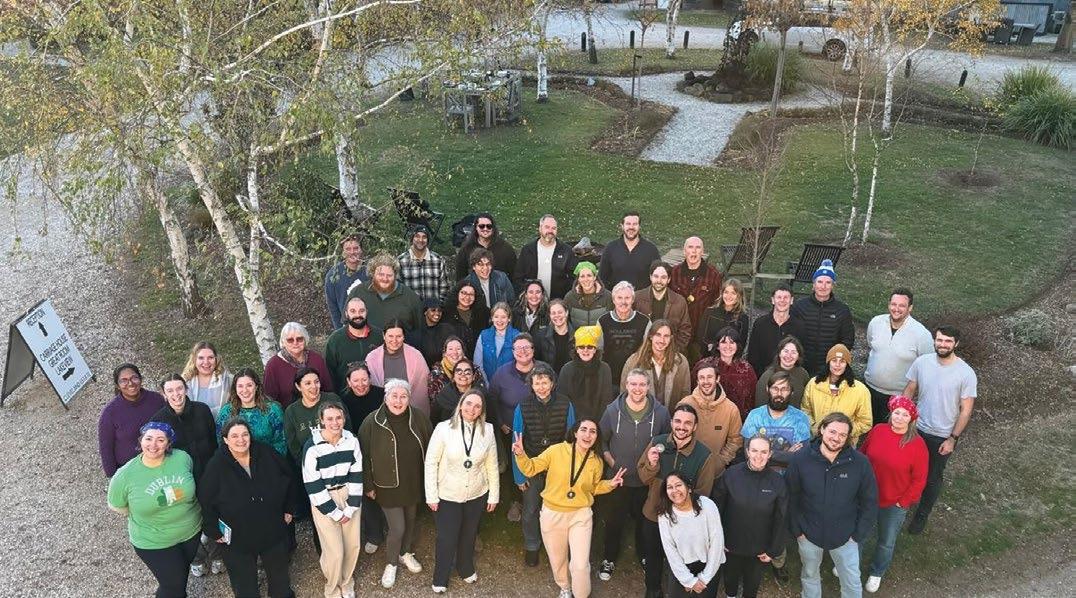

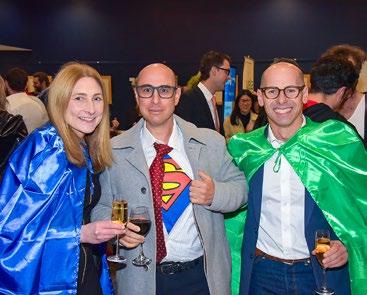
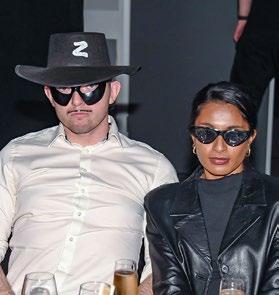

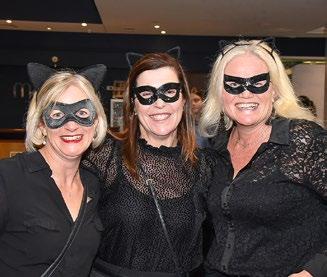
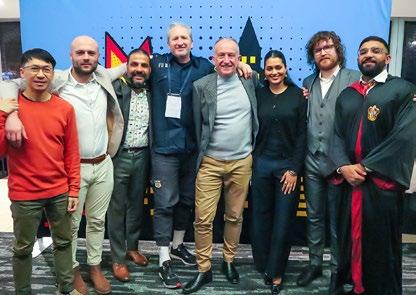
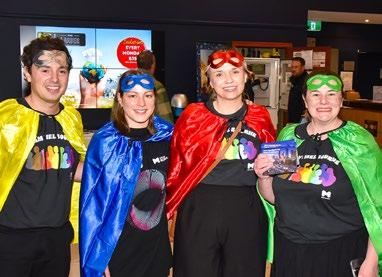

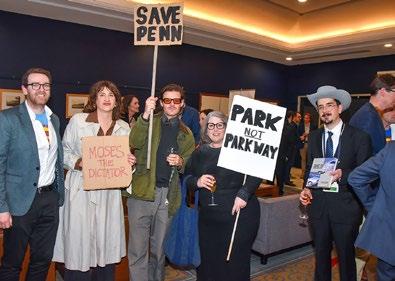

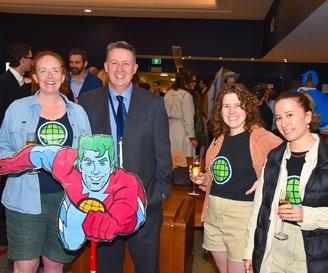

VPELA – A MULTI-DISCIPLINARY PROFESSIONAL ASSOCIATION
Established in 1989, the Association holds regular seminars, social events and a conference annually. It also reviews legislation, provides high level advice to Government and makes submissions to all aspects of land use planning. If you have any questions or are interested in joining the Association, contact Anna Aughterson, Executive Officer – admin@vpela.org.au PO Box 1291 Camberwell 3124, 9813 2801
www.vpela.org au