Responding to shifting trends Issue #3 | March 2026
Sustainability in practice
Transitioning to electric funeral vehicles
Caring for those who care
Psychological wellbeing at work
Cremation led funerals
Responding to shifting trends Issue #3 | March 2026
Sustainability in practice
Transitioning to electric funeral vehicles
Caring for those who care
Psychological wellbeing at work
Cremation led funerals


11 Joseph O’Dea: 50 years of service to the funeral profession 13 Electric funeral vehicles: A practical sustainability transition 14 Why psychological wellbeing matters in funeral service
17 How to Die in the 21st Century 18 Cremation is here to stay. Are you?
23 Supporting families through funeral funding conversations 25 Beyond the Silence: Conversations with John Adams 27 Industry Spotlight – Victorian Institute of Forensic Medicine
29 Member Profile – Melissa Blondell
National Office
Suite 6, 27-31 Duerdin Street, Notting Hill VIC 3168
PO Box 1048, Mount Waverley VIC 3149
Tel: 03 9859 9966
Website: www.funeralsaustralia.org.au
National Council
NATIONAL EXECUTIVE COMMITTEE
President: Asha Dooley
Senior Vice President: Deanne McLeod
Junior Vice President: Luke Gregson
Treasurer: James MacLeod
Divisional Representatives on National Council
NSW/ACT
Shannon Scott, Simon Law, Asha Dooley
QUEENSLAND
Don Burstow, Scott Harris, Luke Gregson
SOUTH AUSTRALIA/NORTHERN TERRITORY
Sharyn Moll, Philip Murray
TASMANIA
Paul Graham, Travis Tann
VICTORIA
Kelly Scott, James MacLeod, Andrew Pinder
WESTERN AUSTRALIA
Adrian Barrett, Deanne McLeod
National Office Staff
DALE GILSON
Chief Executive Officer
Email: ceo@funeralsaustralia.org.au
THERESA BERNSTEIN
Finance Manager
Email: accounts@funeralsaustralia.org.au
EDWINA ELLICOTT
Chief Operating Officer
National Education
Email: edwina.ellicott@funeralsaustralia.org.au
SHERIDA GOOD
Executive & Member Liaison Officer (VIC & TAS)
Events (VIC & TAS)
Email: sherida.good@funeralsaustralia.org.au
DEANNE BROWN
National Convention Coordinator
Events (NSW/ACT & QLD)
Email: deanne.brown@funeralsaustralia.org.au
LUCINDA CATE
Communications & Marketing Officer
Member Services
Email: lucinda.cate@funeralsaustralia.org.au
MARGOT HAYNES
Administration Assistant
Email: margot.haynes@funeralsaustralia.org.au
CORALIE HIGGINS
Administration Support Coordinator
Email: coralie.higgins@funeralsaustralia.org.au
The Funerals Australia Magazine is published quarterly in March, June, September and December. We welcome material for publication. Advertising, artwork and editorial deadline for June 2026 edition is 8 May. All material submitted is used at the discretion of the Editorial Committee.
Editor: Lucinda Cate PO Box 1048, Mount Waverley, VIC 3149
Email: info@funeralsaustralia.org.au
Registered Office: Suite 6, 27-31 Duerdin Street, Notting Hill, VIC 3168
Telephone: 03 9859 9966 Fax: 03 9819 7390
ACN 007 331 580 ABN 33 007 331 580
Copyright © 2026: Items in this publication are protected by copyright law. The Funerals Australia Magazine has been produced by Funerals Australia as a service to its Members. No part may be reproduced by any process without written authorisation by the Association.
Graphic Design: Dean O’Brien Print: NEO 5 Dunlop Road, Mulgrave, VIC 3170
Images sourced on www.shutterstock.com Opinions expressed in this Magazine are not those of Funerals Australia. Funerals Australia does not accept responsibility for the content of advertisements or articles appearing which may be held to be contrary to law.
Promote and advocate for the value of funerals and the professon, leading the way in standards and education to drive the advancement in the sector and empower community decision making.
Members of Funerals Australia agree to honour the spirit and provisions of the Code and as subscribers to the Code to hereby affirm and accept willingly the responsibilities and privileges that are implied by membership of the Association.
1. To maintain in all matters the highest standards of business, professional and personal conduct.
2. To respect in all circumstances the confidentiality and trust placed in us by our clients and members of the public.
3. To ensure that staff are qualified and competent.
4. To ensure that facilities are adequate for all services rendered to the community.
5. To provide information concerning the range of services available, the prices of these services, and the functions and responsibilities accepted on behalf of our clients.
6. To give a written estimate of all funeral charges and disbursements to be made on a client’s behalf at the time of taking instructions, or as soon as is practicable.
7. To respect the personal choice of clients and have regard for their diversity of beliefs in religious and cultural practices.
8. To ensure that all advertising is in good taste and directed to informing the public.
9. To be thoroughly conversant with the laws of the land as they apply to funeral service and allied industries and professions.
10. To provide access to a client advisory service with conciliation and arbitration arrangements available to help resolve any disputes which arise between members and their clients.
printing.
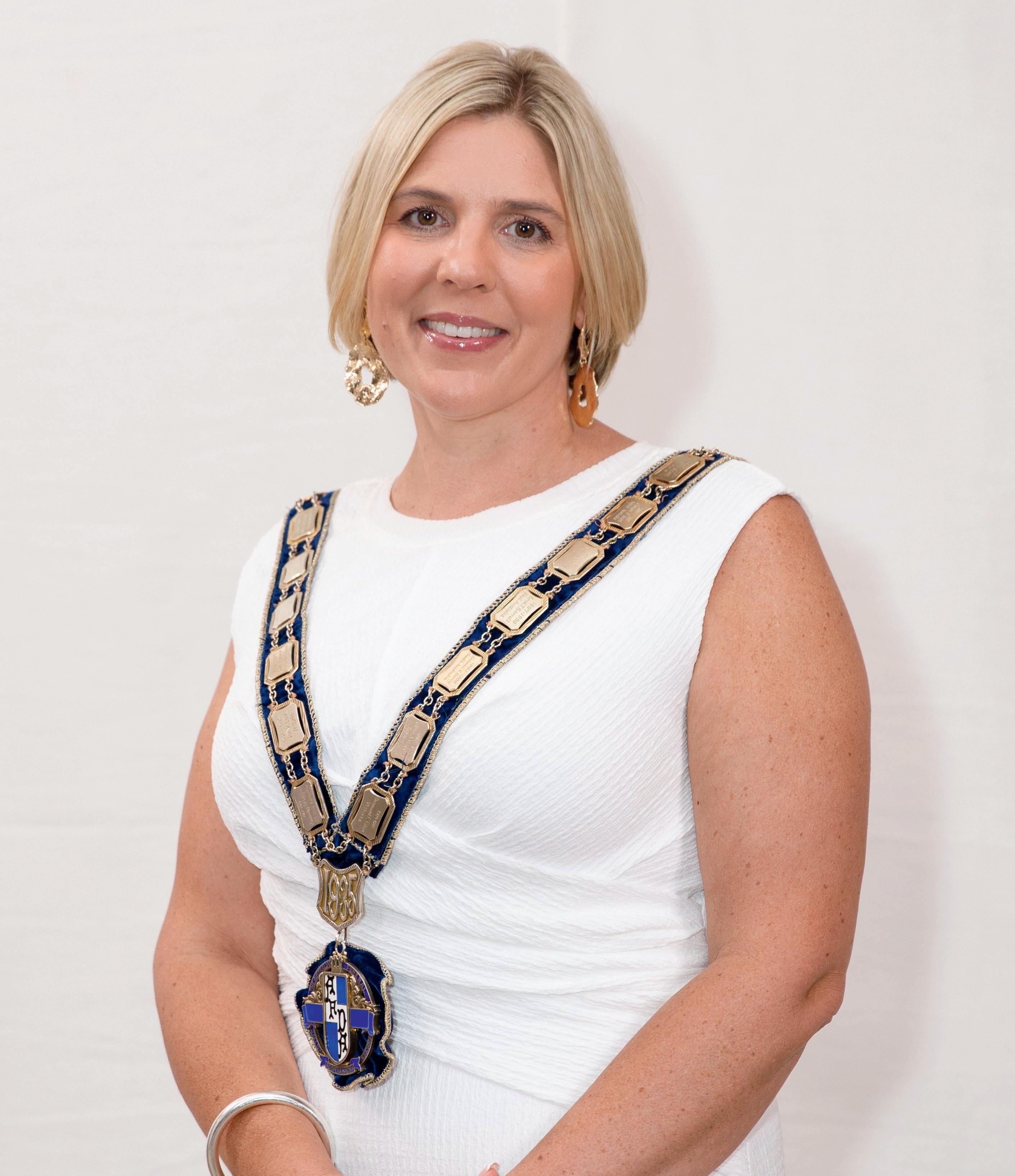
As we step confidently into 2026, I want to begin by extending a heartfelt welcome to all our members, national corporate partners, sponsors, affiliates, colleagues, and friends of Funerals Australia.
A new year always brings with it a sense of possibility, but this year feels particularly significant. It marks our first full year operating under our refreshed identity as Funerals Australia, and with that comes renewed direction, renewed energy, and a renewed commitment to elevating our profession and strengthening our national voice.
Our flagship event on 19–22 March 2026 at the Sunshine Coast Novotel Resort promises to be one of our strongest and most engaging conventions yet. With an invigorated program and an updated learning format, this year’s event truly reflects the modernised direction of Funerals Australia.
Beginning with a full day pre convention workshop run by Relationships Australia Victoria, members will have the opportunity to deep dive psychological wellbeing in the workplace before the main program even begins. This workshop format is specifically designed to provide practical tools and actionable insights members can take straight back to their teams.
We have site visits to Gregson & Weight and their amazing rainforest chapel as well as Hyqual Australia to see how they produce their high-quality products in their factory. The education program follows a “build your own program” model, giving delegates the
flexibility to tailor their learning across two concurrent breakout streams. With 11 plenary and breakout sessions, industry partner updates, and valuable cross sector insights, the education component alone will make this convention a standout.
Of course, conventions are not only about learning, but they are also about connection and community. This year’s social program beautifully showcases the splendour of the Sunshine Coast. We kick off with a Welcome Reception beach party on the Friday night followed by our boot scooting themed dinner on the Saturday night, complete with line dancing performances and lessons! As well as exclusive use of Aussie World. For partners and families joining us, we’ve curated optional visits to local attractions including the Ginger Factory and the Big Pineapple.
This year represents an important moment in our evolution as an association. Our refreshed brand direction aligns with our long term vision: to modernise, professionalise, and strengthen the funeral industry across Australia. We are actively advancing strategic plans around education, member value, marketing and national representation, including the continuing development of the Funeral Learning Hub, our next generation education platform.
In 2026, we will also be introducing committees to work with the National Council; these will be for PEV, Membership, Regulation, Learning & Development, and Expo – please reach out directly to Dale Gilson should you wish to join a committee; there is no
requirement to be on any Councils to do so. Through the membership committee we will be undertaking a review of our membership structure to ensure our categories reflect the diversity of our industry and the needs of our growing professional community. This work is critical as we lay the foundations for the future of our association.
While 2026 is our primary focus, I’m delighted to let you know that we are diligently working away to 10-13 March 2027, when we host the Funerals Australia International Convention & Expo 2027 at the Western Sydney Convention Centre. Planning is already well underway, with a dedicated working group shaping what will be a landmark event for the deathcare sector. The expanded international gathering will feature education, a leadership forum, an industry expo, and opportunities to connect with colleagues from across the globe. Save the dates in your diary now! This will be a milestone for Funerals Australia, reinforcing our intention to lead not only nationally but internationally.
We have so many great initiatives lined up for 2026 and we cannot wait to share them with you on the Sunshine Coast in March, and to continue building an association we can all be proud of.
Warm regards
Asha Dooley
Opticon Framing is an Australian-owned framing and print specialist and a proud Affiliate Member of Funerals Australia. We support funeral professionals with high-quality frames, professional photo printing, and old photo restoration services, helping families honour memories with care, respect, and dignity.
Operating from a dedicated production facility in Victoria and supported by multiple retail locations, Opticon Framing delivers made-to-order solutions using conservation-grade materials and professional archival techniques. Every piece is produced with close attention to detail, consistency, and sensitivity, recognising the emotional significance behind each image.
Our custom framing services are suited for memorial portraits, tribute displays, and ceremonial use, available in a range of classic and contemporary styles. We also provide professional photo printing, ensuring portraits are reproduced with
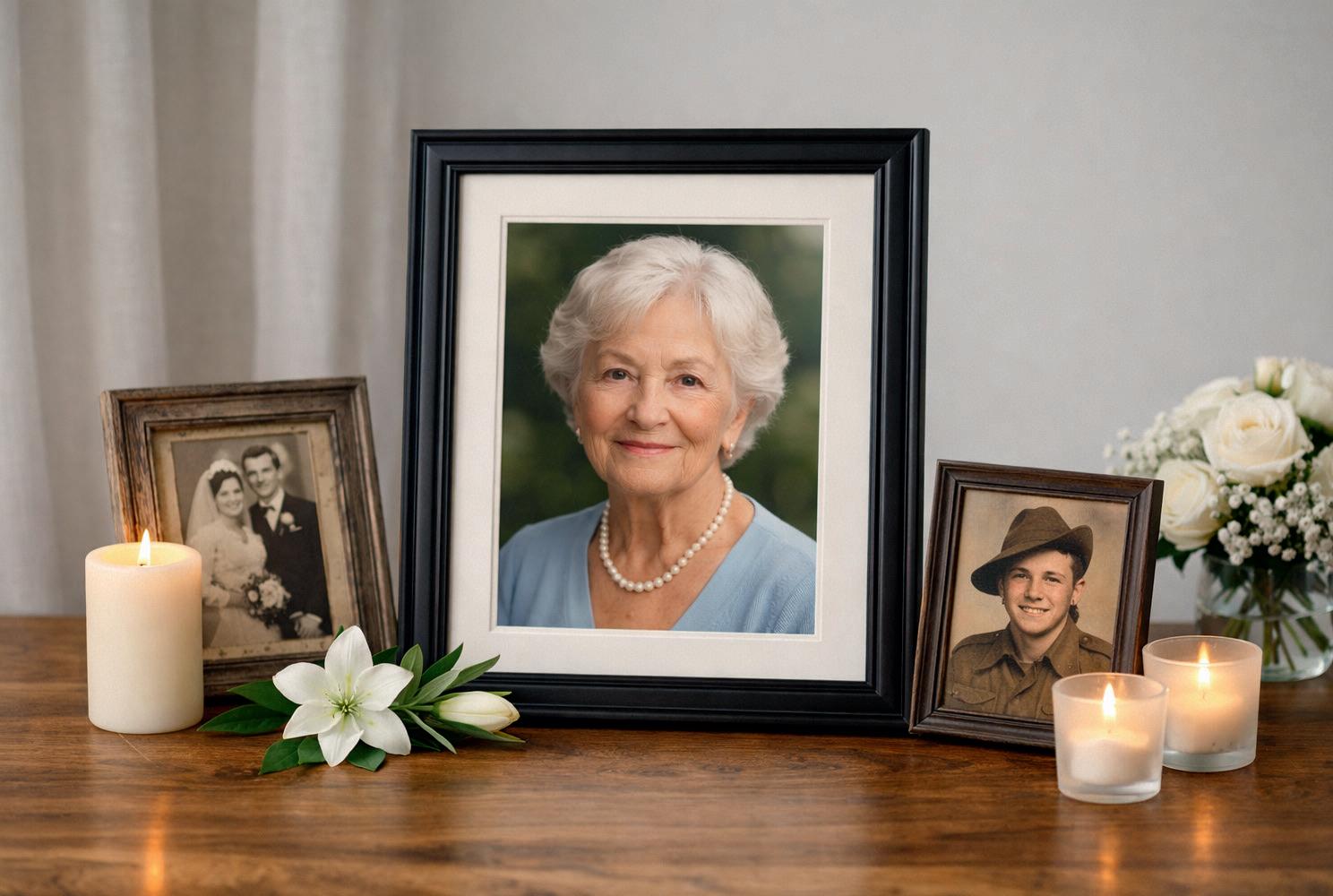
clarity, accurate colour, and a refined finish appropriate for services and commemorations.
In addition, Opticon Framing specialises in old photo restoration, carefully repairing faded, damaged, or aged photographs. This allows families to preserve and present treasured images that may be their only visual connection to a loved one.
We work closely with our professional partners to ensure reliable turnaround times, clear communication, and consistent quality. As a member of Funerals Australia, Opticon Framing looks forward to building strong relationships and supporting members with dependable, professionally crafted framing and imaging solutions. To learn more visit www.opticonframing.com.au.
Applications are accepted subject to advertising. Members have 21 days in which to make comment to national office.
Full membership
Redwood Funerals Pty Ltd
Kelly Burns
Factory 6/4-6 Len Thomas Place
Narre Warren VIC 3805
Affiliate membership
Young Embalming Services
Melissa Young 3 Rockwood Drive
Ormeau QLD 4208
Broadercaster
Ben Cukier
Level 1/793 Burke Road
Camberwell VIC 3124
Jato Distribution
Pauline Tobin
21/72 Logistics St
Keilor Park ViC 3042
Major Furnace Australia Pty Ltd
Andrew Wight
92 Fairbank Rd
Clayton South VIC 3169
Killara Co Australia
Isaac Leung
4/18 George Young St
Auburn NSW 2144
Membership applications approved
Affiliate membership
Opticon Framing
Lisa O’Sullivan 16 Milne St
Thomastown VIC 3074
Membership movements
New nominated representatives
Riverland Funerals
New nominated representative is Wayne Barton
Guyetts Funerals
New nominated representative is Alice Guyett-Wood
It is with great anticipation that the 2026 Funerals Australia National Convention on the Sunshine Coast is now upon us. With a jam-packed program of industry experts and an exceptional keynote speaker, this year’s convention promises to be truly memorable.
The convention keynote speaker is Dr Chadden Hunter, a Queensland wildlife biologist and filmmaker who has worked alongside Sir David Attenborough. From orcas in Antarctica to snow leopards in Pakistan, Dr Hunter’s stories are sure to captivate. We look forward to welcoming the 280 plus members and stakeholders who have registered to attend.
While 2026 is front of mind, planning for our 2027 Funerals Australia Convention & Expo at the Western Sydney Convention Centre in Penrith, NSW, is already well underway. Floorplans have been developed and the program of events leading up to the Expo is taking shape. Our aim is to create an experience that offers something for everyone – more than just an industry Expo. We will continue to keep members informed as planning progresses.
We are also working closely with the Council of the Australian Institute of Embalming (AIE) as they prepare for their 2026 Annual Conference, to be held in Melbourne from 1–3 October. Further details will be shared as they are confirmed.
National President Asha Dooley recently attended the Funeral Directors Association of New Zealand Conference in Auckland, which once again featured an excellent mix of speakers and extracurricular activities. Asha delivered
an informative presentation outlining the lessons learned from the rebranding of the Australian Funeral Directors Association to Funerals Australia.
As part of this rebranding, Funerals Australia has partnered with Sally Douglas of SD Communications to develop a social media campaign and Shamus Dollin from Thomas Marsden Advertising to strengthen our SEO. These initiatives have begun rolling out and you can find out more on the social media campaign on page 11 - In the News section of the magazine. For this strategy to be fully effective, we encourage all members to update their websites with the Funerals Australia logos so the public can clearly identify which funeral directors are members of the association.
With the role of director carrying greater responsibility than ever before, a governance session is to be held prior to Convention, delivered by Governology. This session provides valuable education on the responsibilities of directors.
Whether you are currently serving on a Divisional Council or considering doing so in the future, I strongly recommend attending this informative session should the opportunity arise.
A number of Working Parties are taking shape in which members can join. We will communicate this to the membership, and along with these, Ben Kelly, CEO of ACCA, and I are also progressing a draft Terms of Reference for an industry advisory panel. This will soon be reviewed by both National Councils prior to implementation.
As we commenced 2026, we welcomed changes within the National Office. Margot Haynes joined the team as
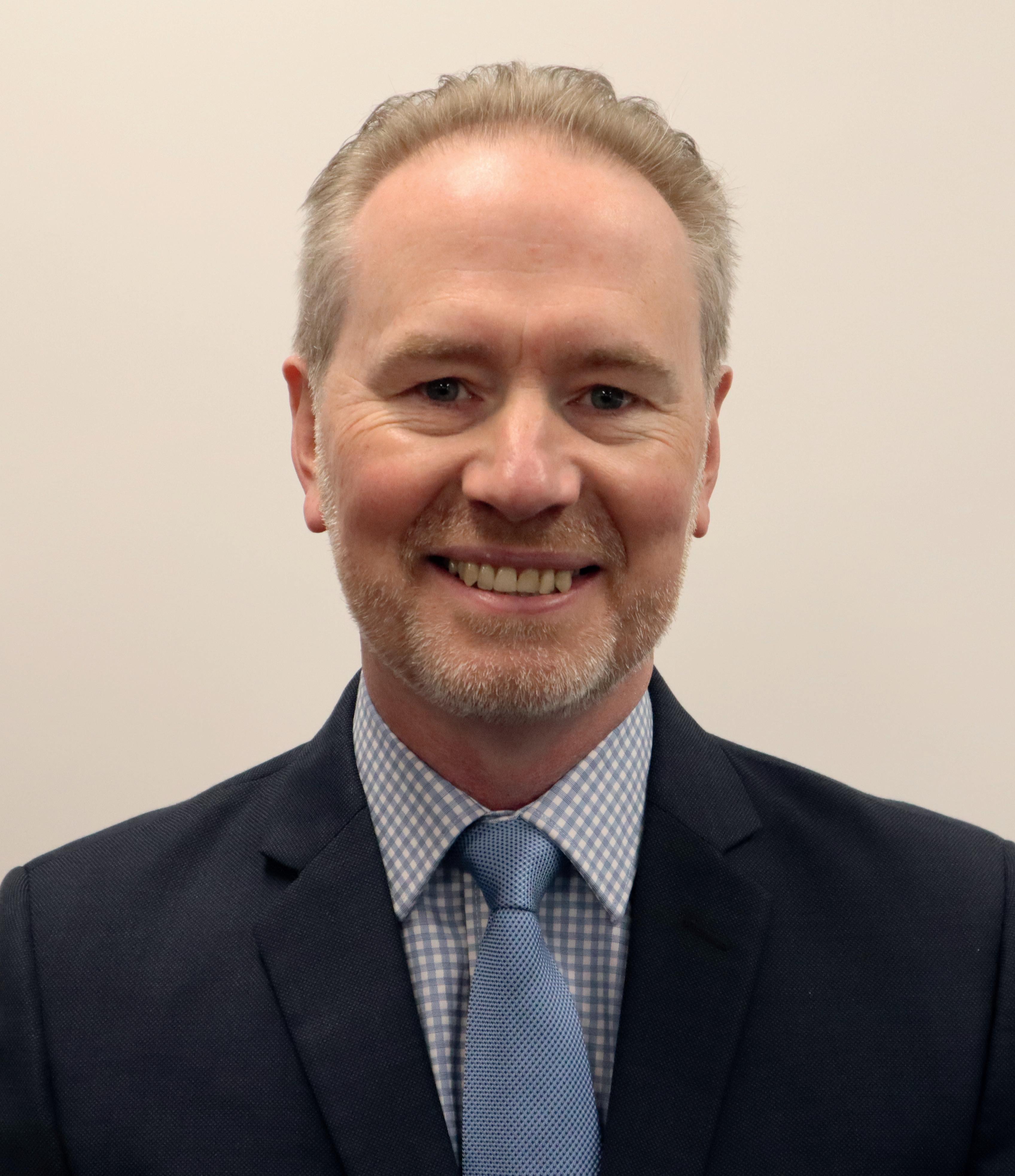
Administration Assistant, providing support to the SA/NT, WA, NSW/ACT, QLD and AIE Councils. Edwina Ellicott has stepped into the role of Chief Operating Officer, enabling my role to focus on higher-level strategic initiatives for the association.
Soon all full members will receive a request for your 2025 calendar year funeral numbers. While these figures relate to the 2025 calendar year, subscription invoices issued will apply to the 2026/27 financial year, which is the relevant membership period. Within this request, you will also see an option to indicate whether you wish to receive a printed version of the quarterly magazine or move to a digital-only subscription.
Finally, we continue to expand and enhance the Funeral Learning Hub with new content. We highly recommend new staff complete the following courses as part of their induction: Funerals Australia, Funeral Industry Trends Report, Funerals and Society, The Role of the Funeral Director, The First Call and Transfer, The Arrangement Process and The Funeral. Full completion of these courses will earn the user the Induction to Funeral Industry Digital Badge.
I look forward to seeing many of you on the Sunshine Coast for our 2026 National Convention and connecting with others at events throughout the year. Dale Gilson

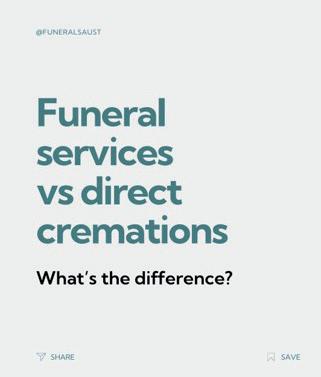
Funerals Australia has launched a new national social media campaign designed to educate the public on funeral care, professional standards, and showcase the expertise and compassion of our members.
Developed with the support of Sally Douglas from SD Communications, the campaign forms part of Funerals Australia’s broader Marketing and Communications Strategy. It positions the association as Australia’s most trusted and recognisable authority on funeral care – building trust through education, modernising perceptions of the profession, and championing members across the sector.
This initiative is designed to help Australians feel more informed and confident when navigating loss, while highlighting the value of funerals and the role Funerals Australia plays in supporting professional standards and funeral practice.
Meeting families where they are
Community expectations around funerals are changing. Families are seeking transparency, digital convenience and personalised services, while new entrants to the sector are reshaping perceptions of cost and value. One of the most significant shifts is the growth of direct cremation.
While direct cremation can suit some families, we are also seeing a growing number of people choosing ‘no service’ options without fully understanding the emotional impact this may have on grief, remembrance and connection.
This is where Funerals Australia has an important role to play.
A key feature of the campaign will be educational posts that gently explain funeral options in plain language including comparing direct cremation vs funeral service. Rather than judging choices, the content focuses on helping families understand what each option involves, the role of ceremony in acknowledging loss, and why many people later reflect on the value of having a meaningful farewell.
Beyond education, the campaign will also spotlight members through behindthe-scenes content, professional insights and community stories highlighting the humanity, professionalism and diversity that define contemporary funeral care. Social media is one of the few places where the public can see this work unfold. By showing the preparation, care and attention involved in every service we help demystify funerals, reduce fear, and build confidence in the profession.
We’ve chosen to focus on Instagram, Facebook and LinkedIn, with each platform playing a distinct role in supporting the campaign. Instagram humanises funeral care, Facebook offers guidance and reassurance, and LinkedIn reinforces our professional voice. Together they allow us to reach families, communities, and industry peers with consistent, values-led messaging.
This campaign works best when members are actively involved. We encourage you to support Funerals Australia so we can support you by:
• Following Funerals Australia on Instagram, Facebook and LinkedIn
• Tagging Funerals Australia in your own posts
• Resharing our content where appropriate
• Sharing your news, stories or innovations so we can amplify your work
When members tag Funerals Australia, it helps us reshare your content, extend reach, and show the real people behind funeral care.
By working together, we can strengthen public understanding, challenge misinformation, and reinforce the value of funerals and professional funeral care across Australia.
At its core this campaign is about education, connection and trust and ensuring families know if they choose a Funerals Australia member they are supported by skilled, ethical professionals when it matters most.


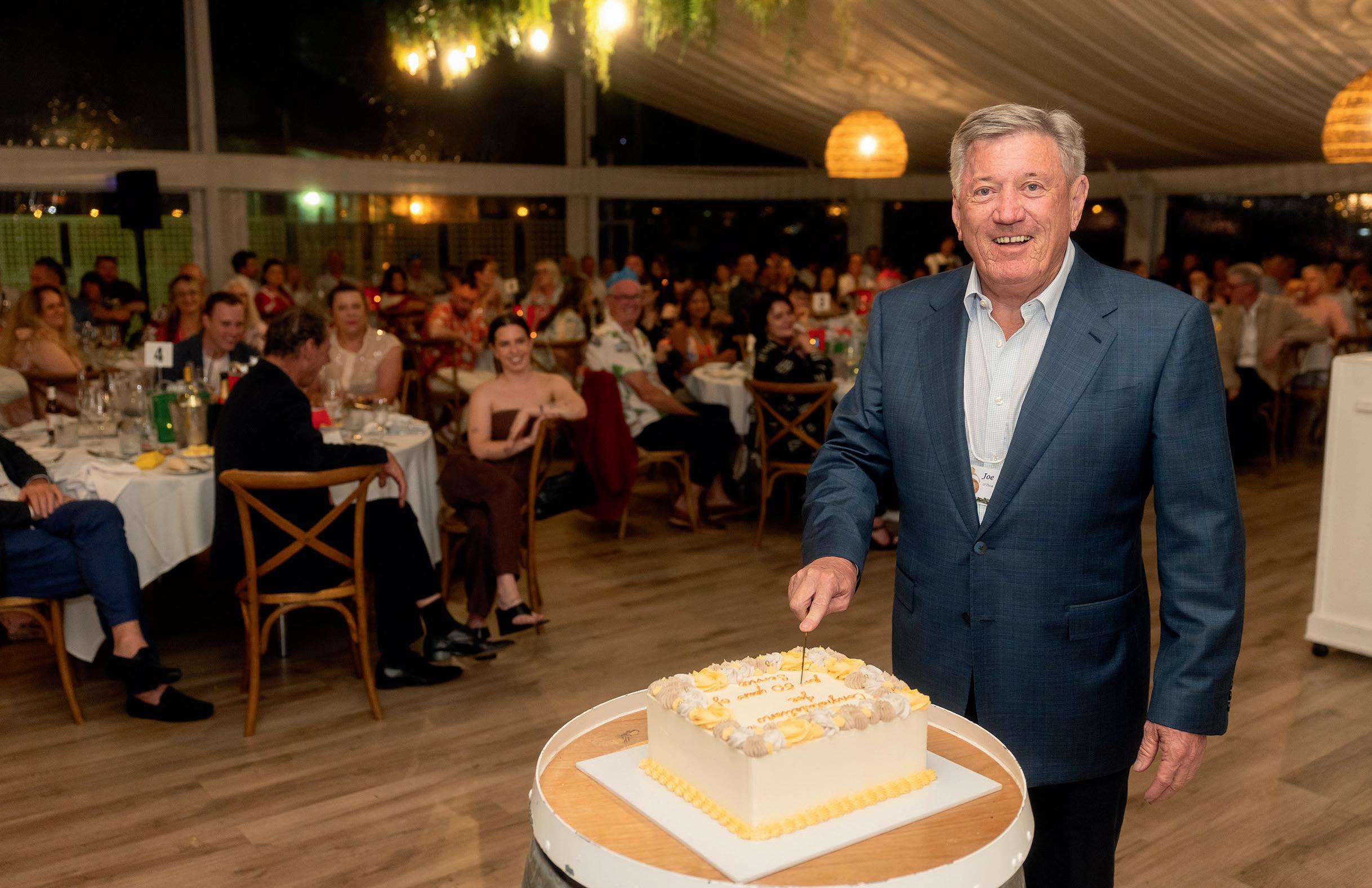
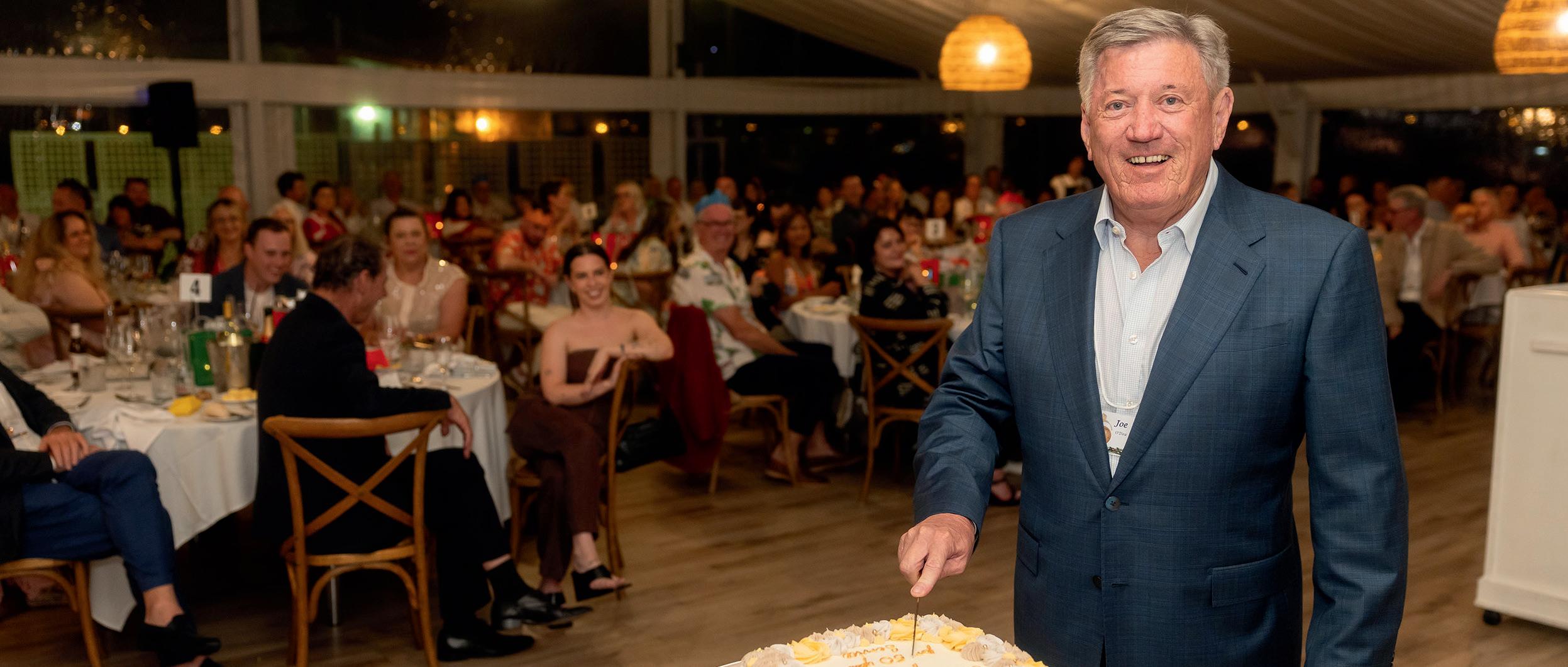
In December 2025, Bowra & O’Dea acknowledged and celebrated Joe O’Dea, whose five decades of service have been defined by leadership, resilience and an unwavering commitment to professional standards.
Reaching 50 years of service in the funeral industry is a remarkable achievement in any era. To do so during a period defined by significant change – increasing regulation, evolving community expectations, consolidation, and corporate acquisition is particularly noteworthy.
Alongside his brothers Tony and Justin, Joe O’Dea has spent his career with Bowra & O’Dea, one of Western Australia’s most established and respected funeral service providers. Founded in 1888, Bowra & O’Dea has grown over generations while remaining proudly family-owned, and today, is recognised as the largest family-owned funeral director in Western Australia, operating across the Perth metropolitan area and Mandurah.
Over the course of Joe’s tenure, Bowra & O’Dea has evolved significantly in scale and capability while maintaining its foundational commitment to dignity, care and service excellence. Under his leadership, the business has expanded to include nine new or refurbished chapels, a modern mortuary facility, an extensive and meticulously maintained fleet, and a highly trained professional workforce.
This growth has not been pursued for its own sake, but rather to ensure families across Western Australia have access to contemporary facilities, diverse service options and consistently high standards of care. The organisation has continued
to adapt to changing community needs, incorporating modern technology, personalised services and enhanced support for families, while retaining the values that have underpinned the business for more than a century.
Beyond his role as Executive Chairman within Bowra & O’Dea, Joe has made a substantial contribution to the funeral profession. He served as President of the WA Division of Funerals Australia (formerly Australian Funeral Directors Association) and for many years as a Councillor, providing leadership during a time of increasing professionalisation and regulatory oversight. His commitment to advocacy, education and collaboration helped strengthen the association’s role in representing members and upholding standards across the state.
At a national level, Joe served as a member of the Funerals Australia National Council from 1985 to 1991. Through these roles, he contributed to national dialogue on professional standards, ethical practice and the future direction of the industry, ensuring Western Australian perspectives were well represented. In recognition of his professional standing and contribution, Joe O’Dea obtained Master
Funeral Director status in 2003, an acknowledgement reserved for those who demonstrate sustained excellence, leadership and service to the profession. Joe’s contribution extends beyond funeral service. He has served on the Board of the WA Metropolitan Cemeteries Board for 38 years with the last 4 years as Chairperson, playing a pivotal role in governance, strategic planning and the stewardship of some of Western Australia’s most significant cemetery and crematorium assets. His tenure reflects a deep understanding of the broader death continuum and a commitment to ensuring respectful, sustainable and well-governed services for the Western Australian community.
A consistent hallmark of Joe’s leadership has been his focus on people, both within Bowra & O’Dea and across the wider profession. The culture within the organisation reflects a strong sense of professional pride, mutual respect and shared responsibility.
The industry congratulates Joseph O’Dea on 50 years of service and acknowledges his significant contribution to Bowra & O’Dea, to industry associations, and to the funeral profession in Western Australia and beyond.


business case. Check government and financial institute websites for funding and low interest financing options to support business case development.
• Driving distance and charging downtime must also be carefully managed. Review typical travel patterns, select vehicles with appropriate range, and implement fleet charging schedules to ensure vehicles are ready when needed. This reduces operational risk and avoids range anxiety in time-sensitive contexts.
• Infrastructure readiness is essential. Depending on charger type, a single EV charger may require up to 32A three-phase electrical capacity. Businesses should assess where vehicles are stored, whether suitable power supply exists both now and in the future.
Upfront capital cost remains a barrier compared to traditional vehicles. However, whole-of-life operating costs are often lower, with savings driven by reduced fuel and maintenance expenses. State-based government incentives may further improve the
Solar photovoltaic (PV) systems can significantly enhance the sustainability and economics of EV adoption. Charging vehicles during the day allows funeral homes to ‘soak up’ onsite renewable generation, reducing reliance on grid
electricity and minimising low-value exports. This improves the return on investment of both solar and EV infrastructure.
Sites with minimal roof space may also consider car park solar structures, which provide shade, generate renewable electricity, and support fleet or customer charging. Linking solar generation with fleet charging strategies is one of the most effective ways to reduce transport emissions while lowering operating costs.
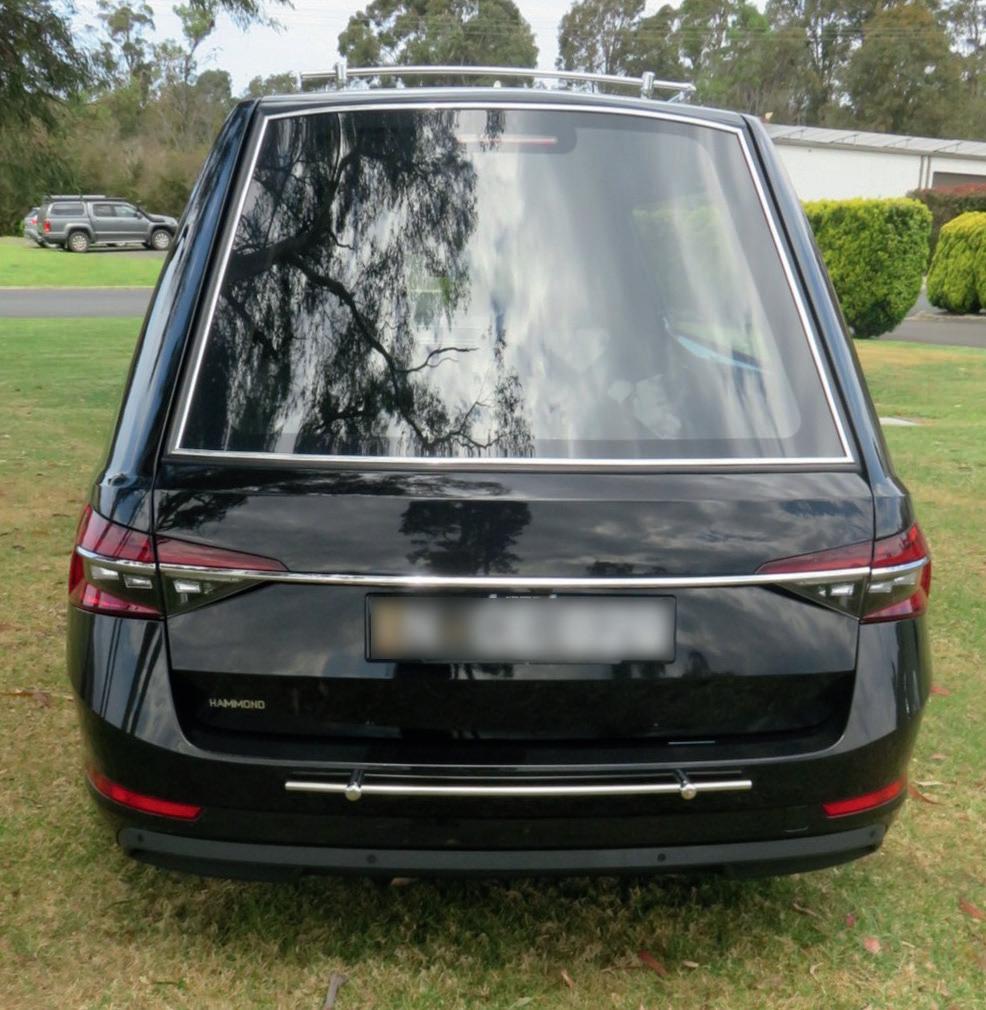
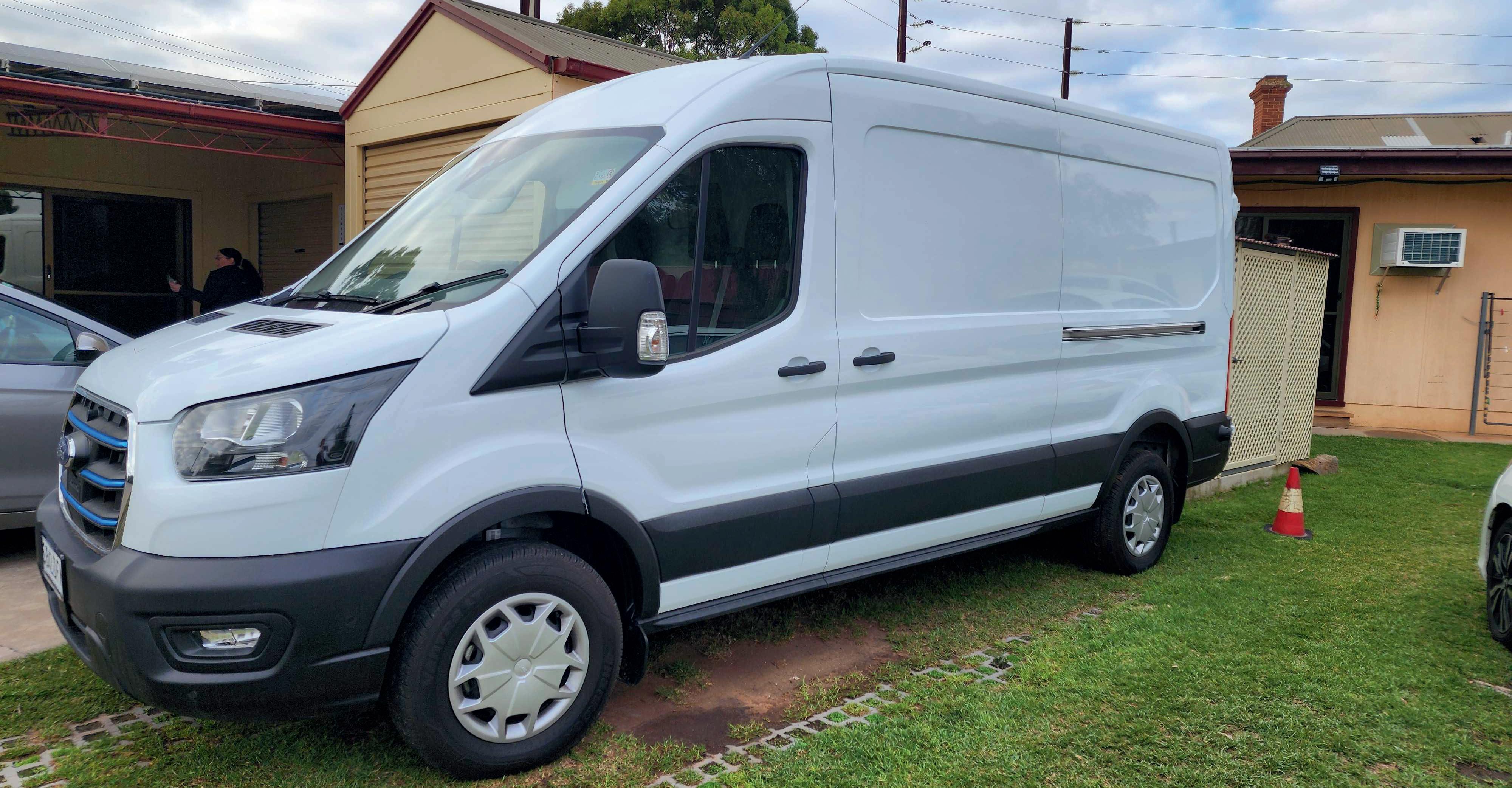
For most Australian funeral operators, the most effective approach is staged electrification: beginning with transfer vans and operational vehicles, building charging capability over time, and integrating EV charging with renewable energy systems when available.
Ultimately, EV transition supports the funeral industry’s commitment to care, dignity, and responsibility across generations. By reducing emissions and embracing renewable energy, funeral homes can play a meaningful role in Australia’s broader net zero transition.
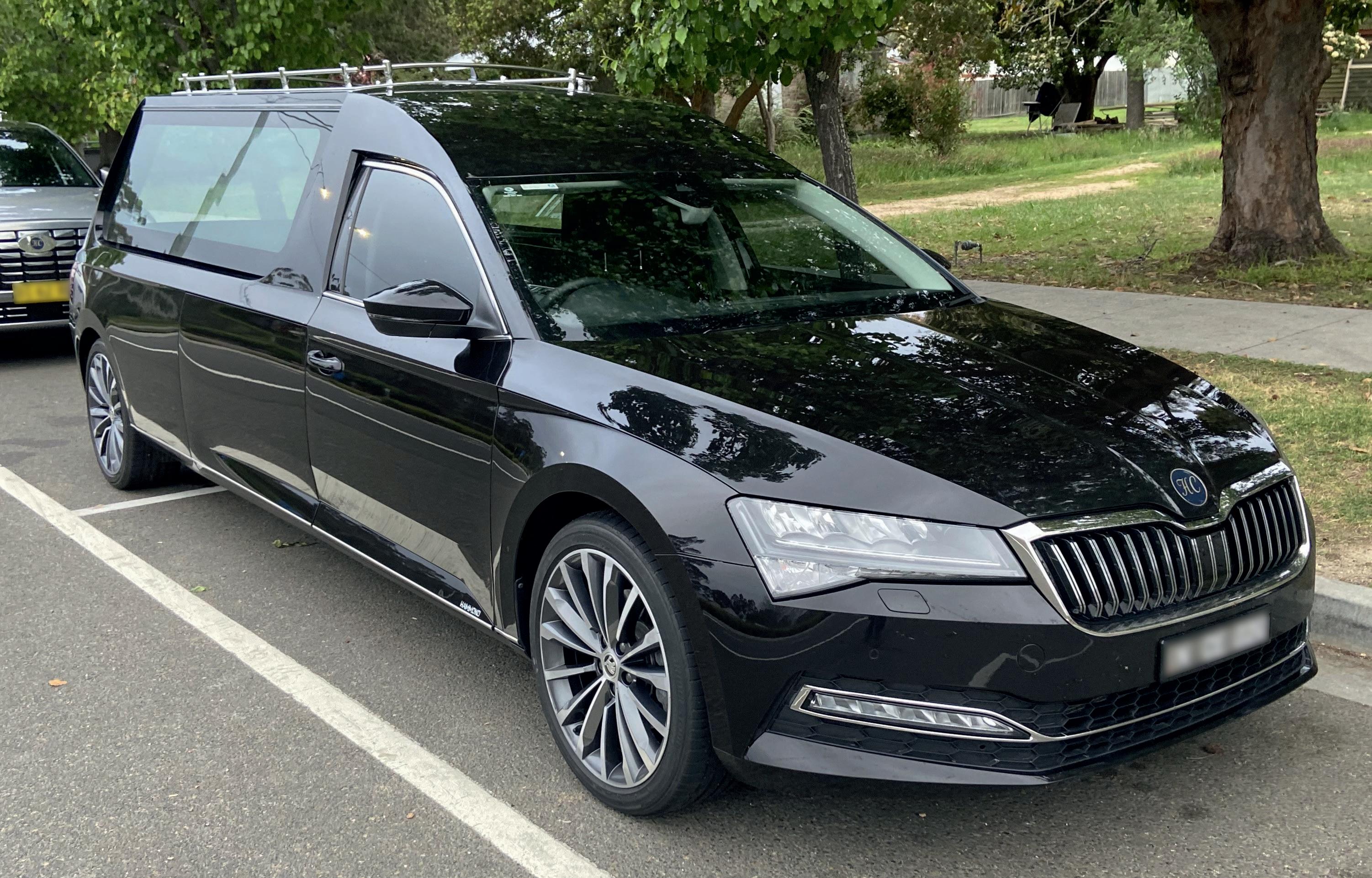
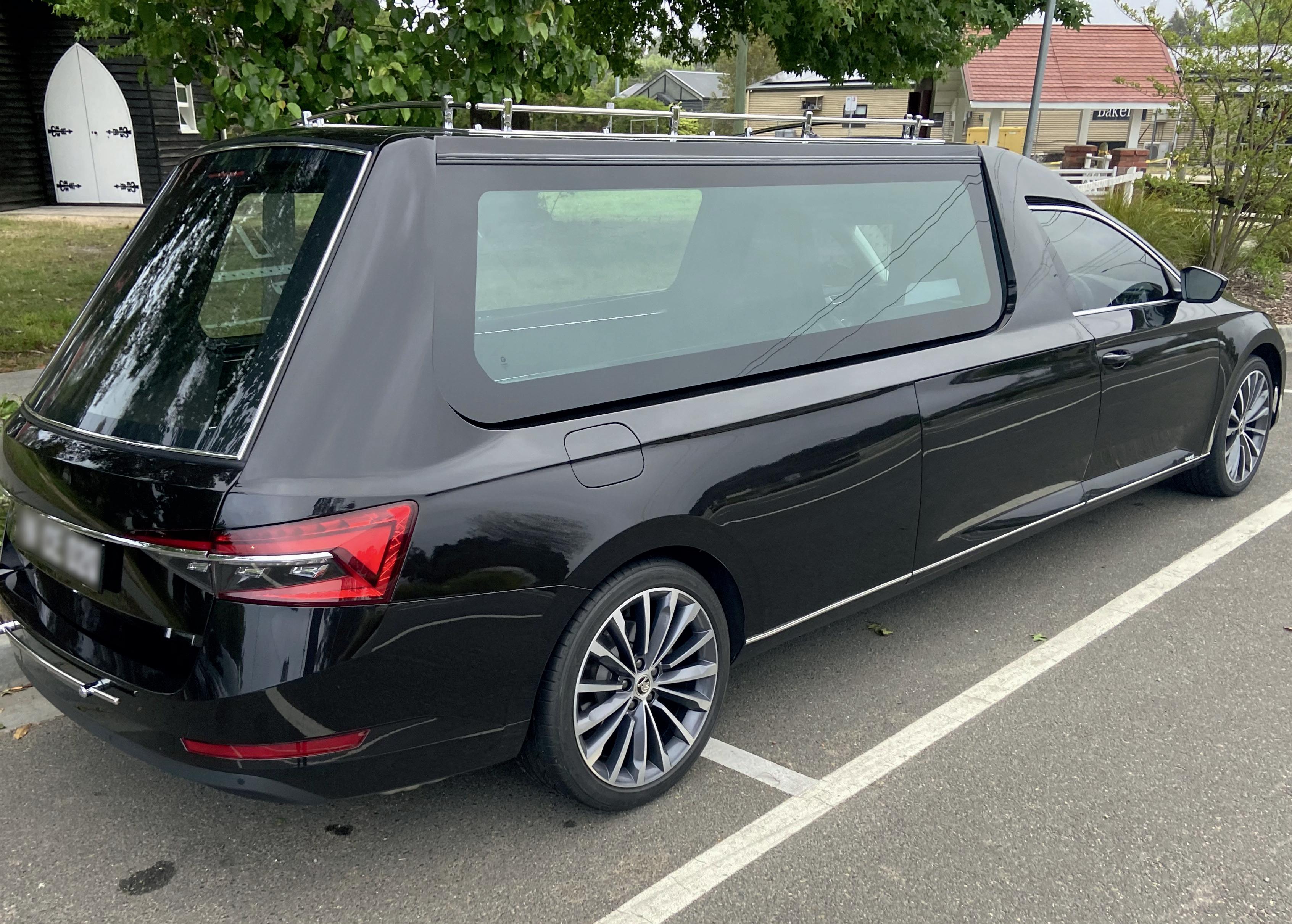
Electric vehicle photo courtesy of Taylor & Forgie Funeral Directors
By Donna Plavljanic, Relationships Australia Victoria
Recent research confirms what many in the funeral sector already know: the psychosocial demands of funeral work take a real toll, with studies showing concerning patterns of burnout, compassion fatigue, sleep difficulties and work-related stress at higher rates than many other occupations.
In my work with Relationships Australia Victoria, I see firsthand what funeral professionals manage every day. You walk alongside families through their most difficult moments, holding space for grief whilst managing complex emotional and practical demands. You do this with skill, professionalism and genuine care. But here’s the question we don’t hear often enough: who’s looking after you?
The conversation around workplace mental health has shifted considerably in recent years. We’re moving beyond awareness into action, particularly in sectors where emotional labour isn’t just part of the role, it’s the foundation of it. The funeral profession sits squarely in this space, and the time for meaningful change is now.
The real cost of caring
Research shows what makes the difference between thriving and struggling in funeral work. Awareness of negative stereotypes about funeral work increases burnout. So does supervisor incivility and the spillover of work stress into family life.
On the flip side, professionals who find deep meaning in their work and bring positive energy from home into the workplace fare much better. These aren’t abstract concepts. They’re what you
experience every day doing essential, deeply human work.
The COVID-19 pandemic exposed just how vulnerable this sector can be. Funeral professionals faced dramatically increased workloads and rapidly changing regulations. Many were implemented without understanding operational realities. You experienced heightened stigmatisation at a time when you were providing an essential service. Many felt simultaneously indispensable and invisible. You worked in conditions that tested resilience. We’ve moved beyond the peak of the pandemic, but its lessons about sustainable practice remain critically relevant.
So, what exactly are psychosocial hazards? They’re aspects of work design, management and workplace culture that can cause psychological or physical harm. In funeral services, they show up in recognisable ways.
Work demands are difficult to predict or control. Deaths don’t happen on schedule. Family needs can’t be booked in advance. The emotional labour of supporting bereaved people whilst managing your own responses to death and suffering never stops. It accumulates over time.
Social isolation and stigma create additional pressure. The stigma attached to death work persists, even in 2026. Many funeral professionals feel isolated in what can be a competitive industry. Even simple things remind you of this, like explaining what you do at a dinner party without making people uncomfortable. It’s a small but telling example of how death work sits at the
margins of everyday conversation. Work-life boundaries blur constantly. The irregular nature of the work makes it nearly impossible to maintain consistent family routines, personal time or basic self-care. Here’s the irony: you work in an industry built on compassion, yet workplaces don’t always extend that same compassion to the people providing it.
A psychologically healthy funeral workplace recognises that, whilst exposure to death is part of the job, you can create systems and practices that buffer against its cumulative impact.
At Relationships Australia Victoria, we work with organisations across sectors to build psychologically safe workplaces. Here’s what’s important to understand: creating this environment in funeral services isn’t about eliminating the inherent challenges of the work. You can’t make death less confronting or grief less painful. But you can fundamentally change how you support your people through it.
A psychologically healthy funeral workplace recognises that, whilst exposure to death is part of the job, you can create systems and practices that buffer against its cumulative impact. This starts with leadership acknowledging that experiencing stress, grief, or emotional exhaustion isn’t a sign of weakness. It’s a normal human response to doing difficult work with heart.
We see practical strategies working well, establishing clear boundaries around
work hours, where possible. Creating peer support systems where staff can debrief after particularly challenging services. Providing access to professional counselling or employee assistance programs, ensuring that leadership openly models healthy practices around self-care and help-seeking.
Equally important is addressing the structural factors that contribute to stress. Review workload distribution. Examine rostering practices. Improve communication systems. Invest in technology that reduces administrative burden. Small changes can have a significant impact when they give staff back time, autonomy or breathing room.
The role of leadership matters deeply here. Research consistently demonstrates that supervisor support and civility directly impact staff wellbeing. Leaders who check in genuinely, who acknowledge the difficulty of the work, who don’t equate busyness with dedication, and who intervene when they see someone struggling create cultures where people can be honest about their needs.
Burnt-out staff make more errors, have increased sick days and provide less consistent service.
The business case you can’t ignore
Beyond the moral imperative, there’s a compelling business argument here. Staff turnover in emotionally demanding work is costly, not just financially but in terms of lost expertise and client relationships. Burnt-out staff make more errors, have increased sick days and provide less consistent service. By contrast, organisations that genuinely invest in psychological wellbeing see measurably better retention, higher engagement, improved service quality and stronger team cohesion.
The funeral profession has always attracted people who genuinely care about making a difference during life’s most difficult transition. That’s your strength. But it’s also your vulnerability if you don’t create workplaces that sustain that caring over the long term. The professionals who entered your industry with passion and purpose deserve to still feel that way decades into their careers,

not just in their first few years.
The conversation about psychological wellbeing in funeral services is gathering real momentum, and rightly so. We’re moving beyond the outdated notion that being ‘tough enough’ for this work means suffering in silence. True professional strength lies in creating sustainable practices that allow people to continue doing this important work for decades, not just years.
For funeral directors and business owners, this means asking honest questions about workplace culture and being willing to make changes, even when they require investment or disruption. For individual funeral professionals, it means acknowledging when things are hard and seeking support without shame.
The families you serve deserve your best. But you can only give your best when you’re properly supported. Creating psychologically healthy workplaces isn’t a luxury. It’s essential to the sustainability of your profession and the quality of care you provide to grieving families.
Alongside my colleague, Astrid Horter, I’m presenting a full-day workshop, Psychological Wellbeing in the Workplace, at the upcoming Funerals Australia National Convention on Queensland’s Sunshine Coast from 19–22 March 2026. The workshop offers evidence-based strategies and actionable tools specifically designed for funeral professionals seeking to enhance workplace wellbeing and create sustainable, supportive environments for their teams.
Donna Plavljanic is Senior Manager, Learning and Innovation at Relationships Australia Victoria, where she specialises in creating psychologically safe workplaces and developing practical strategies for managing psychosocial safety.

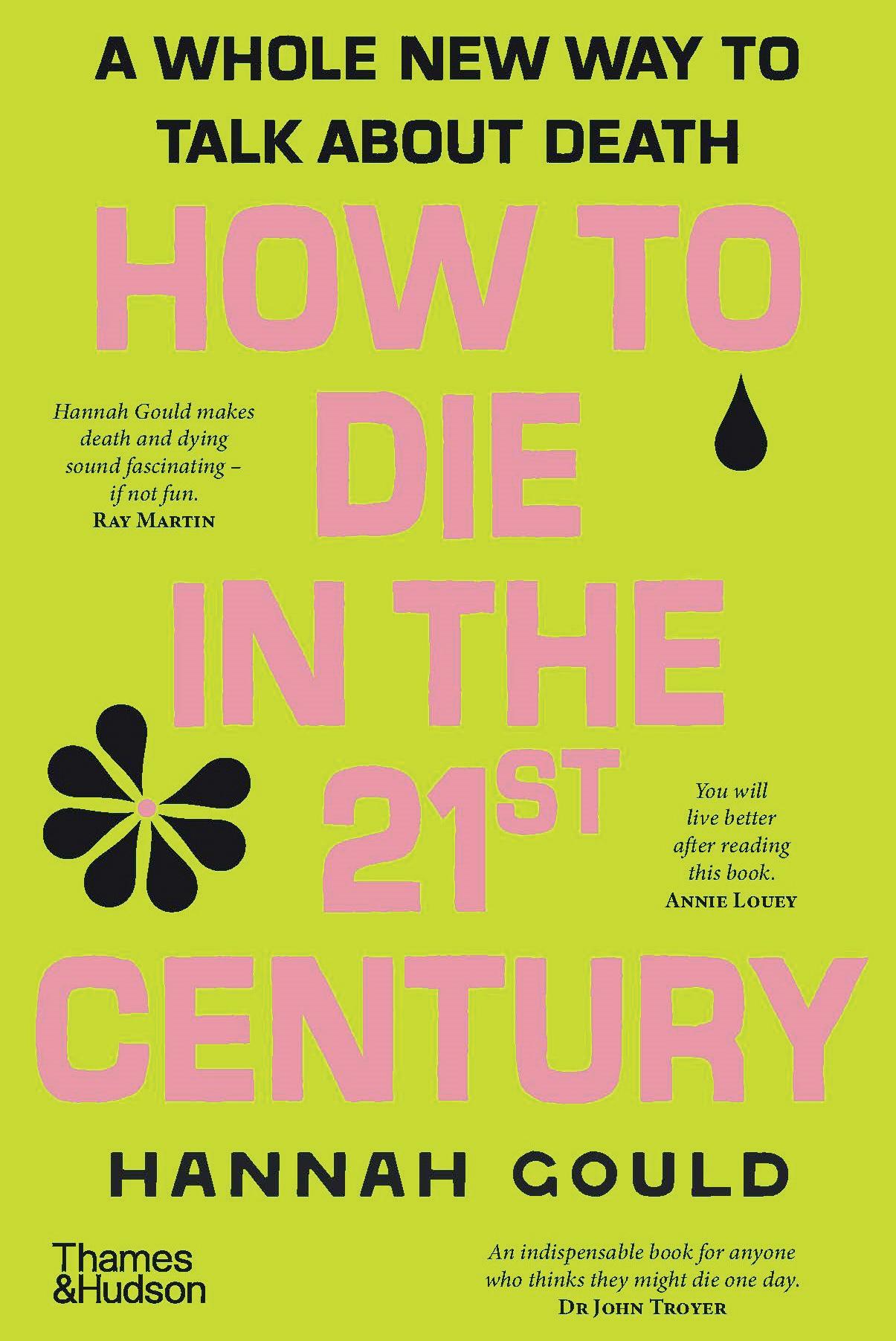
How to Die in the 21st Century
by Dr Hannah Gould examines modern death culture and the evolving expectations placed on funeral professionals. Here she shares key ideas and practical insights from the book to support meaningful conversations with families and contemporary funeral practice.
Death in the 21st century is unlike anything we have experienced before – and humans have been dying for quite some time. Advances in medical technology and social welfare interventions mean that in general, we are living longer and dying slower. In Australia today, we might expect to die in our eighties, in a hospital or aged care facility, perhaps after a long period of infirmity and lots of medical care. And yet, paradoxically and tragically, the overall quality of our dying has not substantially improved.
These challenges are likely to intensify, as Australia enters an era of ‘peak death’ in which more people will die than ever before thanks to our ageing demographics. At the same time, in the 21st century the religious and cultural traditions people once relied upon to make sense of death and ritualise somebody’s passing have splintered. On the one hand, we have widespread dissatisfaction with traditional funeral rites, and on the other, an explosion of new, creative possibilities for ceremony. Funeral directors stand on the frontline of these changes, as the primary public-facing representatives of the wider deathcare sector and in their role shepherding grieving families through a new age of death. But the
task of understanding death in the 21st century, let alone translating its practical implications for families, is immensely challenging. This is where my new book can help.
How to Die in the 21st Century is your handbook for death in this new era: a compassionate, practical and surprisingly hopeful guide to understanding mortality. From the practicalities of cremation to the possibilities of green burials, from grieving a pet to navigating tricky memorial etiquette, I tackle the unexpected challenges generated by contemporary death from the perspective of a cultural anthropologist and death scholar. These include (but are not limited to) issues like: Can I turn into a tree when I die? How do I talk to my parents about end-of-life planning? And should I attend my ex-partner’s parent’s funeral?
The book is split into six substantive chapters, outlining the transformation to 21st century death culture in the areas of contemplating (including death awareness and literacy), dying (including end-of-life care, organ donation, and voluntary assisted dying), disposal (including the choice of burial vs cremation, new green death technologies and ash scattering), celebrating (including the link between funerals and grief, the emergence of the celebration of life service and new rituals), grief (including different psychological models for understanding bereavement and new things to grieve like pets) and finally, memorialising (including the future of cemeteries, and alternative memorials).
Of particular interest to funeral directors will be the chapters on disposal and
celebrating. The former discusses the evidence that might guide a decision for burial or cremation or something new, cutting through much of the ‘greenwashing’ that has arisen in the sector of late. The chapter on celebrating gets to the heart of the debate about what a funeral is for, why you should hold one, and the link between funerals and grief.
This is also a book that can readily be shared with families. How to Die in the 21st Century is a guide to death and dying for those who want to live a good life, and it replaces the taboos and fear around death with curiosity and humour.
Hannah Gould is the author of How to Die in the 21st Century, Thames & Hudson, $34.99, available now.
By Alan D. Wolfelt, PH.D.
Recent data from industry sources confirms what funeral professionals across the country are already experiencing: cremation has become the predominant form of disposition in Australia.
Nationally, cremation rates are estimated to be around 70% with the rate continuing to rise year on year. Several factors are contributing to this ongoing shift. Cost considerations remain influential, as do environmental concerns, urbanisation and cemetery space constraints. Australia’s increasingly mobile population, changing religious and cultural practices, and evolving consumer preferences including interest in simpler, less ritualised services also play a role.
At the same time, the number of deaths in Australia is projected to increase steadily as the population ages, meaning the absolute number of cremations will continue to grow even if the proportion stabilises.
Cremation is also becoming more socially normalised in Australian funeral practice with more families attending cremation based services for loved ones, making it a familiar choice for many. Cremation is clearly here to stay. The question is: Can your funeral home strategically respond to this reality?
In this article Dr Alan Wolfelt explores the ways in which meaningful funeral ceremonies that include cremation help bereaved individuals meet their mourning needs.
Because cremation is increasingly a given, it is more essential than ever that funeral home staff educate families about the purposes of funerals and help create ceremonies that set the bereaved individuals on a path to healthy mourning. Cremation is simply a form of disposition, and families need help understanding that funerals are essential rites of passage, regardless of the means of disposition.
With compassionate education, you can discourage families that choose cremation from skipping a funeral ceremony altogether, which many are wont to do.
When someone dies, we must openly acknowledge the reality and finality of the death. Typically, we embrace this reality in two phases. First, we acknowledge the death with our minds. We are told that someone has died, and we understand the fact of the death, at last intellectually. Next, throughout the following days and weeks, with the gentle understanding of those around us, we begin to acknowledge the reality of the death in our hearts.
You have the opportunity to help families that choose cremation understand the importance of confronting the reality of the death. Encourage them to spend time with the body before cremation. Offer them the option of a public or private viewing of the body, as well as a full ceremony followed by cremation. In the funeral process, sequence is important, and the last thing we generally do is dispose of the body. (Of course, be sensitive to cultural
differences regarding the meaning and appropriateness of viewing the body.)
In addition, offer to have family members accompany the body to the crematorium. Many people do not associate cremation with a funeral that has a viewing, but every day is an opportunity to change that. Ask yourself: “Can I, with sensitivity, articulate to families the value of a visitation?”
Mourning need 2: Move toward the pain of the loss
Healthy grief involves expressing our painful thoughts and feelings, and healthy funeral ceremonies allow us to do just that. People tend to cry – even sob and wail – at funerals because funerals force us to concentrate on the fact of the death and our often excruciatingly painful feelings surrounding that death.
To their credit, funerals provide us with an accepted venue for our painful feelings. They are perhaps the only time and place where we, as a society, condone such openly outward expressions of sadness.
With compassionate education, you can discourage families that choose cremation from skipping a funeral ceremony altogether, which many are wont to do. Explain the importance of having some type of ceremony, particularly one that allows them to confront their pain.
Fortunately, meaningful rituals can hold contradictions. Thus, it’s okay to celebrate life while also embracing sadness. The capacity to experience a wide range of emotions, including sadness, is more accessible when a loved one is present. Some families need help
understanding that a major purpose of funerals is to allow for sadness.
To integrate grief into our lives, we must shift our relationship with the person who died from one of physical presence to one of memory. A meaningful funeral encourages us to begin this shift because it provides a natural time and place to think about the moments we shared – good and bad with the person who died. Like no other time before or after the death, the funeral invites us to focus on our relationship with that specific individual and share those memories with others.
At a meaningful funeral, the eulogy (or remembrance) highlights the major events in the life of the person who died and the characteristics they most prominently displayed. At the visitation and the reception that follows the ceremony, many mourners informally share memories of the person who died. Throughout our grief journeys, the more we are able to tell the “story” of the death itself and our memories of the person who died, the more likely we are to integrate our grief.
In addition to incorporating opportunities for remembrance into the ceremony, you can help families that choose cremation commemorate the person who died by encouraging them to create a permanent memorial. Unfortunately, many families don’t realise they can get a niche in a columbarium or hold a traditional burial for the cremated remains. Often, families need to be educated about these options.
And if the family chooses to perform a

scattering, they still need guidance on their options for a permanent memorial. There are various creative ways to help families meet this mourning need, and the more that are integrated into a funeral or memorial ceremony, the better.
We are all social beings whose lives are given meaning in relation to the lives of those around us. I am not just Alan Wolfelt; I am also a son, brother, husband, father and friend. When someone close to me dies, my self-identity – as defined in that way – changes.
The funeral helps us begin the difficult process of developing a new selfidentity. It provides a venue for public acknowledgment of our amended roles. If you are a parent and your child dies, the funeral marks the beginning of your life as a “former” parent – in the physical sense. (You will always have that relationship through memory.) Others attending the funeral are, in effect,
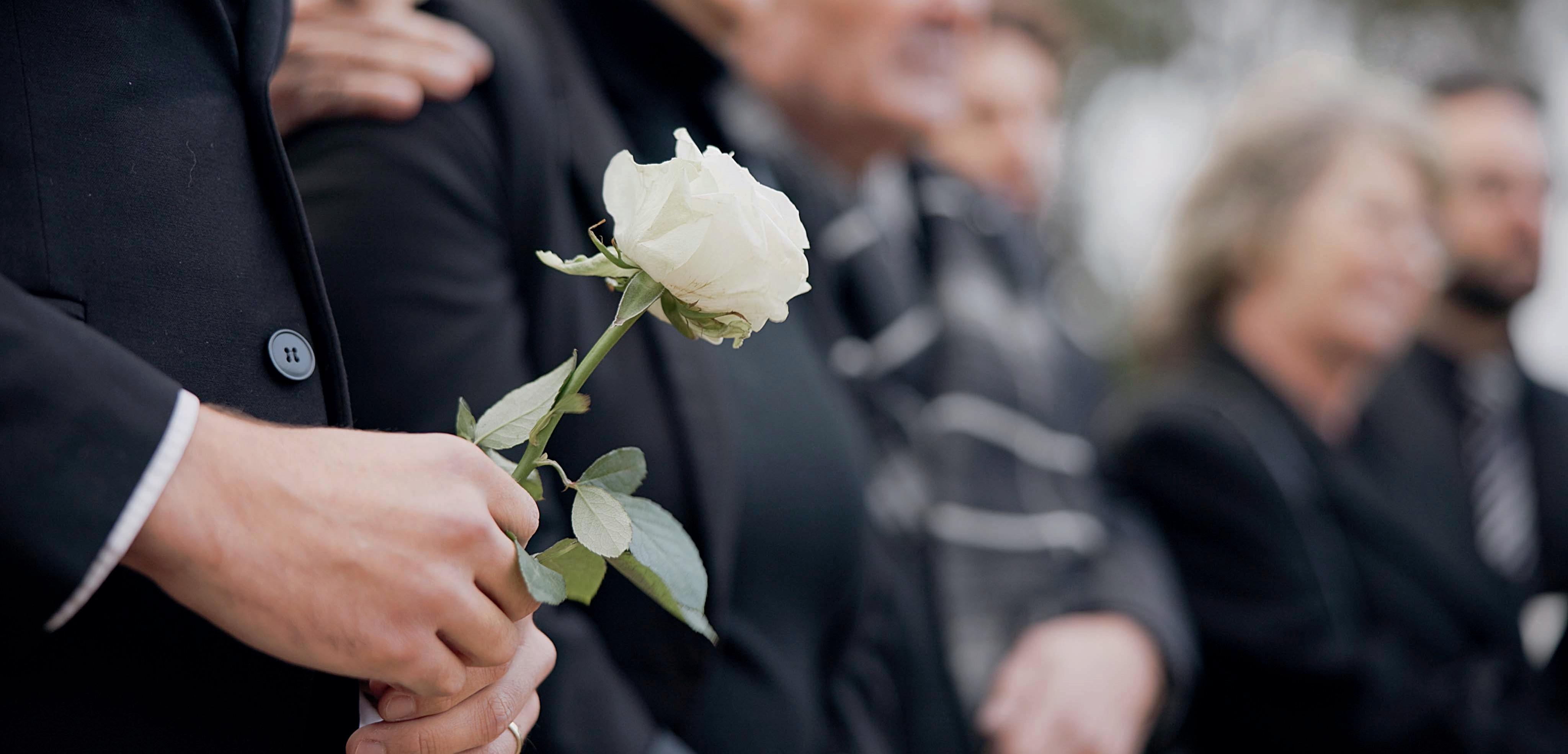
saying, “We acknowledge your changed identity, and we want you to know we still care about you.”
On the other hand, in situations where there is no funeral (most commonly in conjunction with cremation), the social group does not know how to relate to the person whose identity has changed, so that person is often at higher risk of being socially abandoned.
The very existence of funerals demonstrates that death is important to us.
When a loved one dies, we naturally question the meaning of life and death. Why did this person die? Why now? Why this way? What happens after death?
We must explore these types of questions if we are to reconcile our grief. The funeral provides us with such an opportunity. For those who adhere to a specific religious faith, a meaningful funeral might reinforce that faith and provide comfort. Alternately, it might prompt us to question our faith or worldview.
Funerals are a way for us, as individuals and as a community, to convey our values and beliefs about life and death. The very existence of funerals demonstrates that death is important to us. For the living to go on living as fully and healthily as possible, this is as it should be.

Funerals are a means of publicly expressing our beliefs and feelings about the death of someone loved. In fact, funerals are a public venue for offering and receiving grief support, both at the time of the ceremony and into the future. Funerals make a social statement that says, “Come support me.” Whether they realise it or not, those who choose not to have a funeral are saying, “Don’t come support me.”
Today’s families need you to educate them about the socialsupport function of funerals, regardless of the means of disposition.
Funerals also let us demonstrate our support physically. At meaningful funerals, we are encouraged to embrace, touch and comfort one another. This physical show of support is one of the most healing aspects of a meaningful funeral ceremony.
Another is the establishment of helping relationships. Friends often seek ways to help the primary mourners: “May I bring the flowers back to your house?” or “Would you like someone to watch little Susie for a few afternoons this week?” Friends helping friends – and strengthened relationships among the living – are additional benefits of a meaningful funeral.
Finally, and most simply, a funeral serves as the central gathering place for mourners. When we care about someone who died or their family members, we attend the funeral if possible. Our physical presence is our most important show of support for the living. By attending the funeral, we let everyone there know that they are not alone in their grief.
Today’s families need you to educate them about the social-support function of funerals, regardless of the means of disposition. Please help them understand that not only do they need and deserve the support of others but also those others need and deserve support, too.
Most everyone who cares about a person who died, or their family will feel a natural impulse to gather. They need a time and place to get together. Cremation does not change this essential truth.
When someone dies, if we are to fully love and live again, we must mourn. Yet, when the need to mourn is greatest, some people are inclined to run from it.
Please don’t let the families that choose cremation as a means of disposition run from their painful yet necessary encounter with grief. The body of the person who died is essential to this encounter, and spending time in the body’s presence helps activate all six of the aforementioned mourning needs. Cremation is not the problem; cremating immediately or prematurely is.
Your role is to offer information and choices. I challenge you to consider these mourning needs each time you sit down with a family to plan a funeral. I hope you will be among the gatekeepers of the funerals, who ensure that meaningful funerals are here to stay, even though cremation has become a popular choice for many. Let’s dedicate ourselves to educating families in a way that promises full, element-rich, personalised funerals continue now and forevermore.
Dr Alan Wolfelt is founder and director of the Center for Loss and Life Transition in Fort Collins, Colorado. He speaks on grief-related topics, offers training sessions and has written many resources and bestselling books on grief for both caregivers and the grieving. For more information visit www.centerforloss.com or email drwolfelt@centerforloss.com.

Funeral directors sit at the intersection of care, emotion and financial decision making. As scrutiny of funeral insurance grows, understanding how funding decisions play out in practice can help families avoid distress when it matters most.
Funeral directors across Australia share a professional responsibility: guiding families through decisions that are emotional, time-sensitive and financially significant. Increasingly, that responsibility also extends to recognising when families’ assumptions about what they have paid for and what they actually get do not align, especially when long-held arrangements deliver less than expected, leaving funeral directors to help families navigate the gap at a time of heightened emotion and pressure.
When funeral insurance doesn’t work as families expect
Regulatory guidance has highlighted structural issues with funeral insurance, including stepped premiums that rise with age, capped benefits, and policies that can be cancelled without refund if payments lapse. Over time, some policyholders pay more in premiums than the benefit ultimately paid out often without realising this risk.
These risks were brought into sharp focus in a recent Australian Financial Complaints Authority (AFCA) case –one of several highlighting long-term premium risk – when a customer who paid more in funeral insurance premiums than she could receive in benefits lost her bid for a refund.
Australian Securities and Investments
Commission (ASIC) consumer guidance encourages Australians to compare funeral insurance with alternatives such as prepaid funerals and funeral bonds, and highlights the importance of transparency, certainty and control over funds.
For funeral directors, this guidance is less about product judgment and more about understanding where consumer assumptions may diverge from the different types of products available to consumers. Families may arrive with questions shaped by media coverage or government guidance. Accurately explaining how different preneed funding options operate helps reinforce trust and professionalism.
Prepaid funerals and funeral bonds operate on a fundamentally different basis from insurance.
Prepaid funeral arrangements typically specify services upfront, providing clarity on inclusions and reducing exposure to future cost increases. Funeral bonds allow funds to be invested tax-effectively and later applied to funeral expenses, with clear rules governing ownership, access and use.
Because these arrangements are not insurance contracts, they avoid the risk of benefit erosion associated with stepped premiums. Families can more readily see where funds are held and how they will be applied, avoiding surprises at the point of need and maintaining the funeral director’s role as a trusted adviser.
Funeral directors are not expected to provide financial advice. But a working
understanding of how funding models operate, and where they can fall short, equips funeral directors to ask better questions and help families do the same.
As scrutiny continues, the ability to explain – plainly and honestly – how funeral funding arrangements work is becoming an increasingly important part of professional practice. These conversations are not about product comparison; they are about protecting families from unintended outcomes at a time when trust matters most.
This focus on protection and certainty has long underpinned how many funeral directors work and how member-owned financial organisations such as Foresters Financial, have historically supported funeral funding through member-first structures designed to safeguard funds over time.
Foresters’ long-standing relationship with the funeral industry reflects a shared philosophy: that funeral funding should minimise surprises, preserve certainty, and protect families at the point of need. Funeral funding should do what families think it will do – when it matters most.
By Caroline Banhidy, CEO Foresters Financial www.forestersfinancial.com.au
Through his travels to industry conventions around the world, John Adams, a 4th generation funeral director in the UK, NAFD Past President, author of Don’t Tell The Children, and bereavement education campaigner found it was often the conversations surrounding these events that proved just as impactful.
While attending both the Funerals Australia Convention in Vietnam and the ACCA Conference in Sydney in 2025 to deliver his keynote address, ‘Beyond the Silence’, John recorded a series of podcast interviews for his internationally recognised platform, Death: A Changing Industry. Those discussions, with Chad Rynehart of Heritage Brothers, Funerals Australia National President Asha Dooley, Luke Gregson of Gregson & Weight, Olivia Murray (daughter of respected funeral director Philip Murray), Don Burstow of Burstows Funeral Care, Colin Wilson of Key Business Advisors and others have become part of a growing international dialogue about the future role of funeral professionals within society and how we can find growth through grief.
In conversation with Funerals Australia National President Asha Dooley, John explored the balance between tradition and progressive leadership within the profession. Both acknowledged that while heritage is foundational, it must not prevent adaptation. Funeral service, they agreed, must evolve alongside the communities it serves.
His interview with Chad Rynehart challenged conventional perceptions of religion within funerals. Rather than focusing on doctrine or procedure,
their discussion centred on the deeper purpose of faith within funeral service: to provide structure, meaning and support to families in moments of profound vulnerability. The conversation highlighted an important reflection for the profession, whether systems are always serving families first.
Olivia Murray’s contribution offered a powerful generational insight. As the daughter of funeral director Philip Murray, she spoke about the loss of her mother at a young age and also how conversations within society would create more connected communities.
Discussions with Don Burstow, Colin Wilson and Luke Gregson reinforced another key message — that the profession must take an active role in encouraging open conversations around death and grief. Society’s discomfort with death, John argues, is often compounded by collective silence. If funeral professionals do not lead these conversations, who will?
The Death: A Changing Industry podcast has become a vehicle for this leadership. What began as a platform exploring the concept of ‘grief to growth’ has evolved into an international forum for honest dialogue. The Australian interviews strengthened the central message of ‘Beyond the Silence’: healthier communities require earlier, braver conversations about loss.
The introduction of bereavement education into English schools after years of campaigning by John reflects that philosophy in action and will commence in September 2026. By addressing grief in structured, ageappropriate ways, schools are better equipped to support children facing
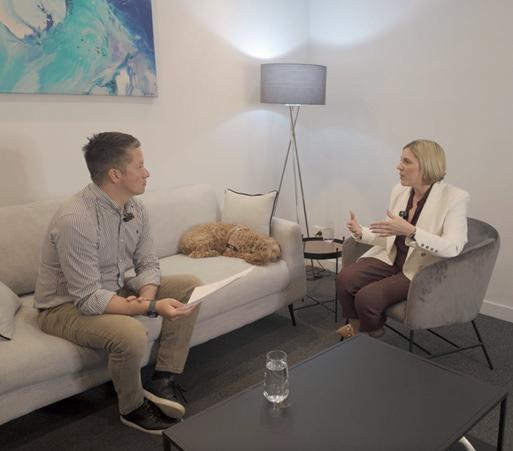
personal loss. Classrooms no longer need to fall silent because teachers feel uncertain about what to say.
In February 2026, John took this message to the Funeral Directors Association of New Zealand, with further engagements planned across the UK, with the updated title of the talks ‘The Silence is Over’. Each event reinforces a consistent conclusion: the movement to normalise conversations about grief is not country-specific: it is global.
As a fourth-generation funeral director, John remains deeply aware of the legacy he represents. As an author, advisor to Child Bereavement UK and campaigner, he is equally committed to shaping what comes next. His work positions funeral professionals not only as facilitators of ceremonies, but as influential contributors to wider societal wellbeing.
The events in Vietnam and Sydney demonstrated that leaders within the Australian profession are ready to engage in this broader role. The silence that has traditionally surrounded death is beginning to lift. The ongoing challenge; and opportunity for the profession is to continue leading that conversation with courage, clarity and compassion.
Quality products for funeral homes and mortuaries, designed and customised for the final journey.
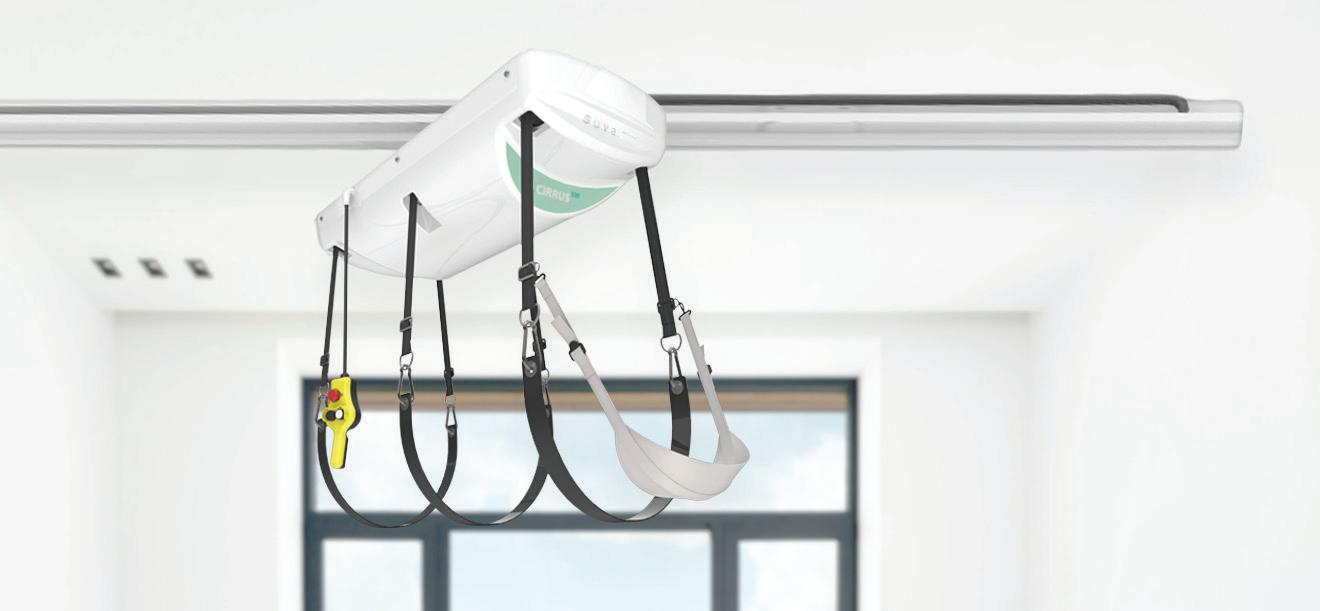
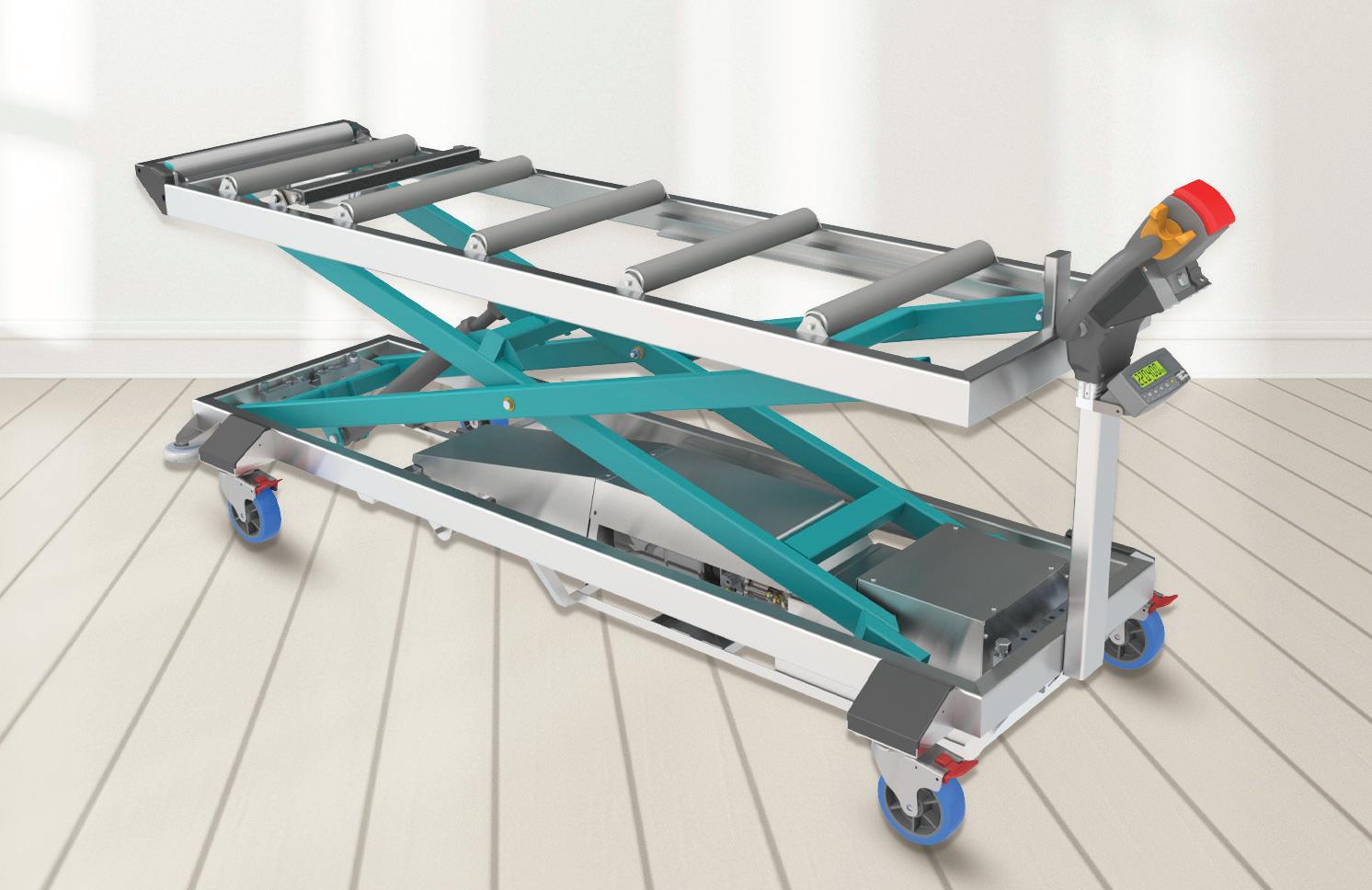
500kg Mortuary Trolley
Electric over Hydraulic system, drive unit, Auto tray loading, electric body tray brake
2 speed, 270º swivel, adjustable length straps ergonomic pendant, head strap, ceiling track system
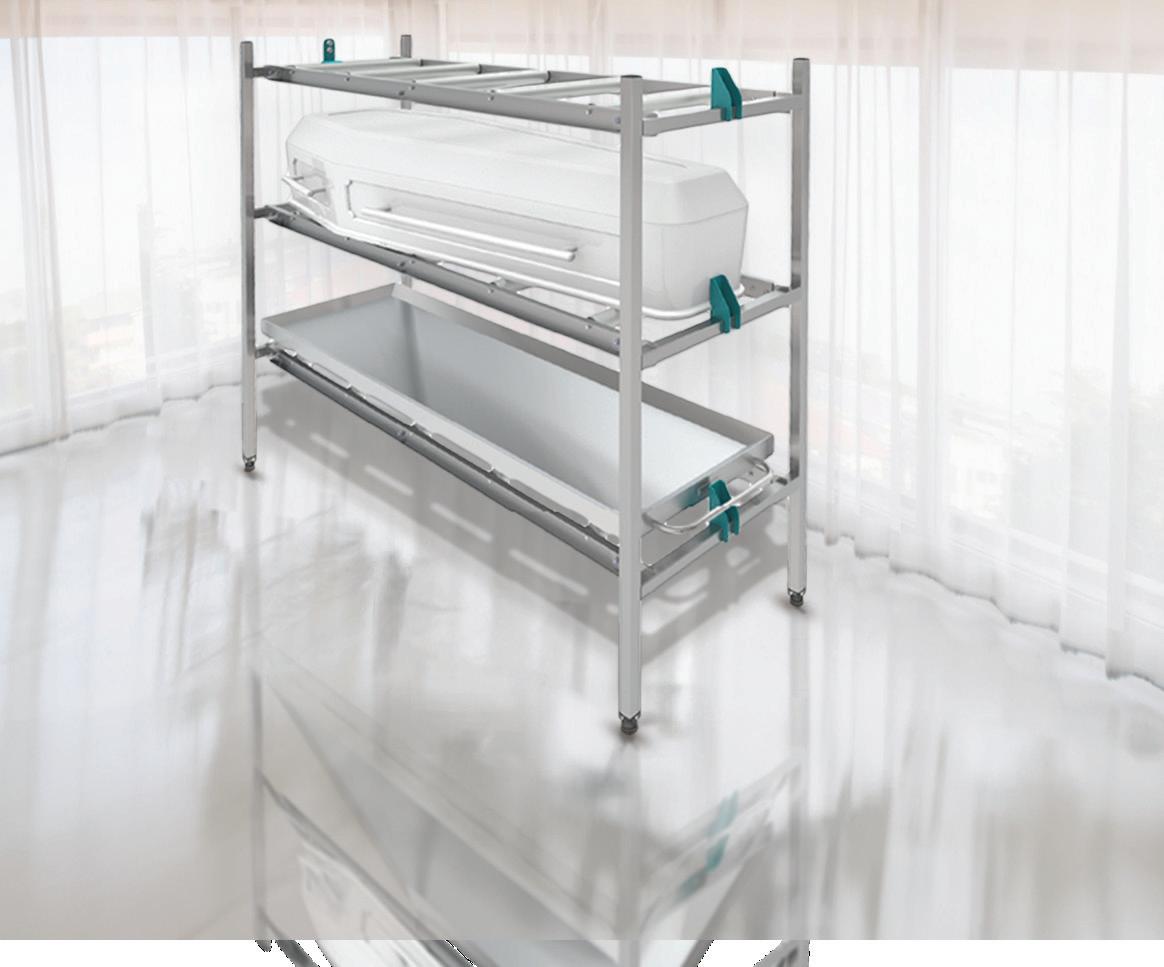
Body trays and coffins, guide rails. Options: Front/ side loading, 3/4 Tier, fixed or mobile
Each year in Victoria, approximately 35,000 deaths are reported, with around 6,000 referred to the Victorian Institute of Forensic Medicine (VIFM). In many of these cases, postmortem imaging is essential for identification and accurately determining the cause of death. Every admitted body to VIFM undergoes Computed Tomography (CT) scanning, except in rare cases where body size prevents it. CT scanning was pioneered in the early 1970s by physicist Allan MacLeod Cormack and engineer Godfrey Hounsfield, whose work earned them the 1979 Noble Prize for developing computed assisted tomography (CAT scans). The first patient scan in 1971 diagnosed a brain tumour, revolutionising medicine by providing detailed crosssectional images of the body.
In the 2000s, the Victorian Coroner’s Court submitted a proposal to purchase a CT scanner, but the request was initially declined due to cost. However, the tragic events of 12 October 2002 when suicide bombings in Bali killed 202 people (including 88 Australians) and injured 209 more people, highlighted the need for forensic imaging. Delays in examination and identification caused significant distress, and the use of CT scanning was identified as a solution to improve efficiency. A renewed submission, framed around the possibility of a mass disaster in Australia, was approved. This foresight proved critical on 7 February 2009 when a fire at Kilmore East (about 65km north of Melbourne) ignited, leading to the devastating ‘Black Saturday’ bush fires. The disaster claimed 173 lives and destroyed over 2,000
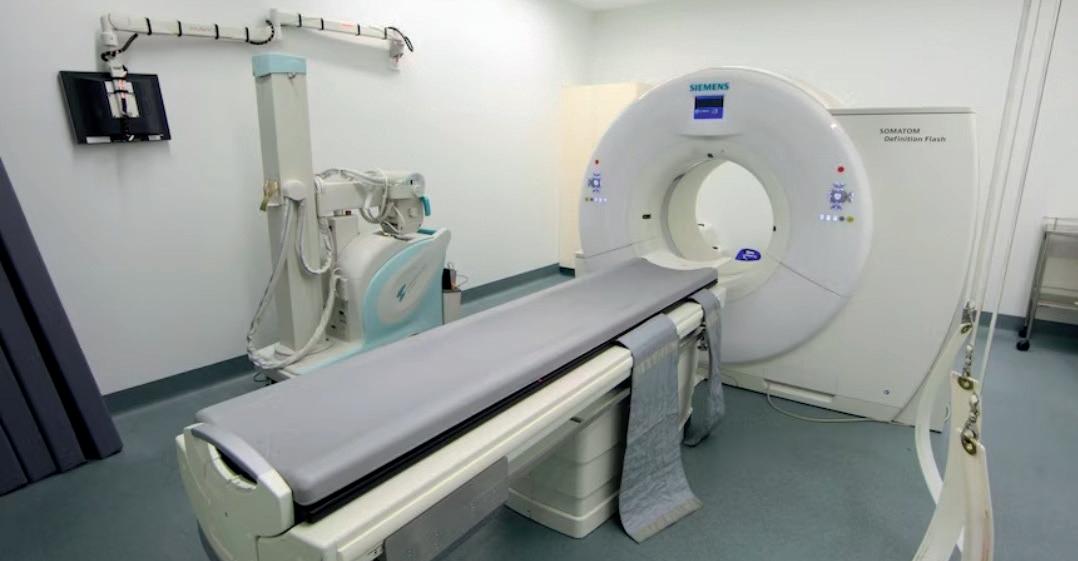
homes. The CT scanner played a vital role in examining and identifying a majority of the victims.
A major benefit of CT scanning is that it allows for detailed imaging with a minimum of movement of the deceased which in cases of homicide and other unusual deaths is crucial in the initial stages of investigation. High quality images can be rotated and examined digitally, providing valuable evidence in legal proceedings.
To further enhance digital imaging the VIFM now employs Post Mortem Angiography (PMA). This process is similar to that involved in arterial embalming, but rather than using a formaldehyde-based solution, it employs a mixture of iodine contrast and glycol. The solution can be injected via the femoral arteries and is called ‘arteriogram’. This provides images of arterial structures, narrowing of arteries, blockages, aneurysms, ruptures or trauma related bleeds. Alternatively, the solution can be injected via the femoral veins and is then called venogram. Here the injected solution provides images of venous structures, pulmonary embolisms and vascular leaks.
The advantages of PMA are that it can reveal injuries or punctures in the vascular system that would otherwise be difficult to detect. It may complement, or in some cases, replace autopsy, offering a less invasive alternative that respects religious and/or ethical concerns. The next step for VIFM is the introduction of Magnetic Resonance Imaging (MRI). MRI uses powerful magnets and radio waves to create detailed images of soft tissues, organs, bones, and vessels without radiation. While CT scans are highly effective, MRI provides superior imaging for infants, brain and heart examinations.
VIFM plans to use MRI not only for deceased individuals but also for living victims of domestic violence, capturing internal injuries invisible on the surface. These images will serve as critical evidence in court proceedings.
Thank you to Jason Egan, Forensic Technical Officer and the technical team from VIFM for reviewing and providing the necessary information and process of the PMA for this article.
Article by Ricky McLean of Thanatopraxis Services
My Tributes helps inform, celebrate and share all life stories.
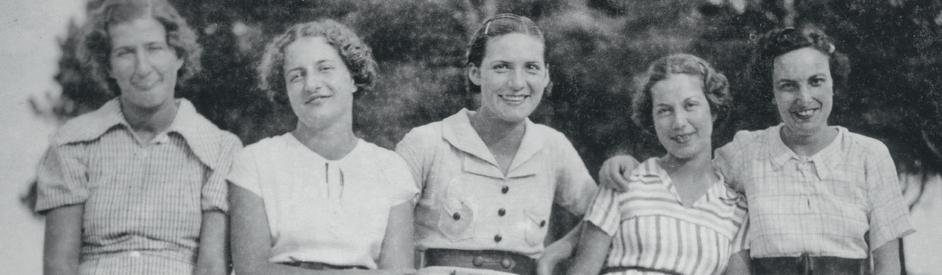
My Tributes is Australia’s largest online archive, with over 2 million notices, obituaries and stories on-site. Each year more than 75,000* people entrust the My Tributes team to inform, celebrate or share the passing, funeral or tribute of their loved one in print and/or online. Promoted across News Corp Australia’s much loved community, regional and metropolitan print and digital newspaper network, we have become the most visited obituary site in the country to search, view and honour loved ones that have passed.
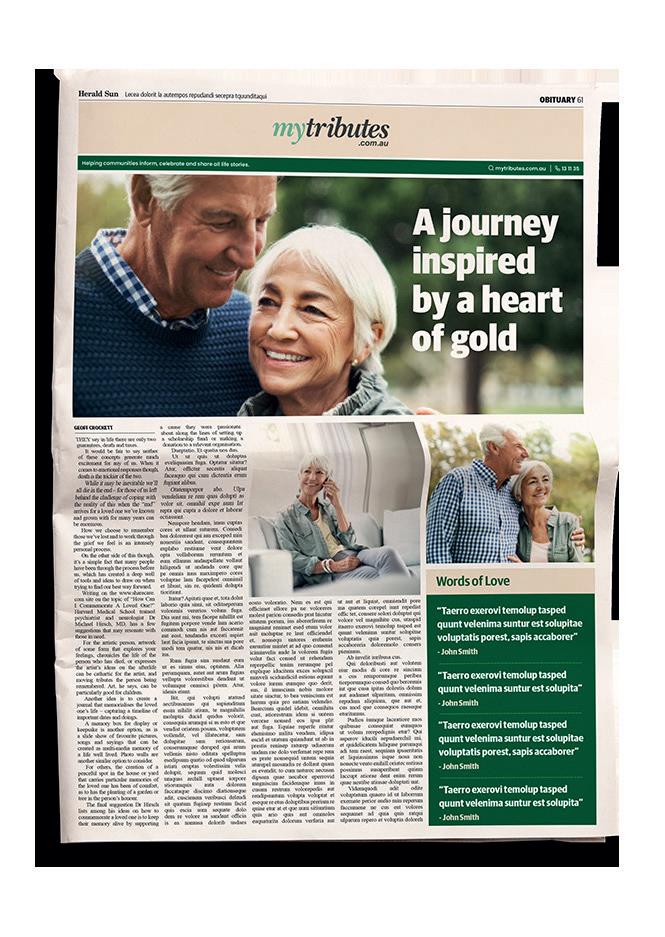

Obituaries written by an experienced journalist help our customers tell the story of their loved one, creating a touching tribute to a life well lived. The obituary is published in a trusted newspaper and online at mytributes.com.au.
Prices starting from $990.
Share your own story or eulogy about a loved one, online in a safe environment for future generations.
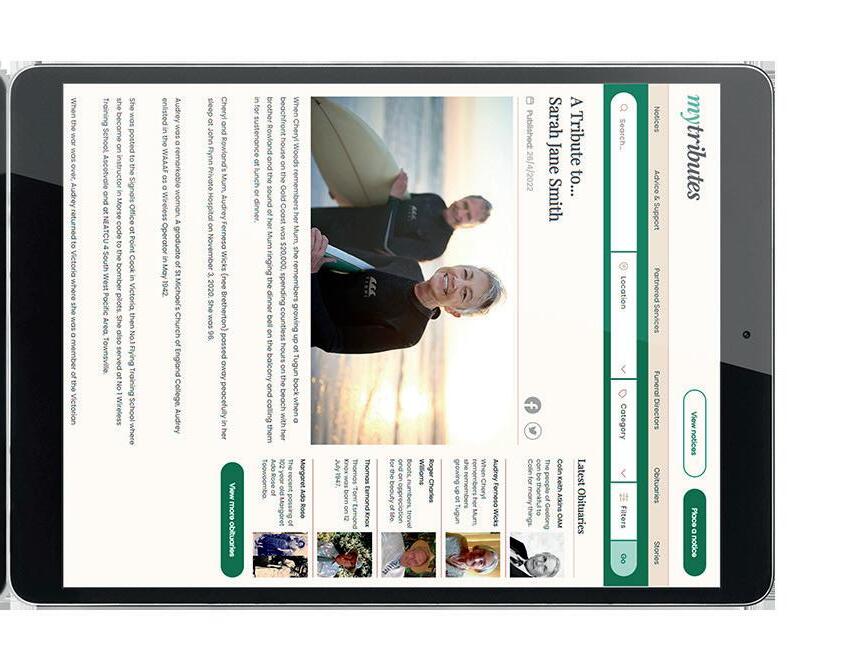
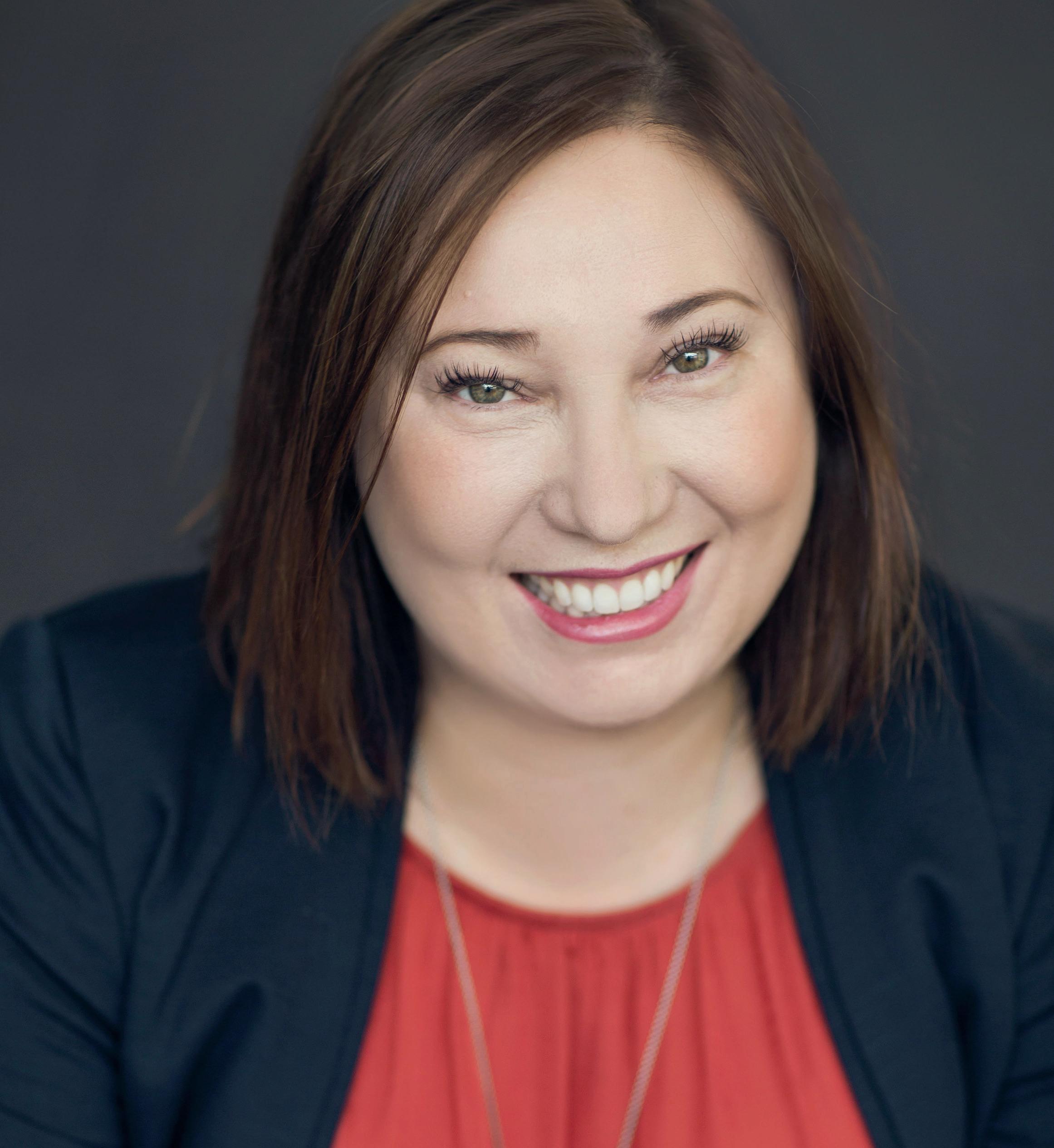
My career has taken me across many industries, but at its core it has always been about people, leadership, and building organisations that serve their communities well.
When the opportunity arose in 2025 to join Peter Elberg Funerals as General Manager, I was drawn to the role for reasons that went well beyond the position description. The business has a long-standing reputation for exceptional service, and a genuine commitment to treating every family with dignity, respect, and compassion. Those values resonated strongly with me.
I was also attracted to the sense of purpose that underpins funeral service, the opportunity to work alongside dedicated professionals, and the chance to apply my experience in leadership and governance in an environment where the work truly matters.
Throughout my career I have worked across complex, people-centred industries including construction, mining, aviation, telecommunications, professional services, community organisations and not-for-profits, holding senior HR and executive roles during periods of growth and change. My work has focused on aligning people, culture and systems to strengthen leadership, improve organisational performance, and build workplaces where people thrive.
I also founded and led a HR consulting business, supporting organisations with workforce capability, recruitment, and leadership development. That experience gave me a broad perspective on the challenges employers face, from attracting and retaining skilled staff to
building strong cultures and effective leadership teams.
Joining the funeral industry brought a new set of challenges and learning. It is a profession with unique operational, regulatory, and emotional demands, and I have spent much of my time listening, learning, and understanding the rhythms of the work. What has stood out most is the strong sense of purpose shared by funeral professionals. Every role, from the first call through to the service itself, is centred on supporting families at one of the most difficult times in their lives. It is work that requires both professionalism and compassion in equal measure.
At Peter Elberg Funerals, my focus has been on strengthening operational systems, improving onboarding and training frameworks, and ensuring our teams have the tools and support they need to deliver consistent, respectful care. My approach centres on clear processes, professional standards, and supporting a culture where the team feel confident, capable, and valued for the important work they do.
Alongside my executive career, governance has always been an
important part of my professional life, and I am a strong advocate for clear governance frameworks, effective leadership, and cultures built on accountability, professionalism, and service. I have served as both a director and board chair across commercial and not-for-profit organisations. In addition to my Council role with the Funerals Australia SA/NT Division, I currently serve as Board Chair for Lutheran Homes Group, a large, aged care provider operating across South Australia and Victoria.
Ongoing professional development has always been important to me. At Peter Elberg Funerals, committing to continuous learning underpins our approach to delivering exceptional service and valuing our amazing team. While my role does not involve arranging funerals, I recently attended the Funerals Australia Funeral Arrangers Training which provided an invaluable foundation in understanding best practice in the profession.
Although I am relatively new to the funeral profession, I am deeply committed to its continued development. I am particularly interested in workforce capability, professional standards, and the systems that enable funeral teams to focus on what matters most – caring for families with dignity, respect, and compassion. Through my work at Peter Elberg Funerals and my involvement with Funerals Australia, I hope to contribute to a strong, professional, and sustainable future for the sector.
By Melissa Blondell
Peter Elberg Funerals
E: mel@peterelbergfunerals.com.au
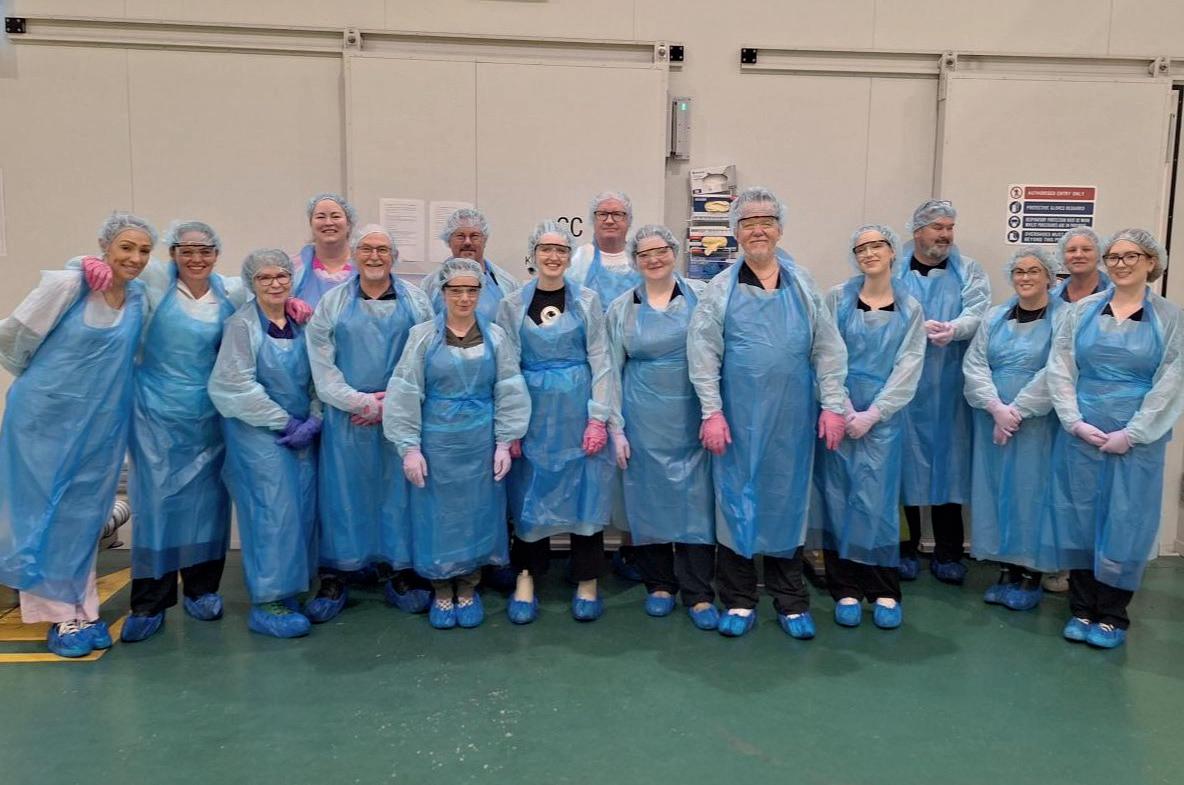
The first divisional training for 2026 was Mortuary Training delivered by Jan Field. The sold-out event was held over two days and focused on theory and practical sessions. The theory covered off topics such as infection control, chemicals used in basic preparations, basic preparation of the deceased, bariatric cases, understanding the autopsy procedure, removal of cardiac defibrillators and pacemakers, how to confidently explain these processes to a family and more. Thanks to InvoCare and the team at InvoCare Support Centre, Fyshwick for hosting and supporting this event.
Monthly meetings with NSW BDM commenced in February. NSW BDM have launched the next Multi-Factor Authentication (MFA) pilot group and overall, the registry has not received many enquiries. An updated help page
has been published on the BDM website and is also housed on the resource page of the Funeral Learning Hub.
Other updates include SMS tracking updates for death certificates to be active soon. The SMS goes to the phone number provided when lodging the certificate, and this will often be the funeral director.
The Council has also been working with ACCESS Canberra by providing feedback on their updated funeral director portal. The portal has improved features such as previews, capacity to upload MCCD forms, status monitoring and more.
Membership of the Industry Consultative Group (ICG), a high-level advisory committee established to facilitate direct engagement between the regulatory agency and the interment industry expires in May. Shannon Scott, NSW/ACT Divisional President is the Funerals Australia representative. The
next meeting will review whether the current format is effective, and existing members will be consulted on their interest in reapplying for participation.
CCNSW is working on customer facing fact sheets that will be available in March. This will assist in understanding interment rights, transfers and other information. The updated model contract is now available on the CCNSW website for usage/amendment as a funeral director sees fit.
Venues offering aquamations has been a topic of discussion both at the ICG meetings and at a NSW/ACT Council level focusing on understanding compliance and licencing requirements.
The NSW/ACT Division secured a stand at the NSW Seniors Festival Expo 2026 held on 11-12 March at the ICC Sydney, Darling Harbour Hall 3. The purpose of attending was to promote to the community and other stakeholders the work of Funerals Australia and the advantage of using a member firm. It attracts over 30,000 seniors from across greater Sydney and regional NSW wanting to find out information about products, services and activities which are on offer in their community.
The NSW/ACT Division has recommenced regular meetings with NSW Health who have advised that the Regulations will be reviewed in 2027 and stakeholder submissions will be accepted from mid 2026. In preparation, the Council has created a working party to identify areas of the Regulations that will impact NSW/ACT Funerals Australia members.
The Division was pleased to host the refreshed and expanded Funeral Arranger Training Program – The Why, Not How of Funeral Arranger Training on 21-22 February in Hobart, with registrations fully subsidised for Tasmanian members. Led by industry leaders Martin Tobin and Don Burstow, the training was well attended, with members travelling from across the state.
Planning is well underway for the 2026 Tasmanian Division AGM weekend, confirmed to take place at Cradle Mountain Lodge from 11–13 September. The weekend will include an education program on the Saturday, the presentation of the 2026 Peter Fuglsang Memorial Scholarship (with applications opening later in the year), and will conclude with the Presidential Changeover Ceremony recognising and farewelling Divisional President Travis Tann following three years of service to the Division.
Accommodation rooms are on hold and, as the education program is finalised, a save-the-date with initial details will be shared for members to book their accommodation.
The Divisional Council is pleased to welcome Matt Grice of Westella Funerals to the Tasmanian Divisional Council, following a motion passed at a recent Council meeting. Matt will fill a casual vacancy until the AGM weekend, when
his appointment to the Council is formally confirmed.
Following reports from members regarding delays of up to ten days in the issuing of MCCDs at a major hospital in the State, the Divisional Council has been engaging with the Tasmanian Health Service and Department of Health. The delays have been linked to the transition to a new electronic death reporting system.
The Department has advised that it is actively working on improvements, continues to monitor the situation closely, and recognises the importance of timely certification for families and funeral directors. Escalation contact details have been communicated to members, and the Council will continue to engage with the Department to support a return to normal MCCD timeframes as soon as possible.
Work continues on the monthly death statistics provided under the Tasmanian Council’s agreement with the Registrar of Births, Deaths and Marriages. An agreed reporting approach has been established that allowed the data to be grouped into geographical areas while managing privacy requirements for regions with five or fewer deaths. Data will be shared with members via the Funeral Learning Hub in the near future.
The first Divisional Council meeting
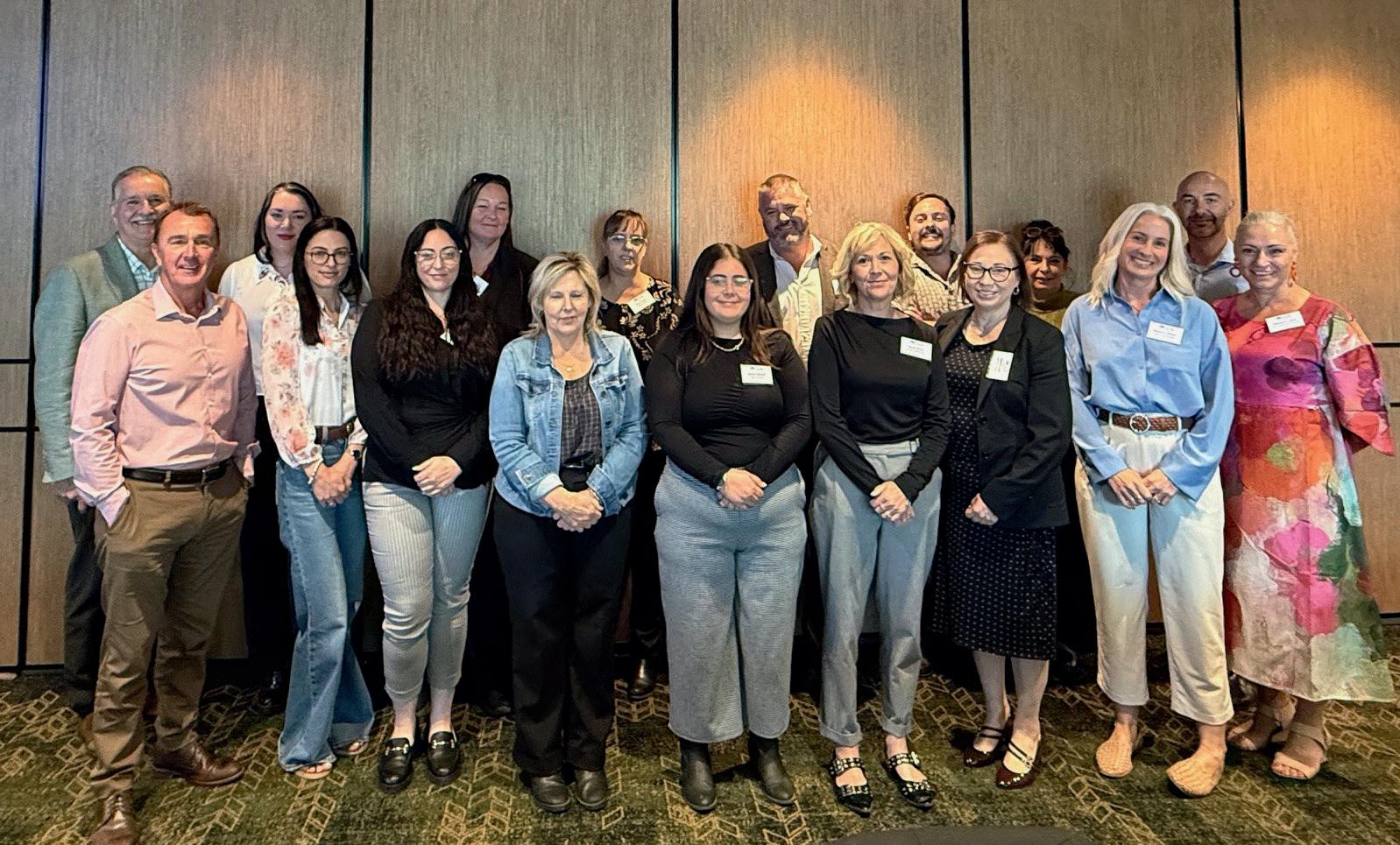
was held on 12 February at the Marion Hotel in Mitchell Park and Councillors discussed the year ahead along with key areas they will focus on. Bariatric cases, transfers and associated impacts is an area affecting many of our SA/NT members. As a result, the Council has formed a working party with the view of developing a draft bariatric guide and framework.
On Friday 13 and Saturday 14 February, The Refreshed Funeral Arranger Training was held at the Marion Hotel. Delivered by Don Burstow and Martin Tobin, this two-day training program attracted a broad range of SA/NT membership and received excellent feedback from all who attended.
The first two of five workshops from the LEAP Funding received by GISA (Green Industries South Australia) Sustainability Program have been delivered and our thanks to Taylor & Forgie, Riverland Funerals, Ivan Butler Funerals, Frank J Siebert Funeral Directors and InvoCare Australia who are participating in the program. Led by 2XE Consultants, SA/NT members discussed: running an energy, water and waste-efficient funeral home and how to embed circular practices into daily operations
Upcoming workshops will focus on:
• Workshop 3: Working with your suppliers and partners – to be held via zoom in March
• Workshop 4: Engaging your team & communicating success – to be held via zoom in April
• Worshop 5: Sustainability action planning – to be held in-person at the May Regional Meeting, Clare Valley Industry representation
Councillors have commenced reconnecting with stakeholders such as Forensic Science South Australia (FSSA), SA Coroners Court and Births, Deaths and Marriages. Progressing the discussion around safe work practices onsite at FSSA and coronial transfers and IDs are the key priorities for the early part of 2026.
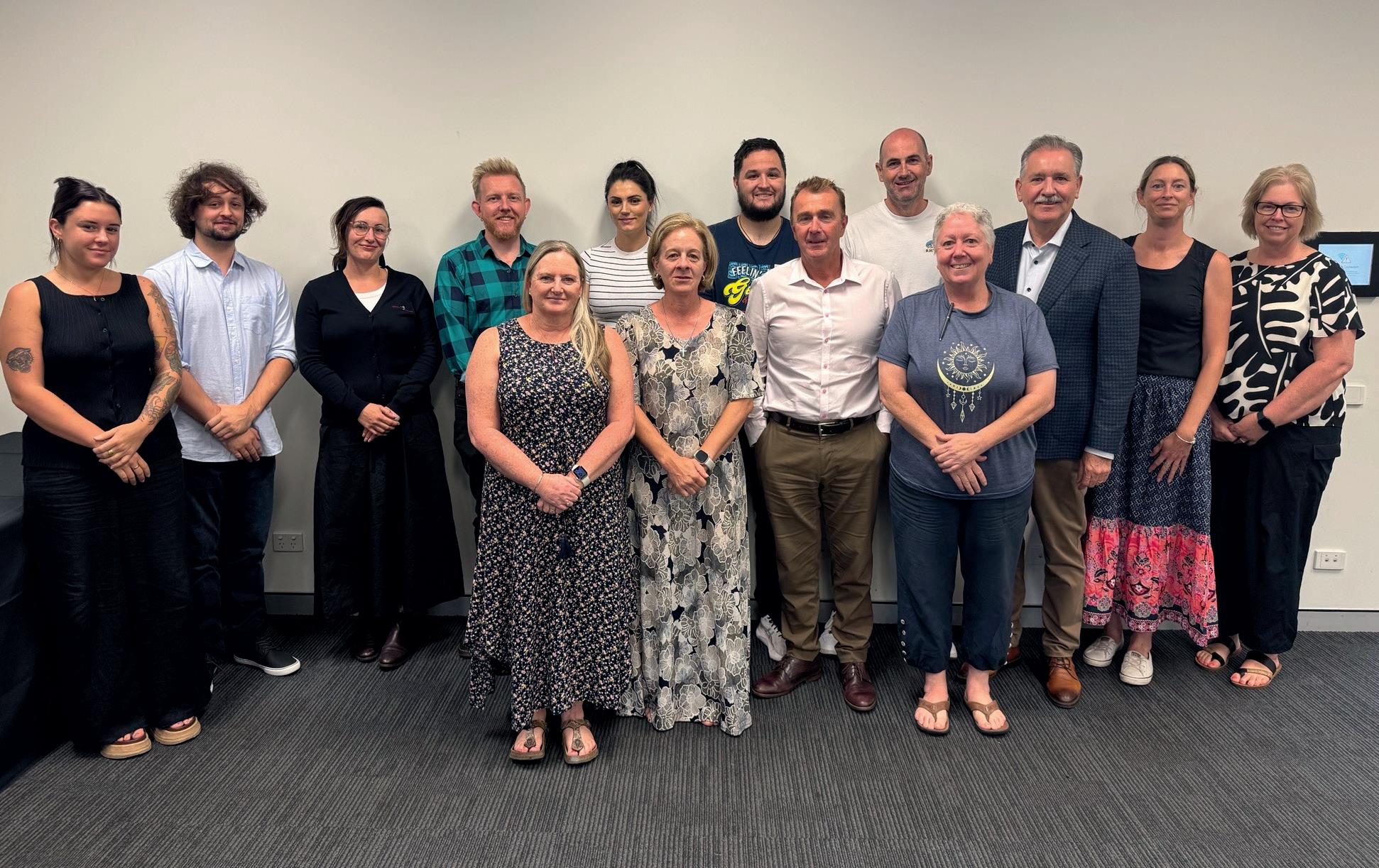
The QLD Divisional Council started the year with its Council meeting on 4 February which was held online. Councillors took the time to acknowledge the valuable contribution made by David Molloy who has recently stepped down from the Council. Councillors extend their best wishes to David and wish him all the best.
Education and training for the year was very much on the agenda, and upcoming training includes Mortuary Training in April on the Sunshine Coast and November in Townsville. Extended mortuary training for experienced mortuary workers and embalmers was also discussed, and the intent is to also offer this training in Queensland in 2026.
The Refreshed Funeral Arranger training was held in Brisbane on 7–8 February 2026. Delivered by Don Burstow and Martin Tobin, the event was well attended and again received excellent feedback from all participants. Additional professional development will be offered at the QLD General Meeting weekend on the 22-24 May which is planned for the Gold Coast and at the combined AGM with the NSW/ACT Division on 31 July – 2 August.
The QLD Council is working with ACCA to support the Local Government Association of Queensland (LGAQ) commission’s plan for research. The LGAQ will undertake comprehensive
research into the operation and challenges facing the state’s cemetery sector and findings/recommendations from the LGAQ Report.
Regular contact with Births, Deaths and Marriages (BDM) continues and in recent times the Council has been working with BDM to address issues around registration of deaths in the Lochart River Aboriginal Shire Council in Far North Queensland.
Long held deceased cases continues to be a concern for QLD members and QLD Divisional President, Scott Harris wrote to Sony Studders, Coroners Court of Queensland requesting clarification for complex cases where the usual processes have been followed and a solution has not been provided. A response has been received, however greater clarity is required and the QLD Council will continue to pursue the matter.
Planning has commenced for the 2026 Victorian Division events schedule, with the following dates confirmed:
• 13 May - SW/NW Zone Meeting & Council Meeting (Colac)
• 8 July – South East (Gippsland) Zone Meeting (Traralgon)
• 7 – 9 August – AGM weekend with Presidential Changeover (Phillip Island - TBC)
• 14 October – North East Zone Meeting (Bright)
27 November - Christmas Social Function & Council Meeting
Locations and venues will be announced throughout the year.
A Bariatric Training Day is also being developed, and the Divisional Council is considering delivery of another session of the Refreshed Funeral Arranger Training Program.
Following the release of the Funeral Pricing Transparency Regulations, the Victorian Council has continued to engage with the Department of Government Services, writing to the Department in February with a number of recommendations to assist with implementation.
The Department has provided a formal response to questions raised by Council and supporting guidance materials have
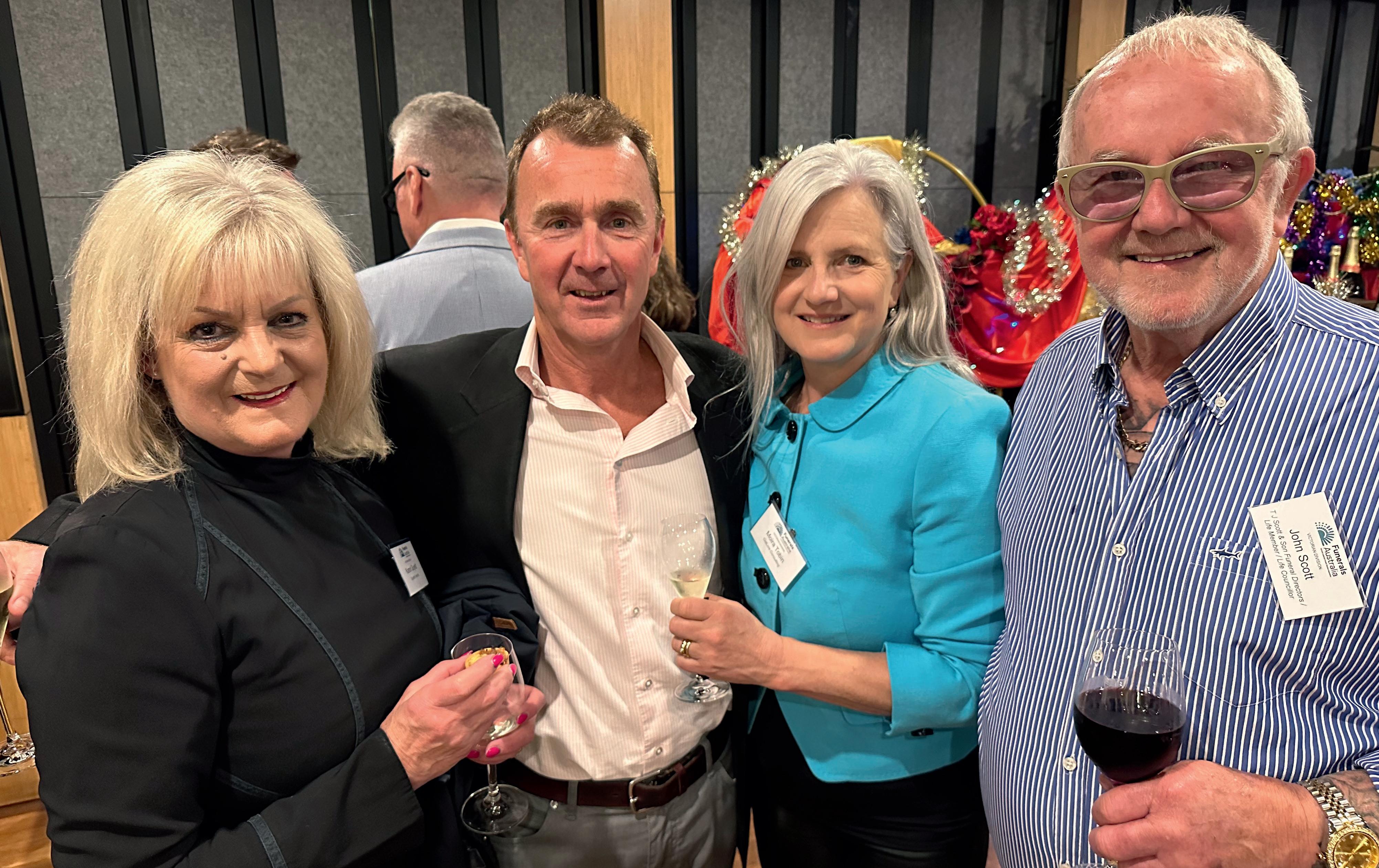
been published alongside updates to the Consumer Affairs Victoria website. Details have been circulated to members to assist with understanding the new requirements. Councillors continue to meet monthly to monitor developments and to discuss how members can best be supported and guided to achieve full compliance with the Regulations by the commencement date of 26 May 2026. Coroners court
The Victorian Council met with the Victorian Institute of Forensic Medicine (VIFM) to discuss a range of operational matters and opportunities to enhance working relationships between funeral directors and the Coroners Court during coronial cases. Councillors also participated in the first meeting of a newly established VIFM Stakeholder Advisory Group. See more on the postmortem technology used by VIFM on page 27.
Victorian Councillors continue to progress a range of initiatives aimed at strengthening working relationships with the cemetery sector. Key areas of focus include providing feedback on safety guidelines developed by the Cemeteries & Crematoria Association of Victoria (CCAV), correspondence with Cranbourne Cemetery Trust regarding a new policy, and drafting communications to support clearer identification of battery-powered implantable medical devices prior to cremation.
Council is also exploring whether there is sufficient crematoria access across Victoria, discussing the development of improved resources for natural burial offerings, and considering writing to the Department of Health to request a comprehensive review of the Cemeteries
and Crematoria Act 2003.
In addition, the Council is preparing for the development of Regulations following the passage of the Domestic Animals Amendment (Rehoming Cats and Dogs and Other Matters) Bill 2025, which will allow Victorians to be buried with the remains of their pets.
The Council is pleased to confirm that it has agreed to an additional two years of detailed death statistics reporting with Births, Deaths and Marriages. The expanded dataset will now include disposal type, supporting the Council’s ongoing aim of helping members better identify trends and understand community needs across different regions.
Training in 2026 kicked off with the WA Professional Advanced Driver and Funeral Vehicle Training held on 19 February. This full day course sold out quickly, a testament to its importance and popularity. The full day training gives attendees a mix of practical and theory, ranging from pre-start checks, safety, hazard management, avoidance and emergency management.
The first Divisional Council meeting was held online on 26 February, and planning is in place for the WA Training Day on Saturday 11 July, following on from the WA Divisional Council meeting on Friday 10 July. Also in the planning is the WA
Division AGM weekend, to be held on Friday 28 August to Sunday 30 August.
The WA Division has been actively engaged in advocacy with several government departments in the hope of improving processes and finding better solutions for grieving families.
The WA Division continues to be represented at Metropolitan Cemeteries Board (MCB) Industry Stakeholder Meetings, with the most recent being held in December 2025. The WA Divisional President, Craig Renshaw was invited to present on behalf of Funerals Australia. The WA Council will submit member feedback to MCB regarding the review of MCB’s Conditions of Licence that apply to funeral directors and monumental masons operating within Metropolitan Cemeteries Board sites.
The Council is finalising the steps to dissolving WAFDA which requires the WAFDA bank account to be closed. Once complete, Council will submit an application for voluntary cancellation to Consumer Protection via Associations Online.
The deceased’s super fun d ( AustralianSuper, Cbus, etc.) may include automatic life insurance that the family may be entitled to.
AFRM Claims Advocacy (ACA) is a proud National Corporate Partner of the Australian Funeral Directors Association (AFDA), working to enhance the support offered to families during times of loss. We make it easier and quicker for families to access the deceased’s life insurance claim.
Here’s why this can be essential for funeral directors and the families they assist:
“It is so easy – we mention to all families where the deceased is under the age of 65 in the initial arrangement, that they may have life insurance available.
Most families have not thought about life insurance – often families comment about the super amount but forget the insurance aspect, and given Bruno conducts a free check on the availability of life insurance for the family, it becomes a great value added service.
We have the conversation, hand over the flyer and we know that Bruno and his team will look after our families with compassion and expertise. ”
- Jesse Cattell William Farmer Funeral Directors
“We have over 280,000 reasons to recommend William Farmer Funerals. We are still grieving at the tragedy, but knowing we are doing everything possible is important – Dad has indicated that the life insurance funds are likely to support me to get into the property market to buy a home – Paul would like that.”
- Peta, sister of Paul who passed away aged 38.
Over $280k was found in Paul’s Super/Insurance.
It helps families afford the funeral they want (rather than what they thought they could only afford) for their loved one.
Even if the family can afford the funeral service, you are providing the family a financial legacy that will far exceed expectations.
Another reason for families to Thank, Remember and Recommend your funeral home.

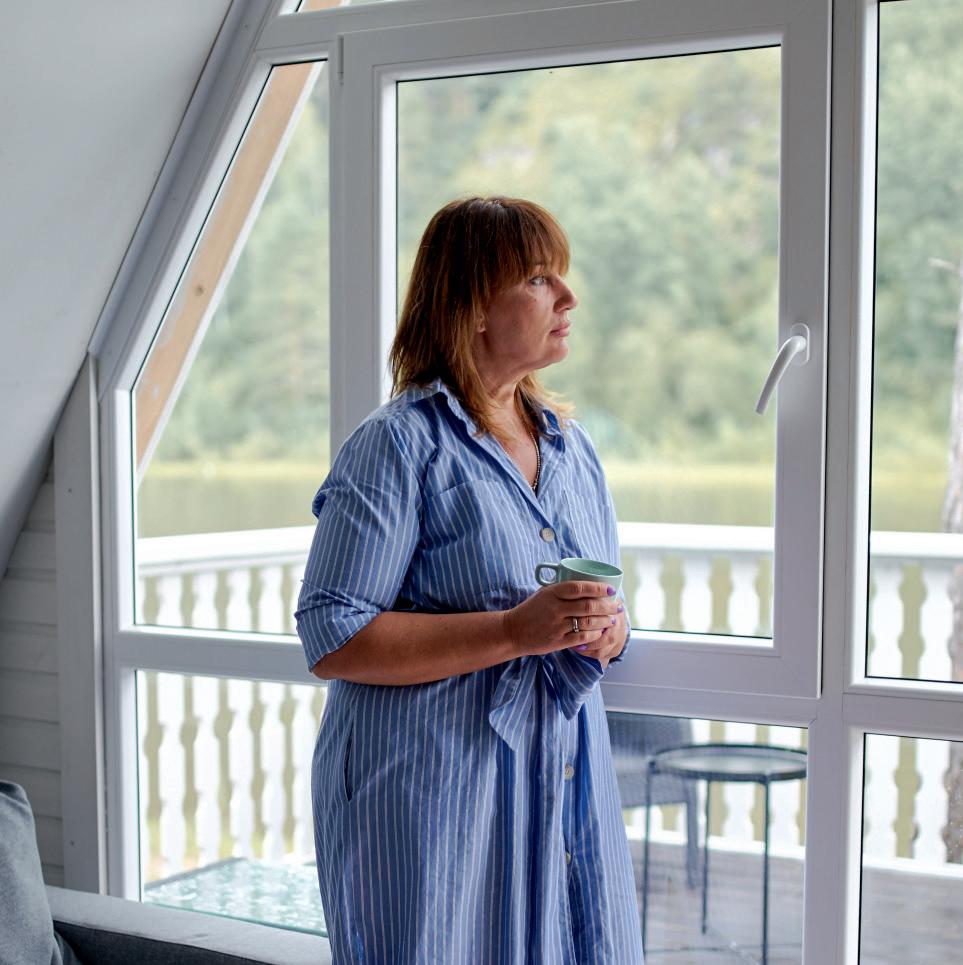
The ACA flyer is available for your families.
Contact and Support: To make it easier for your families, contact ACA at aca@afrm.com.au or call Bruno on 1300 013 328
Bruno Muraca and the team at AFRM Claims Advocacy have helped hundreds of families to afford the funeral they really want for their loved one (rather than what they thought they could only afford).
AFRM Claims Advocacy have provided families with financial peace of mind by ensuring they claim on the (automatic) life insurance and superannuation of their loved one. In total over $55 million, has been paid to families across Australia, and it has all started with a simple conversation by the funeral arranger at the initial arrangement.
Where the deceased is under the age of 65, the funeral arranger asks the family if the deceased has superannuation and if they do, they hand over Bruno’s details for the family to contact. Most families don’t know that the deceased has unclaimed life insurance in their super fund (Cbus, AustralianSuper, QSuper, ART, GESB etc).
The availability of life insurance applies to all families where the deceased is of working age (under the age of 65). Insurance industry research highlights that less than 40% of Australians are aware of their cover within their super.
When a loved one passes away, ensuring that the family can host a funeral service that is reflective of their loved one, can become difficult, especially if the family is having to compromise, based on cost. Being able to access the superannuation and life insurance of their loved one can therefore assist with alleviating some of these challenges.
The same life insurance and superannuation is available to families
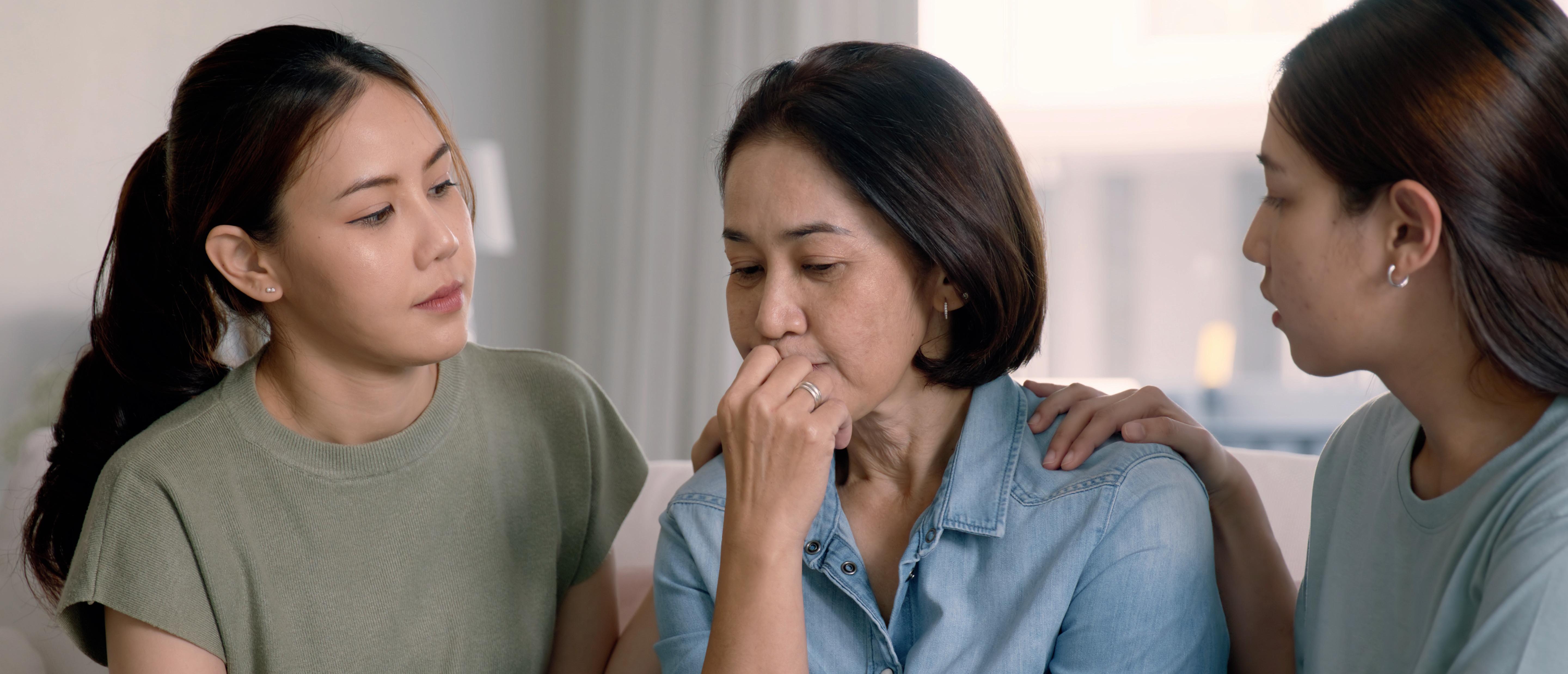
at pre-need, where the family is making arrangements for a terminally ill loved one (ie. their loved one has less than 24 months life expectancy). Given families low awareness that the deceased or the ill loved one may have life insurance available in their super fund, the role of the funeral arranger is critical for families to understand this entitlement.
Most families don’t know that their loved one has automatic life insurance, and that they can claim on their life insurance and superannuation.
Most funeral arrangers raise the topic with the family at the initial meeting, typically after discussing the fees, giving the family another option of payment, perhaps one they have not considered. Bruno Muraca, CEO of AFRM Claims Advocacy, says “It is pleasing to be able to help families during a difficult time. Helping them to afford the funeral service for their loved one, so that they do not need to compromise, is important.
Typically, we are able to advise the family, how much superannuation and life insurance their loved one has available, whilst they are still arranging the funeral.”
Bruno and his team, provide a script and flyer for the funeral arrangers to hand to
the family, which compliments the family conversation. A simple conversation and the handing out of a flyer by the funeral arranger can make a significant difference to a family who is seeking to make arrangements for their loved one.
The feedback from families has been amazing. “Most families don’t know that their loved one has automatic life insurance, and that they can claim on their life insurance and superannuation. They also value our approach and how easy we make it for them,” said Bruno.
Families value the claims advocacy service for the following reasons:
- Empathy and compassion shown.
- Availability – weekdays or weekends, they can call and speak to a person who knows their claim.
- Ease – made easy by filling in the claim paperwork and easy for families by having all the conversations on their behalf with the insurer and trustee.
In combination with the claim help, families are referring other families to the funeral home and asking about the claim service. See more feedback at www.afrmclaimsadvocacy.com/reviews or for further information contact Bruno Muraca bmuraca@afrm.com.au.
The Australian Institute of Embalming (AIE) continues to focus on supporting members through education, professional development, and opportunities to stay connected with the wider embalming community.
As the profession evolves, AIE remains committed to providing relevant resources, clear guidance, and meaningful learning experiences for embalmers across Australia.
The AIE Learning Portal continues to be a central resource for AIE members seeking flexible, high-quality education. It is also an easy way to achieve CPD points. Members have access to a range of courses and webinars that support self-paced learning, allow them to revisit key topics, and stay informed about best-practice standards within the profession.
We encourage all AIE members to log in regularly to explore new content as it becomes available. Feedback from AIE members has been invaluable in shaping the direction of the portal, and we welcome ongoing suggestions for future topics or improvements. Our goal is to ensure the AIE Learning Portal remains a relevant, practical, and easy-to-use tool for continuing professional growth.
Members of the profession recently gathered at Bowra & O’Dea Mandurah (Sid’s Place) for an in-person CPD training event. The 2 CPD point session explored the stories, challenges, and legacies of our profession that don’t always make it into the textbooks. A former psychiatric nurse who
transitioned from the ward to the mortuary led an honest and muchneeded conversation around mental health and brain health within our industry, prompting meaningful reflection and discussion.
Guests were also guided by a funeral director with more than 35 years of experience, who shared unforgettable family requests — including tattooing after death — along with the hardearned wisdom that only decades at the coalface can bring. The topic of tattoo preservation sparked particular interest, encouraging attendees to consider how knowledge and care can help preserve meaningful ink long after death.
The event was warmly received and a reminder of the depth of our work and the importance of continuing conversations that support both professional growth and personal wellbeing.
Planning is underway for the next AIE Conference which will be held in Melbourne on 1-3 October 2026. The conference remains a highlight of the AIE calendar, bringing together embalmers from across the country to share knowledge, experiences, and best practices.
The upcoming conference will feature a mix of educational sessions, practical insights, and guest speakers with expertise across a range of relevant topics. It is designed to support both experienced practitioners and those newer to the profession, offering value for all attendees.
Further details regarding dates, location, registration, and the conference
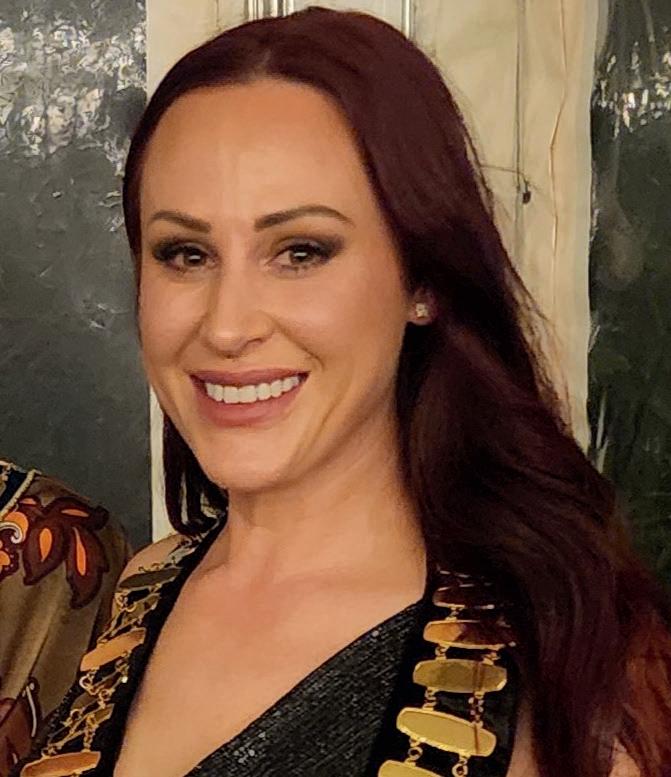
program will be shared with members as planning progresses. We encourage members to keep an eye on their emails and the AIE website for announcements. Attending the AIE conference is not only an opportunity to earn CPD points, but also a chance to strengthen professional networks and engage with the broader embalming community.
AIE Board member introduction
We would like to welcome our newest Board member Sofiya Bouabdullah. Sofiya’s career spans healthcare, funeral service, and mortuary care. She began her work in disability and dementia care, and later built strong organisational and leadership skills in a unique Executive Assistant role that blended coordination, management, and nursing. Drawn to anatomy and post-mortem care, Sofiya moved into the funeral industry as a coordinator and funeral arranger while training as an embalmer. She is now Co-Founder and Managing Director of Melbourne Mortuary, leading a dedicated team known for reliable trade mortuary services, high standards, and ethical practice.
Thank you for your continued support of the AIE. We look forward to working with you throughout the year and supporting the ongoing professionalism and development of embalmers across Australia.
Danielle Calvaresi
AIE Madam Chairman
In recent years, the deathcare sector has worked to improve death literacy within the community with industry associations, regulators and service providers helping families better understand end-of-life options and disposition choices. As communities become more informed, awareness of the cemeteries and crematoria sector grows. When managed well, this heightened awareness can support positive outcomes for both the community and operators. It allows the sector to highlight complex issues such as land availability, environmental sustainability and operational constraints, while also responding to evolving expectations around choice and personalisation.
However, increased awareness does not come without challenges. What may appear to the community as a simple or logical option can have significant implications for staffing, infrastructure, safety, compliance and staff wellbeing. Two developments that illustrate this tension particularly well are the growing demand for shrouded-only cremations and the placement of pet remains in human graves.
In 2025, Metropolitan Memorial Parks (MMP) undertook a trial of shroudedonly cremations after the NSW regulator, Cemeteries and Crematoria NSW, simplified the process for families to request this option. The change was driven by community members seeking a simpler and more environmentally sustainable form of cremation, often aligned with cultural, spiritual or ecological values. On the surface,
shrouded cremations may appear straightforward. In practice, their introduction required substantial work by MMP and its partners to ensure the process was respectful, compliant and safe. New procedures were developed to address operational logistics, occupational health and safety, and the psychosocial wellbeing of staff involved in handling deceased persons without a coffin.
Importantly, this work recognised that not all staff may feel comfortable with shrouded-only cremations, and that appropriate training, support and choice are critical. Protecting staff wellbeing was a key consideration alongside meeting community expectations.
Following the trial, shrouded cremations are now permitted across MMPs crematoriums. While the change has generated some concern within parts of the industry, it is important to place it in context. Shrouded-only cremations represent only a very small fraction of total cremation cases. Operators such as MMP in NSW and the Victorian Regional Cemetery Trusts in Victoria, who were the first to take it up in their State, report conducting only one or two such cremations per month, albeit with steady growth as awareness increases.
The introduction of shrouded cremations was not about mandating change but about providing greater choice. It demonstrates how the sector can adapt to emerging preferences while maintaining dignity, safety and professionalism.
Another area of evolving community expectation is pet memorialisation, particularly the placement of pet
remains in human graves.
Traditionally, Australian cemeteries have been reserved exclusively for human remains. In some jurisdictions, such as Victoria, legislation explicitly prohibited the burial of animals in public cemeteries. In other States the legislation was less clear.
Recent legislative amendments have brought greater clarity. In Victoria, the passing of the Domestic Animals Amendment (Rehoming Cats and Dogs and Other Matters) Bill 2025 will allow amendments to the Cemeteries and Crematoria Act 2003 to explicitly allow the placement and burial of animal remains in places of interment.
Similarly, in New South Wales, amendments to the Cemeteries and Crematoria Act 2013, effective from 1 September 2025, confirm that families may legally bury or place animal remains in an interment site. While not a required cemetery option, operators are encouraged to develop clear guidelines that consider community expectations, site suitability, environmental impacts and cultural practices.
Pet memorialisation and alternative cremation practices are likely to remain areas of growth and debate within the sector. As community expectations continue to evolve alongside legislative reform the challenge will be to balance choice, operational reality and staff wellbeing.
Dean Matthews ACCA President

DAVID CLARKE 0401 305 051 daclarke@australianunity.com.au www.fpmanagement.com.au
BELINDA CROSSINGHAM
0409 512 647 belinda@firehawkfunerals.com www.firehawk.digital

JAKE SULLIVAN 07 4592 8079 admin@dmtransfers.com.au www.dmtransfers.com.au
ACCOUNTANTS
KELLY + PARTNERS www.kellypartners.com.au
Peter Mulqueen 03 5443 8888 peter.mulqueen@kellypartners.com.au
BURIALS/CEMETERIES & CREMATORIA
ADELAIDE CEMETERIES
AUTHORITY
www.aca.sa.gov.au
Michael Robertson 08 8139 7400
Michael.Robertson@aca.sa.gov.au
BALLARAT GENERAL CEMETERIES TRUST
www.ballaratcemeteries.com.au
Annie De Jong 03 5332 1496 annie@ballaratcemeteries.com.au

MARK HYDE 1800 777 744 office@hyqual.com www.hyqual.com

FRANK TEVERE 1300 307 713 frank@primegrafix.com.au www.primegrafix.com.au
FERGUS KELLY 1800 844 080 fergus.kelly@invocare.com.au www.mymemorial.com.au
CATHOLIC CEMETERIES & CREMATORIA LIMITED
www.catholiccemeteries.com.au
Lauren Hardgrove 02 8713 5723 laurenh@catholiccemeteries.com.au
CENTENNIAL PARK CEMETERY AUTHORITY
www.centennialpark.org 08 8276 6011 enquiry@centpark.org.au
GEELONG CEMETERIES TRUST www.gct.net.au
Dean Matthews 03 5249 3939 dm@gct.net.au
INVOCARE MEMORIAL PARKS & GARDENS www.mymemorial.com.au
Fergus Kelly 1800 844 080 fergus.kelly@invocare.com.au
TINA GACOVSKI 0439 028 290 tinag@forestersfinancial.com.au www.forestersfinancial.com.au
COLIN WILSON 03 9325 5900 colin@keyba.com.au www.keyba.com.au
KELLY TAGGART 0409 645 413 kelly@rosesonlygroup.com.au www.rosesonly.com.au
SIMON BARTLETT 0431 555 232 simon.bartlett@acchiggins.com.au www.acchiggins.com.au
BRUNO MURACA
0400 856 503 bmuraca@afrm.com.au www.afrmclaimsadvocacy.com.au
METROPOLITAN CEMETERIES BOARD
www.mcb.wa.gov.au
Kathlene Oliver 1300 793 109 kathlene.oliver@mcb.wa.gov.au
METROPOLITAN MEMORIAL PARKS
Jason Cooper 1300 389 888 jason.cooper@mmplm.com.au
SOUTHERN METROPOLITAN CEMETERIES TRUST www.smct.org.au
Nicole Stow 03 8558 8225 nicole.stow@smct.org.au
THE GREATER METROPOLITAN CEMETERIES TRUST www.gmct.com.au
Robert Luscombe 1300 022 298 luscombe@gmct.com.au
COFFINS & CASKETS
ACC HIGGINS
www.acchiggins.com.au
Simon Bartlett 0431 555 232
simon.bartlett@acchiggins.com.au
Paul Higgins 08 9209 1833 paulh@acchiggins.com.au
ASHTON MANUFACTURING PTY LTD
www.ashtonmanufacturing.com.au
Bradley Hardham 1300 263 346 brad@ashtonmanufacturing.com.au
BATESVILLE CASKET CO. INC. www.batesville.com.au
Shirly Sareyka 0437 114 333 shirly.sareyka@batesville.com
CONSULTING & TRAINING SERVICES
FUNERAL DIRECTION
www.funeraldirection.com.au
Martin Tobin 0419 306 271 martin@outlore.com.au
KEY BUSINESS ADVISORS
www.keyba.com.au
Colin Wilson 03 9325 5900 colin@keyba.com.au
MORTUARY & FUNERAL
EDUCATORS
www.mfeducators.com
Priscilla Nelson Feaver 03 8398 4333 pnelson@mfeducators.com
THE GRIEF CENTRE www.griefcentre.com.au
Rajal Middleton rajalmiddleton@griefcentre.org.au
DIGITAL MEDIA
CEREMONYCAST
www.ceremonycast.com.au
Stephen Lee 02 8325 1723 stephen@ceremonycast.com.au
FIREHAWK FUNERALS
www.firehawkfunerals.com
Belinda Crossingham 0409 512 647 belinda@firehawkfunerals.com
FUNERAL STREAM
www.funeral.stream
Richard Martin 02 9064 7787 hello@funeralstream.com
FUNERAL VIDEO AUSTRALIA
Michelle Bova 0499 048 848 michelle@funeralvideo.com.au
Sarah Jones 0406 538 830 sarah@funeralvideo.com.au
ONE ROOM
www.oneroomstreaming.com
Brady Cox 1800 266 289 brady@oneroomstreaming.com
EMERGENCY SERVICES
BLAKE EMERGENCY SERVICES www.blakeemergency.com
Joanne Lloyd 1300 306 292 (24 hours) joanne.lloyd@blakeemergency.com
FLORISTS
GRANDIFLORA NURSERIES PTY LTD www.grandiflora.com.au
Shane Cooke 0450 557 119 shane@grandiflora.com.au
ROSES ONLY www.rosesonly.com.au
Kelly Taggart 0409 645 413 kelly@rosesonlygroup.com.au
FUNERAL BONDS
FORESTERS FINANCIAL
www.forestersfinancial.com.au
Tina Gacovski 0439 028 290 tinag@forestersfinancial.com.au
FUNERAL PLAN MANAGEMENT www.fpmanagement.com.au
David Clarke 0401 305 051 daclarke@australianunity.com.au
KEYINVEST www.keyinvest.com.au
Adrian Elston 1300 658 904 adrian.elston@keyinvest.com.au
FUNERAL & MORTUARY SERVICE & REPAIRS
FERNO AUSTRALIA PTY LTD www.ferno.com.au
Mick Cawley 07 3881 4999 mcawley@ferno.com.au
FUNERAL & MORTUARY SUPPLIES
FINAL TOUCH AUSTRALIA www.finaltouchaustralia.com.au
Chantelle O’Neill 07 3889 9607 chantelle@finaltouchaustralia.com.au
HICKEY & CO PTY LTD
www.hickeyandco.com 02 9564 1888
Paul Castaldi 0418 470 111 paul@hickeyandco.com
HYQUAL AUSTRALIA www.hyqual.com
Mark Hyde 1800 777 744 office@hyqual.com
MAZWELL AUSTRALIA www.themazwellgroup.com.au info@themazwellgroup.com.au
ORTHOMETALS BV www.orthometals.com
Gerard Robbers 0419 361 348 gerard@orthometals.com
PXG AUSTRALIA PTY LTD www.pxgaus.com.au
Perry Gao 0450 222 226 perry@pxgaus.com.au
R H MINTER PTY LTD www.themintergroup.com.au
Mandee Minter 03 9568 6999 mandee@rhminter.com.au
SHOTTON PARMED
www.parmed.com.au
Robert Malacarne 03 9791 6444 rob.m@parmed.com.au
TEKMED PTY LTD www.tekmed.com.au
Shane van Rooy 03 9487 9999 shane@tekmed.com.au
SOVA
www.sovamotion.com.au
Scott McGillivray 08 9302 4757 scott@sovamotion.com.au
ZEUS PRODUCTS PTY LTD www.zeusproducts.com.au accounts@zeusproducts.com.au
HEARSES/COACH BUILDERS
ARGOWELD
www.argoweld.com.au
Leigh Thamm 08 7557 7415 leigh@argoweld.com.au
HILLIER BROTHERS
Troy Hillier 02 6736 1277 hillierbydesign@gmail.com
SPECIALTY VEHICLES INTERNATIONAL www.pilato.com.au
James Ware 03 9793 3666 james@dream.com.au INSURANCE
FUNERAL INDUSTRY INSURANCE BROKERS www.fiib.net.au
Colleen Whyte 1300 768 427 colleen.whyte@fiib.net.au
ICF INSURANCE BROKERS
www.icfinsurancebrokers.com.au
John Marini 08 8133 5100 johnm@icfinsurancebrokers.com.au
BENJAMIN & BENJAMIN INSURANCE GROUP www.benjamin-ig.com.au
Sean Kenny 0439 828 089 sean@benjamin-ig.com.au
INSURANCE CLAIMS
AFRM CLAIMS ADVOCACY www.afrmclaimsadvocacy.com.au
Bruno Muraca 0400 856 503 bmuraca@afrm.com.au MEDIA/FUNERAL NOTICES
NEWS CORP AUSTRALIA www.newscorpaustralia.com
Paula Dixon 0429 022 151 paula.dixon@news.com.au
SYDNEY MORNING HERALD www.smh.com.au
Mario Ross 0466 823 177 mross@nine.com.au
THE AGE COMPANY LTD www.theage.com.au
Mario Ross 0466 823 177 mross@nine.com.au
THE WEST AUSTRALIAN NEWSPAPER www.thewest.com.au
Val Fernandez 08 9237 1435 valeria.fernandez@wanews.com.au
PRE-PAID FUNERALS
KEYINVEST www.keyinvest.com.au
Adrian Elston 1300 658 904 adrian.elston@keyinvest.com.au
FUNERAL PLAN MANAGEMENT www.fpmanagement.com.au
David Clarke 0401 305 051 daclarke@australianunity.com.au
FORESTERS FINANCIAL www.forestersfinancial.com.au
Tina Gacovski 0439 028 290 tinag@forestersfinancial.com.au
SUREPLAN FRIENDLY SOCIETY www.sureplaninsurance.com.au
John Turner 07 3833 3333 john.turner@sureplan.com.au
TRANSFER SERVICES
DIRECT MORTUARY TRANSFERS www.dmtransfers.com.au
Jake Sullivan 07 4592 8079 jake.sullivan@dmtransfers.com.au
DIVINE MORTUARY TRANSFERS
Lawrie Binion 0411 349 086 lawriebinion@hotmail.com
PYM TRANSFER SERVICES
Caroline Pym 0477 012 662 pymandcotransfers@gmail.com
INDEPENDANT MORTUARY TRANSFERS www.independantmortuarytransfers. com.au
Greg Brown 0414 091 636 greg@independantmortuarytransfers. com.au
TRIBUTES & ONLINE MEMORIALISATION
ARROW BRONZE / ARROW MEMORIALS www.arrowbronze.com.au
Hymie Jechilevsky 03 9794 2922 hymie.j@arrowbronze.com.au
Sonia Vachalec 0419 006 246 sonia.vachalec@arrowbronze.com.au
EDSTEIN CREATIVE
Noel Rippon 02 6551 6266 info@edstein.com.au
FUNERAL STUDIO
www.funeralstudio.com.au
Kerri Ward 0413 208 031 kerri@funeralstudio.com.au
KEEPSAKES BY NICOLETA www.keepsakesbynicoleta.com.au
Nicoleta Stephens 0425 258 754 nicoleta@keepsakesbynicoleta.com.au
LODGE BROS STONEMASON www.lodgebros.com.au
Belinda Murray 03 9497 2400 stone@lodgebros.com.au
MEMORIES
www.memories.net
Kosha Gada kosha.gada@memories.net
MEMORYSCAPE
www.memoryscape.com.au
Luke Massey 0411 607 277 info@memoryscape.com.au
MY TRIBUTES www.mytributes.com.au
Paula Dixon 0429 022 151 paula.dixon@news.com.au
OPTICON FRAMING
www.opticonframing.com.au
Lisa O’Sullivan 03 9465 5729 info@opticonframing.com.au
PACKED WITH LOVE www.packedwithlove.net
Lee McDonald 0487 930 703 lee@packedwithlove.net
PHOENIX FOUNDRY www.phoenixfoundry.com.au
Joe Campbell 1800 806 064 joe@phoenixfoundry.com.au
PRIME GRAFIX www.primegrafix.com.au
Frank Tevere 1300 307 713 frank@primegrafix.com.au
RETERNITI www.reterniti.com
Peter Russell 1800 418 655 peter@reterniti.com
WILLS & ESTATE SERVICES
BILLWILL www.billwill.com.au
Colin Jowell 0439 411 394 colinjowell@billwill.com.au
COOKE & HUTCHINSON PTY LTD
www.cookehutchinson.com.au
Nicole Dymock 07 3284 9433 nicole@cookehutchinson.com.au
CRITICAL INFO
www.criticalinfo.com.au
Catherine Ashton 0419 883 443 catherine.ashton@criticalinfo.com.au
Sydney & Suburbs
SUTHERLAND 691 Old Princes Highway
PH: 02 9545 3477
CARINGBAH BEXLEY NORTH REVESBY
Stephen Kellaway EXECUTIVE DIRECTOR
email: service@olsens.com.au
A 249 Bronte Road, Waverley NSW 2024 P (02) 9389 3499
E enquiries@waltercarter.com.au W waltercarter.com.au
Armidale 2350
Orange 2800 Quirindi 2343
Shaun Hamilton Funerals
214 GEORGE STREET, QUIRINDI 02 6746 22 2 2
Serving Quirindi, Werris Creek, Murrurundi and all surrounding areas
Tamworth 2340 Young 2594
Shaun Hamilton Funerals
Serving Tamworth, Manilla, Gunnedah and all surrounding areas
Northern Territory
Serving Alice Springs & Central Australia since 1975. 12 Kidman Street, PO Box 1943 Phone: 08 8952 2953 Email: admin@centrefunerals.com.au www.centrefunerals.com.au
email: mail@penhallfunerals.com.au
Serving Cairns, Gordonvale, Babinda, Innisfail, Tully & Atherton Tableland Areas of Far North Queensland
Locally Family Owned and Operated by Chris, Kaylene, Brett & Cher Heritage
Ph 07 4056 1627 Fax 07 4056 3389
70-76 Maher Road
Gordonvale Qld 4865
E: info@heritagebradyfunerals.com.au
W: www.heritagebradyfunerals.com.au
Gold Coast 4220
GOLD COAST (07) 5535 8758
TWEED HEADS (07) 5599 1500 NORTHERN RIVERS NSW (02) 6674 3777 www.heritagebrothers.com.au
CALL ANYTIME
Wes Heritage Ashley Heritage 0417 601 308 0419 676 570
Rockhampton 4700
Toowoomba 4350
Austra lian Owned FUNERALS McGrath 4636 9690 (24hrs) www.mcgrathfunerals.com.au 5 Mylne Street, Toowoomba Serving Toowoomba and surrounding regions
Ph: (07) 4636 9600
1020 Ruthven Street, Toowoomba South, Queensland www.burstows.com.au

Townsville 4810
Established 1961 Locally operated by the Morley Family
Berri 5343
Adelaide & Suburbs
Proudly South Australian Owned and Operated 1 Webb Street, Port Adelaide S.A. 5015
Phone: (08) 8341 2822
Fax: (08) 8341 0550
Email: tmfs@chariot.net.au
office chapel lounge crematory www.tonymontefunerals.com.au
32 Hughes Street, BERRI 231 Twentyfirst Street, RENMARK 10 Cates Avenue, WAIKERIE Phone: (08) 8582 1333
Email: office@riverla ndf unerals com au Serving the Riverland region of South Australia including Berri, Barmera , Renmark, Paringa, Loxton , Waikerie, and surrounding dis tricts Owned and operated by the Sweet family for almost 40 years
SUBSCRIBE
get your own copy of The Funerals Australia Magazine Annual Subscription Rates
Members: AUD$55 (4 issues, including GST) Non Members: AUD$110 (4 issues, excluding GST)
Kadina 5554
(Compassion, Dignity, Respect)
1 Draper Street, Kadina
Serving Copper Coast incl. Kadina, Wallaroo, Bute, Kulpara, Pt Broughton, Yorke Peninsula & wider areas
Phone all hours: (08) 8825 2028 Fax: (08) 8825 2189
Moonta 5558
Skinner Family Funerals (est. 1926)
(Compassion, Dignity, Respect)
1 Frances Terrace, Moonta
Serving Central Yorke Peninsula incl. Moonta, Maitland, Ardrossan, Pt Victoria & Price, Copper Coast & wider areas
Phone all hours: (08) 8825 2028 Fax: (08) 8825 2189
Port Lincoln 5606
Ralph, Jennifer, Linda and Sta
Paul, Chris & Laura
Serving all districts of Eyre Peninsula 20 London Street, Port Lincoln Telephone: (08) 8683 4000 www.williamsfunerals.com.au
Port Pirie 5540
North West & West Coasts

Travis Tann – General Manager Head office and Chapel 163 Steele Street, Devonport. Mersey Gardens Chapel and Crematorium 20 - 24 Stoney Rise Road, Devonport. Close to Spirit of Tasmania Ferry terminal for quick repatriations when required. info@pinegrove.net.au www.pinegrovefunerals.com.au 03 6423 4000
www.psfunerals.com
Bendigo 3550
Jesse & Megan Cattell
Ph: 03 5441 5577 www.williamfarmer.com.au
Branches: Bendigo, Eaglehawk, Inglewood
Birchip 3483
Mark and Raelene O'Halloran
(03) 5492 2547
1 Morrison St, Birchip 3483
Email: info@kellyfuneralsbirchip.com.au
Geelong 3218
Nathalia 3638
Phone: 1300 858 333
Fax: (03) 5862 1932
Email: admin@coxfunerals.com.au
Web: www.petercoxfunerals.com.au
Numurkah 3636
(Peter and Jenny Cox) Tel: (03) 5862 3047 Fax: (03) 5862 1932
Email: admin@coxfunerals.com.au
Web: www.petercoxfunerals.com.au
Phillip Island 3922
Scott & Sharon Anderson 15 Warley Avenue, Cowes, 3922 Ph: (03) 5952 5171 Fax: (03) 5672 1747
Email: info@handafunerals.com.au Website: handleyandandersonfunerals.com.au
Sale 3850
(Bradley & Rachel Lett) (03) 5143 1232
www.lettsfunerals.com.au
Swan Hill 3585
Traralgon 3844

www.latrobevalleyfunerals.com.au
Wangaratta 3677
John & Christine Haddrick
Wangaratta (03) 5722 2525
Myrtleford (03) 5752 1525 northeastfunerals.com.au
Est. 1905
60 Verdon Street Warrnambool
Phone: (03) 5562 2622
Fax: (03) 5561 1133
Email: admin@guyetts.com.au
Wonthaggi 3995
Scott & Sharon Anderson
3085 Loch-Wonthaggi Road, 3995
Ph: (03) 5672 1074 Fax: (03) 5672 1747
Email: info@handafunerals.com.au Website: handleyandandersonfunerals.com.au
ADRIAN
TEL: (08) 9722 5311 FAX: (08) 9791 2173 9 SPENCER STREET, BUNBURY, WA 6230
EMAIL:
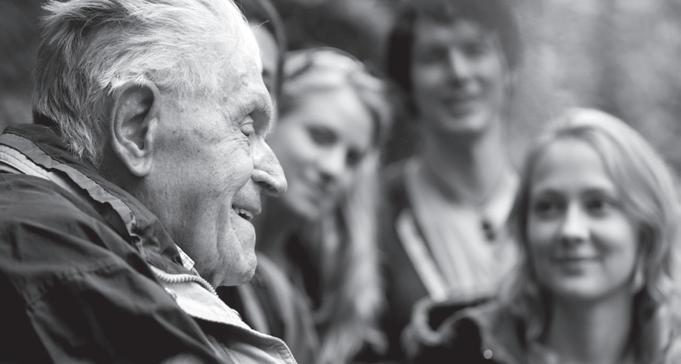




Invercargill & Districts

Cnr. Esk & Doon Sts. Invercargill International Phone: +64 3 218 4095



185 Schnapper Rock Rd Albany Auckland +64 9 415 8720 info@dils.co.nz www.dils.co.nz

















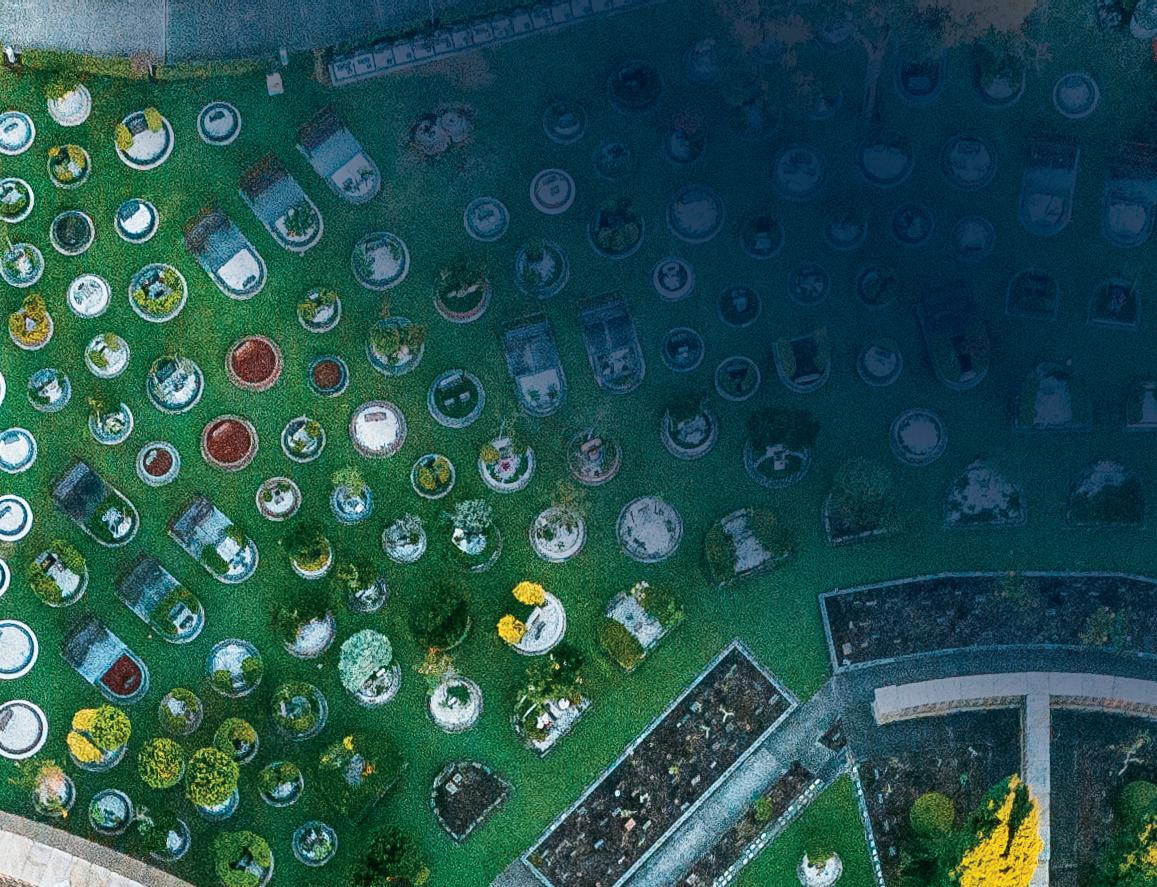









InvoCare Memorial Parks offers a range of personalised memorial options of throughout Queensland and New S outh Wales. Our locations feature Queensland and New South Wales. Our locations feature beautifully landscaped gardens and culturally dedicated spaces, honouring landscaped and various traditions and providing serene and respectful environments for and for remembrance and reflection.

















Centennial Park has launched Echoes of Love, a special community letterbox inviting people to write personal letters to loved ones who have died.
Located in the Park’s tranquil Contemplation Court, the letterbox offers a gentle new way to reflect, remember and reconnect.
The initiative was created in collaboration with Annaliese Holland, whose own experience of grief inspired a space where people can continue the conversation with those they miss.
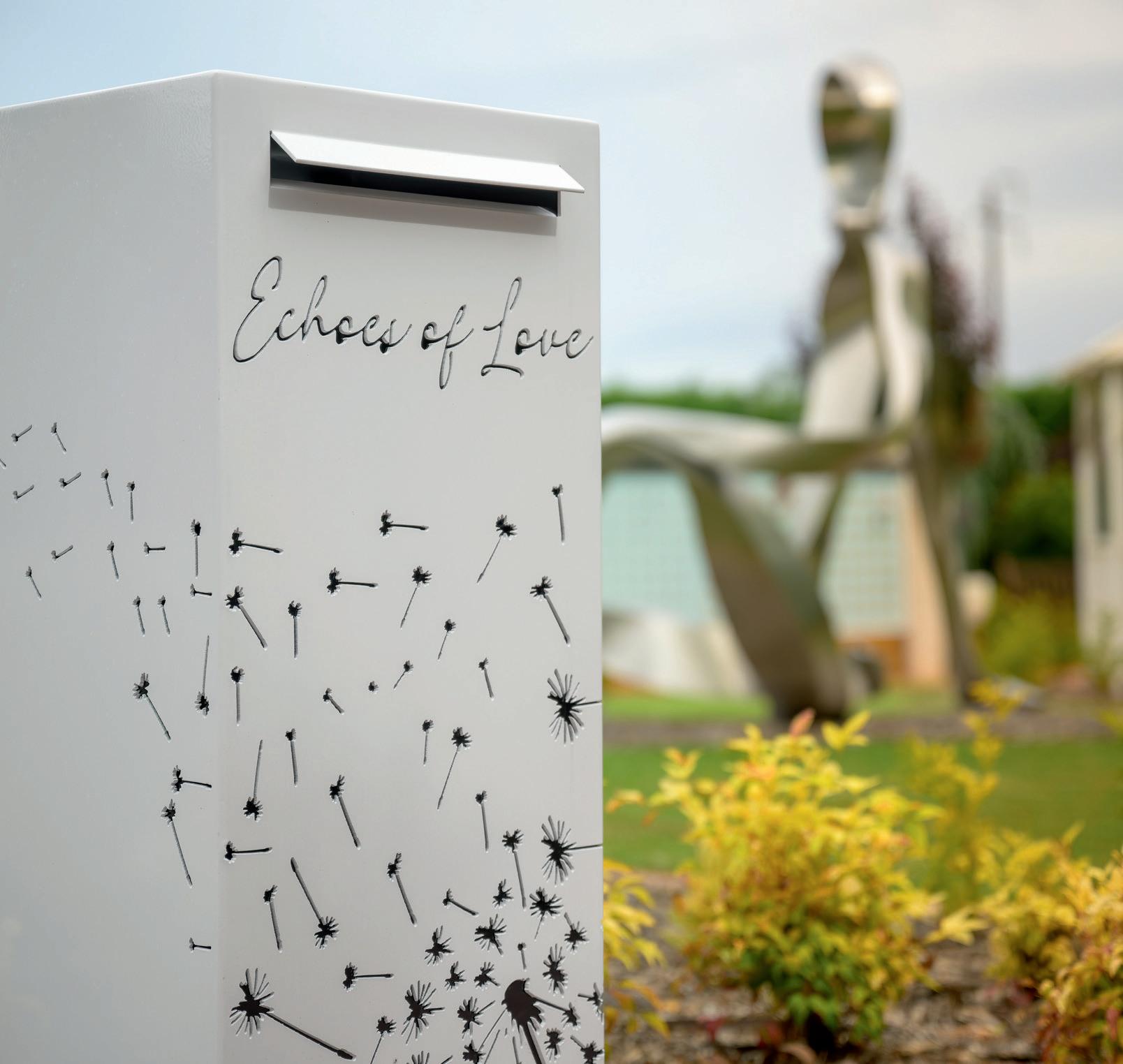
Visitors can place a note in the letterbox during their time in the gardens –sharing memories, gratitude or the OVER

Domestic and International International CR's
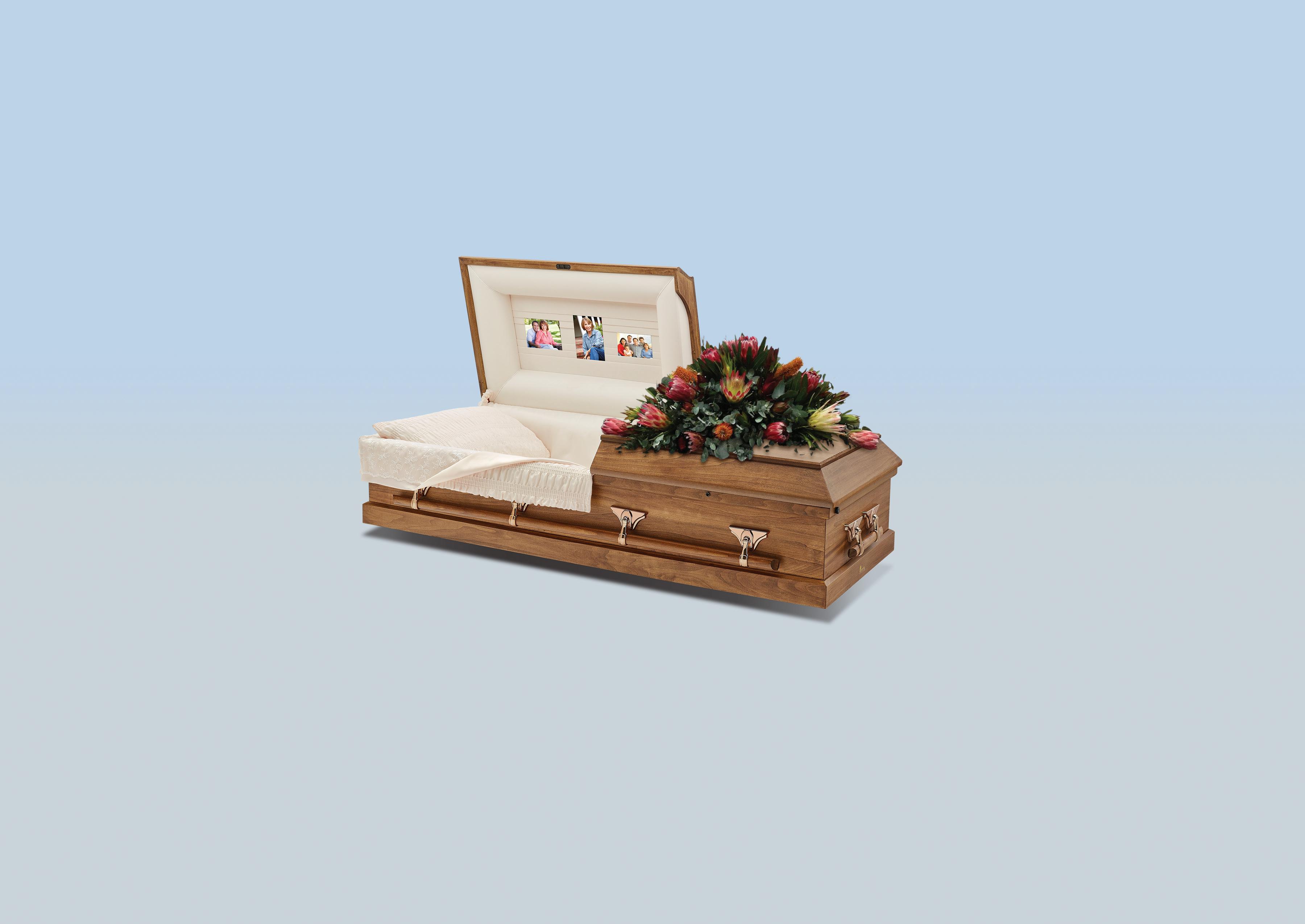


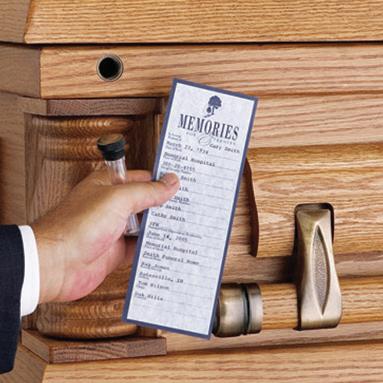

DELRAY - Product Code: 146853
Rosetan Crepe Interior with dual overlay Solid Hardwood Casket with Wooden bed, Adjustable LifeView panel, Crematable wooden handles, Living Tree Memorial Program
Dimensions (cm): 205 x 76 x 50 Weight: 77kg


“Batesville has been rated #1 in product quality, service and innovation for three years in a row by funeral professionals, according to Funeral Service Insider (FSI)!”
TO FIND OUT MORE, PLEASE CONTACT: Shirly Sareyka - General Manager, Australia & New Zealand
1 RATING # Batesville quality made surprisingly affordable. For the non-traditional Batesville buyers!
: Shirly.sareyka@batesville.com : 0437 114 333 : www.batesville.com.au Or your local Batesville sales agent: 1300 368 268