The cost-of-living crisis continues for us all: you, your family and your customers. The news is full of stories about the instability in energy prices and higher prices to come – with the occasional glimmer of hope now and then as world news agenda shifts.
Energy prices actually came down for most people in April, by an average £130 per household. But in a see-saw that has become familiar over the past few years, we’re likely to see wholesale gas prices bounce up again later in the year.
It’s all grist to the mill for those who say we need to reduce our reliance on fossil fuels. The government has announced the details of the Futures Homes Standard and thrown its weight behind solar panels, also indicating that it wants plug-in panels in shops within months.
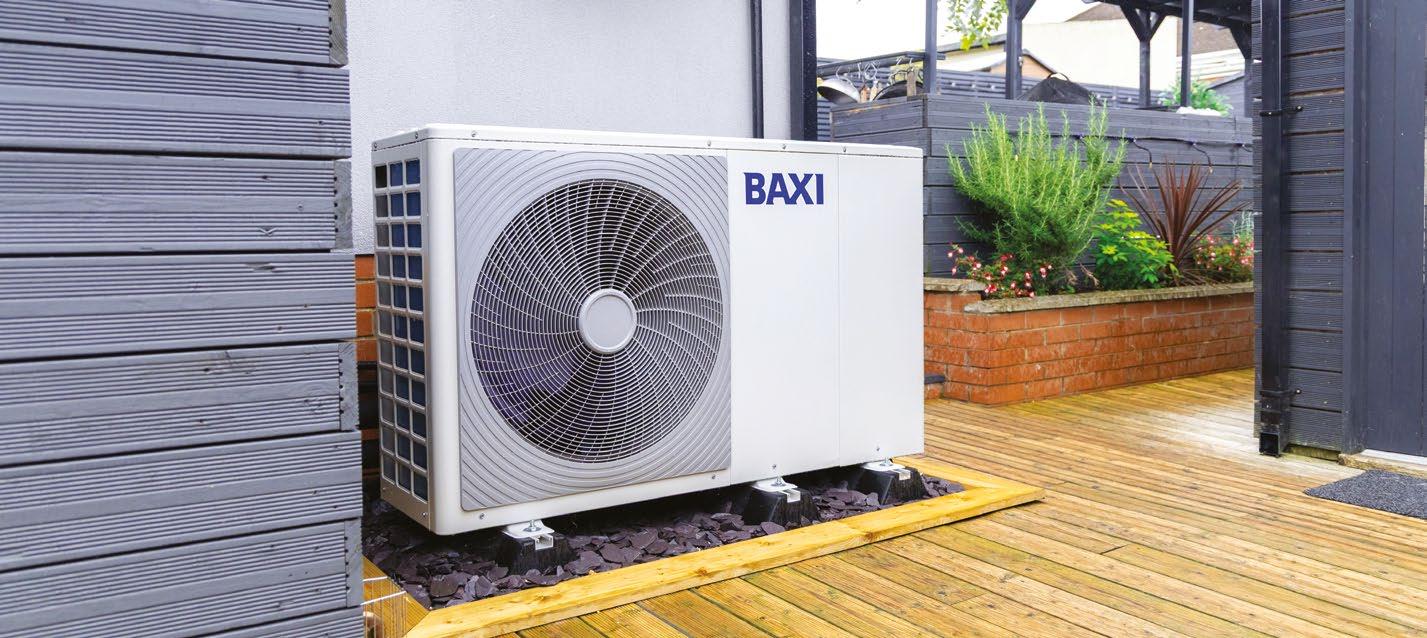
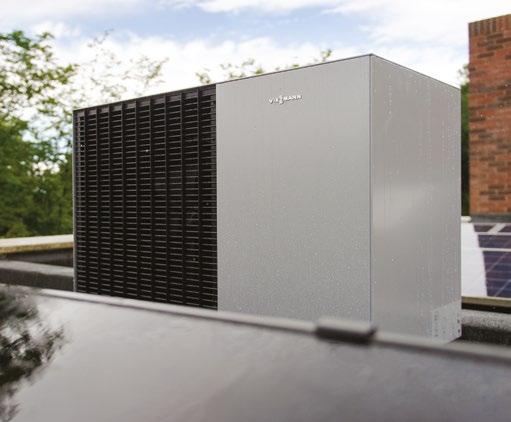
It also confirmed, as expected, that heat pumps will be pretty much mandatory in new-builds, and it’s no coincidence that we’re taking a look at the topic in this issue. Although gas is not going anywhere soon (except up in terms of cost), it’s worth noting that gas engineers already have many of the skills required to fit heat pumps.
Sue Harker, Editor
Gas Safe Register, PO Box 631, DARLINGTON, DL1 9GD
Email: enquiries@gassaferegister.co.uk, register@gassaferegister. co.uk or technical@gassaferegister.co.uk
Editor: Sue Harker, suzanne.nee.harker@accenture.com
Features editor: Nicki Shearer, editorial@registeredgasengineer.co.uk
Publisher: publisher@registeredgasengineer.co.uk
Technical consultants: Rob Walkerdine, Jonathan Palmer
Advertising enquiries only: Mike Allen mike@smartmediasales.co.uk, Tel: 07917 588511 Ian Tournes, ian@smartmediasales.co.uk, Tel: 07814 970732
Registered Gas Engineer is produced on behalf of Gas Safe Register. Gas Safe Register, PO Box 631, DARLINGTON, DL1 9GD
Issue 191 | May/June 2026
The views expressed in this magazine are not necessarily those of Gas Safe Register. The publishers will accept an advertisement or other inserted material only on the condition that the advertiser warrants that such advertisement does not in any way infringe copyright or contravene the provisions of the Trade Descriptions Act. All copy is subject to the approval of the publisher, who reserves the right to refuse, amend, withdraw or otherwise deal with advertisements submitted to it at its absolute discretion and without explanation. All advertisements must comply with the British Code of Advertising Practice. ABC membership approved 19 March, 2009.
Low pressure and under-sized pipework: do you know what to do?
04
Gas Safe Register Update
Gas Safe Register has launched a trial to support students and trainees as they begin their careers in the gas industry
IGEM is now the Standard Setting Body (SSB) for the downstream gas industry, taking over from EU Skills
PLUS Suspended sentence for illegal gas fitter who worked on a gas boiler despite having no qualifications or registration
Gas Safe requires engineers to both meet and comply with SSB-defined rules and standards. We look forward to working with IGEM to ensure the continued integrity and robustness of UK gas competency standards, supporting the long-term safety of the sector.
09
Illegal gas work
Ronan Howard of Gas Safe Register’s National Investigations Team shares how the Register deals with illegal gas work and why it’s so important that gas engineers report it when they see it
“ ”
I’m confident that the timely intervention of Gas Safe Register has saved lives.
11
Caught on camera
Snapshots of some of the worst gas work you have seen
20 Genuine spare parts
Watch out for fake spares: HHIC is calling on heating engineers to remain alert to the growing number of counterfeit spare parts
12 ISU 133: IGEM/UP/1B Edition 4
The key areas of change arising from the revision of IGEM/UP/1B Edition 3
Tightness testing and direct purging of small Liquefied Petroleum Gas/Air, Natural Gas and Liquefied Petroleum Gas installations
14
28
Towards Net Zero
‘Plug-in’ solar panels could be available in shops within months, as the government finally sets out its plans for the Future Homes Standard. PLUS with heat pumps firmly on the agenda, we look at how homes can pre-prepare for their installation and how gas engineers are already well on their way to having the skills and knowledge to fit them
32 Products
The latest launches and updates from around the industry
16
Technical Bulletin 163
Requirements for commissioning appliances connected to custom-built or specialist chimney/flue systems
Low pressure and under-sized pipework
Gas Safe Register’s Technical Team look at the causes of low gas pressure, what steps you should take to deal with it and how to calculate pipework sizing correctly
22 The Legislative Normative and Informative Documents List
update from the Register
New Gas Safe Register trial to support the next generation
Gas Safe Register has launched a trial to support students and trainees as they begin their career in the gas industry.
The initiative invites people who are training to become gas engineers to take part in a programme that provides them with practical resources. The aim is to support them with the challenges they face and identify where additional support could make a meaningful difference as they progress towards Gas Safe registration and early career development.
As the industry continues to adapt, with rising expectations around safety and compliance, ensuring that new engineers feel confident and well prepared has never been more important.
Participants will have access to practical resources covering topics such as registration, safety, career pathways and future skills. Students will also have the opportunity to meet with a local Gas Safe Register inspector to ask questions about the inspection process and what to expect.
They will be able to access a new Student Technical Support Service, where they can raise concerns and receive honest, impartial advice.
They will be also asked to complete a series of short surveys at different stages.
By placing trainee voices at the centre of the trial, Gas Safe Register aims to ensure that support reflects real experiences and helps new engineers build confidence as they enter the industry.
Director of Gas Services
Rob Denman said: “We know that starting out in the gas industry can be challenging, particularly as the sector continues to change.
“In a world of new media, trainees aren’t always sure where to go for clear, trusted advice. Gas Safe Register has an important role to play in ensuring that we support students to qualify and practice safely.
“This trial is about listening to those coming into the industry and using that insight to shape the support we provide, so new engineers feel more confident as they begin their careers.”
The trial is being delivered by Talan on behalf of Gas Safe Register and the HSE. It is available to students until 31 July 2026 through the Gas Safe Register Student Hub.
Please do share information on the trial with any students studying for their gas qualifications or colleagues mentoring students who are working towards a qualification. www.gassaferegister.co.uk/ student-hub/
The student hub includes resources on business advice, careers maps, educational videos, technical support, inspector meetand-greet sessions and FAQs.
update from the Register IGEM becomes the new standard setting body
CORRECTION
Last issue in the article on LPG regulators, we incorrectly referenced a Liquid Gas UK Guidance Sheet. The Consumer Guidance Sheet regarding the safe use of LPG regulators is numbered 39, not as given in the March-April edition.
IGEM is now the Standard Setting Body (SSB) for the downstream gas industry.
The SSB sets the rules and frameworks for gas competency in the UK, including Matters of Gas Safety, IGEM/IG/1 (standards of training in gas work), training specifications and mandatory technical competencies. These ensure that gas engineers are trained, assessed and working to the right standards across the profession.
For gas engineers, the core purpose of the standards framework remains unchanged: keeping people, property and the wider public safe.
Rob Denman, Director of Gas Services at Gas Safe Register, said: “We require engineers to both meet and comply with SSB-defined rules and standards. We look forward to working with IGEM to ensure the continued integrity and robustness of UK gas competency standards, supporting the long-term safety of the sector.”
IGEM says it plans to work closely with employers, engineers, awarding bodies, training providers and regulators to ensure standards continue to evolve with new technologies and changes across the energy landscape.
Visit Gas Safe Register at the InstallerSHOW 2026
Gas Safe Register will be exhibiting at the InstallerSHOW 2026 at the Birmingham NEC.
The show, on 23-25 June, is set to be the event’s biggest and most wideranging edition yet, bringing together more than 40,000 visitors, 900+ exhibitors and 11 CPD-accredited content streams.
Themed zones, including InstallerPLAZA, InstallerBUILD, InstallerELECTRIC and the Kitchen Fitter Arena, will include live demonstrations, expert talks and practical training.
A new addition this year will be the World Plumbing Conference, bringing together global industry leaders to address skills, sustainability and public protection.
You can visit Gas Safe Register at Stand 5D77. Tickets are free at: www.installershow.com
update
from the Register
Stay up to date with Tech Talk
Have you seen the latest Tech Talk? Episode 10 dives into the role of Technical Bulletins, how they are created, updated and archived to keep guidance for gas engineers current. It also includes a review of current standards and upcoming changes – including the publication of IGEM/UP/1B, which brings updates to tightness testing procedures (see page 12 of this issue).
You can see Episode 10 and all previous Tech Talks on Gas Safe Register’s YouTube playlist.
Dangerous boiler installation risked CO poisoning
A Dorset man has been given a suspended prison sentence after he carried out dangerous and illegal gas work on a property in Bournemouth.
Bristol Magistrates’ Court heard that David McCallum, 58, trading as McCallum Plumbing & Heating, attended the property in February 2023 and relocated a gas boiler and flue.
HSE, prosecuting, said the homeowners noticed problems with it afterwards and were concerned about the standard of work, so arranged for another gas engineer to check. When they arrived, they carried out an inspection and identified the installation as Immediately Dangerous.
The flue was not sealed or positioned correctly, which meant there was a risk of carbon monoxide leaking into the property.
HSE’s investigation found Mr McCallum had no training in gas work and was not Gas Safe registered.
Furthermore, he knew he should have been registered
because he had been the director of a registered company previously.
David McCallum of Balston Road, Parkstone, Poole, pleaded guilty to breaching Regulations 3(3), 27(1) and 27(5) of the Gas Safety (Installation and Use) Regulations 1998.
He was sentenced to 10 months’ imprisonment, suspended for 12 months, and ordered to pay compensation of £3,907 plus £7,064 in costs.
He was also given a six-month electronic monitoring order, restricting his movements at weekend.
HSE inspector Simon Jones said: “David McCallum undertook gas work which he knew he was not registered to do, and his shoddy work replacing the boiler and flue meant there was an immediate danger of carbon monoxide leaking into the property. McCallum’s illegal gas work put the lives of innocent homeowners at risk for his own financial gain.”
Mr McCallum knew he should have been registered because he had been the director of a registered company previously.
The gas boiler flue was not sealed or positioned correctly
Part of the work carried out saw Mr McCallum relocate a gas boiler and flue
update from
the Register
Illegal gas work: what’s being done about it?
Ronan Howard has worked with Gas Safe Register’s National Investigations Team for nearly a decade. Here, he shares how the Register tackles the issue of illegal gas work and why it’s so important that gas engineers report it when they find it.
1,174 Cases of illegal gas work identified
The Register has investigated thousands of concerns, identified a multitude of gas safety defects and provided invaluable support to enforcement agencies to make sure illegal gas workers are prosecuted successfully.
I’m confident that the timely intervention of Gas Safe Register has saved lives.
503 site inspections of illegal gas work
Still, one of the most frequent queries we receive remains: “What are you doing about illegal gas work?” The answer is that the Register investigates all reports of illegal gas work.
to ensure that those on the Register are maintaining high standards. The Register helps to keep you and your customers safe from gas leaks, fires, explosions and carbon monoxide (CO) poisoning by supporting the HSE to prosecute illegal gas workers The risks of not reporting unsafe works can be fatal.
The Register may also receive reports of registered businesses carrying out or supporting unregistered work, and these reports are taken extremely seriously. Engineers and businesses not complying with the Gas Safety (Installation & Use) Regulations 1988 may be removed or suspended from the Register.
Taking action
420
Reports of illegal gas work sent to HSE
Around two-thirds of illegal gas work inspected by the Register is unsafe. Rooting out these unsafe practices is an important part of what we do, and the best source of information is you, the competent and qualified gas engineer.
Why report illegal work?
It is a legal requirement for those carrying out gas work to be registered. The Gas Safe Register maintains a list of competent and legal businesses and engineers and carries out regular inspections
The Register investigates all reports of illegal gas work. In 2025, 1,174 cases of illegal work were identified. This resulted in 503 site inspections and more than 420 reports sent to HSE.
Over the same period, unregistered gas work investigated by Gas Safe Register, working with the HSE, resulted in seven prosecutions, 12 notices of contravention and 23 prohibitions.
How to report
If you have any concerns about work carried out by a non-registered business or a non-qualified person, let us know. It’s helpful if you include as much information as you can in your report, so we can identify the correct individual and book an inspection if required. Our online form is designed to make it as easy as possible for you to submit your concerns. We will confirm receipt of your concerns and provide an overview of what you have submitted for your reference. You can fill out the form at www.GasSafeRegister/ reportillegal or email enquiries@gassaferegister. co.uk to submit your concerns.
The Register’s commitment to you
• You can report your concerns to the Register anonymously if you choose.
• Gas Safe Register will treat all reports of illegal gas work seriously and investigate appropriately.
• Where illegal work is identified, where permitted, we will always inspect it and provide a comprehensive report of our findings to HSE so that appropriate enforcement action can be taken.
• We will work collaboratively with HSE as required once our report has been received.
SCORE BIG WITH TANKBOOST
Free Premium Training Football
For
Under-16s Team
Caught on camera
What’s the worst gas work you’ve seen lately?
You can share your photos with the Gas Safe engineer community on our Wall of Shame by emailing us at: editorial@registeredgasengineer.co.uk
FROM LEE McGREGOR
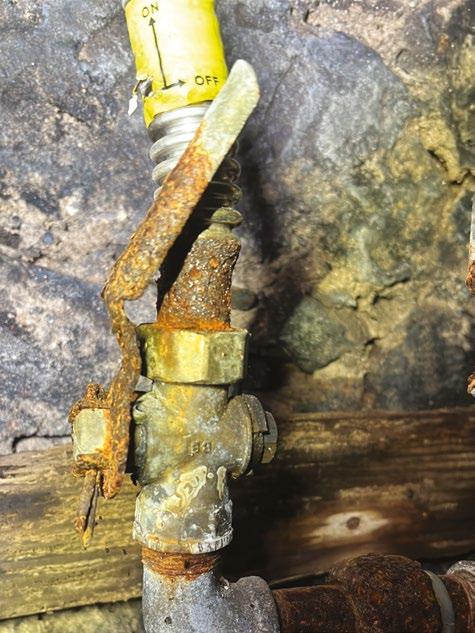
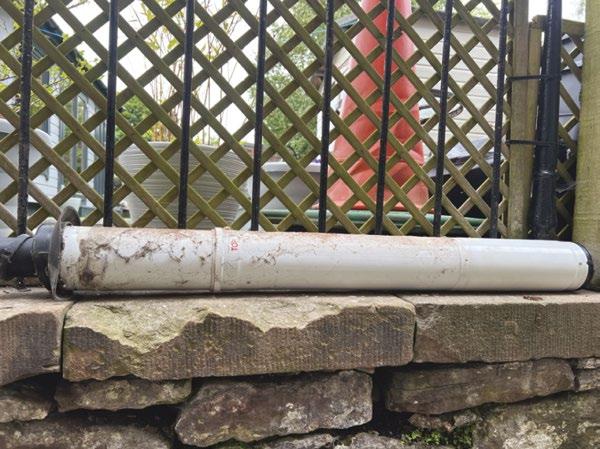
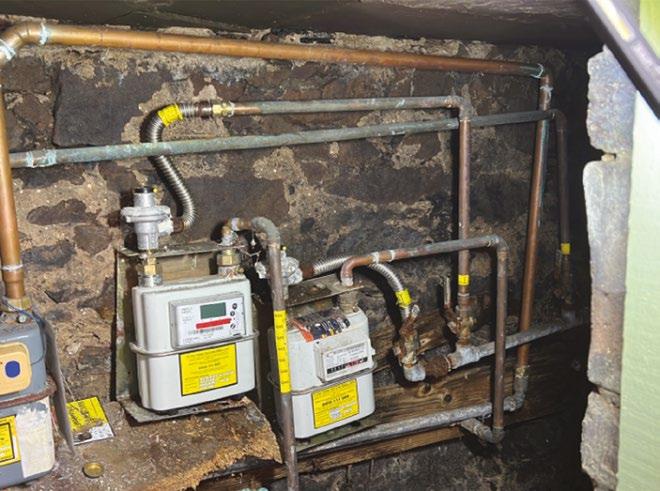
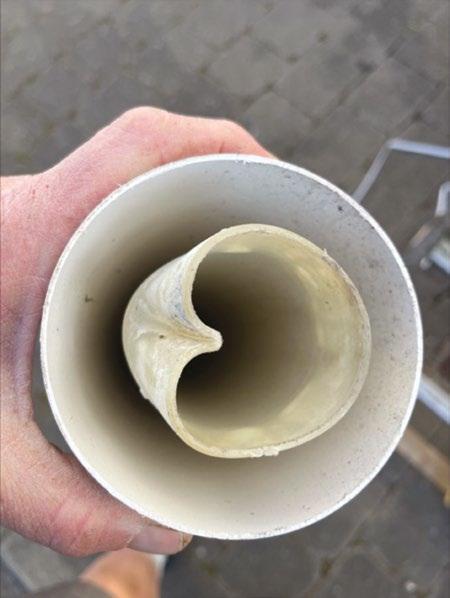
The Airbnb property that Lee was asked to check turned out to be a house of horrors: there was no sealant between the flue and the stonework, an insecure extension to a telescopic flue, and three unsupported gas meters with corroded fittings. Lee notified the gas distributor and issued a warning notice.
FROM ROY GODARD
FROM MIKE RIMA
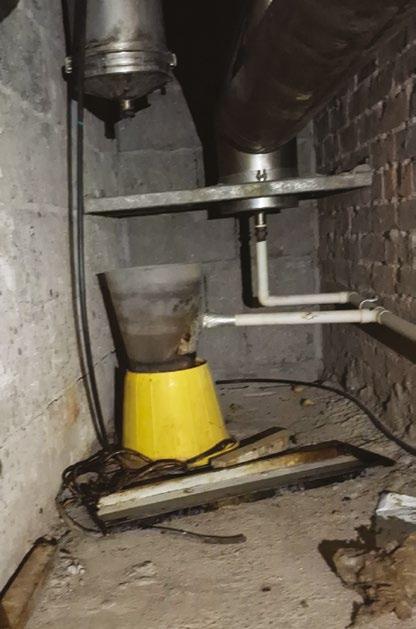
Mike was due to commission two replacement boilers in a hotel in Wales – but first he had to correct the installation by fitting two water traps.
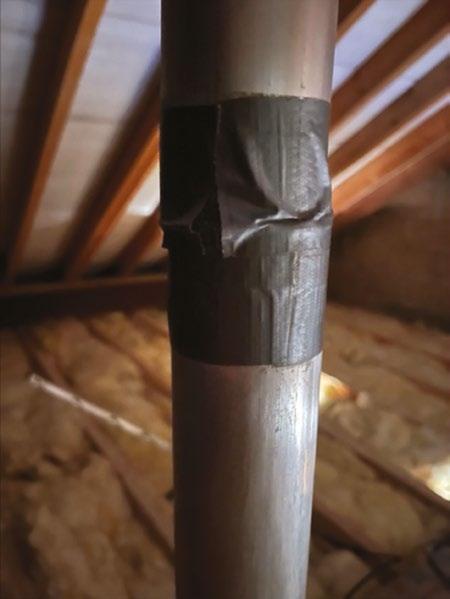
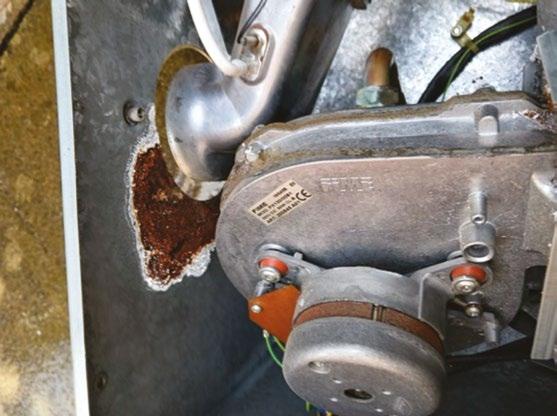
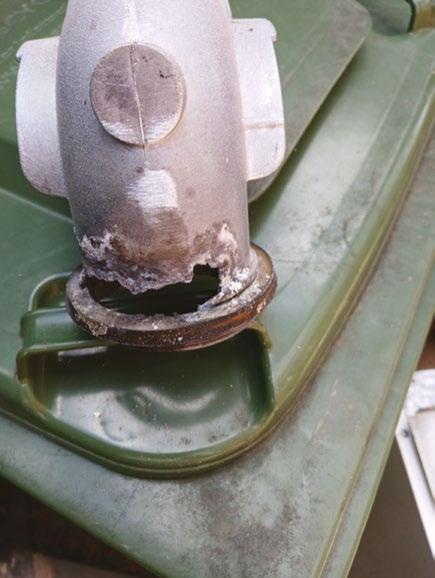
What happens when a boiler hasn’t been serviced for six years? Roy’s customer had complained of a banging noise and he found the flue had been eaten away. A new boiler has been fitted.
FROM JAKE VANGROVE
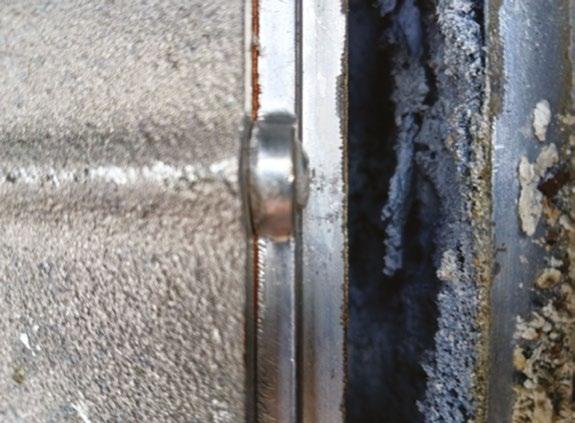
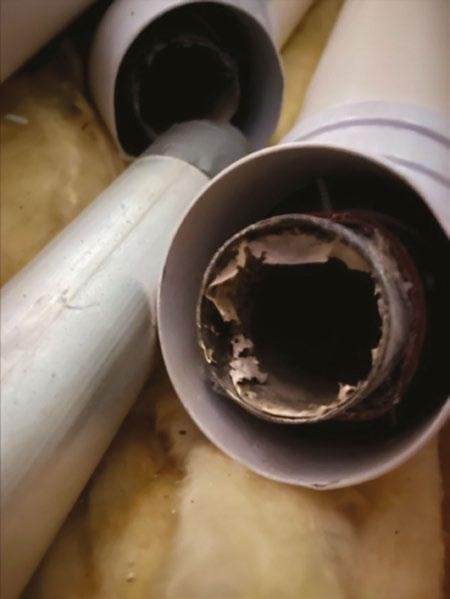
When Jake was dismantling a flue ready to replace the boiler, he discovered this horror. He strongly suspects the boiler had never been serviced.
Date issued: 15 April 2026 Industry Standard Update 133 (Edition 2)
IGEM/UP/1B Edition 4 – Tightness testing and direct purging of small Liquefied Petroleum Gas/Air, Natural Gas and Liquefied Petroleum Gas installations(1)
This Industry Standard Update provides an overview of the key areas of change arising from the revision of IGEM/UP/1B Edition 3 Tightness testing and direct purging of small Liquefied Petroleum Gas/Air, Natural Gas and Liquefied Petroleum Gas installations (with Amendments October 2012)(2).
Introduction
During March 2026, IGEM published an update to IGEM/ UP/1B Edition 3 Tightness testing and direct purging of small Liquefied Petroleum Gas/ Air, Natural Gas and Liquefied Petroleum Gas installations (with Amendments October 2012)(2) (Communication 1759).
While IGEM/UP/1B Edition 4 Tightness testing and direct purging of small Liquefied Petroleum Gas/Air, Natural Gas and Liquefied Petroleum Gas installations(Communication 1903) comes into effect immediately, it is understood that it will take time for all Gas Safe registered businesses to train and implement the updated procedure.
Accordingly, the existing standard will run alongside the new version for a period of 6 months, until 30th September 2026, at which point IGEM/ UP/1B Edition 3 will be withdrawn. During this period, Gas Safe Register has agreed not to defect any business
that is not fully conversant with the new procedure during inspections and will provide guidance where necessary.
We have received feedback from industry that the original ISU 133, published on 25th March 2026, has caused some confusion and misinterpretation. Therefore, we have worked with industry to produce this second edition of the ISU, which supersedes the original.
General
The main changes in IGEM/ UP/1B Edition 4 are that permissible pressure drops on a tightness test are determined by the Installation Volume (IV) rather than meter size alone, and that where there is any perceptible movement of the gauge this is not attributable to gas installation pipework.
Tightness testing procedure
The procedure for carrying out tightness testing remains
broadly unchanged. However, the method for assessing results and the required followon actions have been revised. Where a tightness test is undertaken, if there is no perceptible movement, the installation can be considered gas tight. If there is any perceptible movement of the gauge, the observed pressure drop shall be determined whether it is within permissible limits. These limits are defined by gas type, and Installation Volume (IV).
Therefore, the IV of the installation (or part of being tested) shall be calculated, and compared with the relevant table for the fuel gas type (Permissible Limits Table below). Where the drop is outside of permissible limits, the escape must be traced and repaired, or the installation disconnected from the gas supply and made safe. Where the drop in pressure is found to be within permissible limits, it must then
be determined that the drop in pressure is not attributable to the installation pipework.
To do this, all appliances shall be isolated from the gas supply, and the test repeated on pipework only. There can be no perceptible movement of the gauge during this test for it to be deemed a pass. Where it is not reasonably practicable to isolate appliances, the test shall be carried out with appliances connected. Where perceptible movement is recorded, then the test shall be deemed a fail and the escape traced and repaired, or the installation disconnected from the gas supply and made safe.
On completion of a satisfactory tightness test, the appliances should be reintroduced to the installation and all disturbed joints, along with any installation pipework between an appliance and an isolation valve serving it, will need to be tested with lead detection fluid (LDF). There must be no smell of gas.
3)
Bibliography (1) IGEM/UP/1B Edition 4 –
Tightness testing and direct purging of small Liquefied Petroleum Gas/Air, Natural Gas and Liquefied Petroleum Gas installations (2) IGEM/UP/1B Edition 3 –
Tightness testing and direct purging of small Liquefied Petroleum Gas/Air, Natural Gas and Liquefied Petroleum Gas installations (with Amendments October 2012)
Perceptible gauge movement
A movement of 0.25 mbar or less on a fluid (water) gauge is considered to be “not perceptible”. Therefore, if the gauge is seen to move, it can be inferred that the pressure within the installation has altered by more than 0.25 mbar. Where an electronic gauge is used, the pass criteria of “no perceptible movement” is considered to be a maximum of 0.25 mbar, except for those gauges that read to one decimal place, where “no perceptible movement” is considered a maximum of 0.2 mbar.
Purging
The procedure for carrying out purging operations remains unchanged. However, the method for determining the purge volume has been revised. Where previously the size of the meter and diameter of the pipework could determine the purge volume (PV), the updated procedures state that the installation volume (IV) needs to be calculated and the formula of PV = 1.5 x IV is applied on all installations to determine the purge volume.
Summary
This Industry Standard Update is an overview of the information contained in the amended Standard. Gas Safe Registered engineers/businesses should be aware that they have a responsibility to ensure that they are fully apprised of all the requirements of the whole published standard and their practical application.
The bullet points below state a basic overview of updated test procedures:
• Undertake visual inspection and make sure appliances are appropriately set up, ie, cooker lids in the upright position, permanent pilots extinguished.
• Turn off Emergency Control Valve (ECV) or appropriate valve
• Connect gauge and carry out let-by test at 7-10 mbar for 1 minute
• If let-by passes, raise the pressure to the relevant tightness test pressure for the fuel gas and carry out temperature stabilisation for 1 minute
• Adjust pressure where necessary, and test for a further 2 minutes
• For systems with pipework only or where only new appliances are connected, there can be no perceptible movement of the gauge
• For systems containing existing appliances, if there is any perceptible movement on the gauge, the Installation Volume (IV) of the installation must be calculated
• Compare the drop on the gauge with the IV of the system on the corresponding Permissible Limits table, to ensure the drop is within permissible limits
• Where the drop is within the permissible limits, then all appliances shall be isolated and the test repeated on pipework only (this is to ensure that any drop in pressure is not attributable to the pipework system)
• There can be no perceptible movement when testing pipework only, or the test shall be deemed a failure, and the escape traced and repaired or the system made safe
• Where the drop is outside of the permissible limits, then the escape must be traced and repaired, or the system made safe
• Where it is not practicable/possible to isolate an appliance, then test is carried out with the appliance connected and the no perceptible movement criteria applied
• Once the tightness test is complete, remove the gauge, refit the test nipple, reintroduce the gas and test all disturbed joints with LDF, along with all installation pipework between any isolation valve and the appliance it serves. There must be no smell of gas.
You can review and download the standard at: www.igem.org.uk/resource/igem-up-1bedition-4-tightness-testing-and-directpurging-of-small-liquefied-petroleum-gas-airng-and-lpg-installations.html
Requirements for commissioning appliances connected to custom-built or specialist chimney/flue systems
Date issued: 16 February 2026
The Technical Bulletin (TB) is intended to give guidance when commissioning gas appliances installed to custom-built or specialist flue systems.
Introduction
This Technical Bulletin has been developed to outline the responsibilities of Gas Safe registered businesses when commissioning gas appliances installed to custom-built or specialist chimney/flue systems. These may serve more than one appliance and are predominately found in the non-domestic sector but may also include domestic installations such as communal flue systems (CFS).
Note 1: For the purpose of the Technical Bulletin, specialist chimney/flue systems comprise:
• Custom-built chimneys that are non-certified as defined in BS EN 15287 Chimneys. Design, installation and commissioning of chimneys(1)
• System chimneys that have not been certified to an appropriate standard: for example, BS EN 1856-1 Chimneys. Requirements for metal chimneys – System chimney products(2)
• Those that have not been designed by the relevant appliance manufacturer.
Background
When Gas Safe registered engineers commission an appliance installed to a chimney/flue system, it is important that the correct commissioning process is followed in accordance with both the appliance and chimney/flue manufacturer installation instructions and relevant industry standards. The Approved Code Of
Practice (ACOP) to Gas Safety (Installation and Use) Regulations 1998(3) (GSIUR) Regulation 27 (1) states: “This requirement applies however the connection is made (eg, it covers equally where an appliance is fitted to an existing flue, and where a flue is fitted to an existing appliance). In each case, the necessary tests and examinations should be carried out both before and after the appliance has been fitted. Reference should be made to appropriate standards and the manufacturers’ instructions.”
Most modern appliances incorporate a fan, such as in a pre-mix condensing appliance, and these help to safely remove the products of combustion. In many cases, chimney/flue systems therefore operate under a positive pressure and will require the flue specialist to design, validate and certify the installation differently to meet the appliance manufacturer installation requirements.
As a result, the testing and commissioning procedures to establish safe operation differ from those of traditional open-flued natural-draught installations, which could be tested utilising a series of smoke tests to establish safe function of certain types of chimney/ flue systems designed by specialists, which would not be sufficient to validate a positive pressure chimney/flue system.
Appliance commissioning and testing
The chimney/flue type and its intended operation will need
to be verified by the Gas Safe registered engineer when commissioning an installed appliance in accordance with Regulation 26(9)(a) of GSIUR, which states: “Where a person performs work on a gas appliance he shall immediately thereafter examine - (a) the effectiveness of any flue.”
The Gas Safe registered engineer shall confirm that the chimney/flue has been appropriately validated and certified by the system designer and/or installer of the chimney/flue system prior to the appliance commissioning process. Examples of the requirements (where applicable) could include but are not limited to:
• The installer of the chimney/ flue system
• Suitability of flue supports and any structural steel work
• Correct jointing methods have been used
• Suitability of termination
• Data plate information relevant and installed
• Adequate ventilation
• Adequate test points installed
• CO detection
• Condensate drainage correct materials
• Any required System Design Verification Notice (SDVN) has been issued
• Relevant tests have been carried out.
Note 2: A custom-built or specialist chimney/flue system designed to operate under a positive pressure may need to be tested by means of a leak rate pressure test(s) For testing methods for these
types of chimney/flue system, refer to IGEM/UP/10 Edition 4 Installation of flued gas appliances in industrial and commercial premises(4)
Note 3: It is a requirement that each component of the flue is certified for its intended use.
Any specific appliance manufacturer tests and checks defined within the relevant manufacturer installation requirements should be carried out and recorded as part of the commissioning procedure. Alternative flue systems may have different testing methods, such as those specifically designed and provided by the appliance manufacturer.
The Gas Safe registered engineer responsible for commissioning the appliance should, as a minimum, complete the checklist in Appendix 1 (opposite) and provide this as part of the installation handover process. All relevant information should also be retained within the relevant site technical file.
Bibliography (1) BS EN 15287 Chimneys. Design, installation and commissioning of chimneys (2) BS EN 1856-1 Chimneys. Requirements for metal chimneys –System chimney products (3) Gas Safety (Installation and Use) Regulations 1998 (4) IGEM/UP/10 Installation of Flue gas appliances in industrial and commercial premises
TB 1000 – An introduction to Gas Safe Register Technical Bulletins You can read all Gas Safe Register Technical Bulletins by logging into your online account at: www. GasSafeRegister.co.uk/sign-in
Pre-commissioning checklist for appliances connected to specialist chimney/flue systems
Requirements
Is there a record to confirm the design of the installed chimney/ flue system?
This may also include any schematics/drawings and maintenance requirements for the chimney/flue system, as well as any specific design agreements in writing from the appliance manufacturer. A full visual inspection of the flue to confirm the installation meets the design is required.
Is there a chimney/flue test record?
Eg, A leakage test record for positive pressure systems or smoke test records for negative pressure systems.
Are suitable flue test points installed along the chimney/flue route?
Eg, For flue gas analysis and, where required, pressure sampling test points.
Is the chimney/flue system installed correctly to avoid the formation of excessive condensate or premature failure?
Eg, Adequate support, suitable fall on flue system and appropriate drainage.
Is there a chimney/flue data plate which includes the specification of the chimney/flue design?
Eg, Fixed to the flue or adjacent in a prominent location.
All answers are Yes (Y)
ANY answers are No (N)
Company Name:
Gas Safe registration number:
Licence number:
Engineer name (PRINT NAME):
Engineer signature:
Date:
Responsible person name:
Installation address:
Proceed with commissioning
DO NOT commission
Low pressure and under-sized pipework
Low gas pressure at gas appliances due to undersized pipework is the topic of many contacts to Gas Safe Register, both from registered businesses and members of the public. Here, the Technical Team look at some of the causes and what steps you should take.
Pressure loss is inevitable when designing an installation and needs to be considered. Pressure is lost because of the frictional resistance of the components used in the installation pipework that are exposed to gas. The amount and size of pipework and fittings used in the installation all contribute to a certain amount of drop in pressure across the system.
When designing an installation, the size of pipework required should be determined from the maximum gas rate of the appliance(s) to be connected, and an allowance may need to be considered for any future developments or extensions in the property.
To meet requirements and minimise pressure loss, an
understanding of what can affect this can help gas engineers when they are designing the system. This includes the gas consumption of the appliance(s), the length of pipework required, the number and type of fittings, and the type and bore of pipework.
All these factors increase the frictional resistance to the flow of gas, which, in turn, increases the pressure loss.
BS 6891(1) states that, for natural gas installations, the design pressure loss between the outlet of the primary meter installation and the point to be connected to any appliance inlet shall not exceed 1mbar at the design installation maximum flow rate: for LPG installations this figure is 2mbar.
How to calculate gas pipework size in a domestic property
When you’re quoting for a new gas boiler, you must survey the property before you start work to decide the most suitable boiler position, taking into account the layout of the property and your customer’s needs. With the position of the boiler established, you must work out the route that the gas pipework will take from the meter to the appliance position.
Once the route has been decided, you must calculate the pipe sizing to serve the gas appliance with an adequate supply of gas. To do this calculation, you need to carry out a pipe-sizing exercise using either the tables provided
Why can’t the design pressure loss exceed 1mbar?
To illustrate, a gas engineer installs an appliance on existing pipework but does not ensure that the pipework has a maximum 1mbar pressure loss, in accordance with BS 6891. This installation pipework is losing 5mbar, with the working pressure at the meter outlet at 20mbar, and therefore the appliance would seem to be receiving 15mbar, which is within the manufacturer’s specifications.
The engineer assumes that because the manufacturer’s instructions state that the appliance will work safely with a minimum of 14mbar, then this is acceptable.
in BS 6891, or appropriate training materials.
First, measure the route of the pipework, allowing the appropriate additional lengths for fittings. This will give you what is called the ‘equivalent length’. This is the total length of pipe that you should use in your final calculation.
Once you have your equivalent length, use Table A.1 from BS 6981 (or equivalent) to work out the required pipe diameter. To do this, you need either the heat input or gas rate of the appliance(s) in the property. If the total heat input is not listed, use the nearest measurement above what is needed.
You should then follow the table across, where the pressure
However, the pressure in the network at peak demand reduces to 20mbar and the meter absorbs 4mbar, leaving 16mbar at the meter outlet. The 5mbar loss across the pipework now leaves only 11mbar at the appliance – below the manufacturer’s minimum.
This means the appliance may not work in accordance with the manufacturer’s instructions. The engineer in attendance must risk-assess the installation and follow IGEM/G/11, the Gas Industry Unsafe Situations Procedure, if the appliance is working unsafely.
loss per metre for each pipe size is listed. By multiplying this number by the equivalent length, you can see which pipe size will ensure that there is no more than a 1mbar drop in pressure across the pipework installation.
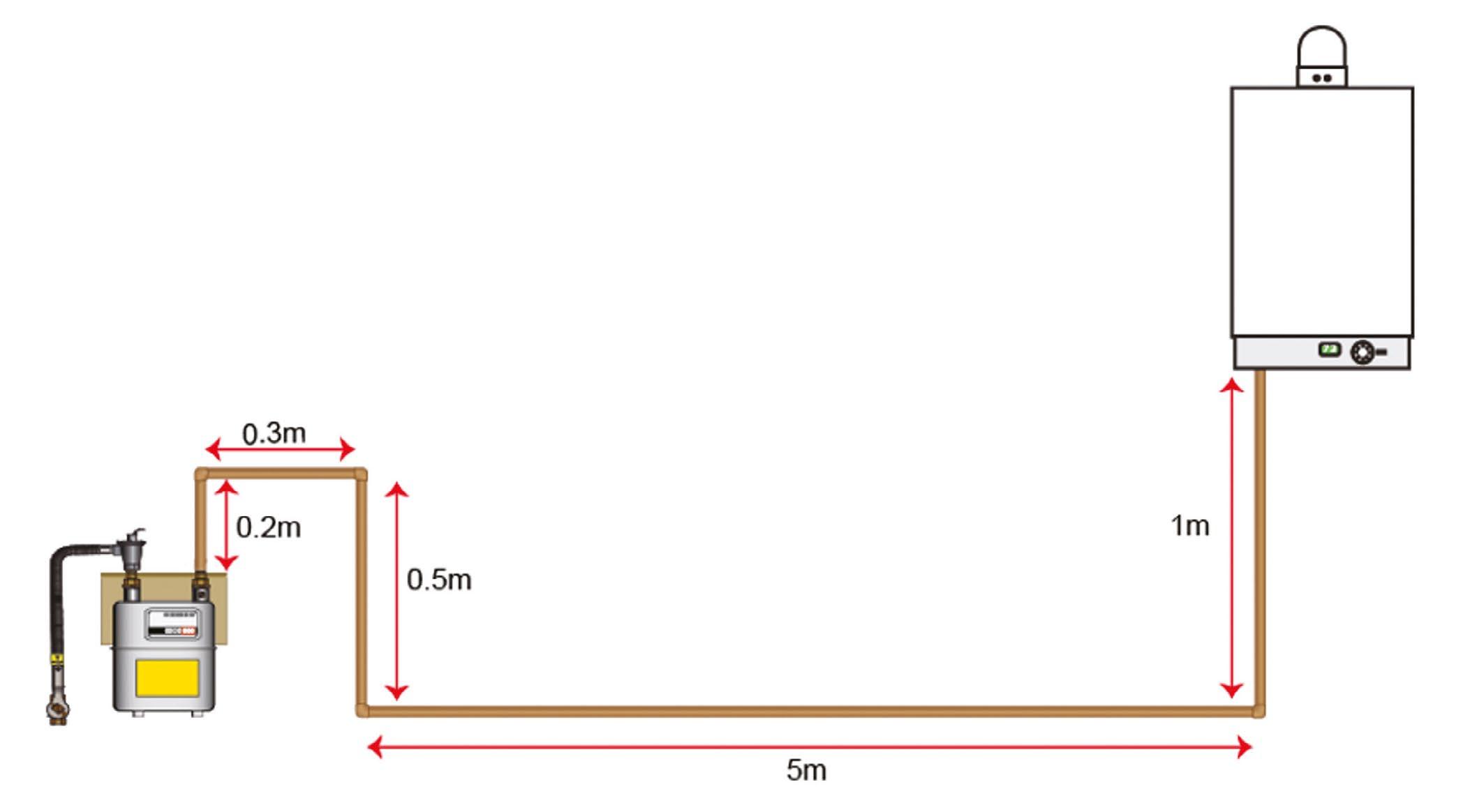
The example on the next page is an installation with a gas meter and a single appliance and the figures used in the calculation are taken from Tables A.1 & A.5 of BS 6891. The appliance is a boiler of 29kW net.
Existing installations
If you find potential problems with pipework or pressure issues on an existing installation, then further investigation is required. It could be that the pipework has been sized
correctly but there is now a blockage, or there may be upstream network issues affecting the supply pressure to the property.
In this instance, contact the manufacturer of the appliance(s) affected for guidance on the safe levels to which their appliance will work. Using this, your engineering judgement and guidance from IGEM/G/11, the Gas Industry Unsafe Situations Procedure(2), you must assess whether the readings are affecting the safe operation of the appliance.
Bibliography 1 BS 6891: 2015 – Specification for the installation and maintenance of low-pressure gas installation pipework up to 35mm (R1¼) on premises 2 IGEM/G/11 – the Gas Industry Unsafe Situations Procedure
“If you find potential problems with pipework or pressure issues on an existing installation, then further investigation is required.”
Example of a 29kW boiler single-appliance installation
Example of a 29kW boiler single-appliance installation
Exerpt from BS 6891 Table A.1, showing the pressure drop in mbar per metre of pipework. The arrow shows the correct pipe size for this installation (calculation below)
Excerpt from BS 6891 Table A.1, showing the pressure drop in mbar per metre of pipework. The yellow column shows the correct pipe size for this installation (calculation below).
Exerpt from BS 6891 Table A.5, showing the additional lengths to be added per fitting
Using Table A.1, work out appropriate pipe size using the heat input and look at the pressure loss in mbar/m: 22mm works for this example = pressure loss 0.0769mbar/m
Using Table A.5 (and the pipe sizing just worked out 22mm), work out the pressure loss of the fittings and their equivalent length: 4 x 22mm elbows (0.06m) = 2.4m
Then add actual pipe length and the fittings equivalent length together for the total adjusted length of pipe: 7 + 2.4 = 9.4m
(1) Using Table A.1 from BS 6891, read across from equivalent heat input the section of pipework is feeding (or next figure up if yours is not listed). If you look at 15mm pipe in the 29.47 kW Net column (the correct column for this installation), you can see that you get a loss of nearly 0.5mbar per metre, and if you go to 28mm pipe then you could run nearly 50 metres of pipe. Therefore, 22m pipework is most appropriate, giving you a drop per metre of 0.0769 mbar.
Multiply the equivalent length by the pressure loss in mbar/m, which then provides the pressure loss across the installation: 9.4m x 0.0769 mbar/m pressure loss
(2) Using Table A.5 from BS 6891 work out equivalent pipe length, which is the pipe length plus an additional allowance for the fittings used. In this installation there are 4 elbows (7m of pipe + 2.4m for fittings (4 x 22mm 90 elbows) = 9.4m). Therefore, the equivalent length of this installation is 9.4m.
The pressure loss across the installation = 0.72286mbar drop per meter.
Excerpt from BS 6891 Table A.5, showing the additional lengths to be added per fitting.
(3) Multiply the equivalent pipe length (9.4m) with the pressure drop per metre of the appropriate pipe size (0.0769 mbar), which gives you the pressure loss across the installation. The pressure loss across the system using 22mm pipework will be 0.72286 mbar (9.4m equivalent length x 0.0769 mbar drop per metre).
pressure loss calculation. The end result should be less than 1mbar
Total pressure loss calculation. The end result should be less than 1mbar.
Watch out for fake spare parts
HHIC is calling on heating engineers to remain alert to the growing number of counterfeit spare parts entering the heating market.
Genuine spare parts are engineered and certified to operate under the exact conditions the appliance is designed for and can be identified through correct branding and part numbers.
Heating appliances such as gas boilers, hot water cylinders and heat pumps are rigorously designed, tested and certified before being approved for sale and must comply with relevant health, safety and environmental legislation.
and damaging consumer trust in the heating engineer.
“These fake components are putting household safety at risk, undermining appliance reliability and exposing installers to potential legal and financial consequences,” warns HHIC director Stewart Clements.
The compliance process involves conforming to specific directives and standards and carrying out rigorous testing. This compliance enables
“If a part is significantly cheaper than the normal cost, that’s an indication it might not be genuine.”
Every component inside them must meet strict safety and performance standards.
Counterfeit parts often look similar but are frequently manufactured using inferior materials and without any testing or accreditation. Some even carry false CE markings. Their use can lead to premature failure, breakdowns and unsafe situations such as gas or water leaks.
Invalid warranty
In extreme cases, poorly manufactured seals or components can contribute to carbon monoxide incidents. As a result, fitting fake parts risks invalidating warranties
manufacturers to apply the CE or UKCA mark.
Safety-critical and control components within the appliance must also carry the appropriate CE mark.
Counterfeits are not limited to spare parts: they can also include accessories such as programmers, timers and flues. Typically, these fakes originate from internet sales sites such as eBay and are not from a specialist spare part supplier with physical premises. If a part is significantly cheaper than usual, that’s another indication it might not be genuine.
For those working with gas appliances, the implications are even more serious. The
Gas Safety (Installation and Use) Regulations 1998 make engineers fully responsible for the safety of any component they fit. If a counterfeit part fails and leads to an incident, the installer could face prosecution and serious harm to their reputation.
Potential for prosecution
Businesses that knowingly sell counterfeit or refurbished parts without proper disclosure are treated as manufacturers in the eyes of the law and may be prosecuted under product safety, copyright and trademark legislation.
Stewart Clements says: “Just because a part fits does not mean it has been tested to withstand the stresses and conditions the manufacturer designed the appliance to handle. Installers must protect themselves and their customers by sourcing parts only from recognised, reputable suppliers.”
He adds that HHIC is urging the entire industry to work together to keep fake parts out of the market. Installers who encounter suspicious components should report them to Trading Standards.
“The safety of consumers and the professional reputation of heating engineers depend on the continued use of genuine, approved parts,” he says. “We need continued vigilance to ensure our industry remains safe, trusted and compliant.”■
Stop losing evenings to paperwork
quotes, invoices, certificates, diary, expenses
SCHEDULING, EXPENSES, TAX, MTD, CUSTOMERS, HR
50% OFF for 2 months
Manage everything from one simple app
Legislative, Normative & Informative
The Gas Safe Register Legislation & Standards Document List
Date issued: 1 April 2026
Introduction
This document defines all documents recognised by Gas Safe Register as being Legislative, Normative (gas Standards) and Informative reference documents.
Some documents may only be available as hard copy documents, but the majority are available to download either via Gas Safe Register’s engineer website or from the organisation or body promoting the document. In some cases, the document is only available for purchase from the organisation or a recognised supplier.
1. Hierarchy of Legislation and Standards
In this document list, the hierarchy of documents within the following tables is defined in order of significance.
Detailed first are those Statutory Acts, or Regulations that are legally enforceable. These are followed by a recognised list of documents known as ‘second tier’ documents. This series of documents provides practical guidance on ways to comply with the functional requirements of regulations. This guidance is not law but provides information that, if followed correctly, will ensure that legal obligations have been met. Where someone chooses to depart from this guidance, they will need to ensure that the method chosen provides equivalent or better standards of safety than the relevant published guidance. The guidance provided within appropriate second-tier documents will be used to assess compliance.
The next tier of documents is gas industry standards that are aimed specifically at the installation, commissioning or maintenance of gas equipment (pipework, appliances, etc). These are known as Normative Documents and are referred to as Gas Industry Standards. These documents, in
conjunction with any available manufacturers’ instructions, will be used by Gas Safe Register to assess compliance.
Finally, the remaining listings provide details of links to other available information that is useful to help enable registered businesses to comply with their obligations and assist them in carrying out their day-to-day activities. These are referred to as Informative Documents.
2. Hierarchy of documents Legislation
In this section the listed documents are those brought to the Statute Book by an Act of Parliament and are referenced as Statutory Instruments or equivalent. These are the law in the respective countries as stated and must be followed. In online versions of this document, the SI Reference number (or equivalent) is preceded by the year of it being added to the Statute Book, ie, the Gas Safety (Installation and Use) Regulations 1998 has an SI Number of 1998:2451. Regulations are in general written in a format that provides high-level requirements.
Documents supporting legislation
These documents provide practical guidance on ways to comply with the functional requirements of the Regulations.
For the Building Regulations, these are outlined in a series of Approved Documents (AD) published by the appropriate government department responsible for the regulations. The ADs that currently apply to gas work are:
• A Structure
• B Fire safety
• F Ventilation
• G3 Hot water storage
• J Heat producing appliances
• L Conservation of fuel and power
• M Access to and use of buildings
• P Electrical safety in dwellings.
Each document contains general guidance on the performance expected of materials and building work in order to comply with each of the requirements of the Building Regulations, and practical examples and solutions on how to achieve compliance for some of the more common building situations.
3. Gas Industry Standards
In this section are included all the Gas Industry Standards published by the three current Standard Setting Bodies, which are:
• British and European Standards (BSI)
• Institution of Gas Engineers and Managers (IGEM)
• Liquid Gas UK (formerly known as UKLPG).
One standard is published by National Caravan Council (NCC).
4. Documents under review
When published, if it is known that the three-month validity period coincides with a period of time in which a standard being revised is out for public comment, the final date for comment will be included. Gas Safe Register will use best endeavours to keep the documents under review as up to date as possible but Gas Safe Register is NOT responsible for reviewing, revising or updating industry standards. Where a registered business or industry stakeholder has an enquiry about revisions to guidance documents, these enquiries should be directed to the relevant Standard Setting Body. Comments on draft standards can be submitted via BSI or IGEM.
5. Links to online documents
When viewing this document online, hyperlinks are active so that you can open the document and then be read or it for later use. However, all saved documents will be considered as uncontrolled versions, and
you should check that you are referencing the current version.
6. Inspections undertaken by Gas Safe Register
When Gas Safe Register inspects work undertaken by registered gas businesses in Great Britain, Northern Ireland and the Isle of Man and Guernsey, in the first instance it will assess against the manufacturer’s installation instructions and, where these are not available or relevant, against the criteria as specified within legislative documents and relevant gas industry standards. However, it is recognised that, due to the differences of individual legislation used in different geographical areas, there will be some differences in application. While conducting inspections, due regard will be taken of the requirements of all appropriate guidance.
7. General
This Gas Safe Register document will be updated and republished on or about the following dates each year:
• 1 January
• 1 April
• 1 July
• 1 October.
If you identify an error in this document or you are aware of reference documents that may be useful that you think should be added to future editions, please email: technical@ gassaferegister.co.uk
BSI, IGEM and Liquid Gas UK develop and publish guidance with the help of industry in the form of committees. Gas Safe Register is not responsible for the development and publication of this type of guidance document. Where registered businesses and stakeholders have questions regarding these guidance documents, these should be directed to the relevant Standard Setting Body.
8: LEGISLATION
Health and Safety Legislation
Health and Safety at Work etc Act 1974 (GB)
The Management of Health and Safety at Work Regulations 1999 (GB)
The Workplace (Health, Safety and Welfare) Regulations 1992 (GB)
Health and Safety at Work (Northern Ireland) Order 1978
Health and Safety at Work etc Act 1974 (of Parliament) (As applied to Isle of Man)
The Construction (Design and Management) Regulations 2003 (As applied to Isle of Man)
The Health and Safety at Work (General) (Guernsey) Ordinance, 1987 As Amended – Version 7 September 2020
Gas Safety Legislation
The Gas Safety (Installation and Use) Regulations 1998 (England, Scotland & Wales)
The Gas Safety (Installation and Use) Regulations (Northern Ireland) 2004
Gas Safety (Installation and Use) Regulations 1998 as amended & applied by the Gas Safety (Installation, Use and management) (Application) Order 2021 (As applied to Isle of Man)
The Health and Safety (Gas) (Guernsey) Ordinance, 2006 As Amended Version – May 2016
Safe Work with gas systems & appliances, Approved Code of Practice – Health & Safety at work (Jersey) Law, 1989 – 1st February 2021
The Gas Appliances (Safety) Regulations 1995 (As applied in the United Kingdom)
The General Product Safety Regulations 2005
The Gas Safety (Management) Regulations 1996 (As applied in Great Britain) (AMD 2023)
The Gas Safety (Management) Regulations (Northern Ireland) 1997
The Gas Safety (Rights of Entry) Regulations 1996 (as applied to Great Britain)
The Gas (Northern Ireland) Order 1996, Schedule 5 (Powers of Entry, etc)
Gas Safety (Rights of Entry) Regulations 1983 as applied by the Gas Safety (Application) Order 1996 (Isle of Man)
Part 7 of The Health and Safety (Gas) (Guernsey) Ordinance, 2006 As Amended Version May 2016
Reporting of Injuries, Diseases and Dangerous Occurrences (RIDDOR)
The Reporting of Injuries, Diseases and Dangerous Occurrences Regulations 2013 (RIDDOR) (GB)
Reporting of Injuries, Diseases and Dangerous Occurrences Regulations (Northern Ireland) 1997 Reporting of Injuries, Diseases and Dangerous Occurrences Regulations 1999 (RIDDOR) (Isle of Man)
The Health and Safety at Work (General) (Guernsey) Ordinance, 1987 (includes RIDDOR-type reporting)
Building Legislation
Building Regulations (England and Wales) 2010
Building and Buildings, England & Wales, The Building Regulations &C. (Amendment) Regulations 2015
Building Regulations &c. (Amendments) (Wales) Regulations 2013
Building Standards (Scotland) Regulations 2004
Building (Scotland) Amendment Regulations 2010
Building (Scotland) Amendment Regulations 2011
Building (Miscellaneous Amendments) (Scotland) Regulations 2013
Building (Scotland) Amendment Regulations 2022
Building Regulations (Northern Ireland) 2012
The Building (Guernsey) Regulations 2012
Building Bylaws (Jersey) 2007
Building Regulations 2014 (Isle of Man)
Construction (Design and Management) Regulations 2015 (Great Britain)
The Construction (Design and Management) Regulations (Northern Ireland) 2016
The Construction (Design and Management) Regulations 2003 (As applied to Isle of Man)
Building Control (Approved Documents) (No. 2) Order 2019 (As applied to Isle of Man)
Other Legislation
The Workplace (Health, Safety and Welfare) Regulations 1992
The Dangerous Substances and Explosive Atmospheres Regulations 2002 (DSEAR) (GB) Control of Substances Hazardous to Health Regulations 2002 (COSHH) (GB)
The Pressure Equipment (Safety) Regulations 2024
The Pressure Equipment (Amendment) Regulations 2015 (UK)
The Pressure Systems Safety Regulations 2000 (GB)
Control of Asbestos at Work Regulations 2002 (GB) Control of Asbestos at Work (Northern Ireland) Regulations 2003
The Control of Asbestos Regulations (GB) 2012
The Control of Asbestos Regulations (Northern Ireland) 2012 Managing asbestos (Isle of Man)
HSE Guernsey – Management of Exposure to Asbestos in Workplace Buildings and Structures – ACOP
HSE Guernsey – Control of Asbestos – ACOP 2017
The Electricity at Work Regulations 1989 (GB)
Electricity At Work Regulations (Northern Ireland) 1991
Note 1: Further information on ordinances in Guernsey at: www.gov.gg/hseguidance
Note 2: Further information on legislation in the Isle of Man at: https://pabc.gov.im
9: DOCUMENTS SUPPORTING LEGISLATION
Key Approved Documents to the Building Regulations (England) Approved Document 7: Materials and workmanship
B: Fire Safety – Volume 1: Dwelling houses
B: Fire Safety – Volume 2: Buildings other than dwelling houses
F: Ventilation Volume 1: Dwellings
F: Ventilation Volume 2: Buildings other than dwellings
G: Sanitation, hot water safety & water efficiency (2016 edition)
J: Combustion Appliances & Fuel Storage Systems
L: Conservation of fuel and power
– Volume 1: Dwellings
L: Conservation of fuel and power
– Volume 2: Buildings other than dwellings
Second-tier documents to the Building Regulations – England Code for Sustainable Homes & Technical Guide December 2014
Building Energy Performance Assessment
Key approved documents to the Building Regulations (Wales)
B: Fire Safety – Volume 1: Dwellinghouses
B: Fire Safety – Volume 2: Buildings other than dwellinghouses
F: Ventilation – Volume 1: Dwellings
F: Ventilation – Volume 2: Buildings other than dwellings
G: Sanitation, hot water safety & water efficiency (2018 edition)
J: Combustion Appliances & Fuel Storage Systems
L: Conservation of fuel and power
– Volume 1: Dwellings
L: Conservation of fuel and power
– Volume 2: Buildings other than dwellings
Second tier documents to the Building Regulations – Wales Code for Sustainable Homes & Technical Guide December 2014
Building Energy Performance Assessment
Key Approved Documents to the Building Standards (Scotland) Regulations (Domestic)
Scottish Technical Handbook (Domestic)
Section 2 – Domestic Fire
Section 3 – Domestic Environment
Section 6 – Domestic Energy
Building Energy Performance Assessment
Key Approved Documents to the Building Standards (Scotland) Regulations (Non-Domestic)
Scottish Technical Handbook (Non-Domestic)
Section 2 – Non-Domestic Fire
Section 3 – Non-Domestic Environment
Section 6 – Non-Domestic Energy
Second-tier documents to the Building Standards (Scotland) Regulations
Scottish Government Guide to the Condensing Boiler Installation Assessment
Building Energy Performance Assessment
Key Approved Documents to the Building Standards (Regulations) Northern Ireland
DFP Technical Booklet C: 2012 – Site preparation & resistance to moisture
DFP Technical Booklet E: 2012 –Fire Safety
DFP Technical Booklet F1: 2022
– Conservation of fuel & power in dwellings
DFP Technical Booklet F2: 2022
– Conservation of fuel & power in buildings other than dwellings
DFP Technical Booklet K: 2012 –Ventilation
DFP Technical Booklet L: 2012
– Combustion appliances & fuel storage systems
DFP Technical Booklet P: 2012
– Sanitary appliances, unvented hot water storage systems and reducing the risk of scalding
Building Energy Performance Assessment
Key Approved Documents to the Building Regulations Isle of Man (IOM)
B-Fire Safety – Fire safety (2022 Edition)
F-Ventilation (2022 Edition)
J-Combustion Appliances & Fuel Storage Systems (2022 Edition)
L1-Conservation of Fuel & Power in Dwellings (2022 Edition)
> L2-Conservation of Fuel & Power in Buildings other than Dwellings (2022 Edition)
Building Energy Performance Assessment
Key Approved Documents to the Building Bylaws (Guernsey) –Channel Islands
B-Fire Safety – Volume 1: Dwelling houses
B-Fire Safety – Volume 2: Buildings other than dwelling houses
F-Ventilation
J-Heat producing appliances & Fuel Storage Systems
L1-Conservation of Fuel & Power in Dwellings
L -Conservation of Fuel & Power –Buildings other than Dwellings
Building Energy Performance Assessment
Key Approved Documents to the Building Bylaws (Jersey) –Channel Islands
Part 2 – Fire Safety
Part 3 – Combustion appliances and Fuel Storage Systems
Part 5 – Ventilation
Part 11 – Conservation of Fuel and Power
HSE Publications and other Approved Codes of Practice (Great Britain)
L21 – Management of Health & Safety at Work. Withdrawn, see HSG65
L56 – Safety in the Installation and use of Gas Systems and Appliances – Approved Code of Practice
L80 – A guide to the Gas Safety (Management) Regulations 1996
L108 – Controlling noise at work
– The Control of Noise at Work Regulations 2005 – Guidance on Regulations
L122 – Safety of pressure systems – Pressure Systems Safety Regulations 2000 – Approved Code of Practice (Second Edition)
L138 – Dangerous Substances and Explosive Atmospheres. Dangerous Substances and Explosive Atmospheres Regulations 2002. Approved Code of Practice and Guidance
L143 – Control of Asbestos Regulations 2012 (ACoP) – The management of asbestos in nondomestic premises, and Work with materials containing asbestos (Second Edition) Incorporating previous L127
L153 – Managing health and safety in construction – Construction (Design and Management)
Regulations 2015 Approved Code of Practice
HSG47 – Avoiding danger from underground services – Third edition 2014
HSG48 – Reducing error and influencing behaviour
HSG65 – Managing for Health and Safety Management – Third Edition – 2013
HSG85 – Electricity at Work – Safe working practices – Third Edition 2013
HSG97 – A step by step guide to Control of Substances Hazardous to Health (COSHH) assessment (see also link to COSHH Essential Guidance publications below)
HSG137 – Health Risk Management – A practical guide for managers in small and mediumsized enterprises
HSG176 – The storage of flammable liquids in tanks
HSG210 – Asbestos Essentials – A task manual for building, maintenance & allied trades on non-licensed asbestos work (Free task sheets)
HSG213 – Introduction to Asbestos Essentials
HSG250 – Guidance on permitto-work systems: A guide for the petroleum, chemical and allied industries
HSG253 – The safe isolation of plant and equipment (Second edition)
HSG261 – Health and safety in motor vehicle repair and associated industries
EH40 – Workplace Exposure Limits (2020)
INDG163 (rev4) – Risk assessment (A brief guide to controlling risks in the workplace)
INDG223 (rev5) – Managing asbestos in buildings (A brief guide)
INDG231 (rev1) – Electrical safety and you (A brief guide)
INDG258 (rev1) – Confined spaces (A brief guide to working safely)
INDG428 (08/09) – Inspecting and maintaining or replacing buried metallic pipework carrying LPG vapour
INDG223 (rev5) – Manage asbestos in buildings: A brief guide
INDG370 (rev1) – Controlling Fire and explosion risks in the workplace – A brief guide to the Dangerous Substances and Explosive Atmospheres Regulations (DSEAR)
INDG453 (rev1) – Reporting accidents and incidents at work
A brief guide to the Reporting of Injuries, Diseases and Dangerous Occurrences Regulations (RIDDOR)
HSE AO – Advice on non-licensed work with Asbestos. Introduction to ‘Asbestos essentials’ task sheets
Control of Substances Hazardous to Health (COSHH) Essentials guidance publications
Guidelines on ventilation, thermal comfort and indoor air quality in schools
LAQM.TG(22) Local Air Quality
Management – Technical Guidance
CAIS10 (Revision 3) – Ventilation of kitchens in catering establishments
CAIS23 (Revision 3) – Gas safety in catering and hospitality
Note 3: Further asbestos-related guidance at: www.hse.gov.uk/ asbestos/information.htm
Note 4: Further Health and Safety Guidance (HSG) publications at: www.hse.gov.uk/pubns/books/ index-hsg-ref.htm
HSENI Publications and other Approved Codes of Practice (Northern Ireland)
A guide to the Reporting of Injuries, Diseases and Dangerous Occurrences Regulations (Northern Ireland) 1997
L56 Safety in the installation and use of gas systems and appliances
– GB ACOP approved for use in NI Memorandum of guidance on the Electricity at Work Regulations (Northern Ireland) 1991
Note 5: Further information on Northern Ireland Approved Codes of Practice and guidance notes at: www.hseni.gov.uk/publications
HSE Publications and other Approved Codes of Practice (Guernsey)
Safety in the Installation & Use of Gas Systems & Appliances
The Health and Safety (Gas) (Guernsey) Ordinance 2006
The Organisation and Management of Health & Safety in Construction (Guernsey)
Reporting an Injury, Disease or Dangerous Occurrence (Guernsey)
Note 6: Further information on Approved Codes of Practice and guidance notes for gas safety and other important issues at www.gov.gg/hseguidance
10: GAS INDUSTRY STANDARDS
British and European Standards
BS 4163: 2021 + A1:2022
Health and safety for design and technology in educational and similar establishments. Code of practice
BS 3632: 2023 Residential park homes. Specification
BS 5440-1: 2023 Chimneys, flue pipes and ventilation for gas appliances of rated input not exceeding 70kW net (1st, 2nd and 3rd family gases). Design, installation, commissioning and maintenance of chimneys. Specification
BS 5440-2: 2023 Chimneys, flue pipes and ventilation for gas appliances of rated input not exceeding 70kW net (1st, 2nd and 3rd family gases). Installation and maintenance of ventilation provision for gas appliances. Specification
BS 5546: 2010 Specification for installation and maintenance of gas-fired water-heating appliances of rated input not exceeding 70kW net
PD 54823: 2016 Guidance for the design, commissioning and maintenance of LPG systems in small craft
BS 5864: 2019 Installation and maintenance of gas-fired ducted air heaters of rated input not exceeding 70kW net (2nd and 3rd family gases). Specification
BS 5871-1: 2005 Specification for the installation and maintenance of gas fires, convector heaters, fire/ back boilers and decorative fuel effect gas appliances. Gas fires, convector heaters, fire/back boilers and heating stoves (2nd and 3rd family gases)
BS 5871-2: 2005 Specification for the installation and maintenance of gas fires, convector heaters, fire/ back boilers and decorative fuel effect gas appliances. Inset live fuel effect gas fires of heat input not exceeding 15kW and fire/back boilers (2nd and 3rd family gases)
BS 5871-3: 2005 Specification for the installation and maintenance of gas fires, convector heaters, fire/ back boilers and decorative fuel effect gas appliances. Decorative fuel effect gas appliances of heat input not exceeding 20kW (2nd and 3rd family gases)
BS 5871-4: 2007 Specification for the installation and maintenance of gas fires, convector heaters, fire/ back boilers and decorative fuel effect gas appliances. Independent gas-fired flueless fires, convector heaters and heating stoves of nominal heat input not exceeding 6kW (2nd and 3rd family gases)
BS 6172: 2010 + A1:2017 Specification for installation, servicing and maintenance of domestic gas cooking appliances (2nd and 3rd family gases). Specification
BS 6173: 2020 Installation and maintenance of gas fired catering appliances for use in all types of catering establishments (2nd and 3rd family gases). Specification
BS 6230: 2011 Specification for installation of gas-fired forced convection air heaters for commercial and industrial space heating (2nd and 3rd family gases)
BS 6400-1: 2016 Specification for installation, exchange, relocation, maintenance and removal of gas meters with a maximum capacity not exceeding 6m³/h. Low pressure (2nd family gases). Under review
BS 6400-2: 2018 Specification for installation, exchange, relocation, maintenance and removal of gas meters with a maximum capacity not exceeding 6m³/h. Medium pressure (2nd family gases). Under review
BS 6400-3: 2007 Specification for installation, exchange, relocation and removal of gas meters with a maximum capacity not exceeding 6m³/h. Low and medium pressure (3rd family gases)
BS 6644: 2011 Specification for the installation and maintenance of gas-fired hot water boilers of rated inputs between 70kW (net) and 1.8MW (net) (2nd and 3rd family gases)
BS 6798: 2014 Specification for selection, installation, inspection, commissioning, servicing and maintenance of gas-fired boilers of rated input not exceeding 70kW net. Under review
BS 6891: 2015 + A1:2019
Specification for the installation and maintenance of low pressure gas installation pipework of up to 35mm (R1¼) on premises
BS 6896: 2011 Specification for installation and maintenance of gas-fired overhead radiant heaters for industrial and commercial heating (2nd and 3rd family gases)
BS 7624: 2004 Installation and maintenance of domestic direct gas-fired tumble dryers of up to 6kW heat input (2nd and 3rd family gases)
BS 7671: 2018 + A3:2024 Requirements for Electrical Installations
BS 7967: 2015 Guide for the use of electronic portable combustion gas analysers for the measurement of carbon monoxide in dwellings and the combustion performance of domestic gas-fired appliances
BS 7967-5: 2010 Carbon monoxide in dwellings and other premises and the combustion performance of gas-fired appliances. Guide for using electronic portable combustion gas analysers in non-domestic premises for the measurement of carbon monoxide and carbon dioxide levels and the determination of combustion performance
BS 8313: 1997 Code of practice for accommodation of building services in ducts
BS 8446: 2020 Installation and maintenance of open-flued, non-domestic gas-fired laundry appliances. Specification
BS 8660-1: 2011 Gas-fired micro-cogeneration appliances of rated thermal input not exceeding 70kW net. Specification for selection, installation, inspection, commissioning, servicing and maintenance of Stirling engine micro-cogeneration appliances
BS EN 721: 2019 Leisure accommodation vehicles. Safety ventilation requirements
BS EN 751-1:1997 Sealing materials for metallic threaded joints in contact with 1st, 2nd and 3rd family gases and hot water. Anaerobic jointing compounds
BS EN 751-2:1997 Sealing materials for metallic threaded joints in contact with 1st, 2nd and 3rd family gases and hot water. Non-hardening jointing compounds
BS EN 751-3:2022+A1:2023
Sealing materials for metallic threaded joints in contact with 1st, 2nd and 3rd family gases and hot water. Unsintered PTFE tapes and PTFE strings
BS EN 1775: 2007 Gas supply. Gas pipework for buildings. Maximum operating pressure less than or equal to 5 bar. Functional recommendations
BS EN 12327: 2012 Gas infrastructure. Pressure testing, commissioning and decommissioning procedures. Functional requirements
BS EN 50292: 2023 Electrical apparatus for the detection of carbon monoxide in domestic premises, caravans and boats. Guide on the selection, installation, use and maintenance
BS EN 15001-1: 2023 Gas Infrastructure. Gas installation pipework with an operating pressure greater than 0.5 bar for industrial installations and greater than 5 bar for industrial and nonindustrial installations. Detailed functional requirements for design, materials, construction, inspection and testing
BS EN 15001-2: 2023 Gas supply systems. Gas installation pipework with an operating pressure greater than 0.5 bar for industrial installations and greater than 5 bar for industrial and non-industrial installations. Detailed functional requirements for commissioning, operation and maintenance
BS EN ISO 10239: 2025 Small craft. Liquefied petroleum gas (LPG) systems
BS EN 13410: 2001 Gasfired overhead radiant heaters. Ventilation requirements for nondomestic premises
BS EN 1749: 2020 Classification of gas appliances according to the method of supplying combustion air and of evacuation of the combustion products (types)
BS EN 1949: 2021 Specification for the installation of LPG systems for habitation purposes in leisure accommodation vehicles and accommodation purposes in other vehicles
Institution of Gas Engineers and Managers Documents (IGEM)
IGE/UP/1 Edition 2 Strength testing/tightness testing/ direct purging of industrial and commercial gas installations. Under review
IGE/UP/1A Edition 2 Strength/ tightness testing/purging of small, low pressure industrial & commercial installations. Under review
IGEM/UP/1B Edition 4 Tightness testing and direct purging of small Liquefied Petroleum Gas/Air, NG and LPG installations
IGEM/UP/1C Strength testing, tightness testing and direct purging of Natural Gas and LPG meter installations
IGEM/UP/2 Edition 4 Installation pipework on industrial and commercial premises
IGEM/UP/3 Edition 3 Gas fuelled spark ignition and dual fuel engines. Under review
IGEM/UP/4 Edition 4
Commissioning of gas fired plant on industrial and commercial premises
IGEM/UP/6 Edition 3 Application of compressors to natural gas fuel systems
IGE/UP/7 Edition 2 with amendments October 2008 Gas installations in timber framed and light steel framed buildings.
Note 7: IGE/UP/7 – Edition 2 with Amendments is available free at: www.igem.org.uk/resource/ ige-up-7-edition-2-a-2008gas-installations-in-timberframed-and-light-steel-framedbuildings.html
IGE/UP/9 Edition 3 Application of Gas systems to Gas turbines and supplementary and auxiliary fired burners
IGEM/UP/10 Edition 4 with amendments March 2016 & February 2017 Installation of flued gas appliances in industrial and commercial premises. Under review
IGEM/UP/11 Edition 3 Gas installations for educational establishments
IGEM/UP/12 Edition 3
Application of burners and controls to gas fired process plant
IGEM/UP/16 Edition 2 with Amendments November 2023
Design for natural gas installations on industrial and commercial premises with respect to DSEAR
IGEM/UP/17 Edition 2 Shared chimney and flue systems for domestic gas appliances
IGEM/UP/18 Gas installations for vehicle repair and body shops
IGEM/UP/19 Edition 2 Design & application of interlock devices/ associated systems in gas appliance installations in catering devices/associated systems in gas appliance installations in catering
IGEM/UP/19 Edition 2
Supplement 1 Guidance for gas engineers to the application of relevant sections of IGEM/UP/19 in catering establishments
Note 8: IGEM/UP/19 Edition 2
Supplement 1 is available free at: https://tinyurl.com/5aptj6ce
IGEM/GL/8 Edition 4 Reporting and investigation of gas-related incidents. Under review
IGE/GL/9 Guidance for large gas consumers in dealing with natural gas supply emergencies
Note 9: IGE/GL/9 is available free at: www.igem.org.uk/resource/ igem-gl-9.html
IGE/TD/4 Edition 5 Polyethylene (PE) and steel gas services and service pipework
IGEM/G/1 Edition 3 Defining the boundaries between the network, primary meter installation and installation pipework
IGEM/G/4 Edition 2 Definitions for the gas industry. Under review
IGEM/G/5 Edition 3 with amendments April 2023 Gas in multi-occupancy buildings. Under review
IGEM/G/6 Edition 2 Gas supplies to mobile dwellings
IGEM/G/7 Risk assessment techniques
IGEM/G/10 Non-return valves
IGEM/G/11 Edition 2 with amendments July 2022, June 2024 and July 2025 Gas industry unsafe situations procedure
Note 10: Available free at: www. igem.org.uk/resource/igemg-11-edition-2-gas-industryunsafe-situations-procedure. html
IGEM/G/11 Supplement 1
Responding to domestic CO alarm activations/reports of fumes after attendance by the emergency service provider or the Liquified Petroleum Gas supplier
Note 11: Available free at: www.igem.org.uk/resource/ igem-g-11-supplement-1responding-to-domestic-coalarm-activations-reports-offumes.html
IGEM/G/13 with Amendments August 2023 Domestic supply capacity and operating pressure at the outlet of the meter
Note 12: Available free at: www. igem.org.uk/resource/igem-g13-domestic-supply-capacityand-operating-pressure-at-theoutlet-of-the-meter.html
IGE/GM/4 Edition 3 Flow metering practices. Inlet pressure exceeding 38 bar and not exceeding 100 bar
>
IGE/GM/5 Edition 4 Electronic gas meter volume conversion systems. Under review
IGEM/GM/6 Edition 3
Non-domestic meter installations. Standard designs
IGEM/GM/7A Edition 2
Electrical connections for gas metering equipment
IGEM/GM/7B Edition 2
Hazardous area classification for gas metering equipment
IGEM/GM/8 – Part 1 Edition 2
Design
IGEM/GM/8 – Part 2 Edition 2
Location, housings and compounds
IGEM/GM/8 – Part 3 Edition 2
Fabrication, installation, testing and commissioning
IGEM/GM/8 – Part 4 Edition 2
Operation and maintenance
IGEM/GM/8 – Part 5 Edition 2
Notices and labels
IGEM/IG/1 Ed 2 Standards of training in gas work
Note 13: Available free at: www. igem.org.uk/resource/igem-ig1-ed-2-standards-of-trainingin-gas-work.html
IGEM/IG/1 Supplement 1 Nondomestic training specification
Note 14: Available free at: www.igem.org.uk/resource/ igem-ig-1-supplement-1non-domestic-trainingspecification.html
IGEM/SR/25 Edition 2 Hazardous area classification of natural gas installations. Under review
IGEM/SR/29 Edition 2 Dealing with gas escapes
IGEM/H/1 Edition 2 Reference Standard for low pressure hydrogen utilisation
Note 15: Available free at: www.igem.org.uk/resource/ igem-h-1-with-amendmentsjune-2022-reference-standardfor-low-pressure-hydrogenutilisation.html
Liquid Gas UK Codes of Practice (CoP)
UKLPG – LPG Technical Fundamentals
CoP 1 Part 1 Bulk LPG Storage at Fixed Installations – Design, Installation and Operation of Vessels Located Above Ground (October 2017)
CoP 1 Part 2 Bulk LPG Storage at Fixed Installations – Vapour Off-take Small Bulk Propane Installations (March 2021)
CoP 1 Part 3 Bulk LPG Storage at Fixed installations – Examination and Inspection (April 2020)
CoP 1 Part 4 Bulk LPG Storage at Fixed Installations – Buried/ Mounded LPG Storage Vessels (January 2021)
CoP 7 Storage of Full and Empty LPG Cylinders and Cartridges (2021)
CoP 17 LPG vessels: Preparing for and Removing from Service (2025) CoP 22 Design Installation and Testing of LPG Piping Systems (2025)
CoP 24 Part 3 Use of LPG Cylinders – Use of LPG for Commercial Catering Events, Street Food and Mobile Catering (September 2017)
CoP 25 LPG Central storage and Distribution Systems for Multiple Consumers (June 2018)
CoP 32 LPG systems in Leisure Accommodation Vehicles and Road Vehicles with Habitation – Post Delivery Inspection, Commissioning and Maintenance (December 2020)
CoP 33 Use of LPG Cylinders (July 2023) (Replaces COP 24-part 1/5/6)
GN 2 A Guide for Cabinet Heaters Servicing (March 2002)
11: OTHER INFORMATIVE DOCUMENTS AND USEFUL REFERENCES
Liquid Gas UK Consumer Guidance Sheets (CGS)
CGS O1 Mobile Bottled Gas Heaters and Condensation
CGS 03 The Use of LPG Cylinders Indoors
CGS 04 LPG Patio Heaters –
Safe Use
CGS 05 LPG Hose and Tubing for use with Vapour Offtake Cylinders
CGS 20 Camping Safely
CGS 22 Owning your own LPG Storage Vessel
CGS 25 LPG Installation Record and Documentation
CGS 28 Safe Use of Propane and Butane Cylinders and Cartridges
CGS 37 Guidance for Private Ownership and Filling of ‘Freestanding’ Liquified Petroleum Gas (LPG) Cylinders
CGS 39 Regulators – Safe Use
Note 16: Liquid Gas UK Consumer Guidance Sheets (CGS) are available at: www.liquidgasuk. org/domestic/consumerguidance-sheets
Other Industry Procedures/ Documents
DW/172 Specification for kitchen ventilation systems 2nd Edition (incorporates addendum April 2020)
IGEM/G/11 Edition 2 with amendments July 2022 and June 2024 The Gas industry unsafe situations procedure (GIUSP)
All Technical Bulletins For further information see TB 1000. These can be viewed by logging into your online account at: www. GasSafeRegister.co.uk/sign-in
All Gas Safe Register Safety Alerts These can be viewed by logging into your online account at: www.GasSafeRegister.co.uk/ sign-in
All Gas Safe Register Industry Standard Updates These can be viewed by logging into your online account at: www. GasSafeRegister.co.uk/sign-in
Note 17: Gas Safe registered businesses can find up-todate access manufacturers’ instructions/information for a wide range of heating appliances notably boilers and warm air heating appliances on HHIC’s website.
12: ACCESS TO INDUSTRY STANDARDS FROM GAS SAFE REGISTER
The Industry Standard numbers in table below are those included in the list of current Industry Standards available on a subscription basis to the majority of Gas Safe registered business. To subscribe, log into your online account and choose Standards Subscriptions’. Choose and pay for a one or three-year subscription and then you will be able to access the normative documents.
BS 5440-1: 2023 Chimneys, flue pipes and ventilation for gas appliances of rated input not exceeding 70kW net (1st, 2nd and 3rd family gases). Design, installation, commissioning and maintenance of chimneys.
Specification
BS 5440-2: 2023 Chimneys, flue pipes and ventilation for gas appliances of rated input not exceeding 70kW net (1st, 2nd and 3rd family gases). Installation and maintenance of ventilation provision for gas appliances. Specification
BS 5546: 2010 Specification for installation and maintenance of gas-fired water-heating appliances of rated input not exceeding 70kW net
PD 54823: 2016 Guidance for the design, commissioning and maintenance of LPG systems in small craft
BS 5864: 2019 Installation and maintenance of gas-fired ducted air heaters of rated input not exceeding 70kW net (2nd and 3rd family gases). Specification
BS 5871-1: 2005 Specification for the installation and maintenance of gas fires, convector heaters, fire/ back boilers and decorative fuel effect gas appliances. Gas fires, convector heaters, fire/back boilers and heating stoves (2nd and 3rd family gases)
BS 5871-2: 2005 Specification for the installation and maintenance of gas fires, convector heaters, fire/ back boilers and decorative fuel effect gas appliances. Inset live fuel effect gas fires of heat input not exceeding 15 kW and fire/back boilers (2nd and 3rd family gases)
BS 5871-3: 2005 Specification for the installation and maintenance of gas fires, convector heaters, fire/ back boilers and decorative fuel effect gas appliances. Decorative fuel effect gas appliances of heat input not exceeding 20 kW (2nd and 3rd family gases)
BS 5871-4: 2007 Specification for the installation and maintenance of gas fires, convector heaters, fire/ back boilers and decorative fuel effect gas appliances. Independent gas-fired flueless fires, convector heaters and heating stoves of nominal heat input not exceeding 6kW (2nd and 3rd family gases)
BS 6172: 2010 + A1 2017 Specification for installation, servicing and maintenance of domestic gas cooking appliances (2nd and 3rd family gases).
Specification
BS 6173: 2020 Installation and maintenance of gas fired catering appliances for use in all types of catering establishments (2nd and 3rd family gases). Specification
BS 6230: 2011 Specification for installation of gas-fired forced convection air heaters for commercial and industrial space heating (2nd and 3rd family gases)
BS 6400-1: 2016 Specification for installation, exchange, relocation, maintenance and removal of gas meters with a maximum capacity not exceeding 6m³/h. Low pressure (2nd family gases)
BS 6400-2: 2018 Specification for installation, exchange, relocation, maintenance and removal of gas meters with a maximum capacity not exceeding 6m³/h. Medium pressure (2nd family gases)
BS 6400-3: 2007 Specification for installation, exchange, relocation and removal of gas meters with a maximum capacity not exceeding 6m³/h. Low and medium pressure (3rd family gases)
BS 6644: 2011 Specification for the installation and maintenance of gas-fired hot water boilers of rated inputs between 70kW (net) and 1.8MW (net) (2nd and 3rd family gases)
BS 6798: 2014 Specification for selection, installation, inspection, commissioning, servicing and maintenance of gas-fired boilers of rated input not exceeding 70 kW net
BS 6891: 2015 + A1 2019
Specification for the installation and maintenance of low pressure gas installation pipework of up to 35mm (R1¼) on premises
BS 6896: 2011 Specification for installation and maintenance of gas-fired overhead radiant heaters for industrial and commercial heating (2nd and 3rd family gases)
BS 7624: 2004 Installation and maintenance of domestic direct gas-fired tumble dryers of up to 6kW heat input (2nd and 3rd family gases)
BS 7967: 2015 Guide for the use of electronic portable combustion gas analysers for the measurement of carbon monoxide in dwellings and the combustion performance of domestic gas-fired appliances
BS 7967-5: 2010 Carbon monoxide in dwellings and other premises and the combustion performance of gas-fired appliances. Guide for using electronic portable combustion gas analysers in non-domestic premises for the measurement of carbon monoxide and carbon dioxide levels and the determination of combustion performance
BS 8446: 2020 Installation and maintenance of open-flued, non-domestic gas-fired laundry appliances. Specification
BS EN 721: 2019 Leisure accommodation vehicles. Safety ventilation requirements
BS EN 12327: 2012 Gas infrastructure. Pressure testing, commissioning and decommissioning procedures. Functional requirements
BS EN 15001-1: 2023 Gas Infrastructure. Gas installation pipework with an operating pressure greater than 0.5 bar for industrial installations and greater than 5 bar for industrial and nonindustrial installations. Detailed functional requirements for design, materials, construction, inspection and testing
BS EN 15001-2: 2023 Gas supply systems. Gas installation pipework with an operating pressure greater than 0.5 bar for industrial installations and greater than 5 bar for industrial and non-industrial installations. Detailed functional requirements for commissioning, operation and maintenance
BS EN 1949: 2021 Specification for the installation of LPG systems for habitation purposes in leisure accommodation vehicles and accommodation purposes in other vehicles
BS EN ISO 10239: 2025 Small craft. Liquefied petroleum gas (LPG) systems
BS EN 13410: 2001 Gasfired overhead radiant heaters. Ventilation requirements for nondomestic premises
Institution of Gas Engineers and Managers Documents (IGEM)
IGEM/UP/1 Strength testing/ tightness testing/direct purging of industrial and commercial gas installations
IGEM/UP/1B Tightness testing and direct purging of small Liquefied Petroleum Gas/Air, NG and LPG installations
IGEM/UP/1C Strength testing, tightness testing and direct purging of Natural Gas and LPG meter installations
IGEM/UP/2 Installation pipework on industrial and commercial premises
IGEM/UP/3 Gas fuelled spark ignition and dual fuel engines
IGEM/UP/4 Commissioning of gas fired plant on industrial and commercial premises
IGEM/UP/6 Application of compressors to natural gas fuel systems
IGEM/UP/7 Gas installations in timber framed and light steel framed buildings
IGEM/UP/9 Application of Gas systems to Gas turbines and supplementary and auxiliary fired burners
IGEM/UP/10 Installation of flued gas appliances in industrial and commercial premises
IGEM/UP/11 Gas installations for educational establishments
IGEM/UP/12 Application of burners and controls to gas fired process plant
IGEM/UP/16 Design for natural gas installations on industrial and commercial premises with respect to DSEAR
IGEM/UP/17 Shared chimney and flue systems for domestic gas appliances
IGEM/UP/18 Gas installations for vehicle repair and body shops
IGEM/UP/19 Design & application of interlock devices/associated systems in gas appliance installations in catering
IGEM/GL/8 Reporting and investigation of gas-related incidents
IGEM/GL/9 Guidance for large gas consumers in dealing with natural gas supply emergencies
IGEM/TD/4 Polyethylene (PE) and steel gas services and service pipework
IGEM/G/1 Defining the boundaries between the network, primary meter installation and installation pipework
IGEM/G/4 Definitions for the gas industry
IGEM/G/5 Gas in multi-occupancy buildings
IGEM/G/6 Gas supplies to mobile dwellings
IGEM/G/11 Gas industry unsafe situations procedure
IGEM/G/11 Supplement 1 Responding to domestic CO alarm activations/reports of fumes after attendance by the emergency service provider or the Liquified Petroleum Gas supplier
IGEM/G/13 Domestic supply capacity and operating pressure at the outlet of the meter
IGEM/GM/4 Flow metering practices. Inlet pressure exceeding 38 bar and not exceeding 100bar
IGEM/GM/5 Electronic gas meter volume conversion systems
IGEM/GM/6 Non-domestic meter installations. Standard designs
IGEM/GM/7A Electrical connections for gas metering equipment
IGEM/GM/7B Hazardous area classification for gas metering equipment
IGEM/GM/8 – Pt 1 Non-domestic meter installations. Design. Flow rate exceeding 6m3h-1 & inlet pressure up to and not exceeding 38 bar
IGEM/GM/8 – Pt 2 Non-domestic meter installations. Location, housings and compounds for flow rate exceeding 6m³h-1 and inlet pressure up to and not exceeding 38 bar
IGEM/GM/8 – Pt 3 Nondomestic meter installations. Fabrication, installation, testing and commissioning for flow rate exceeding 6m³h-1 and inlet pressure up to and not exceeding 38 bar
IGEM/GM/8 – Pt 4 Non-domestic meter installations. Operation and maintenance for flow rate exceeding 6 m³h-1 and inlet pressure up to and not exceeding 38 bar
IGEM/GM/8 – Pt 5 Non-domestic meter installations. Notices and labels for flow rate exceeding 6 m³h-1 and inlet pressure up to and not exceeding 38 bar
Liquid Gas UK Codes of Practice (CoP)
CoP 1 Part 1 Bulk LPG Storage at Fixed Installations – Design, Installation and Operation of Vessels Located Above Ground (October 2017)
CoP 1 Part 2 Bulk LPG Storage at Fixed Installations – Vapour Off-take Small Bulk Propane Installations (March 2021)
CoP 1 Part 3 Bulk LPG Storage at Fixed installations – Examination and Inspection (April 2020)
CoP 1 Part 4 Bulk LPG Storage at Fixed Installations – Buried/ Mounded LPG Storage Vessels (January 2021)
CoP 7 Storage of Full and Empty LPG Cylinders and Cartridges (2021)
CoP 17 LPG vessels: Preparing for and Removing from Service (2025)
CoP 22 Design Installation and Testing of LPG Piping Systems (2025)
CoP 24 Part 3 Use of LPG Cylinders – Use of LPG for Commercial Catering Events, Street Food and Mobile Catering (September 2017)
CoP 25 LPG Central storage and Distribution Systems for Multiple Consumers (June 2018)
CoP 32 LPG systems in Leisure Accommodation Vehicles and Road Vehicles with Habitation – Post Delivery Inspection, Commissioning and Maintenance (December 2020)
CoP 33 Use of LPG Cylinders (July 2023) (Replaces COP 24-part 1/5/6)
GN 2 A Guide for Cabinet Heaters Servicing (March 2002)
Plug-in solar could be in shops within months
The government has pledged that ‘plugin’ solar panels will be available in shops within months. The announcement comes as the conflict in the Middle East reinforces the importance of moving to clean energy and away from dependency on fossil fuels.
Retailers including Lidl and Iceland, alongside manufacturers such as EcoFlow, are working with government to enable them to be brought to the UK market.
Plug-in solar is already widely used by households across Europe, with Germany seeing around half-a-million new devices plugged in every year. The free solar power can be used directly through a mains socket like any other device, without any installation cost, reducing the amount of electricity taken from the grid and cutting energy bills.
The move comes alongside new rules implementing the Future Homes Standard,
The standard will also see homes built with low-carbon heating such as heat pumps and heat networks.
Energy Secretary Ed Miliband said: “The Iran War has once again shown our drive for clean power is essential for our energy security so we can escape the grip of fossil fuel markets we don’t control.
moment where change really happens in practice.”
Henrik Hansen, managing director of Vaillant Group UK and Ireland, added: “The government’s confirmation that, from 2028, the vast majority of new homes and buildings will be constructed with low-carbon heating systems, solar panels and high levels of energy efficiency
“The Future Homes Standard will introduce a functional requirement to the Building Regulations that new homes are built with on-site renewable electricity generation.”
“Whether through solar panels fitted as standard on new homes or making it possible for people to purchase plug-in solar in shops, we are determined to roll out clean power so we can give our country energy sovereignty.”
Jeff House, director of External Affairs and Policy at
“The Iran War has once again shown our drive for clean power is essential for our energy security.”
which includes measures to ensure the majority of new homes are built cheaper to run, with solar panels and clean heating as standard.
The Future Homes Standard will introduce a functional requirement to the Building Regulations that new homes, with some exceptions (including high-rise buildings), are built with on-site renewable electricity generation.
Baxi, said: “Effectively new dwellings and non-domestic buildings will be required to adopt low-carbon heating technology to comply [with the Future Homes Standard]. Functional changes will be enacted through Building Regulations, with new versions of Approved Documents L and F – although, owing to transitional arrangements, March 2028 will be the pivotal
provides the long-term clarity that manufacturers, housebuilders and consumers have been waiting for.”
Neil Sawers, commercial technical manager at Grant UK, said: “The government’s decision to position heat pumps as the baseline technology within the ‘notional building’ specification for new dwellings represents a significant milestone for our industry.
“We must also acknowledge the practical challenges that accompany this rapid transition. The projected scale of expansion (aiming for half of all UK homes to be heated by heat pumps by 2040) will require unprecedented collaboration across the sector.
“The capital cost uplifts identified in the assessment and ensuring that there is a sufficiently skilled and trained workforce to install and maintain these systems at scale remain a critical hurdle that must be overcome.” n
Can homes pre-prepare for heat pumps?
Will heat pumps ever be a viable option for distresspurchase heating installations? Martyn Bridges, director of External Affairs at Worcester Bosch,
looks at what would need to happen first.
The failure of a boiler during the winter months can mean a wait of a day or two for a replacement to be fitted –although it might feel like longer for those without heating. These distress replacements are not planned in advance.
When it comes to replacing the boiler with a heat pump, the timeframe is longer. But are heat pumps suitable for distress installations? At present, the answer is not yet. What we really need to be asking is whether we can pre-prepare heating systems for faster heat pump installation should a boiler fail.
The status quo
Nesta, a governmentsupported research and innovation organisation, is trialling a project whereby installers provide two quotations to a householder. One quote is to replace their existing boiler with another boiler, and the other is to replace it with a heat pump.
While it’s a good project to observe and monitor, I suspect in the first and fourth quarters of the year these quotations may fall on deaf ears when faced with the reality of external temperatures.
Figures from the Boiler Upgrade Scheme (BUS) indicated there were 2,135 sales of heat pumps in January. In that same month, boiler sales tipped 130,000 –
an increase of 2.3% over the same period in 2025.
It’s clear that, in the coldest of months, people just want to get their heating back up and running as quickly as possible, which often comes at the detriment of heat pump sales.
Perhaps one solution is to start preparing homeowners in good time before their boiler is in distress. For example, on boilers aged 11–12 years, installers could begin discussing end-of-life replacement options, including the suitability of a heat pump.
The alternative
perhaps it’s time to proactively replace the radiators that aren’t able to provide comfort levels at lower flow temperatures before any distress situation. This would prime heating systems for the day when a heat pump replaces the boiler.
Heating engineers could also start talking to homes that use combi boilers about where a hot water storage cylinder could be sited in the future.
Similarly, if the house has microbore or small bore pipework – which is insufficiently sized for a heat pump – could
One technology the government consistently overlooks in support is hybrid systems, which could overcome many of the issues associated with distress purchases.
A hybrid system would enable a speedier installation and, as we have shown with our Salford trials1, the heat pump element of the hybrid system can contribute more than 80% of the heating required. In fact, we recorded a seasonal average of 94% of the heating system being dealt with by the heat pump.
1 https://tinyurl.com/4spb83mk
There are a couple of ways to help prepare homeowners for future heat pump installations. One is to run the heating system at a lower flow temperature and running the heating system as normal for months to see if households get the same level of comfort. This would indicate whether the radiators are sufficiently sized for the lower temperatures at which heat pumps operate.
If that’s not the case, then
the householder consider replacing that in the warmer months when the heating isn’t needed?
Can’t wait
While there are opportunities for heating engineers to prepare households for a heat pump, the government should note that longer installation times are hurting sales.
Homeowners simply won’t wait for a heat pump if they are without heat during winter. n
The same but different?
The skills needed to fit heat pumps mean most heating engineers are already well on their way to ASHP readiness. Ian Trott, head of training at Baxi, looks at the similarities and differences between gas boiler and ASHP installations.
When working with heat pumps or boilers, the overall systems are similar – and so is the sequence of events involved in the installation. You assess the property, figure out the heating demand, size the system, fit the emitters and pipework then connect the heat source.
After that, just like a boiler install, you flush the system and set it up, ready to hand over to the customer. This is especially true if the ASHP is a monobloc.
Heat-loss calculations are a good example. They’re carried out in the same way when installing heat pumps and gas boilers. Heat-loss calculations will tell you how much heat energy is lost through the building fabric, which is unaffected by whether that heat comes from a boiler or a heat pump.
Once calculations are complete, it’s time to work out the flow temperature – we should all be doing this for boiler installations anyway –especially when installing a full system. With a new boiler, the flow temperature should be set to 55°C or below, so the system will be working at lower temperatures, as it would be with an ASHP. This bestpractice way of working with boilers transfers directly to ASHP work.
Matching heat loss to the correct radiator size is the same for both. While ASHP installations will generally require bigger radiators, the process of identifying the right ones is the same. This is also
true if the property is using underfloor heating: the design, selection and installation processes are identical, regardless of the heat source. Once the emitters are in place, you’re piping up the heat source in the same way.
Handing over the job to the customer is similar too. You should help customers set up their system and take the time to explain how it all works. While most people are familiar with boilers, the principle underpinning these handovers is the same: customers will get more benefit if they understand how to use their system properly.
Where they differ
A monobloc heat pump is installed outside rather than inside, so you’ll need to think about external lagging and adapting the pipework. It’s important to remember that the flow-and-return pipes need to cover a longer distance than they would with a boiler.
You need to consider how the customer might use that area and whether an ASHP may cause problems in the
future. On a boiler project, you must think about that with a flue but generally this type of planning is necessary for all ASHP jobs. You’ll also need an electrician or a reliable contractor to run a higher amperage supply to the unit.
Commissioning a heat pump is an important part of the process and can have a serious impact on the efficiency of the overall installation. On-site commissioning support, which includes inspection of the set up and operation, helps ensure that the ASHP performs as efficiently as possible, preventing any underperformance over time.
Where the handover of an ASHP can be different from that of a boiler is the homeowner experience. With boilers, you could hand a job over without much explanation and be reasonably sure that they’ll figure it out for themselves because most people are already very familiar with them.
For an ASHP installation, it’s important to take time to explain the controls and help them get set up. But it’s
equally important to talk about how users will experience the system. They won’t have overly hot radiators: instead, their home will be heated low and slow, with a more consistent, lower temperature emitted from the radiators. At the same time, their new system will match the comfortable temperatures they had with their boiler.
A good handover will head off any concerns customers have. Overall, most heating engineers are more ASHPready than they might realise. Making the leap now could mean they stand to benefit from the growing ASHP market for years to come. n
How MCS services can help
Heating engineers taking on their first ASHP job can be understandably nervous about installing an unfamiliar technology. Even once they’re comfortable with it, some still find that they’d rather outsource the administrative work.
But they can lean on MCS umbrella services such as Baxi’s for support. Baxi can provide an estimation of the heat pump size needed so you can give an idea of cost to the customer before giving a complete quote.
Baxi engineers will complete an in-person site survey, comprehensive heat-loss report and detailed system design as part of its umbrella service. This covers everything from radiator sizes to pipework calculations, meaning you can give the customer a final project proposal. Baxi will also provide a complete parts list for you to source from your usual merchant.
If accepted, Baxi can handle the MCS paperwork and check the property’s eligibility for the Boiler Upgrade Scheme, taking care of the compliance and MCS admin needed to access the grant funding – all things not needed for a boiler job but which can make a huge difference when working with ASHPs.
Baxi’s assisted commissioning support on the first ASHP installation helps to fine-tune the process, making it straightforward for heating engineers as well as homeowners. For more on Baxi’s MCS umbrella service, see baxi.co.uk
GAS - AM2 ELECTRICAL ASSESSMENT CENTRE
▶ Unvented Hot water (part G)
▶ Legionella - Risk Management/operative ▶ Water Regulations (WRAS)
NOW 0161 886 7106 acs@tscg.ac.uk am2@tscg.ac.uk
at our Talbot Road Campus, Stretford, Manchester ▶ Domestic - IndustrialCatering Assessments - ACS Refresher Training ▶ LPG Assessment for Permanent Dwellings and Residential Park Homes ▶ Leisure Vehicles. Mobile Catering. Boats
▶ Managed Learning programme for new entrants to the gas industry
▶ Bespoke Gas Awareness Courses
▶ Heat Pumps - Air and ground source
▶ Low temperature heating design ▶ AM2 - AM2S - AM2E Assessment and preparation day
productupdate
the latest launches from around the industry
Try Viessmann and earn up to £600
Viessmann is tempting gas engineers who are new to its heating systems with cashback bonuses of up to £600 on their first three purchases.
Most Vitodens gas boilers and the Vitocal 150-A range of air source heat pumps (ASHPs) are included in the promotion.
Payouts range from £10, £20 and £30 respectively for the first, second and third installations of the Vitodens 025-W boiler, through to £100, £200 and
£300 for higher-end installations. These include the Vitodens 100-W/111-W, Vitodens 200-W/222-F and Vitodens 200-W light commercial boilers.
The mid-range Vitodens 050-W boiler generates payments of £50, £75 and £100 for each consecutive purchase.
“Expanding your portfolio to include a new brand can be daunting for busy heating engineers, so we’re aiming to make it as simple and rewarding as possible,”
said marketing manager Chris Leech.
“Many of our models are actually engineered to be much quicker and easier to install than other brands, so it’s often a smoother switch than people might imagine. These incentives are designed to give people the little nudge they might need to take that initial plunge and see for themselves.”
The offer is open to engineers who have not registered a boiler or heat pump with Viessmann during
Stay up to date at: www.registered gasengineer.co.uk
2025 or 2026. The company’s existing VPlus loyalty reward scheme still applies for all other installers. Products must be installed and registered using the VPlus Portal by 31 December 2026.
Win a JG Underfloor heating system
JG Underfloor is giving away an underfloor heating system worth up to £5,000 to one tradesperson who requests a free quote before 31 May 2026.
The prize draw competition marks the expansion of RWC’s JG Underfloor range, now featuring an optimised Speedfit push-fit system and new Euroconus system. Engineered to suit different installation preferences, project requirements and budgets, the new systems provide greater choice and flexibility, says the company.
UK & Ireland sales director Mike Riseley said: “If installers have an upcoming project, they simply need to share their plans with our experts and request a tailored quote. Each project submitted counts as an entry into the prize draw, and customers can submit multiple projects.”
The enhanced Speedfit
push-fit system includes push-fit manifolds and JG Layflat polybutylene pipe to be more cost efficient. The JG Euroconus manifold and 16mm PERT pipe are mechanically connected solution for budget-focused projects that still require reliable, consistent performance. https://www.johnguest. com/ufh-giveaway
•
· Highly knowledgeable trainers with years of experience · Very friendly training environment
WHAT’S IN A NUMBER?
WHAT’S IN A NUMBER?
WHAT’S IN A NUMBER?
WHAT’S IN A NUMBER?
WHAT’S IN A NUMBER?
In our case it’s trust.
In our case it’s trust.
In our case it’s trust.
In our case it’s trust.
In our case it’s trust.
In our case it’s trust.
Registered Gas Engineer is independently verified by ABC, our advertisers know they’re getting the exposure they’ve been promised. Our average circulation per issue is 76,565 for the period January to December 2025.
Registered Gas Engineer is independently verified by ABC, our advertisers know they’re getting the exposure they’ve been promised. Our average circulation per issue is 76,565 for the period January to December 2025.
Registered Gas Engineer is independently verified by ABC, our advertisers know they’re getting the exposure they’ve been promised. Our average circulation per issue is 76,565 for the period January to December 2025.
Registered Gas Engineer is independently verified by ABC, our advertisers know they’re getting the exposure they’ve been promised. Our average circulation per issue is 76,565 for the period January to December 2025.
Registered Gas Engineer is independently verified by ABC, our advertisers know they’re getting the exposure they’ve been promised. Our average circulation per issue is 76,565 for the period January to December 2025.
www.abc.org.uk WHAT’S Gas is been per issue to 2025. See it. Believe it. Trust it.
Registered Gas Engineer is independently verified by ABC, our advertisers know they’re getting the exposure they’ve been promised. Our average circulation per issue is 76,565 for the period January to December 2025.
See it. Believe it. Trust it.
See it. Believe it. Trust it.
See it. Believe it. Trust it.
See it. Believe it. Trust it.
See it. Believe it. Trust it.
See it. Believe it. Trust it.
www.abc.org.uk WHAT’S IN A NUMBER?
To advertise contact
To advertise contact
ian@360publishing.co.uk
To advertise contact mike@360publishing.co.uk ian@360publishing.co.uk
To advertise contact mike@360publishing.co.uk ian@360publishing.co.uk
To advertise contact mike@360publishing.co.uk ian@360publishing.co.uk
mike@360publishing.co.uk
ian@360publishing.co.uk
To advertise contact mike@360publishing.co.uk ian@360publishing.co.uk
To advertise contact mike@360publishing.co.uk ian@360publishing.co.uk
www.abc.org.uk
www.abc.org.uk
www.abc.org.uk
www.abc.org.uk
www.abc.org.uk
The widest boiler range in the UK VITODENS
For every budget and every application, discover the VITODENS range today
+ Combi, storage combi, system and heat only models