
2026 - 2027
GLADEWATER GLADEWATER
Copyright (2026-2027) by Region 7 Education Service Center. All rights reserved.
WELCOME TO GLADEWATER HIGH SCHOOL
The high school experience is an exciting step as you begin to explore the pathways that will take you on your life’s journey after graduation. The Career & Technical Education (CTE) Programs of Study guidebook will help you make wise and thoughtful decisions that will put you in the best position for success in the world after high school.
Parents and students are urged to carefully review the information contained in this guide and to work closely with school counselors to develop a quality personal graduation plan. The guidebook showcases the endorsements available and highlights the Career & Technical Education (CTE) programs of study.
High school is about preparing for life after graduation. The experiences you gain through CTE courses will provide opportunities to obtain valuable knowledge about specific programs of study that interest you. Gladewater ISD offers a wide variety of CTE courses
that will help you explore various career opportunities and certification programs designed to prepare you for life after high school.
It is important to know that in our global society, and with your qualifications and experiences, you will no longer just be competing with your friends and neighbors here in Gladewater or Gregg, Upshur, or Smith Counties. You need to be prepared to be compared and measured against competitors for jobs locally, across our nation, and from around the world. Our goal is to provide you with a worldclass education that positions you for success beyond your senior year.
Explore the guidebook and ask questions of your parents, teachers, and counselors so that you can find the program that will best fit your needs and help you meet your educational goals. Now is the time to dream and explore the possibilities that life holds. We wish you all the best of luck on this exciting time in your life.

PLANNING YOUR HIGH SCHOOL PROGRAM
Gladewater Independent School District’s Programs of Study Guide is designed to assist students, parents, teachers, and school personnel in making informed decisions while planning individual student’s educational goals.
The intention of a program of study is to provide a sequence of courses that prepare students for success in high demand, high wage, high skill careers in Texas. Students gain focused knowledge and skills aligned to career and industry standards through multiple years of scaffolded educational experiences.
“The best way to predict your future is to create it.”Abraham Lincoln
Planning a four-year high school program is a serious undertaking. The selection of your graduation plan is dependent on your interests and plans for future careers. Some questions to consider when making your plans are the following:
• Will you continue your education at a university, college, or in a trade or technical school?
• Do you want to learn academic or career skills in order to enter the full-time work force immediately after high school?
• Are you interested in mathematics, science, technology, engineering, or any other specialized field of study?
• Are you thinking of entering a profession that requires specialized education, such as teaching, medicine, or law?
Answering these questions is extremely important when making decisions about your course selections for all four years in high school. Take some time to answer the questions before you begin. Your interests and desire to work hard should also guide your answers. It is common for young people to change their minds about what their course of study or career choice will be; others are still considering their options. As you consider your options, immediate decisions regarding your graduation plans may affect your future career choices. For that reason, we recommend that you plan a diverse and challenging academic program. By taking the most diverse and challenging academic program available to you, your options will remain open in the event your career plans should change.
By making sure you have options, Gladewater ISD offers many ways to prepare for your future. A wide range of programs prepare students for post-high school experiences, college, business school, technical school, military service, fine arts participation, and full-time employment. Additional opportunities are made available through the high school experience.
The programs offered allow a student to choose the high school program best for him/her. Outlined on the following pages are the graduation requirements for each of the state’s graduation programs. Counselors and teachers will be helpful in advising you more specifically about programs offered through Gladewater ISD.

HIGH SCHOOL GRADUATION REQUIREMENTS
Students Entering High School at Gladewater ISD
During each year in high school at GISD, it is the expectation that all students enroll and complete courses in the four core subject areas. Parents and students are encouraged to carefully consider college entrance requirements and career readiness standards set by institutions of higher education. In addition to completing the required coursework, the state of Texas also requires each graduate to complete the Free Application for Federal Student Aid (FAFSA).
PLUS ONE ADDITIONAL ADVANCED SCIENCE COURSE
4 CREDITS SOCIAL STUDIES WORLD GEOGRAPHY OR WORLD HISTORY, US HISTORY, GOV’T (.5), ECONOMICS (.5) 2 CREDITS LANGUAGE OTHER THAN
4
4 CREDITS MATHEMATICS ALGEBRA I, GEOMETRY, ALGEBRA II, AND ONE CREDIT IN ANY ADVANCED MATH COURSE
4 CREDITS SCIENCE
CHEMISTRY OR IPC,
TWO ADDITIONAL ADVANCED SCIENCE COURSES
4 CREDITS SOCIAL STUDIES

ACADEMIC RECOGNITIONS
STUDENTS HAVE THE OPPORTUNITY TO EARN ADDITIONAL RECOGNITIONS IN THE FOLLOWING AREAS:
Distinguished Level of Achievement
The Distinguished Level of Achievement opens a world of educational and employment opportunities for you beyond high school. Earning the Distinguished Level of Achievement requires more math and more science than the Foundation High School Program.
The Distinguished Level of Achievement (DLA) will:
• Allow a student to compete for Top 10% automatic admissions eligibility at any Texas public university, except University of Texas which has more stringent admission requirements;
• Ensure the student is a more competitive applicant at the most selective colleges and universities
The Distinguished Level of Achievement Requires:
• A total of 26 graduation credits
• Algebra II
• Successful completion of at least one endorsement
Performance Acknowledgements
There are four ways a student may earn the acknowledgement for outstanding performance by successfully completing the following:
1
2
3
4
& Biliteracy Outstanding Performance on College Entrance Exams Professional License or Certifications


1
Dual Credit
A student may earn a performance acknowledgement on the student’s diploma and transcript for outstanding performance in a dual credit course by successfully completing:
• 12 hours of college academic courses, including those taken for dual credit as part of the Texas core curriculum, and advanced technical credit courses, including locally articulated courses, with a grade of the equivalent of 3.0 or higher on a scale of 4.0 or
• An associate degree while in high school.
2
Bilingualism & Biliteracy
A student may earn a performance acknowledgement on the student’s transcript for outstanding performance in Bilingualism and Biliteracy as follows:
• A student may earn a performance acknowledgement by demonstrating proficiency in accordance with local school district grading policy in two or more languages by:
• Completing all English language arts requirements and maintaining a minimum grade point average (GPA) of the equivalent of 80 on a scale of 100; and
• Satisfying one of the following:
• Completion of a minimum of three credits in the same language in a language other than English with a minimum GPA equivalent to 80 on a scale of 100; or
• Demonstrated proficiency in the Texas Essential Knowledge and Skills for Level IV or higher in a language other than English with a minimum GPA equivalent to 80 on a scale of 100; or
• Completion of at least three credits in foundation subject area courses in a language other than English with a minimum GPA of 80 on a scale of 100; or
Demonstrated proficiency in one or more languages other than English through one of the following methods:
– A score of 3 or higher on a College Board Advanced Placement examination for a language other than English; or
– A score of 4 or higher on an International Baccalaureate examination for higher-level languages other than English course; or
– Performance on a national assessment of language proficiency in a language other than English of at least intermediate high or its equivalent.
• In addition to meeting the requirements of paragraph (1) of this subsection, to earn a performance acknowledgement in Bilingualism and Biliteracy, an English language Learner must also have:
• Participated in and met the exit criteria for a bilingual or English as a second language (ESL) program; and
• Scored at the Advanced High level on the Texas English Language Proficiency Assessment System (TELPAS).

Outstanding Performance on College Entrance Exams 3
A student may earn a performance acknowledgement on the student’s diploma and transcript for outstanding performance on the PSAT, the ACT-Aspire, the SAT, or the ACT, by:
• Earning a score on the Preliminary SAT/National Merit Scholarship Qualifying Test (PSAT/ NMSQT) that qualifies the student for recognition as a commended scholar or higher by the National Merit Scholarship Corporation or as an awardee of the National Recognition Programs of the College Board;
• Earning a composite score of 442 on the ACT Aspire™ examination;
• Earning a composite score of 29 on the ACT PreACT® examination; Earning a composite score of at least 1350 on the SAT®; or
• Earning a composite score on the ACT® examination of 29 (excluding the writing subscore).
Note: For college readiness purposes, the ACT does not use a composite score for TSI exemption. A score of 22 on the ACT Math section qualifies a student for exemption from the math portion of the TSI Assessment.
Professional License or Certifications 4
A student may earn a performance acknowledgement on the student’s transcript for earning a nationally or internationally recognized business or industry certification or license with:
• Performance on an examination or series of examinations sufficient to obtain a nationally or internationally recognized business or industry certification or Performance on an examination or series of examinations sufficient to obtain a governmentrequired credential to practice a profession
Nationally or internationally recognized business or industry certification shall be defined as an industry validated credential that complies with knowledge and skills standards promulgated by a nationally or internationally recognized business, industry, professional, or government entity representing a particular profession or occupation that is issued by or endorsed by:
• A national or international business, industry, or professional organization
• A state agency or other government entity or
• A state-based industry association
Certifications or licensures for performance acknowledgements shall:
• Be age appropriate for high school students
• Represent a student’s substantial course of study and/or end-of-program knowledge and skills
• Include an industry recognized examination or series of examinations, an industry validated skill test, or demonstrated proficiency through documented, supervised field experience and...
• Represent substantial knowledge and multiple skills needed for successful entry into a highskill occupation.

ADDITIONAL GRADUATION INFORMATION

01
IMPORTANT ENDORSEMENT INFORMATION
Students will be able to earn one or more endorsements as part of their graduation requirements. Endorsements consist of a related series of courses that are grouped together by interest or skill set. They provide students with in-depth knowledge of a subject area. Students must select an endorsement in the ninth grade.
• All endorsements require the completion of four (4) math and four (4) science credits.
• Endorsements are originally decided in 8th grade and must be declared in writing.
• Students have until their sophomore year to change endorsements.
02
PERSONAL GRADUATION PLAN
• Each student will have a 4-year Personal Graduation Plan created during the spring of 8th grade with the help of a guidance counselor.
• Parent participation is VITAL! Parents should meet with their child’s counselor to discuss the plan and are required to approve the plan in writing before students register for their high school courses.
Each year after, the PGP will be revised with the student, parent, and counselor, according to the student’s interests and needs.
03
EXIT LEVEL TEST REQUIREMENTS
Students who entered 9th grade in 2011-2012 and thereafter will take the State of Texas Assessments of Academic Readiness (STAAR). Students take the assessments when they complete the course.
For additional information on requirements for STAAR and End of Course, please visit www.tea.state.tx.us/ studentassessment/staar.

CAREER & TECHNICAL EDUCATION (CTE)
EXPLORING YOUR CAREER OPTIONS:
If you are considering going straight into the workforce or into a technical training program following graduation, you still need to complete your high school education and earn a high school diploma. Participation in CTE programs increase wages, probability, and consistency of employment, and leads to higher quality jobs. CTE WORKS!
While in high school, you will want to:

• LOOK at the endorsements offered under the Foundation High School Program
• DETERMINE your area of interest
• COMPLETE your selected endorsement along with the required foundation program to earn your high school diploma
• LEARN about available jobs and any required post-high school or technical training
• EXPLORE new career opportunities
• RESEARCH wage and occupation information, required levels of education, and training requirements
• DISCOVER your interests and abilities and use labor market resources at www.texasrealitycheck.com


ENDORSEMENT CHOICES
Career and technical education programs offer a sequence of courses that provide students with coherent and rigorous content. CTE content is aligned with challenging academic standards and relevant technical knowledge and skills needed to prepare for further education and careers in current or emerging professions.

BUSINESS & INDUSTRY
Includes highly varied occupations in both service and manufacturing industries. These endorsements range from industrial and technical trades, business, marketing & finance, graphic design occupations, to information technology.
Programs of Study Include:
• Agricultural Technology & Mechanical Systems
• Animal Science
• Plant Science
• Business Management
• Culinary Arts
• Graphic Design & Interactive Media

PUBLIC SERVICES
Includes service-oriented occupations for both private and public sector industries, including human service and healthcare fields.

Includes occupations in both professional and technical services, alongside laboratory, testing, research and development services.
Programs of Study Include:
• Diagnostic & Therapeutic Services
• Fire Science
• Teaching and Training
Programs of Study Include:
• Math
• Science

Welcome!
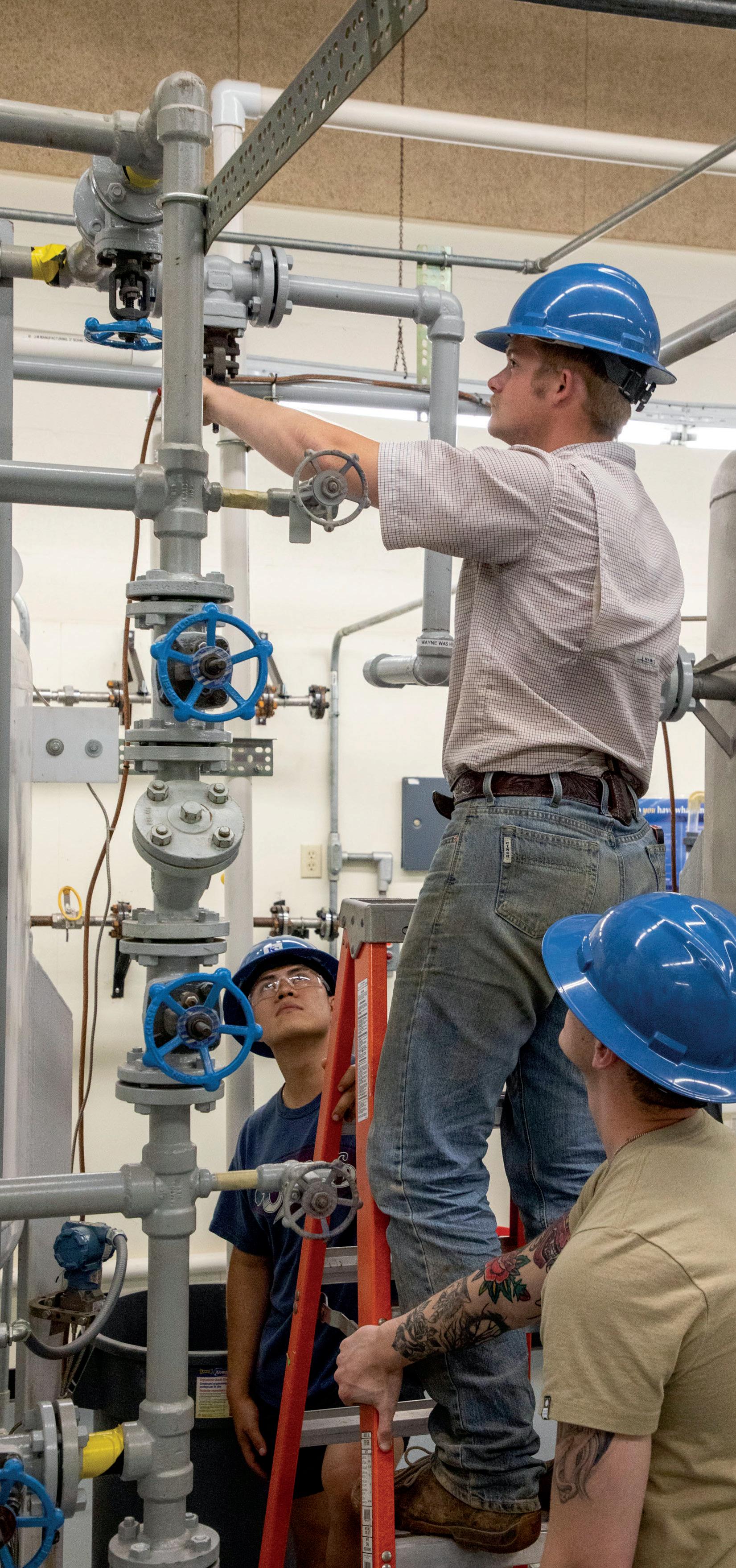
Welcome to a world of possibilities. Whether you’re in high school thinking about possible career paths or you’re already working but considering a career change, this career and technical guide is designed to show you the world of possibilities that Kilgore College offers our successful students.
Not everybody earns an associate’s degree before becoming job-ready. In fact, more and more people are obtaining certificates that give them the credentials to put them right to work, earning a living wage at a job they love. The important thing is to find a job that makes you happy –something you will truly enjoy. You’ll find an abundance of career choices in this guide, most of which offer an associates degree (2-year degree) and certificate programs (length varies). The choice is yours.
Take a look at what KC offers and discover the world of possibilities. If you have any questions about the content inside, don’t hesitate to give us a call at (903) 983-8209 or visit www.kilgore.edu.

CAREER CLUSTER INTEREST INVENTORY
Consider how you like to spend your time and what you think is interesting. Rate each activity according to your interest level with a 0, 1 or 2. Add the numbers in each box. The highest totals reveal the career fields in which you are most interested. Circle 3 boxes with the highest totals to research for specific jobs.
Provide medical care for sick or injured people
Learn/read about healthcare topics
Deal with bodily fluids
Work in a hospital, ER or clinical environment
Assist with medical procedures/operations
Perform first aid in an emergency situation
Work in a creative/competitive environment
Budget, track, oversee funds & expenditures
Use information technology programs
In charge of committees & people
Develop and present information & campaigns
Provide customer service
Enjoys food prep, cooking, baking, serving, tourism or hospitality activities
Oversee recreation or manage a hotel/restaurant
Cosmetology, barbering or spa services
Work with public and support their needs
Plan educational or rec activities, trips or services
Provide guided tours or lessons, instruction or service
Coordinate services or assistance for others
Provide counseling or guidance
Listen and care about others’ difficulties
Provide solutions to others’ difficulties
Learn about human behavior and life stages
Work with families and/or children
Farming with vegetables, fruits or plants
Spend time at state parks
Spend time caring for the environment
Ranching/raising animals
Provide daily care for animals
Provide medical care for animals
Tutor, instruct and help others learn
Assist others with technology, academics & skills
Present information to a group
Manage a classroom or group
Work in a group or classroom setting
Plan curriculum & materials for a group
Learn about scientific events and topics
Visit museums, planetariums or tech forums
Study elements of numbers or computers
Perform experiments, projects or figure equations
Study space, motion, chemicals, elements, numbers or coding
Excel in comparison to peers in science, technology, engineering and math (STEM) areas
Write/read virtual information, articles or reviews
Utilize talents to communicate info to others
Attend public events or perform in them
Create media projects, campaigns or productions
Dancing, acting, singing, painting, sculpting or creating
Gaining inspiration from graphics, art or other media elements
Repair computers or devices
Develop or install computer programming
Design apps or webpages
Learn about cybersecurity or computer systems
Utilize computer animation and graphics
Design graphic layouts with computer programs
Awareness of effects and causes of the energy industry market’s status
Use physical labor to work on natural energy sites
Learn about the equipment/process related to energy
Comply with inspection requirements at sites
Run or be a part of a crew related to an energy site
Safely operate equipment and industrial tools
Weld or build items/projects to standard code
Remodel or build according to blueprints
Use computer software to create designs
Able to perform construction math
Oversee purchase/use of project materials
Set up or repair electrical controls/wiring
Fix appliances, electrical monitors or electronics
Build robots/electronic devices
Make or use blueprints/instructions
Operate machinery
Work with hands-on tools and items
Learn about city, state or federal laws/policies
Enforce or perform methods that serve the public
Protect and/or serve the public over yourself
Write reports that document public services given
Learn about historical court cases
Use technology equipment related to public service
Work on vehicles, boats, planes or equipment
Arrange transportation of products or people
Drive vehicles, boats, planes or equipment
Learn about computers used to repair vehicles
Personally deliver products or items
Drive heavy equipment or lifts

NEW STUDENT ADMISSIONS CHECKLIST
STEP 1 – APPLY FOR ADMISSION
Apply for admission online at applytexas.org summer terms.
NOTES

AGRICULTURE
The Agriculture, Food, and Natural Resources (AFNR) career cluster focuses on the essential elements of life, food, water, land, and air. This career cluster includes occupations ranging from farmer, rancher, and veterinarian to geologist, land conservationist, and florist.



Farm Equipment Mechanics & Service Technicians
Average Salary: $48,061
Farmers, Ranchers, & Other Agricultural Managers
Average Salary: $55,496
Buyers & Purchasing Agents, Farm Products
Average Salary: $57,209
Welders, Cutters, Solderers & Brazers
Average Salary: $45,208
Veterinarians
Average Salary: $101,562

ARTS, A/V TECHNOLOGY & COMMUNICATIONS
The Arts, Audio Visual Technology, and Communication (AAVTC) career cluster focuses on designing, producing, exhibiting, performing, writing, and publishing multimedia content requiring creative aptitude, fluency in computer and technology applications, and proficiency in oral and written communication. This career cluster includes occupations ranging from camera operator, audio and video technician, director, and producer to graphic designer and web and digital interface designer.



Graphic Designers
Average Salary: $44,824
Multimedia Artists & Animators
Average Salary: $67,392
Sound Engineering Technicians
Average Salary: $39,562
Camera Operators, Television, Video, & Motion Picture
Average Salary: $50,024
Audio & Video Equipment Technicians
Average Salary: $40,581

BUSINESS,
& FINANCE
The Business, Marketing, and Finance career cluster focuses on careers in planning, organizing, directing, and evaluating business functions essential to efficient and productive business operations. This career cluster includes occupations ranging from business owner and entrepreneur to accountant, retail manager, and market analyst.



Administrative Service Managers
Average Salary: $96,138 Management Analysts
Average Salary: $87,651
Supervisors of Administrative Support Workers
Average Salary: $57,616
Loan Officers
Average Salary: $68,598
Insurance Underwriters
Average Salary: $66,206
EDUCATION & TRAINING

The Education and Training career cluster focuses on planning, managing, and providing education and training services and related learning support services. This career cluster includes occupations ranging from teaching assistant and classroom teacher to school administrator.



Education Administrators
Average Salary: $72,950
Elementary Teacher
Average Salary: $54,140
Special Education Teachers
Average Salary: $55,670
Career & Technical
Education Teacher
Average Salary: $56,360
Middle School Teachers
Average Salary: $54,510

HEALTH SCIENCE
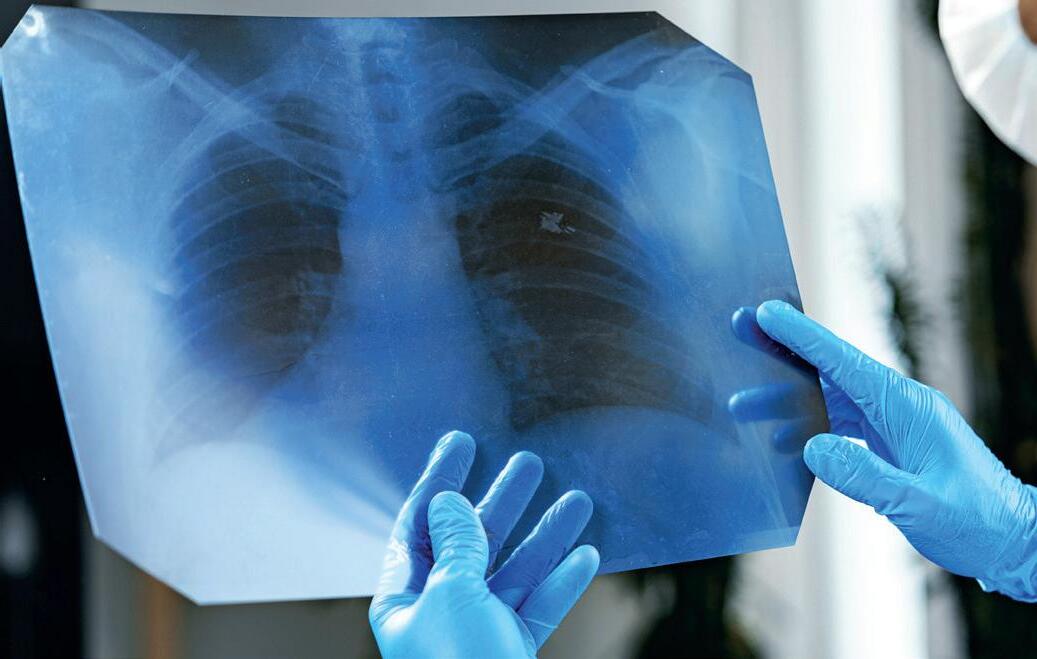
The Health Science career cluster focuses on planning, managing, and providing therapeutic services, diagnostics services, health informatics, support services, and biotechnology research and development. This career cluster includes occupations ranging from medical assistant, registered nurse, and physical therapist to forensic science technician and athletic trainer.


Medical
Assistants
Average Salary: $29,598
Athletic Trainer
Average Salary: $48,779
Surgical Technologists
Average Salary: $45,032
Registered Nurse
Average Salary: $75,021
Pharmacist
Average Salary: $73,070
Physical Therapists
Average Salary: $100,039
HOSPITALITY & TOURISM

The Hospitality and Tourism career cluster focuses on the management, marketing, and operations of restaurants, lodging, attractions, recreation events, and travel-related services. This career cluster includes occupations ranging from reservation and transportation ticket agent to event planner and general manager.



Food & Beverage Managers
Average Salary: $55,619
Chef & Head Cooks
Average Salary: $43,285
Food Science Technicians
Average Salary: $34,382
Lodging Managers
Average Salary: $48,381
Meeting, Convention, & Event Planners
Average Salary: $47,446
Marketing Managers
Average Salary: $144,2691
LAW & PUBLIC SERVICE

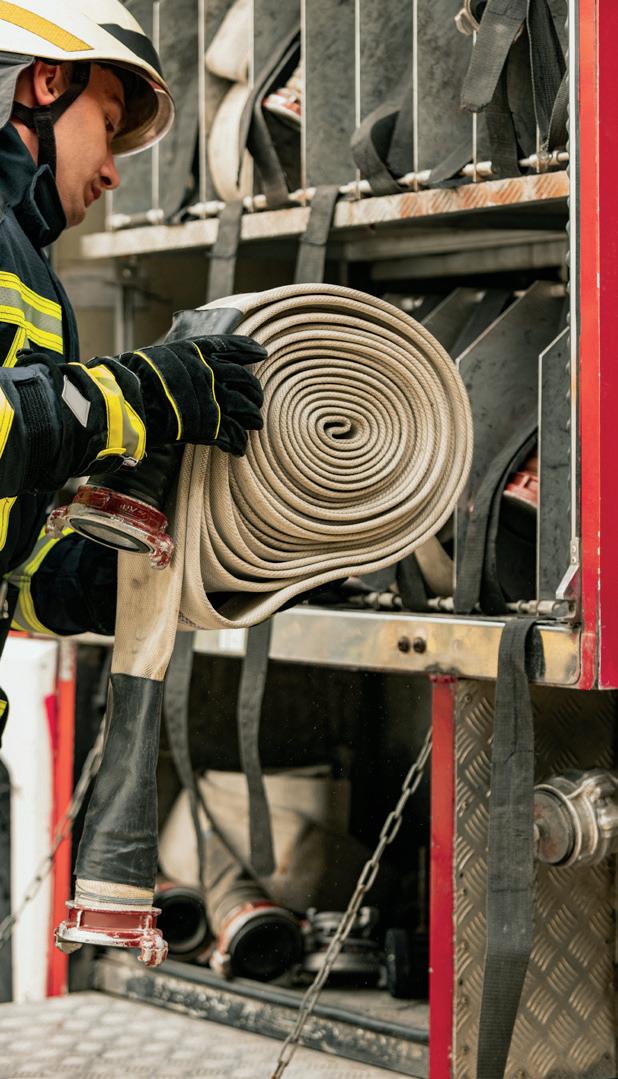
The Law and Public Service Career Cluster focuses on planning, managing, and providing legal services, public safety, protective services, and homeland security, including professional and technical support services. Students will examine the roles and responsibilities of police, courts, corrections, private security, and fire and emergency services.


Police & Sheriff’s Patrol Officers
Average Salary: $60,112
Probation Officers & Correctional Treatment Officers
Average Salary: $44,054
Correctional Officers & Jailers
Average Salary: $40,186
Firefighters
Average Salary: $50,149
Emergency Medical Technicians
Average Salary: $34,091

English 1301 & 1302 Math 1314 & 1342 Biology 2401 & 2402 US
1301
1302
1306
GLADEWATER HIGH SCHOOL
9TH GRADE COURSE SELECTION SHEET
GLADEWATER
INDEPENDENT SCHOOL DISTRICT
CTE Non-Discrimination Statement
Gladewater ISD offers career and technical education programs of study. Admission to these programs is based on admission standards.
It is the policy of Gladewater ISD not to discriminate on the basis of race, color, national origin, sex or handicap in its vocational programs, services or activities and provides equal access to the Boy Scouts and other designated youth groups as required by Title VI of the Civil Rights Act of 1964, as amended; Title IX of the Education Amendments of 1972; and Section 504 of the Rehabilitation Act of 1973, as amended.
It is the policy of Gladewater ISD not to discriminate on the basis of race, color, national origin, sex, handicap, or age in its employment practices as required by Title VI of the Civil Rights Act of 1964, as amended; Title IX of the Education Amendments of 1972; the Age Discrimination Act of 1975, as amended; and Section 504 of the Rehabilitation Act of 1973, as amended.
Gladewater ISD will take steps to assure that lack of English language skills will not be a barrier to admission and participation in all educational and vocational programs.
For information about your rights or grievance procedures, contact Julie Rowe, Title IX Coordinator and Section 504 Coordinator, at 200 E. Broadway, Gladewater, Texas 75647, 903-845-6991, or rowej@ gladewaterisd.com.
Notificatión Publica De No Discriminación En
Programas De Educación Técnica Y Vocacional
Gladewater ISD ofrece programas de estudio de educación profesional y técnica. La admisión a estos programas se basa en los estándares de admisión.
La poliza de Gladewater ISD es no discriminar por motivos de raza, color, origen nacional, sexo o discapacidad en sus programas, servicios o actividades vocacionales y brinda igualdad de acceso a los Boy Scouts y otros grupos juveniles designados según lo exige el Título VI. de la Ley de Derechos Civiles de 1964, según enmendada; Título IX de las Enmiendas Educativas de 1972; y la Sección 504 de la Ley de Rehabilitación de 1973, según enmendada.
La poliza de Gladewater ISD no discriminar por motivos de raza, color, origen nacional, sexo, discapacidad o edad en sus prácticas de empleo según lo exige el Título VI de la Ley de Derechos Civiles de 1964, enmendada; Título IX de las Enmiendas Educativas de 1972; la Ley de Discriminación por Edad de 1975, enmendada; y la Sección 504 de la Ley de Rehabilitación de 1973, según enmendada.
Gladewater ISD tomará medidas para garantizar que la falta de conocimientos del idioma inglés no sea una barrera para la admisión y participación en todos los programas educativos y vocacionales.
Para obtener información sobre sus derechos o los procedimientos de queja, comuníquese con Julie Rowe, Coordinadora del Título IX y de la Sección 504, en 200 E. Broadway, Gladewater, Texas 75647, al 903-845-6991 o por correo electrónico a rowej@gladewaterisd.com.
INDEPENDENT SCHOOL DISTRICT
RAE ANN PATTY | SUPERINTENDENT OF SCHOOLS pattyr@gladewaterisd.com
DERRICK FLOYD | HIGH SCHOOL PRINCIPAL floydd@gladewaterisd.com
JENNIFER MOORE | CTE DIRECTOR mooreje@gladewaterisd.com
JULIE ROWE | HIGH SCHOOL COUNSELOR rowej@gladewaterisd.com
CLAUDIA BARNHILL | HIGH SCHOOL COUNSELOR barnhillc@gladewaterisd.com