with STEM™ CAREERS JOB KIT

Design and build quantum technologies to unlock a new era of innovation

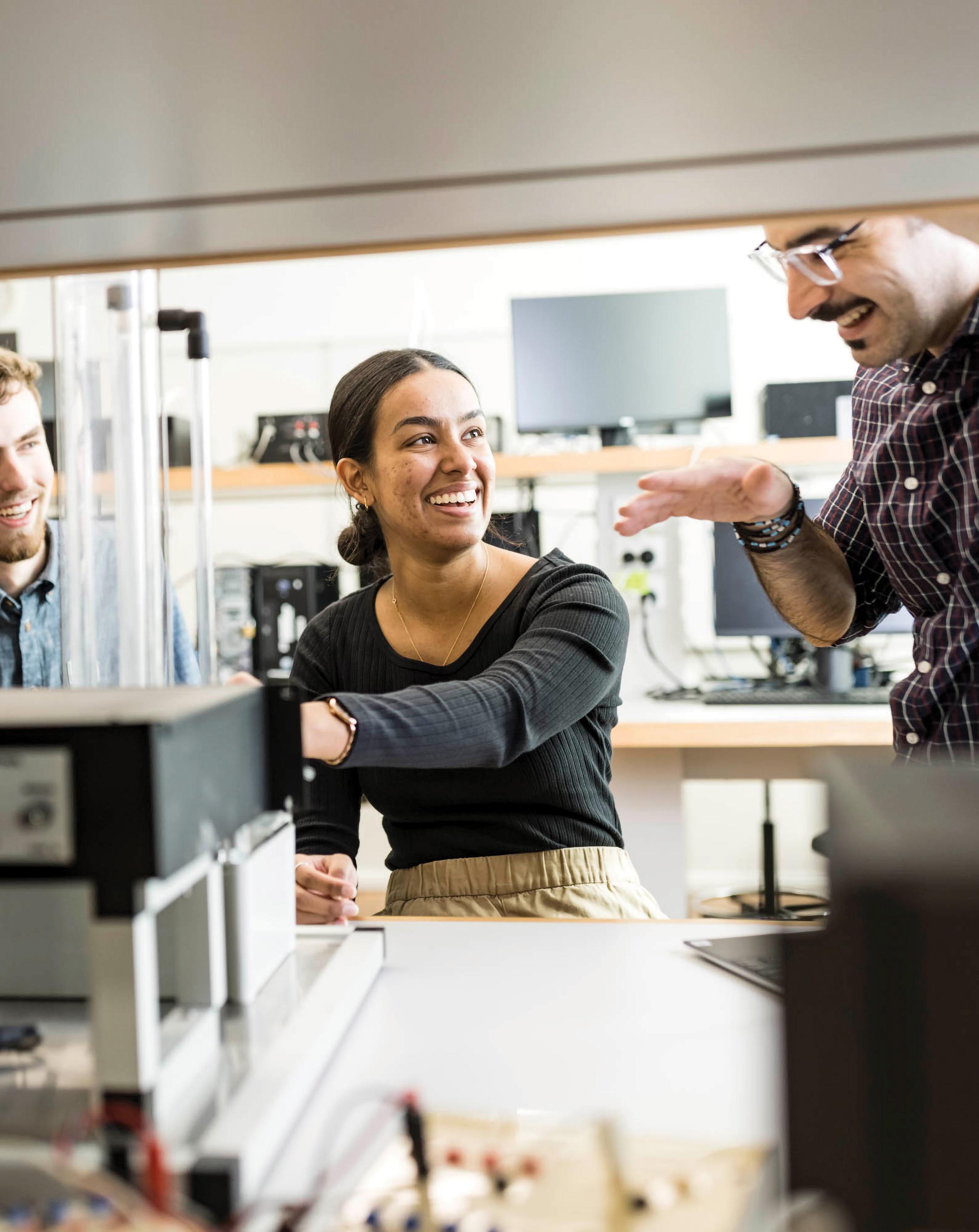


Quantum engineering is an emerging discipline of study and research. We’re on the cusp of a quantum technology revolution that will require a skilled workforce that can straddle both quantum science and engineering design.
I was lucky to contribute to the creation of this discipline. I studied electronics engineering as an undergraduate, but I was attracted to the fundamental, curiositydriven aspects of pure quantum science for my PhD and first postdoc.
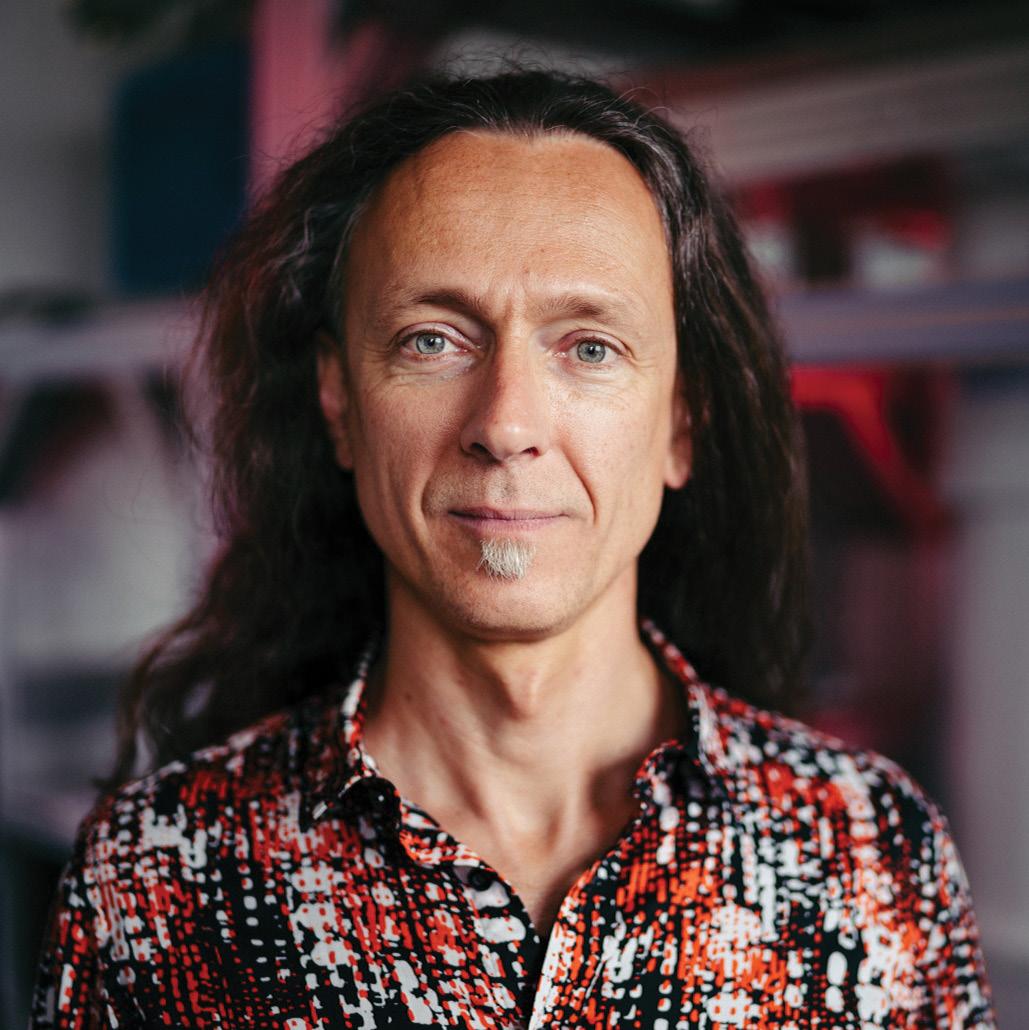
When I arrived at UNSW, I got a job in the School of Electrical Engineering and Telecommunications. I continued – and expanded – my research activities in quantum science and quantum computing, but being in an engineering school allowed me to come full circle and create a new course, called “Quantum Devices”, where I could blend my engineering background with the nascent field of quantum electronics. That course was instrumental in training a new generation of experts who have become world-leading innovators in the discipline that we now call quantum engineering. Seeing the impact that my earlier students are having in the field, worldwide,
Morello Scientia Professor of Quantum Physics
is my greatest source of pride. The Quantum Engineering degree was created to package up and coordinate a series of educational offerings that span quantum devices, quantum computing, quantum communications and quantum control, while retaining the key engineering attributes and skills. We are adamant that our graduates should be able to take any engineering job after graduation, whether in quantum or not.
UNSW Quantum Engineers can find jobs in the booming quantum start-up sector in Sydney and beyond, or continue to graduate studies for more in-depth research skills, or pivot to any electronics engineering job, for which they are fully qualified. We are seeing an outstanding cohort of students enrolling in the Quantum Engineering degree. They are talented, motivated, and curious. The degree is especially suited to students who have strong maths and science skills, and are driven by the once-in-a-lifetime opportunity to contribute to the creation of a whole industry that has never existed before. We hope you will join them.
Andrea Morello Scientia Professor of Quantum Engineering School of Electrical Engineering and Telecommunications UNSW
Get skilled up in quantum engineering and help shape the future of tech
Quantum engineers may work on the tiniest things (think individual atoms!), but the demand for their skills is supersized.
As the ultimate tech translators, these keen problem-solvers spend 9-to-5 helping turn complex physics theories into cutting-edge technologies that make the world a better place. They’re changing the game in fields as diverse as medicine, cyber security, finance and climate science.
Er, what the quantum?
If you’re wondering what a quantum engineer does, it’s kind of like time travel! These high-tech builders are tasked with powering the innovations of tomorrow, championing next-gen gadgets by making the tech inside the tech. Quantum engineers are the brains behind the invisible bits that make tech smarter – quantum computer chips,
What do quantum engineers do, exactly?
✔ Work with the tiniest building blocks of the universe – making quantum bits out of atoms, photons, or even circuits!
✔ Build the tech inside the tech – custom electronics, processors, lasers and sensors.
✔ Solve real-world problems in medicine, cybersecurity, climate science and more.
✔ Team up with engineers, computer scientists and materials experts.

unhackable communication devices and powerful sensors – all built around the tiniest of blocks: atoms and particles.
And nope, they don’t spend all day geeking out in labs! You’ll find quantum engineers collaborating with electrical engineers, computer scientists, cryogenics experts and materials engineers everywhere from fresh startups to commercial space agencies and cybersecurity firms.
Quantum calling
Stressed about landing a job? Don’t be! Big-deal employers are increasingly investing in quantum tech. By 2045, Australia’s local industry is predicted to be worth $6 billion and create over 19,000 new jobs – including one for you!
✔ Problem-solving
✔ Programming (Python, C++)
✔ Precision engineering
✔ Quantum logic thinking
✔ Teamwork and communication
Quantum engineering isn’t all wild-haired professors and mind-bending maths! This futuristic field is full of misconceptions…
Myth: You have to be a genius
Not true! Sure, quantum engineers use complex theories, but curiosity and problem-solving matter more than being a straight-up brainiac.
Myth: They wear white coats
Almost never! You’ll find quantum engineers teaming up with coders, materials scientists, and even space tech pros – not just hanging out in labs. Moreover, many quantum labs don’t require white coats (only closed-toe shoes).
Myth: It’s all theory
Nope! Quantum engineers are super hands-on, applying novel ideas to build things – like precision sensors used in medicine and space exploration. Even quantum computers already exist in the labs.
Myth: You need a PhD to land a job
Defs not. Many quantum careers start with an undergraduate or honours degree full of hands-on training in electronics, coding and data analysis.
It sure pays big to think small! Entry-level opportunities for quantum engineering grads can get as high as $118K, with mid to senior roles sitting around the $220k mark.
Sold on getting paid to engineer solutions? UNSW’s Bachelor of Engineering (Honours) (Quantum Engineering) is the world’s first dedicated quantum engineering degree – a four-year program that equips undergrads with the skills needed to build quantum devices.

As a quantum engineer, you could land jobs like:
Quantum hardware engineer
Build the parts that make quantum computers tick.
Quantum software developer

Write code for powerful programs that run on quantum hardware.
Quantum cryptographer
Design unhackable systems to keep data secure.
Quantum research scientist
Experiment with atoms and photons to change the world.
Quantum systems engineer
Bring multiple quantum pieces together to make real-world tech with out-of -this-world performance.
Cryogenics engineer
Keep quantum tech chill (as close to zero as possible).
At the microscopic level, quantum engineers help create…
• Quantum chips
• Quantum dots
• Quantum simulators
• Quantum sensors
• Quantum communication devices
• Fundamentals of Quantum Engineering
• Programming Fundamentals
• Digital Circuit Design
• Electronics
• Quantum Physics of Solids and Devices
• Quantum Devices and Computers
• Quantum Communications
• Photonic Networks
Short answer? Everyone who’s anyone!
• Huge tech companies (IBM, Microsoft, Google, …)
• Fast-growing startups (Diraq, Q-CTRL, SQC, …)
• Defence agencies (DSTG)
• Space organisations
• Research labs (CSIRO)
• Universities
• Cybersecurity firms
• Government departments
• Banks (JP Morgan Chase, HSBC, Goldman Sachs, …)
• Automotive (Volkswagen, BMW, Ford, …)
• Aerospace & Aviation (Airbus, Boeing, NASA, …)
• Pharmaceuticals (Roche, Pfizer, Novartis, Merck, …)
Future-proof your career
Work on worldchanging tech
Solve mind-bending problems
Team up with cool experts
Big demand means big opportunities
UNSW quantum engineering student Sarah Kruskic is proof that curiosity can kickstart a career
Sarah and her love of quantum engineering go way back. High school physics led the honours UNSW student to discover quantum mechanics even before starting uni –and the rest was history.
“I’ve always had a deep curiosity about space and the unknown,” Sarah says. “I became convinced [as a child] that fully grasping quantum theory was the key to understanding the universe.”
It was her need to know everything that led Sarah to UNSW, where enrolling in a Bachelor of Quantum Engineering was a no-brainer.
“At first most of my classes were grounded in electrical engineering concepts,” she recalls.
“However, once I took my first quantum course, Fundamentals of Quantum Engineering, I realised I had to look at engineering and physics in a completely new way.”
And her most exciting project to date? Her thesis. “I’m studying flip-flop qubits using an antimony donor-dot device,” she says. “Knowing it contributes to the direction our field is moving in made the long hours worth it.”
once I took my first quantum course, I had to look at engineering in a completely new way”
Infinite possibilities
Outside the lab, Sarah loves the supportive, community vibe at UNSW. “It doesn’t feel like a competitive environment – we genuinely want to help each other succeed,” she says. Between student societies, research talks and industry nights, she’s constantly meeting people and jumping on extracurricular opportunities. And nope, no day on campus is the same.
Looking ahead, Sarah dreams of “founding a company in the quantum technology space”. Her advice to undergrads? “You’re not expected to be a quantum expert on day one – be kind and patient with yourself.”
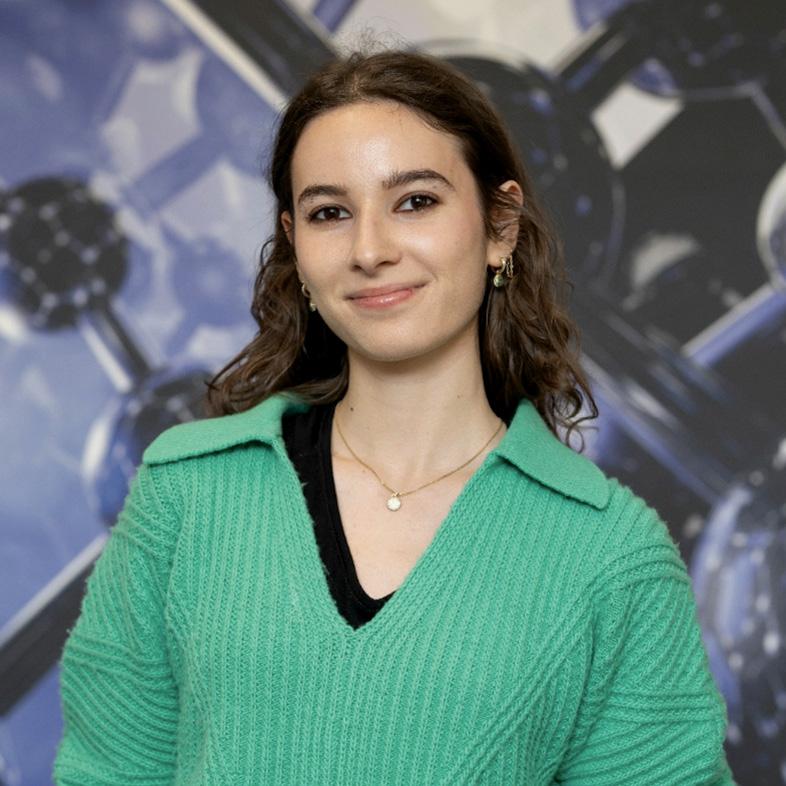
kruskic Quantum engineering student
dr mark johnson Lead quantum engineer Quantum Motion

Day in the life 9am
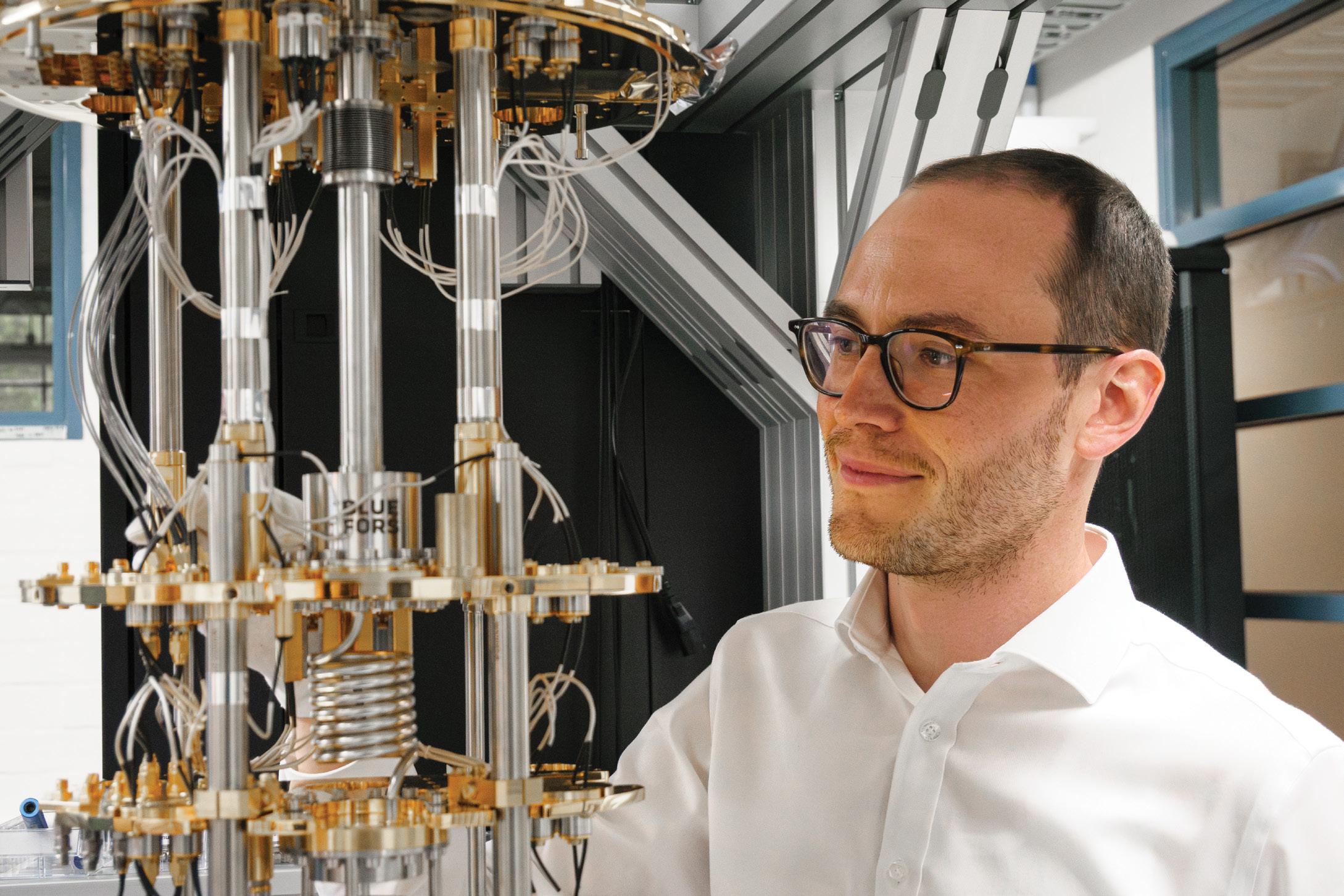
Next-gen computer scientist and problem-solver, Dr Mark Johnson is engineering his future – one qubit at a time
When Dr Mark Johnson started his engineering degree at UNSW, he wasn’t entirely sold on a particular specialisation – but one course changed his whole life.
“I started out in a flexible Bachelor of Engineering because I wasn’t sure what I would gel with,” he says. “But after taking an introductory course in engineering design, I was hooked.”
That curiosity soon sparked a passion for quantum engineering – a field that combined his love of physics, electronics and innovation. “I ended up specialising in quantum engineering before the Bachelor of Quantum Engineering existed,” he says.
While at UNSW, Mark dove into extracurricular opportunities, joining Create UNSW – a society for makers and inventors.
“We did things like build UAVs [Unmanned
Aerial Vehicles], run electronics and coding classes and sell hobbyist bits and bobs,” he says. And one of their coolest creations? A robotic, playable version of Pac-Man that went on display at Sydney’s Vivid Festival in 2015.
Now leading Quantum Motion’s expansion into Australia, Mark heads up a team pushing the boundaries of quantum computing. His advice for future engineers? “Talk to someone … Keep at it and give yourself the time to understand and appreciate what Nature tells you.”
give yourself the time to understand and appreciate what Nature tells you”
Catch up on emails and messages from the London team on the way into work.
10am
Check in with the local team, tackle technical challenges, brainstorm solutions and review device data from the previous day.
11am
Quick zoom with ecosystem partners to share updates and swap ideas.
12pm
Site walk to make sure the dilution refrigerators – and other equipment – is operating smoothly.
1pm
Afternoons are for proposals, progress reports and research and development.
3pm
Dive into the latest quantum research papers to keep knowledge fresh.
4pm
Design circuits, runs simulations and explores new ideas – when real magic happens.
5:30pm
Home for dinner and son’s bedtime routine.
8pm
One last zoom with UK colleagues – quantum never stops for time zones.
(sort
UNSW Engineering the Future: Quantum Technologies
Geek out as UNSW’s Associate Professor Jarryd Pla and Sydney Quantum Academy’s Professor Peter Turner discuss quantum breakthroughs and roadblocks.
Clear as Quantum Eavesdrop on local experts unpacking the tech developments changing Australia’s quantum game.
Quantum Innovation and Society
From the crew behind the ARC Centre of Excellence in Quantum Biotechnology (QUBIC), consider this your go-to on the ethics and impact of quantum tech.

If you’re keen on getting into quantum engineering make sure you knuckle down in maths, physics and design and technology in high school.
Sydney Quantum Academy (Instagram)
Stalk the CVs of some of the quantum world’s coolest grads! A great hub for industry news, events and internship opportunities.
Quantum Australia (LinkedIn)
Talk about networking goals! It’s no surprise that Australia’s national hub for quantum industry growth, Quantum Australia, is killing it on LInkedIn – 6K+ connections and counting.
CSIRO Australia (Instagram)
Follow the info, but stay for the LOLs! Along with having the funniest social media feed in STEM, these folks share a lot of great industry resources, including quantum news, opportunities and encouraging stats.
UNSW Q-Soc
Offering the perfect balance of study sessions and social events, UNSW’s Q-Soc is Australia’s only dedicated student society for quantum engineers. Bond with like-minded undergrads over your favourite topic – the laws of the universe.
Have your mind blown – from the couch! This 2022 doco invites mathematicians, cosmologists and physicists to discuss the world’s most game-changing theories – quantum, included.
Mystery Lab (Netflix)
If you like your complex quantum concepts delivered in short, fun, 20-minute hits this Netflix doco is your new spirit TV show. Marathon eight scientific mysteries and upskill at the same time.
Quantum Revolution (Apple TV) Pass the popcorn – and your calculator. Think deeper about quantum theory and how it’s applied in a range of different industries.

Google Quantum AI Educational Resources
Quantum computing-heavy, but still good for wannabe engineers, this (free) collection of interactive labs, tutorials and courses is a great resource for both beginners and undergrads.
Quantum Australia
Learn from the best! Quantum Australia boasts a series of industry-approved online learning modules.