


































HAND FOULS TIE-UPS BASKETBALL PYLONS RECEPTION RULES FACTS your voice since 1976 $6.95 member edition KY. FLOOD RELIEF TONY PADILLA POST-PANDEMIC FACE TIME HOW BOWLS ARE ASSIGNED HE’S GOT ‘IT’ HELP RAINS SUPREME P.24 P.60 JANUARY 2023 // REFEREE.COM

2
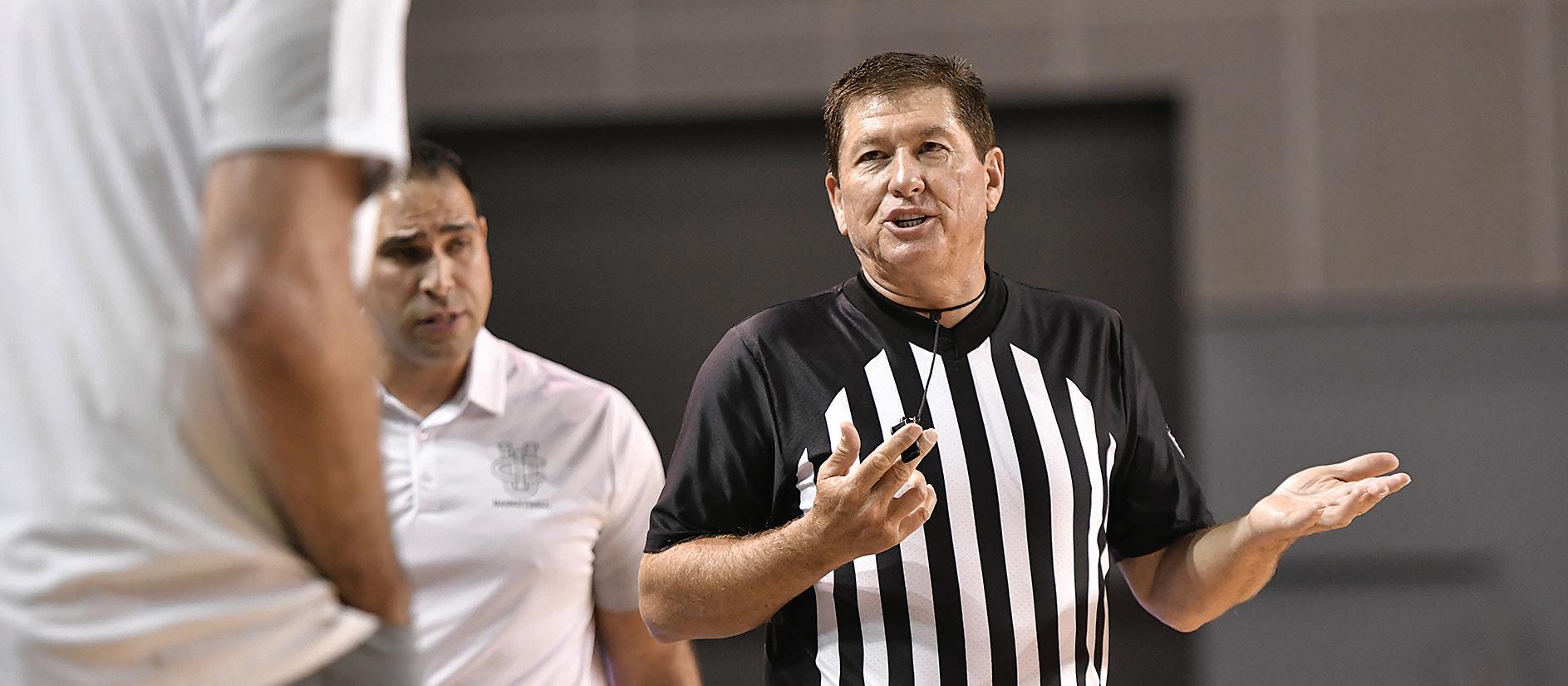
4 HE’S GOT GAMES
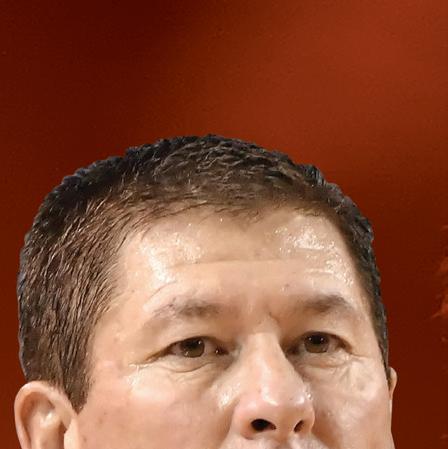
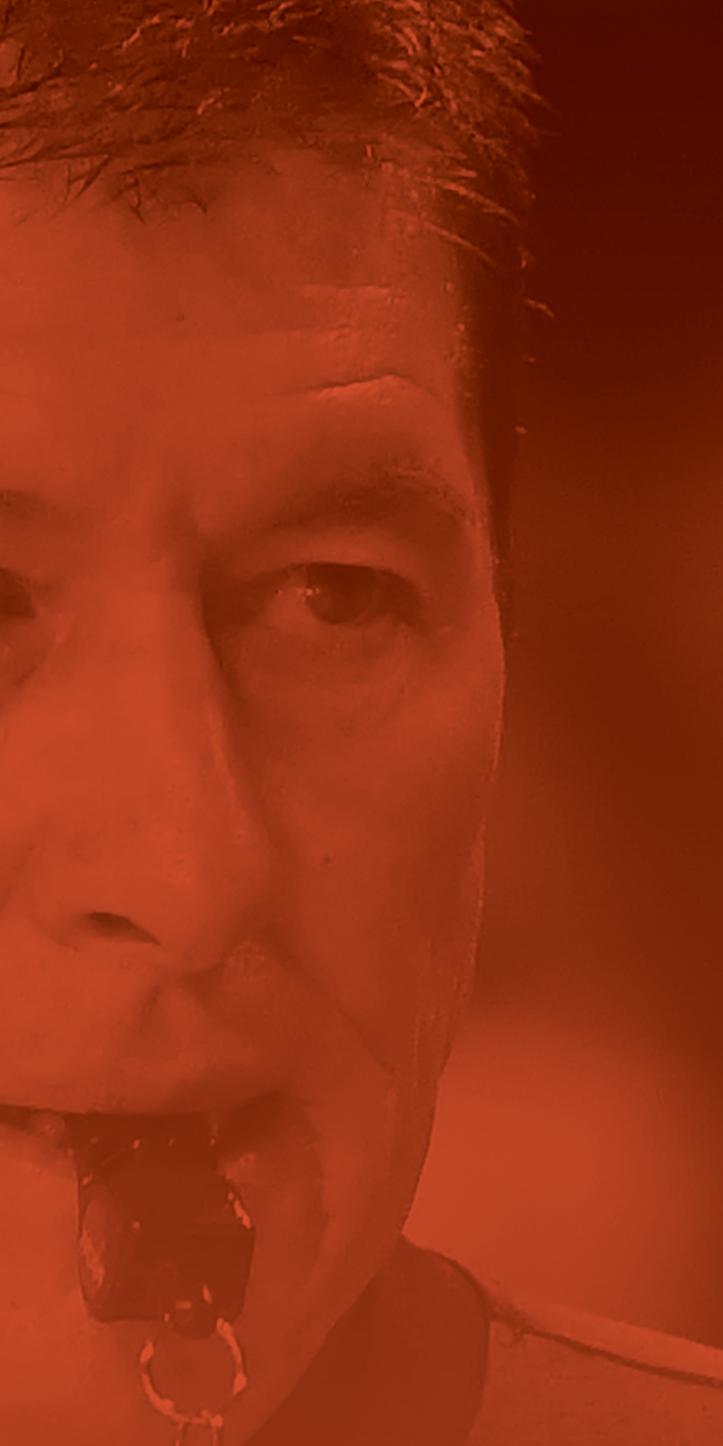
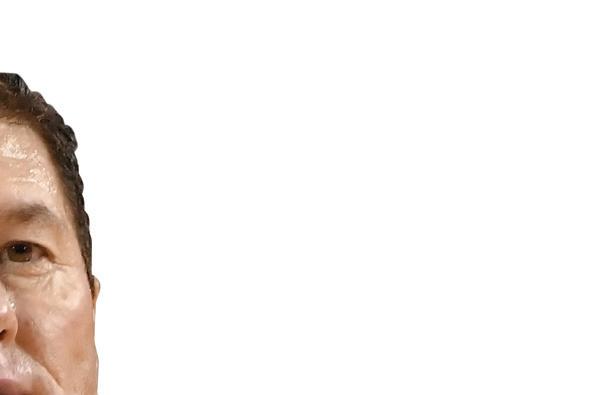
Pick a sport, and chances are NCAAM basketball official Tony Padilla has tasted success.
48
HELP RAINS SUPREME
Historic flooding ravaged southeastern Kentucky in late July, affecting several officials. The officiating community banded together to help them out.
60 WHAT THOSE TWO YEARS TAUGHT US
It was a brutal stretch through the pandemic, but we learned a few things along the way.
76 HOW COLLEGE BOWL OFFICIALS ARE SELECTED
A behind-the-scenes look at the process that determines which officials go where and when.
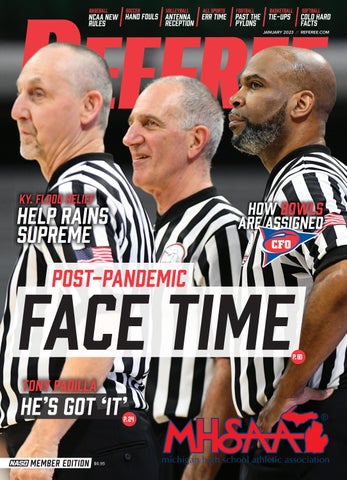
ON THE COVER
Dave Eubank (left) Battle Creek, Mich.
Officiating experience: Has officiated high school basketball and softball for 42 years, high school football for six years, women’s college basketball for 28 years and college softball for four years.
Bruce Heeder (center) East Lansing, Mich.
Officiating experience: High school basketball official for 45 years, high school football official for two years, women’s college basketball official for 10 years.
Loren Johnson (right) Benton Harbor, Mich.
Officiating experience: Has officiated high school basketball, baseball and softball for the past six years.
BASKETBALL
Held Ball? Hang on a Sec: Dual Control Doesn’t Mean the Need to Immediately Stop Play; Should You Adjust Your Thinking?; Don’t Allow Indirect Ts to Confuse You
BASEBALL
Ready, Set, Action! NCAA Rule Changes Include Tweak to Interval Between Pitches; Somebody’s Watching You
FOOTBALL
Magic Markers: Pylons Serve as Goalline Indicators; When the Time Has Come to Pull the Switch; That’s a Wrap; Out for One Play
SOFTBALL
Checked Swings: Here Is Your Checklist; LousyWeather Wear; Locked in and Loaded; Be the Best Team on the Field
SOCCER
Not a Helping Hand: Foul Recognition for Four Fouls With the Hands; R-E-S-PE-C-T
VOLLEYBALL
Where’s Waldo? Working With Untrained Libero Trackers in NFHS Matches; Wave Your Flags; Slow Your Role in NFHS
ALL SPORTS
Err Time: Five Ways You Can Totally Screw Up a Game; It’s a Balancing Act; Big Ideas for the Big Game
COLUMNS
PUBLISHER’S MEMO Heads Up!
THE GAG RULE
Letters: That’s More Like It, Shut-Down Defense; They Get It; They Said It 12 THE NEWS NBA Official Brown Dies Following Cancer Battle; Super Bowl Official, CWS Umpire Dale Williams Dies
4 GETTING IT RIGHT A(V)P History; AVCA Appreciates Officials; NBA Referee Honors Mom 46 PROFILES
Role Reversal: Wrestler Becomes Referee; Veteran Official Receives Capital Letter

82 FOR THE RECORD 2022-23 NBA Officiating Roster 84 LAW
Withholding of Services; If the Client Is Withholding Payment … ; Constants to Get Chiseled Into Every Contract 85 CLASSIFIEDS Camps/Clinics/Schools; Equipment/Apparel; Leadership Resources


86 LAST CALL
A Crowning Achievement: As a dentist by profession, I work in a confined space focused in the limited area of the mouth dealing in minute dimensions.
FOOTBALL HIGHLIGHT THIS MONTH
CONTENTS
Volume 48, No. 1 Issue 555 JANUARY 2023
Find Referee Magazine on Facebook and follow RefereeMag on Twitter
FEATURES SPORTS 16
30
38
52
64
70
8
7
4
10
4
COURTESY MHSAA (COVER), HESTON QUAN (PADILLA), TED OPPEGARD (FOOTBALL)
24
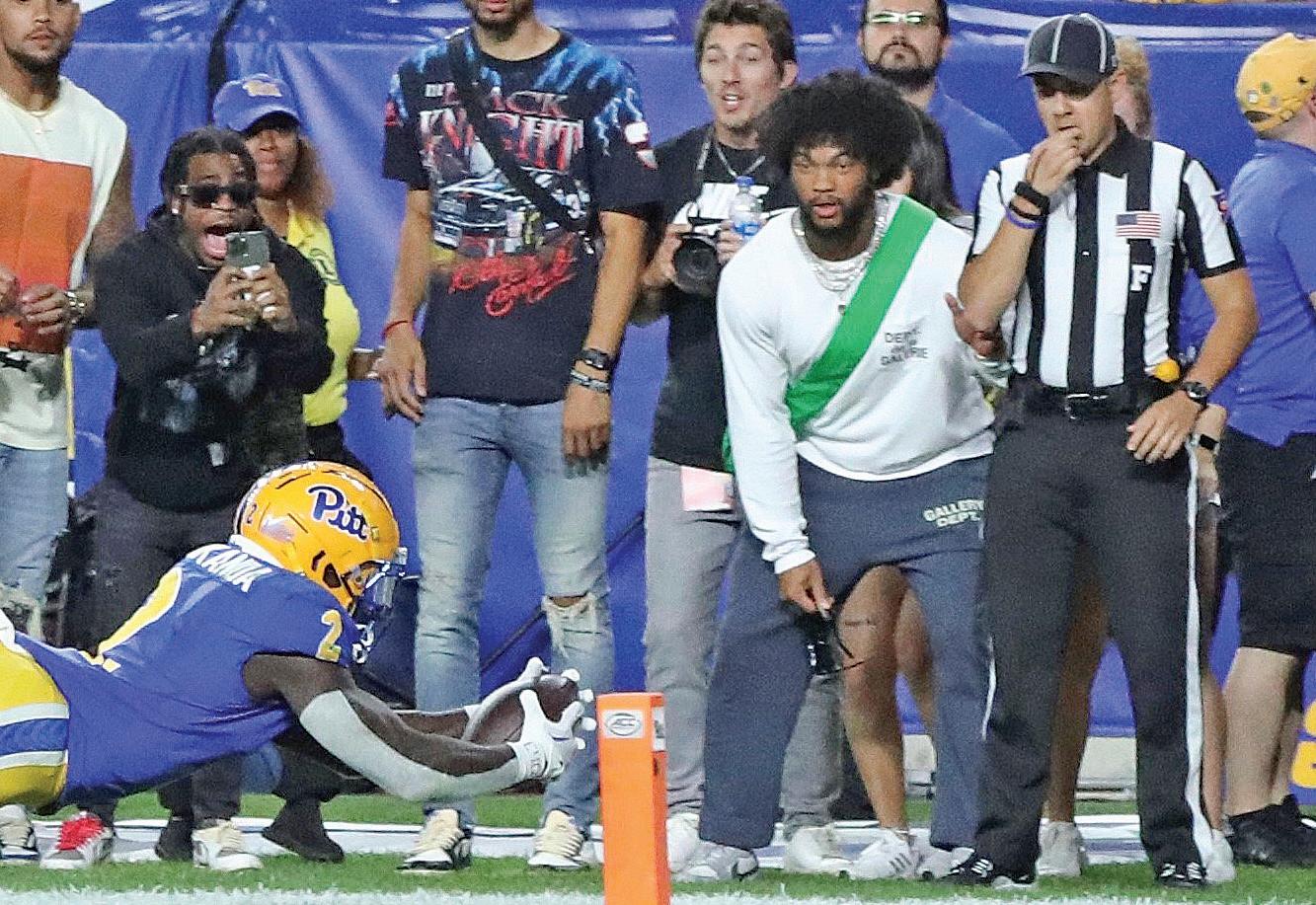
Thanks to angle and distance, Joe Martinez, Albuquerque, N.M., can rule if the diving runner takes the ball inside the pylon, thus scoring a touchdown.
FOR MORE, GO TO PAGE 38
Heads Up!
For most of our officiating lives we have had woeful training about recognizing and dealing with a concussion to an athlete in a contest we are working. We have navigated our way through those troubling waters based on common sense and from sitting through parts of videos aimed at coaches. Such an approach has left an open door to unsafe conditions for athletes and, in some cases, legal liabilities for us.
More than 15 months ago, through a referral by Dana Pappas, NFHS director of officiating services, the Centers for Disease Control (CDC) contacted me about the possibility of the National Association of Sports Officials (NASO) partnering with the CDC to produce an online concussion training regimen specifically directed at sports officials. The CDC has long had such a program for coaches and athletic trainers. Someone at the CDC figured a program for coaches and athletic trainers would not be effective for sports officials, something we in officiating have known for years.
We had preliminary conversations with the CDC and its production contractor, Banyan Communications in Atlanta. Those early discussions made it clear serious work was needed to create a training course that is clear, targeted and timely for officials. The materials had to reinforce the core concept of “observe and refer” when it comes to how we conduct ourselves in the matters of concussions and safety.
The CDC and Banyan were terrific to work with. They were very accepting of the myriad positions and officiating protocols we felt had to be included in any such program. At first, they thought we sports officials controlled everything. Of course, we get that a lot, don’t we? Pretty quickly our team, under the leadership of REI’s Bill Topp, was able to reset their perspectives, and then the
partnership train started to pull out of the station.
Bill could tell you better than I, but the first eight to 10 months were laborious to say the least. Yet together we all moved the project in a positive direction. NASO was fully committed in the knowledge that such a training module was sorely needed and wanted by our industry at the high school level and most especially at the youth, rec and club levels. Working games at these last three levels has long been problematic to officials when it comes to player safety and proper procedures by the governing organizations to better ensure that safety. Too much stuff has gotten unfairly dumped in our laps.
Learning about concussions is critical as athletes who are allowed to continue playing with a concussion, or who are returned to play too soon after sustaining a concussion, are at higher risk for repeated brain injuries and poorer overall health outcomes. And the survey data clearly shows that in as much as 40 percent of the time, the athletes don’t truthfully report how they are feeling and thus risk further serious trauma.
Now sports officials will be able to play an important role in determining when to get athletes out of the game: When in Doubt, Get Them Out is the theme of the CDC program. We are to observe and refer to sideline personnel. Importantly, we now have solid guidance enabling us to properly decide return-to-play decisions. I fully expect this CDC/ NASO program to become the Gold Standard in concussion management for us. The program is free. Visit the CDC website for the Heads Up to Sports Officials course. And when done, you can print out your certificate of completion, which then can be provided to the organizations for which you officiate.
Chief Strategy Officer/Publisher Barry Mano
Chief Operating Officer/Executive Editor Bill Topp
Chief Marketing Officer Jim Arehart
Chief Business Development Officer Ken Koester
Managing Editor Brent Killackey Assistant Managing Editor Julie Sternberg Senior Editor Jeffrey Stern Associate Editors Brad Tittrington Scott Tittrington Assistant Editor Joe Jarosz Copy Editor Jean Mano
Director of Design, Digital Media and Branding Ross Bray
Publication Design Manager Matt Bowen Graphic Designer Dustin Brown
Video Coordinator Mike Dougherty Comptroller Marylou Clayton
Data Analyst/Fulfillment Manager Judy Ball
Marketing Manager Michelle Murray
Director of Administration and Sales Support Cory Ludwin Office Administrator Garrett Randall
Customer Service Support Specialist Lisa Burchell
Editorial Contributors
Jon Bible, Mark Bradley, George Demetriou, Alan Goldberger, Judson Howard, Peter Jackel, Luke Modrovsky, Steven L. Tietz, Tim Sloan
These organizations offer ongoing assistance to Referee: Collegiate Commissioners Association, MLB, MLS, NBA, NCAA, NFHS, NISOA, NFL, NHL, Minor League Baseball Umpire Development and U.S. Soccer. Their input is appreciated.
Contributing Photographers
Ralph Echtinaw, Dale Garvey, Carin Goodall-Gosnell, Bill Greenblatt, Jann Hendry, Jack Kapenstein, Ken Kassens, Bob Messina, Bill Nichols, Ted Oppegard, Heston Quan, Dean Reid, VIP
Editorial Board
Mark Baltz, Jeff Cluff, Ben Glass, Reggie Greenwood, Tony Haire, John O’Neill, George Toliver, Ellen Townsend
Advertising
2017 Lathrop Ave., Racine, WI 53405 Phone: 262-632-8855 advertising@referee.com

REFEREE (ISSN 0733+1436) is published monthly, $46.95 per year in U.S., $81.95 in Canada, Mexico and foreign countries, by Referee Enterprises, Inc., 2017 Lathrop Ave., Racine, WI 53405. Periodical postage paid at Racine, WI and at additional mailing offices. Postmaster: Send address changes and undeliverables to REFEREE, PO Box 319 Congers, NY 10920. Direct subscription inquiries, other mail to REFEREE, PO Box 319 Congers, NY 10920. 1-800-733-6100. © 2022 Referee Enterprises, Inc. All rights reserved. (USPS Publication #107790.) Subscribers: Send address changes to REFEREE, PO Box 319 Congers, NY 10920.

PUBLISHER’S MEMO Watch the video at referee.com/pubmemo 4 | REFEREE January 2023















STANDING BEHIND YOU AND YOUR GAME Baseball • Basketball • Football • Lacrosse • Soccer Softball • Volleyball • Wrestling
Cheering on Her Legacy
An official showing up for a competitive cheer competition, but unsure where to report, only needed to listen if Cheri Dobschensky was involved.
“Her passion for life was evident in how she lit up a room when she was present. Her personality filled a room. If an official didn’t know where to report to and Cheri was present, the room could be located by listening for the sound of laughter,” Angie Adams said.
“Cheri’s willingness to spend time with coaches and officials, mentoring them along the way, made anyone feel comfortable approaching her. Cheri loved people fiercely.”
That, along with a selfless interest in helping others, made Dobschensky a beloved MHSAA official in both cheer and volleyball until her death this past July 24 after a fight with bladder cancer. She was 55.
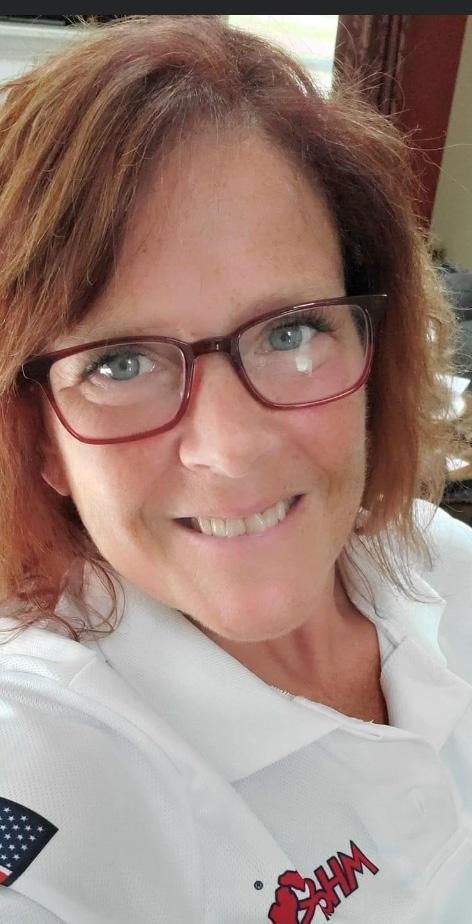
Dobschensky, from Swan Creek Township just north of St. Charles in Saginaw County, was a 1985 Swan Valley High School grad, and she later coached the Vikings’ cheer team for a decade. She then moved into officiating, beginning with cheer during the 2014-15 school year and later registering for volleyball as well beginning in 2021-22. Among highlights, she officiated at the 201920 MHSAA Competitive Cheer Finals.
Janelle Lemons was there for that transition from coaching to officiating. Now the Midland High
competitive cheer coach, Lemons first met Dobschensky at the end of her first year of college in 2009 after answering an ad to become a Swan Valley assistant coach. Five years later, with Dobschensky ready to be done coaching but not “quite ready to give up cheer yet,” the pair registered together to become competitive cheer officials.
Lemons had watched Dobschensky teach her cheerleaders how to become better athletes but also better people as a whole, and Lemons herself learned so
much from her mentor. She said Dobschensky showed quickly she had a “knack for officiating” as well.
“She picked it up quickly, even though it was overwhelming at times – but she never let it frustrate her,” recalled Lemons, who resides in Ithaca. “She just kept working on it by watching videos and practicing at home.
“She had a true passion for officiating and helping others, and those she impacted will carry on her legacy. I know she made a very big impact not just in my cheer life, but in my personal life as well.”
Dobschensky was a member of the Michigan Cheer Judges Association (MCJA), Mid Michigan Cheer Officials (MMCO) and Cheer Judges Association of Mid-Michigan (CJAMM), as well as the Tri Valley Volleyball Association and Capital Area Association of Volleyball Officials (CAAVO).
Dobschensky actually picked up volleyball through a conversation with one of her cheer colleagues. Official Amy Constine had noted to Dobschensky how there was a shortage of officials in volleyball, which Constine also officiated, and after a night watching Constine’s husband work as a timer, Dobschensky registered for that sport as well – and even worked a District her first season.
Unfortunately, it was during that postseason that Dobschensky
6 | REFEREE / MHSAA January 2023
$6 million General Liability Coverage
Excess coverage for claims for bodily injury, property damage and personal and advertising injury (defined as slander or libel) up to $6 million per occurrence general liability limit with a personal aggregate of $14 million.
Assault-Related $15,500
Coverage
Provides coverage for certain legal fees and medical expenses and game fee losses resulting from injuries suffered when an official is the victim of an assault and/or battery by a spectator, fan or participant while officiating.
$100,000 Game Call and Assigners’ Coverage
Up to $100,000 coverage for claims involving a challenged game call which resulted in a claimed financial loss or a suit against an assigner by a disgruntled official.
Referee Digital Magazine
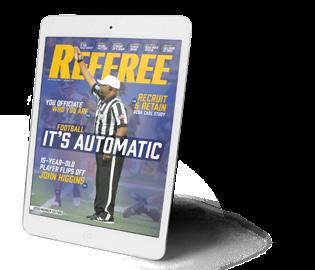

Allows you access to a digital customized MHSAA-version Referee magazine to read wherever you’re on the go.

MHSAA NASO members will receive exclusive MHSAA content through the digital magazine. Referee is the number one source of information for sports officials, written by officials. Each issue includes news columns and journalof-record reports and deep-coverage sport-specific sections complete with rule interpretations and caseplays.
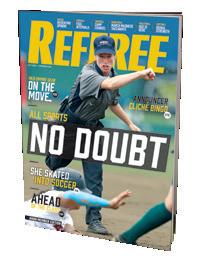
Referee Magazine (NASO Print Edition)
MHSAA members have the option to upgrade to the print version of the magazine, delivered to your mailbox every month. 84 pages of in-depth feature stories as only Referee can report them.
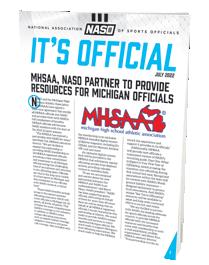
It’s Official Newsletter
Monthly 16-page newsletter providing association news, information, caseplays and educational product discounts.
LockerRoom
Online newsletter includes latest news on NASO, officiating techniques and philosophy.
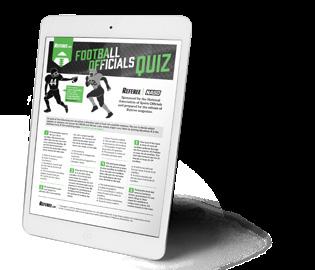
Interactive Sport Quizzes
Online access to sport quizzes that will help you improve your knowledge of the rules.
Officiating Resources
Special Members-only buying discounts on Referee and NASO publications. Savings up to 20%.
Marriott VIP Card
Provides discounted rates at Marriott & Starwoodbranded hotels within the US and Canada, subject to availability.
With the VIP card, NASO members may receive a room rate of up to 25 percent off the regular price at participating hotels where space is available. The Athletic VIP card must be shown at check-in.
Registration Discount to
The Sports Officiating Summit Members only registration discounts.
Ump-Attire.com 10% discounts
Member Information & Consultation Program (MICP)
Provides help when you need to sort out an officiating related issue, includes both free information and free consultation with a knowledgeable person.
2017 Lathrop Ave Racine, WI 53405 262-632-5448 naso.org naso@naso.org
Any Game, Any Time, Anywhere — You Are Covered Insurance (Sports Officials Security Program) NASO covers common gaps in other officiating insurances, protecting you when other officiating coverages come up short. Publications Discounts & Savings Information Services Contact NASO MEMBER BENEFITs & services NATIONAL ASSOCIATION OF SPORTS OFFICIALS
Address: Phone: Web: Email:
was diagnosed with bladder cancer. But cheer season was ahead, and she continued to officiate through chemotherapy, “As much energy that Cheri had, she didn’t slow down. She would still do her normal routine, and her commitment to officiating did not end,” said Constine, of Owosso. “She was the type of person that did not want sympathy, and she didn’t want to talk about the cancer. She always made sure everyone was smiling, having a great time, and doing the job she was assigned to.”
Although Dobschensky’s cheer
officiating season was cut short in 2022 because of her illness, she began building her Fall 2022 volleyball schedule hoping to make her return. She was unable to do so, but even a month before her death she was working to make sure the matches she’d been assigned would be covered by someone else.
“Cheri was a beacon of courage to so many during the season last year,” Mount Pleasant-based official Cindy Verwey added. “Even though she was facing a battle of insurmountable odds, she showed up ready to go, professional and full
of smiles – the fans in the stands never knowing that she had had chemo the previous four hours before arriving and possibly a few of the judges might not have known either.
“While I am sure that there are others in officiating that had displayed similar courage, I was amazed by Cheri as I am sure that she gave the same 100 percent to volleyball as well.”
Dobschensky is survived by her husband of 35 years, Tony, and their two sons, among many family and friends.
When 50-50 Merits 100% Attention
If you put 30 sports officials in a room, regardless of the sport, and watch a tight play on video, what happens during the dissection of the action afterward? A big argument, right? Some people think it was a checked swing. A bunch of others think the batter followed through and the umpire should’ve call a strike. Roughly half think it was pass interference and the others think it
quick tip
Compliment your partners in front of others. Think about it when you’re on the field or court. If your partner has just made a big block/ charge call, offer a comment like, “Great call, Mary.” Or you might try, “Absolutely a hold. Nice job, Steve.” The players and coaches will hear you and that reaffirmation will not only make your partner feel like a million bucks, it will help to quiet any possible opposition. There’s strength in numbers and making the compliment public will increase its value and derail any discourse.
was great defense.
We are trained to get our rulings correct. We study the rules, learn complex situations, watch video and get feedback from clinicians at camps. All that work doesn’t ensure perfection. Nor does it ensure we’ll always be on the same page as our partners or that reasonably people can’t disagree on a specific play.
At the same time, there is this presumption in almost all sports that there is only one correct ruling for a specific play. You are either right or wrong. I don’t think that’s true. Given the complexity of factors and the speed with which players run, balls are thrown and bodies clash, we can’t presume that certain movements or contact can always be ruled one way or another. Sometimes the play is a 50-50 call and we should remember that.
Take baseball, for example. Umpires know the strike zone. The pitcher has to hit a small area. If he’s just off slightly, it won’t be a strike. But there are edges to the plate. The ball is thrown at speeds up to 100 miles per hour. Balls curve and sink. Every umpire knows and recognizes those factors, yet we still expect his right arm to go up consistently only if certain parameters of the strike zone are met.
What about the ball that ever-so-
slightly shaves the corner? Or the ball at 98 mph that appears to cut across the corner? Did the umpire see it? Did he see it perfectly? If not, he may see it one way, his field partner may see it differently and a camera catching the ball’s movement played back in slow motion may support one or the other or identify it as a 50-50 ruling: “He could have called that one either way.”
There are game situations in which we should stop beating ourselves up under the presumption that one ruling on a play has to be 100 percent accurate. There’s no question that many, if not most, of our rulings are clear cut and should only yield one decision.
There are also times where the judgment is fuzzy and you can go either way. Holding by the offensive line in football certainly fits the category. You can study the rules for decades, but when you head onto the field, there’s so much action and the bodies are gigantic, so you can’t see everything at all times. When you do, even with a great angle, you may not see a hand grabbing or a jersey being yanked. What looks like a significant tug to you may be a light pull to one of your crewmates. There’s judgment involved and you’re expected to decide quickly whether to throw a flag or not. Hindsight from video
8 | REFEREE / MHSAA January 2023
may clarify that the ruling should have gone one way or the other, but on the field it was 50-50.
The infamous block/charge (“chlock” or “blarge”) is another example. Basketball officials love to argue those plays. They want to get them right. But is one person right and one person wrong? On a close play, you can go either way. We should stop butting our heads on the super close ones. Rule on it, then move on. The game is fast and you have to prepare for the next play anyway.
Keep in mind when you officiate that you won’t always get 100 percent agreement with your partner(s), nor should you expect to on certain plays. Some are 50-50, and we should leave it at that.
Fall Sports Championship Officials
The following officials worked Fall state tournaments for the MHSAA. We want to take a quick moment to recognize and thank the officials assigned to those contests. Your efforts are appreciated, and we understand that without your commitment and sacrifices, we could not host such tremendous events for our member schools and student-athletes. Congratulations.
8-PLAYER FOOTBALL
Elmer Albright, Naubinway
Blaine Barabas, Marquette
Joel Barnes, Birch Run
David Cuthrell, Bath
Anthony Immel, McMillan
Ted Kelly, Carson City
Paul Krick, Three Rivers
David Kuznicki, Alpena
Dee Jay Paquette, Munising Guy Trier, Ironwood
11-PLAYER FOOTBALL
Wayne Biscorner, East China
Allen Black, Southfield
Gary Blackford, Milan Ron Blevins II, Ypsilanti
Derek Booms, Freeland
Michael Brown, Battle Creek
Brandon Burrel, Muskegon
Thomas Burrell Jr, Southfield
William Coggins, Manchester
Wesley Collins, Eaton Rapids
Robert Czech, Oak Park
William DeBeau, Coldwater Christopher Dickerson, Brooklyn
Thomas Dowdall, Davison Zachary Eagly, Midland
Robert Foss, Commerce Township Skylar Freeman, Galesburg
Gary Gaspas, Westland
Michael Gentry, Shelby Township
Mark Giannunzio, Manistique
Darin Gilbert Sr., Detroit
Todd Gooding, Portage
Storm Guitar, Sterling Heights
Jerry Haines, Freeland
Brendan Harrison, Bay City
Richard Havercroft, Saginaw
Michael Henry Sr., Flint
Chad Jackson, Battle Creek
Dave Jones, Traverse City
Robert King, Vicksburg
E. John Madaras, Parchment
Jay Marcotullio, Okemos
Daniel Mausolf, Lansing
Jack Miles, Drummond Island
Adam Miller, Dewitt
Gregory Moss, Canton
Robert Navarro, Kentwood
David Paananen, Negaunee
Malcolm Pennington III, Detroit
Patrick Peters, Gladwin
Thomas Rau, Owosso Allen Robinson, Southfield
Timothy Ruffner, Belleville
Todd Sellon, Coopersville
Jason Service, Hastings
James Stone, Grand Rapids
Joseph Strong, Ontonagon
Rodney Suggs, Kentwood
Thomas Sumner, South Lyon
Frank Tew Jr., Owosso
A. Eric Thomas, Brooklyn Chuck Walters, Jackson
Jeffrey Wierzbicki, Grand Rapids
Marcus Williams, Redford Tom Woiwode, Okemos Andrew Wolf, Midland
BOYS SOCCER
Steven Arends, Livonia
Bradley Barlog, Saginaw
Simon Blackwell, Bridgman Jeff Cooling, Spring Lake
Kyle Cupp, Portage
Jason Cross, Ann Arbor
Jim Dornbos, Midland
Eli Flores, Norton Shores
Bill Howard, Caledonia
Justin Janulewic, Ray Township
Matthew Koekkoek, Muskegon
James Lowe, Clinton Township
Jim Russo, Warren
Derek Sanborn, Goodrich
Aaron Scherer, Van Buren Twp
Robert Scudder, St. Joseph
GIRLS SWIM AND DIVE
Kurt Ballien, Alma
Charles Bartholomew, Lowell
James Chapman, Pinckney
Raymond Cranston, Farmington
John Du Bois, Kalamazoo
Timothy Eastman, Kalamazoo
Brian Foust, Plymouth
James Hartwell, Dexter
Casey Kern, Haslett Dana Kirk, Dimondale
Tavis Millerov, Williamston
David Nykanen, Farmington
Hills
Tom Richards, Ann Arbor
Linda Schmidt, Zeeland
Michael Torrey, Holland
Steve VandeWege, Holland
Larry Wegener, Portage
David Weick, Hudsonville
VOLLEYBALL
Randy Bigelow, Holland
Jerald Cook, Brimley
Cary Grant, Battle Creek
Jeff Harp, Alto
Robert Hinojosa Jr., Corunna Michael Hunt, Detroit
Genevieve Knudsen, Ludington
Luke Reynolds, North Branch
REFEREE / MHSAA January 2023 | 9 CONTENT NEEDED! We are accepting contributors for MHSAA Referee Magazine content for articles on specific rules, mechanics and features on officials. Selected contributors will compensated for their time and effort. Most articles are expected to run between 500 and 600 words. Email brent@mhsaa.com if you’re interested in contributing.
THE RECORD quick tip You must train for what is required of you in your game. Just because you lift weights at the gym and keep a fairly trim body doesn’t mean you’re ready for the season. You need to do specific training for your sport. If you’re a baseball or softball umpire, lunges and squats are a must. If you’re officiating basketball, work on sprints and changing direction quickly. A well-rounded workout plan is likely the best thing for officials to maintain during the season and offseason, but focusing on the specific needs of your sport is critical also.
FOR
LETTERS
That’s More Like It
On Sept. 30, 2022, my partner, Doug Sepien (he’s the tall official in the accompanying photo), and I had a volleyball match between Massachusetts high schools Hudson School and GrotonDunstable Regional. During the warmup, the Hudson coach stopped the clock and told us there was going to be a short ceremony for us before the match. The two teams had collaborated on a brief thank you, gave us each some small gifts and cards signed by both teams, one of which said, “Thank you for all you do to make playing this great sport possible!”
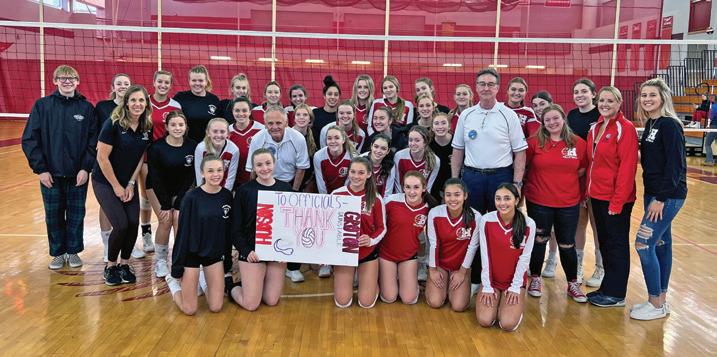
Sometimes we think officiating is a thankless job. For the teams, it would not have mattered which referees were assigned. They were just thankful they were playing and that we were there. It was touching. In my decades of officiating, nothing like this has ever happened.
Dick Pratt Deven, Mass.
Shut-Down Defense
One of my favorite responses to coaches, parents and others is, “If you don’t like the call, become an official. If you don’t like the game, go home.” This pretty much shuts down the comments quickly.


Glenn Waggoner Jr. Riverside, Calif.
THEY GET IT
“As in any profession, there are referees who are inconsistent or not up to task. But certified refs are required to take a yearly test, attend rules and mechanics meetings, and often camps and clinics on their own dime. As spectators, the least we can do is extend grace to them. The verbal abuse of youth sports officials must end. Or the games will.”
 — Editorial in the Kansas City Star

SNAP SHOT
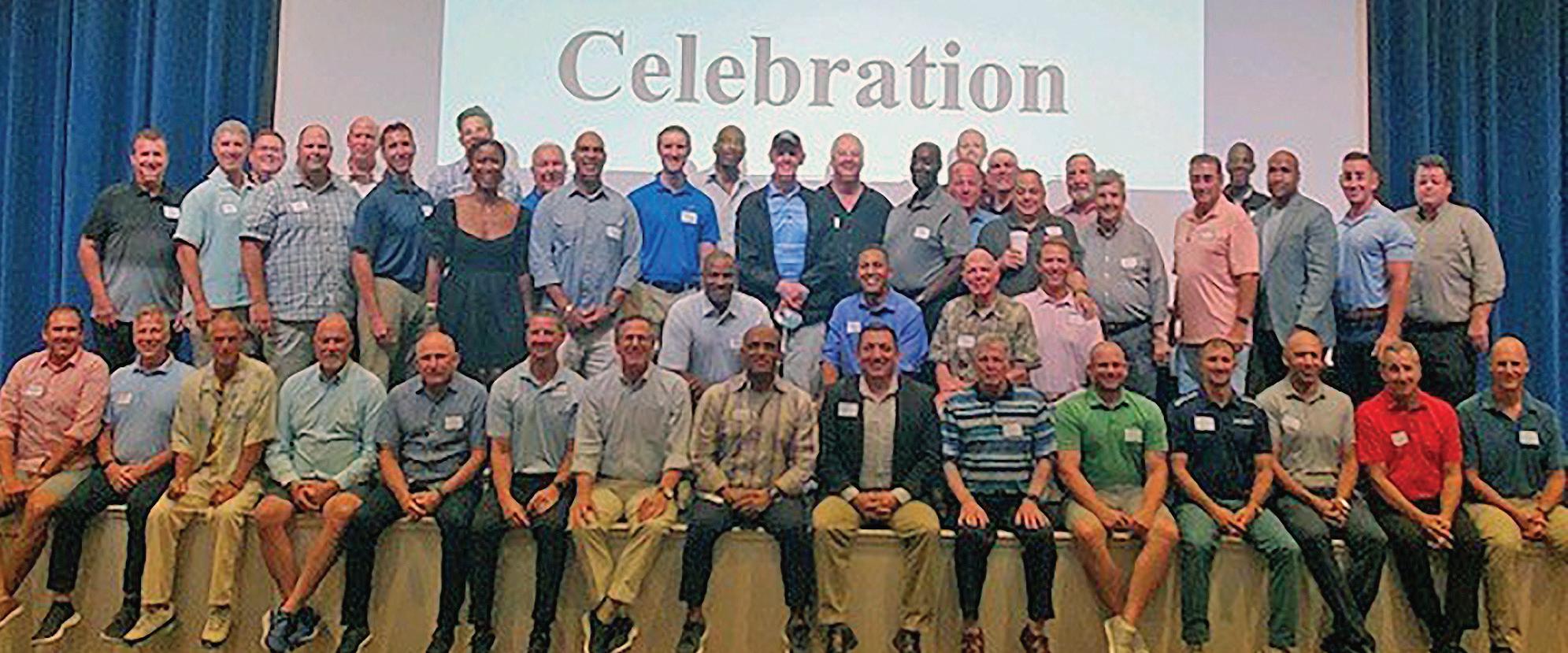
All There for Austin
Relatives, officials and friends from more than 15 states came to Greensboro, N.C., on Aug. 6 for a celebration marking Gerald Austin’s career in officiating. The former NFL referee and coordinator of football officials for Conference USA was the 2022 recipient of the Dave Parry Award. That honor is presented annually by College Football Officiating to a coordinator for exemplary professionalism, leadership and a commitment to sportsmanship on and off the field.
THEY SAID IT
“To our great players and our great fans: Welcome to opening night of the 2022-2023 NHL season. What’s better than this? Good luck to all players. Let’s have a great season.”
— Referee Chris Rooney, before dropping the puck for the season opener between Tampa Bay and the New York Rangers
© ISAIAH J. DOWNING-USA TODAY SPORTS
SOURCE: REFEREE SURVEY OF 57 OFFICIALS Will college
have
38.6 % POSITIVE 61.4 % NEGATIVE chris rooney THE GAG RULE WHAT PEOPLE ARE SAYING 10 | REFEREE January 2023 Tell Us What You Think Send email to letters@referee.com Send letters to: Editor, Referee, 2017 Lathrop Ave. Racine, Wis. 53405 Opinions expressed in “The Gag Rule” are not necessarily those of Referee. Unless otherwise stated, letters sent to Referee are intended for publication and become the property of Referee
“super conferences”
a positive or negative impact on officiating?








NBA Official Brown Dies Following Cancer Battle
ATLANTA — NBA official Tony Brown lost his fight with pancreatic cancer on Oct. 10 after an 18-month battle following his April 2021 diagnosis. He was 55.
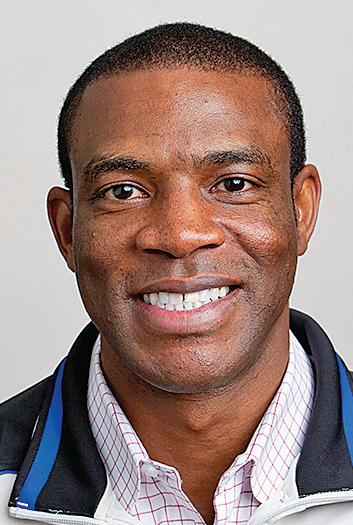
“We are and have been sustained by the consistent outpouring of love and support through this journey in developing strength, acceptance and peace,” Brown’s family said in a statement. “We ask that you join us in that spirit as we prepare to celebrate Tony’s life. Our biggest thank you to our village of family and friends, near and far, old and new. Your love is immeasurable.”
One of the top officials in the league, Brown officiated more than 1,100 games in 20 seasons as an NBA staff official. He worked 35 postseason games and made his NBA Finals debut at the conclusion of the 2019-20 season. A graduate of Clark Atlanta University, a Historically Black College and University (HBCU), he was also a member of the 2021 NBA All-Star Game officiating crew in Atlanta that honored HBCUs.
Following his Stage 4 cancer diagnosis, Brown missed the 2021 NBA postseason, but briefly returned
to work in the NBA Replay Center during the 2021-22 season. However, his health again took a turn for the worse prior to the 2022-23 season and he entered hospice care in his native Atlanta shortly before his death.
“Tony Brown was one of the most accomplished referees in the NBA and an inspiration to his colleagues,” said NBA Commissioner Adam Silver in a press release issued by the league. “After his pancreatic cancer diagnosis early (in 2021), Tony fought courageously through countless rounds of treatment to return to work this past season at the NBA Replay Center, demonstrating the dedication, determination and passion that made him such a highly respected NBA official for 20 years.
“The entire NBA family mourns Tony’s passing and we send our deepest condolences to his wife, Tina; their children Bailey, Basile and Baylen; and his fellow referees.”
In the weeks preceding Brown’s death, Clark Atlanta University and alumni created a scholarship in his name with the goal of raising $100,000 for a basketball scholarship endowment at his alma mater. It was announced in mid-October, soon after Brown’s passing, that $112,000 had already been raised for the scholarship.
Soccer Referee Killed in Canada
TORONTO — Canada’s soccer community was rocked Oct. 9 when a longtime referee was shot and killed attempting to break up a scuffle between opposing players at an indoor sports complex.
Edwin Farley Alvarado Quintero, 49, of Woodbridge, Ontario, was not the target of the fatal bullet, which was fired by a spectator. According to Fernando Ramirez, co-owner of La Liga Sports Complex, players were engaged in a shoving match. Quintero stepped in to break up the confrontation when the spectator fired a weapon, apparently aiming for one of the players. Reports did not indicate how many shots were fired. According to Toronto police, two other men were also shot and taken to a hospital, one with lifethreatening injuries.
As of press time, police had no suspects in custody.
Fellow referees posted tributes to Quintero on Facebook, noting he gave his all to the sport and was a loving father. A message posted before his death highlighted Alvarado’s contributions to the sport in his native Colombia, describing him
See “Shot to Death” p.10
THE WIRE
NFHS Rolls Out Bad Behavior Campaign
In an effort to curb bad behavior by parents and fans that’s driving sports officials out of the avocation, the NFHS launched a new campaign in October aimed at improving things at the high school level. The Bench Bad
Behavior campaign features a website — benchbadbehavior. com — with resources schools can use to promote improved behavior. The resources include PA announcement scripts, flyers, print and web ads, emails and player-parent contracts.
“Bad behavior by parents and other fans at high school sporting events is out of control,” said Karissa Niehoff, NFHS CEO, “and the NFHS
has declared that enough is enough. … We want officials to be respected so that sports can continue to be a part of our nation’s schools.”
NJSIAA Won’t Punish for Work Stoppage
The New Jersey State Interscholastic Athletic Association (NJSIAA) will take no action against the South Jersey Soccer Officials Association
(SJSOA) because of a partial work stoppage Sept. 19-20 in protest of unchecked bad behavior of high school soccer coaches. The SJSOA did not sanction the stoppage, which was suggested by longtime former board member Marc Block. Block reminded fellow referees that despite their
THE NEWS
12 | REFEREE January 2023
COURTESY OF NBA




























NATIONAL ASSOCIATION OF SPORTS OFFICIALS SAVE UP TO $35 OFF YOUR 2022 OFFICIATING TAXES NASO.ORG/JOINRENEW OR CALL 800-733-6100 NASO members receive a FREE digital Tax Guide! Join or Renew with NASO before December 31 to use the tax deduction on your 2022 offi ciating taxes.
Super Bowl Official, CWS Umpire Dale Williams Dies
PALM DESERT, Calif. — Former NFL Super Bowl linesman and College World Series umpire Dale Williams died Sept. 18 in Palm Desert, Calif., after a long battle with a respiratory illness. He was 82.
Williams officiated in the NFL from 1980-2003, earning postseason assignments to five Wild Card games, 12 Divisional games, three Conference Championships and Super Bowls XX in 1986, XXVI in 1992 and XXXVII in 2003.
He spent 32 years as a collegiate umpire, working 21 NCAA D-I regionals and eight NCAA D-I College World Series. He served as a coordinator of umpires for the Big West Conference, the Western Athletic Conference and the Pac-10 Southern Division. He also umpired at the 1984 Olympic Games.
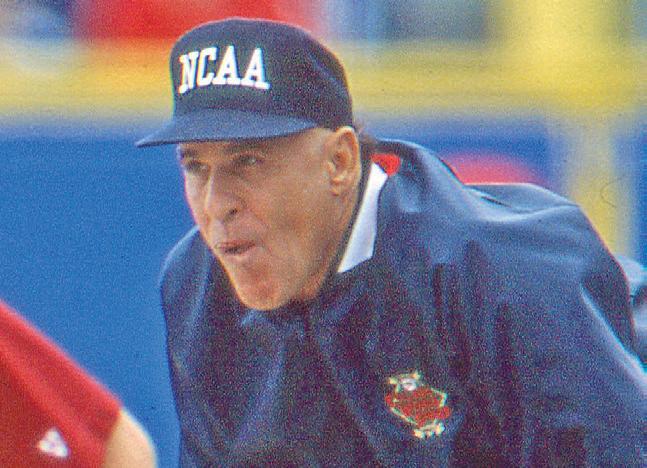
Williams was the recipient of the 2013 National Collegiate Umpire Award and inducted into the National College Baseball Hall of Fame.
“Everyone involved with the National College Baseball Hall of Fame is saddened by Dale’s passing,” said Mike Gustafson, Hall of Fame president and CEO, on MLB.com. “We send our deepest sympathies to all of Dale’s family and friends. Many of us were fortunate enough to get to know Dale over the years, and most
especially when he was in Lubbock (Texas). We’re glad to share a piece of his memory and that we were able to honor his contributions to the game we all love.”
Williams played baseball at California State University, Northridge (CSUN) back when it was San Fernando Valley State. He was inducted into the CSUN Hall of Fame in 1986.
“We are saddened to share that Dale Williams passed away peacefully in Palm Desert, California, on September 18, 2022, succumbing to severe respiratory and breathing issues that he battled for the last several years,” said the NFL Referees Association in a statement. “He leaves behind a daughter, and we ask that you keep her and all of Dale’s friends and family in your thoughts.”
No services were planned, the NFLRA said.
Shot to Death
continued from p.8
in Spanish as “a great human being who dedicated his life to his personal and sports growth, as well as his daughters and many other athletes.”
In an announcement on its website, Futsal Canada said, “We absolutely condemn in the strongest words possible this deplorable and cowardly act.” Futsal is an indoor version of soccer.
In an online statement, former Toronto Football Club star Dwayne De Rosario said, “Violence like this has no place in our sport at any capacity as it’s hard enough for the amount of abuse referees have to deal with for games that have little to no real meaning and to my understanding Mr. Edwin was not targeted but was trying to de-escalate the situation.”
Though Ramirez said he had only met Alvarado recently, he said the league has been playing at La Liga for about five years without issue.
“We’ve been open for over seven years and never had anything like this,” he said. “We cater to families and there were a lot of children at the game.”
A GoFundMe account has also been set up to help pay for Alvarado’s funeral costs.
CONTRIBUTING SOURCE: TORONTO STAR
THE WIRE
affiliation with SJSOA, they were independent contractors and could decide independently not to work. Despite some officials deciding not to work, the SJSOA staffed all 37 scheduled varsity games during that period and some of the subvarsity games. As a result, none of the schools filed a complaint with the NJSIAA that would have triggered a review of whether the SJSOA breached its affiliated agreement with the state organization.
High School Football Player Pleads in Attack
A former Spring Grove, Pa., high school football player who was charged with attacking a referee in an October 2021 game has taken a plea deal in an attempt to keep his college hopes alive.
Tyree Brooks, 20, entered a plea Oct. 24 to second-degree misdemeanor simple assault.
Two other counts of aggravated assault, a second-degree felony, and assault on a sports official, a
first-degree misdemeanor, were dismissed. Brooks is enrolled at Lackawanna College online, but unable to attend on campus due to the pending charges.
“We’re trying to reach a resolution that won’t destroy his future,” his defense attorney told the court, according to the York Daily Record
“The resolution won’t destroy his future, it is his behavior that will destroy his future,” Judge Harry M. Ness said in response.
Brooks was initially charged for rushing onto the field and attacking a referee; he had been ejected in the third quarter with two unsportsmanlike conduct penalties. The official sustained a two-inch cut on his head. Sentencing was scheduled for Dec. 20.
Two Graduate From Officiating M.A. Program
Two women will become the initial graduates from what is
THE NEWS 14 | REFEREE January 2023
DENNIS HUBBARD
BILL GREENBLATT/UPI/NEWSCOM
MLB Umpire Greg Gibson Retires
CATLETTSBURG, Ky. — After a storied 24-year career, MLB umpire Greg Gibson has announced his retirement following the 2022 season. The 54-year-old’s career consisted of three Wild Card games, 11 Division Series, five League Championship Series and the 2011 World Series between the St. Louis Cardinals and Texas Rangers. Gibson worked more than 2,700 games during his career.
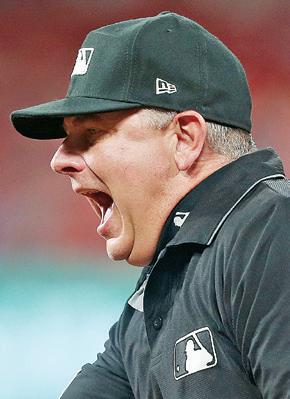
“For me, it was time,” Gibson said. “The day I know I can’t physically perform the job, I was getting to that point. I need to get out of the way and let someone else have the job.”
Gibson battled health issues during the 2022 season, which kept him mainly off the field and in the replay center. The decision to retire means he can focus on his family and his insurance business.
“Since 1999, I haven’t really been home,” he said. “I was tied to a schedule, tied to a lifestyle. Now, I’m
getting to live. Being a major league umpire is a great job. It’s also a tough regimen to follow and it’s getting harder. There are great perks to the game, my family enjoyed things and I got to do things. I am forever grateful to Major League Baseball, but it’s time to move on.”
Gibson started his professional umpiring career in the Appalachian League in 1991 at the age of 22. He broke into MLB in 1999 and was promoted to crew chief prior to the 2022 season. An injury sidelined Gibson for the COVID-shortened 2020 season and COVID issues contributed to his abbreviated 2022 schedule that ended in May. Highlights from his career include being the plate umpire for Randy Johnson’s perfect
game in 2004 and working the bases for Clayton Kershaw’s no-hitter 10 years later in 2014. He also had the opportunity to work the plate on Sunday Night Baseball on ESPN when Albert Pujols pitched, the one and only time the future Hall of Famer took the mound.
“Baseball taught me a lot,” he said. “Things I learned in baseball carried over into business life. I was fortunate to be a part of that fraternity for 24 years. I am going to enjoy watching the young guys on TV. This game is going to go on without all of us.”
During his career, Gibson spent a lot of time at the Harry Wendelstedt Umpire School training new umpires and words he heard from the namesake have stuck with him.
“Harry used to say, ‘You want to be retired longer than you worked,’” Gibson said. “If I make it to 25, maybe I meet Harry on the other side and say I did it.”
NBA Promotes G League Referees
NEW YORK — NBA G League referees Cheryl Flores, Robert Hussey, Matt Kallio and Dannica Mosher have been promoted to full-time NBA staff officials for the 2022-23 season, Monty McCutchen, NBA senior vice president, head of referee development and training, announced Oct. 13.
“Cheryl, Robert, Matt and Dannica have demonstrated the ability and professionalism required to be a full-time NBA officiating staff member,” McCutchen said. “We are excited for them to have reached this milestone in their careers.”
Flores and Mosher join Lauren Holtkamp-Sterling, Simone Jelks, Ashley Moyer-Gleich, Natalie Sago, Jenna Schroeder and Danielle Scott to bring the total of female full-time officials to eight for the 2022-23 season.
SOURCE: NBA.COM
considered the world’s first master’s degree program for sports officials. Christina Barrow and Clare Daniels completed the three-year program at Edinburgh Napier University in Scotland. Barrow works as an international officiating manager at World Netball and Daniels is a performance reviewer and coach for the rugby union’s Professional Group of Match Officials Team. Daniels is a former onfield rugby official.
Dr. Duncan Mascarenhas, associate professor and program leader for the master in performance enhancement in sports officiating, told the Belfast Telegraph, “It’s so exciting. I’m so pleased for them. … It’s a big statement for the university that we’re able to upskill these highprofile experts in their fields.”
NFL Checks AutographSeeking Allegation
The media quickly jumped to
the wrong conclusion when video surfaced of NFL side judge Jeff Lamberth getting something written down on a slip of paper from Buccaneers wide receiver Mike Evans in the tunnel immediately after an Oct. 23 game. Lamberth was not seeking an autograph as many outlets
claimed. The attention prompted an NFL investigation, which found no wrongdoing. Lamberth and Evans both went to Texas A&M. Lamberth was getting Evans’ phone number to pass along to a golf pro for lessons for Evans. Officials can seek autographs from players and coaches for charity auctions and events, but must make requests through the league office. SOURCES: NBA.COM,
REFEREE January 2023 | 15
BELFAST TELEGRAPH
SPORTS ILLUSTRATED, ABC27. COM, YAHOO.COM,
HELD BALL? HANG ON A SEC
Dual Control Doesn’t Mean the Need to Immediately Stop Play
By Joshua Schroeder
What is a held ball? Well, if you were to ask this question to a random fan from out of the stands you would most likely get a look of uncertainty. This is because many people, including officials, incorrectly refer to a held ball as a jump ball.
So, after clearing up this confusion by explaining the correct term is actually a held ball, you would most likely hear an answer something like this: It is when two opposing players each grab ahold of the ball. Simple, right? Except it is not that simple. Not only is there more to the held ball rule than two players grabbing the ball, but it is commonly misapplied as well. How can a rule that has a relatively short definition be so misunderstood? Let us break it down and find out.
The rulebooks define a held ball in two sections. The first states “a held ball occurs when opponents have their hands so firmly on the ball that control cannot be obtained without undue roughness” (NFHS 4-25-1; NCAAM/W 6-4.2a). The first part sounds exactly like the answer given by our random fan from the stands, right? However, the fan’s oversimplified description is missing a very key part of the definition listed above. This is where misapplication often stems from, because even though the rule does state opposing players must be holding the ball, it also states that control cannot be obtained without undue roughness. This very important part of the definition seems to be often missed or forgotten when assessing whether a held ball occurs because many officials blow the
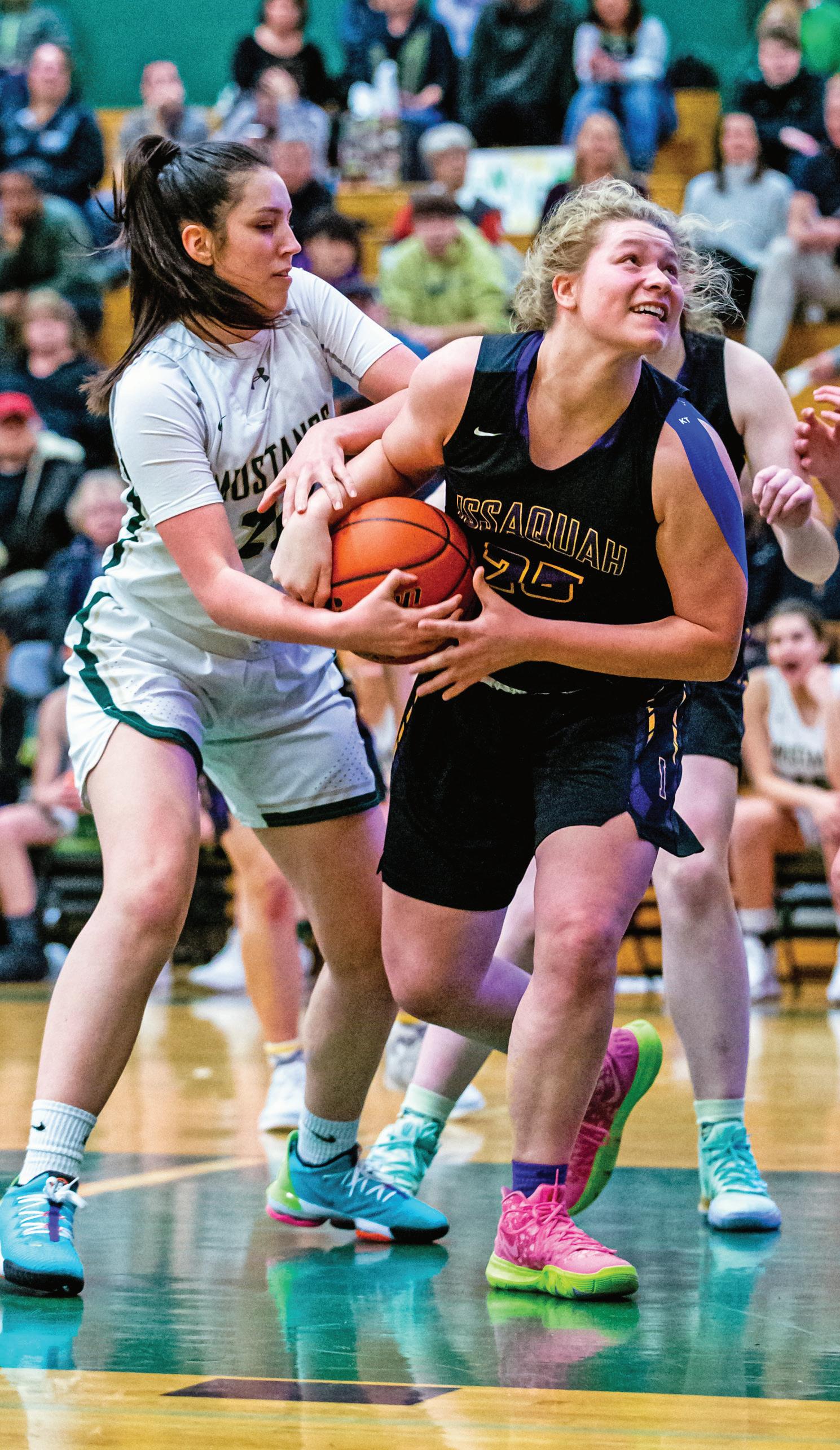
Is this a held ball? If the ruling official determines both players from opposing teams have their hands firmly on the ball and that neither player can obtain control without undue roughness, the answer is yes. Otherwise, play should be allowed to continue.
BASKETBALL RULES, MECHANICS, PHILOSOPHY 16 | REFEREE January 2023 EDITOR: SCOTT TITTRINGTON stittrington@referee.com
ADAM LU
whistle as soon as two players obtain possession of the ball simultaneously. But if the rule is utilized in its entirety, officials should instead wait and ascertain the severity of the struggle needed between the players attempting to acquire sole possession. Remember, dual control/possession is not, and should not be, the sole factor in determining a held ball.
Some officials make the claim that a quick whistle is good preventive officiating, eliminating rough play from ever occurring and thus ensuring the safety of the players. On the surface, this approach may seem to be a reasonable one. However, most of the time, when evaluating potential held ball situations, a quick whistle is unnecessary because instead of preventing rough play, it only takes the advantage away from a stronger player. In many cases, allowing players to tug at the ball a few times often results in one overpowering the other, securing control of the ball with relative ease. Only when, after a few moments, a stalemate seems inevitable or a rougher, more intense struggle ensues (undue roughness), should a whistle be sounded to stop play.
The second section of the held ball rule talks about stopping an airborne player from releasing the ball, stating, “a held ball occurs when an opponent places his/her hand(s) on the ball and prevents an airborne player from throwing the ball or releasing it on a try or tap for field goal” (NFHS 4-252). The NCAA wording is slightly different, specifying it is a held ball in this situation if “both players return to the playing court with both hands on the ball or the airborne player returns to the playing court never losing control of the ball” (NCAAM/W 6-4.2.b). This section is, in essence, creating an exception to the traveling rule. Officials know when a player with the ball jumps in the air, picking up the pivot foot, if that player comes back to the floor still holding the ball, and putting the pivot back down, it shall be ruled a traveling violation.


But if a defender is the reason the ball handler is unable to release the ball, a traveling violation would no longer be a fair ruling as it is no longer the fault of the airborne
player. Instead, as this definition describes, a held ball shall be ruled. It is important to note, it does not matter whether the airborne player was attempting a try for goal or simply passing to a teammate. What matters is the status of the ball and whether or not it was released from the airborne player’s hands.
When the ball is hit out of the hands of the airborne player, the play cannot be considered a held ball, nor can it be a traveling violation. This holds true even if the ball is only knocked loose ever so slightly or if the airborne player catches the ball again, while still in the air, and returns to the floor. Why? Because the rule explains the ball must be prevented from being released and a loose ball is a released ball.
The moment the ball is loose and out of the hands of the airborne player, even if only for a fraction of a second it, by definition, can no longer be considered holding the ball, and if that player is not holding the ball, there is no player control. So, when an opponent places a hand(s) on the ball and dislodges it from the control of the airborne player, control obtained by any player after that should be considered a new possession with the rules starting anew for that player.
Evaluating held ball plays can be challenging and just because the rule may be short in language, does not make it any easier to rule on. Focusing on the whole definition of the rule and not just the parts everyone knows will help in making a proper ruling. A quick whistle should never be the default to a held ball situation. Instead, the officials should make a quick assessment of the amount of struggle that will be accepted before a whistle is blown. Remember, basketball players are competing to win and will play hard to do so. For the same reasons that not all contact leads to a foul, not all dual possession/control plays lead to a held ball.
Joshua Schroeder, Schaumburg, Ill., is a certified state clinician and the founder of the Officials Institute, a nationwide online officials association and YouTube training channel for high school basketball officials.
BY THE NUMBERS
The percentage of NBA staff officials who are female with the addition of Dannica Mosher and Cheryl Flores to this year’s roster. Women now account for eight of the 74 full-time officials.
THEY SAID IT
“Technical fouls should be used to redirect focus. And if a player or coach can’t remain focused for their task, then maybe a technical foul has merit based on our standards. … A heavy hand with too many penalties would feed an authoritarian view of what passion looks like. And that’s why we’re constantly trying to find the balance.”
TOOLS
–Monty McCutchen, NBA senior vice president and head of referee development and training




of
Basketball Officials Quiz

Are you a high school basketball official looking to sharpen your rulebook knowledge now that you are in the heart of the 2022-23 season?
The 2022-23 Basketball Referees Quiz is available online at referee.com. The free 20-question, multiple-choice quiz focuses exclusively on the 2022-23 NFHS rulebook and is sponsored by the National Association of Sports Officials and is prepared by the editors of Referee magazine.
REFEREE January 2023 | 17
10.8
Copyright©2022 RefereeEnterprises,Inc.Allrightsreserved.CopythesequizzesforhandoutbutnotforresaleorpublicationwithouttheexpressedwrittenpermissionofRefereeEnterprises,Inc. QUIZ 2022-23 An official notices player knocking away the ball following a made goal and blows whistle. The same team had been warned the same behavior earlier in the game. What is the penalty? See Question 17. Sponsored by the National Association of Sports Officials and prepared by the editors of Referee magazine. 1 During the first half of the game, B2 is called for a goaltending violation during A1’s try for goal. The official scorer fails to record the two points that shall awarded to team A for that goaltending violation. Which the following is true of the scorer’s mistake? a. It can rectified any time until the referee approves the final score. b. be corrected during the first dead ball after the clock properly It must corrected before the half ends. must be corrected before the second half begins. 2 A player who has been withdrawn may re-enter during the next opportunity to substitute: a. the clock properly started following his her replacement. When the opponents have committed violation foul before the game clock has been properly started. When an official’s scorer’s error occurs reporting/recording foul which results in player being replaced. All of the above. 3 a throw-in touched the backcourt, which begins when an inbounds player legally touches the ball inbounds? a. The game clock only. b. 10-second backcourt count only. The game clock and the 10-second backcourt count. The game clock, the shot clock and the 10-second backcourt count. 4 A1 is fouled by B2 during an unsuccessful try for goal. Prior to A1’s free throw, A1 is assessed technical foul, which is A1’s fifth foul. Who shall shoot the free throw for B2’s personal foul against A1? A1. b. A1’s substitute. c. Any of the other four team A players as chosen by team For each situation below, decide which answer is correct for NFHS rules. (Answers on last page.)
TEST YOURSELF Should You Adjust Your Thinking?
In each of the following, decide which answer or answers are correct for NFHS, NCAA men’s and NCAA women’s rules, which might vary. Solutions: p. 85.
1. Team A is wearing white uniforms with blue trim. What color gloves may team A players wear during the game?
a. White.
b. Blue.
c. Black.
d. Any of the above may be worn as long as all teammates are wearing the same color.
e. Gloves shall not be worn regardless the color.
2. Which is true of leg tights?
a. They must be two-legged and of equal length.
b. All teammates must wear the same length tights.
c. Teammates may wear different colored tights.
d. The size of a school logo is limited to 2-1/4 square inches.
3. All of the following are true of the lane spaces and lane-space marks, except which?
a. Each lane-space mark shall be 2 inches by 8 inches.
b. Each lane space extends 36 inches from the outer edge of the lane lines toward the sidelines.
c. The lane-space marks must be of a contrasting color to that of the lane boundary lines.
d. There shall be three lane spaces available to be occupied on each side of the lane.
4. All of the following are true of logos on game shorts, except which?
a. There is no limit on the number of school logos on game shorts.
b. The size of school logos is limited to 2-1/4 square inches.
c. Shorts may have one manufacturer’s logo only.
d. The size of a manufacturer’s logo is limited to 2-1/4 square inches.
5. Which of the following types of logos are allowed on the face of a backboard?
a. A school logo and a conference logo throughout the season.
b. A national flag and a conference logo throughout the season.
c. A national flag and a conference logo for postseason only.
d. No logos are allowed on the face of a backboard at any time.
By René Ferrán
How many times do we remind ourselves during the pregame conversation that players adjust to how we’re calling a game, not the other way around?
I know I’ve heard that expression more than a few times during my 30-plus years as an official working basketball games. However, if that were the case, there’d be almost no need for us to get together as a crew during the game to discuss anything other than our postgame plans.
Kyle Bacon, an NCAA Women’s Final Four official who serves as director of training and development for the Northwest Women’s Intercollegiate Basketball Association (NWIBOA), sees that black-and-white statement as a more “scientific” approach to calling a game — enforcing the rules precisely as written, with very clear and rigid guidelines the crew will follow for 32 (or 40) minutes.
Then, there’s somewhat of an “artistic” approach, where officials get a feel for the game being played before them and call it accordingly.
“I have more faith in us as a crew to be more effective in adjusting than placing the sole expectation on the players adjusting,” Bacon said.
Thus, when Bacon talks to his crew in the pregame, he tries to establish a blueprint for calling the game that borrows from both approaches.
“There is more of an onus on us as the officials to be a bit more flexible,” he said. “We still have the professional responsibility to adjudicate the rules as written, but if we can use our ‘verbal whistles’ (i.e., our voices) to prep the kids early and consistently at both ends of the floor on what legality looks like, we can oftentimes initiate a cleaner, more ‘watchable’ game.
“I try and pregame my crew clearly and concisely on this
philosophy and how the consistent and early implementation of it can be of great value.”
Another veteran NCAA official, Kevin Brill, agrees that while players need to adjust to officials who are “calling the rules as written” and enforcing the points of emphasis, that doesn’t mean we don’t make in-game adjustments as well.
“I would say we adjust the way we call the game based on crew feedback and analysis,” Brill said. “For example, the crew chief says that we aren’t calling the points of emphasis in the post and we need to call the first foul. We may go out and start the second half with a clean-up post foul, and now the players have to adjust in the post.”
He added that talking to the players helps them adjust as well.
“The best officials are the ones who can get players to adjust their play without blowing the whistle,” Brill concluded.
Bacon and Brill agree wholesale adjustments to how a crew calls a game should never be necessary. “I would hope a crew isn’t so bad that we have to change completely at halftime,” Brill said.
However, when working as the crew chief, each watches for certain “keys” early in a game that might necessitate a tweak.
For Bacon, his two keys are if the game is too physical and if the crew is calling the game tight or loose. Then, he considers how impactful he feels these factors have been to the game before deciding how quickly he gets his crew (or perhaps just one partner) to adjust.
For example, if the teams aren’t listening to a crew’s verbal cues it might be time to put air in the whistle (the “clean-up fouls” Brill referenced) to get the message across and force the players to adjust their level of physicality.
“Clean-up fouls — in the post, on rebounding, handchecking, enforcing
BASKETBALL 18 | REFEREE January 2023
flagrant fouls correctly — are the plays that make players adjust the most and make our games better,” Brill said.
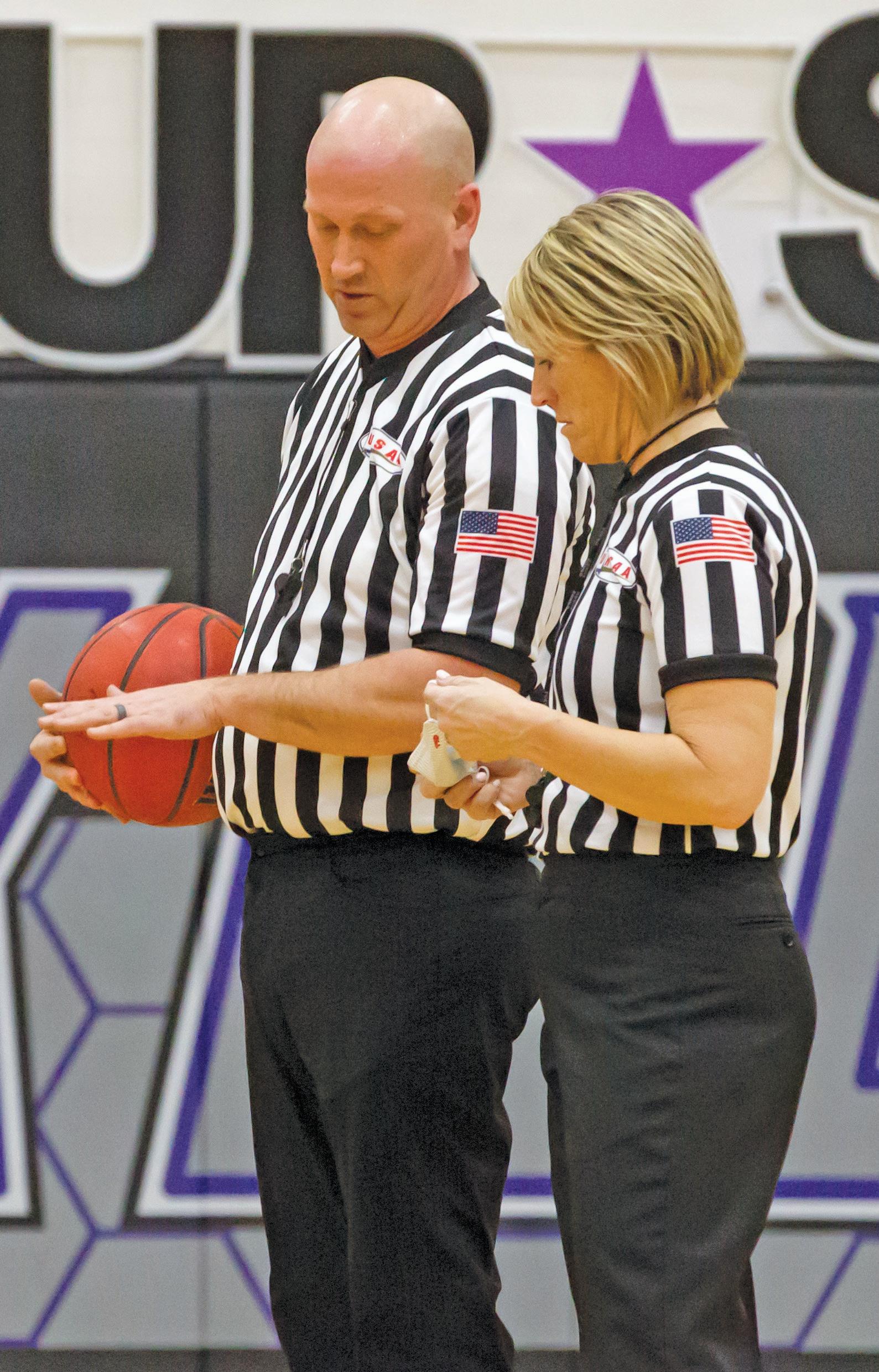
For referees to deliver their message more effectively, Bacon said they should take ownership for these deficiencies, regardless of who might be the one who needs to adjust their playcalling.
“Tell them how you are wanting to adjust and do better in X/Y/Z areas,” Bacon said. “The assertiveness and directness in which you share the needed adjustments with the crew is directly related to the rapport and familiarity you have with your partners.”
Brill said one of his biggest keys is whether the crew matches call selection at both ends of the court. After all, most coaches cite their No. 1 pet peeve is inconsistency from play to play, game to game. If we call obvious fouls and violations in our primary while correctly judging when to go into our secondary coverage area to make a call, that shouldn’t become an issue.
But if Brill notices that isn’t the case, he uses the next timeout as an opportunity to get everyone back on the same page.
However, Brill quickly points out how “one play can change the game” and force the crew to adjust on the fly. He provides as an example the crew missing an intentional, disqualifying or flagrant foul, resulting in retaliation that the crew must act upon.
“We aren’t being consistent, and now the game gets more physical and rougher,” he said. “Now, as a crew, we have to put more whistles into the game to control emotions and rough play. We are enforcing the rules more literally, so players adjust and bring the temperature of the game down.”
So, next time you hear in your pregame that players adjust, not the crew, remember it isn’t quite that simple. It’s also about taking the temperature of your game and determining that slight adjustments in playcalling could clean up player behavior and better your game.
“If we have a unified goal of how
and what we want to do as a crew and how that translates into us calling the game, I think the game could and should be a series of small tweaks and adjustments,” Bacon said. “The more experienced we are as officials, the
more proficient we become at making the game a quality finished product.”
René Ferrán is a freelance writer and editor who lives in Portland, Ore. He officiates high school basketball and baseball, as well as youth soccer.
REFEREE January 2023 | 19 BOB MESSINA
Officials often say that it’s the responsibility of the players to adjust to the game as it’s being called. However, if either James Morgan, Brigham City, Utah, or Jamie Phippen, Harrisville, Utah, sees an area where their crew needs to adjust, they need to communicate that and get everyone on the same page.
CASEPLAYS
Movement Around Center Jump Circle
Play: When the referee is ready to make the toss for the game’s opening jump ball, nonjumper A1, who is located (a) on the center circle, or (b) 4 feet away from the center circle, changes positions by shifting several steps to the player’s right. In (a), A1 remains outside the center circle, and (b) remains 4 feet away from the center circle. The referee then tosses the ball. Has A1 violated? Ruling: In (a), when an official is ready to make the toss, a non-jumper may not change position around the center circle before the ball has left the official’s hand, and thus, A1 has committed a jump ball violation. In (b), a non-jumper who is located 3 feet or more outside the center circle is not subject to the same restrictions as in (a), and thus, A1’s movement is legal (NFHS 6-32, 9-6, 6.3.2; NCAAM 9-8.1.c, 9-8.1.e, AR 229; NCAAW 9-8.1.c, 9-8.1.e).
Lost Contact Lens
Play: A1 loses a contact lens during live play and notifies the nearest official. The official stops play so they can search for the lost contact lens. How long shall team A be allowed to search for the contact lens? If it takes longer than one minute, or longer than some other designated amount of time, shall team A be charged with a timeout? Note: Team A’s head coach does not wish to keep A1 in the game after finding the contact lens; he or she only wishes for the contact lens to be found. Ruling: Officials are allowed to stop play if a contact lens is lost, so the stopping of play was correct. There is no rule that specifies a limit to the amount of time that may be spent looking for a lost contact lens, nor is there a need to call a timeout if there is no desire to allow A1 to remain in the game after the found contact lens has been replaced. The search for the lost contact lens shall continue, and no timeout is required (NFHS 5-8-3, 5-11-4 Exc. a; NCAAM/W 5-11.2.b).
Don’t Allow Indirect T’s to Confuse You
Can one foul during a high school basketball game ever be classified as two different fouls in the scorebook?
The answer is yes, and it’s an important distinction for high school basketball officials to understand in order to keep the team foul count correct and avoid a possible correctable-error situation.
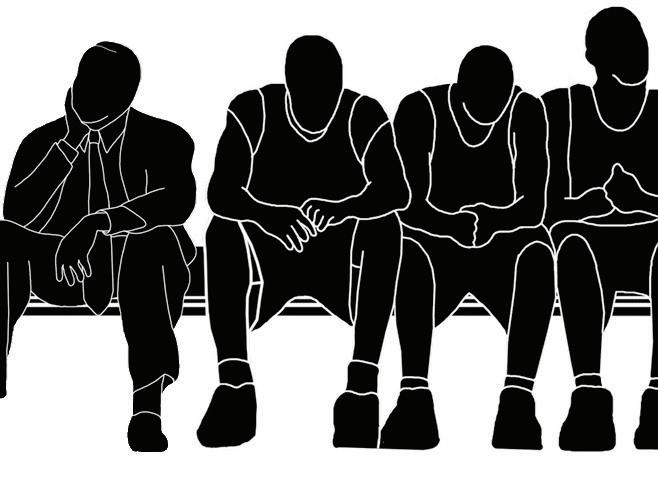
When an official assesses a technical foul to an assistant coach, bench personnel or a disqualified player on the bench, that foul is a direct technical foul to the person who receives it (NFHS 10-5). However, it is also an indirect technical foul assessed to the head coach of that team, and both need to
be recorded in the scorebook.
The logic between the two separate penalties is actually pretty simple: In addition to the person who committed the infraction being penalized (with a direct technical foul), the head coach must receive some type of penalty for failure to control the behavior of the assistant coaches and/or bench personnel on his or her bench (with an indirect personal foul). Think of it this way: If a parent and child walk into a store and the child decides to shoplift a handful of candy, the child is going to face consequences for committing the crime, but the parent is also going to receive some blame for failing to
See “Indirect T’s” p.19
BASKETBALL 20 | REFEREE January 2023
YOU SUCK REF!!
If bench personnel is assessed a technical foul during an NFHS game, the foul is assessed directly to the perpetrator and indirectly to the head coach as well. However, the foul is only counted once as a team foul against the offending team.



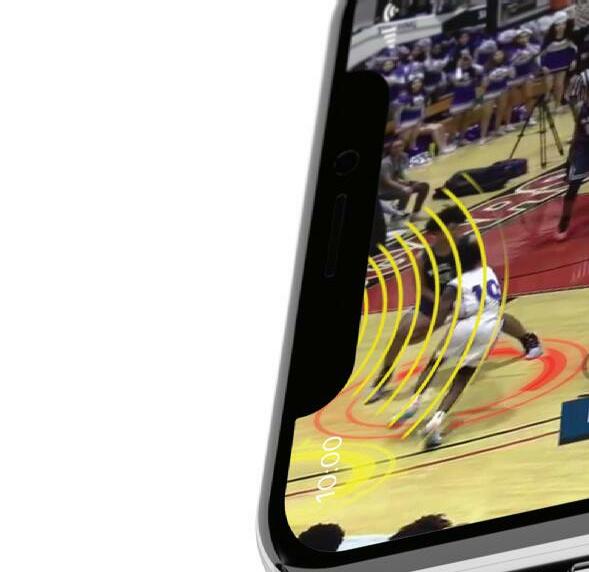


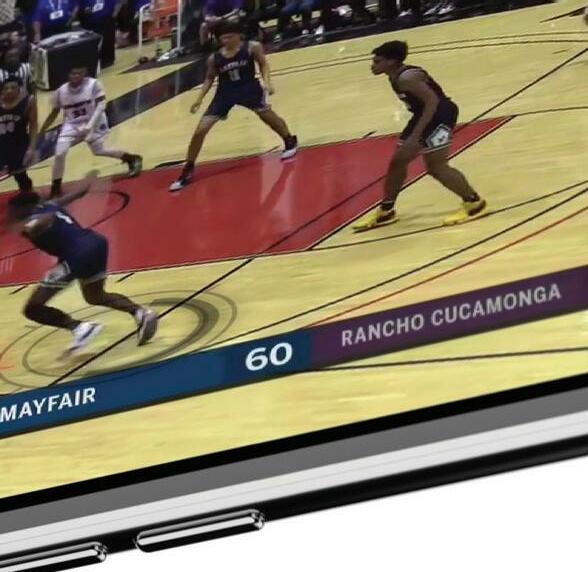








ORDER TODAY AT /BASKEtBALL FAST•EASY•DIGITAL THE SMART WAY FOR BASKETBALL OFFICIALS TO STAY FOCUSED IN THE OFFSEASON Featuring EIGHT fully immersive units, these interactive multimedia study guides deliver a massive amount of training right from your phone or tablet. You’ll get tons of video, snapshot graphics and quick-hitting tutorials in every unit to keep you fresh, focused and at the top of your game all year long! ON TOPIC DIRECT TO YOU SMARTPHONE/TABLET Topics Include: Pivot Foot Recognition In-Depth All About Bench Decorum Offense-Initiated Contact: The Essentials Defensive Verticality: What You Need to Know! Everything on High Ball Screens Clock Awareness and You! Focus on Preseason & Postseason $2495 ONLY for all 8 units! PLUS PRINTED GUIDE
NFHS Interpretation Addresses Backcourt Count Discrepancy
The NFHS Basketball Rules
Committee voted in the spring of 2021 to allow the use of a 35-second shot clock by state adoption beginning with the 2022-23 basketball season.
Now, a little more than one year later, comes an official NFHS rules interpretation necessitated by that decision.
According to new language included in the 2022-23 NFHS rulebook and highlighted to ensure officials take note, in those states using the Shot Clock — State Association Adoption spelled out on pages 71-73, the 10-second count “shall begin when the ball touches, or is legally touched by, a player on the court, in the backcourt on a throw-in or on player control on a rebound or jump ball.” That language mirrors rule 9-10 in the NCAAM and NCAAW rulebooks. The rationale behind that wording is that, at the NFHS level, the 35-shot clock also begins on the touch. This allows game officials to know that, if the shot clock reaches 25 and the ball remains in team A’s backcourt, a backcourt violation has occurred.
Just one problem, however: This is not the rule at the NFHS level when no shot clock is being used.
For that, we turn to rule 9-8, which reads, “A player shall not be, nor may the player’s team be, in continuous control of the ball which is in the team’s backcourt for 10 seconds.”
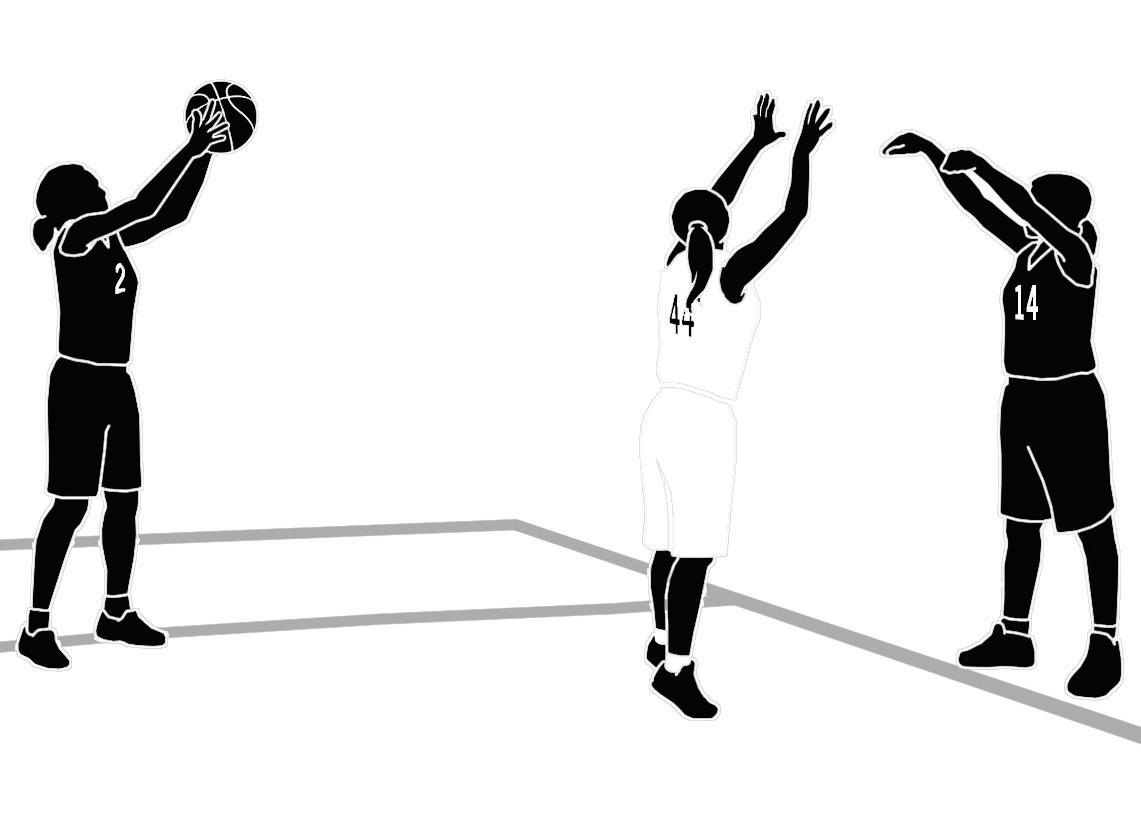
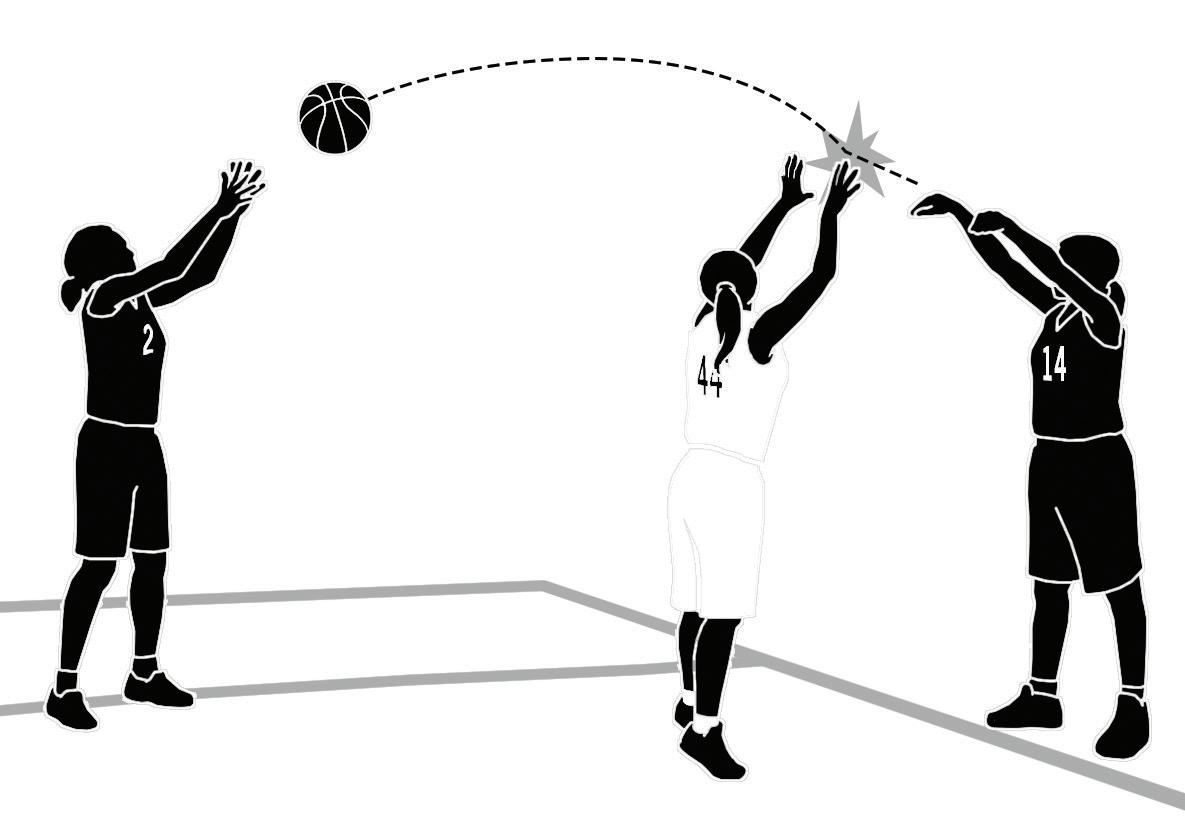
The key word here is “control.” The backcourt count does not start when the ball touches, or is legally touched, by a player on the court after a team A player releases the throw-in (PlayPic A). It starts once the ball is controlled by team A in its backcourt (PlayPic B).
Thus, the following official NFHS interpretation:
Play: Teams A and B are using a 35-second shot clock. A1 inbounds the ball in the backcourt after a made try by team B. A2 tips the inbound pass, knocking it away, but then chases it down and gains control. The official uses the 35-second shot clock to administer the 10-second count which started on the touch by A2. Ruling: Correct procedure. Comment: When utilizing the 35-second shot clock to administer the 10-second backcourt count, the 10-second count shall begin when the ball touches or is legally touched by a player on the court. When a shot clock is not being used, the 10-second official’s count begins when A2 gains control.
Three additional official NFHS
interpretations were issued ahead of the season:
•Officials have jurisdiction during the pregame related to illegal equipment that has the ability to increase risk. For instance, if a player is wearing illegal earbuds to listen to music during warmups, officials should identify it and address it with the head coach, who should take steps to correct it.
•Decorative accents (such as a paw print in place of the letter “o”) are allowed as part of the identifying name or abbreviation above the number on the front of the team jersey. Images of school mascots or references without lettering identifying the school are not compliant and would result in one technical foul regardless of the number of offenders.
•If hair beads become unsecured from the head or dislodge and fall on the court, no penalty is assessed. Play shall be stopped, and if the hair beads cannot be secured iimmediately, the player shall be removed from the game.
For those full interpretations, log on to nfhs.org/activities-sports/ basketball and scroll down to the Basketball Resources/Rules section.
When the ball is touched by a defender on a backcourt throw-in, when does the 10-second backcourt begin? A new NFHS interpretation explains that it depends on whether the game involves a shot clock or not.
BASKETBALL 22 | REFEREE January 2023
A B
monitor the minor for whom he or she is legally responsible.


So, back to basketball. When this situation occurs, and when it comes to the team foul count, the foul is only counted once, as a result of the direct technical foul portion of the penalty (4-19-13; NFHS Technical-Foul Penalty Summary Chart). It is not overlooked altogether due to the indirect technical foul portion of the penalty (officials often apply rule 4-19-13 incorrectly and come to this conclusion). Likewise, it is not counted twice, even though it is recorded as two separate fouls in the scorebook.
The reason it is recorded twice is because any combination of three technical fouls, direct and indirect, assessed to the head coach results in the coach’s ejection from the game, and there must be an official record of these infractions. It is not done so as a matter of double jeopardy when it comes to the team foul count.





So how does this possibly foster a correctable-error situation?















Play 1: While team B is in control of the ball in the fourth quarter, a team A assistant coach is assessed a technical foul. Prior to the foul, team A had committed four team fouls. The scorer notes the direct technical foul for the assistant coach and the indirect technical foul for the head coach in the scorebook, and team B shoots two free throws. After the division-line throw-in by team B, A1 commits a personal foul against B2. The scorer informs the officials that is the seventh team foul on team A and B2 is entitled to the one-and-one free-throw penalty. Ruling 1: Incorrect. The technical foul was team A’s fifth team foul, and the ensuing foul by A1 following the throw-in was team A’s sixth team foul, leaving team B one shy of the bonus. If the officials award a free throw(s) to B2, this is an unmerited free throw and becomes a correctable-error situation.
Here is the “opposite” example that also would be problematic: Play 2: While team B is in control of the ball in the fourth quarter, A1, who is sitting on the team A bench, is assessed a technical foul for unsporting behavior. Prior to the foul, team A had committed five team fouls. The ruling official tells the scorer the technical foul does not go against team A’s team foul count because it is charged indirectly to the head coach. After the free throws for the technical foul and the ensuing throw-in, A2 commits a personal foul against B3. The scorer tells the officiating crew this is team A’s sixth team foul. Ruling 2: Incorrect. The failure by the officiating crew and the scorer to apply the direct technical foul against A1 to the team foul count has led to the failure to award a merited free throw(s) to B3, as that should be team A’s seventh team foul. This is now a correctableerror situation.
INDIRECT T’s continued
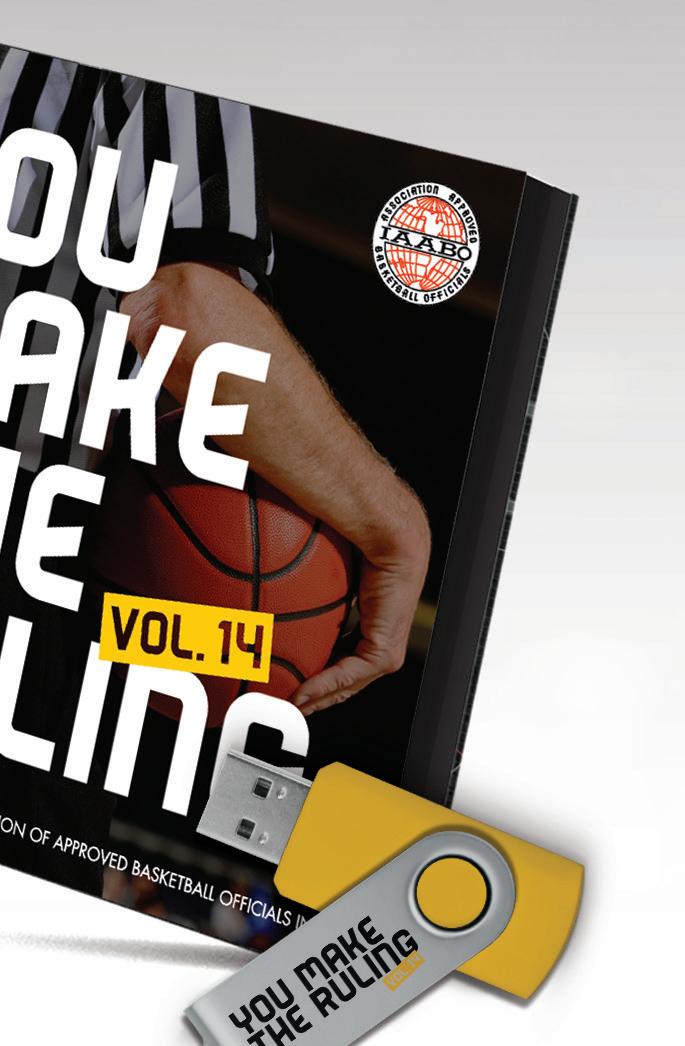
p.16 TAKE ANYWHERE USE ANY DEVICE GET IT TODAY STORE. More than an hour of real high school basketball video plays produced by the undisputed experts at IAABO. All the hot topics and di cult calls are covered so you can prepare and refresh for everything you’ll face on the court. VIDEO PLAYS THAT WORK AS HARD AS YOU DO 60+ MIN OF VIDEO PLAYS. AVAILABLE ON USB DRIVE OR DIGITALLY ON ANY DEVICE THROUGH THE REFEREE DIGITAL PORTAL APP. $2495 $2395
from
GOT


























MES T








 BY PETER JACKEL
HESTON QUAN
24 | REFEREE January 2023
PICK A SPORT, AND CHANCES ARE NCAA MEN’S BASKETBALL OFFICIAL TONY PADILLA HAS TASTED SUCCESS
Just back from Winchester Country Club, where he achieves excellence on the links when he’s not doing the same on college basketball courts as an official, Tony Padilla was upset with himself. He had long ago mastered this golf course in Meadow Vista, Calif., but he didn’t on this July day. At least he didn’t by his standards. “On the first hole, I drove it perfect and hit a good iron shot, had a 20-footer and just didn’t make it,” Padilla lamented. “The next ball, I hit on the edge of the green and three-putted from there. I hit a bad first putt, so I made a bogey there.” Padilla went on to describe his round from hell, relatively speaking, in remarkable detail, but we’re going to cut to the chase and let you in on a little secret here: So many others would have gladly taken whatever Padilla shot that day. But by the exacting
standards of this perfectionist who admittedly has “borderline OCD (obsessive-compulsive disorder),” it sucked. He demands nothing but the best from himself no matter what he pursues and that covers a lot of territory.




Before he established himself as one of the best college basketball officials working today, he came within one stroke of qualifying for the 1998 U.S. Open at the Lake Course of the Olympic Club in San Francisco — fewer than 100 miles from his Sacramento home. And even as he advances in years — he turned 60 on May 5 — he can still put away his clubs during every college basketball season and then quickly regain his mojo on the links once March Madness fades away. This jack of all trades also worked as a bond bailsman, although he laments that business isn’t what it used to be, and even pitched batting practice for the Sacramento Rivercats, the San Francisco Giants’ Triple-A affiliate, from 2015-19.
Chances are Padilla made another 30-minute ride from his home the day after his challenging round and brought the Winchester Country Club to his knees. Why? Well, that’s just Tony. Inspired to succeed by the memories of his just-enoughto-get-by efforts in high school and college some 40 years ago, this is a guy who burns to be the best at whatever he does, especially as a basketball official. That’s underscored by his three Final Four assignments since 2016. From locking in with laser-beam intensity on plays and seeing things that so many others don’t to disarming overheating coaches with candor after a rare blown call, to driving himself to watch more film than Leonard Maltin, Padilla is right up there with the best. What’s more, at 5-foot-10 and 170 pounds, he still runs the floor as swiftly as officials half his age.
“Tony is an interesting cat,” said retired official Dick
Cartmell, one of Padilla’s most trusted mentors. “He does a lot of stuff. He’s very diversified and he’s good at most of it. He’s just one of those talented guys who can do a lot of things very well.”
Said official Randy McCall, “The thing that jumps out at me about Tony is he’s a really good dude.”

Which brings us to another aspect about Padilla. He has been happily married for 29 years to his wife, Kami, who long ago embraced his quirks. Tony expounded on her virtues at length during an interview for this story, yet he still wasn’t satisfied. True to his nature, he followed that up with an email in which he wrote, “I don’t think I went overboard enough on how grateful I am for my wife. She does so much for me when I’m home that it enables me to just rest and relax while I’m here. I’m borderline OCD and when I get home, she does all my laundry exactly how I like it and never complains. She also has been amazing raising our children! Especially during the basketball season when I am basically an absentee parent.”
The truth is, Padilla is never an absentee parent, even when he’s hundreds of miles away working another game in some frenzied arena during a long basketball season. His first two children — son Zach, 28, and daughter Abby, 23 — earned college degrees and are now forging successful professional careers of their own. Right behind them is daughter Carli, 19, who left behind the California sun this fall to pursue neuroscience at Loyola University of Chicago. Could it be that they succeeded after being inspired by a father who taught himself to succeed? We’ll let Zach, who earned a degree in communications from Oregon State and now works in advertising in Houston, answer that question.
REFEREE January 2023 | 25
MES
HE’S GOT GAMES
“Growing up, my dad would put me in really tough situations,” Zach said. “Whether it was sports, school or anything that came into my life, my dad was there watching and seeing how I would react. Sometimes it was great and sometimes it wasn’t so great. When I was younger, I would always ask myself, ‘Why is he doing this?’ or ‘Why do I have to do it this way when everyone else is doing it that way?’ But my dad would always ingrain in my head, ‘There are two ways of doing something: the right way and the wrong way. No in-betweens.’ And now at 28 years old with everything I have achieved in life, I’ll sometimes look back at those two tough situations I was in at 10 years old and say to myself, ‘I get it now.’”
It was a far different dynamic for a young Tony. He was born in Klamath Falls, Ore., the eldest of Jesse and Karen Padilla’s three sons, in 1962, and the family relocated to Sacramento three years later. Jesse and Karen divorced in 1979 and Padilla rarely sees his father, who relocated to
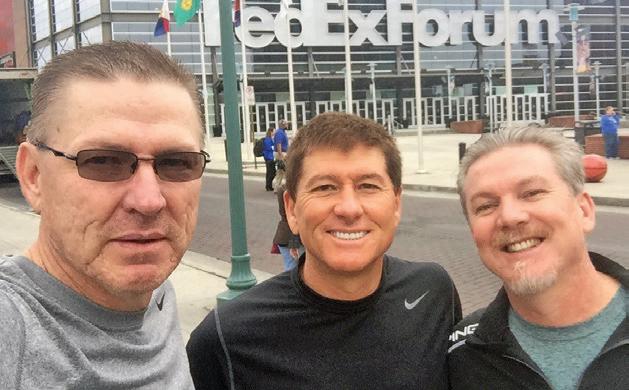
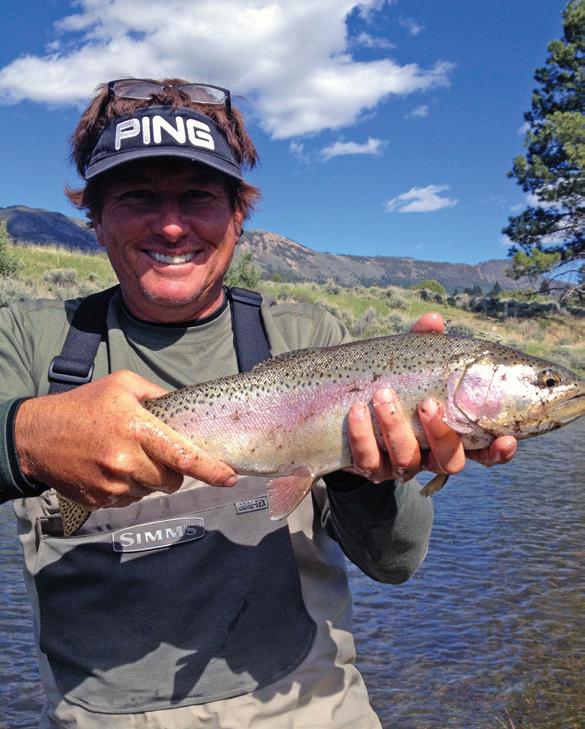
Mexico years ago. If Padilla had an identity when he was barely cutting it as a student at Jesuit High School in Carmichael, Calif., just outside Sacramento, it was as a gifted athlete. As a senior in 1980, he set the California high school stolen base record with 48 in 31 games. “I wasn’t fast. I was just blessed with a good sense of awareness of when to go,” he said. He was also a disciplined hitter who drew 46 walks that season. Before that, he was an exceptional youth bowler, but there were hints of his perfectionist nature even then. “I won the city championship when I was 10 and I was averaging 202 a game,” he said. “That’s unbelievable for a 10-year-old. I got nominated for bowler of the year and I’ll never forget this — I was so mad! I went to the ceremony and I didn’t win and I was like ‘OK.’ So then when I was 11, I bowled again and I had another good year. I was nominated again for bowler of the year and I didn’t win again. Then when I was 12, I bowled like a 670 series in the city championship and was bowling in like four or five bowling leagues. I got nominated for bowler of the year, I went to the ceremony and I did not win. I turned to my mom and said, ‘I am never bowling again,’ and that was
(Above) Tony Padilla is shown with his family during a fly fishing/camping trip. From left are Padilla, youngest daughter Carli, son Zach, mom Karen, youngest brother Jeff and middle daughter Abby. (Left) Padilla is shown with his brothers Michael, left, and Jeff, who came to watch him work at FedEx Forum in Memphis, Tenn.

it. I never bowled again after that.”
That uncompromising desire was not evident with Padilla in the classroom, either in high school or when he moved on to Gonzaga University from 1980-84. B’s and C’s were OK as long as he stayed academically eligible to be a menace on the basepaths. In retrospect, it created a careerdefining motivation for him. Remembering his lackluster academic achievements to this day as the biggest regret of his life, Padilla has used those memories for inspiration. He demands the best from himself with a relentless work ethic. And nearly a half-century after he was first attracted to basketball as an 11-year-old boy watching All-American David Thompson and North Carolina State topple Marquette in the 1974 NCAA championship game, Padilla has firmly established an identity of his own in the college game.
“I don’t take a game off,” he said. “This is just how I am. I’m one of these guys where I don’t take a night off, I don’t take a play off because this is how I feel: No matter what game it is, you owe it to those coaches, those players and the universities to do the very best that you possibly can because that is the most important thing in those players’ and coaches’
26 | REFEREE January 2023
COURTESY TONY PADILLA
lives. That’s the most important thing — that night and that game. If it’s that important to them, then it should be that important to me and I really believe that.
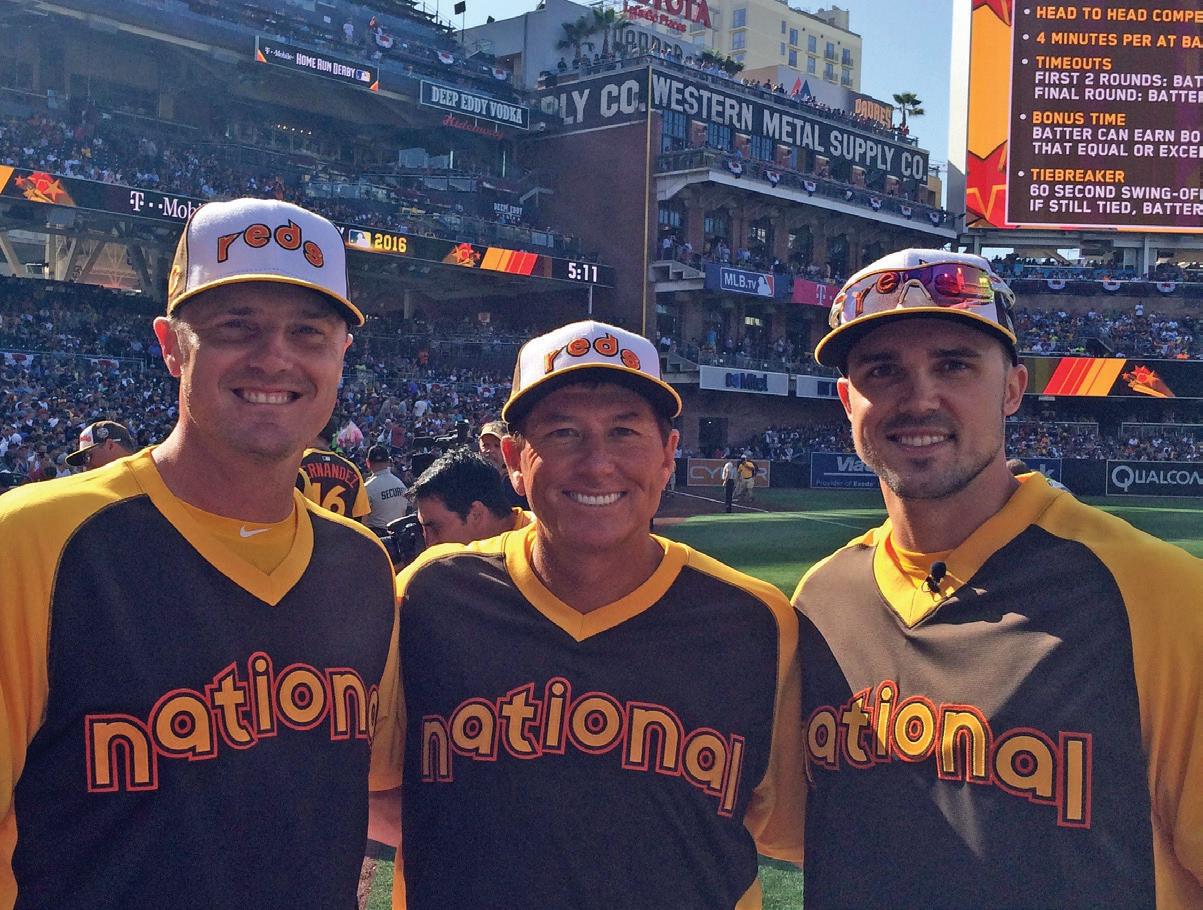
“So let’s say I work a game on a Tuesday night. I go back to the hotel and I watch the game because it’s still familiar in my brain. Then on the plane the next day, I’ll watch the game again. And I’ll clip plays. And I’m very, very critical of myself. And then I get to the next city and I prepare for the next night. So I watch every game at least twice.”
That quest for excellence has been evident even from the beginning of Padilla’s career as a Division I referee, as exemplified by this story: He was still a relative unknown when longtime official Verne Harris worked with him for the first time in 2005. Did Harris, who had just worked his first Final Four in 2004, have some reservations about working with two relative unknowns? Certainly. But not for long.
“I had no idea who Tony was and I was working in the Pac-10,” Harris said. “I get to the game and I said, ‘S---! I’ve got this one guy who doesn’t work many games and then I’ve got this dude I don’t know and on top of that, it’s the Cal-Stanford
game, which is just always a bitch game.’ I said to them, ‘With all due respect, I don’t know who the hell you are.’ We go out there and absolutely kill it! The coaches didn’t say anything and it was totally unbelievable. At halftime, I come off the court and the commissioner is high-fiving me! From that point on, Tony just took off. That was his big break and his schedule increased unbelievably after that.”
That’s underscored by his resume. Since being hired in Division I by the Big West Conference in 2002, he has officiated 13 NCAA Tournaments, nine regionals and three Final Fours (2016, ’17 and ’20). He has also earned assignments in six Pac-12 Conference tournament finals. Liberally borrowing the best qualities of officials such as Cartmell, McCall, Scott Thornley, John Higgins and several others over the years, Padilla has earned a high level of respect among his peers.
“The thing that sticks out in my mind is he’s so focused,” said former Pac-10 coordinator of officials Bill McCabe. “You can tell even during a timeout. The other officials are getting water or whatever and he’s standing there and he’s watching both huddles. All you have to do is
watch him and you’ll see how intense this guy is. Therefore, he doesn’t miss many calls. He’s one of the best playcallers in the business. Part of that is a talent you develop and part of it is just wanting to do it. There’s some good playcallers around, but nobody as good as him.”
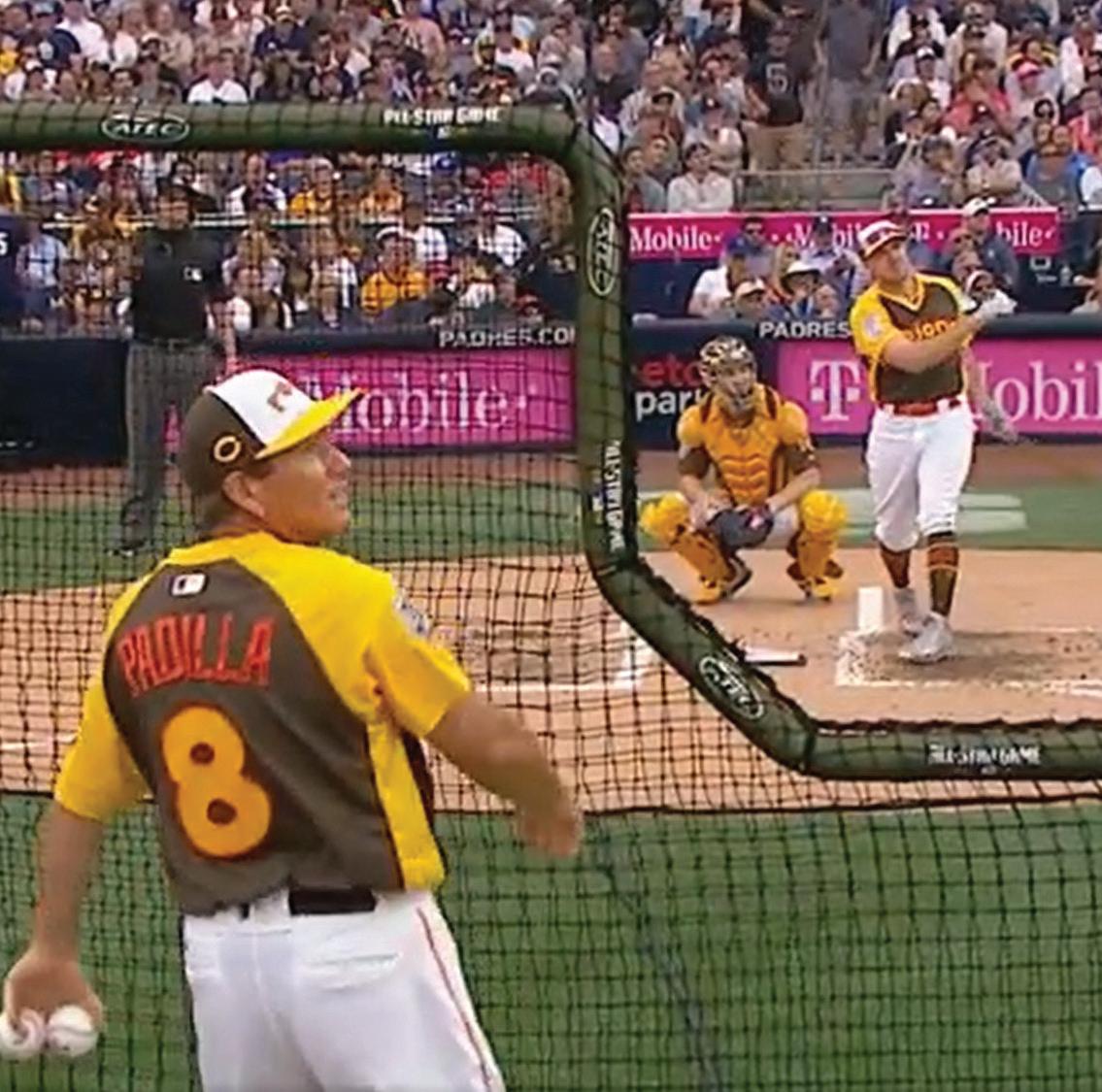
What’s more, when the heat is at its most intense, Padilla is at his best. John Adams, former NCAA national coordinator of men’s basketball officiating, has witnessed that many times.
“He was the guy who would solve the problems and every game has problems,” Adams said. “And from my on-site, personal observations, he always does a hell of a job handling problems.”
No one’s perfect, of course, and that includes Padilla. But when he does make a mistake, he owns up to it, uses it as fuel to get even better and then moves on. One enduring example was on Jan. 12, 2006, when UCLA defeated Washington State, 63-61, at the Pauley Pavilion in Los Angeles. It was Padilla’s second year in the Pac-12.
“I no-called a play that absolutely needed a whistle,” Padilla said. “It was clearly a charge and, honestly, I had the best look at the play and for some reason, I just froze. And I should have been the guy who had the whistle. I remember
REFEREE January 2023 | 27
YOUTUBE: MLB; COURTESY TONY PADILLA
Padilla served as the pitcher when Cincinnati’s Adam Duvall participated in the 1996 All-Star Game Home Run Derby at Petco Park in San Diego. (Above right) Padilla with the Reds’ Jay Bruce, left, and Duvall, right.
“There’s some good playcallers around, but nobody is as good as him.”
— Bill McCabe
HE’S GOT GAMES
getting a call from my boss, who was Lou Campanelli at the time, and he said, ‘Why didn’t you have a whistle on that play?’ I said, ‘You know what, Lou? I don’t know why, but I should have had a whistle.’ It wasn’t like it was a bad conversation, but it was like, ‘Here’s my boss calling me and telling me I’m not doing a very good job.’ And I told myself right there, I’m never ever, ever going to put myself in a situation where my boss is going to call me again.”
There was another instance during a recent conference tournament when there was just the opposite situation for Padilla. But before the figurative fire started getting out of control in that game, he handled it with just the right touch of candor and humor.
“There was a play coming to me and it was probably a foul on the defense and Tony’s whistle went off really quickly,” McCall said. “He ended up with a player-control foul with the offensive player pushing off. And the offensive player did push off if you watch film on it. The reason he pushed off was the defender stepped in the way and it was illegal in terms of what he was doing. You could tell by Tony’s body language that he just
didn’t like it a whole lot. When we came down the floor again to where he called the foul, the coach that he called it against was at that end and we had a whistle. We had an out of bounds and Tony went right over to the coach. I don’t know what he said, but he took the wind out of the guy. The guy just had nothing he could do. I asked Tony, what did you say to him and he said, ‘That’s the worst f---ng call I think I ever made in my career!’”
Obviously, those occasional bumps in the road have been dwarfed by a magnificent body of work. In 2016, he earned his first Final Four assignment when he worked a semifinal between Villanova and Oklahoma. His second came one year later, when he worked a semifinal between North Carolina and Oregon. And then in 2022, he was on the floor for legendary Duke coach Mike Krzyzewski’s final game, when his Blue Devils played North Carolina in a semifinal. This is what Padilla has worked for his entire career. And even at the age of 60, the thrill never diminishes.
“I am so competitive,” he said. “This is the thing that’s
At left, Tony Padilla poses with the trophy after sinking a 70-foot putt that led to his victory in the 2017 NCGA Senior Amateur. At right, Padilla hits the ball from the fairway during the tournament.
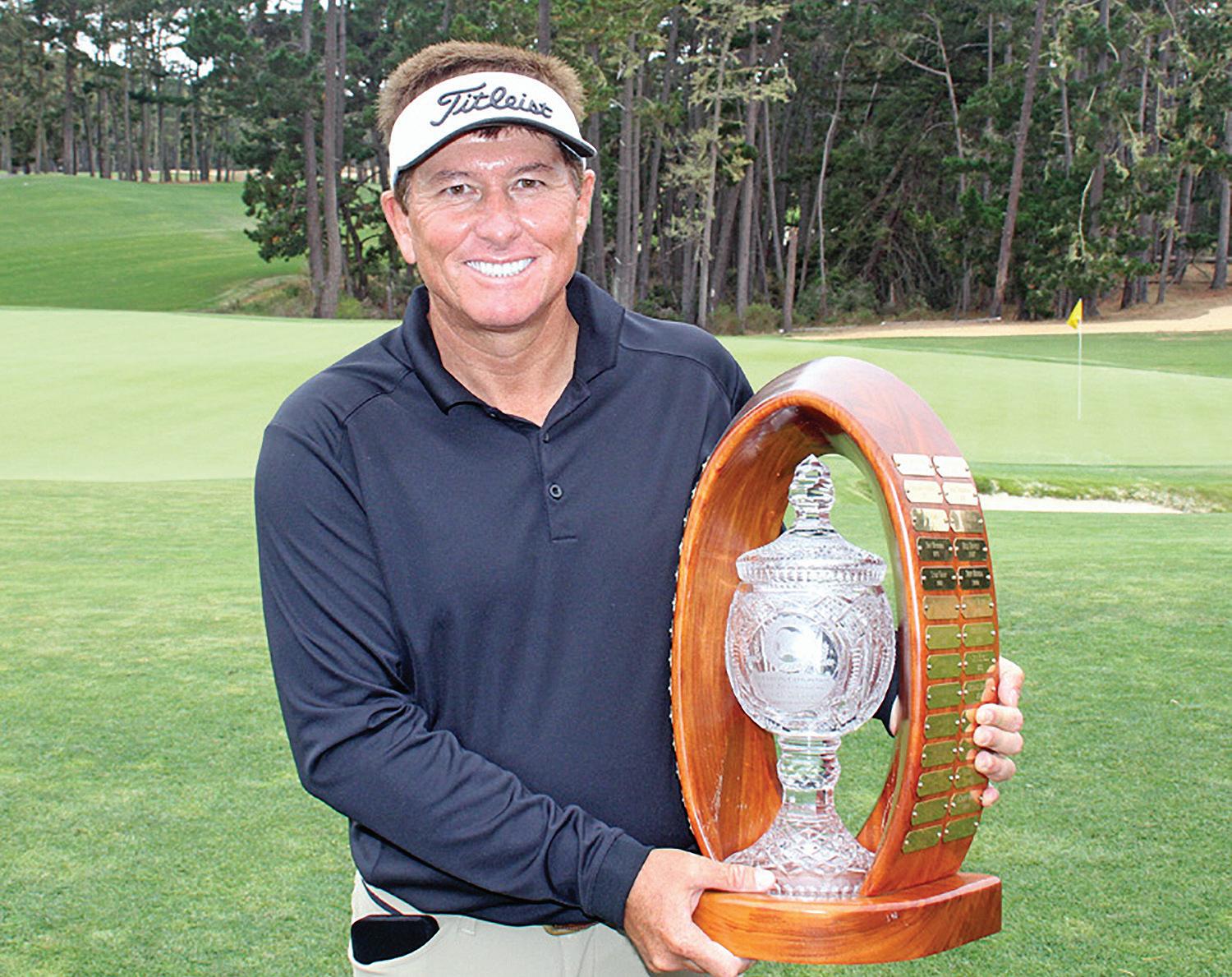
weird about us as officials.
Think about this: We want to work in front of 75,000 people, we want to work in front of 20 million people who are at home watching on TV and we want to put ourselves in a situation where all the officials in the country are going to badmouth us. So really, nothing good is going to come from it. But that’s the game we want to work. It’s kind of weird when you think about it, isn’t it?”
Certainly, a goal for Padilla is working an NCAA championship game, which has eluded him so far. But given the quality of his work and the state of his health, it appears that he still has several prime years remaining in which to earn that assignment.
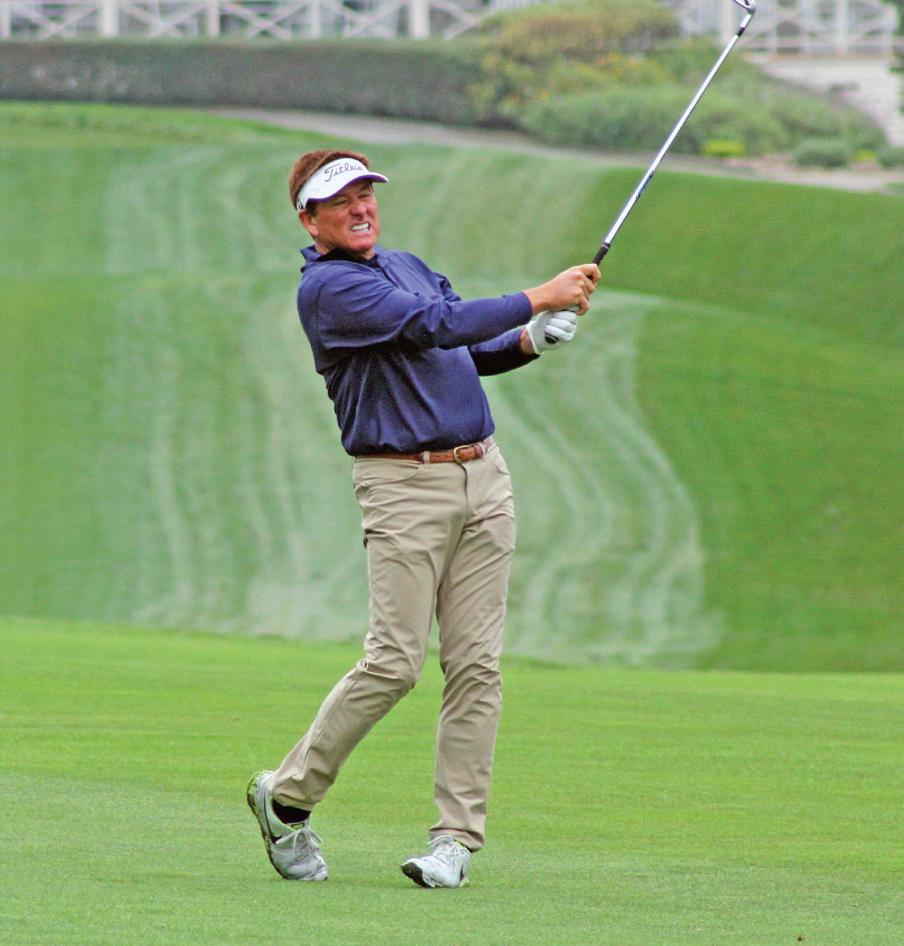
“I’m going to go until I know that I’m not doing the job justice,” he said. “I’m going to go while I still feel I’m as good as I am today. When I start to see a decline, I’m going to get out. If you accept an assignment, you’ve got to bust your ass in that game. It drives me crazy to watch guys take nights off.”
But even if Padilla never worked a game again, his
28 | REFEREE January 2023
COURTESY OF NCGA
“The one word that comes to mind when I think about my dad is commitment.”
— Zach Padilla
legacy as one of the top officials in college basketball is already secure.
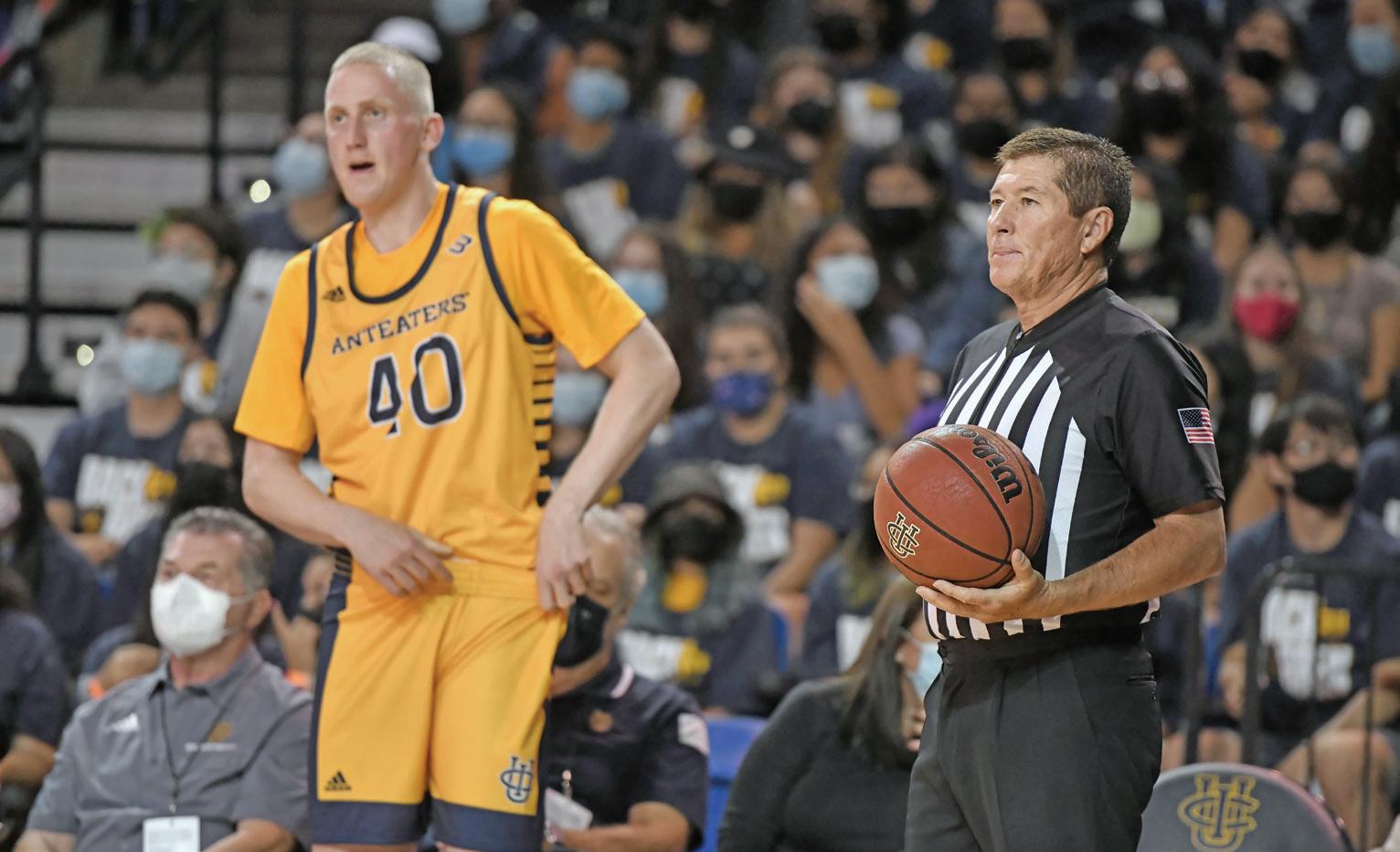
“He understands what I’m talking about when I talk about different plays or different things on the court,” Cartmell said. “He can slow the game down and that’s what you look for in really good officials. He’s able to slow the game down and see clearly. It’s not as easy as it sounds. Tony is very good at slowing the game down so he can see. It’s not just fast motion out there and he’s able to focus on what he needs to focus on to slow the game down. I think his whistle reflects that.”
So focused is Padilla in everything he does, in fact, that Adam Duvall, who won a World Series ring with the Atlanta Braves in 2021, once personally requested Padilla pitch batting practice to him. For a five-year period starting in 2015, Padilla used his baseball skills to pitch batting practice for the Rivercats and Duvall was a member of the team that first season. When Duvall participated in the Home Run Derby during the 2016 All-Star festivities in San Diego, he asked Padilla to be his pitcher.
“It sounds easier than it is, but first off, putting it down the middle is hard enough,” Duvall said. “But he would be able to move it around. If you needed something in, he’d be able to throw it in. Or he would be able to throw it away (outside). You can start to go through the motions when you’re hitting in batting practice, so having someone who can help you work on something and achieve something is huge, because most guys can’t. Most guys struggle just throwing it over the plate. Tony could always put it where you wanted it. I don’t know how his arm never gave out on him because he threw a ton of batting practice! I remember him with weighted balls in the outfield, warming up and getting ready to throw batting practice. I was excited to give him a call (for the Home Run Derby), just
TONY PADILLA BIO
Age: 60 Resides: Sacramento, Calif.
Career highlights: Has worked 13 NCAA tournaments, nine regionals and three Final Fours.
Off the floor: Scratch golfer who won 2017 NCGA Senior Amateur; former BP pitcher for Sacramento Rivercats.
because I knew how much pride he took in it and thought he was the man for the job.”
Call it a commitment to be the best he can be at whatever he does. That’s what goes through Zach Padilla’s mind when he thinks about his father.
“The one word that comes to mind when I think about my dad is commitment,” Zach said. “He is committed to be the best referee in the country every time he steps onto the court. He’s also committed to be the best husband and father every day. His commitment to my mom, sisters and I astounds me every day. I know my family and I are so thankful to have a father and a husband like that.”
Duvall has developed a similar mindset after getting to know Tony.
“He took me and (former major leaguer) Jarrod Parker fishing when we were in Sacramento,” Duvall said. “I guess you could almost say he’s like the mayor because he knows a lot of people, he’s very well connected and he’s kind of like a jack of all trades. I was watching college basketball last year and he happened to be officiating one of the games, so I texted him and he got back to me the next day. He’s an awesome guy.”
Peter Jackel is an award-winning sportswriter from Racine, Wis.
(Right) Tony Padilla is shown with son Zach, daughters Abby and Carli and wife Kami at Carli’s graduation from Northeastern University in Boston. (Below) Padilla works a 2022 game at UC-Irvine.
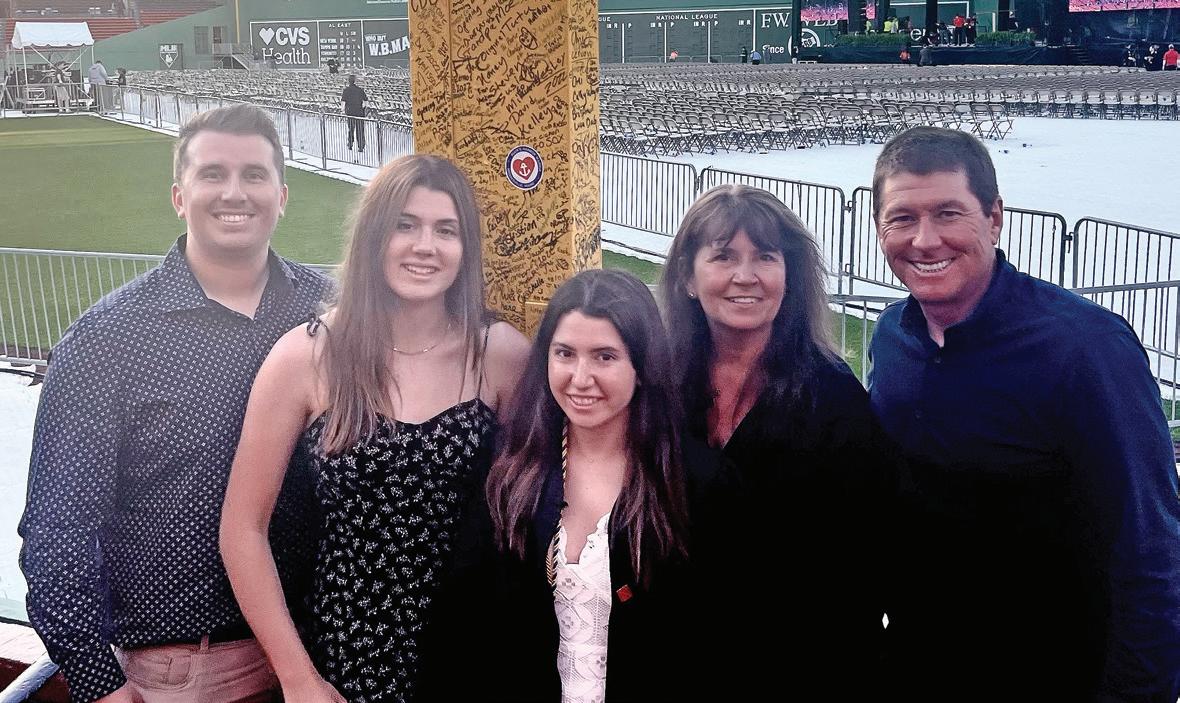
REFEREE January 2023 | 29
COURTESY TONY PADILLA; HESTON QUAN
at the plate are when malicious contact often occurs, and Ben Bayer, Woodway, Wash., is in good position to rule on any collision that may happen here. An NCAA rule change for 2023 allows coaches to seek a video review on any plays where malicious contact may have occurred.
READY, SET, ACTION!
NCAA Rule Changes Include Tweak to Interval Between Pitches
 By Scott Tittrington
In an ongoing effort to streamline college baseball games and eliminate wasted time and unnecessary stoppages, the NCAA Baseball Rules Committee and Playing Rules Oversight Panel (PROP) have approved tweaks to the 20-second action clock as part of their rule changes for the 2023 season.
The use of props during onfield celebrations, inadvertent deflections of a live ball by a batter or umpire, and new crew review and video review guidelines are also among the rule changes that will take effect this spring.
Referee thanks Randy Bruns, the secretary-rules editor for the NCAA
Baseball Rules Committee, for reviewing this material.
20-Second Action Clock — Appendix F
The protocol for when the 20-second action clock starts once the ball is returned to the pitcher has not changed from last season. However, the actions that must be taken by the pitcher to fulfill the action clock requirements have changed significantly.
The pitcher is now required to begin the windup motion or the motion to deliver the pitch (not just come set) before the expiration of the 20-second time limit. Previously, once the pitcher came set, the clock was discontinued, with the pitcher
then mandated to either deliver a pitch, attempt a pickoff at an occupied base or make a legitimate feint to an occupied base in order to remain compliant.
With runners on base, the pitcher may attempt as many pickoff throws as desired, which will stop the action clock and reset it when the ball is returned to the pitcher on the mound. There are unlimited resets of the clock for legitimate pickoff attempts.
The pitcher may step off the rubber to get a new sign or feint a throw toward a runner and the action clock will reset and restart immediately. A defensive player, such as the catcher, asking for time without taking a charged defensive conference also constitutes a reset. For these DALE
BASEBALL RULES, MECHANICS, TECHNIQUES EDITOR:SCOTT TITTRINGTON stittrington@referee.com 30 | REFEREE January 2023
GARVEY
Plays
types of resets, only one per at-bat is permitted.
Each violation of the time limit is a ball charged against the pitcher. The previous penalty of one warning per pitcher is no longer in effect.

Play 1: With a runner on first base, F1 engages the pitching plate in the set position. The action clock is at 10 seconds when F1 brings the hands together as part of the stretch. F1 then (a) delivers a pitch, (b) holds the ball for another 10 seconds before delivering a pitch, (c) makes a pickoff attempt on R1, (d) steps off the pitching plate and feints a throw to first base, or (e) steps off the pitching plate to get a new sign from the catcher. Ruling 1: In (a) and (c), the pitcher has legally complied with the 20-second action clock. In (b), the pitcher has violated the action clock and a ball shall be awarded to the batter. In (d) and (e), the pitcher is allowed one reset per batter. If the pitcher performs an action that requires a second reset with the same batter at the plate, it is a violation and a ball is awarded to the batter.
Use of Celebratory Props (5-2-d)




In an effort to minimize potential acts of unsportsmanlike conduct directed at the opposing team, teams are no longer allowed to bring celebratory props onto the field of
play following a home run, scoring play or at the end of an inning. Any such props must remain in the dugout.
The penalty for the first offense is a warning. Subsequent violations result in the ejection of the offending team personnel.
Play 2: With the bases loaded, B4 hits a bases-clearing grand slam over the left-field fence. As part of the home run celebration, the offensive team (a) brings a sledgehammer out onto the field of play, or (b) puts a crown on B4’s head once the batter returns to the dugout after circling the bases. Ruling 2: Illegal in (a) and the offensive team is warned. If another prop is brought onto the field during a later celebration, the offensive team member responsible is ejected. Legal in (b).
Inadvertent Deflection by Batter or Umpire (7-11-h Note)



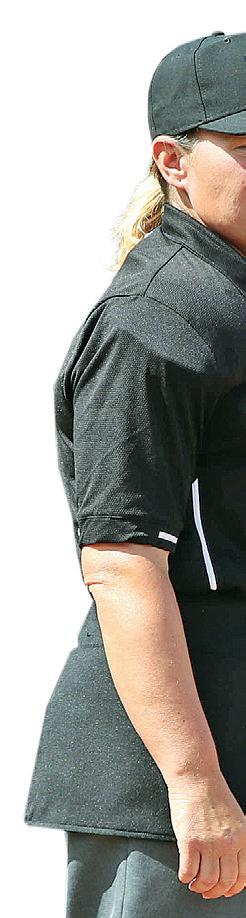

New language has been added to this subsection of rule 7-11, which lists all the ways in which a batter or batter-runner is out. The note following subsection 7-11-h, which deals with a dropped third strike, now includes: “If a pitch that is not caught remains in the vicinity of home plate and it is inadvertently deflected by the batter or umpire, that ball is a dead ball and the runners should return to the bases they occupied at the time of the pitch. If the pitch was strike three, the batter is out.”
DID YOU KNOW?
Many of the basic measurements we take for granted in the game of baseball are actually applied differently than people realize.
Everyone knows it’s 90 feet between bases, correct? Well, not exactly. The 90 feet is measured from the apex (or point) of home plate to the back edge of first and third base. Given the bases have historically been 15 inches square, that means the distance to first and third base is actually just 88 feet, 9 inches. And with the decision by MLB to move to bases that are 18 inches square for the 2023 season, that will shave another three inches off the distance. That could have a major impact on the number of close plays that now favor the offense, both on bang-bang plays at first base and at the plate.
Another misconception exists with the distance of the pitching plate from home plate. Again, every casual baseball observer knows it’s 60 feet, 6 inches. What everyone doesn’t know is that distance is measured from the front of the pitching plate to the apex (point) of home plate. Given home plate has a depth of 17 inches, its front edge — where the strike zone actually begins — is just 59 feet, 1 inch from the pitcher’s plate.
See, it turns out your math teacher was correct. If you are a baseball fan, you will need it at some point in your life.
THEY SAID IT


The use of celebratory props on the playing field is not allowed due to a 2023 NCAA rule change. They are still allowed in a team’s dugout. The first offense is a warning, and a second occurrence requires the ejection of the offending personnel.
Play 3: With a runner on third base and (a) a 2-1 count on the batter, or (b) an 0-2 count on the batter, B4 swings at a pitch in the dirt and misses. The ball bounces off the catcher’s chest protector and settles behind the batter’s left foot. The batter does not realize where the ball is and moves the left foot, inadvertently kicking the ball, at which point R3 breaks for home. Ruling 3: In both (a) and (b), the home-plate umpire should declare a dead ball as soon as the ball is kicked by the batter. In (a), the runner is returned to third base and the batter now has a 2-2 count. In (b), the runner is returned to third base and the batter is out, with no right to attempt to advance to first base due to the dropped third strike.
“There’s clearly still work to do, but I receive equal pay. I have the same contract. There’s no gender gap. I get equal union representation. I get equal health benefits. I got equal training. I wasn’t given more test questions or easier or harder test questions at umpire school. I get the same supervision.”
— Jen Pawol, on her experiences as a female MiLB umpire
REFEREE January 2023 | 31
KIRTHMON F. DOZIER/TNS/NEWSCOM
SOURCE: THE WASHINGTON POST
REFEREE January 2023
TEST YOURSELF
In each question, decide which answer is correct for NFHS, NCAA or pro rules. Solutions: p. 85
1. With R1 on first base, no outs and a 1-0 count on B2, F1 fails to come to a complete stop and is called for a balk. His pitch is wild and eludes F2, going all the way to the backstop. R1 attempts to advance to third and is thrown out.
a. B2 and all runners who did not advance are awarded at least one base. Return R1 to second base.
b. The play on R1 stands and he is out. The balk is still “acknowledged” and the count remains 1-0 on the batter.
c. Immediately call “time” when the pitcher balks. R1 is awarded second.
2. Daniel is listed as the DH for the pitcher, Baker, in the third spot in the batting lineup. In the fourth inning, Baker bats when it is Daniel’s time to bat and hits a single.
a. This is an illegal substitution. Baker is called out and will be restricted to the dugout. Daniel is substituted for.
b. This is batting out of order. Baker’s time at bat is nullified, Daniel is out, and the next proper batter is the name of the player that follows Daniel.
c. This move is legal. The DH role is terminated for the remainder of the game and Baker will continue to bat in the third spot.
d. This move is legal. Baker can become the P/DH and continue to bat in the third spot.
3. With R1 on first base, F1 accidentally delivers a pitch off the side of his leg. The ball rolls 20 feet from the mound and stops before crossing the foul line.
a. Balk.
b. A ball is called.
4. With R1 on first base and R3 on third base and two outs, B5 hits a slow ground ball back to F1. F1 fields the ball and throws it to F2. R3 is ruled safe on the tag play at home, but F2 quickly makes a play on B5 going to first and B5 is out.
a. Score the run as this is an intervening play.
b. Do not allow any runs to score.
Getting the Call Right Without Video Review — Appendix E-1-c Hit-by-pitch situations have been added to the list of types of plays that can be discussed by an umpiring crew. The rationale is a base umpire may have a better view to help decide if a batter was hit by the pitch or moved intentionally to get hit by the pitch.
Umpire discretion now is also allowed in placing the runners in the changing of a call from “catch” to “no catch” and vice versa (E-1-c-9 and E-1c-10).
Play 4: With the bases loaded, the plate umpire rules a foul ball after a fastball comes up and in on B4, believing the ball hit the handle of the bat. U2, working in the middle of the diamond, has a clear look at the pitch and is 100 percent certain it hit B4’s elbow protector and not the bat. Ruling 4: By rule, U2 is now authorized to approach the umpire unsolicited and alert the plate umpire to the information he or she has on the play. The ultimate decision to change the call still rests with the plate (calling) umpire.
Getting the Call Right With Video Review — Appendix E-2
Two new situations have been added to the list of types of plays on which video review can be used by the umpiring crew: catcher’s interference with the batter’s swing, except on a squeeze play or steal of home; and malicious contact at any location.
Also, all types of reviewable plays now require a head coach’s challenge, except for a potential home run and malicious contact, which can be reviewed at any time. A crew chief review is allowed at that umpire’s discretion in the last two innings if the affected team is out of challenges.
Play 5: In the (a) third inning, or (b)eighth inning, B3 hits a ball into the right-center gap. While running the bases, there is a collision between B3 and F3, but none of the umpires on the field see how it transpired. At the end of playing action, the defensive team coach comes out to ask the umpiring crew to look at the play on video review, arguing that it was malicious contact. Ruling 5: In both (a) and (b),
the umpiring crew can review the play and no head coach’s challenge is required, as malicious contact can be reviewed at any time.
Additional rule changes, listed in the order in which they will appear in the 2023 rulebook:
Wall Padding (1-2-3)
It is recommended padding be placed on all hard surfaces, such as backstops, sideline and outfield fences, that a player is likely to collide with during play. The change is intended to mitigate potential injuries to studentathletes who may run or slide into hard surfaces during play.
Size of Bases (1-7-c)
The standard size of bases for NCAA competition remains unchanged at 15 inches square and is required for all games played at facilities owned by a member institution. However, games may be played at non-institutionally owned baseball facilities, such as professional stadiums which use 18-inch square bases, without the need for a waiver if 15-inch bases are not available for use.
Illegal Bat Penalty (1-12-a
, 1-12-b)
The first sentence of the penalty now reads: “A bat without the proper bat testing sticker, that has been altered to improve performance, or that has become flattened or illegal due to continued uses after bat testing has been completed, is an illegal bat.”
32 | REFEREE January 2023 BASEBALL
Updated NCAA rule language for the 2023 season clarifies that a bat without the proper bat testing sticker is an illegal bat.
The rule change addresses concerns about a bat that may have become illegal after the start of a series or tournament. It is the responsibility of the batter to bring a legal bat to the plate.

Dugout Protective Fencing or Netting
(1-16)
College baseball facilities shall have protective fencing or netting on the field side of the dugout at a height not less than three feet from field level. While this is recommended immediately, it is not required until Jan. 1, 2024, for Division I and Jan. 1, 2025, for Divisions II and III.
Coach/Umpire Conference (3-6-e, Appendix E)
The decision has been made to permanently adopt a temporary rule used during the past two seasons requiring a head coach who seeks to question a call on the field to meet the
calling umpire at the midpoint of their respective foul line. To consult with the plate umpire, the head coach may not enter the dirt circle around home plate, except during the pregame meeting.
Number of Umpires (3-6 Note)
A minimum of two umpires is required to begin an NCAA baseball game. A game may be completed with one umpire if necessary due to injury, illness or extenuating circumstances.
Optional Extra Innings Procedure
(5-8-d)
By conference rule or mutual agreement prior to the start of the game, teams may start each extra halfinning with a runner at second base. The player starting the extra inning as the runner at second base is the player (or their substitute) in the batting order immediately before the first batter of the extra inning.
Unsportsmanlike Conduct (5-17)
The rule has been expanded to include both language and other unsportsmanlike actions directed toward opposing players, coaches, umpires or spectators, and includes actions such as negative comments directed at an opponent, umpire or spectator; bench jockeying; orchestrated activities to distract or disconcert; bat flips near or toward an opponent or umpire; and the use of props or signs directed at an opponent or umpiring decision.
Runner Hit by Legal Pitch (6-4-b)
If any legal pitch hits a runner trying to score, the ball is dead, and all baserunners advance one base without liability to be put out. A previous “exception” listed in the rulebook that only allowed other baserunners to advance one base if they were also stealing on the pitch has been removed.
The CCA Mechanics manual is the only official source for college baseball mechanics. When you pair your rules knowledge with advanced mechanics graphics from Referee, you will confidently be in the right place at the right time to make every call.
THE ONLY OFFICIAL COLLEGE MECHANICS MANUAL
$1995 ONLY ALL NEW FOR THE 2023 SEASON! GET YOURS TODAY! // STORE.REFEREE.COM/BASEBALL // 800-733-6100
BASEBALL
CASEPLAYS

No Stop
Play: With no runners on base, F1 is in the set position. During his delivery, F1 changes direction but does not come to a complete and discernable stop. Ruling: In NFHS, it does not matter if there are no runners, the pitcher must come to a complete stop when using the set position. In NCAA and pro, if the bases are unoccupied, the pitcher need not come to a complete and discernible stop (NFHS 6-1-2; NCAA 9-1b2 Note; pro 6.02a13 Illegal Pitch Definition).
Mad Dash
Play: With no runners on base, B1 takes a called third strike. B1 heads for his dugout, not realizing F2 dropped the pitch. F2 then throws the ball wildly toward first. B1 heads for first and makes the base safely. Ruling: In NFHS, B1 is out only if he reached the dugout before breaking for first. In NCAA and pro, B1 is out once he leaves the dirt circle of the plate area before breaking for first (NFHS 8-4-1i; NCAA 7-11u; pro 5.05a2 Cmt.).
Pin Ball
Play: With R2 on second and no outs, B2 stands as if to bunt but swings away. F5 creeps in, and the batted ball deflects off his glove. It remains in the air and floats toward third where F6 is coming to cover the bag. The ball hits R2 and drops to the ground. Both runners are safe. The umpire judges R2 did not deliberately interfere with the batted ball. Ruling: The play stands. There is no interference when a deflected ball hits a runner (NFHS 8-4-2k; NCAA 6-2e, 8-5k; pro 6.01a11).
Wrong Glove
Play: B1 hits a single to center field. The base umpire notices F8 fielded the ball with a first baseman’s glove. Ruling: In NFHS, there is no restriction on fielders wearing a first baseman’s glove provided it does not exceed size limits. The play stands. In NCAA and pro, the glove must be removed. In pro, the play stands. In NCAA, the offense has the choice of taking the result of the play or having the pitch replayed (NFHS 1-3-6, 5-1-2f, 8-3-3b; NCAA 1-13c Pen. 2; pro 3.07c).
Penalty for Listed DH Not Batting One Time
(7-2-b-2)
The penalty for violation of this rule is similar to batting out of order. The proper batter (the originally listed designated hitter) may replace the improper batter before the batter becomes a runner or is put out and assume the current count. If the improper batter becomes a runner or is put out and an appeal is made before the next pitch, the original DH is declared out and all runners return to bases occupied before action by the improper batter. Any advances by runners due to a stolen base, balk, wild pitch or passed ball are legal. The original DH may remain in the game and the improper batter remains an eligible substitute.
If a proper appeal is not made, the improper batter becomes the DH and the result of the time at bat becomes official.
Force Play Slide Rule (8-4-a Exc.)
A slight change to the rule maintains the basic premise that it is a safety and interference rule, but allows umpires to use judgment due to the unusual nature of a play, such as when a runner does not slide and is safe at the base before the throw arrives, or slides directly to a base from a position not in a direct line between the bases as long as there is no issue with safety or interference.
Runner Interferes With Fielding a Foul Ball (8-5-d Note 3)
If a runner is declared out for interfering with a fielder who is attempting to field a foul batted ball, the ball is foul. If there are less than two outs when the interference occurs, the batter will complete his at-bat. If the third out occurs due to the interference, the current batter will be the first batter up the following inning.
Runner Pushed Off Base (8-5-I Note 2)
A new note has been added that states if, in the judgment of an umpire, a runner is pushed or forced off a base by a fielder, intentionally or unintentionally, at which the runner would otherwise be called
safe, the umpire has the authority and discretion under the circumstances to return the runner to the base they were forced off following the conclusion of the play.
Pitcher Going to the Mouth (9-2-d)
The pitcher shall not, while in the circle surrounding the pitcher’s plate, touch the ball after touching his mouth or lips, or touch his mouth or
Anytime a pitcher goes to the mouth while in contact with the pitching plate, it is a warning for the first offense and the ball is removed from play. A second offense results in a ball being awarded to the hitter.
lips while in contact with the pitcher’s plate. The pitcher must clearly wipe the fingers of the pitching hand dry before touching the ball or the pitcher’s plate. The penalty is removal of the ball from play and a warning issued to the pitcher. Any subsequent violation shall be called a ball.
No Pitch Resulting From Batter Action (9-3-g Note)
If the pitcher stops or hesitates the delivery or throws the ball in a manner the umpire judges is clearly
See “NCAA Rule Changes” p.32
34 | REFEREE January 2023
BASEBALL UMPIRING

MECHANICS FUNDAMENTALS



















Veteran MLB umpire Sam Holbrook brings his years of onfield and umpire school experience to this new video focusing on the mechanics that will take you to the next level in your umpiring career. The three-time World Series World Series veteran brings years of experience from instructing at one of the top umpire schools in the county, and now he is bringing that experience to you!

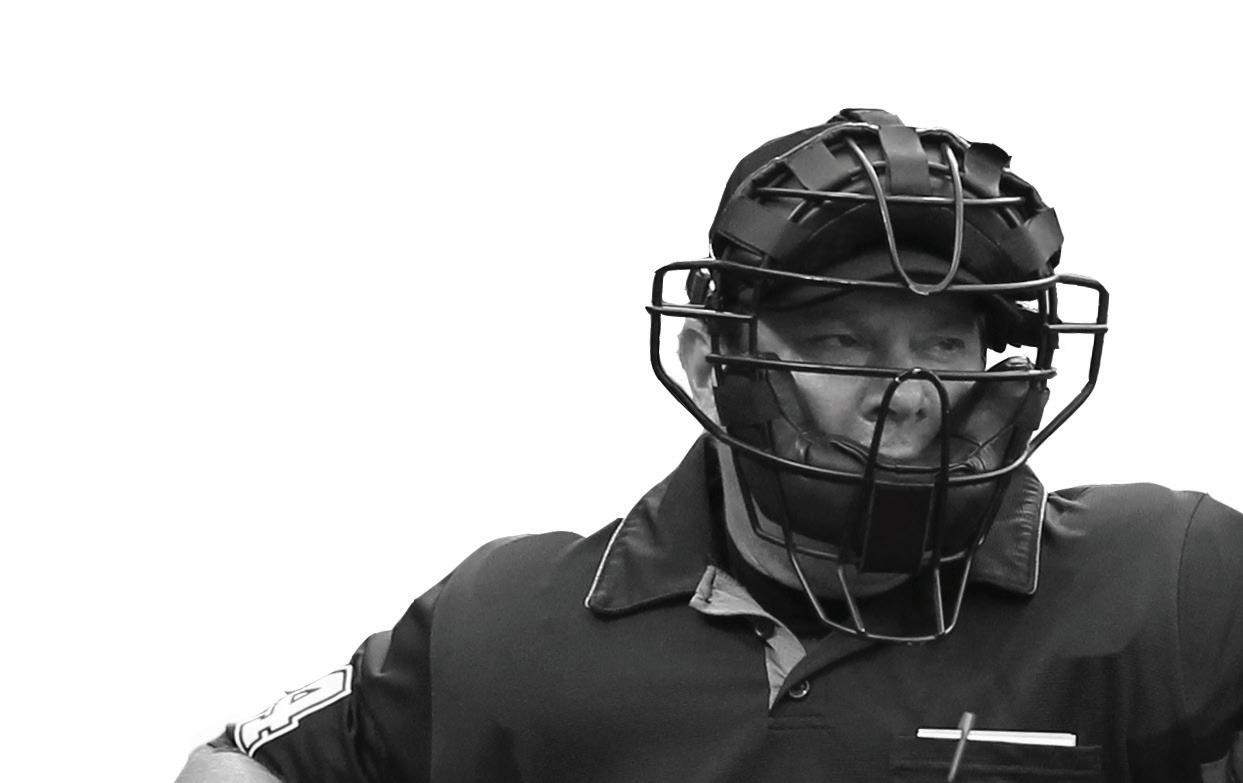
LEARN MORE STORE. /baseball $2495
NCAA Rule Changes
not intended to be a pitch to the batter (such as a ball thrown into the ground or dropped) because the batter steps out of the box, holds up his hand or uses any other action as if calling time, it shall not be a balk (if runners are on base) or an illegal pitch (if there are no runners). The umpire shall call “time,” reset and resume play.
120-Second Timing Between Innings (Appendix F)
New language has been added that states if the pitcher/DH is the third out or on base when the third out is made to end the inning, the 120-second time limit should be started as always, but allow the P/ DH to get their glove and be ready to start warmups without penalizing the defense if the time limit expires.
Timing Devices/Action Clock (Appendix F)
The use of one or more visible clocks to administer timing limits between pitches and innings is currently highly recommended.
Effective Jan. 1, 2024, for Division I and Jan. 1, 2025, for Divisions II and III, the use of one or more visible clocks is required.
Scott Tittrington is an associate editor for Referee. He umpires college and high school baseball.
Somebody’s Watching You
By Jon Bible
In my early years as an amateur umpire, there was no formal performance appraisal. Once in a blue moon we’d get a call from an assigner if he or a coach was upset about something, but that was the extent of our oversight. We got nice assignments (or didn’t) and advanced (or didn’t) based on word of mouth from peers and coaches, relationships with assigners and luck.
To illustrate how loose things were, after my first year in my local chapter, I moved from Division 5 to 2, not because of anyone’s assessment of my ability, but because I was my assigner’s protégé and he did a titfor-tat because he hated a fellow board member who had arranged the same leap for his son (we were both 18). That boost up the ladder made me eligible for high school games, which I began receiving although I was one year out of high school myself and barely knew what I was doing.
The plus side of this laissez-faire system was we didn’t have to look over our shoulder, fearful that one bad move might get us in hot water. We could also administer frontier justice. A strike zone could magically expand with a griping hitter or shrink with a pitcher who acted up. One college umpire, who had been in Triple-A ball and took no flak, called three straight balks on a pitcher who yapped about a ball four call in the
Whether it’s at an umpiring camp or during one of your regular-season games, chances are you are going to be evaluated and your work critiqued. Learn from what is being offered to you, and put forth the type of effort that will get you better assignments.
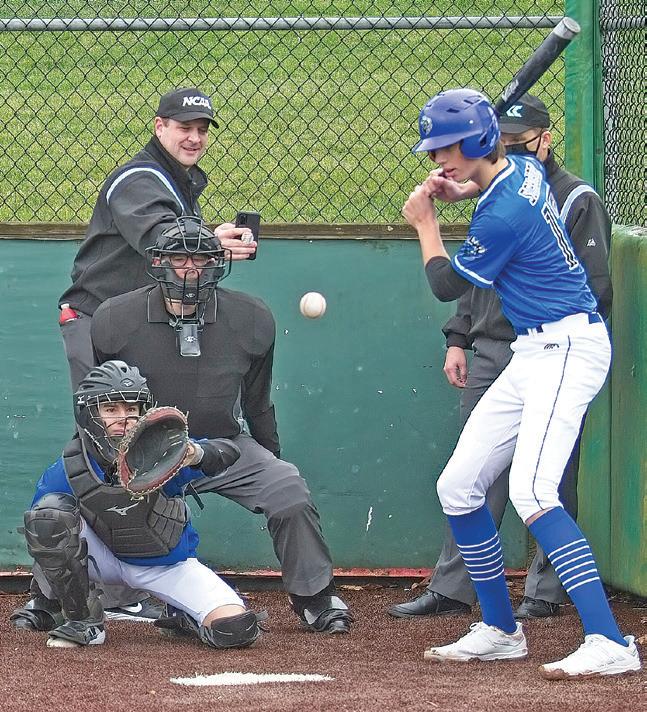
last inning of a tied game. Game over. Just try that today.
On the flip side, some umpires looked sloppy, didn’t know the rules or mechanics or try to improve, and gave a subpar effort because, if they were on the assigner’s good side, they knew they’d get top assignments no matter what.
Formal assessment began in major college baseball around 1990 and filtered down into lower levels. Today, some areas have robust systems, some have none and some are in-between, maybe with coaches
evaluating (not ideal, to say the least). Although the recent shortage of umpires and the need for warm bodies to cover games has caused things to backslide a bit, most amateur umpires have some form of accountability expectations and assessment is part of that. Most systems focus on appearance, strike zone dimensions and consistency, rules and mechanics knowledge, handling situations and communication skills.
Whether we like it or not, the emphasis on accountability and assessment is not going to lessen. Instead of resisting it, as some do, I believe umpires — at least, those interested in doing a good job — should embrace it. There’s a saying that success is a function of preparation meeting opportunity. Not only does performance appraisal (handled correctly) allow us to improve by identifying weak areas, but it also gives us an opportunity to shine and get an edge over others with whom we’re competing for assignments and advancement who may not be as industrious about preparation as we are.
There’s a lot about assessment that we can’t control. What are the expectations? What’s the grading scale? Are the evaluators knowledgeable and objective or do they play favorites? And so on. But there’s a lot we can control.
Carrying extra weight? Shed it. Cap look like it’s from the dark ages? Get a new one. Pants so tight your
BASEBALL 36 | REFEREE January 2023
continued
from p.34 DALE GARVEY
belly is hanging over your belt? Get a larger size. Not on top of rules or mechanics? Get in the books. Form study groups. Weak in positioning, plate stance, signals, etc.? Watch video. Seek help from top-flight umpires in your area. Experiment in front of a mirror.


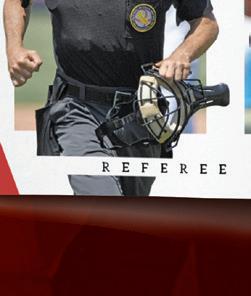
Strike zone shaky? Work scrimmages, even if you’re a veteran. Seek advice from people adept in this area. Maybe it’s a function not of basic judgment, but instead of positioning or timing, which can be fixed. Not good at handling a messy situation or communicating with players and coaches? There are tons of study guides on game management; use them. Attend clinics; all address these topics (although, because the pro and amateur games are different, I’d opt for the ones with solid amateur instructors).





The bottom line is today there’s not a single area in which one might be weak where there aren’t resources










available to fix it if one devotes the time and effort to find and use them. If you hone your skills and craft a positive image, you’ll have the confidence to think, “I’ve got this!” if an evaluator shows up. Because you may not know when that will be, assume one will be at any game you work and give 100 percent effort. I know a fledgling umpire who dogged it in a scrimmage and, when an evaluator met with him afterward, said, “Gee, if I had known you were here, I’d have worked harder.” Not good for career-building.
Don’t worry if you make a mistake; every evaluator I’ve known assessed based on a body of work, not one play or pitch. Don’t change how you usually do things, for this may take you out of your comfort zone.
Don’t be so anxious to impress with your hustle that you hyperactively dart here and there; overdoing it makes it seem like you’re not ready to work at that











level. Focus on being relaxed and in control and moving in a brisk, cruisecontrol manner. If you’re working the plate, think about slow, rhythmical, consistent timing. In the first inning, get in your stance for warmup pitches, for the sooner it feels like “game on” the quicker you’ll settle down. Then take a deep breath and get after it. Once the first pitch is thrown you’ll forget anyone is watching you.
Later, if the evaluator meets with you, don’t have a “yes, but” answer to his comments. Be receptive; he’s likely been around and may have something beneficial to offer. Based on years as a supervisor and evaluator, I guarantee being branded as someone “who doesn’t take criticism well” can negate any positives that came out of the evaluation itself.





Jon Bible, Austin, Texas, worked seven NCAA Division I College World Series. In 2019, he was inducted into the National College Baseball Hall of Fame in Lubbock, Texas.
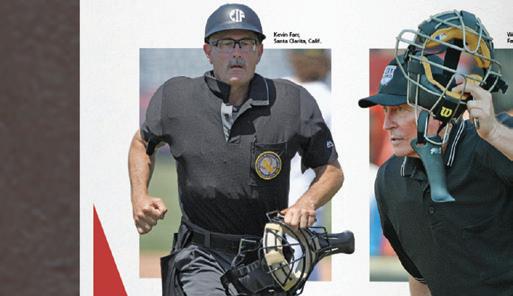
Be prepared for the 2023 season! Your complete guide to the 2023 High School Baseball season includes the latest rules changes explained and simplified, the most up-to-date NFHS Points of Emphasis, Mechanics updates, umpiring tips and strategies, Caseplays with rulings, and test yourself Quiz Questions with answers. BUILT TO GET YOU BACK INTO ACTION learn more at STORE. /BASEBALL SIZE: 8”x11” PAGES: 112 *NASO discount available. $1795 * DIGITAL PRINT $2395 COMBO $1895 * NEW for 2023
MAGIC MARKERS
Pylons Serve as Goalline Indicators
By George Demetriou
Tosay a goalline pylon is ubiquitous wouldn’t be far off. While the 18-inch convex polyhedron made of soft, flexible material is not everywhere, it can be considered either inbounds or out of bounds depending on who or what touches it. The only differences in the codes regard a touchdown. For simplicity, the term “pylon” as used going forward refers to a goalline pylon.
Position. When properly placed, the goalline pylon is out of bounds
at the intersection of the sideline and the goalline (NFHS 1-2-4; NCAA 1-2-6). It’s important to recognize no distinction is made between the sides of the pylon. Thus, touching the inside of a pylon is the same as touching the outside of the pylon. It is easy to visualize a ball that glances the outside of a pylon has not gone over the end zone while a ball which glances the inside of a pylon has clearly gone over or into the end zone. In effect, the pylon is an officiating aid and not distinguishing between the sides makes judgments simpler. All that
needs to be known is whether or not the pylon was touched.
Loose ball out of bounds. Because the pylons are out of bounds behind the goalline, if a loose ball touches a pylon, it is out of bounds behind the goalline (NFHS 4-3-2, 4-2-3b).
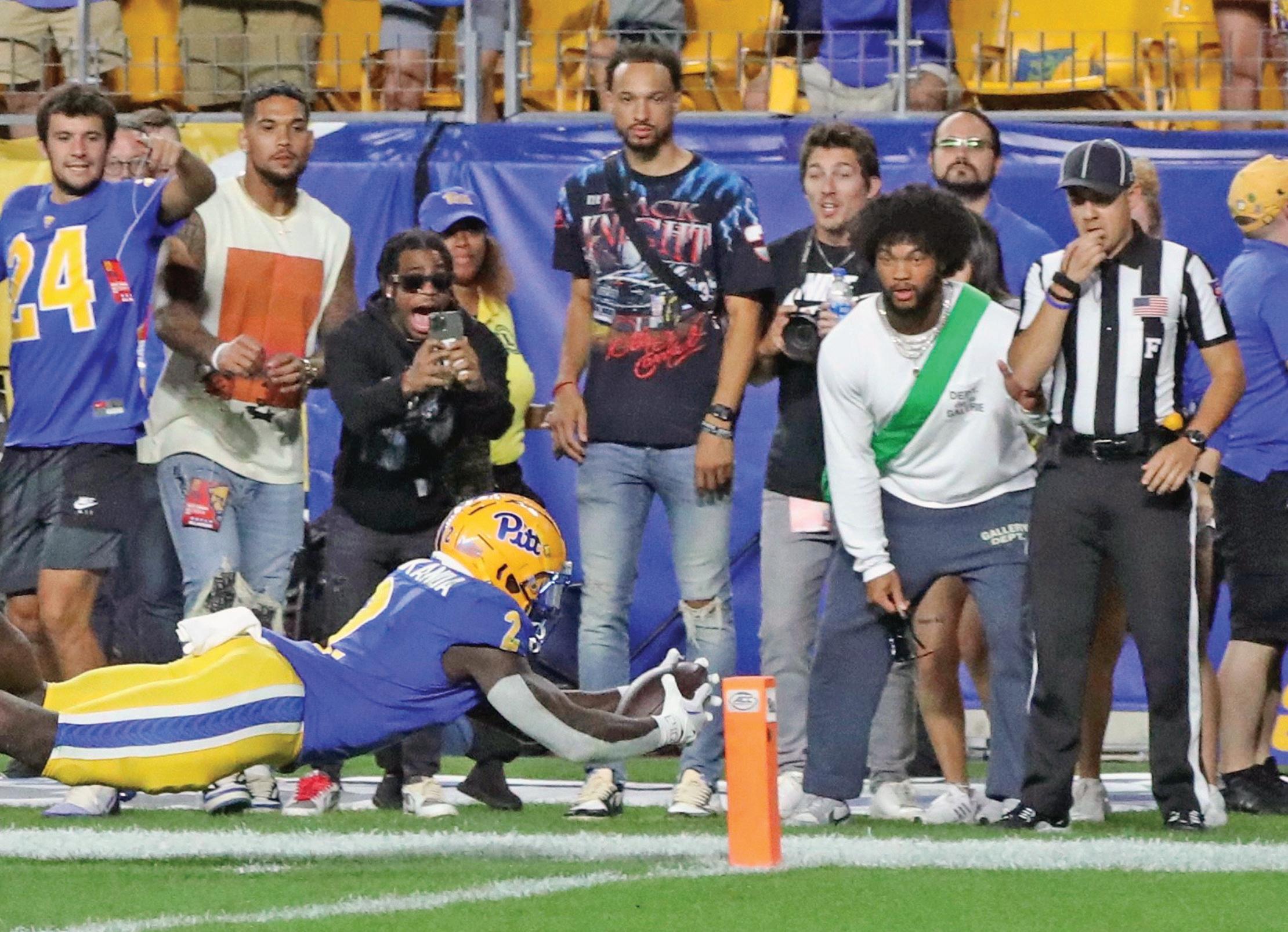
Play 1: K1’s kickoff rolls untouched toward the pylon on the left side of the field. The ball strikes the pylon. Ruling 1: Touchback; the ball is considered to have entered the end zone.
Play 2: First and goal at team B’s nine yardline. A1 takes a handoff
FOOTBALL RULES, MECHANICS, PHILOSOPHY EDITOR: JEFFREY STERN jstern@referee.com 38 | REFEREE January 2023
OPPEGARD
Joe Martinez, Albuquerque, N.M., has a great look at this play at the pylon. Thanks to angle and distance, Martinez can rule if the diving runner takes the ball inside the pylon, thus scoring a touchdown.
TED
and is hit at the five yardline. The loose ball bounces toward the lefthand pylon and (a) strikes it, or (b) does not strike it. The ball then goes out of bounds. Ruling 2: In (a), it is a touchback. It will be team B’s ball, first and 10 at its 20 yardline. Any debate over the official’s judgment is limited to simply whether or not the ball struck the pylon. In (b), if the ball passed to the right of the pylon, it entered the end zone, so it is also a touchback. However, if the ball went out of bounds to the left of the pylon, it left the field of play before reaching the end zone. Team A will retain the ball for second down either at the outof-bounds spot in NFHS (4-3-2), or the spot of fumble in NCAA (7-2-4b).
It does not matter in which direction the ball strikes the pylon.
Play 3: A1’s pass is intercepted in the end zone by B2. B2 is hit and fumbles. The ball strikes the pylon and goes directly out of bounds. Ruling 3: Touchback; the ball is considered to have never left the end zone.
Touchdowns. Before we discuss the role of the pylon in scoring a touchdown, let’s review what a touchdown is possession of a live ball in the opponent’s end zone. It does not matter where the runner is located as long as he is inbounds. That leads us to a subtle difference between the codes as what constitutes the goalline and that becomes the basis for a significant distinction in what is and is not a touchdown.
Inbounds. In NFHS, the goalline is the vertical plane which separates the field of play from the end zone (2-26-3). In NCAA, the plane of the goalline extends between and includes the pylons (2-12-2), even though the pylons are not physically in the end zone. Despite that distinction, if a ball in player possession touches a pylon in either code, the ball is considered inbounds in the end zone and a touchdown is scored.
Play 4: Inbounds A1 dives toward the pylon and the ball touches the pylon before any part of A1’s body touches the ground. Ruling 4: Touchdown.
Player out of bounds. As mentioned, the pylons are out of
bounds so if a runner touches a pylon before touching the ground in the end zone, he is out of bounds and the ball is dead.
Play 5: A2 heads for the righthand pylon at the goalline. The ball is in his right hand. His left foot hits the pylon just before the ball crosses the goalline. Ruling 5: No touchdown because the pylon is out of bounds; the ball is dead when A2’s foot hits it.
In the preceding play, if the ball had crossed the goalline before the runner’s foot touched the pylon, it would be a touchdown. It would not have mattered if the ball had been inside or outside the pylon. In NFHS, when related to a live ball in an inbounds runner’s possession while the ball is over the out-ofbounds area, the goalline includes the extension beyond the sidelines (2-26-3). However in NCAA, the goalline plane extends beyond the pylons only for a player who touches the ground in the end zone or a pylon (8-2-1a). The difference in the goalline extension is illustrated by the following play.
Play 6: A4 heads for the righthand pylon at the goalline. The ball in his right hand crosses the extension of the goalline outside the pylon, and then A4 steps on the sideline inches short of the goalline. Ruling 6: In NFHS, it is a touchdown. The goalline plane is extended because the ball crossed the plane before A4 touched out of bounds. In NCAA, it is not a touchdown. The goalline plane is not extended. The ball is ruled out of bounds where it crossed the sideline.
If a receiver gets control of a pass while airborne beyond the plane of the goalline and a body part touches a pylon before he touched the ground inbounds, the pass is incomplete (NFHS 2-4-1; NCAA 2-2-7c). The ball is dead when the pylon is touched and the process of a catch is never completed.
The other four pylons, at the corners of the end zones and beyond the end lines at the hashmarks, are out of bounds and considered as such without exception.
George Demetriou has been a football official since 1968. He lives in Colorado Springs, Colo.
THEY SAID IT
“One fascinating (if slightly fantastic) suggestion has been to use TV replays vs. officiating errors as a new element of coaching strategy. Instead of having every play monitored as a check and balance against human mistakes, the idea is to incorporate a series of, say, three challenges for each team. If a coach thinks an official has made a wrong call, he challenges it and asks for a TV replay. If the cameras show the coach is right, the wrong call is rescinded. If he is wrong, he might be penalized 15 yards or have to give up a timeout. There is probably a bit too much of sci-fi in that idea to appeal to most coaches.”
–From the Oct. 9, 1978, Sports Illustrated
SIDELINE
You Can’t Do That
The Chicago Bears incurred one of the more unusual penalties during their Sept. 11 game when kicker Cairo Santos used holder Trenton Gill’s towel to pat down the grass where he was going to attempt a field goal. The Bears were penalized 15 yards for unsportsmanlike conduct. “You cannot bring what we consider a foreign object — this was not a towel that would go on a uniform — out to alter the playing surface,” referee Clay Martin said.
SOURCE: CHICAGO TRIBUNE
SURVEY SAYS …
When a football call goes to review, which do you think is the toughest for the replay officials to determine: fumble/no fumble, catch/no catch, targeting/no targeting?
FUMBLE/ NO FUMBLE CATCH/ NO CATCH
TARGETING/ NO TARGETING
REFEREE January 2023 | 39
SOURCE:
REFEREE SURVEY OF 52 OFFICIALS
17.3% 44.2% 38.5%
TEST YOURSELF
In each of the following you are given a situation and at least two possible answers. You are to decide which answer or answers are correct for NFHS and NCAA rules, which might vary. Note: In kicking situations, K is the kicking team, R the receiving team. Solutions: p. 85
1. Third and 10 at team A’s 35 yardline. Ineligible lineman A1 runs to team A’s 39 yardline. Finding no one to block, he returns behind the neutral zone before A2 throws a legal forward pass.
a. As long as A1 was behind the neutral zone when the pass was thrown, there is no foul.
b. Once A1 goes beyond the neutral zone before the pass that crosses the neutral zone is thrown, he has fouled.


2. First and 10 at team A’s 20 yardline. Eligible receiver A1 is running a pass pattern near the sideline. As a legal forward pass comes toward him, he accidentally steps on the sideline at team A’s 30 yardline. A1 leaps and gains control of the ball. He lands on his knees inbounds at team A’s 32 yardline with the ball in his possession.
a. Legal catch.
b. Incomplete pass.

c. A1 is guilty of illegal participation.
3. Team A is in formation and the snap is imminent. Quarterback A1 is in shotgun formation and is clapping his hands as a starting signal. Linebacker B2 claps his hands, causing the snapper to snap the ball.
a. The ball remains live.
b. Team B is guilty of a dead-ball foul for disconcerting.
4. Third and goal from team B’s 10 yardline. B1 intercepts at team B’s two yardline and advances to team B’s 30 yardline. During B1’s run, B3 holds in team B’s end zone.

a. The penalty is enforced from team B’s two yardline.
b. Touchback. The penalty is enforced from team B’s 20 yardline.
c. The penalty is enforced from the end of B1’s run, his own 30 yardline.
d. Safety. Team A scores two points.
5. K1 is attempting a field goal. His kick has a low trajectory and it strikes the back of K2, who is about a yard behind the neutral zone, but caroms forward and passes between the uprights and above the crossbar.
a. Team K scores three points.
b. The kick fails.
When the Time Has Come to Pull the Switch
By Jon Bible
Until I got into college officiating in 1987, I probably refereed 98 percent of the varsity, sub-varsity and Pop Warner games I worked.



If I had it to do over, I would have worked every position in sub-varsity (even umpire), and I would not have become a referee at the varsity level until I had worked other positions. If you pay attention to the mechanics and keys, you will learn a lot more about officiating if you work each position than if you restrict yourself to one.
My point is this, especially if you’re new to officiating: Don’t lock yourself into one position. Work them all. You’ll see the game from a different perspective at each position. Then, when you settle on one, you’ll have a good feel for what your crewmates are experiencing and that will make you better. And you might discover the position you thought you wanted to work is not your best one. If you aspire to be a referee, you’ll be farther down the road to being successful than you would otherwise because you’ll know
what working each position entails.
If getting into the college ranks is your goal, don’t be a referee. College conferences hardly ever bring a new official in as a referee, so you’re hurting your chances by not working another position at which you may become an attractive commodity.
If I were switching positions today, the first thing I would do is to study the mechanics manual carefully so I would acquire a basic knowledge of that position’s keys and how I was supposed to coordinate with other crew members on running, passing and kicking plays. The bottom line is simple: You can’t be good at any position, especially a new and unfamiliar one, if you don’t have a solid understanding of which player(s) and areas you should be looking at when the snap occurs and as the play develops.
Next, I would identify a veteran official at that position who has the reputation of being willing and able to mentor newer officials. I would set aside time to sit down with that official and ask lots of questions. There is bound to be someone in your area who
40 | REFEREE January 2023
FOOTBALL
Lil Penny’s Camp Public Safety WHEN – March 17 & 18, 2023 WHERE – Birmingham Charter High School Van Nuys, Calif. Join our instructors from the Big 12, PAC 12, Big 10 and SWAC for on-field training during o cial National Public Safety league games involving four California teams. Be part of this special event as we give back to those employees who risk their lives for us on a daily basis and help maintain a safe society. Attention Football Officials! REGISTER TODAY! www.pennyfootballcamp.com
That’s a Wrap






The defender has a good grasp on the runner and it would appear the play will soon be over. But there’s plenty to think about before and after the ball becomes dead.





1The defender’s momentum is taking him and the runner toward the sideline. There is a possibility of the defender taking the runner down or otherwise fouling him out of bounds.
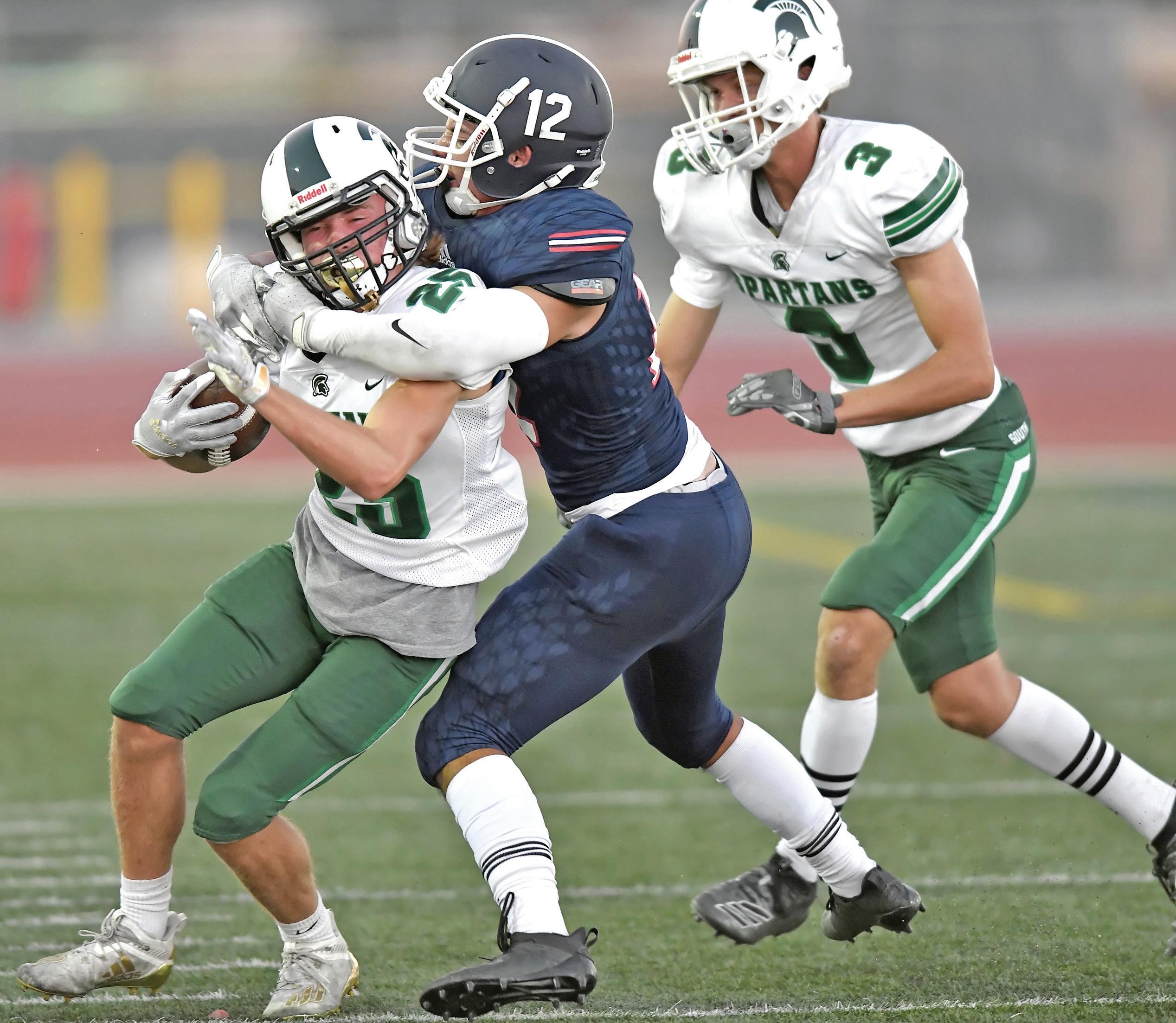
2The runner’s teammate is charging the play from behind. There is a possibility of a block in the back or other foul. Additionally, it may be the force from this player’s charge that causes the other players to fall roughly out of bounds. In that case, the defender should not be flagged.
3Assuming this play doesn’t result in a first down and the runner goes out of bounds in his current path perpendicular to the sideline, forward progress was stopped inbounds and the clock should continue to run.

1 2 3 REFEREE January 2023 | 41 | REFEREE January 2023 37
HESTON QUAN
CASEPLAYS
Illegal Pass?
Play: Second and 10 on team A’s 30 yardline. A1 hands to A2 behind the line. A2 fumbles the ball forward so that it rolls beyond the neutral zone. The ball is muffed by B3 back to team A’s 27 yardline, from where A1 throws a forward pass that is caught by A2 at his 40 yardline. A1 was behind the neutral zone during the entire play. Ruling: Legal play in NFHS since the pass was not thrown from beyond the neutral zone (7-5-1). Legal pass in NCAA. Although the ball has gone beyond the neutral zone, it was not in possession of a player at that time. Therefore there is no foul (7-3-2e).
Snapper Issue
Play: Team A players move to the line and snapper A1 puts only his right hand on the ball. As A2 is calling signals, A1, slowly and without simulating action at the snap, removes his right hand from the ball. Ruling: In NFHS, that’s a snap infraction, a dead-ball foul with a five-yard penalty. In NCAA, there is no foul (NFHS 7-1-1, 7-1-3 Pen., 7.1.3; NCAA 7-1-3a1, 7-1-4a-1).
Ineligible Touched by Pass Play: Team A’s ball on its 45 yardline. A1’s legal pass strikes ineligible A2 on top of the helmet at team A’s 42 yardline and bounces forward to midfield, where eligible A3 catches it and advances. Ruling: Legal play. Touching by an ineligible behind the line is not a foul unless the ball is caught, batted or muffed (NFHS 7-5-13; NCAA 7-3-11).
Fake Punt
Play: Fourth and eight at team K’s 22 yardline. Team K, in scrimmage kick formation, sends substitutes K1 and K2, wearing numbers 21 and 33, respectively, into the game. They are positioned on their line between the ends. K3 takes the snap and throws a forward pass to K4, who was positioned on the end of the line and wearing number 88. Ruling: Legal as long as the players numbered 21 and 33 did not go downfield before the pass (NFHS 7-2-5 Exc., 7.2.5D; NCAA 7-1-4a-3 Exc., AR 7-1-4 IV).
can offer you advice on working your new position.
Consider attending one of the many clinics and camps that now exist. Some state associations have very useful training programs. A growing number of associations have a lot of online training material available. Be sure to check out what’s available in your state.
One of the best training tools is game film. It is much easier to obtain films dealing with keys, onfield coverage and the like. If you have an opportunity to get your hands on footage that fits your new position, do so.
Failing that, you can watch a game and go through it play by play, asking yourself what your key(s) should be at the snap and what you should be watching as the play unfolds. Better yet, do it with an experienced official at that position who can correct you when you’re wrong.
I would work more scrimmages and sub-varsity games. They afford opportunities to get acquainted with your new spot. If you can entice a knowledgeable veteran to watch and critique you, all the better. Switching positions can give you a fresh start and may make you more marketable in terms of getting on a good crew, receiving better assignments and moving up the officiating ladder.
Working every position can be especially beneficial to newcomers, who may think they like one position until they’ve worked a different one. But you can’t just switch and be done with it. There is a whole new learning experience you need to undertake if you’re going to be the best you can be in your new environment.
Jon Bible is a replay official in the Southeastern Conference. A resident of Austin, Texas, he formerly officiated collegiate and pro football.
Out for One Play
By Judson Howard
Player safety is paramount and a primary reason officials are on the field. Rules reflect that and you must know when a player must leave the game to remedy something that makes them or others susceptible to further harm. In some cases, an issue can be resolved without having to call timeout.
When you see an obviously or apparently injured player, an official’s timeout should be called
so team personnel can attend to that player (NFHS 3-5-10a; NCAA 3-3-5a1). The player must leave the field for at least one play. A team timeout cannot be used for that player to remain in the game.
A player who exhibits signs, symptoms or behaviors consistent with a concussion must immediately leave the game (NFHS 3-5-10b; NCAA 3-3-5a-3). That player can only return after being cleared by an appropriate health care professional. Both rulebooks have supplemental
INJURED PLAYER
When an injury occurs in an
it must be an outside the
hashmarks
the injured player.
FOOTBALL 42 | REFEREE January 2023
C
C
AT AT
NFHS game and the referee grants an authorized conference,
nine-yard marks conference. If the injured player is between the
and the numbers, the team whose sideline is affected should move away from
guidelines for handling concussions
— NFHS rulebook Appendix B and NCAA rulebook Appendix C.

A player who is bleeding, has an open wound or has an excessive amount of blood on the uniform must leave the field (NFHS 3-5-10c; NCAA 3-3-5a-4). If a timeout request is granted before an official’s timeout is taken, and the bleeding can be stopped or the uniform changed during the timeout, the player does not have to sit out a play.

The rules for bleeding also apply to officials. A bleeding issue must be corrected before the official can continue to officiate the game.
If a player’s helmet is completely dislodged from their head due to game action, at the end of the down, that player must leave the contest for at least one play (NFHS 3-5-10d; NCAA 3-3-9a). In NCAA only, a team timeout can be taken to keep the player in the game.
Play 1: Runner A1’s helmet (a) is pulled off by B2, who is flagged for
a facemask foul, or (b) flies off as a result of a legal hit. Ruling 1: In (a), A1 does not have to leave the game because there was a helmet foul by an opponent. In (b), A1 must sit out at least one play. In NCAA only, the player need not sit out if a charged team timeout occurs.
Players with improperly worn or missing equipment are required to be replaced for at least one down. If the missing or improperly worn equipment is detected during the down or during subsequent dead ball action related to the down without being directly attributable to a foul by an opponent or if a player is wearing otherwise legal equipment in an illegal manner, the player shall be replaced for at least one down (NFHS 3-5-10e; NCAA 1-4-8b). In NCAA only, with a charged timeout and correction the player may return without missing a down.
Use common sense if an equipment problem can be quickly rectified. For example, instead of calling timeout for a mouth protector
dangling from a player’s facemask, tell them to take care of it. Other examples include telling a player to fasten a lose chinstrap, cover a shoulder pad with the jersey or pull the pant legs down to cover the knees. That ensures compliance and does not disrupt the flow of the game.
Play 2: During the last play of either half, a player is injured, bleeding or is missing an equipment item. Ruling 2: The player does not have to sit out the first play of the second half or the first play of overtime if the problem is corrected during the intermission.
Many games require at least one medical professional present before a game can begin. Part of your pregame duties should be to identify and meet with those individuals.
Officials are not health care experts. Always lean on the side of player safety to get help to those in need. Judson Howard, Los Angeles, is a replay official in the Pac-12 Conference. He officiated more than 20 years, many at the NCAA Division I level.
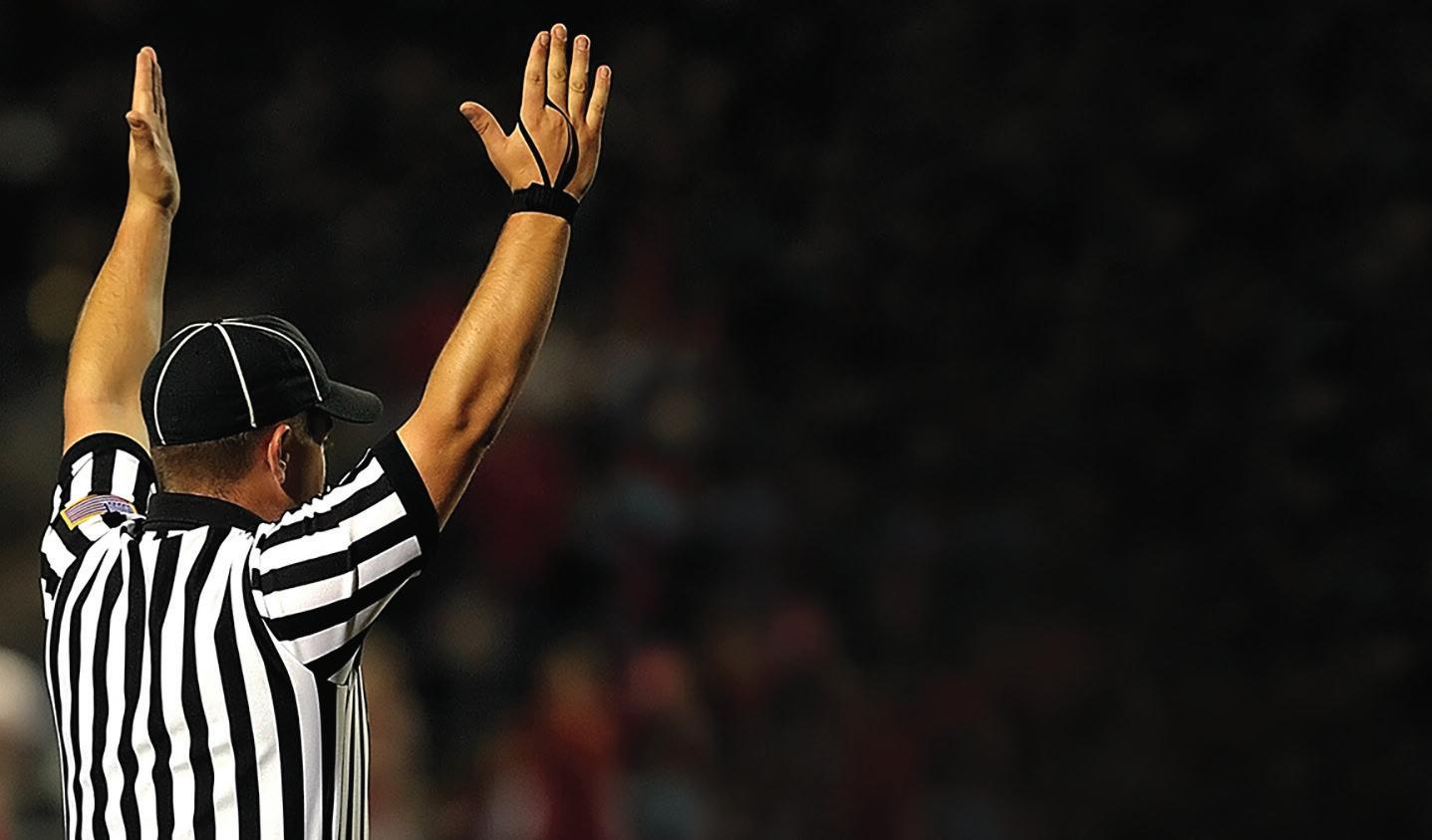
WWW.TBFOC.ORG 240-350-6810 15th Annual We are combining our efforts with great clinicians, supervisors and guest speakers to provide you with an excellent training opportunity. Tom Beard’s Football Officials Clinic EAST Maritime Institute, Linthicum, MD (near BWI Airport) March 17-18, 2023
GETTING IT RIGHT INSPIRATION, MOTIVATION, ELEVATION
A(V)P History
By Brad Tittrington
Fans of the AVP Tour know the Manhattan Beach Open in California is the Super Bowl of beach volleyball. The event has provided a lot of history over the years. This past August, it provided even more.
When Katy Meyer, Suzanne Lowry, Kirsten Boessneck and Magda Gleaves took the sand to work the final match of the Women’s Open, they became the first all-female crew in history to work an AVP Final.
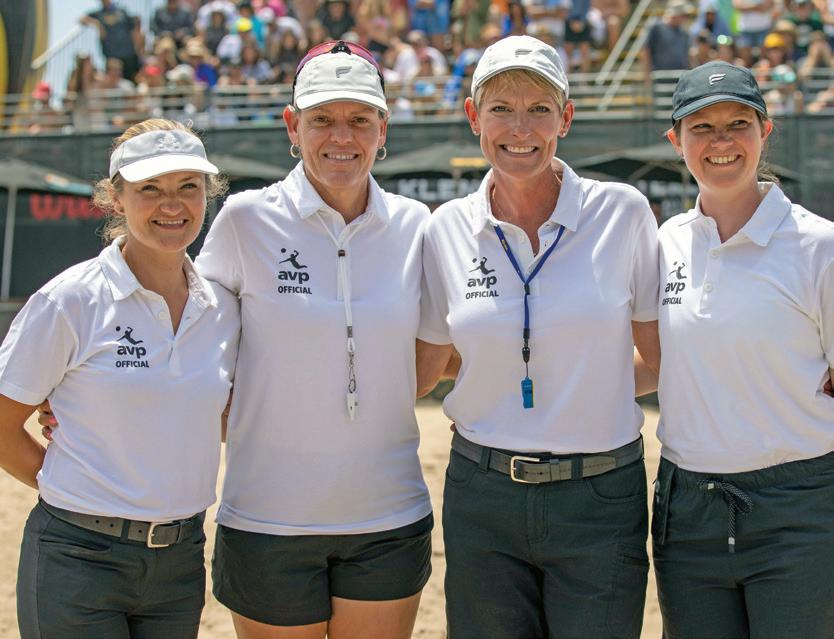
the first event where we had a large enough group of officials where we had four women officials working.”
For Meyer, it was an opportunity to stand shoulder to shoulder with other strong, female officials and accomplish something that could have a major impact in the sport for years to come. As a leader in the volleyball world as both an official and as the executive director of PAVO, Meyer understands the ripple effect this moment can have on the future of women in officiating.
“The magnitude of that whole thing does not get lost on me because I don’t know how often it will be able to be replicated, which is a shame,” Meyer said. “If we want more women officials, we need more women officials out there. If you can see it, you can be it.”
Both Meyer and Gleaves pointed out the officials who came before them and the sacrifices those officials made to make this a reality. Women like Verna Klubnikin and Patty Salvatore, who started working on the tour when it was only open to male players.
AVCA Appreciates Officials
The American Volleyball Coaches Association (AVCA) celebrated officials by hosting its second annual High School Volleyball Officials Appreciation Week. The weeklong celebration took place from Sept. 30 through Oct. 8. The nine-day period was set aside to make sure officials knew they were part of the sport and called for coaches to lead by example to show student-athletes, parents and fans how to properly treat and engage with officials.
During the nine-day event, 241 participants in 26 states and the District of Columbia took part in the celebration. Participants could choose one match or multiple matches during that time period to present a small token of appreciation — goodie bag(s) or certificates of appreciation — prior to the match before the coin toss.
The AVCA encouraged participants to create banners to show support for the officials and take pictures to share on social media using #officiationweek.
SOURCE NWESTIOWA.COM
NBA Referee Honors Mom
Lowry, who is the co-head referee on the AVP Tour, approached Meyer to notify her she was going to be the first referee for the women’s final. When Lowry explained she was going to be the second referee and both line judges were also female, it set up a historic moment. And when Lowry notified AVP leadership of the Finals crew, she said the Tour leadership could not have been more supportive.
“We’ve had women with the (ability) to do the finals for years,” Lowry said. “But we’ve just never all been at the same tournament at the same time. We are so careful as we balance travel and hotel rooms and the availabilities of all the officials. The Manhattan Beach Open was
“I am humbled and grateful for the opportunity, but I also cannot help but think of the many great women officials that were the first women to break through,” Gleaves said. “Many talented women officials have come before me and proved that women can officiate at the top of the game. … A lot of credit goes to those ladies that opened the door and held it open for others to come behind them.”
For Boessneck, being able to share the sand with the other three is something that resonated with her.
“It’s an honor to be part of that crew, especially when you look at the three women I worked with,” she said. “They all have very accomplished officiating careers, and I am lucky to not only call them colleagues, but friends. I truly look forward to the day when it’s the norm, not a rarity, to see all-female crews working high-level matches.” Brad Tittrington is an associate editor for Referee magazine.
NBA referee Derek Richardson recently purchased a private elementary school in Inglewood, Calif. The 26-year veteran, who grew up in North Charleston, S.C., co-founded the Why Can’t We Make a Difference Foundation, whose mission is to “increase elementary school students’ academic and emotional interest in school through academic and social enrichment programs in the underserved school communities of Los Angeles, California,” according to its website.
Richardson, who has officiated more than 1,300 games in his career, decided to rename the former K. Anthony School to Dolores T. Richardson School in honor of his mother, who he said was the first and most important teacher in his life.
The ribbon-cutting ceremony took place Oct. 29, and Richardson noted he wanted children to have access to the same opportunities as neighboring communities.
ABCNEWS4.COM
SOURCE:
Have you heard an inspirational or motivational officiating story?
Send your ideas to GettingItRight@referee.com
COURTESY OF RICK ATWOOD
From left, Magda Gleaves, Katy Meyer, Suzanne Lowry and Kirsten Boessneck made history in August becoming the first all-female crew to work an AVP Final event at the Manhattan Beach Open.
44 | REFEREE January 2023

learnmore at STORE. /BASEBALL SIZE: 8”X11” | PAGES: 40 Focus your thinking on crucial plays you’re seeing every game, and get the tools you need for successful rulings every time. *NASO member discount available. $1095 * DIGITAL PRINT $1695 COMBO $1295 * 33 % more content
PROFILES PERSONALITIES PLUS
Real Reversal: Wrestler Becomes Referee
By Tom Hlavacek
Wrestling plays a big part in 17-year-old Evan Katherine Koepplinger’s life. A member of a military family, she attends Stuttgart High School in Germany and was a member of the wrestling squad that won the Department of Defense Dependents Schools (DODDS) title in 2022.
she said. “So I tried it out and here I am.”
Koepplinger’s continued interest in wrestling reflects the rising participation figures of young women taking up the sport. According to USA Wrestling press officer Gary Abbott, “Wrestling has been one of the fastest growing sports for girls in high school for a number of years.”
DODDS does not have girls’ wrestling, so Koepplinger wrestled as a member of the boys’ team. She was winless but said she was not discouraged and she knows what to work on. If she saw a girl on another team she made it a point to introduce herself and chat. “Being on a team with mostly boys can feel really alienating sometimes and I want them to know I supported them,” she said.
Veteran Official Receives Capital Letter
John Wayne Hite Age: 81 Staunton, Va.
When multi-sport official John Wayne Hite got recognition for his officiating career, it came from a high place: the Virginia General Assembly.
The legislators passed a resolution honoring Hite for his 61 years of officiating football, baseball, softball, volleyball and basketball. He got his start at his local YMCA before taking on high school sports for the Virginia High School League.
He typically works volleyball two or three times a week and sometimes even goes to several different schools in the same day.
COURTESY WHSV-TV, NFHS
As a wrestler herself, Evan Katherine Koepplinger said she became a referee to learn the sport from another perspective.
Koepplinger has taken another step by becoming the first female referee officiating Child and Youth Services (CYS) matches.
“I chose to officiate because I saw it as an opportunity to inspire the next generation of wrestlers while also learning more about the sport from another perspective,” Koepplinger said. “Coaching the younger wrestlers has been a privilege, and now I can referee as well. I am more invested in this sport than I ever thought I would be. It has allowed me to grow in so many different ways.”
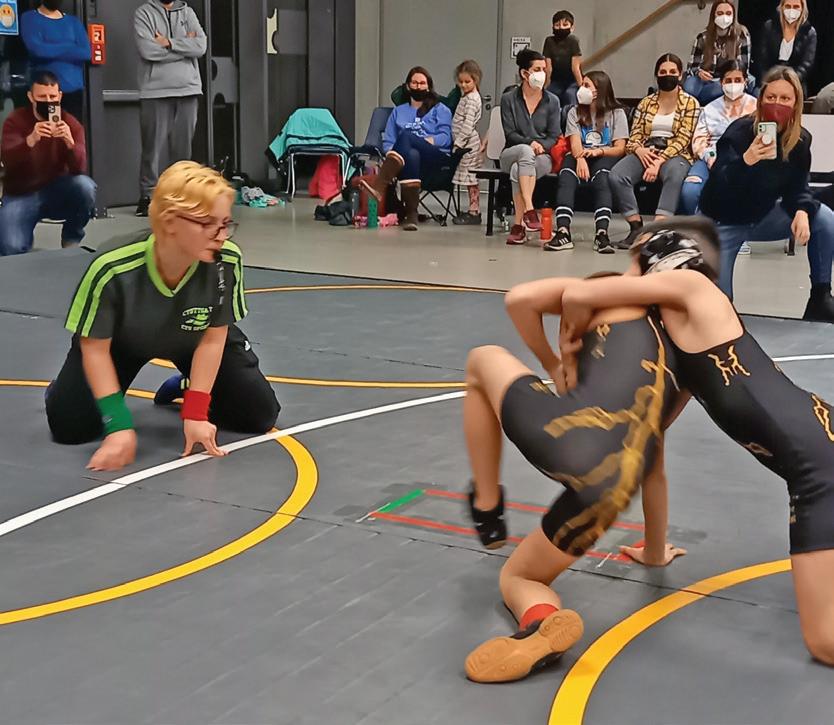
Koepplinger credits a former mentor, the late Lt. Col. Ben Fielding, with encouraging her to get into the sport. “He thought I would be really good at wrestling,”
She admitted her first year on the mat was challenging but she was grateful to her family for helping her persevere despite the trials. “If it doesn’t challenge you, it doesn’t change you,” she said.
At the conclusion of the high school season she began to referee and has officiated about 30 CYS matches thus far this season. She was trained by Marine Lt. Col. Robert Monday. He shadows her on the mat and helps her with her signals, mechanics and mat positioning.
Koepplinger said officiating “has made me a stronger person both physically and mentally.”
She plans to continue in wrestling beyond high school, either as a wrestler or referee. “I get a completely different view of a match (as a referee),” she said. “It not just one-sided. And I am very happy to be a part of the fastest-growing girls’ high school sport.”
Tom Hlavacek officiates volleyball, soccer, basketball, wrestling and baseball for the children of military personnel in Germany. A U.S. Army veteran, he is originally from Salina, Kan.
Tourney Recognition
Is Icing on the Cake
John Bartz Age: 87 St. Paul, Minn.

John Bartz can drop the puck to start a hockey game in his sleep. After all, he was one of Minnesota’s best referees over his 50-year career.
But when he dropped the ceremonial first puck at the 2022 state championships, it was something special.
“It’s very nice they would recognize me,” Bartz told KSTPTV. “I’m overwhelmed.”
The Minnesota state tournament has grown over the years and is now played in the Xcel Energy Center. “It’s wonderful,” Bartz said. “It’s one of the best tournaments in the United States, if not the best.”
Bartz officiated games involving Herb Brooks, who coached NCAA champions at the University of Minnesota and led the 1980 U.S. Olympic team to the gold medal.
COURTESY KSTP-TV
Do you know a person or group who should be profiled?
Send info to us at profiles@referee.com
COURTESY JAMES MCADAMS-THORNTON
46 | REFEREE January 2023
VISIONINACTION




Association Training Solutions Available Now




















Many local officials association trainers spend their time in the months leading up to the season desperately trying to cobble together lesson plans and scraps of low-resolution video plucked from the Internet, trying to piece-meal it all together into some semblance of an effective training program.
It’s a tough and thankless job when you’re responsible for training the officials in your group. After all, if your group is like most around the country, the entire effort is done by volunteers – men and women who are passionate about officiating, but who have to juggle their association work with their day jobs, families and other commitments.
When resources are stretched thin, why not let the National Association of Sports Officials (NASO) help solve the problem?
Part of NASO’s mission is to provide resources for local officials associations through our Association Advantage program. At the Diamond level, NASO’s Association Advantage provides a complete turnkey training and insurance solution for any football or basketball officials association in the country.

Those solutions include a full slate of training resources with an emphasis on video, comprehensive training presentations on specific topics designed for up to six specific educational topics featuring stateof-the-art video and voiceovers with enhanced teaching points and
points of emphasis. Other sports will be added in the near future.
Here’s how it works: Your association’s members join NASO as a group for the reduced NASO membership rate of $89 per official (regular NASO membership price is $124). Because all of your association’s officials joined together, your association receives:
• A fully-formed training curriculum ready to use immediately, including six lesson plans, accompanying video, online testing and an instructor’s guide, all packaged together as “Meetings in a Box.”
• Your officials receive an officials manual, the latest copies of both Mechanics Illustrated and Rules By Topic, as well as a preseason and postseason online newsletter.
• Comprehensive liability insurance for both your association and your officials, along with bonus insurance coverages for assigning, play calls and assault protection.
• A complete package of association leadership and administrative resources, including The Guide to Local Association Management, a subscription to the Association Advantage Advisor newsletter and access to the world’s largest database of officials association articles and resources.
To get started immediately or for more information, go to www. naso.org/advantage or phone us at 800/733-6100.
WE’RE ALL IN THIS TOGETHER!
THESE ORGANIZATIONS SUPPORT OFFICIALS
ATTENTION REFEREE MAGAZINE SUBSCRIBERS

It’s time to join the rest of us in the National Association of Sports O cials. Not only will you continue to receive the world’s #1 o ciating publication, you’ll enjoy all of the additional benefits NASO members enjoy.
Go to naso.org/upgrade2022 to join NASO for the special introductory price of $114 and receive these two FREE books!
NATIONAL ASSOCIATION OF SPORTS OFFICIALS
OFFICIATING DEPARTMENT FOR NASO MEMBERSHIP INFORMATION OR TO SIGN UP, GO TO NASO.ORG, CALL
OR EMAIL CSERVICE@NASO.ORG
262-632-5448
$ 114 JOIN TODAY
It has been said that difficult times often bring out the best in people. What transpired in late July and early August in one southeastern Kentucky community perfectly epitomizes one of those times.

It began July 28, 2022, near Hazard, Ky. A historic rain event brought torrential precipitation to the area, causing major destruction and leaving at least 39 people dead in its wake. Over the course of
three days, nearly 10 inches of rain fell, including nearly eight inches in the city of Hazard. The majority of the rain falling in a two-hour period in the early morning hours proved to be the biggest problem.

Houses and businesses were swept away in the resulting flood waters.
Hundreds of people lost everything, including seven Kentucky High School Athletic Association (KHSAA) football officials. They included Jack
BY BRAD TITTRINGTON





Barker, who lost his business, and Derrick Wright, Chase Fugate, Chad Bates, Austin Johnson, Jody Johnson and Jake Johnson, all of whom lost their homes. Austin Johnson and his wife were awakened at 2:30 a.m. and had to hold on to trees for several hours to avoid being washed away in the flood waters.
“It was hopefully a oncein-a-lifetime ordeal,” Austin Johnson said. “I never thought we’d have to do something like that.”
Jake Johnson jumped out of the second story of his house to escape the rising waters as well while escaping to his aunt’s house, which was on higher ground. Jody, Jake’s father, stayed behind in the upstairs portion of the house and rode out the storm.
48 | REFEREE January 2023
Kentucky in late July, affecting several officials. The officiating community banded together to help them out.
Historic flooding ravaged southeastern
“The water had run us upstairs,” Jody said. “(Jake) jumped off our back porch. It wasn’t swift water, but it was enough to scare him.
“I was born and raised in that area, and I’ll be 47 in October. It’s the worst flooding I’ve seen in my life. It happened in the middle of the night and came in a hurry. In two hours, the devastation was done.”

When an emergency of this magnitude occurs, it takes a lot of hard work and effort on the part of many to get everyone back on track. It is also in these times the true character of people is revealed. Shortly after the flooding, a group of businesspeople in Kentucky began working together to do what they could to offer comfort and assistance to those officials affected by the flood. And while some of those businesses compete with each other, they put that aside and came together to help out.
One of the first people to get the ball rolling was Scott Kennedy of Force 3 Pro Gear and Officially Connected. Kennedy, an NCAA baseball umpire who lives in Louisville, Ky., immediately

started posting on Twitter and Instagram the need for supplies to help those officials affected by the storm.
Kennedy reached out to multiple connections in the flood-ravaged area seeing how people were doing and if there was anything he could do to help. One of the first to get back to him was Kyle Maggard, the football assigner for the region who assigns all seven officials and who also works football, basketball and baseball. Maggard told Kennedy he had six officials in the area who had lost everything and another who had lost his main source of income, and anything he could do to help would be appreciated.
Kennedy began collecting donations as well as cases of water, toiletries, shoes and clothing to drive down to Hazard. He also contacted Greg Wilson, an NFL back judge and owner and operator of Honig’s, an officiating supply company out of Denver.
“Greg Wilson was the first person I called,” Kennedy said. “He is my football guy. He never hesitated. ... I texted and said, ‘I know you’re busy, but call me when you get





On July 28, 2022, heavy rains caused historic flooding in southeastern Kentucky. Many lost homes and businesses and at least 39 people lost their lives in the tragedy. As pictured below, many community members worked together to clean up after the flood and help everyone get back on their feet.
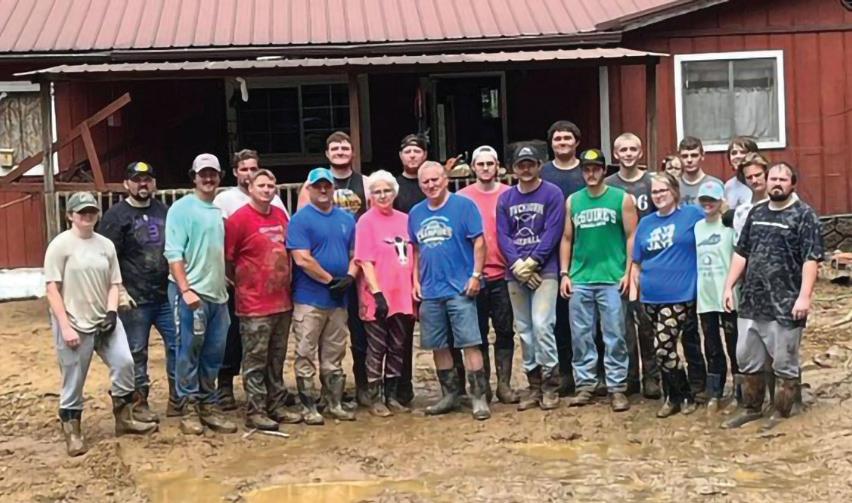
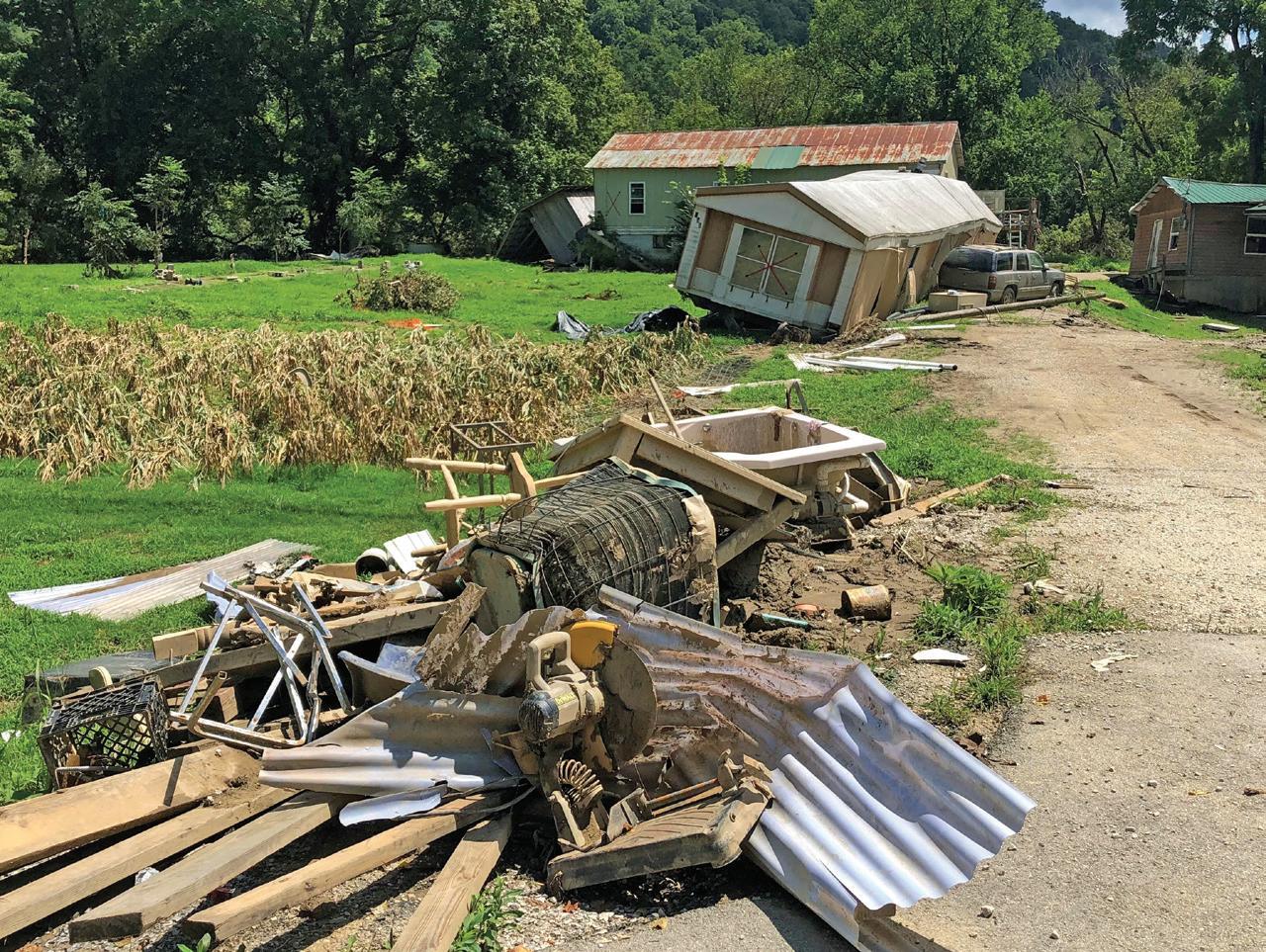
some time.’ Football season was starting in three weeks.”




Later that day, Wilson called Kennedy and told him to get him everyone’s sizes from head to toe. Wilson ultimately sent to Kennedy’s house two massive boxes full of uniforms and gear for each of the six officials once they were all sewn and specifically sized.
“He asked if I was in a position to assist, and I said, ‘Absolutely,’” Wilson recalled. “Outside of officiating, I personally believe this is what we should be doing — trying our best to help each other out in life. I was very grateful that I was in this unique position to be able to step in and help out and get these men on their feet and hopefully refereeing football games and just making their lives a bit easier.”
Getting the officials back onto the field would not have been possible without all the endeavors of everyone behind the scenes. Trying to replace everything in a short amount of time was no easy
REFEREE January 2023 | 49
PHOTOS COURTESY OF JIM KIRK AND KYLE MAGGARD
HELP RAINS SUPREME
task. Wilson said Honig’s was able to supply everything to the officials except shoes, and True Officials out of Louisville stepped in to fill the gaps as well.
“Greg overnighted everything,” Kennedy said. “I got the package Monday afternoon and took it to UPS on Tuesday. Initially, I wasn’t even sure if UPS could get it there. … Kyle ended up getting it on Wednesday and made all the drops on Thursday to the guys. Those guys had games on Friday.”
Before receiving the gear from Honig’s, Kennedy and one of his business partners, John Bennett, loaded up Kennedy’s SUV with necessities and made two trips to Hazard. Kennedy said he received roughly $2,500 in donations from local officials and he loaded up on paper towels, cleaning supplies, clothes, etc., to deliver to Maggard, who ultimately
(Left) Scott Kennedy, left, of Officially Connected and Force 3, delivers supplies to those in need in Kentucky and meets with area assigner Kyle Maggard. (Top right) Ump-Attire. com donated bags, along with other gear and supplies, to officials who lost eveything in the flood. From left, Ben Kirk; Jim Kirk, president of Ump-Attire. com; Maggard and Hunter Fry. (Bottom right) Jack Barker, who lost his business in the flood, prepares for his first Friday night game with his new gear.
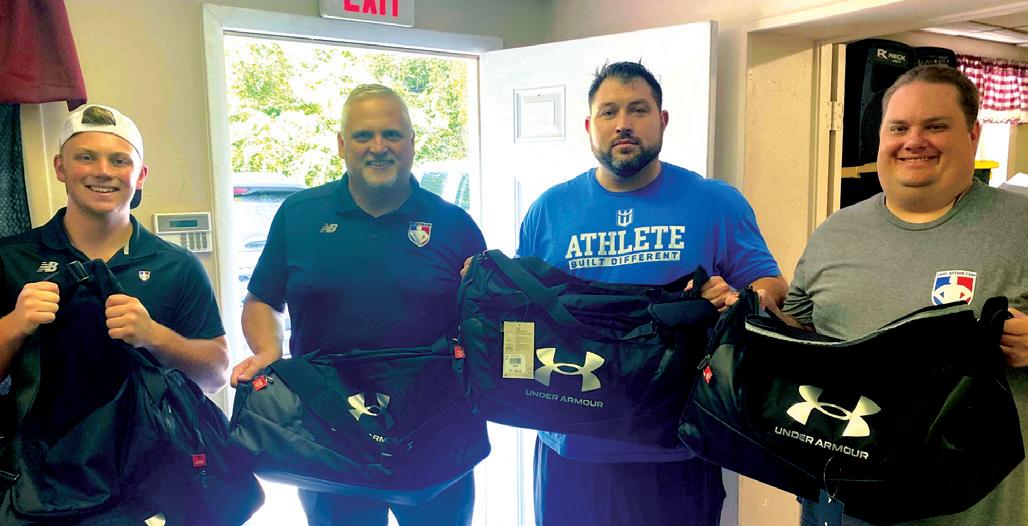
made sure the families got what they needed. Kennedy’s mother and father went to the store and donated over $600 in supplies as well.
While Kennedy was busy collecting items, another sports officiating retail giant in Louisville was also collecting items to donate. Jim Kirk, president of UmpAttire.com, wanted to help the six officials as well. The KHSAA alerted Kirk to the six officials who had lost everything and shared with him an email from Maggard. Kirk immediately reached out to Maggard to see how he could help.
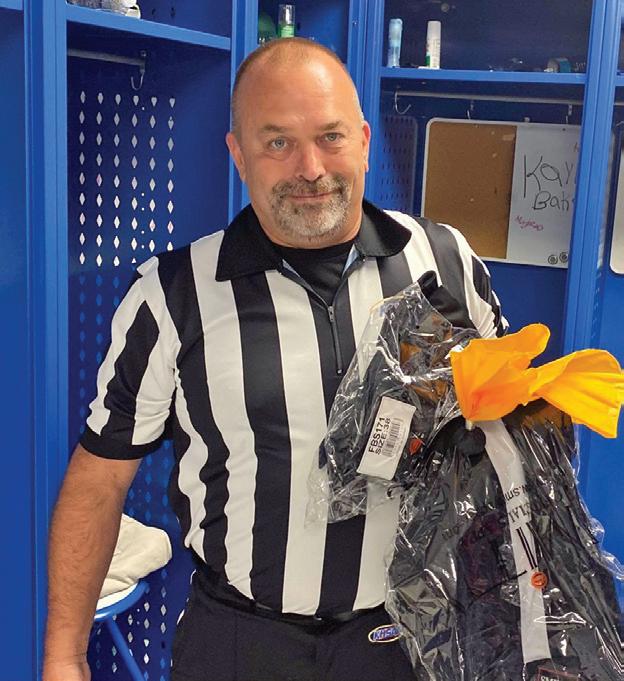
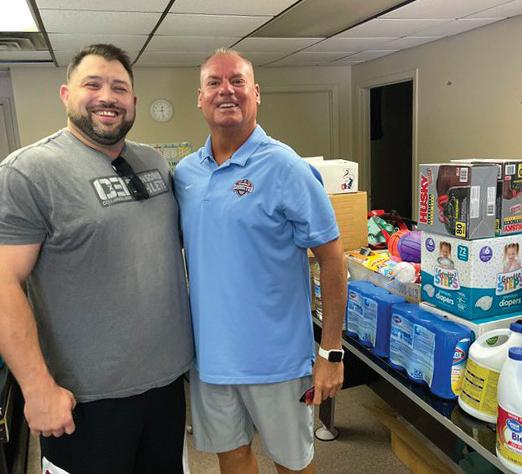
“I’m from that area,” Kirk said. “I’m born and raised in eastern Kentucky, so that really hit home for me. We’ve been providing apparel to the KHSAA since 2012 and through that, these guys are our customers. In our office, we say we’re not a sport goods company, we support
people in their careers and their career happens to be sports officiating.
“Their lives were dramatically affected so this is where we step out of our normal bounds of just providing gear and apparel for the field and courts and support them,” Kirk said. “We had a slogan (in some ads) and that slogan is ‘Standing behind you and the game.’ The game is what you think about. We like to look at it as more than that. We stand by you, too. We wanted to let these officials know there was a company in Kentucky who cared about them.”
That caring led to Kirk and Ump-Attire.com holding a collection drive. The company posted through social media and through the Kentucky and Indiana officiating communities looking for items to be donated for those six
PHOTOS COURTESY OF SCOTT KENNEDY, JIM KIRK AND KYLE MAGGARD
50 | REFEREE January 2023
families. Kirk ended up being able to fill two SUVs. He drove them and dropped them off to Maggard, who became the go-between. Kirk also reached out to New Balance, which donated 14 pairs of shoes.
“I kind of coordinated everything,” Maggard said. “I was on vacation (in Tennessee). I woke up Thursday morning about 10 a.m. I got on Facebook and saw postings about the flood. Once I figured out where the floods happened, I called all the guys to see if anyone needed anything.”
Because the officials all work multiple sports, Maggard worked with the companies to make sure the officials all had enough gear to cover all the sports they worked. In general, the companies donated two full sets of uniforms for the officials as well as all the equipment, gear and duffel bugs. The companies all wanted to make sure the officials had enough gear because water was shut off for nearly three weeks and doing laundry was nearly impossible.
“I made connections over 20 years with people and just wanted to help them out,” Maggard said. “They are all really good guys.”
The KHSAA was also working behind the scenes to help the officials and
waived the officials’ licensing fees so they had one less thing to worry about.
While the officiating supply companies were hard at work outfitting the officials and making sure they had food, water and other essentials, another group was also assisting. UMPS CARE Charities, the official charity of MLB umpires, was working to find out how its organization could get involved.
Greg Gibson, a 24-year veteran MLB umpire who retired in October, visited the officials. Gibson, who is from southeastern Kentucky, went to lunch with the group and wanted to find out what everyone needed. Gibson had the opportunity to spend a few hours with the families to just talk about officiating and see what he could do to help.
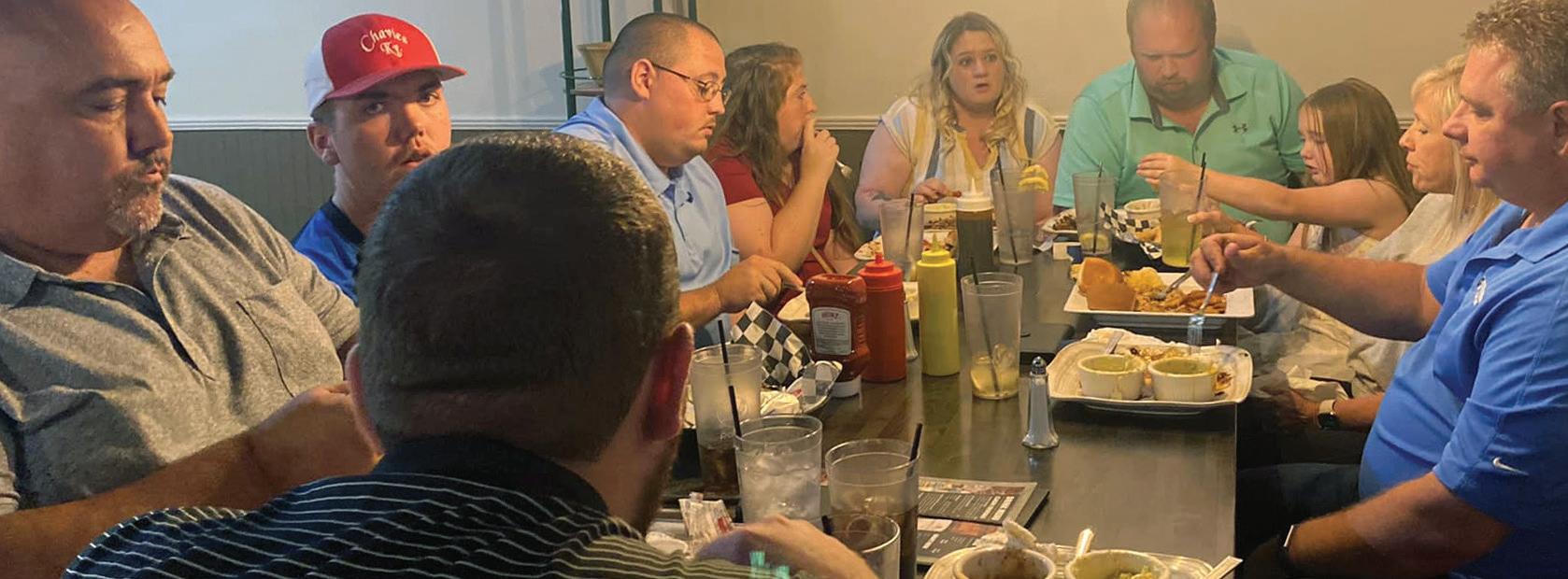
“I’m about two hours away from where it got hit in Hazard,” Gibson said. “I was able to take a Sunday and just meet with them and hear their story. They needed a break from what they were experiencing.
“They are still struggling. They need a lot of help. I wish there was more I could do. I can use my platform as a major league umpire and bring attention to it. They’ve lost so much.”
UMPS CARE, through its Family Care Program, also made a generous donation to assist the families. The Family Care Program was
established to provide shortterm financial assistance to former professional baseball umpires who have fallen on hard times but has grown to include members of the “baseball family.”
“That is how UMPS CARE started,” UMPS CARE president Gary Darling said. “National League guys started the ‘Helping Hands’ fund. That is the original arm of UMPS Care, the Family Care program.”

While the road to recovery for the seven officials will be long, the ability to get back to some sense of normalcy has been a little bit of relief. It has given them a chance to get back on the field and under the Friday night lights and an opportunity to forget about the stresses for at least a couple of hours. And it is in those moments when the realization of what happened and the life lessons come to fruition.
“As bad as our situation is, there’s 39 people who lost their lives who can’t sit around and talk about it,” Jody Johnson said. “We’re healthy. We are going to build back better. You get knocked down, you get back up. That’s one lesson sports and officiating teaches you. If you get knocked down, you got to get back up and keep moving forward.”
Brad Tittrington is an associate editor for Referee
MAGGARD
PHOTO COURTESY OF
KYLE
REFEREE January 2023 | 51
MLB umpire Greg Gibson, far right, met with officials and their families severely impacted by the flooding.
CHECKED SWINGS
Here Is Your Checklist
By Brad Tittrington
One of the most difficult calls for base umpires is the checked swing. When the plate umpire comes to you for help, you have a brief moment when everyone is watching you to see what you are going to call. And no matter what you call, one side is going to be unhappy with you. So how do you exude confidence
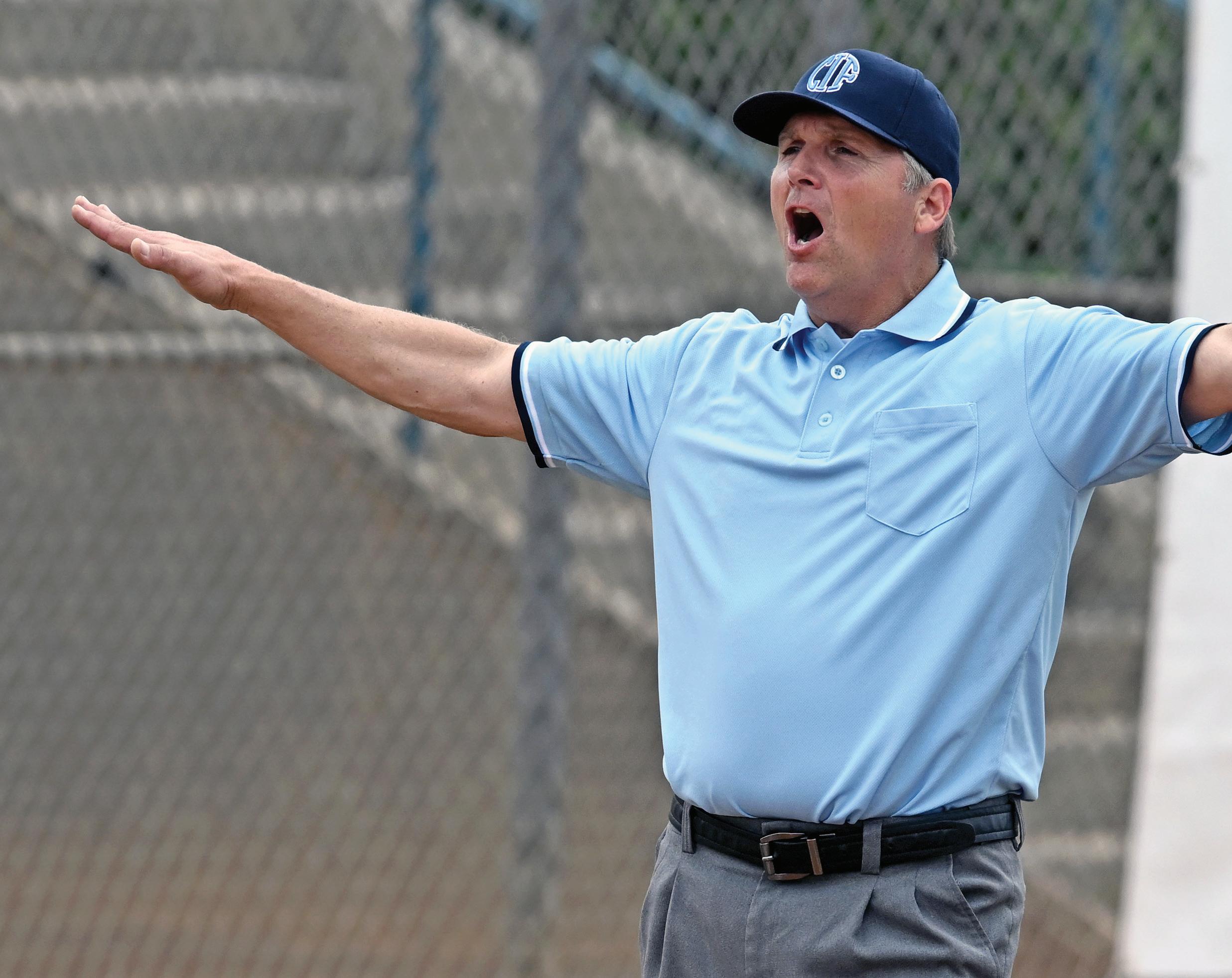
when ruling on checked swings? Here is a list of ways you can nail checked swing calls and help your crew.
Know the Rules
This sounds simple, but in reality, can you cite what the rules are regarding checked swings for the particular codes you work? Below are the actual rules or interpretations for each of the codes.
NFHS — As an aid in determining a checked swing, the umpire shall note whether the swing carried the barrel portion of the bat in front of the batter’s body and in the direction of the infield. However, the final decision is based on whether the bat actually struck at the ball (2-11).
NCAA — As a general rule, there are four factors when determining if a batter has swung at the ball or
SOFTBALL RULES, MECHANICS, PHILOSOPHY 52 | REFEREE January 2023 EDITOR: BRAD TITTRINGTON btittrington@referee.com
HESTON QUAN
Base umpires play a vital role in determining checked swings. Sandy Klapp, Yorba Linda, Calif., emphatically gives a no-swing call when asked during a game.
checked the swing: (1) Did the batter make an attempt to hit/bunt/slap the pitch? (2) Was the barrel of the bat out in front of the front hip? (3) Did the batter roll the wrists? (4) Did the batter swing through the ball and bring the bat back or draw the bat back before the pitch arrived? (11.10 Note).
USA Softball — Normally, these are the four areas which could constitute whether or not a batter


swung at the pitched ball or checked their swing. (1) Did the batter roll the wrists? (2) Did the batter swing through the ball and bring back the bat, unless the batter draws the bat back before the pitch arrives? (3) Was the bat out in front of the body? (4) Did the batter make an attempt to hit the pitch? (R/S 10).
USSSA — The umpire shall, in order to be consistent, have guidelines to follow. The rule that most umpires follow is: If a batter swings halfway or more across the plate, it is a strike. In other words, if the bat is swung so it is in front of the batter’s body or ahead of it, it is a strike (Feb. 2018 Interp.).
To clarify, all four codes have slightly different language or guidelines to go by to assist in calling checked swings. Ultimately, however, it comes down to your judgment. Did the batter attempt to swing at the pitch? The barrel of the bat out in front of the body and rolling of the wrists are usually dead giveaways the batter swung. But ultimately, you need to determine if the batter attempted to swing. The rule of thumb is if you are in doubt, the batter checked the swing. Never guess a strike.
In Your Mind, Rule on Every Swing
Even if your plate partner does not come to you to ask for help, you should rule on every checked swing in your mind. This way, when your partner does come to you for help, you are ready. A delayed response indicates doubt and doubt leads to credibility issues. Already have a determination in your mind before your partner comes to you. This is a good practice and habit to get into so when you do need to make a ruling, it is second nature.
Stay Engaged
After every pitch, especially on those involving a potential checked swing, stay engaged on what is happening at the plate. There is nothing worse than being a plate umpire and having a catcher or coach ask you to go to your base partner for help and that partner is not paying attention. Having to get that partner’s attention looks bad, it
QUICKTIP
Before the season begins, read one rule each night from your rulebook. Officials often try to consume all the information in the rulebook at one time. This does not work and provides overload, which can cause you to confuse rules. Focus on one rule per night and it will be easier to retain the knowledge.
DID YOU KNOW?
The D-I, D-II and D-III NCAA Softball Championships for 2023 will be held in three separate locations. For only the third time in its history, the NCAA undertook a siteselection process in 2020 where the majority of its championships were put out for bid at the same time. Below are the locations of the 2023 NCAA Softball Championships.
› D-I Oklahoma City, USA Softball Hall of Fame Stadium
› D-II Chattanooga, Tenn., Frost Stadium
› D-III Marshall, Texas, Taylor Field

States surveyed by the NFHS to determine number of softball umpires in their state

Umpires registered for high school in 2021-22


Umpires registered for high school in 2018-19

REFEREE January 2023 | 53
SURVEY SAYS … 38 21,711 24,330
TEST YOURSELF
Each of the following includes a situation and possible answer(s). Decide which are correct for USA, NFHS, NCAA or USSSA rules and which might vary. Solutions: p. 85
1. With no outs and R1 on first, B2 is batting with a 3-2 count. R1 breaks for second base with the pitch as B2 lines a ball that strikes F1 in flight and pops up in the air. F1 catches the deflected ball and fires to F3 at first base ahead of B2’s arrival. R1 stops on second base.
a. B2 is out on the force out at first and R1 remains at second base.
b. The ball is dead immediately when it strikes F1 and the umpires will judge where to place the runner and batter-runner.
c. B2 is out on the caught fly ball by F1 and R1 is out on the live-ball appeal at first base.
2. With no outs and R1 on first, B2 is batting with a 3-2 count. R1 breaks for second base with the pitch as B2 lines a ball that strikes the front of the pitcher’s plate and pops straight up in the air. F1 catches the deflected ball and fires to F3 at first base, ahead of B2’s arrival. R1 stops on second base.
a. B2 is out on the force out at first and R1 remains at second base.
b. The ball is dead immediately when it strikes the pitcher’s plate and is ruled a foul ball.
c. B2 is out on the caught fly ball by F1 and R1 is out on the live-ball appeal at first base.
3. With no outs and R1 on first, B2 is batting with a 1-1 count. R1 breaks for second base with the pitch. B2 hits the pitch off the pitcher’s plate and the ball ricochets to foul territory, untouched, between home plate and first base. F2 runs over to foul territory, picks up the ball and throws it to first base ahead of B2’s arrival. R1 advances and remains at second base.
a. It is a fair ball, B2 is ruled out at first and R1 remains at second base.
b. It is a foul ball, B2 is brought back to bat with a 1-2 count and R1 is returned to first base.
slows down the process and it takes away credibility of the call. As a base umpire, stay focused on the plate and be prepared for your partner to come to you for help. Granted, there are times when a team asks for an appeal much later than it should. Those, however, are few and far between. The majority of appeals come right after the catcher catches the ball. Be prepared for your plate partner to come to you for help.
Sell Your Call When Necessary
When you do need to give an opinion, especially if it is the difference between strike three or ball four, sell your call. Sometimes, plate partners get blocked and may come to you on an obvious checked swing or swing. In those instances, you don’t need to be big and a simple safe or out call is perfectly acceptable. However, when it is close, sell it. This will show you have confidence in your call. While one team is still going to be upset with you, it gives them less of a reason to argue when you are decisive and display confidence.
Be Consistent
While it is true no two pitches, or swings, are exactly alike, be consistent. If you call a batter on team A for a strike and then are asked to make a decision on a team B batter that does the same thing, the calls should be the same. Otherwise, it will appear you are just guessing and eventually no one will be happy. The best way to be consistent is to have repetition. Even
if you aren’t working a game but you are watching in person or on TV, practice making calls on checked swings. The only way to get better is to practice. It can take a lot of games before you feel comfortable ruling on these plays and even veteran umpires will say this is one of the toughest calls to make because it happens so quickly and you don’t always have perfect angles.
Give the Plate Umpire What You Got
Some veteran umpires use the adage, “If I come to you, just echo what I had.” That doesn’t fly anymore. And quite frankly, it never should. The umpire behind the plate is trying to judge the pitch and then trying to judge what the batter did. There are times when you can’t do both. As the base umpire, you should rule on what you saw and not just go with the plate umpire’s call. If you are being asked your opinion, give it.
Wait to Be Asked
One final piece of advice: Do not rule on a checked swing until your plate umpire points to you. Allow your plate umpire time to make sure the team is actually asking him or her to come to you for an appeal. Just because the catcher points at you or the coach yells from the dugout, it doesn’t mean you should give a signal.
Brad Tittrington is an associate editor for Referee. He umpires D-I softball and officiates women’s college and high school basketball, college and high school volleyball and high school football.
Lousy-Weather Wear
While it would be nice to play all softball games in perfect weather conditions, odds are at some point in your career you are going to be exposed to the elements. If you live in a cold-weather climate, you may have the majority of your games in less-than-ideal conditions. When those games crop up, you need to know what to do
when it comes to player uniforms and safety.
All four codes handle inclement weather apparel relatively the same. Players may wear inclement weather garments provided they are not distracting, do not interfere with the game, and pose no safety issues. NCAA rules are little more strict in that the garments, if worn by
SOFTBALL 54 | REFEREE January 2023
multiple players, must be like style, color and trim (NFHS 3-2-1, 3.2.1; NCAA 3.10.2, AR 3-22; USA Softball 3-6; USSSA 2-8 Note).
The general rule of thumb when it comes to inclement weather is to protect the player. The majority of the time when it comes to inclement weather, players will wear outerwear over their uniforms while playing on the field. Provided it isn’t distracting or poses a safety hazard, let it go.
In instances where you may need to see a player’s number in order to maintain the lineup, the player should be able to quickly show you her uniform number. In higher levels of play, and even in tournament ball, a lot of teams have sweatshirts that have the player’s name and number on the sweatshirt, which makes it even easier.
One area of concern where umpires need to be cognizant of what players are wearing is when the player is up to bat. There is no rule that states a player may not wear outerwear while batting. However, that outerwear may not interfere with the game.
If a batter is wearing a bulky jacket, she would need to tuck it in or remove that piece of clothing while batting as it could potentially give the batter an unfair advantage in terms of being hit by a pitch. As long as the outerwear is tight to the body, is not distracting and does not pose a safety threat to any player, allow it.
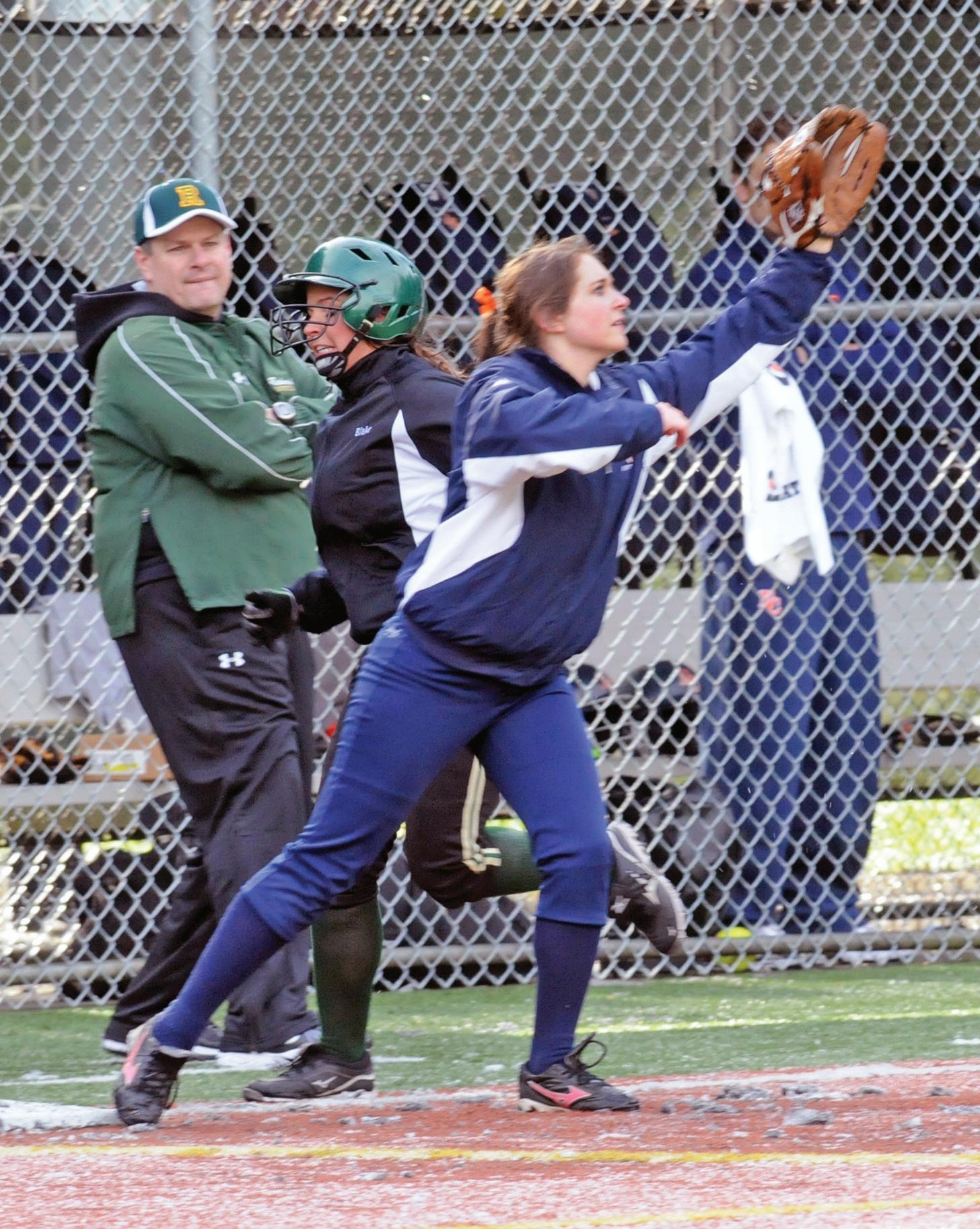
You will often see batters take off outer layers to bat and then put the outer layer back on once reaching base. This is particularly true of pitchers who are trying to keep their arms warm. Players should be allowed time to put on a jacket or sweater to stay warm while running the bases, provided it does not cause a significant delay. Again, player safety is the priority.
When it comes to games in inclement weather, allow players to be comfortable and wear gloves, hoodies, jackets, sweatshirts, etc., provided the apparel meets the rules for the code you are working and provides no unfair advantage.
Uniform rules vary by code and it is important for umpires to know what outerwear may and may not be worn during foul-weather games.
When it comes to umpires working in the elements, the key is to still be professional while working. All rules codes have specific jackets to wear as an outer layer while working. Wear as many layers as you need underneath to stay comfortable, but you should always wear the prescribed jacket on the outside. While you may have a favorite winter coat that isn’t part of the umpire uniform, it should not be worn on the field.
There are plenty of ways to stay warm and comfortable while wearing the prescribed uniform. It
isn’t a case of anything goes just because the weather is bad. You are still a professional representing an organization. Stick with the correct hat, pants and jacket prescribed by your organization and then layer up underneath where you can be more free to choose different items.
Remember, in inclement weather, everyone is usually miserable. Have a little patience, realize you have zero control over the weather, keep the players and yourself safe and maintain your professionalism. It will go a long way with players, coaches and fans.
REFEREE January 2023 | 55 DALE GARVEY
CASEPLAYS
New Signal
Play: F1 steps up onto the pitcher’s plate with her hands separated. F2 puts down a signal and F1 brings her hands together. After bringing the hands together, F1 decides she wants to throw a different pitch. She separates her hands and then steps off the back of the pitcher’s plate in order to receive a new signal from the catcher. Ruling: In all codes, this is an illegal pitch. Once the hands have been brought together and then separated, that begins the pitch. Once the hands separate, the pitcher must deliver the ball to the plate. Failing to do so results in an illegal pitch being called and a ball awarded to the batter’s count (NFHS 6-1-1f, 6-1-2a Pen.; NCAA 10.3, 10.8; USA Softball 6A-2 and Eff., 6A-11b; USSSA 6-1d Note, 6-1e-1, 6-3).
Force?
Play: With two outs, R1 on first and a full count on B4, F1 throws a pitch that bounces in front of the plate. B4 swings and misses at the pitch and F2 blocks the ball, but it rolls away a little bit to the left of home plate. B4 immediately races toward first base as F2 retrieves the ball. R1, thinking the ball was fouled off, does not run toward second base. When F2 picks up the ball, she realizes she won’t have a play on B4 at first and decides to throw the ball to second base. F6 catches the thrown ball and steps on second base. Ruling: In all codes, R1 is ruled out on the force out at second base. R1 is forced to advance to second base as a result of B4 becoming a batter-runner on the dropped third strike. Because R1 is forced to second base, the out at second base is a force out. If R1 had started at second base instead and the play would have been at third base, it would not be a force out and the runner would need to be tagged in order be out (NFHS 2-24-1, 8-1-1b, 8-6-3; NCAA 11.11.1, 12.1.2, 12.9.2, 14.1.12; USA Softball 1-Force Out, 8-1b, 8-7g, R/S 21; USSSA 3-Force Play, 8-4, 8-18m).
Locked In and Loaded
The two-umpire system has a lot of limitations. This is especially true when there are multiple runners on base. It becomes even more evident when the bases are loaded (as shown in the MechaniGram). In this particular instance, it is vitally important for both the plate and base umpire to understand their roles and read and react to the play in order to cover all the bases, pun intended. With the bases loaded and a ground ball on the infield, both umpires need to be prepared to move. First, let’s look at the plate umpire and all the responsibilities involved on this play. If the ball is hit near a line, the plate umpire must clear the catcher, and the batterrunner potentially, in order to rule fair or foul. Because the infield is
usually drawn in, this can happen in an instant and the plate umpire must do everything possible to avoid being screened. If the ball is not near a line, the plate umpire can take a step or two straight back and allow the entire field to open up and then read and react.
If the initial play is to the plate, the plate umpire must move to get a 90-degree angle to the throw and be ready to rule on a force out at the plate. The plate umpire should be at force-play depth in order to make sure the play does not blow up. After the initial play at the plate, the plate umpire needs to be able to move and be ready for a potential play at third base as well. The plate umpire is responsible for all plays
See “Locked In” p.55
R3 R2 R1 P P
B B
B
B
SOFTBALL 56 | REFEREE January 2023
No matter how many games you’ve worked there’s still STUFF nobody told you. Until now! Referee has collected all the STUFF you need to know to polish your game and present a professional image. Don’t work another game without all this valuable STUFF.











learn more at STORE. /SOFTBALL Size: 5.5” x 8.5” Pages: 32 *NASO member discount available. $395* DIGITAL PRINT $795 COMBO $595* SOFTBALL NEW!
Be the Best Team on the Field
In any given game, there are three teams on the field: the home team, the away team and the umpires. And while you can’t control two of those teams, you can control yourselves.
The first thing you need to do is make a good first impression. This starts when you first arrive at the field. You should enter the field as a team as it shows unity and you are working together as a crew. Make sure your uniforms are neat and properly worn, and enter the field with confidence. Confidence should not be confused with cockiness.
Once on the field, you set the tone for the game. You should walk the field together, check equipment (if required by code), and make sure the field is well marked and in playable condition.
During this time, you should be preparing yourself to handle business. It is not a time for idle chit chat, especially with players, coaches or fans. Once you enter the field, you have a job to do. Act
like you’ve been there before, be professional and courteous and take care of the pregame duties. While there may be time to interact with coaches, make sure you give equal time to both teams to not show favoritism. Be polite and courteous to both coaches, but this is not the time for extended conversations.





Just prior to the start of the game, at some levels, the national anthem is played (as shown in PlayPic A). During this time, be respectful and take a moment to collect your thoughts and focus on the task at hand. For some, this is a time to get the juices flowing as the excitement of the first pitch is imminent. Try to breathe slowly and slow down your heart beat.
After the anthem, give each other a fist bump and get ready to be the best team on the field. Hustle to your positions, stay focused and alert at all times and give 100 percent to the athletes who are competing. Remember, to those athletes and
coaches, this is the most important game of the day. As umpires, you should treat it that way as well.
During the game, continue to be professional. Limit conversations with players and coaches, avoid talking to fans, be ready to go at the beginning of each half-inning, and communicate both verbally and non-verbally with your partners. Remember, you are there as a team. Keep each other in the moment and use eye contact to stay engaged. No one likes to feel like they are alone on an island. Work together and it will be a much more enjoyable experience. Whether you are working with the same partner you’ve worked with 100 times or with someone brand new, players and coaches should not be able to tell the difference.
Finally, once the game is over, leave the field together (as shown in PlayPic B). Know that you gave the game 100 percent effort throughout and you are leaving the same way you arrived — as a team.
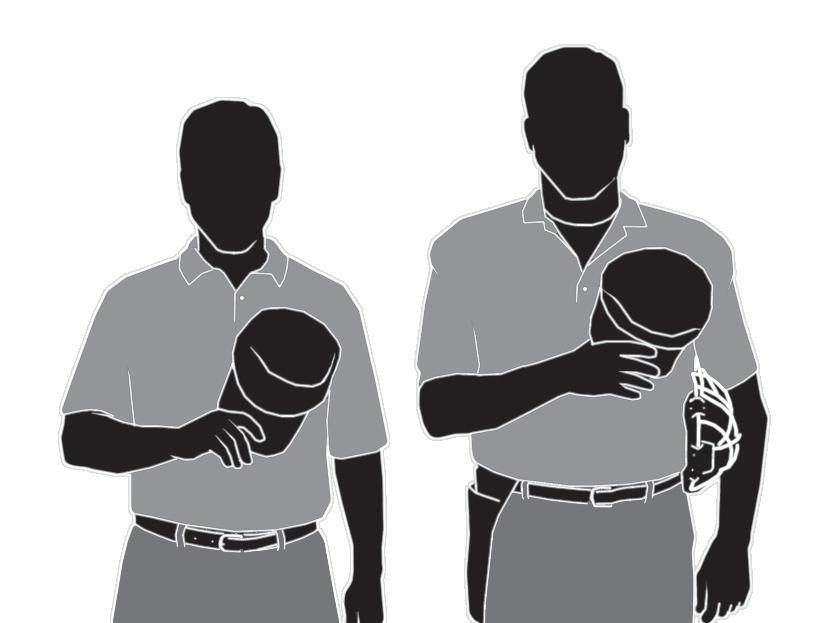
SOFTBALL 58 | REFEREE January 2023
at home and all plays at third on all runners, except the batter-runner. The only exception to this is if the initial throw goes to third base; then the base umpire is responsible for the call there.


If the initial throw goes to first base, the plate umpire should start moving toward the holding zone between third base and home but keep an eye on the play at first base in order to help rule on the play in case there is a pulled foot by the fielder or a swipe tag. The plate umpire should also make sure to see the runner from third base touch home plate. After the initial play at first base, the plate umpire needs to be prepared to rule on a play at third base or home.
While the plate umpire has a lot of responsibility during bases-loaded situations, the base umpire must be fully alert and ready to move as well. Once the ball is hit, the base umpire
must read the fielders and the play and then move accordingly. The base umpire is responsible for the initial play at first, second or third base if the throw goes to any of those bases. If the ball goes home, the base umpire is responsible for any subsequent plays at first or second base and any plays on the batter-runner all the way to third base.
The hardest part for the base umpire in this situation is figuring out where to move. Because the base umpire potentially has three different bases where the first call could potentially be made, the base umpire cannot cheat and must wait and read the play before moving. The base umpire must sacrifice distance to get a good angle to see the play at whichever base the ball goes.
The base umpire initially needs to read the play to make sure there is no interference by one of the baserunners and make sure none of the fielders obstructs any of the runners. After the ball is fielded, read and react to
the throw and move as necessary. If the throw goes to the plate initially, the base umpire technically has no responsibility at third base. However, if there is a throw to the plate and quick throw to third, the plate umpire likely has no opportunity to move to rule on the play. In this instance, if the base umpire is near third base and can take the play at third, the base umpire should communicate to alert the plate umpire the base umpire is taking the call. The most important part of this is communicating so there are not two calls on the play. Communicate anytime you deviate from normal, prescribed mechanics. After the final play in this situation, assuming the half-inning is not over, both umpires need to make sure all runners stop on bases and the ball goes back to the pitching circle before moving to new positions. With multiple runners, it is important for both umpires to have eyes on the field to make sure no rules are violated.
LOCKED IN continued from p.56 SIZE: 5.5”x8.5” PAGES: 60 Be Ready For Every Game $1595 ONLY Attention Softball Umpires! Get easy outlines for pregames covering all the types of games you’ll face each season. learn more at STORE. /SOFTBALL *NASO member discount available. $1395 * DIGITAL PRINT $2095 COMBO $1595 *
Those Two
It has been said the worst experiences are often the best opportunities. When the corn is high and the sun is shining, anyone can be a winner in their avocation; it’s only how we handle adversity that truly shows our mettle.
The nearly two-year disruption caused by a public health emergency didn’t make better officials of any of us any more than it made for better players or smarter coaches. We all struggled through. We heard someone say that we might have played during that epoch more to prove we could than to keep the cash registers ringing or boost the national ego.
Prior to 2020, officials’ numbers were strong, but there was some concern about attrition due to issues of bad participant behavior and inequitable game fees. The prevailing attitude was that if certain officials didn’t like it, others could be found who could pinch their noses and serve as suitable replacements. Then, when the world turned upside down, we learned how to match dwindling headcount with available games, finding out “the hard way” what really mattered in retaining officials. As we emerge from the end of the long, dark tunnel that was 2020-21, officiating bosses are acknowledging what they learned about how supply and demand in officiating really works. They’re turning that into more effective recruiting and retention policies. This not only helps to reset officiating, post-pandemic, but sets the table to strengthen our avocation in the future.
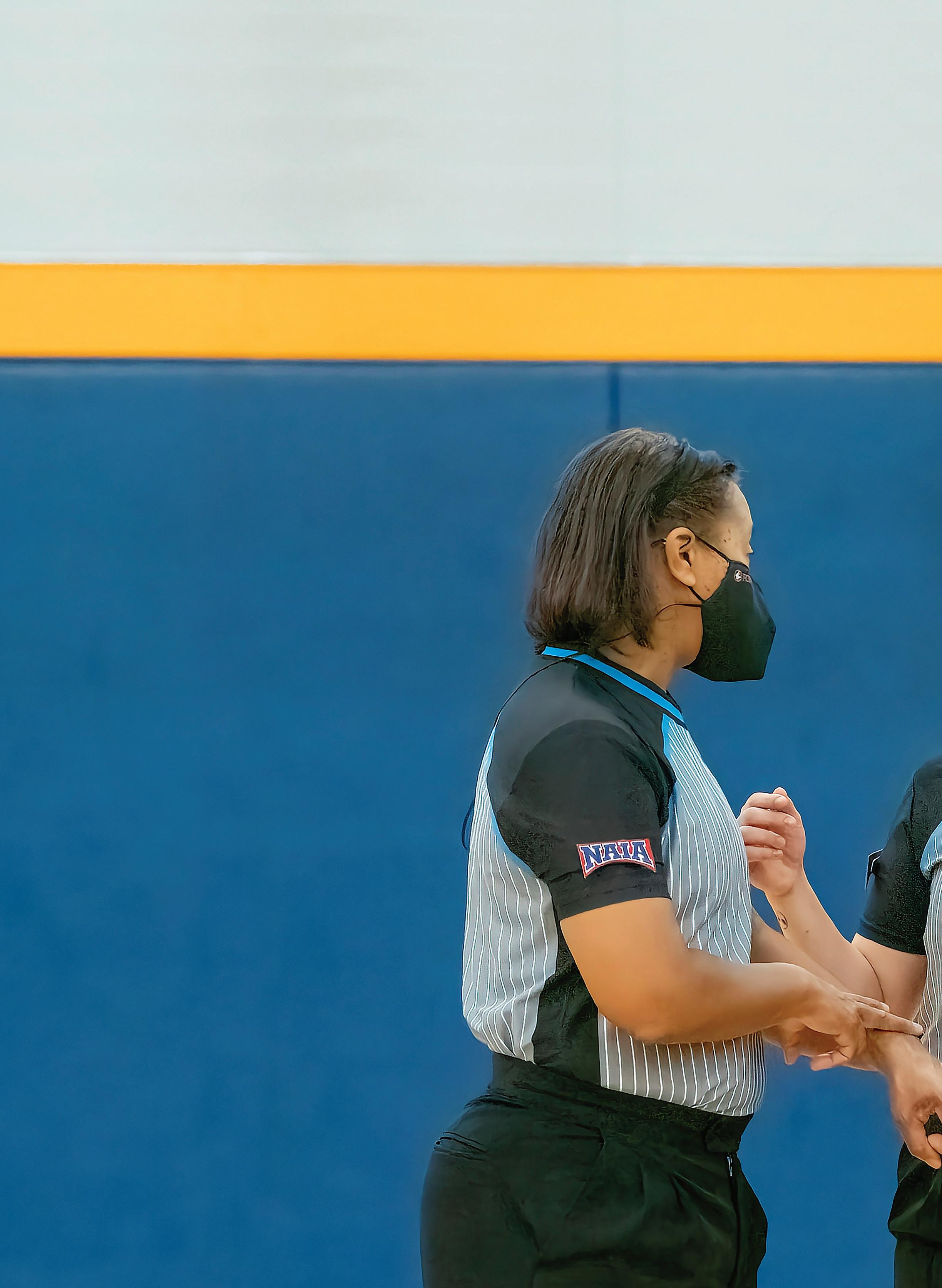
Mark Uyl, an NASO board member, is also the executive director of the Michigan High School Athletic Association (MHSAA). He was also an accomplished college baseball umpire. His recollections fairly reflect what many administrators went through. “The past 28 months have been miserable,” Uyl said during the 2022 NASO Sports Officiating Summit session entitled, What the Last Two Years Have Taught Us. “And I think if we can all start with that as kind of a general baseline, it can only go up from there.”
During the pandemic, wearing masks while officiating was one of the things we had to endure. From left, Lezley Smith, Mercer Island, Wash.; Larisa Melkumova, Tacoma, Wash.; Ryan Taylor, Everett, Wash.
60 | REFEREE January 2023
It was a brutal stretch through the pandemic, but we learned a few things along the way.
WHAT
Years Taught Us
By Tim Sloan
In fact, what the MHSAA has taken away from the last two years’ events may be archetypical for other groups around the country.
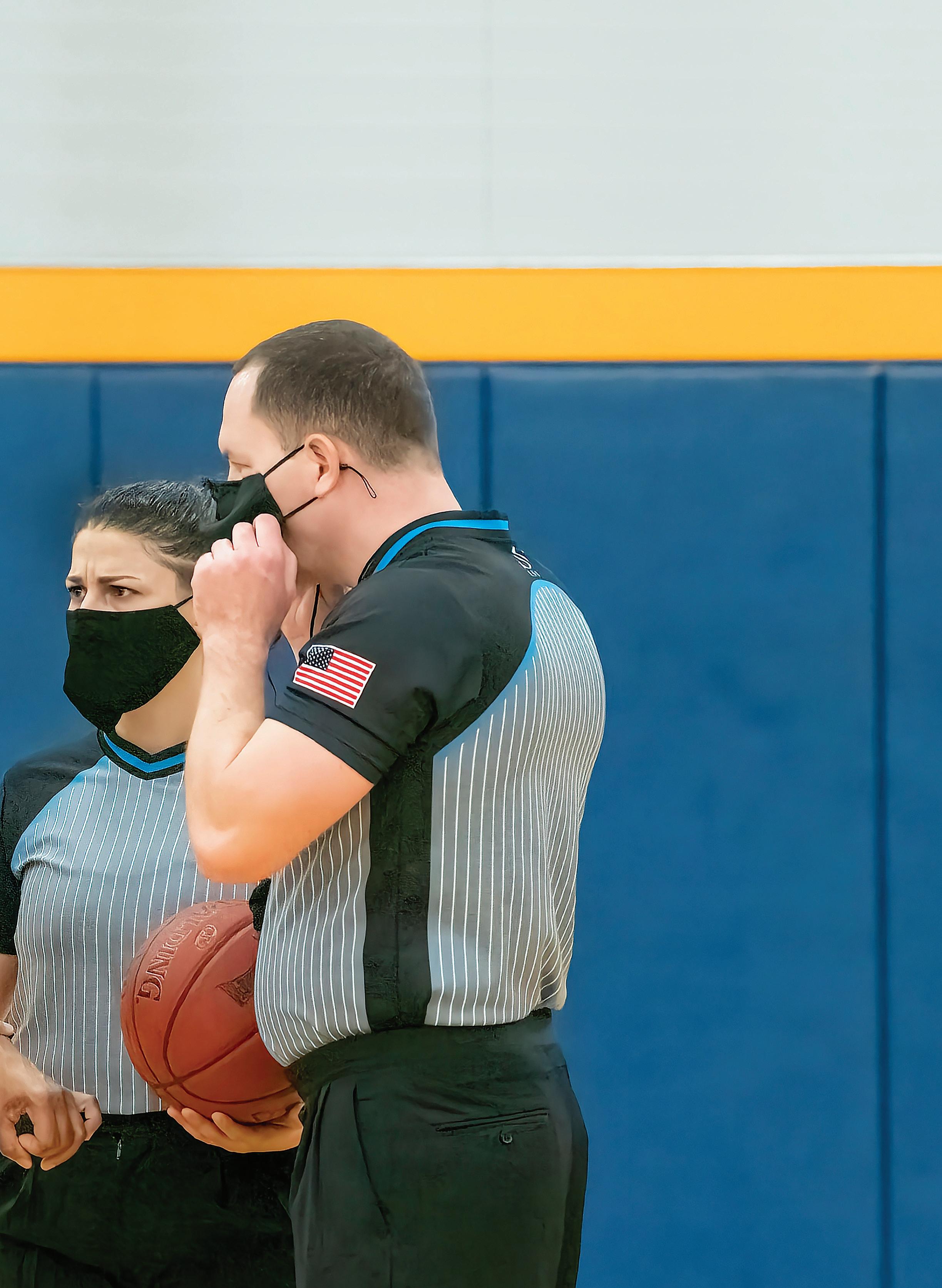
“The most positive thing that I’ve pulled through COVID, and I wish there was an easier way to really relearn this, is in our state we had to pause high school sports four different times,” Uyl explained. “And every time that we paused you would hear all the outcry and all the criticism.
… Our high school kids have a fouryear-long runway, and that runway is what it is. There’re no extra seasons; there’s no extra years.”
Uyl said he and his staff figured out novel ways to keep sports going during the pandemic, relying heavily on online mass-conferencing platforms. What they learned has become beneficial in rebuilding officiating numbers and attracting more viable recruits now that the dust has begun to settle. And if there is a “next time,” they’ll be ready for that, too. He explained the communication tools they developed are becoming the basis for rebuilding and thriving. “I think in every tough situation, the people who end up being most successful are those that find new opportunities,” he said. MHSAA relied heavily on weekly Zoom meetings and check-ins to keep games going and officials working, and it led to a revelation.
“We can communicate more timely and efficiently now than we could three years ago,” Uyl said. “And I think certainly it’s rebuilding and mending relationships and getting back face-to-face. But I think we need to keep those things in our tool belt as we keep moving forward.”
REFEREE January 2023 | 61 DALE GARVEY
Lisa Mattingly is a well-known women’s basketball official and college coordinator. At the Summit, she said one of her greatest takeaways from the pandemic was about the resiliency of officials. Like other coordinators, she worked through the initial reduction in available numbers as some of her flock passed on the perceived perils of working. She says the communication tools Uyl speaks of unquestionably helped her deal with the chaos that was inflicted on schedules and her organized life.
“I never had so many phone calls and emails from folks just checking in on me, seeing how I was doing because every morning it started at 5 a.m.,” Mattingly said. “Games would be moved, canceled; officials, teams with COVID — whatever was going on. And what I also saw was the resiliency, the pivoting that officials were able to do and still come out and do a good job for us. I appreciated that. They’ve all hung in there and are coming back strong.”
Donnie Eppley is the associate executive director for the International Association of Approved Basketball Officials (IAABO), an NCAA Division I men’s basketball official, and high school and D-III college coordinator and assigner. In his capacity, he went beyond the survival aspect of mass platforming Uyl and Mattingly spoke of to a higher level. He used it to reach out to organizations and officials that might have been lost in the shuffle before due to their physical location and perhaps lower priority for direct contact. In Eppley’s mind, these people became merely a double-click away and he jumped at the opportunity.
“One of the things for our organization was, with the Zooms, it allowed us to reach out to organizations that we couldn’t visit,” he explained at the Summit. “We reached out and we had a Zoom call with officials in Korea, for example. So we had a point of contact over in Korea. They had a translator in the room because they had some Korean officials that were working some high school games, and that was a positive.
We also reached out to Canada. So rather than an in-person meeting where we had everybody travel to one location, we were able to reach out to those outliers and make that connection.”
The realization was this was not only more economical, but more effective than some would have thought.
Eppley’s example is one of thinking outside the box, something Uyl said Michigan did on many fronts. “At the high school level for us, it’s been virtual pregame meetings,” Uyl began. “Imagine your typical high school official who’s hustling from work, trying to grab something to eat, trying to get to school on time. They’re trying to get a locker room, a place to be meeting with their partner or partners. It was just that rush, and then having the AD stick their head in — all those things.” Then the virus struck, and close encounters were to be avoided.
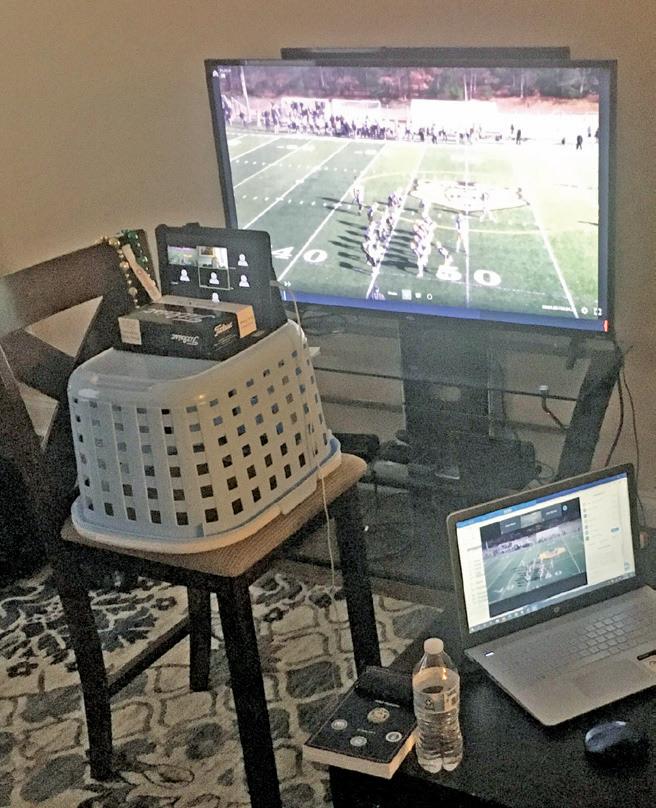
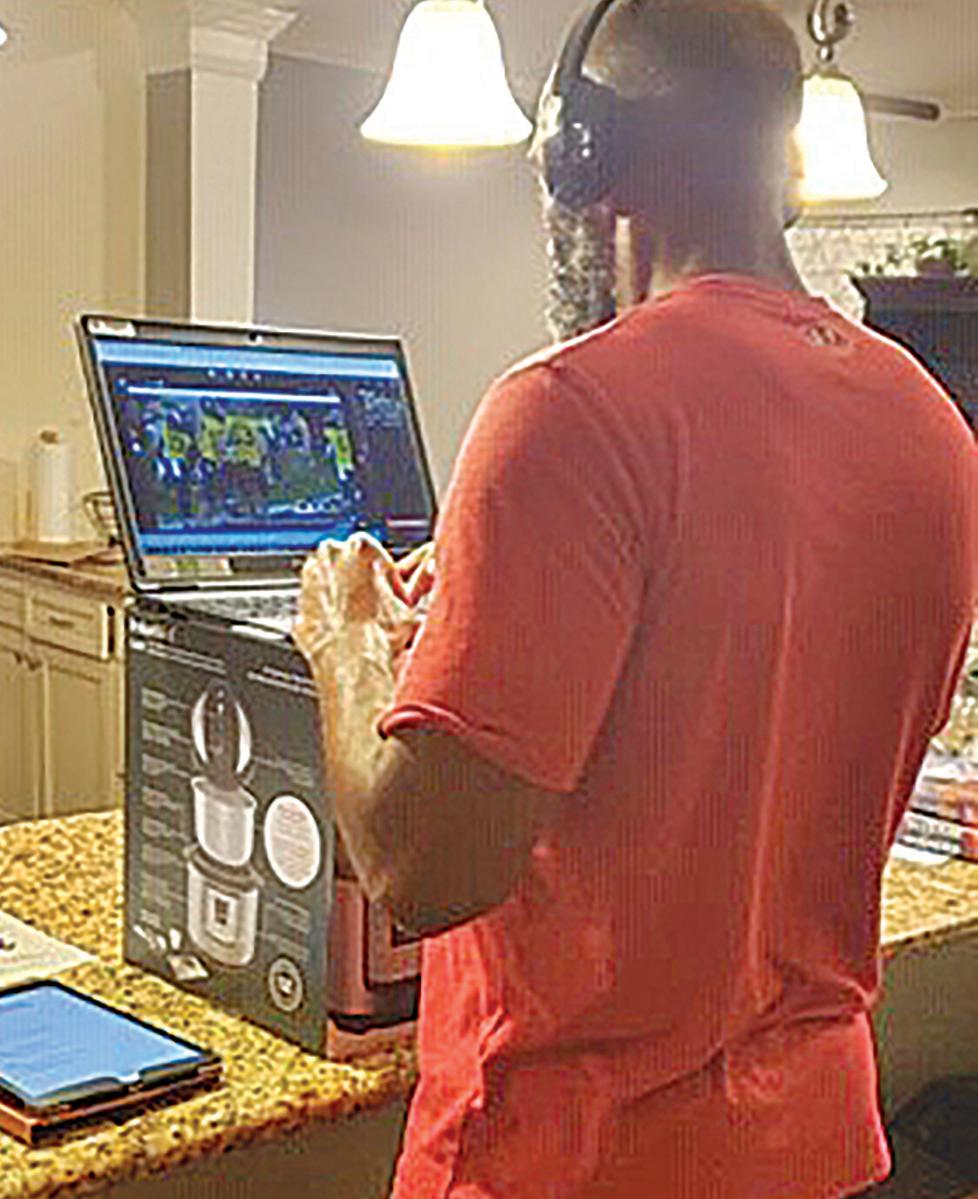
Living rooms, like the one shown above belonging to Centennial Conference football official Matt Park, Ellicott City, Md., and kitchen counters, like the one shown at right belonging to Tutashinda Salaam of New Orleans, a referee in the Big 12 Conference, became virtual training grounds during the pandemic. Even the NASO Summit went virtual in 2020 and 2021. Virtual training proved convenient and effective, and it has found a place as a lasting tool in officiating training.
The result, Uyl said, “If you can just do a Zoom check-in for 30 or 40 minutes the night before or the day before, our people have found they get a lot more done with fewer interruptions.” Uyl added that being forced to have a pregame meeting with coaches online instead of before the game, when their focus was elsewhere, helped relationships, too.
“We do all of that pre-tournament stuff virtually, a night or two before our championships. And it’s amazing — we’re getting a lot better
62 | REFEREE January 2023
DENNIS HUBBARD (TYLER HASCALL), COURTESY OF MATT PARK. VIRUS VIRTUAL CLINIC (RIGHT)
WHAT THOSE TWO YEARS TAUGHT US
After a pandemic-induced pause, sports returned and we worked toward normalcy. Hockey referee Tyler Hascall drops the puck during a faceoff in a USHL game.
compliance. So again, as bad as it was overall, there were some nuggets that we’ve tried to really pull out and kind of keep at the ready.”
Notwithstanding the improved communication tools COVID brought about, Uyl’s group has also taken advantage of the relief money being thrown around. He said while there’s been a history of saying recruiting is a key to officiating growth, there has been a stinginess in doing anything about it.
“In our state, we’re going to put our money where our mouth is,” Uyl said. “Right now, when you register with us as an MHSAA official, you also become an NASO member. It only makes sense that if there was ever a time in our history to invest in officials, that time is now. … There are lots of challenges right now in schools — money isn’t one of them. There is more money floating around our schools with all of the COVID dollars. And so, if there was ever a time, when it comes to game fees, to aggressively go after some of those dollars and not just the nickels and the pennies, now is that time because it’s a shortage. And again, out of adversity comes opportunity.”
The net result of all the rethinking the last two years begat was it gently, if not forcibly, nudged officials — from novices to senior partners — into embracing how the officiating business now works with all its innovations in technology.
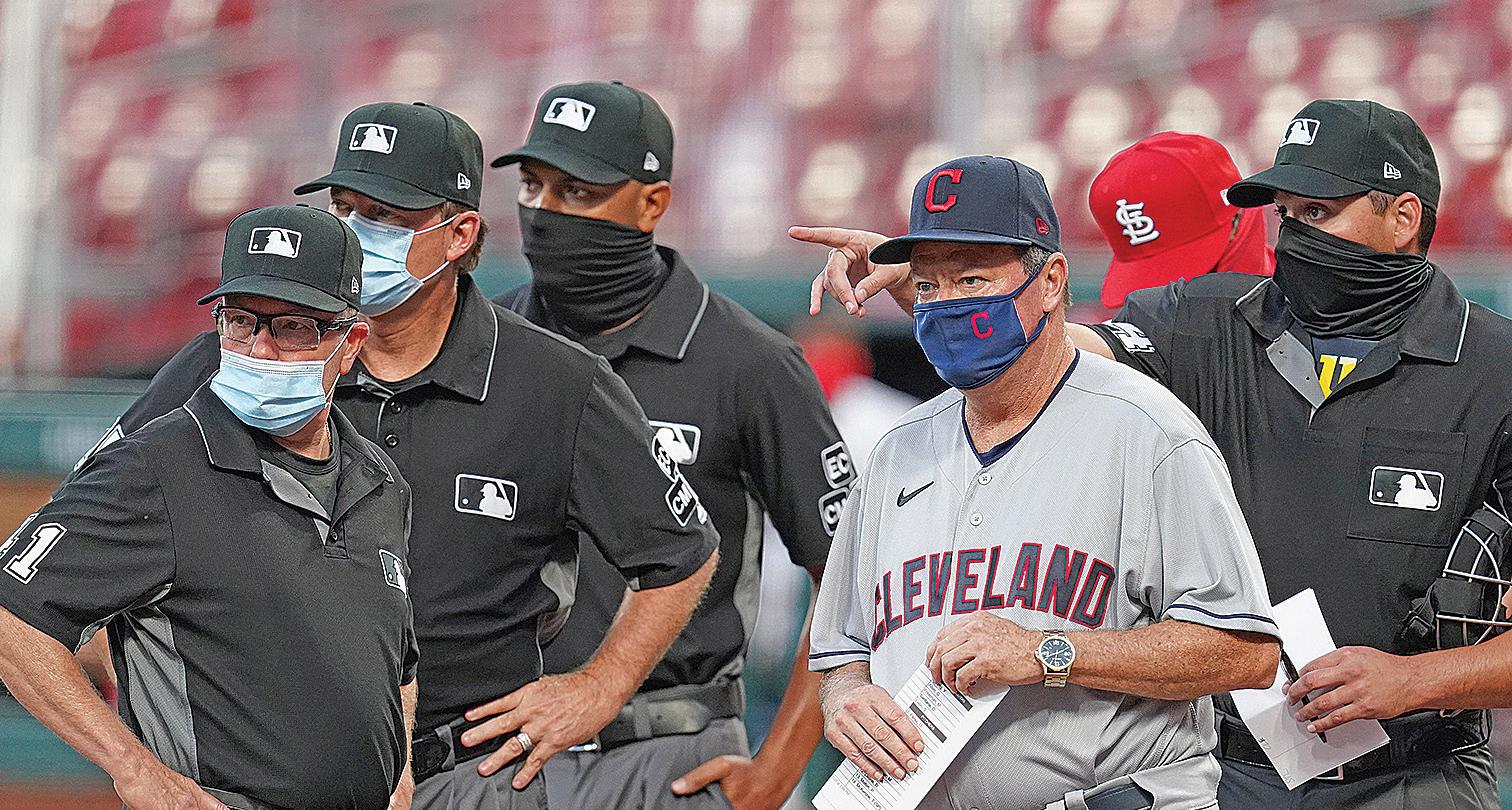
Devonie McLarty is a USA Volleyball and international referee who serves on the PAVO board, in charge of grassroots training development, recruiting and retention. “I think it’s forcing people to become a lot more comfortable with leveraging technology than maybe before they were on Zooms or doing happy hours or using RefQuest+. Now they’re in it already,” McLarty said at the Summit. “If you wanted to stay engaged, you really had to lean into that. And I’ve seen a shift since some of our older officials are now having to get a little bit more comfortable. And I hope that it will translate to oncourt abilities as well.”
The final piece of the puzzle lies with whether these innovations can be used to revive officiating numbers. Uyl and the rest believe contacting and attracting new young officials, who are typically tech-savvy, should be straightforward. He cautions, however, retention is a two-way street. “I use an analogy all the time of a fence,” Uyl said. “If you’re trying to recruit new people, how low can you build that fence to try and get as many to get over it and to come in? But the challenge, of course, is if you don’t build the fence high enough, it’s awfully easy for those that get over the fence in year one to get back over the fence and say, ‘I’m out of here.’
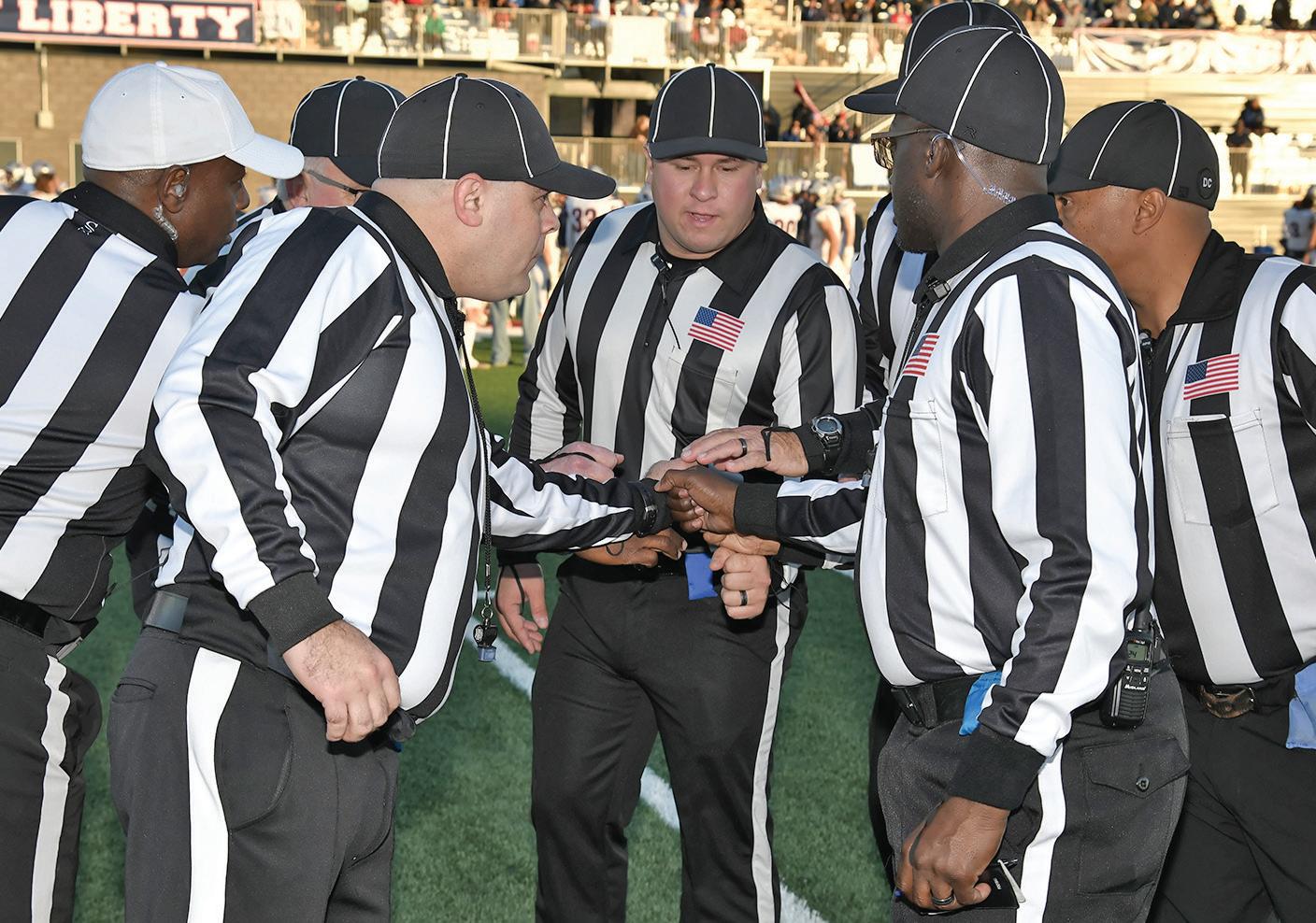
“In other words, the more that you ask in terms of the investment on the front end, I think the better chance you have of keeping them long term. We talk all the time about recruiting and retention; we really ought to talk about retention and retention. We all do a pretty good job of recruiting. What we do an awful job of is retaining folks in those first few years.”
“Never let a crisis go to waste,” was a cynical line heard occasionally in recent years. In the case of officiating growth, the quote might be applicable, but it comes with more optimism. We’ll see, but the opportunity now presents itself to take stock of the new tools thrust upon us by the pain we all experienced. In a less chaotic time, many of the changes that have been addressed here might have happened at a slower pace or not at all against the headwind of status quo. Fortunately, these leaders realized they had nothing to lose and much to gain; they took action in conditions that made necessity the true mother of invention.
Have the past couple of years been the beginning of a net positive for officials? We’ll find out. Until we do, it’s going to be an interesting exercise where we all can, and should, be contributors.
Tim Sloan, Davenport, Iowa, is a high school football, basketball and volleyball official, and former college football and soccer official.
(FOOTBALL)
BILL GREENBLATT/UPI (MLB), HESTON QUAN
MLB umpires masked up when games resumed in 2020. (From left) Jerry Meals, Ed Hickox, Jeremie Rehak and Paul Clemons.
There will be some lessons from the pandemic — including how much we value being able to officiate sports together — that continue to last well into the future.
NOT A HELPING HAND
Foul Recognition for Four Fouls With the Hands
By Kara Honthumb
Recognizing fouls and knowing what to do about them is one of the hardest skills to perfect as a referee. Perhaps more importantly, foul recognition is the foundation on which good referees build their match control. To underscore this, Law 12: Fouls & Misconduct is a significant portion of the Laws of the Game (LOTG) test for referees at all levels. For something so big and important, where do you start so you can hope to get it right both on paper and on the field?
First, let’s look at the criteria used to determine if something is a foul:
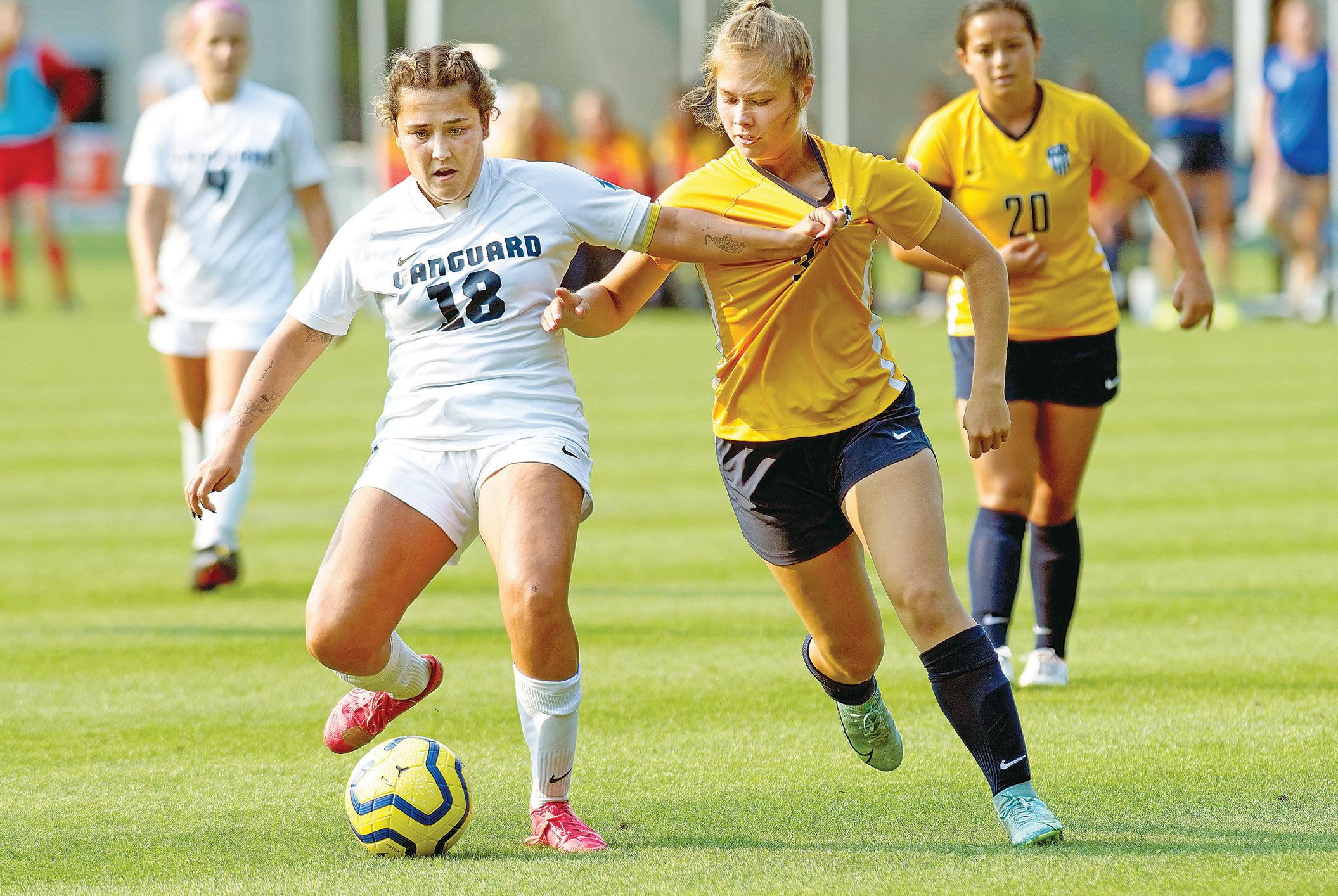
•Committed by a player
•While the ball is in play
•On or just off the field
•Against a player, substitute or other rostered person.
Albeit this appears to be very simple, conversely it is often very difficult. The caveat is every foul is a judgment call “in the opinion of the referee.” When there is contact, spectators and coaches want a foul, but that is not necessarily the case and play continues.
Depending on the skill level of the game, the referee may be able to allow play to continue if a foul appears trifling and is made while challenging for the ball or while players are attempting to create or protect space in anticipation of receiving the ball. Trifling fouls do not greatly affect the opponent’s movement. They are able to stay upright and maintain possession of the ball if it is already at their feet or receive the ball if it is passed to them. Fouls that are considered trifling should be monitored closely as the temperature of the game can
SOCCER RULES, MECHANICS, TECHNIQUES 64 | REFEREE January 2023 COORDINATOR: JOHN VAN DE VAARST jvandevaarst@referee.com
DALE GARVEY
Although the player on the left appears to have better position than the player on the right, positioning does not allow a player to hold an opponent. This snapshot in time shows an apparent grab of the jersey. In judging this category of fouls with the hands, which would meet the definition of holding, match officials must consider the opposing player might choose to retaliate.
escalate quickly if not managed appropriately.
With younger players, a lot of contact may seem to be harmless attempts to win the ball or create space by unskilled movements, but each action should be evaluated individually as successive noncalls will cause the amount of force to increase or potentially lead to frustration and retaliation.
Finally, any fouls committed against an opponent from behind should be dealt with quickly. Because players cannot see the contact coming, they cannot brace for impact, which increases the potential for injury and loss of match control.
Given these points, let’s look at the types of fouls commonly committed with the hands and how to better identify them.
Pushing
Pushing is a direct free kick offense, and it is the referee’s responsibility to determine if it was committed carelessly, recklessly or with excessive force. A push will usually, but not always, be made with open hands contacting the upper body of the opponent followed by an extension of the arms while challenging for the ball or attempting to create space. The contact can also be made with the forearm, but the key to correctly identifying the offense is the extension.
Key elements are: How much force is used? Is the movement of the opponent affected? Does the opponent maintain possession of or are they able to receive the ball?
If there is only a slight extension of the arms or light contact, play can be allowed to continue. If a player pushes an opponent off the ball, uses full extension of the arms or uses enough force to dispossess them of the ball or prevent them from moving in the direction they would like to go, it should be sanctioned as a foul.
The open-handed nature of the contact is usually enough to downgrade the force, so a red card for a pushing foul is relatively rare.
However, misconduct should be considered if the player is making no attempt to play the ball, the contact is retaliatory or if the contact is made with disproportionate force.
Striking
Similar to pushing, striking is a direct free kick offense for which the referee must determine if the contact was made carelessly, recklessly or with excessive force. A “normal” striking foul is committed when a player swings or extends an arm into an opponent while challenging for the ball or attempting to create or protect space.
Key elements are: How much force is used? What is the mode of contact? Where is the point of contact?
If the contact is slight, made with an open or loose hand and is below the shoulders of the opponent, consider allowing play to continue. If a player uses full extension of the arm, or uses the forearm, open palm, elbow or a closed fist to make contact, it should be sanctioned as a foul. Because of the high likelihood of retaliation, striking offenses should be dealt with quickly no matter when or where they occur. When determining misconduct, if the contact is above the shoulders and/or made with the elbow or closed fist, a red card should be given unless the force was negligible. If the contact is below the shoulders and/or the mode of contact is the forearm or open palm, a caution can be supported because the force is somewhat defused by a larger, softer surface area. Additionally, although mentioned separately in the LOTG, throwing an object (ball, water bottle, shin guard, shoe, etc.) at the ball, an opponent or a match official can be looked at as an extension of striking; it is also a direct free kick offense and misconduct is warranted should it occur in your match. One strike, which is an attempt to harm a player or official, must result in a red card and a report sent to the appropriate administrators. This type of behavior should never be condoned.
BY THE NUMBERS
811
,238
DID YOU KNOW?
More than 160,000 people from 49 countries in Europe have downloaded IFAB’s free Laws of the Game app. Within Europe, the United Kingdom leads the number of app users with Spain, France, Germany and Switzerland trailing, respectively. The app is available worldwide for both Android and iPhone users through their respective app stores.
SIDELINE
TBT to Start New Tourney
The Basketball Tournament (TBT) organizers have announced a new 7-on-7 soccer tournament with a winner-take-all $1 million prize. It will launch this June in Cary, N.C. The tournament will feature 32 teams in eight groups of four with three group matches before reaching a 16-team, singleelimination knockout phase. According to ESPN, goals were scored roughly every four minutes in test games using modified rules.
REFEREE January 2023 | 65
Number of high school soccer participants (boys and girls) during the 2022-23 school year.
SOURCE: 2022-23 NFHS HANDBOOK
THETOURNAMENT.COM/TST/
SOURCE: ESPN,
TEST YOURSELF Holding
In each of the following you are given a situation and at least two possible answers. You are to decide which answer or answers are correct for NFHS, NCAA or IFAB rules/Laws. Solutions: p. 85
1. Team A is awarded a goal kick. A1 drops the ball to the ground and while it is still slightly moving kicks it toward the edge of the goal area. A1 then picks the ball up with the hands and sets it in a position for the goal kick.
a. Award a penalty kick for a handball since the ball was put into play with the kick.
b. Award an indirect free kick for a second touch of the ball.
c. Rekick, since the ball was not stationary when the first kick was taken.
2. At the coin toss, there is an honorary guest who wants to flip the coin.
a. This is permissible as long as the referee provides the necessary instructions.
b. The captains must agree to this action.
c. This is not allowed. The referee must toss the coin.
3. A1 falls while in possession of the ball. There are no other players close to A1. A1 passes the ball while on the ground to A2.
a. Stop play and award an indirect free kick for dangerous play.
b. Stop play and advise A1 the ball cannot be played while on the ground. Restart with a drop ball.
c. Legal. Allow play to continue.
4. Team B is awarded a penalty kick. B1 is designated as the kicker. After the whistle is sounded and while B1 is approaching the ball, B2, B3 and A4 enter the penalty area.
a. Stop play immediately and have a rekick.
b. No matter what the result of the kick, a rekick must occur.
c. If the ball enters the goal, award a goal since two defenders and only one attacker entered the penalty area.
Unlike the previous two fouls, holding is a direct free kick foul for which there is no gradient of force for the referee to use for determining misconduct. Holding will usually involve a player using the hands or arms in restraining or restricting the movement of an opponent. Holding can happen close to or away from play, so it is important for the referee crew to identify key players early and recognize situations where opponents may use holding as a tactical measure to prevent promising attacks from developing.
Keys elements are: Is the movement of the opponent affected? Does the opponent maintain possession of the ball? Is the opponent prevented from creating or joining a promising attack?
If there is only slight pulling on the upper body of an opponent, the contact can be considered trifling and play can continue. If a player holds an opponent in such a way that it causes the opponent to stumble noticeably or fall, causes a loss of possession or prevents the opponent from receiving the ball or moving in the intended direction, it should be sanctioned as a foul. Holding that lasts for more than a step or two should be dealt with quickly, as there is a high likelihood of retaliation if opponents feel they cannot break free and do not think the referee is seeing or dealing with it appropriately.
Holding fouls should always be evaluated within the greater context of the game. If there are tactical elements to the foul, or the contact is meant to disrupt or frustrate the opponent, misconduct should be considered.
A more serious type of holding is when a player grabs an opponent’s jersey. This is clearly a foul and a deliberate attempt to stop the opponent in an unfair manner. This results in a caution. An even more severe act is when a player attempts to hold by grabbing an opponent’s hair. This type of play should result in a red card. This is not only an attempt to stop play, it is clearly an attempt to injure.
A subtle type of holding is when a player is impeding/obstructing an opponent, especially when shielding a ball that is going out of bounds. If the player extends the arms, the impeding/obstruction becomes holding.
Handling
Last but not least of the four fouls committed with the hands, a direct free kick is awarded to the opponent if any player other than the goalkeeper in the penalty area handles the ball.
Key elements are: Was the contact above or below the armpit of the player? Was the contact deliberate? Did the player make themselves unnaturally bigger? Did the player who handled the ball score a goal?
It is important to remember many times when the ball hits the hand or arm, it is incidental. Each decision should also be evaluated in the context of the relative age, skill and athletic ability of the players as well as for consistency with all other handball decisions made in that game. Similar to when we are making offside decisions where there is a deflection, consider if the player had time to decide to play the ball, space to see the ball coming and if there were options to move or act differently.
If the ball hits a player’s hand or arm below the armpit due to deliberate movement or because the player is making themselves unnaturally bigger, it should be sanctioned as a foul. Additionally, if a goal is scored against an opponent either directly or immediately after the player’s arm or hand made contact with the ball, the goal should be disallowed and a direct free kick should be awarded to the opponent, even if this contact was accidental.
Misconduct should be considered if the handball prevents an opponent from receiving the ball or is meant to deceive the referee. A caution must be given if the handball interferes with a promising attack, or if the player deliberately handles the ball in an attempt to
66 | REFEREE January 2023 SOCCER
score a goal or in an unsuccessful attempt to prevent a goal from being scored. If the handball prevents an obvious goal from being scored, the player must be sent off no matter where the offense occurs unless it is the goalkeeper in his or her own penalty area.
In the end, soccer is (mostly) a game meant to be played without
the hands, so learning to properly identify and differentiate these types of fouls will help your overall mastery of the Laws of the Game, as well as improve game management. Using the key points addressed here will aid referees in their journey to better understand these incidents as well as clarify how to better recognize and deal with them when
R-E-S-P-E-C-T
By Jim Reuther
Let’s really be in the moment and take a deep breath. What is happening in our game? Brilliant skills and thrills or pitched battles with arguments and assaults? Dissent and disharmony? Injuries and insults? Which do we prefer?
Permit some observations, questions and pleas, many of which could and should have been addressed by now. What’s at stake? Only the beauty and integrity of our game. Here we go again. Maybe this time motivational words can “move the ball into the goal.”
Humility
Although officials effectively have the powers by Law or rule to be judge, jury and executioner, we are only as good as our last correct or questionable call. All witnesses, however, must reserve a modicum of reflection before passing judgment on the justice of our splitsecond decisions on blink-of-an-eye interactions.
How possible or impossible is this? One member of the Ohio Athletic Hall of Fame told the coaches and players who voted in favor of his induction that he continued refereeing until he got a call correct. Respectful laughter and applause followed.
Modest self-esteem is the opposite of a lack of confidence. We are servants of the game. We must agree to disagree and strive every minute to avoid conflict and contention. We know we will not always be right, but we are always working our hardest to
achieve fairness to the elusive level of perfection. Believe that you are more, rather than less, infallible. Practice continual improvement.
Opposition
Who’s the enemy? No one. An article in a 2007 issue of the Soccer Journal titled “Officials v. Coaches” was co-authored by Dr. Jay Martin,
they occur during a match situation. Kara Honthumb, Dartmouth, Mass., is a National Referee coach with U.S. Soccer. She began refereeing in 1999 after playing collegiate soccer and has refereed matches in the NWSL, as well as youth, local amateur, high school and college levels. She is the director of an annual referee academy held every Memorial Day weekend.
45-year head coach at Ohio Wesleyan University, the winningest coach in any NCAA soccer division. Sad but true, it was realized 15 years ago that our relationships were eroding. The article comprised 11 expectations of officials from coaches and vice versa. Both sides spoke candidly. Not surprisingly, both reached the same conclusion: “(It’s) important that
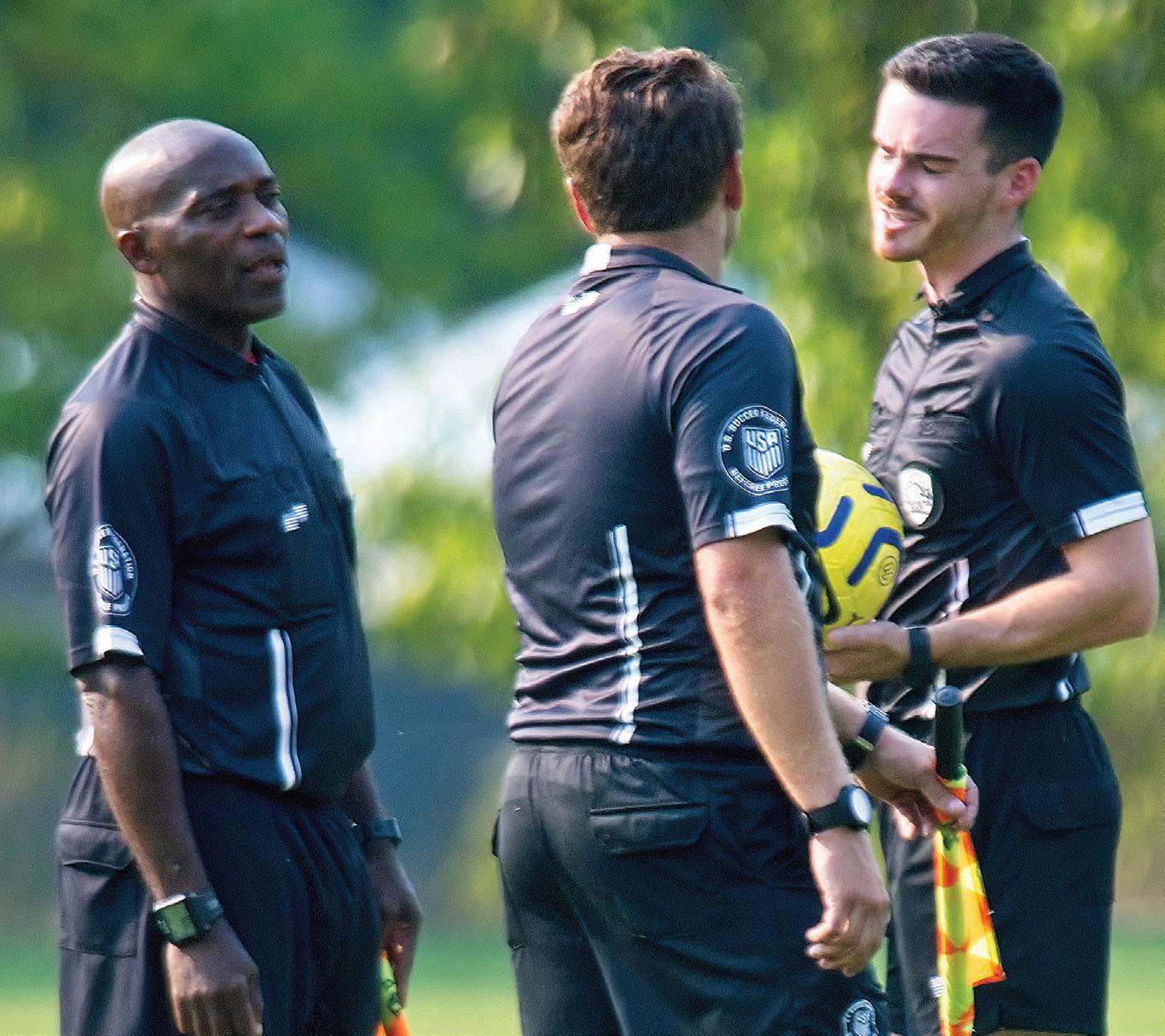
REFEREE January 2023 | 67
DALE GARVEY
From left, Washington officials Bart Acholonu, Mill Creek, Collin Nisco, Edgewood, and Jordan Price, Redmond, give a sound appearance in gaining respect from players and coaches. From physical fitness to wearing the proper uniform, looking the part is just one building block on being a credible official.
CASEPLAYS
DOGSO?
Play: A1 and two teammates (A2 and A3) are on the attack near the penalty area. A2 and A3 are not in an offside position. B1, the goalkeeper, leaves the penalty area to prevent the attack from continuing. A1 tries to pass the ball to A2. B1 deliberately touches the ball with the hand/ arm and intercepts the pass. If the pass were completed, A2 would have had a goal-scoring opportunity. Ruling: The referee stops play and ejects B1 for denying a goal-scoring opportunity. The goalkeeper may be replaced by a substitute by having a teammate leave the field so team B is playing short one player. Team B may elect to put a field player into goal (must change shirt to be distinguishable) and play with 10 players. The match is restarted with a direct free kick for team A at the point B1 touched the ball with the hands (NFHS 12-8-2d-3; NCAA 12.7.4.3; IFAB 12.3).
Helped by the Arm?
Play: A1 passes the ball to A2 and it accidentally strikes A3 on the arm prior to A3 gaining control of the ball. A3 shoots on goal and the ball hits the goal post and comes back to A3 who shoots and scores. Ruling: The referee disallows the goal and awards a direct free kick for team B at the point the ball touched A3’s arm. If the incident occurred within the goal area, the ball is moved to the edge of the goal area for the direct free kick (NFHS 12-2; NCAA 12.1.7.1.2; IFAB 12.1).
Offside or Not?
Play: A1 starts a counterattack and passes the ball to A2, who is nearer to team B’s goalline than both the ball and the secondto-last opponent. At the time of the pass, A2’s extended arm is beyond the body of the secondto-last team B player. A2 receives the ball and starts running toward the opponent’s goal. Ruling: The referee allows play to continue. At the moment the ball was played by A1, A2 was not offside. The arm is not considered when judging offside (NFHS 11-1-1a; NCAA 11.1.1; IFAB 11.1).
officials and coaches/players not only coexist, but work together to improve the game and make it enjoyable to all players, coaches, fans, and yes, even officials.”
This article is a continuing effort to change the narrative characterized then as “The Age-Old Story.”
Neutrality
Job No. 2. Officials are to discriminate fair from foul, sometimes inappropriately characterized as “keeping the cheating equal.” That is sound advice, because it relates to consistency. Coaches and players demand and deserve fairness, which should be assessed only after the final whistle, not after every call. This reality is best portrayed during clinics when videos are shown of challenges within a match and possible decisions to be made are: no foul; foul; foul/ advantage; foul/yellow card; foul/ red card; red card serious foul play/ violent conduct. Many agree the best decisions usually depend upon similar situations up until that time. Calling it both ways equals a win-win for teams and officials.
Options
Adapt, improvise, overcome. Capture lessons learned during and in between each game. Be openminded. Rate and update your judgment criteria to ever improve.
Not all fouls are created equal. We only have one shot to whistle and flag (unless video review is available). Use the letter of the Laws or rules to support a decision as correct. Best of all use number 18, the Law or rule of common sense, which allows some bending, but only if the spirit of circumstances makes the call fair.
Another discretionary tool is advantage, which involves risktaking. Bob Sumpter, a former National Director of Instruction, offered a word of caution in this area: “Allowing advantage should never become a license for serious foul play.”
Reasonableness
Be prepared to explain in the calmest, coolest and most direct manner, using a few clear and
compelling words, why a foul was whistled or card issued. Put into context what transpired at and before that decision, especially mentioning similar ones against the other team. State the value the decision will add to the balance of the match. Interacting this way usually lowers temperatures in heated situations.
Peacemaking
Someone with authority must volunteer to be the decision maker. Whistles and flags typically invoke different types, levels and extremes of emotions. Resolve situations using conflict resolution and people management skills. The objective is to resume play that is more fair than foul, safer, entertaining and fun.
Resiliency
Be steadfast in firestorms of disrespect for authority. Have the courage to make critical calls using all possible options and then stand behind them as a referee team. Each match is a stress test. Your heroic efforts may take their toll on your mental and physical well-being. Reconsider, refresh and recover. If you can comfortably accept, without reserve or dread, the challenge of your next call or match, you should be in good shape. Think to yourself, “The difficult I can handle right away. The impossible may take a little longer.” One suggestion is to pump yourself up by playing your favorite tunes before a match.
Ingenuity
Soccer is a battle of deception and mind games. Listen and learn from all goings on. Outwit them, same as opponents attempt to do. How do obvious goal-scoring opportunities happen? Practice the art of recognizing gamesmanship, such as simulation, time wasting and “My team deserves the thrown-in after I just kicked the ball in to touch just because I raised my arm.”
Diplomacy
When you put on your uniform and badge, you’ve become an official ambassador of soccer. From your first to last whistle or flag, your challenge
68 | REFEREE January 2023 SOCCER
is to make allies, not enemies. The goal is to have competing teams walk off with you with dignity, perhaps not liking you, but respecting you.
Equality
Balance family, work and soccer. Accept mistakes as matter-of-fact events with a commitment to always think smarter to preclude them. Then move on. As with coaches and players, officials are human. Don’t attempt to avoid blame using lame excuses. You’re not entitled to your next game; you must earn it.
Ethics
Recommit your allegiances to the respective coach/player/official codes of ethics. Do we really care who wins a contest other than the best team on the pitch that played fairly and respected its opponent and us? When rereading these codes, pledge again to do everything to not compromise the integrity of our profession.
Safety
Player safety is job one. If there is an injury, especially a head injury, stop the match. No match is more important than a player’s safety. Ensuring the player is looked at by a qualified individual is most important.
Patience
This is a virtue when dealing with coaches, players, your crew and yourself. If you think you are mastering your assignments, you may also think you deserve better ones. Realize this decision rests with assessors, assigners, peers and yes, coaches. You probably are not as good as you think you are; you probably can become much better. Your chances at bigger games will only improve if you have the right attitude, training and working the hardest for the game. The system operates on merit.
Enjoyment
We might all be richer if we got money every time anyone asked, “Why do you officiate soccer wars, er, matches?” Our answers, also known as motivations, include, “Love of and passion for the game,” “Accepting
the challenge of doing better than witnessed in the eyes of a coach, player or fan,” “Attempting to do the impossible,” “Getting paid to watch soccer from the inside out” and “Staying fit while getting paid.” Whichever answer best fits your attitude, when it is none of these and no good answer can be expressed, it may be time to stop running around on the pitch in short pants having no fun.
Caring
Curiously, when some say they don’t care, they really do. If you really do not, it may be time to reconsider your avocation. If you do care, your services are welcome and needed more than ever before.
Trustworthiness
Great responsibilities are and will be entrusted in you. Always strive to give your best efforts for all three teams in a match. Be as reliable, truthful and unselfish as you can be, epitomizing trustworthiness.
What do all the above indicate? Honor, pride and respect. It is an honor to be an official. Take great pride that you are one of a few, now endangered species, willing to take on the near-impossible challenges of this avocation and can and will improve your every call and every match. Give respect to all involved to earn their respect in return, never compromising.
Please consider staying accountable and aware, calibrated and composed, fair and fulfilled; humble and home-centered, in-sync and informed, reliable, responsible and true to the game.
In summary, your next game or day will be your most important ever, followed by the next and the next, etc. As an official, you have earned the privilege to manage soccer contests. Strive to leave the game better than when you found it. You can and will do this.
Jim Reuther, Worthington, Ohio, is a NISOA National Clinician, National Assessor, National Referee Emeritus, Robert Sumpter Excellence in Teaching Award Recipient and inductee in the Ohio Soccer Hall of Fame.
look at nine aspects of the IFAB Laws that are often a source of confusion for fans, players, coaches and officials at the amateur level.
SOCCER ASSOCIATION SOCCER LAWS SIMPLIFIED
ORDER TODAY! Store. /SOCCER SIZE: 5.5”X8.5” PAGES: 20 *NASO member discount available. $395 * DIGITAL PRINT $795* COMBO $595 *
Take a
WHERE’S WALDO?
Working With Untrained Libero Trackers in NFHS Matches
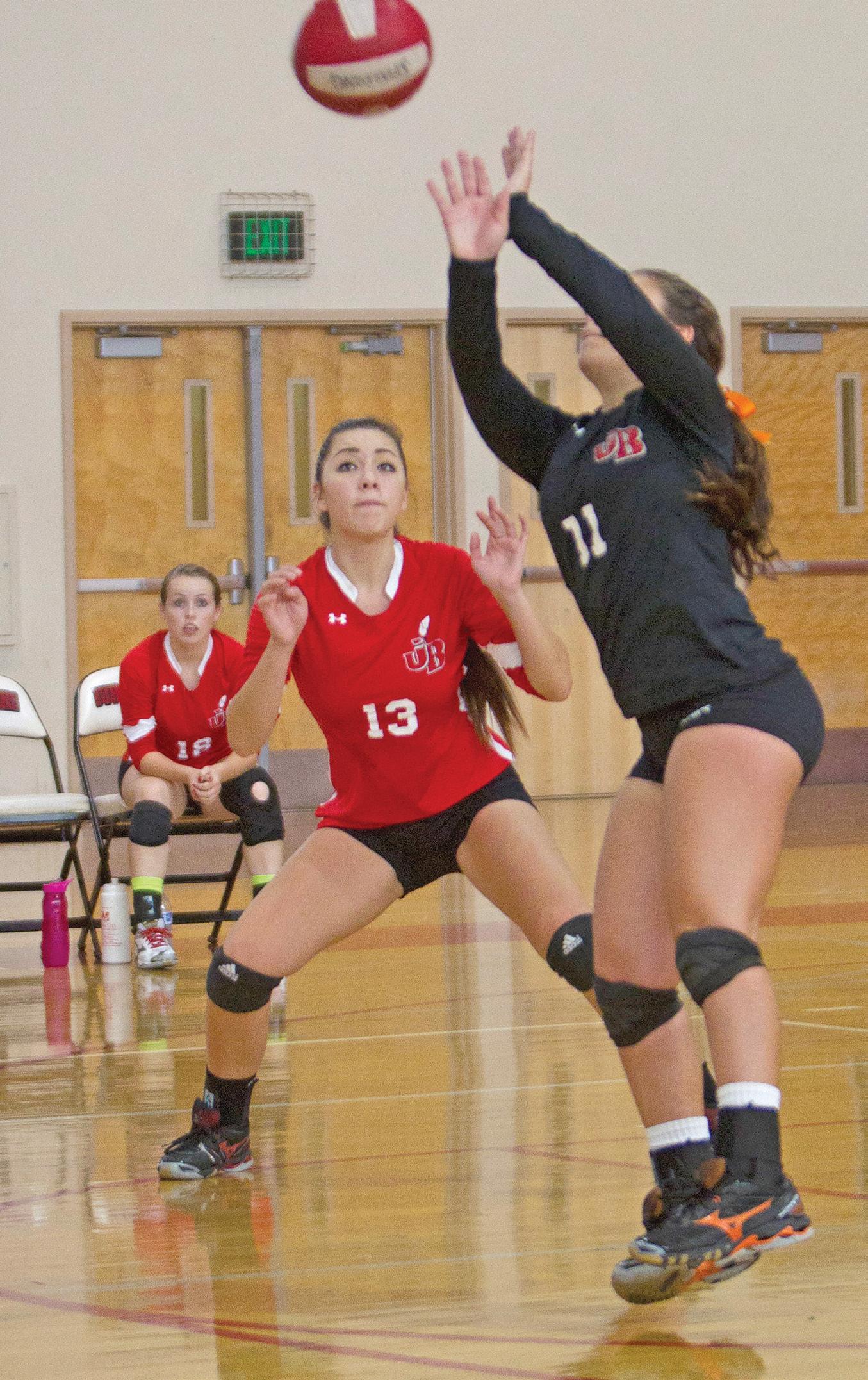 By Rick Brown
It’s the job of the referees to ensure Waldo (each team’s libero) can be spotted on the court by ensuring each libero’s jersey is clearly contrasting from those worn by teammates. Without this contrast, it can be more difficult for typically inexperienced and minimally trained volunteers to provide a useful service. Second referees cannot assume the folks assigned as a libero tracker (LT) have knowledge of the current game or what they are supposed to do. As such, R2s have to plan how to get the most out of their LTs and help them to succeed in operating at a level that offers timely information. Investing in the LT makes it more likely the person will feel valued and strive to provide needed help during a match.
LTs are supposed to be at the table 20 minutes before match time, but R2s may have five minutes or less to instruct the scorer, LT and timer. An R2 has to budget time assessing and instructing table staff while also observing the court during the warmup and whistling 15-second warnings. With limited time to provide a mini-tutorial, make it count. Show your LTs what they do in “tracking” each team’s libero matters. Review the libero tracking sheet (LTS), and guide your LT in entering lineups as needed. Show how to mark the LTS when a libero (L)replaces a back-row player and when the player whom the libero last replaced enters the court to replace the libero. Make sure your LT uses “L” instead of the libero’s number and ensures a “libero sandwich” where the number of the player the libero replaces and the number of the player who last replaced the libero are the same. Share when you want to hear your LT verbalize when he or she believes an illegal replacement has occurred.
VOLLEYBALL RULES, MECHANICS, PHILOSOPHY 70 | REFEREE January 2023 EDITORS: BRAD TITTRINGTON btittrington@referee.com
BOB MESSINA
It is extremely important for both second referees and libero trackers to quickly identify when the libero for each team is on the court. Second referees must work in conjunction with libero trackers to make sure illegal replacements or improper server situations do not occur.
Quick Assessment
Here’s what you should ask your LT to get a quick assessment of their capabilities: Have you done this before? What were you told to do? What part of the job was difficult? Have you ever seen and recorded a double replacement when the libero serves? Responses guide your minitutorial.
What to Request
We need the LT to record every substitution in partnership with the scorer, slashing the number of the exiting sub while maintaining visibility of the number slashed. Record every libero replacement (L for the back-row player with LT slashing the regular player number while maintaining visibility of the slashed number, ensuring the same player/number replaces the L). Explain subs need to be recorded since the libero could replace a sub and the LTS is the only place where we know who is on the court for each rally. Without the LT consistently recording this information, the R2 will struggle to look at the LTS and fix any problems. Check early to see if the recording of information appears to be correct, and provide positive feedback and kind correction. We also need the LT to mark a triangle around the Roman numeral in the serve order where the libero first serves each set and to partner with the scorer to inform the R2 after the rally if there was an improper server if the libero serves in a different position in the same set.
Libero Tracking Mechanics
The LT’s job begins when the whistle ends a rally, and that’s when libero replacements and subs occur. The LT should be on high alert and use the “swivel head technique” similar to a 180-degree oscillating fan to scan for and identify player movement on each side of the net while also quickly recording libero replacement and sub information. When a timeout is requested, it’s back to “head on a swivel” to identify whether each team’s libero is on or off the court and share that information (in or out on the left, in or out on the right) at the appropriate time the R2 has requested
that information to be given during the pre-match conversation.
Libero Tracking 101
Identify every replacement and let the R2 know immediately — if the R1 hasn’t whistled and signaled for service — if the wrong player replaces the libero (LT does not have a “libero sandwich” with the same number before and after the “L”). If confirmed after the whistle for service, inform the R2 at the end of the rally (next dead ball). If in doubt, wait.
Higher-Level Libero Tracking
Calling out sub numbers for the scorer is a plus that’s unlikely with a new LT. This helps the scorer whose eyes are down, especially in early identification of an improper server — which is always information shared after the rally ends for NFHS matches. If the LT is capable of identifying a libero failing to sit out at least one rally before replacing another back-row player, unless the libero will be serving, this is a bonus. Involve the LT in verifying correct players are on the court for both teams using the LTS while the scorer uses the scoresheet before each set.
The LT at any level of high school volleyball is unlikely to identify the libero position rotating to the front row with the libero remaining on the court but not going back to serve the next rally. There’s a required legal double replacement in this situation which the LT is asked to record and identify, but it’s not likely this will occur in enough time to get the R2’s attention before service authorization.
R2 Knowledge
R2s have to know how libero replacements occur, what is legal and illegal, and what to do when the libero goes back to serve. To fix problems that occur, the R2 has to be well versed in the entire libero replacement design. After all, R2s are on their own for identifying the more difficult illegal replacements and have to know how to fix problems both before service authorization and after in terms of penalties that apply
DID YOU KNOW?
The NCAA allowed a waiver for conference matches that allows host schools to use the entire playing area for promotional activities between sets. However, the court must be cleared with a minimum of 30 seconds remaining on the countdown clock; the full court may only be used for promotional activities — not spirit squads; if the visiting team’s playing area is used, the home team’s side must be used as well; and team huddles must be protected from errant balls/objects. For all non-conference matches, rule 8.4 must be followed without exception.
QUICKTIP
Once your season is over, take inventory of your uniform and equipment. Rather than pack away your bag in the closet, not to be seen again until next season, take a moment to make sure your pants, shirts, undergarments and all your equipment are in proper condition. If not, now is the time to put an order in for the next season. Don’t wait until a week before your next match next season to order gear. At that point, things may be out of stock or you may not receive them in time. Prepare now for next season.
SIDELINE
Q-Collars Legal
With the increase in player safety and the need to protect against concussions, the NCAA, NFHS and USAV all have allowed the use of Q-Collars by studentathletes. The device is noninvasive and is designed to be worn around the neck of athletes 13 and older to aid in protection against concussions. All three rule codes have interpreted Q-Collars as player equipment and not head gear and therefore they are legal during competition.
TEST YOURSELF
In each of the following, you are given a situation and possible answer(s). You are to decide which answer(s) are correct for NFHS, NCAA or USAV rules, which might vary Solutions: p. 85
1. What is the correct signal sequence for the first referee when the second referee whistles a net fault?
a. Signal the result of the play, the net fault, then the number of the offending player.
b. Signal the number of the offending player, then the result of the play.
c. Signal the result of the play, then the number of the offending player.
d. Signal only the result of the play.
2. Team B’s setter dives to make a play on the ball near the net. After hitting the ball up in the air, the setter’s knee crosses the centerline. There are no team A players near the net and team B does not interfere with play.
a. Legal play.
b. Centerline violation on team B’s setter. Loss of rally/point awarded to team A.
3. After a rally won by team A, team B’s coach yells across the court to the first referee, who assesses a yellow card for unsportsmanlike conduct.
a. Team A receives a penalty point.
b. Team B’s coach must remain seated for the remainder of the set.
c. Team B’s coach must remain seated for the remainder of the match.
d. The yellow card is a warning and no additional penalty is assessed.
4. A1 turns and moves away from the net. A1’s foot crosses completely beyond the centerline and touches team B’s court. A1 has committed a centerline fault, even if no opponent is in the vicinity of A1’s foot.
a. True.
b. False.
5. If the libero (only one is designated in USAV) is disqualified while playing:
a. The team continues play with no libero for the remainder of the set.
b. The team continues play with no libero for the remainder of the match.
c. The team may redesignate a new libero, and the disqualified libero may not play for the remainder of the set.
d. The team may redesignate a new libero, and the disqualified libero may not play for the remainder of the match.
for a wrong player on the court. You can’t instruct what you don’t understand.
Working With Electronic Scoring
In some states, it is acceptable and recommended to use electronic scoring, in which case a spotter is needed to help capture pertinent information for the scorer involving subs, libero replacements and calling out the number of the player who is ready to serve. NFHS rules are built into the scoring software, which offers more opportunities for early intervention and application of an
administrative delay sanction if the scorer informs the R2 in time to hold up play. R2s need to understand the information provided is more likely to be accurate than with an LT and to hold a pre-match conference to go over how to partner with the scorer/ spotter.
Rick Brown, Westerville, Ohio, is a longtime girls’ and boys’ high school volleyball referee, working 22 state tournaments. He is a state and local rules interpreter, USAV Regional Referee and formerly a PAVO National Line Judge, working multiple D-I postseason matches.
Wave Your Flags
By Brad Tittrington
One of the main responsibilities of line judges is making sure the ball legally crosses the net between the antennas. While the concept seems simple, adjudicating the legality of the play sometimes is much more difficult, especially at higher levels of play.
All three codes agree on what constitutes an antenna fault. Anytime the ball contacts the net, or crosses over the net, it must do so completely within the antennas, with some exceptions in USAV (NFHS 9-6-1; 16.2.2.4, 16.2.2.5; USAV 8.4.3, 8.4.4). USAV utilizes the pursuit rule that allows players to retrieve a ball that has been played outside of the antenna provided the team still has an allowable team hit, players do not touch the opposition’s court and the ball, when played back, crosses the net plane again totally or partly through the external space on the same side of the court (10.1.2.2).
In order to accurately judge the legality of playing action, line judges must adjust positioning and change angles (when proper) to see the entire flight of the ball. Line judges should only move when one of their lines is not going to be potentially threatened by the next play. For example, if the team on the LJ1’s side of the court (the side of the court
to the right of the first referee), is playing a ball outside the antenna on the same side as the first referee’s antenna, the LJ1 should not move off the line to try to get an angle to see whether the ball crosses inside or outside of that antenna. The LJ1 would have to move a long way in order to get the proper angle. Instead, the line judge on the opposite side of the court (LJ2) can easily move a few steps and get the proper angle to see the ball and is much more credible. In this situation, it is more likely the ball could potentially be blocked and drop down near the LJ1’s sideline as the attacking team would need to cut the ball severely to get it inside the antenna. The endline on LJ2’s side of the court would not be in play as it would be nearly physically impossible to cut the ball inside the antenna and have it travel deep enough to impact the endline. Instead, LJ2’s sideline has a better chance of being impacted and LJ2 can quickly make a determination on the ball crossing the net and then be ready to make a ruling on the sideline if it is threatened.
The majority of time in a match, antenna faults are obvious. Either the ball hits an antenna during an attack or block, or the ball hits the net outside of the antennas (or it hits the referee’s stand). When there is an antenna fault, it is important for
72 | REFEREE January 2023 VOLLEYBALL
the line judges to wave the flag over their head and point to the antenna at fault. Sometimes, it can be difficult to tell from the referee’s point of view if the ball hit the antenna or simply hit the net tape and caused the net to move. This occurs when the ball is set to the outside near the pin and it’s challenging for the referee to make a determination. Line judges should have a better view of this play and are crucial in determining what the ball hit.
The same is true when the ball passes over an antenna on the referee’s side of the net. Second referees have the ability to move to the opposite side of the net and get an angle to see the ball cross. However, first referees do not have this luxury and must rely on the line judges to assist with this call, at least on the non-obvious calls. And while second referees have the ability to move, sometimes they get trapped and are unable to move as well. Line judges typically have unobstructed views and are often in the best positions to rule on these types of plays.
One thing to remember when it comes to antenna faults: If in doubt, the ball remains in play. Line judges and referees should never guess a ball out. If you see the ball not completely cross inside the antennas or you see the ball touch something outside of the antennas, wave the flag to get the referee’s attention and point at the antenna where the fault occurred. Continue to wave the flag until the referee has made eye contact and acknowledges the fault. Sometimes, the fault may not be obvious and the referee may not notice you waving the flag right away, especially in a noisy environment. Remember, first referees have the authority to overrule line judges and ultimately make the final decision.
In some instances, referees may need additional information from the line judge to determine which team is at fault. This can happen when the ball is blocked near an antenna and the referee needs to know if the ball contacted the antenna on the attack or after the block. In these instances, the referee may ask the line
judge to indicate which team was at fault. The process for this should be communicated during the pre-match conference. The line judge can extend the right arm parallel with the end line to indicate the team on that side of the net committed the fault or can extend the opposite arm along the sideline to indicate the team on the opposite side of the net committed the fault. Again, this secondary signal should only be given when requested by the referee.
There is one antenna fault, however, that should not be signaled by line judges. This occurs when the ball hits the first referee. In these instances, it is obvious a fault has occurred and line judges should refrain from giving any signal. The first referee will simply whistle, award the point to the proper team and then signal out.
Brad Tittrington is an associate editor for Referee . He referees college and high school volleyball, umpires D-I softball and officiates women’s college and high school basketball and high school football.
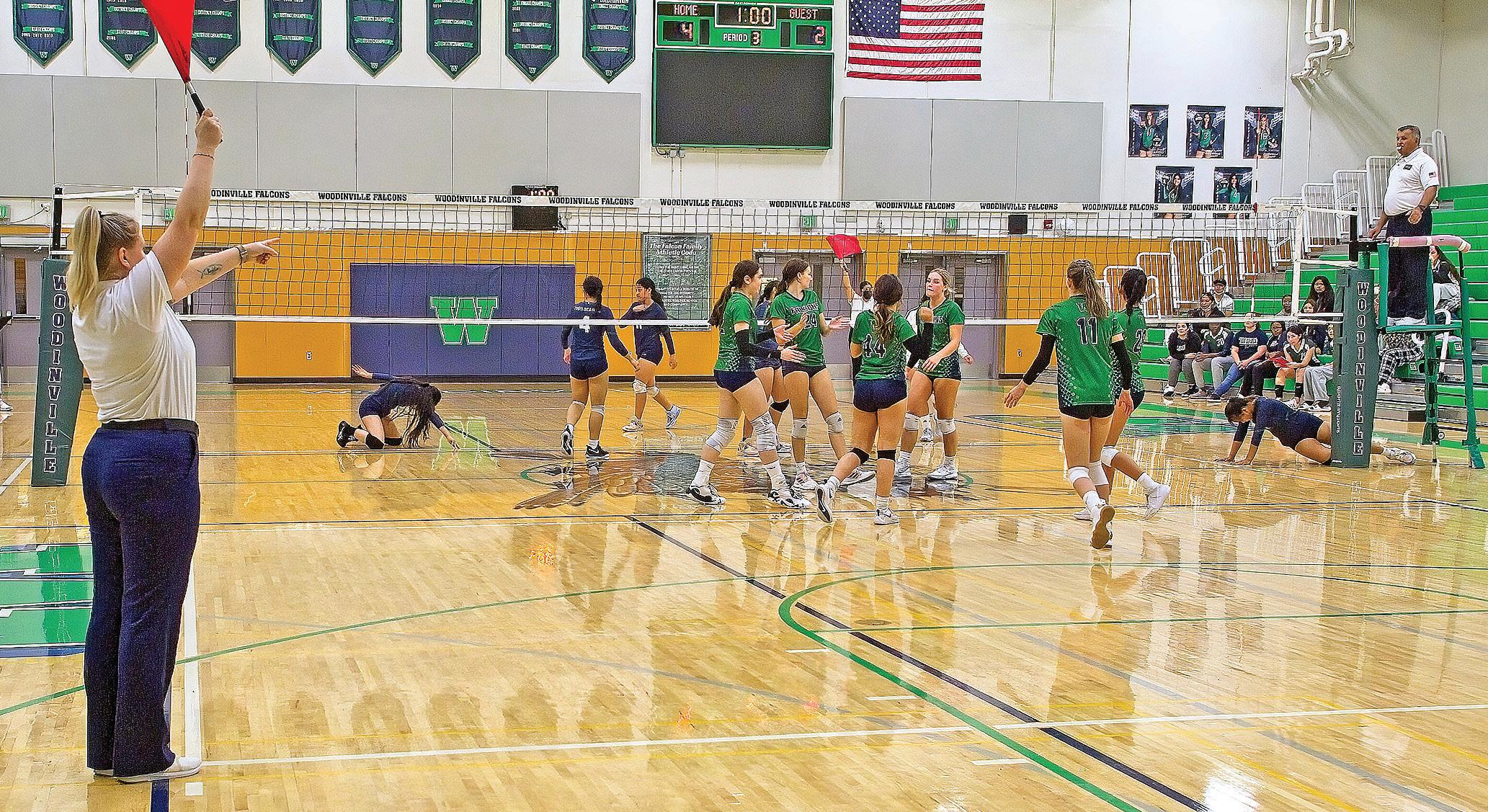
REFEREE January 2023 | 73
DALE GARVEY
It is important for line judges to help referees when it comes to antenna faults. Washington line judges Tauni Dyche (near), Everett, and Samiya Kanji (far), Bothell, both signal to first referee Riaz Kanji, Bothell, that an antenna fault has occurred.
CASEPLAYS
Player’s
Foot Touches Sideline
Play: At the moment the ball is contacted for service by S1, R2 has her foot (a) touching the sideline but not beyond the sideline, or (b) touching the sideline and touching the floor beyond the sideline. Ruling: In (a), legal since the court lines are considered part of the court). In (b), the player is not in a legal position and a position fault is the result (NFHS 6-4-3a; NCAA 10.3.1, 10.3.2; USAV 7.4).
Spontaneous Reaction Play: After a kill by A1, team A substitutes jump to their feet and run toward the sideline to cheer for their team. They quickly return to their bench (or warmup area/ USAV, NCAA) without delaying the start of the next rally. Ruling: In all codes, that action by the team A substitutes is permitted provided the referees do not deem the action to be disruptive or unsporting. If those actions delay the start of the next rally, a delay sanction/ unnecessary delay may be assessed at the referees’ discretion. If those actions are unsporting or are intended to taunt the opponent, a conduct sanction is assessed to the individual(s) at fault or to the coach, at the referees’ discretion (NFHS 9-1-1, 9-9-1c, 12-2-7a; NCAA 6.1.2.1, 6.1.3, 6.3.2.8; USAV 4.2.1, 21.1, 21.2).
Timing Responsibilities
Play: During a tournament, inside a fieldhouse, there are multiple courts being used. Before the match begins on one of the courts, the second referee goes over to the assistant scorer(s)/timer and instructs them to avoid using the buzzer during the match as all timeouts and intervals between sets will end with a whistle from the second referee. Ruling: Correct procedure in all codes. This is done to not confuse players on adjacent courts (NFHS 5.8.3 Note; NCAA 19.3.9; USAV 24.2.3).
Prolonged Interruption

Play: Team A wins the first two sets. During the third set, with team A leading, 24-15, the power goes out in the gym for 15 minutes. The second referee declares the match completed. Ruling: Incorrect in all codes. The second referee does not have the authority to make this decision (NFHS 5-4-3a-2; NCAA 11.4.3; USAV 17.3.1).
Slow Your Role in NFHS
One of the primary jobs of the first referee is to award points. After each rally, the first referee will indicate which team is awarded the point.
However, sometimes second referees at the high school level hijack the responsibility. While second referees don’t necessarily mean anything by it, it is a mechanical faux pas. The first referee should always have this responsibility. Let’s take a quick look at some scenarios where this happens when it should not.
The time this most frequently happens is after a net fault. Because second referees have the primary responsibility of calling net faults, sometimes they accidentally award the point before indicating the net fault. In reality, the second referee should step to the side of the offending team (the one committing the fault) and indicate the net fault (as shown in PlayPic A). Next, the second referee should indicate the number of the offending player to the first referee. The first referee and second referee then mirror each other in awarding the point (as shown in PlayPic B). The first referee finishes the sequence by showing the number of the offending player. Too often, the second referee awards the point immediately and it throws the whole sequence off.
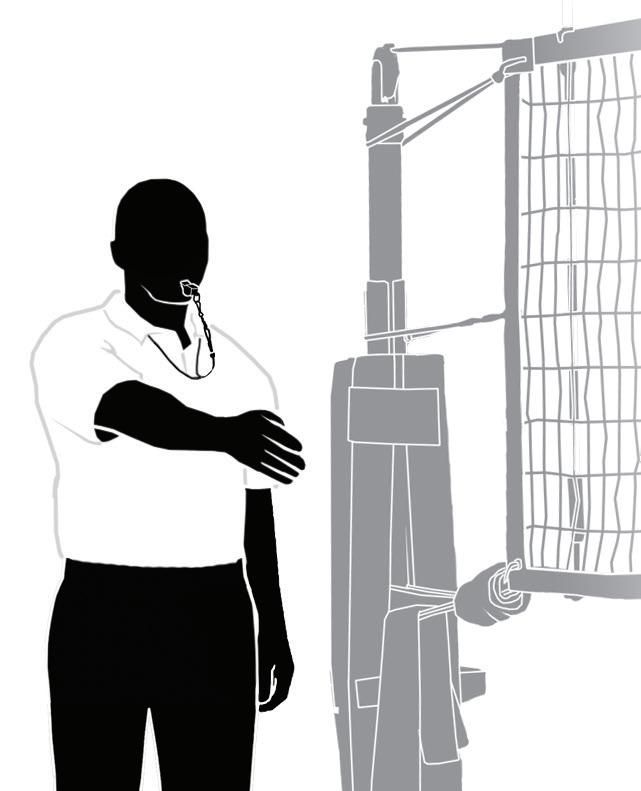
Another frequent error occurs when there is an antenna fault on the second referee’s side of the court. The second referee should be the one who whistles and then signals the fault by stepping to the offending team’s side of the court and giving the “out” signal. Next, the first and second referee mirror each other in awarding the point. Second referees sometimes either forget to even whistle the fault or they blow the whistle and immediately award the point and then step to the offending team side and signal “out.” Again, this is not mechanically correct and it throws the sequence out of order.
A final mechanical error tends to occur on centerline violations. The
second referee, who has the primary responsibility of calling these violations since the first referee is following the ball, should be the one who calls the centerline violation. The second referee should whistle, move to the side of the offending team, if not already on that side of the net, point to indicate the
Aviolation and then mirror the first referee awarding the point. Second referees have a tendency to award the point while whistling and show the number of the offending player (like they would for a net fault). The second referee should expect to tell the offending team’s coach the number if asked, but should not signal the number as would happen for a net fault.
A final signal pet peeve, and mechanical error, is when the second referee indicates a service fault. When a service fault occurs, the first referee will blow the whistle and award the point, and the second referee should mirror the awarding of the point signal. However, only the first referee gives the service fault signal. The second referee should not mirror the secondary signal.
74 | REFEREE January 2023 VOLLEYBALL
Too often, referees blow the whistle and rush through the signals, including giving the wrong ones. Remember, no one is paying attention to you until you blow that whistle. Once you do, all eyes are focused on you. It is during these few seconds when you need to be crisp and clear on what you are calling, give the



right signals and use the prescribed mechanics so there is no confusion.
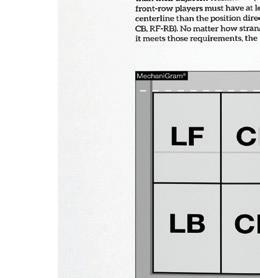
The key is to take a breath, slow down and know what you are and are not responsible for and follow the mechanics of the code you are working. It takes repetition to get comfortable, but it also takes knowledge of your responsibilities.
Take the time to not only read the rulebook, but study the mechanics manual to know what you should be doing after each point. When you work as a team and do the prescribed mechanics, it looks really good.

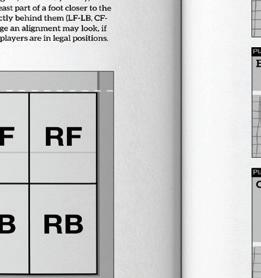
When you don’t, the opposite is also true.







See why Net Gain is the best selling volleyball training book of all time. Improve your judgments around ball-handling, overlaps/ alignment, net play, and line calls. Mastering these areas will instantly help you be a better referee and help you make great calls with consistency and confidence.
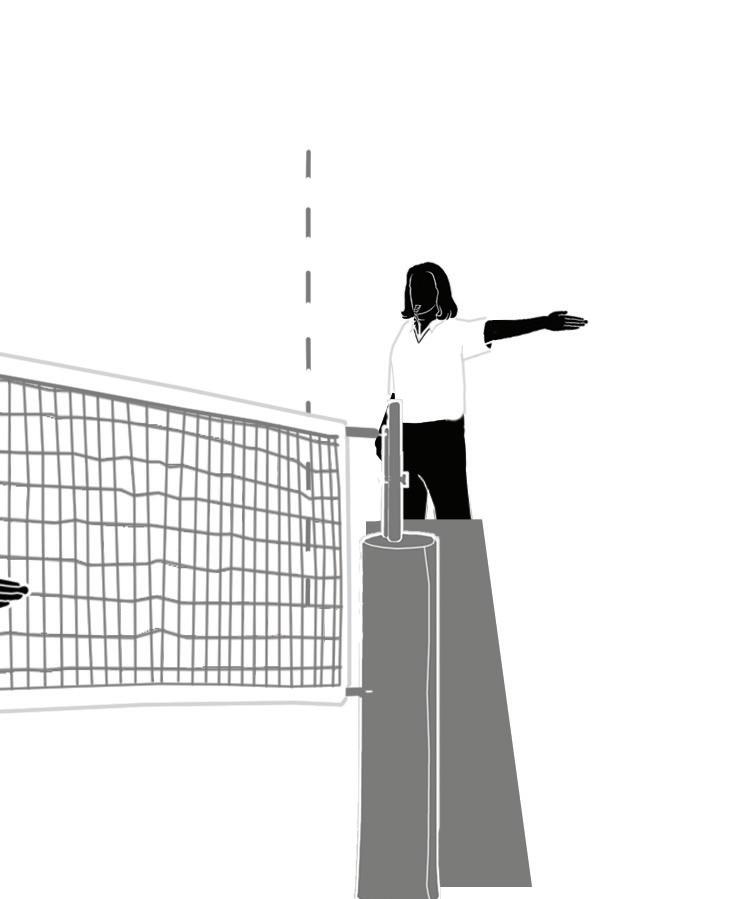
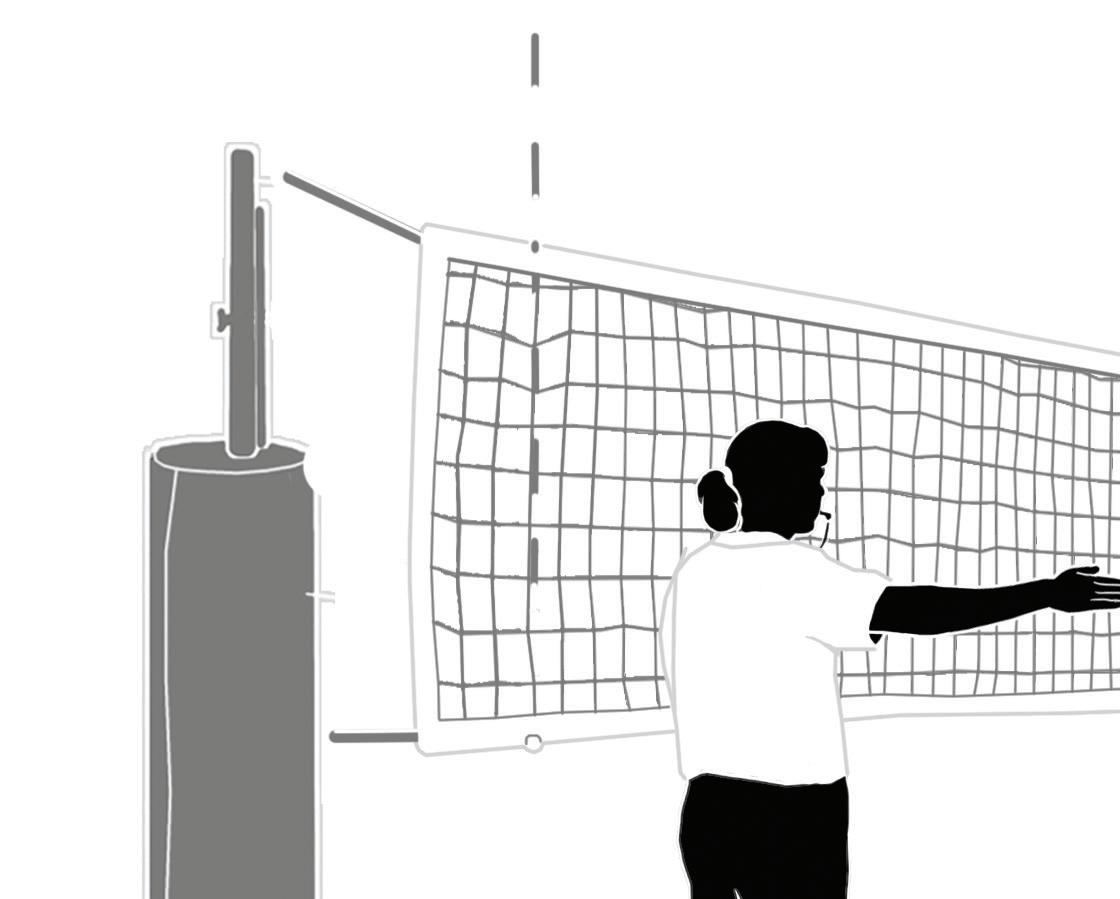


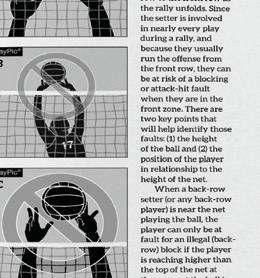
Master Volleyball’s Toughest Calls STORE. /VOLLEYBALL *NASO member discount available. 1395 * DIGITAL PRINT $2095 COMBO $1595 * all new edition SIZE: 5.5” X 8.5” PAGES: 80 B
are
































 By Jeffrey Stern
A behind-the-scenes look at the process that determines which officials go where and when.

Christmas gifts come early for college football officials. They arrive in late November or early December in the form of postseason assignments. Like children eager to see what Santa left under the tree, officials anxiously await messages from their conference coordinator telling them which postseason game they’ll work.
For the coordinators, it isn’t as easy a decision as it might
seem. Behind the scenes, there are contracts limiting which officials may work certain games. Each coordinator has a unique rating system to determine which officials get the higher-profile bowls. Before you can understand the officiating part, you need to know how the bowl system works.




The bowls at the top of the list are the so-called New Year’s Six — the Cotton,













Fiesta, Orange, Peach, Rose and Sugar. Each year two of those games rotate as College Football Playoff semifinals. Those not in the rotation have traditional conference matchups. For instance, if the Sugar Bowl is not a playoff semifinal, a Big 12 team meets a Southeastern Conference (SEC) foe. If a team from one of the contracted bowls is invited to the playoffs, the bowl will choose a replacement from the

76 | REFEREE January 2023
contracted conference. So in the Sugar Bowl example, if the SEC champ is in the playoffs, another SEC team will be selected.
Other bowls outside the playoffs also have ties to specific conferences. For instance, the Reliaquest Bowl (formerly known as the Outback Bowl) features a Big Ten-SEC matchup. The Holiday Bowl pairs a Pac-12 team with an Atlantic Coast Conference opponent.
Those arrangements are made years in advance, albeit the actual pairings aren’t made until after the season. But because the basic lay of the land is determined, Steve Shaw, CFO national coordinator of football officiating, is able to begin his job in November. “I will communicate with each of the conference coordinators,” Shaw said. “I don’t know which bowls they’re going to be yet, but you will have three bowls this year or you will have five bowls or whatever the number might be. So they will have the latitude to go ahead and begin building their own crews with still some flexibility.”
Once it’s determined who is playing who in which bowl, Shaw will match the conference officials to games. He will avoid conflicts so officials don’t work games in which a team from their regular conference is playing. It’s then up to the coordinators to make the actual assignments.
“One of the things we try to do is get them assigned in a short window,” Shaw said. “So the bowl teams are announced on Sunday. By Sunday night the coordinators are getting their assignments. And then very quickly from that on the backside they’re making those assignments and letting those officials know.”
The contracts between conferences and bowls do take some of the work and confusion out of the
process since Shaw and the coordinators know automatically which conferences can’t work which bowls.
“The process is rooted in the number of bowls your teams are in,” Shaw said. “It’s a reflection of how many bowl assignments that conference would get. And rather than each individual year saying, ‘Well OK, we’re going to change your number,’ we kind of group them together and based on averages of number of teams they’re sending is the number of bowl crews that you’ll get.”
Although bowl games are rewards for teams and officials, not all games are created equal. Teams have been designated as being from either a Power Five Conference or an Autonomy Conference. The Power Five — Atlantic Coast, Big Ten, Big 12, Pac-12 and SEC — are the five most-prominent and highest-earning athletic conferences. The Autonomy group includes the American Athletic, Conference USA, Mid-American, Mountain West and Sun Belt. Those designations also affect the assigning process.
“Typically the bowls fall into three categories,” Shaw said. “One is a group of five versus group of five. Another is autonomy five versus autonomy five. And then there’s that middle group that has autonomy five versus a group of five. We don’t rank them individually. They fall into one of those three categories, and they’re assigned that way.”
What could gum up the works is if a conference doesn’t have enough bowl-eligible teams to fulfill a bowl contract. In that case, the bowl finds a replacement team. That could lead to a switch in officiating crews to avoid a conflict.
The conference coordinators make all the final selection and assignment of
officials in collaboration with Shaw.
Because the regular season ends in late November or early December and the playoff games are in late January and early February, it has been suggested the crews working those game be given an early bowl game to stay sharp.




“We’ve had that conversation, but we haven’t done that,” Shaw said.
“There is always availability for those crews to still work scrimmages. Teams in their area are still working scrimmages and practices leading up to their bowl game. So we really encourage officials, especially those that have a longer layoff, to go see some snaps that way.”
Working a bowl game is more than an emotional reward for an official. Any swag the officials receive — watches, attire, etc. — is determined by the bowls. “As far as the pay,” Shaw said, “there is a bonus component. If you’re working a postseason game, there’s a 15 percent lift from your regular game fee. And then if it’s a semifinal it’s 20 percent, and if it’s a final it’s 25 percent.”
Any wonder, then, that college officials have not sugar plums, but Sugar Bowls dancing in their heads?
Jeffrey Stern is Referee’s senior editor. He officiated high school and collegiate football and umpired high school baseball.
REFEREE January 2023 | 77
Although bowl games are rewards for teams and officials, not all games are created equal.
ERR TIME
Five Ways You Can Totally Screw Up a Game
By the Referee editors
There are lots of ways an official can screw up a game. But there are five errors in particular a crew or official can commit from which it will be difficult, if not impossible, to recover. See how many are on your list as well.
1.Blow a rule
That may seem self-evident, but it constantly bears repeating. If a rule is erroneously applied (especially if the mistake has a bearing on the outcome of the game), you may find yourself in hip-high quicksand for a long time to come. Indeed, careers have been lost because of that.
One mistake that often gets made is the rest of the crew relies on the referee or crew chief to handle everything. In football, all officials should know how many yards should be walked off on all penalties. All umpires should know how many bases are awarded on an overthrow. It shouldn’t be left to the most veteran referee to determine if a correctable error situation has occurred.
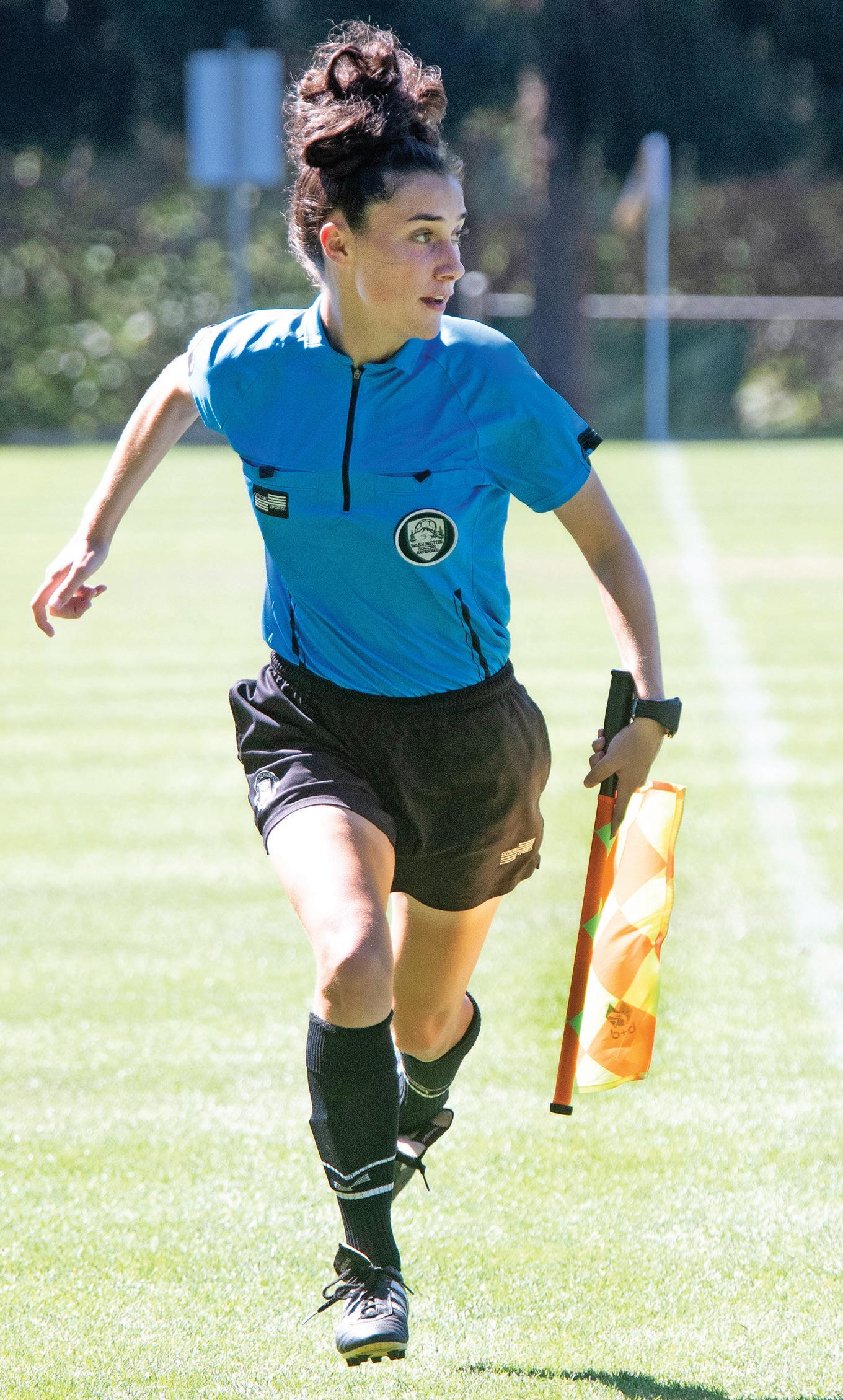
Even if you’re a rookie and/or the only person on the crew who thinks the crew is about to screw up, step in and make your voice heard. If you’re right, you can save the entire crew and if you’re wrong, so what? If a rules error occurs in a game, it is ultimately the fault of every person on that crew.
2.Employ poor verbal and nonverbal communication skills
If coaches get the idea you’re unapproachable, if you come across as overbearing, you’re fighting a losing battle from then on.
The communication effort must start from the time you arrive at the game site. Be polite to the school people you encounter. Don’t act like some big shot who expects everyone to bend over backward to accommodate you.
ALL SPORTS FOR ALL SPORTS, ALL LEVELS 78 | REFEREE January 2023 EDITOR: JEFFREY STERN jstern@referee.com
DALE GARVEY
Hustling and keeping focused will help prevent Helene Minassian, Federal Way, Wash., from making one of the errors addressed in this month’s column.
Be professional when you visit with the coaches before the game. Don’t take a cookie-cutter approach and treat all coaches the same way. Some want to talk but some just want you to take care of business and get out of there. If you prattle on endlessly, you’ll turn them off. Don’t make borderline jokes because, despite what you assume, your audience may not appreciate that brand of humor. And don’t make throwaway comments that can come back to haunt you.
During the game, ignore the static from the sidelines when you can. But when you’ve had enough, especially from an assistant coach, don’t go on the attack. Just say, “Coach, I’ve heard enough. It’s time to turn the page.” Or say to the head coach, “I need you to get your assistant calmed down.” Stay away from threats. If it continues and you have no choice but to penalize with a flag, technical or card, don’t make it look like you’re enjoying doing it.
If coaches ask for explanations, provide them when you can do so without interfering with your own duties. Treat the players with respect; don’t call them “son” or the like.
3.Blank out mentally
Between downs members of a football crew should have a signaling routine with each other. Don’t just go through the motions. If someone is not on the same page, stop the game and confer. Don’t sit back and assume that because you’ve got third down and everyone else has second, you’re wrong. Maybe a penalty that included
a loss of down led to confusion for your crewmates.
Umpires shouldn’t trust the scoreboard for the count and number of outs. The person running the board may be distracted. If you’re in doubt, ask your partner for help.
4.Be a nitpicker
A real good way to irretrievably screw up a game is to call things in a hyper-technical manner from the start. No one, least of all the coaches, players and spectators, wants to watch a series of stops and starts. Call the violations that really matter and use preventive officiating techniques to correct minor flaws rather than penalizing them.
Call a lot of ticky-tack fouls and you’ll destroy the game and develop a reputation in your area that is not conducive to good schedules or to advancement. Any foul that threatens a player’s safety must be called, however.
5.Don’t be a good dead-ball official
We can’t afford to take our eyes off the players too quickly just because the ball is dead or they aren’t directly involved in play. Good officials have a sixth sense and can tell when opposing players are becoming agitated with each other. In those cases, just letting players know you see what’s going on is enough to dissuade them from acting up. Stepping in between them without touching them can also be effective in some cases.
It’s a Balancing Act
By Jeff Adler
In Chinese philosophy, all things in the universe depend on the interaction of opposing but complementary forces. That concept, yin-yang, is used to describe how seemingly opposite or contrary forces are interconnected and interdependent in the natural world,
and how they give rise to each other as they interrelate to one another.
We are constantly adjusting to maintain balance in our work — a yin and yang of independence and collaboration within the sporting community. We want balance in our work as well as our daily lives. We employ social skills so coaches from each team respect us. We also strive
DID YOU KNOW?
Teams have resorted to all sorts of methods to indicate displeasure with the officials, but one soccer team in Madagascar went to extraordinary lengths. In a 2002 match, Stade Olympique de l’Emyrne put 149 goals into its own net in protest of the officiating, which the team felt was biased. Coach Zaka Be, accused of orchestrating the debacle from the stands, was suspended from coaching for three years.
Players Mamisoa Razafindrakoto, Manitranirina Andrianiaina, Nicolas Rakotoarimanana and Dominique Rakotonandrasana were suspended until the end of the 2002 season.
QUICKTIP
Goal-setting is a good motivator, but whenever possible, goals should be set in positive terms. The whole process of goalsetting and achieving success is positive and positive words should be used. “I will work at getting better angles to make proper calls” sounds better than “I am not going to kick any more calls.” By working on things that should happen, positive reinforcement occurs and motivation increases.
THEY SAID IT
“You never know in your assignments or when you’re out officiating when the biggest play of your career can come. And if you make the right call you’re going to feel it in your heart. You’re going to know that you did the right thing.”
— Legendary former NFL referee Jerry Markbreit




REFEREE
to arbitrate fairly and equally. But nevertheless, we may encounter fierce argument and harsh scrutiny from doing just that.
Although officiating is hardly a life-and-death situation (some coaches, players and fans will disagree), we share some things in common with Navy SEALs. Like the SEALs, we must develop and hone the skills, courage and tenacity to perform successfully. In the film Act of Valor, featuring active duty Navy SEALs, each SEAL is commanded prior to embarking on a mission to resolve any personal issues that could interfere with his or her mission. Like the SEALs, officials need to enter the field or court with a clear mind and check any personal issues at the gate. Removing distractions that may interfere with our performance will help us to do a better job.
On the field or court we want balance, but the forces at play are tugging at us from seemingly opposite or contrary forces — a yin and yang of enjoying and loving what we’re doing while managing adversity and discontent from players, coaches and fans. We must keep the game going smoothly, despite what happens during the game. We are trained to do something requiring great skill, concentration and the will to succeed.
We are constantly challenged to adjust to rule changes and increasing emphasis on safety, to master mechanics and to get all the calls correct. Today, our actions both on and off the field or court are observed and scrutinized by video, as well as coaches, fans, the media and internal evaluators.
Big Ideas for the Big Game
By the Referee editors
Getting the big game — a state playoff contest, a showdown between traditional rivals or a game to decide a conference championship — is the goal of many officials. Chances are good the big game will be televised, broadcast on the radio and internet or covered by scores of reporters.
What does all of that mean to you? In spite of that old adage, “Every game is a big game,” this one genuinely has higher stakes for you and the teams.
With all that pressure comes a different atmosphere. More fans. More emotion. More focus on every call and non-call. More media.
Are you prepared to handle the extra attention?
On game day, you’ll likely sense a different atmosphere when you drive into town or arrive at the site. There will be a sort of electricity in the air when you take the field or court. Soak it in and enjoy it; after all, you’ve worked hard to get the assignment. But your pregame
Every sport requires an official to study and learn its laws, rules and procedures. Officials receive classroom and on-the-job training to properly and accurately enforce the rules and administer the contest. However, during a game officials are likely to encounter a situation in which they are condoned to waive literal enforcement of a particular rule or action because doing so is better for the game.
Paradoxically, in those particular situations, we are perceived that doing so makes us better officials.
In our workplace, our actions depend on the interaction of opposing but complementary forces that are interconnected and interdependent. That’s the yin and yang of it.
Jeff Adler, Foster City, Calif., has umpired baseball at the youth and high school levels for more than 20 years. He’s also a high school football official. *
ALL SPORTS 80 | REFEREE January 2023
REFEREE
Expect more fans and more media if you’re working a championship game or big tournament. The rules of your sport may cover the areas photographers are allowed to occupy.
preparations and routine should remain the same. You’ll want to work the game as if it were a runof-the-mill contest; that attitude begins before the game.
A good pregame meeting with your partner or crew gets your mind right. A game manager may visit you beforehand to cover any special ceremonies or other variations in normal game procedures (e.g. media timeouts, celebrity coin tosser, etc.).
If pregame meetings with coaches are required, ignore any of their suggestions you need to be especially vigilant, such as “You know this is a big game. You’d better let the teams play,” or “We need this win to get into the playoffs.” Avoid a response such as, “Coach, this is just another game to us,” which implies a casual attitude to your job. A better response would be something like, “Coach,
the best teams are here, including the officials. Let’s all go out and have a great game.”
Once the game begins, don’t fall into the trap of playing to the camera. Give your signals crisply but don’t exaggerate them. Avoid false hustle. If the increased pace is better, why aren’t you using it all of the time?
Remember there may be microphones near the playing surface. You don’t want to say something unprofessional when dealing with sideline personnel, players and crewmates.
Big games draw big crowds. If fans are getting too close to the playing surface, creating a potentially dangerous situation, politely but firmly ask them to get back. If they don’t comply, get game management involved. The same goes for photographers and TV camera operators. In most cases,
there will be areas designated for them. Know where those areas are and be sure photographers remain in them.
If a controversial play occurs during the game, the press may approach you for a clarification or comment. If a conference supervisor or similar official is on site, refer the reporters to that person. If not, you’re better off declining comment. Reporters, especially those on tight deadlines, often don’t have time to get the sort of detailed explanation an unusual or controversial play requires. Even live TV has its pitfalls. Avoid them by leaving the comments for someone else.
When possible, get a copy of the telecast. Because TV usually offers multiple camera angles, the video is a great learning tool. Beyond that, it’s a great keepsake and a reminder of the fruits of your labor.
POSTSEASON ASSIGNMENTS
PROFESSIONAL
•Houston defeated Philadelphia, 4 games to 2, to win the 2022 World Series. Umpires were Dan Iassogna, Jordan Baker, Lance Barksdale, Tripp Gibson, Pat Hoberg, James Hoye and Alan Porter Chad Fairchild and Carlos Torres were the World Series replay umpires. Other playoff crews: AL Wild Card: Cleveland 2, Tampa Bay 0 — Doug Eddings, Adam Hamari, Quinn Wolcott, Ted Barrett, Hunter Wendelstedt, Chad Whitson. Seattle 2, Toronto 0 — Lance Barrett, Todd Tichenor, Brian Knight, Jerry Meals, Andy Fletcher, Roberto Ortiz
NL Wild Card: Philadelphia 2, St Louis 0, — D.J. Reyburn, Vic Carapazza, Mike Muchlinski, Jeff Nelson, Laz Diaz, John Libka . San Diego 2, New York Mets 1 — Adrian Johnson, Chris Guccione, Chris Conroy, Alfonso Marquez, Bruce Dreckman, Ben May. Wild Card replay umpires — Dan Bellino, Rob Drake, Manny Gonzalez, Mark Wegner.
AL Divisional: Houston 3, Seattle 0 — Hoberg, Jansen Visconti, Marvin Hudson, Cory Blaser, James Hoye, Torres . New York Yankees 3, Cleveland 2 — Baker, Jeremie Rehak, Iassogna, Will Little, Porter, Mark Ripperger
NL Divisional: Philadelphia 3, Atlanta 1 — David Rackley, Nic Lentz, Bill Miller, Stu Scheurwater, Fairchild, Ryan Blakney. San Diego 3, Los Angeles Dodgers 1 — Gibson, Chris Segal, Mark Carlson, John Tumpane, Barksdale, Scott
FOR THE RECORD AWARDS, ROSTERS, NOTABLES
Barry. Division series replay umpires — Ramon De Jesus, Mike Estabrook, Gabe Morales, Bill Welke.
NL Championship: Philadelphia 4, San Diego 1 — T. Barrett, L. Barrett, Eddings, Hamari, Knight, Tichenor, Wolcott.
AL Championship: Houston 4, New York Yankees 0 — Marquez, Carapazza, Conroy, Guccione, Johnson, Muchlinski, Reyburn. Replay umpires — Fletcher, Larry Vanover, Whitson.
HIGH SCHOOL
•Officials assigned to work 2022 spring state championships for the Wisconsin Interscholastic Athletic Association were: Baseball — Richard Breitkreutz , Mayville; Zachary Campbell , River Falls; Vernon Daines , La Crosse; Kevin Grossoehme , Milwaukee; Brian Ingli , Arkansaw; Mark Jandrin , Luxemburg; Richard Kaiser , Onalaska; Owen Kirk Kaul , Hustisford; Ryan Krcmar , Green Bay; John McGinley , New Richmond; Chris Nicholson , Beloit; Robert Ruhle , Madison. Girls’ soccer — Referees –Erin Frias , Belgium; Cletus Gerhartz , Sobieski; Mark Herdeman , West Bend; David Irwin, Oshkosh; Brian Kriese , Green Bay; Parker LeMire , Eau Claire; Patrick Murphy , Wausau; Jonathan Schrantz , Waukesha; Dylan Seitz , Elkhorn; Eric Stuart , Elkhart Lake; Steve Van Deurzen , Kaukauna; Kip Wilson , Cottage Grove. Assistant referees – Dennis Allie , De Pere; Hassan
Benani , Madison; Armand Bennage , Pleasant Prairie; Peter Bernardy , De Pere; Dave Berndt , Cottage Grove; Jason Bettin , Waukesha; Ken Bettin , Brown Deer; Kyle Beyersdorf , Appleton; David Braden , Waukesha; Andrew Bratland , River Falls; Brad Bubolz , Kiel; Thomas Gritton , Neenah; Scott Irwin , Cambridge; J. Jeff Jende , De Pere; Brandon Joly , Seymour; Lionel Kimmel , Menomonee Falls; Steve Laack , Wausau; Michael Murphy , Schofield; Tyler Peterson , Greenfield; Ryan Shanklin , Appleton; Timothy Stilwell , Hayward; Matthew Sumner , Grafton; Mike Walsh , Plymouth; Phillip Willems , Green Bay. Softball — Jed Block , Appleton; Larry Buchberger , Wausau; Michael Colombo , Greenfield; Jack Fleming , New Berlin; Lynn Isensee , Sparta; Michael Kirschbaum , Holmen; Steven Komorowski , Oak Creek; Chet Marcum , Merrill; William Niebuhr , De Forest; James Schaefer , Green Bay; Steve Steiner , New Holstein; Richard Vande Zande , Horicon. Girls’ individual and team tennis — Meet referee – Sharon Terry . Umpires – Turner Albrecht , Milwaukee; Todd Anderson , Racine; Richard Arians , Madison Lake, Minn.; Matt Bauman , Madison; Joyce Casey , Brookfield; Liz Danner , Oneida; Keith Galipo , Milwaukee; Jana Graf , De Pere; Jan Hammelman , Castle Rock, Colo.; Dave Hammelman , Castle Rock, Colo.; Sarah Jones , Janesville; Doug Knutzen , Fond du Lac; Deb Kremer , Sun Prairie; Jon Nicoud , Fond du Lac; Kathleen Pudlo , Crystal Lake, Ill.; David Shorr, Stevens Point; Henry Thomas , Milwaukee; Bart Triefler , Glendale; Sam Walker, Milwaukee; Adrienne Welker , Elgin, Ill.; Jim Yoshida , Madison. Track and field — Meet referee –Jon Hegge , Evansville. Field and throws referee – Jim Steinberg , Oconomowoc. Field and jumps referee –Robert Kern , Milwaukee. Starters – Tim DeJardin , Eau Claire; Frank Furdek , Milwaukee; Tim Lee , Viroqua; Joe Rapacz , Iron River.
•Umpires assigned to the 2022 Montana High School Association state softball championships: Class A — Ron Rowling , Butte; Traci Thomas , Anaconda; Steve Picard , Ronan; Glen Welch , Missoula; Emmit Tucker , Clinton; Kline Vorhees , Missoula, Kenny Gonzalez , Hamilton. Class AA — Wayne Wade , Missoula; Jim Anderson , Missoula; Raymond Bidwel l, Missoula; Jack Donnel , Helena; Don Bartsch , Helena; Dennis Booi , Missoula; Jeff Hibbert , Missoula. Class B/C — Ed Shoenrock , Billings; Tim Hofferber , Billlings; Rock Rayl , Great Falls; John Gilmore , Great Falls; Tim Roane , Lewistown; Bob Barber, Lewistown.

•Officials assigned to the 2022 South Dakota High School Activities Association state track and field meet: Tim Casper , meet referee; Mark Wendelgass , assistant referee/head umpire; Steve Charron , Class AA boys’ starter; Marc Murren , Class A boys’ starter; Eric Foss , Class A girls’ starter; Larry Stevens , Class AA girls’ starter; Randy Thomas , Class B boys’ starter; Bob Malloy , Class B girls’ starter; Bob Lowery , Class B girls’ starter; Robert (Bob) DeBoer , horizontal field referee; JD Evans , throw referee.



•Officials working spring state championships for the Kansas State High School Activities Association were: Baseball — Class 6A: Dean Carson , Topeka; David Gonzales , Olathe; David Highfill , Overland Park; Terry Kenny , Overland Park; Phil Lombardi , Kansas City; Matthew Lynch , Wichita. Class 5A: Peter Cannizzaro , Lenexa; Gerald Henderson , McPherson; Dan Key , Topeka; Keith Kinley , Wichita; Chad McFarland , Olathe; Eddie Smith , Andover. Class 4A: Timothy Cashero ,
82 | REFEREE January 2023
Designate NASO as a beneficiary of your retirement plan or life insurance policy. LEARN MORE AT NASO.ORG/LEGACY OR CALL 800-733-6100
Pittsburg; Jason Clemensen , Pittsburg; Taylor Martin , Parsons; Brad Schmitt , Great Bend; Robert Schuh , Topeka; John Wondra , Manhattan.
Class 3A: Mark Borst , Goddard; Gene Cox , Thayer; Ron Maring , Osawatomie; Anthony Perez , Salina; Patrick Sarwinski , Pittsburg; Brent Urban , Kansas City.
Class 2-1A: J osh Brungardt , Hays; John Deedrick , Topeka; Rodney Palen , Beloit; Dwayne Rindt , Salina; Michael Shayne Lickteig , Ottawa; Kim Sutphin , Wichita. Softball — Class 6A: J im Duncan , Olathe; Kurt Lohse , Topeka; Diane Smith , Wichita; Steve Stutheit , Shawnee; Linda Weber, Olathe; James Wilson, Wichita. Class 5A: Bruce Andrews, Topeka; Tom Drake, Ottawa; Robert Luce, Hutchinson; Polly Schroeder, Wichita; Megan Wilson, Newton. Class 4A: Jeff Freeman, Topeka; Jeff Johnson, Hutchinson; Mark Kenyon, Augusta; Lou Mignone , Winfield; Ron Price , LaCygne; Martin Ramirez , Hutchinson. Class 3A: Mark Brack , Ellis;
Thomas Browne , Topeka; Gary Davis , Chetopa; Manuel Motto , Belleville; Phil Reilly , Cherryvale; Bill Seidl , Paola. Class 2-1A: Cameron Chandler , Sterling; Bradley Eberhardt , Derby; Angelo Fears , Pittsburg; Matthew Foote , Lindsborg; Scott Goodheart , Pratt; Mike Holt , Topeka. Soccer — Class 6A: Aaron Dietz , Wichita; Joe House , Topeka; Drew Klemp , Lansing; Masoud Mozaffari , Kansas City; Larry Weigant , Haysville; Gordie Wetmore , Overland Park. Class 5A: Tyler Busenitz , Benton; Nathan Colling , Lenexa; Mark Edwards , Wichita; M. Troy Fowler , Wichita; Phil Gomez , Shawnee; Chris Johnson , Wichita. Class 4-1A: Randall Ashburn , Wichita; Klaus Kollmai , Wichita; Naomi Omenski , Kansas City; Alan Peil , Wichita, Marc Tiemann , Shawnee; Matt Weigant , Wichita.
AWARDS & HONORS
•The North Dakota Officials Association will induct five new members into its hall of
fame at state tournaments throughout the 2022-23 school year. Officials to be honored are volleyball official Lynda Bertsch, Minot; wrestling and football official Mike Nider, Mandan; volleyball official Stephanie Smith, Bismarck; basketball referee Tim Campbell, Fairmount; and basketball and football official Mitch Parker, Fargo.
•Key contributors to Georgia High School Association (GHSA) officiating were honored at the state executive committee meeting May 4, 2022. Bob Earwood, who has spent 46 years officiating or working with officials for the GHSA, received a Lifetime Achievement Award from the NFHS, while 14 others received “Contributor to the Cause in Officiating.” Officials recognized were: Patrick Ingram, football; Al Dattolo, softball; Wayne Pinkham, volleyball; David Reynolds, flag football; Lynda Martin, cheerleading; Darrell Lane, basketball; Shawn Fields,
wrestling; Justin Russell, soccer; Michael Hannah, lacrosse; Neal McKinney, swimming and diving; Colbie Wilson, dance; Rick Elrod, baseball; Amy Eubanks, gymnastics; and Andy Coward, multi-sport.
OBITUARIES
• Tom Zimorski , Charlottesville, Va., died Oct. 1. He was 75. A replay official in the Atlantic Coast Conference (ACC), he died after working the ClemsonNorth Carolina State game. He was a referee and replay official in the ACC for more than 20 years, the Old Dominion Athletic Conference for seven years and for the Atlantic 10 Conference for two years. He worked for the Virginia High School League, first as the Assistant Director for Compliance before being named Deputy Director. He was also a longtime member of the NFHS Football Rules Committee.
Do you have any rosters, assignments or awards that warrant mention?
Send info to us at ForTheRecord@referee.com
ROSTERS NBA
The following are the NBA officials for the 2022-23 season. They are listed by uniform number, name and years in the league. R indicates rookie. 3 Nick Buchert, 13 4 Sean Wright, 17 7 Lauren Holtkamp, 8 8 Marc Davis, 24 9 Natalie Sago, 4 10 John Goble, 15 11 Derrick Collins, 21 12 CJ Washington, 6 13 Ashley Moyer-Gleich, 4 14 Ed Malloy, 20 15 Zach Zarba, 19 16 David Guthrie, 17 17 Jonathan Sterling, 5 18 Matt Boland, 19 19 James Capers, 27 21 Dedric Taylor, 8
22 JB DeRosa, R 23 Tre Maddox, 11 24 Kevin Scott, 11 25 Tony Brothers, 28 26 Pat Fraher, 21 27 Mitchell Ervin, 7 28 Mousa Dagher, 4 29 Mark Lindsay, 15 30 John Butler, R 31 Scott Wall, 27 32 Marat Kogut, 13 33 Sean Corbin, 27 34 Kevin Cutler, 12 35 Jason Goldenberg, 5 36 Brent Barnaky, 12 37 Eric Dalen, 14
38 Michael Smith, 29 39 Tyler Ford, 7 40 Leon Wood, 26 42 Eric Lewis, 18 43 Matt Myers, 4 44 Brett Nansel, 6 45 Brian Forte, 15 46 Ben Taylor, 9 47 Bennie Adams, 27 48 Scott Foster, 28 49 Tom Washington, 31 50 Gediminas Petraitis, 7 51 Aaron Smith, 6 52 Scott Twardoski, 11 54 Ray Acosta, 5 55 Bill Kennedy, 24
58 Josh Tiven, 12 60 James Williams, 12 61 Courtney Kirkland, 22 63 Derek Richardson, 25 64 Justin Van Duyne, 9 65 Nate Green, 4 67 Brandon Adair, 5 68 Jacyn Goble, 6 70 Phenizee Ransom, 4 71 Rodney Mott, 24 72 J.T. Orr, 11 74 Curtis Blair, 14 77 Karl Lane, 11 78 Evan Scott, 4 79 John Conley, 3 81 Simone Jelks, 3
82 Suyash Mehta, 3 83 Andy Nagy, 3 84 Jenna Schroeder, 3 85 Robert Hussey, R 86 Brandon Schwab, 3 87 Danielle Scott, 3 88 Matt Kallio, R 89 Dannica Mosher, R 91 Cheryl Flores, R
REFEREE January 2023 | 83
LAW ISSUES AFFECTING OFFICIALS
Withholding of Services
By Donald C. Collins
Associations need to cover their legal and administrative bases before withholding services. The legal and administrative issues vary depending upon why the association is considering withholding its services.
Let’s address some of the main reasons for withholding services.
Pay disputes. An association can withhold services when fee negotiations break down. Associations should provide written notice to both the league and their membership when negotiations break down. Writing the league provides clarity and a paper trail.
Writing the membership is an important part of regularly updating members and board members on key issues.
Associations should note withholding services may open the door to competition.
Conditions at school sites. Associations may be sorely tempted to withhold their services due to playing site conditions ranging from security issues to a lack of amenities. These types of issues often arise after the deficient conditions create some problem.
It is best to specify what is needed in advance. It is even better to put it in writing, and to specify some procedures leagues can take when schools commit violations.
New obligations. Schools and leagues occasionally ask officials associations to take on obligations that go beyond executing the duties in the rulebook. Generally, an association can educate these clients on the scope of their duties under the rulebook. However, sometimes attempts to educate don’t work and the client persists. An association has the following options.
First, the association can push back against the school or league. Second, the association could treat the requests to do non-officiating duties as a second set of duties under the contract to officiate, and charge a premium for those duties.
If the Client Is Withholding Payment ...
If a school, league or other organization is failing to pay what is owed, an official’s or his or her association’s first step is to reach out and remind the organization of any contract terms.
If there is no formal contract, the verbal understanding of the assignment terms can be memorialized in an email to the client. This provides evidence of an agreement, but it’s hard to capture every detail in this manner. Suspended games, forfeited games, no-show officials and a host of other contingencies can fall in gaps that verbal agreements don’t cover.
Amateur sports officials’ fees are small enough that an official may want to go to small claims court, which is an excellent tool for the tiny disputes that really don’t merit paying an attorney.
But small claims court should be an option of last resort. First, officials or associations should work through a league or school’s governance to attempt to resolve the payment situation.
SOURCE: LAW COLUMN BY DONALD C. COLLINS IN 3/20 ISSUE
It also is important for an association to know the regulatory environment under which their clients are operating. Some schools and leagues have fee caps set by sports governing bodies or by their governing boards. This restricts what the school and league can agree to, and it also means the association has to move up the ladder to speak with the party with authority.
Officials’ shortages. Some associations may be hesitant to enter into a contract they can’t fulfill. This is laudable, but an association can contract to provide services even where they have too few officials. The key is to be honest about the officials’ shortage and to work with the client to set time frames and procedures for moving games on days when there aren’t enough officials. It is essential this be done in writing.
However, if the client won’t yield and the extra duties either interfere with the execution of officiating duties or shift legal burdens, then an association may have to withhold its services. Unfortunately, the pandemic has led to clubs, leagues, schools and teams asking officials to do things that are the duty of game administration. At some point, the worst-case scenario could lead some association somewhere to withhold services.
This is a volatile time. Some clients are examining the terms of their officiating relationships. We also have severe officials shortages. We must continue to show integrity in business, specify things in advance and in writing, and make sure we don’t agree to contract terms or working conditions that interfere with our ability to perform the duties set out in the rulebook.
Donald C. Collins is a longtime basketball official and lawyer, and former commissioner of the San Francisco Section of the California Interscholastic Federation. This article is for informational purposes and is not legal advice.
Constants to Get Chiseled Into Every Contract
Getting things in writing helps down the road should there be a dispute. What are some of the things that are good to have spelled out?
Key items include the date, time, location, services to be performed, fee and payment terms for the assignment.
Other important details include who hires you, when you will get paid and if there is any reimbursement for mileage or other expenses. Those basics will prove useful if, down the road, you have to contact the school or league to sort out an issue with payment.
Sometimes who hires you and who pays you might be different. For example, you’re hired by the school, who pays the assigner, who ultimately pays you. Knowing those details will help if you need to look to that entity for the game fee.
SOURCE: LAW COLUMN BY JIM DWORMAN IN
Go to www.naso.org and click on member benefits for more on MICP.
12/16 ISSUE
Unfortunately, the pandemic has led to clubs, leagues, schools and teams asking officials to do things that are the duty of game administration.
84 | REFEREE January 2023
PRESENTED BY
CLASSIFIEDS
CAMPS/CLINICS/ SCHOOLS
ATTENTION ASSOCIATION LEADERS!
Are you holding a camp or a clinic? Do you know of a camp or a clinic coming up? Referee can help get the word out! Call our sales department at 262-6328855 for more information.
LEADERSHIP RESOURCES
Association Advantage
Membership to Association
Advantage provides officials, associations and their leaders the tools to conduct wellrun meetings, education resources for officiating training and access to years of association management articles. Member associations also receive 12 issues of
Referee magazine, monthly Advisor newsletters, Click e-newsletters, massive discounts on training materials and optional insurance coverage exclusive to membership. For additional membership information, contact Ken Koester at 262-632-5448 or visit the Association Advantage website at nasoadvantage.com.

EQUIPMENT/APPAREL
Purchase Officials
Supplies — Everything for Life Inside the Lines. Call 800-767-2233 or visit our website purchaseofficials. com for the best products and prices in the market.
Ump-Attire.com — The #1 website for officials’ sporting goods. Now serving free returns to go along with more brands, product
reviews, same-day shipping and world-class service.
Smitty Outlet Store
Visit the NEW Smitty Outlet Store featuring discontinued, factory seconds and individual slightly defective items at great prices. Go to smittyoutletstore.com to shop now!
TRAINING RESOURCES
Referee Training Center
— The largest library of officiating training materials in the world. Rules study, mechanics updates and materials on important topics can all be found in one location 24 hours a day, seven days a week, with sample chapters and video samples. Discover it all at store.referee.com.
FLASHBACK JANUARY
40 YEARS AGO … 1983
•The United States Football League (USFL) begins play, hiring 12 former NFL officials to anchor its six crews. Cal Lepore, the USFL supervisor of officials, said he received more than 1,000 applications from officials interested in joining the startup league.
30 YEARS AGO … 1993
QUIZ ANSWERS
BASKETBALL

1 — All – e (NFHS 3-5-1, 3-5-5, 3.5B; NCAAM/W 1-26.6)
2 — NFHS – d (3-5-3, 3-6); NCAAM/W – a (1-23.2, 1-25.2)
3 — All – c (NFHS 1-5.2; NCAAM/W 1-6.2, 1-6.4)
4 — All – b (NFHS 3-4-5, 3-6-2, 3.4.5; NCAAM/W 1-22.11, 1-25.1)
5 — NFHS – d (1-7-4); NCAAM/W – c (1-17.1)

BASEBALL
1 — NFHS – c (5-1-1k); NCAA, pro – a (NCAA 9-3 Pen. 1; pro 6.02a Pen.)
2 — NFHS, pro – c (NFHS 3-14a1; pro 5.11a10); NCAA – d (7-2b10)
3 — All – a (NFHS 2-28-2, 6-1-4; NCAA 9-2b Pen.; pro 6.02b Cmt.)
4 — All – b (NFHS 9-1-1 Exc. a; NCAA 5-6c Exc. 1; pro 5.08 Exc. 1)
FOOTBALL
1 — Both – b (NFHS 2-28-2, 7-512; NCAA 7-3-10)
2 — NFHS – c (9-6-1, 9.6.1); NCAA – b (2-27-15a-2, 4-2-3a, 7-3-4)
3 — Both – b (NFHS 7-1-7, 7-1-9; NCAA 7-1-5a-5)
4 — Both – d (NFHS 8-5-2c; NCAA 8-5-1b)
5 — NFHS – a (8-4-1b, 4.2.2I); NCAA – b (8-4-1a)
SOFTBALL
1 — All – c (NFHS 2-1-2b, 8-2-3 Eff., 8-6-6 Pen.; NCAA 7.1.1.3, 12.5.2 Eff., 12.8.2; USA Softball
1-Appeal Play, 8-2c, 8-7f Eff.; USSSA 8-17b, 8-18j, 9-1b)
2 — All – a (NFHS 2-9-5e, 8-2-2; NCAA 1-9, 12.5.1; USA Softball
1-Catch/No Catch, 8-2b; USSSA 3-Catch, 8-17d)
3 — All – b (NFHS 2-25-1a, 2.25.1A; NCAA 11.5.1.4; USA Softball 1-Foul Ball; USSSA 3-Foul Ball)
SOCCER
1 — All – c (NFHS 16-1-3; NCAA 13.2.2; IFAB 16.1)
2 — NFHS, NCAA – a (NFHS 5-22d-3; NCAA 8.1); IFAB – c (8.1)
3 — All – c (NFHS 12-6-1, 12.6.1D; NCAA 12.2.9.1; IFAB 12.2)
4 — All – b (NFHS 14-1-4; NCAA 14 Penalty Kick Chart; IFAB 14.3)

VOLLEYBALL
1 — NFHS, NCAA – c (NFHS 5-21b; NCAA 19.1.5.2, PAVO Manual pg. 19); USAV – d (22.2.3.2)
2 — NFHS – b (9-5-7); NCAA, USAV – a (NCAA 15.2.4.2; USAV 11.2.2.2)
3 — All – d (NFHS 12-2-8 Pen.; NCAA 6.1.2.1; USAV 21.1)
4 — NFHS – a (9-5-7 Pen.); NCAA, USAV – b (NCAA 15.2.4.2; USAV 11.2.2.2)
5 — NFHS, NCAA – a (NFHS 10-4-3d; NCAA 12.3.1.2); USAV – d (19.4)
•NHL referee Don Koharski is exonerated by the league after two Edmonton Oilers players accuse him of threatening to “get them” in a game to be played two days later. Bryan Lewis, the NHL director of officiating, explained that Koharski told Oilers’ Craig Simpson and Esa Tikkanen, “If you want to talk to me, I’ll see you in Vancouver,” while the players believed he said, “I will get you in Vancouver.”
20 YEARS AGO … 2003
•Little League announces a new policy requiring all volunteers who have repeated contact with kids, including umpires, to be checked against state sex offender lists. The new policy made mandatory a practice the organization had recommended since 1997. The background checks were subsequently required each year.
10 YEARS AGO … 2013
MISSION
Referee is a magazine written from an officiating perspective, blending editorial credibility and business viability. It educates, challenges and inspires officials at the youth, recreational, high school, collegiate and professional levels in all sports, with an emphasis on baseball, basketball, football, soccer, softball and volleyball. Referee is the journal of record for officiating and takes informed positions on selected issues. The magazine provides a forum for its readers, facilitates the flow of information, raises public consciousness about officials’ roles and serves as a catalyst for improved officiating worldwide.
•Amid an increase in conferences turning to suspensions of officials for missed judgment calls or rules misapplications, the ACC announces one-game suspensions for two officials for a missed flagrant contact call between plays in an Oct. 20, 2013, Duke-North Carolina game. Separately, the referee of the Florida State-Miami game was suspended for one game for failure to properly administer a 10-second runoff at the end of the first half.
REFEREE January 2023 | 85
A Crowning Achievement
“We don’t stop playing because we grow old; we grow old because we stop playing.” – George Bernard Shaw
After a year of “coaching” my son’s sixth grade “C” basketball team (mostly as a chauffeur and game scheduler), I realized how little I knew about the rules. So, 30 years ago and at over 40 years old, I signed up for referee school. I still recall vividly how seemingly out of place I was among taller, bigger, faster and younger students. In one instance, the
skills. (The acorn planted in 1992 is today a mature, hardy and thriving oak.)
During the 30 years of officiating basketball at the high school and youth levels, I have often reflected on the verbal abuse, challenging communication, fitness level and many other aspects of officiating. Fortunately, there are many positives in this avocation that must be emphasized to make the activity worthwhile. Both health care and officiating appeal to the altruistic nature of public service. Good teamwork is essential both in an officiating crew as well as in a health care team. As a dentist by profession, I work in a confined space focused in the limited area of the mouth dealing in minute dimensions.
As a dentist by profession, I work in a confined space focused in the limited area of the mouth dealing in minute dimensions.
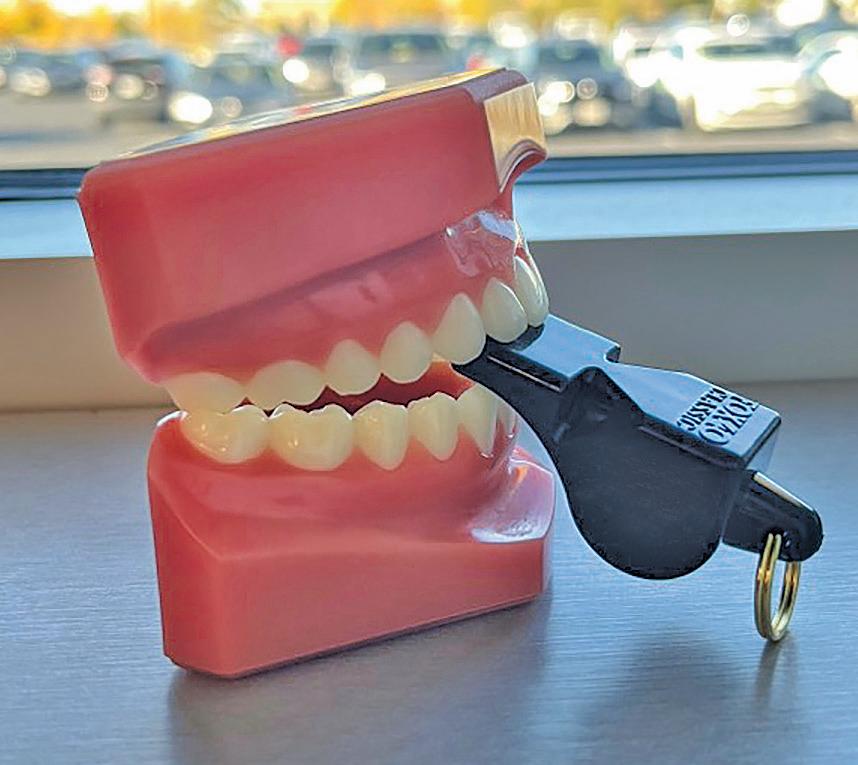
instructor looked and stared at me and asked silently, “What the heck are you doing here in my class?” He asserted the fact that I did not look like a referee. Because I did not look the part personally and physically, I had to work twice as hard to become a competent referee. I persevered, completed the course and continued my 30-year journey in active pursuit of being the best high school referee I can be. I just finished a local summer referee camp I attend annually to continue learning and refining my
When I referee, I transition to working in a larger space and running instead of sitting. The change of space and activity is very appealing for me. During a game when the coaches and fans are yelling at me, I tell myself I have the best seat in the house, and they are there to watch me exercise running up and down the court. The adage is you don’t referee to get in physical shape. But it does force you to get in shape. As I get older, it gets more difficult to maintain physical fitness. At each annual physical, my doctor continually suggests I keep moving and stay active as much as possible, and that is where running up and down the court comes into play. I kid that it is my diversion program.
Because of officiating, I have made more friends, learned to communicate better, become more alert in other activities — such as driving, am able to watch games with more knowledge and stay physically active.
Being Asian and wearing eye glasses, while having the height of Muggsy Bogues and the speed of a retired Charles Barkley, I surprise people when I tell them I referee basketball. If I can do it, anyone can.
Further reflections on my 30-year journey as it winds down:
I enjoyed the camaraderie, the challenge of learning a new activity, the commitment to excellence and pursuit of perfection, and continued lifelong learning. I would have done it over again, but started at a younger age. It is not a lucrative avocation and I would have refereed without pay. The intangible benefits outweigh the financial gains. At the end of the day, I get immense joy and exhilaration having exerted energy and talent for the good of the game. I feel truly blessed to have participated for as long as I have and enjoyed the activity. Retirement is a four-letter word for me. I want to keep working for as long as I can be productive, fulfilled, relevant and maintain a sense of purpose in the brief and precious time I have remaining on this planet. (“Do not go gentle into that good night. RAGE, RAGE against the dying of the light.” — Dylan Thomas)
I am a mentally young, active, passionate and motivated 74-yearold basketball referee excited to share my story with the hope it will inspire others to take up this worthy, indispensable, wonderful and noble avocation at any age. It matters. Do it for the kids.
With much respect for the game of basketball and immense gratitude to the officials who mentored me on the craft, it has been a great ride and adventure on and off the basketball court. As I have paid it forward as an educator in the dental field, I wish to be able to give back to the game in other forms in the twilight of my career in officiating the great game of basketball. Like the famous Nike ad says, “There is no finish line.” Antonio Ragadio, San Francisco, has been a basketball official for 30 years. Originally from the Philippines, Ragadio immigrated to the United States when he was 10. He graduated with a DDS from the UCSF School of Dentistry and is a member of the Northern California Basketball Officials Association.
Do you have a personal officiating story to tell?
Send your story or queries to lastcall@referee.com
86 | REFEREE January 2023
A PERSONAL
LAST CALL
STORY BY ANTONIO RAGADIO
REFEREE

IT’S OFFICIAL january 2023








NASO and CDC Team Up for Concussion Training

In October, NASO announced the launch of HEADS UP, a free online concussion training from the Centers for Disease Control and Prevention (CDC). The CDC approached NASO about developing a training course on concussion safety, specifically for sports officials.

Sport- and recreation-related activities are a leading cause of ER visits for traumatic injuries among young people.
The training will be a gamechanger when it comes to improving safety for participants. Athletes who continue to participate and return to play too soon after sustaining a concussion are at a higher risk for repeated brain injuries and poorer health outcomes. Sports officials can play a key role in determining when to get athletes out of the game by noticing symptoms explained by athletes and notifying medical personnel onsite.
“We are excited that this training is tailored for sports officials and aimed at our specific duties related to concussions,” NASO Chief Operating Officer Bill Topp said.
Topp, along with NASO Chief Business Development Officer Ken Koester, provided guidance and critical sports official perspectives to the CDC to make

sure the training was created with officials’ needs in mind.
“This type of training is good for officials in all sports at all levels and the content will make for great discussion at officiating clinics and meetings,” Koester said.
The free training is available on the CDC’s TRAIN platform at train.org/cdctrain/ course/1105618 and consists of three lessons that are approximately 45 minutes in total length.

The first lesson covers concussion basics, including how concussions can occur, examples of concussion signs
(things a sports official might be able to observe in an athlete) and symptoms (things an athlete experiencing a concussion might feel internally). It also covers indicators of more severe brain injuries and provides advice on how officials can use their unique skills to support concussion safety.








Lesson two explores best practices for player removal and guidance on documentation, and how to communicate with others about concussion safety.
The third lesson covers a sports official’s role in concussion prevention and safety. It
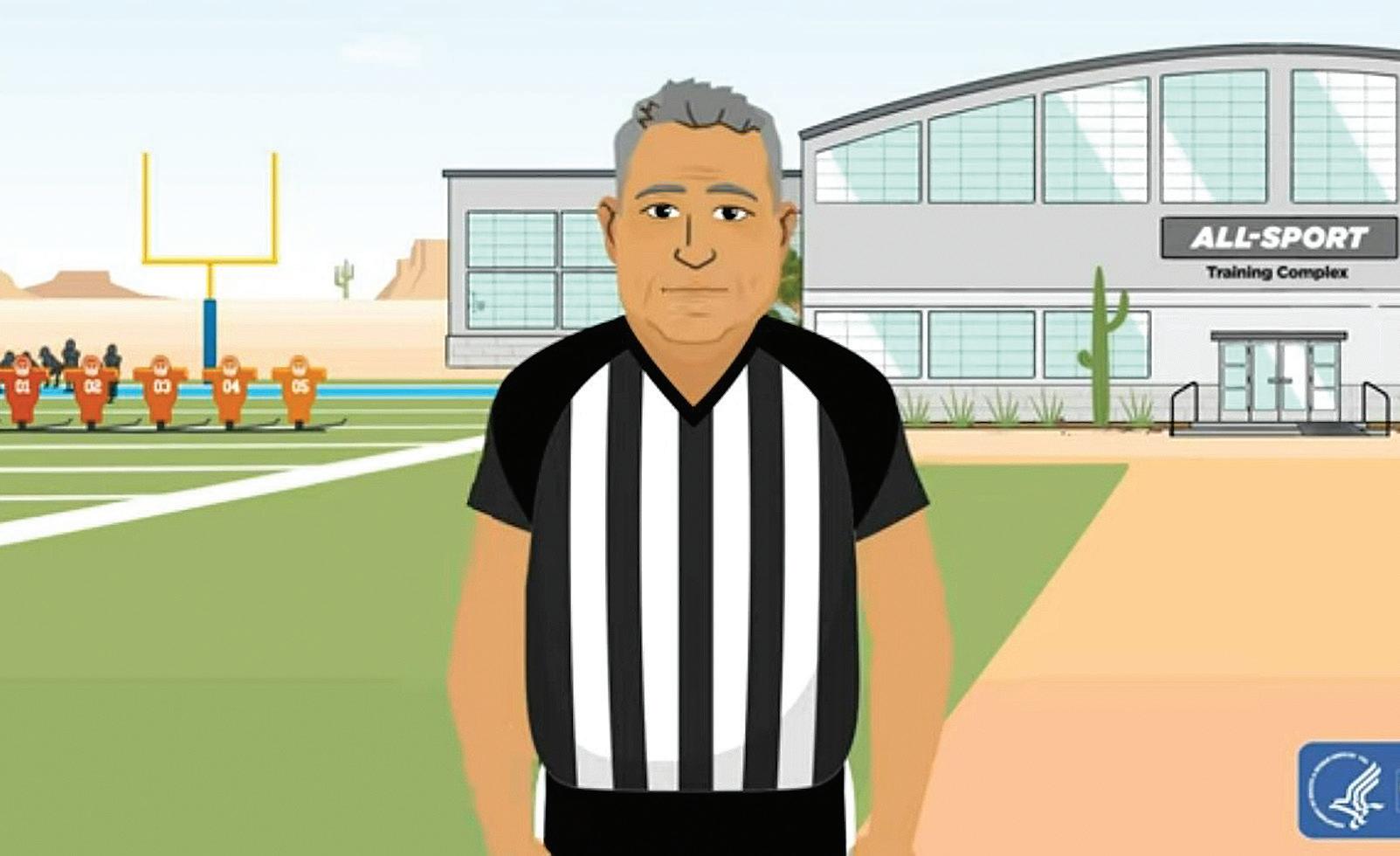
NATIONAL ASSOCIATION OF SPORTS OFFICIALS
1
NASO worked with the Centers for Disease Control and Prevention to develop a free online concussion training course for sports officials.
emphasizes the importance of using correct terminology and avoiding phrases like “bell ringer” or “dings” and promoting a culture of concussion safety by enforcing fair play and good sporting behavior for all athletes. A course completion certificate, with completion date, is provided. That means groups that implement this training will know that officials satisfactorily finished the course.
“NASO is proud to have worked with CDC to create this first of its kind officiatingspecific online training on concussion,” NASO President Barry Mano said. “We officials have a role to play in concussion safety and now we have a tool with practical advice to help us recognize the signs and symptoms of concussions and to take action when needed.”
Editor: Julie Sternberg
Sports Editor: Brent Killackey
Graphic Designer: Dustin Brown
Contributors: Don Collins, George Demetriou, Alan Goldberger, Luke Modrovsky, Patrick Rosenow, Tim Sloan, Jeffrey Stern, Brad Tittrington, Scott Tittrington, Bill Topp
NASO BOARD OF DIRECTORS
Dana Pappas, Lebanon, Ind., Chair
Robert Smith, Waterloo, Iowa, Vice Chair
Barry Mano, Racine, Wis., President
*Bill Topp, Racine, Wis., Secretary
*Bill Carollo, Shorewood, Wis., Treasurer


*Ron Foxcroft, Burlington, Ontario, Special Adviser

Dean Blandino, Santa Monica, Calif.
Lisa Jones, Phoenix
Paul LaRosa, Metairie, La.
Pati Rolf, Pewaukee, Wis.
Sandra Serafini, Yachats, Ore.
Ron Torbert, Hanover, Md.
Mark Uyl, DeWitt, Mich.
Rob Wigod, Los Alamitos, Calif.
*Non-voting members
NASO MISSION STATEMENT






The mission of NASO is to:
• Serve members by providing benefits and services.
• Improve officiating performance through educational programs.
• Advocate opportunities for officials and engage in programs to recruit and retain officials.
• Create alliances with organizations that benefit from healthy officiating programs.
• Enhance the image of officials.
© 2023 NASO/Referee Enterprises, Inc. All rights reserved. It’s Official is published by the National Association of Sports Officials and Referee Enterprises, Inc.
Find NASO @ facebook.com/NASOofficiating
Board Gathers in Chicago
Multiple topics took center stage during the most recent meeting of the NASO Board of Directors, held Oct. 18-19 at the Renaissance Hotel in suburban Chicago.
The board had the opportunity to observe a new joint project between the Centers for Disease and Control (CDC) and NASO focused on concussion training (see page 1). The series of online modules, which went live in October, are designed to help officials recognize the signs and symptoms of concussion and how to proceed to keep athletes safe when such situations arise.
“The board was able to see it, review it and confirm its commitment to concussion training for officials,” said NASO secretary Bill Topp.
Next on the agenda was a review of the 2022 NASO Sports Officiating Summit, held July 31-Aug. 2 at the Westin in Westminster, Colo. The event marked the first in-person Summit gathering since the 2019 event in Spokane, Wash., due to the COVID-19 pandemic.
“It proved to be a healthy Summit for NASO, especially the first one back in person after COVID,” said Topp of the turnout and the financial support provided by the event’s Summit Support Organizations.
Next, the board renewed its commitment to the ongoing health of the officiating industry with its decision to issue an updated NASO
Officiating Survey in 2023 that will create a new body of data to compare and contrast trends in officiating to what officials reported during the last survey conducted six years ago.
“The 2017 NASO Officiating Survey saw nearly 18,000 respondents answering over 150 questions about a range of topics from sportsmanship to compensation to recruitment and retention, indicating officials are keen to make their voices heard. The survey is often cited by media, researchers, and officiating leaders, and has guided strategic initiatives for NASO,” said NASO board member Sandra Serafini.







“Five years have passed since this survey, and incredible challenges have faced our industry and officials in unforeseen ways since then,” Serafini said. “The COVID-19 pandemic and society’s recovery from it have significantly impacted sports and officials in a myriad of ways, and it is incumbent on us as industry leaders to provide the opportunity for their voices to be heard again so we can best serve them.”

Other topics of discussion included a review of the college marketplace and NASO’s impact upon it, and a review of NASO’s Association Advantage program and the possibility of enhancement of that program.
The next NASO board meeting will take place in April in Chicago.
2 IT’S OFFICIAL - january 2023 NATIONAL ASSOCIATION
Summit Trip Winner Shares Experience
When another softball umpire referred Kristen Taylor to NASO’s 2021 Summit@Home, Taylor enjoyed the ability to work at her own pace and learn more about NASO. Taylor joined NASO during the event, and as a result, was selected as the winner of a free trip to the 2022 NASO Summit in Denver.
NASO members who joined NASO or renewed their membership during the 2021 Summit@Home were entered into a drawing to win a free trip to the 2022 Summit in Denver held July 31-Aug. 2.
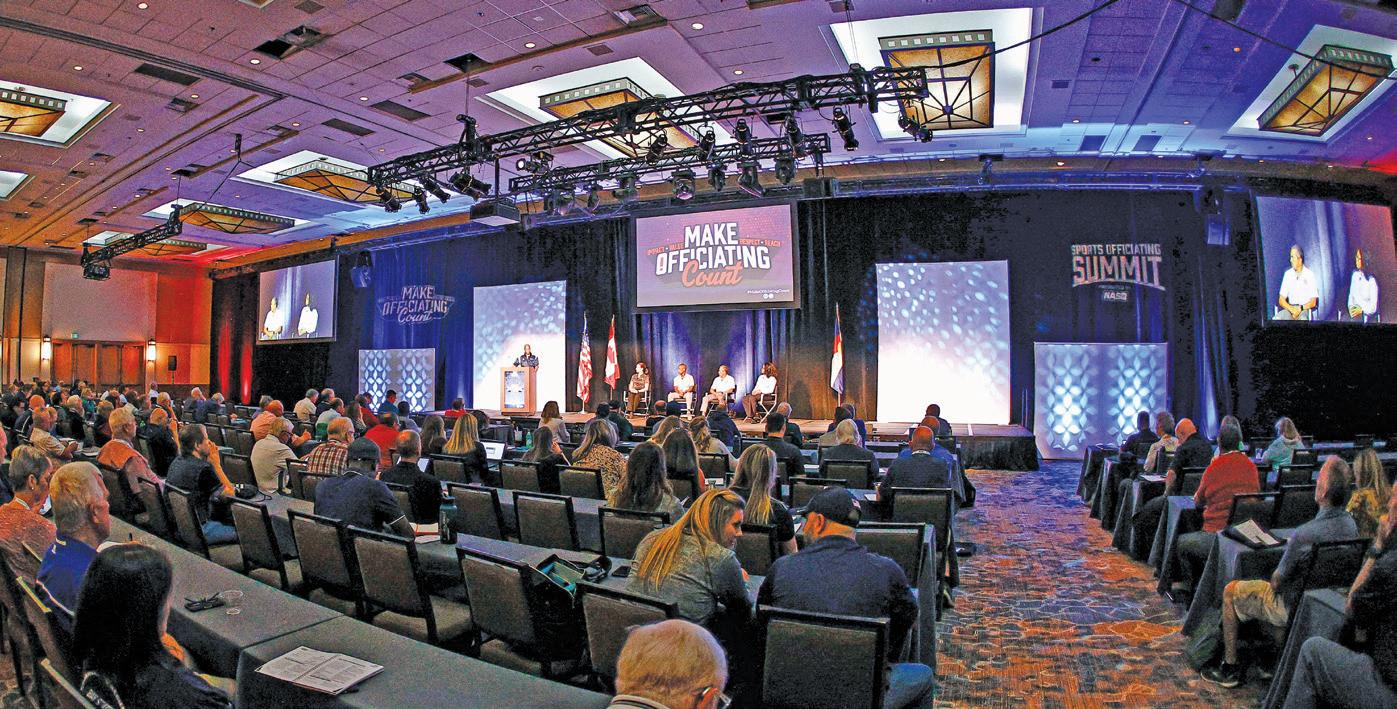














“I had not been an NASO member before, but I had seen some of the Referee magazine articles,” Taylor said. “I definitely wanted to get the magazine.”
Taylor, who officiates basketball, soccer and softball, also serves her local associations as the apprentice chair for her high school softball group and assists her high school basketball group with membership recruitment and retention.
“With those positions, I found the Summit to be perfect to find out what other people are doing on the topics of recruitment and retention,” Taylor said.
Taylor’s prize included a two-night stay at the Westin Westminster, the 2022 Summit’s hotel, free registration to the entire event (a $675 value), $300 toward travel and meal expenses and a ticket to the Celebrate Officiating Gala.
“I was definitely interested in going,” said Taylor, who hails from Hooksett, N.H. “It


was also an opportunity to go out west to Denver. The opportunity to see that part of the country was appealing.”
Officiate Colorado Day was held on the day before the Summit, as well as a Rockies game outing that Taylor said she attended that night.
The Westin Westminster featured a view of the Rocky Mountains, as well as a scenic water display outside the hotel.
“The hotel was beautiful and it was a great location,” Taylor said. “I went out for a jog every day when I was out there. It was a great opportunity to get out on foot.
“Both ballrooms were just beautiful. I was very impressed with the production and everything stayed right on time. I’ve been to other conferences where things get a little off schedule.”
Taylor was also able to speak with many of the Summit Support Organizations. She said she’s had at least two Zoom calls with vendors after the Summit.
“The vendor showcase was a great opportunity to hear from vendors about what they have to offer,” Taylor said. “Speakers
were well-prepared and were very knowledgeable about the topic they were discussing.”
Taylor, attending her first Summit, said the camaraderie in the room was unmatched — particularly with officials she’s never met before.
“I got to meet officials from all over. It was nice to get together with different officials from all the different areas,” she said. “Talk about what they are doing; talk about what we are doing.”
Taylor brought playing and coaching experience to officiating. She played basketball, soccer and softball at the high school level before attending NCAA D-II St. Anslem in Manchester, N.H., to play soccer and softball before transitioning to coaching high school basketball.
As an NASO member, Taylor continues to receive Referee magazine every month which she said she reads “cover to cover.”
On whether Taylor would attend another Sport Officiating Summit? Yes, indeed. “I would certainly attend another NASO Summit,” she said.


3 OF SPORTS OFFICIALS
Kristen Taylor, winner of the free trip to the 2022 NASO Summit, enjoyed the speakers and camaraderie at her first Summit.
Meet the NASO Board
The individuals who serve on the NASO board of directors come from a variety of officiating and business backgrounds. They hail from cities that span the country. They all volunteer their time to represent all NASO members and shape the association’s policies and direction. Here are biographies of the current board members.
Dean Blandino Blandino, who lives in Santa Monica, Calif., is a Fox Sports officiating analyst for NFL and college football games. He is also the NCAA national coordinator of instant replay. Previously he served as the NFL vice president of officiating from 2013-17 and as head of officials for the XFL in 2020.
Lisa Jones Jones, a 20-year NCAAW Division I college basketball official, is from Phoenix. She has worked 10 Final Fours during her career and is a former WNBA official. She is a retired deputy chief of the Phoenix Fire Department and a retired Director of Homeland Security and Emergency Management at the Phoenix office.
Paul LaRosa LaRosa is president of the Louisiana High School Officials Association and resides in Metairie, La. He served as a Louisiana high school football official for more than 40 years and was a Greater New Orleans Football Officials Association member. He serves as game officials’ sideline liaison for Tulane University football and for the New Orleans Saints.
Barry Mano Mano, who is from Racine, Wis., is the founder (1980) and president of the National Association of Sports Officials. He is Referee’s chief strategy officer and Referee magazine’s founder (1975) and publisher. Mano is a former 23-year basketball official, who worked nine seasons at the NCAAM D-I level; a renowned public speaker and media guest on issues important to the officiating industry; Officiating Development Alliance (ODA) and Officiating Commentators Alliance (OCA) member.

Dana Pappas Pappas, who resides in Lebanon, Ind., is the NFHS director of officiating services. She was elected as chair of the NASO board. Pappas is the former New Mexico Activities Association deputy director and commissioner of officials. The New Mexico Officials Association, under her direction, served as host of the 2014 NASO Sports Officiating Summit in Albuquerque. Pappas has been a moderator and panelist at the NASO Summit on numerous occasions. She served on the Referee magazine editorial board from 2010-12.


Pati Rolf Rolf of Pewaukee, Wis., serves as USA Volleyball’s director of officials. She was a referee for the 2016 Rio Olympic Games gold-medal match and the 2020 Tokyo Olympic Games bronzemedal match. She also officiated the 2016 and 2021 NCAA Division I Women’s National Championships. Rolf has been a FIVB international official since 2003 and is a PAVO/NCAA National Official. She referees at every level of the game from FIVB World Championship events to the youngest of ages. Rolf also was the chair of the USA Rules Commission.


Sandra Serafini Serafini of Yachats, Ore., is a retired FIFA, men’s/women’s professional, and collegiate soccer referee whose officiating brought her to multiple NCAA Final Fours and international events. She currently serves the Professional Referee Organization as the director of strategic initiatives & innovation. She is a National Referee-Coach for USSF and Elite Assessor for CONCACAF and served as the NASO board chair in 2017. She is an adjunct assistant professor for Duke University Medical Center’s Department of Neurosurgery.
4 IT’S OFFICIAL - january 2023 NATIONAL ASSOCIATION
Robert Smith Smith of Waterloo, Iowa, is the executive director of the Educational Opportunity Programs & Special Community Services with the University of Northern Iowa and a 20-year NCAA Big Ten football official. He was elected as vice chair of the NASO board. He has officiated 12 Bowl games including the 2011 and 2014 BCS National Championship games. He has 30 years of experience as an official for college football and high school girls’ and boys’ basketball. Smith was inducted into the Iowa High School Athletic Association Officials and the Iowa Girls Coaches Association Basketball Officials halls of fame.
Ron Torbert Torbert, an NFL referee who first joined the NFL officiating staff in 2010 after working in the Big Ten Conference, lives in Hanover, Md. He worked Super Bowl LVI (Los Angeles Rams vs. Cincinnati Bengals) in Los Angeles in 2022. Away from the field, he serves as a public speaker after a lengthy career as vice president and general counsel for the Barton Malow Company, a large construction and contracting firm. He is in his first year on the NASO board.
Mark Uyl Uyl of DeWitt, Mich., is the Michigan High School Athletic Association (MHSAA) executive director. He formerly was the MHSAA assistant director responsible for officiating programs. He is a


former NCAA Division I baseball umpire who worked the 2014 and 2017 College World Series. Uyl previously served on the NASO board (2011-2015) and was NASO chair in 2015; he is a current ODA member.
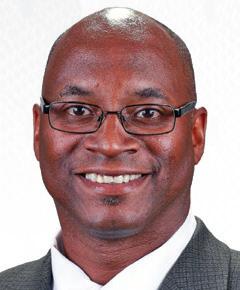
Rob Wigod Wigod of the Los Alamitos, Calif., is the commissioner of athletics for the California Interscholastic Federation–Southern Section. He is responsible for administration, character development, committee management and membership. Wigod is a former high school football and baseball coach and athletic director. He works closely with the California Basketball Officials Association, an NASO partner. Wigod is in his first year on the NASO board.
Non-Director Officers and Special Advisers
Bill Carollo Carollo of Shorewood, Wis., is the treasurer and a board member emeritus (non-voting) for the NASO board. He is the coordinator of football officials for the Collegiate Officiating Consortium-Football (COC) (includes the Big Ten, MidAmerican and Missouri Valley Football conferences) and is an ODA member. Prior to joining the COC he served in management roles at IBM and Manpower. He is a former NFL official for 20 seasons before retiring in 2009; officiated eight NFL Championship games, two Super Bowls (XXX and XXXVII) and the 2008 Pro Bowl. He is a former NFL Referees Association board member
and executive director; former Big Ten football and basketball official (1980-88); former semipro baseball umpire.
Bill Topp

Topp of Racine, Wis., is the NASO secretary (nonvoting). He is the Referee chief operating officer and Referee magazine executive editor; he has worked for Referee and NASO since 1990. Topp is a former high school and small college football and basketball official and former major college baseball umpire, including multiple state tournament game and postseason collegiate assignments; former high school conference commissioner and assigner; current ODA member.
Ron Foxcroft



The Fox 40 International founder is a special adviser (non-voting) for the NASO board. He resides in Burlington, Ontario, and is also the CEO and owner of one of North America’s largest trucking/logistics companies. Foxcroft was invested into the Order of Canada by the Governor General in 2019. He was also named Entrepreneur of the Decade by Profit magazine. He is a former NCAAM D-I and international basketball official and officiated the 1976 Olympic Gold Medal basketball game. He is also a former NBA officials observer. He was inducted into several halls of fame, is an NASO Education Partner, the 2004 Mel Narol Medallion recipient, a proud charter member of NASO and threedecade sponsor. He was the 2016 NASO Gold Whistle Award recipient.

5 OF SPORTS OFFICIALS
NASO Insurance Fills Gaps
NASO members enjoy the best liability insurance available. Among the advantages offered by NASO’s insurance, the S.O.S. Program fills “gaps” or holes in other insurance coverages.


For example, you are concerned about working games due to COVID-19 without having sufficient general liability insurance coverage in case a player gets ill with the coronavirus as a result of playing in a game or tournament that you officiated. The NASO general liability policy is designed to provide coverage for thirdparty claims of bodily injury, property damage liability and personal and advertising injury claims. The general liability policy does not contain a communicable disease exclusion and therefore, bodily injury claims arising from COVID 19 could be considered under the policy. By way of background, the definition of bodily injury includes bodily injury, sickness or disease sustained by a person including death. However, the actual circumstances of the claim and the terms and conditions of the policy will dictate whether or not the policy will respond.
Among the other gaps filled by NASO’s insurance:
• There are no deductibles with the exception of a $250 deductible for assault-related medical expenses.
• If you make physical contact with a player or fan, even if it’s for protection of yourself or others using reasonable force, there may be an insurance exclusion in other coverages because you acted “intentionally,” but NASO’s
coverage allows for selfprotection and the protection of others as long as reasonable force was used.
• Claims of negligence due to your missed call. That is often denied with other insurances as bodily injury or property damage is not involved, but NASO has you covered.
• Claims of discrimination in assigning games can be denied with other insurance coverages as well, but NASO insures assigners acting in good faith.


NASO’s insurance covers officials in all sports. Some other policies do not cover sports such as boxing, wrestling, gymnastics,
skiing, rodeo and squash. Additionally, officials working outside the U.S. on a temporary basis or in a professional league are covered.
NASO covers you when you are not otherwise insured due either to a total lack of insurance or gaps in your existing coverage. As a sports official, you have plenty to worry about. As an NASO member, proper insurance protections will no longer be a worry.
Nominate a Board Candidate
Do you know an official or administrator who would be a good candidate for the NASO board of directors? NASO is seeking input from members on board candidates. Criteria for evaluating board candidates includes:







• Current NASO member status in good standing.







• Attendance at one NASO Summit.
• 10-plus years of officiating experience.
• Current board has some firsthand knowledge of candidate.
• Background includes some “organizational” experience.
• Background includes some “management” experience.

• Officiating philosophy is “in tune” with NASO’s philosophy.
Those points are considered by the Nominating Committee as ideals during the search process. However, all of the criteria may not apply. The idea is to find individuals meeting as many of those criteria as possible while keeping in mind the demographic, geographic and sport experience of the current board. Contact NASO at editor@naso.org to submit a candidate for consideration.
6 IT’S OFFICIAL - january 2023 NATIONAL ASSOCIATION
Welcome Wagon
By Carl Smith
How is your officials association perceived by members? How about new prospective members? What steps might you take to strengthen the positive impression you already have, or shore up your reputation?
1. Listening and understanding. It’s important that board members are perceived as friendly, approachable and interested in your members. Learn their names, their occupations, and inquire about their families. To attract new members and retain the veterans, the board and general membership have to be pleasant and engaging. New members need to be welcomed and made to feel valuable.
All members need to feel they’re being listened to and their concerns are being addressed by the board. Not all opinions voiced by the membership are popular, and some aren’t even valid, but you need to respect the members enough to listen to them. If you’re asked a specific question, answer it as truthfully as you can, or let them know you don’t know but will find out and get back to them. One of the most irritating things a board member can do is not get back to a member after saying you will.
2. Camaraderie. The general membership meetings are a great time to get to know members better. Get there early so you can mingle and be available. If you know of a health concern or family situation with an official, ask them how it’s going and let them know you’re thinking of
them. That is one of the best ways to let members know they’re important to you as a person and not just as an official.
3. Training and advancement. Few officials join an association to stay level. There are exceptions — those officials who are just “content” to do whatever they’re assigned and work as many games as they can. You need those officials too, but most officials want to work hard and be rewarded for those efforts by being assigned higher level games, and by having a chance to work the postseason.
Provide training and mentorship through clinics, specific classroom training at general meetings, observations and evaluations when requested or as needed. Give the officials constructive criticism mixed with encouragement. Learn the difference between the officials who truly want to improve, and those who just want to “talk the game.” Spend the bulk of your time with the serious officials without ignoring the others. Everyone gets a look. Some officials just have more aptitude,
ASSOCIATION
FROM OUR DATABASE
a better attitude, and the ability to transfer what they’re taught.
Encourage officials to work hard, listen more and be patient with themselves and the process. If you’re a board member who’s not the assigner and are mentoring a promising official, pass that information on to the assigner so they can be given a look, and maybe get assigned with veteran officials for experience. Board members should be seen at games observing officials and encouraging them, not just showing up to their own assigned games. That goes a long way toward gaining the members’ respect, and more importantly, their trust. If you care about them and about their advancement, it’ll be apparent.
In closing, be passionate about your association and its growth, be caring about each official and their needs. Keep working as hard as you expect other officials to work.
Carl Smith, Anchorage, Alaska, is a former treasurer and assigner for the Anchorage Sports Officials Association.
PLATINUM & PLATINUM SHIELD
TITANIUM & TITANIUM SHIELD
DIAMOND
The
To
7 OF SPORTS OFFICIALS
ADVANTAGE Running a local officials association is demanding. You volunteer your time and effort to make it the best you can. But there’s no reason you have to do it alone. NASO Association Advantage exists to help you face any challenge and elevate your association in the process. Whatever challenges you have — training, insurance, legal issues, meeting help, bylaws and organization, membership issues and more — WE HAVE A SOLUTION TO MEET YOUR NEEDS.
Association Advantage Platinum is the premier resource for maximizing the performance of your group, providing leadership and administrative resources to help you elevate your organization with a focus on training,
legal issues and best practices specific to local officials association management.
assigning,
Titanium solution is ideal for officials associations that want to maximize their organization’s performance while fully protecting both their organization and individual members.
The
most comprehensive solution for officials associations that want to fully protect both their organization and individual members, as well as provide full training and testing solutions with an emphasis on video. Association Advantage Diamond is the ultimate answer to every challenge your association faces.
learn more, go to NASO.org/Advantage or call us at 262-632-5448
NASO Participates in Midwest Summit
Key issues affecting high school sports officials were discussed in Columbus, Ohio, Sept. 17-20 and NASO was a participant. Officiating leaders from 14 state high school associations were on hand, along with guests Bill Topp, NASO/ Referee chief operating officer, and Dana Pappas, NFHS director of officiating services, for the Midwest Officials Summit, hosted by the Ohio High School Athletic Association.
States represented were Indiana, Iowa (both associations), Kansas, Michigan, Missouri, Minnesota, Nebraska, Ohio, Oklahoma, South Dakota, Wisconsin and Illinois.
Topics discussed included recruiting and retaining officials; sportsmanship, assigning and in-person vs. online meetings.
Topp also gave a report on NASO activities including a partnership with the Michigan High School Athletic Association, the 2022 Summit in Denver, the Say Yes to Officiating campaign and preliminary planning a new nationwide officiating survey.
Additionally, Topp described a new concussion training tool for officials developed by NASO and the CDC (see page 1).
“The Midwest Officials Summit is a great opportunity for NASO to communicate with the influencers and decision-makers managing high school officials,” Topp said. “We share common interests and issues and are grateful for the opportunity to share the national perspective.”
Jo Auch, assistant executive director of the South Dakota High School Activities Association and a longtime summit participant, appreciates the ability to share common concerns. “We all seem to have the same issues in our states, and it is the collaboration with other leaders and hearing what they may be doing to help with these issues is golden,” she said. “The ideas that are bounced off one another and suggestions about what someone may be doing in their state is very helpful as we collaborate for two days.”
Auch said she has taken several ideas back to her state for
Save Up to $35 on Your Taxes
Don’t forget that NASO membership dues are partially tax deductible from your officiating income. It’s a simple way to put more of your officiating income back in your pocket. If your NASO renewal date falls after the turn of the year, consider renewing now and claiming those expenses against your 2022 officiating income.
If you know any officials that have been holding off joining NASO or renewing NASO
membership, remind them of this important money saving tip. They’ll be able to deduct a portion of the expense on their 2022 tax bill, if they join or renew before Dec. 31, 2022.
Your tax bracket and state laws might affect that dollar amount, but every official
implementation. “We are now doing an officials appreciation week for our fall, winter and spring sports seasons,” she said. “Many of the other ideas I’ve brought back deal with officials requirements and training and trying to make sure we keep up with the trends in the nation.”
Fran Martin, who is retiring as assistant executive director for the Kansas State High School Activities Association, attended her final Midwest Officials Summit. She said they have “been one of the best professional development opportunities I have had as a staff member. The participants in the meeting are all engaged and working with and for officials. Each individual shares ideas from the perspective of what is best for officials and for state associations.”
Martin said recruitment, retention and training has been a common issue for many years. “This summit has helped to share ideas,” she said. “We don’t all have to recreate the wheel, sometimes just add some different spokes for your state’s needs.”
saves something. You still have a few weeks left. Don’t wait until 2023, make the decision now and reap all the benefits of NASO membership, tax deductions included.
To learn more about officiating and taxes, check out the tax section at naso.org.
8 IT’S OFFICIAL - january 2023 NATIONAL ASSOCIATION
Don’t wait until 2023, make the decision now and reap all the benefits of NASO membership, tax deductions included.
sports section
Find a Mentor — and Make It Count
By Garrett Larson
Selecting a mentor can be a powerful tool for a new official’s growth and success. Developing a mentor relationship can provide you with the skills to master the many components of officiating and the confidence to converse comfortably with colleagues across the field. Regardless of when you begin your officiating journey, everyone can benefit from having a mentor to guide them.
While most officials agree that having a mentor is beneficial, not all may know how to find one and ensure the relationship is meaningful. Local officials associations may already have structured mentor programs in place, but you may need to self-direct the process informally. There are several strategies that can be employed to make your mentor relationship count.
Understand W hat a Mentor Is A mentor is someone who can help guide you through the nuances of officiating and provide advice in navigating challenges you experience. Are you wondering who to contact to make sure you get signed up for camp next summer? Did you have a rule interpretation in a game you need to clarify? Is there an upcoming matchup that you would like to get information on? These are all
situations where a mentor can play a crucial role in answering questions and offering counsel. Chances are high they have come across similar situations during their career.
Value Different Perspectives
Find people that tell you what you need to hear not what you want to hear. If you are really going to push yourself and grow as an official, finding a mentor who challenges your biases and forces you to think about officiating through a different lens will serve you well in the long term.
Find the Right Person
Know Your Goals
Understanding your officiating goals will go a long way to getting the most out of the relationship. Your goals will dictate the type of mentor you should seek. Are you hoping to eventually officiate at the collegiate level? Finding a mentor who has collegiate experience will pay dividends. Do you want to better establish yourself in your officiating community? Developing a relationship with an official who has standing in the area will go a long way in helping you gain visibility and secure footing quickly.
It is important to find a mentor that is right for you. Quality mentors are individuals with experience, character and earnest values. These qualities serve as a foundation from which a successful mentor relationship can be established and tailored to meet your specific officiating goals.
Initiate the Relationship
There is no blueprint when it comes to establishing a mentoring relationship. While some veteran officials may wish you ask them directly, others may prefer allowing the relationship to develop organically. Regardless of their preference, do not hesitate to search out ways in which you can connect. Do you have a mutual colleague in the industry? Is there an opportunity to work in front of your prospective mentor or attend one of their games? Regardless of your approach,
OF SPORTS OFFICIALS NATIONAL ASSOCIATION OF SPORTS OFFICIALS
9
While most officials agree that having a mentor is beneficial, not all may know how to find one and ensure the relationship is meaningful.
being open and communicative with fellow officials will help others feel more comfortable around you and make it easier to find common ground that can serve as a key building block for a successful pairing.
Be Easy and Enjoyable
Helping to train and familiarize new officials is an important task and one an experienced official does not take lightly. Your mentor can give you the tools and guidance to succeed, but they cannot do everything for you. Take responsibility for your own learning and development — it will go a long way in making things easier and more enjoyable for each of you.
Listen and Show Appreciation
With mentorship comes recommendations. While not everything they provide may be practical for you to implement, it is important to listen to your mentor and contemplate if their suggestions can be readily put into practice. When you do incorporate their advice, please share that with them. It is a rewarding experience for your mentor to see their guidance pay off. This payoff only strengthens the relationship and can help solidify the ability to work together long term.
Understand Change Is Necessary
Officiating brings with it a lot of changes. People advance, move, retire, or leave officiating entirely. The person you choose as your mentor may also change according to where you are in your path and what your goals are then. The mentor you find initially may not be the same one you have for your entire journey — and that is OK.
A close relationship with an experienced mentor can mean the difference between a great experience as an official and one marred by challenges and frustration. A mentor who has “been there and done that” can help you reach your goals quicker and with fewer hard knocks. Officials who are happy to share their experience and connections are out there. Now is a great time to reach out!
Garrett Larson, Eau Claire, Wis., officiates high school baseball, basketball and softball and college basketball.
BASKETBALL
Noise or No-No
This article is excerpted from The Insider Series: High School Basketball Officiating, a digital multimedia training content series available to NASO members at store.referee.com for $19.96.
Comments from head coaches, their coaching staffs and team supporters can vary and deserve a multitude of responses. But when the comments go from noise to unprofessional conduct, officials have a responsibility to address it — using both management skills and the rules to establish a return to civility.
When it comes to dealing with non-playing participants in any sporting event, the difference between noise and unprofessional conduct must be clear in an official’s mind.
Officials should establish their own line ahead of time as the emotions of a game or specific comments can be a trigger that has a specific negative effect. You must have absolutes that you won’t tolerate and non-absolutes that
you will allow and treat fairly and evenly.
Most of the absolutes can be established with the rulebook as a guideline. Profanity is an absolute — it is unprofessional at best and disrespectful at its worst. Non-playing participants cannot be allowed to use profanity. They should be dealt with swiftly and succinctly technical fouls are the appropriate response.
What makes the difference between “noise” and “unprofessional conduct” should be a personal determination by the official. There are few absolutes (perhaps only profanity) that might be worthy of a sanction.
However, there are many types of conduct exhibited by non-participating personnel that can fall close to either side of the line. Officials need to ask themselves what they will tolerate and then remain true to the standard. Consistency in applying those standards will make the official’s role in applying his or her standards simpler when the heat is turned up.
Here are some questions for an official to consider when establishing his or her own “noise vs. unprofessional conduct” policy.
What words are on your own list of profanity? Is your own vocabulary and tolerance for others’ use of words close to the standard of the community in which you are serving as an official? Does officiating in a gym that’s affiliated with a parochial school make a difference in what you’ll allow? Should it?
What types of non-verbal communication will you tolerate? Will a certain type of body language be permitted in one sport, but not in another?
10 NATIONAL ASSOCIATION IT’S OFFICIAL - january 2023
Can body language have different meanings to you than the person delivering the message?
Does a one-time instance of disregarding a directive from a game official warrant a second chance? Does your policy have an elasticity that comes with the game situation? Do you treat something that would be unprofessional conduct in the early stages of a game as noise late in a game, fearing your call might impact the outcome?
Officials are hired to do a job — administer the game by an agreed-upon set of rules. Without the rules, we have little purpose. Still, non-playing participants often attempt to bend those rules. Worse yet, bending those rules has become an accepted practice in other games for them and they are not about to stop.
BASEBALL
Base Work is Anything but Basic
By Scott Tittrington
“Plate work gets you hired. Base work gets you fired.”
This is one of my favorite axioms related to being a baseball umpire, and especially a baseball umpire discussing the craft with someone who isn’t. Those who have never umpired a baseball game believe it’s the plate umpire who has the toughest job on the field, given the important responsibility of having to pass judgment on every single pitch thrown during a baseball game.
Yes, calling pitches is a difficult, demanding job. And yes, being good at it will help elevate an umpire up the
ranks much more quickly than proving you can make two or three tough calls on the bases during a given game. However, it’s also true that as the plate umpire, pitch calling is the only time you get noticed (save the occasional tag play at home plate), and there are also several pitches during a game when you don’t actually have to even do that, as the ball is swung at and missed, fouled off or put into play.
It’s on the bases where you really begin to develop your mettle as a baseball umpire, because that’s where many of the impactful, game-changing rulings come into play. And I’m not just talking about the “whackers” at first base.
As a base umpire, you have to start and move into several different positions throughout the game, dictated by the game situation. The plate umpire knows where to start 100 percent of the time, and knows where to finish with only slightly less frequency. As such, a base umpire better know proper positioning, mechanics and rotations for whatever system is being worked, and understand there are significant differences when there are two, three, four or six umpires on the field.
Next, while every umpire on the field needs to know the rules, the base umpire is the one who more often than not gets to put such knowledge on display. Obstruction/interference. Forceplay slide rule. Balks. Appeals. And much, much more. You have to know the rulebook, and you have to understand Murphy’s Law will certainly come into play: The one area you’re not strong in is the one that’s going to come to fruition. So, be strong at everything.
And other than the first-
Legacy NASO is a new program whereby you may bequeath a gift through your will or trust that ensures you can take care of your loved ones first, and then leave whatever else you choose to make a big difference in the future of sports officiating.

11 OF SPORTS OFFICIALS
Sports Officiating has been a big part of your life.
Now you can make it a part of your legacy.
NASO.ORG/LEGACY OR CALL 800-733-6100 LEARN MORE AT
base whacker, we haven’t even discussed actual play-calling yet. Again, everyone loves to focus on that banger at the plate, and umpires love to break down whether the plate guy did a good job of getting into the wedge and having a great look at the arriving ball and baserunner in order to make the call. However, every bit as important is a base umpire who uses proper footwork and angles, and the proper use of eyes, to potentially rule on dozens of plays on the bases throughout a game.
Think about it this way: Several technologies have emerged on social media to grade the performance of plate umpires at the MLB level when it comes to ruling on balls and strikes, going so far as to grade their accuracy and use analytics to predict what might have happened had pitch X been ruled a ball instead of a strike, and so on. If a plate umpire scores at 90 percent, most people are not going to complain, especially if the “misses” are close pitches that, to the untrained eye, might go either way.
Now, imagine being a base umpire who gets one out of every 10 rulings incorrect. It’s still an accuracy rate of 90 percent. But that one missed call on the bases might have a major impact on the outcome. Plenty of baseball fans can tell you about Armando Galarraga’s near perfect game, or the Kansas City Royals’ disputed win in Game 6 of the 1985 World Series. But chances are no one remembers one missed pitch from any point in baseball history.
The point is, don’t let the fact that you have “U1” or “bases” listed on your next
baseball assignment lull you into the false sense that you’re going to have an easy day at the yard while your partner behind the plate takes all the slings and arrows. Instead, come ready to work with the self-assuredness that, that day, you are the most important person on the field.
Scott Tittrington is an associate editor at Referee . He umpires college and high school baseball, and officiates college and high school basketball and high school football.
SOCCER
The New Face of Referee Clinics
By Ken Wikle
For the past two-and-a-half years, many of us have had to attend referee clinics online. In-person referee clinics have been few and far between. This has restricted the opportunity to meet with others, discuss play situations, and experience plain old fellowship with soccer referees. Soccer referees tend to be a unique breed and being together to share experiences, joke about each other, etc., normally results in improved performance on the field.
In order to re-certify, get new rule/Law changes and latest points of emphasis, referees associations have been using Zoom or other virtual meeting software. This has filled the void and allowed soccer referees to continue to learn and meet registration requirements.
Online meetings have their advantages. The two best are no travel from home and more convenient scheduling
for referee associations. Online meetings can be easily used to present PowerPoint presentations and do video analysis. They are cheaper and easier to put on by referee associations with minimal equipment and no need for a facility. Online meetings can be created for either very small or larger groups interchangeably. These meetings can be held for attendees from a much wider geographic area. New instructors or guest instructors from out of the area can be acquired easily to offer attendees exposure to new points of view or new presentation techniques.
There are shortfalls to online learning. One cannot ignore technology issues for online meetings. Availability of internet access and some basic computer skills are necessary. Without these, attendance to an online meeting is almost impossible. Sometimes the quality of the video feed will cause video clips to be too hard to watch for some students. Also, the opportunity to interact with the instructor is limited.
Online meetings restrict the instructor’s ability to gauge student engagement in the material leaving the instructor unable to read body language to know if attendees are highly interested, bored or distracted.
For instructors holding either type of clinic, there are much different methods and distinctly different skills. A successful in-person clinic cannot easily be transferred to an online clinic. In-person clinics must be reconfigured or completely re-designed for the topics to be taught online. During an on-site clinic the instructor can seek input from participants on a particular topic or issue.
12 NATIONAL ASSOCIATION IT’S OFFICIAL - january 2023
Student engagement is critical to a successful clinic and in-person meetings allow the instructor to read the students to get more participation by asking questions or accepting input from students. Also, questions can generate interesting discussions on the soccer rule interpretation and allow everyone to engage quickly in a safe environment.
Longer clinics may include breaks and lunches where friends can catch up, joke with each other, and ask questions in small groups that are less intimidating. Evening clinics provide the opportunity for referees to go out afterward to socialize and discuss soccer play situations informally. Enjoying fellowship with other referees who face similar challenges on the field provides a chance to share stories and re-affirm decisions that were made on the field.
Field training sessions, a recent addition to referee training, must be done in-person in a suitable facility. For newer referees, practicing skills in a field training session is a valuable experience. Only in-person clinics can offer this. This may include officiating scrimmages with senior officials observing, commenting, and even stopping play to discuss a situation. A referee who has never worked the center in a diagonal system of control can go out on the field and shadow the referee. This helps to learn positioning, and how to get to certain parts of the field when necessary.
Reviewing play situations using videos in a live audience allows quick responses and varying opinions that may not occur in a virtual meeting. Almost every
soccer referee feels he or she knows the correct answer for any given situation. Having play situations that generate discussion allows the participant to realize that his or her answer may not be the best and there are alternatives to almost every situation.
In the future, it appears that referees will be offered a mix of both methods of meetings. Online recertification clinics will be the most common offering and the most efficient method of getting large numbers of referees together for rule/Law changes and new interpretations. In-person clinics will still be used for in-service training, new referee training and field clinics. This mix of instruction should make training more valuable and raise the level of interest in participation. What is paramount is that referees make the effort to attend training clinics and get educated whether they are done online or in person. Ken Wikle, Howell, Mich., has officiated youth, senior amateur, high school, college and semiprofessional competitions. He is a former U.S. Soccer referee instructor and is now certified as a Grass Roots Mentor.
ASK US
BASKETBALL
Multiple Technical Fouls During Dead Ball
Play : During the dead ball following a traveling violation by B1 in team B’s frontcourt, A2 taunts B1, and an official blows the whistle for the unsporting conduct/ misconduct by A2. A few
seconds after that whistle, B3 shoves A2, and an official blows the whistle to assess the foul for that dead-ball contact. How many free throws are shot, and how is play resumed? Ruling : In NFHS, the unsporting conduct and illegal dead-ball contact result in technical fouls. Since A2’s technical foul and B3’s technical foul did not occur at approximately the same time, the fouls are not simultaneous technical fouls, and thus, each shall result in its own penalty. Any team B player shall be awarded two free throws, followed by two free throws to any team A player, followed by a throw-in to team A at the division line (4-19-10, 10-4-6c, 10-4-7). In NCAAM, the unsporting conduct and illegal dead-ball contact result in technical fouls. If technical fouls occur during the same dead-ball period, one against each team, but don’t occur at approximately the same time (so not a double technical and not a simultaneous technical), no free throws are awarded. Play shall resume at the point of interruption, which is a throw-in to team A nearest the spot of B1’s traveling violation (10-3 Pen. h, AR 133, AR 280). In NCAAW, A2’s misconduct results in a technical foul, and B3’s illegal dead-ball conduct results in an intentional foul. Since A2’s player technical and B3’s intentional foul are fouls of equal gravity, and the fouls occurred during the same stopped-clock period, the penalties shall cancel, and play shall resume at the point of interruption, which is a throw-in to team A nearest the spot of B1’s traveling violation (7-4.10, 7-4.13, 10-12.3.a.2, 10-13.1.e).
13 OF SPORTS OFFICIALS
BASEBALL
Costly Assistance
Play: With R3 on third and one out, B3 flies to deep left field. The third-base coach grabs R3 and pulls him back to third to tag up. Ruling: The ball remains live. Regardless of whether or not the ball is caught, R3 is out. If the ball falls in and B1 ends up at second, he may remain there. If the ball is caught, two are out (NFHS 3-2-2; NCAA 2-51, 3-3e, 8-5f; pro 5.03c).
Is It Over?
Play: With R3 on third in the bottom of ninth, the visiting team is leading 2-1. F1 balks and immediately delivers the pitch to B1. B1 hits the ball over the fence. The balk is called. Ruling: In NFHS, the ball is immediately dead on the balk, R3 scores and the pitch does not count. The game is tied. In NCAA and pro, the ball remains live and because all runners advanced one base, the balk is ignored and the home run counts. The game is over with the home team winning, 3-2 (NFHS 5-1-1k ; NCAA 9-3 Pen. 1 ; pro 6.02a Pen.).
No Stop
Play: With R1 at first, R3 at third, and one out, F1 is in the set position. He begins his stretch and before coming to a stop, he steps toward third and picks off R3. Ruling: Legal play (NFHS 6-1-2; NCAA 9-3b Note; pro 6.02a2).
It Still Hurts
Play: With an 0-1 count, the next pitch to B1 hits in front of the plate and bounces into his leg. The umpire judges B1 tried to avoid the pitch. Ruling: B1 is awarded first. The ball previously hitting the ground
does not change the fact B1 was hit by a pitch he could not avoid (NFHS 8-1-1d; NCAA 8-2d; pro 5.05b2).
Play or Not?
Play: With R2 on second, B2 grounds to F6, who fields the ball and chases R2 back toward second. F6 then swipes at and misses R2, and throws wildly to first into dead-ball territory. Before F6 throws, B1 touches first. Ruling: F6’s throw was the second play by an infielder, so B1 is awarded third and R2 is awarded home. Although chasing R2 back to second is not a play, attempting to tag him is a play (NFHS 8-35; NCAA 8-3o3 Note 1 Exc.; pro 5.06b4G AR).
FOOTBALL
Passer Beyond the Line
Play: First and 10 from team A’s 20 yardline. A1 takes the snap and begins to run forward and to his right. As B2 is closing in for a potential sack, A1 releases a pass at team A’s 20 yardline (a) with his passing hand, but no other part of his body beyond the neutral zone, or (b) with one foot beyond the neutral zone. Ruling: In NFHS, the passer is beyond the neutral zone if either foot has broken the plane of team B’s scrimmage line when the pass is released. Thus the pass in (a) would be legal, but illegal in (b). If accepted, the fiveyard penalty in (b) is enforced from the spot of the foul and includes a loss of down (7-5-1, 7-5-2b Pen.). In NCAA play, the passer is beyond the line if his entire body has been beyond the neutral zone. As a result, both passes would be legal (2-19-3b, 7-3-2a).
Fair Catch Signal
Play: Fourth and 12 on team K’s 30 yardline. K1’s punt lands on team R’s 35 yardline and bounces high into the air. After the ball strikes the ground, R2 gives a fair catch signal, recovers the ball at his 30 yardline and is immediately tackled by K3. Ruling: There cannot be a fair catch once the ball hits the ground, but the ball is dead upon recovery. In NFHS, R1’s signal is invalid. If the fiveyard penalty is accepted, it is enforced using post-scrimmage kick enforcement (6-5-7 Pen.). In NCAA, there is no penalty for an invalid signal. The ball is dead when recovered and belongs to team R at the dead-ball spot (6-5-3). In either code, there is no foul for the tackle by K3 unless it is in the manner of a personal foul.
SOFTBALL
Runner Leaves Too Soon
Play: With R1 on first, B3 bats with a 1-1 count. R1 leaves first base on the next pitch, but loses contact with the base before the pitcher releases the ball. B3 hits a ground ball to second base, F4 throws to F6 at second base ahead of R1 and then F6 throws the ball to F3 at first base, arriving before B3. Ruling: In NFHS, USA Softball and USSSA, the ball is immediately dead, “No Pitch” is declared and R1 is ruled out for leaving early. B3 continues at bat with a 1-1 count (NFHS 8-6-18; USA Softball 8-7s Eff.; USSSA 8-18K). In NCAA, the delayed-dead ball signal is given. At the conclusion of the play, the defensive team is offered the option of taking the result of the play or having “No pitch” declared, B3 returned
14 NATIONAL ASSOCIATION IT’S OFFICIAL - january 2023
to the batter’s box with a 1-1 count and R1 declared out (12.6.1, 12.14.2 Eff.).




Catch or No Catch?
Play: With one out and R2 on second, B3 hits a pop up in foul territory near team A’s dugout. F3 has (a) one foot entirely inside the dugout entrance while making the catch, or (b) one foot lifted over dead-ball territory while making the catch before her momentum carries her into the dugout. R2 tags up and races to third base after the catch. Ruling: In (a), the ball is dead, a foul ball is declared and R2 returns to second. In (b), it is a “catch and carry” situation in all codes. B3 is out, the ball is dead and R2 is awarded third base (NFHS 2-9-5d, 5-1-1i, 8-43h Pen.; NCAA 9.4 Eff. and Note 3; USA Softball 1-Catch/No Catch, 8-5j Eff.; USSSA 3-Catch, 8-14d-5, 10-1i).
Batter Hit on Hands

Play: B1, with a count of 1-1, is hit on her hands while swinging and the ball deflects into fair territory. F1 picks up the ball and throws to F3 at first base before time is called. Ruling: In all codes, it is a deadball strike when a pitched ball that is swung at hits the batter. The hands are not part of the bat. The ball is dead as soon as it hits the batter and the play at first is negated. B1 remains at bat with a 1-2 count (NFHS 7-21g; NCAA 11.13.2 Note 3; USA Softball 7-4h; USSSA 8-16d, 10-1a Note).
directly in front of B1. B1 makes a scissors kick to clear the ball from the penalty area. A3 moves back quickly to not be struck in the face with B1’s cleats. Ruling: The referee should stop play and award an indirect free kick for team A at the point of the scissors kick. B1 created a dangerous situation by lifting the leg near A3’s face. If the incident occurred less than 10 yards from the goal, the wall may set up on the goalline between the goal posts (NFHS 12-6; NCAA 12.2.9.1; IFAB 12.2).
Words of Affirmation
Play: Prior to the beginning of a match, the referee determines that all players are properly and legally equipped, either by inspection or coach’s affirmation. During the course of the match, A1 removes the shinguards and throws them toward the bench area. Ruling: At the first opportunity, the player is to be sent off the field for illegal equipment and cautioned for deliberately removing the shinguards. If in the opinion of the referee, the player is creating a dangerous situation, play shall be stopped immediately and the player removed and cautioned (NFHS 4.1.1F; NCAA 4.1.15; IFAB 4.1, 4.2).
Conflicting Opinions
SOCCER


Scissors Kick
Play: B1 is in team B’s penalty area when A2 crosses the ball toward A3 who is



Play: A shot on goal is on the goalline between the goal posts. The assistant referee is on the goalline and does not raise the flag. The referee sounds the whistle and awards a goal. The assistant referee remains on the goalline. The referee states, “I saw it and it is a goal.” The referee has the ball taken to the center spot for a kickoff for the opponents. Ruling: The assistant referee is under the jurisdiction and supervision of






(800) 733-6100



15 OF SPORTS OFFICIALS
On individual membership when your association joins together For more information: Call
or go to naso.org/promo/MyGroup GROUP MEMBERSHIP AVAILABLE SAVE UP TO $30
the referee. Since the referee awarded the goal, the assistant referee must agree with the situation. The matter should be discussed in detail at halftime or after the match (NFHS 5-3-2; NCAA 5.4.2; IFAB 5.2).
VOLLEYBALL
Multiple Substitutions
Play: During a dead ball, A7 and A8 approach the substitution zone. A7 replaces A1 on the court, and then A8 immediately replaces A7. Is that legal? Ruling: Legal in all three rule sets as they allow two or more players to be substituted at the same time within the same request, provided the substitutions are completed without delay. The rules also allow more than one substitute to enter the
same position in the lineup. In NFHS, the rules state that a re-entering player may not return to the set during the same dead ball in which the player was replaced (10-3-3). In NCAA and USAV, the rules do not have any requirement for an entering player to remain on the court for a specified amount of time (NCAA 11.3.2.3, 11.3.3.2; USAV 15.6).
Exceptional Substitution
Play: During the second set, a player on team A is injured and unable to continue playing. There are two substitutes on the bench, A7 and A8, both of whom have been in the match for a player other than the injured one. Team A has used both timeouts. Ruling: In all codes, the coach may choose to substitute either A7 or A8 for the injured player. In NFHS
and NCAA, the injured player may not return to the set (NFHS 10-3-6b and Note; NCAA 11.3.6.1.3). In USAV, the injured player may not return to the match (15.7).
Visible Undergarments
Play: Team A is wearing red short-sleeved jerseys, and several players are wearing a long-sleeved white undershirt. Ruling: In NFHS, the undershirts are illegal, and the referees should ask the coach to have the players remove the illegal undergarments. Visible undergarments must match the primary color of the jersey (4-2-1h-3). In NCAA and USAV, the undershirts are legal provided they are the same color for any members of the team wearing that visible undergarment (NCAA 7.1.1.3; USAV 4.3).
The National Association of Sports Officials (NASO) is a nonprofit, educational association providing services and benefits for sports officials. It is run by officials, for officials. If you know a good candidate for membership, please send us his or her name and address. We will forward an invitation to join. For more information contact 262-632-5448 or www.naso.org/membership
Alabama High School Athletic Association
American Specialty Insurance & Risk Services
Inc.
ArbiterSports
Arizona Interscholastic Association
Atlantic 10 Conference
Atlantic Coast Conference
Big Ten Conference
California Basketball Officials Association
Canadian Football League
Chief Zebra Enterprises
Cliff Keen Athletic
Colorado High School Activities Association
Demosphere
DVSport
Fox 40 International
Fox40Shop.com
Georgia Athletic Officials Association
Georgia High School Association
Get It Right Enterprises
Honig’s
IAABO Inc.
Illinois High School Association
Indiana High School Athletic Association
Iowa High School Athletic Association
Kentucky High School Athletic Association
Louisiana High School Athletic Association
Louisiana High School Officials Association
Major League Baseball
Massachusetts Interscholastic Athletic
Association
Michigan High School Athletic Association
Mid-American Conference
Minnesota State High School League
Minor League Baseball
Missouri State High School Activities Association
Missouri Valley Football Conference
National Association of Intercollegiate Athletics
National Basketball Association
National Collegiate Athletic Association
National Federation of State High School Associations
National Football League Foundation
National Football League - Officiating Department
National Football League Referees Association
National Hockey League
National Hockey League Officials Association
National Intercollegiate Soccer Officials Association
Neat Tucks
Nevada Interscholastic Activities Association
New Mexico Officials Association
NIRSA
Ohio High School Athletic Association
Oregon Athletic Officials Association Oregon School Activities Association
Pac-12 Conference
Professional Association of Volleyball Officials
Professional Referee Organization
Purchase Officials Supplies
QwikRef Inc.
Referee Enterprises Inc.
RefQuest RefReps
Southeastern Conference
Sun Belt Conference
Texas Association of Sports Officials
Texas High School Basketball Officials Association
Ultimate Fighting Championship
Ump-attire.com
United States Polo Association
United States Tennis Association
University Interscholastic League - Texas
USA Hockey USA Softball
US Lacrosse
Vokkero by Adeunis
Washington Interscholastic Activities Association
Washington Officials Association
Wisconsin Interscholastic Athletic Association
Women’s Collegiate Basketball Officials Organization
16 IT’S OFFICIAL - january 2023
Your Company Can Help Improve the Quality of Officiating Become an NASO Education Partner Today!
EDUCATION PARTNER PROGRAM MEMBERS:
NASO