
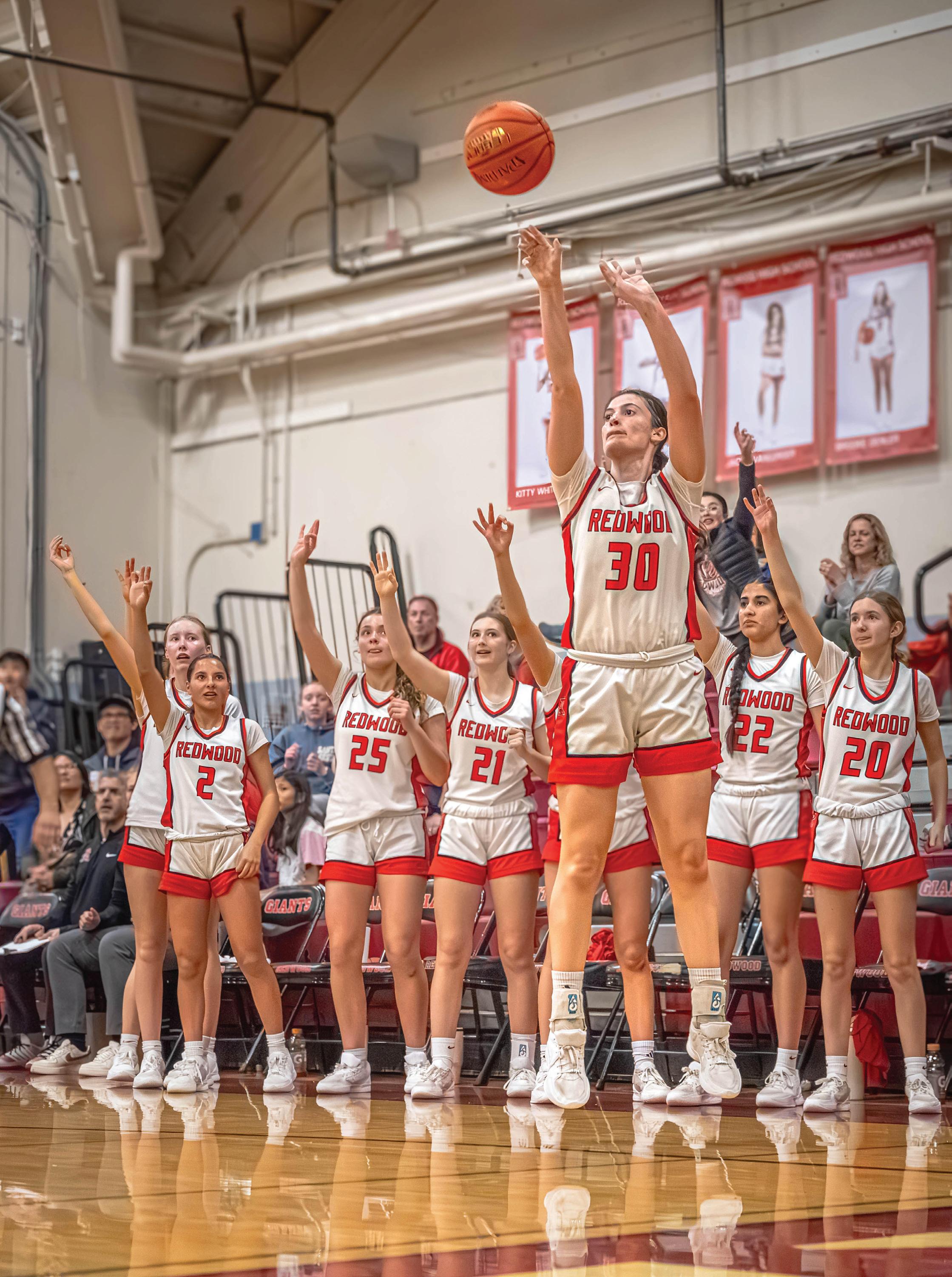
Photo by Joel Kurtzman

Read the Bark’s position on the memeification of politics.

By Maddie Petersmeyer
On Feb. 12, the Environmental Protection Agency (EPA) repealed the 2009 Greenhouse Gas Endangerment Finding, a science-based conclusion issued under the Obama administration. The original finding determined that greenhouse gases, such as carbon dioxide and methane, harm public health due to their contributions to climate change.
Under the Trump Administration and EPA administrator Lee Zeldin, the Endangerment Finding no longer allows the government to regulate greenhouse gas emissions through the Clean Air Act.
According to the EPA, “In this final rule, EPA is saving American taxpayers over $1.3 trillion, eliminating both the Obama-era 2009 Greenhouse Gas (GHG) Endangerment Finding and all subsequent federal GHG emission standards for all vehicles and engines of model years 2012 to 2027 and beyond.”
While the EPA has described the repeal as a cost-saving incentive, Advanced Placement Environmental Science (APES) teacher Mitch Cohen finds it to be economically motivated.
“I think that the denial is really based on political and economic gain; they’re not looking at it from a scientific perspective,” Cohen said. “They’re looking at it from an economic perspective and more importantly, what’s best for the short-term economic interest of a very limited number of companies.”
Chance Curtino, the Director of Programs at the Resource Renewal Institute, oversees the organization’s environmental programs and advocates for the mitigation of climate change.
“Science doesn’t change just because a couple of people decide that a policy changes or a rule changes,” Curtino said. “The evidence continues to mount that greenhouse gases have a direct harm on human health and ecosystems, and that’s only grown stronger since the endangerment finding was created in 2009.”
Additionally, Cohen believes that the scientific evidence backing the 2009 finding is overwhelming and that the increased emissions of greenhouse gases into the atmosphere are linked to the rise of natural disasters.
“If you look at these extreme weather events that we’ve been having, there are things like increased fires, increased floods and increased hurricanes. All of those unequivocally threaten both human property and human safety,” Cohen said.
Junior Riya Pyle, a Sustainable Agriculture and APES student, hopes that the repeal will motivate the

environmental scientists to continue finding data to back their claim.
“I felt more sad for all the people who’ve worked so hard for these findings that have just been taken away,” Pyle said.
The repeal of the Greenhouse Gas Endangerment Finding will have widespread effects on how the United States uses the government to regulate greenhouse gas emissions. As of right now, the long-term effects are uncertain, but the beliefs of environmental experts like Cohen and Curtino conclude that the evidence supporting the finding is overwhelming.
Take a moment to consider the real people and consequences behind a meme before sharing it to your peers.
Continue reading on pg. 7...
By
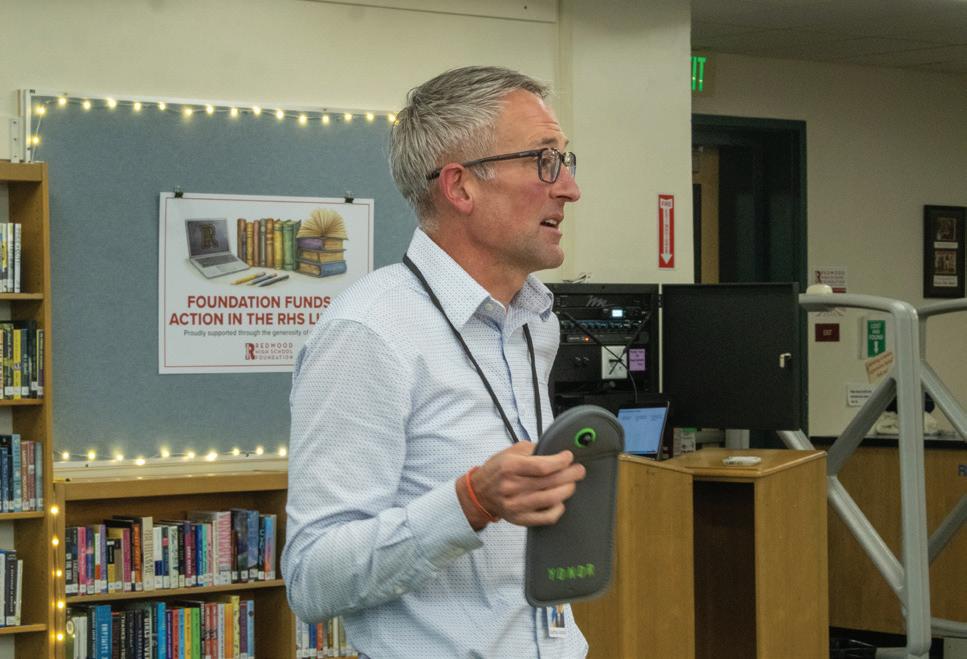
Concerns about student smartphone usage drew parents and community members together at the school library on March 11 for a public forum. The discussion was hosted by Tamalpais Union High School District (TUHSD) Superintendent Dr. Courtney Goode. During the meeting, Goode explained how smartphones are addictive, harm student mental health and impair learning. District officials presented several possible policy changes to address concerns, including banning phones, requiring them to stay in backpacks or implementing Yondr locking pouches. The TUHSD board will continue discussing the issue at its March 24 meeting.

On March 13 at 4:30 p.m., the boys varsity baseball team took on Novato. The Giants were down two runs in the first inning, but slowly rallied their way back to tie the game at 2-2 in the fourth inning before Novato recaptured the lead. The Giants put up four runs in the sixth inning and never gave the lead back, leading them to a 6-4 victory. The Giants hope to keep momentum as they head into the rest of season.
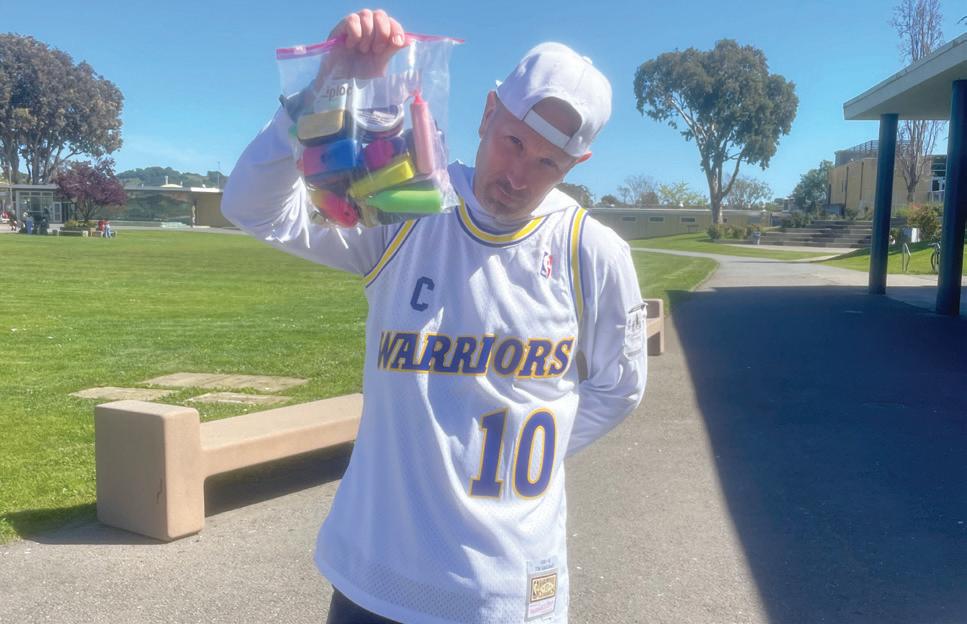
On March 11, a schoolwide assembly was held in the big gym featuring guest speaker Kyle Wimmer. Wimmer spoke about his own struggles with addiction, and went into depth on the recovery process to motivate and educate students about the dangers of the drug. The assembly was organized by the Tobacco Use Prevention Education (TUPE) team, with support from the Redwood High School Foundation.The presentation was interactive, lively and left a lasting impact on student attendees.
ngersch@redwoodbark.org
By Amrit Aujla and Brooke Hansen
A planned trip to Havana, Cuba, for students at Tamalpais Academy of Integrated Humanities and New Media (AIM) program was cancelled 48 hours before departure, leaving dozens of students disappointed after months of preparation.
About 85 students in the AIM program had planned to travel from Feb. 8 to Feb. 18 to Cuba, where they would create short films about students at a local art school in Havana.
Senior Noa Weis, an AIM student who planned to attend, said students had been preparing since October and had already paid about $4,000 to participate.
“It was going to be a once in a lifetime experience,” Weis said. “It would have been special to be able to go with this group of people.”
Weis said she knew there was uncertainty surrounding the trip in the weeks before departure.
“There was a lot of discussion prior to the trip about possible cancellations,” Weis said.
The cancellation came amid a growing fuel and infrastructure crisis in Cuba tied to disruptions in the island’s oil supply.
For decades, Cuba had relied heavily on imported oil, particularly from Venezuela, to power its electrical grid, transportation system and aviation fuel supply. In recent years, Venezuela has supplied roughly one-third of Cuba’s oil, making the island especially vulnerable to disruptions in shipments.
However, recent political conflict and U.S. policies targeting countries that export oil to Cuba have sharply reduced those shipments. As imports declined, the country began experiencing widespread fuel shortages, power outages and transportation disruptions.
The shortages have also affected aviation fuel. In early 2026, Cuban officials warned that the country temporarily lacked enough jet fuel for airplanes to refuel, forcing some airlines to cancel flights or refuel in other countries.
These conditions raised concerns for school officials organizing the AIM trip. If fuel shortages worsened, transportation within the country or even flights leaving the island could become unreliable.
Tamalpais Union High School District (TUHSD) Superintendent Courtney Goode said those broader conditions were part of what led to the final decision to cancel the trip.
“There was growing concern that was rising from some parents who were involved with the trip, and then it wasn’t until the week before that I also started hearing concerns from teachers who were responsible for the trip,” Goode said.
The advisers Sharilyn Scharf, Michael Lavezzo and Morgan Parr had reached out to the station chief at the U.S. Embassy in Cuba for guidance on whether students should travel. According to Goode, the response raised additional concerns.
“If you were to have read that response, it was sort of a master class in saying ‘Don’t come to Cuba’ without saying ‘Don’t come to Cuba’,” Goode said.
Goode also stated that comments caused additional concerns after a press conference on Feb. 5 from the President of Cuba, Miguel Díaz-Canel, about worsening economic conditions and tensions with the United States and Venezuela.
“Then he also, in that same press conference, said something to the effect of ‘We’re not at a state of war, but we’re preparing for one.’ That was like, ‘Goodness gracious, we’re not just looking at economic collapse, but potential government collapse, and we’re going to have 85 kids there.’ That’s crazy,” Goode said.
Ultimately, the district had to prioritize safety.
“My number one responsibility is student safety,” Goode said. “In no way in good conscience could I say ‘Yeah, let’s go on a wing and a prayer.’”
For many students, however, the trip represented more than travel. Many hoped it would allow them to connect with Cuban students and learn about a different culture.
“To meet someone who grew up in a country that has a lot of different cultures and social norms than we do would be so interesting,” Weis said. “I wanted to learn how Cuba works, about their music and the art there.”
Students gathered the day after the announcement to discuss their reactions as a group.
“It’s hard not to be mad, it’s hard not to place blame, but I think everyone is accepting it the best that they can,” Weis said. “It’s obviously Trump’s fault, and I think everyone is sad and annoyed, but I think for the most part it’s just really disappointing.”

Families also raised questions about refunds after the cancellation. Goode said the district was not responsible for the travel payments, which were made to a travel
“The money is not the responsibility of the district,”
Although the trip was cancelled, Goode acknowledged the value of experiences like the one students hoped to
“Anytime that you can broaden your perspective and your understanding of the world in which we live, you’re gaining a lot from that,” Goode said. “The fact they weren’t able to go doesn’t sit well with me.”
Despite the cancellation, Weis said the experience students hoped to have in Cuba still matters.
“We lost the opportunity to see a country that has some of the coolest history in the world,” Weis said.
bark@redwoodbark.org
‘We can’t let perfect be the enemy of good’
By Reed Grossman and Cian Kelly
Fears and concerns over the smartphone epidemic filled the Redwood library on March 11 during a scheduled public forum discussing the future of phone policies across the five schools in the Tamalpais Union High School District (TUHSD). The discussion included the possible implementation of Yondr locking pouches.
Led by Superintendent Dr. Courtney Goode, the discussion forum focused on the concerns that parents, educators and district officials have about student use of smartphones. Goode cited his three main concerns during his presentation.
“I believe there are three universal truths as it relates to smartphones and social media. Universal truth number one: Smartphones [and] social media are addictive,” Goode said. “Universal truth number two: Smartphone [and] social media [harm] mental health. Universal truth number three: Smartphone [and] social media [impair] learning.”
During the presentation, Goode focused on studies that found that having your phone in sight is just as bad as having a phone in one’s hand.
Furthermore, Goode cited concerns of students having their phones during lunch hours and passing periods, believing that it takes away from student interaction.
“Before school starts [and during passing periods], kids are glued to their phones,” Goode said. “This is not about our current policy not being enforced, this is about [how] our current policy doesn't go far enough.”
Parents and other adults that attended the meeting
generally agreed with Goode's views on the problem. Mothers Against Media (MAMA) Marin chapter leader Lauren Goodman expressed her fears of smartphone use by students.
“I do national work on a policy level around cell phone policies. The truth is that cell phones, unlike cigarettes, alcohol and cocaine, are legal for children,” Goodman said. “It's an addictive substance, it's [like] an easy access drug in your pocket. [But], we already have a precedent for what we do with drugs and alcohol, which [are] not allowed at school.”
To combat cell phone usage, Goode presented three solutions being considered by the district: banning smartphones from school, having smartphones be kept in students’ backpacks or the implementation of Yondr pouches. Goode emphasized the effectiveness of Yondr pouches specifically.
The third idea, Yondr pouches, will cost the district an upfront cost between $135,000-$155,000, and an additional expenditure between $25,000-$35,000 every year following.
One speaker, a pediatrician who has chosen to remain anonymous, who we will refer to as Alex, agreed with the implementation of Yondr pouches in our district.
“[It is important to] have that physical barrier, [which] a backpack is not; there's still sort of that enticement,” Alex said. “There's going to be some hiccups. But, it doesn't mean that we shouldn't make that change.”
Overall, the discussion allowed for parents to voice their concerns, ask questions and better educate themselves on the district's goals for phone-free schools for the 202627 school year. Karen, a parent of a Redwood sophomore

summarized her views on the meeting's success. “I really liked that they had this meeting today, I thought it was important to talk about and I’m glad that everyone was willing to share their ideas,” Karen said. The district board will discuss the issue further at its March 24 meeting at the Kreps Conference Center, but no vote is expected at that time.
bark@redwoodbark.org
By Adriella Marcus
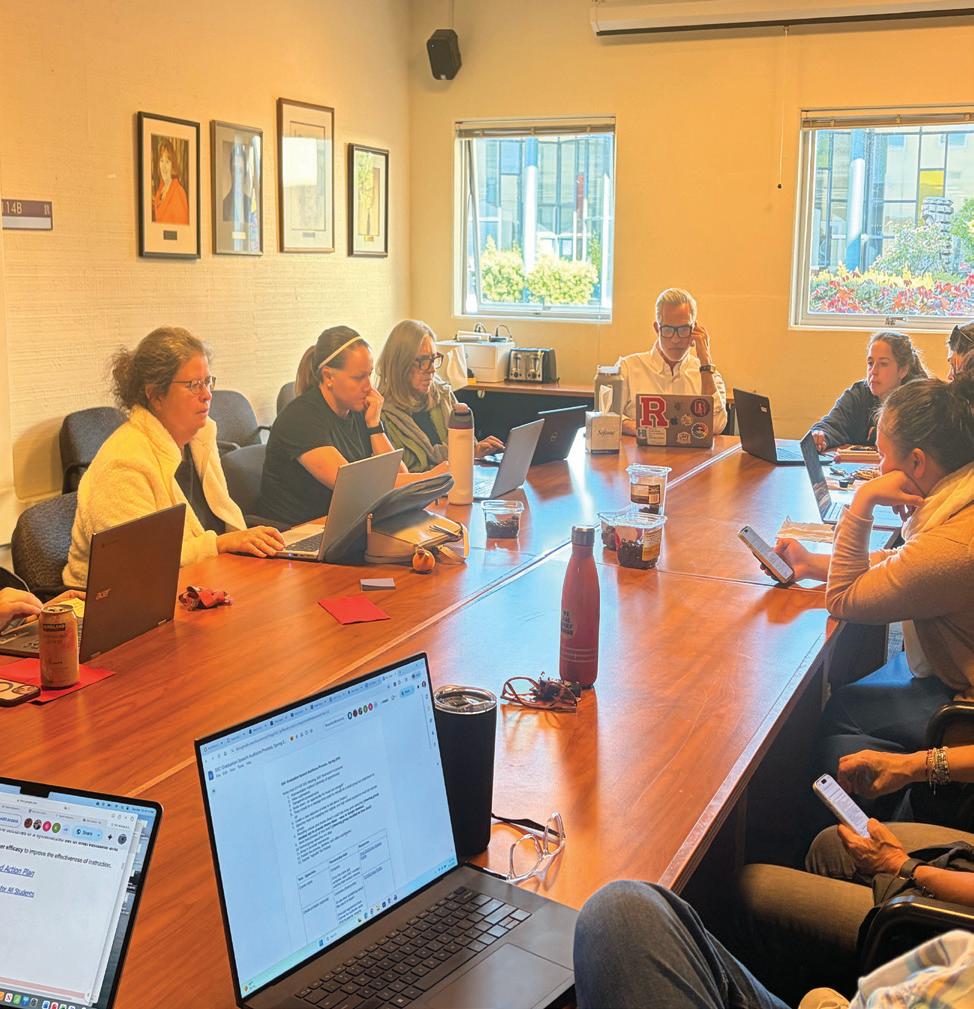
The Redwood High School Site Council is a group of students, parents, teachers and administration who meet every two weeks to work towards their goal of fostering a safe, inclusive and educational school environment. Their most recent meeting on March 10 was held to discuss the selection process for graduation speeches as well as academic integrity.
Site Council meetings are student-run, with senior Brittney Blair serving as Site Council President. Junior Georgia Doucette is the vice president, who served as president for the March 10 meeting due to Blair’s absence. Another student representative attending the meeting was sophomore Lily Scott.
Members of Site Council include Principal Barnaby Payne, staff members who volunteer to participate, parents selected by the Parent Teacher Association (PTA) and an elected representative from each grade level.
would allow non-native English speakers to participate.
“We can teach a [English learner] student to express their ideas in English,” Civano said.
The Site Council also reviewed the Redwood artificial intelligence (AI) policy after recent teacher feedback gathered by Principal Dr. Barnaby Payne.
“Something that [teachers have] brought up was a continuing challenge of academic integrity and artificial intelligence and what policies and practices we have to support teachers and students,” Payne said.
The Site Council reviewed a five-point rubric created by a district-wide AI task force. Although there is no district-wide AI policy, and this rubric has not been approved by the Tamalpais Union School board, it can still be implemented at Redwood.
I personally think AI is much more harmful in a test setting.
Georgia Doucette, Junior
“The Redwood High School Site Council promotes empathy, kindness and respect for oneself and others. [It] fosters a safe environment that values both personal and academic goals, celebrates individuality and cultivates tolerance and inclusiveness," Doucette said.
Inclusivity was emphasized many times throughout the meeting, particularly by Spanish teacher Maria Civano who suggested a format for picking speeches that
“If the board makes a policy decision on AI before the end of the year, then that would supersede this discussion. But in the meantime, we don’t have an AI policy as a school other than our academic integrity policy,” Payne said.
The rubric consists of increasing amounts of AI use, categorized into five separate and clear groups. Teachers can tell students what number correlates to the amount of AI a student can use on a specific assignment.
“One of my teachers actually used it. It was cool to see it and it worked. I understood what I was supposed to do,” Scott said.
Staff and students identified problems and potential solutions regarding the use of AI from their different perspectives.
“I personally think AI is much more harmful in a test setting because if you’re using AI in homework, it’s mostly harmful to yourself because you’re not going to know the material in a test setting. But in a test setting, it’s harmful
to every other student in the room,” Doucette said.
Teachers had differing strategies to combat AI use, such as using features that restrict students from changing tabs while testing, limiting homework and increasing inclass essays.
The next meeting will occur on March 24. The agenda and minutes can be found on the Redwood website.
amarcus@redwoodbark.org
By Josephine Perlov
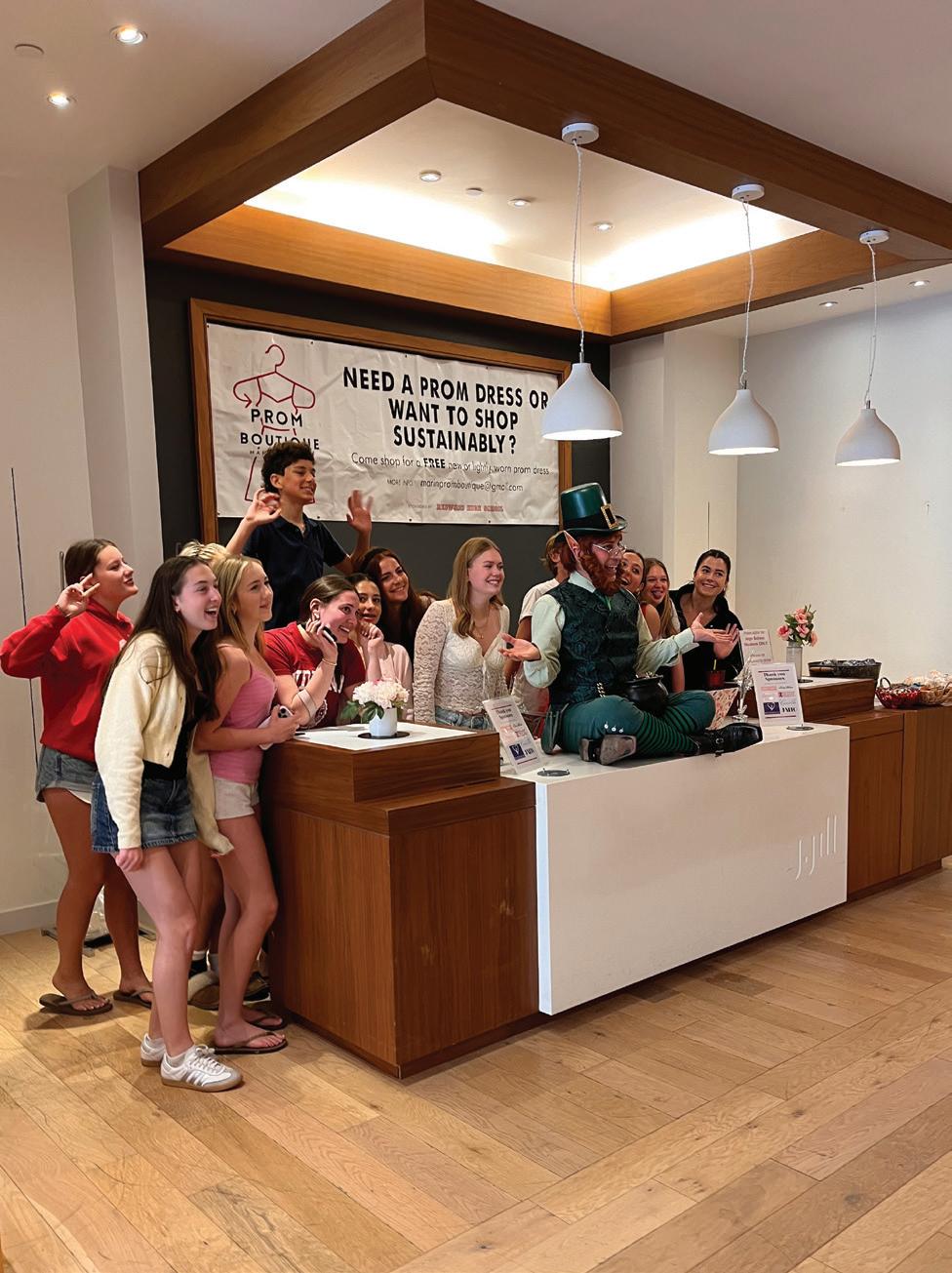
At 11 a.m. on Saturday, March 14, the Marin Prom Boutique opened its doors for the fourth year in a row. Hundreds of dresses in every style, shape and color lined the store at The Village at Corte Madera. Jewelry and shoes were carefully arranged around the room by Leadership volunteers as shoppers mingled and searched for their perfect fit. The best part: all of the dresses were free for high school students.
A study by Visa found that Western Americans will spend an average of 1,073 dollars on prom. Additionally, The Daily Mail found that only one in five students plan on rewearing their dress. The cost, combined with
sustainability concerns, can make purchasing a new dress seem difficult. The Boutique addresses both of these concerns by providing donated items at no cost. This year’s Boutique was spearheaded by senior class president Morgan Sicklick and our Leadership program and uses a combination of community and brand-donated dresses to stock the store.
Mariana Silva, a junior Leadership member and participant in this year’s Boutique, has seen the impact the event has had on the community firsthand.
“[The Marin Prom Boutique] is a really great opportunity. It's an honor to help my community, and I know it can help a lot of people, especially at a time like prom,” Silva said.
This sentiment was shared by Leadership teacher Christy Silkworth.
“It brings the kids so much joy to be able to have this and for people to come in and get dresses. Usually by the time the prom boutique ends, we've given away upwards of 300 to 400 dresses. It's also great that anyone can come in, [and] everybody is welcome. Come in, get a dress, it's that simple. There's no stigma around it. If you find [a dress] you love, grab it,” Silkworth said.
With the event growing bigger every year, Leadership has expanded efforts to collect and organize the dresses, with many of the potential prom fits staying with Redwood Foundation representative and parent Jennifer Sicklick.
As for the future of the program, Jennifer Sicklick believes it could expand beyond the Tamalpais Union High School District.

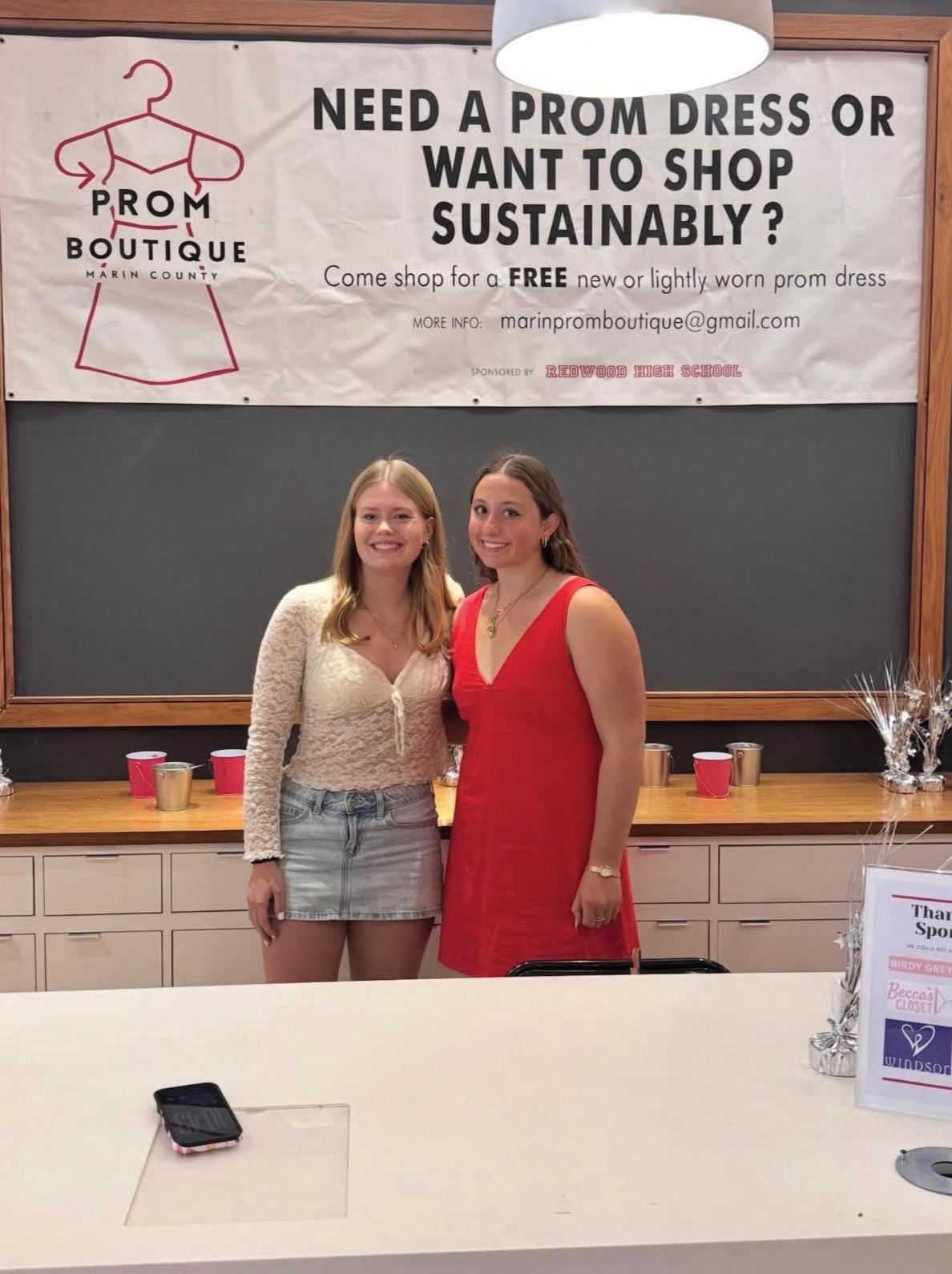
THE STUDENT-LED Prom Boutique holds much in store, including accessories and shoes to go with a dress.
“What Morgan and her predecessors have done is show that with organization skills, leadership skills, empathy and kindness, this can grow into an event that could maybe include schools from the East Bay, from San Francisco, as well as Southern Marin and Northern Marin. I really can't think of something that makes me more proud than students who want to help other students and families and make prom something that isn't a burden, but a happy and celebratory time for juniors and seniors across the county.”
Visit the QR Code to the left to learn more about the boutique via Instagram.
jperlov@redwoodbark.org
I found my first error in two minutes
By Ben Mueller
“Sloppy”: a word that could be applied to joes, or the Department of Justice (DOJ)’s handling of the Epstein Files. On Nov. 19, Congress passed the Epstein Files Transparency Act to force the release of all files related to the Epstein investigation within 30 days. The DOJ has not released all of the Epstein files; it has released only 3.5 million of the six million files that could potentially be released, and has broken the law by not releasing the files by Dec. 19. Instead, the DOJ has focused on pursuing political enemies with a stunningly low success rate. The DOJ should focus on promoting justice rather than politics and work to make real arrests of criminals rather than political enemies.
For a Bark social media standalone, I looked into what towns were mentioned in the Epstein Files. While investigating various threads, I immediately found an error. One email, from 2013, had a significant portion of its contents redacted. The email referred to an earlier interaction with a woman in the context of providing models to Epstein that hadn’t worked out, then insulted “stupid” French laws that seemed to prevent Epstein from doing what he pleased. The bottom half of the email is redacted, along with the sender’s name.
“Tell me Joel from Next can be interested to take me in Next miami? I dont care about position but need it for documents.”
That was the redacted portion of the email. You may be wondering what kind of computer wizardry and trickery I used to find this. Did I copy and paste it into a special program? No. I simply looked at the next file under my search, and there was an unredacted version. Note that the sender’s name was still redacted, because someone who is complaining about Epstein’s lack of ability to exploit France’s laws is not only innocent, but also a victim. Someone who clearly is intimate enough with Epstein to know the functions of his daily life has been protected by the DOJ. Why not the innocent bystanders listed in the files who simply wrote books that Epstein read, which were of interest to Epstein? Those who are facing public scrutiny simply because their names come up in a search, when it seems long black lines protect the true perpetrators. In fact, nude photos of women were left unredacted, and identifying details of the victims were left intact in the files.
Redactions in the Epstein files seem to be occasionally random, almost to the point of purposeful deception. Entire files with just one word, a random name, not blacked out. Is the word “the” such a danger to Epstein’s victims? “Of?” Mind you, this is only my experience with the files I investigated and the leads I followed based on Marin’s connections to the files, not files pointed out by legacy media. These files are untouched by the likes of Fox News or the New York Times, implying that there are thousands of mistakes to be found within the files. Some
in the millions of pages and photos. One file blocks out a woman's name who said, “What time and remind me exact address so I can give her! She will come alone!” In reference to another woman. Why? Are you protecting this person? The American people asked for the names of those wrapped up in Epstein’s web. Instead, we’ve received the random names of authors, and those simply caught in the crossfire.

“pressing matters” seemed to include trying (and failing) to prosecute a man for federal assault, then trying (and failing) to charge him with a misdemeanor for throwing a sandwich, perhaps it’s time to go in the direction the American people want you to go in.
On that note of protecting the rich and powerful, the New York Times recently reported that the DOJ had failed to produce witness statements from a woman who
...a computer performs the redactions using instructions given by the DOJ.
had testified against Donald Trump. The woman produced four witness statements against Mr. Trump and Mr. Epstein, yet the only one released was the one where she testified against Mr. Epstein. The other three, including notes from the FBI, are notably missing. For the “most transparent administration in history,” this seems like a grave mistake.
The DOJ seems to think there are more pressing matters at hand, as they have spent much of their time and resources since Trump’s inauguration going after the administration’s political enemies. In most cases, they have been entirely unsuccessful. Just recently, it was announced that the DOJ had failed to build a case against former President Joe Biden for his use of an autopen while in Office. They spent several months not only publicly slandering Kilmar Armando Abrego Garcia, but attempting to have him deported to various third-world nations. They attempted to prosecute a man for throwing a sandwich at federal agents in D.C. for felony assault, but were unable to convince a grand jury to indict him. Other high-profile Trump enemies, like Letitia James and congress members who made a video telling members of the military to ignore illegal orders, were indicted by the DOJ. The DOJ failed twice to indict James and failed to indict the congresspeople. While operating on the president’s whims, the DOJ has failed not only in its job but also in its mission to bring justice, and instead focuses on protecting the rich and powerful.
Indeed, 30 days is not a long time to redact 3.5 million files. The DOJ is the self-proclaimed “world’s largest law office,” employing more than 10,000 attorneys
While each attorney obviously did not look at 12 files per day, this is a manageable number for the selfproclaimed “world’s largest law office.”
I would be remiss not to mention that a computer performs the redactions using instructions given by the DOJ.
The argument that the Epstein files shouldn’t have been released because of the public’s speculation around them is the most valid. In the Instagram comments of a recent Bark post relating to the files, we have seen the public speculate about what we reported—bland though our findings were—in the files. One comment, potentially a bot, said, “Notice how it’s all democratic liberals.” We didn’t mention a single political figure. Another commented that a book written in Kentfield was “likely by Newsom’s wife.” The book was not by Newsom’s wife, and that speculation was pointless and unfounded, yet it has real consequences. Many of the people in the files risk having their reputations sullied solely because they wrote a book or article that Epstein read, and people are unwilling to do their research. This problem would be minimized if American children were taught media literacy.
Media literacy helps improve critical thinking and investigative skills, preventing children from drawing immediate conclusions about things they see on the internet. When critical thinking and media literacy skills remain undeveloped into adulthood, speculation can run wild, like in our own comments. Also, the DOJ chose to keep the names of those who could’ve legitimately been involved in criminal activities redacted while leaving those who were simply on the sidelines unredacted, allowing speculation to run wild because so many Americans have minimal media literacy skills. This problem is compounded by the DOJ and Trump administrations' attacks on the media, where they make baseless claims about the truthfulness of reporting by legacy outlets.
While other news outlets have reported on missing witness testimonies, poor protection of victims, other missing files and protection of the president, the fact that I was able to find errors within minutes of starting to comb through the files says something about the DOJ’s incompetence. I have no degree in journalism, nor a high school degree, but I was easily able to find errors, random redactions and potential protection of abusers.
bmueller@redwoodbark.org
Dear Editor,
We wanted to offer our full and unconditional support of The Bark, the students who work for it, and the teachers who advise it.
In over 150 years of collective teaching at Redwood, we don’t recall a time comparable to now when the school and district administration tried to override the editorial judgment of The Bark in ways that raise concerns under established student press law.
Nor do we remember a time when a small but persistent group of adult community members has attacked teenagers who are trying to learn a craft, and the adults who teach them, as shamefully as you have been recently attacked.
What we know from our 150 years at Redwood is that The Bark is the nation-wide gold standard for student journalism, winning countless national awards and sending students to the best journalism programs in the country, programs from which they go on to earn jobs at the nation’s most prestigious newspapers. The number of students who participate in the program has more than doubled during our time here. It is student led and student run, one of only a handful of programs at Redwood that gives students real-world experience. You deserve praise, not scorn.
We don’t always agree with everything The Bark writes, but you shouldn’t expect your audience to always agree with you. What you should expect–what we should all expect in a democracy–is that those who disagree
In over 150 years of collective teaching at Redwood, we don’t recall a time comparable to now when the school and district administration tried to override the editorial judgment of the Bark.
with you should engage in public discourse and not hide behind anonymous posts or use their influence in back channels to undermine the work you’re doing and question your integrity.
Today, maybe more than ever, we need civil discourse. When everything causes outrage, nothing can be truly outrageous.
Stay the course. Administrations will change. Angry community members will find somewhere else to direct their anger.
With appreciation and respect for what you do,
Fiona Allan, Redwood High School English Teacher
Carolyn Dahlman, Redwood High School English Teacher
Kendall DeAndreis, Redwood High School English Teacher
Alex Franklin, Redwood High School English Teacher
Stephannie Haver Castex, Redwood High School English Teacher
Stephen Hettleman, Redwood High School English Teacher
Emily LaTourrette, Redwood High School English Teacher
Jennifer Madden, Redwood High School English Teacher
Donna Rabin, Redwood High School English Teacher
Tom Sivertsen, Redwood High School English Teacher
Jonah Steinhart, Redwood High School English Teacher
Diane Waite, Redwood High School English Teacher
By Olivia Hamm
Not too long ago, Redwood freshmen began their high school social studies experience with a geography class, where they learned where countries are, how borders affect politics and how geography affects world events. Now, this class has been replaced and is no longer a part of the freshman schedule. In a geography survey conducted on 2.000 American adults in 2019 by the Council of Foreign Relations, it was found that only six percent of the respondents answered at least 80 percent of the questions correctly. As geographic literacy continues to decline in the United States, including this semester-long class into the freshman curriculum would help students better understand global politics, current events and the world they will soon participate in as citizens and voters.
Now, you might be wondering: what has been the replacement for geography class for the past couple of years? New courses called Life Lab and Community and Consciousness have fulfilled the freshman history requirement, in place of World Cultures and Geography and Social Issues. In Life Lab, content similar to Social Issues is taught. However, in Community and Consciousness, students are educated on specific communities from our past, a topic previously covered as part of the World Cultures and Geography curriculum. Nicole Plescia has been teaching these new courses to freshmen for the past couple of years.
Geography has such rich and important information in it, and it did a beautiful job setting the framework for [future history classes].
Nicole Plescia, teacher
said that learning geography was “extremely important.” This support from educators indicates that geography is actually imperative in helping students understand current events, think critically and make informed decisions about the world around them. At Redwood, offering a full semester of Geography alongside Life Lab will help students achieve the hands-on learning and global understanding they need in school and beyond.
All of this being said, it is important to note that both World Cultures and Geography and Community and Consciousness contribute valuable skills to freshmen. Life Lab and Community and Consciousness give students useful skills and information, such as understanding their identity, making thoughtful decisions and learning how to be responsible members of their community, all of which are necessary skills for becoming an adult.
At the same time, geography gives students the worldview that is necessary to understand politics, world events, and what it means to be a good citizen. They are not in competition with each other; they complement each other. Because of this, the most logical solution is to reinstate the original curriculum of one semester of World Cultures and Geography and one semester of Life Lab. If we are truly committed to preparing students for adulthood and responsible citizenship, having both courses should not be a debate but a clear and practical step forward.
“[We] understand experiences through a lens that's not our normal one [in Community and Consciousness]. It's important to see how other people live their lives,” Plescia said.
However, World Cultures and Geography also educates us on this, while including information about borders and how geography affects these experiences.
“World Cultures and Geography has such rich and important information in it, and it did a beautiful job setting the framework for [future history classes],” Plescia said.
Some may say that it’s okay that we don’t have a geography class because students can learn the information in future history classes. However, there is no specific dedication to geography in any other history class offered at Redwood. The best way to know that everyone is getting the necessary geographical information is to have a semester-long class, just as it was before.
Furthermore, with the political climate we have today and students being able to vote in the near future, providing students with this knowledge is increasingly necessary.
According to the International Geography Olympiad, “Geography allows students to address the challenges of creating a more sustainable and equitable world [and] to analyze government policies, international agreements and individual rights and responsibilities relating to them.”
With this broadened worldview, our country can take the next steps to success due to an informed generation ready to do the right thing.
It isn’t just students who agree with this. In a survey conducted by National Geographic that was published in 2020 by Forbes magazine, it was estimated that over 62 percent of pre-kindergarten through 12th-grade teachers
ohamm@redwoodbark.org

By Jack Block
Minnesota Vikings wide receiver
Rondale Moore was the third professional football player to commit suicide within the last year. Along with former Dallas Cowboys defensive end Marshawn Kneeland and Louisiana State University (LSU) wide receiver Kyren Lacy, Moore lost the battle within his mind, taking his life.
After these recent passings, I questioned whether mental health issues were prevalent among football players. I came to realize that not only football players, but men in general are suffering disproportionately from mental health disorders such as depression, anxiety and suicidal thoughts. This is due to the traditional stigma passed down for generations from our fathers, grandfathers, great-grandfathers and their fathers: “be a man.”
According to a study from the Centers for Disease Control and Prevention (CDC), men make up 80 percent of suicide deaths and are four times more likely to commit suicide than women. Additionally, the National Institute of Mental Health (NIMH) performed a study in which men were found to be reluctant to share how they feel; only 19.7 percent of men who took their own lives last year had contact with mental health professionals leading up to suicide.
The stats back it: men struggle in silence, even those who make millions of dollars playing a game they love. Men are raised to believe that masculinity and vulnerability can not coexist inside their brains. These psychological struggles are
bottle everything within. It does not mean that men should express toxic masculinity, a trait that men possess that often appears as overly-confident, egotistical and aggressive. Instead of simply asking for help, men typically bottle their emotions which can enhance these traits.
In a world where men are put on a pedestal as empowering, strong and fearless beings, most men feel a need to be one. This often takes the form of staying silent when suffering, even at Redwood.
According to a study from data from a March Bark survey, 42 percent of male students at Redwood stated, “it is hard for me to be vulnerable with my mental health, but I try,” and 42 percent of male students said that “I do not share my feelings with others.”
The remaining 16 percent said “I share my feelings with others.” Clearly, boys have been forced to grow up tough, in an environment where toxic masculinity is preventing themselves from speaking up.
The reason boys are so hesitant to be vulnerable is because they have grown up to be stoic and follow the traditions of society. Even in our community, boys struggle. According to an article from Self Magazine, 94 percent of parents raise their sons to be emotionally strong, preparing their sons for traditional manhood. In a USA Facts report, in California, males account for 78 percent of suicides, a statisic that is sad, but reflective of wider trends. To change this statistic, it needs to be normalized for men to reach out and share their feelings.
I am not arguing that men have it harder than women. Everyone has problems they deal with, regardless of gender. However, men do face disproportionate amounts of mental health issues. To remedy this, society must more strongly embrace men’s mental health. On an individual level, it is crucial for people to check in on the men in their lives just as they would anyone else. Men themselves also have a part to play; it is immensely important that men become more willing to reach out, as the statistics show that we don’t. You never know what someone may be going through, so
By Gabrielle Baumgarten
“Hi! My name is Bayzic B., and I’m from Marin County, CA. I’m 99.9999999 percent committed to the University of Miami, but it’s definitely my top choice. I’m planning to major in psychology and minor in marketing. I love going to the beach and tanning, hanging out with friends, and partying until 3 a.m. every night, but I also love a good girls' night in.
I’m also definitely rushing for the Kappa Delta Sigma Theta sorority and am looking for a roommate (someone who will have to deal with me talking about my problems until 3 a.m. every night). I keep my room very clean (but only for the first week).

I’m sooo excited for this next chapter of my life, and please DM me if you think we’d be friends!”
to live with a copy-and-paste version of themselves?
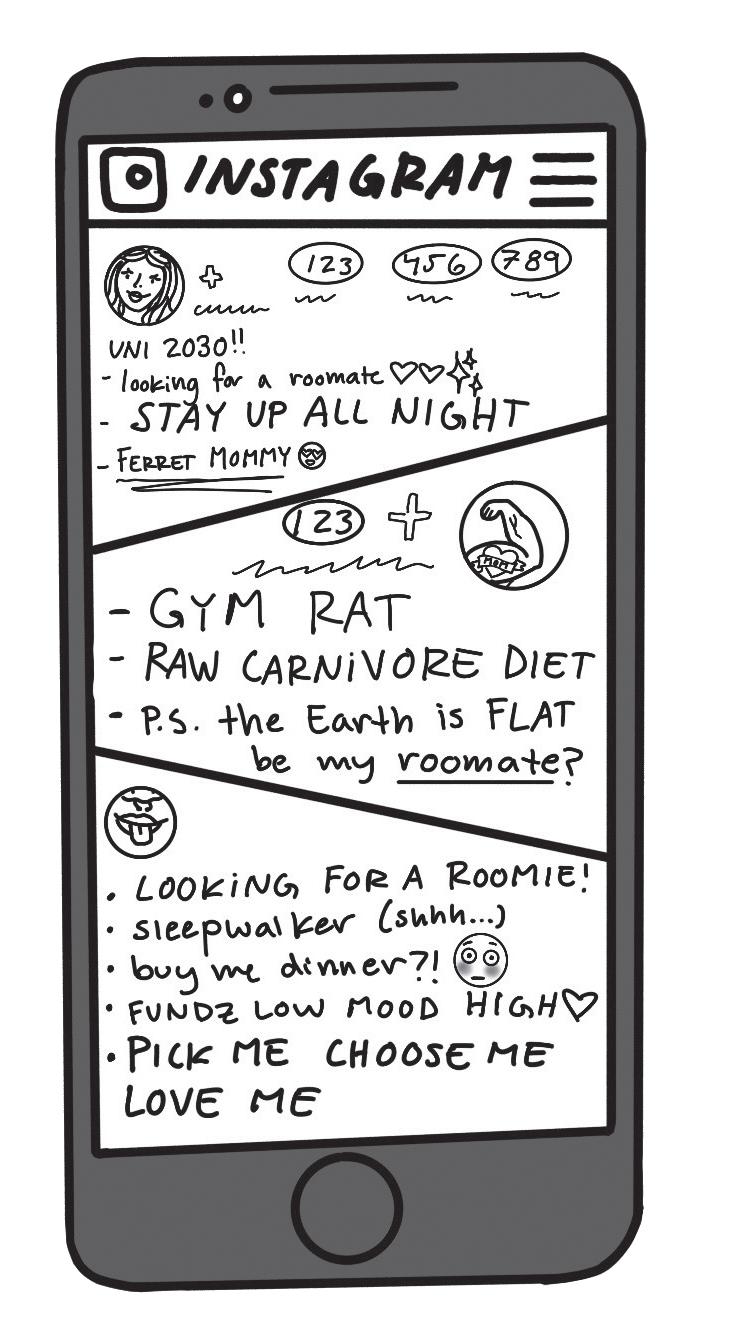
These personality descriptions can be found on Class of 2030 Instagram accounts across the country, as it is very common for many seniors to try to present the best version of themselves in their bios. Howtomeetyourroommate.net has provided this template as a foolproof method to get at least 50,000 DM’s from potential roommates in the first hour. And it makes sense that Instagram is the place to find roommates—who wouldn’t want
It’s true that being posted on one of these Instagram accounts won't instantly help you meet your dream roommate, but how else would your future college besties know that you either stay up until 4 a.m. each night to watch The Real Housewives of Orange County or come home at 3 a.m. each night and expect you to debrief with them? We all love to think that we’re not lying on these accounts. We’re just… stretching the truth. Besides, who is going to post all their bad habits honestly? I wouldn’t be over the moon to room with someone whose post says, “This school was my fourth choice. I’m super messy and incredibly loud over the phone with my boyfriend. I’m going to be copying your homework almost every day, and I don’t know anything about my major; I just did what my counselor told me to pick.” Doesn’t sound thrilling. Plus, it’s not anyone’s fault that suddenly every eighteen-year-old in the United States has the same interests! We all need to fit in. I mean, who doesn’t love the beach? Who doesn’t love going out (and staying in)? Who doesn’t love spending time with their friends and traveling? Maybe all seniors are just super-duper similar. And that’s even better—we’ll all get along great in university if we have the same interests! But above all, it is important that once you get to college, you are your authentic self. Don't be behind a fake, pasted-on personality. Be confident in the person that you are and how your values honor what you stand for, because that’s how you will meet your real friends.
Memes can be dangerous and dehumanizing in our current political climate

In today’s world, political decisions and news frequently reach younger audiences through social media platforms like TikTok, Instagram and X. A 2022 survey by the American Press Institute found that 74 percent of Gen Z get their daily news from at least one social media platform. On these platforms, issues ranging from the release of the Jeffrey Epstein files to the death of right-wing influencer Charlie Kirk, or even global conflicts have often been reduced to jokes and viral memes. While humor has sometimes been used to help process difficult issues, the growing trend of memeification is desensitizing us to the gravity of tragedy.
This phenomenon has been dubbed “memetic warfare,” or the dissemination of internet memes to influence and shape public opinion. A Ypulse survey found that 55 percent of people ages 13-35 send memes every week, with around 60 percent being political memes. The rapid spread of memes makes them powerful tools in the modern world.
Unlike propaganda, memes often appear organically created by everyday users. However, research shows that some memes are designed to appear that way, but are actually meant to influence political opinions. Researchers at the University of Notre Dame analyzed more than 5.3 million posts and 3.2 million images, and found that political visuals and memes surged dramatically in the two weeks before Russia’s 2022 invasion of Ukraine. Ernesto Verdeja, a professor of peace studies and global politics at Notre Dame, performed a two-stage analysis of the memes and posts in question.
“We were able to trace in near-real time not only the sharp rise in visual social media, but also the kinds of narratives that shape political discourse and drive instability,” Verdeja said in an interview with the Association of American Universities.
Following the assassination of Charlie Kirk, memes began to circulate with Kirk’s face grafted onto different celebrities and figures from David Bowie to Kim Jong-Un, called “Kirkifying” them. Memes depicting former president Bill Clinton during a congressional hearing, reading email correspondence with Jeffrey Epstein, also spread which were often captioned “reminiscing on the good days.” While these memes are typically shared as satire, they normalize making light of serious and heavy situations.
of the Iranian missile strikes mixed with clips from video games and films. The official White House X account also posted a video titled “ASMR: Illegal Alien Deportation Flight,” showing immigrants in shackles being prepared for a deportation flight from Seattle.
When social media feeds are filled with memes focused on different political/social topics, the constant jokes can desensitize the public to important issues. A Psychological Science study found that people repeatedly exposed to headlines about unethical behavior began to view those behaviors as increasingly more ethical.
This doesn’t mean humor is inherently bad. Studies have found that laughter can help lower cortisol levels and cope with fear. Humor and empathy can exist in tandem, but it is important to converse about where the line should be drawn. For many young users, memes may serve as the first point of exposure to political issues. When major political issues are reframed as memes, people lose empathy and awareness about the situation.
Accessibility should not come at the cost of understanding. While memes may spark curiosity, they rarely provide context to understand complex issues such as international conflict, political corruption or humanitarian crises. A 2023 report from the Reuters Institute found that younger audiences who rely primarily on social media for news are significantly more likely to encounter misleading or oversimplified political information.
As social media continues to shape the way younger generations receive information, users must approach viral content with greater awareness. Take a moment to consider the real people and consequences behind a meme before sharing it to your peers. Humor can still exist online, but it should not replace thoughtful engagement with issues that shape our world. If younger audiences want to remain informed citizens rather than passive consumers of viral content, it starts with recognizing when a meme stops being harmless entertainment and begins shaping the way we understand reality.
Editors-in-ChiEf
Cora Champommier
Paige Edelen
Morgan Sicklick
hEad Copy Editors
Vivi Endler
Elsa Sherman
Adela Tabak
Copy Editors Alex Atherton
Kate Barker
Gabrielle Baumgarten
Claire Carbone
Leyton Defesche
Olivia Hamm
Anna Horn
Lucy Levine
Isabella Marsh
Mila Martinez
Isha Patel
Josephine Perlov
Zoe Peters
Maddie Petersmeyer
Jake Post
Sophie Sahai
Sienna Watt
Sofia Yanni
opinion Editors
Jack Block
Cian Kelly
Rosstin Pouradib
fEaturE Editors
Beatrice Nass
Maggie Schwartz
Penelope Trott
LifEstyLEs Editors
Hayden Martay
Angelina Purvey
Logan Scully
GamEs Editors
Richard Byrne
Noah Gersch
Tessa Soccorsy
sports Editors
Reed Grossman
Brooke Hansen
Georgia Thomas
nEws Editors
Amrit Aujla
Bella Garbo
Joel Kurtzman
rEviEw Editors
Siena Forster
Skye Hammond
Lily Skinner
vidEo Editors
Charlie Anderson
Lily Bell
Aaron Jensen
Tobin Rivera
Brooklyn Saputo
spanish Editors
Esperanza Cubillos
Adriella Marcus
podCast
Editors
Liam Healy
Olen Johnson
Scarlett Musgrove
Layout dEsiGnErs
Hilah Brekhus-Lavinsky
Paige Catanese
POLICY: All editorials are unsigned and have been approved by the majority of the Bark staff.

BARKS and BITES are the collective opinions of the BARK staff concerning relevant issues. BARKS represent praise, while BITES represent critiques.
This trend isn’t limited to everyday social media users. Recently, political leaders have embraced this type of content to trivialize serious issues. Officials from the Trump Administration recently posted clips
A BARK to the Bark for still barking even though we are going through tough times.
A BITE to the lacrosse team’s mullets. Do the uneven edges make you more aerodynamic?
A BARK to the St. Patrick’s day parade. All of Redwood’s 21-yearold students had a great time!
A BITE to the Yondr pouch discussion. The excuses from the district are from over Yondr!
Have an opinion regarding anything that appears in the Bark or in general? We encourage our readers to submit letters to the editor. Letters to the Bark should be 500 words or fewer, typed if possible and signed. They must be emailed to bark@redwoodbark.org
A BARK to the Outside Lands lineup. We are excited to Party 4 U.
A BITE to sophomore scav. It’s the one night grades shouldn’t touch.
A BARK to the McDonald’s CEO - Or should we say a little bite?
A BITE to UC rejections. U can C we are sad.
staff photoGraphErs
Henry Barker
Lauren Ellington
Oren Weingarten
Elle Wilson
sEnior staff
Mo Colaco
Jamie Glennon
Ofi Huneeus
Chloe Jennings
Kate Morgan
Petra Novotny
Ellie Smith
rEportErs
Gabriel Cavanaugh
Matthew Delay
Wes Fitzpatrick
Elsa Houtkooper
Elaina Leighton
Leighton Olsen
advisEr
Lindsey Kornfeld
Ben Mueller
outsidE opportunitiEs
Nina Baker
Claire Johnson
Maddie Wagner
BusinEss manaGErs
Tate Ralston
Nico Ruel
Owen Scheeline
soCiaL mEdia manaGErs
Madison Bishop
Mariel Goodhart
Lily Kilgore
data anaLysts
Hudson Brod
Evelyn Harper
Tessa Tuatini
wEB dEsiGnErs
Zander Hakimi
Elizabeth Hopkins
Logan Schneidewind
staff iLLustrators
Lucy Jeffers
Paloma Nacamuli
Natalie Vinogradsky
muLtimEdia dEsiGnErs
Eleanor Bentley
Dorothy Florence
Asha Zlatoper



By Paige Catanese and Elizabeth Hopkins
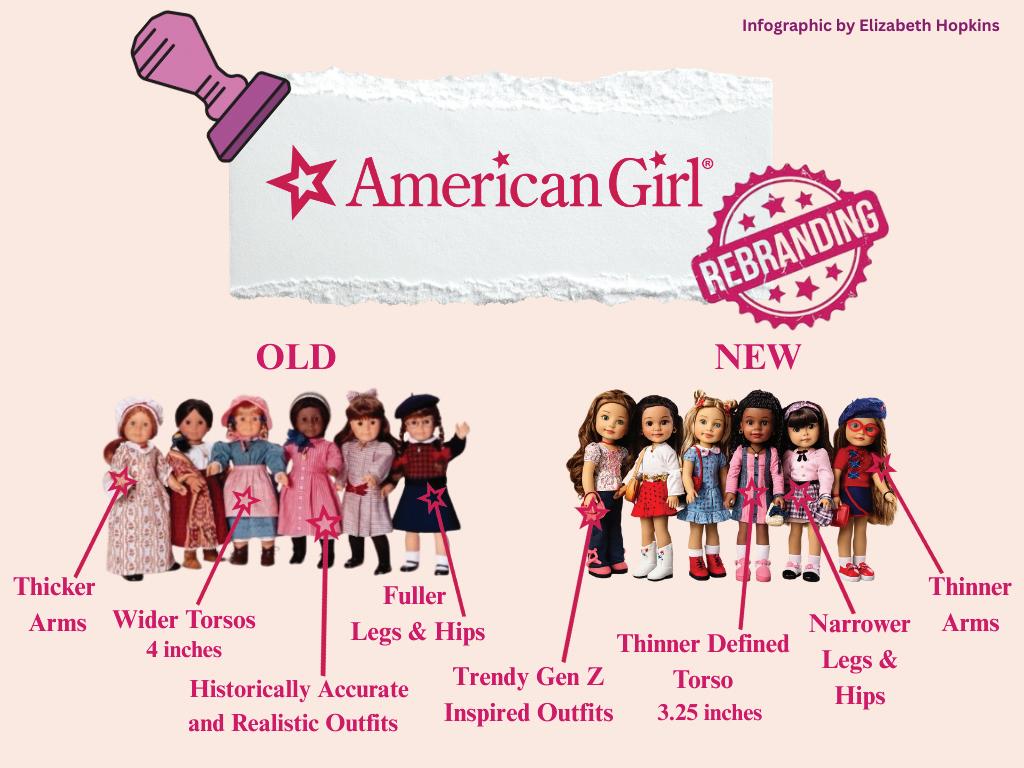
At the start of 2026, the toy manufacturing company Mattel celebrated the 40th anniversary of its American Girl doll. Mattel’s American Girl doll brand focuses on historical and contemporary characters to empower young girls. In early February, the brand celebrated by launching its “Modern Era Collection,” featuring six classic dolls, redressed in modern outfits and accessories.
The overall goal of the revamp was to continue appealing to younger kids and Gen Z while referencing older characters. Mattel’s global head of dolls, Jamie Cygielman, told the New York Times, “We want to spend the year honoring the legacy of the brand and the ongoing legacy of our characters because that’s what first ignited consumer passion. The Modern Era is a creative extension, really meant to celebrate the original historical characters in a different form.”
However, the Modern Era Collection did not appeal to many modern audiences and actually had the opposite effect. The public was quick to notice that the dolls had an overall slimmer look, with thinner arms, hips, legs and even almost an inch off the dolls’ waists from the classics. Quickly, the jokes followed, questioning if the dolls were on Ozempic or not.
According to Today, comments on their social media post announcing the line included remarks such as “Did they… snatch their waists??” and “Kirsten didn’t endure six weeks on a boat across the Atlantic and lost her best friend to cholera for you to give her the Ozempic treatment and space buns.”
at the University of Sussex in the United Kingdom found that girls ages five to eight who were exposed to Barbie dolls reported lower self-esteem and a greater desire for a thin body than those who weren’t exposed to the dolls. In addition, a study at the Behavioral Science Institute found that girls ages six to 10 ate significantly less after playing with thin dolls than girls who played with normal-sized dolls.
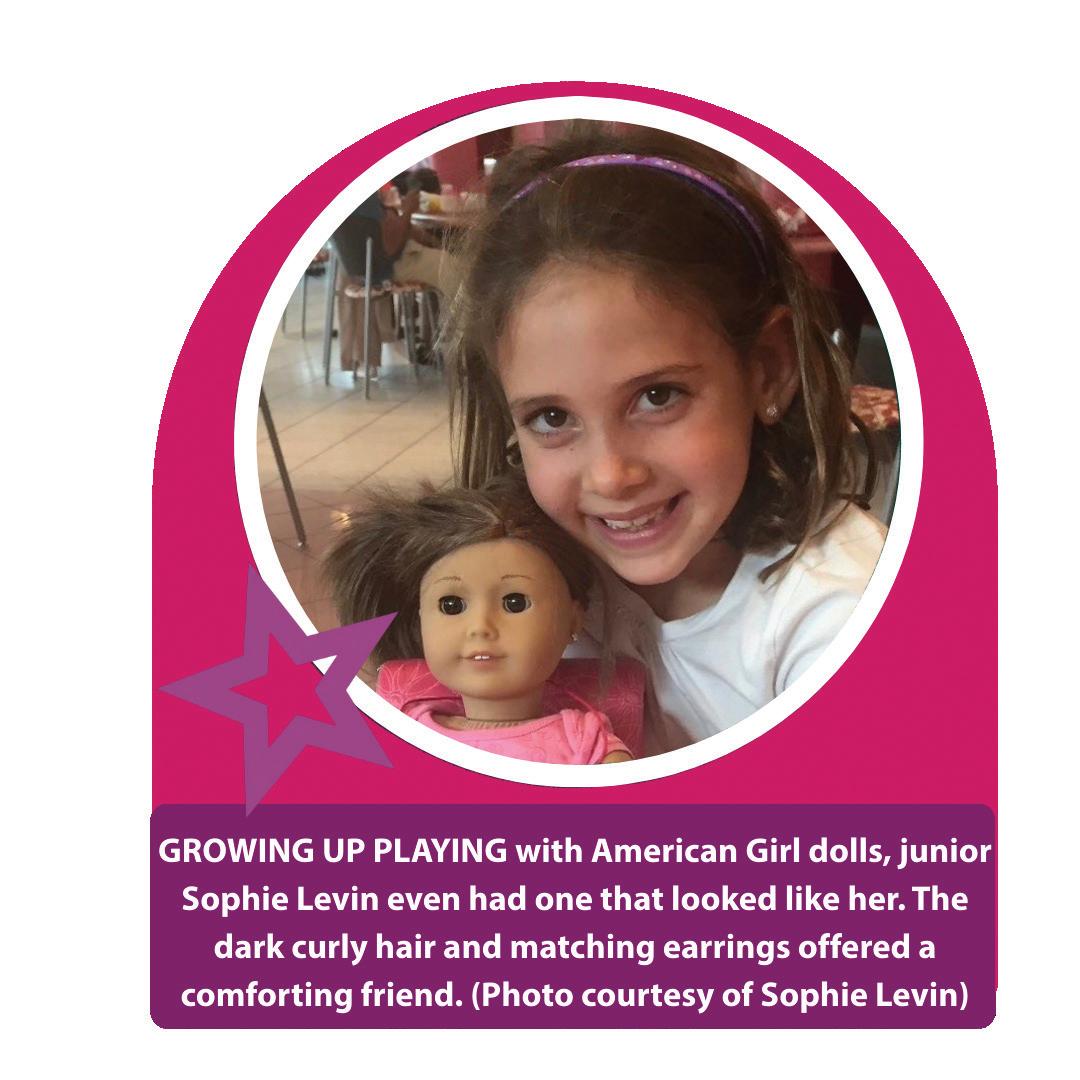
Junior Sophie Levin reminisces about her childhood when she played with American Girl dolls. For Levin, they were more than just dolls.
“I got [an American Girl doll] with curly hair and ears pierced to match me for my fifth or sixth birthday. I just loved how it looked like me, and I even had matching outfits,” Levin said.
Levin remembers thinking of her doll not just as a toy, but as a companion throughout her childhood, including her doll in every activity.
“We would dress up together, and I would take her around and play with her anywhere. I had an ice cream truck, a doll house and all the accessories to go with her,” Levin said.
The public also picked up on the difference in the dolls’ style since their first release in 1986. The rebranded dolls’ looks give the impression of being changed to adhere to new modern-day styles, specifically Gen Z aesthetics. According to data from a March Bark survey, 64 percent of students believe that large-scale brands do change their products to appeal more to Gen Z. The backlash in the American Girl rebrand is not the first time Mattel has been chastised for its dolls. Mattel’s Barbie doll was created in 1959, and its design embodied unrealistic, idealized beauty standards. Barbie’s tall, thin physique and blonde hair accompanied a seemingly perfect life: popular, successful, wealthy and always happy. The Barbie doll has been condemned for decades and even triggered what is now referred to as “Barbie Doll Syndrome,” a type of body dysmorphic behavior, in which an individual strives to attain impossible body standards, aiming for the body of a Barbie doll (Hektoen International Journal of Medical Humanities).
The consequences of playing with toys, specifically dolls, with unachievable physical traits, can be significant. A study
the initiative to bring body awareness and positivity to their school campuses across Marin.
At first, Levin’s doll, with curly brown hair and familiar features, marked the first time Levin felt understood by a toy she owned. However, even in early childhood, comparison made its way into Levin’s playtime. Around the same time Levin had gotten her doll as a gift, her sister Haley also got one. The only difference between their dolls was that Haley’s doll had long blonde hair and blue eyes, to look like her younger self.
“I would always think that [Haley’s] doll was prettier because her doll was blonde and had blue eyes. Honestly, sometimes I would compare myself to
“I used to always compare myself [to my dolls] when I was really young. I get it now that they're just dolls and I'm a human,” Cabello said. “I cannot physically look like that.”
As someone who herself struggled and is an advocate for body positivity, Cabello is concerned about the American Girl dolls’ thinner look.
“[The change] could impact the future generation,” Cabello said. “That would not be a good thing because I don't want people to have eating disorders or body dysmorphia because it's not a good thing to promote.”
In conjunction with this, Redwood alum and current Marin-based therapist Diana Benjamin notes the important role dolls play in portraying healthy beauty standards.
“Dolls are really important because, for a girl, they are what a female body should look like,” Benjamin said.
As a professional working with adolescents struggling with disordered eating, Benjamin has witnessed the many factors in a child's life that influence their self-esteem and how early they begin to internalize messages about their body.

“It can be as early as three, but researchers often look at ages five to eight. That’s when a little girl shifts from mainly looking at her mom as the representation of a woman to also looking at peers and dolls. That age range is the most powerful,”
According to Zero to Three, a nonprofit organization offering parenting advice from professionals, children begin playing with dolls around ages two to three and are encouraged to do so. So when a toddler is given a thin doll, what
“If you’re playing with a Barbie or another very thin ideal of a female body, and your mom is insecure about her weight, and your friends are talking about appearance, all of that compounds. Kids are hearing messages about looking good or being thin,” Benjamin said. Benjamin has also noticed the shift to a slimmer physique
in the American Girl dolls.
“I think [the change] is profound. American Girl dolls have been around for a long time; mothers were playing with them. I looked at the new ones, and they’re pretty thin,” Benjamin said. She also referenced the size of the doll's head, which appeared disproportionately large relative to the body, often referred to as the “lollipop look.” This “lollipop look” is often correlated with anorexia or being underweight.
“The dolls looked significantly smaller to me. They almost looked like what anorexics call a ‘lollipop,’” Benjamin said. When toy companies, such as Mattel, adjust original doll measurements to present a slimmer figure, there are serious impacts that go beyond toy aesthetics. Given the susceptibility of developing children, the girls playing with these dolls begin to conceptualize that this is how they should look, even if the representation is unrealistic, and the effects can be detrimental.
“Anorexia is the deadliest psychological disease. [Anorexia] is not dying necessarily from physical problems, although you can; it's suicide,” Benjamin said. “[Suicide caused by] the depression and [feeling of ] never being enough. It's really hard once that negative body image gets imprinted [in your head] to get it out.” Even with the potential harm, avoiding dolls altogether seems unrealistic. According to Talker Research, over 63 percent of parents reported that their children play with dolls or toys. But just because avoiding dolls may be unrealistic, doesn’t mean avoiding the potential harm is.
“Ideally, a parent would get more average-looking dolls because the girl sees [the doll] and kind of sees herself in it,” Benjamin said. “But if you are going to choose to buy one of those thinner ideals, are you looking at all things going on? Are you monitoring your child's internet use? Are you talking about eating when you're hungry and stopping when you're full, or is the mother talking about dieting?”
While dolls may seem like simple toys, the messages they send are complex. As Benjamin suggested, the unrealistic standards that dolls present can influence how children see themselves long before they are old enough to truly understand those messages. The dolls may have gotten smaller, but for a little girl who just wants to see herself in the toy she is holding, the message it sends is nothing but small.
bark@redwoodbark.org
As the 18 California youth suing their government walked into the James R. Browning courthouse on March 5, 2026, supporters cheered and held up signs along the courthouse walls. The courtroom, the Ninth Circuit Court of Appeals, was packed to the brim. The 18 students had spent their lives being affected by climate change through fires, flooding, extreme temperatures and more, and were taking a stance through litigation.
Three years ago, these 18 kids from across California filed a lawsuit against the Environmental Protection Agency (EPA), in Genesis v. EPA, asserting that the EPA had “discriminated against them as children by discounting the economic value of their lives and their future when it decides whether and how much climate pollution to allow.”
But they were far from the first to take climate change to the courts; in fact, Marin County filed a lawsuit against 32 fossil fuel companies nine years ago, including Chevron and Shell, to hold them accountable for climate deception and the harmful effects of climate change. These are just two examples of climate impact litigation cases that are still open and in progress today. Impact litigation is to create real change surrounding the subject, in this case, climate change and the EPA or the fossil fuel industry, beyond the lives of the individuals in the case.
Redwood parent Megan Acevedo is secretary for the board of directors of Our Children’s Trust, a non-profit public interest law firm dedicated to representing youth in the courtroom as they fight for their climate rights. Our Children’s Trust is representing the youth plaintiffs in Genesis v. EPA.
Board of Education in that both had the goal of creating major change beyond the individuals in the case.
On March 5, Our Children’s Trust appealed the dismissal of Genesis v. EPA at the Ninth Circuit Court of Appeals in San Francisco. They are now awaiting a decision.
Arishka J., a 17-year-old plaintiff in Genesis v. EPA, has been involved in activism for several years before starting with climate litigation.
“I realized that [activism] wasn’t enough. A lot of times, governments just wouldn’t listen to kids, even when we used activism, even when we organized protests and even when we really spoke
At the hearing on March 5, supporters gathered to cheer on the plaintiffs and join them in the courtroom. Dave Alba, the state coordinator in Oregon with the Progressive Democrats of America, was one of them.
“I’m here to support the youth in their initiative…because I think it’s one of the most impactful ways for addressing climate change as a protected class. It’s a more expedient way to move the courts and the agencies involved to change,” Alba said.
For the plaintiffs, there were mixed feelings going into the hearing.
“I was really nervous at first, but then I was also happy, and I was really grateful that we had these amazing people representing us,” Arishka said.

Like many of the plaintiffs, Arishka experienced climate change-related events like rampant wildfires and extreme temperatures throughout her youth.
During the hearing, the judges heard each side’s oral arguments.
“It was a little bit rough to see some of the judges’ reactions to what was being brought up, but at the same time, I’m pretty optimistic, because regardless of how this hearing goes, I think that the future is really bright for this case and just generally these kinds of Youth Climate cases,” Arishka said.
14-year-old plaintiff Ione W. first experienced the effects of climate change at five years old when her house burned down in the Tubbs fire, which started in Calistoga and spread to Sonoma, Lake and Napa counties. This event developed her interest in the subject of climate change. In Ione’s community, fires are a yearly occurrence. On top of that, droughts and flooding are common as well.
“There’s no season where there’s nothing to worry about…I heard about all these things that are happening around the world and around me for years and years and years, and the only real changes I ever experienced were ones where people, where children, confronted adults and confronted the law and the government,” Ione said.

early ‘60s that this was going to happen. The Earth was going to get warmer, sea levels were going to rise and natural disasters would increase…It’s just appalling to realize how preventable the situation was,” Tsai said.
According to Tsai, companies have also engaged in greenwashing campaigns, which use buzzwords like “eco-friendly” or “green” to improve public image without any substantial change.
“[Climate impact litigation is] always going to be an uphill battle,” Acevedo said.
Our Children’s Trust represented children in 17 different court cases in 2025, including Genesis v. EPA, which was dismissed twice by the same judge.
“You tell 50 versions of that story, and two of them stick, and eventually one of them makes it to the Supreme Court, and then you have Brown v. Board,” Acevedo said.
Brown v. Board of Education was a landmark Supreme Court case that
“Regardless if we won or lost this or it got dismissed after appeals or not, I think that the act of us being able to have our stories shared and represented in court is just already such a big win for us,” Arishka said.
Arishka’s first memory of climate change was during wildfire season, when she was 10 years old.
“The sky was completely orange because it was wildfire season. And I was like, ‘Wow, this issue is something that’s really close to me. It’s affecting me. It’s affecting communities in California.’ Just seeing the wildfire season there was really, really tough. It really made me realize that

Marin is no stranger to climate-related extreme weather events like flooding and fires. According to a recent Bark survey, 15 percent of students’ health has been affected by smoke, and 21 percent of students’ lives have been significantly disrupted by wildfires while living in Marin.
Dana Armanino, the Sustainability Planning Manager at the County of Marin, has noticed a shift in community members’ priorities since extreme weather events have become more apparent.
“[Climate action has] become a more urgent need, and it definitely has gotten people’s attention,” Armanino said.
According to the Marin County Flood Control District, “Rising sea levels and more severe storm flooding as a result of climate disruption are impacting Marin County now.”
Marin County has taken action through sustainability programs, but also through legal action by filing a lawsuit against 32 fossil fuel companies, including Chevron and Shell. One of their main allegations is climate deception, meaning that the companies knew about the harm their product was going to cause and didn’t take action.
Carolyn Tsai, Deputy County Council for Marin County, is one of the attorneys representing the county in the Marin County v. Chevron et al. case.
“The core allegations here are climate deception, and the idea is that the fossil fuel companies have known since the
“One of the chief goals is accountability…It’s taxpayer money that’s being used to fund the resilience efforts and the repair and the modification and all these massive changes to public infrastructure that need to happen to protect people from these damages…and to have the fossil fuel companies subsidize that, it feels like the just result,” Tsai said.
According to Tsai, the defendants’ main strategy has been to delay proceedings. The case has been pending for nine years.
“If you appeal everything all the time, then it’s just delay and delay and delay… They managed to spend seven years on the dispute about whether these cases should be in the federal courts or state courts. That’s a long time,” Tsai said.
The defendants have also taken advantage of the new administration in their strategy.
“Now their new tactics under Trump are also to utilize the favorable composition of the Supreme Court and to utilize Republican controlled Congress…. Trump allies and Congress have proposed legislation that would effectively make litigation like this unlawful,” Tsai said.
Hearings and court documents are generally open to the public.
“What I think is most empowering about litigation is that it really allows the public in in a way that other policy or legislative efforts toward working towards similar goals may not. The defendants have to go on the record to the public, explaining their actions,” Tsai said.
By Claire Carbone
According to the Kaiser Family Foundation (KFF), as of 2026, Human Immunodeficiency Virus (HIV) remains a leading cause of death worldwide for women of reproductive age, and yet HIV is not talked about or taught to adolescents. A January Bark survey showed that 41 percent of the student body has not received education regarding HIV/Acquired Immunodeficiency Syndrome (AIDS) prevention at Redwood.
HIV spreads through bodily fluids and attacks the immune system by destroying cells that are vital in fighting infections. If left untreated, HIV becomes AIDS, which is a lifelong disease with no cure.
The HIV epidemic peaked in the 1980s because of a rise in unprotected sex and insufficient birth control mechanisms. According to Very Well Health, the birth control pill was approved and began selling in 1960. This let more women have autonomy regarding their sexuality, but neglected physical contraception, like condoms, which led to higher transmission rates of HIV.
Additionally, people in the 1970s were beginning to accept more people in the LGBTQ+ community, but they still weren’t receiving equal rights like healthcare and education. According to the National Library of Medicine, 0.1 percent of articles in their database between 1980 and 1999 mentioned the LGBTQ+ community. Since the community didn’t have the education regarding their sexuality, they had more unprotected sex, which is a main contributor to the transmission of HIV.
discrimination towards the gay male community. As EBSCO reported, the Centers for Disease Control and Prevention (CDC) changed the name to AIDS in 1982 when cases began to appear among all sexualities.
Students receive sexual education as freshmen but can continue to learn more through student-led programs like Peer Resource, which aim to inform students about substance use and misuse, and sexual and mental health. French, social studies and Peer Resource teacher Nicole Plescia described the importance of these peerprovided programs when it comes to educating the student body.
“[They’re] able to appreciate this information so much more when [there’s] an eleventh grader or twelfth grader [teaching,] so kids are really able to feel comfortable and ask questions,” Plescia said.
Senior and peer resource student Serene Kempler expressed her thoughts on HIV education for students.
diagnoses, and yet statistics like this and medical help for women are still being seen as low priority.
“We should have more women’s health clinics. Not gynecology, but actual whole clinics about women’s health, so that is why I like the women's HIV program at UCSF,” O’Keefe said.
Don’t let someone have that power over you, over your decisions, over your body, your rights, your mind.
Billie O’Keefe, Medical assistant at UCSF
“I think that students [sometimes] feel really intimidated by adults and older people working at the school, like teachers, and I think that it is really helpful to have students who are educated on this. It's easier to talk to a friend than talk to someone who feels like they have a

Although students receive sexual health education as ninth graders, there are still gaps in the education they receive, which is reflected in the January Bark
Kempler reflected on this lack of education, even while participating in Peer Resource and being educated on sexual education in social studies.
“HIV [is] something really difficult to manage, so I definitely think that our curriculum in peer resource, as well as the social issues class, should have more education on HIV because it's a really intense thing that people go through, and it's not talked about enough,”
The lack of education around HIV has risen because of the misconception that the infection isn’t prevalent anymore. Billie O’Keefe, medical assistant at the University of California, San Francisco (UCSF), specializes in pediatric care and explained some of the HIV misunderstandings in
“I think that the young people today still think of it as [something of] the past, even though now we’re having a lot of new HIV diagnoses with younger people, it’s not talked about enough. The education is not there,” O’Keefe said.
O’Keefe explained how women specifically are not taught properly about their sexuality and health care, especially due to the stigma that
“Women’s health has still not been researched, and it’s not talked about. Especially when it comes to HIV. There is a stigma that women are not at risk because ‘they don’t have as much sex as men.’ And that hasn’t changed, and I don’t understand why that hasn’t changed, but we continue to not have proper healthcare,” O’Keefe
According to the CDC, as of 2019, women aged 25 to 34 accounted for the highest number of new HIV
The Women’s HIV Program (WHP) at UCSF was founded in 1993 as the first program in the nation that specifically caters to women and girls living with HIV. O’Keefe mentioned how the clinic goes beyond medicine.
“They treat the whole body, mind and spirit along with medication. Even though patients are taking their medication, they still have healing to do. We still have patients coming through the back door because they [don’t] want anyone in the lobby to know they have HIV. So there's still a lot of shame on women [with] the diagnosis. It goes beyond medicine,” O’Keefe said.
This shame that women have experienced with the diagnosis has come with the misconception that sexual health, for women particularly, is a taboo topic that they should avoid. The peer resource class commonly holds lunchtime programs to educate the student body on sexual health, like their “Safe and Sexy” event that took place on Feb. 13. Kempler described how the peer resource class is trying to eliminate this stigma through programs like this.
“[We’re] kind of reducing the stigma around getting condom certified and using condoms correctly, and I [think] that's really powerful, especially for high schoolers. I think everyone deserves to have sexual health education, and it shouldn’t be some taboo topic,” Kempler said.
O’Keefe mentioned how this shame and stigma built into sexual health has impacted women’s abilities to take power over their own sexuality.
“There’s always that power, don’t let someone have that power over you, over your decisions, over your body, your rights, your mind and be really secure with yourself,” O’Keefe said.
Programs like Peer Resource are trying to reinforce that sexual health and sexuality don’t have to be shameful, but something to be educated on. Even so, departments sometimes have mandates on this education that restrict certain curricula.
“[The curriculum I teach is] mandated by the district. All kids and all ninth graders in the district should all come out of social studies and ninth grade health class with the same information. How we do it varies, but what we do is mandated,” Plescia said.
Although the education surrounding HIV can be restricted, the future is bright for more transparent conversations about HIV. The Fiscal Year 2026 (FY26) report was first released in May of 2025, and planned to cut $1.7 billion out of domestic HIV care, treatment and prevention program funding for 2026. In Feb. 2026, however, Congress rejected this budget cut, and the funding towards HIV care will remain the same as the FY25 plan of $1 billion, according to the KFF.

With this funding, education regarding HIV for adolescents can be more accessible in schools and resources will stay available to protect the youth.
The Tamalpais Union High School District (TUHSD) Board works to make decisions that support a positive environment for all members of the community: students, staff, parents and others. The board holds bi-weekly meetings to discuss, plan and implement initiatives to improve the district community. Recently, however, many board meetings and decisions have reflected a discrepancy between trustees’ plans and the community.
On March 5, 2026, the principal of Archie Williams High School (AWHS), Jacob Gran, emailed families in the TEAM Academy program to inform them of a reduction from a two-year program of juniors and seniors to a one-year program solely for seniors.
The TEAM program, first established at Tamiscal High School, has been an important academic program in the district since 1990. Now offered at Archie Williams, TEAM offers unique, nature-based courses such as wilderness medicine and workplace learning, alongside required classes for graduation.
The program’s reduction occurred after the board mandated budget cuts at Archie Williams and other schools across the district. Principal Gran executed the reduction to save money and prevent spending into district reserves.
The decision came at very short notice for the program. Current TEAM teacher Diana Goldberg was caught unaware by the decision.
“I was blindsided at a meeting I requested about my maternity leave by a unilateral board decision to cut our program and staffing in half without any conversations with our community at large,” Goldberg said. “I have worked with five different principals and many administrators over the years to adapt and build this program, and on the precipice of my leave, I was told it will change to a model that is not staffed or sustainable without a seat at the table.”
During a board meeting on March 10, 2026, Archie Williams students enrolled in the program filled the Kreps Conference Center to comment on the reduction. Student Trustee Evelyn Jones, a junior at Archie Williams, spotlighted comments from TEAM members during their public comment in her student trustee report.
“One point that really struck me was [from] Sunny Tripathy. I think a really valuable point that
[Tripathy] made is that students in TEAM wouldn't get the full time to learn the necessities and leadership skills if it were just reduced to a oneyear model for senior year, since [seniors] are focused so heavily on college applications and their future,” Jones said during her report. “Keane Olshansky also talked about the importance of finding balance between backpacking, school extracurriculars and leadership. And I just think that is such an amazing life skill.”
Since Gran released the decision without public notice or board input, community members like parent Brendan Mullins were concerned about the lack of board discussion and oversight.
“On March 5, Archie Williams principal Jacob Gran announced via email that the TEAM Academy at Archie Williams would be cut from a two-year program to one year, effective immediately, with no discussion, no vote and no feedback from key stakeholders. [Principal Gran], the question we are asking tonight is not only about the future of TEAM, but about governance,” Mullins said during public comment.
An estimated 22 speakers publicly spoke out against the reduction of TEAM. The reductions, although necessary, hit the heart of Archie Williams: the student body.
20 minutes is allocated for each public comment section during board meetings (one section for comments on each agenda, one section for comments not on the agenda). Since the public comment for topics not on the agenda had a total of 40 speakers (two online, 38 in person), speakers were allocated a 30-second time limit to speak on non-agenda subjects like TEAM.
Limited speaking time at the board meeting on March 10, 2026, has exemplified a continued trend at board meetings in recent months. During the months from Nov. 2025 to Dec. 2025, community members expressed concerns over public comment and representation during the discussion of the plan to co-locate two alternative-education schools: San Andreas and Tamiscal.
A community discussion on the co-location plan was held during a trustee meeting on Nov. 18, 2025. The TUHSD board of trustees met at the Tamalpais High School (Tam) Student Center to discuss the proposal for the two alternative-education sites
for the 2026-27 school year. The community had distinctive reactions to the proposal: 26 emails were sent to the board regarding the plan, and 46 public speakers expressed concern during the meeting. The board ultimately voted 4-1 to co-locate the two campuses on Dec. 15, 2025. The board cited deficit spending as the reason for this major cut; co-location will save the district about $2.2 million.
At the Nov. 18 meeting, San Andreas student Kaylen Holder described how the school provided her with the resources to attend college.
“I can say confidently that without access to San Andreas in high school, I would not have graduated high school, nor would I have continued on to College of Marin. The caring staff, the small class sizes and one-on-one counseling are not luxuries. They are lifelines,” Holder said. “This is what makes San Andreas a safe, traumaresponsive environment for students who would otherwise be left behind, even for students who choose not to attend college. San Andreas gives them a real chance to earn a high school diploma.”
Holder believes co-location would change the one-on-one approach that San Andreas offers to students who are in need of credit recovery for graduation. The district plans to lay off 4.6 full-time employees (FTE) teachers and 1.5 FTE campus/ classroom support staff (a full-time employee generally refers to an employee teach five classes, or one FTE; employees who teach part-time employees who teach three or less classes may be measured as 0.4 FTE or less), which will decrease student access to one-on-one counseling services, a key part of San Andreas high school, which accommodates for students who usually have outside factors that make it harder for them to attain graduation credits.
“The idea of merging San Andreas and Tamiscal may look practical on paper, but in reality, it removes the only trauma-informed high school in the district. Tamiscal is not structured like San Andreas; it is an independent study program designed for students who can work on their own. Its approach is entirely different,
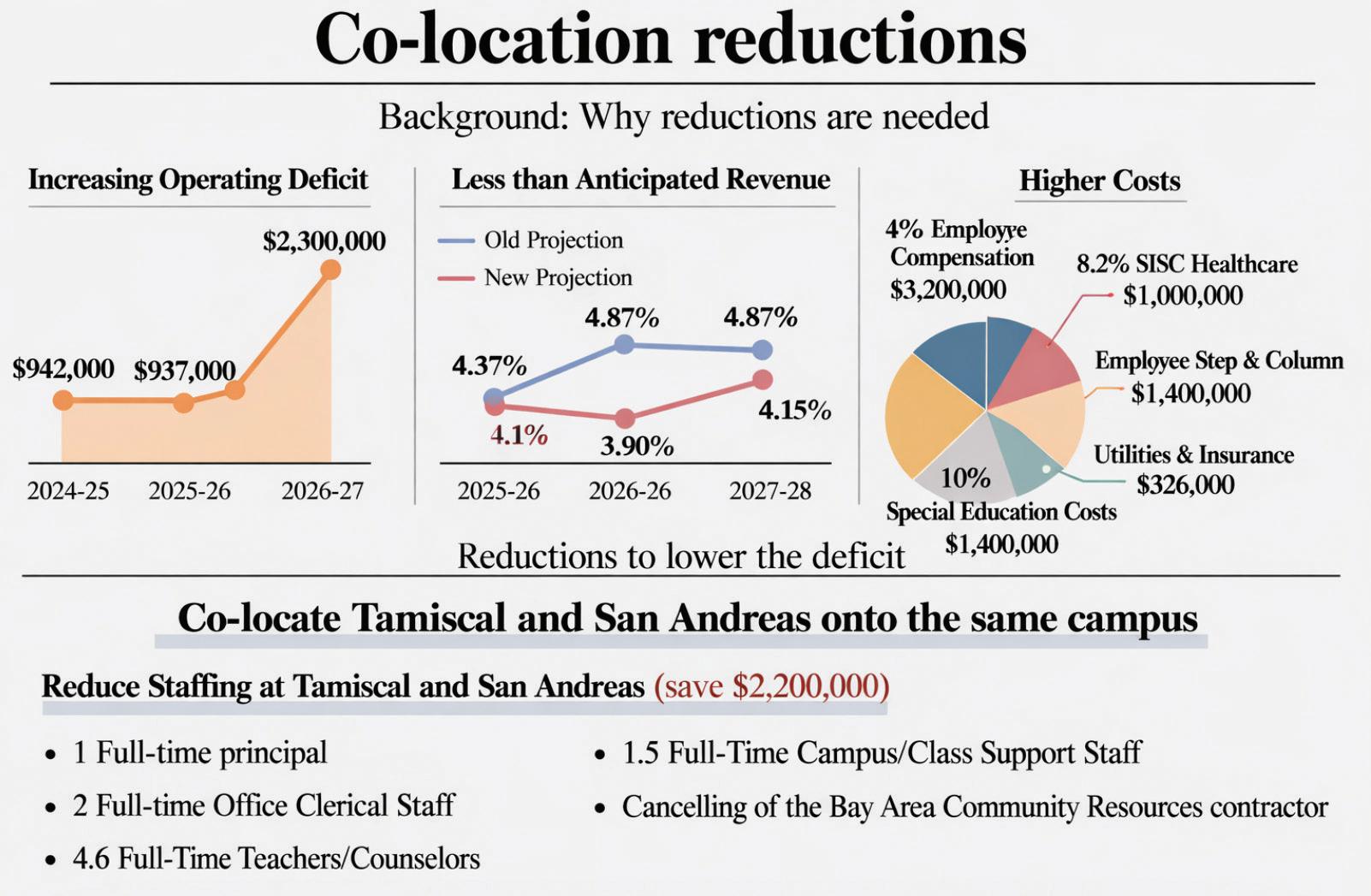
focused on independent work without the consistent one-on-one connection and intensive support that students at San Andreas rely on,” Holder said. Holder was unable to finish her
By Cian

Cian Kelly
Tamiscal, sent an email to board president Cynthia Roenisch.
“While Mr. [Kevin] Saavedra shuffled papers on his desk and desperately avoided eye contact with
hadn't been for the interventions they received at San Andreas and Tamiscal. You continue to demonstrate that your weird penchant for asserting control and power outweighs any actual good you are serving to our schools. Take a look at yourself, Cynthia. Do you like what you see? Or do you see what the rest of us do—a sad old woman who must have experienced some deep trauma that makes you want to find joy in being a petty b****. The emotional pathology of a bully and a narcissist, not a good educator,” Gottlieb said in an email.
Board trustee Kevin Saavedra expressed concerns about the email, due to Gottlieb’s rhetoric, especially the reference to ‘deep trauma,’ as harmful toward board
“It was really disgusting communication at us. It's just not okay. It's surprising, adults using technology and the internet to bully people; that's crazy,” Saavedra said.
Gottlieb later learned of a trauma previously experienced by Roenisch, causing her to follow up her email to Roenisch with an apology, expressing that she did not know about Roenisch’s past traumatic experiences. In an email response to Gottlieb on Nov. 19, 2025, Saavedra described the action he took following Gottlieb's
“I circulated your email to a few friends who live in your community, those who may know you, soliciting perspectives about you. Would you like me to share the feedback? Would you like to know what they have to say about you? I've gotten a few responses and they are spicy. As for my actions during the meeting Tuesday, I wasn't 'shuffling papers', I was 'clerking'. That's what you do when you're the Board Clerk. Go f*** yourself, you stupid old crone,” Saavedra wrote in an email.
For over a year, Tamalpais High School has used full-time intervention coordinator Kyle Jackson as the intervention coordinator for the Black Student Success Team (BSST), also known as the Hub, replacing the outside contractors that were denied renewal on June 3, 2025. However, on Feb. 24, 2026, Kyle Jackson resigned from his position as the intervention coordinator for the Black Student Success Team (BSST).
On March 10, 2026, parents Jennifer Nassiri, Sasha Bungay and others expressed concern over the resignation of Jackson.
“On Feb. 25, 2026, BSU students walked out on their own black excellence celebration in protest of Kyle's departure,” Nassiri said. “You owe this community accountability for the poor planning, disrespect to the community and

for the way you treated two outstanding educators of color [Paul Austin and Tenisha Tate-Austin], and the kids who need them the most are the ones paying for your harm.”
Bungay expressed additional concerns about the Hub’s longevity.
“We have heard you say that the BSST and the Hub will continue and not go away. But, it is entirely unclear what your overall strategy or plan for this is; please address the deep and long- standing educational inequities for students of color with a plan that is sustainable over time,” Bungay said.
Jackson was an in-house employee hired for the BSST after the board voted 3-2 to non-renew the contracts of outside contractors Paul Austin and Tenisha-Tate Austin on June 3, 2025. The decision to cancel contracts for Paul Austin and Tenisha Tate-Austin caused widespread dissent within the Tam community. The Hub is a space for Black students to receive educational support and find community at Tam.
Based on YouthTruth data, the Hub has been able to increase students’ feelings of belonging and collaboration. In a survey conducted in Oct. 2024, Black students rated their sense of belonging and collaboration at 3.26. In Oct. 2025, after implementation of the Hub, this rating rose to 3.41.
“There is a real need at Tam specifically, primarily for kids coming out of the Sausalito-Marin City School District [for this aid],” Saavedra said.
To combat educational disparities and support Black students at Tamalpais High School, where approximately 50 percent of Black students in TUHSD attend, former superintendent Tara Taupier purchased contracts for Paul Austin and Tenisha Tate-Austin, two contractors for the Hub who provide academic support and mentorship to improve attendance rates and grades. The contract that Taupier purchased was valued at around $250,000, exceeding her authorized $40,000 contracting limit.
“Our superintendent is not authorized to execute any contract greater than $40,000. It's not clear, but someone put those [contracts] into place, and they tried to push them through the consent agenda as a purchase order, and they weren’t even [distinguished as] contracts. All of us [board members] were like, ‘What the hell just happened here?’ [So] we pulled them off to talk about them,” Saavedra said.
According to board policy 3312, the Superintendent or designee may enter into contracts on behalf of the district. All contracts in excess of $40,000 must be approved or ratified by the Board of Trustees. Since the contractors purchased were valued at approximately $250,000 and were not approved by the board, Saavedra and other trustees were shocked to learn that these contracts had been arranged
without their knowledge.
“They tried to slide it in through the back door, so we ended up bringing that back with instruction, which is basically [saying] ‘you've got a year and you need to plan this transition to a full-time employee.’ Instead of taking that instruction and taking it forward, she tried to throw us out there so that we could be castigated in public,” Saavedra said.
Trustee support was wavering for renewing these contracts. Trustees cited concerns about the cost of the contractors’ services, as well as legal issues wrought by the contractors, since they didn’t undergo onboarding procedures such as fingerprinting and insurance requirements that are required for district employees. Community members, however, felt that the impact of the two contractors outweighed the problems.
“31 public comments spoke in support of the BSST/HUB and [contractors] Paul and Tenisha's work, arguing the data is proof and urged the Board to continue this work,” according to the minutes approved by trustees and published by TUHSD from the June 3 meeting.
The board ultimately voted against contract renewal in a 3-2 decision. The district replaced these contractors with in-house employees.
“Basically, we canceled two contractors making $250,000 and replaced them with a great guy who was making $90,000, and the program results are better. But it was through that process [of cancelling a contract we didn't approve] that people just kind of got whipped up,” Saavedra said. “What was unfortunate about [the situations] is our [former] superintendent [Taupier] left false impressions unaddressed, and so then we were really put in a position where we were trying to tell the community what's going on.”
The nonrenewal of the Hub and BSST contractors at Tam sparked a wave of division between community members and trustees.
Although intervention coordinator Kyle Jackson replaced the contractors, the Hub is again facing challenges in finding someone to run the BSST at Tam.
To read more visit www. redwoodbark.org in the Feature section
ckelly@redwoodbark.org
En Marin hay muchos restaurantes mexicanos diferentes, pero uno que se ha vuelto cada vez más popular es Tacos La Lupita. Situado en el pequeño centro comercial cerca de Trader Joe's en Greenbrae, el restaurante ofrece comida mexicana rápida, fresca y sabrosa. Para esta reseña, decidí probar tres de los platos más populares del menú.
Para empezar, probé su plato más popular y uno de sus platos más conocidos: los tacos de queso. Estos tacos se sirven de a dos y están hechos con tortillas de maíz fritas a la plancha, con la opción de elegir entre ternera, pollo, cerdo, gambas o su opción vegana, boniato, además de coliflor y frijoles negros. Además, todos los tacos incluyen queso Jack, salsa roja, cebolla roja y cilantro. En general, los tacos estaban fenomenales y llenos de sabor. Son una opción estupenda si buscas algo sencillo pero delicioso. A continuación, probé el calzado, que es una mezcla entre un burrito y una quesadilla. Está hecho con una
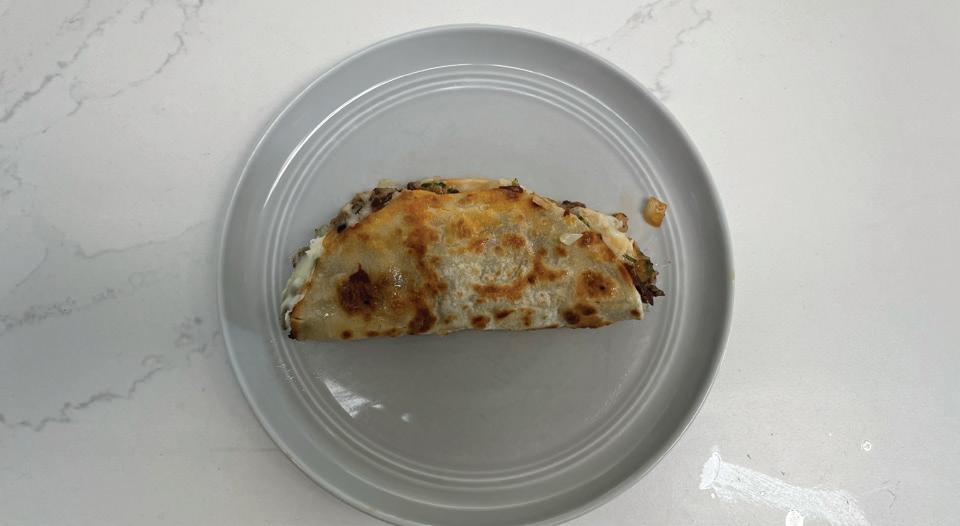
tortilla de harina prensada y a la plancha, rellena de frijoles negros, queso, salsa roja, guacamole, cebolla roja y cilantro, junto con la carne que elijas. El calzado era bastante grande y estaba repleto hasta el tope. Los frijoles y el guacamole le daban cohesión, aportándole una textura más cremosa, mientras que la tortilla tostada le daba un agradable crujido. Era un plato tan sustancioso que parecía una comida completa por sí solo.
Por último, probé el burrito, otro clásico del menú. El burrito incluía muchos de los mismos ingredientes que los otros dos platos, como frijoles, carne, salsa y otros ingredientes. Era bastante grande y estaba lleno de sabor. Cada bocado tenía un buen equilibrio de ingredientes y, debido a su tamaño, es una de las mejores opciones asequibles del menú.
El menú de Tacos La Lupita también ofrece muchas opciones además de los tres platos que probé. Los clientes pueden pedir tacos callejeros, bowls, quesadillas, nachos con guacamole o salsa, así como bebidas como agua embotellada, Jarritos, Coca-Cola mexicana y Coca-Cola
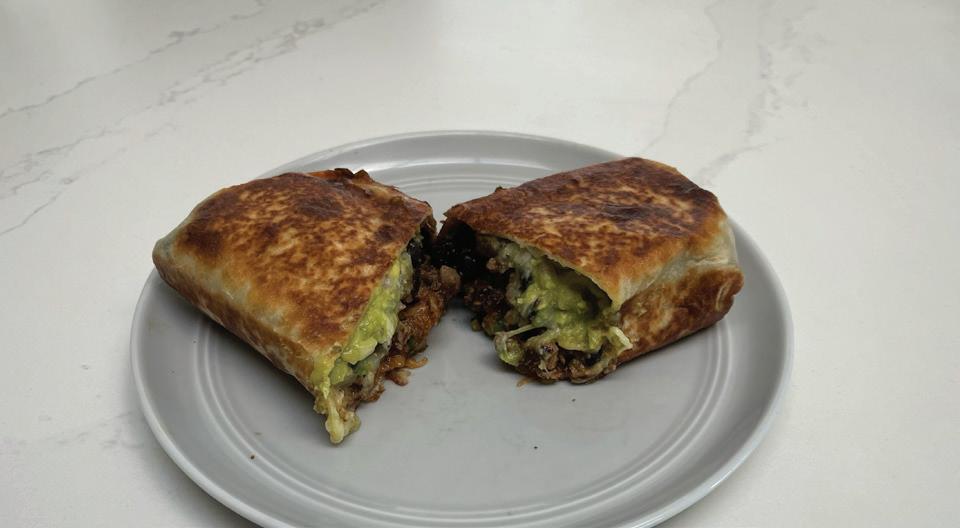
CALZADO CORTADO POR la mitad para revelar el interior lleno de ingredientes.
Light.
El puesto tiene un ambiente sencillo y relajado en medio del caos de los compradores de la zona. Es un local pequeño donde mucha gente se detiene de camino a sus coches después de hacer la compra para tomar una comida rápida o comida para llevar. Los precios son muy razonables en comparación con otros restaurantes de Marin, ya que la mayoría de los platos cuestan entre 10 y 15 dólares, lo que lo hace accesible para estudiantes y familias.
Después de probar varios platos del menú, es fácil ver por qué Tacos La Lupita está ganando popularidad. La comida es fresca, sabrosa y se prepara rápidamente. Y si buscas un sitio local donde disfrutar de una excelente comida mexicana, Tacos La Lupita es la mejor opción.

BURRITO RELLENO DE pollo.
Por Espy Cubillos
En los países hispanohablantes, cuando una adolescente cumple quince años, se produce una transición especial a la edad adulta conocida como la "quinceañera".
Este es un rito de paso centenario para las jóvenes hispanas y se celebra, generalmente con una gran fiesta, para reconocer el hito de madurez y responsabilidad alcanzado.
Los orígenes de la quinceañera se remontan a las antiguas civilizaciones maya y azteca donde se celebraban ceremonias para reconocer momentos cruciales de la vida. En este caso, los quince años representaban la preparación para la edad adulta.
Según NBC News, el Códice de Mendoza, referencia a la vida de los antiguos aztecas, sugería que el evento era tradicionalmente para ambos los niños y niñas. Para las mujeres, simboliza la preparación para el matrimonio y la paternidad, y la ceremonia consistía en presentarse
a posibles parejas. Más tarde, cerca de los 1500s, las creencias católicas y europeas también se incorporan a la ceremonia. Por ejemplo, mediante la misa formal, los vestidos con arcos, la corona y las bendiciones religiosas.
Hoy en día, el evento se ha convertido en una forma en que las familias celebran la llegada de una niña a la edad adulta, permitiéndole usar maquillaje, joyería, un vestido elegante y tacones altos.
Según Texas Monthly, el evento se ha convertido en una industria multimillonaria a medida que las celebraciones siguen creciendo y normalmente tienen capacidad para 300 invitados.
Según Wedgewood Events, para 2025, se celebrarían aproximadamente 500,000 quinceañeras al año en Los Estados Unidos. Aunque parezca una cifra muy alta, la tasa es mucho mayor en países latinos como México que cuenta con la mayor cantidad de quinceañeras del mundo.
La estructura de una quinceañera suele comenzar con una misa religiosa de acción de gracias, en que la
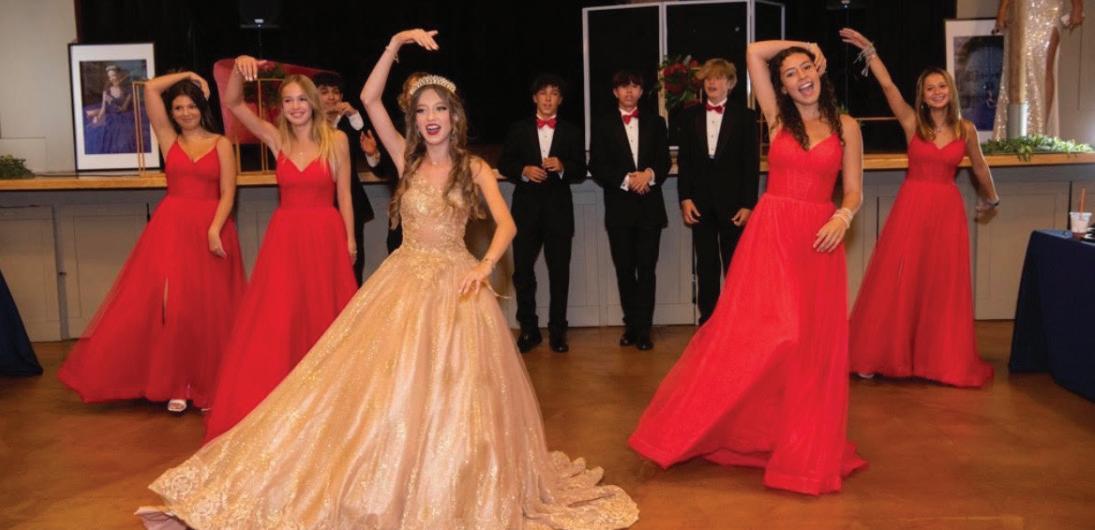
Foto cortesía de Angelica Claire
“MUCHA GENTE ESTABA realmente confundida sobre por qué yo tenía una, porque no creían que una brasileña pudiera tener una quinceañera; [así que] fue genial poder enseñarles a las personas que no hace falta ser una Latina Hispana para tener [una quinceañera] sino que puedes ser cualquier tipo de Latina” dijo Claire.
Artículo y fotos por Owen Scheeline ecubillos@redwoodbark.org oscheeline@redwoodbark.org
quinceañera recibe sus bendiciones y se compromete a mantener su fe. Luego, el evento de paso al momento de abrir los regalos. A veces, depende de la quinceañera, los regalos consisten de una cruz, rosario, una biblia, o otros regalos que simbolizan la religión. Después de este, la quinceañera regala “la última muñeca” de infancia, representando una transición a la adultez dejando atrás la infancia para siempre. Adicionalmente, es una posibilidad que ella reciba una tiara para mostrarla como una “princesa” no solo frente de sus invitados, sino en frente de los dioses.
Angelica Claire, una estudiante de último año en Redwood, recuerda su quinceañera vívidamente como un punto de inflexión crucial en su vida, e incluso dijo que sentirse como una princesa era una de sus partes favoritas también.
“Mi princesa favorita era Belle de La Bella y la Bestia, y mis padres siempre me dijeron que si era princesa, siempre iba a ser Belle, así que el tema de mi quinceañera fue Beauty and the Beast,” Claire dijo.

ESCANEA EL CODIGO QR para seguir leyendo.
By Hilah Brekhus-Lavinsky
Every summer, seniors begin the longdreaded college admissions process. After the most draining academic grind to complete and submit the actual application is finally over, the underlying anxiety amongst the senior class is more apparent than ever. Instead of subconsciously autopiloting to Snapchat when opening their phones, eager seniors develop a habit of navigating to their inboxes in hopes of seeing the long-awaited “status update!” email from one of their applied schools. When that daunting email finally hits their inbox, they have to make the most important decision yet: where to open the admissions decision. The answer to that question is based on a multitude of factors including how much attention you want, how confident you are on your decision and how cinematic you want your decision video to seem on your private story.
Home:
The most private option: in the comfort of your own home, in a familiar environment and surrounded by the support of your family or the walls of your room. This is a great option for multiple different reasons. Despite “maintaining a positive attitude” about your admissions decision, it is unavoidable that some feelings of doubt are going to peak through. If those feelings of doubt are especially high, home is the safest option to prevent potentially bawling crying at school and avoid awkwardness around your peers who got accepted to the same
college. With that in mind, for those people who want everyone to know they got in, this option may not be the right fit. On the other hand, if you prioritize catching that special moment on camera, opening the decision at home allows time to prepare for the most dramatic and aesthetic decision video which will still get you all the attention you need. Overall, opening an admissions decision at home is the safest bet while still allowing you to perfectly capture (and post) that moment for the private story.
School:
Opening an admissions decision at school could go one of two ways: either you are going to be silently sulking (and maybe shedding a few tears) in the back of the class or you are going to be smiling ear to ear while telling your classmates the news. Unless you are considerably confident about your decision or the college is not one that will ruin your day, school is probably not the best place for you. On the other hand, due to being surrounded by all of your friends and peers, this option provides the most opportunities for attention. While you may receive dirty looks from the entire class, opening your decision and screaming in joy definitely will let everyone know you were just accepted. For seniors who don’t prioritize being humble or mindful of others who may have just gotten rejected, a loud big-reveal in class is perfect! If attention is not your biggest priority, opening the decision (while taking into account the students who just got rejected) at school is an acceptable location if you don't mind leaving class crying.
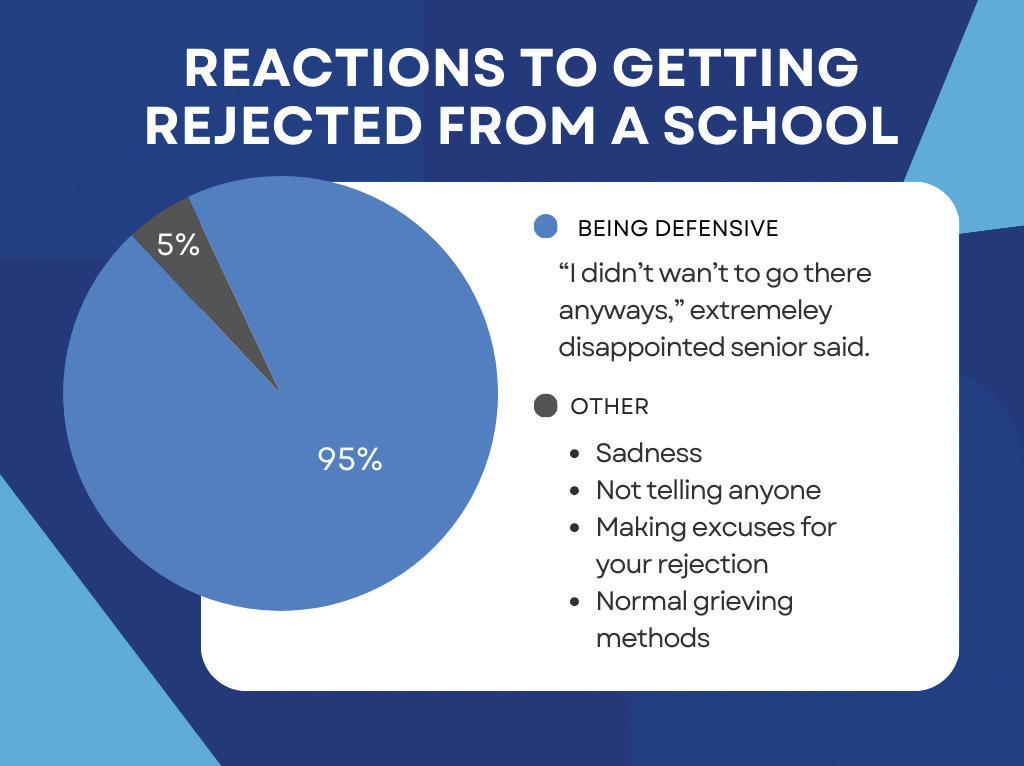
With friends:
Though most people feel very comfortable and supported by their friends, comforting a sad friend is not a skill everyone has. Similarly, if the decision of your admission is going to ruin your mood and lead you to wanting to be alone in your room, this is not the best option. On the upside, you can definitely get an emotional and well planned video out of opening the decision with friends. With this option, there are not many downsides as long as you don’t mind some lingering awkwardness for a few minutes following your possible rejection.
hbrekhuslavinsky@redwoodbark.org
By Elsa Sherman
Super Duper Burgers opened its doors on Feb. 11, 2026, replacing Amy’s Drive Thru in Corte Madera. Super Duper Burgers has slowly taken over the Bay Area, and many were excited about its expansion to its third location in Marin County. But is the fast-food restaurant worth the hype? I decided to find out for myself and embarked on a burger-inspired journey.
Ambiance and service:
Upon arrival at the location, I was greeted by a long line of cars at the drive-thru and a full parking lot. From a glance inside, it seemed 6:00 p.m. was prime time for hordes of families, even on a Wednesday. I decided to utilize the drive-thru as there was no seating indoors, and I wasn’t fond of the idea of standing in a noisy and chaotic room for 20 minutes. That said, the building itself is beautiful, with a modern farmhouse design, and keeping with the foliage-covered roof of its predecessor, Amy’s Drive Thru. While it was busy at the time, Super Duper Burgers will likely become less crowded as the luster of its opening begins to dim.
The Super Burger:
Consists of two patties served on a bun with cheese, lettuce, tomato, onion and the Super Sauce. The meat was juicy and, unlike that of many other fast-food restaurants, wasn’t overcooked. I was especially pleased with the high quality of the ingredients. With a freshly-baked bun and a generous size, the Super Burger made for a delicious entree for a super-duper meal.
Super Shake:
The cookies and cream Super Shake is presented with Oreo crumbs coating the top of a thick and creamy ice cream concoction. The texture is smooth and velvety, lacking the large Oreo chunks that can be common in many similar milkshakes. This made the milkshake much easier to drink than similar ones. The size isn’t huge, but it is surely reasonable for a dessert on top of a hearty meal.
Garlic fries:
A Bay Area staple, Super Duper Burger’s garlic fries are a delectable treat in their own right. Coated with cheese, garlic and oils, the scent filled and

stayed in my car as the most delicious air freshener. The taste was unreal, each fry crispy and perfectly cooked, even after sustaining the drive back to my house.
Super Duper Burgers offers a sizable portion, making their fries perfect for sharing with friends or saving for later. esherman@redwoodbark.org

By Adela Tabak
I went into “Sinners” not knowing anything about the plot, main topics or honestly, anything about the film. Because of this, “Sinners” became one of my favorite movies of the year. A Michael B. Jordan and Ryan Coogler collaboration is always a must-watch, as Coogler was able to capture such a historically dense story while incorporating nuanced elements such as “doubling up” to create twins played by the same actor: Michael B. Jordan. “Sinners” blends horror, historical elements and blues to follow two twin brothers, Stack and Smoke, in their pursuits to leave home, yet are stuck with uncovering the dark truth of their small town of Clarksdale, Mississippi and an evil that awaits to be revealed. This film was unbelievably captivating, an ode to incredible original storytelling that embodies knowledge and talent within each scene. These qualities weren’t unnoticed as “Sinners” was nominated for 16 Oscar nominations, becoming the mostnominated film in Oscar history.

“Hamnet,” directed by Chloé Zhao, illustrates William Shakespeare's life and his battles with family dynamics. Essentially, this story is about William and Agnes Shakespeare’s loss of their son, Hamlet, and is followed by Shakespeare's work to create the fictional play “Hamnet,” which is roughly inspired by the pain he endured when he lost his son. What stood out to me the most was the film's ability to show different ways of expressing grief and how complicated it is to navigate your relationships in the aftermath, incorporating themes of blame and guilt. Jessie Buckey, in particular, gave an exceptional performance with her raw emotion, rewarding her with best leading actress. This film left viewers speechless. It served not only as a knowledgeable experience, but also one that connects storytellers, writers and Shakespeare fans and how similar we may be to these highly praised individuals who experience a very real and vulnerable experience that reflects onto Shakespeare's revolutionary work.

By Maddy Wagner
On March 17, school hallways turn into a sea of green. Shamrocks hang on classroom doors, and history teachers squeeze quick Saint Patrick’s Day lessons into their schedules. Along with the decorations come the same familiar stories: Saint Patrick chased all the snakes out of Ireland, wearing green keeps you from getting pinched by the leprechaun and corned beef is a traditional Saint Patrick’s Day dish. The stories we hear every time on this exact date find us asking of what we celebrate is actually true?
At the center of the holiday is Saint Patrick Ireland’s patron saint, many people are unaware that he’s not even Irish by birth. The real story begins when Saint Patrick was born in Kilpatrick, Scotland. As a teenager, he was kidnapped by Irish raiders and forced into slavery in Ireland. After his escape, he returned to Scotland as a missionary. Because of his work spreading Christianity, he eventually became known as Ireland’s patron saint, which led many people to mistakenly assume he was Irish from the start.
One of the most famous legends surrounding Saint Patrick is the story that he drove snakes out of Ireland. While it is true that the Emerald Isle is snake-free, science offers a less dramatic explanation. Ireland has likely been snake-free since the end of the last Ice Age. When the glaciers covered much of the island, the cold climate made it impossible for snakes to survive or migrate there. Saint Patrick didn’t chase the snakes away; instead, they probably never lived in Ireland in the first place.
blue, seen on ancient Irish flags and on uniforms the Irish special forces wear on the holiday today. The shift to green developed later, and was created by Irish old folk, spreading the tale that evil fairies or “The Good People” would steal people away, especially children, if they weren’t wearing green. Wearing green was believed to help people blend in, avoid being noticed, and be respectful, so you wouldn't be attention seeking.

Food traditions tied to Saint Patrick’s Day also have surprising histories along with common misconceptions. In the United States and Canada, savored plates of corned beef and cabbage are often considered the traditional Saint Patrick’s Day meal, but is it really? In Ireland, the more common traditional dish was a type of bacon similar to ham called proper bacon. During the 19th century, Irish immigrants who sailed into New York City found that corned beef was cheaper and easier to find than pork. Often purchased from Jewish butchers in their neighborhoods, the meal gradually became a staple of Irish celebrations. Corned beef isn’t a traditional Irish dish; however, it has been more widely available on the Emerald Isle.
“The Secret Agent,” directed by Kleber Mendonça, is a powerful film set in 1977 during Brazil’s two-decade dictatorship, uncovering the reality and cruelty of this time period. Wagner Maura, a Brazilian native, takes on the leading role of scientist Marcelo. Marcelo leaves Brazil with his son, Fernando, played by Enzo Nunes, searching for an escape plan from this dictatorship while running from hit men. “The Secret Agent” had phenomenal acting, a factor that stood out to me the most all while highlighting political paranoia in such an engaging way. All the while, keeping one goal in mind: leave his past behind to create a brighter future and a new start to his life. This film is a tense, political thriller with scenes of danger and a slowburning aspect. “The Secret Agent” at times felt hard to understand due to the Portuguese language barrier, along
with complex background information of Brazilian History required. Overall, a great film and labeled as a “masterpiece” by multiple critics.

Another common myth involves wearing green. Many people wear green on Saint Patrick’s Day to avoid getting “pinched,” but historically, green was not the color most associated with Saint Patrick. What was actually used was
Even the annual Saint Patrick's Day parade didn’t originally start in Ireland. Instead, the large parade began in Manhattan. For ages, citizens of Ireland marked the day of celebration as a mainly religious event, wearing green and attending mass. There was no massive parade like the ones found in American cities like New York, Boston and Chicago. The first recorded true parade took place in 1766 in New York, where local military units, as well as the Irish soldiers in

the British army, marched at dawn from house to house of the leading Irish citizens of the city.
Saint Patrick’s Day remains a fun and exciting celebration of Irish culture around the world. Looking beyond the myths makes the holiday even more meaningful and interesting. So whether the snakes were real or the corned beef was authentic, the holiday still succeeds in bringing people together, intertwining myths and food into a tradition that continues to draw crowds year after year to celebrate.
mwagner@redwoodbark.org atabak@redwoodbark.org
By Mariel Goodhart
We all have funny stories from our high school, and Redwood's stories can easily get lost in the past. Luckily, Bark has been covering the happenings of Redwood for 68 years. If you have ever wondered what was going on at Redwood before you came here, here are some interesting things that you might not have known happened at Redwood.
Kissing banned
Today, we debate with the administration on matters of Yondr pouches and personal computers, but in 1983, the focus was on other things. PDA in the hallways had become all too much for the administration, and they had decided to start asking kids to stop kissing.
In 2026, it's unusual to see students kissing in the hallway, and most people would find it annoying, however an opinion article in the Bark thought that the administration's crackdown on kissing was creating “a sterile atmosphere.”
The article stated, “It’s inappropriate for people to kiss in class because it’s distracting to everyone. But when it’s the student’s lunchtime, they should have the right to kiss.” They ended their argument by asking what the administration was going to ban next.
Streaker steals halftime show
A news story, published Oct. 30, 2012, recounted the time that a streaker took to the field during the halftime of the Homecoming football game. While the cheer team was performing their routine, the streaker ran across the field in a Richard Nixon mask and a pair of cleats.
At the time of the story, the streaker had not yet been caught, but the administration was looking into it.
Powder Puff ends in bench-clearing scuffle
There has always been an intense rivalry between the junior and senior girls to win the Homecoming Powder Puff game, now called Klassy Kickoff. But in past years, it might have been a little more extreme. In 2013, the rivalry resulted in a physical fight for the second year in a row.
Two girls, a junior and a senior, were the main enablers of the fight, wrestling each other to the ground. Other players crowded the altercation, and some joined in. The fight had to be broken up by administrators, staff members
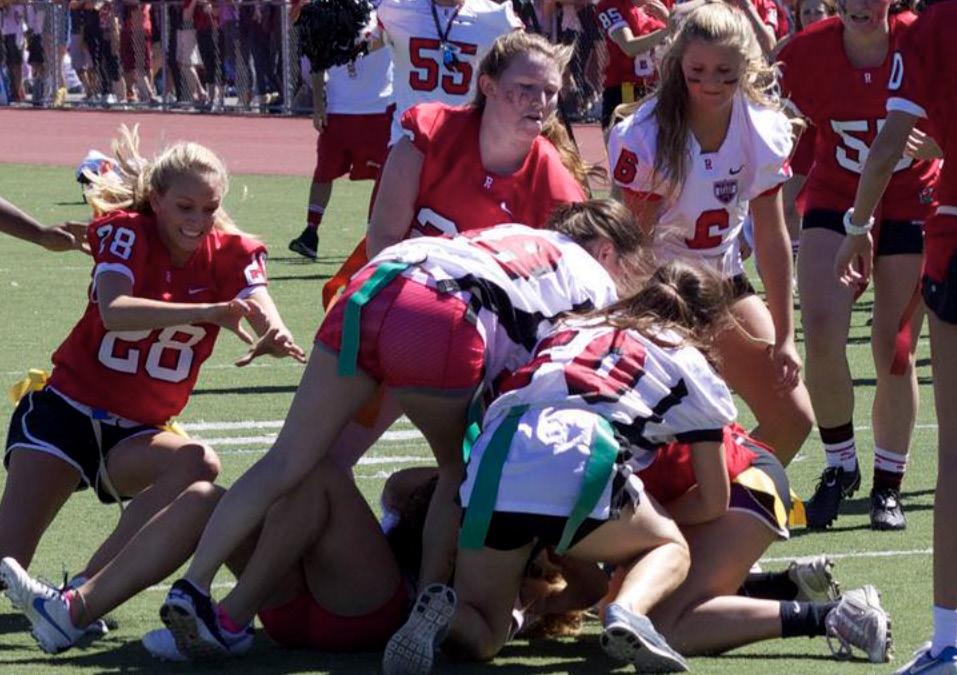
and some students.
A later Bark article reported that, as a result, the powder puff game was canceled for the following year.
Continued break-ins escalated to a stolen car
It’s a common trend at school to leave car doors unlocked in the parking lot. What's the worst that could happen? As it turns out, the parking lot held more danger than expected. In 2017, students were returning to their cars to find broken glass and missing bags.
After one practice, cheerleaders came to the parking lot to figure out that one of the girls' cars had been broken into. Not only was her bag stolen, but so was the bag of her
By Scarlett Musgrove
Protein Bars have become a go-to snack for students looking for something quick and filling, as well as a protein boost. They are a good pick-me-up before sports practices, at the gym and between classes. With dozens of options in any grocery store, it's hard to know which one is truly the best option and worth buying. Some bars focus on protein, mainly for athletes, while others focus on clean ingredients and good taste. This review will compare several popular protein bars to see which bar delivers the best combination of flavor and nutrition for students.
The BUILT Puff protein bar brownie batter flavor stood out to me for its marshmallow-like texture, which is very different from any protein bar I’ve had. With about 140 calories and 17 grams of protein, it provides a good amount of protein without being too heavy. The chocolate coating combined with the soft brownie-tasting center gives it that dessert-style taste, making it feel more like a treat than a typical protein snack. It's another great option for students looking for something sweet with a great protein addition.
The Barebells Chocolate Dough Protein Bar is a great choice and more popular for its candy bar-like taste than a typical protein bar, with around 200 calories and 20 grams of protein. It gives a good protein boost while keeping the sugar amount very low, around one gram per bar. The chocolate coating and soft cookie dough center create the dessert-like flavor that a lot of protein bars lack, making this bar a delicious and healthy choice for someone with a sweet tooth. This is one of my personal favorites to hit my protein goal and have a tasty treat.
The David protein bar focuses heavily on protein intake itself. It contains very simple ingredients, and each bar states that it contains 20 grams of protein with 150 calories; however, a recent lawsuit shows the bar contains many more calories than advertised. Deception aside, the texture is slightly dense and chewy, which is not my personal favorite, but is common among other protein bars as well. The flavor was decent, but not quite as good as the Barebells, where they taste just like candy. This bar is still a quick and convenient snack, and a decent pick!
teammate and in the bag were her car keys.
The perpetrators were an unidentified man and woman who had stolen the student's car and then dropped their bags in Riviera Circle. A concerned neighbor had caught video footage of the thieves on her security camera.
Along with the cheerleaders, a car of a cross-country runner and a teacher were also broken into. There are no follow-up articles that describe whether the thieves were caught or if the car was ever returned. But going forward, lock your cars!
mgoodhart@redwoodbark.org
that being said, this bar was on the lower side of the rankings.
With a good selection of popular protein bars, my go-to would be Built Puff protein. Following this would be the Power Crunch, and lastly the Barebell. Overall, these options are great on-the-go snacks for teens and a yummy way to boost their protein intake. Take the recommendations as they come or try them for yourselves, enjoy!
smusgrove@redwoodbark.org
The Power Crunch Chocolate Mint Bar is unique from the others due to its wafer-style snack. I personally like this texture, and it reminds me of wafer treats. It has about 220 calories and 13 grams of protein; it offers a more moderate amount of protein but is very flavorful. The chocolate and mint combination balances perfectly to make a refreshing taste, with neither overpowering the other. The crispy layers stand out and differ from the denser bars. While the protein amount isn’t as high as the other competitors, the taste and texture make it a good contender.
The chocolate chip Clif Bar is one of the most wellknown bars, as you will likely find it in any store. It is known for a good energy boost for your day. With about 250 calories and around 10 grams of protein, it’s more focused on providing a source of energy than a good source of protein. The oats and chocolate chips give it a soft, chewy texture that tastes more like a granola bar than a protein bar. While it's filling and made with organic ingredients, it has a higher sugar content, which makes it less ideal if you are mainly looking to increase your protein intake and reduce sugar consumption. With

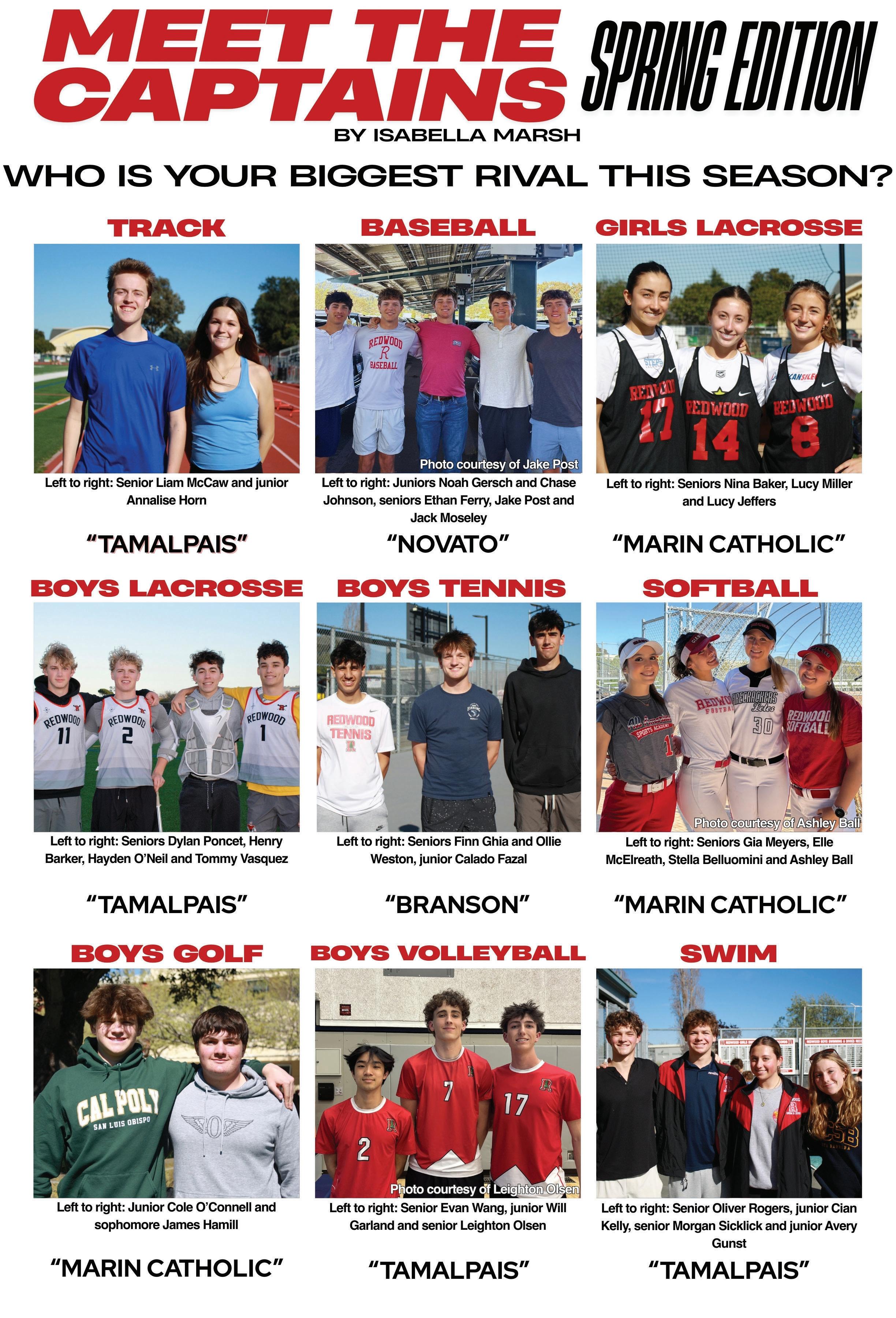

South Region:
No. 12. McNeese over No. 5. Vanderbilt
Every March, college basketball fans have the opportunity to fill out a free bracket with dreams of taking home a $1 billion prize awarded to the first perfect bracket ever. The odds of this happening are one in 9.22 quintillion. To put that into perspective, you would have a better chance of picking out one single grain of sand on Earth than filling out a perfect bracket, yet millions of brackets are filled out every year only to fail.
Whether you filled out a bracket in your family pool or paid a sum to compete in an expert tournament, we hope that you didn’t pick teams based on the best logo or funniest mascot. Below, we share how we picked our bracket.
For our bracket, we used websites like March Madness Live or the ESPN Tournament Challenge to review a set of metrics for each team before deciding on a matchup. Experts suggest focusing on offensive efficiency when determining first-round success, so we made sure to look at points per game, 3-pointers per game and free throws per game. However, with the transfer portal, name, image and likeness reshaping mid-major rosters, it has become more difficult for No. 13-16 seeds to win games and make deep runs.
Bark stuck with the higher seeds early; it is very unlikely that any No. 1 or No. 2 seed loses in the first round, and at most one No. 3 seed will lose.
Moving beyond the top seed matchups, when searching for upsets from No. 12-14 seeds, we did not pick teams with a high rank of kill shots against and a low rank of kill shots for. (Kill shots refer to the number of times teams score 10 points without the opposing team scoring a single point. It suggests teams that are streaky and play with a high tempo). Teams like Iowa, Iowa State and Kansas allow a high number of kill shots against them.
Another metric that highlights potential vulnerability in the early rounds is a team's tempo ranking. A slower tempo usually means fewer possessions per game and fewer shot attempts. Houston and Virginia both play at a slow pace. Historically, No. 12 seeds beat No. 5 seeds 37 percent of the time, so it's important to have one or two No. 12 seeds advancing to the round of thirty-two. No. 13 seeds beat No. 4 seeds 21 percent of the time, so pick at most one No. 13 seed to advance.
Round of 64 upsets
East Region:
No. 11. South Florida over No. 6. Louisville
The University of South Florida (USF) is 14-1 in their last 15 games and are the current American Athletic Conference champions. Louisville, on the other hand, has lost four of its last eight, including losses to Clemson, Miami, Southern Methodist University and the University of North Carolina. Look for USF's strong defense to slow Louisville's fast pace.
The No. 5 vs. No. 12 matchup in every region could go either way. Vanderbilt has struggled against lackadaisical Southeastern Conference (SEC) play, and McNeese ranks in the top 10 nationally in KenPom offensive efficiency among mid-majors. We predict a high-scoring game with strong performances from McNeese’s guards.
West Region:
No. 11. Texas/North Carolina State over No. 6. Brigham Young University (BYU)
While BYU has shown an ability to play with the best of the BIG 12, in losses, their offense is stagnant, and they tend to take early and mediocre shots due to their inexperience. We predict Texas will take care of the first four matchups and have a field day on the boards while being able to force a grind-it-out game with BYU.
No. 10. Missouri over No. 7. Miami (FL)
With Miami (FL) coming off a trouncing 84-62 loss to Virginia, and holding only two ranked wins this year, the odds do not appear to be in their favor. To make matters worse for the Miami Canes, this first-round matchup is being played in St. Louis, just a short distance from Missouri’s campus. With many Tigers’ fans expected to be in attendance, the game might sway in Missouri’s favor.
Midwest Region:
No. 9. Saint Louis over No. 8. Georgia
The Saint Louis Billikens enter the tournament with a roster built for March success, mixing experienced transfers from power conference programs with impressive size which has led the team to nationally ranked rebounding success throughout the season. Several rotation players for the Billikens have competed at the highest level before, making the team one of the deepest in the nation. If Saint Louis is able to control the boards and use its experience, the 9 seed Billikens will grind out an upset win to kick off the tournament.
No. 10. Santa Clara over No. 7. Kentucky
After beating Saint Mary’s to play in the West Coast Conference championship, Santa Clara has been riding high on their quick offensive attacks, with four lethal 3-point shooters on the court at all times. We don’t believe in Kentucky's resume and inexperience, and the 3-point volatility from Santa Clara will play in March Madness.
Round of 32 upsets
East Region:
No. 7. University of California, Los Angeles (UCLA) over No. 2. University of Connecticut
If leading senior scorer Tyler Bilodeau is labeled healthy for this week, UCLA is a team to watch this March. The team holds top 25 wins against Purdue, Nebraska, Michigan State and Iowa. While they did struggle on the road this season, guard Donovan Dent is playing at an elite level, with recent assist-to-turnover numbers through the roof. The Bruins are peaking at the right time, and their recent consistent play gives them the chance to beat
anyone.
West Region:
No. 5. Wisconsin over No. 4. Arkansas
Wisconsin has undoubtedly had one of the toughest schedules in the country this year, making them battletested ahead of the dance. The Badgers have picked up some impressive wins this year over No. 3 Michigan, No. 9 Illinois (2x), No. 10 Michigan St. and No. 15 Purdue, showing they can compete with the best. Arkansas being the SEC champions means much less this year as the conference holds only one top 10 team (Florida), who just lost by 17 points to SEC runner-up Vanderbilt. Wisconsin's quality experience in high-level matchups should be enough to give them an edge in a highly competitive second-round matchup.
No. 7. UCLA over No. 3. Michigan State
UCLA recently proved they can beat Michigan State, knocking off the Spartans 88-84 in the Big Ten Tournament quarterfinals. UCLA guard Donovan Dent led the charge with 23 points and 12 assists while the Bruins shot 55 percent from the field, knocking down 13 3-pointers. Michigan State attempted a late comeback, outscoring the Bruins 51-44 in the second half, but due to their poor firsthalf performance, the Spartans fell just short. If UCLA’s guards continue to control the game and create scoring opportunities as they did in that matchup, then there is no reason why the Bruins aren’t set up for yet another upset.
South:
No. 4. Nebraska over No. 1. Florida
Our first No. 1 seed to vacate, Florida, was recently smacked by Vanderbilt (91-74) in the SEC championship and has lost games to Auburn, Missouri, UConn, Texas Christian University and Arizona. Nebraska, on the other hand, has faced the gauntlet in the BIG 10 and is getting healthy at the right time. Look for a low-scoring mismatch and the Cornhuskers to slow down the pace and limit Florida's kill shots.
Midwest:
No. 3. Virginia over No. 2. Iowa State
The 29-5 Virginia Cavaliers rank near the top 25 nationally in both offensive and defensive efficiency, often doing a good job at limiting opponents’ three-point success, forcing the Duke Blue Devils to shoot 32 percent from three in their last matchup. If Virginia can continue their strong defense, the high-scoring Cyclones’ offense will be forced into tougher shots and poor possessions that will see the Cavaliers punch their ticket to the Elite Eight.
Final Four:
1. Duke vs 3. Illinois
2. Purdue vs 1. Michigan
Our Champion: Duke Blue Devils
By Rosstin Pouradib
For varsity girls basketball senior Kitty White, confidence on the court wasn’t always guaranteed, but it is something she has grown into over the course of her four-year career at Redwood. Basketball wasn’t always her focus; growing up in Australia, she played rugby before moving to the United States in elementary school. After arriving, she decided to try a few new sports and eventually started playing basketball in fourth grade.
“I had only ever played rugby in Australia,” Kitty White said. “So I just decided to try out some new sports like soccer and basketball, and then I really enjoyed the game.”
That rugby background still shows up in the way she plays today.
“I definitely wasn’t afraid of being physical,” Kitty White said. “In rugby you’re going to get tackled and you’re trying to run through people. I think you can kind of see that in my basketball.”
White still prioritizes teamwork, she has also grown comfortable stepping up when her team needs it most.
“Especially this season, I know my ability to score against anyone,” Kitty White said. “If we’re down and we need buckets, I can go get them.”

Over the years, White’s role on the court has shifted. As a freshman starter, she had the skill but not always the confidence to take over offensively.
“I was a very timid player,” Kitty White said. “I could score, but I wasn’t always looking for myself to score. I was more focused on setting up my teammates.”
Varsity girls basketball head coach Zach Borello highlighted the impact White has had since the start of her high school career.
“To start as a freshman is never easy, especially in a big role,” Borello said. “But she handled it flawlessly and continued to grow every year. Her scoring, defense, rebounding and maturity just kept getting better season after season.”
Now, as a senior captain, that mindset has evolved. While
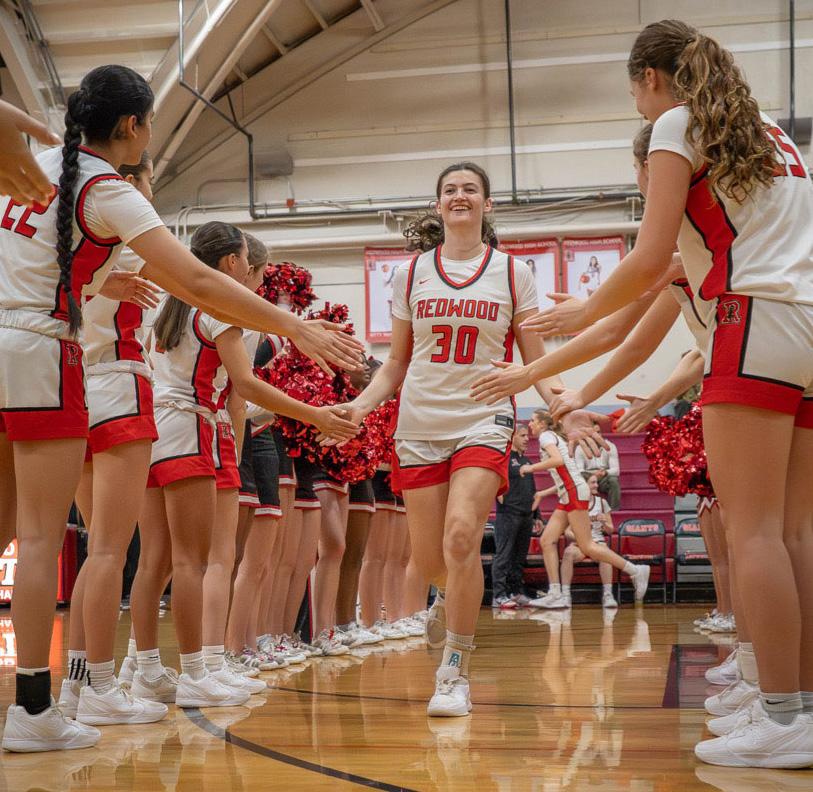
One of Kitty White’s biggest strengths is her ability to control the flow of the game and ease the nerves of her teammates.
“In really messy games, I think I’m able to calm my teammates down and make sure we’re playing our game. When we get sped up, mistakes happen,” Kitty White said.
That leadership is something Borello says has defined White’s presence on the team.
“She’s a once-in-a-generation player,” Borello said. “She’s the school’s all-time leading scorer and a four-year varsity starter. She uplifts everyone around her and always thinks of others before herself. She’s just a great leader and teammate.”
That leadership became especially clear during one of the most memorable moments of her career: Redwood’s North Coast Sections (NCS) semifinal game against Acalanes earlier this season. After losing to the same team earlier in the year, the rematch came down to the wire.
“It went to overtime, and I got the game-winner with three seconds left,” Kitty White said. “It was definitely a really special game for me.”
Borello recalls that game-winning shot as a moment that perfectly captured White’s competitiveness.
“We drew up a play for her with eight seconds left, but the play kind of broke down,” Borello said. “She went through three defenders and finished with her left hand for the game-winner. It was a special moment.”
White’s mom, Tessa White, reflects on the shot as just one example of the determination she has seen throughout Kitty’s basketball journey.
“She just wants the team to win,” Tessa White said. “She doesn’t care who scores the points, but when it’s a clutch moment she’ll take it on her back.”
That “team-first” mentality has defined White’s career. According to her mother, it is part of what made another milestone especially meaningful this season: becoming Redwood’s all-time leading scorer.
“She got a beautiful note from the previous record holder,” Tessa White said. “She said she was proud of Kitty because she’s a team player who scores for the team, not for herself.”
Borello expanded on this, mentioning that this mindset has influenced the entire program.
“Her leadership and energy set the tone for the team,” Borello said. “When she came with great focus and energy, everyone else followed.”
This success, however, did not come without sacrifice. Basketball became a year-round commitment for the White family, with travel, training and club seasons filling much of the calendar.
“School holidays were eaten up by travel,” Tessa White said. “But she was lucky because she was doing it with teammates and doing what she loved.”
Kitty White’s work ethic also stood out to her coaches and
By Logan Schneidewind
Many athletes focus solely on their main sports when it comes to training, but one way some are finding success is through cross-training. One way athletes improve is through cross-training. Cross-training is when an athlete trains different muscle groups to enhance their performance in their main sport. This involves combining weightlifting, agility drills and sportspecific movements outside of their normal practice to improve overall performance.
Often, cross-training can be overlooked. Some athletes are finding that incorporating cross-training into their routine is making them faster, stronger and less likely to get hurt.
Lead personal trainer at the Tiburon Peninsula Club, Aly Velazquez, explains that the key to success is making those workouts actually match the numerous demands of the sport.
“We try to target clients' workouts to be more conducive to their sports,” Velazquez said. “For tennis players, we're going to do a lot of rotator cuff, forearm grip strength, biceps curls, because those are the primary muscles they use.”
Junior Iris Hawks is a competitive athlete who competes in numerous sports, from varsity soccer to
track and field, and also plays for a local soccer club, Marin Football Club. Cross-training has become a regular part of her everyday routine. Hawks swims laps, rides the Peloton and does weekly specialized leg workouts at the gym to support her game on the field.
“Ever since I started cross-training, it's helped me not get injured as much,” Hawks said. “I’ve gotten faster, and swimming as well as the Peloton has helped keep my stamina up.”
Hawks explained how cross-training has many benefits that transform you into a better player overall.
“It helps you work on different muscles that you don’t use during your normal sport, and it has many benefits, which I love,” Hawks said.
Cross-training also helped Hawks bounce back from injuries. When she was going through surgery after breaking her leg, swimming and cycling helped her leg and body fully heal, while still staying in shape.
Velazquez warns that one of the biggest mistakes athletes make is not looking deeply enough into what muscles their sport actually requires. A football player needs to build mass to hold their ground, while track runners need strong, powerful legs to explode off the starting blocks, and can also help them with their speed and endurance.
“Don’t just do full body workouts and call it cross training,” Velazquez said. “Really think about what your
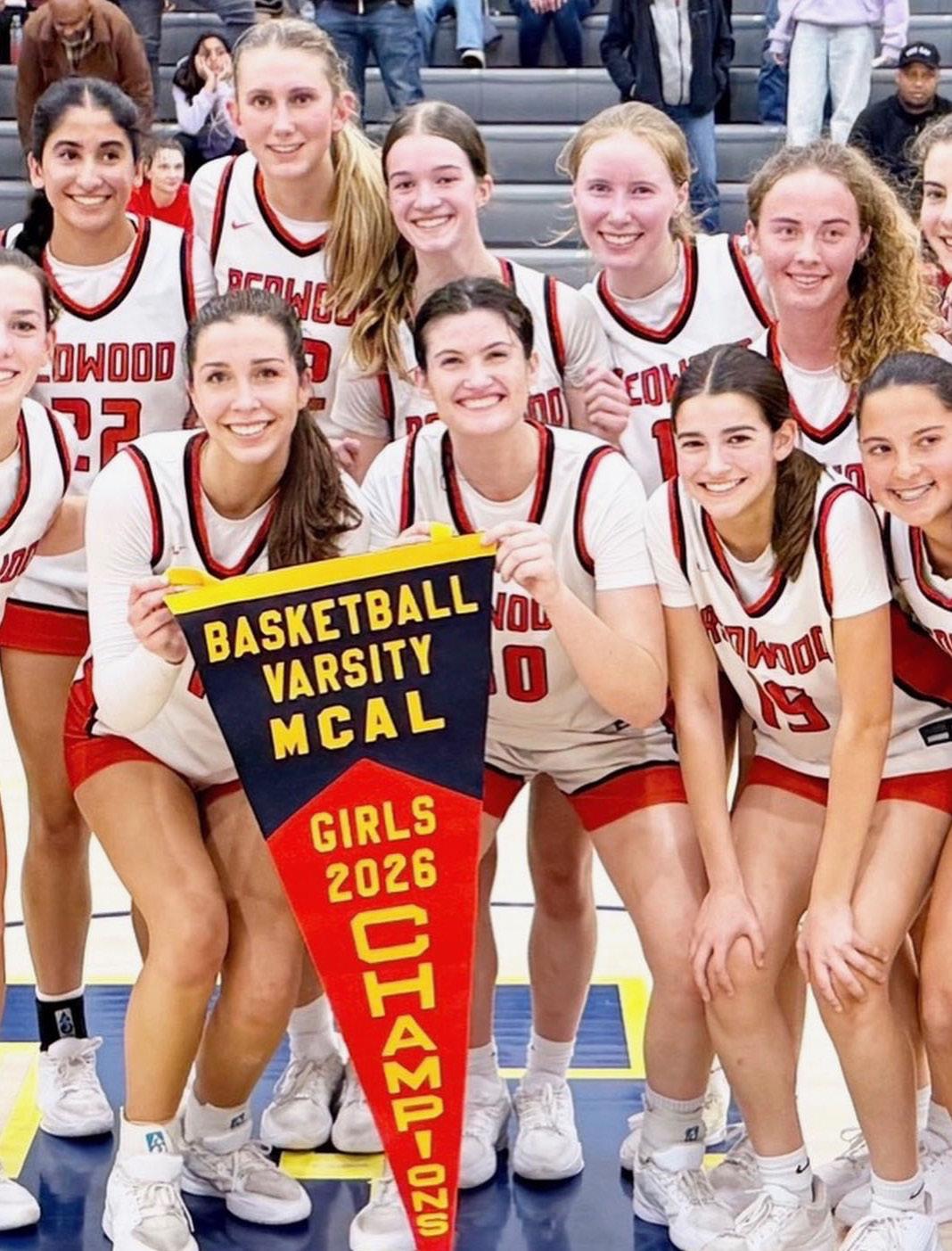
teammates.
“She was in the gym every morning at 7 a.m. getting shots up,” Borello said. “After practice she would often stay longer to keep shooting. When she was in the gym, others wanted to be there too.”
Despite the time commitment, White said her love for the game and her teammates has always been the biggest motivation.
“It’s a team sport,” White said. “Even if you’re not feeling great about how you’re playing, you want to be better for your teammates.”
Next year, White will continue her basketball career at Cal State Monterey Bay, a decision largely driven by the connection she built with the coaching staff.
“The head coach was one of the first college coaches who really showed genuine interest in me,” Kitty White said. “When I visited and practiced with the team, I really enjoyed the players and the environment.”
That relationship helped White open another opportunity: playing internationally for Great Britain’s youth national team. But for White, the lessons from basketball extend beyond the court.
“Hard work pays off,” Tessa White said. “You might not always see it right away, but if you keep showing up and believing, things eventually work out.”
For Redwood basketball, those years of hard work have already left their mark. With a record-breaking career and unforgettable moments along the way, KittyWhite’s legacy on the court is firmly set.
rpouradib@redwoodbark.org
sports demands [are].”
Cross-training does require a certain commitment and dedication outside of practice. Cross-training two to three times a week can allow athletes to fully gain the extra strength without interfering with sports and overworking their bodies.
lschneidewind@redwoodbark.org
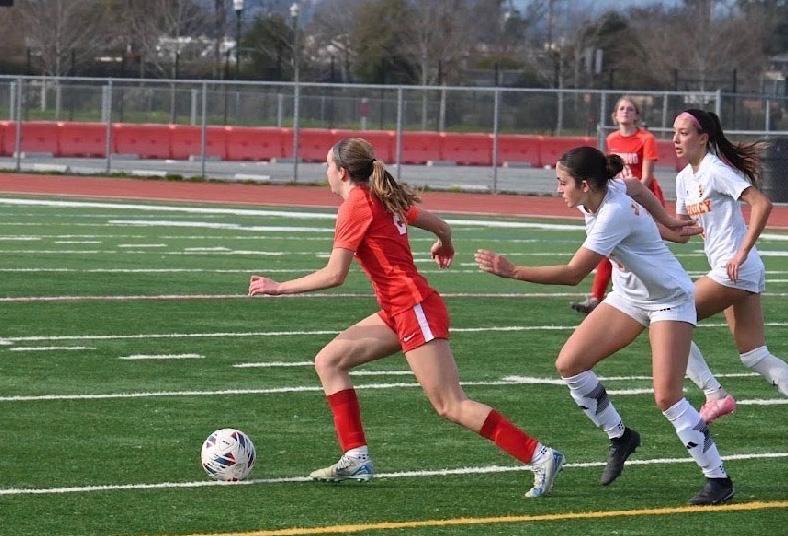
By Isha Patel
For many students, art is a creative outlet that relaxes them during their hectic lives. Giants’ Studio club gives students an opportunity to share their art with our local community while making a profit. Through their art sales, students use their passion to gain business skills and get closer with other students who share their interests.
The club had a successful sale outside of Tony Tutto Pizza in Ross on Feb. 21, with many people showing up to purchase art and the club having a chance to bond.
Maddy DeBisschop is the treasurer of the club as well as a student photographer who posts her work on social media and takes photos for the yearbook.
“I feel like this club gives people a way to express themselves through art in a way that isn’t offered at Redwood,” DeBisschop said. “It’s a really fun experience, especially if you make art and enjoy being creative, because everyone there is also creative and is there for the same reasons.”
Avery Gunst, the club’s co-president and a student ceramicist who posts her work on her personal Instagram account started the club with the other president, Izzy Marsh.
Gunst had a conversation with Marsh while they were throwing pieces in their ceramics class, both expressing interest in the possibility of selling their work. This sparked the creation of the club to allow students to sell their artwork and get publicity for their creativity.
“[My favorite part of the club] is the community because it’s really made our ceramics class in particular
a lot closer because it gives us a place to hang out and connect outside of just the class,” Gunst said.
DeBisschop emphasized how the club generates and builds on a sense of community within the art programs.
“The club is impactful specifically to the students who make art because not only do they get money by selling their art to local community members who get excited about having this work in their homes, but it gives more confidence to the student artists to continue to make art and pursue their passions,” DeBisschop said.
Gunst mentioned how the club has sparked much enthusiasm in the local community and has drawn attraction to the art programs at school.
“I’ve told lots of teachers, adults and kids about this club, and they get super excited that Redwood's art community is getting represented,” Gunst said. “It helps create publicity for the different programs that Redwood has to offer, and we’re really showcasing the talent that the Redwood community has.”
The profits from Giants’ Studio’s sales are split between the artist who created the piece, charities and the club itself.
“[For our sales] we do 70 percent go back into the artist’s pocket, 10 percent goes back to the club to make our sales possible and then 20 percent goes to DrawBridge, which is a charity that helps give art supplies to underprivileged or under-resourced teenagers,” Gunst said.
Gunst described how the club’s Instagram page helps generate publicity for the artists and the club, and gets people excited about the pieces at the sale that are available for purchase.
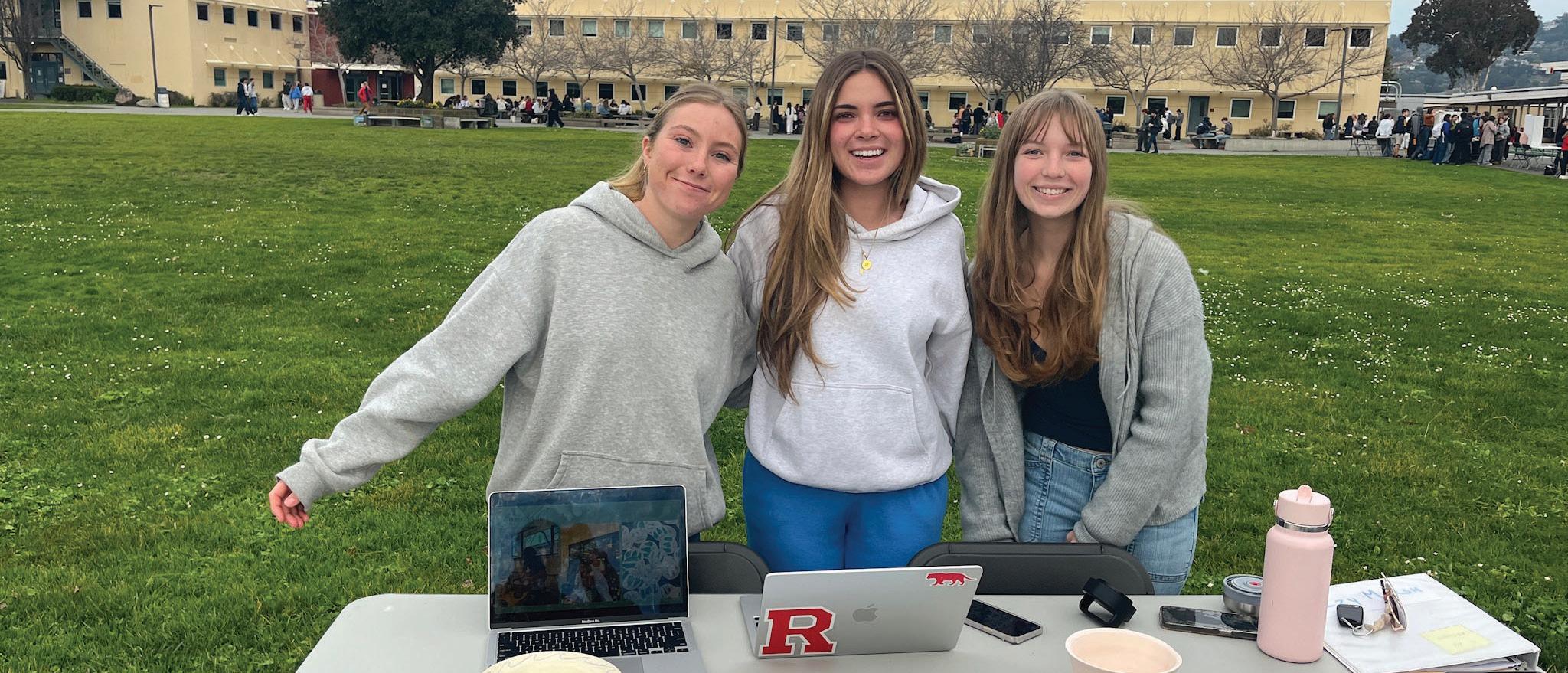
Story by Siena Forster
Before lunch from the cafeteria lands on students’ trays, the five members of the nutrition committee have already tasted it. The nutrition committee helps taste-test and plan the menu for school lunches across the Tamalpais Union High School District (TUHSD). The committee is led by TUHSD Director of Student Nutrition Ben Guyton. Guyton meets five student board members every other Wednesday during lunch in the cafeteria to discuss potential new menu changes.
Sophomore Berkeley Smith has been on the committee for two years and works to improve school lunches.
“[In the nutrition committee], we taste-test food that could go on the menu. We look at data on how many kids are eating our school lunches; our largest demographic is freshmen across the whole TUHSD district,” Smith said. “We look at data from Archie Williams, Tam, San Andreas and Tamiscal to see if numbers [of students eating school lunch] are declining or rising and what we can do to help that.”
The committee works to ensure that the student body is well represented when choosing what goes on the menu.
“[Guyton] takes all of our opinions into consideration because we are the link between him and the student body,” Smith said.
The committee got to help in the cafeteria on Jan. 21, 2026. Members of the committee worked alongside
cafeteria staff, helping plate and serve the food to students.
“[Serving as a lunch lady] was a very transformative experience. We had to go in prior [to lunch] and get trained in the back of the cafeteria. We had to wear closedtoed shoes, hairnets, aprons and gloves. It was cool to see how many people get the pizza [for lunch] because it’s historically the most popular food,” Smith said.
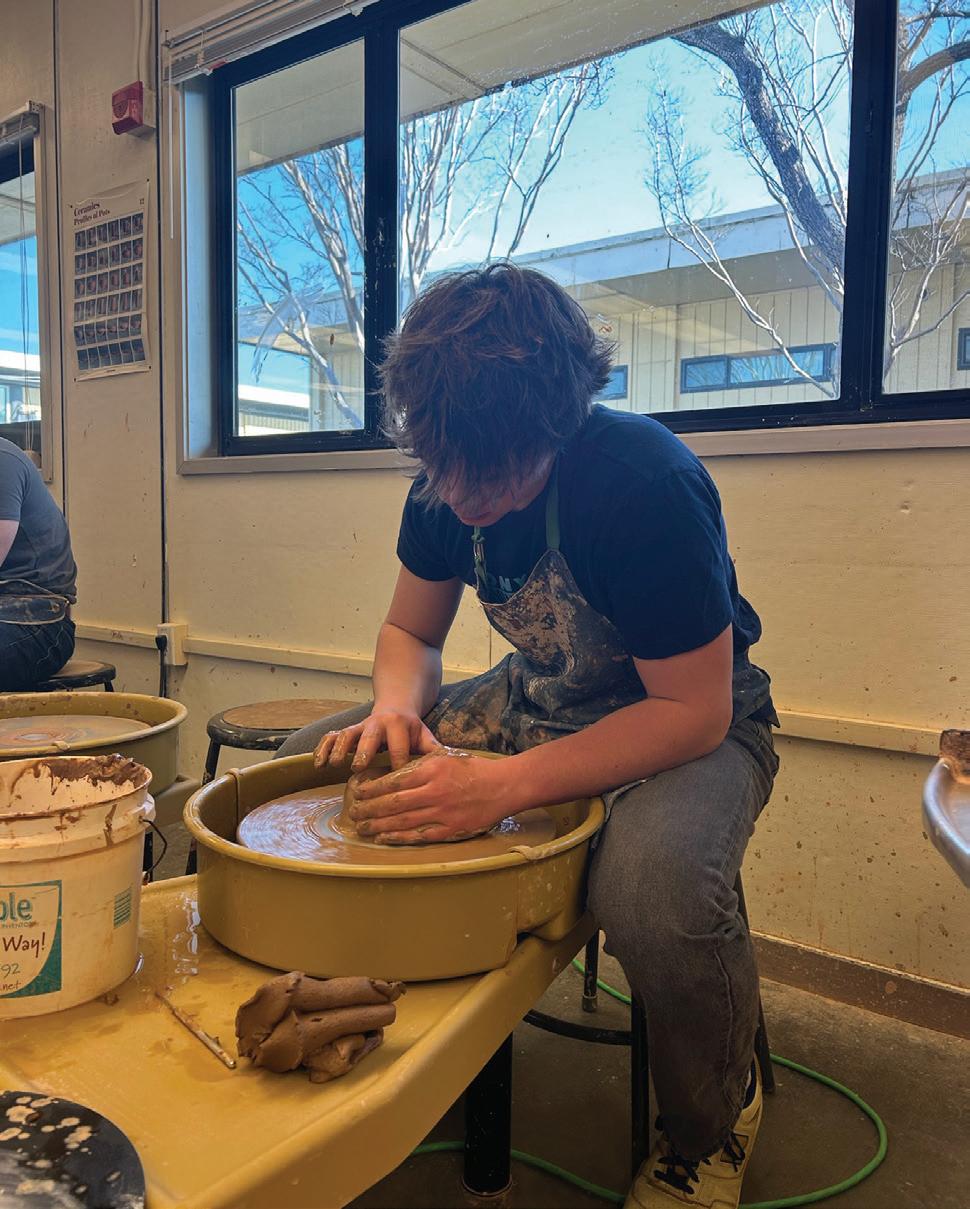
in a way that isn’t offered at
“We had someone buy a bowl at a sale, and we told him about our Instagram, and he went on, and he saw that the bowl that he bought was featured on Instagram, and he got super excited. He [said], ‘Oh my gosh, I have an instafamous piece!’” Gunst said.
To promote student artists, Giants’ Studio spotlights their work and collaborates with them on Instagram posts to promote their personal accounts and the work they have been doing in and out of the club.
“We do artist profiles, and some of our artists have their own Instagram accounts, and it’s cool because you can collaborate with them, and I think that’s another form of exposure for the Redwood art community,” Gunst said. Giants’ Studio meets in room 514 at lunch on Fridays. To not miss their next sale, find them on Instagram @giantsstudio26.
ipatel@redwoodbark.org
interested], come sit with us at lunch! We have a table in the back of the cafeteria every other Wednesday. There's no official sign-up; you can just show up,” Smith said.
Sophomore Maya Tucker is in her second year on the nutrition committee and enjoys having a say in what goes on the cafeteria menu.
The committee encourages new students to join to bring in new opinions and perspectives regarding the
“[Something we want to work on is] getting more students to join. [If students are
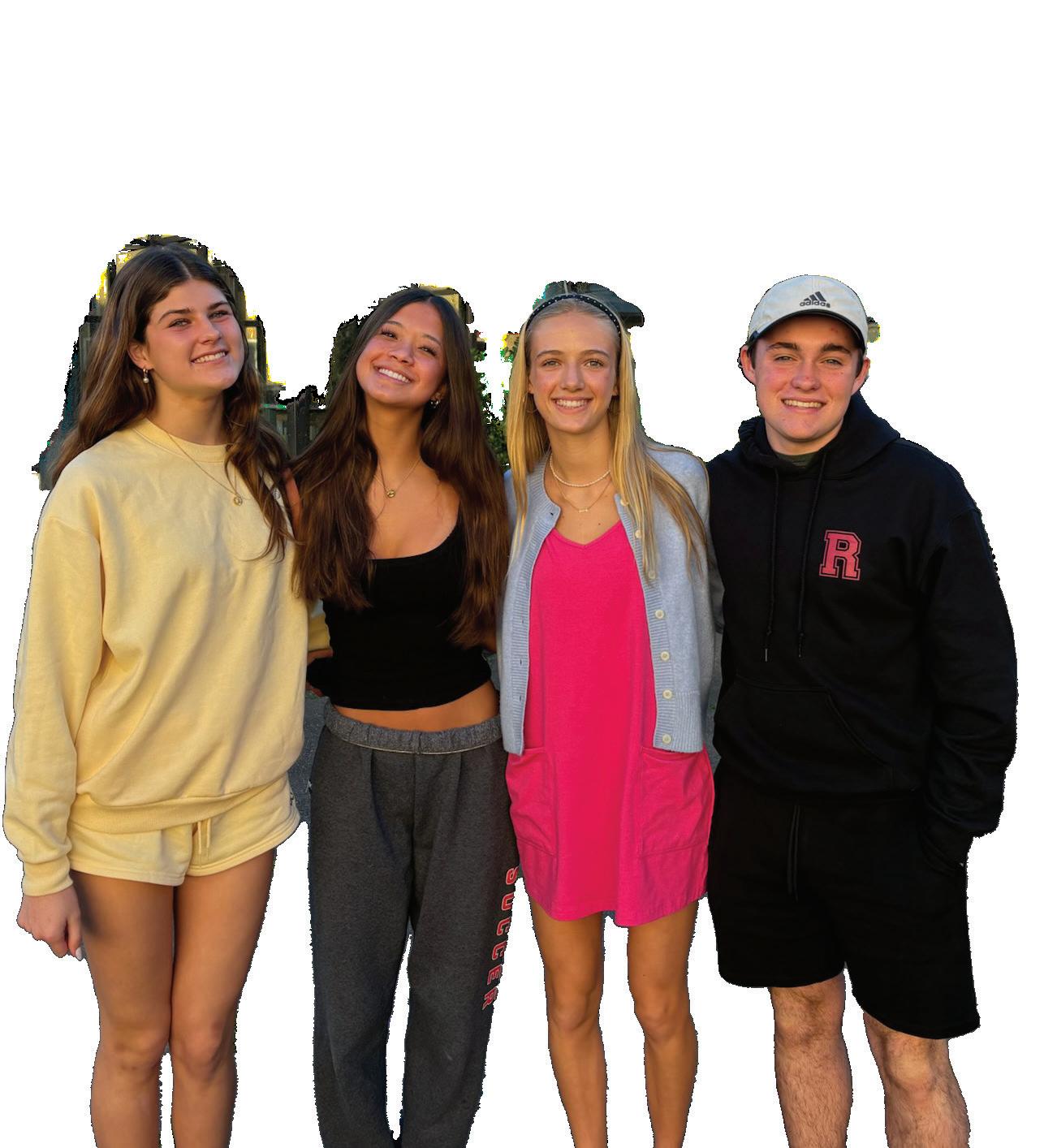
“[My favorite part of the committee] is seeing the differences that we make, seeing the new food that's put on the menu and that our voice really matters. It's nice to represent our school,” Tucker said.
Working closely with the school menu has given Tucker a new perspective on school lunches and encouraged her to try new items.
“[Since joining the nutrition committee], I’ve had more of an appreciation for school lunches. Some of the dishes are actually really good. [My favorite dish is the] chicken teriyaki bowl,” Tucker said.
The nutrition committee continues to shape students’ lunch experience by working to improve the menu.
“We have a big impact on what gets put in the cafeteria, and I hope it positively affects the student body,” Tucker said.
sforster@redwoodbark.org
By Sofia Yanni
Teenagers are taking the lead at the Larkspur Library through the Teen Advisory Board (TAB). The board consists of a group of local teenagers who share ideas, plan events, recommend books and give feedback on programs and spaces to ensure the library’s organization and activities reflect their generation’s needs. TAB members are putting their touch on nearly every part of the library, making it a space that they and their peers want to use.
The teens’ work is guided by librarian Jessica Roesch, who has helped lead TAB from the old Larkspur library to the new one. Roesch said the board gives students a chance to share their ideas and perspectives with library staff. The group meets regularly at the library and includes teens from local schools who volunteer their time to participate.
“The idea is for teens to come together, collaborate and let the library know what they’re looking for, what their needs are, what they would like to see and what kinds of programs and resources the library should be providing,” Roesch said.
Sophomore Hazel Hess, TAB’s design chair, plays an active role in helping the group organize and plan for the library’s programs. Hess helps the group communicate upcoming events and activities to other teenagers in the community. She also helps coordinate TAB’s ideas that guide how the group approaches its projects.
“When we have programs, like the summer reading program, we create posters so people in the library can see what’s happening and find the dates and the information,” Hess said.
Roesch explained that restarting TAB has been an exciting experience. After the group had not been active since before COVID-19, she decided to bring it back and was surprised by how many students wanted to participate.
“I had no idea we would get as many [kids] as we did, and it’s so exciting because it’s a pretty decently sized group,” Roesch said.
For Hess, being part of the group goes beyond just participating in activities. It provides a space where students with shared passions can come together and feel a sense of belonging.
“My favorite part of TAB is being in a community with other people who love reading and love the library. It’s really fun to collaborate with them and meet new people,” Hess said.
The new library will be moving right next to Redwood and Hall Middle School on Doherty Drive, which will create even more opportunities for teen involvement. The building will feature expanded seating, outdoor areas and
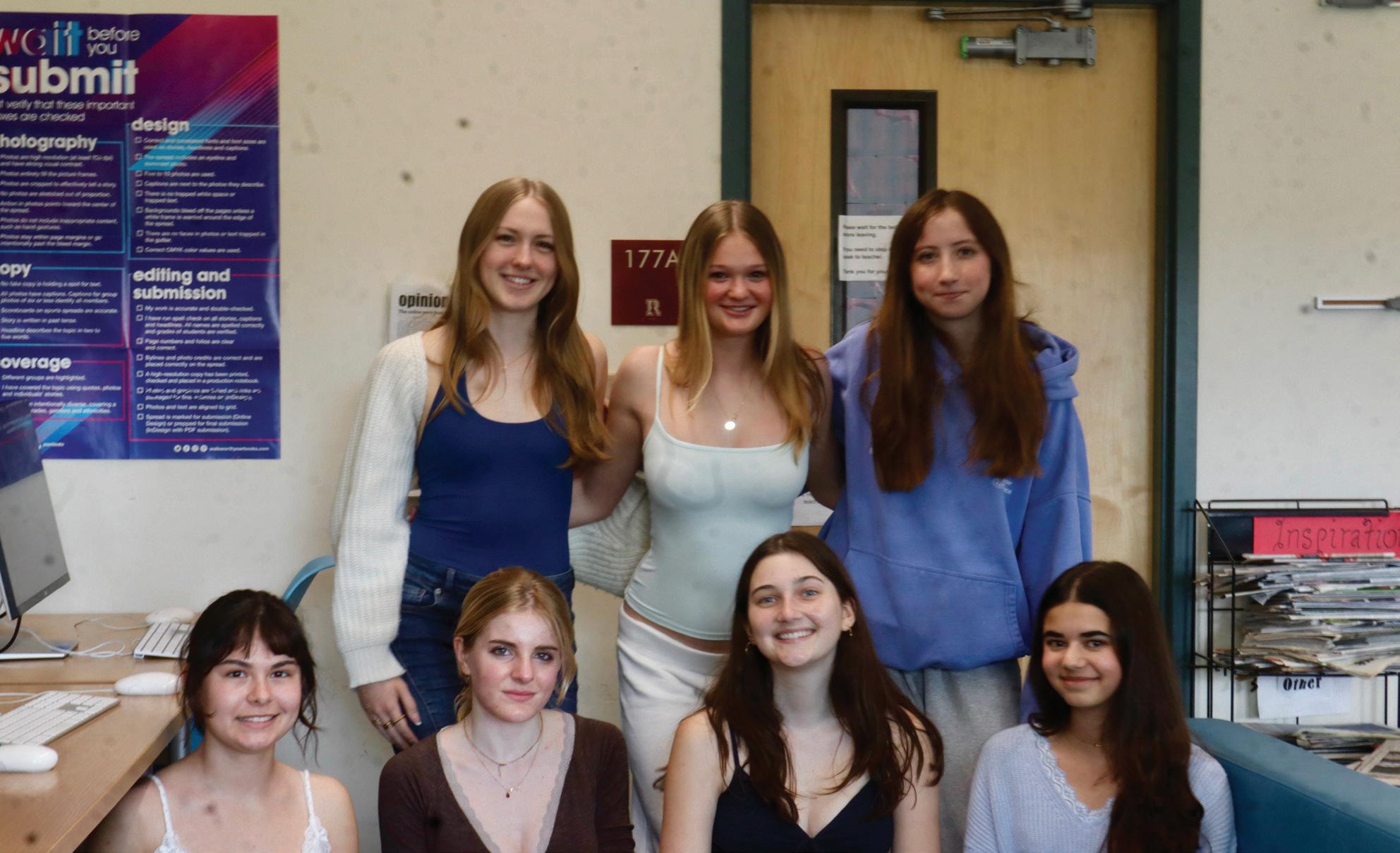
dedicated spaces for studying and gathering.
Hess said she is especially excited about the chance to explore everything the updated library will offer. She believes the new environment will inspire creativity, learning and connection for students.
“I’m looking forward to moving to the new library because we're going to have new spaces there and get new books,” Hess said.
For Roesch, one of the most meaningful parts of TAB is giving teens a voice in shaping their community while also preparing them for real-world collaboration. She recognizes how the program helps students build confidence, develop leadership skills and learn to work together effectively.
“Part of my goal for TAB was to show [members] what a real meeting is like with an agenda and different roles; it’s a chance for [them] to advocate for [their] ideas while also seeing what a real-world meeting might look like in a work environment,” Roesch said.
Hess believes TAB gives teens more than just a space to share their interests; it offers a chance to actively contribute to the wider community.
“I think it’s a really good way to take action in your community,” Hess said. “Children go there, other people in the community go there, not just for books but for all the events they have.”
Roesch said she deeply values the students who dedicate their time to TAB and she is hopeful that the program will continue to thrive as the library moves into its new space. She appreciates how the group brings together a diverse mix of personalities and perspectives.
“I feel so lucky to have these people decide to come and be part of TAB. We’re all so different, but we all bring different ideas, senses of humor and we come together every month and have fun,” Roesch said.
As the new library prepares to open on March 28, TAB members will continue sharing ideas and planning programs, helping ensure the space reflects the interests of the teens who use it. Students interested in joining TAB can speak with the librarian Jessica Roesch for more information.
syanni@redwoodbark.org
By Lily Skinner
Spending February break on the other side of the world with no technology, moving beehives and working on sustainability projects isn’t how many kids imagine their vacation. However, 28 students made that choice this year, attending a trip to Ecuador led by teachers Todd Van Peursem and Timothy Bingham, continuing a tradition many Marin students have participated in before them.
After landing in Ecuador’s capital, Quito, the group handed in their phones and retired to their hostels to get a good night's sleep after a 10-hour flight. They awoke ready to spend their first full day exploring the city, before taking a drive through the country and arriving in Tena, a town in Ecuador’s Amazon region where students would focus on sustainability projects and connecting with the local community.
Students' typical days while in Ecuador included waking up around 7 a.m. for breakfast and heading out at 8 a.m. to begin the day. From there, the group was split into two, with students rotating between projects such as bamboo construction, trail restoration and working in gardens with local community members before rejoining the group for lunch and switching tasks. In the evening, after a long day's work, the group came together for dinner followed by activities like pottery night, soccer games with locals or trips for ice cream to close out the day.
Van Peursem has been leading this trip for over a decade due to his fluency in Spanish and his experiences working and living in South America. He became involved with the hopes of reminding students about the beauty of nature and connecting with cultures beyond Marin.
“The goal is to open up [students’] minds to
experiencing something different, away from the noise and haste of life here and the constant grabbing of your attention by technology,” Van Peursem said.
Junior Charlotte Klimenko was drawn to the trip when she learned about its focus on environmentally conscious design.
“This was a great place to [learn], because not only were we learning about bamboo and other stuff that makes architecture more sustainable, but I [also] got the chance to be outside and learn about new cultures,” Klimenko said.
Beyond the sustainability work, students had a chance to connect to the community around them, with Van Peursem setting an example throughout the trip.
“I will immediately jump into talking to everyone I possibly can with a smile on my face, try to get to know names and try to get a smile on their face. The kids see it and they can feel it. It creates a more decompressed, relaxed vibe in the group,” Van Peursem said.
The goals of being technology-free and creating human connection drove this trip and Van Peursem made sure to set this example for the students. Whether it was playing soccer with local kids or helping out with community ceremonies like the opening of a bus stop, the students were immersed in Ecuadorian culture.
“A lot of the cultural experiences I felt came from connecting with the local kids,” Klimenko said. “I remember one time we played at a local school, and I got to hang out with a bunch of little kids. We went swimming in a waterfall after with them.”
The absence of technology was an intentional and defining part of the trip. Students turn in their phones after arriving at the airport Saturday night and don't see them until they reach the airport home the following Sunday.

DURING HARVESTING AND clearing operations during hands-on fieldwork, students assit at a bamboo processing center.
Over the many years Van Peursem has run the trip, he has watched students become more and more dependent on technology. Every time he thinks Generation Z has reached a point of no return with technology, the Ecuador trip reminds him that students do have the ability to form face-to-face connections.
“Within three hours their eyes started to come up again,” Van Peursem said. “Kids who hadn’t talked to each other in the airport started interacting.”
To continue reading, visit www.redwoodbark.org under the Lifestyles section.
lskinner@redwoodbark.org
By Logan Scully
Ripple Medical’s Chief Executive Officer (CEO), Trevor McCaw, is paving the way for wearable health technology and addressing hypertension, a blood pressure disease that’s widespread in the United States. The disease is often first detected in one’s early 30s, and is known as the “silent killer” because it has no noticeable symptoms aside from damaging blood vessels.
“The earliest you see it is in your 30s, but there are 120 million patients in the United States who have hypertension,” McCaw said. “It’s about half of all adults in the United States.”
This drastic number makes hypertension the second most prevalent disease in America, behind obesity. McCaw’s startup aims to tackle the issue by creating wearable wristbands that constantly scan wrist veins.
“You can’t take your blood pressure once a week and figure out what to do because your blood pressure changes, literally, minute to minute, hour to hour,” McCaw said. “These wearables give you data. Algorithms, [artificial intelligence] and advanced technologies will really be able to change the trajectory of people’s health.”
Blood pressure monitoring dates back over 200 years, yet physicians still don’t possess all of the necessary information needed to protect those affected by
McCaw had been interested in health care from an early age, originally inspired to attend medical school while spending summers volunteering at a hospital. He spent time at Harvard Business School before his journey into the business world, in which he struggled to find motivation.
“I really wanted to make the world a little bit better of a place. So, I thought healthcare was the good spot where I could get a lot of leverage and really make a big difference across different patients,” McCaw said.
McCaw also highlighted his natural ability as a leader
“Over 80 percent of the patients aren’t getting the data they need to treat the disease,” McCaw said. “We still don’t have the data that we should, and that’s the problem
Davie detailed the possibility of misinterpreting hypertension for white coat syndrome, which according to him can give a “lousy [blood pressure] number.” White coat syndrome is when a person’s blood pressure is only high in a medical setting but normal elsewhere, and it can often lead to a misdiagnosis by a doctor.
“Home blood pressure is generally regarded as superior to an office pressure, as just being in a doctor’s office stresses people out,” Davie said. “The opportunity to have an accurate, wearable, cuffless blood pressure at home is huge, and can help get rid of the white coat syndrome.”
Ripple Medical’s wristband technology works similarly to that of commonly found wearables, like the Apple Watch or Oura Ring, technology that is worn by just under half of Americans today.
“We shine light into the skin, and we look at the reflection. From that reflection, we can tell the blood pressure,” McCaw said.
The next big obstacle for the company is getting government approval to put the technology in the hands of patients, clinicians and doctors.
“Our technology is regulated by the U.S. Food and Drug Administration (FDA), which regulates drugs, food and diagnostics,” McCaw said. “We have to meet a certain bar in order to go through [to the next stage], and prove that this will be safe for patients.”
Once approved by the FDA, Ripple Medical plans on starting off with a limited launch with under 1,000 devices being released in order to pressure test certain parts of the company. Releasing a new device in a new market requires fixing certain processes before distributing more devices across the United States, but it could ultimately lead to over 100 million patients getting the acurate treatment they need to stay healthy.

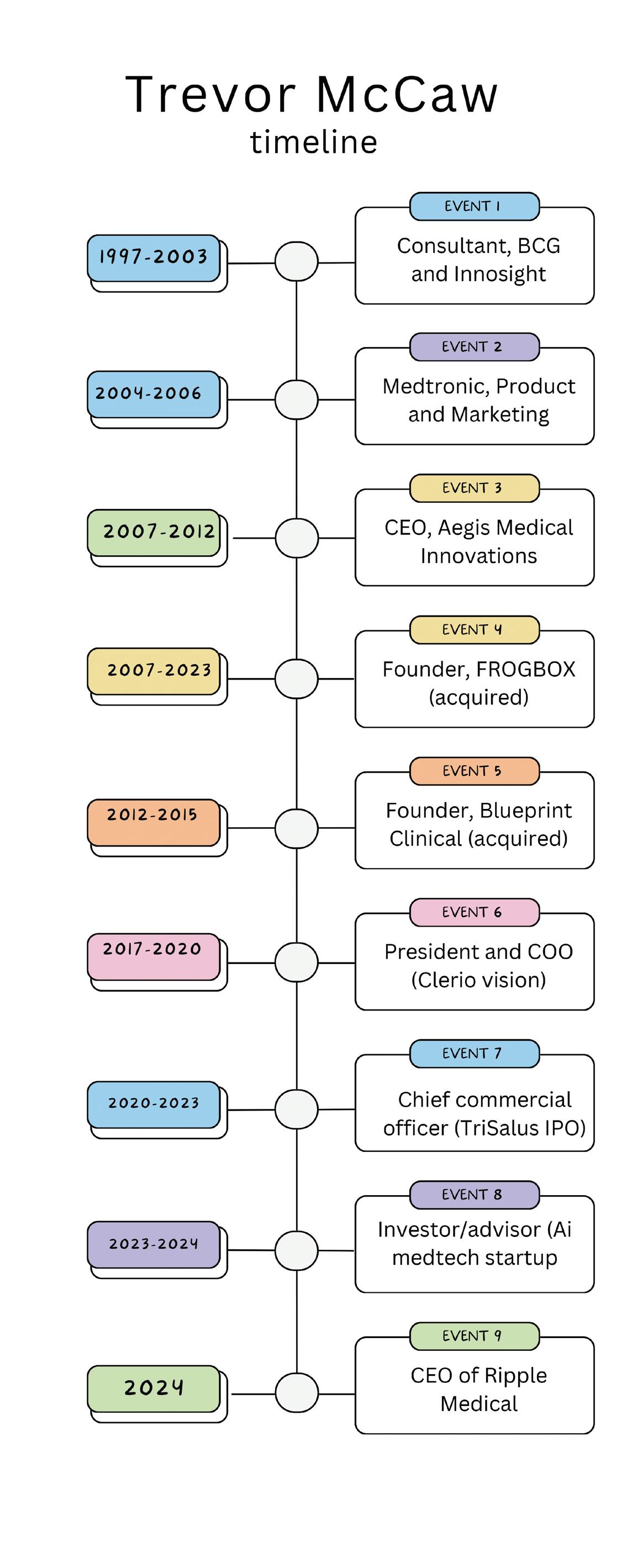

By Georgia Thomas
Alumnus Buddy Biancalana, class of 1978 and a former Major League Baseball (MLB) shortstop, believes peak athletic performance begins in the mind. Biacalana credits his success in the MLB to his high school baseball experience.
Biancalana acknowledges the impact of Redwood, specifically his baseball coach Albert “Al” Endriss on his successful career.
“Playing baseball at Redwood was an amazing experience for me. We had a really great program due to [our] outstanding coach, Al Endriss. Al was legendary,” Biancalana said.
Endriss coached high school basketball, baseball and football for four decades and then coached golf for an additional decade. But before coaching, Endriss also had a successful athletic career. He played minor-league baseball for the Brooklyn Dodgers and briefly played football for the San Francisco 49ers.
Initially, Biancalana had planned to play college baseball at Arizona State University, but in 1978 was selected in the first round of the draft for the Kansas City Royals, and chose to go straight from Redwood into professional baseball.
Biancalana felt that his experience playing baseball
at Redwood prepared him well to enter the major leagues.
“When I got to Florida to play for the Royals rookie ball team in Sarasota, Florida, I quickly realized that my four years of playing at Redwood under Endriss [had made me] more fundamentally sound than college players who were coming out of really big-time college programs,” Biancalana said.
During Biancalana’s time at Redwood, he contributed to a back-to-back win in 1977 and 1978 in the North Coast Section.
“In my junior year, we were voted mythical national champions as the best high school baseball team in the country,” Biancalana said.
“I was very inclined to go to college, being from a very educated family. However, I always wanted to play in the major leagues, and I didn’t expect to be as high a draft pick as I was,” Biancalana said.
Biancalana went on to have a successful career in the MLB; first playing for the Kansas City Royals from 1982 to 1987 and then for the Houston Astros in 1987.
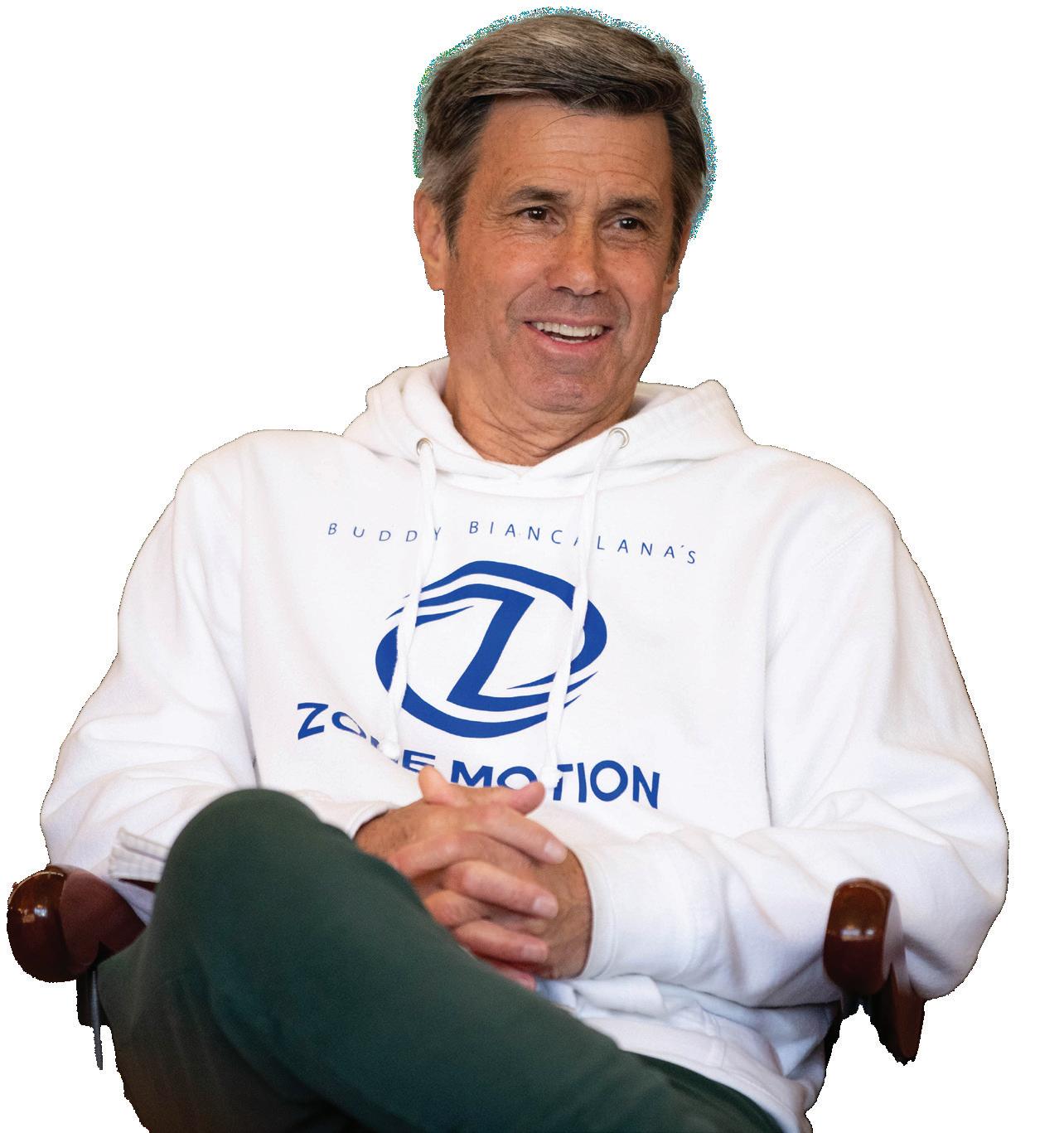
Through his career, one of his most notable performances was when he played in the 1985 World Series. It was this experience in the World Series that inspired Biancalana to create his company, Zone Motion.
“I started [Zone Motion] because of my own experience in the World Series for the Royals in 1985, in which I had my own ‘zone’ experience in which everything slowed down,” Biancalana said. “However, when an athlete has that experience, they typically don’t know what’s happening.
I certainly didn’t know what was happening at the time. All I know is, I

played the best baseball of my whole life.”
Since then, Biancalana has coached other athletes, musicians and sales professionals on how to enter “the zone” to achieve their best performance.
“There are certain processes in the mind and the brain that we’ve quantified and taught. The work takes place on the field and off the field, whatever the sport is, and I’ve worked with athletes in 13 professional and over 20 amateur sports over the last 19 years. [I] have done five research projects and one full study on the effectiveness of Zone Motion to enhance performance, speed up development and minimize soft tissue injuries,” Biancalana said.
Robby Cable was coached by Biancalana when he was playing college baseball and went on to work with him as a coach in Zone Motion for about seven years.
To continue reading, visit www.redwoodbark.org under the Lifestyles section
gthomas@redwoodbark.org