



Photo by Reed Grossman
Sports Spotlight: Hockey star Henry Smith brings heat

Read the Bark’s position on college conversation etiquette.


On Friday, Jan. 30, tens of thousands of Bay Area locals gathered at Dolores Park in the Mission District of San Francisco to peacefully protest U.S. Immigration and Customs Enforcement (ICE). The weekend was labeled the “ICE out of everywhere national day of actions,” with San Francisco holding one of the largest gatherings in the nation. At the scene, the park was filled with students and adults who didn’t attend school or work to show solidarity. The protesters brought handmade signs with creative slogans and powerful messages, and chanted together in unison.
Since the start of Donald Trump’s presidency, ICE agents have tracked down and deported over 500,000 undocumented immigrants from the United States. On Jan. 7, ICE protests intensified nationwide after Renee Nicole Good, a 37-year-old mother of three and poet from Minneapolis, was shot and killed by agent Jonathan Ross. Two weeks later, ICE agents also shot and killed Alex Pretti, a Minneapolis resident and intensive care nurse. These actions sparked immense unrest as ICE agents were not only arresting and killing illegal immigrants, but American citizens as well.
In response to the two shootings, demonstrators organized a “nationwide shutdown” on Friday, Jan. 30, to protest federal immigration enforcement tactics. The shutdown not only included high-number rallies, but also a broader nationwide economic strike. The demonstrations took place in many cities across the country, with participants avoiding spending money, and some businesses closing their doors for the day to send an important message not only to the government, but also to people across the states.
Iyari Mejia, a junior and co-president of the Latinos Unidos club at Lowell High School, led her school’s walkout and spoke at the event before marching towards San Francisco City Hall.
“I’ve been protesting ever since I was in my mother’s womb,” Mejia said. “It’s in my blood.”
Many educators joined the demonstration, including Maggie Furey, a teacher at Guadalupe Elementary School. Furey spoke early in the event, preaching the importance of addressing the current state of ICE.
“[Americans] are using tax dollars [to fund] ICE, and people’s families are being broken apart,” Furey said. “We can see with data that they are not arresting only criminals.”
Despite the majority of students being under the voting age, many shared their concerns about the current state of

PROTESTERS FROM ALL around the Bay Area and of all ages walk to show solidarity.
America’s government, including Azha Elsaesser, a junior at El Cerrito High School.
“We’re the ones inheriting this country, so we need to make sure that this type of violence and injustice is not okay [in the future],” Elsaesser said.
Many illegal immigrants have been forced to stay in their homes, silencing their voices, which is why the cause goes beyond foreign families speaking up; the whole nation is demanding change.
“If you’re not indigenous, someone in your lineage migrated here,” Mejia said. “This problem affects every single one of us, and it’s not just about immigrants anymore. It’s about the working class.”
The weekend of Jan. 30 saw over 300 protests across all 50 states, with demonstrators speaking out in hope of change.
“I hope that people will start to change their votes so that we can actually get politicians who listen to us,” Furey said.
bark@redwoodbark.org
Don’t focus only on the future; focus on the present instead. At the end of the day, teenagers are more than the next step they will take.
Continue reading on pg. 7...

On Thursday, Jan. 29, Redwood High School was evacuated after an anonymous report of a possible bomb and shooting threat. School officials worked with the Central Marin Police Department to evacuate campus around 8:19 a.m. Later, in an email, Principal Barnaby Payne confirmed that campus was safe following the threat. Payne announced the continued closure of the school and cancellation of all after-school activities and stated that classes would resume on Friday, Jan. 30.

On Feb. 1, the Grammy Awards celebrated the year’s biggest music moments and standout performances. The night was filled with top artists taking the stage, surprise collaborations and awards honoring achievements across all genres. Newer artists like Olivia Dean, Lola Young and The Marias were recognized among this year’s nominees. All of the Best New Artist nominees performed at the beginning of the show, highlighting emerging talent and kicking off the Grammys with a unique twist to the usual opening. Dean took home the award for Best New Artist.

Image courtesy of TUHSD
Just Say KNOW: Alcohol
Tamalpais Union High School District (TUHSD) Wellness is hosting Just Say KNOW: Alcohol, a teenfocused workshop on March 17 from 7-8:15 p.m. The session covers how alcohol affects teen brains and bodies, legal realities and harm-reduction strategies. It is supposed to help and encourage families to have informed conversations. Held online via Zoom, the workshop allows parents and teens to join safely from home and participate in the discussion.
syanni@redwoodbark.org
By Georgia Thomas and Joel Kurtzman
“For a day and a half, we weren't able to leave our house at all,” junior Tatum Buoy said.
Buoy, like many other students, experienced the effects of the flooding that occurred in early January.
Beginning on Jan. 2, thousands of Bay Area residents were impacted by king tide flooding, which swept through and damaged many homes and buildings across Marin County, leaving homeowners and local businesses in disarray. Due to this damage, the county is facing approximately $4.35 million in repairs to low-lying communities (SF GATE). Marin is seeking federal assistance to repair these damages.
King tides, which are caused by the alignment of the sun, moon and Earth, occur naturally every winter. However, as they begin to overlap with severe storms and rising sea levels, these tides are raising water levels higher than ever before.
According to an SF GATE report, Marin County received 10 to 15 inches of rain from Dec. 18 to Jan. 6, adding on to the tides. This is significant considering Marin typically gets an average of 6.5 inches of rain during the month of January and 6.4 inches in December (city-facts).
Several major roads were blocked off to vehicles due to water pooling on parts of Highway 101, Doherty Drive and Lucky Drive in Larkspur, which restricted access to Redwood. Although school was not in session, the newly redesigned east parking lot flooded, submerging the surrounding

area. Assistant Principal Saum Zargar described how Redwood was affected by the floods.
“It is not uncommon that during high tide and a good amount of rain that our back parking lot and the softball field close due to the parking lot getting flooded, but this year the flooding was greater because it went into the other softball field,” Zargar said.

Redwood was just one of the affected sites. Tamalpais High School, sections of the Embarcadero in San Francisco and a levee breach near the Marin County Civic Center were also impacted. According to a January 2026 Bark survey, 45 percent of students reported that they had difficulty driving to certain locations and 17 percent could not leave their homes due to the severe flooding.
“I live on the lagoon, so the water was approaching our garage, and our cars were halfway submerged,” Buoy said. “We were unable to leave.”
Corte Madera Mayor Rosa Thomas has been involved in designing systems to combat future floods.
“We’ve done a lot of work strengthening our pump system over the last five to ten years, but what’s left now is creating physical barriers like berms and sea walls. Those are long-term and very expensive projects,” Thomas said.
Thomas explained the plan the county had in place to combat high-risk flooding, which was compromised by the Federal Emergency Management Agency (FEMA).
“There was a berm project in Marina Village that we had received a FEMA grant to do, but with the current administration, that $1.5 million grant was rescinded. If we had gotten that grant, we would be moving further into creating that berm. However, we are going to work very hard to find ways to get that done,” Thomas said.
Though Redwood students were not on campus at this time, the flooding did impact teachers and staff.
“Out of precaution, we chose to close the back parking lot on the 5th and 6th [of January] to staff before the arrival of students,” Zargar said.
These floods have the potential to become more frequent in the coming years as the impacts of climate change in California continue to grow. Though there was damage to various buildings and roads across Marin, the residents’ safety remains to be the biggest concern. Redwood and Marin County are taking steps to implement measures going forward that will look to help the community prepare for more severe flooding in the future.
bark@redwoodbark.org
By Paige Catanese
The glow of an iPhone screen appears as the quick motion of fingertips taps in the password and immediately navigates to Instagram. Then, the scrolling begins. Scrolling consumes an average of 4.8 hours of a teenager's day, according to the American Psychological Association. This social media use is no longer a conscious decision made by teenagers, but a habit that has become an integral part of everyday life.
However, this unconscious habit can negatively impact the teenage generation. As reported by a Pew Research study in 2025, 48 percent of teens believe that social media has negative mental health effects, which is up from 32 percent in 2022. As a result, parents are going further than scolding their children; they are also
putting pressure on lawmakers to make a change.
A combination of this pressure with mounting evidence of social media’s harmful effects on adolescent brains triggered Governor Gavin Newsom to approve Bill AB 56, also known as the "Social media: warning label” bill. Starting Jan. 1, 2027, certain social media apps will be required to display a black warning label to specific users when they enter the app, once every three hours and every hour thereafter.
The same day the bill was approved, California Attorney General Rob Bonta released a statement justifying the approval.
“People across the nation—including myself—have become increasingly concerned with Big Tech’s failure to protect children who interact with its products,” Bonta said. “Today, California makes clear
that we will not sit and wait for companies to decide to prioritize children’s well-being over their profits.”
However, is legislation the solution to teenage social media addiction, or does a solution rely on a cultural change in how teenagers interact with social media?
Junior Dylan Torry is active on social media, often using these platforms to display his personal life and cooking skills. However, growing up surrounded by social media, he has witnessed the peer pressure that can accompany it.
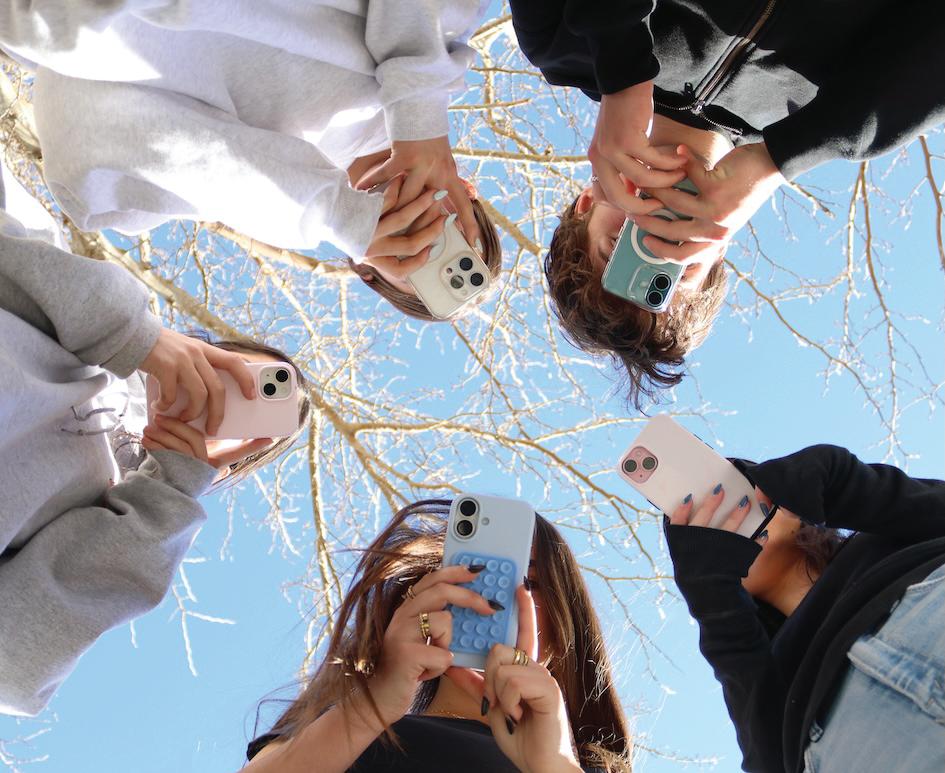
“Teenagers get pressured by their friends [to use social media], because all their friends are on it, and maybe they don't have social media like Instagram. So they're like, ‘Oh, I gotta go get it. I gotta go use it,’” Torry said.
Continue reading at redwoodbark.org in the News section.
“USUALLY, TIME TENDS to pass quickly when scrolling [on social media], and I’m usually like ‘Oh! I’ve been on Instagram way too long. I have to do something else,’” junior and Instagram user Dylan Torry said.
pcatanese@redwoodbark.org
By Reed Grossman and Morgan Sicklick
On Thursday, Jan. 29, Redwood High School received an anonymous report of a possible bomb or shooting threat, according to school and district officials. The administration is currently working closely with the Central Marin Police Department to investigate the threat and were advised to take immediate action in keeping everyone safe.
At approximately 8:19 a.m., all students and faculty were promptly evacuated from campus, and all school activities, including open house, were cancelled for the remainder of the day after police closed campus.
Principal Barnaby Payne sent an emergency closure notice through ParentSquare at 8:36 a.m.
According to Payne, students and staff evacuated, “in a quick and orderly fashion.” In his message, Payne acknowledged that incidents like this can cause fear and uncertainty, encouraging parents to speak with their students and reach out if additional support is needed.
Freshman Atlas Zhang first learned about the threat after arriving at school and seeing students quickly leaving school grounds.
The evacuation felt sudden and disorienting for many students as news spread quickly by word of mouth, online social media posts and notices from administration. Freshman Gabi Estacio was in Leadership when the announcement was made over the loudspeakers.
“Everyone was yelling and confused,” Estacio said.
Due to the limited information given at the time, freshman Adam Saouaf was one of many students caught off-guard by the evacuation.
“[The evacuation] definitely came as a big surprise, [and] it was the first time we had to leave school this year,” Saouaf said. “[The administration] made an announcement over the intercom, but it was hard to hear, so I found out from people around me.”
I got to school and saw everyone leaving. It’s really shocking because this is usually a pretty safe community.
Atlas Zhang, freshman
Immediately following the evacuation, students described a wide range of emotions, including confusion, fear and disbelief as they processed the situation.
Due to threats in previous years not playing out, sophomore Maziar Massoumi didn’t feel an immediate sense of danger. “Police were telling everyone to walk the other way from school,” Massoumi said. “I didn’t feel like I was in immediate danger because we had gotten [a threat] before, and nothing actually occured.”

For eighth-grade students who were looking forward to visiting the school later this afternoon, the open house event was postponed and all athletics that were scheduled to take place on campus were cancelled.
Freshman Alyssa Erlin was just as nervous as other students who hadn’t been in this situation before.
“[The situation was] very surreal,” Erlin said. “It’s scary to think we could have been [in school] when something dangerous was happening.”
Some students, however, remained calm due to the similar incident that occurred on Sept. 13 last year. Junior Eamon Kelly did not believe the threat would escalate.
“It’s important to take these situations seriously, but as far as I’m concerned, I don’t think anything is going to happen,” Kelly said.
This isn’t the first time a bomb threat has led to a school closure at Redwood. On Friday, Sept. 13, 2024, students throughout the Tamalpais Union High School District were told to evacuate campus under the same circumstances as now.
School resumed on Friday, Jan. 30, with an adjusted schedule for the following week to make up for the lost instructional time.
bark@redwoodbark.org
By Eleanor Bentley
On Jan. 15, a group of students, activists and assembly members gathered outside the Capitol Building in Sacramento, California, to support an anti-fast fashion initiative. Behind the supporters were 4,500 pounds of used clothing piled on the steps of the building. This wasn’t a random number: It’s the amount of clothes being produced by fashion companies in just one minute.
The group outside the Capitol building consisted of supporters of California’s Fashion Environmental Accountability Act (AB 405), a proposed bill that aims to hold major fashion brands, referred to as “fashion sellers,” accountable for their environmental impacts. If successful,
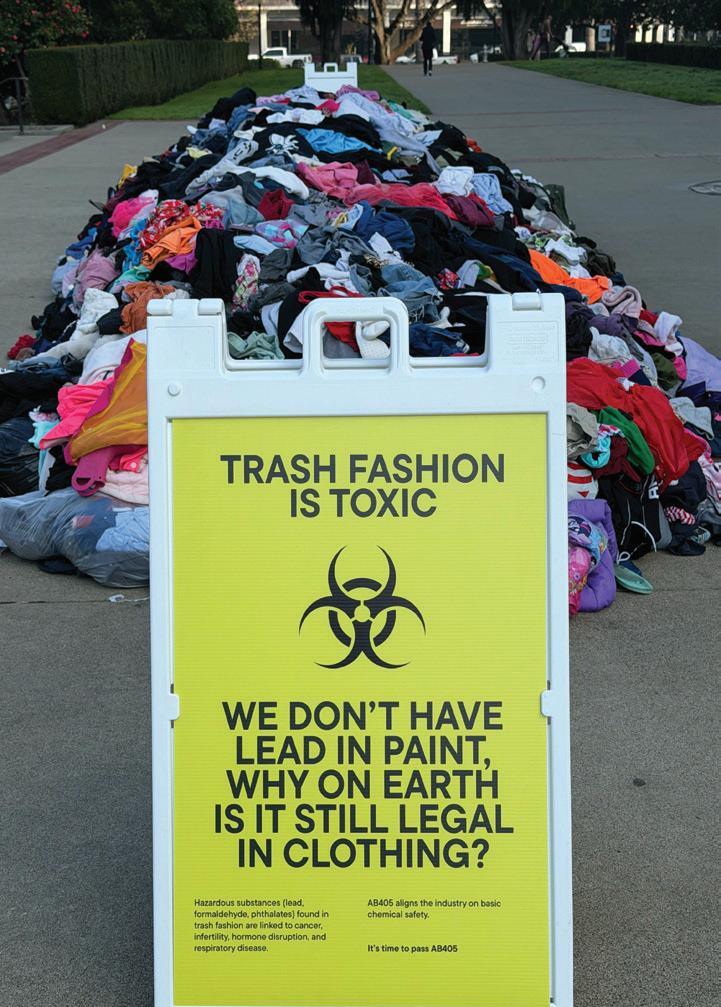
it would require fashion sellers with an annual profit exceeding $100 million to comply with a number of policies, such as agreeing to reduce their greenhouse gas emissions in line with the Paris agreement.
Redwood parent Betina Baumgarten has been a proponent of AB 405 since before its initial introduction in 2025.
“[With the lobby day], we wanted to raise awareness around not only what the overproduction problem is, but how AB 405, unlike other bills, really seeks to address how things are manufactured and what goes into manufacturing,” Baumgarten said.
Another requirement of AB 405 is for fashion sellers to have complete supplychain transparency.
impact on not just people’s physical health, but also their mental health. For years, it has played an important role in influencing the decisions of teenagers in particular.
Gianna Bankovitch is a junior at Sacred Heart Cathedral Preparatory in San Francisco who has strong opinions about the role fast fashion plays in our world.
There’s lead and all these chemicals on our clothing [that are] being absorbed into our skin.
Betina Baumgarten, fashion bill advocate
Companies would have to map at least 50 percent of their supply chain by 2027 and 75 percent by 2030. This aims to directly monitor the amount of potentially harmful chemicals being used in clothing, since there have been no previous regulations.
Many fashion companies use harmful chemicals in the manufacturing of their clothing. According to a recent report by Greenpeace, 32 percent of clothes from Shein were found to contain phthalates and other harmful substances, exceeding the limits set by the European Chemicals Regulations.
The fast fashion industry has a big
Bankovitch first heard about AB 405 after getting involved with student climate organizations in her community.
Along with Baumgarten and several other students, she attended the lobby day on Jan. 15.
“The fast fashion industry is constantly selling things to us on social media with advertisements and influencers saying, ‘Use my $500 Shein gift card,’ and showing what all these clothes look like on perfect people,” Bankovitch said. “Overconsumption is making teenagers feel like they need to have more, or that they’re not enough, if they don’t have that certain aspect of clothing.”
As a parent, Baumgarten feels that the issue is especially important here in Marin, where students are surrounded by the effects of fast fashion. Both Baumgarten and Bankovitch agree that the first step to combating this problem is being aware of the clothing you are buying and where it comes from.

“We are very blessed to live [in Marin] where there is a heightened awareness around [health], but you also have to think about what you’re putting not just in your body, but on your body,” Baumgarten said. “What I would say to encourage [Marin residents] is to get curious. Once you start to think about these things, you become more aware of them.”
ebentley@redwoodbark.org
By Kate Barker
Envision an average day in the life of a teenager, one filled with constant noise. They wake up, press shuffle on their favorite playlist and get ready for school. Sitting down for breakfast, they watch TikTok or Instagram reels. Later, they play a podcast while cleaning their room and watch YouTube while eating a snack. The noise and stimulation never end. Silence is drowned out in a world that is chock-full of media. The constant noise we surround ourselves with limits the silence our brains need for deep thinking, reflection and self-awareness. We should be practicing everyday tasks without noise to reduce stress, create emotional stability and sharpen focus.
Silence has numerous benefits for mental and emotional well-being. According to Calm Meditation, daily quiet time supports memory, attention span and helps regulate emotions. “When you’re in a quiet place, your body is better able to relax. Your brain has a chance to stop being in overdrive, and you may feel the tension slip away.” When filling silent moments with noise, people push away the opportunity for deeper thoughts. This limits the opportunity to check in on how they’re feeling, process emotions and balance themselves throughout the day.
According to SingleCare, a prescription discount service, “About 75 percent of Americans reported experiencing a physical or mental symptom of stress in the last month, and 64 percent of teens aged 12–17 reported feeling the world is more stressful now than when their parents were their age.” Now, more than ever, it’s important to reduce stress in our daily lives. Silence presents an attainable solution: it lowers cortisol (a stress hormone), enhances self-awareness and allows the mind to reset and process intense information. In addition, frequently listening to media instead of silence throughout the day creates a reliance on noise and stimulation. Imagine starting a 30-minute drive, and your music and radio won’t play. For many, the thought of sitting in silence for half an hour and letting your thoughts wander unchecked is uncomfortable. According to a January Bark survey, this is a familiar feeling among high schoolers. One in every four students reported always feeling uncomfortable sitting in silence with just their thoughts, and 55 percent reported sometimes finding it difficult.
when everything goes dark and quiet at night, they find themselves alone with their thoughts. This provides the opportunity for darker, more difficult emotions and worries to present themselves.” Relying on noise throughout the day only postpones anxieties and intense emotions until the brain has time to process them, effectively creating problems when your brain is ready to rest at night, but is overloaded by thoughts from your day instead. Having moments of silence throughout the day helps process these anxieties, making it easier to fall asleep when everything’s quiet.
However, many people would argue that listening to constant stimulation can instead reduce anxiety, increase motivation, block intrusive thoughts or improve focus. They argue that music, podcasts and background noise during daily tasks are forms of entertainment or a necessity for focusing rather than a distraction. A 2020 Harvard Medical School study found that “music listeners had higher scores for mental well-being and slightly reduced levels of anxiety and depression compared to people overall.” Music is a great way to boost your mood, but it can create problems when noise becomes a crutch to avoid silence. And constant noise is like never letting your phone fully charge. Your brain doesn’t get a full mental “charge” without silence and real thinking, so instead, your emotions remain unbalanced, and you’re deprived of self-reflection. According to the Artistry Education Hub, “The absence of silence and reflection time can lead to a sense of restlessness or anxiety, as emotions are constantly stirred without a chance for resolution.”
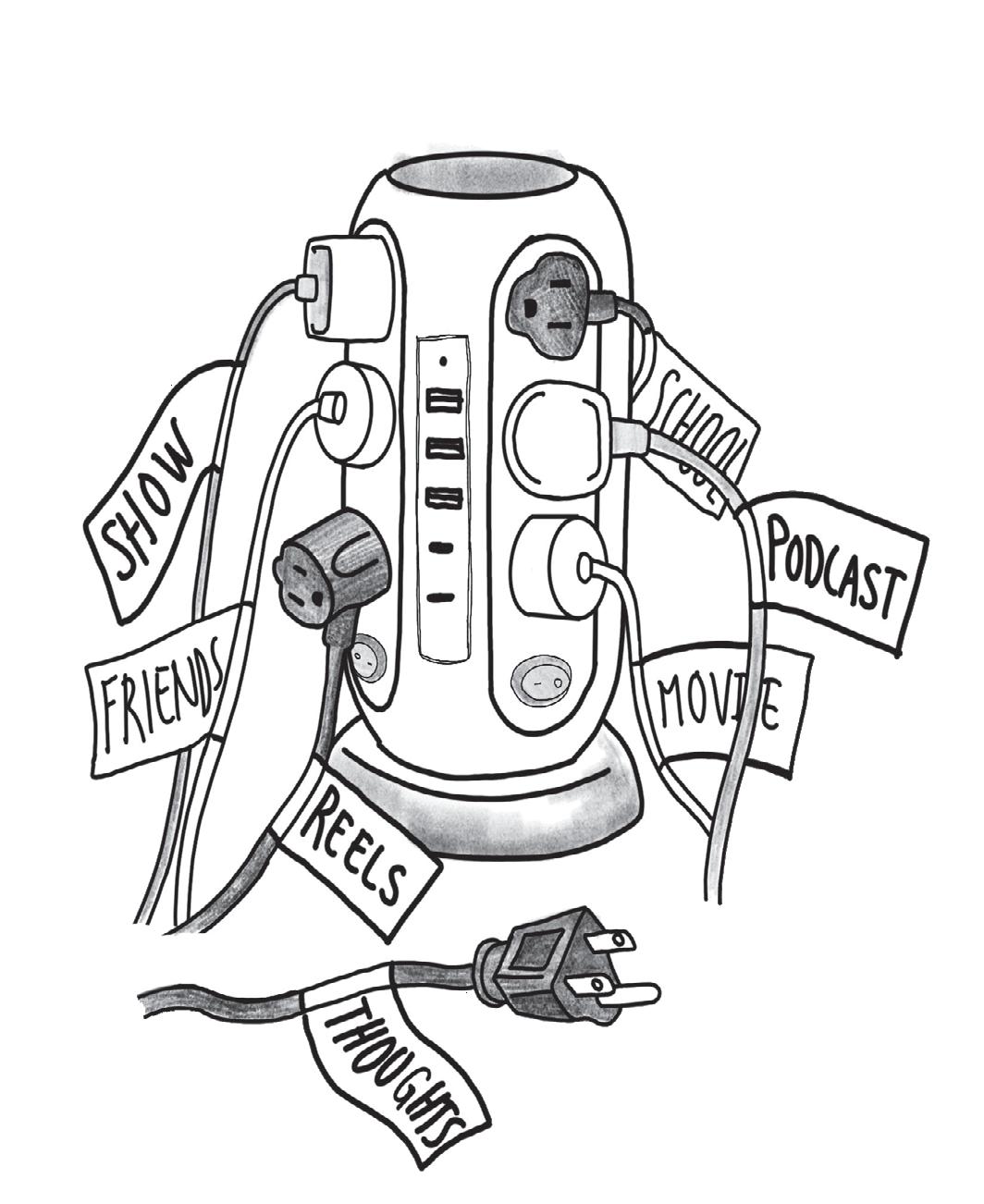
This means that although you may be more entertained getting ready with a background soundtrack or listening to a podcast while doing your laundry, it eliminates important moments of silence from your life.
To reclaim silence, try building in five to 10 minutes of daily meditation. Another simple solution is putting one task on your to-do list and completing it in silence. Try getting ready for school in silence, and see what your mind comes up with for the day. IllustrationbyPalomaNacamuli
By Gabrielle Baumgarten
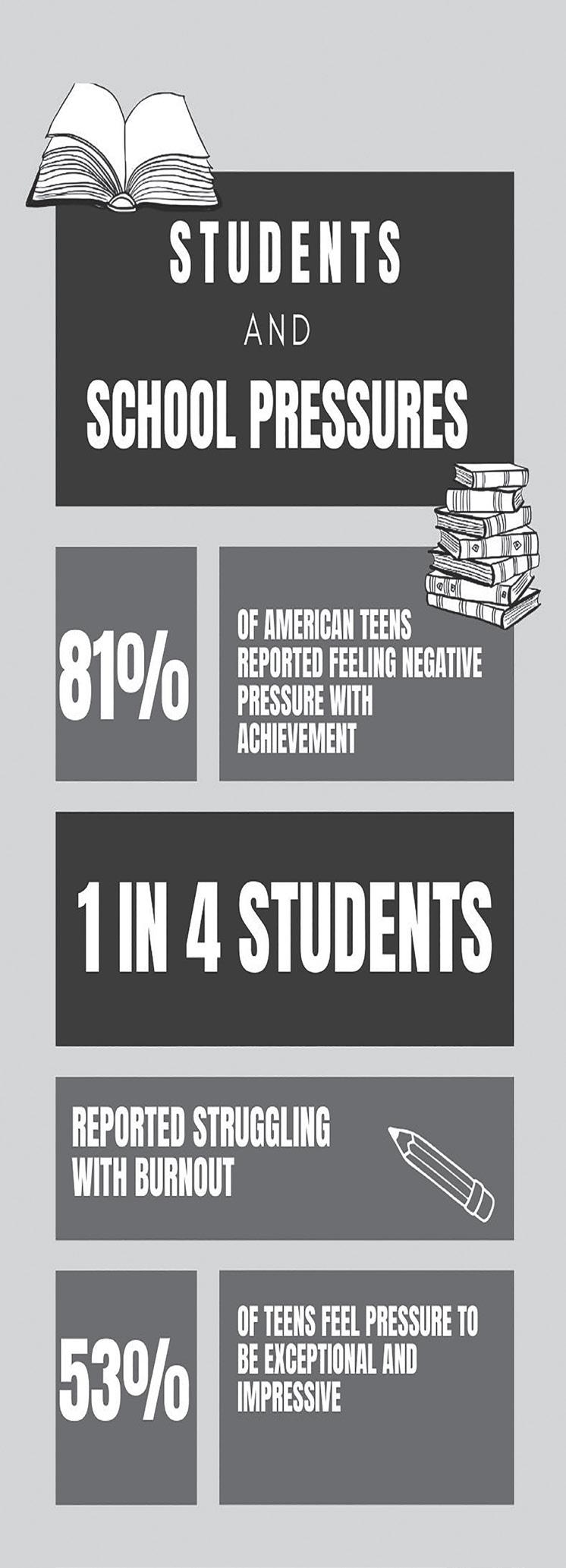
Teenagers in Marin lack passions and interests. Many are focused on what they think they're supposed to do, such as achieving good grades, joining clubs and creating a strong career path, rather than participating in activities they genuinely enjoy. This is due to the overwhelming academic pressure that teenagers face. According to Common Sense Media, “53 percent teens feel pressure to be exceptional and impressive through their achievements (e.g., honors classes, good grades, jobs).” In a high-achieving environment like Marin County, these negative feelings often percolate more.
Kids in our generation, including ourselves, struggle to balance school, friends, family, sports and hobbies. When students feel overwhelmed by this balancing act, hobbies and activities meant to bring joy tend to be the first things to go from their lives. According to Sports Leadership, “70 percent of kids quit organized sports by age 13.”
This nonstop stream of noise during the day also causes challenges at night. Verywell Mind, a digital health resource, reported that when people are distracted throughout the day by daily tasks and noise stimulation, they’re “barely aware of their interior emotional experience. But
kbarker@redwoodbark.org

Do you want to look back in 30 years and regret not living life to the fullest and participating in the hobbies you enjoy? Students should permit themselves to
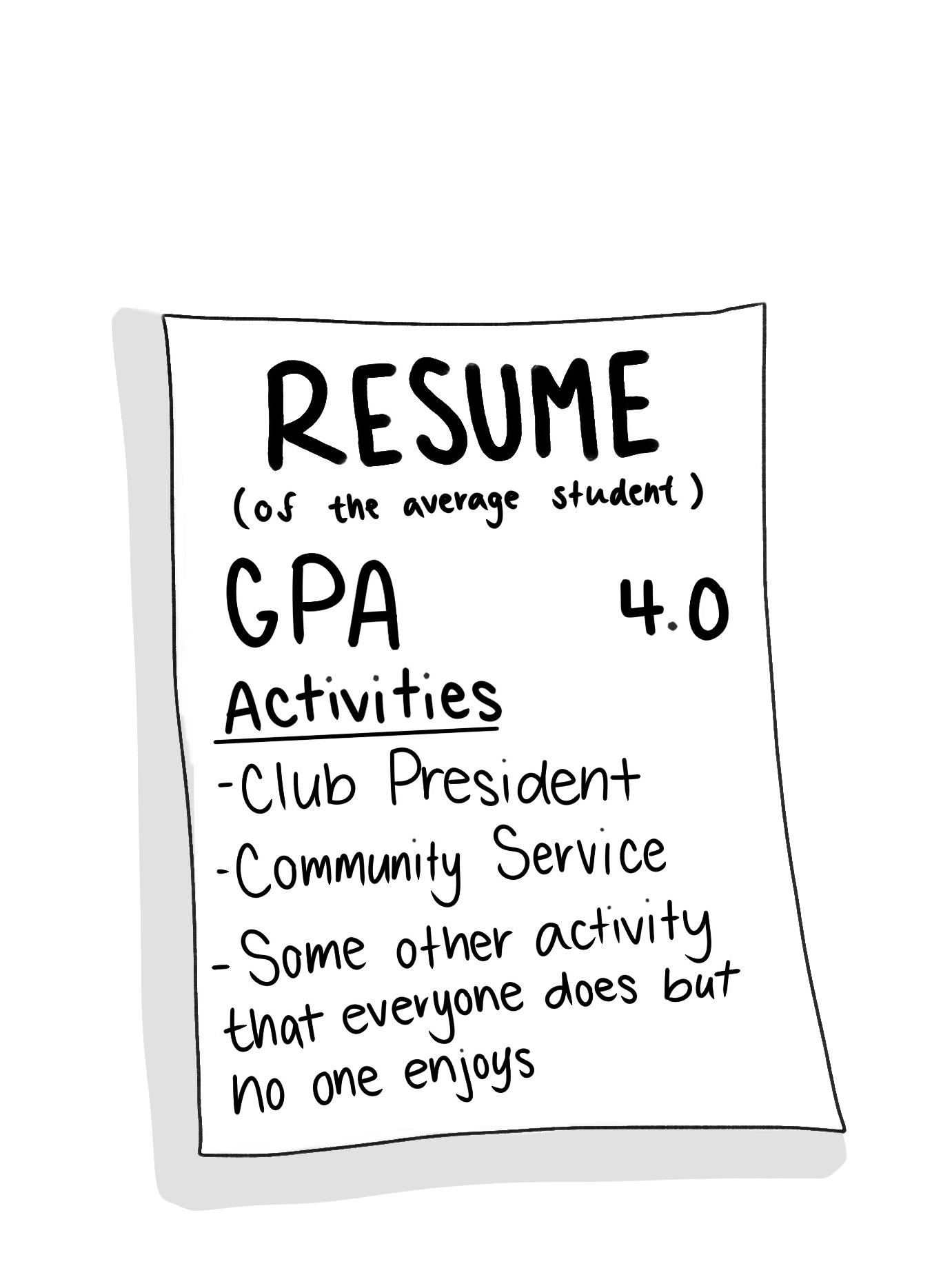
According to the January Bark survey, 63 percent of students feel that they have lost interest in the activities they once felt joy in due to academic or social pressure. Additionally, according to Common Sense Media, “More than one quarter (27 percent) of teens are struggling with burnout.” Along with school pressure, kids are dealing with heavy burnout that stems from overwork.
As kids, we all dream very big about what we want our future to look like. We use so much of our imagination as kids, but that can get lost as we grow up, as we lose that “anything is possible” feeling. What can we do to get this feeling back? This question is answered by an article by psychologists Richard Ruan and Edward Deci, about the Self-Determination Theory. This theory states that,“External rewards hurt something called intrinsic motivation–the internal desire to perform a task for personal satisfaction.” In simple terms, solely rewarding yourself with academic accomplishments can cause you to lose the enjoyment of having a hobby or doing an activity just for the fun of it.
According to a 2018 Pew Research Center survey of 920 U.S. teens ages 13–17, having a job or career they enjoy would be “extremely” or “very” important to them as adults. Although many Marin teens give in to this academic pressure for success, many are also able to balance their outsideof-school commitments with academics. Many high school students do in fact have hobbies and passions outside of school, but they keep them more underground to focus on homework, good grades and when it comes down to it, college.
While some people have other passions outside of school, for some, school is their passion. They love to learn and want to spend all their time doing so.
gbaumgarten@redwoodbark.org
By Ben Mueller
“No Child Left Behind” was a promise made by President George W. Bush in the early 2000s, pledging academic success for all children in our nation. Unfortunately, in California, this promise hasn’t come to fruition. Black and Latino students consistently score far lower than their white and Asian peers on the California Assessment of Student Performance and Progress (CAASPP) tests, demonstrating that our leaders haven’t done enough to counter systemic differences in our educational system. Support systems in our schools are crucial to ensuring that minority students have the same opportunities and success as their peers.
In California, 61.80 percent of white students meet or exceed reading standards, and 51.01 percent meet or exceed them on CAASPP testing. Minority students, however, score far lower. Only 39.47 percent of Latinx students exceeded standards in English, and 34.21 percent of students met or exceeded standards during CAASPP testing. According to CAASPP data, significant gaps exist between students based on race, something that must be addressed.
Even in our own district, white students are 26 percent more likely to meet or exceed standards in English than their Latinx peers. This gap only lowers slightly to 20 percent in math. Nine percent of Black students meet or exceed standards for math in our district.
Yet, last year, even as school board Trustees stressed over test scores, they simultaneously cut funding for two educators running a program called the Hub to support Black students at Tamalpais High School (Tam), the school that houses around 50 percent of the Tamalpais Union High School District’s (TUHSD) Black students. The
Hub at Tam is a drop-in tutoring and mentorship center that provides support for Black students who don’t see themselves represented at the school. Developing support systems, like the Hub at Tam, is crucial to supporting minority students. According to former superintendent Tara Taupier, one semester with the Hub led to a 17 percent reduction in D, F, and Incomplete grades, and a five percent reduction in chronic absenteeism at Tam.

Students testified that they felt more welcome at the school and better supported for success under the two educators and with the Hub. Teachers testified that the educators and the Hub were successful, saying they saw excellence from Black students they had never seen before.
more difficult. At Tam, before the implementation of the Hub, many Black students felt isolated and unwelcome. “When I started at Tamalpais [High School], I felt a sense of isolation. All students should be able to come to school and feel like they’re at a second home,” Tamalpais junior Shania Valentine said. “I feel like I finally found a place to call home at Tam [with the Hub].”
I feel like I finally found a place to call home at Tam [with the Hub].
Shania
Valentine, junior
With this in mind, board members still voted three to two to cut the Black educators’ contracts, leaving Black students without a consistent support system. While one board member claimed to have different data, data from Taupier showed that the amount of D, F and I (incomplete) letter grades for Black students specifically decreased significantly (by about 80 percent, thanks to the two educators). While CAASPP scores did not immediately rise for Black students at Tamalpais High during the 202425 school year, it’s likely that over time, scores would’ve risen thanks to a consistent support system.
by Lucy Jeffers
Research has consistently found that minority students may feel unwelcome at school, making learning
‘New year new me’ the catchy phrase that keeps failing us
By Elaina Leighton
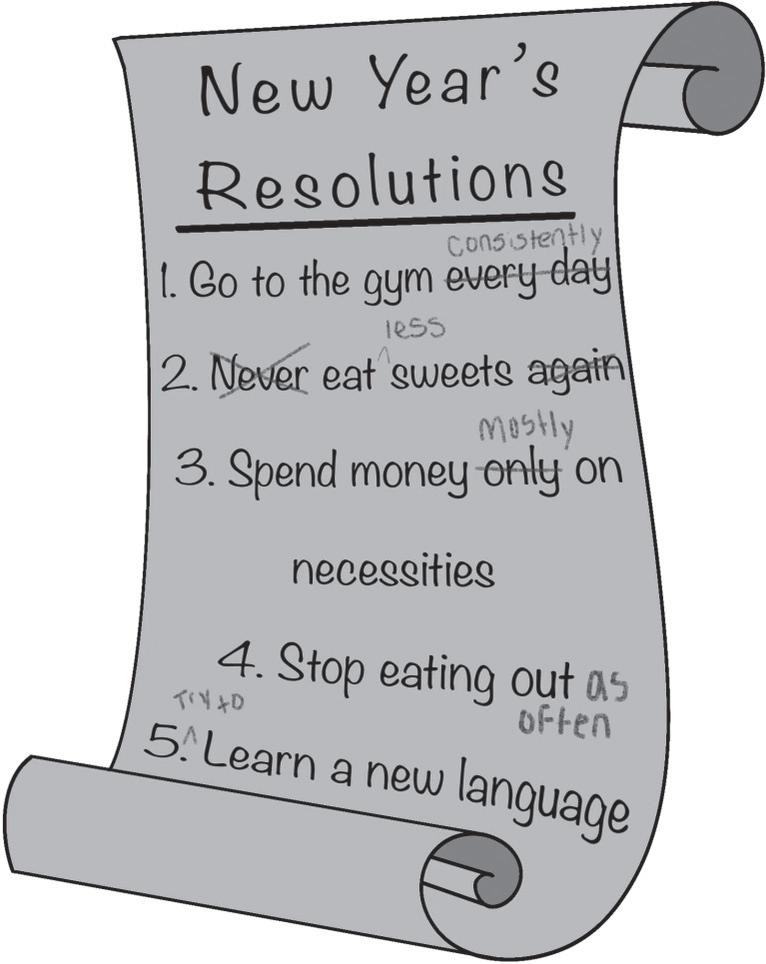
The term “new year, new me” has become a mantra that is repeated every January, representing the widespread belief that personal change should happen all at once. This phrase has been plastered everywhere across social media, news sites and vision boards, suggesting that when the calendar flips, personal transformation is to happen quickly. People make promises to themselves that they’ll go to the gym, eat healthier and save more money, all promises that rarely get completed. By February, these promises begin to disappear. While it’s easy to blame those who fail at their resolutions for lacking discipline, the reality is much more complex. People often fail to fulfill their New Year’s resolution, not because they don’t care, but instead because their goal is shaped by that pressure to make immediate, drastic change. This New Year, we must put an end to this problem and set achievable goals focusing on gradual personal growth.
While the optimism of creating a New Year’s resolution is appealing, that feeling doesn’t last. The hope motivates people to set resolutions that can be unrealistic even from the start. A Forbes Health survey in October 2023 found that eight percent of people polled had resolutions that lasted under a month, while 21.9 percent and 22.2 percent of voters had their resolutions last two and three months, respectively. By the time four months hit, 13.1 percent of respondents said their resolution was still lasting. Additionally, 66.5 percent of participants said they were planning to make three or more resolutions in the new year, something that is very hard to accomplish. When people try to change too much of themselves at once, it becomes less about self improvement and more about self pressure. Instead of choosing one goal that is realistic and attainable, many people try to change too many things about themselves and treat the turn to the new year like a reset button, hoping to become an entirely new person overnight.
A major reason as to why resolutions aren’t usually successful is that people create goals that are either too extreme or too vague. Saying something along the lines of “I will never eat sweets again” or “I will go to
the gym every day of the week” may sound impressive, but in reality is setting a standard that is nearly impossible to maintain long term. Neurologists told Time Magazine that resolutions are most likely to be accomplished when broken down into small, realistic steps. Even with strong intentions at first, motivation can vary over time, and being able to modify your resolution to be more realistic as time passes is the best course of action for having a successful New Year’s resolution.
A lot of this also comes down to impatience. It’s human nature to value immediate reward over long term benefits, which is why it’s so much easier to choose comfort over improvement in the long run. There is a specific term in psychology for this and it’s called
Many students, like Valentine, testified that their educational experiences had improved, leading to better grades and greater academic success with the Hub.
Spaces like the Hub help students feel welcome, allowing them to pursue educational prowess without fear for safety. Implementing support systems and communities in schools statewide could help to close the educational gap facing our public schools. And California, as enrollment in schools declines, should be able to produce funding to support spaces like the Hub. According to the Public Policy Institute of California, enrollment declines offer a potential $7.5 billion in funds for schools to use for things like creating spaces similar to the Hub. These funds, if used correctly, could help to create greater educational equity in our state. TUHSD is unlikely to benefit from this, however, as the district is funded largely by property taxes.
As schools locally and statewide look for solutions to falling test scores, spaces like the Hub offer relatively low-cost and simple solutions to complex issues facing our schools.
While TUHSD may not be able to support these programs with additional state funds, schools could turn to nonprofits like 10,000 Degrees for partnership opportunities in running spaces like the Hub.
bmueller@redwoodbark.org
temporal discounting. It’s where a smaller but immediate reward has higher value to a large reward that would come down the line with hard work. It explains why skipping just one day at the gym when you committed to going every day seems favorable when you won’t be seeing results for weeks. You’re gaining a smaller, immediate reward in a break, over the larger reward that comes later, of a healthy body. People are expecting instant results, when in reality, that’s not possible. When results aren’t seen immediately, people get let down and assume that they’re failing even if progress is being made slowly.
Psychologically speaking, humans aren’t built to carry all of this at once. On top of that, resolutions have felt so normalized that they feel more like an obligation than a goal. If everyone’s setting resolutions, you should be too.
The pressure can push people into choosing resolutions that don’t even fit their values, making them hard to maintain. And when there’s limited early on success, it’s discouraging. Scientists like to compare it to boiling water: “At 70 degrees Fahrenheit, it’s just cool water. At 211 degrees, it’s extremely hot but still not boiling. Only when it reaches 212 degrees does it transform into steam” (PridePoint Health). The point of this analogy is to show that only when you reach a certain point will you see success, showing that even when people are at 211 degrees, they’re quitting because they haven’t seen that visible change, mistaking slow progress for no progress.
Of course there’s still a reason to be making resolutions. Stanford Report features psychologist Kelly McGonigal saying that resolutions allow for people to feel better and uplift themselves; boosting confidence, control and hope. And while McGonigal is completely right, people are still going about them the wrong way, causing very few people to actually feel that way. It’s important to understand that change takes time, and that New Year’s resolutions only work when people commit to them, taking lasting steps because it won’t happen overnight.

By Adela Tabak
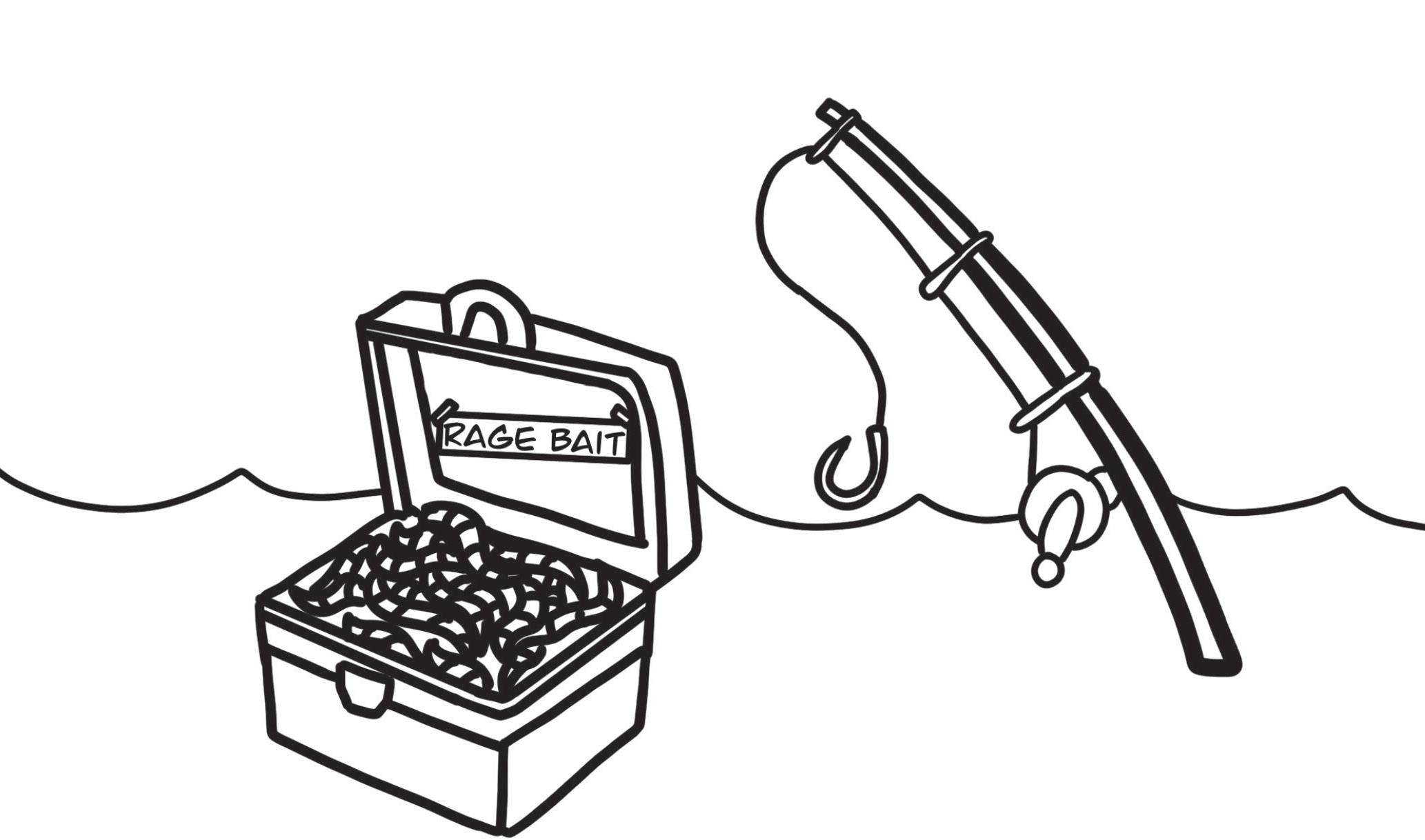
Have you ever been fishing before? Well, if you have, you're in luck. If you haven’t, you may be unfamiliar with how annoying it is when a fish ignores the bait and swims mindlessly around it instead. If you’ve anticipated the thrill of catching a big, beautiful fish but failed miserably, you may have felt the rage that twists in your stomach. That is what it feels like to be ragebaited. However, in most cases, ragebaiting doesn’t occur with fish—it occurs in real life, with people who decide that ragebaiting is their new personality trait.
sarcastically make fun of the way someone said a certain phrase or sentence in a weird way. It’s mutual, and as friends, you agree that this form of rage-baiting is clearly lighthearted and humorous.
Irritating rage-baiting with the intent to aggravate
Rage baiting
For those unfamiliar with the term, rage-baiting refers to “content that tries to provoke anger or outrage, as a means of gaining attention,” according to Merriam-Webster. This content is seen on social media posts, comments or accounts, intending to poke fun at certain creators or relevant, trending topics. Rage-baiting has created a new form of conversation that is intended to be humorous but is instead aggravating. There are many forms of rage-baiting, though these two stand out the most:
Mutual rage-baiting
Say you’re eating lunch in the car with your friends. While discussing the latest news or gossip, two of you start to
This form of rage-baiting comes from someone other than your friends and is usually meant to irritate or annoy. The number of times I’ve heard the phrase “It’s just ragebait,” or “Don’t take things too seriously, I’m just rage-baiting you,” is absurd. Yet it proves that people often seek to anger others for no reason. And sometimes when people mess up or take things too far, they feel bad about their actions, and rage-baiting is the perfect cover-up.
Nevertheless, rage-baiting can undermine someone's confidence and provoke anger based on how they interpret your point of view. The body and mind’s reaction to this stress can have an immediate effect. According to Newport Healthcare, “Rage-baiting stirs up natural human psychological and physiological responses. Anger is a powerful emotion that activates the body’s fight-or-flight system. When someone gets angry or provoked, especially if they know it was inflicted on purpose, their brain usually interprets it as
a threat. This can trigger a stress response that includes increased heart rate, shallow breathing, heightened alertness and a flood of stress hormones.” In fact, according to a January Bark survey, 38 percent of students reported feeling frustrated when they are rage-baited, indicating that teens feel the need to defend themselves in these situations.
Some people believe that rage-baiting teaches younger generations to care less about the small things and to have a good time. When done right, rage-baiting is just a funny trend with good intentions that shouldn’t be taken too seriously. In addition, some believe that if you can’t handle the joke, you should consider how letting things go could make your life a lot easier. However, all of this is easier said than done. It’s difficult to let something go when deep down you feel hurt or annoyed
by what someone has said, especially if it’s something you’re passionate about. Now, rage-baiting isn’t entirely bad. It’s important to have fun and laugh about the small things, but it should never be an excuse to make fun of something that isn’t a joke, even if the intentions are lighthearted. Having a “just get over it,” or “it was just a joke” mentality will not get you far and will only push people away from you by aggravating your peers. Knowing the right time, place and audience is crucial in having the awareness about whether to reel in the bait.
atabak@redwoodbark.org
By Hilah Brekhus-Lavinsky
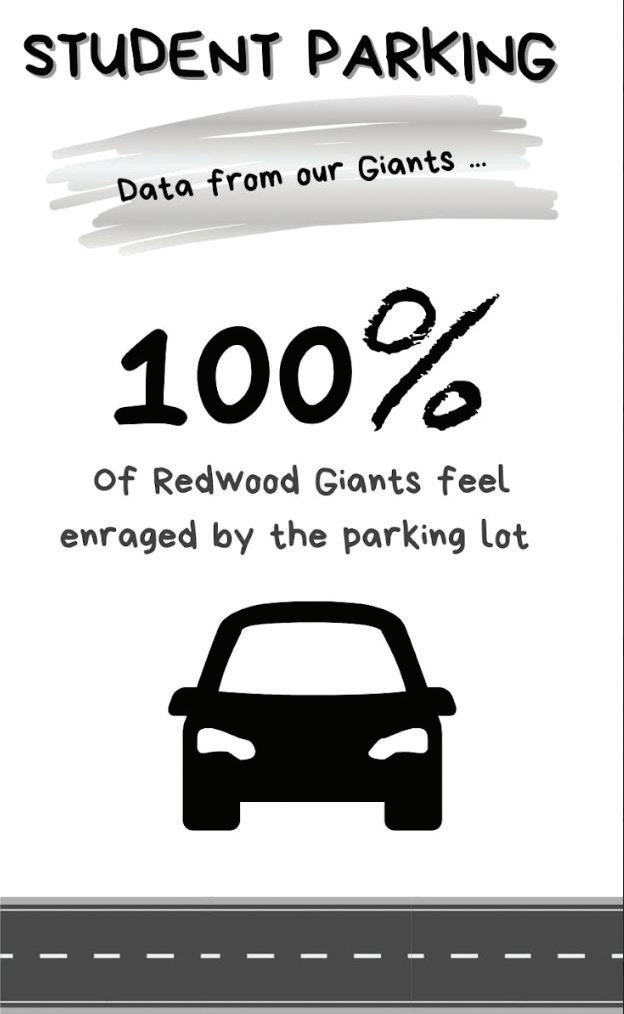
It’s a typical day as a high school student. The last bell just rang, marking the end of the long eight hour day, which included a calculus test on multivariable derivatives, an economics lesson on (something…?), a bad hair day and maybe even a few tears shed during a passing period. You would think the worst part of your day would be over, right? Nope. Because you are actually not a typical high school student. You are a Redwood student who has a parking spot in one of the lots on campus. For you, the bell doesn’t mark the end of the school day. It marks the beginning of the worst part of it all: escaping the parking lot. Suddenly, you will wish you could return to that brutal calculus test because no matter how hard it was, nothing is worse than the traumatic, triggering and anxiety-causing adventure you’re about to experience.
What is the root cause of every issue in the parking lots? Whoever started the
false and hypocritical narrative that teen drivers are the problem has obviously never driven around Redwood parents. For some unimaginable reason, the second a parent enters the lot to pick up their child, all their common sense, logic and decision making skills disappear, causing them to wait in the most inconvenient spots. They funnel down the main rows of the lot, park and sit on Facebook reels while waiting for their child. While this process may seem orderly, what those parents fail to notice is that they have blocked one, if not both rows of parking, leaving upperclassmen enraged as they are unable to leave their spots.
If your car happens to be blocked in by an insufferable Marin mom (and it will be), you will be left with two choices: honk or suffer in silence. Due to the incomparable frustration of this experience, you will likely be too angry to pick the second option. You lay on the horn, maybe throw your hands up and hope you don’t have to honk again. Once the painfully oblivious


parent finally moves just enough so that you almost scratch a car (the worst form of public humiliation), the madness begins again.
You are now tasked with the seemingly impossible yield situation where hundreds of cars fight for their spot on the final stretch. Whether it is due to blatant incompetence or their superiority complex is unknown, but for some reason, parents truly believe that they deserve to cut you off in this process despite the fact that you have been waiting for eight hours to leave. When I enrolled at Redwood for the student experience, I didn’t realize it included a weirdly intimate face-off with a dad in a Porsche who is trying to cut me off. At this stage in the process, you lay on the horn again. Is it still called road rage if you haven’t even gotten on the road yet?
Now, you see the exit, the finish line, the end of your traumatic journey. You are so close, but there is still one major obstacle: the parents parked in the fire lane in front of the school to wait for their child. This inconsiderate, obnoxious and illegal maneuver may leave you in tears because you have to once again suffer the consequences of someone else’s inability to drive in a safe and orderly manner.
Around this time in your day, you will be so hangry and sleep-deprived that you won't have any fight left in you. You will be left wondering how all the parents you just encountered are licensed. Was the driving test easier back then? Did they never learn parking lot etiquette? Why is there a generational gap in manners, skill and intelligence? Unfortunately, we will never
know the answers to these questions. As students, all we can do is keep honking, keep defending our turf and hope that we never become incompetent drivers like Redwood parents.
hbrekhuslavinsky@redwoodbark.org
editorial
College isn’t the only conversation worth having.

Illustrationby MorganSicklick
POLICY: All editorials are unsigned and have been approved by the majority of the Bark staff.

BARKS and BITES are the collective opinions of the BARK staff concerning relevant issues. BARKS represent praise, while BITES represent critiques.
It’s the middle of fourth period, and all of a sudden, your email dings with a new notification from your dream college: “There has been a status update to your application.” As your class gathers behind, you look at your friend, and both anxiously log in and click “view update”.
College application season is one of the most anxiety-filled times for high schoolers, jammed with writing essays and hitting deadlines. On top of the academic and social pressure teens put on themselves, there is constant external pressure from the adults in their lives. For high school juniors and seniors, college application season has evolved from a private milestone into a highly public and criticized process.
According to a 2025 survey from The Princeton Review, 73 percent of high schoolers reported feeling “high” or “very high” stress about the college application process. Peer conversations and pressure are a major factor in this stress, with data from the American Psychological Association showing that 63 percent of students reported feeling anxiety over where peers and friends are applying to college. Additionally, 58 percent worry about how they will be perceived if they attend a less selective college.
According to a 2022 Bark survey, 41 percent of students report hearing parents, teachers and students talk about college every day, and 30 percent report hearing college talk several times a week.
Although often sparked with good intentions, constant conversation about acceptances and rejections can increase the stress that students are already experiencing. Teenagers have identities and dreams beyond their next step; focusing solely on college questions can overshadow the true aspirations and goals they are working toward. Most teens haven’t even figured out what they truly want for themselves. Expecting 17 and 18-year-olds to have their lives planned out is unrealistic and rarely the case.
In fact, data from the National Center for Education Statistics shows that around 80 percent of college students switch their majors at least once, with
A BARK to new LinkedIn users. It’s great to see students networking instead of studying.
A BITE to the fake bomb threat. Same time next year?
A BARK to the Costco Cookie Cake. Diabeto will be rolling back to kitchen for this one.
A BITE to Catherine O’Hara’s death. Everything has gone to Schitt without you.
one in 10 college students changing their major more than once.
While college talk does cause pressure, it can also be a tool to assist in strengthening connections between students and adults. Speaking with friends after a hard rejection or a positive acceptance can help with processing emotions, and it’s natural to want to share these moments with your support system. The next step after high school is a major milestone and turning point in teenagers’ lives, no matter what their next step is, and curiosity typically comes from a place of care.
We admit to being curious too. There are countless social media posts and graduation spreads that allow students to post their next steps on their own terms when they are ready. How we talk about college admissions can matter more than the results themselves. So rather than asking questions about college, here are some examples of questions you can use to start a conversation:
“What are you listening to lately?”
“Do you have any fun weekend plans?”
“Have you watched any good movies lately?”
“How are you liking your classes?”
“Found any new recipes recently?”
This applies to everyone, whether you are a junior talking to a senior, a parent talking to a teenager or even a stranger looking to strike up a conversation and are unsure of what to say. Don’t focus only on the future; focus on the present instead. At the end of the day, teenagers are more than the next step they will take.
Have an opinion regarding anything that appears in the Bark or in general? We encourage our readers to submit letters to the editor. Letters to the Bark should be 500 words or fewer, typed if possible and signed. They must be emailed to bark@redwoodbark.org
RepoRteRs
Erickson
Fooman
Gehrman
staff photoGraphErs
Henry Barker
Lauren Ellington
Oren Weingarten
A BARK to the wellness service dog. But he doesn’t bark back.
A BITE to the flooding. It was so bad that the carpool lane turned into a car-pool.
A BARK to the walkout. Nothing nice to say about ICE.
A BITE to Fernando Mendoza. He just threw off Indiana’s acceptance rate!
Editors-in-ChiEf
Cora Champommier
Paige Edelen
Morgan Sicklick
hEad Copy Editors
Vivi Endler
Elsa Sherman
Adela Tabak
Copy Editors Alex Atherton
Kate Barker
Gabrielle Baumgarten
Claire Carbone
Leyton Defesche
Olivia Hamm
Anna Horn
Lucy Levine
Isabella Marsh
Mila Martinez
Isha Patel
Josephine Perlov
Zoe Peters
Maddie Petersmeyer
Jake Post
Sophie Sahai
Sienna Watt
Sofia Yanni
opinion Editors
Jack Block
Cian Kelly
Rosstin Pouradib
fEaturE Editors
Beatrice Nass
Maggie Schwartz
Penelope Trott
LifEstyLEs Editors
Hayden Martay
Angelina Purvey
Logan Scully
GamEs Editors
Richard Byrne
Noah Gersch
Tessa Soccorsy
sports Editors
Reed Grossman
Brooke Hansen
Georgia Thomas
nEws Editors
Amrit Aujla
Bella Garbo
Joel Kurtzman
rEviEw Editors
Siena Forster
Skye Hammond
Lily Skinner
vidEo Editors
Charlie Anderson
Lily Bell
Aaron Jensen
Tobin Rivera
Brooklyn Saputo
spanish Editors
Esperanza Cubillos
Adriella Marcus
podCast
Editors
Liam Healy
Olen Johnson
Scarlett Musgrove
Layout dEsiGnErs
Hilah Brekhus-Lavinsky
Paige Catanese
Ben Mueller
outsidE opportunitiEs
Nina Baker
Claire Johnson
Maddy Wagner
BusinEss manaGErs
Tate Ralston
Nico Ruel
Owen Scheeline
soCiaL mEdia manaGErs
Madison Bishop
Mariel Goodhart
Elle Wilson
sEnior staff
Mo Colaco
Jamie Glennon
Ofi Huneeus
Chloe Jennings
Kate Morgan
Petra Novotny
Ellie Smith
rEportErs
Gabriel Cavanagh
Matthew Delay
Wes Fitzpatrick
Elsa Houtkooper
Elaina Leighton
Leighton Olsen
advisEr
Erin Schneider
Lily Kilgore
data anaLysts
Hudson Brod
Evelyn Harper
Tessa Tuatini
wEB dEsiGnErs
Zander Hakimi
Elizabeth Hopkins
Logan Schneidewind
staff iLLustrators
Lucy Jeffers
Paloma Nacamuli
Natalie Vinogradsky
muLtimEdia dEsiGnErs
Eleanor Bentley
Dorothy Florence
Asha Zlatoper





Infografía por Eleanor Bentley
El sábado 3 de enero, los residentes de Marin que esperaban desplazarse a San Francisco por la autopista 101 llegaron a la carretera y se encontraron con una enorme masa de agua que bloqueaba su camino. La inundación de la autopista 101 fue solo una pequeña parte de una gran inundación causada por la marea alta y las lluvias torrenciales, que afectaron a zonas residenciales bajas como Larkspur, así como la autopista. Esta inundación causó daños estimados en 3.5 millones de dólares en diversas estructuras de Marin e impidió que muchos residentes se desplazaran al trabajo al cerrar varias carreteras importantes.
Solo unos meses antes, los residentes de Marin se vieron obligados a permanecer en sus casas por una ola de frío sin precedentes que hizo que Marin registrara las temperaturas más bajas desde 1922.
Estos dos extremos fenómenos meteorológicos sucesivos fueron causados por un patrón cada vez más severo de cambio climático que afecta a Marin y a sus residentes. Debido al crecimiento industrial y al uso de combustibles fósiles, las temperaturas y el nivel del mar en la zona de la bahía han comenzado a aumentar a un ritmo creciente.
Continúe leyendo escaneando el código QR a continuación.

Por Espy Cubillos
Los Golden Globes son un evento significativo en la historia estadounidense que une los mundos del cine y la televisión. Desde 1944, la ceremonia de los Golden Globes se celebra anualmente a principios o mediados de enero, lo que significa que cada año es el primer evento que marca la pauta para las principales ceremonias de premios.
Dada la importancia de esta ceremonia de premios, es fundamental reconocer el talento a nivel mundial para garantizar que el premio sea inclusivo y tenga en cuenta a actores y cineastas de diversas procedencias. El evento de este año fue diferente a cualquier otro, especialmente para la comunidad hispana, ya que el actor Wagner Moura hizo historia en una importante categoría cinematográfica, convirtiéndose en el primer hombre de origen brasileño en ganar un Golden Globe por su actuación como protagonista. Además, “El Agente Secreto”, otra película brasileña, ganó el premio a la Mejor Película y de hecho fue producida por el propio Moura.
Si bien estos artistas ganaron el premio en sus respectivas categorías, otros artistas de ascendencia hispana también fueron nominados. Jenna Ortega, famosa por su papel en la serie de televisión “Wednesday” y Selena Gomez, conocida por su papel en “Only Murders in the Building”, fueron nominadas en la categoría de mejor actuación de una actriz en una serie de televisión.
Aunque los Golden Globes se centran exclusivamente en el cine, entre bastidores, la elección de vestuario de un actor o actriz puede ser de gran importancia. Especialmente con el apoyo de las redes sociales, la categoría de “mejor atuendo”
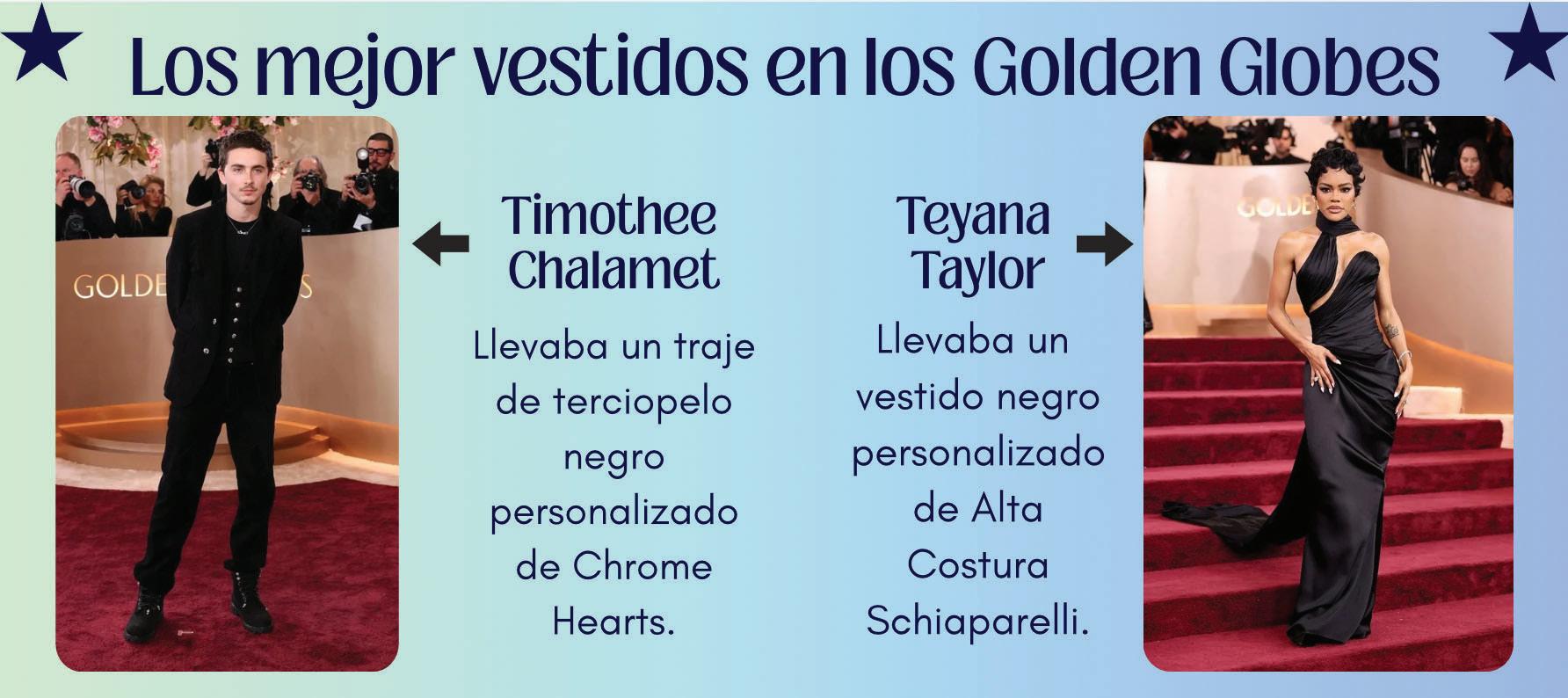
es una forma común en la que muchos influencers cubren las galas. Entre los looks más destacados de este año, en los Golden Globes se encontraba el de Teyana Taylor, quien fue ampliamente reconocida como la celebridad mejor vestida con su vestido de alta costura de Schiaparelli. Además, Timothée Chalamet no solo ocupó el primer puesto como el hombre mejor vestido, sino que también ganó su primer Golden Globe a mejor actor en una película musical o comedia por su papel protagonista en Marty Supreme.
A pesar de que todos estos actores vestían ropa elegante, muchas figuras famosas como Ariana Grande y Mark Ruffalo vistieron los pines con mensajes de apoyo a las comunidades minoritarias que están siendo atacadas por ICE. Este se convirtió en un importante accesorio político que las celebridades lucieron en protesta por el reciente tiroteo mortal de ICE en Minneapolis con lemas como “Ice Out” o “Be Good”.
En nuestra comunidad local, David Minhondo, profesor de la clase de Historia del Cine aquí en Redwood, disfruta de ver los eventos de premios. Sobre lo que vio de
los Golden Globes comentó “comienza con la película ganadora del premio a la mejor película de 1935” y luego se centró de manera similar en películas galardonadas.
Le encanta poder mostrar a sus estudiantes, no solo excelentes películas, sino grandes películas a un ritmo excelente, películas que hacen que la gente se olvide de que está viendo una película.
“El artista, el director, los actores, todo se une para producir grandes películas”, dice Minhondo, reconociendo el trabajo que hay detrás de las películas galardonadas, como las de los Golden Globes.
En general, este año supuso otro importante reconocimiento para todos los actores y actrices que han contribuido enormemente a la industria cinematográfica. En particular, para figuras clave de esta entrega de premios como Timothée Chalamet o Wagner Moura, se hizo historia, y su legado dejará una huella imborrable en el mundo. Es de esperar que, con el paso de los años, estos grandes eventos de entretenimiento sigan celebrándose y continúen teniendo un impacto fundamental en millones de personas en el mundo.
Por Adriella Marcus
Marin Rapid Response Network (MRRN) es una organización que ayuda a la comunidad de Marin porque tiene una línea directa para llamar si una persona piensa que ve U.S. Immigration and Customs Enforcement (ICE). También, entrenan observadores legales.
Algunos de estos observadores para MRRN son maestros de Redwood. Específicamente, Maria Civano, una maestra de español, y Melissa Boles, una maestra de ciencias naturales.
“Una observadora legal es una persona que está conectada con el Marin Rapid Response Network y cuando hay actividad que se pueda pensar que es ICE nos llaman. Lo que nosotros tenemos que hacer es grabar la interacción con ICE para documentar lo que está sucediendo en tiempo real,” Civano dijo.
Este trabajo es muy importante porque estas grabaciones pueden utilizarse en la corte en caso que la situación llegue hasta allí.
“Encuentro que este es un momento muy aterrador, y realmente me preocupo por mi comunidad aquí en Marín, y quiero que los miembros de mi comunidad estén seguros y tengan acceso a los derechos que la constitución les promete”, Boles dijo.
Lisa Bennet es la directora del programa MRRN, y trabaja con otras personas para entrenar observadores legales y manejar la
línea directa que está abierta todos los días, las 24 horas.
"En un día ajetreado recibimos 150 llamadas y 150 mensajes,”dijo Bennet No ha habido presencia de ICE en Marin desde la formación del MRRN. Pero, muchas personas han llamado a la línea directa pensando que miran a ICE cuando actualmente hay otras autoridades de seguridad como la policía.
“Lo que no entendí hasta que fui a ese entrenamiento fue lo aterrorizadas que se sienten nuestras comunidades de color en este momento… hay una respuesta de miedo cada vez que algunas personas ven a personas uniformadas de fuerzas de seguridad. Es aterrador y no es segura para nadie”, dijo Boles.
De acuerdo con Bennet, es muy importante que las personas tengan un plan si encuentran a ICE.
"Es muy importante que aparten cualquier tipo de papel que alguien más necesite si te detienen y se los entreguen a alguien,"dijo Bennet. "Todas las personas tienen los mismos derechos constitucionales que cualquier persona en este país... no abran la puerta a un agente de ICE ni a nadie que no conozcan porque [los agentes de ICE] intentan hacerse pasar por otros.”
Para ser un observador legal, los requisitos incluyen poseer una licencia de conducir y necesita ser un ciudadano de los Estados Unidos. Los observadores
legales también necesitan completar una capacitación.
“Muestran la parte legal, lo que puedes y lo que no puedes, hay role playing también,” dijo Civano.
Boles y Civano alientan a las personas a convertirse en observadores legales si les interesa brindar apoyo a la comunidad de una manera activa. Todos podemos cumplir diferentes roles en esta situación, ser observador legal es uno de esos roles.
"Creo que cuanta más gente haya involucrada, más probable será que tengamos éxito en proteger a nuestra comunidad," dijo Boles.


By Anna Horn and Logan Schneidewind
“I’m going to kill myself.”
It’s the kind of phrase that barely registers anymore. It gets said after bombing a test, tripping down the main building stairs or realizing an assignment was forgotten minutes before midnight. Even when meant sarcastically, these phrases don’t always stay harmless. They can quietly affect mental and physical health over time. Among teenagers, phrases like “RIP (rest in peace),” “I’m going to kill myself” or “I’m so stupid” are often used as exaggerated reactions to stress rather than literal statements.
These comments are all examples of negative self-talk, language students use to mask discomfort or stress in moments of pressure. They’re usually intended as jokes, but when repeated often enough, they can shift from harmless exaggerations into internal beliefs.
Junior Emily Muller notices how frequently those phrases appear during high-stress periods of the school year.
“When I hear [negative phrases] it’s usually [during] a really busy school week with a lot of homework and tests,” Muller said. “I think it’s just the heavy workload. People say things like that when they’re super overwhelmed and have way more on their plate than usual.”

interpret them as exaggerated humor and only 11 percent interpret them with concern.
“When someone says, ‘Oh, I’m going to kill myself,’ someone usually chuckles,” Muller said.
When negative self-talk is constantly repeated, its impact can reach beyond the mind, affecting stress levels, focus and physical performance.
“What you think affects how your body functions,” Miller said. “Stress impacts your heart rhythm, your metabolism and your ability to rest. Anxiety can interfere

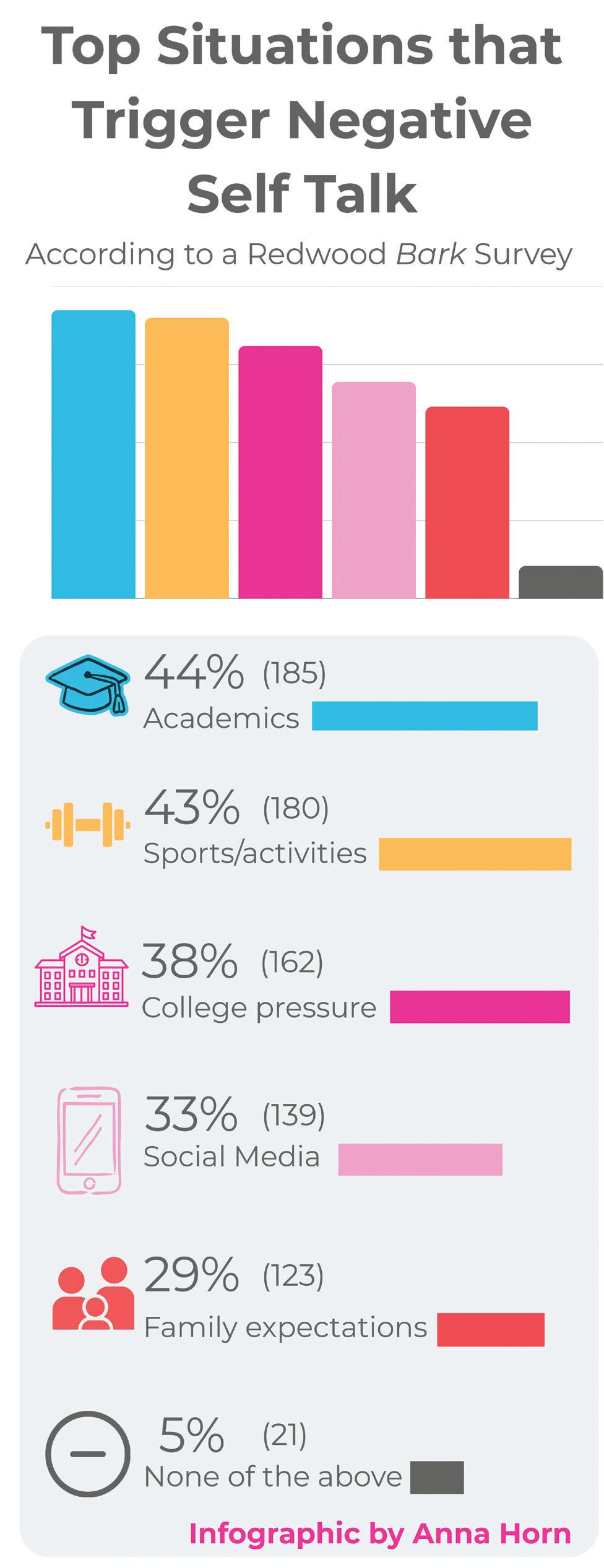
Internal criticism has quietly become normal in student life, woven into everyday reactions to feeling overwhelmed. According to a January percent of students said negative self-talk is triggered by academics, 38 percent said by college pressure and 43 percent said it’s triggered from sports and activities. With stress coming from so many directions, self-criticism can start to feel automatic.
Negative self-talk doesn’t only show up as jokes; it often shows up as internal thoughts like “I suck,” “I always mess up” or “I’m not good enough.” Carolyn Miller, a therapist at Redwood’s Health and Wellness Center, says negative self-talk can stir up untrue ideas about oneself that, with repetition, can cause long-lasting insecurities.
“In general, negative self-talk is something that’s untrue and unfounded,” Miller said. “But if it doesn’t get challenged, it becomes a pattern in the mind. Eventually, it turns into a core belief.”
The long-term power of negative self-talk lies in its repetition. Even when students don’t mean these phrases literally, hearing and saying them repeatedly can shift how they’re interpreted. What begins as exaggeration can start to feel true.
When those beliefs take hold, deadlines drag, productivity falls and performance suffers. Confidence drops before a task even begins. Students may freeze on material they know or hesitate when they could act, not because their ability is gone, but because they no longer trust it.
According to Thriveworks, a national clinically founded mental health organization, “constantly criticizing oneself can lead to heightened levels of stress and anxiety. Ongoing internal pressure to meet unrealistic standards can cause a perpetual cycle of worry and tension.”
Muller points out another concern: When these phrases get repeated too often, they lose their urgency and are no longer taken seriously, which can have harmful consequences.
“I don’t really think [I want to kill myself] should be a normalized saying,” Muller said. “If someone does say it in a moment when they really need help, others might not take it seriously.”
When loaded phrases get thrown around too often, they blur the line between joking and real distress. In fact, according to a January Bark survey, when hearing phrases like “I’m going to kill myself” or “RIP,” 46 percent of students interpret them as a joke, 39 percent of students
with sleep, and lack of sleep affects everything else.”
Research suggests that ongoing self-criticism has been linked to higher levels of cortisol—the body’s stress hormone—which can contribute to fatigue, weakened immune response and difficulty controlling emotions. In other words, the way students talk to themselves doesn’t just shape their mindset; it can shape how their bodies feel day to day.
Miller emphasized that addressing negative self-talk isn’t only about forcing positivity.
“If they’re going to replace negative thoughts with something positive, it has to be something they actually believe,” Miller said.
Even something simple yet positive can help build confidence over time.
“If a student says, ‘I’m not good at math and I’m not going to do well in the class,’ they can [counter] that by saying, ‘You know what, I’m really good at soccer,’” Miller said. “That confidence can carry over. Feeling capable in one area can support confidence in others.”
One way students can fight their internal critic is by changing how they talk to themselves. Being one’s own ‘best friend’ means changing how mistakes and stress are handled by acknowledging weaknesses without attacking personal worth. It’s about balancing accountability with
patience, an approach that aligns with Miller’s emphasis on responding to negative thoughts with a realistic perspective instead of harsh self-judgment.
In practice, that can look like interrupting a spiral of self-criticism and reframing language to reflect reality. Shifting “I’m terrible at this” into “I’m struggling right now” or “I’m not good at this yet” allows room for growth without shame. It mirrors the way people tend to speak to friends: with care, honesty and encouragement.
bark@redwoodbark.org


By Vivi Endler
Videos promising the perfect jawline or cheekbones are taking over TikTok, driving the viral trend known as “looksmaxxing,” a popularized form of content that focuses on maximizing physical attractiveness. The trend, geared towards young males, but reaching all audiences, suggests ways to improve perceived attractiveness and how to become as masculine as possible through specific facial features and bone structure.
Advice on how to looksmax on social media ranges from improving physical health and taking care of personal hygiene to extreme, unrealistic ways to “improve” appearance, capitalizing on insecurities shared by men. These may include suggesting peptide and other drug use, encouraging plastic surgery, as well as recommending “bone smashing,” a popularized term which refers to inducing microfractures on your cheekbones using a weighted tool, making your bones grow back stronger. Some creators even promote a ranking system where one is ranked on a scale by facial structure and features. The dangerous side to looksmaxxing creates pressure to attain the highest of beauty standards and rank high on the scale, encouraging unhealthy comparison to others and creating one specific look that meets the “ideal” male aesthetic. This extreme form of content strengthens the already widely internalized idea that self worth correlates with physical appearance.
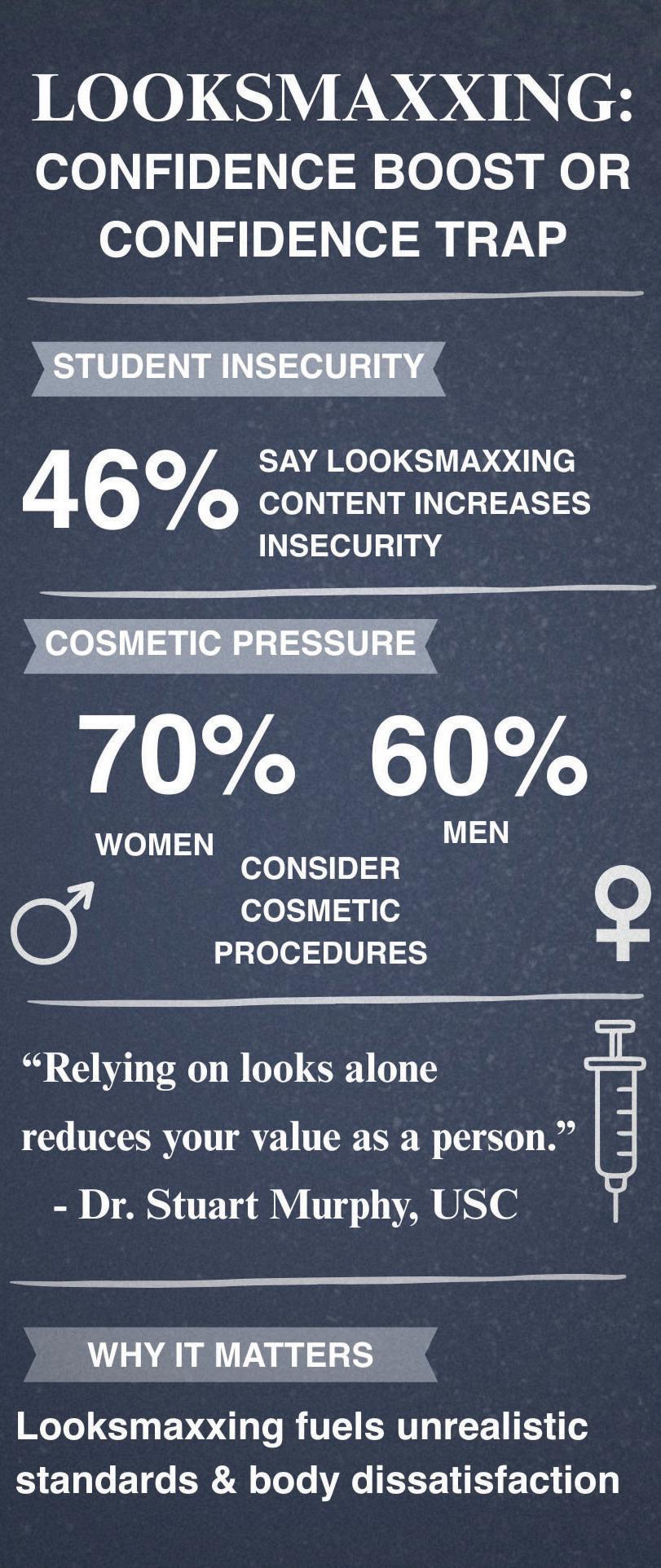
Many looksmaxxing creators show results that are unachievable naturally for some, indirectly encouraging people to believe plastic surgery is their only option. In fact, about 70 percent of women and 60 percent of men reported that dissatisfaction in their bodies led them to consider cosmetic procedures, according to a study done by PubMed. Guides to self improvement found online have a wide range of content, but looksmaxxing has brought a new, "inherently dangerous” side to social media, argues director of the Eating Disorder Program at the University of Southern California Dr. Staurt Murray.
We want boys to focus on more sustainable ways to generate their self-esteem and identity.
Dr. Stuart Murray,
Director of Eating Disorder Program
In a study done by the National Library of Medicine, 89.3 percent of the teens in the study used TikTok, and reported higher levels of social comparison and lower body image scores compared to non-users. This suggests that content on social media heavily influences feelings about appearance, meaning viewers can be easily influenced by what they see online. While the looksmaxxing trend can encourage healthy discipline to improve health or for personal growth, many of the videos stem from insecurity. Something that viewers may overlook is that confidence and insecurity can appear very similar in content, despite being rooted in very different reasons.

“If we fall into the trap of dissatisfaction and low selfesteem, if you're diluting yourself down to a number or a skin tone, or an angular tilt of your face, it reduces your value as a person. We want men to focus on more sustainable ways to generate their self-esteem and identity,” Murray told BBC news. According to a January Bark survey, 46 percent of students find that looksmaxxing content can actually increase insecurity instead of enhancing confidence. Though the goal of looksmaxxing is to motivate viewers to look and feel their best, nearly half of the student population report the opposite effect. The trend has the tendency to reinforce insecurity by creating a narrow beauty standard that many can’t achieve naturally. In contrast, senior Jacob Katz posts a different form of content on his Tiktok account, @jkatz___, displaying to viewers his progress in the gym and showing that improvement can be achieved naturally. Katz notes that looksmaxxing creators are posting for different reasons than him. The intense side of looksmaxxing is motivated by insecurity, and using physical changes as a way to prove worth to themselves and others.
“I’m trying to gain the platform to help other kids [that were] like me. In freshman year and eighth grade, I would often feel down about myself and discouraged to want to change. But I want to show [through my content] that you can change one day at a time,” Katz said. “What I’m trying to do [with my videos] is use myself as an example to hopefully help other people in the long run. A lot of looksmaxxing content [doesn’t try to inspire viewers], and just tries to show how much they’ve improved their facial structure. There’s a lot more ego presented in [usual] looksmaxxing content.”
Katz has observed that looksmaxxing posts can push people to risk their health to mold themselves to unrealistic appearance standards.
“There are some extreme people I’ve heard of. One guy drinks a gallon of milk and has a bunch of sugar everyday to make his bones thicker and his jaw more appealing, and he does bonesmashing which doesn’t sound healthy,” Katz said. “People who choose the route of looksmaxxing like [content creator] @ClavicularLiveYT [on Youtube] will even do methamphetamine to look better.”
In an interview with Fortune, clinical psychologist and founder of the Hildebrandt Laboratory at the Icahn School of Medicine Tom Hildebrandt expressed deep concern for the trend, and he finds that online advice and criticism can have negative effects on viewers.
“Psychologically, it’s essentially an erosion of the sense of self,” Hildebrandt said. “It’s like, ‘The more I get feedback that I’m not good enough, the more I consume it. And then, I trade my attention, my time and sometimes my money and resources to give up my current identity in pursuit of this other one.’”
In addition to this, not all looksmaxxing creators are completely transparent, as some fail to inform their viewers of the full truth
regarding what they do to enhance their looks.
“Doing lymphatic drainage and [other facial massages] have been proven to help, but it can also be drugs and other things [creators] are not sharing. A lot of stuff is hidden,” Katz said. “[Steroid and peptide use] online, especially from people who aren’t transparent about [their usage], can make people’s self confidence drop even more, and make them [question], ‘How do I look so much worse than them?’ and it's because it's not [done] naturally.”
Katz pointed out that some looksmaxxing creators use peptides which can help your skin, your bones, your recovery and help you gain more muscle mass, making viewers feel discouraged that they haven’t achieved that look naturally. Viewers can be easily manipulated by this content, making them believe if they risk their health, they will look like these creators, though a lot may go on behind the scenes.
“As long as [self improvement] is done in the right state of mind and using the proper technique, it's a great idea. Health is the most important thing; mental health and physical health. You shouldn't be putting anything unnatural into your body or doing anything with a negative mindset. It can be really positive if you're doing it for your own personal growth, and you're doing it naturally through hard work.”
By Bella Garbo
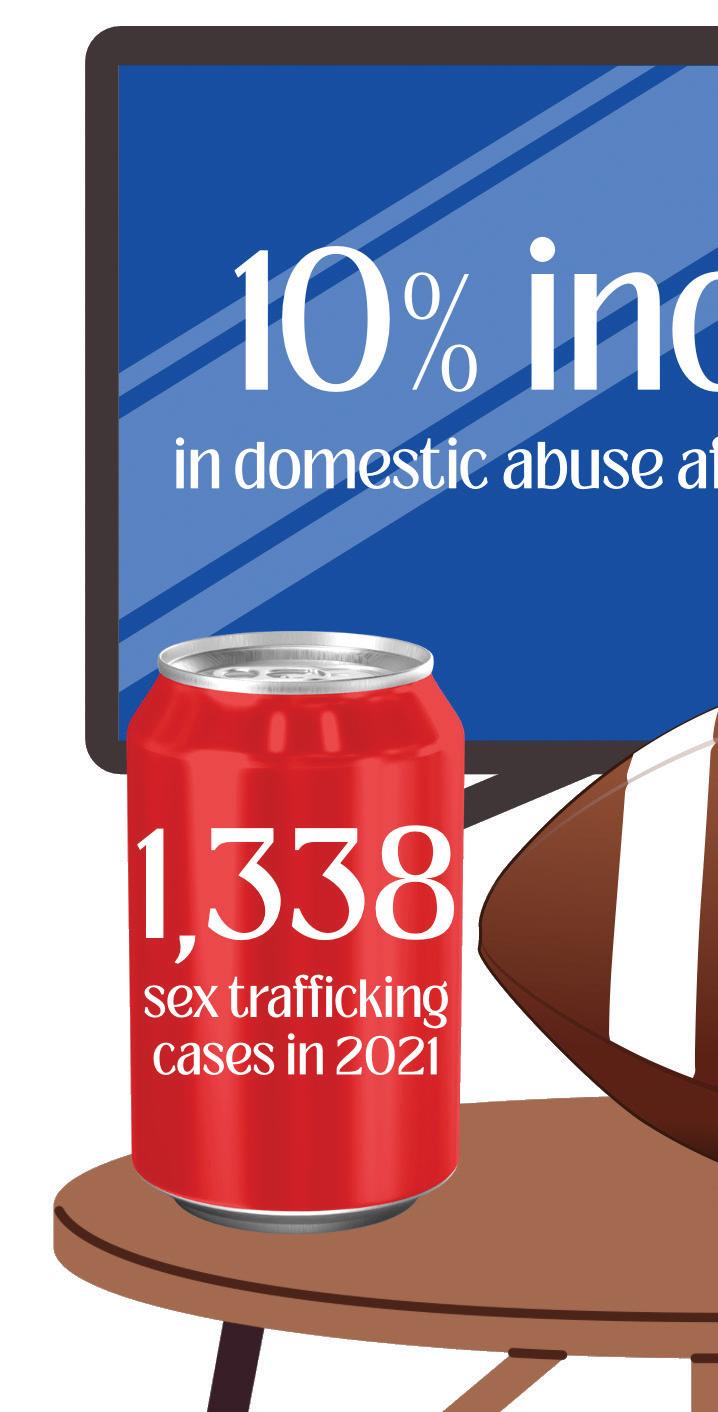
Formany American families, Sunday football and the Super Bowl are beloved traditions filled with excitement. ESPN reports that over 18.7 million fans tune in for every game of their favorite team. For the average fan, Sunday football can be something to look forward to each week; but for women, it can be something they fear. The National Library of Medicine conducted a study of the connection between family violence and viewing football. The study found that, “upset losses by the home team (losses when the team was originally predicted to win) lead to a roughly 10 percent increase in the number of police reports of at-home male-on-female intimate partner violence.”
people something to be excited about, it can also incite violence in people. The issue is not the sport itself, but the rise in domestic violence and sex trafficking cases that come from it. Football stadiums can intensify the average fan’s emotions of joy, anger and stress with the real time suspense, loud crowds and increased drinking rates they bring.
The root of all [domestic violence] is someone having power and control over another person.
According to a Gallup article, football has been the top sport in the United States since 1972 with 41 percent of American adults claiming it’s their favorite sport. As football has continued to grow increasingly popular, fanbases have begun to intensify. Football fanbases are not just about rooting for a certain team, but they also offer community and can act as a way for people to bond with each other over a shared interest.
Meghan Kehoe, employee at Center of Domestic Peace
Many find football an appealing sport to watch because of the rollercoaster of emotions one game can take someone through. From excitement, to worry and to excitement again, football has it all. Charlie, a junior who wished to remain anonymous, emphasized how football is a huge part of his life.
“I’d say I'm a more intense [football fan] than most people because I'm not a casual fan; I'm a diehard fan,” Charlie said.
While football can create community and give

“Commonly, if you're at a game and you see fights, [it’s because] a lot of these people are under the influence which draws out anger more often,” Charlie said.
Trine University reported on an incident happening at Gillette Stadium in 2023 where, “two fans began arguing in the stands, resulting in a Miami Dolphins fan punching a New England Patriots fan in the face.” The incident resulted in the New England Patriots fan passing away.
This story serves as a reminder about how high tensions can be during football games and the intensification that alcohol adds.
Meghan Kehoe is an employee for the Center of Domestic Peace, the local protective violence agency in Marin County. She explained how many cases she receives can be due to the effects of alcohol.
“There's a lot of alcohol. People are stressed out, maybe [they’re] at parties and things get out of hand. Around the Super Bowl, things of that nature [usually] also happen. [There’s] a lot of drinking, a lot of partying [and] maybe some heightened emotions around sports teams,” Kehoe said.
While this is an example of violence inside National Football League (NFL) stadiums, the violence doesn’t always stay inside the stands. Kehoe noted that the organization sees an increase in cases of domestic violence around big holidays and events such as American Independence Day and the Super Bowl. According to the National Organization for Women, 40 to 60 percent of all domestic violence cases have a high involvement of alcohol.
The Center of Domestic Peace defines domestic violence as a pattern of abusive behaviors used to gain power and control over somebody else. Domestic violence

isn’t limited to physical pain, it can also cause mental scarring.
“Everything [is] rooted in domestic violence: dating abuse, sexual assault and human trafficking. [Those all] have very different ways of happening,” Kehoe said.
The outcome of football games is not something fans can easily control, as much as one would hope they can. When games don’t go according to plan, the need to find control and power in something more certain, and actions such as domestic violence, can arise. The Trine University article stated that 7.2 percent of NFL fans have been a victim to verbal harassment, physical violence and sexual harassment inside or close to a football stadium.
The issue of violence surrounding football is not limited to verbal assault and domestic violence. An article by the University of South Florida mentioned how sex trafficking cases significantly increase in the host cities of the Super Bowl. Sex trafficking is defined as illegaly forcing others, through methods such as coercion, threats or relocation, into involuntarily preforming sex work and sexual services. World Population Review noted that California is the state with the highest sex trafficking cases in 2021, 2022 and 2023, with a high of 1,338 cases in 2021.

This year, Super Bowl LX is taking place at Levi's Stadium in Santa Clara, California. With the Super Bowl’s location, the Marin County Sheriff’s Department and the Center for Domestic Peace predict domestic violence, sex trafficking in specific, will significantly increase in the area. Kehoe explained that the reason sex trafficking is so prevalent at big events, such as the Super Bowl, is due to the large crowds.
“Traffickers bring trafficking victims into areas [surrounding football stadiums] because they know there's going to be a huge influx in the population of people who want to ‘have a good time’ and are willing to spend money and use sex trafficking victims for their benefit,” Kehoe said.
Jamie Scardina, appointed Marin County Sheriff, has been alerted to the rise of sex trafficking during the Super Bowl, prompting his team to work with the Domestic Center of Peace to help prevent domestic violence and sex trafficking incidents.
enforcement agencies here in Marin County,” Scardina said.
Although the Bay Area is sometimes overlooked when it comes to sex trafficking and domestic violence, Scardina confirmed it is just as prevalent in the Bay Area as it is anywhere else.
“Oftentimes people don’t think things like [sex trafficking and domestic violence] can happen in Marin County or let alone the Bay Area, so I think shedding more light on this topic is great,” Scardina said.
In sensitive situations such as domestic violence and sex trafficking, individuals may feel helpless or trapped when they or someone close to them is in danger. Junior Anna Steeves, a member of Peer Resource, gave her advice from the program on managing these scenarios.
“If you know someone in a situation like this or have heard of anyone in a situation like this, definitely reach out to either a domestic violence abuse shelter – there's multiple in San Francisco – or contact a trusted friend, parent or adult,” Steeves said.

As Steeves explained, seeking assistance can involve serious risk and may require discretion and measured approach. This risk is tied to the dynamics of power and control that often define abusive relationships. When an abuser realizes their control is threatened, violence can intensify.
“Oftentimes people who use harm feel like they have to [have] some sort of control in their life [and that] they have to have some sort of control over another person. That's why when someone leaves a relationship or is about to leave a relationship and the abusive person sees that they are losing control is when things become most violent and most dangerous,” Kehoe said.
NFL Sunday Night football and the Super Bowl may always be at the heart of American culture and tradition. While football games do not directly cause domestic abuse or sex trafficking, it amplifies the conditions that can allow these problems to occur. If a friend, family member or individual is in danger, reach out and contact the National Hotline for Domestic Violence, (800)-799-7233, for help.

“[The] Center for Domestic Peace has been a great partner in providing training for not only the Marin County Sheriff’s Office, but [also] for the local law

bark@redwoodbark.org

As the day of love quickly approaches, the pressure to celebrate Valentine's Day “the right way” starts to set in. In an AP-Norc survey asking, “Do you plan on celebrating Valentine’s Day?” threequarters of respondents said they plan to celebrate, so for those looking to join in on the fun, here are some great ways to spend the day with loved ones.
Many people are guilty of spending time scrolling through social media posts of extravagant dates and perfect couples, making it easy to forget that Valentine’s Day isn't just all about romance: it's a celebration of all forms of love. Whether that means friends, family or significant other, there’s no wrong way to enjoy this lovely holiday. Luckily, here's a guide that explores some of the best and most meaningful ways to spend Valentine's Day theme and bringing treats like chocolate-

GALENTINE’S CELEBRATIONS ARE often filled with red and pink colored treats, perfect for celebrating with your friends.
picnic with sweet Valentine’s desserts,
for dinner reservations or adventurous plans. Sometimes those ideas can not be as personalized or intimate, because they have crowded environments and limited opportunities for meaningful conversation, making the experience feel more routine than unique. Shifting away from crowded restaurants, there are more personalized experiences at home. Some of those experiences may include making heartshaped pizzas, cooking or baking festive meals together. Pairing those activities with the exchange of thoughtful gifts and cards emphasizes quality time over expense. This is a way to have creative, special shared memories to look back on.
Ultimately, the holidays' best celebrations are the ones that reflect genuine care and connections. Whether it's laughter shared at Galentine’s, a memorylasting sunset picnic with the family or a heartfelt evening spent with a significant other, the holiday is most successful when it’s memorable. There is little need to rely on TikTok or Pinterest to find the perfect celebration because all it takes is this amazing guide and genuine care for loved ones. Wishing everyone the very best Valentine's Day with connections and moments worth remembering.

mwagner@redwooddbark.org

even jazz. Since its release, it has become the number one album on Apple Music, and not without reason. The album sets a melancholy mood as Bryan follows a theme of unfiltered American life with blunt lyricism.
“Plastic Cigarette” has been the breakout song of the album, reaching number one on Apple Music. The song primarily features acoustic guitar and has a catchy chorus that recounts a vague memory of watching someone as they walk along a river's edge. A favorite song of mine is “Santa Fe,” which is about escape and searching for a new start. It begins with Bryan's isolated voice but quickly becomes one of the more punchy songs on the album.
Overall, “With Heaven On Top” is an album worth listening to. Despite the length of the album, each song is thoughtfully written and unique, continuing Bryan's reputation for depth in his music.
had and start over. What resulted was “Before I Forget,” a 15-song album all about his breakup.
The album blends pop with R&B, and LAROI experiments with different styles in each song. Songs “5:21” and “HER INTERLUDE” stand out from the rest of the album, with both tracks being sung in a quiet, higherpitched tone. The differing sounds throughout the album make it unique, but also create a disconnect and ruin the flow from song to song.“RATHER BE” has emerged as one of the most popular songs on the album and is about LAROI’s longing to go back to his recent relationship.
“Before I Forget” puts LAROI’s emotions on the line as he uses raw lyrics that seem representative of a scattered state of mind. The album displays how the 22-year-old artist is still exploring his place in the music industry, leaving the listener curious about what is in LAROI’s future.
“STAY HERE 4 LIFE,” featuring Brent Faiyaz, has quickly become the most popular song on the album. The song has a romantic tone and explores Rocky’s relationship with Rihanna. Faiyaz's addition of his contemporary R&B style brings a balance to the song and makes it feel more complete. Other than Faiyaz, Rocky stacked up a long list of impressive features, including Tyler, The Creator and Doechii.
My favorite from the album is “PUNK ROCKY,” in which Rocky successfully melds his typical hip-hop rap style with a raw melodic punk sound. The song's upbeat nature makes it an easy listen.
Even if you weren’t one of the many fans who immediately gave “Don’t Be Dumb” a listen, you should definitely give it a shot.
mgoodhart@redwoodbark.org
By Elsa Sherman
In the heart of San Francisco, Japantown is always teeming with life. With endless stores and top-notch cuisine, Japantown has become a staple outing for me and many others. On Jan. 19, 2026, I embarked on another visit, which I documented, noting my experiences to plan the perfect visit. I gave my honest thoughts on each location. You, the reader, will be the final judge on whether Japantown is worth the trip.
The first store I visited was IFun, which specializes in blind boxes and decorating any item of your choosing, including phone cases and brushes, with vibrant beads and paint. The interior is clean and eyecatching, with colorful boxes and figurines surrounding the store. They even sell Labubus, which surprised me at first. They also offer crocheted flowers, which would make adorable additions to any home.
This ramen restaurant may be the biggest reason to make the trip to Japantown. The wait can be up to thirty minutes at lunchtime, but a kiosk at the front makes it easy to join the waitlist. Entering the restaurant, you are met with a beautiful interior, delicious scents and loud greetings from the staff. The restaurant is normally quite noisy, which can make it somewhat difficult to speak with friends. However, the food more than makes up for this. The Tonkotsu Ramen is only $17.50, made up of creamy broth, an egg, pork, noodles, ginger, mushrooms and a selectable spice level. The flavors explode in your mouth, and a healthy portion is doled out that is easy to take home. Any visit to Japantown cannot be made without a stop at Marufuku.


Kiddleton
With three separate locations in the Japantown shopping center, Kiddleton is home to many arcade machines. It isn’t a conventional arcade, as there are almost no actual games in the locations. Instead, claw machines offer the chance to win prizes, for what I think is a pretty steep cost. While the store is fun to step into and window shop, the actual merchandise leaves a lot to be desired for anyone over the age of 10. That being said, it’s a fun stop and undoubtedly has its charm, buried under overpriced machine games.
This bookstore has two floors, and one could spend hours pondering the shelves. The upstairs consists of small trinkets and books. While most of their literature is in Japanese, they do have sections with solely English titles, making it difficult to walk out without purchasing anything. The downstairs is much smaller and is home to shelves of manga and merchandise relating to popular works. It can be hot in the lower areas of Japantown, as there is no consistent air conditioning. With the many shoppers in the store, it can feel stuffy. That being said, Kinokuniya is well organized and a must-see.
esherman@redwoodbark.org
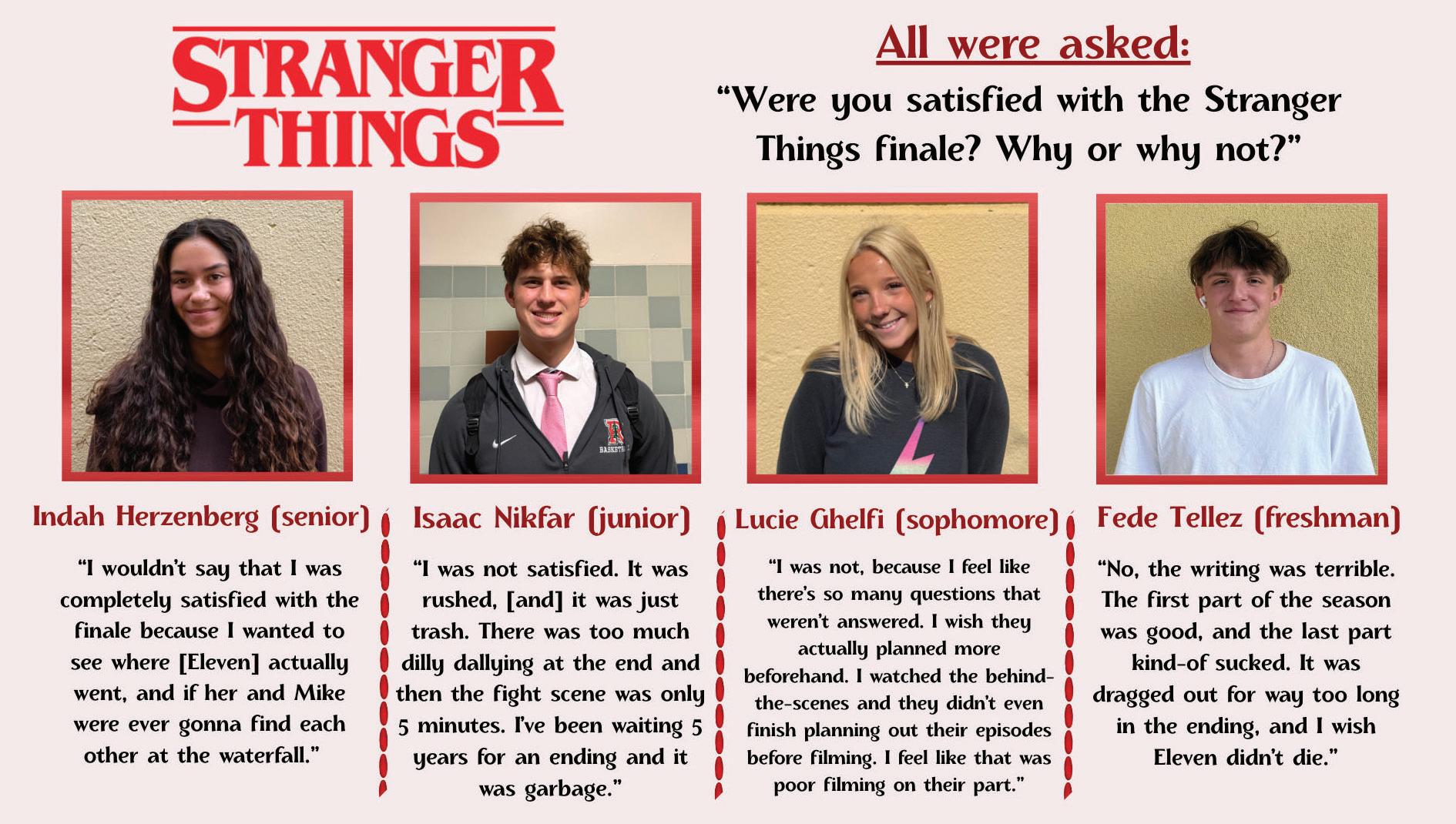
By Cora Champommier
The sole silver lining I felt coming out of the movie theater was the relief that no actor casted was unworthy for the role. From Critics’ Choice award winner Timothée Chalamet to singer Tyler Okonma as his best friend Wally, or Shark Tank persona Kevin O’Leary as tycoon Milton Rockwell, each actor embodied their character with intense depth. However, almost every character was insufferable and had me rooting for a pulled fire alarm during the screening.
The reviewers saying this storyline is “complex,” is a synonym for “all over the place,” and not in a good way. Although the pacing keeps you engaged, there are so many unnecessary scenes and strange gore that is both unsettling and frustrating. Promoted as a sports film, there is probably less than three minutes combined of actual play, and the “underdog” story has no one to root for. Marty is selfish throughout and finds himself in scenes filled with gun warfare and body horror to both animals and humans. Although some may argue there is character development at the end of the film as he is faced with raising and being present for his new baby, he still was
not a character worth rooting for in my eyes. The final scene seems like a moment of burden reflection for Marty rather than excitement.
The cinematography of the film is sub-par, and the color complexion made the shallow scenes easy to look at. There were even moments where the lens was dirty, fully immersing the audience in the grit of Marty’s journey. Each shot was extremely clear and intentional, and had me focusing on character details I would have missed without, like Marty’s acne that was prosthetically put onto Chalamet. But if you’re watching on a home television, I can’t guarantee that the cinematography will make up for the film’s lack of meaning.
By Reed Grossman
Timothée Chalamet was able to completely dive into the role of Marty, practicing table tennis for about seven years, playing the role with restless, highstakes energy which made viewers love the character, even when he seemed to be totally self-assertive. The stunt casting in this film with Kevin O'Leary, Tyler, The Creator, Gwyneth Paltrow and National Basketball Association legends such as George Gervin, Tracy McGrady and Kemba Walker was absolutely genius. It was a fantastic way to create buzz, surprise audiences and capture

cchampommier@redwoodbark.org
By Oren Weingarten
What is the perfect lineup to kick off BottleRock? For one of the most anticipated three-day events for millennials and teens alike, it’s important to go into the festival with as much knowledge as possible to make the most of your money. While the sun is ablaze throughout the day, get your summer vibes early with BORNS and find your “Electric Love” for the weekend. To transition and embrace the worldwide culture on offer, check out Men at Work, our favorite Australian band, and show love to the people from the land “Down Under.” When you’re done listening to people mumbling the lyrics (because nobody actually knows them), head over to the silent disco where words don’t matter. This will be the one time at Bottle Rock when you can sit in your own thoughts, so enjoy the ambient lighting and sway with people you only know from your Snap Map. Here you can vibe on your own, using the provided headphones to drown out that one buzz-kill friend you’re around, complaining about being thirsty. Just before the sun sets and the headliners come on, we have one more stop: Natasha Bedingfield, don’t leave her “Unwritten” on your watch list. Bedingfield will deliver her hits with just a “Pocket of Sunshine” left, and by the time the sun sets, you will have to choose between Lorde and Lil Wayne. Lorde will draw a massive crowd, especially the superfans pushed up front. Meanwhile, Lil Wayne will have aspiring rappers in the audience rapping along, hoping it will all ‘work out’ for them.
This film is nowhere near a basic underdog sports movie; it’s actually an intense look into how chasing a lifelong dream can isolate you from the people who matter most. The film is a perfect balance of fast-paced table tennis matches with indepth learning lessons and heavy emotional

This is the day of house music. On Saturday, you should be looking to capitalize on your frat flicking, listening to DJs all day and being stuck in a constant mosh pit. Start it off with AJR, where you can expect them to race against time, running from backstage, through the crowd and onto the main stage. Now the moment you’ve always dreamed of is happening. This is your chance to get your photo with an artist. After getting your special moment, take a break and buy merch from
Aviator Nation so you can blend in with every other Marin kid and mom, but right after, you’re back behind a DJ board all day. Back-to-back sets from DJ Umami and DJ Pauly D should leave you tired, but you can’t give in to the fatigue when you have to choose between the Foo Fighters, Zedd and LCD Soundsystem. In my opinion, Zedd should give you “Clarity” on the right choice for your night. The Foo Fighters playing ‘70s rock might give you a headache, so you can instead choose to listen to LCD Soundsystem taking you through electronic music from the ‘00s.
scenes. While Marty is messy and makes countless selfish mistakes, his path to athletic greatness is met with a powerful emotional kickback, demonstrating that real victory isn’t simply about winning a match, but is centered around growth, accountability and learning what truly matters in life.
Visually, the movie is stunning in a unique way. Shot on 35 millimeter film, it gives 1950s Manhattan a raw, gritty and vibrant type of energy that does a thorough job at placing the spectator into the era. Legendary cinematographer Darius Khondji uses a jittery, hyperkinetic camera style that’s able to move backand-forth tracking the ping-bong balls being crushed across the table, making scenes feel electric and keeping viewers glued to the edge of their seats. The blend of bold camera work, rapid quick editing and 1980s pop and synth-pop hits creates a unique type of energy that makes every scene thrilling, while still immersing filmgoers into the setting and keeping the main messages bold.

rgrossman@redwoodbark.org
By now, your voice is gone, your brain is screaming for sleep and you’re desperate to end this event in the best way possible. Luckily, today’s schedule fits that energy level perfectly, an easy way to relax while also catching the best music possible. The mid-morning begins with Mt. Joy bringing you the indie folk music you need to enjoy this final day. They can be your musical coffee in the morning and wake you up for the upcoming day. Shortly after, listen to Buffalo Traffic Jam and feel like you’re in the wilderness under the stars, truly helping you find your inner peace and reconnect with nature. Your energy might be petering out, but a listen to Good Neighbors will remind you that you’re almost “Home.” You can “Celebrate” this accomplishment with Kool & the Gang as you “Get Down On” into your final couple of sets for the weekend. If you’re looking for “The Largest,” end to Bottle Rock, BigXthaPlug is the perfect spot to be before closing out with one of three amazing headliners. The Backstreet Boys will make “I Want It That Way” echo across the festival as people reminisce on the past. However, Ludacris can give you the exact opposite, making sure you “Move,” — depending on how hard you sang over the last 72 hours. The last option, Sombr, serves as a perfect middle ground, providing fasterpaced beats while still staying connected with your sad feelings. Follow this plan, and you’ll have the perfect BottleRock weekend, ending with a completely new sleep schedule and exhaustion that lasts for the next two weeks. But if you decide to chart your own course in Napa, have confidence in your choices and enjoy the start of summer.
By Bella Garbo
On Dec. 19, the highly popular book turned movie, “The Housemaid” by Frieda McFadden, was released in theaters. Scoring a 73 percent on the Rotten Tomatoes site, the new release did not disappoint. The film starred actresses

Sydney Sweeney and Amanda Seyfried, as well as actor Brandon Sklenar. The psychological thriller had many fast-paced scenes, plot twists and shocking moments, much like the book. Turning books into movies is a tricky task. It ends with the inevitable question: which is better, the book or the movie?
The book version of “The Housemaid,” published in April of 2022, grew in great popularity due to the intense plot-twists and the page-turning writing. While the main plot was very similar to the book, director Paul Fieg did keep some key details out of the film.
For example, in the book, McFadden portrays Nina Winchester as having a wider-set build due to gaining weight throughout her marriage to become less appealing to her husband. Actress Amanda Seyfried, who plays Nina Winchester in the film, is much slimmer and doesn’t seem to carry out the weight gain talked about in the book.
Another change in the film was the role of Enzo, who is played by Michele Morrone. In the book, Enzo is the groundskeeper on the Winchester property who ends up helping Nina escape and even convinces her to go back for Millie and save her from Andrew. Whereas, in the film, Enzo plays a much smaller role. He does help Nina form a plan to escape from Andrew, but he isn’t given much camera time other than a couple of scenes.
Finally, the last major difference

between the book and the movie is Millie’s attic punishment. In the book, Andrew punishes Millie for leaving books on the table and banishes her to the attic, where she has to rest huge piles of books on her stomach to be let out. This punishment didn’t seem drastic enough for the film, so Fieg changed the punishment. Instead, Millie broke a family plate and was then asked to cut deep gashes into her stomach 20 times with a piece of the broken plate. Despite the few differences, most of the film remains the same as the book. When it comes down to which is better, there can be much controversy. While the movie brings the book to life visually, the novel
By Lauren Ellington
The year 2026 is turning a new page in film adaptations of books. Is Hollywood out of ideas? Do authors just want to make hit movies or more money? Whatever the reason, I say keep the film adaptations coming. Whether it’s an edit on your TikTok For You page or Netflix's current Top 10 list, the new book adaptation, “People We Meet on Vacation,” is everywhere for a reason.
Debuting with 17.2 million views on its opening weekend, this rom-com follows Alex and Poppy, two friends who meet for a memorable vacation every year. The movie jumps back and forth in time between their annual vacations nine years ago and more recent trips two years ago, where Alex and Poppy seem to have had a falling out for an unseen reason. This mystery leaves you confused and intrigued by what could have
happened right from the start.
Despite Poppy originally being blonde in the book, actor Emily Bader was the perfect choice for the movie role, encapsulating Poppy’s energetic and quirky characteristics, while still showing the complex insecurities she faces, bringing the book's magic to life. Her amazing chemistry with love interest Alex, played by Tom Blyth, added emotion to the movie. The two characters are complete opposites, yet still a perfect fit. Their dynamic had everyone obsessing over them in the book, and couldn't have translated better on the big screen.
However, making a movie based on a book is a difficult line to walk, as it requires balancing book accuracy while cramming 400 pages’ worth of content into a twohour film. Because of this, many people go into the movie with predetermined expectations, which has caused book adaptations like The “Percy Jackson” film series and “The Goldfinch” movie to fail.

does a better job of showing the intense, slower build-up with a more detailed plot. Either way, watching or reading “The Housemaid” is a must; either one will leave you speechless.
bgarbo@redwoodbark.org

I found that comparison is a thief of joy with this film. Overall, most aspects were well curated, from the cast and settings to the costumes and soundtrack. The song “Forever Your Girl” by Paula Abdul will be on repeat for at least the next month! However, because it's based on a book, some of the plot was missed in the film. If you go in without having read the book, the movie is truly great, but knowing the deeper details and complex background that weren’t touched on makes it harder to fully enjoy if you have read the book.
‘People We Meet on Vacation,’ is everywhere for a reason
Photo courtesy of Netflix Orleans was one of my favorites, where Poppy helps Alex come out of his shell. The film incorporates additional iconic scenes from the book, like the rain scene, while adding new elements, such as the repeating symmetry between what the characters hate and love when they first meet and at the end.
“People We Meet on Vacation” proves that when done right, bookto-film adaptations don’t replace the story; they let it reach new audiences.
Despite this, I still thoroughly enjoyed the movie. It's lively, heartwarming and has strong rewatch potential, which is essential for a rom-com. The
By Lily Skinner
Before getting out of bed in the morning, many Marin athletes already have a sense of how their bodies are doing just by checking an app, where colors and rings show how the previous day’s workout may affect their performance. Wristbands, like WHOOP, designed to be worn 24 hours a day, track data to help athletes better understand their training, now fueling Marin’s athletic culture. As easily digestible fitness data becomes more accessible and enters into athletes’ daily routines, it is important for them to balance and learn how to train using these numbers. For young athletes, the real test isn't physical readiness but knowing when the numbers matter—and when they don't.
why the data doesn’t always match how I feel, which helps with disconnection,” Berman said.
This is one reason why Berman feels the WHOOP sets itself apart from other fitness trackers. While it could create an opportunity for obsession and losing trust in one's body, WHOOP provides clarity to the situation and helps users correct the issue. Berman recognizes how easily athletes can become obsessed with the band.
“It’s easier to get in your head [about data] when you’re younger. If I had used [WHOOP] freshman year, I would have been a lot more stressed [about my workout]. But, as you get older, you’re mature and realize it’s not the end of the world if your recovery is red,” Berman said.
Berman’s reflection points to a broader pattern among young athletes. Easy access to personal data can lead younger athletes to internalize recovery scores and strain metrics. Former Redwood student and Marin Rowing alum Benjamin Nadjibi said learning to contextualize data took time.
“When I first started using WHOOP as a freshman in high school, I was definitely over-obsessed with it,” Nadjibi said.
“For the first six months, the first thing I checked when I woke up was my recovery and sleep. If I had a red recovery, I would immediately think I didn’t feel good—even if I actually felt fine. Over time, as I became more experienced, I realized I could have a red recovery and still perform well, which helped me realize I didn’t need to obsess over the numbers as much.”
If I had used [WHOOP] freshman year, I would have been a lot more stressed [about my workout]. But, as you get older, you’re mature and realize it’s not the end of the world if your recovery is red.
Noa Berman, senior
WHOOP was created by former student-athlete Will Ahmed, who was struggling with overtraining during his squash career at Harvard University. Ahmed’s goal was to optimize recovery, which is the period where the body repairs itself after a workout, shaped by factors like sleep and stress. Since launching in 2015, athletes such as Cristiano Ronaldo and Rory McIlroy have used WHOOP, and it has become an official partner of collegiate athletic departments, such as Notre Dame and Boston University. The company centers around three key metrics: recovery, strain and heart rate. The band, notable for its faceless design eliminating notifications, also offers features that help tailor metrics to individuals, including a journal where athletes can track behaviors, like caffeine intake or sleeping with pets to optimize their recovery. Another feature, the “WHOOP Coach,” is a tool powered by artificial intelligence that provides insights to help users make decisions based on their data. While these features can be beneficial, they can also lead to users becoming fanatical with the tracker and overly-fixated on performance.
For many high school athletes, however, WHOOP is seen less as a source of pressure and more as a tool for structure. Senior Marin Rowing athlete Noa Berman has been using her WHOOP for over a year, primarily to track sleep and training intensity.
“[WHOOP] really helps with my performance because I use the advised bedtime. Now, I get the right amount of sleep every day, which helps with my recovery dramatically,” Berman said. “Also, I can pull up my heart rate during workouts [on the WHOOP app], which helps me compare my heart rate data over time.”
Still, the relationship between athletes and their data is not always straightforward. Often, fitness tracker data may suggest one thing, while the athlete feels differently. Experiences like this can leave athletes conflicted about who to trust: the data or their body. In these moments, Berman takes advantage of her WHOOP Coach.
“Whenever my data doesn’t match how I feel, I ask the WHOOP Coach, which gives me an explanation. If my heart rate is really high during an easy workout, it might tell me I didn’t drink enough water. [The WHOOP Coach] gives reasons for
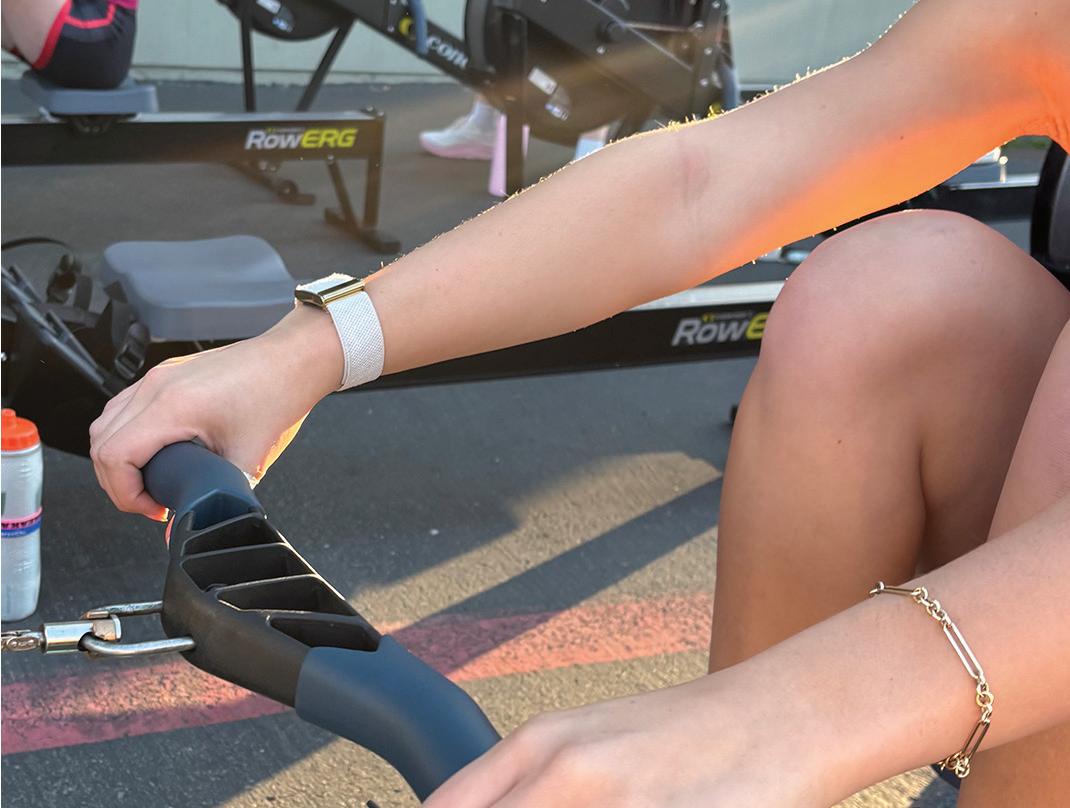
Now rowing at the collegiate level, Nadjibi demonstrates the maturity he’s gained in using WHOOP as a tool for structure, rather than obsession. Seeing his sleep scores holds him accountable for early-morning practices and encourages him to prioritize rest. Nadjibi is able to push through his “red recovery” and use it as motivation.
“I’ve had big erg pieces or hard workouts on days when I’ve had a red or yellow recovery. You don’t really get to choose those, at least as a rower. When you get a green recovery it can boost your confidence, but after about a year of having the WHOOP, I started to ignore the recovery in terms of how I was going to work out that day,” Nadjibi said.
Young Marin athletes are introduced to competitive sports culture from an early age, and with increased access to advanced technology, it's easy to adopt a data-driven mindset. For athletes like Nadjbi and Berman, the value of WHOOP is how it’s used. When treated as a guide, WHOOP can promote consistency and recovery. Without experience and perspective, however, it can become a source of unnecessary stress. As fitness trackers become a part of athletes’ daily routines, the challenge may not be gathering the correct data, but learning how to interpret it. In today’s high-tech athletic culture, maturity comes from recognizing technology as just one touchpoint, learning when to rely on data and when to trust your instincts.

By Hayden Martay
Before the game begins and the crowd fills the stands, athletes are already preparing. In the minutes leading up to competition, many turn to familiar pre-performance routines: a deep breath, a friendly competition, a team meeting or the switch into new uniforms. According to sports psychologist Dr. Jordan Silberman, these rituals matter because they “help athletes mentally prepare for competition by reducing anxiety and increasing focus” (WaveWear). Across a variety of sports, these routines have become a grounding presence on game day, shaping how athletes manage pressure before the whistle blows.
Girls’ Varsity
For girls’ varsity cheerleaders CJ Jenkin and Mary Maslakova, pre-performance routines are centered on trust. Before games, their stunt group pauses for a brief grounding exercise designed to settle nerves and boost the team’s morale.
“We hold hands, count to ten and take three long, deep breaths as we imagine ourselves hitting the routine, hitting our stunts and doing the best we can,” Maslakova said. “I recommend it because it helps prepare yourself mentally and physically for the game. You feel more calm when you know that everyone else is calm.”
Jenkin emphasized that the routine reinforced trust within the team.
“It’s all about trusting each other and knowing we can rely on one another,” Jenkin said.
Before every boys’ varsity basketball game, the team gathers to shoot half-court shots for money, turning warmups into a competition that builds energy. The tradition brings the team together before every tipoff and helps players shake off nerves.
Senior Davi Leite, said that the routine helps set a positive tone before the game.
“Everyone on the team shoots, and it gets all of us going. It’s really fun,” Leite said. “I made $40 [last season] and I was very happy for the rest of the day. It led me towards the game day in a very good mood.”

Girls’ Varsity Basketball
For girls’ varsity basketball, pregame rituals are rooted in consistency and shared standards. The team gathers before warmups to write key words on a whiteboard, a tradition that helps set expectations for the game.
Senior Kitty White explained that the routine reflects how seriously the team takes its mental preparation before tipoff.
“We’re a superstitious team, and we like to make sure we all do certain things before every game, or else we feel a bad energy,” White said.
By Asha Zlatoper
Everyone can feel it. Cold, frosty mornings set in, and instead of early runs in brisk air, workouts turn into jogs in 40-degree weather with five layers on. For many, this seems terrible and discourages people from exercising at all. According to a fitness report from PureGym, “Winter sees the lowest level of physical activity, with three quarters (74 percent) of people not exercising during the winter months.” Many people may feel unmotivated during the colder season, but through alternative exercises, such as short walks before sunset and indoor workouts, it is possible to stay fit and healthy.
Department Co-Lead athletic trainer
Americ Alvarado has encountered the many challenges winter brings ranging from temperature drops to early darkness, but has consistently found ways to stay active year-round.
According to the National Library of Medicine, in 2021, a peer-reviewed survey study on adults was conducted over eight weeks during the winter season in Alaska about the correlation between physical exercise and levels of happiness. In these studies, researchers found that aerobic exercise like walking, jogging or cycling was associated with a major increase in mood and energy levels throughout the eight weeks. Participants who were involved in these forms of exercise reported “higher levels of energy” and major "mood boosts.”
This study “demonstrated that engagement in physical activities can help alleviate seasonal affective disorder (SAD) symptoms and improve mood and energy.”
I always feel better after I work out.
Riya
Pyle,
junior
“Indoor activities are key,” Alvarado said. “It’s very tough to stay motivated in the winter, so I like to play basketball inside to stay active when it’s too cold.”
A Harvard Health Medical School study aligns with Alvarado and recommends “adaptive sports programs in your community such as basketball,” to stay healthy and fit.
Not only does he suggest the idea of indoor conditioning, he also believes spending time with peers, while staying productive in these types of months, is crucial to staying motivated.
"It's hard to get through those mental winter hurdles, so being able to lean on someone to keep that motivation and help you through the moments is best,” Alvarado said.
Not only does exercising help peoples’ bodies stay physically strong, but it also helps their mental health stay intact as well.
Junior Riya Pyle also enjoys staying active year-round, even without participating in a winter sport, and feels the effects of exercise helping her through the winter.
“For students who struggle with winter motivation, I would recommend going to the gym. During weekends you have opportunities during the daytime to exercise because even if it's rainy, the gym is still there,” Pyle said. “I always feel better after I work out.”
Pyle has a membership to the nearby Bay Club at the Town Center Corte Madera, which is a very popular gym for many students.
“If you don't have a membership, walking your dog or getting some fresh air always makes a difference. I like to use the nearby bike paths for my runs or walks,” Pyle said.
Pyle believes the most important part of exercising during the winter is taking advantage of opportunities to be outside when possible. Whether it's a short morning walk or a quick afternoon run, Pyle mentions staying active helps maintain motivation and perseverance during colder months.
As winter continues, it's important to find alternative
These words, which often include reminders like “energy,” “hunt” and a drawn goldfish to represent shortterm memory, reflect how the team wants to approach each game.
“Energy is a staple for our team,” White said.
For boys’ varsity soccer, pregame routines are all about getting locked in, and one long-standing tradition centers on practice jerseys. During warm-ups, players wear their practice jerseys before switching into game uniforms before kickoff, a small but intentional moment that shifts preparation to competition.
Junior Kaz Rubel explained how the change goes far beyond appearance.
“By the time we take them [the practice jerseys] off, we’re fully mentally and physically prepared for the game,” Rubel said.
While fans see the final result on the court or field, much of the work happens beforehand. In those final moments leading up to competition, athletes familiarize themselves with pre-game rituals that set the tone once the game begins.
hmartay@redwoodbark.org
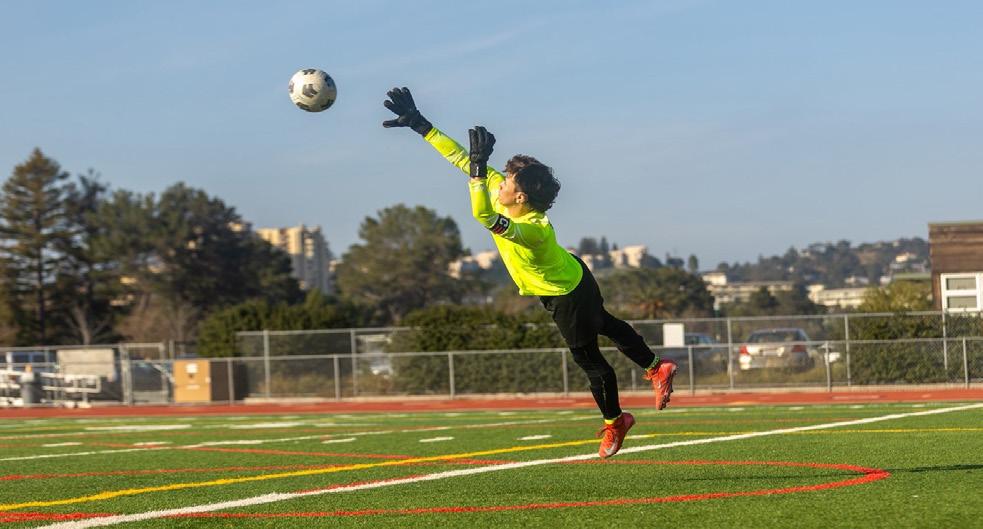
ways to stay active and healthy. Cold weather doesn’t cancel commitment, so by choosing indoor workouts, gym sessions or outdoor walks and runs, students can keep moving and stay on track with their fitness goals.
azlatoper@redwoodbark.org
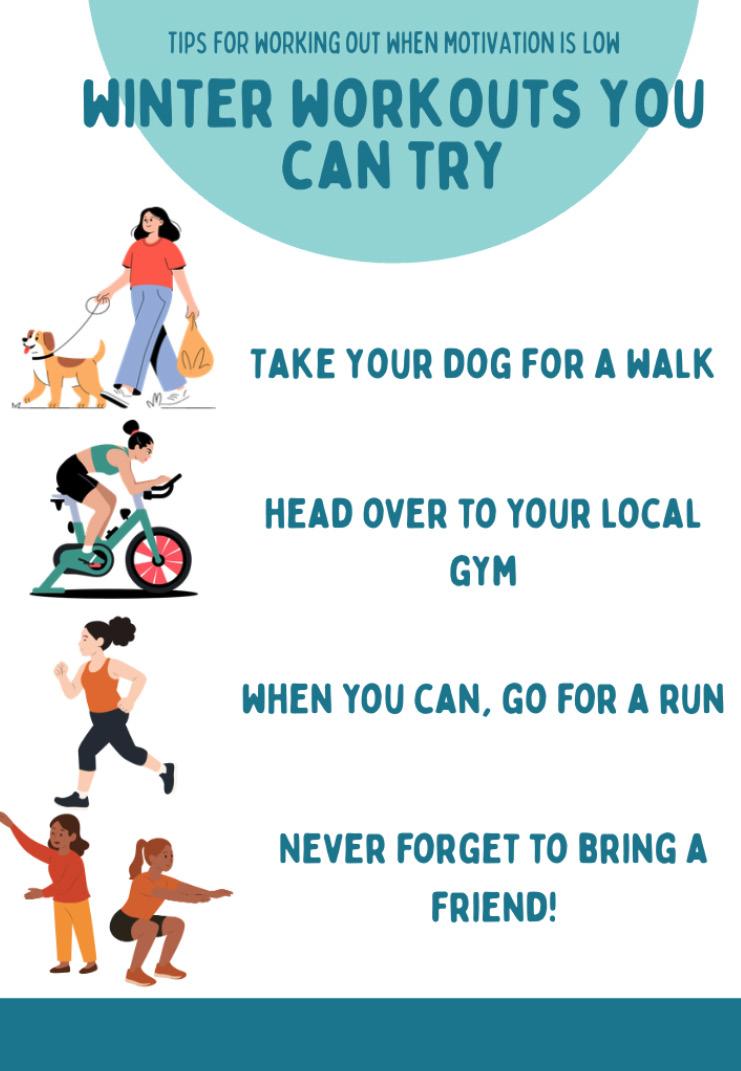
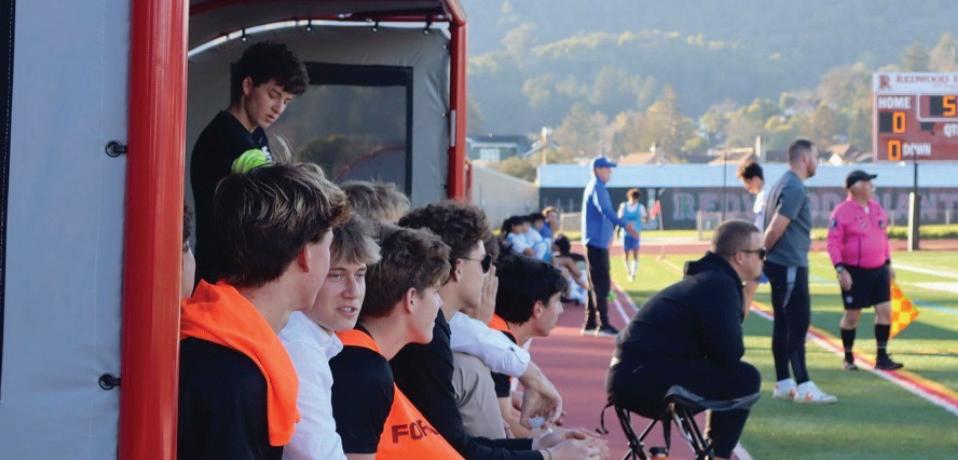
By Leyton Defesche
High school sports are often advertised as equalopportunity activities: try out, work hard and earn your spot. However, for many student-athletes, reaching higher levels of competition depends on more than talent and dedication. The rising cost of equipment, club team tuition, private training and travel can determine who gets access to development and recruiting opportunities, creating a financial barrier that some athletes simply can’t overcome. According to the Aspen Institute Project Play, the average U.S. family spent $1,016 on their child’s primary sport, with total costs often much higher once travel and training are included.
For committed athletes, playing a school sport is often just one piece of the puzzle. Sophomore Sidney Bank plays junior varsity lacrosse and competes frequently for ADVNC, a local club lacrosse team. Bank said that improving technical skills and overall competitiveness often requires resources outside of school.
“A lot of people do private lessons or extra clinics, and that’s where you really get better,” Bank said. “If you can’t afford that, it feels harder to keep up, even if you’re putting in the same effort.”
The gap becomes more visible as athletes aim for varsity spots and college recruitment. A survey by Next College Student Athlete found that nearly 90 percent of student-athletes who compete in college played for a club team during the recruiting process, highlighting how critical club exposure has become.
Junior Cole Graves plays varsity soccer and also competes for the San Francisco Glens, a club team that attends showcase tournaments, sometimes as far away as Vancouver, and said how those experiences reveal the financial reality behind college exposure.
“College coaches aren’t usually coming to high
school games,” Graves said. “They’re at club tournaments. If you’re not on a team that travels to those showcases, you’re missing out on chances to be seen.”
Private training can also play a major role in advancement, especially in sports where individual technique and one-on-one development directly affect performance. Junior Logan Leverte plays varsity volleyball and club beach volleyball for Golden Gate Beach and is currently going through the college recruiting process— a process she said looks similar across nearly every high school sport and adds another layer of cost.
“To get recruited, you’re paying for lessons, tournaments and travel so coaches can watch you play,” Leverte said. “It’s a long process, and it’s definitely not cheap.”
These financial demands can quietly limit who moves on to higher levels of competition. Athletes who can’t afford club teams, private coaching or recruiting showcases may struggle to reach higher levels—not because they lack ability, but because they lack access. While high school sports are meant to reward hard work and commitment, money often dictates who receives the training and exposure required to reach a higher level of play, shaping futures in a system meant to be open to all.
While financial barriers remain significant, some local efforts aim to make sports more accessible. Several Marin County organizations help offset costs, including the Marin Athletic Foundation, which supports high school athletes through equipment assistance and scholarships, along with aid offered by different sport-specific clubs. As college recruitment becomes increasingly tied to club sports and private development, the cost of playing continues to rise. The question facing high school athletics is no longer simply who is the most talented, but who can afford the path to reach the next level.
By Amrit Aujla
Student sections are known for their reputation of loud, opinionated and humorous chants. They provide energy for their team and represent school spirit. That’s part of the fun of attending sports games, especially basketball. However, what used to be harmless and playful trash talk has crossed the line into personal attacks and insults against students on the opposing team. This behavior reflects distasteful intentions instead of encouraging school pride. Students in attendance at any game represent the school they are rooting for. By participating in disrespectful and outright rude chants, students reflect poorly not only on themselves but on their school community as a whole. Marin County Athletic League rules specifically state, “Be hospitable. Welcome the visiting team and officials into your school as a host/ guest relationship. The home team fans set the tone for an event and their behavior is a direct reflection of their school’s culture and values.” Student sections should promote school spirit and healthy competition, not cross the line into hostile chants that undermine sportsmanship and take the joy out of the game.
The California Interscholastic Federation rules state that, “The spectator shows compassion for an injured player; applauds positive performances; does not heckle, jeer or distract players; and avoids use of profane and
obnoxious language and behavior.” Additionally, North Coast Section rules state, “Be on your best behavior. Don’t use profane language or harass players. Show respect for your team’s opponents. Without them there would be no games.” Despite these clear expectations, students continue to ignore them.
aaujla@redwoodbark.org
Illustration by Paloma Nacamuli

ldefesche@redwoodbark.org

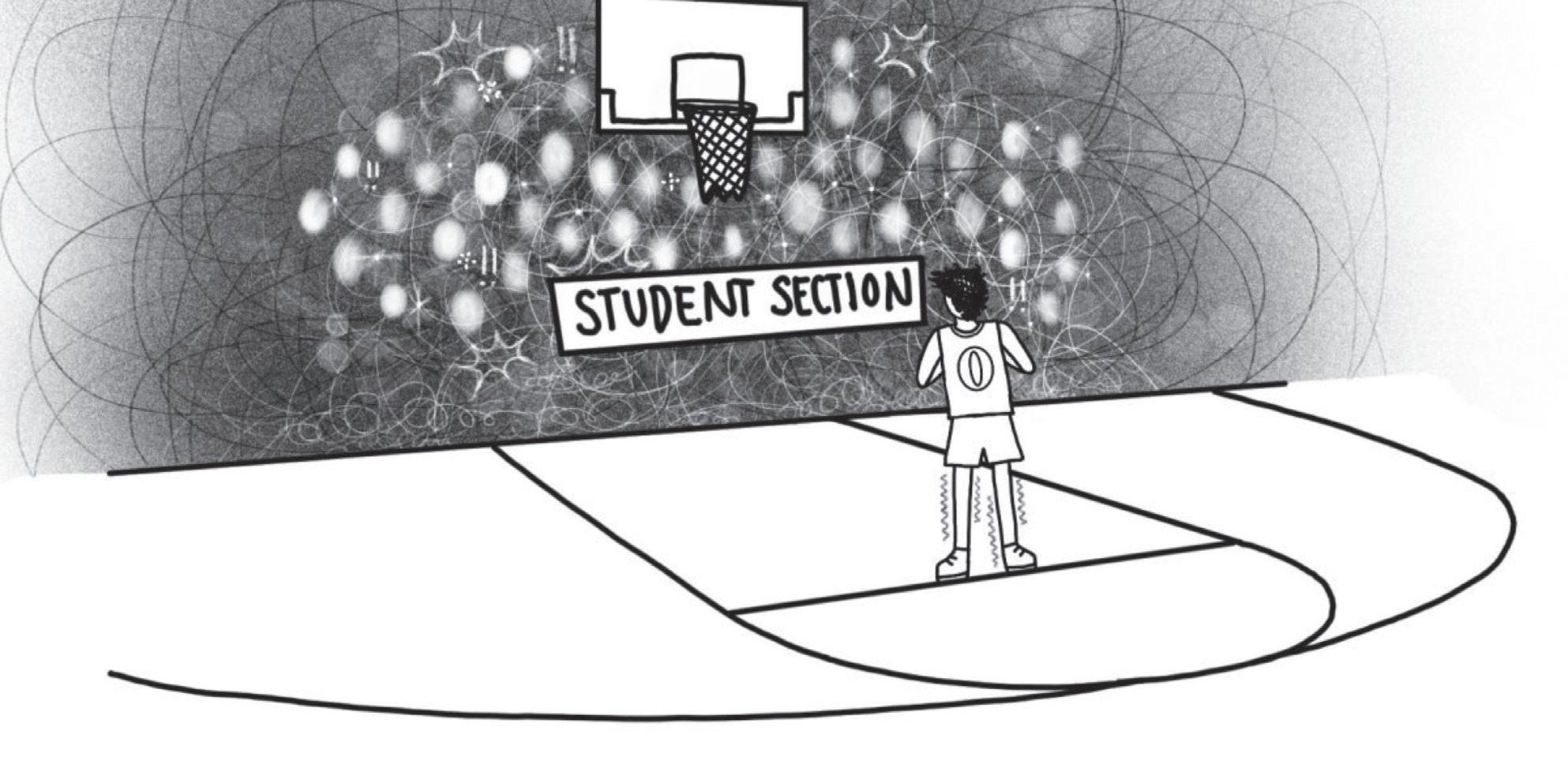
By Hilah Brekhus-Lavinsky
Senior Henry Smith has been a devoted hockey player since he was five years old. Henry grew up in Minnesota and moved to Tiburon when he was in fourth grade. He is now the captain of the San Francisco Sabercats hockey team and leads the team in goals and assists as a center. Given hockey's popularity in Midwestern states like Minnesota, hockey played a significant role in Henry’s upbringing.
“I would say that [hockey in Minnesota is] like soccer [in California]. Almost every kid plays soccer growing up, and they're going out and kicking a soccer ball around in the park. In the winter, when kids here were going out to kick soccer balls and go play on the playground, we were going to the pond to play hockey,” Henry said.
Henry credits his older brother, Jacob Smith, for
always remind myself that I signed up for hockey to win games and play. If I'm missing a party, I’m also hanging out with my teammates. It’s a good mixture,” Henry said.
In fact, Henry feels that the long commute has helped the team build culture.

“I 100 percent think that the camaraderie of our team is super impressive and [the commitment] makes [the team] more meaningful: Everybody's commuting far to go there, and everybody's unique in their own way. None of us go to the same high school, but we really bond by understanding we're all going through the same stuff,” Henry said.
This positive attitude is one of the many reasons why Henry is the captain of his team.
“Our main goal is to keep it fun, [and] we know that winning is fun.
‘Skate hard, celebrate harder,’ is what we say,” Henry said.
For the past three years, Henry has been coached by


“It's a commitment I make at the start of the year. I
everybody to calm down and pay attention. He does a really great job of just keeping everybody accountable,” Anderson said.
Henry is not just a captain on the ice; he always makes an effort off the ice to be a leader and help his teammates achieve success.
“We were at a tournament in Salt Lake City this past weekend, and there were a couple of players who weren't at the team lunch. He was texting them to find out where they were, why they weren't there and saving them seats,” Anderson said. “He's always making sure that everyone feels included.”
These skills reflect strongly at home.
Being the third out of four children, Henry has had role models to look up to his whole life and takes a more passive approach to leadership.
“He's definitely more of a calm and quiet leader; he's never super loud or bossy. He's super understanding and empathetic. He always knows the right things to say because instead of being super ‘go, go, go,’ he takes time to think about what he's doing,” Berkeley said.
Though a “calm and quiet leader,” Henry commands strong authority and respect as captain. Anderson attributes Henry’s genuine character to what makes him such an impactful leader.
“Henry is a leader, first and foremost. He is the type of person who is completely selfless. It's always about the team and never about him,” Anderson said. “If you know Henry, you know he's just the nicest person in the world. [That makes] all of his teammates respect him.”
By Jack Block
On Friday, Jan. 2, 2024 alum Zach Baumgarten, also known as BAUM, posted his initial claim to fame on TikTok. Baumgarten uploaded a video on his account, @ baum_dj, promoting his planned sunset disc jockey (DJ) set on Jan. 10, hosted at Battery Boutelle, near the Golden Gate Bridge in San Francisco. Immediately, Baumgarten reached hundreds of thousands of views overnight, surpassing over 9,300 followers on TikTok and 8,600 on Instagram.
“It was a surreal feeling watching my initial post blow up,” Baumgarten said. “ I knew that I had to step up after seeing thousands of people engage with my content online.”
Baumgarten has experimented with DJing for around a year, mostly playing alone or in small crowds at his fraternity at the University of Arizona, Sigma Nu. Baumgarten has always been musically inclined, but never expected this much output from his work.
“I’ve always loved music,” Baumgarten said. “I ran a music review account on Instagram in middle school and throughout parts of high school, as well as being in band classes.”
Baumgarten’s experience with DJing has gone smoothly, picking up the hobby easily.
“I [began] DJing about a year ago and I [quickly] understood it,” Baumgarten said. “I started practicing a lot and understood the theory and basics by learning the techniques, and eventually, it came naturally to me.”

After blowing up on social media, Baumgarten began to take DJing seriously.
“I always knew I had potential to get really good, but it was a crazy jump going from playing in

front of 60 people to hundreds,” Baumgarten said. “When the time came, I had to trust myself and start playing.”
With the large turnout at his Battery Boutelle set, Baumgarten was unsure of how much support he’d receive from the crowd.
“It was nerve-racking, but immediately I felt the magnitude of the crowd and the amount of encouragement made me feel ready to take off,” Baumgarten said.
To Baumgarten and his fans’ disappointment, his initial show was short-lived as it was shut down about 30 minutes after it had begun.
“It was really stressful trying to pivot after the [first] set was shut down,” Baumgarten said. “Luckily, we heard music in the distance, and we noticed the crowd was moving and somebody was playing at a peak near me, who let me hop in for a little over an hour.”
Afterwards, Baumgarten received tremendous
By Lucy Levine
The Lark Theater has long been a staple of downtown Larkspur since it was first built in 1936. Known for its intimate setting and historic art deco style, the theater serves as a leading single-screen, community-focused film and cultural center. The mission of The Lark is to preserve the original 1936 theater, while keeping it a vibrant hub for film, art and connection in Marin County.
For many locals, The Lark is a place of comfort—a familiar space that’s been present throughout their lifetime. This is especially true for junior Sophie Levin, who has been attending the theater since she was a kid.
“The Lark has such a nice sense of community and comfort,” Levin said. “I've grown up with it.”
Having gone to The Lark several times with her school during fieldtrips, Levin feels the theater has always had a welcoming charm. One experience from middle school, she remembers, stood out most.
“I hosted a [Hall Middle School] movie night at The Lark in eighth grade, and everyone was very friendly,” Levin said. “I didn't know much about how to handle [the movie night], but the staff were very patient and helped me figure out how to navigate it.”
That welcoming atmosphere is something Josh Costello, the new Executive Artistic Director at The Lark, has also noticed. Previously employed at the Aurora Theater Company, Costello recalls that The Lark was recommended to him by his predecessor, and he
was immediately drawn to its comforting atmosphere and strong sense of community.
“I really see The Lark as a cultural hub, certainly for Larkspur but also for the Bay Area,” Costello said. “We’re like your friendly neighborhood movie theater.”
Enchanted by the versatility of The Lark, Costello finds the mix of screenings and live performances is what makes the theater so unique.
“I was really excited about being a part of an organization that offers so many different things for different types of people,” Costello said.
The repertoire of the Lark features a mix of first-run, independent, foreign and classic films, along with live broadcasts of opera, theater, ballet and art. The theater also features films made by local filmmakers, giving community members a chance to share their work on the big screen.
“I know many people who have produced their own movies at The Lark,” Levin said. “It's a great way to show up for others in the community.”
appeal to some audiences more than others, ensuring there is something for everyone. This strategy allows people with similar passions and interests to come together to appreciate the work.
To continue reading, visit Redwoodbark.org
llevine@redwoodbark.org
amounts of support on social media with hundreds of posts and reposts on all of his social media platforms, even seeing encouragement and recognition from large names and pages in the industry, including Diplo, a famous house music artist. Accounts that posted and reposted Baumgarten's work on Instagram include: @ technoandhouse (5.2m followers), @cultureofhouse (991k followers), @onlyinsf (353k followers) and @san_ francisco_now (41k followers).
“Seeing that amount of support from big platforms and influencers was nuts, a feeling that made me feel endlessly grateful,” Baumgarten said.
Students have begun idolizing Baumgarten. Senior Julian Krantz, known as “JUJA,” has also been DJing in front of large crowds and was in attendance for Baumgarten’s performance at Battery Boutelle.
“I went to his set at [Battery Boutelle],” Krantz said. “[Baumgarten] was unreal, everyone in the crowd loved him.”
Following his highly successful set at Battery Boutelle, Baumgarten announced that he had been offered the chance to open for Lost Kings, a DJ duo playing at The Independent SF on Saturday, Jan. 17.
Baumgarten's opening for Lost Kings was nothing but successful, as he was able to please another crowd of hundreds of people.
“It was a similar number of people that came to the Battery, 500-600 [people],” Krantz said. “When I got there, it was maybe 30-40 people in a confined space, but when [Baumgarten] played, I was surprised how quickly it filled up.”
Baumgarten’s presence on social media has inspired many, including Krantz.
“When I saw him blow up on TikTok, I thought it was awesome,” Krantz said. “Seeing what [Baumgarten] did made me want to do something just as cool and engaging with the community of the Bay Area and San Francisco.”
Looking forward, now back studying at the University of Arizona, Baumgarten was offered to play at Fuku Sushi, a Japanese restaurant located on campus in Tucson, Arizona. He played and won over a large crowd of students and fans once again.
Baumgarten plans to return to the Bay Area in the coming months and has hopes of playing in front of another large crowd once more.
“I can’t wait until I get back,” Baumgarten said. “We’re going to run it back, and do something special.”
jblock@redwoodbark.org


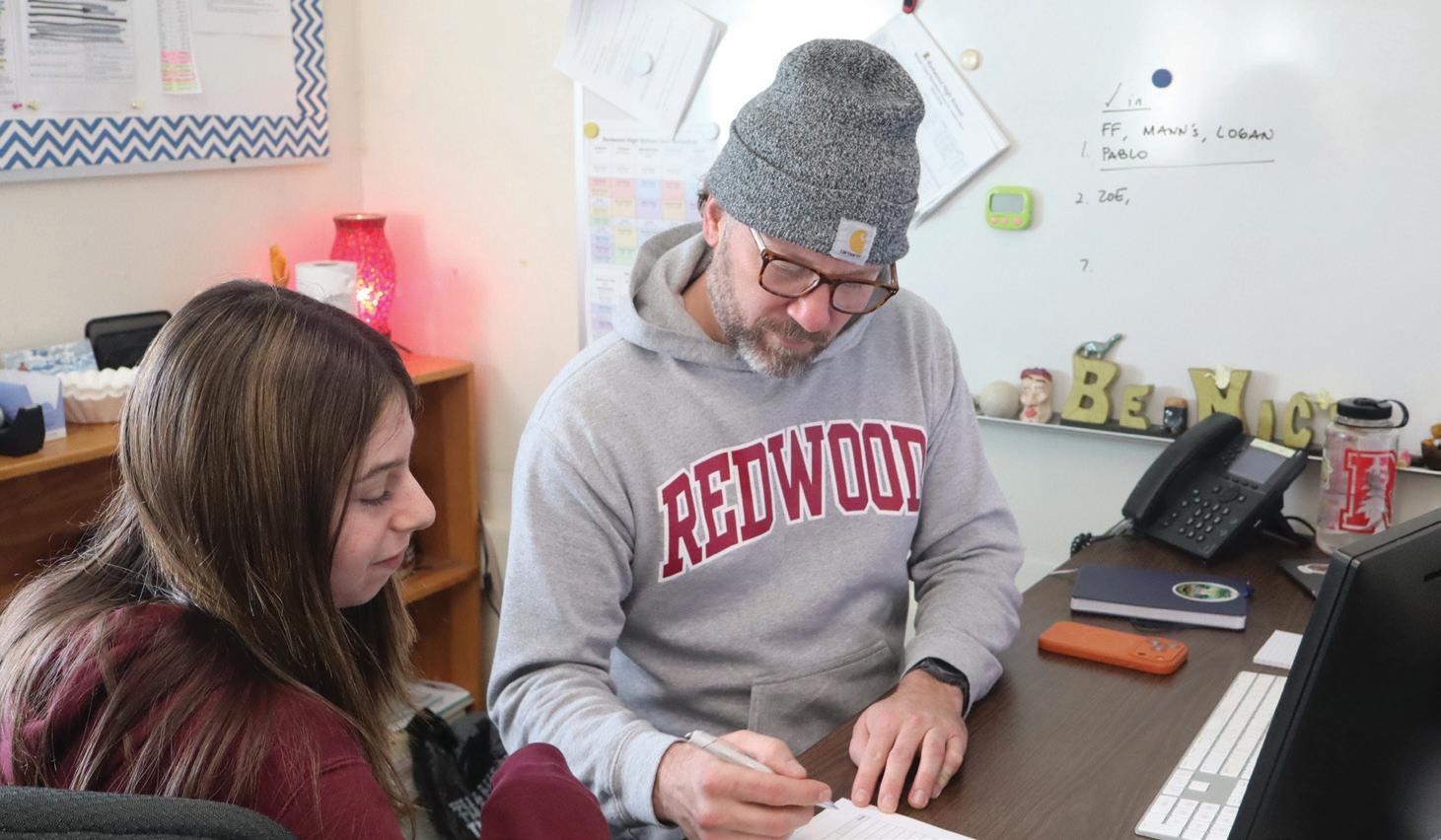
Logan Schneidewind
Redwood’s special education program stands out for its comprehensive support, offering personalized learning plans, small group instruction and dedicated resources to help students with diverse academic needs thrive.
Jefferson Sand stands out not only for his role as an Academic Workshop teacher, but also for the way he supports students who receive individualized academic accommodations and additional support throughout the school day. With his constant energy, genuine compassion and sense of humor, Sand transforms his classroom into a space where students feel supported while feeling encouraged to grow.
Sand teaches Academic Workshop classes and serves as an education specialist. He manages a caseload of 28 students. Sand helps them navigate academics, build organization skills and navigate the emotional challenges that often come with school.
from other teachers,” Fagersten said. “He’s made me want to try harder in school, and [he is] the most understanding person.”
Fagersten said that Sand’s mix of humor and structure makes his class feel like a safe place, one where she can both relax and focus.
“He’s chill in the best way and just has a good way of approaching teaching,” Fagersten said.
Freshman Lily Aytay, another of the 28 students on Sand's caseload, agreed, noting how Sand’s humorous personality turns every day's classes into something more memorable.
“He can make everyone laugh,” Aytay said. “He’s thoughtful, honest and fun. Everyone knows him for that.”
My favorite part of the job is always the kids.
Jefferson Sand, teacher
While Sand values the responsibilities of his role, he said the heart of his work lies in relationships with students.
“My favorite part of the job is always the kids,” Sand said. “They're the best part of my job, and it's the part that I absolutely love and cherish every day.”
Teaching was not always part of Sand’s plan. Despite coming from what he jokingly calls “an embarrassing long line of teachers,” he initially hoped to avoid the profession.
“There was one job I didn’t want…
Aytay added how Sand’s impact goes beyond his personality, noting how consistently he checks in with students and offers help.
“He actually cares about us. He always checks in, helps with anything and listens,” Aytay said.
Sand's approach to teaching mirrors the values he lives by outside the classroom. He believes balance, movement and connection are essential to maintaining a positive mindset. He spends his time walking the campus, playing music with his friends and mountain biking on the weekends.
“Being outside resets my brain,” Sand said. “It helps me stay positive.”
That mindset shapes how he supports his students. Sand said his goal is not just to help students finish assignments, but to recognize their own potential.
“I want them to know I care,” Sand said. “But also I want them to know they can do more than they think [and] that nothing great ever happens inside your
Through his consistent encouragement and genuine relationships with his students, Sand leaves a lasting impression on students that stays with them long after high school. His teaching shows that education is not only about academics, but also about building confidence and helping students feel capable
lschneidewind@redwoodbark.org


By Angelina Purvey
The Anchor Method, located in Kentfield, takes a new approach to fitness by prioritizing both physical and mental health. At just 25 years old, Emily Switzer has created a gym that emphasizes confidence, connection and well-being for the audience of teen girls.
Switzer has always wanted to share the importance of mental health and found that physical fitness strongly supports it. Throughout Switzers’ teenage years, she found herself struggling with mental health.
“My harder years were middle and high school. Growing up, I obviously had really good memories and moments, but I think that it is a difficult time to be a teenager, and I don’t think there are enough mentors out there for girls from that 12 to 19 year old range,” Switzer said.
She experienced adjusting to a new lifestyle from moving to California from Indiana, and additionally struggling with friendships. One thing that helped her through hardships was getting her body moving. Her love for exercise and spreading awareness for mental health led her to pursue building a gym for teenagers.
“To me, creating that community was something that I always wanted to do, and it doesn’t even feel like work. It’s really fun to work with the girls,” Switzer said.
Focusing on mental health and fitness, Switzer was determined to find a way to combine the two. This goal led her to opening The Anchor Method, one that offers teen-based classes, ranging from ages 12 to 19. At The Anchor Method, teen group classes consist of a 45-minute workout that is centered around partnerbased exercises, followed by a cool off with 15 minutes of journaling and stretching.
Switzer explained how journaling is a key part of the experience.
“[There are] journals that we keep [at the gym] for the girls, so they’ll grab their journals, pens, yoga mats, and then I always have a different prompt. Each month I go through different prompt focuses, [along
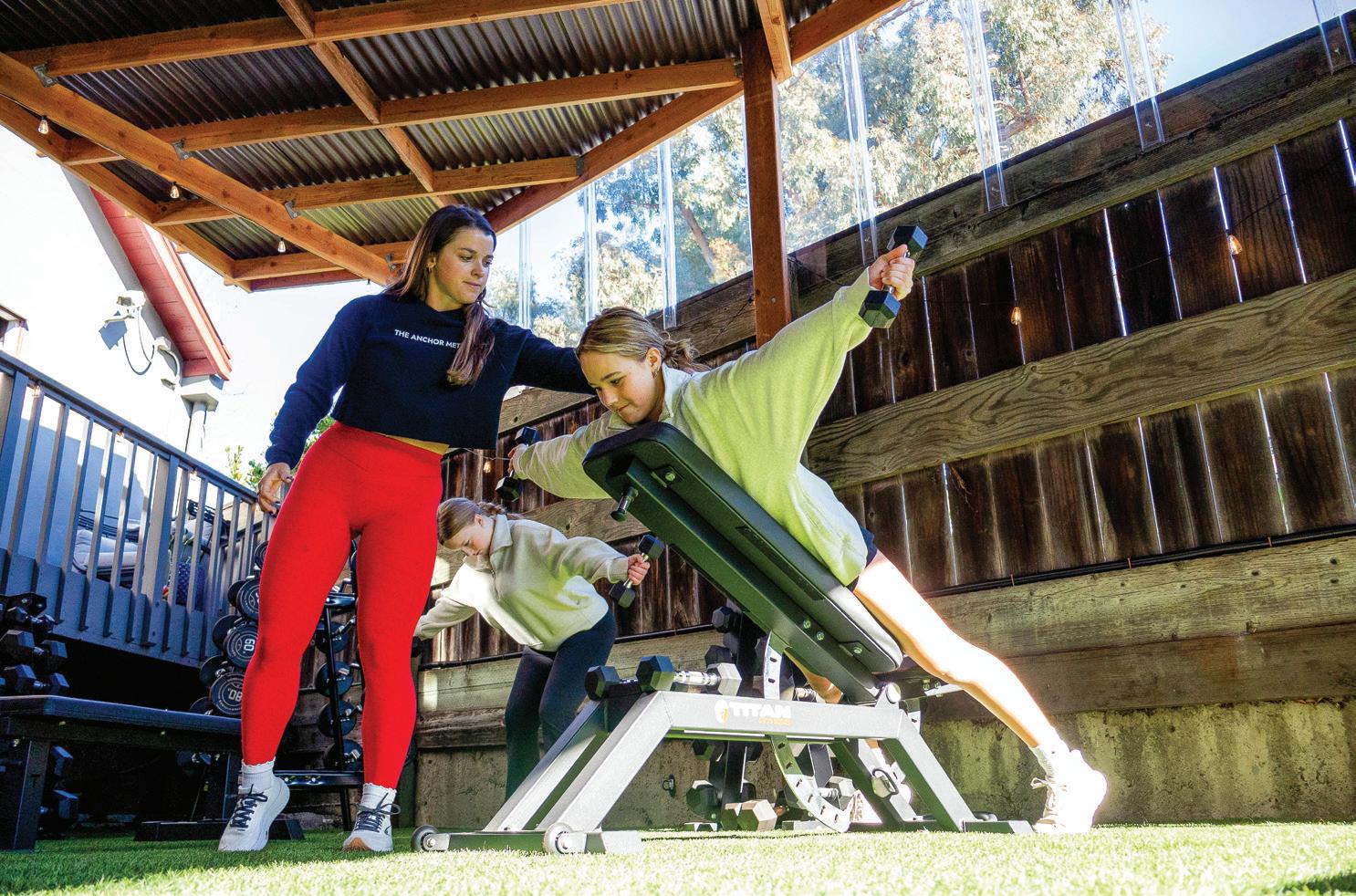
by Oren Weingarten
with] questions. Sometimes they just write [individually], or sometimes they share with their partners or as a group,” Switzer said.
Not only does this provide time for selfreflection, Switzer has noticed significant changes to clients’ confidence and attitude after coming to multiple sessions.
“I would say a lot of the girls that typically come to classes are not as confident in their bodies or in their abilities. The classes and the journaling definitely instill that confidence in them. A lot of the girls come in pretty shy and quiet, and even by the end of just one class, it’s awesome to see them slowly start to open up and be willing to share a little bit more, even [if it’s] just communicating with their partner. Some of these girls have been with me for three years, middle school to high school. Not only are they lifting a lot heavier, but their body awareness is more there, and their confidence; when they walk in the door, they’re just like I own this place, this is my safe place, I feel confident here,” Switzer
said.
Junior Maggie Chang has been regularly attending the gym since October of 2025. Chang continues to enjoy her time at The Anchor Method because of the nontraditional merging of mental and physical health, making it so enjoyable that it doesn’t even feel like a workout.
To me, creating that community was something that I always wanted to do.
Emily Switzer, owner of The Anchor Method
“I really like the mindfulness and the wind down at the end, but also we do different exercises to keep it interesting [while focusing] on working out different parts of the body. I always found that [the classes] pass by really quickly, [without even noticing] time passed until it’s already over,” Chang said.
Chang also feels the environment created by Switzer has really made a difference in her gym experience. Switzer’s encouragement and effort to create a community among the other teens does not go unnoticed.
Continue reading at redwoodbark.org in the Lifestyles section
apurvey@redwoodbark.org