



Photo by Julia Rivo
Sports Spotlight: Marco Cleary


By Berkeley Smith
Tamalpais Union High School District (TUHSD) board trustees voted 3-2 to implement a phone-free school policy starting August of 2026 using NuKase lockable phone pouches on the Archie, Redwood and Tamalpais High campuses, as well as lockable phone caddies on the Alternative Education sites at the April 14 open session meeting.
Superintendent Courtney Goode recommended the phone free policy to the TUHSD board. In his presentation, Goode said that there were three universal truths about smart phones and social media: smartphones/social media are addictive, harm students mental health and impair student learning.
“This conversation is not about our current policy not being implemented; it’s largely effective in keeping phones out of students’ hands,” Goode said. “Rather, this is a conversation about how our current policy does not go far enough to mitigate against the negative impact of those three universal truths.”
NuKase, a lockable hard-shell phone case, will cost the district $104,000 at the first purchase and anywhere from $0-10,000 each year after. They are a cheaper alternative to the previously recommended Yondr pouches, saving $41,000 initially and $20,000-30,000 year over year.
“There’s a relatively sizable, one time cost associated with them, although NuKase is approximately $45,000 less than Yondr. I want to emphasize, though, that there’s a cost in not doing anything in terms of diminished mental health, diminished learning, for our kids,” Goode said.
Goode said that these funds would by no means come from the same pool of money used to fund district staff.
“I cannot emphasize this enough, we are not sacrificing additional teachers and staff to possibly make this purchase. Salaried employees are an ongoing cost, not a one time cost. Purchasing these devices would be a one time cost,” Goode said.
Although there was a majority in favor of phone free schools, there is still no policy for implementation.
Board President Cynthia Roenisch voted for the policy as she believes it is her responsibility to do so as an elected representative.
“My obligation is, quite frankly, it’s not to make students happy, it’s not to make parents happy,” Roenisch said. “It’s to do the best job according to what I said I got elected for.”
In his presentation, Goode explained that the use of
smartphones and social media during the school day doesn’t allow new concepts to be fully etched into the brain, and when calculated equates to a loss of around 11 hours of teaching in a week, or 56 days of school over an academic year.
“I’d like to apologize to the students that we’ve deprived of 150 days of education over the last three years, an additional 150 days of education and focus and brain growth that you could have had,” Roenisch said in reference to the data provided by Goode.
Goode said he is not worried about what he along with a team of district staff can create.
“We’re not reinventing the wheel. I believe there’s a lot of smart people in this district that can pick up and implement what other districts have done and put in play here,” Goode said.
Trustee Emily Uhlhorn, despite being in favor of the concept of phone free schools, voted against the implementation policy, as she did not agree with spending over $100,000 to achieve said goal.
“I think we’re putting the cart before the horse to say that we’re going to go spend $100,000 when we don’t have a policy for this, and we don’t have an implementation plan,” Uhlhorn said. “I would like to personally be there before saying that I would want to vote to spend $100,000.”
Ida Green, another trustee who voted against the implementation, simply doesn’t believe this is a matter for the board to be involved in.
“For us to be having this conversation today in 2026, is just mind-boggling for me, because truly I feel like this is a parent-child issue,” Green said.
Jennifer Holden, one of the three votes in favor of a bell-to-bell ban, said that she is uncomfortable about not changing the current policy especially from a legal standpoint and all of the recent court hearings regarding social media’s dangers.
“We are all on record saying that we understand those universal truths, and we agree with them, and I think we would be so negligent if we didn’t do this. We’d be not only negligent to the students, but negligent to the financial well-being of our district. I would not feel comfortable with that,” Holden said.
By Maya Tucker

On April 18, the senior and junior classes attended the highly anticipated prom. The decorated venue reflected the Las Vegas theme planned by the senior leadership class, filling the San Francisco Design Center with red and black. Almost 900 tickets were sold, bringing a lively dance floor and high energy. Staff and students commented on the well-planned event and how the venue encouraged better student behavior. Continue reading on pg. 4...
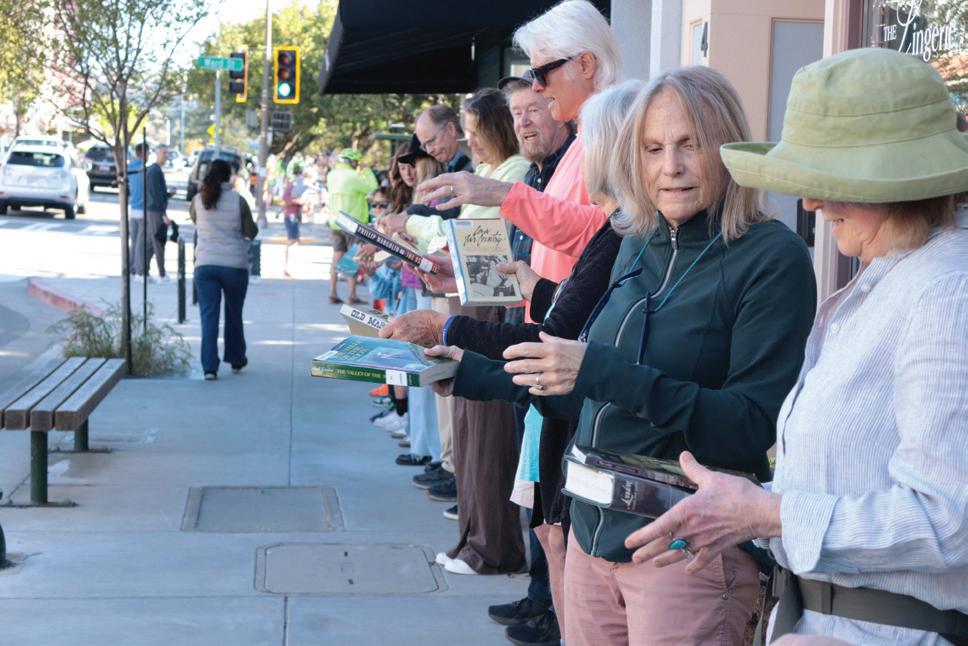
The new Larkspur Library on Doherty Dr. celebrated its opening on March 28, with over 1,000 people in attendance. The $19.7 million construction project began in 2025, however city documents show planning dated back to 2012. The opening was celebrated with a “Book Brigade,” where 500 books from the previous location on Magnolia Ave. were passed down to the new library, marking the new building as a place for community and connection.
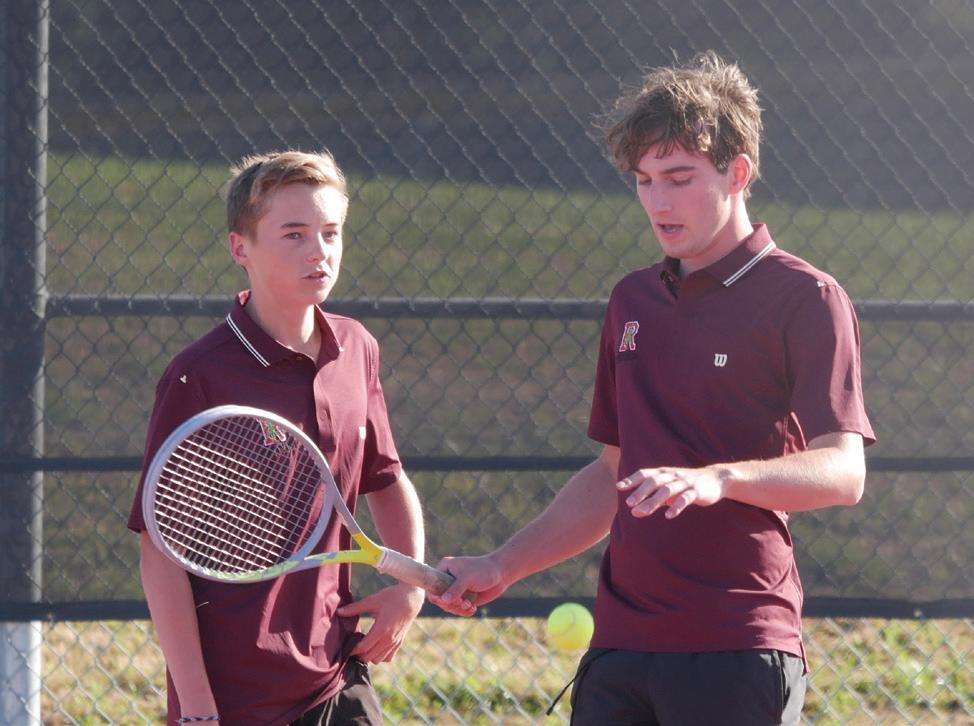
Varsity tennis beats Archie 6-1
Boys varsity tennis faced Archie Williams in a home Marin County Athletic League (MCAL) match on April 2, winning in a 6-1 victory. The Giants swept all six singles matches, and won two of the three doubles matches with their only loss coming from a close third-set tiebreaker. Players said their change in strategy and focus was what helped the team secure the win. The Giants look to carry on this momentum as they continue through the season in the upcoming weeks.
mtucker@redwoodbark.org
bsmith@redwoodbark.org
By Colette Reidy
On March 18, Gov. Gavin Newsom signed Assembly Bill 2927 and mandated that all public high schools in California offer a personal finance course beginning in the 2027-28 school year.
As a graduation requirement starting for the graduating class of 2031, students will be taught real world money management, including budgeting, student loans, credit scores and other banking skills that will help prepare them for life after high school.
In addition to the economics classes that are currently a graduation requirement in the Tamalpais Union High School District (TUHSD), this new personal finance course will begin as an elective and then develop into a mandated course.
Paula Berry, senior director of curriculum and instruction said, “The students currently learn about the components of living and being able to manage money and finances, but I think that these will be very much more targeted and specific to support students without some of the other content that’s in economics.”
Berry said that the district has a goal to have a draft for a personal finance course to be approved this coming fall, when it can then become a “G” elective, which is a yearlong requirement for UC/CSU schools.
After approval, the personal finance class will be introduced to the Tam District as an elective, and will likely become a class with more openings for students to take the course before it becomes a mandated graduation requirement.
TUHSD Assistant Superintendent of Business and operations Corbett Elsen said this new curriculum will
encourage young adults to make wise choices with their money, no matter their background or what their family circumstances may be, as this mandated course will ensure that all students will get the same information.
“Wealth is often passed along from families who have social equity, or who have a social capital, and if you don’t have that at home, where else do you get that from? This is a big step forward in making sure everyone has information, not just those who are fortunate to be born into a family that has this education at home,” Elsen said.
As the 26th state to enforce a similar law, California has pushed the nation over the tipping point which may encourage the rest of the country to mandate similar requirements.
Ruben Vance-Conner teaches economics at Redwood High School and commented on the current economics curriculum.
“At the end of the day, most people have some kind of debt, and that’s okay, but what we try to teach in our Econ class is how to mitigate the amount of debt, or if you find yourself in debt, what are some ways that you can fix that debt as quickly as possible,” said Vance-Conner.
Although economics courses are helping to inform students about the central ideas of managing finances, Vance-Conner believes that the personal finance course will help enrich the learning and provide students with a better understanding of what to do in the real world.
“I’m feeling very optimistic about it because I feel like it’s hugely important to just start thinking about the tools that people can use to avoid debt, such as saving and investing,” said Vance-Conner.
Students and teachers alike said that this will be

a very impactful course that will help solve gaps in the current education system, and teach many young adults who feel unprepared for the real world in terms of money management.
Continue reading on www.redwoodbark.org
creidy@redwoodbark.org
By Bodhi Wadia
The Marin County Board of Supervisors recently passed a Tobacco Minimum Floor Price Law (MFPL), following suit with preventative measures taken by many Marin County towns, including Mill Valley, which passed a total ban on March 16, 2026.
This law, which is set to take effect on Sept. 1, 2026, establishes a minimum price of $12 for all tobacco and nicotine products, sets minimum package sizes in order to discourage cheaper purchase of singular products, bans the sale of electronic and heated smoking devices (including heated tobacco products and vapes) and prohibits the use of coupons and discounts.
To account for inflation, the ordinance also includes a mandatory price raise of $1 every two years, starting Sept. 1, 2028.
The Mill Valley City Council unanimously agreed to start drafting a similar ordinance set to end all commercial sales of tobacco and nicotine products within Mill Valley. This ordinance, along with similar ones in Tiburon and Fairfax, is in alignment with the larger MFPL, which covers all of Marin County.
Brian Colbert, one of five Marin County Supervisors who passed the ordinance, mentioned that impacts of similar measures in neighboring areas demonstrate how this ordinance will affect Marin.
“When the city of Oakland passed the minimum floor price, cigarette sales dropped by 15 percent in 20 months. So I think we’re hoping to sort of see the same, if not greater, level of effect here in Marin County,” Colbert said.
Another supervisor who passed this ordinance, Eric Lucan, gave background on the origins of the law.
“A lot of what brought [the measure] up is continuing to do what we can to move the needle around reducing access to tobacco. We all know the health impacts of it,” Lucan said. “We’ve been, in many ways, leaders here across Marin County, and continue to hear from both young people, health professionals, and others in the community, that this is one other step local jurisdictions can take to start to reduce the use of tobacco products in our community.”
Lucan also mentioned possible immediate effects of this ordinance on people with an impulse to buy these products in Marin.
“By not making it available here, it takes away that

impulse. It takes away that convenience,” Lucan said. “There’s going to be a little more thought that goes into this device, it never sold locally, I need to think about it a little more.”
However, due to the alternate avenues that most youth are getting products like these, a different challenge arises.
Junior and Redwood Tobacco Use and Prevention Education (TUPE) member Tatum Buoy said this ordinance might not fix things in any major ways for the youth population.
“I don’t think it’s the end all solution,” Buoy said. “Obviously, the majority of kids aren’t buying their products directly in the stores. They’re getting them online and elsewhere.”
The California Healthy Kids Survey cites that within the Tamalpais Union High School District, 63 percent of students find it very easy to obtain a vape product, and 35 percent find it very easy to obtain a cigarette.
TUPE advisor, Jonathan Hirsch, mentioned that although the law may not have a direct effect on youth, by limiting access and raising prices, the law may cause the habit to be picked up less.
“It’s gonna limit the number of people who start to
use,” Hirsch said. “Their friends are thinking about getting their own, but are like, ‘oh, that’s too much of a pain, I’ll just hit yours.’ Which is gonna keep nicotine use far less frequent. The likelihood of developing a substance use disorder is far less.”
Hirsch and Buoy are both hopeful this measure will cause products affected by the law to follow a similar pattern as cigarettes, where use became less common throughout the 1960s-90s, and as more of the dangers of tobacco use were realized.
There are also other benefits that could appear as a result of this ordinance. Lucan said it could be used as an education point.
“When you do this sort of stuff, it’s an opportunity todouble down on cessation programs and education so that maybe when somebody comes in and sees there’s a higher price, there’s opportunity at the point of sale to also say, ‘hey, thinking about quitting, here’s a program,’” Lucan said.
bwadia@redwoodbark.org
By Liv Fargo
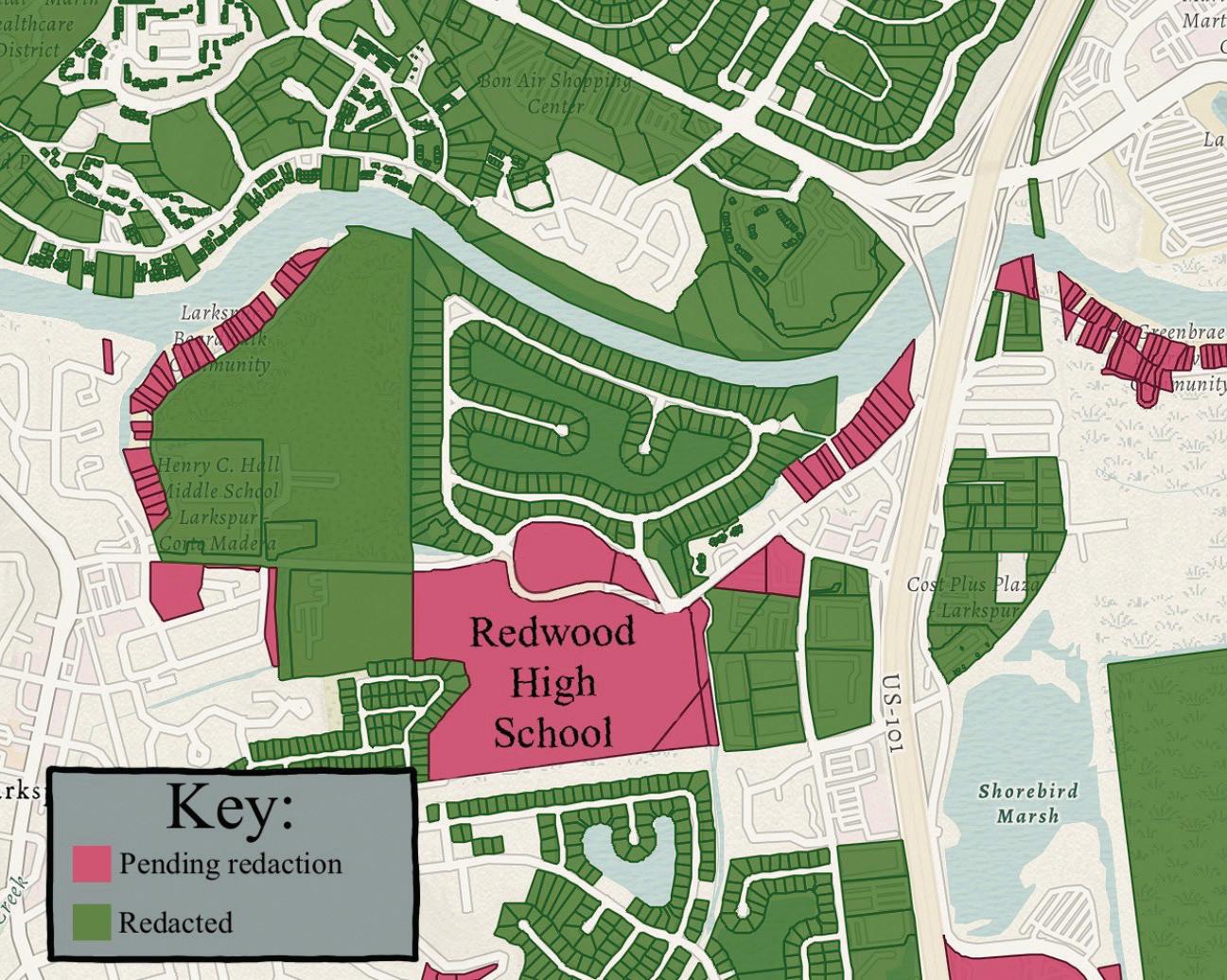
Bark recently uncovered a restrictive covenant on Redwood’s property deeds on the Marin County Online Database, previously limiting people of color from purchasing the land Redwood sits on.
The deed includes racially restrictive language written in 1943, when the land originally transferred ownership.Superintendent Courtney Goode was unaware of the discriminatory language.
“Everybody understands that racism exists, but think it's something that is just read about in history books,” Goode said. “To actually see words written like ‘shall not be sold, rented or leased to any person other than of the Caucasian race,’ is disgusting.”
This is about recognizing... our past wrongs and working to make them right.
“We have over 3,000 left for them to sign, including the two that affect Redwood High School,” Bozzard said. The process of getting restrictive language redacted from deeds takes a long time. The covenant on Redwood’s deeds was found by the Assessor-Recorder-County Clerk Office in September 2022, and the two modifications for Redwood were ready to be signed by the legal counsel on Sept. 18 and 25, 2025, although there is no set date for the deeds to be approved.
Bozzard said she would try to move the modifications for Redwood’s property to the top of the pile of deeds awaiting approval by the county legal counsel.
Courtney Goode Superintendent
The Supreme Court ruled restrictive covenants unconstitutional in case Shelley v. Kraemer (1948). Marin County Recorder Supervisor Emilee Bozzard is working to have racially restrictive covenant language modified by redacting it from deeds throughout Marin, including the two deeds describing Redwood’s campus.
“We found all the documents and prepared all the modifications. We're just working on the very last step, which is getting them signed and then getting them recorded,” Bozzard said.
The county legal counsel had to oversee each change in the process of redacting the deed’s language.
During the redaction process, the Assessor-Recorder-County Clerk Office never changes the documents that have been recorded, so the original document will always exist for people to view. The new document with the redacted language, however, legally replaces its predecessor.
Though it cannot fully be removed, Goode said he wants to see the restrictive language redacted.
“I take issue with people who say ‘trying to erase the past.’ This isn't about erasing the past. This is about recognizing and acknowledging our past wrongs and working to make them right. That's not erasing anything. That's just being a good and decent human being,” Goode said.
Redwood alum Jack Haubold, currently a student at
Dartmouth, researched restrictive covenants in Marin during 2023.
“You can still see the legacy of covenants in Marin today,” Haubold said. “It's like a metaphor, the fact that you can't fully remove the language from a deed, and that it can only be struck through, for how the legacy of restrictive covenants still lives on, and how Marin was shaped.” Haubold said.
lfargo@redwoodbark.org
By Natalia Mitchell
The Redwood French program is recieving major cuts next year, causing concern among teachers and students wondering what will happen for current students taking French.
Currently all levels of French are offered, from introductory to Advanced Placement (AP). Students can progress through all four years of high school. However, the structure is changing and fourth-year classes won’t be offered next year.
“Right now, across the entire district, and at Redwood High School, we're seeing decreased enrollment. Along with decreased enrollment, we've had a decrease in requests for elective programs,” Principal Barnaby Payne said.
Mouna Harifi, head of the French department, said the district has already made their decision.
“There will be no 7-8 or AP [French],” Harifi said, “They want one section of students per level.”
The move towards online learning isn’t favorable by all either.
“Online is terrible, it doesn't cover the most important things, the way you speak, the history and the culture,” Harifi said.
Both French teacher, Nicolle Plescia, and Harifi highlight the unfairness of this issue. Classes being cut means students are prompted to take them online which may sometimes be a high cost or inconvenience for many families.
Harifi described the inequity of the situation, which Payne also echoed.
“The school district has to find a way to support students that want to continue French,” Payne said.
Language goes far beyond grammar and vocabulary. Plecia and Harifi stressed that having class in-person allows students to engage in culture, learn discipline and practice real conversations.
“When you enter this class, you are on French territory,” Harifi said. “You learn discipline, you learn respect, you learn how to listen and how to be with others. You don't learn that online.”
Plescia said that she was concerned about the consequences that will result from these course cuts.
“Kids who sign up for any language class should have access to a full four years of oral language. It's a real shame, if we don't have enough kids signing up, then we can't offer that,” Plescia said.
Besides cultural connections, both Harifi and Plescia
said that language learning grants academic benefits.
“Neuroscience shows that a student who learns a language is a better student,” Harifi said. “Studies have shown how learning a language develops your brain.”
Students who learn languages are also given better opportunities later in life, she said.
“Ivies are looking for a student who has a background in language,” Harifi said. “More than 400 million [people] are speaking French, if you want to be a diplomat or work in an international business you need to learn French.”
As well as cutbacks in course offerings, class dynamics will change, with a possibility of an increased class size.
“Nothing's worse for instruction than that. You can't give quality instruction, you can't handle classroom management and you can't give personalized attention. You can't grade things effectively, you can’t teach effectively, especially in any language setting, there's no opportunity ever for the kids to practice and talk, because there's just too many of them,” Plescia said.
Payne said that despite the cuts, Redwood is trying to keep up with the three year requirement.
“As long as we're offering French, my commitment is three years, because three years is what's recommended by
the University of California,” Payne said.
Getting the community involved could also make a big change.
“The voice of the parents in the community has a really big influence, if the parents in the community recognize the degree that there's gonna be a real shift in their kids' experience next year, maybe there could be some pushback,” Plescia said.
Both teachers stressed about the impact on the community.
Payne said he wants the district to explore ways to keep the program.
“We're going to have to be creative in the future to be able to maintain the program,” Payne said.
He said there are possibilities for offering French at one school in the Tamalpais Union High School District (TUHSD), which would be scheduled outside of school hours or making it a mixed class.
nmitchell@redwoodbark.org
By Isabel Acevedo, Calista Grigg and Colette Reidy
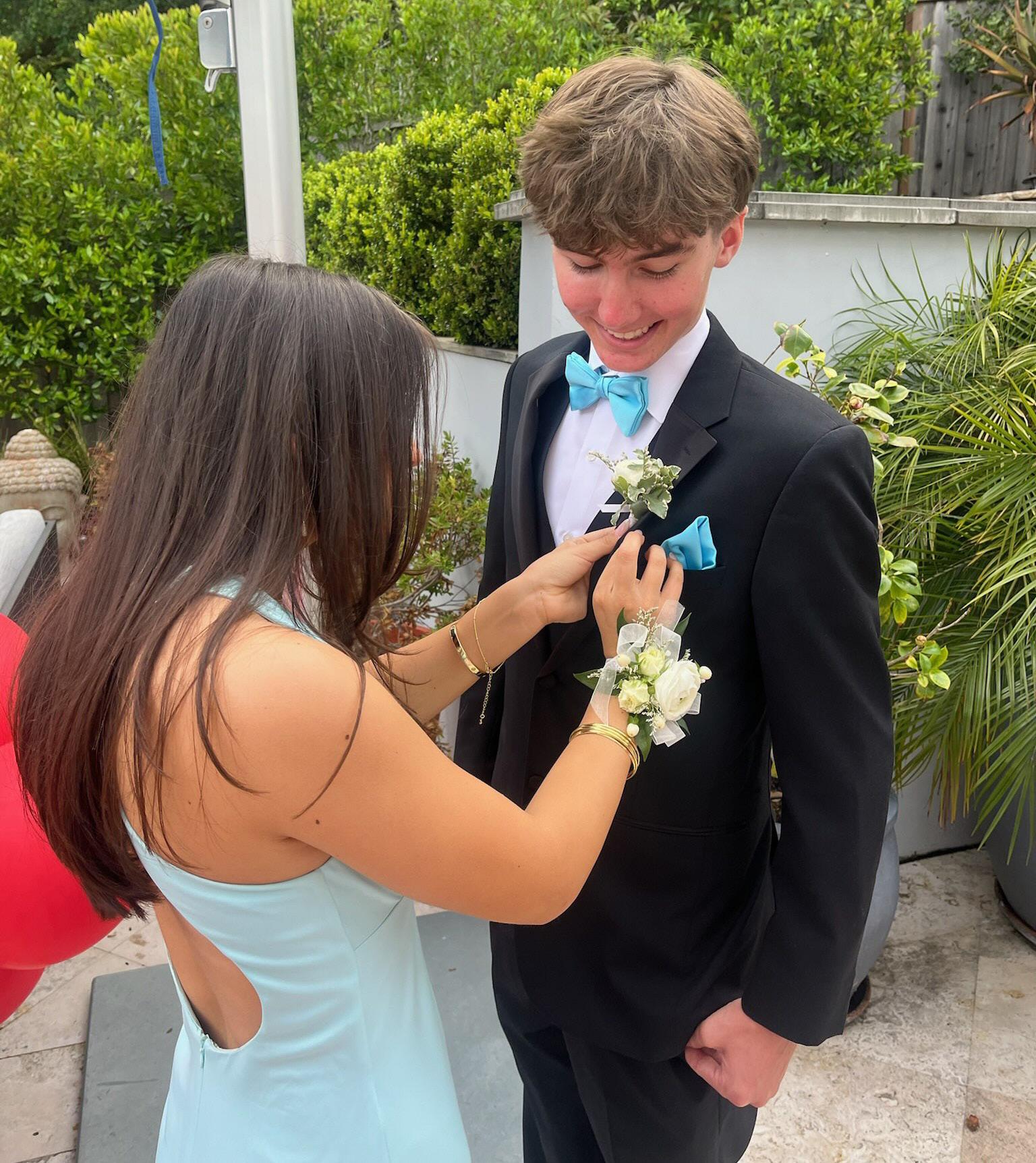
On Saturday, April 18, over 860 Redwood students filled the San Francisco Design Center, eager to participate in the experience of the highly anticipated Prom.
The venue was adorned with red and black Vegas themed decorations across the three floors, with food and activities on each level.
Senior Shane Pastel commented on how the space encouraged students to interact with each other.
“This venue is really nice because it forces people to be more together. I really like the staircase,” Pastel said.
The sense of community that was fostered by the space was no coincidence. Senior Leadership student Angelica Claire

explained the process of planning the Prom.
“We have spent the last two years planning it,” Claire said. “We were expecting around 600 people at Prom, so we had planned things around only that amount of guests. We found out that there were almost 900 tickets sold, so after those tickets were sold, we made more profit than we were expecting. We were able to add a bunch more things to Prom.”
Principal Barnaby Payne commended the seniors who planned this event.
“It was really well organized, I’m really proud of the leadership students. They did an amazing job of pulling it all together,” Payne said.
Not only did Payne recognize students involved in the planning process, he also complimented the student body.
“Redwood students are really responsible. It’s incredible that we can have 700, 800 tickets sold, and we have very few, almost no issues in terms of student behavior,” Payne said. “Redwood students are super hardworking and responsible and like to have fun too.”
This praise was apparent in the positive environment curated on the packed dance floor. Once the DJ started playing, students flooded together, singing and dancing with their peers.
Senior Jack Ngarimu said that he appreciated how the venue encouraged a better dancing environment.
“I think there’s a lot more people actively on the dance floor, and I think a smaller venue is a lot better because people are more condensed. I am generally having a better time; the vibes are better,” Ngarimu said.
In addition to the lively dance floor, students had many different food

options on each level of the venue. From a frozen dessert stand offering ice cream tacos and other treats, to American food style-buffet tables filled with salad, sandwiches and more, providing a wide selection for the attendees.
The photo booths were also available to students for a fun way to capture
this memorable night. This year, multiple photo booths and other souvenirs, like a flipbook, were added with the profits of the extra ticket sales.
“We do a photo booth every year, but I think that [the flipbook] just adds a really nice touch and adds to the memories, because now I have cute little photos to remember my senior Prom.” Claire said.
bark@redwoodbark.org
By Grady Graziadei
Sophomore students often talk about the pressure of taking their driver’s test, but what they don’t discuss is the stress of whether staff members will be flanking the entrance to the gravel Carlisle parking lot.
According to the Federal Highway Administration, 16-year-old Californians, who are typically sophomores in high school, account for over 10 percent of teenage drivers. At Redwood, sophomore students are not allocated any on-campus parking spots.
Since the east (back) parking lot opened in November, the gravel parking lot contains dozens of open spaces that haven’t been permitted to juniors or seniors. These open spaces are convenient for newly licensed sophomores, not only due to sophomores’ potential inability to parallel park on sophomore row, but mostly because of the long, treacherous walks between Piper Park, sophomore row, and Redwood’s campus.
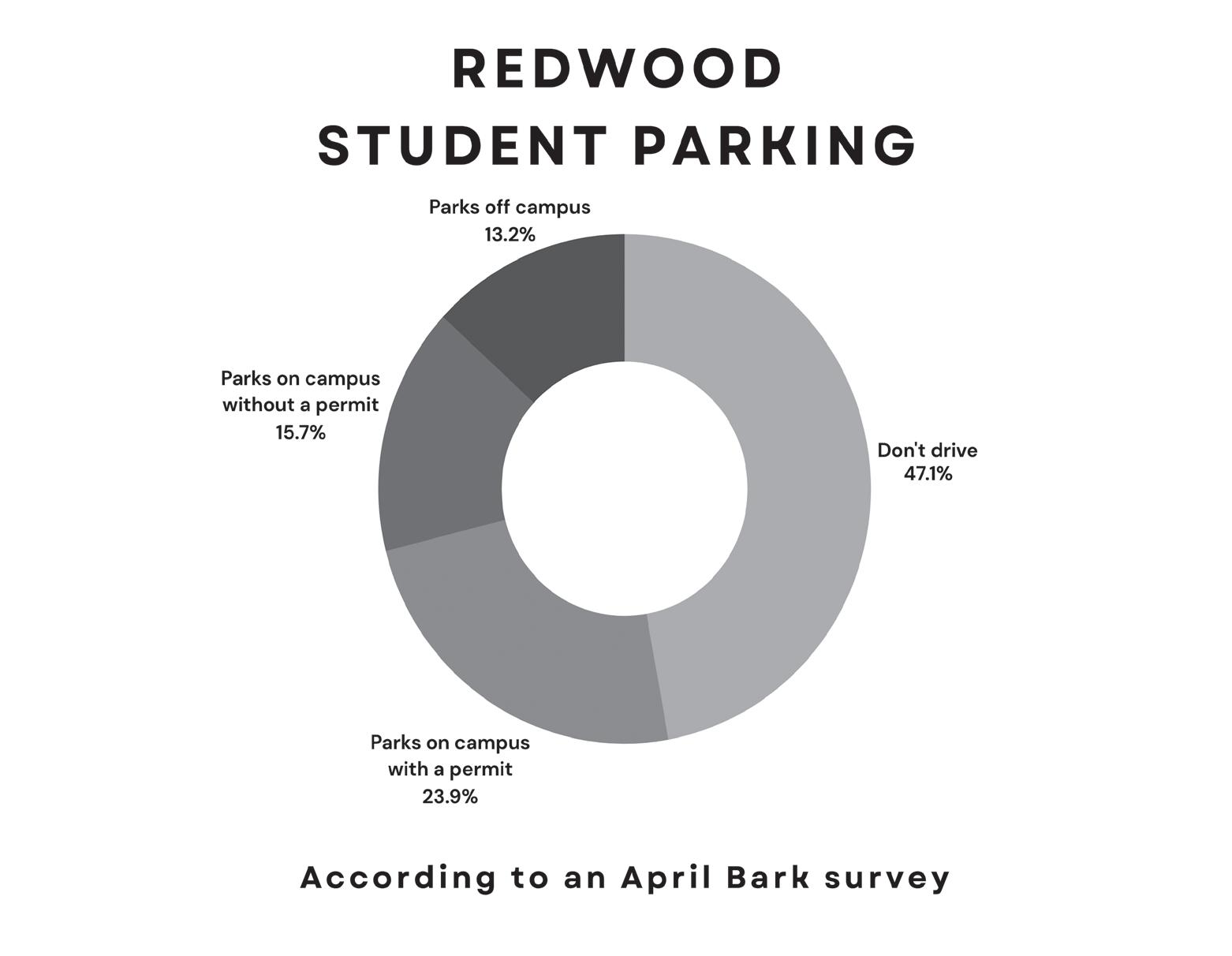
According to a schoolwide April Bark percent of sophomores who drive to school park oncampus without a permit. This data shows a disconnect between the school policy and student parking needs.
When a large majority of students are willing to risk receiving a ticket, being pulled out of class, and being towed, it shows how the inconvenience of parking off campus outweighs the risks of parking on-campus without a permit.
The only thing preventing sophomores from filling the available spaces are campus staff assistants. Monday through Friday, campus staff assistants Jay DeMaestri, Isaiah Howard and Amari Jones can often be seen checking cars entering and exiting Redwood’s on-campus parking lots before drivers can reach Doherty Drive.
Data Source: April Bark Survey WHERE

According to the Proceedings of the National Academy of Sciences, an observable type of distraction (a visual stimulus that diverts someone’s attention) resulted in 68 percent of crashes, while external glances resulted in a crash risk 7.1 times higher than normal driving. The same article states that many of these distractions on the road result from the search for parking. In an INRIX survey, 61 percent of Americans reportedly “feel stressed to find a parking spot,” and 23 percent of Americans “experienced road rage” due to lack of parking. This data demonstrates the importance of available parking for all students. If unpermitted students have to consistently search for offcampus parking, their risk of crashing increases alongside a potential increase in stress and road rage.
Instead of permitting available parking spaces to sophomores, the school chooses to enforce its strict parking policy in an effort to force students to park farther away from their classes. Across campus, sophomore students face punishment daily for trying to find sufficient parking solutions. Campus staff assistants have to take time out
By Ada Healy
Walking down the hallways each day, it’s hard not to observe the patterns in students’ clothing choices: the same hoodie, black leggings, denim skirt all paired with the same white sneakers. It becomes difficult to see this and believe that each of these students chose their clothing as a reflection of their identity.
More likely, their outfits are a demonstration of quiet conformity. Style is meant to be a primary form of selfexpression and individuality, but in a world of rapidly changing fashion and social media trends, that purpose is fading without us even realizing it.
We frequently buy clothes not because we like them, but because we start to see them everywhere. The desire to adopt trends early in addition to the excessive exposure both at school and online makes the purchase feel justified.
Yet, because mainstream brands keep producing new clothing items that are the next big trend, the item you saved up so desperately for will disappear into your closet, probably never to see the light again.
This demonstrates a cycle: we observe a fashion trend, purchase the item, wear it briefly, and then replace it with a new trend. According to a study by UniformMarkets, this disposable style has resulted in clothing being worn only seven to 10 times before being disposed of, which is a decline of more than 35 percent in 15 years. According to WiFiTalents, the average consumer purchases 60 percent more pieces of clothing than 15 years ago. As algorithms push this cycle through paid promotions, trends are lasting weeks instead of years, and there is no time or money for people to experiment and find their true style. This reflects itself in a schoolwide April Bark survey, 30 percent of Redwood students reported that they get their style influence from social media, and 18 percent reported that they get their style from peer influence.
Fashion has served as the easiest form of self-expression and initial perception of one another for decades. The loss of differentiation in these choices reflects a much larger issue, which is the common fear individuals have of being different. In fact, 56 percent of Redwood students said they think students dress similarly while only eight percent said
permits. The difficulty of this is reflected in the previously stated data of 72 percent of sophomores parking on campus without permits.
Although sophomores shouldn’t have the same parking priority as upperclassmen, ignoring this issue altogether is discriminatory by disregarding students’ needs. Rather than fighting a continuous battle against sophomore students finding loopholes for on-campus parking, Redwood should focus on a long-term solution that aids sophomore students with parking instead of preventing it.
A potential solution is using a lottery system similar to the one used to distribute parking spots among upperclassmen. Alternatively, a portion of the lots could be designated for unpermitted parking. Implementing these solutions would provide sufficient parking for sophomore students who come to school early, without additional stress of campus staff members preventing them from finding a convenient parking spot.
ggraziadei@redwoodbark.org

by Journal of Fashion Marketing and Management consisted of participants rating what they thought a person’s confidence and success was based on a quick first impression. The study found that slight changes in the same person’s outfit made people perceive them as more confident and successful. This demonstrates how clothing can play a key role in how we communicate visually, and as the differences in our perceptions fade to identical, individuality diminishes before our eyes.
Clothing can be a way of connecting to a larger community. In a study by Journal of Applied Social Psychology, teenagers were surveyed and interviewed regarding clothing and how it may represent association with certain groups or status. The study found that
teenagers’ styles are often similar to that of their friends, and it was common that this resulted in participants feeling a sense of inclusion and acceptance.
While this shows that wearing similar clothing to others can encourage a sense of belonging and community, the study also found that teenagers often purchase items not because they necessarily want to, but because it indicates they are part of a larger trend or popular group. Finding community in fashion isn’t the problem, as sharing style can create a sense of belonging for many. The issue is introduced when the clothes you wear don’t represent yourself, or when your own conformity is creating a judgmental view on selfexpression of others.
If you look at yourself and realize that like many, you’ve fallen victim to the deception of clothing conformity and want to start the journey to creating your own style, a good place to start is by looking at the pieces in your wardrobe and distinguishing the reasoning behind the purchases. It is not about resetting your wardrobe entirely, but it is about what you continue to fill it with. For example, at a thrift store, instead of current trends, you’re surrounded by a wide variety of items, making it easier to discover pieces that reflect your personal style. In an era of fast-moving trends and safety nets of conformity, it is more important to reflect on yourself, who you want to be, and how you want to physically share that with the world through the most expressive form of your unique personality.
ahealy@redwoodbark.org
By Paige Mori-Prange
As students, we are told that school prepares us for the future, yet many of the assignments we complete never translate to skills we can apply outside the classroom. We study for hours, retain everything before a test and then a week later, that information is forgotten. This pattern of shortterm memorization is reinforced by the typical school day, that doesn't involve hands-on work unless it's to take notes or complete busy-work.
When I think back to meaningful and productive learning that I have had in the past, I think back to middle school, when I built a 3D sculpture of the Hanging Gardens of Babylon from all recycled materials. Two of my classmates and I spent weeks planning, designing and adding our own creative additions to the building. Through this project I understood the true significance of this piece of history, while also looking forward to coming into class each day.
2016-17 school year revealed that high school Advanced Placement students using project-based learning were 30 percent more likely to pass their AP exams.
Therefore, not only would students be more engaged during class, but they would also have a higher likelihood of passing their AP exams.
Students retain up to 90 percent of what they learned through active hands-on learning, compared to just 5 percent of information through typical lecturing. JUMP! Foundation
In a world full of technology and artificial intelligence that takes credit for a lot of student learning, good grades and deep understanding of concepts should be coming in a variety of different ways. Taking time to process information through hands-on projects allows students to take ownership of their learning. The process of working towards something challenging but attainable can teach problem solving skills, perseverance and creativity. This isn't just about trying to catch the attention span of easily distracted teenagers, it's about listening to how many students' brains are wired.
By Vibha Devulapalli
Many young Americans claim that the reason they don’t want to get involved in politics is because the news is too negative or depressing. However, the real reason that young Americans aren't knowledgeable about world events is because of their geographical privilege and implicit ignorance of what's going on.
According to Ruby Belle Booth, the main contributor to a survey conducted by the Center for Information and Research on Civic Learning and Engagement (CIRCLE) at Tufts University, only around 40 percent of the American youth surveyed felt that they were qualified to participate in politics.
You can see this phenomenon online and in real life. American youth are deemed as “clueless” and even dumb when it comes to matters such as politics, history and geography. This has turned into a serious problem today, when so many crucial global changes have occurred, like the ongoing conflicts in the Middle East, and our own country's political controversies.
Being uneducated on world events and policies also hinders your knowledge when voting and participating in politics, whether that’s protesting or even running for office.
The root cause of why young Americans aren’t actively seeking education on these important events is because of our geographical privilege, especially in places like Marin. We live in a place where many of us can go outside and see bright blue skies, go to school, and come home safely. However, that isn’t a reality for lots of
However, when thinking back to the past few months, I can't recall the last time I engaged in a project that taught me something in the same depth that project did during those few weeks.
Most of the time, in-class work just feels like something to keep students busy. Besides the occasional lab, much of our class work feels surface level, making it difficult to connect with the material.
Many of our core classes, specifically math, science and history curriculums all follow the same pattern. Students take notes, memorize concepts and crank out tests as best they can. During class hours, students tend to lose focus easily because the day can feel very repetitive and often unengaging.
Our class curriculum should stop repeating this routine, and start to teach concepts in a way that will actually stick. Why are we held to such high expectations on tests when the way we learn doesn't prepare us to think deeply? Being able to perform under strict time limits shouldn’t be the main measure of our knowledge.
By replacing some traditional assignments with hands-on projects, learning could start to feel more meaningful. A study done by the George Lucas Educational Foundation during the
In a Carson-Newman University study, from 2024, researchers found that learning becomes more permanent when students actively apply information instead of just hearing it. Students who participated in more dynamic, collaborative learning outperformed those in traditional lecturebased classrooms, with 54 percent higher test scores.
According to research highlighted by the JUMP! Foundation, a report made in 2002 about experimental learning statistics, the data directly supports handson education. The way that students remember information changes.
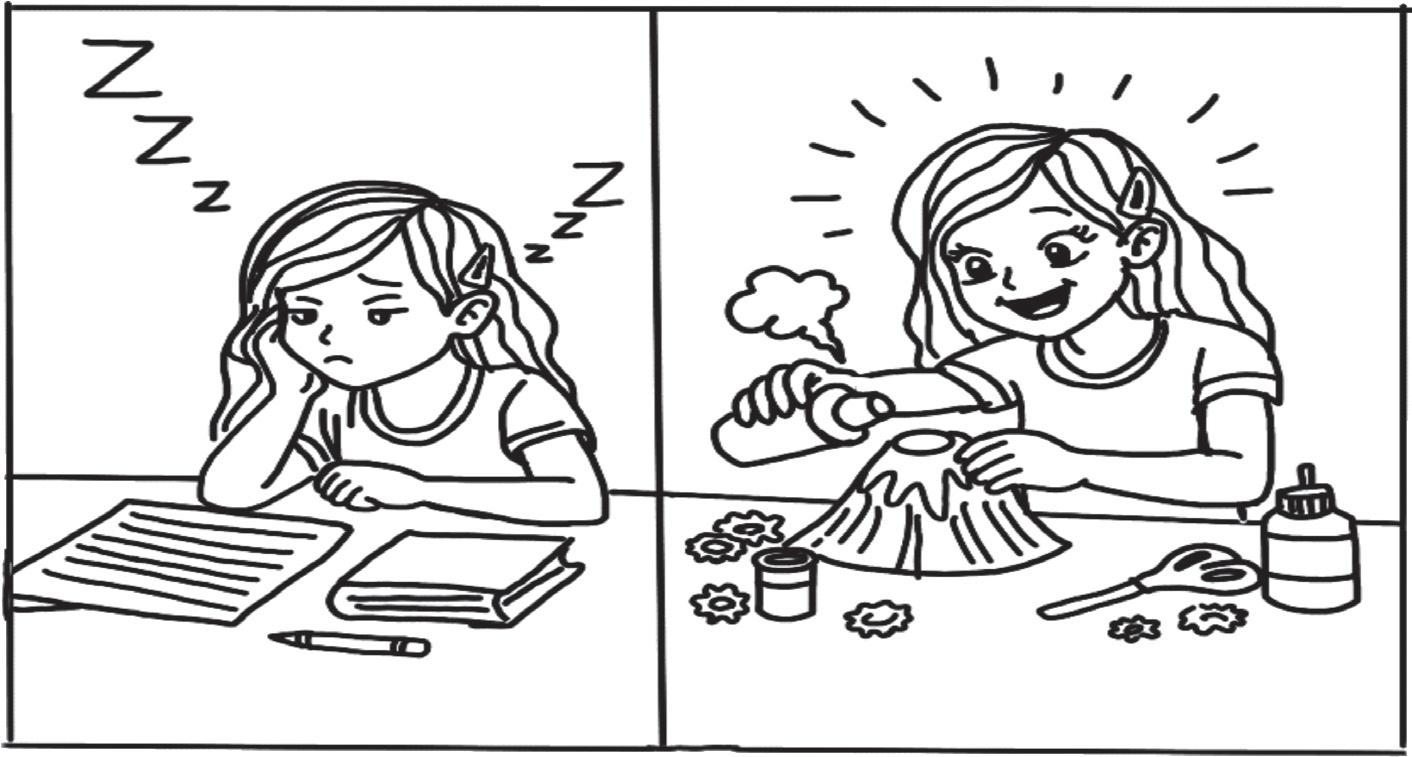
Active hands-on classrooms don't just improve understanding, they change how students feel about school altogether. When students are given the opportunity to collaborate with classmates and be creative, the act of learning would feel less like a chore. The sense of purpose naturally increases motivation, because students would be able to see the value in their work.
In the real world, no one hands you a worksheet and tells you to solve problems neatly on a paper without error. So why is this still the main way we learn in school?
pmoriprange@redwoodbark.org
The real question is, why are American youth so uneducated when we have all of the information we need at our fingertips?
I’ve heard many young people in my life say time and time again that “the news is depressing” and “politics stress me out.” While these statements can be reasonable, it’s not a valid excuse for being completely unaware of important global events.

It is also important to note how American youth spend a lot of time on their phones and other devices. A Gallup survey conducted by Jonathan Rothwell, a principal economist at Gallup, concluded that the average teen spends around 4.8 hours a day on social media.
A study by the Pew Research Center conducted by Naomi Forman-Katz reported that only 15 percent of adults aged 18-29 followed news all or most of the time. The survey also included information about why young Americans don’t seek out news.
However, it can be unfair to decide to stop caring about global and even national news when it can have such a strong impact on many people's lives.
For example, more recent global topics such as the ongoing conflict in Iran, an extremely impactful situation for many people, is a topic that we should all be more knowledgeable on.
politics and news can serve a greater issue as well, such as being more prone to misinformation, leading to a weakened democracy when the vast majority of youth are ill-informed.
Staying informed about local and global events is the least you can do to make a difference. When the majority of our country’s youth are unaware of important issues, they also lack the ability to find solutions often leading to worsening situations.
33 percent of [young Americans] reported reading news feeling scared or confused very often. Pew Research Center
A major example of this is climate change, and how its effects such as grave natural disasters are frequently shown on the news. If many American teens remain ignorant and unaware of global warming's impacts, they are less likely to change their lifestyle habits which further worsen the situation, since they can’t immediately see the damage they are causing.
When Americans claim that they don’t want to follow the news, especially on topics like Iran, it comes from a very privileged place. We sit comfortably in our beds, scrolling for hours on our phones, and yet still don’t want to give attention or stay informed on the disastrous events that people all over the world are experiencing.
Being educated on local and global events allows you to understand multiple perspectives on issues from around the world. It can expand your view on the world which is beneficial for society, especially in a place like Marin, where people often live in their own bubble. vduvulapalli@redwoodbark.org
Students have a right to be represented by their governing body.

Illustration by Guo-Ting Tseng
“It can hardly be argued that either students or teachers shed their constitutional rights at the schoolhouse gate,” Supreme Court Justice Abe Fortas stated. In the eyes of the law, students have the same rights as anyone else in the United States.
This includes the right the Founding Fathers of America fought for: to be represented by their governing body.
Yet the mechanisms used by governing bodies to hear student voices have failed. Students have a seat at the table, but are not allowed to eat.
This is exemplified by the Tamalpais Union High School District (TUHSD) board, a sample of what occurs everyday on the world stage.
According to our district’s YouthTruth survey, only 31 percent of TUHSD students feel they have a say in how things are run across campuses. This information was presented to the board as one of the “greatest challenges” found in the survey, yet no action or discussion has occurred on the topic.
Youth voices are tokenized at every level of government, and the most obvious local example of this is how the TUHSD school board treats their student board members.
Student board members are given a brief training on how the board works yet are not taught their full rights, including the right to cast a preferential vote which is a formal (yet non-binding) expression of the wishes of the student body, mandated by California law. No TUHSD student board member has ever cast one.
During the March 10 board meeting, the student board members from Archie Williams and Tamalpais High School were both interrupted during their updates to trustees. Helen Kay, the Tamalpais student representative, started her speech by advising the students from Archie Williams who spoke on behalf of the TEAM program to share their speeches with the Archie Williams student trustee. She was interrupted by Cynthia Roenisch, who stated, “Could you please update us on what’s happening at Tam?”
Evelyn Jones, the Archie Williams student trustee began to speak on the cutting of TEAM program to which Roenisch responded, “I’m going to interrupt because the student trustee reports are supposed to be telling us what’s going on on campus…so while we respect what people said, we’re not here to review it.”
Evelyn responded, “Respectfully, I do believe this is happening at my school.”
A December 2025 Brookings Institution study surveying over 9,580 students across ten countries found that where student councils exist, “these councils only weigh in on low-stakes decisions — such as organizing events — and not more highstakes decision making like school-wide change and transformation.”
Students can be trusted to plan the prom, but not discuss the cutting of their favorite teacher, the removal of an elective they care about or changes to schoolwide policy.
Student involvement at the board starts with public comment on topics on the agenda, which for the past 10 months has been moved to after board discussion. This change came after the board was advised by outside legal counsel, Michelle L. Cannon, during a board meeting, that this would, “cut down on a lot of public comment, especially negative public comment.” This leaves no room for the board to respond to or reference anything said in public comment during their discussion, even if they wanted to.
How can an initiative be discussed without first hearing what the community thinks, unless the decision is made already?
The board’s own bylaws identify it as one of their goals to, “Place students at the forefront of all decisions.” It is not our responsibility to listen and respond to the board, but the board’s responsibility to listen and respond to us.
At a time when just 32 percent of 18-34 year olds believe that the government works in their best interests, according to the Partnership for Public Service, creating mechanisms that involve young people is more important than ever.
We are not asking for the board, or any government for that matter, to let students unilaterally make decisions.
Rather, we call on the board to acknowledge the failure of the current systems in place that “hear” student voices. This starts by putting community voices over their own and beginning to work for positive change.
Representation does not occur when someone in power suddenly decides to listen, but when those denied power refuse to be ignored. Either the board changes these systems or it is the responsibility of our community to use their votes to change the board.
Cub Issue
edItors-In-ChIef
Calista Grigg
Henry Rivo
head Copy edItors
Taylor Kaster
Nico Less
Copy edItors
Sophia Davis
Veda Devulapalli
Isla Geithman
Lyla Hielscher
Camellia Javadi
Carmela Mangilit
Anika Murray
Guo-Ting Tseng
opInIon edItors
Sidney Bank
Ada Healy
Olivia Herbst
feature edItors
Liv Fargo
Colette Reidy
Ronak Shah
Maya Tucker
LIfestyLes edItors
Blair Basco
Alexa Martin
Charlotte Welter
sports edItors
Ava Babb
Jimmy Centeno
Ethan Finkelstein
Drew Schultz
news edItors
Vibha Devulapalli
Luke Pialloux
Berkeley Smith
revIew edItors
Cade Jaffee
Olivia Shapiro
vIdeo edItor
Milo Mancl
spanIsh edItor
Isabel Acevedo
busIness Manager
Adam Scheer
soCIaL MedIa Managers
Carlie Catanese
Valentina Mitchell
art ConsuLtants
Julia Rivo
Edie Youngs
survey Managers
POLICY: All editorials are unsigned and have been approved by the majority of the Bark staff.

BARKS and BITES are the collective opinions of the BARK staff concerning relevant issues. BARKS represent praise, while BITES represent critiques.
Although student board members are mandated by California law, that does not mean they should be treated only as a formality. What they have to say is valuable even if it doesn’t fit with what the board members would like to hear.
In addition, being given the space to speak is not the same as being heard. It is only the first step towards real political power.
A BARK to the Alex Cooper and Alix Earle drama. It’s a hot mess.
A BITE to Bieberchella. That should be me.
A BARK to promposals. ChatGPT is doing the most for those puns.
A BITE to gas prices. They’re higher than the number of open spaces in the gravel lot.
Have an opinion regarding anything that appears in the Bark or in general? We encourage our readers to submit letters to the editor. Letters to the Bark should be 500 words or fewer, typed if possible and signed. They must be emailed to bark@redwoodbark.org
A BARK to Euphoria. You’ve got us living for the thrill.
A BITE to the Bottlerock lineup. The FOMO will make us Sombr.
A BARK to everyone who went to Punta Mita. More like Punta Marin!
A BITE to reading books of old. All we need is SparkNotes.
Vince Centeno
Milan Hendrickson
MuLtIMedIa edItors
Margaux Hirschbein
Natalia Mitchell
reporters
Mark Barothi
Piper Cifarelli
Peter Collet
Zack Ferry
Josh Friedman
Grady Graziadei
Thea Jones
Sophia Kletz
Victor Levsky
Erin McGovern
Paige Mori-Prange
Paige Mortimer
Rose Mueller
Nico Post
Ava Rogers
Ella Shawn
Rose Siminoff
Solomon Strasburg
Bodhi Wadia
Mia Willian
advIser
Tom Sivertsen
By Maya Tucker
Picture this: every morning, your teacher stands at the classroom door, greeting students by name with a fist bump. Small moments like this make students feel more connected and supported by their teachers.
Teachers’ belief in students’ potential plays a powerful role in shaping their confidence, motivation and academic success.
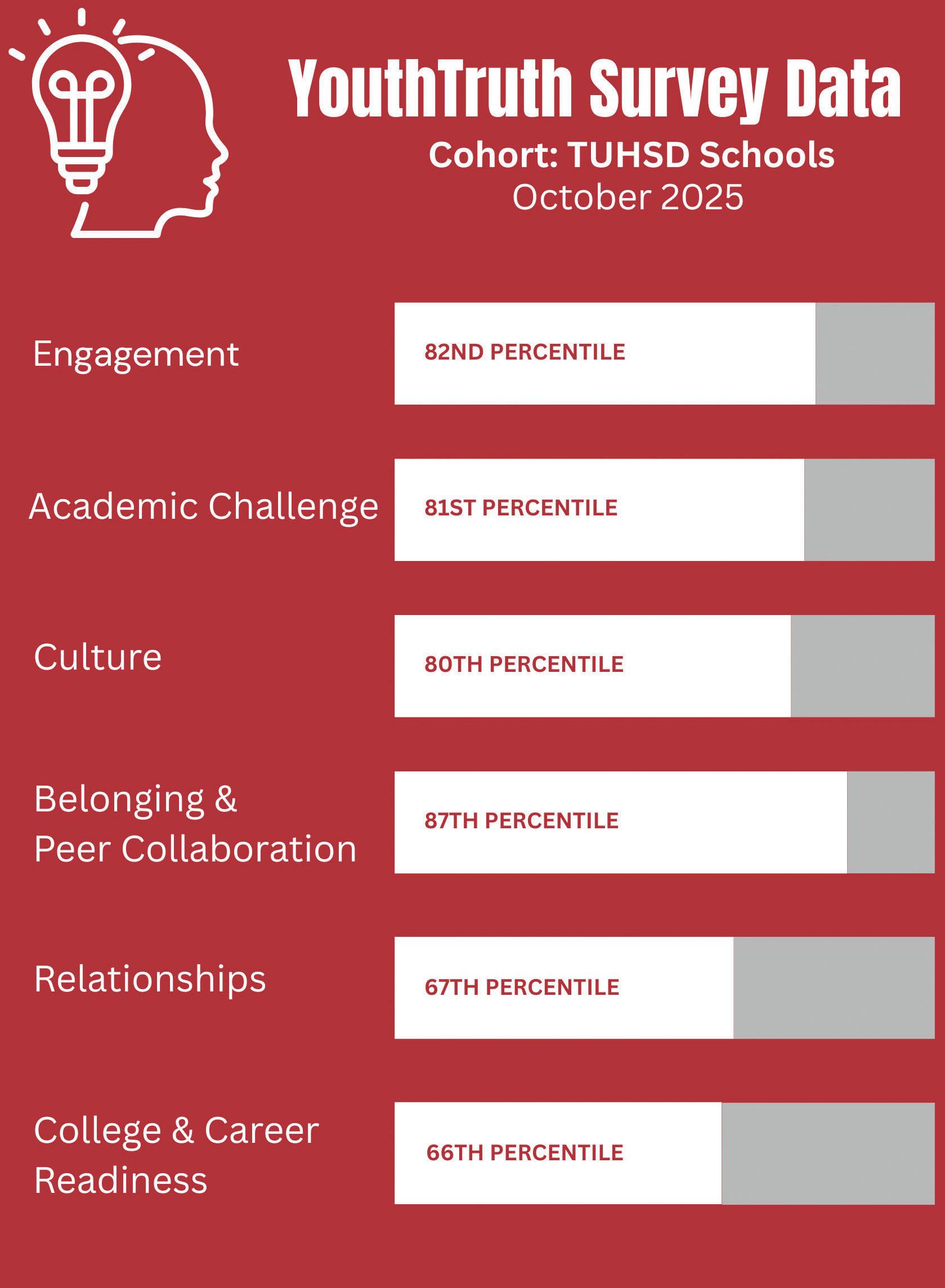
According to the national YouthTruth Survey results from 2025, Redwood ranked in the 42 percentile when students were asked whether they felt teachers believed they could succeed, despite placing significantly higher in other categories.
The YouthTruth Survey is completed by students in grades K-12 nationwide, collecting data and feedback to improve school quality.
to try to help you. They are just there to give you a grade.”
Smith explained that the large class sizes may have an effect on teacher-student relationships. Smith said one of his teachers was having trouble focusing because of his large class size.
“I do think that the class size has a major effect. That’s kind of why [my teacher] got overstimulated last week, because he couldn’t focus with 34 voices talking,” Smith said.
Smith recognizes that most teachers do try their best to create relationships with their students, but it can be difficult with large class sizes.
I definitely feel teachers help me if I’m struggling, but then not only help me, but give me training wheels.
Opaline Poissonnier-Vigery, junior
Out of the six categories that schools are tested on in the YouthTruth Survey, Redwood stands in around the 80 percentile for Engagement, Academic Challenge, Culture, Belonging and Peer Collaboration. For College and Career Readiness and Relationships categories, however, Redwood stands in the 66 and 67 percentiles, respectively.
Within the Relationships category, the lowest-scoring question on the entire survey for Redwood was: “How many of my teachers believe I can get a good grade if I try?” Redwood was in the 42 percentile for this question, bringing down the average score of the category to the 67 percentile.
Freshman Carter Smith said the 42 percentile ranking does not entirely match student-teacher relationships at Redwood. In his own experience, he’s felt he’s had a mix of teachers who both do and don’t believe in their students’ success.
“I would expect us to be more like 60. But 40 is definitely surprising because
Junior Opaline PoissonnierVigery said she has been fortunate enough to have a positive experience with her teachers, though she recognizes that not everyone has had the same experience.
“I’ve had the luck of having teachers who, if you don’t understand, will help you. I also know a lot of people who had bad experiences with teachers where they were kind of being put down a lot,” Poissonnier-Vigery said.
Poissonnier-Vigery said she feels more confident in her abilities when teachers provide abundant support.
“A lot of teachers throw you in the deep end, especially in those harder classes, and it can make it so hard and frustrating,”
Poissonnier-Vigery said. “I definitely feel teachers help me if I’m struggling, but then not only help me, but give me training wheels. [They] show me, ‘this is how you do it, now let’s try to do it yourself and then slowly taking the training wheels off.’”
According to a 2025 study published by the University of British Columbia, students who maintained strong relationships with their teachers had average grade point averages (GPAs) that were 15 percent higher than those of students with lower quality student-teacher relationships.

“If the person who’s supposed to be supporting you isn’t believing in you, you probably won’t believe in yourself as much either,” Smith said.
Teachers’ feedback can have more of an impact than just receiving a letter grade. When teachers and students effectively communicate and develop a relationship, both letter grades and emotions can be positively impacted.
“I think teacher approval is so important right now because they can guide you to what you want to do in your life later, and having those teachers who say ‘you’re good at this,’ definitely helps me decide,” Poissonier-Vigery said.
To improve student-teacher relationships, Poissonnier-Vigery says even the small comments on student effort can make a big difference.
“Teachers shouldn’t make comments about how something ‘should be easy’ because not everything is easy for the same people,” said Poissonnier-Vigery.
For example, Smith described a teacher who uses simple daily actions to create a welcoming environment. For Smith, student-teacher relationships can be built through small comments and everyday efforts rather than complex actions.
“In one of my classes, every day we walk in the door, she stands in the doorway and fist bumps all of us and says good morning and each person’s name.” Smith said, “She’ll also always check in on people if they look tired or see if they need to go to wellness. I think that’s a really welcoming environment, and clearly, she has a strong relationship [with all of us].”


By Grady Graziadei
The Town of Tiburon currently has 54 of the 639 required housing units that the state of California mandated it have by 2031. To be eligible for state funding, Tiburon must meet the Regional Housing Needs Allocation’s (RHNA) housing requirements within the eight-year cycle.
During a Tiburon Town Council meeting on Feb. 18, council members discussed housing progress and strategies to address the shortfall. Shari Meads, the town’s director of development, spoke at the meeting.
“The housing element addresses a range of housing issues such as affordability, housing diversity, density and location,” Meads said.
Tiburon’s 8.5 percent progress mark is highlighted by 2 percent progress for very low-income units and 3.6 percent for lowincome units, with a combined 15 units permitted. These low-income housing units represent a shift from Tiburon’s current median home value of more than $2 million, as reported by the U.S. Census from 2020 to 2024.
“The state is really pushing for affordable housing to be throughout communities, but it also realizes that to be most effective and feasible, it needs to be near transit and other types of resources,” Meads said.
The Redwood community is heavily impacted by affordable housing.
According to an April Bark survey, 26 percent of Redwood students lived in affordable housing, with an additional 6 percent having lived in affordable housing previously in their life.
Sophomore Preston Headley, Tiburon resident of twelve years whose family owns a local business, has observed spaces available for affordable housing.
“Tiburon isn’t supposed to be a small town, and there’s already a lot of open
space. There is tons of available
Headley said that Tiburon will have to place the affordable housing in a fitting area, as the homes will have to be more condensed that the ones currently there.
“Higher-density housing would be good, it just needs to be in the right location. If apartments were built in the middle of a neighborhood, it wouldn’t be appealing to existing residents. If they were built in more open areas, that would definitely be a good solution,” Headley said.
Meads also commented on the importance of meeting the RHNA element.
“The worst case scenario is that they can revoke your housing element approval and certification and notify the attorney general for pretty egregious violations,” Meads said.
Mayor Jon Welner also commented at the meeting. “The town is doing its best to comply with state directives regarding housing while maintaining the beauty and character of our town,” Welner said, “There was a lot of energy and effort devoted over the last few years to developing the housing element, approving it and getting the zoning in place.”
During the town council meeting, council members also expressed frustration with the state’s failure to recognize Tiburon’s inadequate infrastructure as the state piled on the large RHNA demand.
Vice Mayor Isaac Nikfar shared his frustration with the RHNA to the council. “Our infrastructure again is our infrastructure, we have one lane going out of town, we are not a public transit hub by any stretch of the imagination,” Nikfar said.
Although there is only one lane coming into Tiburon, the town has other modes of transportation due to its location on the water.
“The state government doesn’t care, and actually Tiburon is considered a transit-oriented community because of the


ferry, and we are considered in the same breath as Larkspur and other places that actually have connectivity to the SMART Rail even though we don’t,” Meads said.
Headley also expressed his concern about the possible strain on Tiburon’s infrastructure.
“An increase in population requires more buses - when I took public transit, it was always packed. Additionally, the police force and firefighting force are really small in Tiburon, so a bigger population would negatively affect them,” Headley said.
Many Tiburon council members shared frustration over the shift from the 78-unit requirement in the 2015 RHNA to the 639-unit requirement in the 2023 RHNA during the meeting, as well as the 7th RHNA cycle approaching in 2031.
going,” Stock said.
Meads said she also hoped the housing requirements would go down during the seventh RHNA housing cycle due to Tiburon’s built-out residential zones. However, Meads said she believed the requirements would fail to loosen due to an increasing population and job opportunities throughout Tiburon.
Headley said he remains hopeful that the large requirement for housing will bring more families and communities to Tiburon. This new influx of families would shift the town’s demographics.
The housing element addresses a range of housing issues such as affordability, housing diversity, density and location.
Shari Meads, Tiburon director of development
Nikfar was a vocal member of the Town Council, comfortable enough to make jokes. “The seventh cycle, do we expect that to be six million or do we expect that to be more reasonable in the 100, 200, 300 range?” Nikfar said.
Benjamin Stock, the Tiburon town attorney, shared similar thoughts with the board members.
“The hope is that when the next cycle comes, we’re not just going to have [housing allocation] numbers go up for the sake of numbers going up but based on the topography of where the houses are
“Either new families are coming in, which brings new kids to schools, or older, wealthier people are buying up houses so new families can’t move in. There used to be a lot of young families moving to Tiburon, but over the past 15 years, that has decreased a lot,” Headley said.
While both the Town of Tiburon’s residents and leaders share many different perspectives on the increase in housing allocations for the town, Mayor Welner remains hopeful of Tiburon’s current progress.
“I actually feel somewhat reassured by the [data] that Tiburon is on track by doing the things we’re supposed to be doing,” Welner said.
ggraziadei@redwoodbark.org
As student enrollment at Redwood declines, it raises the question of what this could mean for teachers and students. Quiet, empty classrooms? Teachers and students having courses they love taken away from them? An environment devoid of learning past the basic course requirements?
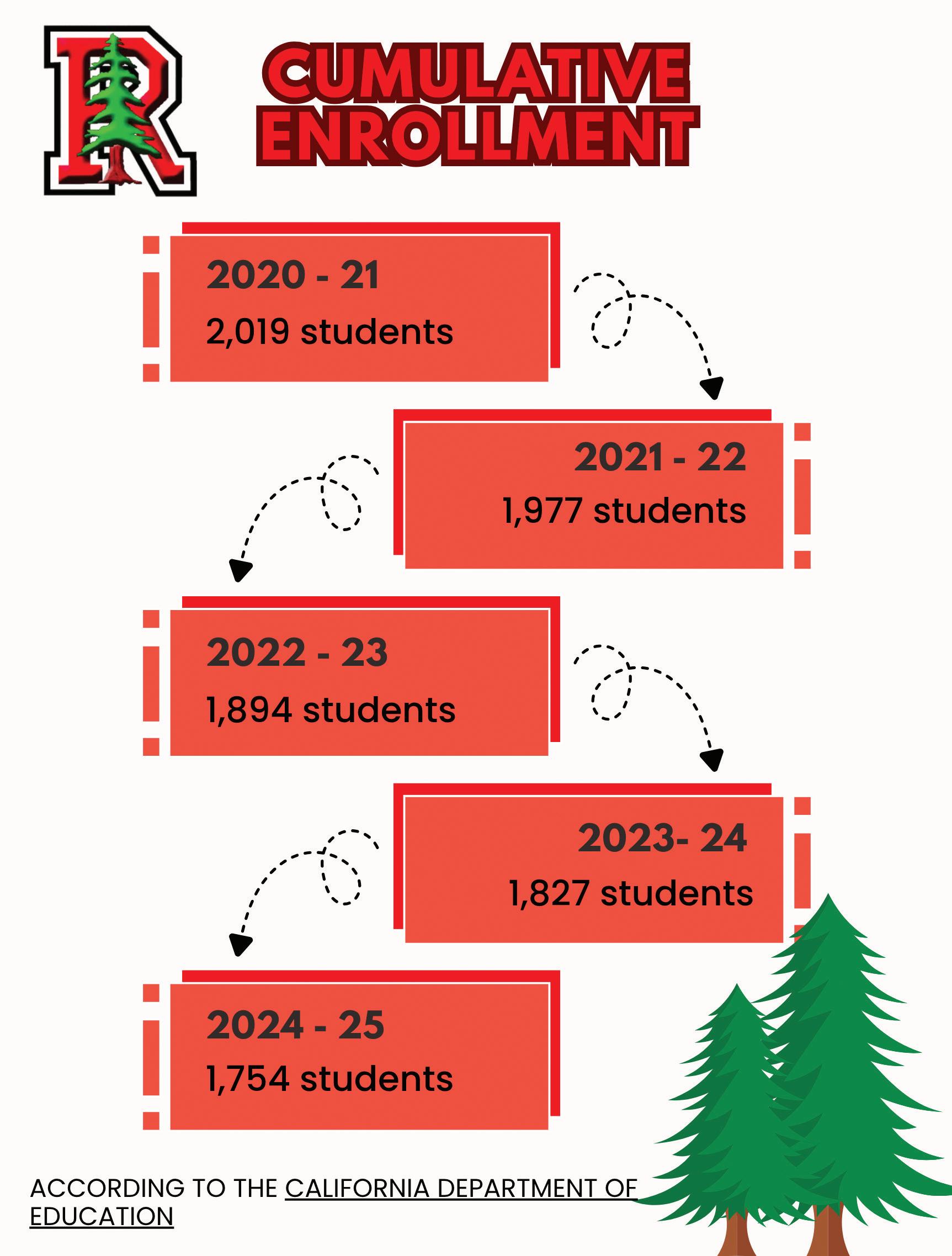
According to a 2025 California Department of Education (CDE) data collection, enrollment has declined from over 2,000 students in 2020 to 1,754 in 2025.
Principal
Barnaby Payne has seen the shift in student body numbers from an administrative perspective over recent years.
“We were over 2,000 students four years ago, and now it’s on this slow downward descent. In a few years from now, Redwood is going to be 1,200 students. We just have fewer kids and we can’t offer everything we used to,” Payne said.
This switch isn’t confined to just a local issue, as declining numbers are affecting public schools across California. According to the CDE, public school enrollment has declined about 6.8 percent over the past decade, dropping from roughly 6.24 million students in 2014–15 to about 5.81 million in 2024–25, with decreases expected to continue.
The recent drop in Redwood’s student numbers isn’t just a trend affecting the school’s population, it is reshaping the courses offered each year.

However, declining enrollment is not the only factor that is limiting course options for students. According to Payne, the school’s available funding, in combination with lowering numbers, greatly affects course offerings. This is

unlimited resource paradigm,” Payne said. “We don’t have so much money and staff that we can offer every single class students choose, so sometimes we have to make hard decisions based on our course signups. Usually, depending on the course, subject and grade level, we may have to remove a course if there’s not enough interest. Primarily, that’s around electives.”
Astronomy was removed from Redwood’s course options in 2024 due to its low numbers of student interest on course selections. Sophomore Giorgia Crook had planned to take the course this year, but was unable to after learning it would no longer be offered.
We may have to remove a course if there’s not enough interest. Enrollment is 100 percent the biggest factor [when choosing to remove a course].
“We may have to remove a course if there’s not enough interest. Enrollment is 100 percent the biggest factor [when choosing to remove a course],” Payne said.
Dr. Barnaby Payne, principal
Payne said that, as a large school, Redwood has been able to offer a wide selection of courses in the past. But as enrollment declines, courses that have lower popularity in the overall high school curriculum could be in danger in upcoming years.
“As a large comprehensive high school, because we are so big, it allows us to offer a lot of different programs: academic programs, athletic programs [and] extracurricular programs. As our enrollment goes down, there may be less interest in some programs to the point that they’re no longer sustainable,” Payne said.
“I was really excited to take Astronomy. My brother took that class and really liked it,
and since I really like space, I thought it was perfect,” Crook said. “A few weeks after I put it on my request, I got an email saying that not enough people were taking it, so I couldn’t do it any longer and had to pick a new [course].”
Alongside the negative effects
By Milan Hendrickson and Anika
of course cuts on students, teachers are also being impacted. Passionate teachers who love teaching or were excited to teach a class can face disappointment when their class is taken off the roster.
“You have teachers who are just so fired up about their classes. You know, it’s a beautiful thing, so it is a sense of loss and frustration when we can’t offer some of these classes,” Payne said.
Michelle Ceja, an Advanced Placement (AP) World and Social Issues teacher, was hoping to teach the semester-long Women’s History class this fall but was unable to because it was taken off of course offerings to try to get the other electives to run. She was going to inherit the course from teacher Ann Jaime, and was hoping to incorporate more women’s history knowledge using lenses of anthropology and sociology.
Ceja said that the course was ultimately cut last year due to a lack of sign ups and interest.
“[Jaime and I] worked together to try to get sign ups last year, but we also



Anika Murray
were facing cuts. We did not have enough signups for the course this year. It wasn’t advertised or put on the catalog due to the more cuts that happened this year,” Ceja said.
Sophomore June McKeon, Vice President of the Women in Politics Club, said that it was personally discouraging to see electives like Women’s History get cut from course selections.
“I transferred to Redwood for better class options, hoping that I could find unique, meaningful classes that I could have more of a choice in,” McKeon said. “To see such a unique class that could probably change perspectives being taken away kind of feels like defeating the purpose of our many [course offerings].”
Despite not
enough interest to keep Women’s History on the course offerings, McKeon said that the cuts could still have a big impact on those who were interested in taking Women’s History.
“I think they’re cutting [Women’s History] thinking that few people will be disappointed, but the few people who are disappointed are really disappointed.” McKeon said. “Because if you’re taking Women’s History, you love women’s history.”
Ceja said that she was worried for students’ learning and for the school environment if courses like these continue to get cut in the future.
“We as a school are under pressure to cut a lot of electives. It’s making it harder for us to run these classes that are not academically required but [provide] fulfillment, personal growth and enjoyment. It’s really important that students know what’s happening, because what does school look like when we don’t offer these courses? What does school feel like when we don’t have spaces to talk about these things?” Ceja said.

Courses are intended to expand students’ knowledge. The concern with cutting courses, expressed by McKeon, is that students will be deprived of important learning that could influence their developing views and values.
“Oftentimes people use ignorance as an excuse to mistreat others,” McKeon said. “I always think it’s important to teach all sorts of history, to learn about all issues of great importance, so ignorance cannot be used as an excuse.”
McKeon expressed her disappointment in the way courses and electives are being weighed and handled at Redwood right now.
“Redwood’s supposed to be better. We’re supposed to be investing in our students. We’re supposed to be having greater opportunities. We should be having more classes, we should not be cutting classes,” McKeon said.
Ceja said that losing these classes takes opportunities away from students hoping to explore other interests.
“There should be some space for inquiry and exploration of what people enjoy here at Redwood, and it’s not happening,” Ceja said. bark@redwoodbark.org

Por Ava Rogers
La clase de español para alumnos fluentes en español busca fortalecer las habilidades lingüísticas y crear una comunidad en la que los alumnos se sientan valorados, escuchados y conectados.
El espíritu de solidaridad que se fomenta en el curso ayuda a los estudiantes a crear un fuerte sentimiento de comunidad y les permite conectarse a través de tradiciones, retos y experiencias personales. La clase ha creado un ambiente en el que las personas cuya lengua materna es el español se sienten apoyadas e incluidas.
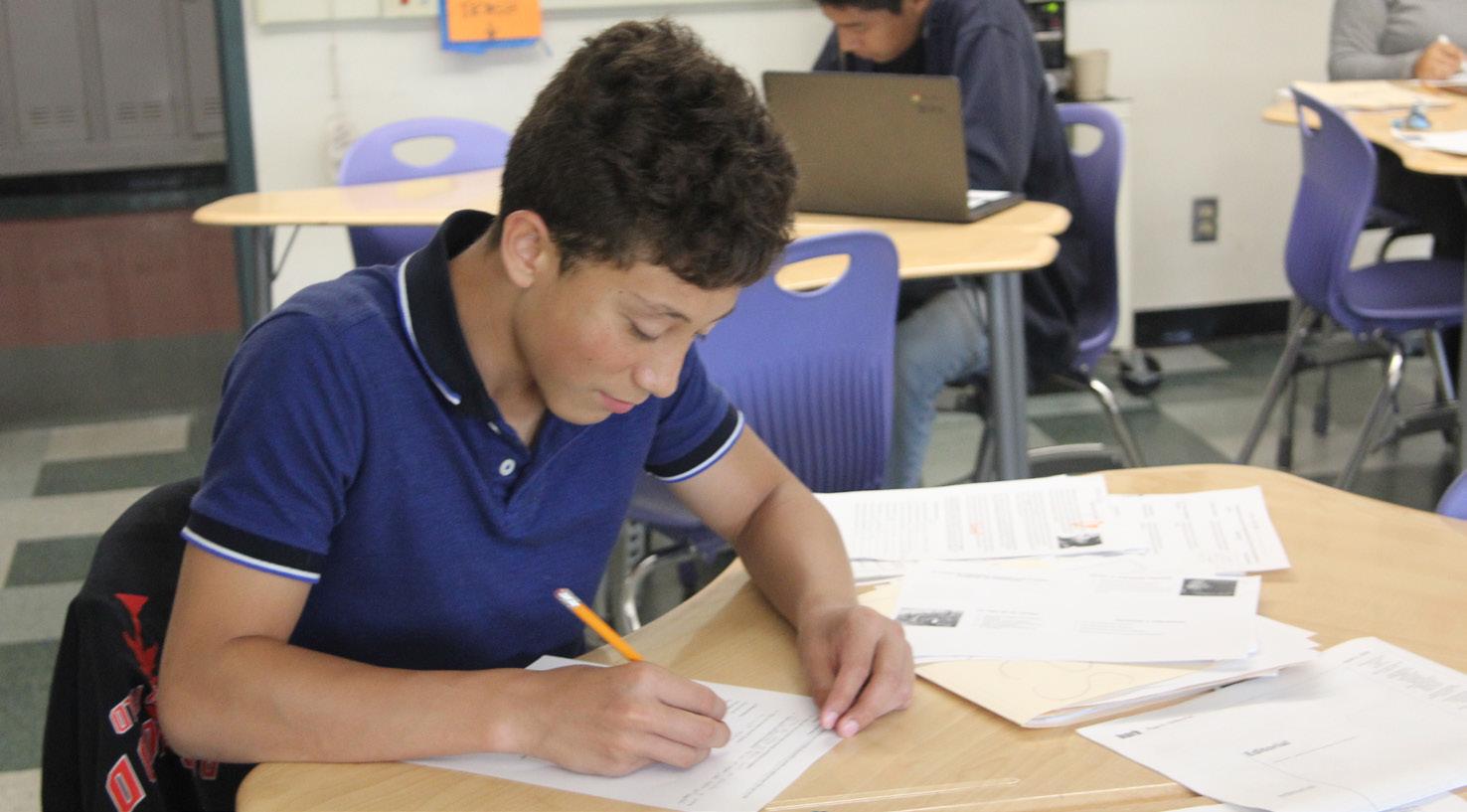
María Civano y Anna Alsina dictan la clase, que está dirigida a alumnos que hablan español en casa y se centra en el desarrollo de la lectura y las habilidades de escritura, además de explorar la identidad cultural.
“Intentamos encontrar el denominador común que nos une a todos, que es el hecho de que nacimos en un país diferente o tenemos raíces en otro país, y buscamos experiencias que sean similares, al tiempo que disfrutamos y valoramos todas nuestras diferencias,” dijo Civano.
“Tienen que esforzarse por conocerse unos a otros y aprender sobre sus países y sobre los demás, porque eso es lo que todos tenemos en común y lo que nos ayuda a unirnos,” dijo Civano.
La mayoría de las clases de español se centran en la gramática y el vocabulario, pero esta clase permite a los alumnos participar en proyectos y conversaciones sobre la familia, la cultura y el patrimonio. Esto no solo les ayuda a profundizar en la comprensión del idioma, sino que también les permite conocerse mejor entre sí y aprender más sobre su historia.
Para Ramón García, estudiante de segundo año que cursó la asignatura el año pasado, esta le ha aportado mucho más que un crecimiento académico. “Esta clase me ha ayudado a acercarme a una comunidad que antes no conocía muy bien; conocí a gente nueva de todas las edades y procedencias, y pude entablar muchas nuevas amistades. Compartí muchas experiencias con estos estudiantes y escuchar todas esas diferentes historias y orígenes me inspiró a esforzarme en clase,”afirmó García.
Civano dijo la clase de nivel uno-dos
y menciona los temas a los que se dedica su clase. “En mi clase, intentamos trabajar mucho en la identidad, la historia, los mitos y leyendas de la clase, diferentes países y temas un poco más centrados en la alfabetización,” dijo Civano. “Me parece más personalizado y ha mejorado mucho más mi español,” dijo García. “En mis últimas clases de español me enseñaron muchas cosas que ya sabía hacer. En esta clase he podido aprender y mejorar mi español hablado gracias a la forma divertida y atractiva de enseñar de la Sra. Alsina.”
arogers@redwoodbark.org
Por Mark Barothi
En un rincón de San Rafael se encuentra un estudio de baile donde personas de todas las edades y orígenes étnicos pueden compartir su pasión por el baile.
Lucie Ebnerova, dueña y cofundadora de Salsadance Marin, dijo que abrió su academia de baile porque quería compartir su amor por la danza con la comunidad. “Lo bonito del baile de salsa es que une a la gente”, afirmó Ebnerova.
Al describir a los bailarines y clientes que acuden al estudio, Ebnerova dijo: “No se juzga por la edad ni por nada, solo se trata del baile”.
Ebnerova imparte clases de diferentes estilos de baile, como la salsa cubana, la bachata y danzas del mundo, en distintos niveles, lo que hace que sean accesibles para todo el mundo.
“Tenemos clases de baile para principiantes, de nivel intermedio y en pareja”, dijo.
Para adaptarse a estos niveles, Ebnerova también introduce cambios en sus bailes, como la velocidad y el tipo de música.
En opinión de Ebnerova, bailar es una habilidad muy útil en la vida y una buena forma de conocer gente nueva, lo cual es una de las razones por las que goza de tanta popularidad. “Mucha gente se conoce en
la pista de baile y hace muchos amigos”, afirmó Ebnerova.
Otra cosa que le encanta a Ebnerova del baile de salsa es su carácter inclusivo.
“Puede haber gente que hable idiomas diferentes, pero el baile es el lenguaje universal”, afirmó.

“Ni siquiera hace falta hablar mucho; basta con decir “¿te gustaría bailar?” para romper el hielo”, dijo. “Siempre y cuando sepas bailar, puedes guiar a tu pareja o a un amigo por la pista; no necesitas a alguien con experiencia para disfrutar
John Lee, profesor de Salsadance Marin, dijo: “El baile de salsa es algo que simplemente hay que probar, si te gusta la música o disfrutas de actividades divertidas y sociales”.
La salsa se baila en diversos países de todo el mundo y goza de gran prestigio a nivel internacional.
Lee añadió que bailar es una habilidad práctica que se puede aplicar en cualquier lugar. “He bailado salsa en México y en Hawái”,
Aunque al principio el baile de salsa pueda parecer intimidante, Lee aclaró algunos conceptos erróneos sobre esta forma de arte. Dijo que una idea preconcebida sobre la salsa es que se necesita una pareja para empezar a bailarla. Sin embargo, Lee dijo: “No tenía pareja
cuando empecé”, y explicó que es una de las suposiciones más comunes que hacen quienes observan la danza, y que puede resultar desalentador.
Le gusta bailar por el simple hecho de hacerlo, y añadió que es una forma estupenda de expresarse y una buena actividad física.
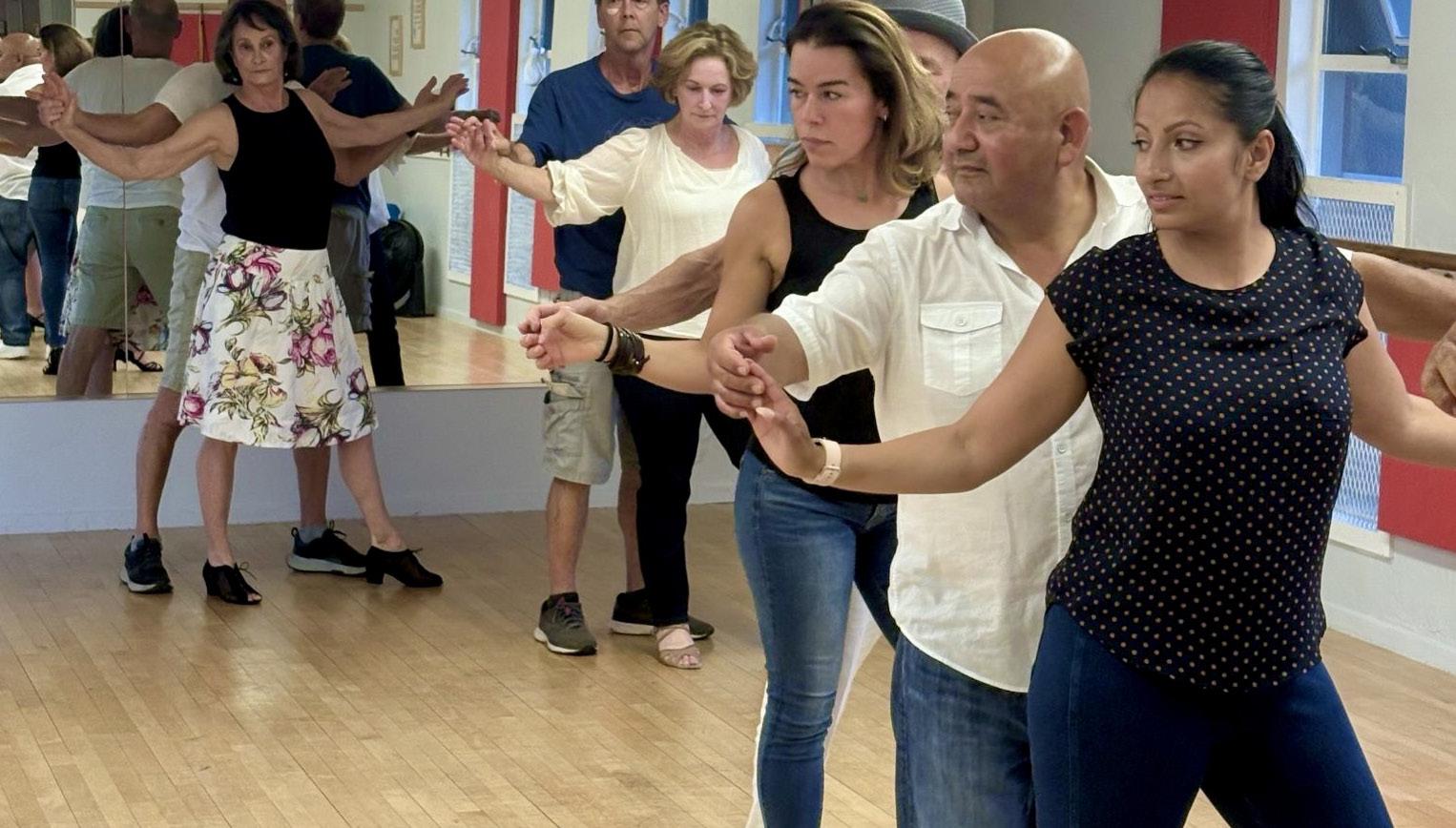
ENFOCADOS, LOS ESTUDIANTES aprenden pasos en clase.
5 p.m. YOGA
6 p.m. SALSA CUBANO
5 p.m. BAILA Y DISFRUTA 7:30 p.m. JAZZ SENSUAL
5:30 p.m. SALSA FÁCIL 6:30 p.m. SALSA MEDIANA 7:30 p.m. SALSA ADVANCADA
5:30 p.m. BACHATA
6:30 p.m. SALSA MEDIANA
6:30 p.m. SALSA FÁCIL
7:30 p.m. SALSA Y CUMBIA
6:30 p.m. SALSA MEDIANA 6:30 p.m. SAMBA NO PE 6:30 p.m. BACHATA FÁCIL 7:30 p.m. BAILA FORRO 10 a.m. DANZAS DEL MUNDO 10 a.m. SALSA FÁCIL 11 a.m. BACHATA FÁCIL
LA PROGRAMA PARA La Academia de Baile Salsa Marin.
mbarothi@redwoodbark.org Infografía por Lyla
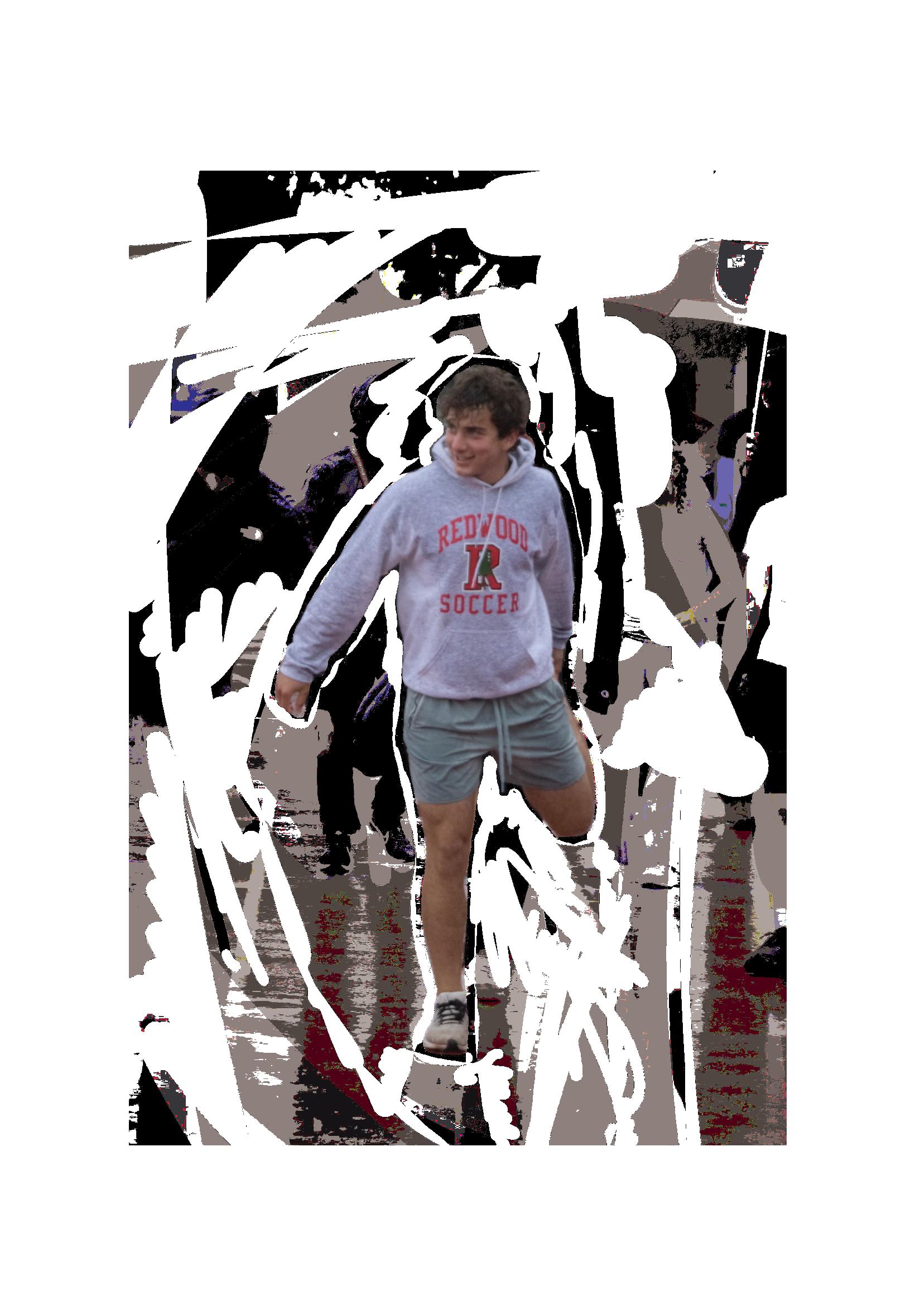

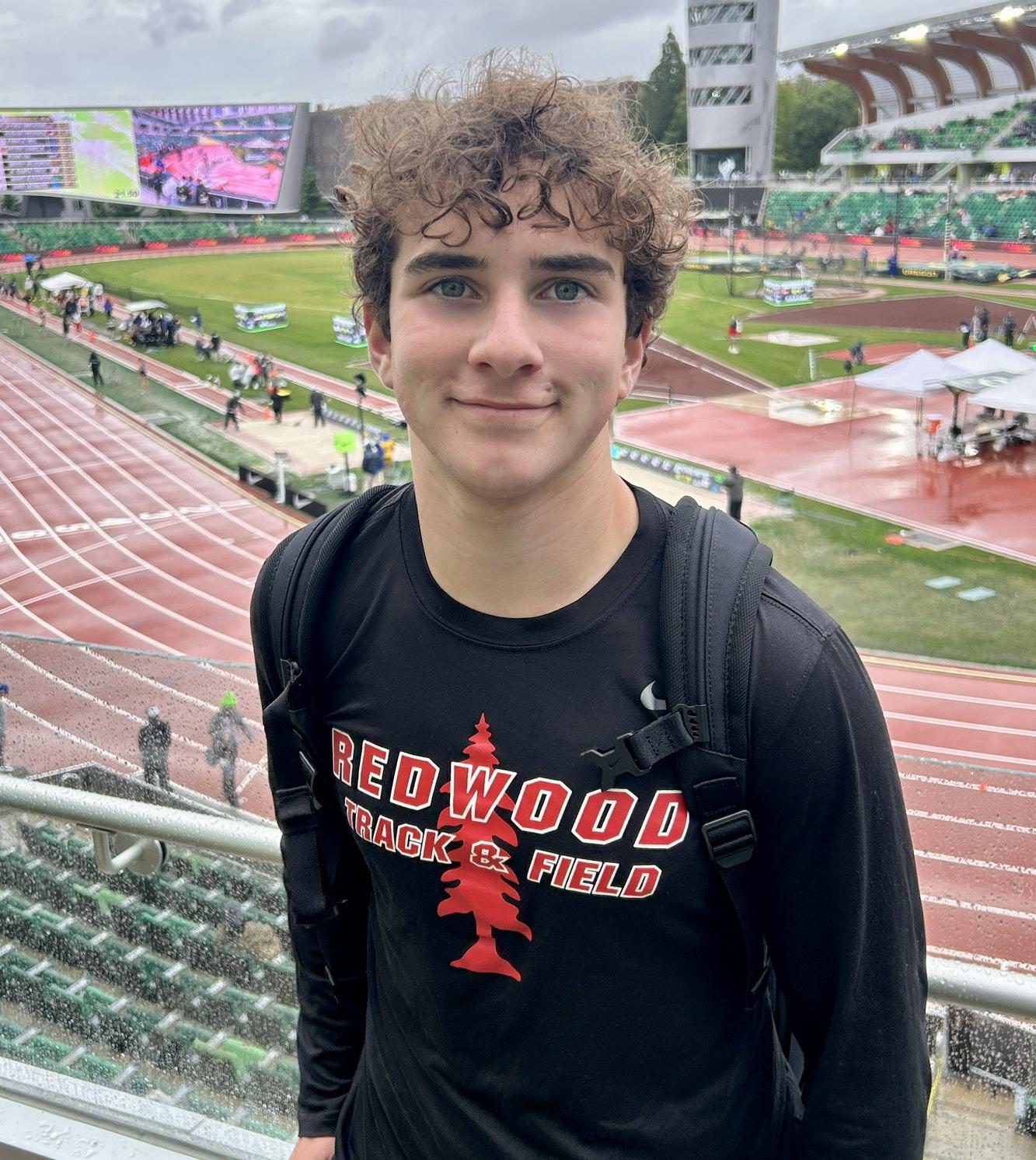
a lot of athletes, a lot of great sprinters; and Marco is just
Beyond his individual accomplishments, Cleary’s impact on the team is defined by his dedication toward training. Mastracco attributes Cleary’s success to both accountability and self-
“[Cleary] does everything the coaches say, but he’s also doing extra work on his own,” Mastracco said. “That’s what differentiates him and makes him a little better than
According to Downing, the value Cleary brings to the team extends far beyond his personal times and results. “We wouldn’t be the same team without him,” said Downing. “Just seeing him step onto the track is a real lift for everybody.”
dschultz@redwoodbark.org
“The content that we are teaching and bringing into the classroom is just as important as academic content… and the conversations that our workshops bring into the classroom are ones that are otherwise not part of the curriculum,” King said.
In the past 10 years, One Love has grown exponentially, with almost 200 clubs in different areas nationwide.
of Virginia, was brutally killed by her ex-boyfriend. Her family created the organization in hopes to educate people on healthy relationships after her tragic incident.
The foundation’s youth leadership manager, Nate King, shared the reason behind why One Love was founded.
“Following the tragedy, her parents and her family decided that they wanted to start this foundation to hopefully educate students moving forward, so that if they find themselves in a similar position they might be able to know who to reach out to and be able to spot the signs of an abusive relationship.”
Each year, Redwood and Branson have a game in honor of One Love to raise awareness and provide a better understanding about the foundation's goals.
The One Love dedication game
“I think it's really cool to learn about this stuff, ” Buck said. “We should learn about this too and not just lacrosse.

“We’ve seen the numbers of students that can recognize the signs of an unhealthy relationship go up. If students are able to recognize the signs, then it's less likely that they themselves will be in an unhealthy relationship in the future,” King said.
Redwood sophomore Mira Nass expressed her viewpoint on learning about the foundation. “I've never really learned about healthy vs. unhealthy relationships and it was so inspirational to hear all that she had to say about it. It was empowering for everyone and it built a sense of community around us,” Nass said.
The organization has sixteen film based workshops and discussion guides to talk about what makes a relationship unhealthy and what people could do differently.
By Taylor Kaster
Emma Smith, the varsity cheer coach and head of the program, has decided to step down from her position to further her education and pursue her career path.
Smith cheered at Redwood for four years before becoming the junior varsity (JV) cheer coach at the end of her senior year. After one year of coaching JV cheer, she became the varsity head coach as well as the head of program.
She has filled that position for the past three years, until this year, when she made the decision to leave.
Along with coaching, Smith has just completed her first two years of her bachelor’s degree and earned her associate’s degree from College of Marin. She is now applying to transfer to a fouryear university to major in nursing, the reason for her resignation.
Throughout her seven years on the team, Smith has contributed an enormous amount to the team, both as coach and cheerleader. This is especially reflected in the improvement in her cheerleaders’ skill levels.
Prior to Smith’s arrival as coach, no one on the team was able to perform a QP stunt, where the bases’ arms are fully extended but the flyer’s legs are together. Since she became head coach, every varsity flyer, and even some JV flyers, have acquired the ability to execute a successful QP stunt.
Angelica Claire, senior cheer captain, explained how Smith motivated herself
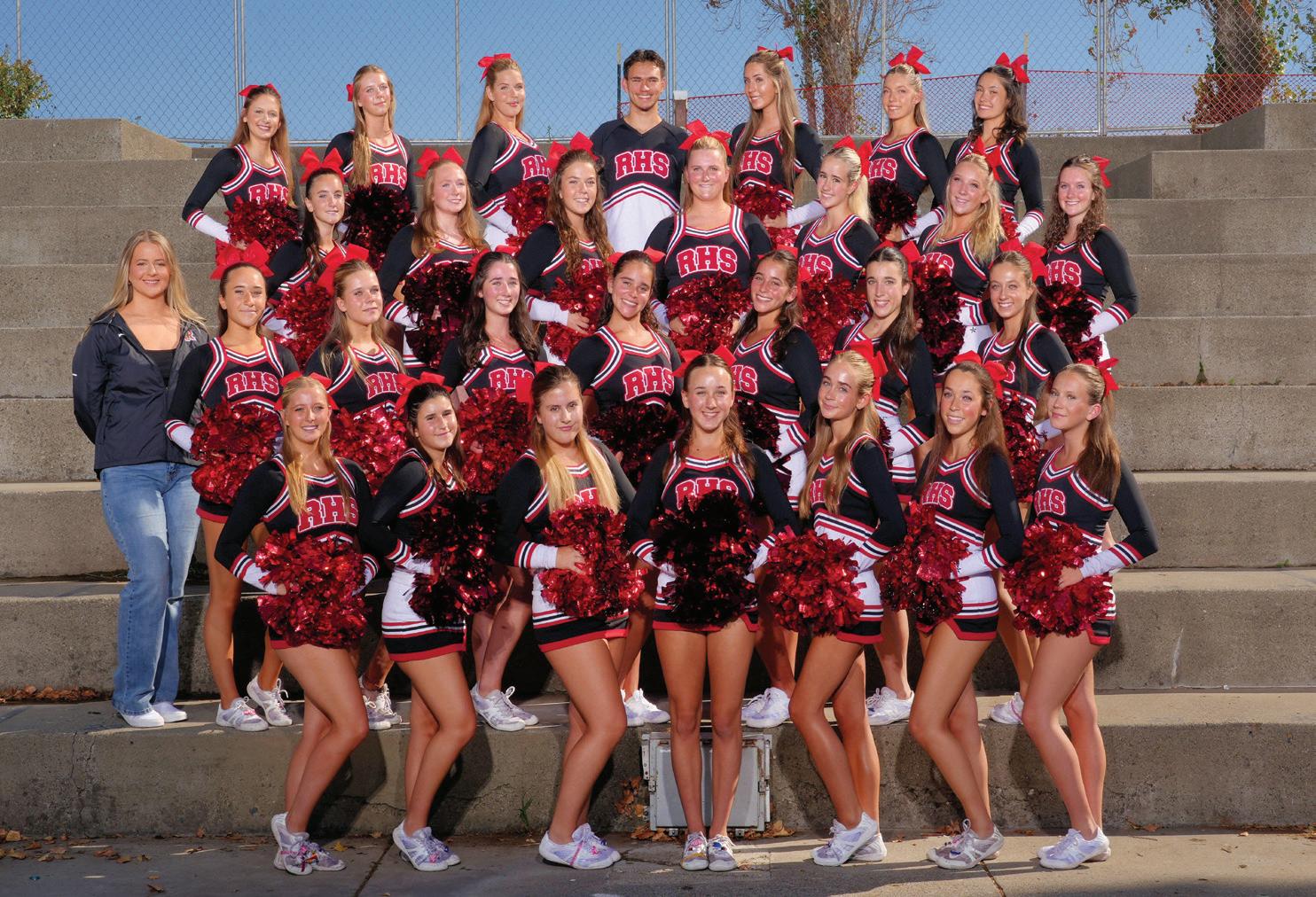
and others on the team to reach their full potential year after year.
“She pushed us to try new things, but it’s because she knew we were capable of doing them,” Claire said.
Smith’s background in all-star cheerleading, a high-level and highly competitive club-based sport, prompted her to incorporate this all-star type of cheer in the mid-year Red Fest rally. When many people on the team doubted this decision because they aren’t familiar with this
style of cheer, Smith did what she usually did in these situations and pushed her cheerleaders.
“We were all so proud of ourselves that we were able to pull that off,” Claire said in regards to the Red Fest rally.
From little skills to big stunts, Smith never let the cheerleaders quit on themselves.
“We would want to give up and she wouldn’t let us,” Claire said. “She would give us her little motivational speech, then
we would go try it and we would hit the stunt.”
From the beginning of Claire’s cheer career in her freshman year of high school, Smith has been her role model and someone she has had an incredible relationship with.
“She’s 100% someone I look up to and someone I go to if I need advice cheer related, school related or just boy related,” Claire said.
Like with Claire, Smith has formed a very strong bond with many of the cheerleaders on her team over the past few years.
“I have really grown with the athletes as well. It has been such a supportive environment that it was really hard for me to say goodbye,” Smith said.
Cheering from the age of four, Smith has spent her whole life holding pompoms, so letting go has seemed unnatural to her.
“I have been going to cheer practice three days a week for the past seven years and it has been such a big part of my life that it has made it so difficult to part with,” Smith said.
Her resignation is bittersweet, as she moves on to do great things but leaves the team and sport she loves behind.
“I know that it's time for me to move on in my personal life and form my career, but my heart is always with the Redwood cheer program,” Smith said.
tkaster@redwoodbark.org
By Julia Rivo
On April 1, the track and field team competed at Redwood High School against Branson and San Rafael. This was the third league meet, with the first race starting at 3 p.m. and the last event starting at 7 p.m. Despite the rain earlier in the day, athletes showed up and gave their all. Sophomore Oliver Bush placed first in the boys varsity
1600 with a time of 4:37:85 seconds. Varsity girls also took 1st in the 4x100, with a time of 51.74 seconds. The Giants next meet will be a leauge meet against Tamalpais and Archie Williams on April 29 at Tamlpais High School. The following MCAL meets will take place on May 7 and May 9 against all schools at San Rafael.
jrivo@redwoodbark.org

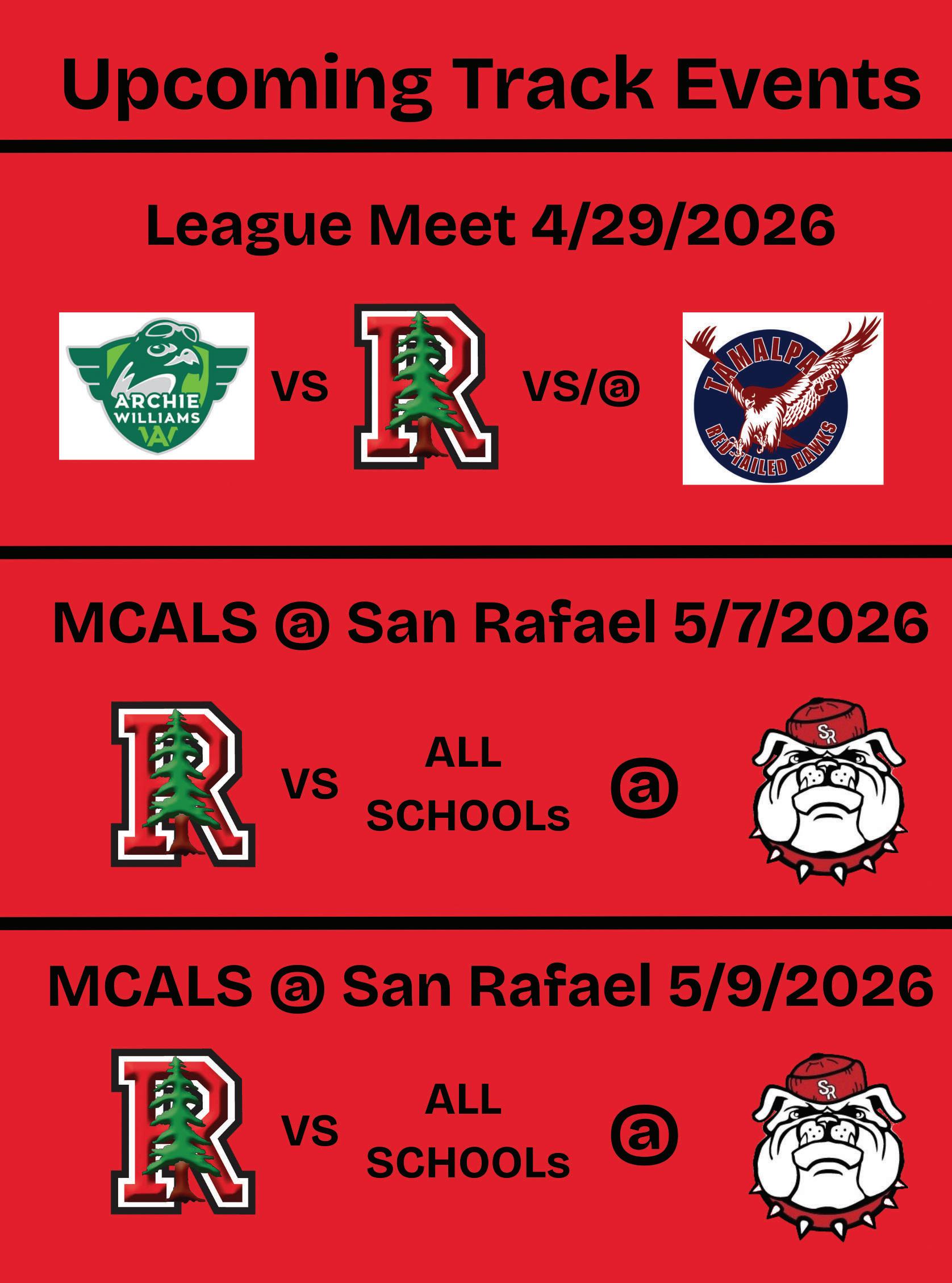
By Peter Collet
Ranked 6th in the nation, boys tennis earned their place at the 25th Annual All-American Boys Tennis Invitational, one of the most prestigious high school tournaments in the country. They have positioned themselves among the best teams in the country thanks to their talent, experience and determination.
The Giants were invited to the 25th Annual All-American Boys Tennis Invitational, one of the most prestigious high school tournaments in the country. Being one of the few Northern California public schools in the draw, the standards were much higher than a normal match. The mid-March tournament hosted the top competition in the country in the Palos Verdes Peninsula, south of Los Angeles. Despite missing the No. 1 and No. 2 seeds on the team, Redwood still managed to compete against tough competition and finished ahead of many private school programs and national invitees.
Leading up to the Southern California tournament, the Giants narrowly defeated University High School from San Francisco, beating the Red Devils 4-3 in Golden Gate Park on March 9. University was recently ranked as the No. 6 best high school team in the nation, according to Universal Tennis Ratings.
Redwood sophomore Casra Afsharipour won his match at the No. 1 singles, easily defeating his opponent 6-0, and 6-2.
Three Redwood doubles teams also won their matches (Julian Zhang/Calado Fazal at the No.1 match, as well as Ollie Weston/Will Greenwald and Lukas Berger/ Declan Gray).
The tennis team currently sits at the top of the standings in Marin County Athletic League (MCAL). However, the Giants
against teams they have had trouble defeating previously.
With the dominant performance that the team is having this year, they’ve started setting their sights on a bigger achievement: winning the North Coast Championships (NCS).
Craig Flax, the boys tennis head coach, talked about the team's standards and goals this season. “Winning NCS is definitely the goal for 2026 and then having a good showing at NorCals,” said Flax. “Then next year, the goal is to win state.” Last year, the team didn’t qualify for NorCals after a third round loss to Amador Valley in NCS.
Flax also expressed his optimism for the 2027 team, refrencing the strong skill set of the underclassmen on the team.
“We are going to be very, very, very strong next year,” Flax said.
According to Flax, the team is only losing two of the top 10 players, who will be graduating in June, and is expecting several impressive players to join the team next season.
“We are getting in a couple of players who might be as strong if not stronger,” Flax said.
Current standings list Redwood at the top of the table in MCAL league play (80) and 10-6 overall. Junior team captain Calado Fazal attributes much of this year's success to the team’s depth and chemistry.
“We rely on each other to come through in matches. And not just one player, but the entire group,” Fazal said.
“At the end of the day, our effort as a team wins matches, not our ranking.”
At the top of the ladder, Julian Zhang and Casra Afsharipour have been consistent as the No. 1 and No. 2 singles players on the team and have contributed to consistent wins in tough matchups.
Zhang currently ranks 71st in the
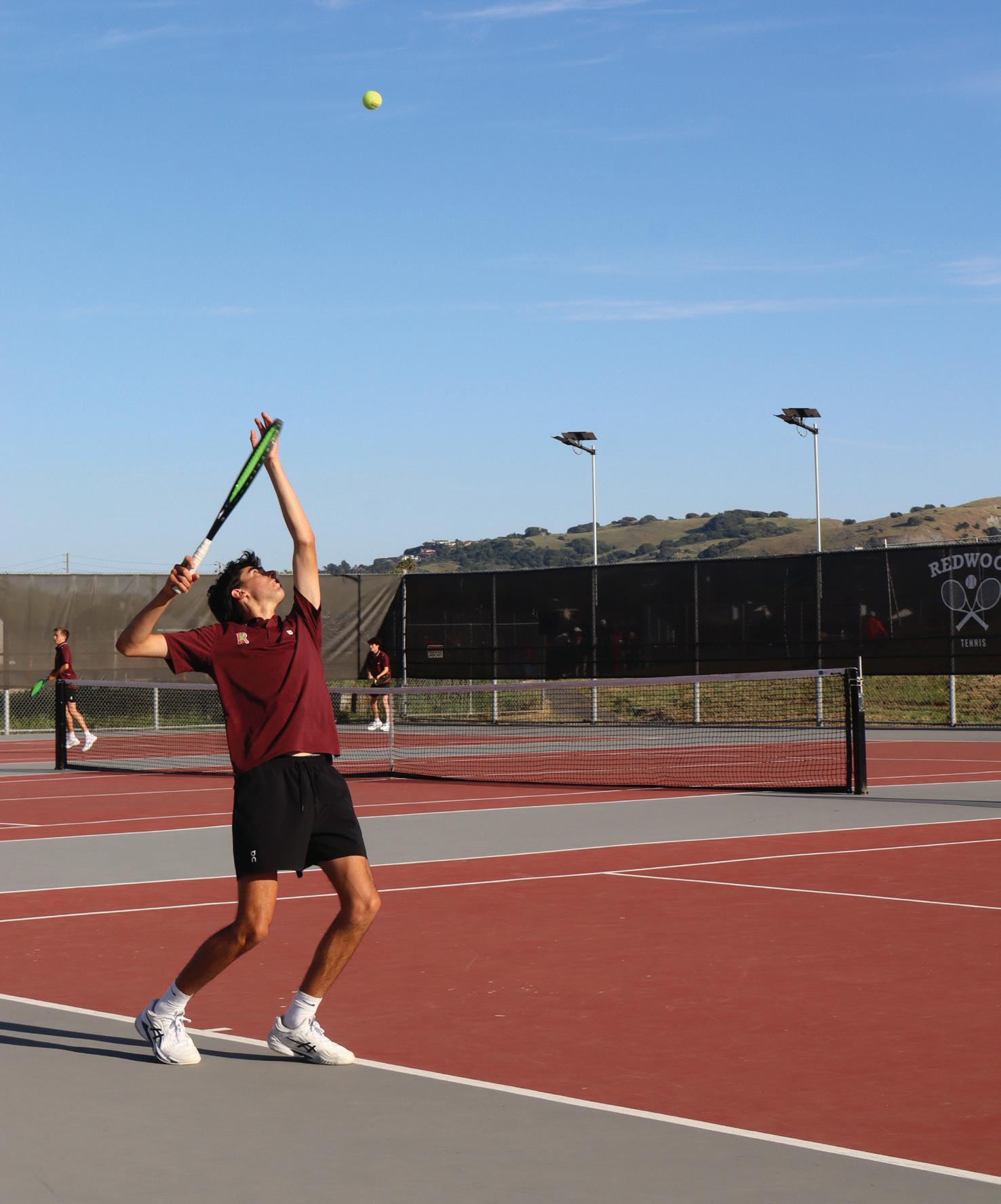
team, Zhang hasn't played in many matches for the team this year as he has in the past, because he was focused on recovering from an illness earlier in the season.
Individual players lead the team while a deep lineup of talent has contributed to the team’s overall success this season.
“Even though tennis is an individual sport, every match contributes to the overall score. You’re playing for yourself and everyone else on the team. If one player is struggling in their match, someone else has to step up for the team and win,” team
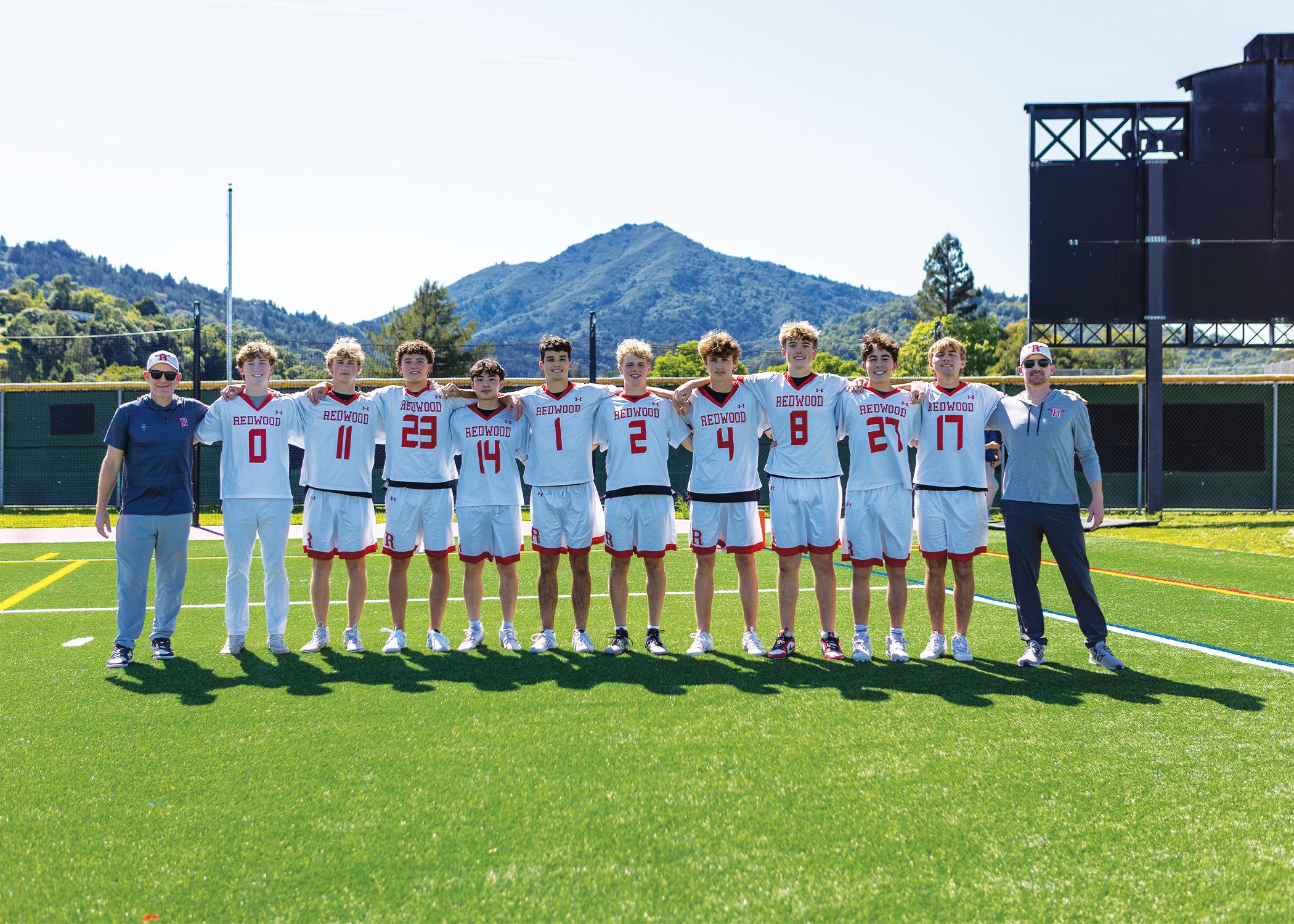
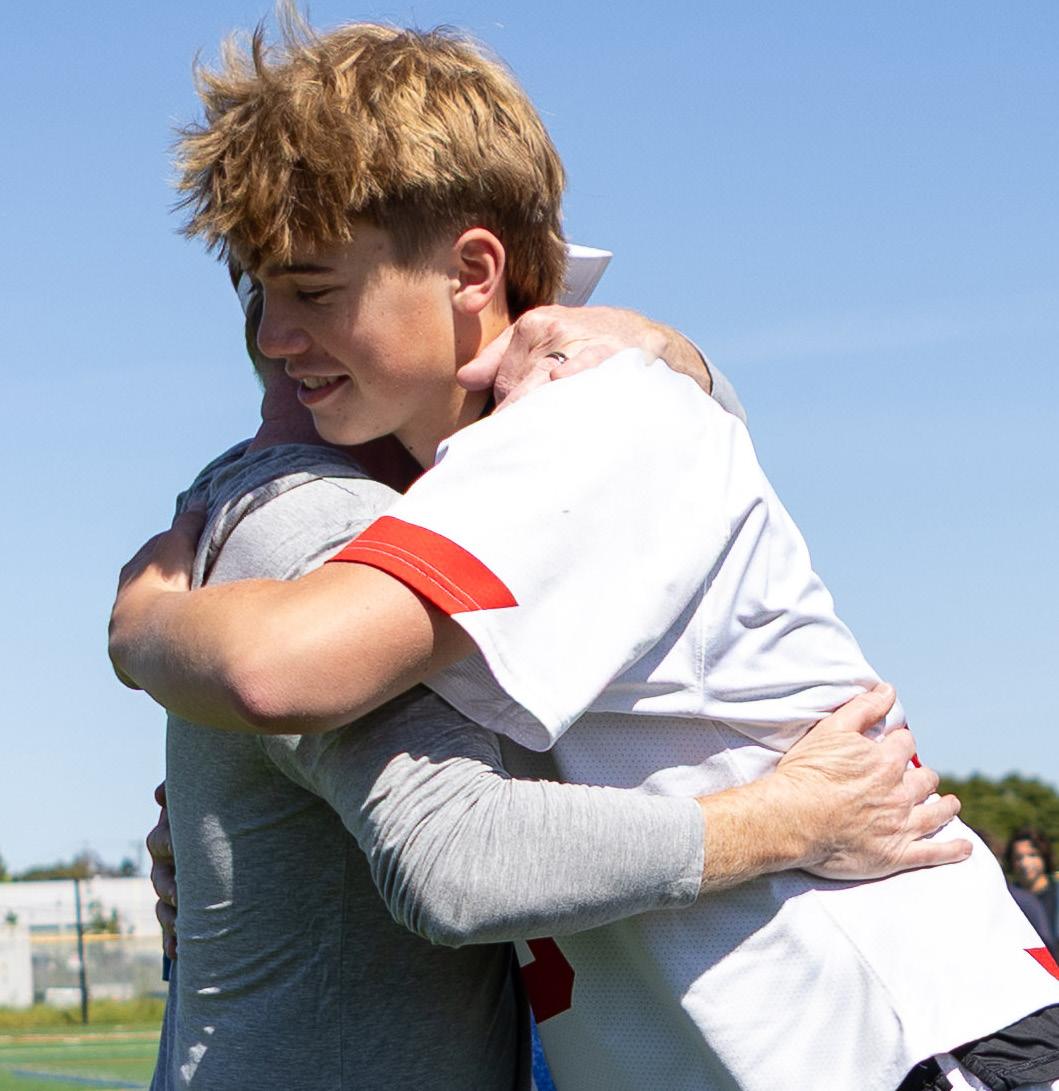
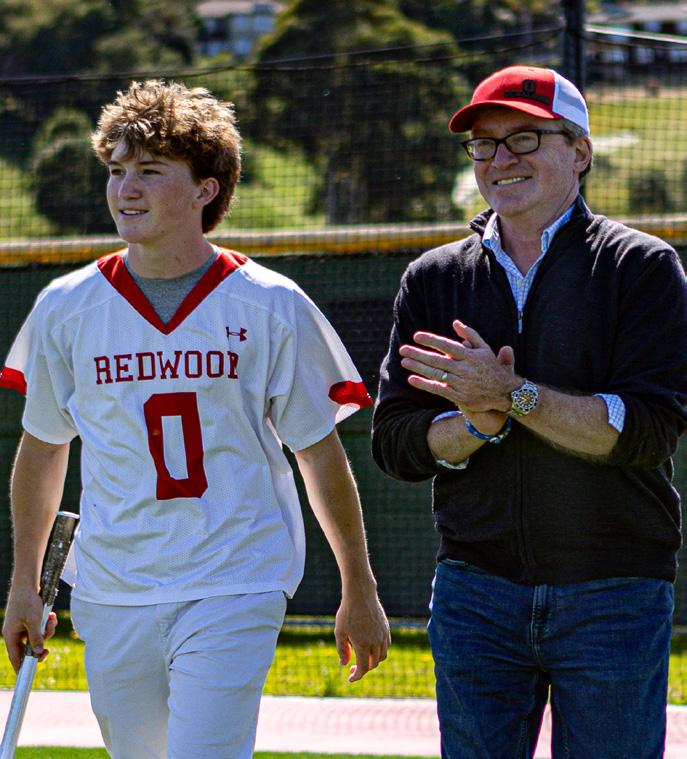


“You play harder knowing your teammates are counting on you.”
Coach Flax knows said the team is in a dominant position this year and hopes the players realize this too.
“We are in this amazing place where we’re a really dominant team but I want them to represent Redwood in a way that makes the other kids kind of proud that they lost to Redwood,” Flax said.
pcollet@redwoodbark.org
comradery of the team is what’s most meaningful.
By Cade Jaffee
At Oracle Park, the home of the San Francisco Giants, there are many features to be aware of: the best seats suited for you, the best food and the best family areas. So, if you’re ever planning to watch a game at a well-loved stadium by Major League Baseball fans, here’s a guide to get you started.
Best seats
Bleachers - Best atmosphere
If you’re looking for a place that gets rowdy every game, at night or in the day, then the bleachers are where it's at. However, with no shade, the summer sunshine could be uncomfortable. The atmosphere of the bleachers is uncompromisingly fun, lively and explosive, with a
view of the whole field from the outfield.
Section 308-323 - Best views
Sections 308 to 323 are located in the upper level surrounding home plate. Being in these sections gives fans a miraculous view of the bay and the whole stadium. One downside of this area however is that the game can be difficult to watch due to the large distance between the field and the upper deck.
Section 208-213 - Best overall seats
Overall, sections 208 to 213 are the best seats. While tickets can be expensive, you would be located at the club level, featuring nicer amenities than other parts of the stadium like the food and layout of the level. These seats give you a top-tier view, and you’ll be right behind home plate, where you'll be able to see the bay.

bottle and hit home runs at the Toyota Fan Zone.
Located on the promenade level near the bleachers, Super Duper Burger gets crowded quickly due to its popularity for a mid-game meal. With fries, burgers and shakes, you can satiate your food cravings in plenty of ways, making this local Bay Area food chain a popular stop at Oracle Park.
Ghirardelli
With two spots in the park, Ghirardelli is arguably the best concession spot at Oracle. Located at sections 136 (O’Doul Plaza) and 223, both of the stores get crowded quickly, so I’d recommend getting a rich hot chocolate, creamy ice cream or hot fudge sundae early in the game.
From personal experience, Crazy Crab’z is the best food option, even just for their famous crab sandwich. While expensive, the sweet blend of crab, tomato and lemon brings your taste buds to life. You can find Crazy Crab’z in center field near the Coca-Cola bottle, section 211 and section 314, giving you many different areas around the park to choose from at your convenience.
While it may not be very entertaining to a teenager, children will have great memories riding on the Coca-Cola slide during the seventh inning stretch to last a lifetime. These slides do get packed, especially in the middle of the game. If you're going to ride this iconic Oracle Park feature, I’d recommend doing so before the Coca-Cola Bottle turns on its dashing neon lights.
The 415 Club features a separate entrance, a DJ booth and fun games below the seats for all ages to participate in. To get into the 415 Club in center field, you must obtain a membership, which is between $199-$465 a season.
Featuring its own electronic scoreboard, this small wiffleball field next to Super Duper allows kids to attempt hitting a wiffleball over the short outfield fence. Similar to the Coca-Cola slide, it lines up quickly, so I’d recommend going on the earlier side to avoid crowds.
By Thea Jones
Some secrets are better left untold, but what happens when one surfaces at the worst possible moment? “The Drama,” the latest A24 studio release directed by Kristoffer Borgli, explores this question.
The film follows an engaged couple Emma (Zendaya), and Charlie (Robert Pattinson), as they plan their upcoming

many twists, most of which are too obscure to predict. The movie is best experienced when the viewer knows as little as possible, since it sparks engagement with the underlying suspense from start to finish.
While the shocking surprise enhances the movie, it would likely still be enjoyable if spoiled due to the perfectly placed humor and jumps throughout, keeping it interesting to watch. Similarly, the direction the plot is headed remains unclear despite the secret being revealed, creating tension in the roller coaster of emotions.
As for the actors’ performances, Zendaya and Pattinson capture the numerous layers of their characters incredibly. Their natural chemistry makes the relationship feel authentic, so when everything unravels it feels personal and unsettling. There are moments of humor, discomfort, love and despair that felt genuine. I found myself feeling anxious for the characters I’d only known for an hour.
Another aspect that made the film especially strong is the cinematography. Specifically, the color grading creates a unique emotional yet dramatic mood, often with the use of ambient or natural lighting. The composition of the shots highlights the performances, and the film’s simple backgrounds put the focus on the characters’ movements and emotions rather than what is happening around them.
The promotional perspective of this movie is interesting to consider as well. In recent times, it has been rare for a film to hint at a jaw-dropping reveal that stays hidden from the public during promotion. The spotlight of this film is on the major plot secret rather than the storyline, making curiosity the key marketing strategy. This encourages viewers to watch so that they can discover the surprise themselves.
“The Drama” is undeniably worth the trip to the cinema. The viewing experience is unlike anything playing in theaters now. It is uncomfortable in the best possible

way, leaving me in awe of what I had just watched. The movie satisfies a wide audience of viewers, as it works as a casual watch while also providing a plot worthy of a good post-viewing debrief. For people willing to embrace the mysterious plot of the film, it is definitely something to catch in theaters or when it arrives on streaming services.
tjones@redwoodbark.org
By Bodhi Wadia
Taqueria Marin Togo, a Ross taqueria that opened on Jan. 9, is already drawing customers in through its authentic street-style Mexican flavor.
The restaurant was opened by Cecilio Dominguez and his wife Alba Carranza, also the owners of Taqueria y Pupuseria El Torogoz in Larkspur, a local restaurant loved by many Redwood students.
Both owners worked their way up through the industry, eventually opening up two restaurants in Marin’s highly competitive dining scene.
The restaurant was mildly busy, with several customers coming in to pick up their to-go orders while others ate there. With plenty of seating options, including a few tables outside, Taqueria Marin Togo is the perfect dining spot for this time of year as the weather starts to heat up.
Located in the Ross Commons, the taqueria enjoys a steady flow of local traffic, making it the ideal spot for a small restaurant. The restaurant’s environment was lovely, a mellow vibe with vibrant artwork adding a pop of energy.
The taqueria’s menu is very diverse, offering menu options that range from breakfast burritos and huevos rancheros to classics like tacos and nachos.
The quesabirria tacos are one of the most ordered items on the menu, and come served with cilantro, onions, spicy habanero salsa and a side of hot consommé, the flavorful broth that the beef is marinated in. These rich and cheesy tacos are a must-try when visiting.
The burrito bowl, another customer favorite, features a base of Mexican rice with either black or pinto beans, topped with your choice of protein: grilled chicken, grilled steak, al pastor, pork carnitas or spicy shrimp. It is then layered with sauteed peppers, onions, shredded lettuce, sour cream and cheese, along with a side of their housemade habanero-lime salsa.
The bowl was once again delicious, blending savory protein, smoky sauteed peppers and the tangy kick of sour cream and onions. When topped with the housemade
The rise of
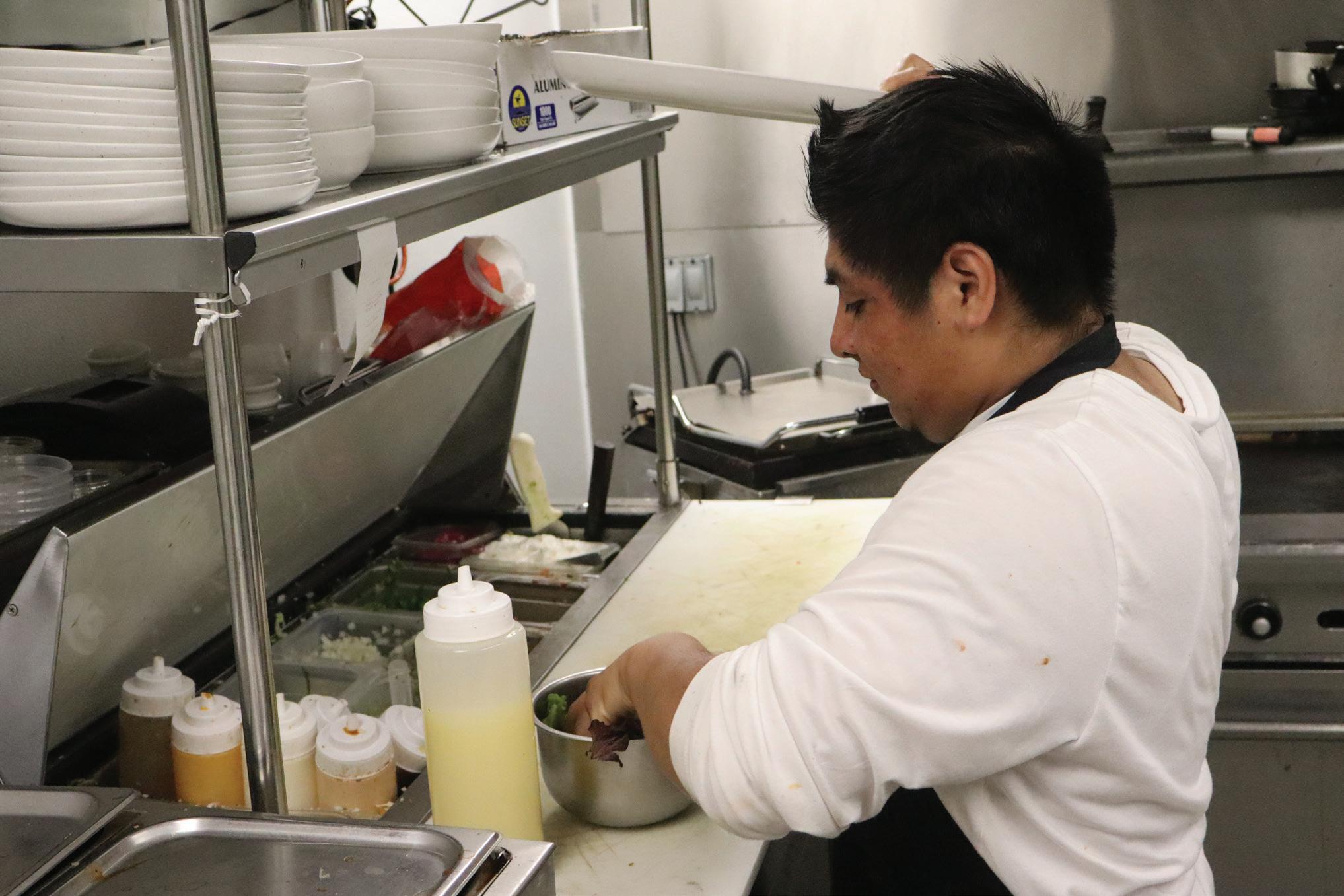
SKILLFULLY MULTITASKING, TAQUERIA Marin
to put it on.
habanero-lime salsa, the burrito bowl is the perfect quick lunch or dinner meal.
Pairing seamlessly with their appetizing dishes, their signature beverage is the Mojito Limonada Fresca, also available at Taqueria y Pupuseria El Torogoz. This drink is one of their most popular, a refreshing sparkling limeade, and is a must order. The two dishes and one drink were prepared in around ten minutes.
Taqueria Marin Togo is shaping up to be a local
By Liv Fargo
NeeDohs, the largely popular squishy toys, have quickly become popular among students and are sold out of toy stores across Marin. With many students using these fidgets to relieve stress during class, they’ve become more than just toys, but rather prized possessions. This review will cover some of the most popular NeeDohs to help students decide which ones are worth their money.
Schylling NeeDoh Jelly Squish: 5/5
The Jelly Squish comes in pink, blue and purple with glitter on the inside. Not only are the tentacles fun to play with, but the NeeDoh’s 2.5-by-2-inch body makes it the perfect size to fit in your hand. These factors help students relieve stress, which allows them to be more engaged in the classroom.
Schylling NeeDoh Nice Berg: 4/5
The Nice Berg is the biggest version of the NeeDoh ice cube. It is especially appealing to students because of its large size. However, I found that this can make it harder to squeeze, causing it to be both less satisfying and less stress-relieving. On the plus side, owning this NeeDoh will bring you plenty of attention, as your classmates will always be asking for a chance to squish it.
Schylling NeeDoh Dream Drop: 4/5
Similar to the Jelly Squish, the Dream Drop comes in pink, blue and purple, each speckled with glitter. One feature that sets the Dream Drop apart from other NeeDohs is that it comes with a stand. This base provides support to the toy, preventing it from collecting dust and keeping it clean. The Dream Drop deserves its rating because it is appealing to look at, but its mediocre squish can’t compete with the other options.
Schylling NeeDoh Nice Cube: 3.5/5
The Nice Cube is a smaller version of the Nice Berg and features more color variety, offering both pink and purple in addition to blue. The Nice Cube has this rating because it is the most boring out of the four NeeDohs to play with. It is a simple choice and doesn’t have any interesting factors like glitter or a unique shape that the other options have. However, it still serves its purpose as a stress toy even if it is a basic choice.
While each of these NeeDohs is an effective stress
hotspot. Its mouthwatering range of food, combined with a mellow yet welcoming atmosphere makes the restaurant an ideal place to enjoy a meal anytime.
bwadia@redwoodbark.org

reliever and fun to play with, I would recommend the Jelly Squish if you are only buying one. Their rapid rise in popularity has made NeeDohs increasingly hard to find, so be sure to buy one as soon as you spot it!
By Anika Murray
The Feerma Love coffee cart, which opened mid February on Magnolia Ave. in downtown Larkspur, offers a variety of coffees and specialized drinks such as flavored lattes, matchas, and juices. Their wide selection of drinks includes a black sesame latte, a rose matcha, and an orange blossom latte, just to name a few. Alongside the drinks is a pastry case displaying croissants, banana breads, and a variety of savory pastries. The cart opened for business ahead of the summer opening of Feerma, a North African and Mediterranean restaurant.
Iced Latte: The Feerma Love iced latte comes in 12 ounces or 16 ounces, starting at $7. The espresso is brewed using coffee blends from Land and Water, a Santa Rosa-based company. Rich and layered, the latte offered a strong coffee flavor that wasn’t taken over by too much milk, which can easily happen with lattes. All the components of an iced latte–the espresso, milk, and syrup–were shaken thoroughly so that the flavor was consistent. Although a bit more expensive than the average 12 ounce iced latte (usually around $5.50), the quality of this drink from Feerma Love makes it worth a try.
Olive Oil Latte: The hot olive oil latte comes in eight ounces, 12 ounces, and 16 ounces, starting at $7.75. The olive oil latte was just as good as the iced latte, if not better, because of how different it was from anything else I tried. The olive oil’s flavor gave the drink a nuttier, saltier tone that deepened the flavors of the coffee when the two were combined. But the best part about the latte? It’s silky texture. Blending the oil into the drink gave it a smooth, almost buttery texture and flavor that melted in my mouth.
To read more visit www.redwoodbark.org in the Review section amurray@redwoodbark.org
By Berkeley Smith
Site Council Committee is composed of elected student representatives from each grade accompanied by a group of staff and parents who take initiative on various projects around the school, united under one unanimous goal: the overall betterment of Redwood.
Sophomore representative, Lily Scott, described the importance of the site council governing board and the work they do around the school.
“Site council is a governing board at the school that talks about a lot of important issues that often go unnoticed by other people. [It handles] things that happen behind the scenes that can create a better environment at Redwood,” Scott said.
Georgia Doucette, elected junior class representative, explained that the committee doesn’t have one strict path of assignments, but rather they look into each niche of Redwood to see what can be enhanced with their main goal of student alignment to the graduate profile.
“We talk about how we can get our students to align to the graduate profile which is the goal of Redwood,” Doucette said.
Currently, Site Council is working on a beautification project of the Redwood halls that includes replacing unused locker banks with seating areas and charging stations, decorated with art made by students from architecture and art elective classes.
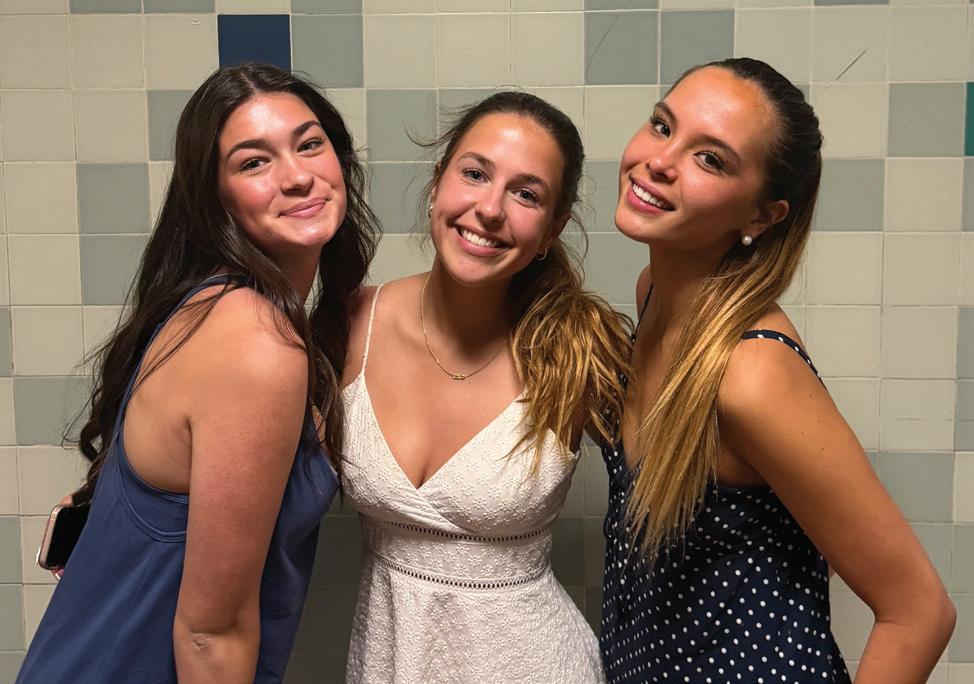

“I really enjoy this project becuase I think it's using our power in a really good way that is really going to make a visual difference at the school,” Scott said. “I also like that we're incorporating some of the elective classes as well.”
In the months leading up to graduation, Site Council is also commencing their graduation speech selection, a process implemented last year to decide who speaks at graduation.
Previously, graduation speakers consisted of whoever showed interest in delivering a speech with no formal selection or consulting process.
“One big issue is that students who might have a really important story to tell or have a really great message might not always be the type of students to reach out and put themselves out there. What we wanted to do was catch a much wider net of students who may be wanting to do this,” Doucette said.
Scott and Doucette both agreed that they felt the work, although sometimes unnoticed, is really meaningful especially when it comes to representing the student body.
“I am representing my grade in there, and it's a really cool opportunity to be able to get them to listen to the
voices of the youth,” Scott said.
Doucette reflected on her position as a student-staff liaison.
“I feel super well informed about everything that is going on, and I feel like I am really able to represent the junior class and students in general, and be able to help these parents and staff to get insight into what students are needing and what students are feeling,” Doucette said.
Scott also commented on the deeper connections she has gained with administration thanks to her position on Site Council.
“I've gotten really close to some of the teachers, Dr. Payne and some administrators, too. It's cool to have those deeper connections with people outside of the classroom environment,” Scott said.
bsmith@redwoodbark.org
By Ava Rogers
While many athletes throw away their old cleats after outgrowing or retiring them, two sophomores have put them to better use.
Drew Chun and Mercer Whitty created a shoe donation program in Marin where they collect gently used cleats and distribute them to kids in need.

The organization started locally, distributing cleats in Marin, but over time they have reached beyond the United States to Kenya, South Africa and the Dominican Republic. Chun and Whitty hope to continue to expand to other countries in the future.
“What inspired us to start this is that we have been playing sports our whole lives and we have noticed that after we are done with our cleats, they usually end up in the trash. We thought we could give them to others who might need them throughout the world,” Whitty said.
Chun and Whitty have partnered with For My Brothers Film, a group that has produced a documentary about a South African soccer player making a difference in his village and Global Baseball Adventures, an organization that gives the opportunity for baseball and softball players to go to different countries around the world. Together with these organizations, Chun and Whitty have successfully delivered about 300 pairs of cleats.
They have set up drop-off bins at Cafe Verde and F45 Training, where locals can easily donate the cleats. They then collect and store the cleats until they are ready to be shipped around the globe.
“One of the challenges we have faced is that some locations don’t allow us to place our bins on their property, but we have overcome this by finding places that support our mission and focusing on them,” Chun said.
The pair realized over time that after they retired a pair of cleats, instead of throwing them away they could give them to others in need. From there, they decided that they could also motivate many more to do the same.
Chun outlined the foundation’s objectives and future
plans.
“Some of our goals are to empower the youth throughout the nation, donate thousands of pairs of cleats, and by the time we are seniors we want to fund a trip to one of our destinations and hand deliver the cleats ourselves,” Chun said.
They hope to expand their drop-off bin locations as well as the countries that they deliver to.
“Eventually we would like to become a self-sufficient nonprofit organization," Whitty said.
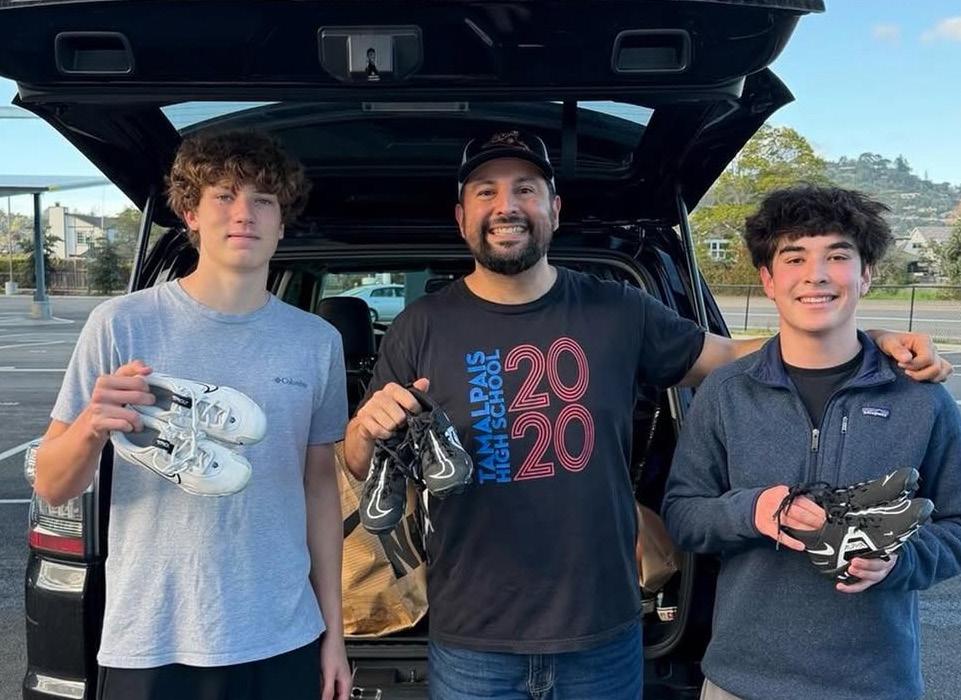
By Julia Rivo
From Advanced Performance Workshop (APW) performances to Spotify releases, junior Jake Cooperberg is turning years of musical exploration into original work.
Having played guitar since age seven, he recently released his debut songs, “Heartbeat” and “Coming Down.” Earlier this month, Cooperberg released his single “9am”.
Through APW, Cooperberg has spent this past school year performing at the Winter Concert, local middle schools and at Night of Blues.
After performing his original songs at the Winter Concert, Cooperberg decided to take the next step with his music.
“People knew I made original music, why not let them listen to it on their own time?” Cooperberg said.
Arne Frager, a recording engineer and studio owner who works with Redwood students to record their music, described her experience working with Cooperberg.
“I think Jake is very excited and enthusiastic about his music and that is one of the things I look for when I work with somebody, because some people are in music classes just to take a class of music and sort of expose themselves.”
Frager described his role in the process.
“My job is to try and translate what they want to hear into reality,” he said.
Cooperberg expressed how helpful the Redwood recording program was during the process of releasing his music.
“I wouldn't be able to record the vocals without the studio,” Cooperberg said. “I did the vocals for both the songs on spotify in the studio here. The access to all the stuff here is incredible, we go to a public school that has 25 guitars and basses, and this amazing space.”
Frager similarly stated that, “If you really know how to use the studio, it’s a kind of musical instrument all by itself.”
Ultimately, Cooperberg's releases highlight how Redwood’s APW program gives students the tools to take their music beyond the classroom.
Inspired by artists such as Led Zeppelin, Neil Young, Bob Dylan and Jose Gonzalez, Cooperberg's music features an acoustic touch that blends a classic rock influence with a more stripped-down, melodic style.
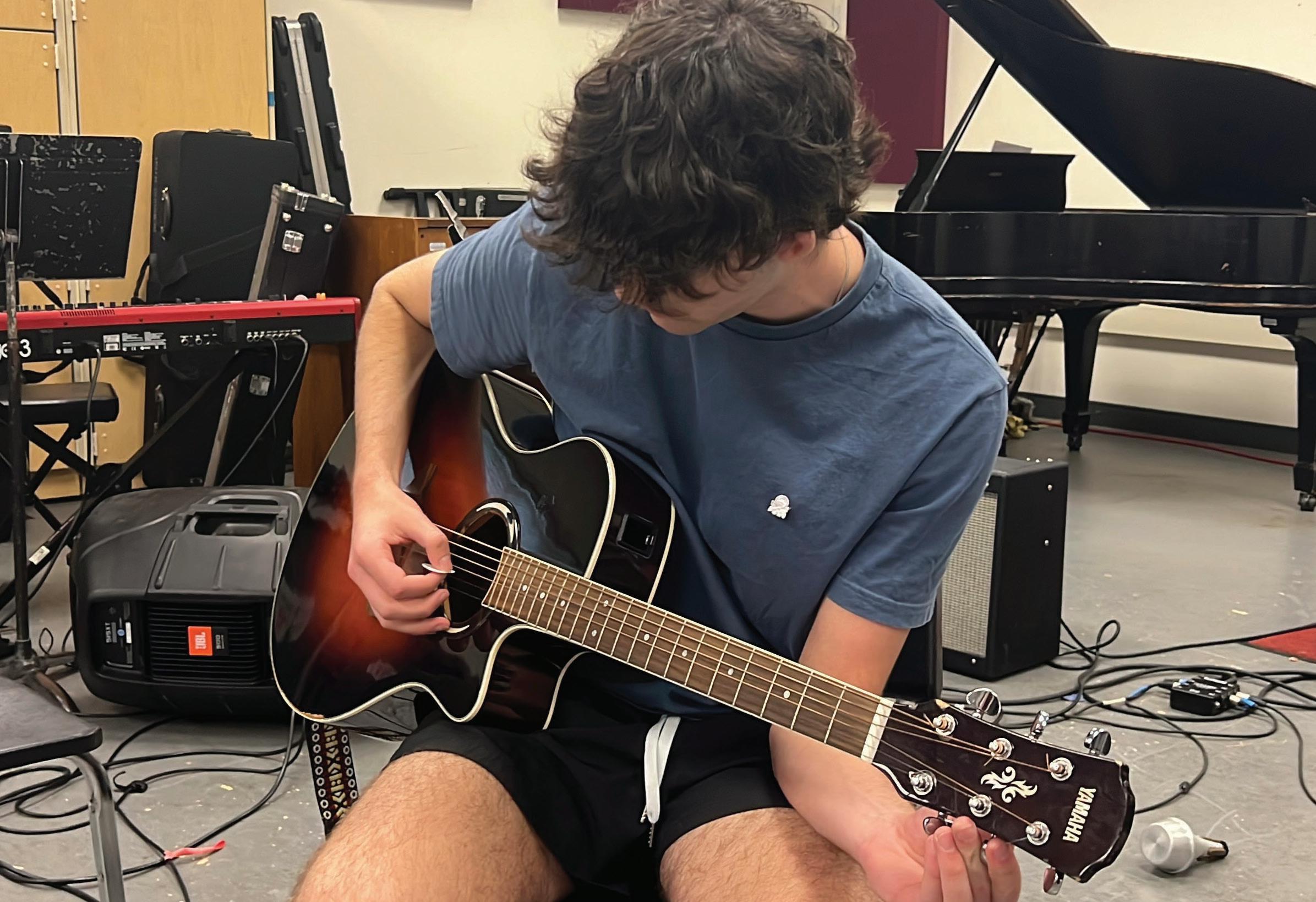
While Cooperberg sings vocals on both released songs, he said “I wouldn't consider myself a singer, you know, like I’m a guitarist who also sings.”
“Finding the right harmony or writing my own lyrics is the hardest part for some people, but for me that's by far the easiest,” said Cooperberg. “I had all these really cool instrumental tracks that would be so much better with vocals. I didn’t know anybody else who sang because this was before I joined APW, so I just did it myself.”
Frager said that this initiative would go far in the world of music, “because there are no jobs in music. You have to sort of create the music and then you have to go out and try and find people that love it.”
Reflecting on the process of creating “Coming Down” and “Heartbeat”, Cooperberg said that collaborating with fellow APW students was helpful.
“We worked on it together, tweaked it, and it was great,” he said.
Looking ahead, Cooperberg hopes to continue developing his music beyond high school. He plans to pursue music in college and eventually hopes to turn it into a career.
His dream venue is Shoreline Amphitheatre in Mountain View, though he added that, “The dream is to play at Chase Center.”
Students who are interested could find Cooperberg’s music by searching the handle Jake Coop on both Spotify and Apple Music.
jrivo@redwoodbark.org
By Isla Geithman
A new addition to Redwood’s clubs has been brought to light this spring by two varsity sophomore cheerleaders, Lucie Ghelfi and Colette Reidy. The two co-founders shared that they wanted to start Cheer for Change because of the various opportunities Redwood’s cheer team has and how they want every cheerleader to have equal funding opportunities.
The club was started on Jan. 25, and currently has six members that are all varsity cheerleaders. They meet once a month and primarily communicate outside of school to plan fundraisers and find partnerships with local schools.
Reidy has been a part of the cheer program for the past two years and explains the various impacts cheerleading has had on her life.
“We love that we have the opportunity to cheer through Redwood’s cheerleading program and we know that other people aren’t as fortunate so we wanted to give back to our community and help bring cheer and positivity to those around us,” Reidy said.
So far, the club has had one fundraiser at Corte Madera Town Park and has been planning future events.
Through a recent bake sale they were able to fundraise a few hundred dollars to be donated to local cheer teams.
Ghelfi, the other Cheer for Change co-founder, shared her plans on partnerships and donations to local schools’ cheer teams.
“We are partnering with sister schools in the East and South Bay that don’t have enough funding or schools that are making a dance team instead, to help spread awareness about how amazing cheer is and how it’s often overlooked as a sport,” Ghelfi said.
Club Treasurer Steele Early has been a part of cheer for the past two years. She reflected on what cheer means to her and what she hopes for in other local communities.
“Personally through my experiences, cheer has created a family for me and I want the same for other communities,” Early said.
Many club members also spoke about the importance of using social media to spread further information about their club. Cheer for Change uses a shared instagram account to bring community to their club and share it with other students: @cheer.for.change.
Sophomore club member Sasha Malek has been on the cheer team for the past two years and believes that social media is a great way to raise awareness and share information about the club and its purpose.
“It helps people, especially students, learn more about the club, and I feel like spreading awareness through the use of social media is a really great way to do that,” Malek said.
Sophomore club secretary Perrin Fox highlighted how Cheer for Change brings together the Redwood student body and various outside cheer communities.
“I think [Cheer for Change] really bonds us together because we all have a shared passion for cheer and everyone understands that cheer is so special which will continue pushing us and others to continue fundraising,” Fox said.
Many club members also brought up how Redwood Cheer is looking for a new coach for their fall season and their concerns of people being opposed to joining cheer due to the fact they don’t currently have a coach.
Ghelfi highlighted how she wants to contribute to helping incoming highschoolers interested in cheer. She said Cheer for Change members want to run clinics or have more fundraisers to motivate rising freshmen to try out for cheer.
Reidy said that now more than ever, Cheer for Change is especially important to show people how special cheer is as a sport and to spread equal opportunities across the Bay Area.
“In the off chance that we don’t end up having a coach next year, then our club could really help, and not necessarily replace that program but just step up and inspire people to stick with cheerleading even if there isn’t enough coaching,” Reidy said.
igeithman@redwoodbark.org
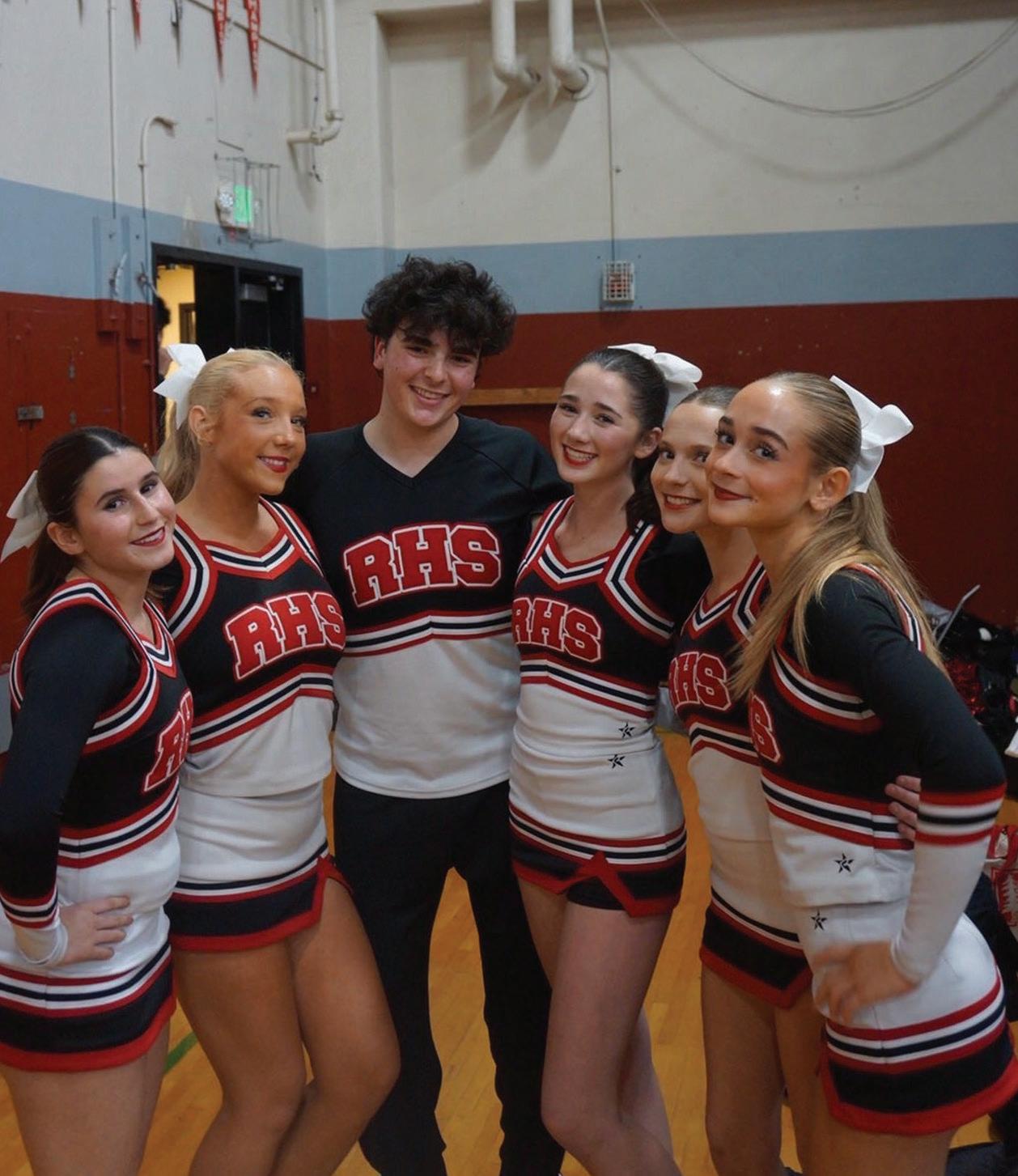
By Sidney Bank
Each morning at Reed Elementary School, students are greeted by a familiar face: crossing guard Thomas Holmes, whose presence has become a constant in the community.
For Tami Pias-Lee, a former Reed staff member who now works as an Attendance Clerk at Redwood, her first impression of Holmes highlights the joy he brings to both campus and the community.
“I remember, he came into the kindergarten class I was in during the Christmas holiday with candy canes for everyone and it just brought joy,” PiasLee said.
That tradition has continued for years, becoming something students look
Those small daily interactions are what made Holmes stand out for many students.
Sophomore Olivia Schuman went through the Reed Union School District and still remembers Holmes’ kindness.
“He always had a smile on his face, would talk to us about school and what we were learning,” Schuman said. “He was funny, kind and really created relationships with us students.”
Holmes has also been a consistent part of Pias-Lee’s commute to school each day.
“Every morning I drive by, I see Tom, he gets out [of his car] at the right time, greets everybody, makes jokes and talks to the parents and the kids,” Pias-Lee said. “I feel like he’s made such an impact on our community and he is iconic.”

Photo by Sidney Bank
Over the past 16 years, Holmes has helped students safely cross the street, but his role in the community extends far beyond that.
Through daily conversations, humor and simple acts of kindness, he has become a constant presence in the Reed School community connecting generations of Reed families.
“He’s there every day. He’s reliable, friendly and always has something positive to say,” Pias-Lee said. “First thing in the morning, he’s there to greet you with positivity, a smile and
Holmes said he first took the job after retiring, having been drawn to the energy
“I like working with kids. They laugh, they like my jokes, we knuckle [fist-
Countless students, including Schuman, have formed strong connections

with Holmes over the years, from simple fist bumps when they were young to still greeting him as they’ve grown older.
“He’s very funny, kind, and now whenever we drive by Reed or at the stoplight there, he’s always talking to us,” Schuman said. “He still remembers who we are — he’s always like, ‘Hi, Olivia’ and in general he knows the community so well.”
“[Kids] love him — they want to see him, say hi and wave as they drive by,” Pias-Lee said. “[Staff] love and adore him, and they would be lost without him.”
When asked to describe him in one word, Schuman summed it up as “Happiness.”
Parents, students and staff alike describe Holmes as more than just a crossing guard. His consistency, warmth and dedication have made him a trusted and familiar presence in the daily routines of countless families.
Schuman said how moments like these are why Holmes remains such a memorable figure in the community, even years after students like herself left Reed.
“He’s just out in the community, out in the open outside of Reed, and he’s always smiling,” Schuman said. “Just in general, he’s very smiley, happy and joyful.
sbank@redwoodbark.org