Investing in Tomorrow
Setting kids up for success
Power of Partnerships
Cross-sector collaborations help communities
Peace and Dignity
Providing comfort and care at the end of life


Setting kids up for success
Power of Partnerships
Cross-sector collaborations help communities
Peace and Dignity
Providing comfort and care at the end of life
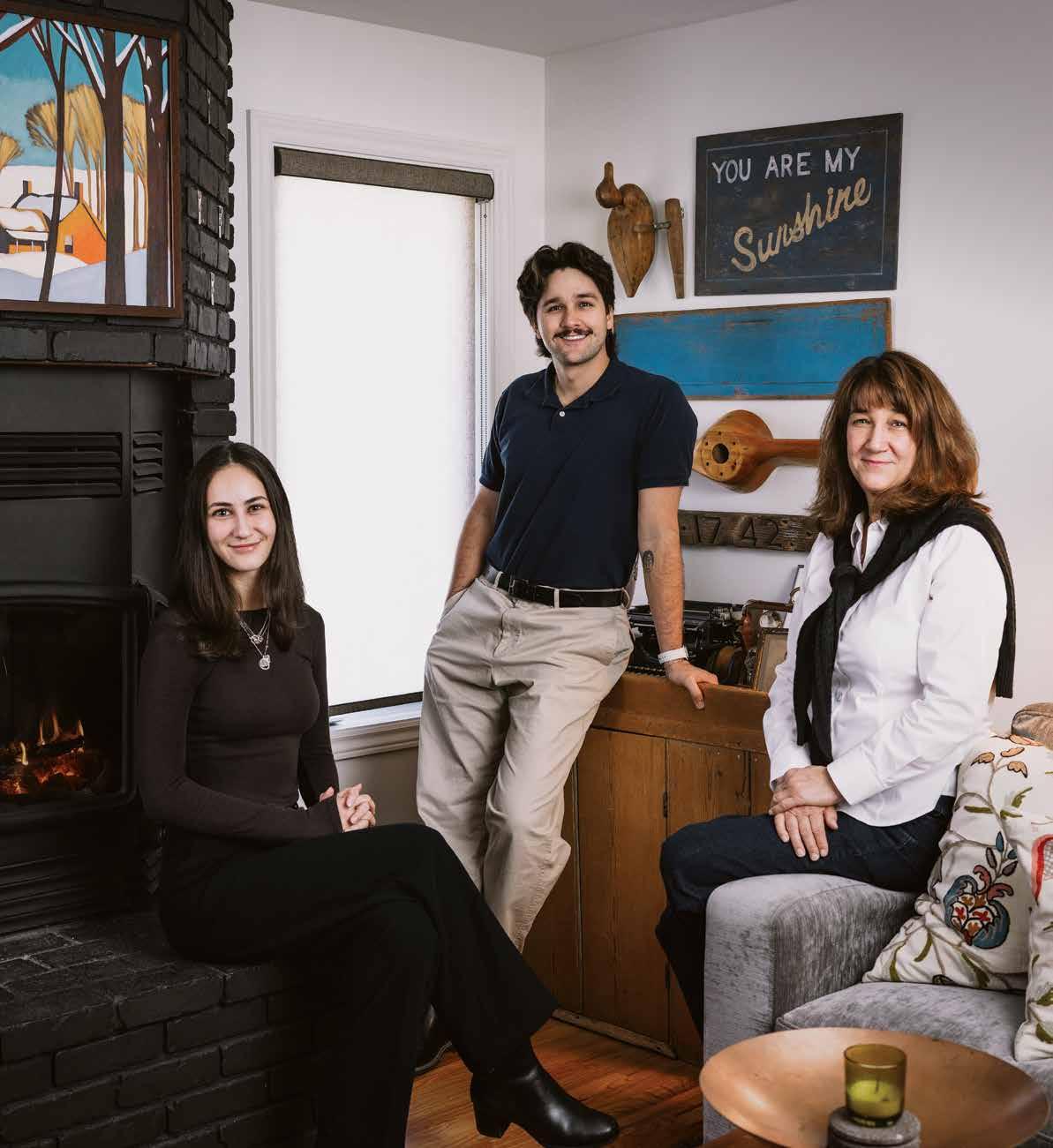
Tracey Button, with family and friends, carries on the community-building spirit of Jim Button
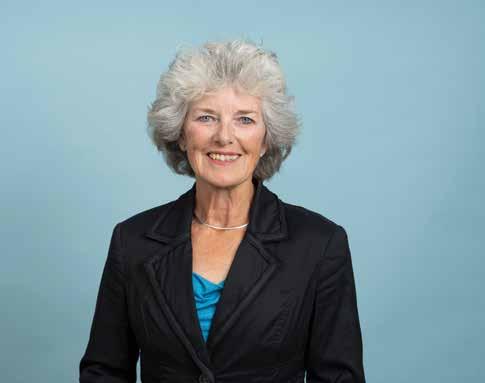
Calgary Foundation is proud to celebrate 70 years of supporting philanthropy and the charitable sector – a vision sparked by three remarkable leaders and sustained by generations of generosity in our city. In this issue, you’ll read about one of our founders, Grant MacEwan, and how his granddaughters carry on his legacy of leadership and conservation through three charitable Funds he established at Calgary Foundation.
Just as we celebrate those who shaped our beginnings, we also honour more recent community leaders like Jim Button. His larger-than-life spirit lives on through The Jim
Button Community Builder Fund that supports organizations promoting entrepreneurism and belonging.
When it comes to those who will help shape the future, it's important that we invest in the tools, resources and opportunities for the next generation to thrive. From Renfrew Educational Services’ crucial support of children with disabilities, to Centre for Newcomers’ youth ballet program and TELUS Spark’s Indigenous youth programs –Calgary’s charitable sector is working hard to ensure our kids can build healthy foundations for success.
In today’s complex world, it’s never been more important to work together on shared challenges. The City of Calgary, United Way of Calgary and Area and Distress Centre Calgary have teamed up to create the Community Information Exchange to enhance care coordination for people with intersecting needs. Similarly, the YWCA Banff and SAIT have partnered to launch a new campus in Banff to support the region’s growing hospitality and tourism industry while prompting positive change in the community.
The stories in this spur demonstrate that we are better when we work together. It takes people who care deeply, bringing their diverse thoughts and opinions, to build a better, brighter Calgary for everyone.
Eva Friesen President & CEO, Calgary Foundation
In the spirit of respect, reciprocity and truth, we honour and acknowledge Moh’kinsstis, and the traditional Treaty 7 territory and oral practices of the Blackfoot confederacy: Siksika, Kainai, Piikani and the îethka Nakoda Nations: Chiniki, Bearspaw, Goodstoney and Tsuut’ina Nation. We acknowledge that this territory is home to the Otipemisiwak Métis Government of the Métis Nation within Alberta Districts 5 and 6. Finally, we acknowledge all Nations — Indigenous and non — who live, work and play on this land, and who honour and celebrate this territory.
Narmin Ismail-Teja Chair Ken Lima-Coelho Vice-Chair
Denise
Jamie Leong-Huxley
Michael Mezei
Paul Moynihan
Chima Nkemdirim Susan O'Brien
David
Julianna Spiropoulos
Hugh D. Williamson K.C.
Excellence
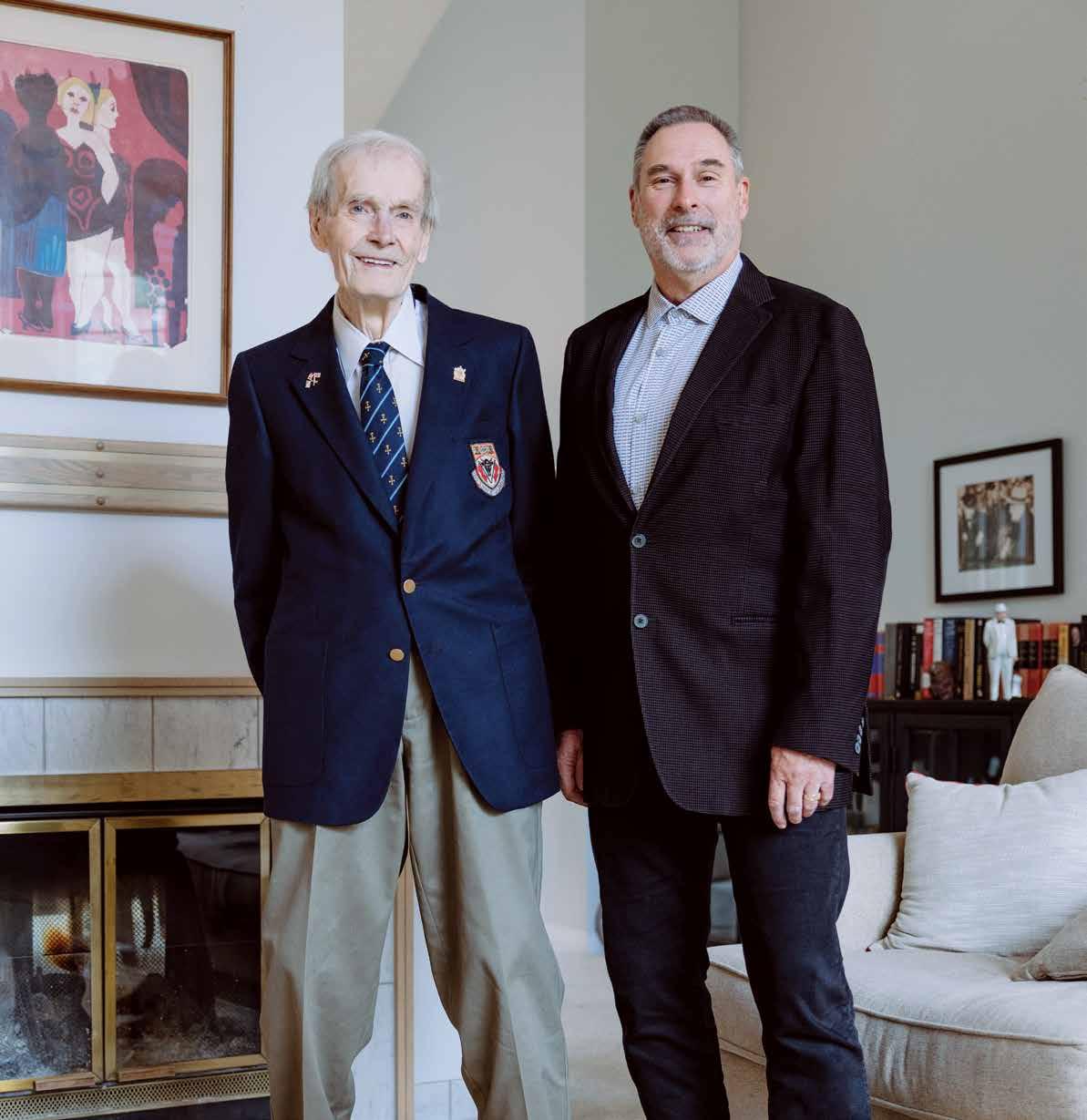
> Geologist Brian Norford initiates the Canada Prize for Earth and Environmental Science.

04 Ensuring a Strong Financial Legacy
Susan O’Brien brings a wealth of philanthropy experience to Calgary Foundation.
08 Investing in Nature
Carrying on Grant MacEwan’s legacy of leadership and conservation.
10 Right on the Button
The Jim Button Community Builder Fund honours its namesake's community spirit.
13 A Head Start
Three local organizations support youth for bright futures.
20 Checking in with Calgarians
The 2025 Quality of Life Report shares insights including how our city's youth are feeling.
22 Better Together
Cross-sector collaborations magnify impact across Alberta.
26 Tackling Food Insecurity
The YYC Food Collaborative brings food sector experts together.
28 Sharing the Journey
Two organizations provide comfort, care and support at the end of life.

“ When you think about your big picture — how you want to leave the world — philanthropy starts playing a bigger and bigger role.” — Susan O'Brien
By Marcello Di Cintio • Photography by Jared Sych
‘‘Ihave been given a lot of gifts, so I try to give back to the community,” says Calgary Foundation board member Susan O’Brien. “And my work with Calgary Foundation is one of the ways I do that.”
O’Brien has been a volunteer since she was a teenager growing up in Toronto. When she was 14, and too young to drive, she rode her 10-speed bicycle to Extendicare Mississauga, where she volunteered as a candy striper. After moving to Calgary and becoming a parent herself, she mentored teen moms and women entrepreneurs.
O’Brien carries that theme of giving back into her role as a wealth and investment advisor at Richardson Wealth. There, she engages in regular conversations with clients about estate planning and what they want to do with their wealth after they pass on. “When you think about your big picture — how you want to leave the world — philanthropy starts playing a bigger and bigger role,” O’Brien says. These consultations led her to explore different charities, leading her to Calgary Foundation.
Through her work advising clients about Calgary Foundation, O’Brien was invited to serve on the Advisor Engagement Committee in 2019. This committee spreads the word about how to have philanthropic conversations with clients, discuss their charitable goals and assist them in their philanthropic endeavours. O’Brien’s deep connections, built through her wealth management experience, made her an ideal committee member.
O'Brien understands the importance of having wealth
advisors on the board of Calgary Foundation and was pleased to join in 2023. She now chairs the committee she once served on. And she enjoys the meaningful discourse that happens around Calgary Foundation’s board table. “There’s some big philosophical questions that we have conversations about, and they’re deeper and take more time,” she says. “They require real thinking about what our role is as a foundation — what we should or shouldn’t be doing. They’re good, healthy conversations to have. I really like that openness, and I like the ability to have those conversations.”
O’Brien also appreciates how the Foundation engages directly with Calgarians. “[The Foundation is] not something off to the side or apart from the Calgary community,” she says. “This intimacy pays dividends to the people the Foundation aims to serve, and allows for greater understanding of the community’s needs.”
As someone who knows a lot about financial legacy, O’Brien values Calgary Foundation’s endowment model of giving, which prioritizes spreading charitable contributions over time rather than as singular gifts.
“We realize that there will be needs in the future that we haven't even comprehended yet,” she says. “We would be depriving our children and grandchildren and great-grandchildren if we gave all the money out now.”
O’Brien believes in the merit of the long-term, sustained funding that Calgary Foundation provides. She puts it simply: “There are needs today. And there are needs tomorrow.”
bringing much-needed
By Olivia Piché • Photography by Jared Sych
Earth and environmental sciences are vital to human life, providing an understanding of our planet and its processes. They inform us on how to best use critical resources and address environmental challenges such as carbon sequestration to lower emissions.
“Earth science matters to everything we do as living beings on this planet,” affirms Calgary geoscientist Ron Larson.
Yet, despite its critical importance, there is no prize in this field at the same prestigious level as the Nobel Prize. In the 1980s, Calgary-based geologist and paleontologist Brian Norford had a vision to change that.
Despite several hurdles in the years that followed, Norford never let go of this vision. It is largely thanks to his steadfast belief and passion in the vitality of such an award that the Canada Prize for Earth and Environmental Science is finally coming to fruition.
An award years in the making
Decades ago, Norford and Donald Mustard, who was a renowned geologist, began drawing up the idea for the Canada Prize. “We talked about how important geology was, not only for minerals, oil and gas, and water, but also for the challenges that we were facing in Canada,” explains Norford.
The idea was that an understanding of Earth and environmental sciences can change the world. Recognizing achievements in the field — with a prize that would lend both international recognition and a significant monetary reward — would bring awareness to Earth and environmental sciences and encourage future accomplishments.
Other highly recognized experts, notably Michael Dence, Digby McLaren, Denis St-Onge and Ian Thomson, joined Norford and Mustard to set a plan in motion, but the
founding group could not secure funding. The prize has been stuck in a holding pattern — until now.
Back in 2002, Norford established the Canada Prize Award Foundation Fund with Calgary Foundation, allowing the award to percolate. More than 20 years later, interest in the Canada Prize is finally gaining momentum.
“The idea of a significant prize for those in Earth sciences … appears to now resonate with donors in a way that even 24 months ago I was unsure about,” says Larson, who is the president of the Canada Prize Award Foundation.
That’s due in part to the official launch of the Canada Prize for Earth and Environmental Science at the 2028 International Geological Congress event, set to take place in Calgary. Calgary’s successful bid for the event included the launch of the Canada Prize with support from the Canadian Federation of Earth Sciences.
After a rigorous selection process, the Canada Prize will spotlight groundbreaking scientific achievement in Earth sciences that improves human activity.
“It’s a recognition of the importance of understanding the blood, the bones and the breath of the planet as it changes,” explains Larson. “A prize of this nature will highlight the people who are doing that kind of fundamental work and bring awareness to it.”
Norford agrees. “Awareness will be very important as part of the role of the Canada Prize,” he says. “There are eight billion people across the world, and anything we can do to help cope with the challenges of materials [will make a difference]. We want people to be aware that Earth sciences can help with the challenges the world is facing.”
“
We want people to be aware that Earth sciences can help with the challenges the world is facing.” — Brian Norford

“
We feel so fortunate that we are able to support these charities. It is just the best feeling to be able to know that we are helping so many worthwhile organizations.” —Lynwyn Foran-Aebli
By Fabian Mayer • Photography by Jared Sych
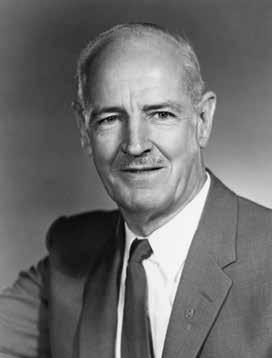
One of the most respected Canadians of the 20th century, Grant MacEwan was a giant of Western Canadian politics and education. MacEwan was a farmer, a published author of more than 50 books and served as the dean of agriculture at the University of Manitoba. He moved to Calgary. where he became mayor, then a member of the provincial legislature and ultimately, the ninth Lieutenant Governor of Alberta.
What often goes overlooked on his lengthy and illustrious resume is his devotion to ecological conservation and charitable work in the province he called home. As one of the founders of Calgary Foundation and its inaugural board chair, MacEwan was committed to doing good in Alberta and the world.
MacEwan
talk about where those funds are going to be directed,” says Foran-Aebli. “There are certain charities that have been longstanding recipients. We know the work they're doing and continue to value and support them. And then our eyes and ears are always open to new charities doing really great work that fits with our values.”
Foran-Aebli describes MacEwan as being well ahead of his time. A committed vegetarian long before it became trendy, he was constantly focused on the welfare of the land, water and wildlife.
“As my grandfather termed the mandate [of the Nature Protection Fund] — the protection of man’s fellow creatures and the protection of their habitat — we aim to continue that ethos,” she says. “He believed strongly that all creatures have value, not as a resource, but simply as beings, and their habitat is something that needs to be protected.”
He helped establish Calgary Foundation in 1955 as an enduring organization aimed to ensure that community needs could be met for generations to come. He then created three of his own charitable Funds through the Foundation — the Grant MacEwan Nature Protection Fund, the MacEwan Family Charity Fund and the Grant MacEwan Community Fund.
Since his death in 2000, at the age of 97, that philanthropic work has been carried on by his family, including granddaughters Lynwyn Foran-Aebli and Fiona Foran, who now serve as stewards of those Funds.
Foran-Aebli says carrying on MacEwan's legacy by advising how the Funds are distributed is just one of the ways she and her family honour her grandfather.
“As a family, we will sit down throughout the year and
Following that belief, MacEwan and his family had a conservation easement placed through the Southern Alberta Land Trust on a property purchased by MacEwan near Priddis, Alta.
The Grant MacEwan Nature Protection Fund supports groups that preserve biological diversity through education such as the Alberta Institute for Wildlife Conservation and the Cochrane Ecological Institute, which are dedicated to the rescue and rehabilitation of injured or orphaned wildlife, as well as the Vancouver-based The Fur-Bearers, which protects fur-bearing animals through conservation, advocacy and research.
“We feel so fortunate that we are able to support these charities,” says Foran-Aebli. “It is just the best feeling to know that we help so many worthwhile organizations.”
The Jim Button Community Builder Fund carries on its namesake’s larger-than-life community spirit
By Elizabeth Chorney-Booth • Photography by Jared Sych
Live. Laugh. Love. Repeat. That was the final message Jim Button left for readers on his Gather with Jim blog in 2023, posted the day he passed away at age 59 after a long journey with kidney cancer. Jim may have been known professionally as the co-founder of Village Brewery, but his personal legacy well transcended his work, as he shaped his life through community building, organizing community events, mentorships and, as he liked to say, “collecting” friendships.
Jim didn’t just preach the virtues of living life to the fullest and believing in the people around him — he embodied them.

It’s a legacy that his collection of friends and tight-knit family want to carry on. Shortly after his passing, a cohort of friends and former colleagues, including Dan Evans of Evans Hunt Group creative agency, media personality Dave Kelly, and Jim Popiel, former president of Village Brewery, approached Jim’s wife, Tracey, about setting up the Jim Button Community Builder Fund, to be administered by Calgary Foundation. The endowed Fund comes with the mandate of not only keeping Jim’s name in the public consciousness, but also to continue the spirit that defined his life.
Raised in a military family, Jim found himself constantly moving from place to place as a child. When he settled in Calgary in the early 1990s, he immediately found a sense of belonging and community — something his family wants to help foster for others.
“One of the lessons that Jim always gave to our children was that when you're in a room, look to see who's not comfortable, who's on the outskirts,” Tracey says. “Then work hard to bring them in to make them feel like they are welcome and belong.”
Tracey was adamant that she and her children, Jack and Amanda, be directly involved in the Fund, as stewards of Jim’s memory, and so, eventually, future generations of Buttons can take over the Fund. The family sees an importance in working specifically with organizations that echo Jim’s irrepressible spirit.
“It's very important to Amanda and I to carry on all of his fantastic characteristics and the ways he gave back to the community,” Jack says. “I’d like to pass it on to my kids one day, absolutely.”
Tracey, who has a background in the non-profit sector, took the lead on the first round of the Fund’s grants, working with Calgary Foundation staff to find organizations she knew her husband would be excited to be involved with. She landed on Youth Central and Umoja Community Mosaic (read more about each on page 12).
The Button family continues to follow Jim’s cues by helping other Calgarians find the freedom to live, laugh and love and discover their own ways to inspire and build strong local communities.
“One of his favourite quotes was that you die twice: once when you leave your body and also when the last person you love speaks your name,” Amanda says. “Keeping his name part of Calgary's history is important to us.”
“ Keeping his name part of Calgary's history is important to us.” —Amanda Button
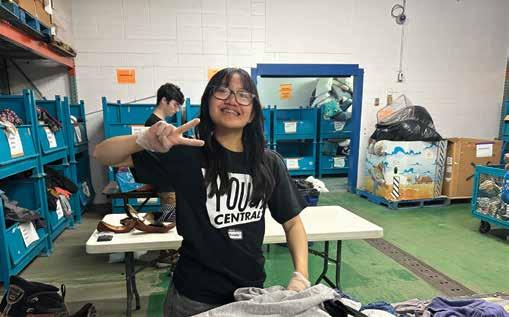
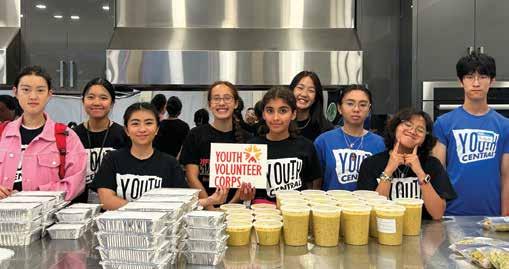
Tracey Button felt compelled to grant money to Youth Central in honour of husband Jim’s own entrepreneurial spirit. The organization empowers youth to build community through their own initiatives. Youth Central’s macrogrant program is now known as the Jim Button Youth Grant, allowing Youth Central to continue to fund bold ideas from entrepreneurs, dreamers and passionate community builders between the ages of 12 and 18.
Grants, up to $2,000 each, are awarded to applicants by a panel of their peers. The first round of recipients includes a cultural dance program for new immigrants, an initiative creating care packages for kids in hospital, youth-led art programs at the Central Library and a medical club at Western Canada High School.
“Jim was all about how small acts could create ripples,” says Lisa Litz, Youth Central’s engagement director.
“Our hope is we're building the next generation of philanthropists and community builders through these grants.”
Umoja Community Mosaic’s founder and executive director Jean Claude Munyezamu first met Jim Button many years ago at a meeting at Village Brewery. Munyezamu didn’t know many people in the room, which Button noticed. In his typical fashion, Button walked over to Munyezamu and started a conversation. The two men realized they shared common philosophies about community and life.
At the time, Munyezamu was running a small soccer program for immigrant and low-income children, which
has since blossomed into Umoja Community Mosaic, an organization that creates belonging and leadership through sports, food programs and other community supports.
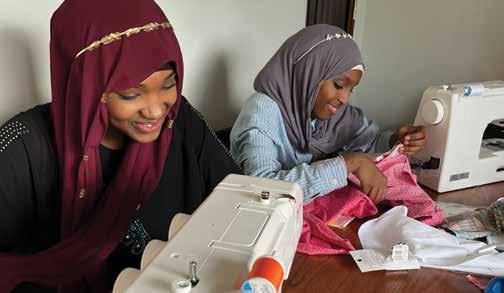
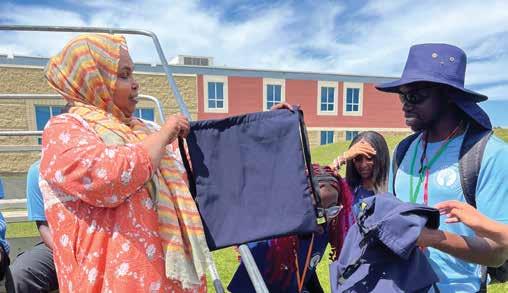
Umoja is using its grant to launch a new sewing program for women, offering participants a chance to mend their own clothing, make backpacks for kids in the soccer program, and eventually, create items to sell. The women pick up new skills while also using sewing as a vehicle for connection and community, something Munyezamu knows his friend would have cheered on.
“Jim was a champion in bringing people together,” Munyezamu says. “He brought people together to solve the community’s problems."
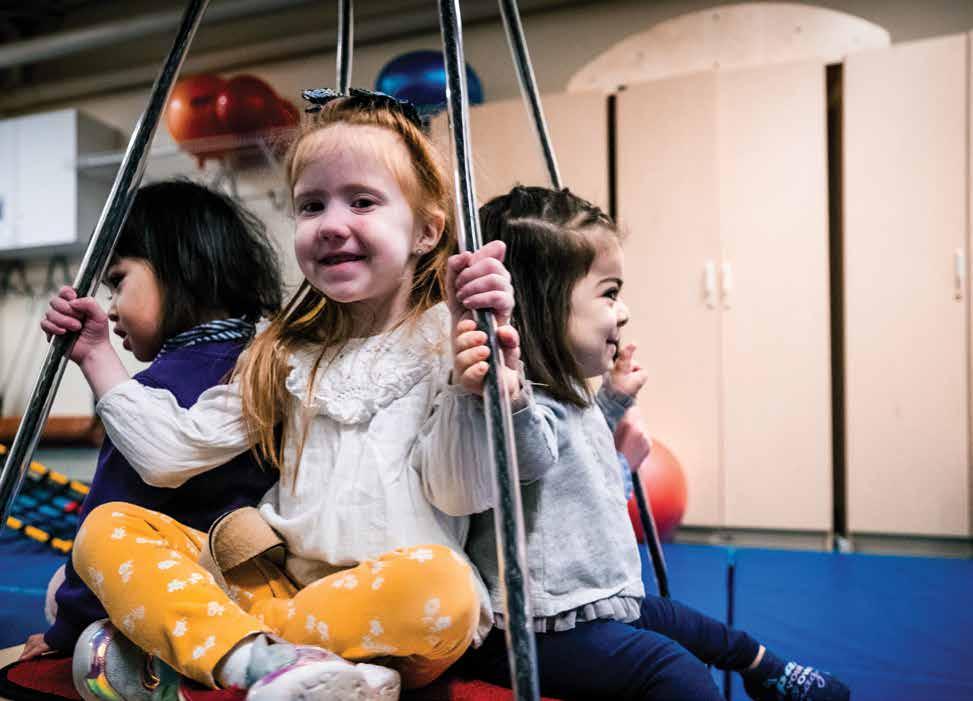
With the appropriate tools, resources and encouragement, kids can build bright and healthy futures. But, only by meeting the collective responsibility of supporting all children today, can we expect a better tomorrow. With the help of Calgary Foundation, these three local organizations help youth with diverse needs gain the opportunities, knowledge and confidence to thrive.
By Olivia Piché
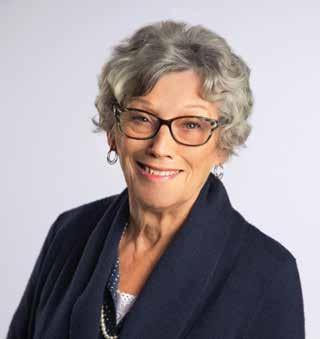
Renfrew Educational Services began with a “yes.” When founder Janice McTighe was approached by the Alberta Children’s Hospital in 1974 and asked if she would accept a child with a disability at her kindergarten, the answer was easy.
“I said, yes, of course, because at that time, most children with disabilities were in segregated settings. We were almost the first ones to have an integrated setting,” recalls McTighe. “When we could see the progress that was being made, we realized that we could do a lot more, and we needed to do a lot more.”
So began the journey of Renfrew’s exceptional growth over the last five decades.
A history of helping kids learn
Renfrew began as a community kindergarten, but when McTighe saw the benefits of integrating children with disabilities into classrooms, she decided to welcome all students, regardless of any disabilities.
Since then, Renfrew Educational Services has expanded to four schools, soon to be five, and shifted to exclusively serve children with disabilities.
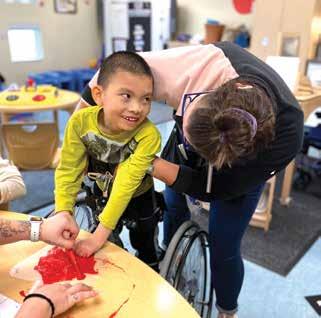
Renfrew offers unique and innovative programs, services, spaces, technology and equipment to support children with a range of needs, including physical (such as vision and hearing loss) and learning disabilities, and diagnoses including
“ When we could
see the progress that was being made,
we realized that we could do a lot more, and we needed to do a lot more.” —Janice McTighe
autism spectrum disorder, Down syndrome and cerebral palsy.
Renfrew Educational Services has 550 students enrolled across its schools and also performs contract work in other schools, serving another 10,000 students with disabilities. “Our impact has been pretty phenomenal,” says McTighe.
But the demand for education for students with disabilities across the city is high, and Renfrew’s waitlists are long. Plus, there’s been a growing demand for Renfrew to expand and cater to older students.
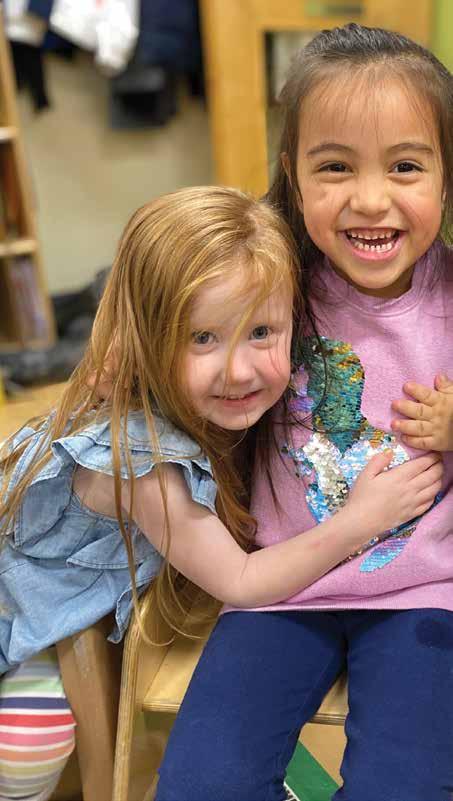
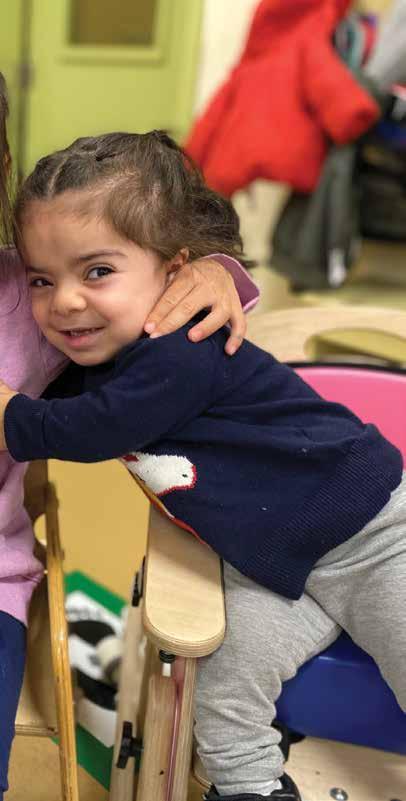
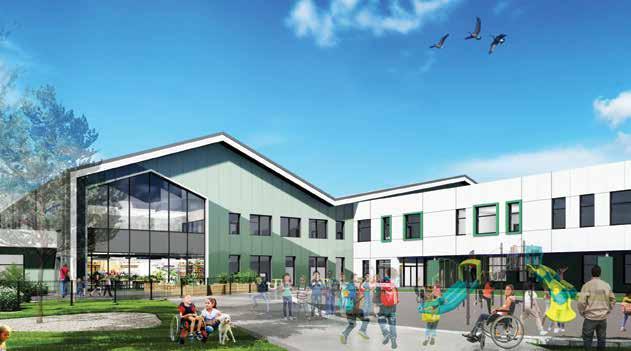

Until now, Renfrew has only served students up to Grade 6. When kids transition from Renfrew to higher grades, it can be a challenging adjustment for them and their families. For years, families have called for extended grades to ease the transition to junior high. Renfrew will soon answer that call. Renfrew recently acquired land in Bearspaw, and its newest school, Three Sisters Centre, is set to open in 2027, welcoming students from kindergarten to Grade 12.
Like the other schools, Three Sisters Centre will have specialty and sensory rooms, but also spaces designed for older
kids, like an apartment-style environment where they can learn life skills, such as cooking, personal hygiene and doing dishes. Upon completion, the project will cost $40 million — the building alone will cost $32 million. Thanks to donors like Calgary Foundation, Renfrew has raised $25 million for the project and has already broken ground.
Three Sisters Centre will equip teenagers and young adults with the confidence and knowledge to enter the world after graduation. Students will learn how to make healthy choices while grocery shopping, how to catch the bus independently and how to manage money from a financial planner. These skills will make for healthier, happier and independent young adults.
After more than 50 years of service, McTighe is stepping back from her position as executive director (she will still be involved as founder and strategic advisor), but she expects Renfrew to keep growing and thriving as this newest school demonstrates.
“I can't imagine that the dream will stop. There'll be other things that will come into play,” she says. “There are so many great ideas still to explore, because there's so much more we could do.”
→ Learn more at renfreweducation.org
When Alberta Ballet approached the Centre for Newcomers (CFN) with an idea for a youth ballet program as a way to reduce barriers to access, CFN’s director of youth services, Noël Bahliby, admits he was a little skeptical. “Initially, I thought ballet was going to be a hard sell. Most of our clients are from the Global South, where ballet is not that popular or prevalent,” he says. But as it turns out, ballet can be a universal language.
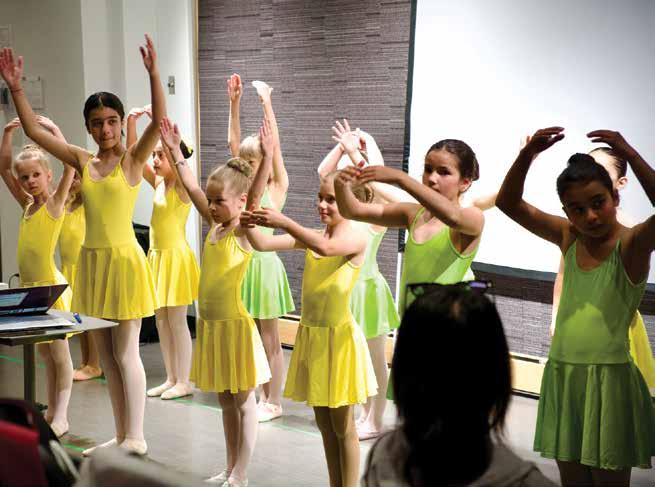
In 2023, CFN partnered with Alberta Ballet to offer free classes every Saturday as part of a six-week pilot project for kids ages 11 to 16 through its Real ME After-School Program. Real ME hosts free art activities, sports and life-skills workshops for youth aged six to 24. CFN has historically focused on helping at-risk youth, but the after-school program was established in 2023 as a preventative measure to keep kids engaged and connected to the community.
The ballet pilot gradually gained momentum through word of mouth as parents began to notice how much their kids were enjoying it. Last year, CFN expanded the ballet offering to more than 20 weeks of programming, including beginner and advanced classes, for kids ages four to 15, five sessions a week. This year, it increased the sessions to seven per week to accommodate the ever-growing demand.

Beyond
active and connected
Bahliby says physical programs, like ballet, allow kids to reap the benefits of being active.
“Hundreds of kids have gone through this program now, and if we've planted that seed of interest, even if it's not ballet, but they continue just being active or wanting to do any activity, then to me, it’s a huge win,” he says.
Beyond physical activity, ballet demands discipline, effort, coordination and the ability to work with others. These are skills the participants will carry with them throughout their lives.
“This program has given students and their families a place where they can connect and develop friendships. Many students who met in the ballet program have become friends outside of the studio,” says Taryn Samson, director of community programming at Alberta Ballet.
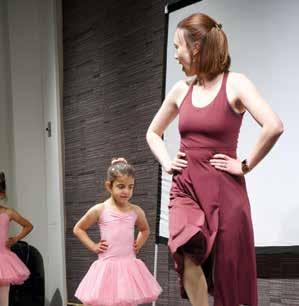
“ This program has given students and their families a place where they can connect and develop friendships.” —Taryn Samson
Calgary has seen a significant influx of newcomers. In 2023, Calgary’s population grew by six per cent with nearly 100,000 new residents.
“Overnight, we went from thinking we'll serve a couple hundred kids a year to serving about 1,200 to 1,300 a year,” says Bahliby.
He says that a gap in youth services can be a recipe for increased youth criminal involvement. “A lot of times, we find that those initial years [when kids come to Canada] are really critical to what happens later on in life,” says Bahliby. “To have that adult role model or mentor in their life that gives them a good foundation can divert them from that unlawful path. That's really the ultimate aim with the after-school programs.”
Bahliby says there is not enough programming to support the increasing number of incoming youth as they adapt to a new country and all of the changes that brings. But, the existing programs, like the ballet classes, make a real impact.
Samson agrees. “It has been incredible to see the growth of the dancers throughout the program,” she says. “The students have gained confidence, and you really start to see their unique personalities shine. Creating these moments that families can share together despite the hardships they have experienced really shows how powerful art and movement can be and how it can truly bring people together. It is the heart of what we do and why we do it.”
→ Learn more at centrefornewcomers.ca/youth
The TELUS Spark Science Centre has long been home to fun science-based exhibitions, galleries and interactive activities, especially for kids. Recently, Spark offered more programs for Indigenous youth to learn about Indigenous science.
“We listened to the stories and experiences from Elders and Indigenous community members, and there needed to be a focus on youth and more of a focus on the accessibility of this programming for youth,” explains Kori Czuy, manager of Indigenous science connections at Spark.
Indigenous science is about relationality, Czuy says, in the sense that it's not objective or understood through rigid parameters. It looks at math and science through connection and observation. Take the stars, for example. Indigenous perspectives look at how the movement of constellations is tied to navigation. "It's understanding through spirit, through relationships, through ceremony and through movement. They're important ways that we understand the world around us,” explains Czuy.
Last March, Spark hosted a gathering of Indigenous youth, asking what they wanted to learn about science. They discovered that the kids want to learn about everything, says Czuy. So Spark is working on new programming to address that wide net of curiosity and is bringing more programming directly into Indigenous communities.
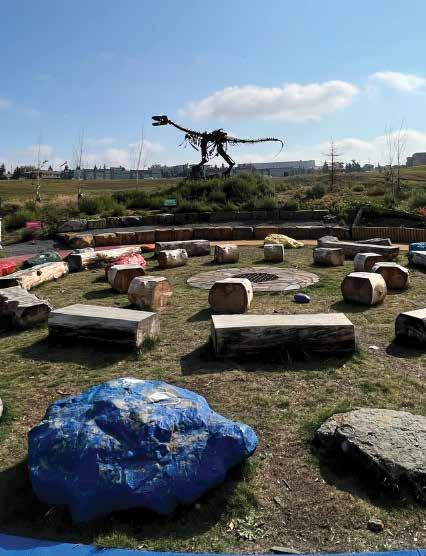
One Indigenous program that Spark brings to community classrooms is Paws, Claws and Stars, a full-day workshop, complete with a portable planetarium, which takes place in schools. The program began in Indigenous communities and is slowly expanding to Calgary classrooms. It kicks off with Blackfoot Skies, a film showcasing the Blackfoot story of the Milky Way. Facilitators then dive into the deeper science of the Milky Way, followed by a workshop where kids can touch different furs and learn about living in balance with nature. The program closes out with a sharing circle.
There’s a high demand for Paws, Claws and Stars, as shown by its long waitlist, and Czuy and her team are doing their best despite staffing limitations. To support the program, Calgary Foundation provided funding for two Indigenous coordinators so the program can reach more classrooms.
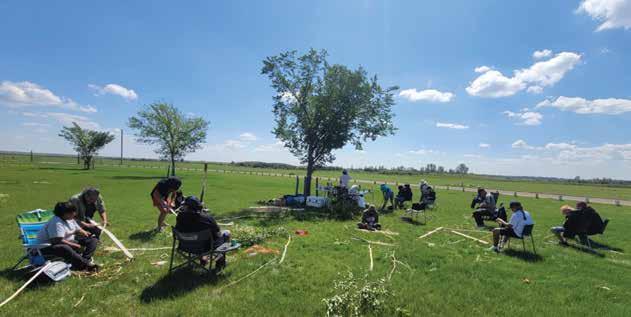
This past year, Spark also hosted a series of on-the-land workshops for Indigenous youth. Youth attended a relational science and ceremony program in Kananaskis, where they worked with Elders to harvest
“ [Indigenous science is] understanding through spirit, through relationships, through ceremony. They're important ways that we understand the world around us. ” — Kori Czuy
culturally and scientifically significant items, such as rocks and willows, built a sweat lodge and explored the program teachings in ceremony.
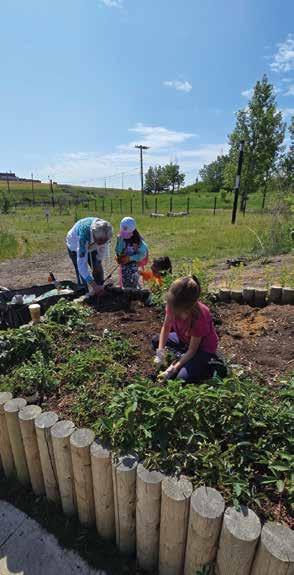
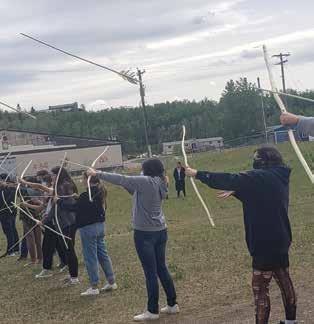
The kids were fully engaged, explains Czuy, and off their phones, creating relationships with each other and the Elders, and developing understandings of the land through Indigenous teachings. Having them carve wood and use their hands inspired a summer workshop, which looked at the mathematics, science and humility required for bow making. Spark also hosted a medicine garden workshop on Indigenous teachings related to plants.
“The more that youth learn [these Indigenous teachings], and not just Indigenous youth, they share their stories and their experiences, and share the impact and significance of Indigenous science,” says Czuy.
“Indigenous science is how we have survived and thrived on these lands, and it plays an important part in how we can better reconnect with the land. [The programs bring] that scientific perspective on how we can create a future that's better for everyone.”
→ Learn more at sparkscience.ca/ indigenous-science
algary Foundation’s annual Quality of Life Report reflects the voices of 1,000 residents on critical issues, from health and wellness to equity and inclusion, revealing a snapshot of how Calgarians are feeling.
The 2025 report tells an encouraging story of
One group stands out this year: young Calgarians
a city recovering together after years of rising costs and uncertainty. But when you look closer, you'll see that while many seem to be finding their footing, others still face steep barriers.
These insights help identify local priorities and direct resources to organizations working to build a better Calgary — for everyone.
Their voices reveal a growing unease about the future. From climate change and housing affordability to uncertainty around careers, their concerns paint a sobering picture of a generation that has yet to feel fully assured in Calgary’s promise.
89 % of Calgarians agree that Calgary is a good place to live, up from 81% last year.
66 % of Calgarians rate their quality of life as good or excellent, up from 61% in 2024. But when you look beyond the average:
87%
71% of Calgarians say they are proud to be Calgarian.
of all Calgarians agree that diversity makes their city stronger.
79% of Calgarians have a strong or moderate sense of belonging to their community, up from 76% last year.
72%
of men say their overall quality of life has risen.
58 %
This drops to 58% for women.
39%
And only 39% for those living with disabilities.
73 % of Calgarians agree a strong arts and culture scene is key to creating a vibrant city.
National and civic pride are strong. But people seem to be struggling to give back.
Volunteering and donations are at an all-time low.
Housing is more affordable, but 1 in 10 people live with friends or relatives for free. At least 7 in 10 of those people can’t find or afford suitable rentals, much less own.
72 %
of renters want to own a home one day, but only 46% feel optimistic they will.
64% 50% 41%
of renters say that affordability of a down payment is the single biggest barrier to owning a home.
of renters consider qualifying for a mortgage to be a significant barrier.
of renters state income stability as a significant barrier.
How are young people in our city feeling? A selection of statistics from the 2025 Quality of Life Report → Read the full results at calgaryfoundation.org .
42 % of Calgarians reported a positive economic outlook, up from 35% last year, but only
26 % of students are feeling positive about their economic opportunities. That number drops to 23% for unemployed Calgarians.
Lonelier than lockdown: 22% of us are feeling more lonely than during the pandemic, up from 20% last year. Among young adults, that number is a staggering 41%.
57 %
of all Calgarians report good mental health, including:
79%
46%
32 %
for those aged 18-24 for students for those aged 65+
23%
for those who are unemployed
The fewest number of people ever are planning to leave the city in the next five years, at only 19% , down from 30% in 2021. But age is a huge factor: only 6% of people aged 65+ plan to leave, jumping to 26% for those aged 25 to 35, with 18- to 24 -yearolds higher still at 35% .
Young people aged 18 to 24 are almost twice as likely to use community-based food services.
57 %
of those aged 18 to 24 are stressed due to finances, compared to 38% of all Calgarians.
87 %
of young people are concerned about climate change vs. 79% of those aged 25 to 34, 81% of 35- to 54-year-olds, and 72% of those aged 55+.
When organizations work together for a common good, the scope of what can be accomplished can be transformational. With support from Calgary Foundation, here are two cross-sector collaborations demonstrating that when it comes to serving the community, there’s power in partnerships.
By Fabian Mayer and Colleen Seto
While it makes sense for community services to collaborate, especially when they serve the same groups, the realities of doing so can be complicated. Information sharing and tracking service provision and client needs can be logistically, and sometimes legally, difficult.
To tackle this issue, The City of Calgary, United Way of Calgary and Area, Distress Centre Calgary and other agencies are working together to try to minimize the siloed service provision that happens for Calgary’s vulnerable populations. Known as the Calgary Community Information Exchange (CIE), the collaboration has been in development for the past three years, with the ultimate goal of helping agencies and their clients navigate Calgary’s ecosystem of support more effectively, and give clients a better experience overall.
Having worked in providing services to vulnerable groups for many years, Richard Mugford, senior manager of the CIE with Distress Centre Calgary, is heading up the exchange’s development and testing.
“The Community Information Exchange, in essence, is that connective tissue using technology between systems and services,” says Mugford. “It’s about how, for people with complex and intersecting needs, we can enhance community care coordination.”
The exchange makes it easier for community services to work together by using shared tools, a common

“ We can do better for individuals who are sharing their story multiple times as they go through multiple services and agencies.”
— Richard Mugford
resource database and secure technology. This helps create a more efficient and fair experience for people who need support, so they spend less time navigating the system.
Mugford gives the example of an unhoused individual who first interacted with police, then a shelter, mental health services and the Calgary Food Bank. In each of those interactions, the individual would have to provide personal information as well as details of their story. The idea of the CIE aims to streamline the process for both agencies and individuals.
Mugford compares the exchange to a social services version of a digital medical chart. Through the CIE, agencies and service providers will be able to access basic information about a client, if they’ve consented, as well as what other services they have
accessed or been referred to, without having to ask the client over and over again. This sharing of information makes each interaction for the client less repetitive and time-consuming, allowing them to access the help they need more efficiently.
“We can do better for individuals who are sharing their story multiple times as they go through multiple services and agencies,” says Mugford. “Really, this is an accelerant in the community to support us working together and building a true ecosystem around the individuals we serve.”
The exchange directly benefits the Calgary community by enhancing client experiences. It breaks down barriers, especially for marginalized populations, by offering smarter collaboration across services and providing data to inform decisionmaking for both funding and service organizations.
The program includes several partners, including ActionDignity, Alberta Health Services, the Alex, Calgary Homeless Foundation, Calgary Police Service and YW Calgary. Having received funding from the Government of Alberta’s Civil Society Fund, the exchange is currently in testing and slated to launch in January of 2026.
“We’re really excited to get this up and running so we can all start coalescing together and working smarter together rather than harder apart,” says Mugford.
→ Learn more at distresscentre.com/ resources/community-information-exchange
YWCA Banff and Calgary’s Southern Alberta Institute of Technology (SAIT) are collaborating to create a brand-new hospitality and tourism campus in Banff, serving the community’s busy tourism industry and workforce.
Through the generosity of a $30-million gift from the Banff-based Wim and Nancy Pauw Foundation, SAIT and YWCA Banff will provide invaluable community services while also offering a unique, state-of-the-art teaching facility and student housing for SAIT’s hospitality and tourism students. Ten million dollars will go to YWCA Banff to transform its centuryold hotel into a purpose-built facility that will meet the growing demand for crisis-intervention services, which Calgary Foundation helped fund through its Major and Signature grant program.
“We saw it as a really great opportunity for us to invest in the building and the infrastructure, but also just create really beautiful, trauma-informed spaces,” says YWCA Banff’s director of operations, Rae Bilodeau.
The renovated YWCA facility will serve as a hands-on learning environment and student residence, with SAIT investing its $20 million gift into providing long-term programming at the new site. That programming includes gender-based violence-prevention education within the tourism and hospitality industry.
The Bow Valley attracts over four million tourists annually and contributes billions of dollars to Alberta’s economy. Unfortunately, the flipside of that is the nature of the hospitality industry — with substance


“ We saw it as a really great opportunity for us to invest in the building and the infrastructure, but also just create really beautiful, trauma-informed spaces.” — Rae Bilodeau
abuse playing a factor in settings like bars, restaurants, hotels and events — can create circumstances where individuals may be more susceptible to unwelcome sexual behaviours from customers and colleagues.
From 2020 to 2023, the number of calls to YWCA Banff’s crisis line has more than doubled. After increasing its number of shelter beds, the organization saw a 65 per cent jump in clients accessing its services. Needless to say, YWCA Banff is committed to helping educate and prevent gender-based violence and collaborating with SAIT offers an ideal opportunity to do so.
“Being able to be a part of curriculum design and wellness programming for students, and being able to embed our prevention work into their experience while

they’re here will be really valuable,” says Bilodeau. While YWCA Banff already teaches consent awareness in local schools, it plans to bring that message to SAIT students as part of the new program with the hope of shifting societal norms that can lead to gender-based violence.
This partnership between YWCA Banff and SAIT will be a game-changer for education and the community, supporting a sustainable tourism economy and empowering those who work in it to protect themselves and others from genderbased violence. Additionally, the new facility will enhance the affordable housing and counselling spaces in Banff.
SAIT's presence in Banff will also offer a continuous flow of highly skilled professionals, ensuring
a future-ready workforce for the town’s main industry. Expanding its hospitality and tourism program to one of Canada’s top destinations enhances SAIT’s ability to offer immersive learning. Local businesses are being consulted regarding their needs and potential on-the-job training opportunities to help shape the development of SAIT’s new Banff campus. Construction is set to begin in 2026, with classes slated to start in the fall of that year.
“We really see value in supporting initiatives that are designed to create thriving and sustainable tourism,” says Bilodeau. “We’re excited about all the ways this partnership will effect good change in the community.”
→ Learn more at ywcabanff.ca and sait.ca
Trauma-informed spaces are environments designed to foster a sense of safety, respect and empowerment for people who have experienced trauma. These spaces apply principles from environmental psychology, neuroscience and cultural factors to create a supportive atmosphere that promotes healing and well-being. This approach focuses on elements such as natural light, views of nature, minimal clutter and accessible exits to reduce stress and prevent re-traumatization.
The YYC Food Collaborative brings sector experts together to address the
By Olivia Piché
Nearly a third of Calgarians struggle with food insecurity.
That’s according to Statistics Canada, which reported that 31.9 per cent of people in the Calgary census metropolitan area lived in food-insecure households in 2023. That's well above the national average of 25.5 per cent. It’s a staggering statistic, further complicated because food insecurity is a multi-pronged, deeply complex and intersectional issue with no simple remedy.
The diversity of factors that cause Calgarians to fall below the income threshold for secure access to food adds to the complexity. Consider that Calgary’s living wage (what people need to earn to cover average living costs) is nearly $10 more than the

“The collaborative really elevates, amplifies and reiterates that there isn't a one-size-fits-all solution.” — Miriam Bankey
“ YYCFC continues to collaborate to identify and create important tools that support the whole sector to function better.”
— Syma Habib
minimum wage, for example.
“Food is different from anything else in that when you don't have it, it affects so much more than not being able to feed yourself or your family; it affects all parts of life,” says Miriam Bankey, with Brown Bagging for Calgary's Kids, a non-profit aimed at feeding Calgary kids.
Calgary Foundation’s latest Quality of Life Report showed that while there’s been a slight improvement for residents overall in being able to access healthy food, it’s not without struggle.
Clearly, the cost and accessibility of healthy food remains an issue. That’s why so many community organizations are working to try to address the root causes of food insecurity.
Calgary Foundation's Quality of Life Report 2025 states the following:
77% of Calgarians are able to afford healthy food, up from 74% last year and 71% in 2023.
But, 44% of families with children skipped a meal so their children could eat. 23% indicated the whole family skipped meals.
88% made adjustments to their lives to afford rising food costs.
28% of Calgarians occasionally or frequently use community-based food services. That number jumps to 44% for those aged 18 to 34.
One of the ways they are doing so is through the YYC Food Collaborative (YYCFC) stewardship group.
YYCFC is a Calgary-based, member-driven, food-sector collective that generates multifaceted solutions to address systemic issues, like dignified access to food, through its collaborative work. The collaborative has more than 50 members, representing more than 40 food providers and organizations across the city. YYCFC’s members have a collective vision: a Calgary where everyone knows where their next meal is coming from.
Part of YYCFC’s mission is to educate about food insecurity so people can better understand that the issue affects all of us.
“It’s not a ‘them’ issue, it’s an ‘us’ problem,” says Bankey, who is also a member of YYCFC’s stewardship committee. “These are our neighbours and family. It's super important that we do this together.”
YYCFC works to dispel the myth that food insecurity can be solved if people just work harder. “Food insecurity disproportionately affects Black and Indigenous Calgarians, single-parent households typically led by women and all these different groups that are working really hard against this really broken system,” explains Bankey. Add to that, she points out that many people are still struggling to catch up financially from the employment impacts caused by the pandemic.
YCCFC generates sector-wide ideas to better tackle broader food insecurity challenges across the city. One
such idea is a Food Sector Emergency Preparedness Framework, which examines how to be better prepared for emergencies that disrupt the food system, such as a pandemic.
Members of the YYCFC have also collaborated to create valuable resources like the printable YYC Free Food Guide, which is targeted to support the diverse food needs of Calgarians who don’t have reliable internet access, including unhoused individuals, by accepting specific food requests.
Similarly, the Culturally Appropriate Hamper Guide supports organizations to make hampers to meet diverse food needs, such as including halal protein options.
“The powerful and transformative piece about YYC Food Collaborative is knowing that we might have different approaches, we might be working with different demographics, we might be addressing different parts within the spectrum of approaches to address food insecurity, but when we come together and we share, we work towards that collective change,” says Bankey. "The collaborative really elevates, amplifies and reiterates that there isn't a one-size-fits-all solution."
As the convener of YYCFC, The City of Calgary sees the power in coming together, too.
“The most valuable impact has been the ease with which YYCFC members can call each other up for support and advice,” says Syma Habib, food resilience specialist for The City. “YYCFC continues to collaborate to identify and create important tools that support the whole sector to function better.”
→ Learn more at yycfoodcollaborative.org

Comfort, care and support at the end of life
By Fabian Mayer
Hospices provide a place where individuals at the end of life can be cared for and live out their final days in comfort and peace. It’s invaluable for patients, but also for family members who can spend quality time with their loved one without the added stress of also being a caregiver. But hospice spaces in Alberta are in demand with the province’s growing and aging population. With support from Calgary Foundation, two organizations currently have projects aimed at adding new hospice beds and helping more Albertans pass on peacefully.
Foothills Country Hospice
The Foothills Country Hospice is a province-wide leader in hospice care.
Located on an eight-acre piece of land just north of Okotoks, the hospice currently consists of a 13,500-square-foot building with expansive mountain views. Since opening its doors in 2008, the hospice has served more than 1,600 Albertans, at no cost to patients for their stay and meals. Now, the hospice has nearly completed a brand-new $9-million expansion that will double its capacity from eight to 16 beds. Initially built to meet a need for rural hospice care in the area, the Foothills Country Hospice has since expanded services far beyond the four walls of its building.
“We are motivated by understanding the profound challenges that come with palliative care as well as the consequences experienced by families when they’re unable to access it,” says Foothills Country Hospice fund development officer, Shanon Maksymich. “By expanding our care and creating room for eight additional beds, we can

provide the physical care, and we’re able to expand our grief resources into the community.”
The hospice already offers numerous programs aimed at individuals nearing end of life as well as family members dealing with grief and loss.
Nav-Care is a volunteer companion program that pairs trained volunteers with individuals facing a life-limiting illness but not yet in hospice care. Volunteers visit regularly to help navigate community resources and offer support. The No One Dies Alone program meanwhile offers companionship and vigil to individuals expected to die within 48 to 72 hours who do not have family or friends who can be with them.
Along with the additional beds expected for late 2025, the expansion incorporates the Compassionate
Communities Hub, a 4,800-square-foot space dedicated to grief support, education and community care within the hospice. Maksymich says the larger space means more grieving friends and family members can participate in the hospice’s expressive art therapy program, grief support groups, grief counselling and the like.
“It’s really important for us to expand our care and not only be able to provide support for the residents, but also for the family members to just be family members and spend that quality time with their loved one,” she says.
The hospice’s Compassion in Action campaign aims to raise $15 million to support the expansion.
→ Learn more at countryhospice.org

For 20 years, Wing Kei has focused on its mission of operating culturally responsive care to seniors in Calgary. The not-forprofit organization now operates two long-term care facilities in north Calgary, one in Crescent Heights and one in Greenview. Caring for mostly Asian seniors, Wing Kei was born out of a need for culturally and linguistically appropriate care.
CEO Kathy Tam says that people often make assumptions when they hear those terms that may not be accurate. “Culturally responsive care is not about one size fits all,” she says. “We need to talk with the residents and their families to understand what their values and beliefs are. Then offer care that aligns with those values and beliefs.”
With that ethos in mind, the orga -
nization’s latest project is a brand-new complex called Wing Kei Village, already being built, in Calgary’s Highland Park neighbourhood. Set on three acres, phase one of the more than $100 million project will create space for 133 long-term care residents. New for Wing Kei, the project will also incorporate 16 hospice beds, something Tam says is sorely needed.
“We really took a leap of faith to build our new centre, and we decided to dedicate an entire space to a hospice where the emphasis will be on culturally responsive care at the end of life. There's only around 120 hospice beds in Calgary right now so it will significantly increase capacity.”
Wing Kei is drawing on its own reserves, support from organizations like Calgary Foundation and a community fundraising campaign for the project, plus operating funds from
“Our
mission statement is to live abundantly — it's not emphasizing death and dying and pain and suffering.”
Kathy Tam
the provincial government once the facility is open. Currently, the fundraising goal for that campaign is set at $5 million.
Slated to open in the fall of 2026, the new hospice beds will potentially serve 800 Calgarians annually. But, Tam says it’s the quality of life provided that will be at the heart of the project.
“Our mission statement is to live abundantly — it's not emphasizing death and dying and pain and suffering,” says Tam. “We want to celebrate with everyone who comes in the door, to celebrate life and to live abundantly until their last breath. That’s how we are making the difference in serving our seniors, and the hospice space will be an extension of that.”
→ Learn more at wingkeicarecentre.org
Become part of a purpose-built hub designed exclusively for charities and non-profits. Located in Calgary’s Beltline (105 12 Ave S.E.)—steps from the Victoria Park/Stampede LRT, the Kahanoff Centre offers heated underground parking, on-site security, daycare services, and modern shared amenities.
This collaborative, community-focused campus brings mission-driven organizations together under one roof, creating the infrastructure and connection needed to amplify social impact.
Explore upcoming tenancy opportunities.
Please reach out to Diana Steele at admin@tkcca.org with inquiries.