Patrick Procktor Stages
Patrick Procktor RA
An exhibition curated by Ian Massey
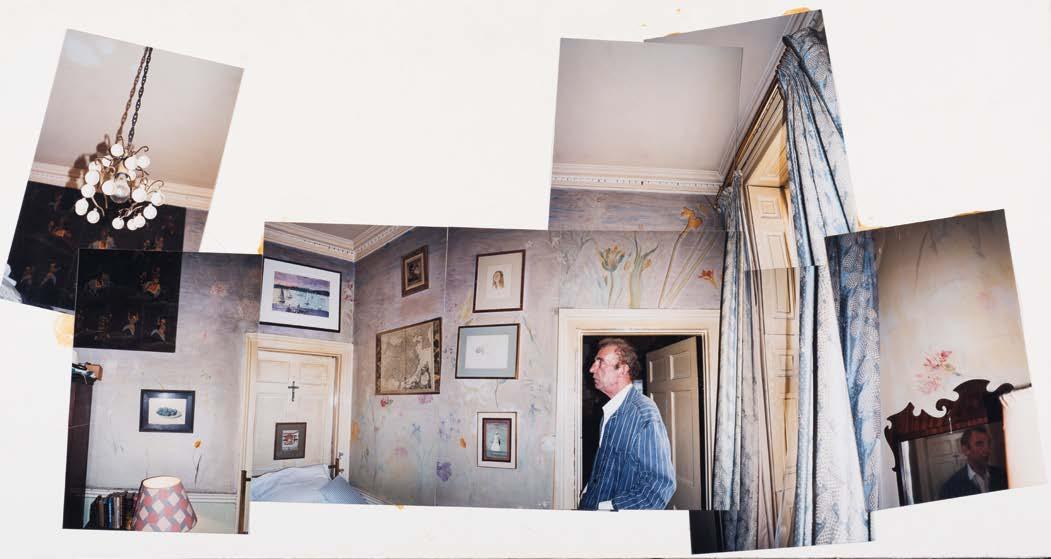
Richard Selby
It could be said that Patrick Procktor has become synonymous with the Redfern Gallery. From his first sell-out show in 1963 he became one of Redfern’s star artists.
I had first seen this giant of a man in 1985 at the South London Art Gallery, where he was presenting a prize to Camberwell Art students. I remember that he chose a promising student’s watercolour before sending a water jug flying across the room, much to everyone’s amusement (apart from the Head of Painting).
A few years later, after graduating from Camberwell, I joined the Redfern Gallery. It wasn’t long before I met Patrick. I would often be sent to Manchester Street to collect paintings from Patrick’s studio and a friendship slowly began. Patrick could be quite intimidating but was always generous. His sharp, wicked humour was legendary. He was remarkably quick-witted and could complete The Times cryptic crossword in 7 minutes flat. Above all he was a naturally gifted painter and draughtsman.
Through watching him work over the years he reignited my passion for watercolour, something I will always cherish.
We are thrilled to be showing Patrick Procktor again at the Redfern Gallery and are grateful to Ian Massey for curating this exhibition. His writing and infectious enthusiasm has breathed new life into the appreciation of Procktor’s work. Ian has selected some paintings which have not been shown in the space since the 1960s, as well as some of the last dark haunting oils.
Patrick loved the space at 20 Cork Street and always referred to it as ‘the finest picture gallery in London’. His favourite parting line when leaving any of his Redfern exhibitions would be: ‘Thank you for hanging me.’
Ian Massey
Patrick Procktor’s arrival on the London art scene came with the opening of his first show, held at The Redfern Gallery in May 1963. He had graduated from the Slade School of Fine Art less than a year before and, with the exception of nine student works, had, in a period of intense activity, produced the rest of the show’s thirty-five oil paintings and thirty-three works on paper in the intervening months. The 27-year-old now found himself heralded as a major new talent, his show both critically lauded, and a near sell-out, with work acquired for both private and public collections. While thrilled with his success, Procktor also realised its implications: for, aware that his work remained very much in transition, he understood the need to consolidate his position under the watchful eyes of the critics. And so, driven by continued determination and ambition, during the remaining years of the decade he went on to produce a succession of markedly inventive paintings, gradually arriving at the lightness of touch for which he was to become renowned.
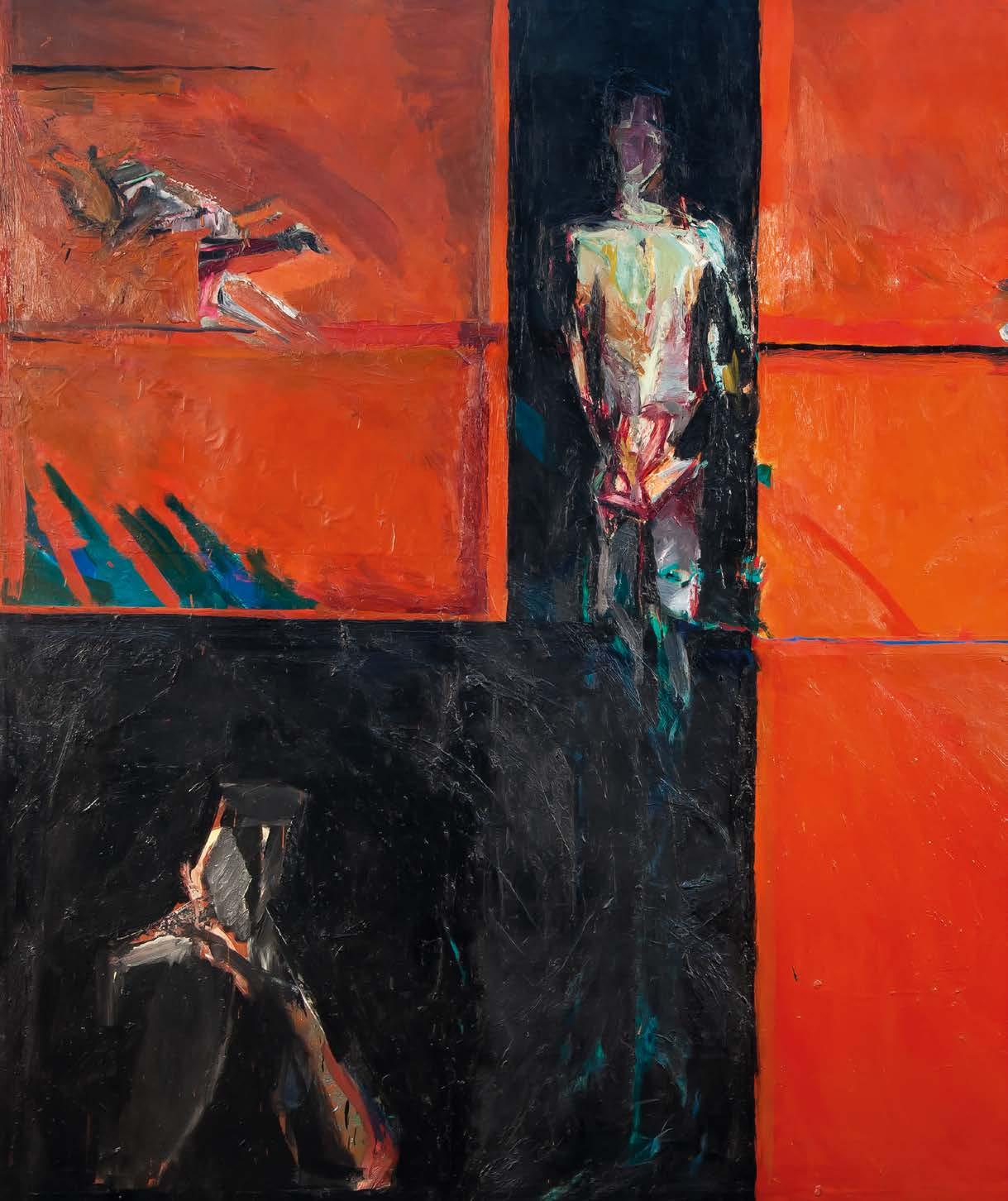
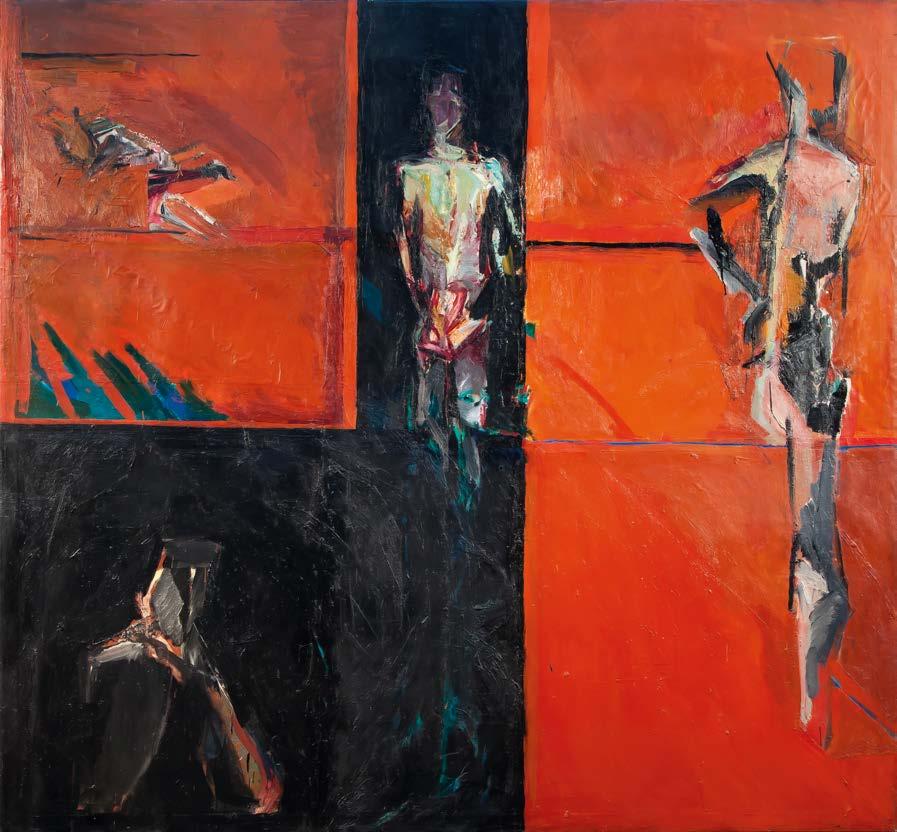
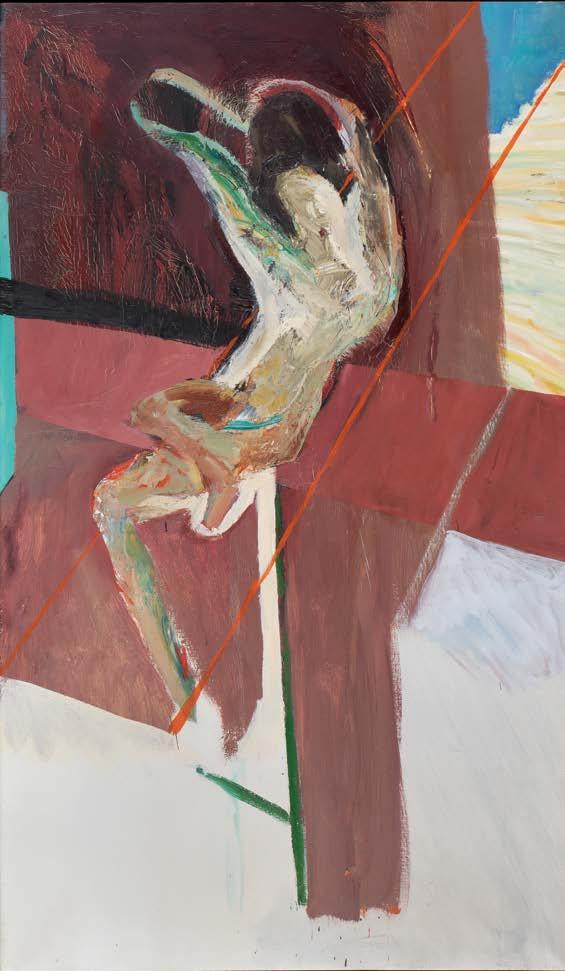
Central to Patrick Procktor: Stages is a group of paintings made during those years of experiment. Several are large in scale, and most have not been exhibited since they were first shown, soon after completion. The earliest is in fact a canvas included in the artist’s 1963 show. The Beach: Figures in Red and Black (1962) [illus. p. 6], is based on memories of a trip to Italy and Greece in the summer of 1962, when Procktor was accompanied by his lover, fellow painter Michael Upton, and Upton’s girlfriend, in a short-lived ménage à trois. The painting’s figures are set against panels of terracotta and black, in reference to the murals from the Villa of the Mysteries at Pompeii, which Procktor had admired during a visit to the archaeological museum in Naples. The two standing figures represent a self-portrait and Upton: the subsidiary ones are less readable; the top left might be bird, insect, or diver. Like the majority of the work in that first exhibition, the vigorous application, with brush and palette knife, bears the residual influence of David Bomberg, whose expressionistic paintings had greatly inspired Procktor during his time at the Slade. He had also looked closely at contemporary abstraction, taking from it the formal geometries and devices useful to him. Evident too in these paintings are stylistic echoes of the work of Keith Vaughan,
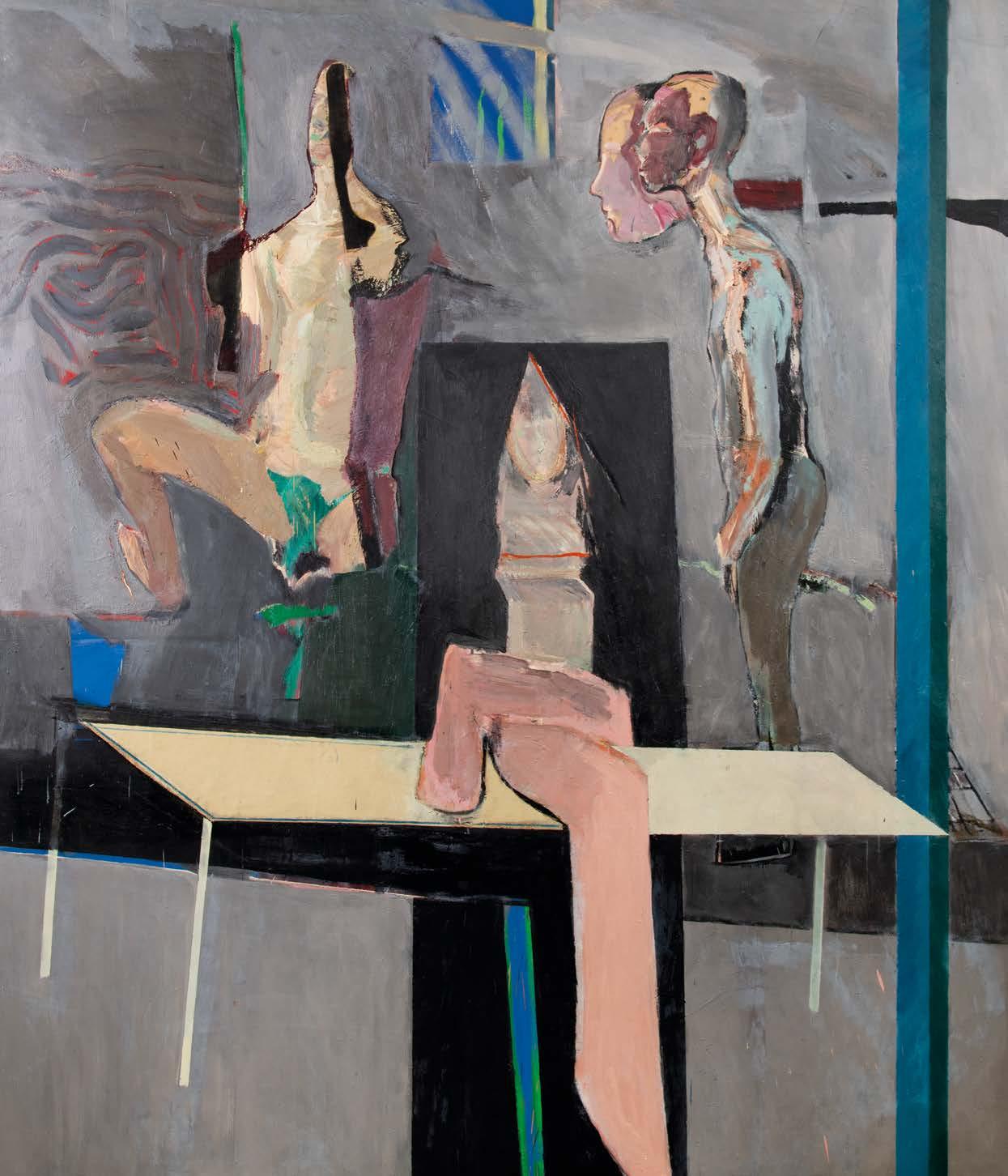
who taught Procktor at the Slade, along with something of the psychological tension of Francis Bacon’s paintings; the latter is especially evident in the surreal dismembered nudes of Three Figures from Memory II (1964) [illus. front cover]. This work, along with The Black Set from the same year, were among four by Procktor included in ‘The New Generation: 1964’, at the Whitechapel Gallery, London, in Spring 1964.1 The artist was one of twelve young painters in this survey exhibition, selected by Whitechapel Director Bryan Robertson. The drama inherent in Procktor’s four paintings is amplified by their spatial ambiguity, a factor noted by Robertson when writing of them in the exhibition catalogue:
Space has become a hall of mirrors, its planes fragmented, divided, reassembled in new permutations.2
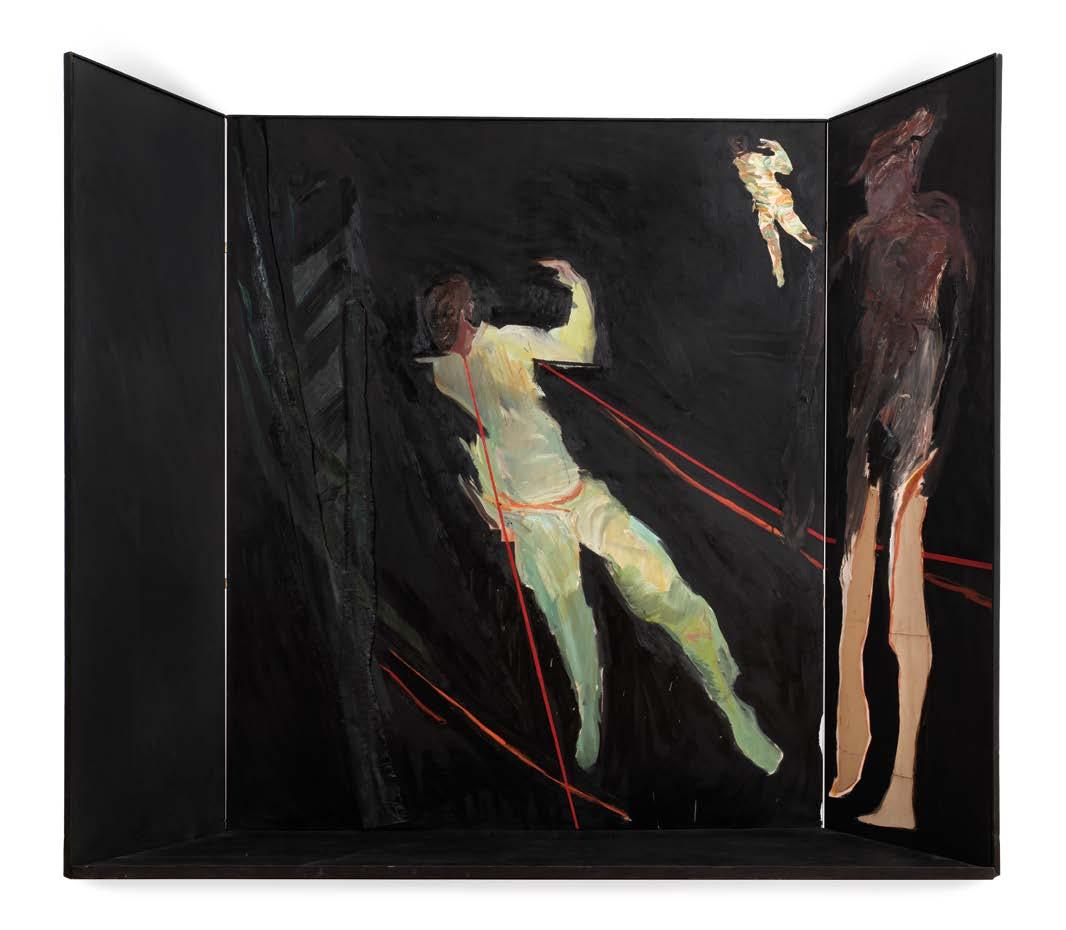
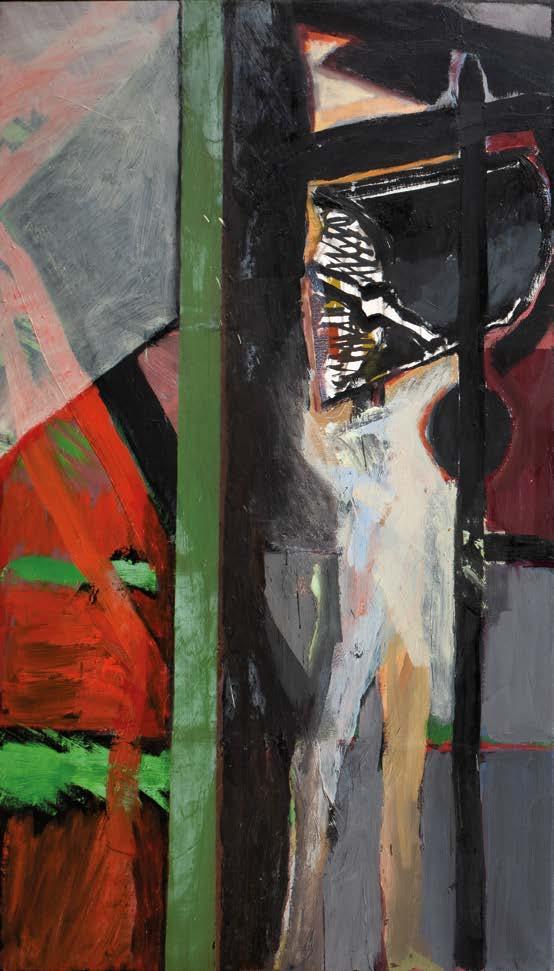
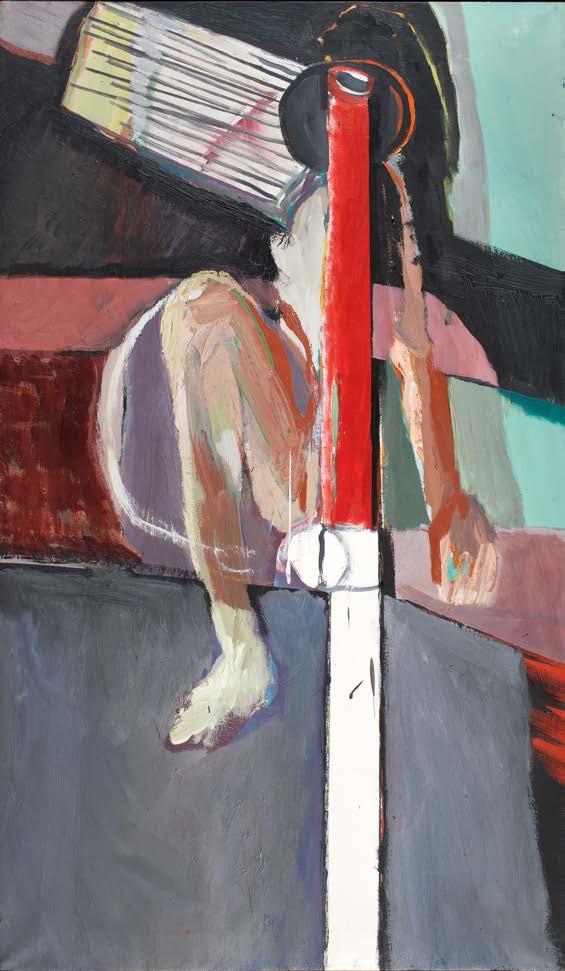
A flamboyant six-foot-five dandy, Procktor was innately theatrical, a characteristic that, along with great personal charisma, was already evident in his teenage years as a pupil at Highgate School, where he performed in several Dramatic Society productions. He later acted in plays during his National Service years with the Joint Services School for Linguists (where he became highly proficient in the Russian language), and aspired to become an actor, before changing course to study art. In fact, the dynamics of space and light in his paintings are not so far removed from those of the stage, for theatre continued to both fascinate and inspire him. One sees its influence in his work, where theatrical artifice often finds a pictorial equivalence. It is made explicit in the structure of The Black Set (1964) [illus. p. 9] – ‘a canvas with wings and a floor’ –as the artist described it.3 There are two figures here, both strange, and partially overpainted in black. That on the right appears half-beast, satyr-like. The other, clad in white, and masked in black, is tethered with red guy ropes, then repeated, much diminished in scale, and cast adrift in indeterminate darkness. In common with most of Procktor’s paintings of the early-to-mid Sixties, it is essentially autobiographical, its meanings – often related to the artist’s queer relationships – obscured and codified.
Procktor’s paintings of the early 1960s are based on combinations of drawings, his own photographs, and imagery culled from memories and dreams. Then, from around 1964, whilst sometimes continuing to make preparatory sketches, he also began to paint directly from photographs found in books, newspapers, and magazines, many though not all printed in monochrome. Responding to the effects of light and tone in this material, he developed a painterly shorthand, forming a vocabulary of marks and heightened invented colour. An example is the canvas Ethnic Minority (1964) [illus. p. 11], a depiction of two American Indians made in broad abstract gestures and areas of detailed pattern. Both figures are painted in disparate and freewheeling styles, some areas appearing as though in
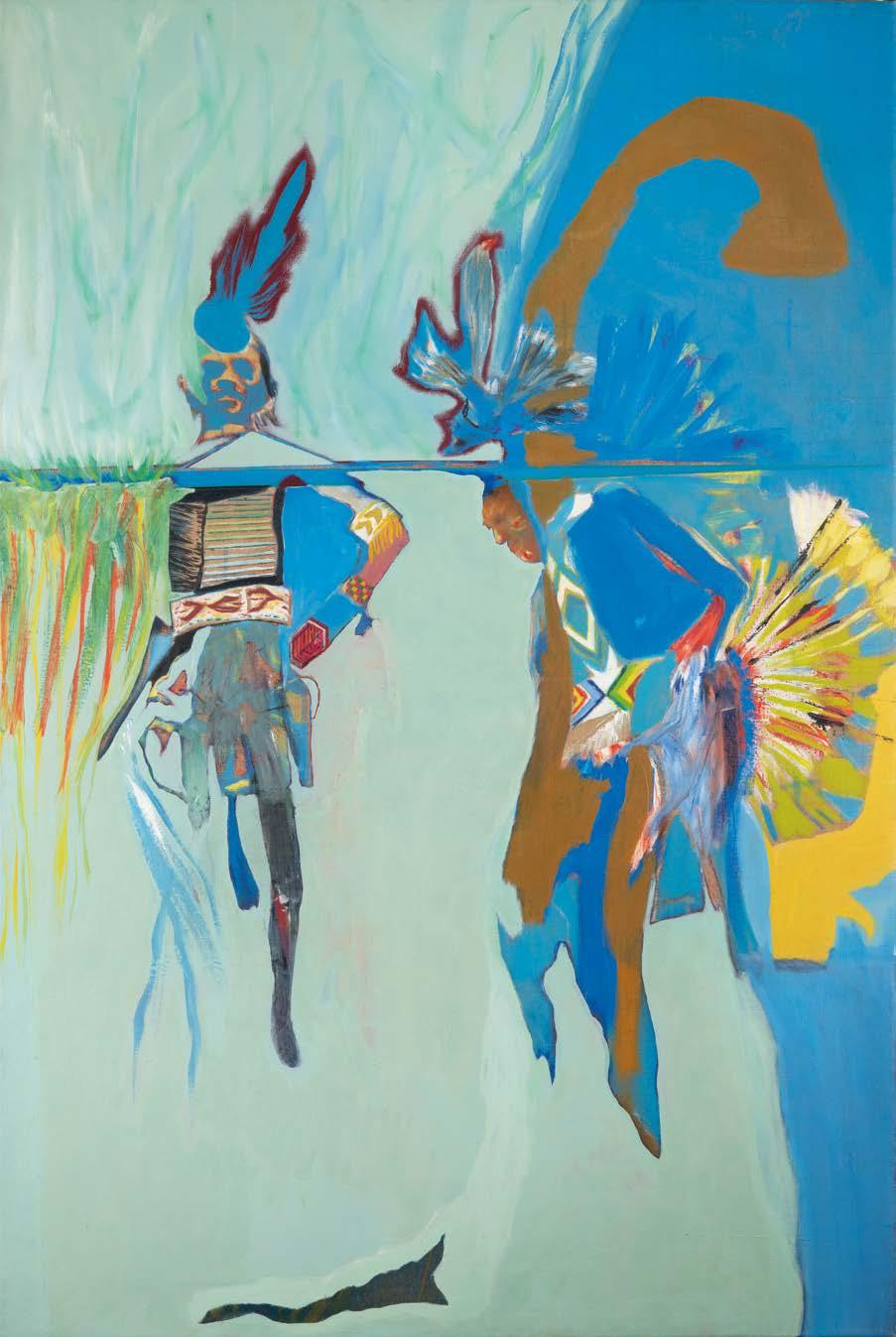
photographic negative and, as the art historian and curator Tommaso Pasquali has noted: ‘the background pattern corrodes the profiles of the protagonists as in a solarized photo’.4
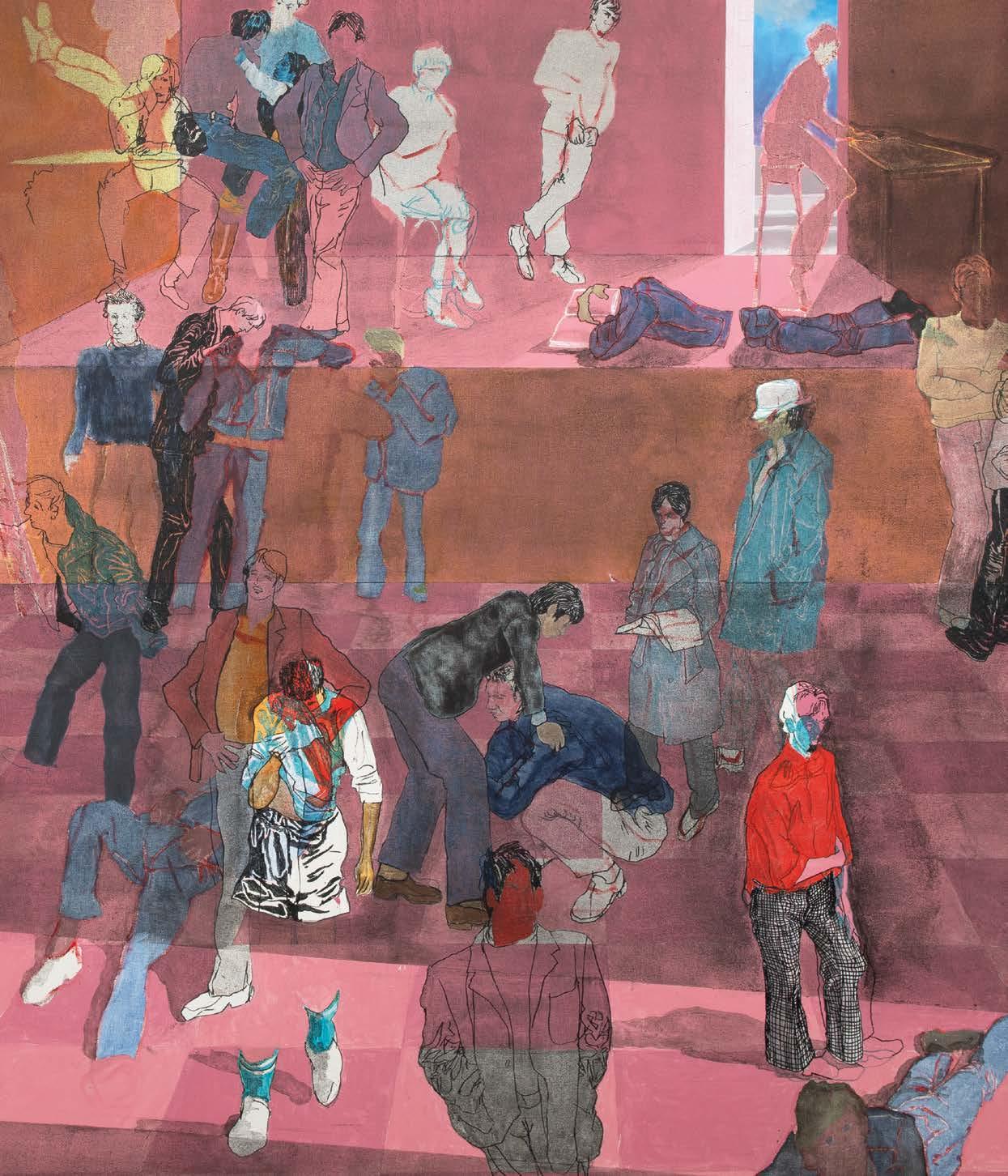
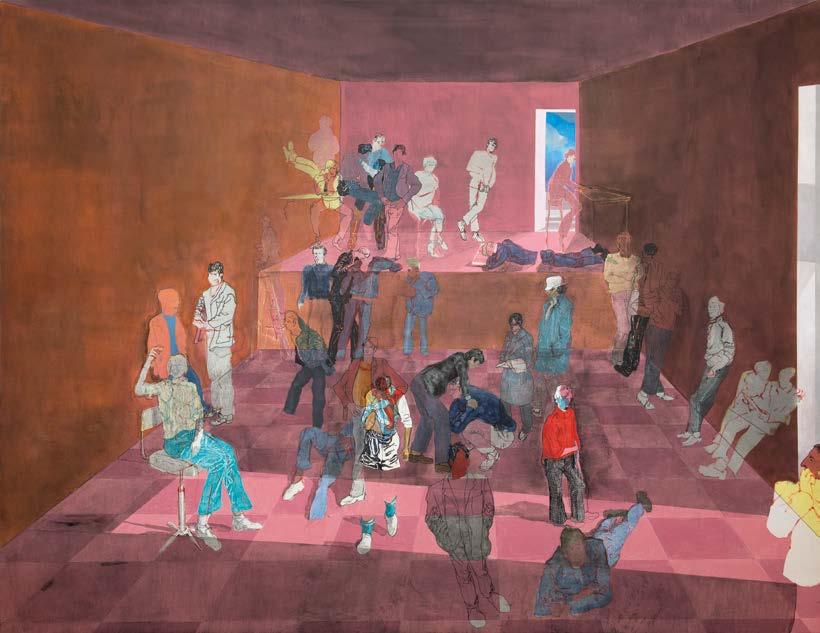
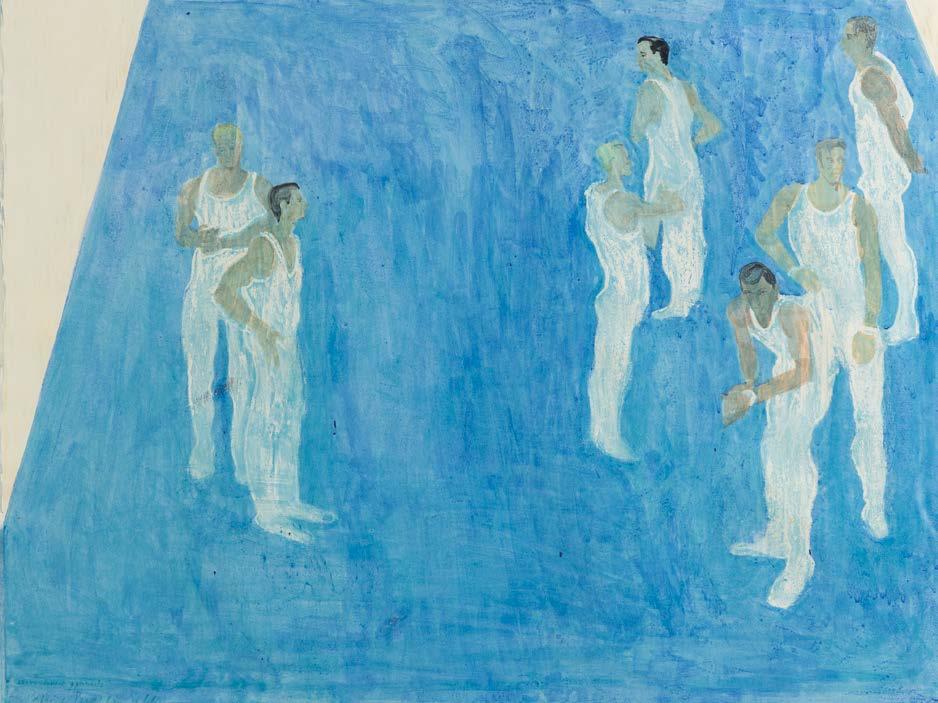
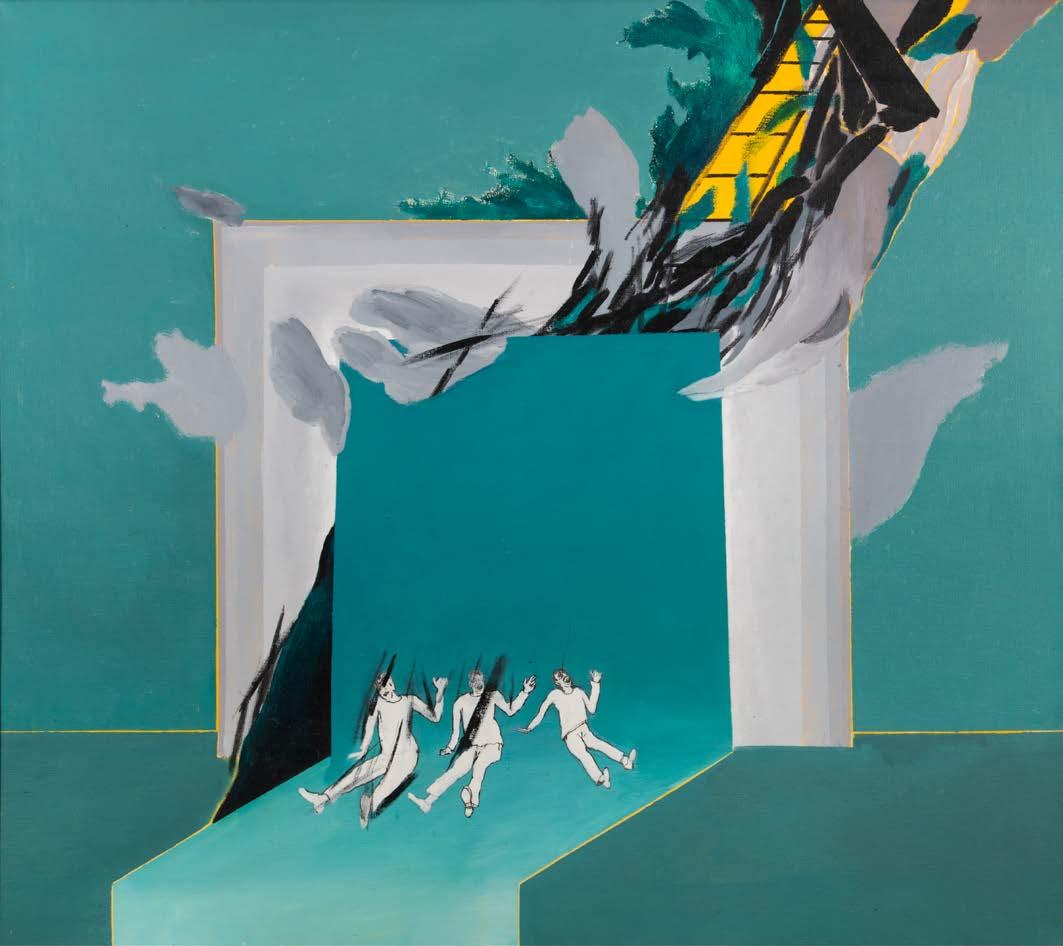
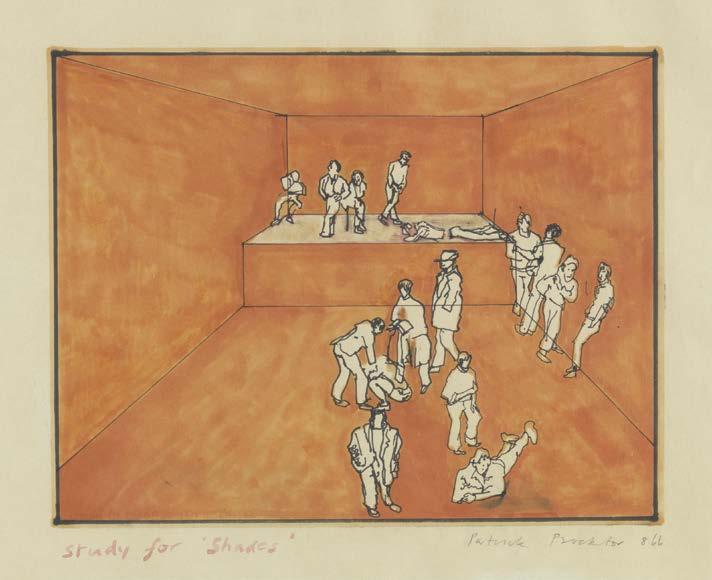
Based on the interior of ‘Le Duce’, a gay Mod club in Soho, Shades (1966) [illus. p. 13] was first seen in Procktor’s third one-man show at The Redfern Gallery in May 1967, where it was among several pictures with themes of transgressive or ambivalent sexuality. Others depicted leather boys: see, for instance the small canvas Leather Boy (1966) [illus. p. 38]. There were also paintings of large groups of leather and denim clad men, like visitors from Tom of Finland’s homoerotic drawings; and of The Rolling Stones, cocksure in drag. In Shades, with its raised platform, and entry points from which stream shafts of intense light, the setting is once more that of a stage, its assembled cast that of men from the artist’s circle. Among them are friends, such as fashion designer Ossie Clark, the writers David Plante and Nikos Stangos, theatre designer Peter Docherty, art historian Michael Ricketts, and the artists Dale Chisman and Alex Warwick. There are also several of Procktor’s one-time lovers; artist/filmmaker Derek Jarman, artist Keith Milow, and
Ole Glaesner, a Danish tailor who had trained with Yves Saint-Laurent in Paris, and who for a time lived with Procktor at his home in Marylebone. All are delineated in brush-drawn line, some infilled with colour, others left solely in outline on unpainted canvas. The painting’s drama derives both from its stark lighting, and the ambiguity of what is taking place among its strangely fragmented figures. Why, for instance, is there a ghostly figure on a stepladder, and why do others lie on the floor, one with his head in a book? It is as though separate scenes from a play, or indeed several plays, have been overlaid, in a conflation of time and action. As such, it suggests the intertwined networks and ceaseless social round of the London gay scene in the period, when, as George Melly has written:
Soho at week-ends was full of Mods pilled up to the eyebrows, dressed like kaleidoscopes, and bouncing in and out of the cellar clubs like yoyos.5
Both Procktor and his gallery were doubtless aware of – and indeed welcomed – the controversy and publicity his queer-themed paintings were to generate: and in fact, the show led to a commission from the Royal Court Theatre, who asked him to draw a portrait of Joe Orton, for reproduction in the programme of a double bill of the queer playwright’s work staged that June. Now in the National Portrait Gallery, the ensuing drawing is a knowing collusion between artist and subject, in which Orton reclines on a divan, naked but for his socks. The portrait soon acquired the anticipated notoriety. And, when considering the paintings Procktor exhibited in May 1967 within the context of the time, Shades, depicting as it does a thriving community on the cusp of liberation, now reads as a social document. For, little more than two months after it was shown, the Sexual Offences Act received Royal Assent. A landmark in queer history, the act decriminalised private homosexual acts between consenting adults over the age of twenty-one in England and Wales.
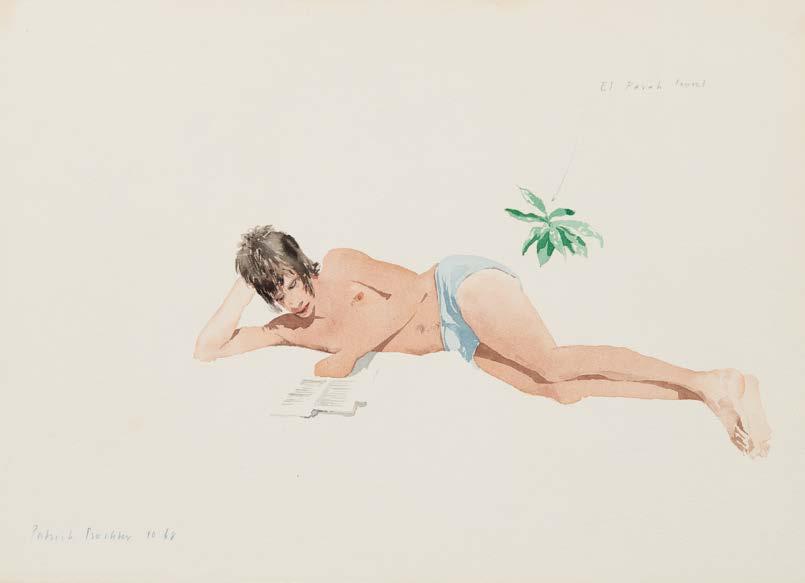
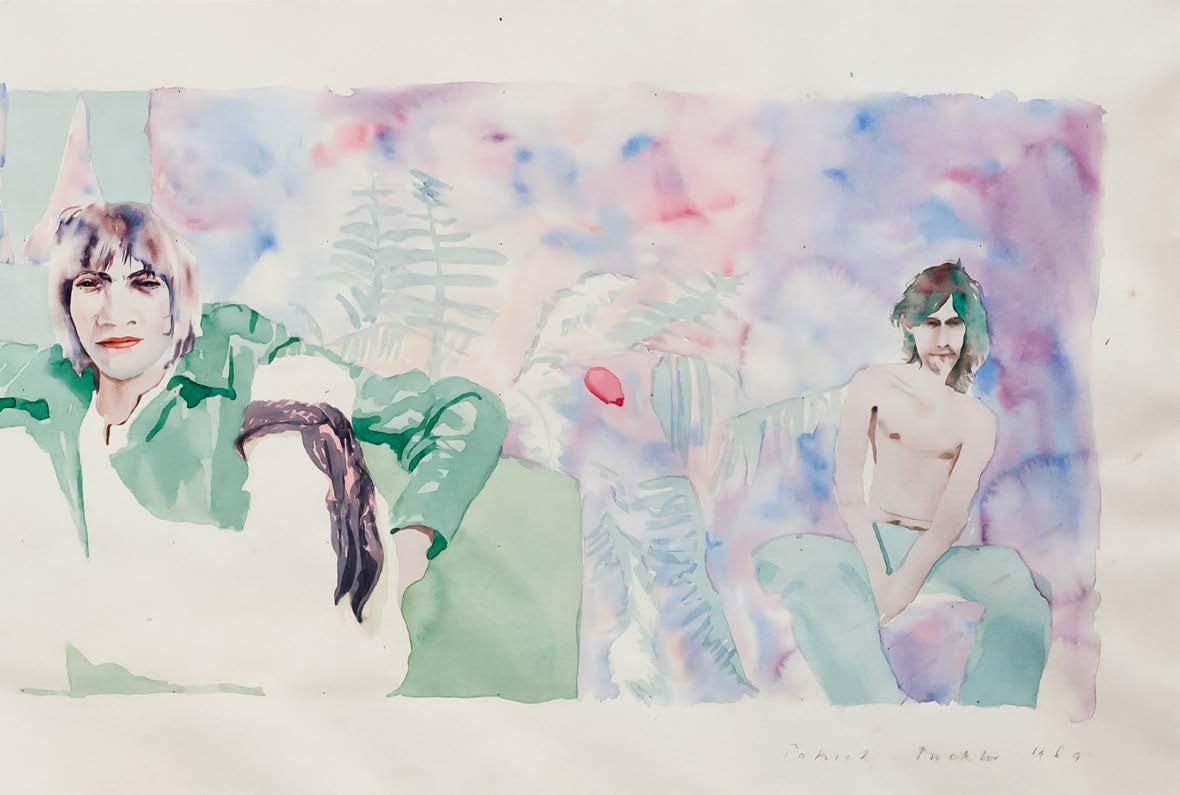
In analysing Procktor’s technical development, Shades’ acrylic washes can be seen as a precursor to those of his watercolours, the medium in which he became the most authoritative exponent of his generation. He began to fully explore watercolour when holidaying in Europe in the summer of 1967, taking to it instinctively, and at first making portraits of friends: among them the artists David Hockney and Peter Schlesinger, and critic and museum director Mario Amaya. Then, in the following year there began what amounted to an obsessive outpouring; of watercolours, drawings and paintings on canvas, all of them portraits of one of Procktor’s great loves, the 22-year-old model and aspiring pop singer Gervase Griffiths. Of these, a pencil drawing and several watercolours feature in this exhibition, each a tender rendition of youthful beauty. The watercolour Limerick Head (1968) [illus. p. 16] is near-forensic in its sensuous description of the surfaces of Griffiths’ lips, eyes, and eyelashes. There is also the
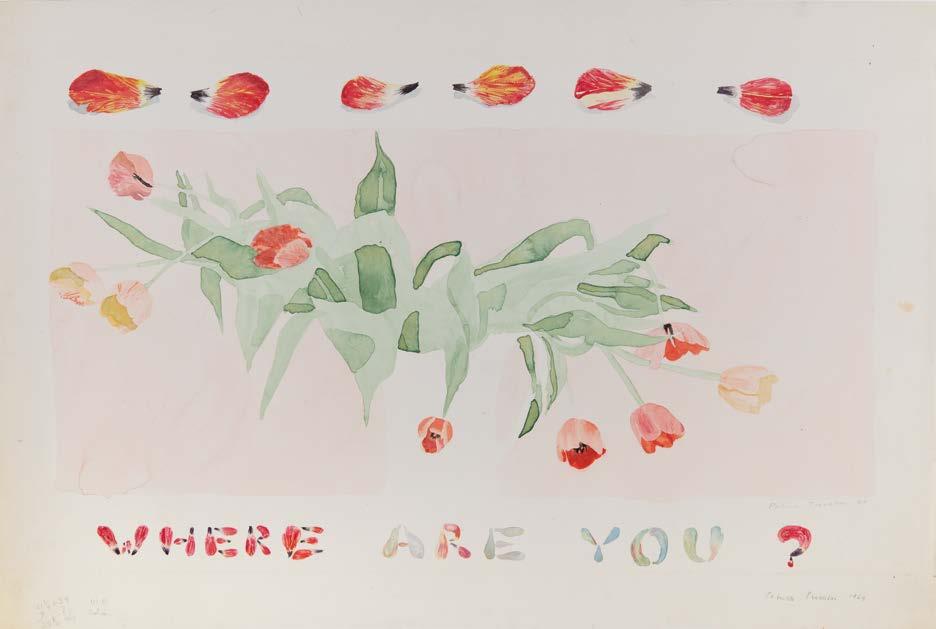
Where Are You 1969
Watercolour on paper
66.3 × 98.8 cm
watercolour still life of tulips, Where Are You? (1969) [illus. p. 15], its title spelt out in petals, a paean to loss and bewilderment in the aftermath of their affair.
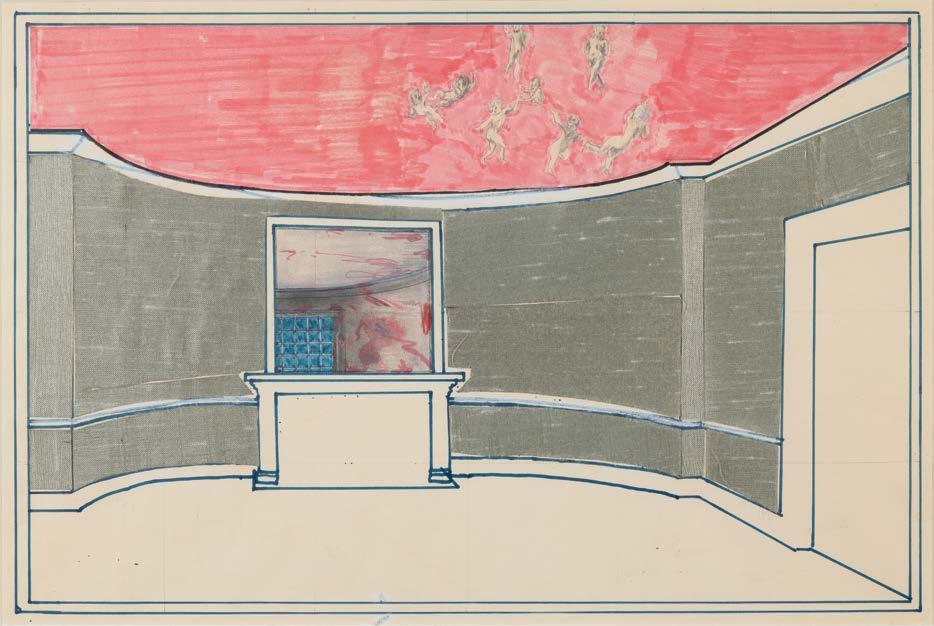
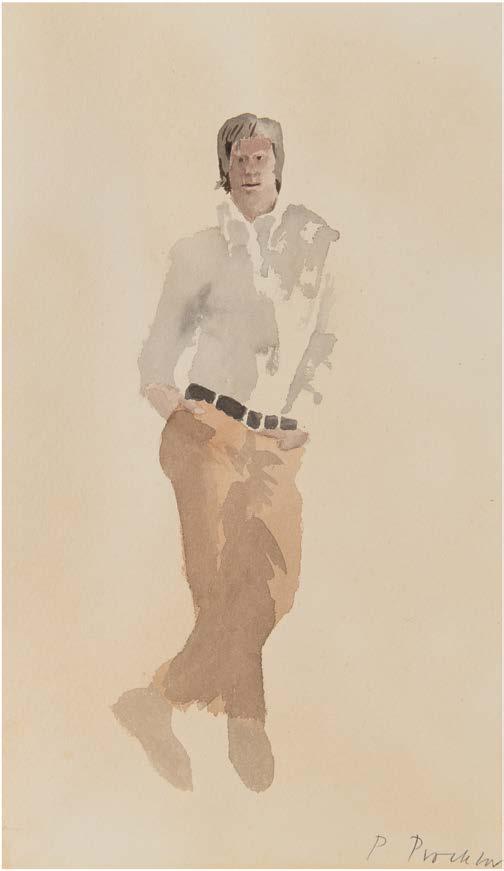
Procktor designed for the stage on five occasions during the 1960s. His first commission was for a production of John Whiting’s play Saint’s Day, at Theatre Royal, Stratford in 1965, for which he made a large mural decoration to serve as a backcloth. Two ballet productions followed, both for the Western Theatre Ballet: Parade, for which Procktor designed a drop curtain and costumes; and a front-cloth for choreographer Jack Carter’s Cage of God, for the same company. There were also two Royal Court Theatre productions in 1968: Shakespeare’s Twelfth Night, which opened in late January, followed in September by Total Eclipse, Christopher Hampton’s play about the relationship between the poets Arthur Rimbaud and Paul Verlaine. For Twelfth Night, Procktor attired the cast in contemporary clothing, with trousers by his friend the menswear designer Michael Fish (a.k.a. Mr Fish), and hats by milliner Diane Logan. The actor Patrick Mower played Orsino in a gold suit from the Chelsea
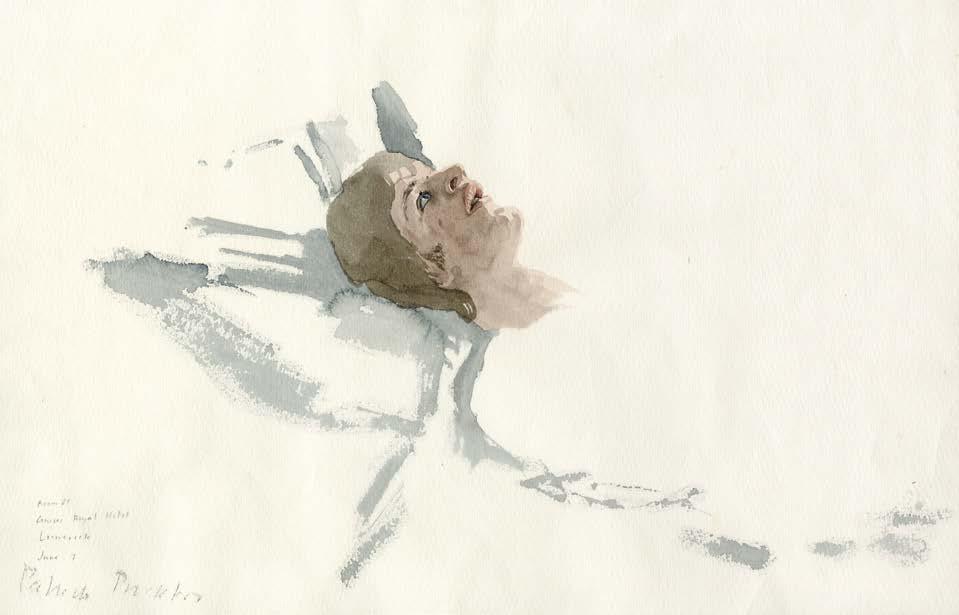
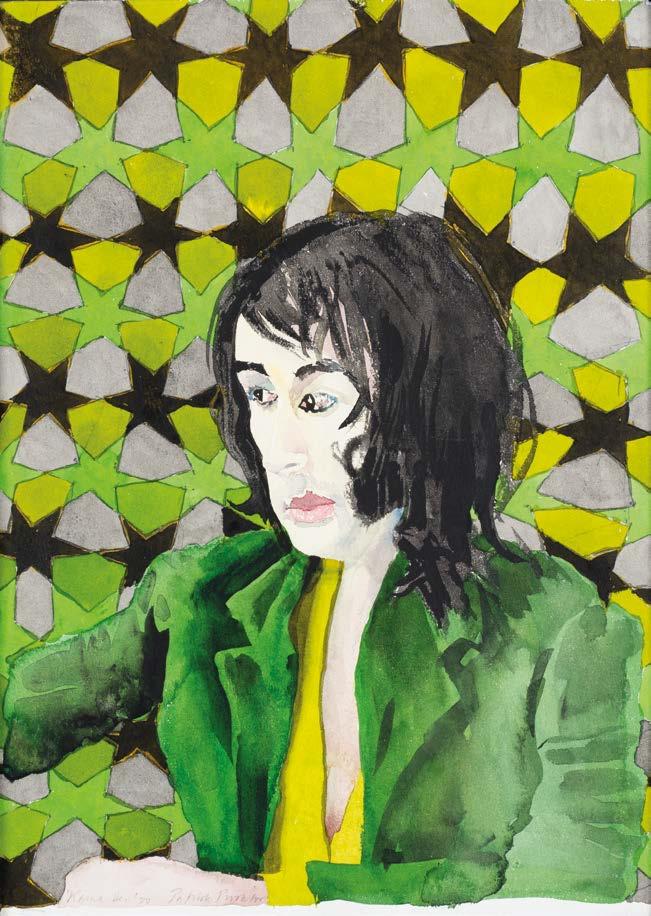
Watercolour on paper
35.2 × 25 cm
boutique ‘Hung On You’. Procktor made drawings of the eighteen members of the cast in ink line; several were reproduced in the programme. He also made a group of watercolour portraits during breaks in rehearsals; all are painted from life, with great immediacy. Seven are included here. In each, posture and clothing are described in tonal washes applied with assured economy, with details confined to facial features and hair. In some, hands, socks, or jewellery are left unpainted as white shapes on the paper, adding to the sense of impromptu spontaneity.
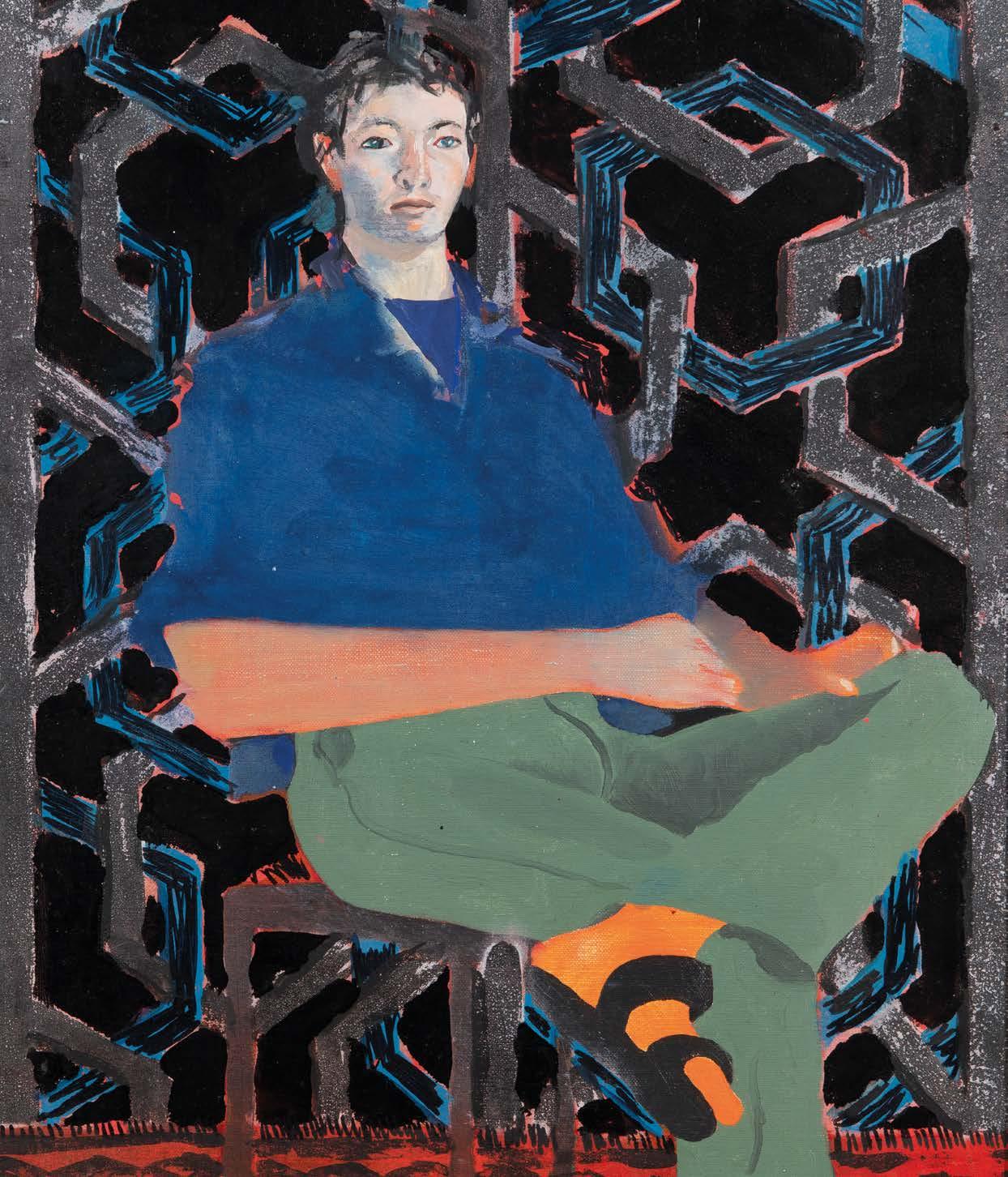
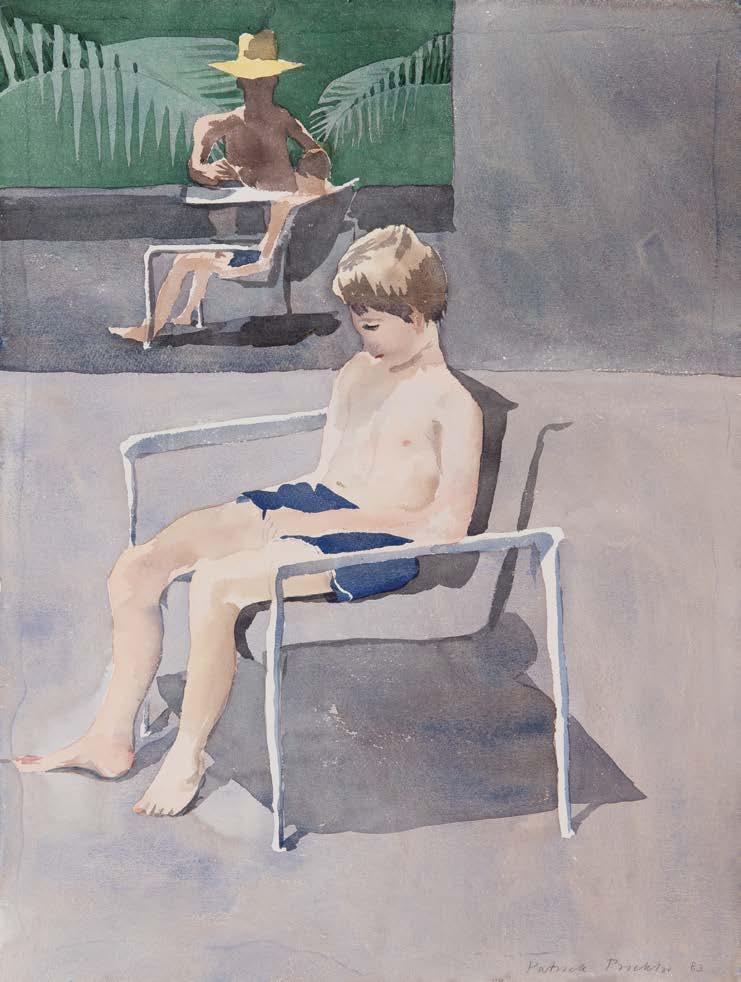
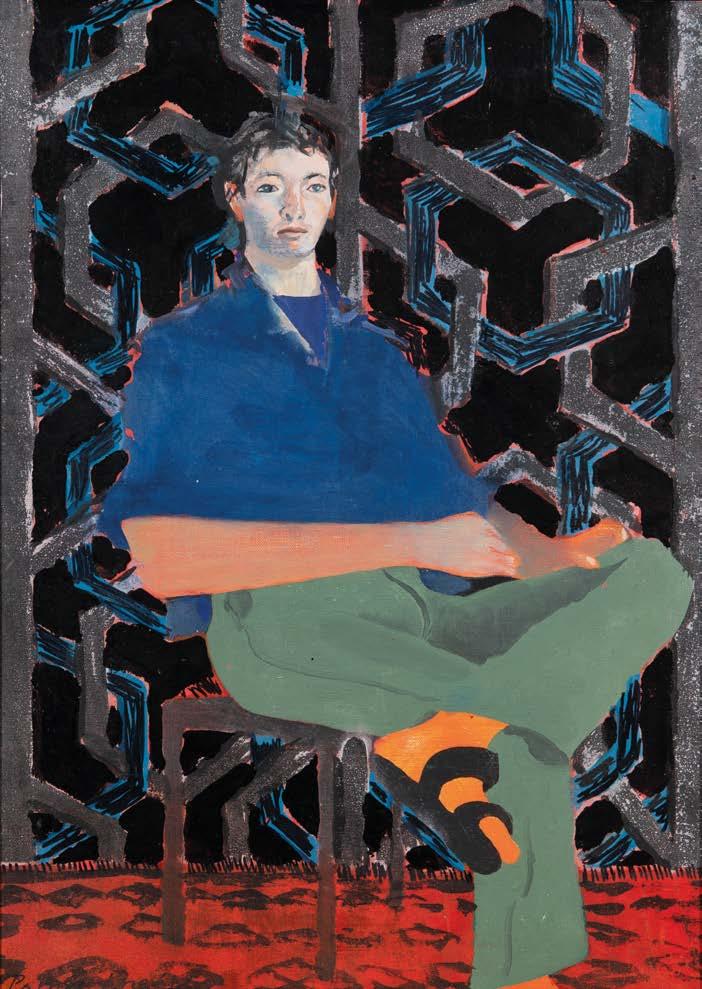
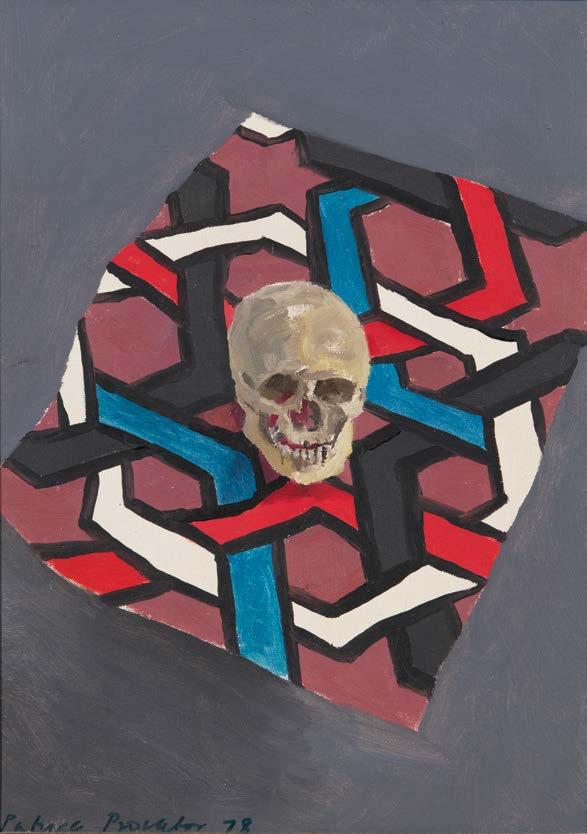
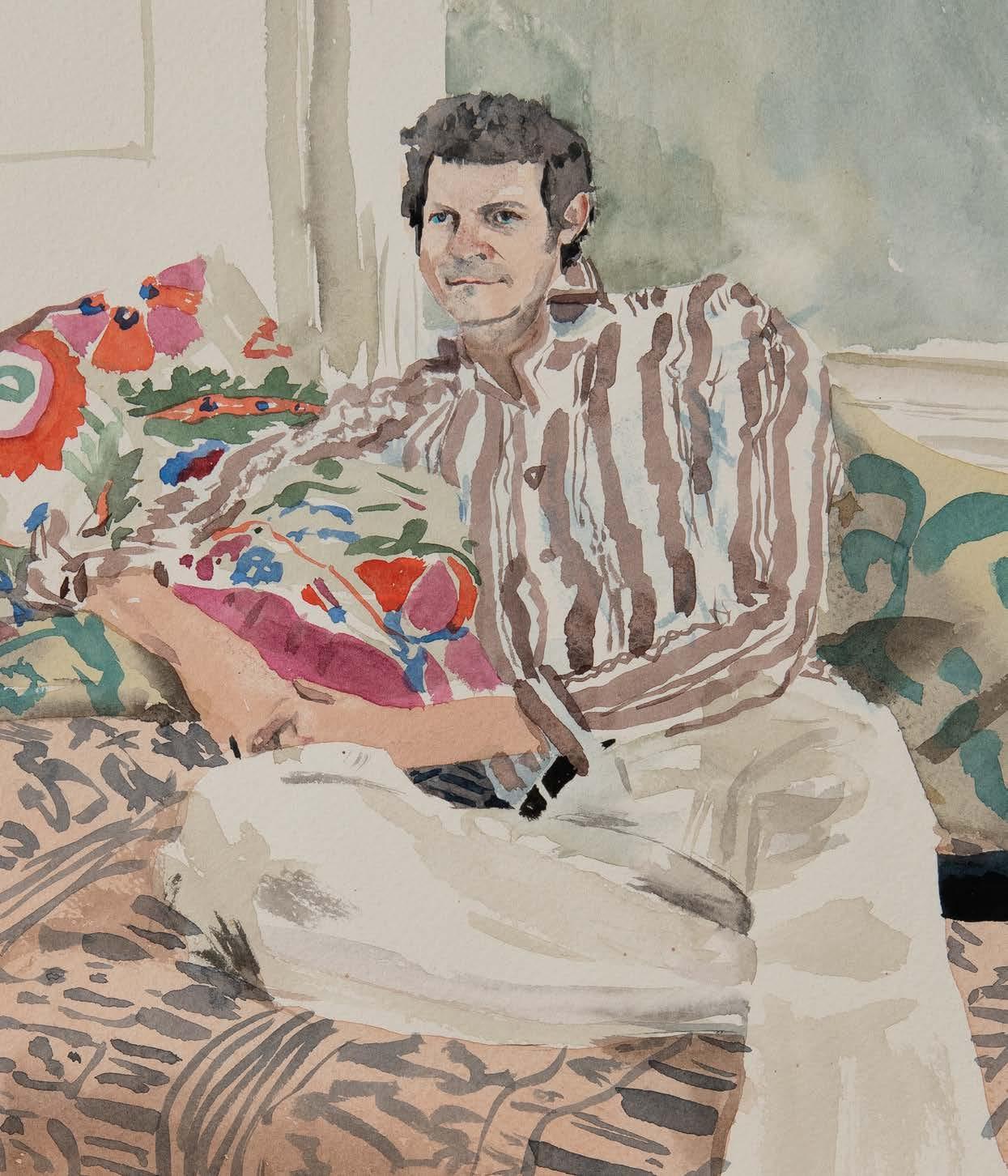
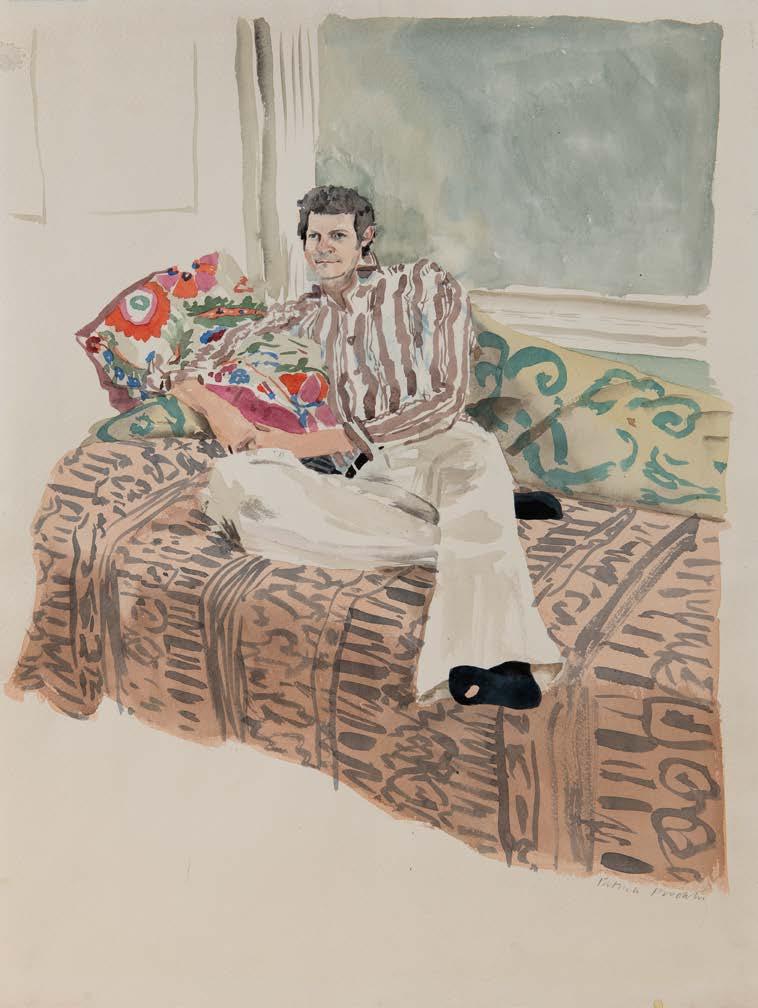
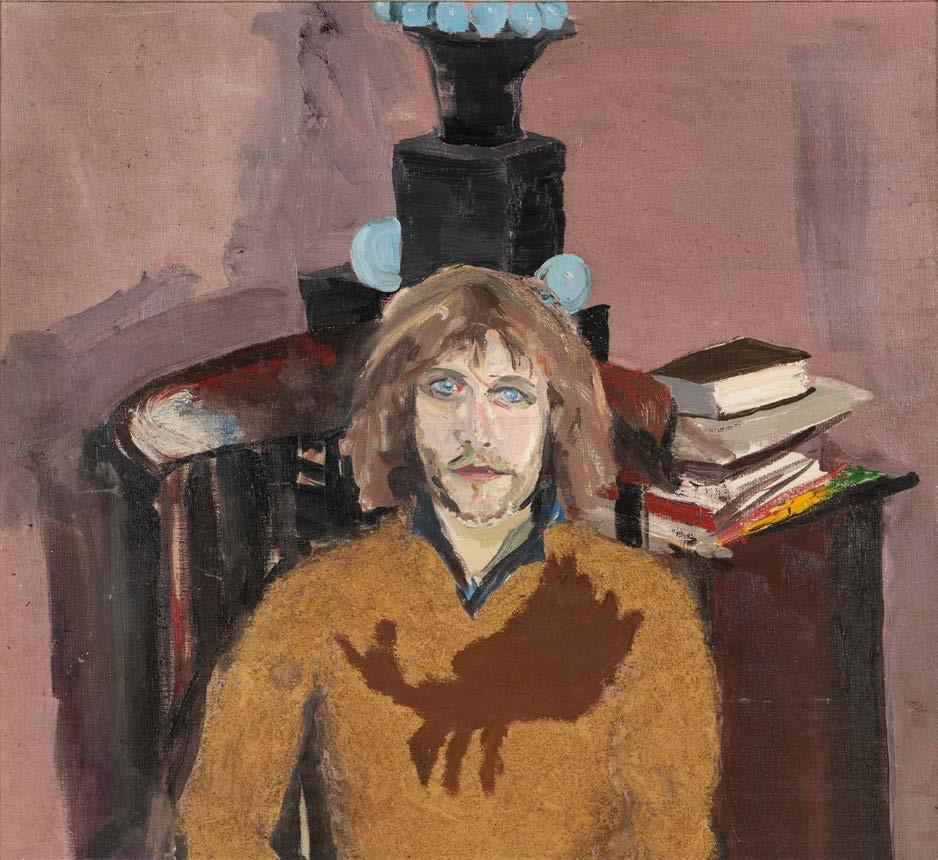
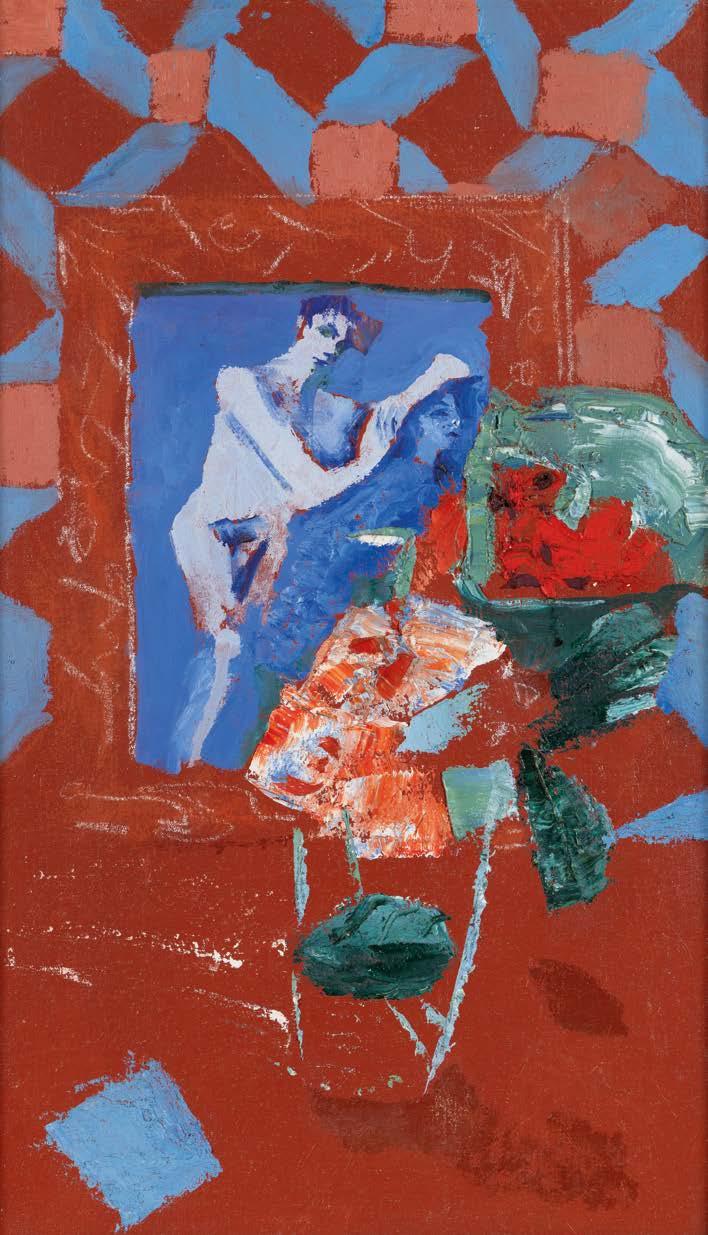
Procktor was a prolific portraitist. His subjects include many figures from the 1960s and ‘70s counterculture of which he too was part: among them the musicians Mick Jagger, Jimi Hendrix, and Stevie Winwood; the actors Terence Stamp and Nicol Williamson; and the poet Thom Gunn. He also painted members of his social circle, such as textile designer Celia Birtwell, and antiquarian Christopher Gibbs. While many of these portraits tend towards naturalism, in others a brand of mannerist distortion comes into play. Mario Amaya once described Procktor as: ‘the Parmigianino of Pop’, referring to the 16th century Italian Mannerist painter, whose statuesque Madonna and Child with Angels (also known as Madonna with the long neck) in the Uffizi is one of his best-known paintings.6 One is reminded too of another mannerist painter, El Greco, a favourite of Procktor, who had seen his paintings at first-hand on a visit to Spain during his Slade years. One might also add that, whilst Amaya’s rather tongue-in-cheek comparison with Parmigianino is apt, Procktor was never a Pop artist per se, for his sensibility was quite different to that of contemporaries such as Peter Blake and Derek Boshier, whose work focuses more directly on the iconography of mass culture. In fact, Procktor’s mannerist stylisation is evident in paintings such as Three Figures from Memory II and then continues more noticeably in work that results from direct observation of the subject. A key example is the 1972 portrait of his close friend the actor Jill Bennett, in which, although the proportions of head and torso appear naturalistic, her limbs are elongated to the nth degree. Elsewhere, facial distortion appears both close to caricature and psychologically perceptive, as in Kama Dev (1970) [illus. p. 17], a portrayal of Ossie Clark, ironically titled after the name of the Hindu god of desire. This is one of many works by Procktor employing pattern, often based on Indian or Moorish decorative mosaics. It is also found in the background of the portrait of film-maker Seton Bailey (1977) [illus. p. 22], in the vanitas still life Viennese Woman’s Skull (1978) [illus. p. 23], and in Dubai (1995) [illus. p. 73], where the geometric pattern is that of Procktor’s sitting room wallpaper, printed to his own design. Dubai – its title apparently a pun on ‘do you buy?’ – is but one example of Procktor’s inclusion of a picture within a picture, in this case a framed painting set behind a vase of flowers. He also employed mirrors, and reflective surfaces, as in the sensitive watercolour Self Portrait with Nicky in Hollywood (1983) [illus. p. 19], in which he and his young son are shown reflected in a window or screen beneath the Californian sun.
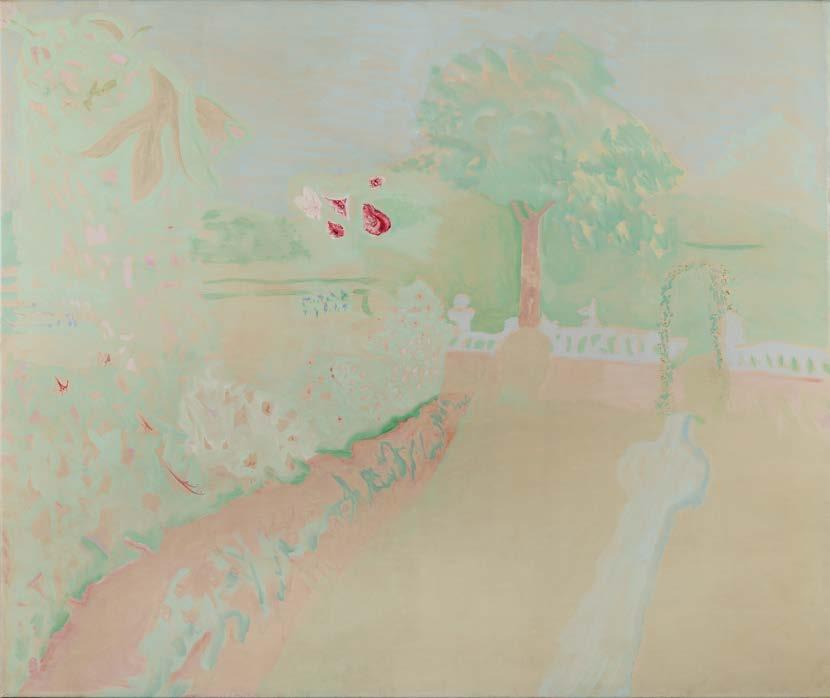
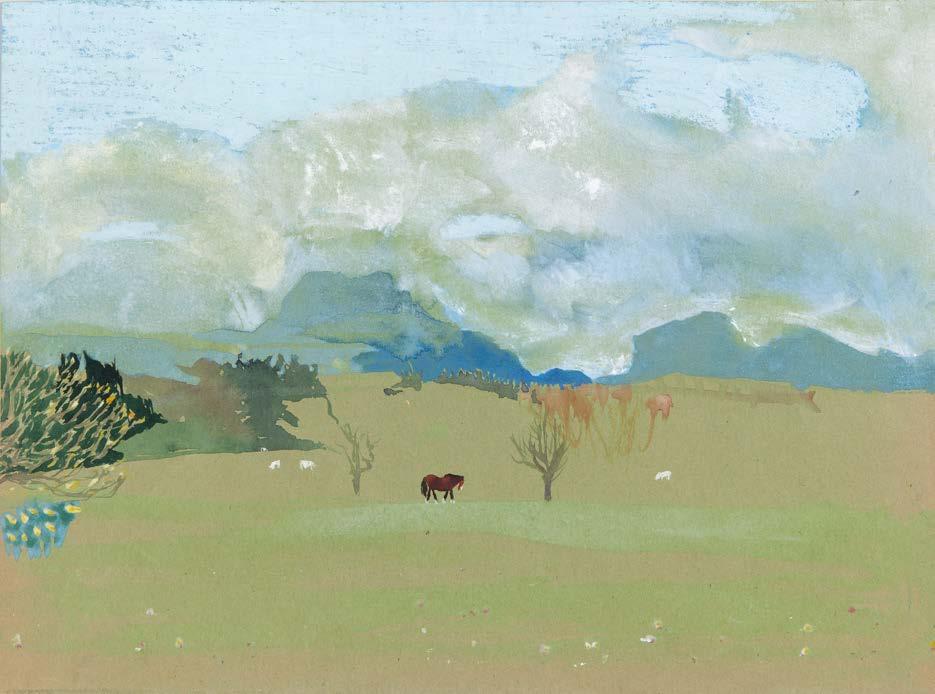
Following the breakdown of his relationship with Griffiths, on New Year’s Day 1970, Procktor set out on what he hoped would prove a restorative trip to India. He was there for two-and-a-half-months, returning to London with 86 watercolours, mostly of landscape and architectural subjects. Some of these watercolours then formed the basis for paintings on canvas, as well as a suite of seven aquatints. Two of the canvases are seen here. Both are poetic evocations of atmospheric light, in which the artist’s use of watercolour has undoubtedly informed his approach to oils. The scene set before us in the immensely subtle Waxy Bells (1970) [illus. p. 20] appears as though evaporating in hazy, bleached light, the carmine-hued flowers of its title hovering in mid-air. Painted on pale beige canvas, it is an essay in tonal restraint, most of its heavily dilute pigment applied with deceptive nonchalance. In contrast, and very different in treatment, Rain Paint (1970) [illus. p. 21] is a scene of a garden in torrential rain, seen from beneath the
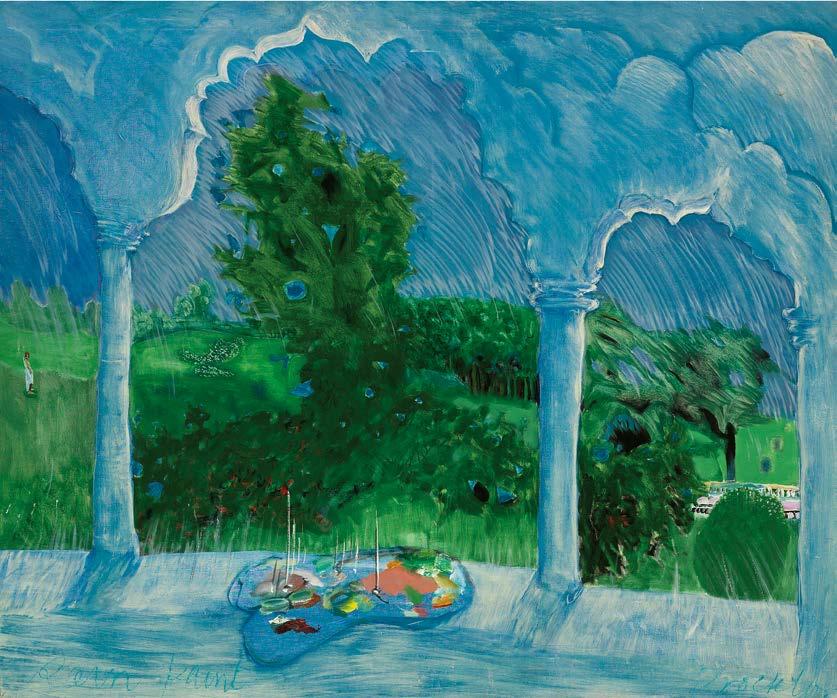
shelter of a hotel’s columned terrace, with rain bouncing on the artist’s palette on the ledge before him. It centres mainly on blues and green, applied quite thinly, sometimes wet-on-wet over a layer of white, which then illuminates and intensifies, like the white of watercolour paper.
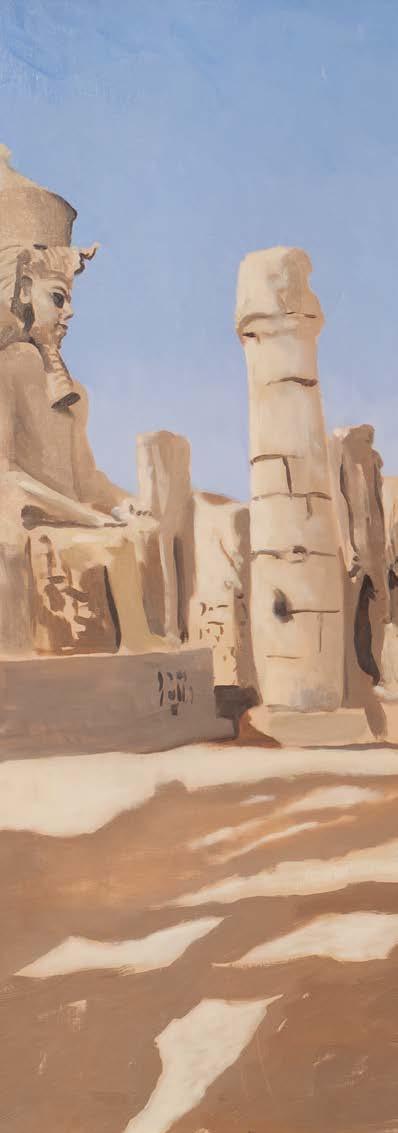
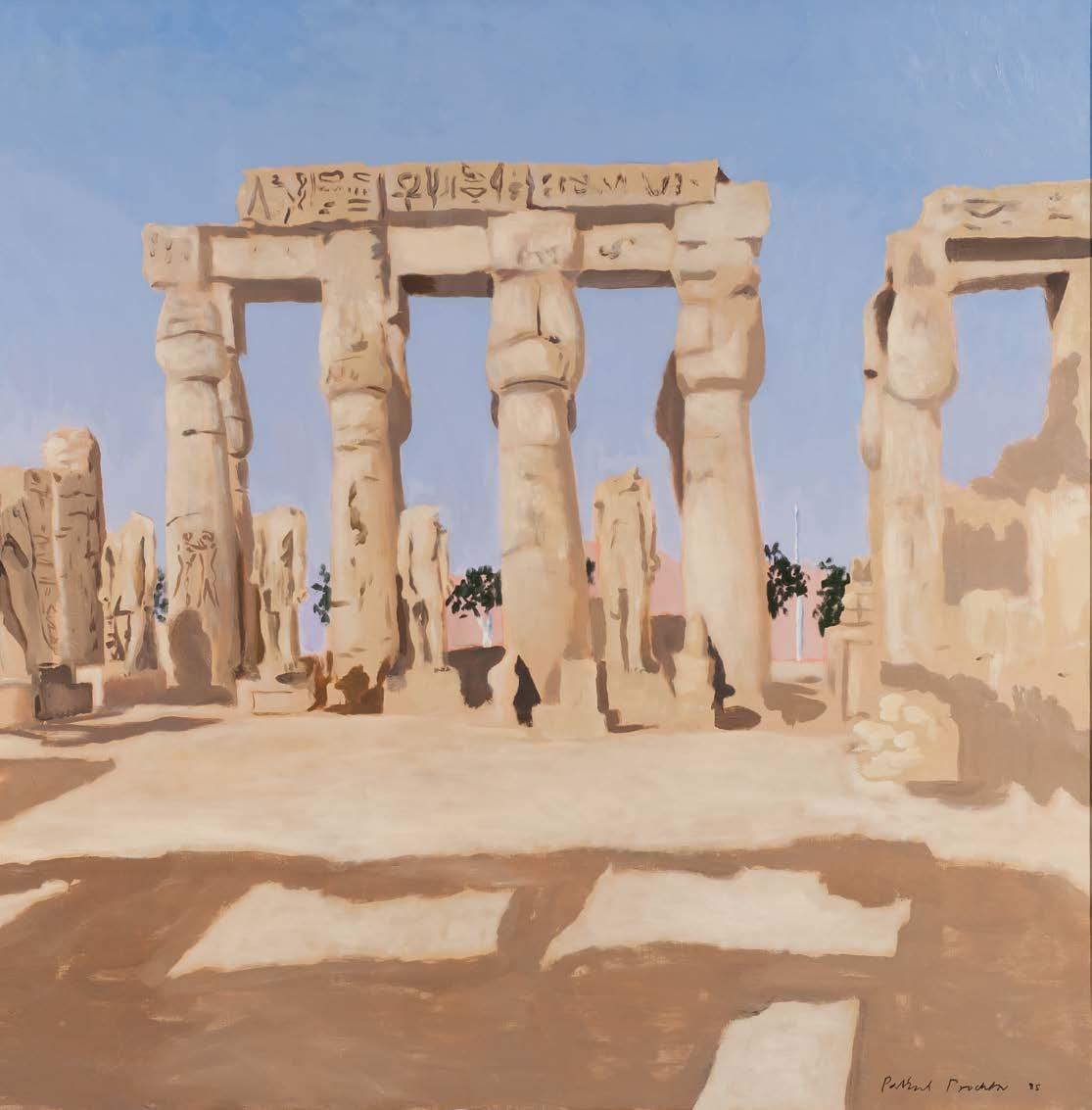
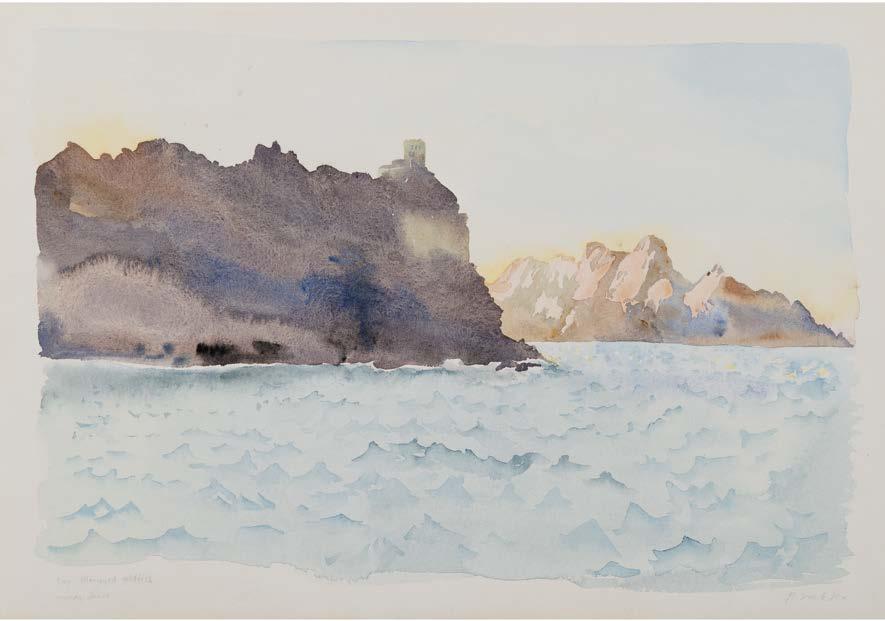
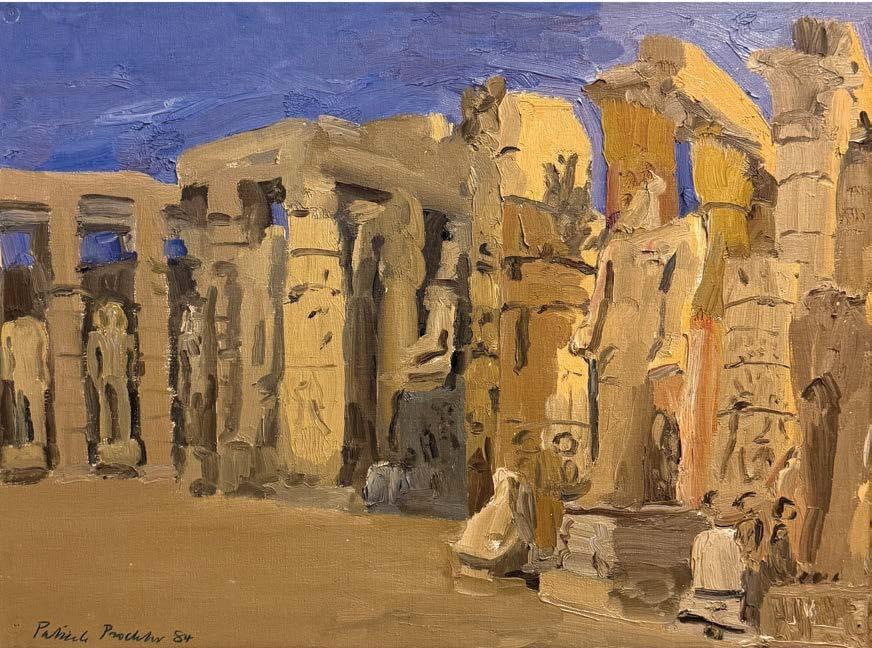
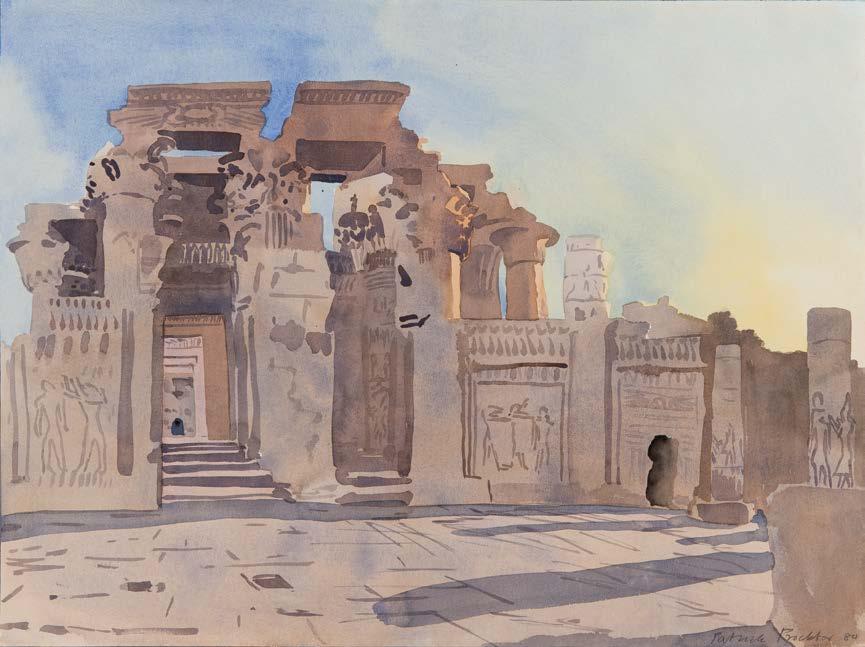
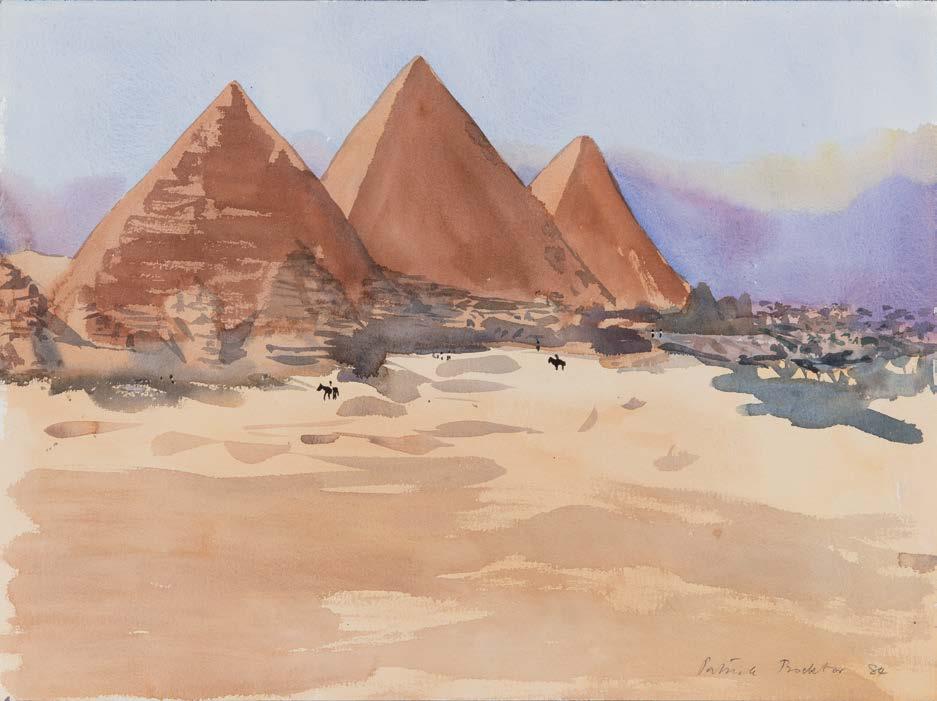
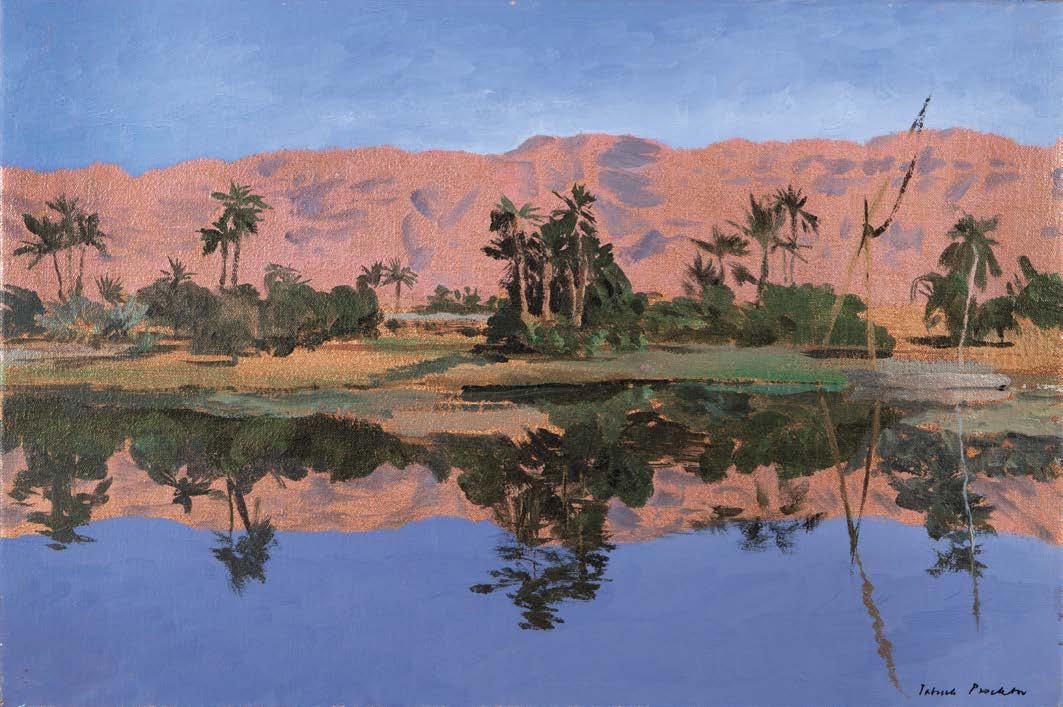
Procktor was a seasoned traveller, forming whole exhibitions from work that resulted from his journeys, much of it topographic. He painted during frequent trips to Italy, where he became esteemed and collected, with exhibitions in Bologna, Venice, Verona and Vicenza. Early in 1980 he was granted a permit to travel in China, the first European artist to do so since the Cultural Revolution. His two-month visit resulted later that year in the Redfern Gallery exhibition A Chinese Journey. Then, in the autumn of 1984 Procktor spent a month in Egypt, where he again made a substantial group of watercolours and some small oils, producing larger canvases on his return to London. In the spectacular setting of The Second Court of Amenophis III (1985) [illus. pp. 26-27], archaeological remains are set against an expanse of pink-inflected sky, drama enhanced by deep foreground shadows. In contrast, The Nile at Edfu (1985) [illus. p. 69], a landscape of trees, shrubs, mountains and sky, mirrored in the placid blue of the river, is a work of poised understatement, both in its orchestration of scale and perspective, and in the subtle deployment of metallics within a relatively limited palette. Both paintings are examples of the artist’s prowess as a colourist, and of his ability to pitch hue and tone in evoking light, space and volume. In this, one can place Procktor in the same tradition as Sickert, a master of tonal colour whose work was a source of great inspiration to him.
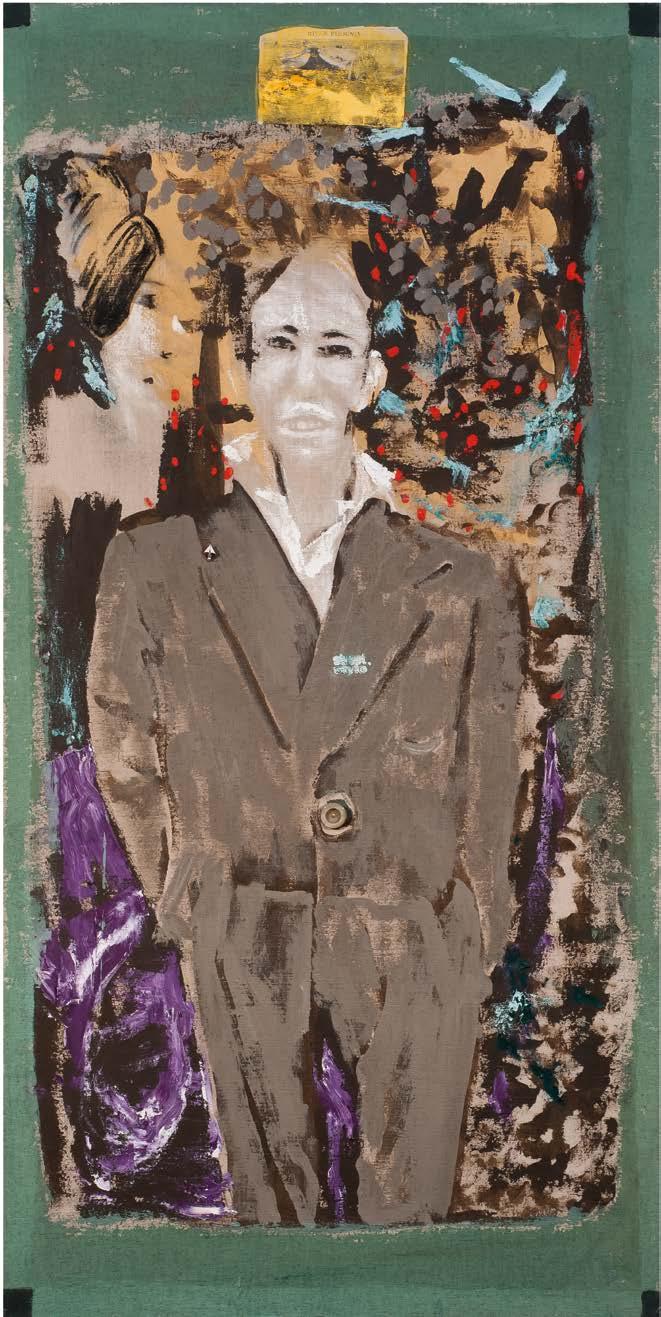
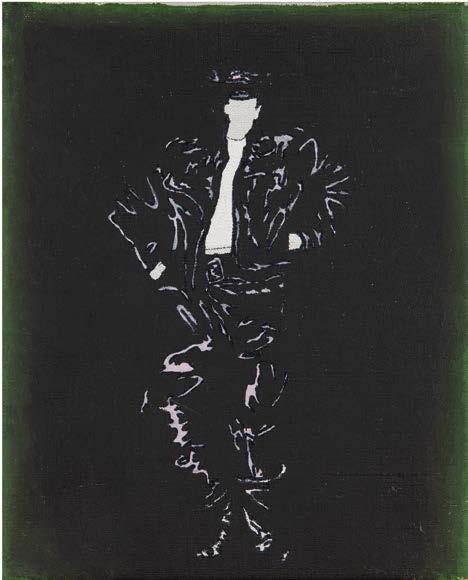
In contrast with the comparative restraint of the Egyptian paintings, the more vigorous application of Procktor’s earlier work resurfaced at times throughout his career; in the portrait of Ole Glaesner (1975) [illus. p. 63] for instance, all or most of it painted from life. It then appears with renewed force in the mid-1990s, in what the writer John McEwen has described as: ‘[the] wildly expressionistic late oil paintings.’7 And indeed, these late paintings are closer to Neo-Expressionism than the subtleties of the English tradition with which one associates much of Procktor’s work. An example is Moscow University (1994) [illus. p. 25], a selfportrait as a young man, which refers back to Procktor’s visits to Russia after completion of his National Service, where he acted as an interpreter for British trade delegations. Though never a Party member, he was at that time an ardent Communist, and here, hands thrust in the pockets of his gabardine overcoat, his ghostly white face looms back from the ideology of youth. Painted in broad, unmanicured gestures on coarsely woven unprimed canvas, with playful additions of collage and small objects, it shows an artist circumventing his hard-won facility, striving instead for something urgent and new. Many of these late period works centre on the use of pure black, both painted, and drawn
Moscow University 1994
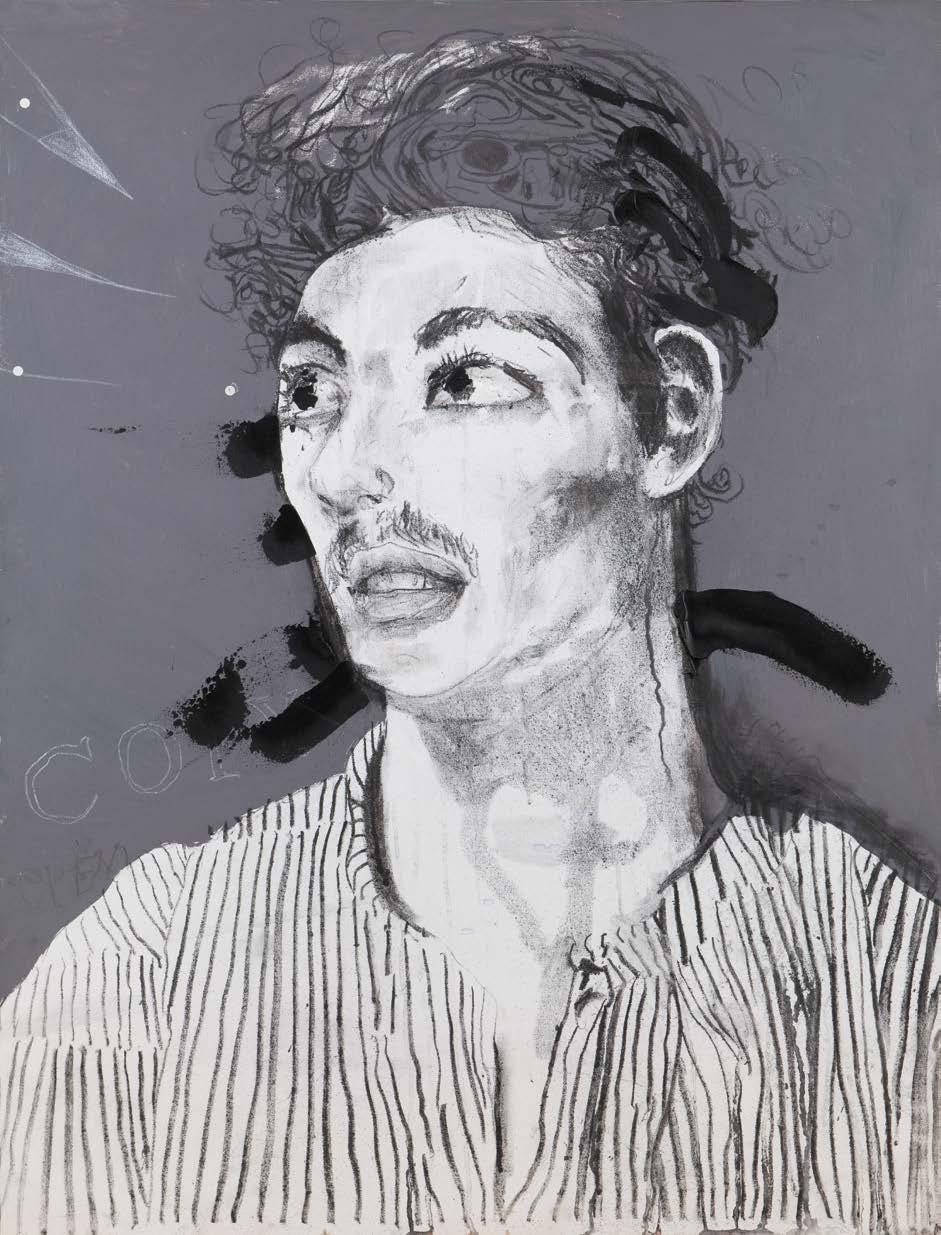
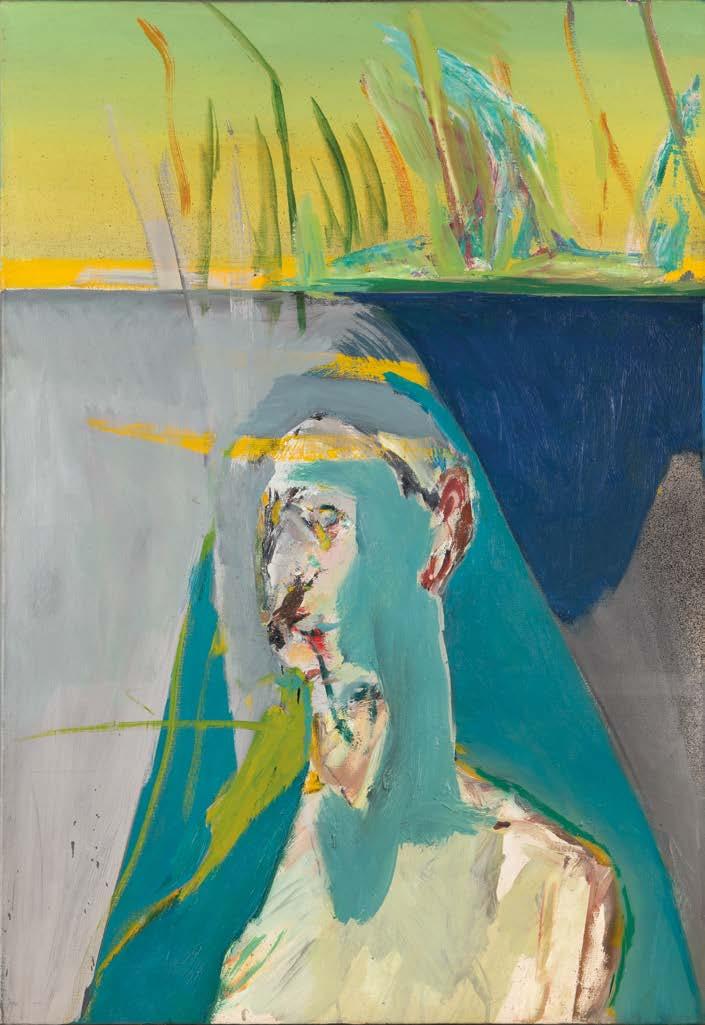
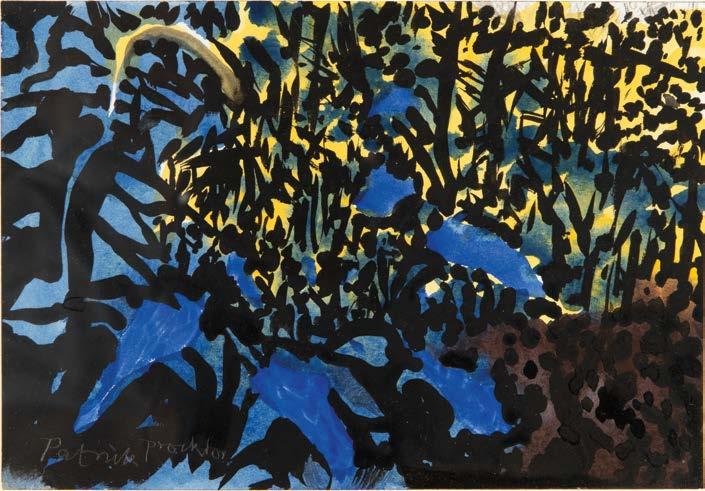
directly onto the canvas in charcoal, as in St John on Patmos (1999) [illus. p. 29], the second of two canvases based on the head and shoulders of the saint in Velasquez’s Saint John the Evangelist on the Island of Patmos (1618-19) in the National Gallery, London. The first, broadly painted in blues, greys, and acidic yellows and greens, dates from 1964, and is closer to a self-portrait than to that of the Velasquez. The later canvas, more obviously based on a reproduction of the source painting, and notably more reined-in than Moscow University, is a graphic rendering in black, white and grey, most of it modelled in charcoal line and wash.
Looking back on her friendship with Procktor, his Venetian gallerist Gabriella Cardazzo perceptively described:
The ironic detachment [that] always saved him from an excess of romanticism.8
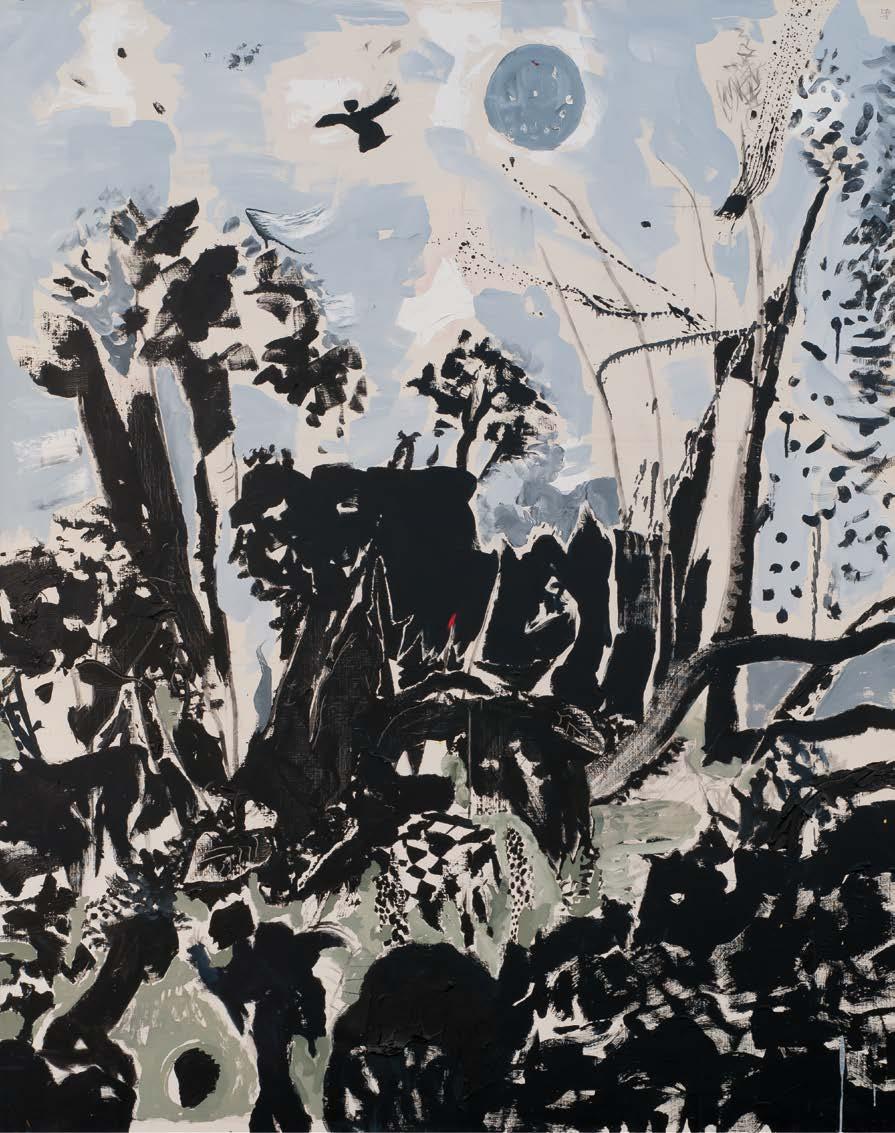
And this sense of detachment is inseparable from the underlying strain of poetry in Procktor, which finds its apogee in one of his final works, a freely painted untitled landscape from 2002. By now severely alcoholic and in physical decline, he must have known that he probably had little time left, and this painting reads as an elegiac swansong. Made on unprimed canvas in oil and charcoal, black again predominates, with pale greens, greys, and whites, the latter mostlythat of the canvas itself. It is a nocturnal landscape of shadows, with trees and undergrowth set against a sky illuminated by a pockmarked full moon, and in which soars an ambiguous creature: a bird, or maybe an angel, or spirit. In the foreground, a silhouetted journeyman – apparently based on Saint Jerome, though surely also a self-portrait – strides forth, dwarfed beneath trees and sky.
For Christana Evans
Endnotes
1 Tommaso Pasquali, A Portrait of the Artist in an Italian Landscape, in ‘Patrick Procktor: A View From a Window’, Palazzo Bentivoglio/CURA Books, Rome, 2023,p.41.
2 The other artists included in The New Generation: 1964 were Derek Boshier, Patrick Caulfield, Anthony Donaldson, David Hockney, John Hoyland, Paul Huxley, Allen Jones, Peter Phillips, Bridget Riley, Michael Vaughan and Brett Whiteley. The quote by Robertson appears on p.76 of the exhibition catalogue.
3 Patrick Procktor, Self-Portrait, Weidenfeld and Nicolson, 1991, p.75.
4 Tommaso Pasquali, A Portrait of the Artist in an Italian Landscape, in ‘Patrick Procktor: A View From a Window’, Palazzo Bentivoglio/CURA Books, Rome, 2023,p.41.
5 George Melly, Revolt into Style, Oxford University Press, 1989, paperback edition, p.151.
6 According to Procktor’s autobiography, Amaya described him as ‘the Parmigianino of Pop’, in an article for the Financial Times. See Patrick Procktor, Self-Portrait, Weidenfeld and Nicolson, 1991, p.83.
7 John McEwen, A Towering Talent, ‘The Spectator’, 8th May 2010, p.35–36.
8 Tommaso Pasquali, as in note 4, p.44.
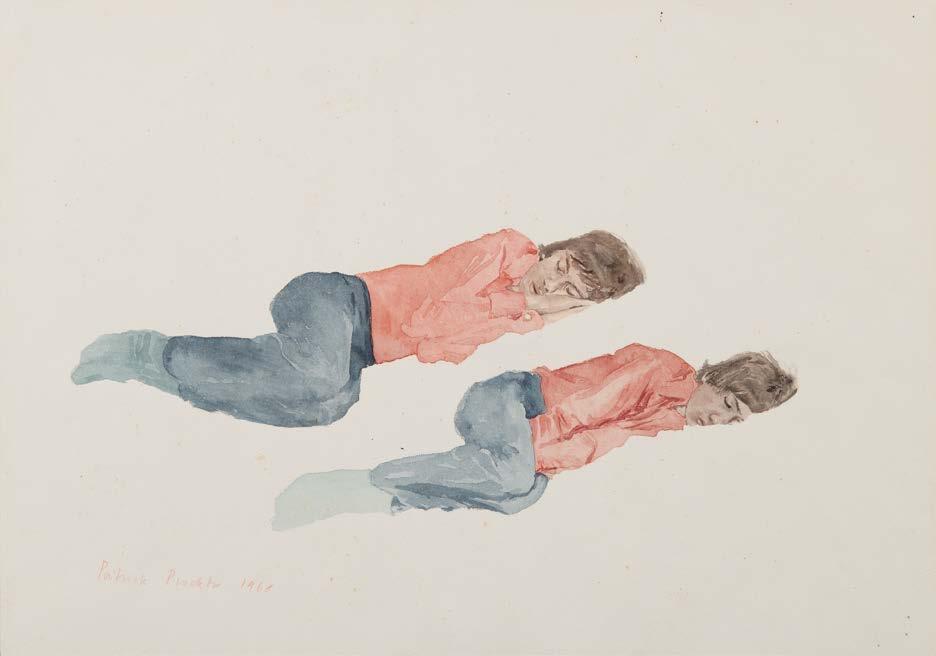
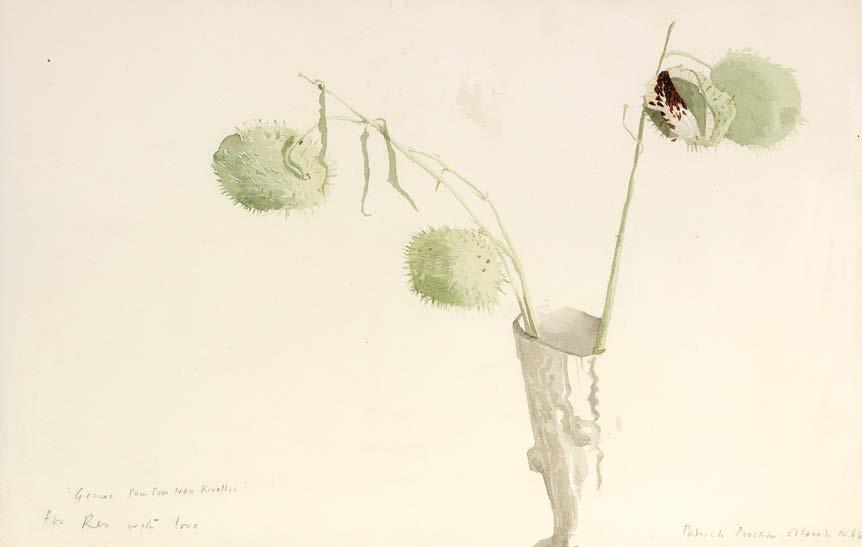
Gervase: Two Positions in Sleep 1968
Watercolour on paper
35.5 × 50.8 cm
Beer 1968
Watercolour on paper
48 × 36 cm
Mixed media on paper
54 × 72 cm
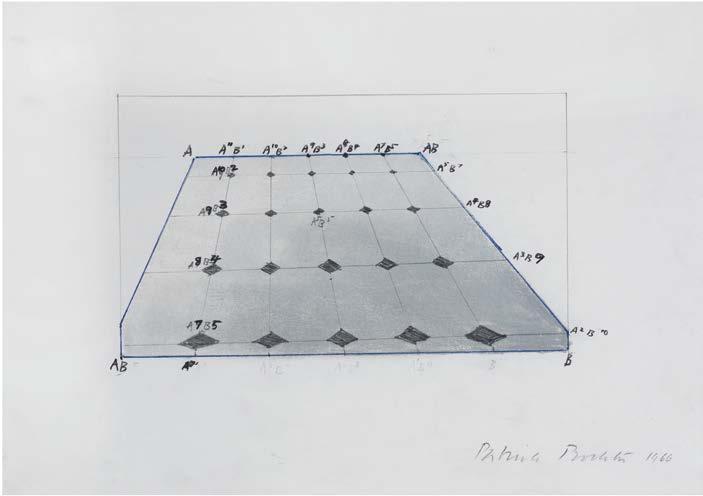
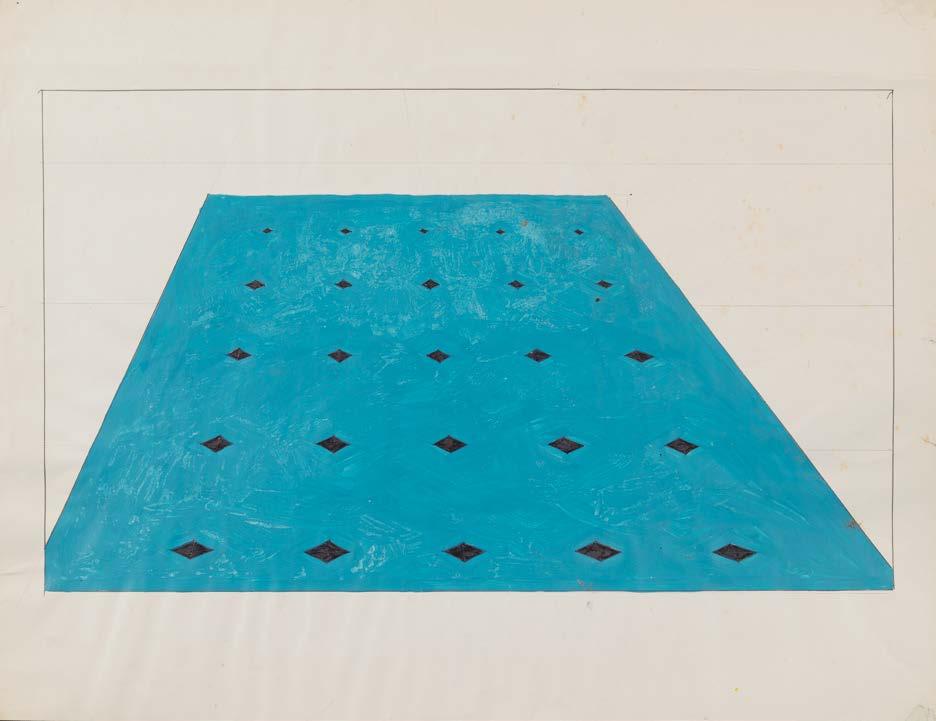
Shades Study 1966
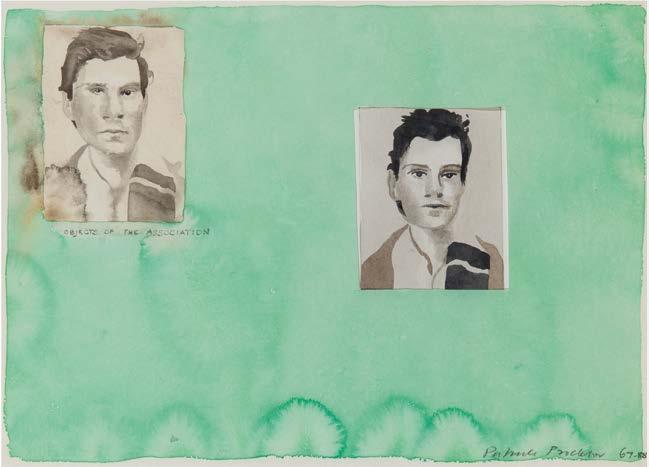
Objects of the Association – Mario Dubsky 1967-88
Watercolour on paper
23 × 34 cm
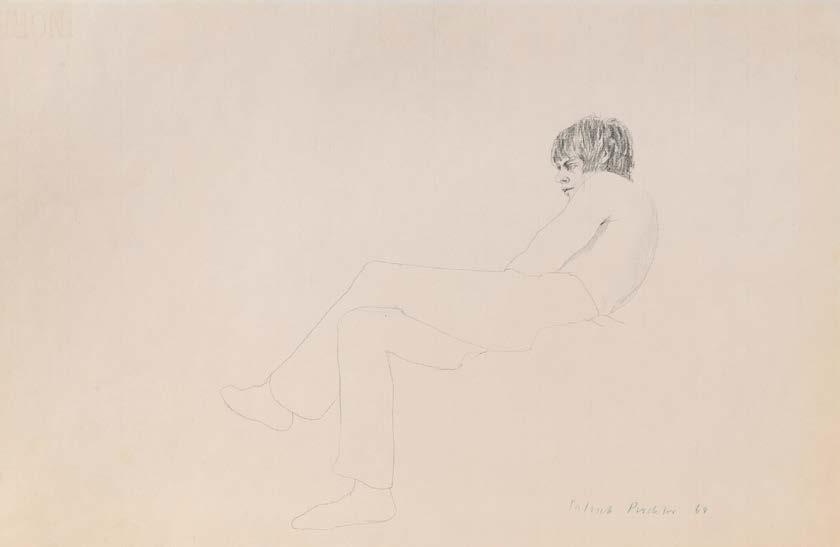
Gervase 1968
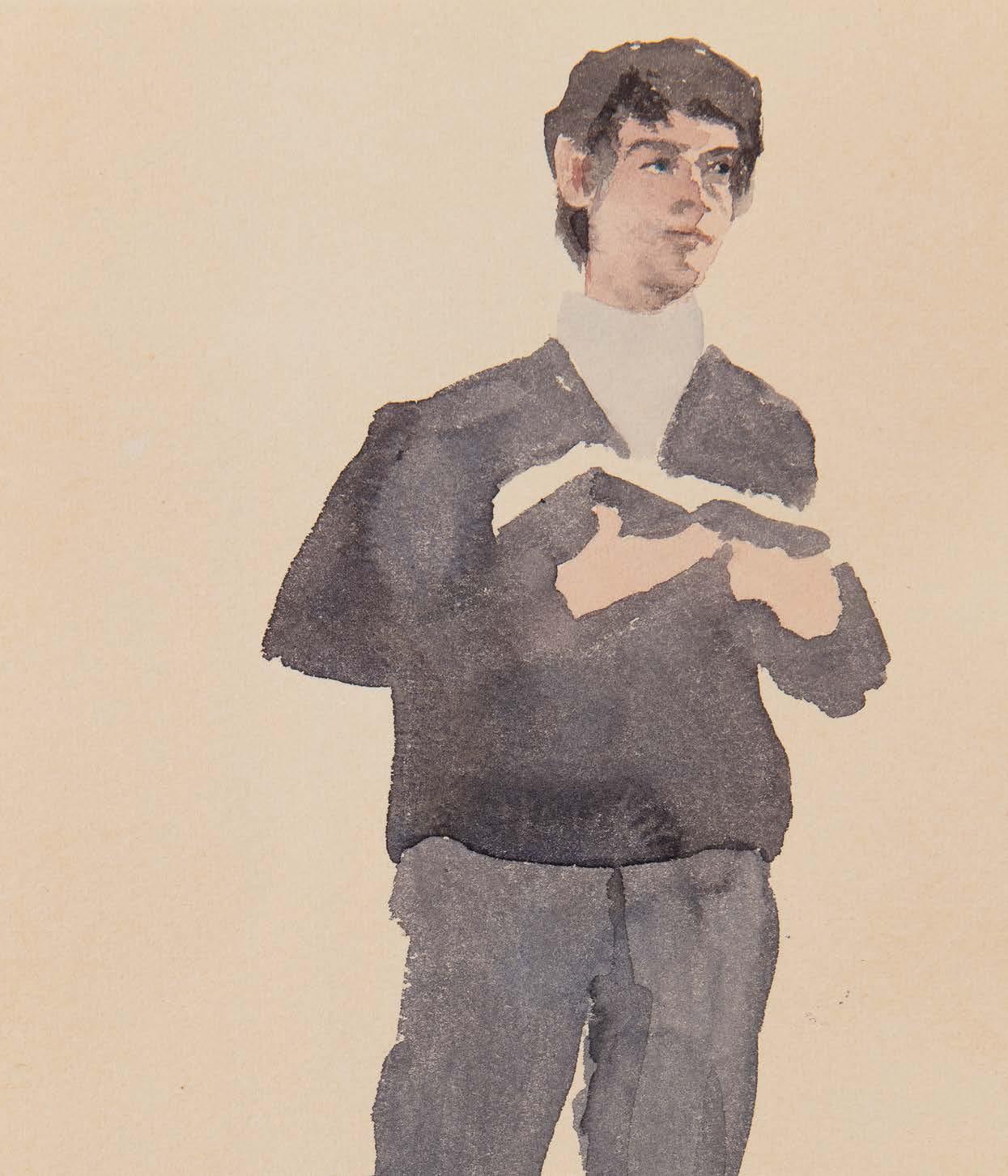
Portraits of cast members from a production of Shakespeare’s Twelfth Night, Royal Court Theatre, London, 1968.
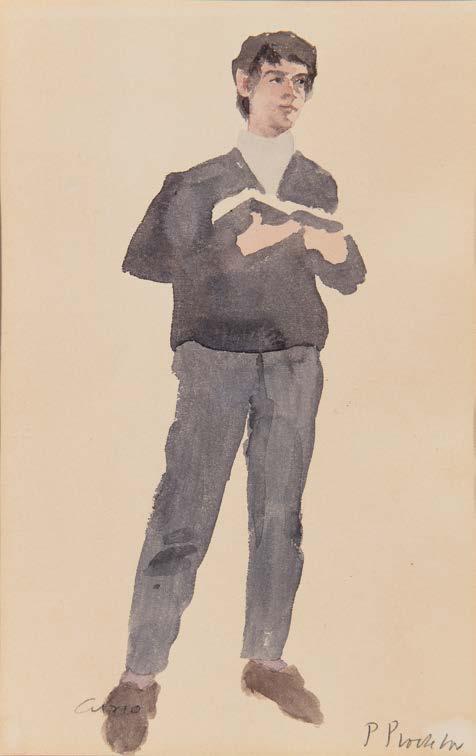
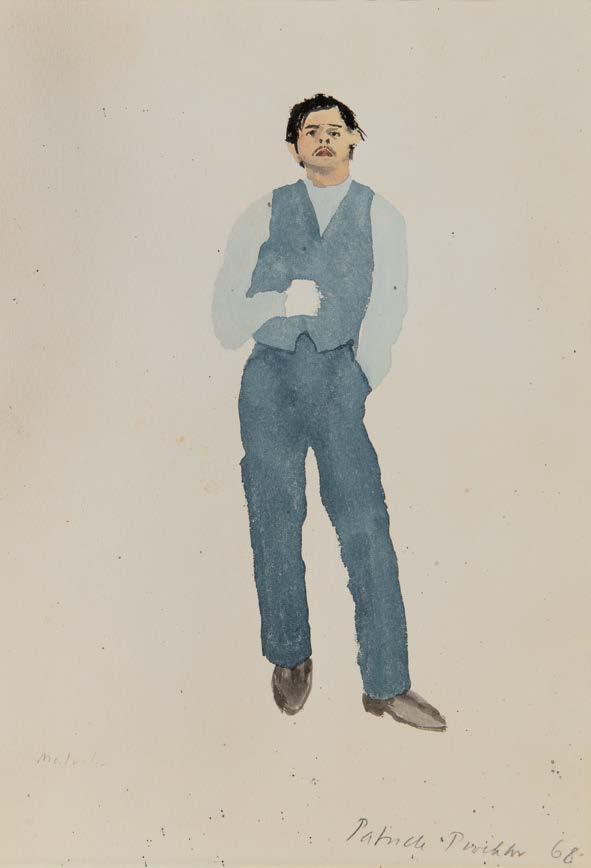
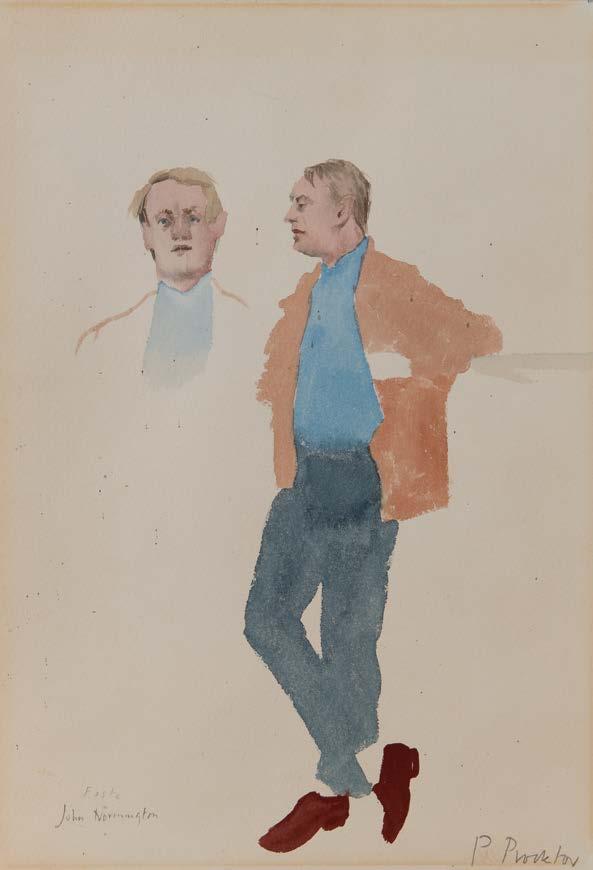
Watercolour on paper
32.8 × 23.3 cm
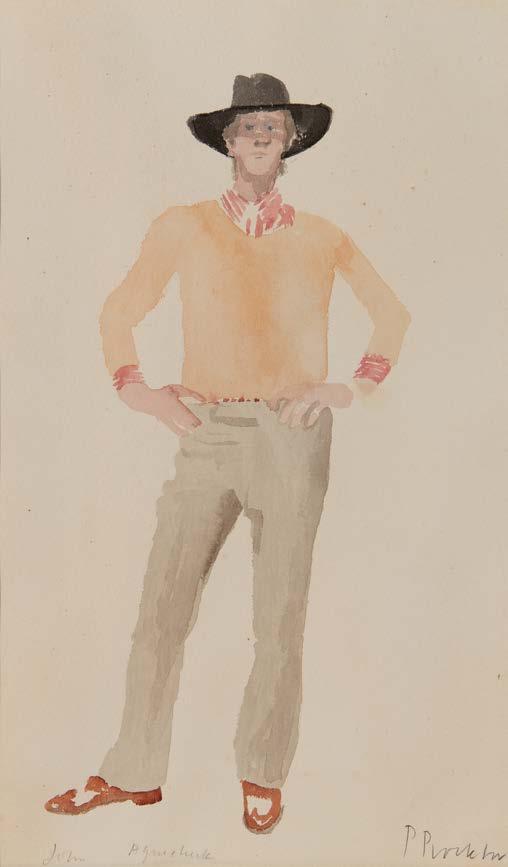
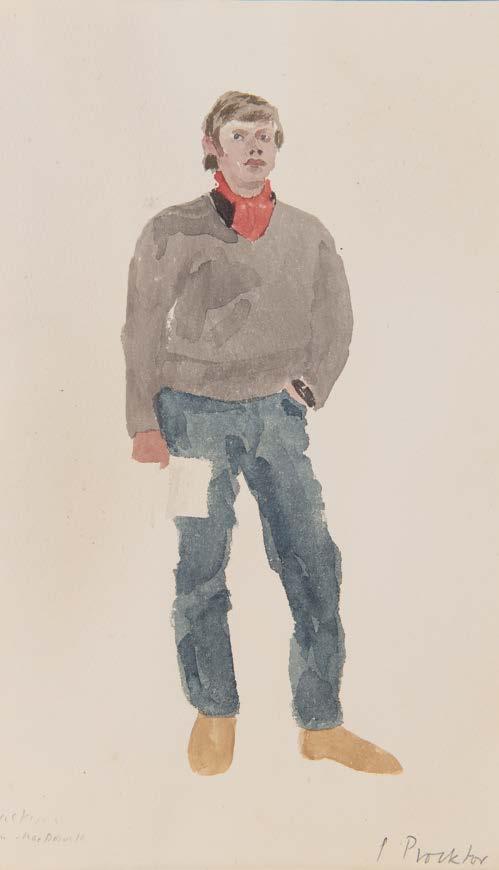
33.8 × 19.8 cm
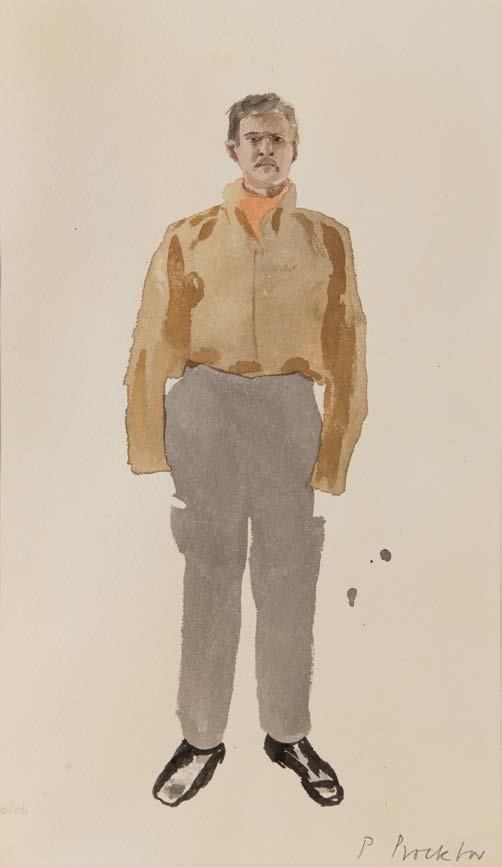
34 × 19.8 cm

Watercolour on paper
63 × 101 cm
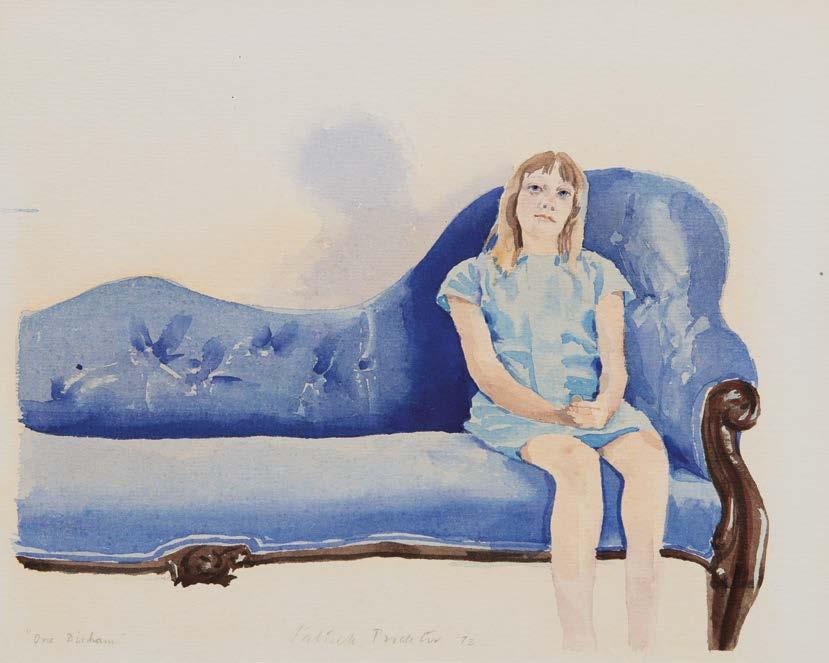
Watercolour on paper
45.5 × 60.5 cm
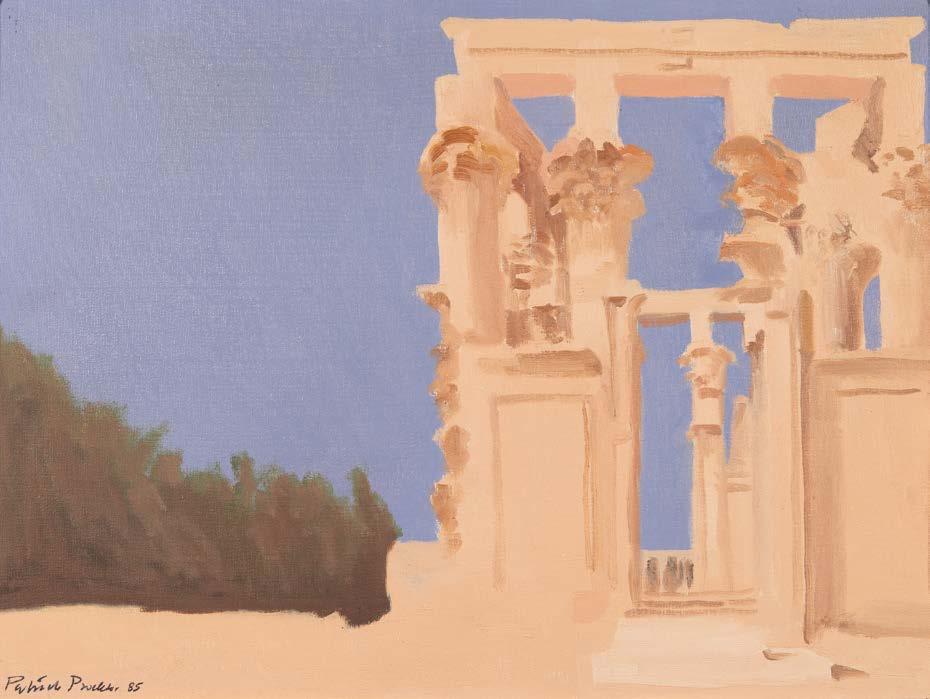
Egyptian Study 1985
1936 Born in Dublin. After father’s death in 1940, is brought up by mother and maternal grandparents in London.
1946 Attends Highgate School, where taught by Welsh landscape painter Kyffin Williams RA.
1952-4 Leaves school at 16 and works for a building merchant in north London. Paints at weekends.
1954-6 Conscripted into the Royal Navy as a student of Russian language; works as an interpreter on subsequent trips to Russia.
1957 Submits a painting to the Redfern Gallery’s annual Summer Exhibition, which is purchased by Leicestershire Education Board.
1958 Enters the Slade School of Fine Art, where taught by William Coldstream and Keith Vaughan, but is originally inspired by David Bomberg’s emphasis on the materiality of paint.
1962 Under Vaughan’s influence, Procktor begins painting simplified, abstracted male nudes
in an expressive manner. Graduates from the Slade.
1963 Is recommended by Bryan Robertson to the Redfern Gallery, and a solo show is duly arranged. The majority of works sell before the opening; buyers include the Contemporary Art Society and Kenneth Clark (on behalf of the National Gallery of Victoria, Melbourne). Moves into William Coldstream’s old flat in Manchester Street, Marylebone – his home until a devastating fire in 1999. Selected for John Moores Painting Prize
1964 Included in the first New Generation exhibition –alongside Patrick Caulfield, David Hockney and Bridget Riley – curated by Robertson at the Whitechapel Gallery.
1965 Second solo show at the Redfern; inspired by his Camberwell colleague R.B. Kitaj, the new oils feature complex imagery with biblical and political overtones. As a teacher at Camberwell, inspires students like Keith Milow. Also befriends Francis Bacon and Cecil Beaton.
1965-72 Visiting teacher at the Royal College of Art.
1966 Commissioned to design the interior of the Pavilion for Expo 67, Montreal.
1967 Designs costumes for Cage of God at Sadler’s Wells Theatre. Latest solo show at the Redfern, of American leather boys, stirs controversy. Begins using watercolour; his portraits are distinctive for the elegant, elongated depiction of his sitters, recalling Old Masters such as Parmigianino.
1968 Portraits of friends, including Ossie Clark and Derek Jarman, are exhibited at the Redfern. Becomes infatuated with 22-year-old model Gervase Griffiths; solo show in New York consists entirely of portraits of Griffiths.
1969 One of 12 British artists selected for group exhibition in Vienna along with Gillian Ayres, Alan Davie, Hockney and Howard Hodgkin.
1970 Embarks on a solo voyage to India, with subsequent watercolours exhibited
at the Redfern. Some of these are translated into aquatints, marking the start of a successful relationship with printmaking.
1972 Solo exhibition of Venice landscapes at the Galleria del Cavallino, Venice. Makes regular painting trips to Venice thereafter.
1973 Marries his neighbour Kirsten Benson, who cofounded Odin’s restaurant in Devonshire Street.
1974 Birth of son Nicholas.
1976 Selected for John Moores Painting Prize. Illustrates a new edition of Coleridge’s The Rime of the Ancient Mariner.
1980 Becomes the first modern artist to visit China since the Cultural Revolution; the resulting works are shown at the Redfern.
1981 One of 16 artists invited by Peter Blake to paint a portrait of members of The Who, to be used as part of the cover of Face Dances. (Other artists include Caulfield, Richard Hamilton and Allen Jones.)
1983 Commissioned by the Imperial War Museum
to paint the portraits of soldiers in Belize.
1984 Death of Kirsten. Completes a reredos, entitled St John Baptising the People, for Chichester Cathedral. Travels to Egypt; the resulting works are later shown at the Redfern.
1985 Commissioned by the British Council to document the Queen’s state visit to Portugal. Retrospective exhibition of graphic work opens at Birmingham Museum and Art Gallery, and tours the UK.
1987 Solo exhibition at the Le Cadre Gallery, Hong Kong.
1991 Prize-winner at the Sunday Times Watercolour Competition (and again in 1992).
1996 Elected a Royal Academician.
2002 Shortlisted for the Charles Wollaston Award, at the Royal Academy’s annual Summer Exhibition.
2003 Dies, at the age of 67.
2004 Work is part of a memorial display alongside Terry
Frost and Colin Hayes, at the RA Summer Exhibition.
2011 Included in Tate Britain’s comprehensive survey show of watercolours.
2012 Retrospective exhibition at Huddersfield Art Gallery, curated by Ian Massey.
2014 Retrospective at Galerie de France, Paris.
2016 Retrospective at Arts University Bournemouth, curated by Ian Massey.
2017 Selected for inclusion in Queer British Art 1861–1967, at Tate Britain.
1963
1965
1967
1968
1969
1970
The Redfern Gallery, London
The Redfern Gallery, London
The Redfern Gallery, London
The Redfern Gallery, London
Lee Nordness Gallery, New York
The Redfern Gallery, London
The Redfern Gallery, London
1971 Studio la Città, Verona
1972 The Redfern Gallery, London
Galleria del Cavallino, Venice
Galleria L’Approdo, Turin
1973 Salisbury Festival of the Arts
1974
1975
The Redfern Gallery, London Gallery 101, Johannesburg
Rochdale Art Gallery
Mappin Art Gallery, Sheffield
1976 Galerie Biedermann, Munich
1977 Galleria del Cavallino, Venice
1979 Salisbury Playhouse
1980
The Redfern Gallery, London
1981 David Paul Gallery, Chichester
1985
Bohun Gallery, Henley-on-Thames
The Redfern Gallery, London
Birmingham Museum and Art Gallery, and toured to Dublin, Southampton and London
1986 Harris Art Gallery and Museum, Preston Galleria del Cavallino, Venice
1987
The Redfern Gallery, London
Le Cadre Gallery, Hong Kong
1989 Davies Memorial Gallery, Newtown, Powys, and toured to Colchester, Mold, Newport, Jarrow, Kendal and Stoke-on-Trent
1996
2010
2012
The Redfern Gallery, London
The Redfern Gallery, London
Huddersfield Art Gallery
2014 Galerie de France, Paris
2016 Arts University Bournemouth
2017 The Redfern Gallery, London
2023
Palazzo Bentivoglio, Bologna
1957 Summer Exhibition, Redfern Gallery, London (also regularly from 1964 onwards)
1959 Young Contemporaries, R.B.A. Galleries, London (also 1960, 1961 and 1962)
The Vienna Youth Festival
1962 The London Group Annual Exhibition, Art Federation Galleries, London
1963 John Moores 4, Walker Art Gallery, Liverpool
1964 The New Generation, Whitechapel Art Gallery, London
Spring Exhibition, Bradford City Art Gallery
1965 Jeune Peinture Anglaise, Galerie Motte, Geneva
1966 Donner a Voir, Galerie Zunini, Paris
1968 4 Works by 12 Artists, A.I.A. Gallery, London
1969 12 Britische Artisten: Graphik und Objekte, Künstlerhaus Wien, Vienna
1970 Image/dessin , Musée d’Art Moderne, Paris
1976 John Moores 10, Walker Art Gallery
1981 Abrahams, Hollweg, Procktor, Stockham, Turlington, Wraxall Gallery, London
1983 Prints and Literature, The Redfern Gallery, London
1988 Modern Prints: Spring Exhibition, The Redfern Gallery, London
1990 Visions of Venice, Bankside Gallery, London
1991 Sunday Times Watercolour Competition, Mall Galleries, London
1996 Summer Exhibition, Royal Academy, London (annually until 2004)
2001 Modern British, The Redfern Gallery, London
2011 Watercolour, Tate Britain, London
2014 British Self-Portraits: Highlights from the Ruth Borchard Collection, Pallant House Gallery, Chichester
2016 Pure Romance, The Redfern Gallery, London
2017 Queer British Art 1861–1967, Tate Britain, London
Arts Council Collection, Southbank Centre, London
British Council Collection, London
British Museum, London
Chichester Cathedral
Contemporary Art Society, London
Fitzwilliam Museum, University of Cambridge
Government Art Collection, London
Imperial War Museum, London
Leicestershire County Council
Los Angeles County Museum
Metropolitan Museum, New York
Museum of Modern Art, New York
Museums Sheffield
National Portrait Gallery, London
National Gallery of Victoria, Melbourne
Old Jail Center, Albany, Texas
Royal Academy of Arts, London
Royal Air Force Museum, London
Museu de Arte São Paulo, Brazil
Ruth Borchard Collection, London
Tate, London
UCL Art Museum, London
Victoria & Albert Museum, London
Whitworth Art Gallery, University of Manchester
Published to coincide with the exhibition
Patrick Procktor: Stages 8 October to 8 November 2025
Curated by Ian Massey
© The Artist's Estate, the authors and The Redfern Gallery, London
Foreword:
© Richard Selby
Essay:
© Ian Massey
Photography: Alex Fox (all works unless stated)
Ian Massey; p. 64
Design:
Graham Rees Design
Print: Five Castles
Published by The Redfern Gallery, London 2025
ISBN: 978-0-948460-91-3
All rights reserved.
No part of this book may be reproduced or transmitted in any form or by any means, electronic or mechanical, including photocopying recording or any other information storage or retrieval system without prior permission in writing from the gallery.
Ian Massey would like to thank the following people for their support in developing this exhibition:
All at The Redfern Gallery
Lee Brackstone
Paul Gorman
Tommaso Pasquali
Cristyn Filla, Yale Center for British Art
Three Figures from Memory II 1964
Oil on canvas
198.1 × 172.7 cm
frontispiece (detail) [illus. p. 22]
Seton Bailey 1977
Oil and pastel on canvas
53.5 × 38 cm
inside back cover (detail) [illus. p. 6]
The Beach: Figures in Red and Black 1962
Oil on canvas
182.9 × 198.1 cm
20 Cork Street London W1S 3HL
+44 (0)20 7734 1732
info@redfern-gallery.com redfern-gallery.com