Stories about Australia’s journey to equality and unity
Excellence in Reconciliation in Education
In Conversation:
National Commissioner Sue-Anne Hunter
Narragunnawali
Raising a generation in reconciliation
Reconciliation News is published by Reconciliation Australia twice a year. Its aim is to inform and inspire readers with stories relevant to the ongoing reconciliation process between Aboriginal and Torres Strait Islander peoples and non-Indigenous Australians.
JOIN THE CONVERSATION CONTACT US
reconciliation.org.au
enquiries@reconciliation.org.au
facebook.com/ReconciliationAus
Reconciliation Australia acknowledges the Traditional Owners of Country throughout Australia and recognises their continuing connection to lands, waters and communities. We pay our respects to Aboriginal and Torres Strait Islander cultures, and to Elders past and present.
Cover image:
x.com/RecAustralia @reconciliationaus
Reconciliation Australia
Reconciliation Australia is an independent, not-for-profit organisation promoting reconciliation by building relationships, respect and trust between the wider Australian community and Aboriginal and Torres Strait Islander peoples. Visit reconciliation.org.au to find out more.
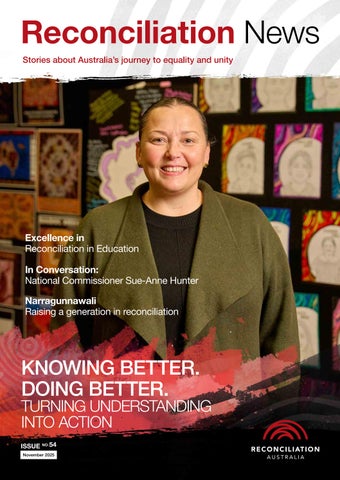
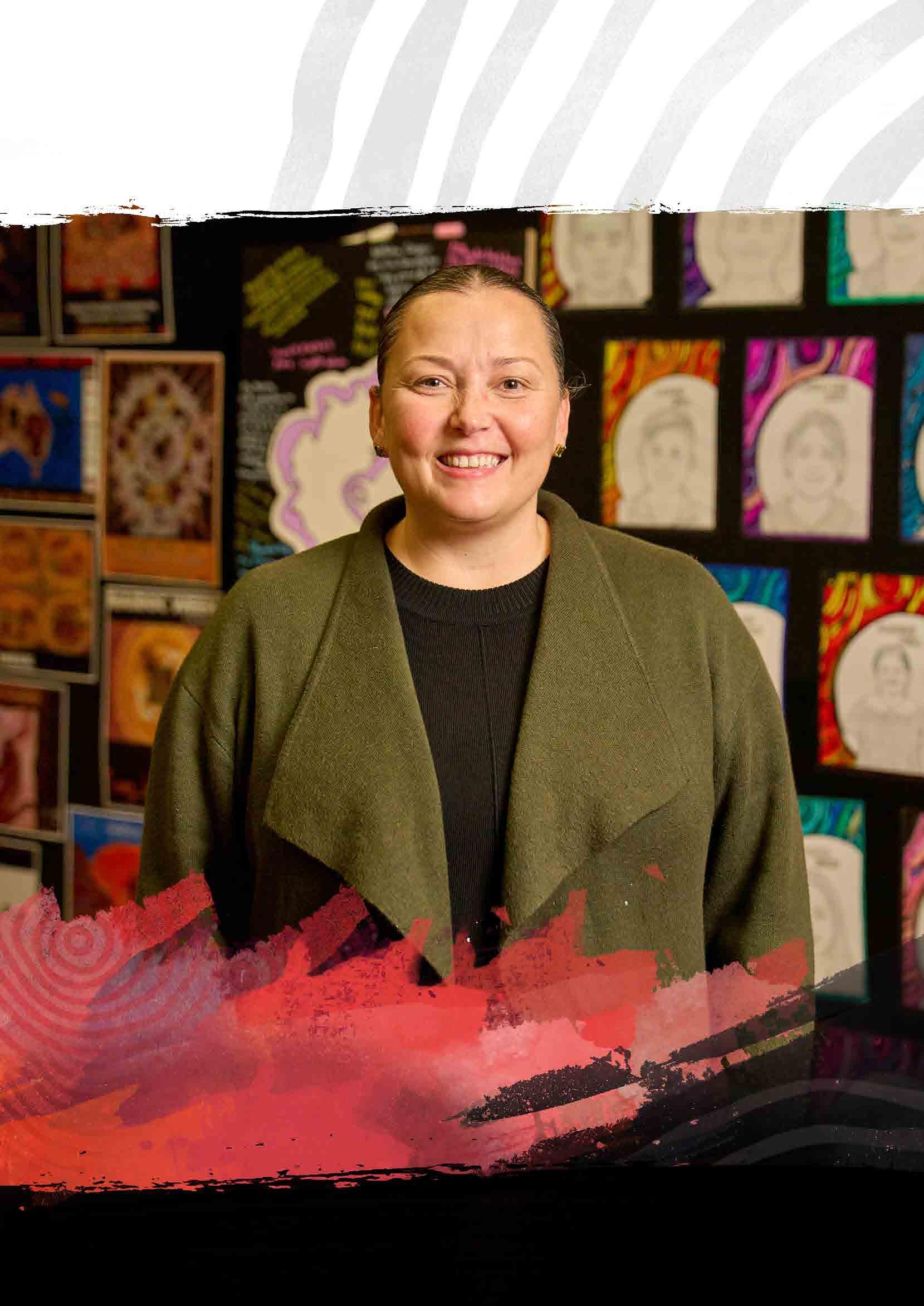
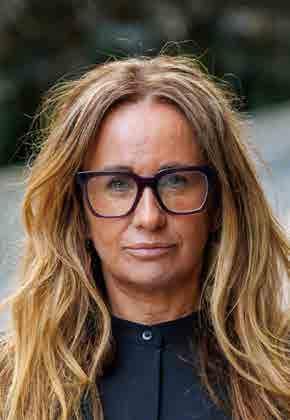
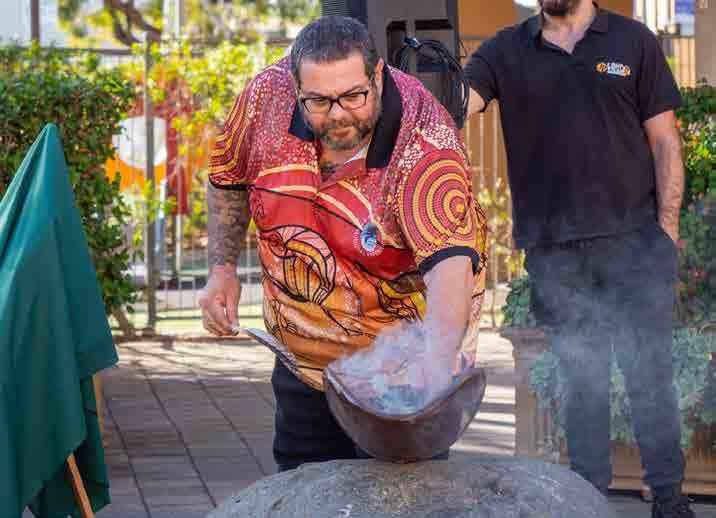
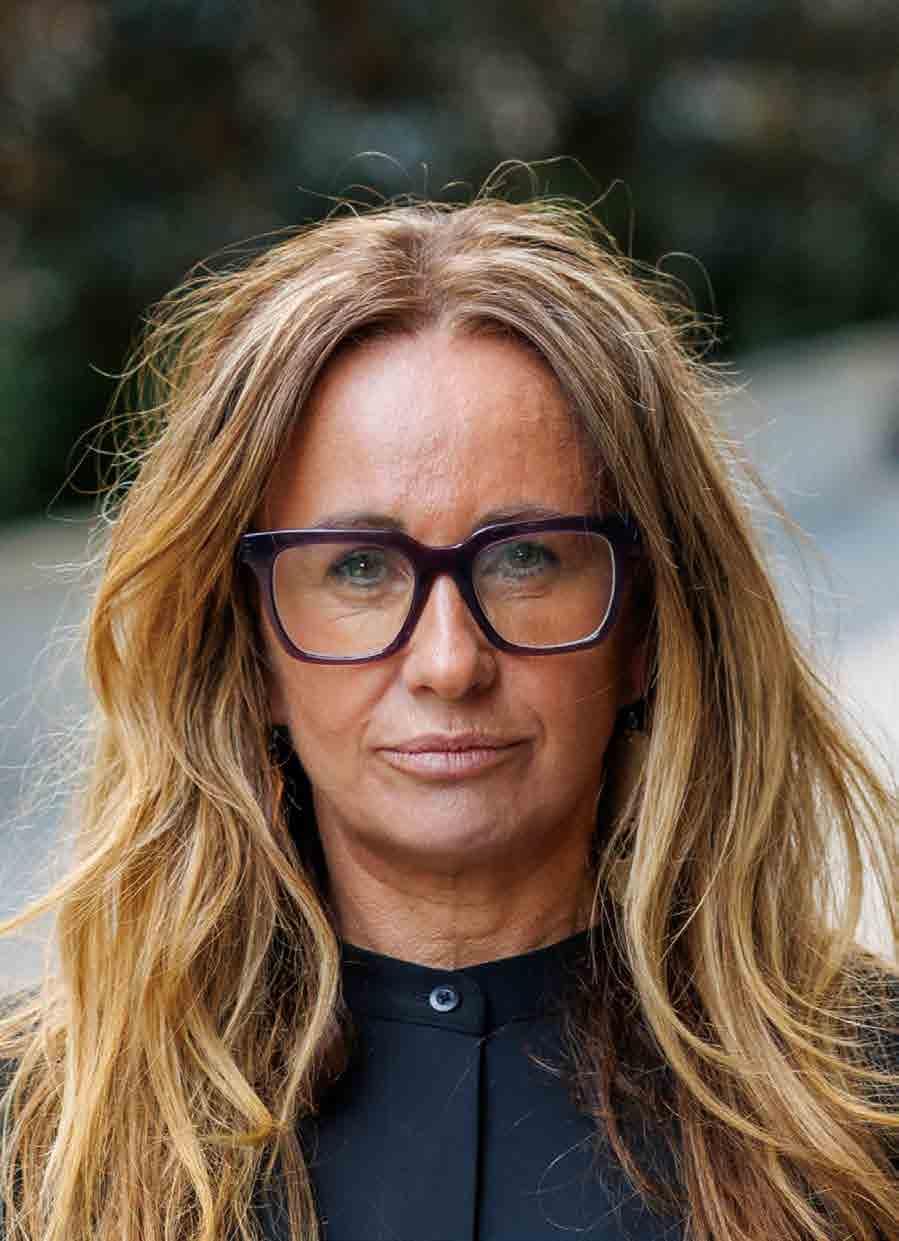
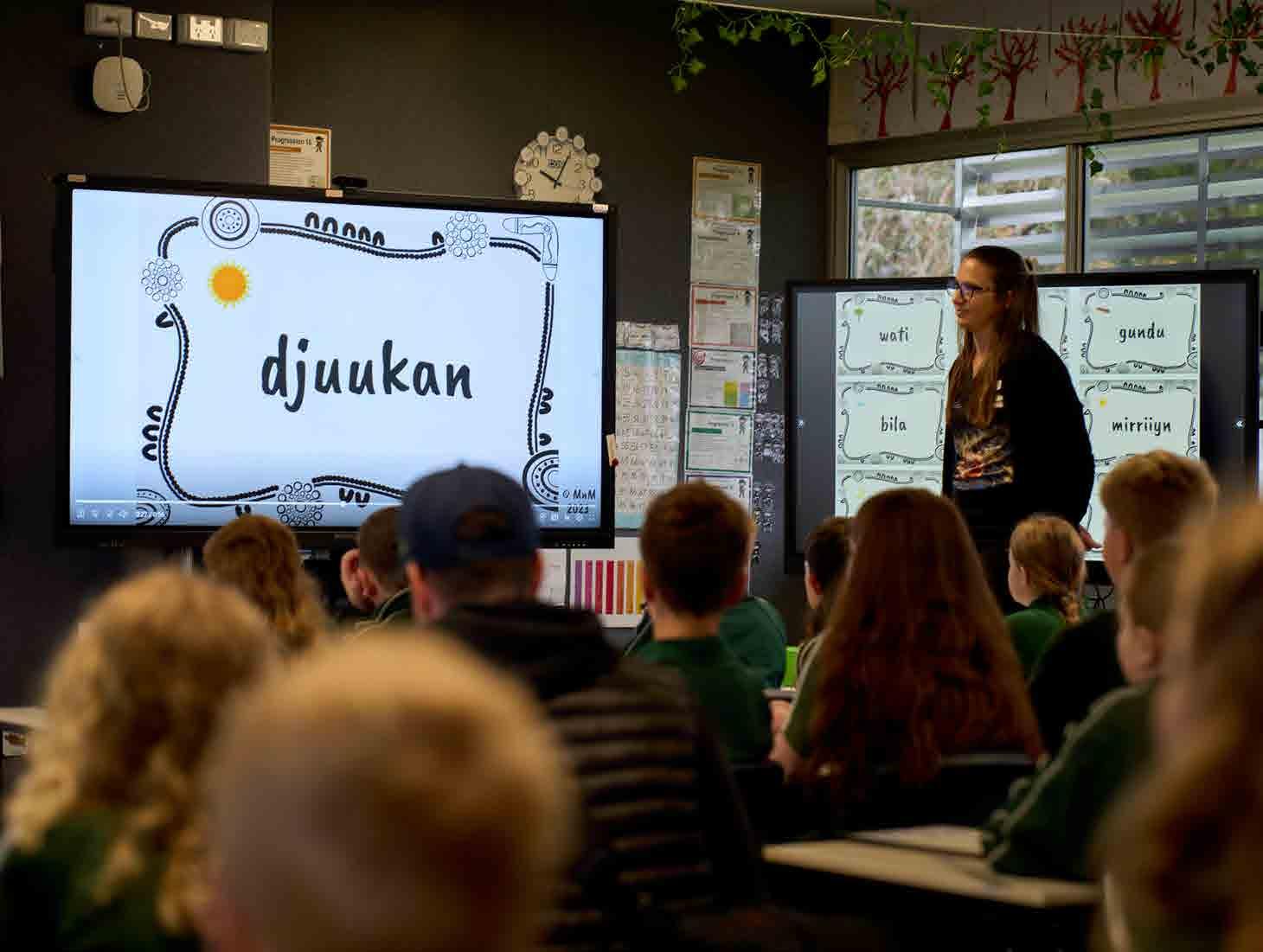
Tammy Anderson, a Biripi woman and principal at Briar Road Public School – the winners of the Narragunnawali Award 2025 in the Schools Category. Briar Road Public School is described as a place where reconciliation is not only expected but celebrated. Photo: Tom Hoy, Wirrim Media.
FEATURES
5 2024 Australian Reconciliation Barometer
New survey data has shown Australians continue to overwhelmingly support reconciliation and truth-telling.
8 National Reconciliation Week
The National Reconciliation Week 2025 theme Bridging Now to Next was brought to life by supporters all around the country.
10 Excellence in Reconciliation in Education
Learn more about the six schools and early learning services selected as finalists in the Narragunnawali Awards 2025 for their outstanding reconciliation initiatives.
12 In Conversation: National Commissioner Sue-Anne Hunter
Proud Wurundjeri and Ngu rai Illum Wurrung woman Sue-Anne Hunter speaks to us about her new role as the the inaugural National Commissioner for Aboriginal and Torres Strait Islander Children and Young People.
14 Defying Colonial Standards
Mosman Park Primary school went on a truth-telling journey that revealed the real story behind a colonial name and celebrated the Noongar people.
16 Narragunnawali: Raising a generation in reconciliation
Ten years of the Narragunnawali program has shown how education can shape a stronger, reconciled nation by engaging the hearts and minds of future generations.
REGULARS
4 From the CEO
6 Reconciliation recap
18 Look for a book!
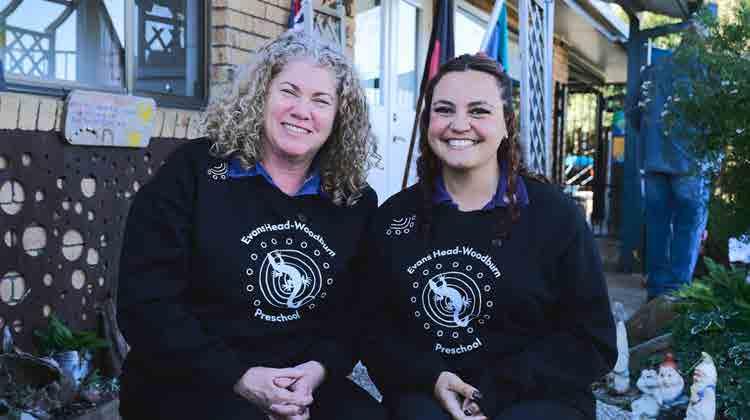
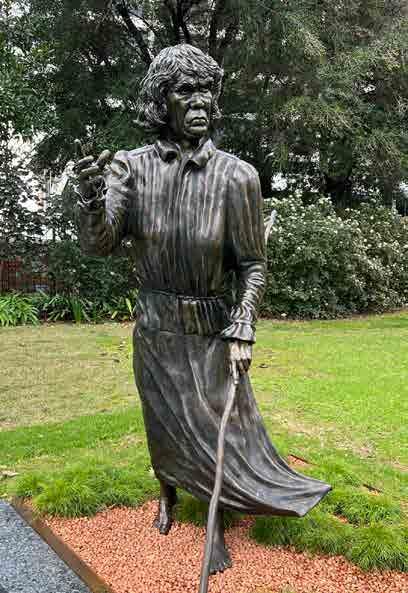
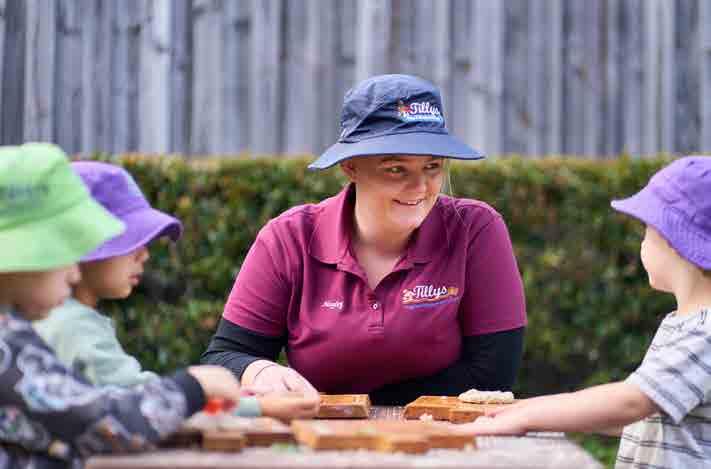
Images: 10: Evans Head-Woodburn Preschool Director Cath Gillespie and Educational Leader and Cultural Advisor Kirby Slade – winners of the Narragunnawali Awards 2025 in the Early Learning Category. Photo: Tom Hoy, Wirrim Media. 12: National Commissioner Sue-Anne Hunter. Photo: Supplied. 14: Statue of Fanny Balbuk in the gardens of Government House in Perth. Photo: Pamela Chatfield. 16: Narragunnawali Awards 2025 finalist Tillys Play and Development Centre - Rutherford educator with students. Photo: Tom Hoy, Wirrim Media.
FROM THE CEO
As I write, we have just wrapped up another uplifting and inspirational Narragunnawali Reconciliation in Education Awards season.
I’m filled with pride at the remarkable work taking place across schools and early learning services around the country. Educators are showing what it means to know better and do better – to bring truth, respectful relationships and deep listening into every classroom, playground and staff room.
This edition of Reconciliation News celebrates those leading the way in reconciliation in education. It captures the energy, determination and hope that continues to burn in the schools, services and communities that are actively taking steps to bridge us from now to next – to a just, equitable and reconciled future.
The 2024 Australian Reconciliation Barometer shows that more young people are engaging in truth-telling activities than ever before. These findings reflect the incredible influence of schools and early learning services that are embedding authentic, community-led approaches to truth-telling in learning, equipping students and children with the skills needed to create change (5).
That spirit of the theme Bridging Now to Next was alive and well during National Reconciliation Week 2025. Across the country, thousands of classrooms, choirs and communities came together to reflect on past lessons and commit to next steps towards reconciliation, proving that reconciliation is not an event but an ongoing journey (8).
The Narragunnawali Awards 2025 brought together some of the most inspiring examples of reconciliation in education. Evans Head–Woodburn Preschool and Briar Road Public School were named national winners, in the early learning and schools categories respectively, for their outstanding commitment to truth-telling, community partnership and cultural safety. Across government, Catholic and independent education sectors, these educators are not just teaching reconciliation – they’re living it (10).
We also catch up with Sue-Anne Hunter, the new National Commissioner for Aboriginal and Torres Strait Islander Children and Young People, who reminds us that when schools embed truth and cultural safety, they create the conditions for justice and inclusion for all children (12).
On Whadjuk Noongar Country, Mosman Park Primary School exemplifies this commitment through a student-led truthtelling project that replaced a colonial sports house name with one honouring Noongar resistance leader Fanny Balbuk – a powerful act of courage and learning (14).
Finally, as the Narragunnawali program celebrates ten years, we reflect on a decade of progress that has transformed the education landscape. With more than half of all schools and early learning services now registered to develop a reconciliation action plan, the program is supporting a generation of reconciliation champions (16).
As Reconciliation Australia marks its 25th anniversary in 2026, these stories are proof that while much has been done, the work of reconciliation continues. The future is in the safe hands of a new generation whose passion, care and commitment are being nurtured in classrooms and services every day.
I hope they inspire you, as they continue to inspire me, to hold firm to one another and continue taking steps every day towards a stronger, more reconciled future.
Karen Mundine Chief Executive Officer
CEO Karen Mundine. Photo: Joseph Mayers
2024 AUSTRALIAN RECONCILIATION BAROMETER
The Australian Reconciliation Barometer (ARB) measures the attitudes and perceptions First Nations peoples and non-Indigenous Australians hold about each other and about key issues affecting Aboriginal and Torres Strait Islander peoples.
The 2024 survey was conducted almost a year after the Voice referendum campaign and at a time when Australians juggled cost-of-living pressures at home, while violent conflicts and extreme climate events wreaked havoc across the world.
The data was released as a series of snapshots covering attitudes of young Australians and multicultural Australians, a comparison with data from the Workplace RAP Barometer (WRB), as well as issues of racism and First Nations peoples, and attitudes to − and understanding of − truth-telling.
Together, the snapshots provide a point-in-time understanding of the attitudes and behaviours among different groups of people to paint a clear picture of Australia’s reconciliation journey.
Eighty-five per cent of Australians surveyed said the relationship between First Nations and non-Indigenous peoples is important, while most agree that truthtelling, historical acceptance, First Nations rights and self-determination, and antiracism action remain vital to progress.
The Truth-telling and Historical Acceptance Snapshot shows 71 per cent of non-Indigenous respondents and 81 per cent of Aboriginal and Torres Strait Islander respondents believe this is essential to reconciliation. Encouragingly, more young non-Indigenous Australians than older Australians have taken part in a truth-telling activity in the past year (14 per cent aged 18–24 and 21 per cent aged 25–34).
Multicultural Australians believe in the importance of truth-telling at higher levels than Anglo-Australians (81 per cent compared to 67 per cent) and are more than twice as likely to have participated in a local truth-telling activity.
The ARB also highlights the impact of Reconciliation Action Plans (RAPs) in influencing national attitudes. More than 5.5 million Australians now work or study in an organisation with a RAP and WRB data shows these employees report higher understanding of colonial history and greater commitment to learning about First Nations cultures than people in the broader community.
However, the results worryingly indicated a rise in First Nations people experiencing racism since the 2022 survey. Of particular concern is that younger Aboriginal and Torres Strait Islander peoples experience racism at higher levels than all other age groups.
The ARB shows us there is momentum but there is still work to do in truthtelling, historical understanding and acceptance, First Nations rights and self-determination, and anti-racism action. These all remain critical foundations for reconciliation progress.
All snapshots can be accessed via reconciliation.org.au/reconciliation/ australian-reconciliation-barometer/
RECONCILIATION RECAP
The Yoorrook Truth Be Told investigation into Victoria’s colonial and more recent history is a powerful example of one of Reconciliation Australia’s five dimensions of reconciliation, namely Historical Acceptance.
Together, they provide a comprehensive roadmap towards genuine selfdetermination and justice for Victoria’s First Peoples.
Yoorrook Justice Commission final reports
1 July 2025
In July, the Yoorrook Justice Commission released its final reports, marking a historic step in Victoria’s truth-telling journey. The Yoorrook for Transformation report provides the Victorian Government and people with a clear plan to ‘make amends for past policies and practices and ensures these wrongs are never repeated.’
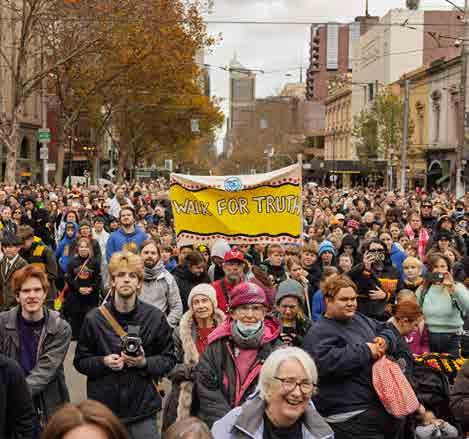
To mark this historic moment, proud Kerrupmara/Gunditjmara man and former Yoorrook Commissioner Travis Lovett invited supporters to join him on a 500 kilometre Walk for Truth from Portland on Gunditjmara Country to Parliament House in Naarm (Melbourne). Over 12,000 people joined the commissioner along the 25-day journey, standing in solidarity with the truths shared by First Nations peoples and raising awareness of the historic work of the commission.
Established as part of Victoria’s treaty process, Yoorrook was Australia’s first formal truth-telling commission.
Garma 2025
1-4 August
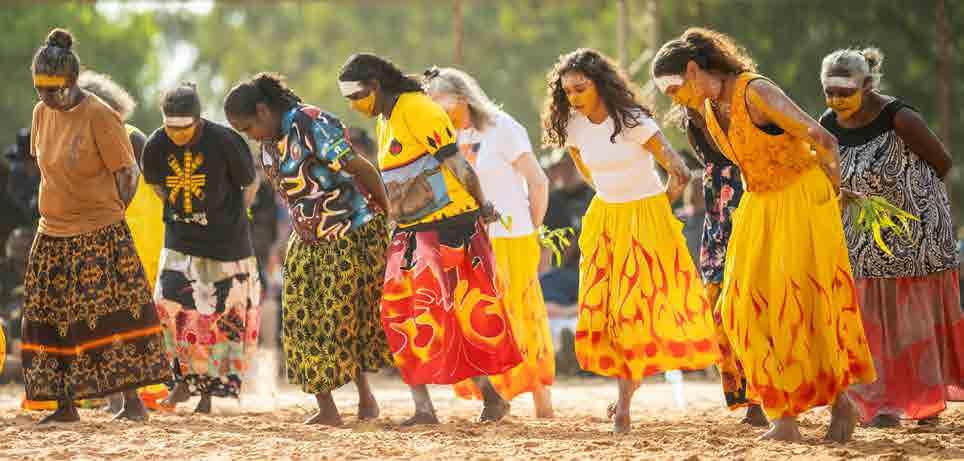
Garma Festival, Australia’s largest annual Indigenous gathering – now in its 25th year – returned to Yolŋu Country in northeast Arnhem Land in August. Hosted by the Yothu Yindi Foundation, the gathering foregrounded traditional miny’tji (art), manikay (song), bunggul (dance) and storytelling across four action packed days.
This year’s theme, Rom ga Waŋa Wataŋu (the law of the land, standing firm), honoured the vision of Garma’s founders and spoke to Yolŋu persistence and the fight for empowerment and land rights.
Its work was grounded in more than 1,300 submissions and testimonies from Elders, community members, and key institutions; a testament to the courage of those who shared their truths. With the Commission’s inquiry now complete, the focus turns to implementation. The Victorian Government has committed to responding within 12 months, with the Commission urging all levels of government, and the broader community, to act on its recommendations. The Victorian Statewide Treaty Bill, which passed in October, will enable the continuation of the truth-telling work of the Yoorrook Justice Commission.
To read the Yoorrook Justice Commission’s final reports, head to: yoorrook.org.au/reports-andrecommendations/reports
Thousands of supporters joined Yoorrook Commissioners on the final day of the historic Walk for Truth ending at the Parliament of Victoria steps in Melbourne.
Photo: Cam Matheson
Garma also continued to serve as a policy forum; Prime Minister Anthony Albanese unveiled funding for a new First Nations Economic Partnership, a collaboration between the Commonwealth and First Nations peoples. International delegates, including First Nations representatives from North America, joined conversations around climate, culture and shared futures.
As ceremonial fire, dance and voice echoed across Country, Garma 2025 remains a living testament: the law of the land endures, and Yolŋu culture, strength and renewal continue to guide the path forward.
Go to garma.com.au learn more.
Dancers perform the traditional Yolngu Bunggul ceremony at Garma 2025.
Photo: Tiffany Garvie/Yothu Yindi Foundation
The National Gathering 15-17 September 2025
Almost two years on from the 2023 Voice to Parliament referendum, The National Gathering brought together more than 300 delegates representing close to 150 Traditional Owner groups from across the country. The goal of this historic meeting was to consider collective next steps towards shaping a new national representative body for First Nations peoples, one that could unite communities while respecting the autonomy and authority of each Nation.
The Gathering was led by the Council of First Nations, an interim leadership group made up of Traditional Owners. Their aim was to create space for open dialogue, healing and a shared vision for the future of First Nations representation and decision-making.
Over three days, delegates discussed governance, priorities, and principles for a new structure rooted in community leadership and accountability.
National Reconciliation in Education Forum 2025 6 November
The National Reconciliation in Education Forum and Narragunnawali Awards 2025 convened educational leaders and reconciliation champions for a powerful day of truth-telling, learning and celebration.
Held on Ngunnawal Country, the event started with a youth-led keynote, Reimagining Education, then three panel sessions examined the role of truth-telling
in schools, embedding cultural responsiveness, and navigating shared responsibility in reconciliation. Each attendee was an active participant with table discussions following each panel. They identified barriers and enablers to progressing reconciliation in education settings. A summary report from the forum will be provided in early 2026.
The Gathering closed with in-principle support to establish a new national body. Delegates have since returned home to consult with their communities, supported by a forthcoming engagement toolkit to guide local conversations and next steps.
To learn more, head to thenationalgathering.au
The National Gathering delegates. Photo: The National Gathering
The forum underscored that education is a cornerstone for a reconciled Australia, urging the sector to commit to systemic change in curriculum and practice and to centre First Nations voices and self-determination. In the evening, the Narragunnawali Awards honoured six outstanding schools and early learning centres that have led the way in reconciliation practice. See the winners on page 10.
Learn more about the Narragunnawali: Reconciliation in Education program: reconciliation.org.au/narragunnawali
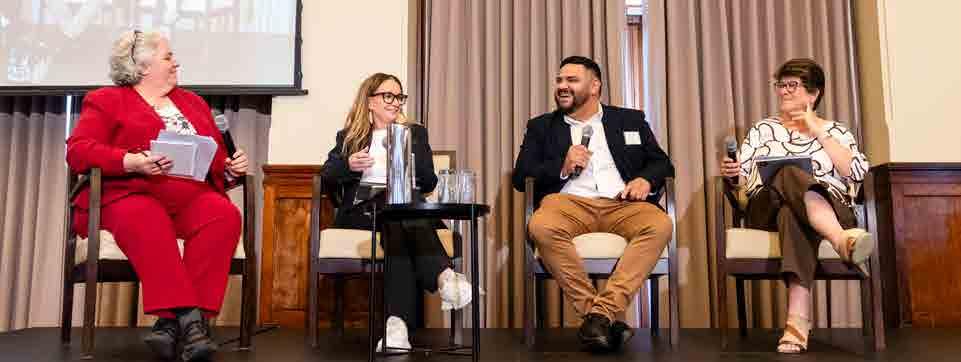
National Reconciliation in Education Forum 2025 Panel session 1: Reckoning with the Truths of our Education System. (L to R) Prof Melitta Hogarth, Cmm Sue-Anne Hunter, Luke Allan, Jenny Walker. Photo: Tom Hoy, Wirrim Media.
NATIONAL RECONCILIATION WEEK 2025 BRIDGING NOW TO NEXT
National Reconciliation Week (NRW) 2025 marked a powerful moment of reflection and renewal under the theme Bridging Now to Next.
This year’s campaign urged us to look ahead and continue the push forward as past lessons guide us. It was a call to action, one that acknowledged the 25th anniversary of Corroboree 2000 and the historic Walk for Reconciliation across the Sydney Harbour Bridge, reminding us that reconciliation is not a destination, but a shared path we walk together.
Held annually from 27 May to 3 June, National Reconciliation Week invites all Australians to learn about our shared histories, cultures, and achievements. The dates commemorate two key milestones – the 1967 referendum and the High Court Mabo decision.
The 2025 theme spoke to the ongoing connection between past, present and future. In the theme artwork by Kalkadoon woman Bree Buttenshaw, native plants − known for regenerating after fire − symbolise strength and renewal. This showed a time for growth, reflection, and commitment to walking together.
for one week, but all year round.
Across schools, communities and workplaces, thousands joined the journey toward a better future. Nearly 700 choirs participated in Voices for
PAT
MEMOIRS
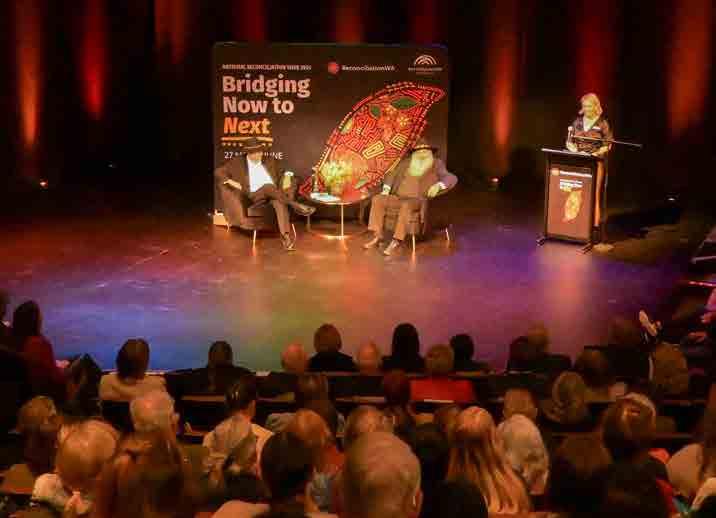
As part of Reconciliation WA’s Reconciliation Memoirs series, Patrick Dodson – known as the “father of Reconciliation” − shared his story in conversation with Ken Wyatt at the book’s launch. Watch this inspiring conversation now on SBS On Demand
WA
ACT RECONCILIATION DAY
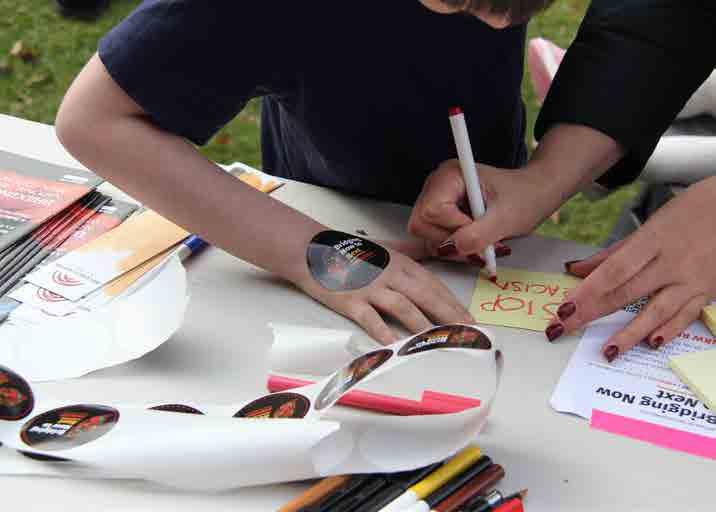
Thousands gathered in Commonwealth Park to honour Aboriginal and Torres Strait Islander cultures. At Reconciliation Australia’s stall, visitors pledged actions to help bridge from now to next.
Australia
DODSON’S RECONCILIATION
Photo: Reconciliation
Photo: Reconciliation
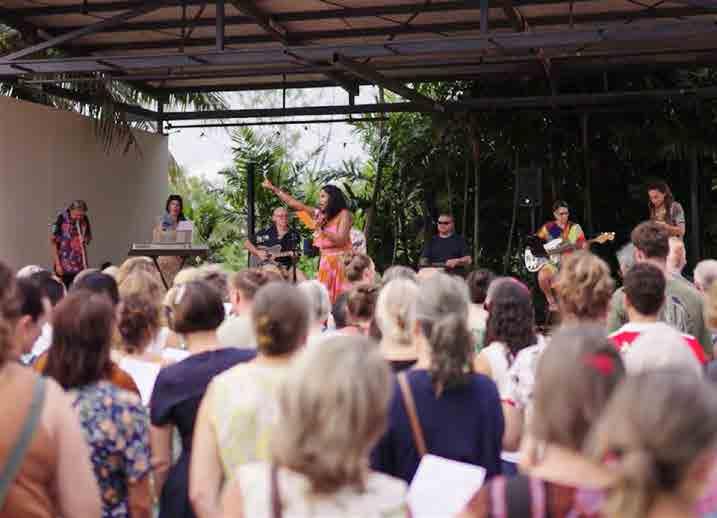
DARWIN BEACH CHOIR VOICES FOR RECONCILIATION
On Larrakia Country, the Darwin Beach Choir united over 100 voices to sing Solid Rock for Voices for Reconciliation, embracing music’s power to heal, connect, and inspire change. Watch their performance on YouTube
Photo: Moogie Down, supplied by City of Darwin
THE TORCH – CONFINED 16
The Torch’s sixteenth annual Confined exhibition showcased 452 artworks by First Nations artists impacted by the legal system in Victoria, celebrating cultural strength, identity, and resilience.
Photo: Tiffany Garvie
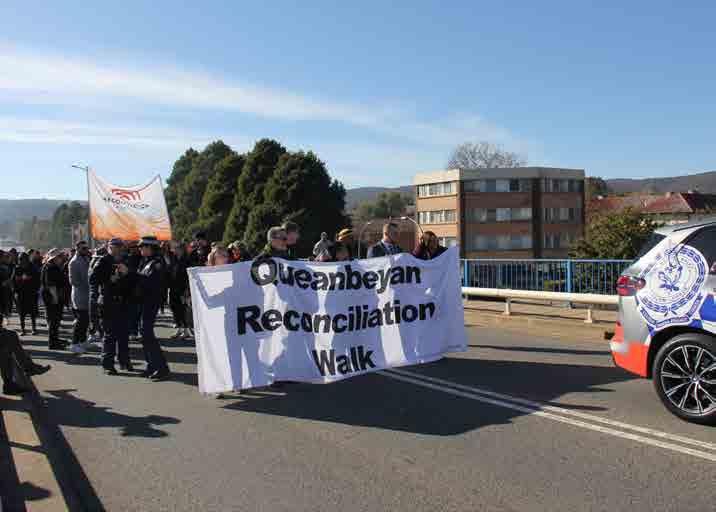
QUEANBEYAN RECONCILIATION WALK
Reconciliation Australia staff joined thousands of students and community members for the annual walk for reconciliation down Queanbeyan’s main street, proudly hosted by Queanbeyan-Palerang Regional Council.
Photo: Reconciliation Australia
CITY OF BURNSIDE SCULPTURE UNVEILING
On Kaurna Country, the City of Burnside unveiled The Burnside Tamikuru Sculpture by artist Allan Sumner, representing the history of the Kaurna people and the deep connection between the Kaurna community and the land.
Photo: City of Burnside
EXCELLENCE IN RECONCILIATION IN EDUCATION
The winners and finalists of the 5th Narragunnawali Reconciliation in Education Awards are transforming education through deep cultural respect, community collaboration, and truth-telling, fostering a more inclusive, just future for all.
Reconciliation Australia is proud to announce Briar Road Public School and Evans Head-Woodburn Preschool as this year's winners of the Narragunnawali
Reconciliation in Education Awards, the only national awards that recognise and celebrate Australian schools and early learning services implementing outstanding reconciliation initiatives.
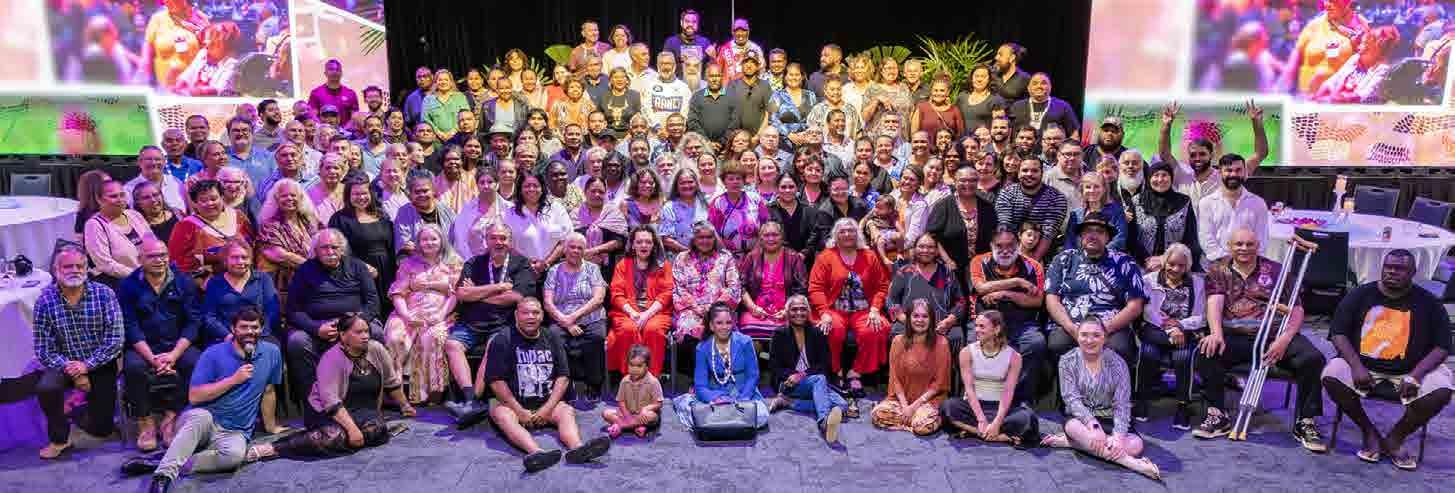
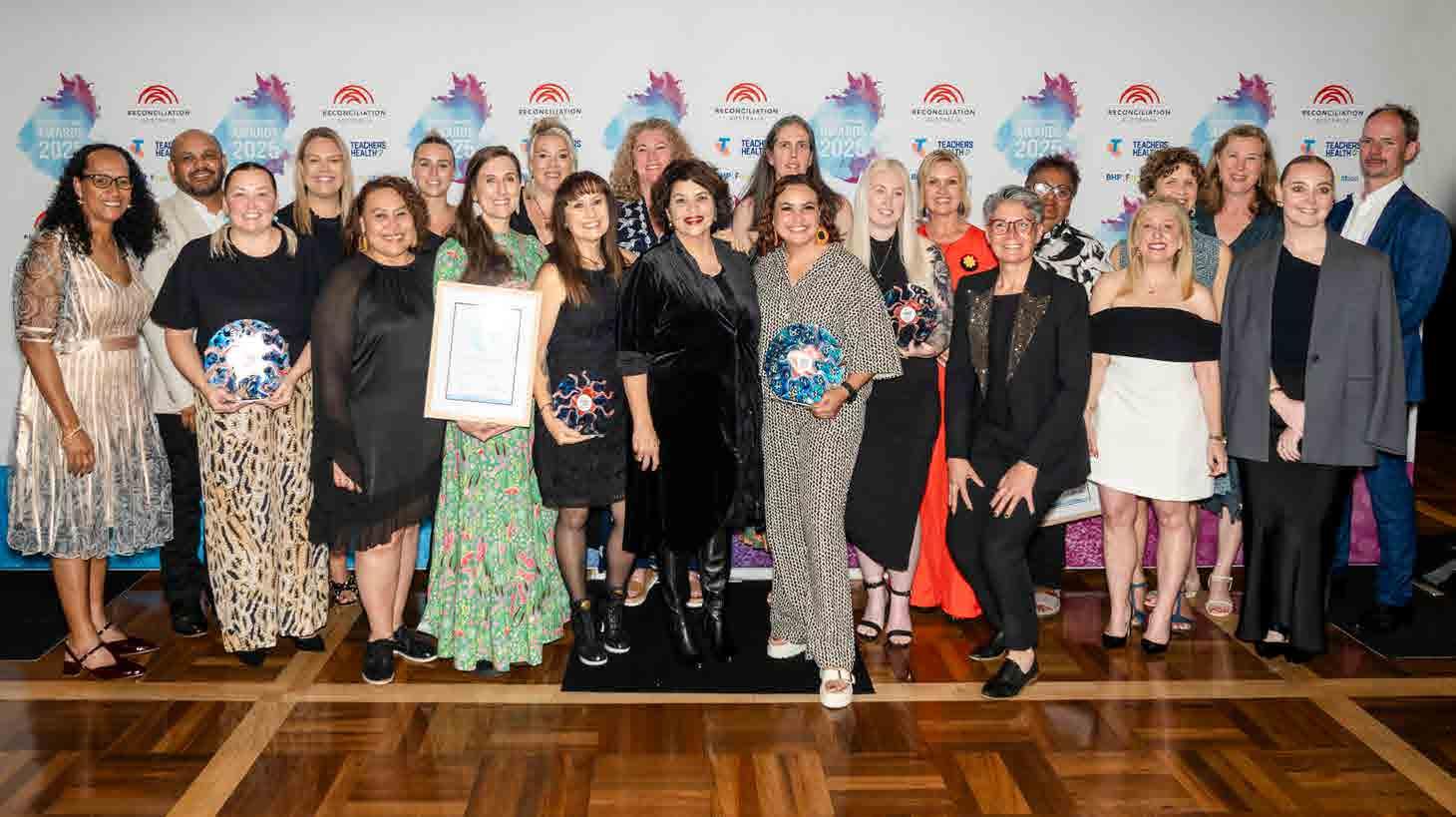
All winners, finalists, judges and sponsors at the Narragunnawali Reconciliation in Education Awards 2025 event held on Ngunnawal Country. Photo: Tom Hoy, Wirrim Media
The six schools and early learning services selected as finalists for the Narragunnawali Awards 2025 were:
SCHOOLS
Bannister Creek Primary School
Whadjuk Noongar Country, WA
Briar Road Public School
Dharawal Country, NSW
Karuah Public School
Worimi Country, NSW
EARLY LEARNING
Evans Head–Woodburn Preschool
Bandjalang Country, NSW
Goodstart Shailer Park
Country of Jagera and Yugambeh speaking people, Qld
Tillys Play and Development Centre – Rutherford Wonnarua Country, NSW
The 2025 finalists were chosen by a judging panel of eminent First Nations educationalists, Mx Sharon Davis, Professor Grace Sarra and Professor Joe Sambono.
The judging panel praised the finalists for their commitments to building strong and respectful relationships with local First Nations Elders and communities, developing a respectful understanding of First Nations’ cultures and histories, and engaging in truth-telling within their educational communities.
Chair of the judging panel and Reconciliation Australia Board Director, Sharon Davis, said education is a powerful tool for building a better society.
‘Narragunnawali gives educators a way in. It supports them to bring First Nations cultures, languages and histories into their classrooms and early learning services with care and respect.’
‘When educators approach the work with self-reflection and a willingness to learn, and when relationships with community are at the centre, schools and services start to feel safer and more welcoming for Aboriginal and Torres Strait Islander children and families,’ Davis said.
While the judging panel commended all six finalists for their exceptional qualities, there could only be two winners, and the judges selected Evans Head-Woodburn Preschool in the early learning category and Briar Road Public School in the schools category.
Karuah Public School was highly commended by the judges particularly for their excellence in truth-telling.
exceptional, long-standing commitment
reciprocal relationships with the Bandjalang community.
The judges highlighted the representation of Traditional Owners and Aboriginal staff in leadership positions and applauded the service for embedding truth-telling and truthlistening in age-appropriate ways.
They noted that the preschool is led by and with the local community, making reconciliation central to both identity and practice.
The judging panel found that at Briar Road Public School, reconciliation is integrated with the curriculum, staffing, culture and community relationships.
The school is a place where First Nations students are thriving and where Pacifica, Māori, migrant and other non-Indigenous students and families are also included and uplifted.
Students, staff and families describe the school as a place where reconciliation is both expected and celebrated, and community ownership of the journey is evident.
With leadership from principal Tammy Anderson, an Aboriginal woman and former student of the school, Briar Road celebrates and embeds Aboriginal and Torres Strait Islander histories, cultures, and perspectives into everyday practice.
Importantly, the school also ensures that non-Indigenous staff take on the heavy lifting of the ongoing work of reconciliation in education. This work is supported and guided by First Nations staff, communities, and families.
‘There is a deep hunger for justice in our communities, and when it comes to education, we cannot carry that work alone,’ Sharon Davis said.
’Most educators in Australia are nonIndigenous, and that makes their role in reconciliation essential.
‘Narragunnawali helps educators embed reconciliation into everyday practice, and take up that responsibility with care, commitment and courage.’
‘I’m heartened by the growing groundswell of schools and early learning services that are walking the talk – not just knowing better but doing better.’
The Narragunnawali program currently supports around 14,000 or 50 per cent of all Australian schools and early services to champion reconciliation through engaging with the Narragunnawali Reconciliation Action Plan framework.
Now in its tenth year Narragunnawali is changing the face of Australian education.
The awards were presented on 6 November at a ceremony held on Ngunnawal Country in Canberra. The Narragunnawali Reconciliation in Education Awards 2025 were proudly sponsored by Teachers Health
Tell us about yourself and your work.
I'm a Wurundjeri and Ngu rai Illum Wurrung woman. My Nan was the last woman born on Coranderrk Mission, so a lot of grounding has been done for me within our culture and community, which I'm really grateful for, and that’s really set me up for the roles that I've worked in.
I worked at VACCA (Victorian Aboriginal Child and Community Agency) for over 20 years in numerous roles. I then did some work at SNAICC, did some consultancy of my own, been on lots of boards, then the opportunity come up for the Yoorrook Justice Commission. I remember the day they gave me the phone call I cried, because I was just like, ‘what an achievement’.
It was amazing being able to hold space for mob and pull all that work together into the final recommendations but also being able to contribute to setting the foundation for Treaty. Being part of that movement that’s happening in Victoria, it's been really exciting.
I then advocated for there to be a National Commissioner role when I was working at SNAICC and it came up, and here I am.
IN CONVERSATION: NATIONAL COMMISSIONER SUE-ANNE HUNTER
Wurundjeri and Ngu rai Illum Wurrung woman, Sue-Anne Hunter, has had a long career in community, policy and social work exemplified in her service to the people of Victoria as Deputy Chair and Commissioner of the Yoorrook Justice Commission from 2021 until its close in 2025. She spoke with Reconciliation News about her new position as the National Commissioner for Aboriginal and Torres Strait Islander Children and Young People and the role of education in advancing reconciliation.
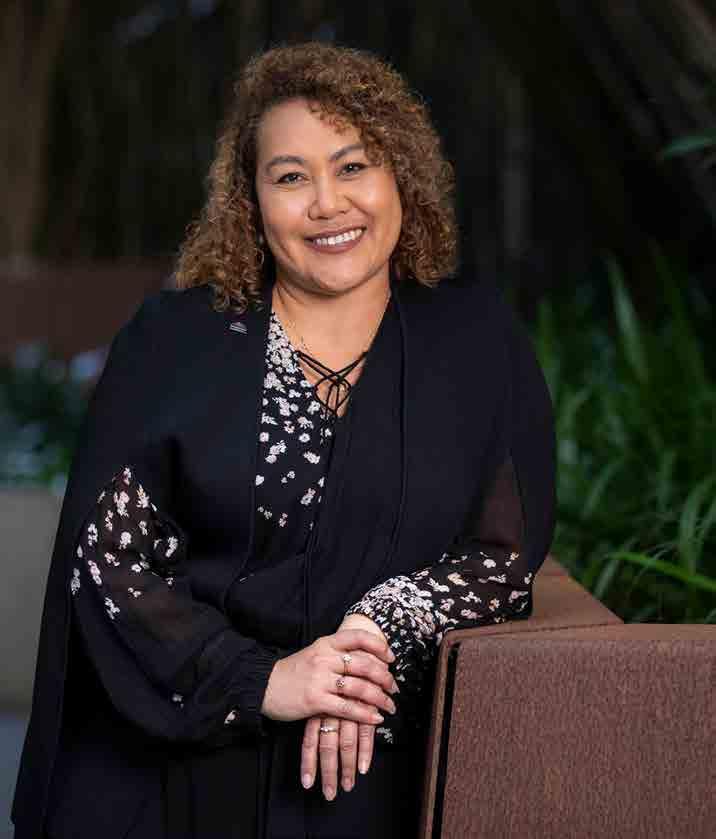
National Commissioner for Aboriginal and Torres Strait Islander Children and Young People, Sue-Anne Hunter.
Photo: National Commission for Aboriginal and Torres Strait Islander Children and Young People
If we get it right for First Nations children, then we get it right for everybody.
What is the Commission’s position in Australia's social, political, cultural landscape?
Our job is to speak up for Aboriginal and Torres Strait Islander children and young people. We’re there in those policy discussions to make sure their voices are heard and embedded into the systems and decisions that impact their lives.
So, its holding governments to account, and coordinating between the states and territories – the other commissioners, advocates and guardians – because every jurisdiction looks different. Some are legislated, some aren't, but there’s power in numbers and strength in that collective voice. Together, we shape policies, partnerships and even legislation.
Coming from a social work background myself, I know what these policies look like in practice, and what’s actually achievable.
One of our biggest goals is to ensure that the voices of children and youth will be reflected. What do they need? And what can that look like? I really want to meet our youth and children where they're at and get their voices into policy.
What role does the education sector play in advancing reconciliation?
Schools play a huge role, particularly in teaching the truth about Australian history. Education inequality and the historic whitewashing of colonisation in curriculum was something we investigated at Yoorrook, and I know it was a big part of the Victorian Treaty negotiations.
But understanding the ongoing impacts is just as important. What's happening now? You might think it's different, but it’s actually not, it's the same but just looks different in today's age. So having the truth be taught is so important, along with looking at what resources and support educators need to be able to embed Indigenous perspectives authentically in learning.
We also have to look at how we make schools culturally safe for our students and our families and addressing racism in schools. How do you create a truly inclusive environment? You can't just teach it. There has to be a whole school approach, and it's got to start with the leadership.
If we get it right for First Nations children, then we get it right for everybody.
What advice do you have for schools and early learning services who are looking to advance reconciliation?
They really need to understand it’s not a tick-a-box, right? You can't just say, ‘we're doing reconciliation’.
Start off small and get the small wins. Building the skills and knowledge in teachers and educators is a really important first step. What professional learning opportunities should schools and services prioritise for their staff? And it needs to be prioritised, not just a one-day cultural safety workshop.
Work with external Indigenous consultants, and Indigenous education experts, and your Traditional Owners. Ask yourself, how do you bring community perspectives into the conversation? How do you bring in parents and students so they can see that change is possible and that action is doable?
And, how do we get to a reconciled future?
I think it's all of us doing the labour. All of us working together coupled with the people in the establishment giving up a bit of power – it’s not going to hurt them – to First Nations people, because self-determination is where we get change, and we know we get better outcomes when we're in the driver's seat.
When you think you've got it right, go back and listen again, because there's always room for listening so we can learn more and move forward.
And that’s one of the things good things about Reconciliation Action Plans, when done right and with experience and the different perspectives that contribute to them, they evolve, and people need to let them evolve organically, and move with them and learn, but don't get stuck.
I think people get stuck because they don't want to offend, so they don't do. I would prefer people do, and try and say, ‘hey, I got it wrong’ and then try again to get it right, rather than not do. If you're not doing, then you're not learning.
Learn more about the work of the National Commission for Aboriginal and Torres Strait Islander Children and Young People via ncatsicyp.gov.au
DEFYING COLONIAL STANDARDS
Nih, Kaartdijin, Birdya (Listen, Learn, Lead).
These three words guided Mosman Park Primary School in Perth on an in-depth truth-telling journey celebrating the heroism and culture of the Noongar people.
It started with a letter from a student to the principal about the name of her school sports faction. The school listened to her concerns about it being named after Captain James Stirling, a colonial administrator who helped to establish the Swan River Colony in 1829.
He was also a violent oppressor of Aboriginal people, leading an attack against the Bindjareb Noongar people, now known as the Pinjarra Massacre.
Though the school had already been considering the implications of the name, the student’s letter was a catalyst for action.
The school then learned more about the full story of Captain James Stirling and of their local area.
The student council learned about Noongar history, people and places, seeking to see their area and its past from Aboriginal perspectives.
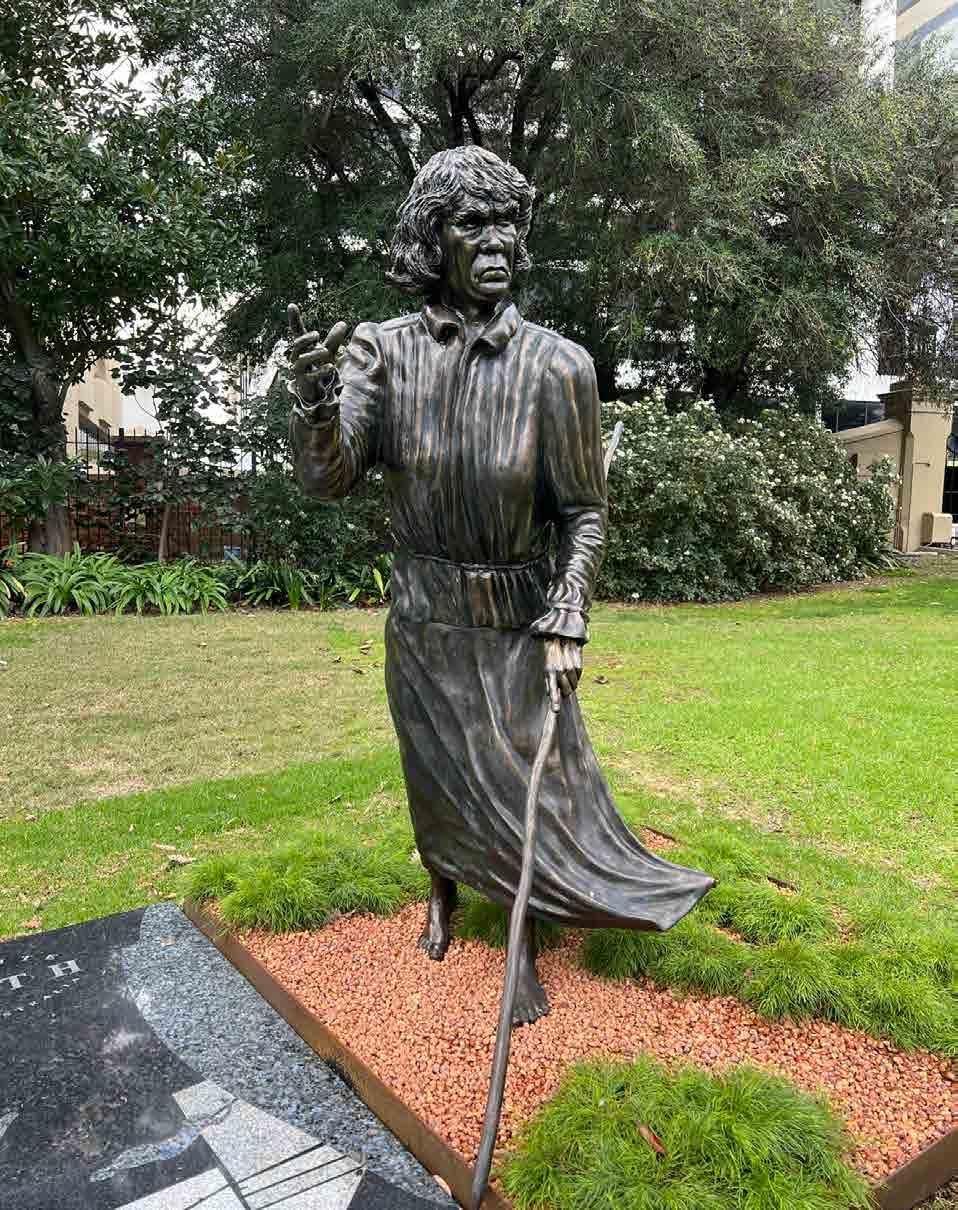
Statue of Fanny Balbuk in the gardens of Government House in Perth. Photo: Pamela Chatfield
It’s important that our kids know what we didn’t learn when we were kids. We weren’t taught true history. And now we’re going to rectify that.
Old name, new identity
The student council researched new names for the sports faction that would recognise and acknowledge the spiritual and historical significance of the site for Aboriginal communities and, the courage of Aboriginal heroes past.
Pamela Chatfield, former Associate Principal of the school explains, ‘It’s important that our kids know what we didn’t learn when we were kids. We weren’t taught true history. And now we’re going to rectify that.’
By doing this work and making the necessary changes, Mosman Park took the lead, showing other schools it’s possible to change the way things are done.
Students and teachers voted on a new name for the sports faction. The story of Fanny Balbuk got the most votes.
Fanny’s story
Fanny was a strong Aboriginal woman who protested against the settler occupation of her land in the 1800s – the very area where Stirling had set up a colony and committed acts of terrible violence.
She is reported to have walked through colonists houses and yards if they lay in her way, refusing to recognise their authority on her land.
‘She would go to what is Government House and in Noongar call out saying, “You’re standing on the graves of my Ancestors, get off!”,’ says Whadjuk Ballardon Noongar custodian Ingrid Cumming in an interview with the National Indigenous Times
‘It was literally like camping at Fremantle Cemetery for her, you know, it was where her grandparents were laid to rest.
‘I guess in her way she was saying, “I’m not going to respect your fences, I’m not going to comply because you’re not listening to me so we can move forward together”.’
Following Fanny’s example
Recognising Fanny Balbuk at the school amplified this incredible story of a woman courageously and tenaciously standing up for her culture and her people.
One Aboriginal student was proud to see how the project took off among her peers, leading to the school being a finalist in Reconciliation Australia’s Narragunnawali Reconciliation in Education Awards 2021.
‘It makes me feel proud because people recognise the Aboriginal culture,’ she says. ‘I find it really nice that people want to learn about the Aboriginal culture and the fact we’re sharing it all around WA and it might go even further is really special for our school.’
The school held a design competition for the new sports faction symbol. An Aboriginal student created the winning design of a bibjool (gecko). This took the house name from Stirling Stars to Balbuk Bibjool.
It was such a success that it prompted the school to recreate the rest of the logos for the houses with the new designs by a parent – who is also an Aboriginal woman and artist.
Language of the Land
Mosman Park’s journey continues with a new whole of school logo to celebrate community. It drew its apt motto Listen, Learn and Lead from keywords that structured its Reconciliation Action Plan vision.
Collaborating with an Elder who was on the school board, the motto words were translated into the first language of the area.
And all the children now also proudly sing the school song in Noongar language, bringing a personal connection to Country and culture every day.
‘Instead of Stirling House, we have Balbuk House. Our logo has the river and the sea in the trunk of the tree and the green represents the fig tree that is at the centre of our school. In the leaves of the tree is our community,’ says Pamela.
‘We’re changing a lot of the way we do things, because it’s important to us that we incorporate the full history of our school.’
The school truly embraced the opportunity to acknowledge the past and make meaningful changes in partnership with the community. In the process the whole school community got involved with reconciliation and truth-telling.
They truly nih, kaartdijin and birdya actions that defy the colonial standard, just like their hero Fanny Bulbuk.
This story is part of an ongoing series of case studies from Reconciliation Australia’s Community Truth-telling Pathways program. They form part of the resources and information to support communities undertaking truth-telling and to enable non-Indigenous Australians to better understand how to participate. Since it was published in 2024, the Governor of Western Australia has officially apologised to the Bindjarab Noongar people for the massacre.
To learn more about the program and available resources, head to reconciliation.org.au/truth-telling
NARRAGUNNAWALI: RAISING A GENERATION IN RECONCILIATION
The Narragunnawali: Reconciliation in Education program has just marked ten years. Its groundbreaking work in schools and early learning services is producing a reconciliation generation.
‘You often hear in organisations, “we need a schools’ program! We should do this in schools”,’ says Alex Shain who was the first General Manager of Reconciliation Australia’s Narragunnawali program.
‘It's almost become a cliche to teachers hearing that they – once again − are responsible for solving the world problems,’ he told Reconciliation News.
But when it came to developing Reconciliation Australia’s Narragunnawali program, it was different.
There was going to be no quick fix solution – either to achieving reconciliation or to it being effectively embedded in curricula across the tens of different education jurisdictions spread across states and territories, Catholic, independent and state school systems.
Through the framework of their Narragunnawali Reconciliation Action Plan, early learning services and schools like Narragunnawali Awards 2025 Highly Commended school, Karuah Public School, have meaningfully embedded local First Nations cultures and perspectives in the classroom.
Photo: Tom Hoy, Wirrim Media
‘Our approach was to meet, to listen; to learn, to make sure we weren't going to reinvent anything; that we weren't going to pretend that we have we invented this idea,’ he said.
The program’s very name, Narragunnawali, a word from the language of the Ngunnawal people meaning alive, wellbeing, coming together and peace reflects this intention. Used with permission from the United Ngunnawal Elders Council, it symbolises a commitment to bringing people together in respectful and ongoing learning.
First Nations education champions had worked for decades for Aboriginal and Torres Strait Islander peoples, histories, cultures, and perspectives to be included in Australia’s education system and this had already contributed to significant changes within the education landscape.
One of those champions is Professor Peter Buckskin, a Narungga man from the Yorke Peninsula in South Australia who has been involved in Narragunnawali since the early consultation days. He formally launched the program in 2015 and is a patron of the Narragunnawali Awards.
‘Peter Buckskin gave us one piece of advice very early in the process and I live by it and pass it on at every opportunity today. It is, “to know your place in the space; it is because of the work already done by Aboriginal people that you're even able to do this work”,’ Alex Shain said.
Reconciliation in education at work
For a decade, with the support of the BHP Foundation, the Narragunnawali program has provided tools and resources to help educators take meaningful action towards reconciliation.
The key to appreciating the work of the educators who have been part of the Narragunnawali team, and the many resources and initiatives developed over this time is that its intent was never to be a program for First Nations students or a program to be taught by First Nations educators.
Its aim was to expand reconciliation processes and knowledge into everyday education practice and to give educators the tools and skills to do that.
At its core, reconciliation in education is about non-Indigenous educators, leaders, institutions and systems taking responsibility to meaningfully embed Aboriginal and Torres Strait Islander content and perspectives into teaching and learning.
The responsibility for this work must not fall solely on First Nations peoples.
It also recognises that the teaching of Aboriginal and Torres Strait Islander histories and cultures can be daunting for teachers and educators, especially if they are non-Indigenous as are 98 per cent of teachers in Australia.
A key part of the Narragunnawali program is a powerful online platform which hosts suites of digital resources, including an online Reconciliation Action Plan (RAP) process designed specifically for educational environments, with professional learning and curriculum resources aligned to national frameworks and standards.
The online platform was the revolution
From the beginning, the program used technology to provide resources effectively, and at scale, to the hundreds of thousands of teachers across the country.
Basing the program around a web-based platform allowed schools, teachers, students, parents and community to all engage in the one place, to easily access professional learning and curriculum resources.
‘As the digital platform grew it gave us insight into all the work that was going across the country and learn from it.’ Tessa Keenan the current General Manager of Narragunnawali said.
‘Most importantly we can see that schools and early learning services are making progress and deepening their actions year on year.
‘The platform has also helped schools and early learning services not lose knowledge when someone leaves or when the RAP Working Group changes.’
Ten years on there are now 170,000 active platform users at narragunnawali.org.au
Over 50 per cent of Australian schools and early learning services have registered to develop a Reconciliation Action Plan and the platform houses thousands of resources including reconciliation toolkits for parents/carers, and subject guides spanning all learning areas.
Celebration and awards
In acknowledgment of the vital work done by schools and early learning services the first Narragunnawali Awards in 2017 recognised and celebrated that work.
The fifth awards in 2025 showcased more incredible stories of schools and early learning services putting relationships with Aboriginal and Torres Strait Islander people, cultures and communities at the heart of their institutions.
For a decade, with the support of the BHP Foundation, the Narragunnawali program has provided tools and resources to help educators take meaningful action towards reconciliation.
Head to narragunnawali.org.au to learn more about the program and access resources to support reconciliation in education in your school, service or community.
LOOK FOR A BOOK!
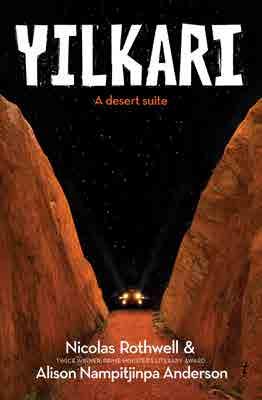
Yilkari: A desert suite
Nicolas Rothwell and Alison Nampitjinpa Anderson
Text Publishing
In a note to readers at the start of this book, Yilkari: A desert suite is described as ‘the product of two minds.’ Those minds being writer and arts journalist, Nicolas Rothwell and his partner, former NT politician and acclaimed artist, Alison Nampitjinpa Anderson, a Luritja-Pintupi woman from the Western Desert community of Papunya.
The novel is certainly a collaboration between the two, with the recognisable elegant prose of Rothwell providing the compelling narrative while Anderson provides the cultural context for the book’s magical journey of exploration of Country, memory and culture.
Yilkari is a collection of four short, dialogue-driven sections, featuring a first-person narrator journeying into the desert with different companions.
Reviewers have described Yilkari as resisting ‘easy categorisation’. It is not propelled by a conventional novelist’s plot but rather by a series of conversations amidst desert country road trips.
A dialogue-dense novel Yilkari may prove to be a difficult read for some, but perseverance will be rewarded by a literary adventure where culture, memory, and land combine.
Through Rothwell’s beautiful prose and Anderson’s deep understanding of desert Country and culture, Yilkari gives the reader a critical insight into First Nations peoples' view of the land as a living being, and the intricate depths of connection through millennia of caring for Country.
A Savage Turn
Luke Patterson Magabala Books
A Savage Turn is the debut collection from Gamilaroi poet Luke Patterson. When speaking to ABC’s Awaye! program, Patterson said he is obsessed with poetry and sees and hears the world in verse. Patterson’s deep love for poetry and prose, accompanied by his sharp wit and observations, is evident across the collection of works as he delves into the realms of continued culture among ongoing colonisation.
A Savage Turn is broken into three parts: Smutty Paperbark & Other Creation Stories, A Savage Turn & Other Love Songs, and The Other Side of Country All three parts explore the dichotomy of modern and traditional life and culture alongside love and connection to Country.
In the poem Australia: A Creation Myth, Patterson gives a palpable description of first contact as the swallowing and digestion of the land by ‘a well-oiled machine called colony’. However, the poem also illustrates that the ingestion of the land and its waterways could never fully erase First Nations peoples and culture: ‘It swallowed earth’s custodians, exquisite, ingenious savage, always savage but could not consume them.’
As Patterson says himself, he spends his life trying to describe a complex world where language bends meaning, and this stunning and defiant presentation of poetry is exactly that – and is not one to be missed.
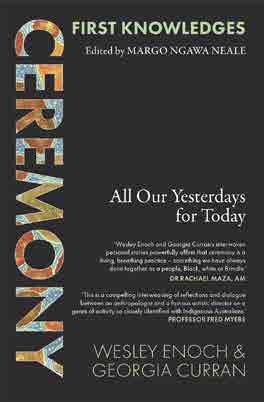
First Knowledges: Ceremony
Wesley Enoch and Georgia Curran; edited by Margo Ngawa Neale
Thames & Hudson
Somewhere between essay and memoir, Ceremony, the ninth book in the First Knowledges series, unfolds as a conversation between Quandamooka theatre director and writer Wesley Enoch, and non-Indigenous anthropologist Georgia Curran. Their differing backgrounds are evident in the text but are complementary; Enoch’s writing is passionate and poetic, Curran’s more academic but warm and easy to read, and both write in the fashion of people intimately familiar with their subject. The pairing keeps the experience fresh and allows us to examine ceremony as an anthropological pursuit and experience it as a spiritual one.
Editor, Margo Ngawa Neale, has compiled all nine volumes in the First Knowledges series. Neale is an historian, so naturally there is an emphasis on traditional ceremonies, but the writers also examine events unique to modern Australia as ceremonies in equal measure, like Australia Day – a thought-provoking exercise, particularly in this context.
This is not a detached examination, but a moving invitation to witness how ceremony continues to shape lives and landscapes, perfectly encapsulated in the line, ‘ceremonies are a way of connecting all our yesterdays to today’. Ceremony stands as a profound addition to the series; a reflection on who we have been, who we are and how, through ceremony, we continue to become.
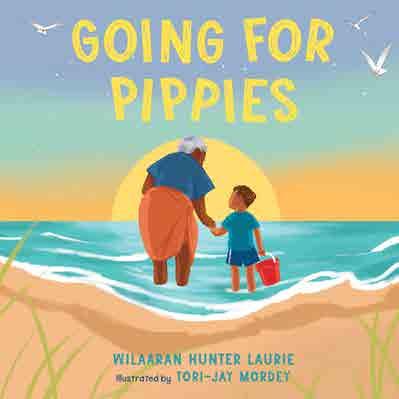
Going for Pippies
Wilaaran Hunter Laurie and illustrated by Tori-Jay Mordey
Magabala Books
Dive into a seaside adventure wrapped in cultural celebration in Going for Pippies. Young Wilaaran joins his extended family on Country, squishing toes in sand, doing the ‘pippie dance’, and learning the ageold traditions of his Yaegl community as they search for the little shellfish that’ll become dinner.
Laurie’s text is warm, rhythmic, and works perfectly alongside Mordey’s illustrations that seem to light up each page; expressive faces, colour-rich beach scenes and a real sense of joy in the journey, from muddy toes to proud catch.
Going for Pippies blends fun family moments with deeper themes of intergenerational learning, cultural connection, and respect for land and sea. It’s joyfully educational and a gentle prompt for kids to consider what their family traditions are and what they mean to them.
In short: an uplifting, visually beautiful picture book that invites children into living a day of gathering, sharing and belonging. Highly recommended for young readers and families alike.
Reconciliation Australia's Community Truth-telling Pathways Program provides information and practical resources to support communities undertaking truth-telling and to enable non-Indigenous Australians to better understand how to participate.
used because First Nations perspectives and experiences have been persistently excluded, misrepresented or ignored in official accounts of Australia’s history. A narrow version of history has become widely accepted as true and complete. This limits our collective ability to understand the past and why things are the way they are
‘
Explore our truth-telling resources hub to learn more: Truth-telling