(Ebook) Being a Firewall Engineer : An Operational Approach: A Comprehensive guide on firewall operations and best practices by Alex, Jithin ISBN B09K5ZBFTL
(Ebook) Being a Firewall Engineer : An Operational Approach: A Comprehensive guide on firewall management operations and best practices by Jithin Alex ISBN 9798752671326, 8752671321
(Ebook) Practical Programming: An Introduction to Computer Science Using Python 3 by Paul Gries, Jennifer Campbell, Jason Montojo ISBN 9781937785451, 1937785459
(Ebook) Selenium and Appium with Python: Build robust and scalable test automation frameworks using Selenium, Appium and Python (English Edition) by Yogashiva Mathivanan ISBN 9789355518354, 9355518358
Security Professional, having experience in implementing and handling major network security solutions and products in various environments and regions. I have used my experience, professional connection and publicly available information for writing this book. Personally I thank you for purchasing this e-book version and thanks for the support. I hope this book will be informative to you and I wish you all the best.
Please visit www.jaacostan.com for my articles and technical writeups.
All Rights reserved. No part of this publication may be reproduced, distributed or transmitted in any other form or by any other means including photocopying or any other electronic or mechanical methods without the prior written permission from the Author.
Although the author have made every effort to ensure that the information in the book was correct at the time of writing, the author do not assume and hereby disclaim any liability to any party for any loss, damage or disruption caused by errors or omissions, whether such errors result from negligence, accident or any other cause.
Kindle Edition. License Notes
This e-book is licensed for your personal knowledge purpose only. This e-book may not be re-sold, re-write or given away to other persons. If you would like to share this book with others, please purchase and download through Amazon only. Thank you for respecting the hard work of this author.
Table of Contents
What is Network Automation?
How the book is written?
Pre-requisites. Why Python?
How to Install Python 3?
Setup path and environment variable
Important things to consider in python: Understand the Basics
Standard Input and Output Operation
Python Strings
Formatting the Output.
Dealing with Numbers
Reading Input from Files
Lists
Dictionaries
Conditions
Loops
Python Functions
Section Summary
Exercises
Setting up the Lab.
Topology
Configure the devices
Writing the Python Code
Exercise 1: Python code to Change the Hostname using telnet.
Exercise 2: Python code to get the running configuration.
Exercise 3: Create and assign IP to a VLAN interface.
Exercise 4: Create multiple VLANs using python for loop.
Exercise 5: Create multiple VLANs on multiple switches.
Exercise 6: Configure SSH on all switches using python code.
Exercise 7: Backup the configuration of all switches.
Netmiko Introduction.
Exercise 8: Create VLANs and Assign IP using SSH.
Exercise 9: Create Multiple VLANs on all switches using SSH.
Exercise 10: Upload the configurations on all switches using SSH.
What is Network Automation?
Network automation is the process of automating the configuration, management and operations of a computer network. The tasks that were normally done by the network or system administrator can be automated using a number of tools and technologies. As we know, human errors is the number one reason for most of the issues including unavailability, downtime, security etc. in a network environment. A proper automation will eliminate the human errors and also speed up the operations, thus saving time and cost. Network automation is implemented through the combination of hardware and software-based solutions that automatically execute repetitive tasks in a network environment.
Scripting languages are widely used by Network and System administrators for automating the tasks. This saves time, effort and thereby reducing human errors as well. Among the automation tools, Python and Ansible are the most popular ones. With Software Defined Networking (SDN) in picture, knowing any of these programming languages is vital for the future of administering the network and systems.
How the book is written?
I wrote the book in a structured manner. First get familiarize with the basics of python3 such as data types, lists, conditions, loops, libraries etc. Every concept is explained with examples.
Once you get familiarized with the basics and concepts, let’s get in to the real world applications of python3 in network administration. I have included many useful and practical examples that you might encounter in you daily administering tasks. Such as, changing configurations of multiple network devices, taking backup of multiple devices etc. in a single go using python3 script.
Feel free to revise the topics whenever you feel lost. Everything is written in simple language and I recommend you to practice each examples and exercises multiple times until you really understood the topics and concepts. I also encourage you to try writing the codes yourself. Practice keeps you in a better place. I wish you all the best. Let’s get started.
Pre-requisites.
I assume those who are reading this book have a prior knowledge on IT networking especially with Cisco IOS. There is no programming experience required for practicing the concepts referred in this book and for that reason, I have tried to explain all concepts from the basics itself.
Note that, don’t consider this book as a core python developer guide. This book is primarily intended for networking professionals on how to make use of python programming to automate their network administration tasks. If you want to do a deep dive on just the Python3 programming language, I recommend you to read the book “Learn Python3 the hard way.” https://learnpythonthehardway.org/python3/
Next, for practicing the network automation, either you should have some real network devices such as switches and routers, or you can practice it in GNS3 simulation software. In this book, I have explained the practical’s using GNS3 virtual lab. So from required software aspect, GNS3 and latest version of Python3 are the prerequisites.
How to Install Python 3?
In Linux python is usually comes preinstalled. For Windows OS, you can download python from the internet and install.
1) Install Python 3
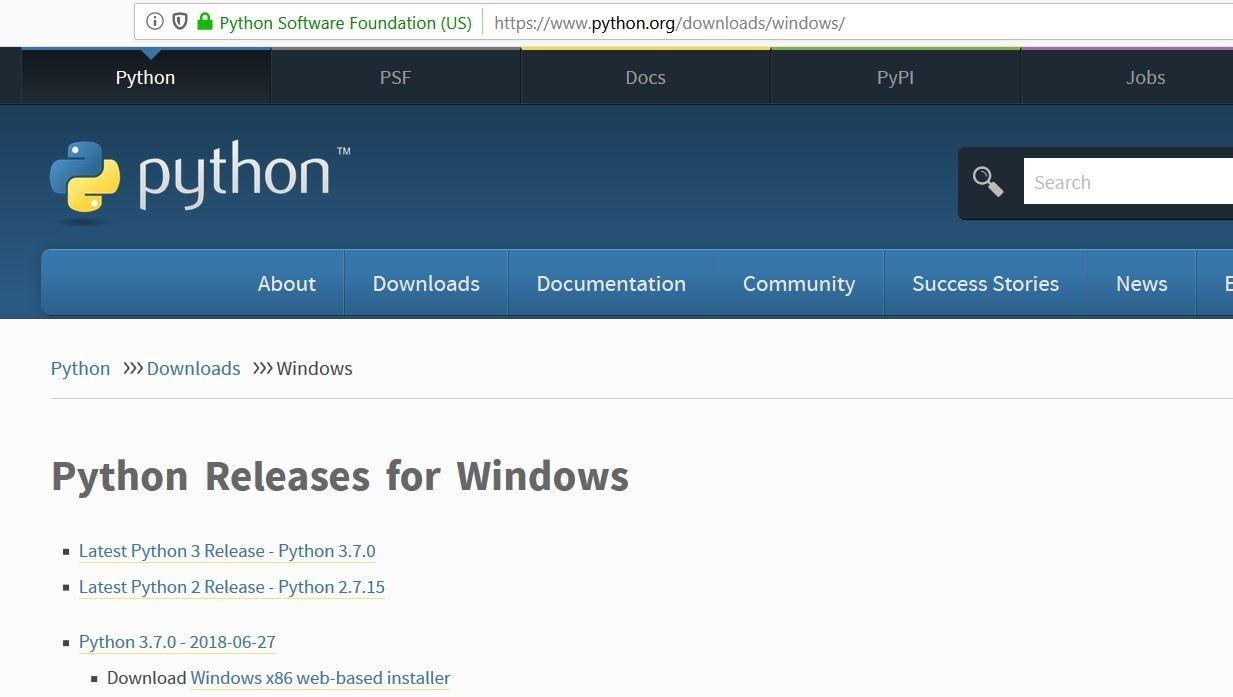
Download python from the Python website. https://www.python.org/downloads/
To know more on how to install python on your machine, visit https://docs.python.org/3/using/windows.html
2) Verify the python is running in your machine.
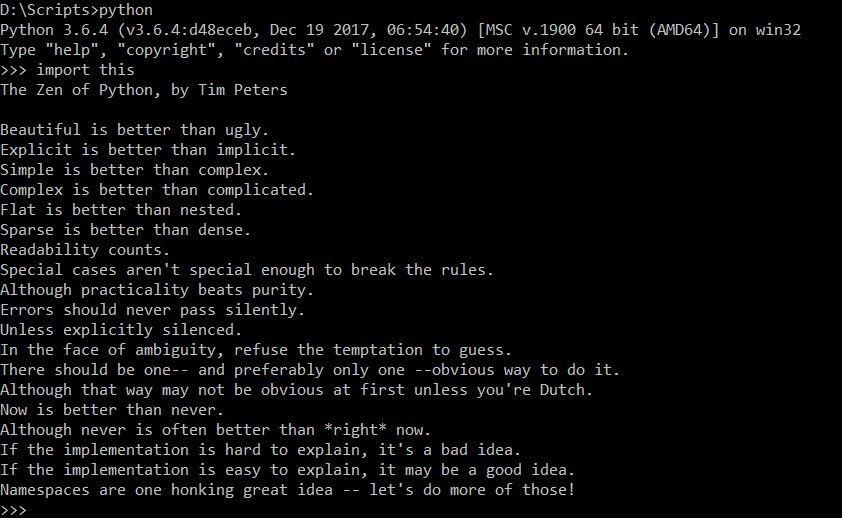
Go to command prompt or shell, and type python. It will show the version installed.
Use quit() or Ctrl-Z plus Return to exit
Setup path and environment variable
Once Python is successfully installed, specify environment variables if you want to execute python scrips from a specific path. This step is completely optional if you decide to execute the scripts from the python root directory only.
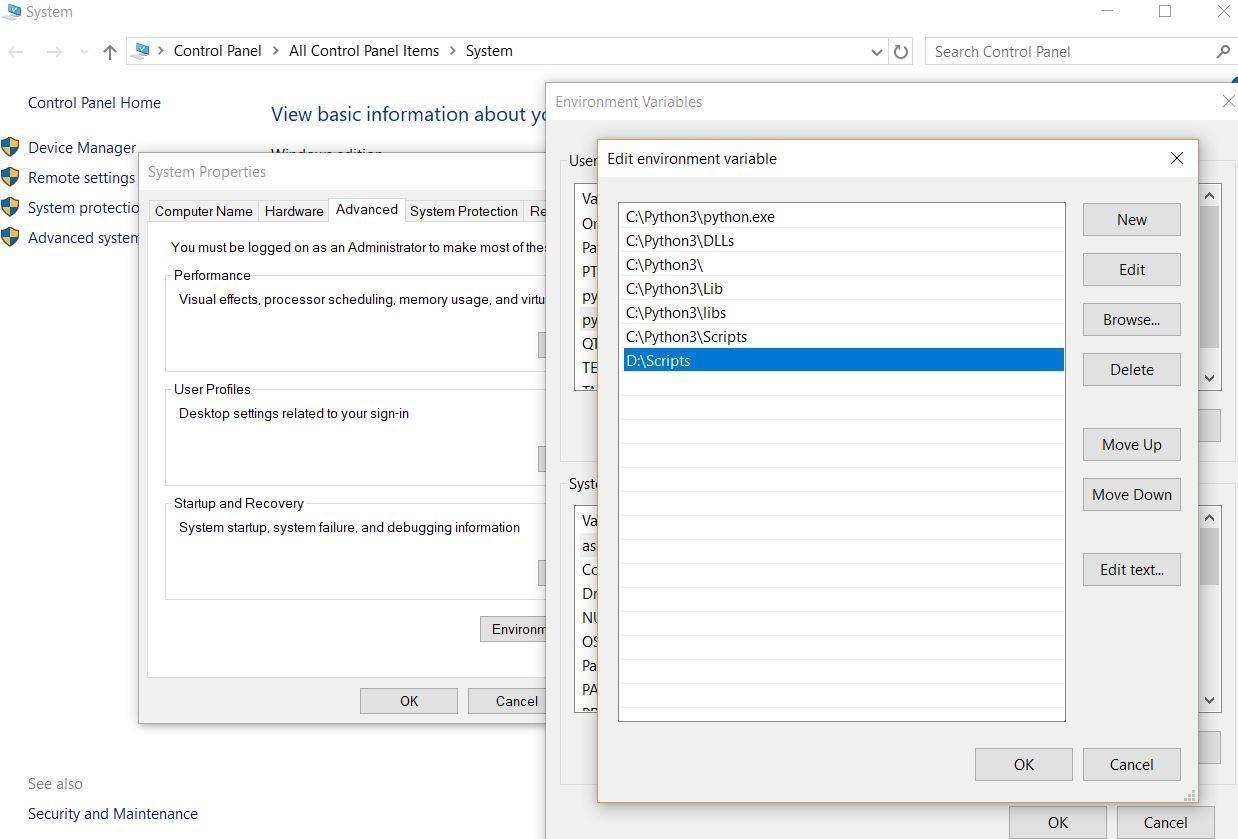
Go to your system properties either from control panel or by right clicking My Computer and properties.
Click on Advanced System Settings -> Advanced -> Environment Variables> select python3 and click edit, and add a new path.
Here in this illustration, I have added a new path D:\Scripts. Which means I can execute the scripts in the folder directly using python3. You can specify the folder of your wish.
Important things to consider in python:
1) Indentation matters.
Unlike other programming languages, Python considers Indentations and those spaces are very important. Improper indentation leads to error. Python usually follows a 4 spaces indentation. I will be explaining about this in the coming chapters.
Other Programming languages uses curly brackets {} for showing the code blocks, while python uses Indentation.
import this command gives us a broad overview of Python3 in an easy readable way.
2) While declaring variable name, you can use alpha-numeric characters and underscore . Other characters are not allowed in a variable. Also note that, you cannot begin a variable name with an underscore character. Also you are not allowed to create a variable name that begins with a number.
Eg: my name is a valid variable
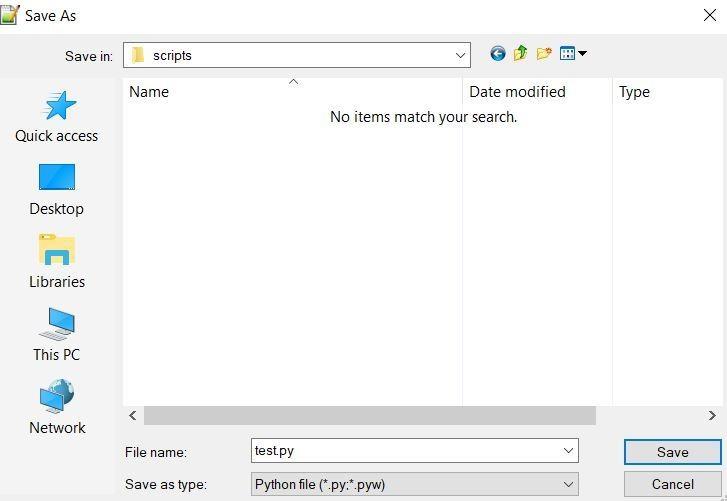
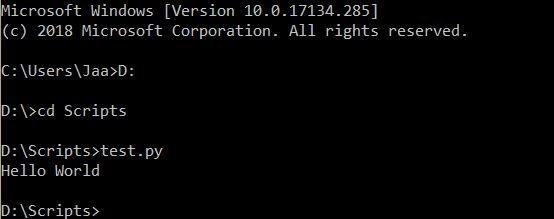
Run this file in the interpreter shell to see the output. Remember, I have set the path D:\Scripts in the environment variables, so that I can run the scripts contained in this folder directly with python.
When it comes to professional use, people use different IDEs instead of using the python interpreter shell for writing and executing the python scripts. I use IntelliJ Idea and PyCharm from JetBrains. But you can use any IDEs of your wish and convenience. Our intention is just to execute the scripts properly. The outputs shown here after is captured from IntelliJ IDEA. Download PyCharm: https://www.jetbrains.com/pycharm/download/
What is an IDE?
An integrated development environment (IDE) is a software application that provides comprehensive facilities to computer programmers for code development. An IDE normally consists of a source code editor, build automation tools, and a debugger. Also provides code completion. You can still write code in a traditional way. Like, write the code in a text editor and save it as a .py file. Then call and execute the file in Python Interpreter shell. An IDE is used for a better GUI, debugging and code completion options.
Also if you are using windows, for running Netmiko (I will explain about Netmiko in detail in the following chapters), you may need to install Anaconda application. Anaconda itself has a python IDE package called as Spyder. It is optional, since we are discussing about IDE’s, I just added it here as a note.
A note of Python3 backward compatibility
To offer backward compatibility with Python 2 from your Python 3 code, you can use the following commands at the top of each .py script. from future import absolute import from future import division from future import print function from future import unicode literals
This is just for your information. This book focuses on Python3 and hence backward compatibility is not discussed here after.
Understand the Basics
Since this book is written for Network administrators to become familiar with python and how to use it in your daily operational tasks, I won’t be going in to in depth basics of python programming. But still, you as an administrator should gain some amount of knowledge of the python programming. Remember, each commands I specify here has a lot of sub commands and associated options.
Python Strings
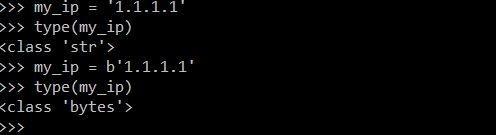
By default he python3 stores the strings in a Unicode format. Prior to Python3, it was using ASCII as default which is only 8 bytes in length. To accommodate more languages and characters, Python3 adopts Unicode representations for all strings by default.
If you want to change the Unicode to ASCII in Python3, then prefix the string with a “b”.This is shown below.
We will be using this in the following exercises. With examples, you will be able to understand much better.
Comparison Operators
Equals == Not Equals != Greater Than > , >= Less Than < , <= Assignment =
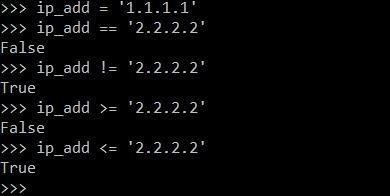
Equals (==) is a checking operator. I illustrated it below. First I assign an IP address 1.1.1.1 to the variable ip add. Then I used the Equals operator to check the weather value of the variable ip add is 2.2.2.2. Python returned a response “False”. Which means the variable value is not true. Next I used the Not Equals (!=) operator. Is the variable value is not equal to 2.2.2.2? The python responds as True.
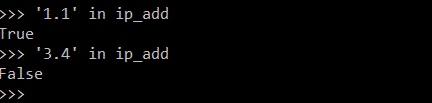
Similarly I checked the other comparison operators Greater than and Less than to check the values of the Variable. These comparison operators are useful while writing the code. For example, if you want to find the active IP address in the network which is greater than 192.168.20.40. We can make use of these operators while writing the code. We can also use the comparison operators in a different way. For example, if you want to check 1.1 is a part of ip add , then,
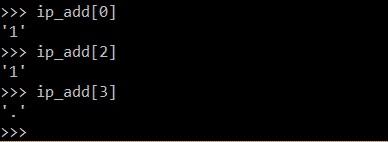
If I want to see the particular value of a position (indices),
String Concatenation
When we want to join two strings together, use + operator.
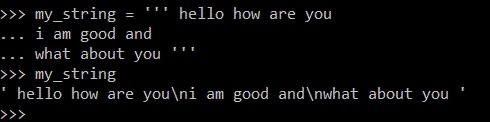
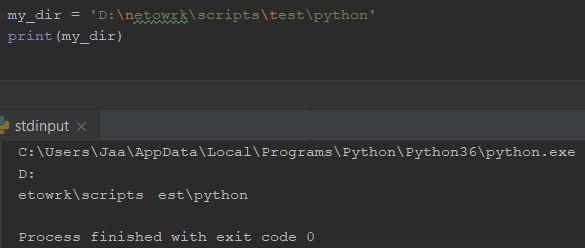
Sometimes, the new line causes mistakes in formatting. See the example below.
I have specified my directory path by python mistakenly interpreted /n of /network as new line and you can see that in the above picture.
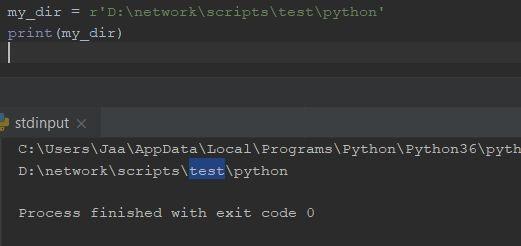
In order to avoid this, while specifying sting like this, prefix an “r” in the string. “r” tells python that this string is a raw string. Now you can see the output as you desired.
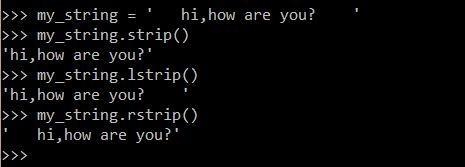
Strip Command
To remove whitespaces, use strip command.
Consider the following string. It does have a lot of whitespace character in it.
my string = ' hi,how are you? '
my string.strip() to strip off all the whitespaces
my string lstrip() to strip the whitespaces on the left my string.rstrip() to strip the whitespaces on the right
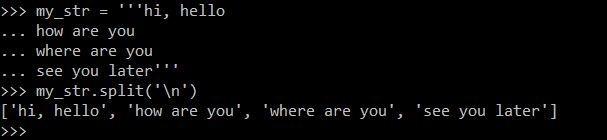
Split Command
Split command is used to split a string based on a particular character.
E.g.: ip add = '192.168.1.2'
Split this IP Address based on character " . " ip add.split(".") and output is shown as a python list.
I will be discussing more about Python List in the coming chapters.
If you have a string with multiple lines and you want to split the paragraph line by line, the use "\n" as the delimiter.
Formatting the Output.
In this section, I am explaining different methods to format the input and outputs. Just get familiar with these. Formatting the code is helpful for easy reading and for reducing the code size. I will discuss some of the important formatting methods.
1) If you want to print a character to a number of times, then use the multiplication (star character *).
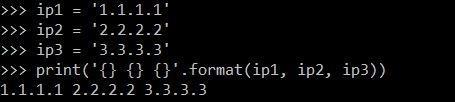
2) Using the format command.
Call the value using format command. Populate the variable values at the desired positions. Also can be called them as named arguments.
You can specify the width inside the brackets {} as well.
To align the string to the right use {:>} and for left, use {:>} and for center align, use {:^}.
To call the named arguments, specify the name in the statement as well. Eg: Sam=ip1
Dealing with Numbers
Arithmetic operations are pretty simple and straight forward in Python3.
Addition +
Division / /
Subtraction -
Multiplication *
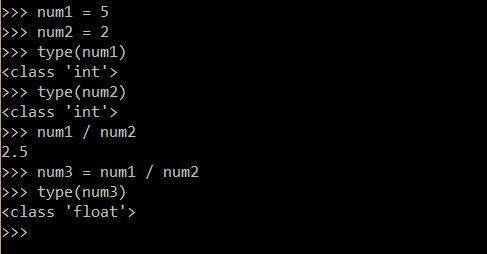
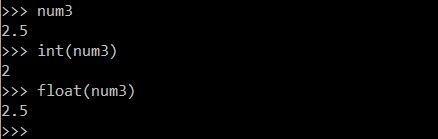
In python3, when it comes to division, it automatically considers the variables as float values.
Though the variables were integers, when the division is performed, python provides the output as float.
To convert a float to integer or vice-versa,
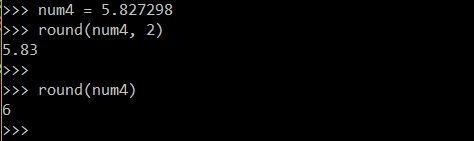
Rounding a float value using round command.
Assume you have a float value 5.827298 and you want to round it up to two points or round the value as whole, use the round command.
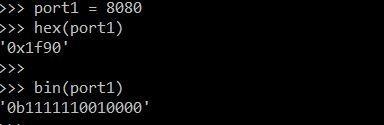
To convert a variable value to Hex/Decimal/Binary. I have illustrated the example below.
I have a port number 8080 and I want to convert the port number value to Hexadecimal or Binary.
Reading Input from Files
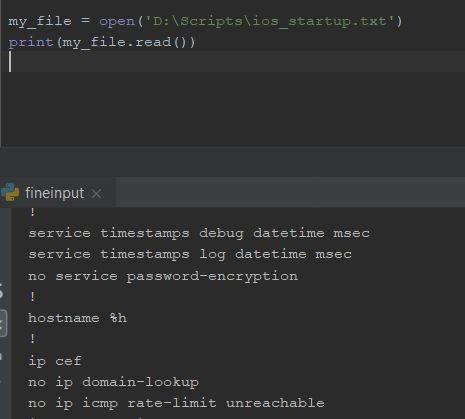
Reading the contents of a file. It take place in the following sequence. Load the file, read and then show as the output, Finally close the file.
my file = open('D:\Scripts\ios startup.txt')
data = my file.read()
print(data)
1) Open the file.
my file = open('D:\Scripts\ios startup.txt')
In this illustration, my sample file is “ios startup.txt” and is located at location “D:\Scripts\”. I load the file in to a named variable my file (This can be any name).
2) Read the contents of the file.
Read the contents of the file using read command. I saved the contents of the file to the variable named “data”
data = my file.read()
3) Output the contents.
4) Close the operation using close command. my file.close() is used to close the operation.
Reading Line by Line
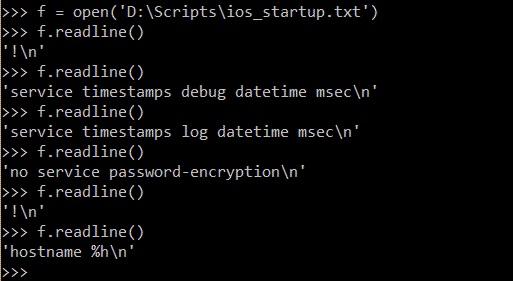
If you need to read the contents of the file line by line, then use readline command.
For illustration purpose of this readline operation, I used the native python interpreter shell.
I load the file to a variable f and use the readline() operation. You can see the output line by line. After displaying each line, the user need to press enter for the next line.
Lists
Grouping sequential data or elements can be called as a python list. We can have different data types included together in a list
Creating a list new list = []
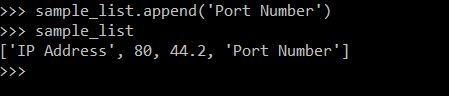
Eg: sample list = ['IP Address', 80, 44.20]
To append data in to an existing list, sample list.append('port number')
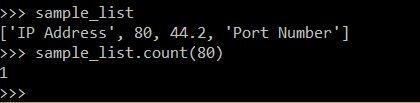
To count the number of occurrences sample list.count('80')
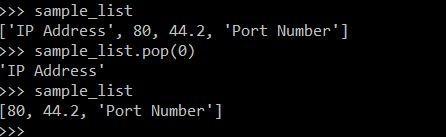
Remove: Use pop method by Specifying the index or use remove command and specify the value. sample list.pop(0)