
January 19th 2026

January 19th 2026

R T S or does it hold up a mirror to their reality? Director Yorgos Lanthimos asks why not make it both, and why not make it haunting!
Does art provide the viewer with escape,
I took the winter break to meet with friends liberally and watch movies two luxuries I felt the fall semester had not allowed for. One day I melded these two objectives, and so my dear friend and I sat in a theatre on Carlton Street, and as we watched the screen, the large popcorn between us got butter-soggier by the minute because we couldn’t remove our jaws off the floor long enough to chew We watched Lanthimos’ newest flick Bugonia: it stars Game Night’s Jesse Plemons and newcomer Aiden Delby as moralistic Teddy and Don, holding bajillionaire executive Michelle (played by the effervescent Emma Stone) seemingly without ransom Though the majority of the action occurs in this basement, with interactions wavering between too-calm prodding and all-out brawls, the tension successfully holds the entire time — even in the final moments, it is unclear what choice the characters on the screen will make next
A critic I like found Bugonia to be too unwaveringly dismal for everyone involved, and they accused Lanthimos of being an artist who treats his characters as though they are the ants under a curious and/or sadistic eight-year old’s magnifying glass, waiting to see which creatures will fry This is a fair assessment: the setting of Bugonia is miserable, the circumstances around the characters are miserable it should by all estimation be a bummer of a film And yet, it sings It rivets
This is due in large part to the acting Michelle and Teddy, captive and captor, circle one another hungrily: she sees her situation as a battle of wits, while he sees it as a battle of wills She believes she need only say the right thing to get out, hit him with the right combination of pain and carrot; he believes she is an alien sent to destroy him and his beloved cousin Don Finding common ground is difficult
As a duo these actors are, in a word, dazzling Emma Stone is used to her characters living under Lanthimos’ thumb from her work on Poor Things in 2023, so she is game for a complicated character Stone so expertly contorts her face through confusion, rage, measured patronizing, genuine reluctance; you hate her glass-paned house and endless wealth, yet you cross your fingers that maybe she can talk her way out of imprisonment Jesse Plemons so wonderfully offsets her: as Teddy, there is no game to play He is smart, and he is human, and he is scared So scared he might hurt her, so scared he will
If you’re tired of hearing about conspiracies, from the left or the right, then this is not the film for you In truth, in our current climate, conspiracy is often either enormously dangerous or woefully passé So much of real life already feels so dystopian, why would we reach for another truth? For me, this is where Lanthimos points his magnifying glass: with Bugonia he seems to question whether reality is stranger than fiction, or maybe where the two converge Whatever the intent, Bugonia sings it is one of the best films of the year, and this is coming from someone who watched some films of the year

In a little room above the Tranzac club, a not-for-profit arts and music performance space located in Toronto’s Annex neighbourhood, is the Toronto Zine Library (TZL) It is my favourite archive I first encountered the collection during the intermission of a jazz show, as the volunteer-run space is open on Tuesday and Friday evenings Wandering upstairs and into the room, I was struck by the informality of their collection The walls were ornamented with fairy lights, grunge posters and large blow-up balloon letters reading “ZINES ” Having studied archives in a course that semester, I was also struck by the power of that informality
Zines, small self-published booklets or magazines, originated in the early 20th-century amateur press movement, with their modern form emerging from 1930s science fiction fan magazines From the 1970s to the 1990s, zines embodied an anti-establishment ethos, acting as independent forms of media outside mainstream culture They became central to punk movements, circulating new music and band information quickly and affordably Since the emergence of zines, they have been tools of resistance and self-expression for marginalized communities As the @torontozinelibrary Instagram says, Zines are micropublications that anyone can create; they “talk back to the dominant culture, bringing voices from the margins to the center ”
Categories in the diverse TZL collection include literary zines featuring poetry or prose, personal zines, also known as “perzines,” that recount lived experiences, and “fanzines” that explore fandom culture Many of the zines in their collection blur or reinvent these genres entirely
Some are vivid, handmade, and handwritten, while others are blackand-white photocopied manifestos that engage with political ideas Their website and social media platforms promote communitybuilding through events ranging from collaborative zine-making sessions to protests against corporate housing development In the library, visitors can spin display racks and leaf through zines without strict oversight
The archive’s casual structure contrasts with that of a traditional institutional archive When picturing an archive, one might imagine a quiet, climate-controlled room: white walls, fluorescent lights, sign-in sheets, and materials handled with gloves Access is mediated, and value is decided by professional authorities. While zines are meaningful cultural artifacts, institutional approaches might risk stripping away what makes them special. A stapled booklet, personal story or piece of handmade art might never pass the threshold Instead, the library preserves culture in a space meant to be entered, touched, and shared
So, this is your sign to venture upstairs during intermission Flip through a zine or attend a zine-making night As the @torontozinelibrary Instagram puts it, we’re living in a “zine renaissance,” driven by a desire for authenticity and autonomy in how people tell their stories The Toronto Zine Library reminds us that archives don’t have to be distant or intimidating They can be comfortable and collective, with wide open doors They can be waiting for you just upstairs
Katie Trottier Contributor
On a snowy day in 2016, after a (probably) terrible day of middle school, my sister introduced me to Netflix’s Stranger Things After just one watch, I instantly fell in love with the show, and I religiously followed each subsequent season as they were released Then, there was a massive pause Three entire years between seasons three and four created a gap; the budget had grown, and so had the actors What had been hesitantly marketed as ‘Winona Ryder’s Show’ had turned into a showcase of the world’s most famous child actors and multi-million-dollar episodes Undeniably, the show had changed Gone were the days of relying on emotion, storytelling, and character to lead the way In their place was high-budget CGI and a plethora of plotlines all nearimpossible to keep up with. What I loved so dearly about the earlier seasons were the characters and their reactions to discovering their supernatural world, an aspect sidelined for the overwhelming amount of new characters and convoluted battle-plan explanations using quirky props and raunchy jokes
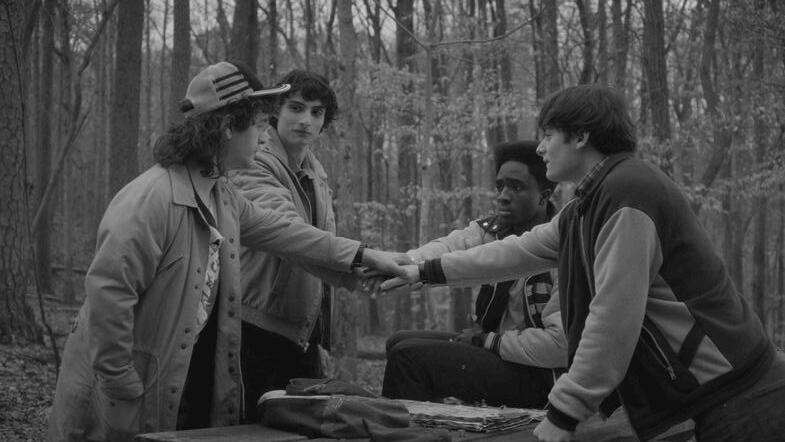
As for season five, I feel qualified to give a well-rounded take as a total nerd who has devoted years to loving the show In three words: it was okay! I found ‘Volume One’ genuinely spectacular; it reminded me why I had fallen in love with Stranger Things all those years ago It re-centred the crucial friendships and brought everything right back around to the overarching theme of love conquering all evil. Then ‘Volume Two’ dropped, and it all went downhill from there. The impressive runtimes quickly began to feel too short to wrap up all the plotlines, and, disappointingly, so many of them just quietly petered out Why was Will not affected by Joyce chopping Vecna’s head off, when it was explicitly emphasized that Will’s connection resulted in him feeling matching pain? Why did five seasons of build-up get resolved in five minutes?
Moreover, the relationships! After watching, I learned that, apparently, Jonathan and Nancy’s conversation in the melting-slime-room was meant to be a

break-up It gave the impression that the writers were so concerned about ensuring the finale’s success, that they didn’t address anything head-on to avoid criticism I was fully convinced that Mike and Eleven were broken up for the entire season due to their meagre interactions, which made their kiss in the finale feel entirely undeserved and underwhelming Equally as confusing was Will repeatedly seeking advice on pursuing his love for Mike just to have them not get together. This wholeheartedly cruel writing was further reinforced by Mike being referred to as Will’s “Tammy,” as if his decade-long love and adoration were comparable to Robin’s hallway crush. It felt as if both ‘Mileven’ and ‘Byler’ were intentionally left vague for the whole season to string along fans of both ships, only for both to get disappointing endings
I’m hesitant to be too critical about this show because it has such a special place in my heart, but the ending felt lacklustre after its impressive buildup. Clearly, many viewers felt similarly, sparking an online fan-theory called ‘Conformity Gate’ which speculated that the original ending was a fake-out, and there was a secret ninth episode that would resolve the plot holes and completely rewrite the ending Netflix even crashed on the alleged release time of the theorized episode; if that doesn’t say everything about the ending, I don’t know what does! Taking a decade to fully air opened the show up to a lot of criticism, and I do think it would be looked back upon more fondly if it had ended years ago I still love Stranger Things and probably always will, for nostalgia alone if nothing else I don’t think I’ll ever hear songs like Limahl’s “Never Ending Story” or “Running Up That Hill” by Kate Bush again without a thrill of the past tingling down my spine which is cool, because so many generations can now be nostalgic for the same things. So, do I regret sacrificing hours of my time to watch Stranger Things during peak UofT finals week in November? No Do I wish I were happier with how my favourite show ended? Yes! But maybe, Stranger Things was just my Tammy
If you’ve been online lately, and let’s face it you have you may have come across moodboards featuring girls in twee-style fashion, carefreely dancing with their hands raised, or stacked vinyl collections and hipster men with handlebar mustaches wearing suspenders whilst pouring artisanal lattes, paired with 2010s popfolk music, and the term ‘Millennial Optimism’ appearing somewhere in the caption.
The online space has found yet another time period to romanticize Whether it’s the longing for the 2000s as an era of flip phones and Juicy Couture tracksuits, or even the roaring 20s’ flappers and speakeasies, young folks have always grasped onto different eras and molded them with the well-meaning, but clumsy, hands of nostalgia, albeit often a nostalgia for a time they have not experienced

office during the early years of the decade, Barack Obama sanctioned the disastrous invasions of Iraq and Afghanistan The answer to this could be twofold yes, the rose-coloured glasses of nostalgia are distorting the time period, and there indeed at the same time seemed to be an optimism
So, what is Millennial Optimism? Are the 2010s back? And if so, why?
Broken down, the term ‘Millennial Optimism’ pairs Generation Y, those born between 1991 and 1996, who were the first generation to grow up with the internet in the 2010s, with the term ‘optimism,’ denoting a supposed hopefulness as the spirit which pervaded this era
In an attempt to trace this optimism back to the time period, I discovered that this optimism may have been a political type of hope Millennials were the first to embrace an inclusive politics, revealing a stark ideological and partisan gap between themselves and their predecessors, the demographic cohorts of Gen X and the Baby Boomers According to research by Shiva Maniam and Samantha Smith, in 2016, a majority of Millennials (55%) identified as or leaned towards being Democrats, with 27% describing themselves as liberal Democrats, the largest portion of any generation In 2015, gay marriage was legalized in the United States, and the late 2010s’ left-leaning politics, though overshadowed by the election of right-wing presidential candidate Donald Trump in 2016, were defined by ‘#resistanceliberalism,’ the online movement of democrats protesting, albeit superficially, his first presidency
Moreover, the emergence of the internet in the 2010s as a space for connecting individuals worldwide through forums and chatrooms, as well as a platform for accessing information of all kinds, undoubtedly strengthened the imaginative capacity for a future ripe with potential for change and growth
In 2025, political hope is sparse and scarce for the left Even superficial movements like ‘resistance liberalism’ have died off as quickly as they came on One year in particular stands out against the backdrop of online nostalgia for the 2010s - 2016, despite, or perhaps because of, the election of Donald Trump that year. It could be that 2016 was the last year when the imaginative capacity for change seemed present in the realm of politics
Still, it stands to question, are we exercising a selective memory of the 2010s’ politics? The millennials came into adulthood against the backdrop of the 2008 recession, and though a democrat was in
at the same time seemed to be an optimism that imbued the youth of the 2010s There’s another aspect of the Millennial Optimism trend that I have neglected, till now - the aesthetics of it all. This nostalgia has come in the form of moodboards, with images depicting the trends of the era alongside what has been dubbed by the online space as ‘stompclap-hey’ music, that indie pop-folk sound specific to the 2010s, with free and easy phrases like ‘we are young,’ ‘we are free,’ anthemic songs fit for the hipsters of the era, and representative of this optimistic zeitgeist
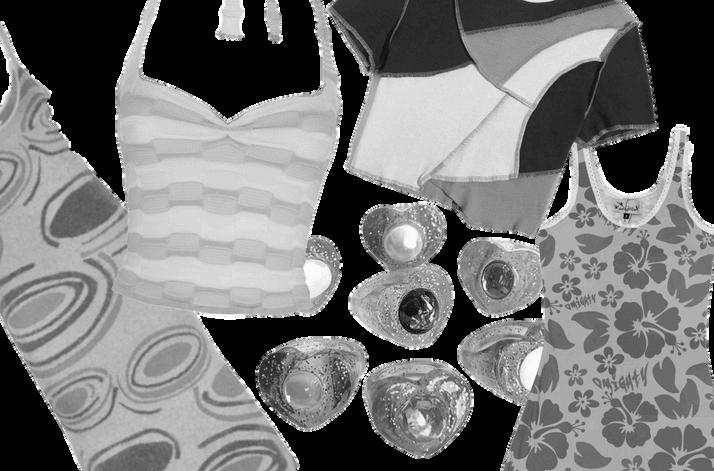
In a lot of ways, the Millennials’ pop culture is still here Gen Z is mimicking the Millennial love for the artisanal latte, their movement towards the analog, represented by the growing trend towards physical media, and even the mustache, which recently came back into style for the ‘performative male,’ that being a whole other can of worms, and a descendant of the hipster Even the quaint, vintage ‘2010s twee’ style with its Peter-Pan collars and 60s mod silhouettes is infiltrating Pinterest boards
So, is ‘Millennial Optimism’ back? It is certainly trending Why? Because our generation’s ‘Doomerism,’ this belief that humanity is condemned to a catastrophe of its own making, by way of climate collapse, some AI-related apocalypse, or political upheaval, is exhausting The 2010s serve as a simpler time to project the little hope that exists onto. Perhaps the nomenclature of ‘Millennial Optimism’ stems from the fact that Gen Z is afraid of calling that optimism their own

In late 2025, Pantone proclaimed ‘Cloud Dancer’ to be the defining colour of this year, an insipid off-white that energised the pitch-fork wielding crowd of Twitter users with disagreement. It’s easy to understand their objection when this past year has felt like a whirlwind of vibrance Wicked’s green and pink combination, the orange promotion of Marty Supreme, or the teal of Taylor Swift’s eleventh studio album, The Life of a Showgirl On a personal level, I disagree because my entire life is defined by colour, though this has only become apparent to me recently Moving to Toronto last autumn was by far one of the most arduous events of my life Packing my entire room into a sub-23-kilogram suitcase and foregoing a large part of my culture for the likes of hockey and hiking wrecked me in a way I did not think possible Moreover, during these first few days after my return from sea, sun, and sand, I find myself longing for that familiar blue, yellow, and black of home more than I ever did before
BLUE draws my mind to the beach, the satisfying sting of the sun on my skin whose rays shine so bright in my eyes I can’t see where the turquoise sea ends and the ultramarine sky begins It makes me think of snorkelling with sea turtles and scuba diving to see Carlisle Bay shipwrecks Furthermore, it evokes pride in our dedication to our waters and blue economy, our people often being at the forefront of movements and activism for sustainability and climate justice
YELLOW feels like warmth, joy, and familiarity Instantly removing
Storm Husbands Copy Editor
my hoodie the moment I step off of the plane due to the brassy sun beating down, the brightness of my best friend’s smile after seeing her for the first time in four months, or my favourite canary-coloured bathing suit that feels less like spandex and more like a second skin every swim Yellow goes down like saffron-coloured lemonade, tastes like ochre-hued macaroni pie, and feels like the gold of the setting sun
BLACK is the colour of the trident, broken in our fight for independence from the British Empire Jumping, waving, and whining for hours among charcoal shadows feels like me, great houses and windmills of slate stone built on centuries of perseverance feel like culture, and rhythmic soca playing at fetes under ebony skies feels like home Black is the colour of unity and strength, becoming not only the centre of our flag but also the centre of our people
Home is colourful, home is bright, and home is vibrant Leaving is my hardest goodbye and my Bajan upbringing has made it incomprehensibly difficult to find happiness in deluges and snowfall Toronto often makes me feel unsaturated, turning my brilliant cobalt to sorry indigo, my bright sunflower to muted mustard, and my rich onyx to a dull, lifeless grey However, I’ve begun to see these colours reflected elsewhere, such as watching our varsity blues win a game, the warmth of dining hall dinners, or dark Friday nights at parties Sometimes, I’ll even look to the lively city skyline and see the CN Tower shining blue, warm, yellow light from someone’s window, and the black night sky blanketing it all I don’t think Toronto will ever be home but somehow it welcomes me all the same
I F E S T Y L E
Winter Blues? Try the UTSU Mental health should always be at the top of any student’s priority list, especially during the winter season From winter-pattern Seasonal Affective Disorder (SAD) to vitamin D deficiency, there are a myriad of reasons you might find yourself feeling blue more often. If you are a full-time Arts and Science student or an eligible member of the School of Theology, the University of Toronto Student Union Mental Health Directory has various resources to support your mental health needs I attended same-day counselling for the first time this semester and was pleased to discover that my student insurance covered the full cost of fifteen hour-long sessions Whether you are seeking mental health support or simply want to explore the services available,one-on-one counselling, pharmacotherapy, group therapy, psychiatric care, and several other resources may be significantly covered by your student insurance, so ensure you take full advantage!
Sugar Cravings and Savings, Too
I have too much of a sweet tooth to quit sugar, and too small a wallet to buy doughnuts every day. The solution? Baking. This winter break, I dove headfirst into the wonderful online world of recipe blogging, and for the first time in 21 years of life, my finances might just have the time for a breather If you are craving something light yet satisfyingly sweet, I suggest vanilla cupcakes with a whipped buttercream frosting My go-to recipe for sugar cravings is Sally McKenney’s “Simply Perfect Vanilla Cupcakes,” which takes under an hour, including cooling time, and costs around $20 for ingredients
Roya Alisultanova Contributor
to make one serve of 14 cupcakes Another instant favourite is “Seriously Fudgy Homemade Brownies,” also courtesy of Sally Even quicker than cupcakes, these rich and decadent brownies do justice to their advertised name A batch of 18 large brownies takes around forty minutes to prepare and bake, and costs around $15 for all ingredients You can find both her recipes in complete detail on her website, Sally’s Baking Addiction.
There are too many newspapers stashed in the top drawer of my dresser for me not to spend time scrapbooking Apart from the well-documented therapeutic benefits, scrapbooking can be effective in increasing social connectedness when engaged with as a group As someone who regularly enjoys this craft both individually and in social settings, I find it an affordable and meaningful way to record beloved memories Receipts, ticket stubs, stickers, and newspaper clippings are some of my personal favourites to commemorate an event or simply relax at the end of the day Other popular suggestions include die cuts, acid-free cardstock, and stamp pads If you are looking for more affordable options, I find most of my supplies at Dollarama or the clearance aisle at Michaels, with items ranging anywhere between $1 and $5

Whether you are looking for easier ways to save with self-care or searching for another hue amid the winter blues, I hope this article helps you make the most of the season After all, to quote the great poet Rumi, “Don’t think the garden loses its ecstasy in winter It’s quiet, but the roots are down there riotous ”
Ciarah Rampersad Staff Contributor
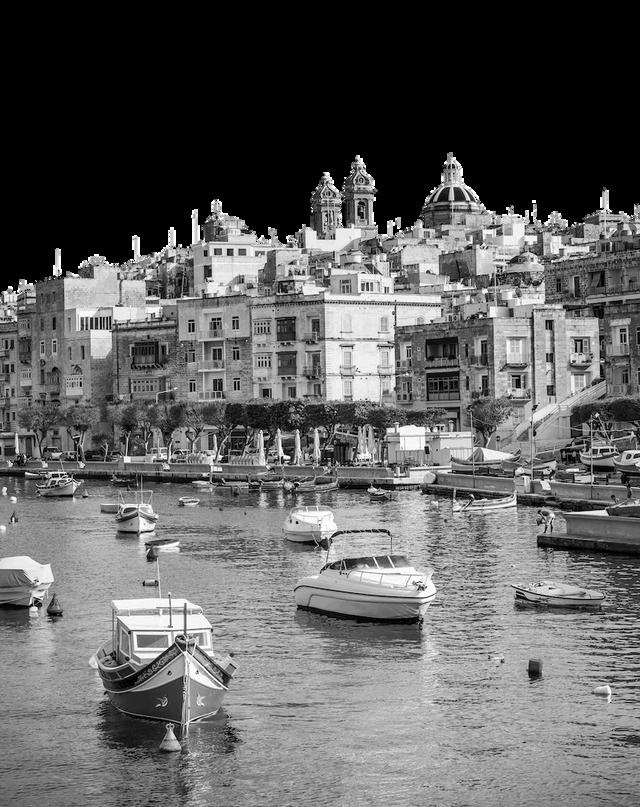
Travel is more than a break from routine It can be transformative when it encourages reflection, learning, and engagement with culture and history A destination that exemplifies this approach to travelling is Valletta, Malta’s capital Nestled on a rocky peninsula overlooking the Mediterranean, the city’s compact size and dense concentration of historic and cultural sites make it ideal for thoughtful exploration Valletta invites visitors to consider not only its architecture and streets but also the historical, cultural, and societal forces that shaped the city.
Valletta was founded in 1566 by the Knights of St John following the Great Siege of Malta Its deliberate grid-style layout was designed to maximize defence while also building public spaces for civic life Visitors can explore over 300 historic monuments, from palaces and churches to fortifications, all within a compact walkable area Each structure tells a story of past societies how they balanced military strategy, governance, and daily life
The Upper Barrakka Gardens have sweeping views of the Grand Harbour, a strategic point that protected the city from naval attacks Here, travellers can reflect on how geography and urbandevelopment influenced Malta’s history by observing the harbour today. Wandering along the narrow streets prompts admiration for human ingenuity: every building, square, and fortress still displays a balanced blend of practicality, beauty, and protection
Valletta’s cultural institutions further transform travel into intellectual engagement The National Museum of Archaeology houses artifacts from Malta’s prehistoric period, Phoenician settlements, and later civilizations, revealing a rich tapestry of human development A traveller can see how these cultures have influenced the region’s society and buildings, as well as its artistic traditions, throughout the centuries
The performing arts play a key role in grasping the character of Valletta. The Manoel Theatre, among the oldest functioning theatres in Europe, presents performances within a historic venue, relating present-day audiences with generations of artistic heritage and shared experience Watching a performance allows visitors to consider how art, storytelling, and communal gathering have influenced society and human expression through the ages Valletta’s churches, palaces, and public squares showcase Baroque art and architecture, each providing chances for thoughtful observation Exploring these sites prompts travellers to reflect on issues of power, faith, culture, and identity, transforming sightseeing into a meaningful educational experience
Valletta’s narrow streets, plazas, and waterfronts invite a slower, more contemplative style of travel, allowing travellers to slow down They can watch the mundane routines of the locals, linger ata café, or take in the Grand Harbour’s vistas, which encourages visitors to reflect on themes of continuity, resilience, and the preservation of culture Taking time to move at an unhurried pace helps travellers to absorb the insights from the city’s architecture, museums, and public spaces,supporting both mental renewal and deeper understanding
Valletta shows that travel can be more than just recreation Immersing oneself in its streets, landmarks, museums, and cultural venues offers visitors a deeper understanding of history, society, and human creativity. Approaching Valletta with intention blends reflection, learning, and appreciation, illustrating how the richest travel experiences stem from curiosity and attentive observation In this way, Valletta turns an ordinary vacation into an opportunity for both personal and intellectual development
Sarahi Giles Candela Staff Contributor
The capture of Venezuela’s president by U S forces has shocked the international community Beyond headlines of military precision and oil ambitions, the operation raises urgent questions: What does it mean when one nation flouts the rules that govern all others? How far can power stretch before it breaks the norms that keep global order intact?

Just as the year began, Maduro experienced something that he thought would never happen: the United States launched a direct military operation inside Venezuela to capture him and his wife, Cilia Flores In the early hours of January 3, 2026, U S forces carried out a coordinated strike across Caracas and other parts of the country that ended in Maduro’s apprehension and extraction to U.S. custody—a move that marked the most dramatic foreign intervention in Latin America in decades

The Trump administration publicly justified the force used during the operation as part of a broader campaign against “narco-terrorism,” asserting that Maduro’s government had enabled and profited from drug trafficking networks that allegedly threatened U S national security That narrative was built on years of U.S. legal action against Maduro; in 2020, the Justice Department had indicted him on narcoterrorism and conspiracy charges, even offering a multimillion-dollar reward for information leading to his arrest Alongside its anti-narcotics rationale, the U S highlighted Venezuela’s vast oil reserves, framing the operation as an effort to assert control over mismanaged resources while placing American personnel in charge of reviving the country’s failing oil sector
The U S intervention not only raises questions of legality, but it also highlights a deeper problem in international relations: the selective enforcement of norms and laws by powerful states For years, the United States has portrayed itself as a defender of the “rulesbased international order,” condemning acts by other nations that violate sovereignty, such as Russia’s invasion of Ukraine or China’s activities in the South China Sea Yet by launching a unilateral military operation inside Venezuela, capturing its president, and asserting control over strategic resources, the U S appears to place itself above the rules it expects others to follow
This form of normative hypocrisy has far-reaching consequences International law relies heavily on legitimacy and the perception that rules are universal When the most powerful actors flout those rules with apparent impunity, it erodes confidence that international law protects all nations equally Weaker states may begin to view legal frameworks as tools designed to constrain them while allowing dominant powers to act freely, creating a climate where unilateral interventions could be normalized. As former Japanese Prime Minister Shigeru Ishiba stated: “Trump’s actions in Venezuela opens a Pandora’s box where the strong can use force against the weak.”
Historical examples reinforce the risks of this behaviour The 2003 U.S. invasion of Iraq, initially celebrated after the capture of Saddam Hussein, eventually became a cautionary tale of how tactical successes can undermine global norms. The war, justified with questionable legal and moral claims, caused massive civilian casualties, destabilized the region, and diminished trust in Westernled international law Similarly, the Venezuela operation, regardless of its stated objectives, may weaken international norms by signalling that legal and moral standards are flexible for powerful nations
Beyond the legal and normative implications, the real motivator for the U S operation was the economic interest, as Venezuela holds the world’s largest proven oil reserves and following the operation, the U S statements emphasized plans to oversee oil production and marketing The talk of narco-terrorism provided a convenient cover, but the real prize was harder to miss: Venezuela’s oil, not its drug routes, sat at the center of U S interest
This intertwining of military force and resource acquisition raises ethical and normative questions Historically, interventions justified under the guise of security or humanitarian concerns have often been accompanied by economic motivations, which critics describe as neoimperial in nature By explicitly signalling interest in Venezuela’s oil sector, the U S risks reinforcing the perception that military power is used to secure economic advantage, rather than uphold international norms or protect civilians
The capture of Nicolás Maduro may be remembered by some as a decisive show of strength, but its deeper legacy will be measured in the damage it inflicts on the fragile architecture of international order. By acting outside established legal frameworks while claiming to defend them, the United States has blurred the line between enforcement and exception, signalling that rules apply unevenly in a world still shaped by power What was framed as a necessary intervention against crime and mismanagement instead risks becoming a precedent that others may invoke with far less restraint
Ultimately, the most troubling consequence of the U S operation is not the removal of a single leader, but the message it sends to the world: that power, not principle, may be the final arbiter of global affairs For a system built on shared rules to survive, those rules must bind the strong as firmly as they restrain the weak. If they do not, the question is no longer whether global norms are under threat—but whether they can endure at all
Safiyah Kagda Contributor
Remember when trends actually lasted an entire decade? When low-rise jeans or peplum tops stuck around long enough for us to collectively regret them and then ironically bring them back years later? Today, we don’t even get the chance We are bombarded by a dizzying variety of micro-aesthetics in our media diet Blink, and suddenly “clean girl” is out, “mob wife” is in, and we’re all expected to rebrand ourselves yet again What’s worse is that none of these trends seem to hold any meaning anymore They don’t define a decade or reflect a cultural moment they just appear, go viral for a week, and vanish into the algorithm Instead of building a shared visual and artistic identity, we’re cycling through disposable aesthetics that leave no cultural imprint After all, if art reflects the times, what does the fleeting nature of our current trends say about the state of art and culture today? It’s exhausting, but it’s also revealing: our generation’s style is so fragmented and fast-paced that even the idea of a “classic” feels impossible While our obsession with immediacy has made artistic spaces unstable and impersonal, not all hope is lost Within this volatility is a quiet resistance by counter cultures whose efforts to reclaim authentic creativity remind us that even in the face of cultural burnout, the desire for meaning and genuineness nity endures.
Social media has transformed and ultimately corrupted the way we consume and view trends Platforms like TikTok have accelerated the trend cycle to unprecedented speeds, conditioning us to crave constant novelty and stimulation The rise of short-f form content on such platforms has created a climate for a short lifespan of micro-trends, shown by the algorithm ceaselessly churning out micro-aesthetics, from “clean girl” to “mob wife” to “coquette core” We’re stuck in this endless loop of micro-aesthetics, and our sense of cultural permanence has basically evaporated Fashion, once a way of expressing ones’s self in genuine, unique, and artful ways, has been reduced to an ever-changing costume dictated by viral sounds, influencer hauls, and algorithmic validation This endless cycle of consumption and reinvention not only erodes individuality but also fuels overconsumption and waste, as people rush to buy into fleeting aesthetics before they inevitably fall out of algorithmic favour
So the big question is: can fashion, art, and taste really survive in a culture obsessed with speed? The answer, unfortunately, is no unless we take some major collective steps to fight back against this The obsession with instant gratification has become so deeply entrenched in our cultural psyche that it feels almost impossible to escape Fashion, like every other aspect of modern life, has been consumed by the logic of capitalism a system that thrives on constant production, constant consumption, constant everything. Poster children for this are fast fashion brands like Shein and Zara, who pump out thousands of new items every week to satisfy the insatiable demand for the “next big thing.” What’s most alarming is how unconsciously we participate in this process Even the most anti-fast fashion among us have moments of scrolling through outfit videos or buying a single-use outfit intended for Halloween or prom Yet, And because we rarely see the environmental harm, the exploited labour, or the mass waste behind the clothes we buy, it becomes easy to ignore The sheer velocity of trends mirrors the speed of the internet and capitalism’s obsession with perpetual growth at all costs: they all operate within an attention economy that leaves little room for reflection or sustainability Unless there is a radical shift in societal values, our economic systems, and our collective relationship with consumption, this culture of disposability will continue to define how we create, consume, and express ourselves in artistic spaces
Still, even within all this chaos, there has been a pushback against this culture of excess Movements advocating for sustainability and ethical production have gained momentum in the past few years, raising awareness for the fashion industry and capitalism’s exploitative structures The rise of thrifting, vintage shopping, clothing swaps, and online resale platforms like Depop and Poshmark reflects a growing desire to shop consciously and extend the life of garments For many people, these practices represent more than just sustainability—they signal a return to individuality, creativity, and appreciation for craftsmanship
But here’s the catch: in a capitalist world that turns everything into a product, even sustainability can become just another trend The popularity of “eco-conscious” branding and the social media glamorization of thrifting often blur the line between genuine activism and performative trendiness The rise of “thrift hauls” and “sustainable influencer” culture mimics the same toxic cycles of overconsumption it supposedly claims to resist As sustainability becomes monetizsed and profitable, it too risks being co-opted by the very system it seeks to fight against and become another micro-trend itself waiting to be churned out soon Thus, while these movements offer hope, they also raise an unsettling question: can any form of fashion remain truly authentic and ethical in a culture that turns every form of resistance into the next micro-trend? The true test of the effectiveness of these countercultures will be their longevity, and whether they can inspire lasting, meaningful change rather than becoming just another blip in the trend cycle
Ultimately, protecting creativity in artistic spaces and resisting microtrends begins with intention being mindful of how we view, value, and consume clothing Doing so requires education and a conscious unlearning of the capitalist ideologies that equate identity with constant consumption However, placing the burden entirely on individual consumers oversimplifies the issue Within our hypercapitalist, neoliberal systems, the power to create meaningful change lies largely with corporations and governments Major fashion companies continue to exploit labour, overproduce, and greenwash their practices for profit, while policymakers often fail to regulate them effectively True progress requires structural accountability—stricter labour laws, sustainable production policies, and a reimagining of how profit and ethics intersect Individual intention matters, but without systemic transformation, even the most conscious consumer can get swallowed by the same machine they’re trying to resist
Every year, more than 40 athletic teams compete at the University of Toronto Among them are the Varsity Blues, who have been locked in over the last few months to make their mark, both provincially and nationally While some teams have already finished their seasons, and others are still pushing for the top, here are the U Sports standings for most Varsity Blues teams as of January 11, 2026, along with games to look forward to
Several teams wrapped up their seasons in the first semester, with some thriving and others struggling with the ball The men’s football team finished last in the OUA, with only one win and seven losses However, the men’s soccer team went on a magical run, which saw them crowned OUA champions with a record of 14 wins, 3 losses, and 1 tie They fell just short in the consolation finals at the U SPORTS Nationals Continuing in the win column, the women’s soccer team also had a notable season, matching the men’s team score, albeit with a slightly different, but historic, outcome For the first time in history, they won the OUA championship and returned to win the consolation final at Nationals after losing in the quarterfinals Finally, the men’s baseball team dominated the country, finishing with an impressive record of 21 wins and 3 losses, claiming both the OUA championship and the national title
As the second semester begins, several teams continue to push for the finish line The men’s basketball team has a record of 7 wins and 5 losses, placing them 4th in the OUA Central, and with strong playoff potential if they remain in that 4th seed position Similarly, the women’s basketball team remains tied for 4th in the OUA Central with a record of 4 wins and 8 losses, hoping to hold their playoff spot o continue, the men’s volleyball team is dominating with an impressive record of 9 wins and 1 loss, ranking 3rd in the OUA and establishing themselves as serious championship contenders Finally, the

Arrianna Toolsie Associate Sports Editor
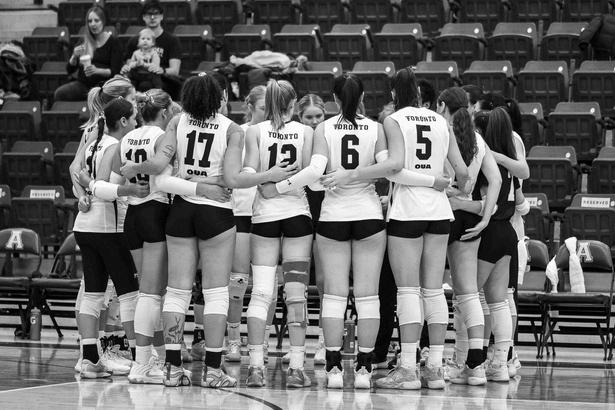
women’s volleyball team has 6 wins and 4 losses, with a 600 winning percentage and fewer games played than most universities Their abilities continue to be showcased throughout the season, setting their sights on the postseason
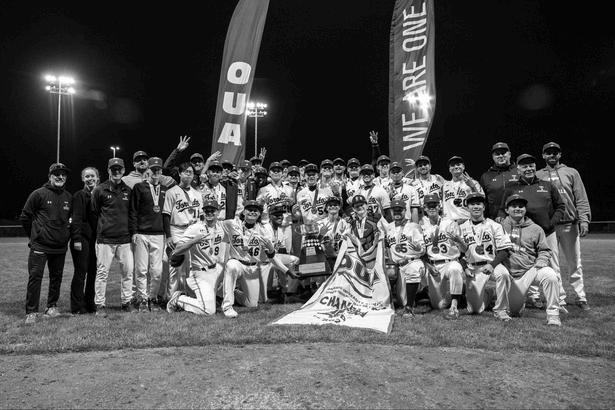
Some Varsity teams, though exceptionally talented in their respective sports, fly under our radar, and we do not get the opportunity to give them our full support This includes track and field, swimming, hockey, lacrosse, rugby, water polo, tennis, softball, cross country and many more It’s this diversity of opportunities at UofT that makes the sports field unique, and our support is critical for making our fellow teams achieve success, which makes playing truly worthwhile
The season is far from over, but it is important to remember that it is not about how you begin, but how you end Visit the Varsity Blues website to learn about the upcoming schedule, packed with exciting games to watch, including basketball, volleyball, and hockey
Cheering for the Blues creates an atmosphere like no other! So, what are you waiting for? You can attend the games for free with your T Card Go support our Blues!
To say that the 2025 F1 season was entertaining would be an understatement. From three potential championship winners to unexpected wins, this season had it all So let's talk about the top three moments from last year
The battle for the Drivers’ Championship
Prior to the 2025 season, many suspected that the battle for the Drivers’ Championship would be between the two Mclaren drivers, Lando Norris and Oscar Piastri and it turns out people were right! The season began with Norris leading the championship and by the fifth Grand Prix, Piastri took over the lead Fifteen races later, it went back to Norris after a first-place victory in Mexico City
However, slowly creeping up behind them was Red Bull driver and fourtime world champion, Max Verstappen Who would eventually come to surpass Piastri in the championship standings Going into the Abu Dhabi Grand Prix (the final race on the calendar), Verstappen was only 12 points behind Norris In order for him to win the championship, he would need to finish in first place and Norris would need to finish fourth or lower Verstappen managed to win first place but Norris finished third, thus crowning him champion by only two points
Ferrari and Williams
When Lewis Hamilton announced he would be moving to Ferrari for the 2025 season, fans were excited to see him dominate the sport but unfortunately that did not happen

Rather, Hamilton ended the season with two DNFs (Did Not Finish), one disqualification, no podiums, and no Grand Prix race wins His teammate, Charles Leclerc, also had a similar season as he finished with two DNFs, one disqualification, seven podiums, and no Grand Prix race wins But while one team struggled, another succeeded.
In a 2024 F1 Beyond The Grid Podcast interview, Sainz was asked if he sees himself feeling satisfied with Williams Racing after getting to experience success with Ferrari To which Sainz answered, “I’ll miss the podiums, I’ll miss the celebrations, I'll miss being on a headline because I’ve won or because I've been on a pole ” While he did struggle this year, collecting a total of four DNFs and one DNS (did not start), he still managed to win two podiums for Williams
Rookie Podiums
It does not feel like a proper Formula 1 season without a new face on the grid and this year there were many. Among them were two rookies who got podiums this year: Andrea Kimi Antonelli and Isack Hadjar
Being the only rookie to race for a top team, Antonelli needed to prove he was worthy of his seat and he did just that when he collected a total of three podiums this year! Hadjar also got to stand on the podium this year after placing third in the Netherlands His success in Racing Bull has promoted him to the senior Red Bull team for the 2026 season, where he will be driving alongside Verstappen.

Lucas Carpignano Sports Editor
For the longest time Canada has dominated the Winter Olympics when it comes to hockey While the women’s team captured gold at the 2022 Beijing games, the men’s team hasn't since the 2014 Sochi games Coincidentally, this was the last time the NHL has allowed their players to participate in the Olympics. With the upcoming 2026 Milan Cortina games, we will finally see the return of NHL players to the biggest international tournament
Last season, the NHL gave fans what they've been desperately craving, best on best international hockey, with their 4-Nations Faceoff event This event saw a tremendous amount of support and it was a huge success The final saw Team Canada take down Team USA in a nail-bitting 3-2 overtime game While this was an exciting watch, it was just an appetitizer for what is to come next month in Italy
Since Team Canada’s roster at the 4-Nations worked so well for the Olympics, they’ve only made some minor tweaks. Forwards Seth Jarvis (Carolina Hurricanes), Travis Konecny (Philadelphia Flyers), and Sam Bennett (Florida Panthers) were all dropped from the roster. Given the size of the talent pool that Canada must choose from, it is not a surprise that some changes were going to be made The biggest surprise was that of Bennett being cut from the team
While Bennett is not having a strong season, last season he won the Conn Smythe trophy as he was the playoffs’ MVP
Forwards:
Macklin Celebrini, San Jose Sharks
Anthony Cirelli, Tampa Bay Lightning
Sidney Crosby, Pittsburgh Penguins
Brandon Hagel, Tampa Bay Lightning
Bo Horvat, New York Islanders
Nathan MacKinnon, Colorado Avalanche
Brad Marchand, Florida Panthers
Mitch Marner, Vegas Golden Knights
Connor McDavid, Edmonton Oilers
Brayden Point, Tampa Bay Lightning
Sam Reinhart, Florida Panthers
Mark Stone, Vegas Golden Knights
Nick Suzuki, Montreal Canadiens
Tom Wilson, Washington Capitals
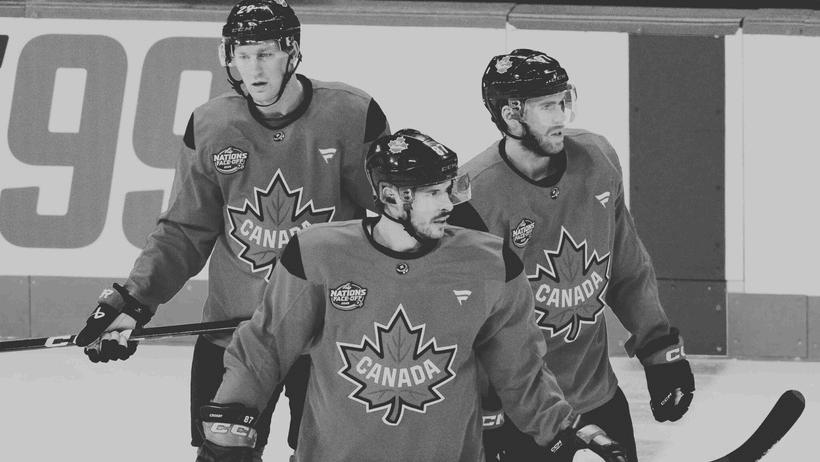
Bennett is a big game player, and his playing style could have been of use for Canada Replacing him, though, is Tom Wilson (Washington Capitals) Wilson plays a similar game as Bennett, physical and skillful, and has had a fantastic start to his season. Other forwards newcomers are Bo Horvat (New York Islanders), Nick Suzuki (Montreal Canadians), and Macklin Celebrini (San Jose Sharks). Celebrini is having a breakout year, as he is third in the league in points, at just 19years-old, so it is going to be very exciting to watch him play alongside the best of the best
Canada elected to stick with the same eight defensemen who participated at the 4-Nations This is a little surprising as players such as Colton Parayko (St Louis Blues), and Travis Sanheim (Philadelphia Flyers) are having quieter seasons I would have loved to see rookie Matthew Schaffer (New York Islanders) make the team, given how strong of a rookie year he’s been having
In terms of goaltending, Jordan Binnington (St. Louis Blues) is the only returning player. Both Adin Hill (Vegas Golden Knights) and Sam Montembeault (Montreal Canadiens) were dropped for Darcy Kuemper (Los Angeles Kings) and Logan Thompson (Washington Capitals) Binnington has looked awful this year, but it’s not surprising to see him return, given his performance at the 4-Nations last year I believe he is the weakest of the three goalies, but we will have to wait and see if he remains as Canada’s starter
The final roster is as follows:

Defenders:
Drew Doughty, Los Angeles Kings
Thomas Harley, Dallas Stars
Cale Makar, Colorado Avalanche
Josh Morrissey, Winnipeg Jets
Colton Parayko, St. Louis Blues
Travis Sanheim, Philadelphia Flyers
Shea Theodore, Vegas Golden Knights
Devon Toews, Colorado Avalanche
Goalies:
Jordan Binnington, St Louis Blues
Darcy Kuemper, Los Angeles Kings
Logan Thompson, Washington Capitals
With NHL stars finally competing on the Olympic stage again, Canada will enter as both the favourite and a team under significant pressure due to the high expectations Given the tough competition, it won’t be easy, but I believe Canada has what it takes to win gold After all, hockey is Canada’s sport
Across
7."NewYear,New..."

8.TheoppositeofaChilledFriendship
9.Wherenewyear'sresolutionstake shape
10.Recentlycelebrated250thanniversary ofherbirth
12.ActorinBugonia(2025),Jesse
Down
1.Wait,JoshHutchersonisinthis?
2.MonopolyonChristmasmovies
3."Imadeitoutofclay!"
4.Isitachristmasmovie?
5."What'syourfavouriteseason?"
6.Paddlepro
11.SMCeventhappeningFebruary28