
November 10th, 2025
readthemike.com
@readthemike
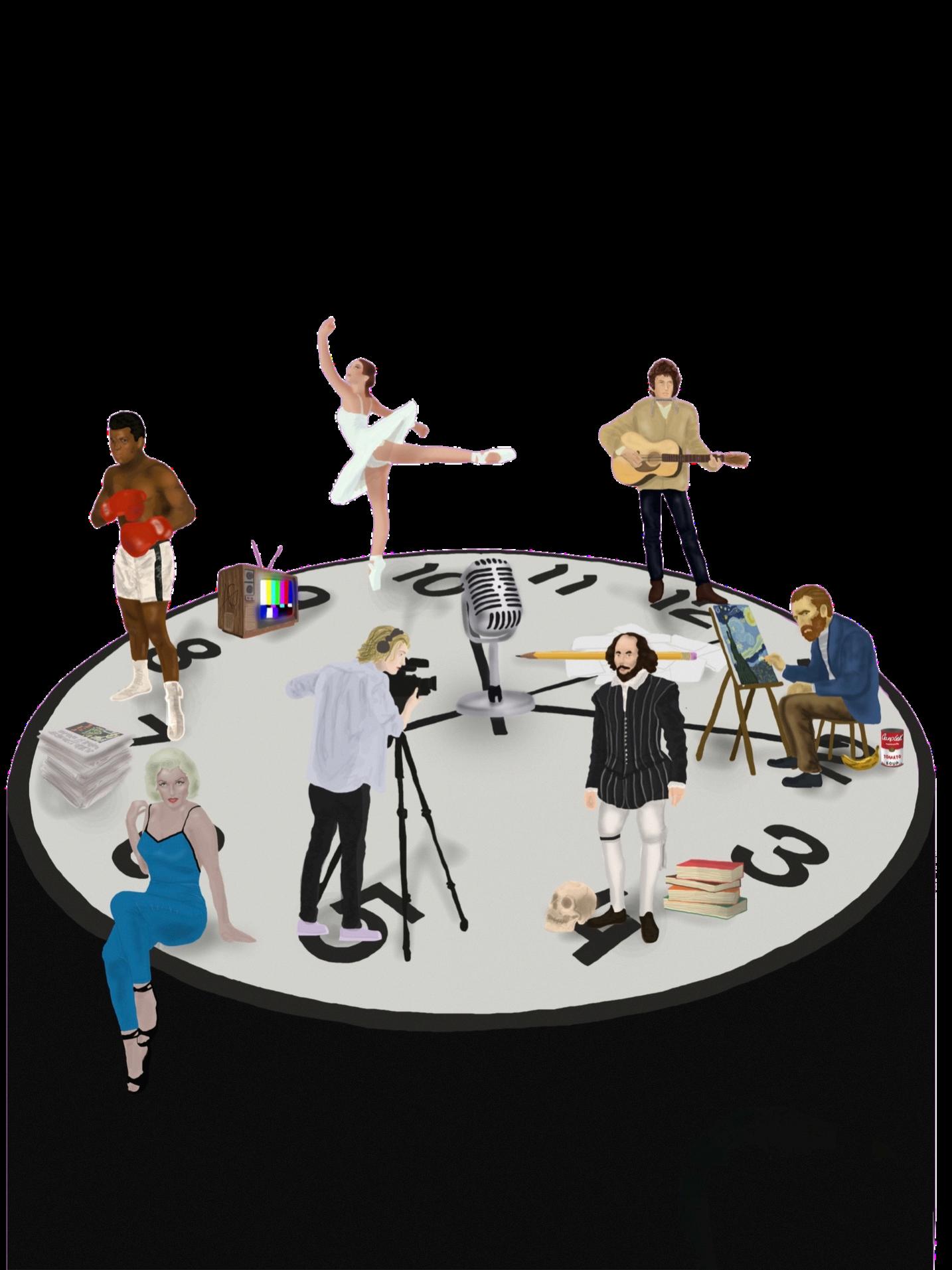




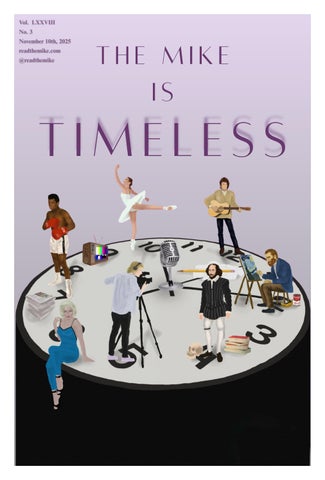
November 10th, 2025
readthemike.com
@readthemike
Hollywood remake culture has woven a quilt of rebranding classic films and rendering them incapable of warming anyone Lovers of cinematography find themselves grasping at threadbare memories for the feeling of awe we once experienced at the sight of a new movie poster or the sound of “coming soon to theatres ” Everything new on the theatrical stage feels old, and not in the desirable, vintage, aesthetic way — rather, like vague nothingness hiding behind a screen of nostalgia. Remake culture violates the foremost rule of great cinema; classics aren’t classics because they had the latest special effects, or the largest budgets, or even the most profound dialogue Cinematic masterpieces are so named solely for their ability to capture the human spirit: they are original, unpredictable, and authentic Without these defining characteristics, the realm of cinema slowly transitions from a landscape of wonder and magic into a bleak, suffocating mirror maze of repetitions At every turn, a sequel or remake is staring you in the face, slowly yet inevitably eroding the profound anticipation of a novel cinematic experience With ticket prices now around $16 just for general admission to a new screening, it has become only logical to be hesitant about visiting theatres at all
It was with painful awareness of this creative stagnation that I purchased my ticket to see Guillermo del Toro’s Frankenstein in the hopes that Mary Shelley’s masterpiece had been done justice As a lifelong lover of Gothic literature, seeing the classic tale adapted into this visually gorgeous and morally profound film proved that remake culture, placed in the right hands, can produce a positive outcome. Apart from creating a visual feast, del Toro has exceptionally captured the great anxieties of the original story and applied them to a contemporary context, several of which are more relevant to our identities as 21st-century Canadians than we may realize Although the original novel first appeared in print over two centuries ago, its major themes have travelled across oceans of time and space to remain culturally and socio-politically relevant The unchecked ambitions of a wealthy aristocrat resulting in a deluge of violence that drowns its poorer, less affluent victims in terror and desperation, is a concerningly modern phenomenon Although we can’t isolate Victor Frankenstein as the source of all our problems, his characterization highlights many elements of the horrible outcomes of placing wealth in the hands of the irresponsible With the costs of living ceaselessly rising, and inflation squeezing the average Canadian to the very last cent, the existential dread that the characters of Frankenstein experience knowing their way of life is hanging by a thread closely mirrors our own Victor’s knowledge that the Creature is constantly growing more powerful, uncontrollable, and intent on exerting violence against those whom it has condemned, becomes a relentless source of anxiety for him The film’s emphasis on the exploration of these fears thus strongly reflects the current sociopolitical landscape: afraid of totalitarianism and the impending, irreversible devastation that always follows it

On an individual scale, the morality of the film grows far more complex Victor’s ambition to create a creature like himself, passionate and intelligent, spurs him to undertake the most daring experiment in scientific history: the creation of life. His rather grotesque collage project bears unexpected consequences in that the Creature is nothing like Victor himself —entirely afraid of his environment, mimicking him rather than expressing original thought, and unable to speak any other word but the name of his creator. It is no coincidence that the nascent Creature

resembles the infant human so closely;Mary Shelley dedicated Frankenstein to her father, and many scholars have since correlated the relationship between them with that of the Creature and Frankenstein. Del Toro’s adaptation strongly emphasizes both the psychological and physical violence that the Creature and Frankenstein inflict on each other within the framework of a parental-child relationship, portraying the severe consequences of creating life juxtaposed with the inability to nurture it Moreover, the movie depicts that the consequences of such failure are far-reaching, seeping into the fabric of society and ultimately destroying others entirely innocent of any involvement These traumatizing ramifications of juxtaposing complex natures are especially relevant to our time through this lens of interpretation, with Canada’s fertility rate reaching an all-time low in 2024 Curiously, this occurred during the same era that saw the greatest rise across social media platforms in “tradwife” and “nuclear family” content, which promotes supporting several children on a single income
With newfound popularity for this kind of content, and inflation skyrocketing the costs of having a family, Frankenstein’s Gothic overtones of terror and foreboding about creating life become especially relevant If the film is viewed as a warning against irresponsible parenthood, it may then be interpreted as a warning to those who undertake the responsibility of having a child without taking into consideration the financial, physical, and psychological labour of raising that child At the heart of the matter: what are the implications of these themes in del Toro’s Frankenstein, and how does this reflect Hollywood remake culture? By reimagining this timeless classic, the film provides a simple answer to an eternal question: humanity is shaped neither by nature nor nurture, but by both. The Creature’s fear of violence in his earliest stage of life, translating into unremorseful murder, is a direct reflection of two failures: that of the creator, or parent, and that of society His capacity to establish power for himself by becoming a source of terror and still retain the willingness to sympathize and forgive is undeniably monstrous, yet eerily human From a narrative standpoint, he is granted the same degree of importance as Victor’s own. As del Toro does with the Creature, contemporary Canadian culture listens to the voices of youth who might have been suppressed in earlier generations, marking a significant social shift in determining the relevance and importance of a story. While the Gothic elements of the film are equally as relevant to the structural instability we all experience, Frankenstein brilliantly reminds us that creation does not dictate following the path of the creator, and that peace may be found in remembrance of a value undeniably human: “Life, although it may only be an accumulation of anguish, is dear to me, and I will defend it.”
Mackenzie Saleh Contributor
An analysis of modern technology predicted by science-fiction and dystopia.
The simulated future of our society has represented countless times in countless mediums, dominating dystopia and science fiction Emerging from this explosion is a strange new phenomenon: a futuristic year selected by movies made in the past, but those years now being surpassed Think George Orwell’s 1984 Analyzing these examples in retrospect provides insight into how accurately we have predicted our future These examples can be compared amongst each other to observe how consistently futuristic themes were predicted A few key examples that follow this trend are the films Back to the Future II (1989), and Blade Runner (1982) Back to the Future II has a portion of the film set in 2015, and the film Blade Runner is set in 2019
In Back to the Future II, Doc, Marty and Jennifer travel to “the future” to change certain events relating to Marty and Jennifer’s kid While in the future, Marty encounters futuristic objects and technology. Marty observes flying cars (a classic trope), while Doc drives Marty and Jennifer on a highway in the sky Flying cars and highways in the sky are not the norm, but flying taxis are a technology that is being developed in 2025 (one decade off!) We see the Delorean use not greenhouse gases for fuel, rather, organic matter This is comparable to our current state of electric cars using an alternative source of fuel in 2025 but in 2015, only 1% of new car sales in America were electric Other examples of advanced everyday technologies self-tailoring clothing, voice automated house appliances are displayed on the big screen as well. When Jennifer enters her house, a robotic voice greets her House lights turn on automatically. The oven speaks when it performs its function, rehydrating a small instant pizza. Indeed, voice automated tech is widespread in our modern day, with common use aging even back in 2015. Apple’s iconic “Hey Siri” iPhone function was tailored to people’s voices in 2015, while Amazon’s Alexa was released to the public that June It can be argued that Siri and Alexa exceed the sophistication of their fictional movie equivalents as they’re equipped with the internet The automated appliances in Back to the Future II weren’t internet smart, rather confined to corny taglines boasting about their functions
Thumbprint identification is another sci-fi classic, whether for paying or doorknobless house entry. In 2015, the first ATM was able to use facial recognition in China Mastercard soon followed suit, launching its thumbprint-paying technology in 2022. Thumbprint-based home entry was debuted in 2007 by Kwikset Today, facial recognition based mobile wallets are the norm Physicality is out, replaced by convenience and biometric data recognition
Lastly, robots and drones have taken over factions of the employment sector Sound familiar? In Back to the Future II, Marty sees a drone walking a dog and interacts with a robot waiter that mimics human interaction Currently, dog walking drones do not exist for public use, but the idea has been explored The first restaurant to employ a robot waiter was in 1983, but in the 2020s, robot servers have become a widespread technology.
As for Blade Runner (1982), the trend of being set in “the future" continues It has been six years since 2019, but at the time of production, the year 2019 was a distant concept In Blade Runner, a company called Tyrell Corporation creates robots called Replicants, identical to humans and impossible to tell apart in how they look, speak, and act In this world, flying cars also exist, similar to the cars portrayed in Back to Future II In one aerial shot of dystopian Los Angeles, thousands of lights and tall buildings showcase this cyber-urbanization: everywhere TV screens, neon lighting, and no greenery, every surface either a road or a building Exploitation of the environment is a common consequence as the human population continues to grow during 2019 and beyond.
In terms of robots, a way to figure out if someone is a Replicant is by having them complete the Voight-Kampff test which measures a creature’s capacity for empathy and emotional response Physiological indicators such as reaction time, involuntary reflexes, pupil dilation, and heart rate (the

What is St. Mike’s newest community about?
Nandinzaya Bulgankhangai, Contributor
Lately, I’ve been reminiscing about my childhood a lot Whenever I recall the summers I spent swimming and the winters I passed sledding with my family, nostalgia hits me like a cold rain I was raised by my grandparents and grew up alongside my cousins I am not used to the sense of loneliness and disconnection that Toronto has gifted me So, whenever my old memories leave me with an intense feeling of melancholy, I look to escape into nature with a new community
“It can often feel daunting to live in our world Connecting with each other and nature during our events not only provides us with great emotional support but also reminds us of what truly matters to us Being a part of SMC Village has let me create a community where people can share aspects of who they are and look at sustainability from a very honest and personal perspective ” said Manuela Molina, Director of Events at SMC Village “A Person Through Person”
In an era of digital walls and increasing amounts of existential alienation, we need smaller communities more than ever. Contemporary Western ideology proclaims that the path to success stems from withdrawal from social connection, the lonely genius working tirelessly in solitude, but we all know that is the furthest thing from the truth We desperately need midnight hangouts, movie dates, and club events to survive in this cutthroat world Our friends, family, and other human beings nurture our best qualities and drive us to achieve our dreams
In an interview with the Vice-President of SMC Village, Rolynn notes the importance of community connection:
Spending my most formative years in beautiful British Columbia, I fostered a deep appreciation for the outdoors The mountains, the ocean, and the forests are all a feat of nature one that is incomparable to anything manmade Coming to Toronto and spending a considerable amount of time away from greenery has helped me realize just how fundamental nature is to our well-being. This notion, coupled with my love for community, inspired my friends and me to start SMC Village Within a village, everyone depends on one another and coexists with the outdoors This sense of community is one that we hope to grow within our school By creating a village, we can reconnect with each other and with nature
My favourite saying comes from Ubuntu, an African philosophy of life: I am who I am because you are who you are It teaches us that we are “a person through person” that our identities and purpose are defined and affirmed by others However, today we lack those very communities that make up our sense of self and belonging It is then no wonder why so many young adults in the twenty-first century are feeling lost and isolated even with the increased digital interaction
SMC Village is an environmental club, so you may be wondering how a village contributes to the environment But it has everything to do with it! Community is the antidote to our deeply individualistic and materialistic society Becoming more sustainable requires more than just a few good habits

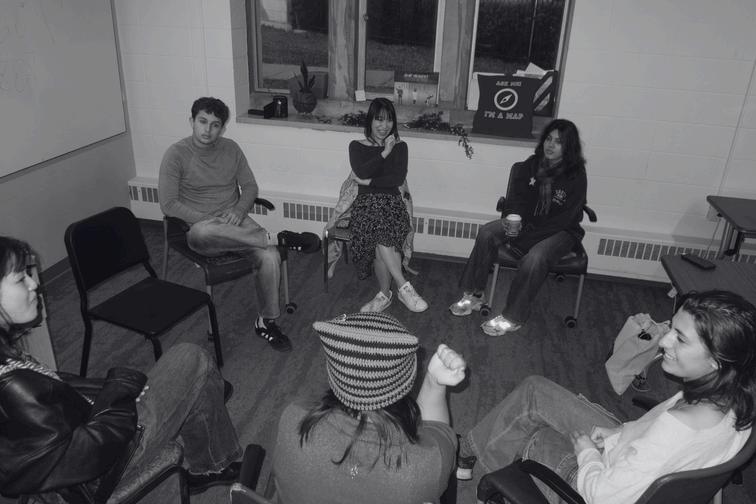
We need radical transformation in all parts of our life that decentres human activity Thus, having a safe space to share our stories and discuss our environmental efforts is a crucial part of our fight
Violette, Treasurer for SMC Village, says, “The importance of connecting with nature is easily lost in the midst of a big city like Toronto, so having an outlet where I can step back for a moment and remember how indebted we are to the environment is very important to me ” “Joining this club has made me aware of how to be more mindful of our planet and loving towards the things our ecosystem has to offer us To think outside the box when it comes to keeping sustainable,” said Madison, Secretary for SMC Village
The first step to adopting a more sustainable lens is to prioritize our well-being by spending more time in nature, away from distraction and devices In realizing the value that nature brings to our lives its free services of food, water, and air—we will be more inclined to change our lifestyle and endorse sustainability. That is why all SMC Village club events are held in nature, away from the city, to create an opportunity for students to take a break while appreciating nature
“I like SMC Village specifically because all our club activities are centered around appreciating nature We always make sure to link everything back to what truly matters acknowledging what’s been given to us on a silver platter and discussing how we can protect it better ” added Dorus, another Secretary for SMC Village
Cyrus, Director of Outreach for SMC Village, reminisced on what nature means to him: “My journey toward environmental appreciation started early in the deserts and mountains of Dubai, where I grew up From the age of four, camping created this incredible bond with nature that became the foundation for everything else Those childhood memories and the humanitarian trips I took across Africa, like to Zambia and Rwanda, instilled how essential it is to take care of our planet After opening our club, I now know that the nostalgia I was feeling was not for my childhood but for what it entailed: riding horses, wrestling in the sand, having snow fights, playing under the sunset, and so much more I was the closest to nature when I was little, and maybe that’s exactly what I need to survive at U of Tears For all my fellow students feeling the same, our village will be waiting for you! Let’s save the planet while building a community and unforgettable memories Our mission statement says it best: SMC Village is a community for coexistence, nurturing, and healing.”
What aspects of our current era will be considered timeless?
Ciarah Rampersad Contributor

In the 1961 film Breakfast at Tiffany's, a simple black dress appeared on-screen and forever redefined modern elegance in fashion Even though Hubert de Givenchy designed the dress, it was immortalized by British actress Audrey Hepburn, who solidified a concept that had been in development since the 1920s Presently, the little black dress (LBD) is regarded as one of the ultimate symbols of elegance, embodying the essence of a timeless trend French fashion designer Coco Chanel first debuted the idea of the iconic black dress in 1926, initially associated with mourning. However, due to Hepburn, the narrative shifted into the dress being an expression of sophistication More importantly, it was an act of democratization in the fashion industry It is an attire that can be worn by any female, regardless of class, occasion, or decade, leading to its presence in stores and wardrobes today Almost a century later, despite shifting dynamics in the fashion world, the LBD remains a fashion staple, not because of nostalgia, but for its enduring appeal It completely encapsulates the criteria of timelessness in itself: a timeless trend must be adaptable and seasonless Several designers have continuously attempted to reinterpret the LBD; it was architectural 80s, minimal 90s, and deconstructed in the 2010s However, the allure of the black dress withstands the cycles of fashion



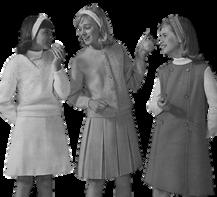

Before determining which trends will become timeless, it’s essential to understand how fashion trends move through the fashion industry, which is known as the “trickle-down” effect of high fashion An illustration of this movement is represented in the iconic “cerulean monologue” in The Devil Wears Prada film The ruthless editor-in-chief of a fashion magazine, Miranda Priestly, explains to her new personal assistant, with no knowledge of fashion, Andrea, who believes that clothes are unimportant, that the cerulean sweater she is wearing originated from an Oscar de la Renta 2002 runway collection Initially, a cerulean gown, it then appeared in collections of various designers before being filtered down into department stores Although this sweater may not be a timeless trend, this monologue serves as a representation of how the intersection between couture, editorial discourse, and consumer markets
Minimalism has re-emerged as a leading aesthetic across Fall 2025 collections, but this new iteration departs from the sterile restraint often associated with the “quiet luxury” movement Designers, like Ferragamo and Malene Birger, are embracing texture, sculptural silhouettes, and warm neutral tones that bring character back to simplified designs, demonstrating that the focus has shifted from absence to refinement: silhouettes that emphasize proportion, craftsmanship, and practicality The reason minimalism could be considered a timeless trend is its ability to adapt It can effortlessly transition across different decades and styles because it is centered around versatility A tailored coat, a sharp shirt, or a well-defined dress can fit into any closet, regardless of the season. The minimalist wardrobe promotes sustainability by embracing reuse and reinterpretation instead of replacement The appeal of minimalism stems from its intentional, functional, and quietly expressive design. As consumers increasingly prioritize quality and sustainability, minimalism presents a seamless connection with lasting value, rather than fleeting trends, offering a sprinkle of elegance
Throughout the season, red was a leading colour on the runways, showcased through complete monochromatic outfits at Calvin Klein, stacked knitwear at Ferragamo, and striking accents at Tory Burch Red has long been a prominent colour and its enduring presence indicates its ability to surpass trends in fashion cycles
Over time, red has signified strength, passion, and self-assurance From the precision of Valentino’s couture gowns to the rebellion of Vivienne Westwood’s punk collections, red has continually adapted to shifting cultural moods What gives it the potential to be a timeless trend is this consistent communicative function; it is a colour that makes a statement without needing reinvention
Beyond its visual impact, the longevity of red is attributed to its emotional and cultural adaptability
It can be bold or passionate, timeless or modern Whether utilized as a standalone accent or as part of a complete ensemble, it reliably conveys confidence and a sense of personal style. The symbolism of red, representing vitality, courage, and prominence, guarantees its lasting importancethroughtheages
Designers, like Dries Van Noten and Fendi, showcased sequins not merely as decorative elements, but as a form of texture woven into tailoredpieces,knitwear,andevendaytimeattire TheFall2025catwalks redefine their connection with evening wear and this development represents a wider change in the perception of glamour by becoming increasinglyfocusedonself-expressionratherthanstrictformality. Acrossdifferentperiods,theyhaverepresentedhappiness,festivities,and prominenceasseenfromtheflappergownsof the1920stothediscoera and later Due to the connotations of sequins, this has led to their lasting impact and the possibility of becoming a timeless trend Contemporaryiterationstapintothatsamedesirewhileaccommodating modern lifestyles Sequins now feature in subdued colour schemes and understateduses,provethatsparklecanbeelegantandpractical
LessonsfromEphemericalTrends
Not every trend can achieve timelessness. Some are designed to ignite briefly with the intention to experiment, to provoke, or to entertain In recent years, there has been an emergence of whimsical trends, such as lingerie-inspired designs, excessive embellishments, and very particular colourschemesthatrapidlyfloodsocialmediabeforedisappearingfrom closets Those instances serve as a reminder that fashion flourishes in change For example, quiet luxury emerged from a reaction to logosaturated maximalism, and modern minimalism now draws from that restraint while adding texture and emotion Even ephemeral trends play a role in the larger dialogue about style; they serve as milestones that uncoverwhatgenuinelylasts
The LBD and the three current candidates - minimalism, red, and sequins-shareseveraltraitsthatdefinewhatmakesatimelesstrend The initial aspect is practicality: classic fashion should seamlessly integrate into daily routines, while preserving functionality and convenience Secondly, the capacity of a piece of clothing or fashion to adapt to shifting preferences and situations, while retaining its core identity, is a musttobuildawardrobethatnevergoesoutof style Lastly,theartistry and quality of materials are paramount, as strong construction guarantees that the physical garment endures over time alongside its visualappeal
Timeless trends communicate something consistent and meaningful, allowing fashion to form an emotional connection with its wearers, making symbolism and emotionality important to a timeless trend Therefore,whenafashiontrend,whetherthatisalittleblackdressoran oversized blazer, is both practically and emotionally aligned, it’s “trend status” transforms and becomes part of fashion’s lasting language: timeless
Sarahi Giles Candela Contributor

On October 19, 2025, a modern-day masterpiece of crime unfolded in Paris In just four minutes, thieves broke into the Louvre s Galerie d Apollon and escaped with priceless French crown jewels artifacts so valuable that officials refused to name a figure It was one of the swiftest and most audacious heists in museum history But remarkably, it wasn’t the first time the Louvre had been humiliated this way How did the Louvre, fortress of art and security, get Ocean’s Eleven-ed in broad daylight?
It was 9:30 am in the heart of Paris Visitors had just begun to enter the iconic Louvre Museum In a scene that could have been taken from a heist film, four well-equipped thieves dressed as workers used a portable electric ladder to infiltrate the second-floor window of the museum Once they slipped into the room, they targeted two glass cases and finally fled through the same window they entered Eight pieces from the Napoleonic-era royal collection were gone, including a sapphire tiara once owned by Queen Marie-Amélie and Queen Hortense, and earrings worn by Empress Eugénie
By the time French police arrived, the thieves were already gone The museum closed its doors, and Rachida Dati, France’s culture minister, called this event “a national wound” The thieves exploited the gap: daylight, minimal violence and rapid exit They even abandoned one large crown — the Crown of Empress Eugénie which was recovered damaged near the museum That detail suggests that the escape plan may have had vulnerabilities even if the entry strategy was flawless
The 2025 jewel heist instantly evoked echoes of one of the Louvre’s most notorious moments: the 1911 disappearance of the Mona Lisa. The logistics were very similar; in the early hours of the morning, the thief approached the painting located in the Salon Carré, where he removed it from its frame and protective glass and then carried it through the museum’s service corridors In the struggles that a locked door provoked, because the thief was dressed as a museum worker, he managed to get help from former colleagues and ultimately fled the scene with the Mona Lisa in hand The author of this meticulous robbery was Vincenzo Peruggia. He kept it in his apartment for two years, claiming patriotic motives he wanted to return it to Italy When caught in 1913, the painting’s recovery made global headlines
We can draw significant parallels from these events: they unfolded in the heart of the city, targeting treasures that were more than mere objects – they were symbols of French cultural heritage In each case, the thieves exploited human complacency and procedural gaps rather than brute force, executing their plans with remarkable precision Moreover, it is ironic to say that the aftermath reveals the audacity of the acts: the objects themselves became legends, their fame magnified by absence and the public’s fascination with the “perfect crime”
At the most literal level, this is theft: priceless jewels, gone But the cultural significance is far deeper These were not just objects of beauty; they are embodiments of a national narrative – monarchy, empire, revolution, and the transition to republic By stealing them, the robbers struck at an institution of heritage and identity President Emmanuel Macron called the act “an attack on a heritage that we cherish because it is our history”.
But overall, a question remains: why steal the unstealable? Both the Mona Lisa and the jewels were impossible to sell, making the motivation behind the theft more psychological than financial These heists are as much about narrative as profit The thieves want to write themselves into the mythology of rebellion – to steal from history itself The operation itself suggests a new kind of crime: one that is less about brute force and more about precision, planning, symbolism The thieves didn’t aim for mass destruction; they aimed for prestige They selected the gallery, the window, and the exact pieces They executed quickly and quietly Such modus operandi indicates a shift: art theft is becoming a statement as much as a profitmaking venture
The Louvre heist has exposed an uncomfortable truth a not guarantee protection A government audit revealed fully covered by surveillance for example, the Sully W Richelieu Wing 25% In a building as vast and intricate they are invitations The findings suggest that while techno oversight and outdated infrastructure can render even t
These flaws may signal a turning point in museum secur Paris can be hit so brazenly, others may follow unless sy has shown the world its flaws, it needs to reassure the in actions before it suffers another heist
For now, the stolen items remain missing Even though and the world watches There is still a possibility of hav Louvre may have lost some of its treasures, but returned just at the gallery but at the empty glass boxes where on
In 1911, a man stole the world’s most famous painting w crown jewels in four minutes Both times, the Louvre lea behind glass – but never completely kept


Akari Okubo Contributor
Toronto transportation is undoubtedly a never-ending sequence of unfortunate events Whether it be the Eglinton-Crosstown LRT, suspicious fires on subways, or closed highways, it covers Toronto’s history of disruptions, mismanagement, construction delays, and safety incidents Is the city doing enough to restore reliability? Can Toronto manage to fix its reputation? Sometimes being timeless isn’t always a compliment.

I’m sure that most, if not all, readers have been on transit in Toronto at some point in their lives, whether you are an international student taking the Union Pearson Express to and from the airport, or a commuter taking the TTC to class every day And of course, many of you have experienced the many struggles that come along with transit in this city, whether it be the stretches of the subway that always seem to be shut down, slow zones that test your patience, or streetcars that crawl slower than walking speed
So how did we get here?
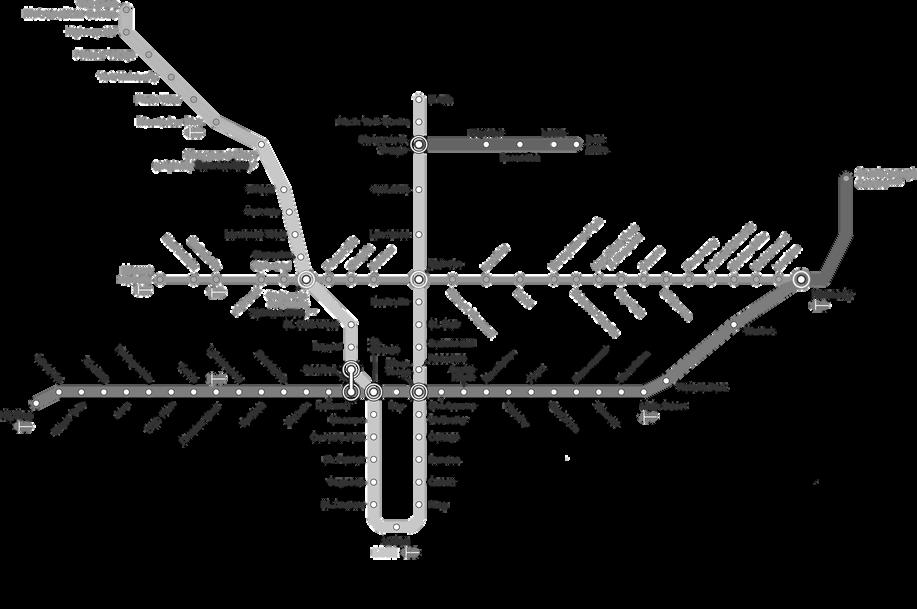
The history of the TTC stretches back more than a century In 1921, the Toronto Transit Commission (TTC) was formed as a consolidation of private streetcar lines, the Toronto Railway Company, and the public Toronto Civic Railways In 1954, the TTC opened their first subway line, the Union Station-to-Eglinton section of the Yonge Street subway, currently the TTC line 1 To increase capacity, the University line opened nine years later, continuing from the original Southern terminus of Union north to St George station Three years later, the Bloor-Danforth line (Line 2) opened between Keele station in the west to Woodbine station in the east
Along Queen Street, there were plans for a full subway back in the ‘50s However, in classic Toronto fashion, these plans never materialized Anticipation for this plan led to an interchange platform built directly underneath Queen station when it was constructed in the early ‘50s that still exists unused to this day, in anticipation of a subway that was never built, never having seen a train
As subway expansion continued through the 70s, so too came a policy of abandoning streetcars, with plans for buses to serve lower volume regions. Streetcars were thought to be a remnant of a previous era, but a rise in costs of subway construction, as well as a change in public sentiment, convinced the TTC to reverse this decision. The removal of the Rogers Road streetcar in 1974 was the last to fall under this policy.
Since then, the TTC built Line 3 Scarborough in 1985 (now permanently closed after a derailment in 2023), and Line 4 Sheppard, the lowest ridership of all lines Three new lines are currently in progress: the Eglinton-Crosstown LRT, which began construction all the way back in 2011 (yet the opening date remains one of Toronto’s great mysteries), Line 6 Finch West (opening date also a mystery), and the Ontario Line, a downtown relief line planned to run between Don Valley station, where it will connect with the Eglinton-Crosstown LRT to the existing Exhibition GO station. The Ontario Line interestingly holds some similarities to a 1973 proposal for the Queen Street subway, but will not be using the lower portion of Queen station.
To me, the history of transit in Toronto is a story of what-ifs What if Line 3 Scarborough never shut down? (Line 4 had plans of an extension to meet with Line 3 at Scarborough Centre) What if the Queen Street subway had been built back in the ‘50s? What if historic streetcar lines had never been abandoned? Although there has always been so much ambition in shaping transit in the city, it has been restrained by underfunding, missed deadlines, spiraling costs, and endless more issues
Next year marks the 105th anniversary of the TTC, yet its story is still unfinished The subway, bus, and streetcar systems it has built has not only shaped the city we live in today, but also the not so pleasant relationship we have with them Whether or not the TTC can finally deliver on promises of the past, restore reliability, and fix its reputation will depend on whether it can learn from its own history
It's 2019, and COVID-19 has hit us in full swing I haven’t been in a classroom in months, as my country has gone into lockdown I’m sitting in a Google Meet room, while my teacher is trying to get everyone to participate in class or turn on their cameras I’ve been scrolling through my YouTube feed, trying to find a video to watch to pass the time, when a black and white thumbnail catches my eye The thumbnail is for a video titled “Plastic Love” with a photo of a girl smiling as she turns to face the camera, her hair floating in the air
Intrigued, I clicked on the 8-minute-long video, unsure of what to expect Instantly, an elegant wave of sounds greeted my ears The song starts off with a set of strings, building into the piano that cascades down the D minor scale, pulling you into a world of its own Then, the bass and guitar come together to a groovy rhythm that introduces you to the singer’s voice As I closed my eyes and concentrated on the music, it felt like I was transported into the past. I didn’t know what she was singing, or even what the song was about, but I felt emotion something about this song had entranced me. I didn’t know it at the time, but this was the moment I fell in love with my favourite genre of music: Japanese City Pop
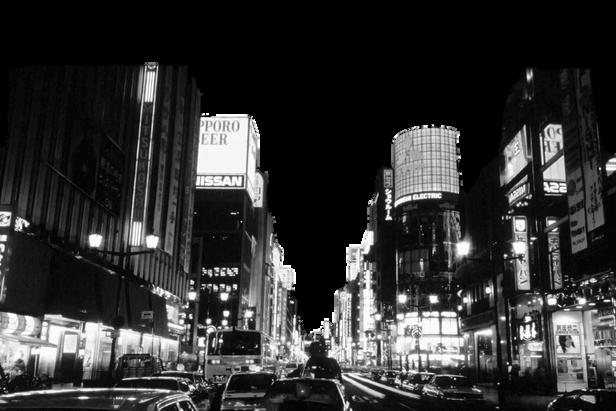
Japanese City Pop is a genre of music mainly characterized by its smooth bass lines, funky guitars, use of synths, jazzy chords, and soulful vocals about love and yearning Inspired by American Disco, Funk, Soft Rock, and Jazz, City Pop was heavily influenced by Western music of the time Artists like Luther Vandross, Patrice Rushen, Sade, Bobby Caldwell, and even Michael Jackson played an instrumental role in shaping its sound Like many other City Pop songs, listening to “Plastic Love” feels like cruising through the city alone at night romantic, melancholic, and strangely cinematic
City Pop emerged during Japan’s economic boom in the late 70s and 80s, a time when rapid urbanization and innovation in new technologies were changing people’s ways of life. The genre reflected both optimism and loneliness, a generation caught between tradition and modernity. Although the genre later faded in popularity in Japan by the 90s, it found an unlikely revival decades later through the internet. Songs like Mariya Takeuchi’s “Plastic Love" and Miki Matsubara’s “Stay With Me” began resurfacing on YouTube, thanks to the mysterious algorithm Through its listeners outside of Japan, City Pop became a portal to an imagined past: one filled with romance, style, and emotional depth that felt missing from much of today’s pop music
What is especially striking is the renewed accessibility of City Pop within the current era Artists like Ginger Root, for example, blend City Pop’s signature jazz chords and funky bass lines with modern production techniques and indie-pop fusion, creating what he calls “Aggressive Elevator Soul ” His original, Loretta, has gathered over 50 million streams on Spotify, a testament to Ginger Root’s success in merging his own style with the nostalgic and retro warmth of City Pop Similarly, local cover bands in Toronto, such as Next Perfect Day, still perform covers of classic City Pop tracks in bars and cafes across the city Their style is distinct, with their sets feeling like soulful and jazz-infused reinterpretations of the originals, breathing life into old songs forgotten by time
Why should you listen?
To me, City Pop is the perfect intersection of all my favourite genres of music. It incorporates the catchiness of Pop, complex and fun chord progressions that borrow from jazz, while also remaining smooth and groovy, with a strong funk inspiration. These tones and textures are curated as a result of masterful production that create an experience that gives me a feeling of nostalgia for some long forgotten past Aside from my personal attachment, City Pop has something for everyone Its textured sound and infectious rhythm make it easy listening for pop fans, while its rich production and layered instrumentals appeal to musicians and audiophiles alike
If you’re ever in the mood for some nostalgic listening, you can’t go wrong with Japanese City Pop Songs like “Plastic Love” by Mariya Takeuchi, “Stay With Me” by Miki Matsubara, or “Windy Summer” by Anri are great entry points into the genre, but a few of my personal favourites are “Tokai” by Taeko Onuki, “Setsunakute” by Cindy, and “Ride on Time” by Tatsuro Yamashita Each of these tracks capture a different side of what makes City Pop so captivating The shimmering production, the bittersweet lyrics, and a sense of tranquillity that makes you feel like you’re drifting through a city at night Whether you understand the lyrics or not, the heartfelt emotion shines through City Pop is more than just a genre it’s a feeling, one that connects the past and present through the shared language of sound and nostalgia
Beatrice Poblete Contributor
Why we need to be viewing revolution as a cycle for us to understand change.
To many, the fight for change feels unattainable We march in protest, holding onto our defiant dreams of progress and revolution Though, in the world as it is today, the struggle for reform can seem utterly impossible. It is easy for us to view change as a linear progress, an end-all-be-all transformation We want revolution to be established in a progressive order, reduced to simple steps on a ladder that leads us to freedom But the uncomfortable truth is that the fight for revolution is inherently repetitive. Historically, revolutions are cyclical. Loops of action and counter-action they are, by nature, a Sisyphean task We are familiar with the expression that history repeats itself, and with revolutions it is no different This past decade has witnessed the swift fall of empathy and the creeping rise of authoritarianism across the world If we cling onto the idea of revolution as a single, finite event, we miss what is actually happening—a slow cycle of political reform
This cycle is visible with our Southern neighbours, whose politics are deeply intertwined with our own in Canada. From Trump’s first presidency, his second impeachment, to the inauguration of Joe Biden and everything in between, we witness the tedious task that is revolution
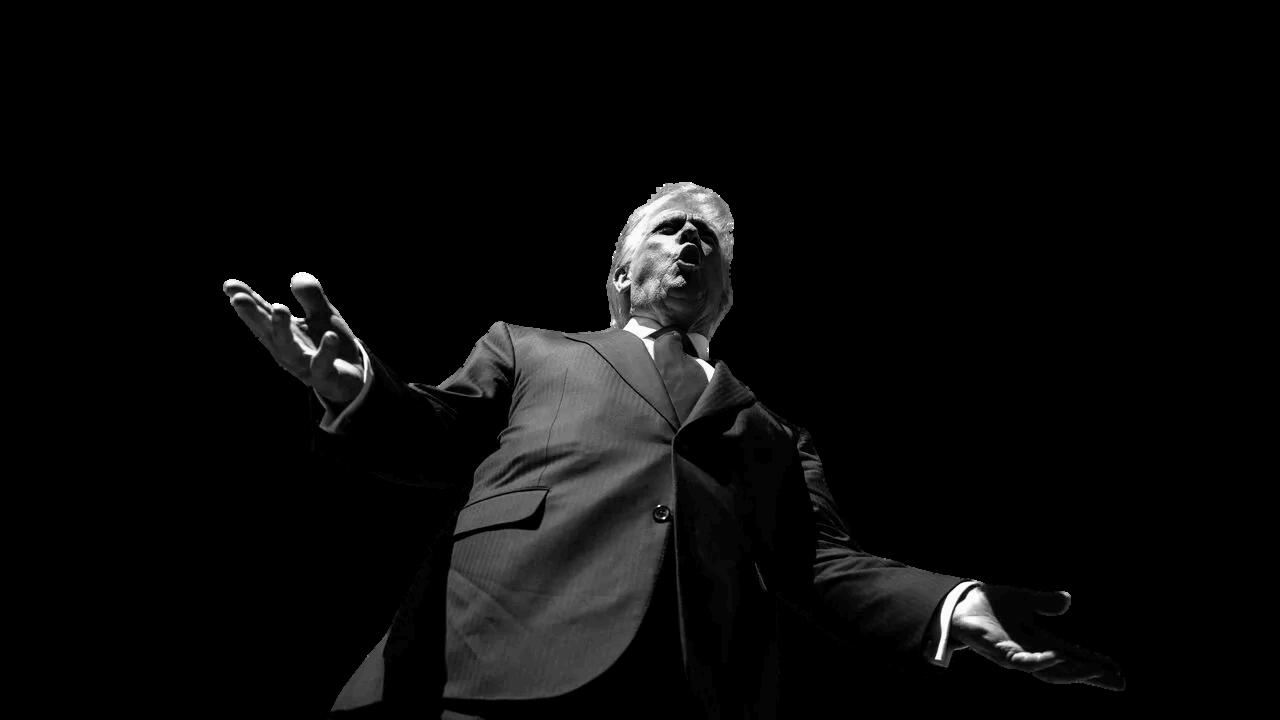
So, we have established that revolutions are cyclical What does that look like? Well, historian Crane Brinton lays out the foundation in “The Anatomy of Revolution”, where he analyzes the stages of reform In brief, dissatisfaction with a tyrannical regime leads to protest, which escalates into a radical change, and only to eventually fall back into restoration. While his framework is essential, I find it's easiest to visualize the cycle as a domino effect of action and reaction. In recent American history, this cycle began in 2016-2017. Donald Trump’s ascent to the presidency was a break in political diplomacy and tradition His campaign was less policy-based and more focused on attacks on Hillary Clinton His rhetoric was uniquely mean-spirited, labelling her as “weak”, “unstable” and a “monster”. This behaviour was a manifestation of his poor moral character, which includes thirty years of sexual misconduct allegations under his belt and extreme views on immigration, with his infamous “build a wall” campaign Nevertheless, Trump became the 45th president on January 20th, 2017. This term marks the early stages of revolution, an old tyrannical regime undoubtedly characterized by its mistakes and extreme policies The US-Mexico border wall, his travel ban on several muslim countries, and Russia’s meddling in the election made it evident that Trump’s version of political succession is authoritarian in nature It was a clear forecast that Trump lacked diplomacy and empathy The 45th president was met with various forms of resistance and repulsion from citizens to celebrities 500,000 civilians marched the streets in protest in fear of their human rights being violated, Kathy Griffin posted a photo of the president's severed head, and renowned chef Anthony Bourdain openly ridiculed him It was the subtle rise of a counter-revolution Protest, anger and ridicule are the build-up to radical change I would argue that Trump’s second impeachment is what marks the beginning of this “radical” shift stage in a revolution Trump’s second impeachment was the direct result of what followed Joe Biden’s electoral victory, the Capitol riot
The link between Trump’s rhetoric and the ensuing violence on January 6th, his declaration–“If you don’t fight like hell you’re not going to have a country anymore” and his vow to “never concede” served as a catalyst and rejection of the legitimate will of the people. It is afTer this “radical shift”, that the transition to the “new regime” begins Joe Biden’s presidency is the response to the Trump crisis, and for many, a moment to breathe But this “regime” is still characterized by a fervent fight for change We saw the ongoing fight for LGBTQ+ rights, and mass protests for the Black Lives Matter movement as a result of George Floyd’s murder We saw a continual fight for reform and systemic change even within the “new regime ”
Slowly, we watch the cycle repeat again, a swing back into restoration Trump’s re-election in 2024 is not an exact repeat of 2016, but comparable to his ideologies on steroids This time, restoration means accelerated and heinous transformative actions We are witnessing the fall of justice with these mass deportations, inhumane ICE raids, removal of DEI policies, and the elimination of Transgender healthcare We also hear the talk of the 51st states and experience tariffs placed on us These are all actions rooted in authoritarianism and bigotry It is a violent history repeating itself These are policies of deliberate restoration of the past, done to dismantle the work of the previous “regime” and of the people who fought against him With the disastrous political landscape in America, change feels hopeless But understanding that this is all one giant loop, grants us the faith that eventually, this “regime” will fall again
Cyclicality is relevant to political change, even if it means having to constantly fight for it Revolutions are a tale as old as time If we look at what is going on in the world today, it is understandable to think and feel as though we have been here before because, well, we have Revolution will repeat itself like a broken record, but that should not discourage anyone to give up the fight In fact, I urge you to fight, despite knowing how the cycle of change may never end The reason for contextualizing revolutions like this is so that people, the true fighters for change, can better understand how history operates on its most technical level, how change itself works, and how we can learn from previous historical patterns


The rivalry between Boston and New York is more than just a feud it’s a full-on war.
In sports history, very few rivalries have exhibited the same passion, intensity, and drama as the New York Yankees and Boston Red Sox
Any game played between the two teams is going to be a must-see matchup Each team’s players and their respective fanbases have despised each other for centuries Their constant quarrels have been riddled with once-in-a-lifetime home runs, curses, and bloody socks Baseball fans outside of Boston and New York are left wondering how this deep-rooted feud came to exist and why each team continues to hate one another


Down 4-3 in the bottom of the ninth, facing elimination, David Roberts and Bill Mueller tie up the game and force extra innings Soon after, David Ortiz captures lightning in a bottle, holding on to Boston’s World Series aspirations for one more day The magic continues, and the Red Sox fight their way to victory the next night in an intense 14inning game
The Curse of the Bambino

To understand how such an intense rivalry developed, one needs to look all the way back to 1919 Financial troubles loomed above the Red Sox, despite having claimed a World Series title the year before Team owner, Harry Frazee, was losing all his money on theatre productions in New York, while dwindling attendance due to WWI made the Red Sox’s financial situation even more dire
Amid this turmoil, Babe Ruth was acting in his best interest, rather than supporting his team He demanded his yearly salary to be raised from $7,000 to $15,000, which was more or less unheard of at the time Ruth also wanted to play left field rather than taking the mound, claiming he could win more games by being an everyday player.
At the end of 1919, Ruth was dealt to the Yankees, a move that would shock an entire nation and make headlines for weeks afterwards Ruth was paid $27,000 by the Yankees, far exceeding anything Frazee was willing to part with Over the next decade and a half, the Yankees would go on to win seven American League pennants and four World Series championships
Throughout the years following Ruth’s departure from Boston, the Red Sox were plagued by decades of failure and heartbreaking losses In the coming decades, Boston made it to the World Series in 1946, 1967, 1975, and 1986 Each of these appearances was met with a devastating game seven loss
After their fourth pennant loss, the Red Sox were rumoured to be hexed by the Curse of the Bambino Red Sox fans did everything they could to reverse the torment their team was suffering, going as far as hosting an exorcism outside of Fenway Park, the Red Sox’s home field
The curse seemed impossible to break Many thought they would never see another day of success for the Red Sox However, an opportunity to undo the Curse of the Bambino manifested in 2004.
The Red Sox and Yankees met one another in the American League Championship Series (ALCS), 85 years following the Curse of the Bambino Red Sox fans had developed a strong sense of animosity towards the Yankees after being forced to watch them succeed with Ruth, who was meant to be their franchise star
The Yankees quickly dominated the series, winning the first three games No team had ever conquered a 3-0 deficit in a postseason series, and it seemed as though the Curse of the Bambino would strike the Red Sox yet again
Backs against the wall, Red Sox fans hold their breath as game six begins in New York Curt Schilling takes the mound, the pressure of thousands of fans crushing his shoulders In the American League Division Series (ALDS), Schilling tore a tendon sheath in his right ankle Desperately needing the Cy Young finalist to make his start, Boston’s team doctor made a snap decision to suture the ankle skin to the tissue surrounding the tendon to hold everything in place as Schilling pitched.
Blood began seeping and oozing from Schilling’s ankle before the first inning ever started His sock was covered in blood, looking like a crime scene as he took out the Yankees batters one by one Schilling pitched through the pain, giving up only one run on four hits through seven innings The Red Sox rallied behind Schilling, winning the game and tying up the series Everything would now come down to one final game
The last game of the 2004 ALCS was incredibly anticlimactic when compared to all the unforgettable moments leading up to this final match The Red Sox came into game seven at Yankee Stadium swinging big Ortiz, Johnny Damon, and Mark Bellhorn all hit multi-run home runs A few more hits in addition to these big swings brought the final score to 10-3 in favour of Boston
The Curse of the Bambino had finally been broken The Red Sox moved on to the World Series, managing to bring home their first World Series title since trading away Ruth all those years ago Yankees fans left their stadium feeling a rage they had never experienced before They had become so accustomed to winning that being beaten by Boston, a team that they had supposedly cursed, was more or less unfathomable This sparked riots in the streets Boston fans finally had something to celebrate, and they had to let the world know
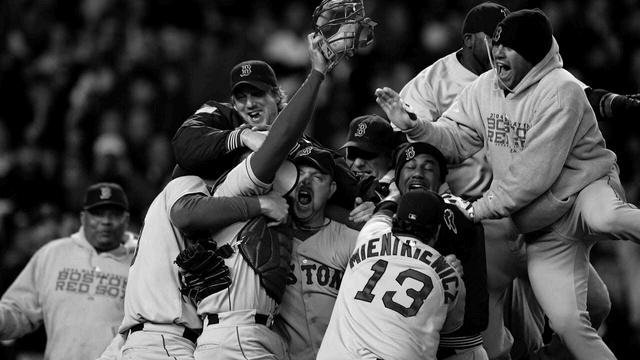
Yankees and Red Sox fans will never be friends The division rivals have been facing each other for 122 years, with no sign of stopping anytime soon The teams met yet again in the 2025 Wild Card Series, fighting for the chance to play the Blue Jays in the ALDS The Yankees ended up getting their revenge on the Red Sox after their 2004 heartbreak, shutting them out 4-0, eliminating Boston from postseason contention. Although the Yankees have the upper hand right now, it’s only a matter of time before the two teams meet again, fighting another battle fans will never forget

2. Site of the first international treaty to cut greenhouse gas emissions
3. Actress who said this crossword's namesake quote in reference to ex-boyfriend Michael Cera
4. Slippery sea creature
5. Alternative title for "Time of Your Life"
6. Collaborator with Playboi Carti on "Timeless"
8. "It's just a jump to the left, and then a step to the right"
9. What time can heal
12. Who told Frodo that "All we have to decide is what to do with the time that is given us."
14. Iconic co-character for #3 down
By Bridget Bowles
Across
1. Song where "Time keeps on slippin', slippin', slippin', into the future."
7. Character in possesion of a TimeTurner in The Prisoner of Azkaban.
8. Interdimensional device piloted by the Doctor.
10. A much needed time for most UofT students.
11. Opening instrumental in an ontheme Pink Floyd song.
13. time is it?
15. against the clock.
16. If you're lost, you can look and you will find this artist.