

Sara Schmidt Contributor
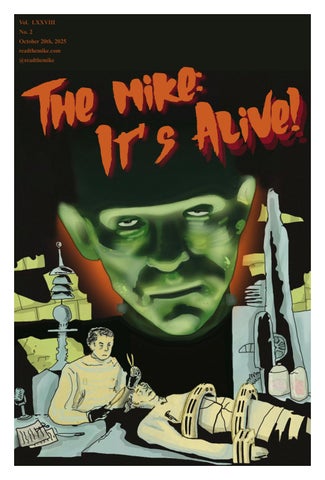
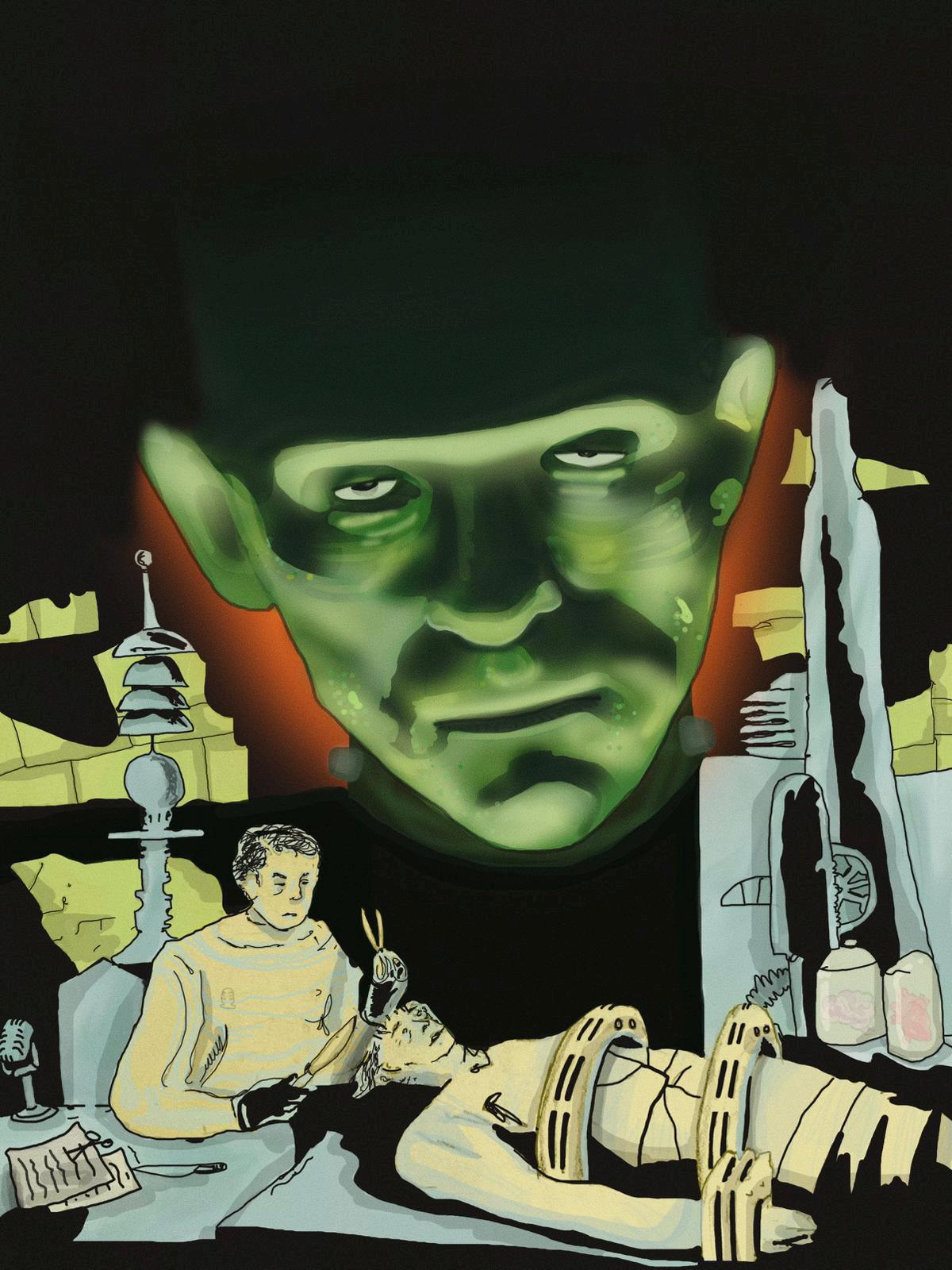
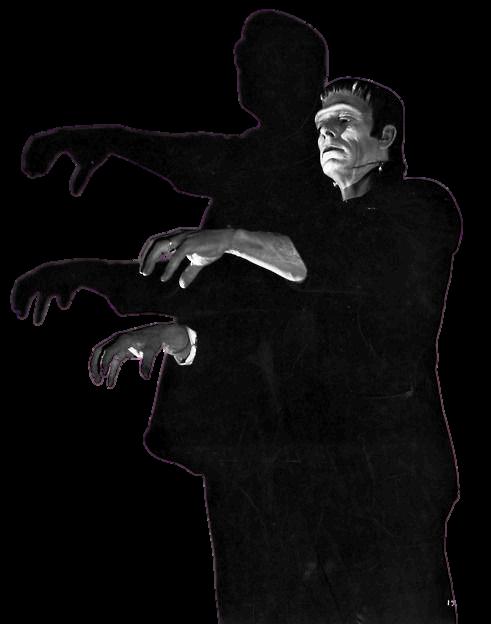
n popular culture, Frankenstein is often flattened into a single, epic moment when the mad tist exclaims, “It’s alive!” as lightning cracks and his monstrous creation awakens The plot ds with the creature’s alienation from society and his ensuing rage against the scientist who made him and the world that rejects him. It seems like a simple plot, yet countless
adaptations exist What one filmmaker considers a faithful adaptation, another sees as an opportunity for reinterpretation Who has succeeded? No one truly, in my opinion Yet, the sheer volume of Frankenstein adaptations testifies to the enduring legacy of Mary Shelley’s Gothic classic
Published in 1818, Frankenstein, or The Modern Prometheus, was an immediate success with notable praise for its philosophical richness Shelley lived at the tail end of the Enlightenment, an epoch defined by an unrelenting faith in reason, science, and progress Victor Frankenstein embodies this hubris His unchecked pursuit of science creates a being condemned to hatred by society and the creature, forced to internalize this rejection, confides: “finding myself unsympathized with, [I] wished to tear up trees, spread havoc and destruction around me ” The tragedy of the creature leaves readers to wonder what might have been if Victor had reckoned with the consequences of his ambition from the outset
With this in mind, here is a brief look at one of the first and most recent adaptations of Frankenstein and a few notes on the upcoming film adaptation release this October.
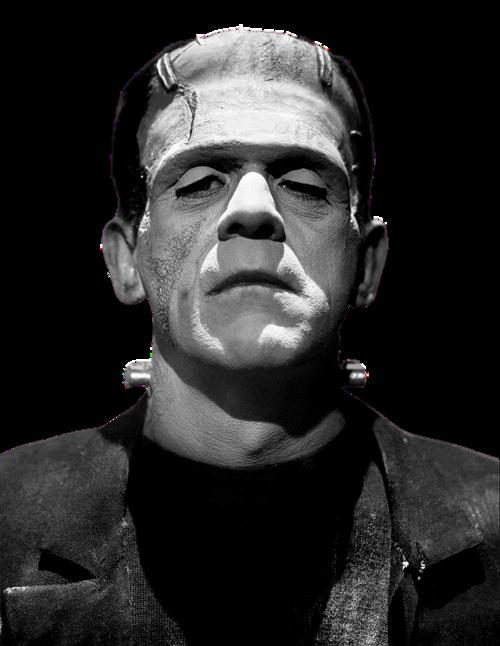
The most iconic iteration of Frankenstein remains the 1931 film adaptation directed by James Whale. The film pays homage to the original text to some degree, accurately portraying the creature’s transformation from helpless and speechless to enraged and violent Yet, it departs from the novel in key ways Most notably, it replaces Victor’s initial horror with the triumphant “It’s alive!”, weakening the creature’s early perception of himself as feared and rejected by his maker It also omits the novel’s climactic opening, where Victor faces the inescapable consequence of his creation at the top of a mountain By the film’s end, the audience feels fear, rather than sympathy, for the creature, a significant departure from Shelley’s original vision
Poor Things, directed by Yorgos Lanthimos and released in 2023, is a bold reimagining of Frankenstein The film centers on Bella Baxter, a young woman resurrected by a scientist who implants the brain of her unborn child into her body It follows Bella’s transformation from a wordless, instinctive creature to someone fully immersed in her
existence, unbound by social conventions In many ways, the film answers: What if Frankenstein’s creature had not been born hideous and rejected, but loved, nurtured, and set free to know the world? As Emma Stone’s Bella declared, “I am Bella Baxter and there is a world to enjoy, traverse, circumnavigate ” The world excitingly exists before Bella in a way it never could for Shelley’s creature In this, Poor Things rekindles a childlike sense of wonder for the world
The upcoming adaptation titled Frankenstein, directed by Guillermo del Toro, will debut in select theatres on October 17th before streaming on Netflix on November 7th Premiering at the Venice Film Festival and later at the Toronto International Film Festival, del Toro’s film has already received a positive reception. Known for humanizing “monsters” in films, such as The Shape of Water and Pan ’ s Labyrinth, del Toro seeks to instill a newfound compassion toward the creature in Frankenstein This vision echoes in the interview commentary of the film’s cast. Jacob Elordi describes himself playing the creature as representing “our beauty and our innocence,” while Oscar Issac, playing Victor Frankenstein, noted that the film “really shows you that the world tells you what you are ”
With a $120 million budget, a star-studded cast, and Netflix’s backing, del Toro’s film could carry commercial trappings Yet, the producer’s childhood dream to adapt Frankenstein inspires optimism that this film will properly honour Shelley’s classic Gothic novel
Aiden Fung Photo Editor
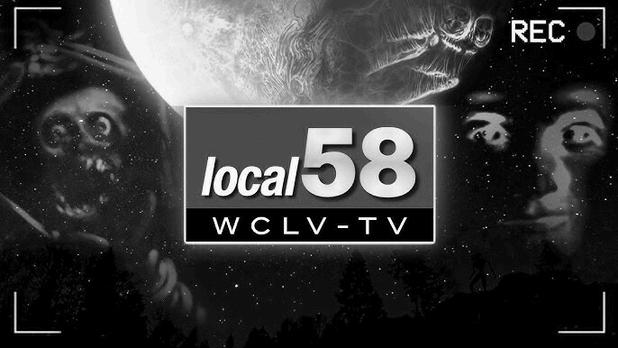
During the pandemic, I often used YouTube to watch my favourite content creators play video games or follow computer-building tutorials I was never a big fan of horror, so when I found the YouTube channel LOCAL58TV, I was puzzled as to why the algorithm thought a foreign news station belonged on my feed. Out of curiosity, I clicked on a video titled “LOCAL58TV – Weather Service ” It began as a standard news broadcast, abruptly interrupted by an Emergency Alert System (EAS) message warning viewers not to look at a meteorological event with the naked eye.. Moments later, the transmission was hijacked, urging viewers
to ignore the warning and “look at the moon ” This two-minute and thirty-three-second video left me deeply unsettled The hiss of the VHS tape, the low-resolution video artifacts, the sharp-pitched EAS siren, and the contradictory messages from a trusted authority figure hijacked my sense of nostalgia and trust using it to fuel my fear of uncertainty and the unknown It was then that I discovered a new form of content: analog horror
What makes these videos so disturbing is their convincing, authoritative realism One of my favourite entries in the Local 58 series is “Contingency,” the second episode of Season 1 Once again, the broadcast appears hijacked, this time to air a government emergency warning “to be used only in the event of the United States’ complete surrender to insurmountable enemy forces ” The message instructs citizens to surrender and lie on their backs in a “victory position” before committing suicide Although the broadcast later claims the message was a hoax, the final title card interrupts to order the station to say it was a hoax implying the message might be real after all Every detail in this footage contributes to a feeling of hopelessness and confusion. The message takes advantage of blind patriotism, expecting the utmost loyalty from its people. It leaves viewers wondering: What is the government hiding? Why would it order its citizens to give up? And what exactly is this “insurmountable force”?
I think analog horror is an especially effective medium for creating fear It suspends the viewer’s disbelief and instills dread without relying on cheap jump scares or sudden noises Instead, it brews an unsettling feeling, breaking the norm of scheduled programming to warn us against insidious threats all while citing institutional protocols that never quite explain the reasons for these sudden alerts If you’re looking for something spooky this Halloween season, grab your laptop and put on some Local 58
Arshad Saleh Features Editor
You’re scrolling through TikTok late at night and come across a video of some guy in front of a podcast mic telling viewers that the country is being ruined by illegal immigrants, or kids are being brainwashed by critical race theory These may be opinions that the person genuinely holds; however, they are not presented as such Rather, they are presented as cold, hard facts that only a ‘better’ crowd is capable of accepting. Politics in this space stops being a conversation and becomes a contest of rapid-fire soundbites that aim to provoke anger and fear How does it affect audiences when politics becomes short, emotional, and algorithm-driven?
The algorithm behind platforms like YouTube, TikTok, and Instagram creates echo-chambers of the politics that people consume If a video gets views, it is pushed to audiences This algorithm is used and manipulated by political content creators who will use clickbait titles and controversial opinions to get viral clips instead of making meaningful content The algorithm pushes viewers to extreme versions of the beliefs they consume; if you watch a clip about immigration, the next one could be a more aggressive take, and the one after could present the issue as an existential threat The algorithm only values maximizing engagement and watch time, meaning extremity is often rewarded
It is important for platforms to maintain free speech. However, in the present political space, the line between free speech and hate speech has sadly become blurred Online figures like Nick Fuentes have gained traction through a tactic different from the ones previously stated The short-form content Nick Fuentes puts out often expresses popular views, such as the Trump Administration failing to abide by civil values and human morality. Through these clips, Fuentes draws in viewers from all points of the political spectrum His real content, however, is nothing less than hate speech that should not be platformed. Some of the views that Fuentes has presented deny the Holocaust and speak positively about white supremacist groups Short clips do not give people the nuances and context of the people presenting them this is what has let Fuentes mask his white nationalism as being the anti-Israel face of the right-wing, all while having no care for the humanity of Jewish or Palestinian people
The consequences of provocative and controversial people, such as Nick Fuentes, are seen all too often Recently, the assassination of Charlie Kirk has opened heated dialogue on free speech. Kirk used short clips to voice strong opinions that brought him the love and adoration of many conservatives However, many on the other side viewed his opinions as bigotry When people are polarized to this extent, this can lead to antiimmigrant protests and tragedies like Kirk’s assassination.
Short-form content allows for more creators to be seen Politics, on the other hand, is a subject that requires analysis and understanding it is difficult to produce short-form content without pandering to a biased audience To preserve real discourse, audiences must be willing to look beyond the clips, slow down, seek context, and engage with complexity rather than outrage
L I F E S T
Ciarah Rampersad Contributor
On a crisp autumn evening in October, rows of pumpkins glow from windowsills and porches, where their jagged and sinister smiles illuminate the street, casting shadows in the darkness of the night The Jack-O-Lanterns smile and sneer, while they perform their annual job as silent sentinels of Halloween Behind those deceitful, flickering faces, a truly spooky story is hidden within these seemingly cheerful decorations we carve today Born from fear, not festivity, Jack-O-Lanterns originated from the fable of one man’s ill-fated deal with the devil
The origin of Jack-O-Lanterns stems from a tale in Ireland, about an Irish man who was a notorious trickster, “Stingy Jack”, known for his insatiable greed and cunning nature Jack invited the Devil for a drink, but he refused to pay, hence the name, Stingy Jack. He tricked the Devil into turning into a coin, which would allow Stingy Jack to pay for their drinks. However, once the devil turned himself into a coin, Stingy Jack placed him in his pocket next to a silver cross, preventing the Devil from transforming back to his true form
Even though Stingy Jack eventually released the Devil, it was with the condition that Stingy Jack would not be troubled by him for a year, and if Stingy Jack died, the Devil could claim his soul Soon after, Stingy Jack, yet again, tricked the Devil into climbing up into a tree, and Jack then carved a cross into the bark of the tree, restricting him from coming back down. The Devil vowed he would not bother Stingy Jack for ten years. When Stingy Jack died, neither Heaven nor Hell would take him, leading to him being damned to walk the Earth for an eternity At least, the Devil gave him a single burning coal to cast light upon a never-ending path Stingy Jack put the coal into a carved-out turnip, creating the first ever “Jack of the Lantern” His flickering light in the turnip still burns, haunting the living, and this light will flicker until the end of time
The ancient Celts celebrated a festival known as Samhain, which represented the end of the harvest and the forthcoming darkness of winter It was believed that on Samhain night, the barrier separating the living and dead would become thin, which would aid malevolent spirits and lost souls, such as Stingy Jack, to wander freely Villagers were apprehensive and determined to protect themselves, which led them to place candles into turnips, beets, and potatoes on which they carved grotesque faces to scare the spirits and Stingy Jack At present, the twisted faces carved into the Jack-O-Lanterns are guarding homes by warding off the weary and agitated sprites – though some say the spirits still come closer

This ghostly tradition made its way to North America through Irish immigrants in the 19th century who arrived carrying on these eerie rituals But the turnips became pumpkins when the Irish immigrants discovered they were larger and easier to carve Over time, turnips were replaced by pumpkins, and so was the old Irish folklore; Jack-O-Lanterns were deemed a celebratory act during Halloween These glowing pumpkins are decorations on doorsteps, even though their smirk indicates a darker and haunting tale that gave them their long-lasting life
Although Jack-O-Lanterns are no longer used as some sort of talisman to repel spirits, it is seen as a symbol of creativity and harmless seasonal festivity We can all agree that when the lights dim and the chilling winds whisper on an empty street, there is still something petrifying about seeing a flickering leer in the darkness
This Halloween, when you light your pumpkin, remember the story behind its glow

A quiz to match you with your ideal Halloween costume!
With the sudden drop in temperature, Halloween does not feel so far away anymore! And lucky for us, it falls on a Friday this year, which means the celebrations can stretch from Thursday all the way to Saturday This is good and bad news: good because the fun lasts for days, and bad because it means choosing multiple costumes If you are short on ideas or need a last-minute backup, take this quiz to discover which Halloween genre fits you best plus a list of costume ideas that match your vibe!
Remember to circle your answers to the following questions
1 How do you like to spend Halloween night?
a Attending a haunted house
b Baking a fall dessert
c Attending a party
d Dressing up in a costume
2 Favourite aspect of Halloween?
a.The spooky and eerie side of the decorations, music, scary movies, and ambience
b.Classic decorations (pumpkins and leaves)
c Carving Jack-O-Lanterns with friends and family
d Watching Halloween movies
3 What kind of person are you at a Halloween party?
a Telling ghost stories
b bDancing
c Never without a friend by your side
d Enjoying the music
4 What type of Halloween is your vibe?
a The dark and chillier nights
b The coziness of pumpkin spice, cinnamon, and changing leaves
c Going to the pumpkin patch and taking pictures with friends
d Making Halloween playlists
If you circled mostly A, you embody the Spooky & Scary side of Halloween! You love the thrill of a scary story and embrace the eerie Your perfect costume might be a vampire, zombie bride, or Frankenstein’s monster You might also consider going as Coraline for that creepy aesthetic, or even a witch, skeleton, clown, or Pennywise

If you circled mostly B, you are Basic, but Cute! You can take a simple costume and make it work You might consider being a black cat, a sports player, or a Disney princess If you want to add a few touches of glitter to make your costume shine, a fairy, angel, Cupid, or Tinker Bell would be perfect! You might also love something more nature-based, dressing as a mermaid, Bambi, ladybug, bumblebee, butterfly, sunflower, or bunny
5 How do you normally plan your Halloween costume?
a A considerable amount of effort, but not too much
b Last minute, throwing together items in closet
c Going along with the group costume
d Preparing weeks in advance, planning every detail
6 How do you spend your free time?
a.Playing video games
b Scrolling on social media
c.Hanging out with friends and family
d Watching TV and listening to music
7 Thoughts on bold makeup and lots of accessories for a costume?
a Only use a bit to put the costume together
b Too much
c Depends on the costume
d Love it!
8 Favourite autumn / Halloween movie or TV show?
a The Conjuring
b Gilmore Girls
c Charlie Brown
d Nightmare Before Christmas

If you circled mostly C, you are made for a Duo Costume You know Halloween is better with a friend! Some classic duo costumes are Mario and Luigi, Strawberry Shortcake and Blueberry Muffin, Charlie Brown and Snoopy, Little Red Riding Hood and the Wolf, Curious George and the Man with the Yellow Hat, and Flower Garden and Gardener For a more bold duo costume, you might consider Batman and Catwoman or Superman and Wonder Woman. Get inspired by these costumes for two, and even consider making adjustments to make it a trio!
If you circled mostly D, you are made for the Musical & Movies type of Halloween! Consider your favourite movie or theatre performance and dress up as a character in that play If you love the theatre, you might like to dress up as Glinda or Elphaba, Beetlejuice, or your favourite singer For a costume more directed around movies, being a Pirate of the Caribbean or a Ghostbuster would be an adventurous look for Halloween night Have fun planning your costume!


For the past two years, students at universities across Canada and the globe have been demanding that their institutions disclose and divest from Israeli institutions in light of the Zionist entity’s genocide of Palestinians These students have been conscientiously objecting to the normalization of relations with the colonial power through encampments, protests, and other forms of direct action
Though our administration claims neutrality, it financially benefits from the upholding of the apartheid state by accepting heaps of donor money from Israeli institutions, becoming beholden to these donors, hence the resistance to divestment evident in the administration drawing a blind eye to student campaigns to end these collaborations. Israeli academic institutions play an active role in developing weapons and military technology that kill Palestinians and in providing academic justification for ethnic cleansing This isn’t neutrality, but is instead complicity in the genocide of Palestinians by aligning freely with institutions that facilitate the human rights violations and war crimes committed by the IOF
Occupy UofT, a student-led group organizing to end our institution’s enabling of the apartheid state, is urging the university to cease its exchange program with HUJI, the Hebrew University in Israel HUJI is host to the Havatzalot program, a program that trains IOF intelligence officers on its campus. Over the past 5 years, 50 UofT students have gone on exchange to HUJI, going to class alongside trained combatants and war criminals. The demand is simple: that our academic institutions stop collaborating with those who kill and oppress, and stop enabling the genocide and scholasticide occurring in Gaza by suspending relations with universities in Israel While UofT builds relationships with Israeli universities, no universities in Gaza remain
As a culmination of a week of action, a crowd of students gathered outside of Sid Smith on October 8th to make their voices heard to our administration As students took to the streets and reclaimed space on their campus, different speakers educated the crowd about UofT’s array of ties to the apartheid state. Students marched from Sid Smith, down St. George, to King's College Circle, stopping intermittently outside different faculties to clarify their ties to Israeli institutions, ending outside the office of the President
Additionally, a group of students has compiled a comprehensive timeline of ‘ties that bind’ UofT to Israeli institutions, spanning 2003 to the present day
Hala Marouf Associate News Editor
These include UofT’s status as a top worldwide collaborator with the Weizmann Institute of Science, an Israeli university deeply entrenched in the development of military technology for the state, as per its collaborations with drone manufacturer Elbit Moreover, UofT is host to several institutional partnerships with Technion University in Israel through the physics, computer science, and math departments Technion’s Advanced Defense Research Institute’s website openly boasts about turning academic research into “operational solutions for the battlefield,” particularly in “advancements in swarm drone technology, cyber defense, and battlefield robotics ” UofT’s collaborations with these institutions legitimize the Israeli state’s brutalization of Palestinians by enabling it to wash its war crimes with a veneer of academia and research.
The biggest partnership in the engineering faculty is through the Lyon Sachs Collaborative Research Fund and involves the civil engineering department One of the projects funded by this partnership is between Technion Institute’s Center for Catastrophic Events and Extreme Loading and UofT’s Centre for Resilience of Critical Infrastructure, and it crucially involves test-bombing structures Though it may be advertised purely defensively, as a means to acquire data on how to protect structures from blasts, this data, as stated by one of the speakers at the protest, can easily be used to ascertain what bombs can destroy which structures.
Moreover, students at the event vocally criticized UofT’s hosting of a recruitment event for the weapons manufacturing company Pratt & Whitney, which was shut down by student protesters on September 29th Israel has been known to employ Pratt & Whitney aircraft in their offensive on Gaza since the Nakba in 1947
Opponents of the boycott of Israeli academic institutions purport that universities are havens of reflection and free inquiry, and that this boycott violates the academic freedom of these institutions In fact, academic freedom simply involves the freedom of academics to voice their opinions about their institutions and, more importantly, comes with the obligation of supporting the academic freedom of others. HUJI, however, has a pattern of suppressing academic freedom, such as when they pressured Palestinian professor Nadera Shalhoub-Kevorkian to resign because she called Israel’s operation in Gaza a genocide UofT has an obligation to support the academic freedom of Palestinians and their right to an education, which has been degraded by the occupation
The implications of enjoying horror
While horror is often categorized as low-class entertainment that only offers mere gore and cheap shock value, its enduring relevance in the cultural zeitgeist demonstrates how its appeal runs deeper What society consumes as entertainment
reveals what resonates most profoundly with us, therefore it is worth exploring why horror movies have remained so culturally relevant to us Why, in a world saturated with escapism, do we continually return to fear?
Horror movies appeal so greatly to us through their unique blend of stimulation and catharsis. Few genres engage with the body and mind as intensely our hearts race, our palms sweat, and our survival instincts are activated. As a result, we experience physicaland emotional visceral responses.
Watching horror allows us to witness the most primal emotions and behaviours of fear, rage, and aggression, all from the safe distance of our screens The relief and exhilaration that follows after we’ve confronted danger and threat of death without any risk to our safety is what makes horror movies so psychologically satisfying
But horror’s power extends far beyond adrenaline rushes It is also one of cinema’s most creatively expressive genres, with filmmakers pushing artistic
Safiyah Kagda Contributor
and societal boundaries, and taking risks stylistically, morally and politically There are many examples of the horror genre closely reflecting social phenomena or disasters: contemporary examples include the dystopian anarchy of The Purge (2013) that channels ever-growing modern political unrest and economic inequality, or the
psychological descent of Hereditary (2018) that turns supernatural entities into an allegory for grief, trauma and mental illness. Therefore, horror opens up a cerebral dimension for cultural reflection by creating alternative realities and exposing what society tries to repress. By creating a metaphorical space to examine our collective fears of moral decay, loss of control, and societal collapse, the genre becomes a powerful catalyst for dialogue and critique, compelling audiences to confront the very anxieties that shape our world

Perhaps most importantly, horror forces us to confront the darkest aspects of human nature. In horror landscapes where the world faces existential threats, we are privy to the most vulnerable
aspects of the human condition when trying to negotiate survival, morality, and violence under extreme conditions These themes, central to horror movies, raise complex questions: How do humans react in crisis? What ethical and moral lines will we cross to survive? The answers to these questions reveal uncomfortable truths about human nature but also allow us to better understand ourselves This paradoxical effect of horror exposes not only our fears but also our resilience and our capacity for empathy amid terror


in cinema compels us to confront our fears as does It touches a vulnerable part of the human re provoked and prodded with disturbing questions
regarding the world around us It holds up a mirror for society that reveals our worst fears and the complexities of the human psyche, providing us with a liberating, cathartic experience, a provocative social critique, and a psychoanalytical exploration of complex characters all at once

Rules are the foundation of Formula 1 there are rules for the track, for the car, and for the drivers but sometimes they can cause more harm than good With both McLaren drivers fighting for the World Drivers’ Championship, McLaren has had to set some regulations for their drivers, known as the ‘Papaya Rules ’ What they actually entail has been left quite vague, but everything suggests that both Lando Norris and Oscar Piastri are free to race each other but must not crash into one another while doing so
‘Papaya Rules’were first mentioned during the 2024 season and have since then been thrown out by McLaren engineers every time one of their drivers is within racing distance of the other But why do fans dislike these rules so much? It begins with the boundaries of these rules, as people often do not know where they start and where they end The most controversial example occurred during the Italian Grand Prix, when McLaren had a slow pit stop for Norris, and as a result, Piastri inherited second place McLaren then asked Piastri to give back the position, which he did

One Reddit user expressed their opinion on the matter and stated that “if Papaya Rules were just race hard, but fair, and don’t crash into your teammate, then it would be fine But when you introduce variables like compensating for team mistakes, then it becomes a question of where do you draw the line ” This incident has further ignited rumours about McLaren favouring Norris over Piastri, and some have started to question the team’s intentions with these rules
Another reason why fans dislike ‘Papaya Rules’ is that they want to see a battle between teammates. They want to watch both drivers race wheelto-wheel, make risky moves against their contenders, and fight for every point they want something reminiscent of the 2016 battle
between the then Mercedes teammates, Lewis Hamilton and Nico Rosberg However, according to news outlets and fans, ‘Papaya Rules’ prevent the drivers from actually racing against one another, making the championship fight look dull This has caused fans to wish for chaos during the race, such as one Reddit user who cannot wait for “The two McLarens to take out each other” so that Max Verstappen can win Another user asked that they “Just crash next race and DNF both,” all for the sake of a “little bit of drama.”
The main concern for McLaren fans is that the rules might cost one of their drivers the championship If both Norris and Piastri feel that they are not allowed to make bold moves against each other, then Verstappen (a four-time World Champion and currently 63 points behind Piastri) could catch up and win this year’s Driver Championship As it stands right now, McLaren has yet to announce the end of ‘Papaya Rules,’ however, this could all change now that they have secured the Constructors’ World Championship during the Singapore Grand Prix
Since the late 2000s, Nationwide Arena has been home to the Columbus Blue Jackets of the NHL Located in the heart of downtown Columbus, construction for the arena started in 1998. However, before that, the grounds that Nationwide Arena sits on were home to the Ohio Penitentiary The Ohio Penitentiary was known for its harsh conditions, riots, and most notably, one of the deadliest prison fires in United States history The land itself has seen more than just hockey; it’s seen tragedy, violence, and despair
In 1885, the Ohio Penitentiary had finished construction, having a maximum capacity of 500 convicts The Ohio Penitentiary became the home for all executions for the state of Ohio Over the years, the penitentiary continued to grow, being built to hold 1,500 convicts Despite this, at its peak, it held over 5,200 convicts Overcrowded and filled with tension, it became a place where survival depended on more than justice
On the evening of April 21st, 1930, a fire broke out along the side of the building As smoke slowly started to fill the cell blocks, guards refused to unlock the cells Two prisoners managed to steal keys from a guard and were able to save fellow inmates Eventually, the fire spread to the roof, which caved in on the cells in the upper level
When firefighters arrived, prisoners, fueled with frustration, started to throw rocks at them, delaying their ability to control the fire When the fire was finally controlled, 130 people were seriously injured, while 320 people were dead, most of whom were burned alive The strong smell of smoke lingered in the air for days, and many locals swore they could still smell it years later
The following year, the prison reopened, and new laws were set for minimum sentences to help with the overcrowding issue By the early 1980s, the prison was slowly crumbling while still being over double the maximum capacity, and by 1984, the Ohio Penitentiary was closed down. A decade later, the building was demolished and later became the home of Nationwide Arena
Since the opening of the arena, employees have claimed to have heard whispers in their ears, seen shadowy figures, and felt their body temperatures drop Others have said they have heard faint banging in empty corridors or caught glimpses of movement in the upper rafters after hours While none of these claims can be backed up, it wouldn’t surprise me if this were the case While believers call the arena haunted and skeptics call it a hoax, history doesn’t disappear, and Nationwide Arena will always carry the weight of what came before it

Across
2. Vicious doll in overalls.

By Rosie McDonald
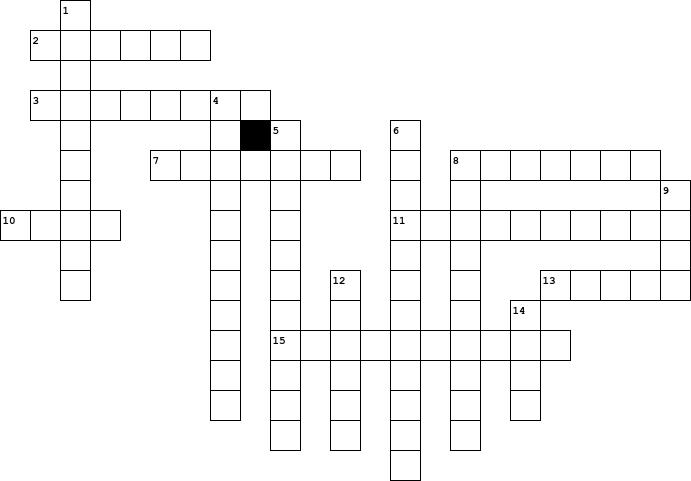
3. Don't feed them after midnight.
7. Notorious anti-conjuring couple.
8. He vants to suck your blood.
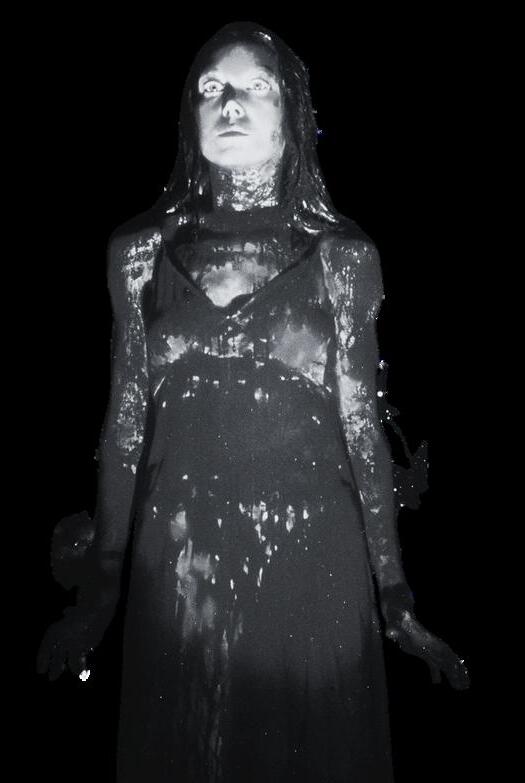
10. Best-selling author of It and Carrie.
11. Title of a not-so-scary movie.
13 Where you film a documentary about a witch in the woods. t a bunch of !"

Down
1. Friday the .
4. Who kills Marion Crane in the shower?
5. What you yell while taking an axe to the do
6. Who ya gonna call?
8. "I see . "
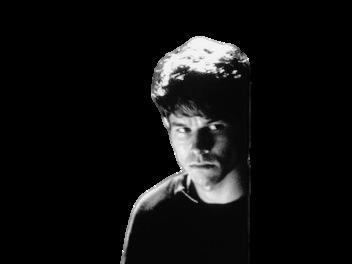
9. 90's flick featuring a psychotic Wahlberg.
12. There ain't no rest for the .
14. "All work no play makes Jack a bo Crossword: