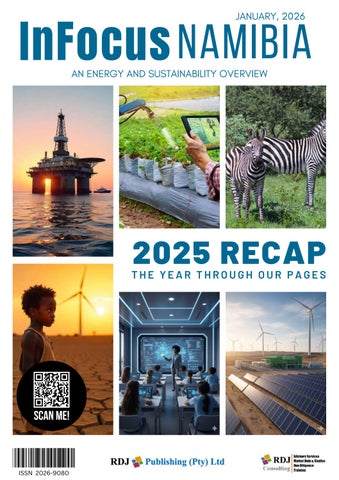
AN ENERGY AND SUSTAINABILITY OVERVIEW


EDITION: JANUARY 2026


![]()


EDITION: JANUARY 2026


DearReader,

Welcometo2026,andwearedelightedtowelcomeyoutoanother editionof InFocus Namibia!
Before we engage ourselves in defining priorities and shaping agendas for the year ahead, we believe it is equally important to pause, reflect, and set a solid foundation for some of the crucial conversations that might still take place in Namibia’s rooms of influence After all, meaningful progress often begins with a single, well-informed conversation that carries the right message and stimulatethethoughtprocessandfurtheractions
Likemanyyearsbeforeit,2025wasanincredibleanddefiningyear for RDJ Publishing (Pty) Ltd. We sustained our momentum as a publishing house, consistently delivering informative, factual, and thought-provoking content through both of our flagship publications Thisjourney,however,wasnotwithoutitschallenges On the financial front, advertising remained constrained, reflecting the broader economic realities faced by many institutions and businesses across the country. Nevertheless, through our supporting arm, RDJ Consulting Services (RDJ Consulting) our commitmenttoquality,relevance,andimpactremainedfirm Thisis so as RDJ Consulting prepares to celebrate its 16 year of operations th
This report is a FREE Publication written and authored through collaboration with RDJ Consulting Services CC based in Windhoek, Namibia
The content is collected from publicly available information and so its accuracycannotbeguaranteed.

Inthismonth’sedition,weareproudlycelebratingourwritersfrom 2025 by highlighting some of their featured stories and conversations which continues to be pivotal in driving policy dialogue, sector awareness, and industry growth within Namibia’s energyandsustainabilitylandscape
We also wish to note that the ‘November/December 2025’ dual publication was a targeted festive season edition, and with this issue,weareofficiallyreturningtoourregularmonthlypublication cycle
We thus hope you find this edition informative and encourage you tofollowandengagewithusonalloursocialmediaaccountsaswe continuetoexploreanddiscussthesevitalissues.
As always, the conversation continues at infocus@rdjpublishing.africa.
Yours, editor@rdjpublishing africa


Namibia marks a significant milestone in 2025 as it celebrates 35 years of independence while welcoming its first female president. Her Excellency Dr. Netumbo Nandi-Ndaitwah made history on December 3, 2024, when she won the presidential election, becoming the president-elect of Namibia. She will be the country’s fifth president and the first woman to hold the highest office
To commemorate this journey, the government of the Republic of Namibia has introduced the theme and logo “Beyond 35: For a Prosperous Future” , which will guide national development for the next five years This initiative was announced by the Ministry of Information and Communication Technology (MICT), reflecting the country's commitment to progress and prosperity.
The nation embraces its “Beyond 35” vision, and continue to remain optimistic about a prosperous and inclusive future, building on the foundations laid over the past three and a half decades
We use this opportunity to extend our best wishes to Her Excellency as she steps into her new role!


Gross Domestic Product (GDP) at market prices (2024)
(2023) TOTAL ELECTRICITY UNITS SOLD 4,288 GWh 672 MW MAXIMUM DEMAND (ELECTRICITY)
GINI COEFFICIENT (2024)
N A M I B I A INFLATION (CPI) (Dec 2025) PRIME LENDING RATE (Dec 2025) 10.00
6.50 REPO RATE (Dec 2025)


Namibia is at the cusp of its inflection going forward. Part of this is surrounds a JUST ENERGY TRANSITION, allowing Namibia to use its natural
resources for its growth and development One of the sectors that can make a difference is the transport sector, accounting for the majority of the country's total energy consumption (42%) based on IEA 2022 data and CO emissions (13%). 2
Of course, there is enough movement for e-mobility and pushes in the area of hydrogen and ammonia as well as lately, “syn-fuels” that mimic fossil fuels but are made and not explored in the traditional sense making them renewable energies.
However, the real benefit for Namibia could come from the aviation sector creating not just a Just Energy Transition action but also creating additional attraction and advantage to the aviation sector upgrading as well as
furthering the tourism sector options for extreme short haul flights
As we have taken pains to point out in past editions, aviation that uses alternate fuels such as sustainable aviation fuels (SAF) or electric flights such as the prime example from the United States of America (USA). In the recent “air taxi” flight using electrically powered aircraft for a vertical take-off and landing
As reported by others, the flight was operated from Marina Municipal Airport (OAR) to Monterey Regional Airport (MRY) for 12 minutes over 10 nautical miles. Five of those minutes were spent in a hold pattern at MRY for air traffic spacing. The company that carried out this feat was Joby Aviation of the USA, who had received airworthiness approval in 2020
Joby Aviation, Inc (NYSE:JOBY) is a California-based transportation company developing an all-electric, vertical
take-off and landing air taxi. Joby intends to both operate its fast, quiet, and convenient air taxi service in cities around the world and sell its aircraft to other operators and partners Joby has partnered with NASA, Toyota and Uber, who have agreed to incorporate future aerial ride shares into its rideshare apps
On this occasion on 15 August 2025, Joby’s eVTOL was able to sequence with other aircraft at the Monterey Airport, which it an important step in achieving FAA Certification Joby’s first eVTOL operations with other aircraft in FAAcontrolled airspace was a success To be certified, an aircraft must demonstrate that it can operate in shared airspace by flying between multiple airports.
The space is also expanding and several other companies in the space such as Archer, Zeroavia, Ampaire and so even well-known manufacturers are in the “race” such as Boeing and Airbus While costs are currently high as with any new or nascent industry approach, adoption will increase the decline of price barriers and ultimately make energy transition a secondary matter.
With vertical take-off and landing capabilities, nearly all of Namibia’s inner areas totalling recently stated to be 268 sites The aircraft in question has carried out flights in
excess of 250 km on a single charge While this is a “short” distance in terms of the Namibian landscape, travel to specific locations, will be helpful The same can be extended to other service types, emergency patient transport, urgent cargo, environmental oversight and surveying amongst others.
Clear examples would be Windhoek to Rehoboth, Windhoek to Mariental, Windhoek to Okahandja, Windhoek to Gobabis, Windhoek to Otjiwarongo and possibly Windhoek to Arandis / Swakopmund. Internal flights within Namibia are not new as there are several companies already offering remote area travel, landing on even unimproved airstrips.
In 2023, Namibia recorded 863,872 international tourist arrivals, marking an increase of 87 4% compared to 2022 (with 461,027 arrivals) (MEFT, 2023, p 5) The main purposes of these visits were:
Holiday: 49.1% (approx. 424,345 tourists)
Visiting friends/relatives:31 3% (approx270,379 tourists)
Business:15 8% (approx136,490 tourists)
Transit: 3 6% (approx approx31,099 tourists) (MEFT, 2023, p 16)
While the 2023 Tourist Statistical Report provides details on international air arrivals, with Airlink (42.6%), FlyNamibia (19 7%), Eurowings Discover (14 1%), and Qatar Airways

Courtesy:Zeroavia

Aviationsites(airports/strips)Courtesy:https://metar-tafcom/
(2 4%) as major carriers (MEFT, 2023, pp 21-22), It however sadly does not report on domestic flight usage
Internal flights are not new to Namibia, as several operators already service remote areas, sometimes landing on unimproved airstrips. Yet, the potential to expand these offerings is substantial For tourists, the vastness of Namibia often means long distances between attractions, requiring careful planning and lengthy drives that may deter visitors The introduction of short-haul, sustainable flights could alleviate these barriers, making the country more accessible and attractive for time-constrained travelers.
The Tourism Exit Survey from 2012-2013, shows that 4% of tourists (approx 241 of some 6,000 questionnaires) used domestic flights within Namibia, primarily for fly-in safaris and lodge transfers Although this segment is small, extrapolated as around 35,000 persons, it generates significant revenue, with average expenditures of approximately N$750 per bed-night (N$ 26 million per night) This highlights the need to invest in and strengthen domestic aviation links as even a 10 percent increase would bring this to close to N$ 30 million per night
Further, to expand the tourist attraction, distances between attractions are often substantial, requiring careful planning and potentially longer driving days than expected resulting visitor hesitation Added, with the long-haul time commitment needed to arrive and leave Namibia, this


A"rtificial Intelligence" (AI) has become an everpresent part of our daily conversations, from discussions about groundbreaking innovations
in technology to the ethical implications of its rapid advancement But what exactly is AI, and how does it impact our lives?
At its core, artificial intelligence refers to: the simulation of human intelligence in machines programmed to think and learn like humans.
This technology encompasses a variety of subfields, including machine learning, natural language processing, robotics, and computer vision. Machine learning, a predominant subset of AI, allows systems to learn from interactions, data patterns and improve their performance over time without explicit programming
Natural language processing enables computers to understand, interpret, and respond to human language, making interactions with machines more intuitive As a result, AI can be applied in diverse sectors, including healthcare, finance, education, transportation, and entertainment, crafting solutions to problems that were traditionally considered labor-intensive or time-consuming
The impact of AI on daily life is profound, often invisible, yet increasingly significant One of the most relatable examples of AI is found in our smartphones. Virtual assistants like Siri and Google Assistant have transformed how we interact with our devices, allowing us to set reminders, send messages, and access information with just our voice These tools use sophisticated algorithms to interpret and respond to our requests, showcasing the potential of AI to enhance productivity and communication
In the realm of social media, AI algorithms curate our news feeds and suggest content tailored to our interests. Facebook, Instagram, and Twitter utilise machine learning
techniques to analyse user engagement and preferences, delivering personalised experiences that keep us engaged. However, this also raises concerns about filter bubbles and the reinforcement of echo chambers, as algorithms prioritize content that aligns with our existing beliefs
AI’s impact extends beyond convenience to more critical sectors, such as healthcare. Consider the role of AI in diagnostics; algorithms can analyse medical images more quickly and accurately than human radiologists, identifying anomalies such as tumors or fractures AI-driven applications help doctors make informed decisions based on patient data, which, in turn, can lead to earlier interventions and improved patient outcomes. For instance, IBM's Watson has made significant strides in oncology, assisting doctors in developing personalised treatment plans based on the latest research and patient-specific data
In the classroom, AI tools such as intelligent tutoring systems are revolutionising education. These systems adapt learning experiences to individual student needs, providing personalised feedback and resources that help address each learner's unique challenges This tailored approach to education has the potential to improve learning outcomes and ensure that students receive the support they need to succeed
Transportation is another area experiencing dramatic transformation through AI. Autonomous vehicles are no longer the stuff of science fiction Companies like Tesla and Waymo are leading the charge in developing self-driving cars equipped with advanced AI systems that can navigate complex environments While the widespread adoption of
As Namibia moves into the second half of the 2020s, artificial intelligence (AI) is set to have a growing impact on the country’s labour market. Experts
warn of both disruption and opportunity and call on policymakers, businesses, and workers to act now to steer the change in a socially inclusive way.
According to a recent analysis by the International Monetary Fund (IMF), AI could threaten up to 40% of jobs globally, potentially exacerbating inequality In Namibia, the risk is compounded by structural challenges: limited digital infrastructure, uneven access to connectivity, and a skills gap. Locally, roles that involve repetitive, routine tasks are particularly vulnerable. According to reporting in The Namibian, jobs such as data entry, entry-level administrative work, some financial functions, and
customer service could face significant pressure from AI automation.
In Namibia’s engineering and industrial sectors, where AIenabled automation is already being adopted, predictive maintenance and autonomous systems are streamlining operations but may reduce demand for certain manual or semi-skilled jobs. In the creative and media industries, too, AI threatens to displace some tasks. The Namibian has noted that tools like generative text and image systems could automate parts of the creative chain, even as they offer new possibilities
Despite disruption, AI also offers promising opportunities During a webinar on the “Future of Work in the AI Age,” hosted by the Namibia University of Science and
Technology (NUST) and the University of Johannesburg, thought leaders emphasised that AI should be viewed as an enabler not a threat
Key growth areas include:
1 Upskilling & ICT Careers: Namibia’s future lies in innovation, digital skills, and ICT. Demand is expected for AI-proficient professionals: data scientists, software engineers, machine-learning specialists, and business analysts
2 Public Services and Government: AI could improve service delivery in health, education, and governance, through predictive diagnostics, personalised learning, and automated administrative workflows.
3.Agriculture: AI-enabled precision farming, resource optimisation, and predictive analytics hold promise for Namibia’s agricultural sector, especially given its emphasis on sustainable growth
4 Engineering & Energy: In sectors like mining, energy, and construction, AI-driven predictive maintenance and optimisation can boost efficiency, reduce downtime, and lower costs.
5.AI Ethics, Governance & Research: Local institutions could take a lead in developing governance frameworks, ethical AI practices, and research suited to Namibian contexts For example, the National Commission on Research, Science, and Technology (NCRST) has already identified the need to align higher education with future skills.
However, the transition is not risk-free The IMF warns that in countries with weaker infrastructure, AI adoption could increase inequality because they may lack the capacity to fully capitalise on AI gains.
Older workers, low-skilled workers, and those in remote or underserved areas may be most exposed to displacement Moreover, Namibia’s existing digital divide differences in internet quality across regions could worsen if AI investment concentrates in urban centres Gendered impacts may also emerge. Across Africa, studies suggest that women may be disproportionately affected by automation, particularly in service and outsourcing roles. If unchecked, this could widen existing gender disparities in the labour force
To address these challenges and harness AI’s potential, several strategies emerge:
1 Upskilling and Reskilling Programmes
The government and private sector should invest in scalable training: microlearning modules, online AI courses, certifications, and extended reality platforms.
Vocational and tertiary education institutions need to integrate AI, data science, and digital literacy into their curricula. The 4IR (Fourth Industrial Revolution) Task Force report recommends aligning tertiary education with future labor-market needs.
2 Infrastructure Investment
Expand reliable high-speed internet (e g , 5G) and electrification, especially in rural areas, to ensure equitable access to AI-enabled services
Develop data centres and cloud infrastructure to support local AI applications and reduce dependence on foreign infrastructure.
3 Social Safety Nets
Introduce social protection mechanisms unemployment support, retraining stipends, and transition programs for displaced workers to buffer short-term shocks. The IMF argues these are crucial for inclusive AI transitions.
Design job transition pathways, particularly for vulnerable groups (older workers, low-skilled, women), to help them move into AI-enabled roles
4 Governance, Ethics & Trust
Establish a national AI governance framework to regulate deployment, ensure data privacy, fairness, and accountability.
Promote research into African-centered trust in AI: recent studies show that trust among African professionals is shaped by communal values, relationality, and ethics
Encourage public-private partnerships to invest in locally relevant AI innovations not just adopting off-the-shelf systems.
5.Inclusive Innovation & Entrepreneurship
Support AI startups that address local problems (e g in agriculture, health, education) via incubation, seed funding, and mentorship
Boost women’s participation in STEM through targeted scholarships, mentorship programmes, and inclusive hiring practices to avert gendered displacement.
From 2026 onwards, AI is likely to reshape Namibia’s job market eliminating some roles, but creating new ones in their place The net effect will depend heavily on policy choices, investment in skills, and equitable access If the country acts decisively to close infrastructure gaps, invest in human capital, and build ethical governance, AI could become a lever for inclusive growth. On the other hand, failure to do so could aggravate inequality and job insecurity
In short, AI poses both a risk and a promise for Namibia’s future but its impact will be determined by how thoughtfully and proactively the nation prepares.
The Brief, “AI has potential to transform Namibia business” (2024) TheBrief com na
IOL / The Namibian, “Take a look at the jobs that are vulnerable to being taken over by AI” (2024).
Lithon, “AI and Automation in Namibia’s Engineering Sector” (2025).
The Namibian, “Navigating the Impact of AI on the Media and Creative Industry” (2023)
The Namibian, Mare & Kaisara, “Spotlight on the Impact of AI on the Future of Work” (2025)
International Monetary Fund (IMF) reporting on AI risk to jobs and inequality.
Namibia Journal of Managerial Sciences, Phulu, “The Role of Artificial Intelligence in Recruitment” (2025)
4IR Task Force Final Report to the President of Namibia (2022)
Kinyua Gikunda, “Harnessing Artificial Intelligence for Sustainable Agricultural Development in Africa” (2024). Amugongo, Bidwell & Mwatukange, “Enriching Moral Perspectives on AI: Concepts of Trust amongst Africans” (2025)
Energy: A Mix or Confused? (February 2025)
The energy mix refers to the combination of different energy sources such as coal or wind, used to generate electricity within a power system In the
grand scheme of things, it includes a variety of renewable and non-renewable energy sources, depending on factors such as resource availability, government policies, technological advancements, and economic considerations.
As 2025 kicks off, the push for decarbonization seems to have now hit a “speed bump” both on the supply and demand spectrums This is driven by actions of countries such as the United States indicating that they are withdrawing from the Paris Agreement and related commitments. Such exits are likely to lead to more countries withdrawing, joining the likes of Libya, Yemen and Iran
On the demand side, technological advancements that are becoming commercially viable are also now creating a need for careful supply side considerations. So, with these developments, governments in Africa now must rapidly relook at their energy futures To make our understanding relevant, here are the energy resources available to us
The traditional energy used by our ancestors and still very much used by us today is well entrenched in our African society and many other developing economies globally. Used either as a solid (for example wood) or a liquid (biodiesel), bioenergy is extremely popular but due to is wide availability and low cost structure
Considered a renewable energy source, the IEA see this resource accounting for 55 percent of all renewables However, bioenergy use in Africa is causing stress as with other locations globally, on forests and in other quarters, creates competition with food crops.
Another widely used energy source, providing some 30% or more of the world’s energy use for electricity generation, along with iron and steel production Similarly to oil, the energy source is easily transported and stored The IEA has modelled coal being fully phased out by 2040 but there are indications that this may take longer and if any technological advance cracks “carbon capture”, then 2040 will be but a fallacy
Africa’s coal supply makes up 3 percent of the global share (IEA) with South Africa accounting for 83 percent, followed by Morocco at 9%.
Hydro power is considered the largest renewable energy source globally for electricity production. Being extremely popular by utilities for electricity production due to the ability to provide reliable baseload power as well as stability for ancillary services
Hydro experiences in Africa however have been fraught with major climate challenges brought about by prolonged droughts.
As an energy carrier, hydrogen is produced using a variety of methods, most recently being driven by either renewable energy or nuclear power Once produced, hydrogen is versatile as a fuel but has proven a challenge for transport over long areas Demand for hydrogen is now estimated to be in the order of 97 million tonnes and less than 1 percent is produced by renewables.
Africa has shown interest in becoming a producer of hydrogen using renewables, but sentiments are now starting to shift to its production from nuclear power History will determine which came to the fore (See Nuclear section for challenges)
Natural gas which is generally transported in liquid form thus the term Liquified Natural Gas (LNG), accounts for some 25% of electricity generation globally and is popular as LNG Generating units provide flexibility in electricity systems The ease of LNG generating units to be installed and the lower carbon footprint per kilowatt or kilowatt hour produced has led to increased demand for LNG
Africa has several LNG producers accounting for some 625 trillion cubic feet, with Algeria being Africa’s leader, accompanied by Egypt and Nigeria in quantities Mozambique is the most recent but has been plagued with disruptions
Some 10 percent of electricity (IEA) produced globally is from nuclear power and for countries such as France or Ukraine, provide the backbone of their generation systems
In Africa, Egypt and South Africa have nuclear power as part of their electrical systems, noting South Africa has used nuclear power since the 1980’s. There however is still the
constant question surrounding “is Africa ready for nuclear”?
Quoting others, “Africa is hungry for energy, and nuclear power could be part of the answer for an increasing number of countries, ” says Mikhail Chudakov, deputy director general and head of the Department of Nuclear Energy at the International Atomic Energy Agency (IAEA)
The queries and doubts surround matters carried before by both our Energy and Sustainability Africa and InFocus Namibia magazines due in part to the importance of the topic. One such point is that A successful nuclear power programme requires broad political and popular support and a national commitment of at least 100 years Added to this is the fact that nuclear power should only be added to a system where the nuclear portion is not in excess of the baseload level of that system
We are all very conversant with oil but sadly not so knowledgeable about the very useful derivatives such as plastics and medicines to name a few. So, with such importance, the International Energy Agency (IEA) notes that its members have a duty to hold “at least” 90 days of oil import equivalent to bunker through any disruptions in the supply chain
This versatility brought about by ease of transporting, and energy density make it the most used energy source Africa will have a challenge to wean itself of oil and so any policy approach for a transition will require long-term energy planning.
Heat from the sun (solar thermal) is not new and has been with us since the dawn of time. However, the use of solar heating is still not commonplace and even where solar thermal has become commercial as either water heating (geysers) or for power generation via concentrated solar power (CSP), the true potential is still to be seen As with renewables generally, here again the barriers to uptake surround high upfront capital costs
Regardless, Africa has started to embrace CSP into its energy mixes, with many of the larger economies such as Morocco and South Africa leading the way Morocco currently has the world’s largest CSP plant at the NoorOuarzazate CSP complex, producing some 500 MW and reducing the demand for the use of imported fuels
Solar electricity from photovoltaics (PV) has now become


In recent years, Namibia has emerged as one of Africa’s most promising new oil frontiers. With significant offshore oil and gas discoveries including the latest by
energy giants such as Shell, TotalEnergies, and QatarEnergy, the country stands on the brink of an economic transformation. If properly managed, these discoveries could potentially double Namibia’s GDP growth, positioning it as a major energy player on the continent and beyond
Namibia’s offshore hydrocarbon potential first garnered global attention in 2022 when the companies made their initial discoveries in the Orange Basin, off Namibia’s southern coast. Subsequent further drilling confirmed vast reserves of both oil and natural gas, with estimates suggesting recoverable reserves in the billions of barrels With production expected to commence within the next few years, Namibia is now drawing comparisons to African oilrich nations like Angola and Nigeria. According to industry analysts, these oil and gas finds could significantly increase
high youth unemployment rate, estimated at over 40%, this sector could provide much-needed employment and skills development opportunities
Additionally, increased government revenues from the oil industry could enable Namibia to invest in critical infrastructure such as roads, ports, and power generation, further enhancing economic activity and improving living standards However, challenges remain, and striking a balance between economic gains and sustainable development will be key to ensuring long-term prosperity.
While the potential economic windfall is undeniable, Namibia must navigate several challenges to maximize the benefits of its oil boom Chief among these is the need for strong governance and transparent resource management Many African nations rich in natural resources have struggled with the ‘resource curse’ which is where wealth from oil leads to corruption, inequality, and economic mismanagement.
Therefore, Namibia’s offshore oil and gas discoveries clearly represent a once in a lifetime opportunity to redefine the country’s economic trajectory Once harnessed effectively,

Source: Erongo RED (https://www erongored com/consumtion-index/)
Namibia has found itself in the spotlight of Africa’s upstream oil and gas industry following several high-profile offshore discoveries since 2022.
International giants such as TotalEnergies, Shell, and BW Energy have announced promising finds in the Orange Basin, with early estimates pointing to billions of recoverable barrels beneath Namibia’s deepwater shelf (The Namibian, 2024) However, despite the buoyancy of these discoveries, the road to first oil has stretched longer than many expected, and questions are mounting over whether the delays are driven by technical, commercial, political, or strategic considerations.
This analysis dissects the real factors behind Namibia’s oil timeline, benchmarks them against peer countries, and distills what Namibia must do to unlock its energy fortune
To understand why the hype exists, Namibia’s offshore plays are exceptionally competitive by African standards:
High-quality light sweet crude (estimated at 34–38° API gravity): makes it cheaper to refine and more attractive for export markets (Africa Energy Outlook, 2023).
Massive recoverable reserves: Up to 11 billion barrels of oil equivalent (BOE) discovered to date (Wood Mackenzie, 2024)
Deepwater assets within relatively accessible shelf depths: (1,500–3,000m) compared to Angola (up to 5,000m) and Nigeria’s ultra-deep (up to 6,000m) (African Energy Chamber, 2024)
Stable political regime and zero oil production legacy issues: Unlike Nigeria’s onshore militancy or Libya’s geopolitical volatility (The Brief, 2024).
By these metrics, Namibia should arguably be faster to FID (Final Investment Decision) than other African producers Yet it remains in the waiting room

While early discoveries were significant, Namibia’s frontier basin status means subsurface data is sparse Unlike mature regions like Angola or Egypt, Namibia lacks decades of production history to de-risk development plans (TotalEnergies, 2024).
According to the African Energy Chamber (2024), at least 20–30 appraisal wells are required post-discovery to confirm commercial viability and delineate resource extent, most of which are only underway now.
Deepwater projects require billions in upfront investment before the first dollar returns Namibia lacks midstream oil export infrastructure, pipelines, or storage depots to monetize these discoveries (UNDP Namibia, 2023). The closest export facility is Walvis Bay, which would need significant upgrades.
Most oil majors delay FID until market conditions justify risking $6–12 billion per development (Wood Mackenzie, 2024) With oil prices volatile and offshore supply costs rising 17 percent in 2023 alone (Rystad Energy, 2024), timing FID is a balancing act.
Although Namibia’s Petroleum Act is investor-friendly, local content frameworks, fiscal terms, and environmental clearances remain under review (The Namibian, 2024) Multinationals typically wait for clarity on taxation, profitsharing, and ESG regulations before locking capital into 30year projects
Strategically, there’s logic in delaying FID:
Leverage for better fiscal terms: As discoveries increase, Namibia’s bargaining power improves
Time to strengthen domestic capacity particularly in energy law, petroleum engineering, and financial governance.
Opportunity to align oil monetization with green growth plans avoiding the “resource curse” seen elsewhere
This is evident in Namibia’s hydrogen and renewable drive, positioning itself not just as a producer but an integrated energy player (AfDB, 2024).
Angola went from discovery to first oil in 4–5 years in Block 15, thanks to ExxonMobil’s aggressive capital commitments and pre-existing midstream infrastructure (Rystad Energy, 2023).
Ghana’s Jubilee Field achieved FID within 3 years due to state-backed guarantees and expedited regulatory approvals (Africa Energy Outlook, 2023)
Namibia lacks both yet its reserves are comparable or superior.
An under-discussed factor is Namibia’s need to clean house institutionally before managing an oil economy From upgrading public finance systems to reinforcing anticorruption frameworks and refining local content rules, delays may be deliberate to buy time and avoid institutional shocks when oil money flows in (UNDP Namibia, 2023).
This aligns with SWAPO’s 2025–2030 manifesto calling for "structural energy governance reforms" before commercial production (SWAPO Manifesto, 2024)
Namibia isn’t being played. Namibia is playing, but the clock is ticking The delayed FIDs reflect a high-stakes game of aligning technical viability, infrastructure readiness, fiscal leverage, and institutional capacity
Namibia is attempting to balance investor appetite with sovereign control and long-term energy security leverage. It’s a delicate, necessary, but risky game.
Our Excellency, President, Dr. Netumbo NandiNdaitwah has called for the establishment of a nuclear power plant in Namibia. This request is
honestly not new and part of an ongoing debate in the face of the fact that Namibia's identified uranium resources are about 5% to 7% of the world's known total Added to the understanding that nuclear power requires high quality skillsets translating into high quality jobs, the call ticks several boxes.
The Namibian government over the years have been at pains when asked why are “we” not pursuing nuclear energy (electricity) to point out that nuclear power is considered as a “long-term” option and could be a part of the energy mix going forward In the same vein, it has also been noted by the former Minister of Mines and Energy (Hon. Tom Alweendo) to be a long process even if a decision was to be made today.
We have written previously in INFOCUS NAMIBIA (RDJ Publishing Pty Ltd, May 2024), that the import of electricity and its perpetual presence and magnitude as part of Namibia’s consumption profile is making room for various options to plug that gap Further added is the ambition of many to see the country reverse the import trend and make the country a net exporter
As further pointed out in INFOCUS NAMIBIA (RDJ Publishing Pty Ltd, March 2024), Namibia needs increased generation of an effective capacity of some 450 MW of mixed technologies for local demand with 220 MW already committed under the NamPower 2019 – 2023 Strategic Plan as well as the 2025 Ministerial Determination of some 300 MW and several more MW’s under the Modified single-buyer (MSB) profile and South Africa is seeking to ramp up local generation in excess of 10 000 MW.
On the other hand, Namibia is an exporter of energy in the form of uranium yellow cake, contributing some N$ 4.7 billion to GDP in 2023. Based on figures from a Chamber of Mines piece, Namibia exports around 2 000 tonnes of Uranium annually that would equate to approximately 88 TWh or 22 years of Namibia’s current electricity demand
Water shortages due to droughts are nothing new for the country and as they increase in intensity due to climate changes, the matter will require more long-term approaches. InFocus Namibia has pointed out the approaches to obtaining nuclear energy before are onerous and have a long-time based pathway for realisation
In the pursuit of solutions, the question of whether to adopt nuclear power remains a significant consideration Recognizing the complexity and long-term implications of such a decision, the International Atomic Energy Agency (IAEA) offers guidance through its "Milestones Approach" .
This strategic framework, encompassing three distinct phases, towards informed choices regarding nuclear energy implementation
Why Nuclear: This initial phase focuses on clarifying the rationale behind considering nuclear energy as a viable option. Namibia needs to evaluate their energy needs, environmental concerns, and strategic objectives to ascertain whether nuclear power aligns with their long-term development plans
Preparation (What and How): In the preparation phase, countries delve into the practical aspects of initiating a nuclear program. This requires painstaking planning, regulatory framework establishment, infrastructure development, and human resource capacity building The emphasis is on laying a solid foundation for safe, secure, and sustainable nuclear energy utilization
Build/Operation Phase: The culmination of the Milestones Approach involves the actual construction and operation of nuclear facilities. This phase demands stringent adherence to established safety protocols, ongoing regulatory oversight, and proactive engagement with stakeholders to ensure transparency and accountability throughout the lifecycle of nuclear power generation
Embarking on a nuclear program is no small endeavor as it requires substantial time, resources, and commitment.
Effectofdiscountrateonmedianlevelizedcostofelectricity(LCOE)


According to the IAEA, the setup of a nuclear program can span up to 15 years, with a subsequent operational lifespan extending over a century. Such a significant undertaking underscores the need for careful consideration and strategic planning to mitigate risks and maximize benefits
Crucial to the success of any nuclear initiative is the alignment of interests among stakeholders and the judicious allocation of financial resources. The decision to pursue nuclear power must factor in the diverse needs and concerns of the various stakeholders, ranging from policymakers and industry players to the general public and environmental advocates Moreover, the financial feasibility of a nuclear program hinges on prudent investment strategies, cost-benefit analyses, and long-term budgetary planning. This latter factor is crucial.
Looking ahead, the current evolution of nuclear technology holds promise for enhanced safety, efficiency, and sustainability Fifth-generation (5th Gen) nuclear systems, are currently in the Research and Development (R&D) phase, represent the next frontier in nuclear energy innovation. With prototypes projected by 2029 and commercial production anticipated by 2034, these advanced reactors offer potential solutions to existing challenges
South Africa notes that their 2 5 GW Nuclear program could cost approximately Rand 400 billion, while Sweden recently announced the government has proposed investing SEK100 million (N$ 193.7 million) in 2025 to support pilot and SEK1 billion (N$ 1.937 billion) demonstration projects in the


N$ 20.13/ US$ 1.22 perlitreDiesel50ppm
Transmission interconnectors in a power pool offer several benefits that enhance the overall efficiency and reliability of the power system Transmission
interconnectors facilitate cross-border trading and both play a role as crucial mechanisms to improve supply reliability and affordability within the Southern Africa region.
Cross-border trading allows for the sharing of electricity across borders, which can help balance supply and demand more effectively By enabling cross-border electricity trading, interconnectors can help lower the cost of electricity. Countries can import cheaper electricity during periods of high demand or when their own generation costs are high, leading to overall cost savings
In light of this importance, South Africa's National Energy Regulator of South Africa (NERSA) approved four new electricity trading licenses, including an import/export license for Greenco Power Services (Africa GreenCo) to trade electricity across borders within the Southern African Power
Pool (SAPP) As of September 2025, in addition to South Africa, Namibia and Zambia have regulatory frameworks that allow for the issuance of licenses for private entities to trade electricity across borders within the Southern African Power Pool (SAPP).
The Electricity Control Board (ECB) issues licenses for the import, export, trading, and generation of electricity Under Namibia's Electricity Act, a license is required for any entity to engage in electricity trading, including cross-border activities. The ECB has been working to open its market to independent players, and a 2023 guide details the requirements for private companies to access Namibia's modified single-buyer (MSB) market and, by extension, the SAPP market
The Energy Regulation Board (ERB) issues licenses for electricity trading. Zambia's Electricity Act (2019) requires ministerial approval for electricity imports or exports,
unless the trade occurs on a competitive spot market like the SAPP. In that case, no special import or export license is needed beyond the standard domestic trading license
Examples: GreenCo Power Services, the same entity recently licensed by NERSA in South Africa, was issued a "trading license" by Zambia's ERB, which was the first of its kind in that country.
The Zimbabwe Energy Regulatory Authority (ZERA) has confirmed that a SAPP member does not need a Zimbabwean license to trade on the SAPP from the country's connection points. Zimbabwe does not specifically reference competitive markets or require a separate import/export license for SAPP trading activities. An entity must still possess a Bulk or Retail Supply License to engage in trading within Zimbabwe
The Botswana Energy Regulatory Authority (BERA) is established to regulate the energy sector, including electricity. Botswana's Electricity Supply Act includes definitions for the import and export of electricity, indicating that these activities are subject to licensing However, recent reports have focused on the revocation of dormant petroleum licenses, and less information is


Namibia celebrates 35 Years of Independence on March 21st, 2025 At this point in its history, critical minerals and energy play a major role in the
economy Mining for example accounts for some 10% of Namibia's GDP, while the extraction and export of minerals such as diamonds, uranium, and gold continue to bolster economic growth The energy sector, particularly renewable energy, is expanding rapidly, contributing an additional 5% to the GDP Combined, these sectors significantly impact Namibia's economic stability and growth
Recent rains however have brought the spotlight not only relief from the crippling droughts in Southern Africa, but the dramatic flooding that follows One clear example of flooding impacts has occurred in Zambia, a major copper
mining country Since 1990, Africa has experienced numerous tailings dam collapses, each resulting in significant environmental, economic, and social impacts. These incidents have underscored the necessity for robust safety measures and effective regulatory frameworks to prevent future disasters We take time to explore statistics and locations of collapses and offer some guidance for Namibia on how mitigation approaches can help prevent these in the face of the mineral rush.
So for the “non-miners” , tailings dams are structures used to store the by-products of mining operations When they fail, they can release toxic materials that can damage ecosystems and communities One of the most catastrophic collapses occurred in Merriespruit, South Africa

Rescueteamscontinuethesearchforsurvivors
“On the 22nd February 1994 the Merriespruit tailings dam failed by overtopping as a consequence of heavy rains causing a flowslide (static liquefaction) of part of the embankment (Davies 2002). Water mismanagement was to blame that caused 600,000 m3 of tailings (1.2 Million tonnes) to mobilize out of the impoundment where the flow eventually stopped 2 km away in the town of Merriespruit (Penman 1998; Davies 2001). 17 people were killed and scores of houses were demolished (Fourie 2003).”
Some 20 years later, a partial collapse in 2015 of the Bafokeng tailings dam in South Africa led to widespread environmental contamination. This event emphasized the need for continuous monitoring and the importance of structural integrity in tailings dam construction. The 2018 collapse of the tailings dam in Kadoma, Zimbabwe resulted in severe flooding and contamination of nearby water sources Heavy rainfall and inadequate structural design were key factors, stressing the necessity for weatherresistant infrastructure.
To mitigate future tailings dam collapses, Namibia, with its growing mining industry, must take proactive steps to safeguard its environment and populace Implementing robust regulatory frameworks is crucial Namibia should establish and enforce stringent regulations that mandate regular inspections, maintenance, and upgrades of tailings dams. Penalties for non-compliance and incentives for adopting best practices in dam construction and management should be included Investing in advanced
2026)

Author’s analysis and representation of NamWater’s weekly dam bulletin - dated 19/01/2026
According to records by NamWater’s weekly Dam Bulletins, Namibia has a total Reservoir capacity of 1556.71 million cubic meters (Mm3), whose present volumes stand at 1228.33 Mm3 (or 78.9%). This means that the country’s water deficit is currently 328.38 Mm3 (or 21.1%)
Namibia's "Green Schemes" are aimed at food security and promoting irrigation-based farming to enhance food security and economic development.
However, several challenges have impeded their success, and as a result smart agriculture technologies offer viable solutions to address these issues. In the framework of all business transaction and definitely with agriculture projects an example of this shows that limited funding has led to underutilization of agricultural land and reduced productivity
The Kalimbeza Rice Project, initiated in the early 2000s is aimed at promoting food security and economic development through large-scale rice cultivation Located in the Zambezi Region known for its agricultural potential and proximity to one of Namibia’s two perennial rivers, the
project was established to produce rice locally, reducing the country’s reliance on imported rice Additionally, it aims to promote economic development, especially in rural areas, by creating jobs and developing agricultural infrastructure. The Kalimbeza rice project however experienced a decline in production due to insufficient funds and equipment maintenance issues
Data management is key in better understanding the challenges and opportunities. Smart agriculture solutions that can help improve operations include the implementation of precision agriculture tools that utilize data analytics to optimize resource allocation, ensuring that investments are directed toward high-return areas This will also require the adoption of data driven financial management systems to monitor expenditures and identify

cost-saving opportunities, thereby improving costs and fund utilization
The deployment of farm management software will help streamline operations, from procurement to production, enhancing coordination and reducing delays Some of these softwares will utilize Internet of Things (IoT) sensors to monitor crop health and soil conditions in real-time, enabling prompt decision-making and reducing the need for frequent site visits.
Another area of cost containment and concern is irrigation. It is well experienced that irrigation is energy-intensive, leading to substantial energy, particularly electricity bills which can strain financial resources Some green schemes have reported monthly electricity costs reaching in excess of N$400,000.
Investment in renewable energy such as solar-powered irrigation systems, help reduce reliance on the national grid
and lower electricity expenses through a fixed known energy cost profile Smart grids and energy management systems help also to optimize energy consumption, schedule irrigation during off-peak hours, and monitor energy usage patterns.
Although not a “smart” matter, outdated or “old” equipment have impeded efficient farming operations Use IoT-enabled sensors to monitor equipment health, predict failures, and schedule maintenance, thereby extending equipment lifespan and reducing downtime.
It is clear that integrating these smart agriculture solutions, Namibia's green schemes can overcome existing challenges, leading to enhanced productivity, financial sustainability, and improved livelihoods for Green Schemes and farmers

In an age marked by climate uncertainty, economic volatility, and public health challenges, one truth stands clear, the preservation of biodiversity is not a luxury but
a necessity. The world must act urgently to invest in biodiversity or face the consequences of ecological and economic collapse The rapid loss of biodiversity threatens the foundation of life on Earth, with far reaching consequences for climate stability, food security, global health, and economic resilience Investing in nature is not only essential for mitigating environmental shocks but also for enabling societies to thrive (World Economic Forum, 2023).
Biodiversity, defined as the variety of life on Earth, is essential for a functioning planet Without it, ecosystems collapse, and with them the natural systems that support human existence. It underpins vital ecological processes, producing the goods and services upon which all societies depend. A healthy environment is a prerequisite for a stable, thriving economy Biodiversity is silently eroding under the pressure of human activities Yet, despite its critical role, it often remains on the periphery of policy priorities and investment strategies
The United Nations Convention on Biological Diversity (UNCBD), ratified by most countries including Namibia, is a legally binding agreement committing signatories to conserve biodiversity, use its components sustainably, and equitably share the benefits of genetic resources The Kunming-Montreal Global Biodiversity Framework (GBF) builds on this, setting a bold target: to protect 30 percent of terrestrial, inland water, and marine areas by 2030. However, achieving this goal requires closing a staggering US$700 billion annual biodiversity finance gap UNEP - UN Environment Programme (UNEP, 2025) Current investments remain insufficient despite the accelerating crisis The GBF emphasizes mobilizing funding from all sectors including governments, the private sector, philanthropy, and multilateral banks and including indigenous peoples, local communities, women, and youth in the affiliated governance processes.
The GBF provides a clear roadmap, calling for at least US$20 billion per year in biodiversity-related international finance to developing countries by 2025, increasing to US$30 billion by 2030. The specific targets for biodiversity finance are:
Target 18: Phasing out or reforming at least US$500 billion per year in subsidies harmful to biodiversity. Target 19: Mobilizing US$200 billion annually by 2030 from all sources to promote conservation and sustainable use
The world is losing biodiversity at an unprecedented rate. Over 47,000 species are currently threatened with extinction, according to the International Union for Conservation of Nature (IUCN) (2025), representing only 28 percent of all assessed species In Namibia, critically endangered species include the cave catfish, Otjikoto tilapia, stingray, several vulture species, the black rhino, Pearson’s aloe, and the giant quiver tree.
Biodiversity loss is intertwined with climate change. Resilient ecosystems, forests, oceans, wetlands are essential for carbon sequestration and climate adaptation Their degradation accelerates global warming, reduces water availability, increases pathogen outbreaks, and weakens food systems. Unsustainable agricultural practices contribute to biodiversity loss, pollution, and greenhouse gas emissions. A lack of agrobiodiversity also limits the health benefits of improved food production, especially for vulnerable populations (Intergovernmental Platform on Biodiversity and Ecosystem Services (IPBES), 2024)
Biodiversity supports human well-being by regulating climate and water cycles, providing medicine, improving mental and physical health, and reinforcing cultural identity These “nature’s contributions to people” are irreplaceable and must be safeguarded (IPBES, 2024)
Investing in biodiversity is, fundamentally, investing in our collective future Countries like Namibia, with vast and unique ecosystems, offer a compelling example of the potential for biodiversity to drive sustainable development Proper investment in conservation efforts, eco-tourism, community-based natural resource management, and green jobs can transform biodiversity into an engine for inclusive growth Moreover, integrating nature-based solutions into urban planning, agriculture, and climate strategies can help mitigate risks while enhancing socio-economic resilience (MET, 2021)
Biodiversity finance involves mobilizing capital and incentives to support conservation. It spans public and private investments, market-based instruments, and policies that redirect harmful subsidies Despite increasing awareness, tracking biodiversity finance remains difficult due to opaque transactions and inconsistent definitions (BIOFIN, 2024). However, mobilizing the necessary financing

requires bold partnerships between governments, private sector actors, and development institutions Mechanisms such as biodiversity trust funds, green bonds, and payment for ecosystem services must be scaled up and supported by strong governance frameworks.
To help navigate this universe, the Biodiversity Finance (BIOFIN) Global Programme was initiated by UNDP and the EU in 2012 and currently has 133 participating countries, including Namibia The BIOFIN workbook (2024) outlines six categories of financial instruments, which can often be combined into multiple instruments and often interact in the design of a single finance solution. These are: Grants: Non-repayable funds, often used for conservation projects
Debt/Equity Instruments: Including green bonds and equity investments in biodiversity-positive businesses
Risk Management Tools: Insurance schemes and guarantees for green investments.
Fiscal Instruments: Taxes on natural resource use and the removal of harmful subsidies
Market-Based Mechanisms: Payments for ecosystem services, habitat banking, and emerging biodiversity and wildlife credit markets
Regulatory Approaches: Stronger environmental laws, penalties, and enforcement mechanisms.
The government invested more than N$ 50 billion between 2006 and 2024 across three key ministries i e the Ministry of Environment, Forestry and Tourism; the Ministry of Agriculture, Water and Land Reform, and the Ministry of
Fisheries and Marine Resources, to cover development and operational budgets A decline of up to 3 3 percent in biodiversity expenditure was observed between 2015/16 and 2020/21, which further contributed to the pressing urgency to mobilize resources that would fill the deficit. With Namibia having been classified as an upper middleincome country the government has understandably targeted public expenditure towards other sectors and services suggesting that biodiversity is becoming a lower priority for Namibian public funds
Namibia is a global example of conservation success. Since independence in 1990, nearly half of the country’s land has come under some form of conservation management, including state-protected areas, communal conservancies, community forests and private reserves Local and indigenous communities play a pivotal role in this success Yet, more can be done to empower these communities to manage and benefit from natural resources.
Inequality is a major driver of biodiversity loss. Many rural communities rely on extractive livelihoods due to a lack of alternatives Wealth must be redistributed to the stewards of nature who live closest to it Environmental recovery depends on addressing this imbalance Equitable wealth distribution can empower communities to adopt sustainable practices and reduce overexploitation of resources.
The environmental movement must also overcome a growing crisis of trust. Misinformation and greenwashing undermine public confidence and limit funding for community-led initiatives Companies need tools to trace supply chains and report environmental impacts transparently Advances in geospatial technology offer ways to track biodiversity outcomes and direct investment in nature-positive projects.
Nature is our life support system, but it is under extraordinary pressure. Human activity, particularly over the last century, has driven biodiversity loss to crisis levels If we fail to act, we risk reinforcing global threats from climate change, pandemics, and food insecurity The costs of inaction are mounting But the returns of a healthy planet clean air, fertile soil, abundant water, and a stable climate are priceless.
Nature doesn’t send invoices, but it will deliver consequences The time to act is now By aligning financial systems, public policy, and community action with biodiversity goals, we can create a future where people and nature thrive together.
About the Author: Bernadette Shalumbu-Shivute is an environmentalist by profession with 18 years of working experience Prior to joining UNDP she was the Manager responsible for Programming and Project Management at the Environmental Investment Fund of Namibia (EIF). Prior to this, she has been employed at the Climate Change Unit within the Ministry of Environment, Forestry and Tourism (MEFT) as the National Designated Authority (NDA); spearheading and coordinating access to climate finance Bernadette spent a significant amount of her professional career (10 years) in the non-governmental (NGO) sector providing project management services to projects within the environmental sector at the Desert Research Foundation of Namibia (DRFN)
She holds a master’s degree in environmental management from the University of the Free State, an Honours degree from the University of Pretoria and an undergraduate degree in natural resources from the University of Namibia.
She is currently the project lead for BIOFIN Namibia


Namibia, renowned for its expansive desert landscapes, extensive wildlife reserves, and dedication to conservation, is entering a new phase
of sustainable tourism Since January 2025, the nation has introduced a series of eco-lodges and glamping accommodations, each providing travellers with unique, immersive experiences while prioritizing environmental sustainability. These developments not only expand the variety of Namibia's tourism options but also align with global trends favouring authentic, low-impact travel
Etosha National Park, one of Namibia’s most iconic natural treasures, is a sprawling sanctuary teeming with wildlife and breathtaking landscapes. Spanning over 22,000 square kilometres (km), the park is centred around the vast Etosha Pan, a salt flat so expansive that it is visible from space.
During the rainy season, the pan transforms into a shimmering oasis, attracting a multitude of flamingos and other waterfowl, while in the dry season, it becomes a magnet for animals congregating around its watering holes Etosha is home to an extraordinary diversity of wildlife, including four of the "Big Five" (elephants, lions, leopards, and rhinoceros) as well as zebras, giraffes, cheetahs, and hundreds of bird species. Its ecological richness makes it a prime destination for safari enthusiasts and wildlife photographers
The park's importance to tourism lies not only in its natural beauty but also in its role as a flagship of Namibia’s conservation efforts. It contributes significantly to the country's economy by attracting thousands of visitors annually, fostering eco-tourism, and providing employment
for local communities. Additionally, Etosha serves as an educational platform, raising awareness about the importance of preserving biodiversity and protecting endangered species
One of the most exciting newcomers is Onguma Trails Camp, located in the Onguma Private Game Reserve near Etosha National Park. This trailblazing concept redefines the traditional safari by focusing on multi-day walking experiences rather than game drives Guests stay in four elegant bell tents at a seasonal camp that disappears with the seasons, leaving virtually no trace The camp provides a fully guided experience, where travelers explore Namibia’s wilderness on foot during the day and gather under the stars at night for meals and storytelling. It’s a deeply personal and adventurous way to connect with the landscape and one that reflects a growing shift toward slower, more intimate forms of travel
Further south, deep in the NamibRand Nature Reserve, a set of futuristic glamping pods offers a truly out-of-thisworld desert escape. These sleek, eco-friendly structures sit lightly on the land, using solar power and sustainable materials to provide a luxurious stay that doesn’t compromise the environment With the NamibRand designated as an International Dark Sky Reserve, the stargazing here is phenomenal, an experience made even more magical from the comfort of your pod. These new pods tap into the desire for private, remote experiences where nature takes center stage
The NamibRand Nature Reserve states that it “recognises the importance and the value of keeping the night sky dark The concept ties in well with our objective to “conserve all indigenous natural resources occurring in the Reserve and thus to restore and maintain biological diversity”. If not managed correctly, artificial light could well have a negative effect on both plant species as well as nocturnal and diurnal animal species in terms of causing habitat and behavioural changes, impacts that we would like to avoid Similarly, excessive artificial lighting has a major negative effect both on aesthetics and on the quality of night sky experiences for guests” .
Near the fringes of the Kalahari Desert, The Nest, situated on the Namib Tsaris Conservancy, a 24,000-hectare reserve nestled between the Nubib and Zaris Mountains in Namibia's Namib desert, is quietly redefining boutique ecotravel. As pointed out by others, It's been designed by Porky Hefer (https://www.animal-farm.co.za) to emulate the habitat of sociable weavers , a species of bird found in Southern Africa known for building huge, bulging nests that are able to accommodate hundreds of birds at a time
With a focus on blending into the natural surroundings and supporting local communities, this retreat offers stylish accommodations grounded in sustainability. Guests can expect thoughtful touches from locally sourced meals to architecture inspired by regional design The Nest is more than just a lodge; it’s a place where comfort meets conscience, making it ideal for travellers who want their


trip to contribute to conservation and community development
Also located in the NamibRand area is the NamibRand Family Hideout, a refreshed offering for 2025 that provides a more independent and self-sufficient way to experience Namibia’s vast landscapes The NamibRand Nature Reserve, located in southern Namibia, is a private nature reserve established to help protect and conserve the unique ecology and wildlife of the south-west Namib Desert
This off-grid farmhouse and its three secluded campsites offer the ultimate in desert solitude. Powered by solar energy and designed with minimal impact in mind, the hideout is perfect for families, couples, or small groups looking to explore at their own pace With zero light pollution, the night skies here are a natural wonder all their own.
Together, these new properties represent much more than accommodation, they are thoughtful experiences that immerse guests in Namibia’s natural and cultural heritage
With just five years left to achieve Vision 2030, Namibia faces a pivotal moment. Industrialisation and manufacturing stand at
the core of this vision, not merely as economic goals, but as the engines of job creation, skills growth, technology transfer, and true transformation. At its heart, Vision 2030 is about shifting Namibia from a consuming nation to a producing one
The automotive industry, in particular, offers Namibia a strategic opportunity to move from just being a consumer of imported vehicles and parts to an active participant in regional and global value chains.
So what does this mean for Namibia? It means that the journey toward industrialisation could realistically begin with something tangible: strengthening and diversifying the local manufacturing base for components, supplying these to markets such as South Africa and beyond
And if the country remains committed, it’s not impossible to one day see this path leading to sustainable vehicle assembly But for now, the focus must be on local manufacturing, value addition, and participation in regional value chains to amplify market reach.
Here’s the good news: Namibia already plays a modest, yet meaningful role in supplying parts to South Africa’s welldeveloped automotive industry, noting that South Africa’s automotive industry accounts for around five (5) percent of the country’s GDP and produces over half a million vehicles annually
According to UN Comtrade 2023 data, Namibia exported approximately US$716,950 worth of “motor vehicle parts, nes” (not elsewhere specified) to South Africa, weighing about 21,421 kg. By 2024, exports of bumpers and vehicle parts stood at US$28,920, and motor vehicle seats at
roughly US$53,210.
Now, these figures might appear small in absolute terms, but in reality, they represent a crucial foothold - a meaningful starting point for Namibia Something that can be scaled up through policy support, supplier development, and infrastructure investments.
And since this is the foundation of what could become a major industry, it’s worth asking: what makes Namibia such a strategic and ideal location for venturing into component manufacturing?
Consider this: the Walvis Bay Corridors provide efficient logistics connections to South Africa, Angola, Zambia, the DRC, and global shipping routes, positioning Namibia as a natural partner for regional automotive supply chains.
On top of that, Namibia boasts a stable political environment and an investor-friendly regulatory framework The National Automotive Assembly Development Policy Framework (NAADP, 2019-2021), now phased out, significantly advanced Namibia’s vehicle assembly and automotive sector, and with a new Automotive Policy Framework being developed by the United Nations Economic Commission for Africa (UN-ECA) for Namibia and Lesotho, it paves the way for more structured growth and regional value chain alignment
And that’s not all Other favourable factors include: Abundant minerals such as copper, zinc, and rare earth elements which are crucial for producing wires, batteries, and electronic components
Green energy potential through the emergence of Namibia’s green hydrogen economy, offering a futureproof, low-carbon energy source for manufacturing
This aligns neatly with the global shift toward electric vehicles (EVs) and decarbonised production - a trend that could position Namibia ahead of the curve if it moves strategically
We know that every opportunity comes with its share of hurdles, and Namibia’s manufacturing sector is still in its infancy To achieve the industrialisation goals of Vision 2030, the following constraints must be addressed: Small production scale: Exports remain low-volume and broadly categorised, restricting access to high-value Tier 1 supply contracts
Skills gaps: Namibia must cultivate specialised technical and engineering skills that meet Original Equipment Manufacturer (OEM) standards for design, production, and quality assurance.
Infrastructure and certification: Testing facilities, quality management systems, and supplier certification programs need significant strengthening to compete effectively with established South African suppliers
This implies that unless Namibia scales up production and builds a stronger technical ecosystem, it risks remaining a peripheral player rather than a regional contender.
Despite these challenges, Namibia’s window of opportunity is wide open.
Supplier Development and Localisation: Strengthening Namibia’s SME base through targeted training and certification programs can help local firms meet Tier 1 and Tier 2 supplier standards
Aftermarket Parts Production: There’s significant potential in producing replacement parts and niche components such as off-road, mining or agricultural vehicles, where Namibia already has a comparative advantage
Regional Policy Alignment: Using Southern African Customs Union (SACU) and African Continental Free Trade Area (AfCFTA) platforms to harmonise regulatory frameworks with South Africa’s can enable seamless cross-border participation and access to larger markets. Investment in Assembly: Namibia could expand from component manufacturing to small-scale vehicle assembly for trucks, buses, and specialised vehicles, thereby creating jobs and boosting local skills
Green Manufacturing: Here’s where Namibia can truly stand out. By leveraging renewable energy, the country can become a hub for low-carbon vehicle component production, making it attractive to investors seeking to meet Environmental, Social, and Governance (ESG) goals
And remember in a world increasingly driven by sustainability, being green isn’t just an ethical choice, it’s a competitive advantage.
Namibia’s automotive journey has a foundation - the NAADPF and the Automotive Policy Framework (under development). Real progress, however, hinges on collaboration, so we all have a role to play: the Government needs to finalise regulations and incentives; the Private Sector needs to invest in skills and technology; and Development Partners must back capacity and market access
If these efforts align, Namibia can evolve from a modest assembler to a competitive force in Southern Africa’s automotive value chain, thereby creating jobs, diversifying exports, and fuelling industrial growth After all, that is what Vision 2030 is all about: a Namibia that not only dreams of industrialisation but builds it, one component, one partnership, one factory at a time
Disclaimer
The Views and Opinions expressed in this article are those of the author alone, and do not necessarily represent or reflect theviews,policiesorpositionsoftheauthor’scurrentorpast employer,organisationoranyotheraffiliatedentities.

As RDJ Consulting we pride ourselves as specialised consultants who provide advisory services, market data and studies, due diligence and offer world class training within our core business area. Collaboration forms an intergral part in what we do as for this year, we are making it that a priority.
Asia
Britain Caribbean Southern Africa
USA
Our innovative strategies are baked daily at 40 Copper Street, Prosperita, Windhoek, Namibia.
Contact us today to discover how our unique services add value to your business!


Telecom Namibia
Description: Supply, Delivery, Installation, and Commissioning Of 2 X 40kw Rectifiers, Upgradable To 72kw, at Telecom Namibia Hage Heights Equipment Room
Bid Closing Date: 03 February 2026 at 14h30
https://www.telecom.na/procurement/864-procurement-reference-no-g-onb-tn-224-2025
NamPower
Description: Procurement of Six (6) x 20 MW Solar Photovoltaic (PV) Power Projects on an Independent Power Purchaser (IPP) Basis
Bid Closing Date: 20 February 2026 at 10h00 Namibian Time https://www nampower com na/Bid aspx?id=292314
Namibia Airports Company
Description: Supply Delivery Installation and Commissioning of AC/DC Rectifiers and Led Floodlights at Walvis Bay International Airport
Compulsory Site Visit Date: 06 Feb 2026 at 11h00 AM to 12 AM
Bid Closing Date: 20 February 2026
https://www airports com na/procurement/supply-delivery-installation-and-commissioning-of-ac-dc-rectifiers-and-ledfloodlights-at-walvis-bay-international-airport/414/
Road Fund Administration (RFA)
Description: Supply and Delivery of Hardware and Software for a Period of 3 Years
Bid Closing Date: 20 February 2026 at 11h00
https://www rfanam com na/download/request-for-proposal-procurement-of-consultancy-services-to-conduct-fair-valueassessment-of-the-rfa-property-plant-and-equipment-for-3-financial-years-2025-26-to-2027-28-procurement-ref/? wpdmdl=5931&refresh=696f528eb231f1768903310
Electricity Control Board
Description: Request for Invitation for Pre-qualification of Law firms to Supply Legal Services to the ECB
Bid Closing Date: 26 February 2026 at 12h00
https://www ecb org na/wp-content/uploads/2026/01/Law firms ADVERT pdf


DAVID JARRETT
EDITORINCHIEFAND CHIEFEXECUTIVEOFFICER
@RDJGROUP
NICOLE FELIX CHIEFDESIGNER (LAYOUTANDDESIGN) @RDJPUBLISHING
SILPA KANGHONO COORDINATOR:DIGITALMARKETINGAND EVENTS
@RDJPUBLISHING
LAHJA AMAAMBO CONTRIBUTINGAUTHOR @RDJGROUP
GRACE KANGOTUE CHIEFRESEARCHER/ECONOMIST EDITOR @RDJCONSULTING
RESEARCHBY: PUBLISHEDBY:


PRINTEDBY: