Westminster Cathedral Magazine
‘Solomon, I have surpassed thee’
If you can, please make a donation for your copy to cover its production cost. Thank you.
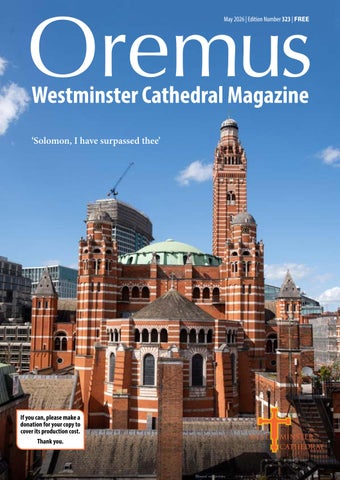
‘Solomon, I have surpassed thee’
If you can, please make a donation for your copy to cover its production cost. Thank you.
Although we earn income from the advertising which we carry, Oremus relies on donations from readers to cover its production costs.
The Companions of Oremus was established to recognise those who give generously to support us. Open exclusively to individuals, Companions’ names are published in the magazine each month (see page 11). All members are invited to one or more social events during the year and Mass is offered for their intentions from time to time.
If you would like to support us by joining the Companions, please write to Oremus, Cathedral Clergy House, 42 Francis Street, London SW1P 1QW or email oremuscomps@rcdow.org.uk with your contact details, including postcode. Members are asked to give a minimum of £100 annually. Please mention how you would like your name to appear in our membership list and if you are eligible to Gift Aid your donation. Postal subscriptions to Oremus may be purchased by completing and sending to the office the coupon printed in the magazine. Subscriptions to receive Oremus either by email (free) or as hard copy by post (p & p payable) can also be entered by visiting https://westminstercathedral.org.uk/the-cathedral-community/about-oremus/ and completing the form there.
Thank you for your support.
Cathedral Clergy House
42 Francis Street
London SW1P 1QW
T 020 7798 9055

E oremus@westminstercathedral.org.uk
W www.westminstercathedral.org.uk
Oremus, the magazine of Westminster Cathedral, reflects the life of the Cathedral and the lives of those who make it a place of faith in central London. If you think that you would like to contribute an article or an item of news, please contact the Editor.
Patron
The Archbishop of Westminster
Chairman
Fr Sławomir Witon´
Editor
Lorcán Keller
Oremus Team
Tony Banks – Distribution
Zoë Goodway – Finance
Anne Marie Micallef – Marketing
Paul Moynihan – Proofreading Manel Silva – Subscriptions
Design and Art Direction
Julian Game
Registered Charity Number 233699 ISSN 1366-7203
Opinions expressed by contributors do not necessarily represent the views of the Editor or the Oremus Team. Neither are they the official views of Westminster Cathedral. The Editor reserves the right to edit all contributions. Publication of advertisements does not imply any form of recommendation or endorsement. Unless otherwise stated, photographs are published under a creative commons or similar licence. Every effort is made to credit all images. No part of this publication may be reproduced without permission.

As
Homily: The Chrism Mass by Archbishop Richard Moth
My Experience Volunteering at Westminster Cathedral by Amanda C. Dickie
Easter Message by Archbishop Richard Moth
Cathedral History in Pictures: 2001 Episcopal Ordinations
Peace in the Holy Land by John Woodhouse
Archbishop’s Visit to Homeless Restaurant by Linda McHugh
Our Lady of Walsingham in Arundel Castle by Antonia Moffat 20 & 21
Jubilee of St Francis by Donato Tallo
Ashley Avery-Bennett
To quote the Anglo-Catholic Vicar of St Barnabas, Pimlico: ‘The happy birds Te Deum sing, ‘tis Mary’s month of May’!
One of my few early memories of primary school, in what would be considered Key Stage 1 in this country, was the annual May crowning with hundreds of girls in white Communion dresses and veils.
Prior to joining the boys’ school across the road, the junior boys were housed in a separate corridor of the girls’ school and we would be included in the procession on the lawn, if only to watch from the back. Unfortunately, these processions seem to have fallen by the wayside, and with them, the excuse to sing ‘Bring flowers of the rarest’!
As an Irish Catholic, much of what I was raised singing (when we sang at all) were sickly-sweet, overly-sentimental Victorian hymns, along with some post-Conciliar slop and a couple of Irish language options. Although I would now consider my taste to be more theologically robust, I must confess I have a very sweet tooth when it comes to hymns. In fact, there is nothing I love more!
Many Marian hymns are the obvious contenders, such as Faber’s ‘O Mother I could weep for mirth’, and ‘May is the month of Mary’. In my home parish, Our Lady of Good Counsel, we would also sing a sweet little tune to Our Lady, particularly on Saturdays – ‘O Virgin Mother, Lady of Good Counsel, sweetest picture artist ever drew…’ However, there are other contenders, such as our own Wiseman’s ‘Full in the panting heart of Rome’ and ‘Sweet heart of Jesus’.
These days, many good Protestant hymns seem to have replaced this style of music, and there seems to be a greater emphasis on chant and substance. There is also a growing stream of adults opting into the Catholic Church, without the liturgical or cultural baggage carried by ‘cradle’ Catholics. This can only be a good thing. However, this May, spare a thought for those of us with liturgical diabetes.
Looking ahead, we are squarely in Sacramental season with the parish First Holy Communions on Saturday 2 May, followed by the boys of the Choir School on Saturday 16 May, and parish youth Confirmations on Pentecost Sunday, 24 May. On Tuesday 5 May, Archbishop Richard Moth will celebrate the Chapter Mass with the investiture of his Master of Ceremonies, Paul Moynihan KSG, as a Knight Commander of the Pontifical Equestrian Order of St Gregory (KCSG). Sir Edward Leigh MP, Father of the House of Commons, will also be invested as a Knight of St Gregory, and we wish them both hearty congratulations.
On Saturday 9 May, Archbishop Richard Moth and Bishop Jim Curry will celebrate the annual Service of Hope and Healing, for the survivors of abuse. Then, on Tuesday 12 May, the St Francis Leprosy Guild will gift a hand-written letter by St Damien of Molokai to the Director of the Damiaanmuseum in Tremelo, Belgium, along with other dignitaries at a service here in the Cathedral. Finally, the annual Vespers sung by the joint choirs of Westminster Abbey and Cathedral will take place at 5pm on Friday 22 May, followed by a 6pm said Mass, and on Saturday 23 May, Archbishop Richard Moth will celebrate the annual Mass for Matrimony for couples celebrating significant anniversaries.
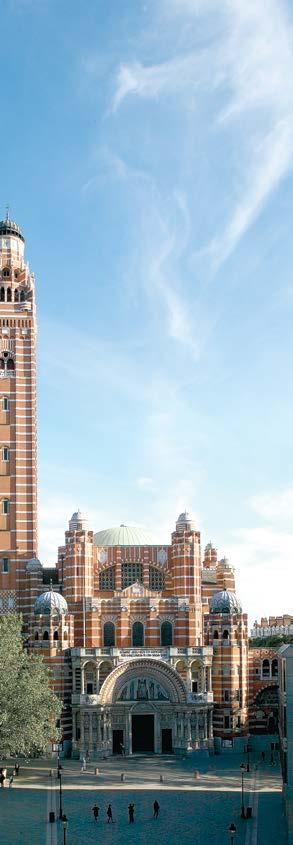
Westminster Cathedral
Cathedral Clergy House
42 Francis Street London SW1P 1QW
Telephone 020 7798 9055
Email chreception@rcdow.org.uk www.westminstercathedral.org.uk
Cathedral Chaplains
Fr Sławomir Witoń, Dean
Fr Patrick van der Vorst, Precentor
Fr Michael Guthrie
Fr Vincent Mbu’i SVD
Fr Paul Zhao SVD
Fr Hugh MacKenzie
Rev Paul Christian (Cathedral Deacon)
Fr Clement Abobo, Fr Javier Ruiz-Ortiz (priests in residence)
Also in residence
Franciscan Sisters of Our Lady of Victories: Sr Jesuina, Sr Angelina and Sr Mariana
Music Department
Simon Johnson, Master of Music
Peter Stevens Obl. OSB, Assistant Master of Music
Alexander Robson, Organ Scholar
Cathedral Manager
Peter McNulty
Parish Safeguarding Representative
Trevor Koschalka westcathsg2@safeguardrcdow.org.uk
Cathedral Finance Manager
George Kulasingham
Cathedral Fundraising Manager
Laura Dudhee
Chapel of Ease
Sacred Heart Church
Horseferry Road SW1P 2EF
Archbishop Richard Moth
Dear brothers and sisters,
In today’s first reading, the Prophet Isaiah recognises himself as being the prophet chosen by the Lord to bring new life to the people. ‘The Lord has anointed me’, he says. When we come to the Gospel, Jesus himself, the Word made Flesh, the only Son of the Father, takes up the mantle of Isaiah. He is the One in whom all the prophecies of old are fulfilled. The freedom and liberty proclaimed by the prophet is a shadow of the good news, liberty, sight, freedom and favour brought by the Son of God himself. ‘This text is being fulfilled today, even as you listen’. The whole of history looks to that moment when the Word made Flesh dwells amongst us, dies and rises for us.
It is the vocation of the whole Church to proclaim this message of the Lord’s life, death and resurrection. We are his instruments and our whole lives are caught up in this wonderful mystery of the salvation won for us by Jesus Christ. We are called to proclaim this Good News – the only news that is truly good.
Today’s liturgy of the Mass of Chrism lays before us the very heart of our Catholic faith, the very core of our proclamation, made in the context of the Sacraments given us by Jesus Christ. We gather to celebrate the Eucharist. The oils that are used in Baptism, Confirmation and Ordination and in the Sacrament of the Sick are blessed and consecrated. The prayers of blessing of the Oil of Catechumens and the Oil of the Sick, and the prayer of consecration of the Chrism, all speak of the newness of life proclaimed by Jesus in the synagogue at Nazareth. Listen out for these words, they speak of freedom from pain and illness; they speak of the joy of new birth in the family of the Church, the freedom that comes from the Gospel; they speak of transformation and of salvation. These are not simply pious words. They are realities, for the Gospel is real and the challenge of living by that Gospel is real.
We pray today for all those through the Church, and especially within the family of our own Diocese, who will be anointed with these oils during the coming year. We pray for those who will be anointed at Baptism and in the Sacrament of Confirmation. We pray for those who will receive the Sacrament of the Sick, in hospital or in the comfort of their own homes.
Today’s liturgy also calls for priests to renew their commitment to priestly service. I ask all present here to pray especially for the priests of the Diocese, not just today but every day. It is good to see here with us today our students from Allen Hall. Please remember in prayer our students and those who accompany them in formation at Allen Hall and at St Alban’s College, Valladolid and at the Venerable English College, Rome. As we rejoice that three men have been accepted to begin their formation for the Priesthood this year, I ask you all to pray that more men will respond to the call to priesthood, answering with generous hearts, open to a life of self-less service. Pray for our Vocations Director and the Promoters who work with him. May our parishes, schools and homes be places where the vocation to priesthood is fostered and encouraged.
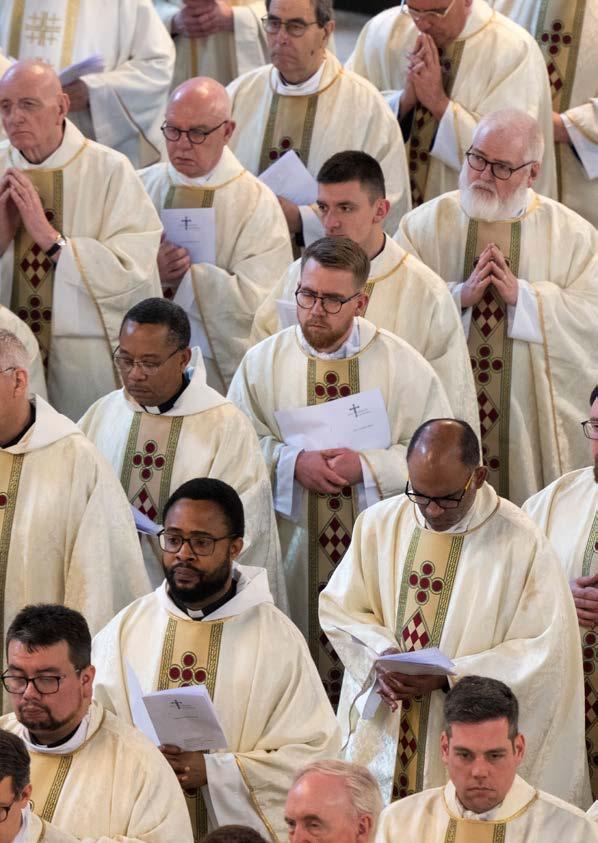
Priests are anointed with the Oil of Chrism at Ordination. They are named ‘priests of the Lord’ and ‘ministers of our God’ in the very particular calling that comes with ordained priesthood. It is not without its consolations – the support of those we serve, a wonderful closeness to Christ’s presence in the Eucharist – but this call also brings with it a very great responsibility. It is a call to service above all else and it is to this service that we dedicate ourselves afresh today.
The life of the priest is, for those whom the Lord calls to this service, truly wonderful. The priest, the alter Christus, is not in a place of worldly power or status. The priest is, wonderfully yet simply, the Lord’s instrument.
We shall hear these words about priesthood in the preface of today’s Mass:
‘ They are to lead your holy people in charity, to nourish them with the word and strengthen them with the Sacraments. As they give up their lives for you and for the salvation of their brothers and sisters, they strive to be conformed to the image of Christ himself and offer you a constant witness of faith and love.’
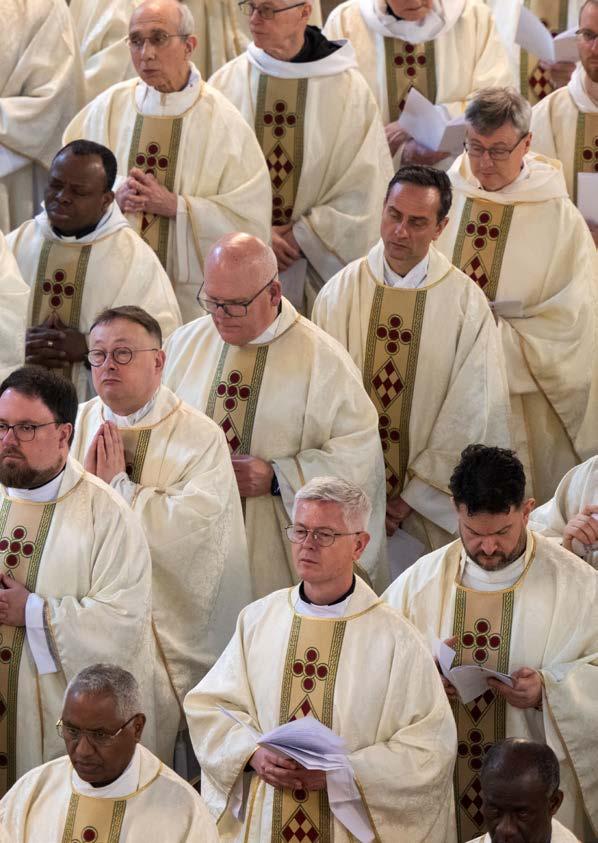
This is a beautiful expression of the life of the priest, centred as it is on the Eucharist, ‘the renewal, in his name, of the sacrifice of redemption.’ The priest is called to nothing less than the ministry of Christ that we see in the synagogue in Nazareth.
May our prayer today be that all the priests of our Diocese continue to find strength in faith, confidence in hope and renewal in the love of Christ who calls us, that our ministry will continue to bear fruit much. May all whom our priests serve experience the Good News, the peace, freedom and liberty and the favour of the Lord that Christ came to bring –the new life that is the will of the Father for all humanity. ©
Journalist Katie Jaffa was a well-loved figure around Westminster Cathedral for many years, and it was she who inspired me to become a volunteer. In 2007, when Katie reached 92, she no longer felt able to continue writing for the Westminster Record, the former diocesan newspaper, and other Catholic publications, and so she asked me to finish an article for her. I then made various subsequent contributions to the Westminster Record, for Bishop John Arnold, Editor-in-Chief, Eddie Tulasiewicz and Fiona Paley, Communications Officers. Eventually, I began writing regular features,
including Pope Benedict XVI’s visit to St Peter’s Residence, Vauxhall in 2010, the installation of new mosaics, and the centenary exhibition: ‘Treasures of the Cathedral’. After reviewing an exhibition by artist Stephen B Whatley at Spanish Place for the Westminster Record in 2013, I suggested to Administrator, Canon Christopher Tuckwell, that the Cathedral should also exhibit his vibrant religious paintings, and helped organise it in the side chapels. More recently I was able to assist Lucien de Guise with greeting visitors to his historic exhibition of crosses in the upper gallery.
Katie Jaffa was a weekday reader at the Cathedral for nearly 30 years. When frailty prevented her from continuing, she suggested I apply, which I did in 2008. I had been a member of the Catholic Stage Guild, now renamed the Catholic Association of Performing Arts (CaAPA), when Michael Williams (Dame Judy Dench’s husband) was Vice President, having originally trained for the stage and acted when I was young. I was even commended by Sir Alec Guinness after reading at the Catholic Actors’ Church – Corpus Christi, Maiden Lane. I always pray before reading, asking for
the guidance needed to proclaim God’s Word. Sometimes people approach me afterwards to discuss a reading or ask about something else in the Cathedral. Since 2021, I also lead the Angelus on Wednesdays.
My theological studies in the mid-80s at the Catholic Plater College and Harris Manchester College, Oxford, were a useful background for working in the Catholic media and answering queries from Cathedral visitors. I began writing for the Catholic Herald as a mature student, when two former Editors lived in Oxford. I also worked on Radio Oxford’s religious programme, Spirit Level. For over 40 years I have contributed to many Catholic publications, with a particular focus on Carmelite spirituality and art.
At the turn of the century, I became my mother’s carer following a diagnosis which included vascular dementia and two forms of cancer. I had been a volunteer with Age Concern, Oxford, receiving training to support people with dementia and Alzheimer’s disease. It was a valuable resource in caring for both my mother, and five others over 18 years. The spiritual care of those with dementia became my top priority and, in 2008, two years after my mother’s death, I wrote on the issue in Pastoral Review. This led to my involvement in a project in the Archdiocese of Southwark, offering training and resources. Various other dioceses also launched similar courses on a short-term basis. I have always felt that this should be an ongoing pastoral resource in dioceses across the country.
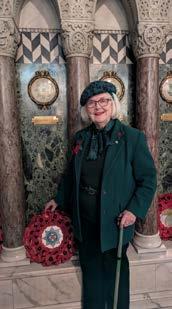
I later became involved in the care of two Cathedral volunteers, Katie Jaffa and Agnes Maguire, both lay Carmelites. Agnes had told me that she feared being alone at the end of her life. I made her a promise that if no one else came, I would and was able to keep my word to her. Nowadays people have birthing companions, to assist with bringing new life into the world. I have long felt the importance of having spiritual companions to accompany those nearing the end of their lives, who might not have close family or friends around, or
those who share their spiritual beliefs. It was a great privilege to accompany these two great souls in their last days. Agnes volunteered on the Information Desk, where I am now occasionally stationed. Readers and members of the Guild of St John Southworth are ‘ambassadors for Christ’ and for the Cathedral’s mission (cf.2 Cor:5.20). It is a joy to welcome visitors from other countries and faiths to our Mother Church; a beautiful sacred space for all.
My weekly train journey to Victoria Station, for the livestreamed lunchtime Mass, leads me past photographs of the arrival of the Unknown Soldier in 1920, on platform 8. Since discovering my great-uncle’s death at Ypres in 1914, and his memorial in St Patrick’s Chapel, (see Oremus, November 2025), I now ponder whether it is his body in the coffin.
As a lay Carmelite, I find the Cathedral to be a little Carmel. This is particularly true of the Lady Chapel, with the mosaic of St Simon Stock receiving the Carmelite scapular from Our Lady, and the depiction of the shepherds adoring the infant Christ, wearing striped cloaks similar to those of the original Carmelite hermits in the Holy Land. There is also the mural of the Prophet Elijah, by Boris Anrep in the Blessed Sacrament Chapel, being sustained by the angel with food for the journey. Elijah and Mary are key models in Carmelite spirituality.
It is a wonderful privilege to be part of the Cathedral family, greeting visitors with a welcoming smile and listening ear, and reaching out to the sick and housebound at the livestreamed Mass.
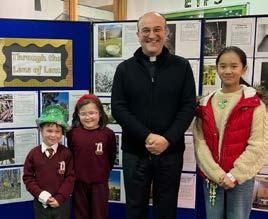
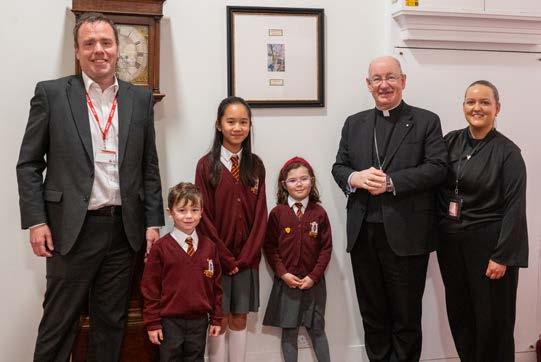
Before the schools broke up for Easter, Fr Patrick van der Vorst was invited to Holy Family Primary School in Ealing to judge ‘Through the Lens of Lent’ photography competition. The school frequently make use of Fr Patrick’s Christian Art reflections and were eager to hear his appraisals.
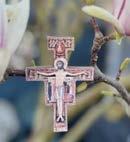
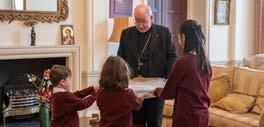
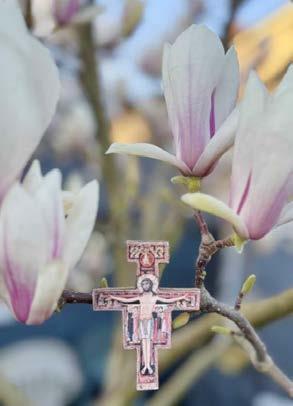
The winners were Charlotte in Year 6 (first place), George in Year 1 (second place), and Astrid in Year 3 (third place). The three victors were then invited to Archbishop’s House, where they presented Archbishop Richard Moth with a framed version of Charlotte’s photograph ‘New Beginnings’ – a San Damiano cross perched on a Magnolia blossom – which now hangs in the main corridor.
We are very grateful for the support of the following:
Leticia Dominguez Abada
Lally Ambatali
Leonila V Bennabe
Keith Best
Dr Stuart Blackie
Anne Veronica Bond
Lolita Botanes
Richard Bremer
Hajnalka Burai
Lorenzo Cabrelli
Mrs Erlinda Chin
Francis George Clark
R & L Collyer-Hamlin
Daniel Crowley
Benedicta Jamogha Dako
Angelita Caronan Duran
Cora Emflorgo
Angelita Emperador
Ms Georgina Enang
Fr Joseph Farrell K.H.S.
Ruby & Joseph Farrell in memoriam
Revd James Francis Friedenthal
Fred Gardiner
William Gardner-Hunter
Juanita Grecalda
Connie Gibbes
Zoe & Nick Goodway
Rosalinda Grimaldo
Agnes Haein Kim
On Easter Day, Archbishop Richard Moth addressed the faithful of the Diocese of Westminster, inviting them to proclaim anew the peace of the Risen Christ in a world marked by conflict and division.
Dear brothers and sisters,
As we celebrate this greatest of feasts, may our words to the world be those of the Risen Jesus: ‘Peace be with you.’
Yet, in the present times, peace is a distant hope for so many. Ukraine, Iran, Israel, Lebanon are in our minds, and we must not forget the other conflicts that continue across the world and the impact of such situations on the poorest and most vulnerable.
Closer to home, we see examples of tensions in so many of our communities, together with a continuing denial of the gift of life. In this context, I would like to offer a word of thanks and encouragement to those peers who, in recent weeks, have shown great courage in opposing legislation that threatens the right to life of both the unborn and those approaching the end of their lives. Let us come together in supporting the dignity of every person, all of us created by God, at every stage of life.
Today we rejoice in the Resurrection of the Lord, a joy shared by the many who have been baptised and received into the Church this Easter, both in our own Diocese and across the world. We are proud to proclaim with them the Life that Jesus has won for us. This is a life that is not only for the world to come, but also for the here and now, lived in the love of God who calls us all into being. So, this Easter, may we live out with fresh confidence and faith, as societies and as individuals, those first words of Jesus in the Upper Room, after his Rising from the dead: ‘Peace be with you.’
Mrs Valerie Hamblen in memoriam
Amanda Hill
Jithro and Ira Nadine Hangad
Bernadette Hau
Mervyn and Barbara Hogg
Mrs Cliona Howell
Alice M Jones & Jacob F Jones
Poppy K
Rosanne Kay
Mary Thérèse Kelly
John Langan
Raymund Livesey
Alan Lloyd in memoriam
Clare and John Lusby
Tony McGee
Linda McHugh
Christiana Thérèse Macarthy-Woods
Ms Ludivina Mangmang
James Maple
Paul Marsden
Mary Maxwell
Dr Denis Moloney
Dr George Morris
Abundia Toledo Munar
Euphrasie Mundele Kilolo
Chris Stewart Munro
Mrs Brigid Murphy
Kate Nealon
Cordelia Onodu
Nigel Parker
Cris Ragonton
Alan Rainer
Ann-Marie Rivers
Clementina Rokosu
Precy Salvador
John Scanlan
Veronica Scrope
Sonja Soper in memoriam
Tessa and Ben Strickland
Yollie Sumayod
Julia Sutherland
Eileen Terry
Robin Michael Tinsley
Lucila Torrefiel
Dr Timothy I Young in memoriam
Peter and Teresa Zurenkas and of our anonymous Companions
If you would like to become a Companion of Oremus, see page 2
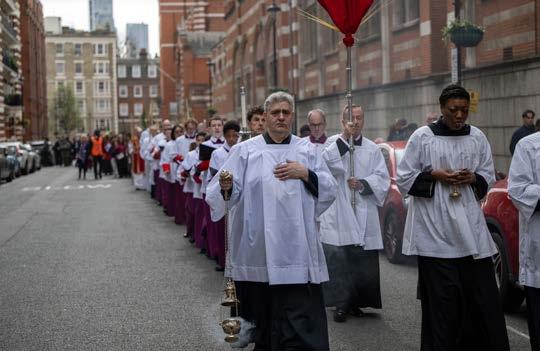
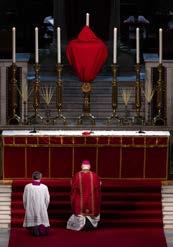
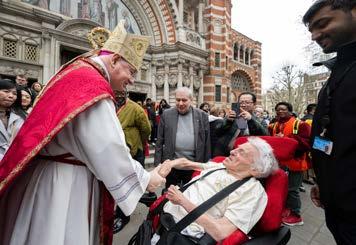
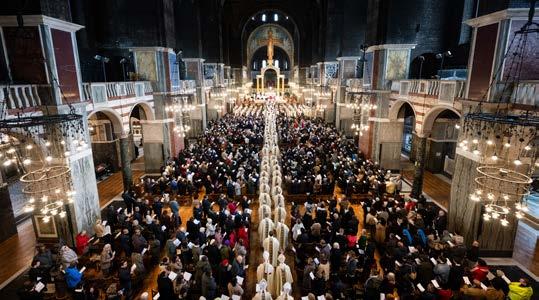
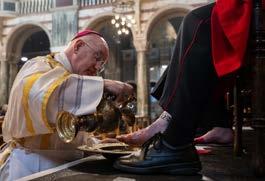
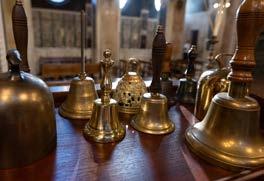
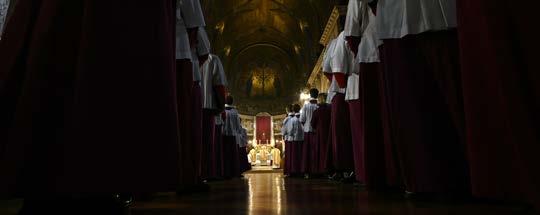
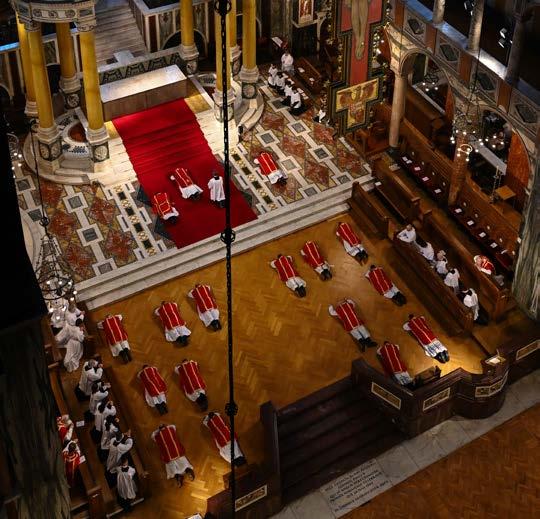
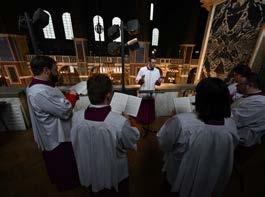
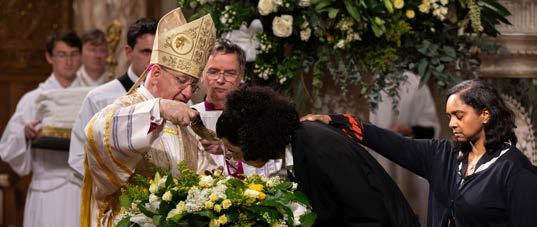
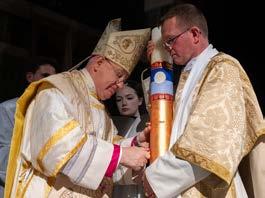
Having travelled the Diocese during Lent, Archbishop Richard Moth celebrated his first Triduum in Westminster Cathedral, with all that the liturgical celebrations entail. Numbers also seemed to be up on last year, with an overflow of approximately 200 people on the Piazza for the 3pm Commemoration of the Lord’s Passion on Good Friday. Numbers online were also up with an average of 10,000 views for the Triduum, Palm Sunday, the Chrism Mass and Easter Day. Photographs courtesy of Marcin Mazur: © Mazur/CBCEW.org.uk
Maunday Thursday
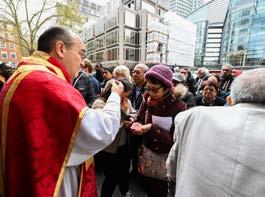
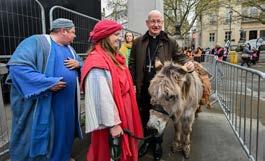
On Good Friday, Archbishop Richard joined the crowds on Trafalgar Square for the annual (and final) Wintershall Passion Play. Graham, pictured in blue robes, also happens to be the person who set up and monitors our livestream equipment.
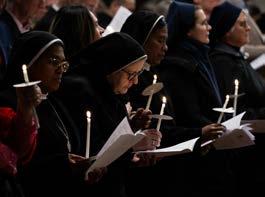
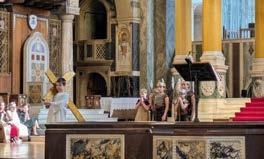
In the lead up to Holy Week, the boys and girls of St Vincent de Paul Primary School ably performed their annual dramatization of Christ’s passion, death, and resurrection for parents, fellow pupils, staff and Cathedral visitors.
Andrew Hollingsworth
We are deeply grateful to everyone who supported our recent Big Give campaign, which raised funds towards the renovation of the Cathedral’s chandeliers.
Thanks to your generosity, we secured £20,000 in matched funding. Donations totalling £21,495 during the campaign fully released this amount, and with a further £315 received in cash, we raised £41,800 before Gift Aid. These funds place us in a strong position to begin the first phase of this important work.
The renovation of the chandeliers will be a significant undertaking, and we will return to this project as our Christmas Big Give Campaign. In the meantime, if you would like to support this work ahead of the Christmas appeal, please contact us at friends@rcdow.org.uk.
Golden Jubilee in 2027
Next year marks the 50th anniversary of the Friends of Westminster Cathedral, founded by the late Cardinal Basil Hume and Miles Fitzalan-Howard, 17th Duke of Norfolk.
The Friends were originally established to save Westminster Cathedral Choir School and to protect the Cathedral’s musical tradition. Over the past 50 years, we have also supported many major projects that have enhanced and preserved the life of the Cathedral.
To mark this golden jubilee, we will be producing an anniversary publication. We would be delighted to hear from anyone with memories to share – particularly from the earlier years of the Friends. Please contact friends@rcdow.org.uk if you would like to contribute.
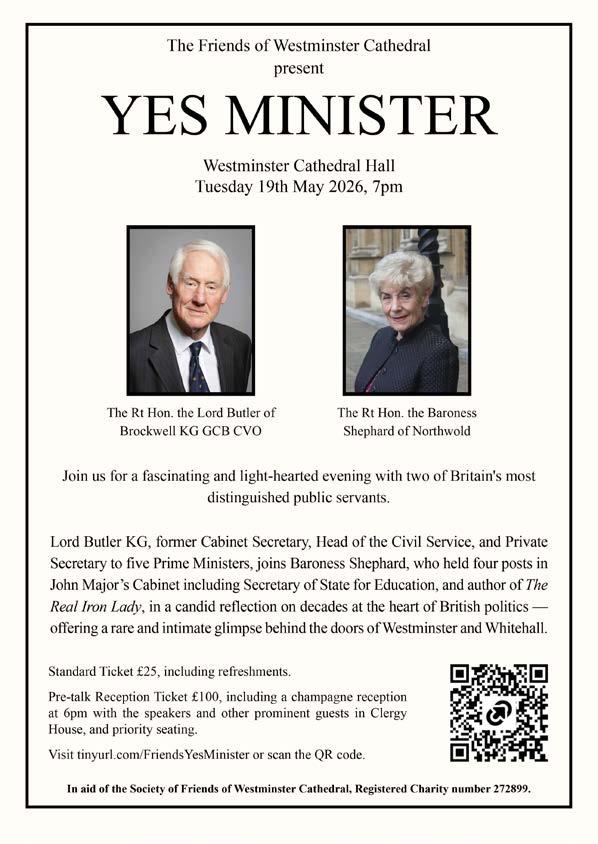
Yes Minister
Westminster Cathedral Hall, Tuesday 19 May at 7pm.
We are delighted to welcome Baroness Gillian Shephard of Northwold and Baron Robin Butler of Brockwell for an evening of conversation and reflection.


Baroness Shephard served in John Major’s Cabinet as Secretary of State for Employment, Minister of Agriculture, Fisheries and Food, and Secretary of State for Education and Employment. Under William Hague, she was Shadow Leader of the House of Commons and Shadow Secretary of State for the Environment, Transport and the Regions. Following Margaret Thatcher’s death, Baroness Shephard published a memoir, The Real Iron Lady, reflecting on her time working with the former Prime Minister. She served as Deputy Chair of the Social Mobility and Child Poverty Commission until 2017 and is currently Chair of the Association of Conservative Peers.

Lord Butler enjoyed a distinguished career in the Civil Service from 1961 to 1998, serving as Private Secretary to five Prime Ministers. He was Secretary of the Cabinet and Head of the Home Civil Service from 1988 to 1998 – a significantly longer tenure than any of his successors or recent predecessors.
Together, Baroness Shephard and Lord Butler will reflect on decades at the heart of British politics, offering a rare insight behind the doors of Whitehall and Westminster.
The talk will be preceded by a champagne reception at 6pm in Clergy House, with the speakers and other distinguished guests. Tickets, £25 (talk only) and £100 (including reception) are available on the Cathedral website under ‘News & Events’. Alternatively, email friends@rcdow.org.uk.
Our popular quiz evenings are always great fun and offer a wonderful opportunity to meet fellow parishioners.
Attendance typically averages 40-50 people (7-8 teams), but Cathedral Hall can comfortably accommodate many more. If you can gather a team, perhaps from a parish group, your workplace, or by inviting a neighbouring parish, we would be delighted to welcome you.
Thursday 4 June 2026, 6.30pm
Thursday 9 July 2026, 6.30pm
Tickets, £20 including a fish and chip supper are available on the Cathedral website under ‘News & Events’. Alternatively, email friends@rcdow.org.uk.
On Saturday 20 June we will visit Farnborough, including the Farnborough Air Sciences Trust and St Michael’s Abbey. Travel will be by minibus, which we expect to be fully booked, though the destination is also easily accessible by train or car. We plan to depart at 10am from outside 42 Francis Street. Full details, including booking information, will be published in the June issue of Oremus.
Tuesday 23 June 2026 at 6.30pm in Westminster Cathedral Hall. All members of the Friends are warmly invited to attend our Annual General Meeting. The formal business will be followed by refreshments.
On Wednesday 1 July 2026 at 9pm, the Friends are invited to an immersive experience of light, sound, and narration within Westminster Cathedral. Admission is free for Friends members, but tickets must be reserved in advance.
To join the Friends of Westminster Cathedral, please visit tinyurl.com/ CathedralFriendsMembership.
John Woodhouse
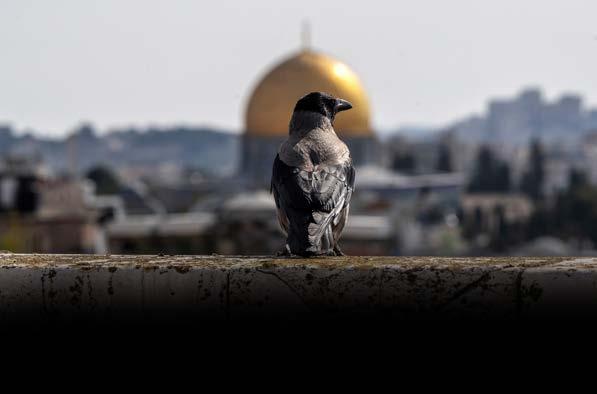
On Wednesday 20 May, we will be joined by Daniel Mann, who will give a talk from 1.30pm to 3pm in the Hinsley room, Morpeth Terrace. Refreshments will be provided and all are most welcome to attend.
Daniel has recently returned from 3 months in the West Bank as a human rights monitor with an international programme led by the World Council of Churches. The programme responds to a call from church leaders in Jerusalem to international civil society, to provide protection to vulnerable communities and support peace activists in Israel and Palestine.
While living in the region, participants monitor human rights violations, provide a protective presence and support Palestinian and Israeli peace groups. On their return home, they share their eyewitness stories and use their experience to raise awareness.
The session will provide the opportunity to hear from Daniel about daily life in a conflict zone, learn about developments since the war in Gaza, and to discuss what can be done to promote a just peace.
Linda McHugh
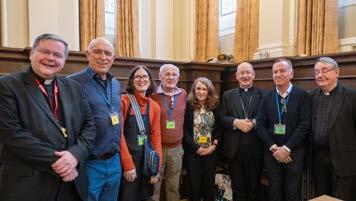
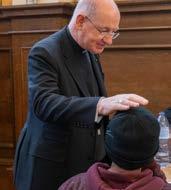
On Wednesday 15 April, Archbishop Richard Moth visited the Central London Catholic Churches (CLCC) homeless restaurant based at the London Jesuit Centre, adjacent to Farm Street Church.
CLCC came into being in April 2020 as an emergency provision aimed at helping the homeless of Central London at a time when all homeless day centres and retail outlets were closed due to the coronavirus pandemic. We operated out of a van parked in the middle of an eerily empty Trafalgar Square dispensing snacks, water and hot drinks for up to 200 people a day.
Our name reflects the fact that CLCC was a consortium of volunteer groups from different Catholic churches in Central London and one of the largest groups of volunteers came from Westminster Cathedral. I joined the group at the request of the then Cathedral Administrator and, to this day, a good number of Cathedral parishioners are actively involved in the running of the service.
In October 2020, at the instigation of Fr Dominic Robinson SJ, Parish Priest of Farm Street, CLCC moved to its current location and transformed itself into a restaurant-style lunch service on Wednesdays and Saturdays, from 11.30am until 2pm. Here guests can stay for several hours and enjoy a first-class lunch, fruit,
biscuits and limitless amounts of tea, coffee and soft drinks. On average, we serve between 65 and 80 guests per sitting, with Saturdays being busier than Wednesdays.
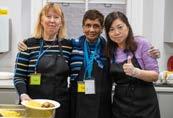
In addition to enjoying food and drinks, guests can be referred to medical facilities and advisory services dealing with legal, employment and accommodation matters. There is a free haircutting service, a creative writing group, occasional job fairs and, on Wednesdays, a Lectio Divina scripture study group run by Fr Hugh Mackenzie.
CLCC is very much not a soup kitchen, which implies handouts and queuing for food on the street. Those who come to
us are seated at tables and waited on by volunteers, the aim being to restore dignity to homeless people. We always refer to our customers as ‘guests’, rather than clients, because we believe that this helps foster their sense of self-worth. We were very proud when, in November 2024, our work was recognised by a Caritas Westminster Love in Action award for being the best team in the Parish Social Action category.
Another way in which CLCC is very different from other homeless food services is in where the food comes from. It is not cooked on the premises but is supplied by a number of leading hotels, including Claridge’s and The Connaught, and private members’ clubs. On the day of Archbishop Richard’s visit, the guests were enjoying a lunch provided by Annabel’s, the worldrenowned London club.
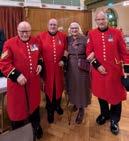
The Archbishop spent time with Fr Dominic and CLCC’s shift leaders to find out more about the service and its plans for the future. He also made a particular point of speaking individually to all of the guests. Afterwards, he wrote to Fr Dominic to say ‘Please do pass on my thanks not only for the visit yesterday but for the wonderful work that is being carried out week by week.’
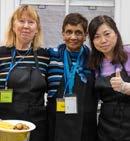
If you would like to support our work with homeless people, please consider making a donation or volunteering your time. Currently, CLCC has over 75 active volunteers, ranging in age from 20 to their early 80s. The only requirements are that you be fairly fit, have a reasonable command of spoken English and can work a minimum of one or two shifts per month. To find out more, contact Linda McHugh at lindaemchugh@gmail.com
Paul Tobin
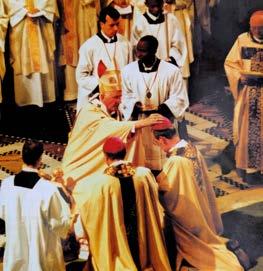
Some three months after having received the red hat from Pope St John Paul II, Cardinal Cormac Murphy O’Connor (Archbishop of Westminster 2000-09) ordained two Auxiliary Bishops for the Diocese. These new auxiliaries were appointed to succeed two Episcopal Vicars, Mgrs Keith Barltrop and Harry Turner, who had responsibility for the East and Central London areas, respectively. Prior to their appointments, Mgr Stack had been Administrator of Westminster Cathedral since 1993 and Mgr Roche was the General Secretary of the Catholic Bishops’ Conference of England and Wales.
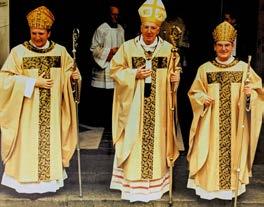
The co-Consecrators, Bishops David Konstant and Victor Guazzelli, had both been Auxiliary Bishops in the Diocese of Westminster. Bishop David Konstant was, at the time, Bishop of Leeds and Bishop Guazzelli remained in Westminster with responsibility for the East area of the Diocese. A keen golfer, like Cardinal Murphy-O’Connor, Guazzelli was proud to be a country member of the Royal Blackheath Golf Club, as being Titular Bishop of Lindisfarne qualified him for this privilege.
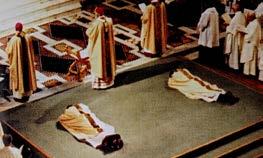
The Ordination ceremony was used as an experiment, to see if the granite high altar could be brought back into permanent use. There had been an altar placed on a platform in the lower portion of the sanctuary, which was installed at the time of John Paul II’s visit in 1982. In the photograph, the two men lie prostrate on the platform, with the new altar removed, during the Litany of Saints. It wasn’t until 2009, prior to the installation of Archbishop (later Cardinal) Vincent Nichols that the high altar was brought back into use again, this time permanently. Prior to the state visit of Pope Benedict XVI in 2010, the gradine behind the altar was moved back to allow ample room for the celebrant to genuflect at the Elevation.
The mitres worn by the new bishops were gifts from Rome. They were made in Treviso in a ‘low’ French style, with semiprecious stones, and brought over by Bishop Piero Marini, the Papal Master of Ceremonies, having returned from Greece and Syria with John Paul II the day before. In his homily, Cardinal
Murphy-O’Connor warned the congregation ‘[the mitres] had not been seen in England for many a long day’. In fact they were copies of a sixth century design.
As the Te Deum was sung by the Choir and congregation, the newly ordained went through the Cathedral giving their blessing in what was described as a ‘liturgical gallop’ in the subsequent edition of Oremus.
Both men were destined for bigger things. George Stack was installed as Archbishop of Cardiff in 2011, now happily retired. Arthur Roche was appointed as Coadjutor Bishop of Leeds in 2002, succeeding Bishop Konstant in 2004. In 2012 he was appointed Secretary of the Congregation for Divine Worship, and elevated to Archbishop. Nine years later he was appointed Prefect for the Dicastery for Divine Worship and created Cardinal by Pope Francis in 2022.
Antonia Moffat
The article below was first published by EWTN Great Britain on 19 March 2026.
As Pope Leo XIII prophesied, when he signed the rescript for the restoration of Our Lady of Walsingham’s Shrine in 1897, ‘When England goes back to Walsingham, Our Lady will come back to England.’
A new statue of Our Lady of Walsingham was recently commissioned by Georgina, Duchess of Norfolk, as an Act of Reparation, and was solemnly enthroned and blessed on 19 March 2026, the feast of St Joseph, in Arundel Castle. Holy Mass was celebrated by Fr Stephen Dingley, Dean of Arundel Cathedral, in reparation and thanksgiving in the adjacent Fitzalan Chapel, which serves as the private mausoleum of the Dukes of Norfolk. Following Mass, Canon Alexander Sherbrooke, Parish Priest of St Patrick’s, Soho Square, blessed and enthroned the statue, and Fr Rod Jones OSB, of Worth Abbey, read aloud the Wracks of Walsingham, by St Philip Howard. The poem can be found on page 22 of this magazine.
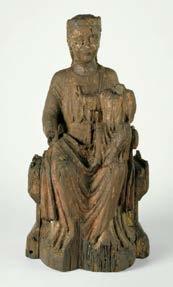
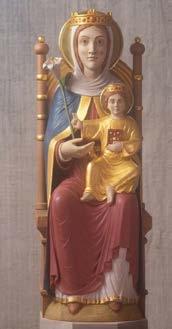
The new statue was sculpted by the renowned Catholic artist Martin Earle, who specialises in artwork in service of the sacred liturgy. Martin carefully researched the materials, colour, and the symbolism included in the statue, so that it could reflect what the original may have looked like, as closely as possible. Carved in English sycamore and painted in encaustic (wax) paints, the statue reflects a Romanesque inspired style which was at its height between 1075 and 1125. He was particularly inspired by the ‘Langham Madonna’, a 13th century English oak statue, now quite battered, found in the Victoria and Albert Museum. This statue, in fact, may indeed be the original statue of Our Lady of Walsingham, somehow salvaged and hidden from destructive reformers.
Madonna
The original statue was enshrined in the Holy House in Walsingham, where Our Lady appeared in 1061 to the Lady of the Manor, Richeldis de Faverches, during the reign of King Edward the Confessor. Richeldis had a vision in which the Mother of God took her in spirit to Nazareth and showed her the Holy House of the Annunciation. Our Lady then requested that a replica of this Holy House be built in Walsingham. The spirituality of Walsingham, England’s Nazareth, therefore invites us to contemplate the Annunciation, when the Word became flesh in Jesus, born of the Virgin Mary.
In the newly finished piece, Martin Earle has presented us with an exquisitely endearing image of Our Lady of Walsingham, which radiates noble simplicity, compassion, beauty and contemplative presence. He has
captured the sense of ‘ever ancient, ever new’. We experience Our Lady’s pity and sorrow for us poor sinners, her strength, and total obedience to God’s will, amidst the joy of caressing and presenting her Divine Son. The Child Jesus sits in majesty and communion with his Mother. A sense of the future silent, interior suffering and martyrdom of the Blessed Virgin Mary pervades, indicative of the fertile soil, which enabled Mary to stand with Jesus at Calvary, the moment when Jesus bestowed upon her, for all generations, her Divine and universal Motherhood.
Our Lady of Walsingham is the Seat of Wisdom, seated upon a throne between two pillars, representing the Church as the Gate of Heaven. The seven rings on these pillars represent the seven Sacraments and the seven Gifts of the Holy Spirit, and the arched back of the throne represents the rainbow; the sign of the Covenant between God and his people. On her head she wears a Saxon crown, signifying her Queenship, for Mary is Queen of Heaven and, as Our Lady of Walsingham, the spiritual Queen of England. Beneath her feet, Our Lady crushes Satan and all his empty works, as represented by a toadstone, the Saxon symbol of evil. An ancient tradition states that a lily sprang from the repentant tears of Eve as she went forth from paradise. Here Our Lady of Walsingham is shown as the New Eve, the Mother of life, who bore Jesus, Saviour of the world, who redeemed us. The lily symbolises virginity, purity, sovereignty, and of resplendent beauty. It testifies that Our Lady remained the Blessed Virgin before, during, and after the birth of the Saviour Jesus Christ.
Situated in impressive and luxurious grounds, overlooking the River Arun in West Sussex, there are approximately
1,000 years of history connected with this great castle, which was built at the end of the 11th century by Roger de Montgomery, Earl of Arundel. Arundel Castle is also the seat of the Duke of Norfolk. Prior to the Reformation the town of Arundel possessed no fewer than three important shrines to Our Lady. The shrine of Our Lady of Arundel was located in a chapel near the site of the present-day cathedral. In his will, dated 10 October 1415, Thomas Fitzalan, 5th Earl of Arundel, willed that his executors build a chapel in honour of the Blessed Virgin Mary at the Mary Gate in Arundel. This chapel was located a short distance from the Mary Gate but, in time, another chapel of Our Lady was situated above the Mary Gate, which led from the castle into the park. The Blessed Virgin was honoured under the title ‘Our Lady of the
Gate’. Likewise, the shrine of Our Lady of Calceto was located in the Augustinian priory, overlooking what is now the Causeway (Calceto).
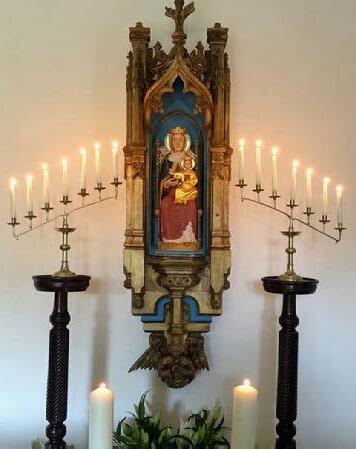
Our Lady of Walsingham is displayed in an edicule (or aedicule, from the Latin ædicula meaning ‘little house’), which has traditionally served as a small ornate shrine for a treasured statue. This edicule was originally purchased by Henry, 15th Duke of Norfolk (1847–1917), who extensively rebuilt and restored Arundel Castle between the 1870s and 1890s, transforming it into a Victorian Gothic masterpiece. His work included rebuilding the main residential wing, adding the private family chapel, installing modern infrastructure like electricity, and constructing a new gatehouse. He was also responsible for the construction of Arundel Cathedral. As a young student at
the Oratory, Henry was taught by St John Henry Newman, and they became great friends in later life. Alongside the statue, fragments of ancient ruins are displayed, dating back to the 12th and 13th centuries, when the renown of Our Lady’s Shrine in Walsingham would have been at its height. It is significant that Our Lady of Walsingham should be enthroned with honour within the confines of Arundel Castle. St Philip Howard (1557-95), 13th Earl of Arundel, of whom the present Duke of Norfolk is a lineal descendant, penned a powerful lament on Walsingham’s destruction during the English Reformation. His lament entitled the Wracks of Walsingham, probably written whilst he was imprisoned for his faith in the Tower of London, was discovered after his death together with a penitential psalm written in his own hand. The Wracks demonstrate an overwhelming sorrow and grief following the destruction of Our Lady’s Shrine, at a time when martyrdom for the defence of the true and Catholic Faith became a reality for many. It is possible that St Philip Howard wrote the Wracks as an Act of Reparation. He was later canonised by Pope Paul VI in October 1970 as one of the Forty Martyrs of England and Wales.
Known for his simplicity of life and love for creation, St Francis of Assisi is co-Patron of Italy, along with St Catherine of Siena. To mark the 800th anniversary of his death, Pope Leo XIV has proclaimed 2026 as the Jubilee Year of St Francis. As a champion of peace, this Jubilee is particularly necessary today in this challenging, complicated, and often divided modern world.
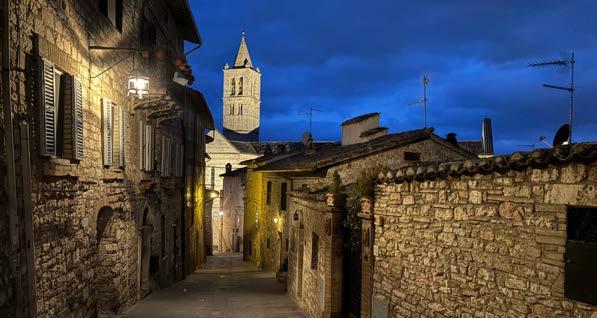
Nestled on the picturesque slopes of Monte Subasio, Assisi is a small, beautiful Umbrian town almost halfway between Perugia and Foligno. Although it is now one of the world’s most famous pilgrimage sites, it has retained its charming simplicity, with narrow, winding cobblestoned streets, beautiful churches and traditional houses. There are also many archways and stairways adorned with images and statues of Our Lady. The 13th century walls add to the medieval feel, in a town that is easily accessible from the major Italian cities of Rome, Florence, and nearby Perugia. One could easily be forgiven for thinking they had stepped back in time. Indeed, it is a town that touches the soul, impacting all of one’s senses; terracotta rooftops, the resounding peal of church bells, and the smell of torta al testo (that famous Umbrian bread), assuring any visitor that they are most certainly in central Italy!
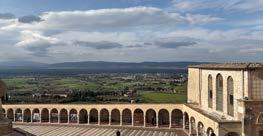
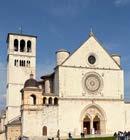
The Basilica of San Francesco is the jewel in the crown of Assisi, comprising an upper and lower church, with a crypt containing the tomb of St Francis accessible from the lower church. Although the basilica is a key landmark, it is not simply a monument to St Francis. It is a living, active site, where worship, art, music, fellowship, and hospitality keep the message of St Francis alive. Of particular note are the Giotto frescos in the upper church, which depict the life of St Francis in a0 beautiful and thought-provoking manner.
On the other side of town, the Cathedral of San Rufino served as the seat of the Bishop of Assisi, and is now a co-cathedral for the merged Diocese of Assisi-Nocera Umbra-Gualdo Tadino. The Romanesque building, with its impressive bell tower, is also home to the diocesan museum and the relics of San Rufino are located beneath the high altar.
A short walk down the hill from San Rufino is the Basilica of Santa Chiara. Its simple, yet imposing façade leads visitors into a beautiful building where, in the chapel adjacent to the main church, the wooden crucifix that changed the life of St Francis in 1206 proudly hangs. In the crypt, the tomb of St Clare can be found and the cloistered nuns in the attached convent maintain a regular pattern of prayer and worship.
Since 2019, the church of Santa Maria Maggiore has attracted a significant number of visitors since it became the final resting place for St Carlo Acutis, who was canonised by Pope Leo XIV on 7 September 2025. Interestingly, this church served as the cathedral for the Diocese of Assisi during the lives of St Francis and St Clare.
These are but a few of the beautiful churches in Assisi, a town where one can really appreciate Italy at its best, and where Ss Francis, Clare and Carlo Acutis can all be venerated, guiding us back to God on our earthly pilgrimage. The motto of the town is that of St Francis, ‘Pax et bonum’ (peace and goodwill), and any visitor to Assisi is most certainly guaranteed a warm welcome from the locals.
Westminster Cathedral Chronicle, May 1956
Proposed Mosaics for the Blessed Sacrament Chapel
The photographs [below] show the show the greater part of the scheme of mosaic decoration for the Blessed Sacrament Chapel which has been prepared in the form of a model by Mr Boris Anrep and is at the moment under the consideration of the Cardinal’s Art Commission. Fortunately the beautifully made model takes apart and it has been possible to photograph these portions, though it should be borne in mind that these halftone reproductions in monochrome give but a ghostly idea of the colour and architectonic perfection of the original design; their smallness too is an extreme disadvantage to a proper appreciation; however, at the moment they are the best we can show.
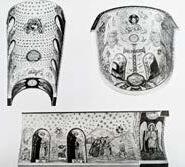
Holding the illustrations lengthwise, the lowest picture shows the whole of the south side of the chapel. In the arch itself will be seen one of the Guardian Archangels who dominate the entrance to the chapel. The two Archangels will form an indispensable element in the iconographical and colour schemes of the whole work. Then comes a very large panel representing the Covenant with Noah; in the deep niches, stand the two figures of Melchizedek and Abraham, the latter clad in warrior’s mail. Between the niches is depicted the Gathering of the Manna, and last there is Elias sleeping beneath the shade of a Broom Tree, with the Angel offering him food for his journey. The view top left shows the whole stretch of the vault, looking from the altar down to the entrance arch. Arching across the vault the fine tympanum portrays the Hospitality of Abraham, perhaps the most lovely of all the Old Testament prefigurations of the Blessed Trinity. In the vault, nearest to the entrance, is another Trinitarian figure, a medallion containing the Three Children in the Fiery Furnace; the other medallion shows the Lamb of God supported by Angels with Censers. The third photograph shows the sanctuary proper and the apse. It will be noticed that three zones are clearly marked; the two flanks, or flat wall-spaces, being separated from the curving apse by means of pillars surmounted by pairs of Angels. The two flat surfaces are devoted to important compositions, scarcely seen in the
reproduction; the Marriage at Cana and the Feeding of the Five Thousand. The whole series of pictures and symbols culminates in the magnificent Cross which reigns in glory over the globe of the universe, on the Rock from which issue the Four Rivers of Paradise. This is a cross of triumph, the Crux Gemmata, not of sorrow and death, it is the supreme Christian symbol—in hoc signo vinces.
We have not shown or described the North side of the Chapel, nor have we done more than touch on the great wealth of detail which abounds in every part of this rich scheme. If this proposal comes to pass there will be no doubt that the Blessed Sacrament Chapel, now so dark and dreary in its upper part, will receive a crown of light and colour and beauty surpassing anything as yet achieved in the Cathedral.
The marble decoration of the Lady Chapel transept, which had been in progress for more than a year, was completed by the Wednesday of Holy Week. It is generally accepted to be a successful and effective piece of decorative work, without being elaborate. The various marbles have been carefully chosen and skilfully combined. The large surface of the West wall, where the much discussed picture ‘Venez à Moi’ used to hang, and now is to be seen in St Joseph’s Chapel, is lined with some beautifully veined Greek cipollino and verde antico, with a deep skirting of fossil marble from Derbyshire. On the South wall, where the four Confessionals have been built, the panelling is in rich pavonazza from the Carrara district. In the lower portion of the South wall is to be seen more Greek cipollino. It is interesting to note that this comes from the ancient Greek quarry in the island of Eubœa, from which was taken the famous cipollino marble seen in Sancta Sofia, Constantinople, and St Mark’s, Venice. The fine columns to the Confessionals (which are lined with oak) are in verde antico from some old Roman quarries rediscovered near Larissa in Thessaly. The buff coloured marble used for the cornices and arches is obtained near Trieste. It is to be found elsewhere in the Cathedral, but not quite of the same shade of colour after some years of London’s atmosphere. Some other marbles used to come from Lavanto, near Spezzia, and those in the two handsomely marbled niches between the transept and St Paul’s Chapel come from Vathy, Laconia, and from an old quarry at Mount Hymetus, near Athens.
Some more marble work has been put in hand, and is already in progress in the aisle of the Lady Chapel, leading to the Sacristy. Thus, within a month or two, the whole of the space available for marble construction in and around the Lady Chapel will have been filled, and all that remains to be done to complete it is the mosaic decoration above. When suitable designs for this are forthcoming, and the quality and method of fixing the mosaic can be guaranteed, it is not unlikely that sufficient funds may be available to complete this chapel and its immediate surroundings.
On the first Sunday of each month, a Mass is celebrated for the benefactors of Westminster Cathedral, living and dead.
Sunday 3 May, 10am, Sunday 7 June, 10am, Sunday 5 July, 8am, Sunday 2 August, 7pm, Sunday 6 September, 5.30pm
For more information, contact Laura Dudhee, at 020 7798 9058 or email cathedralgiving@rcdow.org.uk
The Holy Father’s Prayer Intention
That everyone might have food
Let us pray that everyone, from large producers to small consumers, be committed to avoid wasting food, and to ensure that everyone has access to quality food.
Friday 1 May Friday abstinence
Easter Feria
(St Joseph the Worker) Day of Prayer for human work
Saturday 2 May
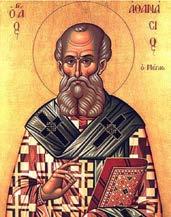
St Athanasius, Bishop & Doctor 2pm Parish First Holy Communion Mass
Sunday 3 May Ps Week 1
5th SUNDAY OF EASTER
12 noon Solemn Mass (Full Choir)
Bingham – Mass for Westminster Cathedral
Palestrina – Angelus Domini
Palestrina – Et introeuntes
Organ: Widor – Final (Symphonie romane)
4pm Solemn Vespers and Benediction (Full Choir)
Bevan – Magnificat sexti toni
Bassano – Dic nobis Maria
Organ: Widor – Moderato (Symphonie romane)
4.30pm Mass for the Deaf Community (Cathedral Hall)
The Cathedral is open from 7.30am and closes in time for 7pm.
Monday to Friday: Morning Prayer 7.35am, Mass 8am, Mass (Latin, unless there is a Funeral) 10.30am, Confessions 11.30-12.30pm, Mass 12.30pm *, Exposition of the Blessed Sacrament 1.15-4.30pm, Benediction 4.30pm, Confessions 4.30-5.30pm, Sung Vespers 5pm (Latin, Choir, except Tuesday, English, Cantor), Solemn Mass 5.30pm (Choir, Tuesday: Boys’ voices, Wednesday: Men’s voices)
Saturday: Mass 8am, Morning Prayer 10am, Mass 10.30am (Latin, Choir,) Confessions 11.30-12.30pm, Mass 12.30pm *, Confessions 5-6pm, Sung Vespers 5.30pm (English, Cantor), Sung Mass 6pm.
Sunday: Mass 8am, Sung Morning Prayer 9.30am, Sung Mass 10am, Confessions 10.30-12.30pm; Solemn Mass (Choir) 12noon *, Solemn Vespers (Choir) and Benediction 4pm, Confessions 5-6.45pm, Sung Mass 5.30pm, Mass 7pm.
For full opening and closure times of the Cathedral and for confession and service times please consult the Cathedral diary on the website.
* Live streamed via the Cathedral website
Monday 4 May (Bank Holiday)
THE ENGLISH MARTYRS
Tuesday 5 May
Easter Feria
Day of Prayer for Survivors of Sexual Abuse
5.30pm Chapter Mass with the Investiture of Papal Knights (Archbishop Moth)
Wednesday 6 May
Easter Feria
1.15pm Lunchtime Concert
Thursday 7 May
Easter Feria
Friday 8 May Friday abstinence
Easter Feria
Saturday 9 May
Easter Feria
2pm Service of Hope and Healing (Archbishop Moth)
6pm Westminster Cathedral Junior Voices sings at Mass
Sunday 10 May Ps Week 2
6th SUNDAY OF EASTER
Legacy Drive after all Masses
12 noon Solemn Mass (Full Choir)
MacMillan – Westminster Mass
M. Martin – Vidi aquam
Organ: Reger – Hallelujah! Gott zu loben (Fugue)
4pm Solemn Vespers and Benediction (Full Choir)
Reid – Magnificat quinti toni
Howells – Regina cæli
Organ: Franck – Choral No 1 in E major
Monday 11 May
Easter Feria
Tuesday 12 May
Easter Feria
(Ss Nereus and Achilleus, Martyrs; St Pancras, Martyr)
Wednesday 13 May
Our Lady of Fatima
1.15pm Lunchtime Concert
5.30pm Vigil Mass (fulfils obligation)
Thursday 14 May
THE ASCENSION OF THE LORD
Holy Day of Obligation
5pm Solemn Second Vespers
5.30pm Solemn Mass celebrated by Archbishop Moth (Full Choir)
Victoria – Missa Ascendens Christus Philips – Ascendit Deus Stanford – Cælos ascendit hodie
Organ: Messiaen – Transports de joie (L’Ascension)
Friday 15 May Friday abstinence Easter Feria
Saturday 16 May
Easter Feria
10.30am WCCS First Holy Communion Mass
Sunday 17 May Ps Week 3
7th SUNDAY OF EASTER
World Communications Day
12 noon Solemn Mass (Full Choir) Widor – Messe
Tye – Omnes gentes plaudite manibus
Organ: Widor – Allegro (Symphonie VI)
4pm Solemn Vespers and Benediction (Full Choir)
Tallis – Magnificat octavi toni
Victoria – Ascendens Christus in altum
Organ: Messiaen – Alléluias sereins (L’Ascension)
Monday 18 May
Easter Feria
Tuesday 19 May
Easter Feria
Wednesday 20 May
Easter Feria
(St Bernardine of Siena, Priest)
1.15pm Lunchtime Concert
Thursday 21 May
Easter Feria
(St Christopher Magallenes, Priest, and Companions, Martyrs)
Friday 22 May Friday abstinence
Easter Feria
(St Rita of Cascia, Religious)
5pm Vespers sung by the joint choirs of Westminster Abbey and Westminster Cathedral
6pm Said Mass
Saturday 23 May
Easter Feria
2.30pm Matrimony Mass (Archbishop Moth)
Sunday 24 May
PENTECOST SUNDAY
World Day of Prayer for the Church
12 noon Solemn Mass (Men’s voices)
Victoria – Missa Dum complerentur
Palestrina – Dum complerentur
Palestrina – Dum ergo essent
Organ: Tournemire – Fantaisie-Choral (L’Orgue mystique XXV)
4pm Solemn Vespers and Benediction (Men’s voices)
Bevan – Magnificat primi toni
Hassler – Hodie complete sunt
Organ: Duruflé – Choral varié sur le Veni
creator
5.30pm Mass with Youth Confirmations (Archbishop Moth)
Monday 25 May (Bank Holiday) Ps Week 4
Mary, Mother of the Church
Tuesday 26 May
St Philip Neri, Priest
Wednesday 27 May
St AUGUSTINE OF CANTERBURY, Bishop 1.15pm Lunchtime Concert
Thursday 28 May
OUR LORD JESUS CHRIST, THE ETERNAL HIGH PRIEST
Friday 29 May Friday abstinence
Feria
(St Paul VI, Pope)
Saturday 30 May
Blessed Virgin Mary on Saturday
2.30pm Feltham Confirmation Mass (Bishop Curry)
6pm Arundel Cathedral Choir sings at Mass (Archbishop Moth)
Sunday 31 May Ps Week 1
THE MOST HOLY TRINITY
12 noon Solemn Mass (Full Choir)
Langlais – Messe solennelle
Byrd – Tribue Domine
Byrd – Te deprecor
Organ: Tournemire – Triptyque (L’Orgue mystique XXVI)
4pm Solemn Vespers and Benediction (Full Choir)
Palestrina – Magnificat quarti toni
Byrd – Gloria patri
Organ: Messiaen – II. Dieu est Saint (Méditations sur le mystère de la sainte Trinité)
Monday 1 June
St Justin, Martyr
Tuesday 2 June
Feria
(Ss Marcellinus & Peter, Martyrs)
5.30pm Chapter Mass
Wednesday 3 June
St Charles Lwanga and Companions, Martyrs
Thursday 4 June
Feria
5.30pm Solemn Mass (Archbishop Moth)
Friday 5 June Friday abstinence
St Boniface, Bishop & Martyr
Saturday 6 June
Blessed Virgin Mary on Saturday (St Norbert, Bishop)
Key to the Diary: Saints’ days and holy days written in BOLD CAPITAL LETTERS denote Sundays and Solemnities, CAPITAL LETTERS denote Feasts, and those not in capitals denote Memorials, whether optional or otherwise. Memorials in brackets are not celebrated liturgically.
Catholic Evidence Guild
Clergy House Room 2, Tuesdays 7pm
Catholic Grandparents’ Association Hinsley Room, Second Sundays 12-3.30pm
Charismatic Prayer Group Cathedral Hall, Fridays 6.30-9pm
Divine Mercy Prayer Group
St Patrick’s Chapel, Sundays 1.30-2.30pm
Filipino Club
Cathedral Hall, Second Sunday 1-5pm
Guild of the Blessed Sacrament Blessed Sacrament Chapel, Mondays 6.15pm
Guild of St Anthony Lady Chapel, Tuesdays 6.15pm
Interfaith Group Hinsley Room, Third Wednesdays 1.30 -3pm
Legion of Mary Hinsley Room, Monday 1.30-3.30pm
Oblates of Westminster Cathedral Hinsley Room, Fourth Sundays 2.30-4pm
Padre Pio Prayer Group
Sacred Heart Church, First Thursdays 1.30-3.30pm
Rosary Group Lady Chapel, Saturdays 11.15-12.00noon
Walsingham Prayer Group
St George’s Chapel, First Tuesdays 2.30-4pm
Yoruba Association Hinsley Room, Third Sundays 1.30-3pm
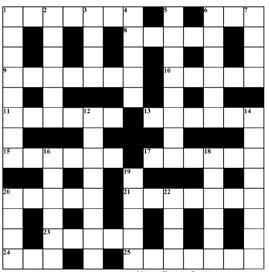
Clues Across
1 A little bird that cannot fall but God knows it [Matt: 10.29] (7)
6 Signal to give a speech or go on stage (3)
8 ----- Stein OCD, Saint, Jewish convert nun martyred in Auschwitz (5)
9 Pre-Raphaelite, who painted ‘Christ in the House of His Parents’ (7)
10 Thing of worth, like an item of property (5)
11 House of Protestant King William III (6)
13 Anne ------, Queen executed at the Tower on 19 May 1536 (6)
15 & 20 Across: Famous Catholic cemetery in North London (6,5)
17 Relating to the French (6)
20 See 15 Across
21 First name of Admiral looking down on Trafalgar Square (7)
23 Feudal address to a Lord and Belgian city (5)
24 College of London University, once at the heart of student protests (1.1.1.)
25 Boy Saint, Feast Day 12 May, well known to Eurostar travellers (7)
Clues Down
1 Botanical aid by which St Patrick explained the Holy Trinity (8)
2 See 7 Down
3 Saint of Cascia, Augustinian nun, Feast Day 22 May (4)
4 Nationality of person whose country’s Patron is Dewi Sant (5)
5 Domenico --------, Italian 18th c. composer of comic operas (8)
6 ‘Thou art clement, thou art ------’, O Mother Blest , hymn (6)
7 & 2 Down: Area of England where Catholic Cathedral of Norwich [St John’s] located (4,6)
12 Percy --------, composer of ‘Handel in the Strand’ and other light pieces (8)
14 Early Saint, Bishop of Myra, associated with Christmas (8)
16 ‘Cleopatra’s ------’, ancient obelisk, a Westminster landmark (6)
18 First from St Paul in the NT, to the Romans (6)
19 Jesus said to Peter [John 21:17], ‘Feed my -----’ (5)
20 Eric ----, sculptor of the Cathedral’s Stations of the Cross (4)
22 Irish name regularly seen at Gatwick and Stansted (4)
A Lament for Our Lady’s Shrine at Walsingham attributed to St Philip Howard
In the wracks of Walsingham Whom should I choose But the Queen of Walsingham to be my guide and muse.
Then, thou Prince of Walsingham, Grant me to frame Bitter plaints to rue thy wrong, Bitter woe for thy name.
Bitter was it so to see The seely sheep Murdered by the ravenous wolves While the shepherds did sleep.
Bitter was it, O to view The sacred vine, Whilst the gardeners played all close, Rooted up by the swine.
Bitter, bitter, O to behold The grass to grow
Where the walls of Walsingham So stately did show.
Such were the worth of Walsingham While she did stand, Such are the wracks as now do show Of that Holy Land.
Level, level, with the ground The towers do lie, Which, with their golden glittering tops, Pierced once to the sky.
Where were gates are no gates now, The ways unknown Where the press of peers did pass While her fame was blown.
Owls do scrike where the sweetest hymns Lately were sung, Toads and serpents hold their dens
Where the palmers did throng.
Weep, weep, O Walsingham, Whose days are nights, Blessings turned to blasphemies, Holy deeds to despites.
Sin is where Our Lady sat, Heaven is turned to hell, Satan sits where Our Lord did sway — Walsingham, O farewell!
To submit a poem whether by yourself or another for consideration, please contact the Editor – details on page 3.
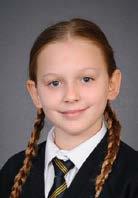
We can rise again. Have you ever made a mistake and wished you could go back and change it? When we hear the words ‘we can rise again,’ we might think of fresh starts, second chances, and hope.
As Catholics in the season of Easter, we remember when Jesus Christ died on the cross for our sins and then rose from the dead. This is called the Resurrection. This is the most important part of Easter because it shows that death is not the end, and that God’s love is stronger than anything. It also means we can always have a new start when we get things wrong.
This connects to the story of St Peter. When asked if he knew Jesus, Peter denied it three times, even though Jesus was his closest friend. Peter must have felt really upset, guilty and scared that he had ruined everything.
But Jesus did not give up on Peter. After Jesus rose from the dead, he came back to his disciples. This is really important because it shows the meaning of the Resurrection in action — Jesus came back not just to show he had defeated death, but to forgive and restore people like Peter. When Jesus met Peter, he asked him, ‘Do you love me?’ three times. This gave Peter the chance to show his love again and be forgiven.
This shows us that because Jesus rose again, mistakes do not have to be the end. The Resurrection means we are always given hope, forgiveness and a new beginning. Jesus rising from the dead is what makes it possible for us to ‘rise again’ in our own lives when we do something wrong.
When I think about Peter’s story, I realise it is a lot like us. We all make mistakes, like saying something unkind or making a bad choice. But we can learn from them and try again. For example, I might hurt a friend’s feelings and later say sorry and try to do better next time. As Catholics, we believe God always forgives us when we are sorry. This helps us move forward and try to be better people at school, at home and everywhere else.
Peter teaches us that mistakes are not the end of the story. Because of the Resurrection of Jesus, we know we can always rise again. With forgiveness, hope and love, every day is a chance to start again and try to be better.