Westminster Cathedral Magazine
If you can, please make a donation for your copy to cover its production cost.
Thank you.
The
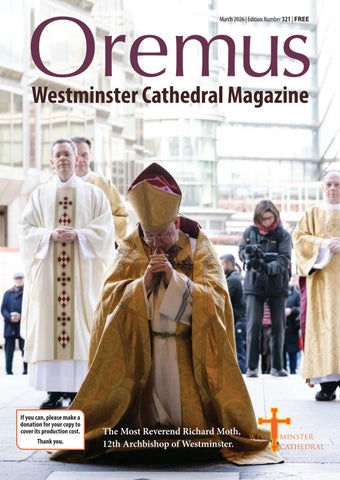
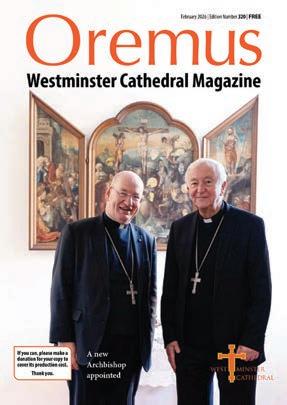
Most Reverend Richard Moth, 12th Archbishop of Westminster.
If you can, please make a donation for your copy to cover its production cost.
Thank you.
The
Most Reverend Richard Moth, 12th Archbishop of Westminster.
Although we earn income from the advertising which we carry, Oremus relies on donations from readers to cover its production costs.
The Companions of Oremus was established to recognise those who give generously to support us. Open exclusively to individuals, Companions’ names are published in the magazine each month (see page 7). All members are invited to one or more social events during the year and Mass is offered for their intentions from time to time.
If you would like to support us by joining the Companions, please write to Oremus, Cathedral Clergy House, 42 Francis Street, London SW1P 1QW or email oremuscomps@rcdow.org.uk with your contact details, including postcode. Members are asked to give a minimum of £100 annually. Please mention how you would like your name to appear in our membership list and if you are eligible to Gift Aid your donation. Postal subscriptions to Oremus may be purchased by completing and sending to the office the coupon printed in the magazine. Subscriptions to receive Oremus either by email (free) or as hard copy by post (p & p payable) can also be entered by visiting https://westminstercathedral.org.uk/the-cathedral-community/about-oremus/ and completing the form there.
Thank you for your support.
Cathedral Clergy House
42 Francis Street
London SW1P 1QW
T 020 7798 9055

E oremus@westminstercathedral.org.uk
W www.westminstercathedral.org.uk
Oremus, the magazine of Westminster Cathedral, re ects the life of the Cathedral and the lives of those who make it a place of faith in central London. If you think that you would like to contribute an article or an item of news, please contact the Editor.
Patron e Archbishop of Westminster
Chairman Fr Sławomir Witon´
Editor
Lorcán Keller
Oremus Team
Tony Banks – Distribution Zoë Goodway – Finance
Anne Marie Micallef – Marketing
Paul Moynihan – Proofreading Manel Silva – Subscriptions
Design and Art Direction
Julian Game
Registered Charity Number 233699 ISSN 1366-7203
Opinions expressed by contributors do not necessarily represent the views of the Editor or the Oremus Team. Neither are they the o cial views of Westminster Cathedral. e Editor reserves the right to edit all contributions. Publication of advertisements does not imply any form of recommendation or endorsement. Unless otherwise stated, photographs are published under a creative commons or similar licence. Every effort is made to credit all images. No part of this publication may be reproduced without permission.
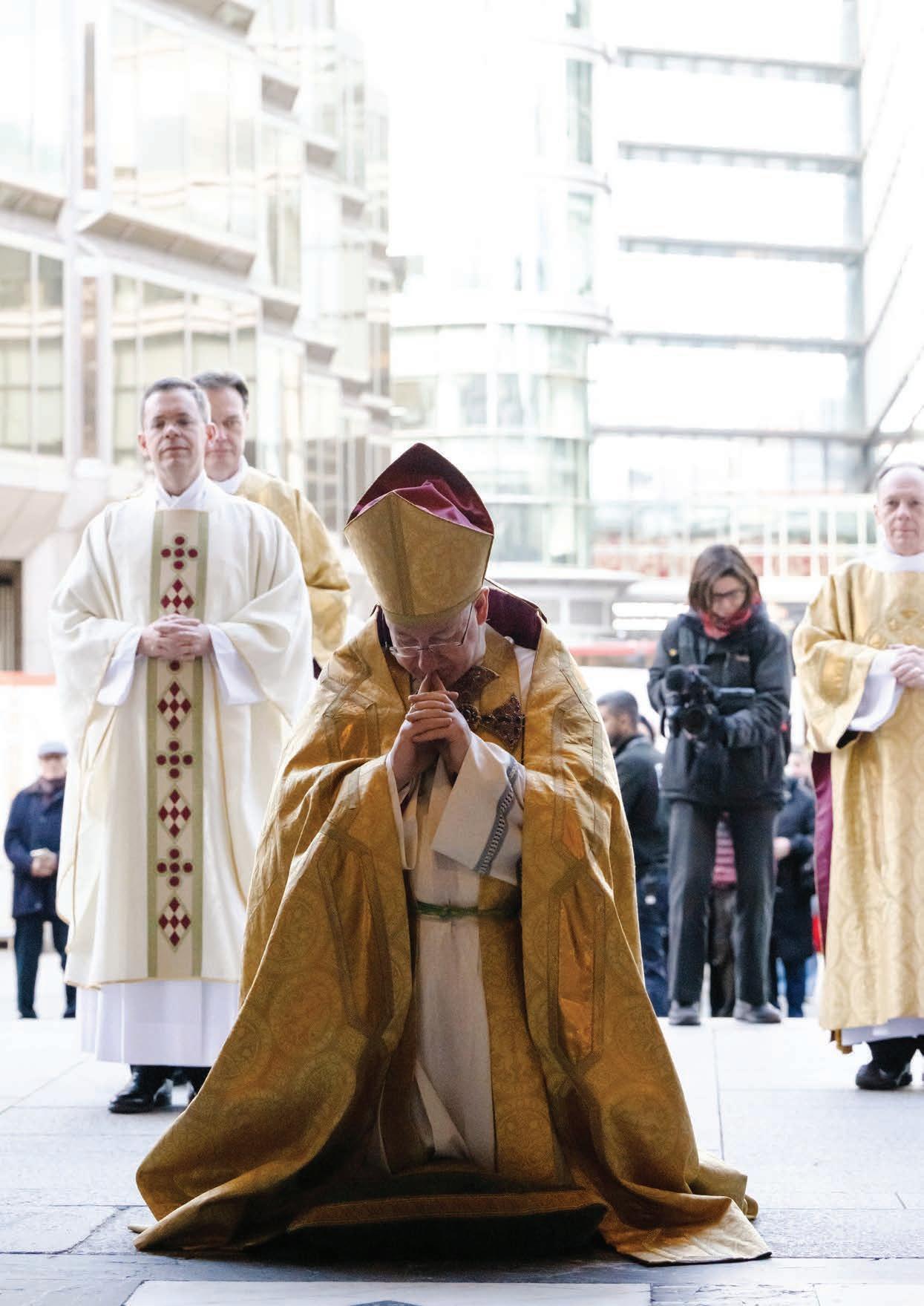
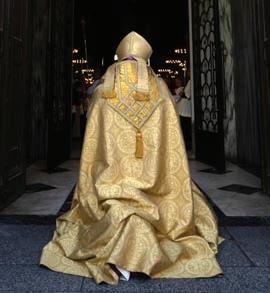
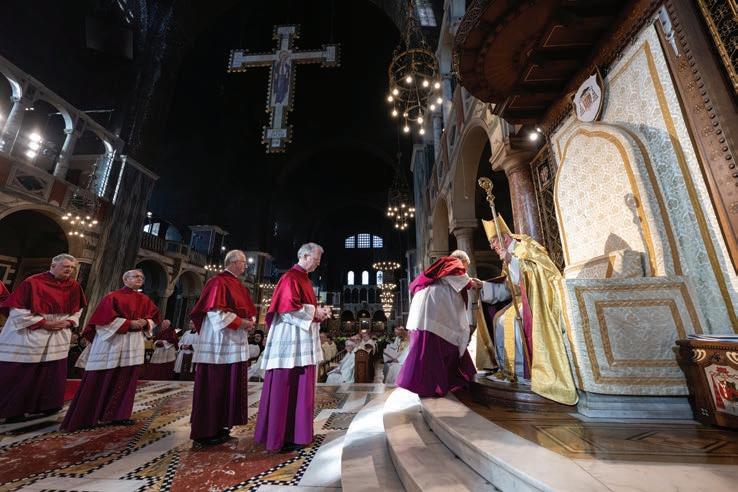
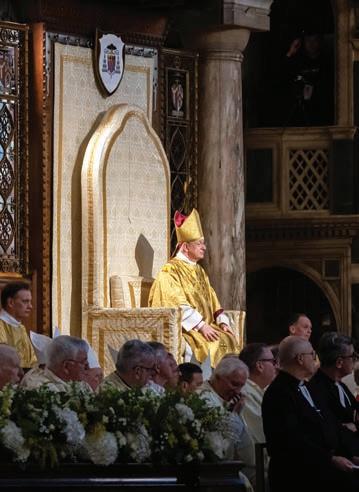
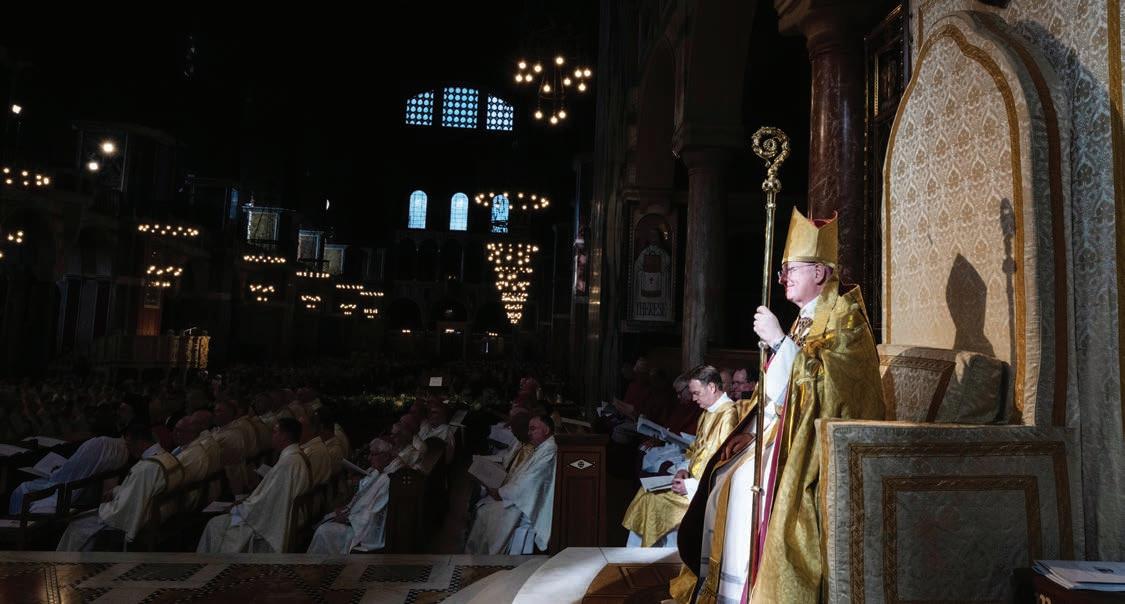
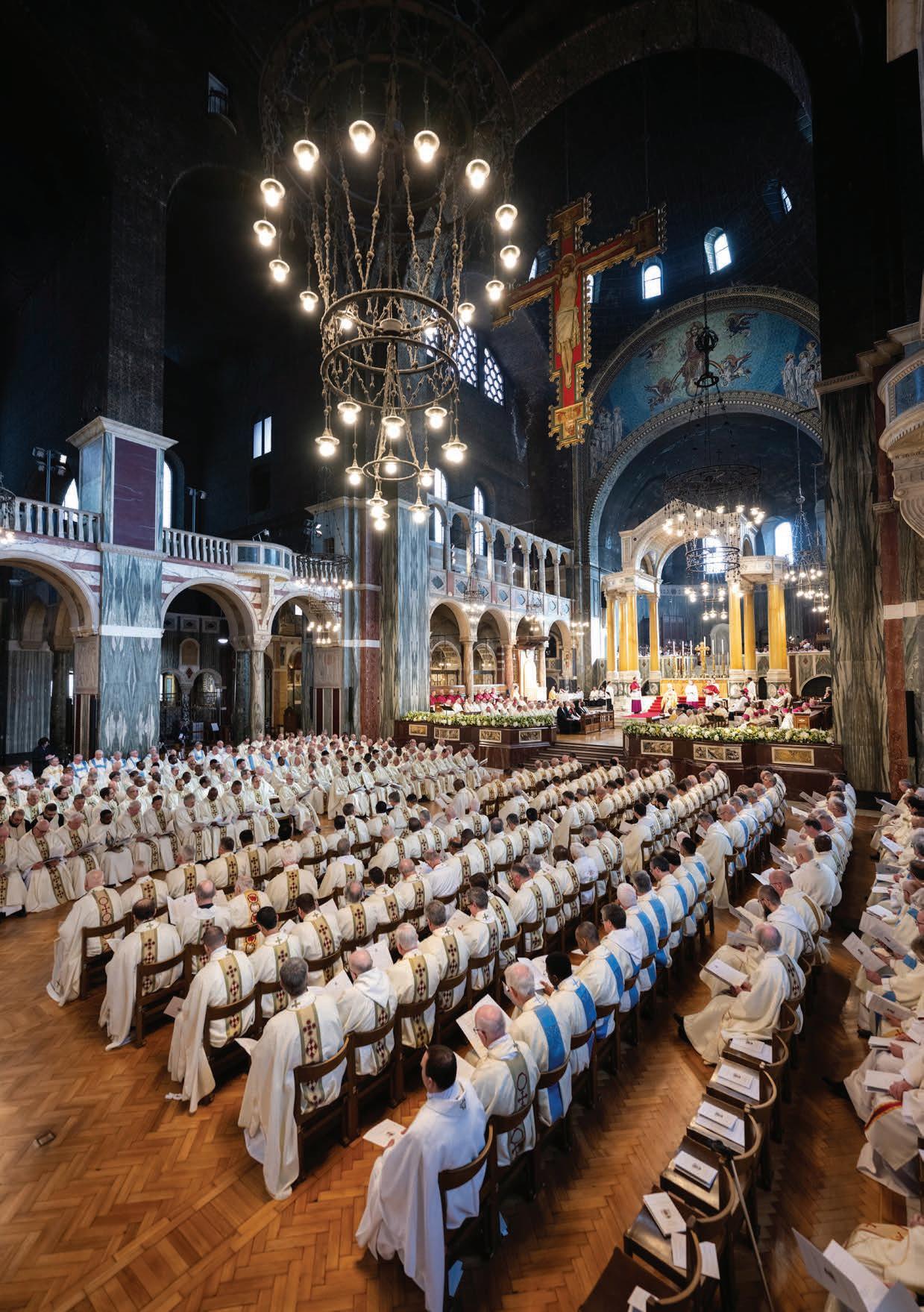
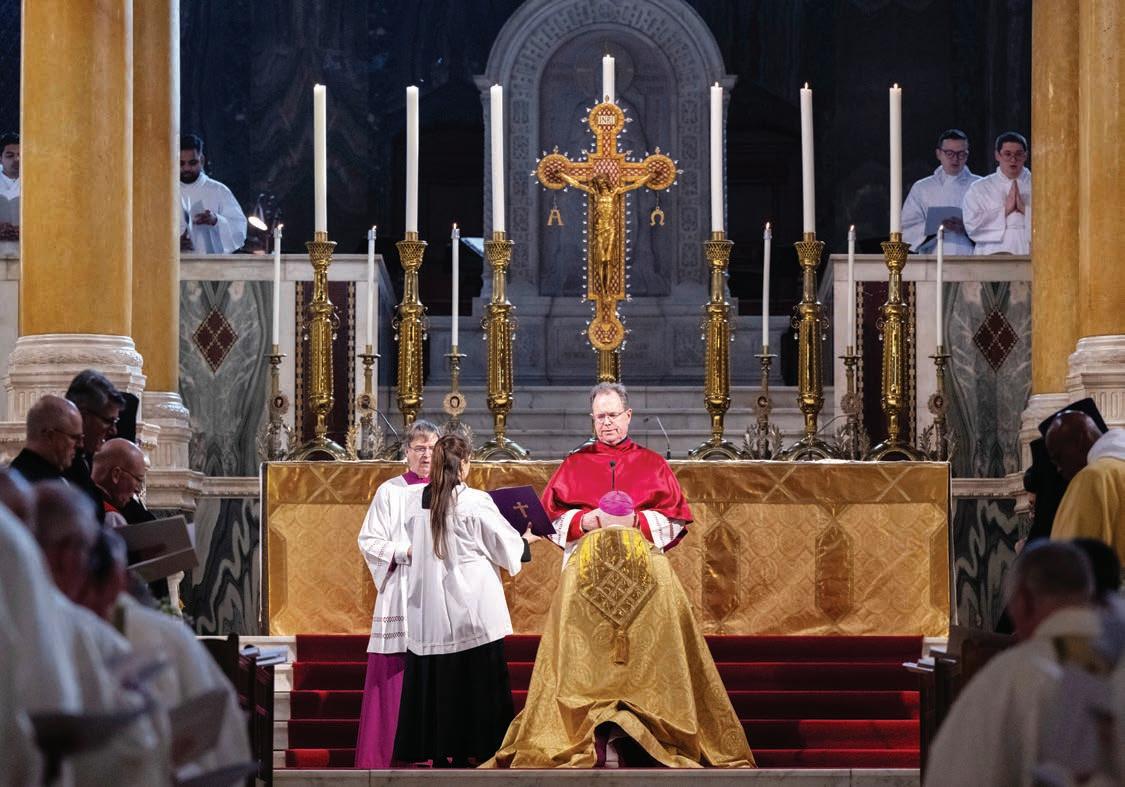
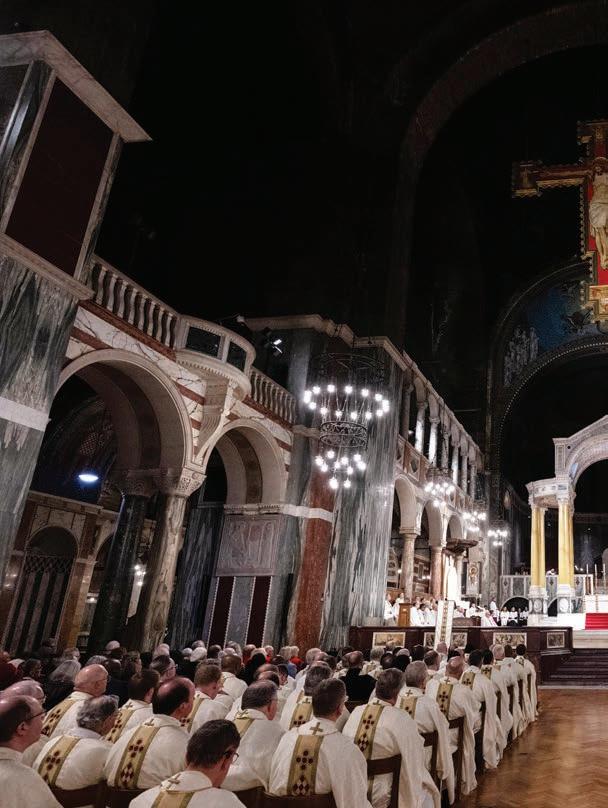
At 12 noon on Saturday 14 February, the great West Doors of the Cathedral were opened for the entrance of the Archbishop. There, he knelt in the threshold in prayer, flanked by 12 saintly Archbishops of Canterbury depicted as demi-figures in the medallions facing the Piazza. All inside waited with anticipation for this poignant moment when the Rite of Reception would begin. The Archbishop was then greeted in the narthex by the Provost, Canon Lennard, and the Metropolitan Chapter, to be led to the sanctuary and, ultimately, to the cathedra.
© Mazur/CBCEW.org.uk
Cathedral Life: From the Editor 5
Homily: Solemn Vespers on the Eve of the Installation by Archbishop Richard Moth 6 & 7
Album: Installation Mass 8 – 11
Homily: Installation Mass by Archbishop Richard Moth 12 & 13
Largest Rite of Election for 15 years 18
Cathedral History in Pictures: e Episcopal Ordination & Installation of George Basil Hume OSB 19
Album: Cardinal Vincent Nichols’ anksgiving Mass 20 & 21
Features: Titular Bishops of Sufar by Canon Daniel Cronin
and Crossword
In Retrospect: 100 and 70 years ago 23 Diary and Notices 24 & 25 SVP Catholic Primary School 27
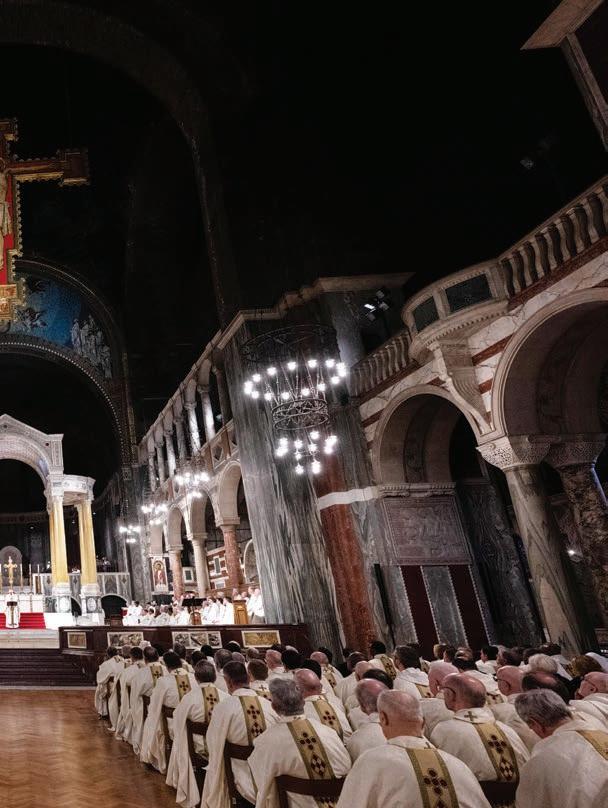
Legend has it, according to certain livestream volunteers, that the Cathedral organ gallery is haunted. Whether a consecrated church can accommodate any such phantom, save for the Holy Ghost, is a matter for debate; however, as a lot of the streaming is controlled from the gloom of the gallery, it is not uncommon to jump out of your skin as a musician silently emerges through the winter shadows. On Saturday 14 February, however, not even an ethereal being could have passed through the army of livestreamers, photographers, videographers, organists and timpanists stationed on the gallery. Indeed, the glorious sound and reverberation during the fanfare, recently composed by Master of Music Simon Johnson for the occasion, and organ voluntaries were enough to raise the dead!
Away from the bustling upstairs, the mood on the nave oor was joyful and anticipatory, awaiting that poignant moment when His Grace would kneel in prayer at the threshold of the great West Door. ere he was anked by 12 saintly Archbishops of Canterbury, from St Augustine to St Boniface. In fact, the ceremony of reception and installation is based on that of Canterbury, from the 15th century Canterbury Ponti cal, and has been in use since the foundation of the Diocese of Westminster in 1850. For more information on the symbolic theme of Canterbury for the early Archbishops of Westminster, see the series of recent articles published from September to December/January, particularly the November 2025 edition.
Another poignant moment was the presentation of the Howard crozier, used exclusively by Archbishops of Westminster, which was passed from Cardinal Nichols to Archbishop Moth. is forms part of a wider set of ecclesiastical plate, in Italian silver gilt, bequeathed by Edward Henry Howard (1829-92), Cardinal Archpriest of St Peter’s Basilica. He died in retirement in Brighton and is buried in the Fitzalan Chapel in Arundel. As former Bishop of Arundel and Brighton, Archbishop Moth also paused to pray by the tomb of Cardinal Cormac Murphy-O’Connor, his predecessor in both dioceses.
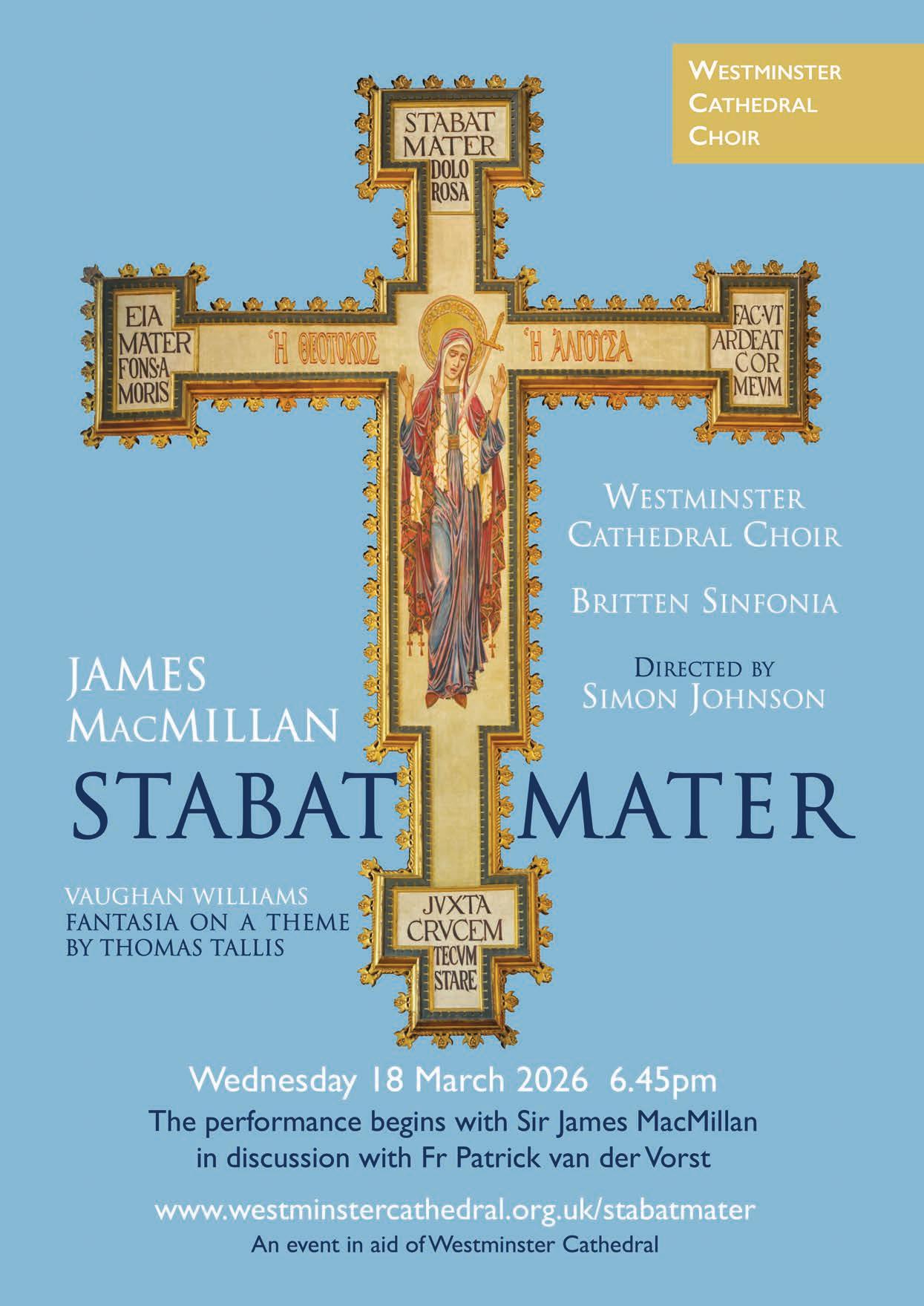
Looking ahead to March, the Stations of the Cross will continue to be prayed each Friday a er the 5.30pm Mass, ending on Good Friday, 3 April. On Wednesday 18 March, at 6.45pm, Westminster Cathedral Choir and the Britten Sinfonia will perform MacMillan’s Stabat Mater and Ralph Vaughan Williams’ Fantasia on a eme by omas Tallis, under the direction of Simon Johnson. e evening will begin with Sir James MacMillan in discussion with Fr Patrick van der Vorst. Tickets, in aid of the work of the Cathedral, are available on Ticketmaster and in the Cathedral Gi Shop.
Wishing you all a blessed Lent.
Erratum: On page 10 of the February edition, I noted that Bishop Moth was informed of his appointment to Westminster while attending the Jubilee of Prisoners in Rome. His Excellency the Papal Nuncio has corrected this claim, clarifying that such business would never be carried out over the phone. e call, instead, was an invitation to the Nunciature in Wimbledon.
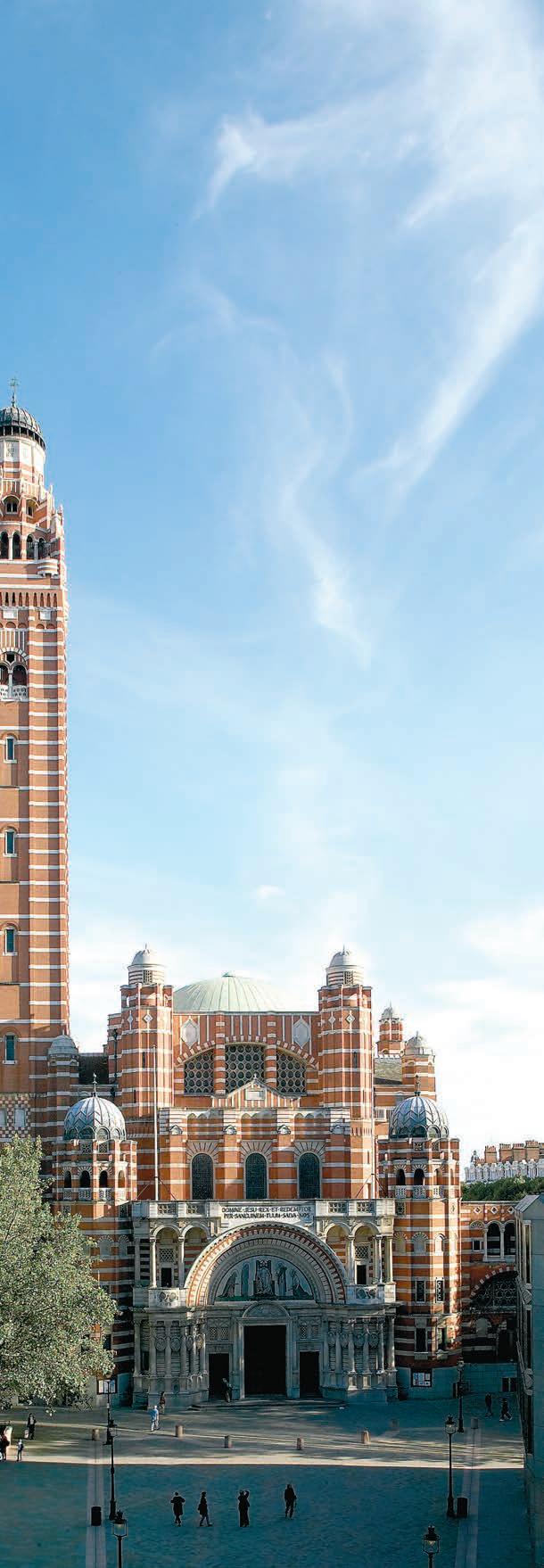
Westminster Cathedral
Cathedral Clergy House
42 Francis Street
London SW1P 1QW
Telephone 020 7798 9055
Email chreception@rcdow.org.uk www.westminstercathedral.org.uk
Cathedral Chaplains
Fr Sławomir Witoń, Dean
Fr Patrick van der Vorst, Precentor
Fr Michael Guthrie
Fr Vincent Mbu’i SVD
Fr Paul Zhao SVD
Fr Hugh MacKenzie
Rev Paul Christian (Cathedral Deacon)
Fr Javier Ruiz-Ortiz (priest in residence)
Also in residence
Franciscan Sisters of Our Lady of Victories: Sr Jesuina, Sr Angelina and Sr Mariana
Music Department
Simon Johnson, Master of Music
Peter Stevens Obl. OSB, Assistant Master of Music
Alexander Robson, Organ Scholar
Cathedral Manager
Peter McNulty
Parish Safeguarding Representative
Trevor Koschalka westcathsg2@safeguardrcdow.org.uk
Cathedral Finance Manager
George Kulasingham
Cathedral Fundraising Manager
Laura Dudhee
Chapel of Ease
Sacred Heart Church
Horseferry Road SW1P 2EF
On Friday 13 February, Archbishop-elect Richard Moth attended and preached at Solemn Vespers of Our Lady, on the eve of his installation. The O ce was presided over by Bishop Paul McAleenan.
Archbishop Richard Moth
Dear brothers and sisters, May I thank all those who are joining in this celebration of Vespers; those of you here in this great Cathedral, and those joining on the livestream. As we o er this Evening Prayer of the Church, I am especially grateful for your prayers as I prepare for the Mass of Installation tomorrow and the great responsibilities to which the Lord himself calls me.
Our celebration this evening began with the litany of the saints. It is wonderful to re ect that those of our family gone before us in faith, and whose holiness of life has been recognised by the Church, are praying for our Diocese and for the world; and in thanksgiving for Cardinal Vincent’s ministry over many years, and for me in this moment, as I prepare to journey with all in this Diocese on our pilgrimage of faith, of witness, and of service.
We are praying Vespers of Our Lady and we would do well to re ect on the response of our Blessed Mother to God’s call to her. Mary is called to be the Mother of the Saviour; the Word made Flesh, God-withus. She has been prepared for this since the very moment of her conception, but she could not have imagined the import of the call, the consequences of her at, her ‘Yes’ to God’s call. She was gi ed with courage to respond as she did and to remain with her Son – not always understanding his actions – right to that dreadful moment when she stood at the foot of the Cross, her heart pierced as Simeon had prophesied, and then to the joy of the Resurrection.
From the Cross, he places John, the beloved disciple, in her care. In this action, we have always seen Jesus placing us, with John, in her care.
So, when we re ect on the call that the Lord gives to us, the call to witness and service, we respond with the con dence that Mary intercedes for us. She stands with us in our trials and su ering, and in our moments of joy. She stands as an example of the consequences of a ‘Yes’ to the Lord. She reminds us that we shall not always understand the ways of her Son. She reminds us that su ering and sorrow will always be a part of our journey. She reminds us that the joy of the Resurrection and the wonder of life with her Son in his Kingdom will be our destiny.
St Paul, writing to the Philippians, reminds us of the wonder of knowing Jesus and the thoroughgoing nature of the Christian way. Mary models this way for us and accompanies us on the journey.
As we o er this evening praise, I ask you to join me in prayer for our Diocese that each and every one of us may respond ever more deeply to the call we received, initially, at Baptism. May we all forge ahead, through prayer and through the service that ows only from that prayer, in the adventure of the Gospel, for the prize to which we are called. Let us respond with the generosity of Mary to the particular calls the Lord then makes to us and renew that response each and every day. Let us nd con dence in this journey, mindful that Mary our Mother prays with us and for us, together with all the saints.
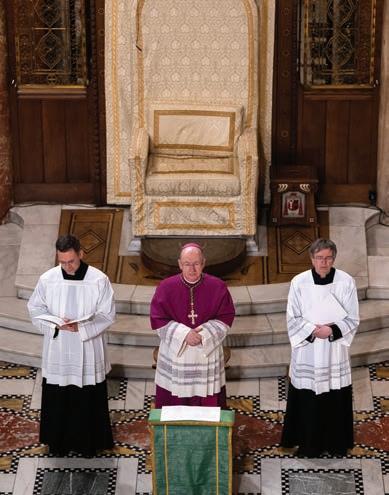
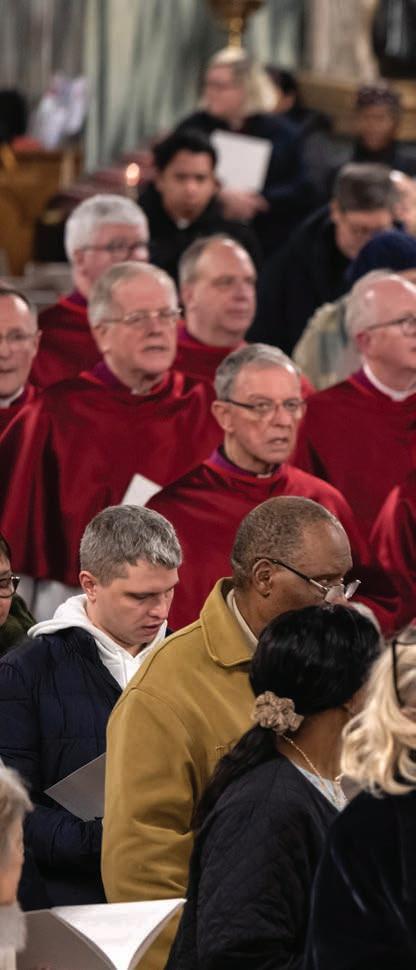
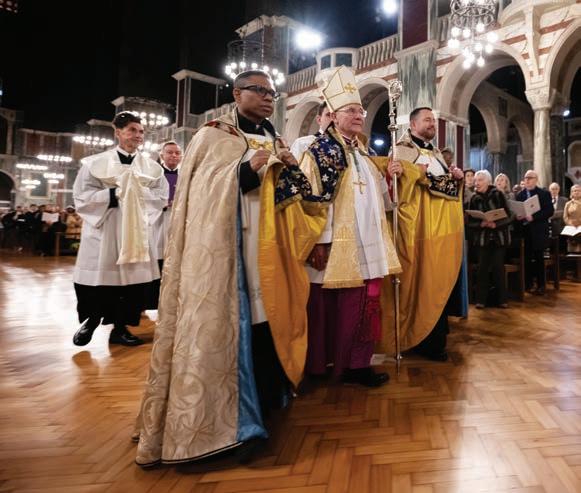
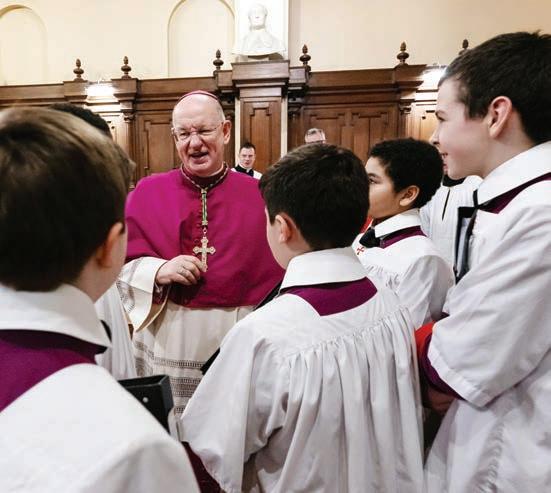
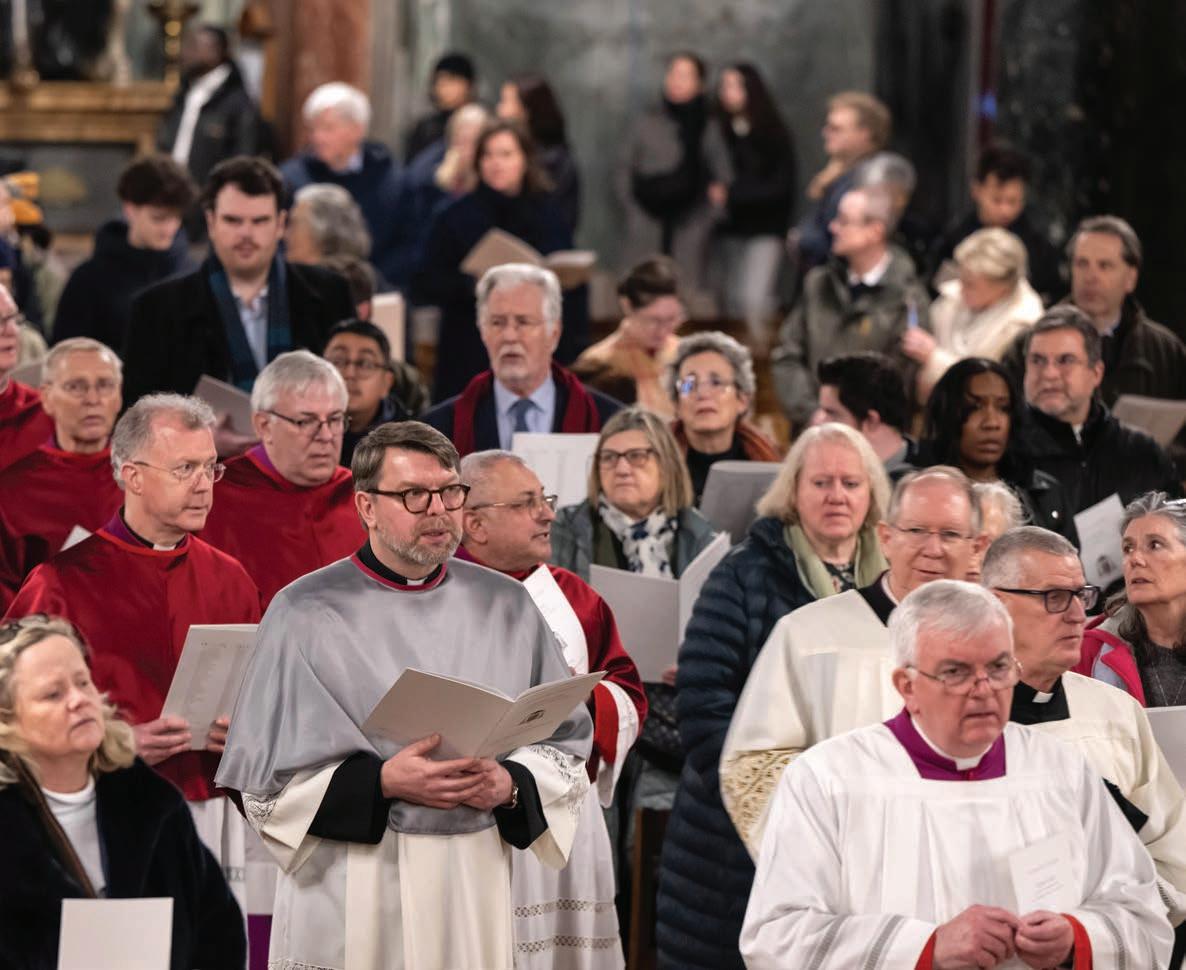
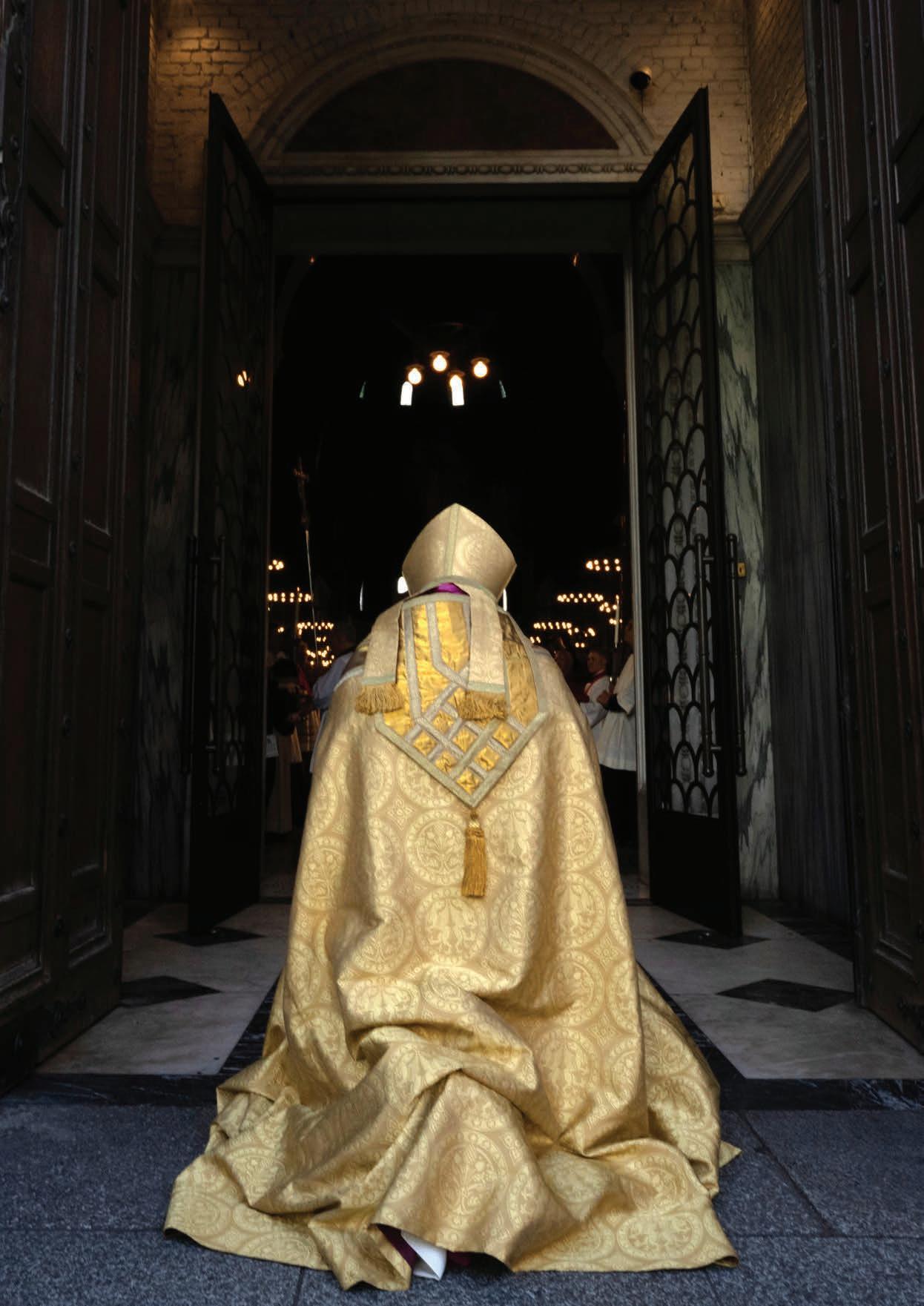
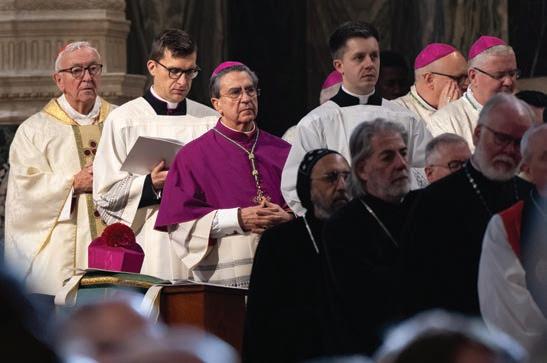
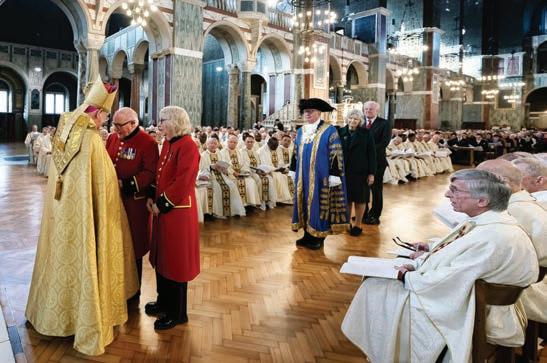
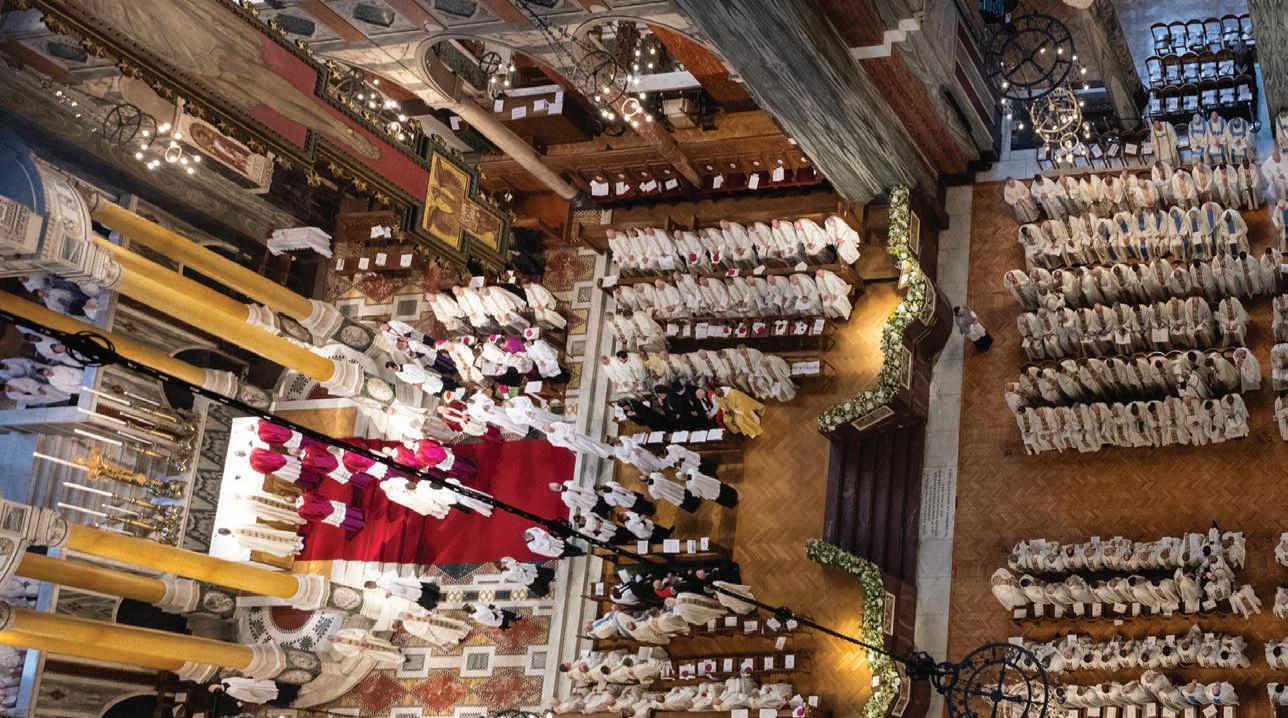
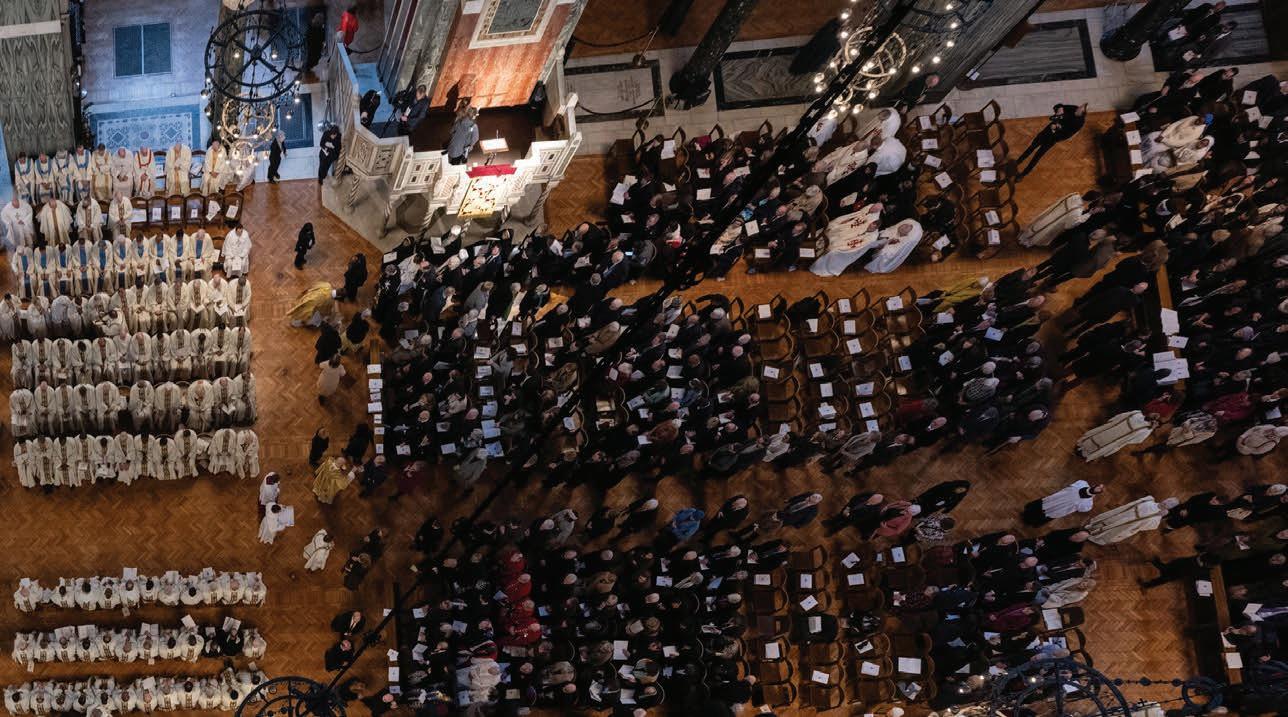
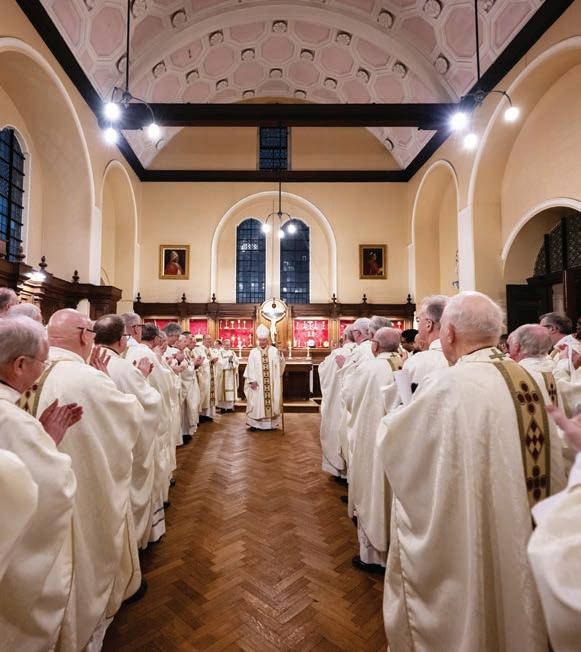
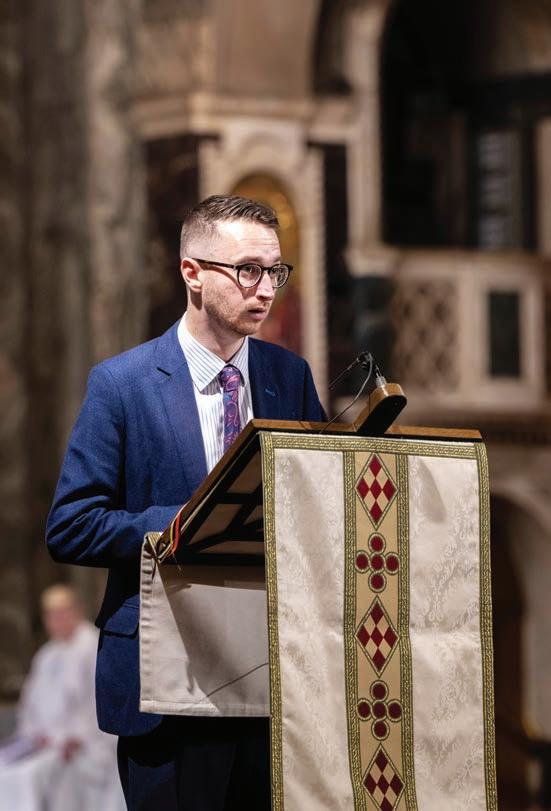
On Saturday 14 February, the feast of Ss Cyril and Methodius, Patrons of Europe, Archbishop Richard Moth was installed as the 12th Archbishop of Westminster.
courtesy of Mr Marcin Mazur (Mazur/cbcew.org.uk)
We are very grateful for the supportof the following:
Leticia Dominguez Abada
Lally Ambatali
Leonila V Bennabe
Keith Best
Dr Stuart Blackie
Anne Veronica Bond
Lolita Botanes
Richard Bremer
Hajnalka Burai
Lorenzo Cabrelli
Mrs Erlinda Chin
Francis George Clark
R & L Collyer-Hamlin
Daniel Crowley
Benedicta Jamogha Dako
Angelita Caronan Duran
Cora Em orgo
Angelita Emperador
Ms Georgina Enang
Fr Joseph Farrell K.H.S.
Ruby & Joseph Farrell in memoriam
Revd James Francis Friedenthal
Fred Gardiner
William Gardner-Hunter
Juanita Grecalda
Connie Gibbes
Zoe & Nick Goodway
Rosalinda Grimaldo
Agnes Haein Kim
Mrs Valerie Hamblen in memoriam
Amanda Hill
Jithro and Ira Nadine Hangad
Bernadette Hau
Mrs Cliona Howell
Alice M Jones & Jacob F Jones
Poppy K
Rosanne Kay
Mary Thérèse Kelly
John Langan
David Lawton
Raymund Livesey
Alan Lloyd in memoriam
Clare and John Lusby
Tony McGee
Linda McHugh
Christiana Thérèse Macarthy-Woods
Ms Ludivina Mangmang
James Maple
Paul Marsden
Mary Maxwell
Dr Denis Moloney
Dr George Morris
Abundia Toledo Munar
Euphrasie Mundele Kilolo
Chris Stewart Munro
Mrs Brigid Murphy
Kate Nealon
Cordelia Onodu
Nigel Parker
Cris Ragonton
Alan Rainer
Clementina Rokosu
Precy Salvador
John Scanlan
Veronica Scrope
Sonja Soper in memoriam
Tessa and Ben Strickland
Yollie Sumayod
Julia Sutherland
Eileen Terry
Robin Michael Tinsley
Lucila Torre el
Peter W Wilson in memoriam
Dr Timothy I Young in memoriam
Peter and Teresa Zurenkas
and of our anonymous Companions
If you would like to become a Companion of Oremus, see page 2
Archbishop Richard Moth
Dear brothers and sisters,
On 25 March 1976, I was privileged to be in this great cathedral church, together with a friend from school, who is also present here today, for the Episcopal Ordination of the late Cardinal Basil Hume. On that day, the text that we have just heard, from St Paul’s second letter to Timothy (1:67), was proclaimed:
‘Fan into ame the gi of God […] for God gave us a spirit not of fear, but of power and love and self-control.’
God’s call to us is not a call to power as so o en exercised in the world, to achieve dominion over others. Rather it is characterised by self-control, not a self-control ‘generated’ as it were from within ourselves, but a self-control guided, empowered by the Holy Spirit. It is characterised by love, a love that re ects to all the love that we see in Christ. is is a love that is total-self-giving, self-emptying to the point of the death that we see depicted so clearly in the Great Rood here, above the sanctuary.
is is Christ-like service, that brings faith, love and hope to a world that, in our present age, cries out for hope. is service is our mission as Christ’s Church. St Paul
reminds us that we receive the gi s that come to us through the Holy Spirit, o en experienced in gentleness and in the silence of prayer. ese gi s are experienced in their fullness, fanned into ame, through our living out of the mission to which we are called.
We receive the grace of the Spirit through Baptism and Con rmation, as well as through the Sacrament of Holy Orders, so the words Paul spoke to Timothy are for all of us today. I ask you to join with me in giving thanks for the witness to the Gospel in this Diocese over so many years, not least in the life of Cardinal Vincent as he moves to more restful pastures. We all have so much for which to be thankful, so much on which to build. I rejoice that the Lord has called me to share with you, people and clergy of this Diocese, the mission he has given to us. It is the same mission that he gave to the 72.
Just as the Lord called the 72, so he calls us to go out into the world of our own age, carrying with us the message of the Gospel of Peace. Let us ensure that the light of the Gospel shines brightly in our parish communities, in our homes and our schools. At every opportunity, let us shed
the light of the Gospel on the world of our day, in our universities, our places of work.
Let us not be afraid to shine this light in the public square for, as Pope Benedict XVI reminded us when he spoke in Westminster Hall in 2010:
‘ e world of reason and the world of faith […] need one another and should not be afraid to enter into a profound and ongoing dialogue, for the good of our civilisation. Religion […] is not a problem, but a vital contributor to the conversation.’
is encounter will, at times, require the boldness that we see in Paul and Barnabas in today’s rst reading, but we need not fear. e great questions of our time: the need for all peoples to live in peace, the value and dignity of every person, the right to life at every stage, the protection of the vulnerable, the plight of the refugee and the dispossessed, the protection of our common home, all of these call for the light of the Gospel to be shone upon them. is task is intrinsic to the work of evangelisation. is work of evangelisation is vital, but it is fragile and adversely impacted by our failures in love, power and self-control. Here I am most aware of every occasion on which
members of the Church, or the Church as a whole, have failed, most especially when the vulnerable have been abused. Such failure calls for listening to and learning from those who have su ered so grievously and a continuing commitment to ensuring that our communities are places where all are safe in their encounter with Christ and with one another.
e reality is that the power of the Church is the power of service. It is the power of service in the way that Jesus serves, emptying of self for the salvation of all.
It is the Spirit who guides our work and we celebrate today the lives of two saints, Cyril and Methodius, who have much to teach us on our journey. Two brothers, born in Constantinople, they answered the Lord’s call to evangelise the peoples of Moravia. eir work in the translation of the Liturgical texts into Slavonic reminds us all that our lives in Christ must be rooted in prayer and in the celebration of the Sacred Liturgy. It was from this grounding, this foundation in prayer that the mission of these two brothers would ow and for Methodius in episcopal ministry. He went to Pannonia (modern day Hungary) where he was zealous in his
work of evangelisation. He faced di culties, but persevered free from fear, guided and strengthened by the Spirit.
As with these two great saints, so it is for us. It is in the Eucharist that Jesus nourishes us with his very self for our work as his disciples. It is from the Eucharist and from prayer that our work of evangelisation ows, for evangelisation is a call to a relationship, the relationship with the person of Jesus Christ. e 72 had walked with Jesus, sat with him, listened to him. We must, therefore, walk with Jesus on the journey of prayer, listen to him in the Scriptures, sit with him in Adoration of the Blessed Sacrament, welcome him in the Eucharist. ese are gi s beyond our imagining, rooted in the mystery of God’s love. ey are gi s we have the privilege and joy to share. is mission of evangelisation takes time. Pope Francis reminded us that;
‘An evangelising community is also supportive, standing by people at every step of the way, no matter how di cult or lengthy this may prove to be. It is familiar with patient expectation and apostolic endurance. Evangelisation consists mostly of patience and disregard for constraints of time.’
So, we need not be concerned to seek for results according to our own timescale. e time we have is a gi from God and he calls us, very simply, to use this gi in service. May our parish communities, our schools, our chaplaincies, our whole Diocese grow as a School of the Lord’s Service (cf. e Rule of St Benedict, Prologue, §45), service of the One who died and rose from the dead for us and service of those whom we encounter.
In these present times, we are seeing what some have called a ‘quiet revival’ of faith. e fullness of time will show us the depth of this revival, but it is certainly the case that this is a good moment to be a Christian, a Catholic, a disciple of Christ. e ame has been given to us, the ame of the Holy Spirit that came upon the infant Church at Pentecost. is ame must be fanned. It must be nurtured through prayer and a deepening understanding of the gi of faith. ereby, our mission will grow ever more e ective, lived out in total service of our brothers and sisters, in whom we serve the Lord himself, and in the highest activity of our human lives, the worship of the One who gives himself for us and who calls us to himself.
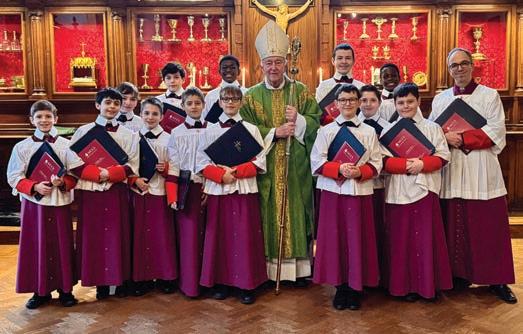
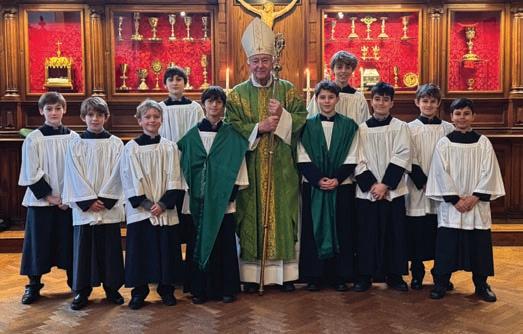
On 27 January, the Westminster Cathedral Choir School gathered for a anksgiving Mass with their President, Cardinal Nichols. In gratitude, the Chair of Governors, Mr David Heminway presented His Eminence with a new set of lectionaries, on behalf of the school community.
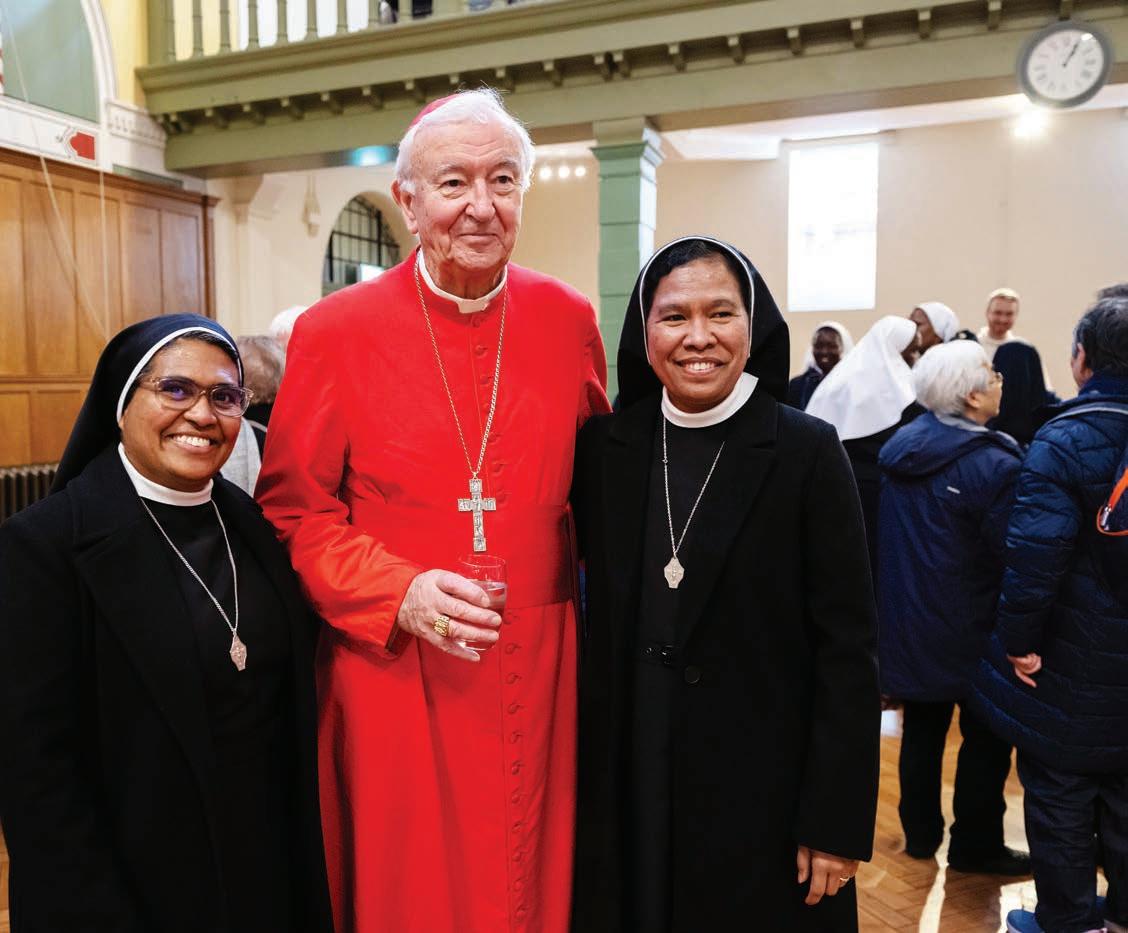
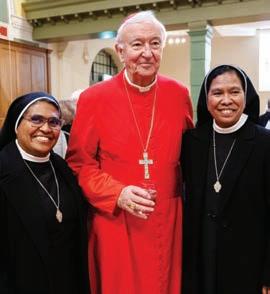
In late January, Cardinal Vincent Nichols celebrated the annual Mass for Consecrated Life with the religious communities of the Diocese. Pictured here, in Cathedral Hall, His Eminence is joined by two of our sisters in Clergy House; Sr Mariana (le ) and Sr Jesuina (right).
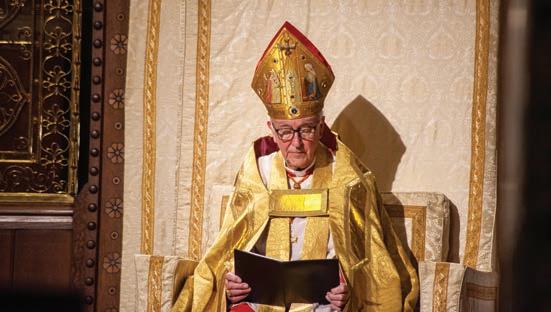
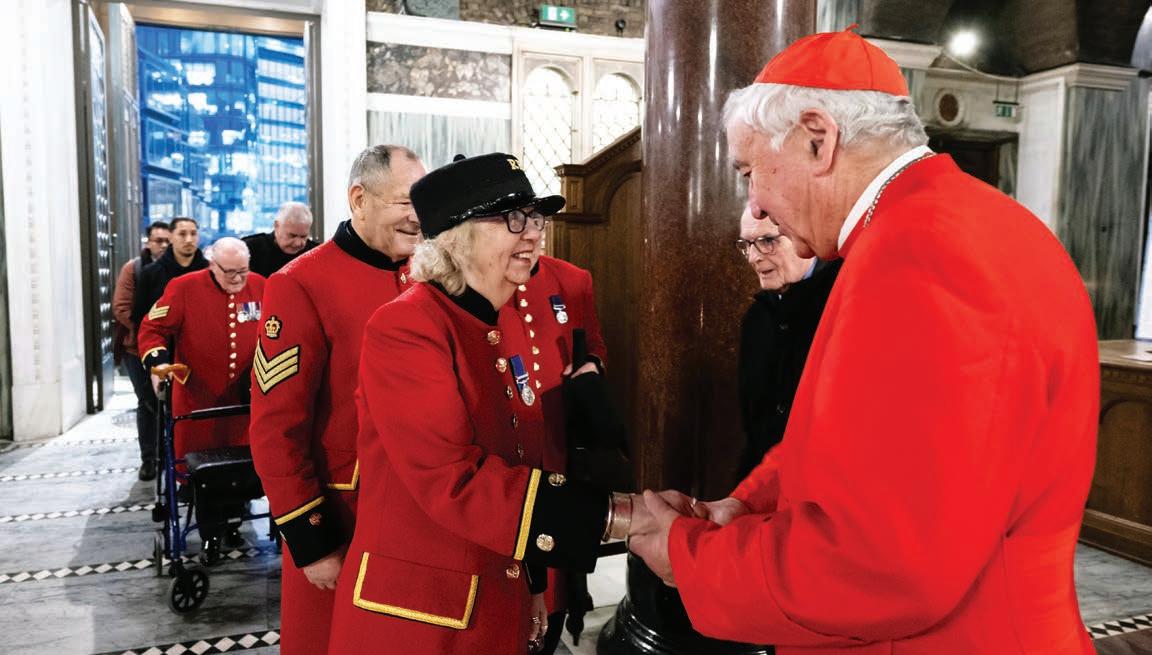
Following his installation on Saturday 14 February, Archbishop Moth celebrated the 12 noon Solemn Mass on Sunday 15 and the 8am Mass for Ash Wednesday, 18 February.
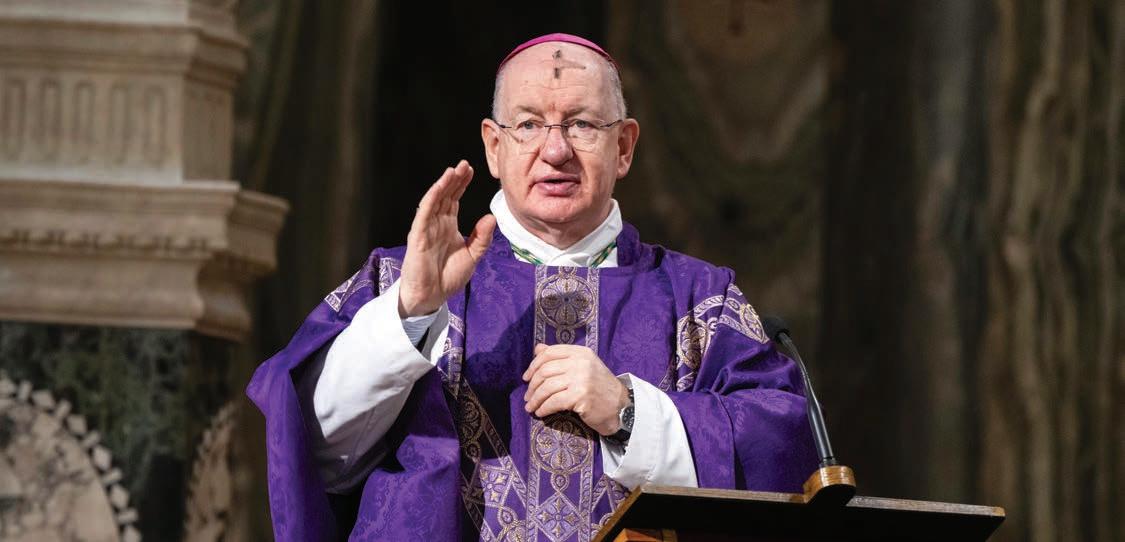
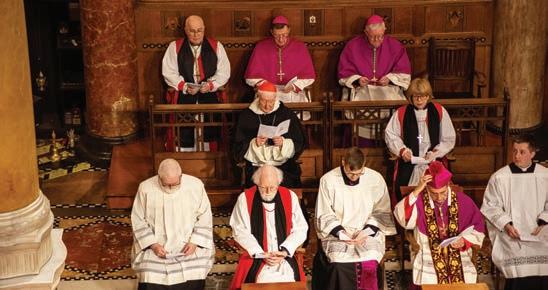
To mark the Week of Prayer for Christian Unity, and the recent elevation of St John Henry Newman as Doctor of the Church, Cardinal Nichols presided at Solemn Vespers sung by the joint choirs and clergy of St Paul’s Cathedral and Westminster Cathedral. We were also joined by many Catholic prelates and ecumenical guests, such as Dame Sarah Mullally and Rowan Williams who preached an address.
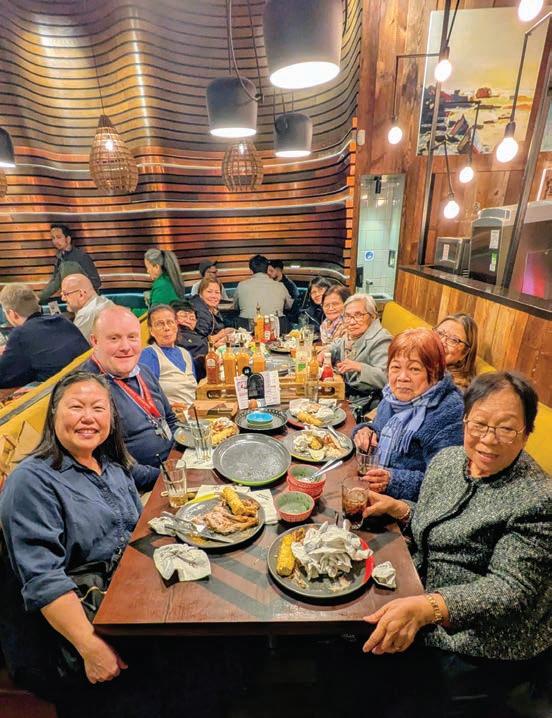
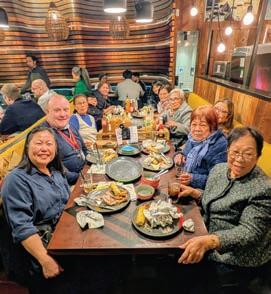
e Editor of this magazine was privileged to have been invited to the birthday celebrations of Linda (front right), one of our tireless volunteers here in the Cathedral. Perhaps a few other familiar faces can be seen?

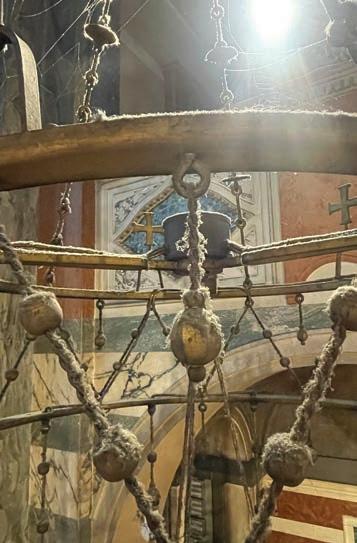
In 2022 and 2023, the Friends raised the much-needed funds to upgrade the lighting in the Cathedral, replacing and adding spotlights throughout. With your help, this Easter we plan to take on the enormous task of restoring the Cathedral chandeliers; first in the sanctuary and later in the nave.
Electric lighting was at the forefront of cutting-edge technology when the plans for the Cathedral were drawn and, as such, the chandeliers formed an integral part of that plan. The lights were designed to mimic the lamp holders of the Hagia Sophia, complementing the Byzantine style, but were not installed until 1909. Perhaps the most visible of these chandeliers are those that hang above the sanctuary. Although they appear to be intentionally grey, it would seem that 117 years of dust has hidden their bright bronze finish. In addition to the dust, the wiring has not been addressed for many years, and needs replacing.
As an important part of our heritage, this project will require the removal, refurbishment, and reinstallation of each pendant light, and is likely to take quite a while to complete. Much like the parquet flooring, this will be handled in stages, whenever it is convenient to do so. Thus far, we have only examined the sanctuary chandeliers and intend to make a start there in the quieter summer months.
This Easter we hope to raise £50,000 for the project through matched funding. This Big Give campaign will begin in Holy Week and finish in Low Week, with more details to follow. A full costing will then enable us to prepare a 2026 Big Give Christmas challenge, to move the work further forward. Please do keep an eye out for both campaigns.
This year, the Friends had scheduled five events between Christmas and Easter; three quizzes (which have become a staple of our winter events), a talk, and a concert. The first two quizzes in January and February were well attended and we look forward to a further quiz later this month. Please do support our last event before Easter –see details right.
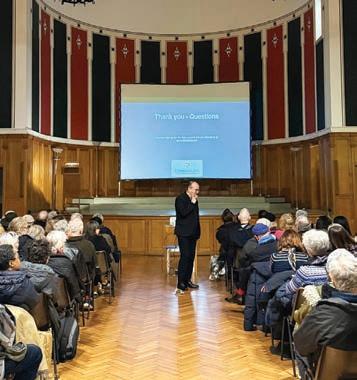
On ursday 19 February, Fr Patrick van der Vorst gave an interesting talk on beauty: ‘Is there such a thing as objective beauty – or is beauty simply in the eye of the beholder?’ e slideshow and audio are also available to view on the Cathedral’s YouTube channel. Judging by the volume of questions, the number of requests for a follow-up lecture, and the buzz of conversation at the refreshments that followed, it is safe to say that this event was a roaring success.
We are also planning a greater variety of activities for late spring and early summer, including the resumption of coach trips and walking tours. is programme is still being nalised and will be shared in due course.
e quizzes are great fun and a wonderful opportunity to meet fellow parishioners. Attendance currently hovers between 40 and 50, with 7 or 8 teams, but Cathedral Hall can accommodate many more. If you could form a team from a group you belong to — or even invite another parish — please do get in touch.
Thursday 12 March 2026
Westminster Cathedral Hall, 6.30pm Quizmaster: Fr Patrick van der Vorst
Tickets: £20 to include fish and chip supper, available at tinyurl.com/Quiz12032026. Drinks available to purchase.
For more information about any event, or if you are unable to book online, please contact: friends@ rcdow.org.uk
Do also get in touch if you have an idea for a future event or would like to organise one for the Friends.
On Saturday 21 February, Archbishop Richard Moth presided at the Rite of Election and Call to Continuing Conversion here at Westminster Cathedral, the rst such celebration since his installation as Archbishop of Westminster.
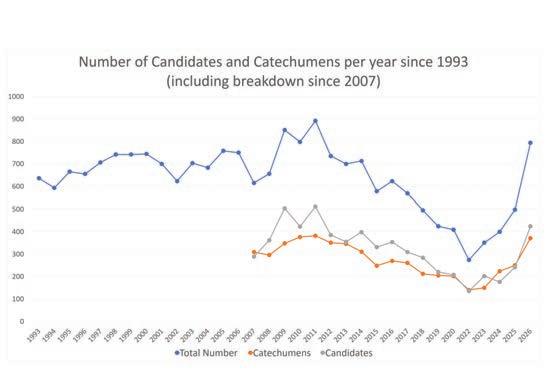
While the Rite of Election is a xed point in the Church’s liturgical calendar, it also serves as a practical barometer of ecclesial life. is year, almost 800 adults from more than 100 parishes presented themselves for ‘election’ or recognition ahead of Easter, when they will receive the Sacraments of Initiation in their local communities; Baptism, Con rmation, and First Holy Communion.
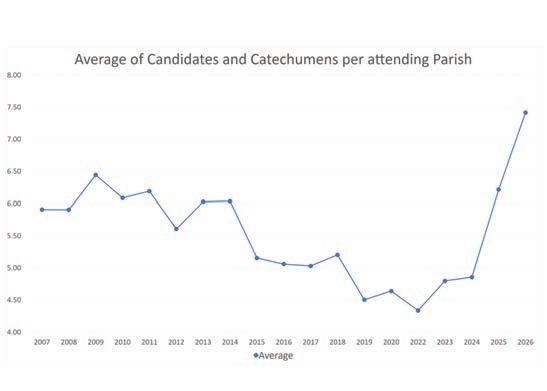
In numerical terms, the 2026 cohort is the fourth largest since diocesan records began in 1993. e highest gure remains 2011, when 891 people took part, including 63 candidates entering through the Ordinariate. From 1993 to around 2014, participation remained relatively stable, before declining steadily to a low point in 2022 during the pandemic years. Since then, however, numbers have risen sharply, reaching levels not seen in 15 years. is year’s cohort represents a 60% increase from 2025.
Headline totals, however, tell only part of the story. When measured by the average number of catechumens and candidates per participating parish, data tracked in detail since 2007, this year appears to be the strongest on record.
In his homily, Archbishop Moth framed the day not simply as an administrative step, but as a decisive spiritual moment. Addressing the catechumens, whose names are now inscribed in the Book of the Elect, he described the gathering of those names in the Cathedral as:
‘A powerful sign of the journey you have been taking — a journey that will reach its high point in the new life of Baptism.
e Psalmist speaks of the desire that we come to know the ways of the Lord, following his paths in response to his gentle summons and knowing that God will always be merciful, always near. Catechumens and candidates, you have heard the gentle promptings of the Holy Spirit. Your presence here is a sign of your response to God’s call. Your response is an example to us all.’
e distinction between catechumens and candidates remains signi cant. Catechumens are unbaptised adults preparing for Baptism, while candidates are already baptised Christians seeking full communion with the Catholic Church. Historically, candidates have outnumbered catechumens, but the gap has narrowed in recent years suggesting a consistent number of adults encountering the Catholic faith for the rst time.
Louise Walton, Catechesis Coordinator for the Diocese, celebrated this moment, describing the Rite as both joyful and encouraging, noting the scale of participation and the accompaniment o ered by sponsors, godparents, clergy, and catechists.
‘Every catechumen and candidate is moving into a deeper encounter with Christ and the Church, and, speaking as a catechist, it is a privilege to accompany them on that path.’
e Rite of Election, celebrated annually on the rst Saturday of Lent, marks the beginning of a period of continued preparation until Easter, when the Elect and candidates will receive the Sacraments of Initiation in their parishes. e Book of the Elect will remain in the Baptistery of Westminster Cathedral until Holy Saturday, inviting visitors to pray for them all.
Paul Tobin
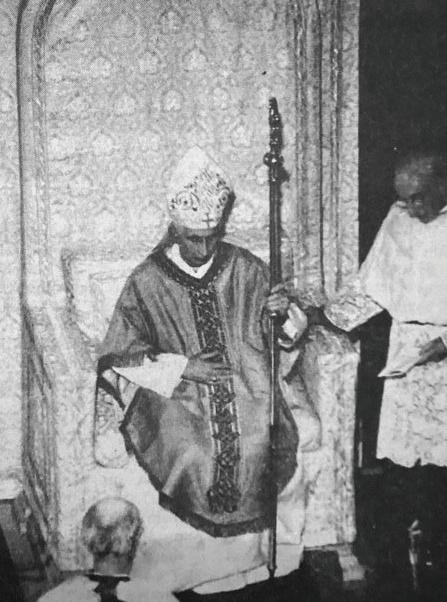
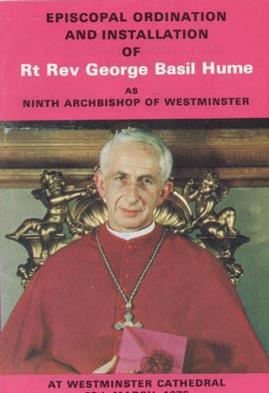
In the a ernoon of 25 March 1976, the feast of the Annunciation of the Lord, the Episcopal Ordination and Installation of George Basil Hume was celebrated in Westminster Cathedral, following the death of Cardinal Heenan in November 1975. Unusually, the Order of Service booklets (pictured) were produced by the Incorporated Catholic Truth Society (CTS) and retailed for 20p.
Although the Abbot of Ampleforth, Cardinal Hume’s appointment as the ninth Archbishop Westminster was unusual, as he was not yet a bishop. Likewise, Cardinal Manning was consecrated (ordained) in June 1865, following his appointment, but was not enthroned (installed) until he had returned from Rome with the pallium in November of that year. Cardinal Hume, therefore, remains the only incumbent to have been both ordained and installed at the same liturgy.
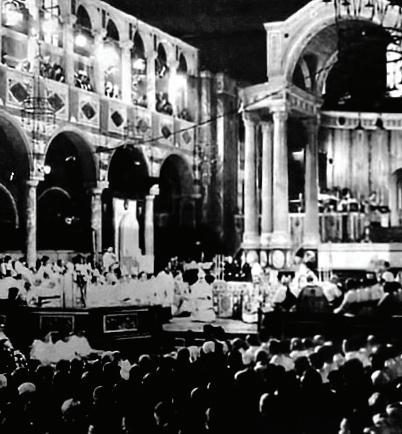
As the high altar was not being utilised, a replica with identical dimensions was positioned on the wooden oor of the sanctuary; thus restricting the space quite considerably. Keen eyes will observe the Archbishop-elect sitting on the right, wearing the Wiseman chasuble of cloth of gold. e Most Rev Bruno Heim, Apostolic Delegate (later rst Apostolic Nuncio) was the principal consecrator, and is seated in front of the altar.
Following Ordination, the Rite of Installation was carried out, using the form taken from the Ponti cal used at Canterbury at the time of Archbishop Chichele (1414-43). As a monastic cathedral, the o ce of induction devolved to the Prior of Canterbury. In Westminster, a secular cathedral, this function devolves to the Provost of the Metropolitan Chapter. Here, the Provost, Canon Reginald Crook, is pictured installing Archbishop Hume, wearing the mitre made by his mother for his election as Abbot of Ampleforth in 1963. In the foreground, back to camera, is the Cathedral Administrator Canon Francis Bartlett. e Rite of Installation complete, Archbishop Hume took over as principal celebrant for the remainder of the Mass.
A large number of monks from Ampleforth Abbey were also present, and sung the sequence a er the rst reading. at evening they, along with monks from other monasteries, were led by the new Archbishop wearing his Benedictine habit, to Westminster Abbey where they sang Solemn Vespers of the Annunciation. is was the rst time in 400 years that Benedictine monks had sung the Divine O ce in the Abbey.
THANK YOU, YOUR EMINENCE!
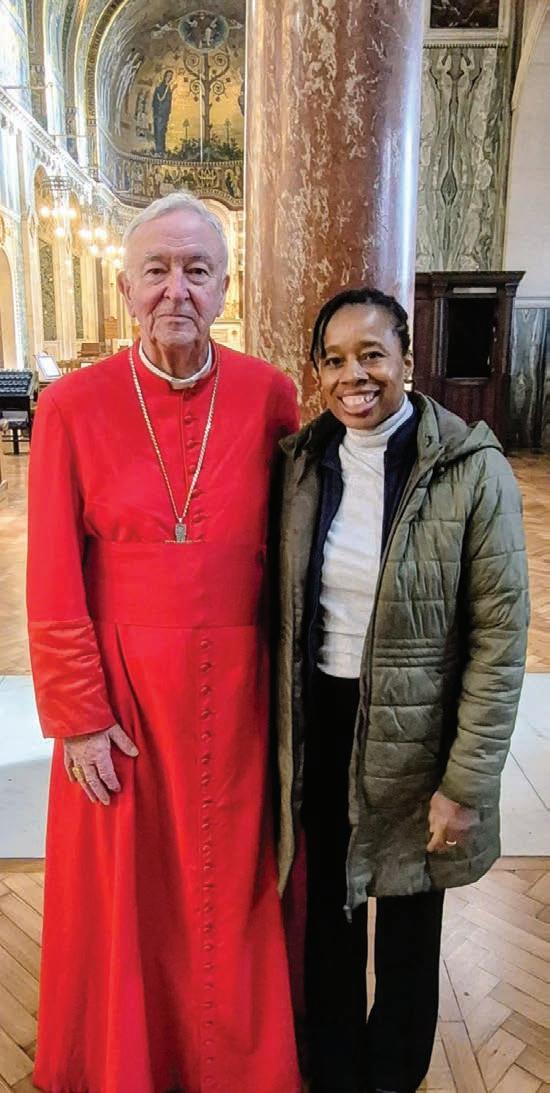
On Thursday 5 February, Cardinal Vincent Nichols celebrated the evening Mass in thanksgiving for 16 years as Archbishop of Westminster. We wish him every blessing in his retirement.

Clues Across
1 William -------, satirical painter of his native 18thc. London, especially in St Giles Parish (7)
6 See 6 Down
8 ‘O2 -----’, event centre beside the ames (5)
9 Time o from study taken by young people (3,4)
10 Ancient ‘Rose City’ in Jordanian desert (5)
11 See 3 Down
13 Army & Navy ------, famous emporium near the Cathedral for many years (6)
15 Broad red hat with tassels, worn by cardinals (6)
17 William ------, who set up the rst printing press, in Westminster (6)
20 Food from Heaven in the OT (5)
21 One who does not believe in God (7)
23 Tribe led by early English Queen whose statue is by Westminster Bridge (5)
24 Bird symbolically associated with wisdom (3)
25 Ophelia’s brother, dies with Hamlet in Shakespeare’s play (7)
Clues Down
1 Former colonial city with cathedral dedicated to e Immaculate Conception (4,4)
2 Work of an Evangelist (6)
3 & 11 Across: Dominican Sister and Saint, rst canonised person born in the Americas (4,2,4)
4 ‘Cry God for England, ----- and St. George’, Shakespeare’s Henry V (5)
5 Early Saint, martyred with Felicity, cited in the Canon of the Mass (8)
6 & 3 Across: Commercial confection at the commemoration of the Resurrection (6,3)
7 Francisco ----, major Spanish painter (4)
12 St -------- Clitherow, young mother martyred in York 25 March 1586 (8)
14 Politicians of early Rome or the USA (8)
16 Soup ingredient for Ash Wednesday? (6)
18 ‘I ------‘, words spoken by Jesus on the Cross (6)
19 Herb evoking Moscow Cathedral? (5)
20 Salad dressing from Ireland? (4)
22 Park, by the corner of which is the Tyburn memorial (4)
ANSWERS
Overheard on Mount Tabor, Luke 9.31 Amanda Hill
“Dear friends of my Father, please let me explain, My life and my labour have not been in vain. I know that my dying, whatever its pain, Will raise humankind to His grace once again.”
“ is land, which He promised, a far-o I saw, Your Father required my dying before is people to whom I have given His Law, Were free to enjoy what he chose to restore.”
“Like Moses, on Horeb, upon Holy Ground, I met once your Father, a whisper of sound; I feared death no longer, and homeward was bound, For life in His service was deathless, I found.”
“Moses, my Father, rewards thus the brave, Like Elijah, we also end not in the grave; By pain it’s the pathway to heaven we pave, For the source of salvation is God’s will to save.”
e house was spartan, with no owers To welcome guests tired from day-long Journeys, yet the brown-beige furnishings In ev’ry room gave a certain kind Of carceral aesthetic for the Forty days of silence, like a month In a monastery in Tibet, Or in a wilderness with only e sky, the wind, the day and the night And the cold, bleak barren landscape and No-one but myself with whom to talk.
But, in the silence, I realised God Inhabits the wilderness of Our lives—spaces where we do our thing, Attempting to cultivate crops to Feed ourselves along this barren pathWay where soil is poor and nothing grows. And thought “Maybe, I should make myself Invisible; eat and sleep and rise In sequence with the bells, follow those Who know their way around this place and At all times, maintain the silence here.”
To submit a poem whether by yourself or another for consideration, please contact the Editor – details on page 3.
In the early days of the Church, the liturgical re-enactment of the Last Supper and of the institution of the Holy Eucharist took place during the evening of Maundy ursday. Our Lord’s death on the Cross was solemnly commemorated on the a ernoon of Good Friday. Holy Saturday was kept as a day of mourning for Christ lying dead in the tomb; it was not until nightfall that the great Watch began—the vigil of the Resurrection.
e Decree which announces the reform of the liturgy of Holy Week (Maxima redemptionis, November 1955) reminds us of these facts, and proceeds to describe how, in the course of time, the a ernoon or evening rites of the Triduum Sacrum began to be held progressively earlier in the day, until by the end of the Middle Ages they were taking place in the early morning, as they have continued to do ever since. Not only did the rites themselves thus lose much of their original signi cance, but the Day of Mourning simply disappeared: Holy Saturday lost its original character and instead almost usurped the pre-eminence of Easter Day itself. […]
Many cords of sentiment and tradition are here broken. at they are replaced by something better is not in doubt; but for many of us it may well take time before this new conception of Maundy ursday can command our a ections as it commands our obedience. But it is an inspiring ideal, and it will in time achieve its purpose, provided always that it is not allowed to collapse under sheer overwhelming practical di culties. […]
In cathedral churches, the consecration of the Holy Oils formerly took place during the single Mass of Maundy ursday. Under the new order, this ceremony is isolated. It is to be performed during the morning at a separate Mass, the Mass of the Chrism. e full, archaic ceremonial for the blessing of the Oils is still retained, but the Proper of the Mass is new.
e o ce of Matins and Lauds for each of the last three days of Holy Week was formerly ‘anticipated’ on the previous evening, under the descriptive title of Tenebræ. ese o ces have now been restored to their original mornings, and Tenebræ has almost ceased to exist. ( ere is a solitary exception: Cathedrals, in which the Holy Oils are consecrated on the morning of Maundy ursday, may still anticipate the Matins and Lauds that day in the form of Tenebræ on Wednesday evening.) It is perhaps impossible not to regret the abolition of Tenebræ; equally impossible not to admire the Church’s rm decision to ensure that no alternative evening service—not even Tenebræ — shall remain to de ect attention or attendance from the great liturgical actions of the Last Supper and the Cruci xion. […]
e music for Holy Week this year follows the usual plan. e programme of music for the great liturgical functions is at one and the same time varied, beautiful and simple. For Tenebræ Vittoria is, as usual, the chief composer. When anything more beautiful than his responses is composed, it will be sung in the Cathedral; but not until then. On Maundy ursday night the Benedictus will be by Vittoria—a new item. His Regina Cœli for double choir will be sung on Easter Sunday. is is the third of as whole set of Our Lady’s Anthems which this eminent writer set for double choir. e Alma and the Ave Regina have already been sung this year. It seems possible, nay probable, that this is the rst time they have been sung in England.
It is di cult to see why these lovely works have been overlooked for so long, for Vittoria at his best is the worthy equal even of Palestrina. e responses by Ingegneri are the old ones under a new name. Su ce it to say that their style is so perfect that they were sometimes ascribed to Palestrina himself. Of other composers the mere names are su cient guarantee of the worth of the music. Di Lassus, Croce, Anerio are familiar names to all those who know and love the Cathedral Liturgy. Of the English composers there is again variety and interest. Byrd, Tallis, Tye are all represented, and the beautiful Ave Verum of Peter Philips has its rightful place in the scheme of things. A er a silence of several years, the O Vos Omnes of Dering and the Mass for a Mene of Applebye are to be heard again.
For the rest, the list tells its own story. It is not complete in every detail for the amount of music sung is far greater than would appear from the mere list; but, as so much is routine, we have indicated only the leading features.
In conclusion, we need hardly remind the reader that the music of Holy Week is selected for the bene t of the worshipper, and not primarily as a treat for the musician. In all cases the needs and demands of the Liturgy have been studied, so that the music may be the help and not the hindrance to the proper worship of God. His House is a House of Prayer.
e Holy Father’s Prayer Intention
For disarmament and peace
Let us pray that nations move toward e ective disarmament, particularly nuclear disarmament, and that world leaders choose the path of dialogue and diplomacy instead of violence.
Sunday 1 March Ps Week 2
2nd SUNDAY OF LENT
12 noon Solemn Mass (Full Choir)
Palestrina – Missa Aspice Domine
Malcolm – Scapulis suis
4pm Solemn Vespers and Benediction
Bevan – Magni cat primi toni
Tallis – O nata lux
4.30pm Mass for the Deaf Community (Cathedral Hall)
Monday 2 March
Lent Feria
Tuesday 3 March
Lent Feria
5.30pm Chapter Mass
Wednesday 4 March
Lent Feria (St Casimir)
1.15pm Lunchtime Concert
Thursday 5 March
Lent Feria
Friday 6 March Friday abstinence
Women’s World Day of Prayer
Lent Feria
6.15pm Stations of the Cross
On the rst Sunday of each month, a Mass is celebrated for the benefactors of Westminster Cathedral, living and dead. Sunday 1 March 2026, 5.30pm, Sunday 5 April 2026, 12 noon (Easter Day), Sunday 3 May 2026, 10am, Sunday 7 June 2026, 10am, Sunday 5 July 2026, 8am, Sunday 2 August 2026, 7pm, Sunday 6 September 2026, 5.30pm For more information, contact Laura Dudhee, at 020 7798 9058 or email cathedralgiving@rcdow.org.uk
e Cathedral is open from 7.30am and closes in time for 7pm.
Monday to Friday: Morning Prayer 7.35am, Mass 8am, Mass (Latin, unless there is a Funeral) 10.30am, Confessions 11.30-12.30pm, Mass 12.30pm *, Exposition of the Blessed Sacrament 1.15-4.30pm, Benediction 4.30pm, Confessions 4.30-5.30pm, Sung Vespers 5pm (Latin, Choir, except Tuesday, English, Cantor), Solemn Mass 5.30pm (Choir, Tuesday: Boys’ voices, Wednesday: Men’s voices)
Saturday: Mass 8am, Morning Prayer 10am, Mass 10.30am (Latin, Choir,) Confessions 11.30-12.30pm, Mass 12.30pm *, Confessions 5-6pm, Sung Vespers 5.30pm (English, Cantor), Sung Mass 6pm.
Sunday: Mass 8am, Sung Morning Prayer 9.30am, Sung Mass 10am, Confessions 10.30-12.30pm; Solemn Mass (Choir) 12noon *, Solemn Vespers (Choir) and Benediction 4pm, Confessions 5-6.45pm, Sung Mass 5.30pm, Mass 7pm.
For full opening and closure times of the Cathedral and for confession and service times please consult the Cathedral diary on the website.
* Live streamed via the Cathedral website
Saturday 7 March
Lent Feria
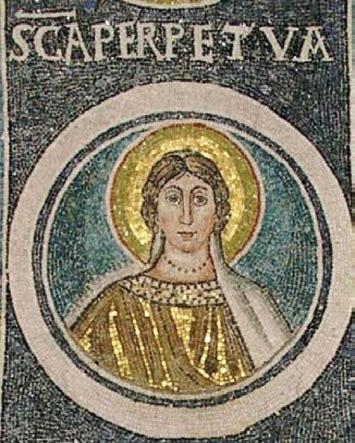
(Ss Perpetua and Felicity, Martyrs) 6pm RCIA First Scrutiny
Sunday 8 March Ps Week 3
3rd SUNDAY OF LENT
12 noon Solemn Mass (Full Choir)
Guerrero – Missa Inter vestibulum et altare Tallis – Salvator mundi
4pm Solemn Vespers and Benediction
Lassus – Magni cat primi toni
Byrd – Infelix ego
Monday 9 March
Lent Feria (St Frances of Rome, Religious)
Tuesday 10 March
Lent Feria
Wednesday 11 March
Lent Feria 1.15pm Lunchtime Concert
Thursday 12 March
Lent Feria
Friday 13 March Friday abstinence
Lent Feria
6.15pm Stations of the Cross
Saturday 14 March
Lent Feria
9.30am – 4.30pm A Day with Mary 6pm Visiting Choir sings at Mass
Sunday 15 March Ps Week 4
4th SUNDAY OF LENT (Lætare)
12 noon Solemn Mass with RCIA Second Scrutiny (Full Choir) de Padilla – Missa Ego os campi
Sweelinck – Gaude et lætare
Rossini – O salutaris hostia
4pm Solemn Vespers and Benediction Reid – Magni cat secundi toni Brahms – Wie lieblich sind deine Wohnungen
Monday 16 March
Lent Feria
Tuesday 17 March
St PATRICK, Bishop & Patron of Ireland
8, 10.30am Mass in St Patrick’s Chapel
Wednesday 18 March
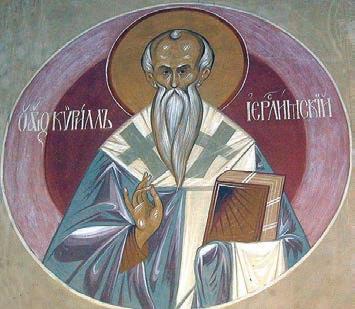
Lent Feria (St Cyril of Jerusalem, Bishop & Doctor)

7.35am Morning Prayer, 8, 10.30am Mass in the Crypt
12.30pm Mass, 5pm Evening Prayer, 5.30pm Vigil Mass of St Joseph in Cathedral Hall
6.45pm MacMillan, Stabat Mater (ticketed)
Thursday 19 March
St JOSEPH, Spouse of the Blessed Virgin Mary, Patron of the Diocese
8, 10.30am Mass in St Joseph’s Chapel
5.30pm Solemn Mass (Full Choir)
Byrd – Mass for four voices
Mawby – Iustus ut palma
Malcolm – Veritas mea
Friday 20 March Friday abstinence
Lent Feria
6.15pm Stations of the Cross
Saturday 21 March
Lent Feria
12.30pm e Polish Airmen’s Association attend Mass, followed by annual wreath laying ceremony
6pm Westminster Cathedral Junior Voices sings at Mass
Sunday 22 March Ps Week 1
5th SUNDAY OF LENT
12 noon Solemn Mass (Full Choir)
Rubbra – Missa in honorem Sanct Dominici Poulenc – Timor et Tremor
Mawby – Ave verum corpus
4pm Solemn Vespers and Benediction
Palestrina – Magni cat primi toni
Purcell – Hear my prayer
5.30pm RCIA ird Scrutiny
Monday 23 March
Lent Feria
(St Turibius of Mogrovejo, Bishop)
Tuesday 24 March
Lent Feria
5.30pm Vigil Mass of the Annunciation
Wednesday 25 March
THE ANNUNCIATION OF THE LORD
1.15pm Lunchtime Concert
5.30pm Solemn Mass (Full Choir)
Victoria – Missa Ave maris stella
Victoria – Ave Maria a 8
Thursday 26 March
Lent Feria
2pm SVP School Passion Play
Friday 27 March Friday abstinence
Lent Feria
6.15pm Stations of the Cross
Saturday 28 March
Lent Feria
6pm Visiting Choir sings at Mass
Sunday 29 March Ps Week 2
PALM SUNDAY OF THE PASSION OF THE LORD
11.30am Procession and Solemn Mass (Full Choir)
Malcolm – Ingrediente Domino
F. Anerio – Christus factus est
Victoria – Passion according to St Matthew
Byrd – Mass for four voices
Byrd – Ne irascaris
Byrd – Civitas sancti tui
4pm Solemn Vespers and Benediction
Victoria – Magni cat octavi toni
Palestrina – Improperium exspectavit
Monday 30 March
MONDAY OF HOLY WEEK
Tuesday 31 March
TUESDAY OF HOLY WEEK
12 noon Solemn Mass of Chrism (Full Choir)
Haydn – Missa brevis Sancti Ioannis de Deo
Croce – In spiritu humilitatis
Mawby – Ave verum corpus
Key to the Diary: Saints’ days and holy days written in BOLD CAPITAL LETTERS denote Sundays and Solemnities, CAPITAL LETTERS denote Feasts, and those not in capitals denote Memorials, whether optional or otherwise. Memorials in brackets are not celebrated liturgically.
Catholic Evidence Guild
Clergy House Room 2, Tuesdays 7pm
Catholic Grandparents’ Association
Hinsley Room,
Second Sundays 12-3.30pm
Charismatic Prayer Group
Cathedral Hall, Fridays 6.30-9pm
Divine Mercy Prayer Group
St Patrick’s Chapel, Sundays 1.30-2.30pm
Filipino Club
Cathedral Hall, Second Sunday 1-5pm
Guild of the Blessed Sacrament
Blessed Sacrament Chapel, Mondays 6.15pm
Guild of St Anthony Lady Chapel, Tuesdays 6.15pm
Interfaith Group Hinsley Room, ird Wednesdays 1.30 -3pm
Legion of Mary Hinsley Room, Monday 1.30-3.30pm
Nigerian Catholic Association Hinsley Room, Fourth Sundays 1.30-2.30pm
Oblates of Westminster Cathedral Hinsley Room, Fourth Sundays 2.30-4pm
Padre Pio Prayer Group
Sacred Heart Church, First ursdays 1.30-3.30pm
Rosary Group
Lady Chapel, Saturdays 11.15-12.00noon
Walsingham Prayer Group
St George’s Chapel, First Tuesdays 2.30-4pm
Yoruba Association Hinsley Room, ird Sundays 1.30-3pm
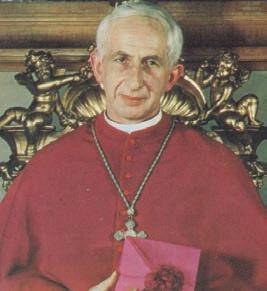
In December 1965, Mgr Patrick Joseph Casey was appointed as Auxiliary Bishop of Westminster and the Titular Bishop of Sufar; the rst to hold the title. Sufar is an ancient Roman Catholic bishopric in the province of Mauretania Cæsariensis (modern Algeria), but its exact location has been lost to history.
Following Bishop Pat’s appointment, ve other bishops have held the title; the current incumbent being an Auxiliary of Boston, Bishop Robert P. Reed. However it is the h Bishop of Sufar that is of particular interest as he currently sits on the rone of St Peter. Robert Francis Prevost was given this titular see in 2014 when he was appointed Apostolic Administrator of Chiclayo, Peru. is forms a beautiful link between His Holiness Pope Leo and the Diocese of Westminster. I have no doubt that Bishop Pat would have been surprised and delighted by this connection.
Perhaps this link a ords me an opportunity to share the life of such an extraordinary man?
Born in Stoke Newington on 20 November 1913, Pat was baptised in St Scholastica’s Church in Clapton. Bishop Paul McAleenan told me recently that he came across the entry in the baptismal register by chance, when he was Parish Priest there. Pat was educated at St Joseph’s Parochial School, Kingsland and began his studies for the priesthood at St Edmund’s College, Ware, in Hertfordshire. In June 1939 he was ordained by Cardinal Hinsley. For the following I am indebted to the obituary in e Independent newspaper:
‘Patrick Casey, the former Roman Catholic Bishop of Brentwood, could never remember the time when he did not want to be a priest. During his 59 years in ministry he retained the heart of a gentle caring priest: he had a total lack of pomp and a selfdeprecating, if mischievous, sense of humour.
Casey became a bishop just a er the Second Vatican Council, and he brought to the diocese an approach of unassuming authority, very much in the style of the Council. His appointment as Bishop of Brentwood in November 1969 followed six years as the Vicar General in the Archdiocese of Westminster and four years as Auxiliary Bishop of Westminster.
He was one of the rst Catholic bishops in England to be selected a er consultation within the diocese. A er the death of Casey’s predecessor, the Brentwood priests conducted a survey in an attempt to formulate the qualities needed in a bishop. e results of the survey were fairly predictable – a pastoral, kindly and caring candidate was sought. ere were, of course, many other qualities required – in fact, every virtue had to be included and every vice excluded. e only quali er, as Casey commented when he read it over breakfast, was a canonised saint! A few days later Rome announced his appointment to the vacant see.
Not many Brentwood priests knew much about their new bishop, but subtle – and otherwise – enquiries from the brethren across the diocesan boundaries soon elicited the information that Patrick Casey was a much-loved and greatly appreciated man. Indeed of all the qualities for which Casey is remembered in the diocese by both clergy and lay people his kindness will be rst. Anyone
who had to face any sort of crisis, trouble or di culty would always have the bishop’s compassion and assistance. His kindness was also practical, as many individuals, parishes, societies and organisations could testify.
On the day of his installation Casey announced that he would remain bishop of the diocese for 10 years. He meant what he said. In the autumn of 1979 he submitted his resignation to the Pope. is was recognised as an unprecedented but courageous decision. Casey stated: “I am con dent that in the best interests of the diocese, of priests and people alike, I should make way for a younger and more vigorous bishop to lead you forward.”
Casey’s rst appointment was as Assistant Priest at St James’s, Spanish Place, near Manchester Square in central London, where he stayed for over 20 years. In 1961 he became parish priest of Hendon. He was only there for two and a half years before being appointed Vicar General of the Westminster Archdiocese in 1963 by the then Archbishop, Cardinal John Carmel Heenan. e following year he became a Domestic Prelate and a Canon of Westminster Cathedral. Casey had an excellent relationship with the priests of Westminster, among whom he was universally popular. He also had a great friendship with Heenan.
In 1966 Casey was consecrated bishop of the titular see of Sufar by Cardinal Heenan, and became one of the Auxiliary Bishops of Westminster. A er three years he became Bishop of Brentwood, following the retirement of Bishop Bernard Wall. He maintained his close links with Westminster and it was as Bishop of Brentwood, one of the su ragan dioceses of the Westminster Archdiocese, that Casey was the principal celebrant at the funeral of Cardinal Heenan in 1975.
But it was the pastor in him that dominated. A er his resignation as bishop in 1979, Casey again became parish priest, this time at Our Most Holy Redeemer and St omas More in Chelsea. He retired 10 years later to Leigh-on-Sea in the Diocese of Brentwood. It brought him great joy to live next door to the local church and continue to assist in parish life. He died in Leigh-on-Sea, Essex 26 January 1999.’
During my time as Assistant Priest at Our Lady of Victories, I had the privilege to get to know Pat quite well when he joined the deanery. His hospitality was very generous and, if truth be told, the quality of deanery lunches from then on improved considerably! He was a priest’s priest: a born pastor, endowed with a great sense of humour. e one word from the Independent obituary which stood out for me was his sense of ‘self-deprecation’. He didn’t take himself too seriously. He once recounted an experience he had when he travelled to Ireland to ordain a priest for Westminster. To mark the occasion the Parish Priest had presented him with a silver cigarette case engraved: ‘ e Rt Rev Dr Patrick Casey on the occasion of the Ordination of…’ Pat amusingly shared: ‘It’s the closest I shall ever get to a doctorate!’
As we pray for the repose of Bishop Pat’s soul and remember him with great a ection we heartily wish Pope Leo good health and length of days.
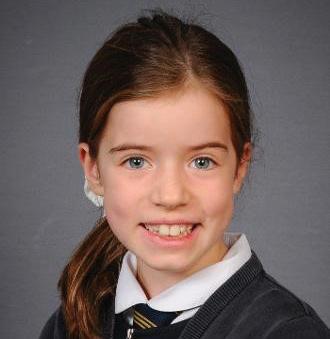
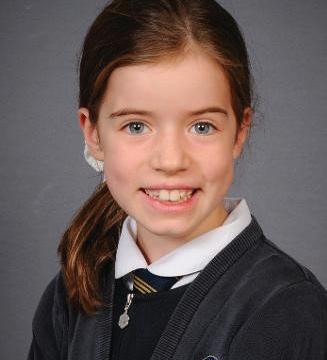
Pope Leo has announced a special Jubilee Year of St Francis this year. When I think about peace, I think of love and care spreading around the world. Peace is not only when everything is calm and quiet; it is also about how we treat other people. Peace might mean being cheerful and kind, even when things are di cult. It is about making the right choices and showing respect to everyone around us.
St Francis of Assisi is a great example of peace. He cared for animals as much as he cared for himself, and he treated all of creation with kindness. He believed that everything God made was special and deserved love. St Francis tried his best to spread peace wherever he went. His actions help us understand God’s love because he showed that love through what he did, not just what he said. He teaches us that peace is something we must live out every day. His way of living can still inspire us today by encouraging us to care for nature, look a er animals, and treat others with compassion and respect.
e quote ‘make me a channel of your peace’ means asking God to help us bring peace into the world. A channel is like a river or a stream that carries water from one place to another. In the same way, we can carry God’s peace to the people around us. We are asking God to use us to spread kindness, forgiveness and understanding. Being a channel of peace does not always mean making everything perfectly calm. Sometimes it means helping someone quietly, sharing a smile, or choosing not to argue. One small action, like including someone who is le out, can make a big di erence. Even without using words, we can bring peace by being patient, gentle and thoughtful.
e Pope has spoken about peace and linked his message to St Francis of Assisi. He reminds us that St Francis showed the world how to live simply and love deeply. e Pope encourages us to be peacemakers in our own lives, just like St Francis. He reminds us that peace begins with each of us. We can follow this teaching at school, at home and in our community by choosing kindness over anger and forgiveness over holding grudges.
I can be a channel of peace by forgiving people, even when it feels very di cult. ere might be times when someone upsets me or is unkind, but instead of reacting with anger, I can try to stay calm and respond kindly. Taking a deep breath, thinking before I speak, and remembering how I would like to be treated can help me stay peaceful inside. Even if others are not calm, I can choose to be. I would like to be remembered as someone who tried to spread love and peace wherever I went. By following the example of St Francis, I can help make the world a more peaceful place, one small action at a time.