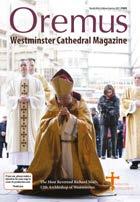
Westminster Cathedral Magazine
If you can, please make a donation for your copy to cover its production cost. Thank you.
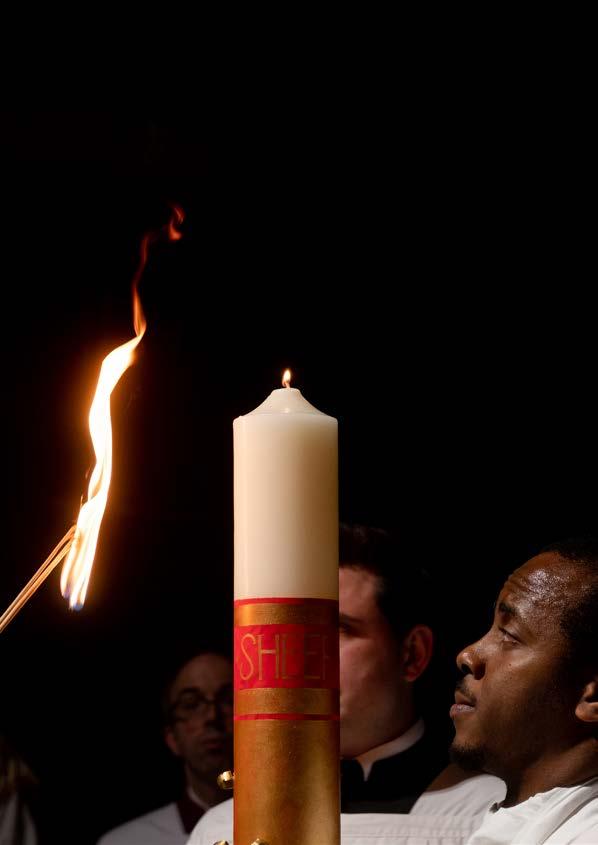
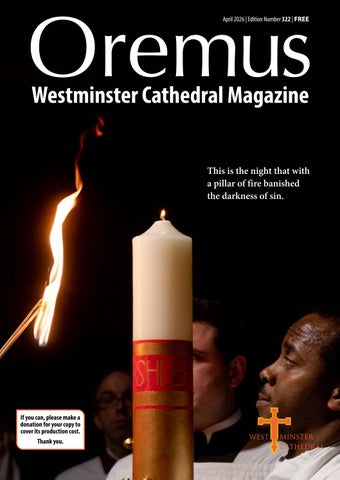
This is the night that with a pillar of fire banished the darkness of sin.
If you can, please make a donation for your copy to cover its production cost. Thank you.
This is the night that with a pillar of fire banished the darkness of sin.
Although we earn income from the advertising which we carry, Oremus relies on donations from readers to cover its production costs.
The Companions of Oremus was established to recognise those who give generously to support us. Open exclusively to individuals, Companions’ names are published in the magazine each month (see page 7). All members are invited to one or more social events during the year and Mass is offered for their intentions from time to time.
If you would like to support us by joining the Companions, please write to Oremus, Cathedral Clergy House, 42 Francis Street, London SW1P 1QW or email oremuscomps@rcdow.org.uk with your contact details, including postcode. Members are asked to give a minimum of £100 annually. Please mention how you would like your name to appear in our membership list and if you are eligible to Gift Aid your donation. Postal subscriptions to Oremus may be purchased by completing and sending to the office the coupon printed in the magazine. Subscriptions to receive Oremus either by email (free) or as hard copy by post (p & p payable) can also be entered by visiting https://westminstercathedral.org.uk/the-cathedral-community/about-oremus/ and completing the form there.
Thank you for your support.
Cathedral Clergy House
42 Francis Street
London SW1P 1QW
T 020 7798 9055

E oremus@westminstercathedral.org.uk
W www.westminstercathedral.org.uk
Oremus, the magazine of Westminster Cathedral, reflects the life of the Cathedral and the lives of those who make it a place of faith in central London. If you think that you would like to contribute an article or an item of news, please contact the Editor.
Patron
The Archbishop of Westminster
Chairman
Fr Sławomir Witon´
Editor
Lorcán Keller
Oremus Team
Tony Banks – Distribution
Zoë Goodway – Finance
Anne Marie Micallef – Marketing
Paul Moynihan – Proofreading Manel Silva – Subscriptions
Design and Art Direction
Julian Game
Registered Charity Number 233699 ISSN 1366-7203
Opinions expressed by contributors do not necessarily represent the views of the Editor or the Oremus Team. Neither are they the official views of Westminster Cathedral. The Editor reserves the right to edit all contributions. Publication of advertisements does not imply any form of recommendation or endorsement. Unless otherwise stated, photographs are published under a creative commons or similar licence. Every effort is made to credit all images. No part of this publication may be reproduced without permission.

© Mazur/CBCEW.org.uk
Homily: The Rite of Election by Archbishop Richard Moth
& 7 Stabat Mater by Sir James MacMillan
Our Lady of Walsingham Prayer Group by Antonia Moffat
New Cathedral Video by Ad Fontes
Cathedral History in Pictures: This is for Now
A Return Visit to the Mother Church by Fr Michael Garnett
Father of the Poor and Father of Western Monasticism by Louise Sage
The Mystery of Our Lady of Victoria by Ashley Carlo Avery-Bennett
Joseph’s School Pilgrimage by James Stacey
On the Saturday after Ash Wednesday, the whole Diocese rejoiced with the 790 of those to be baptised and received into Full Communion with the Catholic Church who attended the Rite of Election. With our Easter celebrations taking place, the journey towards this great day has been completed. Yet this is not so much a completion as a new beginning. Those who have been baptised, together with those received into Full Communion at the Easter Vigil, now begin their life in the Catholic Church. The journey continues and, in the wonder of Jesus’ Resurrection, we all look to the very purpose of our lives: Life with the One who has died and risen for us.
Easter has been THE moment of Baptism since the earliest times of the Church. The Lord’s Resurrection is life for us all, just as Baptism is the start of that life of faith and relationship with him. It is the moment when we see that we are called to live in the love that exists in the Blessed Trinity – the love that is present, from all eternity, between Father, Son and Spirit. The life of the Church is a continual growing in that love, a journey of deepening our experience of the love of God and a call to bring that love into the world we have been given.
As Mary Magdalene and the Apostles experienced their meetings with the Risen Christ, their initial response was one of wonder and reflection. So it is with us. The Easter celebrations call us to a spirit of wonder at all the Lord has done for us. Our newly baptised are called to this time of wonder and reflection in the period of catechesis that leads them to their first celebration of Pentecost as newly baptised.
This experience of wonder is for us all, opening minds and hearts to the promptings of the Holy Spirit so that, with Peter on the day of Pentecost, we are emboldened to speak of Jesus’ Resurrection. This feast is not a celebration we keep to ourselves. It is for the whole world and at this time when the world is marked by conflict and war, Jesus’ first words to his friends after the Resurrection must surely be our first words to those around us, not just on this day, but always: ‘Peace be with you.’

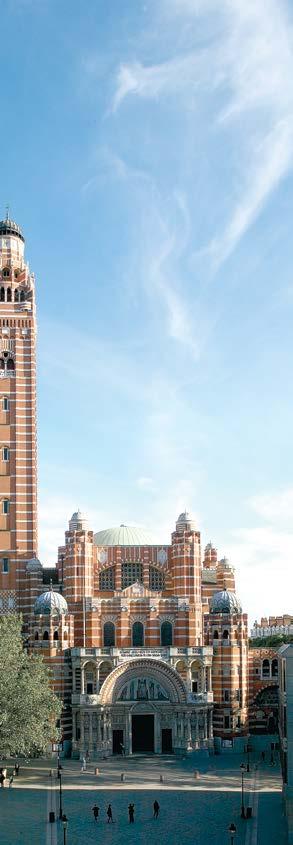
Westminster Cathedral
Cathedral Clergy House
42 Francis Street
London SW1P 1QW
Telephone 020 7798 9055
Email chreception@rcdow.org.uk www.westminstercathedral.org.uk
Cathedral Chaplains
Fr Sławomir Witoń, Dean
Fr Patrick van der Vorst, Precentor
Fr Michael Guthrie
Fr Vincent Mbu’i SVD
Fr Paul Zhao SVD
Fr Hugh MacKenzie
Rev Paul Christian (Cathedral Deacon)
Fr Javier Ruiz-Ortiz (priest in residence)
Also in residence
Franciscan Sisters of Our Lady of Victories: Sr Jesuina, Sr Angelina and Sr Mariana
Music Department
Simon Johnson, Master of Music
Peter Stevens Obl. OSB, Assistant Master of Music
Alexander Robson, Organ Scholar
Cathedral Manager
Peter McNulty
Parish Safeguarding Representative
Trevor Koschalka westcathsg2@safeguardrcdow.org.uk
Cathedral Finance Manager
George Kulasingham
Cathedral Fundraising Manager
Laura Dudhee
Chapel of Ease
Sacred Heart Church
Horseferry Road SW1P 2EF
Archbishop Richard Moth
Dear catechumens and all those responding to the call to continuing conversion, dear brothers and sisters,
Catechumens, as you prepared for this Rite of Election, you wrote your names for the list of the Elect. Today all your names are gathered in the Book of the Elect, present in this Cathedral. This is a powerful sign of the journey you have been taking – a journey that will reach its high point in the new life of Baptism. The whole Diocese, the whole Church, rejoices in the step you take today and prays for you.
For those celebrating the call to continuing conversion, as you look to the moment of your Reception into Full Communion, we join with you in giving thanks for the life of the Christian communities that have nurtured your faith and for your openness to the promptings of the Holy Spirit, enabling you to respond to the call to Full Communion.
The Psalmist speaks of the desire that we come to know the ways of the Lord, following his paths in response to his gentle summons and knowing that God will always be merciful, always near. Catechumens and candidates, you have heard the gentle promptings of the Holy Spirit. Your presence here is a sign of your response to God’s call. Your response is an example to us all.
The Lord who is gentle and lowly in heart calls us to rest in the love that exists between the Three Persons of the Trinity, Father, Son and Spirit. Let us reflect today on what it means to live our whole lives in that love, for it is a love that casts out fear. The love of the Trinity enables, giving strength for whatever the Lord may ask of us and enabling us to face the challenges that will always come the way of the Christian. Catechumens, it is into this love that you will be baptised when the time comes for you to be baptised in the name of Father, Son and Spirit.
Candidates, your journey into Full Communion with the Catholic Church is the call to be ever increasingly open to this love of the Trinity. It is the call to open your minds and hearts to the gifts of the Holy Spirit, that you may bear the fruit of the Spirit.
As we are called into ever deeper relationship with Christ, so we are called to prayer, for it is in prayer, in the time spent with Jesus that this relationship deepens and we come to see our way forward with him and in him. Give time to prayer, brothers and sisters, each and every day. Our coming together at Mass Sunday by Sunday, and at other times too, is an encounter with the Lord himself, who gives himself as food for our journey, enabling us to be his instruments in the world.
Jesus calls us to bring our burdens to him, for in him we find rest. Again, I say to catechumens and candidates, as you bring your particular labours and loads to the Lord, you are active and powerful witnesses to the world around you of the journey to the Lord that is the call to the whole of humanity. As we allow ourselves to journey with Christ, we experience the reality in our lives of Jesus carrying our burdens for us.
Be assured that, as you continue your journey beyond Baptism or Reception into Full Communion, the Lord will never ask you to carry a burden that is beyond you. Rather, your continuing closeness to him will bring you to do great things for him, things beyond your imagining today, as you begin the final preparations for Baptism or Reception.
As we rejoice in the journeys that you are taking, be assured of the prayers of all in your parish communities and, indeed, the whole family of the Diocese during these days of Lent. Know that we shall rejoice with you at Easter and welcome you into the life of the Church, that our growing community will continue, strengthened by your presence, in the work the Lord has called us to do for him.
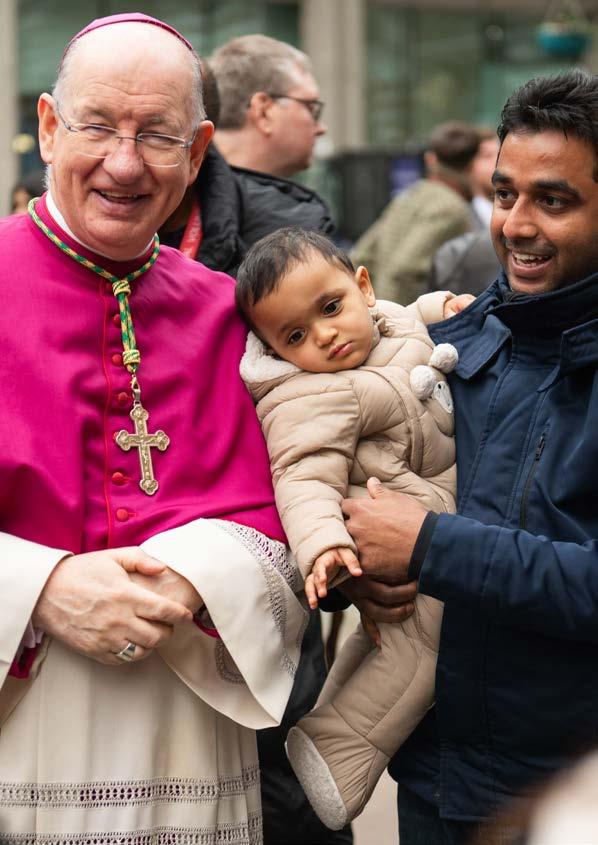
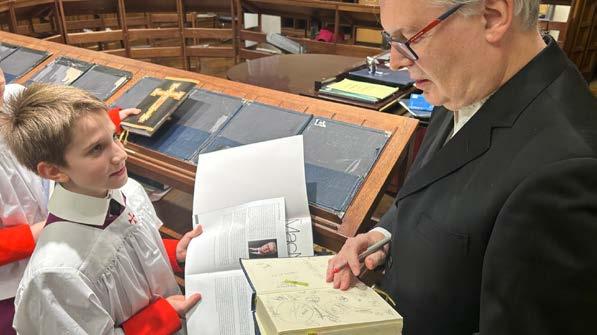
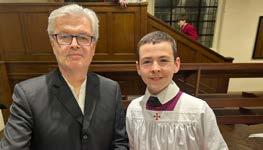
On Wednesday 18 March, the Cathedral Choir and the Britten Sinfonia performed Sir James MacMillan’s Stabat Mater, along with Ralph Vaughan Williams’ Fantasia on a Theme by Thomas Tallis. MacMillan attended the performance, which began with a conversation on the piece with Fr Patrick van der Vorst. The article below was first published by Sir James MacMillan in The Spectator in 2016.
Sir James MacMillan
Music has an infinite ability to tell the same story over and over again. This is part of its tradition but even individual composers can be drawn back to the same models in attempts to reclothe and reinterpret musical forms and structures and settings of classic texts. This is especially the case with the Crucifixion narrative. Bach is revered for his two Passions – St Matthew and St John – but there have been other ways for composers to relate this story in sound. The Seven Last Words from the Cross, for instance, is a now defunct liturgical form which attracted the attention of Lassus, Schütz, Haydn, Gounod and Franck.
The liturgy of Tenebræ has given rise to settings of the Lamentations by Tallis, Charpentier and Stravinsky (Threni), as well as the Tenebræ Responsories by Victoria and Gesualdo. Allegri’s famous Miserere is also associated with Good Friday and then there are all those incredibly powerful settings of the Stabat Mater.
This text is a 13th-century Marian hymn, meditating on the suffering of Mary, the Mother of God, as she stands at the foot of the cross. ‘Stabat Mater dolorosa / iuxta Crucem lacrimosa’ (The sorrowful mother stood / full of tears by the cross) are the first
words of a long poem, some 20 stanzas in full, whose subject is the Virgin Mary as she beholds her dying Son. For devout Catholics, and the many great composers who set these words, this is a kind of ultimate, spiritual Kindertotenlied. The poem goes beyond mere description and invites the reader and the listener to partake in the mother’s grief as a path to grace, and as part of a believer’s spiritual journey.
The authorship of the hymn has been variously ascribed to St Gregory the Great (d.604), St Bernard of Clairvaux (d.1153), Innocent Ill (d.1216), St Bonaventure (d.1274), John XXII (d.1334) and Gregory Xl (d.1378), but the most likely candidate is the Franciscan Jacopone da Todi (d.1306). It is a tricky text to set to music as it is difficult to sustain a persistent tone of pathos, and there are challenging repetitious rhythmic issues within lt. But just as the image has inspired countless painters and sculptors through the centuries it has also attracted generations of wonderful composers.
There are many great musical settings through history –by Josquin, Palestrina, Pergolesi, the two Scarlattis, Vivaldi, Haydn, Rossini, Liszt and Dvořák. In the 20th century there are beautiful settings by Szymanowski, Poulenc and Arvo Pärt.
Pergolesi’s setting is one of the longest, but one of the most popular works of sacred music. Liszt created some of his noblest music in his setting, which is part of the larger oratorio Christus. Szymanowski’s is fragrant and compelling – a work that is simultaneously atmospheric and colourful. Dvořák wrote his Stabat Mater as a grieving father and devout Catholic. The work turned out to be a landmark in his life, spreading his fame and reputation far, not just in central Europe, but also in the United States where the piece was widely performed.
The great 19th-century Swiss theologian Philip Schaff wrote of this poem:
‘The secret of the power [of the Stabat Mater] lies in the intensity of feeling with which the poet identifies himself with his theme, and in the soft, plaintive melody of its Latin rhythm and rhyme, which cannot be transferred to any other language.’
The usual Protestant objections to the poem’s ‘Mariolatry’ have been muted due to the great beauty and pathos that can touch even the hardest heart. Schaff reminds his readers that Catholics ‘do not pray to Mary as the giver of the mercies desired, but only as the interceder, thinking that she is more likely to prevail with her Son than any poor unaided sinner on earth.’
I have also repeated myself as a composer. I’ve written two Passion settings (St John and St Luke), a Seven Last Words from the Cross, some Tenebræ Responsories, a Miserere and even a response to the Stations of the Cross. Some people say that God intervened in human history. That is, he interfered with our story, to become one of us, to know what it means to be human, and for us to know him and to discover that he loves us, with all the implications that has.
I seem to have been circling around these few days in history for some years. It can be done in purely abstract instrumental music too, but a composer enters into a mysterious collaboration with the word (and the Word) whenever a setting of a text like this is involved. And with the Stabat Mater a composer enters into a particularly painful world of loss, violence and spiritual desolation. I seem to have grown up with the Stabat Mater, singing it as a hymn at school (in the English translation by Edward Caswall) and in my local church in Scotland as a boy, and having my early perception of the Crucifixion (and indeed the world) coloured by its beauty and sadness. It was a great delight and honour to respond to The Sixteen to write my own Stabat Mater for them. Its composition has engrossed me for the last few years.
I do feel as if I’m telling an old story – that many others have been here before me, feeling the tread of history and tradition. But the tragedy keeps resurfacing, from one generation, from one century to the next.
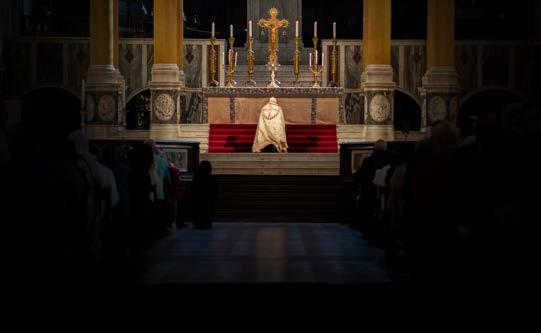
On Sunday 19 April, at 4.30pm, the Bishops of England and Wales will unite in prayer for a holy hour, to uphold the dignity of all human life, as peers in the House of Lords continue to debate legalising assisted suicide.
That day, in communion with the Bishops, Catholic parishes and communities in England and Wales are encouraged to do likewise, praying for the promotion of a culture of life in our lands. This is to present a unified, prayerful front to offer this petition to Our Lord for the dignity of life from conception to natural end, and to pray that assisted suicide will not become law.
In a Lenten statement, the Archbishop of Liverpool, the Most Reverend John Sherrington, reaffirmed the Church’s principled objection to the Terminally Ill (Adults) End of Life Bill, and urged Catholics to pray for parliamentarians debating the Private Members’ Bill in the House of Lords. Archbishop Sherrington, the Lead Bishop for Life Issues for the Bishops’ Conference, asked for a special prayerful focus on those who are suffering near the end of their lives and those who care for them.
Resources can be found on the Bishops’ Conference website: cbcew.org.uk/holy-hour-for-the-dignity-of-life
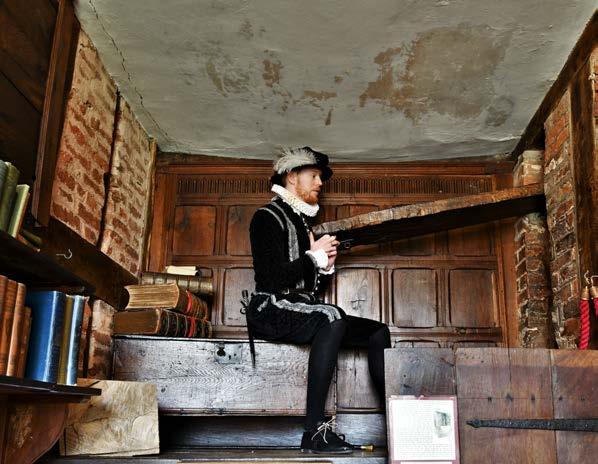
Walk through any great Tudor house and you will see the language of status carved into stone and timber; gatehouses built to impress, long galleries to parade, chapels to proclaim fidelity. Yet in a handful of English homes from that period, another quieter architectural language survives. Tiny trapdoors, secret chambers hidden in walls, shafts that double as drains. These are ‘priest holes’, ingenious hiding places cut into the fabric of houses by brave craftsmen and braver households in an age when the Mass was proscribed and harbouring a priest could mean even execution. Today, many of these places are open to the public. They are not only feats of carpentry, they are spiritual artefacts; marks of a hidden Church that refused to die.
From the Elizabethan period onward, Catholics who refused to attend Anglican worship were labelled ‘recusants’ and fined, sometimes repeatedly and ruinously. Parliament’s penal laws turned the sacramental life into a clandestine operation. Missionary priests – often Jesuits or seminary priests trained at Douai, Rome, or Valladolid – moved from house to house under assumed names. If a ‘priest hunter’ arrived, there had to be somewhere to vanish swiftly and to remain, sometimes for days, in silence and near-darkness. Out of this pastoral necessity grew a clandestine craft of concealment whose greatest artisan was the Jesuit lay brother, St Nicholas Owen, tortured to death in the Tower of London in 1606. He was later canonised as one of the Forty Martyrs of England and Wales, by Pope Paul VI in October 1970.
A priest hole is an act of faith translated into architecture. It says: ‘the priest must live, so that the Mass may be offered; the Mass must be offered, so that Christ may dwell among his people.’ St Nicholas Owen’s genius wasn’t merely technical, it was sacramental imagination rendered in joinery, in service of souls. The priests who hid in those cramped cavities did not hide out of fear alone; they hid to keep a flame alight for England. It is a paradox, and perhaps providence, that many of the places once raided by priest hunters are now stewarded for the nation by organisations like the National Trust. The interpretation on display to visitors does not proselytise; yet in telling the truth about recusancy it preserves an undeniably Catholic memory. For Catholic visitors, these houses invite not triumphalism but thanksgiving. The Sacraments you and I receive freely today were once protected at great cost.
Antonia Moffat
On the great solemnity of the Immaculate Conception, 8 December 2016, the small Shrine of Our Lady of Walsingham was inaugurated and blessed, following the enthronement of Our Lady’s statue by Bishop John Sherrington, now Archbishop of Liverpool. This Shrine is appropriately situated in the Chapel of St George and the English Martyrs, and a highlight video of the ceremony can be viewed on YouTube at the following link: tinyurl.com/englandthydowry.
A few months later, in March 2017, the late Canon Christopher Tuckwell, of beloved memory, gave permission for the Our Lady of Walsingham, Prayer for the Nations Prayer Group to meet and pray around the Shrine on the first Tuesday of every month.
We live in an age where prayer is needed more than ever, for peace in families and peace between nations. Additionally, our core intentions are to pray for the apostolic mission of Westminster Cathedral, her College of Chaplains, employees, volunteers, and all who work for this great task. We pray too for our Archbishop, the Bishops of England and Wales and for the flourishing of our National Marian Shrine in Walsingham.
New members are always welcome; come when you can for as long as you can. For more information, email Antonia at antonia4161@gmail.com.
Our Lady of Walsingham, pray for us.
We are very grateful for the support of the following:
Leticia Dominguez Abada
Lally Ambatali
Leonila V Bennabe
Keith Best
Dr Stuart Blackie
Anne Veronica Bond
Lolita Botanes
Richard Bremer
Hajnalka Burai
Lorenzo Cabrelli
Mrs Erlinda Chin
Francis George Clark
R & L Collyer-Hamlin
Daniel Crowley
Benedicta Jamogha Dako
Angelita Caronan Duran
Cora Emflorgo
Angelita Emperador
Ms Georgina Enang
Fr Joseph Farrell K.H.S.
Ruby & Joseph Farrell in memoriam
Revd James Francis Friedenthal
Fred Gardiner
William Gardner-Hunter
Juanita Grecalda
Connie Gibbes
Zoe & Nick Goodway
Rosalinda Grimaldo
Agnes Haein Kim
Mrs Valerie Hamblen in memoriam
Amanda Hill
Jithro and Ira Nadine Hangad
Bernadette Hau
Mrs Cliona Howell
Alice M Jones & Jacob F Jones
Poppy K
Rosanne Kay
Mary Thérèse Kelly
John Langan
Raymund Livesey
Alan Lloyd in memoriam
Clare and John Lusby
Tony McGee
Linda McHugh
Christiana Thérèse Macarthy-Woods
Ms Ludivina Mangmang
James Maple
Paul Marsden
Mary Maxwell
Dr Denis Moloney
Dr George Morris
Abundia Toledo Munar
Euphrasie Mundele Kilolo
Chris Stewart Munro
Mrs Brigid Murphy
Kate Nealon
Cordelia Onodu
Nigel Parker
Cris Ragonton
Clementina Rokosu
Precy Salvador
John Scanlan
Veronica Scrope
Sonja Soper in memoriam
Tessa and Ben Strickland
Yollie Sumayod
Julia Sutherland
Eileen Terry
Robin Michael Tinsley
Lucila Torrefiel
Peter W Wilson in memoriam
Dr Timothy I Young in memoriam
Peter and Teresa Zurenkas and of our anonymous Companions
If you would like to become a Companion of Oremus, see page 2
Ad Fontes
On 5 February, Ad Fontes, the Cathedral Choir’s record label based in Buckfast Abbey, recorded William Byrd’s remarkable masterpiece Infelix ego, a meditation on Psalm 50 (the Miserere). This was released on YouTube in the lead up to Passion Sunday and is available to view on the Ad Fontes channel and website: adfontes.org.uk/videos.
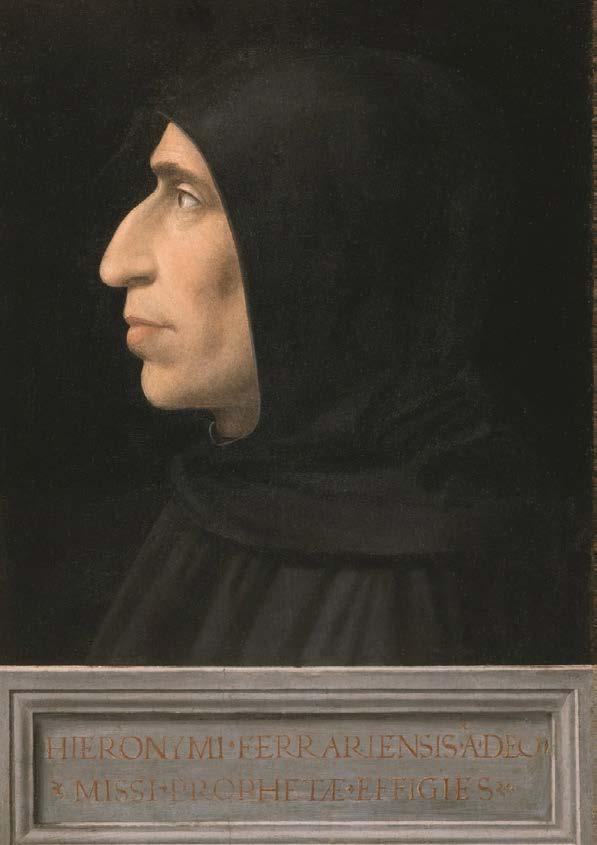
William Byrd’s Infelix ego is widely regarded as the pinnacle of his sacred music and one of the most powerful artistic achievements of the 16th century. The work sets a text by the Dominican friar, Girolamo Savonarola, a meditation on Psalm 50 (51) written while Savonarola awaited execution in Florence after leading a religious movement against the Medici family.
The text expresses a tormented soul wrestling with guilt, fear, and despair, yet ultimately finding hope through Christ’s mercy. The piece mirrors Savonarola’s spiritual struggle through expressive melodic lines, shifting textures, and moments of tension and release.
Byrd may also have felt a personal connection to Savonarola’s situation; as a Catholic composer living in Protestant England during a time of religious persecution, Byrd understood the experience of being isolated from one’s faith community. This shared sense of conflict and devotion seems to inform the music’s profound emotional intensity, culminating in a powerful conclusion that suggests the long-awaited acceptance of divine mercy.
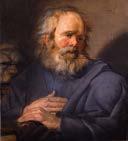
Image: Girolamo Savonarola by Fra Bartolomeo (1472–1517), circa 1498. © Museo Nazionale di San Marco, Florence.
Ashley Carlo Avery-Bennett
This is not so much an article as it is a modest cry for help. A plea to the collective brainpower and curiosity of the Oremus readership. A few weeks ago, while walking along Wilfred Street, just a stone’s throw away from the Cathedral, I noticed something rather unexpected. At the corner of Wilfred Street and Catherine Place, high up on the edge of a building, sits a statue of the Blessed Virgin Mary.
Now, if you are wandering the streets of Rome, this sort of thing is about as surprising as finding pasta on a menu. But in London, where the architecture either falls on the side of Bilbo Baggins or a Melted Toaster, it is almost suspicious. So, naturally I did what any rational person would do: I got momentarily obsessed. The first puzzle was simply identifying the figure. The blue robes, of course, strongly suggest the Virgin Mary, which seemed the obvious answer. But then you notice the location, Catherine Place, and suddenly you think, hang on, could it be St Catherine of Siena? Or perhaps St Catherine of Alexandria? Both excellent candidates. However, neither wheel nor lily, nor any of the other traditional accessories appear. In the absence of symbols, the balance of probability tips firmly towards the Virgin Mary. Which leads to the far more interesting question; what on earth is she doing there?
A modest amount of internet research (‘modest’ here meaning admirable, but not exactly doctoral) turned up surprisingly little. In fact, almost all of the useful groundwork had already been done by someone else who was evidently struck by the very same curiosity. It would be churlish not to acknowledge their efforts, so here is the piece that saved me many hours of googling: alondoninheritance.com/london-streets/mystery-catherineplace-wilfred-street.
From this we learn that the building once housed a pub called the Palace Arms, clearly marked on an Ordnance Survey map from 1895. At various points it may also have been used as a shop. None of which, alas, offers the slightest clue as to why a statue of the Virgin Mary should be there. Photographic evidence from the London Metropolitan Archives shows the statue already in its present position in 1974. Which brings us to the most intriguing theory.
Just a short walk away once stood the Roman Catholic Church of St Peter and St Edward, operating between 1856 and 1975. The church was chiefly used as a chapel for the guardsmen stationed at the nearby Wellington Barracks. It also enjoyed a brief brush with international glamour when Jacqueline Kennedy attended Mass there in 1965. For those interested, footage of the visit can be found on YouTube: tinyurl.com/peterandedward.
Now look at the dates. The church closed in 1975. The statue was definitely there in 1974. You don’t need to be Sherlock Holmes to think: ‘Ah!’ Maybe, just maybe, before the church closed, someone rescued Our Lady and placed her above the door
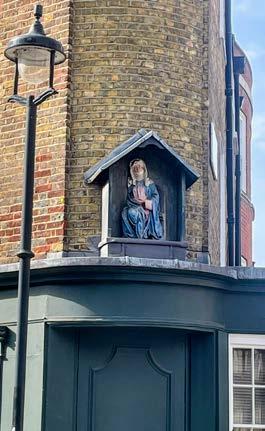
of an old pub. It’s a lovely theory. It’s neat, it’s satisfying, it’s the sort of thing that would absolutely have been written up in the 1970’s Cathedral Bulletin; a fragment of devotional art quietly salvaged and given a new home. There surely must be some record of this, and yet, nothing! No report, no notice, no helpful mention tucked away in some newsletter.
At this point, I must confess that the limits of my extremely amateur historical sleuthing have begun to show rather badly. Now I must now do the only sensible thing: hand this over to you. If anyone knows anything about the statue, its origin, its installation, or even just a rumour passed down, do let us know. It may well be that we have been barking up entirely the wrong tree and that Our Lady of Victoria never set foot anywhere near the Church of St Edward and St Peter. But, perhaps with a little collective detective work, we might yet solve the puzzle. Or who knows? Maybe not.
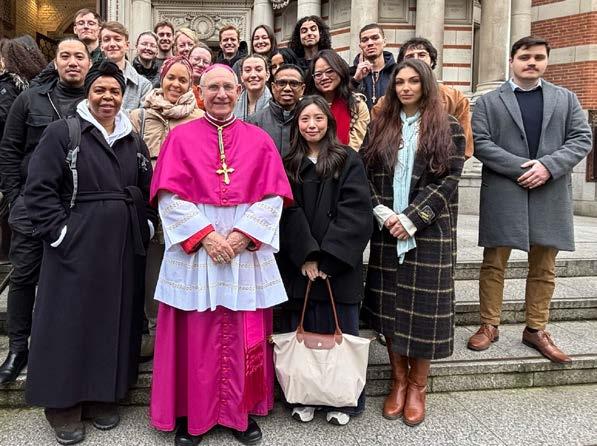
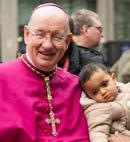
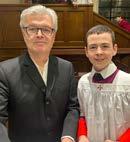
Congratulations to all who were baptised, received and confirmed at the Easter Vigil. Pictured here, the Cathedral’s RCIA group gathered outside the West Door with their Chaplain, Fr Vincent Mbu’i and Bishop Paul McAleenan after the Rite of Election.
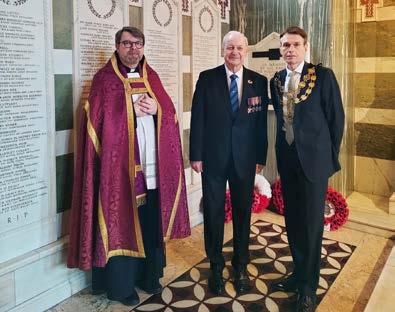
At the annual remembrance service for the Polish Airmen, we were joined by descendants of WW2 Polish fighters.
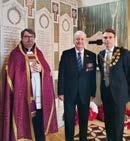
Pictured with Fr Witoń, Mr Artur Bildziuk, Chairman of Polish Air Force UK, and Cllr Robert Rigby, Deputy Lord Mayor of Westminster, laid wreaths in commemoration at the Polish Airforce memorial in the Lady Chapel and at the Polish Armed Forces memorial in St George’s Chapel.
One job that seems to take us by surprise every year is the Passiontide veiling. Every year, in time for the Fifth Sunday of Lent, the crucifixes and statues are covered in purple cloth awaiting the joys of Easter. Pictured here, Jackie and Art from the Maintenance Team are supervised by Head Sacristan Bernadette Stacey. Pictured here, Jackie, Art, and Sam (on the ladder) from the Maintenance Team are supervised by Head Sacristan Bernadette Stacey.
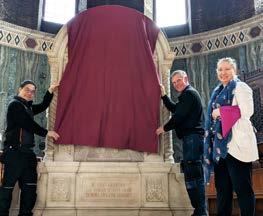
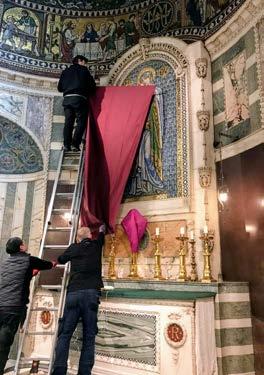
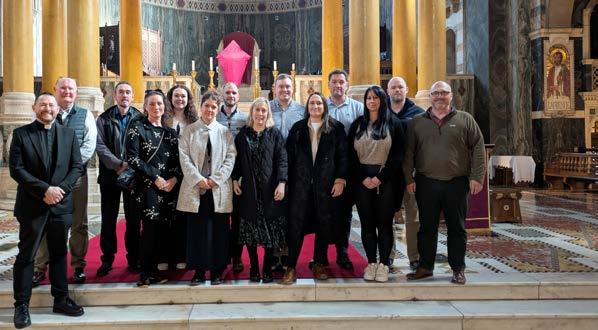
Just before Easter, we welcomed back the policemen and women who worked to protect the Royal Family, the Cathedral, guests and parishioners at the funerals of HRH The Duchess of Kent and of Lord Guthrie. This culminated with a tour of the Cathedral given by former policeman Fr Mike Guthrie (no relation).

Andrew Hollingsworth
As I mentioned in the previous edition of Oremus, the Friends of Westminster Cathedral will launch an Easter ‘Big Give’ fundraising campaign to renovate the chandeliers above the sanctuary and, at a later date, the nave. From 2022 to 2023, thanks to your generosity and that of the matched funders, the Friends raised £300,000 to replace and improve the spotlighting around the Cathedral. This project will complement that work nicely. This time we aim to raise £50,000, although a further campaign will be needed to complete the full renovation.
The Easter Big Give campaign will be held from Holy Tuesday, 31 March at 12 noon, Tuesday, 14 April at 12 noon. All donations made through the Big Give website during this period will be doubled.
As such, a gift of £100 will be matched to £200. For UK taxpayers who Gift Aid their donation, the £100 will be worth £225. Donate at tinyurl.com/FriendsBGEaster26.
Please ensure that all donations are made through the Big Give platform during the matched-funding period above. Gifts made before or after these dates cannot be matched. For assistance, email friends@rcdow.org.uk.
Friends’ Events
Since Christmas we have held five events, including three quizzes and Fr Patrick van der Vorst’s talk. For those who missed it, the talk, ‘Is there such a thing as objective beauty – or is beauty simply in the eye of the beholder?’, is available on YouTube as an audio recording with slides. Visit tinyurl.com/Talk190226 to watch.
At the end of February, we also hosted the Orion Symphony Orchestra, who performed Vivaldi’s Four Seasons to an audience of over 200 in Cathedral Hall. Based on audience feedback we will welcome Orion again on Thursday 30 April at 6.30pm for Mozart’s Clarinet Quintet and Schubert’s Quartettsatz.
Clarinet – Pēteris Kalniņš
Violin – Ankit Tripathi
Violin – Kana Aihara
Viola – Hugo Svensson
Cello – Paula Skulte
Tickets, £12 including post-concert refreshments, are available on the Cathedral website under ‘News & Events’.
Our quizzes are great fun and a wonderful opportunity to meet fellow parishioners. Attendance averages 40–50 people (7–8 teams), but Cathedral Hall can accommodate many more. If you can gather a team, perhaps from a parish group, workplace, or by inviting a neighbouring parish, we would be delighted to welcome you.
Wednesday 15 April 2026, 6.30pm
Thursday 4 June 2026, 6.30pm
Thursday 9 July 2026, 6.30pm
Tickets, £20 including a fish and chip supper, are available on the Cathedral website under ‘News & Events’. Alternatively, email friends@rcdow.org.uk.
Yes Minister
Westminster Cathedral Hall Tuesday 19 May 2026 at 7pm.
Join us for what promises to be a fascinating and light-hearted conversation between two of Britain’s most distinguished public servants: Baroness Gillian Shephard of Northwold – former Secretary of State in John Major’s cabinet and author of a memoir, The Real Iron Lady, recounting her time working with the former prime minister – and Baron Robin Butler of Brockwell – former Cabinet Secretary and Head of the Civil Service, previously private secretary to five prime ministers. Together they will reflect on decades at the heart of British politics and offer a unique window into the inner workings of Westminster and Whitehall.
Following two sell out shows in Sheringham, Yes Minister will go to the Edinburgh Festival.
The talk will be preceded by a champagne reception in Clergy House at 6 pm with the speakers and other prominent guests.
Tickets, £25 including refreshments afterwards.
Tickets, £100 including a champagne reception, 6pm Clergy House, 42 Francis Street SW1P 1QW.
On Saturday 20 June we are planning a visit to Farnborough, including the Farnborough Air Sciences Trust and St Michael’s Abbey. Final details will follow shortly, but if you are interested, please email friends@rcdow.org.uk as soon as possible.
If numbers allow, we will book a coach; otherwise, we will travel by a combination of minibus and train.
Tuesday 23 June 2026 at 6.30 pm in Westminster Cathedral Hall. All members of the Friends are warmly invited. The formal meeting will be followed by refreshments.
On Wednesday 1 July at 9pm, the Friends are invited to join the immersive light, sound and narration experience in Westminster Cathedral. Admission is free for members of the Friends, but please apply for tickets in advance. To join the Friends, visit tinyurl. com/CathedralFriendsMembership.
For more information about any event, or if you are unable to book online, please contact: friends@rcdow.org.uk
Do also get in touch if you have an idea for a future event or would like to organise one for the Friends.
Paul Tobin
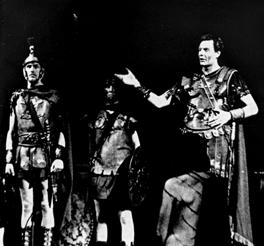
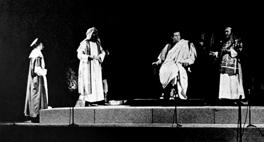
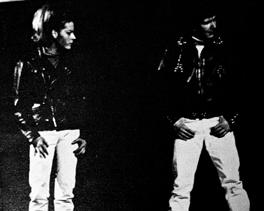
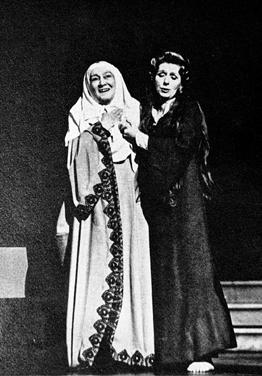
The decision to put on a Passion Play in the Cathedral, some three months after the closing session of the Second Vatican Council, was apparently taken by Cardinal John Carmel Heenan (Archbishop of Westminster 1963-70). In the spirit of the age of the 1960s, the play started with a flourish of trumpets and the unmistakable sound of a motor-cycle crashing at full speed. Two teenagers in jeans and leather jackets in a disorientated state were then persuaded to learn about the passion and death of Our Lord. Led by the Apostle Andrew, they were to witness This is for now , a Passion Play written by Terence Cooling and produced by Alan Rye. Apart from the lighting on the sanctuary, the Cathedral was in total darkness for the duration of the performance.
The announcement in The Tablet in the month prior resulted in a number of letters, mostly against the play taking place. One from Sir Lennox Berkeley, the eminent composer, complained of the intrusion of the secular which would likely damage the devout and liturgical atmosphere of Westminster Cathedral. Other correspondents wrote in a similar vein.
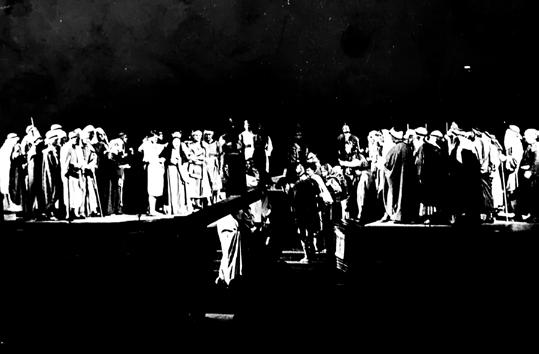
Unlike other cathedrals, where plays were usually performed in the nave or crypt, this production took place on the sanctuary over three days, in the fifth week of Lent. Provision was made to accommodate up to 2,000 attendees with additional seating in the side chapels and closed-circuit screens, should the need arise. Admission was free, although up to four hundred subscribers could purchase a seat for two guineas (£2.20 in today’s money) which included a programme. Otherwise, attendees could obtain a programme for ten shillings (50p). It was also mentioned that the play was not designed to raise money for anything.
In light of the criticism, it was not surprising that the first performance did not quite go according to plan. The starting time was significantly delayed on account of the Cathedral’s keys being mislaid, as those queueing outside braved the cold, windy evening. Meanwhile, the Lord Mayor of Westminster, in his ceremonial limousine, was being driven around the neighbouring streets until the doors were finally opened.
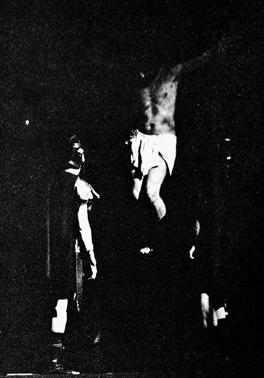
A review in The Tablet described the climax of the play with the entry of Christ with his cross, aided by Simon of Cyrene, in a long and painful progress from the West Door to the brilliance of the Sanctuary lighting. This was followed, albeit briefly, with the raising of the body of Jesus on the heavy cross. The Resurrection, by contrast, was considered too conventional to be effective but, when over the loudspeakers came the sirens and voices of police and ambulancemen to collect the bodies of the two youngsters, many did not realise they were already dead.
Although there had been many criticisms of the Passion Play, a correspondent to the Cathedral Chronicle wrote:
‘For me it was not just the Passion Play, but the Passion Play in the Cathedral that foreshadowed so vividly the deeper realities of the presence of Christ in the daily liturgy celebrated in the Cathedral’.
Fr Michael (Miguel) Garnett
I am 60 years a priest of the Diocese of Westminster. After two years of ministry within the Diocese, Cardinal Heenan sent me on mission to Peru, where I have been ‘on loan’ ever since. Over the years I have made occasional return trips to the United Kingdom, including last October when I flew in to celebrate my 90th birthday with my family. Having celebrated Mass with the Peruvian Consulate in Westminster Cathedral, and met with the now Emeritus Archbishop, Cardinal Nichols, the Editor of this magazine requested that I write something of my experience.
As an alumnus of Oriel College, Oxford, I was delighted that my visit coincided with the news that Pope Leo XIV would proclaim St John Henry Newman as a Doctor of the Church in November. I am often asked if I have ever met the Holy Father during his time in Peru, and what was my impression of him. We met when he was Bishop of Chiclayo and had quite a long talk. He listens, he thinks, and then he gives a straight answer. I hope that the same can be said about me.
I have a special love for Westminster Cathedral, where I was ordained in 1965. After all, it is the most important centre of prayer in the capital. On this, my most recent visit, I was very pleased to see that the mosaics in the Chapel of St George and the English Martyrs are now complete. I also read in The Tablet, recently, that funding for the Baptistery has now been found. No doubt there will be those who believe the money should be spent on those in need but, of course, beautiful art is also necessary. The Church must also help the poor, as emphasised in Pope Leo’s Dilexi te, but, for Pope Benedict XVI, beauty is one of the paths to God. Brief visits to Notre Dame de Paris and the Sagrada Familia in Barcelona, along with the British Museum, Victoria and Albert, and several Victorian Gothic churches here in Britain—all in excellent condition—have strengthened my belief in the importance of the worship of God ‘in the beauty of holiness’.
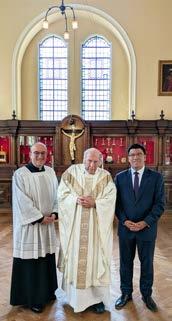
In precisely those Victorian Gothic churches, which I visited for Mass, I was pleased to find that they were all well attended by a spread of generations, including Generation Z and families with children. On the whole, I found the liturgy and singing to be much more meditative than what I am used to in Peru, with far more people receiving Holy Communion. Immigration in Britain seems to be most visible in her churches. I was pleased to see that they were not merely a part of the congregation, but ministering as readers, acolytes, and extraordinary ministers of Holy Communion. This integration, alongside the kindness and politeness I met everywhere—cars stopping for pedestrians is not normal in Peru—is striking.
In the city of Cajamarca, where I am based, I principally celebrate with youngsters being prepared for the Sacrament of Confirmation. They are
lively and, one might even say, noisy. And yet, I find the task of trying to preach meaningfully, and to celebrate with them, a worthwhile challenge. I do this not only in a Church context, but also as a novelist. When I was a seminarian I read several of Mgr Robert Hugh Benson’s novels and, on this recent visit to Britain, I hoped to pick up some second-hand copies. Great was my surprise when I found very recent editions of the novels I sought. Perhaps he is still as relevant today?
The prosperity of London and the beauty of the English countryside never ceases to amaze me. Houses, both new and old, look very fine and many buildings are actively being renovated with scaffolding dotted around the city. But amongst the endless posh restaurants and cars there are many people sleeping rough on the streets. When I was a child and had to use the Underground in London I had no problems, but now I dare not venture alone amidst the thousands of travellers in a system that seems to be something akin to the labyrinth of the Minotaur.
Ecumenical relations between the Established Church and the Catholic Church appears to have come a long way in recent years. This was particularly felt during the remarkable Duchess of Kent’s funeral, and the King and Queen’s visit to the Holy See. The shared prayers between Pope Leo and King Charles, and the renewed link between the monarchy and the Basilica of St Paul Outside the Walls, can only be seen as a force for good. I hope that this will encourage the different Christian Churches to work ever more closely together in the face of Britain’s social and economic problems.
And on that note, I conclude this reflection inspired by my fairly recent visit to the United Kingdom. Thank you to Cardinal Nichols, the Chaplains of Westminster Cathedral, and to the friends and family whom I have not seen for years. Your kindness and hospitality has meant the world to me.
Mr James Stacey, Head of School
St Joseph’s Catholic Primary School, Chelsea, part of the St John Southworth Catholic Academy Trust.
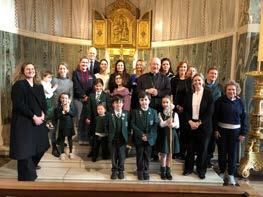
On Wednesday 18 March, Mr Stacey led the second annual walking pilgrimage for St Joseph’s Catholic Primary School. The pilgrimage set off from the school site in Chelsea, stopping at Westminster Cathedral and Southwark Cathedral, before finishing on the steps of St Paul’s Cathedral. The pilgrims included parents, teachers, pupils, and school alumni, together with team members of the wider Academy Trust.
In Westminster Cathedral they gathered in St Joseph’s Chapel, where they were met by Archbishop Richard Moth, who led them in prayer and wished them all an early ‘Happy St Joseph’s Day’. Mr Stacey remarked that ‘this was an opportunity to introduce our school community to Archbishop Moth and we hope that he will visit us very soon.’
This pilgrimage was one of a number of celebratory events for the school’s Giving Day; a 36-hour series of events held by the school to encourage fundraising from the wider community, beginning on 18 March and ending on the patronal feast, St Joseph’s Day, 19 March. All donations received will be used to fund vital roof repairs at the school.
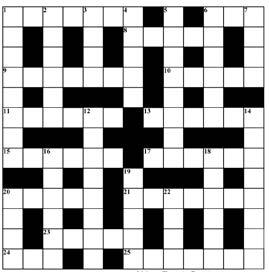
Clues Across
1 A person who is idle and a spendthrift (7)
6 See 15 Across
8 Instruments in an orchestra (5)
9 Implement for bringing flame to candles (7)
© Alan Frost
10 ‘The Canterbury -----’, Chaucer’s poetic account of fellow pilgrims’ stories (5)
11 One of the many of the RAF who died in WW2 commemorated near the Lady Chapel (6)
13 See 14 Down
15 & 6 Across: Not really a complimentary term for a ‘clever clogs’! (4-2-3)
17 Nature of the birthplace of Jesus in Bethlehem (6)
20 Get-up-and-go on the golf course? (5)
21 & 3 Down: What we ask the Lord to grant the deceased (7,4)
23 English College (seminary) in France where many Reformation Martyrs trained (5)
24 Language and people (largely Catholic) of Nigeria (3)
25 Long, usually black, garment of priest or server (7)
Clues Down
1 On which the Lord Chancellor sits in the Palace of Westminster (8)
2 Entertainer on stage or in choir (6)
3 See 21 Across
4 French river on which stand Tours [St Martin] and Orléans [St Joan of Arc] (5)
5 St Louis-Marie de --------, writer of the classics True Devotion to Mary and The Secret of the Rosary (8)
6 Institution for political ‘sanctuary’? (6)
7 They get made and changed in Parliament (4)
12 Early Pope, tenth in succession to St Peter (8)
14 & 13 Across: Detective who draws visitors to Baker Street (8,6)
16 Spanish Cathedral has sacred items from Jerusalem collected by followers of the Apostles (6)
18 Lord ------, friend and victim of Macbeth in Shakespeare’s play (6)
19 Revered part of body or possession of a Saint (5)
20 Welsh national Saint (4)
22 Statue in Piccadilly Circus associated with love (4)
ANSWERS
Travis Park
I did not come here to be inspired. I came because something in me would not settle anywhere else.
Prayer does not begin with language. It begins with the body standing, waiting, learning how not to fill the silence too quickly.
Stone keeps its own counsel. It has heard centuries of urgency and outlasted all of it. I trust that kind of patience.
Light enters without drama. It touches the floor, the edge of a pew, the place where a hand once rested and let go.
A candle leans, corrects itself, leans again. This is the shape of my faith: not certainty, but endurance.
I bring what I can unfinished thoughts, the weight of days that did not resolve, the quiet hope that asking less might finally allow listening.
Nothing announces itself. Nothing needs to.
Yet something remains a steadiness beneath the asking, a presence that does not require my clarity to stay.
When the words end, I am still held. And for now, that is enough.
Travis is a Benedictine oblate novice affiliated with Saint Meinrad Archabbey in Indiana. His writing explores prayer, silence, and the slow formation of faith in ordinary life.
To submit a poem whether by yourself or another for consideration, please contact the Editor – details on page 3.
Westminster Cathedral Chronicle, April 1956
Joint Pastoral Letter for Passion Sunday 1956
Dearly beloved brethren and dear children in Jesus Christ,
The proposed visit of the rulers of Soviet Russia provides an opportunity for renewing the Holy Father’s appeal for prayers on behalf of the Church of Silence. It is not our intention to discuss the desirability of the invitation. It is not for us to question the motives of our statesmen who may honestly believe they are furthering the cause of peace. Catholic citizens, in common with all men of goodwill, approve and support every genuine attempt to promote peace with justice and to prevent war.
We owe it, however, to the millions of Christians suffering persecution in Eastern Europe and the Far East to proclaim publicly that the hospitality offered by our country to the enemies of the Church does not mean that we condone godless policies. In this country, and generally throughout the West, men are free to worship God according to their beliefs. We are fully aware of the tolerance and generosity with which members of religious minorities are treated in Great Britain, where men and women do not have to risk their lives and liberty in order to practise their religion. But living in security we may forget our suffering brethren and we urge you to remember your duty to pray for those for whom the practice of the Faith is made difficult or impossible.
There are those who will tell you that there is full freedom of religion in Soviet lands. Do not believe them. It is easy for Communists to flourish copies of Soviet Laws and quote the guarantees they contain of religious freedom. The test of freedom is not what is written but what is done. In every country where Communists are in power the Church of Christ is in chains. Persecution is sometimes subtle and hidden and sometimes open and savage. Everywhere it is relentless.
We speak of what we know. In Poland, Czechoslovakia, Yugoslavia, Hungary, Roumania, Bulgaria, Latvia, Estonia, Lithuania and the Ukraine—not to mention Eastern Germany and the Far East—pastors of the Church are imprisoned. Priests, brothers, nuns, and leaders of the laity are arrested without reason and punished after mock trials. The attack is made on Catholic schools, hospitals and orphanages. The voice of freedom is suppressed. The slightest protest against injustice is regarded as an act of treason. That is why the Pope has described the Church in these parts as the Church of Silence.
Yet we need not be silent. We have a duty to God and to all the children of God in captivity to make our voices heard. During the next few weeks the peoples of Eastern Europe may well be told by press and radio of the welcome given by this Christian country
to the enemies of God. It will comfort them if they hear—and they will hear—that the voices of Catholic citizens were raised in their defence. The Pope has warned the world that true co-existence between militant atheists and believers is impossible. They seek to destroy the Church of God. We seek not to destroy but to convert them to Christ whom they have rejected. Our words are not of war but of peace. We seek to conquer not with armaments but with the sword of the spirit which is the word of God.
The Government has decided to extend this invitation in the hope that a visit to this country by the Soviet rulers may lead to an increase in mutual understanding. We trust, however, that Members of Parliament will press the Government to tell their visitors how this country abhors religious persecution. The facts are ghastly and beyond dispute. The Soviet record of the last decade is without parallel. Let our Government not shrink in the name of diplomatic courtesy from a frank statement of the views of British citizens. Justice and charity demand no less.
We, the Archbishops and Bishops of England and Wales, call upon our beloved people to act with dignity and restraint during the visit of the Soviet leaders. We invite the faithful to make Low Sunday, 8 April, a day of prayer and urge you all to receive Holy Communion. Wherever possible, the Blessed Sacrament will be exposed in our churches and chapels from the last Mass until the Evening Service. Upon your knees before the Blessed Sacrament ask pardon for Christ’s enemies as he did from the Cross. Beg our Divine Lord and Mary his Mother to comfort and strengthen those who are suffering persecution. Thus, coming events which will inevitably pain and embarrass all Christians, may by God’s grace prove a source of hope and encouragement to those who live in the shadow of the Cross.
Given at Westminster on the feast of St Gregory the Great in the year of Our Lord 1956, and appointed to be read in all the churches and chapels of England and Wales at all Masses on Passion Sunday.
The Annual Meeting of the Archbishops and Bishops of England and Wales will begin on Tuesday, 13 April, at Archbishop’s House, Westminster. The usual reception will take place at nine o’clock in the evening of that day. Ladies as well as gentlemen are invited, but no individual invitations are being issued. Whilst there is no restriction as to the colour of ladies’ dresses, black is more suitable, and a mantilla (or veil) is usual. Ladies should not be décolletées. For gentlemen, evening dress or undress uniform is not obligatory, though suitable. Decorations should be worn.
On the first Sunday of each month, a Mass is celebrated for the benefactors of Westminster Cathedral, living and dead. Sunday 5 April 2026, 12 noon (Easter Day), Sunday 3 May 2026, 10am, Sunday 7 June 2026, 10am, Sunday 5 July 2026, 8am, Sunday 2 August 2026, 7pm, Sunday 6 September 2026, 5.30pm
The Holy Father’s Prayer Intention
For priests in crisis
Let us pray for priests going through moments of crisis in their vocation, that they may find the accompaniment they need and that communities may support them with understanding and prayer.
Wednesday 1 April
WEDNESDAY OF HOLY WEEK
1.15pm Lunchtime Concert
Thursday 2 April
MAUNDY THURSDAY
6pm Solemn Evening Mass of the Lord’s Supper (Full Choir)
Vaughan Williams – Mass in G minor Guerrero – Hoc est præceptum meum
Friday 3 April Fast & abstinence
GOOD FRIDAY
10am Office of Readings (Full Choir)
Victoria – Tenebræ Responsories
Anerio – Christus factus est 3pm Solemn Liturgy of the Passion (Full Choir)
Bruckner – Christus factus est Victoria – Passion according to John Victoria - Improperia
King John IV of Portugal – Crux fidelis
Poulenc – Vinea mea electa
Lotti – Crucifixus a 8
6.30pm Stations of the Cross
Saturday 4 April Fast as desired
HOLY SATURDAY
10am Office of Readings (Men’s voices)
Victoria – Tenebræ – Full Choir
Anerio – Christus factus est 8.30pm The Easter Vigil in the Holy Night (Full Choir)
Lassus – Iubilate Deo omnis terra Reid – Exodus canticle
Palestrina – Sicut cervus
Vierne – Messe solennelle in C sharp minor
Philips – Ecce vicit Leo
Organ: Cochereau tr. Filsell – Toccata (Symphonie improvisée)
Sunday 5 April
EASTER SUNDAY OF THE RESURRECTION OF THE LORD
12 noon Solemn Mass (Full Choir)
For more information, contact Laura Dudhee, at 020 7798 9058 or email cathedralgiving@rcdow.org.uk
The Cathedral is open from 7.30am and closes in time for 7pm.
Monday to Friday: Morning Prayer 7.35am, Mass 8am, Mass (Latin, unless there is a Funeral) 10.30am, Confessions 11.30-12.30pm, Mass 12.30pm *, Exposition of the Blessed Sacrament 1.15-4.30pm, Benediction 4.30pm, Confessions 4.30-5.30pm, Sung Vespers 5pm (Latin, Choir, except Tuesday, English, Cantor), Solemn Mass 5.30pm (Choir, Tuesday: Boys’ voices, Wednesday: Men’s voices)
Saturday: Mass 8am, Morning Prayer 10am, Mass 10.30am (Latin, Choir,) Confessions 11.30-12.30pm, Mass 12.30pm *, Confessions 5-6pm, Sung Vespers 5.30pm (English, Cantor), Sung Mass 6pm.
Sunday: Mass 8am, Sung Morning Prayer 9.30am, Sung Mass 10am, Confessions 10.30-12.30pm; Solemn Mass (Choir) 12noon *, Solemn Vespers (Choir) and Benediction 4pm, Confessions 5-6.45pm, Sung Mass 5.30pm, Mass 7pm.
For full opening and closure times of the Cathedral and for confession and service times please consult the Cathedral diary on the website.
* Live streamed via the Cathedral website
Palestrina – Missa Papæ Marcelli
Taverner – Dum transisset Sabbatum
Organ: Dupré – Prelude & Fugue in B major 4pm Solemn Vespers and Benediction (Men’s voices)
Palestrina – Magnificat primi toni
Palestrina – Surrexit pastor bonus a 8 Organ: Gigout – Grand Choeur Dialogué 4.30pm Mass for the Deaf Community (Cathedral Hall)
Monday 6 April
MONDAY WITHIN THE OCTAVE OF EASTER
Tuesday 7 April
TUESDAY WITHIN THE OCTAVE OF EASTER
Wednesday 8 April
WEDNESDAY WITHIN THE OCTAVE OF EASTER
Thursday 9 April
THURSDAY WITHIN THE OCTAVE OF EASTER
Friday 10 April No Friday abstinence
FRIDAY WITHIN THE OCTAVE OF EASTER
Saturday 11 April
SATURDAY WITHIN THE OCTAVE OF EASTER Usual timetable resumes
Sunday 12 April Ps Week 2
2nd SUNDAY OF EASTER (or of Divine Mercy)
12 noon Solemn Mass (Cantor) 4pm Vespers (English) and Benediction
Monday 13 April
Easter Feria (St Martin I, Pope & Martyr)
Tuesday 14 April
Easter Feria
Wednesday 15 April
Easter Feria
Thursday 16 April
Choral services resume Easter Feria
Friday 17 April Friday abstinence
Easter Feria
Saturday 18 April
Easter Feria
6pm Westminster Cathedral Junior Voices sings at Mass
Sunday 19 April Ps Week 3
3rd SUNDAY OF EASTER
12 noon Solemn Mass (Men’s voices)
Lassus – Missa Congratulamini mihi
Lassus – Congratulamini mihi
Lassus – Tulerunt Dominum
Organ: Laurin – Étude Héroïque Op. 38
4pm Solemn Vespers and Benediction
Vivanco – Magnificat octavi toni
Tallis – Videte miraculum
Organ: Duruflé – Scherzo Op. 2
Monday 20 April
Easter Feria
Tuesday 21 April
Easter Feria
(St Anselm, Bishop & Doctor)
Wednesday 22 April
Easter Feria
1.15pm Lunchtime Concert
5.30pm Vigil Mass of St George
Thursday 23 April
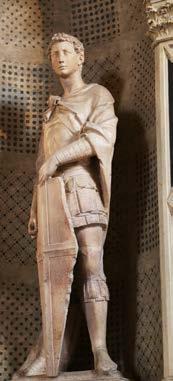
St GEORGE, Martyr, Patron of England 8, 10.30am Mass in St George’s Chapel
5.30pm Solemn Mass (Full Choir) Berkeley – Missa brevis Mawby – Iustus ut palma
Gabrieli – O sacrum convivium
Organ: Elgar – Imperial March
Friday 24 April Friday abstinence Ss Erkenwald and Mellitus
Saturday 25 April
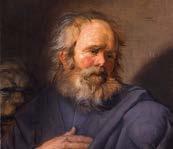
St MARK, Evangelist
6pm A Visiting Choir sings at Mass with Adult Confirmations (Bishop McAleenan)
Sunday 26 April Ps Week 4
4th SUNDAY OF EASTER
World Day of Prayer for Vocations 12 noon Solemn Mass (Full Choir) Tallis – Missa Salve intermerata Virgo L’Héritier – Surrexit pastor bonus Organ: Tournemire – ChoralImprovisation sur le “Victimæ Paschali” 4pm Solemn Vespers and Benediction Vivanco – Magnificat octavi toni Berkeley – The Lord is my Shepherd Organ: Schmidt – Prelude & Fugue in D “Hallelujah!”
Monday 27 April
Easter Feria
Tuesday 28 April
Easter Feria (St Peter Chanel, Priest & Martyr; St Louis Grignion de Montfort, Priest)
Wednesday 29 April
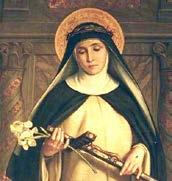
St CATHERINE OF SIENA, Virgin & Doctor, Patroness of Europe 1.15pm Lunchtime Concert
Thursday 30 April
Easter Feria (St Pius V, Pope)
Key to the Diary: Saints’ days and holy days written in BOLD CAPITAL LETTERS denote Sundays and Solemnities, CAPITAL LETTERS denote Feasts, and those not in capitals denote Memorials, whether optional or otherwise. Memorials in brackets are not celebrated liturgically.
Catholic Evidence Guild Clergy House Room 2, Tuesdays 7pm
Catholic Grandparents’ Association Hinsley Room, Second Sundays 12-3.30pm
Charismatic Prayer Group Cathedral Hall, Fridays 6.30-9pm
Divine Mercy Prayer Group
St Patrick’s Chapel, Sundays 1.30-2.30pm
Filipino Club Cathedral Hall, Second Sunday 1-5pm
Guild of the Blessed Sacrament Blessed Sacrament Chapel, Mondays 6.15pm
Guild of St Anthony Lady Chapel, Tuesdays 6.15pm
Interfaith Group Hinsley Room, Third Wednesdays 1.30 -3pm
Legion of Mary Hinsley Room, Monday 1.30-3.30pm
Oblates of Westminster Cathedral Hinsley Room, Fourth Sundays 2.30-4pm
Padre Pio Prayer Group
Sacred Heart Church, First Thursdays 1.30-3.30pm
Rosary Group
Lady Chapel, Saturdays 11.15-12.00noon
Walsingham Prayer Group
St George’s Chapel, First Tuesdays 2.30-4pm
Yoruba Association Hinsley Room, Third Sundays 1.30-3pm
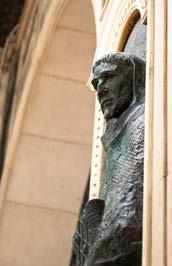
Westminster Cathedral is rightly famed for its magnificent mosaics and marbles, but there are also a number of wonderful bronzes which are often overlooked. Two in particular, the bas-reliefs of St Vincent de Paul (1581-1660) and St Benedict of Nursia (480-543), can be found adjacent to the confessionals and are by way of a tribute to their sculptor Bryan Kneale MBA, RA (1930-2025).
Born on the Isle of Man, Bryan Kneale originally studied painting at the Douglas School of Art in 1947, and at the Royal Academy Schools, London from 1948 to 1952, where he received a Rome Scholarship in painting (1949-1951). In 1960 he pivoted from painting to sculpting and spent much of his subsequent teaching career at the Royal College of Art, London. In 1974 he was elected a Royal Academician and served as a Trustee of the Royal Academy of Arts and a Senior Fellow of the Royal College of Art. He also taught sculpture at the Royal Academy Schools from 1980 to 1987. He
was a founding member of the Isle of Man Arts Council (1965) and became one of the island’s most highly respected and internationally known artists.
His final sculpture, ‘Eelips’, is an 8’2” monolith of duplex stainless steel, inspired by the landscape of the Isle of Man, forming a portal to frame the landscape behind it. Following Kneale’s death on 19 September 2025, it was unveiled on 25 October at the Tynwald National Park and Arboretum in St John’s, Isle of Man.
In 1998, Bryan Kneale was commissioned by the Cathedral Art and Architecture Committee to design two bronze reliefs, produced from plaster sculptures. The relief of St Vincent de Paul, ‘Father of the Poor’, was funded by the Society of St Vincent de Paul with assistance from the Royal Academy for the bronze casting. Here, Kneale has captured the benevolence, compassion and enigmatic smile of the saint in that remarkable face. The piece was commissioned to celebrate the 25th anniversary of the St Vincent de Paul Primary School’s relocation from Carlisle Place to its present position in Morpeth Terrace, in 1974. It was then unveiled by Cardinal Basil Hume on 27 September 1998, St Vincent’s feast day.
The second bronze, St Benedict of Nursia, ‘Father of Western Monasticism’, is depicted holding a copy of his Constitutions of the Order of St Benedict This was commissioned as a tribute to Cardinal Basil Hume OSB, ninth Archbishop of Westminster. Having spent most of his life at Ampleforth, the Benedictine Abbey in North Yorkshire, first as schoolboy, then as schoolmaster and monk from 1963, it was Hume himself who insisted that St Benedict should be shown holding the Rule which he himself followed from the age of 18. Cardinal Hume died on 17 June 1999, and the relief was installed a month
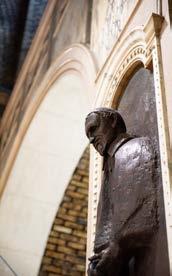
later, on 10 July 1999. If you have some spare time, do pop into the Cathedral to see these artworks.
Bryan Kneale was also the younger brother of Nigel Kneale (1922-2006) a well-known and highly productive screen/ scriptwriter, mainly working in the scifi genre. He began his career with the BBC in 1953 by writing The Quatermass Experiment, part of the Quatermass saga. I particularly remember, as a young teenager, watching this on a small black and white television in the mid-fifties, being thrilled and terrified in equal measure. He also scripted episodes for ITV’s historical drama Sharpe (1993) and even wrote for the legal series Kavanagh QC in 1995 and 1997. A very talented family indeed. And it does not end there. Nigel Kneale was married for over 50 years to Judith Kerr (1923-2019), a prolific writer and illustrator of Children’s literature. Two of her many well-known and loved works were The Tiger who came to Tea and the Mog series.
Year 4
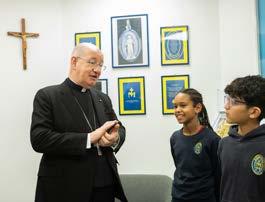
This Lent at St Vincent de Paul Catholic Primary School, I have been thinking a lot about what it means to follow Jesus. In the Gospel, Jesus tells his disciples, ‘Come and see’. I like this because it feels like an invitation. He wants us to come and learn from him, not just by listening, but by experiencing his love and sharing it with others. That is what I am trying to do during Lent.
Acts of Kindness
There are many ways to show kindness. One thing I did was comfort my classmate when they were sad. I also helped my mum at home and helped my dad take care of my cousins. At school, I helped my teacher hand out books and helped clean up in the classroom. Another way I show kindness is by playing with people when they have no one to play with. When I do these things, it makes me feel happy because I know I have helped someone else feel happy too. I think acts of kindness are ways of showing love to others. During Lent, I am trying to follow what Jesus taught us by being kind, helpful and loving to everyone.
Prayer and Reflection
During Lent, I have also been spending more time in prayer. I try to think about Jesus and all the good things he teaches us. Sometimes I pray for my family, my friends, and even people I don’t know who might be sad or lonely. It helps me remember to be grateful for what I have and to try my best to follow Jesus every day.
Giving and Being Part of a Community
I have learned that helping and making people happy also makes me feel happy. When we give to others, we often receive love and happiness in return. Being part of a community and trying to live like Jesus helps me grow closer to him. At school,
we get to go to adoration, visit our Cathedral and spend time with Fr Mike, who comes to pray with us often. These experiences remind me that prayer, kindness and learning about Jesus are all connected.
Almsgiving is also very important to me. Our school helps charities and I can see how our donations of food and money go to help others. This year, we are raising money for the Catholic Children’s Society and I feel proud knowing that the small things we do together can make a big difference in other people’s lives. I am learning that Lent is not just about giving things up, but about growing closer to Jesus by being kind, caring and thoughtful. By helping others and living like Jesus teaches us, I feel my faith growing stronger every day.
If you want to see how love, charity and faith come together, come and see how we celebrate Lent, care for each other and try our best to follow Jesus every day at St Vincent De Paul!