

We act in the public interest and are committed to excellence in regulating the dental profession in Ontario.
Everyone in Ontario has access to safe, high-quality oral health care.
The Royal College of Dental Surgeons of Ontario (RCDSO) is one of 26 health regulatory colleges in the province with the responsibility and the legal authority to protect patients. The RCDSO is a leader in health regulation. We believe that regulation must be open, responsive, accessible, equitable and accountable in order to protect the public interest.



We are pleased to share the work underway to strengthen both the profession and our commitment to the public interest.
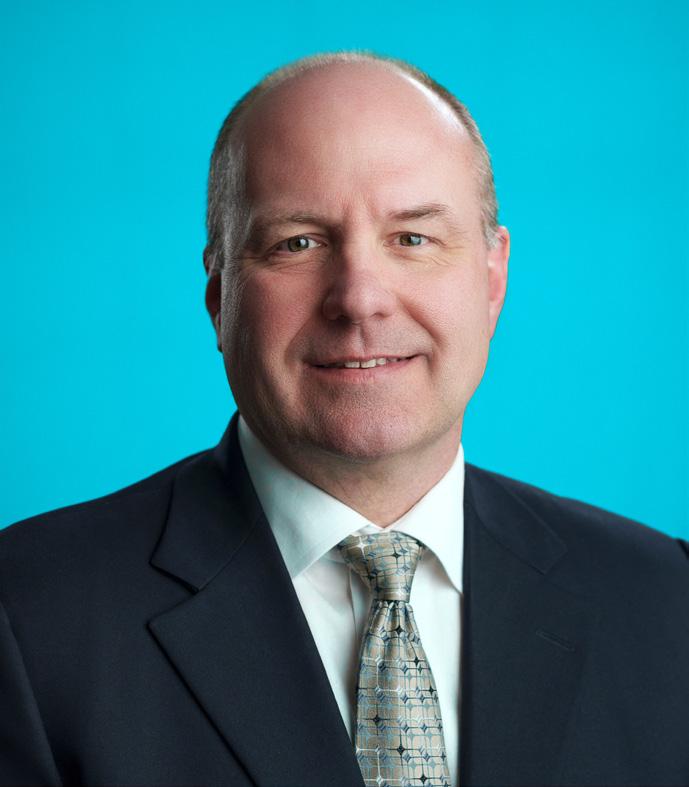
Our valued partnership with the ODA helps us address shared priorities with clarity and collaboration. This year also brings important progress in governance modernization, supporting a more effective, accountable, and forward-looking Council. The transition of the PLP to Navacord is well underway, ensuring continuity of service and new opportunities for the profession. Throughout these changes, we remain dedicated to clear education, open dialogue, and meaningful consultation as we shape standards that support safe, ethical, high-quality care across Ontario.
RCDSO staff are working with members of the Ontario HPV Working Group and the Ontario Dental Association (ODA) to explore the role dentists can play in promoting HPV vaccination. HPV is a vaccine preventable infection that can, in some cases, lead to cancers of the mouth and
throat (oropharyngeal cancers).
Early discussions focused on educational opportunities, including: informing dentists about HPV, the associated cancer risks, and available public vaccination programs as well as equipping dentists to counsel patients about HPV.
RCDSO is committed to developing educational resources in partnership with the ODA. Additionally, RCDSO is considering whether dentists can “prescribe” the HPV vaccine to patients, and if so, how dentists can be best supported with practical guidance and resources. This effort is also being undertaken in partnership with the ODA.
Across Canada and internationally, we’ve seen what happens when regulatory governance falters: public trust declines, external intervention increases, governments impose reforms, and in some cases regulators are placed under direct administration. These realities underscore the importance of strong, modern
governance focused squarely on the public interest.
Ontario’s Ministry of Health signaled this direction in 2022 with its governance-modernization proposal, reflecting broader trends toward competency-based boards, greater public-professional balance, stronger commitments to equity and inclusion, and more transparent decision-making.
To align with these expectations, several key changes are coming:
■ Annual province-wide elections so Council members are accountable to the broader public interest—not just specific regions—while expanding candidate diversity and reducing acclamations.
■ A reduction from 12 to 10 elected dentists, moving closer to parity with public members and supporting a more focused, agile Council.
■ Three-year terms, with a three-term limit and a cooling-off period, enabling deeper expertise, stronger continuity, and better succession planning.
We encourage every eligible dentist to vote and to seriously consider putting your name forward. Your leadership strengthens the College—and public trust in the profession.
The call for candidate applications will be issued on August 11. The voting deadline will be December 9 at 2:00 p.m.
As of January 1, 2026, Navacord— one of Canada’s largest and fastest growing insurance brokerages— now owns and operates the Professional Liability Program (PLP). Dentists will continue to
receive the same reliable service from the same dedicated team they know. Coverage levels remain unchanged at $2 million per incident per year, with pricing that stays competitive across the country. Over the coming year, this partnership will open the door to building a strong relationship with Navacord and creating new opportunities for the profession well into the future.
We will continue consulting the profession on new standards in 2026. Your input is vital. By sharing your views, you help us create guidance that is meaningful and workable in practice. We want— and value—your voice. Following strong engagement during the July–September 2025 consultation, the College has updated the draft Managing Conflicts and Ending the Dentist Patient Relationship Standard to better support professional judgment, flexibility, and clearer expectations. We are now inviting feedback on the revised draft, Template Dismissal Letters, and proposed FAQ and Case Scenario topics. Consultation is open until March 20th.
Since the new year, we have hosted three RCDSO Connect Sessions to keep dentists informed about College news, key developments and new standards. Topics have included Artificial Intelligence, Governance, Recordkeeping and we will host a live in Ottawa on March 26th. Not only do these sessions offer transparency about what we do as a college but also resources for dentists, These sessions often qualify as Category 1 courses when attended live. Please stay tuned for upcoming sessions.
As we move into spring, we want to recognize the continued
Throughout these changes, we remain dedicated to clear education, open dialogue, and meaningful consultation as we shape standards that support safe, ethical, high‑quality care across Ontario.
professionalism and dedication you bring to your work each day. This has been a period of meaningful change for the profession, and your commitment to patient care and ethical practice remains constant.
Thank you for the leadership you demonstrate in your practices and communities. We look forward to supporting you through the months ahead and continuing to strengthen the profession together.
Sincerely, Dr.
Harinder
Sandhu and Dan Faulkner
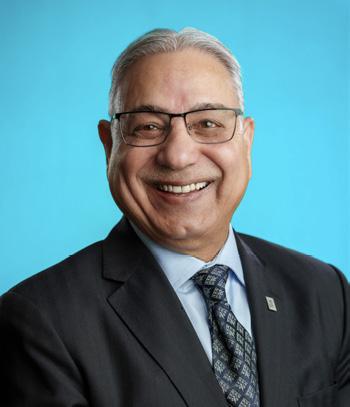
■ Dr. Harinder Sandhu, Chair and President
■ Dr. Nalin Bhargava, Vice President
■ Marc Trudell
■ Brian Smith
■ Dr. Erin Walker
District #1
District #2
District #3
District #4
District #5
District #6
District #7
District #8
District #9
District #10
District #11
District #12
Dr. Nalin Bhargava
Dr. Robyn Somerville
Dr. Peter Delean
Dr. Neil J. Gajjar
Dr. Daniel Fortino
Dr. Harinder Sandhu
Dr. Erin Walker
Dr. Osama Soliman
Dr. Antony Liscio
Dr. Deborah Wilson
Dr. Eilyad Honarparvar
Dr. Anthony Mair
■ Patrick Ballantyne
■ Ram Chopra
■ James Colliver
■ Vivian Hu
■ Nizar Ladak
■ Adal Simeone
■ Brian Smith
■ Roderick Stableforth
■ Marc Trudell
■ Judith Welikovitch
■ Dr. Daniel Haas
■ Dr. Noha Gomaa
Council Highlights are emailed out to members and posted online on the College’s website after each Council meeting. It covers some of the key highlights of Council business.
■ Read Council highlights from the February 19th meeting
Our next Council meeting is: April 16th, 2026.
■ All Council meetings are livestreamed on our YouTube channel.
Angie Sherban Executive Assistant and Council Liaison
P 416-934-5627
T 1-800-565-4591
E asherban@rcdso.org
rcdso_org
rcdso.bsky.social rcdsovideos
rcdso
↗ Access the RCDSO Connect Newsletter archive for previous issues


I think this is his legacy — being able to combine work with pleasure.
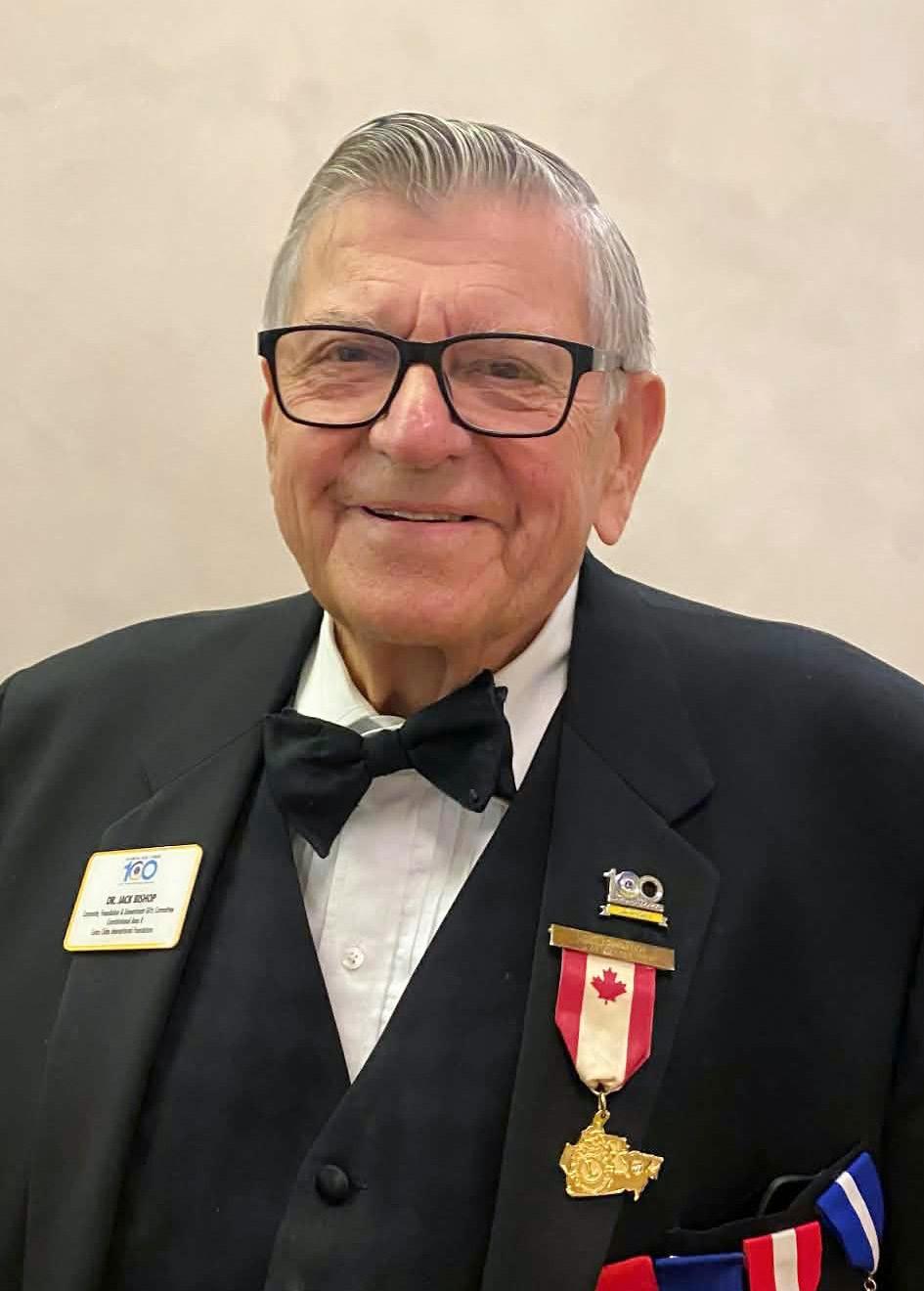
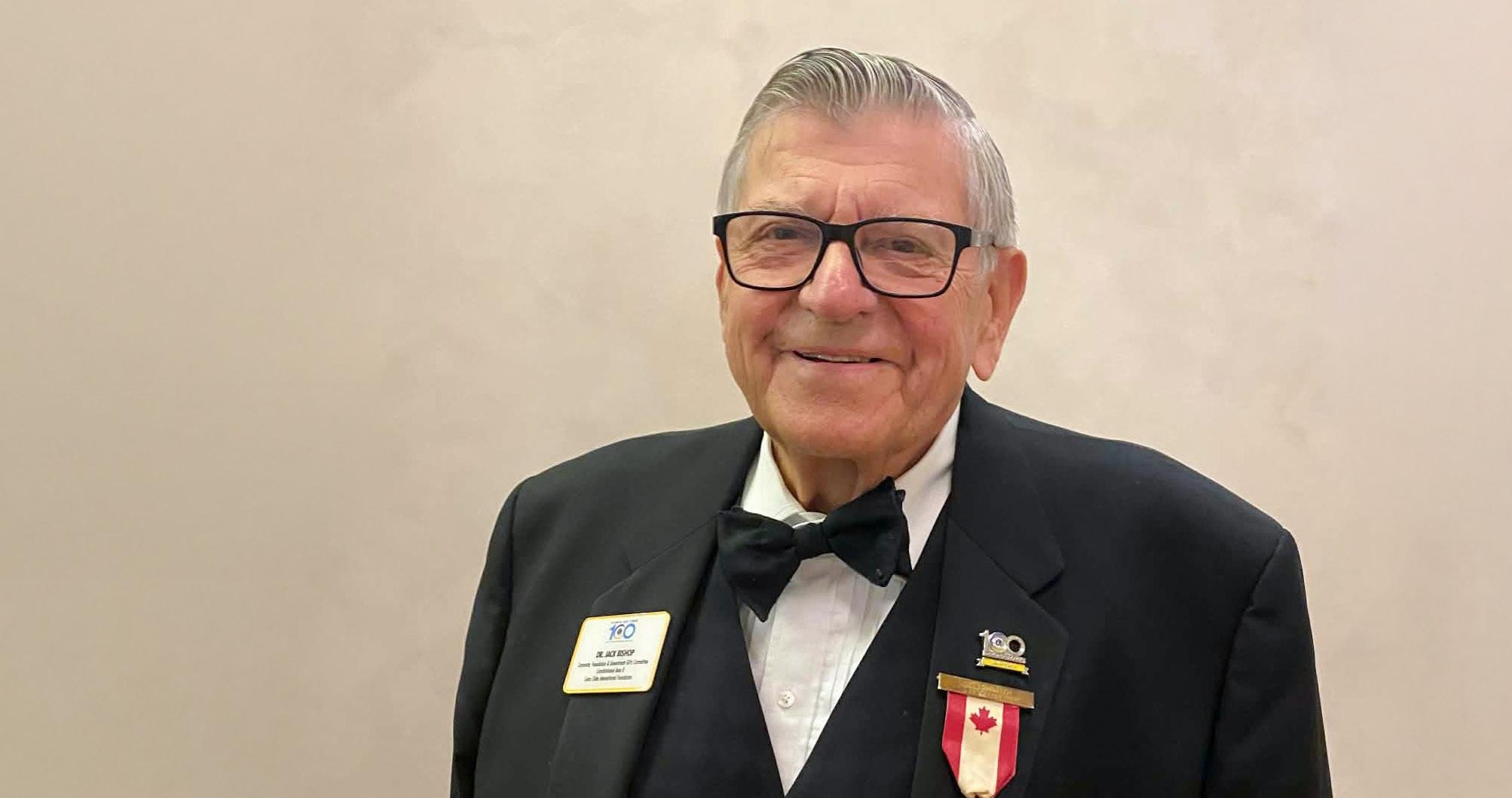
The Royal College of Dental Surgeons of Ontario (RCDSO) was saddened to hear of the passing of Dr. Jack Bishop, a longstanding registrant and highly regarded community leader in Kitchener-Waterloo Region.
Dr. Bishop was registered with the College from April 15, 1963, until December 31, 2015. He practiced dentistry in Kitchener for more than fifty years, earning a reputation for dedication, reliability and profound connection to the community he served.
“My dad practiced dentistry in Kitchener for 53 years,” said his son, Michael Bishop. “From what he tells me, he missed only half a day in that entire time, aside from vacation periods.”
Dr. Bishop’s professional life was deeply connected to his dedication to community service. Besides his dental practice, he was a founding member of KitchenerWaterloo Oktoberfest and actively participated in several service groups, including Lions Clubs International.
“He was heavily involved in service clubs,” Michael explained. “Many of his clients were people he knew through this work. It wasn’t intentional — it just happened because he had such a deep love for working in the community.”
Dr. Bishop’s involvement with Lions Clubs International spanned over six decades and included many leadership roles. Reflecting on his service, Mary D’Alton, a member of the Kitchener Lions Club, shared that Dr. Bishop served as club president, chaired several committees and was District Governor of A15.
“Dr. Bishop was involved in the formation of the Lions Foundation of Canada and the Dog Guides program, and he was key in securing the Breslau location where (guide dog) puppies begin their training,” said D’Alton. “He was also appointed
to the Lions International 100 and 200 Committees for Canada.”
D’Alton also mentioned that Dr. Bishop co-chaired a Vision Screening Project in partnership with the University of Waterloo, The Cowan Foundation and Lions Clubs International Foundation. In recognition of his contributions, Dr. Bishop was made a Life Member of Lions Clubs International; received the Melvin Jones Fellowship and the Judge Brian Stevenson Fellowship; and earned several leadership awards from the organization.
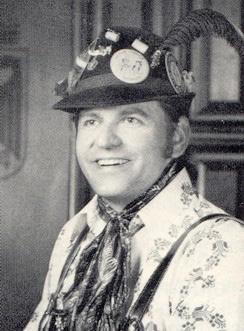
His impact on Kitchener-Waterloo Oktoberfest was equally significant. As a founding member and longtime leader, Dr. Bishop helped shape the festival into one of Canada’s most celebrated cultural events.
“Dr. Jack Bishop was a true pillar of K-W Oktoberfest,” said Tracy Van Kalsbeek, Executive Director of Kitchener-Waterloo Oktoberfest.
“As a founding member, he helped shape the very foundation of our organization and led our sponsorship efforts with passion and vision for many years. Jack was not only a dedicated leader but also a mentor and friend to so many of us. His guidance and commitment have left a lasting mark on our community, and his absence will be deeply felt.
We are profoundly grateful for all he gave to Oktoberfest and will cherish his legacy always.”
Reflecting on his father’s life, Michael Bishop described a legacy grounded in purpose and connection.
“I think this is his legacy — being able to combine work with pleasure,” he said. “The community work was a joy for him, and that’s what allowed him to continue for such a long time.”
The RCDSO extends its sincere condolences to Dr. Bishop’s family, friends, colleagues, and the many communities he served. His lifelong commitment to dentistry and public service leaves a legacy that will be remembered with gratitude and respect.

individuals contributed feedback, including general dentists, specialists, dental students and members of the public.
Our Standards review process
What
The College extends its appreciation to all registrants and key system partners and interested parties who participated in the recent consultation on the draft Standard for Implant Dentistry. The high level of engagement, through survey responses and discussions with partners and interested groups, reflects the significance of implant dentistry across the profession. More than 500 individuals contributed feedback, including general dentists, specialists, dental students and members of the public. We also heard from several organizations, including the Association of Prosthodontists of Ontario, the Ontario Society of Oral and Maxillofacial Surgeons and the Ontario Dental Association.
As with all Standards consultations, the purpose of this rigorous and transparent process was to gather a broad range of perspectives to help refine the draft and ensure it supports safe, consistent and high-quality patient care.
The feedback received presented a diversity of experiences and clinical contexts.
Many respondents expressed strong support for the overall intent of the draft Standard, including the emphasis on patient safety, clarity
and well‑defined requirements for professional competence.
Several areas of broad agreement emerged, particularly around:
■ the need to define risk and complexity
■ the importance of competency‑based verification
■ the value of practical tools to support implementation in practice.
At the same time, respondents shared differing views on certain components of the draft, including education requirements; who should teach or perform complex procedures; approaches to tracking adverse events or near misses; and the appropriate timing for implementing any new requirements. These perspectives are important, and all feedback is being carefully reviewed.
Work is now underway to revise the draft Standard in response to the feedback received. We will continue to update registrants as this work progresses through 2026.
Thank you to all who contributed. Your engagement is essential in developing Standards that uphold public trust while supporting the profession in delivering safe and effective care.
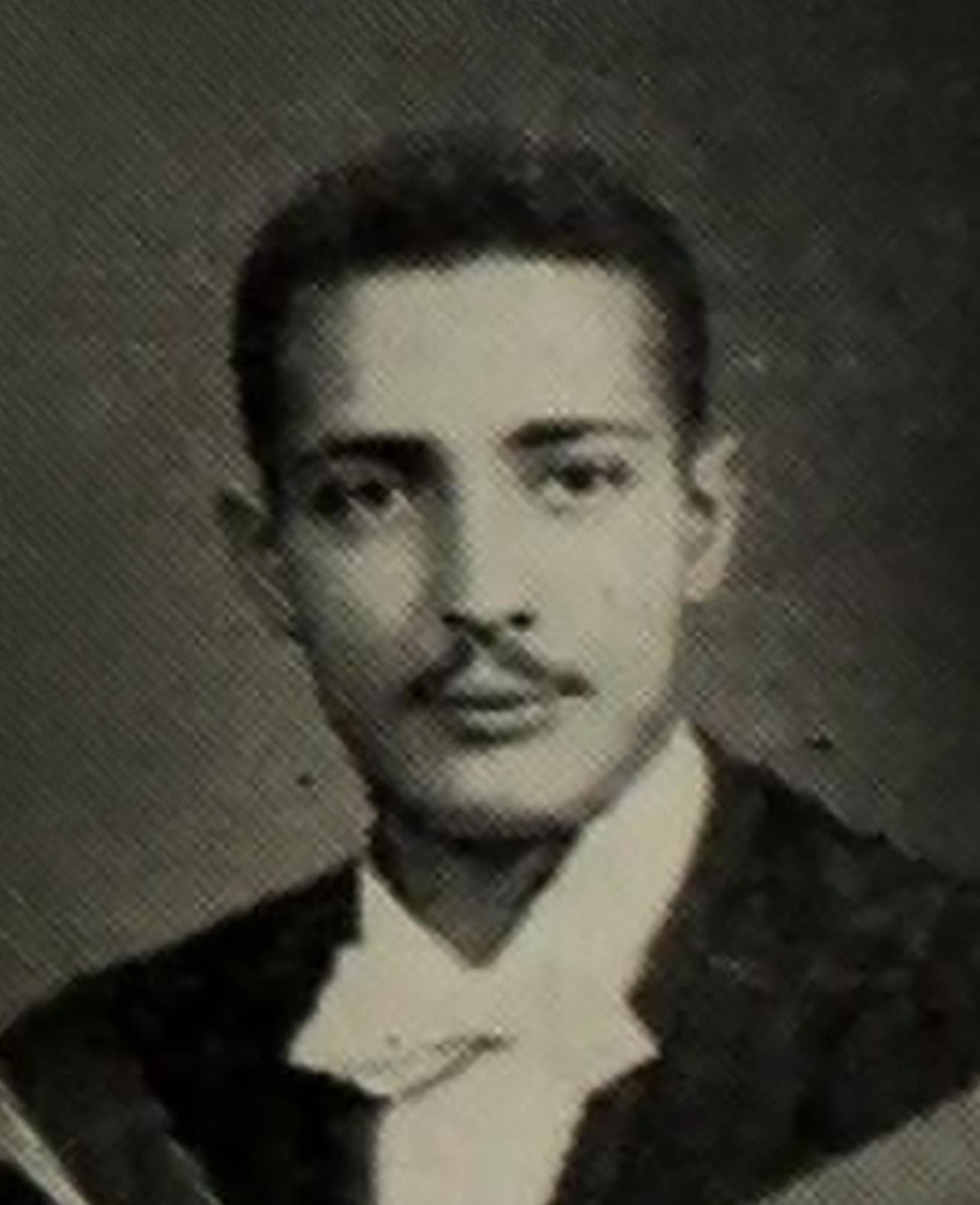
This Black History Month, we proudly recognize the remarkable legacy of Dr. Arlington Franklin Dungy, Ontario’s first Black dental school graduate.
Born in Windsor, Dr. Dungy earned his DDS from the University of Toronto in 1956, paving the way for future generations of Black dental professionals.
His career was defined by clinical excellence and a deep commitment to equity and opportunity. After establishing himself in pediatric dentistry, Dr. Dungy became chief of dentistry at Ottawa’s Children’s Hospital of Eastern Ontario in 1981. He later served as an academic leader at the University of Ottawa, first as an adjunct professor of surgery and eventually, as associate dean of alumni and student affairs and associate dean of professional affairs.
Drawing from his own experiences with prejudice, he championed more inclusive pathways into the health professions. His leadership was instrumental in launching the Indigenous Admissions Program at the University of Ottawa’s Faculty of Medicine.
We honour Dr. Dungy’s immense contributions to the profession and to the communities he served.
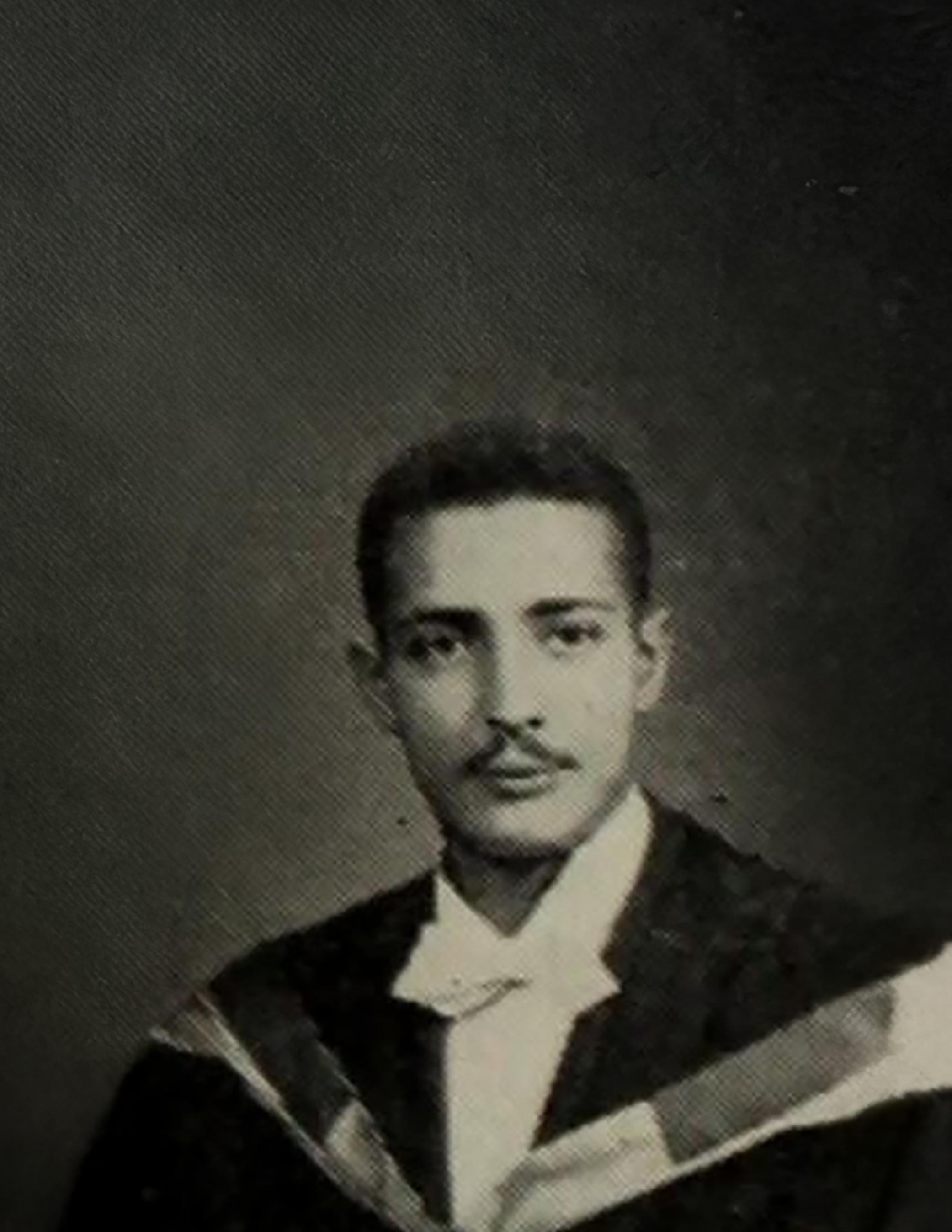
Drawing from his own experiences with prejudice, he championed more inclusive pathways into the health professions.

At the Royal College of Dental Surgeons of Ontario, protecting the public isn’t just a mandate; it’s a commitment that shapes everything we do.
One of the most powerful ways we fulfill that commitment is through continuing education. When dentists have access to practical, evidence-based learning, patients benefit from safer, higher quality care. That’s why we’ve launched Professional Practice Resources, a new section of our website designed to make lifelong learning easier, more accessible and more relevant than ever.
This hub is more than a collection of courses. It’s a gateway to knowledge that supports your evolving practice. From foundational skills to emerging technologies, these resources help you navigate change, meet regulatory requirements and strengthen professionalism across the province.
Dentistry, like healthcare, is evolving at a rapid pace. Standards shift, technologies advance and patient expectations grow. The College’s focus on continuing education ensures that Ontario dentists are
equipped to adapt. When you stay current, you deliver care that is safe, ethical and patient-centered.
We offer practical learning opportunities through Category 1 courses, RCDSO Connect webinars and toolkits designed to be applied directly at the chairside. Every resource is created to help you apply knowledge directly to patient care and everyday decisions.
The new Professional Practice Resources section brings together everything you need in one place.
■ RCDSO Connect Webinar Series – Stay informed by joining these live, interactive sessions as experts bring timely information about issues that matter to you and your practice, including standards, ethics, emerging technologies and patient care.
■ Courses and Resources
– Add these fundamental Category 1 courses to your CE plan. Developed with the Schulich School of Medicine and Dentistry, these RCDSO courses cover key practice areas—from recordkeeping to infection control—with you in mind. Designed for dentists at all stages of practice, they help you refresh core concepts, update your knowledge in current clinical protocols, and strengthen decision-making aligned with current standards of care. New courses are added regularly.
■ Learning in Action Toolkits
– Earn Category 2 CE points as you extend your learning beyond the webinar, incorporating principles into practice through practical activities with your team.
■ Clinical Guidance – Practical tools and evidence-based recommendations for medical history recordkeeping, prescribing monitored drugs and antibiotic stewardship.
Every resource in this new section reflects a simple truth: continuing education is essential to the practice of safe, ethical and highquality care. By investing in your own learning, you strengthen your skills, uphold public trust and ensure the best possible outcomes for your patients.
Visit Professional Practice Resources and discover how the College is supporting you in delivering care that meets the highest standards. Because when dentists learn, patients thrive—and that’s what matters most.

■ April 22 – Access to Care
■ May 20 – TBD
■ June 24 – RCDSO Reconciliation Action Plan
■ November 4 – TBD
Topics include updates to standards, the College’s Reconciliation Action Plan and maintaining professional boundaries.
Planning an event or study club meeting? You can request an RCDSO course to be delivered for your group.
How it works:
■ Choose from available Category 1 courses
■ Submit your request online
■ Coordinate with RCDSO for scheduling and delivery
Request a course for your event
RCDSO’s governance modernization marks a significant evolution in how Council leads, decides, and fulfills its public‑interest mandate. As expectations for transparency, accountability and evidence‑informed oversight continue to rise, these reforms ensure the College remains an effective, trusted regulator.
Strong governance directly influences public trust in dentistry. Modern regulatory models increasingly emphasize:
■ competency-based governance
■ diversity of experience and lived perspectives
■ enhanced accountability and oversight.
RCDSO’s new framework fully aligns with these principles while maintaining strong professional insight at the Council table.
Beginning in 2026, the College will transition to annual province-wide elections, replacing the district-based model. This shift aligns with governance best practices and mirrors the direction taken by several
other Ontario health regulators that have modernized their election processes.
Several regulators already use province-wide or single-district elections, including:
■ College of Physicians and Surgeons of Ontario (CPSO) – moved to a province-wide, competency-based election model replacing district elections.
■ College of Dietitians of Ontario (CDO) – adopted one single, Ontario-wide electoral district beginning in 2024–25.
■ Ontario College of Pharmacists (OCP) – shifted to a single province-wide district in 2020.
This modernization reduces misconceptions about representing local or regional interests and reinforces a core principle: Council serves the public interest, not geographic or professional constituencies.
To align with modern governance practices, Council will move to a more balanced mix of professional and public perspectives. This structure strengthens accountability while ensuring the essential clinical voice remains central to decision-making.
Council will be composed of:
■ 10 elected dentists
■ 2 academic dentists
■ 9–11 public members
Dentists will continue to hold a majority of seats on Council (12 dentists vs. up to 11 public members), maintaining the clinical perspective while achieving a more modern governance balance.
3. Three‑Year Terms & Predictable Renewal
■ Three-year terms for all elected dentists
■ A limit of three consecutive terms
■ A 2026 one-time staggering mechanism to ensure predictable succession
An enhanced Profile will guide assessments and candidate eligibility starting in 2026, ensuring Council maintains the right experiences, skills, and perspectives to govern effectively.
Governance modernization only succeeds with strong engagement from Ontario dentists. Whether you want to lead or ensure the right voices are at the table, there is a role for you
If you would like to help shape the future of dental regulation, Council service offers the opportunity to impact the profession in key areas:

Modern governance produces:
■ clearer expectations and standards
■ stronger risk oversight
■ more principled, evidence-informed decisions
■ increased public trust in both the College and the profession.
The ideal outcome is a regulatory system that supports fairness and the long-term credibility of the profession.
Want to learn more? Watch our RCDSO Connect virtual session that took place on February 10th here
■ influence strategic direction
■ bring clinical experience into policy decisions
■ strengthen public trust in the profession.
Your voice, insight and lived experience matter!
Join a Committee
Committees are an equally meaningful way to contribute. Statutory committees, such as Quality Assurance and Registration, do much of the detailed, hands-on regulatory work. This is where expertise matters, and where dentists make a real difference in fairness, consistency and public protection.
Voting is one of the simplest yet most powerful ways to strengthen the profession. Each vote helps ensure capable, committed, diverse leaders serve on Council. These leaders will shape policies and expectations that affect every aspect of dental practice.
Stay tuned for updates and key dates for elections and committee applications: Governance Modernization at RCDSO
2,100+

We have published two new resources to help dentists and patients navigate the use of artificial intelligence (AI) in dental care.
The new patient-focused brochure, “AI in Your Dental Care”, explains what AI is, how it’s being used in dentistry and its benefits and limitations. It highlights tools like AI scribes, virtual assistants and image analysis systems that can improve efficiency and accuracy, while noting the dentist’s role in maintaining patient privacy and professional oversight . Dentists can share this with patients to introduce the basics of AI in dentistry to them.
We have also published a helpful AI checklist, based on the AI in Dentistry Guidance, to support dentists in assessing AI tools and solutions before adoption. These resources cover questions about appropriate use, data protection and security, training and development, performance and risk management.
On January 21, more than 2,100 dentists attended our virtual RCDSO Connect where we launched these new resources and took an in-depth look at our recently published AI in Dentistry Guidance and how dentists can apply it in practice.
The session featured a panel moderated by Dr. Zubin Austin, Murray Koffler Research Chair at the Leslie Dan Faculty of Pharmacy and the Institute for Health Policy, Management, and Evaluation. Panelists included Dr. Peter Fritz, Chair of the RCDC’s Task Force on Artificial Intelligence and Emerging Digital Technology; Dr. Antony Liscio, RCDSO Council member and Chair of the Standing Policy Working Group; and Amy Block, Partner at WeirFoulds LLP.
When Lesley Byrne joined the Royal College of Dental Surgeons of Ontario in 2022, she brought with her years of experience supporting communications in complex, public-facing organizations. A consistent theme has guided her work across every role: trust. Lesley explains that she has always been driven by “how institutions earn it, how teams thrive with it and how clear communication sustains it.” RCDSO’s mandate, to regulate in the public interest, felt like the right environment to continue that work in a meaningful way.
Lesley sees health-care regulation as both a privilege and a collective responsibility. “We are a part of a much larger, complex system,” she says, “but all of us, regulators and dentists, put patients and the public at the centre of our work.”
A conversation early in her College tenure continues to shape Lesley’s thinking. A dentist shared that amid patient care and practice management, regulatory updates can be challenging to keep up with: “help me get to the ‘so what’ quickly.” For Lesley, this highlighted the importance of creating communications that are not only accurate, but genuinely useful in the pace of clinical life. It remains a touchstone for how her team approaches every message, advisory and update.
Lesley now leads a team of creative, collaborative communications specialists who work closely with colleagues across the College. Their goal is to take detailed, technical information and translate it into clear, plain-language resources that help dentists and the public understand not just what is changing, but why. That cross-College perspective, Lesley notes, allows the team to anticipate questions and strengthen the clarity of guidance.
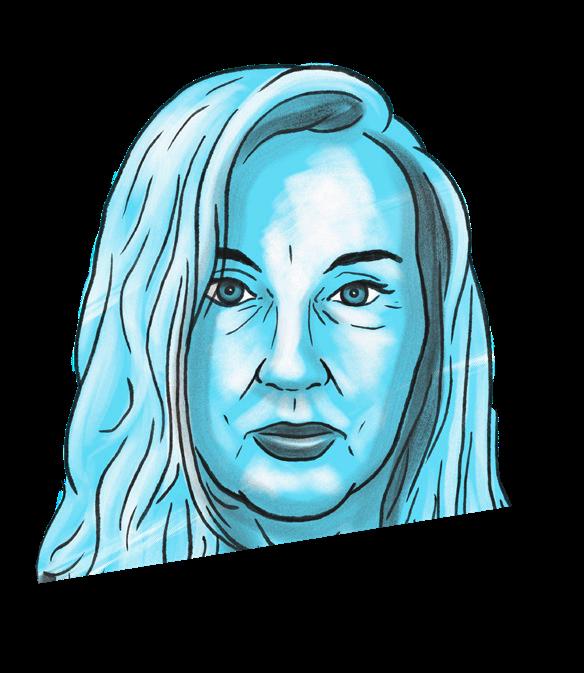
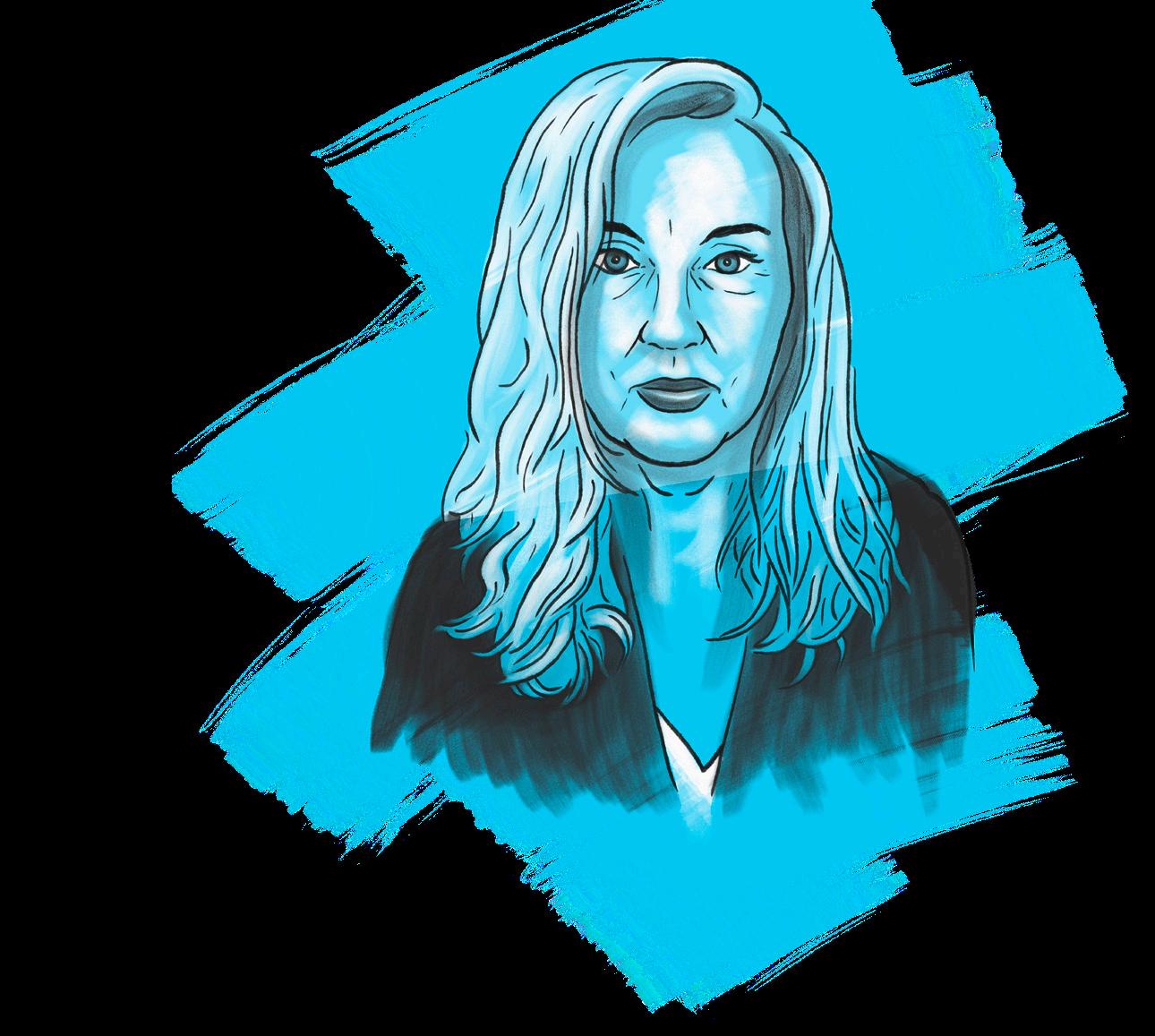
Lesley is especially proud of the College’s Practice Advisory Service, an area she believes many might not realize is as active as it is. “Our advisors are on the phone and responding to emails all day, every day,” she says. They offer support on everything from standards and radiographs to IPAC and recordkeeping. Lesley describes the service as “a true front-line role,” one that requires deep regulatory expertise and the ability to provide fast, practical guidance rooted in real-world practice. She regularly acknowledges the team’s thoroughness and dedication to supporting safe, high-quality care across Ontario.
Looking ahead, Lesley is focused on several key priorities: making guidance easier to find and faster to grasp; communicating proactively around upcoming changes; and ensuring that all College materials are clear, concise and accessible. These goals align with the College’s modernization efforts and its commitment to strengthening its digital tools.
Lesley is particularly excited about enhancing two-way communication with the public and registrants. This means simpler channels for questions, faster pathways to answers and practical checklists that clarify and educate. The aim, she says, is “fewer clicks, clearer summaries and timely updates you can trust.”
What Lesley enjoys most about her work is collaboration—inside the College, in support of Council, with dentists and with system partners. Working alongside subject-matter experts gives Lesley and the team a richer understanding of the issues that matter to patients. And at the heart of her approach is a simple commitment: “We’re here to support safe, ethical care.”
All of us, regulators and dentists, put patients and the public at the centre of our work.
The RCDSO is committed to safeguarding public health by ensuring that only qualified and registered professionals practice dentistry in Ontario. In this regard, we publish a publicly accessible list of individuals who have been legally prohibited from practising for various reasons, including lack of credentials, disciplinary actions, or other legal issues.
If you are aware of these individuals or anyone else working without being registered with the RCDSO, please contact us at info@rcdso.org
Dentists should exercise caution when selling used materials and equipment to non-dentists. They may also wish to review the list of unauthorized practitioners available on our website.
Dentists should always verify the credentials of potential employees by consulting the RCDSO public register to ensure they are authorized to practice dentistry in Ontario. Before hiring anyone for your practice, be sure to cross-reference their license status on the public register to maintain compliance and patient trust. Patients are encouraged to check the register as well to confirm their dentist’s authorization to practice and ensure they are receiving care from a qualified professional.
Recent amendments to the Healing Arts Radiation Protection Act (HARPA), introduced in December 2025 under the Protect Ontario by Cutting Red Tape Act, 2025, bring key changes for X-ray machine owners and service delivery.
X-ray machine owners must now include their current email address when submitting applications. If x-ray machine owners registered with the Director of X-ray Safety change their business or email address, they must notify the Director in writing at xris@ontario.ca within 15 days.
Additionally, service delivery methods have expanded to include electronic delivery, allowing inspectors to send X-ray Safety Inspection Reports by email. These updates aim to streamline processes and improve efficiency while maintaining regulatory standards.
More information can be found under Schedule 12 Protect Ontario by Cutting Red Tape Act, 2025, S.O. 2025, c. 24 - Bill 46 | ontario.ca or by visiting Healing Arts Radiation Protection Act, R.S.O. 1990, c. H.2 | ontario.ca
Public Health Ontario (PHO) has released updated resources to support health care providers in managing suspected measles cases. The Measles: Information for Health Care Providers guide includes updated recommendations for identification, reporting, and infection prevention measures.
PHO has also published updated Infection Prevention and Control (IPAC) recommendations for Mpox in Health Care Settings, providing current guidance to help minimize transmission risks across clinical environments.
For more information and access to the full resources, please visit PHO’s webpages:
■ Measles
■ Mpox

Staying subscribed to RCDSO emails is one of the simplest and most effective ways for dentists to stay current and well-informed. Our email updates deliver the latest information on new and revised standards, ensuring you remain aligned with regulatory expectations and can adapt your practice accordingly. You’ll also receive timely highlights from Council, giving you insight into decisions and priorities that shape the profession.
In addition to College updates, our emails share important notices from the Ministry of Health and Public Health Ontario. This information can directly impact infection prevention protocols, public health requirements and clinical guidance. Renewal reminders and key deadlines are also communicated proactively to help you maintain your registration and permits without interruption. By staying subscribed, you ensure you never miss critical updates or opportunities to stay informed and deliver safe, high-quality care across Ontario.
Effective January 1, 2026, Ontario’s As of Right provisions establish a new registration pathway for dentists who are already licensed in
another Canadian province or territory.
Under these legislative changes, regulated professionals, including dentists, may begin practising in Ontario within 10 business days of submitting an application to the relevant regulatory college.
Dentists entering through this pathway may practise in Ontario for a one-time period of up to six months while completing the full registration process required by the RCDSO. All outstanding registration requirements must be fulfilled before a general certificate can be issued.
The RCDSO provides an As of Right application form and related guidance outlining attestation and documentation requirements for applicants using this pathway. These resources are available on the College’s website.
The Royal College of Dental Surgeons of Ontario (RCDSO) is inviting feedback on our draft Standard of Practice: Managing Conflicts and Ending the Dentist-Patient Relationship. This will replace the current Maintaining a Professional Patient-Dentist Relationship advisory.
This is the second public consultation on this draft Standard. Following the initial consultation, we carefully reviewed all feedback received and made revisions to improve the draft Standard.. We are seeking further input at this stage to confirm that the changes appropriately address the issues raised previously and that the Standard is clear, comprehensive and practical for use in dental practice .
The consultation is open until 11:59 p.m. on March 20, 2026. Your feedback is important to us and will help inform updates to the draft Standard. Feedback can be provided through the consultation survey on our website or by email at: patient.dentist.relationships@rcdso.org
2025 ONRCDSO 7 (CanLII) | Royal College of Dental Surgeons of Ontario v Hidalgo | CanLII
Heard: October 24, 2025, by videoconference
Decision Date: October 24, 2025
Release of Written Endorsement: December 2, 2025
READ MORE >
2025 ONRCDSO 8 (CanLII) | Royal College of Dental Surgeons of Ontario v Nguyen | CanLII
Heard: September 8, 2025, by videoconference
Decision Date: September 8, 2025
Release of Written Endorsement: January 30, 2026
READ MORE >
2026 ONRCDSO 1 (CanLII) | Royal College of Dental Surgeons of Ontario v Gewarges | CanLII
Heard: Decemaber 15, 2025, in writing
Decision Date: January 30, 2026
Release of Written Endorsement: January 30, 2026
READ MORE >
Current suspended members (for Discipline files only, does not include suspensions for non-payment of fees):
■ Benjamin Woo suspended Nov 21, 2025, to March 21, 2026
■ Mark Shankman interim order by ICRC–suspension since November 28, 2024
■ Kevin Kliman suspended February 5, 2026 to February 5, 2027

The College requires sedation facility permit holders to have a fire evacuation protocol for their dental facility.1
Afire evacuation protocol outlines the steps to activate emergency services and ensure the safe evacuation of staff, patients and visitors in the event of a fire or similar emergency.
Dental facility owners may have a separate responsibility to develop and implement a Fire Safety Plan under Section 2.8 of the Ontario Fire Code2 or municipal by-laws. A comprehensive Fire Safety Plan will satisfy the College’s requirement for a sedation permit holder to have a fire evacuation protocol.
Being prepared for emergencies –including fire – is an important part of protecting the safety of everyone who enters a dental facility. The College encourages all dental facilities to develop and implement a Fire Safety Plan or fire evacuation protocol, even it is not explicitly required by the College, Ontario Building Code or municipal by-laws. Below is information developed by the College to support dentists in drafting and implementing a fire evacuation protocol or Fire Safety Plan. Note, the College only reviews fire evacuation protocols for facilities that hold a sedation facility permit.
When drafting a fire evacuation protocol or Fire Safety Plan for your dental facility, we suggest you consider the following questions -- and any other factors relevant to your specific dental practice — to ensure the safety of patients, staff, and visitors:
■ Does your building or complex already have a Fire Safety Plan?
■ If so, review it closely to ensure it adequately addresses the needs of your dental facility.
■ Do you provide sedation services?
■ Could a sedated patient be non-ambulatory during an evacuation? If yes, ensure there is a plan to support the safe evacuation of the patient.
■ Could a sedated patient require airway support? If yes, ensure there is a plan to safely evacuate the patient with the necessary equipment and emergency drugs (e.g., portable suction).
■ How will you support the safe evacuation of patients who need extra assistance?
■ This includes children, elderly patients, and individuals with disabilities.
■ Has a safe, designated meeting place been identified?
■ All staff should know where to gather after evacuating.
■ Are team roles and responsibilities clearly assigned? Identify who is responsible for:
■ Calling 911
■ Sounding an alarm
■ Clearing operatories
■ Turning off gas systems
■ Transporting patients and emergency equipment
■ Conducting a roll call at the meeting point
■ Is there a clear map or visual aid outlining evacuation routes?
■ Ensure exit routes and stairwells are clearly marked, especially if elevators may be unavailable during an emergency.
■ Are there additional resources available? Additional guidance or fire preparedness support may be available in your municipality.
■ Government of Canada’s Canadian Centre for Occupational Health and Safety website: CCOHS: Fire Protection
■ Standard of Practice for Use of Sedation and General Anesthesia
■ Ontario Fire Code: O. Reg. 213/07 FIRE CODE | ontario.ca

1 Reference: Standard of Practice
– Use of Sedation and General Anesthesia in Dental Practice
2 O. Reg. 213/07 FIRE CODE | ontario.ca

To patients because it can:
■ Bridge any distance between you and your patient
■ Help enhance their trust in you
■ Improve the quality of the information relayed by the patient about their oral health
■ Help their decision-making
■ Reduce the likelihood of a complaint
communication?
■ Putting patients first and acting in their best interests
■ Being open and honest while maintaining professionalism
■ Respecting others (staff, patients, family, other care providers)
■ Providing options and timeframes for care
To dentists because it can:
■ Better inform your assessment
■ Make treatment plans more comprehensive and accurate
■ Help you relay your opinion
■ Enhance the professional relationship
■ Reduce the likelihood of a complaint
■ Listen and hear your patient
■ Observe and watch for nonverbal cues
■ Converse and engage – be mindful of your non-verbal cues
■ Ask questions to help gain understanding
■ Explain – use plain language, avoid jargon, consider using visuals
■ Be patient and answer questions
■ Summarize, rephrase or paraphrase - explain again or give information in writing too
■ Confirm the concern, your recommendation and the patient’s decision
■ Document, document, document
Be respectful and mindful. Asking for the patient’s preferred name and pronouns may be a good first step.
Informed Consent requires systematic yet meaningful dialogue, not a one-time or one-sided interaction. It’s more than a signed consent form. Always consider the patient’s needs and what a reasonable person would need or expect to know.
Patients must be informed about:
■ the nature of treatment
■ expected benefits
■ material risks and side effects
■ alternative course of action
■ the consequences of not having treatment
Dentists must also discuss the direct and additional costs of treatment. Confusion about fees and insurance coverage is a common cause of miscommunication and complaints. Misunderstandings often arise when both the dentist and patient assume that there will be full coverage for treatment before confirming the coverage.
Dentists should clearly communicate:
■ Their office policies on deductibles, copayments, balance billings, non-covered services and differing fee schedules.
■ Whether they or the patient will obtain confirmation of benefit coverage prior to treatment.
■ Who is responsible if a claim is unpaid or underpaid due to incorrect insurance information.
Clear communication and documenting agreements in the patient’s chart helps prevent disputes and maintain trust.
Patients need:
■ Adequate time to consider the information and their options
■ Time to consult with benefit providers about coverage
■ Time to decide whether to accept or refuse the recommended treatment
■ Awareness that they can change their minds at any time
Dentists need:
■ Time and patience to consider the patient, the treatment and to obtain consent**
■ To revisit consent on more than one occasion
■ To remember to provide more specific and detailed information when the treatment is more complicated, risky in nature, or is strictly for cosmetic or aesthetic reasons
** In an emergency, you must still provide as much information as possible given the urgency of the situation.
** You/your office/the patient may need time to obtain a predetermination of benefit coverage for the treatment
Clear Conversations: Strengthening Communications in Dental Practice is available on our YouTube channel.
Watch the recording
Foundations of Professionalism: Patient Autonomy, Beneficence, Nonmaleficence, and Justice and FAQs
■ Dental Recordkeeping Guideline and Electronic Records Management
■ Document, document, document.
■ Everyone looks to the contemporaneous record to understand what transpired and why. Excellent care without an associated record can cause as much challenge as poor care or poor record keeping.
■ RCDSO Practice Advisory

Check your inbox and visit our website for opportunities to contribute to upcoming public consultations. Your voice helps shape our work.
The following are requests for assistance obtaining dental records from various police services and coroner’s offices across Ontario.
If you have any information, please reach out to the contact listed in each case.

Patient Name DOB Requested From Contact Contact Email
Peter Sicheri 03-15-1986 Office of the Chief Coroner (Toronto East/West Regional Offices)
Tala Raizel Vorona 04-17-2023 Toronto Police Service
Natan Vorona 04-04-2025 Toronto Police Service
Aliyah Hirchberg 10-24-1996 Toronto Police Service
Richard Hamelin 07-29-1990 Ottawa Police Service
Kris Plews 08-04-1965 Office of the Chief Coroner (Toronto East/West Regional Offices)
Dianna Charles 02-02-1958 Office of the Chief Coroner (Toronto East/West Regional Offices)
Michael Campbell
michael.b.campbell@ontario.ca
Detective Sukhdeo missingpersons@torontopolice.on.ca
Detective Sukhdeo missingpersons@torontopolice.on.ca
Detective Sukhdeo missingpersons@torontopolice.on.ca
Detective Constable Patrick Wiseman wisemanp@ottawapolice.ca
Michael Campbell
michael.b.campbell@ontario.ca
Michael Campbell
michael.b.campbell@ontario.ca
Maureen Brennan 06-01-1967 Ottawa Police Service Constable Tate Adam adamt@ottawapolice.ca
Natalia Chaulk 10-03-1976 Toronto Police Service
Molad Hagos 11-14-2006 Toronto Police Service
Detective Constable Springer missingpersons@torontopolice.on.ca
Detective Saccoccia missingpersons@torontopolice.on.ca
The College has amended its Registration Regulation to strengthen public protection and streamline processes. These changes support the transition of the Professional Liability Program (PLP) to Navacord by establishing a requirement for dentists to obtain and maintain professional liability coverage. The changes align with best practices across health regulators.
■ All applicants for registration must provide proof of professional liability protection.
■ Every certificate of registration is subject to a Term, Condition and Limitation (TCL) requiring registrants to maintain coverage.
■ Registrants must provide evidence of coverage upon request and immediately cease practise if coverage lapses.
■ No action is required from registrants for 2026. The College will not be collecting proof of coverage this year; the intention is to enable documentation upload through the registrant portal beginning in 2027.
■ Failure to provide required renewal information, annual licence payment or proof of liability coverage will result in suspension following a 30-day notice period.
■ The Registrar can lift a suspension within 60 days of a suspension once deficiencies are corrected. The dentists must request to have the suspension listed (approval is discretionary), but no formal reinstatement application is required.
■ If unresolved after 60 days, the certificate is revoked.
■ To lift a suspension, registrants must pay all outstanding amounts and any by-law related fees for lifting the suspension.
■ If revoked: dentists must apply to reinstate according to the College’s requirements for reinstatement and must pay reinstatement fees, annual fees for the current year and any other amounts owed.
■ Work Authorization: Certificates now include a TCL requiring dentists maintain valid work authorization to practise.
■ Continuous Practice: Updated provisions allow flexibility for dentists returning after a gap in practise by focusing
on the preceding three years and allowing the Registration Committee to recognize practice in approved jurisdictions.
■ Specialty Applicants: The National Dental Specialty Examination (NDSE) now serves as an anchor point for continuous practice requirements.
■ Broader Exclusions for Reinstatement: The exclusions for reinstatement were broadened to enhance public protection. Those for whom reinstatement is not available remain entitled to apply for a fresh application.
Ontario Regulation 205/94 –General (Registration)
Contact registration@rcdso.org
Indigenous Services Canada’s NIHB program provides eligible First Nations and Inuit with coverage for a wide range of health benefits, when these benefits are not otherwise covered through provincial/territorial programs or private benefit plans. Dental benefits covered through NIHB include diagnostic, preventive, restorative, endodontic, periodontal, removable prosthodontic, oral surgery, orthodontic and adjunctive services.
We invite you to learn more about NIHB program dental benefits, and consider enrolling with the program for direct billing!
The NIHB program reviews and updates its dental benefit fees on an annual basis. The NIHB regional dental fee updates are scheduled to take effect April 1, 2026.
The updated fees will appear in the NIHB Regional Dental Benefit Grids, organized by general practitioners (GP), specialists (SP), oral surgeons (OS), denturists (DN) and dental hygienists (HY). The grids contain maximum NIHB fees for eligible procedure codes.
The current NIHB Regional Dental Benefit Grids, as well as the latest updates, errata and amendments,

are available on the Express Scripts Canada Provider and Client Website Upon entering the Dental Benefit Grids, choose the current year and the desired province/territory to view the grid corresponding to the applicable provider specialty (e.g., GP/SP, HY, DN and OS).
The Express Scripts Canada Provider and Client Website is the gateway for dental providers to work with the NIHB program. Providers can access program policies, forms, quarterly newsletters, the dental claims submission kit, provider billing agreement and regional dental benefit grids.
To learn more, please visit: https://nihb-ssna.express-scripts.ca/ en/nihb dental
Dental providers can create an NIHB web account to upload and submit their enrolment documents and gain access to convenient selfservice options. Through your web account, you will be able to verify client eligibility; submit claims and predetermination requests; and view claim statements online.
Get started here: https://nihb-ssna.expres-scripts.ca/ nihb provider/create now
Providers who have an NIHB web account can easily create and manage secondary accounts for their team members.
To learn more about creating and managing secondary accounts: view the document dated October 31, 2025 on the Express Scripts Canada NIHB Provider and Client Website, Dental Provider Program and Policy Information section available at:
https://nihb-https://nihb-ssna. express-scripts.ca/en/dental/ provider/policy and program information
Direct deposit is a fast, secure way to receive payment. Switch to direct deposit by logging into your NIHB Web account and updating your payment information.
For questions related to an NIHB web account, self-service options, NIHB provider enrolment, client and dental service eligibility, billing process and payment, please contact:
NIHB Call Centre at Express Scripts Canada: 1-888-511-4666
For questions about the NIHB program and its dental policies, or the status/outcome of specific predetermination requests, please contact:
NIHB Dental Predetermination Centre:
■ Dental services: 1-855-618-6291
■ Orthodontic services: 1-866-227-0943
Check out the 30th edition of the NIHB Annual Report. Find national and regional data on the NIHB client population, expenditures, benefit types and benefit utilization.
View the full report or move directly to dental in section 6, by visiting:
https://www.canada.ca/en/isc/nihb/about the nihb program
NIHB Dental Forms
https://nihb-ssna.express-scripts.ca/ en/0205140506092019/04/0406
NIHB Dental Benefits Guide
https://www.sac-isc.gc.ca/ eng/1579538771806/1579538804799
Dental Claims Submission Kit
https://nihb-ssna.express-scripts.ca/ en/0205140506092019/04/0403
Client reimbursement information
https://www.sac-isc.gc.ca/eng/1579811474530/1579811499194
Submission of Predetermination Requests
https://www.sac-isc.gc.ca/ eng/1579538771806/1579538804799#a9b
Appeal Process
https://www.sac-isc.gc.ca/ eng/1579538771806/1579538804799#a9d
Recordkeeping is essential to safe, high-quality patient care— but just as important is making sure those records are accessible when patients request them. Patient complaints can arise when they encounter delays or obstacles in getting copies of their dental records. Patients have the right to obtain copies of their complete dental records, including chart notes, radiographs and diagnostic study models. Requests can come directly from patients—they do not need to be initiated by another dentist. Every request and release should be documented in the patient’s file.
Dentists must provide copies of records when:
■ The patient, their legal guardian or substitute-decisionmaker requests them directly.
■ A new or referring dentist requests them with patient consent.
■ An authorized representative (e.g. the patient’s lawyer) makes a request.
■ Another dental professional (e.g., hygienist, denturist) providing care to the patient requests them with patient consent.
Important reminders for smooth record release:
■ Patients may pick up records themselves or authorize someone else to do so.
■ Original records including radiographs or models must be retained, but patients are entitled to diagnostic quality duplicates.
■ Reasonable duplication fees may be charged—but records cannot be withheld due to unpaid balances.
■ Transfers should be completed within a reasonable timeframe, typically one to two weeks.
■ During associate departures or practice transitions, the principal dentist
For more information:
Release and Transfer of Records
Practice AdvisoryRelease and Transfer of Records Practice Advisory on Change of Practice Ownership FAQS Dental Recordkeeping
(as custodian) must provide copies at the patient’s request.
■ When a dentist retires, passes away or sells their practice, patients should be notified of where their records are located, who is responsible for retaining these records and how they can access them.
Our Introduction to RCDSO Recordkeeping Guidelines session is available on our YouTube channel.
Watch the recording
In exceptional situations—such as coroner investigations or urgent treatment— original records may be temporarily released with appropriate documentation and privacy compliance. Good recordkeeping goes beyond retention schedules and secure storage. It includes providing timely access, respecting patient rights and ensuring continuity of care. Clear processes and consistent documentation demonstrates professionalism and accountability.
Hamza Saqib Rashid
Manasvi Shroff
Bardia Kolahdooz
Jacy Lin
Kimberly Hawrylyshyn
Ioan Mititelu
Rachel Macdonald
Nehal Tawfik
Hiteshkumar Patel
Eman Aboskeen
Soudabeh Ghayedi
Yitong Guo
Patrick Kuny
Muhammad
Usman Iqbal
Nazanin Arbabzadegan
Hashemi
Parminder Singh
Bhawanpreet Singh
Vikas Arora
Kainat Ijaz
Harjot Sandhu
Gagan deep Thakur
Hasan Al Sholi
Sumit Kapur
Mandeep Kaur
Bhavisha Majithia
Henry Chen
Sabeen Khalid
Soham Patel
Manpreet Purba
Ashif Nuhash
Heenaben Patel
Nazanin Tanha
Danish Mahmood
Bassam Abu-Daqqa
Bishoy Sadek
Mohadese Yazdanpanahbahabadi
Khadijeh Rajabzadeh
Ritesh Chawla
Syeda Ali Zainab Rizvi
Ajay Kumar
Dhvani Patel
Avnika Garg
Poonam Gurbaxani
Harun Sutcu
Song Zheng Tang
Navdeep Surya
Sumaiya Firdous
Ritulkumar Patel
Shubham Patel
Chitran Thirupathy
Satinder Jit Kalher
Jainali Patel
Samer Rizk
Ahmed Ridha
Daniah Al-Sabbagh
Suzan Khalifa
Shahana Nizum
Akshatha Yalamuri
Krishna Murthy
Akhil Chawla
Prashant Patel
Juvita Jose
Meghnajit Kaur
Mina Ali Mustafa
Elisa Cherry
Vaidehi Misra
Yasaman Hosseinzadeh
Shreya Gajera
Gurveer Sandhu
5Maanik Agarwal
Sukhyad Grewal
Manvi Kaushal
Angad Dhillon
Daniel Presta
Khushboo Mistry
Shubha Jain
Sukhmani Dhillon
Riddhi Joshi
Priyanka Prajapati
Kaushalkumar Patel
Zainab Dulfiqar
Bhumikaben Gabani
Abhi Gajjar
Harpreet Kaur
Faiza Khimji
Nishat Kauchali
Safaa Shihab
Nikita Talaviya
Manar Askar
Nisreen Alessa
Linnet Antony
Lourdes Jallo
Alaa Dagher
Kajal Mavla
Alexander Kelada
Palak Patel
Michael Markiewicz
Shriya Gupte
Amy Fang Ping Chou
Tina Matini
Tasnim Gani
Ahmed Al-Shekhli
Ronak Panchal
Kartik Shah
Nehal Solanki
Aparna Maria Jacob
Vishal Modha
Maria Ghobrial
Manan Kotak
Jessica Yune
Shivani Pipalava
Kristen Cessford
Ahmed Hammad
Rupinder Pal
Kaur Ghuman
Ambreen Pothiawala
Emily Lee
Mandeep Kaur
Kephana Rashmi
Philomin Raj
Mackenzie Cockburn
Pratha Patel
Karamjot Kaur
Shabeer Madani
Mina Fahmy
Florence Liao
Rashmeen Kaur
Thi Thuy Hong Vu
Anita Abraham
Harleen Kaur
Paramjit Kaur
Aleen Awais
Dipankar Khadtale
Chahat Arora
Ranvir Kaur
Shubham Suryawanshi
Parisha Kansara
Neal Choksey
Veronica Kindaro
Kamran Hosseini
Darya Motaghi
Sandy Abdoni
Ava Torabi
Indu Patel
Rahulkumar Patel
Ruchika Batta
Rattanamol Kaur Thind
Sepideh Esmaeili
Shahmirzadi
Vintu Vijayan
Mohsen Pourkami
Flavia Henrique
Jignesh Goti
Maryam Amini
Sayeh Arabkarami
Mohit Khanna
Nicole Rutledge
Fatima Dhandh
Dina Belsito
Jin Han Zeng
Lubna Alfatemi
Arashdeep Brar
Pooja Mayor
Shipra Saraiya
Malvika Chowdhary
Leila Zamani Alavijeh
Ripandeep Kaur
Felice Yan Wah Kwok
Catherine Gilchrist
Shyam Ingale
Nazgol Zamanian
Hardeep Kaur
Mohini Bhuva
Yuryj Kostirko
Yalennis Escobar
Fernandez
Sajeel Ahmad
Matthew Choi
Shiva Adelnia
Tejal Singh
Zahra
Abbasiparashkouh
Happy Patel
Mahika Tekchandani
Kinjal Macwan
Naza Muhyedin
Shooka Ranjbar
Zainab Dawari
Rehab Kamaluddin
Alaa Abosamra
Stephanie Tom
Suganya Mohandoss
Rafael Angulo
Hernandez
Ali Bassiri
Shaik Safiullah Shareef
Parth Patel
Mirian Man Hin Dang