The Orange County Catholic Newspaper seeks to illuminate and animate the journey of faith for Catholics within the Roman Catholic Diocese of Orange – building solidarity among the faithful and inviting a deeper understanding and involvement in the mission of Christ – through the timely sharing of news, commentary and feature content in an engaging, accessible and compelling format.
ORANGE COUNTY CATHOLIC
The Official Newspaper of the Roman Catholic Diocese of Orange Diocese of Orange Pastoral Center, 13280 Chapman Ave., Garden Grove 92840
Publisher: The Most Reverend Kevin W. Vann, Bishop of Orange
Director of Custom Content: Caroline Wong, cawong@scng.com
Managing Editor: Caitlin Adams Art
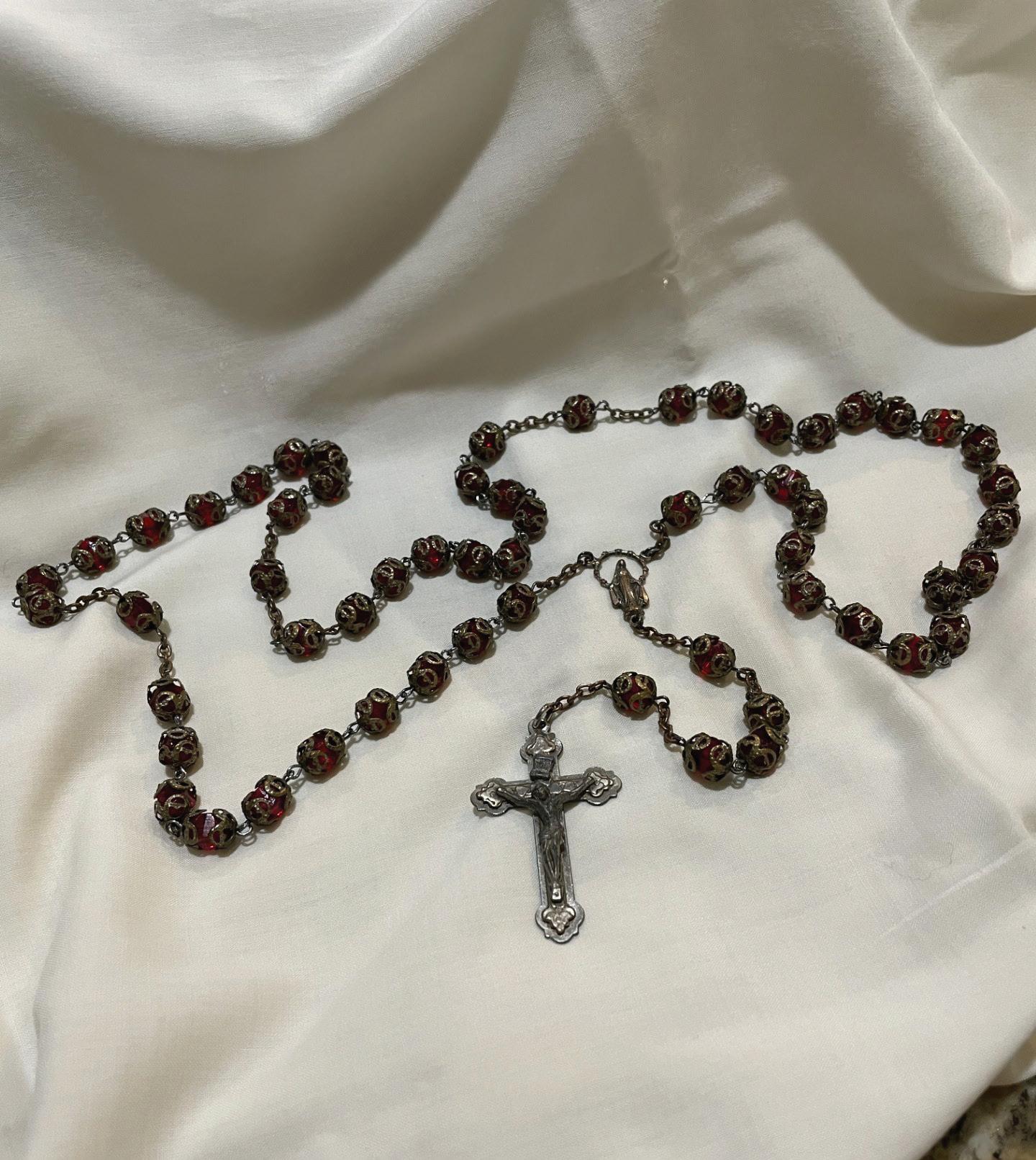
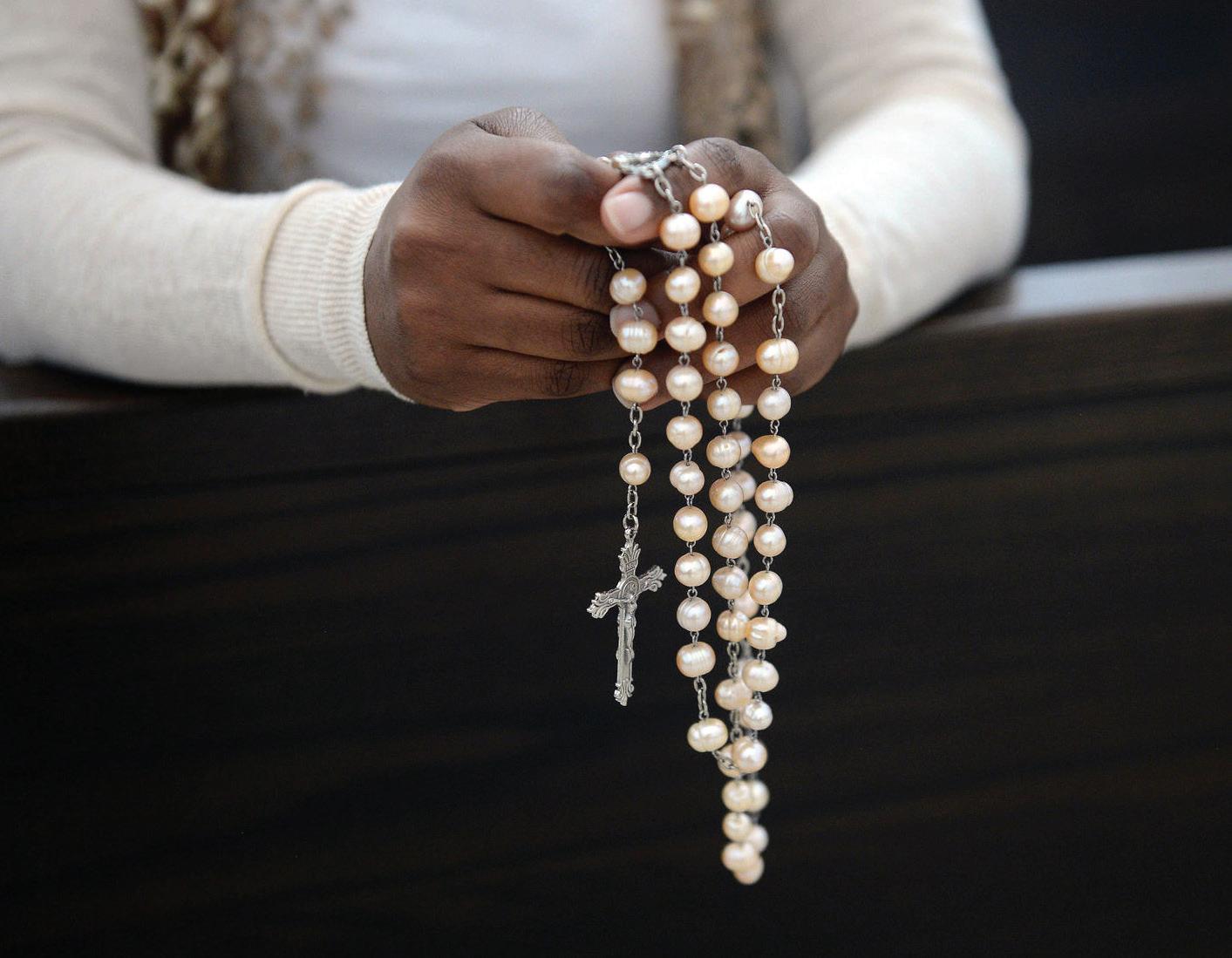
ROSARY BEADS
COURTESY OF BERNADETTE BRAS
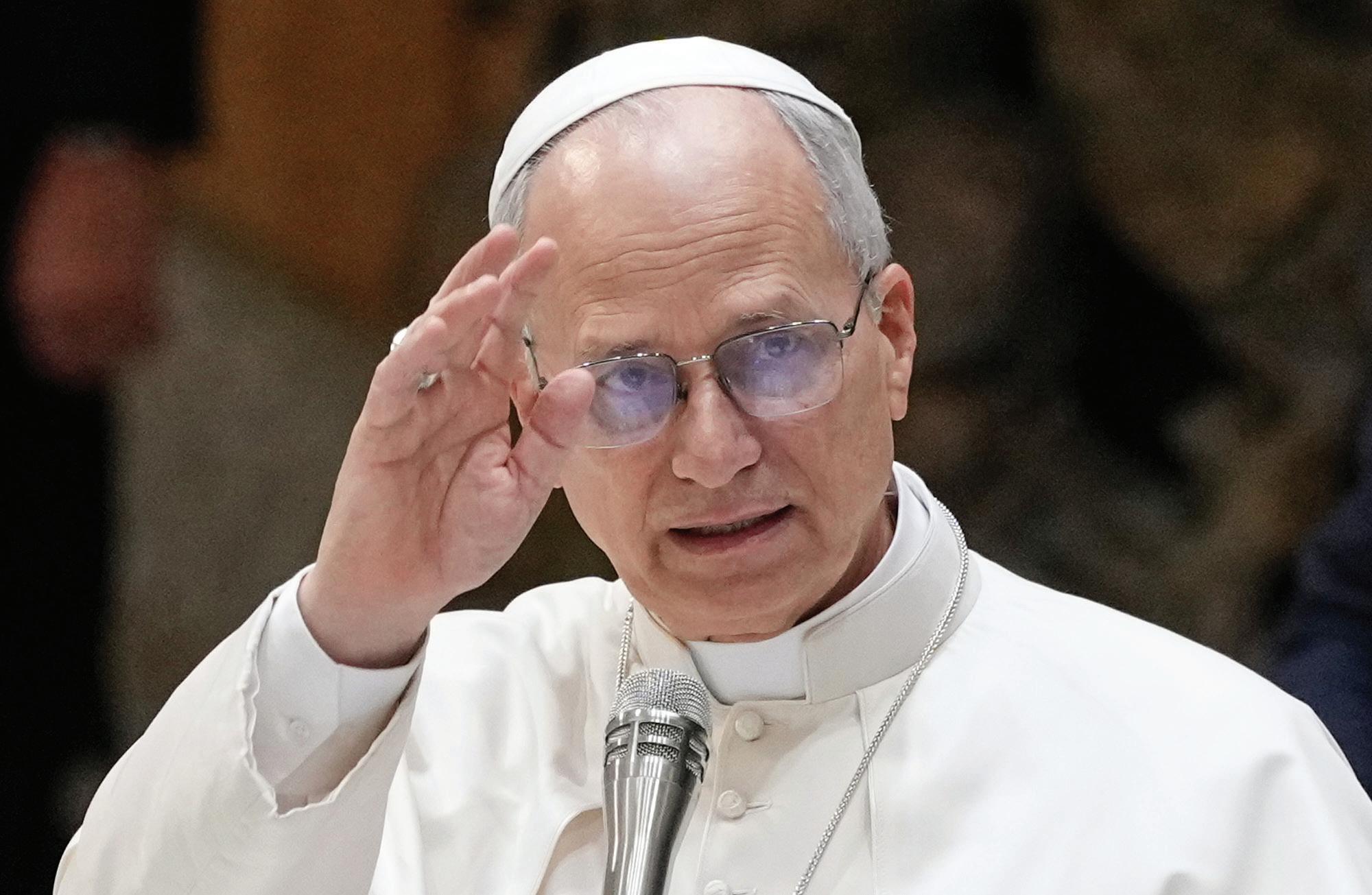
“ Weapons can and must be silenced.” — Pope Leo XIV
SAINT PROFILE READER CALL-OUT
This Rosary is over 100 years old. The beads are ruby-red with each bead encased in golden filigree. It belonged to my grandmother. I am now 80 years old and this was gifted to me upon her death many years ago. It is a treasure, and my granddaughter used it at her wedding. It was wrapped around her bouquet. Very special. — Bernadette Bras, St. Martin de Porres Parish in Yorba Linda.
If you would like to share a photo of your Rosary Beads with our readers, please send a photo and brief description (include your name and parish) to: Editor@occatholic.com
READINGS FOR THE WEEK
MONDAY
MALACHI 3:1-4; PSALM 24:7, 8, 9, 10; HEBREWS 2:14-18; LUKE 2:22-40 OR 2:22-32
TUESDAY
2 SAMUEL 18:910, 14B, 24-25A, 30–19:3; PSALM 86:1-2, 3-4, 5-6; MARK 5:21-43
WEDNESDAY
2 SAMUEL 24:2, 9-17; PSALM 32:1-2, 5, 6, 7; MARK 6:1-6
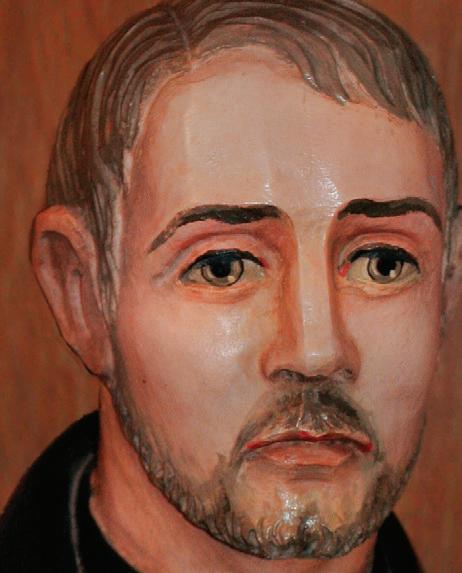
BORN IN SICILY, he was educated at Naples and wanted to enter religious life, despite his father’s opposition. But he persevered and entered the Congregation of Clerks Regular of St. Paul, or Barnabites, though the conflict prompted a long illness. He was ordained in 1797, serving as superior of two colleges for 15 years and in other posts. More and more he exercised his priesthood by hearing confessions, and his health was affected. He was seen as a living saint; one miracle attributed to him was stopping the flow of lava from an eruption of Mount Vesuvius in 1805. C
FRIDAY
SIRACH 47:2-11; PSALM 18:31, 47 AND 50, 51; MARK 6:14-29
FIRE UP THE FRYERS, LENTEN FRIDAY FISH DINNERS ARE COMING
BY GREG MELLEN
BOIL THE OIL AND MIX UP the batter. It’s that time of year again. The Lenten season is fast approaching, and with it a popular tradition returns.
Throughout the 40-day period between Ash Wednesday — Feb. 18 this year — and Holy Thursday — April 2 — excluding Sundays, parishes across the Diocese of Orange will be imbued with the delicious smells of frying fish.
“Fish Fries are a wonderful tradition within the Catholic Church,” La Purísima’s pastor, Fr. Martin Nguyen, told OC Catholic in 2025. “The bigger picture is that we are a family, we are people from all backgrounds, all walks of life and we come here to enjoy this moment as a family.”
The Friday Fish Fry has become not only a source of delectable seafood but a lucrative fundraising opportunity for parishes. And while abstaining from meat is thought to be a form of sacrifice befitting the season, the fish meals will make the faithful rethink that.
The tradition of Fish Fries, or Frys if you prefer, comes from the ancient Christian practices of fasting and meat abstinence to honor Christ's crucifixion on Good Friday.
For Catholics, the practice was formalized when early popes in the Middle Ages promoted the practice. And while conspiracy theories linger that an unnamed medieval pope may have made a secret deal to pump up the seafood industry, most historians agree that theory is fishy at best.
In medieval and even pre-Christian times, fish became associated with numerous sacred holidays, not just Fridays, but during Advent, Lent, Wednesdays and Saturdays. Initially that consisted mostly of herring and salted cod. Thankfully, tastes have changed since then.
Like Catholics, many Anglicans and Episcopalians also follow Lenten fish traditions.
Unlike the alleged unnamed pope, according to Kate Colquhoun in her book Taste: The Story of Britain Through Its Cooking, in 1547 Edward VI DID make a deal with fishermen
CONTINUES ON PAGE 6
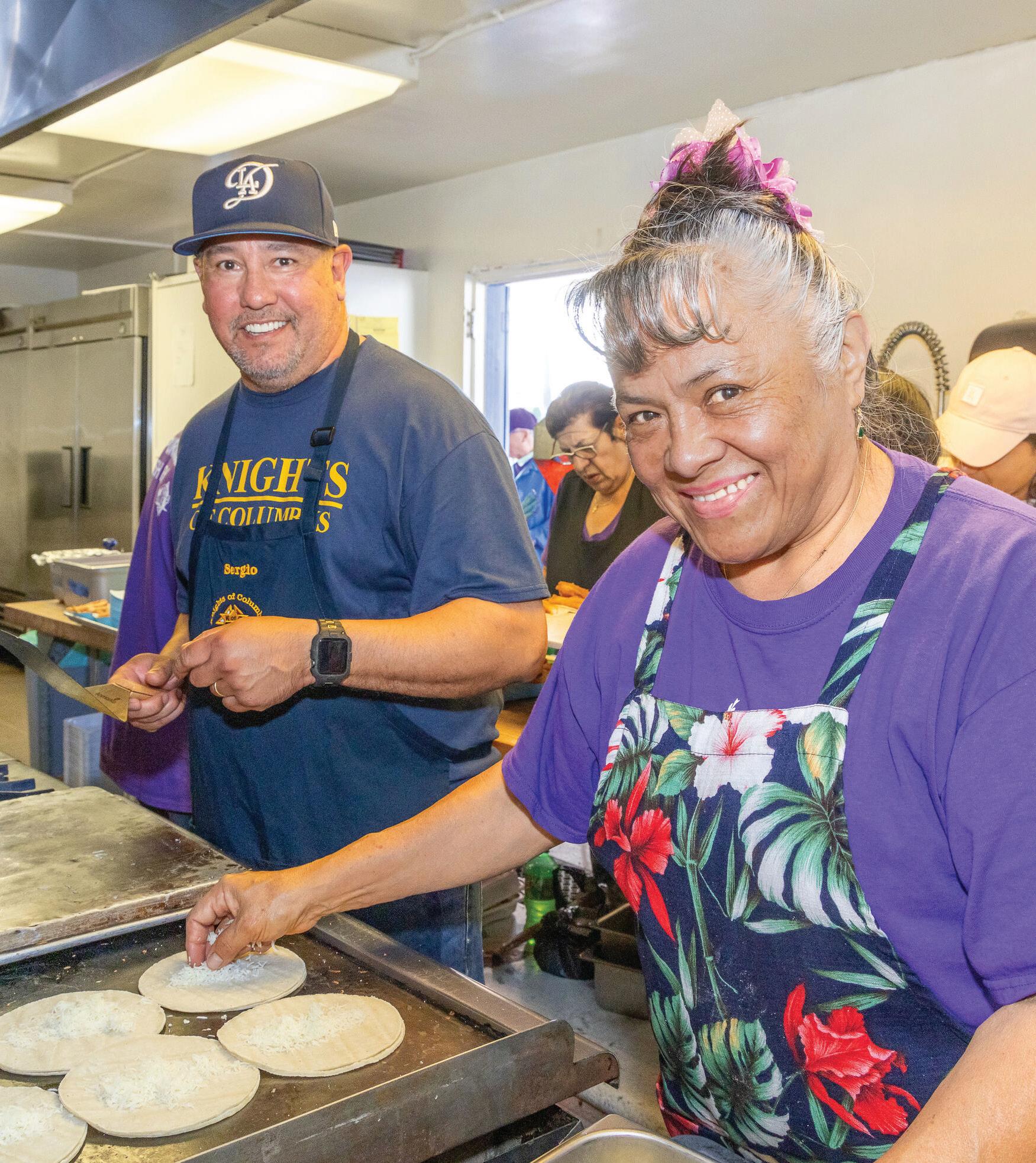
SERGIO GUZMAN AND FELIPA PEREZ LEND A HAND IN THE KITCHEN DURING LA PURÍSIMA PARISH'S FISH FRY ON MARCH 28, 2025. PHOTO BY ALAN WENDELL/DIOCESE OF ORANGE
to reinstate consuming “popish flesh” and resume Lenten meat fasting and fish on Fridays.
The year-long Friday fasting for Catholics lasted until 1966 when, in the wake of the Second Vatican Council, Pope Paul VI loosened the fish Friday practices, while maintaining them through the Lenten season.
Fun fact: McDonald's franchise owner Louis Groen, whose shop was in a largely Catholic part of Cincinnati and struggling to sell burgers on Fridays, invented the Filet-O-Fish in 1962.
A FUNDRAISING BONANZA
Friday Fish Fries have gained particular traction as popular fundraisers in the Diocese of Orange. And although refraining from meat may be meant to represent some sort of penance and sacrifice, the aromas from the popular events may
convince parishioners otherwise.
The Friday meals have also emerged as great ways to build community within parishes.
Kelly Montey, leader of the St. Kilian Church Council of Catholic Women, said the meals have become one of her parish’s most popular events and biggest fundraiser, with attendees either sharing the meal at the church or ordering takeout. So popular are the meals, residents from across the area, including non-Catholics, journey to partake of the offerings.
Last year, St. Kilian served more than 6,900 of the $15 meals during the six Fridays of Lent.
According to faith leaders, the Fish Fries give parishioners a great opportunity to join in fellowship and build community.
As John Nguyen, of St. Cecilia told OC Catholic in 2025, “I enjoyed building connections and relationships with other
communities within the parish.”
Hundreds of volunteers, from seniors to Catholic school teens and children, join in the festivities as cooks, order takers and servers.
Not surprisingly, the popularity of Lenten feasts has attracted a number of the diocese’s charities. The Knights of Columbus, man a number of fryers, either at individual parishes or their halls.
A typical Fish Fry includes generous portions of battered cod and all the fixings, including sauces and sides such as side salad, cole slaw, potato salad and/or French fries.
For those not enamored of fish, there is often pizza, burritos or other offerings available.
A MULTICULTURAL AFFAIR
The Diocese of Orange is proud of its diversity and, not surprisingly, that spreads to Lenten Friday cuisine.
For example, at La Purísima, which is proud of its diverse congregation, don't be surprised to find fresh Salmon Limone — poached with a lemon sauce and herbs — on the Friday menu.
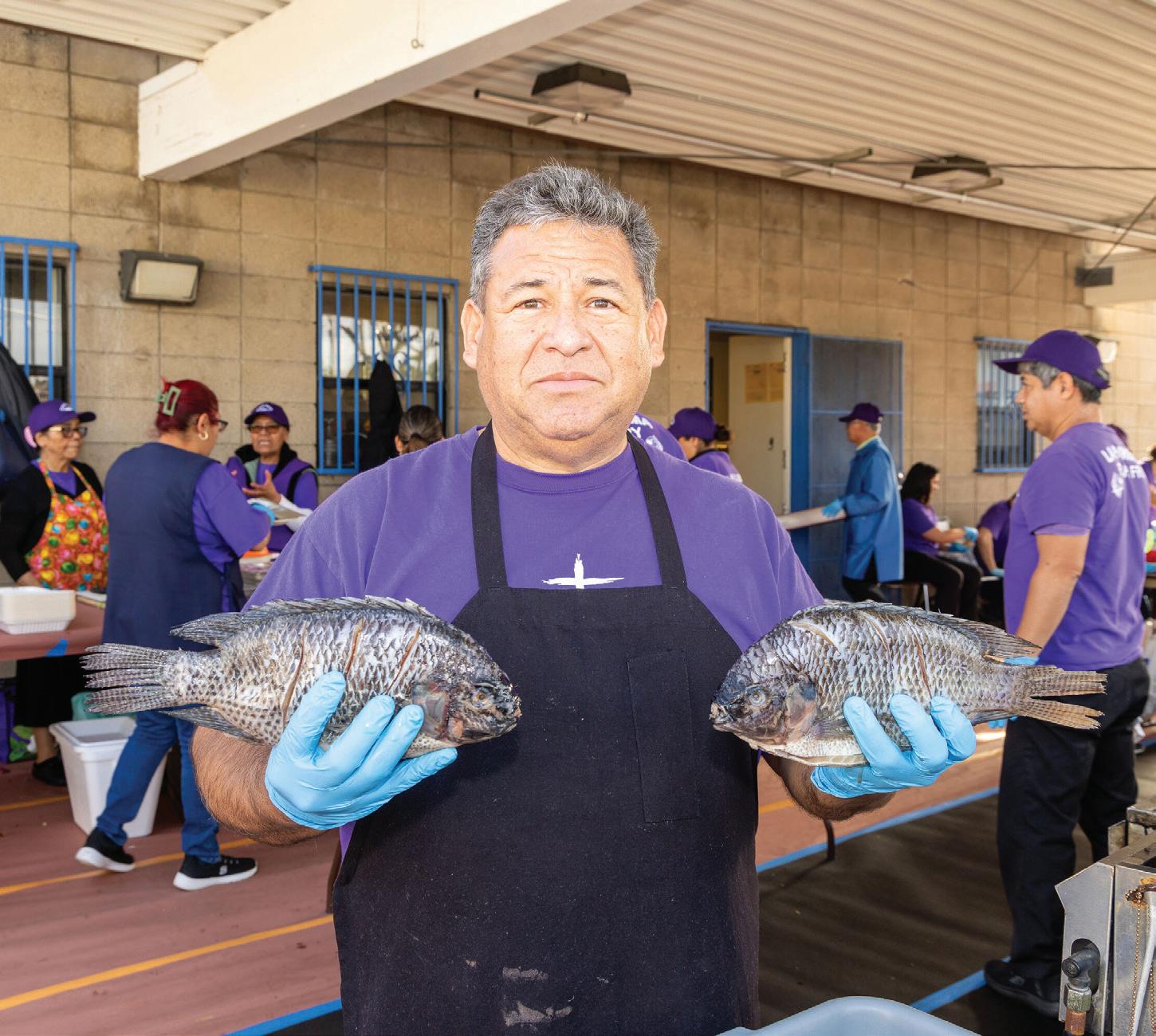
The parish has also been known to serve up fish tacos, Mojarra Frita — fresh Tilapia (including the head), bean and cheese burritos and potato pancakes.
At St. Cecilia you may find the the Vietnamese Eucharistic Youth Ministry serving up shrimp with tofu and vegetables over white rice accompanied by fruit, cookies and water.
The La Purísima’s Vietnamese community often serves fried rice, spring rolls, egg rolls and boba.
Sure, Lent tends to be a time of solemnity, reflection, prayer, fasting and almsgiving, but at least once a week, parishioners are able to loosen up, and loosen their belts, at the Friday Fish Fries. C
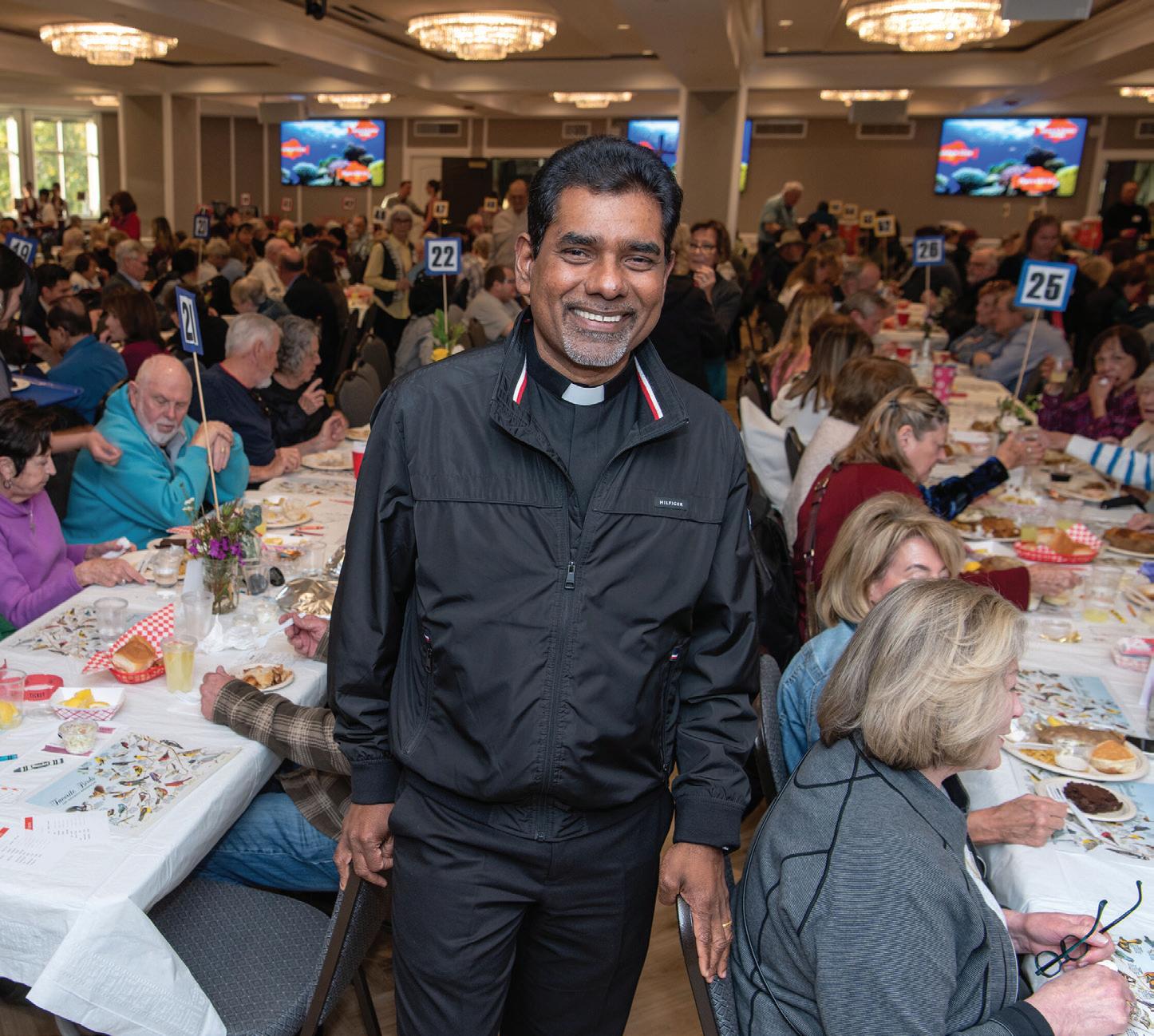
FR. ANGELOS SEBASTIAN, PASTOR OF ST. KILIAN PARISH IN MISSION VIEJO, STANDS IN HUGHES HALL DURING THE CHURCH’S ANNUAL FISH FRY ON MARCH 7, 2025. PHOTO BY JEFF ANTENORE/DIOCESE OF ORANGE
JUAN FERNANDO VASQUEZ PROUDLY DISPLAYS FRESH TILAPIA FOR THE LA PURÍSIMA PARISH'S FISH FRY HELD ON MARCH 28, 2025. PHOTO BY ALAN WENDELL/DIOCESE OF ORANGE
WRAPPED IN FAITH & LOVE
ST. KILIAN’S PRAYER SHAWL MINISTRY PROVIDES A WARM EMBRACE
BY GREG MELLEN
MARY GALLOWAY remem-
bers giving a prayer shawl to a fellow parishioner at St. Kilian Catholic Church, who had recently lost her husband. Galloway was touched at the emotional response she later received from the woman.
“She told us she wrapped herself up in the shawl and slept in it every night after her husband died,” Galloway recalled.
A blessing is included with each shawl that reads in part, “when wrapped in your shawl, God is holding you in his loving embrace.”
That is the notion that has kept the Shawl Ministry at Kilian going strong for the past decade.
Galloway said it is rare, but deeply gratifying, for shawl ministry members to receive feedback.
“Most of the time we’ll never hear anything back,” she said, although she admits to sneaking looks during Mass to see if she recognizes any of her group’s handiwork among parishioners.
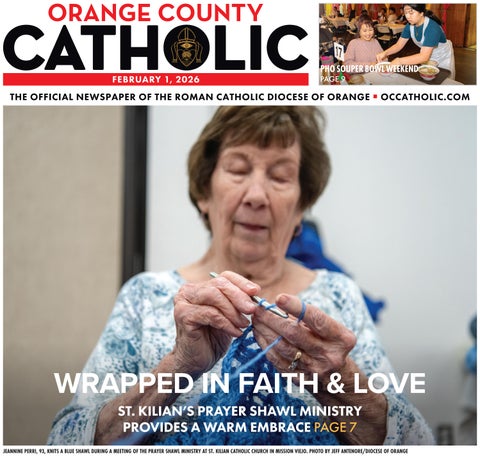
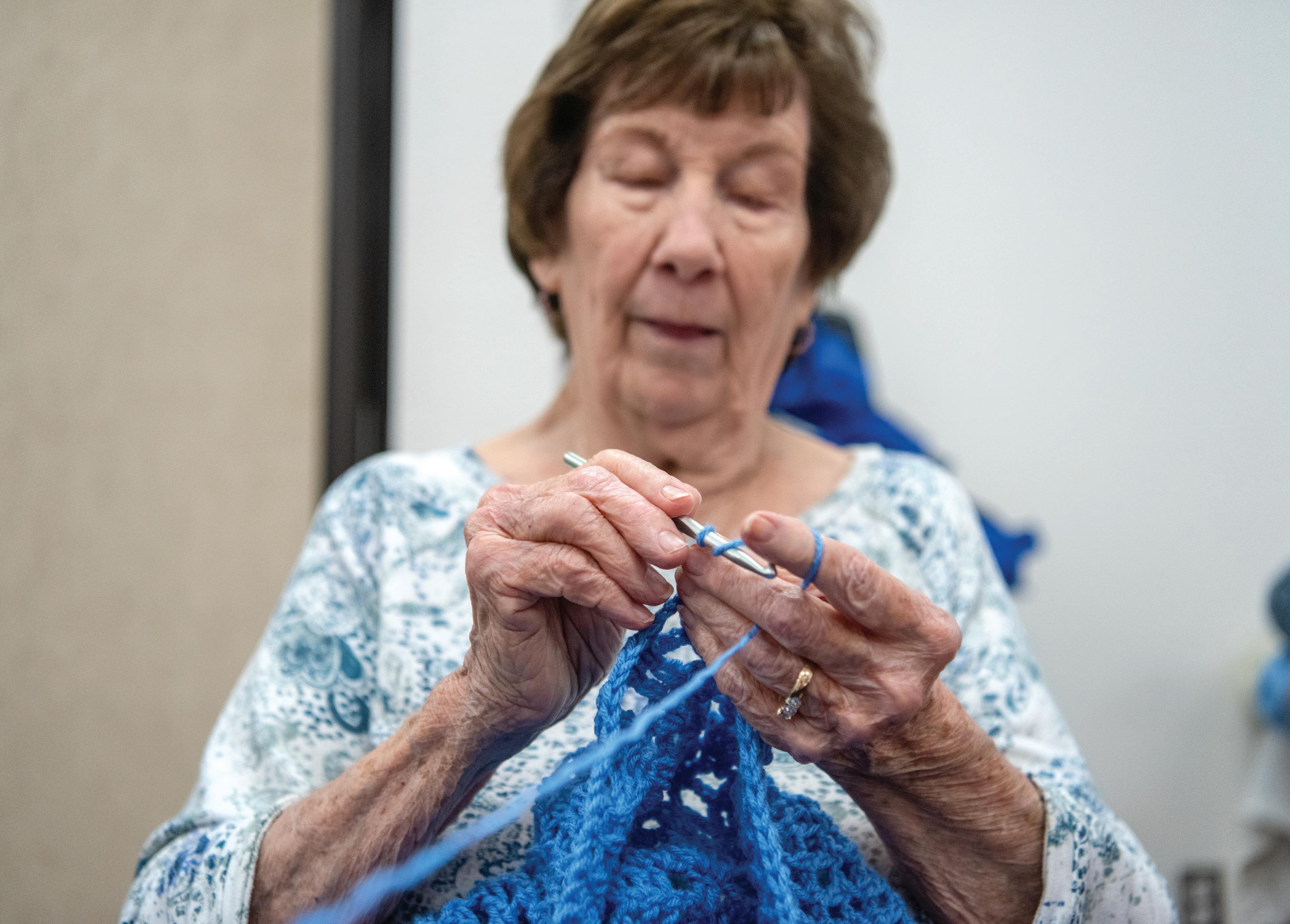
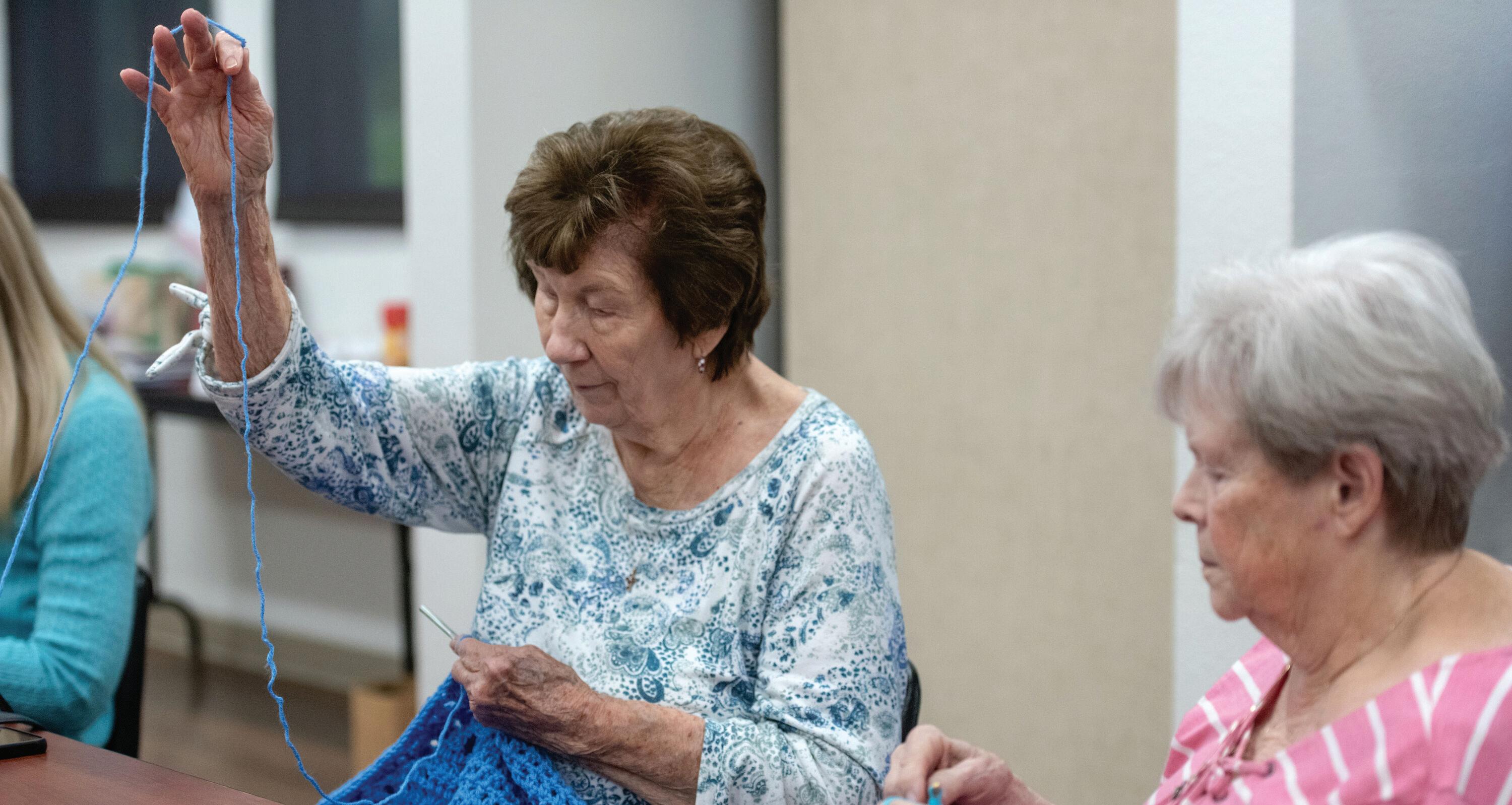
Asked why she attends the group’s weekly meetings as well as crocheting at home, Jeannine Perri, the 93-year-old grand dame of the group and an original member said, “Because you make people feel so good. It gives me so much pleasure.”
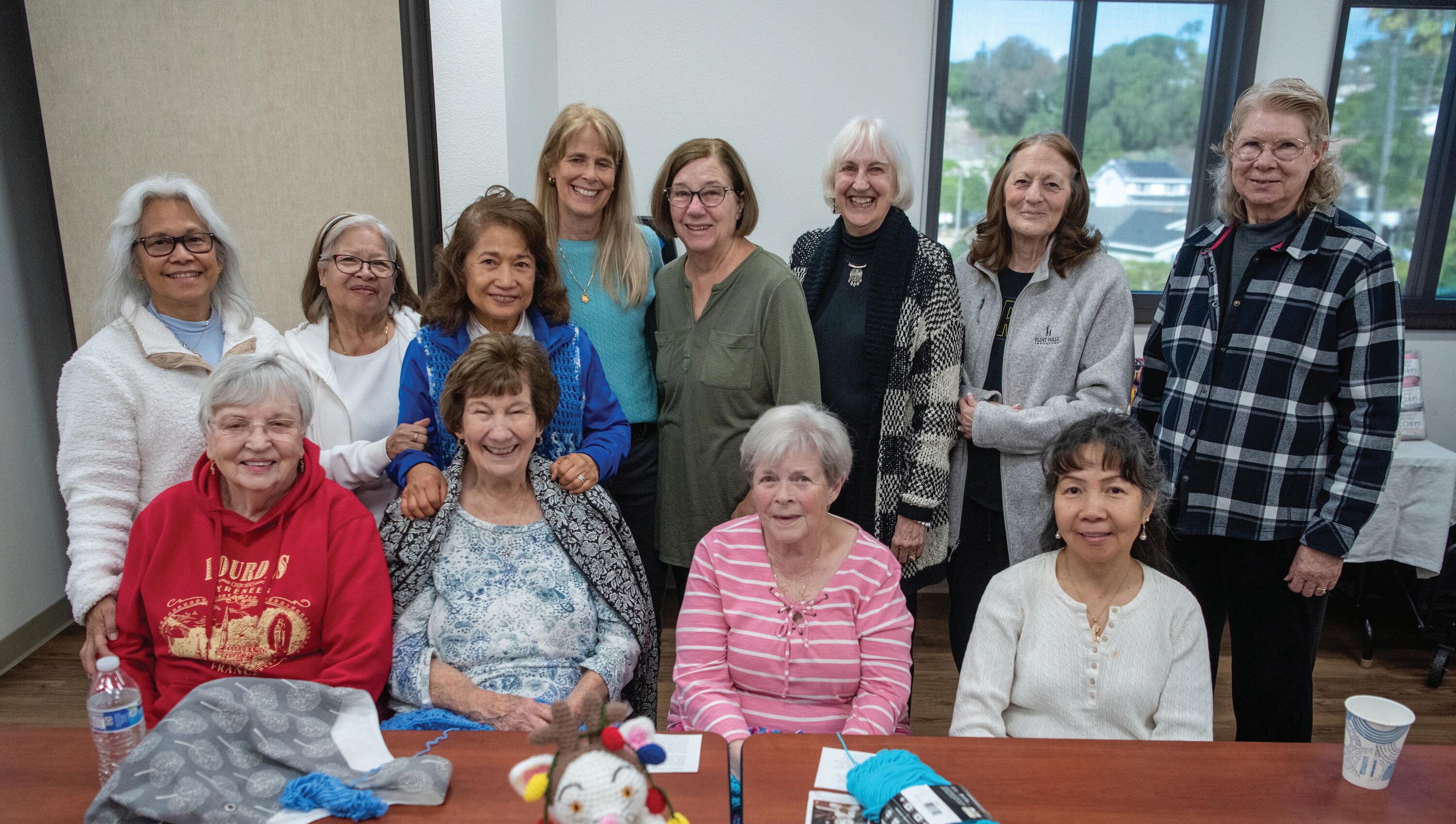
At a recent meeting — held Thursdays between 9:30 a.m. and noon in an upstairs room in the parish hall — a dozen women were gathered amid skeins of brightly colored wool and yarn. Some chatted softly, while others enjoyed an amiable quiet punctuated by the click-click of knitting needles.
Kelly Montey, one of the group leaders, said the fellowship is important for mem-
bers, many of whom live alone.
Perri was nearing completion of a blue crocheted triangle shawl, which she displayed to a bystander.
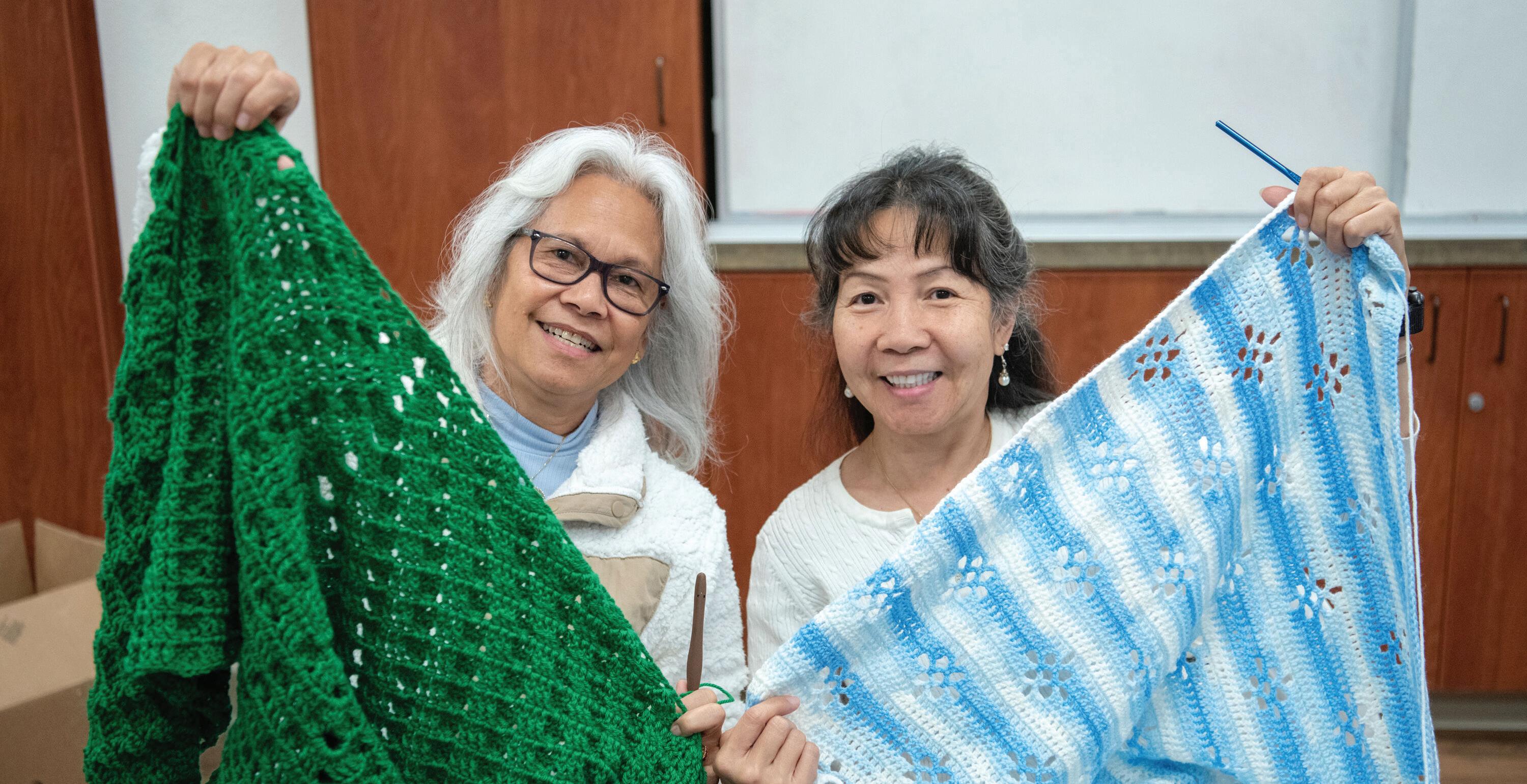
“They look like an angel’s wings,” said Galloway, who sat nearby with a tri-colored lap blanket of her own design that was about half done.
Laura La Rosa shared a recent picture and letter of thanks from a friend who had received a knitted pink blanket from the ministry.
“I was trying to figure out if it was one of mine,” she said of the item. “I do a lot in pink.”
La Rosa is an expert knitter and a resource for others should they drop a
stitch or need help.
Montey, an original member, is one of three group leaders with Galloway and Barbara Dice. She said last year the Ministry created about 340 items, including about 140 baby shawls, which are growing in popularity.
“Each shawl is unique and made specially in various sizes,” she said.
ENDURING SYMBOLS
For centuries, prayer shawls have been a symbol of a loving and caring God in Catholicism, Christianity and a number of religions. Various sects of Islam, Buddhism and Hindu also incorporate shawls, scarves and similar garments into their prayer and worship practices.
Founded by Joan Finnerty in 2015, the St. Kilian’s Shawl Ministry numbers
about 20 members who knit and crochet free triangular and square prayer shawls, lap blankets and baby blankets for parishioners as well as the elderly, sick and shut-ins who are visited by ministry volunteers.
The ministry also hosts a booth at the church’s fall festival where it sells merchandise. Each handmade item is machine washable and blessed by parish clergy and includes a medallion of the Madonna sewed in along with a printed blessing.
Originally, the Shawl Ministry only specialized in the shawls and blankets for “those suffering in any way,” before expanding to the baptismal blankets.
Montey said the group has various pattern books and other materials to inspire the group, although many invent their own patterns and color combinations.
Although there is constant demand for the items, Montey said there is no
stress needed.
“We’re volunteers,” she added. “We keep it stress free.”
On average, it takes three weeks to a month to finish an item, and members often crochet or knit at home.
Montey describes the activity as restful and something that provides good opportunities to pray, reflect and meditate.
Dice, who handles most of the materials and finances, said it costs about $15 in materials per item, which can take up to three skeins of yarn which range from about 250 to 1,000 yards. That adds up to about $5,000 to $6,000 per year, all of which is gathered through donations.
The group is open to all who are interested regardless of age or experience. The ministry is particularly interested in attracting younger members and is happy to teach newcomers.
Anyone interested in a shawl for themselves or a loved one can fill out a request form at the parish office or send an email to frontdesk@stkilianchurch.org indicating the gender of the recipient and any color preferences. Prayer Shawl Ministry members pray over the items, asking the Lord for comfort and healing for the recipient, or love, protection and blessing in the case of children.
Although items are free for the asking and can be picked up upon request, donations are accepted.
Fr. Angelos Sebastian, pastor of St. Kilian, said the Shawl Ministry is a great benefit to the church and he has seen the impact on parishioners when they receive the items.
“There is a deep emotional connection,” he said. “It’s a very powerful way to show God’s love and prayers.” C
FEATURE
PRAYER SHAWL MINISTRY MEMBERS DITAS SAYTHER, LEFT, AND JENNIFER PHAM HOLD UP THE SHAWLS THEY ARE WORKING ON DURING A MEETING OF THE GROUP AT ST. KILIAN CATHOLIC CHURCH IN MISSION VIEJO ON JAN. 8.
JEANNINE PERRI OF MISSION VIEJO, LEFT, AND MARY GALLOWAY OF LAGUNA HILLS KNIT TOGETHER DURING A MEETING OF THE PRAYER SHAWL MINISTRY. PHOTOS BY JEFF ANTENORE/ DIOCESE OF ORANGE
PHO SOUPER BOWL WEEKEND
BY RON KUZLIK
WHILE NATIONAL FOOTBALL
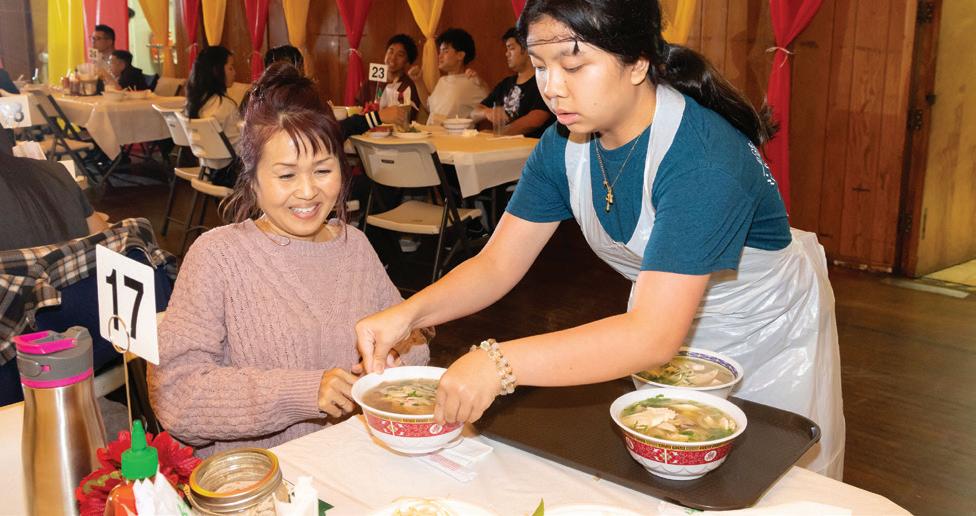
League (NFL) fans are eagerly awaiting this year’s Super Bowl LX to be held at Levi’s Stadium in Santa Clara on Feb. 8, hundreds rushed to Blessed Sacrament Catholic Church in Westminster for another much-anticipated event: The annual Pho Souper Bowl weekend.
According to Blessed Sacrament Coordinator of Confirmation & Youth Ministry Connor Ho, “The Pho Souper Bowl is a play on words for the Super Bowl — a time when everyone gathers together around food, family and friends, in the spirit of one goal.”
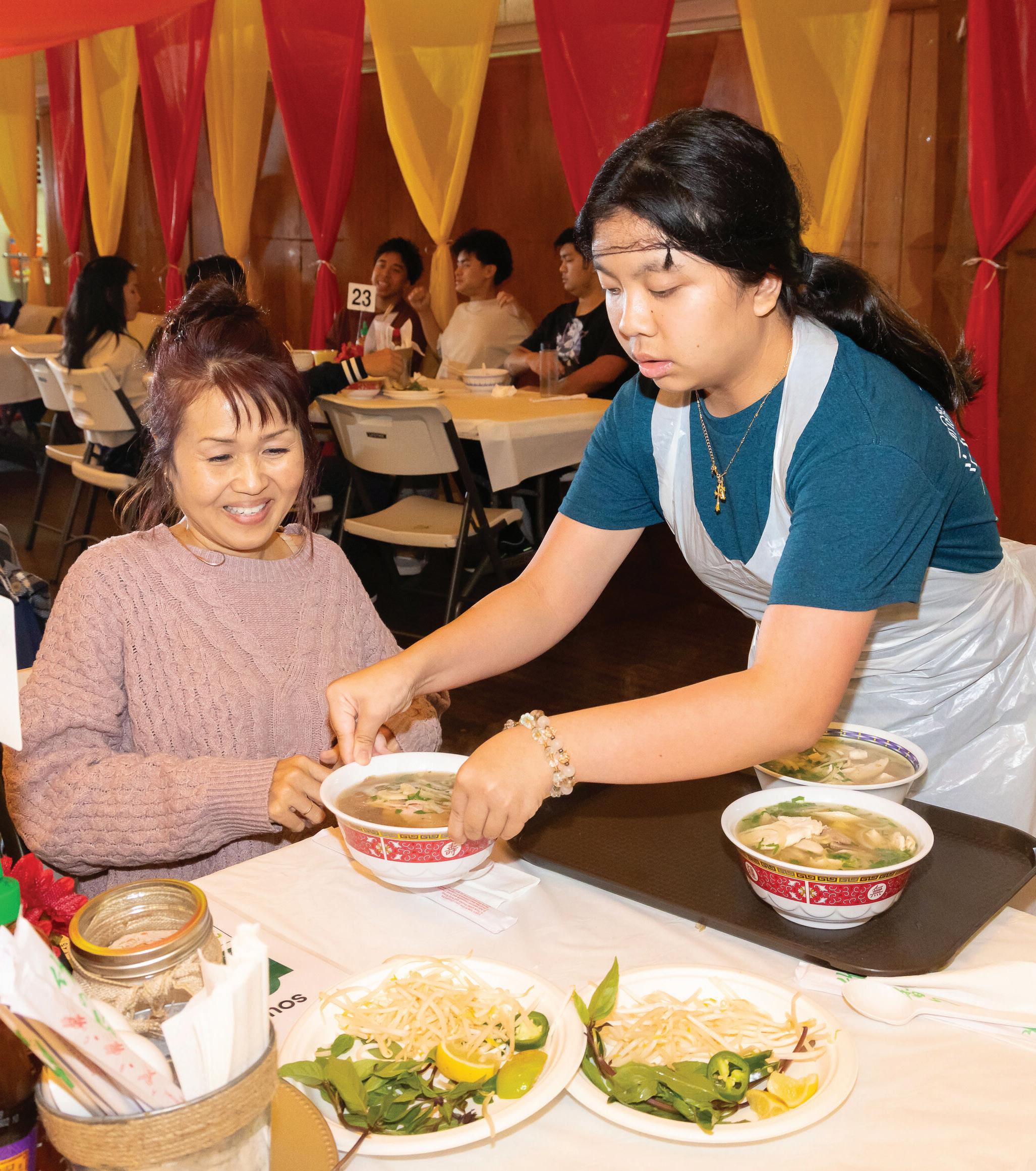
Pho, pronounced as “fuh,” is a traditional Vietnamese soup made of broth, rice noodles (bánh phở), herbs and meat — usually beef (phở bò) or chicken (phở gà).
“For us, the Souper Bowl is all about gathering the parish community with the goal of supporting our Faith Formation programs and spending time together over a warm bowl of Pho,” said Ho.
Event coordinators estimate that over 4,000 bowls of Pho were served during the two-day festival held Jan. 17–18.
The Pho Souper Bowl is the result of a team of over 300 volunteers working together to make the event a success.
Confirmation and Youth Ministry is the front-of-house staff that help to greet and serve the guests.
Sr. Vi Houng, LHC, coordinator of Vietnamese Faith Formation along with the Vietnamese community help to coordinate kitchen operations and donations, which are vital to the fundraiser. They help to make sure that operating costs are kept low and that the parish community knows and is involved in all event processes.
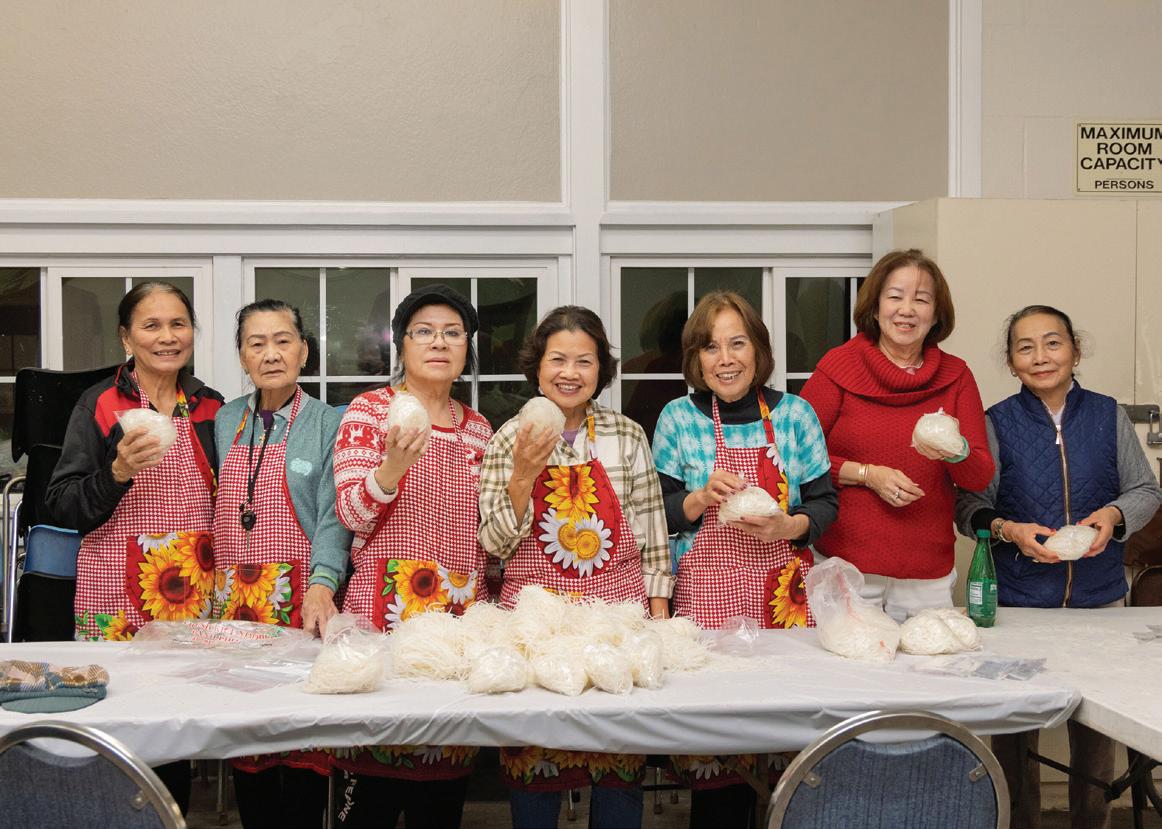
The Vietnamese Teresa Group (Nhóm Teresa) & Vietnamese Catholic Mothers Association (Hội Bà Mẹ Công Giáo) help with the food prep — noodles, veggies and meats—they prep it all for service and cooking.
CONTINUES ON PAGE 10
CONTINUED FROM PAGE 9
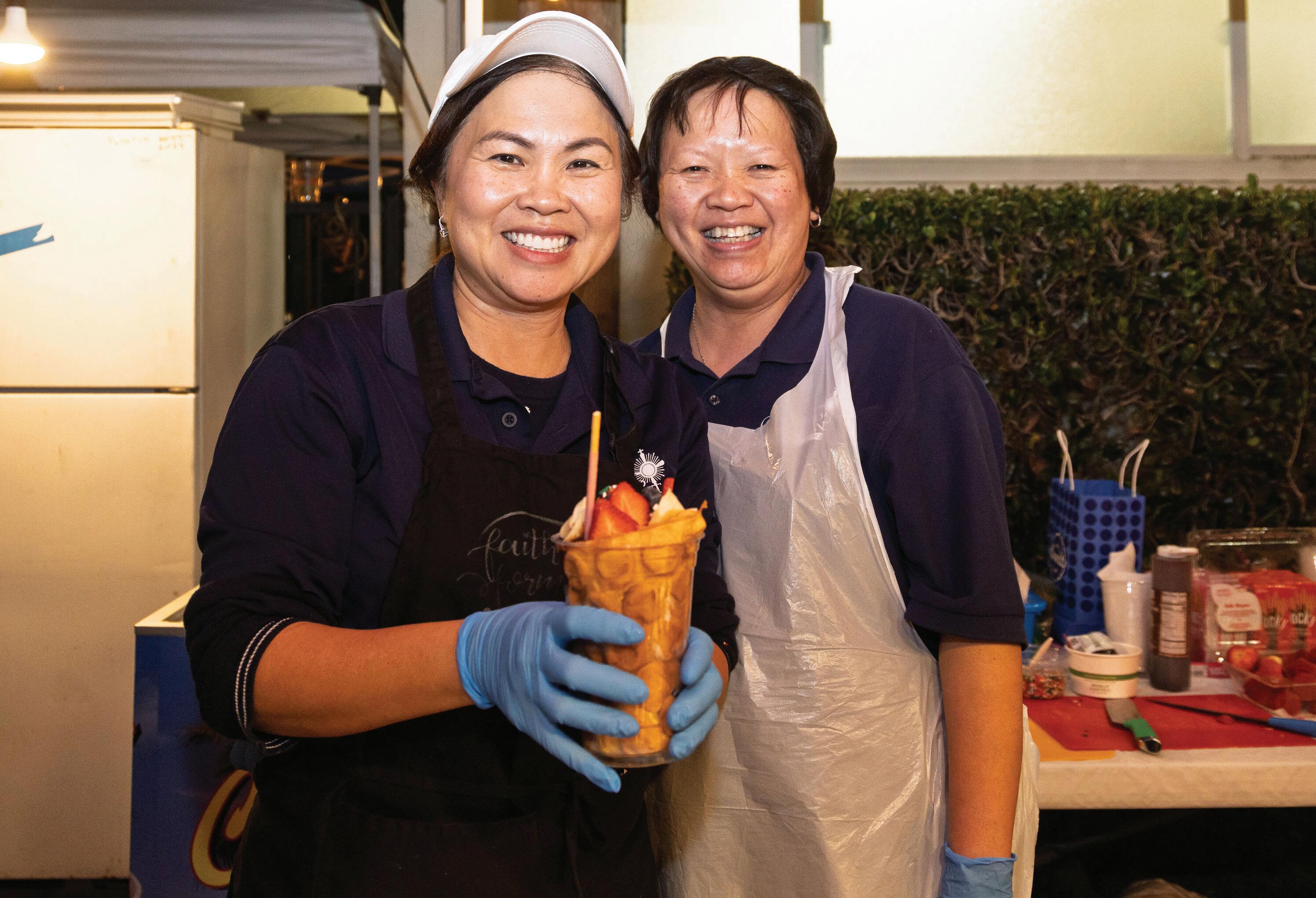
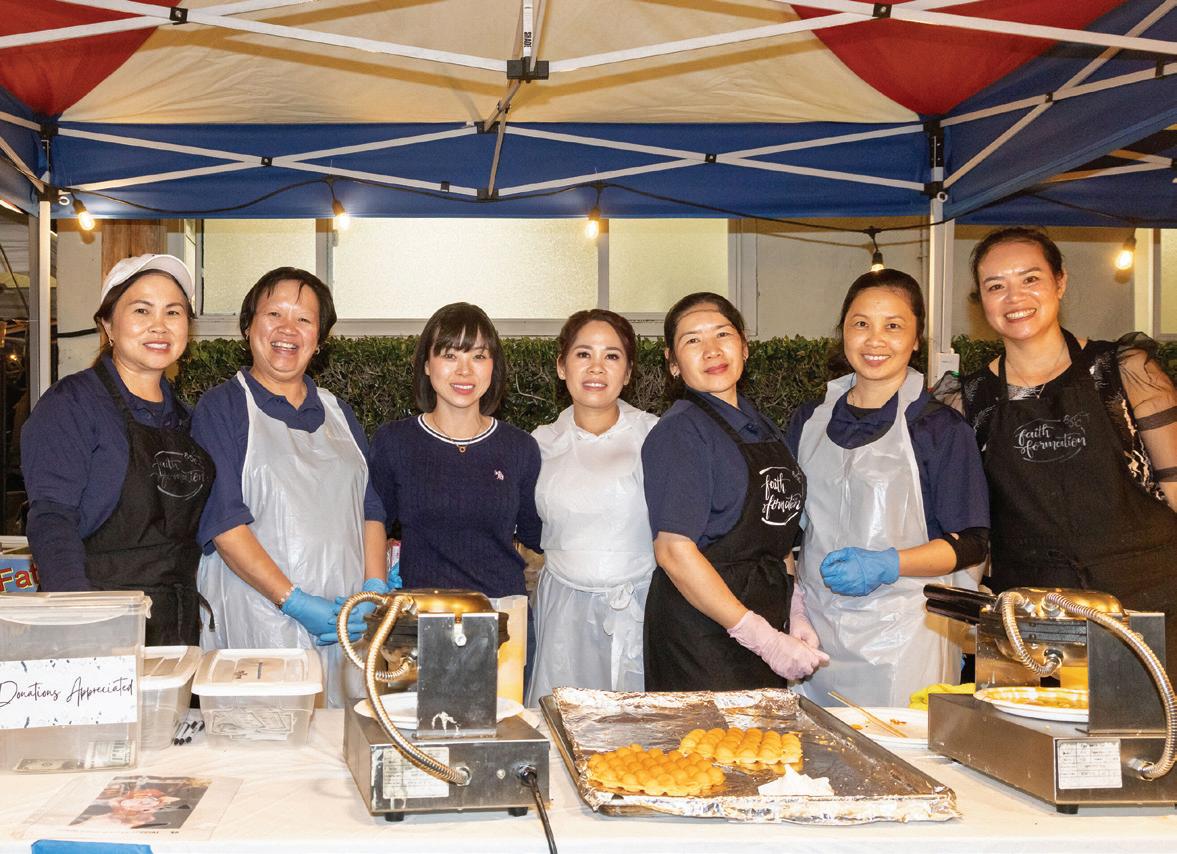
Vietnamese Children's Faith Formation parents help with the desserts — making waffles, prepping ice cream and fruits.
“I myself served at the Souper Bowl when I was in seventh and eighth grade here at Blessed Sacrament,” Ho added. “Back then, it was used to support the Catholic School — now its purpose is to support Faith Formation programming.”
He added, “Proceeds from Souper Bowl also allow Faith Formation to expand its programs and also use the funds to provide volunteers with formation opportunities (such as sending Young Adults to the SEEK conference hosted by FOCUS) and also provide financial aid for families in need at our parish.”
Souper Bowl is funded in large by donations from local businesses around Westminster and Garden Grove.
These include: Phoholic, Pho 2 To, Quoc Viet, Hot Vit Lon Long An, Bun Ban Mai, and Cho Tam Bien.
“We are also grateful for the donations from individual donors who supported us monetarily, allowing us to buy materials for our fundraiser and ease our upfront cost,” said Ho.
Blessed Sacrament Parish Administrator Fr. Anthony Hien Vu stressed that the event is much more than a great way to raise funds for parish Faith Formation (FF) programs.
“It offers our FF children, volunteers and other groups in the parish an opportunity to work together and to be of service to the whole community,” said Fr. Vu. C
PARENT VOLUNTEERS MADIE VU AND EVELINE HONG SERVE FRUIT SMOOTHIES. PHOTOS BY ALAN WENDELL/DIOCESE OF ORANGE
VOLUNTEERS HELP IN THE KITCHEN DURING THE PHO SOUPER BOWL AT BLESSED SACRAMENT IN WESTMINSTER.
PARENT VOLUNTEERS STAFF THE WAFFLE STATION.
LIVING LIFE TO ITS FULLEST
SPOTLIGHT ON ST. CECILIA’S DR. BILL AND SANDIE GUARD
BY MIKE ZINN
THE ROAD TO LIFELONG service began in vastly different places and under vastly different circumstances for St. Cecilia parishioners Sandie and Dr. Bill Guard, a dentist. Sandie was born in Los Angeles and baptized at St. Mary Magdalene Catholic Church, where she attended school through third grade. Bill was born at St. Joseph’s Hospital in Orange and grew up in the Episcopal faith.
Both of their early faith journeys were molded by impactful events. For Sandie, it was her maternal grandmother, whom she called a mentor, role model and driving force in her Catholic upbringing. For Bill, it was a chance encounter while attending his local church service.
“I noticed a woman sitting in the front pew, so holy, so full of prayer,” he shared. “I wanted to be like that.”
Sandie began her education, culminating in her 1960 graduation from Tustin High School. She attended Mass at St. Joseph’s parish in Santa Ana and then began attending St. Cecilia Catholic Church when it opened in 1957. After high school, Sandie followed in her dad's footsteps and attended UCLA.
After graduating from Santa Ana High School, Bill attended the University of California, Berkeley, but returned home during summer breaks. It was after Sandie’s freshman year at UCLA and Bill’s junior year at Berkeley that the couple met while working at Disneyland.
Bill earned his degree in political science, with an initial aspiration to become a lawyer. He kept his long-term options open. During his first three years at Berkeley, he completed all the pre-dental requirements and graduated in four years.
This act of pre-planning his education set the stage for a long career as a dentist.
Sandie kept her Catholic faith alive while at UCLA. She attended Mass at St. Paul’s Catholic Church in Westwood and at the Newman Center on campus. She graduated from UCLA in 1964, and she and Bill were married that summer. Sandie’s mother also had returned to the Church. Even though Bill was not Catholic, it was important for her to be married in the Church.
“We wanted the whole family to be involved in the wedding, which took place at St. Cecilia,” she shared. Later, Sandie’s dad, while in his 50s, converted to Catholicism.
Bill had been accepted to dental school at Northwestern University in Chicago, and shortly after, the newlyweds moved to the Midwest. Bill was involved in his studies, and Sandie began her first teaching post. While in Chicago, the Guards attended a local Episcopal church.
After Bill finished dental school, the Guards made two moves that would shape their future. Bill received a oneyear internship at the Naval Hospital in Portsmouth, Virginia. At the conclusion of this internship, Bill, as a commissioned officer in the U.S. Navy, was assigned to the Guantanamo Naval Base in Cuba. In Portsmouth, they regularly attended a local Episcopal church. In Cuba, there were limited church options, but there was a Catholic Church. They faithfully attended Mass for two years in Cuba but were unable to receive Communion. On Easter Sunday, shortly before they were to leave Cuba, one of the priests took them to the Sacristy and gave them Holy Communion. This moment marked the beginning of a path back to Catholicism.
The Guards returned to Tustin in 1969
and their Episcopalian faith. They did send their kids to Sunday School at St. Cecilia, and they loved their experience there. This, along with Sandie’s familiarity with the parish, set in motion a return to Catholicism. Bill ultimately converted to the faith in 1973.
When asked why he converted, Bill recalled, “I had an encounter with Fr. Twohig. I had already read several books on Catholicism, and he told me straight out, ‘hit your knees.’ Two weeks later, I was ready to go, and I haven’t regretted it.”
Bill and Sandie eventually launched into many ministries at the parish. Bill became involved with the school as president of the
Parents Guild and as a Confirmation class teacher. Both Sandie and Bill have served as active Sacristans and Eucharistic Ministers for many years. Sandie has taught faith formation for 20-plus years and has been twice nominated for Catholic Women of the Year.
While all of these activities are important, it is the consistency of always saying yes when asked to serve that sets the Guards apart. Whether it is mentoring, preparing food or leading a new ministry, their approach is how can I serve my faith and parish? C
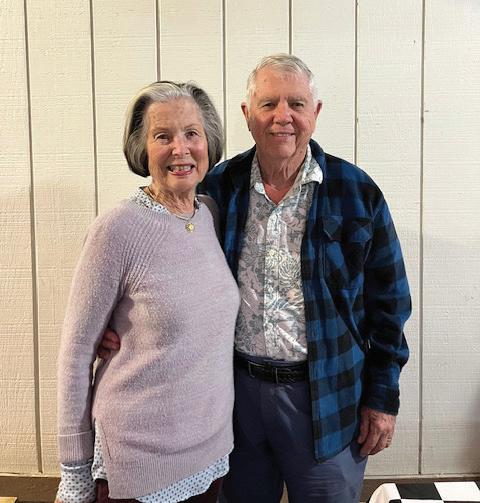
SANDIE AND DR. BILL GUARD ARE LONGTIME PARISHIONERS OF ST. CECILA CATHOLIC CHURCH IN TUSTIN. PHOTO COURTESY OF THE GUARDS
'REVEAL YOUR FACE OH LORD AND WE SHALL BE SAVED'
BY JAMES O’DONNELL, ST. HEDWIG CATHOLIC SCHOOL, LOS ALAMITOS
ITEACH MIDDLE SCHOOL Physical Education (PE) at St. Hedwig Catholic School. I lead my students in prayer at the beginning of every class. They stretch, run and then have a main activity for the day. At first, I didn’t see how PE class was unique because we were at a Catholic school. Over these months though my eyes have grown to see how God’s grace is working even at the blacktop of St. Hedwig. St. Paul wrote at the end of his life “I have competed well; I have finished the race; I have kept the faith.” In class, I am preparing my students for the journey that is the Catholic life. I was a part of the 2016 graduating class of St. Hedwig which is why I may have one of the most unique experiences teaching here. Walking
along the blacktop of St. Hedwig’s recess time — I see hundreds of young minds forming similar memories to the ones I now cherish. I’m only 24, so I have plenty of memories of what it was like to be in middle school. It helps me connect and encourage my students better. Some of my coworkers were my teachers, some of my coworkers were once my fellow students! Every waking moment working at St. Hedwig is combined with an anamnesis of all the moments I experienced in my years as a student here.
Living as a part of this Mystical Body of Christ is why I love teaching at this Catholic school. St. Patrick’s
Breastplate echoes in my soul as I go throughout my day. Christ in the mouth of every student who speaks to me, Christ in the ear of every student who hears me, Christ in the heart of all my students. In some mysterious way the face of the Lord is revealed in all my interactions here, most of which I even do not realize. The joys and sorrows of my coworkers and students become my own joys and sorrows. Slowly over time St. Hedwig school becomes more united in Christ. C
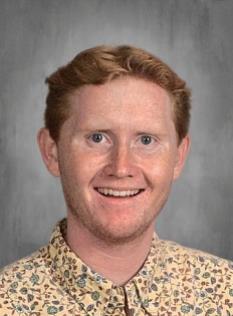
JAMES O’DONNELL TEACHES MIDDLE SCHOOL PHYSICAL EDUCATION AT ST. HEDWIG CATHOLIC SCHOOL IN LOS ALAMITOS. PHOTO COURTESY OF ST. HEDWIG CATHOLIC SCHOOL
WHY I LOVE TEACHING ART AND SEL AT A CATHOLIC SCHOOL
TEACHING AT A CATHOLIC school is truly special. For me, it’s not just a job; it’s a calling, a community and a place that feels like home. Every day, I am grateful to teach Art and Social-Emotional Learning (SEL) from TK through eighth grade, and I believe God has placed me right where I belong.
I’ve loved art since I was a child. I was always the kid with a sketchbook, drawing whenever I had the chance. I still remember my childhood art classes and how my teacher challenged and encouraged me, making me feel like my work mattered. Art became my safe place, my joy and my way of understanding the world. Even then, I didn’t just love making art; I enjoyed sharing creativity with others. I saw how art could help people feel seen, understood and inspired.
Now I get to teach what I love, and it fills my heart in ways that are hard to put into words. In our art room, students create, explore, imagine and discover. They learn skills like drawing, painting, collaging, sculpting and design, but they also learn something more important: how to be brave. They take risks, try new things, make mistakes and see that real growth comes from the process.
In my SEL lessons, I teach the standards through the Fruits of the Spirit. We talk about what they mean, how to apply them in our lives, whether at school, at home or with friends. I enjoy using everyday classroom moments to help students practice these skills in meaningful ways. When students feel frustrated, face a challenge, or have a conflict with a friend, we work through it together: pause, breathe, use gentle words, ask for help, try again and encourage one another. My goal is
for SEL to be something students live out every day, not just something we discuss. Teaching at a Catholic school is even more meaningful because faith is part of everything we do. We focus on the whole child: mind, heart and spirit, while
practicing gratitude, forgiveness, compassion and community. Teaching here has also deepened my own faith. I’m a lifelong learner, and I truly enjoy learning alongside my students. They inspire me every day with their funny stories, bright ideas and kind hearts. This school is very special to me. It feels like home. I’m thankful I followed God’s plan, and I feel grateful every day to teach in a place filled with faith, love and purpose. C
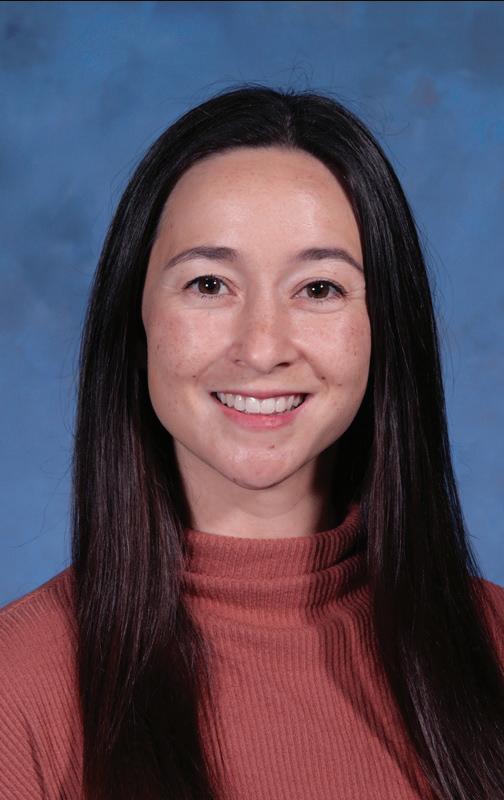
BY SAMANTHA VIELE, ART/SEL TEACHER ST. JOSEPH CATHOLIC SCHOOL, PLACENTIA
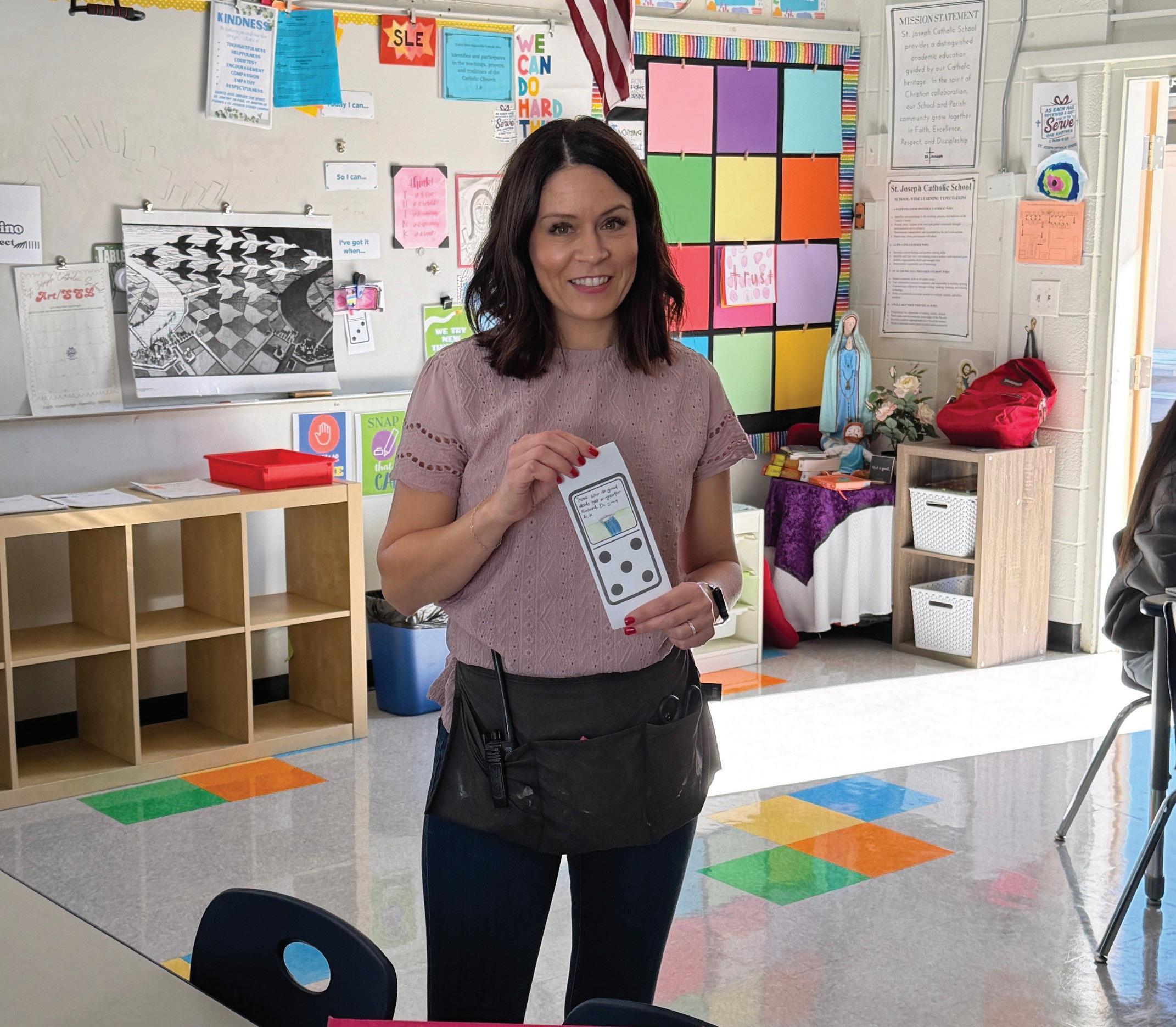
SAMANTHA VIELE IS AN ART/SEL TEACHER AT ST. JOSEPH CATHOLIC SCHOOL IN PLACENTIA. PHOTO COURTESY OF ST. JOSEPH CATHOLIC SCHOOL
COMING HOME
IFIRST WALKED INTO ST. Bonaventure Catholic School as a fourth-grade transfer student. Years later, I returned to teach in the very same classroom where I once sat as a student. What began as my school community has become my forever home, and that full-circle journey is at the heart of why I choose to teach at a Catholic school.
Teaching in a Catholic school allows me to blend strong academics with faith formation in a meaningful way. In my classroom, I guide students in reading, writing and critical thinking while also helping them grow in character and spirituality. This balance is what makes Catholic education so special and why I feel truly called to St. Bonaventure.
Here, we nurture curious minds, kind hearts and a sense of service. I love walking alongside my students as they grow academically, spiritually and socially. For me, the greatest joy is seeing students develop not only in knowledge, but also in faith and character. Watching kindness, compassion and curiosity take root in the classroom reminds me that teaching is about forming the whole child.
My hope for my students is that they grow in faith, develop strong moral character and learn to serve others with compassion. At St. Bonaventure, we intentionally form character through our HALOS core values, encouraging students to exemplify humility, accountability, leadership, optimism and service in their daily lives. These values guide our SAINTS, our students, to think critically, act with integrity and care for their communities. When I see them shining their HALOS for all to see, I know we are preparing them not only for academic success but for lives of purpose and faith.
My teaching journey began in the public school system, but I realized something was missing without faith woven into daily learning. Returning to St. Bonaventure felt like coming home, where I could fully live my calling as an educator.
Every day, I am grateful to be part of a school where faith is lived, learning is celebrated and each child is supported in reaching their fullest God-given potential. I cannot imagine teaching anywhere else. C
BY NIKKI DE HERAS, FOURTH-GRADE TEACHER, ST. BONAVENTURE CATHOLIC SCHOOL, HUNTINGTON BEACH
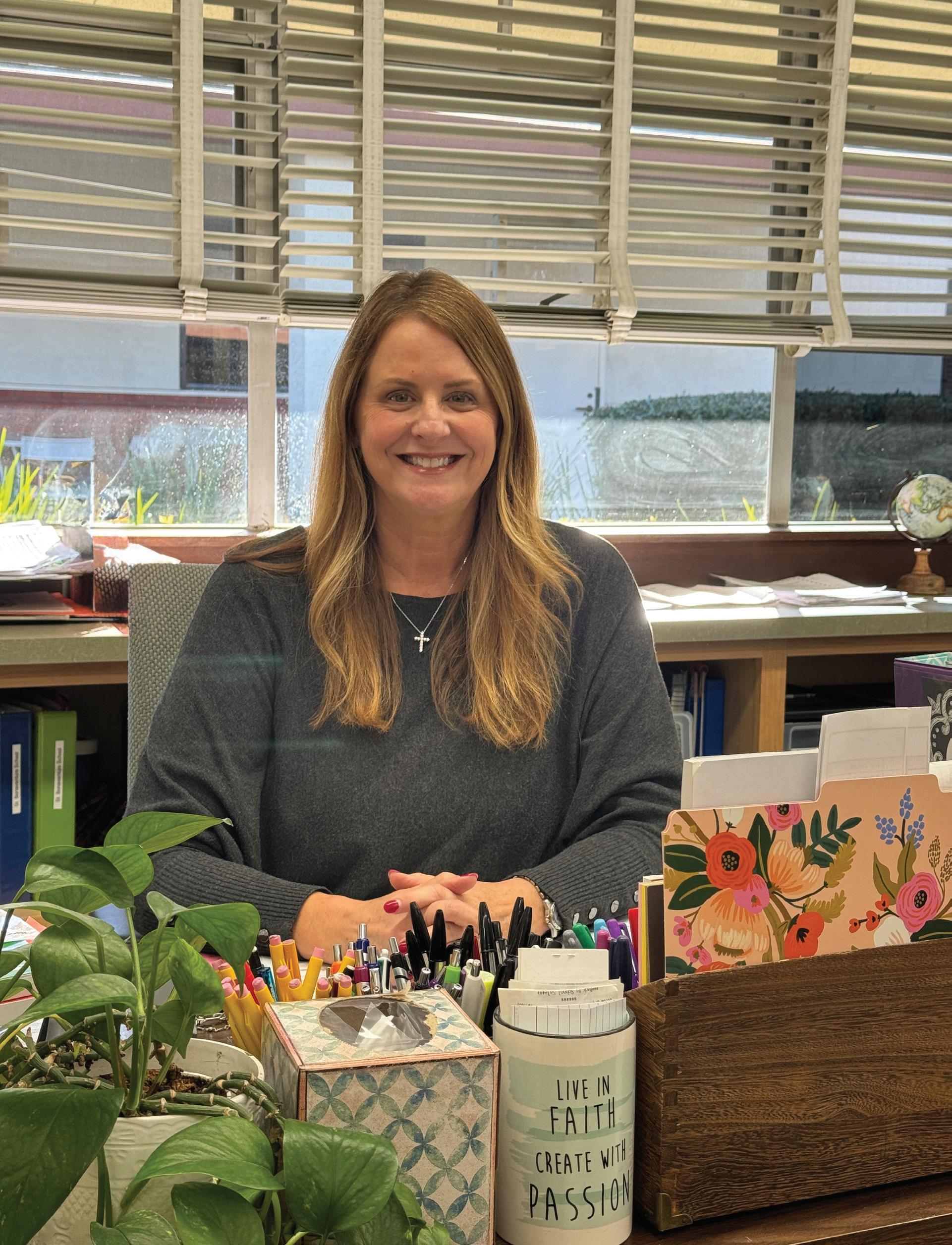
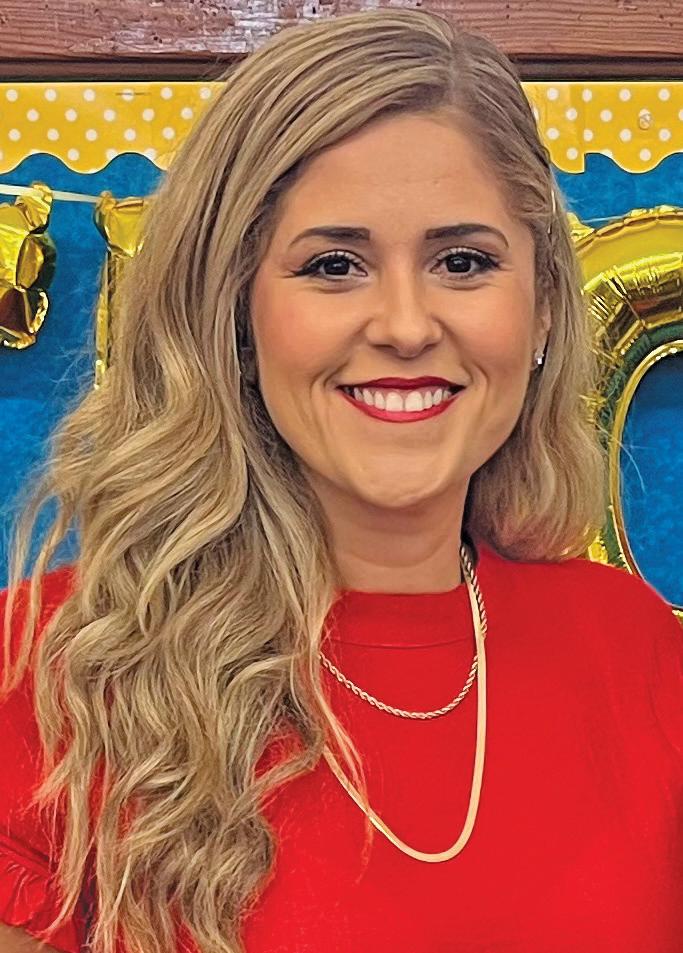
NIKKI DE HERAS IS A FOURTH-GRADE TEACHER, ST. BONAVENTURE CATHOLIC SCHOOL IN HUNTINGTON BEACH. PHOTO COURTESY OF ST. BONAVENTURE CATHOLIC SCHOOL
Join OC Catholic’s Recipe Swap!
Sharing recipes highlights the importance of gathering with family, friends and our broader Diocese of Orange faith community.
Please share your favorite recipes, along with your name and parish. Send your favorite seasonal dish, or a recipe that has special meaning to you or your family. Tell us why it’s important to you! Our editors will pick their favorites to be featured in OC Catholic throughout the year.
Submissions must include a photo of the completed recipe. Categories are entrees, appetizers, side dishes, beverages and desserts. Send your recipes and photos to: editor@occatholic.com
SEEING THE FACE OF GOD EVERY DAY
BY JENNIFER RAZO, ST. IRENAEUS CATHOLIC SCHOOL, CYPRESS
WE DON’T DO IT for the money!” I hear this joke a lot — a light-hearted way to talk about the massive undertaking that comes with being a teacher. These cliché words ring true for many of us in education, but especially to those of us in Catholic schools. So then, why? Why do Catholic school educators choose this path? More importantly, why do so
Teaching in a Catholic school was not my original plan. In this way, I see God’s hand in guiding our lives — how He truly calls each of us to serve in His mission. Reflecting on the start of my career in Catholic education, I feel lucky that when He called, I was
My journey in Catholic education began before I became a teacher. In fact, I am a proud product of it. Today, I have the privilege of teaching at St. Irenaeus, the same school I attended from kindergarten through eighth grade. While I have been an educator at this school for 11 years, I like to say I have truly been here for 20 years.
As a teacher, I have taught TK, kindergarten, and sixth through eighth grade. This has given me the unique perspective of seeing how our students enter our school and how they leave it, solidifying for me the “why” behind Catholic education. Yes, I get to celebrate the growth of my students academically, but it does not compare to the fulfillment that comes from watching their spiritual growth – seeing them become the faith-filled, active Catholics God calls them to be.
Here, as Catholic school teachers, we get to model the values of Christianity and the virtues that come from scripture. Here, we build strong morals rooted in our beliefs. And here, we get to acknowledge our God-given gifts
and how these gifts can be used to answer God’s greatest commandment to “above all, love one another.”
This integration of faith, education and community is what sets Catholic schools apart. One of the best gifts of my career is being able to share the beauty of Catholicism in an environment where it will be nurtured, where I can grow in faith alongside my students, their families and the dedicated staff I work with. In this community, I see the face of God every day.
The relationships that we build, the ability to teach with purpose, and the privilege of forming young disciples: This is why I teach at a Catholic school. These are the reasons I chose to send my own daughter to St. Irenaeus, and why I will also send my son. These are the reasons why I stay. Because no, I am not in it for the money.
I am in it for impact. I am in it for the mission. C
JENNIFER RAZO TEACHES AT ST. IRENAEUS CATHOLIC SCHOOL IN CYPRESS. PHOTO COURTESY OF ST. IRENAEUS CATHOLIC SCHOOL
MEANT TO BE
BY BECKY CHACON, ST. PIUS V CATHOLIC SCHOOL, BUENA PARK
IAM THE PRODUCT of 12 years of Catholic education. Each of my children has attended Catholic school from preschool through university. Yet none of this is why I choose to teach at a Catholic school. My choice is the product of two things: a calling and a community joined by faith.
A little over a decade ago, I found myself at a crossroads, the casualty of corporate restructuring. But as I updated my resume and prepared for interviews, I realized I wanted more. More than an 8-to-5 chained to a desk and a predictable grind. That’s when I found myself discussing my situation with my children’s school principal, Mary Alvarado. That fall, I was in a classroom as an English Language Arts paraprofessional with the flexibility to explore whether this was where God was guiding me.
I had genuinely not understood what it meant to have a career vocation until I stepped into the classroom as part of the teaching staff. Moreover, I was blessed to answer that vocation within a community built on Catholic tenets. At a Catholic school, I am able to fulfill this calling in an environment that encourages the expression of my faith with others who share my core values.
As a parent, I always knew that the community we enjoyed at St. Cecilia was special. Through the years, we’ve come together in celebration and mourning, joy and grief, and every milestone in between. Now, as a teacher, I can be there during the little moments that lay the foundation of our community, from guiding students in remembering that we are all God’s children to celebrating weekly Mass with the whole school. As teachers in a Catholic school, we have the dual privilege of educating students’ minds as well as fostering persons of character and virtue.
Each day teaching at a Catholic school is a blessing. Each day, I learn something new from my students and colleagues. And most importantly, each day I learn a little more about myself and my relationship with God. C
To report sexual abuse by clergy or church personnel please call: 1 (800) 364-3064
Healing and Hope After Abortion: 1 (800) 722-4356
New Hope Peer-to-Peer Support Line | Mon - Fri 7:30 AM - 9:30 PM | Sat - Sun 8:00 AM - 6:00 PM: 1 (714) NEW-HOPE or 1 (714) 639-4673
BÁO CÁO LẠM DỤNG TÌNH DỤC
Nếu bạn là nạn nhân bị lạm dụng tình dục bởi một linh mục/ tu sĩ hay một thành viên trong Giáo Hội gây ra, xin hãy gọi và báo cáo cho Giáo phận ở số điện thoại miễn phí sau đây: 1-800-364-3064, và đồng thời báo cáo cho nhà chức trách địa phương.
본당내의 성적학대 신고
성직자나 성당 사목을 대표하는 관리자에 의한 성적 학대의
경우, 교구청의 무료 신고 전화 번호, 1-800-364-3064 및 관할
법 집행 기관에 전화하십시오.
Rosary Beads
If you would like to share a photo of your Rosary Beads with our readers, please send a photo and brief description.
Include your name and parish to: editor@occatholic.com
BECKY CHACON TEACHES ST. PIUS V CATHOLIC SCHOOL IN BUENA PARK. PHOTO COURTESY OF ST. PIUS V CATHOLIC SCHOOL
FAITHFULNESS
BY JOAN PATTEN, AO
“GOD HAS NOT CALLED
me to be successful; He has called me to be faithful.”
This wisdom from St. Teresa of Calcutta challenges how we often measure success and, more importantly, failure. In the eyes of the world, success is measured by output: results, popularity and worth. While there is nothing wrong with efficiency, we are invited to assess honestly: are our standards for ourselves according to God’s standards? According to Mother Teresa and countless other saints, God measures success by fidelity, that is, perseverance in one’s discerned duties and mission, regardless of outcomes. The lives of the saints are testaments of God’s grace, and their unique lives serve as a program for us to apply to our own circumstances.
Saints are people who failed. St. Charles de Foucauld’s early life in France was troubled. Orphaned and raised by his grandfather, he grew up agnostic. He was expelled from school and graduated last in his class. In 1876, he joined the military but was dismissed for his undisciplined lifestyle. He later rejoined and was sent to Algeria, where he was impressed by the Muslims’ faith and prayer.
Back in Paris, Charles began attending church, still unsure of God’s existence, praying, “Oh God, if you exist, allow me to know you!” Influenced by a cousin’s deep faith, he sought religious instruction and received the Sacraments.
In 1889, a pilgrimage to the Holy Land inspired Charles to live as Jesus did in Nazareth. He joined the Trappists for seven years, then sought an even simpler life. He asked to be released from his vows so he could start his own community.
Charles lived in a hut in Nazareth, serving as a handyman for the Poor Clare Sisters, and wrote a rule for his “Little Brothers” that focused on Eucharistic spirituality. In 1901, he returned to
France, where he was ordained a priest, and then moved to Algeria to live among the people. Though respected, no one converted.
Charles built a house, hoping others would join him, but none stayed. In 1905, he moved to serve the Tuareg people, learned their language and translated the Gospels. After ten years, no one converted despite his faithful ministry.
In 1916, during World War I unrest, Charles was killed by a local rebel.
He spent 30 years in anonymity, three years in active ministry within a limited region that generated mixed results and unremarkable followers, until it ended tragically with His humiliating death on the cross and abandonment of His followers. According to the world’s standards, Jesus’ life is hardly worth imitating or aspiring to, yet the saints’ lives reveal that something more is at work than meets the eye.
In light of this, we are reminded that the path of discipleship is marked not by dramatic accomplishments but by fidelity to small matters, the quiet, hidden choices through which love is manifested. The saints teach us that to persevere in God’s will is never a matter of sheer human strength; perseverance requires grace and grace is always available when we ask our Heavenly Father for what we need. We are called to receive the Holy Spirit’s gift of courage, which gives us strength to be faithful, day after day, especially in the mundane and unremarkable circumstances of our lives. Jesus shows us that obedience is always fruitful and a life united to Him is not insignificant. In Him, nothing is wasted, and everything offered with love is received into the Eternal Father’s Heart. C
Though he did not see his dream realized, 20 years later, his vision grew into several congregations that now flourish worldwide. His faithfulness continues to bear fruit.
There are many more saints whose lives reflect the same truth that God is silently at work in unapparent ways. All of them are following after the most significant “failure” in history, their Master, Jesus Christ. In the world’s estimation, His earthly life was questionable at best;
PHOTO BY MARCOS PAULO PRADO ON UNSPLASH
OC Catholic Afar
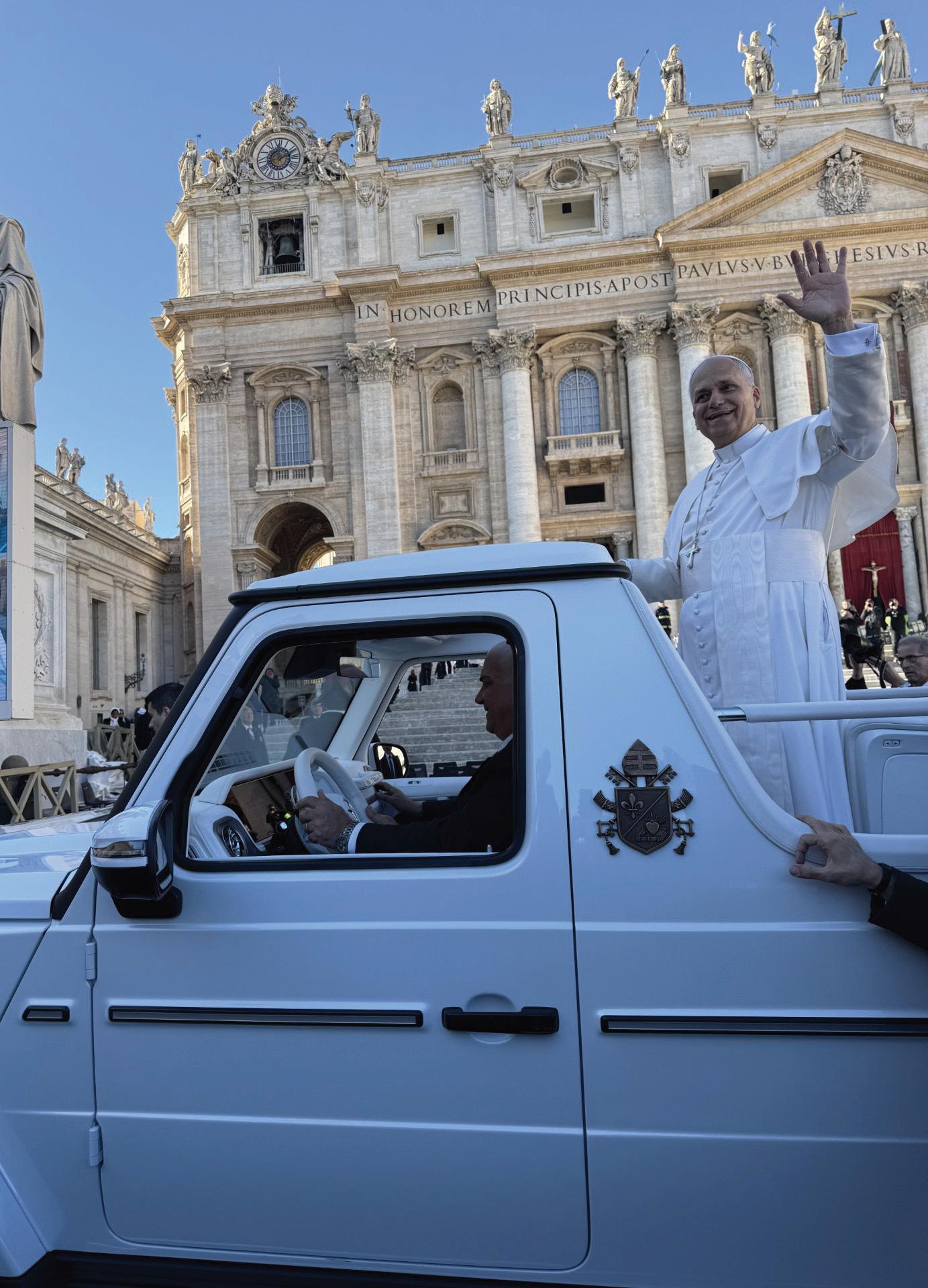
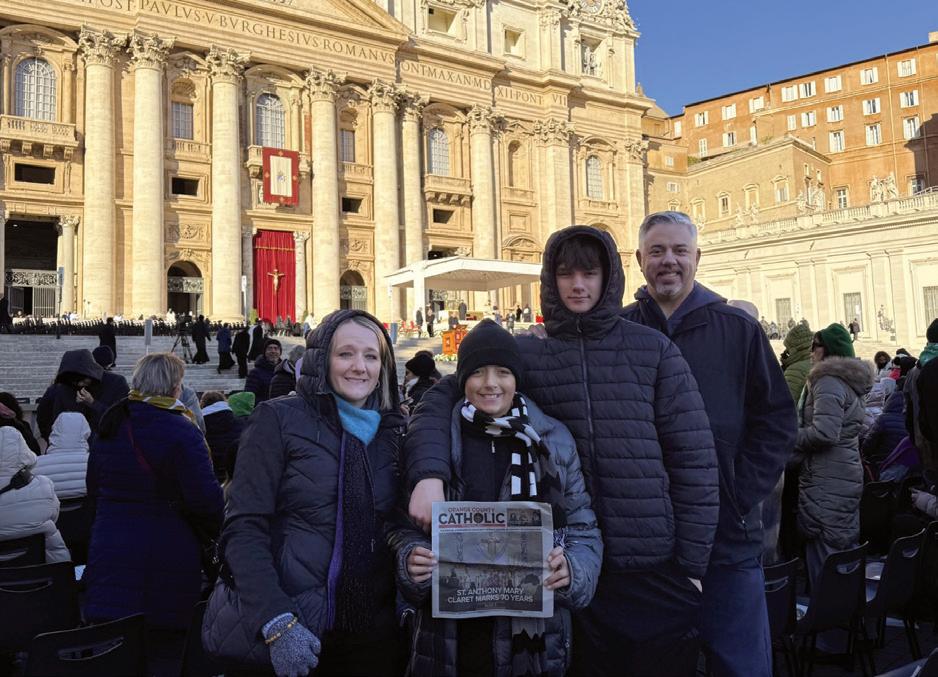
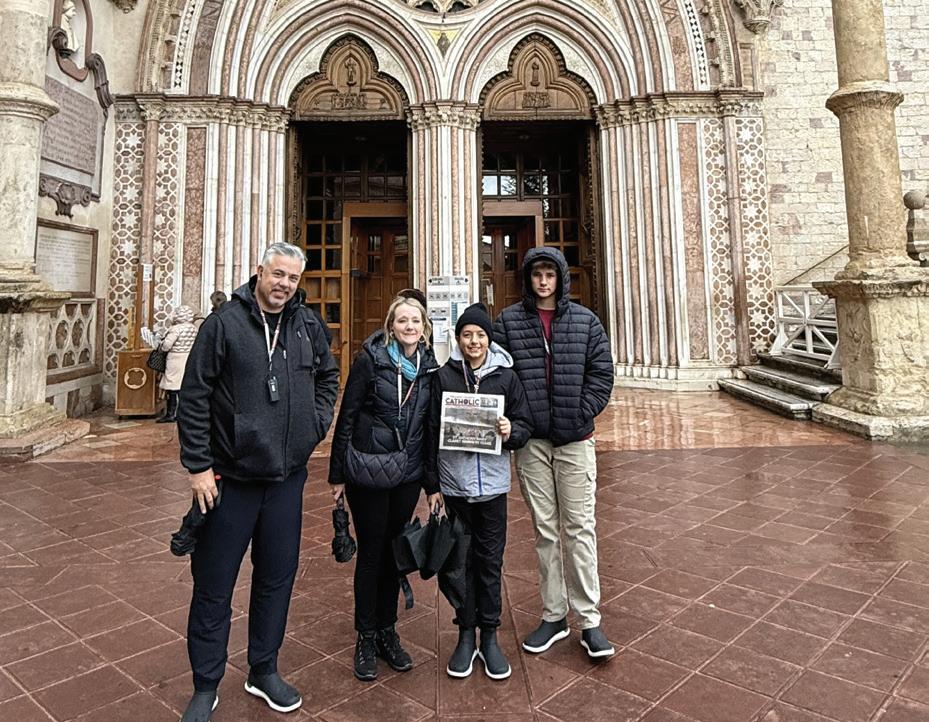
The Fortino Family (Michael, Jaclyn, Nicolas and Lucas) brought the Orange County Catholic along on a Thanksgiving pilgrimage to Italy and France. Their journey took them through Rome, Assisi, Florence, Venice and Paris, where they visited 31 churches, walked through four Holy Doors and honored countless saints and relics. They participated at Mass at the Vatican, St. Mark's Basilica in Venice and Notre-Dame Cathedral, stood just feet from Pope Leo as he passed by and watched the boys climb both St. Peter’s Basilica and the Holy Stairs (Scala Sancta) on their knees. Pictured are moments from their pilgrimage, including Mass at the Vatican, their encounter with Pope Leo and their visit to the Basilica of St. Francis of Assisi.
— The Fortino Family attends St. Joseph Catholic Church in Placentia
We want your photos! Send your pictures of “OC Catholic Afar” — of you, family or friends visiting Catholic churches and other interesting places — to editor@occatholic.com. Please include a brief description of the photo, the name of the person(s) featured in the photo and their home parish.