
2026 PROPERTY OUTLOOK

Introduction
The Australian property market stands at a pivotal moment. After stronger-than-expected momentum in 2025, the market enters 2026 with renewed confidence, but also heightened uncertainty around interest rates, supply constraints, and shifting buyer preferences.
In this Property Outlook Report, our Ray White Economics team brings you detailed insights into the ten key trends that will shape the property landscape in 2026. Our Chief Economist, Nerida Conisbee, examines the interest rate outlook and its implications for price growth, while also exploring the rapid expansion of Build-to-Rent and the living sectors that are reshaping Australia’s rental landscape. Our Head of Research, Vanessa Rader, provides expert analysis on the CBD office recovery, the return of institutional capital, rural market consolidation, and why 2026 will be the year sustainability credentials become financially material for residential property. Our Senior Data Analyst, Atom Go Tian, explores the return of luxury buyers to Sydney and Melbourne, maps the next phase of regional growth, and explains how the expanded five per cent deposit scheme is intensifying competition at the affordable end of the market.
Whether you’re planning your first purchase or repositioning your investment portfolio, understanding these trends is essential for making well-informed property decisions in the year ahead. Ray White’s network of over 1,000 offices connects national research with local market expertise, helping you understand not just what’s happening across the market, but what it means for your specific property goals.
We hope this report gives you the clarity you need to navigate 2026 with confidence.

DAN WHITE MANAGING DIRECTOR, RAY WHITE GROUP


NERIDA CONISBEE RAY WHITE GROUP CHIEF ECONOMIST
INFLATION AND RBA CASH RATE
Expectations of interest rate relief in 2026 are becoming less likely as inflation continues to show signs of persistence. Earlier optimism about a clearer path back to target has faded, replaced by a recognition that price pressures are easing more slowly and unevenly than hoped. Although a rate cut is still possible next year, the likelihood of it occurring has diminished, and any move would probably be confined to the second half of 2026 at the earliest.
The key challenge is not a single data point but the broader pattern of inflation behaviour. Goods-related prices have moderated substantially, but services inflation, particularly in areas tied to the property market, remains stubborn. Rents, utilities, insurance and other labour-intensive services continue to record elevated increases, reflecting deep structural shortages and capacity constraints. These categories tend to unwind gradually and are less sensitive to interest rate settings, making them a central concern for the Reserve Bank.
For the property sector, these pressures carry significant implications. Persistent rental inflation points to ongoing supply shortages, while elevated construction and maintenance costs highlight the difficulty of bringing new housing to market quickly. Even with early signs of improving supply pipelines, the sector is still working through the after-effects of labour shortages, high materials costs and project delays.
Meanwhile, parts of the broader economy are clearly slowing. Household spending remains subdued, business confidence is mixed, and discretionary sectors continue to soften. Under different conditions, these signs of cooling would normally strengthen the case for easing monetary policy. Instead, the Reserve Bank is likely to prioritise sustained evidence that inflation is returning to target, particularly given its recent tendency to stabilise or re- accelerate rather than fall steadily.
The possibility of a further rate increase has not been eliminated. While it remains an unlikely scenario, the persistence of services inflation means the risk sits in the background. Policymakers will want to avoid inflation becoming entrenched, meaning they will keep all options open until the disinflation trend is unambiguous.
The key challenge is not a single data point but the broader pattern of inflation behaviour.
For now, the most plausible path is an extended period of rates staying where they are. Borrowing costs are expected to remain elevated for much of 2026, with any reduction pushed toward the end of the year. For property, this means ongoing pressure on affordability, careful lending behaviour and continued reliance on strong population growth and rental tightness as key drivers of housing activity.
Ultimately, while inflation will continue to ease over time, progress is proving slower than anticipated. That delay is now shaping the interest rate trajectory, and reinforcing the likelihood that 2026 will be another year of higher-for-longer mortgage costs before any meaningful relief arrives.
Price growth to continue but moderate by mid-year
The Australian housing market heads into 2026 with far more momentum than most expected a year ago, but also with an unusual degree of uncertainty. Double- digit annual growth has already
NERIDA CONISBEE RAY WHITE GROUP CHIEF ECONOMIST
returned ahead of schedule, driven by a persistent imbalance between supply and demand, renewed confidence in the larger capitals and strong performances in many regional and lifestyle markets.
HOUSE AND UNIT PRICE TRENDS
Median price as of October 2025 - Australia
Whether this pace can be sustained into next year will depend heavily on the interest rate path, now looking less likely, and the speed at which construction costs continue to moderate.
SOURCE: NEOVAL
Through late 2025, the recovery has broadened well beyond the early outperformers. Melbourne and Darwin, both slow to join the upswing, are now firmly back in growth territory. Melbourne has finally surpassed its previous peak, supported by improving affordability and returning population flows, while Darwin’s sharp rebound reflects a chronic shortage of listings and high investor demand. These late-cycle improvements highlight a national market that is increasingly synchronised, even if individual city drivers differ.
Premium markets have also re-entered the picture. Sydney’s high-end suburbs, absent from national growth rankings for several years, are again showing meaningful price gains as prestige buyers return on the back of earlier rate cuts. Perth, meanwhile, continues its extraordinary run, with suburbs such as Cottesloe–Claremont leading national dollar-value growth for a second year, underpinned by population inflows and the strength of Western Australia’s economy. Brisbane remains one of the most consistent performers across innercity markets.
Lifestyle markets show no signs of losing their appeal. Nowhere is this clearer than the Gold Coast, where unit prices have climbed so rapidly that they now sit above Sydney’s. Strong migration, investor activity and a wave of high-end coastal development have pushed prices into territory that would have seemed implausible only a few years ago. Even with construction costs easing from their peaks, new supply remains constrained, meaning the region is likely to stay undersupplied well into 2026.
The affordable end of the market is also set to remain one of the strongest performers through 2026, supported by the now-expanded five per cent deposit scheme. The removal of income caps and the lift in price thresholds have dramatically broadened eligibility and lowered upfront costs for first home buyers. Demand is already flowing into the bottom quartile, where affordable houses and units are consistently outpacing the wider market across most cities. In places such as regional Queensland, affordable homes are recording annual growth as high as 13.8 per cent, underscoring the intense competition created when incentives

We are likely to move beyond the double-digit phase by mid-2026 unless a rate cut arrives earlier than expected.
If it does, the combination of lower borrowing costs, improving construction conditions and persistent supply shortages could easily re-accelerate prices.
collide with limited supply. Treasury modelling may estimate only a modest long-term price impact, but the near-term effects are concentrated squarely at the entry level, where stock is already scarce and demographic demand is strongest. This means the affordable tier is likely to continue outperforming into 2026, particularly in markets where supply pipelines remain thin.
The biggest wildcard remains the timing of rate cuts. Labour-market strength has complicated the outlook, delaying expectations of the first move even as other parts of the economy soften. Retail spending is weak, smallbusiness credit stress is building and consumer sentiment is still mixed. The most decisive shift is occurring in the
construction sector, where cooling activity, shrinking pipelines and easing wage pressures suggest a major inflation driver is unwinding. This is a key reason the path to lower rates remains open, however with inflation still too high, it is unlikely in the first half of the year. Taken together, the fundamentals still point to another year of solid, but more moderate growth. We are likely to move beyond the double-digit phase by mid-2026 unless a rate cut arrives earlier than expected. If it does, the combination of lower borrowing costs, improving construction conditions and persistent supply shortages could easily re-accelerate prices. Without one, the market will continue to grow, just at a steadier and more sustainable pace.
First home buyers increase pressure at affordable end

The affordable end of the market was the strongest performer since the pandemic, and 2026 is shaping up to be another year of above-market growth.
Since the beginning of 2023, house prices in the bottom quartile have climbed 34 per cent to reach $711,000 nationally, comfortably ahead of the median, which rose 27 per cent to $944,000, and well ahead of the upper quartile, up 25 per cent to $1.37 million. This momentum is expected to accelerate with the removal of income caps and the lift in price thresholds under the expanded five per cent deposit scheme.
The policy shift represents a fundamental change in accessibility. Previously, the scheme was limited to single buyers earning under $125,000 or couples earning under $200,000, with property price caps that excluded much of the available stock in major cities. The removal of income caps in November 2024 opened the scheme to a far broader cohort of buyers, while the increase in price thresholds to match the median house prices of capital cities brought a significant share of the market back into reach. The implications are straightforward: lower upfront costs, faster pathways to ownership, and concentrated demand at the affordable end where stock is already limited.
Already we are beginning to see an uplift in first home buyer activity.
Loan Market Group data shows the 12-month rolling count of loans lodged by first home buyers grew steadily from
RAY WHITE SENIOR DATA ANALYST
mid- 2023 to mid-2024, rising 14 per cent as buyers returned post-pandemic.
The initial recovery in 2023 was driven by improving sentiment following the peak of the rate-hiking cycle, easing rental affordability pressures that made ownership comparatively more attractive, and a gradual stabilisation in household finances as inflation expectations began
to moderate. Activity then stabilised around 39,000 through to April 2025, before lifting sharply in recent months. The five per cent deposit scheme was changed on 1 October and by November 2025 the rolling count had reached 41,748, a year-on-year increase of 7.7 per cent and the highest level in over two years.
FIRST HOME BUYER LOAN LODGEMENTS
12 month rolling count of loans lodged by first home buyers
AUS 41,748
SOURCE: LOAN MARKET GROUP

ATOM GO TIAN
The outperformance is broad-based across the capitals. Perth saw affordable prices rise 17.5 per cent over the year, while Brisbane recorded 15.5 per cent and Adelaide 12.8 per cent. In every major city, the affordable tier has outpaced both the median and upper quartile, underscoring the demand created when first home buyer incentives collide with limited stock at the entry level.
The scheme’s expanded reach means the question is no longer about whether first home buyers can enter the market but how fast they can act. For first home buyers, the window is open, but the trade- off is clear: easier access to finance, but stronger competition for the limited stock that qualifies.
The question is no longer about whether first home buyers can enter the market but how fast they can act.
PREDICTION FOUR:
Industry-lifestyle convergence to drive regional growth
ATOM GO TIAN
RAY WHITE SENIOR DATA ANALYST
Regional Australia’s last decade was defined by three distinct growth phases: satellite cities capturing capital city overflow, coastal lifestyle migration during the pandemic, and most recently, commodity-driven booms in industrial centres. The emerging fourth phase suggests the future belongs to regions that combine both lifestyle appeal and economic substance.
PHASE ONE: SATELLITE CITIES (2015-2019)
Pre-pandemic growth was driven by Australians priced out of Sydney and Melbourne seeking nearby alternatives. In Victoria, Geelong and Gisborne grew 37 per cent and 34 per cent respectively as Melbourne’s outer orbit expanded. In New South Wales, Newcastle (25 per cent), Port Macquarie (24 per cent) and Wollongong (19 per cent) absorbed Sydney’s overflow, offering coastal living within commuting or weekend distance of the capital. These satellite cities averaged 27 per cent growth compared to 14 per cent nationally.
PHASE TWO: COASTAL LIFESTYLE MIGRATION (2020-2022)
The pandemic supercharged regional migration as remote work freed buyers from capital city constraints. The coastal corridor from Hervey Bay to Byron Bay captured this wave most dramatically. Hervey Bay surged 60 per cent, while the Sunshine Coast and Gold CoastTweed Heads both grew 50 per cent. Ballina (48 per cent) and Byron Bay (46 per cent) rounded out this premium coastal run. Regional Australia as a whole outperformed capital cities (42 per cent versus 28 per cent), but South East Queensland to the northern New South Wales coast defined the era. Meanwhile, satellite cities continued growing, though more moderately at 25 to 39 per cent, while Victorian satellites Geelong and Gisborne began to stall.
PHASE THREE: COMMODITY BOOM (2023-2025)
The post-pandemic growth shifted decisively to regions with strong industry fundamentals. Markets that had declined or stagnated pre-pandemic suddenly led national growth as cattle, wheat and mining booms lifted regional centres. Rockhampton, Australia’s beef capital, posted 73 per cent growth, the highest of any market. Bunbury surged 71 per cent on Western Australia’s mining boom, while Mackay (59 per cent), Gladstone (59 per cent) and Townsville (69 per cent) demonstrated how resource economies drive sustained housing demand. Albany (55 per cent) and Geraldton (59 per cent) showed this pattern extending across Western Australia’s regional cities.
PRE-PANDEMIC
REGIONAL AREA
PHASE FOUR: INDUSTRY AND LIFESTYLE CONVERGENCE (EMERGING)
The next phase is already taking shape: affordable coastal or lifestyleoriented regions with genuine economic foundations. At first glance, phase four growth rates (43 to 69 per cent) mirror phase three, and the commodity boom is lifting both. But there’s a crucial difference: phase four markets offer lifestyle appeal alongside industry. This dual appeal creates resilience: less vulnerability to commodity cycles and genuine liveability at accessible price points.
Townsville exemplifies this convergence: tropical coastal lifestyle, defence force presence and mining services infrastructure, all at $653,000. Bundaberg ($656,000) pairs coastal lifestyle with agricultural employment.
Port Lincoln ($562,000) is Australia’s seafood capital with a stunning coastal setting. Geraldton ($588,000) brings together port infrastructure, fishing industry and Western Australia’s mining services boom. Mount Gambier ($538,000), the most affordable on this list, proves the convergence thesis extends beyond coastal markets, anchoring South Australia’s forestry and agriculture sector while offering regional lifestyle appeal.
What distinguishes these markets is their price accessibility (from $538,000 to $656,000) and diversified economic bases. Unlike pure resource plays vulnerable to commodity swings, or pure lifestyle markets dependent on continued migration, convergence markets offer both employment opportunity and quality of life. As Byron Bay ($2.15 million) slows
to 11 per cent growth and even Sunshine Coast ($1.23 million) moderates to 32 per cent, these sub-$700,000 markets with economic substance are posting 43 to 69 per cent growth.
The lesson is clear: the future belongs to regions that deliver both opportunity and lifestyle at accessible prices.
The future belongs to regions that combine both lifestyle appeal and economic substance.
Luxury buyers to rediscover Sydney and Melbourne
If you were speaking about luxury houses five years ago, you wouldn’t even consider markets outside of Sydney and Melbourne.
Instead, when the pandemic accelerated trends of lifestyle migration and people were given permission to look elsewhere for housing, luxury buyers proved themselves to be the most flexible and flocked away to where luxury was still sold at a discount. As a result, luxury growth has largely overlooked Sydney and Melbourne.
Luxury prices in the two major cities spiked briefly in 2021 as the initial COVID boom lifted all markets, only for both to
ATOM GO TIAN RAY WHITE SENIOR DATA ANALYST
lose half their gains the following year as interest rates surged and lifestyle migration gained popularity. From early 2023 onwards, the cities have struggled to return to this COVID peak, with the last 12 months proving to be their most productive. Sydney grew six per cent between 2024 and 2025 after growing just two per cent between 2023 and 2024 to finally reach a new peak luxury price of $4.5 million. Melbourne, on the other hand, is yet to reach its peak. Luxury house prices in the Victorian capital grew five per cent between 2024 and 2025 after declining one per cent between 2023 and 2024 to end 2025 at $2.6 million.
LUXURY RETURNS TO SYDNEY AND MELBOURNE
Luxury house price growth since 2021
All in all, Sydney grew 35 per cent in the last five years while Melbourne grew just 17 per cent, modest compared to Brisbane (+77 per cent), Perth (+76 per cent), Adelaide (+73 per cent), Gold Coast (+72 per cent), and Sunshine Coast (+68 per cent). This underperformance allowed the Sunshine Coast ($2.76M) and Gold Coast ($2.86M) to overtake Melbourne ($2.62M) as the second and third most expensive luxury markets. Meanwhile, Brisbane ($2.32M) and Perth ($2.30M) are now just 12 per cent cheaper than Melbourne, compared to 43 per cent cheaper in 2020.
It’s easy to assume the new normal is a decentralised luxury market, but if the last 12 months signal what’s to come, luxury buyers may just be beginning to rediscover the value of Sydney’s prestige waterfront streets and Melbourne’s leafy inner suburbs.
The price discounts that drove buyers away from Sydney and into cheaper luxury enclaves of South East Queensland are not as significant anymore. In 2020, Sydney was twice as expensive as the Gold Coast and Sunshine Coast, now just 1.5 times more expensive. Against Brisbane and Perth, the premium has narrowed from 2.5 times to 1.9 times. In other words: Sydney’s premium looks more justified than overpriced.
The case in Melbourne is more complex as broader economic challenges in the wake of its extended lockdowns, which cumulatively was the longest in the world, damaged its appeal to the exact buyers who could afford to look elsewhere. Yet paradoxically, it’s because of Melbourne’s weakness that it might be the better luxury bet for 2026. At only 17 per cent growth over five years, it significantly underperformed relative to its fundamentals as Australia’s secondlargest city.
If the rate-cut cycle delivers and confidence returns, the luxury buyers who fled Sydney and Melbourne may find themselves returning to markets that now offer better relative value than they’ve seen in years.
Luxury buyers proved themselves to be the most flexible and flocked away to where luxury was still sold at a discount.
PREDICTION SIX:
Living sectors to expand as rental solution gains momentum
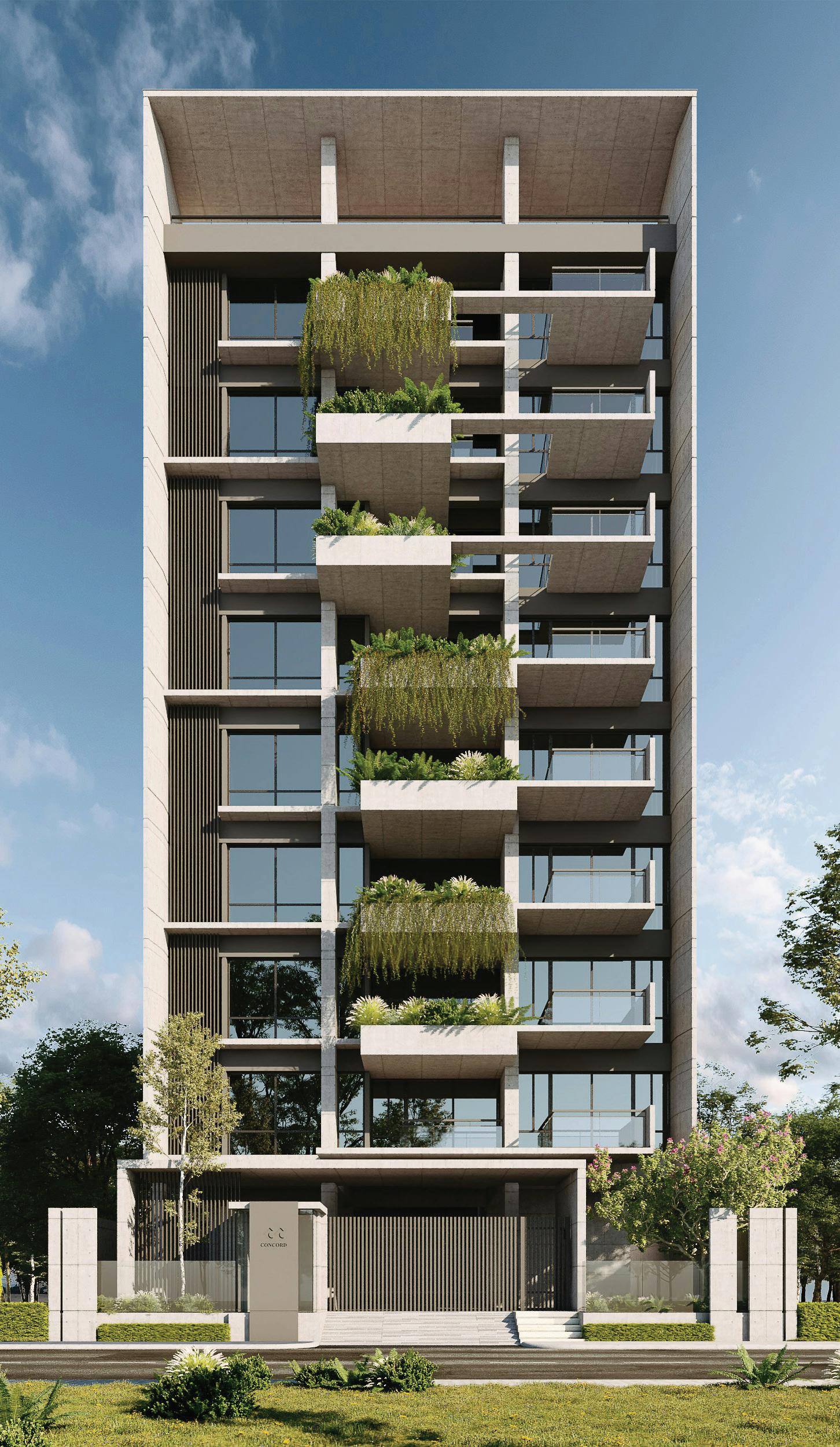
The Living Sector, encompassing build- to-rent (BTR), co-living and other institutionally-owned rental housing, is emerging as one of the most significant structural shifts in Australia’s housing market. Long established overseas but still in its infancy here, it represents both a response and a solution to our chronic rental undersupply.
NERIDA CONISBEE
RAY WHITE GROUP CHIEF ECONOMIST
At its core, BTR is about professionalising renting. Rather than individual landlords, entire buildings are owned and managed by institutions, offering consistent service, longer leases and high-quality amenities. For renters, that means stability and better experiences; for investors, it provides steady yields in a
market starved of large-scale, incomeproducing residential assets. It’s also improving design standards. BTR projects often include well-located, well-built apartments with high energy efficiency, communal spaces and on-site management, features that set a new benchmark for quality in Australian rental housing.
But the model is not without its challenges. Most projects to date are aimed squarely at the upper end of the market, with rents typically sitting well above the local median. That means the benefits of bettermanaged, higher-quality rental stock are largely being felt by higher-income tenants. While the sector helps diversify Australia’s rental offering and introduces a new standard of professionalism, it remains extraordinarily small, even with the strong pipeline now underway, BTR accounts for well under one per cent of Australia’s total rental housing, even with the strong pipeline of developments planned for the next four years. It will be impossible for BTR to replace even a small proportion of the current dominant form of rental supply, with more than 83 per cent of renters leasing from a small-scale investor. The Living Sector will add depth and choice to that landscape, but it will remain a complement, not a substitute.
As the chart below shows, Melbourne and Sydney account for the vast majority of BTR activity, around two-thirds of all completed and pipeline projects. Even with rapid growth, BTR will continue to make up only a fraction of Australia’s total rental housing for many years to come. In comparison, markets such as the United Kingdom and the United States have seen institutional ownership expand to more than ten times Australia’s share, illustrating both how far we have to go and how much potential remains.
The attraction for capital is clear: stable cash flow, professional management and strong demand fundamentals. Most existing projects are achieving occupancy rates of 95 - 98 per cent, leasing up at 30 - 40 apartments per month, with annual rental growth around five per cent. Interest from offshore investors, particularly Japan, Singapore, South Korea, North America and the Middle East, remains strong. For many, Australia offers rare exposure to a mature economy with a structural rental shortage. Tax and planning reforms have also been pivotal. The Managed Investment Trust (MIT) changes have made large-scale residential investment feasible, while recognition of BTR as a distinct asset class by governments has improved financing confidence. As construction costs stabilise, project returns are expected to strengthen further.
The expansion of the Living Sector is ultimately a positive development for Australia’s housing market, bringing new capital, consistency and scale to a system long reliant on fragmented private landlords. But it will take careful policy and continued innovation to ensure it delivers more than just high-end rentals. For now, BTR remains small in scale but big in potential. Governments see it as part of the solution; investors see a market at the start of a long growth cycle.
Most
existing projects are achieving occupancy rates of 9598 per cent, leasing up at 30-40 apartments per month, with annual rental growth around five per cent.
PREDICTION SEVEN:
Sustainability credentials to become financially material

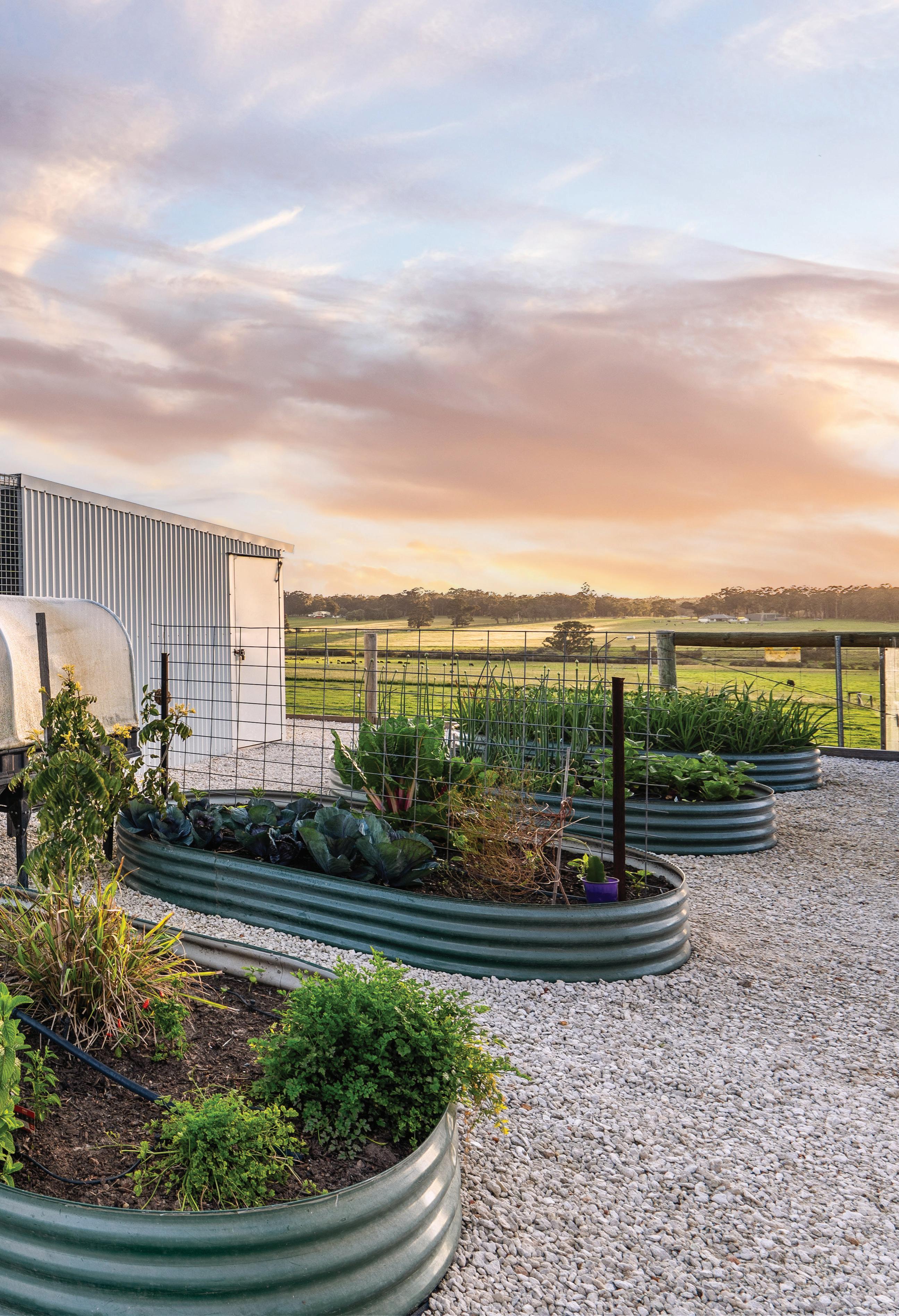
Residential property is approaching a tipping point where sustainability features stop being nice-to-haves and start determining both financing costs and asset values. The evidence is overwhelming, with NABERS apartment ratings surging 33 per cent in 2024/25, major banks are expanding green loan products, state governments are rolling out battery subsidies, and electricity prices continue climbing. These factors are creating a new tier of residential property where environmental performance becomes financially material.
The expansion of NABERS into residential common areas through the Home Energy Ratings Disclosure Framework represents a fundamental shift. Version two, released in December 2024, now covers apartment buildings, bringing the same transparency that reshaped commercial property to the residential sector. Owners’ corporations can now demonstrate verified performance to prospective buyers and investors, creating a measurable distinction between efficient and inefficient buildings with implications for both sale prices and rental yields.
Green home loans are moving from niche products to mainstream offerings. Banks are increasingly offering interest rate discounts of 0.10 to 0.25 per cent for properties with strong sustainability credentials, typically requiring 7-star NatHERS ratings or equivalent features. While these discounts seem modest, over a 30-year mortgage they potentially save tens of thousands in
VANESSA RADER RAY WHITE HEAD OF RESEARCH
interest. As more lenders compete in this space through 2026, both the criteria and discounts will likely evolve, making sustainable properties more financially attractive.
The battery subsidy landscape is creating compelling economics. New South Wales offers up to $2,400 for battery installations, Victoria provides $1,400 rebates, and Queensland has introduced interest-free loans for battery systems. Combined with existing solar infrastructure, batteries address the arbitrage opportunity created by rising electricity costs and falling feed-in tariffs. Properties with solar-plus-storage systems will increasingly command premiums over comparable properties without them.
The ACT Government’s electrification study of 15 Canberra apartment buildings revealed a challenge that extends nationwide, most apartment buildings rely on centralised gas hot water systems that are expensive to electrify. This creates a bifurcation in the apartment market between buildings that can feasibly achieve strong NABERS ratings and those facing prohibitive electrification costs.
Looking ahead to 2026, expect residential sustainability to follow the commercial property playbook. Just as NABERS ratings now determine commercial property financing terms, residential properties with verified sustainability credentials will increasingly access better loan products and attract premiums from buyers focused on operating costs. The transparency created
Financial incentives from green loans and battery subsidies, are creating a new class of residential property where environmental performance directly affects both holding costs and resale value.
by measurement tools like NABERS for apartments, combined with financial incentives from green loans and battery subsidies, is creating a new class of residential property where environmental performance directly affects both holding costs and resale value.
For apartment owners’ corporations, property investors, and homeowners, sustainability features are shifting from optional upgrades to financial determinants. Those who invest in measurement, electrification, and efficiency improvements while subsidies and favourable loan terms are available, will likely find their properties better positioned as these trends accelerate through 2026 and beyond.
PREDICTION EIGHT:
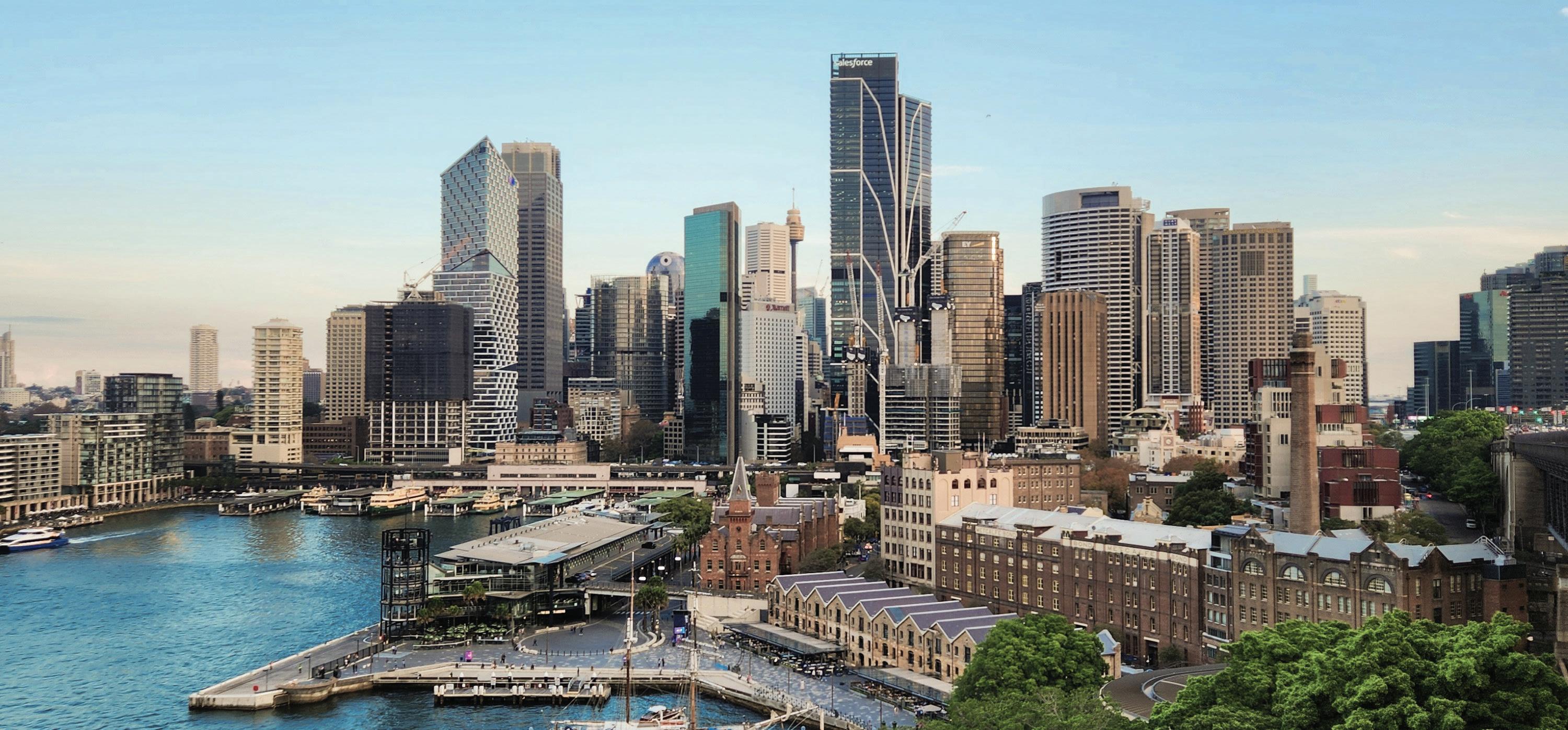
Premium CBD office to lead sector recovery
The recovery of Australia’s CBD office markets is no longer a question of if, but when and where. After years of structural adjustment, the combination of improving vacancy trends, renewed institutional interest, and prohibitive development economics is positioning 2026 as a recovery period that smart money is banking on for future improvement.
Offshore and institutional investors are showing renewed interest in Australian CBD office markets, recognising the longer term strength of prime assets in our major cities. While capital deployment remains selective, this growing attention signals genuine confidence in fundamentals rather than opportunistic positioning. According to the latest MSCI data, Sydney CBD premium office has already achieved a genuine breakthrough with 1.8 per cent capital growth alongside strong income for 6.9 per cent total returns. Brisbane CBD premium office, while still showing modest 0.6 per cent capital decline, has narrowed losses substantially and delivered 5.4 per cent total returns. Even premium CBD offices overall have narrowed capital decline to just 0.3 per cent, suggesting these assets are approaching value stabilisation.

VANESSA RADER
RAY WHITE HEAD OF RESEARCH
Vacancy rates are showing encouraging signs of improvement in key markets. Sydney CBD has recorded its highest annual net absorption since 2016, while Brisbane continues demonstrating exceptional consistency with the strongest net absorption among all major CBD markets and vacancy remaining well controlled at 10.7 per cent. Adelaide CBD has also shown meaningful improvement, with vacancy compression reflecting improving market fundamentals.
The critical factor underpinning this recovery outlook is the economics of new supply. Construction costs have reached levels where the economic rents required to justify new CBD development are simply unviable in current market conditions. Limited builder availability, rising material costs, and labour shortages have pushed development costs to unprecedented levels. With more than 1.7 million square metres of proposed CBD office projects remaining on hold and only selective refurbishment projects proceeding, the supply constraint is becoming increasingly apparent.
This development freeze creates powerful dynamics for existing stock. As occupier demand continues recovering and new supply remains constrained, rent appreciation becomes inevitable for
well-positioned assets. Perth presents perhaps the most extreme example of this dynamic, where the gap between existing face rents and the economic rents required for new development has widened dramatically, creating stronger upward pressure on existing stock values than in other major markets. Premium CBD buildings offering strong environmental credentials, modern amenities, and superior locations are already commanding tenant interest, with the gap between prime and secondary assets continuing to widen. The flight to quality trend is accelerating as corporate occupiers prioritise buildings that align with ESG commitments and offer the workplace experiences needed to encourage office attendance.
The geographic story reinforces this premium asset focus. Queensland markets continue demonstrating strength, with Brisbane CBD and fringe markets maintaining tight fundamentals and positive absorption. Sydney’s premium CBD sector is leading the recovery trajectory, while Adelaide’s improvement suggests even smaller CBD markets can achieve meaningful vacancy compression when supply remains disciplined and economic fundamentals support business growth.
The confluence of improving occupier demand, limited new supply, and renewed institutional interest creates the foundation for CBD office recovery.
Looking into 2026, the confluence of improving occupier demand, limited new supply, and renewed institutional interest creates the foundation for CBD office recovery. The assets positioned to benefit most are premium grade buildings in major CBDs that offer modern specifications, strong sustainability credentials, and locations that support corporate objectives around talent attraction and workplace culture. While secondary assets continue facing value pressure and potential alternative use conversions, premium CBD office is transitioning from adjustment to outlook for improvement, with 2026 likely marking the year smart investors position for the recovery ahead.
PREDICTION NINE:
Institutional investors to shift from sellers to buyers
Australian commercial property is approaching a turning point as institutional capital prepares to return in meaningful volume. After two years where listed property trusts, unlisted funds, and institutional investors were predominantly sellers, the capital flows are reversing. This shift, combined with sector recovery evident in recent performance data, suggests 2026 will mark substantial institutional investment re-entry across commercial property, alternative assets, and living sectors.
Retail has seen the most pronounced shift, with institutional investors moving from net sellers in 2023 and 2024 to active buyers in 2025. Institutional capital
VANESSA RADER RAY WHITE HEAD OF RESEARCH
now represents 38 per cent of retail acquisitions, reversing from 55.8 per cent of disposals. Industrial shows similar dynamics, with institutional selling activity dropping from 30.1 per cent to just 12.7 per cent, reflecting recognition that defensive characteristics justify renewed allocation. Office presents a compelling opportunity, with institutional capital at 28.1 per cent of buyers compared to 45.9 per cent of sellers during portfolio restructuring. Premium office assets are attracting renewed interest, with Sydney CBD premium achieving 1.8 per cent capital growth and Brisbane CBD narrowing decline to 0.6 per cent.
This re-engagement reflects converging factors. Positive capital growth across major sectors provides the total return equation institutional mandates require, moving beyond income-only strategies. Capitalisation rate stability at 5.8 per cent creates predictable pricing frameworks, while supply constraints across quality assets establish scarcity value supporting future appreciation.
Beyond traditional sectors, institutional capital is showing growing appetite for alternatives and living sectors. Build-to-rent, co-living, student accommodation, and seniors living attract increased attention as sectors mature and demonstrate operational track records.
AUSTRALIAN COMMERCIAL BUYER PROFILE
Assets over $50 million
Cross-Border Institutional/Listed
Private Investors
Occupiers/Others
SOURCE: REAL CAPITAL ANALYTICS. RAY WHITE
Housing undersupply, demographic tailwinds, and government policy support draw institutional capital seeking residential exposure without direct property management complexity. Several catalysts suggest institutional deployment will accelerate into 2026. Portfolio repositioning completion creates capacity for growth acquisitions rather than defensive sales. Superannuation funds, facing pressure to deploy substantial inflows, are increasing commercial property allocations as performance improves. Both domestic and international institutional investors are likely to continue to increase allocation as the investment case strengthens. Results from 2025 show cross-border and institutional investment
in Australian commercial assets over $50 million represent 80.8 per cent, up from 75.8 per cent in 2024 and 69.1 per cent in 2023.
The challenge will be competition for quality assets where development pipelines remain constrained. Premium assets with strong environmental credentials, modern specifications, and quality covenants face intense bidding as institutional buyers and offshore capital compete for limited stock. This supports continued yield compression in prime segments while maintaining wider spreads to secondary assets, creating bifurcated markets where institutional capital concentrates in quality.
This institutional capital return validates recovery fundamentals and
Retail has seen the most pronounced shift, with institutional investors moving from net sellers in 2023 and 2024 to active buyers in 2025.
confidence in forward performance. The transition from institutional selling to buying marks a fundamental shift, suggesting Australian commercial property is moving from adjustment to growth phase, with 2026 positioned as the year institutional capital deployment becomes the dominant market narrative.
Rural property to enter consolidation phase after record run
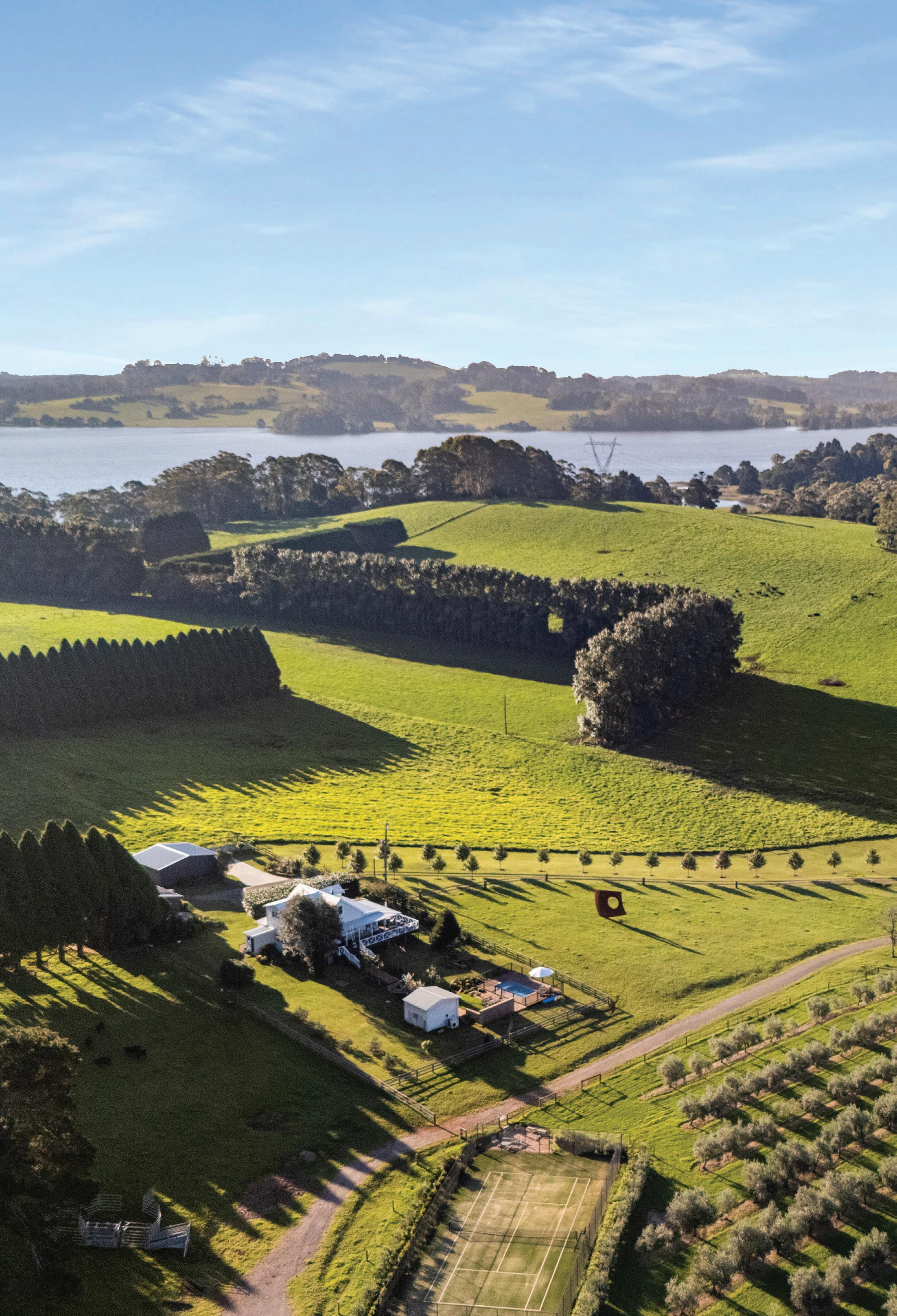
Australia’s rural property market is poised to enter a consolidation phase after an exceptional five-year run that has seen farmland values more than double since the pandemic began. While the fundamentals remain sound, several factors suggest price stability rather than continued growth will define the year ahead.
The extended period of beneficial seasonal conditions has been a double- edged sword for the sector. Five consecutive years of good rainfall have supported strong agricultural production, with cattle prices expected to rise as pasture conditions remain positive. However, grain markets face a different trajectory, with excessive supply likely to pressure prices as bumper harvests continue to flood the market.
This divergence highlights the complexity facing rural property investors. While livestock operations may benefit from conducive conditions, cropping enterprises could face margin compression, creating varied
VANESSA
RADER RAY WHITE HEAD OF RESEARCH
investment appeal across different agricultural land uses.
The biggest concern is what happens when (not if) the seasonal cycle turns. After five years of above-average conditions, the statistical probability of drought increases, and many producers are positioning defensively. The market’s memory of the devastating 2018–2019 drought remains fresh, and prudent operators are building resilience rather than expanding.
Transaction volumes have already signalled this cautious approach, falling to historic lows of just 2,258 sales in 2024/25. This isn’t distress-driven, it reflects farmers and investors choosing to hold rather than transact in an uncertain environment. The lack of forced sellers
has supported prices, creating an unusual combination of price stability and low transaction activity.
Interest rate settings will be crucial. If the Reserve Bank continues to deliver cuts, we may see transaction activity recover before prices move. However, the dramatic 25 per cent annual growth rates of 2021–2022 are firmly in the rearview mirror. Instead, expect regional variation to dominate, with local factors, from water availability to proximity to processing infrastructure, determining outcomes more than broad national trends.
For rural property investors, this consolidation phase offers time to assess holdings and prepare for the next cycle, whenever it may come.
While the fundamentals remain sound, several factors suggest price stability rather than continued growth will define the year ahead.
Ray White Economics Team







NERIDA CONISBEE Chief Economist
VANESSA RADER Head of Research
JORDAN TORMEY Strategy Analyst
ATOM GO TIAN Senior Data Analyst
PAOLO SUMULONG Data Analyst
ANITA VENKATESH Content Strategy and Production Lead
KRISTEN PURCELL Senior Graphic Designer