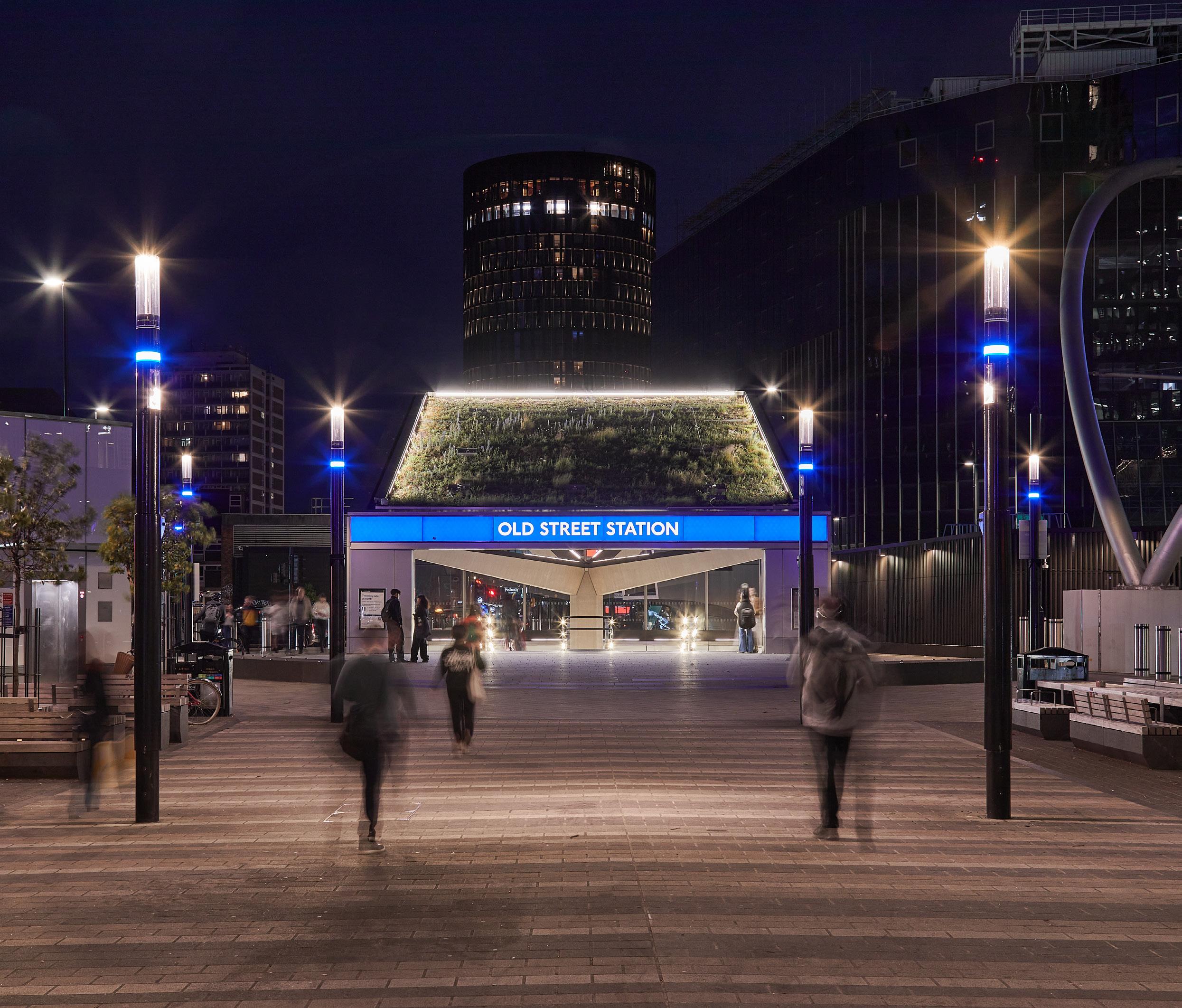
Critical Infrastructure
Rail travel is central to the shift toward
SPECIALIST SKILLS
What can rail learn from the mountains?
Rail travel is central to the shift toward
What can rail learn from the mountains?
With over three decades of safety-critical expertise, the OPC delivers bespoke solutions that strive to improve people performance, identify talent and nurture a safer culture.
Our expert psychologists help to:
Discover top talent through specialised recruitment support and role profiling.
Improve performance using Non-Technical Skills and safety initiatives.
Develop best practices, stand-out safety leaders, and deliver post-incident support for a safer culture.
Partnering with the OPC means collaborating with a dedicated team focused on safety and people performance. Trust us for tailor-made solutions from pre-selection to employment. We prioritise safety and strive to enhance your processes to go beyond industry standards.


PUBLISHER
Lakes Innovation Centre, Lakes Road, Braintree, Essex, CM7 3AN
EDITORIAL
EDITOR
Sam Sherwood-Hale editor@railpro.co.uk
DISPLAY ADVERTISING
Jamie Tregarthen sales@railpro.co.uk
RECRUITMENT ADVERTISING recruitment@railpro.co.uk
SUBSCRIPTIONS subscriptions@railpro.co.uk
ADMINISTRATION
Cherie Nugent info@railpro.co.uk
Lisa Etherington admin@railpro.co.uk
DESIGN &
Lukasz Saczek production@railpro.co.uk
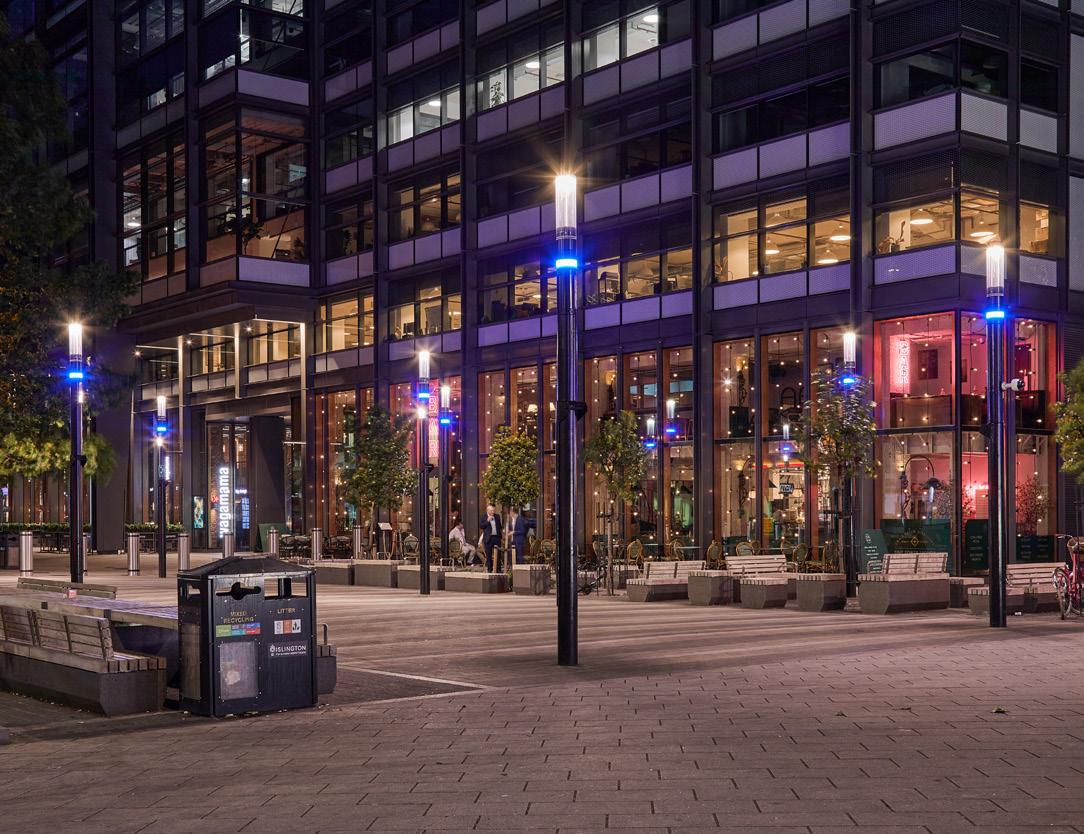
COVER Urbis Schréder

The pace of rail reform shows no sign of slowing. On 20 March, Laura Shoaf and Tony Poulter were appointed as non-executive directors to the DFTO board, marking the official transition from Shadow Great British Railways toward the full establishment of GBR, now expected to be operational around twelve months after the Railways Bill receives Royal Assent. With Govia Thameslink Railway next in line for transfer on 31 May, eight of the fourteen operators under the Department for Transport are now in public hands, and the programme is moving with a clarity of purpose that has not always characterised rail reform in this country. The unveiling of the GBR brand, to be rolled out from spring across trains, stations and websites, signals that the new organisation is becoming a visible reality rather than a policy aspiration.
The Urban Transport Group's latest Inside Track report offers some encouragement on the demand side. Rail patronage grew by seven per cent in 2024/25, returning the network to pre-pandemic levels, a significant milestone given that overall trip volumes across all modes remain below their 2019 baseline. The findings underline a broader argument that devolution is beginning to deliver: mayors and combined authorities are demonstrating that local accountability and transport investment, working together, can move the dial.
For the supply chain, the updated UK Infrastructure Pipeline, covering 734 planned projects worth £718 billion over the next decade, provides a stronger basis for long-term planning. CECA's Ben Goodwin welcomed the inclusion of regional workforce demand data as a positive step, while making clear that visibility alone is not enough. His central point bears repeating: improved pipeline transparency must now be matched by dependable work flows, clear funding commitments, and procurement that allows industry to invest with confidence in people, skills and productivity.
Coming to this month's issue, RSSB Chief Executive Mark Phillips argues that standards should serve as gateways rather than barriers to innovation and competition as GBR takes shape. Paul Davison of PPWD examines the cultural and human factors challenges that structural reintegration alone cannot resolve, drawing on complexity theory and the lessons of previous organisational failures to argue that safety in a reformed railway will depend on the quality of cooperation across the system, not just the clarity of the organisational chart.
I also spoke to Patricia Thornley, the Department for Transport's newly appointed Chief Scientific Adviser, about the engineering and skills challenges facing the transport sector, and to Oliver Heselton and Mike Ferens at Dalcour Maclaren on how the Planning and Infrastructure Act is reshaping consenting timelines and land assembly for major rail projects, alongside much more from across the industry.
SAM SHERWOOD-HALE EDITOR
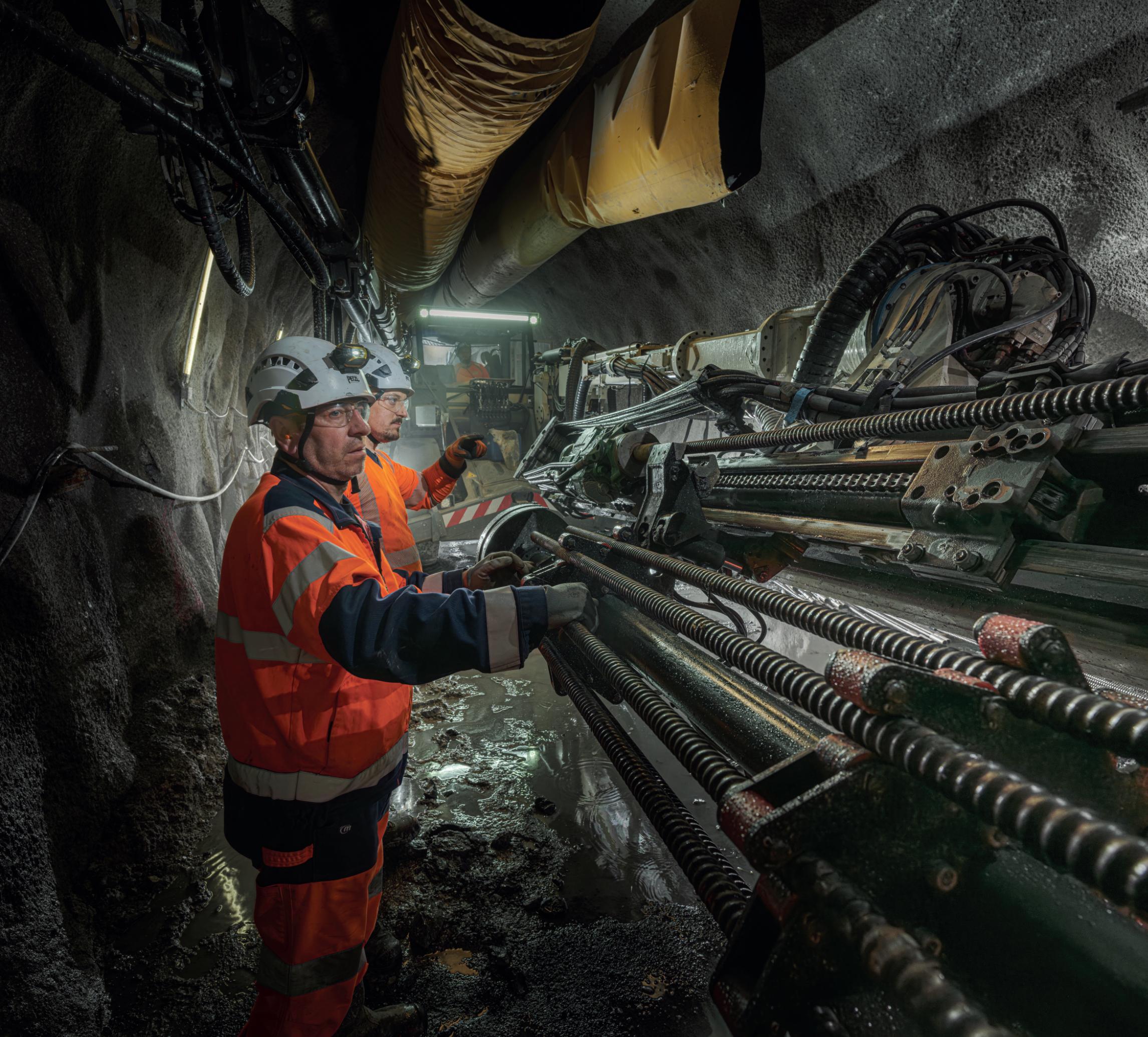



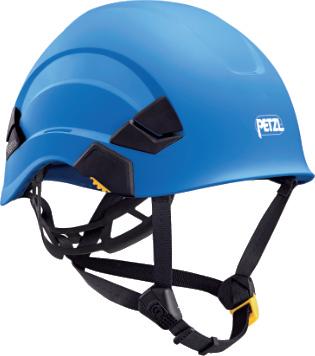

Petzl XENA , PIXA , DUO RL headlamps integrate seamlessly with VERTEX and VERTEX VENT helmets using a headband or the included SLOT ADAPT. petzl.com
Petzl professional helmets feature an adjustable-strength chinstrap, ideal for both work at height and on the ground. CENTERFIT and FLIP&FIT systems guarantee that the helmet fits securely on the head.
Simple integration with our powerful, reliable, and robust headlamps is a necessity for work in poorly-lit environments.
All the latest from CIRO, Alstom, Hitachi, Logistics
and more
Patronage
Dispute resolution clauses are a standard feature of most commercial contracts, but recent court decisions serve as a timely reminder that poorly drafted provisions can leave parties exposed to outcomes they neither anticipated nor can easily challenge
Seven years into a decade-long transformation of Britain’s rail infrastructure, the Central Rail Systems Alliance has renewed more than 470 kilometres of track
RSSB CEO Mark Phillips on making standards the catalyst for innovation and competition arguing they should serve as gateways, not barriers, for Britain's rail future
Study Transport Leadership at Aston University
Paul Davison, CEO and Founder of PPWD, on complexity, cooperation and the specialist skills Britain now needs

26 Sam Sherwood-Hale spoke to Patricia Thornley, the Department for Transport's newly appointed Chief Scientific Adviser, about the engineering and skills challenges facing the transport sector, the slow progress on transport carbon emissions, and what three decades of championing women in STEM have taught her about the pace of cultural change
Laura Hedley, Head of Consultancy and Talent Services and Occupational Psychologist at the OPC, and Squash Falconer, a record-breaking adventurer, mountaineer and expedition leader answer the question, what can rail learn from the mountains?




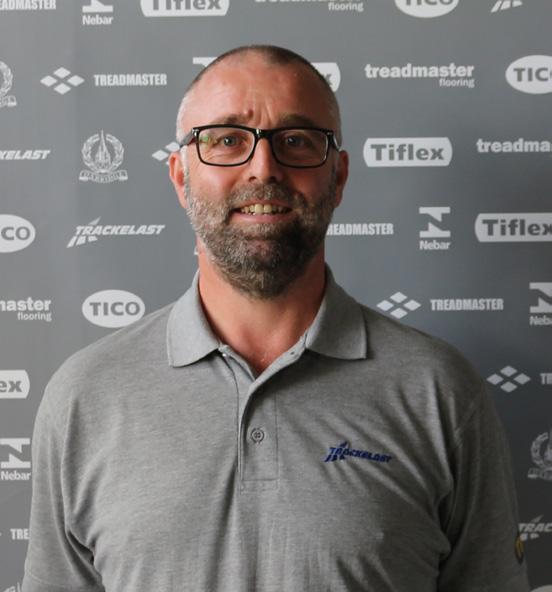
, Directors at Dalcour Maclaren, about how the Planning and Infrastructure Act is reshaping consenting timelines, land assembly and consultation for major rail projects , Business Manager of Treadmaster Business Manager of Business and Product Development Manager
Collette Brown-Bolton, Lea Harrison, Roger Neary, Kate Turner, Mark Sargant, Christian Gysin, Lindsey Tien-Rhimes, Victoria Hodge, Maria Walker, Lee Tinney, Jennifer Gladding, Steven Manifold, Tracey Barber, Maggie Talty-Sanghera, Stefani Dupree

Ground engineering specialist
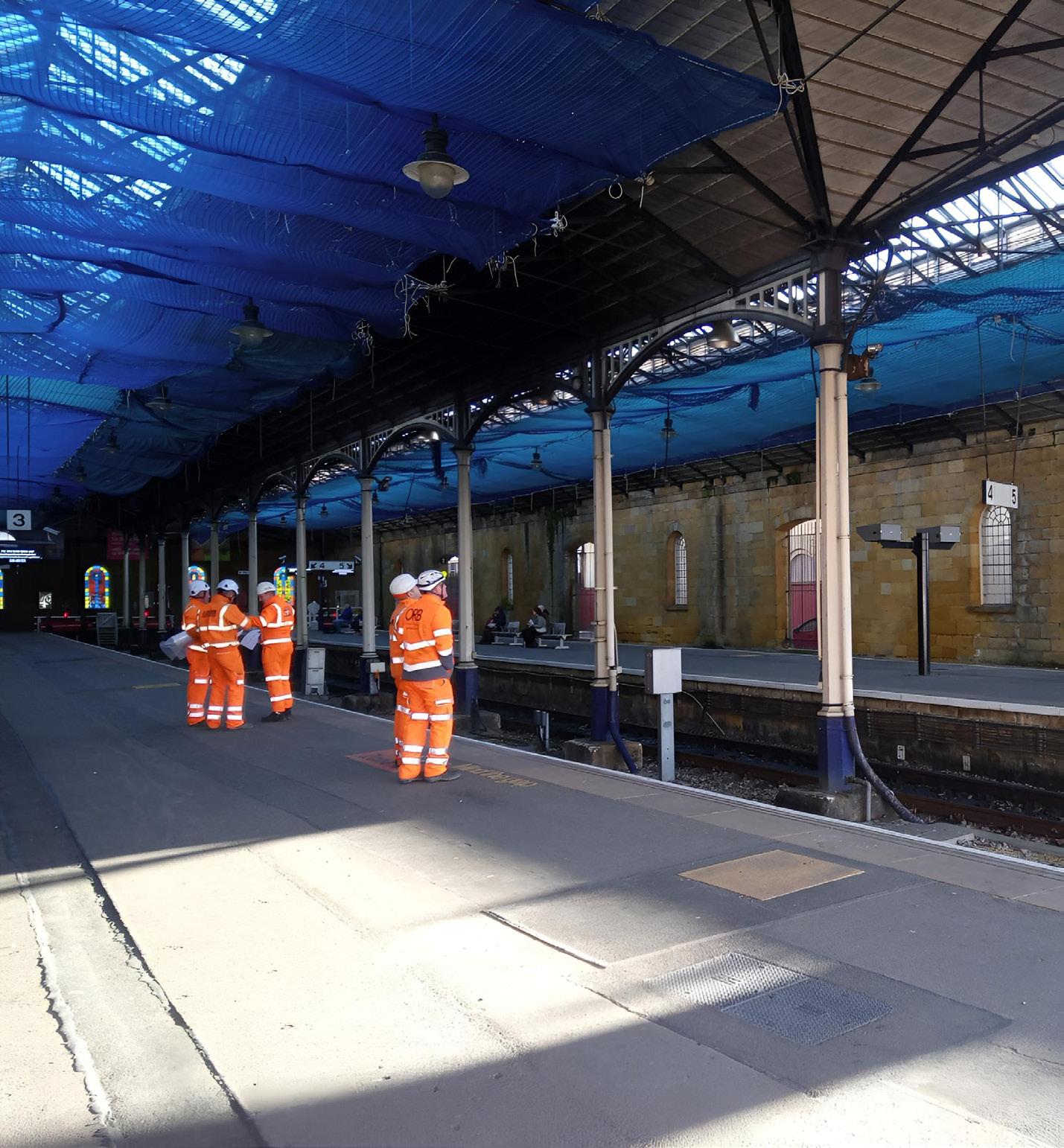
Mainmark UK has secured a place on the Balfour Beatty CP7 Framework, supporting the delivery of rail infrastructure works across Network Rail's current five-year investment programme, which runs from April 2024 to March 2029 with approximately £43–45 billion allocated across Great Britain.
Under the framework, works will include geotechnical response, bridge repairs, structural integrity projects, platform refurbishments, drainage clearance, earthwork renewals and building works such as roof repairs and canopy refurbishments.
Mainmark specialises in ground engineering solutions for infrastructure affected by subsidence, ground instability and voids, conditions that can develop beneath rail lines and associated assets as a result of heavy freight loads, repeated vibration, poor drainage and extreme weather. The company's Teretek resin injection technology stabilises and re-levels infrastructure without excavation, enabling treatment to be carried out in stages while keeping rail services operational where possible. Applications include re-levelling track and platform slabs, strengthening bridge supports and abutments, and improving ground stability beneath depots and rail yards.
The company, established in the UK in 2016 as a subsidiary of the global Mainmark group, said the appointment aligned with its growth plans and strengthened its position within the UK rail supply chain.
A virtual navigation tool covering the entire town of Exmouth, Devon, has been launched as the first in the UK to provide full British Sign Language support across a town's transport hubs and public spaces.
Developed by the Deaf Academy in Exmouth in collaboration with The Virtual Tour Experts, the tool was funded through the National Centre for Accessible Transport's Scaling Innovation programme. It covers Exmouth's railway station and transport hubs, public spaces and town centre, and includes a digital tour of the Deaf Academy's own facilities.
The tool features 360-degree ground and aerial imagery, filtered accessibility mapping for step-free routes and accessible facilities, integrated bus-route wayfinding, and an accessibility widget with adjustable contrast and text size. BSL video support is integrated throughout, addressing a recognised gap in accessible wayfinding for
Deaf users whose first language is BSL rather than written English.
The Deaf Academy, which this year marks its 200th anniversary as the oldest Deaf school in England, worked alongside its own students, staff and families in designing the tool to reflect real journeys and lived experiences. It is now being used to support new student admissions and onboarding, helping students and families familiarise themselves with the campus and local transport network before arrival.
The developers say the platform is built on a scalable, patentpending accessibility engine and could be replicated across other towns and transport networks nationwide, offering a potential model for councils, transport operators and tourism bodies seeking to improve accessible and independent travel.
The virtual tour is available at virtualtourcompany.co.uk/ theDeafAcademy.
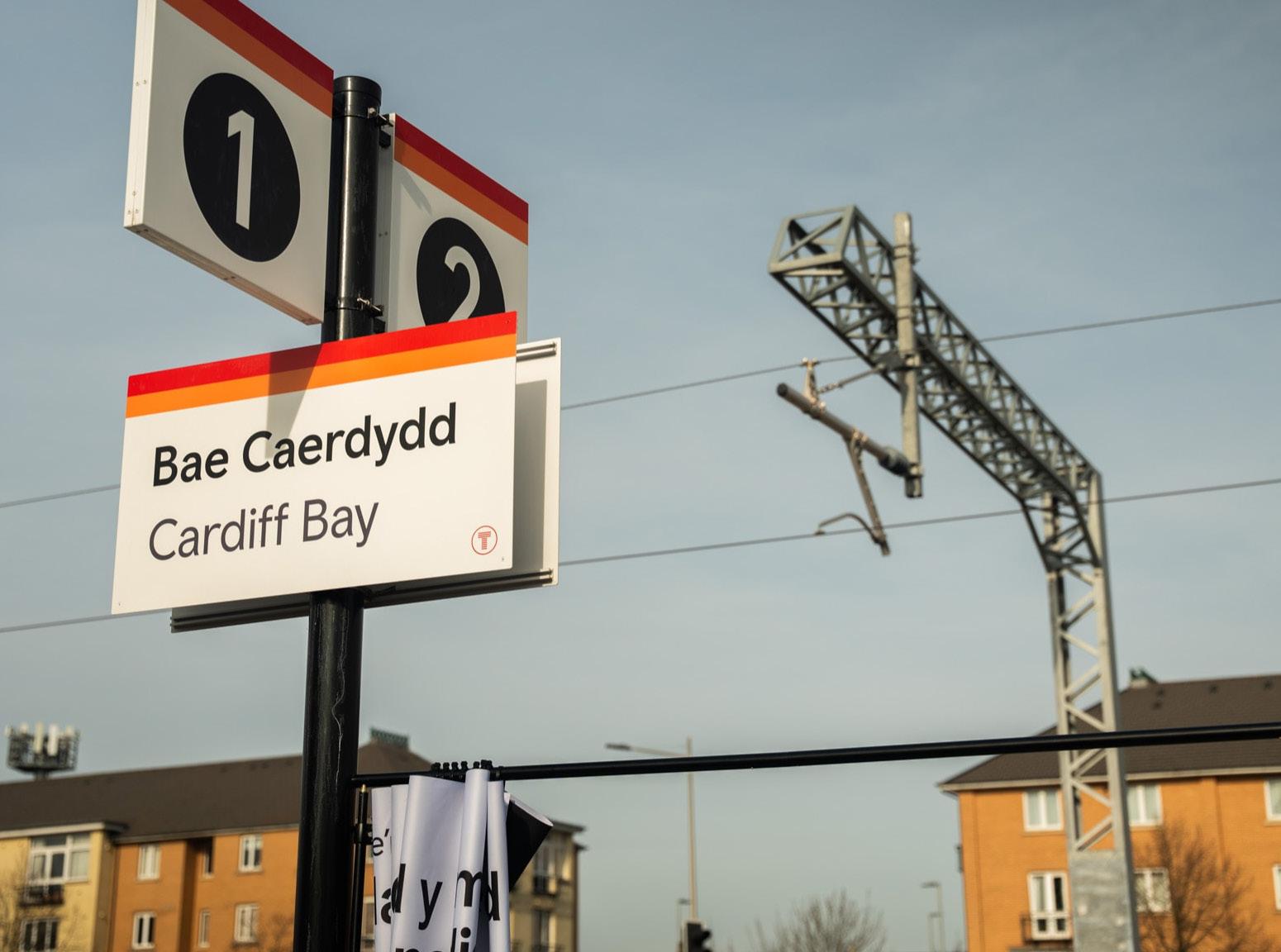
Transport for Wales has completed the full electrification of the Core Valley lines, at the heart of the South Wales Metro, delivering one of Wales' most ambitious rail infrastructure transport projects. The Overhead Line Equipment (OLE) on the final 800 metre section between Cardiff Queen Street and Cardiff Bay has now been completed and tested as TfW prepares for the full electrification
of the 170km network, completing a six-year transformation programme that began in 2020.
Dubbed the ‘Welsh Tube’, the £1bn project brought electric trimode trains to the South Wales Valleys for the very first time in 2024. This spring, TfW will introduce the first of its 36 fully electric Class 398 tram-trains. The new fleet will initially operate between Pontypridd and Cardiff Bay, providing greener, more frequent services as part of the South Wales Metro.
Since work began in 2020, TfW and its partners have delivered an intensive programme of specialist engineering which includes:
• 281.5 miles of overhead wires installed
• Over 3,100 steel posts and 8,200 small steel parts installed to hold the wires in place.
• 14 railway track lowers completed to install wires under bridges.
• Five substations installed.
• Extensive vegetation clearance and fencing renewals to keep the network safe from trespass.
Working closely with partners Amey Infrastructure Wales, TfW introduced a world-leading Smart Electrification System that combines wired and wire-free sections made possible by innovative tri and bi mode trains, capable of switching seamlessly between overhead electric power and battery. The approach has delivered carbon and cost reductions compared with traditional fully wired systems, while avoiding the need for lengthy and disruptive bridge closures.
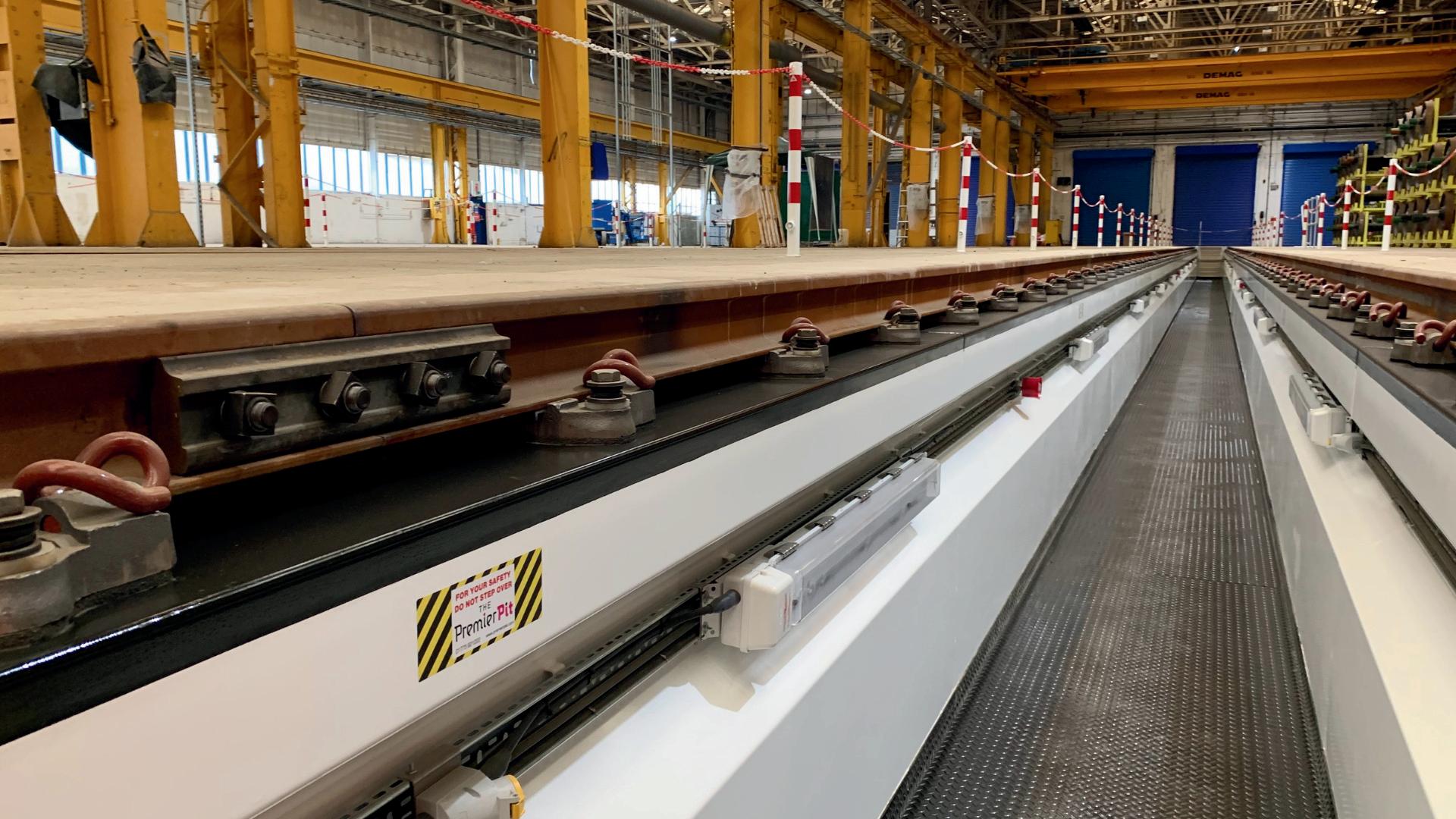



• Welded construction to ensure a water tight finish
• Quicker installation time compared to precast concrete
• High quality finish
• All internal service ducts fitted prior to installation
• Easy to clean
• Rail attachments fitted prior to installation
Premier Pits has led the way in pit manufacturing for over 35 years, supplying workshops worldwide. From inspection and maintenance to ATF, rail, and wash pits, we don’t just manufacture - our experienced Installations Teams handle the complete fitment, ensuring your pit is installed safely, efficiently, and with total peace of mind.






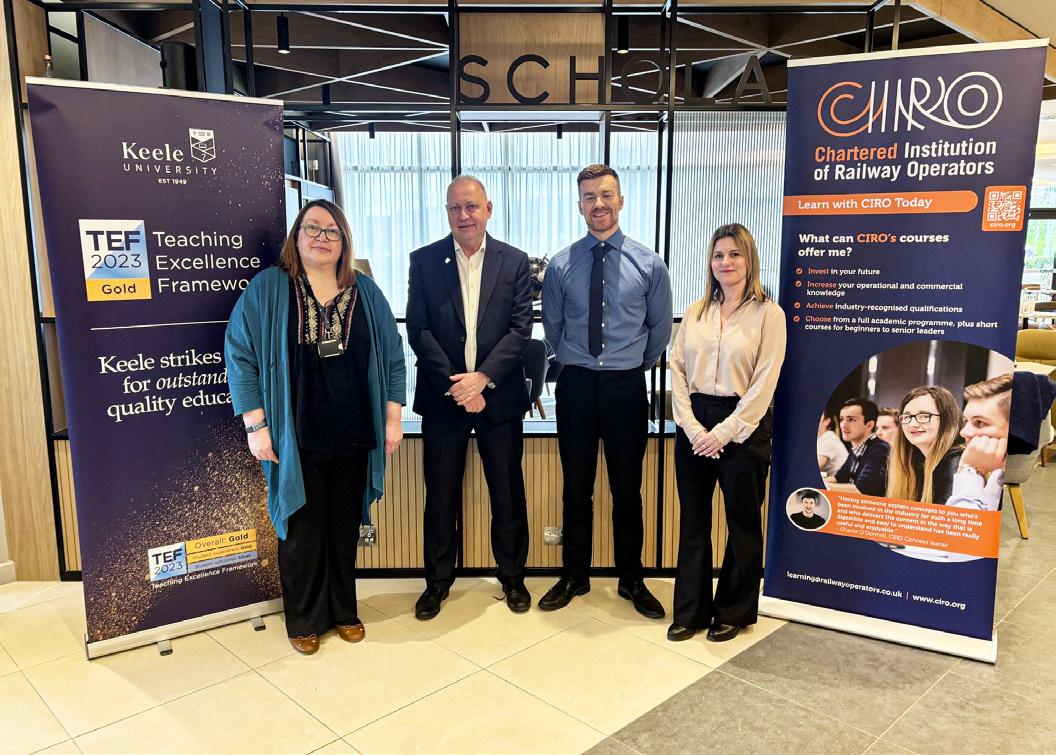
The Chartered Institution of Railway Operators has announced a new academic partnership with Keele University to deliver and support the future development of its Railway Operations Management academic programmes, comprising a Certificate, Diploma and BSc.
The programmes support the development of operational leaders across passenger and freight operators, infrastructure organisations and the wider rail supply chain. Keele University already works with CIRO through its Senior Leader MBA programme, providing a foundation on which the expanded partnership will build. The university will bring teaching expertise, facilities and research
capability to support the next phase of programme delivery, with the partnership also providing opportunities to refresh programme content and strengthen teaching resources.
The announcement follows the conclusion of CIRO's longstanding academic collaboration with Glasgow Caledonian University, which supported delivery of the Railway Operations Management programmes for more than two decades and contributed to the development of more than 1,000 graduates now working across the rail sector. CIRO acknowledged GCU's contribution and confirmed that all learners currently enrolled on GCU-validated programmes will be fully supported through to completion, with no changes to their programme structure, teaching, assessment or certification.
CIRO and Keele University will work closely together over the coming months to prepare for the next programme intake. The next cohort is planned for launch in October 2026, with the application window for all levels opening in April 2026.
CIRO Chief Operating Officer Adam Fenton commented: ‘An industry-specific academic programme delivers real value by combining academic rigour with practical expertise, ensuring learning is directly relevant to those already working in rail.
‘Through the partnership, learners are given the opportunity to step back and reflect on their own experiences, using academic frameworks to better understand the challenges they face in their roles. At the same time, their real-world insight enriches the learning environment, grounding discussions in the realities of today’s railway.
‘By integrating academic insight with industry experience, the programme strengthens capability, supports career progression and enables rail professionals to contribute more effectively within an evolving railway.’
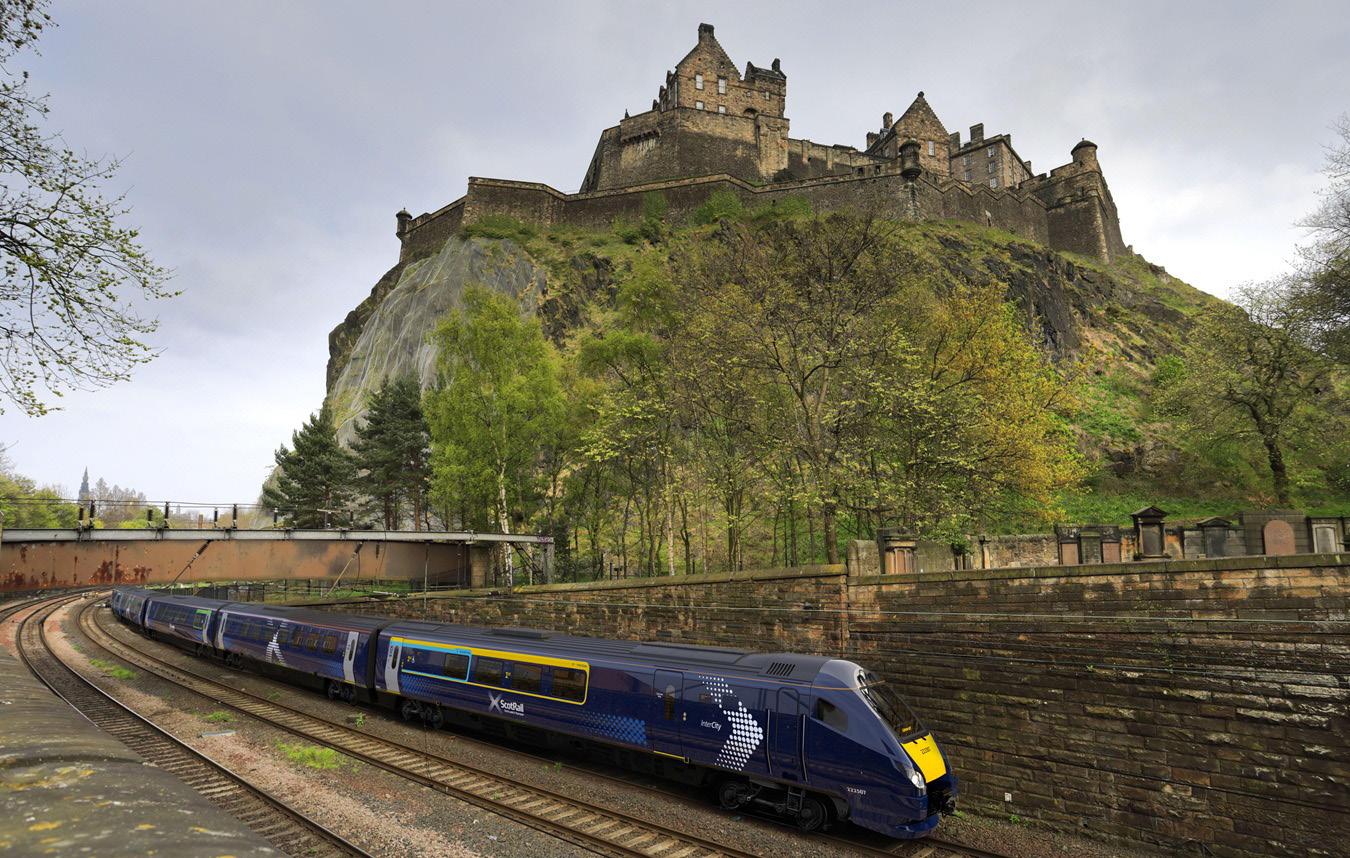
Alstom has signed contracts worth approximately £330 million to provide long-term technical support and refurbishment for ScotRail's Class 222 fleet, which operates intercity services between Glasgow, Edinburgh, Aberdeen and Inverness.
The ten-year Technical Support and Spares Supply Agreement with ScotRail, valued at around £250 million, runs to March 2036 with an option to extend to March 2042. It covers technical support and spares supply for 22 five-car Class 222 trains. A separate refurbishment contract worth around £80 million has been agreed with rolling stock owner Beacon. The refurbishment programme will include new seating, tables, carpets, LED lighting, upgraded driver cabs, toilet refurbishments and reconfigurations to improve luggage, bicycle and accessibility provision. Onboard systems upgrades will include new passenger information systems and saloon media screens, hearing loop announcement systems, automatic passenger counting, CCTV, Wi-Fi and enhanced cybersecurity. Defibrillators will be fitted to every train. Maintenance and support activities will be delivered across multiple locations including Alstom's Glasgow Traincare Centre at Polmadie, Haymarket in Edinburgh and Inverness. The scope includes technicians, engineers, supply chain support, spares management and driver and maintenance training programmes.
The agreement forms part of a broader package of contracts with Beacon covering early heavy maintenance, refurbishment activity and storage of the Class 222 fleet during its transition into Scottish service.




Level 4 Passenger Transport Operations Manager Apprenticeship Applications now open for July 2026 start.
Build leadership capability with an apprenticeship designed specifically for the rail industry. CIRO’s Level 4 programme is fully rail-contextualised, combining practical, real-world learning with the knowledge, skills and behaviours needed to lead effectively in a complex, safety-critical environment.
Supported by experienced tutors and coaches throughout, apprentices gain confidence, broaden their operational understanding of the whole rail system and develop the capability to lead people, performance and change across the railway.
What you will achieve:

Learn more & Apply



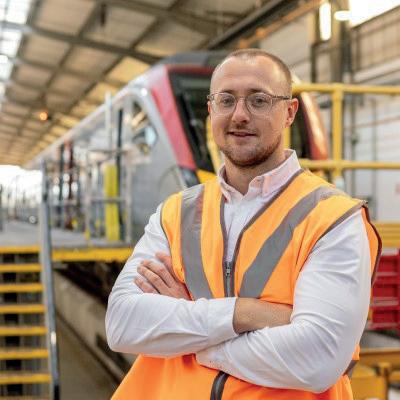


“CIRO was brilliant in ensuring I stayed on track by providing regular face-to-face sessions and online catch-ups. The team provided excellent support throughout, offering valuable feedback and drawing on their rail expertise to make the learning relatable.”
Garreth Hilditch - Depot Site Manager, Greater Anglia
by Chris Cheek
Rail passenger numbers have hit a new all-time record, surpassing the previous peak set in 2019 and finally eclipsing the historic 1923 figure that stood as a benchmark through the darkest days of the pandemic
Growth in demand for rail travel took passenger numbers up by 6.3 per cent to a new all-time record in the rolling year in 2025, according to National Rail Trends statistics published by the Office of Rail and Road (ORR). The previous record, set in 2019, stood at 1.781 billion – a figure now exceeded in two successive quarters, reaching 1.812 billion during the autumn.
The total was 1.4 per cent ahead of preCovid levels – though without the Elizabeth Line, there was still a shortfall of 10.4 per cent.
The provisional figures cover the third quarter of fiscal year 2025/26, finishing at the end of December: across the network, 465.7 million passenger journeys were made during the twelve weeks, up from 446 million in 2024. Between them, they covered 16.7 billion passenger kilometres, 0.3 per cent lower than last year, and paid a total of £3.1 billion in fares, 5.5 per cent more than in 2024 in current prices.
Looking at demand by ticket type, advance tickets were up by 4.4 per cent, taking sales 65 per cent ahead of the pre-pandemic figure. Anytime peak and off-peak tickets were up by 5.0 and 3.6 per cent respectively, leaving them 20.6 per cent and 34.5 per cent ahead of the pre-Covid figure. Season ticket holders made 1.9 per cent more journeys than last year, but the 61.3 million journeys were 60.3 per cent below the 2019 figure.
Aside from the Elizabeth Line, services in London and South East moved ahead by 3.2 per cent during the quarter, but this was once again the slowest growing sector. Between them, the operators carried 255.3 million passengers in the twelve weeks, 14.9
per cent below 2018/19. Amongst individual operators, West Midlands Trains saw the fastest growth on 4.9 per cent, followed by GTR on 3.5 per cent. South Eastern and South Western both saw small falls.
The Elizabeth Line carried 67.1 million passengers during the quarter, 6.0 per cent up in the year, meaning that the line accounted for 14.9 per cent of the national network’s patronage in the April to June quarter, second only to GTR’s 17.3 per cent. The London Overground network saw a faster increase of 8.2 per cent, meaning that demand is now 4.2 per cent ahead of 2018/19 levels.
The long-distance InterCity sector saw demand increase by 3.4 per cent compared with 2024, taking passenger numbers to 39.1 million, 4.9 per cent above pre-Covid levels. The passenger kilometre figure was 1.3 per cent ahead. Revenue on the InterCity services moved up 5.7 per cent (2.2 per cent after inflation), but remained 16.9 per cent down on 2018/19 in real terms. LNER saw the largest growth, on 6.1 per cent, followed by EMR on 4.7 per cent. Great Western grew by 5.2 per cent whilst Avanti West Coast inched ahead by 0.1 per cent, whilst Cross Country saw no movement and Caledonian Sleeper was down by 2.1 per cent.
Amongst the regional franchises, total patronage was 7.1 per cent up on 2024, coming to within five per cent of 2018/19 levels. Amongst individual TOCs, TfW led the pack, with growth of 13.1 per cent. Close behind came Scotrail, advancing by 10.2 per cent, whilst both Northern and Merseyrail saw patronage move up by almost seven per cent. TransPennine’s advance, meanwhile, slowed to 0.5 per cent.
Amongst the non-franchised operators, Hull Trains saw the largest quarterly growth, of 4.4 per cent, taking its total to a tad over 400,000, an astounding 89.5 per cent above pre-pandemic levels. Fellow FirstGroup operation Lumo saw growth of 3.0 per cent on its London-Edinburgh route. Arriva’s Grand Central operation saw a small 0.8 per cent advance, which took it to 16.3 per cent up on 2018/19. Competition from the Elizabeth Line still affected Heathrow Express, where patronage grew by 1.2 per cent in the quarter. This left patronage on the premium route 28.1 per cent below previous peaks, despite passenger throughput at the airport itself breaking more records.
The national totals for the twelve months ended 30 June show growth of 6.3 per cent compared with 2024/25. The new record total was 1.3 per cent up on the 2018/19 figure. Without the Elizabeth Line, the growth was 6.2 per cent and passenger numbers remained 10.2 per cent short of the 2018/19 figure. Passenger kilometres travelled were 5.4 per cent higher at 63.9 billion, whilst passenger revenue grew by 8.7 per cent to £12 billion. Adjusted for inflation, revenue was 5.3 per cent up on the year, but remained 12.1 per cent below prepandemic earnings.
As in previous quarters, performance varied between the sectors. Patronage on the InterCity routes was 6.6 per cent up on the year, and moved past the 2018/19 total by 5.8 per cent, despite a real terms shortfall in revenue of 16.5 per cent. Regional networks saw growth of eight per cent on the year coming to within 1.3 per cent of full recovery. Passenger journeys in London and South East excluding the Elizabeth Line saw the slowest growth at 5.5 per cent, leaving the commuter lines 14.1 per cent below 2018/19 levels.
‘It is good to be able to report on a recordbreaking market performance, and it makes a pleasant change after so much grim news over the last few years.’
Back in the darkest days of the first lockdown in May 2020, in one of these articles, I was talking about the fact that rail patronage in the calendar year of 2019 was higher than the previous 1923 record of 1.8 billion journeys. ‘When will we see that again?’ I wondered.
Well, now we know the answer. It took six years, and here we are recording a new record high of 1.812 billion. Almost worthy of the fanfares of Tchaikovsky’s eponymous overture, one might think.
And all this against the background of a still-stuttering economy, a shrinking labour market and static living standards – generally speaking, not a recipe for growth in any business that relies on derived demand.
The rises were not country-wide, though, and all those that did see growth experienced a much lower level of increase than in the previous two quarters. This time, only two TOCs – TfW and ScotRail –saw double digit rises. Overall, growth on franchised operations was restricted to 3.6 per cent, whereas it was 6.9 per cent on the TfL concessions and 4.4 per cent on the open access routes.
We have previously noted the distinction between TOCs that traditionally relied on commuters, and the rest of the network. This remains stark: during the 2025 rolling year, four operators remained more than 15 per cent below their pre-pandemic patronage – Merseyrail (26.0 per cent), South Eastern (21.4 per cent), South Western (20.5 per cent), c2c (19.5 per cent) and Chiltern (17.8 per cent). Meanwhile, the Elizabeth Line continues to power ahead, growing by 6.7 per cent during the year to 31 December, carrying a total of 254.7 million passengers, still well up on the original forecast.
The contrast with the long distance market is stark. The sector was ahead of its 2018/19 patronage for the third successive quarter and for the year to 31 December –still mainly driven by the operators on the East Coast and Midland Main Lines, LNER and EMR. LNER maintained its impressive growth record with an annual figure of 12.7 per cent, taking the number to 29.3 per cent
ahead of its pre-Covid peak. Over on the Midland route to Sheffield and Nottingham, EMR’s growth was less spectacular, at 4.8 per cent, but the total was 21.3 per cent higher than the same quarter in 2019.
The other long distance operators remained short of full recovery in 2025: Avanti West Coast by 8.4 per cent and Cross Country by 1.8 per cent, despite its impressive 8.5 per cent growth in the year to 31 December. Great Western moved to within 7.2 per cent – though the 2018/19 figure included a share of suburban traffic later transferred to the Elizabeth Line.
Once again, though, the problem remains revenue. Despite impressive real terms annual growth of 5.3 per cent, total income is still 12.1 per cent short of the inflationadjusted 2018/19 figure. In the InterCity sector, for example, patronage is now almost six per cent above pre-Covid levels, but revenue is still 16.5 per cent behind after adjustment for inflation.
The network revenue per passenger kilometre (also known as ‘yield’) was 18.25p in 2025, compared with an inflation adjusted figure of 20.31p before the pandemic – that’s a shortfall of 10.2 per cent, representing some £1.3 billion a year in lost revenue. In the InterCity sector, the shortfall is as much as 14.2 per cent, with yields of 17.56p in 2025 compared with 20.3p in 2019 – the difference explained by a loss of first class revenue and the move towards discounted advance purchase fares.
It is good to be able to report on a recordbreaking market performance, and it makes a pleasant change after so much grim news over the last few years. However, it would be idle to pretend that everything in the garden is lovely, and there are no problems ahead – especially in view of the uncertainties thrust upon us by President Trump and a new Middle East conflict, ongoing as I write. Those of us who are old enough to remember the oil shocks of the 1970s and the inflationary explosion that followed shudder at the thought of what might be to come. Meanwhile, though, rail managers can, I think, administer themselves a pat on the back for the speed and extent of the recovery over the last five years.
DFTO TAKES NEXT STEPS TOWARDS GREAT BRITISH RAILWAYS
Laura Shoaf and Tony Poulter have been appointed as non-executive directors to the Department for Transport Operator board, marking the official transition from Shadow Great British Railways towards the creation of Great British Railways, expected in 2027.
Laura Shoaf chaired Shadow GBR, working alongside DFTO Chief Executive Alex Hynes and Network Rail Chief Executive Jeremy Westlake to develop the blueprint for how GBR will operate. Prior to Shadow GBR, she was Chief Executive of the West Midlands Combined Authority and Managing Director of Transport for West Midlands. Tony Poulter joins from the DfT board, where he provided strategic advice on rail reform, and was previously a partner at PwC.
There are currently eight train operators in public ownership under DFTO, running more than 8,500 daily services for over 660 million passengers a year. Govia Thameslink Railway is next to move into public ownership, on 31 May 2026.

by Martin Fleetwood
Dispute resolution clauses are a standard feature of most commercial contracts, but recent court decisions serve as a timely reminder that poorly drafted provisions can leave parties exposed to outcomes they neither anticipated nor can easily challenge
Contracts will almost inevitably contain clauses which set out how disagreements and disputes between the parties will be managed. Often there is an escalation process between management teams and then an opportunity to involve third party assistance. To avoid the expense and delay of taking the dispute through the courts, the alternatives of arbitration and using expert determination are often provided for in the contract. However, some recent cases have shown that care needs to be taken with how such dispute resolution provisions are drafted and how they will work in practice.
Parties in a dispute using expert determination rely on the skill of the expert to come to a decision which both parties are expected to accept. However, what happens if one party believes that the expert made an error in reaching their decision? In the recent case of WH Holding Ltd v London Stadium LLP (formerly E20 Stadium LLP) the Court of Appeal considered what should be the relevant test to decide whether an expert had made a manifest error in reaching their determination.
After the 2012 London Olympics, E20 Stadium LLP (now London Stadium LLP) (LS) granted a 99 year concession of the London Stadium to WH Holding Ltd (WHH), the owner of West Ham United FC, to hold football matches at the stadium.
‘Many contracts within the rail sector contain the ability for the parties to refer a disputed matter to expert determination.’
The concession agreement:
i. gave LS certain rights to receive a portion of the money generated from any sale of shares in WHH by relevant shareholders, provided the value of the sale passed a certain threshold;
ii. contained a dispute resolution provision which allowed the parties to refer issues in dispute between them to an expert; and
iii. provided that the determination by the expert ‘shall (in the absence of manifest error) be final and binding’ on the parties.
In 2021 there was a transaction by relevant shareholders of WHH involving the sale of some existing shares, the granting of some new shares to a third party and the granting of an option to purchase other shares owned by a relevant shareholder. Different share prices were involved for the three transactions, each effectively valuing WHH differently. The question arose as to whether
Martin Fleetwood is a Consultant at Addleshaw Goddard’s Transport practice. The Rail Team has over 30 lawyers who advise clients in both the private and public sectors across a wide range of legal areas. As well as contractual issues, the team advises on operational matters, franchises, concessions, finance, regulatory, property, employment, environmental and procurement issues.
Disclaimer: This article is for informational purposes only and does not constitute legal advice. It is recommended that specific professional advice is sought before acting on any of the information given.
the three transactions should be considered together or separately for the purposes of calculating the payment to LS. WHH took the view that they were three separate transactions and the payment for the option fell below the threshold, while LS believed that they should all be considered together, as a single qualifying transaction creating a ‘blended’ value. The option payment was for £18 million which, if the three transactions were considered to be part of a wider single qualifying transaction, would amount to an additional payment to LS of £3.6 million.
The parties were unable to agree how the three elements should be treated for the purposes of calculating the payment to LS, so they turned to the expert determination section of the dispute resolution provisions. The relevant submissions were made to the expert by the parties and the expert concluded that he supported the approach of E20 in making the calculations that brought the three elements together as was part of a single qualifying transaction.
WHH disagreed with the expert’s determination but, in the absence of manifest error, the expert’s decision was final and binding on WHH. WHH therefore claimed that the expert had made a manifest error in reaching his decision and brought a case before the High Court.
The High Court found in WHH’s favour, agreeing with WHH’s claim that the expert’s assumption of linking the three transactions to produce a blended valuation was made in error. LS appealed the decision.
In the Court of Appeal, the court considered the severity of the error, given that it needed to be ‘manifest’ in order for the decision not to be final and binding. It reviewed the relevant authorities and concluded that for there to be a ‘manifest’ error:
i. an investigation limited in time and extent would need to show the error; and ii. that error must itself be ‘so obvious and so obviously capable of affecting the determination as to be unarguable’.
If there was doubt regarding the error or how it affected the outcome of the expert’s determination, the error was not manifest. In the case before the court, the judges considered that:
i. there was no clear interpretation of the way that the calculation of the consideration for the shares should be undertaken; and
i. the word ‘or’ could be read as providing alternative ways of determining different elements of one qualifying transaction but which were not necessarily exclusive of each other.
As such the approach taken by the expert was based on an arguable finding that there was one qualifying transaction. This was sufficient to show the threshold for manifest error had not been reached and the lower court’s decision was overturned. In light of this, it is clear that expert determinations are going to be difficult to challenge in the future.
Many contracts within the rail sector contain the ability for the parties to refer a disputed matter to expert determination. Industry parties should therefore review these provisions to understand the potential effects of making such a reference – is there an ability to challenge the findings of the expert and if so, what are the criteria for doing so? If the expert’s decision is final and binding, save in the case of manifest error, it may be prudent to work through some potential scenarios to evaluate the level of risk that an expert may reach an alternative conclusion to that expected. While the terms of the contract itself may be difficult to change, being able to understand and evaluate the risk is beneficial. This may also help in guiding how any reference to the expert may be worded to help support a way of interpreting the relevant part of the contract.
Often a dispute resolution clause in a contract will set out a series of actions that the parties can take if they are unable to amicably settle a dispute between themselves. In a number of cases, parties agree to submit a dispute to mediation with the ability to refer it to final and binding
arbitration if the mediation is not successful. However, in some situations, the views of the parties may be so diametrically opposed, that mediation is unlikely to work and the parties would benefit from heading straight to arbitration.
The recent High Court case of Ropa v Kharis Solutions Limited is a good illustration of some of these issues. The parties entered into two joint ventures agreements to fund and operate domestic care and nursing home businesses. Both agreements contained dispute resolution clauses which required the parties to try and settle disputes amongst themselves, but if this failed they could submit such disputes to mediation and that if mediation was not successful the dispute would be submitted to final and binding arbitration.
A dispute arose regarding payments due to Mr Ropa under the agreements. Mr Ropa served a notice to arbitrate but the defendants Kharis Solutions Limited (KSL) rejected this on the basis that the contract did not allow a party to go straight to arbitration. A significant amount of time and costs was incurred by the parties before the matter reached the courts. It was agreed that the disputes clause was poorly drafted and it was unclear which matters should be the subject to final determination through arbitration and which could be referred to the courts for determination.
KSL argued that there were only two ways to reach arbitration, via an unsuccessful mediation or where mediation was ‘unavailable’. How mediation was considered ‘unavailable’ was also in dispute. The judge noted that mediation was a consensual process and if one party simply refused to engage, such actions did make mediation ‘unavailable’. He further noted that a broad and flexible approach should be taken with respect to referring a dispute to arbitration, but that dispute needed to be accurately identified. In this case, the dispute had become well known and there were limited excuses for not moving to arbitration notwithstanding that mediation had not been followed.
A key issue in this case was the poor drafting of the dispute provisions in the agreement. This also meant that the application for arbitration contained flaws which needed to be considered by the judge. Rail industry parties are encouraged to check the terms of the dispute provisions in their contracts to ensure that:
i. there is a direct path to the dispute resolution method which they may wish to employ; and
ii. their legal team are aware of the actions that the industry party needs to take in order to move a dispute forward without getting caught in blocking tactics from the other party.
Clear, concise drafting using plain English is certainly the way to be going where possible.
Hitachi Rail has launched the BV700, a new ticket validator designed to enhance the passenger experience and support multimodal ticketing networks. The product was showcased at the Transport Ticketing Global event in London on 17 and 18 March.
The BV700 builds on the BV600, of which 50,000 units have been sold across ten countries. It is available in two screen formats, 5-inch and 7-inch, and supports multiple fare media including contactless cards, EMV open loop, QR codes and emerging handsfree technologies such as Ultra Wide Band and facial recognition. The design emphasises maintainability and reduced downtime, alongside a modular, circular design approach intended to extend product life and reduce waste.
BRISTOL TEMPLE MEADS TO HOST NEW ROUND OF INNOVATION TRIALS
Four companies have been selected to trial rail technology innovations at Bristol Temple Meads this spring as part of the Station Innovation Zone programme, delivered by Connected Places Catapult in partnership with Network Rail and supported by Innovate UK.
Three six-month trials will begin in the spring, with each project receiving up to £45,000 to support deployment. The selected companies are DataWharf, which is developing a journey support tool providing personalised multilingual guidance on stations, disruptions and onward travel; XRAI and Ampetronic, working together on AI-powered multilingual announcement systems offering real-time translation, captions and accessible audio; and Trace Surveys, which is building a multi-sensor device to predict and prevent condensation hazards while also monitoring noise, vibration and air quality.
The four companies were selected from a shortlist of eight SME-led projects announced in November. Since the Station Innovation Zone launched in 2023, it has supported 32 innovative firms, with eleven selected to undertake live trials at Bristol Temple Meads.
The EDI Charter for Rail has announced a refreshed senior leadership team as it enters its sixth year championing equality, diversity and inclusion across the UK rail industry
The EDI Charter for Rail, founded jointly by the Railway Industry Association (RIA) and Women in Rail in 2020, has appointed new Co-Chairs and a Vice-Chair to lead its Working Group as the initiative continues to grow in scale and ambition. The Charter now counts over 230 signatories committed to driving positive change across the sector.
Tracey Barber, Senior EDI Business Partner at LNER, and Maggie TaltySanghera, Capability Development Manager at Telent Technology, have been appointed as Co-Chairs, while Stefani Dupree, Head of Communications and Social Value for Central Rail Systems Alliance, takes on the role of Vice-Chair. They succeed outgoing Chair Mandeep Singh, Global Product Marketing Manager at TÜV Rheinland Group, and Vice-Chair Ben Evans, New Business Director, UK and Ireland at AtkinsRéalis, both of whom step down after three years of service to the group.
The announcement comes in the wake of International Women's Day and for both incoming Co-Chairs, that timing carries genuine weight. Tracey Barber reflected: ‘International Women's Day matters to me because it's a moment to pause and recognise both how far we've come, and how far we still need to go. In my work, I see every day how visibility, equity and opportunity can transform someone's confidence and sense of belonging and that change doesn't happen by accident. It happens when we choose to challenge, to push, and to stand up for what's right.
‘I don't do this work only as an EDI leader. I do it as a mum to two daughters who deserve a world that sees them, values them, and never limits who they can be. Every barrier I challenge, every difficult conversation I choose to have, every space I try to make more inclusive, I'm doing it with them in mind. I want them to grow up knowing their voices matter and their dreams are valid, without ever feeling they need to shrink themselves to fit. International Women's Day is a reminder of our collective responsibility, not just to celebrate progress, but to keep building the kind of world our daughters and granddaughters will inherit. For me, this
work is an act of hope, courage and legacy. And if my leadership can help move us even one step closer to that future, then every bit of effort is worth it.’
Maggie Talty-Sanghera shares that sense of personal investment. ‘International Women's Day is deeply personal to me. It is both a moment of pride and reflection. As the mother of two daughters, it represents hope; hope that their opportunities will be broader, their voices stronger, and their careers defined by talent rather than barriers. I want them to grow up believing that leadership, influence and success are not limited by gender.
‘My international experience has profoundly influenced my perspective. In some countries I have seen women visibly struggling for basic rights, access to education, and economic independence. These experiences have reinforced how privileged we are in many ways, but also how much responsibility we carry to continue pushing for change. Equality is not universal, and progress cannot be taken for granted. International Women's Day reminds me that advancement is collective. It is about celebrating achievements, recognising ongoing inequalities, and committing to action. It is about ensuring that women, regardless of background, geography or circumstance, have the opportunity to thrive.’
The Charter asks signatories to make a series of meaningful commitments: appointing a senior EDI Champion, agreeing and monitoring an action plan, providing training to tackle unconscious bias, fostering a culture of inclusion and psychological safety, and ensuring that recruitment and progression processes are open and attractive to people of all backgrounds, ages, genders and identities.
Tracey brings more than a decade of experience spanning freight, infrastructure and passenger services to her new role. ‘I'm delighted to take on the role of CoChair. My passion for this work is both professional and personal. I've championed equity, diversity, inclusion and belonging, and advocated for STEM, mental health, allyship, and for colleagues whose talents are too often overlooked. This role is a chance to bring people together, challenge barriers,
For more information about WR visit https://womeninrail.org/.
and turn commitment into lasting change, and I encourage colleagues across the sector to join us in shaping a more inclusive future for rail.’
Maggie, whose career has focused on developing people and supporting early careers, is equally committed to widening access across the industry. ‘I'm honoured to accept the position. For me, this role represents an opportunity to help ensure our industry truly reflects the diversity of the communities it serves, while creating environments where everyone feels valued, supported and able to thrive. I'm particularly passionate about widening access to rail, supporting those from under-represented backgrounds and ensuring that talent is recognised wherever it exists.’
New Vice-Chair Stefani Dupree added: ‘It's a privilege to take on the Vice-Chair role and support the continued work of the EDI Charter. By working collaboratively across the sector, we can help create fairer opportunities, strengthen representation at all levels and foster truly inclusive workplaces.’
Outgoing Chair Mandeep Singh said: ‘Over the past three years it has been a privilege to serve as Chair of the EDI Charter Working Group. I am proud of the progress the group has made in strengthening the industry's commitment to equality, diversity and inclusion. With the appointment of dual Co-Chairs and a Vice-Chair, the refreshed structure brings together a highly talented and motivated group of individuals who will continue to drive this important work forward. I wish them every success in the next chapter of the EDI Charter.’
Marie Daly, Chair of Women in Rail, said: ‘I'm delighted to welcome Tracey Barber and Maggie Talty-Sanghera as CoChairs of the EDI Charter Working Group. The EDI Charter is a vital partnership between Women in Rail and the Railway Industry Association, and Tracey and Maggie's leadership will be instrumental in strengthening its impact as we continue to drive positive, industry-wide change.’
Seven years into a decade-long transformation of Britain’s rail infrastructure, the Central Rail Systems Alliance has renewed more than 470 kilometres of track
‘What makes CRSA effective is the seamless integration of design, engineering and construction expertise’
The £1.5 billion partnership –formed in 2019 by Network Rail, AtkinsRéalis, Balfour Beatty and TSO – has been modernising strategically important routes across the North-West, North-East and Midlands, spanning from London to the Welsh and Scottish borders. The work ranges from standard track renewals to significant enhancement projects, with AtkinsRéalis serving as the alliance's multidisciplinary design partner, contributing expertise in systems integration and design innovation.
The alliance model is demonstrating the benefits of bringing together expertise across design, engineering, planning and construction under one integrated framework with aligned incentives and shared accountability. This structure allows the partners to move from conception through to construction and handover more efficiently.
Over the first six years, CRSA has delivered a range of 300 projects across the network. In recent months, the Eastern team undertook complex crossover renewals on Berwick-upon-Tweed's Royal Borders Bridge – a Grade I listed structure where heritage preservation was as critical as the infrastructure upgrade itself. A comprehensive bridge monitoring system ensured the integrity of the historic bridge throughout the works, with the renewed crossover handed back at full line speed.
Just prior to this project, the alliance completed a significant programme of works at Macclesfield, including a major signalling and crossing renewal which was delivered
during a carefully planned blockade. Over the Christmas period, the alliance completed a £26 million track replacement at Hanslope Junction on the West Coast Main Line. Between Milton Keynes and Northampton, several hundred workers replaced 130 track panels at the junction – ‘Britain's biggest Christmas jigsaw’ – which is used by up to 500 trains per day.
Most recently, in February 2026, CRSA completed a nine-day, £7.9 million upgrade to the southern approach to Manchester Piccadilly. The work replaced eleven sets of points, 4,000 timber sleepers, 5,500 tonnes of ballast and nine kilometres of signalling and telecoms cabling, renewing infrastructure from the late 1980s. The work is expected to significantly reduce faults on a corridor that carries around 908 passenger services every day.
The alliance’s innovation has extended beyond individual projects to networkwide improvements. In April 2025, following advanced thermal modelling by AtkinsRéalis, CRSA recommended that Network Rail reduce the required standard for points heating systems. This adjustment is expected to deliver considerable cost and carbon reductions across the entire rail network.
A significant project for the alliance was the delivery of major upgrades which supported the Northumberland Line – allowing it to reopen to passenger services in December 2024 after a 60-year closure. CRSA restored 12 miles of track, reconnecting communities and providing access to employment, education and leisure opportunities in Newcastle.
Earlier in the programme, at London's King's Cross station, CRSA delivered the ‘King's Uncrossed’ project, redesigning the track layout on the 1.5-mile approach into the station and reopening a disused tunnel after 44 years to add two additional lines from the north. The work improved
both reliability and capacity at one of the capital's busiest transport hubs. And during the reduced rail traffic of May 2020, CRSA addressed longstanding speed restrictions in Kilsby Tunnel. The team delivered track and drainage renewals within a tight blockade, resulting in faster journeys and reduced maintenance requirements.
The alliance has also invested in digital tools to improve delivery efficiency. Visualisation tools and graphics of train movements help speed up project delivery and minimise disruption on busy routes, allowing planners to identify potential conflicts before work begins.
Central to the alliance's philosophy is the Minimum Viable Product approach, ensuring that what is specified and designed provides the required output with optimal value for money. The work spans track, signalling, overhead lines, electrical and power systems, civil engineering, environmental management and drainage.
Rich Watts, Managing Director at Balfour Beatty Rail: ‘The alliance model has proven its worth by enabling us to deliver complex infrastructure upgrades more efficiently while maintaining the highest safety standards. We've built a culture where all partners work as one team with shared accountability, and that's reflected in the quality and pace of delivery across our programme.’
Keith Prentice, Director at AtkinsRéalis, added: ‘What makes CRSA effective is the seamless integration of design, engineering and construction expertise. By working collaboratively from the earliest stages, we can develop innovative solutions that deliver genuine value while keeping disruption to passengers to an absolute minimum.’
As CRSA moves into the final years of its programme, the results so far indicate that the collaborative alliance model offers a viable approach for delivering complex rail infrastructure renewal at scale.
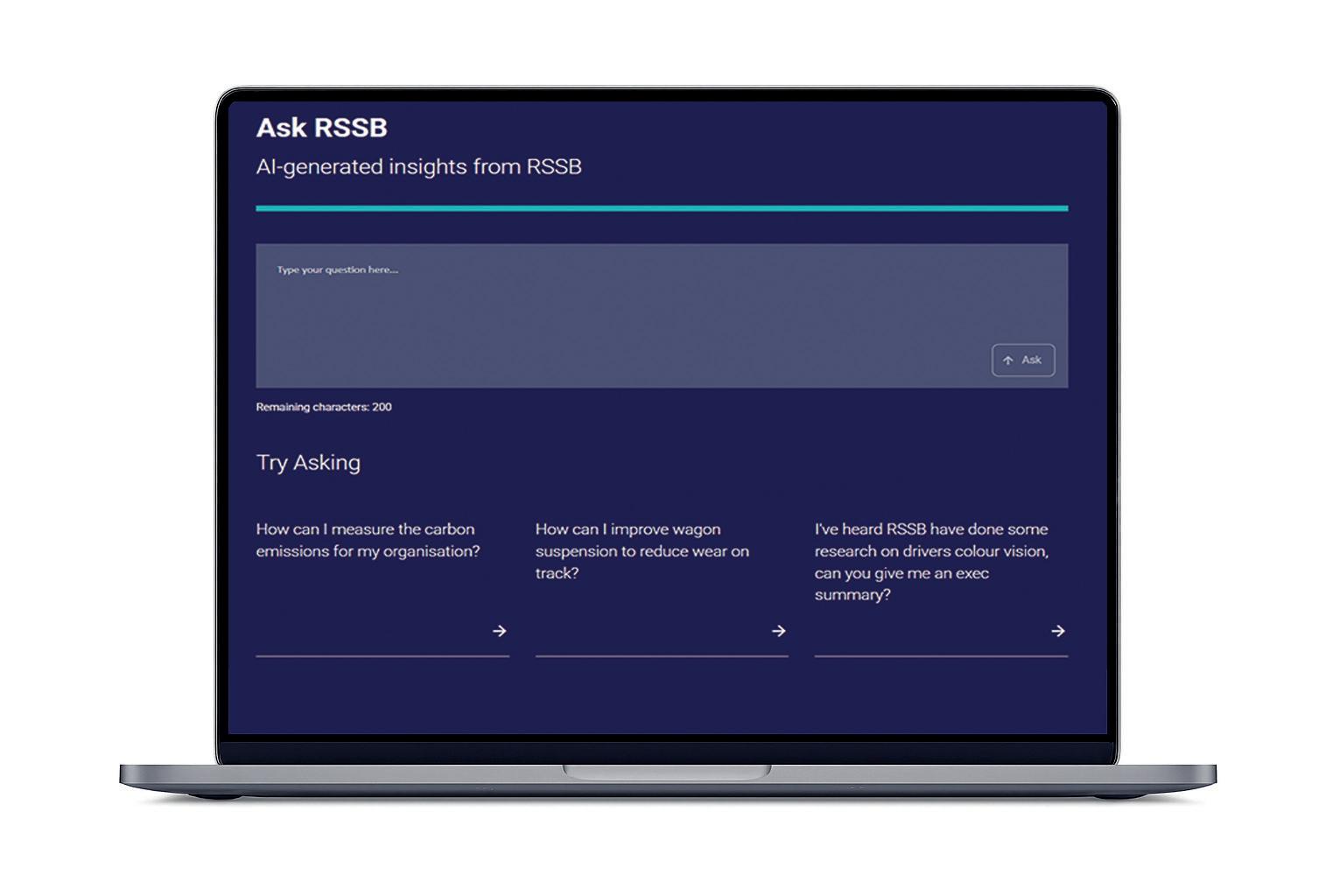
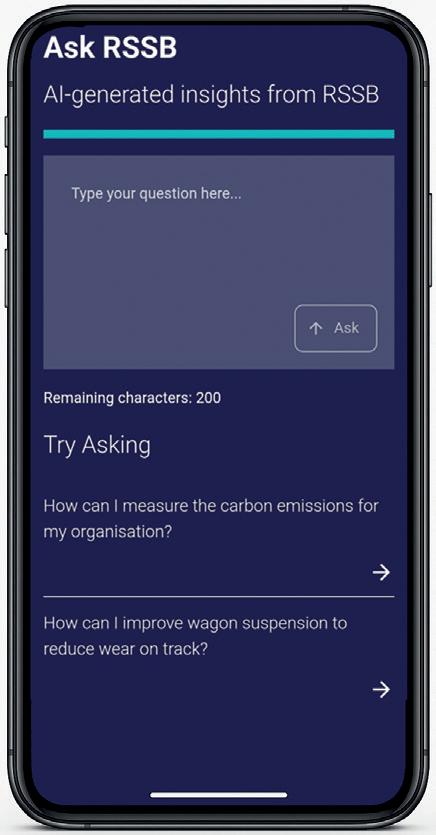
Ask RSSB gives you quick, easy access to the wealth of information on the Rail Safety and Standards Board website
One simple question delivers trusted guidance and the tools and services you need to support your role.

www.rssb.co.uk

Mark Phillips was appointed Chief Executive Officer in 2016. He is a member of the Transport for London Board and a member of the Department for Transport’s Transport Research and Innovation Board. He worked for Railtrack as Head of Operational Planning and Engineering, for Network Rail as Regional Director Anglia, and Deputy Managing Director for London Eastern Railway (Anglia). Mark is a Fellow of the Institute of Railway Operators and a Fellow of the Institute of Logistics and Transport.
Email: enquirydesk@rssb.co.uk
Visit: www.rssb.co.uk
RSSB CEO Mark Phillips on making standards the catalyst for innovation and competition arguing they should serve as gateways, not barriers, for Britain's rail future
As Chief Executive of RSSB, I am acutely aware that the future of Britain’s railways hinges on our ability to harness standards as a strategic lever—one capable of driving innovation, opening markets, reducing complexity, improving safety and ultimately reducing costs across the industry. Standards are not mere technical checklists; they are strategic instruments that influence how markets develop, which technologies flourish, and how competition takes root. If we get them right, we unlock the full potential of rail reform. If we get them wrong, we risk slowing progress and delaying the adoption of innovation at a time when the sector most needs momentum.
Effective standards help manage costs by providing a common, agreed foundation for industry practice. Simply, they enable things and people to work together. Without them, operators, buyers and suppliers may duplicate efforts, engage additional consultants, and face delays. Standards, developed collaboratively across the sector, guide projects efficiently and support alignment, ensuring that specialist input is focused where it is most needed.
As government and industry work together to deliver rail reform through Great British Railways and a new commercial framework, the role of standards will be central to success.
International evidence is clear: standards increasingly function not just as technical guidance but as the scaffolding for industrial policy. They influence market entry, cost structures, and the pace of technological change. In the British context, as rail reform takes shape, our industry must ensure that standards act as gateways, not barriers, for new suppliers and innovative technologies. The opportunity is there to lower costs, accelerate procurement, improve safety and foster a more vibrant and competitive sector.
‘Standards are not a technical backwater. They are a critical lever that will help determine whether rail reform in Britain fully unlocks innovation and competition.’
RAIL SOCIAL VALUE TOOL WINS AT THE SPOTLIGHT RAIL AWARDS
The Rail Social Value Tool (RSVT) has won the Corporate Social Responsibility category at the Spotlight Rail Awards, recognising its contribution to helping the rail industry understand, measure and enhance the social value it delivers. The RSVT was jointly developed by RSSB, Loop, Network Rail and the Department for Transport, bringing together expertise in data, policy, research and industry insight to create a consistent, whole-industry approach to assessing social value across rail projects, programmes and operations. The award nomination was supported by a range of organisations across the sector, including Govia Thameslink Railway, Avanti West Coast, Network Rail, Transport for Wales and Siemens Mobility.
Historically, standards have sometimes been criticised for adding bureaucracy and cost, often referred to as ‘gold plating’, and for protecting incumbent suppliers and established solutions. While that may be the case for some sectors, railway standards are explicitly designed and agreed to be reasonably practicable. This ensures requirements remain proportionate, cost- conscious, and focused on delivering safety and performance without unnecessary over- specification.
Businesses, particularly small and medium-sized enterprises (SMEs), sometimes claim they meet a thicket of overlapping rules and prescriptive engineering standards at national, company, or even project level. These complexities can raise compliance costs and for some SMEs, create barriers to entry that make participation in the rail market more difficult than it needs to be.
The tool helps rail organisations make informed choices, quantify their impact, and build a clearer picture of how rail supports community wellbeing, economic opportunity and environmental improvements. It currently has 40 users drawn from government, operators, infrastructure organisations, suppliers and community organisations. Network Rail alone has 350 users from more than 40 companies regularly inputting data.
RAIL INDUSTRY ACTS ON STATION AIR QUALITY FINDINGS
Monitoring by the RSSB has found air quality at Britain’s railway stations is generally good, with improvement plans under way where needed. Of around 100 stations assessed, approximately 50 were identified as requiring action, with operators and Network Rail already implementing plans. Rail accounts for just 4 per cent of domestic transport NOx pollution, with emissions falling 39 per cent in the decade to 2023.
RSSB is preparing for a future not as a passive custodian of standards, but as an active partner supporting the design of the rail market for tomorrow. Our role is to reform standards so new suppliers can enter the market more easily and the industry can adopt new technologies without compromising safety or increasing risk. We advocate a disciplined approach to standards applying them where necessary in the public interest – particularly in safetycritical system and system-critical domainswhile using flexible industry led standards elsewhere to encourage innovation. Indeed, we are proactively examining our rules and standards to see if they are aligned to emerging innovations such as Robotics and Autonomous Systems and have worked closely with the British Standards Institution to set out the landscape for AI standards to support application in the rail sector.
Rail reform in Britain is not simply about new organisation structures. It demands new commercial models that allow the sector to benefit from lower-cost solutions, faster procurement cycles, and the adoption of cutting-edge technologies. If standards merely reflect today’s practices without evolving, reform risks progressing more slowly and at higher cost than necessary.
Achieving the right balance in certification and product approval is critical, especially for technology startups and digital businesses. These firms often struggle with documentation requirements and approval timescales, which can slow the introduction of emerging technologies, including advanced digital and data-driven solutions. Our assurance regimes must be robust but proportionate, enabling rather than hindering progress.
Clear, shared evidence is needed to introduce new technology and practices safely and cost-effectively in the industry. Practical guidance helps manage change across organisations and unfamiliar risks, keeping standards workable. When standards are updated, we support implementation with industry partners to help organisations adopt innovations and benefit from research-led improvements.
Post-Brexit, we need to seize opportunities to reduce regulation for a more proportionate application of standards to benefit from international practice whilst being able to move quickly to meet market demands. Britain’s railways remain globally connected; rolling stock, signalling, and components are sourced worldwide, and interoperability continues to matter for freight, the Channel Tunnel, and our
supplier base. Thoughtful management of standards, whether aligned or divergent, will impact project capital costs, supplier competitiveness, and the overall health of our rail industry.
RSSB’s primary approach is to support the industry and regulators by convening expertise and stewarding standards, mandating only where justified, principally in safety-critical areas. Our mission is to enable commercial and technological freedom, while ensuring system safety and not necessarily preserving legacy practices. Maintaining alignment with European and international benchmarks is usually more economically advantageous, helping avoid market fragmentation, reducing supplier costs, and preserving the UK’s appeal as a destination for rail innovation and exports. Coordination and harmonisation are essential principles for growth.
In conclusion, standards are not a technical backwater. They are a critical lever that will help determine whether rail reform in Britain fully unlocks innovation and competition. As RSSB’s Chief Executive, I am committed to ensuring our standards enable the kind of industry transformation that delivers a safer, simpler, sustainable, more competitive, and more innovative railway for Britain’s future.
» Flexible study options: full-time or part-time, with multiple intakes
» Benefit from 50+ years of transport education experience
» Study in Birmingham - the UK’s transport hub
» Optional postgraduate internship available Scan the QR code to learn more


Aston University has spent fifty years preparing transport managers for the challenges of their industry. Now, drawing on that tradition, it is launching a Master's degree designed to develop the next generation of leaders for a sector that has never been more complex or more critical.
Leading transport has, for centuries, required sector leaders to work with, meet and balance the desires and objectives of different constituencies, whilst ensuring the efficient management of teams to improve outcomes for users.
In the 1970s railway managers were acutely aware of the challenges they faced, pulled as they were in many directions by people and pressures that feel very similar to those in the present. There was a public demanding better service and wanting reduced fares, a press that was in many instances anti-railway, and politicians who wanted reductions in British Rail’s operating and capital expenditure.
Leaders had to face geopolitical and national tensions and measures such as three-day week, robust industrial relations negotiations, and new relationships with Passenger Transport Executives and Authorities that needed to be maintained. Competition from motorcars was a constant, even if it was in this decade that environmental concerns about transport first came to the fore.
In the 1970s, navigating such pressures was no mean feat, and perhaps in response to this complex environment, Aston University created its first programmes to prepare generations of transport managers for the challenges they faced. The first classes were initially offered in 1973 as part of a joint-honours degree, but eventually this evolved into the university’s legendary Transport Management Bachelor’s programme. Now the university is further evolving what it is doing; drawing on its half a century of experience and tradition, Aston University is proud to introduce a new, unique, Master’s degree in Transport Leadership,
The challenges current railway leaders face are frequently similar to those their forebears confronted in the 1970s and no less complex; there is intense political
involvement in the industry and uncertainty about the shape of GBR, whilst complex relationships need to be maintained with a more diverse range of internal and external stakeholders. The motorcar, increasingly powered by electricity, remains a constant competitor.
Yet, the 2020s pose new challenges. Rail leaders are required to be abreast of the new opportunities that digital technologies such as AI or ‘Mobility as a Service’ afford them. They must build into their activities considerations around the climate crisis, whether this is selling more intensely than before that public transport is the ‘green’ way to go, or making transport systems resilient to shocks from adverse weather. The means by which the public complain and pass comment on transport have changed; ‘letters to the editor’ have been replaced with outcries or praise on social media, and sector leaders are more visible and accessible than ever before. Therefore, whilst mindfulness of history is important, Aston University’s new programme can help guide the next generation of transport professionals through these complex waters.
Taught by academic experts and industry practitioners, the programme draws on Aston’s strong industry links and cross-disciplinary research strengths to provide the key skills and knowledge future transport leaders need, encompassing strategic management and finance, human resources and change management, engineering project management, and environmental regulations and impact assessment. It will ready future leaders for the unique and sector-specific challenges they will face.
Students will be introduced to and examine the potential impact of a range of technologies on transport systems and user behaviour. They will explore the wide-ranging factors that determine system safety and performance, covering subjects such as reliability, punctuality, and
‘Whilst mindfulness of history is important, the next generation of transport professionals must be guided through new and complex waters.’
network resilience, asking how these can be monitored and what actions can be taken to deliver short- and longer-term transport performance. Finally, the programme will support students in leading teams and working with stakeholders within the distinct environment of the transport sector. They will think about their own leadership style and how to create effective workplace culture in an ethical and socially responsible way, whilst also examining how external forces and factors shape leadership decisions and practice.
Offered on a full or part-time basis, the programme is taught through a combination of lectures, seminars, workshops, industry case studies and problem-based learning, all designed to reflect the real-world challenges faced by transport professionals today. Students will also benefit from guest lectures, field visits and live projects with industry partners, providing insights into the realities of working in the transport sector.
Whether they are already working in the sector or seeking a new career, students who join Aston University’s 50-year tradition and undertake the Transport Leadership MSc, will be equipped with a critical understanding of transport systems, infrastructure, and policy, and the knowledge and skills to lead transformational change in the sector.
Paul Davison, CEO and Founder of PPWD, on complexity, cooperation and the specialist skills Britain now needs
The United Kingdom’s railway stands once again at a moment of structural inflection. With the gradual move toward Great British Railways and the unwinding of the franchising arrangements that have shaped the industry since the early 1990s, track, train and station are slowly being drawn back toward a closer organisational relationship under the strategic oversight of the Department for Transport. For some observers this feels like a long-overdue correction to fragmentation. For others it introduces understandable uncertainty. For everyone involved in the industry it represents the most consequential structural shift in a generation.
Yet structural diagrams are the easy part. Organisational charts can be redrawn in weeks. Governance frameworks can be negotiated over months. But cultures that have evolved separately for more than thirty years do not simply merge because a policy document suggests that they should.
History is not kind here to large organisational integrations undertaken with optimism but without humility. When institutions with distinct professional identities combine, the resulting culture rarely selects the best elements of each predecessor. More often it drifts toward the most defensive behaviours already present in the system. The habits that protect individuals from blame, simplify accountability and prioritise measurable targets over shared understanding.
Rail does not have the luxury of learning these lessons slowly. Unlike many industries, the railway cannot pause while it reorganises itself. The system remains live, interdependent and unforgiving. Trains continue to move at speed while governance reforms are debated. Infrastructure continues to age, passengers continue to travel and operational decisions continue to be made in real time. Reintegration therefore presents a challenge that is not merely structural. It is a challenge of complex system stewardship while the system itself remains in motion.
It may be tempting to treat reintegration as a complicated problem. One might believe that with sufficient programme management discipline, regulatory clarity and technical expertise the variables can be analysed, controlled and ultimately stabilised. That logic works well for complicated systems where cause and effect relationships are largely predictable and where solutions can be engineered through expertise. But the railway, particularly during a period of structural transition, is not merely complicated. Rather, it is complex.
Complex systems behave differently from complicated ones. Their outcomes are shaped not simply by components but by relationships. They are characterised by non-linear interactions, emergent behaviour and sensitivity to context. Small shifts in communication patterns can produce disproportionate consequences. Informal norms can dampen risk or amplify it. Local decisions, perfectly reasonable within their own domains, can interact with other decisions in ways that no individual actor intended or could have foreseen.
In such environments outcomes cannot be engineered solely through
‘Safety is not created by organisational charts. It is created by people, by their willingness to share what they see, question what they do not understand and connect their expertise with others across the system.’
command structures or compliance regimes. They emerge from the quality of relationships within the system. From shared understanding, adaptive capacity and the willingness of people to exchange information across boundaries. For three decades the railway has been organised around those boundaries. Train Operating Companies and infrastructure management have developed under different incentive structures, different rhythms of decision making and different professional identities. Operators have been shaped by revenue risk, punctuality metrics, passenger satisfaction scores and the commercial obligations embedded within franchise agreements. Infrastructure management has been shaped by regulatory control periods, asset stewardship requirements and engineering reliability frameworks.
These differences were not superficial. They influenced language, priorities and patterns of thought. They shaped how risk was interpreted and how success was defined. The delay attribution regime, with its financial penalties and compensation mechanisms, unintentionally reinforced these divisions. When performance faltered, accountability often became transactional rather than collaborative. Financial consequences were assigned. Responsibility was negotiated. The system functioned, but cooperation often occurred in the shadow of contractual tension.
Over time those habits became normalised. Reintegration now asks these communities to operate as a unified system. Yet cultures that have spent decades developing separate reflexes do not simply dissolve when instructed to collaborate. They must be consciously, thoughtfully and artfully re-woven. The history of Britain’s railway already reminds us of what can happen when organisational fragmentation, ambiguous responsibilities and misaligned oversight combine. The accidents at Southall in 1997 and Ladbroke Grove in 1999 are often described through the technical details of signals passed at danger, maintenance shortfalls, and infrastructure design.
Yet their deeper significance lies elsewhere. Both accidents revealed systemic weaknesses at organisational interfaces. Places where responsibilities overlapped, where assumptions about competence were made across institutional boundaries and where communication drift allowed risk to accumulate unnoticed. These events were not the product of isolated human error. They emerged from the interaction of multiple reasonable decisions made within a fragmented system.
That recognition transformed modern safety thinking in rail. The creation of the RSSB and RAIB were a direct consequence of those accidents, as investigations increasingly shifted away from individual blame toward systemic understanding. Governance and regulatory oversight were strengthened, and attention turned toward how organisational structures, incentives and communication patterns shape operational reality. Improved driver training followed, alongside the integration of human factors understanding and complementary non-technical skills.
Reintegration therefore presents both an opportunity and a risk. The opportunity lies in reducing the structural fragmentation that once obscured shared responsibility. The risk lies in assuming that structural integration alone will automatically produce cultural integration. It will not. Yet alongside this structural reform sits a familiar expectation: that the railway must also become more innovative.
A further tension sits quietly beneath the language of reform: the expectation that the railway must become more innovative. Innovation, by definition, requires organisations to attempt something new or novel, to explore ideas whose consequences cannot yet be fully known. Yet the railway is a system that has been deliberately shaped over generations to do the opposite. Its professionalism has been built around the disciplined application of established rules, procedures and standards, many of which were written in the shadow of previous accidents.
Organisational theorist James March described this tension as the balance
between exploitation and exploration. Exploitation refines and strengthens what is already known to work. Exploration searches for what might work next. Safetycritical industries understandably favour the former, because reliability protects lives. But periods of structural reform inevitably introduce pressure for the latter. The challenge therefore is not whether the railway should innovate, but how it can explore carefully without undermining the disciplined practices that have made it safe. The railway ought not innovate in the manner of software companies. Instead evolving, cautiously, deliberately and in full view of the consequences of getting it wrong.
Over the same thirty years that rail governance fragmented, the industry itself also became more distributed. Many of the capabilities once held within British Rail, the design, manufacturing, instructional, maintenance specialisms and technical services, are now embedded within a wide ecosystem of contractors, suppliers and joint ventures.
The modern railway is therefore not a single organisation but a networked industrial system.
Reintegration at the centre does not remove that distributed reality. If anything, it makes it more visible. Interfaces between operators, infrastructure managers, suppliers and specialist service providers remain central to performance and safety. Knowledge flows across organisational boundaries. Operational risk frequently resides in the spaces between formal responsibilities rather than within them.
Successful reintegration must therefore extend beyond former track-train boundaries. It must cultivate cooperation across the wider industrial network that sustains the railway’s daily operation. This is why the GBR reform programme increasingly resembles what scholars describe as a wicked problem.
Wicked problems have no definitive formulation. Each attempt to solve one aspect of the problem alters the conditions surrounding it. Stakeholders hold legitimate but competing priorities, cost efficiency, passenger experience, workforce stability, political accountability, safety assurance and infrastructure renewal. There is no moment at which one can confidently declare the problem solved. In such systems leadership must shift from solution delivery to adaptive stewardship.
The question becomes less about implementing a single correct structure and more about sustaining the relationships that allow the system to adapt safely as conditions change. Interestingly, examples of such governance already exist. For centuries the Netherlands has faced a challenge that is structurally different but conceptually similar: how to coordinate large numbers of people to manage a system that cannot be paused and where failure has catastrophic consequences.
This is a result of much of the country residing below sea level, protected by polders. The reclaimed land surrounded by dykes that must be constantly maintained to prevent flooding.
Flood defence in the Netherlands has never been governed purely through central command. Instead, it evolved through what became known as the Polder Model, a tradition of consensus-based cooperation in which government authorities, engineers, landowners, municipalities and citizens negotiate shared responsibility for managing water.
The logic behind the model is simple and pragmatic. If the dykes fail, everyone floods. Therefore, decisions about water management must be made collectively, drawing on local knowledge, technical expertise and shared accountability. Over time this cooperative ethos became embedded not only in water management but also in Dutch economic and political culture. It reflects an understanding that complex systems, whether hydrological or industrial, cannot be governed effectively through hierarchy alone. They require continuous dialogue across institutional boundaries.
I offer that the UK’s rail reintegration requires a similar mindset. The railway cannot be governed solely through reporting lines that run vertically between operators and central authorities. It requires lateral communication between disciplines and diagonal communication across professional hierarchies. Engineers, operators, controllers, maintainers and suppliers must all develop the ability to see beyond the limits of their own domains and understand the wider system within which they operate.
In the language of human factors this capacity is known as shared situational awareness. Non-technical skills are often discussed at the level of the individual: a driver maintaining awareness of signals, a signaller communicating clearly with adjacent control areas, or a controller making disciplined operational decisions under pressure. Yet non-technical skills also exist at team and organisational levels. Shared situational awareness across a reintegrated railway requires people to exchange information beyond inherited silos. It requires vertical communication up and down organisational hierarchies, lateral communication between functional teams and diagonal communication that cuts through traditional reporting structures.
For some parts of the industry this will feel unfamiliar. Headquarters functions accustomed to stable reporting cascades may need to become comfortable with more fluid patterns of information exchange. Specialists who have spent decades refining expertise within bounded domains may need to translate their knowledge into language that others can use. This is not a dilution of expertise. It is its expansion.
In complex systems timely decisionmaking depends not simply on authority

but on distributed understanding. If shared situational awareness fails to extend across historical track-train boundaries, local optimisation may quietly undermine system coherence. Communication therefore becomes a risk control. Psychological safety becomes operational infrastructure. If individuals feel unable to speak about emerging concerns because they fear blame or reputational damage, the system loses one of its most important early warning mechanisms. Conversely, when reporting is treated as an act of professional commitment rather than disloyalty, weak signals of emerging risk can surface before they escalate into failure.
A compassionate approach to safety reinforces this perspective. Compassion in this context does not mean lowering standards or excusing poor performance. It means approaching operational challenges
with disciplined curiosity about the conditions under which people work. It recognises that frontline workers often possess tacit knowledge of system fragility that formal governance structures cannot easily detect. Humans in complex systems are not the weak link. They are the adaptive capacity that allows imperfect designs to function safely under variable conditions. Reintegration will succeed only if the people closest to the work experience genuine ownership of the change. If integration is perceived as imposed from above, compliance may be achieved but engagement will not. If integration is cocreated, shared responsibility can emerge. The specialist capabilities required for this next chapter of Britain’s railway therefore extend well beyond technical expertise. Systems thinking becomes indispensable, and the ability to perceive how decisions
‘Cultures that have spent decades developing separate reflexes do not simply dissolve when instructed to collaborate. They must be consciously, thoughtfully and artfully re-woven.’
in one domain influence performance elsewhere, becomes a necessity. Human factors literacy must become mainstream so that workload, fatigue, cognitive demand and communication design are understood as performance variables rather than afterthoughts.
Cultural integration capability must also be cultivated. Leaders and practitioners alike must learn to translate between professional dialects, aligning engineering priorities, operational realities and policy expectations into a shared narrative of system performance. The very learning itself must evolve. This is because, in complex environments the conditions that produce failure are often the same conditions that normally produce success. Therefore, understanding everyday work. How tasks are actually performed rather than how procedures imagine them, becomes central to prevention. Establishing and nurturing a culture of learning becomes key to achieving this.
For example, learning-oriented investigation methods, such as learning reviews, offer one pathway for cultivating this understanding. By focusing on how people navigate operational pressures and constraints, they reveal the adaptive practices that allow the railway to function reliably in practice.
Reintegration offers an opportunity to extend such learning across historical boundaries, replacing adversarial reflexes with shared inquiry. Yet the transition itself carries risk. Periods of structural uncertainty increase cognitive load. Increased cognitive load raises the probability of error. Informal safety nets that once existed within established organisational cultures may weaken before new ones have matured. So unless reporting channels are protected, dialogue intensified and wellbeing treated as a meaningful leading indicator of system health, reform may inadvertently create fragility before new structures and their stability have had time to emerge.
The opportunity, however, is equally real. A genuinely integrated railway could align incentives toward whole-system optimisation, reduce the transactional
friction created by fragmented governance and build a more coherent architecture for learning and improvement. But structure alone will not deliver that outcome.
Integration diagrams can be drawn quickly, but the shared understanding to go with it takes much longer. Over three decades the railway has developed separate institutional memories, professional languages and operational reflexes. Each organisation has learned to optimise its own part of the system. Reintegration now asks something more demanding: the ability to see the railway again as a single, living system. This matters not simply for efficiency or governance, but for safety itself.
Railway safety has never been the product of rules alone. It emerges from the quality of understanding distributed across the system. The degree to which engineers, operators, controllers, maintainers and leaders are able to anticipate how decisions made in one place will shape conditions somewhere else. Compliance can confirm that procedures were followed yesterday. However, what will keep the railway safe tomorrow is the system’s capacity to recognise weak signals, adapt collectively and respond before small misalignments compound and accumulate into failure.
In that sense, safety is less a static condition, rather it is more a dynamic property of cooperation. Safety in complex systems rarely emerges from rules alone. It arises from the quality of attention distributed across the system. The degree to which people are able to notice small signals, question assumptions and adapt collectively as conditions change. Research into what are known as high reliability organisations, studied by scholars such as Karl Weick and Kathleen Sutcliffe, shows that the safest systems are not those that rely solely on procedural compliance, but those that cultivate a form of organisational mindfulness: a shared attentiveness to how work is actually unfolding. In such environments, expertise is allowed to travel to where it is needed, communication flows across traditional boundaries and small anomalies are treated as valuable signals rather than inconvenient noise. Safety in this sense becomes less a static condition enforced by rules and more a dynamic property of cooperation.
The specialists who will shape the success of Great British Railways will therefore not be defined solely by technical mastery. They will be the individuals capable of thinking across organisational boundaries, communicating diagonally as well as vertically, and sustaining cooperation where competition once existed. Shared situational awareness in such an environment is not a cognitive luxury but a form of risk control.
They will also understand that psychological safety is not a cultural embellishment but operational infrastructure, because a railway that does not demonstrate respect for each other’s area of responsibility or does not provide
permission for those undertaking the reality of work to question, will deny the individual, team and organisational level learning required to quickly adapt to remain safe.
Additionally, all of what I have described must occur while the railway continues to run. Unlike many industries, the system cannot pause while it reorganises itself.
The trains keep moving, passengers keep travelling, the weather erodes and the infrastructure continues to age, adapt and respond to the pressures placed upon it.
Reform therefore cannot simply be imposed from the top of an organisational chart. It must be carried through the living network of people who operate, maintain and understand the railway every day.
The task is not to override that expertise, but to connect it; vertically, laterally and diagonally. So that insight moves across the system with the same continuity and reliability that we expect of the trains themselves. The innovation employed in such a safety-critical system cannot mean abandoning established knowledge in pursuit of novelty. It must instead mean something more careful: the disciplined extension of existing understanding. And that in turn requires a particular kind of professional capability.
If reintegration succeeds, it will not be because the structure was redesigned. It will be because the railway rediscovered how to learn and think as a system again.
Because in a railway that never stops moving, safety is not created by organisational charts. It is created by people, by their willingness to share what they see, question what they do not understand and connect their expertise with others across the system.
When that happens, understanding begins to flow across the railway as reliably as the trains themselves.
And in the end, it is that human connection, more than any structure, that will keep the system safe.
Visit: www.PPWD.co.uk
Email: pauldavison@ppwd.co.uk
PAUL DAVISON
is
the CEO and Founder of
PPWD, a company that specializes in bringing compassionate safety to safety-critical environments.
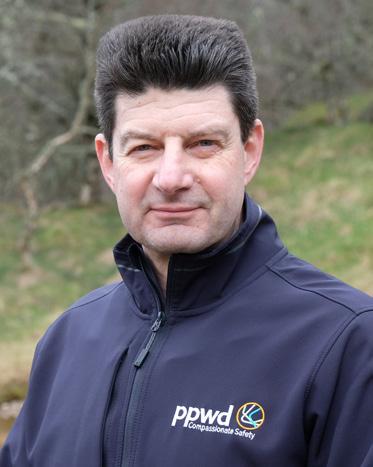
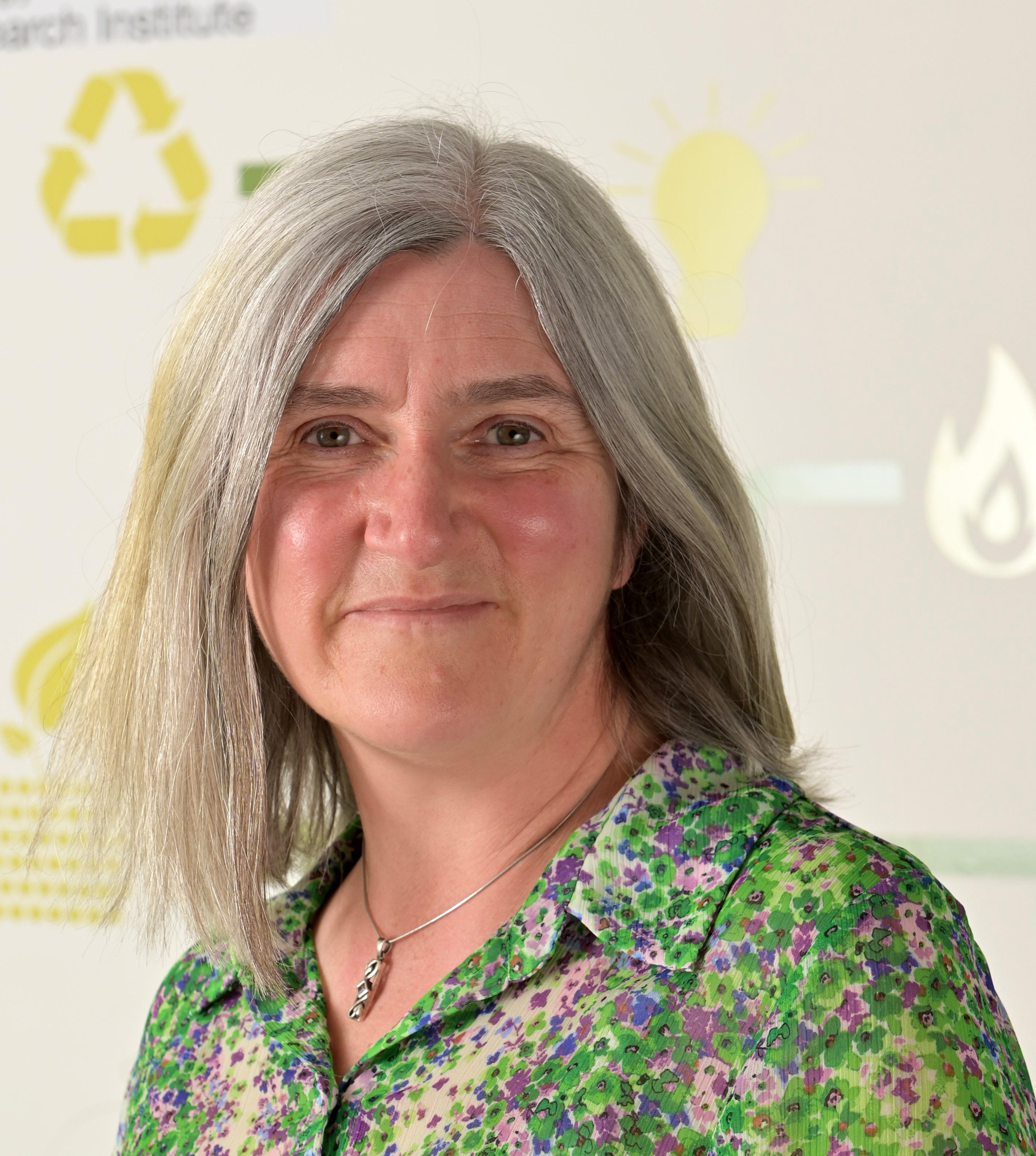
Patricia Thornley is Professor of Sustainable Energy Systems at Aston University's Energy and Bioproducts Research Institute and a Fellow of the Royal Academy of Engineering. She has led major national research initiatives including the Supergen Bioenergy Hub and the Clean Maritime Policy Unit, and has served as deputy chair of the Department for Transport's Scientific Advisory Council. She was appointed Chief Scientific Adviser to the Department for Transport in December 2025.
Sam Sherwood-Hale spoke to Patricia Thornley, the Department for Transport's newly appointed Chief Scientific Adviser, about the engineering and skills challenges facing the transport sector, the slow progress on transport carbon emissions, and what three decades of championing women in STEM have taught her about the pace of cultural change
SSH: What do you hope to bring from your career that Whitehall perhaps doesn't have enough of yet?
PT: I started in the industrial sector. I never wanted to be an academic. I only moved into research because I was frustrated with what was going on. We were trying to push innovation through and hit targets – but we felt we didn't have the right policy framework to deliver on its potential. So I ended up on a ministerial advisory board. There, I advised on the right policy to put in place to help with industrial sector research, but still there were challenges until we improved the academic-industry knowledge flow.
at the moment there is significant progress being made across many sectors, but there is more to be done in transport. It’s an area we could add more value by focusing on how science can help accelerate the move to lower carbon emissions.
SSH: Why do you think transport carbon emissions aren't falling as fast as in other sectors?
‘If we don't see leadership at the top, it becomes increasingly difficult to persuade people to take on those roles, because they don't see role models, people who look like them, in the positions they might aspire to reach in ten years' time.’
So there is a policy-research-industry triangle. You've got to have information flowing across all three in order to get innovation moving and to get change happening. I ended up moving into this role because I felt I'd done what I could on the academic side. I've led £36 million of national research projects in sustainable engineering. And at a certain point you think: in order to square off the triangle, you need to apply things in a different way.
I've always done some policy work, but I’m here to take that industrial understanding and the academic interdisciplinary perspective and bringing them across into policy, and seeing if we can make a difference by pulling at this corner of the triangle rather than, as I've done for the past twenty years, pulling at other corners.
SSH: Is this a reflection of where the science and policy conversation has got to?
PT: I think it's a personal thing. Each of us has a certain amount we can contribute in life, a certain set of skills, a certain way of seeing things. It's about finding the space where we can have the biggest impact with what we possess within ourselves. From what position can I best add value? At the moment, I think it's from the CSA role.
SSH: Do you have a different set of goals for what you want to achieve this time, compared to when you worked on earlier in your career?
PT: I have wider environmental and ethical goals. I want us to continue moving towards the carbon targets we've set. I really believe in the science behind that. The reality is that
PT: It's such a complex sector, with so many different modes, so many different operators, and so much bound up in personal decision-making. You don't have the same control you have in, for example, the electricity sector, where you can put top-down incentives in place and make quick progress because you only have a small number of actors.
Transport is incredibly complicated by comparison and is much more intrinsically connected with people's personal experience and their choices, and those are really hard to influence. It's a wicked problem, and it has a lot of challenges that we’re addressing.
SSH: Has anything inspired you since taking up the role?
PT: I was keen to see one of DfT’s funded research projects and so I went down to the Live Labs project in Devon.
Live Labs is about taking infrastructure projects (in this case a new road being built) and providing extra funding to further test how those projects could be more sustainable. What they were doing there was fantastic. Things I have been working on in the lab, like biochar and bio-resins (I lead a national research centre that works on those) were actually being deployed in the roads in Devon.
They had also done a great deal of work on biodiversity. In order to build the road, they took the trees and shrubbery and transplanted them to a field belonging to a nearby farmer, in a wet area that wasn't going to produce much. Trees love wet ground, so it’s a good holding area before they reinstate them by the road. The aim is to achieve a net gain in biodiversity. They also had all the calculations on the carbon impact of the road and how much was due to different components, so decisions can be made about where to achieve the biggest carbon reductions.
What I loved about this project was the interdisciplinary approach. Earlier in my career in the industrial sector, I spent many hours working with lawyers on legal contracts. With this road project in Devon, the team have produced template agreements that allow you to incorporate sustainability elements into legal contracts for construction, something I don't believe has been successfully done before at this scale.
If you can get this embedded from the start: calculating the carbon, integrating it into the legal contract for building the road, preserving biodiversity and spreading that good practice – that can have phenomenal impact.
SSH: Are we still at the beginning of this journey, and is it ultimately an engineering challenge as much as a policy one?
PT: Let's not say the start. This builds on years of work. You need the policy framework to be right in order to empower people to develop things that can actually make a difference. You then need to deliver it, which is where the industrial and engineering expertise comes in.
The point is that it isn't enough to simply understand what the problem is.
What's needed is the ability to actually build something, to construct something, to change the existing system, and that's what engineering is about. If you only understand how something is working, which is effectively what science tries to do, that isn't enough on its own. We need people who have that knowledge, but in order to move forward we need more people who can build things.
SSH: The rail sector often talks about a declining skills base. Do you see that as a problem across transport more broadly?
PT: Yes, in short. I think there's a great deal we need to do around the reputation of the industry. We need people to believe that a career in transport is a professional, respectable career, one where they can genuinely add value.
SSH: Women in Rail data shows that fewer than 15 per cent of the rail workforce are women, and they held just one per cent of C-suite roles as recently as 2021. You chaired a diversity panel early in your career and have championed women in STEM for many years. Has the conversation changed meaningfully in that time?
PT: Yes. Has it moved substantially in the right direction? No. That 15 per cent figure is not far off the national average. I think that figure masks a bigger issue – what we see is not enough women progressing through the system. Yes, we need more women in engineering. Yes, we
‘I love walking out of Birmingham New Street Station in the morning.’
need more women in transport. But if we don't see leadership at the top, it becomes increasingly difficult to persuade people to take on those roles, because they don't see role models, people who look like them, in the positions they might aspire to reach in ten years' time.
SSH: Is there anything specific you're doing for International Women's Day around this topic?
PT: On International Women's Day I'll be at my university. It's my day at Aston. There will be lots going on, but I would rather work on empowering women and getting more female voices into transport all year round than just on International Women's Day. What matters is what you do for the other 364 days of the year.
I led the Supergen Hub for fifteen years. When we put together a team, we always monitored diversity, gender, ethnicity and any other protected characteristics people were willing to share with us, in every event we ran, funding competition, in what we awarded, on the management board.
There's a hugely powerful thing about letting people know that you care and that you are consistently monitoring and measuring. If you don't monitor and measure, you've got nothing to work on. It's all anecdotal. Over 15 years we have more than doubled the proportion of women involved in the project – I think the key things are: awareness of the issue; consistent attention to gender in all that we do and that grows trust and confidence, which translates into demographic shifts until eventually targets that once seemed impossible can be reached.
SSH: Fifteen years is actually quite a short time when you consider how longterm culture change tends to be. Was it enough time for, say, a student who first engaged with the Hub to see it through to graduation and a professional career?
PT: Absolutely, and we saw exactly that. In our impact report we'll be citing cases where people who first interacted with
‘The rail sector in the UK and elsewhere is phenomenally efficient in terms of its carbon credentials.’
our Supergen Hub as students went on to graduate, gain professional positions, and become managing directors of companies started using ideas they first developed in their PhD. Some of them are now working in government, inspired because the Hub and exposure to that policy-industry-academia triangle.
There's also an important point here: you won't see the results of what you do instantly. If you have an initiative to attract more women, or any underrepresented group, you can't expect results in one, two or three years. It has to be in that five, ten, fifteen year phase because it's about changing culture, changing how people feel about themselves. And where I think we really need to see more impact is at the senior leadership level, which will take decades, because the women who are students today will not be in positions to be CEOs of large companies for another twenty years.
SSH: You mentioned monitoring. Has that precision made a difference?
PT: Within Supergen, we measured every event and every competition. Every funding piece we rolled out, we monitored the diversity constantly. That allowed us to look back and see which things we put in place actually made a difference and which didn't. You can begin to work out who you're helping through which measures.
SSH: Rail is often seen as the greener alternative to road and aviation. How much of that reputation do you think is deserved, and how much is perception?
PT: It's absolutely deserved. I spent a lot of my academic career carrying out life cycle assessments, looking across the entire environmental life cycle at the real impact, not just carbon, but also biodiversity and other factors. It's important to look upstream, at the construction of things, at how products are transported and delivered. Rail is genuinely green for surface transport. The only mode that beats it, in terms of tonnes of carbon per tonne-kilometre of goods moved, is shipping. There's always room for improvement, of course. We need to focus on the parts of the network that aren't electrified, and on the older, less efficient engines still in service. But the rail sector in the UK and elsewhere is phenomenally efficient in terms of its carbon credentials.
I love walking out of Birmingham New Street Station in the morning. There's a display that tells you where your journey is to and from, and if you've travelled from, say, Devon to Inverness. It shows you how many kilograms of carbon you've saved by taking the train rather than the car. While there is still work to do – it’s a reminder that rail is playing a truly valuable role in delivering a more sustainable transport network in the UK.
Air horn systems, Wash wipe systems
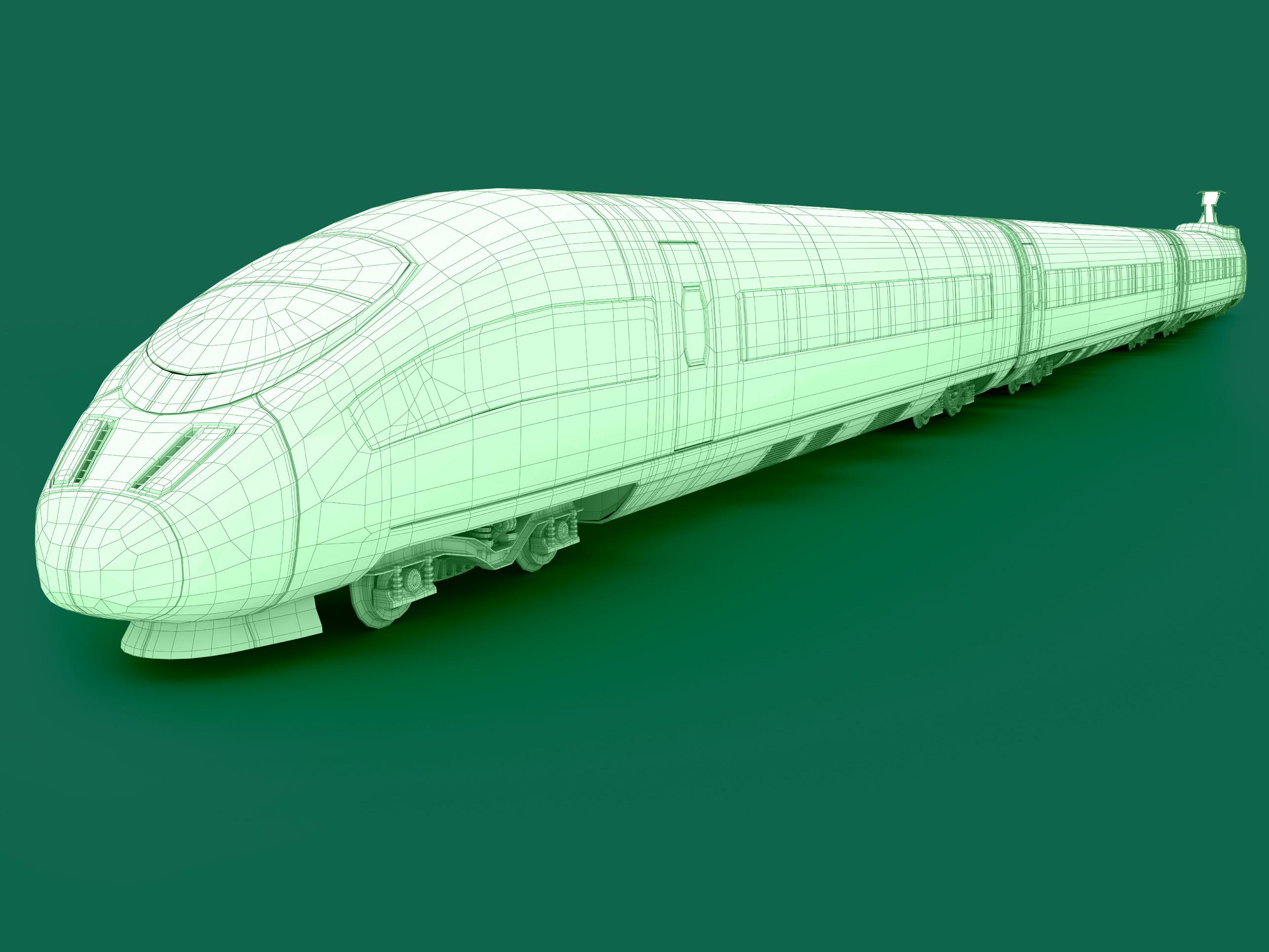
Inter-car hose assemblies Pantograph systems
Waste disposal, Full pneumatic pipework systems
Seating framework, Grab rails and luggage racks
Body to bogie pipework, Levelling valve systems
A
Presented in kit form, tested and ready for immediate installation, reducing logistic, production and inventory costs.
The STAUFF Line process is adopted by global OEMs to successfully achieve cost savings in rolling stock manufacture.
Presented in kit form, tested and ready for immediate
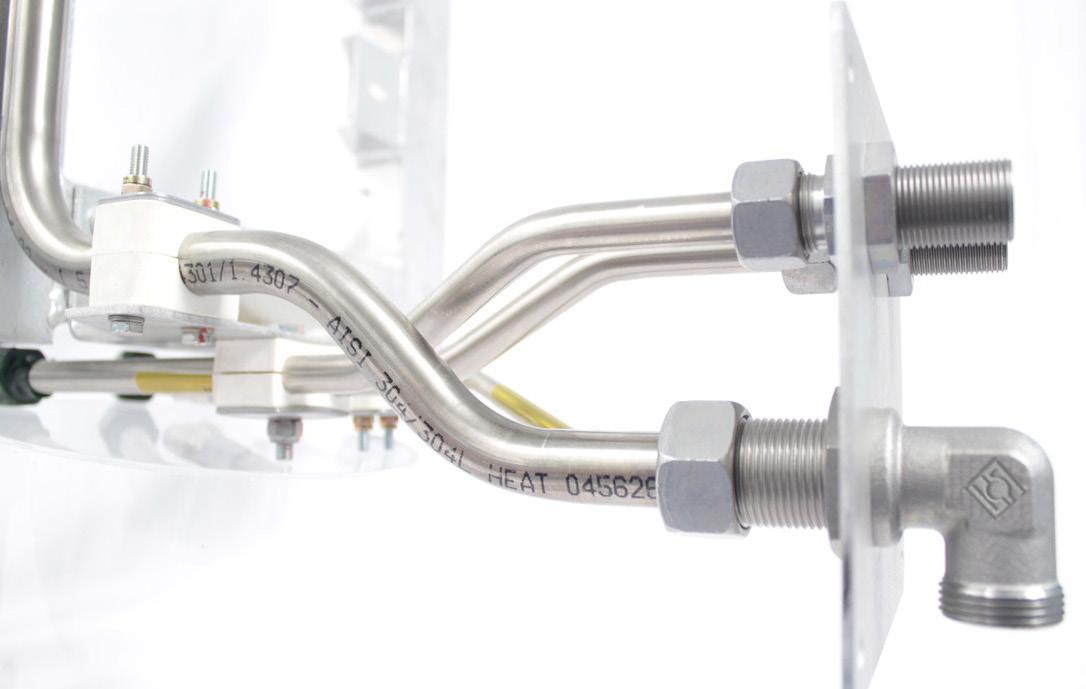
AUFF Line p adopted by global OEMs to successfully achieve cost savings in rolling stock manufacture.

Laura Hedley, Head of Consultancy and Talent Services and Occupational Psychologist at the OPC, and Squash Falconer, a record-breaking adventurer, mountaineer and expedition leader answer the question, what can rail learn from the mountains?

Across the rail industry, NonTechnical Skills (NTS) are now well established as part of the safety conversation. Over the past decade, organisations have embedded these capabilities across a wide range of operational roles, recognising that safe and effective performance relies on more than technical competence alone.
From drivers and signallers to engineering teams and depot staff, skills such as maintaining concentration, anticipating risk, communicating clearly and remaining composed under pressure play a vital role in day-to-day operations. Yet while the principles are well understood, how they play out in practice can vary.
For more than three decades, the Occupational Psychology Centre (OPC) has supported rail organisations in understanding the human capabilities that underpin safety-critical work. Building on this experience, the OPC is always looking to innovate and draw on insight from other high-risk environments to bring fresh perspective to safety-critical performance under pressure.
Drawing on both expert psychology and real-world expedition experience, they offer complimentary perspectives on human performance in high-risk environments.
The human skills behind technical performance
While rail organisations invest heavily in developing technical competence, Laura Hedley explains that the human capabilities supporting that expertise are equally important.
Non-Technical Skills are widely recognised in safety-critical industries. In rail operations, what role do these human skills play alongside technical competence?
Laura: ‘Non-Technical Skills are the personal attributes and foundational behaviours that underpin how we develop and apply our technical skills. For example, these may include mental skills such as sustained attention or being motivated to meet high work standards. When these are strong, it becomes easier to develop strong technical
‘Different high-risk environments may look very different on the surface, but the human challenges are remarkably similar.’
competence and deliver safe, effective performance.
‘As people, we are made up of our natural abilities, skills, personality traits and motivations. These influence our safety behaviour. When behaviours such as risk anticipation and thorough checking are strong, we are far more likely to carry out our technical roles better.’
In your experience working with rail organisations, what psychological challenges do people face when operating in high-risk environments?
Laura: ‘A big challenge is self-awareness. Understanding our own preferences, behaviours and ways of working.
‘If we understand our strengths and development areas, we can take steps to improve performance and reduce risk. As human beings, we are fallible and have the potential to make mistakes. But if we remain aware of our fallibility and understand how to manage it, we are in a much better position to maintain performance and stay safe.’
Pressure is another important factor shaping performance in safety-critical environments.
Why can maintaining awareness and sound judgement become harder under pressure or in routine operational settings?
Laura: ‘We all have different levels of tolerance when it comes to managing pressure. This varies by person. Once we reach our limit, our ability to think
‘They are specialist capabilities, developed through experience, reflection and practice, that enable individuals to perform consistently and safely when it matters most.’
clearly, communicate effectively and remember key details can start to fade, all of which are essential for good operational decision-making.
‘Even skills that come naturally can become more difficult when our capacity is stretched, and then there is a greater risk of slipping into tunnel vision. That’s why recognising how pressure affects us is so important. If we can spot those signs early, we can take steps to manage it, ensuring safety remains the priority.’
Drawing on extensive experience of Post-Incident Assessments (PIA) across safety-critical industries, the OPC’s work has identified several NTS that can frequently influence incidents, including risk anticipation, checking, working on autopilot, and managing pressure effectively.
While these challenges are familiar in rail operations, they are equally present in highaltitude mountaineering.
Squash Falconer is a record-breaking adventurer, and expedition leader, with achievements including summiting Mount
Everest and becoming the first British woman to climb and paraglide from Mont Blanc, as well as the world’s highest ‘bumboarder’ on the 8,000-metre peak Cho Oyu. Today she is a renowned mountaineer, speaker and performance coach.
Mountaineering often involves environments where conditions change quickly. How do Non-Technical Skills influence decision-making?
Squash: ‘In the mountains, you rarely have the luxury of stable conditions. Weather can shift quickly, routes can become more hazardous, and decisions often need to be made before all the information is clear.
‘At first glance, mountaineering and something like railway operations might seem worlds apart. But the human challenges that shape performance are strikingly similar. You’re constantly reading what’s changing around you, anticipating what might happen next and staying structured in how you respond.
‘That’s where NTS really come into play. Awareness, anticipation, systematic thinking and composure help you make sense of the situation and act early – before a small issue turns into something much more serious.’
‘Those skills come into sharp focus in real moments on the mountain, where small signals can quickly shape big decisions.
Can you share an example from your expeditions where awareness or judgement shaped the outcome?
Squash: ‘On an expedition to Cho Oyu, we planned to push for a higher camp. As we climbed, the wind strengthened and cloud rolled in. Nothing dramatic had happened yet, but the signs were there.
‘In environments where the margin for error is very small, good leaders respond to
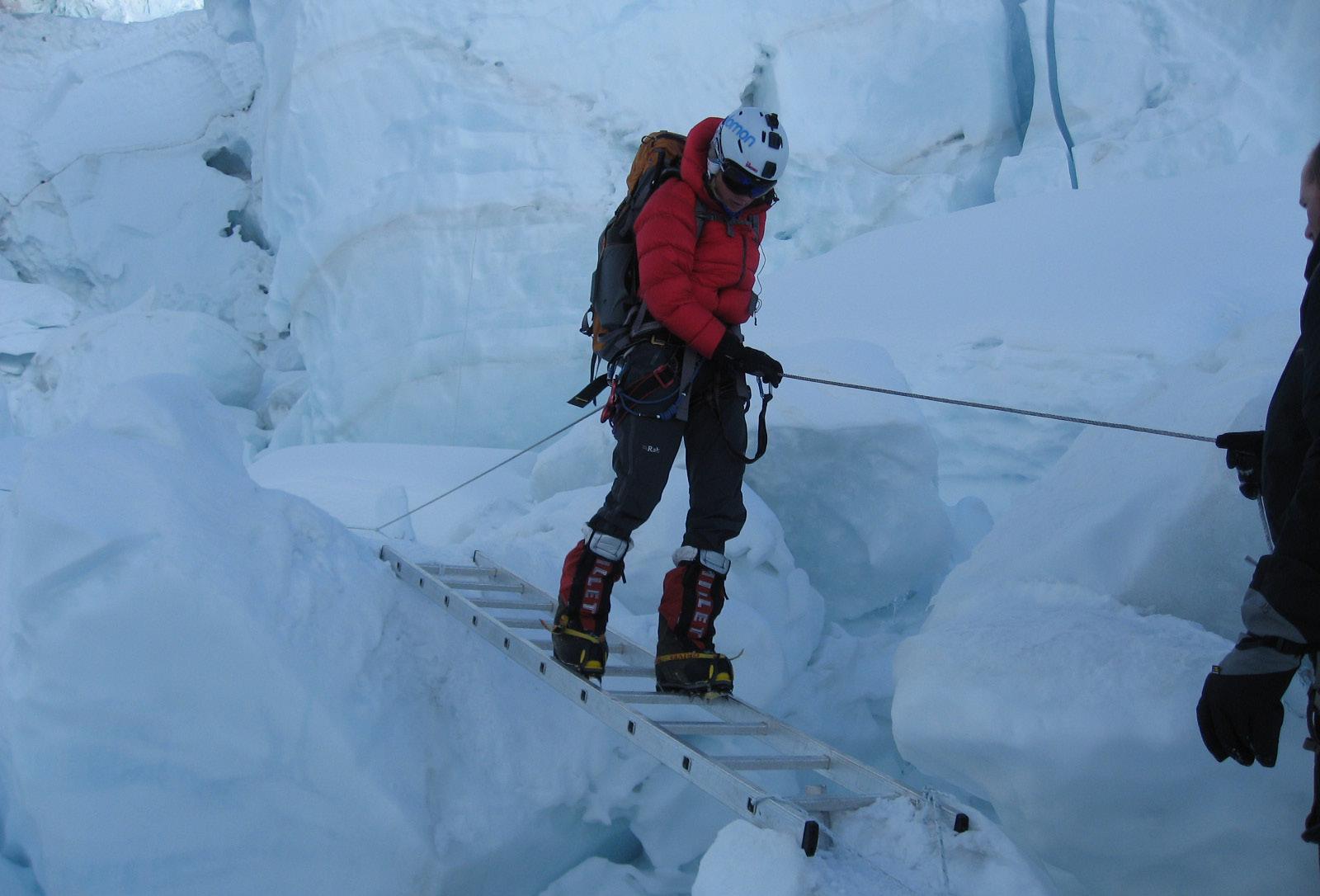
‘A powerful way to improve performance is to look outside your own industry and learn how others manage risk.’
those early signals rather than waiting for a crisis. We made the decision to change our plan, turn back earlier than expected and reassess. It wasn’t the plan we had set out with, but it was absolutely the right decision at the time.
‘On another occasion, we pushed on despite bad weather. In hindsight, we weren’t as aware of the conditions as we could have been, and our judgement was clouded by how we were feeling.
‘We ended up stuck at high camp for ten days and ran out of food. We got down safely, but it was a powerful reminder that how you feel in the moment can influence your judgement.’
Mountaineering reinforces a simple truth: strong performance in high-risk environments relies not just on technical skill, but on awareness, adaptability and calm decision-making.
When conditions change unexpectedly, what cues are you reading in the moment?
Squash: ‘I’m constantly scanning the environment, snow stability, wind, weather, team spacing and how everyone is coping physically and mentally.
‘Each of those cues helps me build a picture of what’s happening, updating it in real time, so I can make decisions quickly and balance risk with opportunity.
‘If you think about it in a rail context, it’s not that different. For example, if you’re a COSS working with a team on track, you’re constantly checking where people are, ensuring no one is straying towards the edge of the protected zone, and maintaining safety awareness for yourself and the team.
‘It’s that same process of staying aware, checking in, and not assuming everything is fine just because nothing has gone wrong yet. You’re always asking yourself, what’s changed, what might happen next, and do we need to adjust what we’re doing?’
Mountaineers often operate with incomplete information. How do you make decisions when the stakes are high?
Squash: ‘You focus on what you do know, use experience to fill in the gaps and stay ready to adapt. You can’t wait for certainty. You must stay calm, think systematically and remain alert to new information as it comes in.’

Despite the differences in environment, the human factors shaping performance are remarkably similar.
When you speak to professionals in safety-critical industries such as rail, what similarities do you notice?
Squash: ‘Whether it’s a mountain or a rail network, people are operating in environments where conditions can change quickly and where mistakes can have serious consequences.
‘In both settings, technical knowledge is essential, but it is often the human factors that shape the outcome; including overconfidence, tunnel vision, lapses in attention or maintaining composure when things don’t go to plan.’
Laura sees similar parallels from a psychological perspective.
Where do you see the strongest parallels between rail operations and mountaineering?
Laura: ‘Both worlds require a strong safety mindset. The outcomes may be very different, but how we achieve them is remarkably similar.
‘In both cases it relies on strong safety behaviours and the self-awareness needed to manage risk effectively.’
‘In the mountains the environment strips performance back to its essentials. Technical skill alone isn’t enough – awareness, judgement and staying calm under pressure are what really keep people safe.’
How does the collaboration with Squash help bring these ideas to life?
Laura: ‘The opportunity to work with Squash is incredibly exciting. When we first met, we were struck by how much overlap there was between her experiences and those of our rail clients.
‘Her approach brings these ideas to life in a very vivid way. Hearing those experiences helps people reflect on how similar principles apply within their own teams and organisations. It also brings a reality-check to how much these skills influence decisions in environments where the margin for error is minimal, and the consequences can be life-critical.’
What do you hope delegates will take away from the new Decisions at the Edge workshop?
TURNING INSIGHT INTO PRACTICE
Recognising the importance of NonTechnical Skills is only the starting point. Like any capability, they develop through practice, reflection and realworld application. Looking at familiar challenges through the lens of another high-risk environment can reveal new opportunities to learn, or patterns that might otherwise go unnoticed.
This thinking sits behind a new collaborative workshop developed by the OPC and Squash Falconer, called Decisions at the Edge.
Decisions at the Edge: An interactive one-day workshop exploring four critical NTS that underpin performance in highrisk environments.
Laura: ‘It’s about helping people better understand the psychology behind safer working behaviours; what influences them and how they can be applied more effectively in the workplace.
‘Because the learning is experienced through a different lens, it becomes more memorable and tends to stay with people. It gives them something they can reflect on and apply well beyond the session itself.’
In both rail operations and mountaineering, people are required to make decisions in complex, changing conditions, often under pressure and with limited information.
Technical expertise is essential, but it is how that expertise is applied – through NonTechnical Skills such as awareness, judgement and the ability to anticipate and manage risk – that ultimately shapes outcomes.
These are not generic skills. They are specialist capabilities, developed through experience, reflection and practice, that enable individuals to perform consistently and safely when it matters most.
Bringing together Laura’s psychology expertise with Squash’s real-world experience offers a powerful way to explore these skills, combining understanding with lived application in high-stakes environments.
By developing these specialist human capabilities alongside technical expertise, and by learning from perspectives beyond the rail environment, organisations can strengthen not only what people know, but how they think, respond and perform when conditions are at their most demanding.
‘You’re always asking yourself, what’s changed, what might happen next, and do we need to adjust what we’re doing?’
Squash: ‘I hope people leave with a deeper understanding of the skills that underpin safer performance. When these are brought to life through real experiences, it becomes much easier to connect them with day-today roles.
‘If delegates can take even one or two practical ideas back into their teams and apply them, that’s where the real value sits.’
Look out for further details on the Decisions at the Edge workshop to explore these ideas in practice.
Tel: 01923 234646
Email: admin@theopc.co.uk
Visit: www.theopc.co.uk, https://squashfalconer.com/















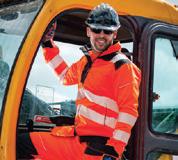
























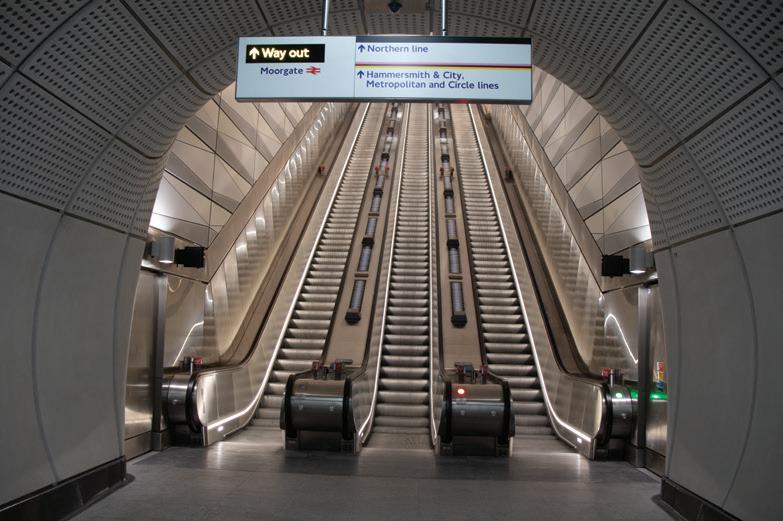
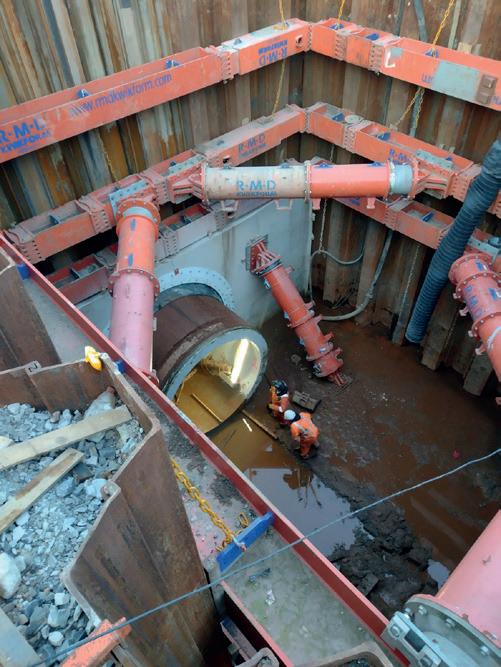
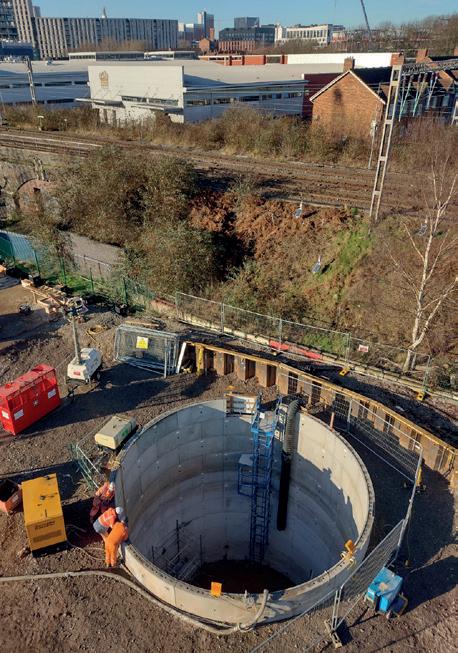

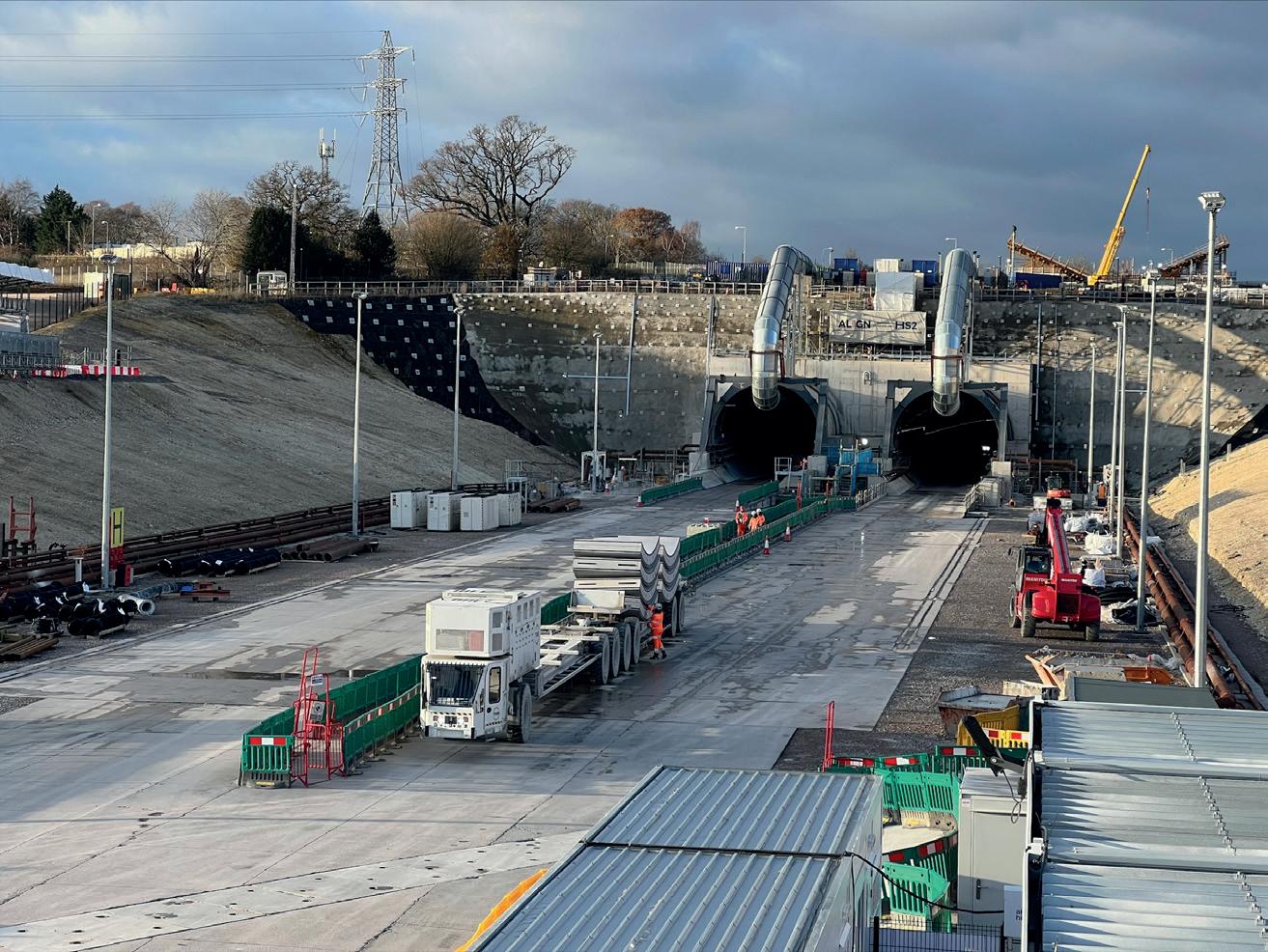
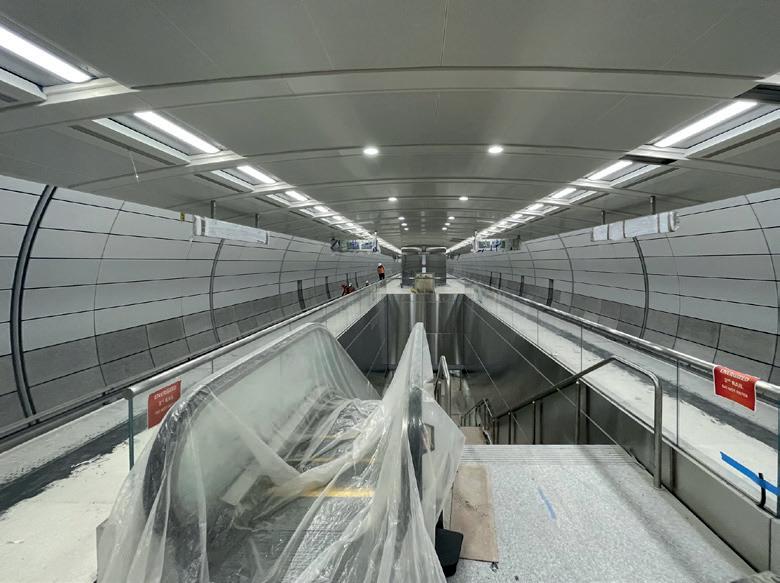
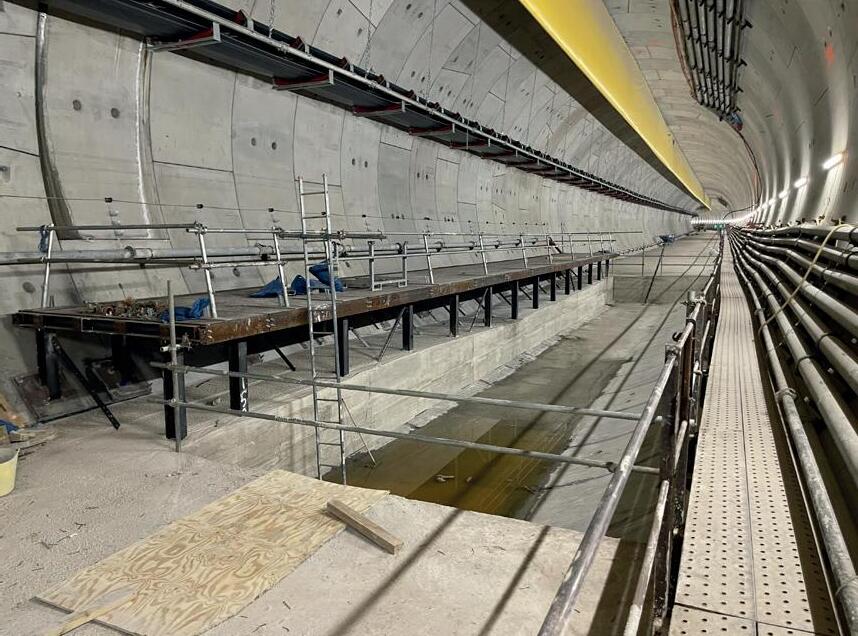
Sam Sherwood-Hale spoke to Ben about his experience in greater depth, covering life in the role, the response to his LinkedIn posts, and his thoughts on apprenticeships as a route into the industry
Ben Tyson always knew he wanted to work on the railway. Having completed his train driver apprenticeship with Greater Anglia, he describes the outcome as achieving his ‘dream career’. He has also been documenting the journey publicly on LinkedIn, offering others a clearer picture of what the role involves and the steps required to get there.
During the apprenticeship, Ben received structured monthly support from a rail learning specialist and developed a range of skills he says have proved essential in the role. Alongside technical competencies, he highlights situational awareness, workload management and communication as particularly valuable, noting that communication was not something he considered a strength before starting the programme.
His proudest moment was earning his train driver qualification, the culmination of a long-held ambition to turn a passion for the railway into a career.
You mention that pointing out signals is part of maintaining situational awareness. Can you walk us through what that actually looks and feels like in the cab, and describe a moment when you noticed it genuinely changing how you were operating?
From the seat of the cab, there can be many signals spaced very close together. In these locations, I prioritise my awareness. For example, particularly when driving at night between Ilford depot and Stratford, all four lines are bi-directional at points along the journey. These signals look close together at times, so you have to make sure you are reading the correct signals, as there are many risks along the route. For example, varying speed changes, overhead neutral sections close to signals and many route direction changes; including one along a route I do not cover.
‘The apprenticeship is key in learning how to do things, but it is also key in learning how to think for yourself.’
Along the route, I utilise pointing at signals (being situationally aware of what I am seeing), and verbalising what I am seeing to ensure I am operating at a high level of safety. This also enhances efficiency within what can be a tightly-managed timetable. I also find that when signals become closer together on the slow lines across this route, I will be looking closely at what is directly in front of me and around me. Knowing what should normally be going on around you where I am driving can be helpful in seeing what the signals are doing. This, in turn, allows me to spot abnormalities and heightens my awareness of what could be about to happen.
Decision-making under pressure is one of those skills that sounds straightforward on paper but is very different in practice. Can you think of a specific situation during your training or early driving where you had to make a quick judgement call, and talk us through how your thinking played out in those moments?
Decision-making does sound straight forward, however, a lot of the time, you really have to think about what you are doing to ensure the safety of everyone on board. Early in my career, I experienced a traumatic incident on the railway. In that moment, your brain can go a million miles an hour in shock, but I had to be quick with my immediate decision making, which looked like this:
• Stopping my train and trains around me via a Railway Emergency Call.
• Communicate to the signaller and surrounding drivers the nature of the emergency, and the assistance required.
• Providing an accurate location description to allow for the quickest response time.
• Communicate with my control regarding the information of what had happened.
• Communicate with the British Transport Police and other emergency services with any information they required.
There was a lot of thinking in such a nerve-wracking situation, but ultimately, remaining calm under pressure allowed everything to be carried out safely and efficiently.
A lot of people associate apprenticeships with learning how to do things, but you seem to be describing something more like learning how to think. Looking back, was there a particular exercise, conversation or experience that you feel actually built those cognitive habits in you, rather than just teaching you about them?
The apprenticeship is key in learning how to do things, but it is also key in learning how to think for yourself in a lot of scenarios before being able to obtain any assistance from elsewhere. For example, asking us questions such as: What can you do in this scenario? What can you do in that scenario?
The railway rule book is very big; there is a lot to remember whilst being a qualified train driver. When something happens that requires you to utilise your knowledge of the rules of the railway, it can be a big thinking exercise to ensure you do what you are supposed to do both correctly and safely.
During the training driving hours, before I was released onto the railway by myself, we would go back to our academy to do multiple scenarios on our state-of-the-art simulators. I did not know what could be thrown at
me, and it is designed to test my knowledge of everything I had learnt throughout my journey to being a qualified train driver. Whilst carrying out the scenarios, I had to think of what to do and how to implement it when required. This, of course, required quick and effective decision-making when something arose, for example in deciding what to do, who I needed to talk to and in what order.
Whilst the apprenticeship is very key in being able to learn everything that is needed to be learnt, it is also very useful in being able to retain the knowledge and being able to utilise the knowledge in every scenario required.
You mentioned that communication was not previously one of your strengths, which is quite an honest thing to reflect on. How did the structure of the apprenticeship actually develop that in you, and can you give us a sense of what communicating well looks like on a day-today basis as a driver?
The structure allowed me to utilise practice scenarios as opportunities to develop my communication skills. My communication skills used to typically lack in talking to people I didn’t know; I never used to be the kind of person who would go out of their way to talk to someone I didn’t know.
In this job, I have to spend a lot of time talking to new people regularly. We would run training scenarios which would typically require you to talk to different people based on what was required. My instructor at the academy assisted in being someone down the other end of our GSM-R (radio) on the simulator, and utilised other instructors, to help me get used to talking to different people.
On a day-to-day basis, I could talk with many different people. Depending on what is
required, I could talk to a signaller regarding any immediate issues, for example, signalling failures, level crossing failures, objects blocking the line or overheads, to name a few. I could also be liaising with control regarding any immediate changes to the running of my train, whilst also talking to platform staff for potential additional stops, or not to call at a certain station during disruption.
Thirdly, our Duty Traincrew Managers who organise where we should be and liaise any adjustments to our day before it starts, or during breaks if we were to have any issues. Finally, our Fleet Support team, who are there to help in the event of any issues on a train I could be driving. Should a fault occur, I would talk with them to see if the fault can be rectified there and then, or if the train needs to be taken out of service or even rescued by another train.
Situational awareness, workload management and self-management are skills that are notoriously difficult to assess formally. Did you ever have moments during the programme where you felt those qualities were being evaluated, and did that feel different to the more straightforward technical assessments?
Whilst they are difficult to formally assess, my driver manager who undertook my final driving exams was able to evaluate these via simple checks and questions throughout our six days together. This was one moment I really felt these were being assessed. For example, during one journey, they asked me multiple questions about risks that could happen based on exactly where we were, under that specific signalling sequence. At one moment, he asked me as we approached a double yellow: ‘Where is your red, and what is the risk here?’. It did not feel
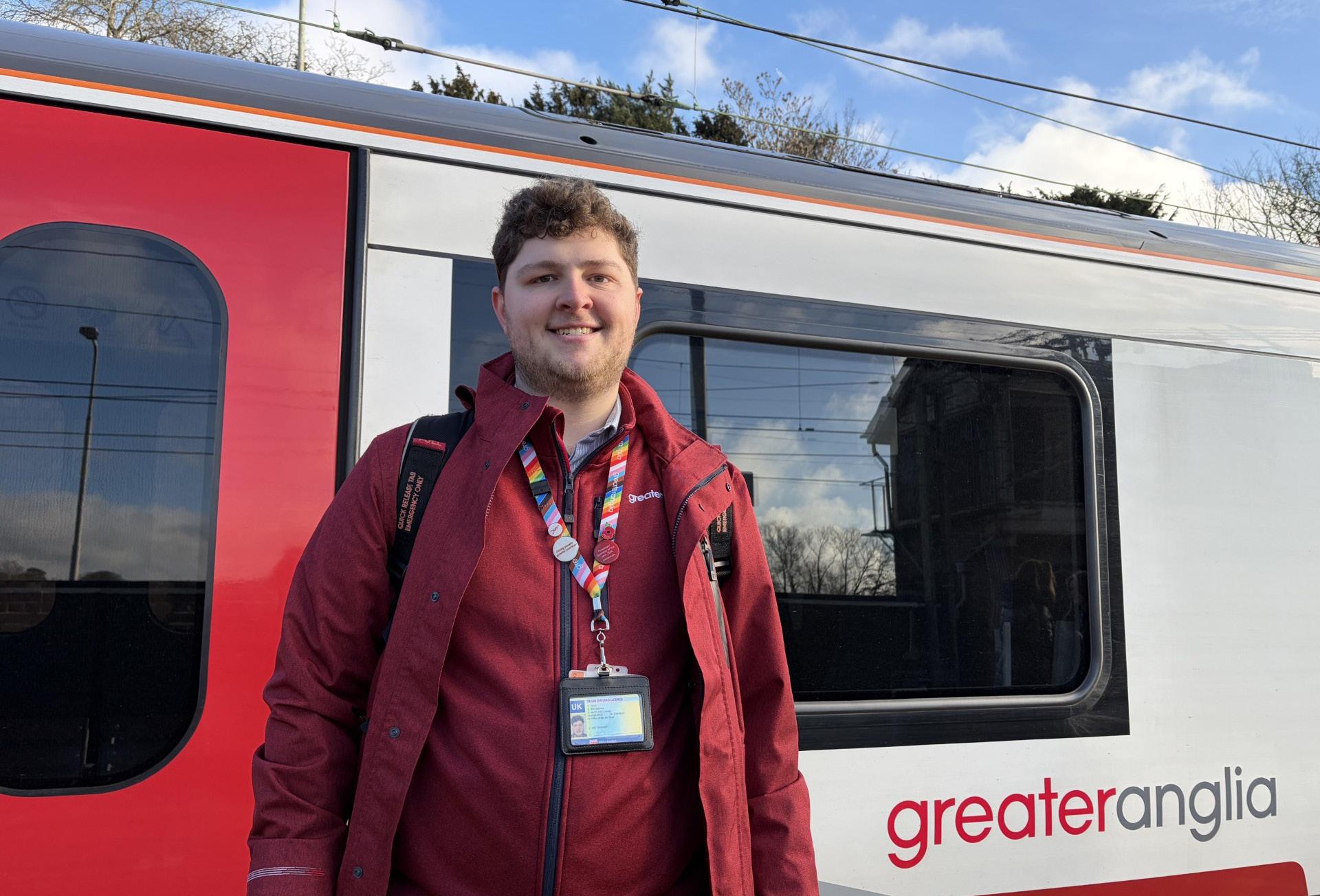
‘I really hope my posts provide people with a realistic view on what it is like to be a train driver while also showing off a positive outlook on it as much as possible.’
any different to a technical assessment personally, as a lot of things felt like they were being done simultaneously. Each day, they would ask me how I had prepared for the day, if I had eaten/drunk enough and ensured all electronic devices were switched off before getting into a train. They also asked me questions regarding my workload rules. We have rules under a term called ‘Hidden’, that specifies how much work we are allowed to do, what our maximum work periods are and how long between shifts we must have.
You have been sharing your journey publicly on LinkedIn, what do you hope someone reading your posts understands about the role that they would never get from an official job description or a recruitment brochure?
I hope that someone seeing my posts gets to see what a real day to day looks like as a train driver. Whilst a job description and recruitment brochure will tell you about the job, the requirements etc. It does not provide a realistic viewpoint on what the job really entails before applying. Days can be long, but they can be short as well. Days could start very early, finish very late, or be overnight. Job patterns vary each week, and rosters change every six-months, so it is hard to be able to plan long in advance. For example, you could miss birthdays, celebration events, friends and family events, even working bank holidays. Whilst the job day-to-day can be very enjoyable, and the benefits within the job are very good, there are ultimate sacrifices to be made that come with it. I really hope my posts provide people with a realistic view on what it is like to be a train driver while also showing off a positive outlook on it as much as possible.
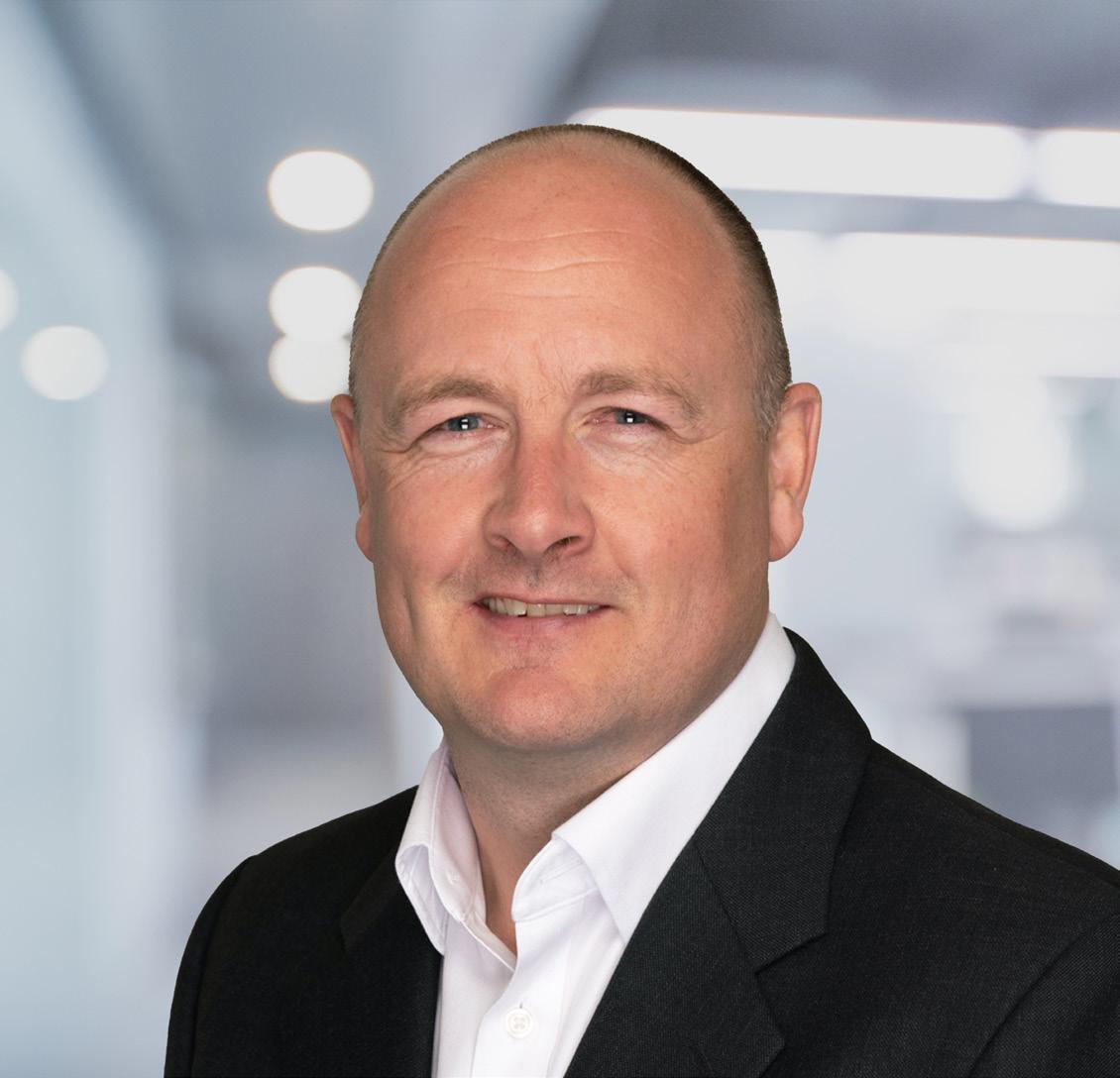
Mike Ferens is a Chartered Surveyor with over 20 years’ experience in the utilities and infrastructure sector. He is a Member of the Royal Institution of Chartered Surveyors and a RICS Registered Valuer, and is known for his calm, considered leadership style and ability to build trusted relationships with clients, landowners and project teams.
Oliver Heselton is a Chartered Surveyor and agricultural valuer with over 30 years’ experience in the utilities and infrastructure sector. He has contributed to a number of Government working groups on land rights reform and is a former Chair of the Estates and Wayleaves Forum with the Energy Networks.
Sam Sherwood-Hale spoke to Oliver Heselton and Mike Ferens, Directors at Dalcour Maclaren, about how the Planning and Infrastructure Act is reshaping consenting timelines, land assembly and consultation for
SSH: The Planning and Infrastructure Act is streamlining consenting. How might these reforms speed up rail project delivery, and where will clients see the biggest time savings?
OH: One of the biggest challenges has always been the promotion of projects and the consultation that has to take place with key stakeholders: local councils, parish
councils, county councils, local communities, and ultimately the landowners affected by the project being pursued. Up until now, that has been a very strict regime of consultation under the Planning Act, with key stages that had to be completed before a project could move to the next. What the Planning and Infrastructure Act has done is remove those mandatory stages, allowing a more flexible and proportionate approach
to consultation. A consultation period that previously ran for twelve to eighteen months could now be considerably shorter. If we are interacting on behalf of clients with communities that are accepting of proposals, we may be able to move through that process quicker than before. If people are engaging and supportive, there is no longer a requirement to pass through many rigid stages. The act enables us to respond
to the situation we find and proceed in a proportionate way.
I should be clear that the bar has not been lowered by removing those stages. The test to obtain a Development Consent Order remains extremely high. There is still a great deal of work underway across the industry to understand what the act means in practice. We currently have a working group within Dalcour Maclaren examining exactly that, so we can give appropriate advice to our clients. The act has taken several years to reach this point, and primary legislation of this kind does not change other primary legislation overnight. It is a lengthy process to ensure it is right and has full ministerial support.
MF: To give a concrete example, I have been involved in the Gatwick Northern Runway project. Leaving aside the disruption caused by COVID, we began work on that project in 2018 and the examination concluded in 2024, with the examination itself running from March through to August of that year. The remaining time was preparation, and the scheme involved many thousands of affected interests. I am confident that the timeline would have been reduced with the benefit of these changes, though by precisely what margin I could not say.
SSH: Land assembly has always been the longest tail on rail projects. What is fundamentally changing about how land rights and compulsory purchase work under these reforms?
OH: There are a few key changes within the new act. The first concerns the type of land rights that can be acquired. Under the existing compulsory purchase framework, you could only ever acquire permanent rights or undertake permanent acquisition. There was no mechanism for anything of a temporary nature. Long linear projects such as rail projects frequently require temporary possession of land, whether for a construction compound, an access route, or similar purposes. That was not available under existing legislation, which made compulsory purchase orders very cumbersome to promote.
The new act turns on the temporary acquisition powers that have sat within the Neighbourhood Planning Act since 2017 but were never activated. A developer can now handle things in a straightforward way: permanent acquisition where that is required, and temporary acquisition for the construction phase. That means powers can be applied more appropriately to the circumstances.
The second significant change relates to the timeframe for vesting rights. When compulsory acquisition powers are awarded under a Development Consent Order or a compulsory purchase order, activating those powers previously required a three-month period to vest the rights across landowners' land. The argument has always been that
‘The bar has not been lowered by removing those stages. The test to obtain a Development Consent Order remains extremely high.’
by the time you reach that stage, you have already met the high test through many years of preparation and examination, so the three-month vesting period is unnecessarily long. That period can now be reduced to six weeks in some circumstances. Together, these changes mean that land assembly can move forward more quickly.
MF: I would add that the act does not resolve everything on the long tail. Negotiations of compensation under the Compensation Code, once possession of land has been taken, can still be an emotive and drawn-out process until correct values are agreed between the acquiring authority and those affected. That is why it often extends well beyond the construction period itself.
SSH: What does proportionate consultation actually mean in practice?
OH: Proportionate consultation means having access to a flexible approach, so that what you do in consultation is tailored to the requirements of the stakeholder and the promoter, while still meeting that high bar of test. In practice, you might spend considerably more time with an objection group than with stakeholders who are already on board and supporting the project.
SSH: Is that now much easier to do than it was previously?
OH: I would not use the word easier. It is still a high test. What it does is enable us to go about it in the way that we and our clients consider appropriate for the people we are dealing with. The previous regime was not inappropriate, but it was very strict and rigid, with very little flexibility built in. It was not a one-size-fits-all process, yet it had to be applied as though it were.
SSH: Looking at your current portfolio, HS2, Gatwick, major energy schemes, which types of rail projects will benefit most from these reforms?
MF: Any of the large rail schemes currently in the system stand to benefit. It is not yet clear how Northern Powerhouse Rail will be delivered, but East West Rail will be subject to the Nationally Significant Infrastructure Project process and a Development Consent Order, and will benefit from the changes Oliver has outlined, including earlier and quicker access to powers. East West Rail has recently confirmed it intends to follow through on its consultation as previously planned, but it will still benefit from the provisions in the act.
SSH: If you are sitting across from a rail client today who is considering a major infrastructure investment, what is the single most important thing they need to understand about how these reforms will affect their project timeline and risk?
OH: It is linked to the reforms, but also to the broader picture. What I would want any client to understand very quickly is that land assembly has always been both a focus and a lengthy part of developing a project, and it is also vital to any scheme. We have a saying within Dalcour Maclaren: if you do not have the land, you do not have the project. It is an integral part of the whole. The act, with its flexible approach, greater access to temporary powers, and the ability to use general vesting declarations more quickly, means that land assembly can hopefully move forward faster than before. That is what I would focus on first.
MF: I would agree. Shorter consenting timelines, more flexibility in resolving land and delivery issues, and a more proportionate approach to consultation. For developers, this is not just legislation on paper. It is a real opportunity to reduce uncertainty and keep timescales to a sensible level.
The Planning and Infrastructure Act became law on 18 December 2025, following Royal Assent granted by the government. The Act introduces sweeping reforms to the consenting process for major infrastructure projects, with the government estimating it will speed up major infrastructure decisions by an average of twelve months. Key measures include the removal of mandatory pre-application consultation stages in favour of a more flexible, proportionate approach, the activation of temporary land acquisition powers that have sat dormant since the Neighbourhood Planning Act 2017, and a reduction in the vesting period for compulsory purchase rights from three months to as little as six weeks in certain circumstances. Further provisions limit legal challenges against major infrastructure decisions to a single attempt where cases are deemed wholly without merit, and introduce a new Nature Restoration Fund to allow developers to progress multiple projects without individual site-by-site environmental assessments.


Confined footprints. Challenging ground masses. Theft risks. Operational downtime costs.
Electrical earthing and corrosion protection in rail environments is challenging. But evidence proves it can be easier, safer, faster, and longer lasting.
Why hold the liabilities and limitations of yesterday's methods?
Every case study proves that using these products and methods:
- Provide superior resistance compared to standard methods
- Guarantees significantly longer service life than standard methods
- Is faster, safer and easier to install than standard methods
These are the PADS catalogue numbers:
- ConduCrete 0091/003133
- ConduDisc Flex 1 Way M10 0091/003124
- ConduDisc Flex 4 Way M10 0091/003126
- ConduDisc Elite 0091/003127
- ConduForm 0091/003134 - ConduFlow 0091/003135 - ConduWire 70mm2 0091/003131
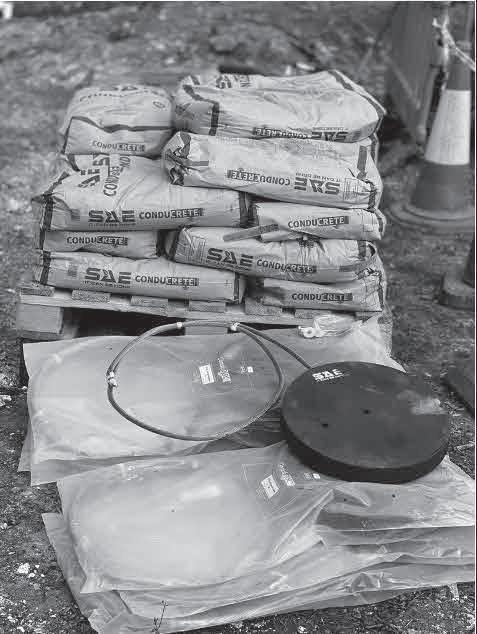

What is your Unique Selling Point?
Our USP is to design or collaborate on the design and specification of the fastest, easiest, safest and longest lasting earthing and corrosion protection systems at the lowest installed cost, with the confidence of using PADS approved products. It’s a long sentence with a lot of meaning to it. The PADS approval process was demanding, as it should be. We make big claims and so proving each of them was essential, but once the evidence was reviewed, scrutinised and reverified they were accepted as demonstrably true.
To my knowledge the range of products now available to rail projects is the only PADS approved earthing products, in fact the ConduCrete is possibly the only PADS approved concrete product. As such all designers and contractors installing earth rods or lattice mats, or other nonPADs approved conductive concretes, our suggestion to you is check for a PADS catalogue number because right now I’m confident that this range is the only one for earthing on the system, anything else is at risk.
What types of companies do you collaborate on projects with?
Whether it is an earthing or corrosion protection case we may be appointed by any company operating in that supply pyramid. It is most common for us to work with either the end client or infrastructure owner as they usually have the whole-service-life perspective and want the longest lasting, safest earthing option. That being said we have worked with every tier throughout including civils contractors with installation responsibilities; whether a company is a multinational or a one-man-band, if they have a responsibility to resolve a problem then we are happy to help.
Increasingly design consultants who may historically have considered themselves rivals are working directly with us to utilise the products and methods that we have developed. In our opinion this sort of collaboration is key to our future role within the electrical safety sector, particularly the rail sector, where established consultancies cannot ignore these developments without a meaningful threat of being left behind. We may be disruptors in the sense of harnessing innovative ways and means but we are not seeking to disrupt the position of incumbent consultants; working together gives them the tools to best serve the rail sector in the safest and lowest liability.
When a client comes to you with a particular problem, what’s your process for coming up with a solution, and how closely do you work with clients throughout the projects?
Whenever we work with clients with a problem site or recurrent issue the most
important thing to establish is trust, and for that trust to foster a candid sharing of their experience. Once that honesty is in place then it removes a large amount of presumption, and we can work together to ensure the project brief captures the scope and outcomes. Depending on the problem it is likely to require some form of testing or surveying to enable our engineers to witness the problem themselves. We can then commence the design and specification of a solution. Any solution we develop must optimise expenditure, longevity, and performance.
Whilst it may vary depending on the project on which we are working, (the larger the scale of the scope, the more involved the approach) it is not uncommon for us to work very closely with project teams with modular systems developed in parallel to type A/B testing. An example of this sort of approach would be the works we have done with the largest telecoms companies in Europe, or highway lighting, or even substation earthing. The most successful projects upon which my team has ever worked have been those where all parties are driving towards a common goal and through that collaboration I am proud to say we have always achieved those target outcomes.
What’s next for Earthing Services?
It is really nice to be able to say that we have so many exciting new technologies already in the offing. Whilst we cannot discuss products or applications that are still in the development stage, we can look at the terrains we can already support, from harsh desert type to salt or fresh water marine environments. We can also do some amazing things with surface mounting earthing to areas of exposed rock to prevent the expensive requirements of drilling or excavating these terrains.
Corrosion is one of those uncomfortable secrets of many industries and rail is no exception, so even though ‘earthing’ is in our name, corrosion mitigation is as much our outlook. On an annual basis we run an earthing challenge group where engineers from telecoms to power to rail come together and get advice on how these can be overcome. Sometimes this means the start of developing a new product too which is great to see. In short, solving problems is what we enjoy doing and we intend to do this for many years to come. We are also going to be sponsoring the first Earthing Innovation Conference in the UK so keep your eye on our social channels for more information on how you can be a part of that.
What would you say is the most exciting technology in the industry?
I’m guilty of being absolutely partial here, so I’ve admitted that from the off. Honestly though, the Condu-Range of products, all PADS approved, has to be up there. When
you have products that can protect against corrosion, provide ample earthing and lightning protection, as well as a structural foundation, that are faster, safer and easier to install, and longer lasting than incumbent methods, without any theft-risk or new methods of working, or the need for specialist subcontractors, with the lowest installed cost, and still function in the event of breaks to other conductors, well, we are in moon-on-a-stick territory. Yet it’s true. Of these products my favourite is ConduForm because it stops thieves from stealing valuable conductors in one application, and in another is achieving safe electrical earthing in areas of bare rock. Versatility at its best.
What do you think is the biggest challenge currently facing the rail industry?
The rail sector is significantly underresourced and despite this, from my understanding, the wastage remains frightening. The network desperately needs radical and committed investment, and we need to put engineering best-practice at the heart of it. As we had to demonstrate in our recent work with the PADS team, doing things better saves money and improves performance, but there has to be a will to change from processes that are underserving the network.
My team has delivered some of the best performing stray current management systems in the world, we’ve designed some of the most effective earthing protection for infrastructure on the network, and we have solutions to improve upon every process flowchart across the network; and yet inertia to improve is formidable. Look, I get it, electrical earthing, stray current management, corrosion mitigation, even lightning protection are considered socalled dark arts, but we have proven that they aren’t.
We have self-driving cars, solar probes travelling half a billion miles an hour, but when it comes to earthing the sector remains unable to achieve escape velocity from antiquated technologies that pre-dated the rail network. It can be done better. We do it better.
What are your hopes for the new regulatory bodies, such as Great British Railways?
Quite honestly that they put the passenger experience first and foremost, because when you look to avoid operational downtime and put safety and efficiency front and centre then that means investment. The next issue is to make every penny count for the whole service life and at least when it comes to earthing, lightning protection, corrosion protection or stray current management that is totally possible. We can be innovative, we can have better solutions, and we can save money doing it. Time to embrace the future.









CANTILEVER ASSEMBLIES
CANTILEVER COMPONENTS CLAMPS DROPPERS INSULATORS



SURGE ARRESTORS TENSIONING TUBES TURNBUCKLES BACKSTAY
Jeremy Oliver is Treadmaster Business Manager. Jeremy has spent most of his career in the construction industry, mainly in Ceramic Tile and Flooring product sector. He joined Tiflex Ltd just over seven years ago to head up the Treadmaster Flooring Brand with the main market sectors being Rail (Rolling Stock) and Marine vessels. Sectors for which the Treadmaster Products lead the way in performance and quality.
Danny Millard is Trackelast Business Manager. Danny Millard joined Tiflex in 2022 having spent most of his career working in technical sales into the Automotive components, Oil & Gas and Defence sectors. In 2024 he became the Business Manager for the Trackelast Division of Tiflex. Trackelast has supplied the infrastructure sector of the rail industry with resilient rubber track support materials since 1945. They are also the UK distributor for Delkor Rail products and Wieland’s AustroRoll brand of switch roller devices for railway points.
What is your role within Tiflex?
Jeremy Oliver: Tiflex is made up of four separate brand divisions: Trackelast, Treadmaster, TICO & Specialist Acoustics. Each division operates in different sectors. Trackelast is Rail Infrastructure, Treadmaster is Rail Interiors, TICO is Construction and Oil & Gas & Specialist Acoustics is Defence. We are both business Managers, part of a four-man team each managing their own business channel. With small but efficient teams in each sector we seek opportunities within our specific specialisms and look to provide world class solutions at or above the industry standards.
How long has your company been in business?
Danny Millard: Tiflex Limited was formed in 1990 from an amalgamation of two wellestablished companies, TICO (founded in 1950) and The Flexible Cork Company (founded in 1945 and now called Trackelast). Tiflex is part of the James Walker Group of Companies and was originally based in Woking, Surrey. In 2000, Tiflex moved entirely to the former Flexible Cork Company manufacturing site based at Liskeard in Cornwall and now employs over 160 skilled people on the 107,639 sq ft, (10,000 m2) manufacturing site.
Tell us about Tiflex.
JO: Tiflex Ltd is a small and very specialist UK based manufacturer of cork and rubber bonded products. We have market leading products covering most market sectors and we supply these all over the world. Most of our products have been developed out of specific needs and requirements from clients and customers using our state-of-the-art laboratory and long serving, knowledgeable technical experts.
Which sectors do you work in?
DM: Tiflex works across a broad range of sectors globally but is most prominent in the rail industry – covering both rail track solutions with the Trackelast brand and rolling stock interiors with our Treadmaster brand. We specialise in rubber materials required for anti vibration, fire safety, and high wear resistant performance requirements. Through our TICO brand, we also supply engineered isolation and vibration control products for railway stations and associated infrastructure.
Beyond rail, we supply into the construction sector, such as major station isolation projects including Embankment House and Blackfriars Station. Our expertise includes the decoupling of station structures from surrounding buildings, providing ground borne vibration and noise attenuation to protect sensitive commercial, residential, and mixed use developments built in close proximity to rail lines. These solutions form a critical part of modern station and over station development design, ensuring compliance with vibration criteria, improving occupant comfort, and enabling construction above or adjacent to high intensity transport corridors. We even make cricket balls!
What types of products and services do you offer?
JO: For Rail Interiors and under the brand name of Treadmaster Flooring we have what we believe is the most fire safe and most wear resistant rubber flooring ever made! In certain circumstances it is even possible to repair, even after many years of wear due to its full body construction. Our premium formula, TM7 was developed specifically for the London Underground following the 1987 King’s Cross disaster and the ensuing campaign to improve the safety features of related materials.
DM: Trackelast core products cover all types of rail pads and mats used under the track. We are RISQS certified with many of our materials being approved by Network Rail and London Underground. One example of this is our fire retardant FC650 material, which is fully compliant with LU Standard 1-085 = Fire Safety Performance of Materials. This material is used in a wide variety of applications in Underground
systems around the world including London and for pads used in DC electrification systems.
What other products do you supply into the rail industry?
DM: As well as our own manufactured products, Trackelast are also appointed distributors for Delkor Rail products including their range of Resilient Baseplates & Platform Gap Fillers. We also distribute Wieland’s AustroRoll brand of switch roller devices for railway points.
What are some major projects you’re currently working on?
JO: Currently we’re proud to be supplying Siemens in Vienna with Treadmaster Flooring for the new and highly anticipated Piccadilly Line Trains. These look fantastic and have many practical upgrades over the old trains yet still retain the much-loved design and feel of London Underground trains we all love.
DM: Trackelast are currently involved in designing solutions for train stations where the gap between the platform and entrance of a passenger train is problematic. Delkor Rail through Trackelast supply a product called a Platform Gap Filler. This is an engineered, sturdy, durable and fireresistant rubber profile that is mounted along the edge of a train platform to reduce the gap between train and platform allowing occasional contact from the train in fault situations. This ensures that when a train has stopped at a platform, passengers are able to enter and exit with safety with reduced platform train interface gap. This also improves wheelchair access and has shown to increase efficiency of entry and exit of all passengers thus improving the dwell time of trains at the platform.
What are some standout projects you’ve been involved in over the years?
DM: Delkor baseplates are now widely used on the London Underground. London Underground have had many challenges with ground borne noise and vibration (N&V) and were looking for solutions that would help reduce these issues. With Trackelast working closely with Delkor Rail and following several years of development and testing, we were able to get several types of Delkor Resilient Baseplates approved and these are now widely in-service. We have also worked with Network Rail on transition zones from ballasted to non-ballasted track forms where regular tamping was required. Using Delkor resilient baseplates and designing in stiffness transitions to meet local arrangements, Network Rail have now seen significant reductions in tamping required in these areas. The use of the lateral resilience is being used to provide force reduction on fixed trackforms to reduce the loading on
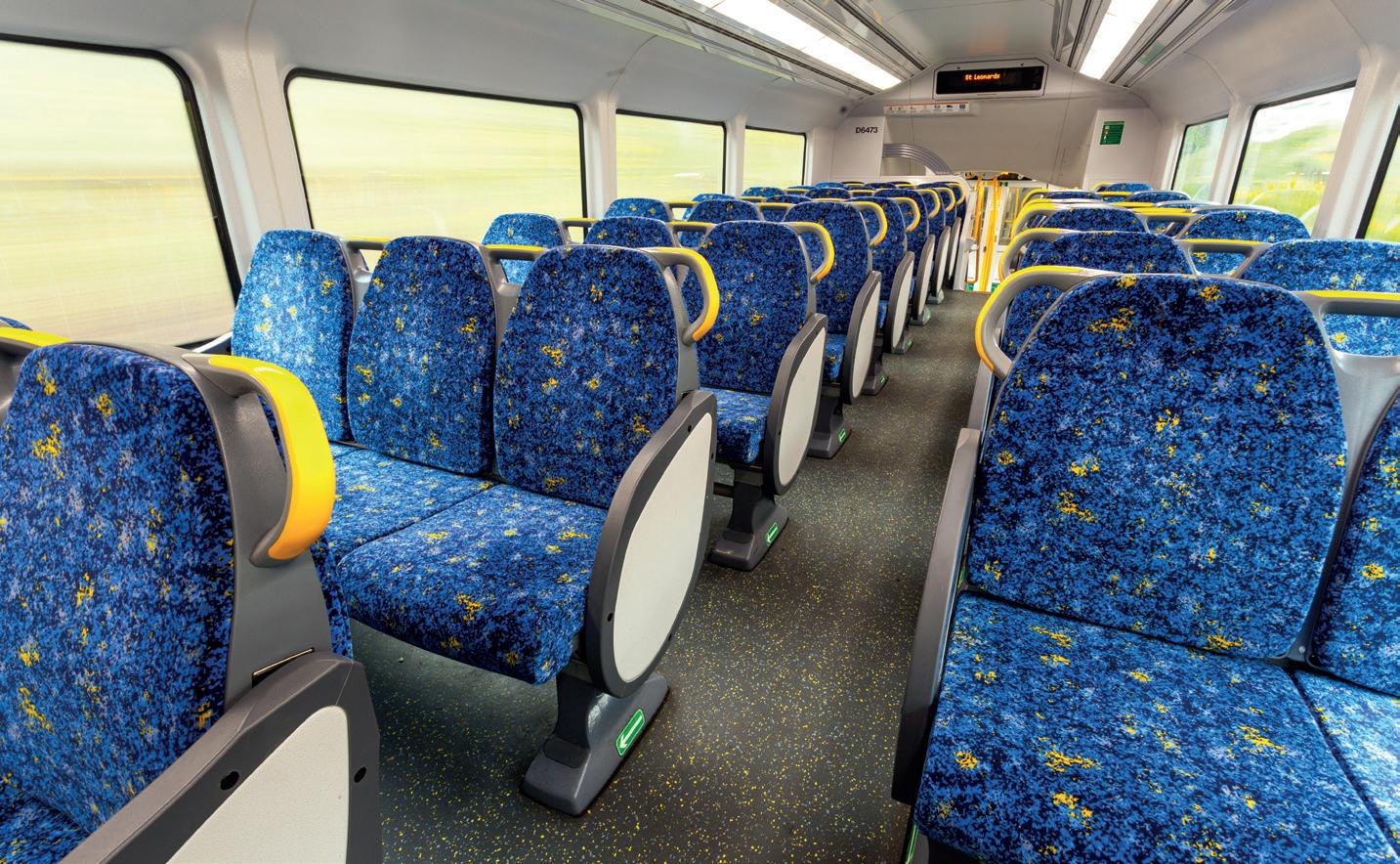
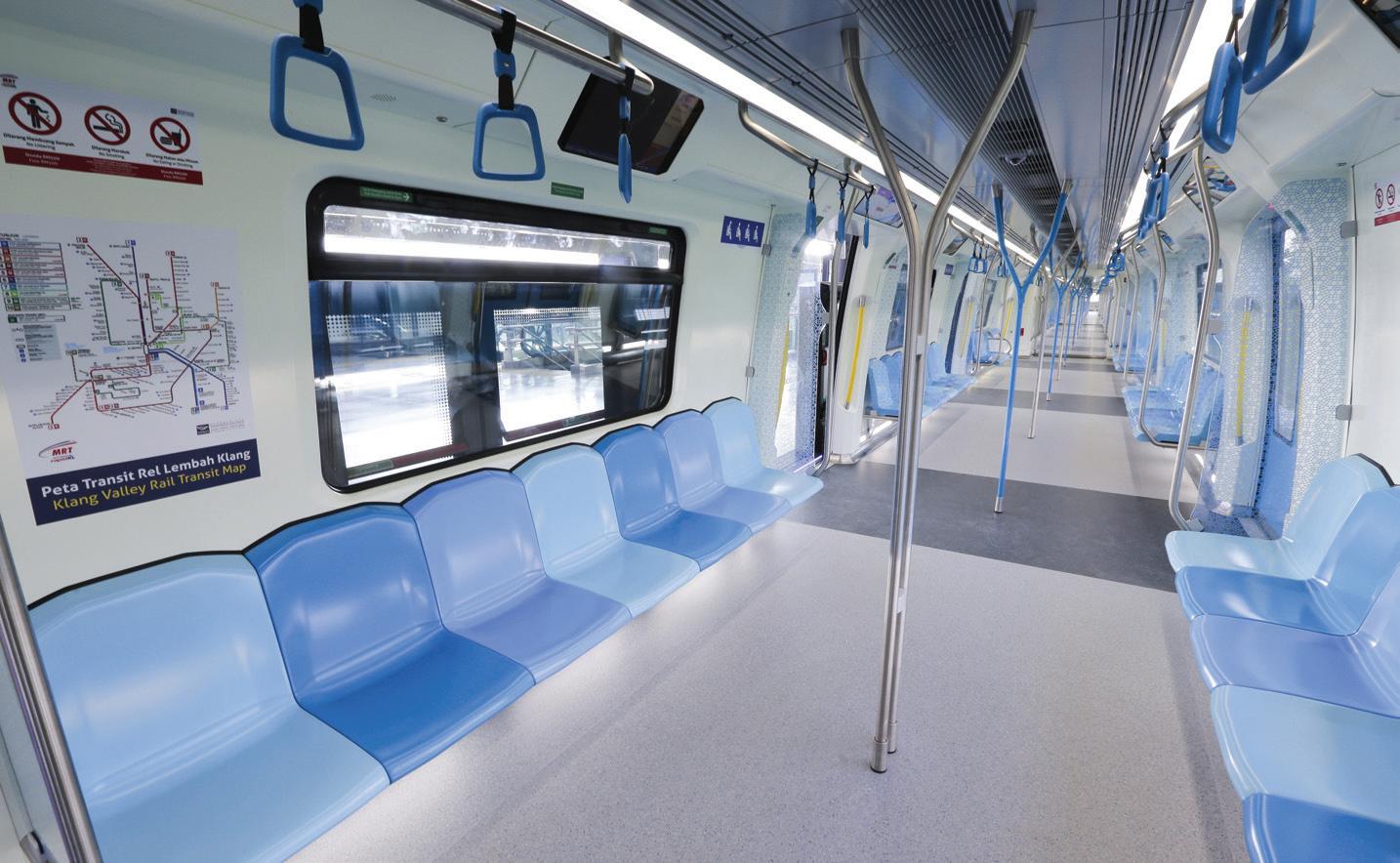
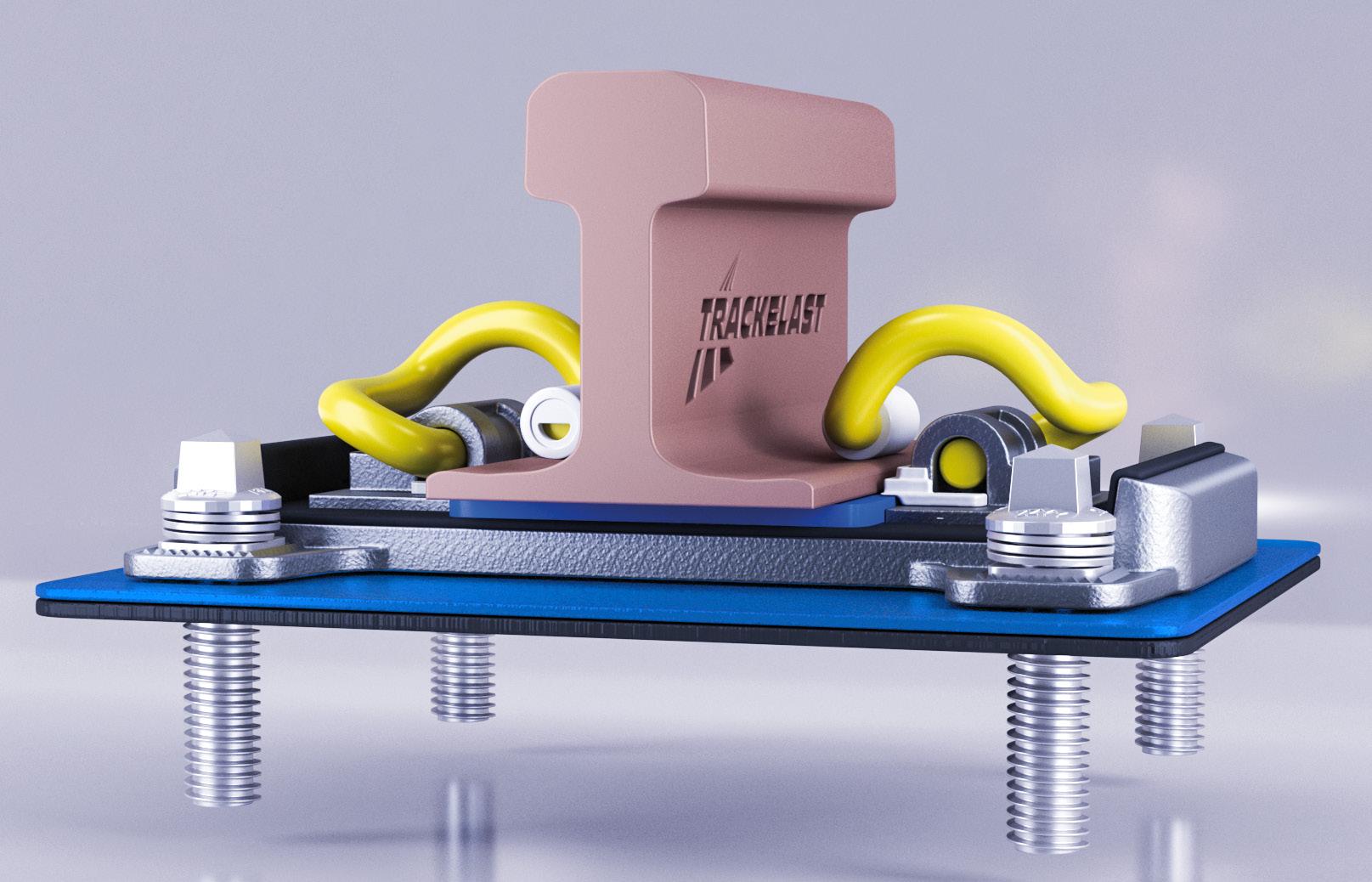
the baseplate screws to reduce the risk of failure in this component as we are seeing on long timber bridges. This has resulted in us now having several models of baseplate NR approved and a large number now in-service.
JO: In the rolling stock market Tiflex has supplied Treadmaster Flooring for many high-profile projects over the years, especially in the UK which include the new LUL Elizabeth Line Trains, Bombardiers (Alstom) Aventra platform trains, including SWTs, WMTs, East Anglia Trains and London Overground Trains to name a few. We have also supplied flooring for Metro Trains in Europe including the RATP Paris Metro and the Stockholm Metro and further afield in Australia with the Queensland Trains and Sydney metro Trains, Singapore with SMRT and Malaysia with the Klang Valley MRT.
What types of companies do you collaborate on projects with?
DM: With Trackelast being on the infrastructure side of the industry we collaborate with everyone from Network Rail and London Underground/TfL direct to their contractors and lower tier suppliers.
JO: The Treadmaster Flooring team usually work on a direct basis with the train OEM, in-house and independent designers and refurbishments contractor. Sometimes when challenging issues arise, we might work with train engineers to help find solutions to problems around the train floor system.
How do you work with the supply chain within this sector?
DM: With Trackelast, we get involved at the design stage as we want to clearly understand what the requirements are for each specific application thereby supplying a design solution. This allows us to engage with the designers directly and give them the benefit of our extensive experience in supplying engineered rubber components for rail infrastructure.
JO: Our customers know Treadmaster Flooring for custom colours and formats as well as a low MOQ which allows for more colours across the train interior design. This usually means we engage first with the designers of the interiors. We’re known for high standards of wear, slip resistance and, of course fire safety so our customers have
confidence that if they design a train with our materials, they will all pass stringent testing both individually and as part of a system.
With the coming launch of Great British Railways, how do you anticipate your place within the supply chain changing?
JO: I think there is still a lot of uncertainty surrounding the move to bring certain elements of the Rail Industry under control of the British Government but one might hope that support for British Manufacturers and the local supply chain would increase.
What do you think is the biggest challenge currently facing the rail industry?
DM: Frustratingly we still find that a lot of decisions are made purely on the initial capital outlay and, unfortunately the lifecycle cost and installed cost per linear unit are not meaningfully assessed. If we take a more ‘long sighted’ approach this will help keep these important assets inservice for longer and ultimately, reduce the through life cost of a project.





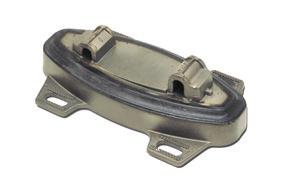


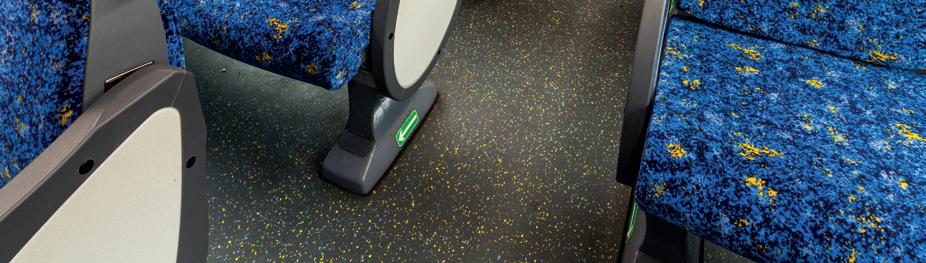
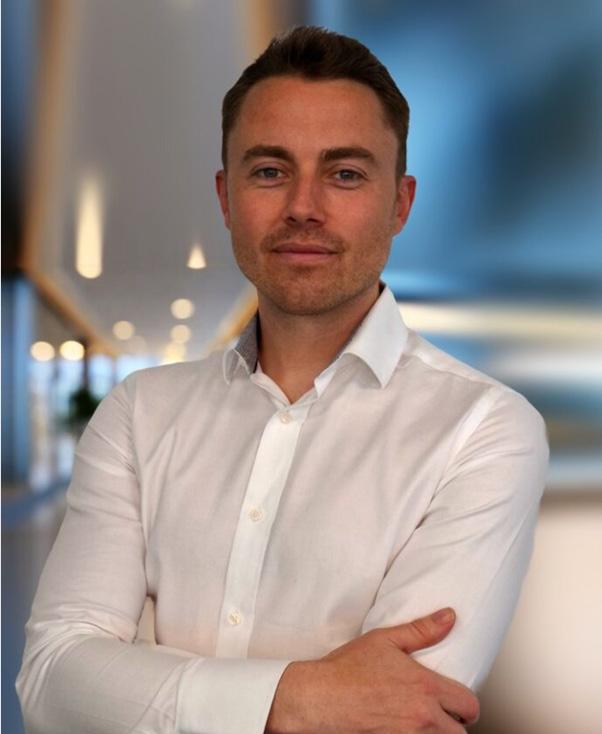
Blake Richmond is the Chief Executive Officer of Resonate. He joined the company in 2023 as Chief Operating Officer, bringing with him a career spanning retail banking, operational leadership and technology services, including a senior role at proptech firm Goodlord.

Resonate specialise in rail and connected transport solutions and have a long heritage of applying data and technology to real operational challenges. Today, the company works with customers across every Network Rail region in England, Wales and Scotland, applying its deep industry and technical knowledge, alongside innovation, in support of the rail industry.
What is your role within Resonate?
I’m Resonate’s Chief Executive Officer and proud to lead a brilliant team with a vision to be the trusted partner modernising railway operations through purposeful innovation. That vision is realised through our mission: enabling rail operations by embedding intelligent, connected technology into the operational fabric of the railway.
Resonate’s products – including Luminate (traffic management), Initiate (access planning) and Scalable (signalling control) – are used in every Network Rail region in England, Wales and Scotland. I’m equally proud of the trust the industry places in our partnerships, and of the colleagues who help our customers deliver a railway that is safer, better and more reliable every day.
At its core, my role is about empowering our teams. This spans enabling growth through strong partnerships, shaping product direction and delivery, ensuring secure and reliable technology operations, and supporting customers through effective, expert delivery. All of this is underpinned by the essential support functions that keep the business moving forward and set it up for sustainable success.
Together, across offices, client sites and remote locations, we focus on building a supportive culture that enables everyone to deliver at their best.
How did you start at Resonate?
I joined Resonate in 2023, initially as Chief Operating Officer, because I was excited by the intersection of rail, tech and growth – and I saw an opportunity where my background could genuinely help deliver on Resonate’s ambitions.
Before Resonate I spent years in customerfocused industries including retail banking and later in operations and consultancy, leading teams and projects that centred on improving service delivery, building strong client relationships and driving complex transformation.
I also worked in operational leadership roles in tech-oriented services like Goodlord, where I saw first-hand how technology can create clarity and impact for customers. This blend of experience in customer insight, operational excellence and technology strategy gave me confidence that I could contribute meaningfully to Resonate’s mission to partner with the rail industry – an industry facing both significant challenges and huge opportunities for digital modernisation.
That belief in the potential of rail tech, and in the team around us, has only grown since I became CEO last year.
‘When teams come together around common outcomes, performance improves, risk is reduced, and innovation accelerates.’
Want to know more about Resonate?
Visit: www. resonate.tech
When did the company start trading?
Resonate’s story actually starts long before the company existed in its current form. Its origins are in British Rail Research, where
some of the earliest thinking about using data and technology to improve railway operations began. When the industry moved into the private sector, that capability evolved too – and Resonate emerged with a clear purpose: taking deep rail expertise and applying modern technology to real operational challenges.
Over time, that early research-led heritage has grown into a business that supports some of the most complex parts of running the railway – from traffic and access management through to signalling control. Today, Resonate works with customers across every Network Rail region, helping them run the railway day-to-day while also supporting long-term transformation. What’s remained constant is the belief that technology only creates value when it’s grounded in operational reality. We’re not just delivering systems – we’re partnering with the industry, combining decades of rail knowledge with connected, intelligent technology to help make the railway fit for a safer and more reliable future.
What types of products and services do you offer?
At Resonate, we’re passionate about helping railways run smarter and smoother. At the heart of what we do is Luminate – our real-time digital operations and traffic management platform that gives teams a complete, predictive view of network performance and disruption so operators can act fast and with confidence.
Alongside that sits Initiate, our innovative possessions and access planning tool that is transforming how track possessions are authorised and executed, boosting safety and cutting setup times with seamless integration into signalling systems like Scalable.
Scalable itself is our flexible signalling control backbone, built to work from rural routes to complex, high-density networks and reduce lifecycle costs while supporting automation and open integration.
Together these sit within a broader suite of digital rail tools designed to bring visibility, resilience and efficiency to the modern rail network.
What can Rail learn from other industries?
From my perspective, rail can learn a huge amount from industries that have already gone through large-scale digital and cultural change. When I joined Resonate as COO, what excited me was that intersection of rail, technology and growth. In other industries, I saw how relentless focus on the customer, clear accountability and smart use of data can radically improve outcomes – even in complex, regulated environments.
Rail is no different. It’s operationally intense, value-conscious and increasingly customer-driven, especially as it moves towards a fully publicly owned model supported by private-sector innovation. Other industries show that you can balance public value with commercial discipline by designing systems around users, empowering frontline teams with better tools, and using technology to simplify decisions rather than add layers.
Rail’s opportunity now is to adopt that mindset at scale: modern platforms, collaborative partnerships and a shared focus on outcomes. That’s where rail tech can really deliver.
How can the industry tackle its skills shortage and how do you recruit, retain and train your staff?
Tackling the skills challenge requires vision and action but we see a will for both. At Resonate, we know that bringing the right people with the right skills – and potential – is critical to driving innovation. That’s why we recruit not just from rail, but from other sectors too, combining deep industry knowledge with fresh perspectives that challenge assumptions and help us improve how we deliver solutions.
We’re also committed to building a diverse, sustainable talent pipeline. As gold-accredited members of the 5% Club, we dedicate at least 5% of our roles to apprenticeships and ‘earn-andlearn’ pathways, giving people from all backgrounds the chance to develop skills while contributing meaningfully from day one.
Retention and training go hand-in-hand with culture: we invest in mentorship, continuous learning, and empowering teams to take ownership. By nurturing curiosity, capability, and collaboration, we ensure Resonate’s people, and rail itself, can innovate and thrive.
What are some of the biggest challenges your sector currently faces?
Rail is at a pivotal moment. From our perspective at Resonate, some of the biggest challenges the sector faces are complexity,
ageing infrastructure, and the need for real-time, data-driven decision-making. Networks are intricate, with multiple operators, legacy signalling and operations systems, and balancing expectations from passengers and freight customers alike. Delivering reliable, efficient services in that environment requires smarter tools and more connected thinking.
Another key challenge is balancing public value with economic realities. Rail will ultimately be fully publicly owned, yet it relies on private-sector innovation and partnerships to drive modernisation, so cost efficiency, safety, and performance have to be considered together.
Finally, the industry must navigate a rapid technology shift, integrating digital platforms without disrupting live operations, and fostering a culture that embraces change. At Resonate, we see these challenges as opportunities to bring clarity, collaboration, and innovation to every part of the network.
What are your hopes for the new regulatory bodies, such as Great British Railways?
Our hope for new bodies like Great British Railways is that they bring clarity, coordination, and a long-term vision to the network. Rail is inherently complex, with many moving parts, and the past has shown how fragmentation can make delivering reliable, customer-focused services difficult. A unified approach offers the chance to align operations, infrastructure, and investment priorities more effectively.
We, alongside government, rail bodies and regulators can champion innovation and digital adoption. Modern platforms like Luminate, Initiate, and Scalable show how technology can improve performance, safety, and passenger experience, but success depends on clear standards, consistent frameworks, and openness to new ways of working.
Finally, we hope the new bodies maintain a strong customer focus while balancing economics and public value. Rail is a public service, but it also benefits hugely from private-sector expertise. If these priorities come together, we can accelerate modernisation and deliver a railway that is reliable, resilient, and ready for the future.
What are your views on collaborative working?
Collaboration is central to how we modernise rail. The network is complex –multiple operators, legacy systems, and high passenger expectations mean no single organisation can solve these challenges alone. At Resonate, we position ourselves as partners, not just suppliers, working closely with operators, infrastructure managers, and regulators across Scotland and England to deliver solutions that genuinely improve day-to-day operations.
‘We recruit not just from rail, but from other sectors too, combining deep industry knowledge with fresh perspectives that challenge assumptions.’
Our platforms – Luminate, Initiate, and Scalable – are designed to support this approach, giving teams the tools to plan, operate, and respond together in real time. But technology alone isn’t enough. We emphasise co-design, integration, and shared training, ensuring that every stakeholder benefits and that solutions are practical and sustainable.
From our experience, when teams come together around common outcomes, performance improves, risk is reduced, and innovation accelerates. In rail, collaborative working isn’t optional – it’s essential for delivering a safer, more reliable, and customer-focused network across the UK.
Do rail projects help or hinder society’s aspirations to become net-zero?
Rail has a central role to play in society’s journey to net-zero, but it’s not without challenges. On the positive side, rail is already one of the most energy-efficient ways to move people and freight, and modern digital tools like Luminate, Initiate, and Scalable can make it even more efficient by optimising traffic, reducing delays, and enabling better planning for energy use.
The challenge is that traditional projects can sometimes be slow, complex, or resource-intensive, which risks short-term environmental impacts if not carefully managed. That’s why we focus on solutions that deliver both operational improvement and environmental benefit. For example, optimised possession planning in Scotland and advanced traffic management in England reduce wasted train movements and energy use.
Ultimately, rail projects help society meet net-zero when they are designed with sustainability at the core, leveraging technology, smarter operations, and close collaboration to minimise carbon while maximising service.

KGJ Price Railway Contractors Ltd provides comprehensive rail and civils services nationwide. We support and advise our customers to deliver value engineering solutions that meet budget requirements from routine maintenance to complex renewals.
● 24-HOUR NATIONWIDE EMERGENCY CALLOUT ALWAYS AVAILABLE
Plain Line & Switch and Crossing (S&C) Renewals
Vegetation Control
Lineside Civils
Handback & Speed Raising
Driver Walkways
Scrap Recovery
PATROL, INSPECT & MAINTAIN
CWR & Jointed Track Management
Track & Topo Surveys
Track Monitoring
Plain Line & Switch and Crossing (S&C) Tamping
UTX & URX Crossings
Waste Removal
We patrol, inspect and maintain 10% of the UK's freight depots and 100% of the UK's military depots and sidings. Our teams ensure operational safety and infrastructure integrity across Britain's most critical rail assets.
L1-3 Stressing & Stress Restoration
Derailment Support
CRT Management
Thermit Welding
Sleeper Replacement & Packing
We work closely with clients to deliver cost-effective, technically sound solutions that meet demanding budget and safety requirements from planning through to handback.

Ewan’s story at KGJ Price started on the shop floor as an apprentice machinist, manufacturing switches and crossings from scratch. Over ten years and several roles later, including Manufacturing Production Manager, he is now Business and Product Development Manager.
KGJ Price Railway Contractors Ltd is a UK-based specialist rail contractor founded in 1983. Originally established to serve the coal and steel industries of South Wales, the company has expanded considerably over four decades and now operates across mainline, industrial, heritage and narrow gauge sectors throughout the UK.
Want to know more about KGJ Price Railway Contractors?
Visit: www.kgjprice.co.uk
Tell us about KGJ Price Railway Contractors. What does the company do and what makes it stand out?
KGJ Price has been a cornerstone of railway contracting in the UK since 1983, The company was initially founded to serve the coal and steel industries of South Wales however over the past four decades we have evolved considerably. Today we offer an end to end solution covering the design, manufacture, installation, maintenance and repair of permanent way across all areas of rail infrastructure, whether its industrial, mainline, heritage or narrow gauge sectors. What truly sets us apart is the breadth of what we do in house, from fabrication and materials supply through to logistics using our own fleet. We're not a company that farms out the critical elements of a project; our teams have the expertise to own a job from survey and design through to handback and ongoing maintenance. That continuity of accountability is something clients genuinely value, and it's why so many of them keep coming back to us.
How did you get started in the rail industry, and what drew you to a business development role?
I started at KGJ Price as an apprentice machinist, manufacturing switches and crossings on the shop floor. That hands on foundation shaped everything that followed. I progressed through the business to Manufacturing Production Manager, which gave me a deep understanding of our capabilities and how we deliver quality. Moving into business and product development was almost a natural next step. It sits right at the intersection of that technical knowledge and commercial strategy. You need to understand what the engineers and site teams are capable of, and at the same time understand what the market needs. Getting those two things aligned is something I find genuinely rewarding, and having come up through manufacturing and site environments means I am able to have those meaningful conversations at every level.
What is your role within KGJ Price and what does a typical working week look like for you?
As Business and Product Development Manager, my focus is on identifying growth opportunities, deepening relationships with existing clients and partners, and developing the products and services our business brings to market. No two weeks are the same. On any given day I might be reviewing a tender or working through a commercial proposal with the team; the next I'm out visiting a client site, attending an industry event, or working with our operations team to scope a new service offering. There's also a lot of time spent on market intelligence understanding where the industry is
‘I’m proud of that journey. It means when I talk to clients about what KGJ Price can deliver, I know it from the inside out.’
heading, what our competitors are doing, and where we can position KGJ Price most effectively. It's a role that requires both strategic thinking and the ability to roll your sleeves up and get into the detail.
What has been your proudest achievement or standout project in recent years?
One that stands out is our involvement in the South Wales Metro Core Valley Lines programme, a transformative infrastructure upgrade for the region. Being able to play a meaningful role in a project of that scale, one that directly improves connectivity and mobility for communities across South Wales is something the whole team is proud of. Beyond the technical delivery, what made it memorable was the way it brought together multiple organisations and disciplines working collaboratively toward a shared goal. We also contributed materials and expertise to a track training facility at HMP Prescoed, which used upcycled assets from that same programme. Seeing redundant rail infrastructure repurposed to help offenders gain qualifications and employment opportunities was genuinely moving. Success for us isn't just measured in metres of track laid, it's about the broader impact of what we do.
What types of products and services do you offer, and how has this evolved over the years?
The full breadth of what we offer has expanded significantly from our roots in industrial track installation. Today we cover design, survey and engineering assurance, permanent way installation and renewals across plain line and switches and crossings, maintenance and reactive repair, materials supply and in house fabrication. We've also developed strong logistic capabilities with our own specialist vehicles which gives us an operational flexibility that many contractors rely on third parties for. The evolution has been driven largely by client demands and alongside clients and a supply chain we trust deeply. They naturally want to bring you into more of their work, and that has pushed us to develop capabilities we perhaps wouldn't have prioritised otherwise. The result is a genuinely broad offering that allows us to act as a single source partner for a wide range of rail requirements.
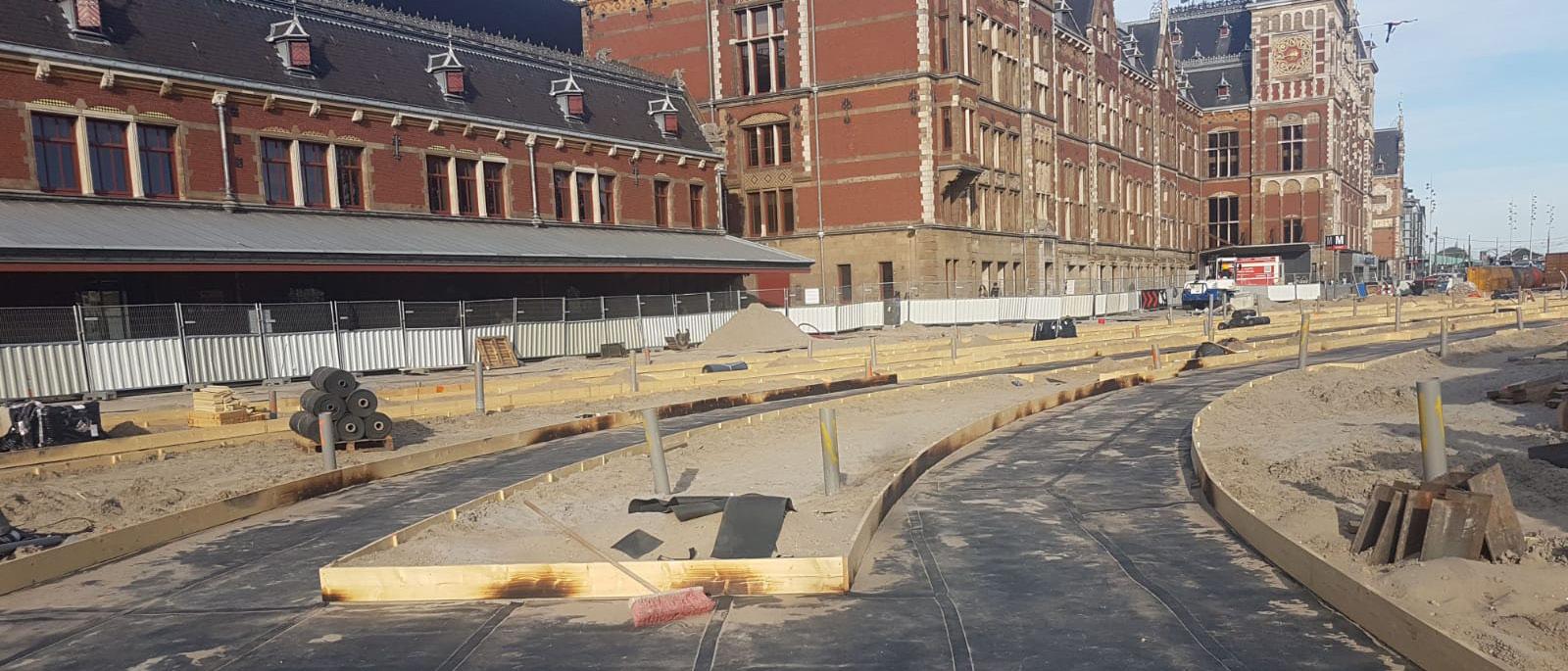
How passionate are you about sustainability, and what steps is KGJ Price taking to operate more responsibly?
Sustainability is something I care about both personally and professionally, and it's an area where we've put real effort in recent years. In practical terms, this means actively managing our carbon footprint, working with our supply chain to promote low carbon solutions, minimising waste on site, ensuring materials are recycled wherever possible, and protecting biodiversity in the areas where we work. The HMP Prescoed project is a good example of sustainability in a broader sense, upcycling redundant infrastructure to create social value. We're also mindful that the railway itself is one of the most sustainable forms of mass transport available, so as a contractor maintaining and improving that infrastructure, we see ourselves as part of the solution to the UK's decarbonisation challenge. There is always more to do, but the direction of travel is clear.
What are the biggest challenges currently facing the rail contracting sector, and how is KGJ Price responding?
The skills shortage is probably the most acute challenge in the here and now. The pipeline of work coming through Network Rail, Transport for Wales and other clients is gaining strength, but finding experienced, competent people to deliver it is genuinely difficult. We invest heavily in training and development, and we've been active in outreach programmes to attract people into the industry. Funding certainty is another challenge. When programmes are delayed or reprofiled, it creates real disruption for contractors who have mobilised resources. And then there's the ongoing pressure on commercial margins, which requires us to be smarter and more efficient in how we deliver. Our response has been to focus on
what we do best, deepen relationships with clients who value quality and reliability over the cheapest price, and continue building our in house capabilities so that we become less exposed to supply chain volatility.
With Great British Railways on the horizon, how do you anticipate your position in the supply chain changing?
The creation of Great British Railways is a significant structural change, and like most contractors, we’re watching its development closely. In principle, having a single, integrated body responsible for track and train should create more coherent long term planning, which would be welcome. For us, the question is whether that translates into more stable, longer term contract frameworks that enable specialist contractors like KGJ Price to invest with confidence. If GBR can move away from the short term, transactional procurement that has characterised parts of the industry, that would be genuinely positive. We would also hope to see greater recognition of the value that experienced and specialist SME contractors bring. The industry needs the agility and expertise that companies like ours offer, and those qualities should be reflected in how the supply chain is structured and rewarded.
How do you think technology is changing the way rail infrastructure is designed, built and maintained?
The pace of change is remarkable. Digital design tools, BIM, remote monitoring technology, and drones for survey and inspection have all become mainstream rather than cutting edge. Condition based maintenance, enabled by sensors and data analytics, is allowing infrastructure managers to move away from time based maintenance cycles toward interventions that are genuinely driven by asset condition.
‘A healthier supply chain is also one where payment terms are fair and prompt. That matters enormously to smaller businesses. When the whole chain works well together, clients get better outcomes.’
That's both more cost effective and safer. For a contractor like KGJ Price, the challenge and the opportunity is to stay ahead of these changes, both in terms of our own capabilities and in terms of the services we can offer clients. We're investing in upskilling our teams and exploring how new tools can improve the efficiency and quality of our work on site.
How does KGJ Price approach client relationships and what does good collaboration look like in practice?
For us, good collaboration starts with understanding what a client actually needs, rather than just what they've asked for in a specification. That requires genuine dialogue, listening carefully, asking the right questions, and sometimes challenging assumptions. Once we're on a project, we work hard to maintain absolute transparency, communicate proactively when issues arise, and bring solutions rather than problems. Many of our strongest client relationships have developed because of how we've handled difficulties, not just because of smooth deliveries. We also
think of collaboration as extending beyond the immediate client. Working effectively with other contractors, consultants and stakeholders on a project is essential. Rail infrastructure is complex, and the best outcomes come from everyone pulling in the same direction.
How can the rail industry tackle its skills shortage, and what is KGJ Price doing to attract and retain talent?
The skills shortage is a systemic issue that requires a similarly systemic response. The industry as a whole needs to do a better job of making rail visible as a career choice. Particularly to young people and to people from underrepresented backgrounds. The work is skilled, meaningful and in many cases well paid, but it's not always perceived that way. At KGJ Price, we invest in structured training and development, we support our people to gain and maintain their competency cards, and we've deliberately built a culture where people feel valued and have a visible pathway to progress. I'm a great example of what that pathway can look like. I started as an apprentice here and have grown with the business over more than a decade. Retention is just as important as recruitment and if people feel respected and see a future with you, they stay.
Where do you see KGJ Price and the wider rail industry in the next ten years?
For KGJ Price, I see a business that has grown both in scale and in the sophistication of what it offers. More technology, more data capability, a broader geographic footprint, but with the same values and quality focus that have sustained us for over 40 years. For the wider industry, I’m optimistic. Rail is central to the UK's decarbonisation agenda, to regional economic development, and to the aspiration for better connected and more liveable cities. The investment needed is substantial, and there will be challenges along the way whether it’s political, financial or technical. But the direction of travel is clear, and the industry has the talent and the determination to get there. If we can resolve the structural challenges around funding certainty and skills supply, the next decade could be genuinely transformative.
What role do heritage and narrow gauge railways play in KGJ Price's portfolio, and why do you think preserving these assets matters?
Heritage and narrow gauge railways are a really important part of what we do, and honestly, they're one of the most enjoyable parts of the business to be involved in. These lines are living pieces of history and they matter enormously to the communities around them, to tourism, and to the volunteers and enthusiasts who give so
‘Success for us isn't just measured in metres of track laid, it's about the broader impact of what we do.’
much to keep them running. The track engineering challenges can be quite different from mainline work, and our team genuinely relishes that variety. For me personally, having come up through manufacturing S&C, there's something special about making components for a heritage railway knowing they could be in service for decades. Preserving these assets isn't just about nostalgia, it's about maintaining a connection to where rail came from, and that feels important to us.
KGJ Price recently passed its RISQS audit again, what does that accreditation mean to you and to your clients?
Passing the RISQS audit is something the whole team works hard to achieve, and something the senior team is incredibly proud of every time we do it. For clients, it's a clear signal that we meet the rigorous standards required to work safely and competently in the rail environment. It removes a layer of uncertainty when they're deciding who to appoint. For us internally, the process is valuable in its own right. It keeps us honest, ensures our systems and procedures are properly maintained, and gives us a structured opportunity to identify areas for improvement. In an industry where safety and compliance are a non-negotiable, accreditations like RISQS aren't just a box ticking exercise. They're a demonstration of the standards we hold ourselves to every single day.
How do you see the relationship between principal contractors and specialist SME subcontractors evolving, and what would a healthier supply chain look like?
The relationship has improved in some areas but there's still a way to go. The best principal contractors I've worked with treat specialist SMEs as genuine partners. They involve us early in the design and planning process, share relevant information openly, and recognise that our skillsets and expertise add real value beyond just delivering a scope of work. What I'd like to see more of is longer term frameworks that allow specialist contractors to invest with confidence, rather than short term, lowest price procurement that can squeeze out quality and innovation. A healthier supply chain is also one where payment terms are fair and prompt. That matters enormously to smaller businesses. When the whole chain works well together, clients get better outcomes.
INFRASTRUCTURE PIPELINE UPDATE WELCOMED AS BASIS FOR LONGTERM PLANNING
The Civil Engineering Contractors Association and the Institution of Civil Engineers have both welcomed the latest update to the UK Infrastructure Pipeline, which sets out 734 planned projects worth £718 billion over the next decade.
Published by the National Infrastructure and Service Transformation Authority, the update includes regional and sectoral workforce demand data for the first time, strengthening what ICE described as an already welcome step taken with last year's initial pipeline. ICE said the update would make it easier for industry to plan for future demand, and noted that NISTA appeared to be listening to industry needs.
CECA cautioned, however, that improved visibility must now be matched by certainty on delivery, with members requiring a dependable flow of work backed by clear funding and efficient procurement if they are to invest with confidence in people, skills and productivity.
The Light Rail Transit Association has welcomed HM Treasury's Green Book 2026 as a significant reform in how public investment decisions are assessed, saying it directly addresses a long-standing structural bias against high-capacity fixed-rail infrastructure.
The revised guidance shifts the primary appraisal metric from BenefitCost Ratio to Net Present Value – the absolute economic surplus a scheme generates after all costs. The LRTA argues that BCR historically disadvantaged tram schemes because a bus alternative costing a fraction of the price could show an identical ratio while returning far less total value to the economy.
The association contends that underinvestment in urban tram networks has been a contributing factor to the UK's productivity gap compared to continental cities, and that the reformed framework, by embedding place-based and longrun agglomeration effects, corrects a structural flaw in previous appraisal methodology.




The Railway Industry Association (RIA)’s Annual Conference has long been a key fixture in the UK rail calendar, bringing together policymakers, industry leaders, and
The 2025 conference proved no exception. Held in London and themed Resetting the Railways for Growth: Harnessing the Power of the Supply Sector, it gathered hundreds of delegates from across the rail community at a pivotal moment for the industry.
With the UK rail sector navigating reform, investment priorities, and the transition toward a more integrated system, the discussions at the 2025 event highlighted both the challenges and the opportunities ahead. Senior figures from across government and industry took to the stage to outline their visions for rail’s future, with keynote contributions from leaders such as the Rt Hon Heidi Alexander MP, Secretary of State for Transport, and Jeremy Westlake, Chief Executive of Network Rail, alongside senior representatives from operators, infrastructure bodies, and freight organisations.
A central theme throughout the conference was the importance of collaboration between government, clients, and the supply sector. As the industry prepares for structural reform and the continued development of Great British Railways, speakers emphasised that partnership with the supply chain will be critical to delivering innovation, value for money, and long-term growth.
Beyond the conference sessions themselves, the event once again demonstrated the value of bringing the rail community together. Panel discussions, interviews, and networking opportunities created a dynamic environment for exchanging ideas and forging new connections across the sector.
Building on the success and insights of last year’s event, attention now turns to the RIA Annual Conference 2026, taking place on 4 & 5 November at the Leonardo Royal Hotel London Tower Bridge, exploring the theme Connected for Change: Shaping Tomorrow’s Railway. As the rail industry continues to adapt to reform, evolving passenger demand, and the drive toward net zero transport, this year’s conference will once again provide a vital platform for discussion and collaboration.
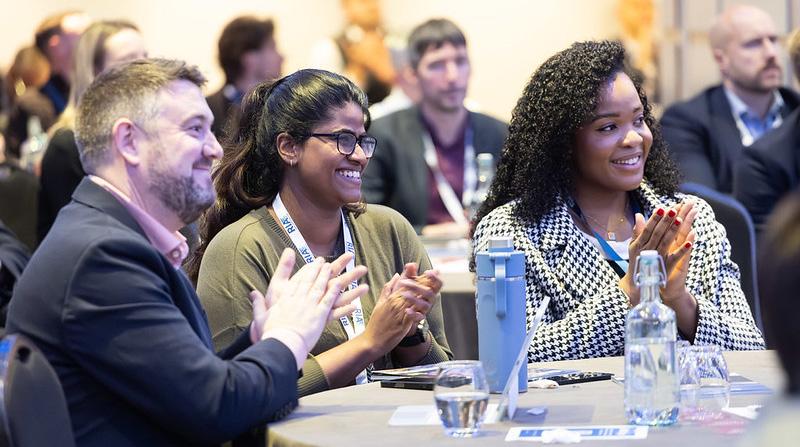
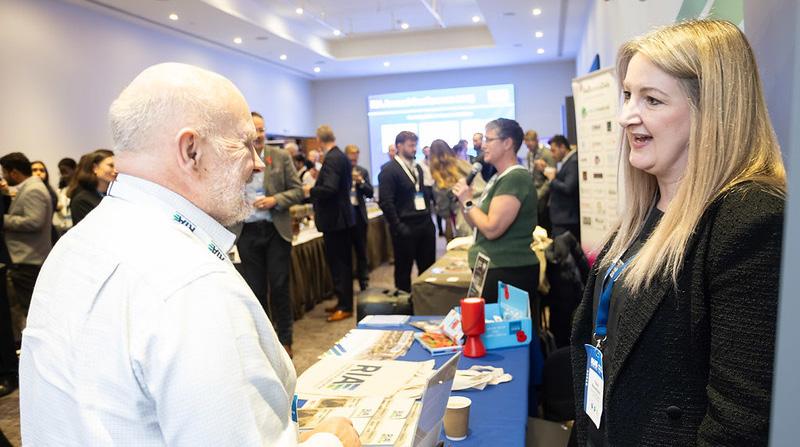
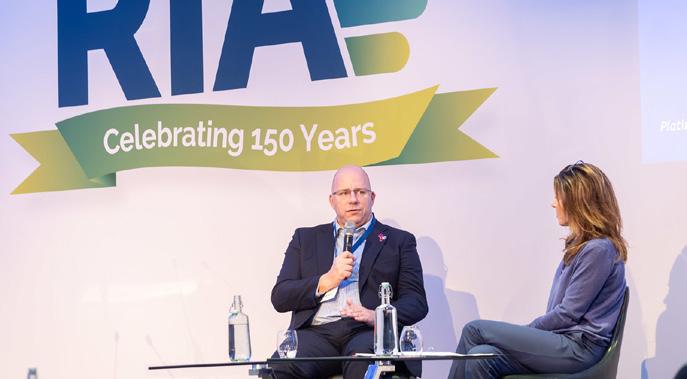
The 2026 programme will feature a strong line-up of speakers representing both political leadership and key rail organisations.
Confirmed speakers include:
• Richard Holden, Shadow Secretary of State for Transport.
• Claire Ward, Mayor of the East Midlands.
• Mal Drury Rose, Executive Director (WMRE) and Director of Rail at Transport for West Midlands.
• A special live recording of the Green Signals podcast.
• Jeremy Westlake, Chief Executive Officer of Network Rail.
Together, these speakers will provide insight from across the political, regional, and operational landscape of UK rail, offering perspectives on policy direction, infrastructure delivery, regional transport priorities, and the opportunities ahead for the supply sector.
As in previous years, the conference will forge connections with professionals from across the industry. The event offers a rare opportunity for open discussion about the issues shaping the sector, from reform and investment to innovation and regional growth.
Equally important are the networking opportunities that have become a hallmark of the RIA Annual Conference: All networking breaks take place in our vibrant exhibition hall, allowing all attendees to forge connections across the sector. For the rail supply chain in particular, the event provides an invaluable forum to connect with customers, partners, and policymakers while showcasing the expertise and innovation that underpin the UK’s rail system.
With the rail industry entering a period of significant change, the RIA Annual Conference 2026 promises to be another essential gathering for those who want to understand and shape the future of the railway. Following the engaging debates and insights of last year’s conference, this November’s event will continue the conversation, creating a vital discussion forum for the sector.
Register your place here: www.riagb.org. uk/AC26 or email events@riagb.org.uk to get involved!
Tel:
Email: events@riagb.org.uk
Visit: www.riagb.org.uk
With rising fuel costs, increasing congestion and growing demand for low-carbon transport, rail travel is central to the shift toward more sustainable mobility
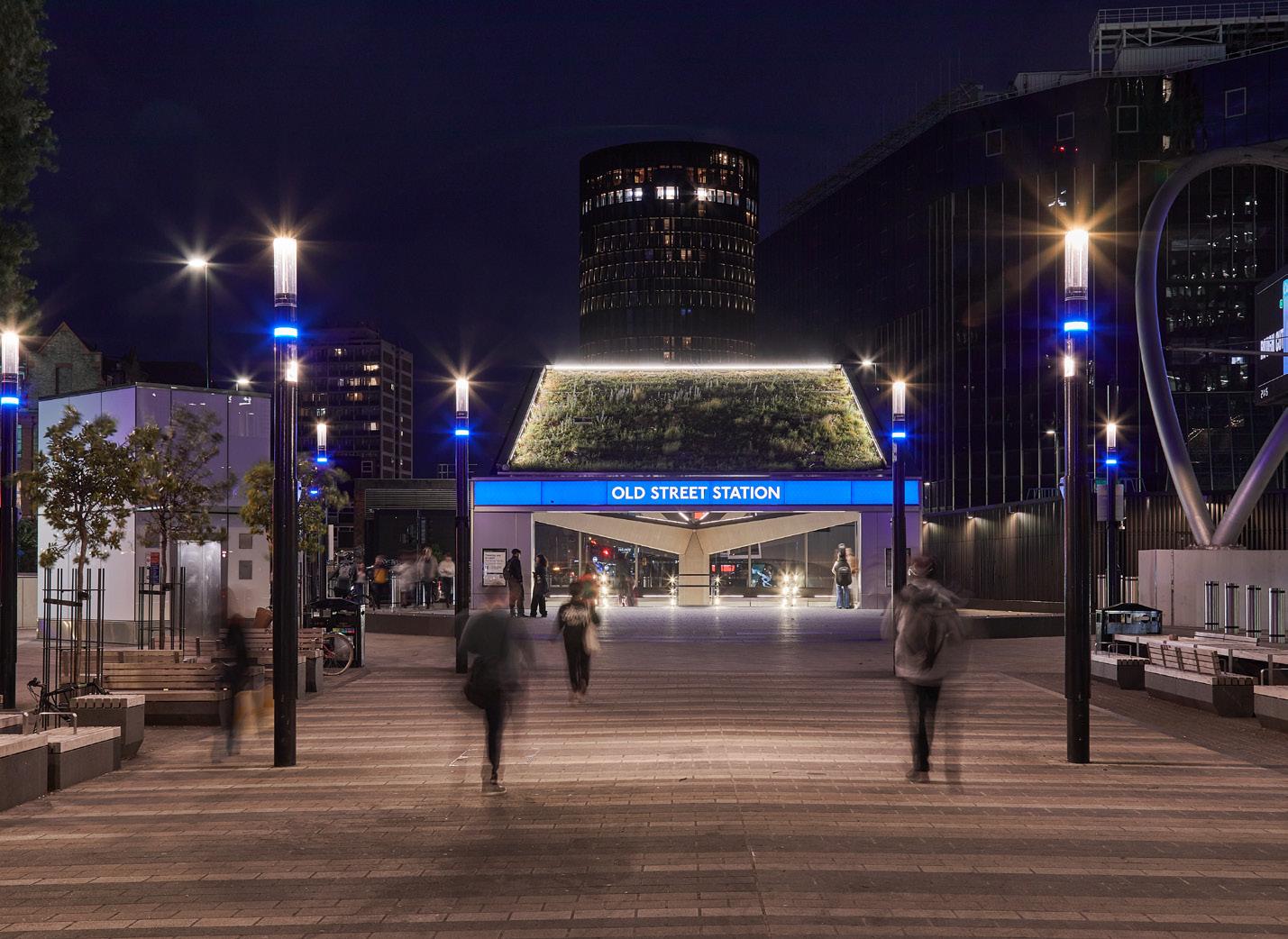
Yet many station environments still rely on outdated or inefficient lighting systems that fall short of modern expectations for safety, comfort and energy efficiency. Upgrading these systems represents a significant opportunity to reduce operational costs, enhance passenger confidence and support industry-wide decarbonisation goals.
Urbis Schréder is a trusted provider of high-performance outdoor lighting solutions. As part of the global Schréder Group, the company combines deep technical expertise with a strong focus on design, sustainability and smart technology. With decades of experience delivering lighting across transport networks, city streets and public spaces, Urbis Schréder helps rail operators create safer, more efficient and future-ready environments.
Lighting plays a critical role in the performance of railway infrastructure. From platforms and car parks to tunnels, footbridges and station forecourts, each area requires a carefully considered approach to illumination.
Effective lighting improves visibility, enhances passenger safety and supports accessibility – particularly during nighttime operation and off-peak hours. Well-lit spaces help passengers navigate complex environments more confidently while reducing areas of shadow or poor visibility that can contribute to safety concerns.
At the same time, rail operators face increasing pressure to reduce energy consumption and manage assets more efficiently. Transitioning to LED lighting and integrating intelligent control systems
enables operators to achieve both objectives: lowering energy use while maintaining high standards of safety and operational performance.
A key tool in this transition is Schréder EXEDRA, the company’s smart Central Management System (CMS) Platform. Built on open standards, Schréder EXEDRA enables operators to remotely monitor, control and optimise lighting infrastructure across entire networks.
Through real-time data, operators can track energy consumption, detect faults instantly and implement adaptive lighting strategies such as dimming during quieter periods. This level of control can deliver energy savings of up to 85 per cent, while improving operational resilience and reducing maintenance costs.
Beyond energy management, connected lighting systems also support proactive asset maintenance. By identifying faults early and providing clear system diagnostics, maintenance teams can respond more quickly and efficiently, reducing downtime and minimising disruption within busy station environments.
In areas where grid access is limited or installation costs are prohibitive, solar lighting offers a practical alternative. Through a partnership with solar lighting specialist Photinus, Schréder provides advanced off-grid solutions designed specifically for rail environments.
These systems are particularly suited to remote access routes, overflow car parks and low-traffic platforms where traditional trenching and cabling would be difficult or expensive. By eliminating the need for major civil works, solar lighting can significantly reduce installation time and project costs.
Combining Photinus’ proven solar technology with Schréder’s lighting
expertise delivers reliable, low-carbon solutions that reduce emissions while maintaining the performance standards required for transport infrastructure.
Urbis Schréder’s expertise was recently demonstrated at Old Street Station, one of London’s busiest transport hubs located at the heart of the capital’s technology district.
As part of a major station upgrade in 2024, WSP – acting on behalf of Transport for London – appointed Urbis Schréder to design, manufacture and install a bespoke LED handrail lighting system. Working closely with WW+P Architects, the project team developed an integrated solution that balanced performance, safety compliance and architectural design.
Using Schréder’s ALINEA (LED module handrail), more than 350 metres of illuminated handrail were installed across three station entrances. The warm-to-touch handrails significantly improve visibility along stairways and circulation routes, enhancing passenger reassurance and accessibility in high-traffic areas.
Designed for demanding rail environments, the ALINEA modules underwent independent fire assessment to meet TfL’s stringent S1085 fire safety standard for subsurface stations. Structurally, the handrails were also tested beyond standard load requirements to ensure durability under constant public use.
Offsite fabrication allowed the system to be manufactured in sections and installed efficiently within the live station environment, minimising disruption while maintaining consistent build quality.
Externally, the station forecourt was enhanced with SHUFFLE smart poles, integrating functional lighting with architectural accent illumination and wayfinding features. Mid-hinged access enables safe ground-level maintenance, reducing operational risk and long-term maintenance costs.
Projects such as Old Street Station demonstrate the broader role lighting plays in shaping passenger experience and operational performance. Well-designed lighting improves wayfinding, reduces perceived risk and encourages movement through transport spaces — particularly during evening hours.
Lighting also protects long-term infrastructure investment. Thoughtful illumination ensures station environments remain legible, safe and welcoming, helping them adapt to changing patterns of use without requiring extensive physical alterations.
Modern lighting systems are also designed with lifecycle value in mind. Highefficiency LED luminaires offer significantly longer operational lifespans than traditional lighting technologies, reducing the
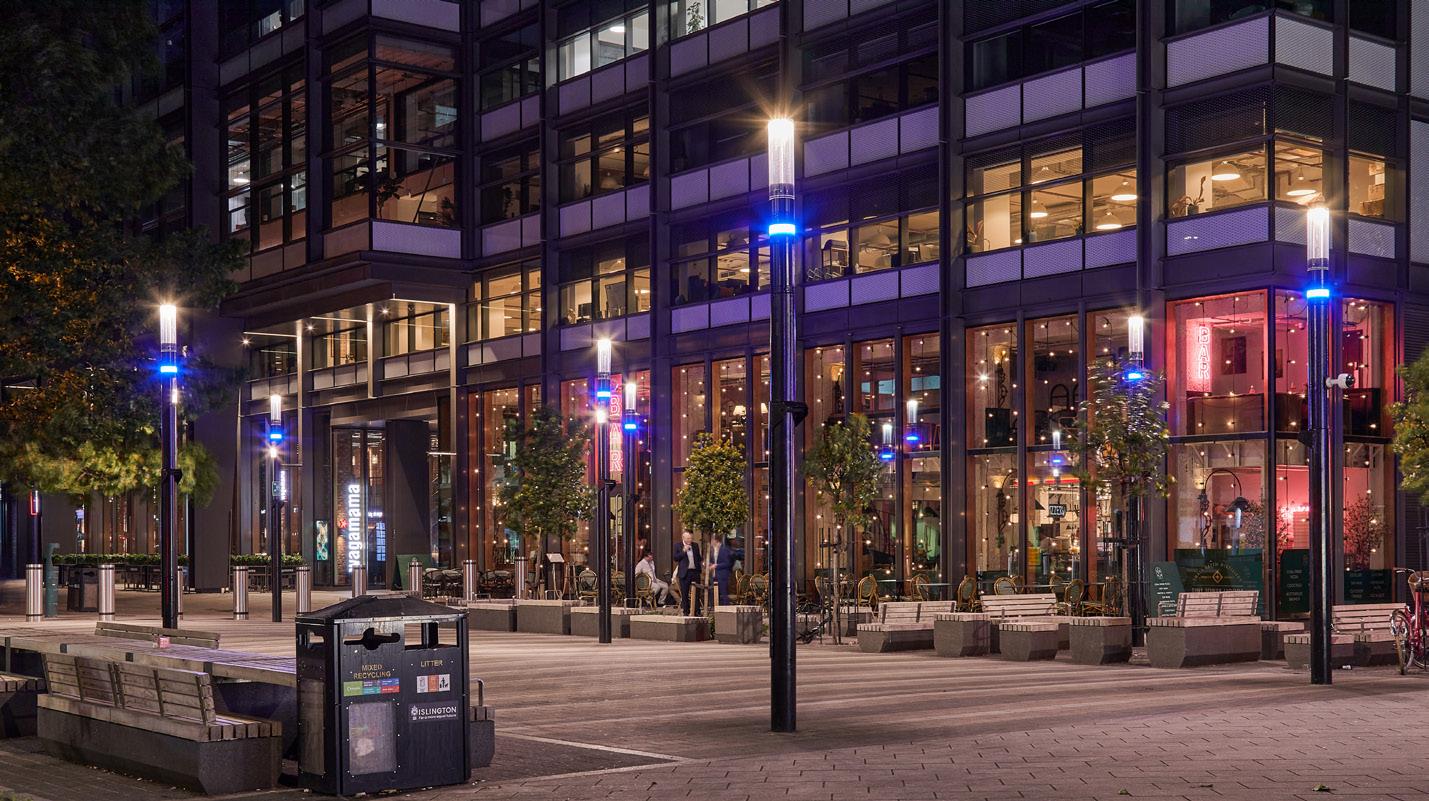
frequency of maintenance interventions in areas that may otherwise require specialist access or temporary closures.
Durable materials, modular components and intelligent monitoring systems also allow lighting assets to be upgraded or serviced more efficiently over time. This reduces operational disruption while helping rail operators extend the useful life of their infrastructure.
Another key consideration for rail operators is the ability to maintain lighting infrastructure with minimal disruption to services. Stations and surrounding environments operate continuously, often in high-traffic conditions where access for maintenance can be challenging. Modern lighting systems are therefore designed with maintainability in mind, incorporating features such as modular components, tool-free access and durable materials that reduce intervention times. When combined with remote monitoring systems like Schréder EXEDRA, maintenance teams can identify faults before they become critical
‘Every train journey begins and ends in a station. These spaces shape how travellers perceive the entire rail network. As gateways to towns and cities, modern stations must offer safe, welcoming environments that operate efficiently around the clock.’
Jeremy Palmer, Managing Director, Urbis Schréder, UK & Ireland
issues, allowing planned interventions rather than reactive repairs. This approach helps improve network reliability while reducing operational risk and long-term maintenance costs.
As cities and transport networks evolve, lighting is becoming an active part of wider smart infrastructure strategies. Platforms such as Schréder EXEDRA allow operators to capture real-time data on energy consumption, lighting performance and asset condition.
This information enables more proactive asset management, supports predictive maintenance and helps authorities track progress against carbon reduction targets. Data-driven lighting also improves operational resilience, ensuring critical infrastructure remains reliable while reducing unnecessary energy use.
By integrating intelligent controls, highefficiency luminaires and innovative solutions such as solar lighting, Urbis Schréder enables rail operators to create environments that are safer, more efficient and better prepared for the future.
From historic stations to complex urban transport hubs, the company continues to deliver lighting solutions that support both operational performance and passenger experience across the rail network.
To discuss how Urbis Schréder can support your next project, contact sales@ urbis-schreder.com or get in touch via the contact information below.

Tel: 01256 354446
Email: sales@urbis-schreder.com
Visit: www.urbis-schreder.com
From lifting capacity to IP ratings, here's what separates a railway jack worth buying from one you'll be replacing in five years
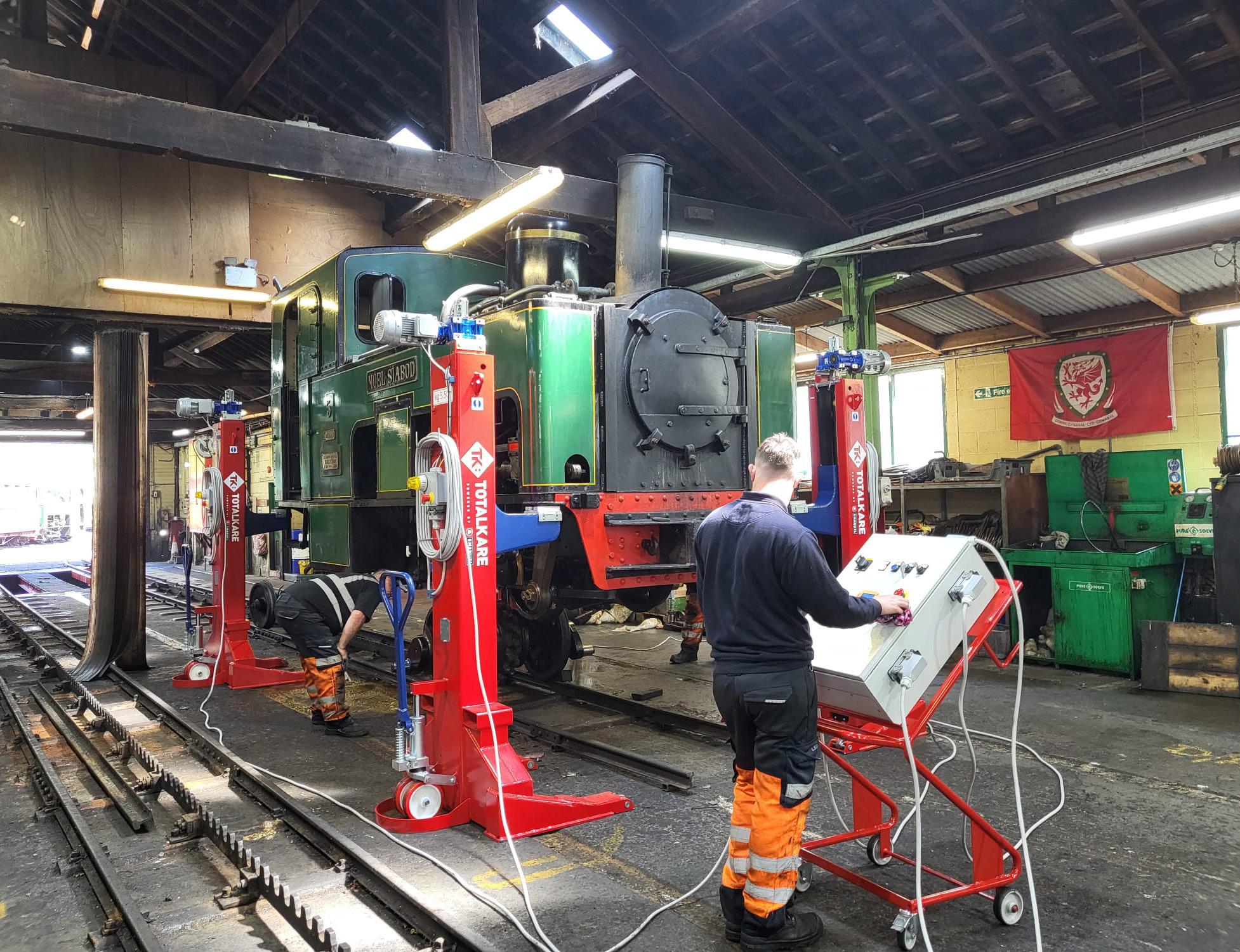
Like most bits of kit in a depot, a set of railway lifting jacks is a serious investment.
So if you’re looking to upgrade or replace your current rail lifting equipment, you need to know the features that matter – to futureproof your investment and get the most bang for your buck. Here’s what you need if you’re
investing in railway lifting jacks (and why these modern features matter for your workshop).
Futureproof capacity
For most rail depots, train lifting jacks are a core piece of their toolkit – so it makes sense to invest in something that can last for years or decades ahead. That means high-quality
equipment that’s durable and robust. But it also means thinking ahead to how the needs of your business could change in the future. Before you buy, you should think about:
• The types of trains you service (and their weights).
• he types of trains you might expand into in the future.
Upgrading your depot is a serious investment and Totalkare’s railway equipment experts are ready to help. You can see the full range of rail depot equipment on Totalkare’s online shop (including railway lifting jacks and bogie lifting platforms) or start a chat with one of the company’s experts to talk about the options that make sense for your depot.
capacity, you’ll be ready for the future without new upgrades – and your initial investment will last even longer.
Fixed railway lifting jacks are great for consistency and high-volume servicing –especially if they’re built into an existing rail inspection pit.
But a set of mobile railway lifting jacks can give you so much more flexibility. As well as the ability to lift trains at different locations along the track, you can also group up the jacks in different configurations,
With a centralised control unit with a Wi-Fi remote that records and stores events, your teams can have complete control over the entire operation and physically inspect and check the full length of your railway lift without leaving the controls behind.
As well as the mechanical servicing of the trains you lift, your teams also need to be able to wash and clean the underside of the carriages.
That makes it essential to choose a train lifting jack with the right IP rating (Ingress
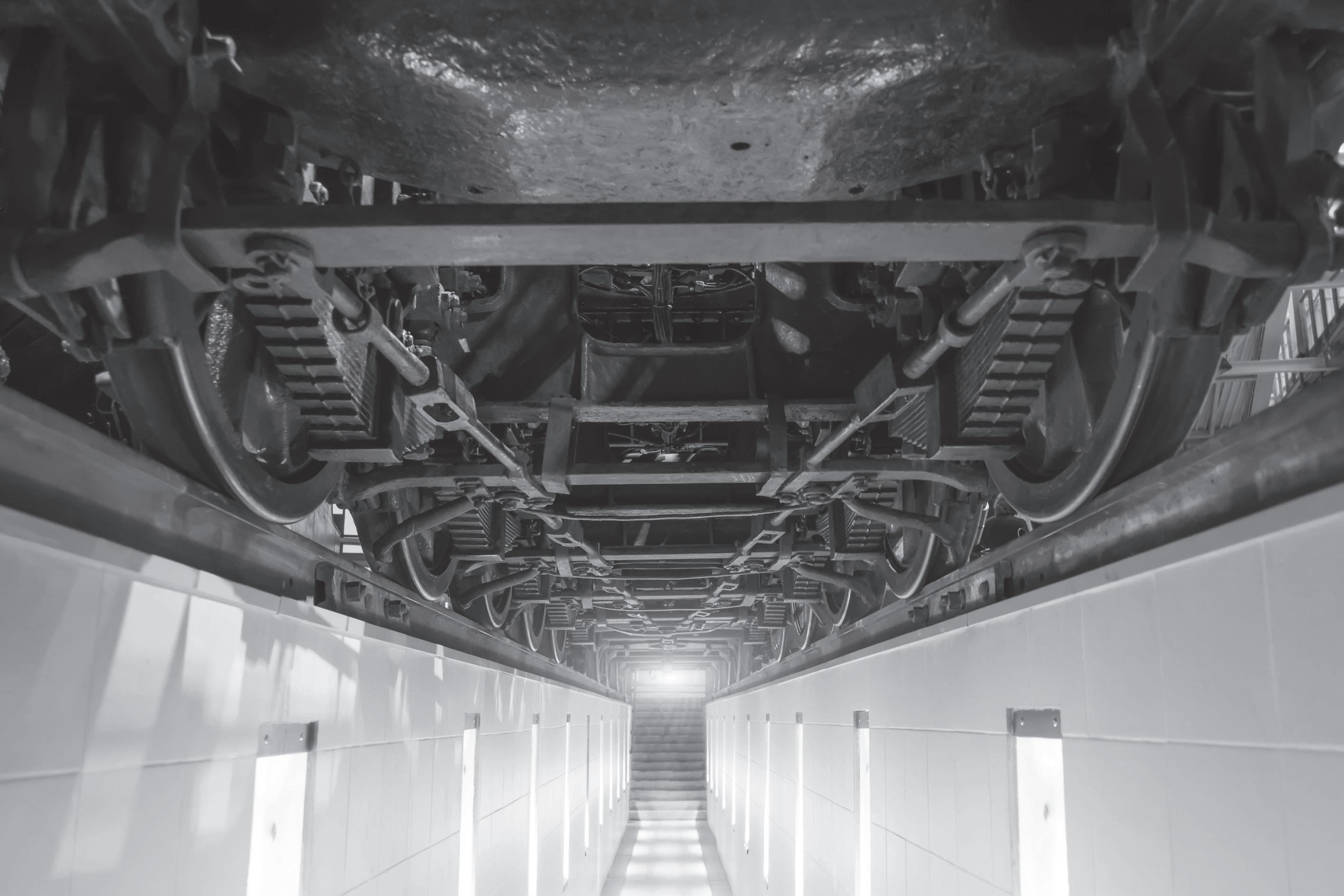
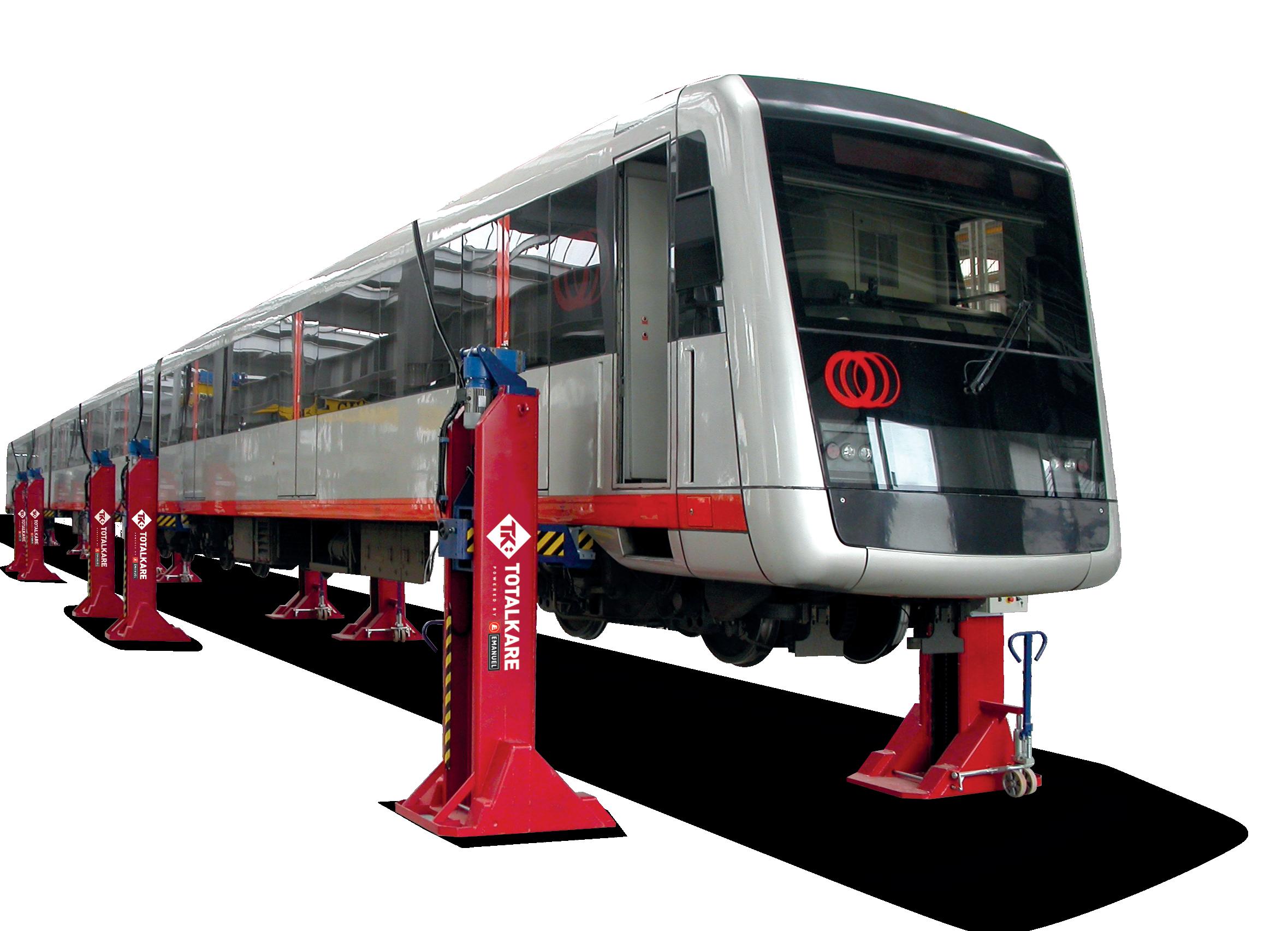


Bruton Knowles, the national chartered surveyor, has continued the growth of its Utilities and Infrastructure Team with the appointment of Collette BrownBolton, marking another significant hire as the business continues to invest in its senior talent. Collette brings over 25 years of experience in property and infrastructure to Bruton Knowles, having held senior roles at Network Rail for 18 years, as well as recently working with the Department for Transport.
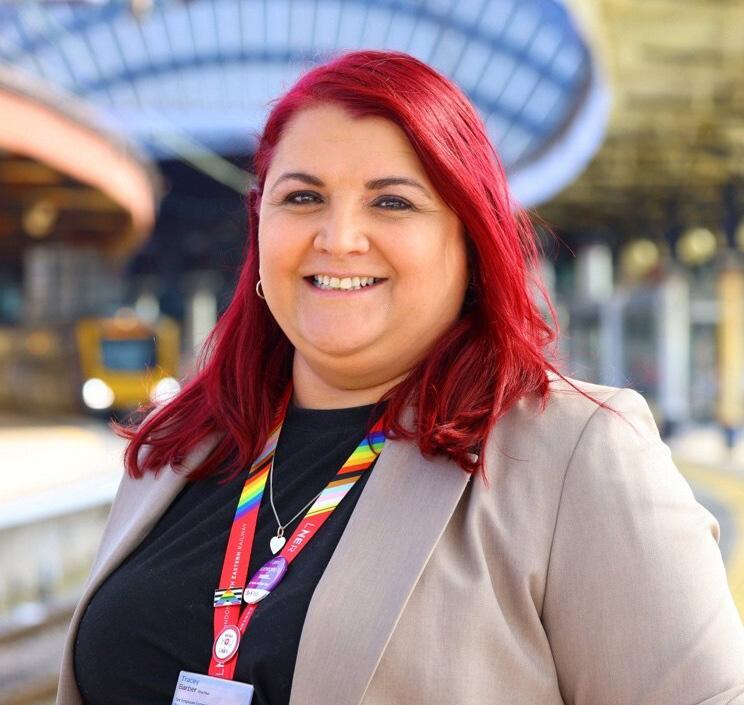

The EDI Charter for Rail has announced new additions to its senior leadership group. Tracey Barber, Senior EDI Business Partner at LNER and Maggie Talty-Sanghera, Capability Development Manager at Telent Technology, will be joining as Co-Chairs of the Group, and Stefani Dupree, Head of Communications & Social Value for Central Rail Systems Alliance, is the new Vice-Chair.
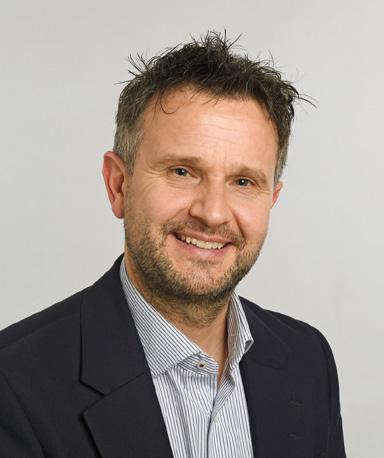

Loram EMEA has appointed Lee Tinney as Managing Director. Lee brings extensive expertise in delivering rail maintenance services across the UK, USA, Europe, and the Middle East. Since joining Loram EMEA in 2015, Lee has served as Operations Director, overseeing contract services, aftermarket support, and the integration of new technologies. In addition, Loram EMEA has appointed Jennifer Gladding as Operations Director. As a Chartered Engineer, Jennifer will lead Loram EMEA’s Operations and the Derby-based Infrastructure Monitoring team.
Petards Joyce-Loebl Limited (PJL) has promoted General Manager, Victoria Hodge (left), to the position of Managing Director. The Gateshead-based firm has also strengthened its commercial operations for the Petards Rail division with the appointment of Maria Walker, as Business Development Manager. Prior to joining Petards, Victoria spent a decade with BAE Systems in senior commercial leadership roles. Maria joins from Telent Technology Services where she managed the expansion of key Network Rail accounts and developed strategic partnerships with Tier 1 contractors.


Christian Gysin has been appointed as Chief Technology Officer at the HARTING Technology Group. Christian began his professional career in 1990 at Endress + Hauser Flowtec AG and went on to hold various management positions at ABB in Dättwyl, Switzerland, and at Basler Zeitung Medien AG, Switzerland.
Land, consents and engagement specialists
Ardent has appointed Steven Manifold to the newly created senior position of Director of Development Consultancy. Steven’s primary focus with Ardent will be on projects in Greater Manchester and the North West.
TransPennine Express has appointed a new Head of Programmes for its part in the Transpennine Route Upgrade. Lindsey Tien-Rhimes is overseeing the delivery of key upgrades as part of the Transpennine Route Upgrade.
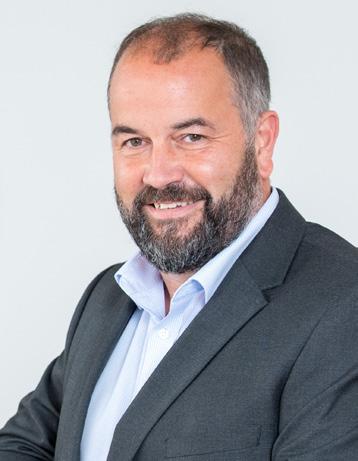
Lea Harrison has been appointed as the new Managing Director of Blackpool Transport Services. Lea brings a wealth of operational experience to Blackpool Transport, having originally started his career as one of the first tram drivers for Manchester Metrolink in 1991. From Manchester, he became Head of Service Delivery at Tramlink Nottingham, successfully introducing two extensions to the network in August 2016, after which he then moved on to become the Managing Director for Edinburgh Trams.

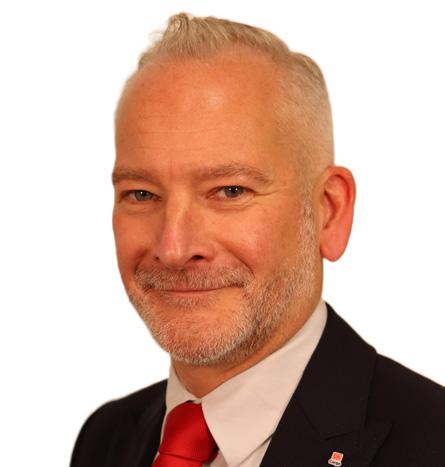
DB Cargo UK reorganises its senior management
DB Cargo UK has announced a number of new appointments to further improve the company’s operational and financial performance and position the company for long-term success. Roger Neary, who was previously Chief Sales Officer, will take on the consolidated role of Chief Commercial Officer. Kate Turner, who was previously Head of Operations North, has been appointed Chief Operating Officer, but with additional responsibility for Train Planning. Mark Sargant, who was previously Head of Operations South, will take on the role of Director of Operations, with a new national remit.
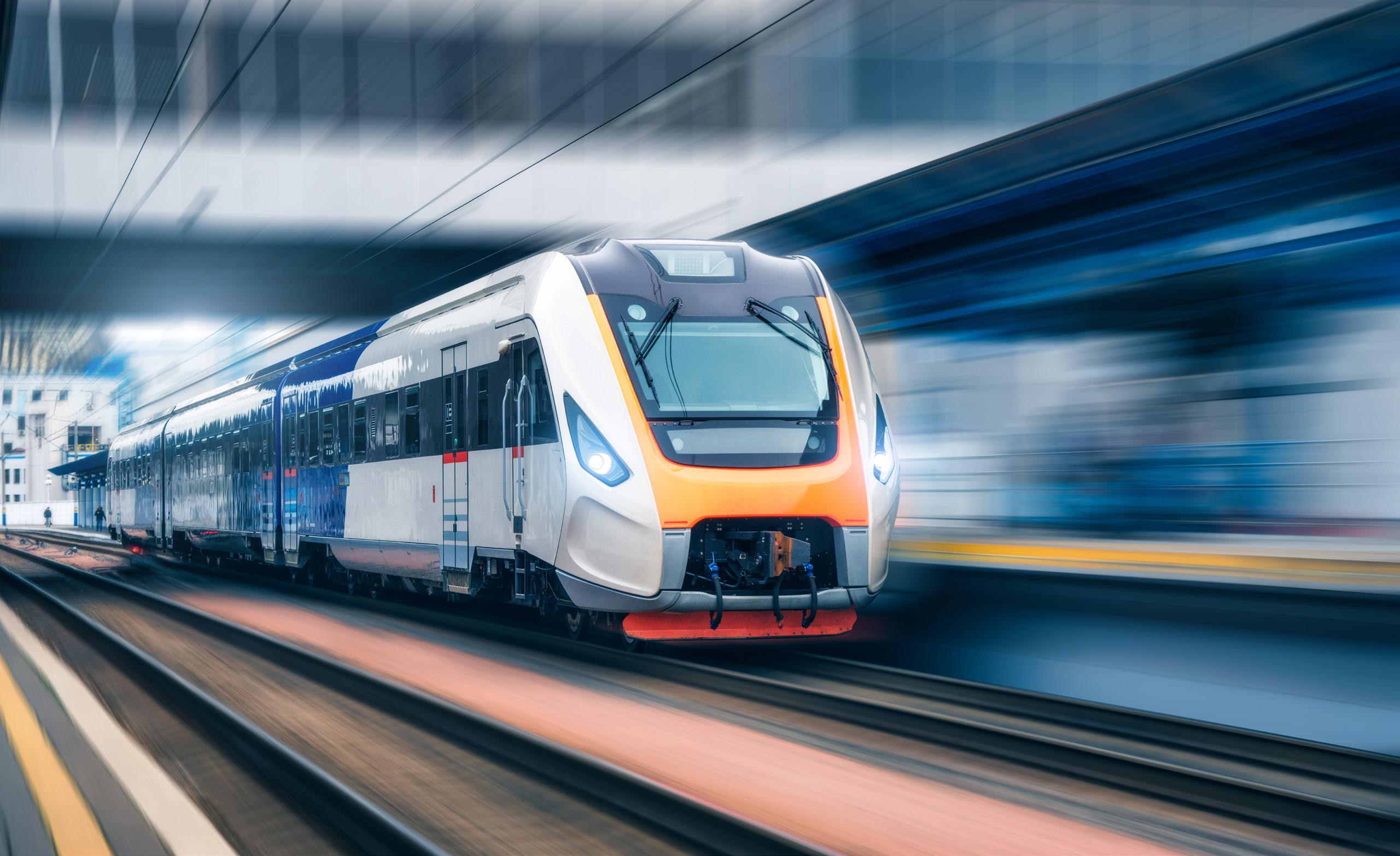
Norbar is a UK manufacturer of battery, electric, pneumatic and manually operated torque multipliers, wrenches, torque measurement equipment and bespoke torque control solutions specially developed for the rail industry Contact Norbar and speak to The Voice of Torque Control