36
HEALTH AND SAFETY
Railway Benefit Fund has published its latest impact report, which reveals in 12 months it delivered £2.76 million in social value to the UK rail industry
S
RBF: A decisive shift from reactive crisis intervention
eeing the real difference Railway Benefit Fund (RBF) makes in people’s lives fills Jo Kaye with enormous pride. She is fast approaching three years as Chief Executive Officer at the charity which provides support to current, former and retired railway people and their families across the UK. Last month it was revealed RBF delivered £2,757,683 in social value in 2025, supporting more than 500 railway workers and their families across the UK with practical help to navigate financial pressures, improve wellbeing, and stay connected to their community. The report highlights the breadth of support the charity provides, from preventing homelessness to reducing isolation, helping railway people stabilise their lives and move forward with confidence. Among the support offered has included financial grants, confidential advice, digital tools, and befriending services to railway workers and their families. “Our latest social value impact report marks a pivotal evolution in our mission, a decisive shift from reactive crisis intervention towards tackling the structural, cost-of-living barriers that lock families into persistent cycles of debt,” explained Jo. “Working alongside a growing network of partners, we are embedding lasting social value into the railway community, reinforcing local safety nets and championing the systematic change needed to address the root causes of poverty. “This is support that goes beyond immediate relief. Through sustained advocacy and targeted intervention, we are working to shield the most vulnerable railway families from the compounding and often invisible pressures of modern poverty before crisis takes hold.” The 2025 RBF Impact Report outlines these key findings from donation to impact: £342,760 – preventing homelessness. £283,450 – protecting railway people from falling into crisis. £618,208 – reducing isolation and stress. £2,757,683 – total social value delivered. The report also reflects the growing financial pressures facing railway workers and their families, with the charity stepping in to provide practical, targeted support that helps people regain stability. That support is not confined to retirees: 66 per cent of those helped were current railway workers, and 65 per cent were 50 years and younger, demonstrating
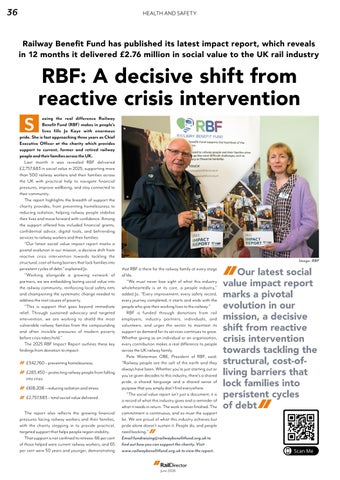
Image: RBF
that RBF is there for the railway family at every stage of life. “We must never lose sight of what this industry wholeheartedly is at its core, a people industry,” added Jo. “Every improvement, every safety record, every journey completed, it starts and ends with the people who give their working lives to the railway.” RBF is funded through donations from rail employers, industry partners, individuals, and volunteers, and urges the sector to maintain its support as demand for its services continues to grow. Whether giving as an individual or an organisation, every contribution makes a real difference to people across the UK railway family. Pete Waterman OBE, President of RBF, said: “Railway people are the salt of the earth and they always have been. Whether you’re just starting out or you’ve given decades to this industry, there’s a shared pride, a shared language and a shared sense of purpose that you simply don’t find everywhere. “The social value report isn’t just a document, it is a record of what this industry gives and a reminder of what it needs in return. The work is never finished. The commitment is continuous, and so must the support be. We are proud of what this industry achieves but pride alone doesn’t sustain it. People do, and people need backing.” Email fundraising@railwaybenefitfund.org.uk to find out how you can support the charity. Visit www.railwaybenefitfund.org.uk to view the report.
June 2026
Our latest social value impact report marks a pivotal evolution in our mission, a decisive shift from reactive crisis intervention towards tackling the structural, cost-ofliving barriers that lock families into persistent cycles of debt