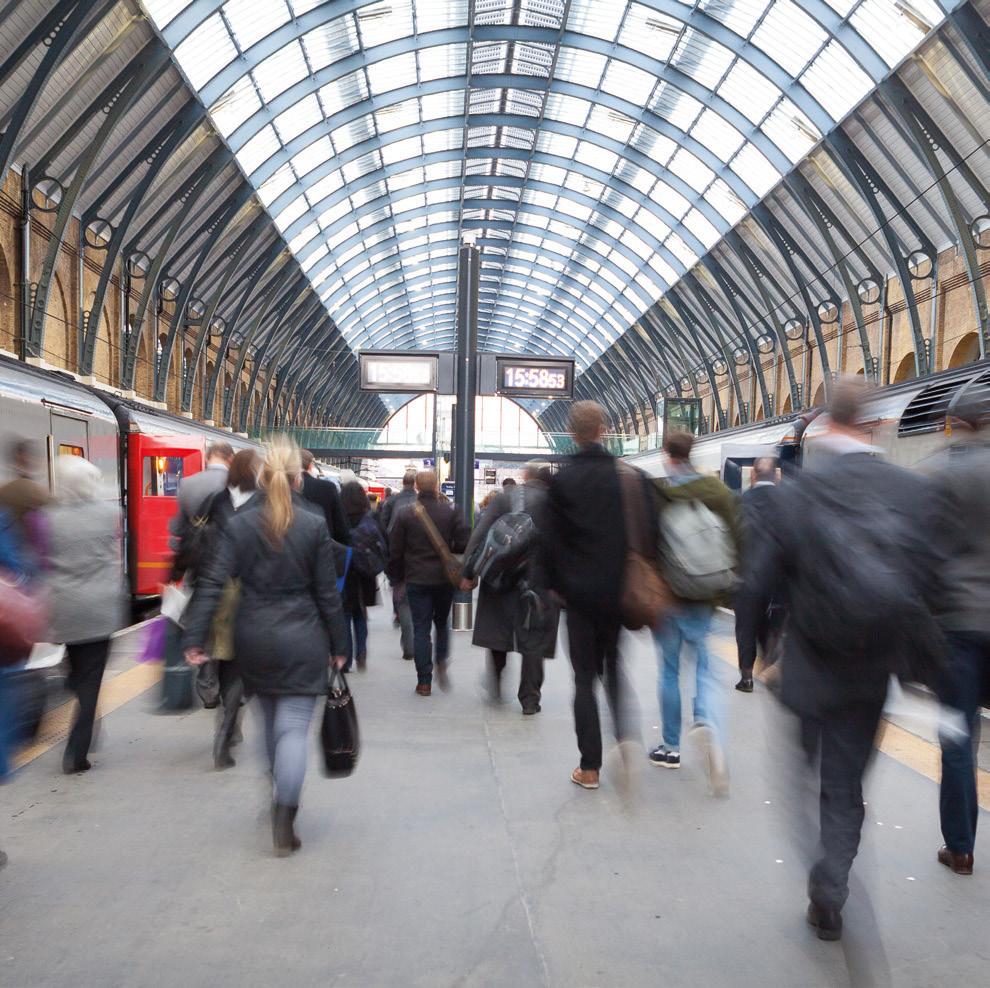
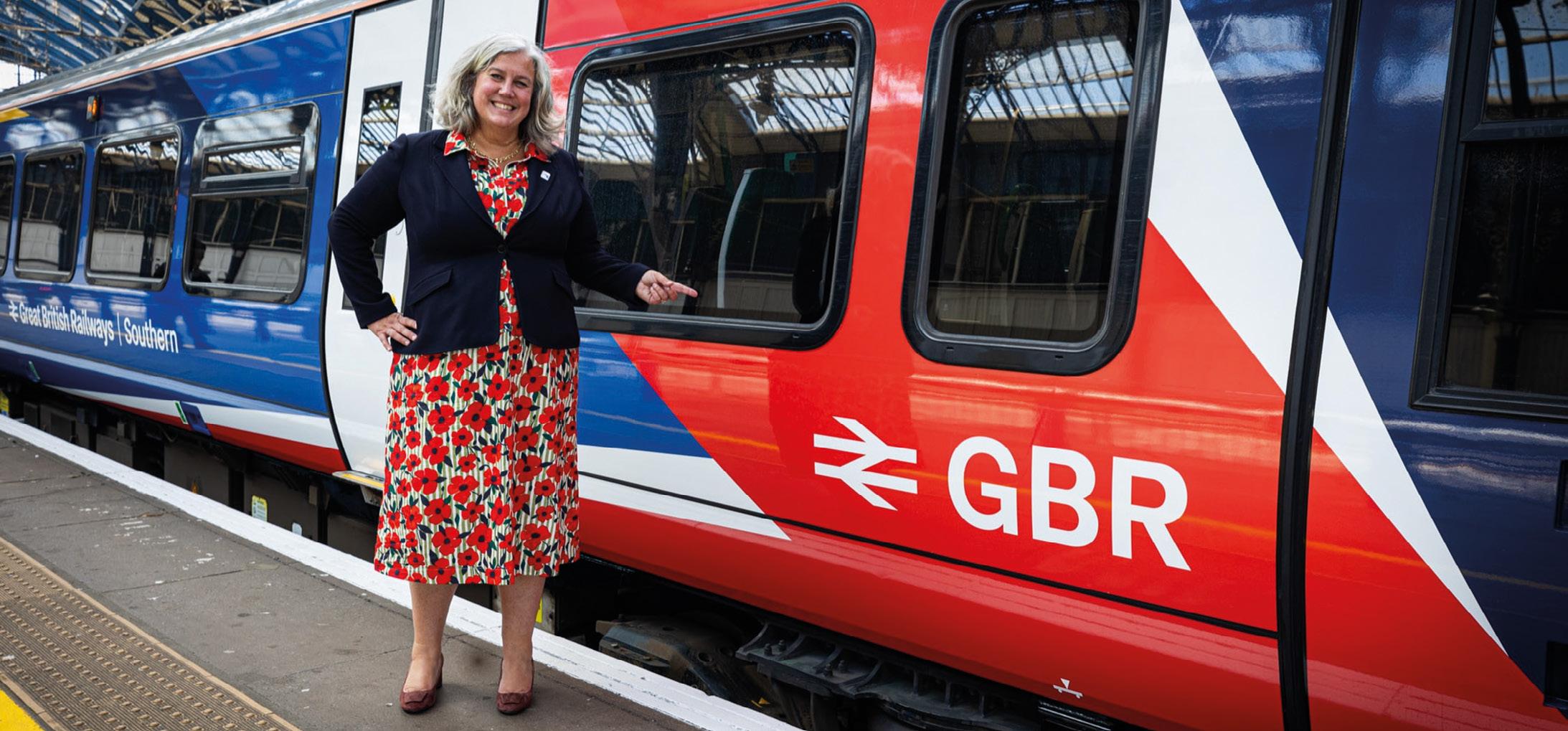
The creation of Great British Railways (GBR) represents one of the most significant periods of structural change that Britain’s railways has seen in a generation. It is essential that safety is maintained through transition and into the long-term steady state.
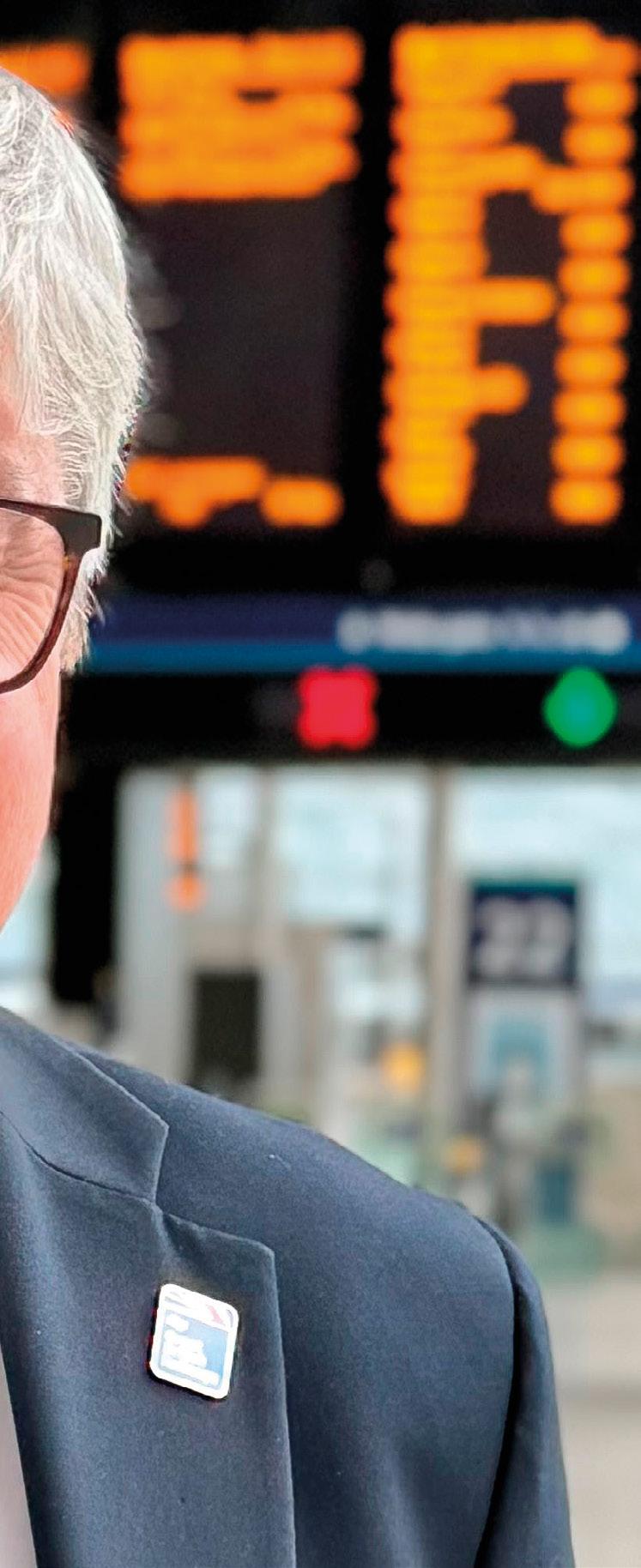
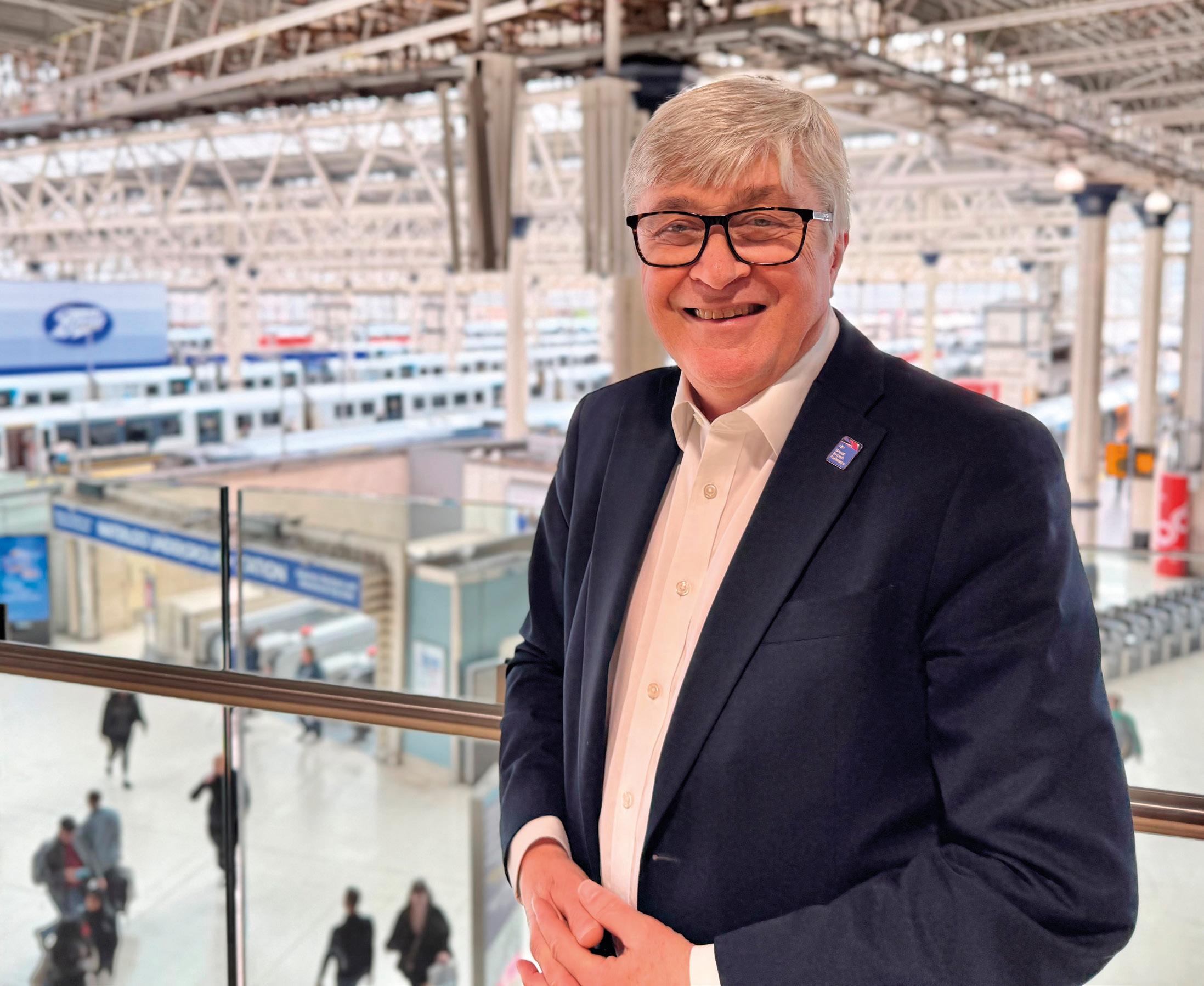
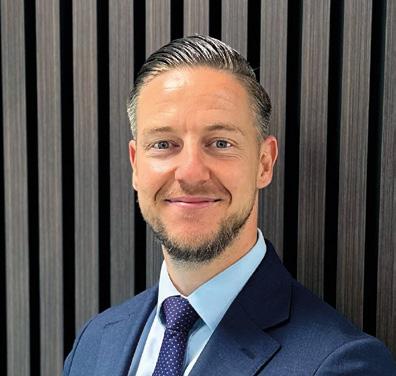
This month’s Rail Director is focused on health and safety, highlighting the huge amount of work taking place to ensure everyone returns home safe every day. Emphasising the importance that this remains the case during and after the arrival of GBR, Richard Hines, HM Chief Inspector of Railways and Director of Railway Safety at the Office of Rail and Road, sees the coming together of track and train as helpful in driving not only business culture, but a safety culture.
From page 12, he says: “I’ve been clear in my engagement with industry that there needs to be a relentless focus on ensuring safety through transition. We need to have people who deliver their day jobs and safety critical roles to the highest ability all the way through this.”
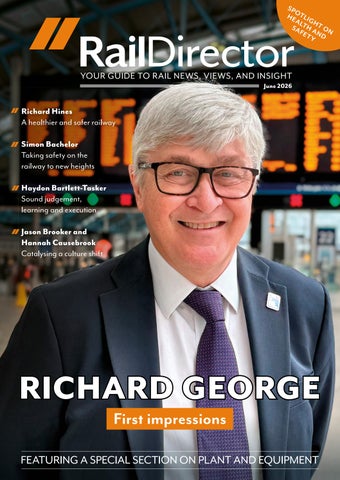
It’s heartening to see the efforts being made to keep staff, passengers, and communities living near the railways safer. This important priority is highlighted in this month’s cover feature, in which Richard George, the new Chair of Network Rail, speaks with Nigel Wordsworth about the challenges and opportunities that lie ahead. Read the full interview from page 6.
From page 22, Simon Bachelor, from British Transport Police, discusses the force’s use of drone technology; on page 26 Railway Children explains more about an interactive game to help keep children safe; and from page 16, Stuart Heaton reflects on the impact of the excellent Rail Safe Friendly programme.
I personally take a lot of pride being part of an industry that cares so much. This aspiration is highlighted by Rail Safety Week, taking place as this magazine goes to print. I’m particularly looking forward to the conference which kicks off the week of events and the sharing of best ideas. More about this next month.
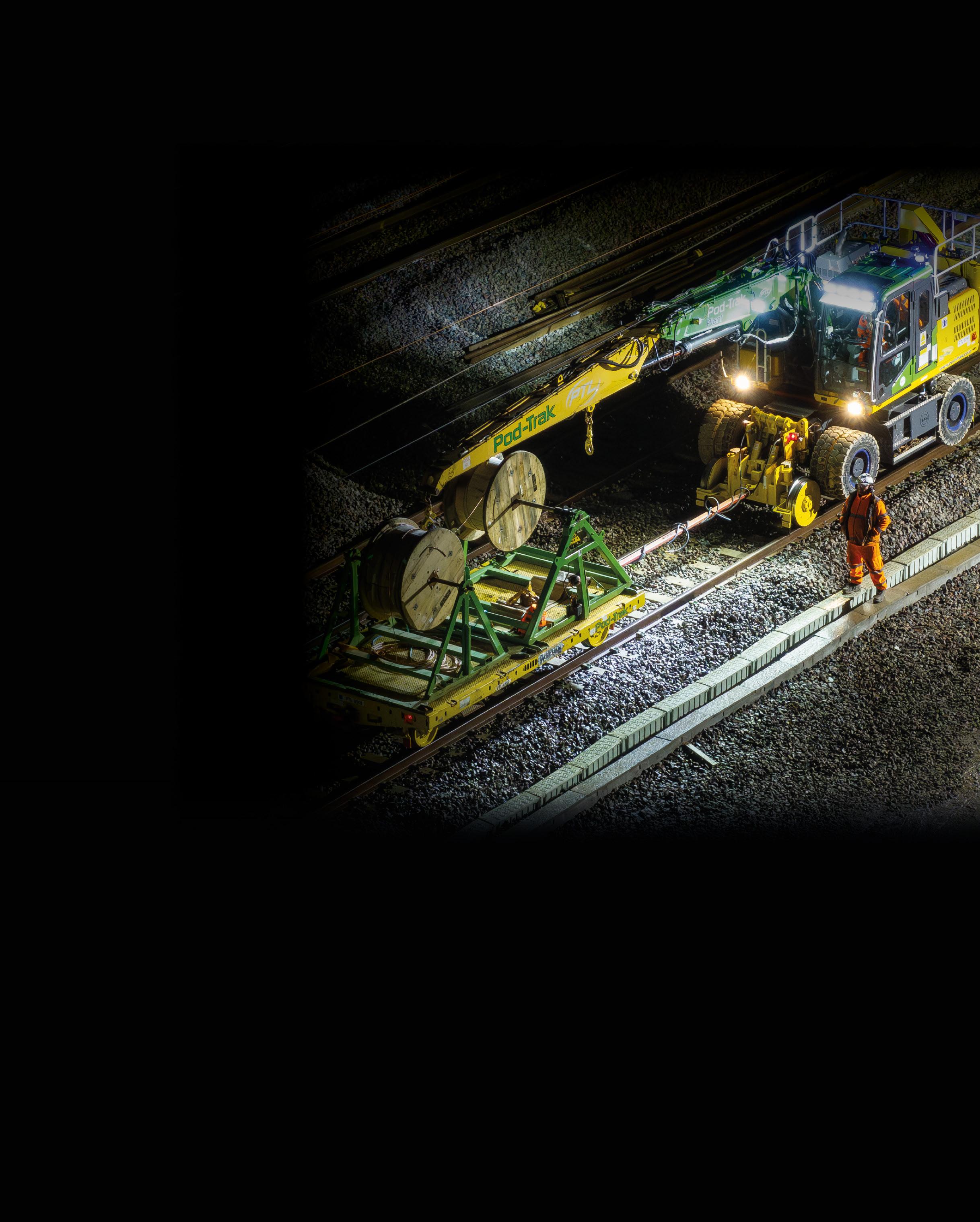
This month’s edition also features a special section centred around plant from page 38, with a fantastic contribution from Steven Mulholland from the Construction Plant-hire Association, who writes about the importance of a confident, well-capitalised supply chain.
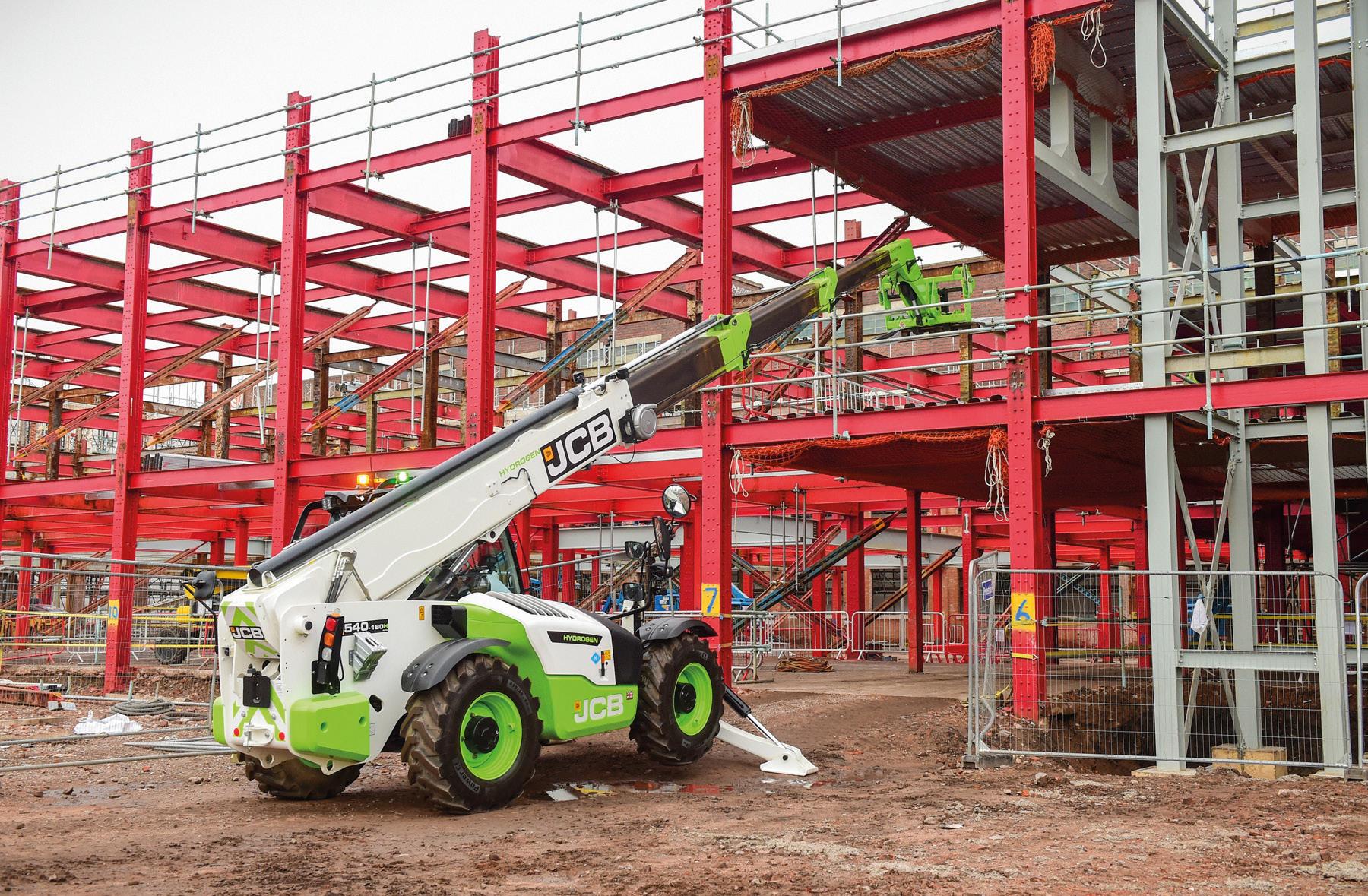
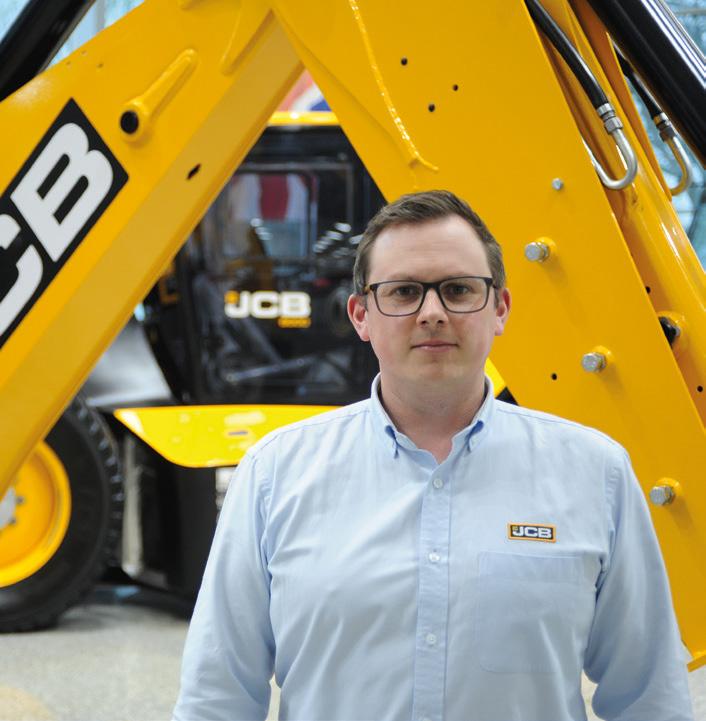
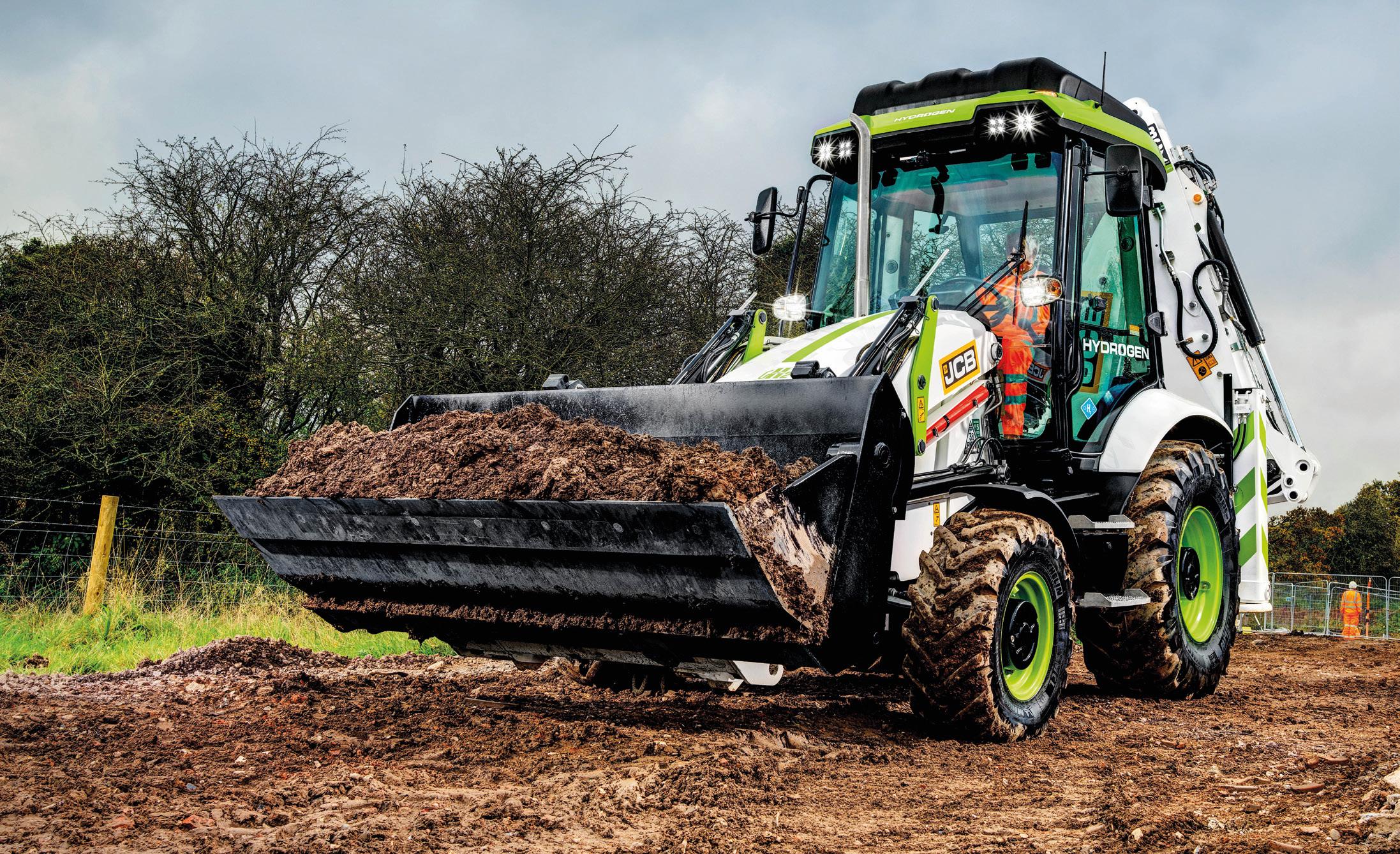
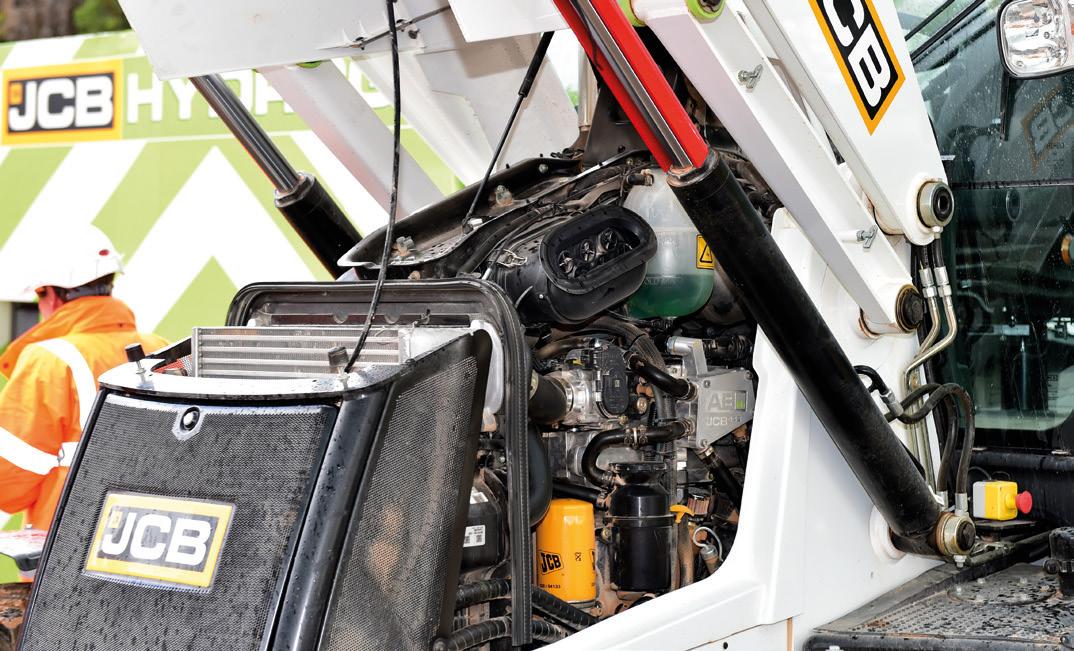
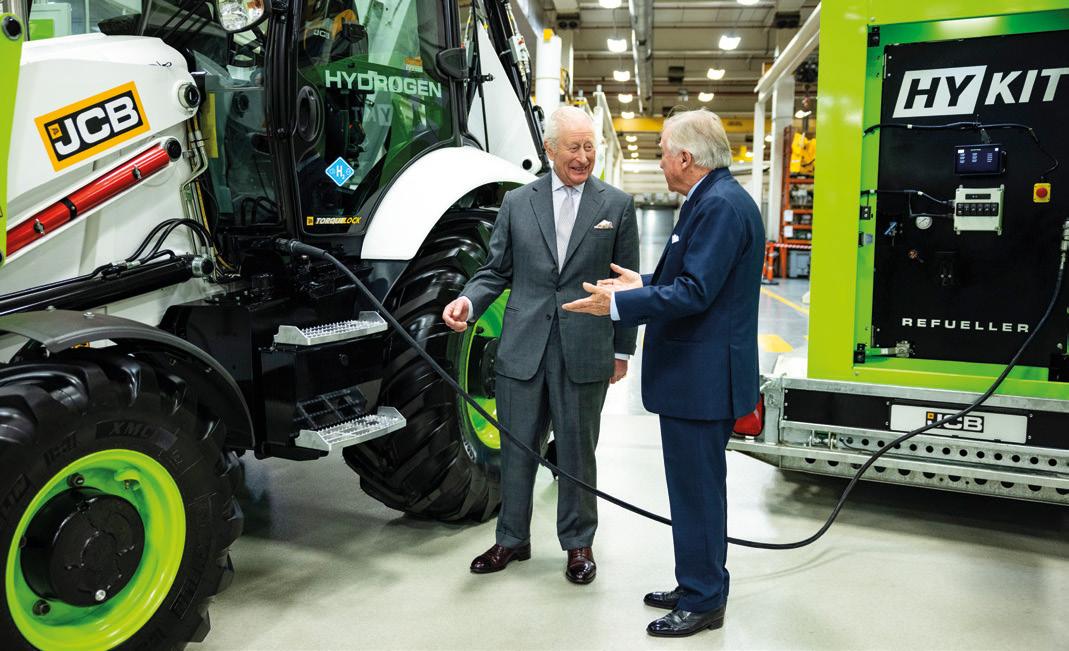
Tom Beamish, Advanced Projects Deployment Manager at JCB, also writes about how the organisation is leading the way in the introduction of hydrogen as a low-emission fuel. Read the full article from page 40.
Alongside the two focus areas, you can also read the latest column by Haydon Bartlett-Tasker from page 74. This month he writes about the need for the industry to be more open to experimentation, more willing to share data and more deliberate in creating safe environments where new ideas can be tested and proven.
Thanks again to everyone involved in the latest edition, which I hope you enjoy reading as much as I have enjoyed pulling it together. Next month sees a special combined July and August edition focused on rolling stock and depots, with a special section on ports. It’s already lining up to be a great edition, so do get in touch if you’d like to feature in it.
Stay safe,
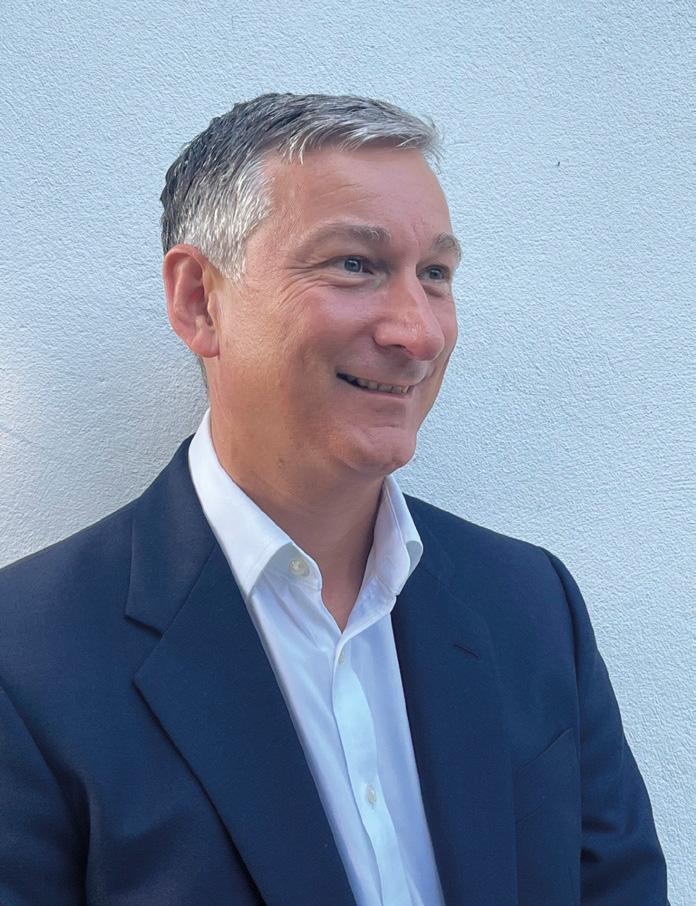
Danny Longhorn Editor
It’s heartening to see the efforts being made to keep staff, passengers, and communities living near the railways safer
Rail Director magazine and Railbusinessdaily.com are assets owned by the Railway Industry Association. Railbusinessdaily.com delivers more than 70 stories a week to +50,000 rail industry professionals in our daily 7am newsletter. If you have not already subscribed, it’s free and it’s easy to do so at www.railbusinessdaily.com, please also encourage your colleagues to do the same. This is the very best way to keep abreast of what is happening on the UK’s railways. There is a digital copy of Rail Director on our website.
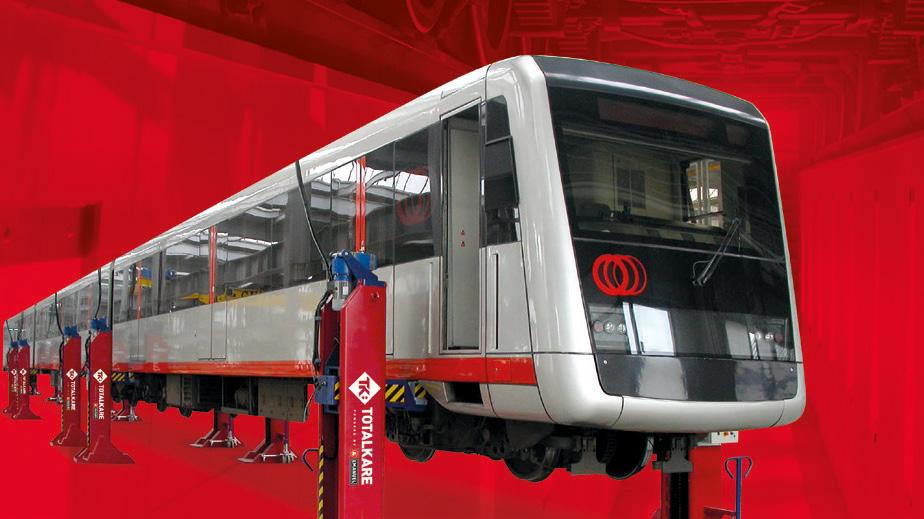
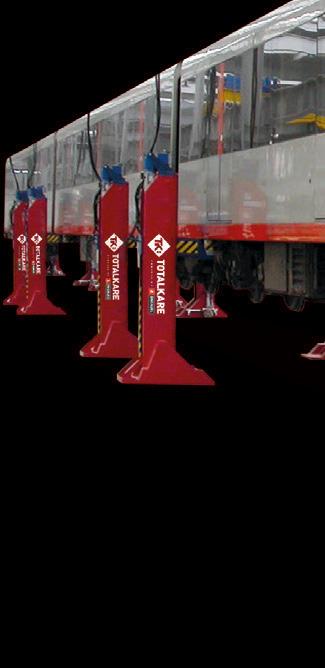
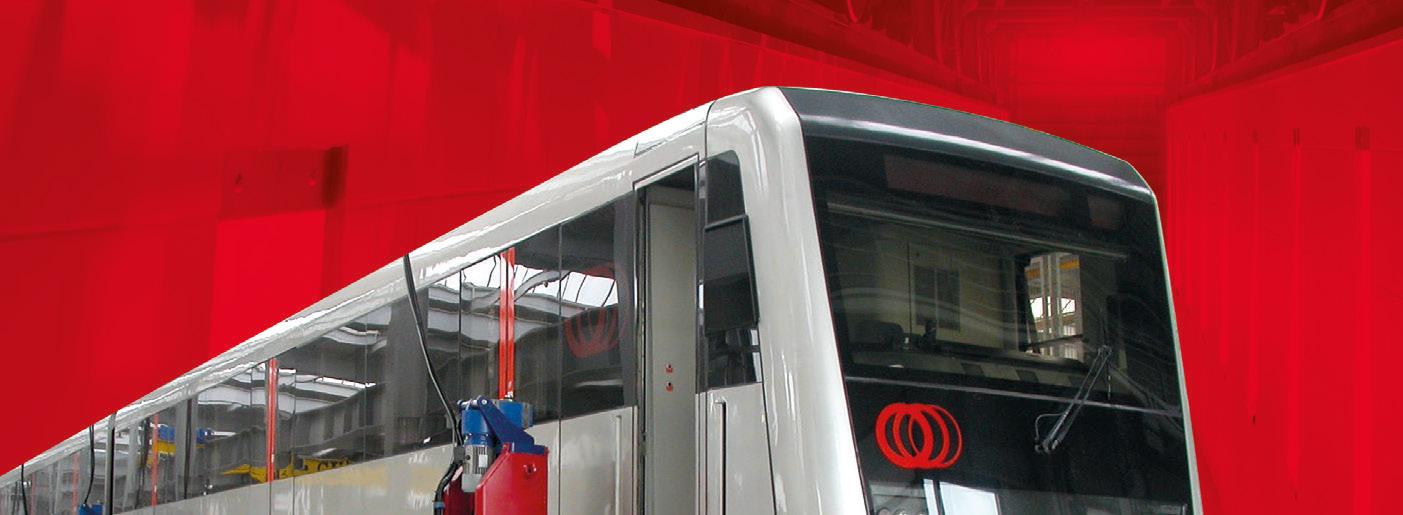
RAIL LIFTING JACKS
With over 40 years’ experience of high quality, heavy duty vehicle lifting, Totalkare combines world class products with industry leading support to facilitate effective maintenance and repair.
For more information or to request a site visit:
6
Richard George: First impressions
Three months into the role as Chair of Network Rail, Richard George sat down with Rail Director to discuss his first impressions of the challenges the company faces
12
A healthier and safer railway
Richard Hines, HM Chief Inspector of Railways and Director of Railway Safety at the Office of Rail and Road, discusses the organisation’s business plan
Every child, rail safe
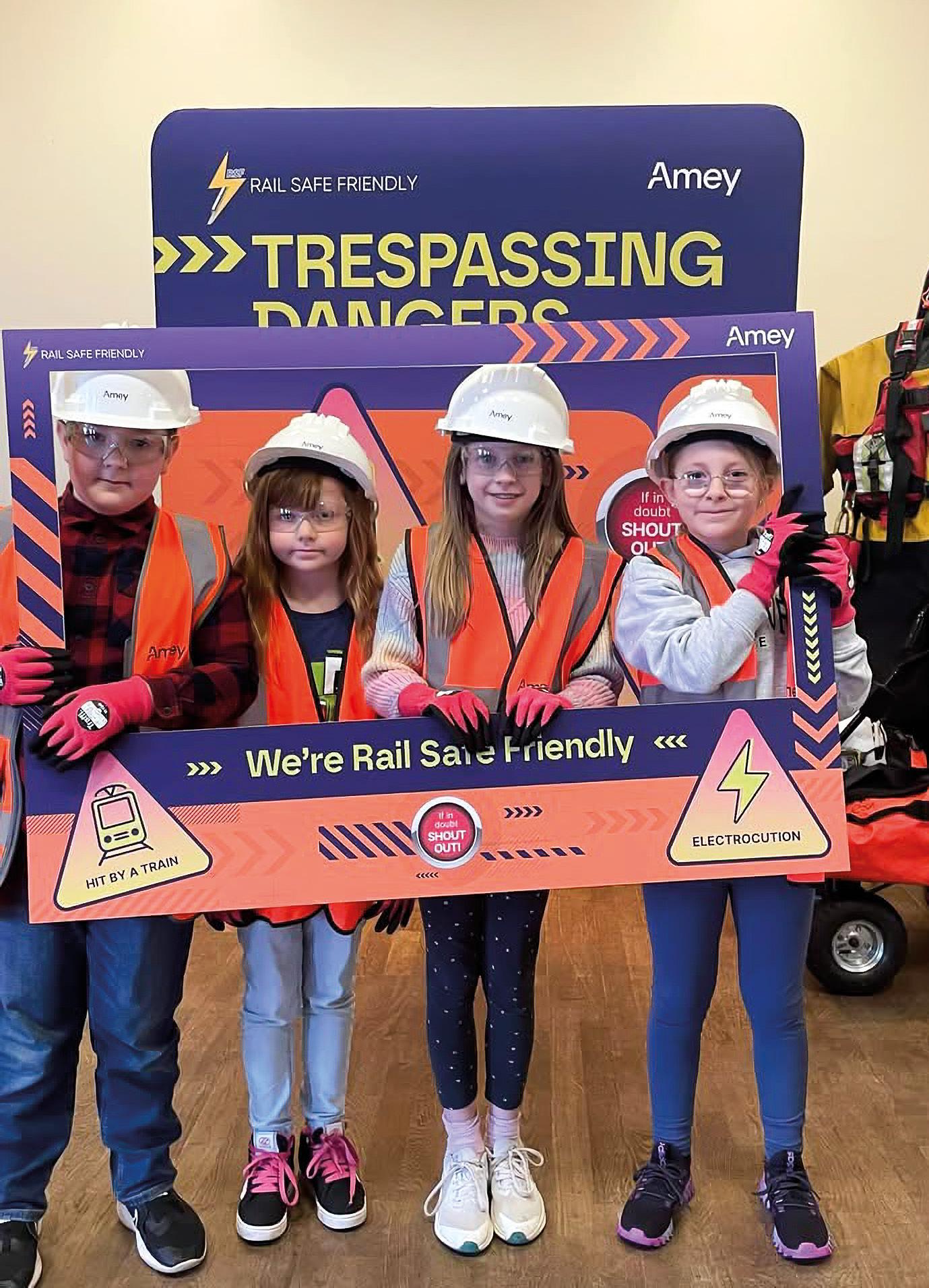
How Rail Safe Friendly is connecting safety, careers and social value across the rail industry
22 Taking safety on the railway to new heights
Simon Bachelor, British Transport Police’s Head of Drones Programmes, discusses the new tool in the railway’s armoury to inform decisionmaking at live incidents
30 Inaugural UK Rail event
Sean Willis, UK Managing Director from organiser Terrapinn, praises the response to the first event, and is inspired to grow it even more nextyear 32
Tackling abuse aimed at tramway employees
Light Rail Safety and Standards Board and KeolisAmey Metrolink reflect on the use of technology to influence the behaviour of young people towards tramway staff 36
RBF: Shift from reactive crisis intervention
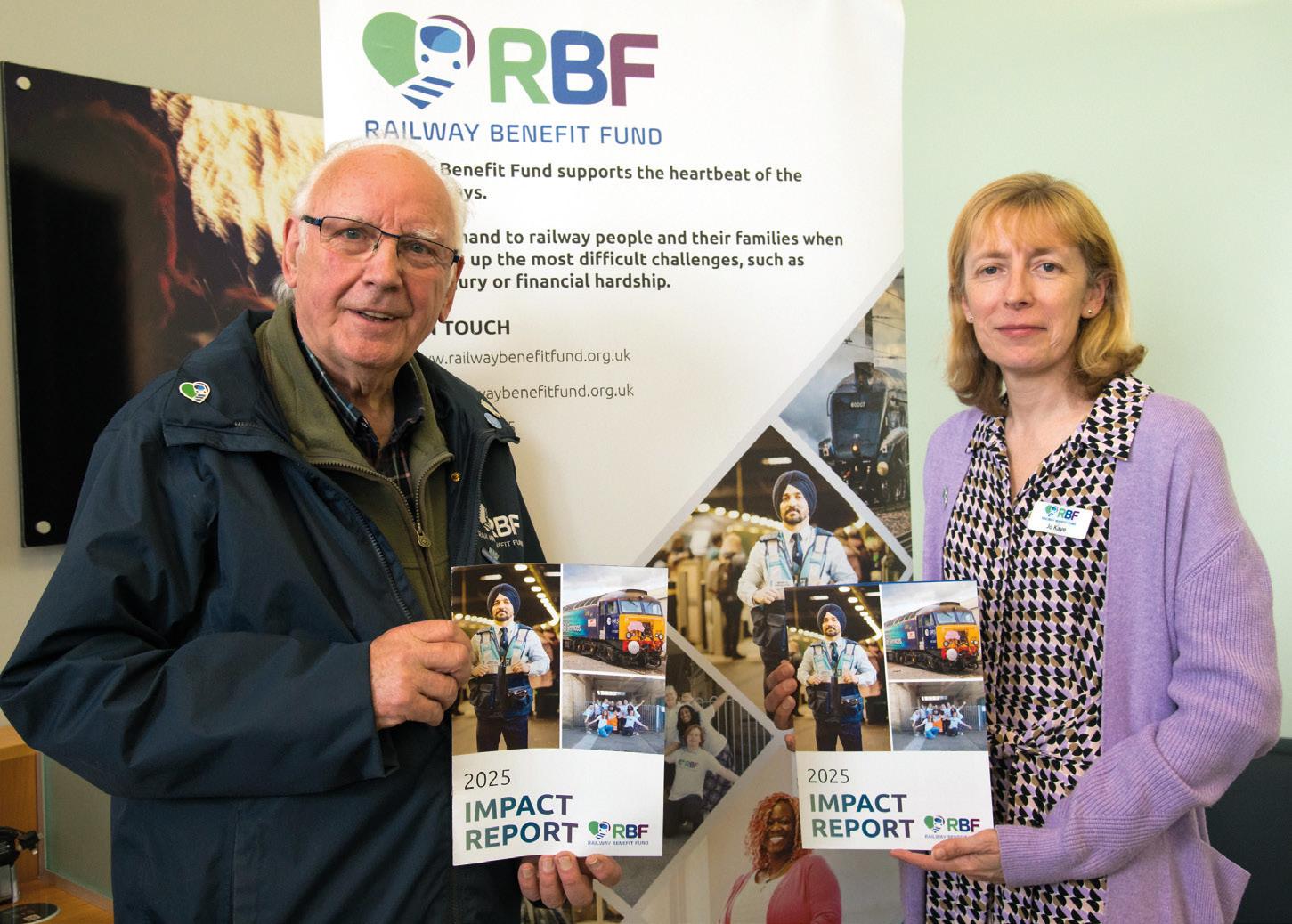
Railway Benefit Fund has published its latest impact report, which reveals in 12 months it delivered £2.76 million in social value to the UK rail industry
38 Delivering rail and infrastructure ambitions
Steven Mulholland, Chief Executive Officer at the Construction Planthire Association, writes that without a confident, well-capitalised supply chain, there is no delivery. It is that simple
40 Hydrogen for construction equipment
JCB is leading the way in the introduction of hydrogen as a low-emission fuel. Tom Beamish, Advanced Projects Deployment Manager at JCB, outlines the journey so far
54 Shaping the railway’s future through local partnerships
Mike Batheram, Market Director – Local Transport, and Alejandro Moreno, Market Director – Rail & Transit, both at AtkinsRéalis, co-write about the urgency that the industry shouldn’t be waiting for the formation of Great British Railways to establish new partnerships
60
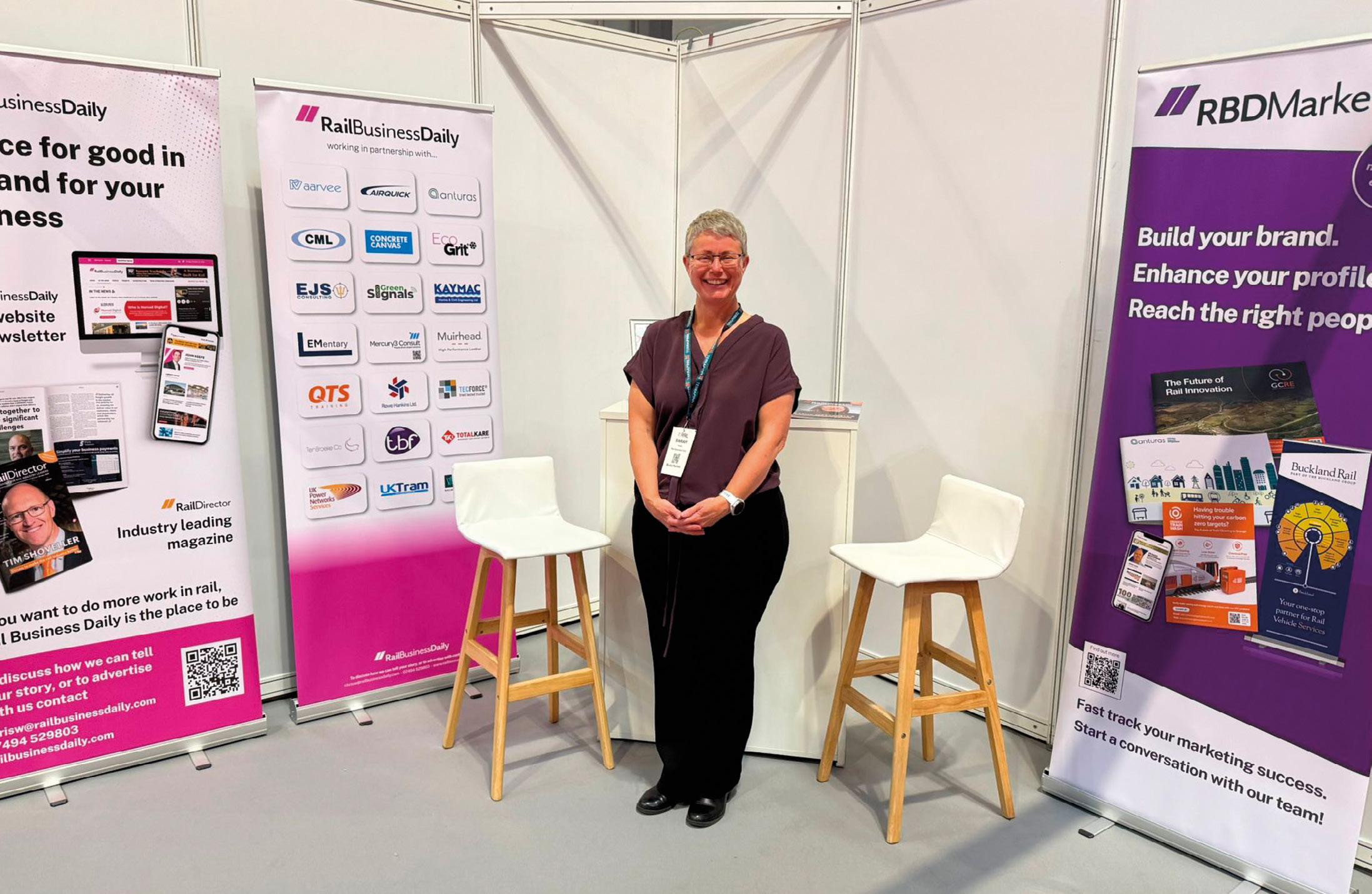
RBD Marketing: Going the extra mile
Rail Business Daily has launched RBD Marketing. Business Development Manager Sarah Hopton discusses the offering and her passion for helping organisations thrive
62 Sustainability the key for Blackpool’s trams
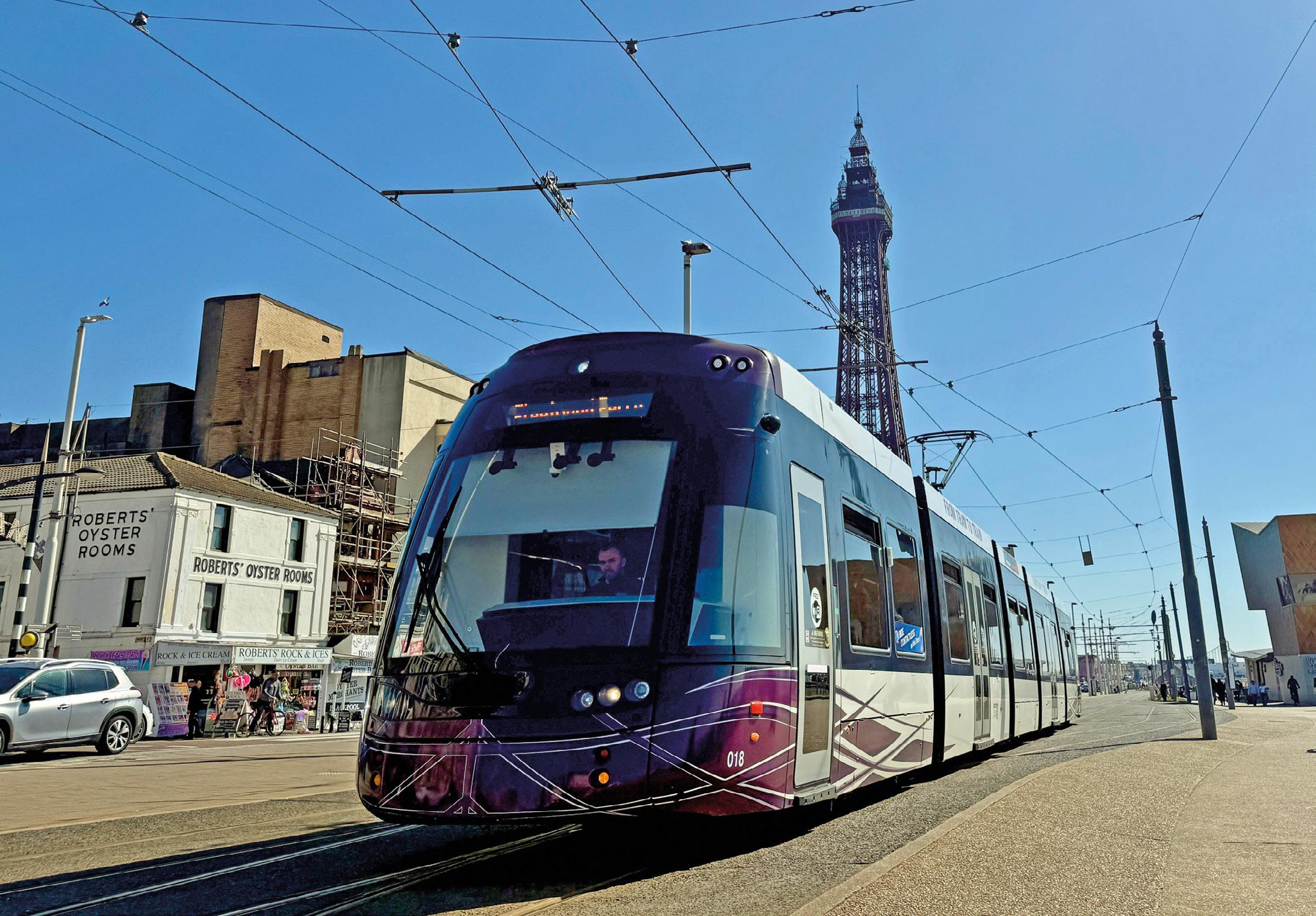
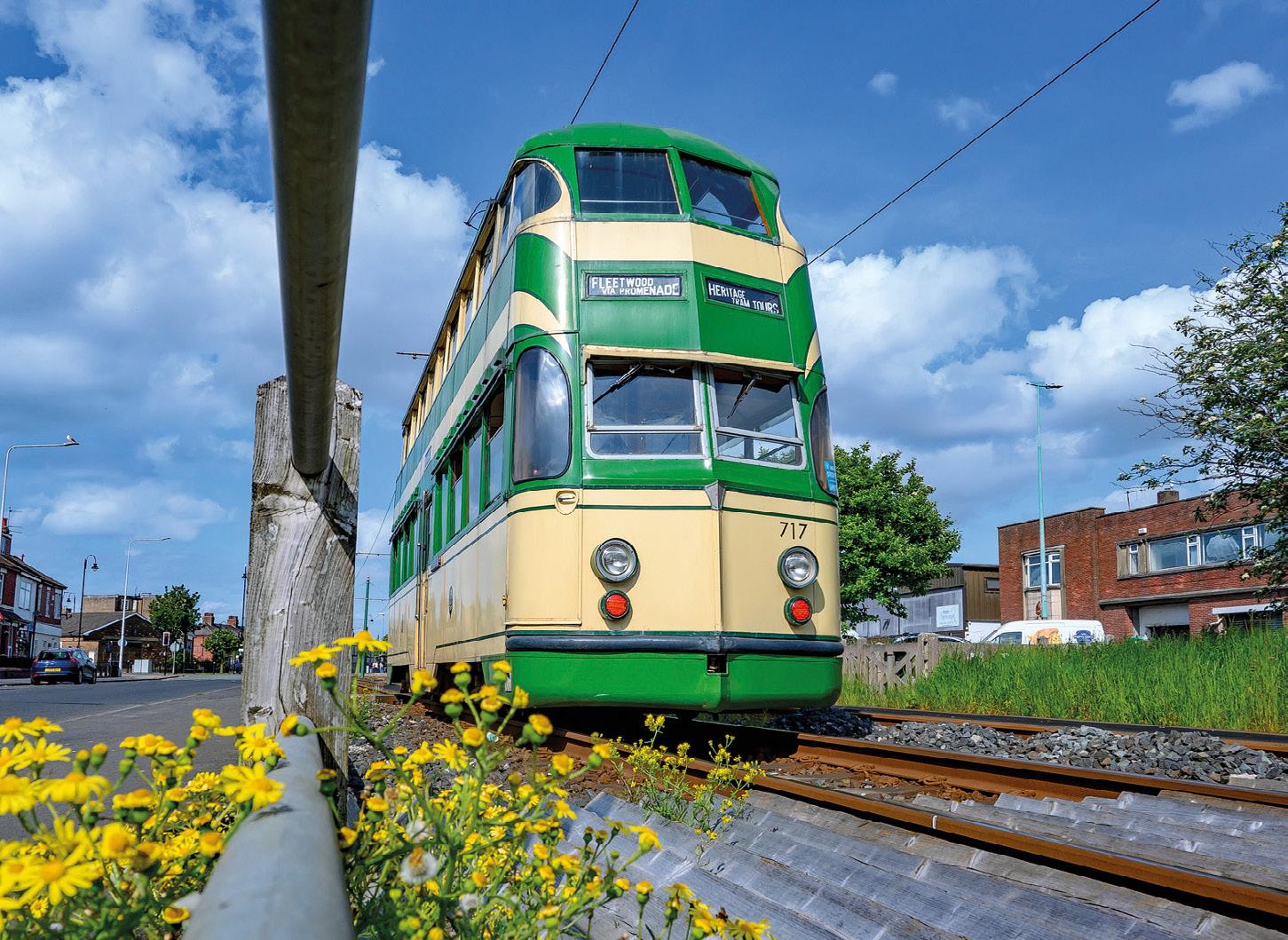
Blackpool Transport’s new Managing Director, Lea Harrison, says that taking up the high-profile role felt like returning home, and that he has big plans for the future of the modern light rail system while preserving the town’s rich tramway heritage
66
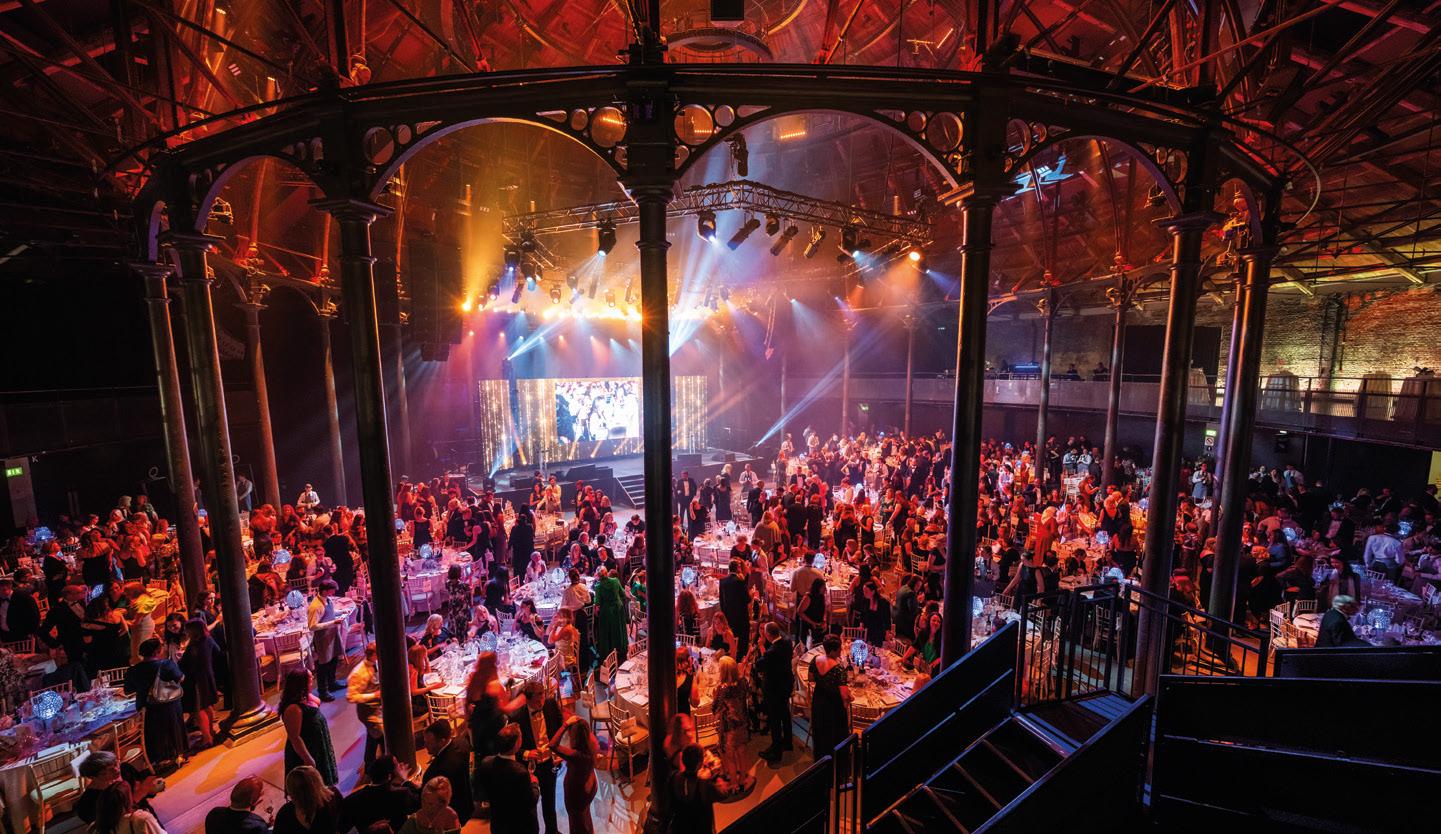
Celebrating
brilliance at Women in Rail Awards
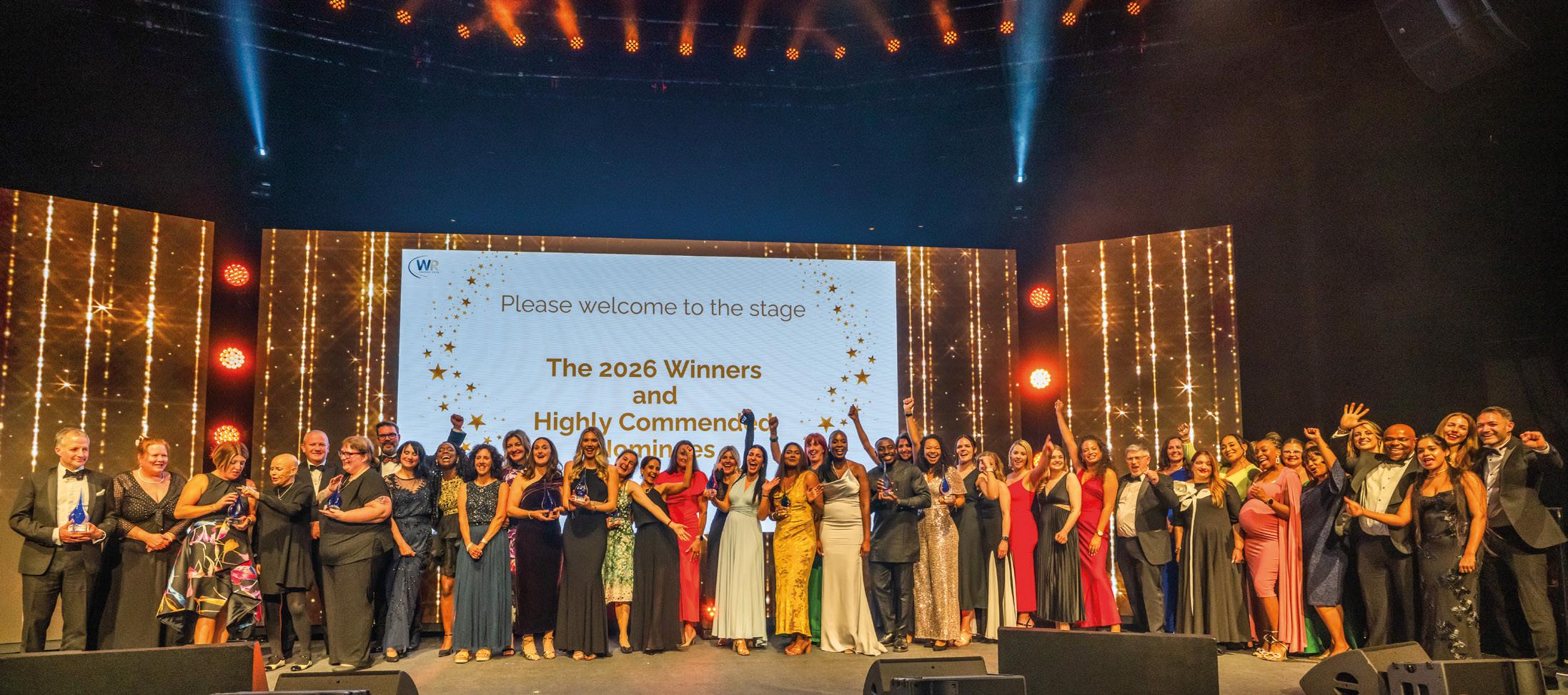
The ninth annual Women in Rail Awards brought together more than 740 professionals for a spectacular evening of celebration, inspiration, and recognition
74 Sound judgement, learning and execution
Haydon Bartlett-Tasker, Founder and Managing Director of CrossTech, writes about the need for the industry to be more open to experimentation, more willing to share data and more deliberate in creating safe environments where new ideas can be tested and proven
78 Catalysing a culture shift
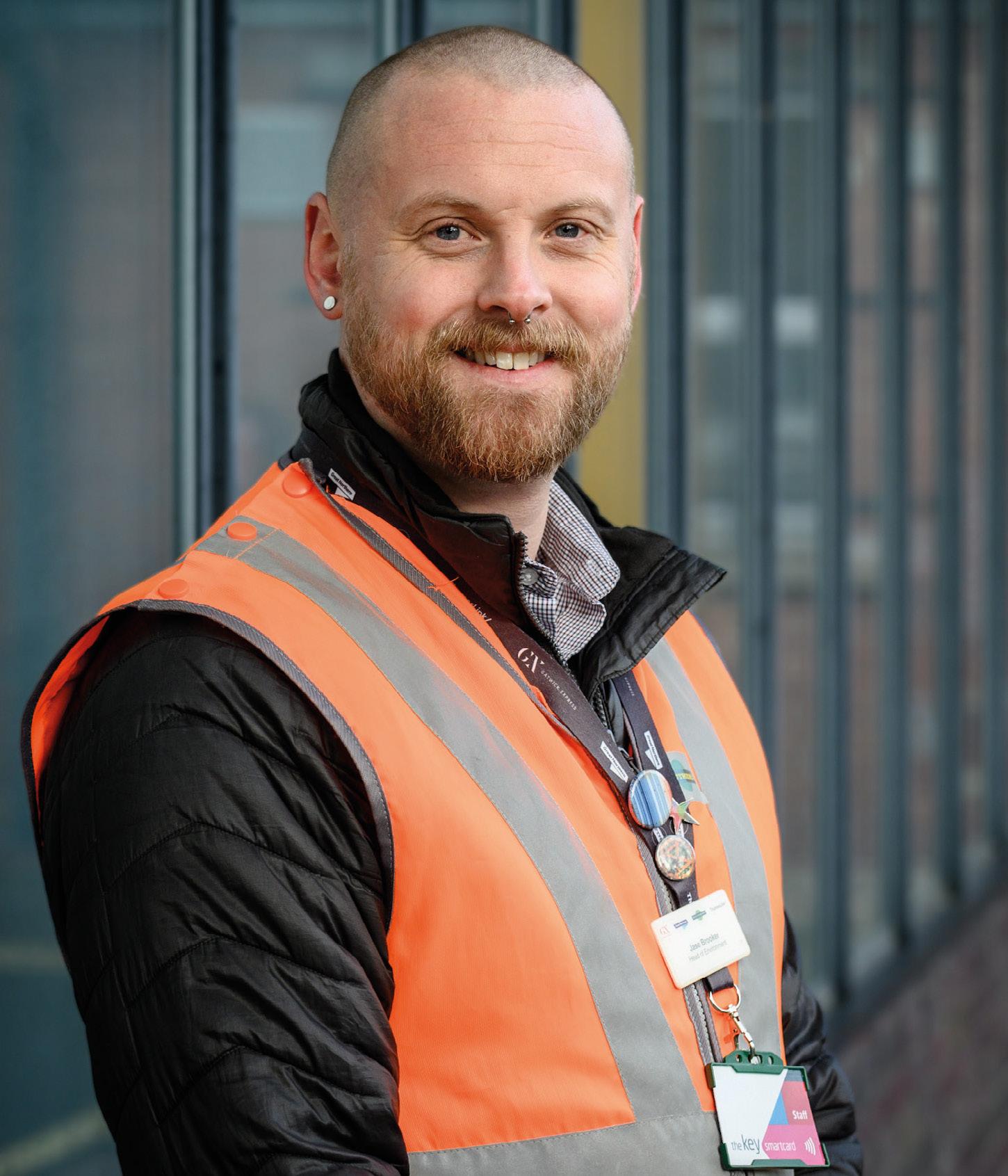
Jason Brooker and Hannah Causebrook discuss Govia Thameslink Railway’s new sustainability strategy and the recent launch of its Sustainability Academy
82 Rebuilding safety and confidence
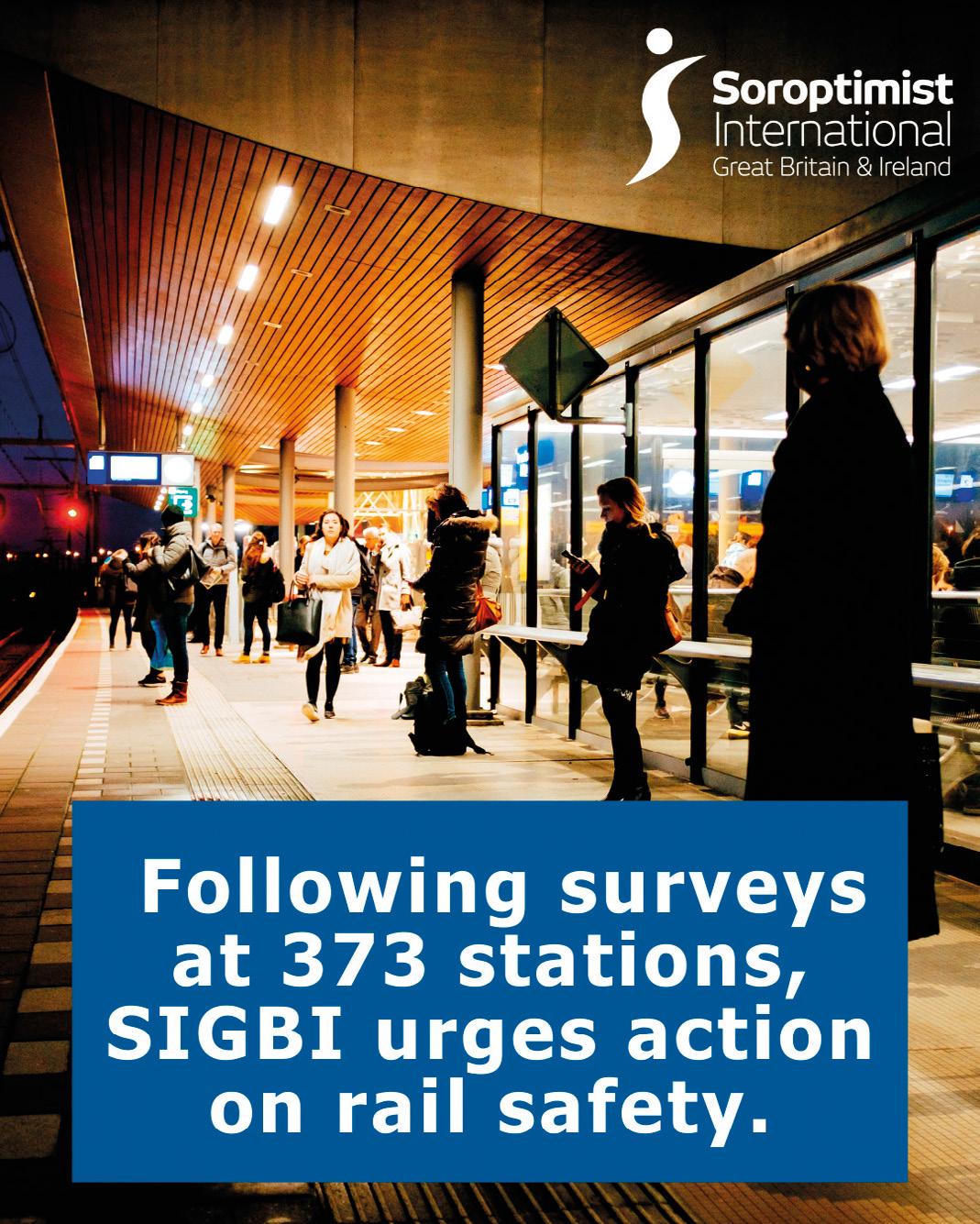
Gillie O’Rourke, President of Soroptimist International Great Britain and Ireland, outlines the findings of a new survey and sets out recommendations for the rail industry
88 Movers and shakers
Wabtec UK has appointed Liz Gray as Sales and Marketing Director, who answers questions about her aims and aspirations
Reproduction of the contents of this magazine in any manner whatsoever is prohibited without prior consent from the publisher. For subscription enquiries and to make sure you get your copy of Rail Director please ring 01132 082620 or email info@railbusinessdaily.com. The views expressed in the articles reflect the author’s opinions and do not necessarily reflect the views of the publisher and editor. The published material, adverts, editorials and all other content is published in good faith.
Image: Network Rail
Three months into the role of Chair of Network Rail, Richard George sat down with Nigel Wordsworth to discuss his first impressions of the challenges the company faces and how he sees it moving to become part of Great British Railways over the next couple of years
First impressions
Richard George was appointed as the new Chairman of Network Rail on 12 January and took up his post on 2 February.
Prior to that, he had 45 years of experience operating at the most senior level in the UK transport industry. He was Chairman of the Department for Transport Operator (DFTO – formerly DfT OLR Holdings) from May 2018; had been Managing Director of Great Western Trains and HS1 Project Director for Eurostar; as well as being an advisor
I’m a huge believer in GBR
to DfT on matters relating to rail performance and investment in the north of England. Before privatisation, Richard had 20 years of railway management experience with British Rail. His role as Chairman of DFTO was taken over
by Sir Andrew Haines, former Chief Executive of Network Rail. So, they practically swapped jobs and now share an office at London Waterloo.
Taking up his new position at Network Rail required a change in mindset. For years, he had sat in meetings on the other side of the table. Almost by definition, this meant that he had only dealt with Network Rail when something had gone wrong.
“I’d never had to deal with what’s going right and how do we improve stuff,” Richard explained.
“It’s a really healthy position for me to be looking
Images: Network Rail
at it and learning about all the things that it does extremely well,” he continued.
“And some of the things I’ve been really impressed by are the quality of the engineering and the quality of the technical knowledge and the general openness to challenge, but with a very disciplined approach to the world. I’ve been very impressed.”
He readily admits that he came to the job with preconceived ideas. Some of those he found to be untrue, though a few were not.
“One is, it’s too big,” he said. “It’s a huge bureaucracy and therefore it’s too expensive. All of those things I still believe to be true.
“That belief is balanced now by the understanding of the very good things Network Rail does and how well it does them. And some of that bureaucracy is driven by levels of assurance that create organisational layers, but that level of assurance is what makes the technical side of it very good and the safety record very good.
“Without that assurance, neither of those things would be quite of that order. So, I’m learning to balance, but at the end of the day it’s still too big an organisation for comfort.”
Richard feels that there is a lot of organisational risk aversion inside Network Rail but there is now the opportunity to start to change that. The dynamic of Great British Railways (GBR) will be quite different to that of Network Rail.
“Network Rail’s dynamic is about making sure we’ve got good, reliable, safe infrastructure for now
and for the future,” he said.
“But nowhere does it say that it’s going to be a dynamic, trusting, customer focused, efficient organisation, which are all the things that are going to be required of GBR.
“So the processes will change. What must not change is the quality of the engineering looking after the infrastructure.
“I have worked in engineering. I ran Interfleet, as was, for seven or eight years. I know what good engineering looks like, and I know what engineering for the sake of it looks like.
“And what I’m seeing here is some very, very good
focused technical work. Which is being applied to new issues – climate change issues and sustainability issues – that are being done in a very thoughtful manner.”
Innovation
Network Rail not only has a large budget but has been set efficiency targets as well – it needs to deliver more for less. That requires innovation, as doing things the same way as they have always been done won’t deliver savings. New ways have to be found.
The difficulty is that, although the leadership teams understand this all too well, some middle
PULSARUK.COM
management doesn’t. It feels to me like the ‘traditional’ way minimises the risk that something will go wrong. If you try something new, then it could go wrong, and then you could get the blame for that failure. So, you want things done the ‘safe’ way – the way they always have been.
“That has always been a problem,” Richard agreed. “I go back to British Railways, and that was a problem there as well. It is a perennial problem that you can have a senior management team that’s flying, but, if you haven’t brought the rest of the people with you, it stops there.
“That’s always been the case, so it doesn’t surprise me at all. I think we’ve got one or two things going on that helps me think we’re going to move better than we have done in the past.
“One thing we are doing that’s different is we have now got some technological changes that assist us hugely. We’ve always been very good at creating vast amounts of data, but not a lot of information.
“The application of AI technology is now remedying that quite quickly. Because there are vast pools of data it can analyse immediately and combine with other data.
“Suddenly, we can see the wood for the trees in certain areas much more clearly. There’s still a huge amount to do, but it’s allowing much better targeting, better remote monitoring.
“That allows us to focus effort better and, if you do that, ultimately it becomes more efficient because you’re not wasting your time doing things you don’t need to do. That’s important for things like climate change, where there are some long-running issues you can’t see overnight.
“But you need to measure the slow incrementals or look at trends, which AI is allowing us to do. Things that would have taken months to do before, we can do quite quickly now.”
Benefits of a new organisation
Richard accepts that changing the type of knowledge and doing things more quickly only improves efficiency to a limited extent. This new understanding has to be used to change the processes involved, which will then unlock improvements in efficiency.
These processes will change with the move to GBR, because the dynamic of the organisation will change.
“I’m a huge believer in GBR,” Richard confirmed. “A huge believer in integrated business units, with track and train being brought back together. And whole-system thinking, because that’s where some of this friction has been created.
“I’m also a huge believer in taking it down to a local level. I absolutely believe that’s the right place to be taking decisions, and that will drive the processes differently because the dynamic will be different.
“And it may therefore be different in different places. I’m completely comfortable with that, provided people are staying within the technical standards.
“I’ve been asked lots of times by some of the managers, how do we understand how this is going to work? We (Network Rail staff) have always done infrastructure. And they (train operators) have always run trains.
“Imagine going to the first meeting, and there is one set of opinions coming from the infrastructure side, and another coming from the passenger and the train sectors. Where are we going to start?
“My view is very clear. The only place you can start that conversation is with the customer and the revenue. And then you go from there.”
Customers
Richard’s definition of a customer is very broad. It’s not just a passenger or a freight haulier, it is everyone involved in the railway. For instance, it might be the train drivers, because they have to deal with new infrastructure such as signalling or level crossings.
“The customer comes at all levels,” Richard said. “At the end of the day, the railway is there for a reason. It’s not there just for its own benefit.
“That’s the difference between what GBR is about compared with what British Rail was about. I spent 20 years inside British Rail. I thoroughly enjoyed it.
“But quite a lot of the time it felt like we were running the railway for the railway, not for the customer, which made decision making easy. If you wanted to run an extra train service and regional operations management (ROM) approved, you did it. If the ROM didn’t approve, you didn’t. It was as simple as that.
“We are now living in a world full of business cases and stakeholders and all sorts of other complications. We didn’t worry about stakeholders too much in British Rail. I used to get a letter from an MP now and again, usually about the service at his local station.
We still get letters like that to this day, but during franchising we blamed the train operator or they blamed us.
“And that fragmentation is exactly what’s been wrong for the last 25 years. When we privatised British Rail, I remember deep conversations at that time about what was likely to work and what was not going to work. And we all knew that the separation of track and train, in the end, was going to present us with a problem.
“In the end it did, but it took 25 to 30 years to get there. And, actually, that isn’t bad. That’s as long
Do I think we’ll get a better railway out of it? Yes, I do. I wouldn’t be doing this job otherwise
as most railway organisations last. And we got a lot of benefits from privatisation as well.”
British Rail part two?
One area of concern for many people is whether GBR will become just a new version of British Rail. Richard’s response is that there will be a lot more checks and balances on GBR, even though it will be an arm’s length body with railway decisions being made by railway people.
“Separation from Government will be the hardest part of the reorganisation,” Richard said. “Reorganising the structures, frankly, we’ve done that forever. That doesn’t worry me.
“The Government says it wants to have a standalone GBR. But who will be the Government in five years’ time? And what will their view of that separation be? I think it’s the hardest part to achieve.
“And it will always be. We consume too much of taxpayers’ money for it not to be of huge political interest in what we’re doing.
“The railway is there to serve the economic needs of the community. It’s not there for itself. And that’s the difference.
“In theory, it’s already separated. Because Network Rail is an arm’s length body. The train operators are private companies, or they were. So, in theory Government had little input. Apart from once every five years, when it became time to reset the budget.
“But when COVID came along, the Government bailed out all the train operator companies, which otherwise would have gone bust. And it never gave those decision-making powers back again.
“So they put in the support mechanisms and changed the contracts, which became management agreements rather than franchises.
“Franchising itself did deliver some useful things.
Fragmentation is exactly what’s been wrong for the last 25 years
It created a mechanism for getting new rolling stock through the bidding processes. That’s much harder now. We’ve got to go cap in hand to Treasury now to get money for new rolling stock. And that’s much more difficult than writing an option into a franchising plan.
“Network Rail’s had the same problem, since they took enhancements out of the control periods. It was for very sensible reasons, you can’t do enhancements on a five-year rolling programme. You’ve got to treat each one as an individual project.
“That’s why they kept getting the sums wrong, because they tried to cost projects too early. And that’s always a problem.
“Five-year control periods were a pretty good mechanism. They gave Network Rail more stability in its planning for infrastructure than virtually any other railway in Europe. It was far more stability than British Rail had, which was an annualised budget. The longer term the plan we get to work with, the better.”
Will GBR keep a five-year budget, similar to control periods, when track and train become integrated?
“There’s a lot of stuff in the boiler room of GBR that’s still under discussion,” Richard said.
“And a lot of these things, even if we keep that
system, such as how much autonomy GBR gets from Treasury, is still part of my concern. But ultimately most of it boils down to proper railway decisionmaking.
“If we get the decision-making right, Treasury will start to relax. Treasury’s much more relaxed about Network Rail than it was five or six years ago, because it’s generally got the big numbers right.
“Railway decisions need to be made by railway people. TRU (Transpennine Route Upgrade) is a good example of the whole industry working together and delivering a very large project well and to budget.”
A job worth doing
Richard sees his appointment, and that of Sir Andrew at the next desk, as temporary ones. They are preparing Network Rail and DFTO to merge into GBR, possibly by the end of 2027. At which time, someone else will be appointed to chair the entire operation.
But why was Richard asked to take on his new role?
“I have the benefit of having been around for a long time,” he said. “I’m trusted to talk about multiple different issues. And that’s important.
“I went through multiple reorganisations in British Rail. We went through privatisation, and all the changes that then came along with franchising as well. So, I’ve been there, done it, and have some credibility to talk about it.
“And it’s important that people understand why we’re doing it and how we’re doing it. And they understand that this is absolutely for the right reasons. Which I’m convinced it is, I’m sure it is, for all the right reasons.
“Do I think we’ll get a better railway out of it? Yes, I do. I wouldn’t be doing this job otherwise.”
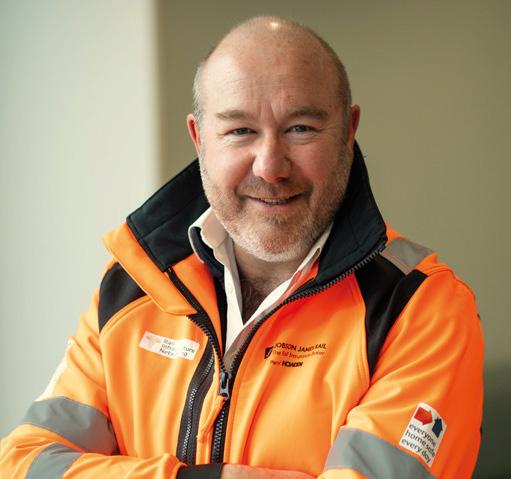
Faster incident reporting can mean lower costs. Keven Parker, ACII, CRM, NEBOSH, Head of Rail at Jobson James Rail, explains why timing is everything
Speed matters: How fast reporting reduces motor claim costs
f incidents involving roadrail vehicles, trackside fleet, or company vehicles supporting rail operations are not reported promptly, preferably within the first 24 hours, insurers lose the opportunity to engage with third parties, manage repair routes and control associated costs.
Delays in reporting, even by a few days, can substantially increase the total cost of a claim and limit the ability of insurers to intervene effectively. In extreme examples, late notification can jeopardise policy conditions.
For rail operators and contractors managing dispersed fleets and worksites, this challenge is amplified. Without early reporting, third parties will appoint their own claims management companies or legal representation, leading to increased
costs through credit hire, inflated repairs and even opportunistic injury claims.
The difference in cost between early and late reporting can be stark. Claims reported within 24 hours with complete third-party details are significantly more likely to be resolved efficiently and at a much lower cost.
Conversely, delays can see the same claim escalate dramatically in value, simply due to missed opportunities to intervene at an early stage and mitigate the loss.
Even modest increases in average claim values can translate into substantial additional insurance spend. Beyond direct costs, poor reporting performance can also negatively affect insurance premiums and an organisation’s overall risk profile.
The benefits of rapid reporting extend beyond financial outcomes. A structured and disciplined approach supports better data capture, enabling rail businesses to identify trends, improve driver and operator behaviour, and strengthen overall risk management strategies.
To achieve these outcomes, rail organisations should focus on embedding clear, simple reporting processes that work in operational environments. This means ensuring all incidents are reported within 24 hours, capturing accurate third-party details at the earliest opportunity, and gathering supporting evidence such as photographs, witness information and CCTV. It is equally important that employees and contractors fully understand their role in the reporting process, enabling a consistent and
SPECIALIST INSURANCE FOR RAIL INDUSTRY SUPPLY CHAIN COMPANIES
effective approach across all sites and teams.
Crucially, reporting mechanisms must be accessible and aligned with frontline operations whether teams are trackside, in depots, or on the road.
Put simply: the faster an incident is reported, the greater the control over its cost and outcome.
keven.parker@jjrail.co.uk 07816 283949
45 Church Street, Birmingham,B3 2RT and LondonOne Creechurch Place, London, United Kingdom, EC3A 5AF. info@jjrail.co.uk 07816 283949 www.jjrail.co.uk
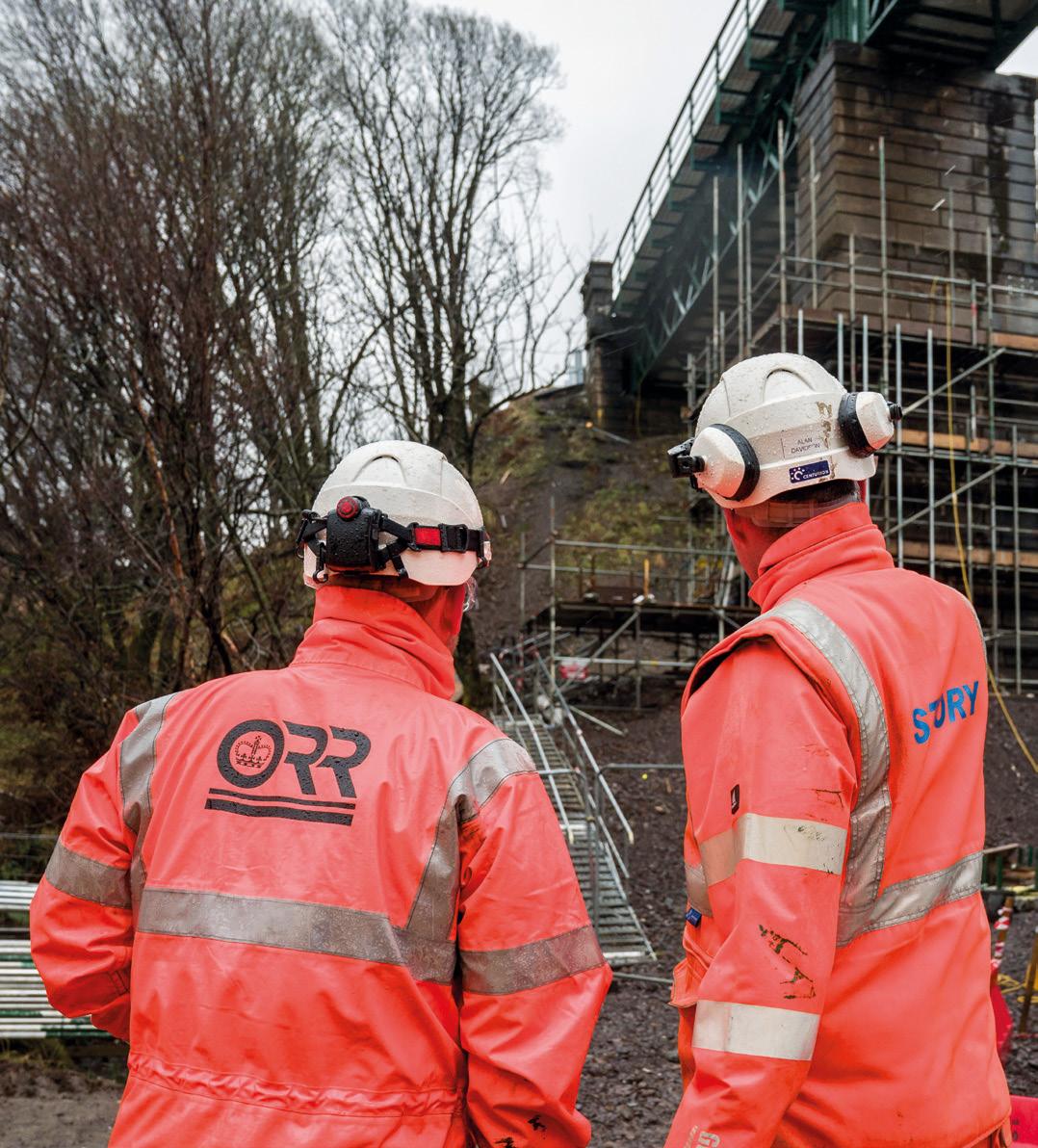
Richard Hines, HM Chief Inspector of Railways and Director of Railway Safety at the Office of Rail and Road, discusses the organisation’s business plan, and the journey ahead
A healthier and safer railway
The Office of Rail and Road’s (ORR) mission to protect the interests of rail users, playing a crucial role in ensuring safety, assuring value and driving the performance of Britain’s railway, is a journey with no end point for Richard Hines.
But it’s a challenge the organisation’s HM Chief Inspector of Railways and Director of Railway Safety is enjoying, especially in light of the progress he sees the industry and its people making.
“No two days are the same and I’m always being challenged but that’s something I enjoy, especially taking into account my background as an engineer finding solutions to difficult problems and driving continuous improvement,” he said.
“It’s a role helped with the fantastic team I have here who all really care about their work and are
absolutely focused on our strategic objective of delivering a healthier and safer railway.”
The ORR is the independent safety and economic regulator for Britain’s railways, ensuring operators comply with health and safety law and regulating Network Rail’s activities and funding requirements, regulating access to the network, and licencing the operators of railway assets, as well as publishing rail statistics.
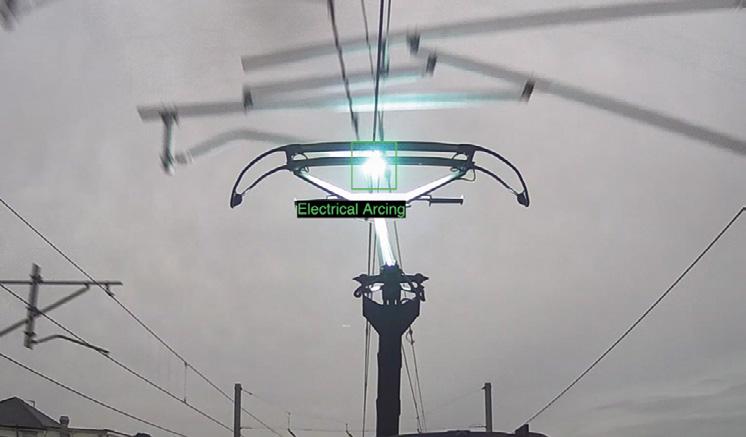
There are also times when the organisation steps in, evidenced earlier this year when the HM Chief Inspector of Railways got involved to accelerate work to resolve incidents of overspeeding, having been concerned that progress on the issue had been too slow.
“When things get tough and the ‘regulatory line’ is crossed, we sometimes have to take action,” said
Image: Devlin Photo Ltd
Richard, who joined ORR from the Health and Safety Executive in 2020.
“There are times it is incumbent on the regulator to call things out, with the recent overspeed issue being one thing I was just not prepared to live with without intervening.
“But there’s a huge amount of work we do on the other side of the ‘regulatory line’, which is collaborative and supportive. It is about enabling, giving advice on things that help the industry to position itself to understand the expectations.
“It’s important to think about different ways that we can achieve progress collectively, especially in driving frontline results.”
The year ahead
Richard spoke with Rail Director shortly after the release of the organisation’s Business Plan for the 12 months ahead, emphasising the importance of the day-to-day responsibilities alongside the wider rail reform.
“It’s a one-year snapshot, with some of the interventions spanning multiple years,” he explained.
“Success is about us going out on the network, engaging with duty holders and understanding how they’re managing risk in relation to each of the interventions that we’ve committed to deliver this year.”
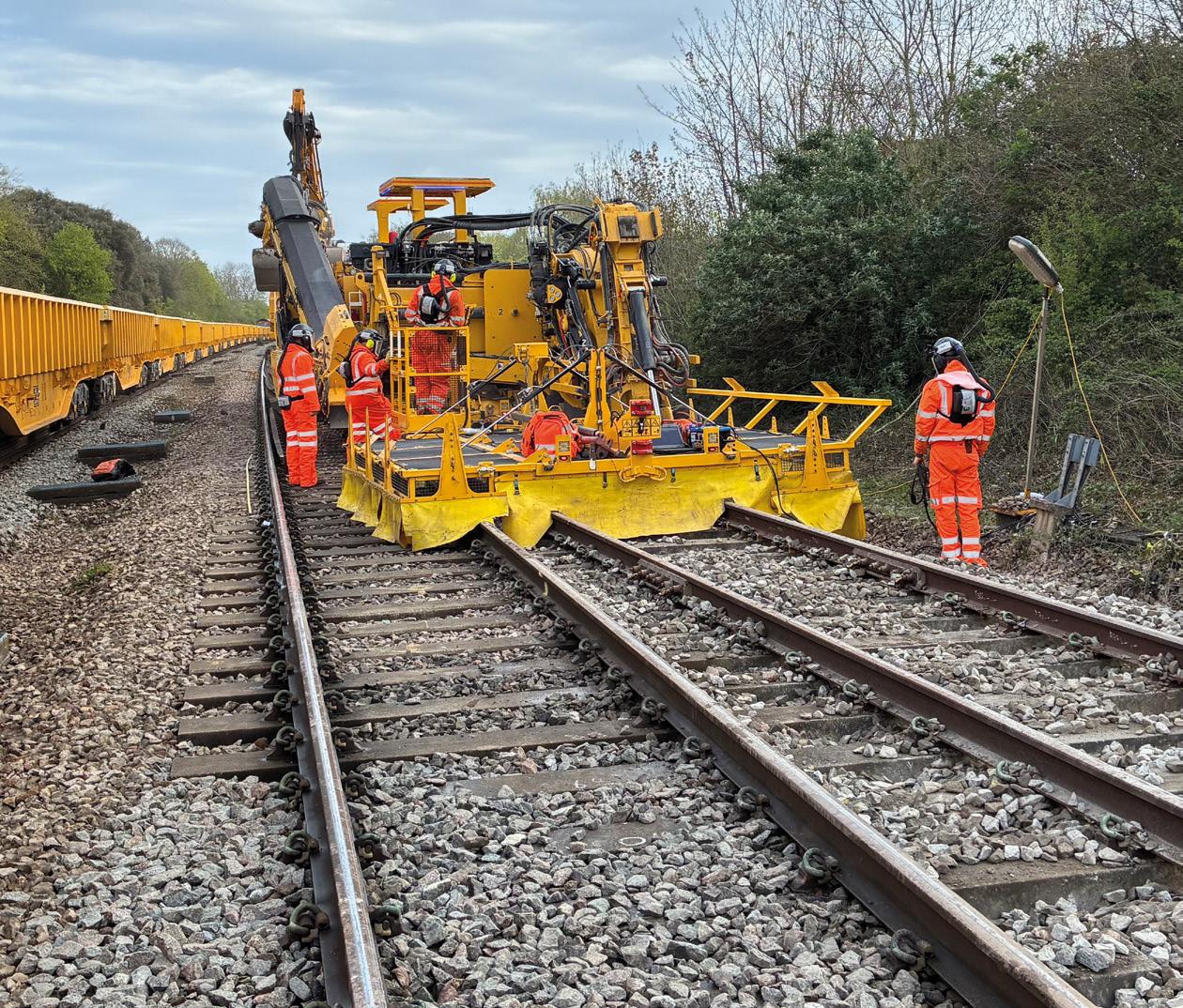
This includes a targeted workforce health and safety inspection initiative focused on how Network Rail and its contractors manage multiple hazards during possessions.
representatives who play a vital role in protecting the safety of the workforce.
A key output this year will be the delivery of ORR’s digital safety strategy and new strategic risk chapter, setting out how the organisation intends to drive improvements across industry as new technologies and advanced digital systems become more prevalent.
Richard said: “The railway system now relies heavily on digital safety systems across both infrastructure and rolling stock and we’ve invested in the past few years in strengthening our digital safety capability as a regulator.
There are times it is incumbent on the regulator to call things out, with the recent overspeed issue being one thing I was just not prepared to live with without intervening
Elaborating, Richard said: “Whereas in the past we have often focused on particular topics or risk areas in isolation, what we’re doing here is conducting an intervention that goes in and tests how duty holders are holistically managing risks across a work site.
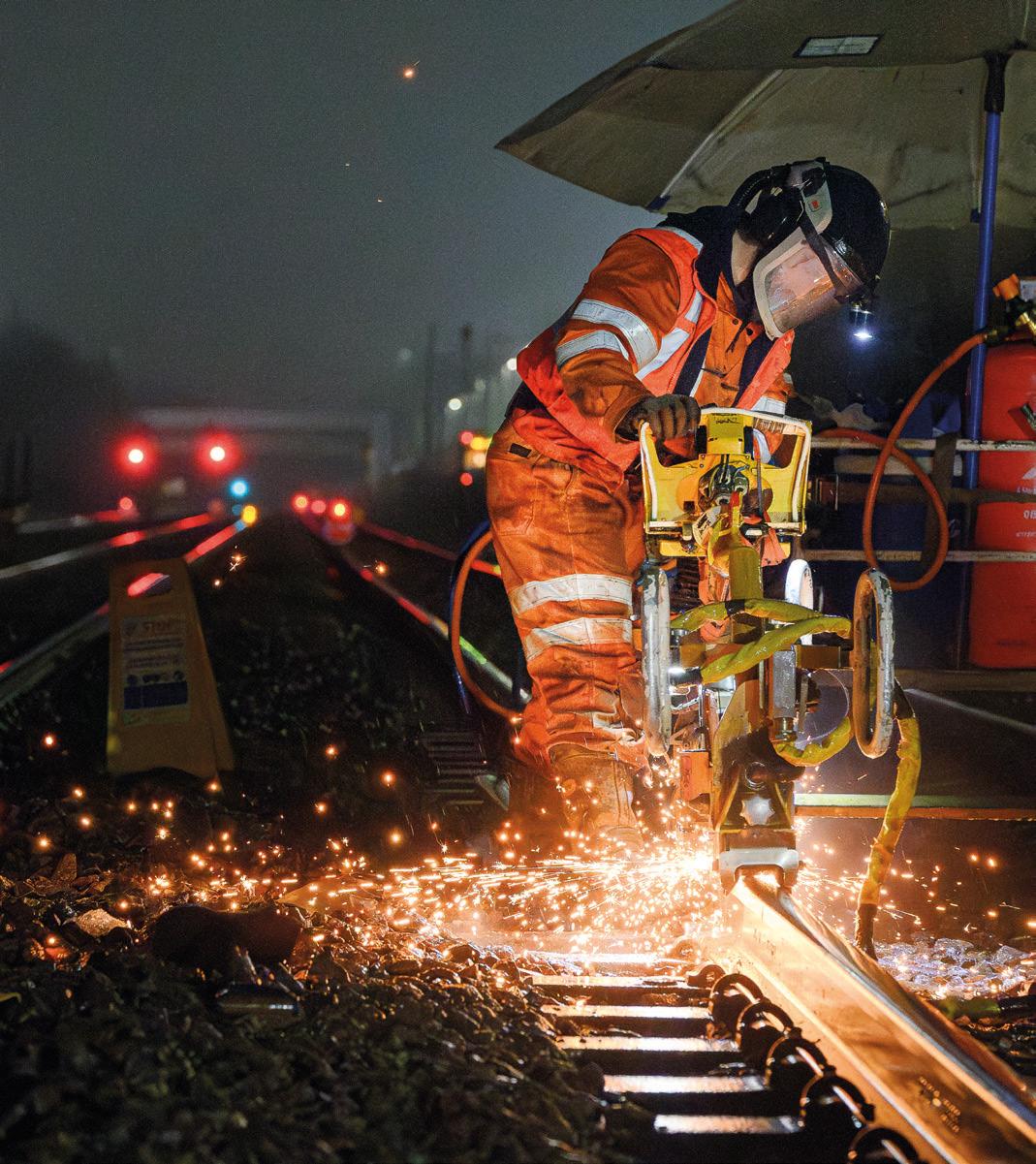
“It could be the health risks associated with welding fumes, track worker safety arrangements, the movement of plant and equipment, or welfare provision.
“Overall it is looking at the full suite of risks that are posed to a workforce and to determine how the duty holder is managing them.
“In those circumstances you’ve often not only Network Rail staff, but you might have contractors and colleagues from the supply chain involved, and there might be interfaces under a system of work between working parties that need to be carefully considered.”
The inspections are expected to start this year, with inspectors deployed to a work activity on the network where they will be engaging with frontline staff, including trade union and company safety
“Being an enabling and collaborative regulator is important to me, and I’m keen that we put information out in the public domain that duty holders can use to help strengthen their own safety management systems and controls.”
There’s two parts to it: the digital safety strategy, which is ORR’s work to define what is going to be done over a period of time to improve and drive improvements in industry’s understanding of the digital safety risks and how they manage it practically.
The other part is the strategic risk chapter to give some practical examples of things that the organisation has found work well and the types of things that ORR thinks companies should be looking out for in this area.
In addition, ORR has recently recruited 10 new inspectors to strengthen frontline oversight, with Richard keen to ensure that the organisation has a workforce fit to regulate the railways for the next decade.
The organisation has developed its own training programme in collaboration with NEBOSH, putting the new recruits through a comprehensive programme over several years that results in a postgraduate diploma.
“We face many people challenges that are not
Image: Peter Alvey
Image: Peter Alvey
dissimilar to those experienced in industry, so it’s important that we invest in bringing in new people to make sure we’ve got the right capability,” Richard said.
“We’re really proud of the training programme and the fact that we deliver that in-house.
“I also don’t think we celebrate enough that within my team we are 52 per cent male and 48 per cent female because we are an inclusive employer, and we’ve got colleagues right across the organisation from different backgrounds and different experiences.
“I’m proud of my team and it’s a great place to work. I want colleagues who join us at a junior grade to know that they could one day be the Chief Inspector.
Great British Railways
The creation of Great British Railways (GBR) represents one of the most significant periods of structural change that Britain’s railway has seen in a generation, with Richard stressing the importance that safety is maintained through transition and into a steady state.
“I’m optimistic about the future and think GBR provides a huge opportunity for industry to address some longstanding issues on shared system risk-type issues,” he added
“I also think culture and values are important. This coming together could be helpful in driving not only business culture, but safety culture.
“We also regulate lots of other parts of the system, such as the tram networks, which are undergoing a
large amount of investment. Also heritage railways, which provide a pleasant environment for people in their leisure time, but of course they are very serious bits of engineering kit that need to be properly maintained and looked after.
“The ORR can add value to new and emerging schemes, with our involvement in projects helpful from a safety by design perspective. Getting it right from the start is the most economical way to do it, and that is important.”
The Railways Bill will have a significant impact on ORR’s responsibilities, with the organisation undertaking a major transformation to fulfil its new role – including as an independent, expert advisor to the Secretary of State – and to integrate with the wider reform programme.
“We have an internal transformation programme, which is about ensuring that we are ready to deliver our new role in the context of GBR. In health and safety terms our role doesn’t change, and the legislation we enforce and the tools that we have available to deliver that and the way we regulate remains constant.
“When you think about that in the context of change, it’s helpful to have a stable health and safety regulator that’s going to hold industry to the highest standards possible, but also to provide support and guidance at a really important time.”
And it’s a future that Richard is excited for.
“Bringing track and train together provides a huge opportunity for there to be greater collaboration, greater cohesion between different parts of the
system that traditionally have been separate,” he said.
“That’s a huge benefit, but with any change, there are risks.
“I’ve been clear in my engagement with industry that there needs to be a relentless focus on ensuring safety through transition.
“We need to have people who deliver their day jobs and safety critical roles to the highest ability all the way through this, and not be distracted by things that are going on in terms of design.
“The annual health and safety report that we produce next month is very likely to have a flavour of a theme that talks about this.”
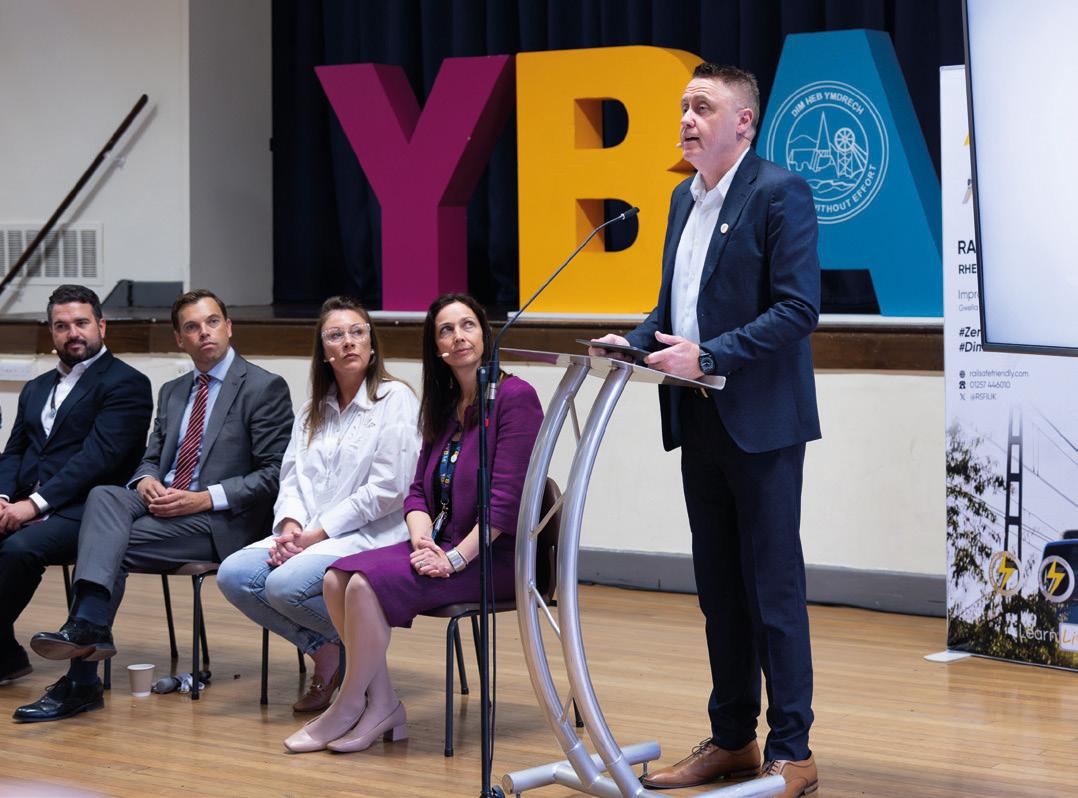
Alongside the full-time job, Richard is also Steering Group Chair for this month’s Rail Safety Week, which took place from Monday 15 June. The industry-wide and industry-led initiative focuses on rail safety for all, bringing the topic to the forefront of people’s minds across the week, sharing ideas and best practice.
Richard said: “This is about the industry coming together to talk about safety. What I would like is for there to be a real focus in those conversations about safety in the workplace, safety for members of the public, and to just talk openly about some of the challenges we face as an industry, and importantly how can work together to overcome them.
“There is some really good stuff that’s happened out there too, some excellent examples of innovation to engage people on important issues. I think it’s a fantastic way to focus on something that affects all of us who work in and around the industry.”
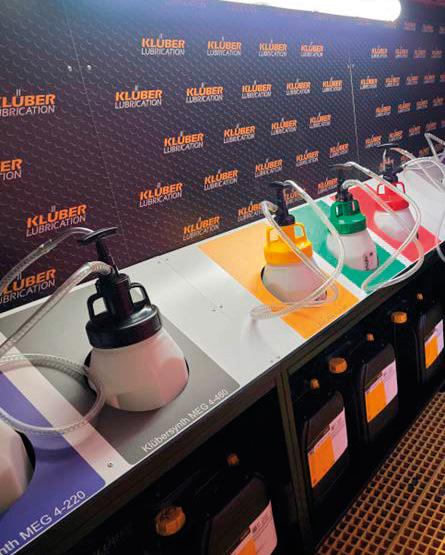
Safer Depots Begin with Smarter Lurbicant Storage
SCAN ME
How Rail Safe Friendly is connecting safety, careers and social value across the rail industry
Every child, rail safe
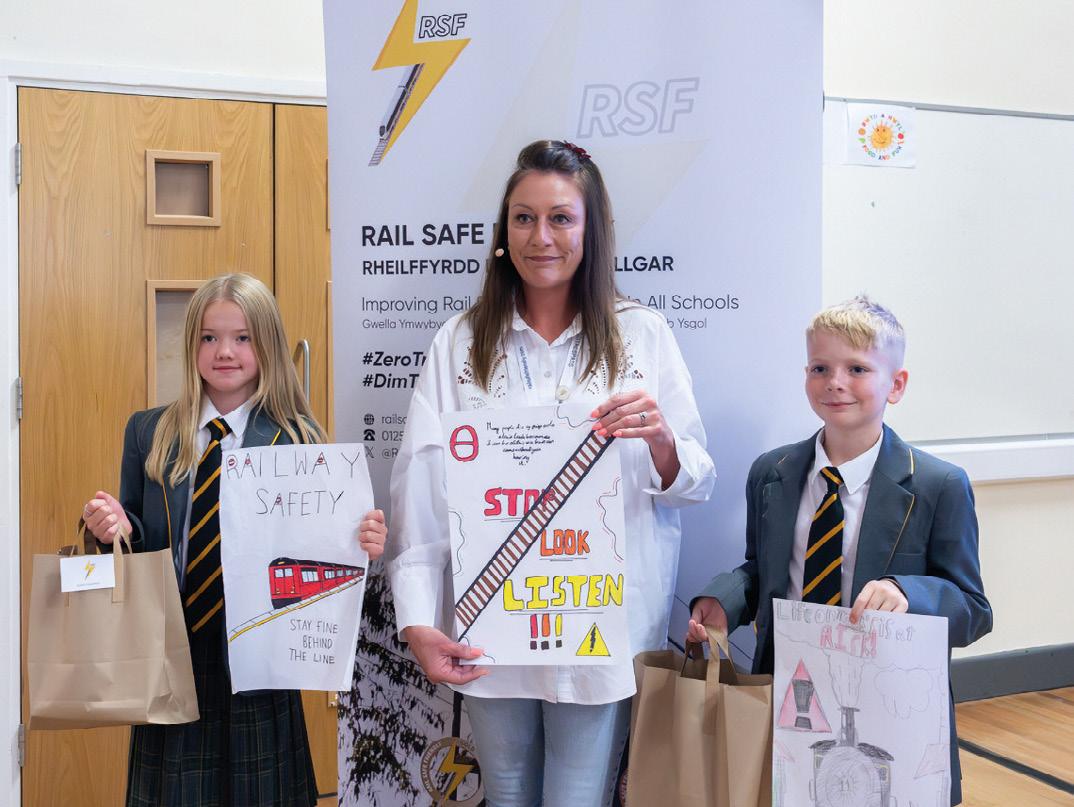
When Rail Safe Friendly (RSF) launched in 2023, it set out with a simple ambition: to ensure that every child has access to high-quality rail safety education.
Three years later, the programme has evolved into one of the rail industry’s most successful examples of collaborative safety engagement, bringing together operators, infrastructure organisations, suppliers, schools and communities around a shared goal.
The programme’s reach is also extending beyond Great Britain. Following successful expansion into Northern Ireland, RSF is now supporting schools and industry partners across the region, creating new opportunities to engage young people with rail safety and careers education.
Building on that momentum, plans are under way to launch RSF in the Republic of Ireland later this year, marking the next phase in the programme’s growth and creating the potential for an all-island approach to rail safety education.
At a time when industry continues to tackle the challenges of trespass, misuse of the railway and public safety awareness, RSF has demonstrated the value of prevention through education. Built on Learn Live’s long-standing partnership with Network Rail, the programme has transformed rail safety from a standalone message into an ongoing conversation taking place in classrooms across the country.
What makes it unique is its ability to combine safety, social value and careers engagement within a single framework. By connecting schools with rail organisations, it is helping young people stay safe while providing valuable insight into one of the UK’s most important industries.
A programme built on prevention
The principle behind RSF is straightforward: equipping young people with the knowledge they need before they encounter risk.
Through the Learn Live platform, schools gain access to Network Rail-approved rail safety content, live broadcasts, classroom resources and awareness campaigns designed for different age groups. Rather than relying on occasional interventions, the programme embeds rail safety into learning environments where messages can be reinforced over time.
This approach has resonated across the sector.
Since launching, RSF has attracted support from train operators, freight companies, regulators, infrastructure organisations and supply chain partners. Together, they are helping schools deliver meaningful safety education while strengthening links between the railway and local communities.
The impact is significant. Through Learn Live’s
wider rail safety engagement activity, more than 21 million young people have now been reached through over 16,000 schools across the UK, with RSF becoming an increasingly important part of that success.
As rail safety education prepares to become a mandatory element of the Personal, Social, Health and Economic curriculum in England from September 2026, programmes that support schools with trusted resources and industry expertise are likely to become even more important.
Partnership, careers and community impact
A major factor behind the programme’s growth has been the willingness of more than 130 organisations across the rail sector to work together.
RSF provides a practical way for businesses to support local schools while delivering measurable social value. Sponsors help schools access resources and opportunities while building stronger relationships with the communities they serve.
Stuart Heaton, Managing Director of Learn
Images: Rail Safe Friendly
Today’s railsafe students could become tomorrow’s railway workforce
Live and founder of RSF, believes this collective approach has been fundamental to the programme’s success.
He said: “When we launched RSF in 2023, we knew there was a real opportunity for the rail industry to come together around a common purpose. Every organisation, regardless of size, has a role to play in helping young people understand the dangers of the railway.
“The growth we have seen over the past three years demonstrates what can be achieved when safety, education and social value are aligned.”
Importantly, these partnerships are creating benefits that extend beyond safety education.
As schools engage with rail organisations, conversations increasingly move towards careers, skills and future opportunities within the sector.
Many young people have little understanding of the breadth of careers available across the railway. Through live broadcasts, employer engagement activities and classroom discussions, industry professionals are helping students discover opportunities in engineering, project management, operations, digital technology, sustainability and customer service.
This is particularly relevant as the industry continues to address future workforce requirements and attract new talent.
Stuart added: “When young people learn about rail safety, they also become curious about the people who work on the railway and the roles that exist behind the scenes.
“One of the most exciting developments we’ve seen is how RSF is helping schools connect directly with industry partners, opening conversations about careers, skills and future opportunities. Today’s railsafe students could become tomorrow’s railway workforce.”
For schools, these relationships support wider careers education objectives. For industry partners, they create meaningful opportunities to inspire future generations while demonstrating a commitment to community engagement.
The Rail Safety Education Mapping Tool
One of the most significant developments in RSF’s evolution has been the introduction of the Rail Safety
Developed to provide a visual picture of rail industry engagement with schools across the UK, the platform allows organisations to identify participating schools, understand regional coverage and develop more strategic approaches to community outreach.
At its core, the mapping tool provides visibility.
For the first time, rail organisations can clearly see where educational engagement is taking place, where partnerships already exist and where opportunities remain. This helps organisations make informed decisions about where to focus resources and how to maximise the impact of their investment.
The platform also strengthens connections between schools and industry. Organisations can identify schools within their operating areas, develop local partnerships and coordinate safety education, careers activities and community engagement initiatives more effectively.
In an industry increasingly focused on delivering measurable social value, the mapping tool provides evidence of impact while helping avoid duplication of effort.
As participation continues to grow, it is becoming a powerful resource for organisations seeking to align safety, education and community engagement strategies.
Case study: Transport UK and St Bede’s Catholic High School
The practical impact of RSF can be seen through the partnerships being created between schools and industry.
One example is the relationship between Transport UK and St Bede’s Catholic High School in Ormskirk, Lancashire.
Through RSF, students have accessed rail safety resources, participated in live broadcasts and gained a greater understanding of how the railway operates. Alongside learning about trespass prevention, level crossing safety and responsible behaviour around the railway, students have also been introduced to the wide range of careers available across the industry.
For Transport UK, the partnership demonstrates how social value can be delivered in a meaningful and measurable way. By supporting local schools,
the company is helping create safer communities while raising awareness of future opportunities within rail.
For St Bede’s, the programme provides valuable employer engagement opportunities that support both personal development and careers education. Students gain insight into the people, skills and technologies that keep Britain’s railway moving.
Partnerships such as this demonstrate how RSF is helping build stronger connections between education and industry while delivering long-term benefits for students, communities and the railway.
Industry leadership in action
The continued expansion of RSF highlights the importance of leadership across the rail sector.
Organisations that support the programme are not simply investing in education; they are helping shape a culture in which safety awareness begins long before individuals encounter operational railway environments.
Among those organisations is Transport UK, whose support reflects a growing recognition that education plays a critical role in preventing incidents before they occur.
Phil Hibberd of Transport UK said: “Rail safety education is one of the most effective investments our industry can make. By helping young people understand the risks around the railway at an early age, we are creating safer communities and supporting the future sustainability of the railway itself.
“Prevention through education has the power to save lives, and programmes such as RSF demonstrate exactly how that can be achieved.”
His comments reflect a wider industry shift towards proactive engagement and long-term prevention.
Looking ahead
As RSF enters its fourth year, the programme is positioned for continued growth.
The increasing importance of curriculum-linked rail safety education, growing industry participation and the capabilities provided by the Rail Safety Education Mapping Tool create significant opportunities to expand the programme’s reach and impact.
One of the most exciting developments is the
Education Mapping Tool.
programme’s geographical expansion. Having successfully established RSF in Northern Ireland, work is now under way to introduce the programme across the Republic of Ireland later this year.
This expansion reflects growing recognition that rail safety education, careers engagement and community partnership working can deliver benefits across national boundaries while supporting a shared commitment to keeping young people safe.
The ambition is not simply to increase the number of participating schools, but to create a connected network of educators and industry partners who can work together to improve awareness, inspire future
talent and strengthen community engagement throughout the rail sector.
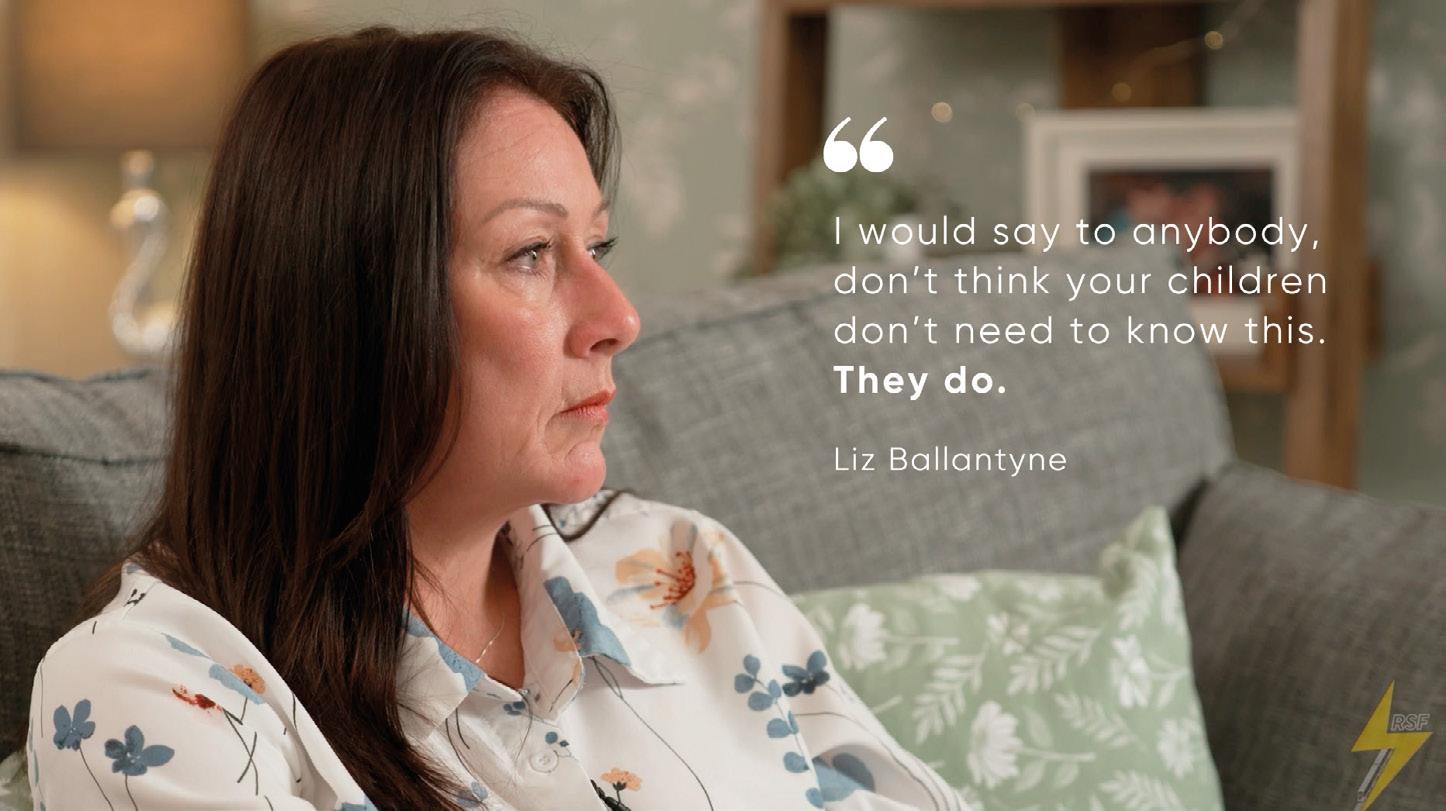
Liz Ballantyne, whose son Harrison lost his life at Daventry depot in 2017, has been closely involved in the programme’s development, and believes its success lies in its ability to create lasting engagement with young people.
She said: “Teachers consistently tell us that rail safety education creates meaningful discussions in the classroom. Young people engage with the content because it feels relevant to their lives and journeys.
“The programme helps children understand risk,
make safer choices and develop awareness that can stay with them throughout their lives.”
Three years after launch, RSF has shown what can be achieved when the rail industry works collectively towards a common goal.
By connecting safety education, social value and careers inspiration, the programme is helping young people make safer choices today while opening their eyes to the opportunities of tomorrow.
The ambition remains unchanged: every child, every school, rail safe, wherever they live, learn or travel.
www.railsafefriendly.com/
From its manufacturing base near Leeds, EJOT has launched its fastenings for the UK rail industry. Robert Hardstaff, the company’s Managing Director, discusses its offering and the wealth of experience being brought to the sector
EJOT: Bringing its world-leading fastenings to the rail sector
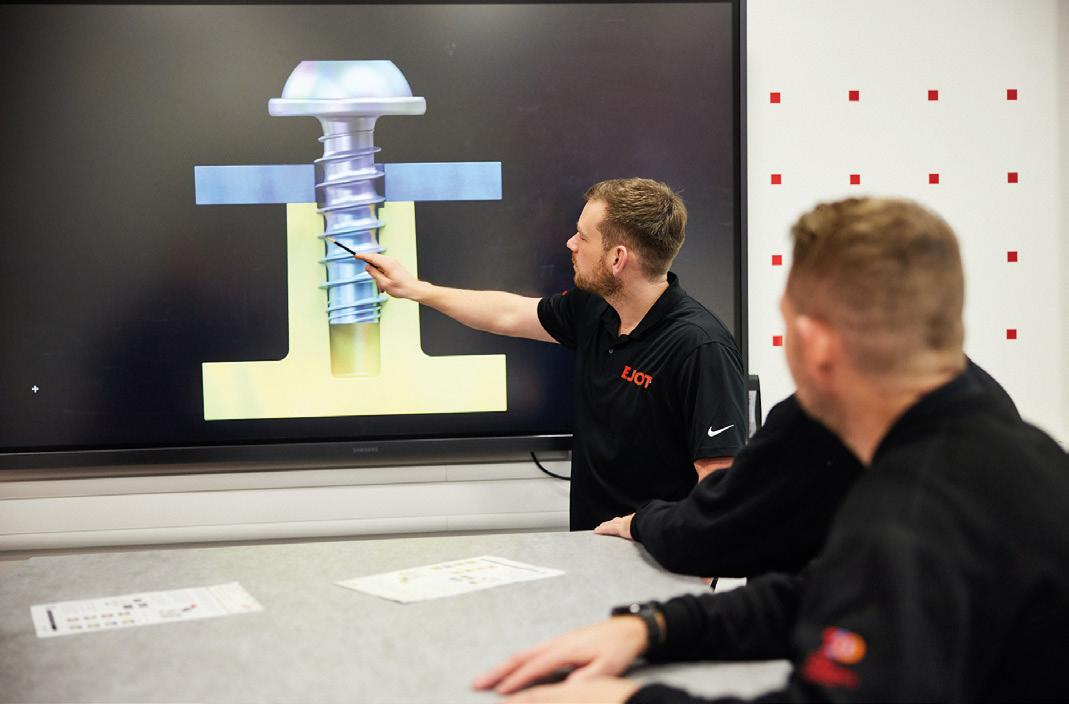
EJOT is on an ongoing journey to be the world’s leading designer and manufacturer of high-performance fastening systems that enable customers to deliver a more sustainable future by building better and lighter.
It’s an expertise the organisation is now bringing to the rail industry, building on an unrivalled platform in the automotive, construction and safety critical anchoring sectors. On the latter, it supplied 2.5 million of its fixings used in the sarcophagus providing secure cover over Chernobyl’s reactor #4.
“A hundred years ago, EJOT started in Germany making three and six inch nails,” explained UK Managing Director Robert Hardstaff.
“Today we’re making Ultraplus undercut anchors in lengths up to 1.5m. And there are very few automotive manufacturers in Europe, if not the world, which don’t use our products.
“From a technical point of view it highlights our capabilities, an expertise that we really think can benefit the rail sector. Over the past 100 years we’ve continued to develop and evolve, working alongside numerous organisations to provide innovative fastening solutions.”
As a leading supplier of fastening systems to the industrial and manufacturing industries, EJOT is ideally placed to support engineers in all areas of the rail industry, with the quest now becoming the identification of likely applications.
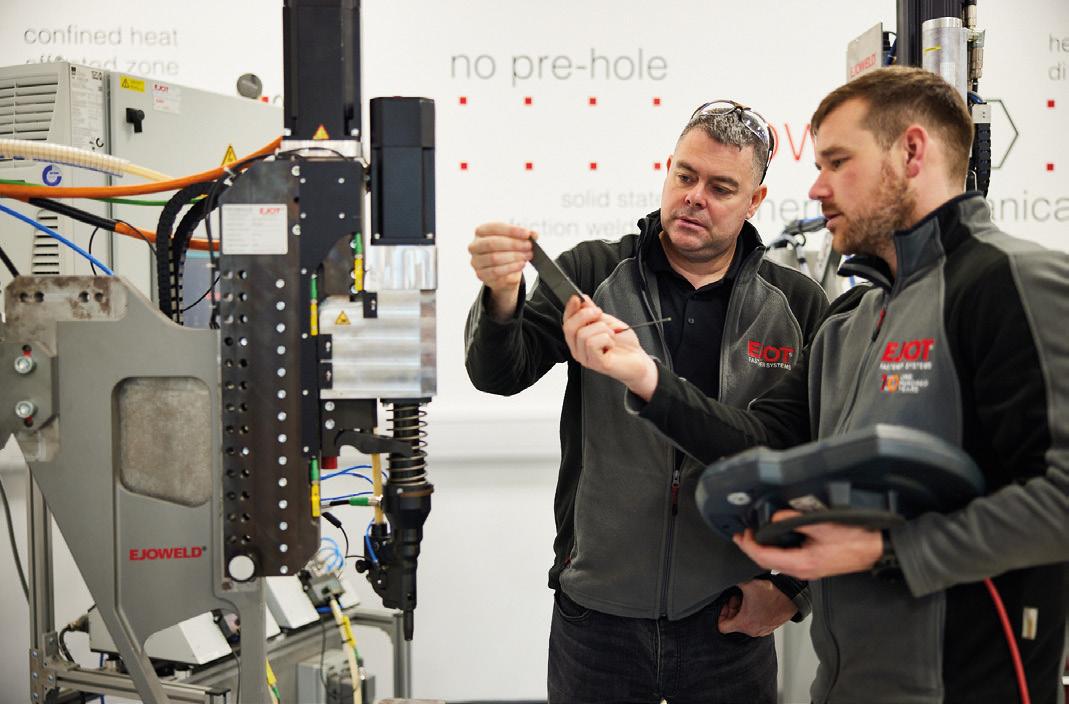
The technical teams work closely with UK-based mechanical and design engineers working on many different types of assemblies to ensure they can realise
the full potential of its advanced fastening solutions.
Robert highlights the likes of its LIEBIG anchoring, BLS and concrete screws as just some of the products that could be of benefit to the railways.
“The rail industry encompasses everything that we do – the construction, automotive and anchoring sides,” said Robert, who adds that the organisation has recently achieved the quality assurance scheme RISQS and is also a member of the Railway Industry Association.
“Although we are new to the rail industry, we are here for the long term with a backstory of more than 100 years, backed by technology and expertise throughout Europe.
“Anything that needs fixing together we have a solution. We’re also renowned for bespoke solutions, backed by a fantastic team, manufacturing capabilities, and a passion to come up with new ideas.”
Its innovations are transforming the way things are built. In the 1970s, EJOT’s PT screw became the industry-wide Hoover thread-forming screw, pioneering the wide-scale use of thermoplastics.
Over the past decades, the company has supported several vehicle manufacturers to utilise super-strength thinner materials to reduce the overall weight of the finished vehicle.
“We are always learning, and it’s taken around two years to get everything in place to launch in the rail industry, but now we feel we’re ready for the next big step and in doing so we want to learn from rail professionals whose passion for innovation is similar to our own,” said Robert, who has been involved with the company for more than 20 years.
“We have a fantastic customer service, backed by EJOT APPLITEC, our excellent technology centre in the UK, where a lot of the testing is done. There will be very few things that can’t be physically tested in the UK, and if they can’t we also have testing facilities around the world.
“In the UK we’ve invested in our technology and our machinery and we’re permanently investing with our facilities and products constantly evolving.”
Around 4,300 employees in 48 countries work every day to deliver tailored fastening solutions for the most demanding applications across multiple industries. By combining technological expertise, a global presence, and reliability, EJOT has created the foundation for long-term partnerships and sustainable growth, something it is looking to introduce in the railways.
www.ejot.co.uk
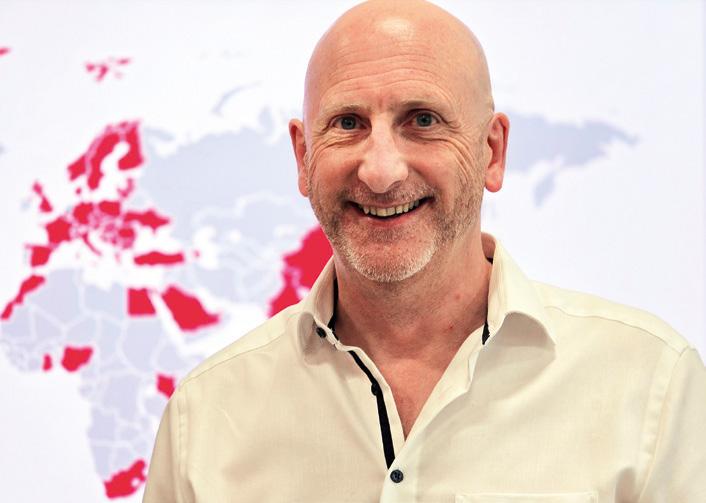
Robert Hardstaff, Managing Director at EJOT in the UK since 2017. Images: EJOT
The EJOT APPLITEC Centre near Leeds is a test bed for new fastening technologies EJOT UK’s technical team test joining applications in multiple engineering materials
Simon Bachelor, British Transport Police’s Head of Drones Programme, discusses the new tool in the railway’s armoury to inform decision-making at live incidents including trespass, concerns for welfare, cable thefts and more
Taking safety on the railway to new heights
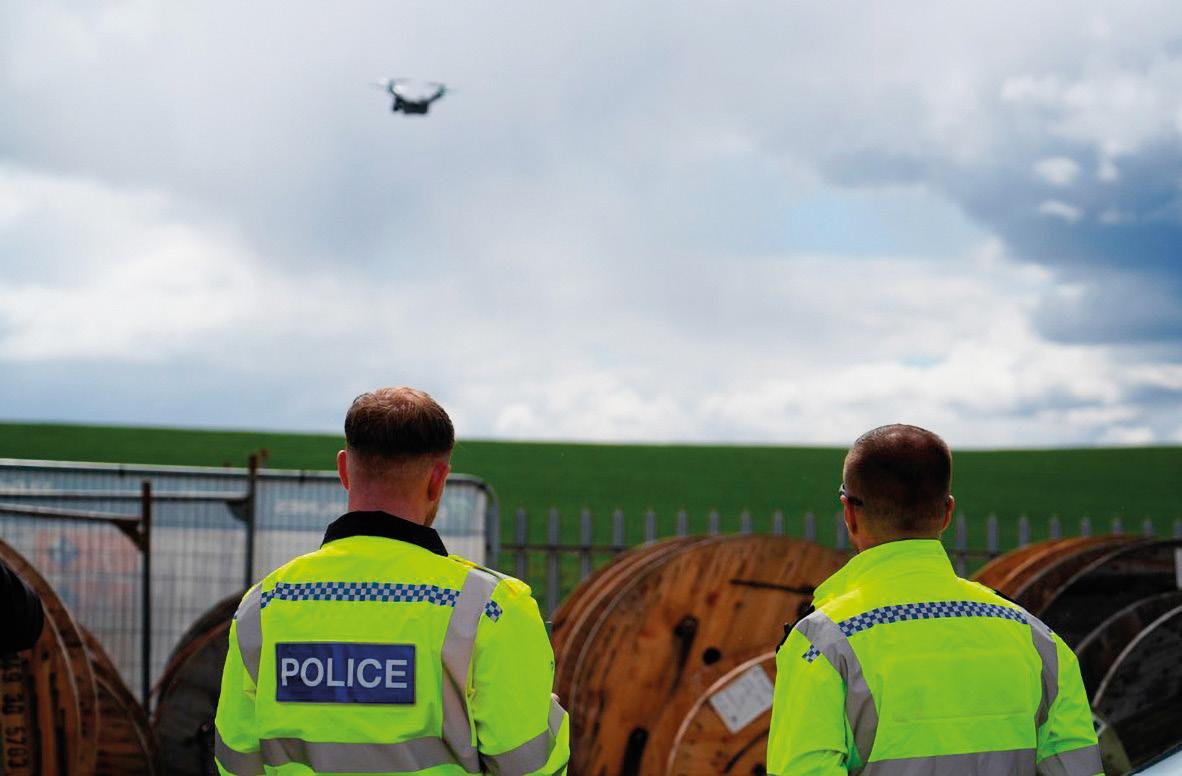
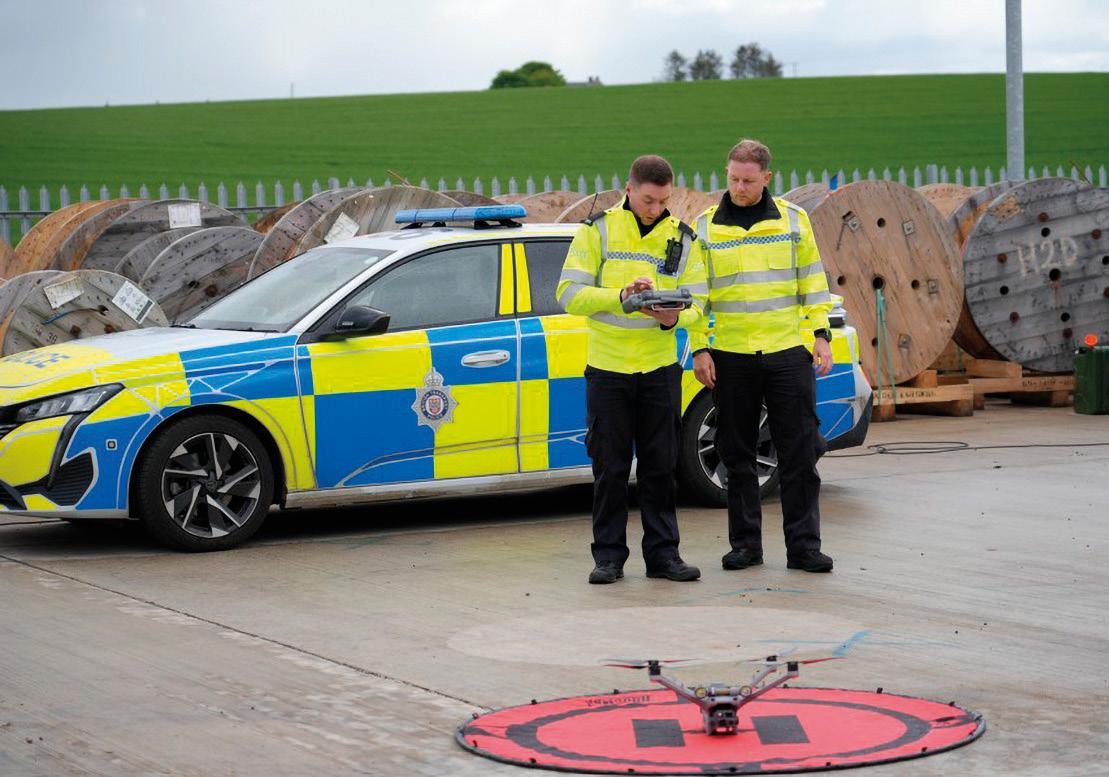
Drone technology is transforming the way British Transport Police (BTP) and Network Rail improve safety, reduce disruption, respond more quickly to incidents and inspect infrastructure.
“We can and have presented to the industry a unique opportunity of our capabilities with drones, and with the right people driving things and looking to innovate we can help move the industry forward,” said Simon Bachelor, Head of the Drones Programme at BTP.
“It’s an exciting space to be involved in. We are finding out first what works and what doesn’t and how best to configure it.”
BTP has been using drones since 2017 like many other police forces, which grew as a result of changes to the National Police Air Service, with forces looking to develop their own capability away from the availability and costs associated with police helicopters. That capability has centred on drones.
“It has come with challenges because by and large consumer drones are commercial off the shelf products,” Simon explained.
“Forces have bought them and so rather than designing processes from the ground up, it’s been the other way around, and we’ve made processes work around the technology. The last few years has seen us take that to the next level.”
What Simon refers to is the remote drone in a box capability, with BTP becoming the first force last year to operationalise this advanced drone technology to better keep the public safe and reduce disruption.
The drone in a box capability is based at key locations across the network where the force knows there are spikes in trespass and other disruption incidents, flown remotely from its control room in London – allowing BTP to respond to incidents quicker, make more informed decisions and free up officers to respond to other offences.
“We’ve got a good, mature set-up with good governance, sound processes that were built with the help of subject matter experts who we brought into the force to look at what we’re doing,” he said, adding that the boxes the drones are inside are weatherproofed and self-contained.
“Evolving the use is a challenge because we are moving into the aviation space, and with that comes a different culture. We’ve had to build this new approach, this new culture, and with it, a
comprehensive safety management system.
“The biggest concern people would have if we’re flying beyond the visual line of sight is that you can’t see your drone so you need to make sure it doesn’t crash into something or someone.”
Most typical drone operations are conducted within the visual line of sight of the pilot, which is around 500 metres for a small drone. However, the police are able to operate beyond this distance using State Aircraft legislation.
Images: British Transport Police
“Five hundred metres wasn’t enough, so our work really started at that point to look at how we go beyond that and enhance the capability,” said Simon.
“Depending on the weather conditions the small drones we’re using can fly out to around 5km from where they’re located.”
Such has been the success, BTP announced last month that it had expanded the initiative to Scotland, with two drones carried in cars based in Edinburgh and Glasgow that are piloted by trained officers.
In addition to this, Network Rail has installed a drone in a box near Glasgow Central, which can be deployed and flown remotely from the railway’s control room to support incident response.
Already the drones have been used dozens of times in Scotland, including in one incident that resulted in three people found trackside. In this example, the drone’s speaker system was utilised and those involved were asked to leave the area.
“Scotland was just an extension of what we’re already doing in England, splitting the capability to drone in a car or a case and drone in a box,” Simon said.
“These are officers who are first and foremost responding to incidents, part of a disruption tasking team, and they have the drone in a case in the back of the car to respond to incidents where the drone capability is needed.
“If they get to an incident or are called to an incident, they can deploy it from the car, much like they do across many other police forces. But they can be tasked as well, which is particularly useful if there is an incident in a remote location.”
BTP operates the drones in five locations – Leeds, Leicester, Manchester and two in London – with this expected to increase to nine by the end of next month, with another 14 sites predicted over the next few years.
“Our biggest partner is Network Rail and we engage with the train operating companies, rail operating centres, with some of our funding from Department for Transport Operator, which has really driven some of our location choices,” said Simon.
Expanding on the work with Network Rail, the two organisations are looking into the concept of joint operations. It comes after research showed 20 per cent of Network Rail drone deployment was in response to trespass and disruption and 80 per cent was for infrastructure inspection.
Simon said: “That 20 per cent crossover would suggest that we both don’t need to be going to the same incident, and equally how can our drones be used for some infrastructure inspection?
“It’s not a black and white thing as to where policing responsibilities end and infrastructure inspection begins. There’s this blurred line as to where a Network Rail issue becomes a policing issue, and one that we might want to respond to.
“The concept of joint operations has got buy-in from Network Rail’s Chief Executive Officer and the Chief Constable and together we’re looking at ways of using our assets in a dual way, sharing resources and co-locating, which makes absolute sense because we broadly want to do the same thing.
“One key difference is that in a regulatory sense, policing can in England fly beyond the visual line of sight and we can fly higher than the 400 feet that most are limited to, so we’re not just responding to emergencies but we’re doing patrol work.
“An example is in Leeds where we fly along the viaducts that are difficult to reach on foot.”
Illustrating the potential in the future, Simon says his aspiration is for there to be a national drone flight operations room with Network Rail and BTP sitting together coordinating their drone activities, be that teams doing infrastructure inspections or patrolling disruption hotspots.
“With drone use growing all the time we need to manage the airspace and coordinate all our activities so we don’t all end up getting in each other’s way,” he said.
“That’s going to be a significant challenge moving forward.
“At the moment we’re focusing on small drones, the small quadcopters, which is what we use in the drone in a box. But we’ve recently been looking at a fixed wing drone with a vertical take-off capability with a three-metre wingspan and payload capability.
“It highlights that we’re looking at something we can configure with sensors that can be ‘dual’ use, so it could carry out infrastructure inspection along the railway and then we can re-task it if there is an incident somewhere, flying 100km up and down the railway line. That is the capability we’re really looking for.
“That could really assist us and it really goes to the heart of that dual BTP and Network Rail piece.”
With drone use growing all the time we need to manage the airspace and coordinate all our activities so we don’t end up getting in each other’s way
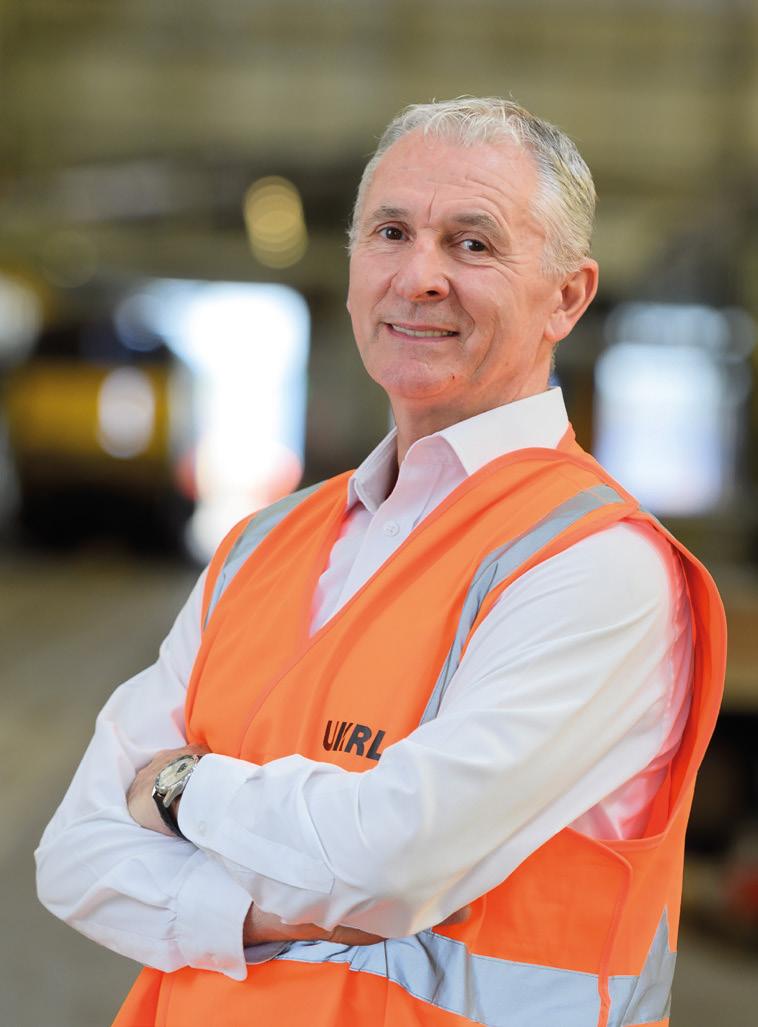
Steve McBride, Managing Director at UKRL, discusses his return to the front line, his passion for the SME world, and the journey ahead
UKRL: Keeping you on track
It was going to take a special opportunity to get Steve McBride back into mainstream operations, but the potential at rail vehicle maintenance, overhaul and train care service provider UKRL was too good to miss.
“I thought a part time non-executive role was for me, but coming back I’ve realised how much I missed working with people and getting things done and seeing the fruits of your labour pretty rapidly,” Steve said.
“Working at an SME your destiny is largely in your own hands. We get together as a team, we only have meetings that have a purpose, and we deal with the issues at hand and then we crack on.”
Steve initially joined UKRL part time as a NonExecutive Director in November 2023, enthused by the organisation’s expertise and facilities in Leicester and Loughborough, and for the past five months he has been working full time as Managing Director.
The growth is already happening. In the last twoand-a-half years the team has grown from 60 to 85, the customer base has more than doubled, and revenue has grown by almost 100 per cent.
“This is just the start, especially with the continued support of our shareholders, our partner organisations and the great team of people that we’ve got from the top to the bottom, who are all passionate in playing their part in making things happen,” added Steve.
“The customers are liking what we do and keep coming back, and alongside that we’ve been attracting new customers through the door, diversifying with new product lines.”
The work centres on the organisation’s two main facilities. There are its servicing facilities in Leicester, primarily used for locomotives, but also serving the needs of passenger operators requiring refuelling, servicing and cleaning.
At the other end of the scale is its 125,000sq ft undercover site in Loughborough, which is a heavy repair facility with heavy lifting equipment, paint shop, high voltage testing and component overhaul workshops.
“Last year we also took the decision to introduce a dedicated field services team. The elapsed time from that decision point to full service operation was five months and now we have an established team
of 13 people who are split between an operation in Eastleigh and another in Tonbridge servicing locomotives,” Steve explained.
“While some would say we always did field services, in the past that would involve taking resources from Leicester and Loughborough rather than having the dedicated team.”
Together as a team
The success in recent years is being driven by a clear business plan, launched in 2023 and detailing the strategy up until September 2029.
Steve says it involves two distinct approaches, one being organic growth looking at the opportunities in the market and gaps in UKRL’s portfolio, which has created a laser focus on the priorities; and secondly a capital expenditure-driven growth line that has yet to be activated.
“One of our target customers in the business plan has become one of our biggest customers, and we’re also on the verge of working with more new customers by virtue of some key strategic partnerships,” he said.
“If we deliver the business plan, which we are well on the way to achieving, then the business will have
Images: UKRL
grown another 100 per cent from 2024 and we’ll be touching on a £20 million turnover at that point.
“What has been key is that the plan was written by the team for the team, including shareholders, with contributions from people across the business, tapping into their knowledge and understanding.
“It has ensured that everyone is behind the whole process from day one. We have been challenging in setting our targets but always mindful of only committing to those things we can deliver.”
Core value
At the heart of the organisation is its core values, which are:
Acting with integrity, honesty, applying expertise safely and efficiently.
Delivering quality with a high level of competence, excellence and agility.
Finding solutions and being reliable, responsible and accountable.
Communication, collaboration and treating everyone with respect.
“Our success comes down to our values, and because we’ve got a skilled team of people who care,” explained Steve.
“We’ve also got a unique capability in terms of offering value for money which we deliver with pride as well. We live by those things.
“It’s also important that we are easy to deal with because we’re still a relatively small company with a flat structure, and we’re very conscious that people want to work with people who are easy to deal with, no bureaucracy, tell it how it is and then go and do what we’ve promised.
“There is no complacency in what we do, we are always striving to be better.”
That enthusiasm to evolve is evidenced by going the extra mile to improve. UKRL recently launched its first customer insights programme, using an independent organisation to approach all its customers for feedback.
“I think the value of what we get back will be fantastic because we’ll be able to take that honest,
open feedback and do something with it to make things better,” added Steve.
UKRL will also soon be launching an employee insights programme to find out what colleagues think about working for the organisation.
“It’s important to get their views and hopefully we’ll be able to take some positive actions to make things better,” he said.
“It is part of a bigger plan of staff engagement – things we are putting in place to bring people together to ensure they feel part of the journey UKRL is on.”
The journey ahead is an exciting one for UKRL and particularly for Steve, who this year is celebrating 50 years in the railway industry. He started out as a technician apprentice in York and went on to hold senior positions in manufacturing, maintenance and rolling stock leasing sectors, before establishing his own management consultancy in 2012. He has also served as a Board member with Vivarail, RISAS, and a local authority.
It hasn’t been without its ups and downs –Steve recalls one of the highs being the time he accompanied the late Queen Elizabeth II on the Royal Train, where he explained battery technology to the then Prince Charles; and also the lows of overseeing Vivarail into administration.
“Throughout the years I have been given opportunities to learn, make a difference and most importantly work alongside incredibly talented people whether they be colleagues, customers, suppliers, trusted advisors or friends,” he said.
“One of the big lessons I learned from running Vivarail, which unfortunately failed, is that managing your customers and managing your cash flow are absolutely vital to the success of a business.
“I’ve learned a lot from that negative experience and now do things differently, especially around the importance of having visibility of good quality data.
“I’m very excited for the future, which comes down to working with a team of people who really want to make a difference throughout the ranks.
“For me it is as exciting now as it was when I first started on 4 August 1975, but with a lot of experience and learning behind me.”
https://ukrl.co.uk/
The customers are liking what we do and keep coming back, and alongside that we’ve been attracting new customers through the door, diversifying with new product lines
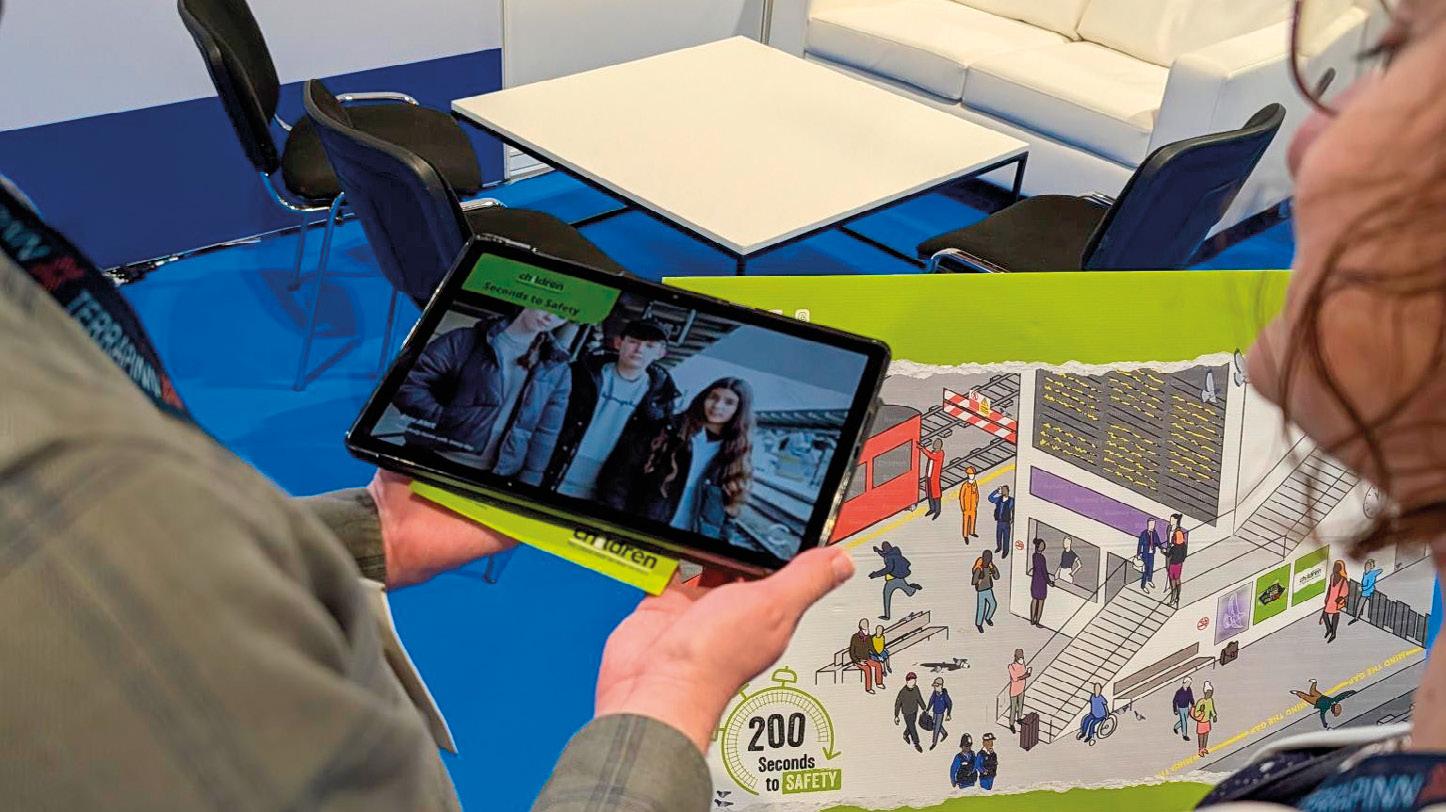
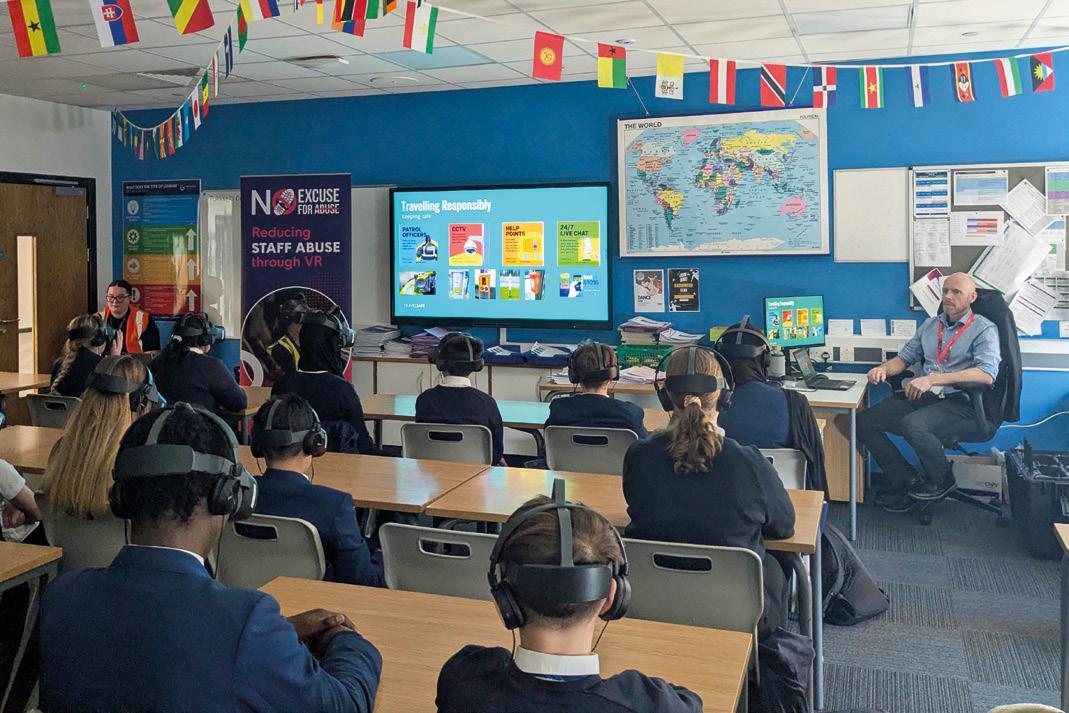
Young people use public transport more than any other age group in the UK. Every day, thousands of children move through stations alone – some fl eeing danger, others heading straight towards it. Would you be able to spot a child at risk? Would you know what to do if you did?
Seconds to Safety: The game that helps you spot and protect children at risk – and still make your train
In a recent report, more than 40 per cent of people said they wouldn’t be able to spot a child at risk on the transport network*. That’s a statistic that Railway Children’s new interactive game, Seconds to Safety, is here to change.
Vulnerability on the network
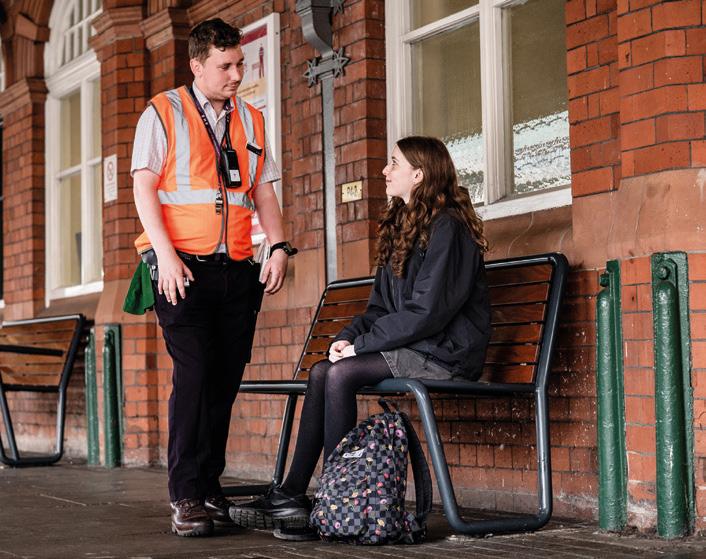
Vulnerable children often use the transport network to escape violence, exploitation and neglect, not realising that the rail network can take them closer to it. Signs of county lines exploitation, grooming and bullying can be subtle: a controlling adult, a one-way ticket paid in cash, a child who seems unsure of their route or who is trying to stay hidden.
But a single act – speaking to station staff, texting British Transport Police (BTP) or staying with a child until help arrives, can change everything.
Through being dropped visually into a busy station environment, Seconds to Safety challenges players to quickly make observations and decisions in a realworld environment. The game encourages players to:
Spot indicators of vulnerability amid everyday rail station scenes.
Decide when to approach, when to observe and when to escalate concerns.
Learn exactly who to tell and how to act on a safeguarding concern.
All in the time it takes to wait for your train.
From hands-on to digital
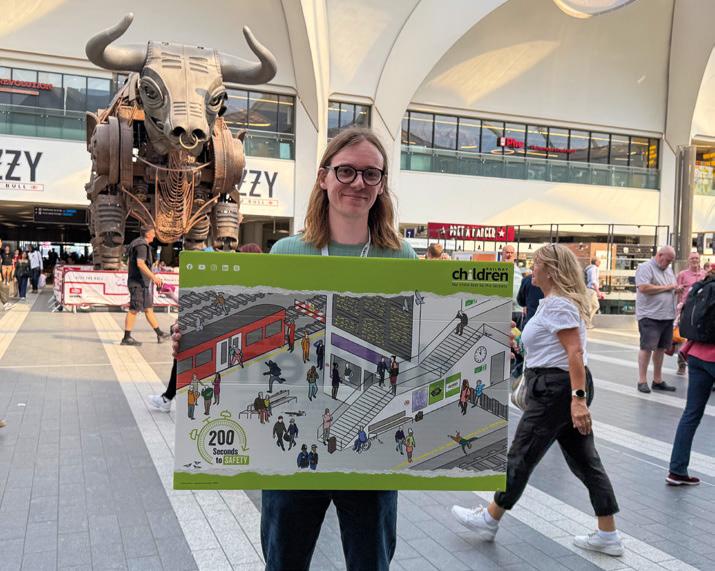
Based on the popular 200 Seconds to Safety activity developed by Railway Children to mark the Railway 200 celebration, this new digital version builds on the original fast-paced, hands-on activity that equipped young people to stay safe and adults to recognise safeguarding concerns, all in under four minutes.
Seeing how effective this activity was in engaging the public, the charity realised that by developing the activity digitally it could reach a far wider audience – and the Seconds to Safety app was born. From spotting danger to finding help, it’s safety knowledge that sticks in seconds.
“It was great to see people engaging with the 200 Seconds activity and seeing that they can play a part in keeping young people safe,”
said Joe Clay, Programme Manager: Safeguarding Partnerships at Railway Children.
“As we roll out the Seconds to Safety app, that lifesaving message will meet passengers where they’re at – on the platform.”
Rail Safety Week launch
The game is debuting during Rail Safety Week (15-21 June) with the community engagement team, before being fully launched as an app for the public – perfect for assemblies, youth groups and commuter downtime. This is the first time Railway Children has entered the interactive gaming world – a development made possible thanks to the generosity of its corporate partner, Angel Trains, and the insight and expertise of technology and innovation consultancy firm Chrome Angel.
David Jordan, Chief Operating Officer of Angel Trains, said: “We’re proud to partner with Railway Children to get practical safeguarding messaging into the hands of everyday passengers.
“We look forward to this innovative game being used far and wide, helping more passengers understand the issues young people may face on the rail network and, importantly, how we can all play a part in keeping each other safe.”
If you’re worried about a child on the transport network, speak to station staff or text BTP on 61016.
For more information on how you can play your part in keeping young people safe visit, www.railwaychildren.org.uk
* Transport for the North, September 2025
Images: Railway Children
How can rethinking the industry’s retailing approach help the sector succeed? Experts at
Southeastern
and ticketing tech specialists
OnTrack Retail
share their views
How retail apps could be rail’s key weapon in the quest for growth
Since the days of Isambard Kingdom Brunel, the rail industry has faced a constant juggling act as it strives to deliver commercial success.
Service frequency and standards need to be attractive to customers, but costs must be closely controlled. Pricing can manage demand and maximise yields, but rail is a public service that should be open to everyone across society. Revenue protection needs to deter fare evaders but not regular law-abiding passengers.
These contradictions are particularly evident when it comes to ticketing, whose renowned complexity has become a byword for the industry’s failings among critics. But James Watson, Managing Director at ticketing tech specialist OnTrack Retail, believes rethinking our technological approach can help the sector succeed.
He explained: “When rail is at its best, two factors are always present: we lean into innovation, and we closely focus on our customers. In today’s railway, we are under-performing in both when it comes to selling tickets.
“Retailing is a blend of art and science: we must mine the data but also adopt a savvy commercial mindset and a willingness to take risks. We learn most when we investigate why past initiatives have failed.
“And one such failure is a widespread underappreciation of the role retail apps already play in retailing.”
James believes that when it comes to digital channels, too many people in the industry still think about websites by default. Yet for a typical operator, seven out of 10 tickets sold through digital platforms will be via apps, not websites.
For specialist retailers like Trainline, it’s more than 90 per cent. Most train operators sell more tickets through apps than they do through ticket machines or ticket offices.
James summarises it: “Today most people run their lives using mobile apps – they bank using apps; they work using apps; they follow the news using apps and they socialise using apps. So when it comes to buying train tickets, we can’t be surprised that apps are the default choice for most customers.”
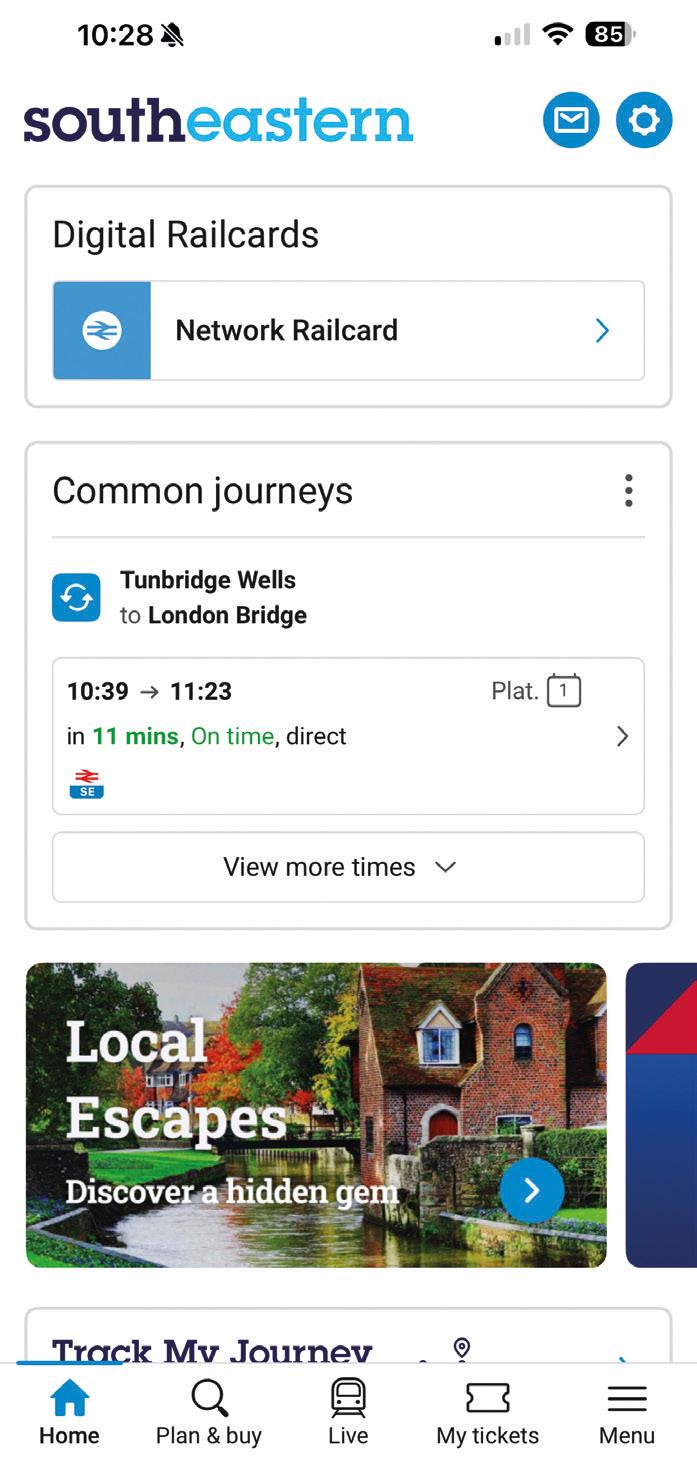
Apps aren’t solely retail channels, as they also play a valuable role providing information and enhancing customer experience. OnTrack Retail provides the app technology for several UK operators, including Southeastern, whose app won the coveted Best Passenger Experience Initiative award at this year’s Transport Ticketing Awards. Alongside fee-free ticket sales, the app offers multiple innovative features.
Astrid Agnew, Head of Digital at Southeastern, said: “A high-quality app can be the passenger’s gateway to stress-free rail travel. From real-time journey planning and disruption alerts to one-click Delay Repay compensation and seat finder advice, the Southeastern app provides all-round support to travellers before, during and after their journey.
“We’re proud of our decade-long partnership with OnTrack Retail and through our collaborative approach together we have developed features that make travel easier for our customers.”
For most journeys, travellers have a range of options so rail needs to make a compelling case to attract them away from alternative modes of transport. Building on the experience that OnTrack has gained from selling more than 50 million tickets on behalf of UK operators, James argues apps should be considered the front line in the industry’s battle for customers.
“A poor and frustrating retail experience doesn’t just leave travellers with a negative first impression of rail, we risk losing them to other modes of transport altogether,” he said.
“Remember Google Maps is the world’s most popular navigation app, and it defaults to driving instructions rather than public transport. Get the retail element wrong, and we lose the customer before we get any chance to impress with rail’s frequency, cleanliness or customer service.
“It’s a cut-throat retailing world out there, and apps are the industry’s most overlooked weapon in our quest for growth. They won’t deliver the commercial success for rail alone, but our route to success can only lie in embracing the full potential power of retail apps.”
Images: OnTrack
Sean Willis, UK Managing Director from organiser Terrapinn, praises the response to the first event, and is inspired to grow it even more next year
Thousands of rail professionals attend inaugural UK Rail event
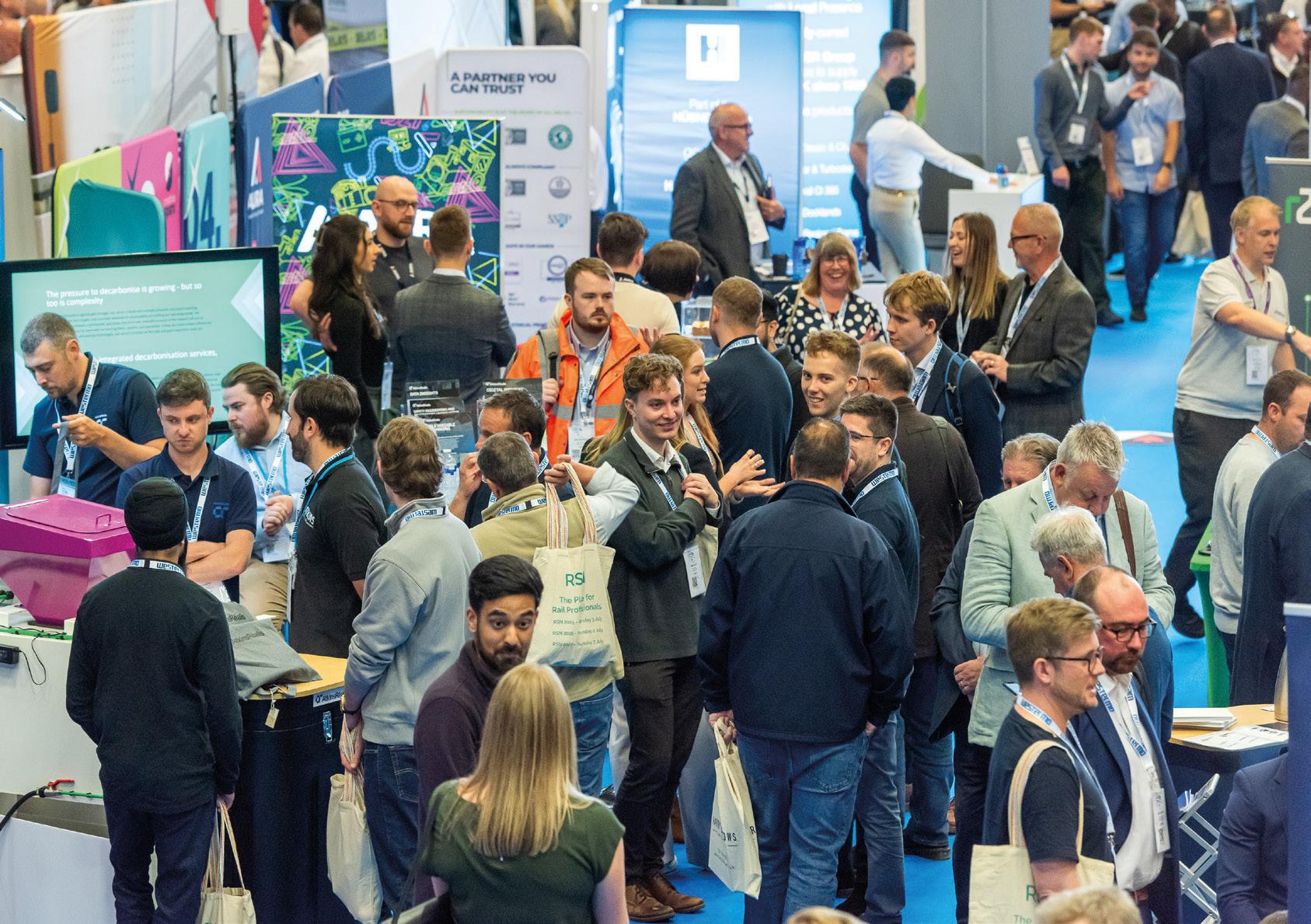
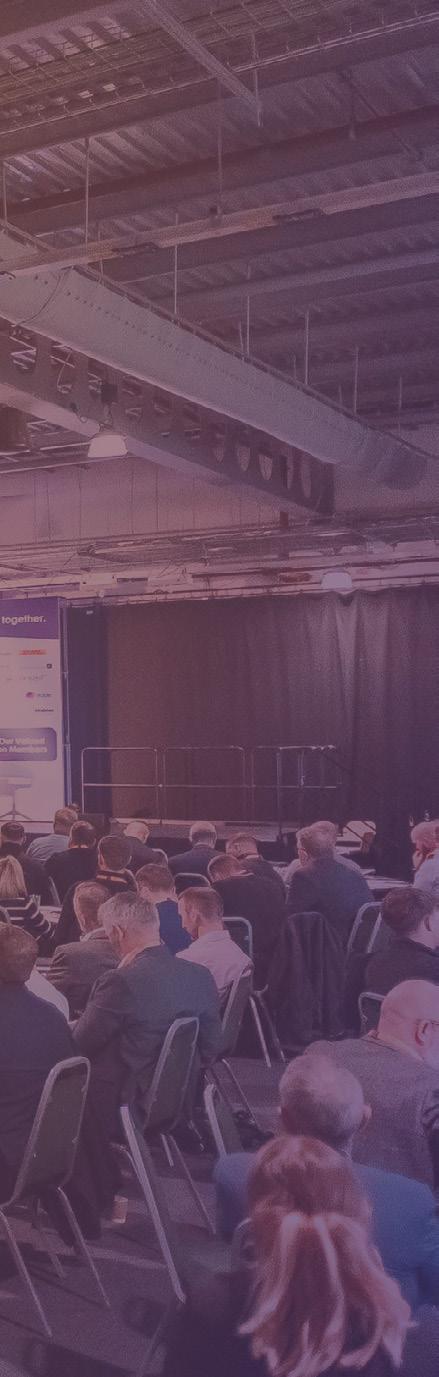
The inaugural UK Rail, organised by Terrapinn, has been hailed as a huge success, with the organiser describing it as a fantastic foundation to build on for next year.
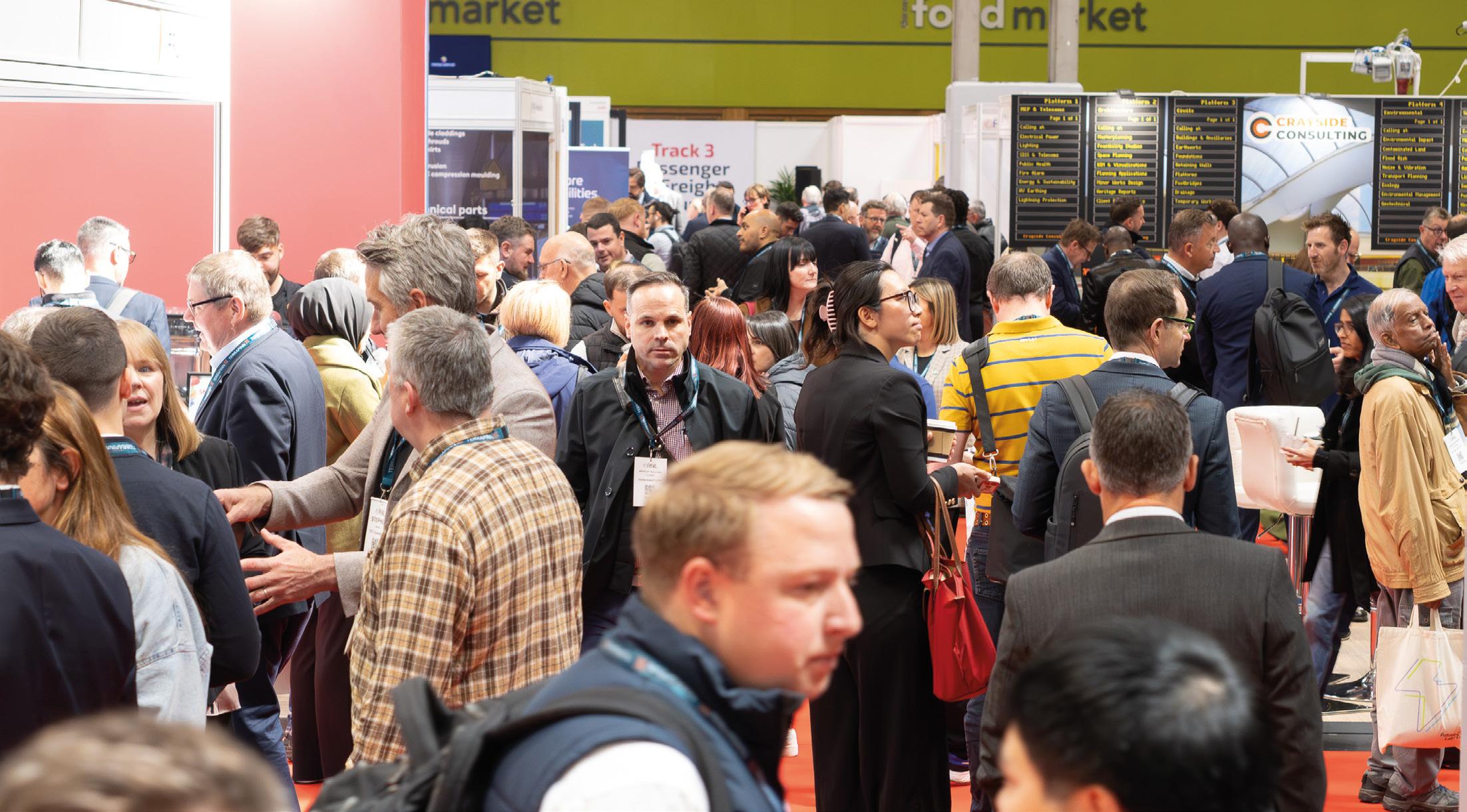
Thousands of UK rail professionals attended the two-day exhibition and conference at the NEC Birmingham, which builds on the success the organiser has had throughout its global rail series.
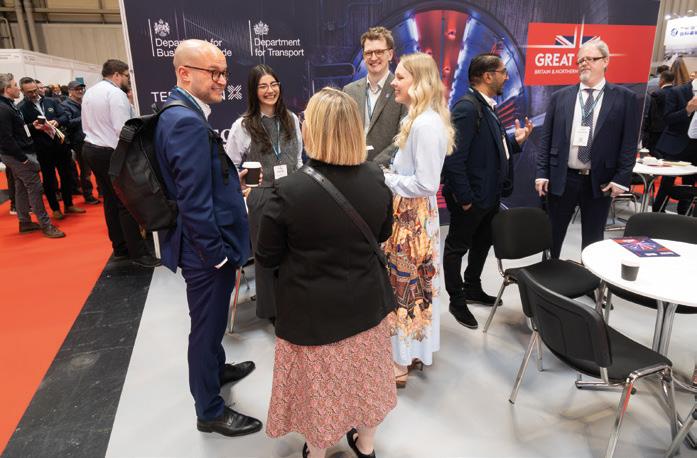
The first event brought the entire industry together with support at the highest level by TransPennine Express, HS2, East West Rail, the Transpennine Route Upgrade, Department for Business and Trade, Department for Transport and Midlands Connect.
Sean Willis, UK Managing Director, Terrapinn, said: “It has been an absolutely fantastic launch with a strong response from the industry, Government, rail operators, institutional partners, the major rolling stock manufacturers, through to universities and start-ups.
“The show floor has been really busy with thousands of people attending across the two days.
We look forward to working with the community to grow the show in 2027 and beyond.”
Insight from industry leaders
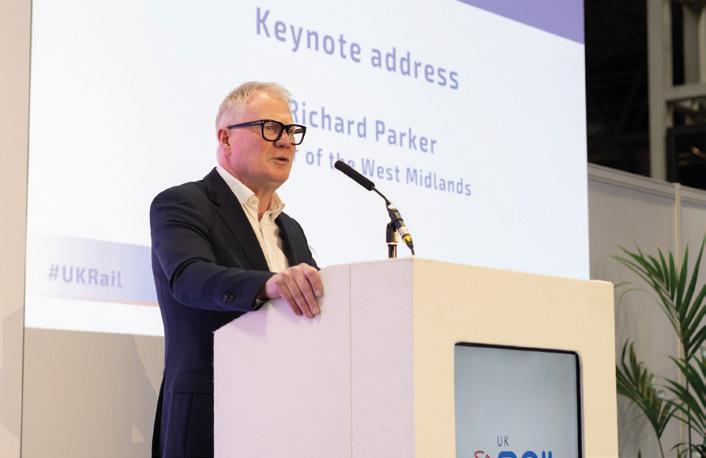
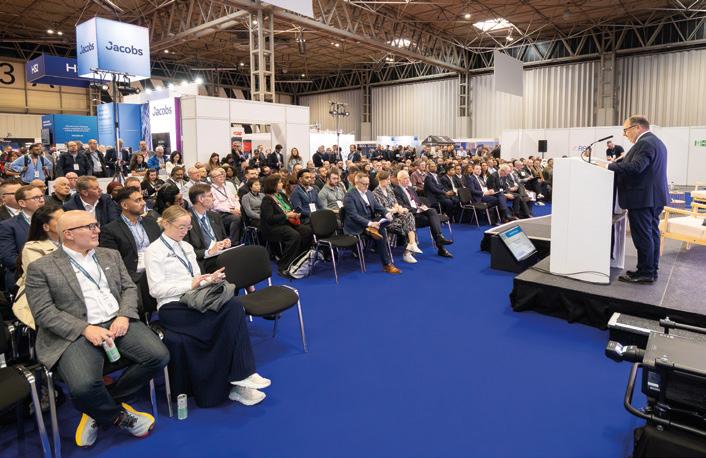
Opening the event on the keynote theatre of day one Noel Travers, Chair of the Railway Industry Association, welcomed Vernon Everitt, Transport Commissioner of Greater Manchester Combined Authority, giving his keynote address to the packed theatre.
It kicked off two days of high-profile speakers across four theatres with keynotes, panels, roundtables discussions and workshops.
Among the speakers on day one included Will Godfrey, Office of Rail and Road’s (ORR) Director of Economics, Finance and Markets, who spoke with both excitement and optimism about the future of the industry.
“Where we want to get to is all to play for,” he told attendees. “There are challenges, but I’m optimistic about what lies ahead.
“As industry transforms so is the ORR. We are
going to play our part reshaping how we get match fit for the new arrangement, not just for the funding of what will be Great British Railways (GBR), but also transformation programmes to reshape our overall regulatory approach matching our capabilities to that reformed rail sector, but also taking into account the fact we have significant responsibility in relation to roads.”
On day two, Ruth Cadbury MP and Chair of the Transport Select Committee highlighted the work of the group and discussed the transformation of the railways, saying: “In order for GBR to be truly empowered we need to move away from ministerial micromanagement of the railways.
“Rail experts should be in charge, customers, managers and the supply chain need to be insulated from unnecessary political chopping and changing.”
Leading exhibitors and sponsors
Alongside the speeches, the event provided a marketplace to source rolling stock manufacturing and maintenance, major engineering contractors,
Images: Terrapinn
signalling and track control technology, asset management and maintenance, construction materials and rail components.
Sponsored by ARUP, Digital Trains, Piper Networks Talleres Zitron, other leading exhibitors included CAF, HS2, Jacobs, Kier, Eiffage Genie Civil, Octave and many more.
Among those exhibiting was Sarah Hopton, Business Development Manager at Rail Business Daily, who said: “I’ve thoroughly enjoyed UK Rail,
meeting both current and new clients, and in between the networking catching some very interesting speeches. I can’t wait to do it all again next year.”
Next year the event will take place on 12-13 May 2027, NEC Birmingham. Visit www.terrapinn.com/UKRail/RBD/ FindOutMore for more details or for exhibiting enquiries email Sophie Brady, Business Development Manager, at sophie.brady@terrapinn.com
It has been an absolutely fantastic launch with a strong response from the industry, Government, rail operators, institutional partners, the major rolling stock manufacturers, through to universities and start-ups
The Light Rail Safety and Standards Board and KeolisAmey Metrolink refl ect on the use of technology to infl uence the behaviour of young people towards tramway staff
Pioneering project tackling abuse aimed at tramway employees
Aunique collaboration embracing the latest virtual reality (VR) technology is having a major influence on the behaviour of young people and their attitudes towards tramway employees in Manchester.
More than 1,600 students from schools around the city have now used VR headsets to watch a hardhitting film, No Excuse for Abuse, and 94 per cent have since said they will now show more respect towards Manchester Metrolink staff.
Launched in December 2025, the initiative is funded by the Light Rail Safety and Standards Board (LRSSB) and tram operator KeolisAmey Metrolink (KAM), and the film is now being deployed as part of the Bee Network’s TravelSafe Partnership Education and Engagement Programme.
Since then, it has been rolled out in 11 schools and colleges, and follow-up research has found 85 per cent of those who’ve watched the film have a better understanding of the impact of anti-social behaviour on public transport staff.
Carly Swift, Marketing and Communications Manager at the LRSSB, explained: “The project is clearly raising awareness of the profound impact of verbal and physical attacks on people who are just going about doing their own work.
“It also demonstrates the benefits of organisations working together and embracing new technologies to help tackle long-standing issues faced by operators and their employees.”
Others involved in the project have also praised the
results, including Sarah Potts, TravelSafe Prevention and Engagement Advisor at Transport for Greater Manchester.
“It has been a privilege to support the development of the TravelSafe Partnership’s new virtual reality film, No Excuse for Abuse,” she said.
“Now successfully embedded within our educational programme, the film is helping to drive meaningful behaviour change.
“It provides a powerful and immersive way for young people to understand the real impact of their actions and reinforces the clear message that there is never an excuse for abusive behaviour.”
Lisa Cleminson, Director of Service Delivery at KAM, said: “Investing in tangible actions that improve safety and the perception of safety demonstrates our strong commitment to valuing and protecting our colleagues.”
Frontline KAM staff have also given their backing for the film, with one saying: “As a new colleague at Metrolink I found the VR session opened my eyes to what our Customer Service Representatives and drivers have to deal with out on the system.”
Another described it as hard-hitting and emotional, while one said it was eye-opening and insightful.
Carly added: “The project has clearly demonstrated the value of VR in influencing behaviour and we are planning to work with other operators to deliver similar projects in the near future.”
It provides a powerful and immersive way for young people to understand the real impact of their actions and reinforces the clear message that there is never an excuse for abusive behaviour
Images: LRSSB
ACHIEVING MORE
• OLE installation, foundations, vegetation management and specialist labour.
ECS Group's one seamless delivery model. Unlocking efficiency. Driving performance.
• HV/LV and integrated energy solutions that boost efficiency and cut carbon impact.
• ESG driven, sustainable delivery for stronger, future ready infrastructure.
How the South Rail Systems Alliance and the Occupational Psychology Centre are supporting safer decision-making in an environment where operational change is constant
Leading safely through change
In modern rail delivery, change is constant.
Plans evolve. Priorities shift. Site conditions change. New risks emerge. While technical controls and risk assessments are key, organisations are increasingly recognising that safe delivery also depends on how people respond to change in real time.
That challenge was at the heart of a major behavioural safety programme delivered by the South Rail Systems Alliance (SRSA) supported by the Occupational Psychology Centre (OPC).
Bringing together employees from across Colas Rail UK, AECOM, Network Rail, suppliers and contingent labour, the programme focused on helping people better understand how behaviour, communication and decision-making influence safety outcomes in a complex operational environment.
Nick Matthews, Head of Transformation at SRSA, said: “We wanted people to recognise that safety is not static. Plans evolve, conditions change and priorities shift.
“We need people at every level to feel empowered to stop, reassess, challenge and speak up if something doesn’t feel right.”
Looking beyond technical risk
Railway teams are highly experienced at managing technical risk through planning, controls and dynamic
risk assessments. One facet of the programme focused on how behavioural factors can influence decision-making when plans, conditions or priorities change.
Iffath Ahmed, Lead Business Psychologist at the OPC, said: “A big part of the workshops was translating psychological concepts into practical operational situations that people immediately recognised from their own working environments.
“People could quickly see how those ideas applied to everyday decision-making on the railway.”
The programme also explored the concept of ‘normalisation of deviance’. In environments where continual adaptation is part of everyday delivery, small changes can sometimes become accepted as normal, particularly when no immediate negative outcome occurs. Over time, this can make it harder to recognise increasing risk.
Laura Hedley, Head of Consultancy and Talent Services at the OPC, explained: “The challenge is recognising when to stop and consciously reassess the situation and the risks again.”
Creating a culture of challenge
One of the most distinctive features of the programme was its alliance-wide approach.
More than 20 workshops brought together directors, managers, designers, engineers, supervisors, frontline teams and suppliers. The aim
was not simply to share behavioural safety concepts, but to create a common understanding of how decisions made across the delivery environment can and do influence safety outcomes.
David Anderson, Competence Manager –Infrastructure at SRSA, said: “It was important that everyone heard the same message, regardless of organisation, discipline or seniority.
“One of the biggest benefits was bringing together people to discuss the realities of safe delivery and create a shared understanding of how decisions made in one part of the delivery chain can influence safety elsewhere.”
Psychological safety
Psychological safety formed another major theme in the workshop. Discussions highlighted a familiar challenge across many rail organisations: while people are often comfortable raising concerns with peers, confidence to challenge can reduce when concerns involve more senior colleagues.
For SRSA, creating a culture where challenge is welcomed is fundamental to safer delivery.
Will Bryant, Operations Director at Colas Rail –SRSA, said: “Teams need to know, particularly when pressure is building to get the railway handed back on time during blockades, that they genuinely have the backing of senior leadership to stop, reassess and say ‘I’m free to be safe.’”
A typical track renewal project being delivered. Images: South Rail Systems Alliance (SRSA)
Joint workshop – York team delegates (SRSA)
Track renewal project in a station (SRSA)
Early impact and future development
Feedback from the programme has been strongly positive, with more than 90 per cent of participants rating the workshops positively and agreeing the learnings would help improve workforce safety.
Paul Taylor, Safety and Sustainability Director at Colas Rail UK, said: “SRSA is clearly setting the benchmark as we continue to evolve our safety culture.
“Safety can sometimes be perceived as a culture of compliance, but with these workshops fostering and expanding our ‘Free to be Safe’ messaging, our teams are empowered to speak up, challenge and stop work if they feel it is necessary to do so.
“Accidents generally don’t occur because people don’t know the risk controls, they happen when events or routine focus our minds elsewhere.
“The results from this training programme shows its effectiveness. I’m delighted to see so much engagement and the key messages taken away from those who have taken part.”
The programme has already led to further development work within SRSA, including a dedicated Non-Technical Skills (NTS) programme within its signalling division.
For Laura Hedley, the programme demonstrates how behavioural safety can strengthen already strong technical safety arrangements.
She said: “The SRSA programme helps people
recognise change, communicate openly and make more conscious safety decisions in complex operational environments.”
To discuss how behavioural safety and operational change can support safer delivery in your complex operational environments, get in touch with the team at the OPC.
admin@theopc.co.uk 01923 234646 www.theopc.co.uk
Discover Potential. Drive Performance.
Railway Benefi t Fund has published its latest impact report, which reveals in 12 months it delivered £2.76 million in social value to the UK rail industry
RBF: A decisive shift from reactive crisis intervention
Seeing the real difference Railway Benefit Fund (RBF) makes in people’s lives fills Jo Kaye with enormous pride. She is fast approaching three years as Chief Executive Officer at the charity which provides support to current, former and retired railway people and their families across the UK.
Last month it was revealed RBF delivered £2,757,683 in social value in 2025, supporting more than 500 railway workers and their families across the UK with practical help to navigate financial pressures, improve wellbeing, and stay connected to their community.
The report highlights the breadth of support the charity provides, from preventing homelessness to reducing isolation, helping railway people stabilise their lives and move forward with confidence. Among the support offered has included financial grants, confidential advice, digital tools, and befriending services to railway workers and their families.
“Our latest social value impact report marks a pivotal evolution in our mission, a decisive shift from reactive crisis intervention towards tackling the structural, cost-of-living barriers that lock families into persistent cycles of debt,” explained Jo.
“Working alongside a growing network of partners, we are embedding lasting social value into the railway community, reinforcing local safety nets and championing the systematic change needed to address the root causes of poverty.
“This is support that goes beyond immediate relief. Through sustained advocacy and targeted intervention, we are working to shield the most vulnerable railway families from the compounding and often invisible pressures of modern poverty before crisis takes hold.”
The 2025 RBF Impact Report outlines these key findings from donation to impact:
£342,760 – preventing homelessness.
£283,450 – protecting railway people from falling into crisis.
£618,208 – reducing isolation and stress.
£2,757,683 – total social value delivered.
The report also reflects the growing financial pressures facing railway workers and their families, with the charity stepping in to provide practical, targeted support that helps people regain stability.
That support is not confined to retirees: 66 per cent of those helped were current railway workers, and 65 per cent were 50 years and younger, demonstrating
that RBF is there for the railway family at every stage of life.
“We must never lose sight of what this industry wholeheartedly is at its core, a people industry,” added Jo. “Every improvement, every safety record, every journey completed, it starts and ends with the people who give their working lives to the railway.”
RBF is funded through donations from rail employers, industry partners, individuals, and volunteers, and urges the sector to maintain its support as demand for its services continues to grow. Whether giving as an individual or an organisation, every contribution makes a real difference to people across the UK railway family.
Pete Waterman OBE, President of RBF, said: “Railway people are the salt of the earth and they always have been. Whether you’re just starting out or you’ve given decades to this industry, there’s a shared pride, a shared language and a shared sense of purpose that you simply don’t find everywhere.
“The social value report isn’t just a document, it is a record of what this industry gives and a reminder of what it needs in return. The work is never finished. The commitment is continuous, and so must the support be. We are proud of what this industry achieves but pride alone doesn’t sustain it. People do, and people need backing.”
Email fundraising@railwaybenefitfund.org.uk to find out how you can support the charity. Visit www.railwaybenefitfund.org.uk to view the report.
Our latest social value impact report marks a pivotal evolution in our mission, a decisive shift from reactive crisis intervention towards tackling the structural, cost-ofliving barriers that lock families into persistent cycles of debt
Image: RBF
Steven Mulholland, Chief Executive Offi
cer at the Construction
Plant-hire Association (CPA), writes that without a confi dent, well-capitalised supply chain, there is no delivery. It is that simple
Britain cannot deliver its rail and infrastructure ambitions while squeezing the fi rms that build them
Labour’s confirmation that HS2 will take longer and cost more than expected should be a warning sign – and a prompt for some honest reflection.
You cannot keep demanding faster delivery of major infrastructure projects while piling cost pressures onto the firms responsible for building them.
But HS2 is just the latest symptom of a deeper problem. According to the Government’s own figures, only 14 per cent of its major strategic projects are currently rated as on track to deliver their objectives. Britain has a £49 billion backlog in maintenance of schools, hospitals and roads. Nearly three quarters of highway bridges and tunnels are more than 45 years old.
That is not just a delivery and maintenance problem. It is a crisis requiring structural change, and it has been building for decades.
There is a habit in Westminster of treating these failures as the result of poor planning, bad luck, or one-off complexity. They are not. The common thread running through almost every delayed or cancelled project in Britain is a failure to understand what it actually takes to build and maintain things, and to support the firms and workers who do the building.
The construction plant-hire sector sits at the foundation of every major project in this country. Our members supply the cranes, excavators, piling rigs and specialist machinery that make infrastructure physically possible. The sector contributes around £14 billion to UK GVA and supports more than 190,000 jobs.
Without a confident, well-capitalised supply chain, there is no delivery. It is that simple.
Yet that supply chain is under serious strain. Higher employer National Insurance contributions are driving up employment costs at precisely the moment firms should be investing in equipment and capacity.
Changes to inheritance tax reliefs have already hit many family-run, asset-heavy firms hard – businesses built over generations now facing difficult decisions about succession, investment and survival.
Not to mention soaring fuel and energy costs, which are pushing operating costs through the roof across the sector. More than 80 per cent of our members say they will either reduce or delay investment over the next 12 months. Firms that should be gearing up to deliver the next generation of infrastructure are instead being forced into defensive
decisions simply to stay afloat.
This matters because the decisions firms make today determine what Britain can build in three, five, 10 or even 20 years’ time. Buying specialist machinery is a long-term investment. Training an apprentice takes years. Once capacity is lost, it does not return overnight. Britain has hollowed out parts of its construction supply chain before, and paid the price when demand returned and the workforce and equipment were no longer there.
The Government’s ambitions are not the problem. Building homes, upgrading infrastructure and
Projects are not delivered by speeches – they are delivered by firms with the confidence to invest, hire and grow
delivering the clean energy transition are the right priorities. But ambition without a functioning supply chain behind it is just a list of announcements. Projects are not delivered by speeches, they are delivered by firms with the confidence to invest, hire and grow.
The good news is this is fixable. Ease the cost pressures on the firms doing the building. Give businesses the tax stability needed to invest for the long term. Protect Business Property Relief for the asset-intensive firms underpinning major projects. Provide and stick to a credible pipeline of funded work so firms can plan ahead with confidence. Plans and policies that cannot be driven by short-term political grandstanding and change simply to sound good to win votes to stay in power for a few years, which ultimately affects the industry long term and therefore society long term as infrastructure and housing deteriorates.
Do that, and the sector will deliver. Britain has the ambition, the expertise and the workforce. Give the firms doing the building a fair chance, and they will build, before it’s too late.
About CPA
For more than 85 years, we’ve been the voice of the UK plant-hire industry, representing almost 2,000 members, from one-person outfits to national giants. Visit https://cpa.uk.net/
Image: CPA
JCB, one of the world’s leading construction and agricultural machinery manufacturers, is also leading the way in the introduction of hydrogen as a low-emission fuel. Tom Beamish, Advanced Projects Deployment Manager at JCB, outlines the journey so far
The move to hydrogen for construction equipment
Companies in the construction industry have been looking to reduce emissions for some years.
At JCB our journey in alternative fuels, or alternative energy sources, really started with batteries, and in 2019 we launched our first electric mini excavator. It’s a 1.9 tonne mini excavator and we took the engine out, took the fuel tank out, and put an electric motor and batteries in the same space.
One of the challenges we have as a business is that we make 16 different product types – anything from a mini-excavator to a large excavator to a wheeled loading shovel, a wheeled excavator, backhoe loaders and telehandlers. And within all those models, all those product types, we then produce more than 350 different models.
If you think of a car company, they may have two product types – a car and a van – and maybe 15 models of each, so that’s 30 models in total. We have 350, and we run a seven-year refresh cycle on our machines, so every seven years the machine gets a refresh in terms of its capability and design, which means that every year we’re bringing 50 new machines to the market.
That works out at a brand new machine hitting one or more of our 22 assembly lines worldwide every four days.
Mini excavator
For our latest refresh on the 1.9 tonne mini excavator, the diesel version, we designed it very boxy so that we could then fit batteries in when we were ready to do so.
The JCB hydrogen Loadall telehandler on test in Digbeth Birmingham. Images: JCB
Tom Beamish
The other thing to say about that excavator is the machine is designed to go on the back of a trailer, and it’s also designed to go through a standard gate or doorway. So, we can’t grow the product in any way.
Cars have typically got bigger, they’ve got wider, they’ve got heavier. We can’t do that with our machines. If we put half a tonne of batteries on our 1.9 tonne mini excavator, it becomes a 2.4 tonne excavator. So we’re really restricted in terms of those parameters.
But anyway, we put batteries in the machine – it’s a great machine, it performs very well, it’s quiet, it’s refined. And since then, we’ve grown that electric range so we now have 22 different electric models across nine different product types.
But they are all compact machines. The bigger the machine, the more batteries they need, and, typically, the more remotely they work. So charging is more of a problem.
We then looked at all the different types of fuels. We looked at things like HVO (hydrogenated vegetable oil) and biodiesels, which are great shortterm solutions using the existing machines. All JCB machines from 2016 onwards with a JCB engine are certified to run on HVO.
The move to hydrogen
The only other technology available was the hydrogen fuel cell. We actually built two hydrogen fuel-cell excavators. But one of the challenges that we found with the fuel cells is our machines are very transient. They do a dig cycle every 27 seconds –they’re always digging into the ground, zero load to full load, dump, and then back again. A fuel cell likes to be very constant, very steady.
This meant we had to supplement the fuel cell
with batteries. The batteries do the charging and discharging, and the fuel cell just stays constant. And once we put all that complexity in, we needed power electronics, we needed new power batteries that charge and discharge very quickly, we needed lots of cooling systems to keep the whole thing from getting too hot. Suddenly, we were designing a completely new machine, with new technology and a new supply chain and it all became too complex and too expensive.
We liked the idea of hydrogen but not the fuel cell. Then one day Lord Bamford said, why don’t we just make a hydrogen engine?
We had looked at it before. But, at the time, if you typed into Google ‘hydrogen engines’, the results encouraged you not to explore that technology.
But, urged on by Lord Bamford, we challenged those initial findings. Our first discovery revealed precisely why there was negative sentiment about internal combustion engines and hydrogen: simply because people had only tried putting hydrogen into engines designed to run on petrol, something that was never going to end well.
The best way to think about it is, if you only had petrol engines in the world today, and you invented a fuel called diesel, you wouldn’t expect to put diesel in the petrol engine for it to work very well. It’s the same with hydrogen. If you put hydrogen in a petrol engine, it can work, but not very well.
You need to design an engine specifically for hydrogen. And hydrogen has got some great characteristics – it’s highly flammable, highly explosive. That’s brilliant for an engine.
We can burn it with lots of air and only a small amount of hydrogen, which you just can’t do with petrol and diesel. So we were on a very, very high
lambda air-fuel ratio, whereas with petrol and diesel, you have to stay around 0.8 to 1.2 to make it work.
With hydrogen we can go all the way up to three.
The people who tried hydrogen in a petrol engine had converted existing engines, keeping the fuel mixes more or less the same. And, because they were naturally aspirated, they couldn’t get enough air in. So that meant that they ran very rich, they put lots of hydrogen in and not very much air, they ran very hot, they ran very inefficiently, and it’s the heat that produces the NOx emissions.
New design
Now fast forward six years, we’ve developed the JCB hydrogen engine. It’s an engine designed for hydrogen. It’s a turbocharged engine to improve airflow.
We did more than 180 CFD (computational fluid dynamics) simulations in the cylinders to see how the gases mixed. And those tools were absolutely invaluable in developing our new engine. We now knew exactly what’s going on in the cylinder to get lots of air mixing with the hydrogen to get nice uniform mixture, no hotspots.
Then the other real change on the engine is spark plugs. This is a spark ignition engine. With diesel, it’s compression ignition – high temperature, high pressure combustion. We’re now going to low temperature, low pressure combustion with spark ignition.
The first time we put the spark plugs in, it was almost like putting a thunderbolt in: far too much spark. So we backed that right off. In the early days, we used motorsport spark plugs because with hydrogen you need a very small spark gap.
We were using ones that they use in motorsport,
3CX Hydrogen Backhoe Loader
which essentially have a singular probe in the middle of a ring. The first ones we used were from a Le Mans race car, and guess how long they lasted? 24 hours! But we’ve since worked with a supplier to get that up to a standard service interval.
And the engine is clean. In standard form, without any aftertreatment, we met the Stage 5 emissions limits, whereas a diesel needs lots of aftertreatment to meet them.
Then we went one stage further. We added a Stage 4 aftertreatment kit, straight out of the box, and the end result was almost no emissions at all! We had air quality emissions 500 times lower than the world health limits.
As a result, we have an engine that’s the same physical size as its diesel equivalent. We need a
different, larger fuel tank, so on the backhoe loader we have put tanks on the roof, which can be refilled on site from a bowser in a matter of minutes.
We have started with a 55kW/74HP engine, as that goes into around 70 per cent of JCB’s products worldwide. We’ve installed that engine into power generators and our backhoe loader, and there are more products to come.
At the end of the day, most of our customers don’t care if they use diesel or hydrogen or batteries. What they want is a machine that meets the legal requirements and digs a hole. It’s the hole that’s important, not the fuel.
A JCB machine will dig that hole, all day and every day. And it will meet the emissions regulations as well, so that’s a win-win situation for everybody.
RAIL LIFTING JACKS & PIT EXPERTS
Above: Lord Bamford demonstrates the hydrogen refueller to HM The King during a visit to the JCB factory
Dave Burns and
Steve Smith discuss
the sudden rise of Explore’s Rail Division, exciting new plant, and their vision for the future
Delivering best in class plant
After six decades of combined experience in the rail industry, Dave Burns and Steve Smith have seen just about every innovation come and go, but few have sparked their enthusiasm quite like the RH925 Compact – a first of its kind in the UK that is redefining drainage and track renewal operations.
It’s the new addition to the Explore Rail fleet, featuring a triple articulated boom eliminating potential spatial restrictions on site, delivering a complete, single machine solution that streamlines workflow, reduces project time, and enhances cost efficiency and on-site reliability.
Dave Burns, Head of Sales and Commercial Rail, said: “When you’ve been in the industry several decades you don’t get too excited about plant, as long as it does the right role, but this is different – it is a market leader.”
Explaining how it came about, Steve Smith, Head of Rail Operations, said: “We went to the manufacturer Liebherr and to the converter Allan J Hargreaves Plant Engineers asking for a machine that can work on drainage, track renewals and spot hire works.
“Together along with Swedish company InTeEx, with the Rated Capacity Indicator (RCI), we came out with this 925 machine that does around 80 per cent of anything we need to do.”
It highlights the impact of Explore on the industry, which is remarkable taking into account the business
only entered the UK rail market little more than two years ago.
The organisation currently has 38 machines playing a pivotal role on some of the UK’s biggest projects providing plant.
Steve said: “All our machines are Stage 5 engine machines, meaning they are the top end of the emissions and sustainability stats, and the average age of our machines is about 16 months.
“A great deal of thought has gone into what machines we get, and those have been innovated including changing the RCI systems with InTeEx, which enables us to remotely access the system and fault find.
Last year the organisation achieved full On-Track Plant Operations Scheme (POS) certification, demonstrating its commitment to the highest standards of safety, compliance and operational excellence.
Dave said: “The POS certification has been a turning point in putting us out to a wider market, added to the fact that we’ve taken the best processes from Explore and our own experiences to create the best experience for our customers.”
More recently Explore’s Rail division was awarded Gold as part of the Fleet Operator Recognition Scheme (FORS) for 2026, reflecting its commitment to operational excellence.
“We’ve got some real innovations on tracking, attachments and machines and we’re sitting with
one of the best haulage businesses in the country evidenced by the FORS accreditation,” explained Steve. “It reflects our commitment and operational excellence.”
Discussing the journey ahead, both Dave and Steve say this can be answered in two words: “deliver well”.
“This starts from taking an inquiry, putting a quote together, getting an order, delivering it well and invoice it,” said Dave.
“Our process is from start to the end and the delivery is so important because if you have that, the customers will come back again and again.”
Steve concludes by reverting back to his days as a joiner and advice his father gave him, which was to “measure twice and cut once”.
“The measuring is the planning and the delivery is the cutting and it’s essential we get it right,” he said.
“Alongside that we’ll continue to make sure when it comes to environmentally, sustainability, reliability, pricing, air quality, that we remain first class.
“We will also ensure we are close with our customers making sure it is one team. We are not a subcontractor to a contractor, we are part of the team, embedding people in and building relationships.
“Alongside that it is important to us to give people careers and not just shifts, creating a family feel right from the outset and giving them a career path.”
https://exploretransport.co.uk/
Images: Explore
Dave Burns
Steve Smith
The RH925 Compact is redefining drainage and track renewal operations, delivering a complete, single-machine solution that streamlines workflows, reduces project time, and enhances cost e ciency and on-site reliability.
Available to hire from now with full POS provision, the Liebherr RH925 Compact Excavator is available with a triple articulated boom, enhancing flexibility and eliminating potential spacial restrictions.
Tom Maxwell, General Manager - Plant & Machinery at Unipart, highlights the organisation’s CMR machine range and how it is ready to transform the approach to possessions, bringing unprecedented speed, safety and reliability to the trackside
Modern tracks, modern methods: Moving beyond legacy plant
The UK rail industry is standing at a critical crossroads. As the sector transitions through the current funding control periods, the pressure on Tier 1 contractors, network operators and plant hirers has never been more intense.
The modern permanent way environment demands a difficult balancing act – delivering increasingly complex track maintenance and major renewals, while working within reduced possession windows.
Add to this the stringent industry targets for decarbonisation, strict cost-control measures and the requirement for zero-harm safety environments, and the challenge becomes clear.
Traditional track renewal methods are fast becoming unsustainable. Relying on oversized,
single-purpose machinery or labour-intensive manual processes introduces unnecessary risk, inflates operational costs and risks overrunning critical possession times.
Unipart is answering this industry-wide call for change. By moving away from legacy methodologies and embracing high-performance, modular engineering, Unipart is redefining what is possible.
The Unipart Construction Maintenance and Renewal (CMR) machine range represents a paradigm shift in rail plant technology, engineered specifically to turn industry challenges into tangible operational advantages.
Meeting the industry challenge head-on
The modern rail environment requires equipment that is as adaptable and resilient as the teams operating
it. The Unipart CMR machine range has been developed not just as a collection of new mechanical assets, but as a direct solution to the three most significant headaches facing rail infrastructure delivery today:
1. Shrinking possession windows
With passenger and freight demand requiring maximum network availability, access to the track for engineering works is tighter than ever. Overnight and weekend possessions are compressed, leaving teams with minimal time for mobilisation and execution.
The CMR range directly addresses this by prioritising rapid deployment and high-speed operation. The machines are designed for quick set-up and seamless integration with existing rail
Rail Handler. Images: Unipart
infrastructure, enabling teams to maximise their working time on the track and drastically reducing the risk of costly possession overruns.
2. Safety excellence and risk mitigation
Manual handling remains one of the leading causes of minor injuries within the rail workforce. Manually lifting heavy components, placing clips and guiding heavy rails also places track workers in close proximity to hazards.
By automating these heavy-lifting and highrepetition tasks, the CMR machine range places operators in safer positions, supporting the industry’s collective drive toward a zero-harm culture.
3. Cost efficiency
Managing specialised, single-use plant machinery is a capital-intensive exercise that incurs substantial logistics, maintenance and storage costs. The CMR machine range offers versatile, high-output performance that reduces the volume of plant required on-site.
By optimising asset utilisation and accelerating project timelines, contractors can significantly lower both capital expenditure and ongoing project delivery costs.
A unique offering in the market
What truly sets Unipart apart from traditional plant and machinery suppliers is our integrated approach. As a global leader in supply chain management, logistics and manufacturing, we understand the entire lifecycle of rail infrastructure.
We don’t just manufacture and supply equipment in isolation, we design solutions that fit into the broader operational workflow.
Our CMR machines are engineered with unique flexibility, allowing for rapid adaptation to different rail profiles, sleeper types and varying site conditions. This versatility ensures that a single machine can transition smoothly between diverse projects, maximising return on investment and minimising downtime for operators.
When you choose the Unipart CMR machine range, you aren’t simply purchasing machinery, you are gaining a collaborative partner dedicated to driving operational excellence across your entire operation.
The CMR machine range
The Unipart CMR machine range consists of highly specialised, robustly engineered units built to tackle the core phases of track construction, maintenance and renewal.
Here is a closer look at the machines:
The Sleeper Layer
The Sleeper Layer is engineered to automate the placement of sleepers with a level of accuracy that manual or standard excavator attachments simply cannot match.
Capable of handling a wide variety of sleeper types, this machine ensures perfectly consistent spacing and precise parallel alignment. This
precision is vital, as accurate sleeper placement is critical for the long-term structural integrity of the ballast and the track bed as a whole.
Key benefits:
Delivers up to 1,000 sleepers per hour onto a prepared track bed.
High-output and high-precision sleeper placement.
Semi-autonomous operation.
Programmable Logic Controller (PLC) controlled to maximise efficiency.
The Rail Handler
The Rail Handler is a powerful and versatile machine that provides the capability to install, remove, transpose or replace rails quickly and safely.
Handling long sections of rail requires a delicate balance of immense strength and fine control to prevent dangerous flexing or twisting. The Rail Handler features a specialised gripping and guiding system that securely holds the rail, allowing operators to guide it into position smoothly without any risk of damaging the rail profile.
Key benefits:
Lift and carry closure and repair rails up to 10m.
Handles long welded rail of any length for new installations.
Ability to handle one or two rails at the same time.
Radio control increases safety for operators.
The Rail Clipper*
Historically, the installation and removal of rail fastenings is a labour-intensive, physically demanding and time-consuming task. The Rail Clipper is a unique, self-propelled machine which automates the process, working seamlessly with various industry-standard fastening types.
Key benefits:
Interchangeable clipping / de-clipping modules for different fastening systems including fastclip, vossloh and e-clips.
Average fastclip releasing of 700 to 1,400 sleepers per hour and average setting of 350 to 700 sleepers per hour.
PLC controlled for semi-autonomous working modes.
*Patent pending.
Partner with Unipart today
In an industry where every second counts, don’t let outdated equipment hold your projects back. The Unipart CMR machine range is ready to transform your approach to possessions, bringing unprecedented speed, safety and reliability to the trackside.
By moving away from legacy methodologies and embracing high-performance, modular engineering, Unipart is redefining what is possible
Sleeper Layer
Images: Tom Maxwell
Tara
Dibble, Head of Procurement and Supply Chain for Hitachi Rail, highlights the importance of teamwork, collaboration and long-term partnerships in driving innovation
A platform for the supply chain to flourish
For 200 years, UK railways have been built on collaboration. Now new Hitachi partnerships are helping to accelerate the UK supply chain - from local start-ups to global hyperscalers like NVIDIA and Microsoft.
Tara Dibble, Head of Procurement and Supply Chain, emphasises the importance of SMEs in driving the industry forward and why it is constantly evolving to be a great partner to work with.
“It’s vital at Hitachi that we have a pipeline of suppliers and new ideas coming in, that we operationally have the processes to engage with SMEs, but that we also have the ability to scale up some of those innovative ideas to work reliably at scale,” she said.
For the last three years Tara has been responsible for enabling long-term, open and collaborative delivery models across complex rail programmes, working hard to build the cross-industry teams that can drive forward innovation in the complex railway ecosystem.
“There are great ideas which haven’t worked before, because the effort hasn’t gone into the testing, integration and in making sure it is a scalable solution in a live operational rail environment,” she said. “We can offer that support to be able to do that.
“I love some of the challenges our customers give us, but also in finding the solutions, seeing technical teams coming together and bouncing ideas off each other to come up with the best solutions.
“Our involvement has made sure that SMEs are integrated into wider solutions - helping us get to the end scenario which is better outcomes for passengers.”
Collaboration
and long-term partnerships
Less than a year ago Hitachi Rail and South Yorkshire Mayoral Combined Authority (SYMCA) signed a 15-year Technology Partner Framework Agreement, designed to underpin the next generation of technology modernisation on the South Yorkshire Supertram network.
It’s this kind of framework that Tara sees as vital in introducing innovation and delivering long-term value.
“The SYMCA contract allows us to have that longer-term view and to be more open with our supply chain about the opportunities going forward,” she said. “The flipside is that for our customer having that flexible, resilient and innovative supply chain is
important but can’t be at the cost of having resilience and innovation.
“Overall it is about bringing in as many innovative ideas to the fore as possible. One thing that we did was sponsor an SME tech innovation hub, working with the Rail Innovation Group to bring SMEs together to look at some of the customer problem statements and look at some potential solutions, both shorter term and longer term.”
“Even from day one, we are thinking about the evolutionary process so that when the contract comes to an end we haven’t just been static, delivering improvements and value that puts the customer in a great position. We are thinking about where the service needs to get to.”
Hitachi Rail isn’t afraid to invest and be ambitious in its thinking in changing the industry for the better. That is evidenced by its role in developing HMAX
Images: Hitachi Rail
for Rail, an AI powered digital asset management platform that is helping customers around the world to optimise their maintenance and energy costs by up to 20 per cent.
“Bringing in new technology and innovative thinking like HMAX into the group is brilliant because it ups everybody’s thinking in terms of where are the potential opportunities for this new technology and where we can leverage some of the thinking,” she said.
“HMAX is a global platform – with significant involvement from partners like NVIDIA – but also UK SMEs have contributed to some of the innovation.
“We’re lucky within Hitachi Rail that there is a good mix of the real legacy knowledge and real understanding of how the rail industry works, combined with some fresh thinking and innovative ideas. HMAX leverages up that innovation and ways of thinking. It’s one of the reasons we have some of the UK’s most reliable fleets of trains. But also it covers UK signalling and infrastructure assets like track health so it’s a great example of digital innovation bringing different parts of the rail ecosystem together.”
The
future
Tara is excited for what the future holds for the UK rail industry, and the role Hitachi Rail and its suppliers are going to play.
“We’ve done a lot of work to position ourselves to be central in the future of UK rail and in how we can bring SMEs along with us,” she said.
An example she gives is with one of the organisation’s largest customers in the UK, Transport for London, which asks for annual reports into what percentage of its money flows into SMEs. This year that figure is 30 per cent.
“I’m super proud of that,” she said. “It doesn’t happen by accident, it is really down to a concerted effort, and a number of things that we’ve done including making ourselves a better customer for SMEs which is absolutely essential.”
Tara is particularly proud of the fact Hitachi Rail has been recognised for its commitment to fairer payment practices, receiving a Fair Payment Code bronze award. It is part of the Office of the Small Business Commissioner’s initiative to improve payment performance and culture in the UK.
“Across the UK we were one of the first 500 companies to get one, and whilst bronze is great I won’t rest until we’ve got to gold, so that is our next target,” she said. “That highlights the commitment to making sure that we are paying SMEs on time, all of the time.”
It is one of several successful initiatives in ensuring Hitachi Rail is a great organisation to work with, which has included the simplifying of its terms and conditions. There’s also been work on its procurement processes, with the recent running of an SME-only tender, designed to take into account the potentially limited resources those interested might have available.
“What excites me most about Hitachi Rail is that there is a genuine culture among the whole team in looking at how we can do things better and make a real difference, better impacting our local communities either through the products we offer, or the support that we provide them,” she said.
“An example is the work we are doing with local colleges to donate obsolete stock to engineering students, inspiring the next generation of up and coming rail engineers to hopefully consider a career in the industry.”
As to the longer-term future, Tara’s aspiration is in ensuring that the organisation has an even better pipeline, with SMEs seeking out Hitachi Rail with specific opportunities that they think will work well with its customers.
“We need to get better in taking some of our customer challenges out to the SME market so they can see there is a more intentional commitment in their development of innovation,” she said. “We’ve got some starting points on that, but I think there’s so much more that we can do in that space.
“We have a good senior leadership buy-in around engagement with SMEs and I would like to see that even broader so that people delivering the services are more flexible when engaging to enable the organisation’s to better plan how they’re going to use what might be quite limited resources. It’s an exciting space to be involved in, and one that is only going to get better.”
Hitachi Rail recently launched a portal which enables organisations to register their interest in working with Hitachi Rail, building a knowledge of what the wider UK SME market has to offer.
I love some of the challenges our customers give us, but also in finding the solutions, seeing technical teams coming together and bouncing ideas off each other to come up with the best solutions
Louise McNally, Principal Suicide and Trespass Prevention Specialist at Network Rail, describes the tool as ‘key’ in helping colleagues to recognise how to approach someone who may be distressed
Learning tool relaunched for rail staff
Samaritans has relaunched its rail suicide prevention learning tool, giving rail staff an updated 30-minute eLearning course to build confidence in making safe, effective interventions.
Designed for all rail industry staff, the tool sits alongside its Managing Suicidal Contacts (MSC) training and can be used either as a short introduction or as a refresher for those who have already attended the full course.
It focuses on helping staff recognise risk, make a safe intervention, and support someone to move from a place of danger to a place of safety and on to further help.
Dave Brown, Head of Rail at Samaritans, said:
“We’re proud to relaunch our learning tool – a practical resource supporting safety across the rail industry. Rising uptake over the past year shows the industry’s strong commitment to suicide prevention.
“It takes just 30 minutes, with the option to pause and return, making it an easy and effective way to help reduce suicides on the railway.”
The relaunch follows a significant increase in uptake over the last 12 months. In the three years
Rising uptake over the past year shows the industry’s strong commitment to suicide prevention
before 2025/26, 262 people completed the eLearning, while in 2025/26 alone completions rose to 3,083.
This reflects the growing profile of the tool and its increasing recognition across the industry as a useful complement to face-to-face suicide prevention training. The increase in use also gave Samaritans a timely opportunity to review the content and ensure it remained clear, relevant and easy to use.
The updated version is now more closely aligned with Samaritans and the rail industry’s wider training offer, clearer about who it is for, and more accessible. The refresh was shaped by user feedback and lived experience, helping to retain the elements learners valued most, including the videos, varied format and interactive content, while refining the content to improve clarity and relevance.
The learning tool takes around 30 minutes to complete, and learners can leave and return to it at any time. It can be accessed here https:// railsuicideprevention.co.uk/rail-sp-learning-tool/
Louise McNally, Principal Suicide and Trespass Prevention Specialist at Network Rail, said: “This tool is key for our industry colleagues, helping them to recognise and remind themselves of how to approach someone who may be distressed.
“We’re dedicated to keeping people safe on the railway, and this learning tool can play a key part in that.”
If you have not yet attended the Managing Suicidal Contacts course and would like to book a place, please contact railcompanies@samaritans.org.
Image: Samaritans
Kilborn Consulting Limited has recently joined TYLin. Founder Paul McSharry discusses what this means for the future
Platform set for ambitious and rewarding projects
There is a renewed excitement among the team at Kilborn Consulting Limited. Over the past quarter of a century, the team has been involved in more than 1,500 rail signalling, telecoms and level crossing projects, each delivered with passion and integrity.
It’s a commitment and an expertise that hasn’t gone unnoticed, with the organisation having recently been acquired by TYLin (pronounced Tee Why Lin), a globally renowned infrastructure engineering firm with a long-standing commitment to technical excellence and sustainable growth.
These are values that Paul McSharry, Head of CCS UK & Ireland and Professional Head of Signalling at Kilborn Consulting Limited, says are aligned with what the company has achieved since being formed 26 years ago this month.
“We have a shared dedication to excellence and ambition, and our team is a perfect fit for the goals that TYLin has,” he explained.
“It is also an opportunity that offers new opportunities for Kilborn and, in particular, my team, to advance their careers and to be able to work on an even wider array of exciting projects.
“I wanted the right organisation with the right values, behaviours and culture to take Kilborn and the team forward. That’s what I got from TYLin, which is looking to grow their business in the UK.
“They fully respected what we have done so far, and they respected our values and our culture.”
TYLin is a member of Sidara’s global collaborative of leading designers, engineers, planners, and consultants, something Paul says is already leading to opportunities that the team at Kilborn Consulting Limited would not have otherwise had.
“The organisations within the Sidara group
support each other globally, which has a significant benefit for the growth of the group as a whole, as well as its constituent parts, because they are not buying in external services, they are buying in from other parts of the group” he explained.
“One example already is that the Kilborn team has been asked to get involved in railway signalling system projects in Africa, Asia and South America.”
The journey to now
“I describe myself as an accidental entrepreneur,” reflected Paul, who has been involved in the rail industry for more than 40 years. Kilborn Consulting Limited, named simply after the street Paul used to live on, was formed in June 2000, set up with a colleague at the time to reduce the impact of emerging legislation when two individual limited companies joined up to trade through a joint company.
“Firstly, we simply supported the single client that had engaged us as individuals, but this developed quite quickly and unexpectedly into providing niche signalling related services, producing specifications, standards and carrying out feasibility studies for Railtrack (the predecessor to Network Rail).
“We did very well, and the work and the business and the reputation grew from there.”
The company now employs 15 people, with Paul stressing the importance of keeping the team relatively small and ensuring there is a family feel, establishing an organisation he is incredibly proud of, and one which has a very low turnover of staff.
“We describe ourselves as railway engineering design consultants, focusing on signalling, level crossings and telecoms,” he said.
“We’ve worked on a number of big multidisciplinary projects, filling the gap that might exist in the overall team, while on the flip side we have also led
work in our own right, such as design and feasibility work direct for the likes of Network Rail, main consultants/contractors and medium-sized design consultancies.
“What has stood out has been the wide variety of projects that we have been involved with, from our involvement on the ‘game changing’ Northumberland line, through to small signal sighting assessments.
“They are all just as pleasing, and they are carried out reliably and honestly for our extensive range of clients.
“There is also a focus on the fact we are independent, meaning we have always been able to offer fully unbiased advice, and we have been able to design schemes that are agnostic of any system or product, just the most suitable and compliant signalling layout.
“I can’t stress the importance of my team as well; the railway is full of systems, technologies, products, standards, safety integrity levels etc, but you need the right people in the right roles with the right behaviours to do anything successfully.”
Paul is excited for what the future holds, saying TYLin wants to make more of a footprint in the UK rail market.
“The plan is to double its 550 plus person European business by 2030,” Paul said.
“With its 25-plus-year deeply trusted relationships with the Spanish contractors and our long-trusted relationships with UK contractors and Tier 1 consultancies, I don’t see why in time we won’t be able to work as part of a joint venture or collaboration, working with the Tier 1s on big projects.
“With Kilborn’s and TYLin’s expertise, together we have fantastic foundations to continue to help projects globally.”
www.kilbornconsulting.co.uk
Images: Kilborn Consulting Limited
Mike Batheram, Market Director – Local Transport, and Alejandro Moreno, Market Director – Rail & Transit, both at AtkinsRéalis, co-write about the urgency that the industry shouldn’t be waiting for the formation of Great British Railways to establish new partnerships
Shaping the railway’s future through local partnerships
It’s Monday morning in a major city region. A newly elected mayor sets out an ambitious plan for thousands of new homes, a growing employment district and a revitalised town centre, all anchored by an integrated local transport network. The vision is for strong economic growth, supported by sustainable transport.
However, as delivery begins, familiar barriers surface. Station upgrades sit in a different funding stream from local regeneration. Rail service patterns are determined nationally, disconnected from local connections. Ticketing remains fragmented, making journeys less efficient for passengers. Meanwhile, local transport plans move at a different pace to rail investment cycles.
Mike Batheram. Image: AtkinsRéalis
Final footbridge link installed at Darlington station as £140m transformation progresses. Image: TVCA
Alejandro Moreno. Image: AtkinsRéalis
Data available
TAPI Bus Information
TAPI Bus Performance
TAPI Bus Disruption
Data available
TAPI Bus Information
TAPI Bus Performance
TAPI Bus Disruption
TAPI Bus Fares
TAPI Rail Information
TAPI Rail Performance
TAPI Bus Fares
TAPI Rail Information
TAPI Rail Performance
TAPI Journey Planner
TAPI Places
TAPI Journey Planner
TAPI Places
Rail partnerships in England
Bee Network rail integration
Greater Manchester Combined Authority is working closely with Network Rail, TOCs and DfT to create a more locally integrated network
Midlands Rail Hub
7+ organisations including DfT, Midlands Connect and Network Rail collaborating on a £1.75b programme to transform rail across the Midlands
West of England West of England Combined Authority is working closely with Network Rail, GWR and other rail partners to improve the network over 7 years
Mid-Cornwall Metro Partnership between Cornwall County Council, Network Rail and GWR to transform local journeys through a £56.8m project
The outcome is incremental, disjointed progress. Rail remains part of the region’s vision for growth but not fully embedded in the place it serves.
Many in the industry, including AtkinsRéalis, have seen versions of this scenario play out across the country in recent decades. It reflects both structural fragmentation and an inconsistent approach to partnerships between rail and local leaders.
That context is now shifting.
The English Devolution Act marks a significant step in devolving power and funding, enabling locally elected leaders to play a stronger role in driving economic growth.
Alongside this, the creation of Great British Railways (GBR) represents the most substantial transformation of the railway in a generation, bringing track and train together and tackling longstanding fragmentation.
A new statutory role for mayoral authorities in the governance of the railway signals a major shift in how decisions will be made.
Together, these changes create an opportunity to better align rail with the ambitions of places.
Connecting rail to place-based outcomes
Northumberland Line Partnership between Northumberland County Council, DfT, Network Rail and Northern trains to re-open a line connecting Newcastle and Ashford
Darlington station Collaboration between Tees Valley CA, DfT, Network Rail, Darlington Council, Transport for the North and LNER on a £142m station redevelopment
Yorkshire Plan for Rail Mayors from West Yorkshire CA, South Yorkshire CA, and York & North Yorkshire are working beyond geographical boundaries to develop a joint strategy
Oxford Connect and Oxford Station Masterplan
Oxfordshire County Council and Network Rail are working together to upgrade Oxford station, expanding the railway infrastructure and improving the local road network.
Devon Metro, incl. Dartmoor Line Since 2011, Devon Country Council has been working with Network Rail and industry to develop a ‘metro-style’ network through upgrades
If rail is to secure continued investment from devolved and local authorities, it must increasingly demonstrate its value as an effective partner, not just a provider.
Joint governance in practice
Encouragingly, this shift is already under way.
As detailed in a recent practitioners’ guide from the Urban Transport Group about effective rail partnerships, MSAs and rail partners across England are building the governance, capability and culture needed for effective collaboration ahead of GBR establishment.
Partnership forums and joint governance are becoming more mature, creating a single local interface with the railway and reducing duplication across organisations. This allows partnerships to be established ahead of project delivery, with a focus on collaboration from the outset.
Regions such as Greater Manchester and the West of England have already introduced rail partnership boards, often chaired by the Mayor, with more following suit in other parts of the country.
This local ownership is imperative: partnerships will not succeed if they are imposed from the centre
For Mayoral Strategic Authorities (MSAs), transport sits at the heart of the remit, both as infrastructure and a driver for economic growth. Rail plays a critical role in this, particularly in city regions, where it can shape travel patterns at scale. The railway is also a major landowner in England’s metropolitan areas.
Without integration, rail risks remaining an island within metropolitan areas, rather than becoming an integral part of the urban transport network. This model supported strong passenger growth during the privatisation era, but it is unlikely to deliver the scale of modal shift now required, particularly as cities seek to respond to climate challenges and changing travel behaviours.
Alongside this, MSAs are working with rail to develop Memorandums of Understanding (MOUs). These agreements will help to create clarity and accountability, defining shared objectives, roles and ways of working. Although places can draw on a broad framework, each arrangement is distinct and developed locally, shaped by what a place requires of the railway to achieve its ambitions.
This local ownership is imperative: partnerships will not succeed if they are imposed from the centre. Locally empowered railway leaders must be integral to shaping these agreements alongside devolved administrations.
Much of this need not be over-complicated. Perceived complexity around partnerships is one of the biggest barriers, yet progress depends less
Image: AtkinsRéalis
TIBETAN RAILROAD
Early action allows
ways of working to evolve alongside new structures, ensuring local priorities are reflected in national strategy
on elaborate design than on bringing the right people together and moving to delivery.
Partnerships can be slowed by over-engineered governance and legal structures than by the absence of them, and pragmatic approaches unlock momentum more effectively than attempts to design perfect structures from the outset. Robust structures and managed risk remain essential, but the greater risk is delay.
Combining complementary capabilities
Successful partnerships are not defined by structure alone; they combine the distinct strengths each organisation brings.
Mayoral authorities understand local economic priorities, spatial planning, multi-modal transport integration, and how transport investment translates into homes, jobs and wider regeneration. Rail partners contribute operational expertise, national network integration and the regulatory and safety frameworks that underpin the system.
This combination matters most when navigating difficult trade-offs. Decisions about service patterns, station investment or network capacity are rarely neutral, balancing competing priorities across geography, passenger groups and funding. Strong partnerships provide the space to manage these tensions openly, with a shared focus on place-based benefits.
Underpinning both sides is a deep understanding of local passengers – their needs and travel patterns – and the broader local context. Ensuring this insight remains at the heart of decision-making will be critical to GBR’s long-term success.
Culture and behaviours that deliver
Alongside governance and capability, culture plays a central role in how partnerships function day to day. Effective partnerships are built on mutual respect,
transparency and trust. In practice, this means working together to consistently align priorities and ensure outcomes deliver value for local communities.
Examples of this approach have already emerged. The redevelopment of Darlington station, which opened in May, marks a significant milestone in the partnership between Tees Valley Combined Authority and rail stakeholders. The scheme illustrates how aligning local growth ambitions with rail investment can improve connectivity across the region.
Similarly, on the Midlands Rail Hub, more than seven organisations including Midlands Connect, the Department for Transport and Network Rail have worked to establish a collaborative operating model.
In each case, success has been determined by a willingness to work differently – sharing information, aligning priorities early and maintaining collaboration throughout the project lifecycle.
Acting now, together
The establishment of GBR will transform how the railway is governed and structured for years to come. Its impact, however, will be shaped by the quality of partnerships between national bodies and local leaders.
Those partnerships need to be built and strengthened now. Early action allows ways of working to evolve alongside new structures, ensuring local priorities are reflected in national strategy.
The sector has already begun to demonstrate what is possible. Maintaining this momentum will be critical in the period ahead.
AtkinsRéalis supported the Urban Transport Group and Network Rail with the development of Delivering local partnerships on England’s railways and the supplementary case studies. Read the full guide on the Urban Transport Group website www.urbantransportgroup.org
Major step forward as Midlands Rail Hub Alliance confirmed. Image: Network Rail
www.geoaccess.co.uk
Rail Business Daily has officially launched RBD Marketing. Business Development Manager Sarah Hopton discusses the offering and her passion for helping organisations thrive
RBD Marketing: Going the extra mile
Sarah Hopton thrives on a challenge, pushing herself out of her comfort zone, be it jumping out of planes or donning her running shoes to take on the mightiest hills that South Yorkshire has to offer.
It’s a mentality she brings to her role as Business Development Manager at Rail Business Daily (RBD), a position she takes a lot of pride in, especially when she sees the fruits of her labours and the impact her efforts have on the clients she works with.
“It’s about going the extra mile, knowing the impact it will have,” she said. “This is more than a job, it is a passion, especially knowing the impact getting it right can have on an organisation, its employees, and the organisations they work with.
“As an organisation we have a unique and unrivalled proposition; market leading channels and the expertise to leverage value from them for our
clients, something we’re more than happy to share to help the industry thrive.”
Sarah first joined RBD in 2022 then briefly left the industry, before returning less than a year later, attracted back by a sector that she had quickly grown to love.
Since her return in October 2023 she has built an excellent list of clients who have very quickly benefited from her expertise as a Business Development Manager and strategic marketer, with a proven track record of helping businesses thrive.
Such has been her success since her return that earlier this month the organisation officially launched RBD Marketing, a new proposition designed to help rail businesses maximise their marketing impact.
Best known for its established industry-leading media channels – including Rail Director magazine and railbusinessdaily.com news website – the
dedicated marketing service, supported by a newly launched website, enables clients to leverage the platforms alongside a complementary suite of marketing services delivered by an experienced, sector-focused team.
“RBD Marketing is your strategic partner for elevating your profile, amplifying your brand, clarifying your communications and telling your story to the stakeholders who matter most,” explained Sarah.
“We combine rail industry knowledge with marketing expertise, provide creative direction, strategic guidance and expert advice on how best to leverage RBD’s market-leading media platforms – and wider channels – to achieve your marketing objectives.
“In a nutshell we help your business to stand out, strengthen its proposition, and succeed.”
Although only recently officially launched, Sarah and the team have been developing and delivering a suite of complementary marketing services for some time, including creative design, brand development, social media management, website development, internal communications, and public relations.
Among those to already benefit with marketing collateral and other support are the likes of Buckland Rail, Aarvee, Anturas, Unipart and the Global Centre of Rail Excellence, Rail Infrastructure Networking, QTS Training, and Bender.
“Our offering is tailored specifically to the needs of rail businesses, helping them to enhance visibility, engage stakeholders, and drive growth,” said Sarah.
“We are a force for good in rail and we put our
customers first, we listen, we help and we offer proactive advice to help our customers grow.
“The best part for me is seeing the businesses grow and supporting that journey. Organisations like Aarvee I’ve worked with since it first started work in the UK, so it has been a real joy seeing it grow, develop and land contracts.”
Returning to sky diving and other challenges she has taken on outside of work, she concluded: “Believe it or not there are similarities. It is about pushing the boundaries sometimes and challenging yourself to do more and go further than you thought possible.”
Visit https://www.railbusinessdaily.com/marketing/ for more details.
RBDMarketing
Blackpool Transport’s new Managing Director Lea Harrison says taking up the high-profile role feels like returning home, and he has big plans for the future of the modern light rail system while preserving the town’s rich tramway heritage. He sets out his thoughts after three months in the role
Sustainability the key to the future of Blackpool’s trams
Ihave many fond memories of days out in Blackpool when I was growing up in Manchester, and returning to the Fylde coast to work really does feel like returning to my roots.
The town has long been famed for its trams, and I see it as a huge privilege to be a part of the next chapter in the long and storied history of light rail on the Fylde coast.
Although lots of excellent work has been done by my predecessor to build a tramway that’s fit for the future, there is always more to be done, and it’s fair to say I had a full in-tray when I arrived at the end of February.
One of the top priorities was securing the future of Blackpool’s iconic heritage trams after a lot of
speculation that they may be reaching the end of the line. I would categorically state that this is not the case, and we are now developing a bold vision for the future.
This will include regular trips on the seafront by heritage trams that can be run to modern safety standards, and finding a permanent home for the rest of the historic fleet.
This is now a pressing issue as, despite the fantastic efforts of everyone involved with the existing Tramtown site, a recent survey by an independent structural engineer found the building was unsafe and beyond repair.
While it’s sad that we need to say goodbye to the existing building, we also have an opportunity to build a sustainable future for a top tourist attraction
showcasing the world-famous trams and associated tramway heritage.
In the short-term, this may include pop-up displays of vintage trams until funding is in place for a permanent facility that can showcase the remainder of the fleet and properly celebrate our history.
In the meantime, it’s vital that the older trams remain in the public eye. After all, they are as much a part of Blackpool’s appeal to tourists as the Tower and the Pleasure Beach. With this in mind, we’re planning the return of regular heritage tours later this year.
In recent weeks, members of the public have also seen vintage trams in operation during a series of private tours, including the famous Balloon tram (number 717), which returned to service in May
Images: Blackpool Transport
While I’m fortunate to have taken over the helm of an organisation that was already making huge strides towards long-term sustainability, there is still a long way to go
for a trip organised by Trinity
Over the next few months we will be working closely with the local authority, other stakeholders and partners on more detailed proposals, and we’re looking forward to making further announcements in due course.
While preserving the town’s rich tramway heritage for future generations to enjoy is among my top priorities, it’s vital that we also build on the undoubted success of our regular, second-generation trams that are vital for the future prosperity of the region.
The past couple of years have seen the Blackpool Transport team scoop numerous industry awards and patronage rise by over eight per cent in the 2025/26 financial year. The challenge now is to maintain this momentum, particularly as the tram fleet reaches middle age.
About Blackpool Transport’s new Managing Director
Lea Harrison joined Blackpool Transport in February 2026 following the retirement of Jane Cole OBE, who had led the organisation since 2015.
Prior to joining the organisation, Lea built a distinguished career in light rail, most recently as Managing Director of Edinburgh Trams.
During his 10 years north of the border, he led the award-winning tramway into a new era with the successful launch of a tramway extension through Leith to Newhaven.
A former member of the Armed Forces, Lea has since held a series of other high-profile roles at Manchester Metrolink, Tramlink Nottingham and Keolis UK.
As with all our assets, including network infrastructure and a fleet of 95 buses, this will become increasingly difficult as they age, so we need to look at working smarter with the resources we already have.
However, in the longer term, some outside investment will be vital, although this doesn’t mean just going cap in hand to the local authority or Government asking for financial help to carry on. It requires detailed business plans that demonstrate a clear return on investment.
These proposals require careful analysis of emerging travel patterns and wider changes within the communities we serve – something that has become increasingly apparent in the years following the pandemic.
As most COVID restrictions eased, our buses and trams enjoyed a swift recovery, boosted by a trend in staycation holidays, but fell back again as international travel returned to pre-pandemic levels.
Since then, we’ve seen a decline in the number of people coming to Blackpool for a traditional holiday, offset by an increase in day-trippers and couples and families enjoying short breaks.
We need all our services to evolve in line with these
changes while meeting the needs of residents who rely on our services year-round for work and leisure. This will require strengthening our existing relationships with major employers in the region, as well as local hotels and Blackpool’s many tourist attractions.
Moving forward, we will also continue to invest in our greatest asset: our workforce. We have nearly 600 people working for us across all tram and bus operations, and as one of the area’s leading employers we’ve never had a problem with recruitment or retention. It is an organisation people really want to join, and we have several examples of three generations of the same family working here.
This stability, combined with our roots in the local community, means there is a real connection with regular customers, and our willingness to respond to feedback from all stakeholders has laid firm foundations for a sustainable future.
In fact, sustainability – in every sense of the word – is at the heart of everything I want to achieve here in Blackpool. Environmentally, this includes a longterm ambition to run an all-electric bus fleet and continually striving to improve energy efficiency across the organisation.
Equally important is financial sustainability, and this applies to all three key areas of the business –buses, trams and heritage operations. Ultimately, this is always reliant on fare revenue that can be reinvested in services to create a virtuous circle.
While moving towards off-tram ticketing, a fully contactless, multi-model payment system will play an important role in maximising revenue from existing services; and having more buses out on the road and more trams on the tracks will be essential for future growth in the farebox.
I’m fortunate to have taken over the helm of an organisation that was already making huge strides towards long-term sustainability, but there is still a long way to go. However, with the team we have, I’m confident we can go from strength to strength and continue delivering a service the people of Blackpool and surrounding areas can be proud of.
Hospice during National Dementia Action Week.
Engineering the Future of Rail.
With more than three decades of global experience, Aarvee is a trusted partner in railway infrastructure consultancy. From high-speed networks to urban metro systems, we bring deep expertise across all rail formats.
Driven by innovation, we deliver practical, buildable designs that reduce complexity, optimise costs, and accelerate project delivery. Aarvee.co.uk
The ninth annual Women in Rail Awards brought together more than 740 professionals for a spectacular evening of celebration, inspiration, and recognition
Women in Rail Awards: ‘Celebrating brilliance and courage’
‘Tonight is about celebrating brilliance, courage, and the extraordinary contribution women make to our railway every single day.”
That was the message from Marie Daly, Chair of Women in Rail, speaking at the organisation’s ninth awards event, at the iconic Roundhouse, Camden in London.
The event brought together more than 740 professionals from across the UK rail industry for an evening of celebration, inspiration and recognition. Hosted by Gail Porter, the evening featured moving stories, exceptional achievements, and a powerful sense of unity among attendees.
Marie, who is also Chief Operations Officer at Transport for Wales, added: “This year feels particularly significant because, for the first time, Women in Rail has had a genuine voice at the table shaping the future of our industry.
“As Great British Railways (GBR) develops, we have a once-in-a-generation opportunity not just to reform structures, but to design equity into the system from the very beginning. For me, GBR also represents a Gender Balance Reset.
“Women currently make up just 18.9 per cent of the rail workforce. That reality means our mission
remains as important as ever. But this has never been about division or blame. Women in Rail has always been about collaboration, shared ownership, and creating an industry where everyone can thrive.
“My message tonight is simple: lead with decency, courage, and respect. If we all do that, together, we can create the change we want to see across our industry.”
A total of 13 awards were presented, celebrating both individual excellence and collaborative initiatives that are shaping a more inclusive future for the rail industry.
The judging panel, comprising senior leaders from across the sector, faced the challenging task of selecting winners from a record number of entries – a testament to the incredible work being done across the network.
The judges specifically requested that all nominees be commended for their hard work, selfless dedication and commitment, and that a huge thank you be extended to all those who were nominated for this year’s Women in Rail Awards.
Following the champagne reception, guests were serenaded to their seats by the Southeastern TRAX Choir. A welcome address from Marie Daly, followed by a keynote address from Lucy D’Orsi, Chief Constable, The British Transport Police, marked the opening of the ceremony.
The Chief Constable described it as a ‘real honour and pleasure’ to be in a room full of people who care about making rail ‘fairer, stronger, and more inclusive’. She reflected on her time joining policing in 1992, and how then there was a stockings allowance.
Images: Nimble Media
Marie Daly
“I see progress in action, talented people across the rail industry driving change, and importantly, making space for other people. And that matters, that matters to our organisations, to our communities, to passengers and to me personally,” she said.
“Early on I was one of two women on my team and on my first day I felt conspicuous, like I had to prove that I belonged. But I was lucky, I had a brilliant sergeant who became an ally and a mentor.
“He didn’t see a female officer, he saw a colleague and he saw potential and that support mattered. It gave me confidence on the tough days and it taught me something that I have carried with me ever since, that it is important we look out for each other.”
The Chief Constable reflected on her time as Gold Commander at a large fire.
“I arrived to chair a meeting with a room full of brilliant subject matter experts who were all men,” she said. “I started asking some questions, trying to take charge, and no one in that room answered me.
“Maybe, if I’m being kind, they didn’t know the answers. But in that moment, I realised two things. The first, I could not wait for permission to lead, and the second is that I had to connect with people and not just direct them.
“You do not just have to earn credibility, you
My message tonight is simple: lead with decency, courage, and respect. If we all do that, together, we can create the change we want to see across our industry
have to believe that you have got it, and perfection isn’t always required and it’s not necessarily always possible.
“But what matters and what matters to you all is backing yourself, own the space that you are in and lead with confidence, empathy, humility and a bit of humour, because sometimes a laugh is exactly what is needed to break the tension and to get people to join you.”
Established in 2012, Women in Rail was created to improve diversity and inclusion across the UK rail industry. Today, the organisation champions and advances women of all ages and backgrounds and at all stages of their career, driving thought leadership, policy influence and industry collaboration to create lasting change.
Through mentoring, advocacy, networking and partnership, Women in Rail continues to push for progress, working to help the rail sector become a truly inclusive, progressive and attractive career choice for everyone.
Concluding her speech at the awards, the Chief Constable had this message for attendees: “Let’s keep supporting each other, keep being the mentors that we have all benefited from and we all needed during our careers, and make sure that no one, no one
The winners
ever comes into any of our workplaces feeling like they do not belong because they absolutely do.
“Together we are building an industry where women can thrive, lead and drive things forward at full speed. So my advice is you need to dream big and if you are not intimidated by your dream, you are not dreaming big enough.
“It’s going to be bumpy, it’s going to be okay and it’s okay to show a little bit of fragility on the way. So here is to all of you and the future we are building together.”
The organisation and delivery of the awards were made possible through the support of Nimble Media, which worked in close partnership with Women in Rail.
Category Sponsors: Avanti West Coast, BAM, CrossCountry, Greater Anglia, KeolisAmey Docklands, KeolisAmey Metrolink, LNER, London Northwestern Railway and West Midlands Railway, Transport UK and Worldline IT Services UK Limited; Drink & Wine Sponsor: Rail Delivery Group; Entertainment Sponsor: TransPennine Express; Champagne Reception Contributing Sponsor: GTR; Table Decoration Sponsor: Mott MacDonald; Fundraising Sponsor: EMR; and Gift Bag Sponsor: Alstom Transport UK Ltd.
Best Training or Development Programme Award: Southeastern.
Social Value Award: Southeastern.
Employer of the Year Award: Rail Delivery Group.
Best Networking Group Award: cpc.
The Equality, Diversity, and Inclusion Team Award: cpc.
The Equality, Diversity, and Inclusion Individual Award: Siobhan Spoor, Senior HR Business Partner at Network Rail.
Female Apprentice of the Year Award: Megan McCreadie, Project Controls Degree Apprenticeship at AtkinsRéalis.
Female Rising Star of the Year Award: Emma Poppleton, Senior Engineer at Arcadis.
Male Ally of the Year Award: Andy Stringer, Engineering Director at Siemens Mobility.
Inspirational Frontline Woman of the Year Award: Jane Fentaman, Train Driver at CrossCountry.
Inspirational Woman of the Year Award: Susan Khan, Head of Engineering Function at Hitachi Rail.
The Adele Ginn Unsung Hero Award: Lucy Willis, Catering Logistics Manager at CrossCountry.
The Adele Ginn Lifetime Achievement Award: Rachel Heath, Operations Director, Wales and Borders, Network Rail.
Chief Constable Lucy D’Orsi
Promoting a world of opportunity accessible to all.
GOSS
Consultancy Ltd (GCL) are working across the Rail Industry to hardwire access and inclusion project management and delivery. services include:
Goss Consultancy Ltd (GCL) are working across the Rail Industry to hardwire access and inclusion into project management and delivery.
Consultancy Ltd
Promoting a world of opportunity accessible to all.
Goss Consultancy Ltd (GCL) are working across the Rail Industry to hardwire access and inclusion into project management and delivery.
Consultancy Ltd (GCL) are working across the Rail Industry to hardwire access and inclusion project management and delivery.
Our services include:
Access and Inclusive Design Appraisals
Goss Consultancy Ltd (GCL) are working across the Rail Industry to hardwire access and inclusion into project management and delivery.
Access and Inclusive Design Training
Access and Inclusive Design Appraisals
Access and Inclusive Design Training
Our services include:
Access and Inclusion Project Management Support
services include:
Goss Consultancy Ltd (GCL) are working across the Rail Industry to hardwire access and inclusion into project management and delivery.
Access and Inclusion Strategy Reviews
Access and Inclusion Project Management Support
Our services include:
Access and Inclusive Design Appraisals
Access Audits/Reviews
Access and Inclusive Design Appraisals
Our services include:
Access and Inclusion Strategy Reviews
Access and Inclusive Design Training
Access and Inclusive Design Appraisals
Access and Inclusive Design Training
Digital Accessibility Reviews
Access Audits/Reviews
• Access and Inclusive Design Appraisals
Access and Inclusion Project Management Support
Access and Inclusion Project Management Support
Access and Inclusive Design Training
Digital Accessibility Reviews
Access and Inclusion Strategy Reviews
• Access and Inclusive Design Training
Access and Inclusion Project Management Support
Access and Inclusion Strategy Reviews
Diversity/Equality Impact Assessment Training and Development
Access Audits/Reviews
Access Audits/Reviews
Equality, Diversity and Inclusion Audits/Reviews
Diversity/Equality Impact Assessment Training and Development
• Access and Inclusion Project Management Support
Access and Inclusion Strategy Reviews
Digital Accessibility Reviews
Access Audits/Reviews
Equality, Diversity and Inclusion Audits/Reviews
Digital Accessibility Reviews
• Access and Inclusion Strategy Reviews
Inclusive Customer Service Training
Digital Accessibility Reviews
Diversity/Equality Impact Assessment Training and Development
Diversity/Equality Impact Assessment Training and Development
Inclusive Customer Service Training
• Access Audits/Reviews
Policy/Practice Development
Equality, Diversity and Inclusion Audits/Reviews
Diversity/Equality Impact Assessment Training and Development
Equality, Diversity and Inclusion Audits/Reviews
Policy/Practice Development
• Digital Accessibility Reviews
Equality, Diversity and Inclusion Audits/Reviews
Inclusive Customer Service Training
Stakeholder Engagement
Inclusive Customer Service Training
Stakeholder Engagement
Inclusive Customer Service Training
• Diversity/Equality Impact Assessment Training and Development
Policy/Practice Development
Policy/Practice Development
Policy/Practice Development
Stakeholder Engagement
• Equality, Diversity and Inclusion Audits/Reviews
Stakeholder Engagement
supporting the transport sector to future-proof the Rail
for all.
• Inclusive Customer Service Training
Stakeholder Engagement
We are supporting the transport sector to future-proof the Rail Industry, for all.
• Policy/Practice Development
are supporting the transport sector to future-proof the Rail Industry, for all.
• Stakeholder Engagement
We are supporting the transport sector to future-proof the Rail Industry, for all.
Our clients
We are supporting the transport sector to future-proof the Rail Industry, for all. Our clients
We are supporting the transport sector to future-proof the Rail Industry, for all.
Our clients
Clients include:
Menu
The Railway Industry Association has held its eighth Trailblazers Summer Networking Reception. Tracey Barber, Co-Chair of the EDI Charter for Rail Working Group was among the speakers
New faces, new perspectives, new connections
“I
nclusion has to become a choice we make every single day, every single minute. It’s not something that is nice to have, but something that you must have.”
That’s the message from Tracey Barber, who gave a passionate speech in front of rail professionals both young and experienced, who gathered at the Kia Oval in London for this year’s Railway Industry Association’s (RIA) Trailblazers Summer Networking Reception.
Around 200 people attended the event to learn from each other, make new connections, and celebrate a vibrant and diverse rail workforce.
Tracey, who alongside the day job as Senior EDI Business Partner at train operator LNER, is Co-Chair of the EDI Charter for Rail Working Group, spoke about her belief that glass ceilings are made to be smashed, and that sometimes a helping hand is all that’s needed.
“If we’re really serious about inclusion, we have to look behind these traditional pathways, recognise that talent is everywhere, but opportunity isn’t,” said Tracey. “You can’t take a one size fits all approach, you have to understand the complexity of people’s lived experience. We have to design opportunities that are flexible, supportive and genuinely accessible.
“We are incredible as an industry, we are innovative, essential and we have the potential to be a real driver of growth and opportunity across the country, but for many people, particularly those under-represented or disadvantaged backgrounds, they don’t see rail as a career choice for them, and that is what we need to change.”
The event supported the vision of the EDI Charter launched in November 2020 by RIA and Women in Rail and the work currently undertaken by the EDI Charter Working Group. It has reached more than 240 signatories, covering organisations of all sizes across rail, including Government bodies, major clients, operators, suppliers and SMEs from around the sector.
The Charter involves several key commitments including appointing a member of the senior leadership team as an EDI Champion; agreeing an action plan; monitoring and report on progress made; providing opportunities for training and education of employees; and supporting the progression of diverse individuals into senior roles to improve diverse representation at senior and executive level of the UK railway industry.
“The Charter is a clear vision to build a railway more inclusive, diverse and more reflective of society that we serve,” she said. “Real progress has been
made, creating a community committed to change, sharing best practice, and we’ve started shifting the conversation from why EDI matters to how we embed it into every single thing we do, and that is what truly makes a difference.
“But let’s be brutally honest, frameworks and commitments and how we report can only go so far. Inclusivity isn’t created by policy, it’s created by the people. Innovation happens when different perspectives meet and when lived experiences, fresh thinking and industry knowledge come together.”
RIA’s Trailblazers Summer Networking Reception’s Supporting Sponsor was LB Foster. The event was hosted by Rose Garber, Member Relations Director at RIA, and also featured Bryony Goldsmith, Senior Programme Director at Arcadis, and Chair of the RIA London and South Leadership Group.
Rose said: “Trailblazers is about celebrating the people and organisations that are leading that change, the future leaders, innovators, trailblazers who are helping to make the railway a more inclusive, more dynamic sector and truly ready for the future.
Images: Rob Finney
You can’t take a one size fits all approach, you have to understand the complexity of people’s lived experience, we have to design opportunities that are flexible, supportive and genuinely accessible
Adding value through
Tyseley Depot Enhancements
£2.5M 4 months cost savings
Delivered programme reduction
EARLY CONTRACTOR INVOLVEMENT (ECI)
For smarter, more efficient rail depot delivery
BENEFITS OF ECI
Depots designed around real operational constraints
Reduced disruption to live railway environments
Find out more about our ECI, Feasibility and Design capabilities, visit: spencerrailengineering.co.uk or scan the QR Code
Greater cost and programme certainty
Future-proofed facilities for evolving fleets
DELIVERING FOR THE CUSTOMER
Porterbrook has invested more than £75 million to create a 135-acre world-leading facility
Electrified testing loop launched at Long Marston Rail Innovation Centre
Britain’s first 3.5km electrified testing loop has been officially opened at the Long Marston Rail Innovation Centre in Warwickshire.
Porterbrook has invested £75 million to transform the Long Marston Rail Innovation Centre into a world-leading, tailor-made space for innovation and testing.
With the only electrified loop in the UK, the 135acre site increases the country’s capacity to test and commission new fleets, and develop technologies that make the railway safer, more reliable and sustainable.
Chief Executive Officer Mary Grant said: “Long Marston is for the benefit of the whole industry. A site tailor-made for innovation that demonstrates how private capital can work hand-in-hand with Great British Railways to deliver an exceptional service to the travelling public.
“We’re making clear, long-term commitments to UK rail, not just as a financier, but as a genuine partner adding value now and for the future.”
The construction has involved more than 11,000 metres of new track across the two loops and sidings, 41 switches and crossings, a new operations control centre, installing the rail charging converter and Sicat-SX overhead line equipment technology, alongside building an artic-height, double lane underpass.
The Rail Minister Lord Hendy of Richmond Hill officially opened the site earlier this month in front of hundreds of representatives from across the
We’re making clear, long-term commitments to UK rail, not just as a financier, but as a genuine partner adding value now and for the future
railway, as well as apprentices from Network Rail and local primary school children who took part in an inspirational Rail Project at the site.
Lord Hendy said: “The Rail Innovation Centre at Long Marston is a brilliant initiative which will support the next generation of trains in Britain.
“It was an honour to launch the centre’s new testing loop and as a passenger, I look forward to travelling on the trains that have benefitted from being tested at the site.
“This kind of innovation is exactly what we want to
see as we move towards Great British Railways so we can build a railway fit for the future which the public can rely on, and be proud of.”
Porterbrook has deployed more than £1 billion of capital during the last five years in new trains, fleet upgrades, traction innovation and rail infrastructure.
More than £14 million has been invested to build and test the country’s first hydrogen-powered passenger train, HydroFLEX, and the company also bought into the vital supply chain with a 49 per cent stake in Brodie Engineering in Scotland.
Images: InsideOut
Haydon Bartlett-Tasker, Founder and Managing Director
of CrossTech, writes about the need for the industry to be more open to experimentation, more willing to share data and more deliberate in creating safe environments where new ideas can be tested and proven
Sound judgement, learning and execution
Nearly 10 years ago, I remember sitting in the reception of a Network Rail office awaiting a meeting with a senior leader.
I was nervous. I had not met someone so senior yet and I was very early on in my career. It was a meeting that I felt would be incredibly important, as did my colleagues and the Network Rail sponsor going in with us.
At the time, a small group of us were working on what would become CrossTech’s linear asset inspection system, colloquially known in the industry as Hubble. We had a vision that seemed ambitious. We believed it was possible to inspect railway infrastructure using nothing more than the standard cameras already installed on the front of passenger trains and derive engineering-grade intelligence from the resulting imagery to fully automate inspections end-to-end.
While the technology was innovative, of course, the delivery model was too, as it was focused on collaboration between our computer vision analytics and modelling expertise with train operators and hardware and data providers experts.
Today, that capability and delivery model is helping transform how the railways are inspected, and we are starting to see other railways adopt such methods – taking the best practices and success from Network Rail and the train operators and applying it to their own networks overseas.
Network Rail really does lead the way in this digital domain. However, at the time of awaiting that meeting, it was only a prototype. I was not looking for a significant investment or a major programme. I simply needed support. I needed someone to believe in what we were trying to achieve and provide us with
the space to continue, and some help navigating a sector that was new to me and the team.
I knew as I walked into that meeting that the outcome mattered. If it went well, we would have the opportunity to prove a vision. If it did not, well that was probably that, and it would have been my second failed business in a row.
There is something special in humanity about how one positive interaction can spur a whole team on – something an AI can’t really give. And I often find myself wondering why that implied permission and support to continue was given; how and why was the judgement made? This got me thinking about capability assessment and judgement in the age of AI.
As the quality of AI-generated output rises across the board, the outputs themselves become less useful as indicators of underlying capability.1 This does not mean presentations, reports, business cases and tender responses cease to matter. Rather, they become the minimum standard required to participate. They become necessary – table stakes if you like – but no longer sufficient.
The challenge for leaders is that many of the
Image: Mirea Mazzei
Specialising in the provision of Overhead electrification and rail services since the company’s formation in 2007.
of Overhead electrification and rail services since the company’s formation in 2007.
Specialising in the provision of Overhead electrification and rail services since the company’s formation in 2007.
Specialising in the provision of Overhead electrification and rail services since the company’s formation in 2007.
We have established ourselves in becoming a trusted supplier for our client base offering flexible and valued working relationships. Krause and Hall has a proven record in the industry and is able to provide experienced management and delivery systems to enable our clients requirements to be met.
We have established ourselves in becoming a trusted supplier for
Specialising in the provision of Overhead electrification and rail services since the company’s formation in 2007.
Specialising in the provision of Overhead electrification and rail services since the company’s formation in 2007.
Specialising in the provision of Overhead electrification and rail services since the company’s formation in 2007.
We have established ourselves in becoming a trusted supplier for our client base offering flexible and valued working relationships.
We have established ourselves in becoming a trusted supplier for
info@krauseandhall.co.uk www.krauseandhall.com
info@krauseandhall.co.uk www.krauseandhall.com
info@krauseandhall.co.uk www.krauseandhall.com
info@krauseandhall.co.uk www.krauseandhall.com
info@krauseandhall.co.uk www.krauseandhall.com
info@krauseandhall.co.uk www.krauseandhall.com
info@krauseandhall.co.uk www.krauseandhall.com
tools we have historically used to assess capability are built around reviewing artefacts. We review the presentation. We score the tender response. We assess the report. We judge the business case.
Yet AI increasingly enables organisations and individuals to produce artefacts that appear highly competent regardless of the capability that sits behind them. If that trend continues, capability assessment must evolve.
I would argue that in the age of AI, true capability assessment shifts further along the execution curve. We must become less focused on what people can produce and more focused on what they can decide and then deliver.
Ultimately, can they ask the right questions and understand what people want and then turn that curiosity into something that works in the real world? These are fundamentally difficult and complex human judgements fraught with real risk (wasting years of people’s life and capital if the judgement is wrong), and they become more valuable, not less, as AI capability increases.
This is particularly relevant for the railway. Ours is an industry that operates within complex systems, long asset lives, safety-critical environments and significant public responsibility.
The most important decisions are rarely optimisation problems. They involve balancing competing priorities, incomplete information and uncertain futures. They require judgement.
Perhaps this means we need to place greater emphasis on evidence of execution rather than evidence of production.
A business case may demonstrate that somebody understands a problem. Delivering a successful pilot demonstrates that they can solve it.
A tender response may demonstrate knowledge of a subject. Sustained operational performance demonstrates capability.
A presentation may communicate a vision. Delivering measurable outcomes demonstrates credibility.
Looking back at that meeting almost 10 years ago, I do not believe the leader who chose to provide their moral support was judging the quality of our prototype. We had little track record in rail and certainly no established market position. Instead, they made a judgement about people, potential and the likelihood that a team could learn, adapt and execute.
At the time, nearly 10 years ago that was enough. We were asking for belief, guidance and the opportunity to prove an idea. In the age of AI, however, the standard is changing.
When compelling presentations, persuasive business cases and polished reports can be generated at the click of a button, innovators can no longer rely on artefacts alone to demonstrate capability. The burden of proof shifts further towards evidence, execution and measurable outcomes.
But this creates a responsibility for industry leaders too.
If we expect innovators to demonstrate realworld results earlier, we must create pathways that
Innovation cannot be judged solely on delivery if there is no route to delivery
allow them to do so. We must become more open to experimentation, more willing to share data and more deliberate in creating safe environments where new ideas can be tested and proven. Innovation cannot be judged solely on delivery if there is no route to delivery.
So what is the way forward for rail, given our industry structure and context?
First, we need sparks. Hackathons, such as those run by Network Rail, are valuable because they create momentum, bring new people to the table and expose problems to fresh thinking.
But a spark is not a fire. The industry is becoming much better at nurturing the best ideas beyond the initial event and I know personally there is some interesting work coming out of hackathon initiatives, so let’s keep these going.
Second, we need more first-of-a-kind / acceleration opportunities. These competitions give customers, suppliers and partners the time to understand not only whether a technology works, but what the real barriers to adoption will be. That learning is critical.
If the technology is viable, it creates the foundation for scale. Hackathons alone rarely provide enough time for that. And at the risk of a controversial statement to technologists, the technology is the easier bit, the human change is the hard bit so first-ofa-kind / acceleration helps bring these change issues to the surface.
Third, to aid the human change challenge, we need a more open culture. Too often, assumptions are treated as facts before anything has been tested.
A stronger innovation and technology culture would ask: can we try this safely, quickly and at low cost before we conclude it cannot be done or is not viable?
That shift alone could save the industry significant time and money and overcomes the true fact that most technology which lands in market for the first time does not work well. Just think about Large Language Models – 18 months ago there was a mantra of poor quality due to hallucinations so people wrote them off. That mantra has changed now – don’t kill ideas at the start because they don’t work perfectly. The truth is it takes a long time for things to work perfectly, especially hard technology.
Fourth, I feel we need to create open-data trusts. For too long, key industry data sources have sat within vertical silos and walled gardens. If we want better technology, better insight and better decisionmaking, more of the industry’s data needs to be available through open, secure and well-governed platforms.
An open-data trust helps this. Very much something which is easy to say and very hard to do. However, this is well under way with good progress and examples so let’s keep at this. As I look to the future of the railway, I feel this will be the most important work of our generation and it’s on all of us to get this right.
Fifth, secondments of talent from technology companies into the core railway institutions. There is a lot of movement of talent between the railway’s traditional roles and organisations but one of the key capabilities of a society is digital technology so let’s collaborate even more.
Finally, we need clear technology pathways. The above initiatives only work if there is somewhere for successful ideas to go next. This was a key theme at the recent GBRX launch. In sport, championshipwinning teams do not emerge by accident (as a Spurs fan it hurts me to congratulate Arsenal but I must).
Player pathways identify, test and nurture talent over many years.
High-performing technology companies and products need the same. Some will not make it all the way. But some will become the teams that deliver transformational benefits for passengers, taxpayers and society.
To close, the future of capability assessment and judgement may therefore look surprisingly human. But with less emphasis on what can be written. Less focus on polished answers. More focus on sound judgement, learning and execution.
In the age of AI, the real test of capability will not be who can produce the most convincing artefact. It will be who can turn judgement into progress, and progress into measurable impact.
About
Haydon Bartlett-Tasker is the Founder and Managing Director of CrossTech, a pioneer in automated AI infrastructure and rolling stock inspection, applying advanced computer vision to detect issues across railways, highways and industrial assets from image / video data
Image: Kameron Kincade
Jason Brooker and Hannah Causebrook discuss GTR’s new Sustainability Strategy and the recent launch of its Sustainability Academy
Catalysing a culture shift
TR, which operates Southern, Thameslink, Great Northern and Gatwick Express services, is on a journey to catalyse a cultural shift, working together as an organisation to achieve key goals around social sustainability, emissions and the natural environment.
Focusing on those three pillars, the aim is to create great journeys every day, for a sustainable future, reducing the operator’s impact – something Jason Brooker, the organisation’s Head of Environment and Sustainability, stresses needs to be achieved collectively.
Last year he spoke to Rail Director highlighting his aspiration that sustainability isn’t a question, but that it is a part of the fabric of the organisation and industry, up there with customer satisfaction, safety and performance.
Fast-forward 12 months and Britain’s biggest rail operator has launched its Sustainability Strategy, and as part of that a Sustainability Academy for employees, with five candidates starting last month.
“It’s important that what we do aligns to the industry Sustainable Rail Blueprint and commits us to achieving key goals around social sustainability, emissions and the natural environment,” explained Jason.
“To make that happen we have to embed those principles across the business. It must be built into the targets set for every department, and they have to be accountable for reaching those targets, be it in recycling rates, energy use or emissions, for example.
“But even more importantly, we need to catalyse a cultural shift among our employees, which is why I’ve set up this academy. This first cohort will inject a new way of thinking into their workplace and encourage others to be more sustainable around them.”
Jason is leading the academy’s first cohort of five employees, whose jobs vary from station manager to train maintenance engineer and who last month began the two-year course that will earn them Corporate Responsibility and Sustainability Practitioner Level 4, which is the equivalent to the first year of an undergraduate degree.
“The Sustainability Academy is critical to the overall strategy, making sustainable practice business as usual,” said Jason.
“It’s easy for people to say that sustainability is not something that they do, but you could give me any job title in this organisation or this industry and I’ll tell you why sustainability is important to it.
“Having these people in place who are across the business, playing their part, is important in highlighting how you can make a difference in your everyday role. That’s what is so critical about it and aligns with exactly what the strategy is aiming to do:
working together to become more sustainable as a whole.”
Jason highlights how it is the little things that make the difference. Examples already implemented includes ‘No idling’ signs now displayed in car parks across the network to improve air quality, segregating litter for recycling, and switching off lights and heating when they’re not needed.
“We are in a climate crisis and organisations cannot afford to not include sustainability within strategy anymore,” Jason said.
“Whether you look at it from an operational perspective or a financial perspective, it is something that can no longer sit on the sidelines and it’s something that needs to be embraced by the business.
“That’s why I’ve developed our blueprint for a sustainable future, aligned to the Sustainable Rail Blueprint, aligned to our business objectives
within GTR, and also Network Rail’s Greener Railway Strategy, the Southern Region Integrated Sustainability Strategy and Eastern Region Sustainability Strategy.”
GTR’s new Sustainability Strategy was launched last month on Earth Day. The plan encourages GTR to maximise social impact by contributing to health, education, employment and overall wellbeing, sets a target to achieve a net zero carbon railway by 2050, and promotes the protection and enhancement of ecosystems impacted by rail operations.
“We’ve done massive infrastructure projects such as solar energy installations across our engineering depots, but actually just as important is making sure we are turning off lights, recycling, and making sure we reduce the amount of waste that we are creating,” Jason said.
“It’s also important that we’re all working
Images: GTR
DB Cargo UK offers single-source rail logistics across Europe. We deliver door-to-door freight solutions by combining rail and road, providing flexible transport and fully multimodal services for our customers.
EUROPEAN NETWORK
• Coverage across 18 European countries with customs-approved inland terminals
• Integrated rail, terminal and materials handling services from a single partner
• Customs-ready freight support including ICS2 and Destin8
• 24/7 operations with real-time reporting and responsive recovery services
delays at Dover & Calais
It’s easy for people to say that sustainability is not something that they do, but you could give me any job title in this organisation or this industry and I’ll tell you why sustainability is important to it
together with our teams to make sure we’re looking after each other’s personal wellbeing as well.
“I’m really excited to see where it goes from the big ticket projects, through to the ideas that we get from across the organisation. It’s the teams on the front line and different departments that know their part and what works best.
“In terms of changing the culture, if people feel that it’s being done to them they’re not going to engage with it. If you can bring them along on the journey, they will be far more inclined to be involved and proactive in helping shape the changes that we can make.”
Building a strong platform
Helping Jason launch the new Sustainability Strategy has been Hannah Causebrook, who last October, fresh out of university having completed a Geography degree and Masters in Environmental Leadership and Management, joined GTR as a full-time environment apprentice.
“Working in the railway didn’t really cross my mind initially, but it’s already been a fascinating experience and it’s fantastic to learn and apply what I’ve learned at university in a practical way in a corporate setting where I am able to make a real difference,” she said.
“This apprenticeship has been a brilliant introduction to the workplace, because I’ve been
trusted to take on work that features in GTR’s Sustainability Strategy and I have had the freedom to explore topics which interest me across the business.
“Every day I am learning something new about the railways, and that is probably one of the most exciting aspects of working in the industry.”
Hannah has been working on the operator’s climate resilience plan, which examines stations and rail infrastructure at risk as the weather becomes more severe through global warming, the impact this has on communities, rail services and passengers, and how the industry can work together to address this.
She said: “It examines the hazards the railway faces from extreme weather, such as flooding and heat hotspots. This is plotted onto a digital map alongside our infrastructure, so we can identify opportunities for us to adapt to risks.
“Using national data alongside data GTR has collected at stations, we can make the best decisions to protect the railway and the communities we serve, which is all part of GTR’s Sustainability Strategy.
“It’s been quite a learning curve, but it is giving me a brilliant insight into the scope of our approach and our ambitions for sustainability.”
Hannah adds that the work so far provides a small glimpse into what is happening throughout the business, but provides a good structure for what is
being done and the direction of travel going forward.
“It’s so interesting seeing all the different things that my team do, and all the different areas that they focus on from the Homes for Nature projects, through to the energy policies that are being developed,” she said.
“Particularly important to me is the fact that I’ve moved into a space where I can have a real impact on the environment, reducing the impact but also having a positive effect; there’s so many different dimensions to it.”
The journey ahead
Jason and Hannah spoke to Rail Director shortly before GTR services were transferred into public ownership, as part of the Government’s landmark overhaul of the railways.
Jason said: “There is a lot of unknown coming into Department For Transport Operator, but I’m looking forward to how we can start working with our colleagues and operators already under public ownership, and Network Rail, to bring our strategies to life.
“It brings with it an opportunity to align some of the things that are happening within the different Network Rail regions as well as with the other train operators.
“I’m excited to see what joint learning there is and joint projects that we can do together. I know a lot of people get anxious around change, but for us I think there’s some really strong opportunities.
“I’ve got good working relationships with my
colleagues and the other train operators and I know they’re just as keen as us to see what we can do together. Alongside that there’s some other exciting projects that we’re working on at GTR, details of which will be revealed later this year.
“Overall though, this isn’t ever going to be a plan that’s given to the organisation that we then deliver,
this is about catalysing a cultural change, influencing behavioural change. That’s what this is all about, and that’s what’s so important.”
It’s an excitement shared by Hannah: “Sustainability is everyone’s responsibility and our work centres on making it part of the everyday thinking of the business.”
Launched this month, the SIGBI Railway Station Safety Survey 2025/26 is Britain’s most extensive passenger-led station safety survey to date. Gillie O’Rourke, President of Soroptimist International Great Britain and Ireland (SIGBI), outlines the findings and sets out recommendations for the rail industry
Rebuilding safety and confidence among rail users
hile core railway station infrastructure may have improved over two decades, the big takeout from the SIGBI Railway Station Safety Survey 2025/26 is one of consistent and serious gaps that continue to reduce confidence in the railway network.
Our research, carried out by SIGBI members, covered approximately 985 platforms across 373 stations, ranging from major city termini to small rural halts.
SIGBI’s involvement in railway safety was sparked in 1996 after one of our members was attacked on a train near London. This led us to investigate personal
safety standards, particularly for women and girls, when travelling by train.
We conducted grassroots research into reallife experiences of female passengers, talking to station managers and staff, and visiting overground stations across Britain. Our work was extensive. We published The Future of the Railways report, lobbied the Government to do more to protect women on public transport and provided written testimony to the House of Commons Transport Select Committee. Soroptimist International of South East England also produced the landmark Safe and Sure Report.
In 2025, we felt it was the right time to revisit our
investigation to understand how far standards of personal safety have improved since then.
Instead of improvement, the overall picture our new research presents is one of low confidence and a depleted sense of safety among rail users, particularly women and girls. Key factors contributing to this are staffing, emergency help points, safety provision, and digital-only communications.
Our most alarming finding concerns what might be the most important safety factor: staffing. This has deteriorated significantly, with only one in 10 railway stations always staffed when passengers are present. Nearly a third (30 per cent) of railway stations
Image: SIGBI
Network rail approved p ortable p
Instagrid GO RAIL
The world’s most advanced 110 V portable power station designed for professionals in the UK’s Rail Industry who need a grid-like supply in remote and off-grid locations. GO RAIL is approved for use on the UK Rail Network (PA05/08057) combining reliable performance with hand portability. Available to hire (via our rental partners) or purchase. To enquire or find out more scan the QR code.
https://instagrid.co/gb/products/go-rail
There is much to do to make our railway network safer for users, but we have a clear roadmap to achieving this
were permanently unstaffed, relying solely on technology for passenger safety. These staffing conditions are worse than our last survey.
Of the stations our members surveyed, just 52 per cent had staff in visible uniforms, and only 44 per cent of stations displayed a notice identifying who is responsible for station safety. This figure has not improved since the last survey.
The difference between urban and rural stations became only too clear during our research. While major city stations were likely to have 24/7 staffing, the typical two-platform smaller rural station is where our members reported most safety concerns.
While we realise it is probably not cost effective for railway companies to staff small rural stations, these are the stations that give users the most concern in terms of safety.
On emergency provision, 28 per cent of all stations (103) surveyed had no emergency help point and many help points were found to be nonfunctional. The help point at Altrincham station had reportedly been broken for 10 years.
In terms of security, only 55 per cent of stations had visible provision, and at unstaffed stations, security amounted to unmonitored CCTV.
Station users, particularly women travelling alone at night, reported feeling genuinely unsafe. Many respondents used language such as ‘intimidating’, ‘creepy’, ‘vulnerable’ and described some stations as places they ‘would not visit after dark.’
When it comes to onward travel safety – the moment of leaving a station after dark – the survey raises serious concerns. Only 52 per cent of stations with car parks were rated as safe at night, and although taxi information is available at 83 per cent of stations, payphones have been removed. This leaves passengers who don’t have mobile phones or with a phone out of charge unable to call for a taxi or lift.
More positively, general information has improved substantially since our last report, when information was characterised as ‘incoherently presented’, and commercial advertising was prioritised.
By 2025, 90 per cent of stations had a general information board and timetables were visible at 73 per cent of stations. Loudspeaker announcements were rated as apt and clear at 89 per cent of stations.
CCTV provision has also been a striking improvement. Previously, under a third of stations had visible CCTV but by 2025 89 per cent were equipped. However, the concern that most CCTV operates as a passive recording device rather than as an active deterrent remains as relevant today.
We also identified a new and potentially more serious problem. This is the wholesale replacement of printed timetables and information with digitalonly formats, QR codes, and app-based systems.
These methods can exclude older passengers, those without smartphones (or with phones out of charge), and people in areas with poor mobile signals – a potentially significant number of passengers.
With printed versions of timetables being removed across the railway network and QR code-only formats failing when mobile signals are absent, a ‘digital-only’ approach can be exclusionary.
And finally, although British Transport Police (BTP) contact numbers were visible at 69 per cent of stations, compared to 50 per cent previously, our survey uncovered a common misunderstanding that the ‘See It. Say it. Sorted.’ 61016 number was just for reporting suspicious luggage.
So, what next? There is much to do to make our railway network safer for users, but we have a clear roadmap to achieve this.
SIGBI is calling on rail operators, Network Rail, the Department for Transport and the Office of Rail and Road to implement the following recommendations.
Steps to a safer railway network
1. Require all stations to display who is responsible for safety. SIGBI made this recommendation over two decades ago, but it has never been implemented.
2. Immediately audit all emergency help points across the network and mandate a regular testing and maintenance schedule.
3. Introduce minimum safety standards for unstaffed evening stations, including a functioning help point, monitored CCTV, adequate lighting, and visible emergency contacts.
4. Accelerate step-free access upgrades and remove mandatory pre-booking for disabled passengers where possible.
5. Mandate a free-to-use telephone at every station where payphones have been removed. This is now more urgent than ever.
6. Retain printed timetables at all stations. QR-only formats exclude too many passengers.
7. Display BTP contact numbers on every platform, not just at station entrances.
8. Designate a named national body with clear authority over the personal safety of passengers. This is a leadership gap that remains unresolved.
9. Show where phone charging is available and ensure it is working. During our visit to Kings Cross Station, none of the benches that provided phone charging worked.
I’m looking forward to the day when we can run the Railway Station Safety Survey again and see real progress reflected in the results, with a network that feels safer, more sustainable and more enjoyable for everyone who uses it.
View the full results of the SIGBI Railway Station Safety Survey 2025/26 here: https://sigbi. org/railwaysurvey/ and learn more about the SIGBI Railway Safety Project here: https://sigbi. org/2024/railway-safety-project/
About
Gillie O’Rourke is President of Soroptimist International Great Britain and Ireland (SIGBI), a leading women’s charity, which was originally founded in 1934. SIGBI focuses on empowering women and girls. The charity does this through its 248 clubs throughout the UK, Ireland, Malta, Asia and the Caribbean – over 200 of which are in the UK – and currently has a total of 5,150 members. With 30 years’ experience in senior roles spanning the private, public and voluntary sectors, Gillie brings a wealth of professional knowledge and experience.
Richard Barron, Convenor, National Access Forum, describes the collaboration as ‘a great step forward’
New agreement to improve safety at private level crossings in Scotland
Organisations in Scotland have signed a memorandum of understanding (MoU) to improve safety for walkers, cyclists and other non-vehicle users at private level crossings.
There are almost 350 level crossings across the country that Network Rail manages that are classed as private. Many are located along well-used routes through farmland, woodland and other scenic areas frequently accessed by the public, underlining the need for clear guidance and consistent management to ensure safety and reduce confusion. That is why the National Access Forum convened a sub-group comprising key stakeholders, including Network Rail, Ramblers Scotland, ScotWay and representatives of local authorities, national park authorities and local access forums, to develop a new MoU.
Richard Barron, Convenor, National Access Forum, said: “This MoU is a great step forward in how Scotland manages its network of private level crossings.
“Developed through collaboration, it recognises the longstanding use of these crossings by the public and establishes a clear framework for communication, particularly where changes to crossings are being considered.
“Private level crossings play an important role in facilitating public access to the countryside and by working together we can ensure their continued safe use across the country.”
The agreement outlines how each organisation will work together to promote safe behaviour, provide clear information for the public, and ensure all organisations are better aligned on how they manage crossings.
It aims to strike the right balance between rail safety and Scotland’s longstanding access rights, helping to reduce any confusion for both users and landowners.
Innis Keith, Health, Safety and Environment Director, said: “We recognise many level crossings are used for accessing Scotland’s outdoors. We
want everyone who passes through them to feel confident, and working closely with our partners helps ensure that guidance is clear, consistent and easy to follow.
“This agreement is a really positive step, bringing together the expertise of several organisations. By strengthening how we collaborate and share information, we can provide clearer support for the public and help better protect the people who rely on these crossings every day.”
Philip Waite, Outdoor Access Manager, The Highland Council, said: “Private level crossings are used safely and responsibly thousands of times every year by walkers, cyclists and other visitors enjoying Scotland’s outdoors.
“This agreement gives access authorities and Network Rail a shared framework for working together, and we welcome the commitment to clearer, more consistent information at crossings and to early engagement with access authorities when changes are proposed.”
Private level crossings play an important role in facilitating public access to the countryside and by working together we can ensure their continued safe use across the country
Image: Network Rail
Powering customer-first journeys across rail, bus
and beyond
Transport is evolving and expectations are rising.
Today, it’s not just about selling tickets. It’s about delivering seamless, connected journeys that feel simple from purchase to destination.
Worldline brings together retail, payments and data to make that possible.
From mobile and web ticketing (MTiS & WebTIS) to contactless Pay As You Go (Tap 2 Use), intuitive ticket vending (TVKs) and the rail network’s central ticketing and revenue system LENNON, we enable operators to modernise infrastructure while improving the customer experience at every touchpoint.
Our solutions are designed to:
• Connect every stage of the journey
• Simplify complex transport ecosystems
• Enable frictionless, customer-first mobility
• Deliver real-time insight and smarter operations
With decades of transport expertise and billions of transactions processed annually, we’re a trusted partner to operators, authorities and mobility providers shaping the future of transport.
Missed us at Transport Ticketing Global this March?
It’s never too late for a chat. Get in touch at worldline.com to book an appointment and discover how Worldline can support your network.
UK has appointed Liz Gray as Sales and Marketing Director, who will focus on strengthening customer relationships and shaping the business development strategy across both passenger and
‘Putting
of everything we do’
Congratulations on your appointment, what attracted you to the role?
Thank you. I’ve been involved in many aspects of the mass transport sector across my career and in that time my path has crossed more than once with Wabtec. I know how well respected Wabtec is globally, and as a technology provider which integrates into every part of the UK rail system – why wouldn’t I have been attracted to this role?
Wabtec is a company I have enormous admiration for. The passion, ambition and vision of the senior leadership team is inspiring and with the investment and backing from the wider group, you could almost say this is my dream job.
What are your aims and aspirations?
Speaking as Wabtec, our aim is to be the leading provider of rail systems and maintenance services in the UK. That’s something I’m prepared to roll my sleeves up for and my focus is on how we challenge perspectives, develop relationships and deliver on our commitments to our customers.
Speaking personally, my network of contacts is key to me and I’ll be reaching out to those who haven’t yet realised the Wabtec dream to hopefully bring them on board and grow our prospects further here in the UK.
In what is a tough market, what is the key in your role in ensuring the company and your team thrive?
I think this comes down to a number of factors, for example having a clear direction of travel, knowing what success looks like, building a strong, sustainable pipeline, and understanding the market.
Liz Gray is the new Sales and Marketing Director of Wabtec UK. Image: Wabtec
The icing on the cake for me lies in our ability to redefine or reframe our products and services, so we can adapt to change and lean into what our customers really need from us. And for our team, we’re all on a journey and that’s about how we view things holistically, but always with a good injection of drive and energy.
Reflecting on your time in the industry, how did you get into the railways and how has the journey been?
By accident. My first role in rail was nearly 30 years ago as a buyer for Adtranz UK (which then became Bombardier and ultimately Alstom). I didn’t make the cut for its graduate programme but instead was offered a job as the lead electrical system buyer for Turbostar. (Anyone who knows me will know Turbos are my favourite trains).
I must have impressed someone in that role, because I was then asked to lead an electrical rationalisation project on the Electrostar platform. Fast forward 10 years and I stepped into consultancy with Interfleet/SNC-Lavain to lead the UK projects team, before taking on the role of Business Development Director.
Fast forward another 10 years and I joined Fishbone, an SME working in technology innovation for rail and wider transport sectors, where I stayed for five years before joining Wabtec.
Highlights without doubt include the amazing people I’ve met, many of whom are still friends and
colleagues today. One experience that comes to mind was arbitrating the DSB/IC4 new build contract, which saw me commute to Italy for almost four years. I can’t complain.
What have been your biggest learnings/ best pieces of advice?
I’ll split this down into five top tips:
1. Build and actively manage your network – they will help you develop and evolve your career.
2. Engage with people around you – they will inspire and educate you.
3. Don’t take life too seriously and learn to prioritise what’s important.
4. Be clear on your goals but make the journey fun and you’ll build a greater sense of achievement, even on the tricky days.
5. Remember you’re only as good as the team around you so choose wisely, and continuously invest in them.
Are you excited for the future of the industry and the role Wabtec can play in it?
There are two key areas helping to drive our future – one is the opportunity that Great British Railways should bring for the industry, helping supply chain partners work collaboratively to deliver on a shared goal.
The other is the £30 million investment Wabtec has recently placed in its site at Barton in Staffordshire.
The icing on the cake for me lies in our ability to redefine or reframe our products and services, so we can adapt to change and lean into what our customers really need from us
Alongside upgrades to its facility at Birkenhead, these improvements mean we now have one of the largest maintenance, overhaul and materials footprints in the UK. This is really exciting because it’s enabling us to build stronger relationships with our clients and partners, which combined with a new senior leadership team means we’re putting customer service and a safe railway at the heart of everything we do.
control. Seamless
Proven results. From inspection to installation, Kaymac’s in-house teams manage every stage of Rail infrastructure in difficult environments. This integrated approach guarantees quality, accountability, and exceptional outcomes every time.
Ĺ Experience you can trust – delivery you can depend on.
Robin Gisby joins InterCity Rail Freight (ICRF) as Chairman
InterCity Rail Freight (ICRF) has appointed Robin Gisby as Chairman.
ICRF has developed the operational capability, systems, and technology required to enable passenger trains across the UK to once again carry parcels and light logistics traffic, creating a significant opportunity for the railway to generate new revenue, support greener logistics, and reduce van movements within towns and cities.
Robin brings a uniquely broad range of experience across passenger rail, freight, infrastructure, and regulation. Most recently, he served as Chief Executive Officer of the Department for Transport Operator (DFTO), overseeing publicly owned train operators during a pivotal period of rail reform and transition towards Great British Railways.
He said: “Passenger rail logistics presents tremendous opportunities for incremental revenue for passenger train operators, while also providing a fantastic service for the logistics sector.
“Given increasing congestion, the sustainability agenda, rising fuel costs, and continued pressure on driver availability, I believe this is a brilliant opportunity for the railway.
“ICRF has developed a credible and practical operational approach to delivering that opportunity, and I’m very pleased to be part of it.”
Amey announces new Delivery Director for Transport
Tom Kinnear will lead Amey’s transport advisory services across highways, rail, aviation and ports after being appointed Delivery Director for Transport.
With more than 20 years’ experience in transport consulting, Tom is described as being able to combine deep sector knowledge with a strong track record in delivery, helping infrastructure owners translate strategy, data and technology into measurable improvements in asset performance, environmental outcomes, and value for money.
His career includes senior roles at Deloitte and Network Rail, working with major UK transport authorities and operators on complex, nationally significant programmes. He is one of four senior leaders at Amey’s restructured Advisory business who aim to help accelerate the organisation’s expansion into new markets as it supports clients to address climate resilience and increasingly complex infrastructure challenges.
The other appointments include James Bullied, Sector Director for Advisory, who will be responsible for leading the business sector; Chris Gray, Delivery Director for Water, Environment and Energy, who will lead Advisory’s services across these sectors; and Gareth Podesta, Delivery Director for Defence and Public Estates, who will lead Advisory services for defence and central government, overseeing market strategy, client relationships and portfolio growth.
Colin Wood, Managing Director for Amey, said: “I am delighted to welcome James, Chris, Gareth and Tom to their new roles. For our clients, these appointments mean deeper sector expertise and a stronger ability to turn strategy into delivery, combining strategic thinking, data-led insight and a systems approach to achieve resilient, long-term outcomes.
“Their collective experience strengthens our leadership and broadens the support we can offer across key sectors and markets.”
Munnelly Group appoints new Managing Director for Weston Analytics
The Munnelly Group has announced the appointment of Tom Emery as Managing Director of Weston Analytics, reinforcing the growing importance of technology, data and innovation within its business strategy.
Tom brings more than a decade of experience in operational leadership, utilising data and analytics to drive service transformation and performance improvement within complex and high-volume environments.
In previous roles at both Heathrow and Wilson James, Tom has managed large operational portfolios across critical service operations, along with digital transformation programmes and business improvement initiatives across aviation and transport, security, and workforce operations.
In his new role at Weston Analytics, Tom will lead the continued development of digital and analytical capability across the group with a focus on creating scalable solutions that help businesses operate smarter, make faster decisions, and unlock greater value from data and operational intelligence.
Weston Analytics utilises the latest technology and innovations to generate business value; its Fatigue360 platform was implemented at Transport for London (TfL) in 2023, with TfL recently investing in additional user licences.
Tom said: “I’m excited to join the business at such an important stage of its growth journey. There is a huge opportunity to build on the strong foundations already in place and evolve our digital and analytics capabilities into something that creates value for clients and external partners while supporting the group internally.
“What excites me most is the combination of ambition and opportunity. My focus is to build scalable products and leverage my passion for data to improve operational visibility and create a more connected, insight-led way of operating across the business.”
Angie Doll appointed as Go-Ahead Group’s Managing Director Rail, Australia and New Zealand
Go-Ahead Group has announced that Angie Doll has joined Go-Ahead Australia and New Zealand this month. Previously Chief Executive Officer (CEO) at Govia Thameslink Railway (GTR), Angie’s new role will see her oversee Go-Ahead’s rail expansion in Australia and New Zealand.
Angie has worked with the Go-Ahead Group for nearly 20 years, holding several senior leadership positions including Chief Operating Officer and CEO.
During her time as CEO, GTR achieved much success including: Generating £192 million in social value in just 15 months.
Delivering the UK’s first signals-free commuter railway on the Great Northern City Line as part of the Government-funded East Coast Digital Programme.
Increasing Saturday ridership by 10 per cent and raising revenue by £3.6 million.
Driving a 49 per cent increase in female apprentices and launching two dedicated Women in Leadership apprenticeship programmes.
Angie said: “I’ve been part of the Go-Ahead family for nearly 20 years, and this move feels like a natural next chapter for me in what has been a long and rewarding career.
“I’m really proud of my legacy at GTR, particularly in improving performance for our customers, supporting our people, and making a positive impact in the communities we serve.
“It has been a privilege to lead such a dedicated and talented team, and I’m especially proud of the progress we’ve made in areas such as social value, inclusion, and innovation across the network.”
Image: Go-Ahead Group
Image: Munnelly Group
Image: Amey
Robin Gisby pictured second from left. Image: ICRF
Non-Destructive Testing
Confidence Without Compromise
In rail, there’s no room for delays.
Non-destructive testing is essential to safe, reliable rail operations. Tecforce Limited delivers accredited NDT services that uncover issues early - without damaging components.
Using ultrasonic, eddy current, dye penetrant and detailed visual inspection techniques, our qualified personnel identify defects, fatigue and deterioration before they escalate.
Tecforce Limited NDT is driven by understanding - of materials, service conditions and realworld rail environments. Findings are clearly reported, supporting informed maintenance and repair decisions.
By combining inspection with repair expertise, Tecforce Limited offers a seamless path from detection to resolution.
Because seeing the problem early makes all the difference.
From design to delivery, the sector needs skilled people who can keep pace with rising demand, sustainability goals and complex programmes. Morson Edge connects the sharpest rail talent with the missions that matter most.
Rail jobs for candidates. Workforce support for clients. www.morson-edge.com
Discover organisations that you want to do more business with. Find new rail suppliers, buyers, partners, and investment opportunities
The UK market leader in insurance solutions for railway companies. Jobson James Rail has a rail client base, currently at 1000+, growing month by month.
Explore is a specialist supplier of Transport and Rail services. Our awardwinning Transportation Division provides a world class logistics solution, and our Rail Division offers the most modern RRV fleet in the UK.
Experience the future of rail infrastructure live. Visit Unipart to see our transformative plant and machinery in action. Engineered to drive operational excellence, maximise safety, and save you time, cost and carbon. tom.maxwell@unipart.com www.unipart.com
+44 (0) 7787 261 222
Practical Asset Management for Light Rail and Urban Transit, delivering full lifecycle solutions and improvements.
A people driven consultancy specialising in complex transport and infrastructure programmes. We help reduce risk and deliver safe, efficient, sustainable outcomes across the UK and internationally.
enquiries@m3consult.co.uk www.mercury3consult.com
We are here for all your signal sighting needs. We offer and deliver signal sighting forms, assessments and committee meetings. Working closely with client project teams, we provide clear, accurate and safe sighting decisions.
We solve your energy challenges through innovative solutions, delivery resilience, cost efficiency and sustainability to deliver a bright energy future.
Thameslink, Southern, Great Northern and Gatwick Express have transferred into public ownership. The Transport Secretary has described it as a defi ning moment in the reform of the railway
Britain’s biggest train operator’s services enter public ownership
Eight in 10 passenger rail journeys that Great British Railways (GBR) will ultimately be responsible for are now taking place on publicly owned services after Govia Thameslink Railway (GTR) joined the fast-growing family of publicly owned operators.
The UK’s largest train operating company, made up of Thameslink, Great Northern, Southern and Gatwick Express, is responsible for one in six passenger rail journeys in Britain, carrying hundreds of millions of passengers each year.
Transport Secretary Heidi Alexander said: “Bringing Britain’s largest train operator into public ownership is a defining moment in our reform of the railway.
“It gives us an opportunity to tackle the breadand-butter issues people want, like driving down cancellations and improving the frequency of services to Gatwick Airport.
“As we set up Great British Railways, we’re putting passengers first, fixing what’s broken, and delivering a railway people can rely on – one that rebuilds trust, regenerates communities and delivers the high standards passengers expect and deserve.”
Now under public control, GTR is working on a 100-day plan, which includes measures to:
Double Gatwick Express services: easier travel for holiday makers with double the number
of Gatwick Express trains each hour between Gatwick Airport and London Victoria from December and more early morning services on Saturdays and Mondays from this summer. Additional Great Northern services will also commence in December.
Recruit more drivers to reduce delays: GTR’s ongoing train crew recruitment will deliver an additional 75 drivers across Thameslink and Great Northern this year as drivers complete their training, with an uplift of 40 drivers at Southern and Gatwick Express this year too. The increase in drivers will help improve train crew availability and reduce cancellations.
Create safer, cleaner toilets: Thameslink train toilets are being refreshed to crack down on graffiti and provide a better experience for passengers. GTR will resurface toilet interiors on two trains every week with over half the fleet completed by the end of the year. A total of 110 Travel Safe Officers are also being trained to support revenue protection, improve security and combat anti-social behaviour.
Upgrade signalling to reduce cancellations: A secondary signalling system between Farringdon and Blackfriars will reduce delays and boost
resilience. Improvements are expected to prevent more than 1,000 cancellations a year.
Establish better customer communication: Passengers will be able to get support when there is disruption from staff directly via a customer support WhatsApp channel. GTR is also adding more online payment options for customers.
John Whitehurst, Chief Operating Officer for GTR, said: “We have spent the past year building the foundations and bringing even deeper integration into our operations with Network Rail, with a single focus on what’s right for our customers and communities.
“That work means customers are already getting a railway that’s been transforming, and public ownership gives us the chance to go further to deliver the railway that millions of people across the South East deserve.”
GTR joins West Midlands Trains, Greater Anglia, c2c, South Western, Northern, TransPennine Express, Southeastern and LNER, which are currently managed by DfT Operator Limited (DFTO).
Chiltern Railways’ services will be next to transfer on 20 September, followed by Great Western Railways on 13 December. The full public ownership programme is expected to be completed by the end of 2027.
Image:
Pre-fabricated Rail Pits
Transforming Rolling Stock Maintenance and Inspection.
MAINTENANCE PITS
WASHDOWN & ASH COLLECTION PITS
SAFETY COVERS
PIT ACCESSORIES
• Welded construction to ensure a water tight finish
• Quicker installation time compared to precast concrete
• High quality finish
• All internal service ducts fitted prior to installation
• Easy to clean
• Rail attachments fitted prior to installation
Premier Pits has led the way in pit manufacturing for over 35 years, supplying workshops worldwide. From inspection and maintenance to ATF, rail, and wash pits, we don’t just manufacture - our experienced Installations Teams handle the complete fitment, ensuring your pit is installed safely, efficiently, and with total peace of mind.
Transformation starts with people
From apprentices and engineers to digital specialists and leaders, we’re investing in skills that will shape the future of UK rail.