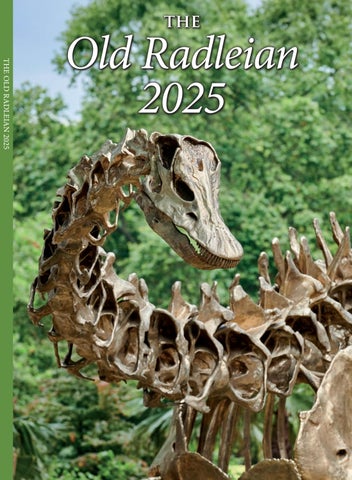
the Old Radleian 2025
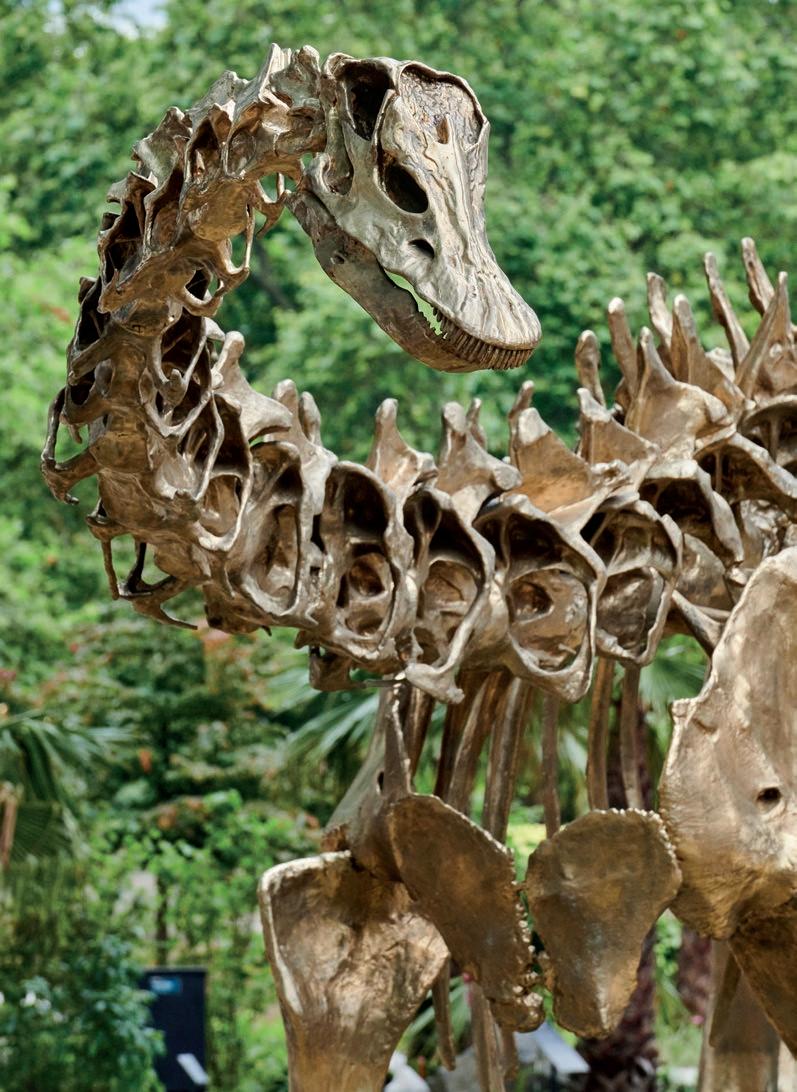
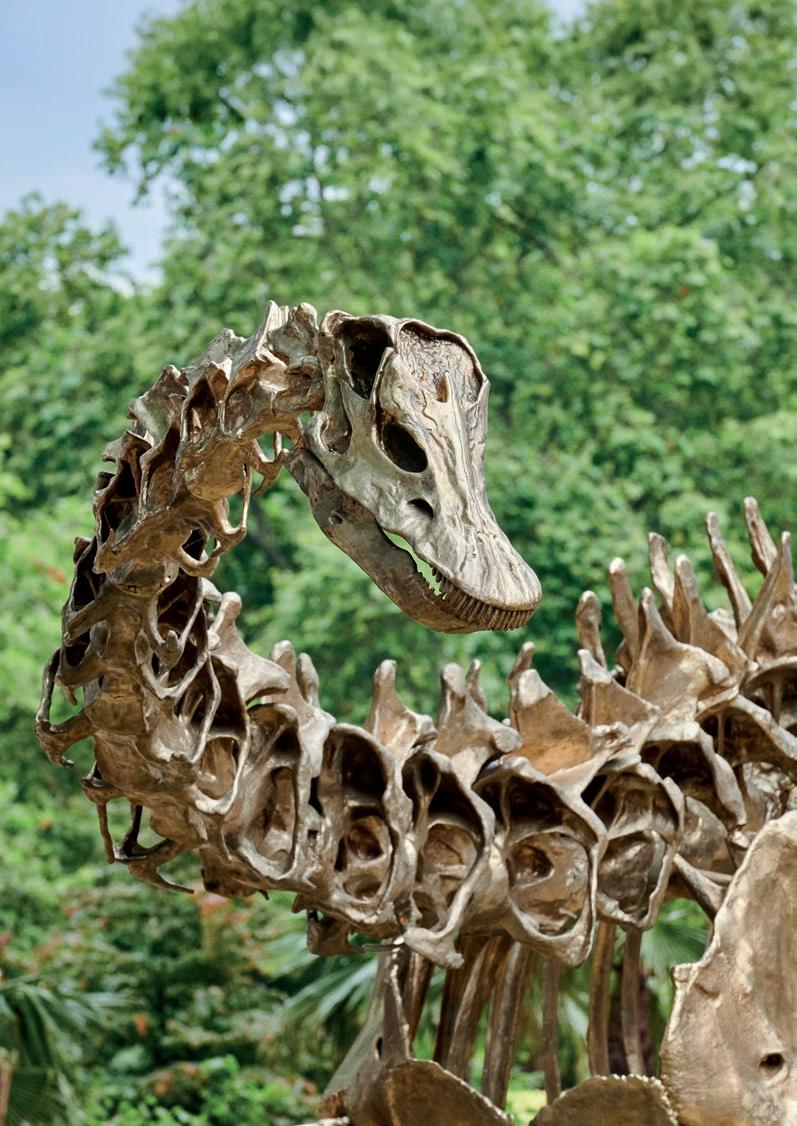
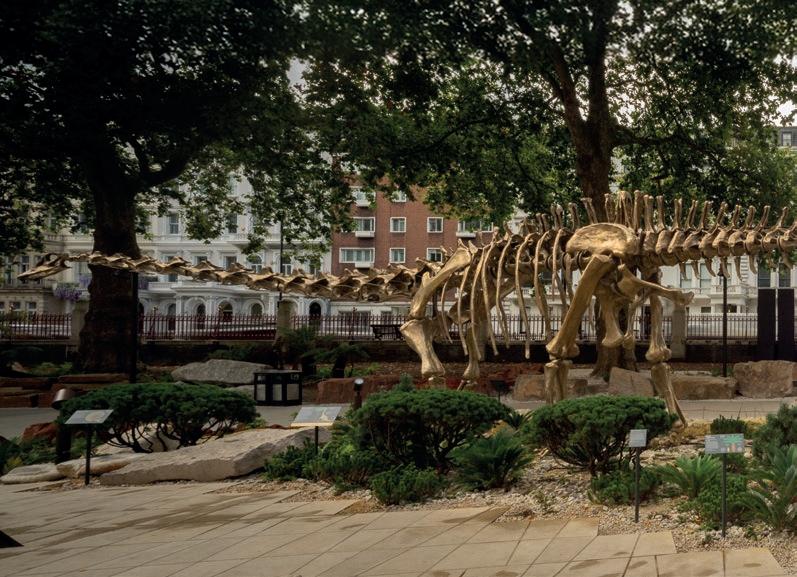
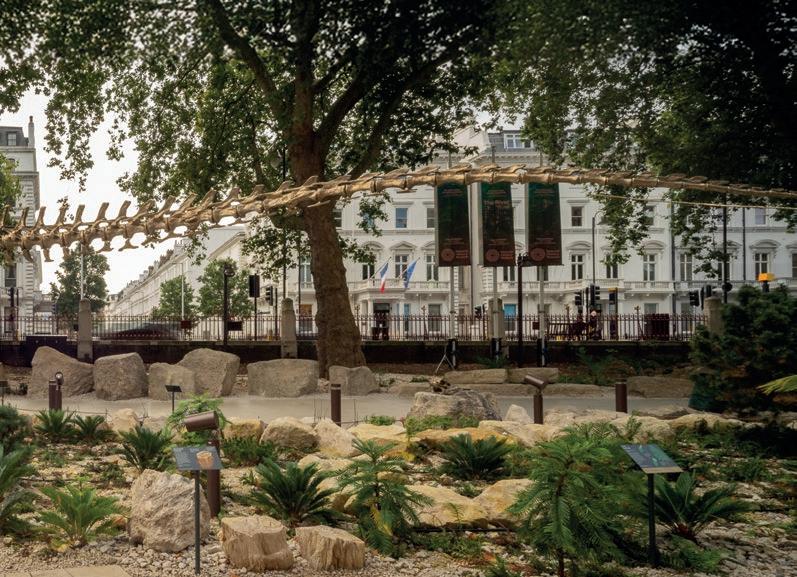
Fern, the 25-metre, self-supporting bronze cast of the famous Diplodocus specimen ‘Dippy’, now greets guests to the Natural History Museum in London as part of the new Evolution Garden. Fern was created by Factum Arte, a Madrid-based studio and interdisciplinary workshop co-founded by Adam Lowe (1972, C). Fern and the Evolution Garden are supported by the Kusuma Trust. To read the interview with Adam Lowe, turn to pp. 30–35. Fern the Diplodocus © The Trustees of the Natural History Museum, London.
FIND US ON ALL SOCIAL MEDIA PLATFORMS: @radleiansociety



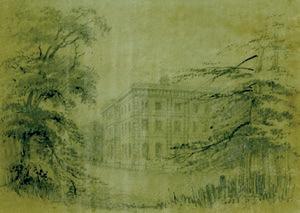
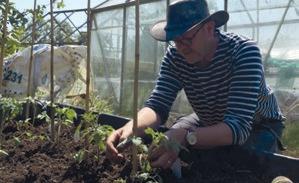
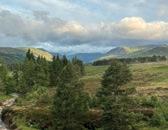
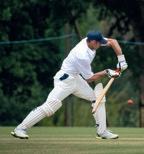
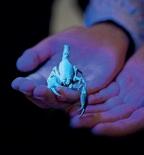
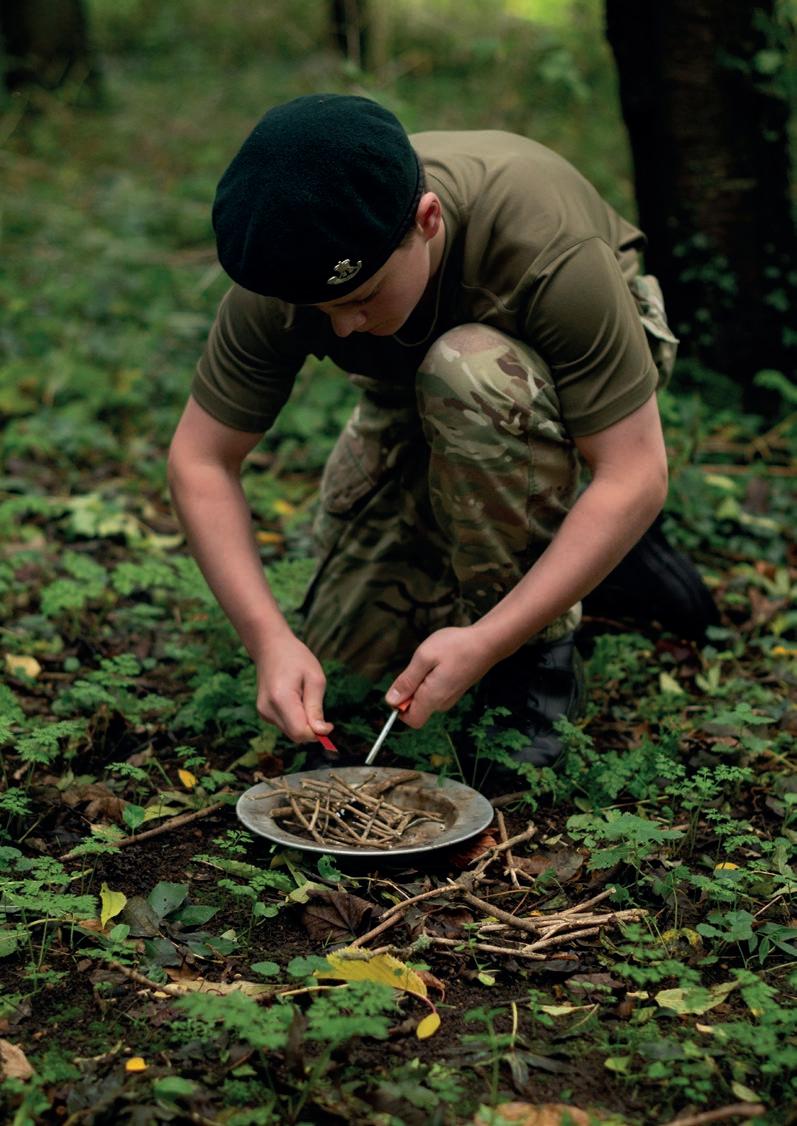
Radley CCF cadets use the woods around Radley for bushcraft training and other activities.
A LETTER FROM JOHN MOULE, THE WARDEN
Dear ORs,
I used to irritate my father – who was hardly a natural espouser of the green movement – with the thought that he was, in fact, the ‘greenest’ person I knew. He hated driving; never flew in his life; grew most of his own fruit and vegetables; made his own jam; was ruthless in energy conservation in the home (woe betide if you left a door open); and was the model of frugality in terms of personal expenditure. Much more of a model to us, I suggest, than many who might lay claim to be.
There is a lesson in that, I think, for the College … and not just on matters environmental. It is not accolades or kitemarks that should bother us in any area of Radley life, but rather whether there is authenticity and purpose in what we do. And it is certainly not our goal to fly a political flag or join a movement but, again, simply to ensure that the right values underpin our strategy.
It is interesting to test the boys on the subject. There is often a real interest in the bigger environmental questions and, quite rightly, they are discussed and debated: after all, current and future generations of Radleians will have to grapple with the challenges of how to achieve economic prosperity while being faithful stewards of the planet. There is often enthusiasm for change. Less so, however, when the issues come closer to home: in my experience, they do not appreciate quite so much suggestions such as lowering the number of options at meals to reduce food waste, or energysaving devices in showers that control temperature and pressure, or (one of the greater rebellions in my time) the idea of recycling bins being placed in each corridor rather than individual bins in rooms. It is perhaps all too easy to hold a general view that makes us feel better but has little practical impact.
So, rather than the pursuit of headlines, Radley has quietly been thinking in recent years about how best to manage its environment and ensuring that what it does has real effect. We have been looking into whether a solar farm is the right approach to secure energy supply over the coming years: it might be, but it needs thinking about carefully. We are planting forty thousand trees. We
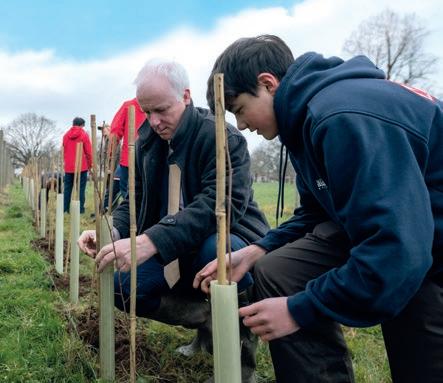
The Warden joined Radleians for hedge planting in February 2025.
have overhauled our internal systems to deliver real savings. We have rewilded parts of the site. And we have expanded the size and remit of our Countryside Centre, committed to the value and impact of the fact that we are, and always have been, a school that cares about the countryside.
It is a positive story. And that matters. All too often, I fear that we present the world to the current generation in negative terms. It is no surprise, perhaps, that a sense of ‘permacrisis’ in turn is more likely to lead to an ‘anxious generation’. I am not sure it is helpful. We want boys to see themselves as stewards, not victims.
I have always thought that one of the greatest dangers – perhaps the greatest – for each generation of teenage boys is apathy. It can be seen in the attraction of a digital screen above the challenge of reading a book. It can be seen in the decision to defer that piece of prep in favour of wasting time. And more significantly, it can increasingly be seen in a combination of a sense of impotence and a lack of purpose or meaning in the face of the challenges the world brings. We must combat that apathy in all we do. Which is why this edition of The Old Radleian matters. The ecological theme
is explored in terms of positive initiatives across all walks of life.
It is embedded in what we have always done and cared about. It brings it up to date. Above all, it talks about practical reality underpinned by a sense of the importance of natural beauty and the created world. It does what it should: raises our sights beyond that of the immediate and the utilitarian … beauty matters too.
Sewell and Singleton were wise to care about the aesthetic beauty of the countryside surrounding their new initiative in 1847. We care about it still. And that is celebrated in this magazine. Enjoy that theme, along with all the other information, stories and news. The College is thriving and, I trust, helping to produce a positive, practical generation of Radleians ready to face the problems the world throws at them. That, after all, is our greatest responsibility.
John Moule Warden
DEVELOPMENT DIRECTOR’S REFLECTIONS
One of the true highlights of my year was meeting John Clements (1946, E) in Cape Town. We shared several wonderful hours reminiscing about his time at Radley just after the Second World War. His words have stayed with me ever since: “I loved my time at Radley but have sadly never been back, however, I think about it every day.”
During my visit I gave him a recent Chapel Choir CD. His daughter later wrote to say he sings along to it as he remembers most of the hymns. That simple story captures so much of what makes Radley special.
Over the past year, I have had the immense privilege of meeting Old Radleians and parents across the globe – from Leeds to Shanghai, Cape Town to Hong Kong. No matter where I have been, the welcome has been warm, the conversation rich, and the shared love of Radley deeply felt. Whether speaking with recent leavers, parents, or those whose time at Radley was decades ago, I find the same questions come up: what’s changed, and what’s stayed the same?
My conversation with John was a powerful reminder of why Radley matters. As a young boy, Radley helped him discover passions and interests that stayed with him for life. The friendships he formed and the values he embraced shaped not only his school years but the decades that followed. What moved me most was his deep appreciation, even after all this time, for the dons who taught him, the friends who stood by him, and the ethos that underpinned it all. I like to think that the Shells who arrived this term will, in 2104, say something very similar.
Of course, a Radley education includes strong academic achievement and access to top universities and careers, and that remains central to the education. But it goes far beyond that. It is about preparing boys to contribute meaningfully to the world. This edition of The Old Radleian showcases the remarkable ways in which ORs are making their mark, increasingly on a global stage.
In today’s rapidly changing world, with careers shaped by technology, AI, and global competition, our connection with the Radley Futures team has never been more vital. The Radleian Society is playing an active role in supporting young ORs as they navigate the world of work – whether through mentoring, careers advice, reunions, or networking events. Our sports clubs, events, and professional networks are proving invaluable, and the stories we hear about Radleians helping Radleians are endlessly inspiring.
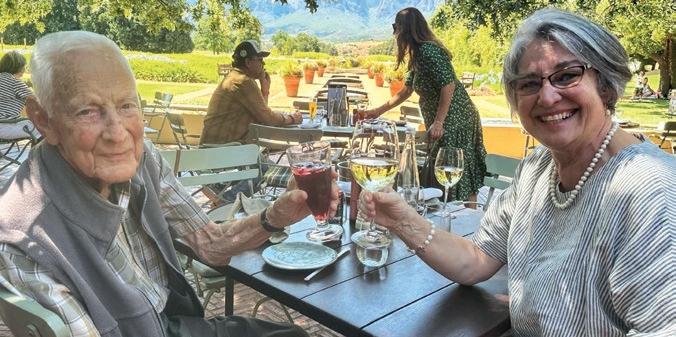
Elisabeth Anderson and John Clements (1946, E) in Cape Town.
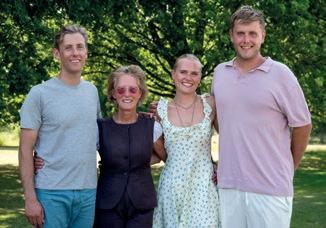
Hugo Rutland’s family at the event celebrating his life, held in summer 2025.
This year we have had much to celebrate. We honoured the remarkable 40-year contribution of Wags to Radley cricket. We connected with those who have been supported by the War Memorial Fund and the Armed Forces Fund. We marked 20 years since the tragic loss of Hugo Rutland (1974, B) by raising further funds to support Radley families during times of sudden crisis. And we celebrated 25 years of the Radley Foundation by sharing 25 powerful stories of its impact.
When people ask me what my job involves, I often say: “The College has your son for two or five years – the Radleian Society supports him for the next 80 or 90.” And it is true. The Radley community is a lifelong one, and it is an honour to be part of it.
Thank you to everyone who has played a part in RadSoc this year –whether by attending an event, mentoring a younger OR, speaking to boys, or sharing your story. We know how important The Old Radleian is to so many of you. When we asked for feedback, 88% said it was just the right length – which we are taking as a win!
Please continue to stay involved. Whether through events, networking, or simply staying in touch – there’s a place for everyone in the Radley community. And as always, we welcome your ideas and suggestions.
I look forward to seeing you in 2026!
Elisabeth
Anderson
Development Director
25 YEARS OF THE RADLEY FOUNDATION

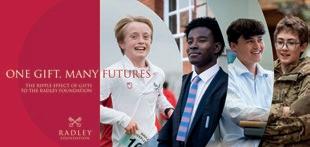
This year marks twenty-five years since the founding of the Radley Foundation. Since 2000, support from Old Radleians, parents and friends has enabled boys of potential to thrive here, regardless of financial circumstance. That generosity has not only changed individual lives, it has helped shape the character of the College itself, making it more outward-looking, more inclusive, and more rooted in its purpose.
In September, we shared 25 Stories in our Impact Report. Some were from boys still at Radley, others from men well into their careers. From the NHS to the UN, film to finance, each story was different, but all pointed to the same truth: one gift has the power to shape many futures.
The momentum behind those stories continued into October, when we launched our regular giving appeal. Monthly gifts remain one of the most powerful ways to support Radley’s future. They allow us to plan with confidence, to respond where the need is greatest, and to extend opportunities to more boys each year.
The 25 stories featured in our recent Impact Report offer a powerful illustration of what this looks like in practice. Among them is Lord Craig of Radley (1943, E), who joined the College during the Second World War. When his father
died in his second term, his place was secured through the War Memorial Fund. That single gift altered the course of his life. He would go on to lead the RAF and serve as Chief of the Defence Staff, later choosing to add “of Radley” to his title in the House of Lords.
His story, like so many others, is a reminder that the impact of philanthropy is not just financial. It is deeply personal, often lifelong, and sometimes far-reaching.
As Development Director, I see that ripple effect every day. I see it in the boys who arrive, the families who write, and the Old Radleians who give back. This anniversary year has allowed us to celebrate those moments more openly, and to invite others to be part of what comes next.
Thank you to all who have made this journey possible

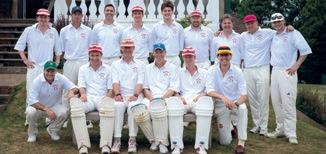
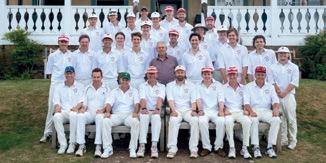
The President’s XI at Wags’ farewell hog roast.
CHAIRMAN’S WELCOME
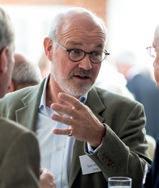
It is impossible to visit Radley without noticing the extraordinary beauty of its setting. The College’s grounds – Little Wood, College Pond, the newly rewilded verges, and the Socials’ meticulously maintained gardens – are more than just a backdrop. They are a living part of Radley life: places to explore, enjoy, and learn from. You can read more about the importance of Radley’s natural environment in the College Update section later in this magazine, but as we reflect on this year’s theme of The Natural World, it feels only right to acknowledge how lucky we were, and are, to have such surroundings, and how they continue to shape generations of Radleians.
This year marks the departure of Caroline Monaghan, Radleian Society Associate Director, after ten years of dedicated service. During her tenure, Caroline has transformed RadSoc into a truly modern, dynamic organisation – one that reflects the changing world our boys and alumni now navigate. Today’s RadSoc is far more than an ‘old boys’ network’; it is a thriving, inclusive community of ORs, parents, and staff, united by a shared desire to connect, support, and grow together. Under Caroline’s leadership, we’ve seen the RadSoc Business Network flourish, helping Radleians explore careers far beyond the traditional paths. From AI prompt engineers to carbon market analysts, today’s world of work is changing fast – and RadSoc is ready to help our community adapt.
We are delighted to be welcoming a new Radleian Society Manager, Vics McClelland. Vics joins the team having previously
EDITOR’S NOTE
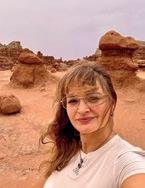
It is all too easy, in our wirelessly-connected, noisecancelled, LED-lit world, to forget that we are part of nature, not separate from it. This alienation comes at a cost. Studies increasingly show the toll on our wellbeing when we are cut off from green spaces, fresh air, and the steady rhythms of the seasons. This summer, I was very lucky to visit the American Southwest.
The majesty of the Bryce, Glen and Grand Canyons, the dark, vast Arizona skies with the Milky Way so clear ... they made me feel so young, and so small – not in a negative way, but in a way that brings beautiful, grounding perspective.
worked in the Admissions Team at Radley as Admissions Manager. Along with her deep knowledge of the College and its community, she brings with her wonderful energy and passion for the role.
Our digital platforms continue to thrive, allowing Radleians to engage from anywhere in the world. Professional networks like LinkedIn and Radley Connect are invaluable for those seeking career advice, testing business ideas, or offering mentorship. Social channels like Instagram, Facebook, and YouTube keep our community updated with news, events, and stories – whether it’s the history of Radley Olympians or that most excellent of Radley institutions, Shop, or discussions on Fintech and Investment.
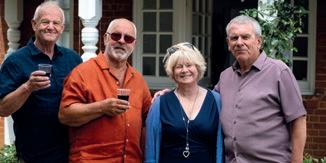
In-person gatherings remain at the heart of RadSoc life. A summer’s day in June saw Radleians return to campus for a hog roast and cricket competition celebrating Wags’ remarkable 40 years at the helm of Radley Cricket – where, fittingly, his XI triumphed over the Rangers President’s XI. This October, we gathered at Lord’s for a splendid OR Dinner, once more raising a toast to Wags and the enduring spirit of Radley sport.
As ever, none of this would be possible without the hard work of the RadSoc Committee and team at the College and, importantly, the generosity of our community. Thank you to everyone who has given their time, expertise, and energy to help RadSoc thrive. Your support makes RadSoc what it is today.

This year, The Old Radleian explores the natural world in all its richness – not merely as a resource or a backdrop, but as a source of inspiration, health, wonder, and responsibility. Adam Lowe (1972, C) and his studio Factum Arte bring together sculpture and science in their astonishing bronze Diplodocus, now standing in the Natural History Museum’s Evolution Garden. GP Richard Claxton (1984, C) shares his pioneering work in horticultural therapy, demonstrating how gardens can heal both body and mind. We also hear from Old Radleians working at the crossroads of finance and ecology, and from the College’s own experts and historians, reflecting on Radley’s enduring relationship with its natural surroundings.
Nature has inspired art, science, and philosophy throughout human history, but it is also valuable beyond any human measure. As William Blake wrote, ‘... some scarce see nature at all. But to the eyes of the man of imagination, nature is imagination itself.’
Sophie Torrance Development Communications & Engagement Lead
Sam Melluish (1976, B) Radleian Society Chairman
Sophie in Goblin Valley State Park, Utah.
FAREWELL, CAROLINE
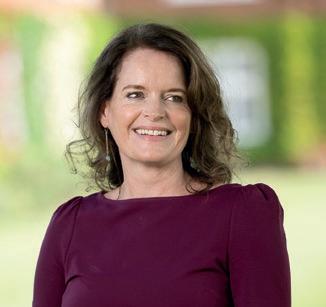
After a remarkable decade at the helm of the Radleian Society, we bid a heartfelt farewell to Caroline Monaghan, RadSoc Associate Director. Caroline arrived at Radley at a time when the Society was poised for transformation. What was once an ‘old boys’ alumni society needed to evolve into a dynamic, forward-facing community – one that could meet the challenges of a rapidly changing world while remaining true to its roots. Caroline not only embraced this challenge but exceeded every expectation.

Her warm presence and ability to inspire others have encouraged huge levels of participation – particularly from those willing to share their professional journeys and mentor younger Radleians.
Through it all, Caroline has been the beating heart of RadSoc. Her joyful disposition, quick humour, and fearless pursuit of excellence have left an indelible mark. She is a colleague who could be both a supportive friend and a driving force, knowing instinctively when to nurture and when to push her team to the next level. Her glamorous style and humour have brought energy to every room, and her unwavering humanity has made her not only a brilliant leader but a cherished friend.
Though not every Old Radleian will have known it, Caroline has been the unseen guiding hand behind their ongoing connection with the College – shaping relationships, creating opportunities, and ensuring the Society remains as relevant and welcoming today as it was at its founding 136 years ago.
Radley’s loss is most certainly Wellington’s gain. Caroline has now taken on the role of leading careers at Wellington College, where her experience and passion will undoubtedly continue to benefit countless young people. As we look back on her decade of service, we do so with profound gratitude for the legacy she leaves: a Radleian Society that is modern, dynamic, and ready for the future, yet still firmly rooted in its values – just like Caroline herself.
RADLEIAN SOCIETY MANAGER
During her time at the College, she oversaw the widening of the Society’s reach to include and welcome former and current parents, a change that significantly enriched RadSoc’s professional network and strengthened its role as a vibrant, multi-generational community. Caroline’s vision and determination, alongside others, professionalised the Society: she built and stewarded a strong RadSoc Committee with diverse expertise, and her leadership fostered an office team whose creativity and energy have elevated RadSoc’s business network, events and communications to new heights.
Among Caroline’s many achievements, the creation of Radley Connect stands out as a legacy in itself. This digital platform has become a thriving hub for networking, mentoring, and sharing expertise, building on the success of the previous ‘Radley for Life’ community. It is an essential stepping stone for boys and young ORs taking their first steps into the professional world. LinkedIn too has flourished, with a business network group that Caroline and others founded to support innovation and entrepreneurship among the community. Caroline’s ability to see beyond the immediate horizon and anticipate the needs of future generations has ensured that RadSoc remains relevant, modern, and impactful.
Caroline’s gift was not only in her strategic vision but in her personal touch. She approached every project and every event with a genuine passion for connecting people and building relationships.

I am delighted to warmly welcome Vics McClelland as our new Radleian Society Manager.
Vics is already a familiar face at Radley, having spent the past four years in the Admissions Office, where she developed a deep understanding of what it means to be both a Radleian and an Old Radleian. Her professional background in event management and running a wellbeing travel company makes her exceptionally well placed to take on this exciting new role.
Vics brings fresh energy and enthusiasm to our wellestablished programme, which includes events, reunions, sports clubs, business networking, and communications. She will be working closely with our fantastic RadSoc team – Sophie Torrance and Cassandra Russell – ensuring continuity while also building on our strong foundation.
We are thrilled to have Vics step into this role and look forward to the impact of her leadership in the Radley community. Elisabeth Anderson, Development Director
RADSOC COMMITTEE MEETINGS
& AGM
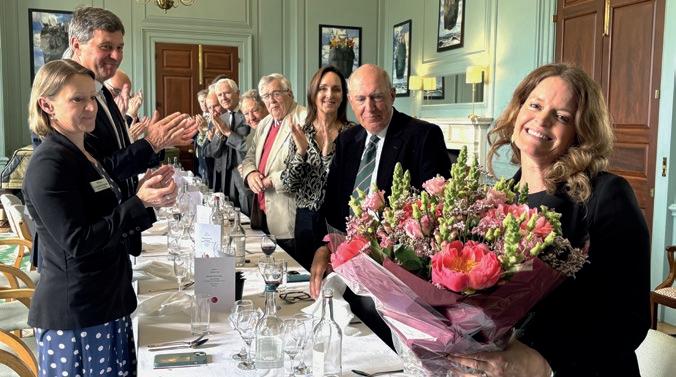
Radleian Society Committee Meetings were held on 13th February, 26th April and 14th October 2025, the Annual General Meeting was also held at Radley on 26th April. New committee members Will Flindall (2008, G), Rory Hanna (2010, H) and Maxim McGrigor (2011, F) were welcomed in April, and the committee expressed its thanks to Patrick McMeekin (1999, B) for his commitment and hard work over eight years as the Sports Clubs rep. This role will now be taken by James Cunningham (2012, G). The committee also bade farewell to Caroline Monaghan, Radleian Society Associate Director, after 10 years of exceptional work. Following the meeting and AGM in April, Committee members were joined by the Warden, VPs, and Honorary Members of RadSoc for a lunch in Mansion.

WAR MEMORIAL AND ARMED FORCES FUND LUNCH
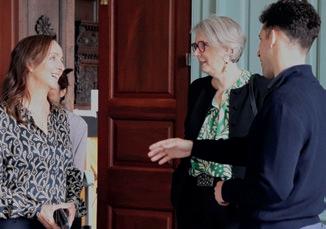
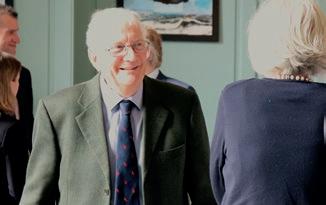
The War Memorial Fund and the Armed Forces Fund, along with the Hetherington Scholarships and Spencer Ell Bursaries, play a vital role in providing educational support for the children of service personnel. This spring, we gathered at the College to celebrate the extraordinary legacy of these funds, which continue to honour the work and sacrifice of those who have served their country.
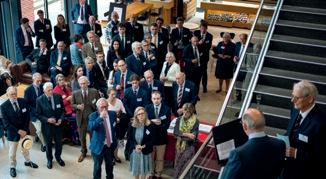
We were delighted to welcome current and former beneficiaries of these funds – many of whom had never met one another – to a special lunch at Radley, joined by their families. The day began with a service in Chapel, followed by a gathering at the Memorial Arch, where the Chaplain offered reflections on the history and significance of these commemorative funds.
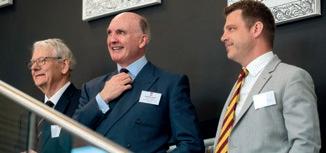
At the drinks reception that followed, guests heard moving and personal remarks from:
· Mark Dwerryhouse (1978, F), Chairman of the War Memorial Fund Committee
· Harry Rycroft (1957, G) War Memorial Award beneficiary, sponsor of the War Memorial Invitational Mile
· Col Edward Butterworth (1987, G), Committee Member and current parent
· Capt Anthony Harris, father of a former Armed Forces Fund recipient
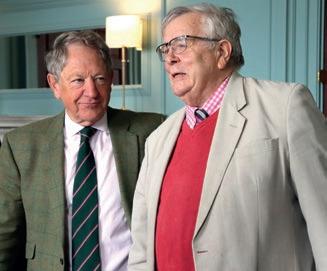
The event concluded with a celebratory lunch in Shop, where we were honoured to hear from Marshal of the Royal Air Force Lord Craig of Radley, GCB, OBE (1943, E) who came to Radley during the Second World War with support from the War Memorial Fund, and Edward Lethbridge (1992, C), another War Memorial Fund beneficiary, who spoke about his experience and family connections to the Fund.
This memorable occasion not only celebrated the enduring impact of these funds but also forged new connections among those whose lives have been shaped by their support.
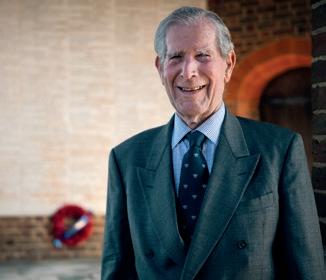
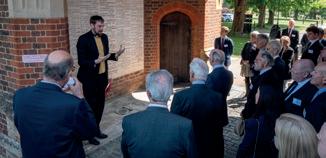
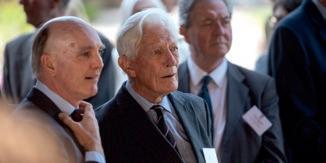
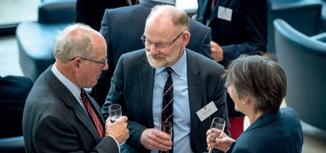
Lord Craig of Radley, GCB, OBE (1943, E).
RADLEY TOURS
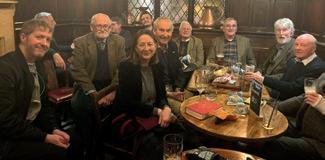
Radley Regional Tour: Manchester, Leeds, Ludlow, Worcester
In January, representatives from the Development Office held drinks receptions for members of the Radley community in the North and West of England. We were astonished (and delighted) to find that so many staunch members of the RadSoc community lived in West Midlands – our Ludlow and Worcester drinks were particularly well-attended.
Radley Tour: South Africa
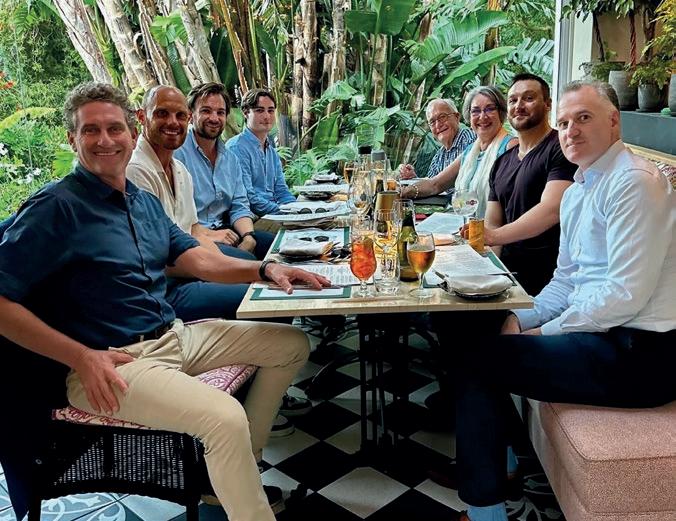
March saw RadSoc head further afield, with gatherings held across South Africa – in Johannesburg, Cape Town and Durban. A remarkable proportion of ORs living in SA turned out for these lovely events, showing the warm regard our community there feel for the College, despite being 6,000 miles away. Thank you to you all for the warm welcome we received!
Radley Tour: Iberia
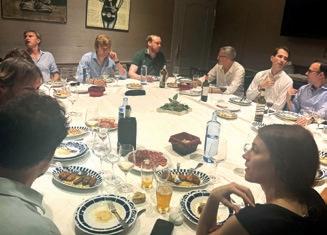
We were pleased to reconnect with ORs in Spain and Portugal this summer, with dinners held in Madrid and Lisbon. There is a thriving community here, who made sure the evenings were lively affairs fuelled by delicious food and great conversation. It was wonderful to see you all!
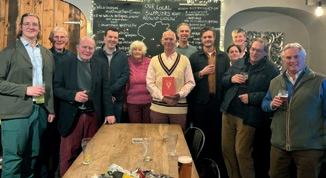
Ludlow
Worcester
South Africa
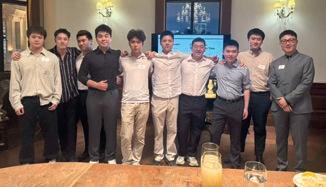
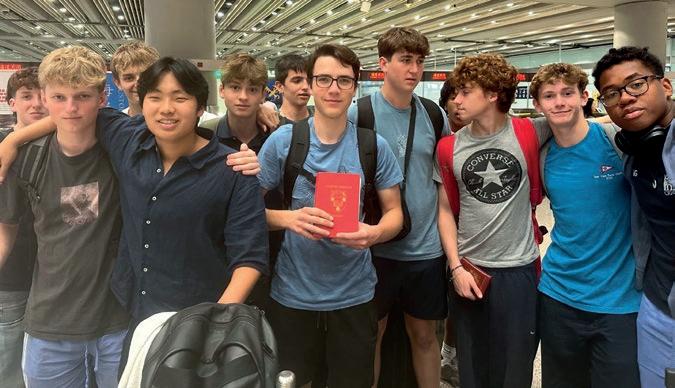
Radley Tour: Beijing, Shanghai, Hong Kong
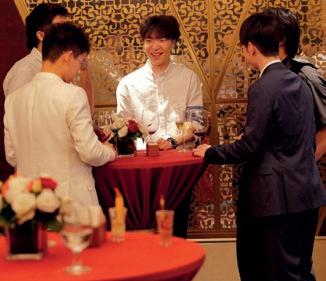
In July, boys from the College took a remarkable trip to China where they were fortunate to undertake work experience at JD.com. Our Development Director took the opportunity to visit a number of cities and host gatherings for our communities in Beijing, Shanghai and Hong Kong. Despite some typhoon disruption, the tour was a wonderful success with ORs and Radley parents keen to come along to our drinks receptions. We are very grateful for the warm welcome we received in all three locations.
Radley Tour: Dubai
RadSoc continued its quest to connect with the Radley community overseas this autumn with a trip to the Middle East. We were fortunate to visit Dubai and host a small but friendly gathering for ORs, parents and prospective families, who came from across the region to join us.
Madrid
Beijing
Shanghai
China

PARENTS’ SUMMER DRINKS
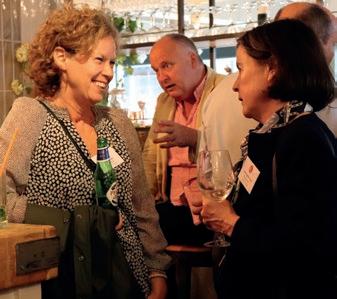
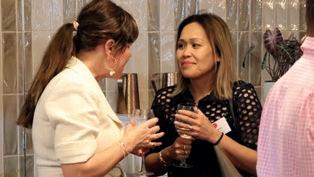
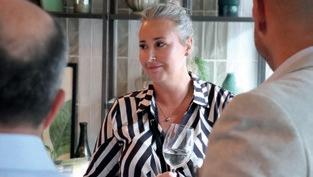
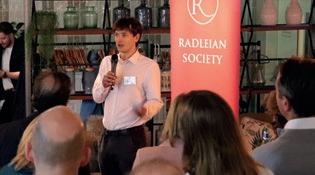
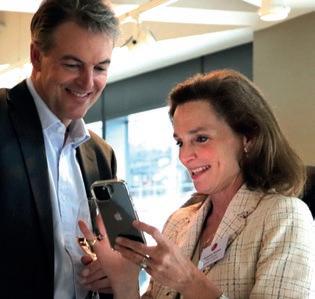
This year’s RadSoc Parents’ Summer Drinks Parties took place at The Fable in London, where we were joined by around 200 parents over two lively evenings in June. The relaxed setting proved the perfect backdrop for catching up with friends, forging new connections across year groups, and sharing news from across the Radley community.
Guests also heard more about how RadSoc can support their sons as they prepare for the world beyond Radley – from offering careers advice and mentoring, to opening doors in the early stages of their professional lives.
As ever, it was a pleasure to welcome so many enthusiastic parents, and we were especially grateful to those who stepped forward to offer their time and expertise for future RadSoc Futures and Business events. Your willingness to share professional insights and experiences plays a vital role in the strength of our network, and we look forward to working together in the year ahead.

WAGS’ FAREWELL HOG ROAST
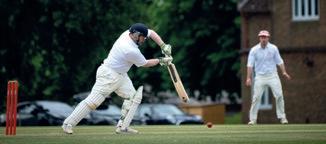
To celebrate the retirement of long-serving cricket coach Andy ‘Wags’ Wagner, a commemorative match and hog roast were held on Bigside, drawing record numbers of both players and spectators.
Two Old Radleian teams took the field, featuring cricketing greats from across the decades – including Andrew Strauss, Ben Hutton, Robin Martin-Jenkins, Jamie Dalrymple and Malcolm Borwick –as well as Radley’s incoming Cricket Professional, Billy Godleman. The event was organised by the Radley Rangers Cricket Club, with support from RadSoc.
Wags’ XI bowled first, with Johnny Wright the pick of the attack, taking 4 for 15. The President’s XI posted 178, thanks to halfcenturies from Hutton and RMJ, and a rapid 31* from Dalrymple. Despite a steady fall of wickets, Wags’ XI chased down the total with four wickets and six overs to spare, thanks to stylish knocks from Rory Betley and OMH.
Eight former Radley captains and five former professionals took the field, with four international caps between them – including one for polo, and one for Chile.
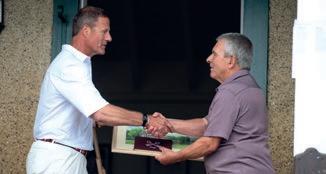
Between innings, heartfelt speeches and gifts marked the end of an era. After 40 years of service to Radley cricket, Wags was honoured in true Bigside style. We wish him every happiness in retirement –and hope he’ll be back to spectate before long.
President’s XI
· Andrew Strauss (1990, B)
· Ben Hutton (1990, B)
Malcolm Borwick (1990, A)
· Mike Bellhouse (1989, A)
· Robin Martin-Jenkins (1989, B)
· Billy Godleman (staff –Cricket Professional)
· Jamie Dalrymple (1994, H)
· Jamie Turner (1987, B)
· Rupert Grace (2006, J)
Henry Chapman (2014, B)
· Will Carr (2014, J)
· Charlie Purton (2010, H)
Will Payne (2011, C)
· Mike O’Connor (1988, E)
· Charlie Goldsmith (1990, E)
· Rupert Henson * (1975, A)
Wags’ XI
· Rory Betley (2013, E)
· Paul Hollis (1986, D)
George O’Connor (2017, J)
· Harry Purton (2014, H)
· Jamie Sharp (2016, J)
· Ollie Martyn-Hemphill (2012, F)
· George Reynolds (2019, J)
· Christian Hollingworth (2009, K)
· George Acheson-Gray (2017, F)
· Rory Acheson-Gray (2019, F)
Simon Dalrymple * (1996, H and staff – MiC of Cricket)
· Jonty Robinson (2012, K)
George Greville Williams (2012, K)
· Johnny Wright (2007, C)


GAUDY – WELCOME
TO OUR NEWEST ORs !
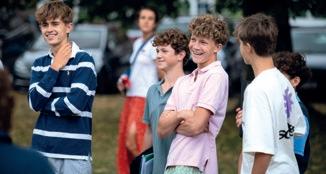
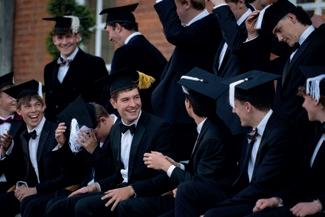
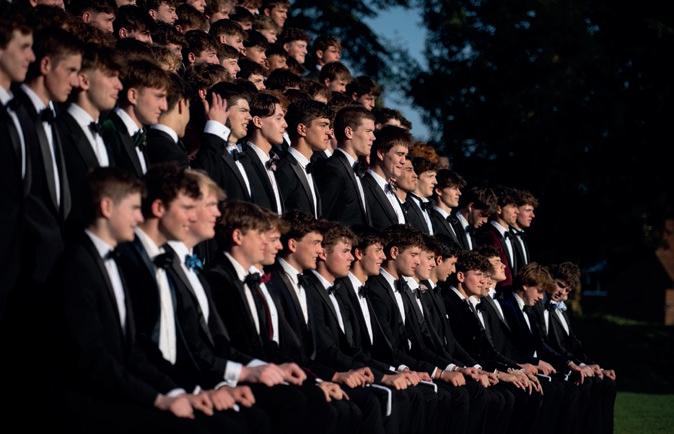
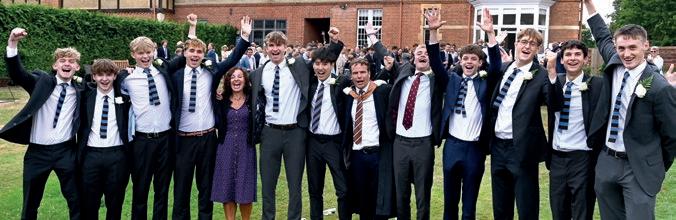
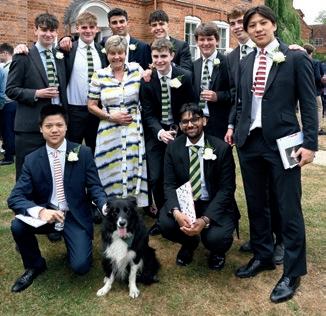
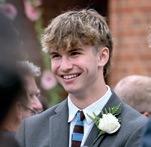
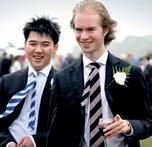
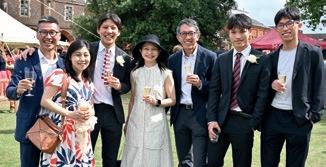
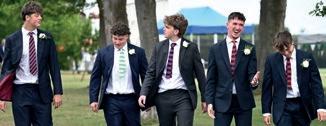
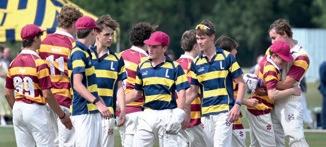
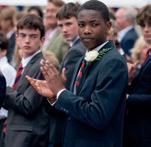
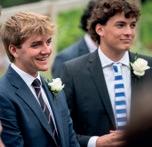
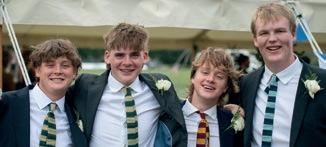
On 5th July, we came together to celebrate the achievements of the 2020–2025 cohort at this year’s Gaudy – and it was bigger and better than ever.
Around the College, the ‘Gaudy Showcase’ brought the campus to life. From pig races and puppy cuddles at the Countryside Centre to cutting-edge robotics, Art & Design exhibitions, and live music; there was something for everyone. Inter-Social cricket and the Radley Rangers on Bigside provided a spectacle for picnicking families, while a roaming group of pipers brought their own soundtrack to the festivities.
After a moving final service in Chapel, leavers and their families gathered in the elegant marquee on Bigside for the awards ceremony, where prizes were presented by the Warden. Each Social was proudly represented in colourful bunting, and though the traditional summer shower made a brief appearance, spirits remained high with the sounds of cheering and corks popping.
It was a joyful, vibrant day, full of energy, celebration, and community.
To our newest Old Radleians – welcome. You are part of a network that spans generations, and we can’t wait to see what comes next for you. Stay in touch, and we look forward to seeing you at a RadSoc event soon.

EVENTS FOR YOUNG ORs
Young OR Christmas Drinks
In December 2024, RadSoc welcomed ORs under 30 to the annual Young OR Christmas Drinks, once again held at stylish South Kensington venue The Other House. The evening offered a festive chance to reconnect with fellow young ORs and catch up with a few familiar dons.
The 2025 Young OR Christmas Drinks are due to take place shortly before this publication arrives on doorsteps.
University Suppers
RadSoc hosted a lively University Supper at The Stand Off in Exeter on 26th November 2024, bringing together over 35 young ORs from universities across Exeter and the southwest – with one attendee even travelling up from Cornwall to join.
The evening ended with the group heading out to enjoy Exeter’s nightlife together – a fitting close to a warm and convivial gathering.
On 11th & 12th November 2025, we held University Suppers in Edinburgh and Durham, both popular university destinations for Radleians, as was reflected in the excellent turnout.
All of these events included both recent leavers just starting their university journeys and older ORs keen to reconnect with friends and former dons. Over burgers, fries and a few pints, conversations ranged from the highs and lows of student life to shared nostalgia for Radley’s food and housekeeping teams.
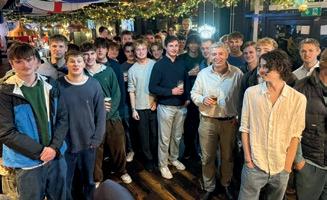
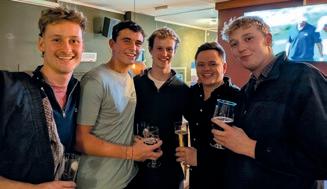
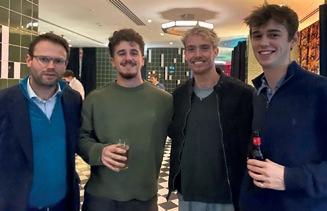

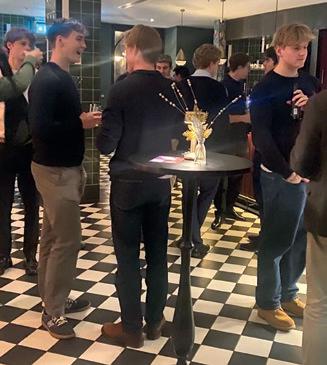
Exeter Uni Supper
Durham Uni Supper
Young OR Christmas Drinks
ARCHIVES EVENTS 2025
Our 2025 Radley Archives series took us on two wonderfully nostalgic journeys: Radley in the 1960s and that favoured College institution, Shop.
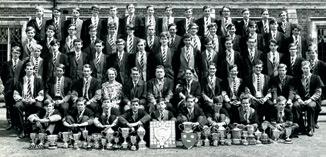
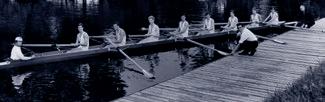
We began in February with Radley Then & Now: The 1960s, an exploration of this transformative decade. Guided by College Archivist Clare Sargent, and joined by former dons Michael Meredith and Hamish Aird, we heard tales of mop-top haircuts, Morris Minors carried into Hall, and the arrival of contraband transistor radios into Socials. The drama scene flourished, with ambitious productions and the much-loved Marionette Society. New facilities included a swimming pool (1961) and athletics track (1962), while clubs and societies, from Archaeology to Meteorology, thrived. Audience contributions brought the era vividly to life, adding personal stories to the photos and documents preserved in the Archives.

In May, Radley Then & Now: Shop turned the spotlight on one of the College’s most-loved institutions. From “Jam Money” to Wagon Wheels, iced buns to the legendary 1990s chicken roll, Shop has been a haven for generations of boys. Memories ranged from favourite snacks to the personalities behind the counter – notably Mr Whitbourne (1954–74), remembered for his trademark sayings … “All you break you pay for” and “Time, gentlemen, please”. The conversation captured Shop’s role as both a place of sustenance for hungry Radleians and a social hub which lives long in the memories of all ORs.
As always, these gatherings, and the memories generously shared, continue to build Radley’s living, shared history.

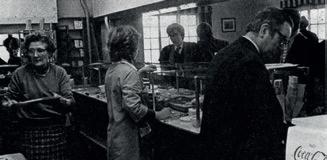
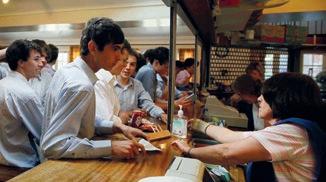

All Radley Then & Now events can be viewed on our YouTube playlist: https://bit.ly/RadleyArchivesPlaylist
OLD RADLEIAN DAY 2025
On Saturday 13th September, we were delighted to welcome over 200 Old Radleians and former staff back to the College for another memorable Old Radleian Day, with guests ranging in age from 27 to 90.
The weather was characteristically British – a few short showers punctuating the day – but the sun appeared at all the right moments to ensure that the celebrations went ahead in good spirits. The morning began with a drinks reception for our 40- and 50-year reunion groups and ORs over 75, accompanied by some fascinating items from the Radley Archives, followed by tours of the campus. These took in favourite haunts of both the older and younger generations, as well as showcasing some of the College’s newest developments. The highlight of the morning was the traditional parade of the Radley Beagles, which this year included the annual blessing for the pack, kindly given by the Chaplain.
After a three-course lunch in Shop and a Chapel service, the older reunion groups made their way home, while the younger cohorts arrived – some reliving the common Radleian panic of almost being late for Chapel – to begin their own celebrations. Many enjoyed visiting the Radley Zoo in the Biology Department during their tours, and one group even escorted a boa to Mansion for the drinks reception. A delicious dinner in Hall followed, with guests queueing and sitting on benches just as they did in their school days, before heading down to the JCR to round off the evening with pints among friends and a few familiar dons. The last stragglers departed not long before midnight.
Meanwhile, on Bigside, the OR rugby team, the Radley Serpents, took on Oxford Brookes University in a closely fought match overseen by Mr Greed, who returned for the weekend (and was in typically strong voice). Despite some careful pre-match taping, the Serpents put in a determined performance, with the 19–33 scoreline not fully reflecting their efforts. Tries were scored by Charlie Saunders (2010, H) and Harry Wilson (2018, G), with Man of the Match awarded to Hugo Eyre (2012, F). Thank you (and congratulations!) to Brookes for their visit and excellent opposition.
The school teams had more luck in the matches against Epsom and were cheered on from the sidelines by many ORs.
It was a day of laughter, memories and renewed friendships. A joyful celebration of the enduring Radley spirit. Floreat Radley!
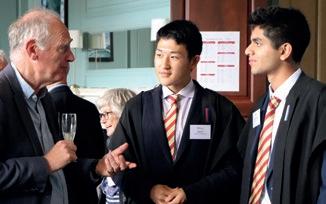
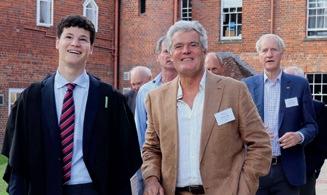
“It was such a brilliant day – everyone from my year absolutely loved it.”
Will (2010, F)
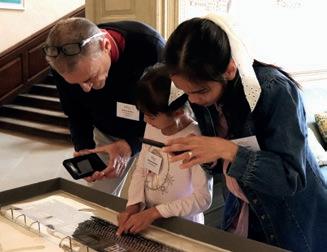
“I think Radley was looking at its best, and the perfect way to reconnect with old friends and get a sense for how the school is doing, which looks to be remarkably well!”
Patrick (1990, B)
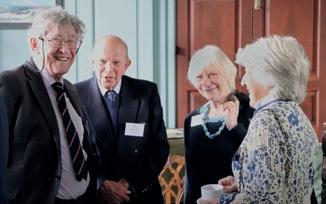
“Thank you so much for your hospitality. It was the first time I’d ever attended OR Day and it was a delight to meet so many old friends.”
Ed (1980, F)
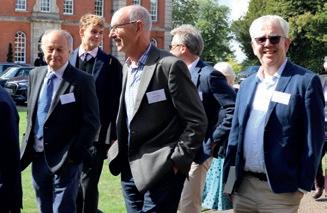
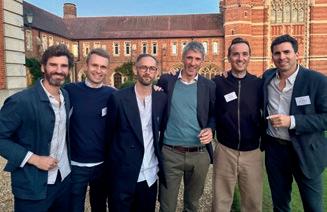
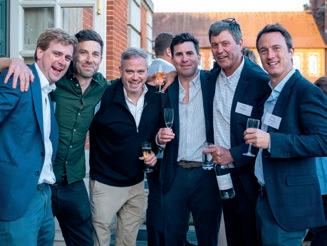
“What an enjoyable and happy day with that wonderful service and music at the end.”
Mark (1970, B)
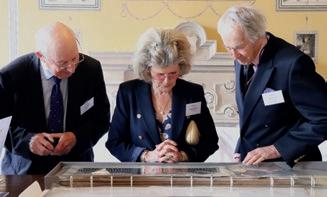
“It was excellent, fun and interesting to see some of the latest developments, meet some ‘old’ faces, some new ones, and hear from the boys and others.”
David (1970, H)
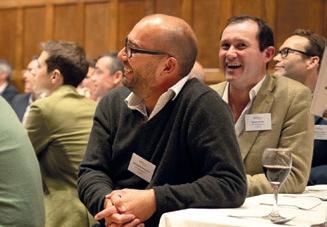
WE ARE ALREADY LOOKING FORWARD TO OR DAY 2026, WHICH WILL TAKE PLACE ON SAT 12TH SEPTEMBER 2026.
If you belonged to any of the following cohorts, it’s your turn next … start preparing for your Radley reunion!
· 10-Year Reunion: 2011-2016
· 20-Year Reunion: 2001-2006
· 30-Year Reunion: 1991-1996
· 40-Year Reunion: 1981-1986
· 50-Year Reunion: 1971-1976

Join the RadSoc WhatsApp Community and find your reunion group. By joining, your details will be visible to other community members.

THE OLD RADLEIAN DINNER 2025
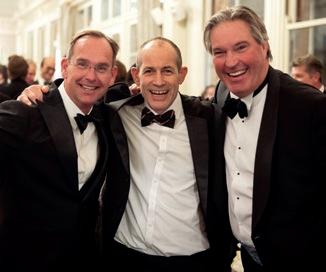
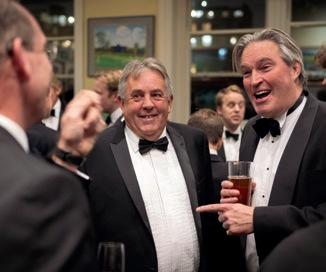
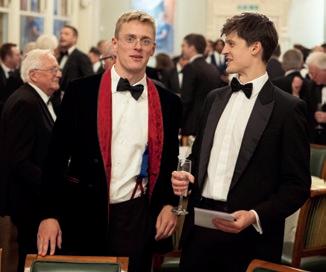
The biennial Old Radleian Dinner returned in style this year, taking place on 9th October in the hallowed surroundings of the Long Room at Lord’s – a suitably distinguished setting in which to honour a truly distinguished man. The evening was dedicated to celebrating the remarkable forty-year career of Wags, Radley’s much-loved Cricket Professional, whose influence has shaped generations of Radleian cricketers and, indeed, Radley itself.
It was a full house, with two hundred Old Radleians, ranging in age from 20 to 81, joined by a number of current and former staff, many of whom had worked closely alongside Wags while others had simply known him as the quietly steadfast presence who could coax potential out of even the most uncertain batsman. That the event sold out within weeks of being announced was a testament not only to his enduring legacy, but also to the deep affection and gratitude he inspires across the Radley community.
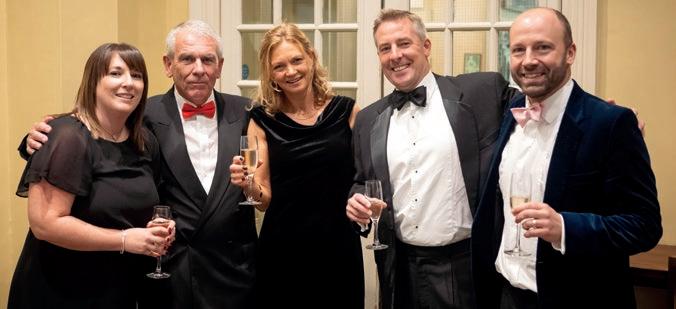
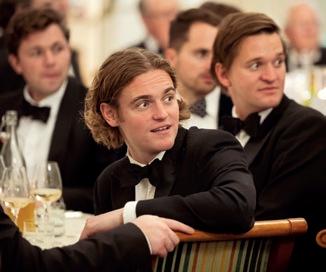
Before dinner, some guests opted to take a tour of the ground, marvelling at Lord’s storied history before assembling with other guests in the Long Room Bar for a champagne reception. The bar was quickly filled with a busy hum of old friends catching up. In typical fashion (pun intended) a number of rebellious ORs stretched the dress code somewhat with eye-catching sartorial choices from neon bow ties to silver shoes, and the more usual smattering of blue velvet jackets and tartan trews.
Soon, guests were called through into the Long Room itself, impeccably laid for the occasion, with the MCC crest emblazoned on everything from the chairs to the china. In the evening light, the windows offered a glimpse of the hallowed turf beyond, now resting under its winter covers, while cricketing greats looked down from the portrait-lined walls.
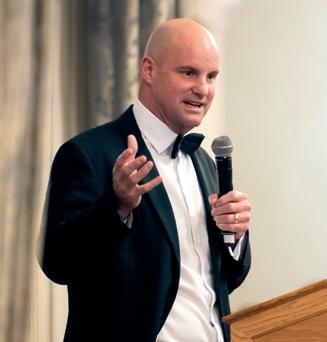
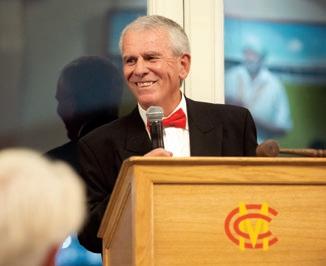
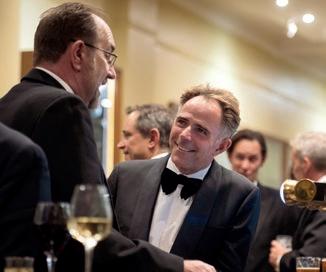
After a welcome from Radleian Society Chairman Sam Melluish (1976, B), the first course was served and the speeches began. Warden John Moule offered his thanks and reflections, followed by a heartfelt address from Sir Andrew Strauss (1990, B). While there was no shortage of humour, Andrew also spoke with warmth of Wags’ extraordinary contribution – not only as a coach of remarkable skill, who has nurtured countless cricketers to county and even international level, but, more importantly, as a confidant and mentor to the boys themselves. For countless Radleians, Wags has been much more than a coach: a figure of quiet strength, calm and encouragement, and a steady source of guidance during those teenage years when boys often need it most.
Despite his characteristic reluctance to do so, Wags was persuaded to speak, and his words were met with a standing ovation – a moment that spoke volumes of the deep affection and respect in which he is held.
All told, it was a fitting send-off for a hero of Radley cricket: an evening full of warmth, laughter, gratitude, and stories shared.


BUSINESS NETWORK UPDATES
After ten incredibly rewarding years at Radley College, it has been a true privilege to lead the Radleian Society and build a dynamic alumni and parent engagement programme. One of the highlights has been witnessing how the strength of a supportive network can unlock so many opportunities, particularly for those early in their careers.
I’m confident that RadSoc’s engagement programme will continue to grow in both ambition and reach. The foundations we’ve built are solid, the desire for connection is stronger than ever, and the community’s involvement is flourishing. The momentum is undeniable, and I’m excited to watch it continue to thrive under the fresh leadership of my successor, Vics McClelland.
To everyone I’ve had the pleasure of working with – thank you. I’m deeply grateful for the ideas shared, the support received, and the partnerships forged along the way.
Caroline
Monaghan, former Radleian Society Associate Director
2025 EVENTS
Made in Britain
What connects electric motorcycles, satellites, heritage crafts, and beer? At our Made in Britain networking event, held at the Goldsmiths’ Centre in London, ORs, parents, and current boys came together to hear how manufacturing, innovation, and skills are thriving in the UK.
The panel discussion explored why and how we should continue to “make” in Britain at a time of globalised supply chains, sustainability challenges, and shifting investment priorities. Speakers shared candid insights into their own routes into entrepreneurship, reflecting on career pivots, nearfailures, resilience in the face of crises, and the importance of building meaningful businesses. Themes of creativity, humility, and persistence ran through the conversation, with younger attendees encouraged to embrace uncertainty and recognise that career direction often emerges gradually.
The lively Q&A ranged from startup funding to the unexpected connection between knitting and space exploration. The evening concluded with drinks and networking, giving guests the opportunity to connect directly with the panellists.
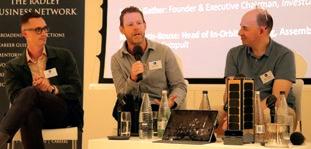


Our expert panel included: Lucy Whitfield (Radley parent), Managing Director, Soane Britain (Moderator); Seb Inglis-Jones (2004, E), Co-CEO, Maeving; Sam McMeekin (1996, B), Co-Founder & CEO, The Gipsy Hill Brewing Company; Rupert Gather (1975, G), Founder & Executive Chairman, InvestUK; and Mike Curtis-Rouse (Friend of Radley), CEO & Co-Founder, Second Star.
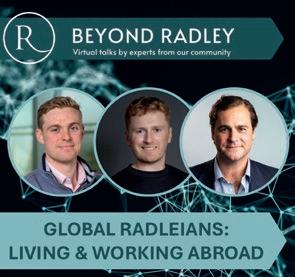
Beyond Radley: Global Radleians
Our Beyond Radley virtual talks series turned its focus internationally this year, exploring the realities of building a career abroad. The panel shared candid reflections on everything from navigating visas and banking to cultural integration, networking, and the importance of resilience when stepping outside the UK.
Speakers emphasised the value of adaptability, seizing opportunities, and saying “yes” to experiences that stretch comfort zones. They also highlighted the Radley network as a useful support system for making connections overseas. Personal stories ranged from moving for sport, consultancy and tech, to founding businesses in unexpected locations – proof that one decision to work abroad can open countless doors.
Students and young ORs heard that there is no single path to an international career: some routes come through large global firms, others through entrepreneurial ventures or chance opportunities. But all agreed that working abroad can be transformative – shaping careers, friendships, and perspectives that last a lifetime.
Panellists: Justin Webb (1995, C), Founder & Executive Chairman, AgriWeb; James Cunningham (2012, G), Chief of Staff, EY; Harry Behrens (2011, B), Amazon.
Vths Futures Week

Radley College 6.1 Careers and Networking evening
On Tuesday 1st July, we hosted our annual Futures & Networking Evening at Radley, bringing together professionals from industries including branding and design, insurance, sports management, and the space sector. More than 150 students from Radley and OX14 Partnership schools attended, and the feedback was overwhelmingly positive. The evening combined 25-minute ‘Introduction to Industry’ sessions with the chance for students to practise their networking skills. We are hugely grateful to the parents and ORs who generously shared their time and expertise.
“I’m really interested in space and found out lots about robotics and rocket science and how the space industry will be huge in the future.”
Kevin (6.1, A)
“I enjoyed hearing personal accounts from each professional and getting advice on how to begin my journey.”
Peter (6.1, B)
To speak at next year’s event, please contact Karen Rhodes, Futures Manager at futures@radley.org.uk
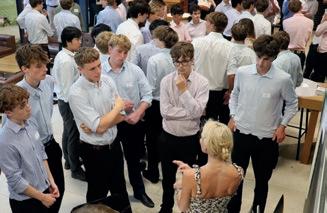

While boys still have two years at Radley, it’s never too early to start preparing for the future. During Futures Week our aim is simple, to help Radleians grow in confidence and develop the skills they need to succeed, whatever path they choose next.
This year, boys started their ‘Bucket CV’, a master list of skills and experiences they can use to tailor future applications, whether that’s for apprenticeships, gap year placements or their first job. They explored LinkedIn and learned the basics of professional networking, researched the pros and cons of alternatives to university, and, perhaps most importantly, saw how valuable work experience can be. Not just as something to put on your CV, but as a way of proving to future employers what you can do and the soft skills you have developed.
These sessions were just the beginning, ideas and skills will be developed further during Sixth Form.
Join the RadSoc Business Network on WhatsApp (by joining, your details will be visible to others in the community group).

SHARING YOUR CAREER STORIES
One of the greatest strengths of the Radley community is the breadth of careers the Old Radleians go on to build – and the willingness of ORs to share their stories with the next generation. This year we are delighted to showcase two ways to explore that wealth of experience.
First, a new YouTube playlist of podcasts created by Will Flindall (2008, G), who has been interviewing fellow ORs about their careers and businesses. Guests so far include Olympic rower Tom George (2008, G), Wilf Marriott (2007, G), founder of Islands Chocolate, and sculptor Hamish Mackie (1987, F). These conversations offer an inspiring insight into the variety of Radleian career paths – and we encourage anyone who thinks they have a story to tell to get in touch.

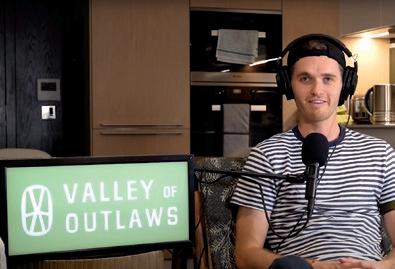


Alongside this, the Old Radleian Career Profiles on our website bring together written and video interviews with ORs working in fields as diverse as F1 engineering, luxury yacht brokering, interior design, and blockbuster film and television.


Recent career interviews have included Richard Verity (1978, C), Head of Strategy & Development at educational charity Alsama, Tim Hellier (1984, H), Technical Director at interior design studio Artichoke, Charles Collis (1987, E), Former Head of Robotics at Dyson, musician and founder Henry Walton (1997, D) and industrial designer and creative Will Eliot (2006, B).
Browse the collection at radley.org.uk/radleiansociety/careers-profiles, and let us know if you’d like to share your own career journey.
UPCOMING BUSINESS NETWORK EVENTS
·
Exploring Careers in Corporate Law
Join us on Tuesday 17th March, 6.30pm, at Norton Rose Fulbright, London (SE1 2AQ) for our next business networking event. A distinguished panel will share insights into corporate law careers – from private practice to in-house roles, and from early progression to senior leadership.
Panellists: Rob Goldsmith (1991, E), Senior Partner and General Counsel at Brexa International; Oliver Smith (2011, K), Associate at Slaughter and May; and Matthew Simmonds, Law Headhunter. Caroline Donald (Radley parent), General Counsel at Cleveland & Co, will moderate the event.
This promises to be a lively, practical discussion for anyone considering or pursuing a career in law, or looking to expand their professional network.
· OR Property Dinner 2026
Our ever-popular biennial OR Property Dinner returns on Thursday 5th March 2026 at Boodle’s, London (SW1A 1HJ).
Open to Old Radleians working in the property sector, this event is always a sell-out – an evening of excellent company, conversation, and networking. Head to the RadSoc Hub to find out more and register: www.radley.org.uk/radsoc
We aim to curate business events that are relevant, engaging, and tailored to the needs of our community, whether through networking evenings, expert panels, or virtual talks. If you have ideas for sectors, industries, or themes you’d like us to explore – from broad topics such as navigating career change to highly specialised fields – we’d love to hear from you. Please email radsoc@radley.org.uk with your suggestions.
Tom George Wilf Marriott Hamish Mackie
So many of you gave your time, shared your expertise at the College and at our events in 2025. This has a huge impact on the boys and young ORs, introducing them to a wide range of topics and helping them with their early careers and the world beyond Radley.
OR CAREER PROFILES
Charles Collis (1987, E)
Tim Hellier (1984, H)
Richard Verity (1978, C)
Henry Wolton (1997, D)
Read online: https://www.radley.org.uk/ radleian-society/careers-profiles/
6.1 FUTURES & NETWORKING EVENING
Freddie Bradshaw (2008, A)
Jenna Chapman (Radley parent)
Gilly Cooper (Radley parent)
Caroline Donald (Radley parent)
Rory Hanna (2010, H)
Marc Harris (1989, H)
Tony Harris (Radley parent)
Sarah Hewett (Radley parent)
Ollie House (2012, E)
Kate Markham (Radley parent)
Angus Oliver (2009, A)
Shane Renders (Radley parent)
Archie Wilson (2010, J)
Tim Worsley (1990, B)
EVENT PANELLISTS & SPEAKERS
Harry Behrens (2011, B)
James Cunningham (2012, G)
Mike Curtis-Rouse (Friend of Radley)
Rupert Gather (1975, G)
Benjamin German (2018, H)
Seb Inglis-Jones (2004, E)
Sam McMeekin (1996, B)
Justin Webb (1995, C)
Lucy Whitfield (Radley parent)

TALKS IN COLLEGE
Will Allen (2007, A)
Charlie Batty (2016, C)
Rob Bassett Cross (Radley parent)
William Beardmore-Gray (Radley parent)
Ed Butterworth (1987, G)
Ned Campbell (2010, E)
Charlie Codrington (2009, A)
Matthew Doraisamy (2019, D)
Johnny Dewhurst (2012, F)
Philippe Edwards (2006, G)
Philip Eddleston (Radley parent)
Rupert Evans (2012, J)
Simon Few (1959, H)
Thomas Garnier (1981, C)
Philip Guest (Radley parent)
George Hanlon (2018, C)
Shaun Johnson (Radley parent)
Emily Lawson (Radley parent)
Giles Malec (Radley parent)
Oliver Money (1999, E)
Greg Morgan (1993, H)
Nick Mullins (2006, A)
Simon Pillar (Radley parent)
James Radcliffe (1989, G)
Sam Rose (Radley parent)
Ed Sideso (Radley parent)
Emma Sumner (Radley parent)
Luke Thornley (2017, L)
Watch recordings of our events at: www. youtube.com/@RadleianSociety/playlists
WORKPLACE VISITS
Andrew Blair (1984, D)
James Blackwell (Radley parent)
Oliver Meakin (Radley parent)
Alan Ruddy (Radley parent)
James Street (Radley parent)
Andrew Yeoman (Radley Parent)
MENTORING FOR APPRENTICESHIPS
Richard Blackwell (2002, F)
John Burley (1992, D)
FUTURES PROGRAMME REVIEW
Armaan Alam (2019, B)
Tom Chamberlayne (Radley parent)
Will Dodd (2010, D)
Will Flindall (2008, G)
Alex Grant (2010, E)
Philip Guest (Radley parent)
Rebecca Lee (Radley parent)
Ethan Mills (2018, E)
Joanna Thompson (Radley parent)
Benedict Yorston (2013, B)
If we have missed you off this list, we apologise! Your help is so valuable and greatly appreciated.
Thank you.
Can you help prepare Radleians for the world beyond the College gates and or help young ORs find their feet in a new industry? Get in touch: radsoc@radley.org.uk.

NETWORK EARLY SETS YOU APART
Neil Munz-Jones (1978, D), Author and Speaker on Networking
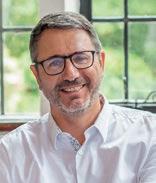
Networking’s biggest problem is its name ... for many of us it has a bad reputation that puts a lot of people off. When I give talks and ask people who don’t much like networking what it is that puts them off, two things typically come up. Firstly, it conjures up images of going to networking events and working a room full of strangers (‘and I’d rather watch paint dry’ is often what’s said next). And secondly it can be seen as something you only do when you need something (a job, more sales leads). Both are commonly held views that can hold many of us (especially ‘reluctant’ networkers) back from embracing what should be a lifelong skill.
My reply to these two networking ‘myths’ is that events are just one of the many ways to network. I do a lot of networking but rarely go to events. Most of mine is one-to-one with people I already know or using digital tools such as LinkedIn to keep in touch with my network. And the second is not true networking. If all you are after is a job or new sales leads, you are selling rather than networking.
I only embraced networking when I was 35 and in a career transition. Five years later, I set up my own business and have seen the power of having an active network. In the 20 years since, every piece of new client work my team and I have won (with one exception) has come from someone that we already knew. We have

never done any advertising. And it’s not just about winning new work. Having an active network has helped us deliver better quality work as well as helping me get great advice on career development, good books to read etc. And if that were not enough, one of my sons got his first graduate job during the 2020 pandemic though a networking call I had ... networking done properly does work!
‘Proper’ networking is about building lifelong relationships based on mutual support, so it’s not something you turn on when you need something and then turn it off when you have it. It’s a mindset of giving as much as taking. The last quote in my book is from Martin Luther King Jr: “Life’s most urgent question is this: what are you doing for others?”. So, when networking I focus on two approaches: ‘Spend as much time deepening existing relationships as starting new ones’ and when talking to contacts ‘Start with the relationship and not the transaction’ i.e. get to know them as humans and build rapport before moving onto business matters.
I give talks to people at the start of their careers (including one to ORs during the pandemic) and encourage them to do what I did not do at their age ... start now! I share a simple equation about relationships: Time = Value. The sooner you get to know someone, the sooner you start to build a relationship. It’s amazing how just because you met someone 10 years ago, they feel like they ‘know’ you and so are more likely to listen and help ... and how much better would that relationship be if you’d kept in touch with them over those 10 years and even helped them out?
So, if this has made you think that you should be giving networking a try, here are a few tips:
1
Don’t be afraid to ask for help (e.g. for career advice, insights on dissertations), especially from people you have a connection with ... that includes the OR network. ORs want to help (we remember what it was like when we started out in our careers!). Use digital tools such as Radley Connect and LinkedIn to help find and get introductions to the people you want to talk to. And once you have spoken with (and thanked) them, make sure you keep in touch periodically, so you build the relationship rather than it being a one-off conversation.
2
When you have these networking meetings/calls, make sure you have done your research, prepare some questions, listen well and then always ask if there is any way you can help them ... you just never know (even if you are young!) how your expertise or connections could be of value.
3
Make the most of and digital networking. is great for what I call ‘quantity’ networking ... but while physical networking is more time-consuming, a face-to-face meeting is the best way to build a relationship ... so how about attending an OR reunion or joining one of the OR clubs, societies and sports teams?
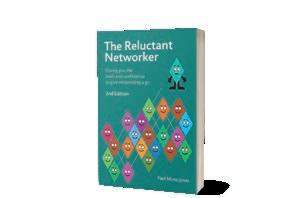
Neil Munz-Jones (1978, D) published The Reluctant Networker in 2010 with a 2nd edition in 2016. The book is available on Amazon in physical and eBook formats. Neil has given 80+ talks about networking to a wide variety of audiences including employees, job seekers, business owners and young people in the early stages of their career. For more resources check out www.reluctantnetworker.com

radsoc@radley.org.uk WILLING TO HELP?



THEO BROMFIELD (2007, A), CO-FOUNDER OF FOLA
Fola is a specialist consultancy helping businesses understand and act on their relationship with nature by turning ecological responsibility into long-term value.

Who are Fola and what inspired you to launch the business?
Fola are a specialist nature consultancy set up to drive business and societal value through the protection and restoration of nature.
The inspiration was simple. Nature provides the foundations of our economies and societies. However, we’re simultaneously destroying it faster than any point in history – since 1970, we’ve lost over 73% of global wildlife populations. This isn’t just a custodial failure; it poses an existential threat to businesses who rely on the services nature provides to operate.
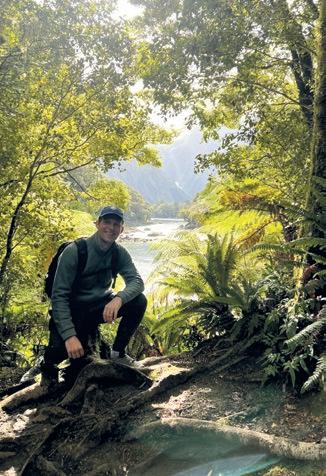
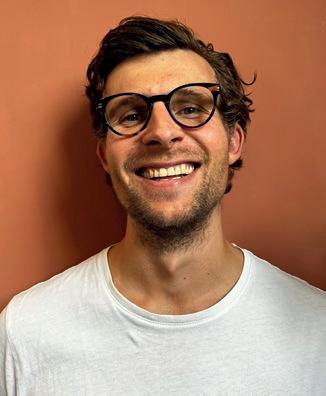
How have your previous roles shaped your vision for the company?
I started my career in the charity sector working with a number of wildlife conservation NGOs in Africa and Asia and engaging in international environmental policy. This experience highlighted the urgent need to work with businesses to combat the nature crisis and not just rely on public and philanthropic funding.
What have been the biggest opportunities and challenges you’ve faced in starting your own business?
Agility is opportunity. Addressing nature loss in global supply chains is complex with rapidly evolving insights, regulation and methodologies and no ‘silver bullet’. Our ability to move quickly, learn fast and meet businesses where they are is incredibly important as they try and navigate how to respond to the nature crisis. Our biggest challenge has been shifting the environmental narrative from something which is ‘nice to have’ to something which is essential to a thriving business.
How do you hope Fola will influence the way businesses understand and act on their relationship with nature?
I think it’s about proving the value of nature and that incorporating sustainability into business practices isn’t a ‘nice to have’, but a core strategic risk management issue. Businesses have talked about Corporate Social Responsibility (CSR) for years, but it’s the first thing to be dropped in hard times. Our mission is to prove to our clients that protecting and restoring nature is good for businesses.
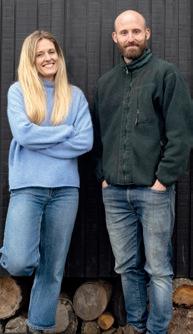
JIMMY ROUPELL (2001, A), FOUNDER OF REST + WILD
Rest + Wild is a boutique hospitality venture offering beautifully designed cabins in spectacular landscapes. A Rest + Wild stay offers a chance to slow down, switch off, and reconnect with nature.


about – and what drew you to creating a nature-based hospitality business?
At Rest + Wild we provide space for people to switch off. We place beautifully designed cabins in some of the UK’s most breathtaking locations, giving people some much needed rest.
I started Rest + Wild because of a sense that the pace of modern life has become unsustainable. We are always on, addicted to our screens and bombarded by ads and negative newsfeeds. We weren’t built to live this way, and it’s why burnout has become so prevalent today. I wanted to create a business that provided an antidote to that. A business that reflected the world I wanted to see more of.
A place where people can find a little room to breathe.
Each of your boutique cabins is beautifully placed in the landscape. How do you choose your locations?
Location is everything and we don’t compromise when looking for new sites. It’s why we have rejected over 160 locations and
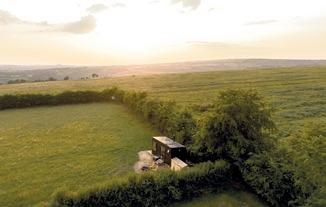
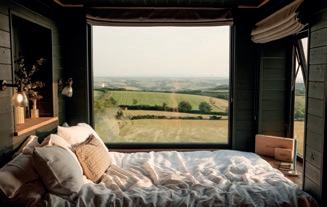
Each location must have outstanding natural beauty, total peace and quiet and a sense of privacy and seclusion.
Location combined with our design is what makes us unique, and we aim to be the gold standard in this space. Guests find themselves on their own, surrounded by aweinspiring nature, but they have the comforts of a 5-star boutique hotel, including a king-sized bed, tiled bathroom, and outdoor copper bathtub.
Why do you weave nature into so many elements of a guest’s stay, like outdoor bathing and firepit cooking?
Being surrounded by nature can have an incredible impact on your wellbeing and happiness. So many people don’t have any interaction with the natural world these days, and those that do are often just passing through. But sitting in nature, with no screens and nowhere to be, with a fire, a book, alongside a loved one … it can be so powerful, energising and restorative.
The UK has seen a boom in staycations and rural escapes – how does it feel to be a business owner in your sector right now? I created Rest + Wild before the pandemic, and we certainly found ourselves in a great position to ride the boom that came. But it’s not been easy. It is more competitive now than ever before, so to survive and thrive you have to offer something different, and you have to be the best. That is our aim.
When starting I naively thought “offering guests fantastic experiences in remote locations? … How difficult can that be?”. Very, as it turns out! But I believe passionately in what we do, and as the world spins ever faster, people will need more space to switch off, so we’re on a mission to provide just that.
Jimmy Roupell with his wife Sarah, Managing Director of Rest + Wild.
WHERE SCIENCE MEETS SCULPTURE
In summer 2024, the Natural History Museum re-opened its gardens following a five-year renovation.
Central to the design is Fern, a first-ofits-kind, 25-metre, self-supporting bronze cast of the famous Diplodocus specimen
‘Dippy’ – a triumphant meeting of art, engineering and palaeontology.
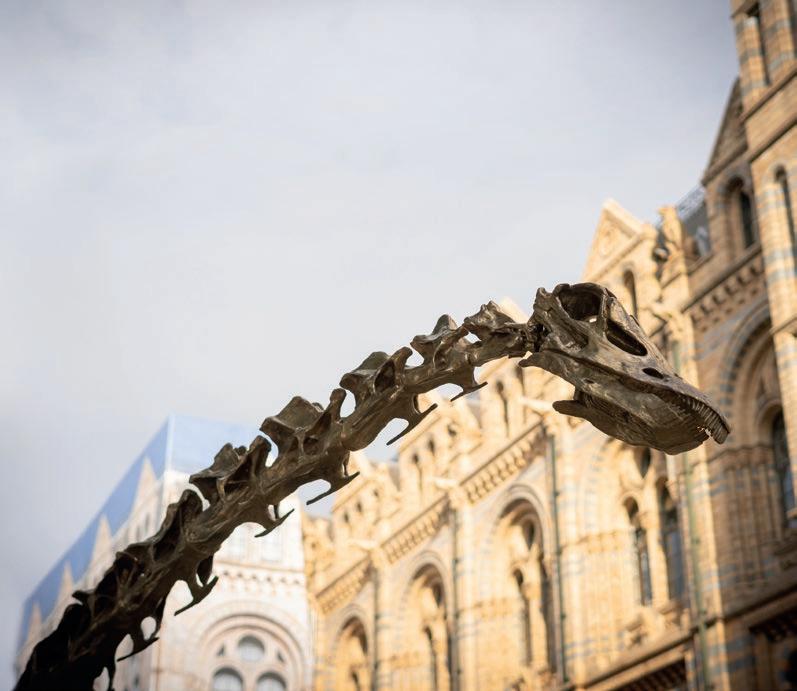
In 2020, Factum Arte, a studio and workshop co-founded in 2001 by Adam Lowe (1972, C), was one of six companies invited to compete for a commission to create a sculpture for the Natural History Museum’s Evolution Garden. The project coincided with the departure of the Museum’s iconic Diplodocus cast, “Dippy,” which embarked on a UK tour, making way for the blue whale now featured in the Museum’s main hall. A new cast of Dippy was central to the Museum’s garden renovation plans, appeasing Dippy’s many fans who were sorry to see it leave the Museum.
Factum Arte is an interdisciplinary workshop with over 50 specialists, including artists, engineers, conservators, technicians, and software developers. Located in a 6,000-square-metre space near Madrid, the studio is equipped with cutting-edge technology, such as 3D printers, laser systems, and CNC milling machines, and works with a wide network of providers in and outside of Spain. Their expertise encompasses creating works for contemporary artists and exhibitions and the development of new technologies for the high-resolution recording of cultural artefacts, from which highly accurate facsimiles can be created. This has included Tutankhamun’s Burial Chamber, Veronese’s Wedding at Cana,
Francisco de Goya’s Queen Maria Luisa on Horseback and the 12th-century Cluny Christ
“Too often, the arts and sciences never meet, and instead they travel on parallel journeys. One of the things we do at Factum Arte is to try and merge art, science and technology, to build bridges between digital technologies and traditional craft skills. And as we do that, all sorts of exciting things start to happen.”
The studio operates through two branches: Factum Arte, which handles commercial projects and commissions from the most renowned names of the contemporary art world, and the Factum Foundation for Digital Technology in Preservation, a non-profit dedicated to documenting and preserving cultural heritage using advanced digital techniques. This work enables the study, conservation, and global sharing of cultural treasures, ensuring they are accessible to wider audiences while safeguarding fragile originals.
Factum Arte’s capacity for large-scale projects is well established. In 2016, the Bronze Oak Project involved photogrammetric recording of a 900-year-old oak in Windsor Great Park. Over 5,000 images
© Percy Weston
were stitched together during the process, and the result was a 2-metre-high bronze cast replica, presented to Queen Elizabeth II for her 90th birthday. Factum’s replica of the Burial Chamber of Tutankhamun, today installed in the Valley of the Kings, was created in 2012 and donated to Egypt in 2014. Complete with the pharaoh’s outer sarcophagus, it offers an alternative visitor experience that raises awareness of the dangers of overtourism since the tomb’s discovery in 1922, and a reconstruction of the lost portion of the south wall, created in collaboration with the Griffith Institute in Oxford.
More recently, in 2022, the Factum Foundation reconstructed the Colossus of Constantine, a 13-metre-tall statue of Emperor Constantine the Great, based on surviving fragments. The completed work now stands behind the Capitoline Museum in Rome, a testament to the studio’s mastery of blending art, technology, and preservation.
Once Factum Arte had successfully won the Natural History Museum’s commission, they faced a number of challenges. It was 2020, the peak of the COVID pandemic, meaning that pace on
the project could not properly begin to build for two years. From 2022, the war in Ukraine resulted in the cost of bronze rocketing, a further tribulation for the workshop to face. These geopolitical pressures were only background to the main challenge, though: the proposed sculpture was an enormity in itself, both in scale and engineering complexity.
The proposal was for a bronze cast of the Diplodocus specimen: 25 metres long, and self-supporting, with no visible supports at either the head or tail. The final structure would include all 292 bones, each painstakingly scanned by Museum scientists. Throughout the project, Factum Arte worked hand-in-hand with Structure Workshop on the engineering, and with staff from the Museum, including Professor Paul Barrett, a world expert in Sauropoda (the group of herbivorous, long-necked, long-tailed dinosaurs to which Diplodocus belongs).
Prof Barrett was able to advise on a life-like pose, and correct some anatomical mistakes made when the 1905 cast was first constructed. This included rotating a vertebra near the skull by 180 degrees, re-aligning the hips of the dinosaur and adjusting the feet
© Oak Taylor-Smith
| Factum
Arte
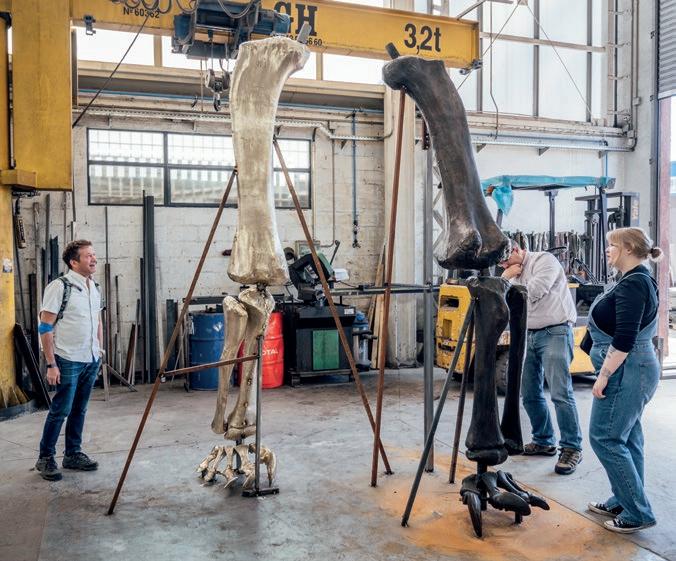
First mounting tests with NHM Team (Keith Jennings and Eleanor Cornforth) at Fademesa.
into more delicate poses, as it is now known that many sauropods, rather than being flat-footed, walked on their toes.
Perhaps most pleasingly, in order to overcome issues identified during the fabrication and structural testing, a number of alterations were made which mimicked mechanisms found in nature. In order to reduce the overall weight of the bronze components, the cast bones were made hollow, just as they would have been in the dinosaur itself, and in order for the vertebrae to come together cleanly and with enough integrity to hold up the enormous structure, non-skeletal elements of the dinosaur’s physiology needed to be added: bronze disks representing cartilage, and steel cable taking place of tendons and muscle. See ‘Creating Fern’ for details of the process.
“As the dinosaur grew, it just got more and more exciting. The final weight testing was the most nerve-racking part. Before we could put it outside of the Museum, to ensure it was safe in case an unruly visitor tried to climb it, it had to be fully weight tested – hanging 263 kilos plus the stress of dynamic load – off the neck and off the tail.
It worked perfectly, springing slowly back into its original position when the weight was removed. The whole body moves dynamically. In high winds, you can see it visibly moving. Just like a living body, this movement is an important part of its structural stability.”
Having successfully delivered the Diplodocus, which is named Fern, the Factum Arte team also created a number of smaller items
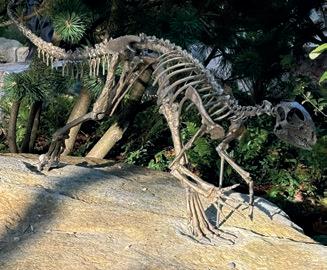
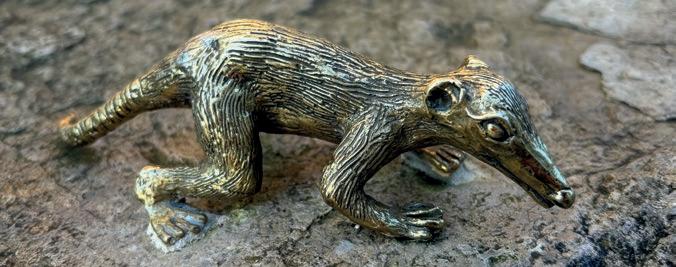
for the Evolution Garden. Their bronze cast of Hypsilophodon, a bipedal, dog-sized dinosaur which is thought to have grazed on vegetation, is the most accurate skeleton of this dinosaur ever made, and was created in collaboration with Prof Barrett and the Museum scientists by introducing a more precise skull than the one currently within the Museum’s collection.
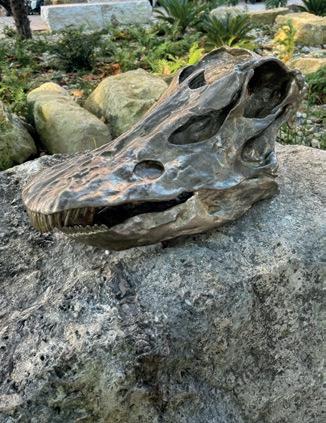
Factum Arte also created a copy of the Diplodocus skull which is mounted at waist height so that visitors can study and touch it. For
Adam, making these inspiring creatures accessible to young minds is at the core of the whole project.
“I love the idea that millions of children will pass by it, around it, every year, and that in a decade, perhaps 100 million people will visit Fern. Well, that’s quite a thought.”
Adam and Factum Arte are keen to continue their work around the principles of their workshop: interdisciplinary collaboration, and using innovative technology to preserve cultural artefacts and make them available to more people. There are plenty of further collections within natural history institutions which desperately need their unique offering. Herbaria (collections of preserved plant material) and entomology (insect) collections, for example, often contain specimens that are particularly fragile and, importantly, extinct or critically endangered.
“There’s about 1.2 billion insect specimens in collections in Europe, 11 million in Madrid alone. And they need to be recorded in the next five years before they disintegrate. We’re focused now on trying to find a method to record all of these insects. It has to be fast, and it has to be very high resolution, because some of these specimens are extremely small.”
Adam and his team are exploring all options, including cuttingedge imaging technology being used in some of the highestspecification titles on the gaming market, such as the Unreal Engine software.
Hypsilophodon
©
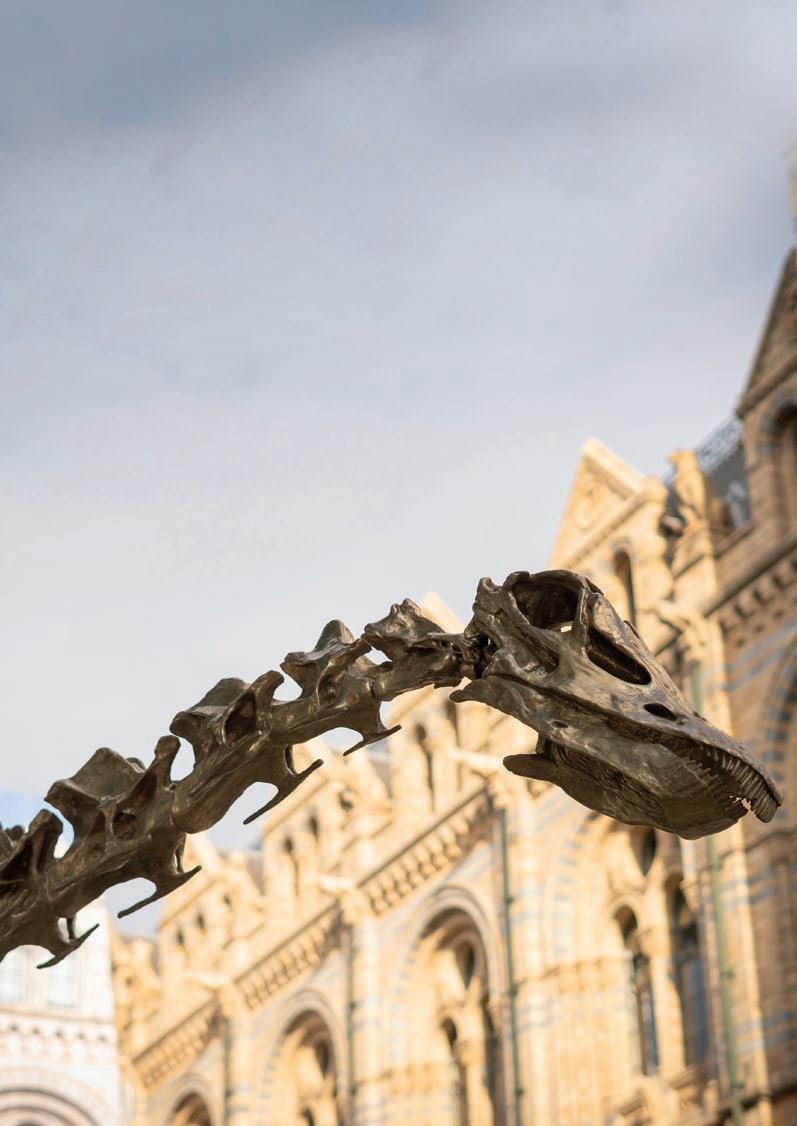
Assembly test on the first cast vertebreae.
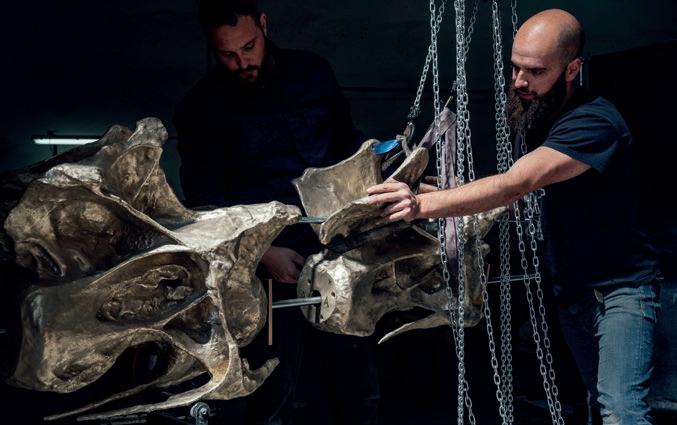
CREATING FERN
· Scanning: In 2021, the original 1905 replica (cast) of Dippy’s skeleton was scanned by Museum scientists at the beginning of its UK tour. Digital images of all 292 bones were created.
· Modelling: The Factum Arte team of artists, engineers and architects used 3D modelling to study and begin the process of designing the bronze cast.
· Consultation: The Factum Arte team worked alongside dinosaur experts, including Professor Paul Barrett, a world expert in sauropod dinosaurs. A life-like pose was settled upon ensuring anatomical accuracy and integrity.
· Analysis: Factum Arte’s partners Structure Workshop, and their engineers, used computer analysis to scrutinise the proposed structure of the posed bronze cast and create a hidden bridge-like structure able to support and maintain the position of the massive sculpture.
· Fabrication tests: In 2022, a number of test vertebrae were created via 3D printing, and later bronze cast, to test their structure and understand how they might work once articulated as a full skeleton.
· Materials: Experimentation with types of bronze showed that the optimal alloy was aluminium bronze for increased strength. In
collaboration with CSIC (the Spanish National Research Council), materials were tested under different conditions to replicate stresses from weight, temperature and wind.
· Refinement: Testing showed the need for alterations to be made for the sculpture to be viable, including modifications drawn from nature: hollow bones to reduce weight, bronze disks mimicking cartilage and steel cables running the length of the structure serving in place of tendons and muscle.
· Casting: 6,500 kilos of aluminium bronze were used. The casting process involved three steps: creating either silicon or sand moulds from 3D prints, pouring wax to create a positive for each bone, and finally encasing the wax and pouring the bronze. Shrinkage and deformation needed to be accounted for and mitigated at each stage. Factum Arte’s partner, Fademesa Foundry, was invaluable in finding and adjusting to each challenge during the process.
· Quality control: Factum Arte measured and controlled every wax form before casting and conducted 3D scans of every bone post-production to ensure that there were no deformations and that the bearing faces at both ends of each structural vertebra were perfect.
· Assembly: The sculpture was assembled section-by-section over three months in the Madrid workshop in late 2023 and early 2024. Once the Factum Arte team were satisfied, Fern was shipped to London where she was installed in the Evolution Garden in April 2024.
A Brief History of Dippy the Diplodocus Dippy the Diplodocus, a plaster cast of Diplodocus carnegii, is one of the most iconic exhibits to have been displayed at the Natural History Museum in London. The original fossil, discovered in Wyoming, USA, in 1899 by a team funded by Scottish-American industrialist Andrew Carnegie, is one of the most complete skeletons of this species. Diplodocus carnegii, named in Carnegie’s honor, lived around 150 million years ago during the Late Jurassic period. This massive sauropod, part of a group of long-necked, herbivorous dinosaurs, could grow over 26 metres in length and weigh up to 15 tonnes. Its whip-like tail and elongated neck allowed it to reach high vegetation and defend itself from predators. The species’ name, Diplodocus, refers to the “double-beamed” structure of its tail bones, which helped support its immense size.
In 1902, King Edward VII saw an illustration of the original skeleton and requested a replica for the Natural History Museum. Carnegie arranged for the cast to be created, and it was unveiled in 1907, capturing the public’s imagination. For over a century, Dippy
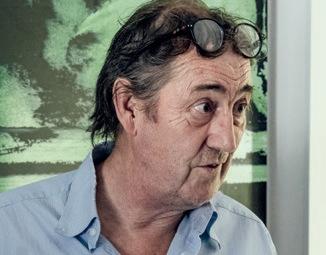
Adam Lowe (1972, C), Co-founder of Factum Arte. Adam was awarded the OBE in the King’s Birthday Honours List 2025 for his services to the arts.
stood in the Museum’s Hintze Hall, fascinating and inspiring visitors. In 2017, it embarked on a UK tour, becoming a prehistoric ambassador for the wonder of natural history.
A space for beauty and learning
The gardens at the Natural History Museum have a rich history of public service. Initially opened to the public in the 1860s while the Museum was still under construction, the gardens were maintained by the RHS and featured plane trees, Lombardy poplars, and flowerbeds with serpentine paths to stroll along. During WW1, they were transformed into allotments to grow essential crops and even housed chickens, rabbits, and pigs. In 1939, a bunker beneath the gardens served as a regional war control room.
In July 2024, the Museum unveiled its newly transformed gardens: a five-acre sanctuary for nature and people. The renewed west side ‘Nature Discovery Garden’ highlights urban wildlife, with native habitat ponds, offering a space where visitors can learn, and scientists can conduct research.
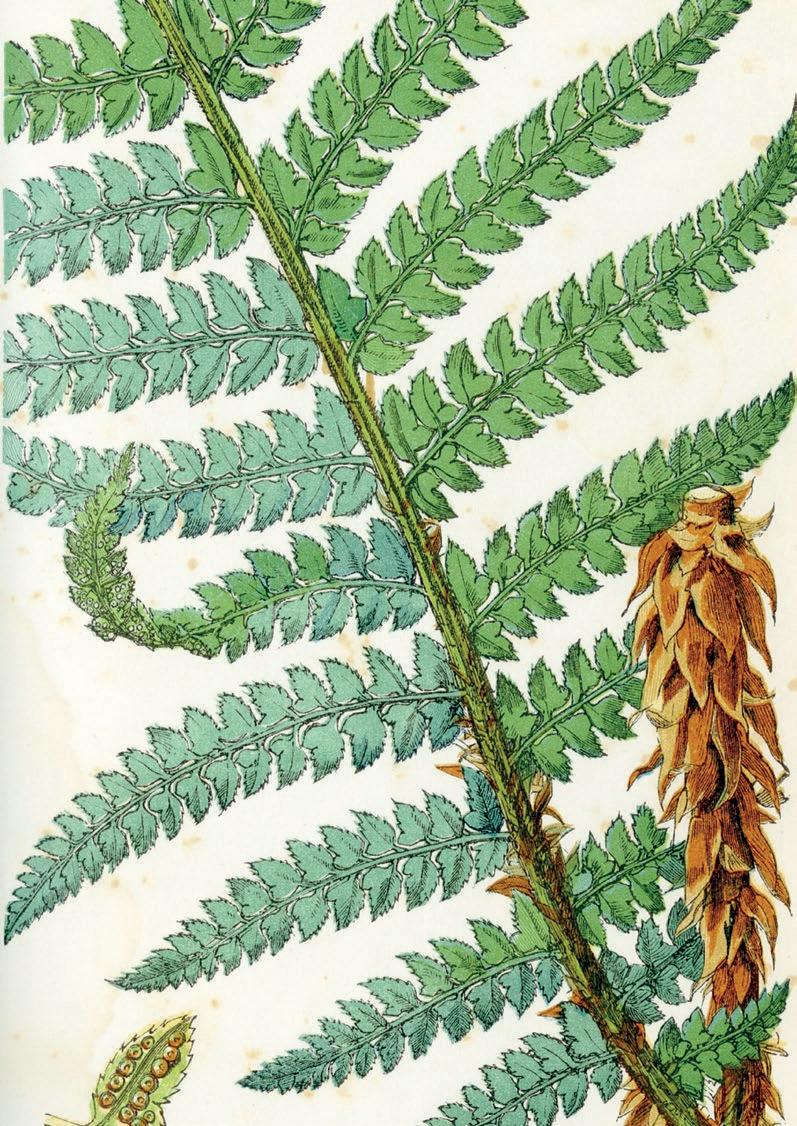
The Evolution Garden delves into Earth’s history, featuring an immersive timeline spanning 2.7 billion years. Ancient rocks, fossils, and sculptures, offer visitors a journey through deep geological time, blending science, education, and beauty. It is within the Evolution Garden that Fern, the 25m bronze Diplodocus, takes centre stage alongside the more diminutive Hypsilophodon (a dog-sized, bipedal dinosaur) and a tiny Megazostrodon (one of the earliest known mammals which lived 200 million years ago). The new and refurbished Museum gardens are part of the Urban Nature Project. Fern the Diplodocus and the Evolution Garden is supported by Kusuma Trust. They dwell within the tree ferns and cycads which make up a ‘Jurassic jungle’, melding spectacular artistic beauty with educational depth in a way that echoes the ethos of the Museum’s own founding principles.
“What they’ve done with Evolution Garden is created an educational queuing system, where each step towards the museum takes you through millions of years of evolution on Earth. Fern is a key part of that.” – Adam Lowe
Megazostrodon rudnerae (not made by Factum Arte)
ELASTICITY OF SPIRIT AND INTELLIGENT SEEING:
APPRECIATING OUR ENVIRONMENT FOR 178 YEARS
Radley
was founded in 1847 with beauty, nature, and ‘elasticity of spirit’ at its heart. From tree-planting to natural history societies, the College has long cherished and studied its environment – values that continue to flourish today.
Radley College is here, in this particular place, precisely because of its environment. The grounds, gardens, pitches, lake and woodland are not nice, optional extras but are absolutely core to our founding principles. Appreciation of beauty, and the role that can play in education, was revolutionary in 1847 and is still revolutionary in 2025.
When the four founders, Sewell, Singleton, Monk and Nugent, met in Oxford on that never-to-be-forgotten day in March 1847, they drew up a list of requirements for the location of their new school:
‘We could not hope to succeed unless we were settled … thoroughly in the Country, – on a dry soil, – in an interesting country, – in a handsome place, if possible with fine timber, – near a River, – in order that the College might enjoy a certain elasticity of spirit, and be surrounded by associations of respectability, antiquity, and something of picturesqueness, which are so important in the effort to educate youth.’
Singleton’s Diary, 5th March 1847
A few days later Sewell and Singleton visited Radley Hall, the home of the Bowyer family, which was available to rent. What they saw fitted their bucket list exactly:
‘It stands in a park, surrounded by trees, some of which are quite magnificent; the soil is gravelly, the position high, and the view very interesting, as it commands Nuneham, & the rising grounds near Abingdon. The Thames is within a mile of it on one side, and Bagley wood is very near on the other, so that excursions, aquatic & sylvan, are within easy access.’
They also loved the space available for cricket.
The wildlife and the plants stimulated the senses. Singleton recounts a walk home from Oxford surrounded by the songs of nightingales:
‘Captain Haskoll and I walked to Radley at a late hour, and were delighted by the songs of numberless nightingales, which abound in those parts. One of them piped and twittered in a thorn-bush by the roadside, letting us come quite close without any fear of being molested. It was moonlight, so she must have seen us. They never seem to tire of singing.’

This 1845 sketch of Mansion and surrounding landscape by Mrs Spiers shows what the founders of Radley College would have seen when they arrived to view the property.
Boys and staff also responded to the beauty of the place. Fifteenyear-old Charles Talbot writing home to his parents in India in 1857 said ‘This is Good Friday and a most lovely day all the birds are singing in the hedges and a great many buttercups are out and also violets and wood anemones which scent the air so nicely…’ an observation repeated by maths don, Henry West, also writing to Mrs Talbot: ‘This place is really delightful now; the foliage is particularly abundant…’ Systematic recording of the wildlife also began right at the start of the school, with Charles’s younger brother, George, collecting and listing birds’ eggs from the grounds to create a cabinet for his mother’s drawing room.
PLANTING FOR BEAUTY AND SCIENCE
The aesthetic and the scientific go hand in hand in such an environment. Each major anniversary of the school has been marked by tree-planting to enhance the grounds, sometimes the gifts of individuals, more often a communal act. In 1897, John Riley, father of three sons at the school, gave 370 trees, including the cedar on the south side of chapel, to celebrate its first fifty years. A century later, the entire community contributed native tree species to create the Millennium Wood, much of which has now been re-planted to make way for L Social. The 175th anniversary was also celebrated
by planting a wood of native trees near to the Countryside Centre as part of the sustainability initiative.
Planting for science can be traced back to the work of Chemistry don Dr Hugh Cardwell and the Forestry Group beginning in 1958. Cardwell encouraged Radleians from around the world to send acorns or oak cuttings which the boys of the Forestry Group nurtured until they could be planted out into an extension of the avenue between Cheesers and the Coronation Lime Avenue leading from College Oak. The purpose was not just the new avenue but a collection of global oak species and access to timber from the College woods for use in the Carpentry Shop, now the Design Technology Department. When one of the old Turkey oaks fell during a storm in 1959, boys and dons prepared it ready to be turned into timber at Bagley Wood sawmill, and conducted a tree-ring survey which concluded it was 160 years old. This project, therefore, combined aesthetics, sustainability, science and economics.
Cardwell’s survey of the trees by species was published as a supplement to The Radleian in 1966. Another global collection initiated by Cardwell and don David Hardy was to establish the national peony collection in the Hardys’ garden. Alas, the gardens
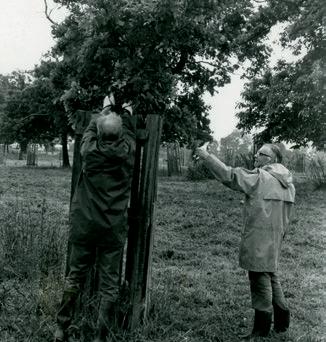
Coronation Avenue
Dr Hugh Cardwell, Chemistry don in the 1950s and 60s, assessing trees on the Radley estate.
in the private houses change occupants too often for such a collection to be maintained, yet in 2025, beautiful peonies still bloom in that garden.
David Hardy also gave the school his copy of A study of the genus Paeonia by F.C. Stern, illustrations by Lilian Snelling, drawings by Lilian Snelling & Stella Ross-Craig, London, RHS, 1946. The book had originally belonged to Cardwell: a list of Italian oaks at Radley in his handwriting is still tucked inside the book. The book on peonies is just one among the very fine collection of reference books which were a key part of the Natural History Society’s working library.
NATURAL HISTORY –FIELDWORK AND COLLECTIONS
The Natural History Society was founded in 1884 and continued under various guises until the late 1960s. It had three main modi operandi – fieldwork, collecting, and research – all of them contributing to and supported by a museum collection and a specialist library, and which culminated in the Society’s own publications.
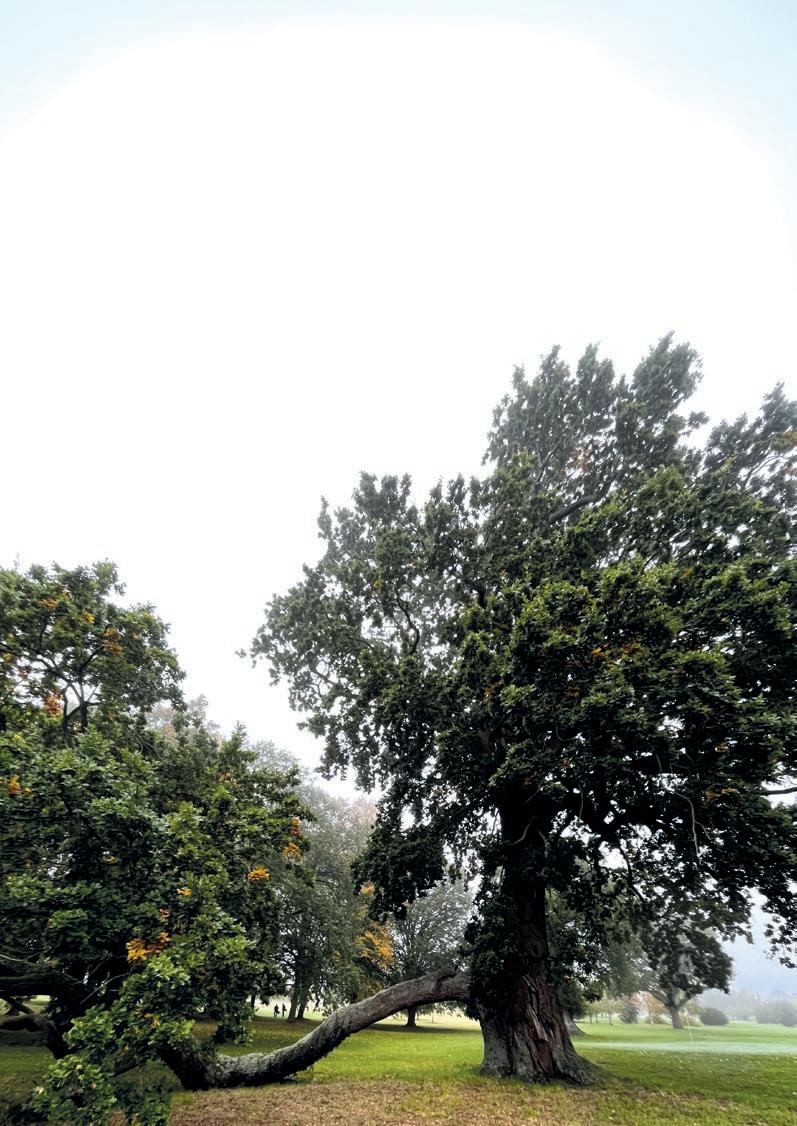
The Society was inaugurated at a mass meeting of the school with the aim to follow John Ruskin’s ideal:
‘If, as Mr Ruskin is never tired of asserting, the object of our education is to teach people how to see and not how to say, a Society, the chief object of which is intelligent seeing, must be desirable.’
It was master-minded and presided over by Warden Robert Wilson. His main achievement at Radley was to modernise the curriculum by making science a serious subject. He appointed two dons specifically as science masters, John Leighton in 1882 and James Hichens in 1883; the laboratory was refitted and scientific
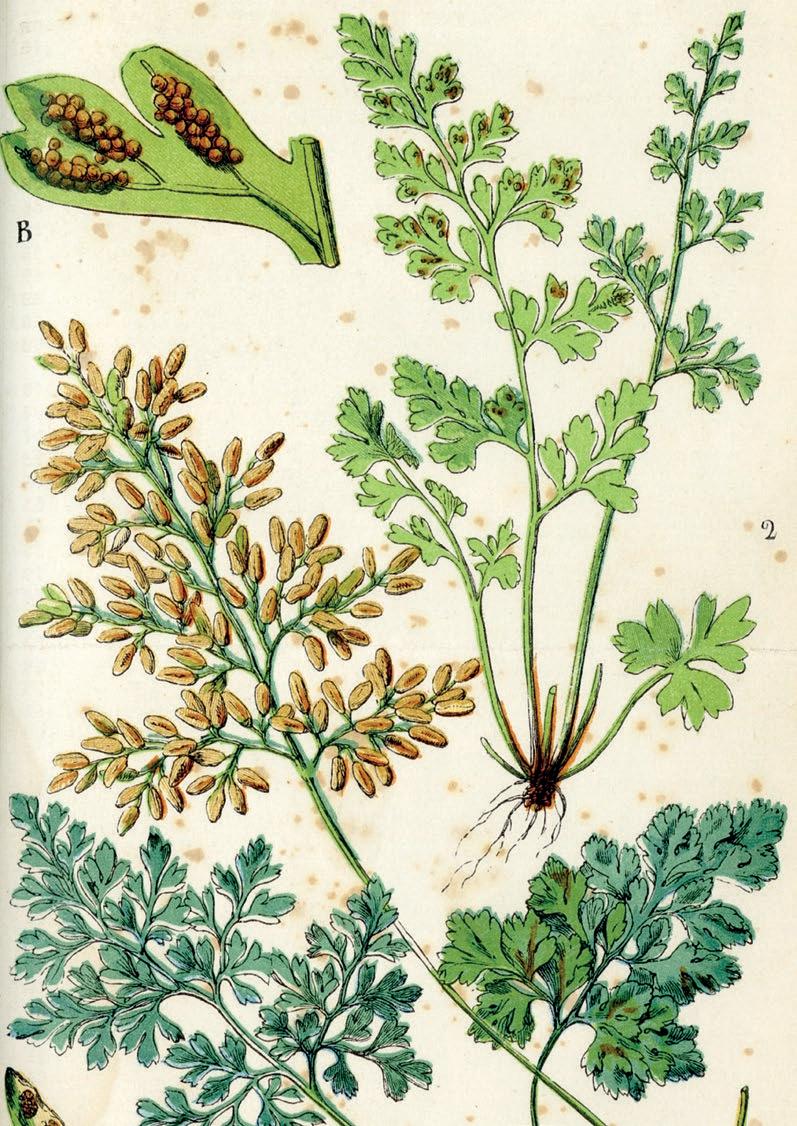
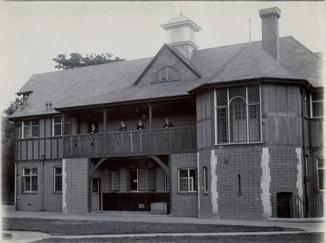
equipment bought. Membership of the Society was by election, with a limited number of places, and originally comprised six areas of interest: botany, entomology, geology, ornithology, archaeology and meteorology. Astronomy was added the following year, with an observatory on site from 1889. Distinguished contemporary scientists were invited to speak, such as geologist Adam Sedgwick, and microbiologist Lilian Veley who was one of the first women Fellows of the Linnean Society.
The museum received gifts from the entire Radley community, including fossils, archaeological finds, and zoological and botanical specimens. Over the years Old Radleians and dons donated their own collections, including a herbarium (now housed at Oxford University Museum of Natural History) and mounted butterfly
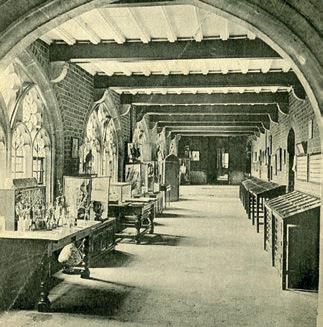
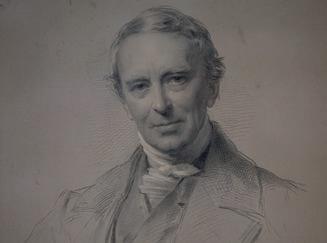
cabinets. The location of the museum was always a problem. It spent some time in the cloisters outside chapel, in a corner of the Wilson Library, and in the attic space of the Armoury built in the 1930s which was designated the home of the Society. The core of the collection survives in the Geology and Biology departmental teaching collections.
Fieldwork and recording, truly ‘intelligent seeing’, were always as important as collecting, culminating in several publications. The earliest of these was The Flora and Fauna of Radley and the Neighbourhood, Oxford 1906. It is a systematic survey giving the common and scientific names of species. It also demonstrates the use of the specialist library by reference to individual species as they appear in published gazetteers, eg. a butterfly known to
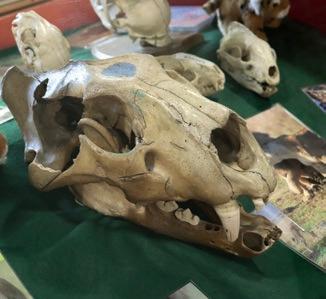
The ‘Radley Museum’ was a collection of notable specimens from across the disciplines of natural science and archaeology. Originally housed in cases in Cloisters, the collection is now dispersed across the Biology and Geography departments, and still provides important learning opportunities for Radleians.
Science master James Hichens
Some examples of the natural history collections now housed in the Biology Department.
Science Laboratories opened in 1906, now part of A Social.
The illustrations of flora and fauna you will spot throughout this publication are from some of the Natural History books and magazines held in the College Archives.
FEATURES
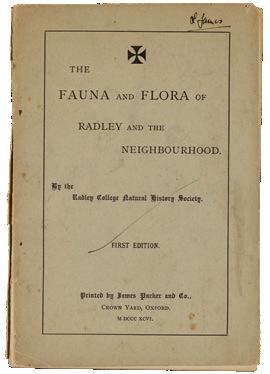
Some of the titles and magazine editions that have come from the Natural History Society and its members.
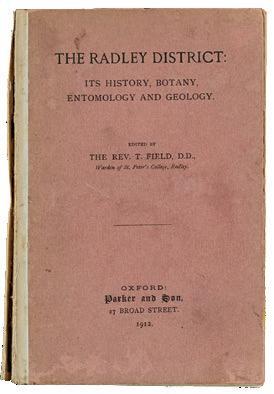
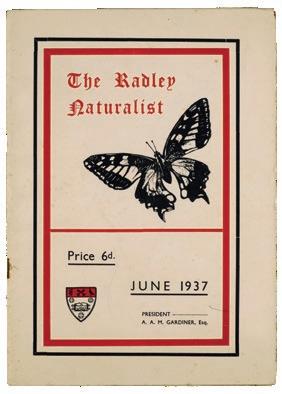
be in the Oxford area because it is referenced in Morris’ British Butterflies. This was followed in 1912 by The Radley District: Its History, Botany, Entomology and Geology. This now publicly acknowledged the authorship and guidance of Warden Thomas Field. It takes a different approach to recording sightings by grouping species in the geographical area where they can be found together as well as a gazetteer. The introduction to the history and archaeology of the Thames Valley and Berkshire Downs follows a bike ride from Radley and gives a real sense of the freedom accorded to the boys in those days before the car when the bicycle was king and boys and dons could roam freely for an afternoon in the golden Edwardian summers. Field was responsible for the new laboratories, now part of A Social, which were opened in 1906. A further update was published in 1948-9.


Explore Radley’s historic biodiversity studies in the Radley Archive online: www.radleyarchives.co.uk.
All three reports were published online in 2022 and are now primary materials for the contemporary biodiversity surveys. Boys in the Biology department have already noted not just the loss of species, but the return of others who were not here in 1906 or 1948, such as the red kites. In the 1930s, don Alan Gardiner created two in-house magazines, Field Club and The Radley Naturalist. He was followed in the 1960s by Hugh Cardwell and David Hardy with Scope. All of these pupil-researched and written magazines are also now digitised and available online next to the early surveys.
During the 1930s Radley became an official bird-ringing station for the newly founded RSPB. By the 1940s membership was low, but a small group of enthusiasts, driven by Richard van Oss (1944, D), published a comprehensive survey of local wildlife, including an adult tawny owl found in the Singleton Library. But despite low membership, the Society was consulted and given a watching brief as College Pond was drained and then re-filled and re-stocked for the Trout Fishing Society. In 1966 and 1969, Simon Albrecht was still conducting surveys of the birds, corresponding with Sheila Morgan, the widow of former Radley Sub-Warden Clem Morgan.
RADLEY’S GARDENS –LOST, BUT NOT FORGOTTEN
Gardens are more affected by fashion and encroachment than the wider landscape. One of the greatest losses to Radley was probably the Jacobean walled garden. This was swept away in the 1960s/70s to make way for staff housing. A wall in Flemish bond survives near the Sports Centre and a heated wall which once supported exotic fruits is still visible as part of the boundary of a staff house nearby. Sadly, there are very few photos of the walled garden. In the late 1930s art don Edward Scott-Snell produced designs for a rose garden between the Mansion and the newly completed Warden’s house (now L Social). The design was given to Radley in 1988 by his son, Jocelyn Godwin (1958, C), who remembered a rose garden in that place in the late 1950s, so it is probable that this was the garden.
Victorian garden design can be seen in a photo of elaborate annual beds in front of what is now E Social and the Victorians’ love of gardens became part of Sewell’s education system for the boys: he gave each of them an area where they could grow soft fruits and flowers. Indeed, one of Singleton’s commands to the newly created prefects was that they should protect each little boy’s garden so that he could enjoy it in peace. Peace, privacy, beauty, and care for nature were there right from the start.
Clare Sargent, Archivist

Edward Scott-Snell’s design for a rose garden.
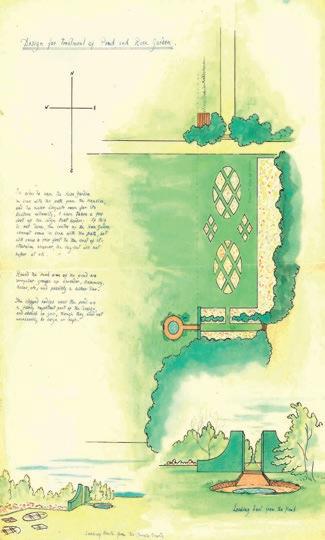
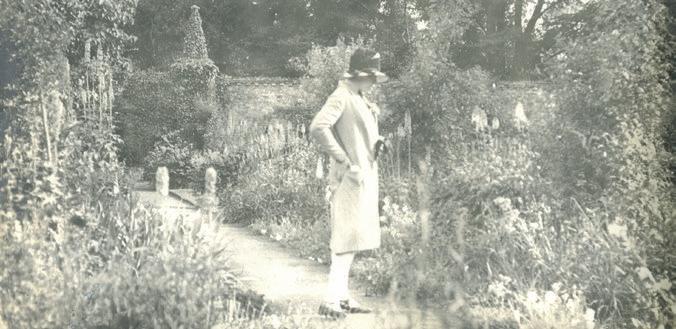
Catherine Pickin, future wife of Richard Ryder (1917, H) and grandmother of Tom Ryder (don and Hon Member) in the gardens at Radley during Gaudy 1927.
THE GREEN PRESCRIPTION: CULTIVATING HEALTH
You’re feeling depressed and more than a little anxious. Pressure at work is mounting and your homelife isn’t the haven you need it to be right now. After weeks of putting it off, you decide to bite the bullet and head over to your GP to ask for some advice.
Your GP smiles and reassures you that they’ve got the perfect prescription. Not only does it have an impressive success rate at reducing anxiety and combatting depression, but patients have reported countless beneficial side effects too: a drop in blood pressure and heart rate, lower cortisol levels (the ‘stress hormone’), a boosted immune system, improved strength and flexibility, healthy weight loss, and a reduction in incidences of heart attack and stroke.
You are astounded. Thanking the doctor, you hurry away to collect your prescription. But you aren’t heading to a pharmacy. You are making your way to a therapeutic garden.

Richard Claxton (1984, C) has been a partner at his GP practice in West Kent for 25 years, having previously worked in Paediatrics to registrar level, and sandwiched a Psychology degree in the middle of his medical training. His role as a GP has allowed him to form deep connections with his patients, who he sees over many years – witnessing the impact of lifestyle and work on their health, sometimes over multiple generations.
Nature, and specifically gardening, has been a part of Richard’s life since his childhood.
“I remember gardening as a kid with my granddad in his garden in Devon. He was very gentle and very kind. We grew sweet peas together, and he had an amazing vegetable garden. I’ve tried to grow sweet peas every year since, in his memory.”
During difficult periods, as well as to combat the daily ups and downs of life, Richard has found gardening to be profoundly beneficial. As well as enjoying the physicality of it, the opportunity to be creative and the low-stakes trial-and-error nature of gardening are both rewarding and a good way to balance the pressures of a career.
While visiting and blogging about gardens during lockdown, Richard first came across therapeutic gardens, spaces that are designed to promote physical and mental wellbeing, either by passively enjoying the space, or active involvement in horticulture. Excited by the possibilities that this confluence of his professional and personal passions might hold for his patients, Richard began noting the locations of therapeutic gardens and recommending them where he could. And, to help people locate the resources they needed, he started a website with an interactive map of therapeutic gardens.
“My patients know me quite well, and they aren’t surprised when I recommend heading outside or investigating a nearby green therapy option, rather than just reaching for the antidepressants.”
Dr Richard Claxton (1984, C).
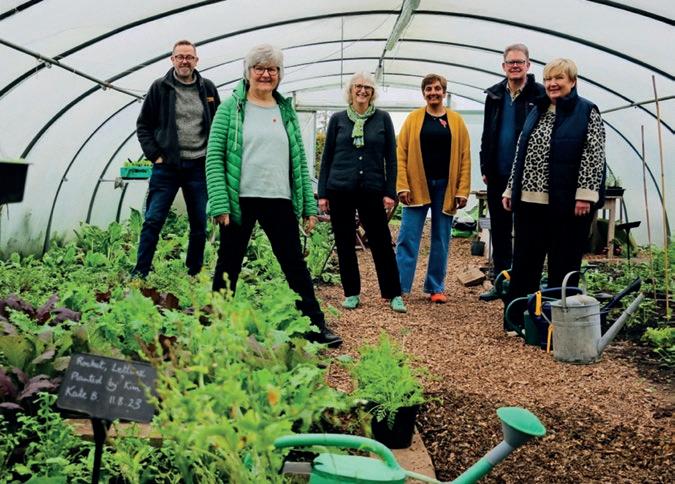
While Richard is happy to confess to being a ‘bit of a hippy’, he has a wealth of scientific research to back up his claims. In a number of studies, it has been shown that access to and interaction with green spaces results in boosts to cognitive development, improved behaviour, and enhanced immune regulation in children. Children with plenty of exposure to nature are also less likely to develop asthma, eczema and type one diabetes. Other studies suggest an association between the ‘greenness’ and presence of tree canopy in residential areas and bone mineral density, kidney health, and fewer incidences of dementia. One 2022 study concluded that green spaces and nature-based interventions (‘green therapies/eco therapies’) were observed to beneficially impact health outcomes for cardiovascular and cancer conditions.
There are countless studies out there, but a first port of call for further reading might be NHS Forest (https://nhsforest.org/ evidence/) which brings together a number of relevant studies.
We asked Richard about his work.
How is therapeutic gardening able to help people improve their mental health?
Therapeutic horticulture can take many different forms, but an example is a course of 10 weeks with each session lasting a couple of hours, either in small groups or one-on-one with a trained therapist. For all sorts of reasons, a therapy session
Richard and staff from the Tuppenny Barn learning centre and gardens in Southbourne, near Chichester.
in a clinical environment is unsuitable for many patients. The almost confrontational ‘eye-to-eye’ scenario of sitting in a consulting room, where there is an innate power imbalance, can be challenging for anyone, but particularly for those who are already dealing with traumatic situations or are neurodivergent. Working on a flowerbed, planting radishes or weeding, creates a balanced, productive context through which conversations can be woven. It’s a way of coming at difficult conversations from an oblique angle which is more comfortable for those who typically find it harder to open up, like men or teenagers.
Combining a practical task with talking therapy also balances the activity in the brain – allowing both the right- and leftsides to work simultaneously which, we find, allows people to express their thoughts and emotions. Therapeutic horticulture has been shown to be as good, if not better, than an equivalent 10-week cognitive behavioural therapy course. And, if NHS commissioners need more persuading, it’s half the price.
Is there a disparity between access to garden therapies across the UK and, if so, how can we fix that?
There’s a huge disparity. In the UK, 12% of people have no access to a garden or green space in their residence. If you live in London,
FEATURES

that jumps to 21%. And, if you are black or Asian living in London, there’s a 40% chance that you do not have access to a garden or green space, even a balcony. This is why therapy gardens are so important, but it is rare to find them in urbanised areas.
Therapeutic gardens are usually founded by charities or philanthropic individuals, but we are starting to see NHS gardens too, for instance, St James in Leeds, Lewisham, Woking and Colchester.
If a run-down OR came into your practice asking for help with stress or depression, how would you advise they begin exploring green therapies?
If you’ve never done any gardening, start with a walk at a National Trust property or a local park. If you can get to a local wood or forested area, even better. Perhaps take the family and make it a day out. If you have a busy home and work life, you might be hesitant to commit to a programme. But getting out into nature is a great first step. If you can, spend time in your own garden, grow something – flowers, vegetables. Experiment, and if things don’t work, that’s okay – there’s always another season, another year. You’ ll be surprised how quickly being creative, active and productive can boost your mood. Over time, you ’ ll reap the longer-term physical and mental benefits too.
Most importantly, if you are struggling with any ill health –mental or physical – there are people and resources to help you. Speak to your GP and don’t suffer in silence.

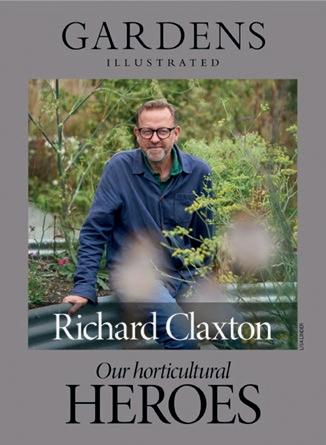
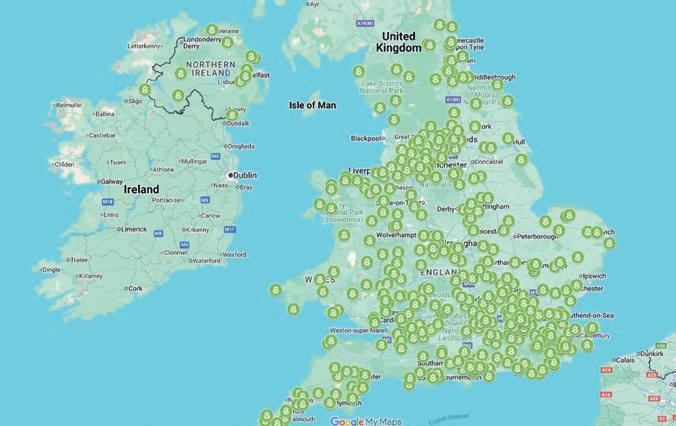
Richard’s charity, Gardening 4 Health, provides an online directory showing the location of therapy gardens and organisations providing therapeutic horticulture
p.45 - Final quote needs an end quotation sign (in the green box).
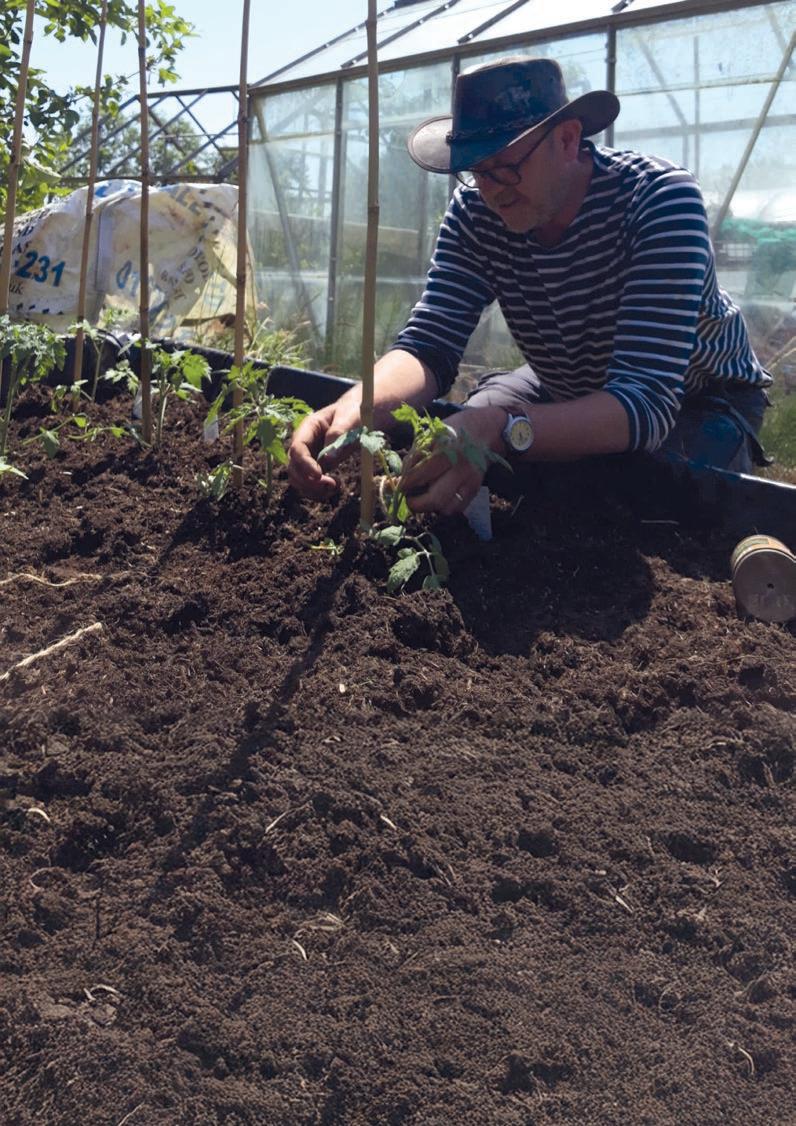
FIND YOUR PERFECT MATCH: TYPES OF GREEN THERAPY
· Forest bathing – an ancient Japanese practice (shinrinyoku) involving relaxation and mindfulness while being immersed in nature.
· Green exercise – physical activity while being directly exposed to nature, eg. jogging or cycling in woodland, playing sports on the beach, or doing yoga in a park.
· Blue exercise – swimming in open water such as the sea or lakes and rivers, and exercise near bodies of water. Careful exposure to cold water has been shown to boost circulation and immunity and reduce stress.
· Therapeutic horticulture – gardening (tending and growing plants) is used to promote emotional wellbeing, sometimes combined with talking therapy.
· Eco-art therapy – creative and artistic sessions using natural materials or drawing inspiration from nature to help reduce stress and allow the expression of thoughts and emotions.
· Wilderness therapy – spending time in wild spaces for group activities such as hiking, shelter-making and campfire cooking to combat loneliness and build physical and emotional resilience.
· Dark nature therapy – mindfulness and relaxation undertaken in nocturnal environments to promote mental wellbeing and reduce the negative effects of exposure to artificial light. An example is stargazing.

In Autumn 2025, Richard joined the National Garden Scheme (NGS) as their new Chief Executive. At the announcement of his new role he said, “The National Garden Scheme is a champion of the impact that gardens and gardening can have directly on people’s health, which is a cause very close to my heart. The NGS’s work underpins the vital links between gardens, generosity, health, and community – all of which we need now more than ever. I couldn’t be prouder to contribute to this amazing charity.”
BUSINESS AND THE ECOLOGICAL IMPERATIVE
Finance and business may once have been seen as operating at a distance from the natural world, but that boundary has all but dissolved. Today, investors and entrepreneurs are increasingly aware that climate change, biodiversity loss, and ecological resilience are not only environmental concerns but material economic risks – and, equally, opportunities. From venture capitalists backing breakthrough climate technologies, to fund managers addressing biodiversity loss, to innovators reshaping workplace pensions, to farmers pioneering naturebased solutions, Old Radleians are working across the spectrum where capital meets conservation. Their reflections reveal both the urgency and the potential of aligning markets with the health of the planet.


Max Blanshard (2004, B)
I’m a venture capitalist and work at the fascinating intersection of climate, technology and finance, helping to channel capital into early-stage startups that drive longterm climate solutions for people, cities and nature.
How can finance and investment contribute meaningfully to nature, climate, and sustainability goals? Economic growth and climate progress must be fundamentally linked if we are to scale these solutions – unfortunately the only way to get widespread adoption of green technologies is if they are cheaper and better and easier to implement than the alternatives. Anything else is doomed to niche applications and is not going to move our planet towards a meaningfully healthier state, nor provide the best financial returns for our investors.
Of all climate sectors, nature has historically been the hardest for investors to find scalable models but the steadily growing carbon markets, dawn of biodiversity credits and advent of eDNA to measure impact is really opening up this sector and attracting capital. The role of investment here is much as elsewhere: to incubate these companies as they find product-market fit, support them on the journey to profitability and then be the fuel on the fire to scale.
For companies with long term views, ecological responsibility is essential to their continued economic growth and risk management, but in the short term it is still tempting to pursue extractive industries. Therefore, in my mind, the biggest challenge is for companies to keep a clear long-term vision, and then to ensure that all companies in a value chain feel the impacts of shortsighted activities ... and that is where we have to enter the murky world of policy ...

Nick Stoop (1996, E) I’m the Founder and CEO of Pangea Impact Investments. We are on a mission to sustainably disrupt workplace pensions.
How can everyday financial products, such as workplace pensions, become a more powerful force for sustainability? Are you proud of your workplace pension provider? I might have asked a similar question about your energy provider a decade ago and received the same response. While a user’s experience within the energy sector has become increasingly engaging, the same cannot be said for the opaque world of workplace pensions. Which strikes me as absurdly counterintuitive. Over a career, your workplace pension savings are likely to become your most important liquid asset. Yet, I’d be pleasantly surprised if you could name just three of the top ten underlying investment holdings within your workplace pension today. In fact, most workplace pension providers would struggle to promptly answer that question on your behalf.
You might not know it, but your monthly workplace pension contributions are also a vote for the future. The most rewarding investments over the next few decades are unlikely to be the industrial stalwarts of the past where a significant proportion of your contributions continue to invest today. Which is why we’re launching the UK’s first workplace pension solution that is sustainable by default. We believe too much pressure is placed on the individual to take positive steps in a society poorly educated when it comes to the machinations of finance. Thankfully, valuesaligned businesses and charities are increasingly stepping up to the plate to engage this powerful lever because every payday matters if we wish to build a brighter future.
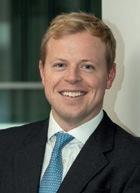

Tom Atkinson (2004, G)
I’m a portfolio manager for several equity impact funds. One of them is a dedicated biodiversity strategy, targeting financial returns as well as a measurable, positive impact on the key challenges facing the natural world.
What role can investment play in addressing biodiversity loss, and how do you see the landscape for sustainable investing evolving?
Biodiversity loss is a systemic risk (i.e. losing ‘natural capital’; pollination, timber from forests, fertile soils etc.) to the global economy and therefore requires a systemic, large-scale solution. Thus, a listed impact investing approach, leveraging the scale of the world’s largest companies, complements more traditional private market styles of impact investing.
Companies have impacts (both negative and positive) and dependencies on the natural world and their exposures to naturerelated risks and opportunities is not yet fully understood or
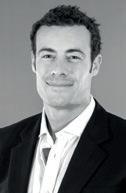
Alex Robinson (1999, B)
I’m a farmer and Director of a nature tech start-up, Zulu Ecosystems.
How can we use nature-based solutions to improve the resilience of our environment and our businesses?
With the emergence of Biodiversity Net Gain and carbon standards, like the Woodland and Peatland Carbon Codes, farmers and landowners now have an alternative beyond agricultural production and can increasingly look to create more biodiverse natural habitats on their most agriculturally marginal and environmentally impactful land.
Concurrently, businesses are looking to minimise their impact on climate and the environment. This is most commonly done by reducing their carbon emissions and offsetting their remaining carbon footprint as part of net zero, or through uplifting biodiversity elsewhere when habitat is lost to development. Alongside this they are also becoming more aware of their exposure to how changes in water and biodiversity may impact their operational viability.
Businesses can greatly improve the resilience of their systems, supply chains and operational surroundings by understanding the impact the local environment has on them, and they on it. Businesses can invest in nature based solutions that generate carbon and biodiversity units, whilst also directly improving their resilience to future climate and economic turbulence. Through buying carbon and biodiversity units from woodland and wetland creation or peatland restoration projects, that are upstream of their business, they directly link themselves to improving the landscape on which their operations depend.
priced in by financial markets. My job is to invest in companies with products or services providing solutions to biodiversity loss, such as sustainable agriculture, recycling and water treatment technologies. Specifically, this might include precision agriculture technologies, which reduce the amount of fertiliser applied to fields, and advanced water technologies, which reduce the amount of water companies extract from the environment. These products and services tend to benefit from regulation and ultimately from consumers making increasingly sustainable choices.
While ESG has become a politicised and increasingly misunderstood term in recent years, not helped by underperformance relating to sensitivity to higher interest rates, two of the core underlying themes are not going away: climate change and biodiversity loss. Thus, I expect compelling investment opportunities in these areas for years to come. ‘ESG strategies’ are rightly under increasing scrutiny to deliver strong financial returns but also in the right way, without greenwashing. In the UK, the FCA has recently finalised an arduous labelling process which should give investors confidence in funds labelled ‘sustainable’ or ‘impact’. I expect ‘ESG’ to continue to fade in the coming years but also the underlying drivers to intensify and the investment opportunities to persist.

William Mitchell (2004, D)
After several years as Nature Lead at one of the Big Four, I now serve as the Global Lead for Biodiversity & Water at a major consumer manufacturer.
How can businesses and finance embed nature into strategy and growth?
My job title barely existed a couple of years ago – a sign that nature is no longer a “nice to have,” but a source of long-term value and resilience, and, if ignored, a material risk.
The Green Finance Institute warns that unchecked biodiversity loss could wipe 12 per cent off the UK economy by 2030; the World Bank estimates ecosystem collapse could strip USD 2.7 trillion a year from global GDP. Yet investment in biodiversity and nature-based solutions remains far below the USD 722–967 billion needed annually.
Companies that put nature at the heart of strategy can open new markets – regenerative supply chains, restoration, biodiversity credits – while building resilience against shocks. The UN estimates every dollar invested in restoring nature can yield up to thirty dollars in economic benefits. That’s not philanthropy; it’s good business.
The challenge now is cultural and practical. Institutions and businesses must reframe growth: from seeing nature as a constraint to treating it as a catalyst. That means embedding biodiversity into governance, risk and decision-making, directing capital to genuine nature-positive outcomes, and treating ecosystems as strategic assets. Finance must move beyond ESG box-ticking to rewarding measurable impact. Corporates must set ambitious targets, report transparently, and invest in innovation that regenerates rather than depletes.
This is how we turn the page: from risk registers to growth strategies, from cost centres to value drivers, from doom – to boom!

CHARITY ENDEAVOURS 2025
Members of the Radley community have once again shown their generosity and determination this year, taking on challenges to raise both funds and awareness for causes close to their hearts. Together, Old Radleians, staff, and parents have helped to raise over £2.36 million that we know of – and doubtless much more besides. Here are just some of the charitable endeavours from our community over the past year.


Top Row l-r: Alex Crampton Smith, Archie Wilson, Charlie Maunder, Edward Mortimer, Henry Daubeney, Henry Snell, Hugo Fevre, Jack Hewitt
Bottom Row l-r: James Castle, Jasper Wolley, Nick Francis, Oliver Browne, Henry Herbert and Robert Crawshaw, Richard Mullings and Jeremy Hill, Rupert Strutt, Sid Keyte, The Tufnell Family
Richard Mullings (1966, H) and Jeremy Hill (1969, H) drove 1,318 miles over three days to deliver Richard’s long-serving Land Rover Discovery to Ukraine to be converted into an evacuation vehicle. They raised £9,852 donorbox.org/richardjeremyukraine
David Churchill (1968, H) and Roger Churchill (1975, D), sons of Great Escaper Dick Churchill, were part of a team bike ride following the path taken by the POWs from Stalag Luft 3 during the 1945 Long March. Collectively, they raised £10,557 for a number of charities including the Stalag Luft 3 Museum. https://gvwhl.com/XNWRL
James Castle (1984, D) took part in Long March 80, a recreation of The Long March of 1945. James raised £1,274 for Armed Forces Support (DMWS). www.justgiving.com/campaign/dmwsthelongmarch
Sid Keyte (1984, D) once again took part in the London Marathon dressed as a telephone box. He raised £5,493 for Muscular Dystrophy UK. www.justgiving.com/page/sid-keyte-1728302625514
Nick Francis (1996, H) ran the London Marathon and raised £16,299 for GKCCT and Shooting Star Children’s Hospices in memory of his daughter, Sophie. www.justgiving.com/team/sophiecharlottefrancis
Oliver Browne (1995, C), Henry Herbert (1995, B) and Robert Crawshaw (1995, H) climbed Mount Kilimanjaro and raised a combined £6,065 for Starlight Children’s Foundation.
Rupert Strutt (2001, G) ran the London Marathon in 03:07:39 and raised £2,920 for VICTA (helping children with sight loss). 2025tcslondonmarathon.enthuse.com/pf/rupert-strutt
Jamie Laing (2002, B) raised over £2.2 million for Comic Relief through his ultramarathon challenge, where he ran five ultramarathons (150kms) over five consecutive days from London to Salford. www.comicrelief.com/rednoseday/challenges/jamie
Alex Crampton Smith (2003, F) climbed Mount Kilimanjaro and ran the London Marathon to raise £3,235 for Asthma + Lung UK. join.aluk.org.uk/fundraisers/AlexCramptonSmith
Jasper Wolley (2004, H) and three friends, Alex, Jim and LJ ran the London Marathon as the Mystery Machine, attempting a World Record for the quickest time as a 4-person fancy dress. They finished with a time of 04:31:11, narrowly missing the record. They raised £20,902 for Young Lives vs Cancer. www.justgiving.com/page/ylvc-mysterymachine
Hugo Fevre (2009, E) ran the London Marathon in 03:59:07 and raised £3,046 for Breast Cancer Now. www.justgiving.com/page/hugo-fevre-1731672014795
Ruth Tufnell (former Head of Art), her husband Richard, and their sons Will Tufnell (2009, G) and Angus Tufnell (2014, G) have raised over £10,500 for the Gardens Trust and The Spring Centre Trust Fund by running the London Marathon this year.
Jack Hewitt (2010, J) ran eight marathons across Australia in 2025 to raise awareness of ME/CFS. By the end of October, he had raised £13,942 for the ME Association, with one race still to go! www.justgiving.com/page/mecfsmarathonsuk
Archie Wilson (2010, J) ran the London Marathon for Thames Valley Air Ambulance (TVAA) who were called when he suffered a brain haemorrhage during a Bigside rugby match vs Abingdon. He raised £3,920 with his amazing time of 03:10:57. www.justgiving.com/page/archie-wilson
Charlie Maunder (2013, J) ran from Edinburgh to London (700+ km in 12 days) and raised £31,625 for Oddballs Foundation. www.justgiving.com/page/12ultras12days
Henry Snell (2016, B) ran the Paris Marathon, raising £3,368 for Bowel Cancer UK. https://gofund.me/6e5040bf6
Edward Mortimer (2017, C) and his friend Charlie took part in a 24-hour walk from Carlisle to Tynemouth and drove a 4x4 to Dnipro, Ukraine, to be used as a field ambulance. They had raised £4,367 at the time this publication went to print. donorbox.org/delivering-a-medevac-car-to-ukraine-may-2025
Henry Daubeney (2019, E) ran almost 700km from London to Spain in memory of his grandmother. He raised £7,908 for the Royal Brompton Hospital and the Royal Marsden Hospital. https://gofund.me/ddd8c8221
UPDATE FROM MUSIC FOR AUTISM
Over the past year, the Orchestra of St John’s Music for Autism programme has continued its remarkable work as the Radleian Society Charity Alliance partner for 2025. Founded by John Lubbock (1959, E) and his wife, mezzo soprano Christine Cairns, Music for Autism brings the joy and therapeutic power of live performance to children with autism in schools across the UK, completely free of charge.
Each year, the charity delivers around 70 days of interactive concerts in special schools, led by professional musicians who create a safe and welcoming space for children to engage with music however they choose. From dancing and clapping to quietly listening or exploring the instruments, every response is valued. For many families, these moments are transformative: music becomes a bridge to expression, connection and joy.
This year has seen Music for Autism reach hundreds more children through a full schedule of school workshops, including a special World Autism Month session at Woven Nursery in Oxfordshire, where Christine shared practical guidance on supporting autistic children through music. In October, the charity partnered with the PANDA project and Chamber Music Box to host an inclusive concert for neurodivergent and learning-disabled children. The response from parents and teachers was overwhelmingly positive –
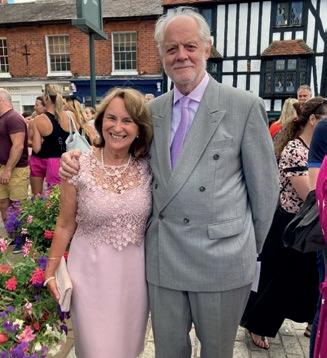
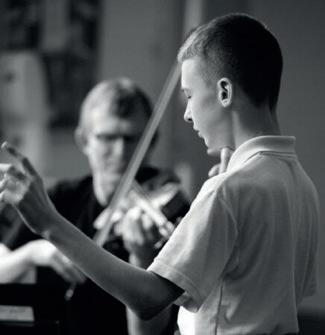
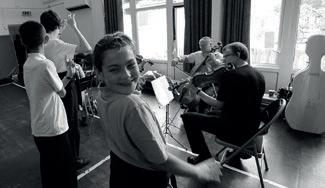
many describing it as a rare and moving afternoon where “children could be authentically themselves”.
Behind these uplifting events lies an extraordinary commitment. John and Christine continue to lead the charity with the passion of their personal story, reflecting on the transformational power music has had on the life of their own son. They are committed to ensuring that all Music for Autism performances remain free to schools. Their work depends entirely on donations and the generosity of supporters who believe, as they do, that music can unlock something profound in every child.
It has been a privilege for RadSoc to partner with such an inspiring organisation and to celebrate the difference they make to the lives of these young people.
To learn more about Music for Autism, and to help sustain their work, please visit www.osj.org.uk/osj-music-for-autism, or contact John Lubbock directly to discuss ways you might lend your support.
John Lubbock and his wife Christine Cairns.

RADSOC CHARITY ALLIANCE 2026
We are delighted to name Alsama as the Radleian Society Charity Alliance for 2026.

Alsama, co-founded by Richard Verity (1978, C) and his wife Meike, is a highambition education charity working in Lebanon’s refugee camps, giving teenage refugees, mainly from Syria, a second chance at a bright future. Founded in 2020, Alsama grew out of a small youth centre begun with 40 determined students in Shatila camp, and has since expanded into multiple full-time education centres that serve nearly 900 young people, with thousands more on waiting lists.
“I am proud to be the Head of Alsama’s Language School. Alsama taught me to read and write, and now my mission is to teach others.”
– Mariam, Head Tutor
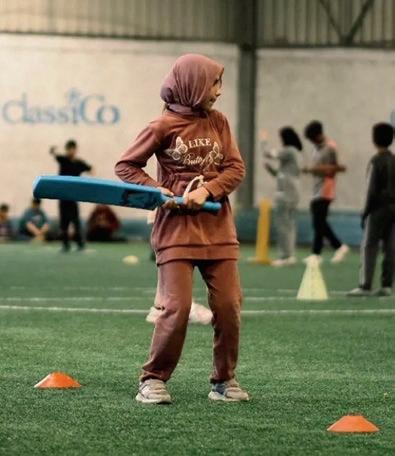
Many of Alsama’s pupils arrive illiterate or innumerate, with severely interrupted schooling. The organisation’s radical programme compresses 12 years of schooling into six, combining Arabic, English, Mathematics, IT, arts and life skills. Within months of joining, students typically overcome illiteracy and begin real academic progress. Many are ready to join universities in only five to six years.
“I want to study Medicine and specialise in surgery. My goal is to become a leading surgeon providing life-saving care. I hope to use my position to inspire young Syrian girls to break gender stereotypes and pursue their ambitions.”
– Afraa, Year 5 Student
What sets Alsama apart is its holistic, student-centred design. Alongside core subjects, education is framed around leadership, critical thinking, yoga, music and cricket. Cricket is deployed not just as sport, but as a way to build teamwork, confidence, and agency in contexts where gender norms and displacement often limit opportunity.
“Education is my passion. My dream is to return to Syria and build schools so I can help these young boys and girls just like Alsama has helped me. But first, I know I must finish my education myself.”
– Shahed, Year 3 Student
In times of crisis – whether conflict or power cuts – Alsama adapts. It has developed flexible learning models (in-person, remote, mobile) so students are never left behind.
Alsama also aspires to scale its model beyond Lebanon. Its ‘G12++’ certification is being developed to provide young refugees with an internationally recognised, high-school equivalent qualification adapted to displaced settings.
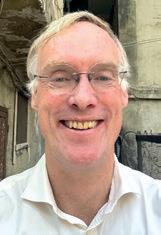
A NOTE FROM ALSAMA CO-FOUNDER, RICHARD VERITY:
“There’s no escaping the fact: I’m a Radleian. It’s not just that I spent four of my most formative years at the school. It is also that Radley gave me a formula for education. So, when in 2018 I experienced a mid-life crisis borne from working hard, living prosperously and giving back little, it was to education where I wished to devote my energy. In that year, I had an opportunity to step aside from my career as management consultant and work with Syrians in refugee camps in Lebanon.
What I found there was appalling. An entire generation of children is growing up without schools. They are illiterate. They can’t read or write their names in their own language. It goes without saying that they are also poor – living in tents or slums – and desperate. 41% of girls are forced into early marriage. Boys are pressed into child labour. My wife and I set up Alsama to provide secondary
“I
want to study Politics and History, and my longterm goal is to help young people across the Middle East understand their rights and the importance of democracy. Being denied an education at a young age lit a fire in me to learn and grow, no matter the obstacles.” – Marwa, Year 5 Student and Duke of Edinburgh Co-ordinator
By choosing Alsama as our 2026 Charity Alliance, RadSoc is celebrating education as transformation, something familiar to many ORs for whom a Radley education has opened doors; Alsama is changing life trajectories among some of the world’s most underserved young people.
We encourage all ORs and members of the RadSoc community to find out more by visiting https://alsamaproject.com/ or visit Alsama’s YouTube Channel to hear from the young people themselves: www.youtube.com/@alsamaproject1954
education for Syrian refugee teenagers. We now have four schools in two camps and teach nearly a thousand children.
But this tells only half the story. We didn’t want to create second-rate ‘charity schools’. We aspired to offer a world-class education. Imagine Radley parachuted into a refugee camp but costing not more than 1,000 USD per child. What would such a school look like? It would have high standards. Our schools have 97% attendance. It would teach well. We eliminate illiteracy in just six months and prepare our students for university in just six years – so twice as fast as the British education system. The school would recognise the value of developing the whole child. Alsama students play competitive team sports at the weekend (cricket actually). They hike, play music and create art. And in one respect we do better than most British schools. Our students have experienced ISIS, war and poverty. They recognise education as a privilege. This gives them a work-ethic that British teenagers rarely match.
It’s an honour to be selected as RadSoc Charity Alliance for 2026. For one year there will be a connection between two different worlds: a refugee camp and a public school. Both sides will discover that they have more in common than they had imagined. I am hoping that, on the Radley side, the relationship will involve boys, masters, parents and ORs. I expect that the institution’s relationship with Alsama students will be as rich and fulfilling as it has been for me.”
Richard Verity (1978, C)
A NOTE FROM PATRICK DERHAM, FORMER RADLEY DON AND TUTOR:
“My life was transformed by educational opportunity. On my last day at Pangbourne, my Headmaster reminded me that I had benefitted from a liberal and liberating education and with that came a responsibility to give back. His final words to me in 1978 were the words of Martin Luther King Jr: “What are you doing for others?” Post-Headship at Westminster, being connected with the Alsama team was a lightbulb moment. Here was an NGO that was transforming the lives of some of the most vulnerable in society by providing a world class education for refugees.
It is a scandal that only 7% of 4.4m refugee children access higher education and so my main involvement is helping with the creation of the G12++, a high school equivalent certificate that is tailormade for refugees. We hope that what is being tested in Beirut now will in time be an exam for all refugee children across the world. It is humbling to be a small part of this extraordinary project.”

NEWS AND NOTES
1940s
DMITRI KASTERINE (1945, C)
A few years ago, the milk collection companies abandoned collecting milk in Central New York State, one of the principal areas in the country for dairy farming. The companies said they could no longer afford to collect milk from so many small farms, and the industry moved west, where there are larger operations. Around where we live in Central New York State, there are many abandoned farms like this one, amidst beautiful countryside, as Fenimore Cooper describes in his book The Pioneers.
1950s
TONY PEARCE-SMITH (1950, D)
I’m still running an importing and wholesaling business, which I’d like to sell. I still do a bit of acting at the local rep, volunteer at the Rutland Water Wildlife Centre, and read for the blind with the Calibre Audio Library. I can still just about manage the garden – with help from my grandsons – and am increasingly beholden to my long-suffering wife, Carole.
ALEXANDER PHELPS-PENRY (1957, A)
In addition to the previously published A Spring Scandal: The Story of a New York Banker in the 1880s and When First We Practice to Deceive: The Story of a Lost Boy, I have just published William Walter Phelps: A Clubbable Man in the Gilded Era and the Aftermath. While not a trilogy, these books share common themes of biography, politics and my family over three generations in both America and Britain. See the New Releases section for more details
JOHN SAMUEL (1957, F)
My book on electric vehicle technology has recently been published by the IET. It could be of interest to innovative Radleians drawn to the rapidly expanding world of electric transport – we cover the history of EV design and development, batteries and charging, hydrogen fuel cells, Formula E racing, Chinese success, autonomous cars, renewable energy, the global environment and the future of green motoring. I will never forget
science experiments in the old labs at Radley, research with the Radio Club, and astronomy research with Patrick Moore, when we built an interferometer radio telescope in a nearby field and tracked the Crab Nebula as a radio source as it passed behind the sun. Apparently, we proved Einstein’s theory that light and radio waves are bent by the mass of the sun – great days. See the New Releases section for more details about John’s book
LEE TAYLOR (1957, A)
After eight years living in France, my wife, our cats and I have returned “home” to Australia. During our time in France –and after two shoulder operations, more than 300 physiotherapy sessions and seemingly endless strengthening rehab – I eventually accepted that my tennis career had ended. My passion resulted in 65 years of competitive play, the last 10 of those on the ITF Seniors World Tour. Representing Australia several times and with careerhigh ITF Seniors World rankings of 4 in singles, 7 in men’s doubles and 2 in mixed doubles, I have had a good run … but I do miss it!
DAVID JENNINGS (1958, C)
When I was about to leave Radley, Dick Usherwood was on exchange at Peterhouse (now Zimbabwe), and James Milford was at Radley. It was through him that I went to teach at Ruzawi Prep School, close to Peterhouse, while waiting to go to university.
It is a great privilege to be preaching at the 70th anniversary of Peterhouse at Christ Church, Oxford, in August.
Sally and I are spending three weeks in Zimbabwe this autumn. We now have two grandchildren gainfully employed, another who has been made a scholar of her college at Oxford, and a fourth who is reading Architecture at Liverpool University from October this year.
1960s
HANS BARTH (1960)
Dr Hans Barth attended Radley College as an exchange student for a term in 1960 and wrote to us last year reflecting on how fondly he remembers this short time as a Radleian. Having recently been invited to name a room at the Landheim Schondorf, a boarding school in Schondorf am Ammersee, Germany, Hans chose to call it ‘Radley College’ to reflect the warmth of his memories.
We were delighted to send him a couple of items to decorate the room – a limitededition print of the College by artist Michael Aubrey, and an original print of the College crest produced by The Heraldry Society in the 1960s. Both have now been installed in the ‘Radley College’ room at Landheim Ammersee.
Hans would love to reconnect with the
Dmitri Kasterine
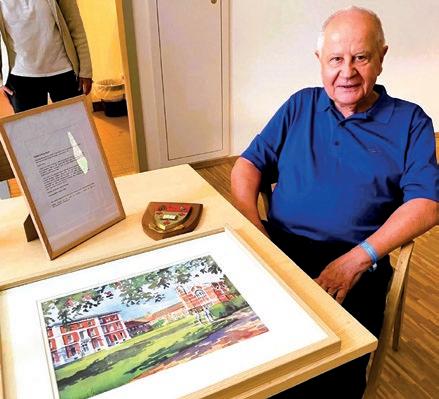
Old Radleians who took part in the exchange to Schondorf during his time at Radley in Lent Term 1960. If this was you – or you know who it might have been –please get in touch with RadSoc (radsoc@ radley.org.uk) and we’ll be happy to put you in contact.
PEERS CARTER (1960, C)
My wife Susan and I have been married for 55 years. I am working on a documentary about the amazing work of small British charities. I also volunteer with the Chaplaincy at HMP Rochester.
RAYMOND MASUREL (1960, D)
I am still alive and active as a Knight of the Order of Malta and a Papal Knight, working with boys in difficulty. It is very demanding, but my time at Radley taught me charisma.
JULIAN RICHMOND-WATSON (1961, G)
I received an OBE in 2024 for services to the British horseracing industry. I am Director of the Horserace Betting Levy Board.
CHIP SOMERS (1961, H)
I am still working as a psychotherapist in London and continue to advocate for better education about life after school
and university. Very little preparation is given for what is becoming an increasingly difficult world to navigate.
SIMON STANFORD-TUCK (1962, E)
I am still working at Regimental HQ of The Rifles in Winchester but am likely to retire next year (2026). Having managed the recruitment of young officers for the Regiment for six years, I have now handed that work over and am managing the reorganisation of the Regiment’s dozen museums, spread from Durham to Bodmin and many places in between. I keep in touch with at least a couple of my year group from Goldsmith’s Social (Simon Hart and Jerry Cain). I have four children – a secondary school teacher, an Army officer, a software writer and an administrator at a specialist school –and eight grandchildren, including one adopted.
CHARLES STOKES (1963, C)
We celebrated our 50th wedding anniversary in Hawaii and ten years of living in Scotland. I met up with lifelong friends David Bradbury (1963, C) and Steve Plowman (1963, D), as well as Kirsty, the wife of Western Australia-based John Nurick (1964, E), who was here visiting her daughter. I also attended the Edinburgh Radley reunion,
which was thoroughly enjoyable. The main thing I took from Radley – a love of music – remains an important part of my life. I started guitar lessons ten years ago, quite a change from Violet Blofeld and the violin!
WILSON PRICHETT (1964, H)
It’s hard to believe it’s been 60 years since saying goodbye to Radley – and to England! After escaping a miserable private school in Philadelphia for my high school years at Radley, I returned to study engineering at Princeton. My first job was cleaning up the air in Philadelphia, where I made the National Lead Paint Factory install filters and stopped contractors from openly spraying asbestos on highrises. That experience set me on a lifelong mission to reduce the environmental impacts of our civilisation.
After a master’s degree in Environmental Sciences at the University of Virginia, I worked in Washington, DC, as a lobbyist for renewable energy programmes in the 1970s – and, after kissing many frogettes, met my wonderful wife. We’ve since made our home in Tennessee, raising children and grandchildren, and I’ve enjoyed a long career as a professional engineer in energy efficiency and renewables, even being named a “Legend” in my field in 2008.
CHRISTOPHER LANGTON (1965, F)
As Head of Independent Conflict Research and Analysis (ICRA), I recognise the importance of NGO support for the downtrodden in societies across the world. ICRA supports and facilitates educational opportunities for the women of Afghanistan and other repressed minorities.
AIDAN FORD (1966, C)
A group of mid- to late-1960s C Social-ites came together in June 2013 for a weekend stay in the mid-Wales hideaway of one of their number. Having let sufficient time pass for judgement to be made, the same group rushed to repeat the exercise a mere twelve years later. Hence, the ORs listed below once again enjoyed, in May 2025, the mid-Wales countryside – its green and gentle hills, its woodland streams and even its sunshine.
Sadly, some of our number have left us since 2013, but we were delighted that their widows – honorary C Social-ites one and all – joined us in 2025. Our most
Hans Barth with items sent to him from Radley College
special guest was Margaret Morgan, widow of Richard Morgan, the group’s C Social Tutor, who later served as Headmaster of Cheltenham College and, latterly, as Warden of Radley College. In the early 1970s, Richard and Margaret began the tradition of our reunions, inviting us to stay and dine with them wherever they were at the time. As the years passed, members of the group stepped up to reciprocate their hospitality.
On current form, our next meeting is scheduled for 2037… but perhaps we can break with tradition and bring it forward!
WILLIAM GREIG (1969, C)
A POEM FOR PEACE
Perhaps the busy human race will pause… then we will live to learn our lesson well so these will be the wars to end all wars.
Why do we still defy our own good laws? Is it because brute force will often sell? Perhaps the busy human race will pause…
Then could true love become our global cause so peace might start to flourish; who can tell? Will these ones be the wars to end all wars?
Some say that we are all born free but sores from man-made chains have made our heaven, hell; perhaps the busy human race will pause…
As each missed chance is lost our conscience gnaws; we heard them clearly in The Great War yell to all “This is the war to end all wars.”
If only every one of us ensures our lives we live today will not retell our sordid, war-torn history; then we’ll pause… and surely these vile wars will end all wars.
NICHOLAS HADDON (1969, H)
I’m having a busy retirement playing bridge and croquet in Chichester.
CHRISTOPHER PAYNE (1969, E)
My daughter Miriam Payne and her friend Jess Rowe are currently undertaking one of the greatest challenges imaginable – rowing the Southern Pacific Ocean non-stop and unsupported from Peru to Australia. They are now 6,250 miles into an 8,000-mile journey and are set to become the first female crew to complete it in approximately a month’s time (in
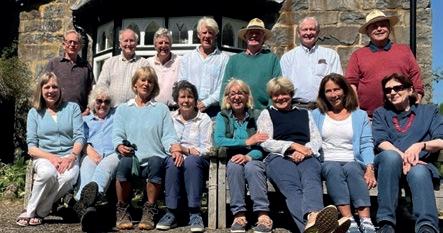
Seated:
C
November 2025). Further details and links to their social media can be found at www.seasthedayoceanrowing.com. They are raising money for The Outward Bound Trust.
GAVIN SPICKETT (1969, E)
I have just had my next book published by Oxford University Press in July 2025: ME/CFS and Long Covid: Diagnosis and Management of Chronic Fatigue. I am currently working on the 5th edition of my Oxford Handbook of Clinical Immunology & Allergy, which will also be published by OUP, hopefully next summer. I have also agreed to produce an 8th edition of Lecture Notes in Immunology, published by WileyBlackwell, which is due for submission at the end of 2026.
As well as writing, I continue to run regularly and completed a 34.5-mile ultramarathon in March in celebration of my 70th year (I shall be 70 in December!). I certainly was not last either! See the New Releases section for details of Gavin’s most recent book
1970s
CHRISTOPHER SANDFORD (1970, C)
I have a new book – 1976: The Year That Scorched – appearing this autumn. Amazingly, a half-century seems to have vanished since the date in question, when I was quite recently down from Radley, long-haired (those were the days), and in
thrall to cricket, recent political history and heavily amplified rock music – all three of which are touched on in the book. I am still mainly based in Seattle, with tactical summer visits back home. See the New Releases section for more information about Christopher’s new book
ROBIN MORRIS (1971, F)
I am continuing in neuropsychology research and teaching as an Emeritus Professor at the Institute of Psychiatry, Psychology and Neuroscience in London. I was recently awarded a Distinguished Career Award by the International Neuropsychological Society and received the award in New Orleans at their 2025 annual conference, where I also delivered an address to the Society.
CHARLES CHADWICK (1973, G)
I have published a booklet on volunteering, aimed at ordained and lay church leaders, with Grove Books Limited. It explores people’s motives for volunteering and how to recruit, retain, reward and, if necessary, relinquish volunteers.
PETER DIXON (1973, C)
I left Radley in 1978 and, after two years of travelling and four years of training, I graduated as a chiropractor. I was President of the British Chiropractic Association from 1994–98. The Chiropractors Act was passed that year, and the General Chiropractic Council was established, of which I was Chair until 2013. I established the College of Chiropractors in 1996, now the Royal
Standing: Martin Stanley (1965, C), Thomas Seymour (1965, C), Simon Lyster (1965, C), Michael Hodgson (1965, C), Simon Eliot (1965, C), Aidan Ford (1966, C), Stephen Lacey (1966, C)
Julie Whitworth (widow of Simon Whitworth (1965, C)), Sally Slocock (widow of Richard Slocock (1965, C)), Jane Hodgson, Margaret Morgan (widow of Richard Morgan, former Warden and
Social Tutor), Caroline Lacey, Phil Stanley, Alda Ford, Olivia Eliot.
College of Chiropractors. I set up my own practice in Bath in 1985, and we now have four clinics in Wiltshire and Somerset, treating over 2,000 patients a month. My son followed me into the profession and took over the reins of the practice in 2021. I will be retiring at Christmas and look back on a thoroughly fulfilling career that has taken me all over the world. I can honestly say that I have never not wanted to go to work, and have never had a day off sick. Retirement will not be dull – I will be taking up the role of High Sheriff of Somerset in March 2026, which will mean exchanging my scrubs for velvet and exploring the amazing county of Somerset. We live in Bath, we have five children, six grandchildren and some wonderful memories, many of them from family holidays spent on the Helford River in Cornwall.
I had a great time at Radley as a member of C Social, playing for the 1st XV and rowing in the 1st VIII and in the final at Henley in 1977.
NICK HOLLAND (1973, D)
I have had an excellent year of rowing. After winning Mixed F Doubles, Open G Coxless Fours and Open H Eights at the British Rowing Masters Championships, I went to Bled, Slovenia, for the European Masters Championships and won Mixed F Doubles, Mixed F Quads and Open G Eights. I returned to the UK and won Open G Eights, Open H Eights and Mixed F Quads at Henley Masters Regatta. I continue to row four days a week and am heading to the World Masters Regatta in Banyoles, Spain, in September. When I’m not rowing, I enjoy being a grandfather to my daughter’s daughter and son in Barrie, Canada, and pottering around fixing things in my 1660 house in Bridgnorth.
TOBY CLARK (1975, D)
I’m immensely proud to have worked for the European Space Agency for the past 23 years. I have now retired. The second successful launch of Ariane 6 seemed like a good time to call it a day at the end of a thrilling career in space. We will be staying in the French countryside near Paris for the foreseeable future. I’ll be trying my hand at teaching English, alongside working as a stablehand for our three horses, in between driving a 1965 Triumph Spitfire and sailing a Hansajolle (a classic German sailing yacht). I still spend my Saturday mornings rowing on the Grand Canal of the Château de Versailles – if
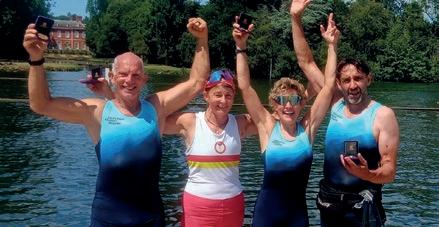
anyone would like to experience that, please get in touch!
MARK JOHNSTON (1975, F)
I am the founder of The Vets in Mind Alliance (www.vets-in-mind.org), supporting the mental health and welfare of the veterinary community. I am CEO of Vetstream Ltd (www.vetlexicon.com), and I am also Vice-President of the ProSalus Foundation, which aims to broaden access to and improve the quality of veterinary care in regions of greatest need, such as disaster relief or the conflict in Ukraine. Visit www.prosalusfoundation.org for more information.
FRANK ALBERT (1976, G)
Jennifer and I moved to Colorado Springs for a fabulous job fundraising for KRCC Radio, a public radio station. I continue to race with Rocky Mountain Vintage Racing and enjoy all that living in Colorado has to offer.
On 1st December 2024, I was diagnosed with stage 4 oesophageal cancer. I took full responsibility for the cure and achieved cancer-free status by 6th March 2025.
ALEX BARRY (1976, B)
I live in Bristol and continue to work as an architect, most recently as NEC supervisor at Midland Metropolitan Hospital, Birmingham. I recently published a book of (at least to me) humorous verse, Do You Want Sprinkles With That? I enjoy sailing my Wayfarer dinghy at Portishead Yacht and Sailing Club. See the New Releases section for details of Alex’s book
ANDREW MCMURTRIE (1976 I am serving as Master of the Worshipful Company of Salters this year.
MARK CADBURY (1977, C)
I am working for a charity named Neonatal Intensive Care Unit (NICU) Support, which collects and delivers donor breast milk. This is critically important for poorly and premature babies, as it can double their survival chances if born before 32 weeks. I am a Trustee and Director of the George Cadbury Trust (a grant-making trust), as well as a Trustee of Bournville Village Trust, a housing association and charity that looks after 8,000 houses in and around Birmingham. I am also a Director and Trustee of the SS Great Britain Trust.
I still play cricket, representing Beckington CC in the Wiltshire League as well as Babington House CC, and I have played for Somerset Seniors, over-50s. I also continue to play golf and tennis.
JAMES THOMSON (1979, F)
I was truly surprised to be awarded a CBE for Policing and Inclusion in the 2025 New Year Honours list. It reflects the hard work and support of many people across many organisations, and I was very humbled to be recognised in this way. In June I went to Buckingham Palace, together with “my” horse from the City of London Police, Police Horse Thomson, to receive my CBE from Princess Anne.
1980s
TOM SILK (1981, F)
Alongside my great pal Robert Sloss (1982, D), we’ve launched the North Atlantic Salmon Fund in the UK and are keen to secure support – in any shape or size – to help this noble, bellwether species. Visit nasf.org.uk for further details!

Nick Holland
RICHARD TANNER (1983, H)
At the end of the summer, I completed thirteen happy years as Director of Music at Rugby School before moving to America to take up the post of Director of Music at Saint Thomas Church, Fifth Avenue, in New York City. There, I am responsible for the Saint Thomas Choir of Men and Boys, the leading ensemble of its kind in the United States.
You can read my biography on the church website at www.saintthomaschurch. org/people/richard-tanner/, and watch my installation service here: www. saintthomaschurch.org/events/solemneucharist-and-installation-of-the-organistand-director-of-music-2025-09-07/
ADRIAN THEED (1983, B)
Still rowing hard with Henley Masters, World Masters, WERA regattas and the Head of the Charles at the end of 2025. Looking for new opportunities in the business world with sustainable roots – growing timber to support Britain’s commercial requirements and developing energy projects.
RUPERT MACINNES (1984, C)
I’m continuing to enjoy life between North Hampshire and Yarmouth on the Isle of Wight. I’m filling my time with family fun, sailing (in the Solent, Sardinia, Tunisia, the Channel Islands, Brittany and the Lofoten Islands in Norway in 2025) and some work – as a non-executive director on a couple of boards, namely Salad Finance Limited (a social impact lender) and Cowes Harbour Commission (a trust port on the Isle of Wight) – as well as legal and regulatory consultancy in the retail financial services sector. I’m also proud to support the Ocean Youth Trust South, a fantastic charity providing young people with adventure at sea to build skills for life, as a vice-patron.
WILL SILK (1984, B)
After nearly 15 happy years at Perrott Hill, I have moved westwards to a new post as Assistant Head (Pastoral) at Truro School Prep.
SID INGLIS (1985, C)
I have now completed 12 happy years as Headmaster of Elstree Prep School and remain very happy and settled. Elstree was nominated as Tatler Prep School of the Year, and I was named Tatler Prep Head of the Year 2024. We continue to send a good number of boys to Radley, all of whom
have thrived there.
MARK MUSCHAMP (1985, D)
Having spent 13 years as a campaign coordinator for Sea Shepherd, the directaction marine conservation NGO, I have now made the switch to The Green Britain Foundation, where I coordinate Fish Net Zero – a project to recover ALDFG (abandoned, lost or discarded fishing gear) from the North Sea. As skipper of their flagship vessel Nemesis, a 60ft high-speed patrol boat, I take technical divers out to sea to save marine wildlife by removing lost fishing gear. In addition, we patrol Marine Protected Areas, identifying illegal fishing and trawling.
JAMES PICK (1985, G)
I am working in strategy for a Swedishbased global engineering group, splitting my time between Malmö and the UK. I live in the Cotswolds with my wife and two wilfully disobedient dogs. I would love to hear from anyone I crossed paths with and compare mistakes.
GUY STONE (1985, D)
I am serving as Deputy Commander of the Household Division and Chief of Staff of London District in Horse Guards. 11th August 2025 will mark 30 years since I was commissioned from Sandhurst and joined the Army. It has been a fulfilling and varied career, and I will retire from the Army in April 2027. I have been married for 25 years to Kate, and we live in London and North Yorkshire with our two boys (aged 20 and 22), both at Durham University. I am proud to see many Radleians joining the Household Cavalry and the Guards.
JONATHAN JAMES (1986, A)
I founded and direct a charity, Dovetail Orchestra, which brings together musical groups in different cities to welcome and provide sanctuary for asylum seekers and refugees. It is a beautiful and very timely project.
NICK NEWBURY (1986, D)
Carlotta and I are enjoying life on the touchlines, cheering on our two boys who are now in their first and second years at Radley.
At work, I remain involved with Original Travel and chair several other companies in the travel world. A particular highlight has been working with The Slow Cyclist, founded by OR Oli Broom (1993, B).
Earlier this year I finally acted on an idea I jotted down back in 1992 while working abroad: “bring padel tennis to the UK.” Alongside OR George Craig (1995, B), we set up Norfolk Padel in January 2025. While we cannot claim to have brought padel to the UK, we have enjoyed developing our business in this fast-growing sector.
Carlotta and I are now in our fifth year of running The Norfolk Superhero, a charity quadrathlon held each June on the North Norfolk coast. It is a tough but goodhumoured event. We have plenty of ORs involved as both participants and company sponsors and, most importantly, it raises funds for great causes. If you fancy a go, we would love to see you there.
1990s
JERRY FOWLER (1990, H)
In 2022 my family and I returned from 11 years serving in Iraq. I taught Kurdish history, developed an online Kurdish dictionary, and have helped translate the Bible into two dialects of Kurdish. A Kurdish TV channel profiled our work, viewable at tinyurl.com/subtitledinterview. I now serve in Oxford at Magdalen Road Church and am producing a documentary about Cumberland of Kurdistan, the Californian missionary who was martyred in 1938. To those who thought Greek GCSE was for nut jobs, I'm happy to defend the Classics Department and testify to its continuing usefulness for Bible translation among persecuted Middle Eastern nations!
WILL CHRISTIE (1991, D)
Christie Yachts has now passed its fourth anniversary, with our relatively new superyacht charter department also thriving. Notable landmarks include the sale of the 95-metre motor yacht Whisper, and we have recently taken over the charter management of the 55-metre Moskito
TOM TURMEZEI (1991, A)
Over the last few years, Tom has continued to work in clinical radiology and academic roles based in Norwich while living in Cambridge with his family. This has included involvement in multiple international research collaborations and serving as Imaging Editor for the latest edition of Gray’s Anatomy. Building on his imaging research into osteoarthritis, Tom has also started a medtech spinout company called KNEE3D Ltd, which
provides imaging analysis and consultancy services for anyone interested in 3D computed tomography (CT) imaging of the knee joint – with the ultimate goal of replacing X-ray imaging in clinical practice. Outside of work, Tom has launched Light Blue Wines, a smallbatch winery based at home, producing wine from grapes he has grown locally in Cambridge. There are ‘plans’ to expand the project – perhaps once a few more years of success are under the belt.
WILLIAM DOCKER (1993, B)
We were recently awarded Best Butcher in Scotland and Balgove Larder celebrated its 15th anniversary in September 2025. I continue to serve as Chair of the Food from Fife regional food group.
WILL STEMP (1993, A)
In May, I started my third year in Madrid, having left Barcelona in 2023. Fully integrated with my family now and loving life! I’m still with DUAL, heading up our distribution to the broker network here in Spain. Also in May, Juliana and I celebrated 18 years of marriage; Charlotte turned 13 and Sasha turned 10 – how time flies!
MARC EDWARDS (1994, E)
I am in my 10th year of presenting sport on BBC News. I am also into season 4 of our mildly comedic/moronic rugby podcast, Maul or Nothing, with Ryan Wilson and Max Lahiff.
PATRICK THOMAS (1995, B)
The RCBC 2000 VIII had a fabulous evening and dinner at Leander on Wednesday 25th June to celebrate 25 years, which it was my pleasure to organise. Coaches Donald Leggett and Angus and Annabel McChesney joined us and were entertained by Angus and Justin Webb’s (1995,C) hugely entertaining speeches.
DANIEL-KONRAD COOPER (1996, D)
I continue to run Rather Good Films, producing feature films. I have just completed The Butler, starring Jean Reno and Tom Hollander. The pitch is Die Hard meets Downton Abbey: it is Christmas 1930 and the ageing butler on a remote estate must battle ne’er-do-wells intent on extorting his employer. All being well, the film should be in cinemas in 2026 – do watch out for it.
GEORGE HOLLOWAY (1996, E)
After sixteen years working in the City
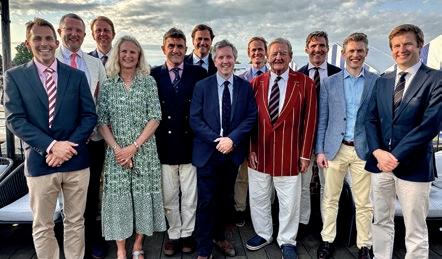
for a couple of firms, I left my job in early 2023 to found Silverwood Wealth Management, offering bespoke wealth management solutions to retail clients. I live in Sussex with my wife, our three children and our border terrier. Having not played much cricket while the children were small, I am now back on the field in the illustrious Sussex Central 7th Division Cricket League – where we avoided relegation on the final day of the season.
JAMIE OLSEN FERREIRA (1996, E)
I qualified as a lawyer in 2012 at K&L Gates before joining Pinsent Masons in 2014, one of the leading firms for construction law. In 2020 I converted to a knowledge development lawyer role, and I now focus on training and mentoring, as well as writing new resources for practising lawyers to use.
JETHRO MARRIAGE (1997, C)
I have started a pasta business in Italy and am learning Italian.
PATRICK MCMEEKIN (1999, B)
After gaining an MBA during Covid, I started looking for a business to buy into. Most ORs between 2000 and 2010 will remember buying a (high-quality and reasonably priced!) hoodie from either James (1999, D) or Will (2003, D) MacDonald. Having put them both through Radley, Clothing for Events has continued to go from strength to strength under Rob and Sue MacDonald ever since. Based on that (and Rob’s tan!), we agreed that I would join as C4E’s new Sales Director, with Will taking over as MD. It has been an amazing ride as we continue to buck the trend of macroeconomic
headwinds. Any businesses requiring personalised uniform, workwear or PPE should look nowhere else!
2000s
TOBY MITCHELL-INNES (2000, F)
I’m a dentist in Cheltenham, performing high-end dentistry including cosmetic work, implants, oral surgery and sedation. I recently welcomed a baby girl, Cora, born on 31st January 2025. I’m still competing in triathlons and hoping to do an Ironman soon.
FREDDIE STROMA (2000, C)
Freddie has been starring as Adrian Chase/Vigilante in HBO Max’s Peacemaker, alongside John Cena and Danielle Brooks. He has previously appeared in Bridgerton, The Crew and UnREAL, among many other productions.
GEORGE NYE (2002, E)
In 2020 I completed my residency training as a veterinary neurologist to achieve my master’s (MVSc), and in 2021 I passed my specialist exams to become a European and RCVS Specialist in Veterinary Neurology and Neurosurgery (the equivalent of a consultant in human medicine). I am the father of two beautiful daughters, Matilda and Phoebe, and married to fellow vet Rosy.
GREG CHIANG WILLIAMS (2003, C)
After seven years abroad – first working with Nike at their global HQ in Portland, Oregon, and then in Shanghai helping international fashion, sports and food organisations enter and grow in China –
A reunion of the 2000 VIII.

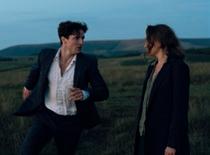
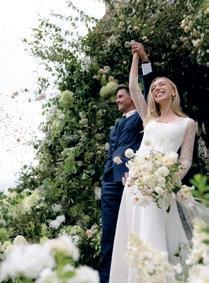
my wife and I are now back in the UK. I have recently launched a UK-based branding and marketing agency serving outbound Chinese companies looking to grow in the UK and Europe.
HUMPHREY MADDAN (2003, C)
I am living in London. Having begun development of REMAKER technology a few years ago, it is great now to be helping more people with their strength training. Highlights have included appearing in Brad Pitt’s F1 film and equipping England Rugby. Our app and device are now available for personal use.
CHARLIE MACRAE-TOD (2004, C)
Fresh from touring A Midsummer Night’s Dream, I’m now tackling The Odyssey Scheduled for next summer, it will be over 12 hours of live performance in the style of ancient Greek rhapsodes, or ‘song-stitchers,’ charting Odysseus’ epic journey home. Alongside this, I’m currently also developing a new play about 18th-century Devonshire folklore, experimenting with DADA and Ritual Theatre techniques to rethink storytelling and performance contexts.
JAMES TUFNELL (2007, G)
I represented Scotland in the Student Rugby League Four Nations (via my part-time MBA at Imperial College). We beat Ireland convincingly, but sadly lost to Wales and England. I think I first got hooked on rugby league while at Oxford, given its remarkable similarity to the inter-Social rugby we used to play at the end of Michaelmas. Brilliant days!
HUGH WOLTON (2007, G)
I’m delighted to share news of my marriage to my wife, Sophia. It was simply the best day we could have hoped for – made all the better by having so many ORs involved! My father, Peter (1970, A), officiated the wedding ceremony; Jon Tarcy (2007, G) was my best man; and my brother, Patrick (2010, G), was the master of ceremonies. Don’t worry – guests from other schools were also invited!
BERTIE BEOR-ROBERTS (2009, H)
I am entering my fourth year in practice as a commercial–chancery barrister. Radleyrelated highlights from the past year include a fantastic H Social 2009 reunion Christmas dinner in December, and the privilege of being best man to Charles Larminie (2009, H) at his wedding in May.
I was devastated by the death of Max Horsey in April, but proud to see three former H Social Tutors at his funeral. Along with a dozen other former video students, I enjoyed a tour of the new and old video rooms by Arthur Davie-
Thornhill (2018, E) after MPH’s memorial event in Mansion. Arthur’s memorial video would have made MPH very proud.
2010s
BEN THOMPSON (2011, B) Benjamin Thompson recently launched his brand, focused on the use of hemp: @ maison.chanvre on Insta.
ALEXANDRA YORSTON (2011, H)
I was commissioned from RMA Sandhurst on 23rd November 2024 and have now been posted to the Sovereign Base Area at Dhekelia, Cyprus, where I am working alongside the 4th Battalion of the Royal Regiment of Scotland. I spend a great deal of time climbing mountains and I’m currently in Nepal. I summited the Matterhorn in 2024.
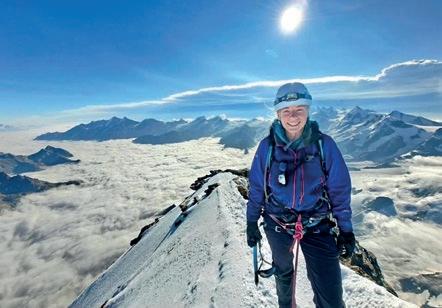
Charlie MacRae-Tod.
Ben Thompson’s recently launched brand, Maison Chanvre.
Hugh and Sophia Wolton.
Alexandra Yorston on the Matterhorn.
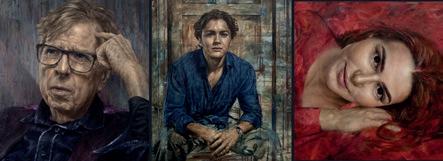
BENEDICT YORSTON (2013, B)
Ned Batstone (2014, H) and I represented Team GB at Real Tennis in the VACL threeway tournament between GB, the USA and Australia. Team GB were triumphant, with Ned and me winning all our respective singles and joint doubles matches.
I continue to run Renewed Learning, an education company I set up with fellow OR and Oxford University peer Ed Newall (2013, G). We have offices in both London and Hong Kong and support students from school admissions through to GCSEs, A levels and university applications. We are also delighted to have partnered with the OX4 Trust for multiple talks and events in recent years.
LUCAS ELY (2014, E)
Artist and actor – I’ve been mentored over the past three years by the worldrenowned artist Jonathan Yeo. My recent sitters include BAFTA-winning actor Timothy Spall OBE and I’m currently painting Anson Boon, star of Guy Ritchie’s MobLand which I was also fortunate to act in. I work in oil paints and I’m accepting commissions for 2026. You can find more about my work and my contact information here: www.lucasely.com
HARRY SALTER (2014, D)
On 2nd July 2025, I embarked on a solo swim across the English Channel, completing it in just over 11 hours. Starting at 4am, I swam through to the afternoon. Weather and sea conditions were favourable overall, despite encountering fog, rain and wind along the way.
JUDE WAKELEY (2015, K)
I have started a production company called Paradime Studios – follow me on Instagram at @paradimestudio.
ALFIE BINNS (2019, E/L)
Since leaving Radley, I have been working on Kleonne, a men’s grooming and
skincare platform that I founded earlier this year. The idea came from noticing how overwhelming the male grooming market can feel, both for customers and for brands trying to stand out. Kleonne is designed to simplify this space by curating products from trusted names and presenting them in a clear, discovery-driven way. We work with companies through commission partnerships and showcase their products with strong visuals, tailored storytelling and data-led insights. Our aim is to create the first platform of its kind dedicated to men’s skincare, grooming and wellness, while also supporting emerging brands in reaching new audiences. Building it from scratch has been both challenging and rewarding, but I am excited by the early momentum, the conversations we are having with leading companies and the partnerships we have already secured. www.kleonne.io
HENRY DAUBENEY (2019, E)
I have just returned from a nearly 700km run – from the Royal Marsden Hospital to Santiago de Compostela – in memory of my late grandmother, Margaret Daubeney.
My beloved grandmother lost her battle with cancer and pulmonary hypertension in December after 10 years. This run was a tribute to her resilience, strength and courage, but also in support of two great charities – The Royal Marsden Cancer Charity, where she was treated, and the Royal Brompton Fountain, of which she was a great supporter. We have raised nearly £8,000 for these exceptional charities, whose work continues to change the lives of so many.
BRAYDEN LEE (2019, D)
It is hard to believe it has been only a year since I left Radley. My time since has been joyfully consumed by the Oxford Union. After breaking some electoral records and becoming top of the governing body, I was humbled to be elected Vice-President this Trinity Term. It is an immense privilege to be elected to this prestigious office in my first year of study, and to help lead a society that has hosted everyone from US Presidents to the late Queen.
Beyond this, I was thrilled to bring Christ Church to victory in the inter-college debating competition and to perform in some summer garden plays. I am not quite sure how I finished the year with a First, but I am extraordinarily grateful to Radley, without which I would never have even imagined going to university, much less any of this. If you know anyone who would be a good fit for an Oxford Union debate or speaker address, please do reach out to me!

Alfie Binns’ recently launched platform, Kleonne.
Artwork by Lucas Ely.
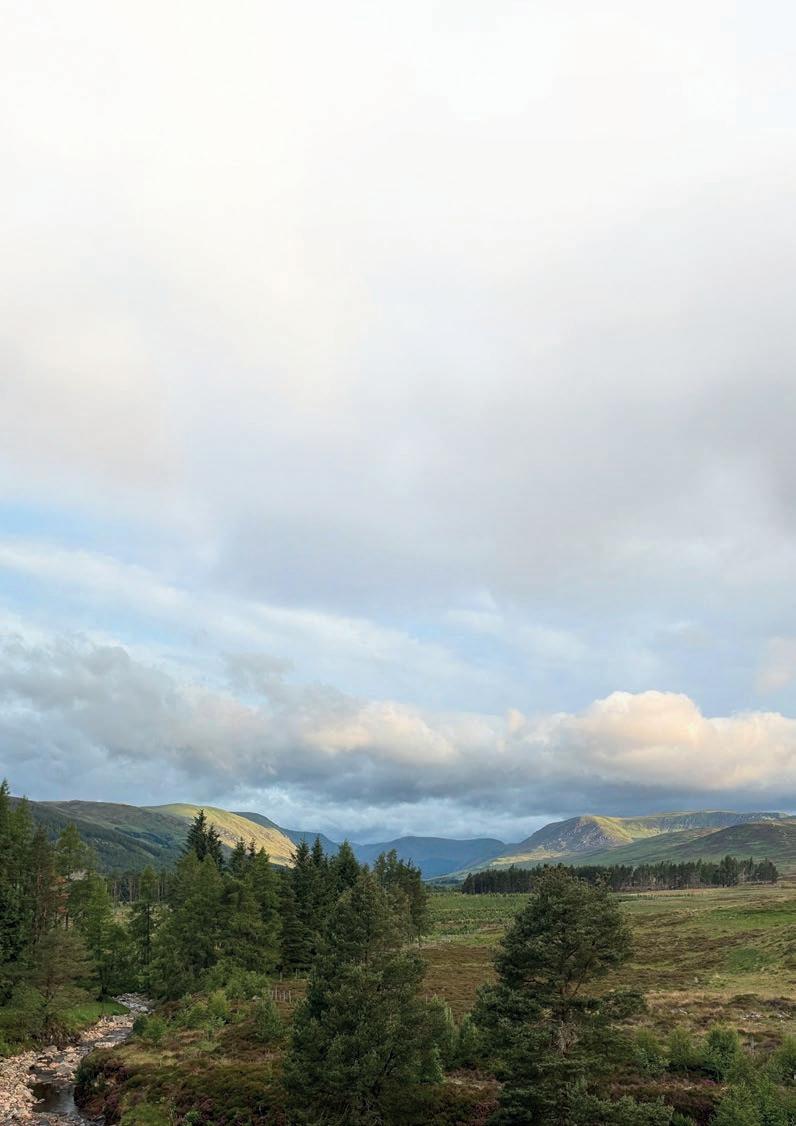
OR LETTERS

Restoring and Regenerating an Estate
I own and manage an upland estate called Rottal in Glen Clova in the Angus Glens in Scotland.
Our focus has been on nature recovery and regenerative farming and creating a holistically managed estate. Alongside some natural regeneration, our first major project was about 12 years ago when we worked with the North & South Esk Rivers Trust to re-meander the Rottal burn, a burn that was canalised about 200 years ago. We increased the length of the watercourse from 600m to 1200m and subsequently the amount of salmon spawning in this stretch of water has increased fivefold. We have also planted over 250,000 trees and restored 120 ha of peatland.
We work with eNGO partners like NatureScot, The Cairngorm National Park Authority (CNPA), Angus Council and the RSPB, as well as a number of other private landholdings to deliver landscape scale changes to the South Esk catchment, and currently we are about to start restoring 45 ha of wetland, re-meandering another burn on the estate, and planting several miles of new hedgerows and some riparian planting along watercourses, through the Nature Restoration Fund. We are also working on a 500 ha native woodland creation scheme.
This ties in with our livestock operation where we have native breed (mainly) Angus cattle that are grazed rotationally and moved into a new paddock each day, not returning to the same paddock for at least three months. This helps naturally fertilise the ground, allow grass to recover quicker, sink deeper roots into the soil to improve aeration, put more carbon back into the soil and retain more water in the ground, thereby reducing flooding. The cattle live outside all year, require no, or limited, purchased feed, and we no longer use artificial fertilisers.
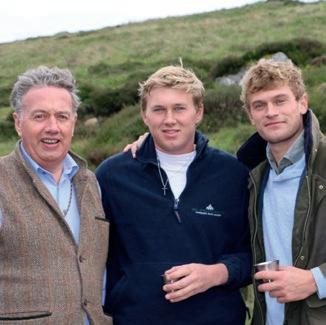
We are trying to demonstrate a model of holistic estate management that is carbon neutral (or even negative) with abundant wildlife, run alongside more traditional, commercial yet sustainable activities like deer stalking, low intensity grouse, pheasant and partridge shooting, events and weddings, and the production of hydroelectricity. We won a bronze Purdey Award for Conservation in 2023, are Wildlife Estates Accredited, and recently featured on BBC Landward (the Scottish equivalent of Country File).
I am currently Chairman of Scottish Land and Estates (a trade body for landowners and land managers in Scotland) and spend a lot of time lobbying the Scottish Government on the benefits of holistic estate management. My son Archie Ward (2015, B) is a partner with me in the business.
We welcome anyone interested in visiting or discussing our work on the estate to take a look at our website (www.rottalestates.com) or Instagram (@rottalestate), and get in touch.
Dee Ward (1978, H)
Dee Ward (1978, H), his son Archie (2015, B) and stepson Jack Brocklehurst (2009, B).
Hugh Cardwell’s Legacy
I understand the theme of this year’s Old Radleian is the natural world. If that includes the natural environment of the Radley Estate then, perhaps, the contribution made by Dr Hugh Cardwell during his time as a don at Radley merits a mention.
Dr Cardwell taught chemistry and was Head of Science during most of his time from the late 1950s to the early 70s. As well as chemistry, Hugh also had a strong interest in botany – in particular, trees. He was very interested in the diversity of the oak species and his impossible ambition was to build up a complete collection of examples. Hence the wide range of oaks in the outer Chestnut Avenue.
Hugh was also very interested in the history of the Radley Estate, in particular the early work on it by Lancelot ‘Capability’ Brown. During his time at Radley, Hugh effectively surveyed and chronicled all the trees on the estate and wrote several interesting articles in The Radleian about College trees. The College Farm, Peachcroft, was another interest Hugh pursued with a contingent of Radleians. This involvement was both with studying the agriculture and with an archaeological dig on the land.
Hugh organised a small band of Radleians as workers in the Forestry Section to carry out his planting schemes. During my time at Radley, our work was largely propagating and planting oak trees in the outer Chestnut Avenue to replace the elms originally planted when the estate was laid out. The elms were, sadly, felled in 1969–70 as a result, firstly, of the decay of old age, and then of elm disease.
Another felling project at around this time was the Dormitory Clump on the front edge of the playing field opposite A Social. This was a mixed stand of five or six large, mature deciduous trees that could also well have been attributed to the aforementioned Mr Brown. Again, they were decaying and becoming dangerous and so had to go. There was some discussion about replacing the clump that may well have now taken place.
Hugh lived in the Cottage where he kept his daughter, Catrona’s, horse and two Great Danes. Most evenings he walked the dogs across the playing fields to Radley Little Wood and back. During my time on the Forestry Section, he bred two litters from the
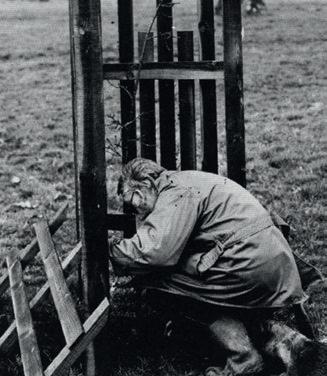
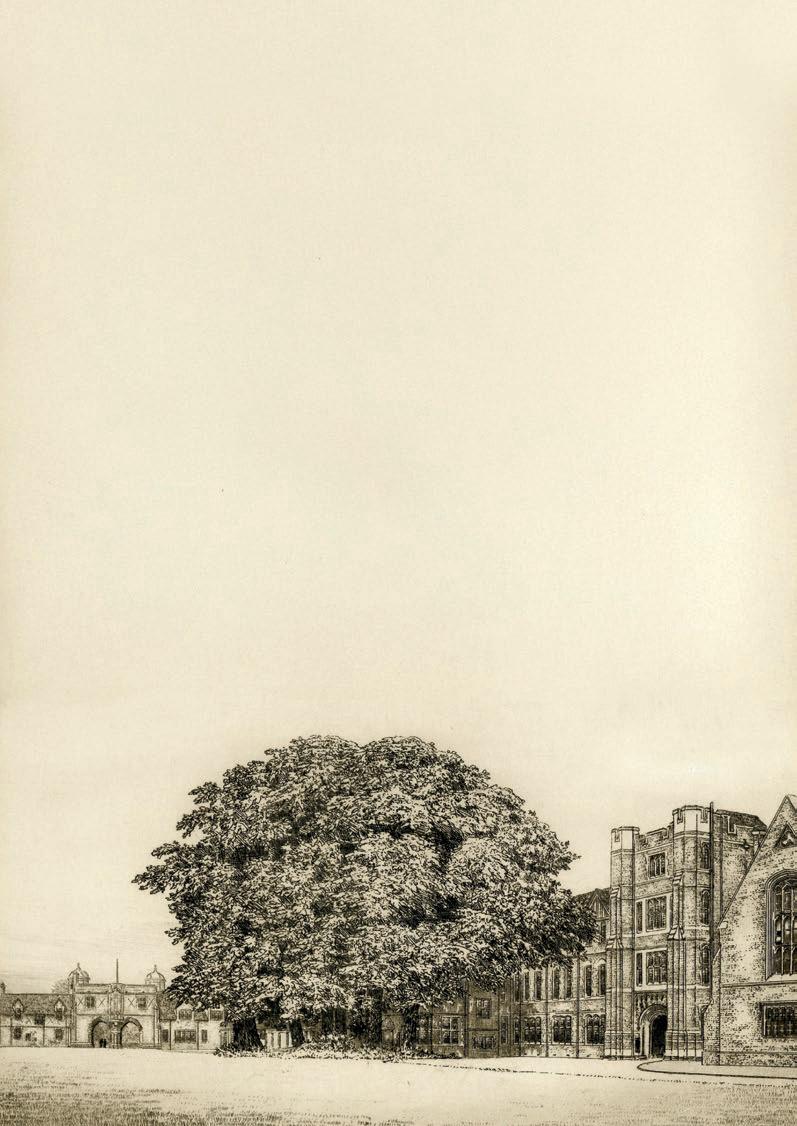
I cannot say Hugh entirely inspired my lifelong interest in trees and the natural environment, but he certainly nurtured it. My family owned a property with a small woodland, so I grew up with tree management in my life. The Radley of my time was not particularly geared up to appreciating the natural environment beyond Radleians being aware of being educated in a special place. With his enthusiasm for all things natural, I suggest, Hugh did inspire many Radleians with his interest in trees and farming.
Tony Dilnot (1969, B)
Great Danes, demonstrating his flair for all things natural. Indeed, in due course he took early retirement from teaching to take on, with his wife, Fiona, a smallholding at Luppit, near Honiton in Devon.
Hugh Cardwell tending to a sapling in the 1970s.
Drawing of Dormitory Clump in the 1920s by C N Coates.

The Great Escape and the Long March
My brother David (1968, H) and I (1975, D) were invited to attend the 80th anniversary commemorations for the Great Escape at the Commonwealth cemetery in Poznan and at Zagan, Poland, site of Stalag Luft III (SL3). These services marked the anniversary of the escape on the 23rd and 24th March 1944. We were invited because our father, Dick Churchill, was one of the 76 RAF officers who escaped through the tunnel ‘Harry’, with his partner Bob Nelson, before being recaptured three and a half days later. He would go on to become the last surviving Great Escaper, until his death in February 2019 in his 100th year.
History in the making Dad had been piloting his Hampden bomber on his 28th night bombing raid when he was shot down over Holland on the night of 2nd September 1940, aged 20. Two of his crew were killed during the attack by a night fighter, he and his navigator managed to bailout of the burning aircraft but only after he struggled to open the canopy breaking his ankle and losing his boots in the process, followed by a very brief parachute descent to the ground which also resulted in him bursting an eardrum. He crawled to a village seeking shelter. By morning German soldiers were pointing guns at him – the farmer had alerted the authorities.
His first internment was at Stalag Luft I near Barth in northeastern Germany. In 1942 he was transferred to the newly built SL3, then home to some 500 RAF personnel. By the end of the war the camp held over 10,000 POWs.
In 1944 he was involved in the Wooden Horse escape, where Williams, Codner and Philpot (Oliver Philpot (1927, E)) dug a tunnel beneath a gym vaulting horse carried back and forth daily. All three made ‘home runs’. Dick Churchill was one of the carriers and joked with Philpot that, if successful, he would owe him a very large drink at a postwar Henley Regatta. They both survived – and Philpot duly provided the drinks when they met again at the first postwar Henley. On that occasion Dick lost his Rolex watch, one of those famously offered to POWs by Hans Wilsdorf of Rolex.
On 24th March 1944, 76 prisoners escaped from ‘Harry’, one of three tunnels dug at SL3, a supposedly escape-proof POW camp. Of those 76, only three made a ‘home run’. Fifty were murdered by the Gestapo on Hitler’s direct orders; 23, including my father, were returned to POW camps. The event became known as ‘The Great Escape’, immortalised in the 1963 Hollywood film – even though no Americans were involved in the actual escape.
Squadron Leader Richard ‘Dick’ Churchill was one of the ‘lucky’ 23. He believed he and Bob Nelson escaped execution because of their surnames – the Germans either feared reprisals or saw them as potential bargaining chips. Although unrelated to Winston Churchill, he was periodically interrogated about any connection, a question he consistently refused to answer. After weeks in Gestapo prison, he was returned to SL3.
In January 1945, as the Russians advanced, around 80,000 POWs were forced to march hundreds of miles west. Known as the Long March, it took place during the worst European winter in 50 years. Many prisoners and guards perished from exhaustion, cold, malnutrition, and from Allied aircraft strafing columns they mistook for German troops. The Long March stands as a testament to the cruelty of war and the indomitable spirit of those who survived. Dick Churchill endured both the Great Escape and the Long March – a remarkable story, like so many that remain little known.
Commemorating their journey
Together with Stuart Green, son of another SL3 POW, we organised a commemorative cycle ride retracing, as closely as possible, the route the POWs took on the Long March, and honouring my father’s part in the Great Escape.
We began on 5th May 2025 at the site of SL3 in Poland, covering 303 km through countryside, small towns and historic sites, reaching the Neue Wache Memorial in Berlin – which commemorates all victims of war and tyranny – on 8th May 2025, VE Day’s 80th anniversary. Our team included RAF veterans, friends and relatives of POWs, riding together as a symbol of unity and remembrance.
The ride was a powerful act of tribute. In contributing, individuals and organisations honoured the past while supporting those who have served, ensuring that their history is not forgotten.
Roger Churchill (1975, D)


If you would like to support the charity cycle ride directly, please visit Long March 80th Anniversary Charity Cycle Ride – GiveWheel, where you can also find route details and the daily updates. https://bit.ly/49lakNh
We have two further commemorative events planned: a dinner at RAF Halton later in 2025, including an auction featuring ‘money can’t buy’ items, and another at the RAF Club in Green Park, London, in March 2026. The RAF Club evening will include the first and probably only edited public showing of Squadron Leader Dick Churchill’s last interview with Robert Hall (1967, E), who will also compere the night. This event will be limited to 100 people and publicised through specific channels. https://bit.ly/4oFIQ9t
All
monies raised will be donated to the nominated charities for each event.
Flt Lt Richard 'Dick' Churchill.
Sketch of Richard Churchill by Henri Picard.
The Long March Remembered
Dear Editor,
In late January 2025, I travelled to Poland and the site of Stalag Luft III, one of the main Luftwaffe camps for Allied aircrew, prisoners of war. My interest in this was formed while I was at Radley, when I wrote a 6.1 project on my great uncle who was a prisoner in Stalag Luft III. This has stimulated over 35 years of research, with a tome that now runs to about 1000 pages.
I set out to Poland to take part in a recreation of The Long March of 1945. This was when around 80,000 POWs (10,000 from Stalag Luft III) were force marched by the Germans, away from the advancing Soviet army. A group of thirty relatives of original POWs gathered from the UK, United States and Australia. We each came with individual stories to share, but all with a common goal of honouring our own relatives and all those who endured The Long March in 1945.
The original marchers were given little time to prepare, and they had no idea where they were going. Europe was in the midst of one of the coldest ever recorded winters. They set out into the unknown in a minus 20 °C blizzard. They had to carry all their worldly possessions in homemade bags or on sledges made out of their bunk beds. Many of these did not withstand the conditions, which meant that treasured possessions, clothing and food were dumped by the side of the road.
Over three days, the prisoners trudged into the unknown. If they were lucky, they sought refuge in churches, barns, factories and stables along the route. Many slept in the open or just walked for hour on hour. They either wore inadequate shoes, or flying boots that were loose and gave them blisters. Frostbite and dysentery were rife. Many had endured years as a prisoner on minimal rations and were unprepared for such an ordeal. Their guards were in a similar situation, many being either older, or unfit to fight having been injured on the Eastern Front. The relationship between the prisoners and guards was good, and there are instances where prisoners actually carried their guards’ packs and rifles voluntarily.
After a tour of the ruins of the camp and the museum near the town of Zagan, where we were able to find the places where our relatives lived, I was able to use my ability as a Royal British Legion Standard Bearer to perform the Act of Homage at the entrance to tunnel ‘Harry’ from The Great Escape. I also did the same at the original burial site of Lt John Kiddell RN, from my home village, who was ‘shot while trying to escape’ in 1943. In reality, this was a successful suicide bid, as he was suffering from PTSD. I also took the opportunity to place a memorial cross in memory of Oliver Philpot (1927, E) who was one of the three successful ‘home run’ escapers in The Wooden Horse Escape of 1943.
The following morning, we were joined by a group of 250 US Army personnel who were to march with us. Along the route, which followed the same route of 1945, we were able to swap stories and gain blisters. The whole group was cocooned in a bubble, protected by Polish police and led by a contingent from the Polish army. We stopped at some of the locations that the POWs also visited where we were fed and watered. We were also entertained by a group of Polish ladies, equivalent to the WI, who sang and provided us with copious mugs of mulled wine which helped the aching legs.
Having marched 20 miles on the first day, the second was 23
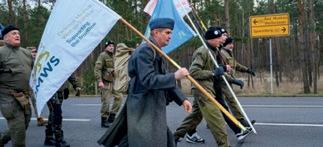
miles, however much of this was on the original cobbled roads of 1945. This certainly added to the discomfort, and for myself I had also decided to walk the entire route while carrying the flag of the DMWS on an 8ft ceremonial flagpole made of oak and brass.
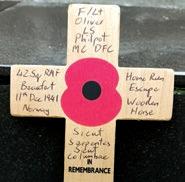
Remembrance cross for Oliver Philpot (1927, E)
The St John and Red Cross Defence Medical Welfare Service is the organisation that provided POWs with food and clothing parcels during their incarceration. Many POWs said that without these they would have died of malnutrition. The DMWS continues their work today by supporting serving and ex forces personnel, their families, police officers, and NHS workers with welfare support. By carrying this flag I aimed to raise funds for them, but also to highlight their work. More details can be found at https://dmws.org.uk/ I also walked while wearing a 1950s Danish winter greatcoat, similar to those worn by the POWs.
At the end of the second day, we approached Bad Muskau and crossed into Germany where we were met by a local community group who thrust a sausage into one hand and a beer into the other. Simply the best beer and sausage I have ever tasted!
The final day was only 17 miles, as we walked from Bad Muskau to Spremberg where the POWs were put onto cattle trucks to be sent further into Germany. Along the route I spotted a WWI German war memorial, dropped out of the column, and did what any Standard Bearer would do: perform the Act of Homage. As I finished, a retired East German Paratrooper ran up, patted me on the back and said “Good lad. Thank you”. Later that day, at a water stop, the German paratroopers who were leading the column insisted that I march alongside them. This was a very generous act of camaraderie and friendship. Fortunately, their English was far better than my German. For the last six miles I had a personal guided tour of everything we saw, including all their schoolfriends who were waving by the side of the road.
The whole column of 280 stopped 1 km from the end of the march, and my new German friends insisted that I lead the whole procession by myself at the front. This was an incredible honour, and one I will never forget.
James Castle (1984, D)
James Castle approaching Spremberg.
Radley Rowers in Canada, 1967
It was with sadness that I read Martin Kennard’s obituary in the 2024 issue of The Old Radleian, and particularly Jock Mullard’s contribution. It brought back memories of 1967: I was living in Montreal, Canada, and was a member of a local rowing club. As part of Canada’s Centenary Celebrations, the North American Rowing Championships were to be held on the Canadian Henley course at St. Catherines, Ontario, and my club was asked to lend some boats for visiting teams. I was designated as the driver of the trailer there and back, so I got to enjoy the races.
The Great Britain team was in fact the Oxford eight from that year’s Boat Race, and I quickly discovered that there were no less than three Old Radleians in the crew! Jock Mullard (1958, B), Martin Kennard (1959, G) and Christopher Blackwall (1958, B). Dan Topolski (Westminster and then New College, Oxford) was also a memorable member of that Blue boat.
I asked the crew what they were planning on doing after the regatta and they said “Going to Montreal for Expo 67!” I replied that I couldn’t put them all up but I could have the whole crew
for dinner! The next week they duly arrived on our doorstep on Grosvenor Avenue in Westmount and sat down to a hearty meal including a whole ham with lashings of scalloped potatoes. My wife and I said we had never seen so much food disappear so quickly!
Also, in last year’s edition of The Old Radleian was Michael Bawtree’s (1951, G) obituary, who died in Wolfville, Nova Scotia. I had stayed in touch with Michael and have a copy of his first memoir As Far as I Remember, which recounts his time at Radley. I was part of the Marionette Society when Michael and Peter Cook (1951, C) collaborated on the musical Black and White Blues. Somewhere I may still have the record but nothing to play it on!
Such memories.
Rod de Courcy-Ireland (1951, H – Way’s Social)
Black and White Blues is available at www.radleyarchives.co.uk.
The Oxford 1967 crew in Dan Topolski’s Mini Moke. Standing L-R: Jock Mullard (1958, B), Josh Jensen, Christopher Blackwall (1958, B), Martin Kennard (1959, G), Chris Freeman, and seated L-R: Peter Miller, John Bockstoce, Dan Topolski and Peter Saltmarsh.
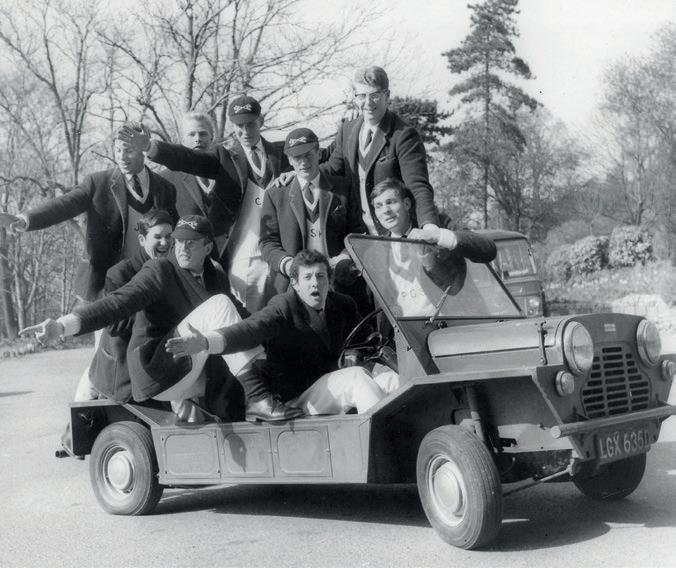
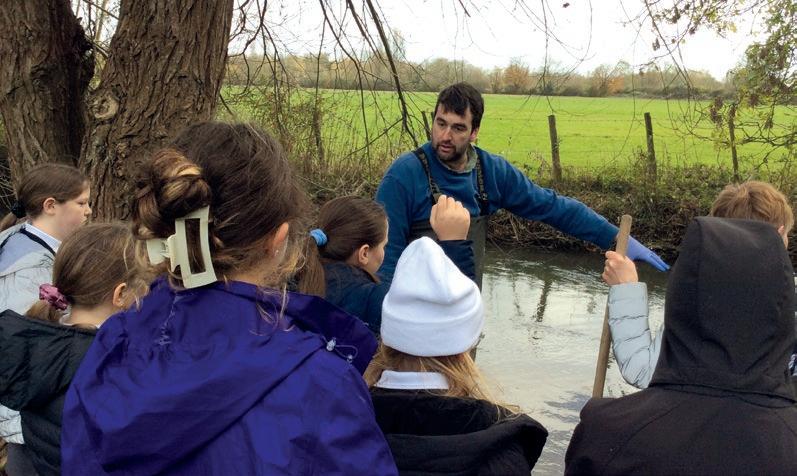
Jack teaching a local school how to kick sample to test (with nets) for invertebrates.

The Cotswolds Rivers Trust: Working with Water
After one of the driest summers in decades, soils across large swathes of the country have been left cracked, hardened, and compacted. When the first heavy rains of autumn and winter arrive, instead of soaking in, much of this water will rush straight off the land, raising the risk of flash floods downstream. With climate change driving longer, more extreme weather patterns, the pressure to adapt is no longer a distant challenge – it is a present and pressing necessity, from protecting our food security to safeguarding communities.
As part of the wider Rivers Trust movement, the Cotswolds Rivers Trust is working with landowners to tackle these risks at their source. By holding more water higher up the catchment, we can reduce the destructive force of peak flows downstream. Using
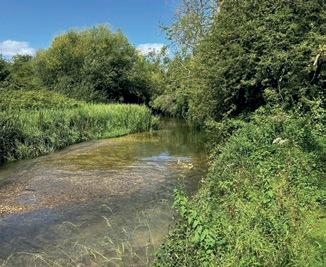
nature-based solutions such as leaky woody dams, field bunds, margins, re-meandering watercourses, and creating attenuation ponds, we are building a network of natural defences. Individually these measures may be modest, but together they deliver a transformative impact at a catchment scale.
Work is already underway across many tributaries of the upper Thames. In the Windrush catchment, a floodplain meadow restoration project is bolstering soils to act like healthy sponges, storing many times more water than intensive grassland or arable land. In the Evenlode, floodplain reconnection projects are slowing and filtering the water as it spreads unimpeded across the valley floor. Added to this is the exciting Evenlode Landscape Recovery project, which is bringing in millions of pounds of public and private investment – funding both the capital works and the longterm stewardship needed to maintain them.
Farming faces an uncertain future, but the growing interest in nature-based solutions is opening new opportunities for sustainable income streams. Public and private finance is increasingly rewarding farmers for working with water, not against it.
In the Cotswolds, many landowners are already stepping up – farming regeneratively, setting aside less productive land to build resilience, holding water upstream to protect communities, and creating and managing wetlands that restore habitats for vulnerable species. Our project list is growing, and with it we are actively seeking new partners, collaborations, and funding – so together we can build a more resilient landscape and a healthier Thames basin.
Jack Knott (2001, H)
A gravel riffle on the River Coln near Fairford.
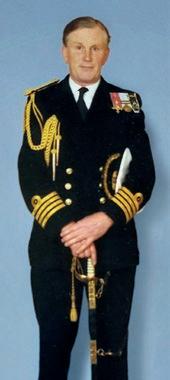
The Value of National Service
Dear Editor, I was invited to write this letter because of my experience of National Service, followed by 27 years in the Royal Naval Reserve, rising through every rank to Captain. It is an unusual path and may be of interest to some Old Radleians.
With increasing concern over the UK’s shrinking military numbers – the combined Reserves now total just 32,850, compared to Finland’s 1.9 million – some have suggested reviving National Service and strengthening the Reserves. My own story offers one example of what National Service can achieve.
In the current climate of global conflict, and particularly the threat from Russia, it seems timely to reflect on how National Service once worked, and how it might do so again today.
1948–1953: My time at Radley Amongst my studies, I became a wet-bob and joined the CCF Naval Section. I enjoyed building planked ships with Mr St John Ellis in the Art Department, visited the Royal Naval College at Greenwich, and was invited to join the Society for Nautical Research.
1953–1955: National Service, Korean War Initially I served aboard HMS Implacable (aircraft carrier), astern of HMS Vanguard when she fired her last broadside. I was promoted to Midshipman and transferred to HMS Perseus (RN freighter), sailing via the Mediterranean to Singapore, and later to HMS St Brides Bay in Hong Kong.
We spent our first week working up, including putting a practice bomb into the conning tower of a New Zealand submarine. We then sailed for Japan and Korea. Our squadron’s duty was to prevent the Chinese from retaking two islands just off the mainland – Yeonpyeongdo and Penyongdo – patrolling the channel between the islands and the mainland.
I was given an Action Station as No. 2 loader on the port forrard 4-inch gun. This meant lifting a full 4-inch shell and standing close to the gun, ready to thrust the shell in as soon as the breech dropped from the previous round. It was hard work, especially during long Action Stations. We were not fired on, but several ships in our squadron were, and lost men.
I was rewarded by C-in-C Far East Admiral Lambe with a transfer to HMS Morecambe Bay, which was returning to the UK east-
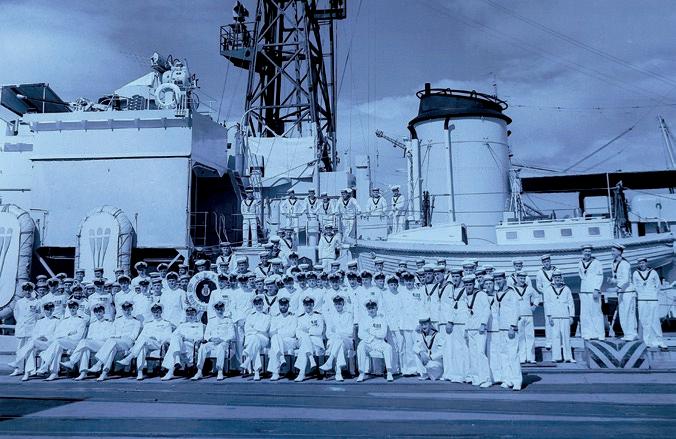
Ships Company HMS Morecambe Bay, Pearl Harbor.
Captain Robert Eddleston ADC to HM The Queen, OBE, RD, FSNR.
Conditions during and after an Atlantic hurricane, 1955.
about, “showing the Flag” in Pearl Harbor, San Francisco, and all major ports to the Panama Canal, including Mexico.
We entered Pearl Harbor with a full guard to honour the USS Arizona, now the memorial to the men killed in the 1941 attack. We then sailed for Kealakekua Bay, where Captain Cook was killed, and repaired his memorial.
Nearby, we saw a dirty old merchant ship at anchor. From it emerged a large motorboat, and five minutes later John Wayne, Lex Barker, Lana Turner and Tab Hunter strode up our gangplank. John Wayne said he had tasted every strong liquor in the world but never British naval rum, and asked for a tot. The coxswain brought three double tots (⅛ pint each). John downed his in one swig, then Lex Barker’s as well, before moving on to whisky. He then entertained the whole ship’s company on the beach for the next two nights.
We passed through the Panama Canal to the West Indies, going ashore in Barbados and Jamaica, before sailing for Portsmouth. En route, we were caught in a major Atlantic hurricane. Our captain decided it was too dangerous to turn across the waves, and we were stuck in it for three days. Our navigating officer calculated waves at 120 feet. On the second day, the funnel deck between the funnels and after guns split open by eight inches. On arrival in Portsmouth, the dockyard said that had we been in an American-built ship we would have sunk – but as Morecambe Bay was riveted, her hull had enough flexibility to survive. American ships, being welded, had none.
annual two-week periods at sea, working up minesweeper crews and training towards command.
Two standouts:
1963 – A two-week deep-water trial in the Mediterranean with three sweepers. When the Turks attacked Cyprus, we felt our three 40 mm Bofors and twelve 20 mm Oerlikons were no match for the Turkish Air Force and were ordered to return to Gibraltar.
1975 – I was appointed MCM10 for a NATO exercise, taking command of the 10th Minesweeping Squadron (increased to 15 ships). We were tasked with clearing the English Channel in wartime conditions. The first week went well, but by the final days dense fog made it dangerous to sail with sweeps out. Despite protest from the Staff Officer of Flag Officer Plymouth, I refused to sail that night. Weeks later, Flag Officer Plymouth summoned me – but instead of reprimanding me, said he fully agreed with my decision and that his staff were out of order. Soon after, I was promoted to Captain RNR and Captain Sea Training, overseeing 40–45 crews while also working full-time in textiles and being a husband and father.
1979 – I was appointed ADC to the Queen and made OBE.

I hope the above account shows that in time of war 15 ships and 500 men, who have trained as Reservists alongside a full peacetime job, can move effectively from peacetime to wartime. This is something which could be of great service to the Nation and could be attractive to many Old Radleians.
1955–1982 HMS Eaglet, Liverpool I was then appointed to HMS Eaglet, Mersey Division RNR, where I remained until the end of my time in the RNR. I spent many weekends and
It has not been possible to fit the full story into this letter, but Radley has copies of the full story, and I would be prepared to talk to anyone interested: 01254 822193.
Robert Michael Eddleston (1948, E)
Midshipman Eddleston, 1953.
God and History in the Early Medieval West: The Theology of Carolingian Historians
Author: Bob Evans (Chaplain and don)
Publisher: Oxford University Press
Bob Evans, Radley’s Senior Chaplain and teacher of history and theology, has written a new book, God and History in the Early Medieval West: The Theology of Carolingian Historians, published by Oxford University Press this August.
The work discusses “how historians in early medieval societies thought about God and what this meant for themselves and their audiences.” Evans commented, “OUP are one of the best academic publishers in the world (especially for history) and rarely publish work by those who are not full-time academics, so as you can appreciate, I’m quite chuffed!”
R.C. Hutchinson: The Man and His Writing
Author: Barry Webb (Hon Member)
Publisher: Lutterworth Press
In R.C. Hutchinson, Barry Webb reclaims the legacy of a highly acclaimed, yet often forgotten writer. Despite having been awarded the Sunday Times Gold Medal for Fiction, the W H Smith Award for the best novelist of the year, being shortlisted for the Booker Prize, and several of his 17 novels becoming bestsellers in the UK and America, Hutchinson has not withstood the test of time compared to his contemporaries. Combining Hutchinson’s own reflections with insightful critical analysis, Webb traces Hutchinson’s thoughtful, observational life alongside his extraordinary literary output. He draws out how Hutchinson’s firmly held Christian beliefs allowed him to eschew didacticism for nuanced reflections on the nature of human suffering.
Part biography, part critical study, R.C. Hutchinson sheds light on this influential and gifted writer, contextualising his work and highlighting his genius. He was described by Sebastian Faulks as a novelist “on the grand scale” and “a mid-century master of the genre,” and by Cecil Day-Lewis as “one of the very few living novelists who will be read fifty, even a hundred, years hence.” Webb offers readers the opportunity to rediscover this exceptional writer. The book is co-dedicated to the memory of Peter Way.
Operation Pimento: My Great Grandfather’s Great Escape
Author: Adam Hart, great-grandson of OR Frank Griffiths (1926, E)
Publisher: Hodder and Stoughton
Operation Pimento tells the story of RAF pilot Frank Griffiths’ extraordinary escape from Europe after he was shot down on a secret mission delivering supplies to the French Resistance. Frank, an Old Radleian (1923–1928), was the only survivor when his Halifax was brought down by small-arms fire near Annecy. Wounded and alone, he spent the next 108 days escaping through France, Switzerland, and Spain.
In 2022, Frank’s great-grandson Adam Hart retraced his escape, meeting descendants of those who had saved Frank. Operation Pimento is not only a riveting true story, but also a vivid account of one young man’s journey to discover more about a hero he had never met, but always knew.

Fantastic Four: The Coming of Galactus
Author: James Lovegrove (1979, C)
Publisher: Titan Books
The superhero quartet – more a family than a team – must confront the godlike might of Galactus, who plans to consume Earth to appease his never-ending hunger for energy. But first they must face the unimaginable power of his spacefaring herald, the Silver Surfer. This novel reimagines the classic Marvel storyline of the 1960s and is published to coincide with the release of Fantastic Four: First Steps. In the words of the publisher: “A pulse-pounding apocalyptic tale based on the work of Stan Lee and Jack Kirby. Perfect for fans of Marvel comics.”
The Ends
Author: Tom Shakespeare (1979, D)
Publisher: Farrago
Fred and his friends find themselves on an Arctic cruise, accompanied by Scrabble-playing aunts, a bearded eco-warrior, an oil-man, and at least one imposter. But will Nature prevail? Who is in danger of being arrested? And what exactly is going on in the sauna? It can only be the sequel to The Ha-ha – but it also works as a standalone book, filled with laughs and a timely message. If you haven’t y met Fred, the wheelchair-using protagonist, now’s your chance to visit a glacier alongside him.
Driven by Demons: Bipolar Olympian
Author: Tim Crooks (1962, F)
Publisher: Austin Macauley Publishers
This is the remarkable story of a young man battling intense mood swings, who turns to physical risk and his exceptional talent for rowing and sculling to keep depression at bay. For years, he struggles without understanding the true nature of his condition.
His journey is at times amusing, at times desperate, but always deeply human. As he carves out a name for himself in the world of amateur rowing, his unpredictable and often outrageous behaviour unsettles his crewmates. Yet, despite the chaos, he achieves extraordinary triumphs – competing in five World Rowing Championships, two Olympic Games, and winning seven Henley Regatta titles, including the prestigious Diamond Sculls.
But the same challenges that once saved him eventually lead to his downfall. At his lowest point, when he feels as though he has lost everything, his long search for stability truly begins.
Always Remember: The Boy, the Mole, the Fox, the Horse and the Storm
Author: Charlie Mackesy (1976, E)
Publisher: Ebury Press
‘One day you’ll look back and realise how hard it was, and just how well you did.’
Charlie Mackesy’s four unlikely friends are once again wandering through the wilds. They’re not sure what they are looking for, only that life can be difficult, that they love each other, and that cake is often the answer. When the dark clouds gather, can the boy remember what he needs to get through the storm? The hugely anticipated new book from Charlie Mackesy revisits the much-loved world of The Boy, the Mole, the Fox and the Horse
The Real Housewives of St George’s Hill
Author: Roderick Archer (1963, G)
Publisher: Pegasus Publishers
The Real Housewives of St George’s Hill takes readers into the lives of three fascinating women living in a lavish, exclusive community. Mitzi Sampson, bold and outspoken, struggles to balance her past and present while seeking love and excitement. Monika Lederer, a sharp-witted barrister, juggles a demanding career with her family’s ambitions. Meanwhile, Annie Pocock, a glamorous make-up artist, hides secrets that could turn her world upside down.
Surrounded by wealth and privilege, their lives are anything but perfect. Scandals take root at the tennis club, rumours of affairs circulate over tea, and private struggles unfold behind the walls of their grand homes. As they face challenges in love, friendship, and family, their choices reveal the truth about life in the hills.
Filled with drama, humour, and heartfelt moments, Roderick Archer’s The Real Housewives of St George’s Hill is a captivating story of ambition, betrayal, and finding where you truly belong.
The Lady in the Park
Author: David Reynolds (1962, F)
Publisher: Muswell Press
Three years ago, DCI Jim Domino caught a serial killer, but was suspended from the Met for failing to follow correct procedure when interviewing the man. Now the Met wants Jim to return, but he’s content running a private detective agency in Peckham, where he lives and employs four other detectives. When a popular mother of six is found unconscious on an outdoor ping-pong table in a local park, Jim investigates, aided by his colleagues: feisty Kylie Jones; martial arts instructor Clayton Ginevra; computer geek Stefan Popkiewicz; and the superficially dull but hard-working McCormick. Jim’s six-yearold grandson, Danny, also helps occasionally, pointing out things his grandfather has missed. The search for the villain leads Jim and his crew into a maelstrom of drug dealing, people trafficking, and organised crime. Behind the intriguing plot, The Lady in the Park is a story about love, grief, childhood, and the good in most people.

The Madman’s Orchestra: The Greatest Curiosities From the History of Music
Author: Edward Brooke-Hitching (1996, A)
Publisher: Simon and Schuster
Which composition requires four helicopters and a string quartet with strong stomachs to play it correctly? When should you feed your piano hay? What does the ‘cat organ’ sound like – and is it any more pleasing to the ear than the ‘hog harmonium’? Discover the secret code-writing of musical cryptography, the beauty of Renaissance ‘eye music’, musical hoaxes, lost masterpieces, fire organs and witches’ flutes, compositions by the Devil, the woman who invented the ‘visible voice’, and even the symphony designed to bring about the Apocalypse. Fascinating, funny, and at times barely believable, the abundantly illustrated The Madman’s Orchestra is a unique compendium, brimming with curious stories, entertaining facts, and playlists of obscure music that will thrill and delight every music lover.
Strongholds of Satan: A survey of the
bygone racecourses of
Britain (volume four)
Author: William Morgan (1972, C)
Publisher: Mainholm Press
The fourth volume examines the history of old courses in the north of England and Scotland. As with the others in the series, the courses are arranged by county, with over 840 historic maps and images alongside aerial photos of the landscapes today. Once again a large book in both scope and physical dimensions, readers are sure to discover many fascinating anecdotes and nuggets of information in its meticulously researched pages. It serves as much as a social history of Britain at play – when racing was the national sport and these fixtures were local holidays, with all the drinking, gambling, and consequences that entailed – as it does a history of the courses themselves.
Even More Harvesting
Author: Mark Floyer (Hon Member)
Publisher: Cyberwit Press
Even More Harvesting is a hybrid collection of essays ranging across topics from literature to cricket to memoir. A lifetime spent in the classroom as a poetrywriting English teacher and amateur cricketer has prompted reflections on the value of Shakespeare to a teacher, travels through New England culture, mental health, parenting, keeping a poetry-composition habit alive, the joys of geriatric cricket, and overlooked icons such as Malcolm Lowry and Alan Ross.
Pine Martens
Author: Johnny Birks (1969, E)
Publisher: Whittet Books Ltd
This acclaimed book delivers comprehensive information on pine martens in a light-hearted style. Through a quirky blend of science and humour, we are led from the species’ history in Britain and Ireland towards a cautiously optimistic concluding chapter. We learn about the pine marten’s relatives (including the troublesome stone marten that destroys car components in Continental Europe), delve into its ecology and behaviour, and explore its interactions with humans and its emerging role in grey squirrel control.
Drawing on three decades of involvement with this charming woodland mammal, Johnny Birks provides insights into the challenges of studying and conserving pine martens across their Eurasian range: from designing den boxes for breeding females, to scat surveys and the secrets they reveal, to the hope offered by recovery projects supported by reintroductions. The book is enriched by Antony Griffiths’ cheeky cartoons and Terry Whittaker’s remarkable photographs.

Boys Don’t Cry: The A-Z of everything we need to talk about
Author: Jamie Laing (2002, B)
Publisher: Bloomsbury Publishing
Jamie Laing is still figuring it all out. And now that he’s going to be a dad, he wants the tools to help his child grow into a happy, thoughtful and kind person. This handbook is the one Jamie has put together for that purpose. In a world struggling to find genuine connection, he shares his experiences of life, relationships and maturing. His personal A–Z of growing up in today’s society covers everything from overcoming anxiety, checking in with your mates and working out what makes you happy, to embracing failure, trying therapy and understanding what it means to be a loving, present partner. Above all, Jamie shows us that vulnerability is cool – and that boys do cry, as he has discovered plenty of times this year.
With contributions from his wife Sophie Habboo, this book will help men and women, boys and girls, have the conversation of all conversations: how to be happy in today’s world.
365 Amazing True Things to Read in Bed
Author: Edward Brooke-Hitching (1996, A)
Publisher: Words & Pictures (Quarto)
Where does it rain diamonds? What does a comet smell like? And who exactly was William Johnson Hippopotamus? Discover an amazing fact for every day of the year – from trees turning to glass and the world’s longest sausage to lawn-mowing camels and glow-in-the-dark humans! This beautifully illustrated bedside companion offers 365 incredible facts, anecdotes, and true stories to enjoy before bed. Drift off with dreams full of adventure, and wake up inspired to make your own.
Do You Want Sprinkles With That?
Author: Alex Barry (1976, B)
Publisher: Independently
Published
Alex Barry is an architect/poet, happy to be living and working in the beautiful city of Bristol, birthplace of the celebrated poets Robert Southey and Thomas Chatterton. His mother spent a lifetime trying to instil in the family an appreciation of poetry, but her attempts were invariably met with groans and disappearing siblings. His scientist father claimed that poetry “hurt his brain”; however, he did approve of Edward Lear (“the only poet he could understand”) and his nonsense poetry, which may explain the nonsense Alex enjoys writing. Alex’s book is available for £12 – email him at alexmbarry@hotmail.co.uk.
ME/CFS and Long Covid: Diagnosis and management of chronic fatigue syndromes
Author: Gavin Spickett (1969, E)
Publisher: Oxford University Press
Chronic fatigue syndromes are extremely common, and it is important that frontline healthcare staff have access to authoritative information to guide their interactions with patients.
Current research clearly indicates that ME/ CFS and Long Covid are chronic medical conditions caused by inflammation in the brain consequent upon infection, rather than depression, psychological illness, or malingering. The latest findings, derived from studies on Long Covid and now applied to ME/CFS, confirm that these illnesses have a clear underlying pathology and are not purely psychiatric or psychological. This is leading to potential new research-based treatments.
This useful and clearly organised book discusses extensive differential diagnoses to ensure that other treatable diseases presenting as chronic fatigue are identified and managed. Research-based therapies are reviewed so that healthcare professionals can provide better guidance on management, including evidence (or lack thereof) to support alternative therapies.
The Masked Band
Author: Bernard O’Keeffe (Hon Mem) Publisher: Muswell Press
Mick Jagger. Bob Dylan. Paul McCartney. David Bowie. Debbie Harry. They call themselves The Okay Boomers – and it’s quite some band. And it’s quite incredible to see them playing the Bull’s Head in Barnes on a Sunday night. But all is not as it seems. Behind life-like masks are five local celebrities. They’re playing for fun and trying to keep their identities hidden, but when the body of a man is found at one of their houses, their secret’s out. DI Garibaldi is on the case and soon asking a few questions. Did the dead man fall from the first-floor window, or was he pushed? Why was he wearing the Mick Jagger mask? And why have all the other masks disappeared? When members of the Okay Boomers are attacked by someone wearing those very masks, Garibaldi’s investigation closes in on each of the celebrities – and he wonders what else they’ve been hiding. This is the fourth novel in a series featuring DI Garibaldi. For information about the series, visit bernardokeeffe.com.

Near Miss
Author: Nick Johnson (1982, B)
Publisher: Independently Published
There’s always a back door – if you’re patient enough, if you’re smart enough, if you pay enough.
Tom Carter is a principled but jaded ex-banker, still blaming himself for the accidental death of his wife. When Tom is brought in to investigate the murder of a CEO, he follows the trail from the trading floors of London to Hong Kong, only to uncover a crime on a scale he never imagined – and he finds himself in the wrong place at the wrong time …
Near Miss, a thriller set in the financial world, is perfect for lovers of thrillers, crime, and mystery.

The Hooded Man
Author: Charles Searle (1970, F)
Publisher: The Book Guild Ltd
France, 1937. The nation is torn between left and right, as the Cagoule – a secretive terrorist group inspired by the Ku Klux Klan – plots to overthrow the Republic. Only one man stands in their way. Antoine, a devout Catholic and war hero, despises communists and pacifists, whom he blames for his brother’s death during the army mutinies of 1917. When the French secret service blackmails him over his role in suppressing the mutiny, he is forced into the shadowy world of espionage.
From colonial Indochina to the heart of France, Antoine risks everything to defend the Republic from threats on both extremes. Betrayed by his handlers and constantly under threat of exposure, he leads a life of danger and doubt. His deep-rooted patriotism remains, but as the lines between duty and morality blur, he begins to question what it truly means.
Electric Vehicle Technologies: Renewable energy for the road
Author: John Samuel (1957, F)
Publisher: The Institution of Engineering and Technology
From the first all-electric cars to the latest advances in battery storage and rapid charging, Electric Vehicle Technologies charts the evolution of EVs past, present, and future. Drawing on decades of experience, the authors –Sir John Samuel, a pioneer of hybrid and electric vehicle design since the 1970s, and Pete James, a leading technical specialist in EV drive systems – combine technical insight with commercial perspective to illuminate one of the fastest-growing industries of our age.
The book explores the early challenges of EV design, the transformative role of lithium-ion batteries, and today’s state-of-the-art technology, with case studies on Tesla, Formula E, and China’s policy-driven growth. Looking ahead, it examines fuel cell innovation, the hydrogen economy, and even speculative futures such as fusion energy. A timely and authoritative guide, this is an essential read for anyone interested in the technologies shaping sustainable transport.
espresso 2
Author: Orlando Kimber (1971, G)
Publisher: Arthur & Moose (A&M) Publishing
We travel through such interesting times.
We all want happiness, and most of us recognise that a successful society depends on communication, trust and co-operation. We’re in this together, and we feel this in every community we belong to – whether it’s a family, a village, a sports team or a workplace. Failure to honour this ethos results in tension, unhappiness, poor communication and inefficiency.
espresso 2 focuses on how the Golden Rule applies across five domains: ourselves, our culture, work, society and politics. Each piece can be read in the time it takes to drink a cup of coffee.
“A treasure trove of erudite, eccentric, nourishing and highly engaging short think pieces on everything from ecstasy to old school ties.”
1976: The Year that Scorched
Author: Christopher Sandford (1970, C)
Publisher: The History Press
Christopher Sandford’s 1976: The Year That Scorched is a living history of the year when Britain endured a sweltering summer heatwave alongside a pervasive economic crisis, the abrupt resignation of the Prime Minister, a dramatic Test cricket series in which the home captain rashly promised to make the visiting West Indies team “grovel”, and a litany of sensational crimes and trials. All are captured here in fresh narrative detail, timed to coincide with the fiftieth anniversary of that extraordinary year.
William Walter Phelps: A Clubbable Man in the Gilded Era and the Aftermath
Author: Alexander Phelps-Penry (1957, A)
Publisher: FranKanTru Productions Copyright 2025
A wealthy East Coast Republican politician based in New York, WWP (1839–1894) was a corporate lawyer, railroad man, five-term congressman, vice-presidential nominee, and Minister to Berlin. He married the daughter of Joseph Earle Sheffield, founder of the Sheffield Scientific School at Yale, where WWP was a trustee for twenty years. His friends and associates included Whitelaw Reid, editor and publisher of the New York Herald Tribune, President Garfield, and Samuel Clemens (Mark Twain). His daughter, Marian, married Bismarck’s private secretary, Franz von Rottenburg.
The author’s mother, Frances Phelps-Penry, was WWP’s granddaughter. Aftermath presents the fate of the family following his death – a fate that saw the end of the dynasty he had planned.
Contact: madap@vermontel.net
The Collected Letters of Major Thomas Harvey CVO DSO
Author: Thomas Harvey (1932, A)
Publisher: Independently published
Selected and edited by David Harvey (1955, B) and Kathleen Harvey
Spared from the bonfire by chance, this book presents the never-before-published letters of a Second World War hero, who was also an erudite, humorous and observant correspondent, poet and songsmith.
A man of many parts, Tom Harvey won the DSO serving with the Scots Guards in Italy. His citation declared: “By sheer personality, accompanied by utter disregard for his own safety, Major Harvey dominated the battlefield.”
These letters, principally to his beloved wife Mary, narrate Harvey’s experiences throughout the Second World War, from Norway, to Britain, to Italy, South Africa and back to Norway. In post-war peacetime, Harvey escorted the Royal Family on various visits abroad, sending back wry and revealing dispatches, which are also included in this volume.
Huddy: Four Schools and a Family
Author: Anthony Hudson (Hon Member)
Publisher: Independently Published
Huddy – Four Schools and a Family is a posthumously published memoir by Anthony Hudson. Anthony died in 2015, having recorded many memories from his life as a schoolboy, schoolmaster and headmaster. The memoir is an insightful journey through education, leadership and personal growth. Huddy’s experiences at Oxford University, Marlborough House, Tonbridge, Radley and Pangbourne allow readers to witness the trials and triumphs of a career dedicated to inspiring change. His ability to foster strong relationships, shape institutions and navigate challenges makes this book a compelling study in leadership and resilience.
If you are interested in the book, please contact Nicky (Huddy’s daughter) at huddy@nickybeard.co.uk.
Death of a Showjumper
Editor: Rick Barker (1990, B) Sky
The tragic death of a young showjumping star on the rise lifts the lid on the dark side of a seemingly perfect world.
Lord of the Flies
Flight 149: Hostage of War
Editor: Rick Barker (1990, B) Sky
Flight 149: Hostage of War recounts one of the most extraordinary – and until recently, officially denied –chapters of the Gulf War.
Attack on London: Hunting the 7/7 Bombers
Editor: Rick Barker (1990, B) Netflix
Insider accounts and never-beforeseen footage tell the story of the 7/7 bombings on London’s transport network in 2005 – and its explosive aftermath.
Executive Producer Jamie Campbell (1990, A) BBC
Renowned British novelist William Golding’s Lord of the Flies is to be adapted for television for the first time by Jamie Campbell’s Eleven and multi-BAFTA award-winning screenwriter Jack Thorne.
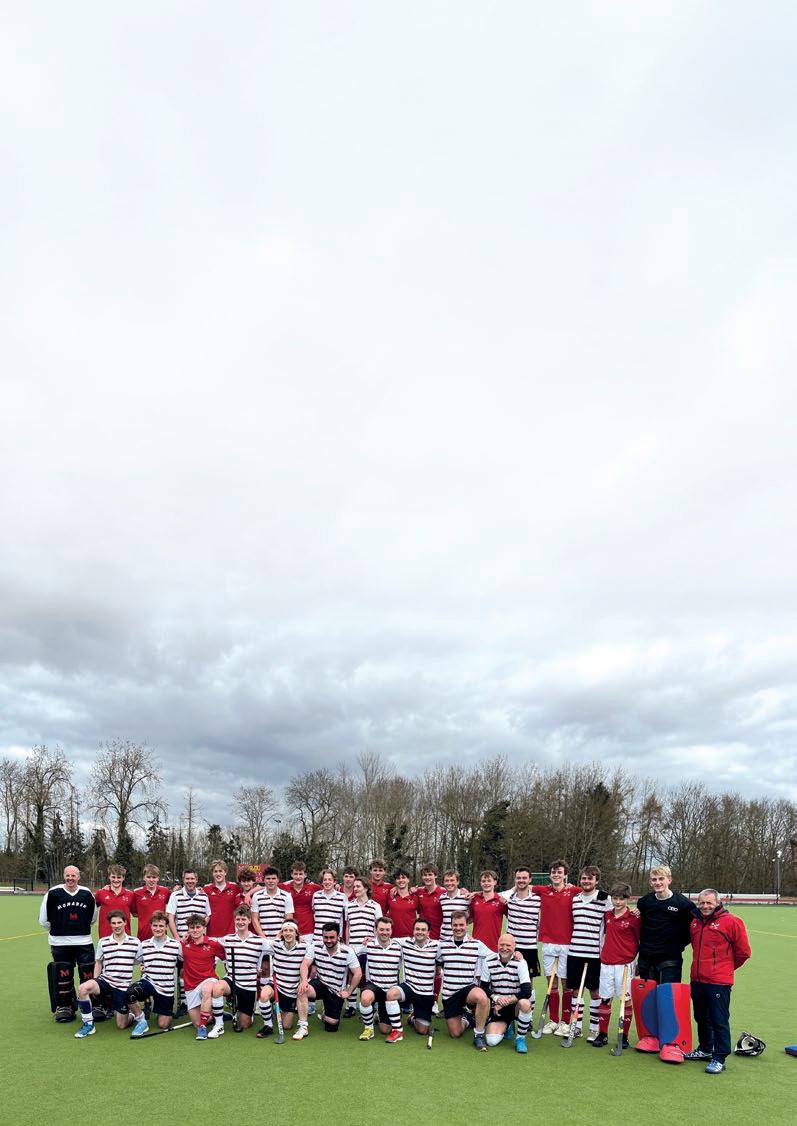

Galleons Day 2025
In March, the Galleons returned for another memorable instalment of Galleons Day. Our first match was against the Boys’ 1st XI on the excellent new Near Astro (fondly remembered as the “sandpit” in my day!). The Boys always give us a stern test, with fitness and energy levels far beyond our own. Fortunately, this year’s fixture fell between university term times, allowing us to field some strong student players, including Jasper Tomes (2019, G) and Orlando Stirling (2018, D). In a Galleons Day first, three vintages of one family, the Butterworths, took to the pitch together – Edward (1985, G) and Richard (2015, G) for the Galleons, with George lining up for the Boys. As ever, the Barker family were also out in force.
The game proved one of the tightest contests in recent years. After 30 minutes of scintillating hockey, the Galleons led 2–1 at halftime thanks to midfield dominance from Will Todd (2013, G) and Wilf Inglis (2017, H), and two quickfire goals from Tom Way (2017, B) up front. The Boys fought back to level after the break, but with ten minutes remaining the Galleons regained the lead. Digging deep, we ‘parked the bus’ and clung on for a hard-fought 3–2 victory.
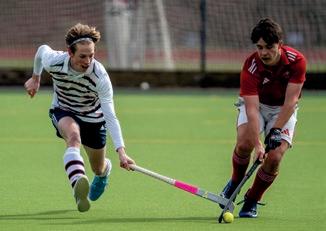
Post-match, Radley treated us to a superb Sunday lunch in Hall. While most nutritionists would frown at roast beef, two puddings, and generous glasses of red wine before another game, we tucked in regardless. Reinvigorated, we headed back to face the Dons.
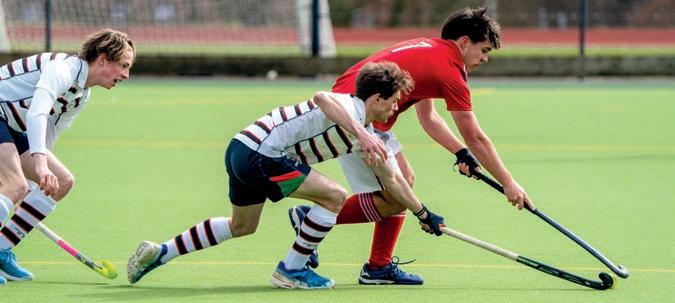
The Dons fixture always showcases our more seasoned Galleons, whose skill makes up for waning fitness. James Todd (2010, G) rolled back the years with some silky midfield play before earning a well-deserved breather. Legends such as Mr Scott-Malden and Mr Campbell also joined the action. But with the Dons short on defensive firepower, the Galleons raced to a 4–0 lead by half-time, with Richard Butterworth (2015, G) netting twice. Reinforcements from the Boys steadied the Dons in the second half, but the damage was done and we ran out 5–1 winners.
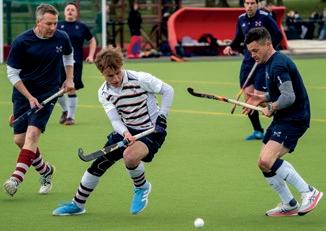
After team photos, we rounded off the day with match tea in the New Pavilion – another chance to enjoy Radley’s hospitality. For us ORs, Galleons Day is about much more than hockey: it’s about reconnecting with friends and dons, and reliving the unique Radley atmosphere. Roll on next year!
If you’d like to play for the Galleons, please get in touch.
William Swift (2010, F) swifwd@gmail.com
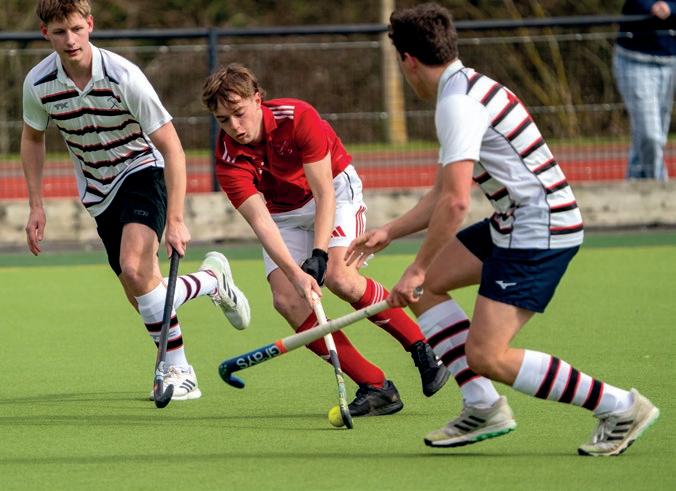

Old Radleian Golf Society (ORGS)
The 2024–25 season has been a roller coaster.
It began at pace last October with a stormy Autumn Meeting at Royal St George’s (the morning competition postponed until the afternoon), swiftly followed by a trip to Royal Liverpool GC for a match against the Old Amplefordians, then two further October fixtures against the Old Carthusians and the Old Shirburnians.
January. Tom Etridge (1985, A), claimed the President’s Putter for a third time across three consecutive decades – 2002, 2016, and now 2025. Congratulations to Tom.
April. A dip when we lost in the first round of the Halford Hewitt, but a wonderfully steep rise to the success of the six youngest HH players in the Prince's Plate. They defeated multiple HH winners Tonbridge in the semi-final, before overcoming holders Eton in the final – the first time Eton have lost a final in either competition.
October. A wonderful high with ORGS’s first ever victory in the Grafton Morrish at Hunstanton, Norfolk, during the high winds of storm Amy. Many supporters following via WhatsApp as the drama unfolded over three days.
Floreat Radley – two alumni titles in one year! We look forward to next year with relish
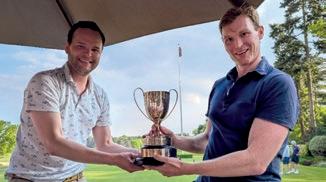
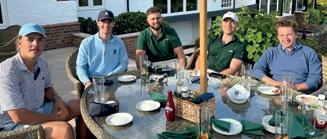
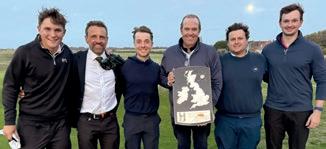
Beyond the matches listed below, six ORGS members also enjoyed a successful mini-tour to Royal County Down GC (NI), hosted by locals James Crawford (1964, D), Rick Porter (1990, C) and William Barnett (1990, H). Hugh Wolley (1970, F) once again hosted an enjoyably relaxed long weekend at Aldeburgh GC, and more touring is planned!
Thank you to those who manage matches and competition teams: Simon Curtis (1983, A), Arthur Fane (2005, H), Simon Peck (1985, C), Tom Etridge (1985, A), Tom Beasley (2007, B), Hugh Wolley (1970, F), Duncan Ritchie (1964, C), Angus Chilvers (1979, F), Clive Seigal (1960, F), Tobin Ashby (1985, F), Tim Marshall (1960, A), and of course our indefatigable Hon. Sec., Will Bailey (1968, D).
We welcome any OR who plays golf and would like to join our various fixtures. Register at www.orgs.org.uk. Generous subsidies are available for ORs under 30.
Philip Godden (1979, B), Captain
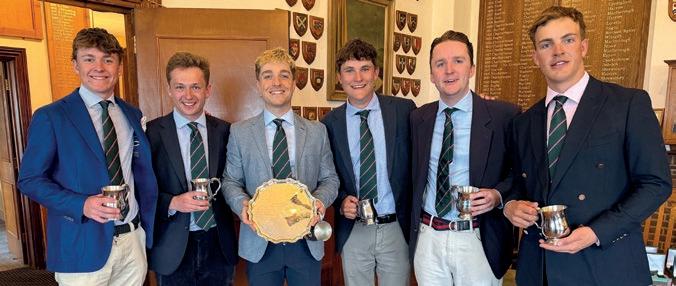
ORGS Results
Stableford

AUTUMN MEETING 2024 – ROYAL ST GEORGES GOLF CLUB
Simon Leefe (1979, F) (32 pts)
Scratch Alex Wright (2008, C) (79 – count back)
Under 35 Stableford
Veteran’s (over 55) Cup
Archie Birkmyre Salver
Aggregate Combined Scratch Spring & Autumn
Charles Jeffrey Silver Bowl (Stableford)
David Turner Scratch Cup
JH Mobbs Salver >55
Paul Cooper Cup (Past Captains)
Foursomes
Under 35
Bruce Cup <35 (Sunningdale Golf Club)
George Grace (2004, A) (30 pts)
Rupert Ashby (1982, F) (30 – count back)
Will Bailey (1968, D) (77 & 81 = 158 pts)
SPRING MEETING 2025 – DENHAM GOLF CLUB
Max Wetton (2015, B) (41 pts)
James Nash (1979, F) (76 pts)
Richard Evans (1979, A) (35 pts)
Angus Chilvers (1979, F) (32 pts)
Clive Seigal (1960, F) & Philip Godden (1979, B) (35 pts)
Max Wetton (2015, B) (41 pts)
Jamie Holbech (2004, B) (36 pts)
Robin Turner Knock Out: Winner – Will Bailey (3 in a row!); Runner up – Gavin Maitland-Smith (1991, A)
School Old Boys Competitions:
12 – 14TH APRIL: HALFORD HEWITT SCHOOLS OLD BOYS KNOCKOUT.
Radley lost in the first round (v Whitgift) of the main competition, but won the Prince's Plate.
Players for Radley were: Tom Etridge (1985, A), Simon Peck (1985, C), Simon Stalder (2009, E), Thomas Beasley (2007, B).
Plate Winners: Fred Campion (2011, J), Arthur Tapner (2013, F), Tom Wright (2011, C), Oscar Phelps (2018, E), Paddy Goodwin (2017, B), Ben Campion (2019, J).
GRAFTON MORRISH
May: tricky qualification in scratch foursomes led by Tom Beasley ably assisted by Paddy Goodwin, Alex Beare (2012, K), Alex Wright, Tom Wright, and Arthur Tapner. 84 pts across 2 pairs.
October: finals knockout was led by Simon Peck. The pairs were Tom Etridge & Simon Stalder, Simon Peck & Oscar Phelps, Thomas Beasley & Tom Wright.
Round 2 v The Leys: 2 – 1; Round 3 v Uppingham 2½ – ½; Qtrs v Solihull 2 – 1; Semi-final v Glasgow Academy 2½ – ½; Final v Birkenhead 2½ – ½.
Birkenhead are a strong and experienced team who have won 3 times in the previous 8 attempts.
BERNARD DARWIN >55 SCHOOLS OLD BOYS KNOCKOUT
As hoped for last year we continue to improve! Aided by another new joiner, Dom Cotton (1983, F), the squad got to the semi-finals despite having a different team in each round. Congratulations to Adam Leetham and Will Bailey who were unbeaten in 3 rounds.
George Grace (2004, A) (30 pts)
Simon Peck (1985, C) (79 pts)
George Craven (2006, J) (30 pts)
Will Bailey (1968, D) (30 pts)
Angus Chilvers (1979, F) (83 & 82 = 165 pts)
Richard Evans (1979, A) (35 pts)
Adam Leetham (1983, A) (76 pts)
Philip Godden (1979, B) (35 pts)
Will Ford (2007, B) (34 pts) & Angus Chilvers (1979, F) (34 pts)
Will Ford (2007, B) (34 pts)
Rupert Grace (2006, J) (35 pts)
Rd 1 v Wellington 2 – 1; Rd 2 v Tonbridge 2.5 – 0.5; Semi-final lost to Charterhouse 1 – 2. The final in 2026!
The pairs were Angus Chilvers & Dom Cotton (1) /Philip Godden (2) /Simon Curtis (SF); Will Bailey & Adam Leetham; James Male (1977, B) & Simon Curtis (1 & 2); Philip Godden & Andrew Marshall (1978, F) (SF).
SENIOR DARWIN >65 SCHOOLS OLD BOYS KNOCKOUT
Yet again we were drawn against Malvern, again the eventual winners, who (still) have six players of 3 handicap or less.
The pairs were Michael Kfouri (1952, D) & Robert Seward (1959, B); Francis Murray (1969, E) & John Saville (1971, B); Jo Oram (1964, C) & Duncan Ritchie.
VETERAN DARWIN >75 SCHOOLS OLD BOYS STABLEFORD SCRATCH FOURSOMES
No team this year.

Radley Keys
If you’d tuned in as a neutral to the Arthurian League Division One 2024/25 season, you’d have witnessed one of the most competitive campaigns in recent years – one that even Graeme Souness might have enjoyed. It had it all: last-minute winners, feuds, sin bins, goals galore (scored and conceded), and an end-ofseason fixturing scandal worthy of Agatha Christie. Like many other sides, the Keys struggled for consistency before Christmas. The final six games saw us, the Old Rugbeians, Old Marlburians, Old Salopians and Old Harrovians all battling to avoid relegation. We won two, drew two, and lost only one, taking it down to the wire. Both we and Harrow faced the Old Marlburians in our final matches. To stay up, we needed a win –and Harrow to draw or lose.
Whether the Keys could have managed it, we’ll never know.
The already-relegated Old Marlburians – who would sooner know how to run a bath than a football club – refused to honour the fixture list. Both we and Harrow were awarded three points,
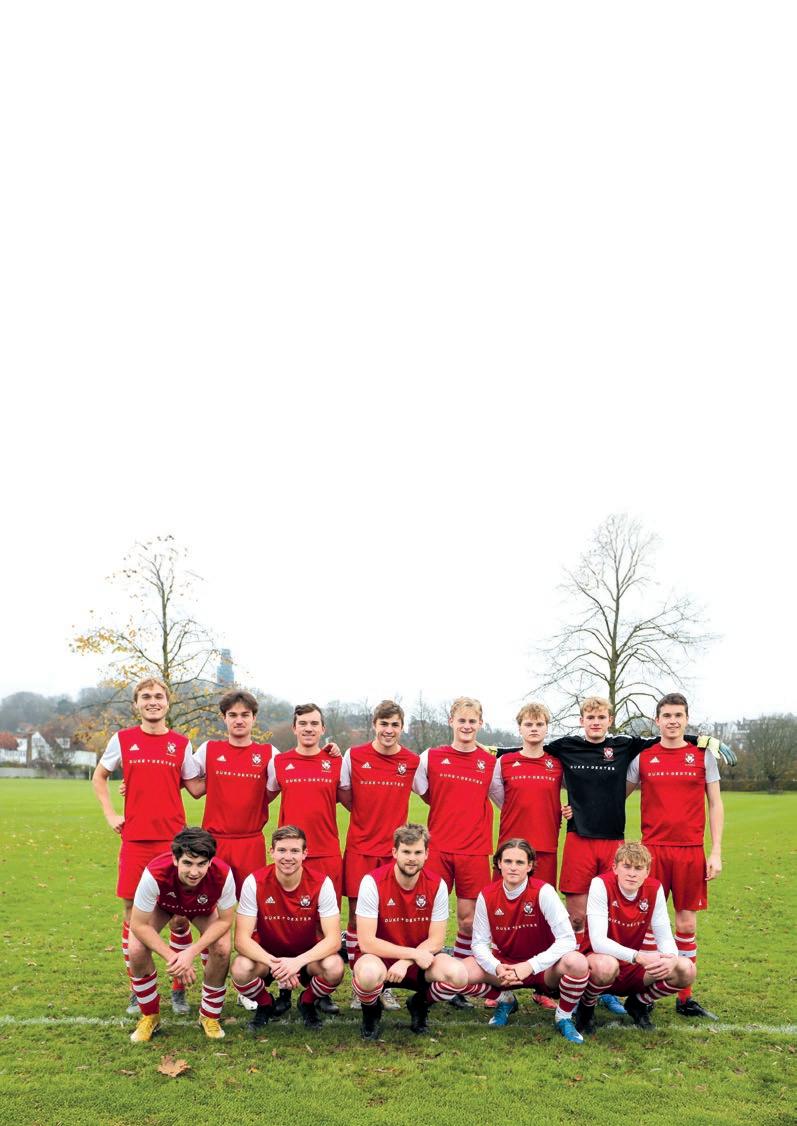
leaving the Old Radleians relegated to Division Two by default. We briefly considered legal action, but our trainee lawyers were sunning themselves in Corfu, so momentum waned.
While the 2024/25 season might not have been vintage in terms of league standing, there was plenty to applaud. Harry Glassey had a breakthrough season; two-time Clubman of the Year Rory MacInnes (2003, E) made his first appearance in over five years; Charlie Williams (2012, B) remembered his boots more than once; and we finally managed a season without a red card (despite Tom Rutherford (2012, G) and Jack Elvin’s (2012, C) best efforts). Eden and Williams being sin-binned within 15 seconds of each other was a particular highlight. Also memorable was Archie O’Donnell (2016, G) earning Man of the Match from the ref in a 5–2 loss to the Old Kimboltonians – staggering, though credit must go to our new floppy-haired goalkeeper, who made 37 saves (some of them even on purpose).
There were moments of brilliance, too.
Who could forget the 4–2 mauling of now-promoted Chigwell? With half the squad arriving two minutes before kick-off,
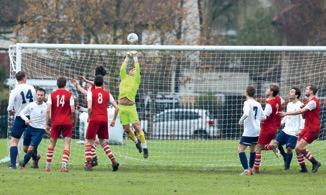
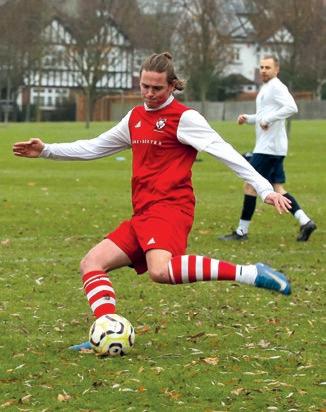
expectations were low. But the Elvin brothers had other ideas, scoring three between them and showing that, while results hadn’t gone our way, the Keys can indeed play football when they choose. Nobody embodied that spirit more than Jack Elvin, who in the second half sprinted the length of the pitch to cleanly take out a Chigwell midfielder – purely because he was dawdling on the ball. When the Elvins got home later, they emptied their pockets to find keys, phones, wallets, and the entirety of the Chigwell back line.
And who could forget the 5–4 win over the Old Ardinians, after being 3–0 down at half-time – one for the grandchildren. Spurred on by a Rafa Benítez-esque team talk from stand-in skippers James Sloan (2012, C) and Thor Winkler (2010, H), we rose like a phoenix from the ashes. A brace from Angus Lowe (2007, E), a classy White finish, and a Williams free-kick off the underside of the bar brought us level at 4–4. JCR then won a free-kick 30 yards out. Undeterred by Williams’s earlier goal, Harry Glassey (2015, F) stepped up and drove it low past the keeper’s near post. Pandemonium at Fortress Whitton – an afternoon to remember.
The end-of-season awards were held, fittingly, behind the Sydney Arms – and what a night. Freddie White (2012, G) took home the Rolt Cup (Player of the Season) for a stellar year at right wing, leading in both goals and assists. Harry Glassey collected Young Player of the Year and Best Goal for his 30-yard thunderbolt against the Old Salopians. After years with the club, Jack Elvin was voted Clubman of the Year for his love of the team and his unwavering commitment.
A special mention, too, for Oswald Miller (2006, G), who didn’t win an award per se, but told his skipper he was otherwise engaged – only to walk into the same pub later, a girl on his arm. We wish them both all the best and hope to see her on the touchline soon.
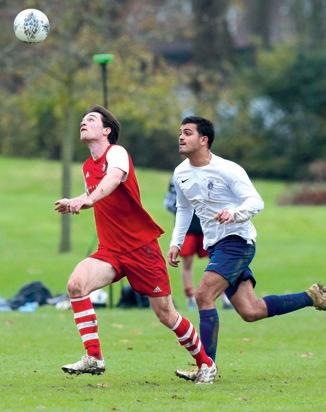
As the season drew to a close, the Keys finished nine points off promotion and just one point from safety. It went right to the wire, and though the lads were gutted not to stay up, the fight and tenacity they showed were extraordinary – proof that this group is more than capable of bouncing straight back.
Indeed, as we write, we’re five wins from five in Division Two.
If you are interested in playing old boys’ football in the next season, please reach out to Alex Kelly.
Alex Kelly (2007, F/K), Captain of the Radley Keys alexandercikelly@gmail.com

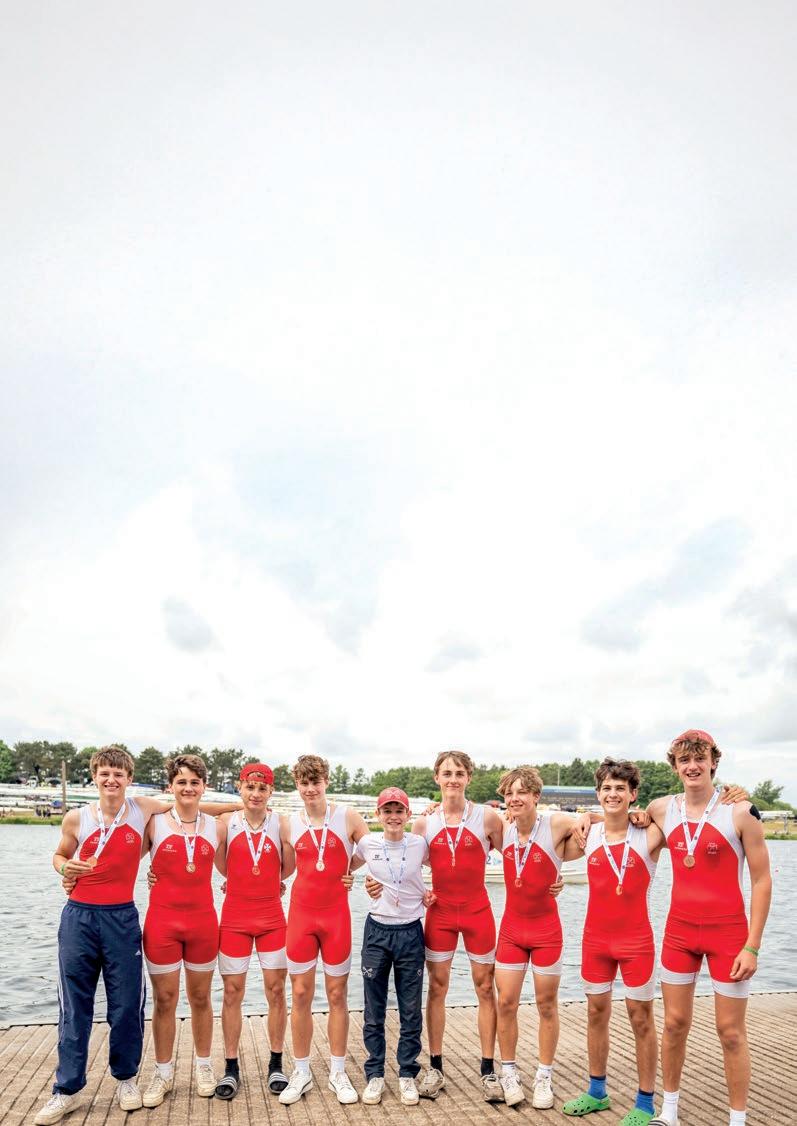
RCBC and the Radley Mariners
RCBC has had another busy year with 160+ athletes taking to the water. The weather once again meant that many events during the Lent Term season were disrupted but the club did have some strong showings at Wycliffe Head, Hammersmith Head and some internal races against Eton and Abingdon.
The focus for the Lent Term as always was Schools Head, which saw eight crews competing. Stand out results came from the 3rd VIII (1st in category) and the J16A VIII (3rd in category).
At the Junior Scullery event, we took two octos and two coxed quads, all of which competed very well at their first ever event. The J14A octo did exceptionally well to win their category.

Our Easter Camps helped propel crews into the summer season and National Schools. We took fifty-two boys to Aviz, Portugal, from the Senior and J16 squads, twenty-seven J15 boys to Nottingham and thirty J14 boys came back early to Radley to get race ready.
We had a great summer season, with ten crews taking part at Bedford Regatta and other trips to Thames Ditton Regatta and Wallingford. National Schools always provides the pinnacle of the racing season for all year groups, and the boys did a fantastic job at Nottingham on the May Bank Holiday weekend. We returned to Radley with seven medals in total, with bronze for the J16A, J16B and 3rd VIII crews. Silver for the 1st VIII and J15A. Then gold for the 2nd VIII and J14A crew. J14B and J15B narrowly missed the podium in their events coming home in 4th place. Overall, we took twelve crews to the event.
Henley quickly became the focus for the 1st VIII who had a training camp post National Schools to finalise the crew. The rest of the club turned their attentions to small boat work and boys thoroughly enjoyed working in pairs and singles for much of the second half of term, including racing at Marlow Regatta, Reading Amateur and Reading Town, with a number of wins across the age groups.
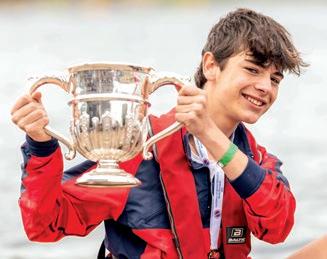
The 2nd VIII split down into a Prince Albert coxed four post National Schools and picked up a win at Reading Am along with qualifying into the main draw in a highly competitive Prince Albert event, going down to Harvard University in the first round.
The 1st VIII, having had a very strong season, went into Henley as a selected crew and found themselves in the middle of the draw, taking on and beating Windsor Boys and Latymer in the first two rounds. Friday saw them take on a much-fancied Marin crew from California with six medallists on board from Junior World Championships. The Radley crew certainly did not have their best race, but were dogged throughout and took the win by three quarters of a length. Semi Finals Day saw the crew meet Hampton School and in a race that had no more than a canvas in it until the enclosures, Radley finally broke clear and went on to win by one and a quarter lengths.
The final against Shiplake, who were National Champions from May, was always going to be tough and despite the crew’s best efforts, saw them go down by one length in the final. A terrific
J16 1st VIII at the National Schools Regatta.
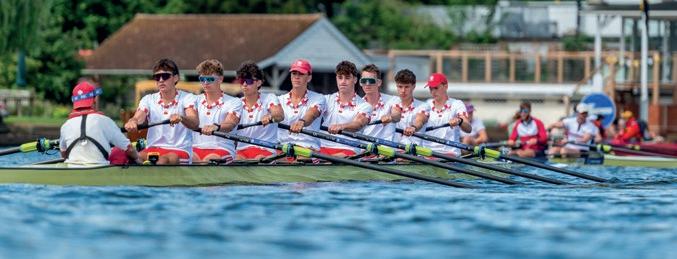
season for the crew, moving from 7th at Schools Head, through to silver at National Schools and finalists at Henley. Well done to the boys and their new Head Coach, Patrick Duggan.
Beyond the RCBC domestic season, it is always great to see Mariner representation. It was a bumper year in this regard, with eleven ORs racing at Henley Royal Regatta:
· Kit Gordon Brown (2017, A) – Imperial College
· March Turnbull (2017, E) – Durham University Tristan Wenger (2018, D) – Thames RC (winner of the Visitors Challenge Cup)
· Cameron Tasker (2017, E) – Leander
· Bob Rawlinson (2019, F) – Thames RC
· Felix Rawlinson (2014, F) – Oxford University (also in Blue Boat for Boat Race)
· Josh Bowesman-Jones (2012, J) – Leander Henry Jones (2018, H) – Harvard University
· Gabriel George (2019, K) – Elizabethan BC
· Nikita Jacobs (2018, K) – Leander William Eddleston (2019, D) – Newcastle University
Beyond domestic competitions, the ORs have been represented by Josh Bowesman-Jones in World Cup Regattas for Great Britain, and he is, as I write this, spare man in Shanghai at the World Rowing Championships.
A NOTE FROM THE MARINERS’ COMMITTEE
The Radley Mariners is the Old Radleian club of the Radley College Boat Club, bringing together former OR oarsmen, coaches and parents to celebrate and sustain Radley’s proud rowing tradition. Whilst primarily a supporters’ club, Mariners are warmly invited to race under the RMBC banner at Henley and other regattas.
Through the Radley Mariners Charitable Trust, the Mariners champion rowing by funding equipment, facilities, and opportunities for boys to train at higher levels, whether that’s supporting international competition or enabling access to vital
At the U23 World Championships in Poznan, Poland, RCBC had four representatives, with Cameron Tasker and Tristan Wenger in the men’s eight winning gold. Nikita Jacobs, coxing the women’s eight, also winning gold. Finally, Antos Robinski (2019, D/L), stroking the Polish coxless four to 10th place.
Felix Rawlinson raced at FISU (World University Games) in Duisberg, Germany, earning an excellent bronze medal in the pairs behind the Lithuanian Olympic pair.
Finally, the current cohort of RCBC members also had some international representation, with Jonathan (6.2, H) stroking the men’s quad scull at the Coupe in Linz, Austria, winning gold on both days and Gaspard (6.2, D) was selected for Junior World Championships in Trakai, Lithuania, in the men’s eight, becoming World Champions by a length.
Another bumper year of rowing at RCBC for our current boys and it is fantastic that we continue to have so many familiar faces on the rowing circuit to bump into, both in the UK and abroad. I am sure we will see some in October when we return to the Head of the Charles Regatta in Boston, USA, for the first time since 2019.
Sam Townsend, Master in Charge of Rowing
Follow RCBC and Mariners on Instagram: @radleyrowing
training camps. They also support non-Radley youth rowing in the Thames Valley region where participation in the sport can change lives.
Mariners can look forward to a lively calendar of events, from the much-loved annual Henley drinks to special gatherings such as the Radley Rowing dinner held at the College in 2024, and informal socials in London. By joining and subscribing, you’ll help nurture the next generation of Radley rowers whilst enjoying the camaraderie of a vibrant, welcoming community.
For more information about the Radley Mariners, visit: www. radley.org.uk/radleian-society/clubs-societies
The 1st VIII at Henley Royal Regatta.
Old Radleian Sailing Association (ORSA)
The Old Radleian Sailing Association (ORSA) provides social and competitive sailing for ORs, develops and maintains a community for ORs who sail, and maintains Radley’s presence, through ORs, in the wider sailing community. ORSA welcomes all ORs, Honorary Members of the Radleian Society, current and past Radley parents, and current members of Common Room. All are welcome, irrespective of sailing experience or ability! Contact details are available through the Radleian Society website or on the ORSA Facebook page.
2025 saw ORSA attempt to take part in three main events: the Round-the-Island Race on Saturday 7th June, the Seaview Regatta on Sunday 14th September, and the Arrow Trophy on the weekend of 4th–5th October.
ROUND-THE-ISLAND RACE – SATURDAY 7TH JUNE 2025
After being ‘blown out’ of last year’s race, ORSA had planned to enter a Hallberg-Rassy 342 into the iconic Round-the-Island Race in 2025. Unfortunately, due to a last-minute technical hitch, we were not able to use the boat, so ORSA could not enter. Next year, we hope to enter an ORSA boat (or possibly two).
SEAVIEW REGATTA – SUNDAY 14TH SEPTEMBER 2025
The annual Radley v Winchester Regatta is a one-day event which sees current and former pupils from each school teamracing against each other on the Seaview Yacht Club’s twelve Mermaid keelboats. ORSA had raised two teams of two boats this year (twelve people in all), and Radley, Winchester and the Old Wykehamists had all confirmed a two-boat team each.
However, after all the planning and organisation, fate was against us. With winds in excess of 25 knots (Force 6), the weather on the Sunday proved too extreme for the regatta to take place, and the difficult decision was made to cancel. On the bright side, ORSA did get to retain the Duke of Wellington Trophy (as reigning regatta winners). We’ll race again next year.
ARROW TROPHY – 4TH–5TH OCTOBER 2025
The Arrow Trophy is a sailing competition between independent schools, raced as an annual weekend regatta out of Cowes in two fleets of one-design yachts crewed by former pupils. This year ORSA raced in the twelve-strong Fairview Oceanis 37 fleet (the other fleet consisting of nine Sunsail F41s).
The ORSA entry was skippered by Jules Facer (1982, C) and crewed by Simon Palmer (1987, F), Ed Verdon (2017, E), Marcus
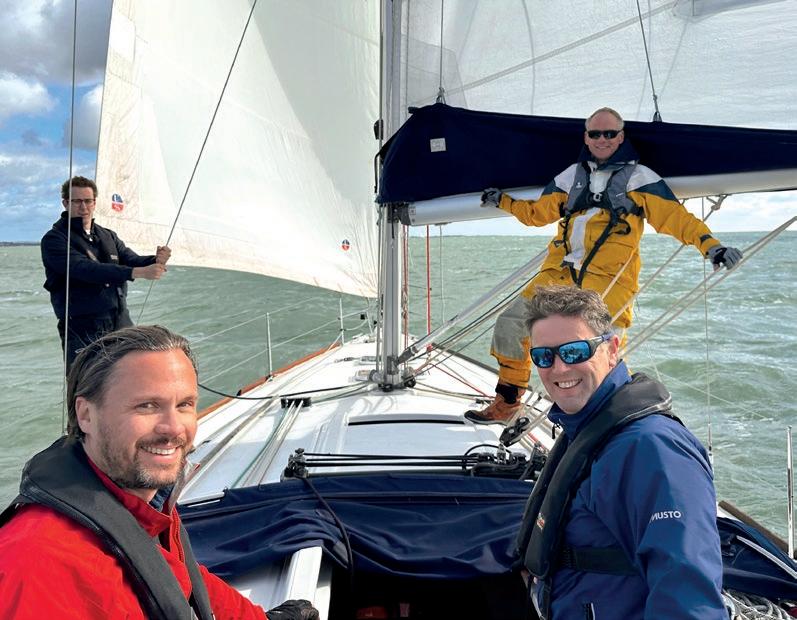
ORSA holding steady downwind.

Knight (1996, C), John Rosling (1978, E), Tom Holbrook (2006, D), Felix Reynish (2014, K) and Raphe Palmer (1964, C).
Once again, the weather proved unkind to us initially. After a mad dash across the Solent from Hamble to Cowes on the Friday afternoon, we were then storm-bound by Storm Amy on the Saturday. With winds in excess of 35 knots (Gale Force 8) in the Solent, we had to remain in the shelter of the marina throughout the day.
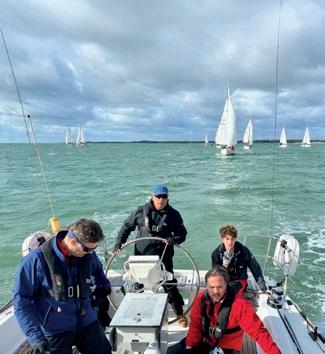
The weather did not dampen spirits at the Regatta Dinner that night at the Royal Ocean Racing Club (RORC), where over 200 people from nineteen schools gathered to swap tales of what could have been.
Sunday morning dawned bright, and the storm had eased, enabling us to get out on the water for some racing in sunny and breezy conditions. This was exactly what ORSA needed, and we managed 2nd, 2nd and 3rd places across the three races that day – despite very nearly losing Marcus Knight overboard just as we were finishing the second race.
Overall, ORSA secured 2nd place in the Fairview Oceanis 37 fleet, just behind Downside.
ORSA 2026
The line-up for 2026 is looking good. February will see an ORSA dinner in London. There are cruising weekends planned for April, May and September and ORSA will be entering at least one boat in the Round-the-Island Race on 11th July 2026. The Seaview Regatta will feature again on 13th September 2026, followed by the Arrow Trophy 10-11th October 2026. We would love to see anyone with an interest in sailing join us at any or all of these events.
Please do get in touch via our Facebook group, or via the contact details on our page at www.radley.org.uk/radleian-society/clubssocieties/
Jules Facer (1982, C), Commodore of the ORSA Jands.facer@gmail.com
The ORSA Arrow Trophy 2025 Team: (L-R) Jules Facer, Felix Reynish, Ed Verdon, Marcus Knight, Tom Holbrook, Raphe Palmer, Simon Palmer, John Rosling.
ORSA nicely out in front.
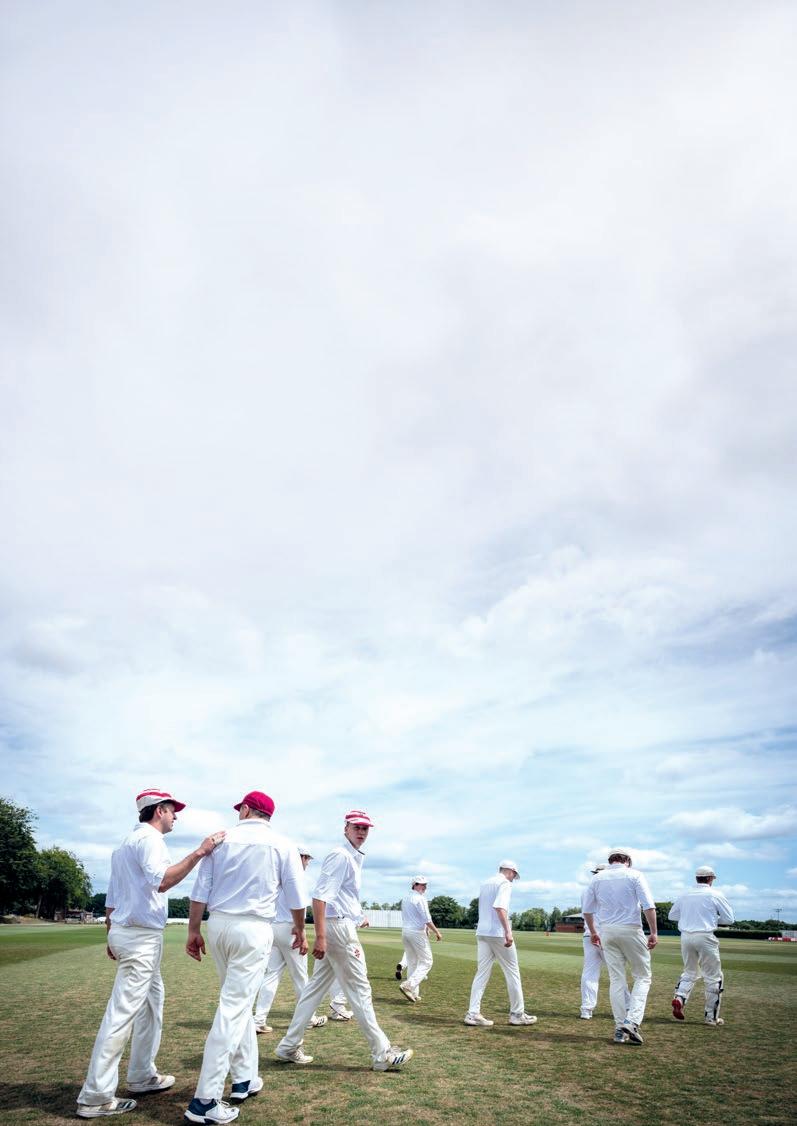
Radley Rangers
The Rangers’ 2025 season carried huge anticipation, with an exciting young Cricketer Cup side and a fitting farewell for Wags planned against the Rangers President’s XI.
That farewell match was played on a glorious summer’s day between two sides packed with players Wags had coached and inspired over countless winters and summers. As the President noted, Wags must have been proud to see the teams feature eight former Radley captains (1994–2025), with five more watching, alongside five ex-professionals, three County captains, one England captain, and four internationals. Looking down my own team sheet boasting Andrew Strauss (1990, B), Ben Hutton (1990, B), Robin Martin-Jenkins (1989, B), and Jamie Dalrymple (1994, H), I didn’t expect to lose – but it was only proof of the sheer depth of talent Wags has nurtured.
Whilst we see many magical moments throughout the year, the President’s XI v Wags XI also produced the moment of the season: Charlie Purton (2010, H) bowling to Rory Betley (2013, E). Betley had made 50 off 38 balls, blasting it to all parts before launching one more that surely would’ve gone for six. However, he was misguided when he decided to take on our President, Rupert Henson (1975, A). Stationed in the deep mid-wicket region and still in full flow, the President plucked the ball out of the sky, preventing six and countless other runs Betley threatened to score that day. He shook hands with a couple of ex-county captains, gave them a wink, and strolled back out, preparing another jibe at his own side – it is the President’s firm belief that you can sledge your own team!
The 2025 Cricketer Cup again promised much but ended in familiar frustration with a second-round exit. After slipping to 85–5 in the 12th over against the Old Cranleighans, we recovered to 273, led by Morgan Barnes (2019, B) with 64 and Will Carr (2014, J) with 49 from No. 9. It wasn’t enough, but with the talent rising through the ranks, the drought will surely break soon. The first round had shown what we can do – Kit Morland (2011, D) bowled a superb 9-over spell of 2–21, while Betley struck 95 off 105 to see off the Old Alleynians.
As always, Rangers highlights came from far more than just the star-studded headline fixtures, and once again, over a hundred players wore the whites in 2025 – a number we’re proud to sustain.
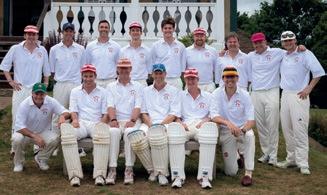
From a chilly opener against I Zingari, where Rollo Harrap (2017, F) made his maiden Rangers century with 120 from 119, to summer victories against the Romany, Gloucestershire Gipsies, Guards, and Gauchos, the squad produced some outstanding cricket. George Reynolds (2019, J) announced himself in style with 75 from 44 balls and 5–5 against the Guards, while Christian Hollingworth (2009, K) took 5–31 against the Romany, claiming more wickets than their entire side as we chased 205 in just 31 overs with excellent half-centuries from Rory Acheson-Gray (2019, F), Henry Wakefield (2006, H), and Ed Horsfield (2018, G). That’ll hopefully take your mind off all those ducks this year, Hollers!
We were saddened by the closure of Queen Margaret’s this year, which meant the annual fixture against the Yorkshire Gents was not played for the first time since 1994. We’re doing everything we can ahead of next season, and we hope 2026 will see us return to Escrick. With that two-day game cancelled, the Eton Ramblers
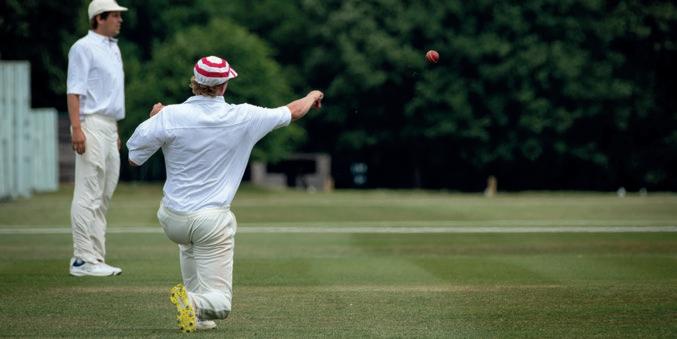
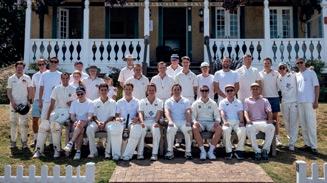
game called off at Longford, and torrential rain ruining our day at Warnford, the Hurlingham game became the most significant moment of the second half of the summer.
With Martyn Hemphill, the match manager on the day, away, and seemingly half of the Rangers at Wilderness Festival, Jack Folkestone (2012, E) took charge. He reported as follows: “Lost toss, Hurlingham batting first. Why is the Hurlingham side full of ex-Surrey internationals?” Alas, he clearly riled his side up, and before long shared the good news – bowled them out for 128 and chased them five down in 26.4 overs. Angus Gubbins’ (2006, G) 4–33 off 9 overs was the key that day.
Looking further ahead, we’re also planning an overseas tour to Granada, Spain, where we’ll be proud to share the Rangers’ culture and enjoy Granada’s in return. Tales from that adventure will no doubt feature in next year’s review alongside another bumper pack of fixtures George Greville Williams (2012, K) has arranged for us.
Please do get in touch if you want to play in games – we are proud to be a growing club!
Jonty Robinson Hon. Sec. Radley Rangers CC
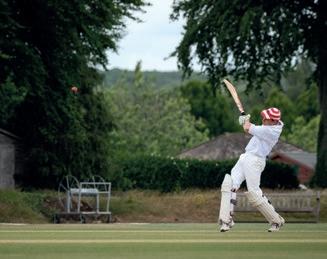
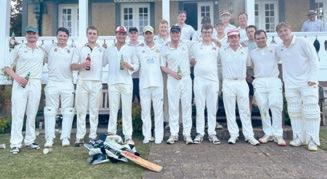
Radley Serpents
2025 marked another exciting chapter for the Radley Serpents, with the club continuing to grow in both spirit and ambition. From gritty XVs fixtures to champagne rugby on the 7s circuit, the Serpents demonstrated resilience, flair, and camaraderie throughout the year.
ON THE PITCH
The Serpents returned to Old Radleian Day with a spirited XV performance against the Oxford Brookes 1s/2s preseason squad. Despite a narrow 33–19 loss, the match showcased classic Serpents heart – from Harry Wilson’s charge-down heroics to Charlie Saunders’ opportunistic score under the posts. The centre pairing of Hugo Eyre and Nikita Tutus proved a handful for the opposition,

and the day concluded with well-earned beers in the JCR and a win for the College First XV over Epsom.
The club also made its debut at the Bournemouth 7s, entering the Jubel Beer Cup with a youthful squad, half of whom were making their Serpents debut. Dominant group-stage performances saw the team top their pool, with standout tries from Cooper and Tutus, memorable moments including Wilson’s full-length intercept and Doris’ ankle-breaking footwork. A narrow quarter-final loss to end the campaign, but the weekend was a resounding success – both on and off the pitch.
LOOKING AHEAD
We are continuing to look to expand the Serpents calendar. Please get in touch if there is any rugby related activity that you think would be relevant and we would love to find a way to make it happen.
The Autumn Internationals Social returns this November for England vs New Zealand, and next summer will see the Serpents take part in the Richmond Summer Social 7s and the Wimbledon 7s Tournament.
We are also in discussions about exploring 7s Tournaments further afield and overseas. If this is something that you would be interested in participating in then you know where to find us!

Whether you’re a seasoned veteran or a recent OR, we’d love to see you involved – on the pitch, at the bar, or simply cheering from the sidelines.
James Cunningham (2012, G), Chairman
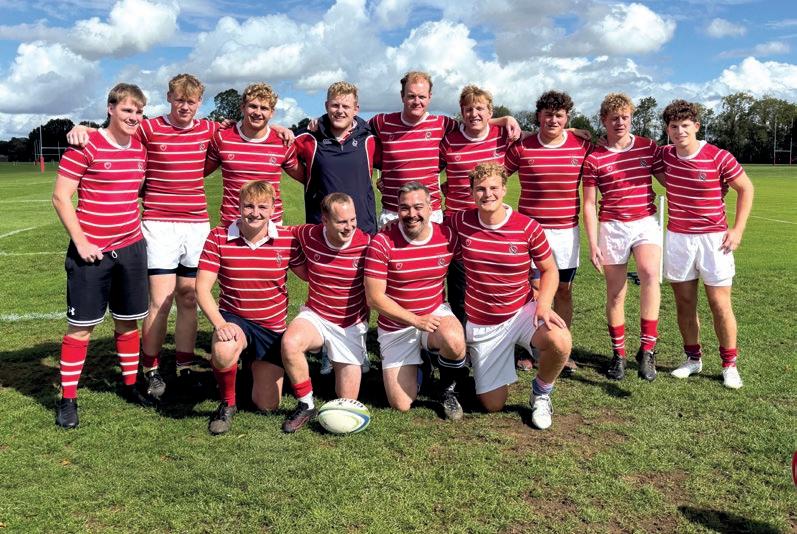
The Serpents on Bigside, OR Day 2025.
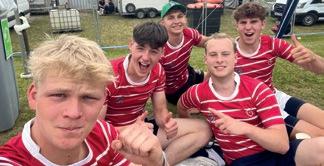
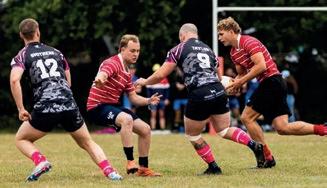
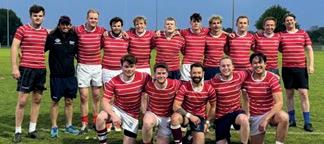
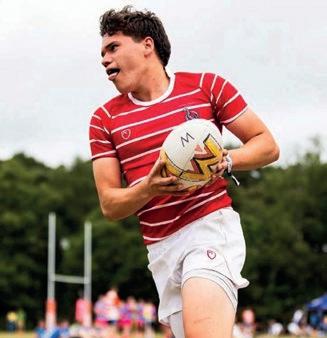
SERPENTS COMMITTEE
ROLE NAME YEAR & SOCIAL
President Richard Greed RadSoc President, Hon Member & former Tutor and don
Chairman James Cunningham 2012, G
Captain Hugo Eyre 2012, F
Secretary George Redmayne 2014, D
7’s Secretaries Richard Butterworth & Harry Wilson 2015, G & 2018, G
Kit Secretary Jamie Cooper 2018, C
2025 RESULTS
DATE OPPOSITION RESULT
April 2025 Old Wellingtonians 42-35 (L)
May 2025 Bournemouth 7s Jubel Beer Cup - Quarter Finalists
September 2025 Oxford Brookes 33-19 (L)
UPCOMING EVENTS
15th November 2025
30th May 2026
25th July 2026
Autumn Internationals Social (England vs New Zealand) Twickenham Pubs/Bars TBA
Richmond Summer Social 7s Richmond Athletic Ground
Wimbledon 7s Tournament Wimbledon RFC
12th September 2026 OR Day Match Radley Bigside
For full match reports, use the QR codes below to read online.

Serpents at Bournemouth 7s Match Report

Serpents v Brookes Match Report

Serpents v Old Wellingtonians Match Report
Follow & contact the Serpents on Instagram: @radleyserpentsrugby

Join the WhatsApp Group for information about Events and to hear the OR Rugby news: https://chat.whatsapp.com/ Bvm3M8gZOOqFMEIQgyjE6V
THE 1995 UNBEATEN XV … 30 YEARS ON
You never set out to achieve an unbeaten season. It’s only after the final second of the final game that you realise it’s something you have achieved. You can never plan for it – there are too many variables. You need a touch of luck, both on and off the field: the bounce of the ball, a referee’s decision, or keeping key players injury-free. But above all, you need a group of talented rugby players whose skill and character blend into a true team.
Even then, a team of talented players doesn’t automatically become a match-winning outfit. The class of 1995 went on to achieve something special in remaining undefeated for only the second time in the history of Radley rugby, a sport played at the College since 1914. What makes it extra special is that this achievement has kept a group of young men together for the past 30 years – a testament to the deeper beauty of the game.
Yet talent alone is never enough. It’s been said that a group of gifted individuals who lack personal discipline will ultimately fail. Character triumphs over talent. In this case, we had both. That is the privilege of being an educator and a coach – to see, 30 years later, how those boys have become talented, interesting, caring family men. It’s a heady mix of character and talent, and a true delight to see how these boys have been transformed into the men who stand before us today.
“While we can’t compare our tour to a Lions tour, the words of Sir Ian McGeechan in 1997 before the second Test ring true: ‘Because you’ll meet each other in the street in 30 years’ time, and there will just be a look and you’ll know how special some days in your life are.’ Some of us may not have seen each other for the best part of 30 years, but we will always have that bond of South Africa and Radley rugby, which is truly special and valued by us all.”
– Tom Williams (1991, G)
Our recent dinner gathering at a South African-themed restaurant in London brought 22 of us together, including Jamie Harris, who had flown in from the States for the weekend, as well as current Sub-Warden Niall Murphy, who was the Assistant 1st XV Coach. Sport throws up experiences that bond you for life. It wasn’t just a celebration of an unbeaten season of 11 matches (points for 297, points against 57) but also of the five-match, three-week South African tour that rolled into the start of term. For all 29 players, that tour was part of the season, forming the foundations, both in spirit and success.
Touring abroad was still relatively new for schools, and South Africa in 1995 was an extraordinary place, still finding its feet after Mandela’s election. For the boys, it was as much an adventure as a rugby tour, full of unforgettable moments – not least a chaotic visit to Oudtshoorn, the ostrich capital of the world, where a few too many of us tested the limits of local health and safety rules. Charlie Starmer-Smith and Will MurrayJones were both injured after being thrown off the backs of ostriches, leaving them unable to train or play for the next week. Even worse, my colleague Vic Clements had to be flown home after breaking five ribs when his ostrich landed on top of him. Further adventures also took place, and it is fortunate that my fading memory has obscured most of what the boys got up to. Nonetheless, this group of young men knew just about where to draw the line, and the staff struck a fair balance in letting them enjoy their down time.
Despite being made to feel very welcome, rugby in South Africa is a serious business and is followed with religious fervour in clubs and schools, with vast crowds supporting their teams. The fiercely competitive nature of the matches made it evidently clear to the boys that the South Africans’ desire to defeat the English visitors
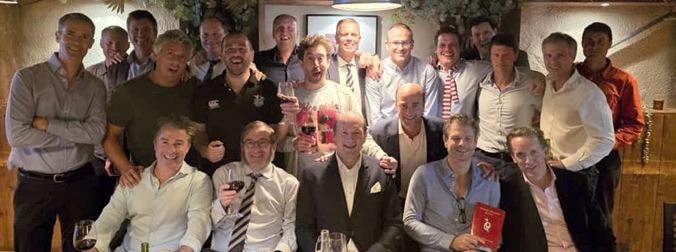
The 30-year reunion of the 1995 Unbeaten XV and South Africa Tour players.
was going to prove an immense challenge. The tour party was an amazing collection of young men, and the consequences of the challenge brought the group ever closer together, strengthening bonds that would prove a key ingredient in the successful seasons that followed for both the 1st and 2nd XVs.
Indeed, there were difficult selection issues in a highly competitive Bigside squad, but the quality of the individuals involved ensured that decisions were respected and disappointments handled with grace. The 2nd XV, under the inspired leadership of Alex Hay, also had a brilliant season with only the one game they lost to Wellington 11-8. In any other year, the core of that 2nd XV would comfortably have made the top team.
“The South Africa tour had a big part to play in forging real cohesion across the whole senior squad, creating the environment from which excellent results would ultimately follow. The same can be said for the whole rugby club. Everyone who represents the school invariably does so with immense pride and passion.”
– Alex Hay (1991, H)
At every reunion – and there have now been five – games are replayed in conversation and on screen. One never tires of hearing about Starmer’s 80-metre run to secure victory over Teddies or Ben Spiegelberg’s gashed head against Harrow. The crunch game came against Cheltenham, when their centre’s pass was intercepted by captain Ross Jennings for the winning try. That moment that sealed our unbeaten record. In 1995, Radley had an unbeaten season, and Cheltenham lost one game. Luck was on our side that day (or perhaps it was the pressure defence of our midfield!), and what a wonderful 30 years of memories it has given us.
“Thirty years ago, who could have known the importance of all those pyramids back and forth across Bigside? The endless runs up and down Cheesers. The countless hours of practice and the hardfought matches. The friendships forged on and off the field.”
– Harry Astley (1991, F)
Another memory was the appearance, at the final match, of Henry McCowen – captain of the first (and, up to that point, only) unbeaten Radley 1st XV of 1990. They too had forged their craft on a physically demanding summer tour to New Zealand, fighting back from 0–15 to beat Sherborne 18–15. But the true hallmark of that 1990 team came five years later, when Henry stepped forward unannounced to present Ross Jennings with a bottle of champagne – a wonderful gesture of recognition from one generation of Radleian to another.
The journey to that finish line began in August with the tour of South Africa and ended in December on Bigside with the victory over Rugby School. By then, exhaustion and relief gave way to the realisation that something truly special had been achieved – something that would bind everyone together for the rest of their lives.
Thirty years on, they are still a very special group of ‘boys’ and I know that Niall, Vic and myself are grateful for the amazing memories that they have given us. It’s probably best that I leave the final words to our captain Ross, writing as a 17-year-old in The Radleian of 1995:
“The experience is one which will certainly stay with me for the rest of my life. I am sure this applies for the rest of the tour party.”
Richard Greed Former Master in Charge of Rugby Radleian Society President

To read reflections from the full 1995 tour team, go to https://bit.ly/1995UnbeatenXV or use this QR code.
· Will Murray-Jones (1991, B)
XV & SOUTH AFRICAN TOUR SQUAD
· James Amos (1991, D)
· Harry Astley (1991, F) Guy Bates (1991, C)
· James Brodie (1991, E)
· Eddie David (1991, B)
· Will Green (1992, G)
· James Harris (1991, B)
· Ben Hawkins (1991, A)
· Simon Hawkins (1991, H)
· Alex Hay (1991, H)
Sam Henley (1992, G)
· Tom Higson (1991, B)
· Christopher Hughes (1991, B)
Anthony Hughes (1991, C)
· Edward Jennings (1992, G)
· Ross Jennings (1991, G) (Captain)
· James Johnson (1991, B) (Vice Captain)
· Alexander van Kuffeler (1992, F)
· Max Livingstone-Learmonth (1991, A)
Edward Lethbridge (1992, C)
· Tom Lewin (1991, A)
· David Lewis (1991, H)
· Charles Pyper (1991, B)
· Ed Robinson (1991, B)
· Mark Rose (1991, G)
· James Scott (1992, F)
· Charlie Starmer-Smith (1991, B)
Gavin Maitland-Smith (1991, A)
· Ben Spiegelberg (1991, G)
· Tom Turmezei (1991, A)
· Mark Turner (1991, E)
· Tom D Williams (1991, G)
· Tom J M Williams (1992, C)
THE UNBEATEN 1995 1ST
Rackets
The Radley Rackets team enjoyed a highly successful and rewarding season, marked by outstanding individual and team achievements, as well as promising development among our junior players. The sport continues to grow in strength at Radley, and this year’s performances give us great optimism for the future.
This year eight ORs competed in the Noel Bruce at The Queen’s Club. They were able to secure six match wins to five losses against some tough opponents. Overall, it was a great turnout and a strong performance overall from those involved.
There were a few particular highlights from the season from current boys. Laszlo (V, C) won the Jim Dear Cup for the second year in a row – a remarkable achievement that confirms his place among the most talented young players in the game. Nathan (6.2, L) reached the Foster Cup semi-final, which was a great achievement given he had a very tough draw from an unseeded position. Laszlo, an Under 15, also made history by becoming the first player of his age group to win the U18 First Pair Doubles title, playing alongside Nathan. Their victory was particularly special, as it marked the first time Radley has won this prestigious title since Male and Snow in 1982 – breaking a 43-year drought. With Nathan also returning next year, the pair will have the opportunity to defend their title and continue their impressive partnership.
OR Cross Country
OR Fives Club
The OR Fives Club play several fixtures throughout the year. A principal aim is to encourage fives playing at the school & beyond, and anyone interested in playing or attending should email Duncan Neale (1982, G) duncanjneale@gmail. com for more details. There is no joining fee.
For a description of the team and sport visit: https://therfa.uk/#promo
We run weekend fixtures against the College in term time, plus participation in the Owers Trophy, where the ORs will play against old boys & girls from other fives playing schools.
Elsewhere in the double’s competitions, Benedict (6.2, D) and Evy (6.1, C) reached the semi-finals of the Second Pairs, showcasing the depth and quality in the squad this season. Our school matches were equally enjoyable, with a series of exciting and competitive fixtures that allowed us to implement lots of squad rotation and ensure plenty of boys represented the club in matches. There is an excellent sense of camaraderie in the club, and I am grateful to the senior players for making the environment such a welcoming one for the younger players.
Radley Rackets is in a very strong place. With a blend of experienced players and emerging junior talent, the future looks bright. We look forward to building on this season’s success in the coming years.
James Rock, Radley College Rackets Professional
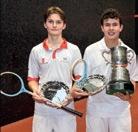
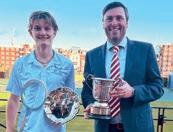
Seven ORs returned to College in February 2025 to take part in the annual Radley Relays, forming two teams and putting in excellent runs. The team members were: Chris Tufnell (1982, G), Ed Moisson (1986, G), Benedict Pollard (1986, H), Simon Robson Brown (1986, G), Jamie Turner (1987, B), Justin Mandeville (1988, H), and Henry Fyson (1990, H).
The Relays, a much-loved fixture in the College calendar, see more than 50 teams compete from across the region, including the special contests of ORs vs dons, and staff vs boys. These are team relay events of 8 miles, wherein runners can do either 8, 6, 4 or 2 miles each. All ages are very welcome but, while the ORs ran strongly this year, they are eager to be joined by younger vintages in future years – anyone with an interest in OR Cross Country is warmly encouraged to get involved.
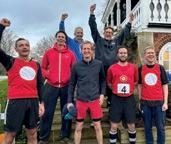
For more information, please contact the club captain, Benedict Pollard (1986, H) at benedict.pollard@gmail.com.

Radley Wildebloods
The Radley Wildebloods alumni LGBTQ+ group continues to go from strength to strength, with new members joining every year. The annual joint summer drinks this year were organised by our sister group from Winchester, with over 100 attendees in the City of London back in July. There was also a theatre trip in October to see OR and Wildebloods very own Ned Blackburn’s award-winning play An Adequate Abridgement of Boarding School Life as a Homo, and a Christmas event will also be planned, so do sign up to our mailing list to hear more:
https://www.radley-wildebloods.com/mailing-list
Nick Pelly-Fry (2003, H), Chairman
Croquet
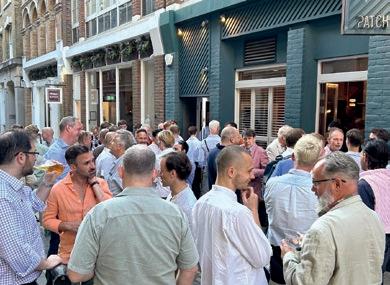
Croquet at Radley continues to thrive. A record number of participants took part in the Open Pairs’ Competition, with 212 players enjoying the game (until they lost, that is). The Inter-Social Competition was won convincingly by G Social (comprising x4 pairs), with the final taking place on Gaudy. The school team enjoys a healthy number of matches, with the majority played at Blewbury Croquet Club, with whom we enjoy a productive partnership.
The highlight of the competitive season was undoubtedly the National Schools’ Doubles Tournament at Surbiton, where three of the four Radley pairs made the semi-finals, and the final was competed between our first (who won) and second pairs (though not without a scare for our first pair against our fourth pair in the semi-final, with one shot being immortalised on camera, to then go on to Instagram fame with 99K views).
The highlight of the ‘non-competitive’ season was, as ever, the annual match against Old Radleians at The Hurlingham Club in July: this year saw ten pairs playing on the front lawns. Huge thanks are due to Max Holmes (2018, D) for organising the Old Radleian team, and for hosting so excellently.
Harry Crump, Deputy Head (Co-Curricular) & Master in Charge of Croquet
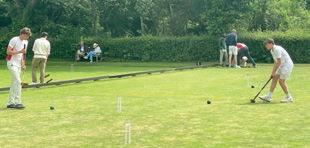
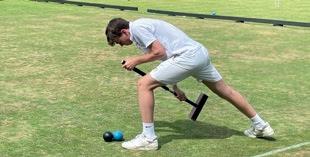
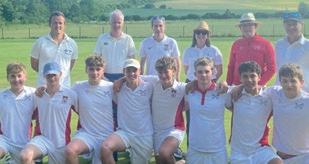
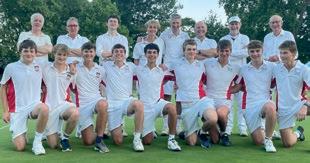

COLLEGE UPDATE
bursar’s report 2024-25
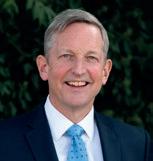
One of the most recognisable parts of Radley’s landscape is College Oak. Different accounts vary as to its actual age, but it is fair to say that since our founding day, all Radleians have, in a metaphorical sense, enjoyed their Radley education under the watchful gaze of this majestic and iconic tree.
Nurtured well, trees lead magnificent lives. The Fortingall Yew in Perthshire is believed to be the United Kingdom’s oldest tree, with an estimated age of between two thousand and three thousand years. There are differing accounts of the world’s oldest tree, with claims for some in the order of five thousand years – or ten times older than the United States.
“Since our founding day, all Radleians have, in a metaphorical sense, enjoyed their education under the watchful gaze of College Oak.”
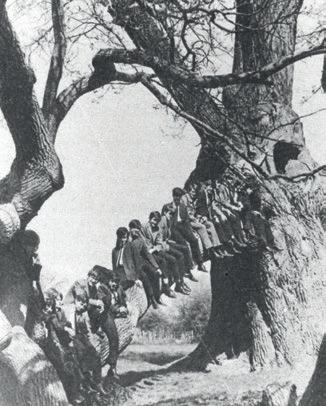
This puts the age of the College into perspective. We are a mere 178 years old, founded after the School Sites Acts of 1841 which stated that ‘ it is expedient that greater facilities should be given for the erection of schools and buildings for the purposes of education’ and which led to the founding of Radley and many other fine schools around this time. However, as I often say when explaining the importance of charitable independent educational establishments, we are a young school, but we are here for the duration!
My colleagues at The King’s School, Canterbury, like to talk of their founding by Augustine of Canterbury in 597, and St Albans lays claim to a heritage of over a thousand years, since its founding in 948. Both far older than the venerable colleges at our three oldest universities, Oxford, Cambridge, and Durham. But younger than some trees. In any event, Radley can lay claim to being older than many countries and cities, and it is in our charitable DNA to replicate and evolve our educational offering year by year and on into perpetuity.
The key to a long, timeless life (for trees or for schools) is good nurturing and husbandry. A tree needs light, water, good soil, and even a healthy dose of carbon dioxide. A school needs great people, good facilities and resources, a steady stream of parents willing to seek out what it has to offer, the oxygen of publicity, and pupils whose positive outcomes encourage others to seek the
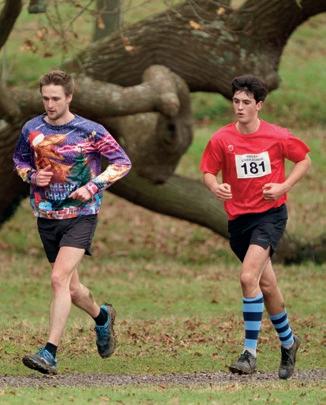
College Oak (and friends!) in 1988.
Steeplechase runners pass College Oak in 2021.
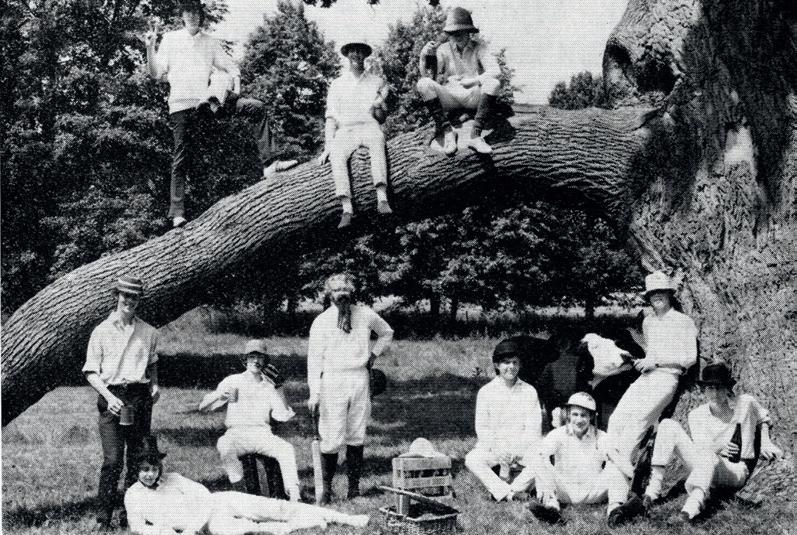
same education generation after generation. But, of course a school (whether independent or state-maintained) also needs money, to pay for all of this, and that money needs to be well managed.
It is truly upsetting to read of the schools that are said to have closed since VAT was introduced; when I last looked this up, the total was a depressing seventy-seven, and the list grows by the week. No independent school can afford to be complacent, nor take its fee-paying parents for granted. The headwinds have got tougher and yet the need for high-quality education, accessible to all, is a constant. We cannot allow any diminution in what we stand for.
As I write, the finishing touches are being put to the College accounts for the year ending 31 July 2025. The year end will see, on a consolidated basis, a balance sheet of around £166 million in net assets, and an annual income of some £48 million. Of this, we have invested funds (our endowment) of over £100 million. These funds, together with our land (including our trees), our buildings and our great people, provide us with the foundation and security to have confidence in what we do. As Bursar over the last seventeen years, one of my jobs has been to protect and nurture our funds, and to oversee money coming in and ensure it is spent wisely year by year or invested judiciously. But we must also be alert to the need to change as the needs of society, and our parents and pupils, also change. Rather like trees and plants having to adapt to a changing climate or occasional adverse weather conditions. Every time I see the small Mediterranean garden outside A Social, I am reminded of changes in our temperature and rain patterns – as our Head Groundsman also reminds me as he takes a long-term view on playing field strategy. In the same way, the College needs to adapt to a changing educational climate.
“We must also be alert to the need to change as the needs of society, and our parents and pupils, also change. Rather like trees and plants having to adapt to a changing climate.”
So, as with all who seek to develop and prosper, we must embrace change, be prepared to innovate, and make judicious choices. In this way, while seeking to ensure that Radley continues to thrive, we have in the past year established the Radley Schools Group and we now run, as a single charitable enterprise, the College together with seven prep schools each with its own identity (Barfield, Beeston Hall, Chandlings, Cothill, Kitebrook, Mowden Hall and West Hill Park). Our charitable objects are for the education of youth, and we believe we are better together and have a stronger voice in the sector by leading a group of schools which also allows for future flexibility as the market changes. I am delighted to say a common feature of each school, as well as a shared commitment to high quality education, is a lovely campus, formed around a fine house, and grounds that have no shortage of thriving trees.
This is my last article as Bursar, as I have now taken the reins as CEO of the prep schools in our group to seek to nurture them so that they thrive for years to come and support the wider Radley endeavour. As we combine the balance sheets into a single group balance sheet, it now has a value of over £200m, an additional 225 acres of land holdings, and together we educate over 2,300 children.
No doubt we have also nurtured a fair few acorns into mighty oak trees over the years, and so we shall continue to do.
Andrew Ashton, former Bursar of Radley College Chief Executive Officer (Prep Schools), Radley Schools Group
College Oak in 1971.
academic report 2024-25

Writing at the end of my second year in post, I can say that some things have changed and some things have stayed the same. I don’t believe in change for the sake of it and, as I said in my report in last year’s edition of the The Old Radleian, I was fortunate to inherit an academic culture in rude health. I hope that we’ve had the wisdom to conserve all that is worth conserving while making the tweaks needed to keep Radley’s Rolls Royce academic performance at the front of the grid.
I am a great believer that schools should match high expectations with high support, and the changes that we’ve made have tried to achieve that. While it used to be the case, for example, that the 6.1s returned to their Socials for study periods – what they once referred to as ‘free periods’(!) – from this September, boys begin the Sixth Form working in the beautifully refurbished library. This means that the jump to the freedom of Sixth Form is a little more staggered, and we can check that boys are learning to study independently. Now with the Books of Copy and Distinction installed in striking new illuminated cabinets, the boys are working in an inspiring environment which, we hope, supports good academic decisions.
It was reading Harry Wallop (1988, B) in The Times that I was reminded of the importance of recognition in the academic life of a school. Wallop wrote powerfully about the ‘Silkogram’ that he once received for excellent work, and it encouraged us to think about what more we could do to recognise both the kind of excellence and the kind of effort that we wanted to see. As a result, we’ve boosted the culture of postcards, given from dons to boys, knowing that, particularly in a more digital era, there’s nothing that quite beats a hand-written ‘well done’ when you’ve made an especial effort.
Combined with this is the introduction of ‘Distinction Dining’. Each week, any boy who has won a distinction or postcard has their name placed in a hat drawn by their Tutor at Social Prayers. The 70 or so boys whose names are drawn across the College by the end of the half term get an extra ‘Shop Lunch’ to celebrate their success. I always say to the boys that I can guarantee that they’ll be recognised for their hard efforts but I can’t guarantee that Shop Lunch will be serving Tomahawk steaks!
So, there have been some changes, but most remains the same. Relationships between dons and boys – as much created on the sports pitches as in the classrooms – continue to be the beating heart of the College’s academic life. And, while of course achieving good exam results is a crucial aim of the College’s academic life, it is not the only aim. One of the great privileges of being a Deputy Head (Academic) in a boarding school is that the academic ambitions don’t stop at 5pm.
That being the case, academic performance in public examinations continues to be excellent. At GCSE, we improved upon even last year’s outstanding performance: 40% entries were graded 9; 87% entries were graded 7-9 (an A or higher in old money). Astonishingly, 23 boys received ten 9s or more. While this year’s A level cohort didn’t quite match the giddy heights of the year ahead of them, they still performed admirably with A-A* at 60%, B-A* at 87%, and 15 pupils gaining a grade A* in three or more A levels. Pleasingly, and in an increasingly competitive environment, 12 boys won places at Oxford and Cambridge, with 51 boys off to universities ranked in the top 50 of the QS global rankings.
Outside of the classroom, this was the second year in a row that Radley won the English-Speaking Union’s Schools Mace competition – the country’s premier debating competition for schools. More and more boys are entering our rebooted ‘Serpentes’ essay competition with this year’s winner answering the fascinating question: ‘Why was the American New Wave so influential on American cinema?’ Our new Senior Academic Prefect won an external video essay competition on the history and the politics of the ‘Eurodollar’ which (I had to confess to him) I had previously known very little about!
Radley’s line-up of talks has been as distinguished and as diverse as one would hope: we’ve welcomed the historian and ‘Rest is History’ co-host, Dominic Sandbrook, and the, very funny, Poet Laureate, Simon Armitage. In science and technology, we’ve heard talks on genetics from Professor Dennis Noble and, for our second annual ‘Rathbone Lecture’ – named after my predecessor – we welcomed Robert Bassett Cross, a Radley parent, to speak about ‘Winning in the Age of AI – how technology is shaping the new world order’. Radley boys continue to be exposed to, as Matthew Arnold put it, ‘the best that has been thought and said’ regardless of whether it appears in the prescribed curriculum.
On a personal note, I was delighted to be asked by Lord Gove to write for The Spectator, and I hope that I articulated, without too much polemic, what worries me about the government’s plans for our schools. The article seemed to hit a chord, and I can only hope that the Education Secretary, Bridget Phillipson, can be dissuaded from undoing the changes that have made English education one of the few areas of public policy where we are, genuinely, ‘world beating’. It will certainly not feel like it to parents now paying higher fees as a results of VAT, but, in educational terms, we are more sheltered in the independent sector from some of the more misguided policy emanating from Whitehall.
But we do so always looking over the horizon. I was amazed recently to see the power of a new AI-assisted programme called ‘ShortCut’ which allows users to build models in Excel which previously would have required tedious hours of complex formula work and pivot tables. One early reviewer said that they
Jonathan Porter, Deputy Head (Academic).
UNIVERSITY DESTINATIONS 2025
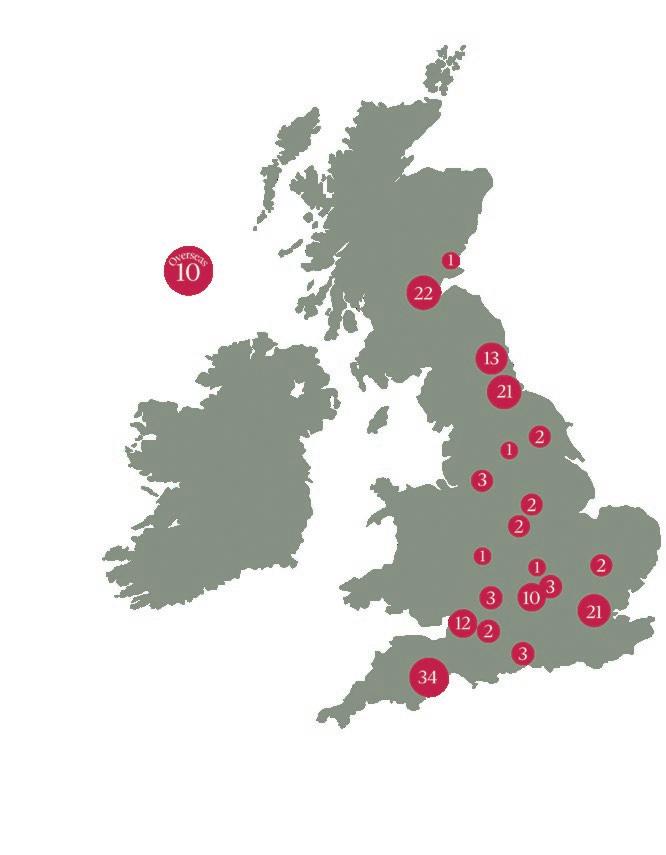
‘used it to create a three-year financial projection for a hedge fund, including sensitivity analysis, in around five minutes.’ If some of the claims made of Artificial Intelligence turn out to be even half true, its influence will be seismic.
At the same time, our boys’ ability to be able to benefit from these technological changes, might require just the traditional liberal education that Radley stands for. As the educationalist Daisy Christodoulou has written, our students’ capacity to build and supervise the kinds of programmes that we’re using necessitates just the kind of cognitive effort that such programmes aim to replace. As I say to the boys (we catch) using ChatGPT to write their essays for them: you’re using a forklift in the gym and hoping that you’ll still put on muscle! Counterintuitively, it might be that the best way of preparing boys for a
high-tech age is, sometimes, to revert to lower-tech solutions. It’s one reason why, at Radley, we continue to encourage boys to read physical books. At a time of declining reading habits in young people across the world, we hope that we can buck the trend and form boys who enjoy reading daily, both for pleasure and for knowledge.
They say that you should always write down your goals and that, in doing so, you create a commit mechanism to hold yourself to account. So that is what I’ve done here. I hope that when I next report on the College’s academic culture, I can say that, despite the national and international trends, Radley boys are expanding their minds, being transported to distant places and times, and learning the joy that comes from reading a good book every day.
Jonathan Porter, Deputy Head (Academic)
BRINGING NATURE TO RADLEY
At Radley, the natural world is never far from the everyday experience of boys and staff. In this article, we hear from four members of the College community whose work is closely intertwined with nature – whether nurturing the grounds, caring for the College’s menagerie of animals, or guiding students at the Countryside Centre. From the wildlife that thrives on campus to the lessons it inspires, their efforts bring the outdoors into the daily lives and education of the boys.
DAVID ANDERSON –ESTATES BURSAR
In what ways is Radley working alongside nature, rather than against it?
With the core of the campus fairly well developed with isolated nature-rich areas, we have looked to rebalance this around the perimeter together with forming wildlife corridors to enable both wildlife and flora and fauna to flourish. This has involved some rewilding and also significant tree planting with phase one of our 38,000 tree planting project being complete. As a quantity surveyor in a previous life, I cannot help but look at value for money and betterment. To this end we have completed a baseline nature survey. This gives us data to measure against in the future to see if our plans have really made a difference.
Why is it vital to steward Radley’s natural assets for future generations? Landscape design takes many years to achieve the initial concept. It takes foresight and investment for something that you’re most certainly not going to see in its completed state. As with our
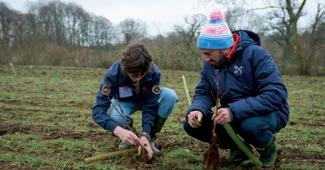
beyond the now, and be happy that our endeavours will be for the benefit of future generations.
Which piece of Radley’s natural landscape brings you the most joy? There is no specific area that really stands out for me, it is about the whole and not the part.
forefathers who have created this wonderful environment, we have to look
Tree planting.
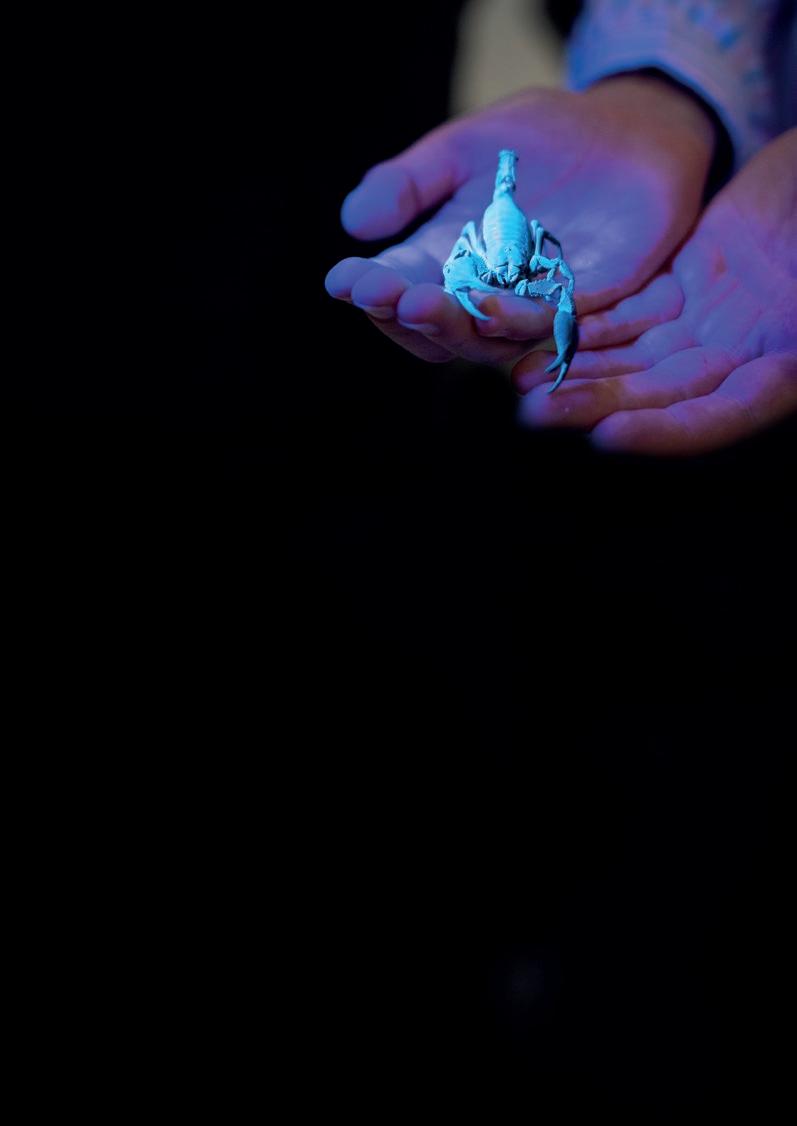
MICHAEL NOONE –HEAD OF BIOLOGY
How do Radley boys engage with nature both within the College and activities off campus?
Radley has made great strides in sustainability, but restoring biodiversity on campus to levels once taken for granted is vital. Past Radleians formed a Natural History Society, and Warden Field published The Natural History of the Radley District in 1912. Today, much of the work has moved indoors to the ‘ Radley Zoo,’ probably the largest school menagerie in the UK, featuring around 50 species. Students have also undertaken biodiversity surveys, wildflower sowing, and planted 100 metres of hedging in under 2½ hours during an impromptu volunteer session.
A small group of 6.1 boys in the Natural History CEP group has led many of these initiatives, even arranging for Sir Charles Burrell (of Knepp fame) to visit the grounds. Fact-finding missions have visited Knepp in Sussex and also the King’s Estate at Highgrove to see what we can learn. Radley is still some way from meeting the UK Government target of dedicating a third of the country’s land area to Nature Recovery, but with our extensive grounds, we are uniquely positioned to achieve this over time. Field trips to Skomer Island and the Honduras Expeditions with Operation Wallacea have also engaged Radley boys in global conservation efforts, learning about biodiversity in places like Cusuco National Park and scuba diving in the Caribbean.
How do the animals in the school’s biology collection enhance students’ education and spark curiosity?
Each animal tells a story. The Madagascan Hissing Cockroach teaches disruptive selection in evolution, while the Blue-tongued Skink helps us envision the movement of ancestral snakes. The scorpion, handled carefully, can remind us that even the most fearsome weapons should be a last resort. For many boys, the animals are more than academic interest – they’re companions.
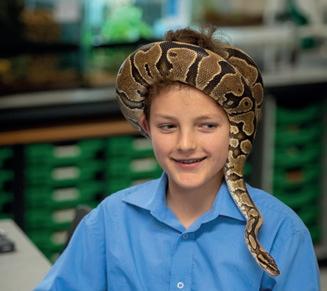

A boa around the neck or a gecko on the shoulder can be a perfect icebreaker, and the animals help foster friendships. The boys who are most distracted by the animals often excel in exams, perhaps because their connection to the subject is so genuine. But there’s also something deeper. Forming a bond with nature is one of the most powerful forms of wellbeing. This is evident in our work with visitors, prospective students, and primary school children, as the animals create a sense of responsibility and empathy in the boys. During our partnership sessions, seeing the sheer pleasure of the primary school children as they develop confidence, and interact with the boys from ‘ big school’ is a real privilege. A retired headmaster recently remarked that he’d never seen a department where ‘love’ was so palpable –something that truly reflects the heart of our work. That says it all – Sicut Columbae – just what Wardens Sewell or Field would have wanted for their boys.
How can an understanding and appreciation for nature influence a Radley boy’s personal values and career choices?
An interest in nature is the secret to a happy life. Whether pursuing science, business, or the arts, spending time in nature has immense wellbeing benefits. The simple act of recognising a native flower or encountering a wild creature can have a more profound effect on the mind than any app alert. Why? Because it’s real. It’s natural. And we are part of the natural world. This synergy is at risk of being forgotten, but our Victorian forefathers, such as Sewell, valued “Sylvan Pursuits” and knew the importance of connecting with nature. In their 1944–49 Natural History Survey boys wrote ‘ Nightingales – common in Little Wood’. Amongst the present College community I have rarely if ever met anyone who knows what this iconic native bird even sounds like, despite its role in poetry, music and culture. I have to admit, I’ve never heard one myself. Yet they once thrived at Radley, and, as at Knepp, could do so again. Few institutions are as ideally placed as Radley to reconnect people with the natural world. While we’ve made great strides, there’s still much work to be done to fully embrace our potential.
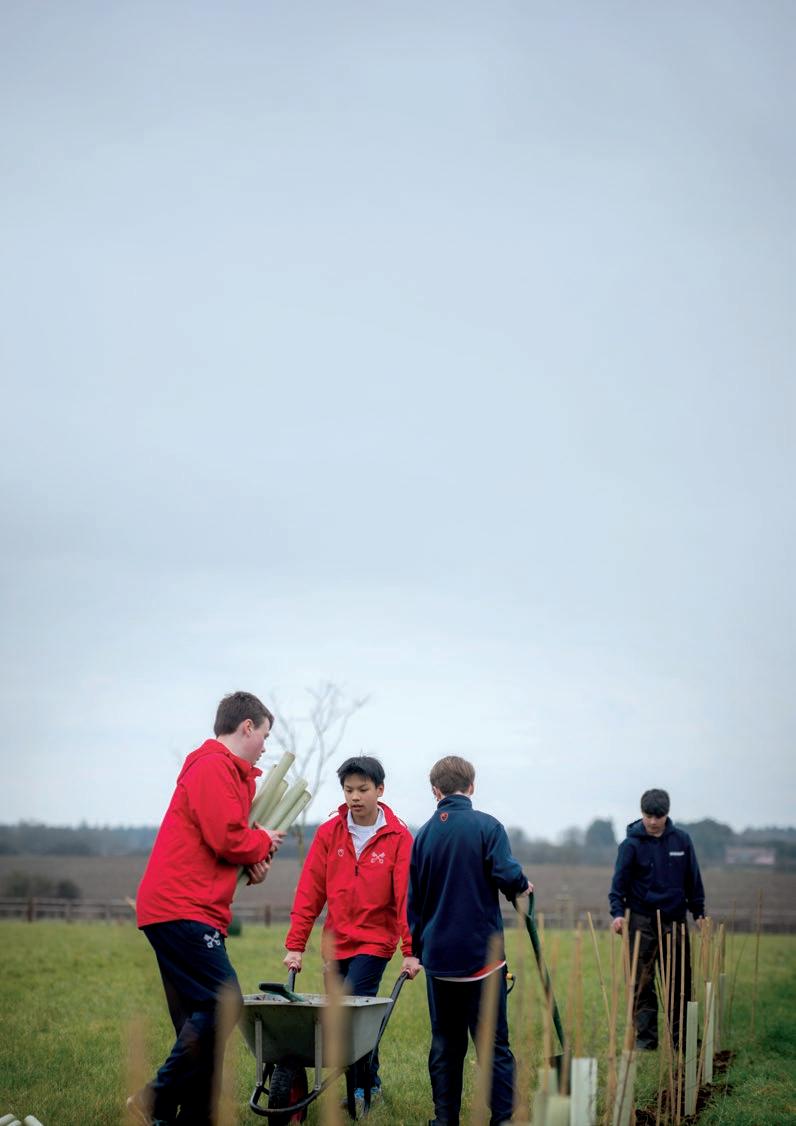
CHARLIE HERBERT – DIRECTOR OF THE COUNTRYSIDE CENTRE
Could you describe the role of the countryside centre nowadays?
Our aim is to provide class-leading countryside, conservation and environmental education, training and personal development opportunities to Radley College boys, our partner schools and the local community. The centre has evolved significantly over recent years, with a wide range of traditional native livestock – sheep, goats, pigs, poultry – farmed sustainably by children over a beautiful 25-acre site. We run a broad range of internal programmes, and all Shells now spend six Wednesday afternoons at the centre undertaking a variety of rural skills and activities. A great deal of our work is also focused on supporting the College’s partnership strategy. Our flagship Capstone Programme provides long term support to teenage boys on the cusp of permanent exclusion from secondary schools, and we run similar programmes with younger children from several primary schools. Ultimately, we seek to use the unique rural setting of the Countryside Centre as a platform to help children of all ages and backgrounds to achieve their full potential.
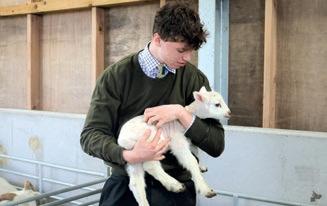
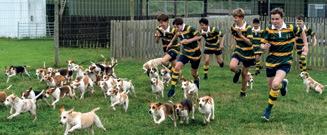
How can nature and the countryside play a role in educational and wellbeing outcomes?
The positive mental benefits of being outdoors are well documented and indisputable, and there’s no doubt of the quiet calming impact that nature has – not just on busy Radley boys but also on our partnership children. We are very fortunate to have an 800-acre site here at Radley, with historic woods, fields, ponds, hedgerows and permanent pasture. The responsible, low intensity character in which Peach Croft Farm has been managed over the decades provides a superb buffer to the busy, noisy world beyond the boundaries of the College. For many of our partnership children, especially those from the more socio-economically challenged parts of Oxford, the impact of working with our farm livestock can be life changing. It’s not just the setting, nor the exposure to nature, but as much about the sense of trust and responsibility given to them in a farm environment.
What are the real-world applications of the skills learned at the Countryside Centre?
Our work at the Centre helps to develop both soft and hard skills in attendees. The practical skills hopefully prove useful through life –whether it be constructing a fence, building a log shed, planting trees and hedging or dealing with sick and injured animals. It is the soft skills however that I think prove the most important. Having boys help with the dagging (rear end cleaning!) of a sheep before it goes to market, or helping to worm and vaccinate a pig, builds character, confidence, trust and a real sense of responsibility. As I quietly watched three 6.1 boys recently helping to deliver a livestock partnership programme with a group of children from Kingfisher SEND school, I was struck by the confidence, kindness and genuine empathy that emanated from them, and how much their regular sessions at the Countryside Centre had aided their development this year.
Radleians
(Top) New Shells playing with the beagles during their first week. (Above) Boys help care for animals including sheep, pigs and goats.
planting new hedges around campus.
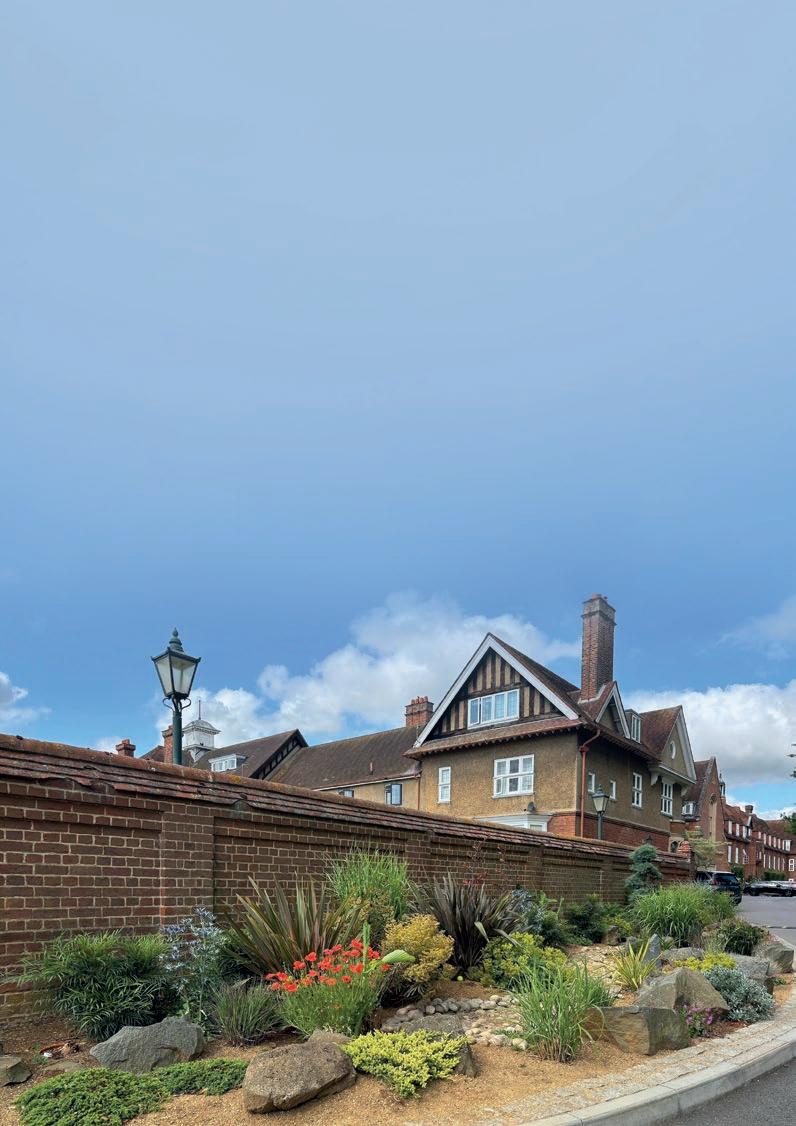
Mike Ginger – Head Gardener
What impacts of climate change are you seeing and how are you handling them?
We’ve all seen the effects of climate change with the extreme shifts in our weather patterns: droughts, extreme and localised rain showers, it’s something we need to get used to. Plants are far more sensitive to these changes than we humans are. This is illustrated where we see plants blossoming far earlier than they used to. If this is followed by a cold snap, we will see a poor yield on fruit trees or flowering trees. Species like Taxus baccata (English Yew) which have thrived in our temperate climate for millennia, are now starting to struggle due to climate change. We are having to be creative, experimenting with new types of planting such as the ‘dry bed’ we created a couple of years ago. Situated on the corner of A Social, facing north onto the pitches, it’s probably the most exposed place we could have chosen. This particular bed has taught us that our winters are still currently too cold for true Mediterranean species to survive the full extremes of our seasons.
How do you balance formal horticulture against a touch of the wild?
This is certainly a challenge because there are expectations that a place like Radley conjures up in people’s minds. Having wild areas as you enter the main gates, for instance, wouldn’t fit the vision people have of the campus when they arrive. So, we have looked for areas that are slightly out of the way where that juxtaposition is less obvious. The meadow behind Chapel is a perfect example of how this can work in our campus, providing islands of habitat where wildlife can thrive without detracting from the formal areas that surround it.

Radley’s grounds are absolutely gorgeous. What makes all that work worthwhile?
Working outside in nature has so many benefits for your mental wellbeing. Working at a beautiful place like Radley has its challenges, of course, but to be surrounded by such amazing buildings, views and history makes delivering quality for the boys so much more rewarding. It’s lovely to receive compliments on the gardening team’s endeavours, and seeing staff and students enjoying the surroundings always lifts our spirits. I hope that the grounds make a big impression on visitors to the campus, and that they play their part in persuading parents to send their boys here. In many jobs, you feel like a cog within a larger machine, but working in horticulture gives a rare opportunity to be part of a whole process – start to finish. The initial concept, planning, construction, delivery and maintenance.
The new ‘Dry Bed’ situated near A Social and Bigside.
A YEAR AT RADLEY
It’s impossible to capture everything that makes Radley special, but here are some of the events and achievements that defined this year.
DECEMBER 2024
Steeplechase 2024 was a rather muddy affair, but spirits remained high despite the wet conditions. 6.2s continued their tradition of opting to run in fancy dress, and some of the most eye-catching costumes included Batman, a nun, Ali G, grass skirts, a banana and an inflatable cow.
JANUARY
The year opened with work on the New Music School well under way. In January, with the building’s steel frame in place, bricklayers and carpenters took centre stage.
FEBRUARY
Declamations showcased monologues from Shakespeare to Bob Mortimer, with Kumar (V, F) winning the Victor Ludorum for the second year running, presented with the Elizabeth Madgen Casket by the Warden.

Radley’s guitar and saxophone quartets both reached the U19 senior finals of the Pro Corda National Chamber Music Competition, marking the first time two College groups have qualified in the same year.
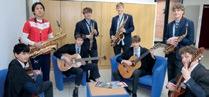
Boys helped launch a new ‘ Nature Patch’ with 420 hedge plants, ponds and meadows to boost biodiversity, while ecological surveys, bird boxes and conservation projects across campus are already attracting species from stock doves to cinnabar moths.

Radley’s Harriers reached the National Cross-Country Cup Final for the first time, finishing 17th overall at Leeds, with James (R, K) the first runner home.
Radley won the national grand championship of the ESU Schools’ Mace Debating Competition for the second year running, defeating over 380 teams and impressing judges with arguments, rhetoric and tone. Congratulations to Blake (6.2, A), Mikolaj (6.2, G) and DingDing (6.1, D).
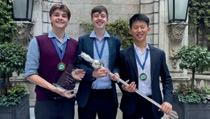
Poet Laureate Simon Armitage CBE gave a reading and Q&A in the College Theatre, inspiring Radley and OX14 Partnership pupils with his poetry.
Radley hosted the first Transplant European Football Championship, where England clinched a dramatic last-minute victory over Italy in the final.
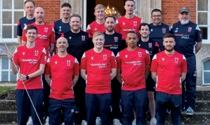
New memorial plaques were unveiled to mark Radley’s athletics track and Radford track, honouring Radleians and staff lost in WW2 and thanking the Radleian Society for its support of POWs.
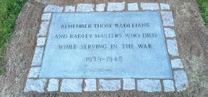
Radley robotics teams ‘Icarus’ and ‘Ibex’ qualified for the VEX World Championships in Dallas, where Icarus won their division’s Energy Award – the College’s third consecutive year reaching the global stage.

Tony (6.1, G) won the Serpentes Essay Prize with his study of American New Wave cinema.
Radley dominated the National Schools Croquet Competition at Surbiton, with Patrick (6.2, E) and Jimmy (6.1, L) winning the Doubles Championship and Felix (6.1, D) and Douglas (6.1, L) finishing runners-up.
Radley launched its new FiveYear Strategic Vision, reaffirming its commitment to being a boarding, boys’, and all-round school that nurtures young men of fine character. It can be read online at http://bit.ly/4fWt4UB
Radley crews claimed medals across the age groups at the National Schools Regatta in Nottingham, with the 2nd VIII and J14 8x+ winning gold among a string of podium finishes.
JUNE 2025
Jovan (6.1, J) won the Milligan Cup for Musical Theatre with It’s Hard to Speak My Heart from Parade, in a finals night adjudicated by actor David Ashley.
The Mariners’ Challenge saw the 1st VIII ‘Gladiators’ narrowly defeat the OR ‘Legends’ by two feet over 500m, in a thrilling race on the Radley stretch of the Thames.
Nine Radleians achieved Gold in the Cambridge Chemistry Challenge, with Ray (V, H) and Leonardo (V, H) placing in the top 10% nationally.
Harry (S, A) and his team were crowned polo champions in the 4 Goal Victor Ludorum Super League
JULY 2025
Gaudy was bigger and better than ever with ‘Gaudy Showtime’ offering families a chance to see robotics, pig racing,
beagle puppies, cricket, art and design, and enjoy live music and roving pipers!
Radley reached the final of the Princess Elizabeth Challenge Cup at Henley, finishing a close second to Shiplake in a thrilling race decided by just one length.

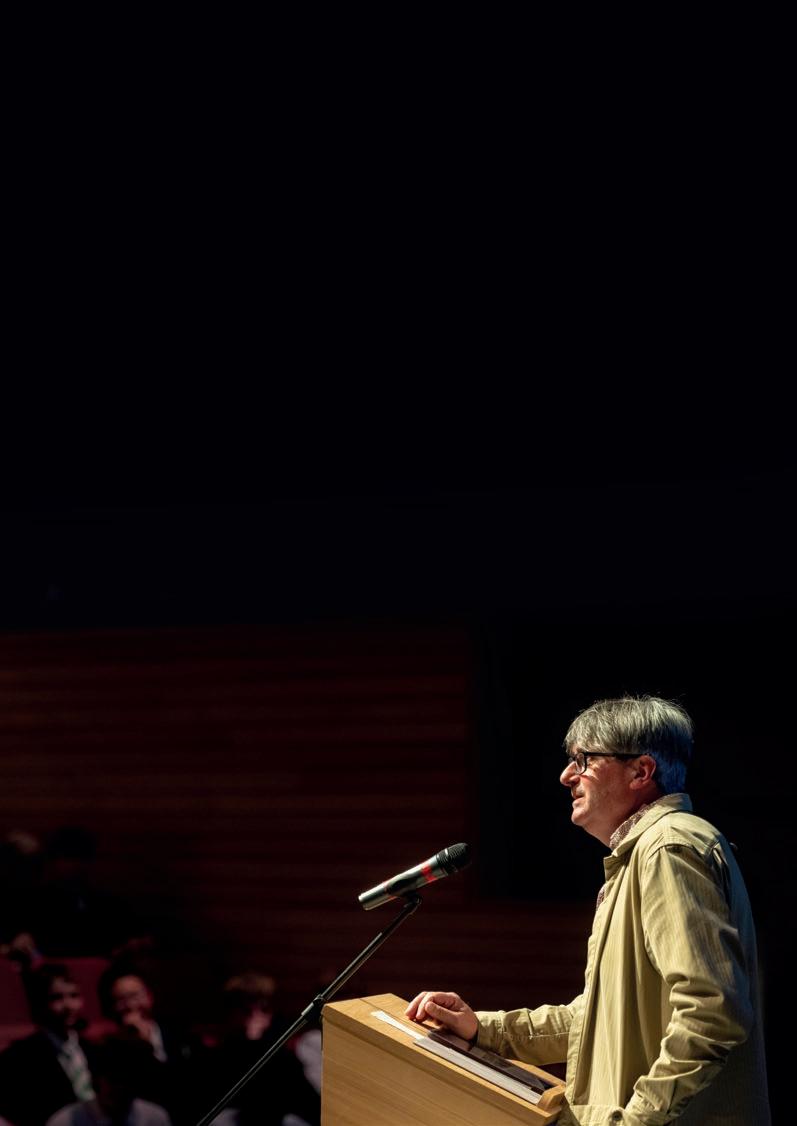
SEPTEMBER 2025
155 Shells, 5 Removes and 22 6.1s joined the College at the beginning of the new academic year
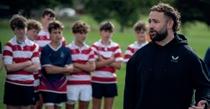
The Mighty Orchestra, bringing together over 200 young musicians from Radley and partner schools, performed at the National Festival of Music for Youth.
Radley won Muddy Stilettos’ Best Schools Award for Giving Something Back through its Sports Partnership programmes, and was also recognised for Performing Arts and STEM excellence.
AUGUST 2025
Radley’s SB20 crew raced at Cowes Week, finishing 6th out of 17 against international competition and gaining valuable experience in challenging conditions.

British and Irish Lion Will Stuart (2009, D) visited Radley to deliver a series of rugby coaching masterclasses to teams from across all year groups.
OCTOBER 2025
Radley once again played a pivotal role in Music Flood Week, culminating in a massed celebration in Abingdon Market Place involving over 400 primary school children.
NOVEMBER 2025
The Haddon Cup, where Shells take on short plays written and directed by their 6.1 peers, was adjudicated by Ned Campbell (2010, E). K Social proved victorious, followed by F and L. L Social Shell, Javier, won the overall Haddon Cup Acting Award.
Poet Laureate Simon Armitage CBE.

VALES 2024-25
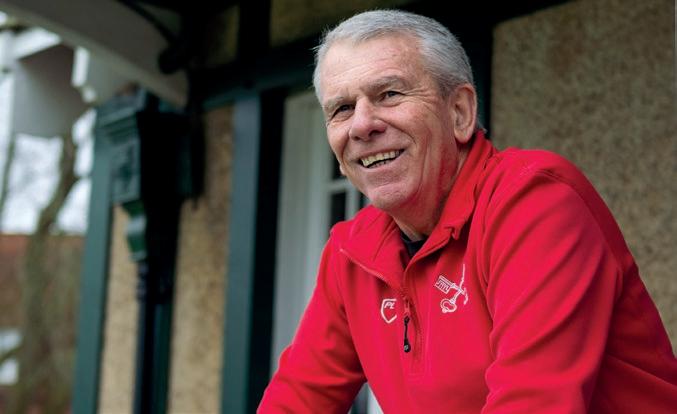
Andy Wagner
In September 2025 a Radley year will start without Andy Wagner for the first time since 1985. In that time, Wags has worked under four Wardens and seven Masters-in-Charge. One conclusion could be that working with Wags is more stressful than running the school. What is certainly true is that Wags has become a Radley institution. Like Pele, Plato and Cher, being known by just one name is a marker of legendary status and Wags fits into that group seamlessly. Although he does not enjoy centre stage, it is important that we pay tribute to an extraordinary career.
Despite Wags’ longevity, he has always been an innovator. His involvement in youth cricket outside Radley kept him abreast of changes in the game and he was a trailblazer when he instigated an off-season programme that other sports have emulated in recent years. It was because of Wags that Radley cricket was ahead of the pack for so long and it is a tribute to his energy and professionalism that he has continued to develop the club throughout his time at the school. His links with Middlesex ensured that talented players could pursue cricketing careers, and that our Academy programme enjoyed the wisdom of players and coaches all keen to do Wags a favour. This warm regard is evident in the fact that ORs have returned to play for the Rangers at various stages of their professional careers.
On a different note, Wags was always more than a cricket coach. I know there are boys who found sanctuary in his company, and
feel they wouldn’t have survived five years without his support and gentle guidance. He accompanied many Radleians on the first steps of their sporting journey in rugby and hockey as well as cricket and, more recently, he took on the challenge of running JC2 football with customary good humour. Wags was an excellent schoolmaster as well as an expert technical coach. His ability to make the complex appear simple extended beyond the mechanics of the cover drive to include guiding teenagers through choppy waters.
It is fitting that we finish by considering Wags’ contribution to schools’ cricket. His career encompassed several golden eras. The unbeaten teams of the 90s, the Gubbins, Hearne, Marriott group of 2009-12 and the John Harvey and Cowdrey Cup double winning team in 2017 are obvious high points but Wags’ reminiscences tend to revolve around stories and individuals rather than performance That said, a lack of focus on results should not be confused with a lack of competitive spirit. His jaunty whistling as he walked around the boundary tended to find a new tempo as the game reached its climax. However, he had seen enough schoolboy sport to know that the process was as important as the outcome. He always kept a firm eye on what is truly important – turning out quality individuals as well as producing quality cricketers. Wags will leave a huge void at the heart of Radley cricket, and we will endeavour to maintain his standards. We wish him, his loved ones and all his family the very best for the future.
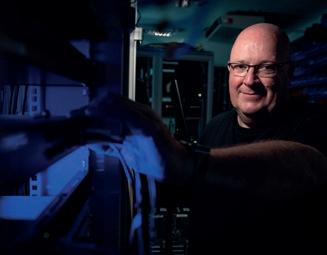
Jon Buzzard
Jon Buzzard came to Radley as a Physics Department technician in 1981. After five years he became head technician, putting together practical experiments with his engineering skills. In 1986 there were only five computers in the whole College, but very few dons (and even fewer boys!) knew how to use them. Soon a BBC computer network followed, and Jon was involved in helping with the networking and troubleshooting for problems, picking up IT knowledge as he went along.
From 1989 onwards Jon ran the fledgling IT Department, which consisted of just himself in those days. Alongside working at Radley Jon completed an Open University degree in IT and Computing. From then on Jon worked with various Heads of IT and Digital Strategy, including Jolyon Booth, Geoff Treglown, Ian Yorston (twice), Jonathan Wolstenholme and Richard Grice. The department itself also grew exponentially, as the number of IT rooms, networking systems, CCTV cameras, server rooms and hardware and software maintenance all required more manhours.
Three recent – it’s all relative! – developments had a huge impact on the College: the first was the switch away from ‘local’ systems such as the First Class e-mail to Office 365 and all of its capabilities; the second was the Covid-19 pandemic and the need to use Teams and OneNote for all remote teaching; lastly the provision of iPads to the lower school and the advent of IT and Computer Science lessons also changed the nature of a Radley education. Needless to say, Jon and his team coped brilliantly with all challenges, and in their own quiet way they revolutionised Radley College.
Outside Radley, Jon is a real family man, and he and Jenny enjoy looking after their children, grandchildren and various pets with gusto. Jon also likes projects – extensions on houses, doing up motorbikes and trikes – and plans to do more of the same in retirement. Finally, Jon is a real music and festivals enthusiast –he will often be found at gigs with a pint of real ale in hand.
After forty-four years of service to Radley, Jon is a genuine Radley legend, and we wish him well for his retirement.
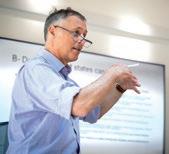
Mark Jewell
Mark Jewell arrived at Radley in 1999 as Head of Economics. An Exhibitioner at Queen’s College, Oxford (PPE), he previously taught Economics, Politics and Geography at Merchant Taylors’ School, London, and at Colombo International School, Sri Lanka, and had been Head of Economics
at St Albans School. Apart from a keen interest in his subject, Mark brought with him a passion for football and a belief in the importance of holistic teaching following a two-year Counselling in Education qualification at the Tavistock Institute, London.
Being a classroom teacher was paramount. He taught Economics at Radley until 2013 and then was delighted to join the dynamic Politics department at a tumultuous and fascinating time. He meticulously prepared every lesson to be creative and engaging. Indications of his dedication manifested themselves in his time during the civil war in Sri Lanka (1987-89). A Pedestrian Flow Count during a field trip he had organised was interrupted by a terrorist bomb! He also risked being shot during a General Strike when he secretly held lessons in pupils’ homes so that they didn’t fall behind. This was typical of how he conducted the rest of his teaching career: with commitment and fearlessness.
Football is a big part of Mark’s life. One of the founding fathers of RCAFC, he coached the 1sts for 10 years, and then the 2nds, Colts 1 and 3rds. He was the first coach to lead his teams to 100 victories –Radley’s own Arsene Wenger!
Good pastoral care in a boarding environment is essential, and Mark was at the heart of A Social’s team from 2008, having previously been with Orchard House and C Social. He believed in A Social enough to send his son Hanno in 2014. Singing on stage during a Cultural Evening might not have been Mark’s forte, but he always accepted the challenge. All the Tutors lucky enough to have him on their team could rely on his wealth of experience and steadying hand when on duty.
Mark was Head of Community Partnerships after 2010. This role led to his most meaningful career experience in the development of a 12-year relationship with Gehandu School, Tanzania. Mark led annual trips for over 100 Radleians, climbing Kilimanjaro or Meru and teaching in the school. Boys fundraised for a water pump for the village, classrooms, a girls’ boarding house, computers … He was instrumental in introducing modern teaching methods to replace outdated colonial ideas. Mark still has an incredibly warm relationship with Gehandu. ORs found the experience transformational. On his 60th birthday the school had a day of celebration in honour of Mr Mark with ceremonies, cake and football, all filmed and sent by WhatsApp.
Mark’s children, Isabella, Hanno, and Hermione, have been integral to the Radley family community and will be missed. Fortunately, Mark’s wife, Amanda, will continue as Exhibitions Curator so Mark will return for exciting exhibitions planned for the future.
TRGR
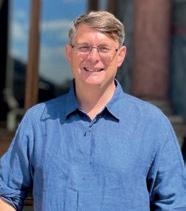
Malcolm Brown
After twelve years of dedicated service, Malcolm leaves Radley to take up the role of University Careers and Futures Counsellor at Brighton College in Abu Dhabi. His time at Radley has been defined by quiet authority and an unfailing generosity of spirit.
Before joining the College, Malcolm enjoyed a distinguished international career in banking. His work took him to Hong Kong, the UAE, Chile, Oman, Brazil, Korea, Peru and Algeria, where he held various senior positions. He brought to Radley the rare combination of a truly global perspective, intellectual rigour and deep cultural fluency, all of which have enriched both the Modern Languages department and the wider school.
A gifted linguist and thoughtful educator, Malcolm taught French, Spanish and Portuguese. Boys valued his precision, dry wit and patience – to say nothing of his impeccable knowledge of everything from post-Franco reforms to Bad Bunny. His popular talks at Social Prayers ranged from personal insights into 9/11
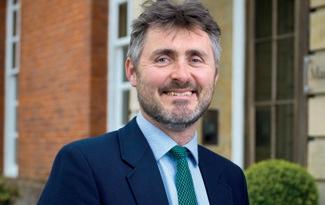
Matt Glendon-Doyle
Matt joined the Classics Department in 2014, having cut his teaching teeth at Canford after a first career in the City. Accompanied by his wife of 10 days, Rosie, he went straight into E Social as Sub-Tutor. Matt is a terrific Classicist and all-round schoolmaster: his Cambridge degree and rugby background were two obvious positives on his CV, and his enthusiastic naturalness in the classroom and perfect ‘fit’ for Common Room led to him being a ‘shoe-in’ by the appointing powers before he’d even got through Short Break of the interview day.
After three years in and one out of E, teaching a full Classics timetable, helping with CCF and other Wednesday Activities, running Charities, and coaching good rugby teams and slightly less good cricket and
to entertaining ‘roasts’ that showcased an extraordinary ability to observe daily life from inside the curious mind of a teenager. Such satirical venting was all the more amusing from the mouth of someone never prone to complaining.
Malcolm was a stalwart coach of Colts football and 3rd XI cricket who stood for steady strategy, discipline and sportsmanship. His international experience made him a natural leader on overseas trips, including memorable visits to the US, Japan and Honduras. He also ran the Cellar with aplomb and organised regular wine tasting events to share his expertise with just the right balance of information and informality.
As a form master, Malcolm brought wise counsel and pastoral care delivered with understated charm and good humour. His presence in Common Room was equally appreciated: unfailingly collegial, discerning and ready to support others. He played a key part in the university preparation programme for those applying to the United States. The rise in Ivy League and top-tier offers in recent years owes much to his attentive mentoring and ability to support pupils and colleagues with clarity and tact.
Malcolm leaves with our sincere thanks and admiration. He has made a deep and lasting contribution to Radley – one that reflects the breadth of his experience and the strength of his values. We wish him and his wife Julieta every happiness as they begin an exciting new chapter.
hockey teams, the G-D family, now including two-year-old Hebe and three-month-old Peggy, made the move into K Social. Matt is something of a worrier as a classroom teacher, usually checking minute details in advance of any new course, set or activity. So, his silence in the run up to term starting in September 2018 was a little odd. It was finally broken around 10 minutes before his first lesson with a new Remove set with an email that read simply ‘what room am I in and do they have textbooks?’ Of course, this doesn’t in any way reflect a dropping-off of standards from Matt, merely the fact that his focus and energies were now to be massively diverted into doing the best possible job he could as a Tutor for every boy in his charge. The further arrival of Patrick meant that Matt and Rosie were dealing with about as exhausting a work-life balance as it is possible to conceive (and there may have been a few moments when the Department was something of a refuge!), but Matt always remained a fully committed all-round don.
His willingness to help boys out in any scenario is evident in the many groups he has helped to run, including the Investment and Formula 1 Societies. He has, of course, also devoted a large amount of time and effort to helping the Catholic Chaplaincy, in regular Chapel and for Confirmations. So, the fit of Pastoral Deputy at Ampleforth was an obvious one to attract his attention as a next step, and the boys and girls of that school will be in extremely good hands when the G-D family move north this summer.
They will leave many friends and dozens of Radleians who have benefitted from their attentions. We wish them well and anticipate great success in their next step.
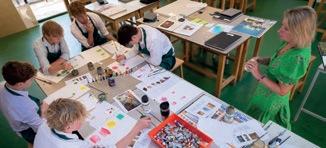
Ruth Tufnell
When Ruth Tufnell arrived at Radley as an Art teacher 10 years ago, she was no stranger to the College as the parent of three exemplary Radleians – James, Will and Angus – and the aunt of countless Tufnells. Her warmth and infectious humour made her an instant hit with both colleagues and boys as she threw herself gamely into every aspect of College life. After a degree in Fine Art at Loughborough School of Art and Design, she worked for a fine art publishers as a picture researcher/buyer supplying art for shops and galleries before becoming Publishing Director at CCA Galleries. Ruth took a career break to bring up her three beloved boys before re-training as an Art teacher. Working in both state and private education, she gained invaluable teaching experience at many Oxfordshire schools including Abingdon School.
Ruth brought a different kind of creative energy and professional rigour to an already successful department and it was no surprise when she became Director of Art in September 2019. The untimely advent of the Covid Pandemic did not faze her as she responded to the challenge of teaching Art online with organisation, imagination and common sense. Boys were sent home with art materials and instructions and encouraged to think outside of the box. Wonderful creations evolved as Radleians painted, sketched and photographed their families and homes, built installations out of cereal boxes and dug up clay in their gardens to fashion into sculptures! In the years that followed, the Art Department remained a vibrant place. Ruth’s passion and dedication to teaching Art and her admirable work ethic was evident throughout. She cared deeply about her students and worked tirelessly to give them the utmost support during their time in the department: her core philosophy being that ‘Art is a central part of the curriculum that can help young people find a sense of self and creativity that is mind-expanding’.
Ruth’s approach to preparing the examination years was impressively thorough and she expected high standards from her students. But she was also eager to expand their experience of the visual arts with a rich offering of artist led workshops, talks by art professionals and gallery trips all over the world.
Outside of the Art Department Ruth was a pioneering Head of Charities for 5 years, a stalwart Sub-Tutor in C Social, a croquet coach and marathon runner!
We will miss her greatly in the department and throughout the College community. The studios have been filled with laughter and warmth during her time here and we are all incredibly fond of her. We wish Ruth every success in her new adventure at Cothill, but know they all will love her! ACJ
Ali Hakimi
Ali Hakimi’s first impression at Radley was so strong that he was subsequently offered a job in the Physics Department which had not yet been advertised. And what a signing he was. Fresh from finishing his PhD at Cambridge, he took up his post, only to be whisked into D Social as a resident Sub-Tutor at the end of half a term. Here he stayed for four years, during which time he married Laura, and they started their family at Radley, with Mina’s arrival. In Radley Phase 1, Ali made a name for himself as an exceptional Physics teacher, full of innovative ideas and well-researched, detailed resources that colleagues appreciated bumping into at the Department photocopier. Ali coached Colts rugby and tennis, and was Master-in-Charge of Real Tennis (for which he had gained a Blue at university). Football (another Blue) was the sport closest to his heart, though, and he was quickly promoted to running the 1st XI before (in Radley Phase 2) taking the reins of the Club, establishing it as a considerable force on the Lent Term soccer circuit and managing huge numbers of boys with all of the associated demands on coaching, facilities, and fixtures.
After two years at Marlborough Malaysia, where Ali was appointed Housemaster of a new boarding house, he returned to Radley brimming with wider experience, and he was soon appointed to the role of the founding Tutor of L Social. Of course, he did it brilliantly, bringing together a group of pupils who had begun their Radley years across the other ten Socials. L Social has flourished just as Ali has continued to contribute hugely to life all around College, as Master-in-Charge of Football, as tennis coach, as DofE trip enthusiast, and with recent oversight of the College’s digital policies following research and wide-scale conversations with experts, colleagues, parents and boys. Ali’s pastoral understanding of young people is both excellent and intuitive, and his warmth and energy in his roles has been palpable in the conduct of his charges. It was no surprise when Ali was appointed to the role of Deputy Head Pastoral at Rugby School.
Famed for his bad ‘dad jokes’ and his seemingly infinite well of nicknames for pretty much anyone he ever meets, his warmth and kindness around campus (and the joyous voices of the Hakimi children) will be greatly missed.

Jo Bailey
After seven remarkable years, Jo is retiring as our Head of Examinations.
During Jo’s tenure, the world of exams has transformed, with regulations becoming increasingly complex. During COVID, she expertly and calmly navigated the uncharted territory of Centre
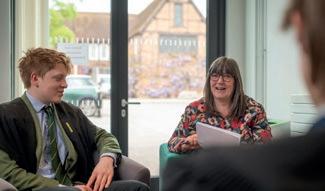
Assessed Grades (CAGs), Teacher Assessed Grades (TAGs), and Remote Assessment Policies. These were turbulent times, yet Jo’s calm professionalism provided much-needed stability for staff, students, and families alike.
When considering the qualities an examination officer needs, words such as efficiency, precision, and integrity spring to mind. These all describe Jo perfectly. Yet, what truly sets her apart is her deeply human approach. For Jo, being Head of Exams has always been about the boys.
Exams are stressful, and Jo understands this better than anyone. She knows that some boys struggle to cope with the pressures of GCSEs and A Levels, which represent the culmination of two years of hard work. For certain students, Jo has been more than an exams officer; she has been a steadying pastoral presence, as important to them as their Form Master, PHM or Tutor.
Jo’s retirement marks the end of an era. She has been a guiding light through challenging times, a champion of integrity, and, above all, a compassionate advocate for the boys.
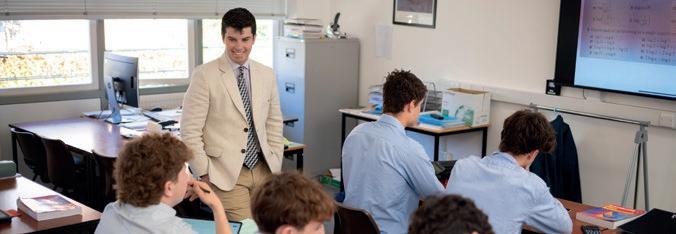
Eoin Simpkins
Eoin joined the Maths Department as a graduate trainee in September 2021 having just completed a four-year course in straight Mathematics at Christ Church, Oxford. He was just the sort of candidate that any school like Radley would be eager to appoint, combining academic rigour with significant talents in both rowing and rugby. So, it wasn’t long before he was offered a full-time post.
He has contributed an enormous amount in those four years – as a talented classroom teacher, living-in Sub-Tutor in G Social, rugby coach and referee, and rowing coach. And what stands out in all those roles is his ambition for the boys in his care. Whether it be the bottom Fifth Form IGCSE Maths set, or the 3rd VIII, he wants his boys to raise their games, and exceed their expectations.
Eoin is a young man of strong opinions, and he is not always tolerant of anyone who he sees as doing less well than they should – whether it be a boy or a member of the adult community. He is
clear about what he sees as the correct way forward, and is always generous in sharing his views.
As a classroom teacher you can always rely on Eoin to deliver good results. As 3rd VIII coach this year his crew came first in the SHORR and achieved a bronze at National Schools. And I remember in his first term, he was returning from the pitches having refereed the 2nd XV; the 1st XV match was paused as the referee had been injured. Eoin stepped in and refereed his second match on the same afternoon.
When Eoin came to Radley he was always toying between teaching and the City as his career path. After four years with us he has decided to give Management Consultancy a run, so he moves to London at the end of this term. You never know. Having tried what the City has to offer, it is not inconceivable that he will be tempted back into the classroom at some time in the future. His departure is a loss to the profession.
MAX HORSEY (HON MEMBER)
Max Horsey arrived at Radley in September 1989 as an Electronics teacher. He then became the Head of Electronics in 1993, working in the Design Department. Here he also started Radley Video, which he continued to run until Easter 2025. It was indicative of Max’s enthusiasm for Radley that he officially retired on 31st August 2009, only to start semi-retirement as head of Radley Video on 1st September 2009. Overall Max’s career spanned 36 years at Radley, and how lucky we were to have him.
In the department Max inculcated a spirit of real academic enquiry – boys made extraordinarily intricate projects, with all manner of circuit boards and soldering going on. His enthusiasm for Electronics had started as a boyhood hobby and grew from there. He was quick to adopt the latest technology and the Electronics lab had ‘new toys’ almost on a weekly basis. Radley was one of the first schools to use PIC chips in project work, which opened up a new world of possibilities. Many of his former pupils went on to great things –Professor John Morton probably being the standout example.
The College will remember Max most fondly for his Radley Video work. He and his teams seemed to have inexhaustible energy in filming and editing so many things: prep school plays, pantomimes and carol services, the 1st XV rugby matches, 1st XI football and the 1st VIII, the Steeplechase, the College plays and musicals, all of the concerts, carol services and musical prizes, the Social events –Max and his team were ever-present and so extraordinarily professional in all that they did. Covid made us all realise just how important Radley Video would be, even if Max was accidentally furloughed to start with ...
And Max was an inspiration to so many over the years, inspiring such loyalty from his teams. Many made their first ever film under Max’s watchful eye, and benefitted from his kind guidance and enormous experience. A huge number of ORs went into associated industries after their time with Max – film, television, sound, documentaries or photography – and his former pupils have won prizes including BAFTAs and other prestigious awards. There are so many Radley films (Glimpses
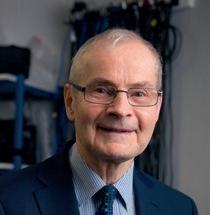
of Radley, Royal Glimpses) that are his enduring legacy to the College, and what a pity that he was too modest to be on the other side of the camera.
Max was something of an enigma, loving all the latest gadgets, and was akin to a James Bond Q figure in his liking for selfpropelled hoovers, lawnmowers, electric cars, drones and the like years before they became commonplace. He was extremely quirky, and self-deprecating about his foibles – he gave an excellent Social Prayers in E Social about his hatred of fine wine or blue cheese, on the basis that both were riddled with bacteria. Blue Nun was always the order of the day for Max ...
His illness came upon him so very swiftly that it took us all by surprise, and many were not able to say their goodbyes. But Max was enjoying working in the Video Unit right up until the last moment, and that was enormously fitting. He was a warm-hearted, kind, dedicated, talented, hard-working and humble man; a legend of Radley. He will be missed.
Max Horsey died on 17th April 2025.
MALCOLM MACE (HON MEMBER)
Malcolm Mace was a brilliant member of the boathouse team for 38 years. He retired after Henley in 2004. During those years Malcolm quietly dedicated himself to ensuring that the Radley fleet performed to perfection. Malcolm’s reputation for ensuring that Radley always had the best spot for the boats at Regattas was legendary in the rowing world. So too was his ability to cope with any crisis. Whether serious oarsman, casual sculler or enthusiastic parent, we all have much for which to be grateful. To many, Malcolm was the ‘tenth’
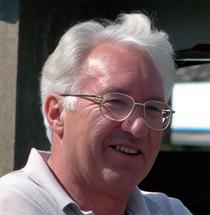
member of the crew, for without him they would not have had either success or pleasure from rowing. During his time with the Boat Club Malcolm saw the Club win over 600 regatta trophies.
Before Radley Malcolm worked for Salter’s in Oxford. One of his duties was to ‘skipper’ a large steamer on its trips between Oxford and Abingdon. He would often bring his steamer to a complete halt to allow Radley crews to prepare for a piece of training.
He joined Radley in 1966. At that time all the boats were transported to events on the back of a lorry. Ronnie Howard, the brilliant Master-in-Charge, organised for Malcolm to have driving lessons to prepare him for towing trailers at the start of the 1970s.
In the early 1970s Malcolm had major surgery which, astonishingly, had no effect on his enthusiasm or abilities. He threw himself back in to all the physical tasks of being a boatman and almost nobody knew about his operation.
It is impossible to calculate how much time Malcolm sacrificed during evenings and weekends, with Bill Weller and then Ray Underwood, to help repair damaged boats and oars so they were ready for the next outing.
Malcolm would get up impossibly early so he and his team could arrive before the crowd and secure the best parking space for the trailer. At regattas Malcolm took every possible spare part for the Radley fleet: seats, shoes, stretchers, fins, rudders, gates and other bits of rigger, and a huge supply of nuts and bolts of assorted sizes. Other clubs soon discovered that if they broke something then Malcolm was the person
Max Horsey
Malcolm Mace’
to seek out for a spare. Malcolm, being Malcolm, would help everyone. When he retired Abingdon School presented him with an Abingdon blade with the message: “The best boatman we’ve never had.”
Some edited appreciations from past members of the Boat Club:
“I remember him well from my halcyon days on the river at Radley in the late 1960s. He was always cheerful whatever the weather, approachable, attentive and ever helpful to rowers of every age and ability, and he exuded a great warmth of character.”
“He was a brilliant Boatman – one of Radley’s very best, if not THE best. The stories about his energy, willingness to please and self-sacrifice are legendary.”
“One of the best. Unknowingly, I am sure we took leaves from his book of core values as we ventured into life beyond schooldays.”
“I spent plenty of time with Malcolm in the Land Rover going to regattas – then helping the set up when we got there – as well as packing up long after the crews had left. Some of the happiest times I had at Radley.”
“He was a special person and extremely kind to me especially. I learnt a lot from a very kind person who showed me how to manage kit and crews – served me very well in Events Management many years later.”
“A true gentleman and Master Craftsman that I was fortunate enough to know.”
Malcolm is survived by his three children, his grandchildren and great grandchildren.
Bless you Malcolm for being such a patient, kind, loyal, dedicated, wonderful friend to the Boat Club and to all of us.
Malcolm Mace died on 4th August 2025, aged 88.
ANNA MELLUISH (RADSOC VP)
Anna, wife of former Chair of Council Michael Melluish and mother of Radleian Society Chairman Sam Melluish (1976, B), has died at the age of nearly 93.
Her involvement with Radley began as a parent and wife of the Chair of Council, although they both had long-
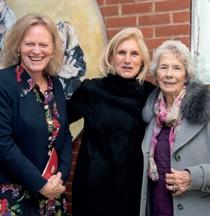
standing friendships with the Silks and the Dowdings from university days. Her close connection to the College continued throughout her life, and she was a familiar face at events right up until last year.
Many of her Radley friends joined the family at a celebratory thanksgiving service in August this year. She loved Radley, the people and the place from her first visit as a newlywed in 1957. She was generous, loyal and held in great affection by her many friends.
Anna was the beloved wife of the late Michael, much loved sister of Charles and sister-in-law of Christopher and Susie, devoted and dearly loved mother of Sarah, Louise and Sam and cherished mother-inlaw of David and Martin. She was also the adored Granna of Gina, Susanna, Eliza, Jamie and Max and grandson-in-law, Finlay.
Anna Melluish died peacefully after a short illness on 17th June 2025.
ELSPETH STOTT (HON MEMBER)
It is with great sadness that we announce the death of Elspeth Stott, Matron of C Social from 1976 to 1996. Elspeth died peacefully in Yorkshire, where she spent her last years, on 8th July 2025. She had had a series of falls, caused largely by being knocked over by dogs, which set her back physically. She was mentally sharp to the end – still watching the horseracing, still reading The Times and working through its crossword every day. Her enthusiasm for 9pm Cocoa, however, had ebbed…
She loved her time at Radley. The Radley community was extremely embracing – which is why her initial one-term
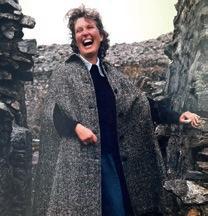
temporary position turned into 20 years.
Born in India, she went to school in Scotland at nine, not seeing her parents for five years – which is probably why she connected so effectively with the C Social boys. She was a keen horsewoman, carriage driver and horse breeder before coming to Radley, and transferred those skills to professional greyhound breeding and coursing as she commuted between Radley and her house in Lincolnshire. On leaving Radley, she spent much time with her much-loved coursing (until it was banned), and focussed afterwards on gardens, rarebreed hens and shaping the community she lived in.
Elspeth was proud to have encouraged a series of Social Tutors to prestigious headships, including Richard Morgan, Peter LeRoy, Michael Featherstone, and Patrick Derham, and influencing other dons in their pastoral method. Tutors and Sub-Tutors benefitted hugely from her warm friendship, sense of fun, listening ear, and common-sense counsel in times of need. In C Social (be in no doubt) there was ‘Tutor-law’ and ‘Elspeth-law’. The two systems worked in a complementary way, but the latter swung into action whenever a discreet, more subtle, pastoral touch was needed. It was very clear that a Tutor need not know details of the operation of ‘Elspeth-law’ and a sensible Tutor was never foolish enough to interfere or probe! The whole system operated magnificently, with boys knowing they had a maternal listening ear and ardent supporter. One former Sub-Tutor remembers receiving phone calls from Elspeth late at night, suggesting that ‘you might want to walk through the Remove corridor’, when shenanigans were occurring – which a don, not a matron, should suppress. In this way, the
Anna Melluish (right)
Elspeth Stott
constitutional balance was maintained. Elspeth was the consummate professional. She will be sorely missed by her extensive family – who are very appreciative of all the letters they have received from generations of ORs whose life she appears to have dramatically shaped for the better.
Elspeth Stott died on 8th July 2025.
MAURICE WYLES (HON MEMBER)
Maurice Wyles, 95, died peacefully on 7th June 2025 after a short illness. He was born on 25th May 1930 and was the much loved husband of Jenny, father of Anne, Katie and William and grandfather of five.
He started his Radley connections as a boy when his school, Eastbourne College, was evacuated during the war. He returned in 1956 as a Geography master and stayed until 1969 before taking up the position of headmaster in a Leicestershire school.
As well as his love of teaching geography he threw himself into life at Radley coaching the 3rd VIII and encouraging the setting up of the Meteorological Society. He led expeditions to the Brecon Beacons and Malham Cove. His passion for geography never really left him. During a trip to New Zealand in 2001 to visit his daughter he took a scenic flight over Milford Sound and was heard to exclaim “If only I could have brought the Radley geographers here to show them (the hanging valley) in real life.”
Such was his fondness of his time at Radley, he remained in close contact with several old Radley masters, notably Hugo Langrish and Donald Paine as well as old boys – many of whom have written to the
family with their memories of Maurice.
“It’s not easy to define why someone who taught me so many years ago should have made such a strong impression. Maurice did this, more than most, I think because of his interest in others, his empathy, his consistent fairness and integrity – all inspirational qualities which were combined with a sensitive sense of humour. Of course, one gets to see these characteristics of someone when outside the classroom, in my case struggling over the Brecon Beacons or pulling an oar on the Thames. Such memories last a lifetime.”
“I was one of his geography students in the mid 1960s – in a nutshell he took a pretty average schoolboy with no university pretentions at all – and sent him to read geography at his old college in Cambridge. I will forever be grateful for Maurice’s skill as a teacher and for his kindness to me.”
He will be greatly missed.
Maurice Wyles died on 7th June 2025.
JOHN WYLIE (HON MEMBER)
The death of John Wylie on 28th September 2024, in his beloved Salcombe, was felt across the wider College community. John wasn’t one for fanfare. He led by example – quietly, steadily, and with a smile that landed at just the right moment. He didn’t need to talk about values; he lived them through his actions, his commitment, and his love of the outdoors and education.
He gave 38 years of his life to Radley College. From his arrival in 1970 until his retirement in 2008, he served as Head of the CCF Naval Section. Between 1985
and 1996, he was the much-respected Tutor of D Social. He taught geography, refereed rugby, coached hockey, and took generations of Radleians sailing – always with calm focus and a depth of care that left its mark.
What we remember most about John isn’t just what he did – it’s how he made people feel. His minibus trips were legendary. Nothing dramatic: a full bus, a battered map, and the quiet feeling that something unexpected might happen. Detours were common. So was laughter. The boys might not always have known exactly where they were going, but they always came back with a story – and a sense of adventure.
His sailing trips offered boys the kind of freedom that builds confidence. He let them make mistakes. He let them figure things out. And he was always nearby –quiet, steady, encouraging. The lessons weren’t just nautical; they were personal.
His geography field trips to Birmingham became small adventures. John turned familiar places into something curious and alive. Just as he did in the classroom, he helped boys notice things, think for themselves. John was an outstanding teacher, always bringing learning to life – in the classroom, the hills, the city streets, on a minibus on some backroad in the rain. Old Radleians speak warmly of those shared times, boots muddy and spirits high.
At home, John was a devoted husband to Fiona and a loving father to Emma and Charlie. His loyalty to them ran deep. He was proud in the quietest, strongest way. John walked through life gently but left deep footprints. He showed boys and those fortunate enough to have worked alongside him how to explore with courage, think with clarity, and find joy in the journey.
John Wylie died on 28th September 2024.
KEWPIE STUART (WIFE OF PETER STUART (1933, H), OR, DON AND TUTOR OF D SOCIAL)
Kewpie was born in 1925, in Glanmire, a town outside Cork in Ireland.
Educated in Ireland and England, she started working as a secretary for the Bursar at Radley College in Oxfordshire, where she met Peter. They were married in 1951.
Maurice Wyles
John Wylie
Kewpie and Peter were an inspirational couple at Radley, serving as House Master and Mistress of D Social. They had, as one old boy described, “a prevailing sense of warmth”. Though they didn’t have children of their own, as Peter said in his retirement speech: “We’ve had 170 children – all boys!”
They were highly regarded for their contribution to music, both playing in the orchestra and hosting musical evenings. Kewpie worked in the bookshop, made costumes for the College plays, and was ‘mother’ to all the boys in D Social.
Kewpie received masses of letters from ORs after Peter’s death, letters filled with praise and admiration:
“A happy Social. A humane Social. None of which could have been achieved without Kewpie, of that I am certain. Most of us were secret admirers of her, I’m sure. Including me.”
“The toughness of boarding school life was marvellously tempered by the civilised and civilising qualities brought to the community by you both through music, your personalities and hospitality. Playing alongside one or both of you was a pleasure, the memory of which remains ever fresh for me.”
“I have memories of Kewpie as wardrobe mistress, helping cross-dress us for College plays. I played several female parts, but I was not entirely chuffed when dolled up as Goneril; Kewpie said I look just like my mother!”
“We remember you both with great affection at Radley: straight, no sides taken, and yourself, we younger dons conceded –and probably the older ones too – quite the most handsome wife in College …”
Strong and lasting friendships were forged through the community at Radley, old boys and dons alike. Friendships that continued throughout their lives.
In 1979, after 30+ years at Radley, retirement brought them to Alderton, where they settled into Chapel House. They were embraced by the community, fully immersing themselves in Suffolk life.
Kewpie possessed a rare and beautiful spirit. Her altruism was boundless;
she lived a life of self-sacrifice, always prioritising the needs of others. She was funny and joyful and left an indelible mark on all who knew her.
Kewpie Stuart died on 4th February 2025, aged 99.
WOOD, DB (1937, A)
My father was educated at Radley from 1937–41 and then went to Pembroke College, Cambridge to read Mechanical Sciences, achieving a first class degree in the two year war-time course. He became President of the College Boat Club and was awarded a Half Blue for rowing in the Cambridge second boat, Goldie, in the 1943 Boat Race.
It was at Cambridge that he met my mother, Jennifer, who was reading Natural Sciences at Newnham College. However, in 1943 war service took them in separate directions, and it was not until 1948 that they married – a union that was to last until my mother’s early death in 1999.
Immediately on leaving Cambridge in June 1943, my father joined the Royal Electrical and Mechanical Engineers (REME) and was commissioned in January 1944. After officer training in the UK, he was sent to India in late 1944 and ultimately to Japan as part of the Occupation Force, returning to India in May 1947. At the end of his war service, he was accepted for a regular commission and eventually returned to the UK in late 1947.
His REME career took him overseas to Germany and Malaya, and various locations in the UK. One notable tour was in 1966–7 as leader of a small tri-service team of observers of the American operations
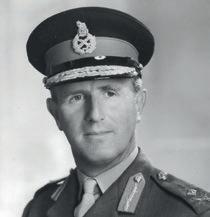
in Vietnam. It was in more generalist non-REME appointments that his career developed, including as an instructor at the Royal Military Academy, Sandhurst, a student and later Directing Staff at the Army Staff College and returning later as Chief of Staff at the Staff College. Ministry of Defence appointments followed with his final appointment being as Director of Army Quartering in the rank of Major General. On his retirement from the Army in 1978, he was appointed a Colonel Commandant of REME.
After retiring from his first career, he undertook a series of appointments with the Council of Engineering Institutions, the Planning Inspectorate, the Law Society and the General Commissioner of Taxes. He retired from this work at the age of 75 and then became a volunteer for the National Trust.
He was a stoical and largely private man, with a strong sense of duty and service supported by his Christian faith. Above all, he loved, supported and encouraged his family of three children, seven grandchildren and 11 great-grandchildren.
Major General Denys Broomfield Wood CB died on 7th January 2025.
BIRDWOOD, GFB (1942, G)
George was born in Harrow on 23rd April 1929. His father, Hubert, was sent to recover from his wounds received on the Western Front and stayed with distant cousins, one of whom, Brenda, he married in 1918.
At eight he was sent to Kingsmead School in Seaford. There he fell ill with a burst appendix, pneumonia and peritonitis. He recovered due to a radical new drug called
Kewpie Stuart Denys Wood
penicillin, but he missed a year of school, and his experience led him to take up medicine.
After Seaford he went to Radley and took up rowing. He was in G Social under the leadership of Clem Morgan and continued his transformation from a sickly boy to a strong athlete.
Then George went up to Clare College, Cambridge, in 1947 to read medicine, although he continued to spend much of his time on the river.
Graduation was followed by Bart’s Hospital. There he captained the small boat club and took several crews to Henley. He also met Gaynor, who was a ward sister. They were married in 1953.
After qualifying, he was posted to Austria to do his national service as a doctor. James (1968, C) was born in Klagenfurt in 1955. In 1957, he returned to general practice in Kings Langley where John (1971, C) was born in 1958.
In 1967 he took up a post in publishing with Ciba-Geigy. He had a long career with them, writing, translating and editing on medical matters, and went all over the world to medical conferences.
He became interested in the issue of drug abuse. In 1969 he wrote a successful book, The Willing Victim, a parent’s guide to drug abuse. His book was a welcome breath of fresh air, full of information and common sense. He was in demand for radio and TV appearances, and was involved in many charities. He spoke to schools, including Radley, about drugs. His contacts in the Home Office led to an invitation to join the Parole Board where he served for many years.
He had a lifelong love of classical music and opera (pre-Wagner). In later years, Handel
and particularly Haydn were his favourites. He was a keen gardener, and a prolific grower of fruit and vegetables. His tomato crops were legendary, and he had a fine collection of orchids.
Ill health affected him in his last few years, but he retained his sharpness of mind until the very end.
George Fortune Brodrick Birdwood died on 5th May 2025.
WILLCOCKS, GRW (1942, G)
Geoffrey Willcocks passed away on 16th November 2022, aged 91, following complications after surgery. Born in 1928, Geoffrey came to Radley in 1942, joining G Social. During his time at the College, Geoffrey became a prefect and was the cox of the 1st VIII in 1943. He studied Land Economy at Caius College, Cambridge, in the 1950s, following in his father’s footsteps. After graduating, he pursued a lifelong career in farming, working tirelessly on his farm in the Suffolk countryside. Even into his 90s, he remained active – rarely taking holidays and often working seven days a week.
A deeply practical and pragmatic man, Geoffrey had a meticulous understanding of crops and soil and was constantly experimenting and learning. He had an enduring love for the land, his garden, and the rhythm of rural life. He faced later years with resilience and grace, gradually winding down his work only when necessary and continuing to take pride in his tools and surroundings.
Geoffrey was also a committed member of his local community. He was widely respected for his reliability, integrity, and willingness to shoulder responsibility when asked. Geoffrey married Jennifer Beatty in 1959,
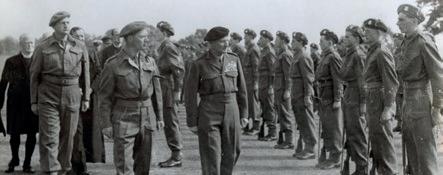
with whom he had three children. He is survived by his children, Caroline, Nicholas, and Patrick, who remember him as a hardworking, dignified man of few complaints but much love. His quiet wisdom, strong values, and deep connection to the land leave a lasting impression on all who knew him.
Geoffrey Willcocks will be greatly missed by his family, friends, and all who benefitted from his steadfast presence and generous spirit.
Geoffrey Roger Waller Willcocks died on 16th November 2022, aged 94
BLENCOWE, PJ (1943,
G)
Peter John Blencowe was at Radley between 1943–1947. He did National Service and was commissioned into the Devonshire Regiment. After a short spell at Oxford, he entered teaching and was headmaster of Brambletye School between 1959 and 1975. He then taught science at the Prebendal Choir school in Chichester. Married to Anna for 62 years, he had four children and ten grandchildren. A keen bird watcher, historian, traveller, gardener and lover of the turf he was also a lay reader in the Octagon parishes in the Sussex Downs. Peter died peacefully at St Richards Hospital Chichester on the 22nd March 2025, aged 95. A full life and well lived.
Peter John Blencowe died on 22nd March 2025.
DENNING,
JRNP (1943, D)
Beloved husband, father and grandpa, Jack passed away peacefully at 95 years of age. Jack is survived by his son Tony (married to Martha) and his two grandsons Nicholas and Ian. The oldest of three, Jack was predeceased by his siblings David and Diana. Jack was also predeceased by his wife Hazel in March 2024.
Jack was the eldest son of Lieutenant General Sir Reginald F S Denning, KCVO, KBE, CB and Lady Eileen V Denning, OBE (née Currie). Born in London, he was a quiet, shy boy who was good at maths and not so talented at French or music. Jack completed his National Military Service in North Africa and later obtained his Chartered Accountant designation with Binder Hamlyn in London. In what later proved to be a life-changing decision,
George Birdwood (the sergeant visible between Ranulph Waye and Field Marshal Bernard Law Montgomery) during the 1947 CCF inspection.’
Jack relocated to Caracas, Venezuela, as a management trainee with Ultramar.
There, Jack met Hazel; they were both ex-pats from the UK. They had a whirlwind courtship in Venezuela and married in New York City in 1961. They went from New York City to St. John’s, Newfoundland, Canada, where they spent three happy years, and their son Tony was born.
Jack and Hazel spent 15 years in Montréal building their lives together. The lifelong friends they met in Montréal and Newfoundland were very important in their lives. They later made a new home in Thornhill, Ontario where they met new friends. At Holy Trinity Anglican Church in Thornhill, Jack was a sidesman and bookkeeper. Hazel joined, and eventually led, the Flower Guild. The church was very important to them both.
Jack was an enthusiastic sportsman, interests he passed on to his son and grandsons. His shooting trips to Saskatchewan with his son were the highlight of his year; he was disappointed to have to end these trips when he was 81. Jack was also a voracious reader and a very talented bridge player. Yearly trips to the Caribbean and other destinations (France, Italy, South Africa, Australia, New Zealand, Scandinavia) were highlights of the long life that Jack shared with Hazel.
By all accounts, Jack was a successful man. Successful not only in terms of materially providing for his family but also in providing them with the foundations to make their way in the world, find and give love, and contribute to those less fortunate and the organisations that serve them.
Jack will be dearly missed, but we know he is now with God and reunited with Hazel in heaven.
Jack Reginald Newdigate Poyntz Denning died on 2nd June 2025.
BRADSHAW, GH (1948, C)
Major George Humphrey Bradshaw MBE was born in Sunderland on 21st February 1935.
Known as Humphrey, he always said being at Radley was a happy time for him. He loved treading the boards, and he was offered a place with Birmingham Rep. His
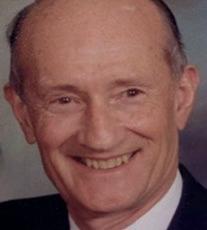
sport was rugby. He returned to Radley several times including while on his honeymoon and when his first daughter was born.
He started his National Service with the Royal Marines in Lympstone and commissioned into the Royal Leicesters as he was living in Oakham in Rutland. He was posted to Iserlohn in Germany. Almost at the end of his two years, the Battalion was posted to Khartoum in Sudan. He signed on for another six months so that he could go with them. He finished his National Service but decided civvy street was not for him.
As a married man with two children, he re-enlisted, joining the Devon & Dorsets and then returned to the Leicesters who were stationed in Watchet in West Somerset. In 1963 the Battalion went on a 12-month unaccompanied tour in Hong Kong and then on to Borneo. On his return from Borneo, the family went to Malaya and Thailand. Humphrey did a course in Thai and spent most of his time with Intelligence in North East Thailand.
During the years that followed he was posted to Holland, Germany and Cyprus. He joined the 3rd Battalion, now known as the Royal Anglians, for a tour in Londonderry.
He did three tours with Intelligence in Belfast where, in 1973, he was awarded an MBE.
In 1984, when another tour in Belfast was suggested, he decided to retire after 25 years.
The family moved back to Somerset. They bought a Tea Shop in Dunster which was very successful. Humphrey loved ‘Front of House’ in the tea rooms, he had never
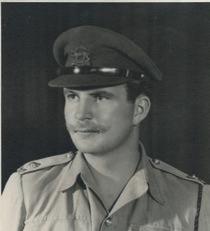
given up his acting and continued with a local group.
Humphrey was married to Hannah for 67 years. Hannah still lives in West Somerset with their daughters Nicola and Emma.
George Humphrey Bradshaw died on 1st July 2024.
DIXON, RJV (1948, G)
Richard John Vibart Dixon was born in 1935 and joined Radley from Summerfields in 1948 – following in his elder brother Peter’s footsteps to G Social. He was happy at school and was a junior scholar and a prefect, he also enjoyed singing tenor in the choir and acting in several plays. Following excellent results in his final exams, he left in 1953 and completed two years of army National Service, including a posting to Cyprus. He then went up to Peterhouse College, Cambridge, to study History.
It was at Cambridge that he met his future wife, Angela Holder, who was one of the first intake of just 15 students at the newly founded women’s college, New Hall. They married in 1960.
His first job following graduation was as a trainee journalist for ITN – shortly after it was founded. He spent 10 years working as a reporter for ITN. During his tenure first as Transport and then Industrial Correspondent for News at 10, he covered many ground-breaking stories and interviewed famous leaders of the day. Highlights include the opening of the Mont Blanc tunnel, the first flight of Concorde, the creation of the Berlin Wall, and being the first journalist on the scene of the
Jack Denning
Humphrey Bradshaw
great train robbery – in fact you can see his car parked by the bridge in the iconic photos of that scene. If you are curious, you can search Richard Dixon on the ITN archive and see him in action.
In the mid ‘70s, Richard left ITN to begin the next phase of his career as a corporate and public affairs advisor. He joined the CBI working with both Harold Wilson and Jim Prior on their employment policies. Over the course of his career he held senior roles at Burmah Oil; Imperial Group –owners at the time of brands like Golden Wonder and Pot Noodle; Eurotunnel while it was raising the financing to build the ‘chunnel’; and lastly Storehouse, owners of BHS, Habitat and Heals where he was a trusted advisor to those various CEOs.
Richard’s interests included travel, theatre and his retirement project was writing a history book: Muddling Through – the Story of Transport in Britain
He died following a short illness in 2023 and is survived – and much missed – by his wife of 60+ years Angela, daughters Kate and Claire and four grandchildren.
BRADBROOKE,
JG (1949, B)
Jeremy Bradbrooke, a distinguished and much-loved general practitioner, died suddenly on 1st July 2025 while on holiday in Swanage, aged 88.
Born in Abingdon, Oxfordshire, Jeremy came to Radley in 1949, joining B Social, before reading medicine at the London Hospital, qualifying in 1960. After postgraduate training in several specialties, he spent time in Labrador with the Grenfell Mission, where his broad skills in obstetrics, paediatrics and anaesthesia were
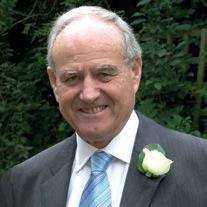
invaluable. In 1966 he returned to the UK to a research post in Cambridge, where he met his wife, Sue, a nurse.
In 1969 Jeremy and Sue moved to Newfoundland, Canada, where he worked as a GP for three years. Their time there was marked by the tragic loss of their young son Richard. Returning to the UK, Jeremy joined the Lovemead Group Practice in Trowbridge, Wiltshire, where he would serve as a GP for 25 years and become a pillar of the community. At a time when Trowbridge Hospital housed the country’s largest unattached GP maternity unit, he became a mainstay of local obstetric care.
Jeremy was known for his deep compassion, unassuming manner and strong sense of duty. He was a passionate advocate for the vulnerable and disadvantaged, and a gifted clinician who inspired lasting loyalty among patients. He served as Medical Officer for the British Red Cross in Wiltshire and as an instructor in Advanced Life Support in Obstetrics.
Formidably intelligent and widely read, Jeremy famously won the BBC quiz show Mastermind in 1987, choosing a different historical period in each round. He was also adventurous and curious about the world, leading a climbing expedition to the Himalayas and inspiring young people with his love of nature.
Family life remained central to him. He and Sue raised three daughters – Rachel, Chloe and Jackie – and he was a devoted grandfather to Isaac, Roxanne and Floyd, and great-grandfather to Nyah and Manu.
Jeremy retired from general practice in 1997 but continued to play an active part in the Trowbridge community. He will be
remembered for his kindness, intellect, dry sense of humour and unwavering commitment to others.
Jeremy Guy Bradbrooke died on 1st July 2025.
RUTTER, MA (1949, D)
Marshall Rutter died in Pasadena, California, on 4th December 2024 after a brief illness. From Radley, he went on to Amherst (Massachusetts) College and the University of Pennsylvania Law School. After 60 years of practice, Marshall retired in fall 2019. A choral music enthusiast, Marshall was a founding director of the Los Angeles Master Chorale, a founding resident company of the then newly constructed Los Angeles Music Center, serving several leadership roles throughout his decades of service. His extraordinary legacy was honoured during the Chorale’s 60th Anniversary Season this past year. Never a singer himself, he played a vital part in the artistic growth and stature of the organisation. He also was a board member and then Director Laureate of national service organisation Chorus America, helping lead the organisation through a period of significant expansion. In his law practice, Marshall was a formidable advocate, always principled, always a gentleman and always a calm and wise presence for both clients and colleagues. The firm reflected his values in important ways, including its hiring and advancement of women, treatment of staff, and the development of younger lawyers sharing his ethos. His colleagues considered him a mentor, visionary, and friend.
Marshall loved, appreciated, and often spoke of his time at Radley. He is survived and dearly missed by his wife and partner Terry Knowles, his three children (Deborah, Ted, and Greg), and three grandchildren.
Marshall Anthony Rutter died on 4th December 2024.
CAMBRIDGE, MB (1951, F)
A note from Michael that he prepared for his memorial.
I was born in 1938 at home at Horsted Keynes in Sussex. Within a year this country was at war with Germany. Living in Surrey wasn’t very clever as the German pilots routinely shelled the houses on the
Richard Dixon
Jeremy Bradbrooke
way to and from London. We spent our nights under the stairs as being the safest place in the house. My two maternal uncles were in the Armed Services: one in the Battle of Britain as a Hurricane pilot and the other in the Mediterranean as a sailor. My father was in the Royal Navy Reserve and on the Arctic convoys on an aircraft carrier HMS Unicorn.
As war ended and the troops were demobbed, we had to wait an extra year for my father to come home because the Navy couldn’t spare his radar expertise. Over the years my parents, my sister Elizabeth Ann and I moved house regularly. Meanwhile, I served my National Service largely in the Ghana Army and qualified as a Chartered Accountant. One weekend I was asked to stay by a Ghana Army friend and his wife. They asked one of the wife’s school friends to dinner. She arrived in an MGB GT sports car. “Reader, I married her!”
I became a governor of schools when I retired as an accountant. That part of my life has been the most important and fulfilling and I owe entirely to Felicity’s encouragement. I volunteered helping children learn to read for many years. I have loved them all. They have given me much more than I have given them. Their ability to rise above their sometimes difficult lives, their unfailing enthusiasm, good humour and manners are lessons from which we all should learn and for which we should all give thanks.
Our three daughters were, and are, Felicity’s and my pride and joy. My admiration for them is boundless. They are, and have always been, everything that a father could wish for. What is more, their choice of partners has been faultless. All three are admirable men and I am very fond of all of
them. Not many fathers-in-law can say as much. A last word to Felicity. My darling you have been everything to me for over 50 years. God bless you.
Michael Burnett Cambridge died peacefully on 30th July 2024.
HUNT-GRUBBE, RH (1951, G)
Son of Commander Brudenell HuntGrubbe RN and his wife Joan Bruges, Robert was educated at Hawtreys and Radley where he made excellent academic progress, winning the senior maths prize (SNP) and the Wharton Piano Prize. National Service followed with the Royal Horse Guards (the Blues) in Cyprus. As a Junior Officer life was gruelling. However, he always remembered this time as character building and with, ultimately, very happy memories.
After graduation at Trinity Hall, Cambridge, where he read Mechanical Sciences which was achieved within only a couple of years, he eschewed all advice to return to the family home to run the estate. Instead, he joined Schlumberger surveying oil wells in the Middle East, followed by Research and Development in the USA.
In 1975 he jointly formed an AngloFrench oil well company, operating in Iran, returning only to Britain on account of the revolution. He pioneered collaborative research between industry and university which was rare at that time. In 1981 he founded Sondex Geophysical Equipment which grew to become a major supplier worldwide, gaining Queen’s Awards for Enterprise and International Trade. He became Entrepreneur of the Year in 1999.
Finally returning to his ancestral home, which was built in 1550, and required much restoration, he worked tirelessly and generously for many causes. He was especially happy to have helped save the historic Assize Court in Devizes. His love of academia meant he was much involved in several universities, especially Trinity College, Oxford, where he was elected a Sir Thomas Pope Fellow and where his ancestral links date from 1671.
Fiercely patriotic and proud of his heritage, he was in the true sense of the word, a Gentleman. A visionary with much compassion and humility, he was unfailingly kind and caring towards all,
and especially the young whom he greatly encouraged to achieve their own goals in life.
His non-technical interests included lepidoptery (which he learnt when young on the Côte d’Azur), his forestry concerns in Scotland and music.
He is survived by his wife, Julia, their four children, and six grandchildren.
Robert Henry Hunt-Grubbe died peacefully, aged 87 on 15th August 2025, at home in Wiltshire.
BUTTERS, P (1952, C)
Tribute by Rupert Price (1983, C) Paul was my uncle and godfather. He loved his time at Radley and was a major influence on my parents’ choice for me (1983, C) and my brother Jeremy Price (1986, C). He loved his acting and was good friends with Peter Cook (1951, C), who was in the same Social. He ended up as a Pup and Head of C Social (1956–7).
After Radley he went to Law School and trained to be a Solicitor. Whilst an Article Clerk he met Penny and, after getting married, moved to Sproughton near Ipswich and joined Prettys where his father was Senior Partner.
They had three children and Paul continued working as a Solicitor before retiring as Senior Partner.
He continued to talk about his time at Radley till the end always quoting ‘ Sicut Serpentes, sicut Columbae’ in all my birthday cards!
Paul died on 28th June 2025, aged 86, after a short battle with cancer.
GODDARD, AJ (1953, H)
Tony Goddard died at home in Modbury, South Devon, on Wednesday, 9th July 2025, from kidney disease, after a long illness, aged 85. His funeral was held in Thurlestone Church nearby, on 8th August.
Tony was born in Bristol on 23rd August, 1939, a week before the start of the World War. His father, Glyn, saw war service as a transport staff officer in North Africa and through the long Italian campaign, while his mother, Winnie, a teacher,
Marshall Rutter
with two young sons, survived the war in Bristol and Dorset. After the war, Glyn joined the Colonial Service, and was posted at short notice to Northern Rhodesia (Zambia), the family following in troopship conditions. In the initial 3-years in Zambia, Tony started school in Lusaka, then spent a year at Grahamstown in South Africa. On the family’s first home leave, he was entered at prep school in Cirencester, and thence to Radley College near Oxford, where he shone in rugby, rowing and boxing. He was Head of Social (H – Waye’s) and Second Prefect. These sporting achievements, and his strong school record, supported his entrance to St Edmund Hall, Oxford, in Michaelmas Term 1958, to read Jurisprudence.
At the Hall, Tony concentrated his sporting efforts on rowing, in the 2nd VIII for 1959, and 1st VIII for 1960 and 61, rowing over at Head of the River in both those years, and at Henley Regatta. He managed to combine this with an active social life, learning to drive and to parachute with the OUOTC, and sufficient study to earn his degree. He also met and became engaged to his first wife, Ursula.
During a long-vac holiday with parents in Zambia, Tony decided to apply for employment in Zambia with the Colonial Service. This entailed a year’s training on the Overseas Service Course, based at Peterhouse in Cambridge. In pursuance of a longer-term ambition to be a barrister, he also joined Gray’s Inn and sat the initial Bar exams. In August 1962, he married Ursula, and they took a ship to Zambia, and a first posting as a Cadet, later District Officer, in the Eastern Province, with responsibility for the Kunda people in the lower Luangwa Valley. In 1963, he was involved at the start of the brief but bloody
uprising by the Lumpa cult in the Lundazi District. The following year his law degree qualified him for a posting as Resident Magistrate in Western Province.
Zambia became independent in October 1964, and Tony’s employment there ceased at the end of his three-year tour in mid-1965. His plans for the Bar proved infeasible, following his father’s death the previous year, so he took articles as a solicitor, with a firm in Abingdon, qualifying in January 1969.
Tony looked for a partnership in the West Country, and soon found a suitable place with a firm in Kingsbridge in South Devon, where he covered the litigation and allied aspects of the business. He took advantage of the opportunities in the area to renew his youthful love of riding, owning a succession of horses and hunting with the local harriers and the South Devon and Dartmoor Foxhounds. His son Glyn was born in Kingsbridge in 1972. In 1978, he set up his own practice in nearby Totnes, with a wide-ranging business, and a continuing focus on court and planning work.
In 1981, Tony’s first marriage to Ursula broke down, and he left to live with and later marry Gill, moving to the coast at Bantham, where her family had an estate. The couple enjoyed an active social life and travelled widely, until Gill’s death in 2013. Latterly, after his practice closed, Tony continued to work for some years as a consultant in a colleague’s practice in Ivybridge. He also spent time in retirement writing an amusing memoir of his time in Zambia, published privately as My African Stories. In 2019, aged over 80, he married Margaret, moving with her to Modbury, continuing to enjoy a series of
cruises and composing another memoir, Tales of a Country Solicitor
Tony’s early years at school and university were important to him, and he relished reunions with contemporaries. His three years working in Zambia also did much to shape his character, as did his adopted home in the South Hams in Devon, where he lived for 55 years. Tony was sociable, self-assured, articulate and enterprising in his chosen profession, and a noted raconteur; most importantly he valued and enjoyed life and his family, and he will be much missed.
Anthony John Goddard died on 9th July 2025.
ROCKE, JCD (1953, B)
John Christopher David Rocke was born on the 12th of August, 1939 in Bristol. He was always known as David. While at Radley David was a keen rower and became part of the 1957 1st VIII.
After leaving school in 1957, he started work at Leo Computers. He worked with some of the world’s first commercial computers. David was captivated by the possibilities of computing and dedicated his career to this rapidly advancing field.
He met his wife Julia in London and when their four children were young, David was offered a job working for Honeywell Computers. He accepted the post and moved to Boston, USA. Later followed by a move to Chicago.
David owned BMW motorbikes and loved to ride. David retired in 2003 and returned to the UK with his wife Julia. Once back in the UK, David was delighted to be
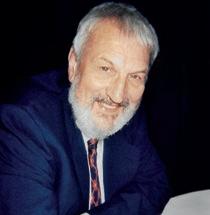
Paul Butters
Tony Goddard
David Rocke
able to spend more time with his four grandchildren and six great grandchildren and he adored every moment they shared. Retirement created more time for David to embrace his passions, including his love for BMW cars, buying older models and bringing them back to their former glory.
David was a quiet man – calm, clever, kind and generous. He had a great sense of humour and had a thoughtful way of making everyone around him feel valued. David passed away suddenly on the 20th December at home, exactly where he would have wanted to be.
John Christopher David Rocke died on 20th December 2024.
BRISTOW, AL (1954,H)
Alan Bristow was born in August 1940 in London just before the blitz, the eldest child to Elizabeth and Richard (Dick). His father and uncles had all been to Radley, and his son and nephews would follow him. The family moved from London to Caterham and then onto Folkestone, where he went away to prep school at Dumpton and Radley College with younger brother, Brian. He greatly enjoyed all aspects of school in particular rugby, rowing and athletics.
As the eldest of five he left Radley straight into work, qualifying as a Chartered Accountant with Smallfield Rawlins in London in 1964, he married Carol and immediately took the opportunity to join McDonald Currie (PwC) in Montréal, taking their honeymoon on Cunard’s Carinthia from Liverpool across the Atlantic to New York. Alan continued rugby whilst in Canada, playing for Montréal Wanderers. Alan and Carol’s adventurous spirit included a trip up the Alaska highway in their VW Beetle, at the time quite a hazardous unpaved route. They had many visitors in Montréal, including Alan’s sister, Jean, who loved Canada so much that 60 years later she is still there.
Alan and Carol were keen to explore further and moved to Yokohama in Japan in 1968, coinciding with the birth of their daughter, Lucy. In 1970 they chose to return to the UK and drove overland in a VW Dormobile all the way from Singapore back to the UK, joining the popular hippy trail through India and onto stunning territories which are no longer
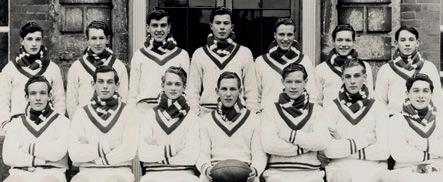
possible to navigate, such as the Khyber Pass and Iran, ending up in Turkey, Bulgaria and westwards to the UK.
The arrival of their son, Peter in 1971, did not stop the wanderlust and in 1973 they moved out to Singapore, working for Commercial Union, with whom Alan would stay until retirement. Singapore enabled Alan to continue his love of athletics, running with the Hash House Harriers. Despite returning to the UK in 1975, Alan and Carol’s travel spirit remained all the way through life, visiting many places throughout the world, in particular in the early years of retirement.
Alan combined his two passions of travel and photography, and leaves a legacy of thousands of photos from all corners of the world, chronicling his life and travels. He enjoyed meeting and keeping in touch with many people from his travels.
Despite being diagnosed with prostate cancer in 1997, Alan remained active for over 25 years and will be remembered as someone who lived life to the full. St Giles Church in Shipbourne, where he lived with Carol happily for over 40 years, was full at the service to celebrate his life in April, with a good number of Old Radleians, both family and good friends, including Tom Avenell and Roger Paterson.
Alan Lindsay Bristow died on 13th December 2023.
HOWARD, PJ (1956, C)
Peter’s life began in Whitchurch, but it wasn’t long before the family moved to their hotel on Hayling Island. When he was just four, they relocated again – this time to a small farm in Blaxhall, Suffolk, where Peter enjoyed what he later described as some of the happiest days of his life.
In 1948, Peter joined his brother at Eversleigh Prep School in Southwold. One vivid memory they shared was waking up the morning after the devastating storm of 1953 and looking out over the damage from their dormitory window. Peter thrived at school, eventually becoming Head Boy, and his parents were thrilled when he earned a place at Radley College.
A natural on the water, Peter was a passionate dinghy sailor and proudly became a Wet Bob at Radley. He built strong bonds there, especially with Mr and Mrs James Batten, and always looked back fondly on those school years. Unfortunately, family circumstances meant he had to leave school before taking his A-levels.
Not one to sit still, Peter joined the UnionCastle Mail SS Co Ltd as a Purser’s Clerk on the East Africa run. In his words, he got the job thanks to a well-connected mother, a solid school background, and the reassurance that he wasn’t “ugly enough to scare the dowager lady passengers.”
After two years of study at High Wycombe, Peter spent time working across the EFTA countries. By then married with two daughters, he and his wife sold their hotel and Peter joined Hovermarine in Southampton. Later, they made a final move to Salcombe to be closer to Trisha’s parents.
Always full of ideas and energy, Peter bought a shop, a home suitable for a B&B, and – naturally – some boats. A Mirror dinghy for the girls (then just 2 and 4 years old!) and a yawl for himself. He never strayed far from the water.
Not one to be content behind a counter, Peter pivoted again – this time into ice cream and sorbet. He took a course
Alan Bristow, front row, second from left, with the 1958 1st XV.
at Reading University, bought some equipment, and got churning. His business grew to employ 25 people and served the Home Counties and beyond. On a delivery trip to Oxford, he needed to recharge his small freezer. After negotiating for some power with the school office, he plugged in and went for a nostalgic wander. While reminiscing, he was caught red-handed by the Warden, Dennis Silk, who goodnaturedly greeted him with, “Peter Howard, I hear you are using my electricity.” They shared a laugh, and Peter carried on his way.
Peter was never one to follow convention. He could be outspoken and argumentative, but he was also deeply honest, loyal, kind, and razor-sharp. He had a strong sense of justice and didn’t suffer dishonesty or hypocrisy.
Peter is survived by his wife Trisha, daughter Sam and his beloved grandchildren Theo, Olivia, and Tessa. Tragically his daughter Kate died in 2023. His life was full of character, curiosity, and a love of doing things his own way – and he’ll be deeply missed and remembered with great affection by all who knew him. Coincidentally, Tony Goddard (1953, H), a long-standing friend, survived Peter by only three months.
Peter James Howard died on 6th April 2025.
SHAWCROSS, EM (1956, G)
My father, Mark Shawcross, passed away in October 2024 in France from cancer.
He was born in London and attended St. Peter’s School in Seaford before moving onto Radley where he joined G Social in 1956. After leaving school he went on to study estate management at the Royal Agricultural College in Cirencester. After Cirencester he entered a career in farming allowing him to spend time with animals,
a lifelong interest of his. The changing landscape of estate management in the 1970s led him to move into finance but he was able to maintain his links back to the farming industry as he worked for the National Farmers’ Union.
In the late 1980s, his love of France and the Pyrenees area led to my parents buying a second home in France and they eventually moved there permanently after he retired. It was in France that his health began to deteriorate as dementia started to become apparent. His condition deteriorated significantly during the pandemic. A couple of years ago his condition had reached a point where he needed residential care, and it was in his care home that he eventually passed away.
Ellis Mark Shawcross died on 26th October 2024.
FORREST,
RS (1957, H)
Home was close to the shores of Chichester Harbour so sailing was in Robin’s blood from a very early age; a pastime he continued to enjoy well into retirement. His prep-school was in Chichester.
Robin went to Radley in 1957 and spent many happy years in Waye’s Social (H). Apart from his academic achievements culminating in maths and physics A levels, Robin was a keen sportsman. He was a member of the swimming team, the sailing team, the shooting team and the 3rd VIII. In addition, he was an enthusiastic member of the Signals Section of the CCF and spent many hours communicating with radio hams all over the world. He was also a Social Prefect.
On leaving Radley, Robin joined Associated Electrical Industries (AEI) as a Technical Apprentice and remained with that company
or its subsidiaries until 1969 when he joined the British Oxygen Company (BOC) as a sales engineer. He progressed through various managerial positions with different engineering companies which took him all over the world. These included Lancer Bos, Dendix of Chepstow and CIC Ralphs. Robin finally retired in 2004 as Managing Director of the Goodmark Aerosol Company, which specialised in manufacturing bespoke aerosols – perhaps the most notable being Silly String, the dread of most parents at Christmas and birthdays.
Robin’s life was not without tragedy. His first wife, Lucy, was drowned in an accident whilst swimming in Nigeria. A freak wave with its associated undertow dragged her away from the shoreline leaving Robin to bring up a son and daughter. Also drowned in the same accident was the husband of Sonja, one of Lucy’s best friends, leaving Sonja with a son and daughter. Some time later, Robin and Sonja married.
Living in Gwent, Robin continued his rowing with Monmouth Town Rowing Club, where he competed as a veteran in both fours and eights. His sailing continued as an Old Radleian and he competed on a number of occasions in the Barcolana Regatta which took place in Trieste, Italy. His other interests included aeromodelling, the coal mining heritage of South Wales and the Forest of Dean (some ancient relation had owned coal mines) and aero engines. At home and of necessity, he was proficient in DIY and also kept a prodigious vegetable garden.
In October 2024, Robin became ill, and it was discovered that he had a brain tumour. Although the initial operation brought some relief, subsequent tests indicated that cancer had spread elsewhere. Before a formal treatment plan was put in place, he passed away.
Robin Searleswood Forrest died on 16th January 2025.
BUTTERWORTH,
OJ (1961, B)
Oliver Butterworth, who died aged 77, was a violinist, music educator and promoter. Following his years as a music scholar at Radley, he entered the Royal Academy of Music in 1965 with a Sterndale-Bennett Scholarship, studying with Manoug Parikian. From 1968, with a British Council Scholarship, he continued his violin studies
Peter Howard
Robin Forrest
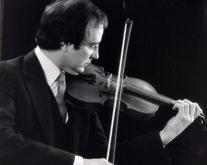
with Jaroslav Pekelský at the Academy of Musical Arts in Prague. It was here that he developed a love for Czech music, which he frequently programmed in his solo and chamber music concerts, and also recorded a CD of violin pieces by Czech composers with pianist John Bingham, entitled ‘Bohemian Violin’.
On returning from Prague to London in 1970, Oliver worked as a freelance violinist with the London Symphony Orchestra before joining the English Chamber Orchestra, where he particularly enjoyed the close association the orchestra had with Benjamin Britten and Daniel Barenboim. After six years with the ECO, Oliver was appointed principal violin with the Scottish Chamber Orchestra. Three years later he accepted the post of Head of Strings at Giggleswick School. He then moved on to Dartington College of Arts as leader of the Dartington Ensemble and Piano Trio from 1981–1990. Their many performances throughout the UK and overseas covered a wide range of repertoire and included many commissions and premieres of new works, as well as broadcasts for BBC Radio 3, and several recordings for Hyperion. These received international acclaim, and their recording of Frank Bridge Piano Trios was nominated for a Gramophone Award.
Oliver was passionate about music education and the positive impact it made on the lives of young people from all walks of life. On leaving Dartington he worked for the Inner London Education Authority as Artistic Director of the London Schools Symphony Orchestra, and from 1987–2007 he was Professor of Violin and Chamber Music at Trinity College of Music.
Oliver was also active in the world of music promotion, helping many composers, conductors and musicians to further their careers by seeking opportunities for them and showcasing their talent. From 2005
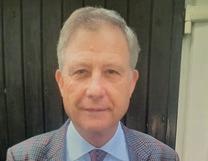
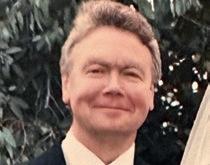
Oliver concentrated his efforts on the ‘Al Farabi Concerto’ concert series, presenting music by contemporary composers from the Middle East and North Africa.
Oliver was awarded an ARAM from the Royal Academy of Music in 2002.
He is survived and deeply missed by his wife Julia, five children (Tom, Will, Seb, Josh, and Chloe), and eight grandchildren.
Oliver James Butterworth died on 2nd October 2024.
GARNSEY, JM (1961, C)
John Garnsey died at home in Kensington, London on August 25th, he was 78. John often credited Radley with getting him started on his life-long passion for horse-racing. Some of his colleagues at the school had trainers for fathers so John picked up his interest from them, together with a knowledge of train times to Newbury racetrack.
He went on to have a career in journalism, working first for the Wokingham, Bracknell and Ascot Times (specially chosen because of the title) before moving to London to work for the Press Association. His top job was as The Scout for the Daily Express, travelling the world to attend horseracing meetings. People never really believed that was his job, but it was.
John also inherited, and developed, a fine stamp collection from his father, particularly in the field of King George V and seahorses.
A clever and amusing man, John will be much missed by Cheryl, his wife of 53 years, and his many friends and colleagues.
John Marmion Garnsey died on 25th August, 2025.
BARRACLOUGH, TJ (1962, H)
Thomas James Barraclough, always known as James, had a distinguished career at Radley both as a sportsman and a scholar. He was the captain of the Radley Shooting Team, and top of his class in Classics. He won a scholarship to Magdalene College, Cambridge, to read English and got a half blue as a member of the Cambridge University Shooting Team. He was also a drama enthusiast both at Radley and at Cambridge, where Jonathan Miller cast him as the Player King in his famous US tour of Hamlet. His mellifluous speaking voice was subsequently used to narrate films and record Talking Newspapers for the Blind.
But it was film that was his real passion. He started a Film Club at Cambridge –and even at Radley, he wrote, filmed and narrated a film of Matthew Arnold’s ‘The Scholar Gypsy’ – whose journey echoed his own life. James had a
‘… quick inventive brain, and –Tired of knocking at preferment’s door, One summer-morn forsook His Oxford friends,
And went to learn the gipsy-lore, And roam’d the world with that wild brotherhood…’
James, indeed, was never ‘ tempted to knock at preferment’s door’ – and his subsequent life was somewhat Bohemian. But the difference between James and Arnold’s Scholar Gypsy is that James never ever forsook his friends. Many contributors to this obituary were his friends for over 60 years!
Perhaps his greatest joy was his godchildren, of whom he had five. Lorelei remembers James as the ‘ most devoted, eccentric godfather one could hope for. He once wrote me an idea for a children’s book about a dog who misread the name on
John Garnsey
James Barraclough
Oliver Butterworth
his water bowl and thought he was God!!’ Another, Alexander, writes: “James’ presents were always funny and memorable: a Christmas gift of a book entitled How to Survive Christmas with Boring People was a highlight of my 10th Christmas!”
Anne Christensen, remembers meeting James when she was 16 and he was 32: ‘ He was the first grown-up to acknowledge and encourage my dreams of a career in ballet and theatre. So, I did. For the last 40 years I have been a dance and theatre critic here in Denmark. I often think of James and his never-ending confidence in my artistic longing. Thank you, James.’ Many, many people wrote to me, saying: ‘ Thank you, James!’ For, James was that rarest of creatures – a truly good, generous, kind and caring man. In his own way, a great Radleian.
Tribute written and edited by David Woollcombe, friend and neighbour of James for 70 years.
Thomas James Barraclough died on 19th April 2025.
SCOTT, TM (1965, H)
Christopher Bass records: ‘ Tim was truly a man of many parts. I knew him from the age of seven as we both boarded at the same prep school where he became head boy, knocked around in the holidays at his family homes in Bosham and Jersey, and then were one term apart in H Social at Radley. We went our separate ways as he chose to be a wet bob and I went dry.
He was born and raised in Bude before the family moved in the 1950s to Connecticut, USA, where his father was working, returning to the UK in 1959. After Radley he went up to St Peter’s College Oxford, postponing his ‘gap year’ until 1974 when he joined two friends living in a homemade tipi in the Bitterroot mountains of Montana, USA, where he fished, hiked, cooked on an open fire, and experimented with curing rawhide.
His career path began in the wine industry after a season working in the Champagne producing town of Epernay, then later veered towards teaching English abroad, including to airline pilots and air traffic controllers – mainly in Abu Dhabi and Qatar. He was in the process of renovating a derelict house in Spain when he was
struck down with illness. He had promised to proof-read my latest book – he was a genuine master of the English language –and had overcome prostate cancer before pancreatic cancer took charge and was to prove terminal. A mass was celebrated in Tim’s honour at the church of Santo Cristo de Cabrilla in the village of Lújar, Andalucia. That the entire village attended tells the true story of this remarkable, much-loved, multi-talented man and friend to many.
One Radley story I shall never forget: I had taken Tim out on a Sunday but on our return we got stuck in a summer traffic queue over Henley Bridge. We missed evensong, in those days deemed an almost capital offence and we faced a visit to the Warden. I was petrified that we would be caned but Tim was very reassuring and, sure enough, Warden Milligan (nicknamed ‘Gush’) was very charming and understanding.
Tim was a great communicator, an accomplished guitarist from an early age and his great passions were sailing, paragliding and travel, together with a love of wildlife, trees and orchids.’
Timothy McKenzie Scott died on 4th October 2022 at St Wilfrid’s Hospice, Bosham, aged 71.
ERRINGTON, RGB (1966, G)
Chairman of Ellingham, Harbridge & Ibsley Parish Council and the RAF Ibsley Airfield Heritage Trust, Roly Errington, who has died at the age of 71, was consulted on matters of conservation, planning, and ecology by organisations ranging from the Friends of the New Forest (New Forest Association), The National Park
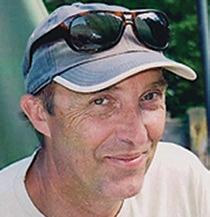
Authority, The National Trust, and a host of archaeological, aviation and WW2 historical research groups throughout Hampshire. His famously vast knowledge on a wide-range of topics was such that people both locally and in the film industry in which he had worked as a lighting cameraman for decades, knew he could provide the answer to any question they might care to ask – and if he didn’t, he would find it for them.
Roly was the second son of the late George Errington (OBE), who test-flew Spitfires, Hurricanes, Mosquitoes, and Horsa Gliders for the war effort, while his late mother, the redoubtable Lesley Errington was a well-known local figure herself, serving as a respected town and parish councillor for 33 years, and also as Chairman of the New Forest District Council from 1976-1978.
Educated at Radley College and Manchester University where he read Mechanical Engineering, Roly ultimately plumped for a career in film. Whilst still at school, he’d spent time shadowing Sir David Lean on the set of Ryan’s Daughter, and had been given the unenviable task of wrangling Robert Mitchum and Trevor Howard out of their beds and onto the set. Although still only in his late teens, with his wittily disarming personality and extraordinary ability to persuade, he apparently managed this with relative ease.
His later CV included Mission Impossible, and Shakespeare in Love, but his skill with and knowledge of CGI and enhanced effects saw him in demand for the growingly popular fantasy film genre, working on such films as Snow White and The Huntsman and Willow. Intensely private, he would work under various
Tim Scott
Roly Errington
OBITUARIES
professional names to keep his film career and his voluntary work as a New Forest parish councillor separate.
The New Forest remained his first love, and his passion for its survival and conservation was unparalleled. For those who were aware of it, his extraordinary ability to communicate intuitively with animals offered comfort and answers to friends wishing to understand their pets and their local wildlife. Visitors to his home near Ringwood would find a haven for foxes, badgers, birds, and the occasional duck, up from the lake, and taking an afternoon nap on the top of the bookshelves in his study.
During the early summer of 2024, Roly had been feeling increasingly unwell. When he finally secured an appointment to see a doctor for tests to be performed, it was discovered he had a type of cancer that often only makes its presence known when it is already too late.
Following a collapse at home on 6th October 2024, he was rushed to Bournemouth Hospital, where he died nine days later.
He is survived by his long-term companion and wife, Emma.
Roly Errington died on 15th October 2024.
RAPP, NAE (1987, D)
Nicholas died suddenly of a fatal brain aneurism in Sydney, Australia, in December 2024. He was 50 years old, leaving behind children, Edward aged 20 and Sophia aged 19. He spent the first 6 years of his life in Lagos, Nigeria, where his father Nigel worked, and his mother Pauline had grown up.
He arrived at Radley in 1987 and joined D Social under John Wylie. His close friend and contemporary, Mark Parkes, gave these words at Nicholas’ memorial in Sydney:
“I was in the same boarding house and we quickly established a close friendship and had many shared interests. We enjoyed cross-country running, sculling and rowing. Nick brought a huge amount of enthusiasm and energy to everything he did at school. In his eyes if you didn’t do it properly it wasn’t worth doing. Nick quickly established himself in the school of art and design at Radley and his work
was held in high regard. His sporting career grew from strength to strength, and he competed for the school in the top cross country team and he became an accomplished single sculler.
His single-minded determination and immense fitness made up for his relatively light build for rowing. It was on the river that the two Wills (Axtell and Rathbone), Nick and I became really close friends. The highlight of our Radley rowing career was a silver medal at the National Schools’ championships and then overhauling the mighty Shawnigan Lake School from Canada in the PE at Henley.”
After school Nicholas studied Industrial Design at Ravensbourne before meeting his wife, Sonia in Helsinki. He moved to Milan, Sonia’s home city. They married on 2nd June 2001 in Asti, Piemonte. Soon after Edward and Sophia arrived and so did a thirst to see more of the world again and expose his children to the travel he had enjoyed as a child. The family moved briefly to London before heading to their eventual home of Sydney. There the children grew up to become the fine adults they are today. Nicholas embraced the outdoor Australian life becoming close friends with former crew mate, Dave Bristow.
He enjoyed a varied career as a strategic advisor and consultant, working in West Africa, UK, Finland, Italy, India, Brazil and Australia. He was passionate about creative design and sustainability. He was instrumental in the design and final fit out of the world’s first ‘upcycled’ skyscraper Quay Quarter Tower which went on to win numerous accolades including being named World Building of the the Year in 2022. It is now a highlight of the Sydney skyline and for those who knew Nicholas, a wonderful physical tribute to his talents. Nicholas was known for his endless
curiosity and enthusiasm for people, culture and nature. Above all he was an incredibly kind, loving and proud father, son, brother and friend. He is very much missed. “Goodbyes are only for those who love with their eyes. Because for those who love with heart and soul there is no such thing as separation” – Rumi
Nicholas Albert Edward Rapp died on 22nd December 2024.
MURRAY, CEI (1995, E)
Charles was born in Paris on 14th August 1982. He arrived at Radley for the Michaelmas term of 1995 after prep school at Lambrook in Winkfield Row. He died in London on 8th August 2025, just days before his 43rd birthday.
In the words of a family friend: Charles fresh and shiny from Radley was a sprinter, a rugby player, and a bright and promising academic ready for Kings College and a degree in Economics and French. He exuded strength and vigour, excitement and youthful manhood. He was tall, Viking-like and cut a dash. This was the enduring image of Charles, this and his courtesy, politeness and curiosity in people. He had a passion for music, mixing music – a mystery to me! He could have been anyone, done anything. He was enthusiastic about life, charismatic, theatrical, a master of the exaggerated gesture, generous with an infectious laugh and a big, big heart! He battled an illness that challenged him for years. It was a cruel illness that struck, not in waves, but in tsunamis with the power to overwhelm and leave in its wake desperate bruised and bewildered loved ones. Who can comprehend the depth and breadth of its unrelenting grip? Charles fought and was a brave warrior to the end.
Charles Edward Iain Murray died on 8th August 2025.
Charles Murray
Nicholas Rapp
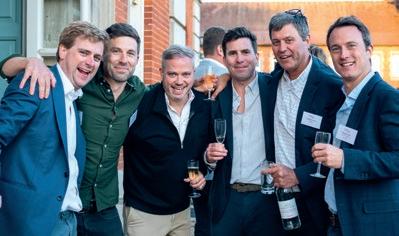
CELEBRATE YOUR RADLEY REUNION AT
OLD RADLEIAN DAY 2026, SATURDAY 12TH SEPTEMBER
WHICH GROUPS ARE INVITED?
• 2011-2016 (10-Year Reunion)
• 2001-2006 (20-Year Reunion)
• 1991-1996 (30-Year Reunion)

• 1981-1986 (40-Year Reunion)
• 1971-1976 (50-Year Reunion)
If you have friends in these year groups but it’s not your reunion year you are still welcome! Get in touch if you want to come along and celebrate.
We will be inviting ORs celebrating a decade reunion to celebrate in style by joining your year group back at the College for a day of fabulous food and drink, tours (including your old Social!), and reconnecting with friends and dons.
Old Radleian Day is also open to all ORs. So, gather your Radley friends and pop the date into your diary!
2026 EVENTS CALENDAR
SPORTS EVENTS
• Heads of Sports Clubs Dinner – Wednesday 28th January, London
• Galleons Day (hockey match) – Sunday 22nd March, Radley College
• Mariners Summer Drinks Parties – Friday 3rd & Saturday 4th July, Henley
• Serpents on Bigside (rugby match) – Saturday 12th September, Radley College
BUSINESS EVENTS
• OR Property Dinner – Thursday 5th March, London
• Exploring Careers in Corporate Law (Business Networking)
– Tuesday 17th March, London
• Business Networking (topic TBC, suggestions welcome!)
– October/November, London

ARCHIVES EVENTS
• Radley Then & Now: Music – Tuesday 10th February, Online
• Radley Then & Now: Philanthropy, Partnership & Community – May, Online
• Radley Then & Now: Women – October, Online
EVENTS FOR YOUNG OR S
• University Supper: Oxford – March/April, Radley College
• University Supper: Bath & Bristol – November, Bristol
• Young OR Christmas Drinks – Early December, London
GATHERINGS AND CELEBRATIONS
• Music School Opening Concert and Events – March, Radley College
• Radleian Society AGM & Lunch – April, Radley College
• Malcolm Robinson Memorial Fund Lunch – April, Radley College
• Parents’ Summer Drinks – Tuesday 2nd & Tuesday 9th June, London
• Old Radleian Day – Saturday 12th September, Radley College

RADLEIAN SOCIETY
Radley College, Abingdon, OX14 2HR