DEDICATED TO THE DEVELOPMENT AND APPLICATION OF OFFSITE MEP SYSTEMS
FEBRUARY 2026
ISSUE TWO
PREFABRICATED SERVICES AND MANAGING EXPECTATIONS
EARLY
P78
POLYPIPE BUILDING SERVICES
The benefits of considering water management early in project planning and design
HMP MILLSIKE
Precision and prefabrication at one of the UK’s leading new sustainable prisons P94
THE ROLE OF STANDARDISATION
The foundation for performance and creating a mature, engineering-led approach
We’ve pioneered offsite manufacturing for decades. With a strong reputation for delivering high-quality, prefabricated MEP solutions, we’ve championed the benefits of offsite construction.
PREFABRICATED MEP ON THE RISE
Welcome to one of our special magazine sections highlighting some recent projects and businesses operating within the mechanical, electrical and plumbing (MEP) space of the offsite sector. All of which show why this aspect of prefabrication is playing an increasingly important role in delivering plenty of pre-manufactured value and driving forward precision fittings and high-quality, essential building services.
Our main feature comes from Tom Murray, Managing Director at Polypipe Building Services who outlines three projects where they have used early engagement – the mantra of all successful construction projects – to make a ‘game-changing difference’ to delivering supply and drainage technologies across complex projects. As Tom points out, the benefits of considering water management early in project planning and design can be huge and deliver ‘staggering improvements’ in time, space, cost and waste.
We also hear from NG Bailey’s Mark Griffin. He makes clear that the concept of ‘design once and improve continuously’ is apt for all aspects of offsite and industrialised construction. As offsite manufacture accelerates across the built environment – are we reaching an important ‘point of differentiation’ where an engineering-led approach is the best way to reap maximum building-related rewards?
Whilst offsite construction conjures up images of homes, schools, healthcare facilities and many differing typologies, we take a quick look at the award-winning prison HMP Millsike, where (amongst the precast concrete elements) Kier Mechanical & Electrical installed a series of prefabricated M&E risers and 18 plant rooms to improve productivity and efficiency in some challenging surroundings.
78 80 86 88 92 94 OVERLEAF…
POLYPIPE BUILDING SERVICES
Tom Murray, Managing Director at Polypipe Building Services, talks about the importance of early engagement and the huge benefits of considering water management early in project planning and design.
MEP NEWS
Some short news items that you may have missed, including the award of the MEP package for ‘The Stage’, a transformative £136million mixed-use regeneration scheme in the heart of Luton town centre.
JONES ENGINEERING MANUFACTURING
As a specialist provider of integrated modular solutions, Jones Engineering Manufacturing sees the future of construction to be ‘won or lost’ at the design stage.
HMP MILLSIKE
Kier Mechanical & Electrical played a fundamental role in giving one of the UK’s most successful new prisons a building services productivity and product efficiency boost.
MODUFAB PUC
Shortlisted at the Offsite Awards 2025, the retirement village in Tunbridge Wells, included the design, manufacture and supply of 199 streamlined, prefabricated utility cupboards.
NG BAILEY
Mark Griffin explains why good engineering should remove decisions from site, not multiply them and how a product-led approach makes that all possible.
THE IMPORTANCE OF EARLY ENGAGEMENT
Tom Murray, Managing Director at Polypipe Building Services (PBS), talks about three projects where early engagement has made a game-changing difference and was the key to reaping the benefits of modern water supply and drainage technologies.
1
2
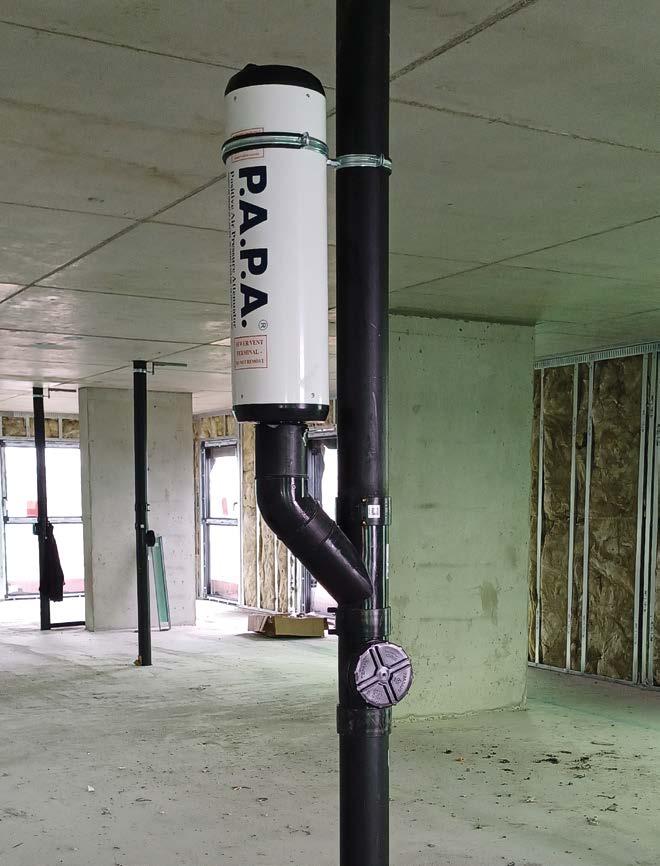
The drainage system developed for Sky Gardens also incorporated Polypipe’s PAPA and Pleura AAV valves, the risers therefore did not require a spacehungry secondary ventilation stack to balance changing pressures. On the water supply side, Sky Gardens uses both of Polypipe’s MecFlow ranges.
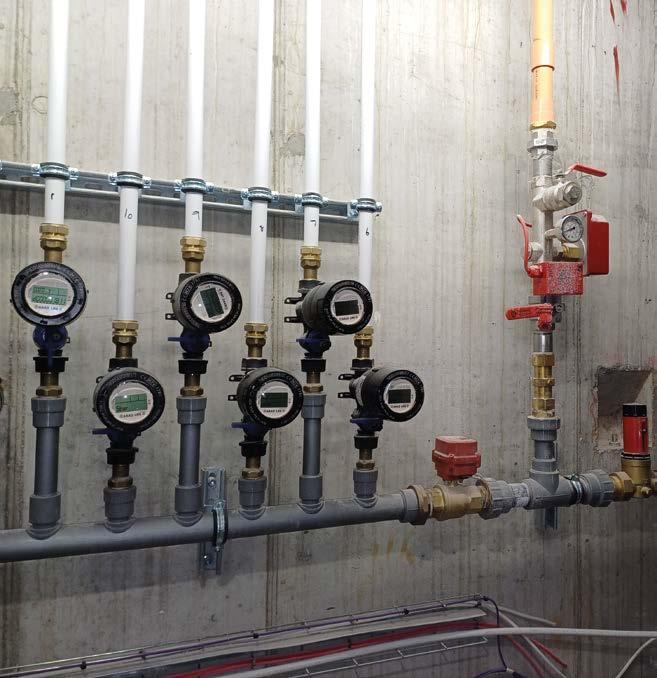
MecFlow Fusion provides the risers and manifolds for the boosted cold system, while Mecflow Press provides the runouts and branches to the consumer units within the apartments. The water supply system at Sky Gardens also uses a modular prefabricated plant room assembly, also made from MecFlow Fusion.
Historically, water management systems have been a bit of an afterthought. Designers and project managers wouldn’t necessarily consider the fundamental impact that careful consideration of drainage and supply systems (or the lack of it) could have on a project. ‘Plumbing’ was left to the sub-contractor. It was assumed that the services would be fitted into the space that they were allocated based on experience.
The benefits of considering water management early in project planning and design can be huge. These are not just small marginal gains, but staggering improvements – in time, space, cost and waste.
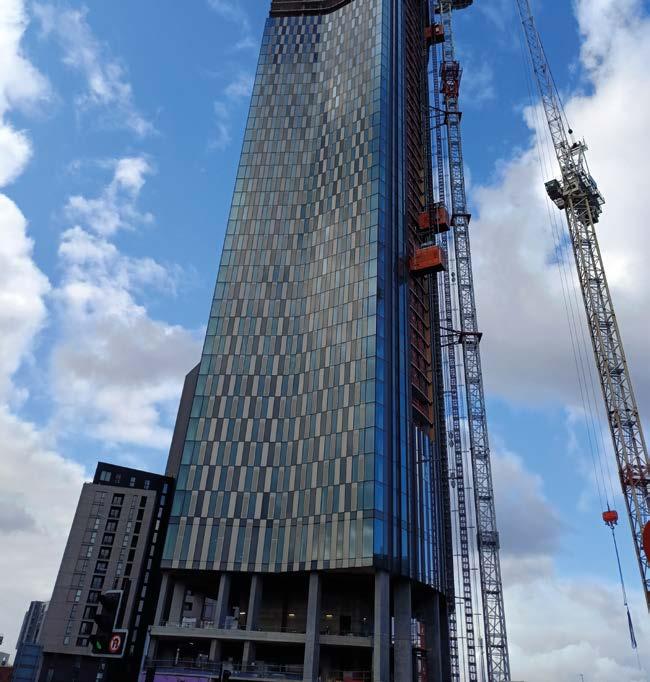
Sky Gardens
This is one of several exciting buildings which are re-shaping Leeds and creating new high-value neighbourhoods for the city. Working with Briggs & Forrester Living, PBS provided drainage and water
supply systems to the 34-storey tower with 284 residential one, two and threebedroom apartments.
At the outset, PBS took the opportunity to give the customer greater insight into the capability of the Polypipe Advantage Off-site Prefabrication Service with a factory site visit and a tailored presentation on what the potential of a prefabricated approach could be for the project.
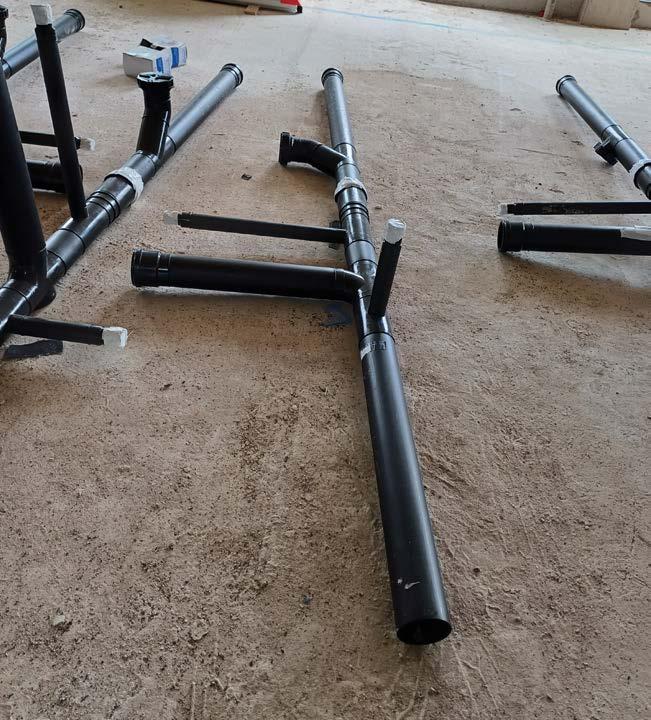
Early and close cooperation between Briggs & Forrester and the Polypipe Advantage Design Team enabled the development of bespoke, highly effective and cost-efficient systems. The drainage risers were prefabricated from Terrain FUZE, an HDPE system which offers a comprehensive range of pipe sizes and fittings together with advanced butt and electrofusion welding, making it ideal for configuring and building bespoke systems offsite.
The systems installed within Sky Gardens vividly demonstrate the benefits of using a prefabricated approach to MEP. The bespoke Terrain FUZE drainage system enabled risers that would normally take 73 hours to install, to be installed in just nine.
The modular prefabricated plantroom assemblage provides an even more dramatic demonstration of the benefits of prefabrication. The module used at Sky Gardens consists of 13 prefabricated sections and was put together with just 10 electrofusion couplings – a 93.5% reduction in on-site processes. Prefabrication also suited the urban setting of the project. The site’s footprint is extremely tight with little room for storage of components and equipment. The prefabricated system units could be called-up on a floor-by floor basis and craned direct from delivery vehicles to the installation point.
Eastman Village
This ambitious, multi-phased project is built on the old Kodak factory
3
site in Harrow. Working with M&E Contractor, Millharbour on behalf of Barratt London, PBS provided drainage systems for 474 flats, across four towers.
The buildings were carefully designed to incorporate many community amenities, requiring a considered approach to how the M&E elements deliver all the facilities. The drainage system brief was therefore challenging with a very ambitious build schedule. Following an early initial analysis, Millharbour worked closely with PBS to create a bespoke solution.
The Polypipe Advantage Prefabrication Team created a design using Terrain FUZE that combined butt-welds and expansion joints. The complex stack design therefore used a single electrofusion coupling on the ground floor to connect the stacks to the high-level pipework in the basement, after which, each floor-section of stack simply dropped down into the expansion joint below. This approach minimised the amount of on-site jointing work needed, and as the system was robust but lightweight, the available manpower could be used very efficiently.
Trinity Island
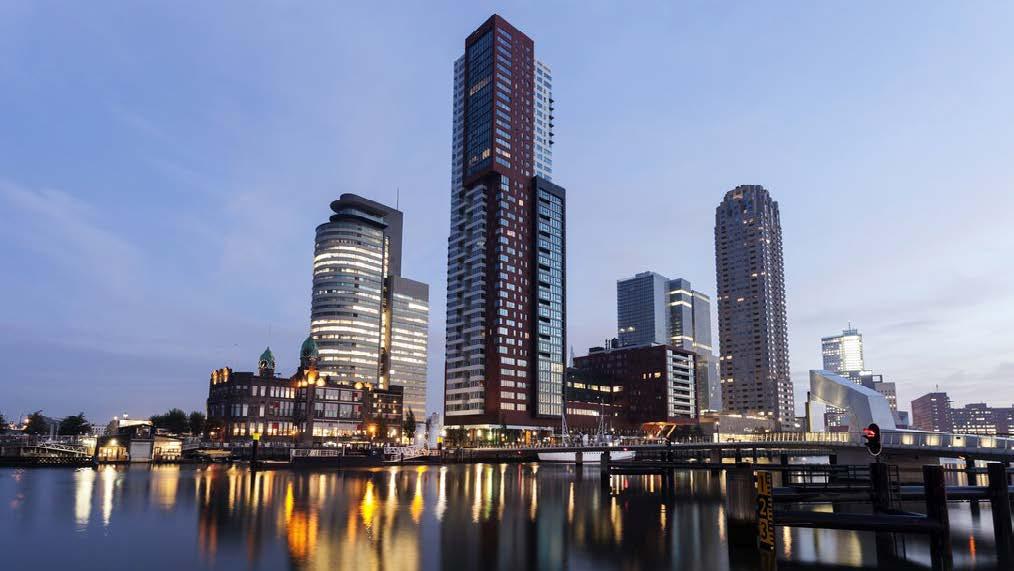
This is the latest in a series of residential skyscrapers by the developer Renaker that are transforming the Manchester skyline. The development’s two towers of 1,015 apartments would require a comprehensive water supply system with customised components delivered to a tight build schedule. Contractor MWA Ecosystems was therefore looking for a water supply system that could handle the scale, complexity and ambitious build programme of this project.
5
There were three major challenges at Trinity Island. Firstly, the highly bespoke systems needed to feed entire towers without taking up valuable space. Secondly, it was an ambitious schedule. Thirdly, costs needed to be controlled.
Maintaining consistent water supply pressure in a 600-foot building with 500 apartments, is a challenge –conventionally solved by multiple plantrooms and massive risers. Polypipe’s MecFlow Fusion system uses a fibre reinforced multi-layer PP-RCT pipe specifically designed for plantrooms, risers, headers and runouts. It also has a fire rating of B-s1, d0. This system was robust enough to handle the high pressures required to get boosted cold water to the top of the towers, without the need for secondary pumps.
The boosted cold-water riser and manifolds were prefabricated, which saved time on-site as MWA could fit and test quickly while re-allocating labour to other areas of the MEP install. For this approach to work, it was important that PBS worked closely with MWA at the very start of the
4
6
project – particularly with the project manager. The advantage technical team was then able to produce detailed drawings of the prefabricated elements so when they got to site everything fitted perfectly. MecFlow’s stable pricing also helped control costs over the course of the project. Being able to deliver according to tight installation windows enabled MWA to fit in with the overall schedule, and maintain their close working relationship with Renaker, a very important customer to the company.
These three projects demonstrate that not only do modern drainage and water supply materials deliver benefits in themselves, but when system design, manufacture and installation methods are carefully considered at the earliest possible point of a project, the advantages can be hugely significant.
Find out more at: www.polypipe.com
Images: 01-02 Sky Gardens and pump room header
03-04 Eastman Village and stack bottom 05-06 Trinity Island and prefabricated riser section and custom manifold
Data centre surge squeezes London MEP market
Labour rates for mechanical, electrical and plumbing trades in London are climbing sharply as the capital’s data centre pipeline absorbs specialist capacity. That is the headline finding from the latest London Main Contractor Survey by AECOM, which flags acute shortages among skilled MEP subcontractors and a knock-on impact across the wider construction market.
The report stated: “These skilled trades are experiencing acute shortages. This is due in part to the rapid expansion of the data centre sector, which is absorbing a large share of the leading MEP subcontractors. This has left other construction sectors with a much smaller pool of high-quality subcontractors, driving up prices due to competition increases for limited specialist resource.
“Such is the extent of the problem, some of the contractors we spoke to are building built in-house MEP delivery teams to use on their own schemes.” Contractors are responding by reassessing delivery models. A growing number are moving to establish internal MEP capability to secure resource and protect programme certainty.
Decline in electrical apprenticeships threatens energy transition, says ECA
Electrical apprenticeship starts have fallen over the past year despite surging demand for such skills, according to new analysis by the Electrical Contractors’ Association (ECA). The ECA’s 2026 Electrical Skills Index, published on 9 February, says the number of electrical apprenticeship starts fell by 5.5%, bucking an overall rise in those beginning apprenticeships.
The index shows that interest in electrical careers continues to grow with more than 26,000 learners enrolling on government-funded, classroom-based electrical courses in 2024/25 – up ‘significantly’ from previous years. However, this interest is not converting into qualified electricians, with fewer than one in five learners on those courses progressing into an electrical apprenticeship or skilled employment within 12 months.
The survey indicates that pressures could intensify if wider market activity picks up. In the short term, however, confidence across the capital remains subdued.
Brian Smith, Head of Cost Management and Commercial at AECOM, said: “This year’s survey shows contractors are balancing the need to secure work with managing risk exposure.
“As competition intensifies, some are prepared to take on greater risk, such as committing to long programme durations, to win work, while others are prioritising lower-risk opportunities with trusted partners. The challenge for 2026 will be maintaining stability by strengthening the
industry’s resilience and labour capacity ahead of what is expected to be a dynamic 2027.”
Despite near-term caution, Tier 1 contractors report solid order books for 2026, built from a broad sector mix rather than dependence on a single market. Orders in London were above the long-term average in the final quarter of 2025. Growth across commercial, refurbishment, public sector, life sciences and infrastructure work offset an overall decline in residential activity, signalling a structural shift in the capital’s construction focus.
The three regions most affected by electrical skills shortages are Greater London, the North West and the West Midlands. In addition, the East Midlands, South West, South East and Greater London regions saw an average 8% fall in electrical apprenticeship starts last year compared with 2022/23. This fall was despite an average 16% increase in government-funded course enrolments over the same period in these regions.
Luke Cook, ECA skills deputy chair, said: ‘The electrical skills gap is no longer a future risk, it is a live and growing threat to the delivery of electrification. Demand for electricians is surging, but the number of people entering the industry through apprenticeships is going backwards.’
Source: www.eca.co.uk
Take a stand against convention and join the Advantage Rebellion, where things get a bit radical. Our complete drainage and water supply systems are designed and prefabricated off-site, reducing costs by up as much as 30%, installation times by up to 60% and waste by as much as 100%. Fully customised systems, quality assured and pre-tested, delivered to site - ready for immediate installation. Join the Advantage Rebellion and change to a better system.
Find out more at www.polypipe.com/advantage-page
Briggs & Forrester Living Secure MEP Package for Landmark Regeneration Project
Briggs & Forrester Living has announced the successful award of the MEP package for The Stage, a transformative £136million mixed-use regeneration scheme in the heart of Luton town centre. This flagship project for the Central Region Team is being delivered in collaboration with Willmott Dixon.
The Stage, secured via the Southern Construction Framework (SCF), forms a central part of the Luton Town Centre Masterplan and is supported by £20million from the Government’s Local Regeneration Fund (formerly the Levelling Up Fund). This ambitious development will redefine the town centre, creating a vibrant destination that
combines residential, commercial, and public spaces. Located on the former Bute Street Shoppers car park, the scheme will deliver:
• 292 high-quality apartments, including 84 affordable rental homes
• Commercial units to stimulate local economic activity
• A multi-purpose performance venue with curated food and beverage offerings
• A new public garden square, enhancing green space and community connectivity.
Sustainability is at the heart of The Stage’s design. The development will feature energy-efficient building
systems, enhanced insulation, and photovoltaic (PV) panels for on-site renewable energy generation. Landscaped areas will incorporate Sustainable Urban Drainage Systems (SuDS) and biodiverse green infrastructure, ensuring long-term environmental benefits. Situated near Luton’s rail station, bus interchange, and taxi rank, The Stage will become one of the most accessible areas to live, work, and visit in the town, supporting Luton’s regeneration ambitions and economic growth.
As the appointed MEP contractor, Briggs & Forrester Living will provide mechanical, electrical, and plumbing solutions that align with
the project’s sustainability goals and performance standards. Its expertise will ensure efficient, reliable systems that support the development’s residential, commercial, and public spaces.
Commenting on the appointment, Regional Director Simon Drinkwater said: “We are delighted to be part of this landmark regeneration project alongside Willmott Dixon. Our team is committed to delivering innovative and sustainable MEP solutions that will help shape a vibrant future for Luton town centre.”
Source: www.briggsandforrester.co.uk
New Appointments at SES Engineering
SES has strengthened its Engineering South leadership team with the appointment of Mark Heath as Pre-Construction Director and Luke Boyhan as Commercial Director, supporting the business’ ambitious growth plans across London and the wider South. With both joining the Engineering South board, these appointments reflect SES’s continued investment in leadership capability as the business expands its presence across key markets including commercial development, fit out and life sciences.
Mark, having previously held roles at M&E specialist Michael J Lonsdale, including Estimating Director and Board Director and Estimating Director at Phoenix ME, brings more than 30 years’ experience leading pre construction and estimating functions across major MEP projects. In his new role, Mark will lead SES’s southern teams working across tendering, pre construction, and customer engagement.
Luke brings nearly two decades of experience working within commercial roles, having joined SES in 2021, most recently as Regional Commercial Director. His new role will be central to driving sustainable growth, strengthening client relationships, and ensuring the continued success of projects across the entire South region.
“This is a hugely significant moment for our business,” said Darren Wilson Regional Managing Director, SES Engineering South. “We need strong leadership to make the most of it, securing new opportunities and delivering them to the highest standards, both operationally and commercially. Mark and Luke’s experience make them excellent additions to our leadership team,
Dowds Look to Healthy 2026 Project Pipeline
JF & H Dowds Limited, trading as The Dowds Group, has reported that it is poised for a record period of growth with £90million of pipelined work as it entered 2026. The uplift in revenue has been driven by the Group’s new strategic decision to focus on its GB-based M&E projects, which has resulted in an uplift of £12million of new projects in 2024/2025 over the previous trading year.
More than £50million of the new work has been secured and engaged for 2026/27, with the remaining being secured and engaged for 2027/28. Heading into 2026, Dowds’ flagship projects will include a c.£27million Mechanical & Electrical scheme at the London School of Economics with McLaren Construction. Meanwhile, work will continue for The Sisk Group at both Guy & St Thomas Hospital and Lewisham Hospital with a combined value of £20million and on a c£14millkon Life Sciences project with McLaughlin and Harvey at Judd Street, Bloomsbury, London. Work has also included tertiary education projects such as £8million Future Greenwich Campus for Kier.
As part of their five-year Strategic Plan, Dowds has invested £1.6million in 2025 in its new ‘Group Professional Services’ based at their Ballymena HQ. This new initiative has a specialist focus on engineering for operations, which is unique in the industry.
Chief Executive, Louise McClelland said: “A key strategic goal for the company is to keep our people and client at the heart of what we do. In the past three years the company invested in a new headquarters in Ballymena with occupation taken up in August 2023. As well as being HQ for the business, we also own premises in Kings Cross, London.
not only for their strategic insight but also for their values and commitment to excellence which embody SES.”
Mark Heath, Pre-Construction Director, SES Engineering South said: “SES has a strong reputation of delivering fantastic work on complex projects, with customers who are paving the way for sustainability and ingenuity. It’s a time of real momentum for the South region, particularly within the London market, and I look forward to working with the team to strengthen our pre-construction capability and position SES to secure the opportunities ahead.”
Luke Boyhan, Commercial Director, SES Engineering South, added: “SES has built its reputation on strong partnerships which deliver technical excellence for our customers, and I’m proud to build on my previous role within the business to help lead our next phase of growth in the South. My priority will be continuing to strengthen those relationships and ensuring we bring commercial clarity, consistency and value to every project we deliver.”
Pictured L-R: Mark Heath and Luke Boyhan, SES Engineering South Source: www.ses-ltd.co.uk
“This ongoing investment demonstrates our commitment to our client and our teams employed in both regions and has established the company as a key player in UK market. The board will continue to develop its commercial and operational strategic objectives, ensuring our people and our client will remain at the heart of our business, guaranteeing we continue to develop our reputation and key relationships, delivering best-in-class service and projects.”
Executive Chair, James Dowds, added: “The outlook for the company is very positive as it moves into 2025/26 with a confirmed pipeline and order book for the next 18-months and line of sight further into 2027 and beyond. We have established an ESG Forum led by the Energy Services director to help further develop and deliver our ESG strategy. Furthermore, the company has achieved Platinum accreditation in the BITC’s Environmental Benchmarking Survey –an improvement upon our silver accreditation achieved in 2024. ISO14001 accreditation has also been maintained with an extension to business scope.”
Dowds recently secured its fifth consecutive plaudit in the Deloitte Best Managed Company programme and was recognised as one of NI’s most responsible companies achieving the Business in the Community’s coveted CORE accreditation as well as Gold Standard in RoSPA’s Health & Safety Excellence Awards.
Source: www.dowdsgroup.com
Encouraging Signs for Future of BEMS Sector
While the wider construction industry saw its performance hampered by rising material costs and ongoing skilled labour shortages, the BEMS sector saw its total revenues rise to £210million, according to the Building Controls Industry Association’s (BCIA) latest market report.
Highlighting an increased desire from property developers, architects and designers to decarbonise the UK’s building stock through the specification and implementation of building controls and automation, the building energy management systems (BEMS) market showed steady progress in Q3 – rising 2.6% compared to the previous quarter.
BCIA President, Stacey Lucas, suggested the growth of the BEMS market was indicative of the built environment acknowledging the need to reduce carbon footprints, saying: “The construction industry has faced a challenging 2025 but it’s pleasing to see that the BEMS sector is remaining resilient and showing promising signs for the future. As more building owners strive to decarbonise their buildings and meet their sustainability targets, we remain confident that the BEMS sector will increasingly gain prominence.”
Analysing the data in detail, the BCIA’s Market Intelligence Report – released every quarter–breaks down the BEMS market into three key areas:
product, installation value added, and service and maintenance. Product revenue held relatively firm in Q3, sitting at £38.8million, with most routes to market recording growth during the three-month period. In fact, manufacturer’s own systems saw a substantial uplift of 8.3%, while distributor and other channels rose by 7.4% and sales to system installers also saw an increase of 2.1%.
OEM activity did see a drop in the third quarter of 2025. However, this remains one of the smaller routes within the Product category. The overall rolling-year total for product stood at £162.1million – a marginal decrease of 0.6% compared to the previous 12 months.
Manufacturers and Systems Installers contributed most to the 2.2% rise to £112.9million, with value added up 3.4% and 2% respectively. While the rolling-year position revealed a 4.1% decline to £455.8million, the performance in Q3 suggests activity in this area is beginning to stabilise and improve. In fact, the proportion of value-added work within total installed systems remains high at 76.9%.
Service and maintenance followed the strong performances of the other two categories, remaining one of the most resilient parts of the BEMS market. Revenues rose by an encouraging 6.2% to £58.2 million, while Manufacturers had an uplift of 0.6% and System Installers jumped up
7.2% in the quarter. The rolling-year total saw a very slight drop of 0.1% to £215.8million.
Installed Systems revenue also grew to £146.9 million, seeing an increase of 2.5% compared to the previous quarter. Manufacturer-delivered installations and System Installers also rose by 4% and 1.1% respectively, along with an uplift in distributor-sourced activity. Market share movements also remained modest, with manufacturers increasing to 14.5%, System Installers at 65% and Unspecified at 20.4%. Showing improved quarterly momentum, the rolling-year total for Installed Systems stood at £591.6million.
Stacey added: “The BEMS market is showing encouraging signs of growth – despite the ongoing challenges the construction industry is facing. With the UK’s net zero target of 2050 ever approaching, the BCIA will continue to work with industry leaders and policy makers to not only support its members but also increase awareness both inside and outside the built environment of the important role building controls and automation can play.”
As the BCIA’s latest report indicates, demand for building controls and automation has been heightened by the need for building owners and facility managers to reduce their carbon footprints while creating smarter buildings.
Aliaxis has proudly supported the official launch of the new CIBSE TM70:2025 - Tall Buildings Drainage Design, a landmark publication setting a new benchmark for performance-based drainage design in high-rise buildings.
Part of the new CIBSE Guide G, TM70:2025 represents the result of decades of academic research, industry collaboration and full-scale empirical testing. Developed through collaboration between members of the SoPHE Technical Committee, academic partners, professional engineers and key industry contributors, including Aliaxis, it translates complex research into practical engineering guidance for real-world application. The publication builds on over 3,000 design scenarios and testing at Aliaxis Training and Research Centre, based at the National Lift Tower, Northampton, with results proven to be 98% accurate for simulation modelling.
As a trusted technical expert in tall building drainage, Aliaxis is proud to have contributed to TM70:2025 and to be sponsoring the launch event as it continues to drive industry standards forward. David Thomas, Head of Technical Support Services, at Aliaxis UK said: “We are incredibly proud to have contributed to TM70:2025. This guide represents a major step forward for
the industry, providing practical, research-backed guidance to engineers and designers. It addresses critical public health and safety concerns, introduces commissioning tests for drainage systems, and helps engineers design beyond minimum regulatory standards. At Aliaxis, we are committed to advancing industry standards and supporting the next generation of high-rise projects.”
As part of its contribution to the industry, Aliaxis has developed the new DWV Drainage Checker – a digital tool that enables engineers to design and verify hydraulic performance in around 15 minutes, replacing a previously manual process that could take several days. TM70:2025 also introduces mandatory commissioning tests to ensure drainage systems perform as intended, strengthen compliance and create a clear “golden thread” from designers to end users.
This category will reward the outstanding use of offsite manufactured MEP (mechanical, electrical and plumbing) services or use of pod technology in any size and type of project across the UK.
Entries must clearly demonstrate how pre-installed service units and risers, kitchen and bathroom pods or ‘plug and play’ technology, plant rooms, pipe- and ductwork for building services have been seamlessly integrated in a project in ways that are above and beyond traditional methods. Special attention will be given to prefabricated unit design, safe delivery and installation of serviced modules, the level of activity taken offsite, the integration with on-site activities and performance levels, clear supply chain integration and ease of maintenance and provision of high-performance facilities matching the client’s requirements.
THE STARTING POINT FOR PROJECTS IN IRELAND AND BEYOND
The future of construction will be won or lost at the design stage. Jones Engineering Manufacturing exists to ensure that projects are conceived with manufacture in mind, delivering certainty, quality and control from concept through to delivery.
As a specialist provider of integrated modular solutions, Jones Engineering Manufacturing works across a wide range of industrial and commercial sectors across Ireland, Europe and the Middle East. Our role extends far beyond manufacturing products – we partner with clients at the very beginning of a project’s life to help shape smarter, more efficient outcomes through design-led decision-making, resulting in fully integrated modular solutions.
Too often, modular manufacturing is introduced too late, once designs are already fixed and opportunities for true efficiency have been lost. When modular is treated as a downstream solution, its ability to influence programme, cost and performance is fundamentally limited. At Jones Engineering Manufacturing, we
believe the greatest value is created upstream. By engaging at the earliest design and development stages, we bring certainty and control to complex projects long before they reach site.
“WITH A STRONG TRACK RECORD IN MANUFACTURING INNOVATION, TEAM LEADERSHIP, AND TECHNICAL PRECISION, WE DELIVER SUCCESSFUL INTEGRATED SOLUTIONS WHILE DRIVING THE TRANSFORMATION OF THE INDUSTRY THROUGH MODERN METHODS OF CONSTRUCTION.”
IAN DAVY, GENERAL MANAGER
This early engagement fundamentally changes the nature of delivery. Rather than reacting to a completed design,
our teams work collaboratively with clients and designers to influence layouts, interfaces, module sizes and system integration from the outset. This design-for-manufacture-and-assembly (DfMA) approach ensures projects are optimised for offsite production, reducing rework, minimising on-site disruption and improving predictability across the programme.
Our approach focuses on solving the challenges that matter most to clients. Programme certainty, cost predictability, reduced on-site risk and improved quality are not outcomes that can be retrofitted at construction stage. By applying our extensive on-site construction experience early, we identify and resolve integration challenges before they manifest onsite, allowing projects to progress with greater confidence and control.
Our purpose-built factory
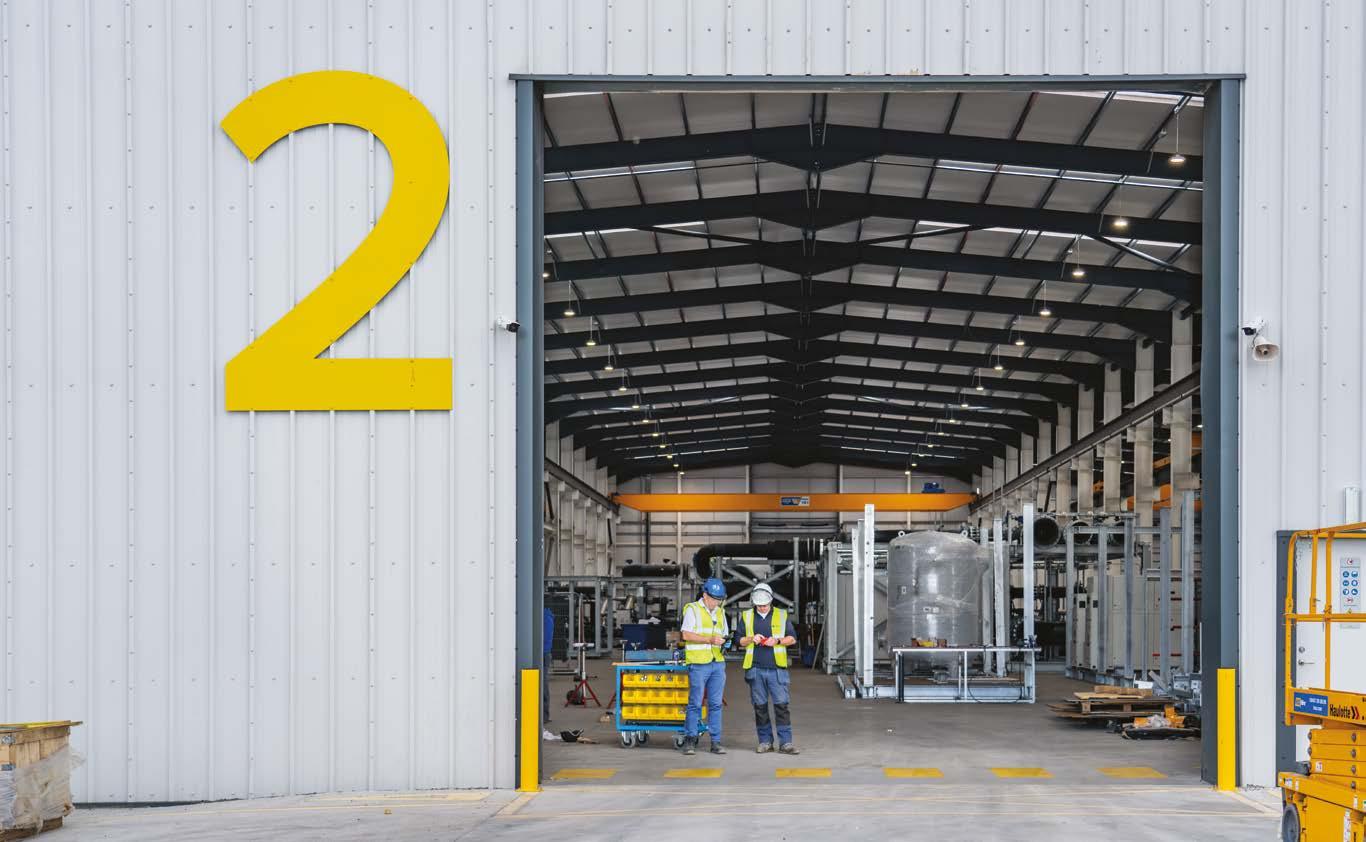
All key capabilities sit under one roof within our primary manufacturing facility in Carlow. Currently spanning 9,000sq m on a 15,000sq m campus, the site is undergoing significant expansion, with an additional 9,000sq m manufacturing building planned on a 54,000sq m campus. This strategic investment will significantly increase capacity and reinforces Jones Engineering Manufacturing’s long-term commitment to offsite manufacturing excellence. It also enables us to scale production, support more complex modular solutions and meet increasing client demand while maintaining quality and consistency.
Our team
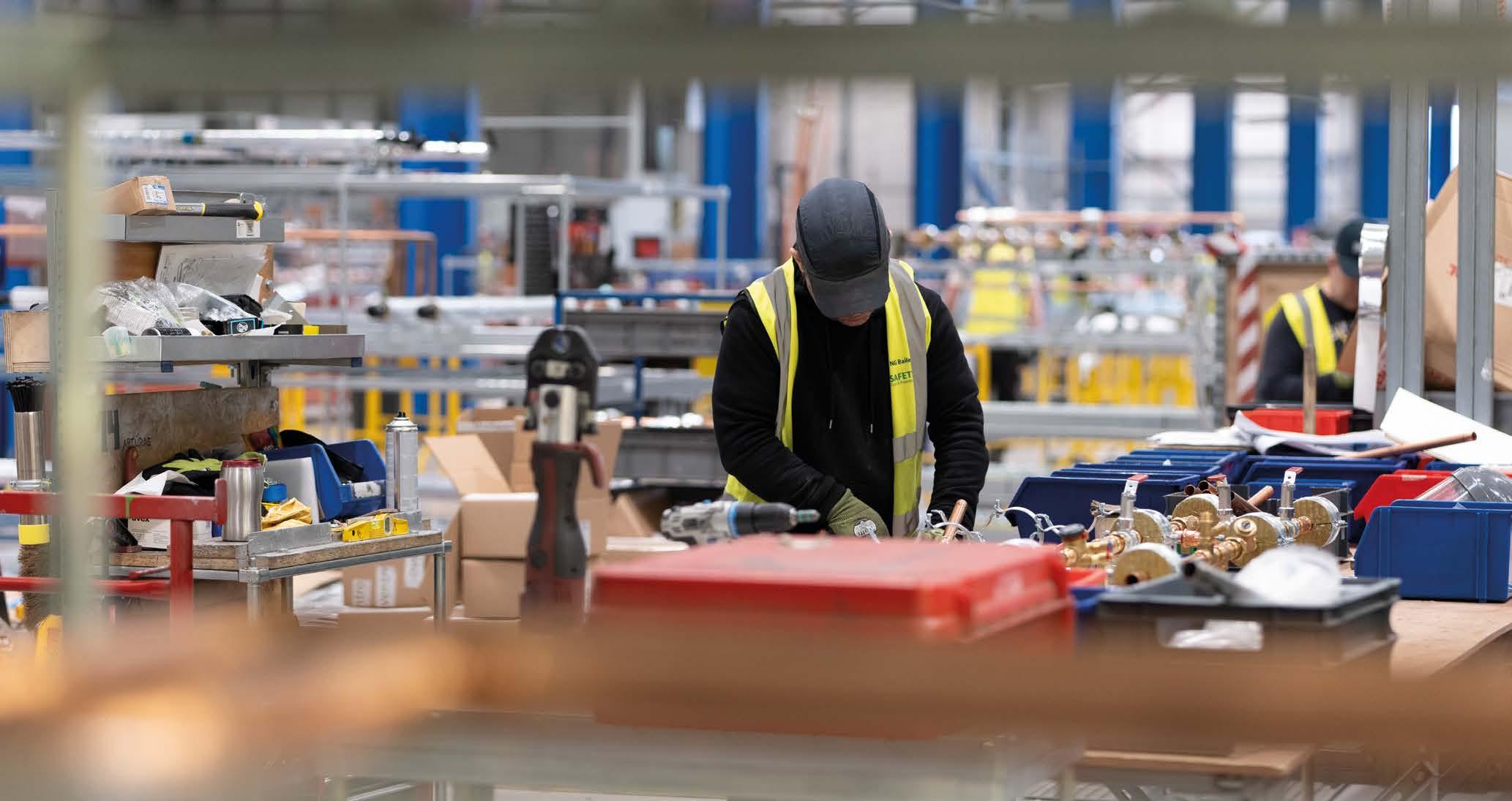
Within this controlled manufacturing environment, our multidisciplinary team brings together mechanical, electrical, structural, architectural, controls and fire protection expertise. Operating as a single, integrated team allows for greater coordination, improved safety and higher-quality outcomes. Modules are fully assembled, tested and commissioned offsite, delivering plug-and-play CE and UKCA-marked product solutions that arrive on-site ready for seamless integration.
This level of integration also supports a shift away from traditional contracting towards true product delivery. Rather than only selling capacity or reacting to tenders, Jones Engineering Manufacturing works directly with asset owners, designers and project teams to develop repeatable, standardised solutions. These solutions reduce risk, improve benchmarking and enable greater certainty across portfolios and programmes, particularly where clients are delivering similar assets repeatedly.
From early feasibility and design assistance through to detailed DfMA studies, factory acceptance testing and commissioning, our teams remain closely involved at every stage of the project lifecycle. Transparent costing, early technical assurance and close collaboration help to build trust and enable informed decision-making throughout the process.
In a market facing increasing pressure around delivery timelines, labour availability and quality expectations, modular manufacturing offers a clear path forward when applied correctly. It is not an add-on or a late-stage alternative – it is a strategic starting point. Jones Engineering Manufacturing is ready to be that starting point for projects in Ireland and beyond.
Contact us today to discuss design right through to modular integration at: manufacturing@joneseng.com
Find out more at: www.joneseng.com 2 3 1
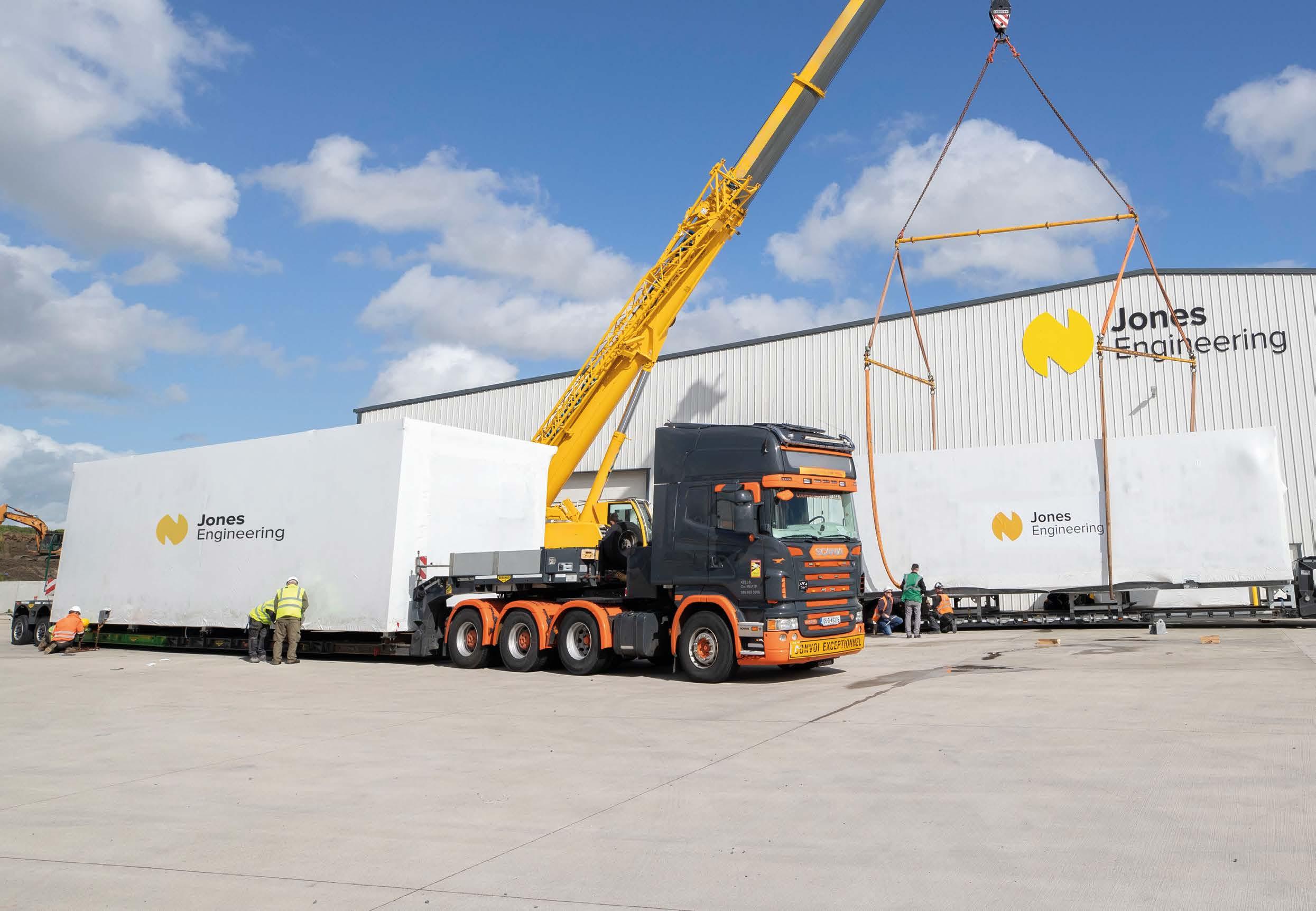
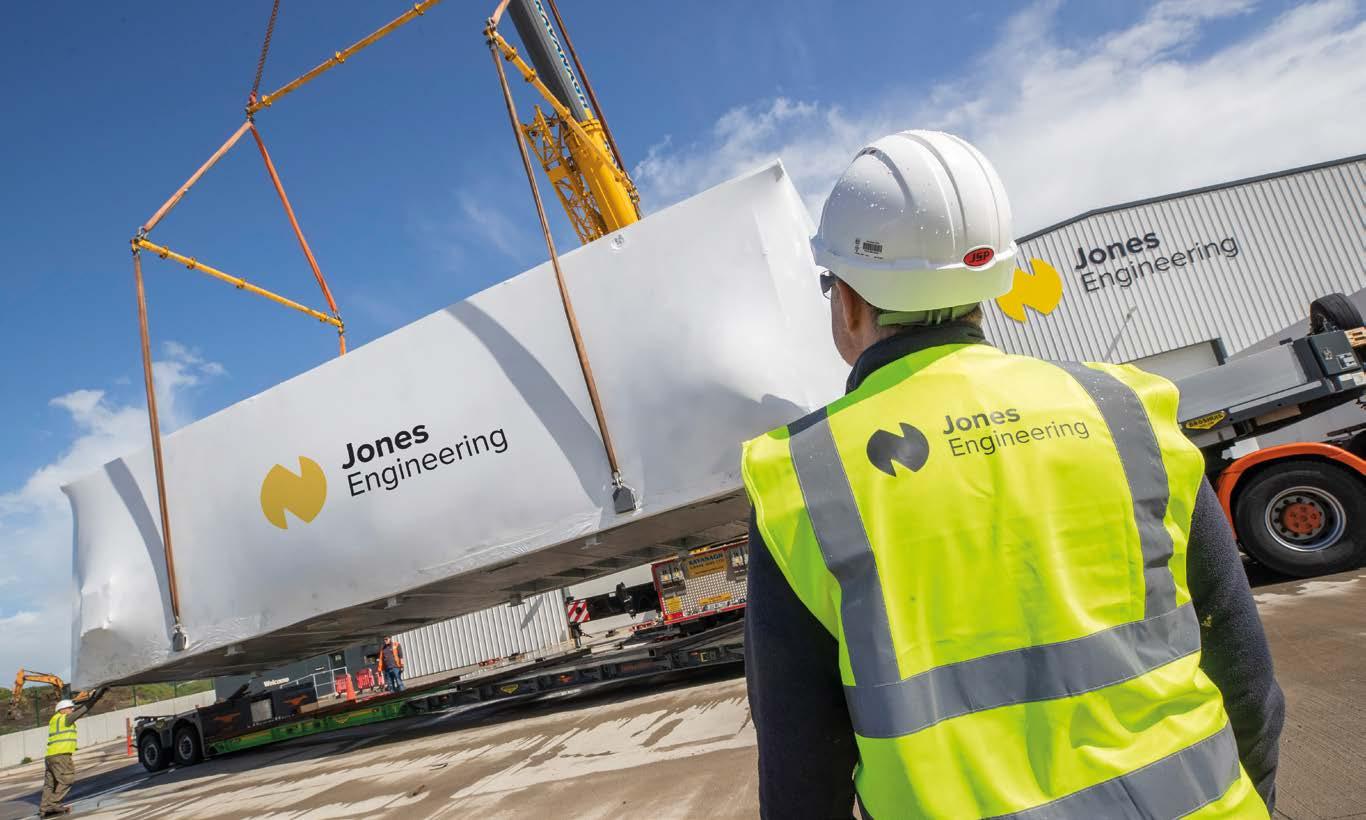
Images: 01-03. Within a controlled manufacturing environment, a multidisciplinary team brings together mechanical, electrical structural, architectural, controls and fire protection expertise
PRECISION AND PREFABRICATION FOR HMP MILLSIKE
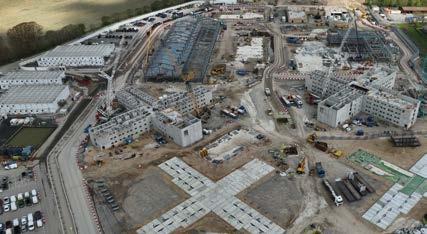
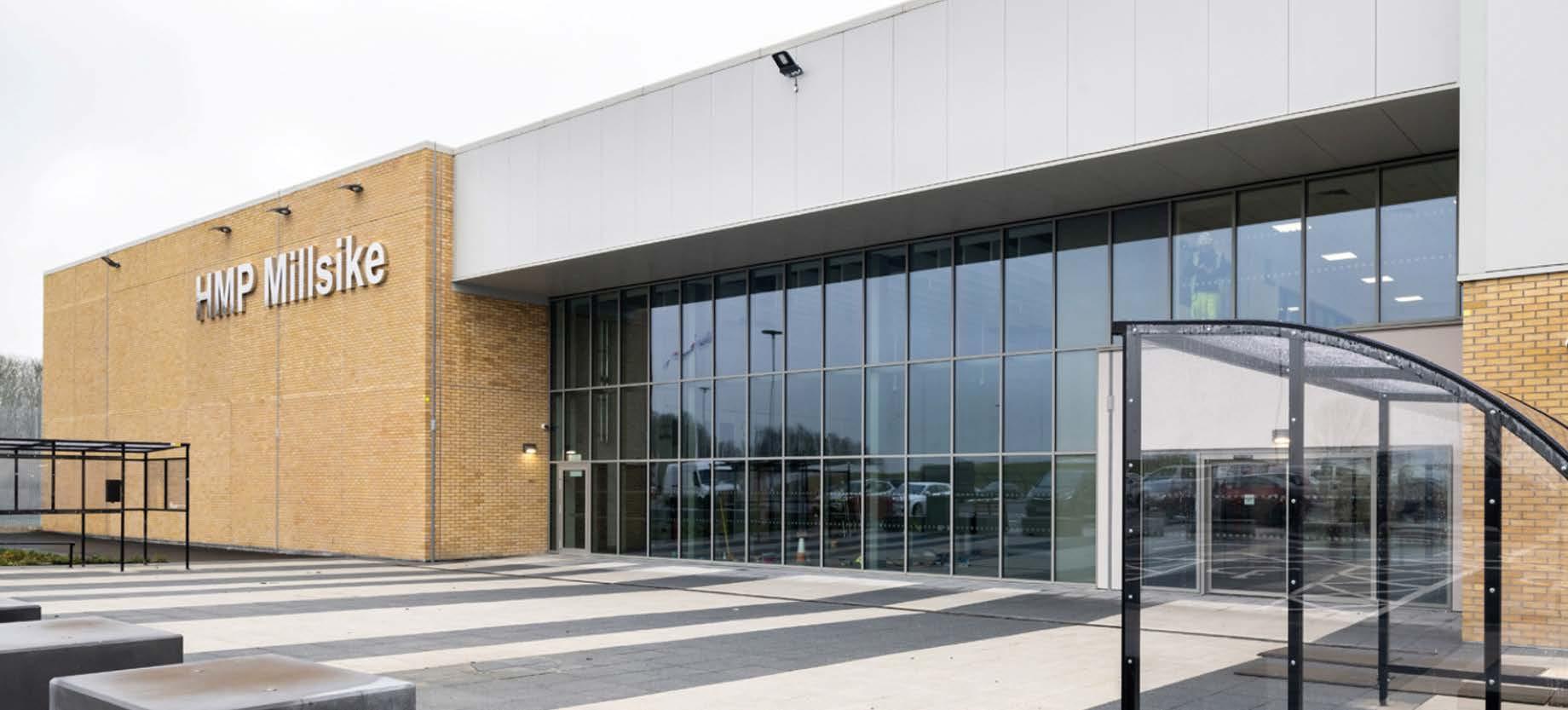
Much has been written about the multi-award winning HMP Millsike –not least in this magazine – but here we focus on the MEP aspects that have been slightly overlooked in the groundbreaking prison’s precast concrete success story.
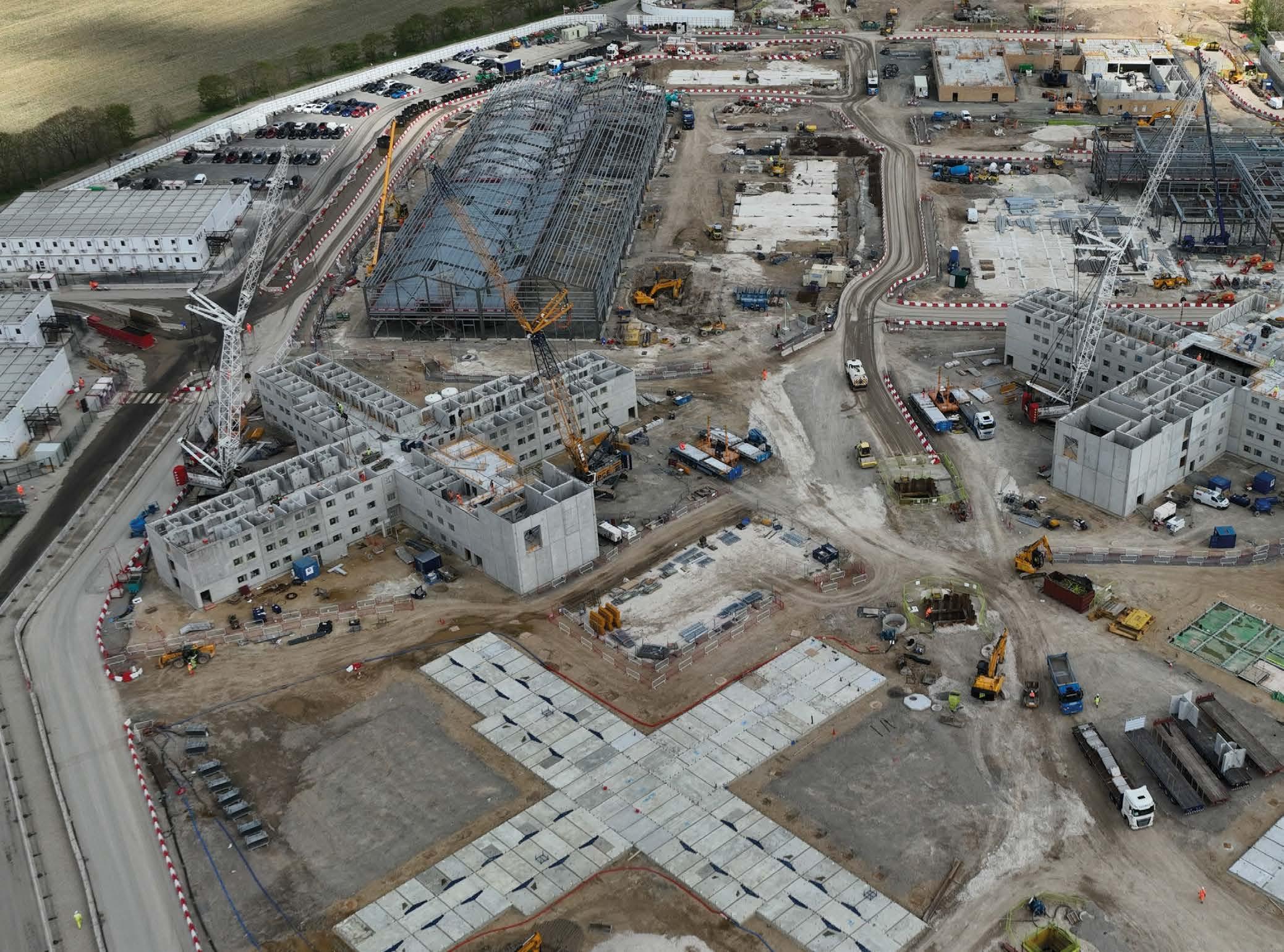
HMP Millsike is the UK’s first allelectric prison, constructed by Kier for the Ministry of Justice (MoJ), with offsite construction playing a critical role in its successful delivery. The project represents a major milestone in the Government’s plan to create 14,000 additional prison places by 2031 and was delivered under an FAC-1 Alliancing Contract. This collaborative model brought together four contractors, including Kier, to share skills, knowledge and expertise,
building on lessons learned from the previous HMP Five Wells project, also delivered by Kier.
The Category C prison, located near Full Sutton in East Yorkshire, accommodates approximately 1,500 adult male inmates. The development covers a site equivalent to around 39 football pitches and comprises 12 buildings, alongside extensive infrastructure works including 48km of underground ducting and 20km
of underground drainage. Seven permanent attenuation tanks, with a combined capacity of five million litres, manage water from roofs and hard landscaped areas.
Offsite manufacture was central to the project’s delivery. Alongside 12,998 precast concrete components, M&E services were fully co-ordinated through Building Information Modelling (BIM) at design stage. Clash detection enabled early identification
and resolution of issues, ensuring components issued for manufacture achieved a high level of quality and accuracy.
MEP from KME
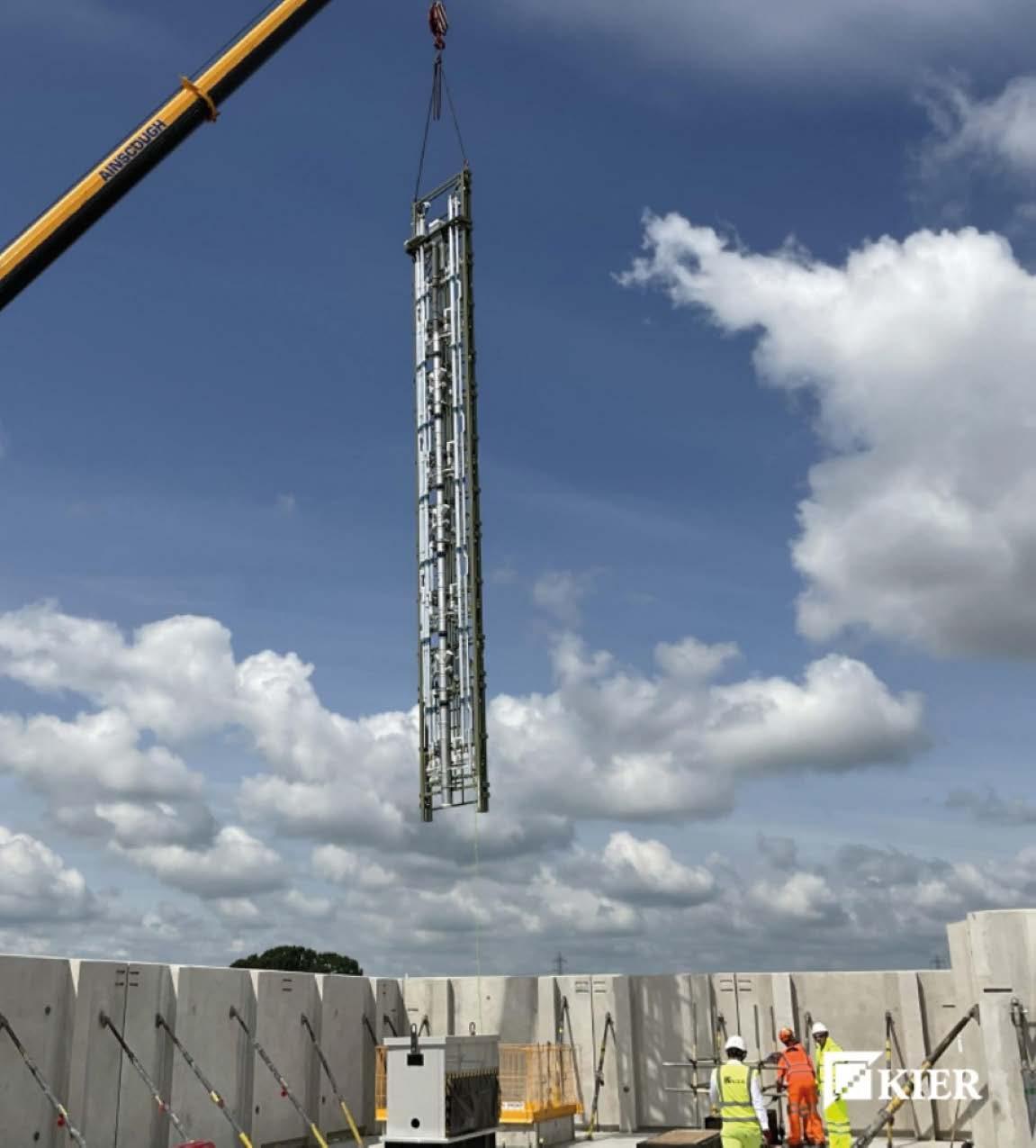
Kier Mechanical & Electrical (KME) installed 33 prefabricated, four-storey M&E risers across the houseblocks. These were lowered vertically into position, reducing installation time to just 8-10 days per houseblock. Glass Reinforced Plastic (GRP) riser enclosures were also manufactured offsite and installed the same day, keeping risers dry without the need for on-site joinery.
“EVERYTHING FROM THE BUILDING DESIGN TO THE TECHNOLOGY, EDUCATION AND TRAINING OPPORTUNITIES HAS BEEN ENGINEERED TO CREATE AN ENVIRONMENT WHERE PEOPLE LEAVE READY TO INTEGRATE AND CONTRIBUTE TO SOCIETY.” RUSSELL TRENT, MANAGING DIRECTOR, MITIE CARE & CUSTODY (OPERATOR OF HMP MILLSIKE)
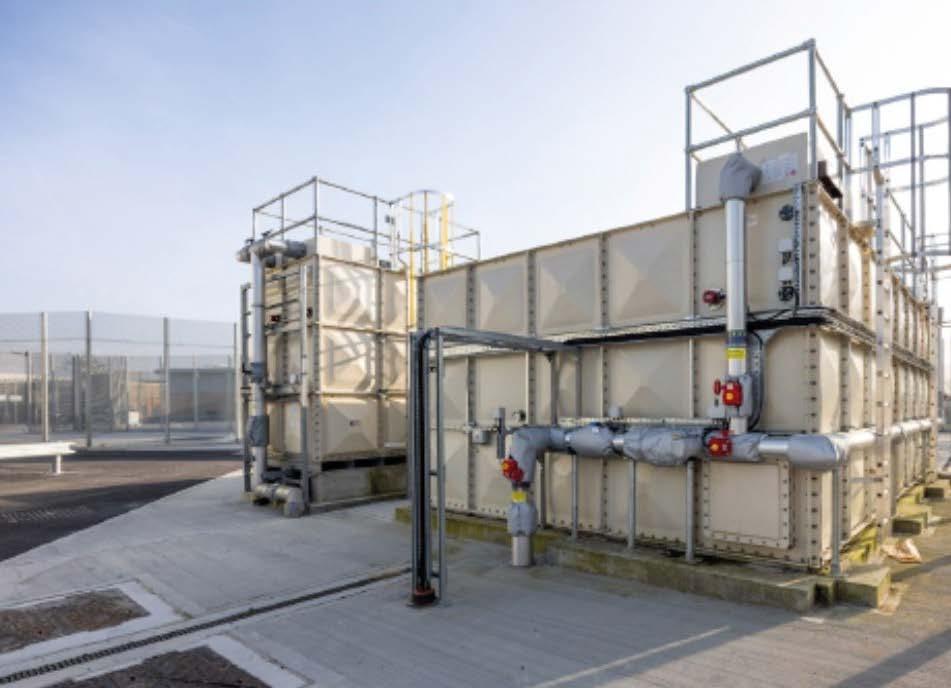
Further prefabricated M&E elements included 18 plant rooms manufactured at Kier’s facility in Pocklington, just six miles from site, delivering time, cost and carbon savings through reduced transport distances. Building on the successful DfMA approach at HMP Five Wells, KME undertook a full DfMA M&E
3
design review at HMP Millsike. Working closely with the M&E supply chain, the team optimised the design, exceeding the ‘pre-manufactured value target by 16.2% through standardisation.’
Offsite manufacture shaved approximately 12 weeks off construction time per houseblock and reduced embodied carbon by nearly 15% compared with the MoJ’s most recent prison. Outputs included standardised service bracketry, ‘free issued’ for both offsite and on-site M&E installations, and modelling to align invert levels, ensuring seamless integration of services. KME also introduced more than 400 horizontal
service modules to ancillary buildings, alongside approximately 21,000 castin components and 21,000 Halfen cast-in channels. Digital Bluetooth component tracking reduced factory inspection travel by 5,000 hours, saving around £300,000 and further reducing carbon emissions.
Early engagement with KME and the MEP suppliers enabled detailed modelling of the MEP design, allowing access points, installation sequencing and potential clashes to be resolved before mock-ups were created. All amendments were made offsite, ensuring systems were installed right first time. This reduced on-site labour 2
4
enormously, and minimised risks such as working at height, improved quality, and an in keeping with the sustainability and project’s low carbon ethos, diverted approximately 1,530 tonnes of waste from landfill.
Bringing MEP suppliers together during the design stage allowed comprehensive mock-ups to be tested without on-site disruption, avoiding costly late-stage changes. Within the prison environment, prefabricated MEP also improved
Cost controls
The self-delivery model through KME gave the MoJ greater cost visibility and single-point control over both build and MEP delivery. KME provided operational oversight, rigorously interrogating the design to ensure the build methodology was fully understood and effectively deployed. Managing specialist MEP supplychain input and prefabricated MEP delivery enabled a reduced cost base and assured quality, including the use of press-fit connections, which reduced costs by 24% compared with traditional methods and delivered a low-maintenance solution.
“Using our significant experience in the justice sector, Kier has delivered a state-of-the-art, carbon-efficient facility designed to support rehabilitation,” said Stuart Togwell, Group Managing Director at Kier Construction.
“While creating new jobs, economic investment and skills development for the surrounding communities. HMP Millsike supports the Government’s commitment to increasing prison capacity and reducing reoffending and strengthens our growing portfolio of prison projects.”
Moving forward, the prison’s 1,800+ solar panels will provide carbon savings of 143 tCO2e in the first year of operation, and c.3,500 tCO2eover 25 years. More than 8,500kWh of renewable energy will be generated to power it. Keeping cost and carbon levels down, 136 air source heat pumps will provide full heating capacity at outdoor temperatures of -3°C.
5
safety by limiting opportunities for concealing contraband and ensuring safe, straightforward access for maintenance.
“A lot of the plant was built offsite and lowered in,” said Raj Singh OBE, Principal Project Sponsor at the MoJ. “It increased productivity and was more than 25% faster than traditional methods. The project was delivered on time and budget, to the highest level of quality…truly remarkable across a project of this scale.”
Lessons learned from HMP Millsike are already being applied to future schemes. Kier is sharing these insights across the next three prisons it has in the pipeline, including HMP Glasgow for the Scottish Prison Service, where the team aims to increase productivity by 10% through enhanced component tracking and save approximately four days per houseblock by further rationalising offsite components.
Find out more at: www.kier.co.uk
Images:
01-02. HMP Millsike
03-05. Offsite manufacture shaved approximately 12 weeks off construction time per houseblock and reduced embodied carbon by nearly 15% compared with the MoJ’s most recent prison. All images courtesy Kier Construction
INTEGRATED PUC SOLUTION FOR TUNBRIDGE WELLS LATER LIVING
Shortlisted at the Offsite Awards 2025, for its work at a retirement village in Tunbridge Wells, Modufab PUC, designed manufactured and supplied 199 prefabricated utility cupboards (PUC).
The new development, which brings to life a former art deco ABC cinema site, will create 167 one and two-bedroom later living apartments arranged around a central courtyard with nine lower ground floor retail units.
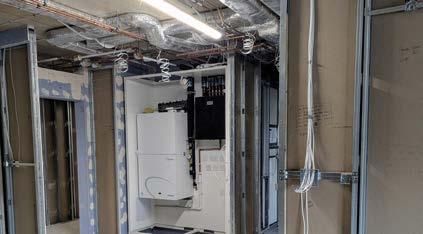
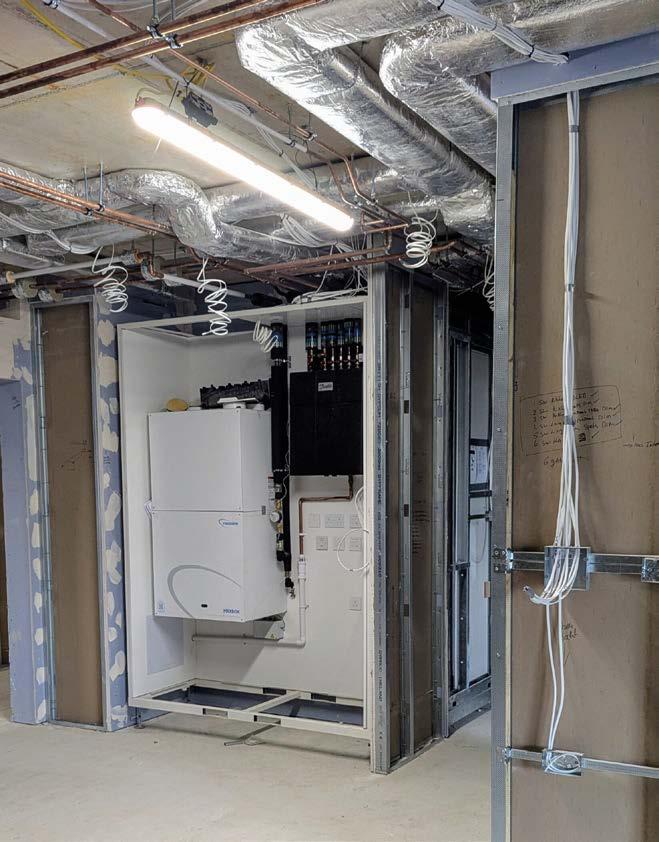
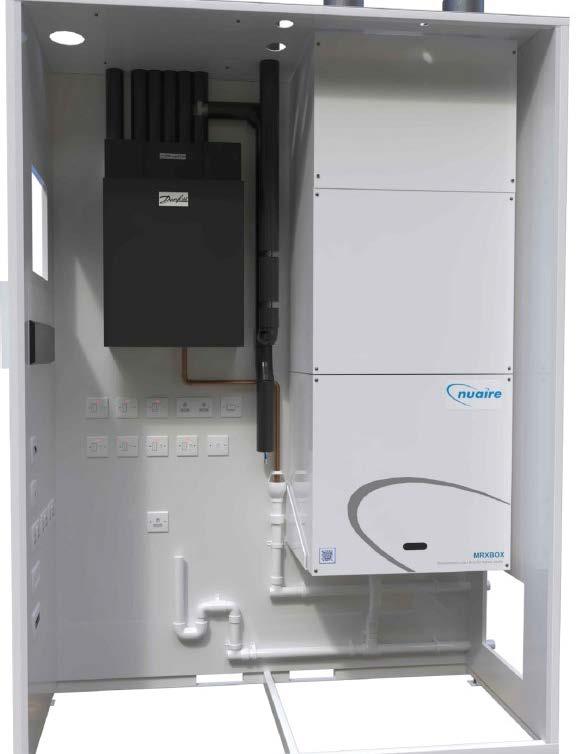
Modufab PUC was awarded the contract by McAleer & Rushe to design, manufacture and install PUC in accordance with Hoare Lea’s building services specification. Each cupboard integrates a Nuaire Eco Mechanical Ventilation with Heat Recovery (MVHR) and cooling module, a SAV heat interface unit (HIU), and three forms of MODBUS-enabled energy metering for heat, electricity and water consumption. The units also incorporate data, safety and power provisions within a compact unit. Manufactured in a factory-controlled environment, the cupboards benefit from stringent quality assurance, consistent production standards and enhanced health and safety processes.
designed to support active and sociable later life. The development has been carefully planned to integrate with the surrounding town centre through streetfacing retail units, a publicly accessible courtyard and integrated thoroughfares linking key parts of the town.
Transforming a brownfield site that has remained derelict for more than 20 years, the architecture draws inspiration from the ABC Cinema that formerly occupied the plot and the mid-century town hall opposite. RVG has pledged to deliver the project as a whole-life net zero carbon development. This means addressing both embodied carbon and operational carbon, aligning with best practice in sustainable construction.
complex topography with a nine-metre level differential and its position above a Network Rail tunnel. The design and construction methodology have therefore been carefully developed to respond to structural constraints, load distribution requirements and buildability considerations while maintaining programme efficiency.
The development design implements an all-electric heating and hot water generated via rooftop air source heat pump (ASHP) systems. The deployment of PUC represents a proven offsite manufacturing approach, enhancing quality, consistency and programme certainty. Regular phased deliveries reduced on-site labour requirements and congestion, saving an estimated 6,680 site working hours. By shifting fabrication to a controlled factory environment, the project benefited from improved safety, reduced waste and greater installation efficiency.
Find out more at: www.modufab.co.uk 1 2
The scheme forms part of Retirement Villages Group’s (RVG) Thrive Living collection – a portfolio focused on creating connected, urban communities
The 1.5-acre development maximises natural daylight through extensive floor-to-ceiling glazing, while residents will benefit from a range of communal amenities including a restaurant, private dining rooms and wellness facilities – all designed to support wellbeing and social interaction. The site presents significant engineering challenges, including a
Modufab PUC took full responsibility for the entire procurement and inventory management associated with the PUC build, maintaining tight control of stock levels and quality while working closely with trusted manufacturers and suppliers. A total of 199 units were manufactured and delivered between February and June 2025. This integrated approach allowed Modufab PUC to manage the entire build programme for the utility cupboards and provided McAleer & Rushe with a single point of contact for all co-ordination, correspondence and project management for the PUC elements of the scheme.
Images: 01-02. Modufab PUC designed manufactured and supplied 199 PUC that were manufactured and delivered in four months. Courtesy Modfab PUC
STANDARDISATION WITH INTENT –PERFORMANCE BY DESIGN
As the industry debates the role of standardisation in MMC, NG Bailey’s Mark Griffin, explains why OSM – NG Bailey’s rebranded offsite manufacturing offering – believes good engineering should remove decisions from site, not multiply them and how its productled approach makes that possible.
As offsite manufacture accelerates across the built environment, we believe the industry is reaching an important point of differentiation. On one side sits low-value, catalogueonly MMC – fixed products, limited flexibility, and standardisation driven by convenience rather than performance. On the other is a more mature, engineering-led approach, one we believe that recognises that true industrialisation does not eliminate complexity but manages it intelligently.
OSM’s approach to offsite manufacture is defined by intent, discipline, and leadership. It is built on a simple belief:
standardisation should be a foundation for performance, not a constraint on it.
Design once. Improve continuously At the heart of our model is mastery, the discipline of understanding what happens most often and engineering it once. We focus on high-frequency site assemblies and recurring engineering challenges, capturing hard-won experience and converting them into proven standard products. This has created a brochure of standardised products, not generic catalogue items, rather they are engineered building blocks designed to perform reliably in real-world conditions.
Our standard products form the foundation of every solution we deliver but not the limitation. They reduce risk, accelerate delivery, and establish a consistent baseline for quality. Just as importantly, they free up engineering resource to focus on elements that genuinely add value, rather than repeatedly solving the same problems on every project.
Engineering expertise applied where it matters most
Unlike catalogue-led MMC, where choice often replaces judgement, our model applies bespoke engineering selectively and intentionally.
2
Customisation is introduced only where it improves performance, manages risk, or extends the capability of the standard.
This is enabled through OSM Consult, our consultancy service that provides expert guidance across all stages of a project. From early MMC strategy and feasibility studies through to BIM modelling and engineering technical management, OSM Consult ensures that the right decisions are made early — and engineered in, rather than left to be resolved on-site.
Discipline through controlled manufacture
By engaging upstream, OSM Consult helps clients unlock the full potential of their project with a clear focus on offsite manufacture. It allows bespoke engineering to be applied precisely where it adds the most value: managing constraints, resolving interfaces, and shaping solutions that enhance performance without undermining repeatability.
This is how we ensure every solution is repeatable, but never cookie-cutter. The architecture is standardised –the application is not. Interfaces, constraints, and performance requirements are understood and engineered upfront, rather than being pushed onto site teams to resolve under pressure. The result is a portfolio of solutions that can be industrialised without becoming commoditised.
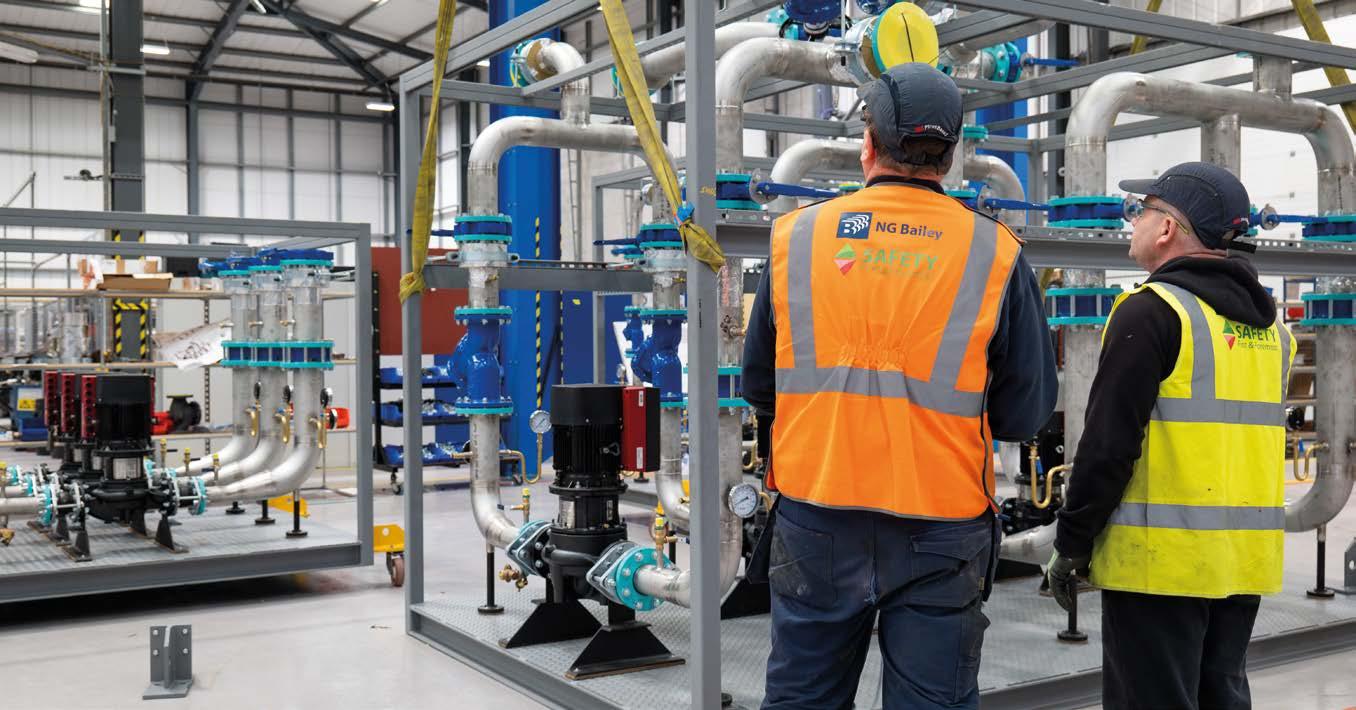
Offsite manufacture ultimately succeeds or fails on discipline. By moving work from site into a controlled manufacturing environment, we reduce variability, improve quality, and increase productivity. Controlled processes are not simply an operational preference but are the foundation of a sustainable model. Through this discipline we enable predictable outcomes, whether reliable margins, repeatable performance or continuous learning, it allows us to look at each iteration and strengthen the standard. Over time, this creates a learning-curve advantage that catalogue-only MMC cannot replicate.
Industrialisation that respects complexity
Our approach to offsite manufacture is not about stripping projects back to the lowest common denominator, it’s about
3
applying industrial thinking to complex environments with intent, judgement, and engineering rigour. By combining standardisation with performance-led design, we deliver solutions that scale without losing intelligence. Solutions that repeat without becoming generic. And an offsite manufacturing model that creates lasting value, not just faster build times, but better outcomes. That is standardisation with intent. And performance by design.
Find out more at: www.ngbailey.com/ engineering/offsite-manufacture
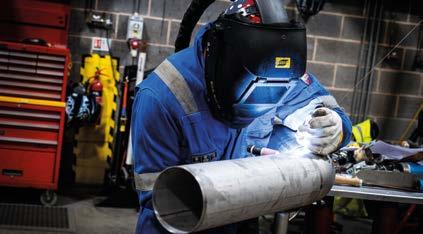
Images: 01-03. Moving work from site into a controlled manufacturing environment reduces variability, improves quality, and increases productivity
Dates for your diary
MMC Ireland National Conference
05 March 2026
Johnstown Estate, Meath
One of the latest and most well-received additions to the offsite industry calendar, MMC IRELAND NATIONAL CONFERENCE, is returning for 2026! The event will offer a fresh perspective and insight into the trends, technologies and engineering innovation driving the Irish offsite construction market.
Industrialised Construction Awards Entry Deadline
13 March 2026
Online
To celebrate the leaders driving this new era, the INDUSTRIALISED CONSTRUCTION AWARDS will recognise the organisations, technologies and people accelerating the UK’s journey from construction to production - and demonstrating that better ways of designing, manufacturing and assembling buildings are not only possible, but already happening.
Tall Buildings Conference North
24 March 2026
Manchester
As the UK’s cities undergo unprecedented skyline transformations through tall building developments, these events will provide essential platforms for sector professionals to share insights on regional projects, planning policies and best practices across the country’s thriving high-rise market.
Industrialised Construction Conference
21 & 22 April 2026
London
The UK’s only INDUSTRIALISED CONSTRUCTION CONFERENCE AND EXHIBITION is returning for 2026. Industrialised solutions transform the building process by leveraging advanced manufacturing techniques, underpinned by automation, robotics, and digital technologies.
Offsite Awards Entry Deadline
29 May 2026
Online
The OFFSITE AWARDS shine a spotlight on the most pioneering achievements - from forward-thinking designs to cutting-edge technologies, we honour those driving transformation in the built environment. Each year, our platform brings industry leaders, professionals, and innovators together to celebrate success stories and share best practices that define the future of construction.
High-Performance from the Ground Up
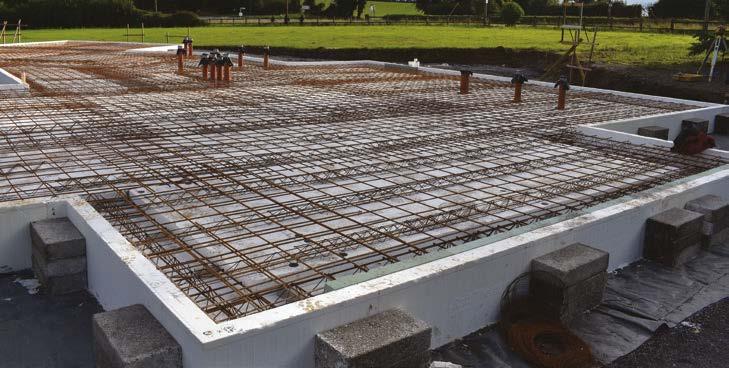
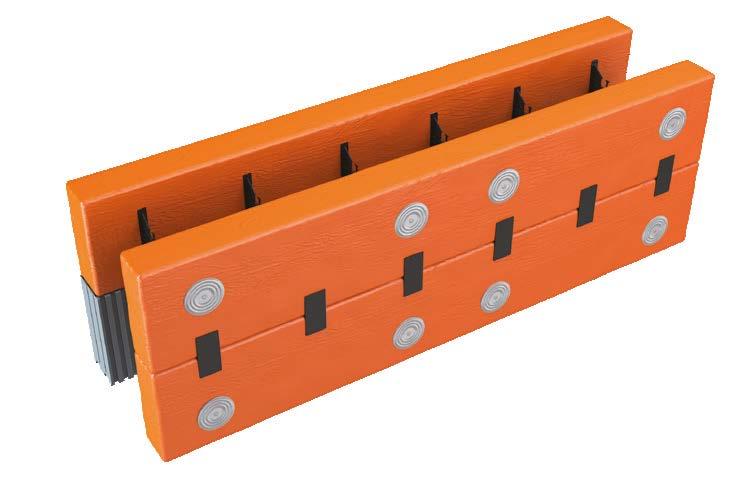
Engineered for modern construction and trusted across the industry, CastleForms delivers advanced Insulated Concrete Formwork (ICF) walling, insulated foundation and render systems that set new benchmarks in performance. From foundations to finish – with ICF FireBlock leading the way in integrated fire protection – our innovative NSAI certified solutions deliver uncompromising strength, efficiency and compliance.
ICF Therm Wall – Certified and Compliant
Future-Proof ICF Walling Solution
Raft Therm – Insulated Foundation System
Foundation and Floor in One Seamless Step
ICF FireBlock (Patent Pending) –a Major Step Forward in Fire Safety
Enhances Performance – Reduces Risks
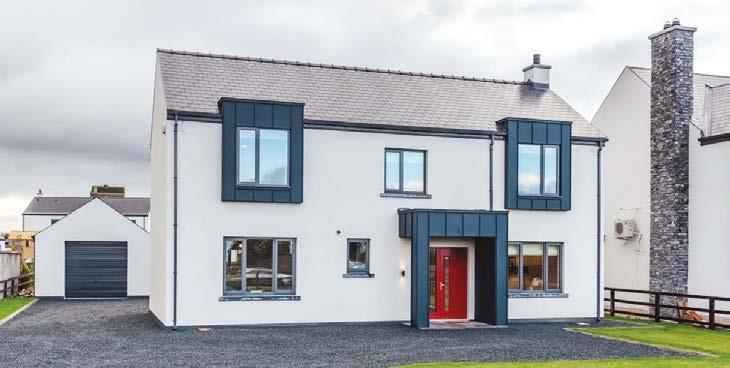
Soltherm – Certified Wall Insulation and Render Solution
Strong Performance, Stylish Finish
Build with Confidence – Build with CastleForms
With a comprehensive portfolio of high-performance building systems, CastleForms supports robust construction, superior thermal performance and long-term durability – all from a single, trusted partner.
www.castleforms.com
KingBuild by Kingspan
The future of construction is here
KingBuild is the result of a development process driven by market demand and innovation.
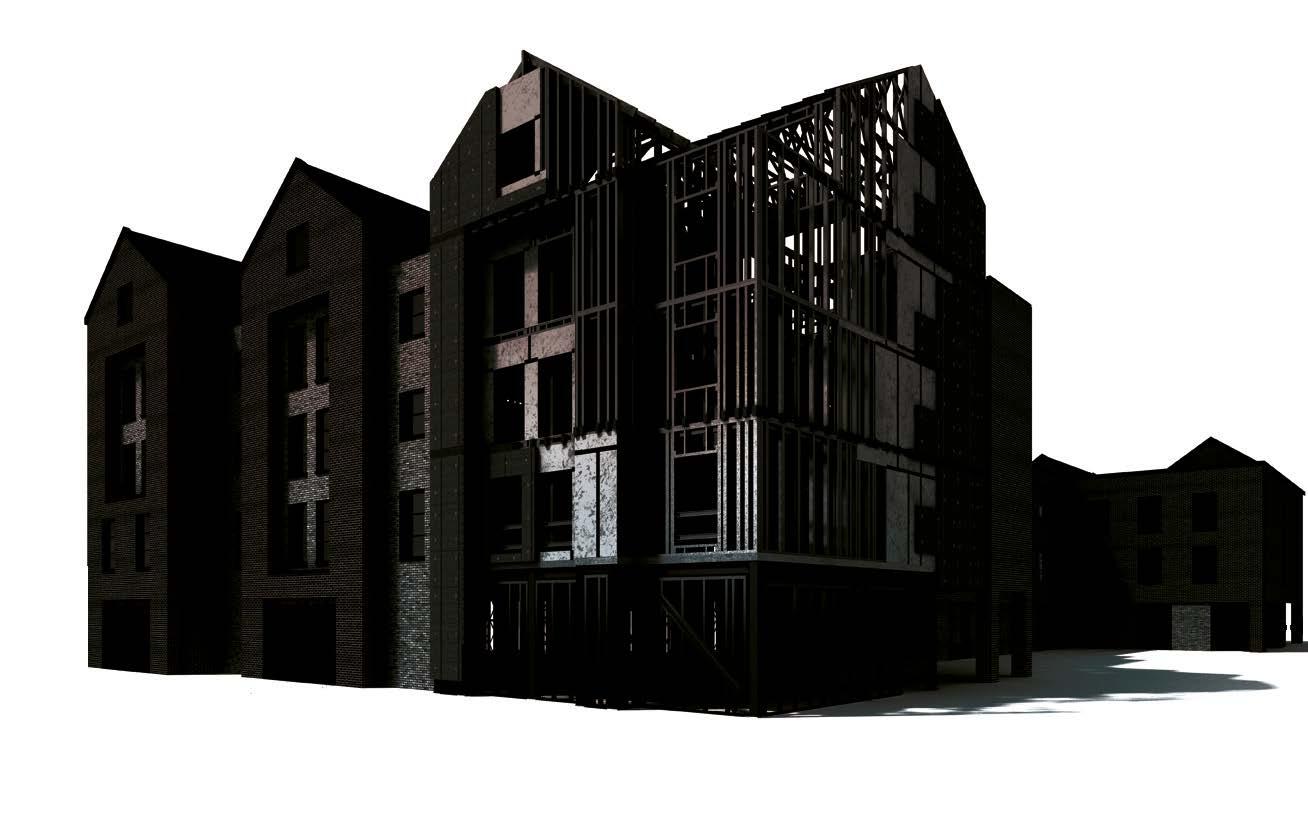
KingBuild is a panelised Light Gauge Steel Frame (LGSF) system that integrates seamlessly within a wide range of architectural styles and is ideal for both low- and mid-rise structures.
Developed by Kingspan, KingBuild delivers a comprehensive, single-source solution – from early design principles through to on-site structural erection. The result: a streamlined process that saves time, reduces cost, and ensures dependable quality.
Why choose KingBuild?
Designed to support shorter construction programmes compared to traditional hot-rolled or concrete frame methods.
Lightweight system that helps to reduce foundation size, installation requirements and overall build costs.
Reduced prelims and programme risk - shorter build times mean lower prelim costs and greater predictability.
Optimised labour - a typical five-person crew assembles efficiently on site, keeping costs low.
Early dry envelope formation enables follow-on trades to start sooner, driving programme efficiency.
Integrated design and manufacturing ensure consistency from start to finish.
For more information, technical specifications, or to discuss your next project, contact Andrew Waddell: email andrew.waddell@kingspan.com or call 07970 664160.
KingBuild combines off-site precision and engineered robustness in a system that is ideal for residential apartments, student accommodation, hotels or care home developments. This integrated system supports shorter programmes, efficient installation and consistent quality.