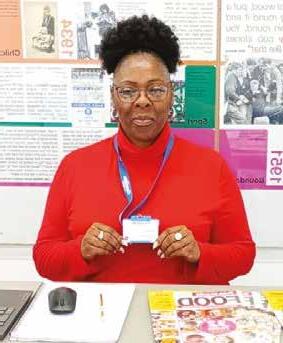
2026 marks our 20th anniversary. Wow! And we’re still going. And growing.
I set up Clean Slate Training & Employment, which runs Quids in! Money Guidance, to create and support new options for unemployed people. Our goals broadened with the financial crash in 2008. Now, we’re all about helping people become better off.
Actually, no. Not that. Helping people become MORE THAN better off.
READERS CLUB HITS RECORD MILESTONE
“The future could be bigger, bolder and brighter for all of us”
This special edition is about building on what we’ve learnt from people we’ve simply pointed in the right direction. There have been thousands now, and their stories show us how the future could be bigger, bolder and brighter for all of us.
The articles in these pages spell out ways to turn simple steps into big gains. We don’t all have the support of a coach to cheer us on. But any one of us can make the choice to try something different.
Quids in! has learnt to change just to survive. It’s a lesson, perhaps, for all of us.
Jeff, Quids in! Editor editor@quidsinmagazine.com
SAMPLE SAMPLE
• Address 14 St James’s Parade, Bath, BA1 1UL Tel 0845 646 0469
• Editor Jeff Mitchell Email quidsin@cleanslateltd.co.uk
• Design Joe Burt Website wildsparkdesign.com
● Quids in! digital service on its way to 50,000 subscribers
The email service bringing monthly news to Quids in! readers has smashed the 33,000 mark. By the end of 2025, subscriber numbers had reached 33,379. Its 116th edition was published in December.
It’s free to join and the Quids in! Readers Club news service shares the same tips, tricks and latest news as the magazine. We work with landlords who share our emails with tenants but readers can subscribe direct using this short link online: bit.ly/QIRC2026.
Editor Jeff Mitchell explains: “It works just like Martin Lewis’ MoneySavingExpert emails. The main difference is we’re not-for-profit and dedicated to social tenants, unemployed people and benefit claimants. We don’t promote credit cards
or investments, but help people navigate life on a lower income.”
Over 1,000 subscribers took part in last year’s cost of living survey. Just one in twenty people (5%) felt they had all their money issues covered, with the rest (95%) finding articles useful. One in five readers also said they had acted on advice to improve their finances. Almost one in three (30%) said it helped them take more care of their money. More than a third (36%) said it reassured them that they weren’t alone in their situation.
“One in five readers said they had acted on advice to improve their finances”
“We have ambitious plans for the Reader Club,” Jeff explains. “Of course we want more and more people to subscribe. But we also want to keep trying new ways to help people uncover those big money wins. That will only get easier as more people sign up.”
• Head of Business Development Lisa Woodman Email lisa.woodman@cleanslateltd.co.uk
How one mum turned her finances around – and how you can too.
Many people feel close to the edge. A missed payment here, a benefit that hasn’t been updated, a birthday coming up… Suddenly we’re borrowing from family, skipping meals or losing sleep. Or all three.
The good news? When we regain control, the difference can be massive.
Just ask Maria, a single mum of three living in Bath. Her story shows the big difference a few small steps can make. She had some help, but anyone can follow a similar path.
BORROWING JUST TO SURVIVE
When Maria first spoke to Quids in! , she was doing everything she could. She was working part-time and claiming Universal Credit. She was maintaining her home and managing to care for her young son with autism.
But it still wasn’t enough.
Each month Maria had to borrow around £300 from friends and colleagues just to cover basics like rent, bills, food. The pressure was affecting her mental and physical health. She told us she sometimes had to call in sick because things got too much.
She’s one of millions stuck in the same rut. She’s also one of hundreds who turned to a Quids in! Coach last year to help them turn things around.
HIDDEN BENEFITS
First, we found Maria wasn’t getting all the support she should have been receiving. A benefits check revealed she should qualify for Council Tax Reduction, disability benefits for her child, and Carer’s Allowance. She also qualified for removal of the benefit cap.
found official letters overwhelming. English isn’t her first language and she disliked dealing with formal organisations. Online forms, she told us, were confusing.
With support, she started to open post every day and began to understand what the letters meant. She committed to getting help early rather than waiting for things to get worse. She also started checking her bank balance more often. This didn’t always change things but made her think twice about spending and reminded her of upcoming payment dates.
BALANCING THE BOOKS
Using budgeting tools like the one on the quidsinmagazine.com website, Maria was able to list every bill. Now she could see where her money was going and identify how short she was.
Understanding what she needed each month to stay out of debt enabled her to take charge. Being in control of her money quickly led to making a difference on other parts of her life.
BUILDING A FUTURE
Once the money stabilised, the doors opened. Maria’s new income meant she could pay bills on time, stop borrowing, and buy shoes and school uniforms for the kids.
SAMPLE SAMPLE
People miss out on billions of pounds in benefits every year. Maria was one who got her share. With help to navigate the forms and approach the Jobcentre, Maria secured over £1,300 extra per month.
In fact, her gains totalled £17,411 a year.
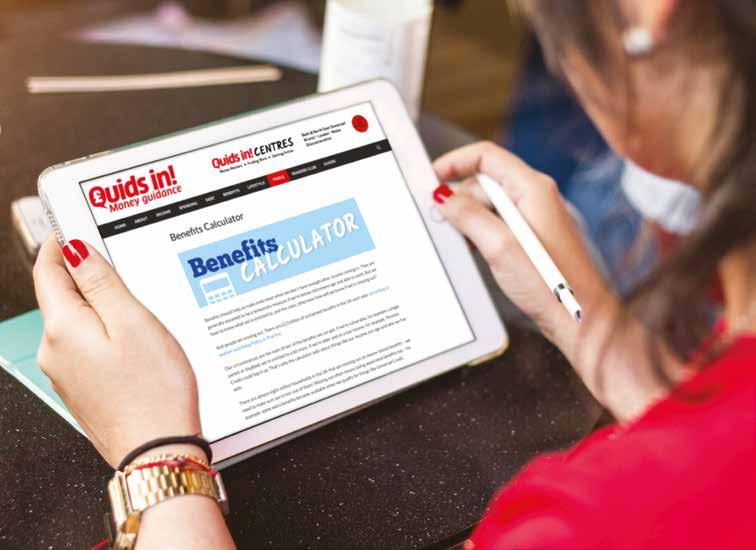
Every reader can try to do the same by using an online benefits calculator. No specialist knowledge needed. (See pages 4-5.)
FACING UP TO FACTS
Maria had fallen behind, partly because her income didn’t match her outgoings and partly because she
For the first time, she was able to look ahead in a way she hadn’t in years. She was able to get on top of some family issues that, she said, “means a clean break from the past and a new life”.
She feels confident approaching services, something she couldn’t imagine before. “With the paper you gave me, you saved my life,” she told us.
Coaching gave Maria the confidence but the steps themselves are free, simple, and available to everyone.
"Each month Maria had to borrow around £300 from friends and colleagues"
BENEFIT FEELINGTHE
The question that triggered a big step forward for the most people was around checking benefits.
Everything starts with a Q Quids in! money coaching starts with a simple quiz, (see pages 8-9). Here, we review the questions that led to the biggest money wins for readers over the past year.
We ask the question: “Are you sure you are getting all the benefits you are entitled to?”
Just one in two Quids in! readers (51%) answered ‘yes’.
However, among those who completed our money coaching programme, nine in ten (90%) could answer ‘yes’. That’s a massive swing.
What’s more, those who answered yes by the end were a massive £781 a year better off, on average.
For social tenants, unemployed people, claimants, and low-paid earners, using a benefits checker is a must. It’s just the first step, but it’s the biggest.
SAMPLE SAMPLE
These online calculators are easy to use, we just need to bring some basic details. They do everything else bar applying for what we’re missing out on.
As of the end of 2025, £24 billion of benefits were going unclaimed. No-one tells us what might be out there. We have to take action for ourselves. We could be missing out on cash that’s ours by right.
"£24 billion of benefits were reported to be going unclaimed."
EASING THE SYSTEM
We don’t have to find professional help to use the online tools. They feature on various websites if we know what to look for. Often landlords, if they’re a housing association or charity, will have one. Local councils too.
Many people like the Quids in! one because it isn’t attached to anyone we might owe money to.
Follow this short link: bit.ly/bens2026
Or use this QR code.
Why do so many people fail to check what they’re entitled to?
The benefits system in the UK can be confusing. If we don’t check carefully, it’s all too easy to miss out. But that’s what a benefits calculator is for. It’s a free, quick, anonymous tool that helps us check whether we’re claiming everything we should be
getting. It identifies everything from support with the rent, Universal Credit or Pension Credit calculations, to special tariffs for gas or electric and even grants.
There are extra things that are not easy to navigate. Benefit caps and things like the bedroom tax are all taken into account by these calculators.
There are lots of myths around. These checkers cut through the nonsense. Did you know, for example, that the majority of people on Universal Credit are in work? It’s not just for jobseekers. Because it includes what used to be paid as tax credits, income support and housing benefit, many workers can claim too, helping them top up their budgets.
For older people, it can spot if we’re entitled to Pension Credit. This might not pay us much extra in itself but it can mean access to other support, once we’re on it.
HOW DO THEY WORK?
A benefits calculator asks a few simple questions about income, savings, housing, family, and current benefits. Then it works out what you could be entitled to. The system considers different factors together, like income, rent, savings, and household make-up, so catches combinations that aren’t obvious at first glance.
It only takes a few minutes. We don’t know what we don’t know, so even if there’s nothing we can claim, we can be pretty sure we’re not missing out. Just remember, these calculators do not guarantee anything. We still have to make a claim and see if we’re eligible.
Quids in! readers shared almost £300,000 between them. Suddenly, rent and bills for gas, electricity, water and food were easier to manage. Some started paying down debts or putting away savings. The extra cash for many was life-changing.
TAKE WHAT’S YOURS
The truth is, millions of households across the UK are missing out on benefits they’re entitled to. Some are too proud or too busy to check. Others assume they wouldn’t qualify. And many simply don’t know what’s available.
In the last year, this was the clear winner for readers who received support from our money coaches, in terms of “biggest turnaround”. Many people saw real income gains within weeks.
We shouldn’t assume we’re already claiming everything, especially if any of the following applies to us:
⚫ On a low income
⚫ Renting
⚫ Working, but struggling
⚫ Raising children
⚫ Disabled
⚫ Caring for someone
⚫ Or just plain worried about money
NEXT STEPS
1
Find a benefits calculator
The Quids in! benefits checker is found here: bit.ly/bens2026
SAMPLE SAMPLE
2 Have some info ready
Your household income after tax and National Insurance (and your partner’s, if you have one), details of any benefits, pensions or savings, your rent (or expected housing costs), and general info about household make-up (children or dependants living at home, disabilities, etc).
3
Fill in the calculator honestly
Let’s check what’s ours. And claim it. Take a look at
Even if you only earn a little, or have some savings, it’s worth checking. The calculator works out what you could be eligible for.
4 Check the results carefully
The calculator will show which benefits you may be entitled to now, but it’s a guide, not guaranteed.
5 Make the claim
Once you see a benefit you’re eligible for, follow the guidance to apply.
You'll need to have some info ready before you fill in the calculator
EMPTY PLATES SPINNING
When the cupboards are bare, feeding the family can be all we have time to think about. That proved to be the story for most people we worked with over the past year
Everything starts with a Q Quids in! money coaching starts with a simple quiz, (see pages 8-9). Here, we review the questions that led to the biggest money wins for readers over the past year.
WSAMPLE SAMPLE
e asked the question: “Do you feel sure you could keep food on the table if your income dropped for a few weeks?”
Just one in three Quids in! readers (33%) answered 'yes', at first. This uncovered readers' biggest need.
After completing our money coaching programme, this more than doubled to over two in three (69%), but that still left one in three more living on a financial knife edge.
For those who could turn things around, that’s one less thing to stress about. All that time thinking about how to keep the family fed could be spent getting other things sorted out. No wonder food was the first thing people wanted to get on top of.
TIP OF THE ICEBERG
Food insecurity isn’t simply “running out of food”. It’s the grind of juggling the weekly shop against debt payments, rent, gas and electricity. It’s the constant trade-offs: Heating or eating, topping up the key meter or topping up the cupboards. It’s living with the fear that one missed shift, one unexpected bill, or one late benefit payment could leave the household short.
For many people we support, food is the pressure point that reveals everything else. If food feels uncertain, chances are there’s much more to sort out too.
That’s why the turnaround – from one to two thirds of people safely managing a food budget – is so powerful. And why the remaining one-third shows there’s still so much work to do.
TOP TIPS FROM READERS
From our money guidance programme, the biggest themes were clear:
• Shopping habits matter. Many households simply hadn’t been shown the tricks that bring down the weekly shop.
• Support exists but isn’t always obvious. Food clubs are growing fast but often go under the radar. Asking our landlords, local council or Citizens Advice, (or going online, of course), should uncover local schemes
• Confidence with food goes beyond shopping. It’s knowing what lasts, what can be frozen, what can be used up, and what’s still safe to eat.
• People want independence, not charity. Building resilience means helping people rely less on emergency food parcels and more on longterm habits that keep food budgets steady.
"Many households simply hadn’t been shown the tricks that bring down the weekly shop"
FIVE WAYS TO BOOST FOOD SECURITY
Quids in! says:
1
Make a Food Plan and Stick to a Budget
Most people know they should plan –but few feel confident doing it.
The basics work:
✔ Plan meals for 3-5 days, not a whole week if that feels overwhelming.
✔ Do a quick cupboard check before you shop.
✔ Write a list – and stick to it.
✔ Swap one branded item per trip for a supermarket own brand.
If we start planning, we could slice as much as twenty per cent off our groceries bill. If we spend at least £200 a month on food and house stuff, the saving could be almost £500 a year.
2
Use Food Clubs and Community Pantries
Food clubs (also called community supermarkets or pantries) have been one of the biggest game-changers.
Members typically:
✔ Pay £3-£5 per visit, but get to choose £10-£20 worth of groceries
✔ Get access to fresh fruit, veg, dairy and cupboard staples
✔ Save around £800 a year
3
Build Your Own Foodbank (Yes, Really)
This is one of the most empowering tools we teach. It means setting aside:
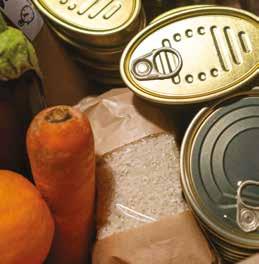
✔ A couple of extra long-life items each time we shop (pasta, tins, rice, chopped tomatoes… and toilet rolls, of course)
✔ Build up a stash of basics for emergencies, so we can go a week or two without spending on essentials
✔ If we have a good freezer, batch cook and set some aside as frozen, home-made, ready meals
Over six weeks, even on the smallest budget, we can build a cushion worth £20–£30 of food. It’s a ‘rainy day cupboard’.
People throw away good food because they’re not sure what the labels mean
Unlike a food bank, these clubs are not crisis services. Anyone on a low income can join. They restore choice, reduce pressure and allow people to stretch their budgets further.
Food club's provide access to fresh fruit, veg, dairy and cupboard staples
Batch cooking takes about the same time and energy
SAMPLE SAMPLE
4
Learn What Food Is Still Safe to Eat
A surprising number of people throw away good food simply because they’re not sure what the labels mean. Remember:
✔ ‘Use By’ = safety. Don’t eat after this date.
✔ ‘Best Before’ = quality. Fine to eat after, if it looks and smells ok.
✔ Eggs? Fresh if they sink in water. Bad if they float.
✔ Milk? Safe unless it smells sour or lumps appear – dates are a guide.
Understanding the difference can save households £5–£10 per week.
5 Reduce Waste and Cook Smarter
Simple changes make big differences:
✔ Batch cook. It takes about the same time and energy. Most cooked meals will keep well in the fridge for 3-4 days in food containers, or much longer in the freezer.
✔ Rescue ingredients close to expiry: Freeze bread while it’s still good. Takeaways are a treat but save the containers for leftover portions from any meal.
✔ There are lots of cheap meal recipes that can cost £1-£2 per portion. Learn how to knock up a few at bit.ly/cook2026
FOOD MATTERS
Feeling food secure isn’t just about saving money. It’s about stability, dignity and peace of mind. When people feel confident about feeding themselves and their families, everything else becomes more manageable. We cannot think to the future until then.
THE FINANCE HOME-TESTING KIT
The Quids in! Money HealthCheck is a simple way to see what we could change to bolster our bottom line. Almost everyone could do something to give their money a boost.
Thousands of people have now used the quiz below to see what extra things they could put in place. Answer the questions and see what steps, what tools, and what new habits, would help.
When times are tough, there are no rights or wrongs, we just have do what we can. But give yourself one point for each question you answer ‘Yes’ to. Try the mini-challenges for those you say ‘No’ to, and take the quiz again later to see if your score, and your bank balance, has improved.
Let’s check what controls we have in place to improve the health of our finances
DO YOU: SAMPLE SAMPLE
1 Do you know for sure you are getting all the benefits you are entitled to from the government?
YES ■ NO ■
MINI-CHALLENGE:
Check online – it’s easy. Find out how to use a benefit calculator using this short link: bit.ly/bens2026
2 Would you know where to find help if you had money problems?
YES ■ NO ■
MINI-CHALLENGE:
Make a list of the local services you might need and see if your council’s website has the details. For national numbers, check out the Quids in! list of useful contacts on page 15
3 Do you feel sure you could keep food on the table if your income stopped (or decreased) for a few weeks? (If you’re struggling already, answer ‘No’)
YES ■ NO ■
MINI-CHALLENGE:
Start stockpiling the odd tin of soup or beans, and bags of rice and pasta for use in a money dry spell. Try out some budget recipes using this link: bit.ly/cook2026
You can take the full version of this quiz online using this short link: bit.ly/quiz2026. As well as the minichallenges, it will describe what actions could transform your money health. You’ll receive an action plan by email. So, join thousands of others in the Quids in! Readers Club and start boosting your bank balance right away.
WHILE STOCKS LAST:
We have a 50 copies of the Quids in! Guide to Food up for grabs. Just visit this link: bit.ly/3KCde6l to claim your copy!
4 Do you know exactly where your money goes, ie, how much money comes in and goes out each month?
YES ■ NO ■
MINI-CHALLENGE:
Check out the Quids in! budgeting tool at bit.ly/bens2026
5 Do you check your bank balance every day?
YES ■ NO ■
MINI-CHALLENGE:
Find the easiest way to start checking your main bank balance, like getting your bank’s app on your phone.
6 Do you keep costs down by finding deals, sticking to ‘own brand’ supermarket items, shopping around (including using comparison websites), or buying second hand?
YES ■ NO ■
MINI-CHALLENGE:
Do one thing each week to cut costs on essentials. Find out what discounts or loyalty schemes are offer wherever you shop. Go ‘own brand’ in your supermarket shop. Review the deals, vouchers and shopping advice at MoneySavingExpert.com
Do you feel you’re doing everything to minimise your gas and electricity (or oil) bills?
YES ■ NO ■
MINI-CHALLENGE:
Follow this link bit.ly/bills2026 for ways to cut energy costs around the home. Use a benefits calculator to see if extra support is available.
8 Are you free of debt and rent arrears, or at least taking action on any debts you need to sort out?
YES ■ NO ■
MINI-CHALLENGE:
Call one of the helplines listed on page 15, or book an appointment with your local Citizens Advice or debt charity.
9 Do you have ID documents and readily know where to find them?
YES ■ NO ■
10 Are you taking steps towards making more money?
YES ■ NO ■
MINI-CHALLENGE:
Whether thinking about a job, better-paid work, or just making stuff to sell, commit your plans to paper. Start with your pitch: “I’m going to [insert short-term goal], using my skills in [insert skills], working towards [insert long-term goal].”
SAMPLE SAMPLE
MINI-CHALLENGE: Check out advice on getting ID together at bit.ly/48R0QbY. Keep the paperwork safe in one place, ready.
11 Do you open your post every day?
YES ■ NO ■
MINI-CHALLENGE:
Well… open all your post every day. If you’re drowning in unpaid bills, get help! Advice centres are used to people turning up with bags of unopened bills, so get in touch (see page 15).
12 Do you have ready access to the internet? Can you ‘google search’, upload photos, watch videos AND post comments? (Only answer ‘Yes’ if all are true)
YES ■ NO ■
MINI-CHALLENGE:
Learn how to do all these by visiting learnmyway.com/explorethe-subjects. Choose what you want to do and register for the free course.
13 Do you set aside any money for savings each day or week, either for ‘rainy day’ emergencies or for birthdays or religious holidays?
YES ■ NO ■
MINI-CHALLENGE:
Start with a jar for loose change or a ‘round-up’ function on your bank card. Put aside a few pence a day and try to increase it a bit each day. Watch it grow. If you don’t have a savings account already, just open one and see what happens.
14 Do you feel confident to say ‘No’ if someone pressures you into something not right for you?
YES ■ NO ■
MINI-CHALLENGE:
Practice taking control! Research your rights and check out the best prices, so you can talk to salespeople with confidence. Always be ready to leave. They want your money, but they have to give us what we want.
15 Do you feel like these questions have started you thinking about doing things differently?
YES ■ NO ■
MINI-CHALLENGE:
Everyone can do something to improve their finances. Think of one small change, at least, and go for it. Quids in! has reported on how Bear Grylls’ advice is to treat life as an adventure. We just need to go do it.
Take a money health check to reveal ways to boost your bank balance
The Money Health Check is online, free and open to anyone, anywhere. Try it out. Can you boost the health of the cash in your pocket? It asks simple yes/ no questions and nothing too personal. Based on your answers, it guides you through your next steps towards being better off.
Do you live in London, Bath & North East Somerset, Bristol or Gloucestershire?If you do, we can walk you through the Quiz and help you choose the best ways to give your finances a lift.
Visit: cleanslateltd.co.uk/contact to find out where and when our drop ins take place or request a call back
Debt doesn’t happen overnight. It starts with a missed bill here, a short month there… Before we know it, the letterbox rattling can become the stuff of nightmares.
Readers often tell us, debt makes them feel alone. But they’re not. It can happen to any of us. On any budget.
Every debt advisor will tell us the same thing: People will often turn up with bin bags full of unopened letters. Not because they’re lazy, but because they’re terrified.
When money feels out of control, we start avoiding things. We don’t check our bank balance. We don’t open post. We don’t answer calls from unknown numbers.
Over a year or so, three in five people (58%) working with a Quids in! money coach were struggling with debt. Three quarters of those, however, took the chance to do something about it. By the end of the programme, nine in ten people would happily open their post every day.
SAMPLE SAMPLE
If there were prizes, they’d win ‘The Biggest Step Forward’ award. Because nothing takes more guts than facing debt head-on.
1. STEP ONE: Open Your Post (Yes, ALL of It)
Opening all our letters doesn’t make the debt worse, it helps us finally see what’s what. Behind most envelopes are duplicate copies of the same old letter. All we usually need are the first and most
LEAP . . . ONE
Facing up to debts could be the bravest and smartest move any of us could make all year
recent details that help us understand who us owe and what stage things are at.
Debt charities expect people to arrive with mountains of unopened letters. We won’t be the first, and we won’t be judged for it.
2. STEP TWO: Feel the Fear, Then Call for Backup
We’re not meant to do this alone. Debt advisors sometimes seem like miracle workers. But really, they’re just experts who understand the jargon, know the rules and can take the heat off. They negotiate, they calculate, and they shield us from pressure.
Surely, we’re in with a shout for some of it, if we’re struggling!
Then it’s about listing all our income and outgoings. We’ll need all this information for a debt advisor anyway, so let’s start there. We can start a spending diary each day. And we can go through our last few bank statements to get to grips with where it all goes.
"We’re not meant to do this alone"
Now let’s cut back. Nobody wants to, but temporary cutbacks help us regain control. Be ruthless about cancelling unused or costly subscriptions (eg, to Sky or gyms we don’t use). Switch to social tariff broadband or cheaper insurance, gas or electricity. Start setting limits for shopping and shop around for the cheapest deals. If we’re in the habit of splashing out when money comes in, it’s time to think about taking it steady.
Contact a local Citizens Advice office, StepChange debt charity or National Debtline. These services are free, confidential, and on our side.
3. STEP THREE: Get a Full Picture of Your Money
Before formal debt advice can work its magic, there’s loads we can do to make the process smoother.
Checking we’re on all the benefits we might be entitled to is a good place to start , (see pages 4-5). As of late 2025, £24 billion of welfare was left unclaimed.
4. STEP FOUR: Take Action!
Once the budget is done, advisors help us sort things into priority debts, like rent, council tax, and energy bills, and nonpriority debts, like credit cards and loans.
Debt advisors might help by asking creditors to freeze interest or setting up easier repayment plans. They make sure we’re being treated fairly and help us access emergency grants. While we’re putting the plan together, they can even stop or pause enforcement action.
This is the point where most people breathe for the first time in months.
WHERE THE SMART MONEY IS
These days there’s no chance of an easy life on benefits. Current and future governments are facing the challenge of bringing down a massive welfare bill. For those who can, employment will be the only way to be sure of a secure future
Everything starts with a Q
SAMPLE SAMPLE
Quids in! money coaching starts with a simple quiz, (see pages 8-9). Here, we review the questions that led to the biggest money wins for readers over the past year.
If there’s one question in our money health-check that transforms people’s lives the fastest, it’s this one: “Do you want to make more money – and do you have a plan to do it?”
For many people – about half (51%) – the answer to start is ‘no’. Not because they don’t want more money, but because work feels out of reach. When we’re dealing with stress, debt or health issues, even thinking about
employment can feel too much.
One in five people who answered “no” at the start of the Quids in! money coaching programme went on to say “yes” by the end of their time with us. And the financial impacts were bigger than any other options.
The average additional income achieved by readers who found work was an incredible £13,437. That’s not a one-off windfall. That’s money that comes in again and again, year after year, and usually grows over time.
"Even thinking about employment can feel too much"
EVERY LITTLE HELPS
Work doesn’t have to mean full-time hours or a permanent job. Many people start with a couple of cleaning shifts, a few hours in a shop, selling something they’ve made, or a bit of self-employed work.
Benefits like Universal Credit now reward part-time work. It doesn’t claw back every pound we earn, especially if we’re a parent or carer. Many people find they are better off straight away.
And money is only one part of it. People we’ve helped report enjoying having purpose, routine, independence and control. They like having people to talk to, feel better about things, and have a sense that life will get better.
JEANETTE’S BIG TURNAROUND
Jeanette, (not her real name), from Nottingham, is a perfect example of why planning to earn again is so powerful. When she first met her Quids in! coach, she was at her lowest. She felt isolated, depressed and overwhelmed. “Really low,” she says. “I could barely leave the house.”
Jeanette started to break things
SAMPLE SAMPLE
down into tiny steps. She looked at her strengths, what she enjoyed, and what kind of work felt possible. Slowly, Jeanette realised she loved helping people.
Through small bits of volunteering, then a few paid hours, she built confidence bit by bit. Then she started working part-time in a support worker role, and her whole life opened up.
Her income increased. Her wellbeing improved. “I feel like myself again,” she says. “I get up now with somewhere to go.”
TIME TO SHINE
Employers don’t just look for great exam results or the perfect job history. They mostly want people who show what Quids in! calls the ‘7 Signs’ of being ready for work:
Skills and Passions
We should target the jobs we’d be good at and that match our interests.
Know What’s Expected
Showing an employer we know what is needed from us in the workplace is key.
Jeanette started to break things down into tiny step
Asking for Help
It’s okay to come with a little baggage, just ask for help the right way at the right time.
Get Up and Goal
Let’s show employers we know what we have, what we want and that we’re all set to achieve it.
Show It Off
Now let’s be ready to present all this: in a CV; at an interview; even in a short statement for someone we get talking to in the street.
More than two in five (42%) readers told Quids in! they felt frightened, anxious or depressed. Our 2025 cost of living survey also revealed that even more people missed events or fell out with friends or family. All of this was down to money worries, they said.
The research found there were big differences between groups of readers too: Three per cent of older readers had faced serious financial problems, for example. Yet similar struggles had hit 14 per cent of working age people in employment and a massive 21 per cent of those unable to work. Against almost every indicator, working age people whose health or circumstances prevented them from working suffered most. Three in five of them (61%) felt frightened, anxious or depressed – more than twice as many as older people.
MONEY AND MENTAL HEALTH
MIND OVER MATTERS
SAMPLE SAMPLE
The links between money issues and our wellbeing are now well known. The Money and Mental Health Policy Institute in 2024 laid it bare: People with mental health problems are three and a half times more likely to be drowning in debt than the average Brit.
Those battling both money problems and mental illness were three times more likely to have had suicidal thoughts. It’s important to know that help is out there and things can get better.
Dr. Lisa Morrison Coulthard, Director of Professional Standards, Policy and Research at the British Association for Counselling and Psychotherapy (BACP), warns:
What comes first? Does feeling low make us lose control of our finances? Or do money worries get us down to start with?
"Links between money issues and our wellbeing are now well known"
mood and stress as people make difficult decisions about what they can afford. Poor mental health can also affect people’s ability to manage money for various reasons such as not knowing where to start.”
Taking control is key to both financial worries and wellbeing, although this can feel like the hardest thing of all. Putting together a household budget, just listing everything that is coming in and going out, is a great first step. We don’t have to make a big deal of it, just see it written down. Then choose to do ‘just one thing’. No pressure. Make a start.
ASKING FOR HELP
Our reader survey also found that just knowing we’re not alone can make a difference. Millions of people are struggling right now.
“Financial stress is one of the greatest threats facing the mental wellbeing of the UK workforce. It’s unequally impacting the nation’s most vulnerable, so we’re calling for our Governments to act now as more and more people struggle to cope with their daily financial situations.”
THE CHICKEN OR THE EGG
A lot of the talk about money and mental health views money problems as a result of poor mental health. This is true, but it also works the other way round. Money problems can lead to poor mental health, too. We all become stressed and anxious if we can’t make ends meet.
As the Mental Health and Money Advice charity says: “Financial worries can impact your mental health causing anxiety, low
The queues for some mental health services can be long. So, what else can we do – and who else can we talk to – while we’re on the waiting list? Chances are, we could be a little better off. Wouldn’t that help us feel better?
Well, why not start with the Money Health-Check questions on pages 8-9? It is totally normal to feel down when everywhere we turn seems to take us back to where we started. Or that the thing we really need costs money – money we don’t have. After a while, grinning through the hard times, trying to fake it ‘til we make it, wears thin. That’s when it becomes a health issue. So taking steps and finding early help with whatever is in our way is essential.
■ See page 15 (right) for details of organisations that can help.
YOU’VE GOT THIS!
It can be hard to feel like we’re on top of things but there are free and simple tricks to turn it all around
When time’s are tough, looking after ourselves can feel like a luxury. But selfcare isn’t about spa days or pricey gadgets. It’s about the tiny things we do to keep stress in check.
Quids in! readers tell us that one of the first things they let slip is their own wellbeing. We sleep less, eat on the go, bottle things up. Before we know it, everything feels harder.
A few simple habits can make a real difference.
A short walk, even just around the block, works wonders for clearing the mind. Fresh air is free – and it’s one of the quickest ways to reset when everything feels too much. If getting outdoors isn’t easy, try a five-minute stretch or a video workout at home. As ‘The Body Coach’ Joe
LOAN SHARKS
The Illegal Money Lending Team tackles loan sharks. Call anonymously on ✆ 0300 555 2222, WhatsApp us on ✆ 07700102773 In Wales call ✆ 0300 123 3311 or email stoploansharkswales@ valeofglamorgan.gov.uk Scotland: ✆ 0800 074 0878, or email stopillegallending@cosla.gov.uk
CREDIT UNIONS
Wickes told the Guardian, “without a healthy mindset and the energy you get from exercise, life feels a lot harder”.
SAMPLE SAMPLE
Credit unions are not-for-profit organisations that provide bank accounts, loans and savings. They may help people the banks won’t. To find your local credit union call ✆ 0161 832 3694 or visit www.findyourcreditunion.co.uk.
BENEFITS
• People with disabilities or carers should contact the Disability Service Centre: www.gov.uk/disability-service-centre.
• Personal Independence Payment (PIP) Telephone: ✆ 0800 121 4433
• For Child Benefit (✆ 0300 200 3100).
• Council Tax and Housing Benefit is dealt with by your local council.
Stay connected. We don’t always feel like talking when we’re stressed, but sharing a cup of tea with a mate can ease pressure instantly. “Keep the good people around you no matter what,” ‘loose woman’ Stacey Solomon told The Big Issue magazine
If things feel overwhelming, charities like Mind or Samaritans are there to listen without judgement.
Let’s give ourselves a break. Rest isn’t only about sleep. It means giving ourselves permission to pause. Reading, music, puzzles, or simply switching the phone off for a bit can all help. Make plans and build a bit of routine.
“Without a healthy mindset and the energy you get from exercise, life feels a lot harder”
Making lists of things that need to get done saves trying to keep it all in our heads. Just the fear of forgetting something urgent can keep us awake at night – so keep a pad and pen by the bed. Regular meal times and setting a bed time routine can stop life feeling chaotic. Self-care won’t magic our problems away, but it can keep us steady while we tackle them.
useful numbers
• Benefits calculator qimag.uk/benecalc
• Pensions Service: ✆ 0800 731 0469
• Age Cymru Advice ✆ 0300 303 44 98
• Age Scotland Helpline ✆ 0800 12 44 222
• Age UK England ✆ 0800 678 1602
DEBT ADVICE
For free debt advice and help, contact any of the organisations below.
• National Debtline ✆ 0808 808 4000 www.nationaldebtline.org
Worried about the cost of living and making ends meet?
Do you live in Bath and North East Somerset, Bristol, Gloucestershire or London? Pop along and see us at one of our drop-ins – we can help you maximise your income and bring your costs down. Average financial gains £1,426! For a full list of drop- ins or if you can’t get to a drop in but would like some support with budgeting and money guidance over the phone, go to www.cleanslateltd.co.uk/contact