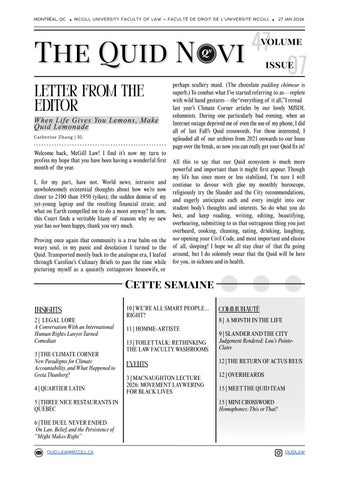
Welcome back, McGill Law! I find it’s now my turn to profess my hope that you have been having a wonderful first month of the year.
I, for my part, have not. World news; intrusive and unwholesomely existential thoughts about how we’re now closer to 2100 than 1950 (yikes); the sudden demise of my yet-young laptop and the resulting financial strain; and what on Earth compelled me to do a moot anyway? In sum, this Court finds a veritable litany of reasons why my new year has not been happy, thank you very much.
Proving once again that community is a true balm on the weary soul, in my panic and desolation I turned to the Quid.Transported mostly back to the analogue era, I leafed through Caroline’s Culinary Briefs to pass the time while picturing myself as a quaintly cottagecore housewife, or
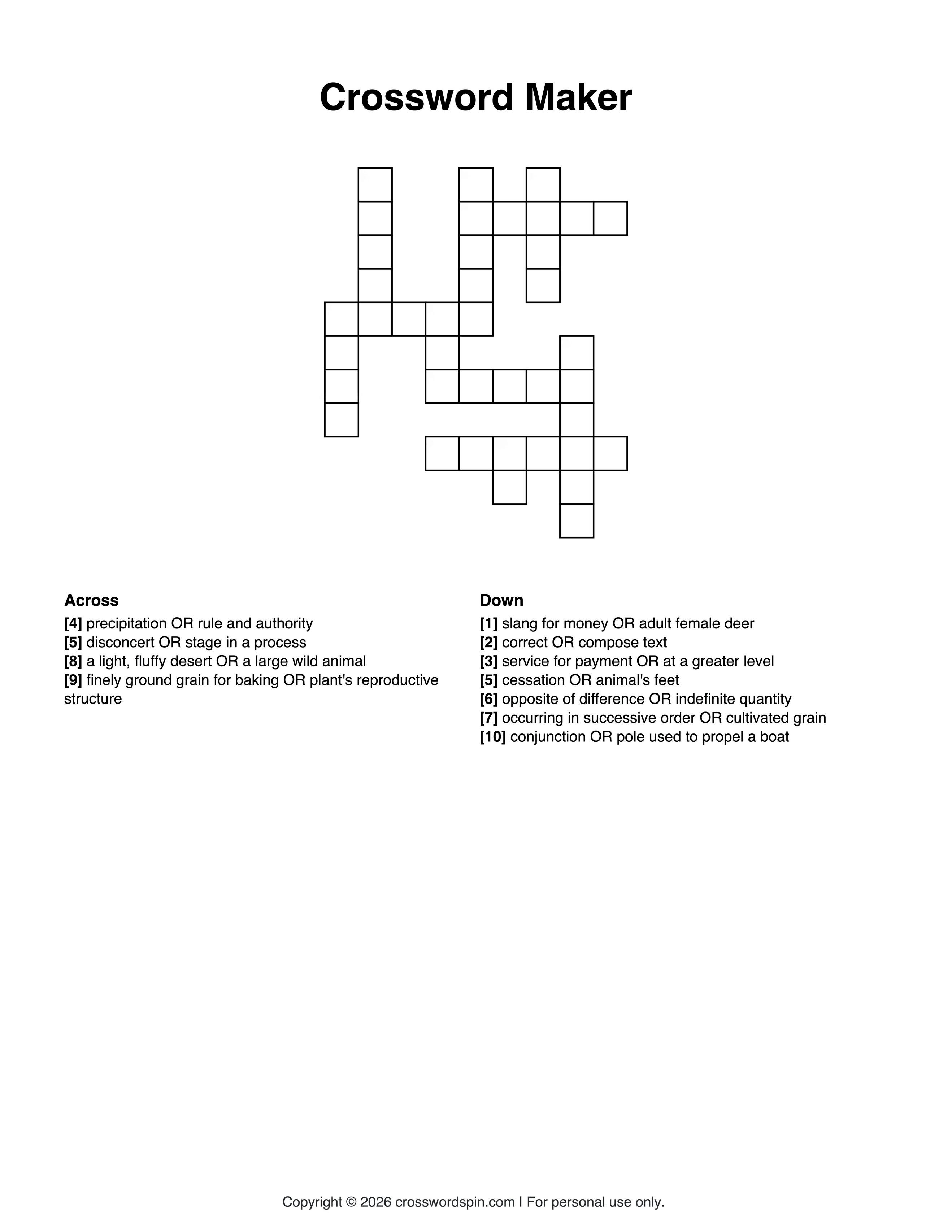
perhaps scullery maid. (The chocolate pudding chômeur is superb.)To combat what I’ve started referring to as—replete with wild hand gestures—the“everything of it all,”I reread last year’s Climate Corner articles by our lovely MJSDL columnists. During one particularly bad evening, when an Internet outage deprived me of even the use of my phone, I did all of last Fall’s Quid crosswords. For those interested, I uploaded all of our archives from 2021 onwards to our Issuu page over the break, so now you can really get your Quid fix in!
All this to say that our Quid ecosystem is much more powerful and important than it might first appear. Though my life has since more or less stabilized, I’m sure I will continue to devour with glee my monthly horoscope, religiously try the Slander and the City recommendations, and eagerly anticipate each and every insight into our student body’s thoughts and interests. So do what you do best, and keep reading, writing, editing, beautifying, overhearing, submitting to us that outrageous thing you just overheard, cooking, cleaning, eating, drinking, laughing, not opening your Civil Code, and most important and elusive of all, sleeping! I hope we all stay clear of that flu going around, but I do solemnly swear that the Quid will be here for you, in sickness and in health.
Cette semaine
LEGAL LORE
A Conversation With an International Human Rights Lawyer Turned Comedian
Heidi Zahiri | 3L
Improbable things happened. “From a numbers perspective, it is pretty crazy,” Jess says about the way in which we met. It was a November Sunday night in Williamsburg, Brooklyn. My friends and I made our way to a comedy show hosted by the Brooklyn Comedy Club. It took place in the basement of a venue, where the floor pillows and wall chains made us question what the use of the space was when there weren’t a couple comedians spitting out jokes on stage (Jess shared the feeling:“I wonder what goes on there when it’s not comedy,”she later tells me).“We’ll sit in the back and stay quiet,”my friends and I told each other, which would’ve been a solid plan, had there been anyone else in the room. There wasn’t. We were the audience.All four of us.
Jess came on stage last. She said she was Canadian, and my friends and I let out a patriotic onomatopoeia: a collective “Oh!”. When she said she was from Montreal, and that she used to be a lawyer, I thought improbable things were happening.
About two weeks later, because improbability has a habit of compounding, Jess was in Montreal for a show she was putting on at P’tit Ours, a bar and venue on rue Parc. She generously agreed to meet me for coffee a few days before her set to have a chat.
Turns out Jess’s life was also unpredictable in many ways.Try drawing a line from Montreal to Lima, to Boston, to the Hague, to NewYork City. Growing up in Montreal to Jewish parents, Jess spent her youth visiting her mother’s family in Lima, Peru. She credits being exposed to a different culture and environment in Lima, as well as Holocaust education, for her initial interest in international human rights. She studied International Relations in Boston for her undergraduate degree. Why Boston? “There wasn’t really anywhere in Canada I wanted to go to,”
she tells me.“If I wasn’t from Montreal, I would’ve wanted to come to Montreal.” During her final year in Boston, she met a McGill Law professor at an international human rights symposium. She worked for him after graduation, hoping to carve out a role in international human rights without a law degree. That hope was short-lived. “I realized pretty quickly that it wasn’t going to be possible.”
So: law school at McGill University. Jess gravitated toward the international criminal justice system after taking a class with our very own René Provost and she interned for an Italian judge, Fausto Pocar, at the International Criminal Tribunal for the former Yugoslavia. She articled at the Department of Justice in Ottawa, and chose to do the Ontario Bar. “I just needed a reputable Bar,”she says.“I was hoping to go back to the Hague.”And back to the Hague she went, for about three years. What ended that chapter? “Well, you know, it was Amal Clooney and I, and one of us had to go. There was too much star power there,” Jess jokes about her time at the Hague. She really did work alongsideAmal Clooney, although Jess specifies she was “not a Clooney at the time.”
When I ask her if doing comedy is something she had been thinking about for a long time, she admits that she wouldn’t have been able to focus on law if a career in comedy was always at the back of her mind. Something clicked in Jess’mind when commentary became a more important part of talk-shows. She recalls watching The Daily Show with Jon Stewart as well as the cancellation of Tucker Carlson’s Crossfire following Stewart’s on-air criticism of the show’s hollow left-right debate format. “I started to see, through [Jon Stewart], the idea of comedy as advocacy.”
It was at the Hague that comedy found Jess. She tells me about the sheer theatricality of the procedures, including the time an accused claimed he could no longer read the Roman alphabet and required thousands of pages of court documents to be translated into Cyrillic. She also tells me about a mysterious, strategically named YouTube video of a sketchcomedy standoff the tribunal staff had
when Jess left:“You’ll never find it.”She initially planned to write a sitcom taking place in a war crimes tribunal, inspired by her life at the Hague. Her colleagues, it turns out, were rooting for her. It takes vulnerability to leave the law profession and pursue a creative career, but it takes even more vulnerability to stand in front of a crowd and try to make them laugh, we agree.
Jess returned to Montreal, took a screenwriting class and tried to develop her sitcom. She thought getting into stand-up might help her develop her dialogue writing skills.“I took this standupcomedyclass,andthenIwasdonefor.I was hooked,” she says. The transition wasn’t seamless. “When you change careers, there’s an in-between period where you feel like you’re not good enough yet at what you want to do, and notgoodanymoreatwhatyouusedtodo.”
“Eventually, I moved to New York,”Jess tells me.“Cause it’s the best city in the world?”I ask.“Well,”she says,“yeah.”She officially relocated in 2016. Highlights include living in Brooklyn (“I decided on Brooklyn and never looked back”) and performing a comedy number on The Tonight Show with Jimmy Fallon in 2019. On an average day, Jess tries to write for her Substack, consumes art, nurtures her community and scrolls on Wikipedia. She recently donated for the first time: “I just got my Wikipedia member card in the mail.”
Jess’s comedy and platform are grounded in her pro-Palestinian advocacy. Comedy has a way of shifting culture, and culture is so heavily reliant on worldly events, that it only makes sense to advocate through this medium. “I’ve been doing less comedy and turned my Instagram into a low-budget Al-Jazeera account,”Jess jokes.“Most of what I’m doing is debunking Zionist talking points.” Her frustration with people getting fired, harassed or censored because of their advocacy surrounding the Israel-inflicted genocide in Palestine almost makes Jess want to go back to practicing law. “I haven’t paid my Bar fees since doing the Tonight Show,”she jokingly says when I ask whether a comeback is imminent.
“It’d been a long time that I’d been vocal about Palestine,” Jess tells me. The first post that angered her family dates back to 2014. Her understanding was initially shaped by her work in international criminal law, notably because of the International Court of Justice’s Legal Consequences of the Construction of a Wall in the Occupied Palestinian Territory advisory opinion, but it took Jess dating (and eventually getting married to) a Palestinian woman to learn about the Palestinian condition:“She was very patient with me,” Jess says about her now ex-wife.
Following the social justice global reckoning sparked by the murder of George Floyd in 2020, Jess saw more of an openness for people to learn about the atrocities going on in Palestine. She seized that moment to educate, mobilize, and build community, particularly amongst her Jewish peers who were similarly outraged by Israel’s genocidal actions.“ with this is that people don’t need to unlearn, the learn,” Jess says about non-Arab and non-Jewish peo involvement in the pro-Palestinian movement. Jess i aware of her own position.“I’m privileged in a way can fire me for speaking out about these things, an I’mgoingtobeokay,”
“I think that law is a very effective tool to help much as we want to up-end the systems—and we should using the same tools that the colonial, patriarchal systems affords us in order to hold people accountable and help people find justice and safety is valuable,”Jess tells me when I ask her about the advice she would give to young law students. “Please don’t all become influencers,”she jokes.
Okay, I have some rapid fire questions to end it. What was your favorite class you took in law school?
Internationalhumanitarianlaw.
Best neighbourhood in NewYork City?
MaybeAstoria,fromafoodperspective.
I thought you’d say Williamsburg. Best neighbourhood in Montreal?
I haven’t been here in a little while. I would say Mile-End but maybe not anymore. I guess maybeVerdun is more where it’s happening.
Correct. How do you wind down after a long day?
Weedgummy.It’slegal!
And where can we find you?
My special is onYouTube and it’s called SadWitch. My instagram is @jess_salomon
Hello dear Climate Corner readers and welcome to our first column of the semester. I hope you’re weathering the January blues and the Montreal greys. The midwinter climate is an excellent reason to be more forgiving of yourself and those around you, as we all do our best to meet our commitments operating on a limited amount of joy and vitamin D. It’s also an excellent time to slow down and reflect on life, love, and maybe… the climate.
This week, I want to talk about someone who’s been on my mind more than she’s been in the media: Greta Thunberg. Anyone who was an impressionable teen in the 2010s can remember a time when she was the poster child of climate activism. The image of Thunberg in braids and a yellow raincoat, standing alone outside the Swedish parliament buildings with a sign reading“school strike for climate”was drilled into the minds of young people as an example of the
Adele Wechsler | 3L
New Paradigms for Climate Accountability, and What Happened to Greta Thunberg?
power of protest, a shining bastion for youth activism and courage. Liberal media positively showered her in favourable coverage—her “how dare you”speech, given at the 2019 UN Climate Summit, became the soundbite under which a new, youth-led climate movement was united. A perfect victim in many ways, Greta’s strategic leveraging of her childhood and blamelessness genuinely seemed effective at changing minds and hearts in mainstream politics.
Though Thunberg continues her work as a climate activist (in fact, if you follow her social media, her activities have only intensified), media coverage has greatly lessened since she began speaking out about genocide in Palestine. While her presence on an aid flotilla to Gaza received media attention, it was difficult to find coverage of her activities that quoted her directly, or engaged seriously with her message. Benjamin Netanyahu and Donald Trump both infantilized her in public statements, playing into her youth and autism to sow ridicule. I noted that media outlets such as the CBC did nothing to quell these narratives, for example, by platforming her speeches and ideology. Figures who had spoken up for her in the past, like Barack Obama and Hillary Clinton, were unsurprisingly silent. Being a “little girl” in the eyes of the media is clearly a doubleedged sword. To me and many others, it was clear that as soon as Thunberg made the essential connection between colonialism, the liberal economic order, and climate change, her platform began to erode from underneath her. While it has been inspiring to see a former darling of the liberal media take a stand against the political forces that had carried her to fame, it's always disheartening to see hypocrisy laid bare. An ugly and familiar theme rears its head: mainstream media and politics continue to treat climate change as an issue that is isolated from political and economic power, at the expense of meaningful change
Reflecting further on the ubiquitous nature of the climate crisis, its interconnected nature means that the phantom of accountability—who is responsible, and how do we catch them—haunts climate discourse like an unwelcome but unshakeable spirit of Western Law. As individuals, we are bombarded by messages about plastic straws and electric cars and almond milk, and as law students, we scratch our heads at how to give the climate crisis legal footing in tort law, contract law, constitutional law, trade law, human rights… I’m already tired! Though legal scholars and judges are wont to admit it, we will need to engage seriously with data scientists in this quest. A recent study, published in January 2026, has determined that half of the world’s CO2 emissions come from only thirty-two fossil fuel firms, with Exxon Mobil being the largest investor-owned
1
emitter. It sounds simple; why can’t we go after the big polluters directly? It should be possible, but, as Thunberg reminds us, these firms are enmeshed in a complex world order that implicates us all. We are constantly seeking new paradigms of accountability to handle this crisis, and nothing is off the table.
1
Damian Carrington, “Half of World’s CO2 Emissions Come from Just 32 Fossil Fuel Firms, Study Shows”, The Guardian (21 January 2026), online: <theguardian.com/environment/2026/jan/21/carbondioxide-co2-emissions-fossil-fuel-firms-study>.
QUARTIER LATIN
Catherine Zhang | 3L
Nota bene:This week, we’re changing it up a bit. Rather than the usual two Latin maxims, I’ve decided to keep it to one. My reasons for this are twofold: firstly, to make my life easier, and secondly, to make your lives easier. After all, this week we’re looking at Nec stultis solere succurri, sed errantibus, and, just, come on. Most of those words look like new and alien species of bugs.
I usually hear this phrase said in English as: “Relief is granted to those who err, not fools.”This is a pretty accurate picture—it gives us the general idea that the doctrine of relief is supposed to be for those who have genuinely made a mistake, not, you know, fools. But because errantibus is not a verb but rather a plural dative participle (remember last issue’s Latin lesson on Volenti?), I believe that a more literal translation would be: “The doctrine of relief should aid those who are mistaken, and not those who are stupid.”The “should”is given to us by solere, here serving a god-given niche in every annoying Latin sentence: the presence of the subjunctive mood.
If you’re feeling very At regina gravi iamdudum saucia about this whole thing, me too! Let’s shift gears to derivatives. Some fun English words we can use to help us remember include “solace,” “succor,” “error,” and my favourite, “stultify”! That approximately describes in reverse order what happens to me every time I hit a complicated reading and have to check my understanding with PubDocs. Oh, PubDocs, you are the succor of my world. Until next time! 1
1
See Vergil’s Aeneid, Book 4, reprinted in Virgil, The Bucolis, Æneid, and Georgics of Virgil, ed by JB Greenough (Boston: Ginn, Heath, & Co, 1883) at 106.
Three Nice Restaurants in Québec
Sébastien Offredo | 3L
Having spent a significant part of winter break mourning the breakup of K-pop sensations NewJeans, there was still a glimmer of hope that life was worth living during my three-day trip to Québec. Fortunately in December, the city’s miserably cold and there’s no carnival yet, so hotels and train tickets were right in my budget.
This piece will be no Michelin review, but I’d like to share three places I enjoyed dining at during my time there.
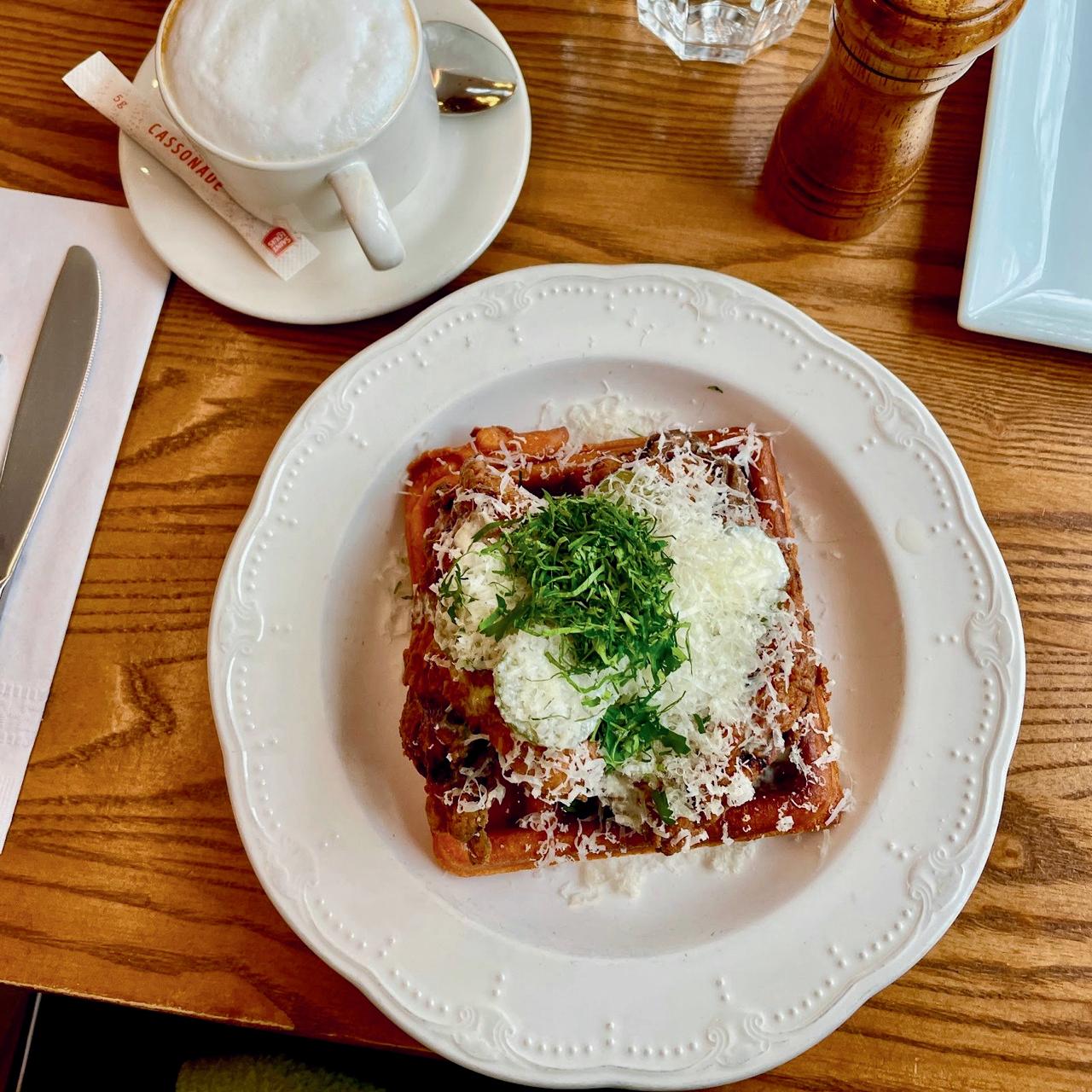
1. Le Hobbit (Brunch) – After an early morning train from Montreal, this was the first place I got to dine at. We were placed by the window overlooking snowy rue Saint-Jean. I ordered the salmon gravlax drowned in shellfish foam, but what I’d truly recommend was what my partner ordered: fried chicken over a parmesan waffle, glazed in white barbeque sauce and honey. Perfect blend of sweet and savory, it was wonderful.
The chicken and waffles from Le Hobbit - with plenty of pickles, exactly as it should be.
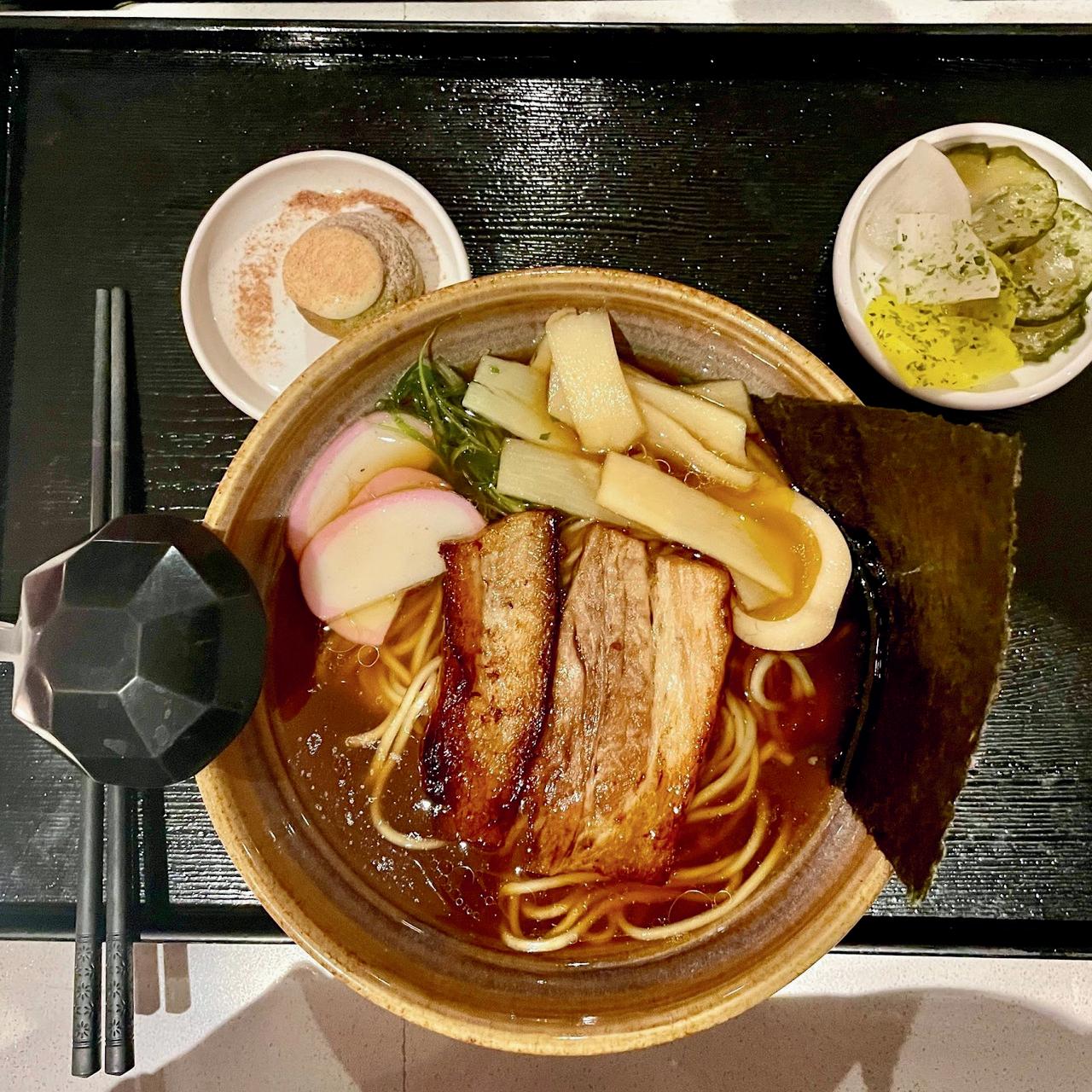
2. Honō Ramen (Lunch) – A little farther away from the core of Québec’s tourism, you can find Honō Ramen, a spin-off of the better-known Honō Izakaya. Be mindful that it’s especially busy during lunchtime due to the surrounding office buildings. You can either be placed in a booth, by a bar, or sit in solitude. Any ramen here is the right choice and will keep you nice and warm. I wasn’t as big a fan of their Sapporo slushie as I thought I would be, but I don’t regret trying it (though I wouldn’t try it again).
Shio ramen. Hono Ramen’s lunch special comes with some marinated vegetables and a small dessert. -
3. Buvette Scott (Dinner) – A+ dining experience, our reservation was placed well ahead of this trip. This is a small, warmly-lit buvette with an intimate atmosphere. Though it was our first time there, we were surrounded by regulars—those who lived in Québec, and those who visit every time they’re in town. Started with the duck ham paired with their Bordeaux, followed by their gnoccho fritto, and concluded with their pear sorbet. Dishes should be shared by two. If there’s any eatery I’d hope to return to, it’ll be here.
If you’re from Québec and know of even better restaurants, please reach out to me. P.S. Please keep submitting your questions to the Dear Quid column!
Buvette Scott’s beautiful duck ham.
the duel never ended
On Law, Belief, and the Persistence of “Might Makes Right”
Nicholas Bailey | 3L
Every January, we speak of renewal. We make resolutions because we want to believe that we, as individuals, and perhaps as societies, can improve; that with some effort, new habits, fairer relationships, and better forms of discipline are within our grasp. Yet the year sometimes opens with reminders of realitiesthatfeelfarhardertochange.Reportscirculatethattop corporate executives can earn in a few days what the average worker makes in a year, even as rents rise, basic goods grow less affordable, and legal and economic structures seem to entrench inequality rather than ease it.Alongside this, images of political instability and armed conflict keep the global atmosphere heavy with anxiety. If the desire for a better world is so widespread, an uncomfortable question follows: why do the systems we live within so reliably reproduce the very conditions that trouble us? Aquestionof law,power,andbelief,itishardlynew.
In medieval Europe, when disputes could not be resolved through testimony or clear proof, the law could seek its answer through bodily judgment, known as trials by ordeal. Across cultures and historical periods, societies have used rituals of danger, whether by water, fire, poison, or physical contest, to resolve disputes or determine guilt. Rather than being recognized as arbitrary, the use of such practices rested on shared convictions of a morally ordered world that would show itself in the outcome. If survival could bring vindication, defeat served judgment. Rendered without argument, justice was revealedthroughordeal.
Among the several forms of ordeals, however, one is particularly notable: in the absence of a witness or confession, accusations could be formally challenged in a contest of arms. Adversaries would face off in a sanctioned duel, and the winner’s account would be deemed as truth. Developed within early Germanic legal traditions, this practice, known as trial by combat, existed alongside the Roman-influenced systems that emphasized written law, procedure, and reasoned judgment. Yet, the duel wasnotsimplyviolence.Aformof judicium Dei,itwasdrivenby a belief at once theological and communal: God would not permit the unjust party to prevail. Victory was proof of righteousness.The stronger sword-arm did not merely win; they weretheinstrumentof divinelysanctionedjustice.
Readers may have been introduced to this practice and its logic through Ridley Scott’s The Last Duel, which dramatizes the 1386 trial by combat of Jean de Carrouges and Jean le Gris, one of the last legally sanctioned judicial duels in medieval France.The case it portrays is particularly revealing.A woman accuses a powerful man of rape, and because the legal system cannot establish the facts with certainty, her husband petitions the king for a duel to decide the matter. The outcome will determine not only who lives, but which version of events becomeslegitimateandtrue.
The film’s structure makes this logic impossible to ignore. The same events are shown three times, from three different perspectives, each internally coherent and each incompatible with the others. Designed to leave the audience in a state of epistemic discomfort, we see how belief, self-interest, and power shape what each individual experiences as truth.When the duel finally occurs, it does not reveal which account is morally or factually correct in any modern evidentiary sense. It simply authorizes one narrative by attaching it to the body that remains standing.
In this account, as in many others, precisely as it was accepted to work, where evidence could not settle a dispute, force, sanctioned and ritualized, would. Victory did not merely end the conflict; it transformed power into proof.The social need for resolution was satisfied even if the deeper moral question remained unresolved. The duel did not discover the truth: it produced one.
Seen this way, The Last Duel is not a historical curiosity but a lens onto a legal logic that remains uncomfortably familiar.
Modern legal systems are built on the rejection of the premise that might makes right. We insist that truth should be established through evidence, procedure, and reasoned judgment, not through force. International law, in particular, rests on the principle that sovereignty, human rights, and legal obligations bind strong and weak states alike.
Yet law does not enforce itself. Its authority depends on something more fragile: belief and conduct. Courts function because their judgments are accepted.Treaties matter because states act as though they do. International law restrains power only so long as powerful actors continue to believe, or at least act as if they believe, that it should.
Recent international events remind us that this fragility is challenging to ignore, however. In Venezuela, the United States has moved far beyond sanctions and diplomatic pressure, asserting direct control over political and economic outcomes through arrests, asset seizures, and an effective transfer of power. Framed by U.S. officials as lawful, necessary, and morally justified, critics readily characterize these acts as violations of sovereignty and international legal norms. The better argument is far less important, however, than what the situation reveals: when the most powerful state in the established international system acts across borders, the distinction between the rule of law and the rule of force becomes difficult to disentangle.
A similar tension appears in recent statements about Greenland. Despite clear opposition from Denmark, Greenland, and European institutions, U.S. officials have spoken openly about acquiring the territory and have not ruled out the use of coercive force. Once again, justifications circulate, concerning security, treaties, and strategic necessity, but each is offered under the shadow of overwhelming power.
In both cases, reactions from the international community have been uneven. Some governments protest, others hedge their bets, and many adapt. The result is not the collapse of international law, but something more subtle and subversive. Authority appears contingent on political interest and alignment rather than principle, for the question of legitimacy is posed now to the body politic.
Modern states need not engage in duels for their ordeal to be evident. In the medieval field, spectators could believe that divine justice would make truth manifest through violence. Today, we speak the language of law, but when outcomes are determined largely by power, belief risks following after the fact. Not unlike countless regimes and orders that have come and gone, what succeeds comes to feel lawful simply because it has prevailed.
The danger is not only that powerful states may act unlawfully. Rather, the deeper risk is the quiet acceptance of success as justification. It is hardly difficult for what begins as a contestable breach to harden into a recognized fact: the world adjusts.The result stands.
That was the tragedy of trial by combat. It was not merely that the stronger fighter often won. It was that communities could sincerely persuade themselves that strength and truth had become the same thing. Indeed, despite efforts by certain rulers to outlaw the practice, it routinely persisted into the 16 century. th
Fortunately, this is not a brief for cynicism. Indeed, at the Fourth Lateran Council, in 1215, church reformers achieved legislative change that barred clerical participation and judgment in trials by ordeal.Although this could not prevent ordeals, lack of religious legitimacy spelled the end of popular support for many forms of ordeal. In England, for example, within a relatively short period, and despite the legal recognition of trial by combat as a principal plea to the crown, supported by the 1166Assize of Clarendon, trial by jury grew to replace trial by combat, as emergent professional attorneys devised arguments to justify this factfinding alternative.
Though we may feel helpless in the face of powers, of people, of events,andof timesseeminglybeyondrhymeorreason,if lawmay serveasaguidinglight,itsstudentsandpractitionersmustserveas itschampionsinfacingordeal,preciselytoensurethatinstitutions remain more than theatre. The lesson of ordeal does not render law an empty ritual, rather, it reminds us that while societies have always needed means to turn uncertainty into decision, those meanswillalwaysbevulnerabletocoercionandcapturebypower.
A NewYear’s resolution seems more fitting than ever, especially for our institutions of justice. If an international legal order is to be something more than a contest between the powerful, then insisting that law should constrain might, even when the mighty would prefer otherwise, is the essential requirement of that discipline. Without that collective conviction, the duel never really ends. It only changes appearance.
Miniature of the trial by combat of Jean de Carouges and Jacques le Gris
Source: Wikimedia Commons
Works Cited/Further Readings
Ashford v Thornton. 106 English Reports 149. 1818. Law report.
Adrian Rennix. “Trial by Combat and the Myths of Our Modern Legal System.”Current Affairs, 1 Feb. 2021, www.currentaffairs.org/news/2021/02/trial-by-combat-andthe-myths-of-our-modern-legal-system
Elema, Ariella.“The Last Duel, Part 2: Death by Sodomy.” HROARR, 10 Mar. 2016, hroarr.com/article/the-last-duel-part-2-death-by-sodomy/
Elema,Ariella.“Trial by Battle in France and England.”PhD diss., University of Toronto, 2012. Scholaris, University of Toronto, utoronto.scholaris.ca/server/api/core/bitstreams/ed1c812afab1-4d6b-b96e-daed8d7d2ee6/content.
Elema, Ariella. “What Really Happened at the Last Duel? Part 1.”HROARR, 3 Mar. 2016, hroarr.com/article/fencing-culture/what-really-happenedat-the-last-duel-part1/
Glanvill, Ranulf de. The Treatise on the Laws and Customs of the Realm of England Commonly Called Glanvill.Translatedby G.D.G.Hall,ClarendonPress,1965.
Jager,Eric. The Last Duel:ATrue Story of Crime,Scandal,andTrial by Combat in Medieval France.BroadwayBooks,2004.
Jager, Eric.“The History behind Demands for‘Trial by Combat.’” History News Network,2July2021, www.historynewsnetwork.org/article/the-history-behinddemands-for-trial-by-combat
Jager, Eric.“The Woman in Black.”Lapham’s Quarterly, 31 Jan. 2004,www.laphamsquarterly.org/scandal/woman-black.
Macdonald, David. Living the High Life: A Record-Breaking Year for CEO Pay in Canada.CanadianCentreforPolicy Alternatives,1Jan.2026, www.policyalternatives.ca/news-research/living-the-high-life-arecord-breaking-year-for-ceo-pay-in-canada/
A Month in the Life.
Lysette Umwali | 2L
DearQuidreaders,
Ihopeyouhaveallhadagreatstarttothesemester!
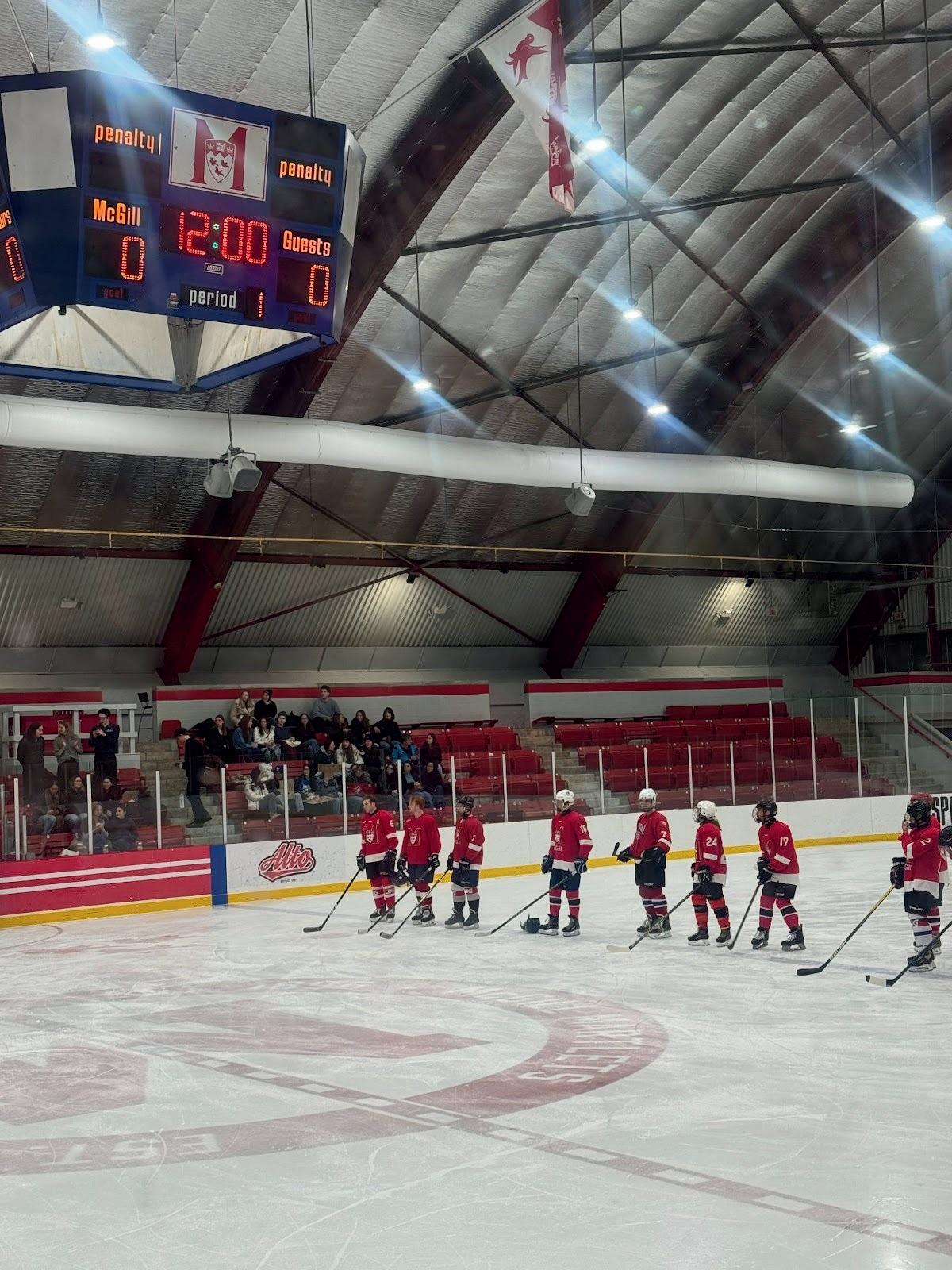
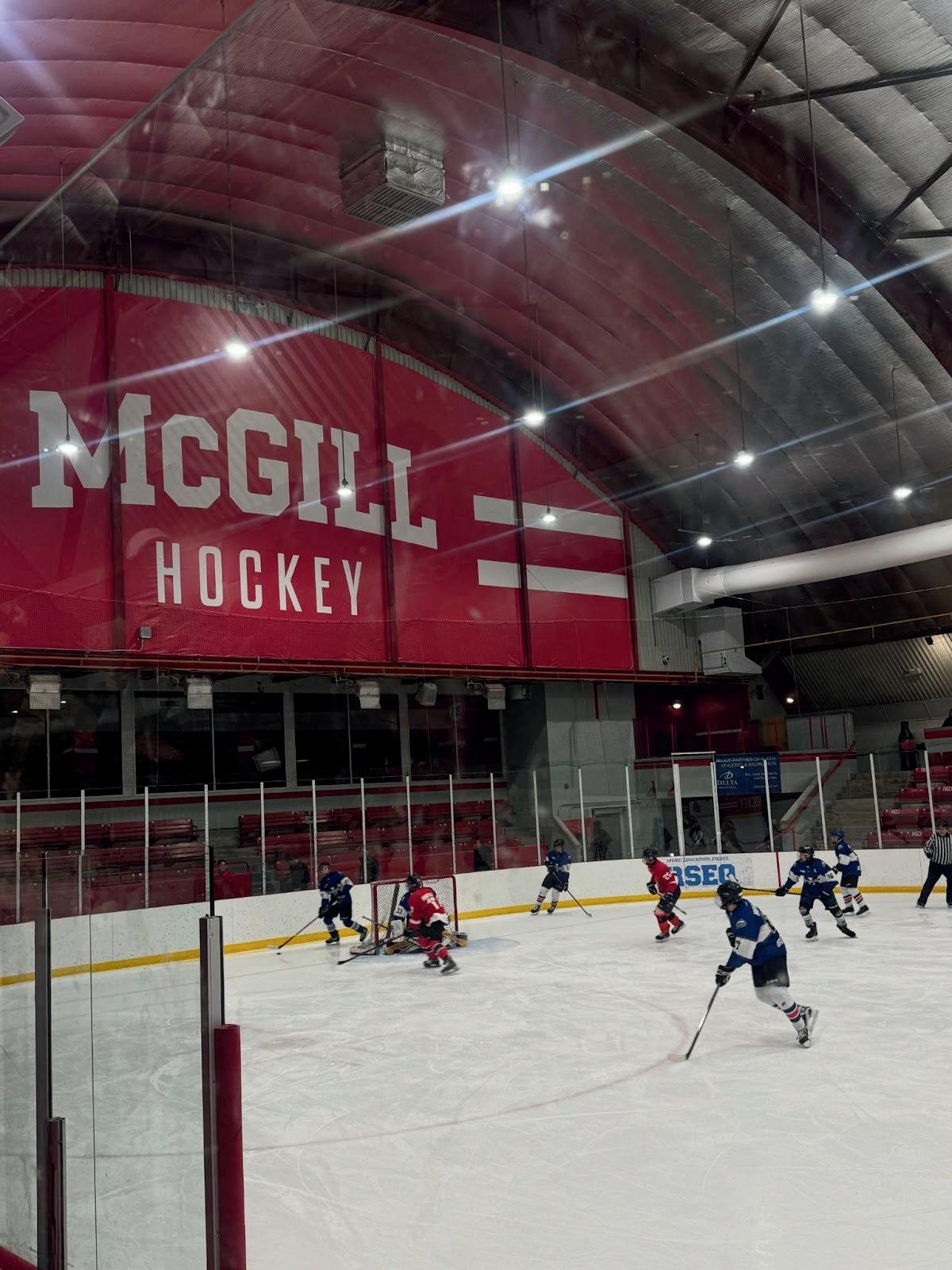
In true McGill fashion, our community jumped, or should I say skated, right back into the swing of things. Last weekend, the “Battle of the Mountain”hockey match took place between our very own McGill Law team and the Université de Montréal’s Faculty of Law.Although the match did not go our way, it was a wonderful opportunity to reconnect across cohorts and come togethertocheeronourclassmates.
Neal, Jeff. “The Veiled History of the English Jury Trial.”Harvard Law School, 5 May 2024, hls.harvard.edu/today/the-veiled-history-of-theenglish-jury-trial/
The Last Duel. Directed by Ridley Scott, 20th Century Studios, 2021.
Skoda, Hannah. “Medieval Trial by Combat: The Real History behind The Last Duel.” HistoryExtra, 5 Sept. 2024, www.historyextra.com/period/medieval/medieval-trialby-combat-real-history-behind-last-duel/
Solly, Meilan. “The True History behind ‘The Last Duel.’”Smithsonian Magazine, 20 July 2022, www.smithsonianmag.com/history/the-true-historybehind-the-last-duel-180978860/.
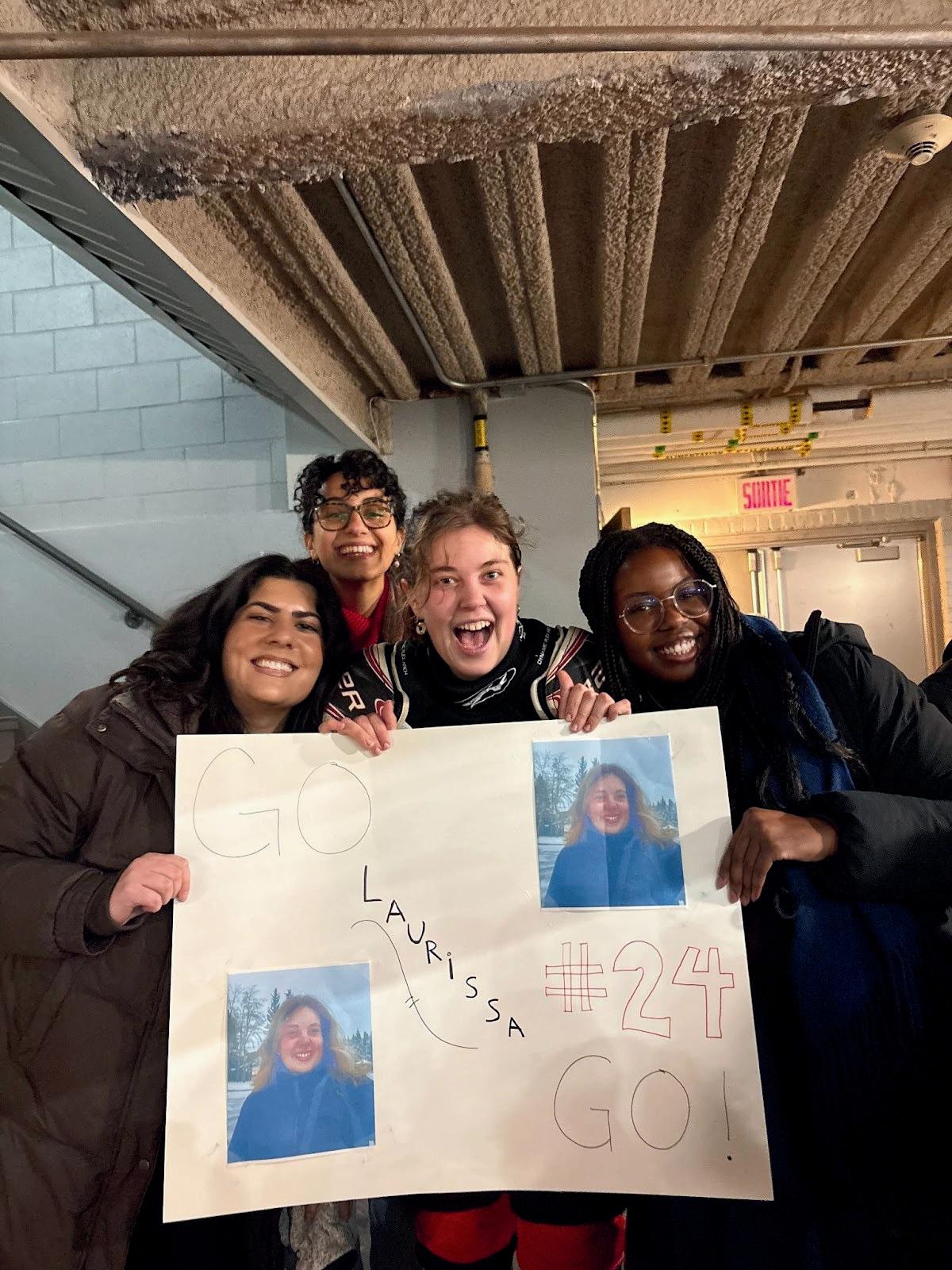
Our very own hockey star, Laurissa Brousseau! (Diana Ebadi)
27-01-2026 NO Judgement Rendered: Lou’s Pointe-Claire
COURT OF QUID NOVI
EDITORIAL NOTE
Alexander Ginnetti & Eveline Liu Plaintiff v. Lou’s Pointe-Claire Defendant
Welcome back to the city, everyone! We hope your exams went well and that you had a relaxing holiday break. For Eveline and my’s cohort, Property was a doozy…huh, would you look at that, doozy starts with a ‘D’...Not shocked! Now, let's get to slandering!
FACTS
About a month ago, Eveline had her birthday at Lou’s in the Pointe-Claire village. She was ethereal all night–a mix of Cowboy Carter and Lucy Liu (her mom) in Charlie’s Angels. I was coming from my International Law of Human Rights final, and I can safely say that sovereign immunity does not exist 1
2
I, a straight white man, decided to order for the table.We shared the tuna carpaccio, crab cake, Parker rolls, striploin, halfchicken, and rigatoni alla vodka. Shout-out to the staff because we were loud, as in screeching loud to the point I hated myself…which does not really take much.
APPLICABLE TEST
We put this hotspot through our rigorous (and completely subjective) Slander and the City Scoring System, which evaluates the food, value, service, setting, and the “ring by spring” factor.
ANALYSIS
Food: flavour and texture (55/60): Everything was truly amazing. The pasta was al dente, and the sauce was creamy but not heavy. The crab cake had an amazing tang that I licked the plate clean. Now, the tuna carpaccio…GORL! Amazing, the fish was fresh with just a kick of spice thanks to the chilli peppers (not the band…but hey, call me, maybe). The chef cooked the strip loin to a perfect medium rare, and it melted in your mouth. So why the 55 and not a 60 (me pretending to be a professor)? The chicken–drier than the Sahara, just ask Ariana Grande.
3 4
Value (7/10): Fair price for the quality and portion size. Appetizers are approximately $18 to $22, while mains range from $28 to $60.
Service and Setting (5/5): Quick, efficient, and, most importantly, friendly! I feel like they only hire gorgeous people…so, need not apply if you’re giving gargoyle.
Ring by Spring Factor (3/5): The spot is nice, but it is not the most intimate setting, unless you request the table by the corner with a bay window…Now that's a vibe! The place excels as a friendly get-together spot, whether that’s between business colleagues or your cracked-out friends from law school.
FOR THESE REASONS, MAY IT PLEASE THE COURT TO:
APPROVE the cumulative score of 70/80.
RECOMMEND for:
Dinner with friends; An evening out in Pointe-Claire village in the summer, before getting ice cream; Living your suburban fantasy.
ORDER all McGill Law students to take the 211, 405, 411, or 425 bus from Lionel-Groulx (green/orange line).
Ginnetti Liu LLP Contributors | 2Ls
1 I am actually the G (gangster) in the LGBTQIA+“alphabet mafia.” Stand back @CIA, @DEA, @FBI, @DIA and @NSA.
I have come to understand that one of the principal defining features of being a law student is the perception that I am intelligent. I experience a mystical transformation when a stranger asks me what I do.At first, I’m some girl reaching my interlocutor’s minimum requirement for being engaged in conversation. But after replying that I’m a law student, I am transubstantiated into a new person altogether: now, I am a smart person, and a smart girl at that.Yet, what interests me most about this perception of intelligence does not stem from those outside of law, but from those within the faculty; how we treat intelligence, interact with it, and mostof allobsessoverit.
What has become apparent to me during my time at McGill is that while the usual suspects (likeability, wealth, privilege, and beauty, amongst many others) comprise social capital, none are as important as intellect.
For me, this was somewhat of a surprise. Growing up as the smart girl in a rural school was usually more trouble than it was worth in terms of playground politics. While I became aware of the advantages as I grew up, even in undergrad I found intelligence to be of no more social value than privilege, beauty, or likeability. Imagine my shock uponenteringlawschoolandfindingthat the most frequent social scandals are the circulation of lists ranked by intelligence or fellow students holding interviews for admission to their study group. What intrigued me most was a desire to understand what the markers of intelligence are that signal to the creators of such lists that one person is smarter than another. After all, we’re all in law school,sowe’reallsmartpeople…right?
In one sense, it is hardly law students who are to blame for the source of the intelligence obsession. The environment itself invites this kind of intellectual hierarchy. Consider theLSAT: inorderto
be admitted to law school, many of us must pass a skills examination that, if you squint hard enough, looks an awful lot like an IQ test. Once admitted, we face a grading system whose curve is designed to act as an equalizer, but ultimately serves as a differential between those with the ability to get an A-, and everyone else. Yet the environment on its own cannot sustain this hyperfocus on intelligence. Without law students to take up the torch by creating our own intelligence rankings or requiring a transcript to be allowed into personal study groups, intellect wouldn’t have such dollar dominance over other social currency.
From conversations, whisper networks, and observation, I’ve identified some notable categories that are important signals of intelligence for those of us who buy into the cognitocracy.
Grades & Accolades
The fact that I couldn’t get through writing this article’s introduction without talking about grades gives some indication as to their weight at the faculty. While the employment pool, particularly for those entering big law, adds pressure, it does not account for why we take grades to be a social indicator of intelligence. This is our own doing. Notably, we are studying law in an era and environment where an individual’s rank in the class is not made public. Instead, we evaluate who has high grades based on those who choose to share that information and other factors we think correlate to a good mark, such as class participation and attendance, among others. I was surprised to learn that admission dates were as valuable as LSAT scores, with esteem given to those early December admits and those with scores to rival Elle Woods’. What is plain is that none of this information is reliable. Unless I am actually looking at my classmate’s transcript, I don’t know how well they did. Despite being neither reliable nor representative of a person’s intelligence, grade chatter and the like is everywhere, and I’m disinclined to believe that its origins or its effects are merely unbiased information sharing.
Visibility
In this environment where the cold, hard numbers elude us, we turn to other behaviours and activities that give the impressionof intelligence.Inmanycases,it isn’tnecessarilywhatwedo,butthatweare seen doing it. One’s visibility in class, studying in the library, attending networking events, and generally being known by face, if not by name, is essential. Without information, we seek out patterns from which we can make inferences. Especially as individuals who are actively being trained to become skilled pattern recognizers, it is no surprise that this capability is used to differentiate and categorize in a social context. What is unfortunate is the tendency for these markers to be treated as accurate reflections of a person’s intellectual capability. If my professor puts me in a group project with someone I don’t know personally,buthaveseeninclassrepeatedly, I get the impression that they are organized, dedicated to their studies, and will likely be a capable partner. The implicitimpressionisthatthesetraitsmake them smart. The same is true for people I see attending talks or lunch and learns. Their appearance at these events signals a certain level of involvement that implicitly, anderroneously,indicatesintelligence.
Of course, all the classic perception problems apply.The student I imagine will beagoodgroupprojectpartnerbecauseof their high visibility in class, might actually be spending the entirety of their class time doing crosswords, and may have never taken a note or done a reading. Further, my perception of another person depends on my presence to perceive them. I may not see this person in class because they spend the majority of their time at the Legal Clinic actually using the law, while I’m staring at the board learning theoreticals. What’s more is that there are many intersectional barriers that preclude and discourage students from showing up in thesespaces.Itisobviousthatstudentswho work to support themselves are no less intelligent than those who have the privilege not to, but their absence from these areas of perception can lead to a biased view of their intellect.The visibility phenomenon is certainly not unique to a law faculty. National trends away from
online work reek of widespread object permanence issues: if I can’t see you working, you must not be.These attitudes that seem antiquated to me, I worry are being given new life by students like ourselvesinenvironmentssuchasthis.
Participation
Participation is one of the most readily availablemarkersof intelligence.Contrary to visibility, even the least observant law student is aware of those who actively participate in class. Despite the negative connotations that may come along with being labelled a gunner, there is no question that the title brings with it the recognition of one’s knowledge and ability to communicate.Certainly, thequality of
the participation matters, but the consistency is also key. The more one participates, the greater the chances for both error and success, but as long as the quality is net positive, it's likely sufficient for signalling one’s capability to scorekeepers.
Conclusion
These indicators do not mark intelligence. They might give insight into a student’s priorities or their privilege, but they are simply too many variables for it to be reasonable to make these patterns the basis of how we view our colleagues. Moreover, if we can all agree that something we share is a certain level of intelligence, can we not
Homme-artiste
Manal Elhaoua | 1L
L’Homme-artiste a été rédigé en hommage à mon enseignant de philosophie au cégep. Il incarne l’un de mes premiers mentors, l’une des premières figures inspirantes auxquelles je lève les yeux. Ce texte est un entrelacement entre sa personne et l’art de l’enseignement dans sa dimension la plus universelle. Les professeurs se tournent vers l’enseignement pour des raisons qui leur sont propres. Si, un jour, j’en devenais une, je voudrais enseigner comme on crée. Mon savoir, ainsi digéré, pourrait alors être transmis bien au-delà des mots. Je deviendrai une homme-artiste.
Tap–tap-tap longue respiration tap-tap-tap… Une main qui frotte le menton, l’homme aux yeux bleus, presque translucides quand il réfléchit, se rapproche d’un pas de plus vers sa quête ultime: vivre dans la vérité. Dans son autre main, une manette noire, fidèle à sa paume, lui permet de faire défiler les diapositives. Malgré son omniprésence, il l’utilise peu, puisque chaque journée représente une aventure unique, chaque échange mène vers une nouvelle découverte.
Tap-tap-tap… tap-tap-tap… l’homme s’arrête soudainement, les yeux rivés au sol, en quête des mots justes. Dans la salle, son désir d'extérioriser, de verbaliser, de transmettre est palpable. Quand il prend la parole, il n’est pas simplement entendu, il est écouté, il est vu. Mille et une interprétations surgissent et s’entrelacent. Les mains se lèvent, choisies une à une pour que la conversation prenne vie, et ensemble, on explore une infinité de sentiers, où on finit toujours par prendre une direction.
La stimmung de la salle est établie, parfois plus vive, parfois plus douce, mais toujours sincère. Chaque jour
also make efforts to focus our pattern recognition skills on behaviour marking traits with more interpersonal value?Traits like curiosity, compassion, resilience—traits that are espoused by the people around whom we feel most at ease and cared for. In my case, being intelligent isn’t the reason I can be myself with my people, so I will try not to let it be the lens through which I view others whom I don’t know as well. We all know that our cohort today will be our colleagues of tomorrow, but there is time to develop professional relationships. For now, give grace to the skippers, remove the gunners from their pedestal, and find the time to remind yourself that your grades are the least interesting thing about you.
nous rapproche un peu plus de notre quête, semblable aux alpinistes montant vers un sommet. Cependant, cette fois-ci, le sommet est invisible, inatteignable. C’est une vérité déchirante, puisqu’il ne sera jamais atteint. L’homme y trouve une beauté, celle que chaque pas nous rapproche du sommet, alors might as well find beautiful, memorable and humane ways to go up.
L’hommefaceànousvoitlemonde.Ilestoptimiste. Amor a fati.
C'est un être qui pense en images. Chaque idée exprimée est teintée de métaphores. Il nous tend alors une paire de lunettes bien à lui, à travers laquelle il voit et comprend le monde. Sa classe devient une pépinière où chaque idée plantée espère germer. Les enseignements qu’il transmet ne sont pas uniquement des dires: il les incarne. Que ce soit en classe, dans les corridors, ou dans les événements, il est cohérent: he is true to himself. Ses gestes reflètent ses paroles, et chaque conversation est une occasion d’ancrer les idées dans la réalité. Il ne parle pas pour parler, il parle parce qu’il croit.
Les pas saccadés, la main au menton, les yeux dans la réflexion, les silences pertinents, la souplesse du contenu, l’écoute, la tension, la douceur du mot juste, les métaphores et j’en passe dessinent le portrait d’un homme-artiste.
Je le perçois comme un semeur de graines. Certaines germent, d’autres stagnent ou pourrissent. Il sait que tout dépend du terreau, de sa fertilité, de sa capacité à accueillir, puisque chaque terre est différente. Il le sait, mais il sème quand même. Il sème avec espoir. Il arrose avec amour. Un amour enraciné au plus profond des sols, un amour qui fait vibrer les plantes.
L’homme artiste sait qu’aimer ce qu’on fait peut brûler, mais il accepte le risque parce qu’il sait que c’est dans ce feu-là que naissent les plus belles lumières.
The Return of Actus Reus
Lydia Etherington | 1L
If you’ve ever heard screams from OCDH 16 on aWednesday evening, don’t worry. It’s not the 2Ls making a blood sacrifice to the god of Property Law; it’s our Francophone theatre group Actus Reus
Last active in 2021, Actus Reus was resurrected by club president Estelle Mi. It began as a Messenger chat of a few students looking for an artistic outlet, and is now a team of over 20 actors, designers, musicians, and execs. For Estelle, it’s a space for people to be themselves, see their classmates in a different light, and bring some absurdity to the faculty.
Absurdity was a theme from the start with the selection of this year’s show: “Le Show Beige.” Written by Montreal local Camille Giguère-Côté, the play looks at“les manières dont on essaie de rendre la vie grandiose lorsqu’on se rend compte que, parfois, on peut être englués dans un quotidien un peu plate et redondant,” the author told Le Devoir
Putting on a show is no easy feat. Estelle reflected on how, with no upperclassmen to look to,“it was a lot of learningby-doing.” From rehearsing between desks in classrooms during universal break to crowdsourcing costume pieces and musical instruments, the show came together thanks to the dedication of the club’s members.
Marine Matsumura, the show’s director, has been at the centre of the project from the beginning. For her, the club creates an important space that “allows students not only to express themselves artistically, but also to do so in French.” Her artistic vision and unwavering composure have been key to the production, ensuring that every line delivery, set piece, and musical interlude fit together.ActorAida Roy van Mierlo praised her“no bullshit approach”to rehearsals, guiding the tight-knit cast of seven over the past several months.
While Marine prepped the cast to take the stage,Andréanne Saint-Jacques, VP Technic and Logistics, worked (literally) behind the curtain. Her“knowledge, expertise, and genuine passion,”in Estelle’s words, have kept the project running smoothly. She and the rest of the executive team have solved problems as they arose, showing incredible resourcefulness in the face of limited resources and guidance on running a theatre club in the Faculty of Law.
One of the biggest challenges was finding a venue. Andréanne and the team spent months reaching out to different theatres in Montreal, finally securing a collaboration with La Chapelle at the Musée des Hospitalières de l’Hôtel-Dieu de Montréal: a beautiful venue that supports local artists and creatives. Estelle described this partnership as a special moment for the club:“when we walked through it … we saw the scope of the project … and just saw how far we came.”
With the show fast approaching, the team is in the final few weeks of preparation. They are excited to show the culmination of their months of effort, and are already looking ahead to future projects. Estelle is grateful for the way the artistic endeavour has enabled people who might not otherwise have met to form strong connections. “What makes it most meaningful to me is knowing that we are building shared memories and lasting experiences that will stay with everyone long after university. I truly encourage everyone to create their own community while at university! There is space for that here, and Actus Reus is proof of it.”
Don’t miss your chance to see Le Show Beige, performed on February 7th at 7pm and February 8th at 3pm. Tickets are available on Evelya. To see a sneak peek, check out the trailer on their Instagram: @actusreus.mcgill.
Overheards
2L: "Reddit is like God's search engine."
3L: "So basically, Lachine is the Wasian of Montreal?"
Prof: "It was all very...it was all very very."
3L: "What's a CRA?"
Toilet Talk: Rethinking the Law Faculty Washrooms
Paige Hanic | 2L
Like many ideas, this article came to me while I was on the toilet. But not because my creativity was flowing during a well-deserved, serene respite from my classes. Rather, it was because I was taken aback by the flawed design of the basement bathroom in Thomson House. I’m sure many of you T-House frequenters know it—it’s the one with the urinal in the front half and the stall with the toilet in the back half. Importantly, the only way in and out is past the urinal.
So there I was, enjoying my bathroom session in the stall, when someone walked in to use the urinal, leaving me no choice but to wait until they finished before leaving. This only set me back about 3 minutes, but it really got me thinking about bathroom design and who these everyday spaces serve or neglect.
This brings me to my longstanding frustration with the women’s washroomsattheFacultyof Law.Mymaingripeisthattherejust aren’t enough of them. I have spent many mornings before class waiting in lines to be able to use the bathroom in Old Chancellor Day Hall, to the point where I know it’s sometimes not even worthwhile to attempt to go before or between classes. I find it much easier to leave mid-class when there is guaranteed to be less traffic, an open stall, and, yeah, a bit more peace (is some zen time toomuchtoask?)
This got me wondering what the men’s rooms look like. So, naturally,Ididabitof diggingandaskedalawschoolpeerforhis men’s bathroom intel.What I discovered shocked me more than I hadanticipated.
While the women’s washroom in the basement has a meagre two stalls, the men’s room is equipped with a whopping six stalls. Not tomention, nine urinals.
When I asked my men’s bathroom source if he ever experienced long waits to use the washroom, he said that he “never had a scenario where [he] was waiting” and that there are definitely “moreurinalsthanisactuallyneeded.”
Don’t get me wrong - I am not against gender-neutral bathrooms at all. In fact, as I will later touch on, many of our problems in the potty-politics arena could be solved by a well-designed, gender-inclusive space. I also understand why Thomson House doesn’t exactly have the infrastructure for a perfect bathroom situation, given the age of the building and likely budget constraints, and I commend them for at least trying to make their bathrooms open to more people.
Clearly, the bathrooms were designed in a time when the majority of the population at the law faculty were men, but this simply isn’t the case anymore - and it's high time our bathrooms changed to reflect the true makeup of the student body. I couldn’t find admission statistics on the gender of admitted students posted on McGill’s Faculty of Law website, but if I recall correctly from my 1L orientation, women now outnumber men at the faculty. This is true more generally of law student bodies across North America. So why do we have fewer bathroom stalls? 1
Anna Russian & Elizabeth Bodamer,“LSAC’s Knowledge Report: The Composition of the First-Year Law School Class and Enrollment Trends” (2025), online: <lsac.org/data-research/research/lsacs-knowledge-report-composition-1L-class-and-enrollment-trends?utm>. 1
PHOTO BY PAIGE HANIC: The basement bathroom in Thomson House: a single stall positioned behind an exposed urinal, requiring users to pass through the space to enter or exit.
The men’s washroom in the basement area includes six enclosed stalls.
The men’s washroom also contains nine urinals.
I also feel that I should mention the very real discomfort many women and gender-diverse individuals feel at the thought of sharing spaces with people who may not want them there, or with populations who victimize them. Importantly, however, when discussing washroom politics,“it is pivotal toilet users are not pitched against each other in competition for ever-diminishing resources.” Some women who express fear or discomfort at sharing these vulnerable paces with men and vouch for segregated washrooms instead risk endorsing transexclusionary policies. While their unease with men is a valid, important concern, it should not come at the expense of trans people or other gender minorities who are equally deserving of safe, inclusive washroom environments. Ultimately, violence against women and trans people is ongoing and must be acknowledged at a societal, systemic level if bathrooms are going to feel safe for everyone.
3
4
It might not seem like a big deal to some, but the current state of the law faculty washrooms forces women and gender-diverse students to do mental math about when, where, and whether we use the washrooms. This seemingly minor inconvenience can actually be very distracting in a space where we are trying to focus on our studies. This is especially so for people who have additional needs for bathroom time due to menstruation, disability, or other concerns that transcend gender alone.
Of course, simply re-labelling the bathrooms as gender neutral with no other structural change is not always helpful, and some scholars argue that it can actually be more harmful when done without privacy safeguards like urinal coverings, reinforcing discomfort rather than alleviating exclusion. The Thomson House bathroom is an example of a men’s washroom that was simply relabelled as gender-neutral, without additional measures to ensure the comfort of people using it.
2
So what does make an ideal space for gender neutral bathrooms? The literature supports design choices that emphasize privacy, dignity, and access. Feminist scholars studying potty parity suggest that gender-neutral washrooms work best when they consist of fully enclosed, floor-to-ceiling stalls, adequate numbers of toilets, and layouts that avoid forcing users to pass others in vulnerable states.
4
I’m not an expert on interior planning, but to me it doesn’t seem like it would be hard to add stall doors to the urinals in the men’s basement bathroom, clearly mark the space as gender neutral, and give the women and gender-diverse people at the law faculty six more stalls to make use of. If it is difficult, it certainly isn’t impossible, and I would argue that it’s an important enough cause to at least consider.
Without these changes, what we’re seeing here is women and gender-diverse students being forced to bear discomfort and inconvenience when there are perfectly feasible structural changes that could make the bathrooms more accessible and comfortable for everyone.
Obviously, this isn’t a comprehensive overview of all of the law faculty bathrooms, and I might be drawing preemptive conclusions as a complete non-expert on the topic, but the contrast between those two bathrooms in the basement was enough to ring alarm bells for me. I think it's time we flush outdated, gender-essentialist bathroom design down the toilet and come up with a solution that offers the most accessible bathroom space to the most people.
2 Clara Greed,“Join the Queue: Including Women’s Toilet Needs in Public Space”(2019) 67:4 The Sociological Review 908 at 921.
Alexander K Davis,“The Hidden Privilege in Potty Politics”(2017) 16:3 Contexts 34; Charlotte Jones & Tig Slater,“The Toilet Debate: Stalling Trans Possibilities and Defending Women’s‘Protected’Spaces”(2020) 68:4 The Sociological Review 834.
3 Ibid; Noa Lewkowitz & Jason Gilliland,“A Feminist Critical Analysis of Public Toilets and Gender: A Systematic Review”(2024) 61:1 Urban Affairs Review 282
PHOTO BY PAIGE HANIC: The women’s washroom in the law faculty basement, equipped with just two stalls.
Meet the QUIDTEAM
Over the semester, we will be conducting short profiles of the incredibleteambehindthe QuidNovi.Meetsomeof thembelow:
Nom: Catherine Zhang
Year of Study: 3L
Position: Co-Editor-in-Chief
Briefly, what drew you to the Quid:
The short answer is that I love to read (not law school readings) and write (not law school essays).The long answer is that the Quid reminds me of who I am and what I enjoy, and lets me know that I'm not alone. In law school, that can be an incredible gift. I’m deeply honoured to be your Co-EIC alongside Faith this year.
Qu'aimes-tu faire quand tu n'étudies pas?:
I like to cook, draw, do word games, and make music with theTinyTax Band!
Give us a rec for your favourite Montréal café, resto, metro station, or hidden gem. Pas de gatekeeping!:
O’Nouilles in Verdun is a hole in the wall with the cheapest, tastiest, and most authentic Chinese food! Bonus: Café Chato, a cat café, is right next door. The cats are adorable. The drinks are great.They allow laptops. Need I say more?
Nom: Eveline Liu
Year of Study: 2L
Position: Layout Editor & Columnist
Briefly, what drew you to the Quid: I shared with a friend that I felt like I was missi outlet during 1L, and she convinced me that the Qui be the perfect opportunity!
Qu'aimes-tu faire quand tu n'étudies pas?:
I enjoy playing/listening to music, cooking, and wa TV shows!
Give us a rec for your favourite Montréal café, res station, or hidden gem. Pas de gatekeeping!: McGill'sMorganArboretumneartheMacDonaldcampus birdwatch, ski, hike, etc. And sometimes, they have whereyoucanstargazeattheirObservatorywitha
Nom: Nicholas Bailey
Year of Study: 3L
Position: Columnist
Briefly, what drew you to the Quid:
While I mainly joined because Faith and Catherine a to write for the Quid, I've since discovered that I opportunity to offer articles about law that I hope interest in the law, as something distinct from the Law or Civil Law education with which law students familiarized in the normal course of their educatio Qu'aimes-tu faire quand tu n'étudies pas?:
When I'm not studying, I enjoy reading and pursuing studies, such as studying languages or picking up n
Give us a rec for your favourite Montréal café, res station, or hidden gem. Pas de gatekeeping!:
Some of my favourite second-hand bookstores include Renaissance (Decarie/NDG Ave) and Encore Books (Sherbrooke, between Harvard and Oxford).
Nom: Meera Khanna Year of Study: 1L
Position: Copy Editor
Briefly, what drew you to the Quid:
J'aime comment le journal lie ensemble les membres d'une communauté. Je voulais donc contribuer à celui qui connecte tous les étudiants de la faculté, qui sera ma petite communauté pour les 4 prochaines années. Qu'aimes-tu faire quand tu n'étudies pas?:
I love to cook and bake when I have the time, or do any activity outdoors.
Give us a rec for your favourite Montréal café, resto, metro station, or hidden gem. Pas de gatekeeping!: Philemon always.
Nom: Lysette Umwali Gacuzi
Year of Study: 2L
Position: Columnist
Briefly, what drew you to the Quid:
The opportunity to get creative! I also liked the idea of connecting with people across the Law Faculty.
Qu'aimes-tu faire quand tu n'étudies pas?:
When I am not studying, I like to go on walks with my friends and try new cafés.
Give us a rec for your favourite Montréal café, resto, metro
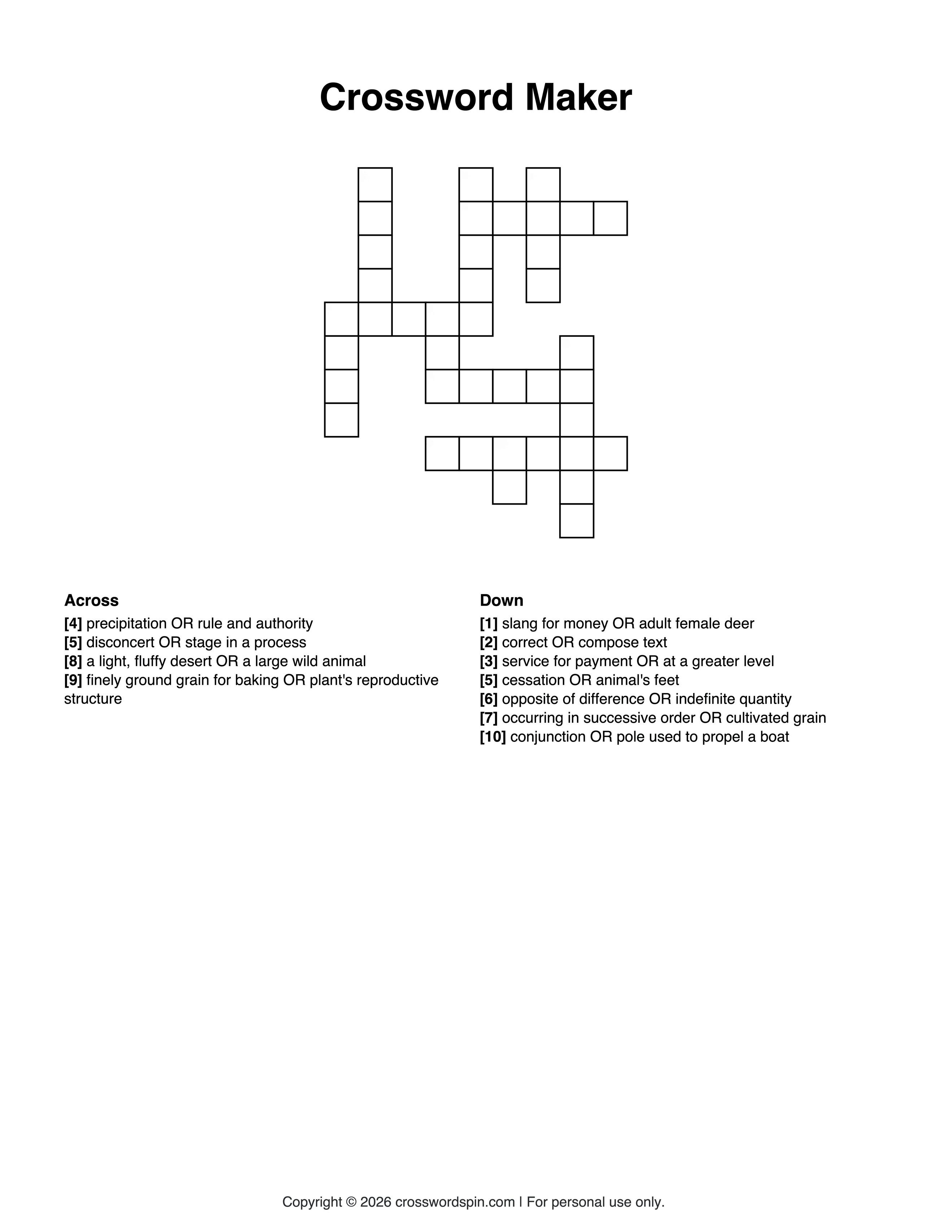
Down
[1] Adult female deer OR slang for money
[2] correct OR compose text
[3] service for payment OR at a greater level
[5] cessation OR animal’s feet
[6] opposite of difference OR indefinite quantity
[7] occurring in successive order OR cultivated grain
Every item appearing in the Quid Novi is an opinion piece that reflects only the views of the person(s) submitting the item. Neither the Quid Novi, the LSA, nor the Faculty of Law endorse any of the material or views contained therein. Given the nature of the publication and its limited resources, the Quid will not undertake to evaluate the factual accuracy of submissions. Submissions are presumptively publishable unless they do not conform to the guidelines contained in the Quid constitution
EDITORS-IN-CHIEF RÉDACTRICES EN CHEF
Catherine Zhang
Faith Dehghan
SOCIAL MEDIA DIRECTOR
DIRECTRICE DES RÉSEAUX SOCIAUX
AnyaAbbes
ART DIRECTOR
DIRECTRICE ARTISTIQUE
Rae Aquino
LAYOUT EDITORS
ÉDITRICES DE MISE EN PAGE
Eveline Liu
KatyaTavitian
COPY EDITORS
SECRÉTAIRES DE RÉDACTION
Qi Rong Chen
Angel Drouin
Meera Khanna
COLUMNISTS
CHRONIQUEUR.EUSES
Nicholas Bailey
Manal Elhaoua
Lydia Etherington
Alexander Ginnetti
Paige Hanic
Gillian Hunnisett
Eveline Liu
Sébastien Offredo
Lysette Umwali
Heidi Zahiri
Catherine Zhang
CONTRIBUTORS
CONTRIBUTEUR.ICES
AdeleWechsler for the MJSDL
Special thanks to RaeAquino and SouangWu for designing the layout.
Envoyez vos commentaires ou articles avant mercredi 17h00 à quid.law@mcgill.ca .Toute contribution doit indiquer le nom de l’auteur, son année d’étude ainsi qu’un titre et un sous -titre pour l’article. L’article ne sera publié qu’à la discrétion du comité de rédaction, qui basera sa décision sur la politique de rédaction disponible sur notre Instagram @quidlaw