
TAs speak out against increasing workload and reduced hours
University refuses to address implications of a stagnant TA budget and the use of AI for marking
Jonathan Reilly Senior News Editor
Public Service Alliance
Canada (PSAC) 901 representatives say reduced Teaching Assistant (TA) hours, rising enrolment caps, and the introduction of Artificial Intelligence (AI) marking software are reshaping undergraduate courses across the University.
Yuanjin Xia, a PhD candidate in philosophy and a steward with PSAC 901, the union representing over 2,000 graduate student workers at Queen’s, said the union has received multiple reports from members across departments who feel workloads have increased while paid hours haven’t.
“At our November steward council meeting, [...] there has been broad discussion of people feeling work has been increased, but the TA hours haven’t changed,” Xia said. “There are reports that even if the TA hours haven’t been changed, they feel the workload has been changed because there are more students per TA.”
She linked the reduction in available TA hours to budget decisions at the faculty level, referencing comments made at a Faculty of Arts and Science (FAS) town hall in November, where FAS Interim Dean Bob Lemieux stated the total TA budget hadn’t been cut
but remained at 2023-24 levels. This is despite wage increases following PSAC 901’s strike in 2025.
“But our hourly wage has increased,” Xia said. “Effectively, it means available TA hours have to be reduced by
in the course increased this year, yet hours assigned to each TA decreased.
Rebecca Chen, a PhD candidate in chemistry, a TA in CHEM 112, and a steward with PSAC 901, confirmed the enrolment increase.
Chen claimed that CHEM 112
approximately 18 per cent.”
In a statement to The Journal, the FAS confirmed there have been no changes to TA budgets, claiming “TA allocations within FAS follow student enrollments to address student needs and course demands to achieve all learning outcomes for students.” However, the University didn’t address the effective cut in hours due to the wage increases, despite specific requests from The Journal
This comes after previous reports of TA hours decreasing in the School of Kinesiology and Health Studies, which saw the elimination of tutorials to address the issue.
Xia pointed to CHEM 112 as one of the clearest examples reported to the union.
According to Xia, enrolment
expanded from about 1,100 students last year to approximately 1,600 this year.
“We’ve had to add four additional sections of lab and tutorial to accommodate everyone,” Chen said in an interview with The Journal
Despite specific requests from The Journal, Queen’s didn’t address increased enrolment numbers in its statement.
Chen added that more TAs had to be brought into the class, which meant all TA contracts for the course were also reduced by five hours. Because many TAs hold one contract for each term, she said the reduction totals 10 hours.
“For the lab TAs, there already weren’t enough hours for them to properly grade lab reports,” Chen said. “With
Kingston rents among Canada’s
fourth
highest as student housing falls short
Students speak to record-breaking rent increases, causing barriers for those looking for housing
Lilly Meechan Assistant News Editor
Kingston saw a 28.9 per cent spike in two-bedroom rents last year, making it the fourth most expensive rental market in Canada.
On Jan. 14, Zumper, a digital rental marketplace, published the Canadian Rent Report. The report found that Kingston is now the fourth-most-expensive city to rent in Canada and one of the fastest-rising markets. This surge comes just weeks after the City

of Kingston released its own data showing a 2.4 per cent vacancy rate in 2025, slightly higher than the city’s 10-year average of 1.8 per cent.
Only Vancouver, Burnaby, and Toronto rank higher than Kingston in rental cost, but all three cities report rental prices fell in 2025, while Kingston’s continues to grow.
According to Zumper, the city’s 26.2 per cent rent increase was unrivalled by the rest of the country, “driven by limited rental inventory and steady demand from students and professionals.”
In contrast to the rent increases, the City of Kingston’s 2025 Rental Market Report, published Dec. 15, highlighted “strong” housing growth, noting the 1,054 building permits in 2025, following 1,243 permits in 2024, exceeded the province’s municipal

housing targets.
Despite the new growth, the vacancy rate of three-bedroom or larger units typically rented by students remains at just 1.2 per cent, according to the city’s report.
The Journal interviewed several Queen’s students to hear what they thought of the new report and the current housing market. Aly Soloman, Comm ’27, told The Journal he wasn’t surprised by the rising costs but that it’s making it much more difficult for students to find affordable housing near campus.
“I think even though the city has vacancies, the main problem is how high rent prices are, which dissuades a lot of students from being able to find housing, even if [there’s] housing available, because it’s out of their price range,” he

the addition of all these new students, there’s just no way that the lab TAs could effectively [grade] the lab reports.”
Xia later added that reduced hours often translate into unpaid labour for TAs who feel responsible for maintaining academic standards.
“It basically means more de facto unpaid work,” Xia said. “If you really care about students [...], it’s really hard to do it right.”
Chen then explained that CHEM 112 introduced an AI-based marking platform this year, called Stemble, which students are required to purchase to submit lab reports and access the lab manual.
“It’s essentially mandatory to buy it,” Chen said. “You can only access your lab manual through there, and also only submit your lab reports through there.”
Chen said the cost to students is approximately $90, but despite this, she says the software hasn’t been productive for both students and their TAs.
“The platform is actually really bad at grading. The TAs still have to scroll through every single lab report to see that it was marked correctly. So effectively, there really isn’t a huge reduction of work at all,” Chen said.
The Journal also inquired about the implementation of AI-marking in CHEM 112, but the University chose not to address it in its statement.
Chen also said the use of AI marking risks undermining educational quality.
“The feedback, if there is any at all, is really not the same,” Chen said. “It also creates this space between the student and the TA that doesn’t help with understanding
said. “I think new affordable housing should be built closer to the school, especially because of how volatile the weather is in Kingston.”
Katie Saunders, ArtSci ’28, shared a similar opinion to Solomon, stating that living in the city has become increasingly difficult and sharing her own personal experience with the Kingston housing market.
“In first year, my housemates and I found it very difficult to find a place to live, often feeling like we were being overchargedfor the accommodations we were being offered,” she said.
Saunders also highlighted the need for more resources and accessible student housing.
“If I had the chance to speak with a superior about these issues, I would advise them to prioritize affordable, accessible student housing, and also to make housing resources much more available to students,” Saunders explained.

the material.” They added that they’ll continue raising concerns with the University but remain frustrated by what they describe as a lack of clear communication and accountability.
Alyssa Swift, ArtSci ’27, in a statement to The Journal, expressed frustration with the growing gap between student needs and the increasingly unaffordable housing market in Kingston.
“Honestly, I don’t feel like it’s fair at all to the students and Kingston residents. Rent has gone up increasingly more than wages, and that obviously puts a lot of stress onto both students and long-term Kingstonians. It feels like housing is being treated more as a business than a basic need,” Swift wrote.
She added that many units marketed as “affordable” often come with poor conditions or ongoing maintenance issues, making the rising costs feel even more unjust. Without stronger rent oversight and more student-focused developments, Swift said, students will continue to be priced out of the city where they study.

Sarah Adams: Why Queen’s moved its Homecoming dates?
Katarina Krivokapic: Ozempic and cancer biology
Noah Cyr: Final Stretch: Women’s Hockey
Journal Editorial Board: Queen’s ‘responsible review’ process isn’t so responsible
Daniel Gill-Sitoksi: ‘Sweet Dreams’ at Modern Fuel
PHOTO BY CLAIRE BAK
Jonathan Reilly: How much do student executives make?
Eve Morrison: The mindset on overcomsumption
Yael Rusonik: Lessons learnt in a tiny kitchen
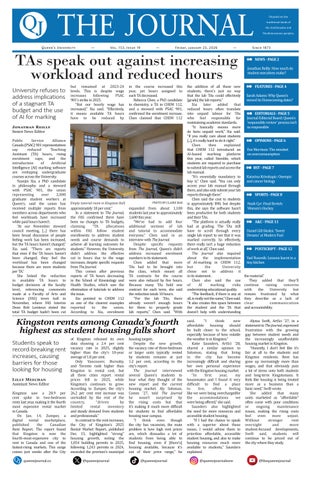
Empty tutorial room in Kingston Hall.
NEWS
Salaries differ across Ontario, ranging from $60K to $42K
Jonathan Reilly Senior News Editor
For student government executives, pay can look very different depending on the campus.
The Journal contacted the student unions of the 10 largest Ontario universities by student population, inquiring about the salaries of their respective executives. Despite questioning from The Journal, data wasn’t provided from the Toronto Metropolitan Student Union, the Carleton University Student Association, or the University of Toronto’s Student Association.
Waterloo Undergraduate Student Association (WUSA)
Topping the list is the University of Waterloo’s student executive salaries, raking in $5,045 a month,
How much do student government executives make?
totaling $60,540 for the year.
“For our upcoming governance year, WUSA is adding another Vice President position. Their compensation is expected to align with the existing President and Vice President positions, with an adjustment for inflation. WUSA’s executive compensation has not changed significantly over the last 10 years, aside from annual CPI-based adjustments to account for inflation,” WUSA wrote in an e-mail to The Journal
McMaster Students Union (MSU)
Trailing in second is McMaster University’s student union, with representatives making $53,701 a year. The President also receives an apartment from McMasters Housing & Conferences Services, with the MSU paying half of the cost.
A representative for the MSU clarified that “Board member wages are adjusted annually in line
with the Consumer Price Index (CPI), effective Jan. 1 of each year. In addition, executive compensation is reviewed every three (3) years by the Full-Time Wage Review Committee to ensure wages remain fair and competitive.”
They added any wage increase not tied to CPI adjustments requires approval of two-thirds of the MSU’s Student Representative Assembly.
Western University Students’ Council (USC)
Rounding out the top three is Western’s USC, with its executives bringing in roughly $51,000 annually. A USC representative claimed they apply the same economic increase to their executive salaries as they do to non-unionized staff.
Queen’s Alma Mater Society (AMS)
Queen’s own AMS falls just outside the top three, with
Engineering students question impact of $100 million Smith donation
Students
point to curriculum changes, limited visibility, and unclear communication
Yael
Rusonik &
Emmet Paradis Assistant News Editors
Two years after a $100 million donation renamed Queen’s Faculty of Engineering, some Engineering students say they’re still unsure how the funding has affected their education.
In November 2023, entrepreneur Stephen Smith announced the donation to the Faculty of Engineering, which was subsequently renamed the Stephen J.R. Smith School of Engineering. At the time, the University said the funding would support a transformation in engineering education at Queen’s.
But several students told The Journal they haven’t noticed changes in their education caused by the donation.
“I honestly haven’t noticed any major changes in how we’re being taught since the donation was announced. Things feel pretty much the same,” said Bennett McIntosh, Sci ’29, in an interview with The Journal. “Most people I’ve talked to don’t really see a difference in their day-to-day education.”
McIntosh added that while he believes the donation’s important, its impact hasn’t been clear to students. “My impression is that a lot of the money is probably going toward maintaining the program instead of actual changes for students right now,” he said.
Other students acknowledged changes within the faculty but questioned whether those changes have been beneficial.
“I’d say the largest change that I found is probably through the
curriculum,” Domenico Giancola, Sci ’29, told The Journal. “Most of our classes this year are very different and are structured differently compared to before.”
Giancola said he noticed changes in courses like chemistry and linear algebra, which he believes are connected to the donation. However, he describes many of these shifts as experimental. “Like they’re trying new things, but not all of this is positive towards our classes,” he said.
In a statement to The Journal, Smith Engineering said the donation is being used to support Reimagining Engineering Education, the University’s new education model.
“We have established a series of teams to help guide the changes associated with Reimagining Engineering Education, which include representatives of each of the Smith Engineering Programs, working groups to address specific topics, and an overall Guiding Team,” the statement said.
The faculty also emphasized that students are being consulted throughout the process. Four three-hour drop-in Q&A sessions were scheduled to take place from Jan. 12 to 15 in the Integrated Learning Centre to allow for further student discussion.
Jordan Belainsky, president of the Engineering Society (EngSoc), said, in a statement to The Journal, that the society isn’t directly involved in decisions about how the donation is used but has played a role in facilitating communication between students and the faculty.
“EngSoc isn’t a consultant for the donation, but we’re making efforts to improve communication between students and the faculty about the donation, its impact, and feedback,” Belainsky said.
Belainsky said EngSoc has members who sit on faculty board and receive updates on Reimagining Engineering Education, though he noted that
executives making $49,331 annually. This combines their base salary of $44,846 with a 10 per cent MERC Benefits Rate.
“MERC benefits stands for Mandatory Employment Related Costs, and are paid out to employees and includes things like CPP, EI, Vacation Pay, WSIB, and Employee Health Tax,” the AMS wrote in a statement.
The AMS added that these salaries don’t get paid overtime, despite regularly working over 40 hours a week.
University of Ottawa Student Union (UOSU)
UOSU executives fall just behind the AMS, making $46,020 annually. A representative for the union said, “Any additional hours worked beyond the expected 37.5 hours per week are converted into lieu hours, which can be used for time off.”
“Executive remuneration is based on the average salary
EngSoc isn’t a consultant on the donation.
He added that members of EngSoc executive attended the Smith Engineering Showcase over the summer, which highlighted pilot projects funded by the donation. The tangible impacts presented were largely limited to individual courses across several disciplines, including changes to grading schemes, course structure, and labs, Belainsky said.
Some students expressed concerns anonymously through a ThoughtExchange form shared with students in December 2025 to gather feedback for the engineering faculty. ThoughtExchange allows participants to submit written responses and then rate other students’ submissions based on how strongly they agree with them.
One respondent said that EngSoc design teams, often considered a core part of hands-on engineering education, haven’t seen sufficient benefits from the investment. “Design teams are the very core of practical learning at Queen’s,” the student wrote. “Despite the huge investment in the university, design teams don’t have the appropriate funding or space allocation for their level of competition.”
Other students called for improvements to the structure of the first-year program, including better exposure to different engineering disciplines, particularly smaller programs that they feel are often overlooked.
Several respondents also raised concerns about coordination between courses, citing overlapping deadlines, inconsistent expectations, and poorly aligned prerequisites.
While Smith Engineering maintains that the donation is driving long-term educational reform, students suggested in the form that clearer communication and more visible outcomes would help bridge the gap between administrative planning and student experience.
in Ottawa and includes a cost-of-living adjustment, as outlined in the UOSU Constitution,” the representative said.
York Federation of Students (YFS)
Executives for the YFS are set to make $43,704.09 this year. This number stems from their constitutional requirement of $25,000 a year and an increase with the CPI, which has increased the salary to its current rate.
Central Student Association (CSA)
Guelph’s CSA takes the place at the bottom of the list, with annual salaries of $42,060.
However, CSA’s representative added they receive various benefits including three per cent of their salary paid annually as a lump sum into an education or retirements saving plan, $1,500 of personal benefit which is typically used to offset the cost of their phone and internet, three weeks of paid leave at the end of the Fall semester, a paid health and dental plan, a paid parking or bus pass, 10 days paid vacation, and 10 paid personal emergency days.
OntariO universities warn internatiOnal student caps threaten financial stability and talent
Queen’s reports 3,199 international students in 2025-26 as sector faces billions in projected revenue loss
Emmet Paradis Assistant News Editor
Changes to international student study permit allocations have raised concerns at Ontario universities, including Queen’s.
Ontario universities are raising alarms over continued reductions to international study permits, warning the caps could have long-term consequences for university finances, research capacity, and Ontario’s economic competitiveness.
In a Dec. 17 statement, the Council of Ontario Universities (COU) criticized recent federal and provincial decisions that reduce the number of Provincial Attestation Letters (PALs), documents required for most international students applying to study permits that effectively limit enrolment numbers, available to international students applying to study at Ontario universities.
According to the COU, Ontario’s university PAL allocation for undergraduate international study permit applications has been reduced by 33 per cent, from 36,725 to approximately 24,600.
In their statement, the COU warned the reductions come “at a critical moment for Ontario’s competitiveness,” arguing they limit the provinces’ ability to develop talent, weaken research and innovation capacity, and intensify financial pressures facing universities amid
rising domestic demand for postsecondary education.
“Ontario’s economy depends on strong universities that equip students with in-demand skills, drive innovation and support communities across every region of the province,” the statement said.
The organization estimates federal measures to reduce international student numbers have already reduced Ontario university revenue by more than $300 million last year and $700 million this year, largely due to the loss of international student tuition revenue. Projected losses are expected to reach $1.1 billion next year and rise to $1.7 billion by the 2028-29 academic year, amounting to a cumulative $5.4 billion over five years.
Despite these challenges, the COU emphasized that Ontario universities have maintained “modest levels of international enrolment growth,” with international students making up an average of 19 per cent of enrolment across institutions.
Still, Ontario’s universities face a projected $265 million annual deficit in 2025-26, according to the COU.
In a statement to The Journal, Queen’s confirmed its international figures are publicly available in the university’s annual enrolment report. For the 2025-26 academic year, Queen’s enroled 3,199 international students from 123 countries of origin.
“International students play a vital role in strengthening the academic environment, research activity, and the social and economic fabric of both the university and the Kingston community,” the statement said.
Candidate Profiles: Two candidates promise transparency as AMS presidential race begins
Issues of affordability, transparency, and student representation take center stage
Yael Rusonik Assistant News Editor
As students prepare to vote, two candidates are making the case that the AMS can—and should—do better.
Dreyden George and Alex Mcarthur, both ArtSci ’27, are running to be the next president of the AMS. The president is responsible for external representation of the AMS, representing student opinion to the administration, overseeing AMS governance and offices, and ultimately ensuring the fulfillment of Society’s mandate and mission.
Both candidates sat down with The Journal to discuss their plans for the society if elected.
Dreyden George
Having worked in the AMS as the Commissioner of External Affairs, Clubs, and Social Issues, along with being the current Chair of the Board of Directors, George now feels ready to take on the role of AMS President.
“I’ve a very good knack for finances,” George said. “And I can bring perspectives from a mix of roles, from financial interests to being able to do negotiations, like what I was able to do with Bus-It contract sitting on that negotiation table, and governance experience from the Commissions, combined with board-level experience.”
George’s centering his campaign around three main pillars: affordability, transparency, and engagement.
He plans to make Queen’s more affordable by seeking external partnerships and programs that could benefit students—such as discounts at frequently used services and partnerships with Kingston student
housing co-ops—and looking internally to determine ways to better reward students for use of student-run services.
He also hopes to increase transparency within the AMS through better investment in student research and student experiences surveys, and ensuring there is proper funding for elections, Assembly, and judicial affairs.
“Assembly and elections are crucial because our transparency heavily relies on that office being able to function as they’re the ones that really do the governancefocused ground feedback methods, especially within our faculty societies,” George said.
To bolster engagement, George plans to expand events that collaborate with clubs and foster community building, and to make AMS websites more accessible in terms of both interface and content.
“I think ideally you should be able to know everything about the AMS from the website alone, or find the links or documents to it,” he said. “I think better resources
Candidate Profile: Uncontested AMS
Vice-President (Operations) candidate outlines plan for transparency and service support
Fourth-year Health Sciences student emphasized handson leadership and accessible financial communication
Emmet Paradis Assistant News Editor
Avery Papoulidis, HealthSci ’27, is the sole candidate running for the AMS Vice-President (Operations) (VPOP) position in the upcoming executive elections.
Although Papoulidis didn’t directly interact with AMS until this year, her role as Assistant Manager of Marketing and Events at Queen’s Pub, she claims the role has given her firsthand exposure to AMS operations, allowing her to see both the strengths and shortcomings of current AMS systems and if elected, she promises changes to the current system.
“I wasn’t really familiar with AMS before this [Assistant Manager of Marketing and Events] position,” she said in an interview with The Journal. “I just fell in love with this job, and all of the staff are amazing.”
Beyond the AMS, Papoulidis has held several leadership roles on campus, particularly in mental health advocacy. She co-founded two mental health clubs at Queen’s, including Proactive Minds, which delivers mental health workshops in elementary schools across Kingston, and currently serves on the executive team of the Queen’s Pre-Therapy Society.
The Vice-President (Operations)
overlooks the daily operations and financials of the AMS, which includes the administration of the AMS’s 11 services in addition to overseeing all service head managers.
The services within the position’s purview include the Society 58, CoGro, Peer Support Centre, Walkhome, Foodbank, Student Life Centre, AMS Media Centre, Queen’s StuCons, The Queen’s Journal, Housing Resource Centre, and the Academic Grievance Centre. The VPOP is also responsible for the Bus-it program, a contract between the AMS and City of Kingston that allows AMS students to ride for free.
While she recognizes that an uncontested race can raise concerns about accountability, she said she approached the campaign expecting competition and remains committed to transparency.
“I didn’t slack off,” she said. “This wasn’t a last-minute decision for me.”
Platform and priorities
Papoulidis’ platform is built on three pillars: equal support for AMS services, a more connected and accessible AMS, and transparent, student-focused operations.
Despite her background at Queen’s Pub, Papoulidis emphasized she doesn’t intend to prioritize one service over others.
She hopes to achieve this through increased visibility, mentorship, and hands-on leadership not only for service head managers but assistant managers as well.
“I want to provide equal, unbiased support to all of the AMS
explaining what the AMS’ mission is, its history, its finances and what its actual operations are, so that it’s more transparent on what our supports are for students, is very important.”
Alex McArthur
Over the past three years, McArthur has served as a student director on the AMS Board of Directors, the Chair of the Personnel Committee, and an Orientation Coordinator for the Faculty of Arts and Science. Now, he’s vying for the role of AMS President.
“I’m a very supportive person, and I think that’s a uniqueness of the role that the President needs to have,” McArthur said. “They need to be able to support a wide variety of different students and different opinions here on campus. [...] Students should be able to trust that they’re able to come with you and tell you what’s going on, and that you’re able to be that support system for them.”
McArthur is running a campaign centred around pillars of representation, collaboration, and transparency.
In regard to student representation, McArthur wants to host regular office hours and implement quarterly student questionnaires to get a sense of what concerns students have and how they’ve felt about recent AMS actions and advocacy efforts.
“We want to make sure that we’re advocating for [students] and representing [their] opinion,” he said. “Making sure we’re it’s not the Alex McArthur Society, it’s the Alma Mater Society.”
To increase transparency, McArthur’s planning a marketing campaign called ‘meeting minutes,’ in which the president quickly summarizes what has happened at AMS meetings, such as Senate, Assembly, or Board of Trustees meetings. He also plans on furthering the AMS’s financial transparency to ensure all students know exactly where their AMS student fee is going.
McArthur also hopes to bolster collaboration by interacting more with faculty societies, whether it be engaging in further discussions with them or supporting them in setting up and running their events.
“If we can do that more and provide more of that support, it’s going to be easier for us to find common ground and agree on some of the big, hard topics that we’re going to have to talk about at some Assemblies,” he said.
The AMS executive debate is scheduled for Jan. 23 at 6 p.m., with voting taking place from Jan. 28 to 30.
candidate prOfile: aMs vice-president (university affairs) candidate hOpes tO ace the student experience
services,” Papoulidis said.
The second pillar aims to address what she described as a sense of isolation surrounding the AMS. To combat this, Papoulidis plans to adopt an open-door policy, regular office hours, and expanded collaboration between AMS services, commissions, and faculty societies. One proposal includes a monthly meeting bringing together faculty society vice-presidents of operations to improve communication and transitions.
“A more connected campus results in better student experience,” she said.
Her third pillar centres on transparency in AMS financial operations. Papoulidis said students often feel disconnected from how financial decisions are made and struggle to understand where student fees go.
As part of this effort, she proposed changing when the AMS operating budget is presented to the Assembly.
“Every summer, the vice-president of operations makes an operating budget for the entire AMS,” she said. “For some reason, we don’t present it until December. I don’t see the point of presenting hypothetical projections in December.”
Instead, she hopes to present the operating budget earlier in the term and use the December Assembly to compare projected figures with actual financial data.
Continued online at www.queensjournal.ca
Current AMS Social Issues Commissioner is stepping up to take on the role of an AMS executive
Lilly Meechan Assistant News Editor
Sy shares that they’re prepared to go against the grain to make student voices heard.
Rnning unopposed for AMS Vice-President (University Affairs) (VPUA), Edward Sy, HealthSci ’27, hopes to bring their “unconventional” leadership style and equity experience to the AMS executive team.
Sy serves as the current AMS Social Issues Commissioner (Internal), a Residence Don, a Yellow House receptionist and event programmer. In an interview with The Journal, Sy said these roles haven’t just shaped their understanding of student concerns, but also prepared them to be the 2026-27 VPUA.
“I’ve been a very groundlevel student-facing,” Sy said. “That’s equipped me with those perspectives of what students are facing [daily].”
According to Sy, key traits that have prepared them for this role is their ability to go “against the grain” and challenge University leaders, but he recognized that he’ll only be able to do this by pursuing his campaign’s three pillars: accountability, community, and efficiency.
Accountability
Under the accountability pillar, Sy proposes implementing a progress-tracking webpage and an AMS 101 tutorial series to help students navigate the AMS structures, governance, and engagement with services.
“I want to make an environment where students can hold things accountable,” Sy said. “If [the] AMS doesn’t know what’s happening [with students], we can’t hold the university accountable.
They also hope to collect data and converse with students by attending club events and arranging focus groups to ensure a more “holistic approach” and representation, claiming that having full narratives is essential.
“Data itself needs to be better understood and taken more holistically [...] especially when you look at equity work or equity issues. When you have purely data, and you see how data marginalizes or minimizes the voices of equity-deserving people [...] it becomes hard to act on.”
Student awareness and transparency surrounding Bill 33 and AI in teaching, Sy also shared, was critical to fulfilling his accountability pillar. They plan to use town halls and executive councils to improve transparency around impacts.
Continued online at www.queensjournal.ca
FEATURES
‘It feels like our belonging has been criminalized,” student says. ‘They want our tuition now and our donations later, but we don’t want you in the same room’
Sarah Adams Editor in Chief
In 2003, Queen’s homecoming spilled into the streets. Beer cups passed between strangers, alumni lingered for conversations, and Johnston St., pulsed with student energy. Chris Ball, ArtSci ’03, remembers standing outside his house with seven roommates, handing drinks to passing graduates and collecting high-fives in return. Two decades later, that same street told a very different story.
This past fall—on Queen’s 99th homecoming—Ball explained the streets felt much quieter. “There weren’t many students around. The student village was bizarrely quiet whereas I remember during my homecoming and one’s prior it was buzzing with people partying the Friday and Saturday morning,” Ball said in a statement to The Journal
On Dec. 6, 2023, Queen’s announced its Homecoming dates for the next three years—all scheduled during Fall Term Break. Since then, the decision has accumulated heavy criticism from both students and alumni. After 2025’s Homecoming, criticism’s spilled into local media coverage in The Kingston Whig-Standard and sparked heated discussions across Reddit, where members of the Queen’s community questioned if Alumni are no longer wanted at Homecoming.
For many current and former Queen’s students, the reason behind the date change seems
Administration doesn’t want Aberdeen to happen. They
They made it harder to
year because when people are afraid to throw their own party they just consolidate at a known quantity. The antidote to one out of control large party is many
Why
“This, ironically led to Aberdeen
Gathering, which invites the Kingston community to join in the festivities.”
The statement further read that, “the event took place on the third weekend of October, consistent with past years. Homecoming dates are set several years in advance
outlook, now that social intergenerational mixing is dying. I think the move also made it more dangerous for students,” said DJ Campbell, Sci ’25, MASc ’27, in a statement to The Journal For Campbell, a
Queen’s has moved its
Homecoming dates—and
why students and alumni are frustrated

students are on Fall Break.
smaller parties dispersed across the student village.”
Ball argues the new scheduling hasn’t reduced partying—it’s simply changed where and how it happens. “I am frustrated because if the reason that [they’re] doing Homecoming during reading week is to avoid a big party it doesn’t seem to work since ‘Faux-Coming’ seems to be a thing now,” Ball said. “Students returning the next weekend to party but not have that connection to Alumni.”
The Journal asked the University questions regarding the topic of upset alumni and students, rationale for the change in dates from 2023, and how they plan to connect alumni
through close collaboration with the City of Kingston, hospitality partners, and Ontario University Athletics to ensure a Gaels home football game—a signature highlight of the weekend’s celebrations.”
For students and alumni, however, the shift wasn’t just a scheduling change—it disrupted one of Queen’s most meaningful points of connection, one that meant far more than missing out on a couple of beers. “[Homecoming] is, without a doubt, the biggest highlight of our weekend to meet current students and talk to them about what Queen’s meant and means to us,” Ball said. “We’ve provided advice and, on several occasions, people connected on LinkedIn after.
tried-and-true Queen’s student—whose attended five Homecomings since 2021—the change represents more than inconvenience. He sees it as another sign that Homecoming is being reshaped into a business model, where revenue and optics are beginning to outweigh student experience. What was once a weekend rooted in tradition, connection, and belonging now feels, to him, increasingly transactional—less about celebrating Queen’s culture, and more about managing it.
Campbell argues that universities have shifted from public institutions focused on educating citizens into profit-driven businesses. As government funding declined
campus experience, according to Campbell. He explains how alumni, in turn, function like investors who want reassurance that the institution they supported still holds its value.
“So, when students party on Aberdeen, they hurt the brand image that the University’s trying to sell to donors. I don’t think they are stopping the party because it’s morally wrong; they are stopping it because it’s bad for business,” Campbell said.
A research study conducted by Seaton Hall University titled “The Impact of Being Named the Top Party School on the University Rankingsand the Academic Profile of a University,” findings demonstrated that “the title of top party school in the nation lowers the overall ranking and peer ranking of national universities in USNWR and the academic quality of students enrolling at the school.” However, the research found “that being named the top party school has no effect on freshman acceptance or retention rate but does slightly increase the percentage of alumni who give to their alma mater.”
“Every dean would agree that alumni are one of the most important stakeholders and resources for their university,” said Thomas Bieger in a Global Focus article. Further, “current students at institutions benefit from the mentorship opportunities and improved job placement rates that engaged alumni bring. And institutions are able to partner with alumni to meet financial goals for scholarships and other campus developments,” said Jim Chase in a EDUCASE Review article.
While the University acknowledged Homecoming’s importance to alumni, highlighting initiatives such as Fall Harvest donations to support students—the date change may ultimately reshape how alumni connect with Queen’s and its student community in the years ahead.
Continued online at www.queensjournal.ca

Some Alumni unsure if they will return for future Homecomings if dates continue to remain aligned while
PHOTO BY: JASHAN DUA
Queen’s ‘responsible review’ process isn’t so responsible
Queen’s is avoiding the divestment conversation—again.
In spite of 630 signatures from students, staff, and politicians, on Dec. 16 Queen’s decided against divesting 2.2 per cent of their endowment portfolio from fossil fuel intensive corporations. The special request was made under Procedure 2 (Special Requests), a process for members of the University to request investigations by the Board of Trustees. Queen’s Backing Action on the Climate Crisis (QBACC) filed the request in March, and were only consulted once, informally, prior to the decision. The lack of consideration from the University administration is disappointing, but not surprising given its history of denying divestment requests.
According to the 2025 Plebiscite survey, over 80 per cent of students are in favour of divesting from fossil fuels. If Queen’s can’t divest even a fractional reduction that so many students are in support of, it’s difficult to imagine any requests for divestment get taken seriously.
fossil fuel intensive corporations. Due to the diversification of Queen’s investment portfolio, a 2.2 per cent reduction is unlikely to affect Queen’s overall financial circumstances.
QBACC has been calling for divestment since 2015, and still, their requests go unheard.
In response to the Queen’s University Apartheid Divest’s call for divestment from
lack of consideration shows a disappointing intention to the student body.
The QBACC petition should’ve been afforded adequate consideration given the mounting severity of the climate crisis, and the growing fraction of the student body that feels strongly about this issue. Without an adequate systematic review process, Queen’s remains incapable of appropriate recompense.

Despite a Queen’s Gazette article claiming the University undertook a “responsible investigating review,” the seven person review committee only convened three times, and consulted QBACC once. This lack of acknowledgement—and the scheduling of a meeting during exams—is incredibly disappointing. Especially because Queen’s claims to be committed to achieving net-zero emissions by 2040.
Divestment isn’t impossible. The University of Toronto, University of British Columbia, Guelph, Laval, Concordia and Waterloo have all made commitments to divestment from
corporations in support of the state of Israel in 2024, the University administration engaged in an extensive consultation process, involving 44 in-person presentations and considerable research. However, the University ultimately denied the request.
When Queen’s University Faculty and Staff for Palestine released another petition for divestment from corporations supporting Israel on Sept. 18 2025, they were told Procedure 2 was under review, and not accepting requests. Five months later, the procedure is still under review.
Given the multitude of requests, and their systematic disregard by the University’s administration, it’s difficult to take their claims of “responsible review” seriously. The
The AMS has a $514,412 spending problem—and it isn’t an investment in student experience
Nearly half a million dollars in costs from the commissioners offices doesn’t necessarily indicate a very successful portfolio.
The AMS is projecting a $514,412 deficit in 2025-26, marking a roughly 108 per cent increase from last year’s finalized deficit of $247,526. The AMS described this deficit as an “intentional” investment in the AMS’s future and growth. Despite the alleged investment, the AMS would be better off operating as a functional business.
The bottom line is that a $600,552 deficit in the offices portfolio doesn’t translate to an improved student experience—when much of the student body doesn’t even know what the AMS does. Meanwhile, the AMS offices have seen a 15.7 per cent increase in personnel costs with the addition of two new permanent staff, according to the budget. While the consolidated budget predicts an $86,141 surplus in services, this result is entirely unlikely. Services like Common Ground Coffeehouse are expected to turn a profit, when the coffeehouse has rarely ever broken even, reporting a $51,160 deficit in 2023 and only barely covering personnel costs from 2024-25. Opening another coffee shop in the JDUC with the same business model doesn’t seem like a responsible business choice.
Meanwhile, the Queen’s Pub’s revenue was calculated with an average receipt price of $21 and multiplied by an expected full seating at lunch and dinner, according to a recent interview with The Journal. Any student who’s walked by the JDUC in the past six months can attest that a full seating at the Pub is rare, even in the evenings and over the weekend. The fact that the Pub’s atmosphere feels more
classroom than social environment, and lack of presence on campus over the past four years, shouldn’t lead anyone to believe the establishment will turn a profit. It’s extremely rare for restaurants to become profitable in the early stages, around 60 per cent will close their doors in the first year.
Even if the Pub were profitable, it certainly wouldn’t justify the $221,869 fraction of the 2024-25 deficit that its building and opening costs required.
Ultimately, AMS services don’t operate as functional business, especially not ones functional enough to make up the only profitable portfolio in the 2025-26 budget. Though the AMS is intended to offer valuable opportunities to students, year-over-year managerial turnover, and frequent positional vacancies don’t make for a successful business model.
The AMS justifies some of the costs as required for their move to the JDUC, but the upper floor offices are just as confusing and inaccessible as their temporary offices were in the Rideau and LaSalle buildings. On the upper floors, and mostly inaccessible without a key fob, the new and allegedly improved offices aren’t helping the AMS’s lack of visibility amongst the student body.
The AMS was confident moving would increase profitability for Society 58 (formerly Tricolour outlet), however, the new location has only marginally increased visibility for the brand, while the rebrand makes the store less noticeable to students.
As Queen’s tries to position itself as a leader in sustainability, the University administration needs to reevaluate their continued refusal to take divestment efforts seriously.
—Journal Editorial Board

ArtSci needs to start reinvesting in Canadian students
Lilly Meechan Assistant News Editor
Faculty of Arts and Science (FAS) admin needs to show a sense of pride in Queen’s Arts and Sciences before they can flaunt their programs internationally.
In March 2020, Queen’s projected a $26.1 million deficit, and since then, it’s felt like the University’s finances have never fully recovered. Financial pressures, partly caused by chronic underfunding from the Ford government, have impacted nearly every corner of Queen’s, but no faculty has felt these strains as much as the FAS. Due to these financial challenges, the school needs to stop relying on international students to help lift FAS out of its hole and focus on domestic student learning and success.
FAS is facing budget cuts, hiring freezes, course cuts and growing class sizes with less support than ever before. As Queen’s prepared for its Bicentennial Vision, the consultation process revealed low morale and faculty burnout, as well as concerns about increasing the number of international students with such limited support. Many recommend more responsible spending by the Board of Trustees and Queen’s Management, and some suggested focusing on expanding learning for current students.
The FAS administration and committees’ most exciting “solution” to its financial challenges is to increase international student enrollment, despite the federal government’s opposing intentions outlined in the 2025 Federal Budget. With a 49 per cent cut to student permits, resulting in fewer new spaces for international students at Queen’s and directly contradicting FAS’s plan.
Continued online at www.queensjournal.ca
ILLUSTRATION BY JULIA LUDDEN
PHOTO BY JASHAN DUA
PHOTO BY JASHAN DUA
The mindset on overconsumption
must be reframed
Marketing’s instant gratification has a grip on our consumption
Eve Morrison Contributor
Trends come and go faster than ever, with fast fashion and social media vying for our attention, pushing new items and altering the pop culture. Somewhere along the way, the habit of waiting and thinking about what we really want to spend our money on has turned into a habit of overconsumption. But it’s not the fault of the consumer.
It’s hard to conceptualize that anyone in their right mind would publicly post a haul from SHEIN and encourage others to use their discount code for something that already costs less than $10 and probably 40 cents to make. Many of us are already aware of how poorly constructed, and unethically things are made, and why they are so cheap. So why do we keep buying them?
When you surrender to marketing, there’s an immediate sense of satisfaction from your ownership. You get what you want exactly when you crave it, and that feeling replaces the slower and less exciting satisfaction of saving money. There’s real positive reinforcement built into spending, whether it’s on coffee, clothes, or something else that delivers instant gratification. Big companies know exactly how to convince people to buy their newest product. Whether seeing the same ad fourteen times on Snapchat until you finally give in to it, or hearing your favourite Instagram influencer explain why
you “need” a product before casually mentioning that it’s sponsored. I too, have fallen prey to these kinds of marketing, but that’s exactly why I find it so interesting and why I know we can’t blame the individual for all the small purchases they make. Even when I think I’m being mindful or intentional with my spending, I’m still not immune to it. It’s uncomfortable to admit how easily the line between being thoughtful and impulse buying can blur, especially when marketing is designed to feel like it’s doing you a favour by telling you how it will benefit you.
When self-esteem is shaped by trends, it becomes dependent on external sources of validation.
There is no end to the comparison based on what others own, there will always be a new product promising control over how our lifestyles are perceived. The trend falls out of relevance, and so does the feeling it brought. Therefore, something else must take its place.
This instructs people to believe their worth is based on their material goods, creating a hollow sense of identity.
This thinking is compounded by overconsumption as its marketing feeds into a desire for adequacy. Having more products in trend keeps someone attractive and confident although actively contributes to overconsumption.
The marketing discreetly gives the consumer a choice, indulge in our products at the behest of the environment or be left behind.
The products themselves make this worse by being built to break. All garments will tear and degrade over time, but fast fashion constructs its products in a way that makes them last just long enough for it to release the newest model. It's not in the best interest of companies to make products that last because consumers won’t use the product long enough for durability to matter to them.
At the extreme, celebrities are criticized for re-wearing the same piece of clothing more than once. This shows how deeply class is woven into overconsumption. Famous people can afford constant novelty and are even paid to wear the newest trends. Their lifestyles are presented as something to aspire to, perpetuating the view that this is a lifestyle to strive for and that it's okay to buy into the next “big” or micro trend. This creates the illusion that buying new things all the time is normal and even expected.
On a broader scale, the consequences are impossible to ignore. Overconsumption's a systemic issue, but every small purchase contributes to a massive accumulation of waste, over 39,000 tons of clothing are transported to a landfill in Chile every year, alone. Sure, you may donate it and feel better, but most of those things will still end up in the landfill due to an oversaturation of unwanted clothing in second-hand stores.
Resources aren’t infinite, especially water, which is necessary to produce almost everything we
A new column that showcasing the breadth of Indigenous-led innovation and the diverse voices shaping research at Queen’s
There is a lot of research happening at Queen’s that’s led by and involves Indigenous students and community members, but you wouldn’t always know it.
Indigenous students are leading projects, supporting community-based work, contributing to labs, writing theses, and building new ideas across health, science, engineering, education, history, culture, policy, and beyond. However, there's no shared space where this work is regularly highlighted to all students, and many research conversations on campus still default showcasing Western ways of doing research. Our "Voices of Indigenous Research Column” series aims to be a small step toward shifting this reality.
consume. It takes about 2,700 litres of water to produce just one t-shirt, so it’s a shame to only wear it a few times. When everything is disposable, waste becomes an afterthought rather than a responsibility, and just a necessary byproduct of our everyday lives.
This mindset influences more than physical waste, but also how we consume media. The more we consume, the more mindless our consumption becomes. We become more susceptible to marketing, while also having more products suggested to us.
None of this means consumers are powerless. The responsibility shouldn’t be felt entirely by the consumer, but there are meaningful ways we can be more mindful. Like buying fewer things of better quality and pausing to make sure that our purchases match our own preferences rather than an idealized image we see online. It should take us longer to think about whether we want to invest in a product than the time it takes for the trend to pass.
Overconsumption wins when we fall into the same habits, letting instant gratification rule our day-to-day decisions. It’ll take a new kind of trend, this time a longterm trend of people resisting these marketing schemes and taking responsibility for their actions to make a big enough impact for big companies to change and make a real difference.
Here, “Western” refers to the dominant research and education traditions that came out of Europe and were later built into Canadian institutions through processes of colonization. In this piece, we’re using Western” as shorthand for the mainstream academic systems and assumptions that often set the rules for what counts ascounts as valid research and knowledge.
Our goal is to create an ongoing space in The Queen’s Journal that highlights Indigenous student research at Queen’s, while also supporting a broader shift in how research is understood. We want to showcase the diversity of Indigenous research and innovation happening across campus and make it easier for people to see what Indigenousled research looks like and open pathways for others to connect with research. In this column, we’ll spotlight Indigenous students, faculty, and alumni doing research and innovation across disciplines, including STEM, health initiatives, culture and history, community work, and more.
Additionally, if you want to suggest a feature, share an opportunity, or ask a question about how the series will work, please reach out via e-mail to the QJ editors, Cameron Hare, and Dylan Rietze.
Cameron Hare: hare.cameron@queensu.ca
Dylan Rietze: dylan.rietze@queensu.ca
Eve Morrison is a third-year Biotech student.
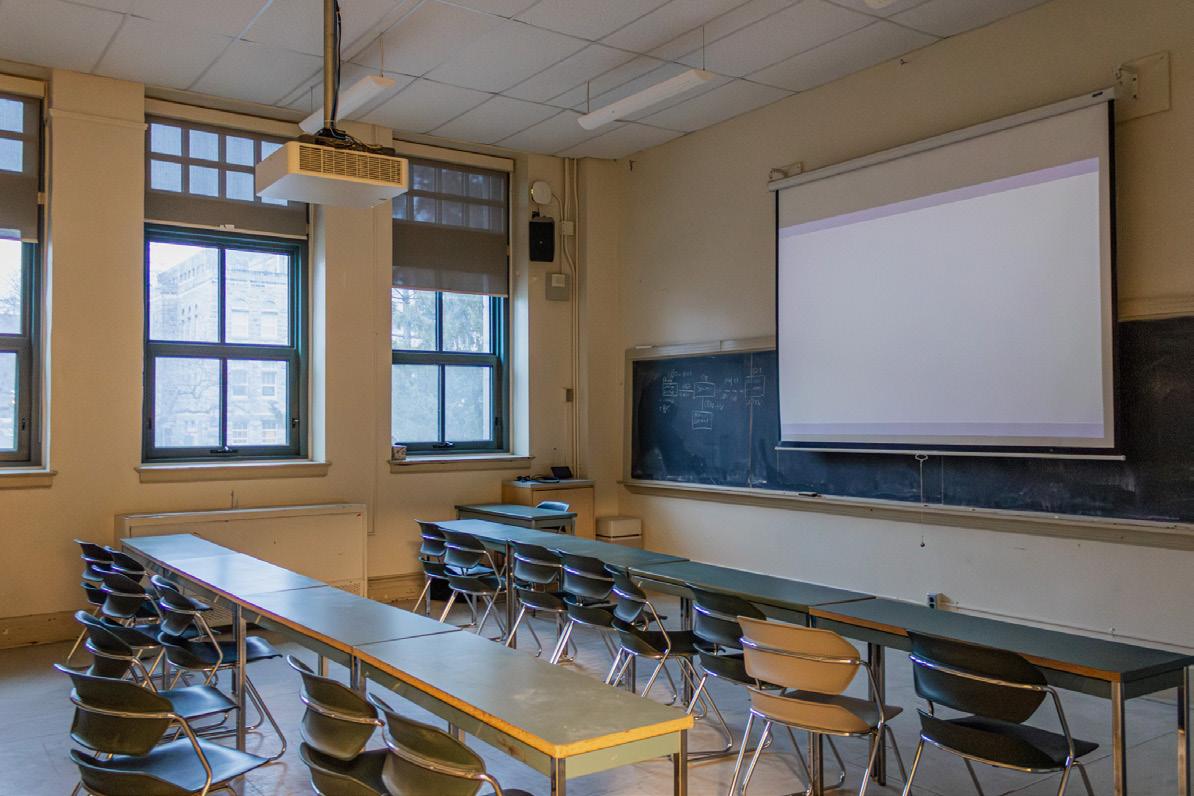
Eve refutes who is solely responsible for over-consumption.
Scientists are investigating how Ozempic could affect cancer biology
As Ozempic and other drugs go mainstream, researchers are studying
Katarina KrivoKapic Business, Science, & Technology Editor
A class of drugs best known for shrinking waistlines and taking over social media is now attracting interest in oncology labs.
GLP-1 receptor agonists such as Ozempic and Wegovy were developed to treat Type 2 diabetes, a chronic metabolic condition in which the body becomes resistant to insulin, leading to elevated blood sugar levels. Their ability to induce sustained weight loss has since pushed them into the medical and cultural mainstream. As use has increased—with a recent Dalhousie University study estimating that roughly 10 per cent of Canadian adults now take a GLP-1 drug—researchers have begun examining whether these medications might also affect cancer, one of the leading causes of death worldwide. Early findings suggest potential benefits for certain cancers, though evidence remains limited.
The scientific interest isn’t a coincidence. Obesity is a major, modifiable risk factor for many cancers, including those of the breast, colon, endometrium, liver, and pancreas. Excess adipose (fat) tissue contributes to chronic inflammation, insulin resistance, and hormonal changes that can promote tumour development.
Because GLP-1 drugs reduce body weight and improve
metabolic health, researchers have hypothesized that they could indirectly lower cancer risk.
Large observational studies are beginning to explore that possibility. In an analysis of more than 1.6 million adults with Type 2 diabetes, with an average age of 59.8, GLP-1 use was associated with a significantly lower risk of 10 out of 13 obesity-related cancers compared with insulin therapy.
Another study of adults with obesity found that GLP-1 use was associated with a lower overall risk of cancer, with the strongest links observed for endometrial, ovarian, and meningioma cancers, which affect the membranes surrounding the brain. That study also noted a small, statistically nonsignificant increase in kidney cancer risk.
Not all research has found protective effects. A review of randomized controlled trials published last year concluded that GLP-1 drugs may have little or no effect on the risk of several common obesity-associated cancers, including breast, colorectal, and pancreatic cancer. These findings suggest the drugs aren’t broadly protective across all cancers but may offer benefits in specific cases.
Evidence is more consistent when it comes to cancer outcomes rather than cancer prevention.
Among adults with cancer and Type 2 diabetes aged 66 or older, GLP-1 use has been linked to lower overall mortality. In colon cancer, an observational study found that
patients taking GLP-1 drugs had substantially lower five-year death rates than non-users, even after adjusting for disease severity and other health factors. The survival benefit appeared strongest among patients with obesity.
The drugs’ effects are likely due to multiple mechanisms.
According to a 2025 study, GLP-1 drugs may reduce systemic inflammation and improve insulin sensitivity, both of which are associated with cancer progression.
Some early laboratory studies also suggest the medications may affect cancer cells directly. At the Harvard Universityaffiliated
their links to cancer
Dana-Farber Cancer Institute in Boston, preliminary research indicates that administering GLP-1 to liposarcoma
tumour cells may have an impact how the disease develops. Continued online at www.queensjounal.ca
‘It
Final Stretch: Woman’S hockey
doesn’t matter what you do in the regular season, it’s
what you do in the playoffs,’ says head coach
Noah Cyr Senior Sports Editor
For many teams, they could be said to be in the final stretch of their season.
This week, The Journal continues its Final Stretch segment, highlighting Queen’s varsity teams as their regular season winds down and the playoffs emerge. In the second iteration, The Journal sat down with Women’s hockey Head Coach Morgan McHaffie to talk about their season thus far but also list expectations of what’s to come.
The Gaels have come out the gates on a mission in the first half of the season going 13-2, putting the OUA and USports on notice. Sitting comfortably at the top of the OUA East, despite a couple games dropped early in the second half.
McHaffie’s really happy and proud of the first half her athletes have put together.
“After the adversity we faced last year, we set out more specific goals for ourselves that we’ve really bought into” said McHaffie. Contributing to the success is also the good mix of rookies and veterans that have made created an identity for their team. “Our leadership has really stepped up this year,”
The Gaels remain undefeated and improve their record to 15-0 at home
Itay Moshkovich Contributor
Poise, finesse, and discipline make for a potent recipe for winning.
Following the Gaels’ victory against the Guelph Griffins on Jan. 16 the team hosted the York Lions on Jan. 17 and took care of business. With this decisive win, the Gaels remain perfect, and it’s no surprise with the way they’ve been playing on the court.
The Gaels played a very poised and collected game, relying on physicality and discipline to come out on top. With a 78-34 win over the Lions, the Gaels press onwards as their hot streak continues.
In the first half, the Gaels and Lions remained relatively close, with a score of 33-22 for the Gaels. Then in the second half, the Gaels simply exploded, putting up 43 points. One of the
which has been a major key in setting the tone.
A pivotal aspect from the Gaels is their ability to score in difference ways, whether it’s off the rush, in the blue paint, it seems like they’re going in more.
McHaffie has emphasized in practice the importance of small details and habits that include stopping at the net and grinding for loose pucks but also to be patient and have some finesse in the offensive zone. “I wanted us to be more creative,” was a theme built into practices that has paid dividends so far.
The overall personality of this team mentioned by McHaffie is work ethic. “Every game I’m just so proud of their effort every game,” said McHaffie. This has allowed them to be in every game they’ve played and to be a resilient team.
A trait that bids well for a team poised for a playoff run.
Looking ahead, the Gaels play five of seven games at home before the start of the playoffs, something that’s exciting for the coaching staff. McHaffie explained how confident they are coming into home games and being in their own space. “I know the girls really love to play at home, so it certainly makes a difference,” she said.
With the Gaels in a comfortable playoff position, the importance in the final stretch is going to be staying healthy and managing the workload according to McHaffie. They’ll look to continue to build at home against the Carleton Ravens in front of 2000 local Kingston students on Jan. 23 at 11:00 a.m.
game’s standout players, Brooke Hussey, Kin ’28, put up 19 points and a season high of 4 three pointers made, all while shooting 66 per cent from the field.
Men’s Basketball offence shines at home
Gaels secure two much needed wins as OUA playoff race remains tight
Noah Cyr & Itay Moshkovich Journal Staff
The Queen’s men’s basketball had a truly dominant performance to cap off their weekend at home
On Jan. 23 and 24, the Gaels hosted the Guelph Gryphons and the York Lions, respectively. Friday night at the ARC didn’t start the way the Gaels wanted in the first half, struggling to score and being down as much as 13. However, coming out of halftime the Gaels were on a scoring mission including three big 3’s that gave them the lead late in the third quarter.
The relentless pressure of the Gryphons didn’t stop in the fourth quarter as Queens held Guelph to just 10 points solidifying a 94-72 victory. Ollie Engren, Kin ’29, had a game high 22 points in the win, contributing to him being recognized as one of the Queens Gael’s athletes of the week.
On Saturday night, the Gaels games against the York Lions started strong, and came out on top thanks to a commanding performance. Putting heavy pressure on the opposition allowed the Gaels to outscore their opponents and hold onto their lead throughout the game.
more defensive game as the pressure was turned on them. Even with the added pressure from the opposition, the Gaels
squad built to win.

Although the offensive performance was undeniably brilliant, the pace softened towards the second half, and the Gaels had to play a much
MSc ’26, and Bella Gaudet, Comm ’25, played an exceptional game, as both athletes continue their impressive seasons. Letlow had her fourth straight double-double, putting
Emre Fisk, Comm ’29, who put up 10 points while also boasting an impressive eight defensive rebounds. With this sort of depth and offensive dominance, it’s clear that the Gaels are a
rebounds to her USports record. Gaudet excelled as well, putting up season highs with five steals and six assists.
In an interview with The Journal, Women’s Basketball Head
Women’s Basketball keeps the good times rolling
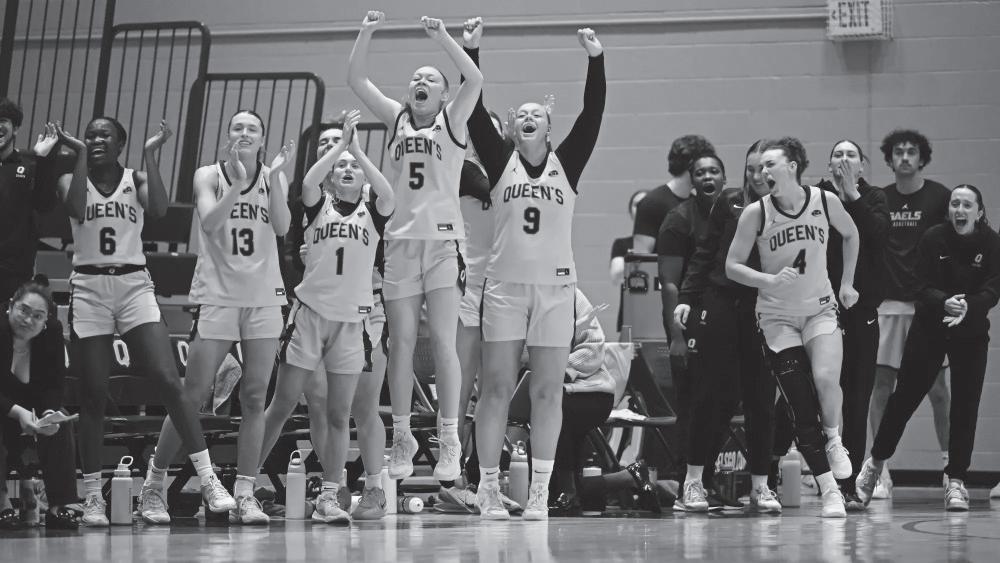
up 17 while also adding 13
In an interview with The Journal, Men’s Basketball Head Coach Stephan Barrie momentum going into next weekend’s fixtures. The Gaels will host Algoma University on Friday, Jan. 23, and will then head over to Brock University to face the Badgers on the 24th.
reflected on what factors she believes contributed to the team’s success. “I think it’s our versatility and depth,” said Meadows, “we are fighting some injuries right now, but because of our depth, we’re able to play through it, and it’s really a next person up mentality”.
With players like Sarah Reid, Kin ’29, you see this depth come into action. As a first-year player, she rose to the occasion and played a very good game.
Coach Meadows commented on Reid’s night, “She was asked to play three different positions tonight as a first-year. It’s been unbelievably impressive what she’s been able to do for us”.
With this win, the Gaels are now in first in the USports rankings in this so-far perfect season. The Gaels will face Algoma University at home on Jan. 23, and will then head to St. Catharines, where they will face the Brock Badgers on Jan. 24.
Players like Kiyara Letlow,
Coach Claire Meadows
PHOTO SUPPLIED BY ATHLETICS & RECREATION
PHOTO SUPPLIED BY ATHLETICS & RECREATION
Kiyara Letlow named Player of the Week.





HOROSCOPES



Horoscopes: Your forecast warms up even as temperatures plummet
Things to keep in mind as 2026 progresses to make this the best year ever
THE PSYCHIC SCHOLAR
Baby, it’s cold outside… but these horoscopes are smokin’ hot.

The "turf" part of "surf and turf"
Rephrase
Kiev's land: Abbr.
Video game figure with scripted behavior (Abbr.) 20 Mine, in Marseilles
2013 Heist thriller, or a phonetic hint to 17-, 27-, 48across
Matrix protagonist
On ___ (without advance planning)
Center of Florida?
Gallery display
**Gloria Estefan or Marco Rubio, for example** 32 Supplementary medical benefit: Abbr.
Sagittarius (Nov. 22 – Dec. 21)
It’s time to identify which of your relationships needs a little boost and pull that person aside for some solid one-on-one time. You’re someone on the go, but pausing and making space to bond with an important loved one will give that relationship a much needed reset this winter.





Aries (March 21 – April 19)
You’ll balance a new sensitivity at home with furthering your career ambitions this week, Aries. Get ready to tackle some big responsibilities at work, but don’t let them distract you from the personal work you’re doing, healing old wounds from last year and refreshing emotionally for the year ahead.

Gemini (May 21 – June 20)
You will be caught between

Libra (Sept. 23 – Oct. 22)
You’re overdue for a glamorous vacation. With Reading Week just a month away, now is the time to book that (budget) getaway you’ve been dreaming about. If funds are tight, there’s always beautiful Wolfe Island, though you may have to walk across the lake to get there!




Virgo (Aug. 23 – Sept. 22)
Don’t let your work life totally consume you this winter and spring. If you haven’t yet found a balance, now is the time! Especially since you hustling Virgos probably already have your summer plans all lined up. Enjoy a slower start to the year and focus on extracurricular passions that make you happy.
Pisces (Feb. 19 – March 20)
2025 may not have treated you right, but 2026 will be your year. Stay strong in your New Year’s resolutions to ensure a solid start to the semester. You may be tempted to hit snooze and skip class, the gym, or other commitments, but your end-of-year self will thank you for staying consistent!
Capricorn (Dec. 22 – Jan. 19)
This weekend will bring one of your worst mornings of anxiety ever following a busy night. Keep calm and plan by taking lots of pictures to document what you get up to, and by keeping a tall glass of water on your nightstand. Get ready for the debrief of a lifetime with your roommates! After all, it’s only the first week back from Winter Break.
Scorpio (Oct. 23 – Nov. 21)
A mysterious figure will enter your life and immediately get close with you in the next few weeks. Don’t trust them until you’ve worked out what lesson they’re meant to teach you. Are they a mirror of your worst traits? Or are they a role model to help you become your best self this new year?
Aquarius (Jan. 20 – Feb 18)
This will be a very freeing week, Aquarius. A strong start to the semester will have you feeling good going into the rest of the month. Enjoy expressing your authentic self and count your blessings—good times like this don’t come often enough!
Leo (July 23 – Aug. 22)
Avoid getting caught up in your strongest Leo tendencies and over-analyzing your own image this week. Shrug off other people’s eyes and reconnect with the goofier, more authentic parts of yourself. You might have fun!
Taurus (April 20-May 20)
Knuckle down and create a solid budget for the first few months of this year. You’re going to experience a boom in your social life—an influx of invitations, follow requests, and friendly faces around campus. This means more parties, coffee-catchups, and shopping trips downtown! Save up now so you can finance your new adventures.
Cancer (June 21 – July 22)
You’re long overdue for a cozy night in with your friends. You may feel certain relationships faltering or becoming stagnant and shouldn’t fear leaving them behind in 2025. Instead, gather your closest crew and plan a meaningful night of activities and conversations to renew bonds for the new year.
CROSSWORD BY BLAKE GILL
ARTS & CULTURE

Artist Impact Movement Kingston rocks the runway at Stages
A
Marijka Vernooy Senior Arts & Culture Editor
Last Tuesday, Stages Nightclub was transformed into your coolest friend’s Pinterest homepage.
On Jan. 20, Artist Impact Movement (AIM) Kingston took over Stages for their second annual Impact Show, presenting an array of local designers and vendors to Kingston’s creative community. As the DJ spun upbeat tracks and models of all ages flaunted creative designs on the runway, AIM was definitely the hottest place to be on a cold January night.
This year’s show was a whirlwind. Originally scheduled for Nov. 25, AIM had to push the event due to a double booking error on Stages’ behalf. After being notified of the conflict just a week before the show, the executive team
struggled to choose a new date before pushing the Impact Show to January.
“I think it was better than it would have been,” Creative Director Abigail Rossman, ArtSci ’26, said in an interview with The Journal. With more time, the executive team was able to incorporate more designers and vendors into the show. “We’re so grateful to everyone who had been a part of [the show] originally who was able to be a part of it still,” she said, noting some team members weren’t able to make the January show due to studying abroad or other conflicts.
Leading the show for its second year in Kingston, Rossman and Director Allie Taylor, ArtSci ’26, approached AIM with confidence. “Of course, there were stressful situations,
but we were better at adapting, better at communicating with people, and [had] more of a grasp on the whole event,” Taylor said in an interview with The Journal.
The night kicked off around 9:40 p.m. with speeches from AIM’s executive team, recognizing the Canadian Cholangiocarcinoma Collaborative and The Benji Impact as this year’s charities. Executives also recognized AIM Montreal, from which the Kingston chapter extends, for establishing the first Impact Fashion Shows.
Taylor and Rossman turned things over to designer Irimé for the first collection, where models strutted out in a variety of outfits to Michael Jackson’s “Thriller.” Highlights from this scene included chainmail armour made from
soda can tabs, and the designer’s grandmother modeling a wedding dress and veil. Designer Taylor Pontet-DaSilva, ConEd ’26, took the runway with her collection immediately after, featuring a dreamy arrangement of comfy crochet patterns.
Designer Charlotte Schecter, ArtSci ’29, struck a bold chord next with plenty of denim, patchwork, dark colours, and chunky shows. The fourth collection from designer Zayah Kraftcheck, ArtSci ’26, was a playful follow-up full of off-the-shoulder halter tops sewn from pastel fabrics, and ruffled skirts.
The enthusiastic audience seemed to grow louder each set, calling out the names of housemates-turned-models and classmates-turned-designers. The room felt comfortable, packed with the very best of
Kingston’s indie scene gathered to inspire, and be inspired by, one another.
Last year, Taylor and Rossman recalled having to “haggle” their friends to attend the Impact Show, still in its infancy in Kingston. This year, things were different. “We didn’t have to haggle anyone to come, you know? The people were just there,” Rossman said.
“This year, what I thought was so beautiful was that I only recognized a fifth of the people in that room,” Taylor said. “And that’s exactly what we want AIM to be: inviting more people into these spaces, creating a networking environment among creatives.”
Continued online at www.queensjournal.ca
Now that bold makeup, 2016 music, and grainy photos are back, it might be time to re-download Pokémon
Veer Bhalla
Assistant Arts & Culture Editor
Even though 2026 just began, 2016 seems to be the year everyone wants to be in.
The phrase “2016 is the new 2026” has felt unavoidable since New Year’s Day 2026; cemented through celebrities posting 2016 throwbacks, 2016 influencers feeding into the trend, and music from 2016 charting globally. Even though most people participating in this trend online wouldn’t have even been teenagers in 2016,
they’re revisiting it through media, music, and art from the time; Zara Larsson’s “Lush Life” re-entered the Billboard Hot 100, 10 years after the song debuted. The Journal covered 2016 pop culture extensively; with articles ranging from the juicing health trend to a comparison between Donald Trump and rotting groceries. Given the trend, it’s worth taking a trip down memory lane to explore The Journal’s 2016 Arts & Culture stories.
Some things seemed to have stayed at Queen’s; like the stereotype that all arts majors

are lazy, an ideology rooted in hustle culture which values monetary productivity over creativity. Alternatively, some remain capsules of their time, like this article on students growing their own cannabis for medicinal purposes—two years before cannabis consumption was legalized in Canada. I guess we really were ahead of our time.
The way these articles have aged; some still relevant, some not; reflects how unpredictable
the past decade has been for the world. Stereotypes around arts students are slowly starting to fade due to the decline of hustle cultre, and countries around the world have changed their perspectives on the use of Cannabis for both medical and personal use.
The “clean girl” of the 2020s would cringe out at some of the winter beauty trends of the time, like dark lipstick, graphic liners, and this quick morning after routine. But maybe
these tips will be helpful now that the clean girl is out, and these trends are finding their way out from the crypt.
Another common thread between 2026 and 2016 Journal Archives was the questioning of celebrity feminism; then for its lack of inclusivity and impact, now for how it often feels exploitative and performative.
Originally scheduled for Nov. 25, this year’s Impact Show took place Jan. 20.
PHOTO BY CLAIRE BAK
GRAPHIC BY CLAIRE BAK
‘Sweet Dreams’ explores the soft side of memory at Modern Fuel
Through sculpture, textiles, and projection, Tonya Corkey examines how memories linger
Daniel Gill
Assistant Arts & Culture Editor
Some memories fade; “Sweet Dreams” refuses to.
Running from Jan. 17 to March 21, Kingston-based artist Tonya Corkey’s exhibition “Sweet Dreams” fills Modern Fuel’s main gallery with sculptural, textile, and projected works examining the complex relationship between memory, thought, and vulnerability.
Upon entry, the exhibition feels immediately and bleakly intimate. Although the main gallery is large, it’s sparsely occupied. A double bed sits alone at the centre of the room. From there, attention is drawn outward to the walls, where sculptures and tapestries hang around the perimeter of the space. The walls are painted a dark bluish grey called eigengrau, a colour often described as the shade seen when people close their eyes.
Composed of several individual works, the exhibition’s focal point is the eponymous “Sweet Dreams,” a large installation featuring a double bed covered
with a quilt and a video projected onto the headboard. The video depicts a stop-motion animation of bats chasing and eating moths across the surface of the quilt, an image Corkey uses to represent the way certain thoughts swirl through the mind at night.
“Your bedroom is meant to be a place of comfort,” Corkey said in an interview with The Journal. “But you can also have feelings of vulnerability and betrayal there from memory.”
For Corkey, bats and moths carry symbolic weight and recur throughout the exhibition. She described moths as “soft, delicate, docile” and bats as “predatory, stealthy, quiet, but quick.” Both widely recognized as nocturnal creatures, they create a visual metaphor, with moths representing nostalgic memories while bats signify intrusive nighttime thoughts.
A distinctive element of “Sweet Dreams” is its central material: lint. Over more than a decade, Corkey has collected lint from her own laundry, from friends and family, and from people who contacted her
after encountering her work. The material is used to construct sculptures and tapestries suspended throughout the gallery.
“Lint actually carries people in it. It carries our daily lives. It carries a metaphor itself for memories and time passing and collecting,” Corkey said.
Corkey first began working
with lint while experimenting with media during her undergraduate studies. She found it allowed her to do things she couldn’t achieve with wool, paint, or charcoal, opening unexpected expressive possibilities.
In “Sweet Dreams,” lint appears both in raw felted form depicting brightly coloured moths sewn onto hanging tapestries and in sculptural works, where it has been cast over clay busts into the likenesses of bats mounted throughout the space.
Rather than offering a single narrative, the exhibition invites multiple readings. Corkey said
her work has shifted over time from a focus on nostalgia and the desire to preserve certain memories toward engaging with forgetting and what it means to let go of memories.
“What happens when we no longer wish to access certain memories?” Corkey said. “Because not all of the memories that we hold we want to hang on to.”
Though Corkey asks her audience to consider which memories are and aren’t worth holding onto, experiencing “Sweet Dreams” is one memory I won’t soon forget.
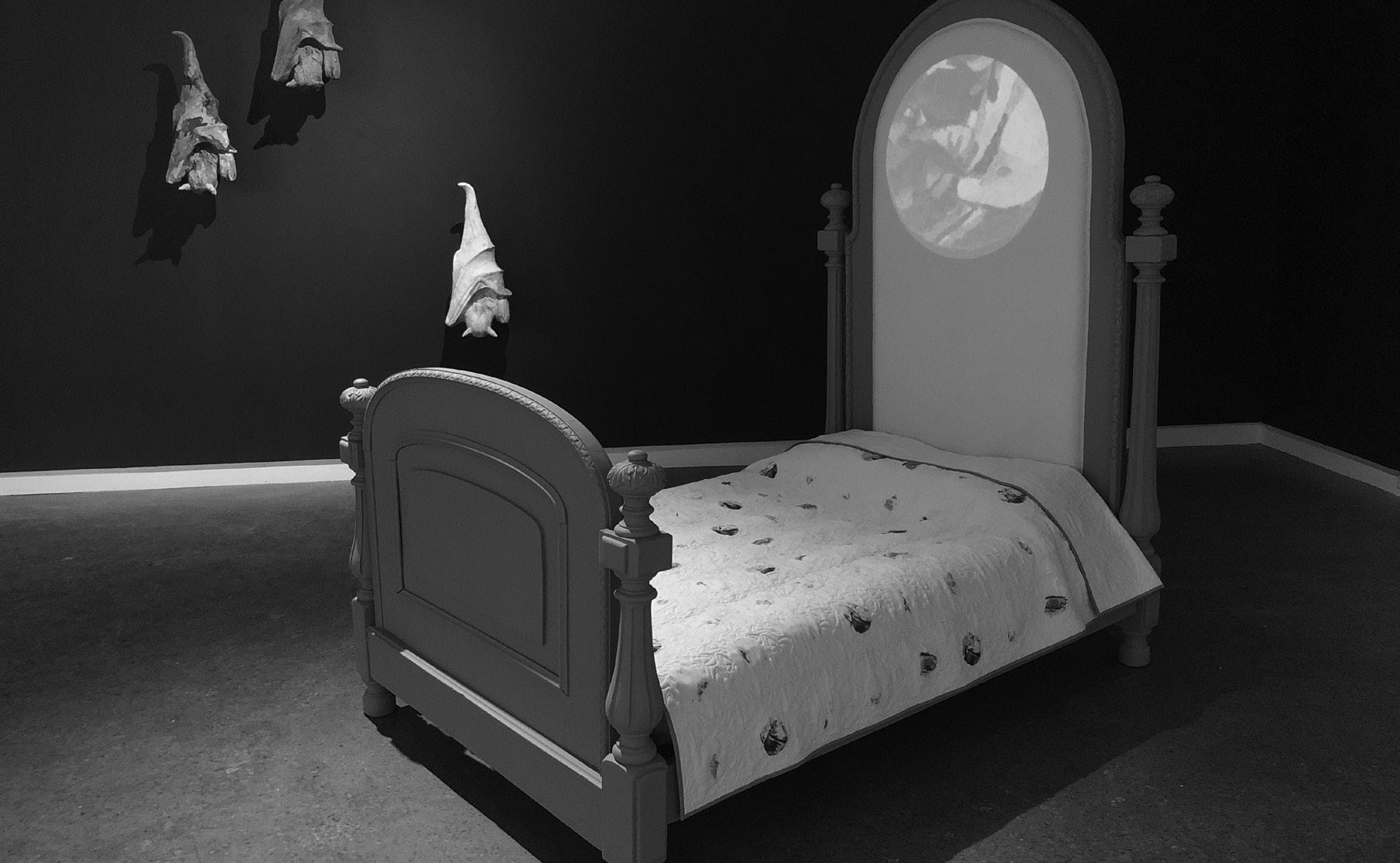
In an era of drug-assisted weight loss, body positivity takes on a new meaning
Weight loss drugs are as popular as ever, and
so is the idea
of the ‘perfect
Sophia Lee
Contributor
In recent years, relatively newfound weight loss drugs have become increasingly cosmetically used, and the number of celebrities using these drugs may be perpetuating its popularity.
From 2020 to 2023, the number of 12-to-17 year olds using GLP-1 RAs (a class of weight loss injection) increased by 588 per cent for females and 504 per cent for males. This rise could be explained by an increasing comfortability in expressing drug use for weight loss by many celebrity and influencer personalities. Although originally intended as treatments for health problems such as Type 2 diabetes or obesity, instead they seem to be promoting the idea of an unattainable ‘perfect body’.
Common weight loss drugs and injections include Ozempic, Wegovy, Zepbound, and Mounjaro, which are all commercially available. As time has progressed since their release, these drugs have proven effective for many as an easy and efficient cosmetic weight loss method. Accordingly, a multitude of celebrities have come out as undergoing drug-assisted weight loss, namely Oprah Winfrey,
body’
Chrissy Teigen, Serena Williams, Lizzo, and James Corden.
A shift is occurring in the world of body image, with drug-assisted weight loss being an appealing, yet unnatural, method for many individuals to get slimmer.
Undoubtedly, body image is a sensitive topic for many, and some individuals may have valid
personality, explained her difficult transition to Ozempic following a miscarriage after 15 weeks of carrying her baby, Jack. Teigen described the hardships of dealing with her weight gain acting as a reminder of the loss of her child, saying, “there I was, existing in a body that didn’t feel like mine, with absolutely nothing to
wellness, celebrities stand in a unique position where their lifestyles inform the popular decisions of the public, and a misuse or unnecessary use of weight-loss drugs from those with a large public following should be addressed.
Although the rise of drug-assisted weight loss in media may make the method appealing to viewers, there are some important side effects to be

reasons for utilizing commercial drugs to lose weight.
For instance, Chrissy Teigen, American model and TV
celebrate.”
Despite this valid expression of one’s association between body image and their mental
considered. In particular, if effective, an individual will likely have to stay on these drugs for the rest of their lives,
which can have heavy financial implications as injections cost around $12,000 a year in the U.S.
Moreover, if one decides to stop use, the weight that was lost is often gained back quickly. Additionally, increasing popularity of these weight-loss drugs has led to shortages for those who truly need them, potentially putting others’ lives at risk, and for users themselves, although rare, adverse health complications, including pancreatitis, vision problems, and gastrointestinal issues, can arise.
While the decision is up to each individual on what to do with their body, it must be considered that the advent of increased drug-assisted weight loss is altering the meaning of body positivity by creating the idea of a ‘perfect body’. American actress, Ashley Tisdale, expanded on this, saying: “The 2010s brought body positivity, and now it’s like we’re back to chasing ultra-slim everything. We keep moving the goalposts and it’s exhausting.”
Celebrities and their lifestyles undeniably have influence over the decisions that one may make, however it is important to not hold these people and their decisions on a pedestal. Unnatural methods of weight loss can come with serious implications, and it is important to understand that the public has the power to control and take back the narrative of body positivity.
All in all, celebrity action, while enticing, doesn’t have to create the narrative that a healthy body is a slim one.
A large bed and quilt anchor Tonya Corkey’s ‘Sweet Dreams’ at Modern Fuel.
PHOTO BY DANIEL GILL
Wegovy, Zepbound, and Ozempic are common GLP-1 drugs.
GRAPHIC BY CLAIRE BAK
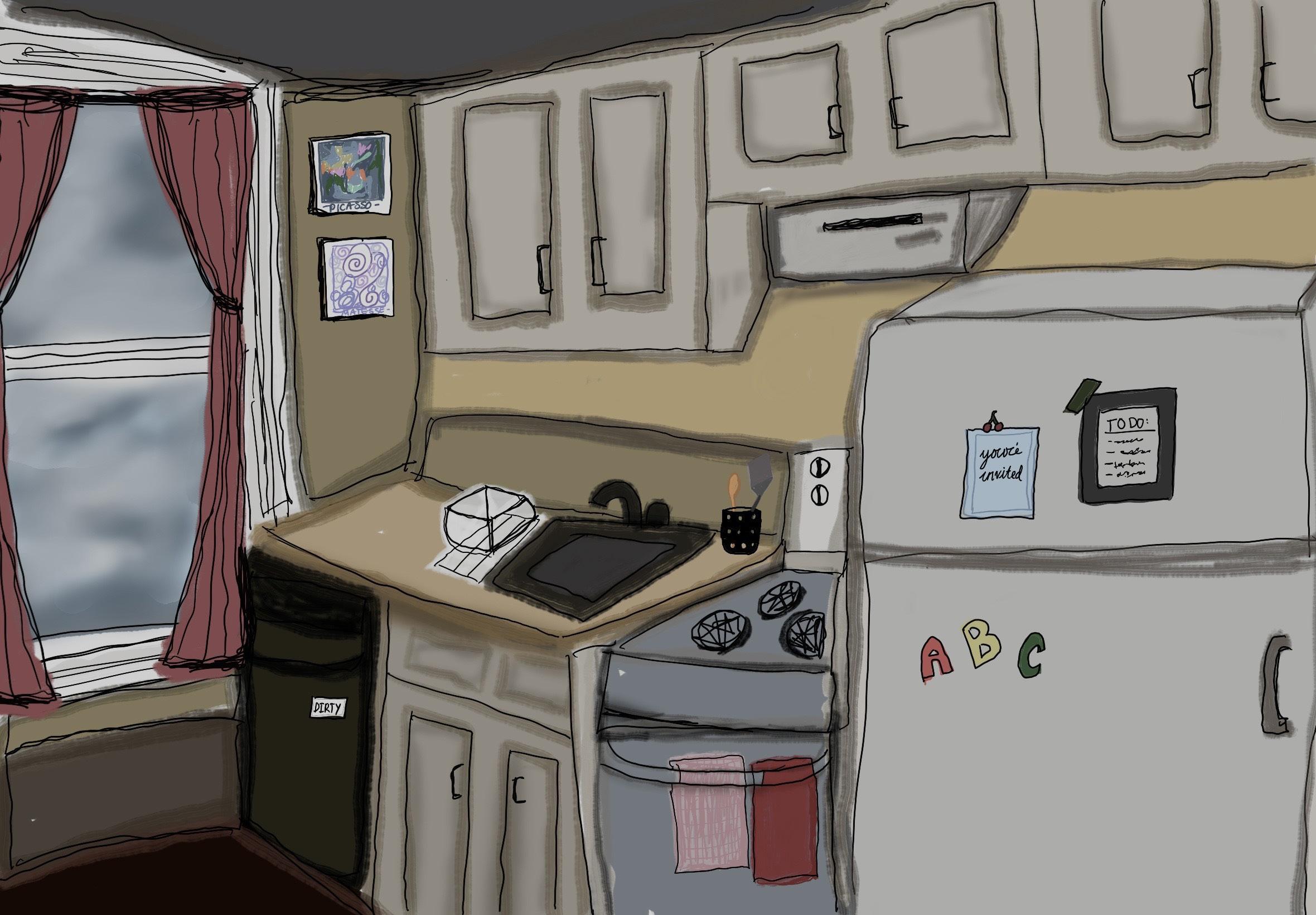
The lessons I’ve learned from an impossibly tiny kitchen
Leaning into the absurdity that brought my housemates and I closer than ever
Yael Rusonik Assistant News Editor
If you’re a first-year student getting ready to move into an off-campus house, you’re probably hoping for a kitchen that’s functional. Well, I got a kitchen that isn’t—and three years later, it’s the best thing that ever happened to me.
It was in my tiny excuse of a kitchen where I first learned my housemate, Jadyn, refuses to speak for thirty minutes after she first wakes up. I only learned this in my third year living with her, as typically, by the time I’m awake, she has been busy for hours—having already made breakfast and gone to the gym.
“Well, I got a kitchen that isn’t—and three years later, it’s the best thing that ever happened to me.
By the time I finally enter our cramped little kitchen, she’s already cooking lunch and greets me with a sarcastic “good morning.”
In a remarkable coincidence, my other three housemates then come barreling in all at once, filling the kitchen until our shoulders are touching and the stove becomes invisible
under a cluster of pots and pans. Whether this kitchen chaos results in laughter or tension is entirely dependent on who was eliminated on the reality competition show we watched the night before.
Soon after, someone opens the mini-fridge and comes to the realization that Elle has forgetfully bought another carton of eggs, bringing our total egg supply to six cartons. I joke that we’re well-stocked to egg a house, which then turns into an unrelated and unnecessarily passionate debate over which ex-boyfriend or failed friendship is most deserving.
“Whether this kitchen chaos results in laughter or tension is entirely dependent on who was eliminated on the reality competition show we watched the night before.
Eventually, Sami realizes that, in the heat of it all, she has allowed the latest attempt to replicate her Nonna’s gnocchi to burn, and we all join in on desperately fanning the smoke to avoid another false fire alarm fiasco.
Over the years, dinner has tended to be more peaceful. We usually cook at different times, except for Sunday nights, when there is often an intentional effort to have some sort of family meal. We all rush to claim a seat on the couch, as whoever arrives last is forced to
sit on the floor, filled with regrets of having auctioned off our table in order to buy more posters and string lights.
On such nights, it would likely make sense to have one person cook for all five of us, but nothing in our kitchen makes sense—and I think we all secretly prefer the chaos.
After the evening rush, the kitchen typically remains quiet, with the exception of the toaster, as a buttered bagel is considered a midnight delicacy in our house. This calm, however, is quickly shattered on Friday nights, during which the kitchen acts as one of those sleazy back rooms you see at clubs, the ones in which all the girls seem a little too drunk. Carey yells out a promise that she’ll be “so-o-o-o fine” as she opens yet another cooler.
We all know that she isn’t going to be fine, but the same could be said about any of us. Regardless, we’re all equally excited to take part in the blaze of glory that will indubitably end with a thousand and one unclaimed cups in the kitchen sink.
“On such nights, it would likely make sense to have one person cook for all five of us, but nothing in our kitchen makes sense
Over the past three years, my housemates often suggested moving. They’ve had dreams of finding a kitchen with more counter space, or maybe even a functioning, normal-sized fridge. They lamented having
to regularly check the mouse trap behind the microwave and took little joy in the constant discovery of concealed mold in the crevices of our cabinets.
This wasn’t helped by our landlord raising our rent, oblivious to any ethical dilemmas in charging students more than a grand for a half-broken stove.
To me, however, our kitchen is perfect. It’s where our mismatched schedules finally collide, even if it’s only for a brief moment.
It’s where we’ve haphazardly iced a thousand birthday cakes, mixed enough barely-drinkable cocktails to sink a ship, and once decorated our floor with a mountain of bubbles—leading to the infamous realization that dish soap and dishwasher detergent are not in fact interchangeable.
“It’s where our mismatched schedules finally collide, even if it’s only for a brief moment.
Most vividly, it’s where I was first brought to tears by the overwhelming love I have for the women in my life.
So, here’s the deal first-years; no matter what you’re paying for your student house, I can almost guarantee that you’ll have your own “tiny kitchen.” This is student housing in Kingston, after all. It may take the form of a cramped living room, a packed mudroom, or even an unfinished basement. But wherever the space and whatever the problem, my message remains the same:
lean into the absurd.
I’m not saying you shouldn’t demand better from your landlord when a problem is fixable; you have to advocate for yourself whenever possible.
“But wherever the space and whatever the problem, my message remains the same: lean into the absurd.
But for those unfixable problems—thin walls that simply can’t be made thicker, or an oversized table that you brought up the stairs and now can’t bring back down—don’t let them ruin your day. It’s nice to wake up to the sound of your housemates giggling, and one day that table might help you host a great Friendsgiving dinner.
Living with four other twenty-year-olds can be a tricky minefield to navigate, but if you try to let the struggles of it bring you together, rather than tear you apart, you’re off to a good start.
Want to write a postscript? E-mail journal_postscript@ams.queensu.ca
Yael reflects on the sordid memories that come with her tiny kitchen.
ILLUSTRATION BY JULIA LUDDEN