QIO

Dear Reader,

Welcome to the pages of QIO Volume 10 Issue 2: “Livin’ on the Edge”. e QIO crew is excited to present to you an alternative view to international a airs that has not been approached previously in the history of the publication. is issue will examine the relationship between the marginal and the ‘mainstream,’ how these structures were created, and how they engage with each other in a variety of contexts.
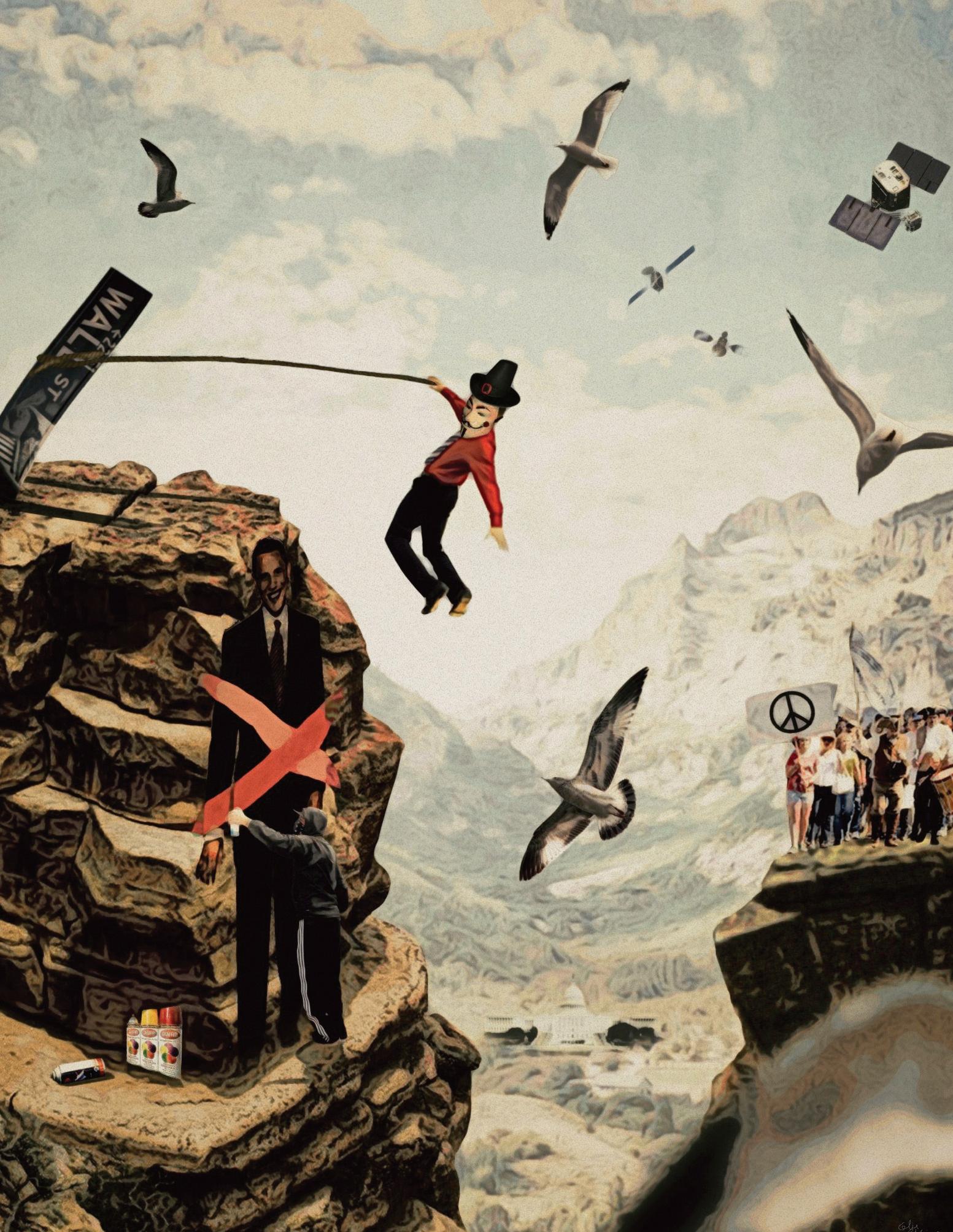
Colin Sinclair, a local Kingston artist, created the front cover exclusively for QIO with the intention of displaying marginalized groups, policies, and movements across the global arena in a satirical fashion. QIO’s art columnist Claire Pierce explores the contentious state of luxury brands in various emerging markets. Our Debate Column goes head-to-head on the issue of the controversial hacktivist group “Anonymous,” and the role of Internet activism in maintaining government accountability. My article investigates the recent legalization of recreational marijuana in Colorado in opposition to its status as a serious federal crime in the United States. Erica McLachlan delivers a nuanced perspective on Germany’s decision to introduce a third, non-speci ed gender on birth certi cates to combat the gender-normalizing surgeries performed on intersex infants. Deborah Chu analyzes the marginalization of the Romani peoples throughout the European Union, and the recent upsurge in anti-Romani sentiment across Western Europe. Conor Tomalty looks into the world of e-Sports and the use of video games in creating international connections. Jessica Nicksy and Elise Ho man, two members from Queen’s Engineers Without Borders, examine whether CIDA’s development interests will be marginalized in light of Canada’s trade-driven interests.
In “Livin’ on the Edge,” we hope to provide you with a better understanding of the relationship between dominant and oppressed groups, the hegemonic and the marginal, and the various policies and tensions that arise as a result.
Happy reading,
Morgan Tomalty, Editor-in-Chief Vol. 10
Deborah Chu and Alexander McGurk, Assistant Editors Vol. 10
Aaron Gifford - Staff Writer
Claire Pierce - Staff Writer
Jacqui Palef - Marketing
QIO is the Queen's International Observer, a quartlerly student magazine published by the Queen's International A airs Association. e magazine focuses on international news, politics, art, and technology.
Want to submit a piece to QIO? Email your 600-900 word piece to contact@queensobserver.org by midnight of February 5th. All submissions from all faculties and departments are welcome!
by Erica McLachlan
On November 1, 2013, Germany followed Australia’s lead to become the rst European country to introduce a third, non-speci ed option for “gender” classi cation on their birth certi cates. is policy is aimed at intersex infants born with sexual anatomy that does not t the traditional de nition of “male” or “female,” exhibiting natural biological and chromosomal variation along the sex spectrum. A report published in 2012 by Germany’s national Ethics Council, maintained that “Intersex people should be recognized, supported and protected from discrimination” and provided the impetus for the government to pass this legislation.
e change in policy aims to end the traumatizing and medically unnecessary “corrective” surgeries performed on newborns. It should allow parents of intersex babies to leave the gender designation on their child’s birth certi cate blank rather than forcing them to assign their child an identity for registration with the authorities (if the doctors consult them at all). Although this legislation has helped to increase the public’s awareness of the harmful “normalizing” surgeries that intersex children are subject to, it will not prohibit doctors from performing the operations.
e German government’s decision followed the United Nations “Report of the Special Rapporteur on torture and other cruel, inhuman or degrading treatment or punishment,” which criticized the non-consensual, medically unnecessary and genital-normalizing surgeries:
Children who are born with atypical sex characteristics are often subject to irreversible sex assignment, involuntary sterilization, involuntary genital normalizing surgery, performed without their informed consent, or that of their parents, “in an attempt to x their sex,” leaving them with permanent, irreversible infertility and causing severe mental su ering… ese procedures are rarely medically necessary, can cause scarring, loss of sexual sensation, pain, incontinence and lifelong depression and have also been criticized as being unscienti c, potentially harmful and contributing to stigma.
ese surgeries often attempt to alter the individual’s genitalia to resemble the “norm,” either male or female, as closely as possible. According to the BBC, one individual who was subjected to this surgery at a young age later said that: “I am neither a man nor a woman. I will remain the patchwork created by doctors, bruised and scarred.” Although some individuals may choose to undergo surgery later in life, society’s understanding of the sexed body makes it nearly impossible for those who prefer to identify as neither male nor female to do so.
e UN report condemned such surgeries, calling on member states to “repeal any law allowing intrusive and irreversible treatments, including forced genital-normalizing surgery…when enforced or administered without the free and informed consent of the person concerned.” e Council of Europe (COE) similarly
condemned “early childhood medical interventions in the case of intersex children” in Resolution 1952 (2013), pointing out that “supporters of the procedures tend to present [the surgeries] as bene cial to the children themselves despite clear evidence to the contrary.” e COE stated that it is important to “ensure that noone is subjected to unnecessary medical or surgical treatment that is cosmetic rather than vital for health during infancy or childhood, guarantee bodily integrity, autonomy and self-determination to persons concerned, and provide families with intersex children with adequate counseling and support.” Again, while Germany’s new policy may have given parents the option to forego surgery by including an “indeterminate” gender, it fails to prohibit doctors from carrying out these operations.
By performing these surgeries, physicians are complicit in policing and enforcing “socially constructed gender expectations” through the pathologization of intersex bodies. e European branch of Organization Intersex International (OII), the largest intersex advocacy organization in the world, points out that the legislation is not a choice, but rather a requirement:
If the child can be assigned to neither the female nor the male sex, then the child is to be entered into the register of births without such a speci cation.
OII points out that the current practice leaves the determination of sex to the discretion of medical professionals. In response, they have called for “an end to…externally determined gender assignment, the practice of sexed standardization and mutilation, as well as medical authority of de nition on sex.”
is “solution” also raises a number of important questions concerning the rights of intersex individuals. For instance, heterosexual marriage and homosexual civil unions in Germany are legally sanctioned for male or female identi ed individuals, potentially barring intersex people from such partnerships. Similar concerns have been raised with health insurance. Likewise, traveling to countries that may or may not accept such designations may prove di cult, even perilous. Some have identi ed this “other” category as a catch-all for those that do not readily conform to the normative gender binary. As Hida Viloria, a chairperson for OII, points out, it is a distinct possibility that this legislation may increase discrimination against intersex people, particularly because it forcibly “outs” the intersex individual without their express consent. In addition, Viloria criticized the German government for failing to consult OII in the drafting of the new legislation: “Which brings me to what’s right about Australia’s third-gender law: It was initiated by OII Australia and other advocates, and the Australian government worked closely with them to address their needs.” Many are worried that this new category may simply serve to consolidate traditional dichotomies and increase discrimination, rather than emphasize the reality of anatomical diversity and the uidity of gender identi cation.
Germany’s legislation fails to accomplish its most important task: putting an end to the unnecessary genital-normalizing surgeries performed on intersex infants. Its success must be measured not by the number or nature of labels available, but by the end of human rights violations. QIO
by Jessica Nicksy, VP of Culture & Community, and Elise Hoffman, VP of Global Development, for the Queen's University chapter of Engineers Without Borders.
On June 2013, Canadian Parliament signed Bill C-60 into law, merging the Canadian International Development Agency (CIDA) and the Department of Foreign A airs and International Trade (DFAIT) to become DFATD, Department of Foreign A airs, Trade, and Development. CIDA's original mandate was to manage international aid, while DFAIT was to manage diplomatic relations, o cial communications, and our international trade agenda. e coming year will be pivotal in ensuring that Canadian development goals remain an important policy objective for DFATD. It is too early to see the concrete e ects of the merger on individual programs and policies, but there is plenty of speculation as to what direction this will take. Although many government, business, and civil society groups believe that the merger will improve the e ciency and e ectiveness of the departments, some challenge the merger on the grounds that it may subsume CIDA’s development interests under Canada’s trade-driven policy interests.
e main bene ts of the merger outlined in DFATD’s internal documents describe an organizational structure that furthers sta collaboration and “discourage[s] silos”, or the separation of departments to the degree that they have no useful involvement. It was previously believed that the division between CIDA and DFAIT prevented the most e ective use of government resources. By integrating information and collaborating on projects, DFATD says it will be better able to leverage its international in uence and deliver coherent policy. Julian Fantino, the new Minister of International Development, has said that the international assistance budget of $3.1 billion will be una ected and that the “mandate of poverty alleviation and humanitarian support” will be maintained.
Non-governmental agencies express a similar hope that the merger will lead to both domestic and international bene ts. Engineers Without Borders – whose mandate is to create innovative solutions to poverty issues in African countries – agrees that the merger’s goal of furthering integrative communications between departments is a strong one. If properly managed, the merger will “promote greater international policy coherence… by putting development on par with trade and diplomacy.” RESULTS Canada - the Canadian branch of an international poverty-reduction advocacy network - regards the merger as an opportunity to refocus DFATD on development assistance. is suggests that the amalgamation of CIDA and DFAIT has the potential to give a stronger voice to development lobbyists in a wider political arena.
Two concerns have been raised over the details of the merger. One is that not enough coverage was given to the issue by the mainstream media. e merger was swept up in omnibus Bill C-60, making it more di cult to elicit the amount of discussion required for such a
massive shift in the organization of government. e wording of the bill also raises concerns that this move could turn into the absorption of CIDA by DFAIT, rather than an equitable merger. e bill states, “the Department of Foreign A airs and International Trade is continued under the name of the Department of Foreign A airs, Trade and Development.” CIDA is not mentioned until Article 16, wherein the President of CIDA is relegated to the position of Deputy Minister of International Development, under both the Minister of International Development and the Minister of Foreign A airs. Bill C-60 may set a precedent for future policy changes that negatively impact DFATD's development arm of DFATD, hampering its ability to act on its mandate.
Critics of the merger are also concerned that the amalgamation of CIDA into DFAIT will result in Canada’s development assistance being too closely tied to non-developmental trade and policy interests. Roland Paris, Director of the University of Ottawa's Centre for International Policy Studies says that, "one of the issues is whether our development budget is going to be used for export promotion and for promotion of Canadian commercial interests or whether it will be used primarily to reduce poverty." In 2008, CIDA announced its decision to formally untie all development assistance - here de ned as the giving of aid without the stipulation that it must be spent on goods/services produced by the donor country. Such a move signaled the recognition that meeting our own economic interests was hampering aid e ectiveness. Stephen Brown, a Professor of Political Science at the University of Ottawa, similarly argues, “we are now seeing a tilt back toward the commercialization of foreign aid which is likely to reduce aid e ectiveness.”
One potential evidence of this shift can be seen in the inclusion of Jacynthe Côté, the CEO of Rio Tinto Alcan, a large Canadian mining company, on the advisory committee overseeing the merger. CIDA began partnering with mining companies on Corporate Social Responsibility projects in 2011, to signi cant criticism from the development community. e inclusion of a mining executive on this panel may indicate the escalating corporatization of Canada’s aid, here de ned as placing corporate interests over those of other development actors.
e creation of DFATD has the potential to increase Canada’s aid e ciency and e cacy through better communication and streamlining of projects. However, there is the very real risk that Canada’s development agenda will be overwhelmed by the foreign trade agenda in the new organization, and that the merger will encourage the increased in uence of corporations in Canada’s development assistance. is rst year of DFATD’s existence will be a time for reimagining how Canada’s foreign policy is formulated and delivered. While no concrete consequences are yet known, it is key for students as Canada’s future leaders to know when these changes do happen. We must understand the nature of the change so we can play a more active role in our own civil society, keeping government accountable to upholding the development objectives that Canada remains committed to. QIO
by Conor Tomalty
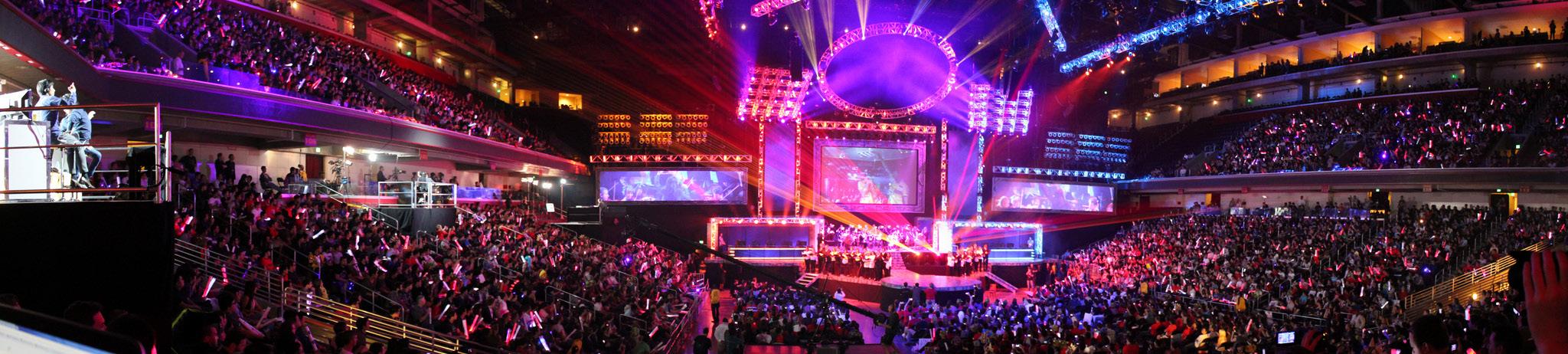
At the Los Angeles Staples Center, home of the L.A. Lakers, colour commentators roar out the play-by-play in over a dozen languages, cutting through the chants of over thirteen thousand fans in the crowd. Millions of fans from all over North America and millions more internationally tune in to watch the highly anticipated World Finals. In a single best of ve series a year of erce competition will be decided and the winner will receive their justly earned $1 million grand prize. Scores of teams from Asia, North America, and the European Union have been whittled down to the season-dominating Team SKT1 from South Korea and hopeful underdogs Team Royal Club from mainland China. e match is a slaughter. SKT1 wins a decisive 3-0 to thunderous applause. So ends the greatest ever event in e-Sports: the League of Legends World Championship. Events like these, once exclusive to the basements of hardcore gamers, have recently seen a massive spike in popularity across North America.
In League of Legends teams of ve compete to destroy the enemy base. Communication with in-game chat and teamwork are necessary to win, just like in traditional sports. According to Forbes Magazine, the viewership for any given League of Legends circuit event is even beating out the average Major League Baseball game on ESPN. is has turned fan favorite teams like TSM (Team Solo Mid) and CLG (Counter Logic Gaming) into billion dollar companies. Hardcore fans have organized live viewings at e-Sports bars, bought thousands of jerseys sporting the names of their favourite players, and Tweeted pictures of their team logo tattoos. e fan base has grown to rival baseball or hockey in population and intensity.
Plato’s assertion that “you can discover more about a person in an hour of play than in a year of conversation” has never been more signi cant. According to the Entertainment Software Association of Canada, 60% of the population is participating in online gaming. By creating a new virtual area for friendly international competition, video games like League of Legends, StarCraft, and Call of Duty are revolutionizing the way we interact as global citizens. Being able to sit down to a friendly game with teammates from Hong Kong
to Moscow and simultaneously watch teams from those regions compete in front of a crowd of millions, has revolutionized global relations. Tobias Greitemeyer, a researcher from the University of Sussex, has found that collaborative video games boost social connections and promote helpful behaviours. ere is no better tool to break down cultural, geographical, and ethnic boundaries, to create a more uni ed world, than this type of mutual play. Online gaming holds an advantage over conventional games like hockey or soccer by allowing instantaneous global connection and faceless interaction. Moreover, the virtual setting of e-Sports eliminates barriers and prejudices existing in the real world concerning race, gender, height, weight, and disabilities. ere is no other competition on earth which allows for this level of equality. Even the issue of nances is rendered almost negligible, as free-to-play games, like League of Legends, are able to run on any computer model: anyone with a PC can therefore take part in this massive global networking phenomenon.
e future of personal international relations is already here. It is not in a boardroom or a meet-and-greet, but in the living rooms and basements of thousands of enthusiastic players worldwide. A 2010 study in Psychology Today stated that shared interests are the most important building blocks of any successful friendship. Gaming is providing this common interest that forms a solid foundation to relationships that can easily span nations, religions, languages, and ethnicities. Dr. Isabela Granic has noted in American Psychologist that approximately 70% of gamers maintain international friendships through video games. Professional e-Sports team SK Gaming has featured players from over a dozen countries and conducted interviews with players in English, French, German, and Swedish to name a few. ese professional cross-cultural friendships are mirrored in the casual friendships and hardcore fandom developed among regular players. Chat doesn’t end with any individual game. In game friends lists and shared social media allow players to regularly play and chat together. Without any other common ground two gamers can share their hobby and start a connection that opens the door to a deeper friendship beyond simply playing games together.
So consider this piece a call to action: if you’re a gamer think about the impact your individual contribution will be to this new global network. If you aren’t taking part in the online gaming trend, I recommend picking it up. e internet may seem to be lled with bile-slinging trolls, but look past the vocal minority and you’ll nd an inclusive and friendly group of people that are pushing borders with their leisure time. QIO
Finals at the Leage of Legends 2012 World Championships in Los Angeles.
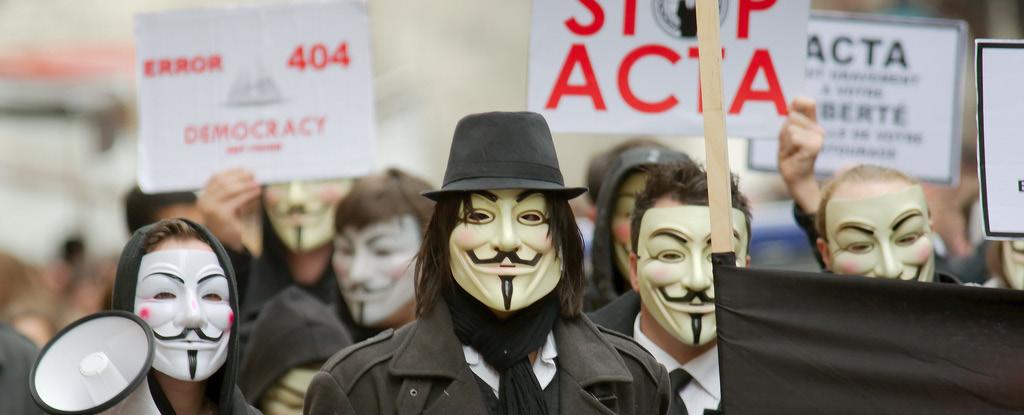
Canadian society is structured so that – ideally – every citizen or group, regardless of income, ethnicity, religion, and political a liation, have outlets to correct perceived transgressions. For many, the corrective powers of the Canadian justice system su ce, but we are also given the right to express our displeasures through the media and peaceful protest. e presence of a free and (mostly) unbiased media and the right to assembly ensure that governments can only neglect our rights at a high cost to themselves. Hacktivism is the use of technology to achieve political goals, usually centred on freedom of information, software, and speech. Although many have compromised websites with their own Distributed Denial of Service (DDoS) attacks, the group known as “Anonymous” is especially well known.
Anonymous is a group of loosely-associated individuals who generally believe in freedom of speech and oppose censorship. ere is no command structure; the members of Anonymous are brought together through shared ideas, rather than a central message. ey use DDoS attacks to shut down government and corporate websites, and release the personal information of politicians and other targeted individuals.
e actions and philosophy of Anonymous are no di erent than the actions and beliefs of previous generations; previous generations believed that taxpayers
had a right to government information and a right to privacy. However, we must be clear about what our Charter protects and what constitutes a criminal o ence.
It is clear that websites t the de nition of private property, as websites are owned by a person or legal entity. Using a DDoS to stop the operations of Koch Industries or Microsoft constitutes a clear violation of their property rights – they paid for a good or service and now the provider has been shut down for political reasons. is is no di erent than the consequences of breaking windows, arson, or theft.
Furthermore, we live in a society where people are allowed to have their own opinion. Anonymous rarely allows, or even listens, to what the other side has to say. ey attacked the Koch industries website because they did not agree with their views on unions. ey also attacked the Church of Scientology and the Westboro Baptist Church. Whether or not I agree with their views, I believe these groups are entitled to their beliefs and should be able to express them within the con nes of the law. Anonymous targets high-pro le members of these groups for public humiliation. ey do not facilitate a thoughtful discussion, but instead use ad hominem attacks to discredit dissenting ideas. Although I admire Anonymous’ conviction, their illegal tactics will not convince society that they are ‘right’ and society is rarely receptive to these tactics. When the typical Anon describes his motives, they will say, “we are doing it for the lulz.” I would have to agree with those who call Anonymous a lynch mob. ey are not strategists; they are merely vandals. Acting like common criminals and hiding behind a computer screen only serves to blows wind into the sails of government censorship, restricted free speech, and world views that are unequivocally wrong. QIO
by Morgan Tomalty
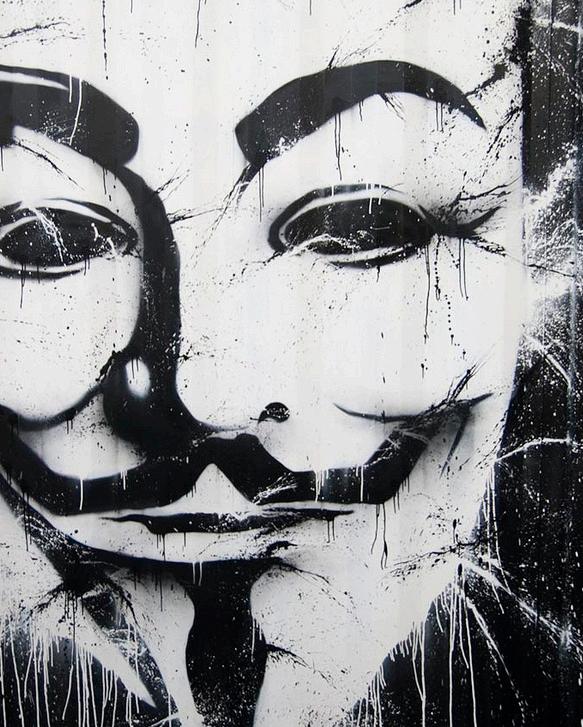
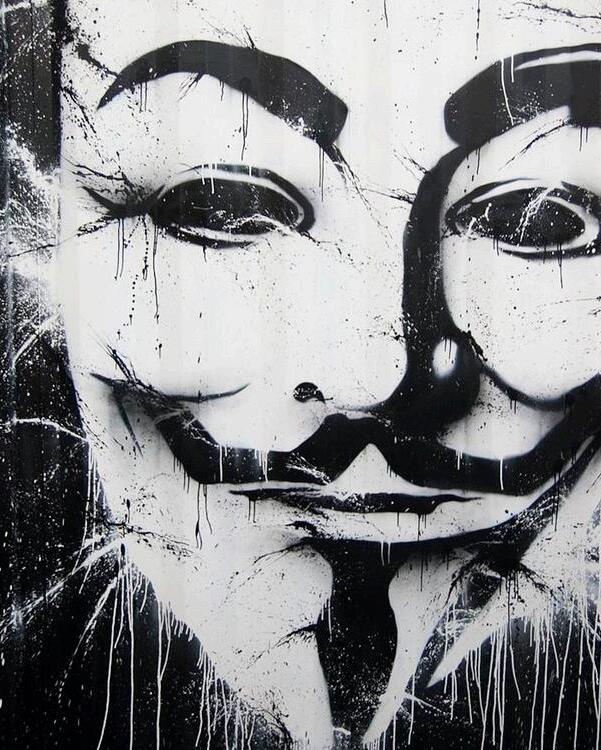
e Guy Fawkes mask has long been a global symbol of protest and anonymity. e mask refers back to Guy Fawkes, an agent in the Gunpowder Plot, which was an attempt by an anti-government group to attack London’s House of Lords on November 5 1605. e attack was meant to expose the English monarchy’s oppressive and corrupt practices, especially towards the English Catholics. In recent years, the Guy Fawkes mask has become associated in particular with Anonymous, a nonviolent ‘hacktivist’ group that uses internet-based hacking to protest perceived corruption of authority.
Internet hackers have a reputation as basement-dwellers who disrupt the Internet for the laughs. is reputation is changing with the evolution of groups like Anonymous, which are speci cally engaged in e orts to push a serious agenda of social justice reform and government transparency. One such example is “Operation Last Resort,” a series of cyber attacks on the U.S. justice system in order to send "a message from us to the 2.5 billion regular people who use the Internet and have found that their right to privacy has been utterly destroyed." Anonymous also makes a point to defend ‘whistleblowers’,
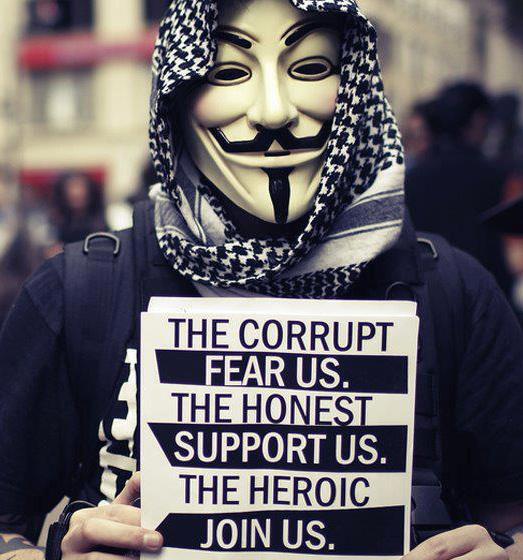
such as Private Chelsea (née Bradley) Manning and Edward Snowden, who they perceive as allies in the ght to maintain government transparency. “Operation Last Resort,” Anonymous announced, “is dedicated to our fallen comrades, allies and those who ght for the same causes as us…for everyone who has risked and continues to risk their freedom for their belief in a world free from constant, invasive surveillance.”
ough many argue that Anonymous’ hacks fall under the category of online vandalism or cyber terrorism, these ‘attacks’ are always nonviolent and typically representative of the hacktivist group’s commitment to social justice. One such instance occurred when the group led a series of high pro le Denial of Service (DDoS) attacks in 2011 and shut down the websites of Paypal and Mastercard after these nancial service providers froze online fundraising for Wikileaks. A further example is when Anonymous hacked into the internal records of the U.S. Federal Reserve and published the personal information on more than 4,000 American bank executives. e fact that this data could be appropriated from such a high pro le, secretive entity within the government attests to the group’s immense power. ese attacks demonstrate that Anonymous has the means to commit much worse assaults but the group still remains nonviolent and fairly innocuous. e nature of Anonymous’ attacks serve as a warning to authoritative entities that the group has the ability to publicize any undisclosed corruption. eir actions are illegal, but history can testify to illegal, nonviolent protest as integral to fostering positive change. Martin Luther King Jr. utilized illegal tactics, such as sitins, and other forms of nonviolent resistance in the push for anti-segregation laws. Mahatma Gandhi promoted the neglect of taxes and other boycotts in a British-ruled India. Anonymous is navigating an internet-age frontier of civil disobedience.
e recent controversy surrounding the National Security Agency has made it clear that we exist in a surveillance state and that privacy rights have been compromised. e people’s ability to ght back is necessary. “To sort of pigeonhole Anonymous as kind of basement dwellers who are marginalized, who are just exercising their psychological pathology is really selling this world short,” said Gabriella Coleman, a New York University media, culture and communications professor. “What they do is civil disobedience. ey help in terms of human rights activism. And, yes, they do things in a kind of way that enacts spectacle, but that’s actually quite tactical and e ective.” QIO
practice that continued until as late as 2001.
The European Union's continuing economic struggles have found their scapegoat in the Romani people.
by Deborah Chu
On December 6th 2013, Sweden’s leading daily newspaper Dagens Hyheter revealed the existence of a secret police register titled Kringresande, or ‘Travellers,’ containing information on 4,000 members of the Swedish Romani community.
e police have since insisted that the register is not based on ethnicity, but was drawn up as a preventative measure against crime in the south of the country. As critics have pointed out, however, the register contains the names of 1,000 children, some as young as two.
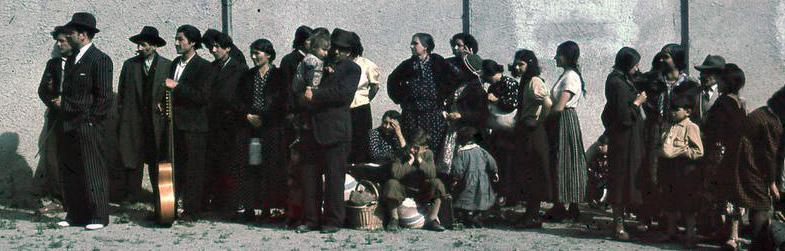
Many see this as a blemish on Sweden’s reputation as one of the more tolerant nations towards the Romani people. e incident, however, is only the latest in a centuries-long history of anti-Romani discrimination. Uniquely among ethnic and cultural groups, the Romani do not claim allegiance to a speci c region. Instead, as historian
Diana Muir notes, “the Romani identity is bound up in the ideal of freedom expressed, in part, in having no ties to a homeland.” Since their emigration from northern India in the 11th century, the 12 million Romani have become one of the largest minority groups in Europe, with a particular concentration in the Balkans, Bulgaria, Romania, Slovakia, and Hungary. One of the rst “anti-Gypsy” laws was enacted by 16th century principalities of Moravia and Bohemia that decreed “whoever kills a Gypsy will be guilty of no murder.” When large-scale massacres followed, the law was amended to forbid “the drowning of Romani women and children.” e persecution of the Romani people has continued unabated since then. An 1896 Norwegian law allowed the state to forcibly separate Romani children from their families and place them in state institutions. In 1973, Czechoslovakia authorized the sterilization of Romani women without their consent – a
e recent European economic downturn has incited further hostility against the Romani people. When Romania and Bulgaria joined the European Union in 2007, a number of other member states instituted restrictions against the free movement of workers. Because both countries are substantially poorer than other members –with a GDP per capita at 33% of the EU average – the rich EU members wished to prevent an in ux of poor workers. In January 2014, however, these restrictions will be lifted. Many EU member states are anxious, as their own economies have yet to fully recover from the recession; they are hardly robust enough to withstand a ood of impoverished immigrants.
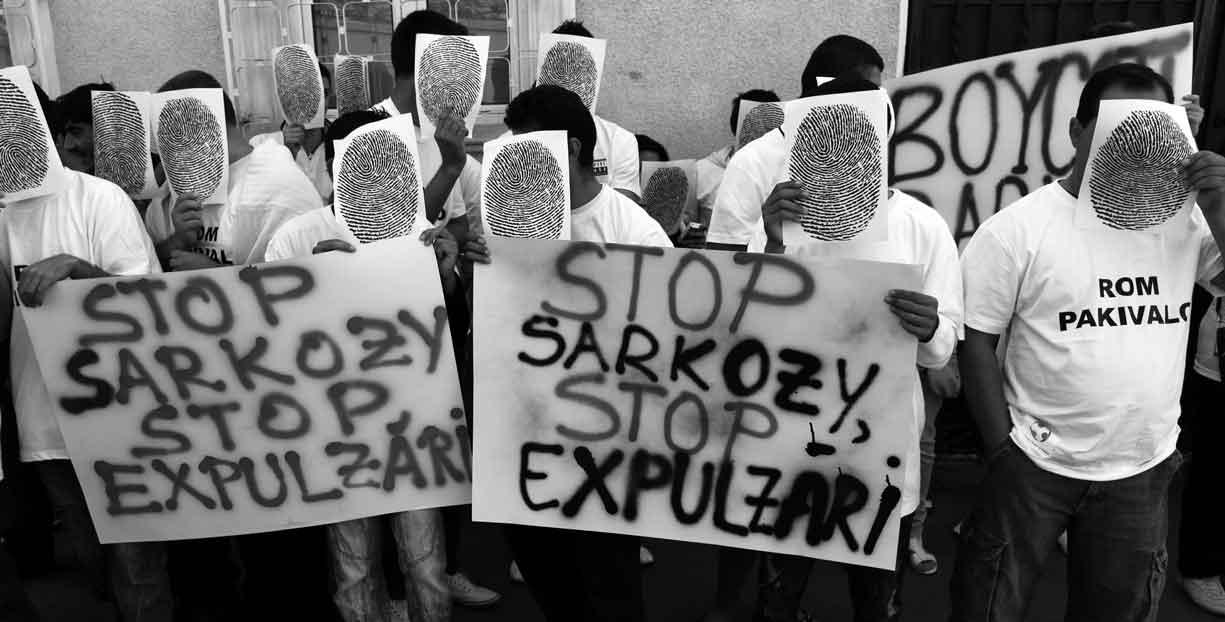
Protesting former French President Sarkozy's expulsion of Romani people.
“ e problem is not the Roma,” says Éric Fassin, professor of sociology at the University of Paris VIII. “ e problem is that we have countries like Romania and Bulgaria that are very poor. Twenty years ago, we had poor countries in Europe like Portugal, East Germany, and Poland, and a lot of money was spent in making them much richer. But now there is no money or political will to do that. And it is easier to talk about the Roma.”
Rather than critically assess this inequality, certain nations have found it easier to fall back on old prejudices and direct their ire at the Roma. French Interior Minister Manuel Valls employed such a strategy in September 2013, when he openly supported the deportation of the Romani people from France. ey are “di erent from us,” he argued,
and incapable of integrating into French society. Vall’s comments came in the wake of a report by Amnesty International, which stated that forced evictions of the Romani people in France had “reached record proportions,” with some 10,000 people being made to leave their camps in the rst half of 2013.
e report would soon prove prophetic a month after Vall’s statements, the French government came under re when police forcibly pulled Leonarda Dibrani, a Romani girl, o a school bus to deport her and her family. e Dibranis had entered France four years earlier in an attempt to escape the rampant persecution they had faced in Kosovo, which has all but wiped out its Romani community. ey were denied asylum, and repatriated to Kosovo. e events surrounding Leonarda’s deportation resulted in thousands of students taking to the streets in protest, and forced French President François Hollande to o er a compromise: Leonarda would be able return to France to nish her studies, but she must leave behind the rest of her family – an o er the Dibranis declined. Hollande’s move was widely decried, and
commentators have remarked that Leonarda’s cause célèbre may have rendered a major blow against the president's authority.
at same month, another major incident occurred in Greece, when police raided a Romani community and noticed a blonde, blue-eyed girl named Maria who did not resemble the rest of her family. e Roma couple – Christos Salis and Eleftheria Dimopoulou – maintained that Maria had been informally adopted, but they were nevertheless charged with abduction when DNA tests revealed that Maria was not biologically related to either parent. Both the media and the police accused the family of everything from kidnapping and forced labour to sex tra cking. Weeks later, however, it was revealed that the couple had told the truth: Maria had been given to Salis and Dimopoulou by a Bugarian Romani couple that had been too poor to take care of her. A similar incident occurred a few days later, wherein another blonde, blue-eyed Romani girl was taken from her parents in Ireland on suspicions of abduction, only to have DNA tests prove that she was indeed their biological daughter.
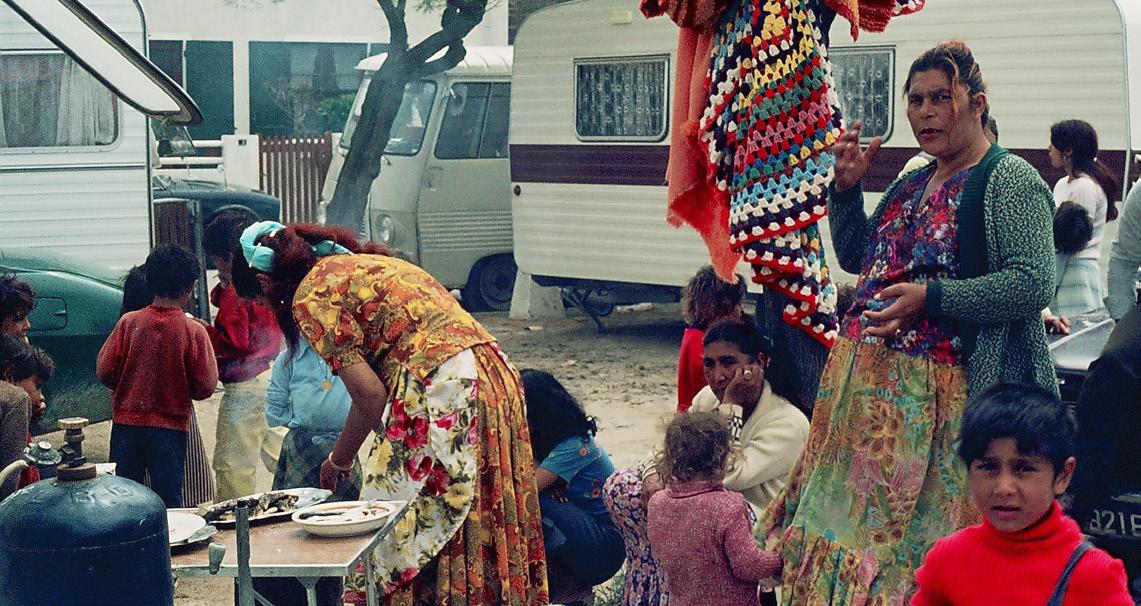
Such incidents have spurred concerns over an increase in “witch hunts” against the Romani people. ese attacks are predicated on age-old stereotypes against the ethnic group – that they are drunken thieves and bene t scroungers, unable – or unwilling – to integrate into society. Roselyn Mabille, an advocate for Roma migrants in Le Havre, France, begs to di er: “ ere are some Roma who beg and steal, but you can't smear a whole people the way Valls does. Most of the Roma are doing what you or I would do and what immigrants have always done. ey are looking for a better life."
Moreover, as Professor Fassin argues, the government has played just as large a part in the marginalization of the Romani.
He notes that some French municipal council have gone out of their way to deprive Romani communities of basic services, such as running water and primary education.
In an interview with a French Romani family conducted by e Independent, Sever Covaciu says, “People wonder why we come here to live like this but, for the Roma, life is much worse in Romania. In France, the children can go to school for free. ey can eat at school for free. In Romania, we must pay for school. In Romania, our children die of hunger. In Romania, Roma children die every day." QIO

by Morgan Tomalty
In the United States, marijuana prohibition costs taxpayers an estimated $10 billion per year and results in 750,000 arrests annually. is total far exceeds the number of arrests for all violent crimes combined, including murder, rape, robbery and aggravated assault. For, in the eyes of the federal law, marijuana is considered to be as dangerous as more notorious substances, such as cocaine and methamphetamines. Yet on January 1 2014, recreational marijuana will go on sale in Colorado.
For the rst time in the history of the United States, retail marijuana licenses have been shipped to 348 businesses across the state. Marijuana products will be sold with a 15 percent excise
In recent years, twenty states have legalized the medical use of marijuana for the treatment of cases such as chronic pain and the e ects of chemotherapy. e largest concentration of medical marijuana dispensaries can be found in Denver, Colorado, each distinguishable by the large green cross hanging above its storefront. ese green crosses are common in the “Mile High City,” with 204 dispensaries throughout the area - three times the number of Starbucks and McDonald's in Denver combined. ese medical marijuana venues come in all shapes and sizes, from 1970s style head shops advertising the lowest cost of weed in town, to health food stores o ering gourmet ganja. Prior to Amendment 64 of the Colorado Constitution, it was necessary to display a license that indicated one needed marijuana for medical purposes. But now such documentation is not necessary as long as the purchaser can prove they are above 21 years of age.
sale, e ectively regulating cannabis in a manner similar to alcohol. Matt Cook, a former narcotics o cer who wrote the law and served as the state's rst director of enforcement, explains that, “Every licensed dispensary must grow at least 70 percent of its own product indoors so harvesting and sales can be closely monitored.”
Amendment 64 therefore means that the cultivation and sale of marijuana in Colorado is increasingly regulated. Cook continues to explain, “We track everything from seed to sale. And they have to account for 100 percent of it.” For instance, the THC (Tetrahydrocannabinol) concentration, or the principal psychoactive constituent of the cannibis, will be structured in a way that alerts consumers to the potency of the substance, much like asking a bartender for a light beer or 100 proof bourbon.
tax and 10 percent marijuana sales tax, in addition to the usual state and local sales taxes. Nevertheless, it is predicted that there will be line-ups around the block at these ‘over the counter’ marijuana stores, attracting both ganja-smoking veterans and the ‘green-to-the-green’ curious. Indeed, reports show that Colorado’s tourism industry is skyrocketing as a result of this law: for instance, ski resorts are booked solidly for several weeks by those seeking a now-legal Rocky Mountain high. In just a few months, Colorado has been delivered from its recession and many are attributing this economic success to the soonto-be accessible marijuana. Welcome to what has been christened Colorado’s ‘Green Rush’.
Amendment 64, which passed on November 6, 2012, addresses the "personal use and regulation of marijuana" for adults 21 years of age and over, as well as commercial cultivation, manufacture, and
e parallel between the regulation of marijuana and alcohol does not end there; Colorado marijuana dispensaries hire ‘budtenders’ to cultivate and brand strains that are engineered to have particular characteristics, like ales at a microbrewery. One example is Ean Seeb’s ‘Jack Frost’, known for being a ‘Triple A’: alert, awake, and aware. Triple A’s are designed to work as
“THE DENVER POST THIS WEEK ANNOUNCED THAT THEY'RE LOOKING FOR A MARIJUANA EDITOR FOR THEIR WEBSITE. THEY HAVE ONE. THEY'RE JUST LOOKING FOR HIM," JOKED SATURDAY NIGHT LIVE.

morning medication that creates no physical lethargy. e ‘Jack Frost’ in particular has received high marks from critics. is artisanal approach to marijuana has become so popular in Colorado that e Denver Post recently hired Ricardo Baca as its new ‘Marijuana Editor’. Saturday Night Live did not miss the opportunity to poke fun at this ‘high’ pro le job, saying “ e Denver Post this week announced that they're looking for a marijuana editor for their website. ey have one. ey're just looking for him."
All jokes aside, Colorado’s ‘Green Rush’ has been so dubbed not simply after the colour of marijuana, but also for the
money that might be made among its stakeholders, known locally as ‘ganjapreneurs’. In 2012, the marijuana industry was reportedly worth two billion dollars, and with the abolition of legal restrictions surrounding the plant, it is predicted to grow to nine million by 2016. e emerging market for recreational marijuana has helped pull Denver out of the recession, inhabiting once empty industrial and retail space, creating thousands of new jobs, and injecting fresh revenue into the state of Colorado.
Despite these new strides, there is a cloud hanging over Colorado’s cannabis industry in the form of the Federal Controlled Substances Act,
which still lists marijuana as a Schedule One drug. e Justice Department in Washington is warning banks against working with marijuana businesses, such as setting up accounts and making small-business loans.
Sam Kamin, a law professor at the University of Denver, says, “ e really strange thing is that we have hundreds of dispensaries servicing as many as 100,000 people and every transaction that occurs is a federal crime. It can't stay like this. We can't have a multimillion-dollar industry built on criminal conduct."
But don’t be too quick to think it will all go up in smoke (preferably with Cheech and Chong). e federal government
does not have the means to shut down the multi-million dollar marijuana industry in Colorado due to the immense support by voters and stakeholders. e federal government will not stand in the way as recreational marijuana goes on sale in Colorado in 2014, and many are hailing this as the triumph of the marketplace. How Amendment 64 rolls out could determine the future of marijuana’s role in the social life of the United States, and its policy towards those who choose to light up. But for the present, it looks like Colorado’s recession will be going down, and Dorito sales will be going up. QIO
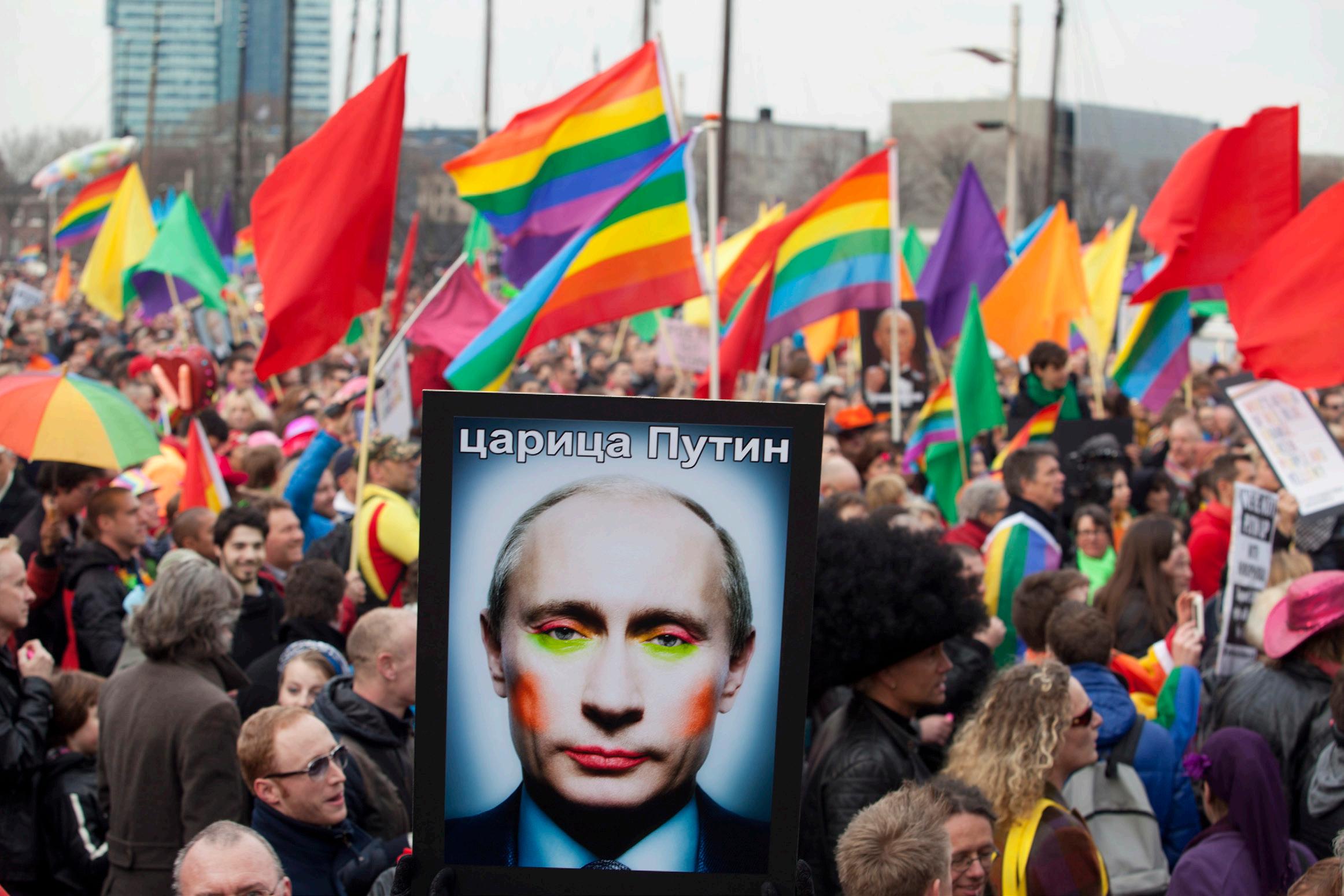
Protests against Putin's anti-
by Aaron Gifford
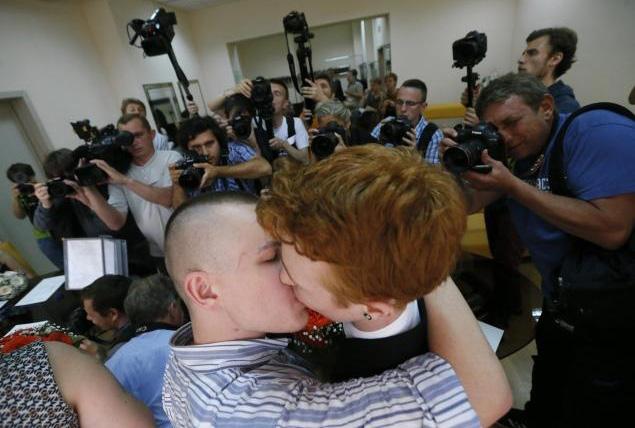
On June 30th, Russian President Vladimir Putin rati ed a law banning the "propaganda of non-traditional sexual relations to minors," which was unanimously passed by the state Duma. e federal ban builds upon on the success
of previous regional laws on “propaganda of homosexualism [sic] to minors,” which have passed in 10 regions since 2006. e European Court of Human Rights has been contesting the poor status of LGBTQ+ rights in Russia for years. Between
2006 and 2008, the court ned the state for violating articles 11, 13, and 14 of the European Convention for banning 164 pride events and marches. Although the Kremlin paid the ne, they continued to ban the rallies. In May 2012, a Moscow
district court issued a ruling which banned pro-LGBTQ+ events in the city until May 2112. Russia’s parliamentarians argue that these laws were enacted in an e ort to enshrine the nation's deeply conservative values. Critics say these measures have
already led to a sharp increase in anti-gay violence.
e laws have been widely criticized by Russia’s liberal and human rights communities, and many international groups have referred to the current situation as the worst climate for human rights in the post-Soviet era. After a number of protests surrounding Putin’s presidential election in May 2012, there was a widespread government crackdown on independent civil activity in the country. ese latest laws serve to further prevent expressions of dissent from citizens unhappy with the current Russian leadership, as well as providing a convenient scapegoat for Mr. Putin. With little public space to voice their dissatisfaction, citizens are now taking to the streets and venting their frustration through vigilante e orts aimed against LGBTQ+ members from the community. Online videos of anti-gay activists humiliating and shaming gay men into admitting to paedophilic crimes have gone viral . Many members of the LGBTQ+ community have been forced to abandon their homes and go into hiding as mobs destroy co ee shops, stores and nightclubs thought to support “untraditional sexual behaviour.”
Normally, such a largescale event like the Olympics motivates the host country to tidy up, put on a friendly smile, and try to appease the international community. e Russian government has instead made it clear that they will continue to enforce these laws during the Olympics, and will not hesitate to arrest any tourist or athlete in Russia suspected of violating them. After this announcement was made, petitions and rally groups formed
calling for the Olympics to be hosted in Vancouver instead. ese groups have argued that because the city already has all the necessary Olympic facilities, (Vancouver was the host of the 2010 Winter Olympics) the cost of switching sites should be relatively low.
e international sporting community has yet to agree with the protestors. e International Olympic Committee (IOC) has instead declared that “Russia’s anti-gay law will not a ect the games.” Moreover, the president of the International Association of Athletic Federations, Lamine Diack, has said that Russia's antigay stance "has to be respected." Many argue that this law stands in stark opposition to the Olympic charter’s sixth principle of non-discrimination. But to be quite blatant about it, the IOC will not choose principle over pro t, and risk disappointing their zzy drink, fast food and athletics sponsors.
It is di cult to understand why such laws would seem at all sensible in light of all the international attention, but a closer look at Russian culture reveals the conditions that make such a law socially acceptable. Russia has always been a highly conservative country that never fully experienced the “sexual revolution” which swept through much of the West. As a result, in the rest of Europe and North America, non-traditional sexual behaviours gradually became acceptable. Not so in Russia. To the government, acting outside of “traditional sexual behaviours” means that one will not be having children, and therefore will not be contributing to Russia’s already-dwindling population. Furthermore, there were no “waves” of feminism in Russia; women gained full rights
and responsibilities only after the Soviet collapse. Despite this, Russian men and women still inhabit di erent social roles, and women have extremely low representation in the political sphere. Homosexuality was begrudgingly taken o of the list of mental illnesses in 1999. Likewise, homosexuality was decriminalized only a short time ago, and "tolerance" towards the queer community is almost viewed as a derogatory term amongst the media.
Homosexuality and LGBTQ+ organizations are portrayed as negative products of Western culture. e media are clearly propagating the idea that the LGBTQ+ community should not be treated as equal citizens. Recently, an MP in the Siberian region of Zabaikalsk called for a law allowing homosexuals to be publicly ogged by Cossacks. Such examples suggest the ways in which homophobia has become a state policy in Russia. e popular perception is that of a “sexual sovereignty,” which Orthodox Christian morality must defend against the corrosive in uence of Western decadence. In July, the Moscow department of the FSB, Russia’s secret police identi ed homosexuality as a foreign conspiracy to overthrow the Russian government.
Clearly, Vladimir Putin believes the ideological battle with the West still rages on, regardless of the numerous cooperative agreements which have been signed since the end of the Cold War.
is, however, is an issue that transcends the East-West divide. e Sochi Olympics have provided a venue for an international outcry calling for equal human rights for all citizens regardless of sexual orientation. Russian gold medalist Anastasia Smirnova stated that,“the Olympics are not simply a good way to draw attention. e Olympics have a speci c mission and goal of promoting non-discrimination and respect through sport." Many countries are expressing their dissent towards Russia’s anti-LGBTQ+ stance in other ways. Germany has announced that it will be wearing rainbowcoloured uniforms to the Olympics. Other countries have called for a ban on Russian vodka. Whether these small acts of resistance will change Russian opinion on LGBTQ+ rights is di cult to say. One thing that is certain is that Russia’s decisions have sparked a erce debate and generated muchneeded international support for LGBTQ+ equality. QIO
by Claire Pierce
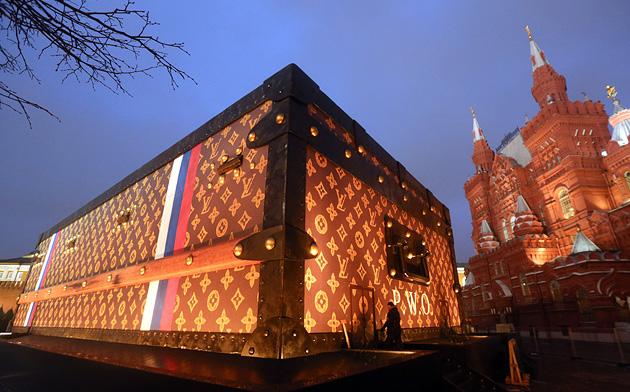
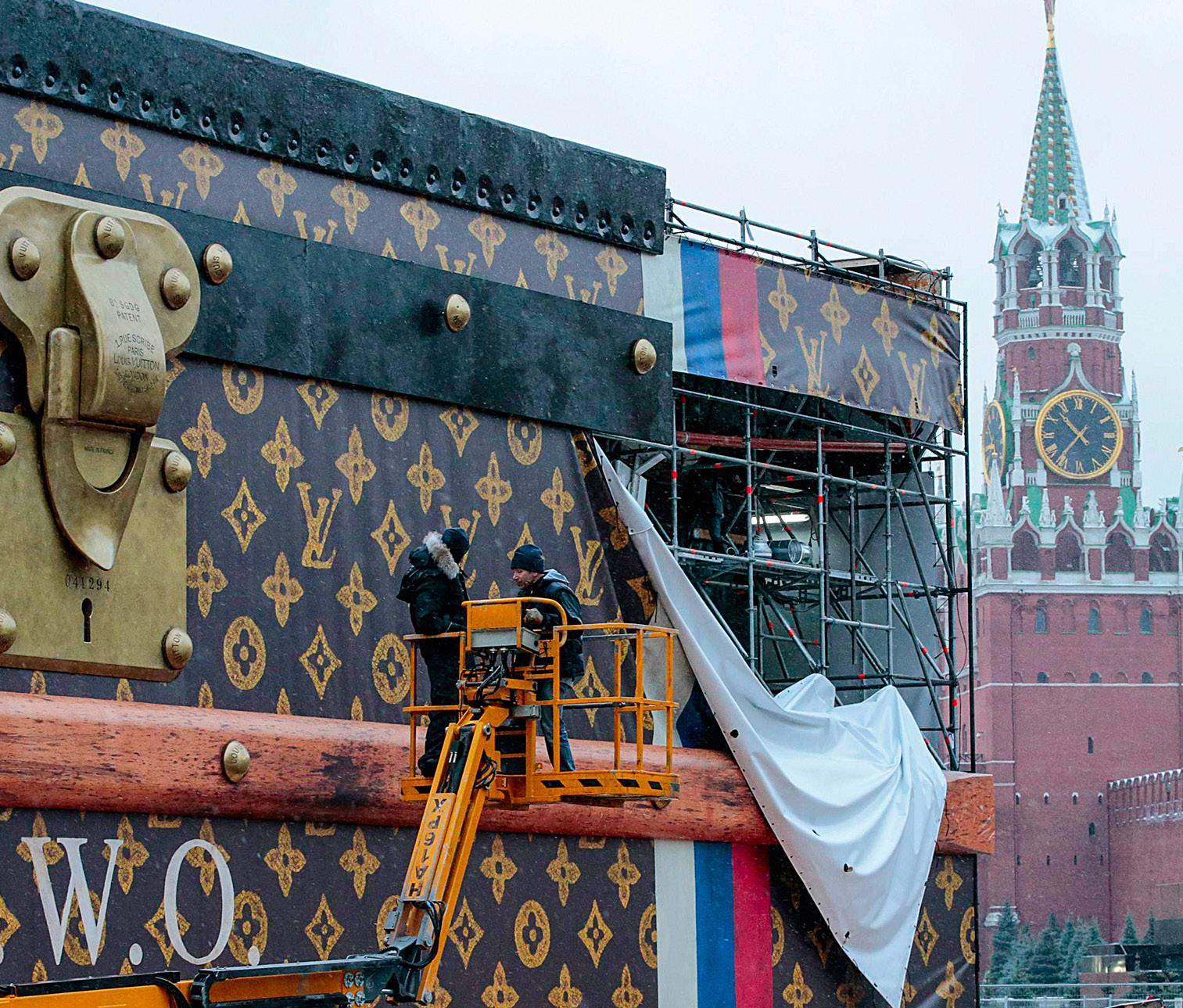
For two days in late November a colossal 9-meter-tall, 30-meterlong Louis Vuitton trunk cast a literal shadow over the tomb of Vladimir Lenin. Outrage from Communist Party leaders over the “trivialization” of the space forced LVMH, Louis Vuitton's parent company, to dismantle the structure after just 48 hours, which had initially been approved for a six-week display throughout the holiday season. Intended as an exhibition space to celebrate the 120th anniversary of the GUM department store in Moscow’s Red Square – where Louis Vuitton’s Russian agship store is housed – the juxtaposition of contemporary capitalism with traditional ideology underscores the precarious state of luxury goods in emerging markets.
e Red Square episode highlights the di culties facing luxury brands looking to capitalize on the strength of Eastern economies, as well as the hunger for symbols of material wealth. Companies like Louis Vuitton are trying to replicate their success with the oldworld rich to a new generation of oligarchs who are eager to prove their cultural parity with the West. Other corporations are looking to Eastern markets to buoy falling domestic sales, but navigating cultural concerns can be costly. In September, the Paris-based department store Galleries Lafayette opened a mammoth 47,000-square-meter outlet in Beijing’s Xidan district, but prominent luxury brands Cartier, Chanel, and Louis Vuitton were noticeably absent from the store's roster. Chairman Philippe Houze acknowledged
that the exclusion was in response to the association of these brands with bribes for politicians and the ongoing crackdown on corruption in the Chinese government. e popularity of these brands with crooked o cials is undoubtedly tied to the ubiquity of their logos, a phenomenon that is all the more curious given that China – and much of the East, for that matter– does not use the Roman alphabet. And yet, in a country where interlocking C’s hold no linguistic value, they have assumed heightened semiotic importance. It’s not just any watch that will do as a bribe – it’s one ascribed with Western, namely French, value. ese logos have become a language unto themselves, communicating a uence and success that reaches across cultural barriers.
It is no mistake that accessories with a heavy emphasis on branding are the most popular products in emerging markets. Very few symbols manage to reach this level of omnipresence, and they are the only ones with linguistic roots. But it is the Western world, with its Roman
alphabet, that speaks this particular language of luxury. After all, the gargantuan replica trunk in Red Square featured the Anglicized spelling of Vladimir Orlov’s name, a 19th century Russian prince. e signi cance of the trunk is not simply a matter of craftsmanship, exclusivity, or materials, but rather as tribal totems of the elite. More so even than cars or houses, these items identify the wearer as a member of the world’s upper echelon, transcending the supposed super ciality of fashion.
It’s not just luxury brands that are navigating the ideological anxieties of emerging markets; magazines and online platforms have expanded as well. Style. com, the self-described “Online Home of Fashion”, recently launched Style.com/Arabia with original content tailored to t a Middle Eastern audience. Intriguingly, much of this new content is similar in form to the original site, but the Arabian slant emphasizes the cultural clash that fashion facilitates. A slide show of street-style looks – a popular xture of Style.com – from a recent fashion week
Deconstruction of the Louis Vuitton case in Russia.
Eastern designers.
and abayas, and the only photo in which bare legs are seen is one of a man wearing shorts. Yet these shots are not exempt from the “peacocking” and sartorial risk-taking seen in street style photos from Western capitals, despite the cultural lens. A beauty feature on the site details seven steps to re-create Shiekha Mozah’s signature make-up look, and the site routinely promotes Middle

More than the clash of capitalism and communism in Red Square or consumerism and corruption in China, Style. com/Arabia points to a future where historic European luxury and emerging markets can coexist and cross-pollinate without upsetting traditional ideologies. e exchange is not unilateral –every season designers produce increasingly cosmopolitan collections, as fashion is ultimately a consumer-driven industry, and the bulk of couture clients are no longer European patricians. Innovation is all very well and good, but there needs to be someone who will wear it. Furthermore, although these markets are classed as “emerging,” they represent some of the world's oldest living cultures. Fashion is the medium for the most emphatic assertion of self in the globalized age of Instagram, luxury goods have become the dominant signi er of success. In an increasingly global world, it is the language we all speak, no gargantuan trunk necessary. QIO in a Louis Vuitton ad.