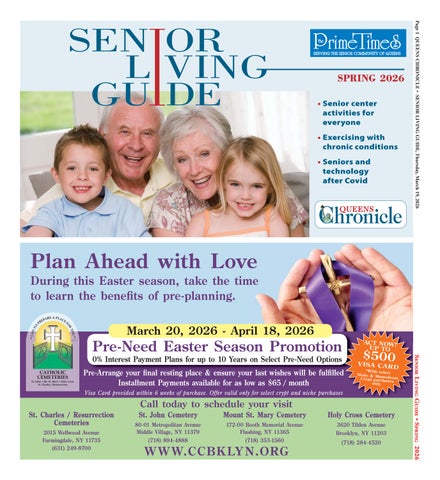
Plan Ahead with Love






Older adult events keep the gears turning
by Stephanie G. Meditz Editor
With the weather finally starting to warm up after a long, brutal winter, there’s never been a better time to get outside, get moving and engage with life.
All age groups can certainly benefit from that reminder. But it’s especially important for seniors, who may start to feel more lonely as they age. It certainly didn’t help that New Yorkers have been snowed in more than once since January.
The city has hundreds of older adult centers that offer nutritious meals, fun activities, fitness programs and social services to adults over 60. Membership is free of cost, and the city Department of Aging says on its website that older adults have reported feeling healthier, more positive and less socially isolated after joining. Seniors can find a center near them by visiting tinyurl.com/mryjtpyb.
“I think that everybody needs to have a purpose,” said Cathy Cahn, director of Services Now for Adult Persons’ Brookville Older Adult Center. “That’s what gets us out of bed every day. And many of these people didn’t really feel like they had that purpose once they retired.
“And I’ve heard from many of them that once they started coming here, they started to feel vital again, and part of a community.”
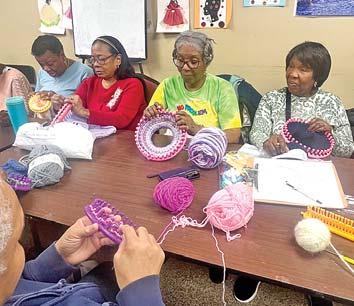
Seniors can enrich both their minds and bodies at the center, located at 133-33 Brookville Road in Rosedale. It offers engaging exercise classes such as Afro-Mambo dance and workouts for the mind including dominoes and crocheting.
“We do a line dance class, which is wellattended,” Cahn said. “Anything that helps them move is a good thing.”
The center’s classes on African American history also tend to fill up, she said.
Coming up on March 25 is the center’s monthly birthday party, which will celebrate those born in February and March.
“It’s so important to really feel like you’re part of that community,” Cahn said. “It’s really more like a family here than it is just a day center that people come to.” One may call (718) 525-8899 to learn more.
The Brookville site that she leads is one of SNAP’s two locations in Queens. Its Eastern
Queens Older Adult Center is at 80-45 Winchester Blvd. in Queens Village.
There, too, seniors can enjoy weekly programming that feeds the spirit.
From painting classes to karaoke, the Queens Village center’s offerings not only empower seniors to try their hand at new skills, but also introduce them to new friends.
Nina Bhola-Cruz, director of SNAP’s Eastern Queens Older Adult Center, said seniors even spearhead new initiatives themselves by sharing ideas.
“We have a variety of classes that we do — virtual, hybrid and in-person — in terms of health and wellness,” Bhola-Cruz said. “We do tai chi, we have chair yoga, we have meditation.”
She said the center will kick off its walkathon April 1, which involves members making a pledge to get some steps in.
Wellness-related educational programs also include talks with registered dietitians, and there will be a Zoom meeting March 27 on understanding chronic kidney disease.
Over at the Middle Village Adult Center, at 69-10 75 St., dietitian Rick Shields will give educational talks throughout the spring. The next one, set for April 17, will cover nutrition for the brain.
“We have bingo and recreational classes that disperse in the week, including knitting and crocheting and painting, in addition to our classes in fitness, which are chair yoga and Zumba and Pilates, Sit & Be Fit, cardio fitness and line dancing,” said Rabbi Richard Levy, who leads MVAC. The center also will offer Italian language classes this spring, he said, and a singalong is slated to start next week.
On April 15, drivers 50 and older can brush up on their skills with a defensive driving course. Reservations are required, and it costs $55, cash or check, to partici-
The Venue at City Harvest in Brooklyn, which emphasizes plant-forward dishes. Culinary teams from centers across the city prepare nutritious, plant-based dishes that are scrutinized by a panel of judges.
On April 7, the center will organize a trip to The Sugar Factory, inside Resorts World NYC. One can call (718) 454-2100 or email info@snapqueens.org to learn more.
MVAC also runs trips — one to Manhattan’s Hudson Yards, the High Line, Chelsea Market and Little Island is full, Levy said, but there is a waiting list. Alpha Phi Alpha will be heading to Resorts World Catskills this year, and Connecticut’s Holiday Hill in the summer.
While all that excitement is certainly a positive, sometimes all that seniors need to enrich their lives is socialization, a hobby or some extra overall support.
Commonpoint is partaking in a new initiative in partnership with the United Jewish Appeal-Federation of New York called SocialRx, which aims to combat loneliness among older adults. Specialists work one-onone with seniors to create a personalized social prescription of non-clinical resources that aligns with their needs.
pate. One may call (718) 894-3441 for more information.
Wellness and practical skills are critical, but there’s gotta be room to play, too. SNAP Eastern Queens hosts an array of cultural celebrations, most recently of Lunar New Year, Holi and St. Patrick’s Day.
“We try our best to be as inclusive as possible, especially with the diverse background of our members,” Bhola-Cruz said. “We always want to explore the diverse and rich culture of many of the people that we have here.”
And yes, there will be a birthday celebration there too, on March 31.
Monthly birthday parties are a mainstay for many centers. Cambria Heights’ Alpha Phi Alpha Senior Citizens Center, at 220-01 Linden Blvd., had one scheduled today, March 19, to mark a member’s 100th birthday.
“We seem to be having a lot of 100s lately,” director Melissa Marcus said. “That’s a blessing and a good thing.” Weekly activities there also include line dancing, bingo, computer lessons, exercise classes and a quilting group.
“It keeps their mind busy, it keeps them active,” Marcus said. “They’re not sitting at home by themselves. They’re meeting people, they’re meeting friends. We’ve had many couples meet here, we’ve had some marriages from here.”
Presenters visit the center to discuss practical issues, from fire safety to nutrition to managing blood pressure. Members also can meet with a social worker on Fridays.
One may email alphaphi220@hotmail. com or call (718) 528-8238 to learn more.
Since adventure has no age limit, senior centers run exciting trips, too. On March 26, SNAP Eastern Queens is taking one to the Department of Aging’s citywide cookoff, at
Among the prescribed supports might be cultural events, volunteer programs, fitness classes or housing support. One may contact Shelly Channan, director of Commonpoint’s Central Queens Older Adult Center, at schannan@commonpoint.org, or call (718) 268-5011, ext. 421, to learn more. The Forest Hills site is at 67-09 108 St. Commonpoint’s general programming also centers wellness, joy and cultural responsiveness.
“A lot of the things we do specifically for the older adults really come from them and what they’re telling us they need and want,” Channan said. “But with that in mind, we need to make sure that we’re not just taking care of a check-off box. We want to be able to take care of the whole person. So when we offer them things like the arts to them, it keeps them fresh.”
Each location has numerous exercise opportunities throughout the week from dance to aerobics to yoga, in-person and online. They also offer programs rooted in Jewish culture, such as conversational Yiddish classes in Bay Terrace, at 212-00 23 Ave., and Israeli dance lessons at the Sam Field Older Adult Center, at 58-20 Little Neck Pkwy. The Central Queens site organizes virtual gatherings on Friday afternoons to welcome Shabbat.
Starting April 13, Commonpoint will offer a support group for seniors in the LGBT community. One can call the Little Neck site at (718) 225-6750, and Bay Terrace at (718) 423-6111.
Queens Community House also has multiple older adult centers across Queens, in Forest Hills, Rego Park, Kew Gardens, Flushing, Jackson Heights and Jamaica.
“They have so many friendships here, and I think the socialization keeps them going,” Marcus said. Q
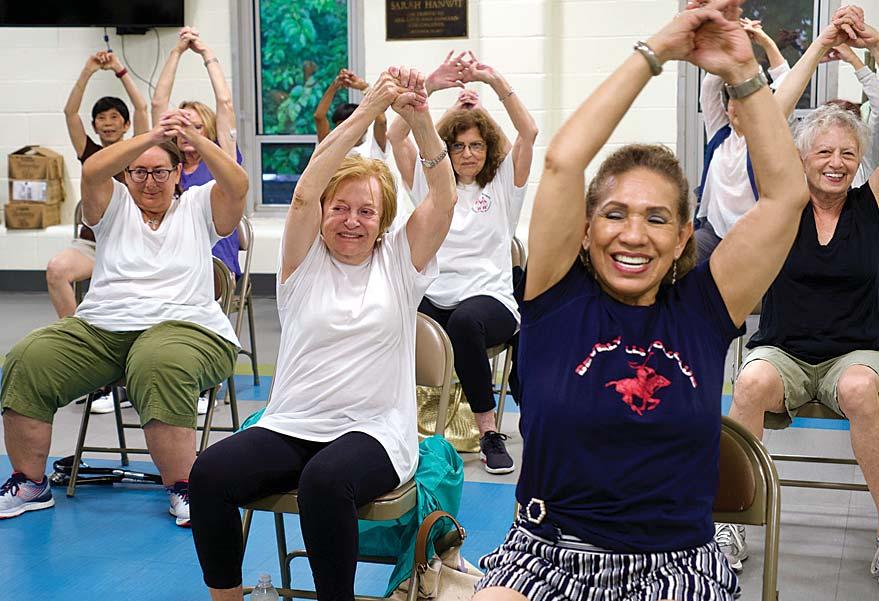
Commonpoint’s older adult centers offer a range of fun activities that help seniors stay sharp, social and active. Above, attendees of chair yoga at its Sam Field Center in Little Neck are all smiles as they get moving.
PHOTO COURTESY COMMONPOINT




• Elder Law
• Wills And Trusts
• Estate And Medicaid Planning
• Probate
• Administration Of Estates
• Special Needs
• Real Estate
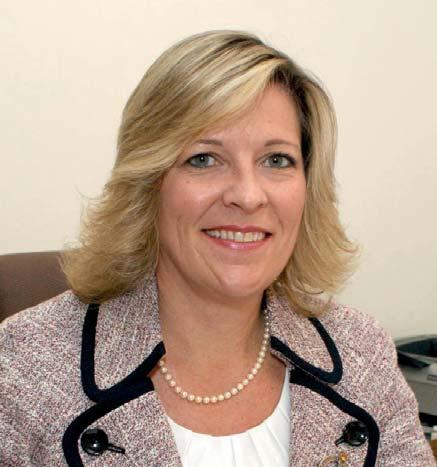
Donna received her law degree from St. John’s University of Law. She was Co-Chair of the Elder Law Committee of the Queens County Bar Association from 2012 through 2019. She is Past President of the following organizations: Catholic Lawyers Guild of Queens County, Women’s Bar Association of Queens County, Flushing Lawyers Club, Kiwanis Club of Astoria/LIC and the East River Kiwanis Club.
Senior Living Guide Exercising with chronic conditions
Almost anyone, at any age, can do some type of physical activity, even with a chronic condition. In fact, older adults with chronic conditions can benefit from physical activity.
For most, moderate-intensity activities (such as brisk walking, riding a bike, swimming, weightlifting, and gardening) are safe, especially if you build up slowly. Talk with a doctor about your health condition and create a physical activity plan that works for you. Below, you’ll find physical activity guidance for people with certain chronic conditions.
Arthritis
Older adults with arthritis, the most common form being osteoarthritis, who are regularly physically active benefit from decreased pain and improved physical function and quality of life. Both aerobic and muscle-strengthening activities contribute to these benefits.
Try doing low-impact activities, such as swimming, walking, and tai chi, which put less stress on your joints. When done safely, being physically active with arthritis shouldn’t make the disease or pain worse. Speak with a health care provider about what exercises may work for you.
Chronic pain
Most people living with chronic pain can exercise safely. Physical activity can also help with pain management, whereas being inactive can lead to a cycle of more pain and loss of function.
It’s important to remember to listen to your body when exercising and participating in physical activi-
ties. Avoid overexercising on “good days.” If you have pain, swelling, or inflammation in a specific area, you may need to focus on another area or rest for a day or two. Talk with a doctor about what exercises and activities might be right for you.
High blood pressure
Physical activity can help older adults with high blood pressure reduce or manage their blood pressure and lower the risk of blood pressure continuing to rise. It also helps protect against cardiovascular diseases, including heart disease and stroke.
In people with high blood pressure, moderateintensity activity for 90 minutes a week can help to significantly lower the risk of heart disease. More activity can lead to an even greater benefit. Both aerobic and muscle-strengthening activities are beneficial.
Work with your health care provider as you increase physical activity. Adjustments to blood pressure medication may be needed.
Osteoporosis
If you have osteoporosis, talk with your health care provider about physical activity that is safe for you and good for your bone health. A combination of exercise types can help build and maintain healthy bones and prevent falls and fractures. Weight-bearing exercises, such as walking, climbing stairs, or dancing, produce a force on bones that makes them work harder. Including muscle-strengthening and balance exercises is beneficial, too. P — Courtesy National Institute on Aging
MEDICAID UPDATES 2026
By Donna Furey, Esq.
Elder law attorneys help people get their assets in order so they may apply for Medicaid assistance in their home known as Community Medicaid, or a nursing home. This often requires the transfer of assets within a certain time frame.
To qualify for Community Medicaid, an individual may only have $33,038.00 in total assets, income up to $1,836.00 per month and a $20.00 monthly personal needs allowance. The home equity limit is $1,130,000.00. The applicant must need limited assistance with physical maneuvering of three or more activities of daily living (ADLs). ADLs include bathing, personal hygiene, dressing, walking, transferring to the toilet, incontinence, eating, etc. However, individuals with a diagnosis of dementia or Alzheimer’s must need supervision with at least two or more ADLs.
In 2020, a law was passed implementing a 30-month “look back” period for people applying for Community Medicaid. This look back period
has not been implemented yet but it may be implemented in 2026. This means that Medicaid will “look back” at fi nancial transactions made during the 30-month period before the date of application and impose a penalty for any gifts made during that period. Therefore, people who need Community Medicaid, should apply as soon as possible.
Institutional Medicaid is for individuals who have extensive long-term medical needs. The “look back” period is five years, the asset limit is $33,038.00 and you can only keep $50.00 of your monthly income.
The value of your retirement accounts are exempt assets and are not counted for Medicaid eligibility purposes. However, the income received from the retirement accounts (RMDs) would be included in the calculation of your income.
That is why elder law attorneys recommend transferring assets before seeking Medicaid to protect assets from the “look back” period. Don’t wait! Protect your assets now!



Baby boomers welcome tech after Covid era
by Pamela Rider Chronicle Contributor
After the Covid-19 pandemic, in a world where technology evolves at the speed of light, very few baby boomers continue to find themselves uninterested, frightened or bewildered by technological engagement. In today’s world, seniors are staying in the workforce longer than they did in the past, or reinventing themselves with a specific goal for further personal growth, entrepreneurship or proactive monetary achievements.
Many baby boomers have chosen to continue to work past the usual retirement age for various reasons. There are workforce wellness platforms available for those who choose to continue their careers and find that having someone readily available to assist them is a plus.
Jean Castro of Rochdale Village in Jamaica is a member of Community Board 12 and chairs its Health and Senior Citizen Committee. She also is a protégée of state Assemblywoman Vivian Cook (D-Jamaica). Castro is one of the many baby boomers who are computer- and cell phone-savvy.
“Technology is an essential part of today’s fast-paced world,” she said. “With all of my responsibilities, I don’t know what I would do without my iPhone and computer. But the one thing that I do know is that I wouldn’t be able to accomplish as many tasks as I do without them in a 24-hour period. As a matter of fact, other than texting, calling, and emailing, Google and Zoom are the features that I find to be the best assets of them all!”
“As much as I appreciate today’s technological devices, on the down side, it’s a shame that people have to be on the lookout for scams and hacking. I’ve read an article a while ago in an AARP magazine, that senior citizens are primary targets of hackers,” added Castro.
Time and technology are moving at a rapid pace, and to keep up with
the shift in how the world operates, baby boomers have had very few choices: Get on board with the advancement of technology or “get left in the dust.”
Bridging generation gaps is easier said than done, for there are still a few baby boomers who find engagement with technological devices as exhausting as walking across a long, tiresome bridge.
Muriel Wilcher has been retired for eight years as the director of her local food pantry. Wilcher was asked how she felt about cellphones and computers.
Wilcher said, “When I was working, I had an assistant to put the necessary information in the computer. I get very disgusted trying to operate a computer because I never learned how to use one.”
After a short pause and a heavy breath, Wilcher added, “To tell you the truth, I get so aggravated trying to use them that it literally raises my blood pressure, and I already have a pre-existing condition. Who needs it?
“It would be nice if senior citizens had a place in their community that taught a class for computer dummies.”
Dr. Carol Quade, a gerontologist who specializes in digital literacy, said, “In an era dominated by digital media, cultivating media literacy skills is essential to navigate the digital landscape safely and confidently.” Quade explains the dangers of online misinformation and the unique challenges older adults face as they navigate the web.
baby boomers have learned to operate and navigate a host of smart and digital devices. Many boomers have come to rely not only on operating them efficiently, but also on them as a whole. Many people 55 and up who avoided technology prepandemic now rely on digital tools.
Telehealth usage among baby boomers has increased 469 percent. The autonomous nature of the baby boom generation makes telehealth a natural fit for those opposed to transferring to facilities with on-site physicians. Eighty-seven percent of baby boomers want to remain in their homes and communities as they age.
As boomers have found that cell phones and computers are an essential part of life, telehealth provides them with virtual consultations, online doctor’s appointments, prescription refills, and medical billing.
Telehealth services may allow the lower-stress comfort of multitasking while being present at one’s job. It alleviates rushing to meet doctor’s appointments and gives people a sense of comfort and relief as they go through other required daily tasks.
According to AARP, many baby boomers have chosen Consumer Cellular due to its senior citizen discounts. The service provides clear plans, no contract and easy signup. The plan can be perfect for seniors who seek simplicity in a cell phone.
Nonetheless, even though there are dangerous threats in navigating today’s high-tech devices, baby boomers are increasingly embracing and loving theirs.
As technology becomes increasingly woven into everyday life, most
tinue to use digital tools to make life easier and have come to rely on them.
Many baby boomers have decided that things such as online banking leave them significant time to do other important tasks, or just to breathe and relax. Technology has also given some boomers a sense of comfort and allows them to engage with others in the comfort of their home, from near and far.
Zoom is a program used by people all over the world for various reasons, including personal and professional ones. It’s amazing how folks over 60 years of age use Zoom on a daily basis.
After researching customer satisfaction among baby boomers and Consumer Cellular buyers, I have come to find that not only they but the generation before them are customers.
Hazel Ramzey is a 92-year-old retired health care worker who was introduced to Consumer Cellular by one of her close friends. She uses her cell phone on a daily basis.
“I use my cell phone more than I use my land phone. I find it to be convenient not having to look through my phone book for a person’s number. All I have to do is go through my call log,” said Ramzey.
Ramzey adds, “As an elderly person, I love playing the free games on my phone. It helps to keep my mind sharp and keep me occupied.”
Ramzey smiles, saying, “I refuse to be put out to pasture with anything that is going on in the world. I’m still very much young at heart!”
According to GWI data and Razorfish, nearly three in four boomers now feel confident using technology, and 88 percent say they will con-
“One thing that I appreciate most, especially when the world shut down in 2020, is being able to actually see my loved ones by using FaceTime, and/or Zoom. It makes me feel like I’m actually visiting my loved ones, being able to see their faces and their environment,” Ramzey said.
Technological connectedness is not only done via phone, e-mails, Zoom meetings, text messages or DMs, but social media platforms such as Facebook, TikTok and YouTube have also taken on a life of their own. These various platforms allow their users a sense of close intimacy with each other, while providing a 24-hour-a-day, seven-day-a-week, 365-day-a-year, uninterrupted, constant, and consistent connectivity.
It is also very interesting to know that 55 percent of older adults have used some form of AI, primarily voice assistants (50 percent) and chatbots (25 percent).
Suzanne White is a certified nurse assistant who has worked in this field for the past 26 years. She is not required to do any type of technological engagement. She deals
directly with her clients. However, White does own a desk computer, which she utilizes for various reasons.
White said, “I do not own a cellphone. Never did, and I doubt that I ever will. I just find it so unnecessary and costly. But I do have a land phone and a desktop computer. Now, a home computer has become something that I greatly appreciate!”
“I like the advantage of being able to shop online, surf the web, visit various social media platforms, and use My Chart for keeping up with doctor’s appointments, and other reasons.
“In the world that we live in today, I find that a computer is a very helpful tool, and if I had to choose a portable device, it would be a tablet, not a cell phone,” adds White.
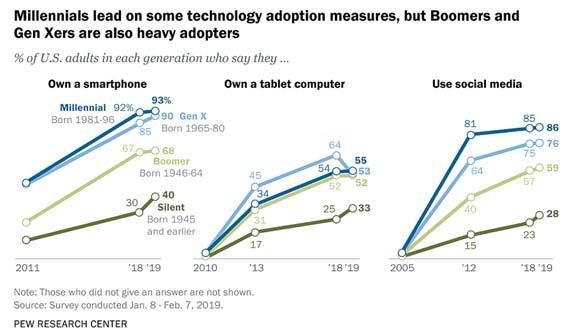
According to Generation.org and Pew Research, unlike smartphones and social media, today, 52 percent of baby boomers prefer a tablet. Ownership is now more comparable across generations. When it comes to smartphone-only internet users, only 11 percent of boomers use this method of obtaining information or direction.
Baby boomers have evolved, and continue to evolve, in engaging with technology. During the Covid-19 pandemic, while the people in the world had to take refuge in their homes, baby boomers experimented with technology and became comfortable with its use.
Suffice to say, post-Covid, computers and other technological devices have become a way of life for many baby boomers, who now cannot see themselves without what they have come to understand to be a remarkable tool. Q
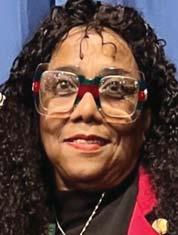
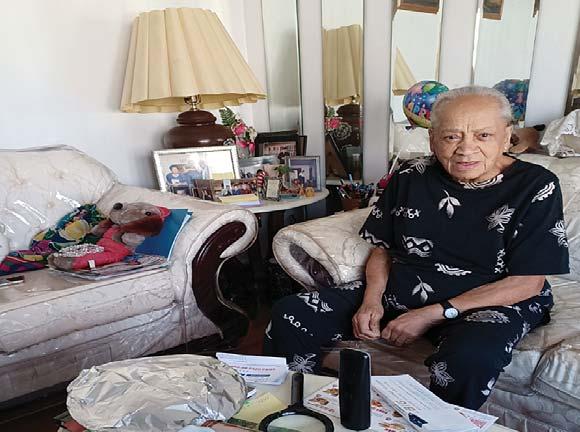
Hazel Ramzey, above, and Jean Castro, at left, are among the many seniors embracing high-tech devices. PHOTOS BY PAMELA RIDER
COMPREHENSIVE MEDICAL IMAGING
3T
MRA
ECHOCARDIOGRAM
WOMEN'S IMAGING
3D DIGITAL MAMMOGRAPHY BREAST ULTRASOUND MRI BREAST
BREAST BIOPSY ULTRASOUND GUIDED CORE BIOPSY MRI GUIDED BIOPSY

AWARDS:
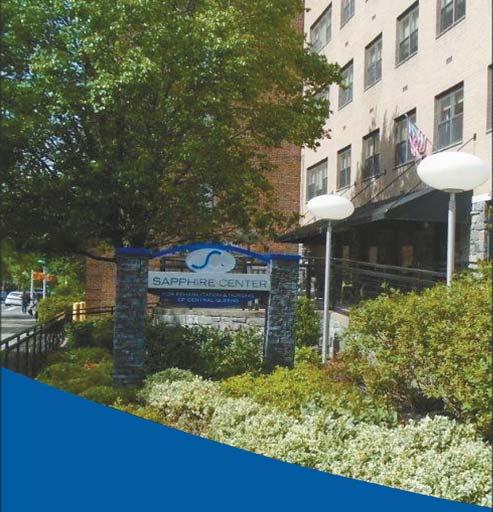
• Five-Star Nursing & Rehabilitation Facility awarded by the Centers for Medicare and Medicaid Services.
• Administrator member of American College of Health Administrators
• Administrator recipient of CMS Outstanding Achievement award for Reducing Hospitalizations



• Administrator is 2016 Recipient of Lily Leadership Award